Zaha Hadid architecture is known for fluid curves, sharp geometry, futuristic building forms, and spaces that feel as if they are in motion. Her best buildings turned museums, transport hubs, opera houses, and civic centers into landmarks that changed how cities present themselves.
- Key Takeaways
- What is Zaha Hadid architecture known for?
- Zaha Hadid architect: background and breakthrough
- Zaha Hadid architecture style and design philosophy
- Materials, technology, and parametric design in Zaha Hadid buildings
- Zaha Hadid buildings that changed city skylines
- Zaha Hadid architectural legacy and influence today
- Further architecture references
- Zaha Hadid architecture FAQ
- What style of architecture is Zaha Hadid known for?
- What are Zaha Hadid's most famous buildings?
- Why is Zaha Hadid important in architecture?
- What materials and technology did Zaha Hadid use?
- How did Zaha Hadid influence urban planning?
- Is Zaha Hadid still alive?
- What can designers learn from Zaha Hadid's work?
The useful lesson is not simply that her work looks dramatic. Hadid combined mathematics, drawing, digital modeling, engineering, and urban ambition into forms that had to carry real people through real public buildings. That is why her architecture still matters for designers studying movement, structure, and city identity.
Key Takeaways
- Zaha Hadid’s ideas and style transformed global architecture.
- Advanced technology and unique forms set her buildings apart.
- Her legacy continues to shape city skylines and inspire architects today.
What is Zaha Hadid architecture known for?
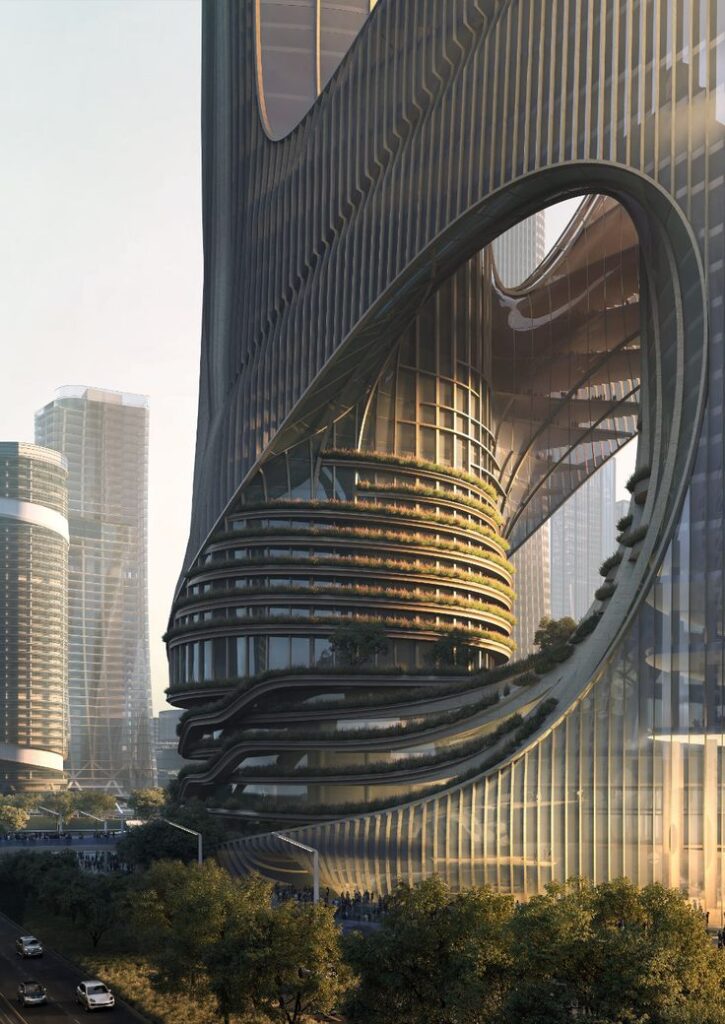
Zaha Hadid architecture is known for sweeping curves, fragmented planes, dramatic silhouettes, and buildings that seem to move through the city rather than sit still. Her style began with deconstructivist drawings and angular compositions, then moved toward more fluid, digitally modeled forms.
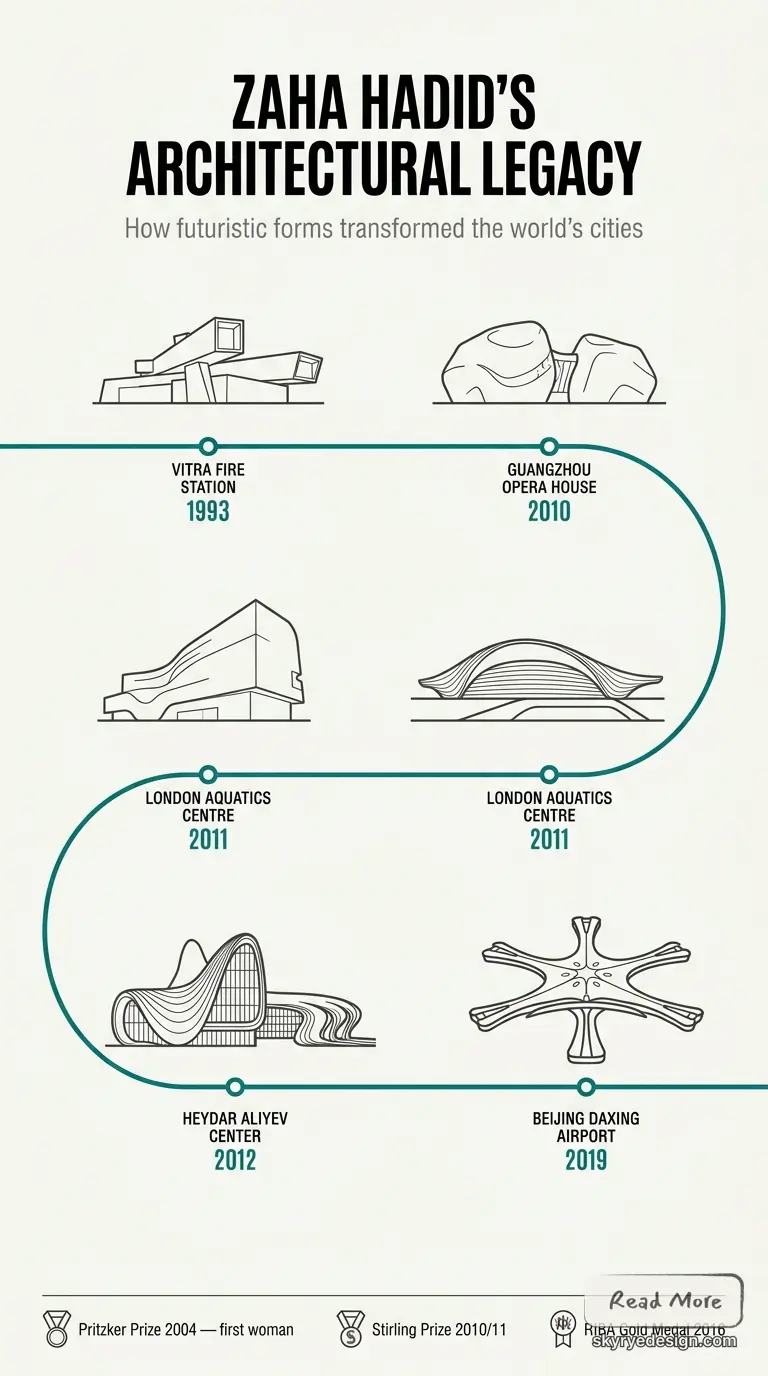
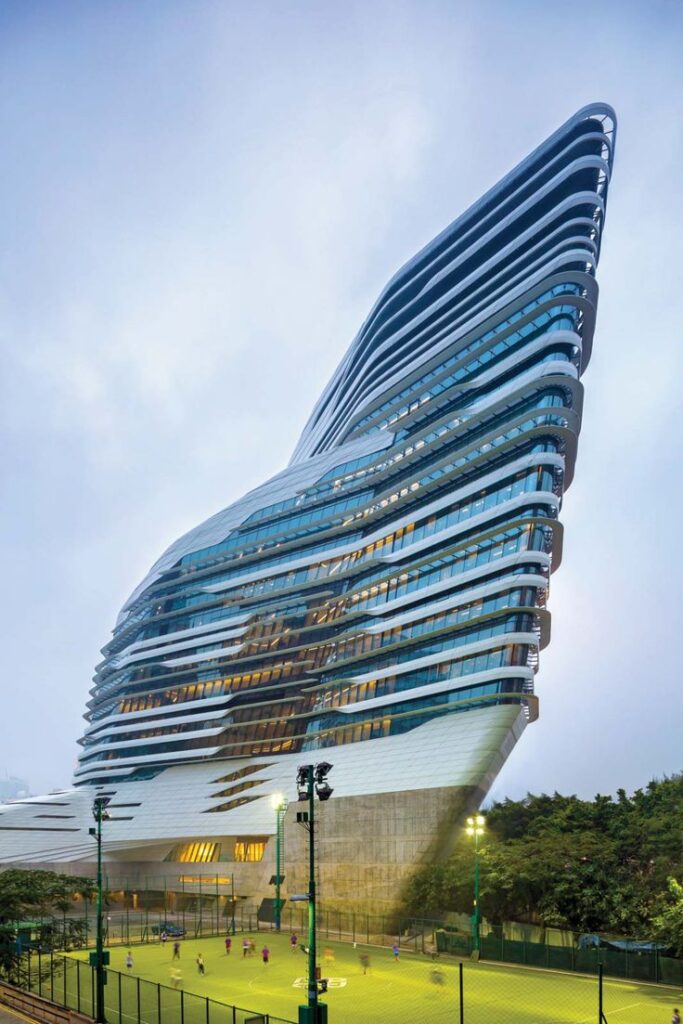
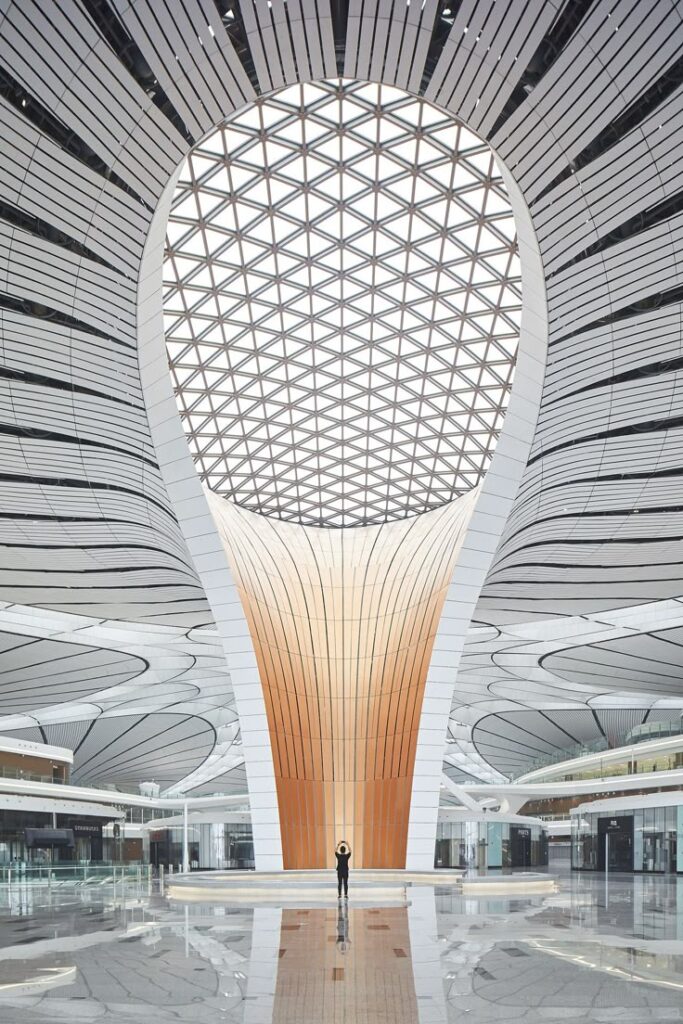
The Heydar Aliyev Center, London Aquatics Centre, MAXXI Museum, Guangzhou Opera House, and Beijing Daxing International Airport show the range clearly: civic buildings, cultural spaces, and transport hubs shaped around flow, visibility, and public movement. For designers, the key is the relationship between form and circulation. The curve is never only decoration; it guides how people enter, gather, look up, and remember the building.
| Search intent | What the page now answers |
|---|---|
| Zaha Hadid buildings | Famous projects, locations, forms, and why they matter |
| Zaha Hadid architecture style | Fluid geometry, deconstructivism, parametric tools, and movement |
| Zaha Hadid legacy | Awards, influence on women in architecture, and ongoing ZHA work |
| Zaha Hadid urban planning | How landmark buildings reshape civic identity and circulation |
Zaha Hadid architect: background and breakthrough
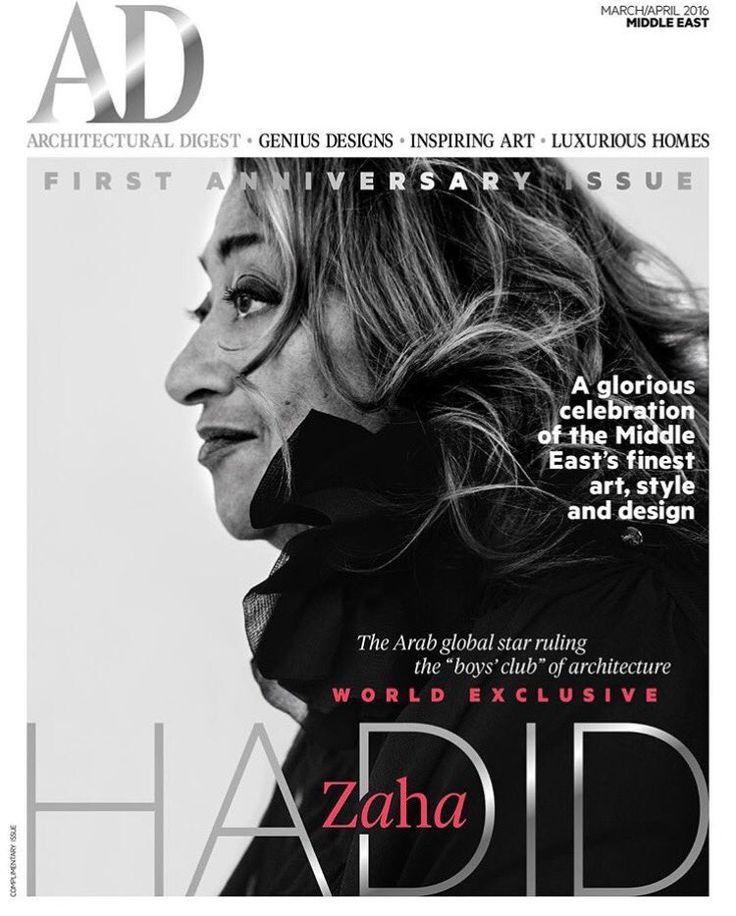
Zaha Hadid reshaped how people around the world experience cities and buildings. Her work shows it’s possible to challenge traditional boundaries, especially for women in architecture.
Early Life and Influences
Born in Baghdad in 1950, you would find Zaha Hadid’s early environment rich in culture, geometry, and progress. Her family valued education, and Hadid developed a fascination with mathematics early on.
She studied mathematics at the American University of Beirut before moving to London for architecture at the Architectural Association. This mathematical background began to merge fluidly with her approach to architectural design.
Hadid drew inspiration from abstract art, especially Russian Suprematism and Constructivism, influencing her bold compositions. She quickly gained a reputation for conceptual designs that many thought impossible to build.
Hadid brought futuristic forms into architecture, often using advanced digital tools and exploring new construction methods. Her background and vision became the foundation for her radical style.
Breaking Barriers as a Female Architect
When you consider architecture’s history, you see how rare it was for women to reach its highest ranks. Zaha Hadid broke through in a male-dominated profession, becoming the first woman to win the Pritzker Architecture Prize in 2004.
Hadid faced skepticism, both for her radical designs and her status as a female architect. Despite this, she persisted and went on to complete high-profile projects like the London Aquatics Centre and Guangzhou Opera House.
Her resilience set a new path for women in the field. Hadid’s practice grew globally, challenging assumptions about what buildings could look like—helping open doors for more diverse voices.
Hadid’s visibility as a leader, both creatively and professionally, changed perceptions about what you could achieve in architecture regardless of gender.
Mentorship and Impact on Women in Architecture
You see the effects of Hadid’s success extend beyond her own work. Through teaching at institutions such as Harvard and Yale, she mentored students and encouraged women to pursue ambitious projects.
Hadid’s architectural firm employed and elevated women architects to senior roles. She created a collaborative environment where ideas, regardless of the source, were valued.
Her example inspires countless women to claim space and leadership in architecture. Many of today’s rising female architects cite her as a role model for resilience and vision.
Hadid’s legacy lives on through the architects she trained and the ongoing work of her practice, ensuring that her impact remains an active force for progress in the profession.
Zaha Hadid architecture style and design philosophy
Zaha Hadid’s work stands out for its blend of artistic vision and technical innovation. You’ll notice her buildings challenge conventional forms, prioritize usability, and create a sense of motion rarely seen in urban environments.
Embracing Fluidity and Movement
You experience Hadid’s focus on fluidity through the sweeping curves and organic forms common in her most famous projects. She believed architecture should reflect the dynamism of modern life, avoiding rigid lines in favor of continuous movement.
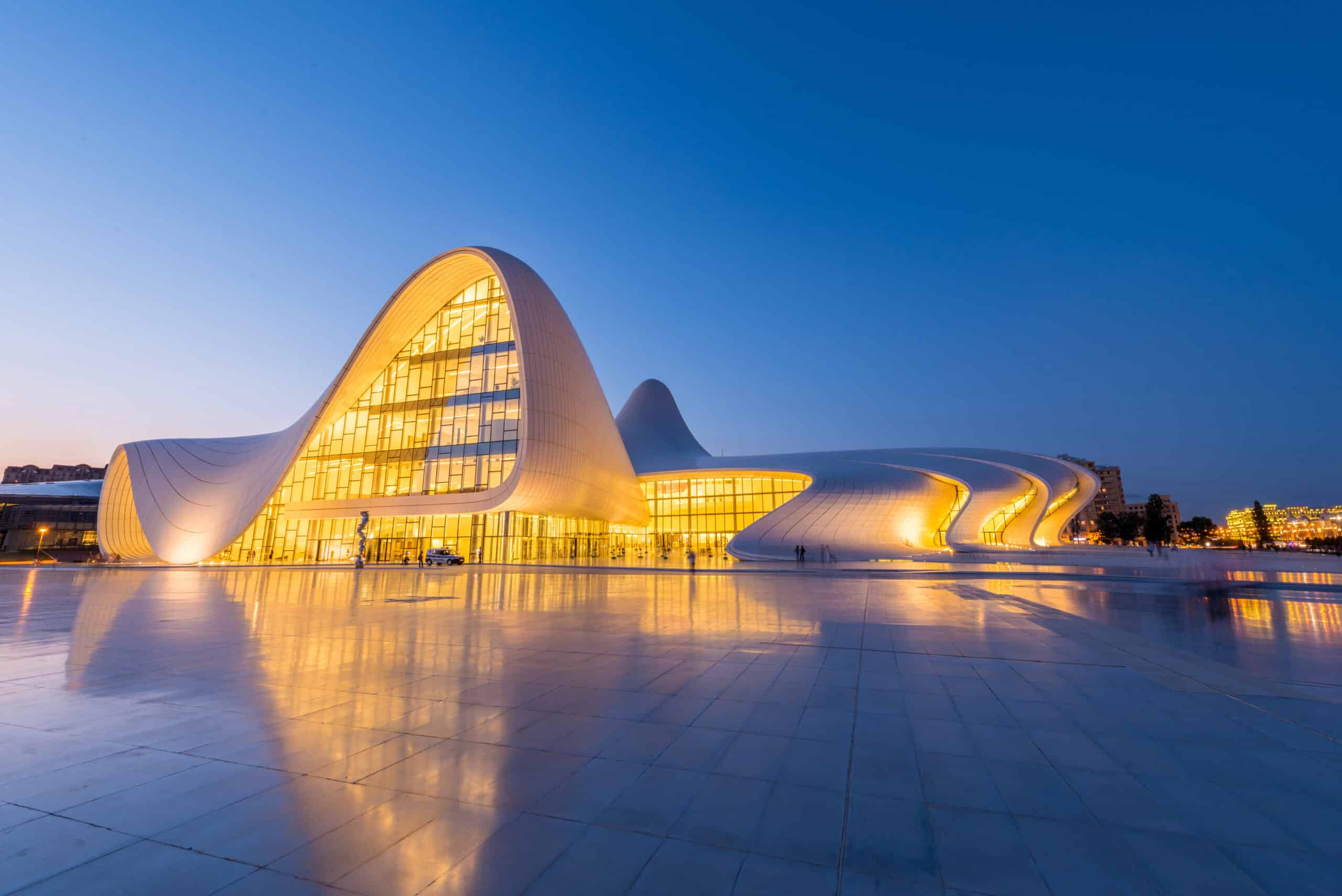
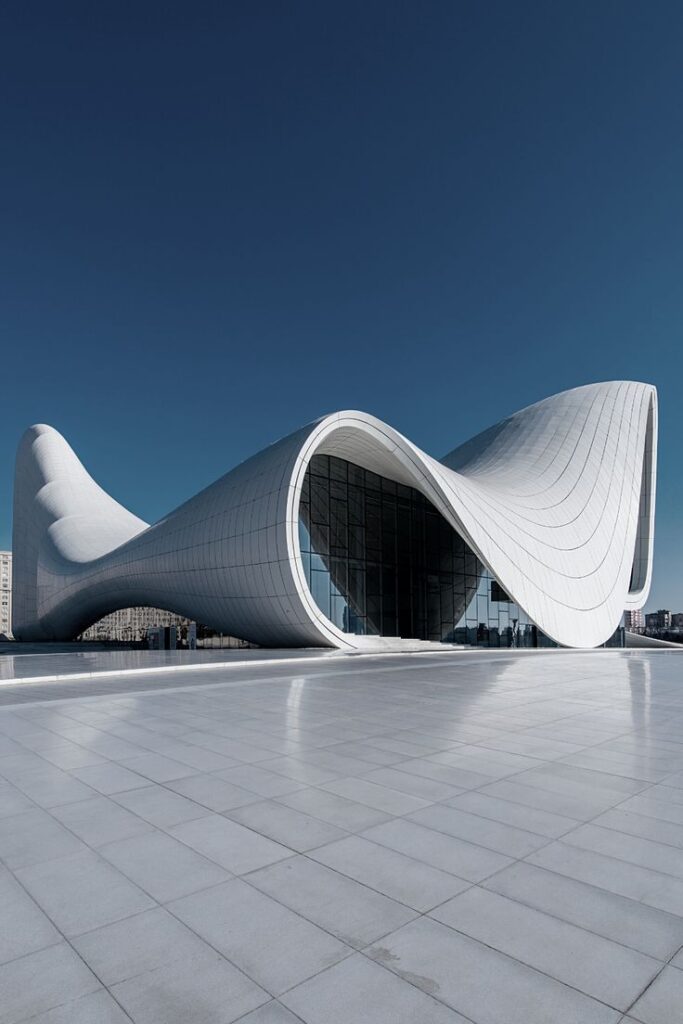
Spaces like the Heydar Aliyev Center in Baku seem to flow in every direction, with gentle undulations that mimic natural landscapes. Inside and out, her structures give a sense of uninterrupted motion and fluid transitions.
You’ll also see this approach in her use of advanced digital modeling. Digital tools allowed Hadid to experiment with complex shapes and refine fluid forms that would be difficult or impossible using traditional methods.
When you walk through one of her buildings, you often feel like you’re moving within an ever-changing, sculptural space rather than a static box. This aspect of her philosophy helps make even large civic buildings feel welcoming and alive.
Deconstructivism and Dynamic Geometries
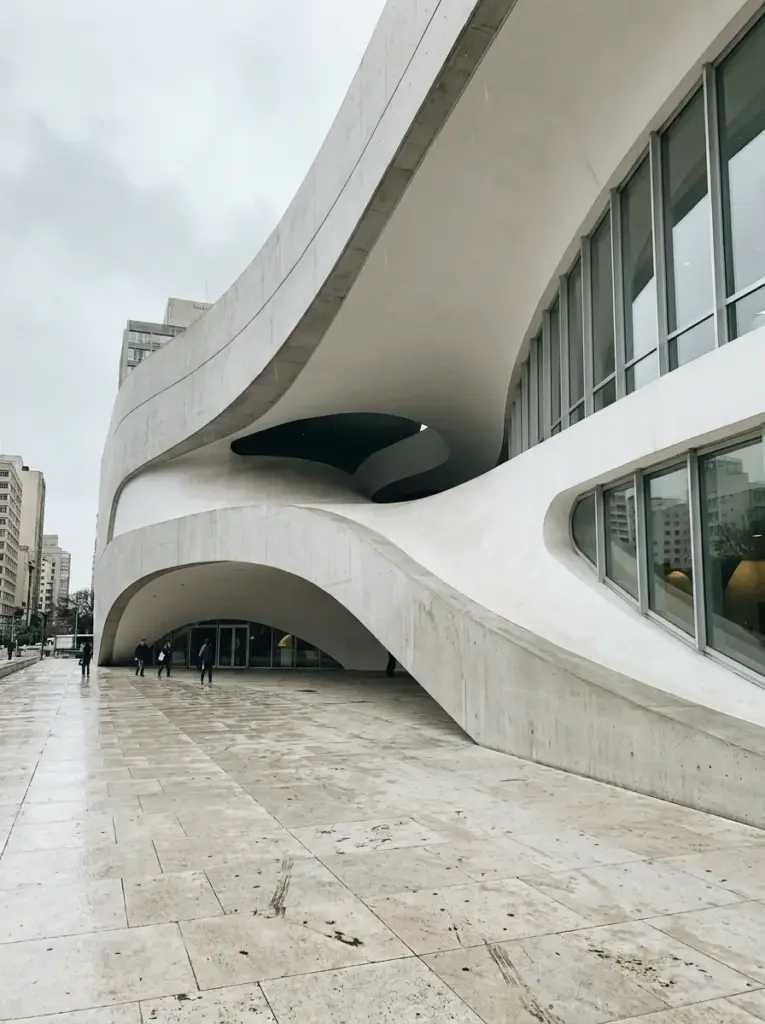
Hadid drew heavily from deconstructivism, breaking down traditional architectural norms to create unconventional forms. You’ll notice asymmetrical shapes, fragmented geometry, and dramatic angles in many of her iconic buildings.
For example, the MAXXI Museum in Rome features intersecting lines and sharp, dynamic geometries that break away from standard right angles. This approach creates a distinct sense of movement and unpredictability in your visual experience.
Her process often began with conceptual sketches that deconstructed the building’s form into dynamic components. As a result, Hadid’s architecture stands in stark contrast to more restrained and rectilinear styles of the past.
By challenging the idea that buildings must conform to predictable shapes, she created environments that feel bold and energetic. You find yourself continually discovering new perspectives as you move through the space.
Integration of Artistic Expression
Zaha Hadid treated architecture as both science and art. You’ll notice her buildings frequently draw inspiration from painting, sculpture, and other visual arts. Her architectural philosophy blurred the line between structural function and aesthetic expression.
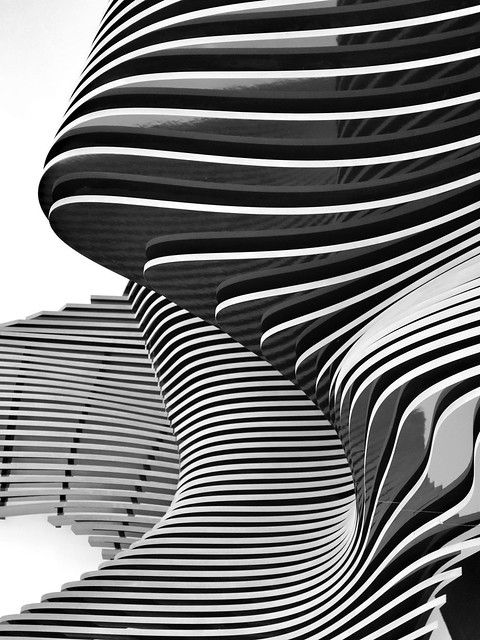
She often experimented with mathematical beauty and geometric abstraction in her designs. Her innovative use of parametric modeling allowed each project to have a unique visual signature, where the artistic vision was always evident.
Hadid’s interiors are just as expressive as their exteriors. You’ll encounter unexpected elements—sweeping staircases, undulating walls, and sculptural installations—all merging to create a cohesive work of art.
Your experience within her buildings feels curated, much like stepping inside a gallery or immersive artwork. This commitment to artistic expression makes her legacy significant in both architectural and wider cultural conversations.
Focus on Functionality and Accessibility
Despite her futuristic forms and visionary designs, Hadid prioritized usability. You’ll see that she did not separate beauty from function. For instance, public spaces and walkways in her buildings are designed for easy access and intuitive navigation.
Hadid’s careful attention to layout ensures that visitors can move smoothly through the buildings. Features like open corridors, strategically placed ramps, and broad entrances enhance accessibility for all users.
She believed that architecture should serve the community as much as inspire it. To that end, Hadid focused on making her designs adaptable to different needs, from concert halls to museums and sports arenas.
By merging functionality with her bold forms, Hadid demonstrated that architecture could be both radical and user-friendly. You benefit from innovative spaces that never sacrifice comfort or accessibility.
Materials, technology, and parametric design in Zaha Hadid buildings
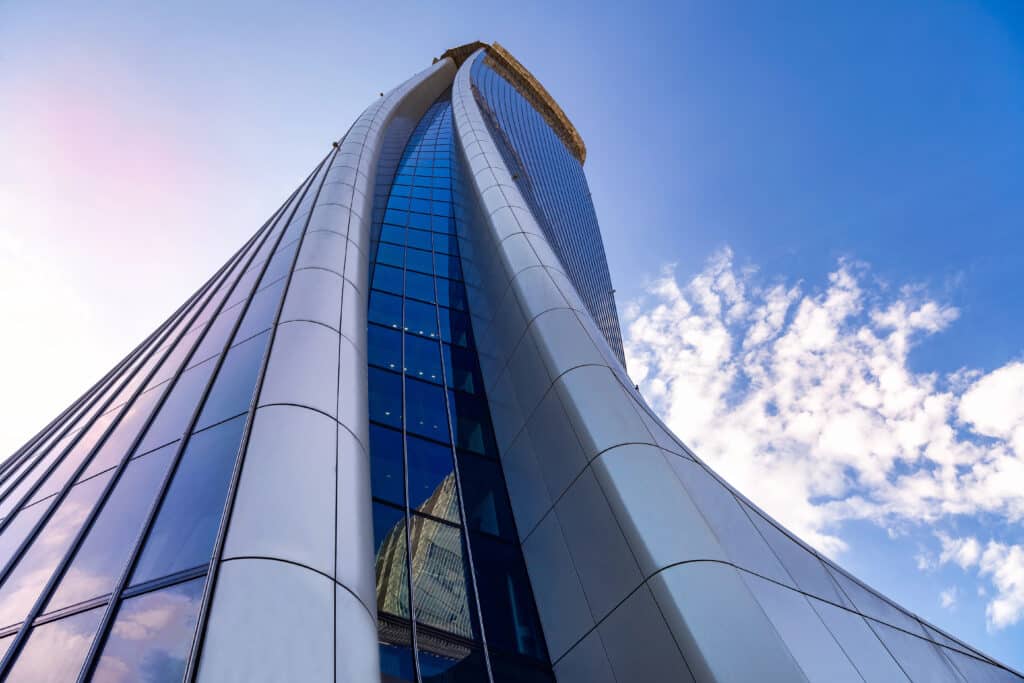
Zaha Hadid’s architectural achievements were made possible by embracing digital modeling, advanced materials, and teamwork across disciplines. By adopting new technologies and collaborating with experts, her designs moved beyond traditional construction limitations.
Pioneering Computational and Parametric Design
You see Hadid’s distinctive architecture thanks to her early and influential use of computational design. Her team employed advanced digital modeling and parametric design tools to generate complex, fluid forms. These digital techniques made it possible to explore shapes and geometries that would be impossible to achieve by hand.
By adopting cutting-edge software, Hadid’s studios could rapidly iterate designs. This approach allowed for real-time adjustments and precise visualization, ensuring that even the most experimental concepts could be tested for feasibility. Algorithms and custom scripts played a key role in translating sketches into structural systems.
Hadid’s use of computational workflows set a new standard for the field. It enabled bespoke solutions for each project, letting you experience spaces with bold curves, unexpected angles, and dynamic interiors.
Innovative Materials and 3D Printing
Hadid’s office pushed boundaries by specifying innovative building materials like high-performance concrete, glass fiber-reinforced panels, and advanced composites. These materials allowed the construction of her trademark flowing facades and soaring cantilevers.
You might notice that her projects often showcased the integration of 3D printing. Components such as custom cladding elements or interior features were prefabricated using additive manufacturing. This sped up construction times and enabled unique, non-repetitive forms.
By mixing traditional and experimental materials with cutting-edge production techniques, Hadid’s architecture blends artistry with technical efficiency. The result is a series of landmark buildings that are strong, elegant, and functionally advanced.
Collaboration with Engineers and Interdisciplinary Approach
Hadid’s firm worked in close partnership with engineers, material scientists, and construction experts. These collaborations were essential to solve the structural challenges presented by her ambitious designs.
Working in interdisciplinary teams, each discipline contributed expertise to fit every component of the design. The process often involved detailed simulation, prototyping, and extensive testing of structural systems. You benefit from this teamwork as it leads to spaces that not only appear dynamic but are also safe and durable.
This collaborative approach ensures that aesthetic vision is balanced with technical execution. Through ongoing dialogue between various experts, Hadid’s buildings brought innovative concepts to life while meeting practical demands of real-world use.
Zaha Hadid buildings that changed city skylines
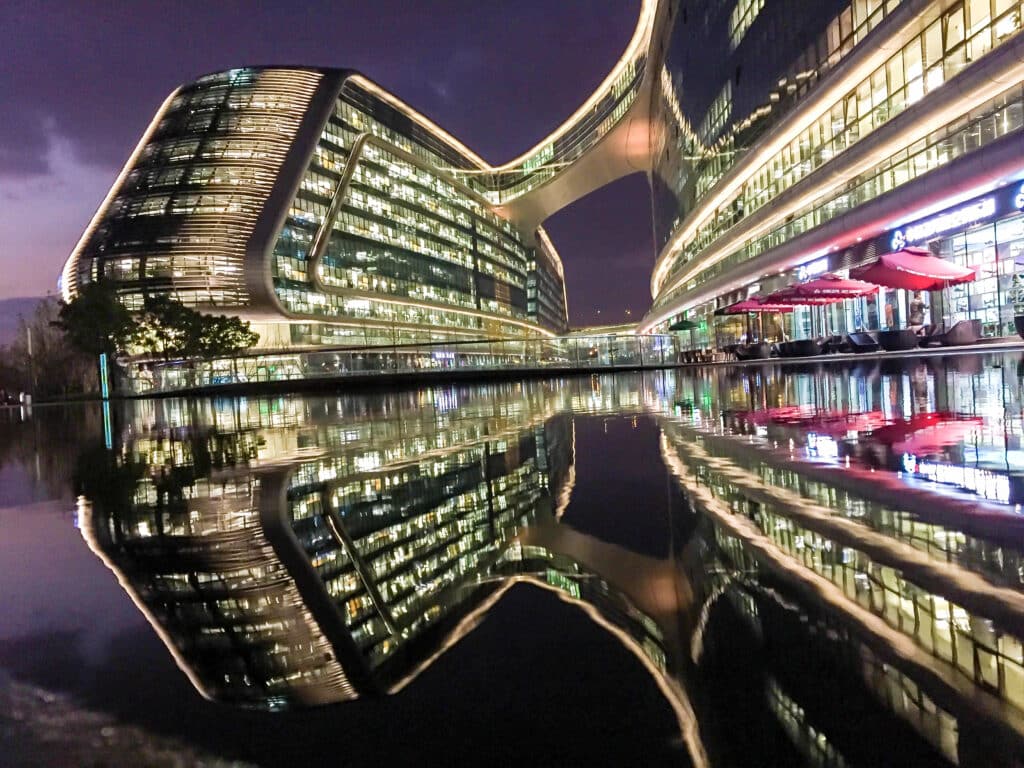
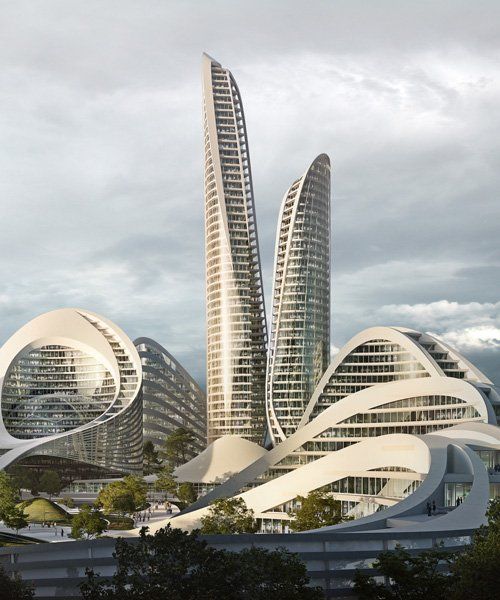
Zaha Hadid reshaped urban skylines with buildings that challenge expectations and redefine public space. Each of her signature works stands out for its flowing geometry, technical innovation, and ability to become an instantly recognizable city symbol.
Guangzhou Opera House and Urban Landmark Creation
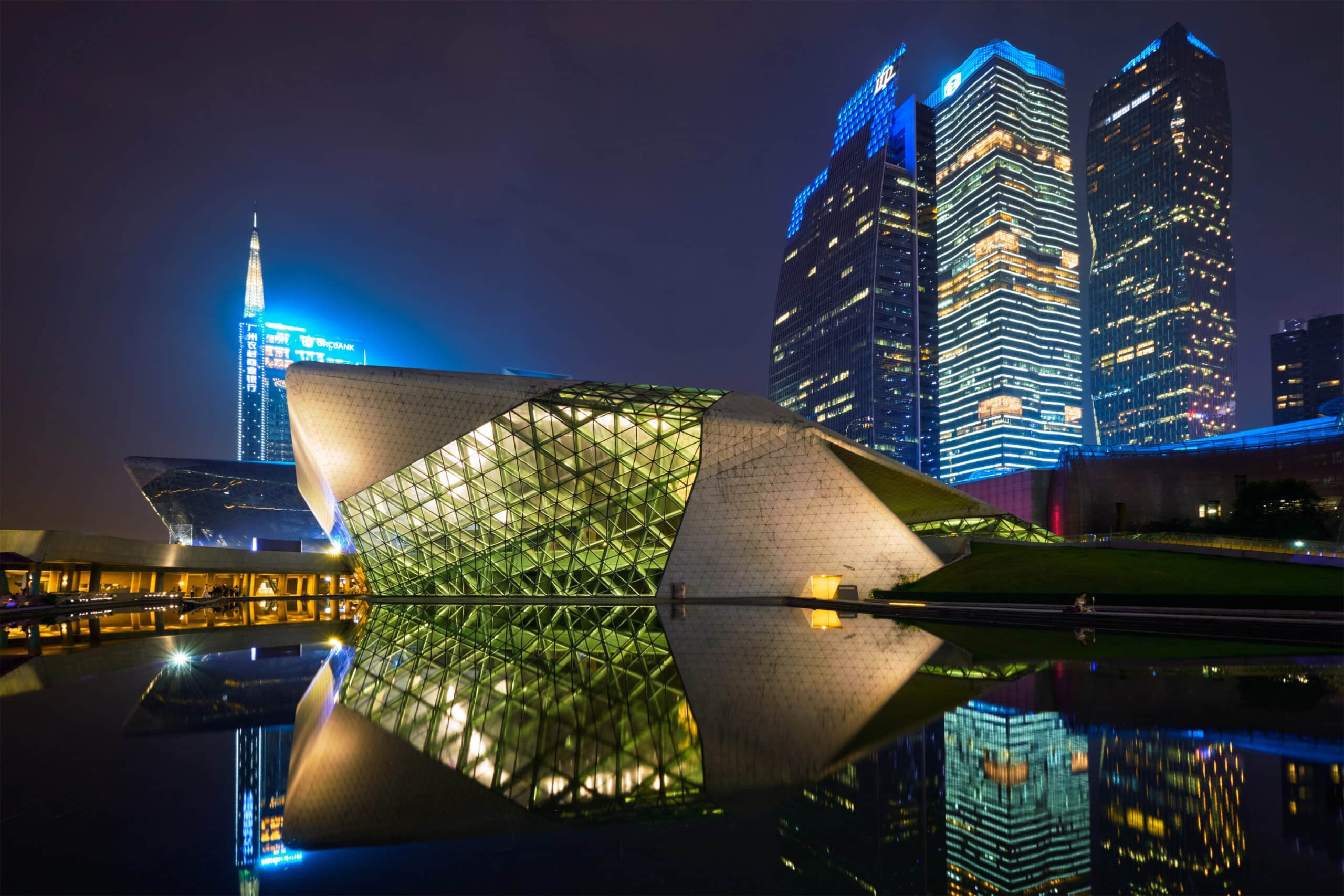
When you see the Guangzhou Opera House, its twin boulder-like structures seem to emerge from the riverbank, immediately grabbing your attention. The building’s striking silhouette and curving forms bring a futuristic identity to Guangzhou’s urban landscape.
Designed with fluid lines and advanced engineering, the Opera House not only hosts performances but also acts as a gathering space. Its presence attracts locals and visitors to the riverside, making the location a social and cultural anchor in the city.
The structure has helped to elevate Guangzhou as an international destination for the arts. The way light plays on its granite and glass facade is a reminder of how architecture can shape a city’s aesthetic and public life.
Heydar Aliyev Center: Azerbaijan’s Futuristic Jewel
The Heydar Aliyev Center in Baku features sweeping curves that seem to ripple through the landscape, breaking away from traditional architectural forms in the city. For residents and tourists alike, the building offers a new perspective on what a civic building can be.
Its fluid exterior creates bold public spaces around and within the center, making it more than just a museum or auditorium. The building works as a dynamic cultural hub, hosting exhibitions, concerts, and educational events.
This architectural masterpiece symbolizes Azerbaijan’s future-oriented ambitions. It is a vivid landmark that has redefined Baku’s cityscape, showcasing how you can use bold design to set a city apart on the global stage.
London Aquatics Centre and Olympic Legacy
In London’s Queen Elizabeth Olympic Park, the London Aquatics Centre stands out for its wave-like roof. Created for the 2012 Olympics, the building needed to be both practical for athletic events and inspiring as a civic space for East London.
After the games, its transformation into a public pool highlights Hadid’s vision of long-term value. You can see families and swimmers enjoying its cutting-edge facilities daily.
The centerpiece roof is more than just an architectural feat. It gave East London a landmark and helped rejuvenate an entire borough. The project demonstrates how you can integrate beauty, function, and legacy in urban planning.
Vitra Fire Station and Early Breakthroughs
The Vitra Fire Station in Weil am Rhein marks one of Hadid’s first realized buildings. Its sharp, angular planes and concrete forms are a bold departure from the surrounding industrial context, making it instantly memorable.
Built in the 1990s, the station was both a functional firehouse and an experimental canvas for Hadid’s emerging style. For the Vitra campus, this building introduced new ways to approach industrial architecture and spatial experience.
While it no longer works as a fire station, it remains a celebrated icon and exhibition space. Its legacy lies in how it opened doors for more daring and imaginative architecture across urban and cultural sites.
Zaha Hadid architectural legacy and influence today
Zaha Hadid’s bold architectural vision reshaped how you experience urban spaces worldwide. Her commitment to innovation, sustainability, and design excellence continues to influence both the built environment and the next generation of creators.
Influence on Modern and Contemporary Architecture
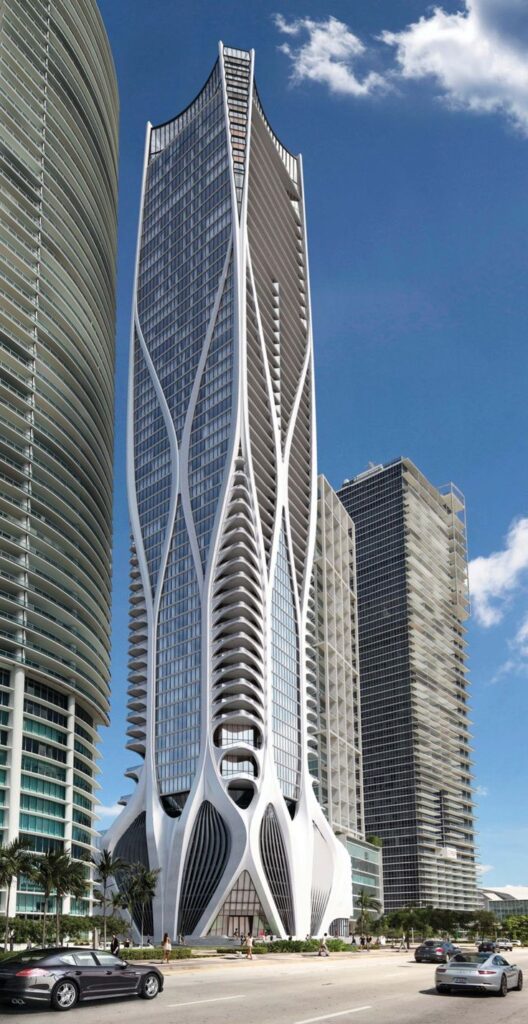
You can recognize Hadid’s influence in the sweeping curves and bold geometric forms that have become staples in modern architecture. Her designs, such as the Guangzhou Opera House and MAXXI Museum, challenged traditional boundaries between structure and art.
By introducing fluid, futuristic forms, Hadid showed you that buildings don’t have to look conventional to function exceptionally well. Her work inspired architects globally to experiment with new materials and digital design tools.
Her impact is especially visible in the way cities have embraced more expressive, dynamic public spaces. When you walk through a plaza or museum that feels sculptural and open, you are likely seeing the ripples of Hadid’s approach to blending art and architecture.
Hadid helped to shape a new era in architectural education by encouraging students to pursue creative risk-taking. Frank Gehry and Rem Koolhaas may have led movements before, but Hadid broke into the mainstream at a time when few women reached architecture’s highest ranks.
Recognition: Awards and Honors
Your appreciation of Hadid’s legacy is reflected in the numerous awards she received, showing her global impact. She became the first woman to win the Pritzker Architecture Prize in 2004—a milestone for gender representation in the field.
Hadid also earned the Stirling Prize twice (2010, 2011) for innovative public and cultural spaces. Her contributions were recognized with the RIBA Gold Medal in 2016, an honor rarely given to individuals.
The table below highlights key honors:
| Award | Year | Notable Recognition |
|---|---|---|
| Pritzker Prize | 2004 | First woman recipient |
| Stirling Prize | 2010/11 | MAXXI Museum, Evelyn Grace Academy |
| RIBA Gold Medal | 2016 | Lifetime achievement |
Her recognition influenced how you see women’s roles in architecture and reflected her innovative spirit.
Sustainability and innovation in ZHA projects
Hadid’s projects often incorporated advanced technologies to achieve both sustainability and visual impact. You’ll find that many buildings by Zaha Hadid Architects (ZHA) feature energy-efficient glass facades, precise orientation for natural light, and innovative structural systems.
Examples like the London Aquatics Centre use natural ventilation, reducing the need for artificial cooling. This approach reflects Hadid’s commitment to sustainable construction while maintaining her distinct style.
Sustainability at ZHA wasn’t limited to energy use—material selection and site responsiveness were central to each project. By integrating sustainability with bold forms, Hadid demonstrated that environmentally conscious design can also be visually inspiring.
Through workshops and research initiatives, ZHA continues to push the boundaries in resilient, adaptable spaces—inviting you to rethink what sustainable development can look like for the future.
Role of Zaha Hadid Architects in Shaping the Future
Zaha Hadid Architects remains a leader in innovative design, carrying forward Hadid’s legacy through bold projects worldwide. The firm’s work in cities like Beijing, Dubai, and New York showcases how your urban environment can benefit from architectural innovation.
ZHA continues to invest in digital design tools, smart systems, and research, enriching both large civic projects and intimate commercial spaces. Their ongoing success shows the adaptability and influence of Hadid’s design philosophy.
Through architectural education initiatives, ZHA mentors emerging talent and collaborates with universities. By engaging young architects, the firm is helping shape the next wave of contemporary architecture.
Whether you’re observing new technologies or spatial concepts in the urban landscape, you’re likely encountering the influence of ZHA’s ongoing work—ensuring Hadid’s vision endures in the cities of tomorrow.
Further architecture references
For primary context, compare this article with the Pritzker Architecture Prize biography, the official Zaha Hadid Architects project archive, and the Zaha Hadid Foundation. Those sources help verify dates, awards, and project attribution while this guide focuses on design reading and visual interpretation.
For more Sky Rye Design context, continue with these architecture guides:
- architecture sketches
- rhythm in architecture
- architecture drawing for beginners
- residential developments
- design-build construction
- 3D rendering for architecture
- architectural rendering techniques
- 3D printing in architecture
- architectural photography ideas
- modern house designs
Zaha Hadid architecture FAQ
What style of architecture is Zaha Hadid known for?
Zaha Hadid is known for fluid, futuristic architecture with sweeping curves, fragmented geometry, and a strong sense of movement. Her work grew from deconstructivism, but later projects often used digital modeling and parametric design to make complex forms buildable.
What are Zaha Hadid’s most famous buildings?
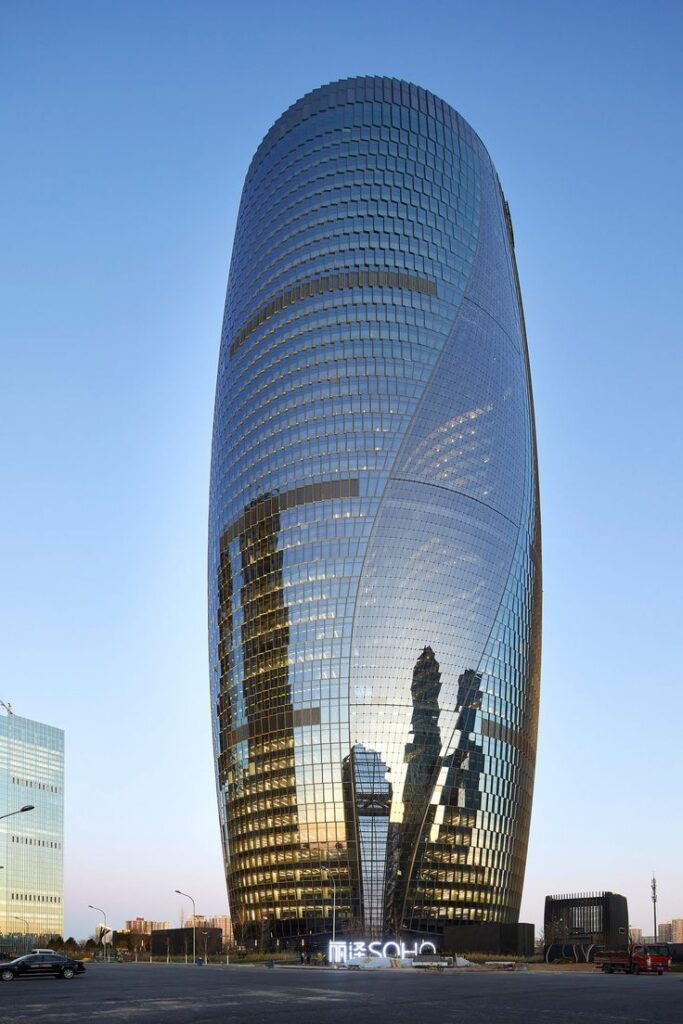
Her best-known buildings include the Heydar Aliyev Center in Baku, the London Aquatics Centre, MAXXI in Rome, Guangzhou Opera House, Vitra Fire Station, Leeza SOHO in Beijing, and Beijing Daxing International Airport by Zaha Hadid Architects.
Why is Zaha Hadid important in architecture?
Hadid changed how architects think about form, movement, and public space. She was the first woman to win the Pritzker Architecture Prize, and her built work helped prove that radical drawings and computational forms could become real civic landmarks.
What materials and technology did Zaha Hadid use?
Her projects often used reinforced concrete, steel, glass, advanced facade systems, digital modeling, structural simulation, and parametric design workflows. The exact material strategy changed by project, but the goal was usually to make complex curves feel continuous and buildable.
How did Zaha Hadid influence urban planning?
Hadid influenced urban planning by treating major buildings as active parts of city movement. Projects such as the London Aquatics Centre and Heydar Aliyev Center do not only sit in a city; they shape circulation, public gathering, visual identity, and how people remember the district.
Is Zaha Hadid still alive?
No. Zaha Hadid died in 2016. Her influence continues through completed buildings, posthumous projects by Zaha Hadid Architects, her teaching legacy, and the architects who still study her drawings, geometry, and approach to urban landmarks.
What can designers learn from Zaha Hadid’s work?
Designers can learn to start with movement and spatial experience, not decoration. Her work shows why strong diagrams, clear circulation, and disciplined geometry matter before surface detail. Even her most dramatic buildings are built around flow, structure, and public use.
- 178shares
- Facebook0
- Pinterest178
- Twitter0
- Reddit0