Unicorn drawing ideas are easier when you stop treating the unicorn as pure magic and start with a horse-like head, a clean horn angle, and a mane that leads the eye through the page. This guide gives you easy unicorn drawing prompts for cute portraits, rainbow manes, cloud scenes, fantasy forests, castles, and more detailed sketchbook studies.
I would start light, especially around the muzzle, horn, and front legs. A 2B pencil and a kneaded eraser give you enough room to search for the silhouette before you commit to darker line weight or color.
- Unicorn drawing ideas: what to sketch first
- How to draw a unicorn in an easy way
- 1) Magical unicorn with rainbow mane
- 2) Cute unicorn portrait
- 3) Unicorn in a fantasy forest
- 4) Unicorn with glitter accents
- 5) Kawaii style unicorn
- 6) Unicorn riding a cloud
- 7) Unicorn and fairy friendship scene
- 8) Unicorn with a castle background
- Understanding unicorn anatomy
- Exploring creative styles
- Common unicorn drawing mistakes
- More drawing practice for this cluster
- Unicorn drawing FAQ
Unicorn drawing ideas: what to sketch first
If you want an easy unicorn drawing, begin with one clear decision: head study, full body, kawaii character, or fantasy scene. Each choice trains a different skill. Head studies teach proportion and horn placement. Full-body unicorns teach horse anatomy. Kawaii drawings keep the shapes simple. Forest and castle scenes teach composition.
| Unicorn idea | Best for | Sketching note |
|---|---|---|
| Unicorn head | Beginners | Use a centerline through the face before drawing the eye and horn. |
| Full-body unicorn | Horse proportion practice | Block the body as simple horse shapes, then add fantasy details. |
| Kawaii unicorn | Cute stickers and kids’ art | Round the head, lower the features, and keep the hooves tiny. |
| Rainbow mane | Color practice | Plan the mane as ribbons so the colors do not turn muddy. |
| Forest or castle unicorn | Fantasy composition | Thumbnail the background first so it supports the unicorn instead of swallowing it. |
How to draw a unicorn in an easy way
To draw a unicorn in an easy way, sketch a horse-like head or body with pale construction lines, add a spiral horn on the forehead, then design the mane as one big flowing shape before adding small strands. Keep the first pass simple: oval head, neck curve, muzzle, ear, horn, eye, mane, and tail. Once the proportions feel balanced, darken the outer contour and add soft shadows under the jaw, mane, belly, or hooves.
- Draw the main head or body shape lightly.
- Add a centerline so the horn and eye sit in the right place.
- Sketch the horn as a tapered cone, then wrap it with spiral bands.
- Design the mane as one large flowing mass before adding hair strands.
- Finish with line weight, color accents, and a simple background shape.
1) Magical unicorn with rainbow mane
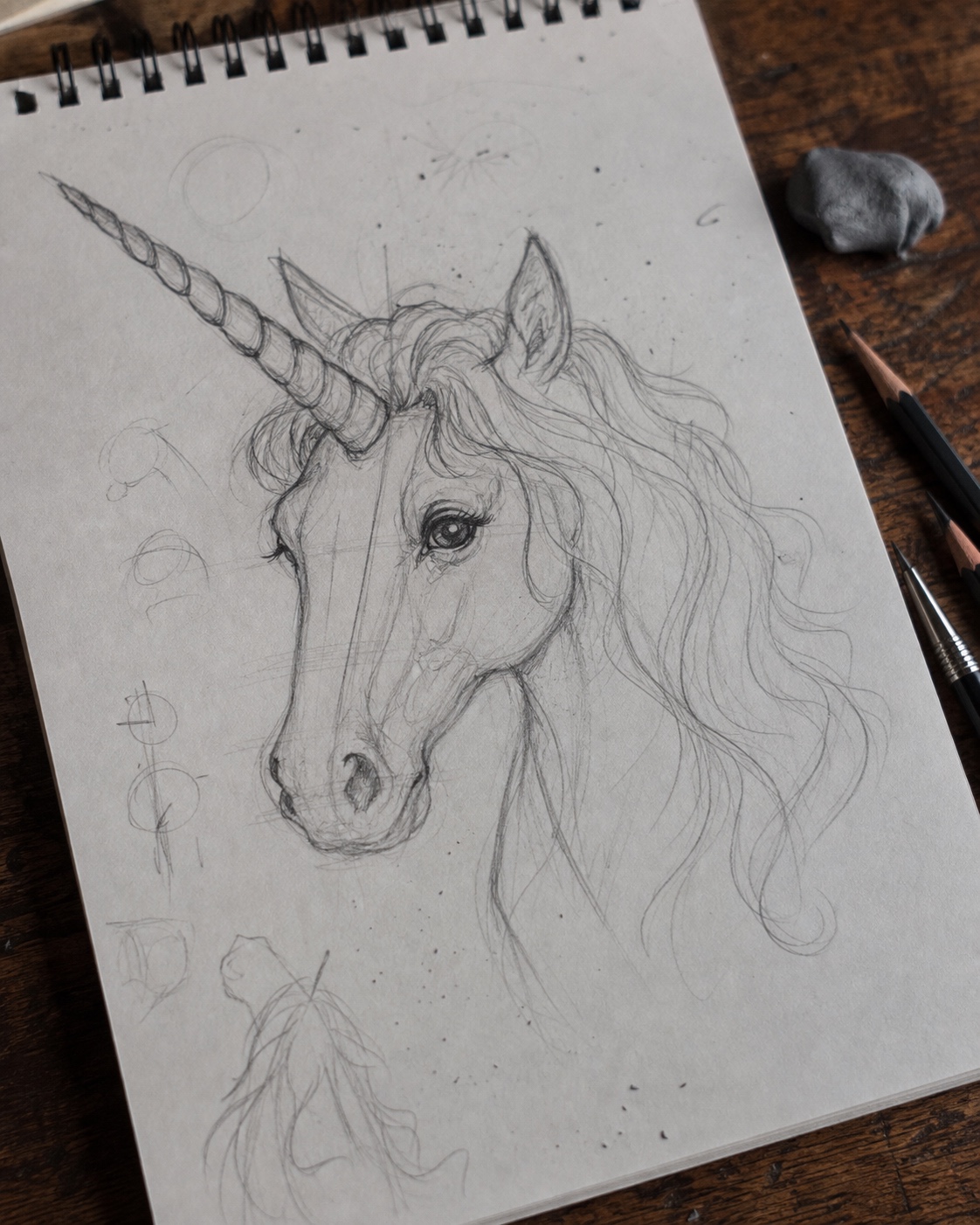
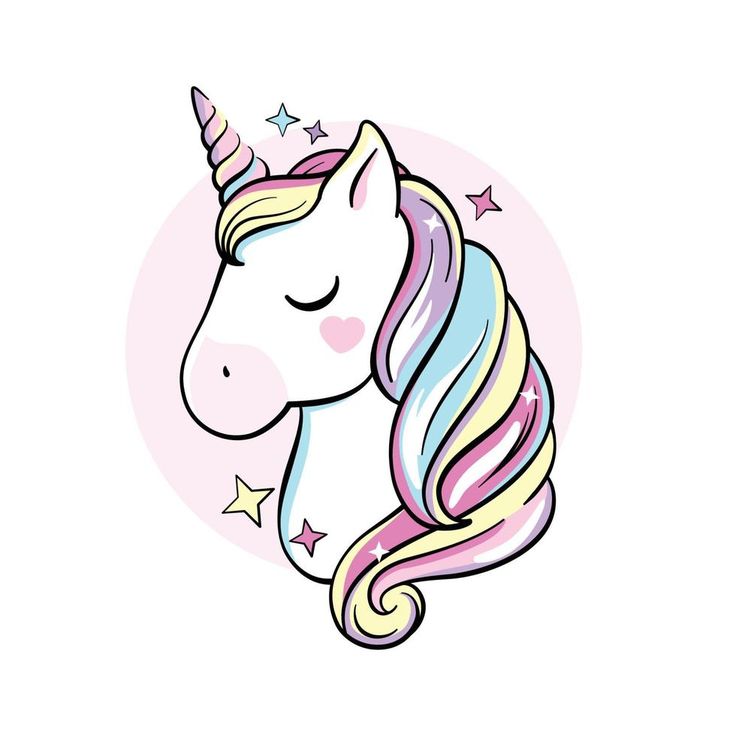

For a rainbow mane unicorn, draw the mane as wide ribbons first. I usually mark the direction of the hair with two or three big curves, then divide those curves into color bands. It keeps the rainbow from looking like separate noodles pasted onto the neck.
Artists often start with a simple sketch of the unicorn’s outline. Adding details like the flowing mane and sparkling eyes can enhance the charm of the drawing.
Using various colors for the mane can create a visually striking effect. Pastel colors or bright hues both work well, depending on the desired style.
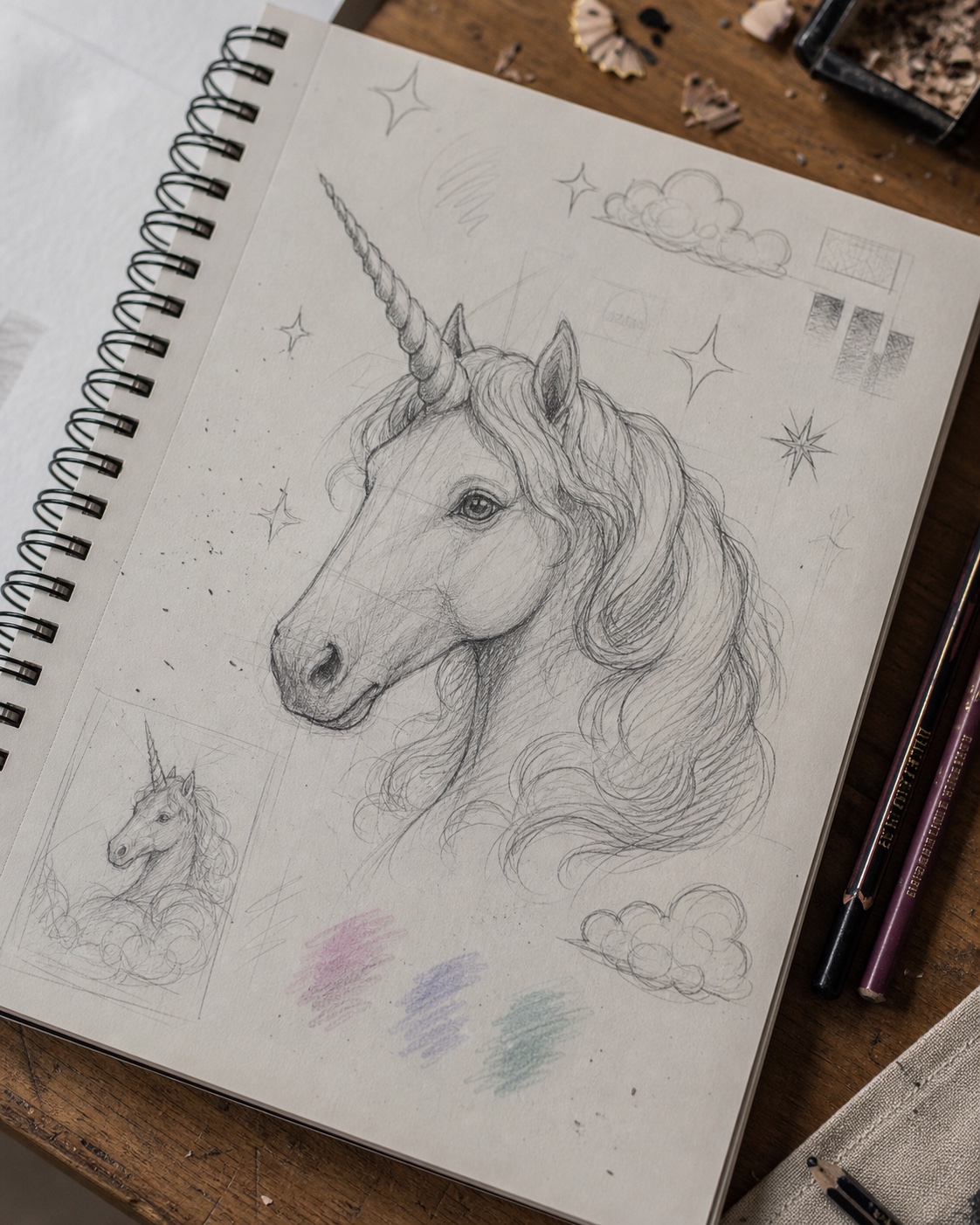
Inspiration can be found in various places, such as online tutorials and art boards. Many artists share techniques to help others create their own magical unicorn illustrations.
This subject not only appeals to young artists but also to anyone who enjoys whimsical art. The magical essence of unicorns continues to captivate imaginations, making it a timeless drawing idea.
2) Cute unicorn portrait
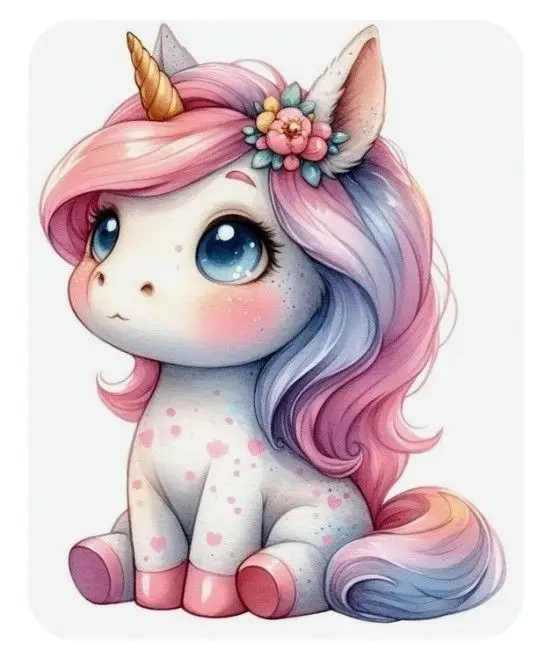
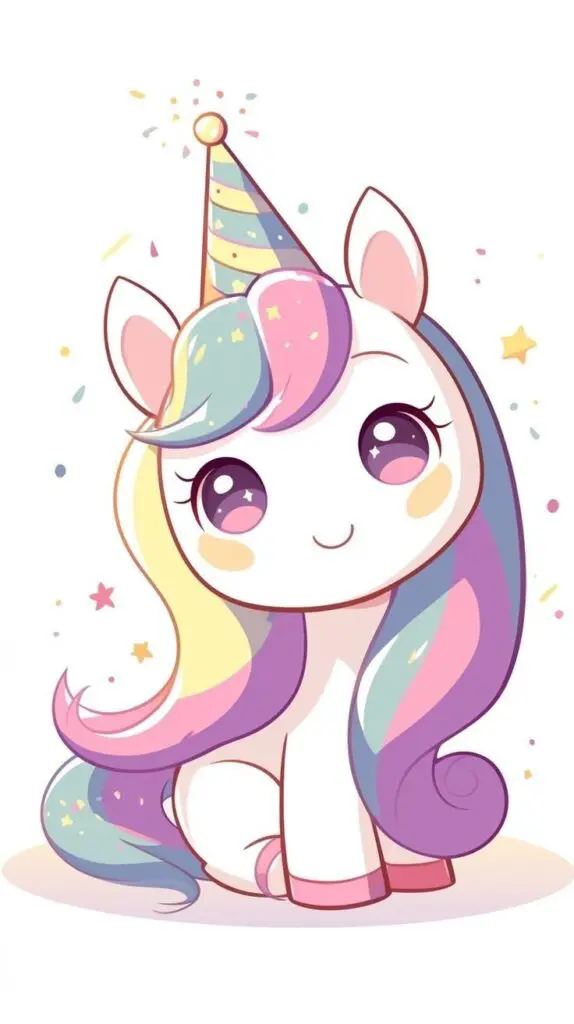
A cute unicorn portrait works best when the face is simple and the eye does most of the expression. Round the cheek, soften the muzzle, and keep the horn short enough that it still feels playful.
To begin, one can focus on soft, rounded shapes to depict the face and body. Using pastel colors for the mane can add a whimsical touch.
Adding cute elements, like big expressive eyes, enhances the endearing quality of the portrait. Accents such as stars or hearts can further personalize the drawing.
Artists may choose to incorporate backgrounds that complement the unicorn, such as rainbows or enchanted forests. This adds depth and context to the artwork, making it even more enchanting.
Whether it’s for a personal project or a gift, a cute unicorn portrait captures the magic often associated with these mythical creatures.
3) Unicorn in a fantasy forest
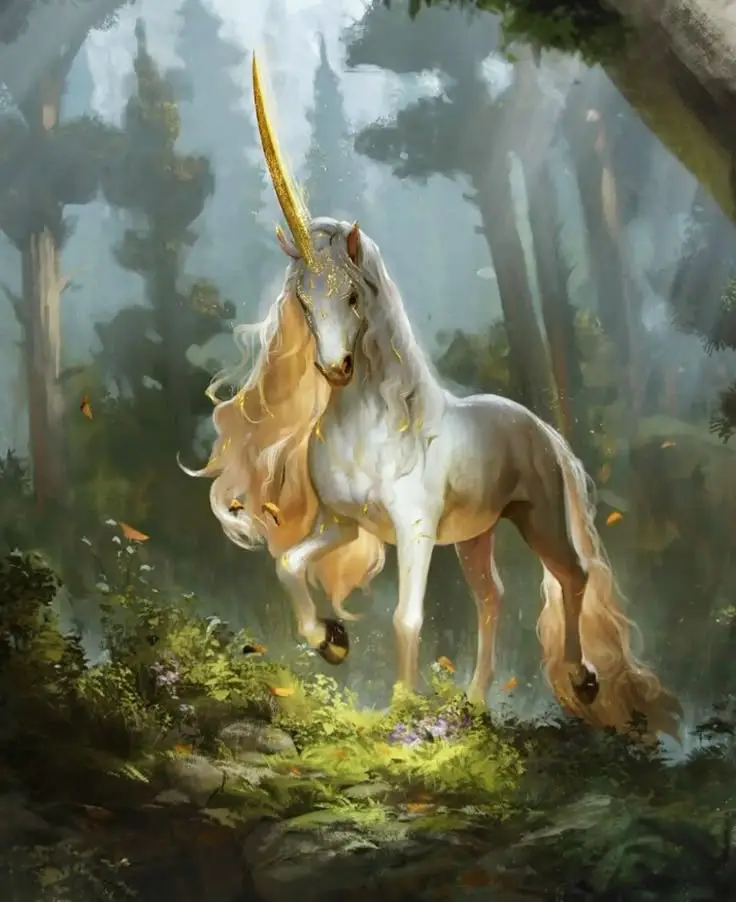

For a unicorn in a fantasy forest, thumbnail the scene before drawing details. Put the unicorn against a lighter opening between trees, then use darker trunks or leaves around the edges to frame the body.
Artists can explore various styles, from realistic depictions to whimsical illustrations. Adding elements like sparkling streams or colorful flowers can enhance the scene. Including other fantasy creatures, such as fairies or magical birds, can create a richer environment.
The choice of colors is vital. Soft pastels can evoke a dreamy atmosphere, while bold colors can make the unicorn stand out. Artists are encouraged to play with light and shadow to bring depth to their artwork.
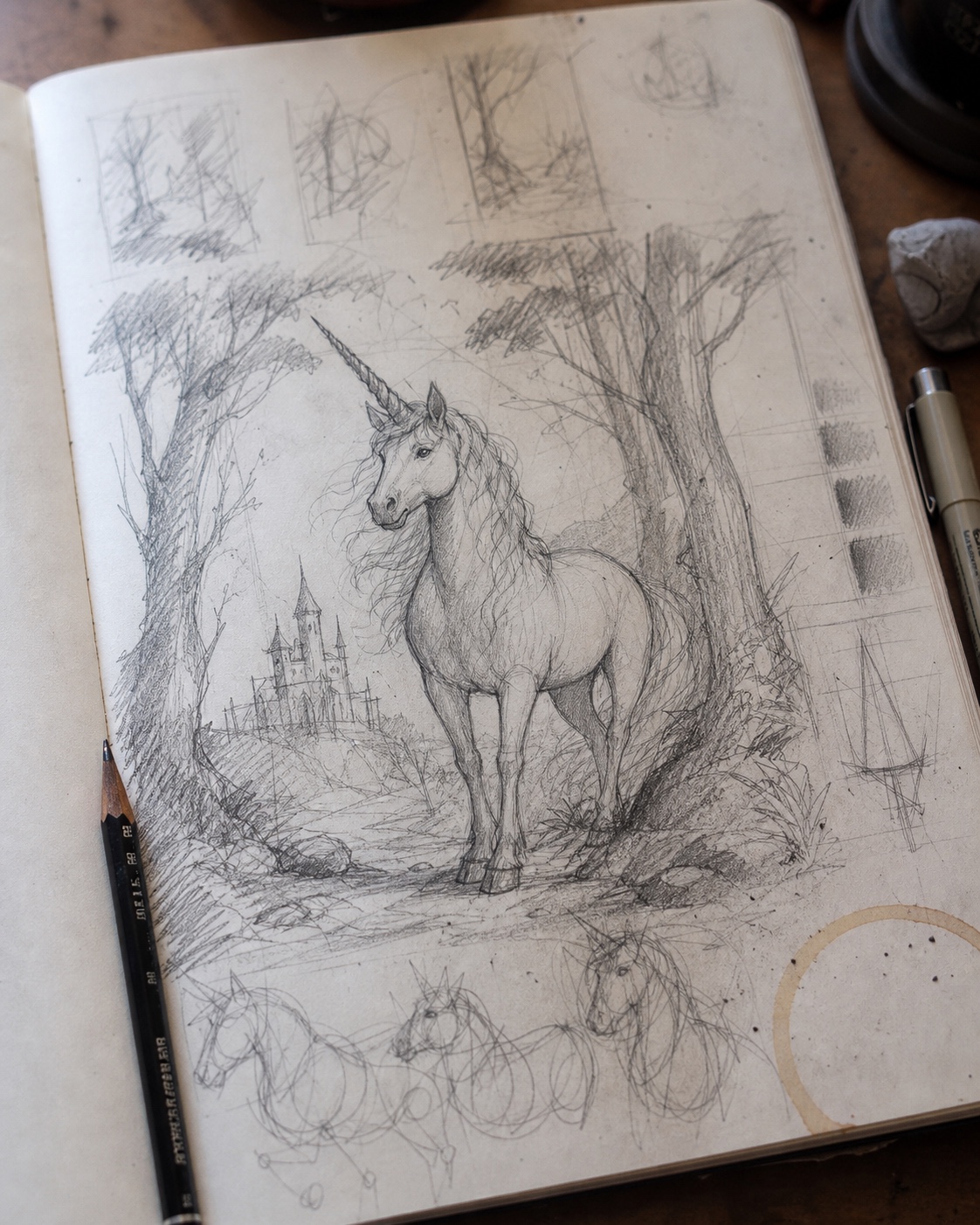
This serene setting provides endless inspiration for drawing. Each artist can find their unique approach to depicting the enchanting connection between the unicorn and its forest habitat.
4) Unicorn with glitter accents
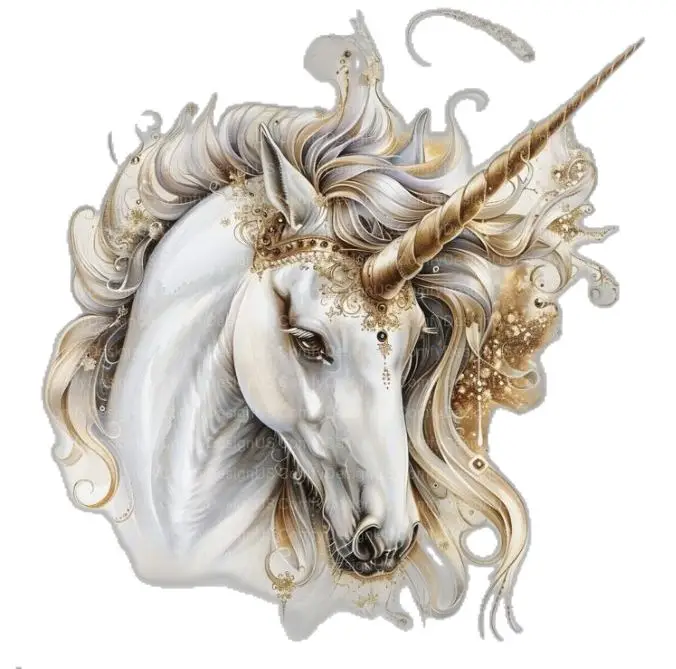
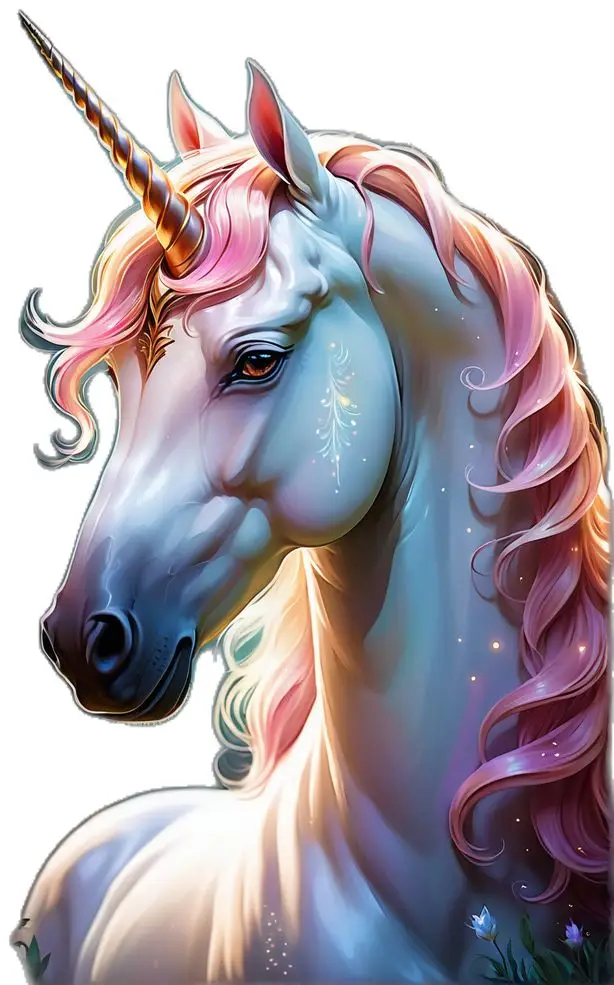
Creating a unicorn with glitter accents adds a magical touch to any artwork. Glitter can enhance the whimsical nature of a unicorn drawing, making it more eye-catching.
To start, an artist can sketch a basic unicorn outline. Once the drawing is complete, the fun part begins. She can apply glitter to the mane and tail for a sparkling effect.
Using glue or glitter pens, accents can be added to areas like the horn and hooves. This will give the unicorn a shimmering appearance that brings it to life.
Experimenting with different colors of glitter allows for unique designs. Pastel shades can create a soft, dreamy look, while vibrant colors can make the unicorn stand out.
Combining glitter with other art techniques, such as watercolor or markers, can lead to stunning results. Whether it’s for a card or personal art, glitter accents will make any unicorn drawing unforgettable.
5) Kawaii style unicorn

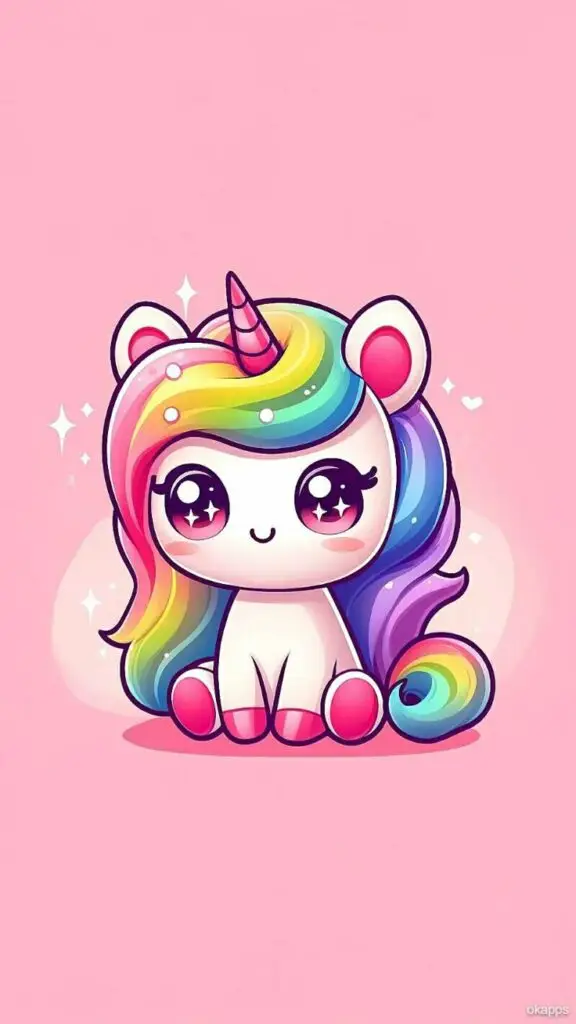
Kawaii unicorns depend on proportion more than detail. Big eyes, short legs, a round head, and tiny hooves will read cute even before you add a rainbow mane or stars.
Artists can experiment with various designs, adding accessories like bows, stars, or hearts. This style encourages creativity and allows for personal touches in every drawing.
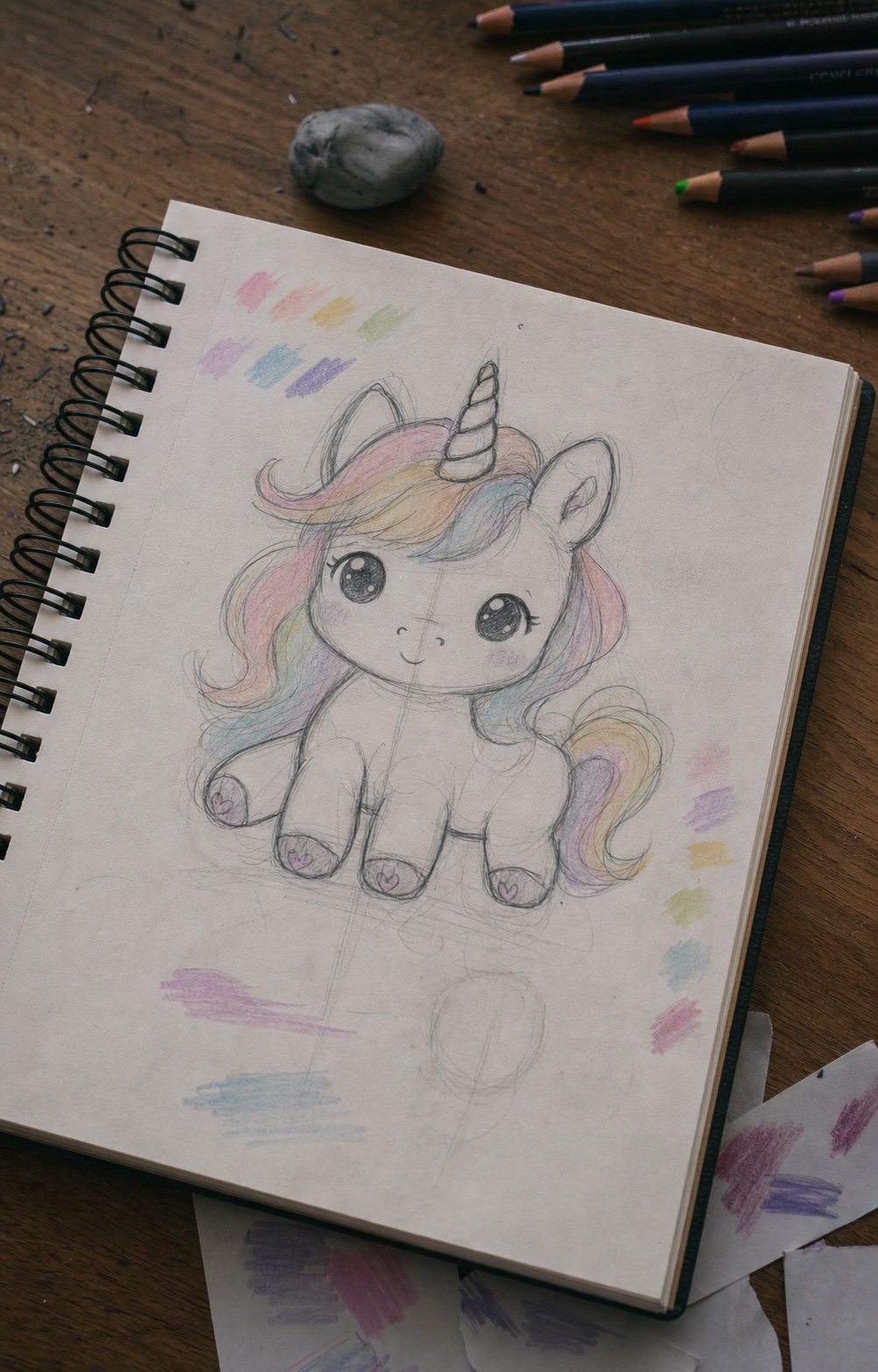
Step-by-step tutorials are available for beginners, guiding them through the process of creating kawaii unicorns. Using simple shapes and easy techniques makes it fun and accessible for all skill levels.
Kawaii unicorns can be drawn in various poses, from prancing to flying. Incorporating fun backgrounds can also enhance the overall composition of the artwork.
6) Unicorn riding a cloud
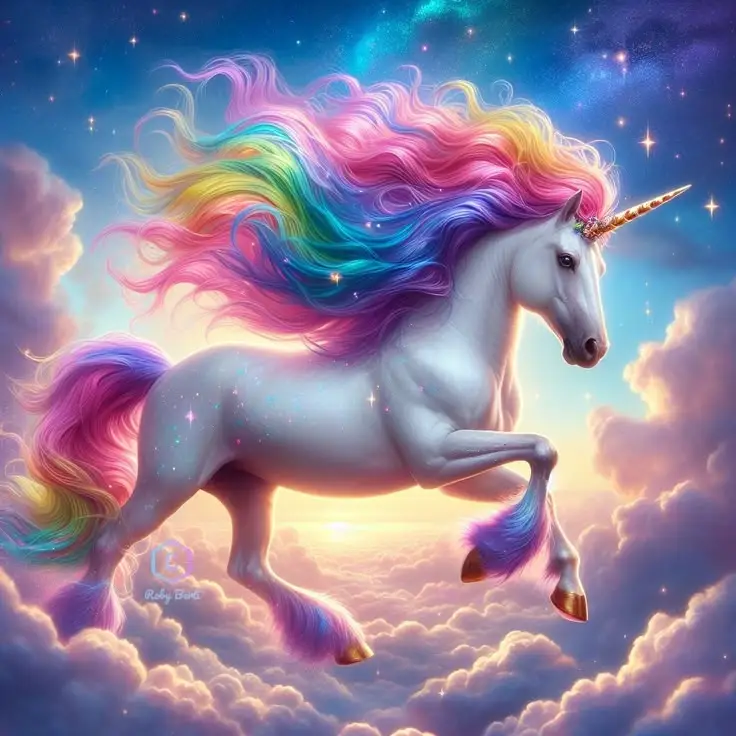

Drawing a unicorn riding a cloud is a whimsical idea that sparks the imagination. It combines the innocence of fantasy with the softness of clouds.
To start, one could envision a cute unicorn with a flowing mane, perched gracefully on a fluffy cloud. The softness of the cloud can be illustrated with rounded edges and shading to create a three-dimensional effect.
Adding a rainbow or twinkling stars in the background can enhance the magical scene. Using bright colors for the unicorn and subtle pastels for the cloud can create a lovely contrast.
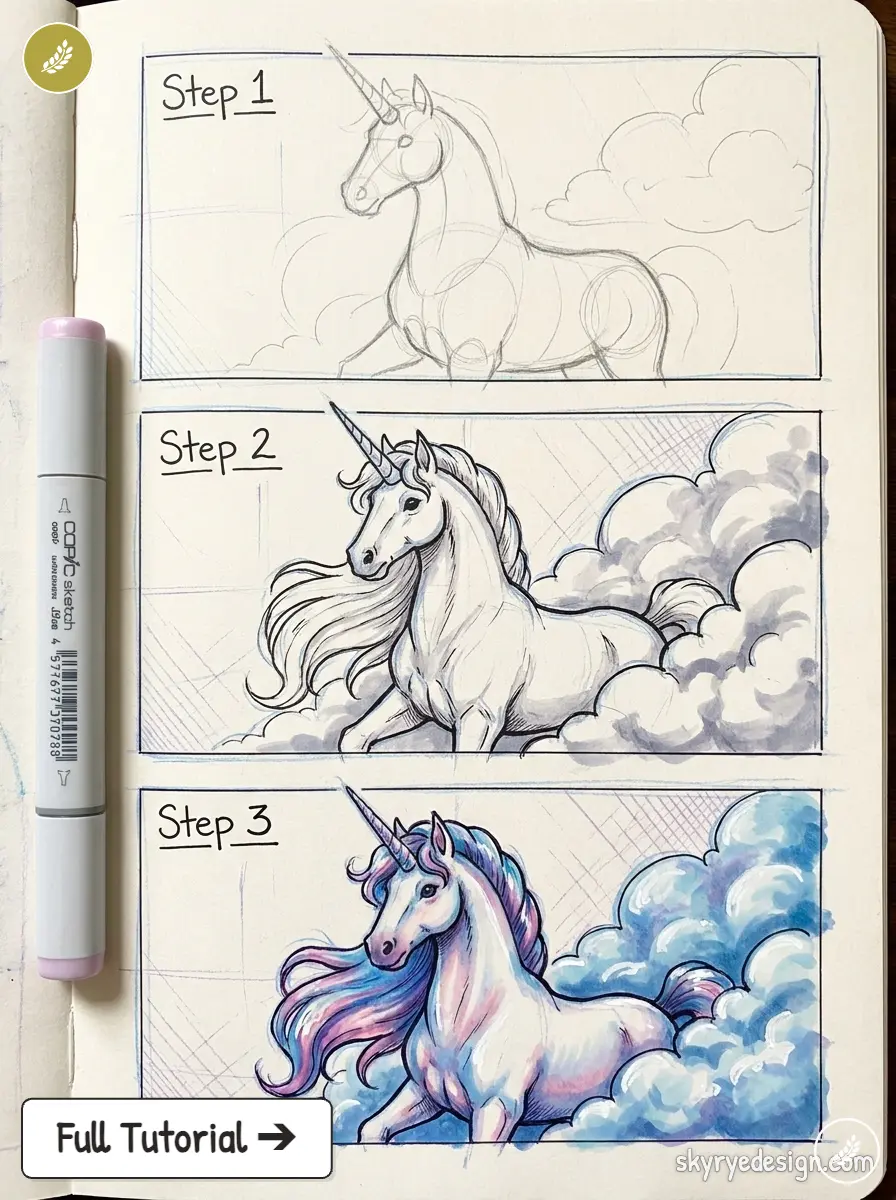
This drawing concept is perfect for artists of all skill levels. Beginners might focus on simple shapes, while more experienced artists can experiment with details and textures.
Using online resources, such as video tutorials or coloring pages, can provide helpful guidance. She could follow along with a video, learning step-by-step techniques to improve her drawing skills.
7) Unicorn and fairy friendship scene

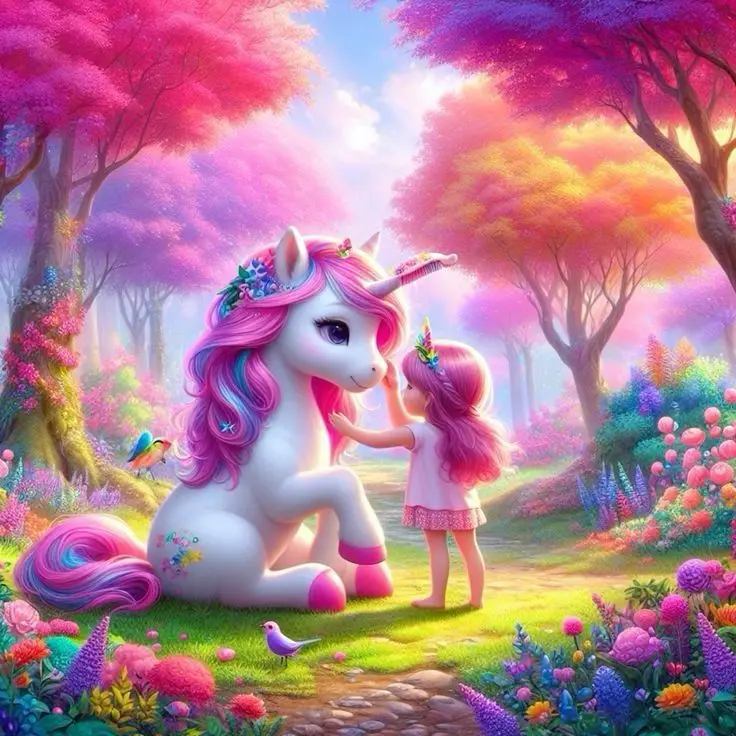
A unicorn and fairy friendship scene captures the magic of their bond. Imagine a colorful forest where a unicorn stands gracefully, its mane flowing in the breeze. Nearby, a fairy flutters with sparkling wings, radiating joy.
They might be sharing laughter, surrounded by blooming flowers and shimmering light. The fairy could be sitting on the unicorn’s back, playfully brushing its mane. This scenario highlights their playful and nurturing relationship.
Artists can focus on the details, such as the intricate designs of the fairy’s wings or the unicorn’s majestic features. Soft pastels or vibrant colors could bring this enchanting scene to life.
Adding elements like butterflies or glowing orbs enhances the whimsical atmosphere. This not only sets a serene mood but also showcases the harmony between these mythical beings.
8) Unicorn with a castle background
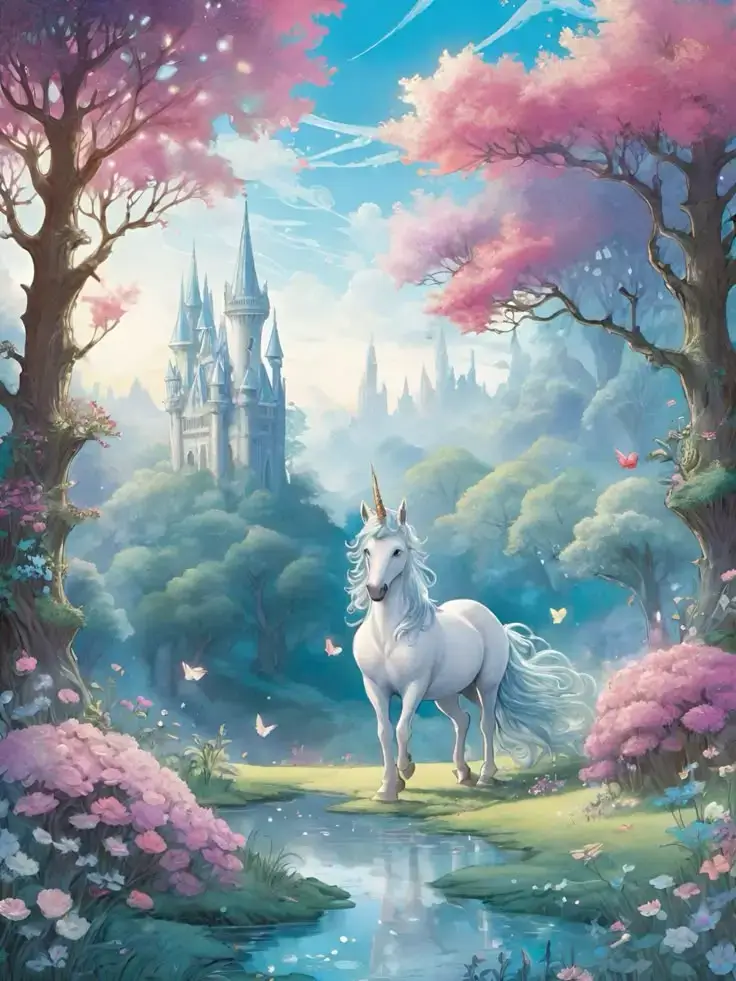
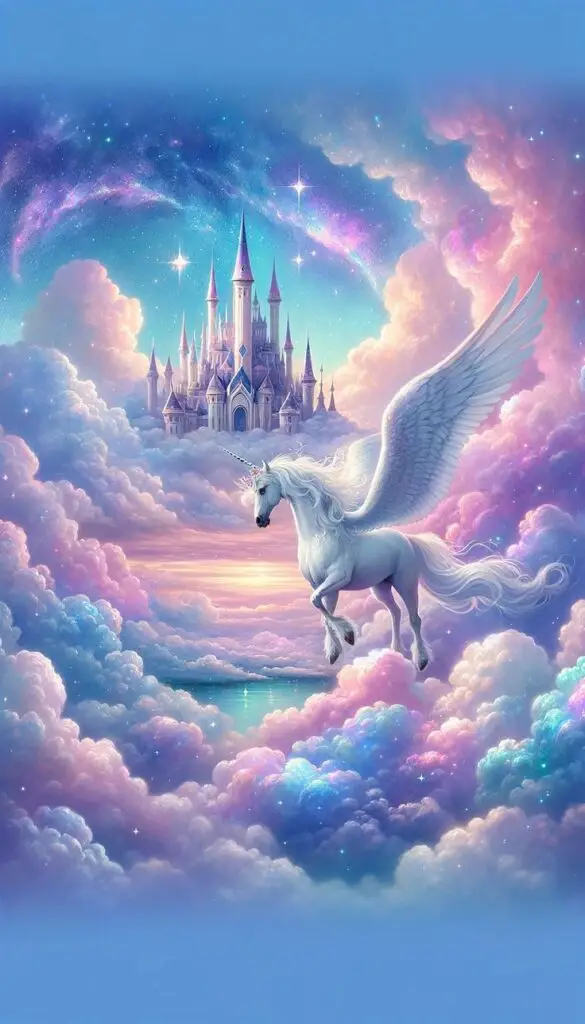
Drawing a unicorn with a castle in the background can spark creativity. The majestic castle adds a sense of adventure and wonder to the scene.
Start by sketching the castle. It can have tall towers, colorful banners, and whimsical details. Position it in the background to create a fantasy landscape.
Next, focus on the unicorn. It can be prancing or standing gracefully among flowers. The unicorn’s features, like its flowing mane and shimmering horn, can be highlighted.
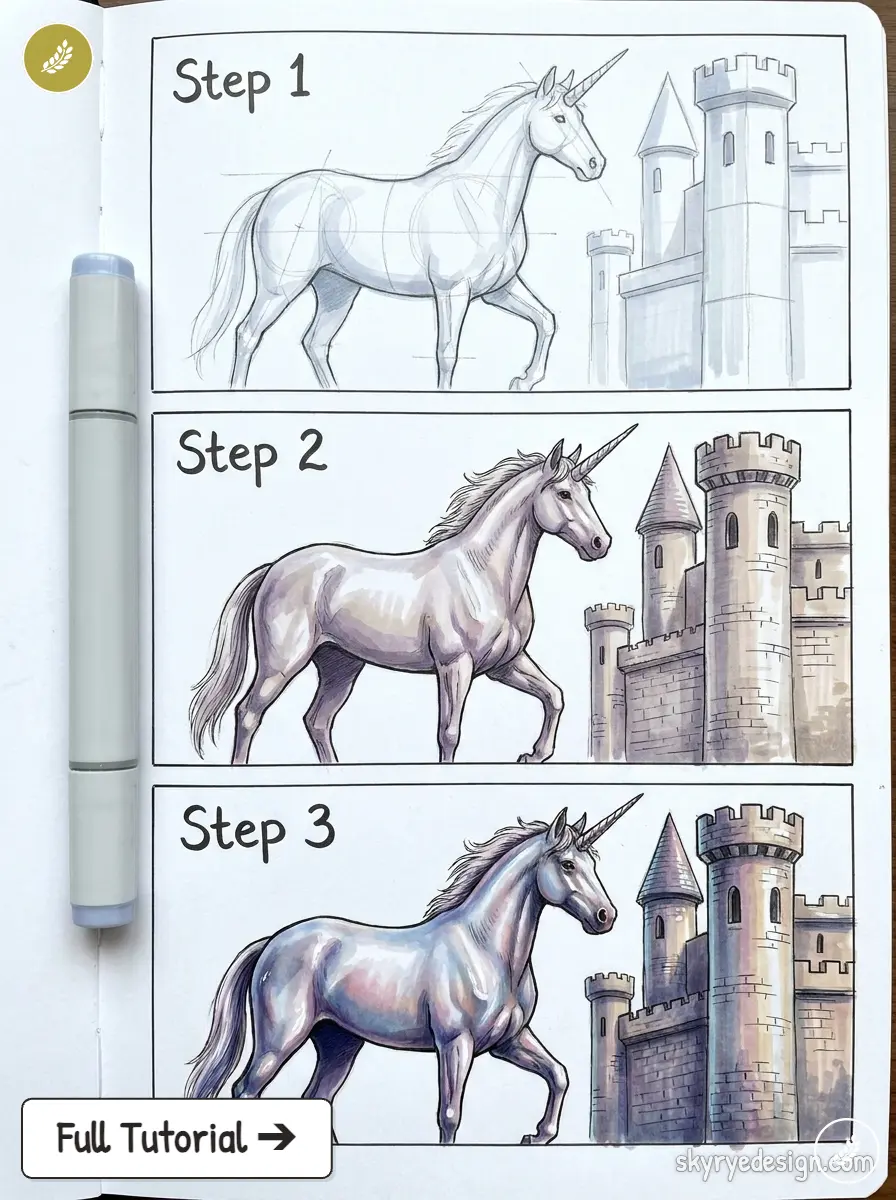
Consider using vibrant colors for both the unicorn and the castle. Soft pastels can work well for a dreamy effect, while brighter shades can add energy.
This drawing could tell a magical story. The unicorn and castle together serve as symbols of enchantment and dreams, inviting imaginations to roam.
Understanding unicorn anatomy
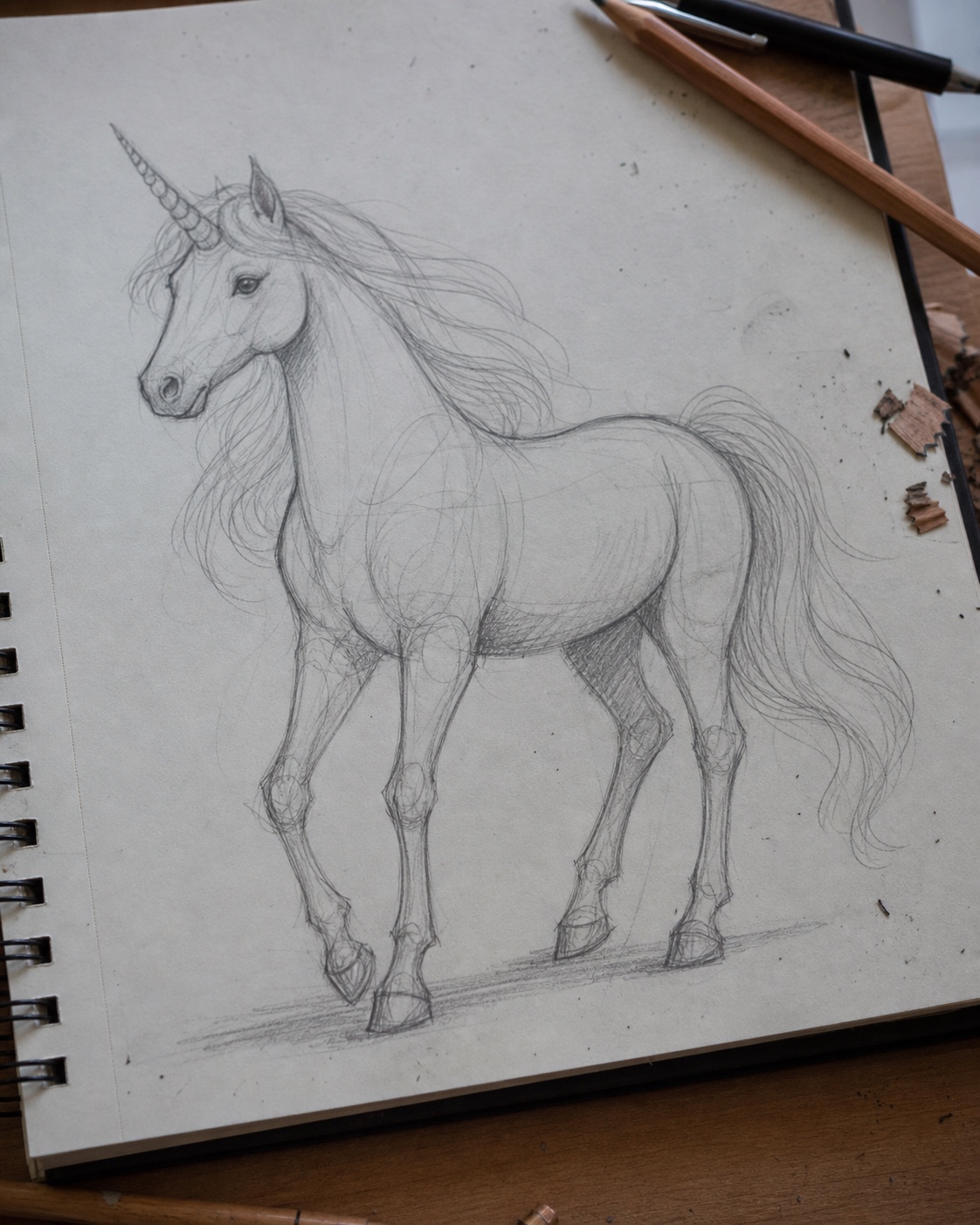
A unicorn is basically a horse drawing with a fantasy problem added on top. If the skull, neck, chest, and legs feel believable, the horn and mane can become as magical as you want without breaking the drawing.
Symbolism of unicorns
Unicorns often carry ideas of purity, magic, grace, and impossible beauty. For drawing, that symbolism usually shows up through pose: a lifted head feels noble, a curled sleeping pose feels gentle, and a running unicorn feels more adventurous.
In art, a unicorn’s features, such as its spiraled horn and flowing mane, contribute to its mythical status. The horn symbolizes spiritual enlightenment and power, while the flowing mane adds to its graceful appearance. Understanding these elements can influence how an artist chooses to portray a unicorn, ensuring that the depiction resonates with its rich symbolism.
Incorporating fantasy elements
Incorporating fantasy elements requires a keen understanding of a unicorn’s anatomical features and surroundings. Unique characteristics like the unicorn’s curved horn and cloven hooves are essential for authenticity in drawing.
Artists can enhance their compositions by adding magical elements. For instance, whimsical backgrounds like enchanted forests or sparkling skies elevate the mystical vibe. Additionally, using vibrant colors can evoke a sense of wonder.
Attention to details such as glistening fur or a shimmering mane can deepen the magical effect. This approach not only showcases the unicorn’s beauty but also appeals to the viewer’s imagination, creating a captivating artwork that stands out.
Exploring creative styles


Style changes the whole mood of a unicorn drawing. Pencil keeps it sketchy and delicate, markers make it bold and sticker-like, watercolor softens the fantasy atmosphere, and digital brushes let you push glow, clouds, and color transitions.
Using different art mediums
Exploring various art mediums opens up exciting possibilities for unicorn drawings. Artists can choose from pencils, markers, watercolors, or digital tools, each providing unique textures and effects.
- Pencils: Great for detailed sketches and shading.
- Markers: Offer vibrant colors and bold outlines.
- Watercolors: Perfect for soft, ethereal looks, capturing a unicorn’s magical essence.
- Digital Art: Enables endless possibilities for blending colors and adding effects effortlessly.
Each medium produces distinct results, encouraging artists to choose what resonates with their personal style. Trying a few different mediums can help refine skills and discover new techniques.
Blending realism with imagination


Combining realistic techniques with imaginative elements allows artists to create enchanting unicorn drawings. For instance, starting with realistic anatomy can serve as a solid foundation before adding whimsical features.
- Anatomy: Check the horse-like skull, neck, chest, legs, and hooves before adding the horn.
- Fantasy elements: Use sparkles, rainbow manes, clouds, castles, and forest silhouettes, but keep them lighter than the main unicorn shape.
This approach helps maintain a sense of believability while inviting imagination. Artists can find inspiration in nature but let creativity take flight, leading to unique interpretations that resonate with viewers.
Common unicorn drawing mistakes
The most common mistake is putting the horn on top of the head like a party hat. Place it on the forehead and let it follow the same centerline as the face. That small angle check makes the unicorn feel much more believable.
- Horn too thick: taper it more at the point and use curved bands instead of flat stripes.
- Mane too busy: draw the mane as a few large ribbons first, then add smaller strands.
- Body too stiff: start from a gesture line through the neck, back, and tail before drawing legs.
- Background too loud: keep castles, stars, clouds, and trees lighter than the unicorn’s face.
More drawing practice for this cluster
For more practice in the same sketchbook lane, use horse drawing to improve the body structure, how to draw a Pegasus for another fantasy creature, unicorn coloring pages for printable shape ideas, drawing for kids for easier prompts, sketchbook drawing ideas when you need a broader warm-up, and magic drawing ideas when you want more fantasy scenes.
For a more decorative fantasy direction, keep a few detailed illustration ideas nearby so the horn, mane, stars, and background details support the main silhouette instead of overwhelming it.
For a wider sketchbook session, mix unicorn studies with easy fantasy drawings such as fairy doors, tiny castles, potion bottles, and forest creatures so the page feels like one small magical world.
Unicorn drawing FAQ
Q: What are some easy unicorn drawing ideas?
A: Easy unicorn drawing ideas include a simple unicorn head, a kawaii sitting unicorn, a rainbow mane portrait, a unicorn on a cloud, and a small castle background. Start with the head if you are new, because the horn, eye, muzzle, and mane teach the main shapes without making you solve the whole body at once.
Q: How do you draw a unicorn for beginners?
A: Begin with light pencil shapes: an oval head, a curved neck, a small muzzle, one ear, and a centerline through the face. Add the horn on that centerline, sketch the mane as one big flowing shape, then darken only the best lines. Keep the details soft until the proportions look right.
Q: What makes a unicorn drawing look cute?
A: A cute unicorn drawing usually has a larger head, big eyes, rounded cheeks, tiny hooves, and a soft pastel mane. Keep the horn shorter and the body compact. If the face starts looking too realistic, lower the eyes slightly and simplify the muzzle.
Q: How do you make a unicorn drawing look more realistic?
A: Use horse anatomy as the base. Check the length of the head, the curve of the neck, the leg joints, and the hoof placement before adding the horn. A realistic unicorn also needs believable shadows under the jaw, belly, mane, and hooves so the fantasy details sit on a solid form.
Q: What colors work best for unicorn drawings?
A: Pastel pink, lavender, pale blue, mint, and soft yellow work well for cute unicorn drawings. For a more dramatic fantasy unicorn, use a white or warm gray body with stronger color only in the mane, horn glow, background sky, or small magical accents.
Q: Should I draw a unicorn with pencil or markers first?
A: Use pencil first, especially if you are drawing the horn, legs, or a full-body pose. Unicorn proportions are easy to overcommit too early. Once the sketch works, you can add marker, colored pencil, or watercolor on top. Test your rainbow colors on scrap paper before coloring the mane.
- 257shares
- Facebook0
- Pinterest257
- Twitter0
- Reddit0