There’s a specific kind of frustration that comes from sitting in front of a blank sketchbook page with a pen in your hand, knowing you want to draw, but having absolutely no idea what to draw. Art block isn’t laziness. It’s usually the opposite—you care so much about getting it right that starting feels impossible.
A guitar is a strong sketchbook subject because it mixes curves, straight lines, and repeated details; use this guitar drawing guide for beginners when you want a structured prompt.
- Everyday Objects: 15 Prompts to Make the Ordinary Extraordinary
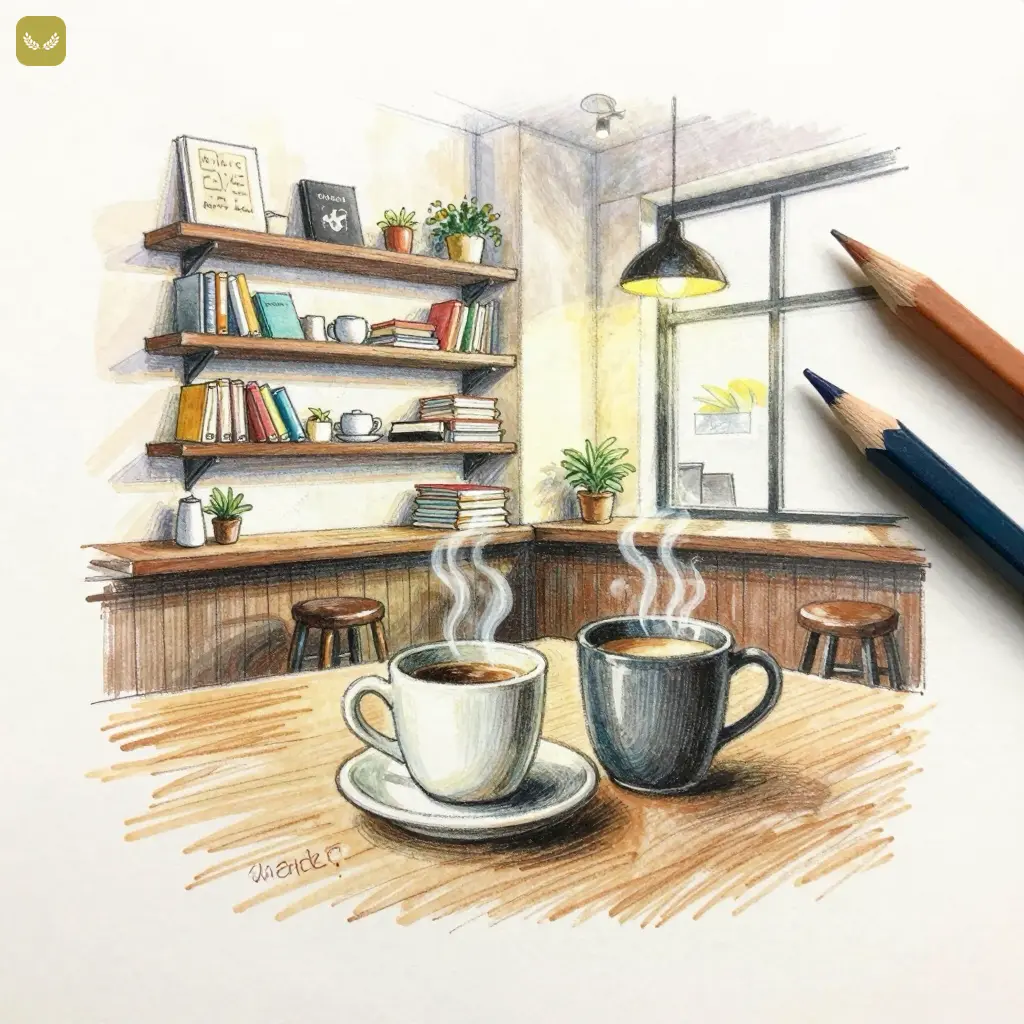
- 1. Draw Your Morning Coffee or Tea Setup
- 2. Sketch Your Phone from Three Different Angles
- 3. Draw the Contents of Your Bag or Backpack
- 4. Sketch Your Shoes
- 5. Draw a Plant on Your Windowsill
- 6. Sketch the View from Your Window Right Now
- 7. Draw Your Desk or Workspace in Five Minutes
- 8. Sketch a Single Kitchen Utensil in Detail
- 9. Draw Something You've Been Meaning to Throw Away
- 10. Sketch the Most Boring Object Within Arm's Reach
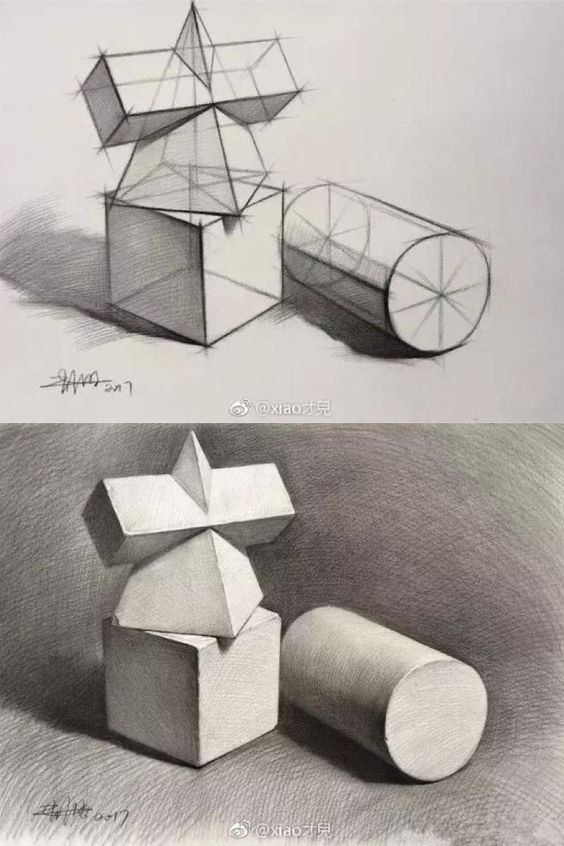
- 11. Draw a Crumpled Piece of Paper
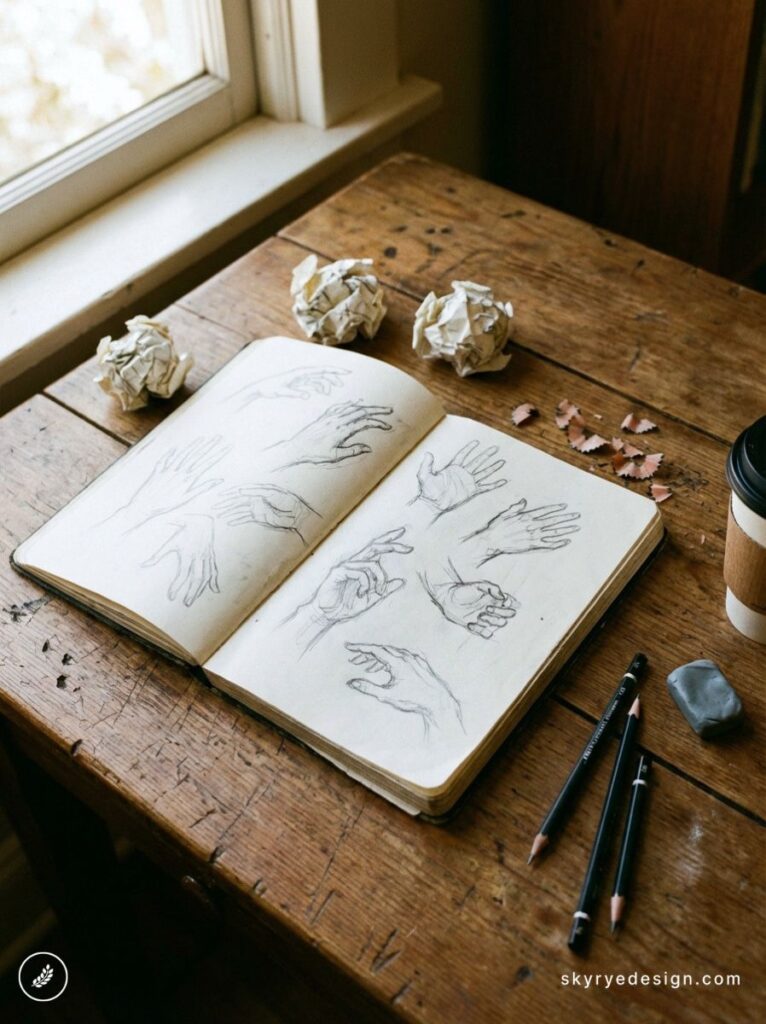
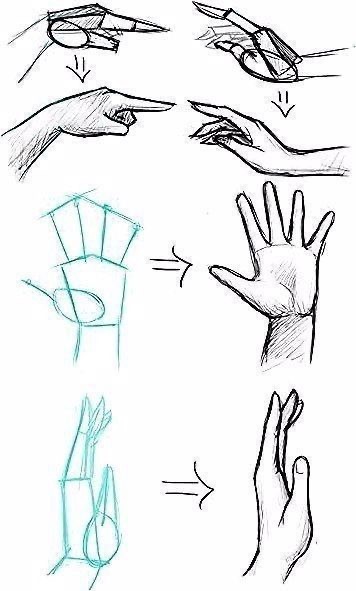
- 12. Sketch Your Hands in Five Different Positions
- 13. Draw a Candle, Lit
- 14. Sketch an Open Book
- 15. Draw a Pile of Coins
- Nature and Landscape: 15 Prompts for the Outdoors Artist
- 16. Draw a Single Tree from Root to Crown
- 17. Sketch Clouds for Ten Minutes
- 18. Draw a Puddle and Its Reflection
- 19. Sketch a Rock in Detail
- 20. Draw a Bird You Can See Right Now
- 21. Sketch a Flower from the Back
- 22. Draw Rain on a Window
- 23. Sketch a Landscape in Three Values Only
- 24. Draw a Street Corner You Pass Every Day
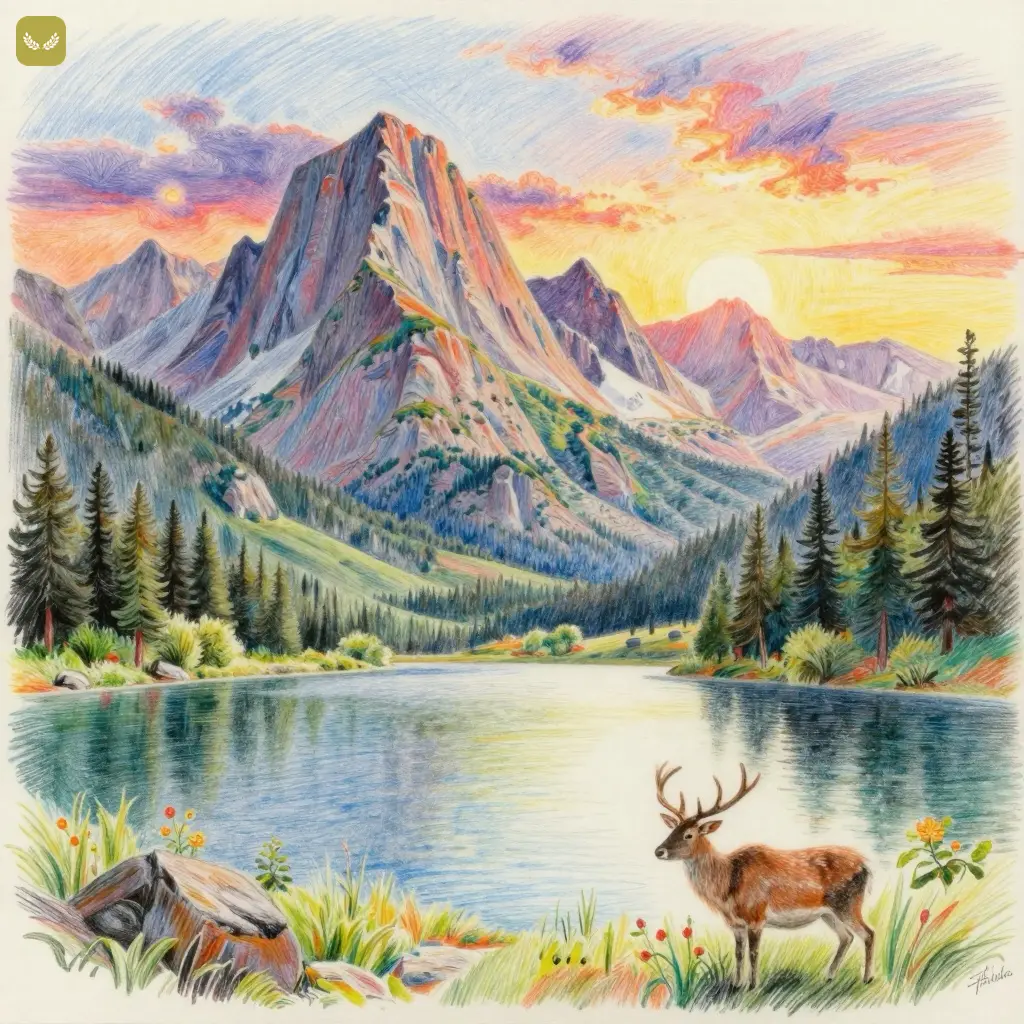
- 25. Sketch the Sky at Sunset for Seven Minutes
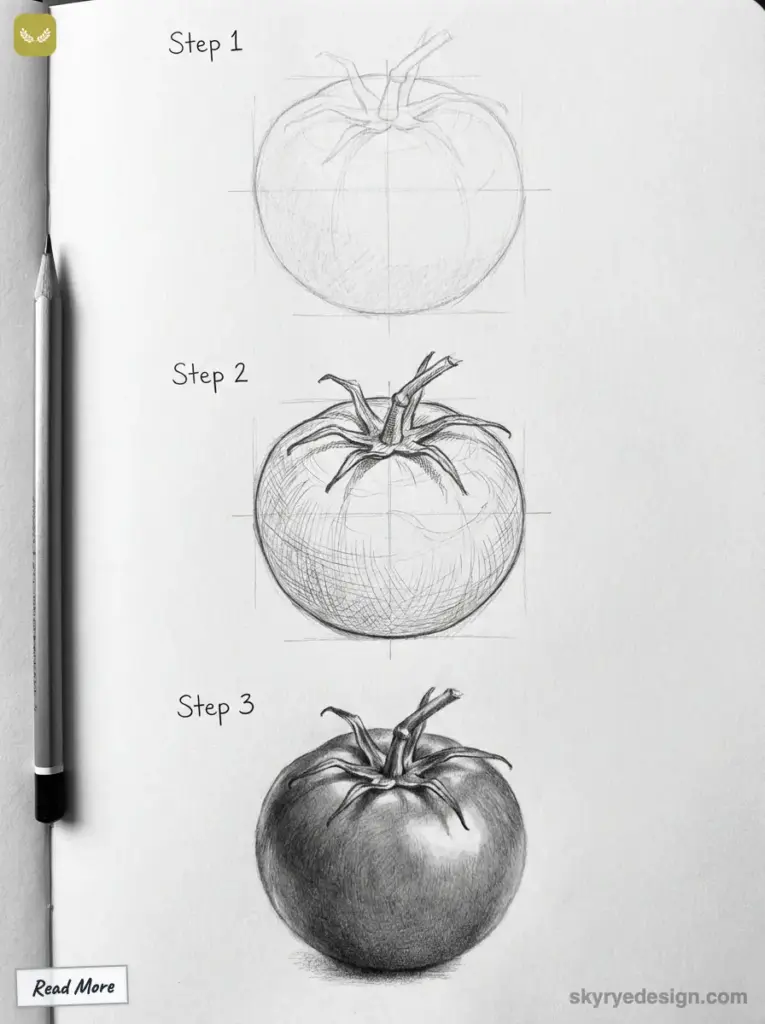
- 26. Draw a Vegetable or Fruit Cut in Half
- 27. Sketch Water in Motion
- 28. Draw a Tree Stump with Visible Ring Structure
- 29. Sketch a Garden or Park Bench
- 30. Draw the Same Outdoor View in Morning and Evening Light
- People and Portraits: 15 Prompts for Drawing the Human Form
- 31. Draw Someone on Public Transport
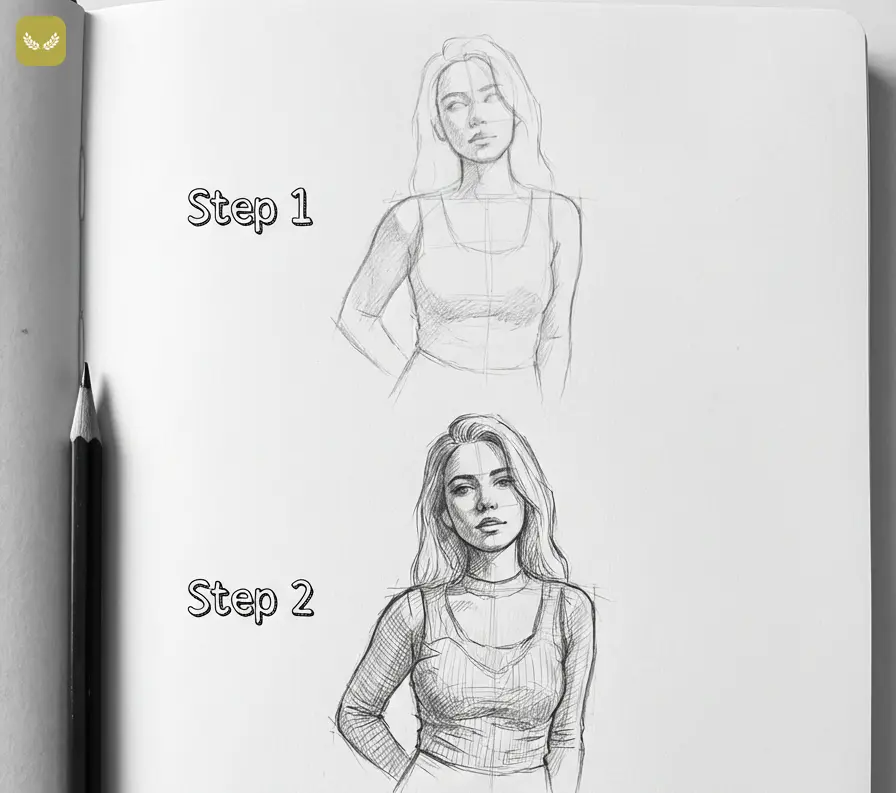
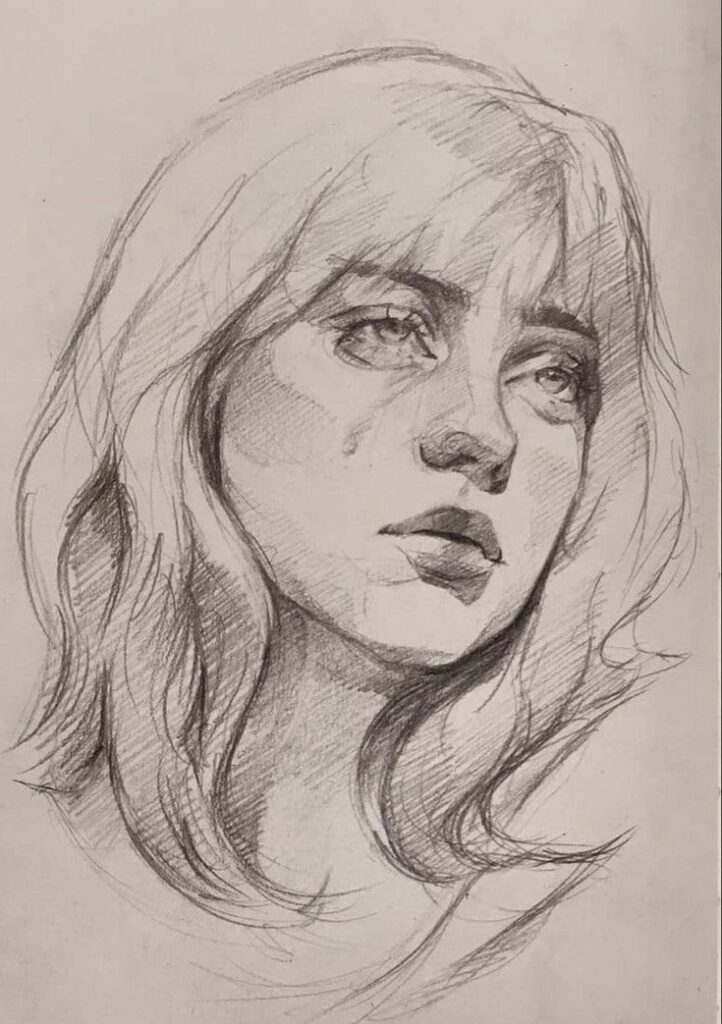
- 32. Sketch a Self-Portrait Without Looking at the Paper
- 33. Draw Hands Holding Something
- 34. Sketch Someone Sleeping
- 35. Draw a Person from Behind
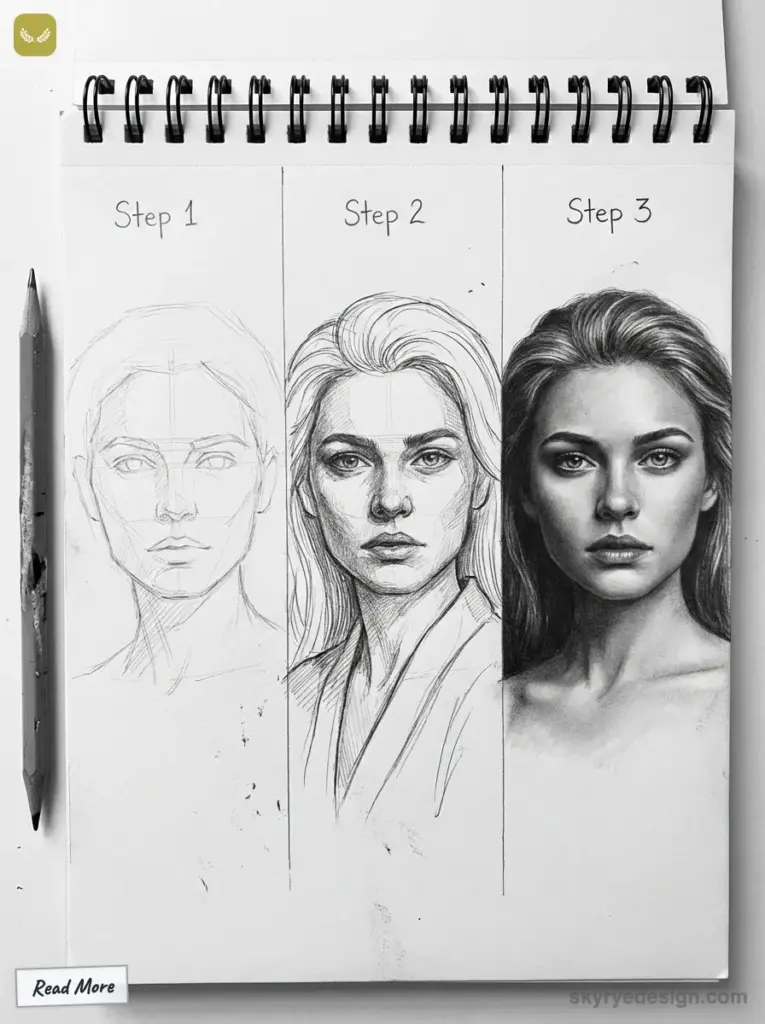
- 36. Sketch a Face Using Only Light and Shadow (No Outlines)
- 37. Draw Someone Concentrating on Their Phone
- 38. Sketch Feet
- 39. Draw a Person from Memory After Observing for One Minute
- 40. Sketch Multiple Expressions on One Face
- 41. Draw Someone Eating
- 42. Sketch the Back of Someone's Head and Neck
- 43. Draw an Elderly Person's Hands
- 44. Sketch a Child Playing
- 45. Draw a Figure in Dramatic Lighting (One Strong Light Source)
- Abstract and Experimental: 20 Prompts to Break Your Creative Rules
- 46. Fill a Page with One Repeated Mark
- 47. Draw What Music Sounds Like
- 48. Make a Drawing Using Only Curves
- 49. Draw with Your Non-Dominant Hand
- 50. Create a Drawing Without Lifting the Pen
- 51. Fill a Page with Texture Studies: Invent Six New Surfaces
- 52. Draw a Grid and Distort It
- 53. Make a Drawing Using Negative Space Only
- 54. Draw Your Emotional State Right Now
- 55. Create a Drawing from a Single Ink Drop
- 56. Draw the Same Circle Fifty Times
- 57. Sketch in Complete Darkness for Two Minutes
- 58. Make a Drawing Out of Words
- 59. Draw the Inside of Your Body (Imagined)
- 60. Create a Map of an Imaginary Place
- 61. Draw Using Coffee, Tea, or Wine as Your Medium
- 62. Sketch a Dream You Remember
- 63. Draw a Portrait of a Smell
- 64. Make a Drawing You Intend to Destroy
- 65. Draw a Five-Second Scribble and Turn It Into Something
- Architecture and Interiors: 10 Prompts for Drawing Spaces
- 66. Draw the Room You're Sitting In Right Now
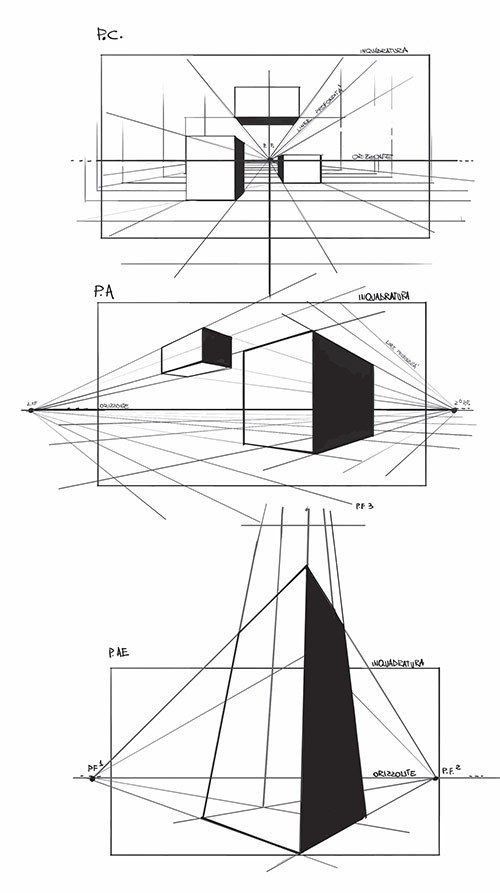
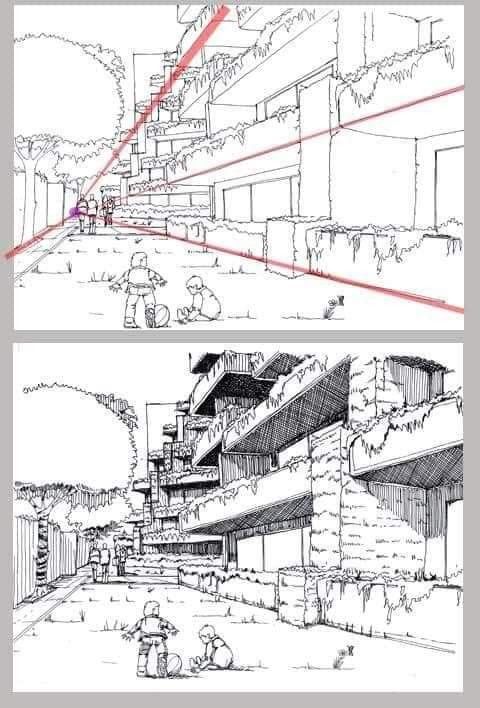
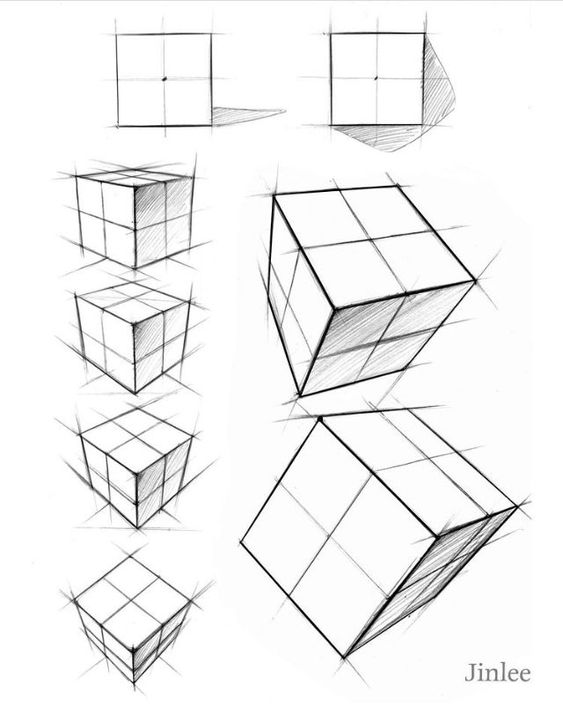
- 67. Sketch a Staircase in Perspective
- 68. Draw a Doorway from Outside the Room
- 69. Sketch the Corner Where Two Walls Meet the Ceiling
- 70. Draw a Building Façade Straight On
- 71. Sketch an Abandoned or Derelict Space
- 72. Draw a Library Interior
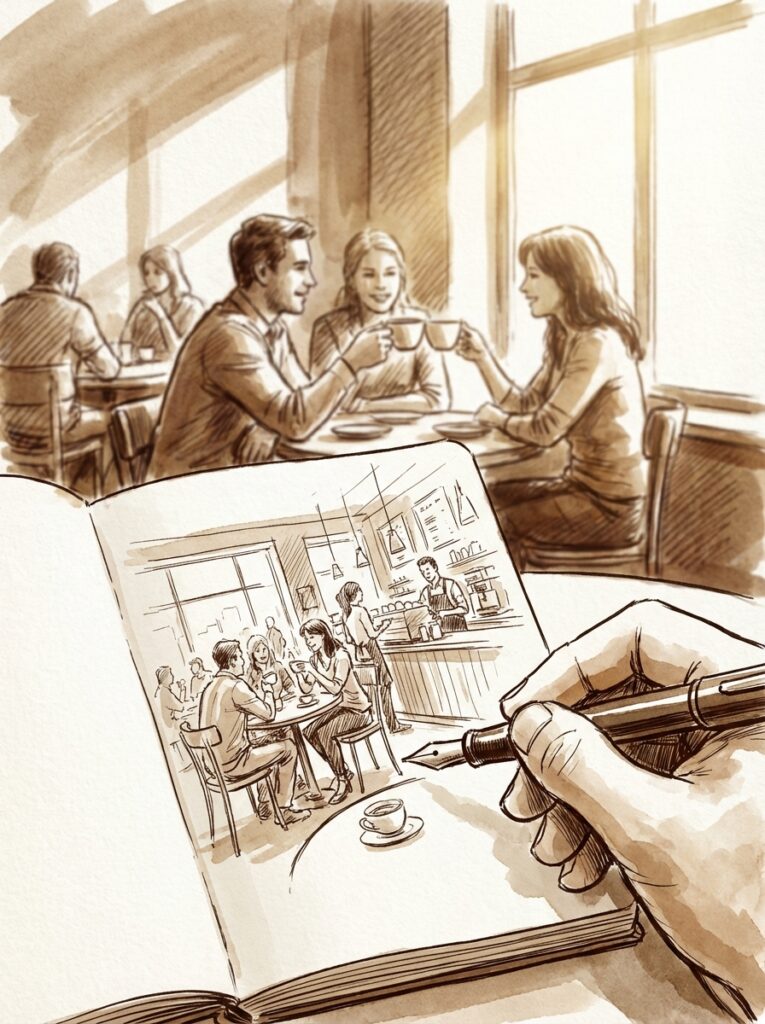
- 73. Sketch a Café or Restaurant Interior
- 74. Draw Your Bathroom Mirror and What It Reflects
- 75. Sketch a Construction Site
- Style Challenges: 10 Prompts to Explore New Techniques
- 76. Draw in the Style of a Single Ink Line Weight
- 77. Sketch Using Only Dots (Stippling)
- 78. Draw Entirely in Hatching: No Blending
- 79. Make a Gesture Drawing Series: 30-Second Poses
- 80. Draw in a Style You Dislike
- 81. Sketch Using Watercolour Wash Without Any Pencil Underdrawing
- 82. Draw Using Ink and a Stick or Found Object
- 83. Create a Drawing at 2× Your Usual Scale
- 84. Draw Using Only Five Marks per Object
- 85. Sketch in a Style Inspired by a Single Artist You Admire
- Imagination and Storytelling: 15 Prompts for Creative Worlds
- 86. Draw Your Childhood Bedroom from Memory
- 87. Sketch the Interior of a Ship, Train, or Vehicle You've Never Been Inside
- 88. Draw a House That Grows from a Tree
- 89. Sketch a Creature That Doesn't Exist
- 90. Draw the View from an Impossible Window
- 91. Sketch the Contents of a Fictional Character's Bag
- 92. Draw a Map of Your Emotional Geography
- 93. Sketch What Your Earliest Memory Looks Like
- 94. Draw a Clock Tower That Tells a Different Kind of Time
- 95. Sketch the Last Scene of a Film You're Inventing
- 96. Draw Your Ideal Studio or Workspace
- 97. Sketch a Scene from a Book You Love
- 98. Draw the Architecture of a Dream City
- 99. Sketch a Portrait of Someone You've Never Met Based on Their Voice
- 100. Draw Tomorrow
- Frequently Asked Questions
- What is art block and why does it happen?
- How do I start drawing when I have no ideas?
- How often should I use my sketchbook?
- What's the best sketchbook for beginners?
- Should my sketchbook look 'finished' and polished?
- How do I overcome perfectionism in my sketchbook?
- Can I use digital tools alongside a physical sketchbook?
I’ve been there more times than I can count. The breakthrough, for me, was realising that the problem was never a shortage of ideas. It was decision paralysis. Too many possible directions, no way to pick one. What fixes that? Constraints. Prompts. Someone handing you a starting point and saying: draw this, now.
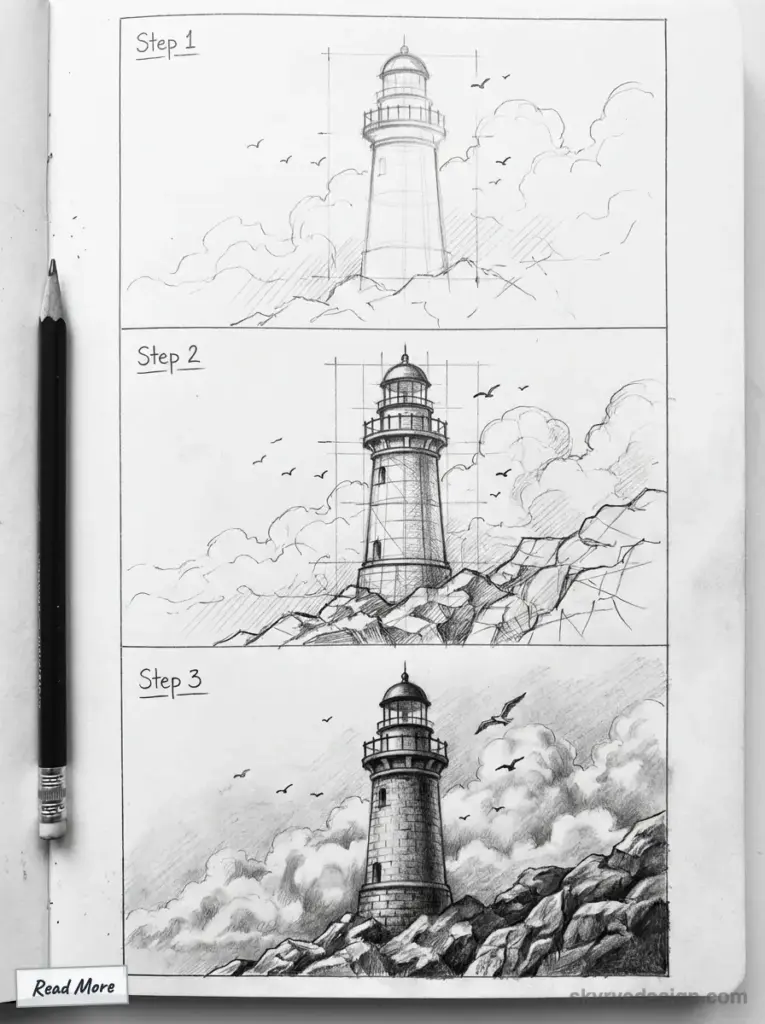
This list gives you 100 of those starting points, organised by mood, skill focus, and style. Some are specific subjects. Some are techniques. Some are tiny experiments that take ten minutes. All of them are designed to get your pen moving—because movement is the cure for art block, every single time.
Beginner drawing kit
Want to turn these ideas into real sketchbook practice?
If you are working through this list, a few simple supplies will make the process easier: a sketchbook, graphite pencils, eraser, fineliners, and optional colored pencils for finishing your favorite drawings.
This article may contain affiliate links. As an Amazon Associate I earn from qualifying purchases.
Everyday Objects: 15 Prompts to Make the Ordinary Extraordinary
The best sketchbook practice is usually right on your desk. Everyday objects are perfect prompts because they’re always available, endlessly interesting under different lighting, and completely pressure-free—no one’s expecting a masterpiece of your coffee cup. These 15 prompts will train your observational eye faster than any online course.
1000 Drawing Ideas for Artists
Get a free PDF packed with easy drawing ideas, anime prompts, character concepts, nature inspiration, and fantasy sketchbook challenges.
Download Free PDF1. Draw Your Morning Coffee or Tea Setup
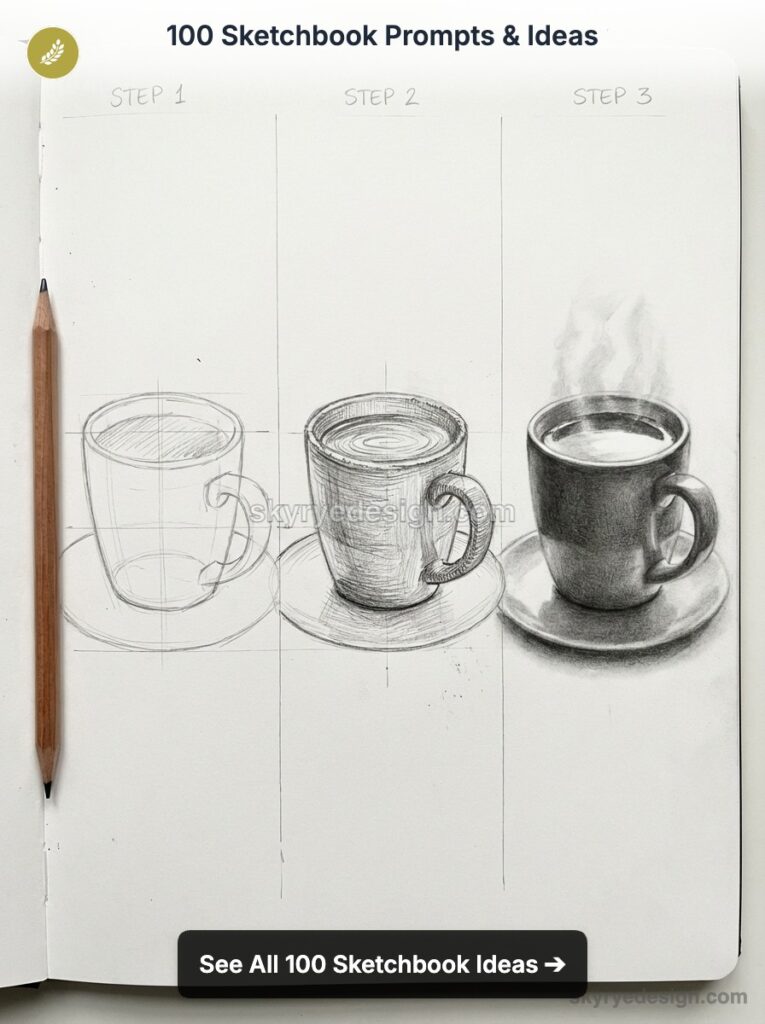
The mug, the steam, the spoon resting at the edge. Draw it from the angle you see it every morning without moving anything. The goal is accuracy to your actual daily experience—messy coaster, coffee ring included.
2. Sketch Your Phone from Three Different Angles
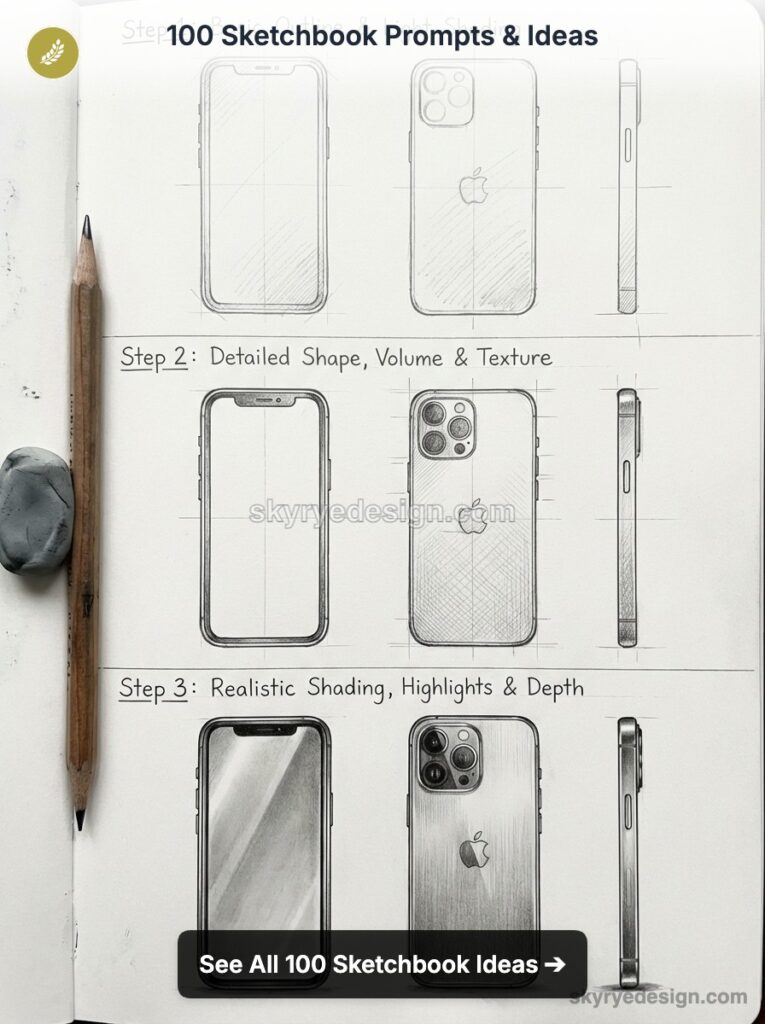
A smartphone is a deceptively complex form—all those subtle curves, reflective glass, and precise proportions. Drawing it from above, from the side, and in slight perspective is a brilliant form study. Use the screen reflections as a bonus glass-drawing exercise.
3. Draw the Contents of Your Bag or Backpack
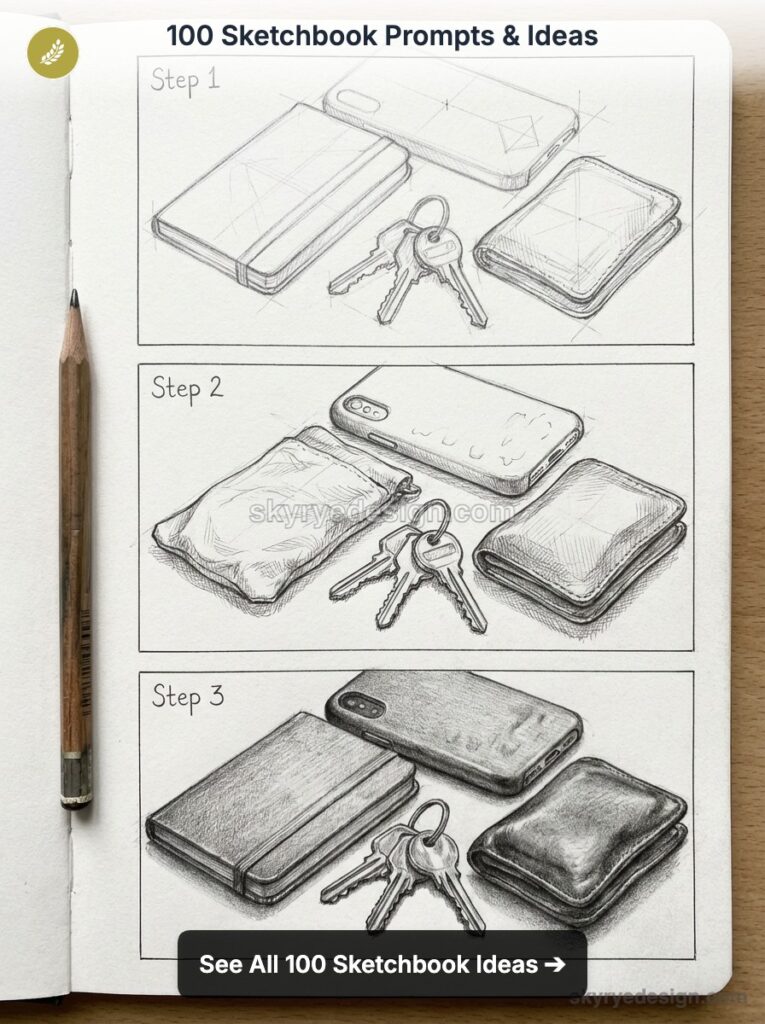
Empty everything out and draw it as a flat-lay composition—keys, wallet, lip balm, receipts. The overlapping shapes and variety of materials (leather, metal, plastic, fabric) make this a rich, textured study with built-in compositional complexity.
4. Sketch Your Shoes
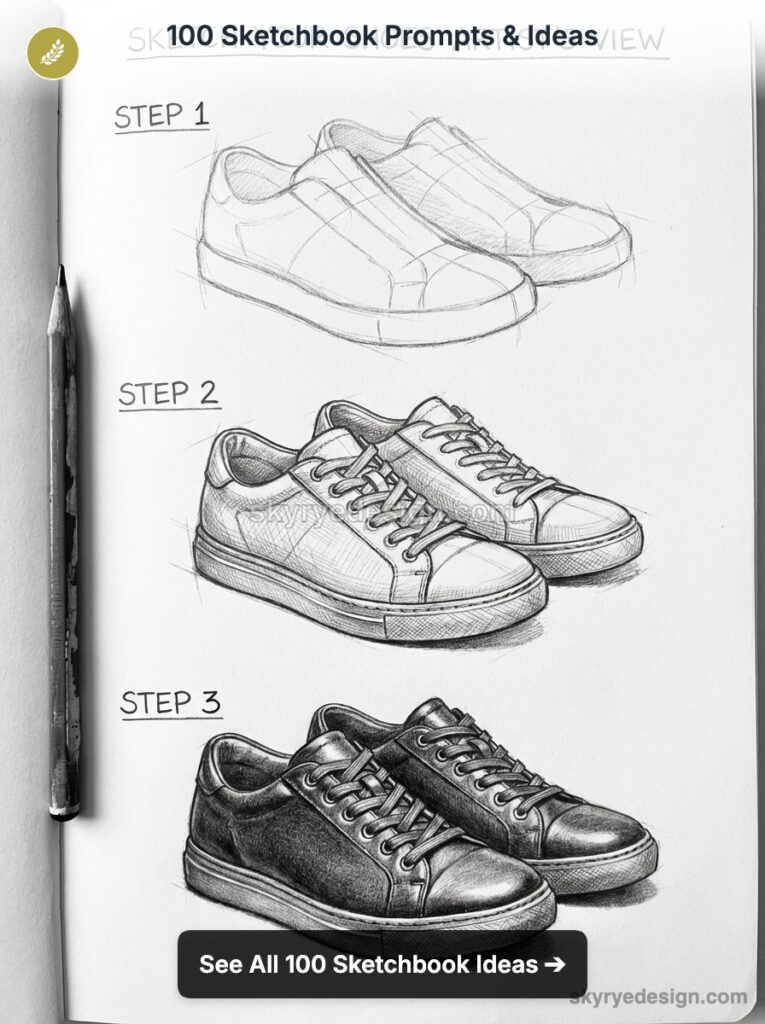
Worn shoes have extraordinary character—crease lines, scuff marks, lace arrangements. Draw the pair exactly as you left them: one on its side, one upright, laces trailing. This is a classic atelier warm-up exercise and endlessly rewarding.
5. Draw a Plant on Your Windowsill
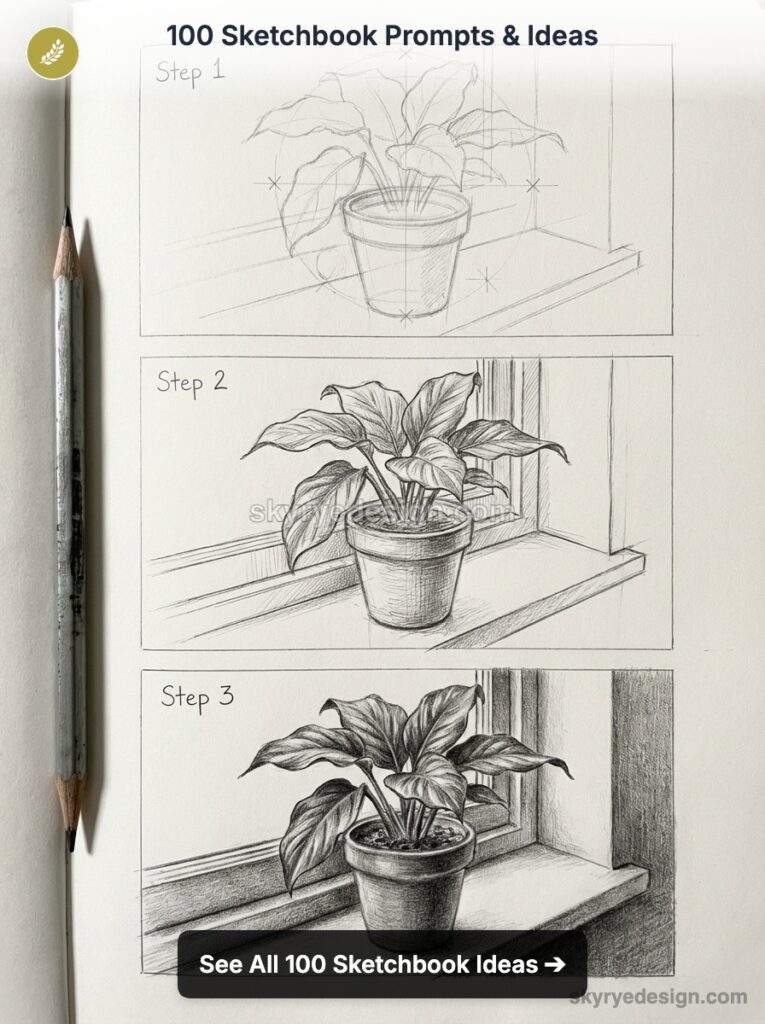
Pick any plant and draw just one branch or leaf cluster in full detail rather than the whole plant loosely. Botanical precision trains patience and observational accuracy. The Muji 0.38 ballpoint is excellent for fine leaf vein detail.
6. Sketch the View from Your Window Right Now
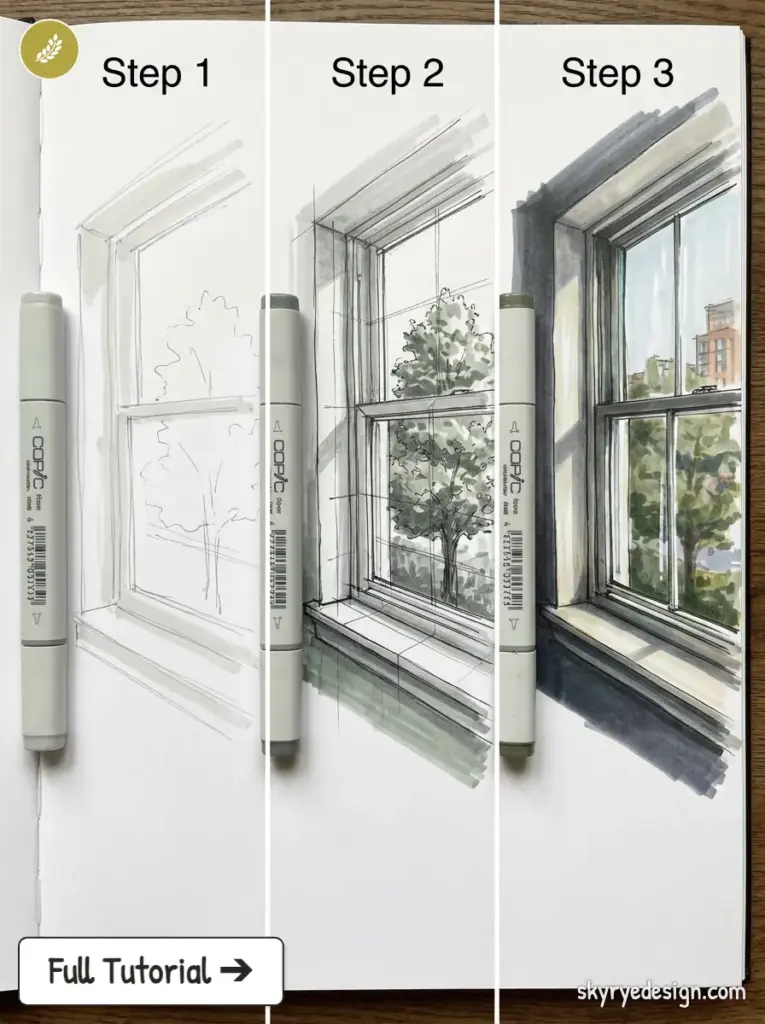
Not a planned landscape—exactly what you see this moment, including the window frame, any condensation, the rooftop or tree outside. The constraints of the actual scene in front of you eliminate the tyranny of choice entirely.
7. Draw Your Desk or Workspace in Five Minutes
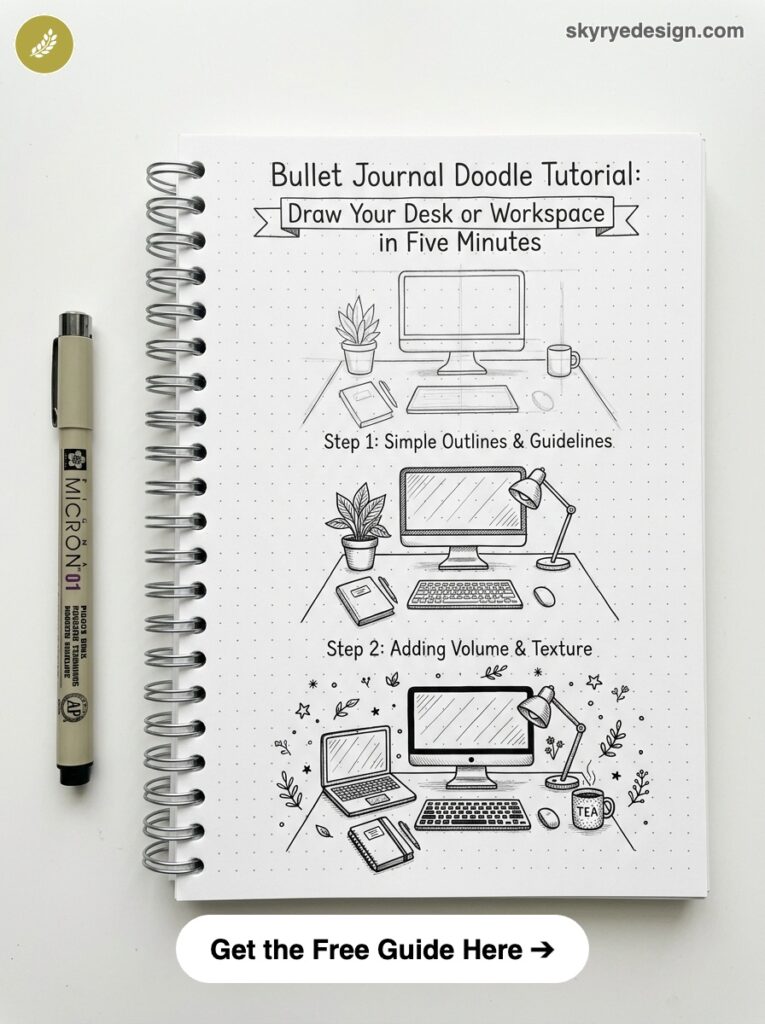
Set a timer. Draw your workspace—the open books, the lamp, the monitor, the pencil holder—as fast as you can. Speed forces you to prioritise, and the result usually has an energetic looseness that planned drawings lack.
8. Sketch a Single Kitchen Utensil in Detail
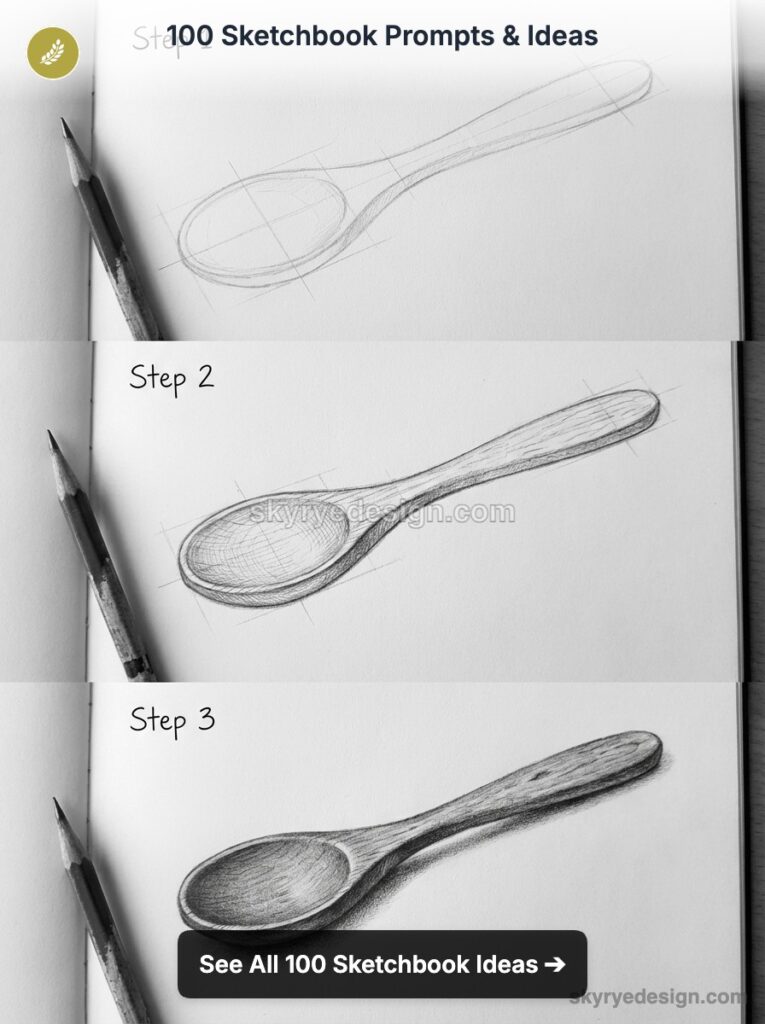
A whisk, a wooden spoon, a garlic press. Choose one and draw it large enough to fill the page. Focus on how the material changes—handle vs functional part, worn areas vs new. Kitchen tools are excellent for studying how objects age.
9. Draw Something You’ve Been Meaning to Throw Away
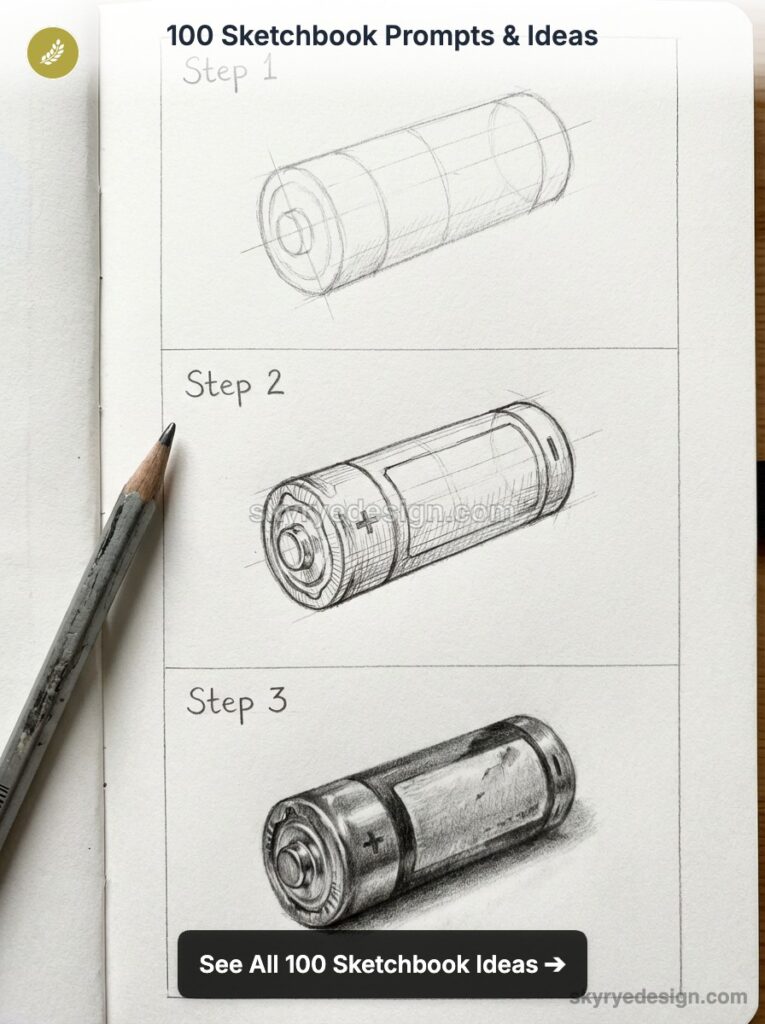
An old receipt, a dead battery, a broken charger. Drawing objects you’re about to discard is surprisingly liberating—there’s zero pressure to romanticise them. Just observe and record. It’s a small act of attention before letting something go.
10. Sketch the Most Boring Object Within Arm’s Reach
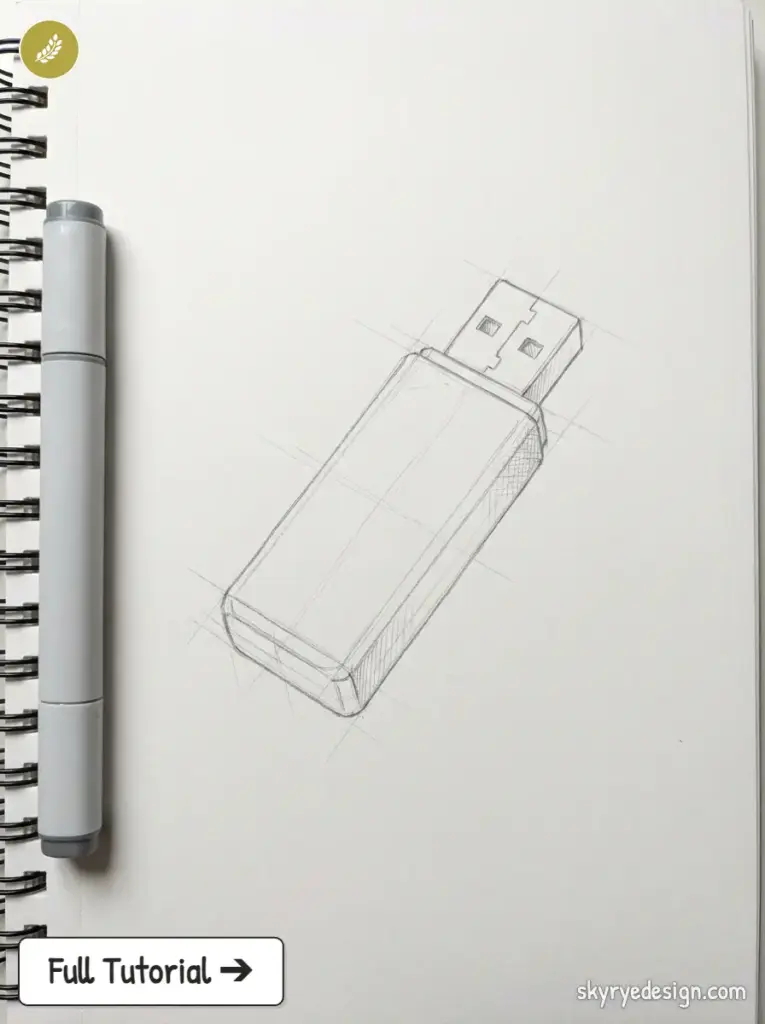
A stapler. A tape dispenser. A USB stick. The more boring it seems, the better the exercise—because finding genuine visual interest in something mundane is exactly the skill that separates interesting artists from technically competent ones.
11. Draw a Crumpled Piece of Paper
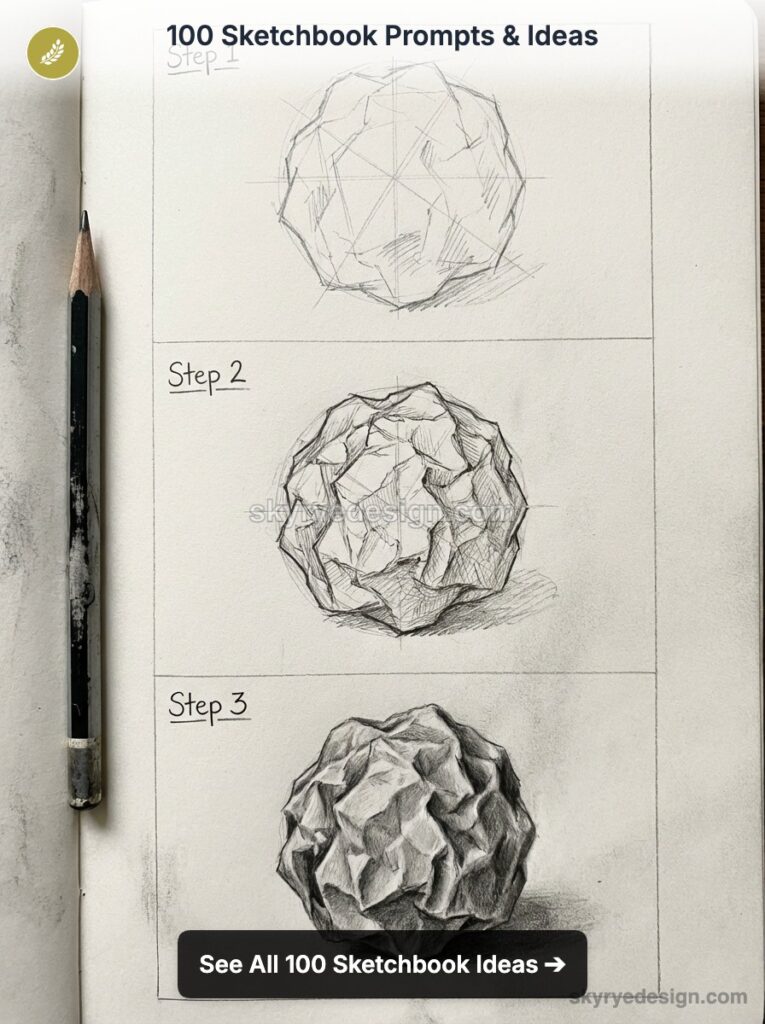
Leonardo da Vinci assigned this to students specifically. Crumpled paper creates complex light and shadow on a familiar, neutral subject. The challenge is reading the light logic correctly. Crumple a page from your own sketchbook and go.
12. Sketch Your Hands in Five Different Positions
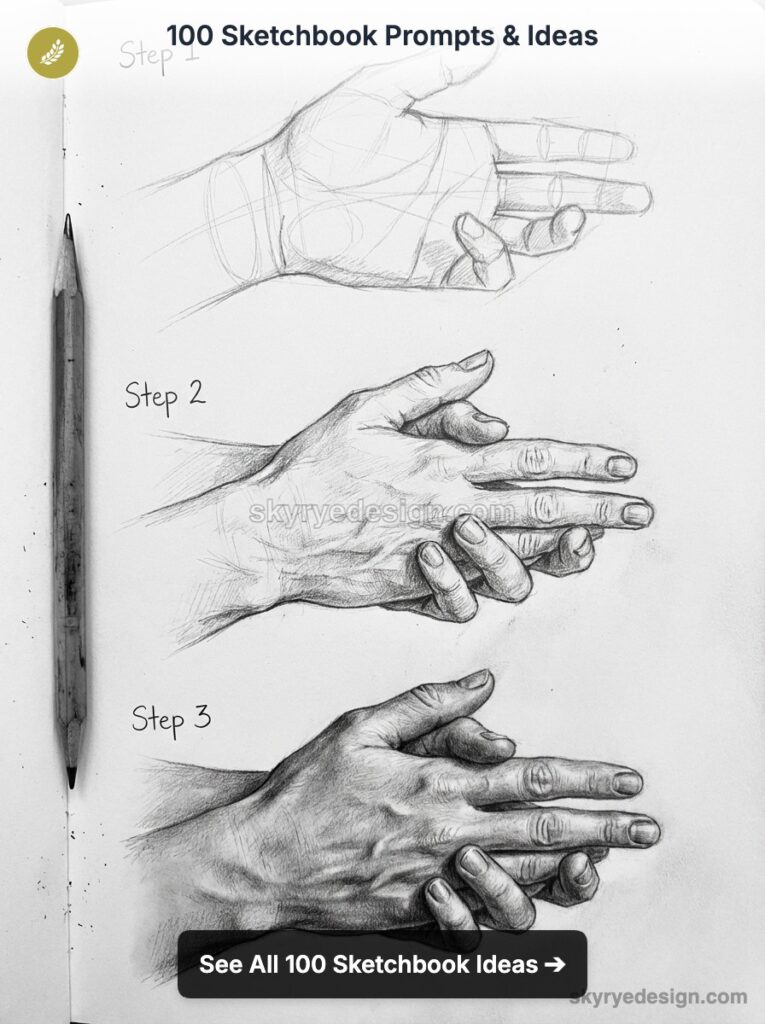
Hands are notoriously difficult—which is why drawing them regularly is one of the highest-return investments in your skill development. Don’t aim for perfection. Aim for five quick studies exploring different positions: gripping, pointing, relaxed open palm.
13. Draw a Candle, Lit
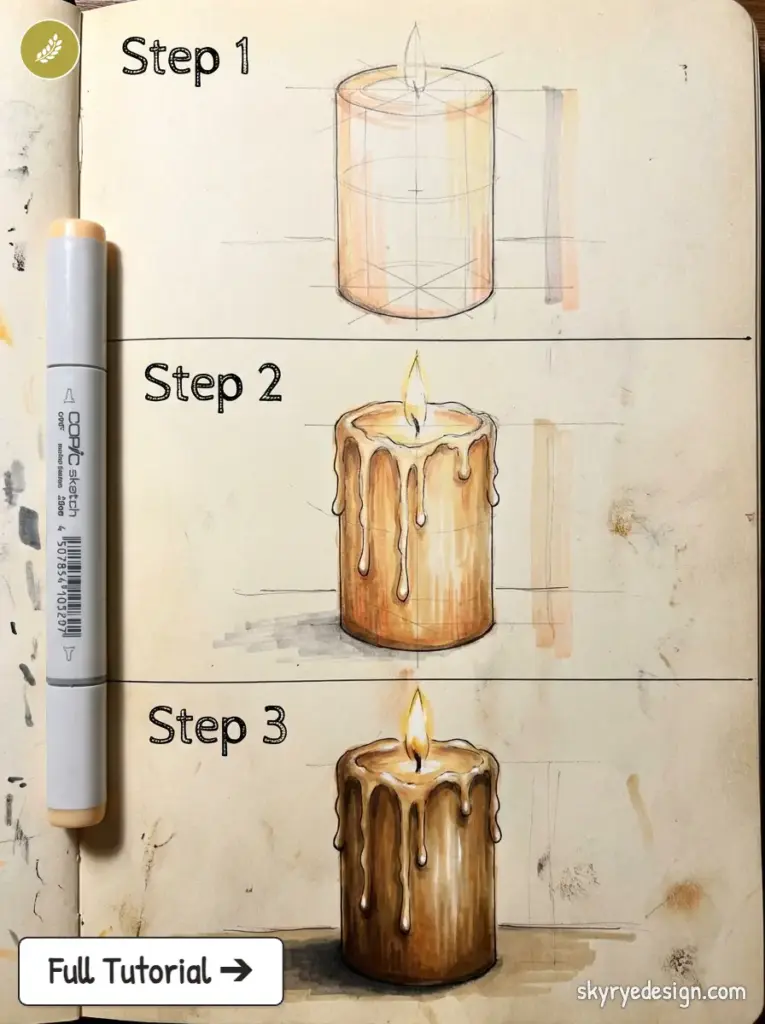
The flame shape, the wax pooling around the wick, the shadows thrown across the holder. A lit candle is a perfect ten-minute evening study. Try it in pen-only for an extra challenge—no pencil under-drawing.
14. Sketch an Open Book
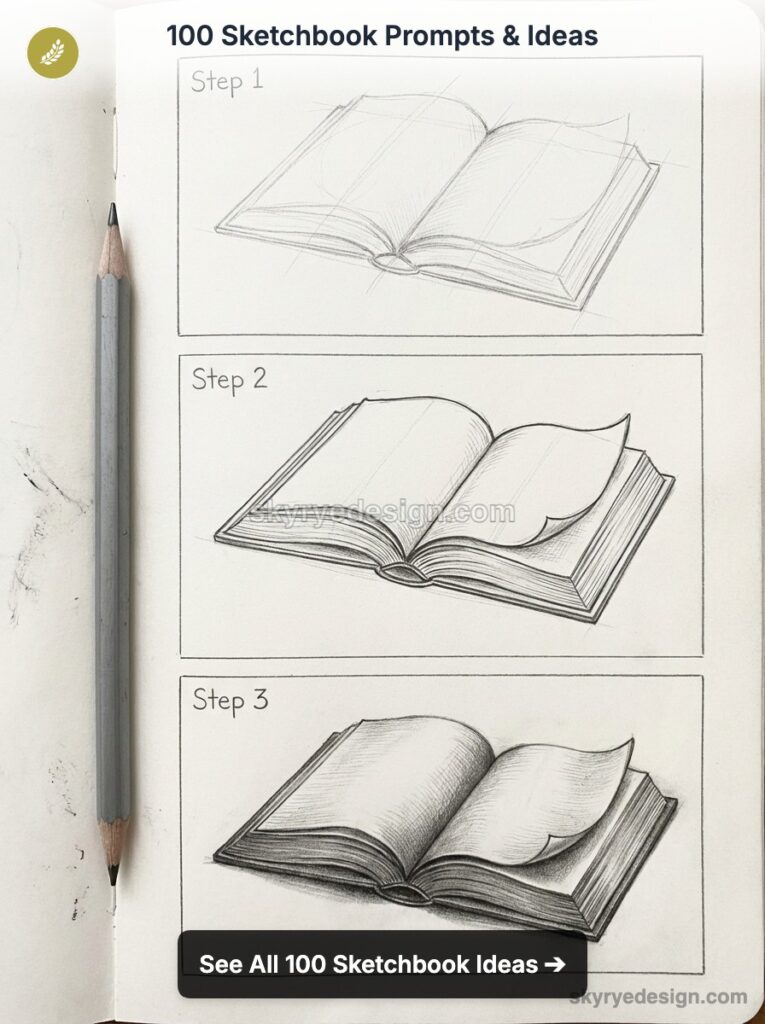
The perspective of an open book—two curved pages, the spine valley, text receding in perspective—is a surprisingly demanding compositional and perspective exercise. Draw the book open to a double-spread you love, text and all.
15. Draw a Pile of Coins
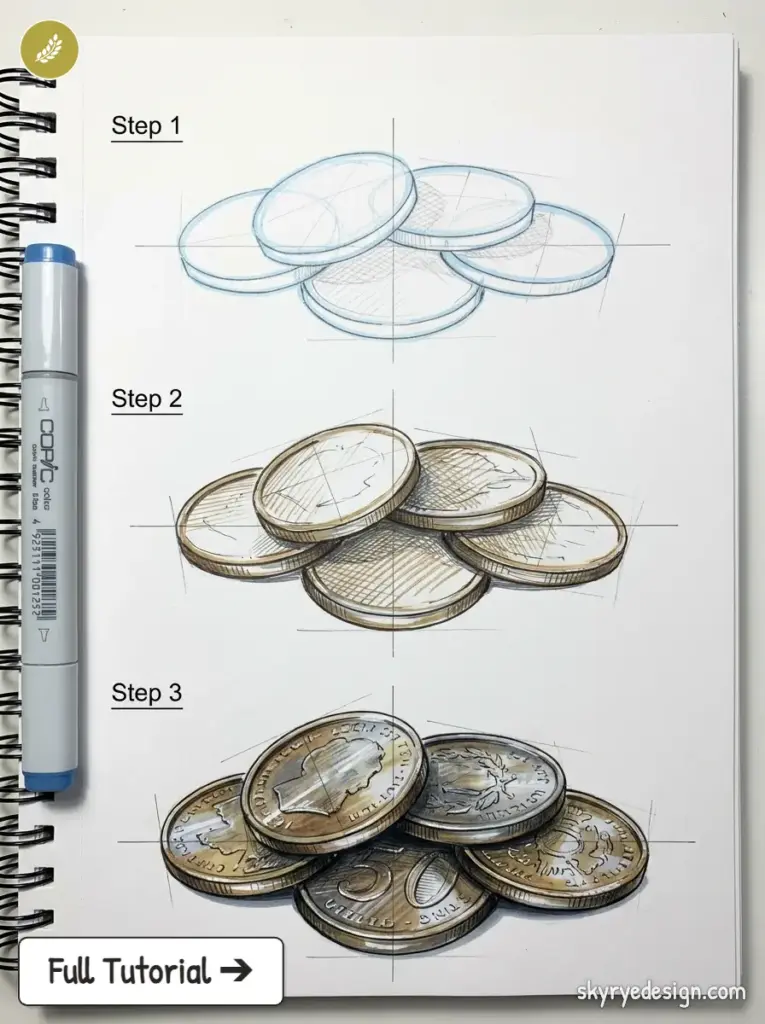
Overlapping circular forms, metallic surfaces, varying profile edges. A scattered handful of coins on a table is an excellent still-life micro-composition. The variation in size between different denominations adds natural compositional rhythm.
| ✏️ Pro TipFor objects prompts 1–15, try drawing each object first with a continuous line (pen never leaving paper). Then do a second drawing with shading. The contrast between the two approaches teaches you more than either version alone. |
Nature and Landscape: 15 Prompts for the Outdoors Artist
Nature is the original art school. Every leaf, cloud formation, and tide-pool is a composition problem solved by millions of years of evolution. These 15 prompts range from five-minute outdoor sketches to full observational studies—all designed to get you outside with your sketchbook.
16. Draw a Single Tree from Root to Crown
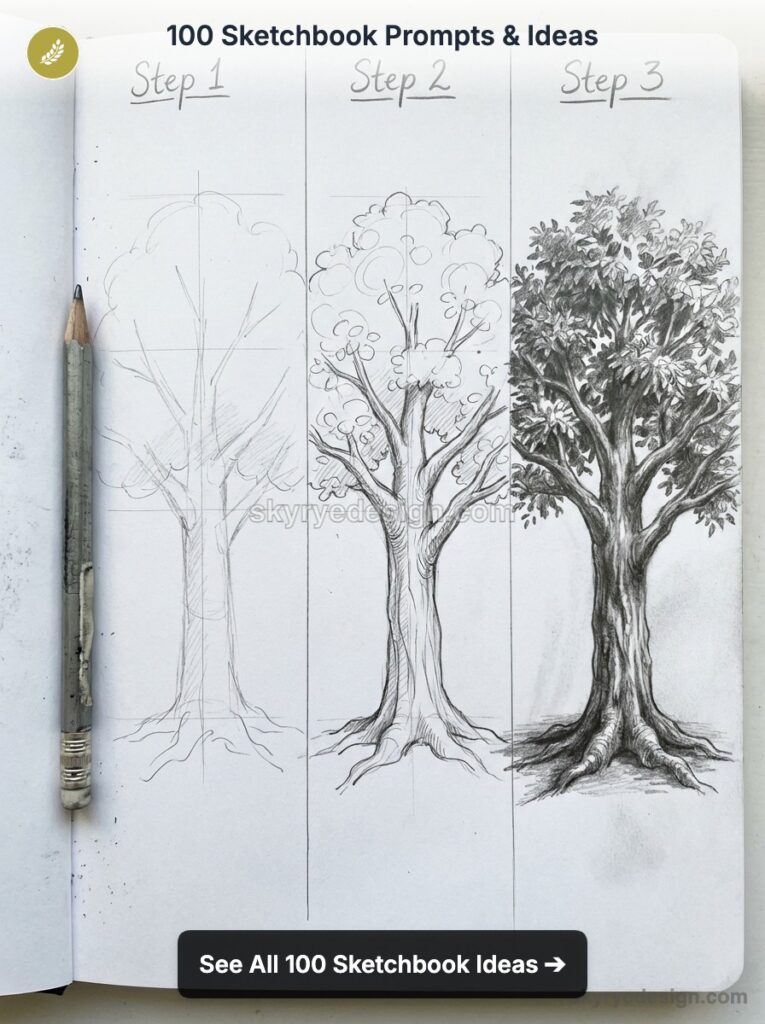
Not a ‘generic tree’—a specific tree outside your door. Note the species if you know it. Observe how the bark texture changes from the base to the upper branches, how the branch structure divides. This is a full-page study; give it at least 20 minutes.
17. Sketch Clouds for Ten Minutes
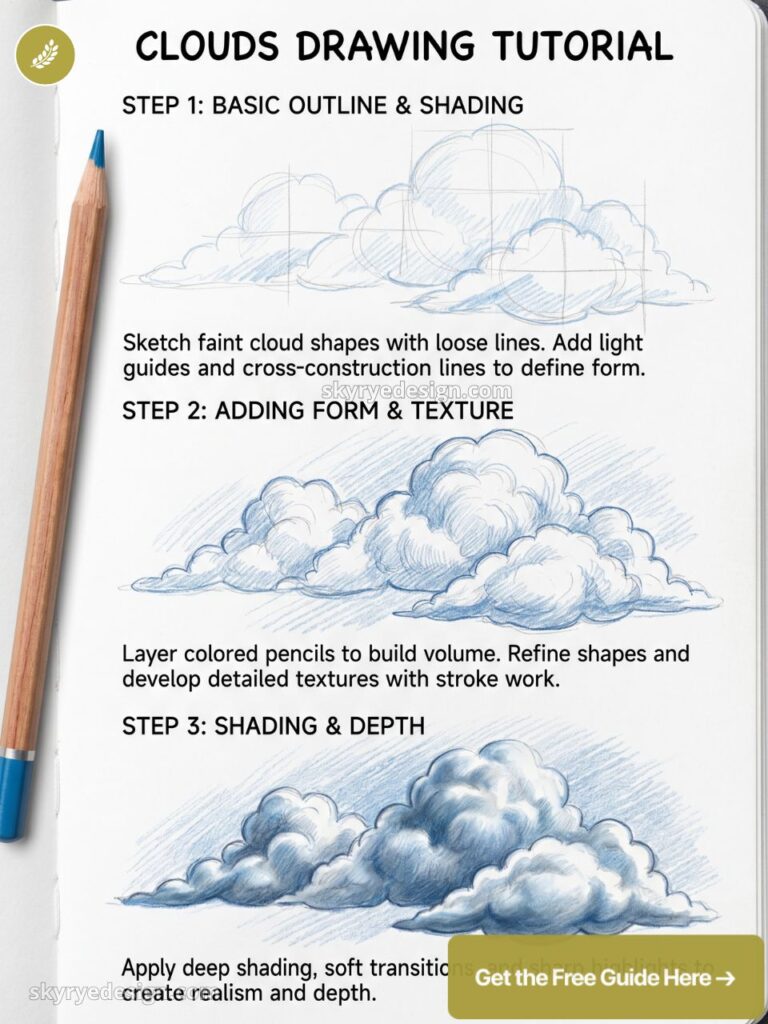
Cloud studies are undervalued by beginners and beloved by masters—Constable filled notebooks with them. Draw exactly the cloud formation outside right now. Don’t wait for ‘better’ clouds. Work fast; clouds move.
18. Draw a Puddle and Its Reflection
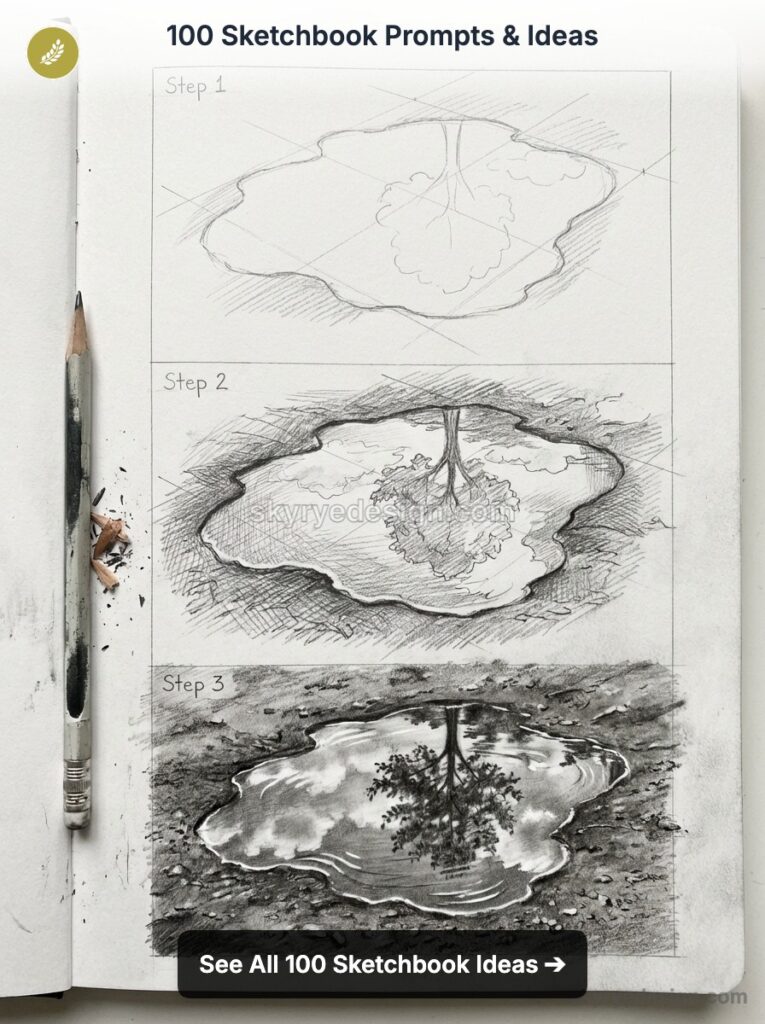
A pavement puddle after rain is a small miracle of reflected sky and inverted architecture. Focus on the edges of the puddle shape (irregular, interesting) and the compressed reflection within it. This is a two-materials-in-one study: water surface and the reflected scene.
19. Sketch a Rock in Detail
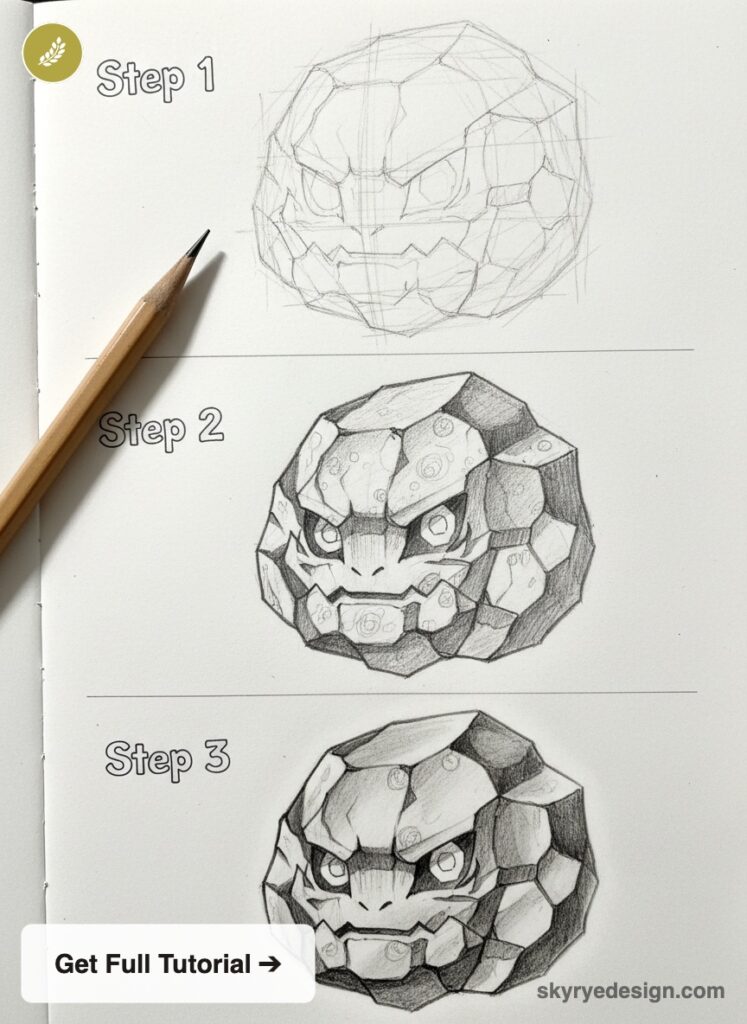
Pick up one interesting rock and place it on your desk. Draw it large—filling at least half the page. Observe the fracture lines, the surface grain, any lichen or staining. This is a direct companion to the stone-drawing techniques in textural work.
20. Draw a Bird You Can See Right Now
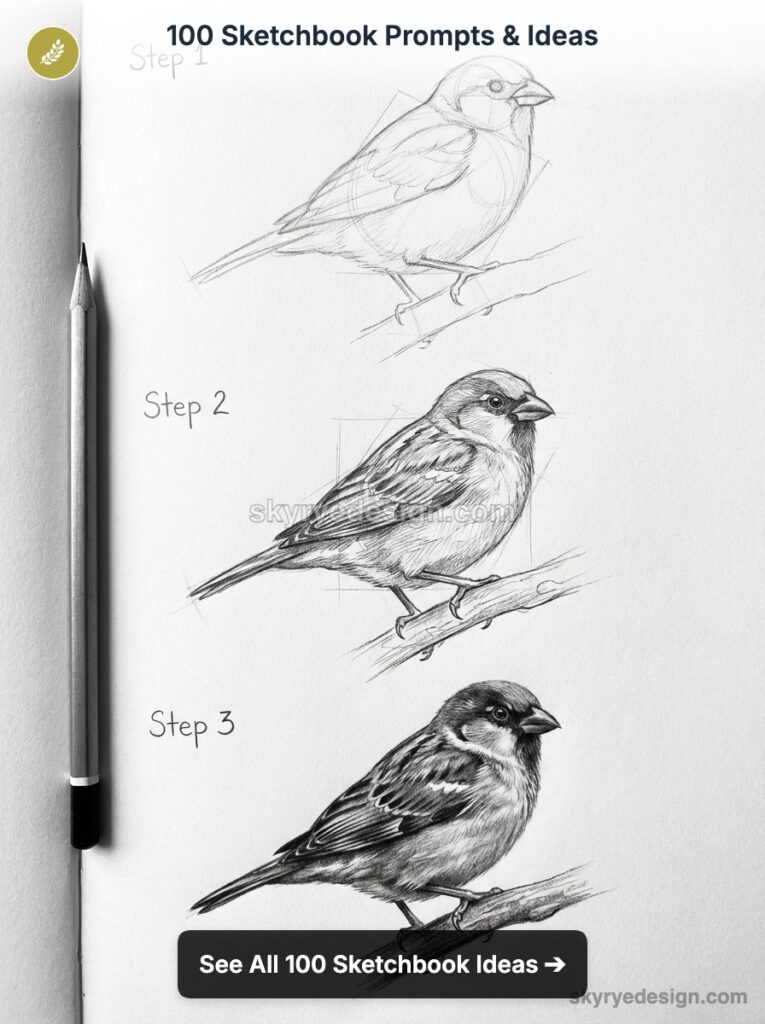
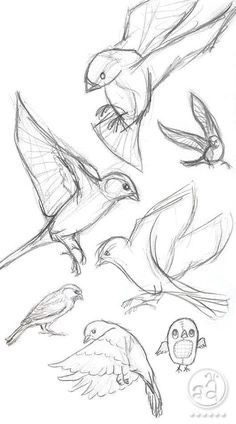
Not from a photo. Look out the window or step outside. Draw whatever bird appears. It will move constantly—that’s the point. Quick gestural marks that capture the posture and proportions in 60 seconds each build observational speed faster than anything else.
A short round of horse sketch practice also works well here: draw one standing horse from reference, one head study, and one leg-joint study before you worry about a polished final drawing.
21. Sketch a Flower from the Back
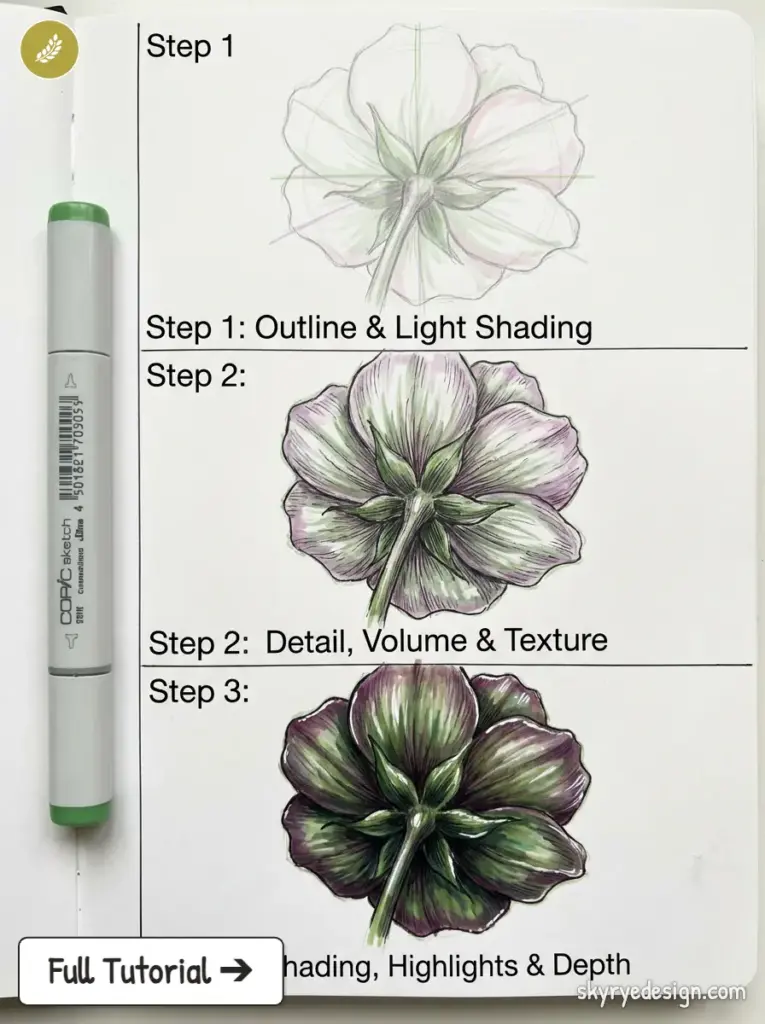
Everyone draws flowers from the front. The back of a flower—the sepals, the stem attachment, the underside of petals—is structurally complex and almost never drawn. Pick any flower and flip it around.
22. Draw Rain on a Window
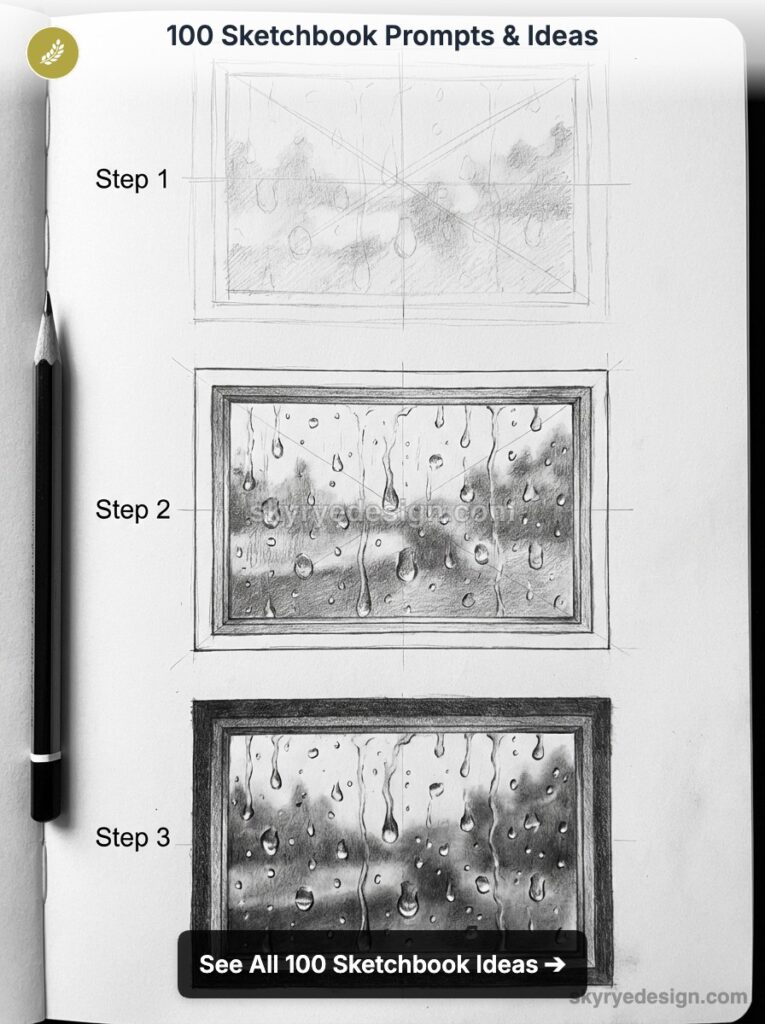
The individual droplets, the streaks of running water, the distorted view through the wet glass. This is a pure texture and observation challenge that combines the techniques of water, glass, and atmospheric perspective in a single subject.
23. Sketch a Landscape in Three Values Only
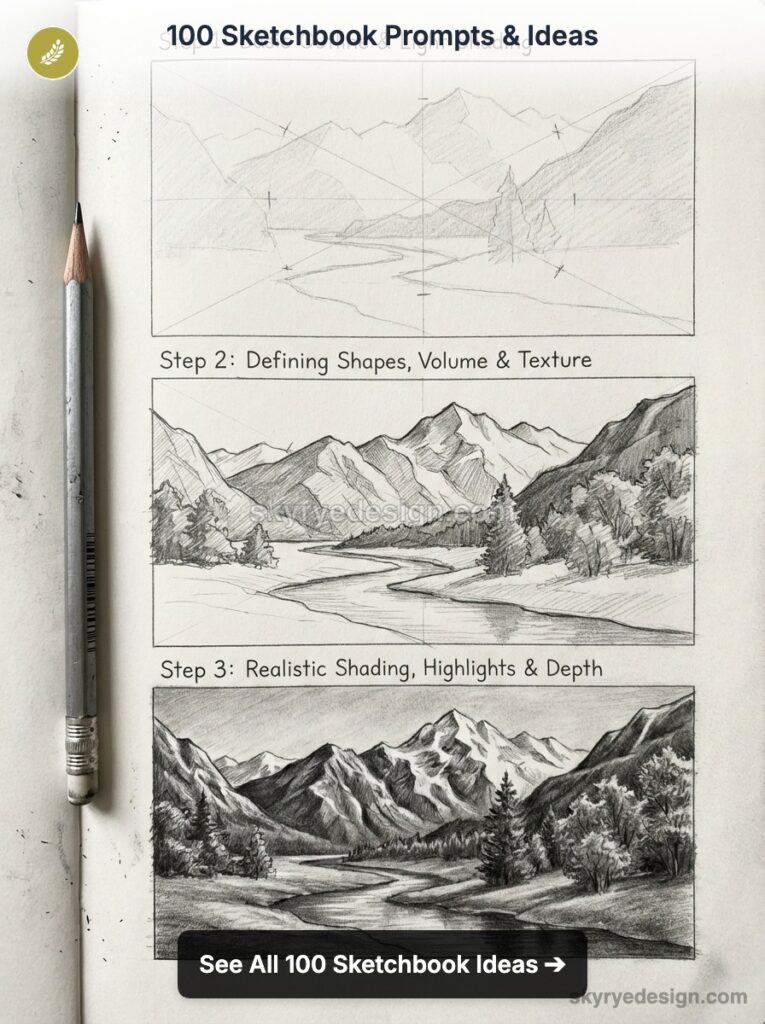
Choose any outdoor scene and draw it using only three tones: white (paper), mid-grey, and dark. No gradients between these three. This constraint forces compositional thinking—deciding what’s in each value zone is the entire creative problem.
24. Draw a Street Corner You Pass Every Day
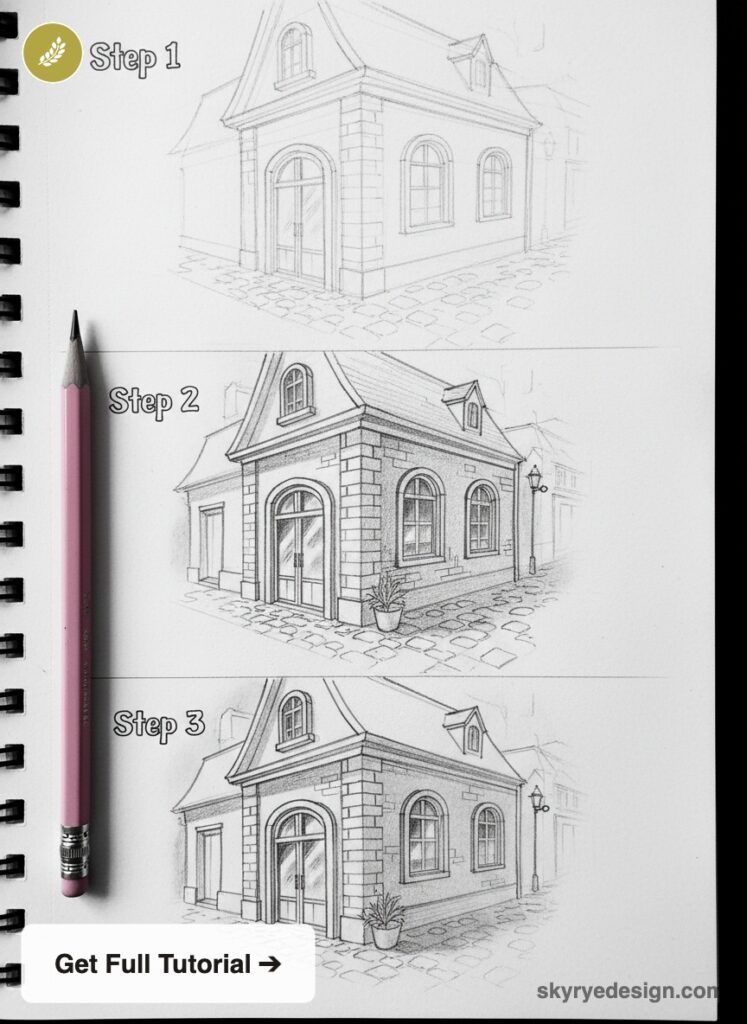
The lamppost, the drain cover, the cracked pavement edge. Urban sketching of familiar routes is a brilliant practice because you’re forced to actually see what you’ve been walking past without noticing. Bring a Pentel Pocket Brush and a small sketchbook.
25. Sketch the Sky at Sunset for Seven Minutes
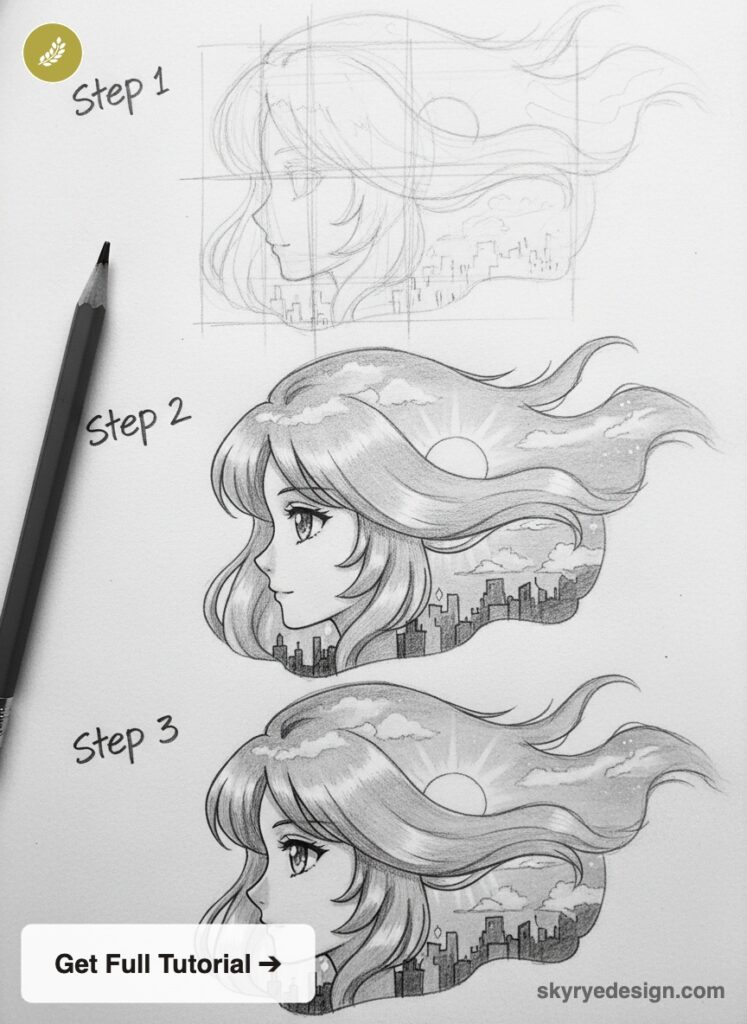
Time yourself. The sky changes faster than you think, so capture the dominant shapes and values quickly.
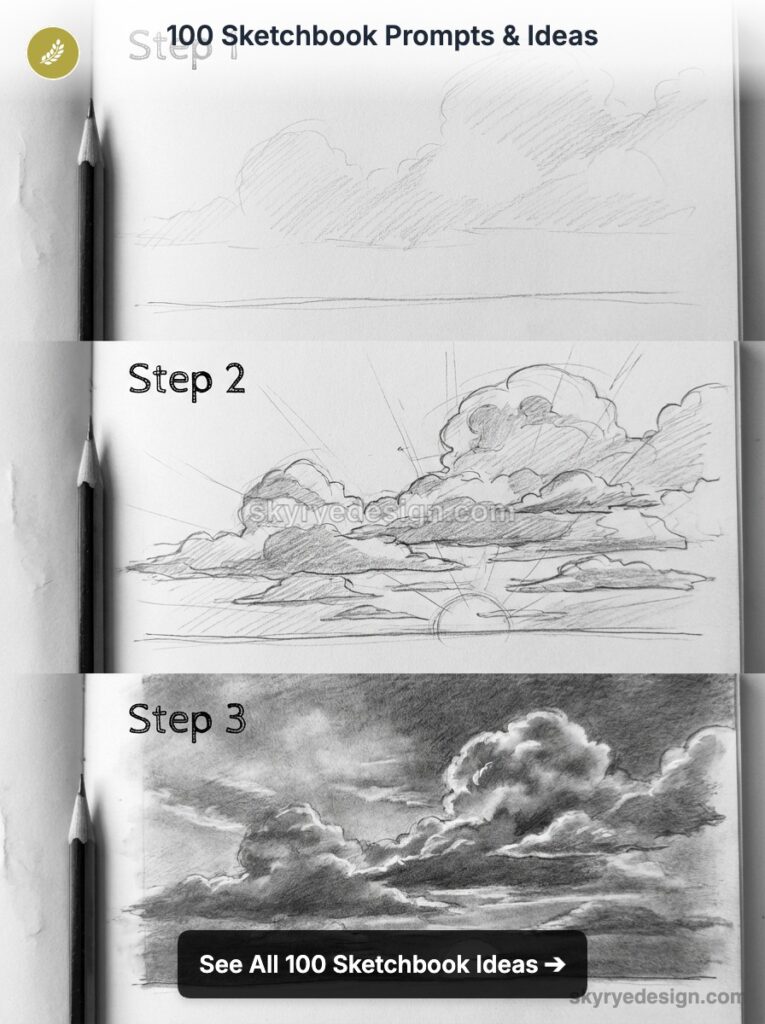
Don’t over-refine—this is about training your eye to prioritise the most important light information under time pressure.
26. Draw a Vegetable or Fruit Cut in Half
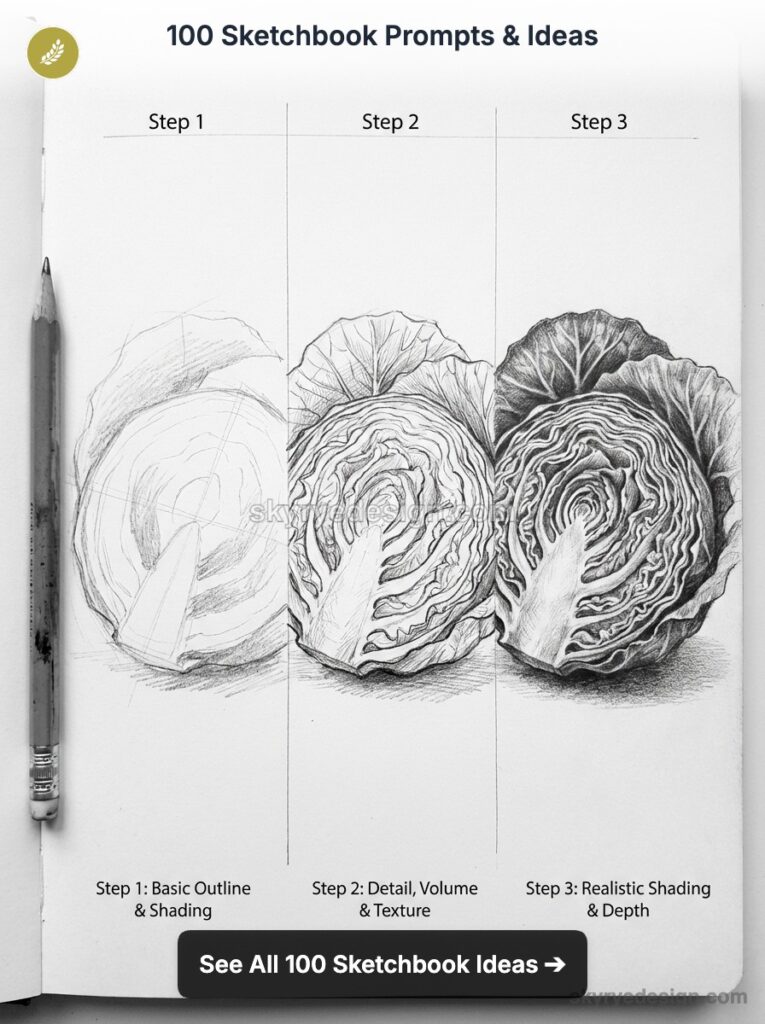
The cross-section of a kiwi, an orange, a red cabbage—these are extraordinary natural compositions of radial symmetry and organic pattern.
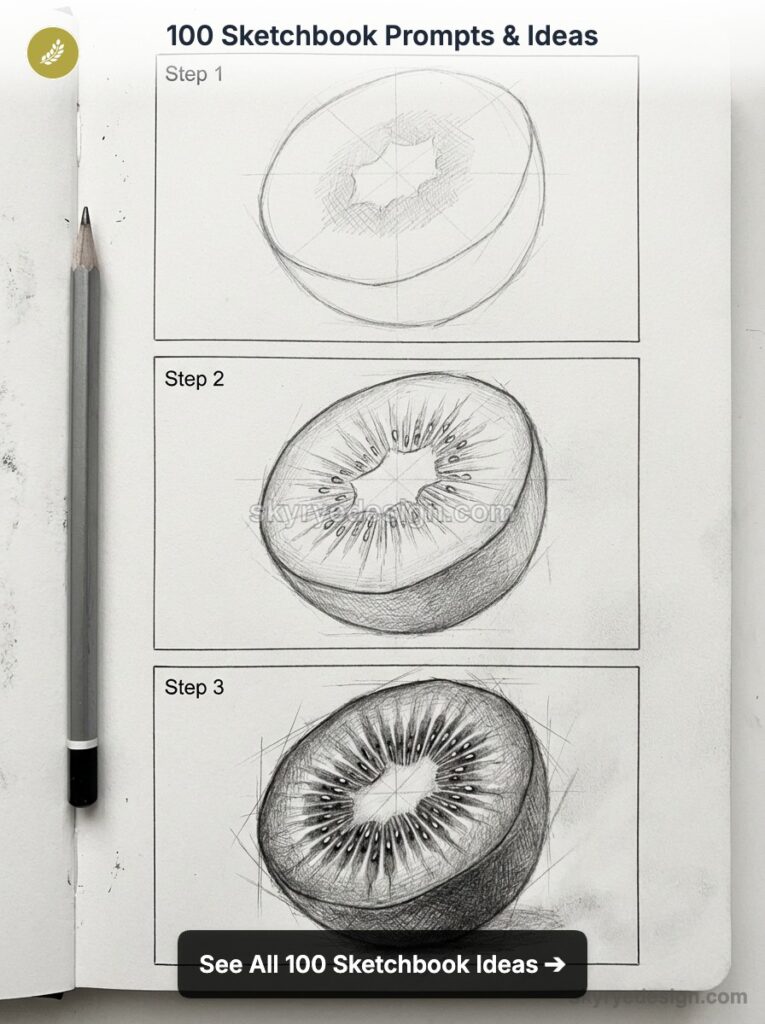
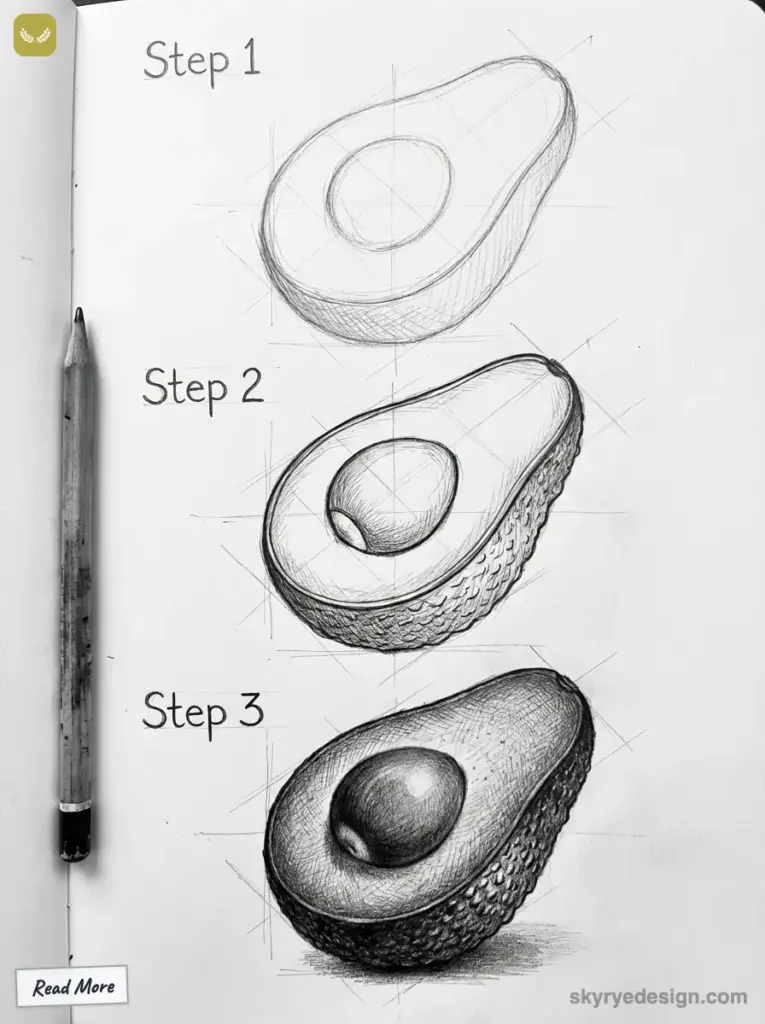
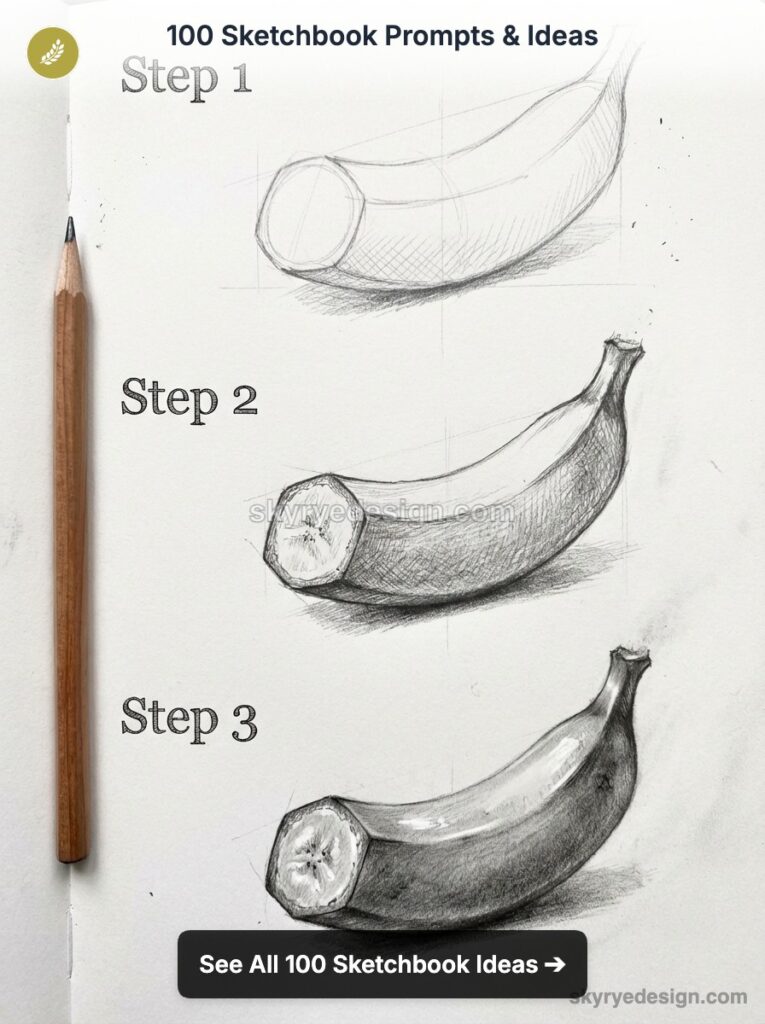
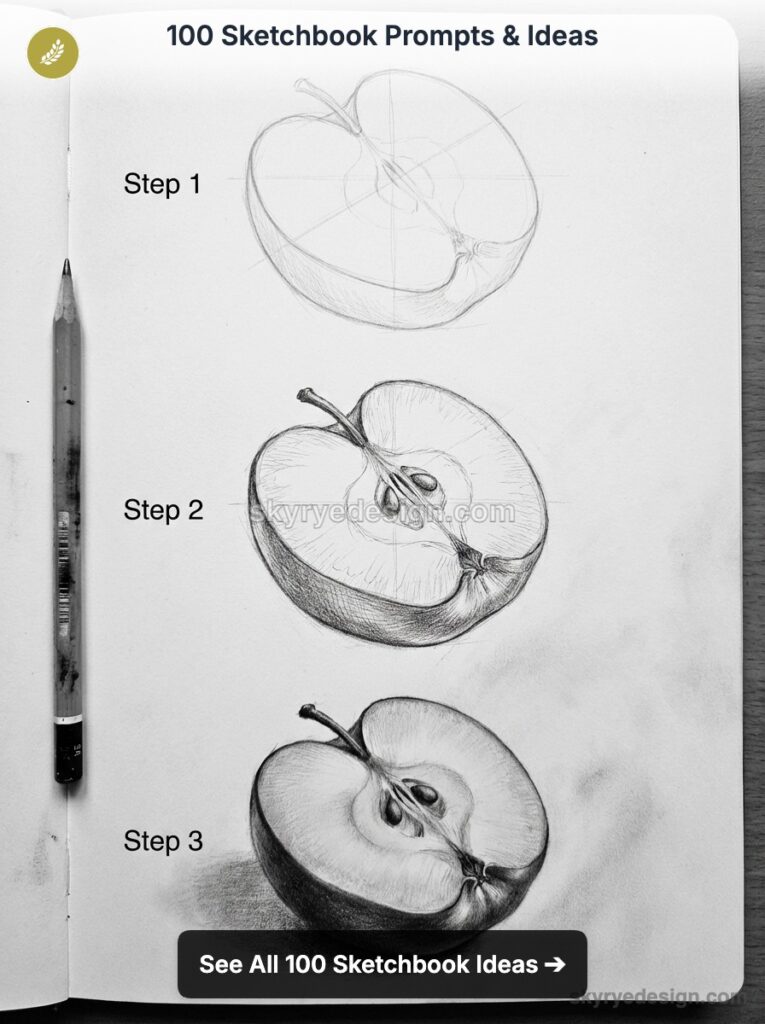
The Hokusai ‘wave’ logic applies: nature is full of geometric structure if you look past the surface.
27. Sketch Water in Motion
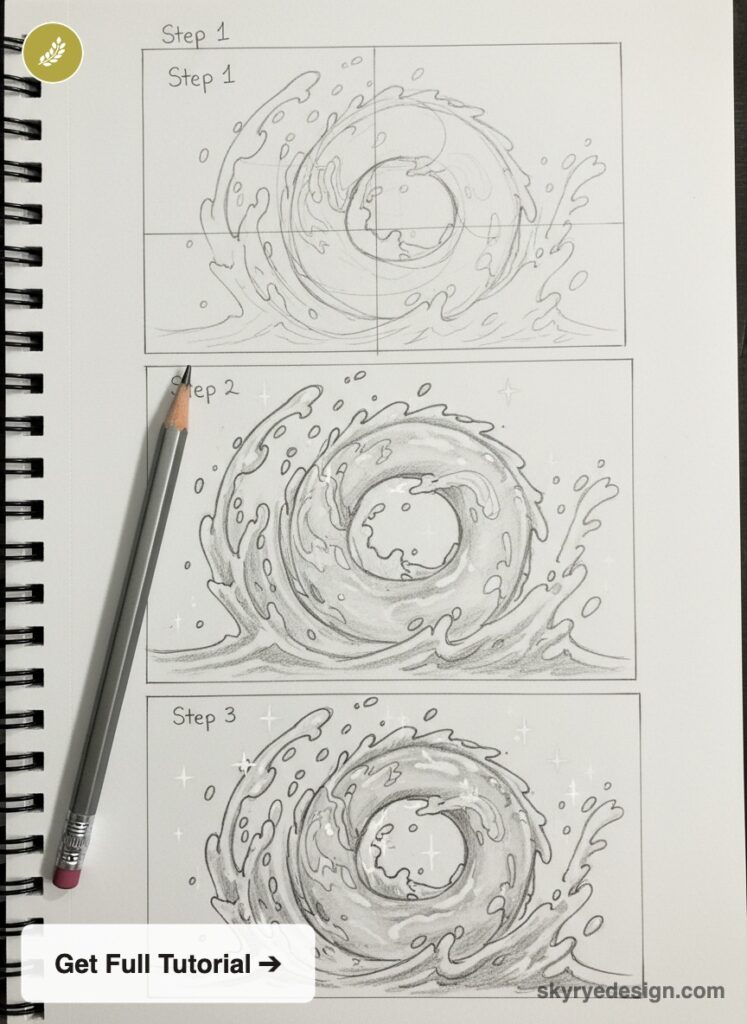
A tap running, a stream, a glass of water being poured. Water in motion defies easy description—it has no fixed form, only momentary shapes. Photograph it, then draw from the photograph. Later, try drawing it live. The gap between the two attempts teaches you everything.
28. Draw a Tree Stump with Visible Ring Structure
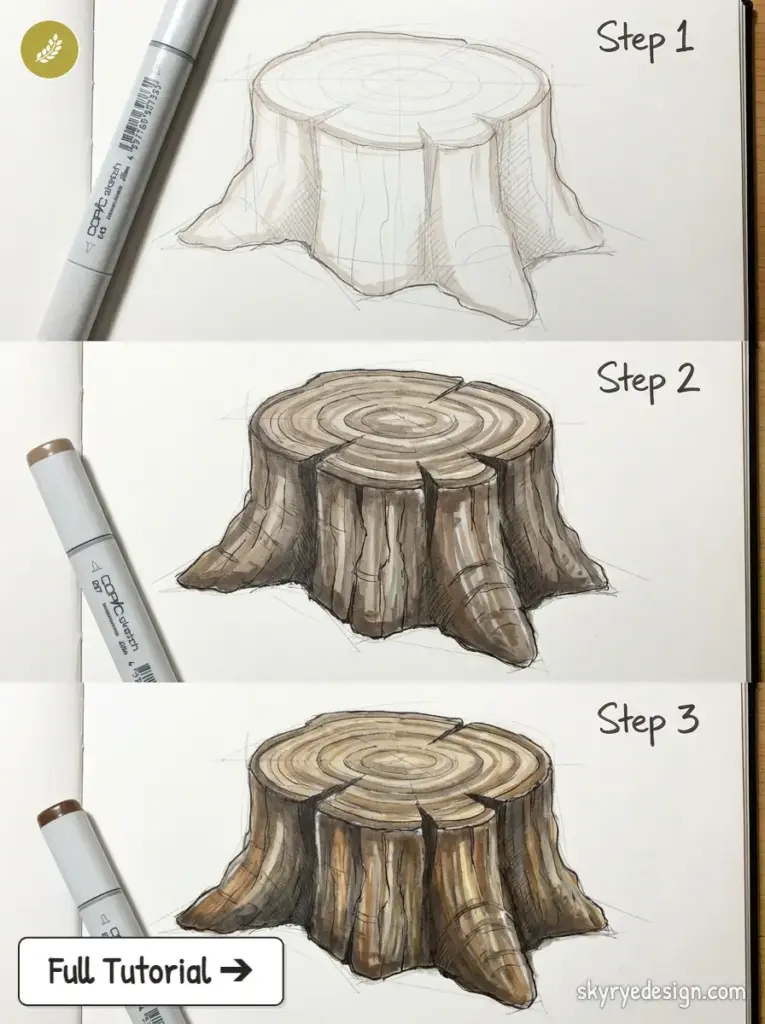
If you can find a cut log or tree stump, drawing the end grain in full is a stunning subject—concentric rings, radial cracks, the rough bark perimeter. This is also a direct texture study for wood-drawing skills.
29. Sketch a Garden or Park Bench
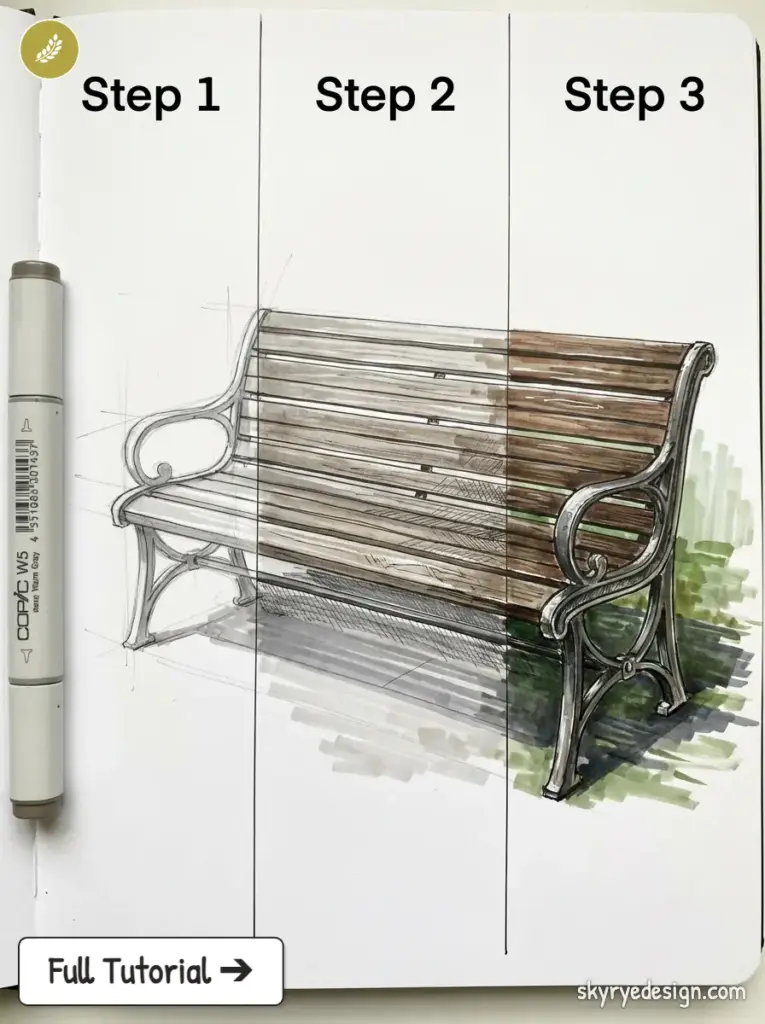
A bench in dappled light, slightly weathered, maybe with a coat left on it. The perspective of the seat slats, the cast iron legs, the shadow patterns underneath—this is a full architectural-plus-nature composition in miniature.
30. Draw the Same Outdoor View in Morning and Evening Light
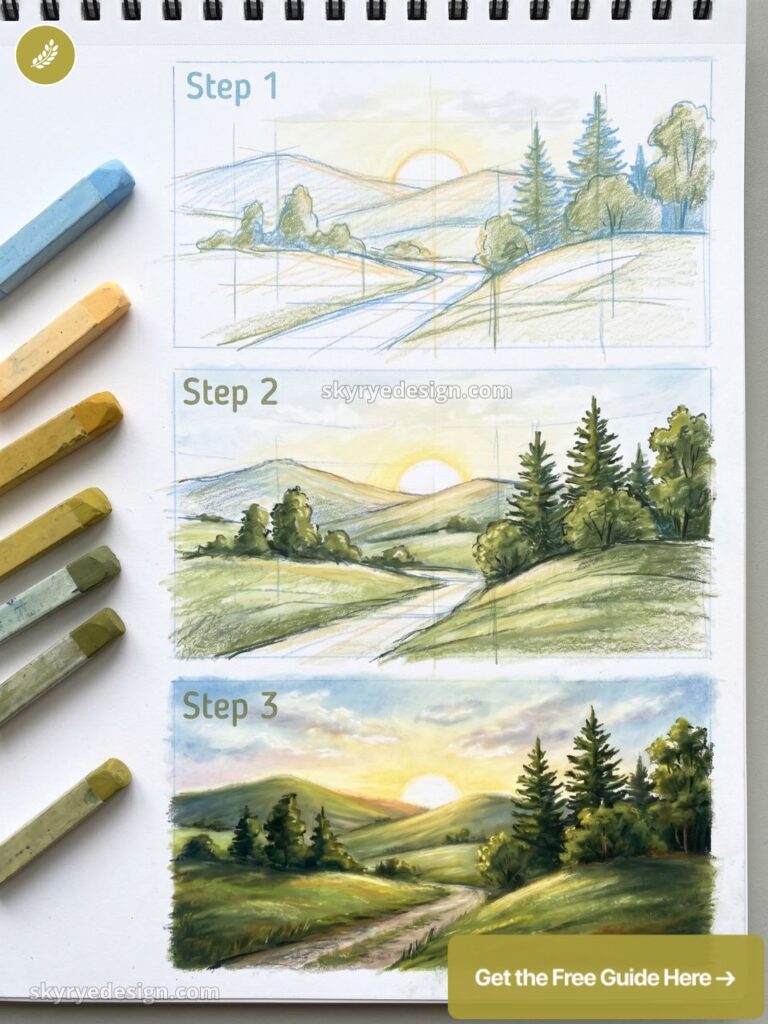
Two drawings of the same subject, different light. This is the single most instructive comparative exercise in observational drawing. Morning light is typically softer and more directional; evening light is warmer and longer-shadowed. The difference teaches light faster than theory ever does.
People and Portraits: 15 Prompts for Drawing the Human Form
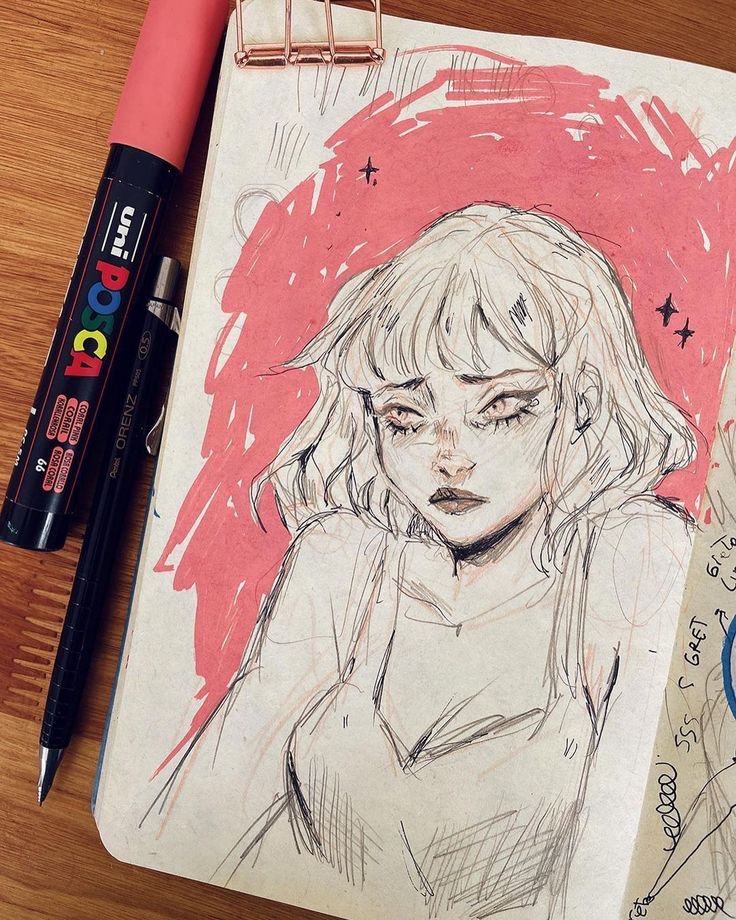
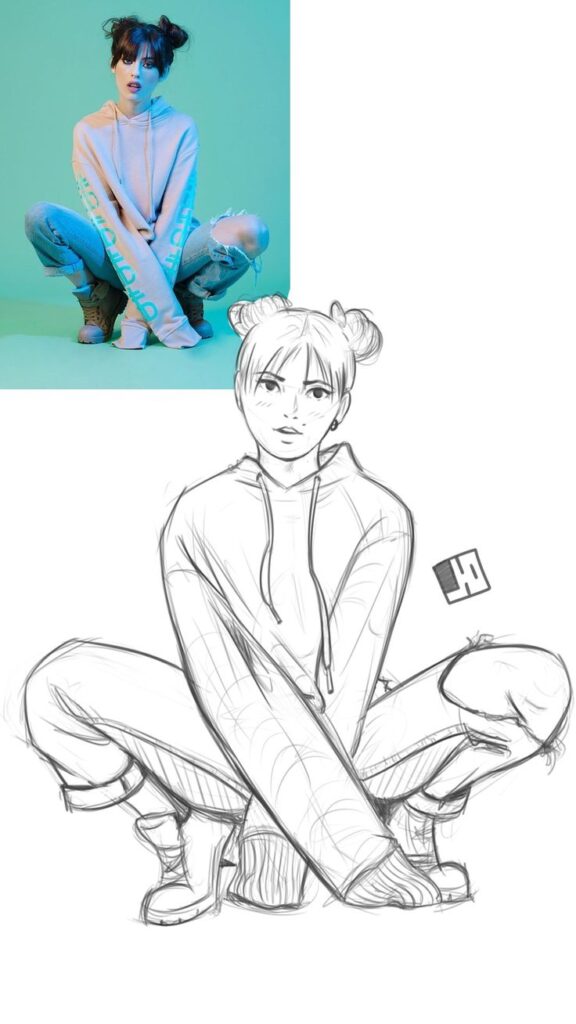
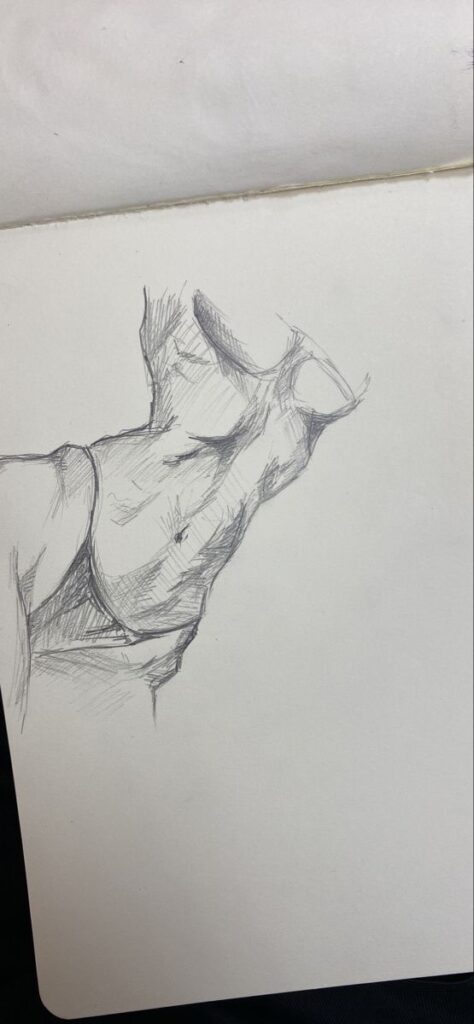
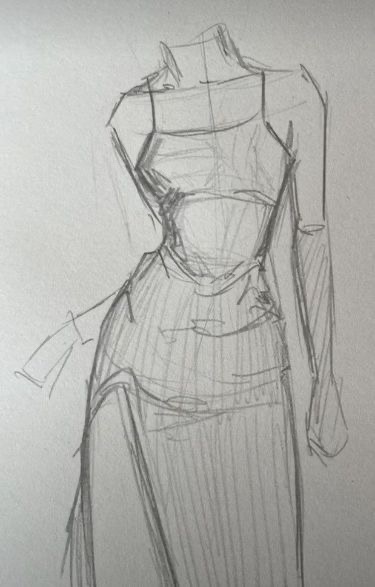
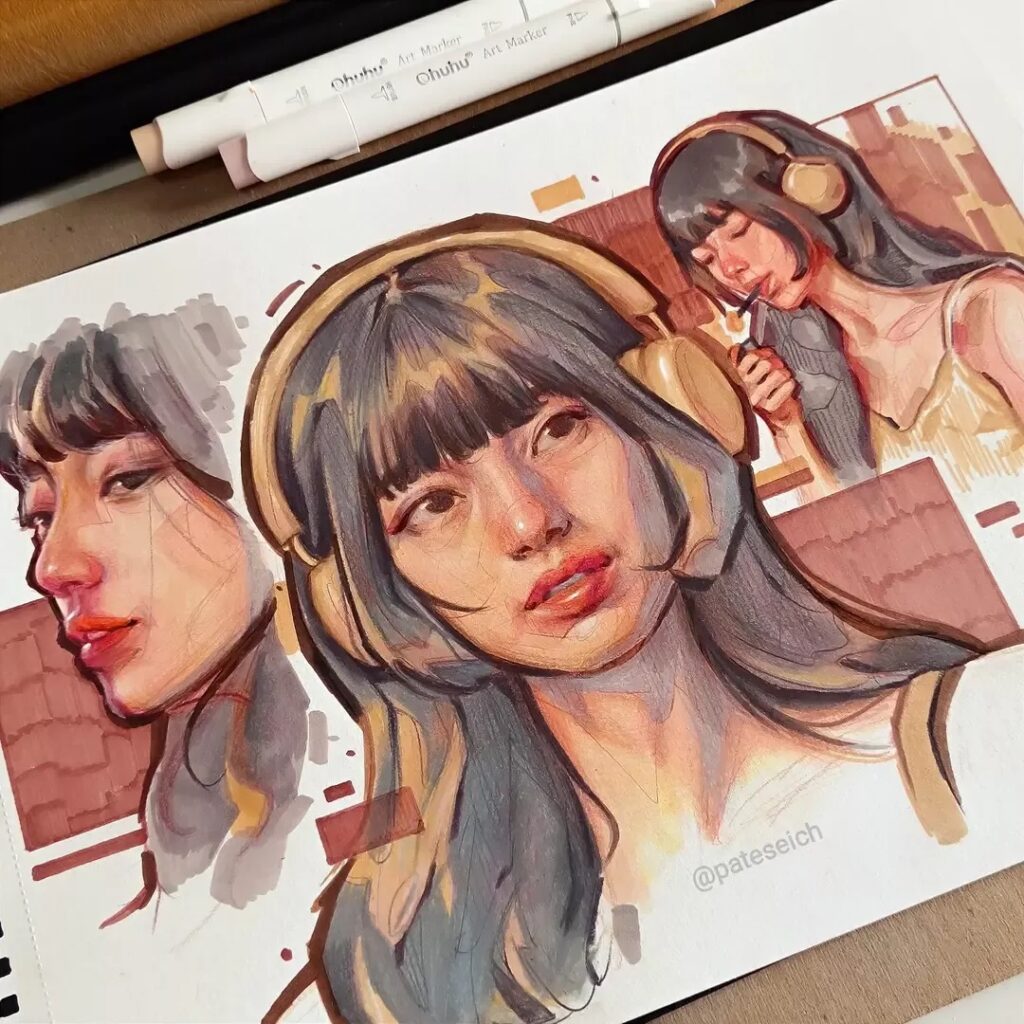
Drawing people is where most artists feel most exposed—and most rewarded. These prompts range from quick gesture work to full portrait studies, covering faces, hands, figures, and the way people inhabit space. The secret: volume of practice over quality of any single drawing.
31. Draw Someone on Public Transport
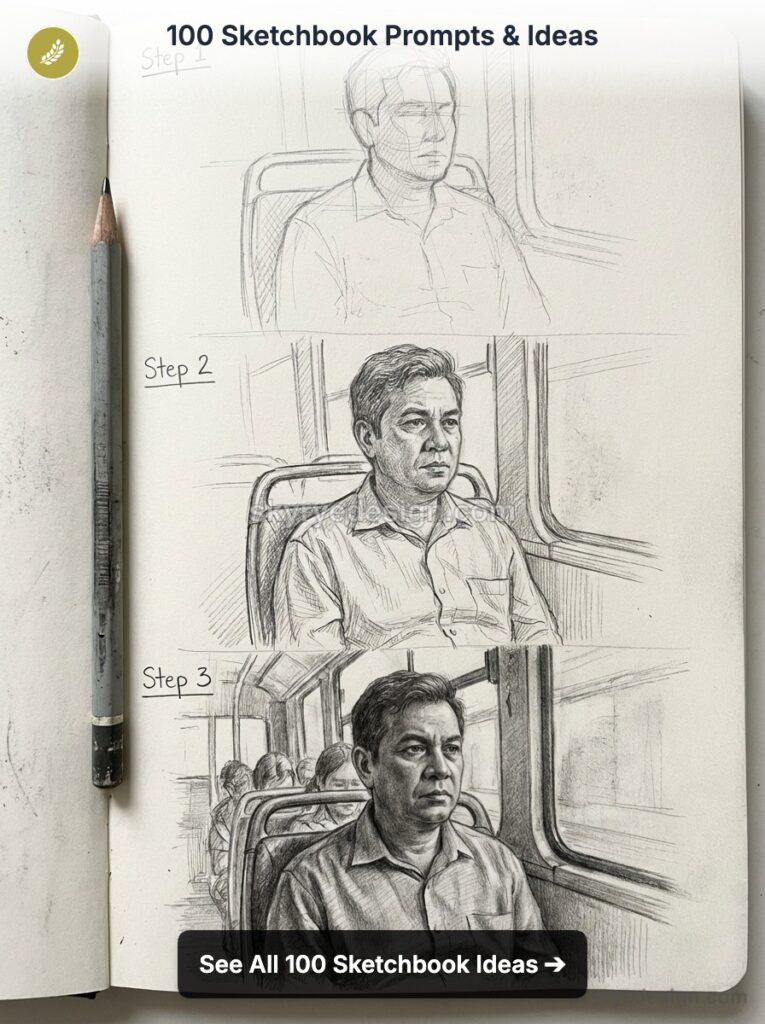
The classic urban sketcher’s prompt. People on buses and trains are still for long periods and looking away from you—perfect drawing conditions. Keep the sketchbook low and work fast. The Lamy Safari fountain pen with Noodler’s Bulletproof ink is the urban sketcher’s toolkit of choice.
32. Sketch a Self-Portrait Without Looking at the Paper
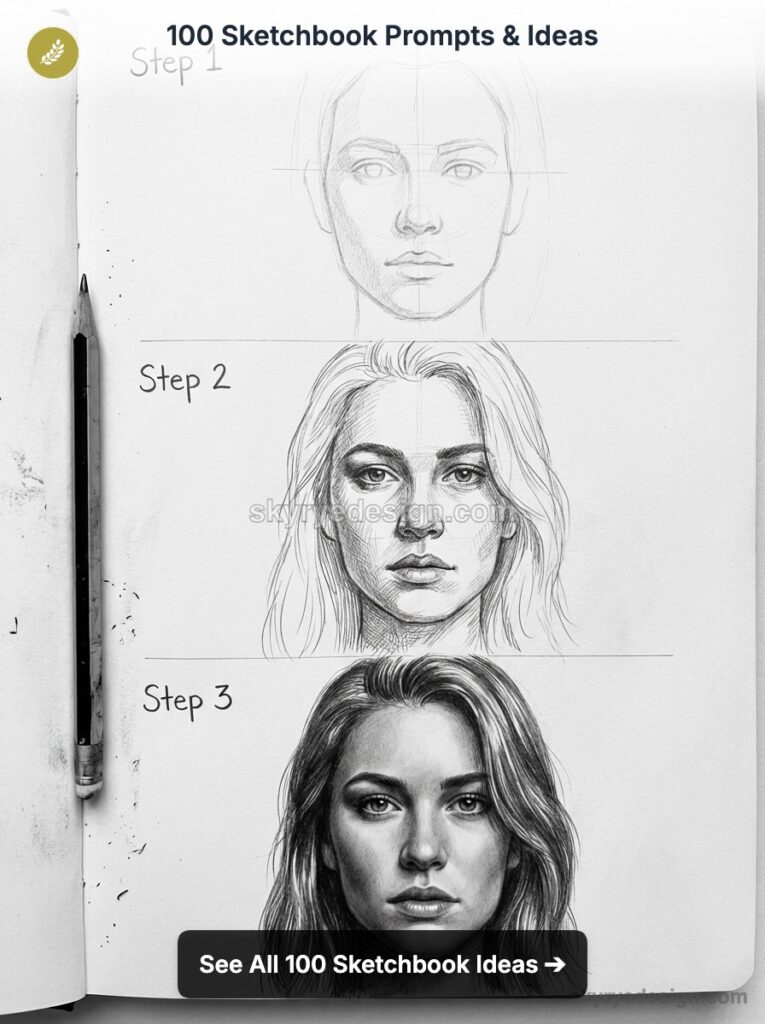
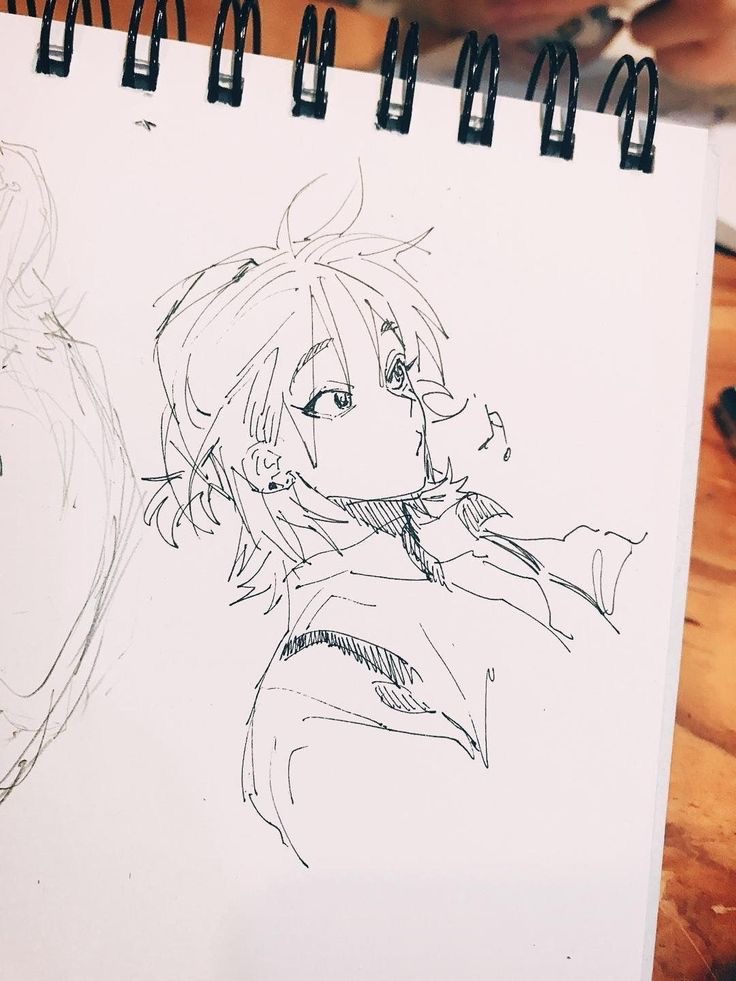
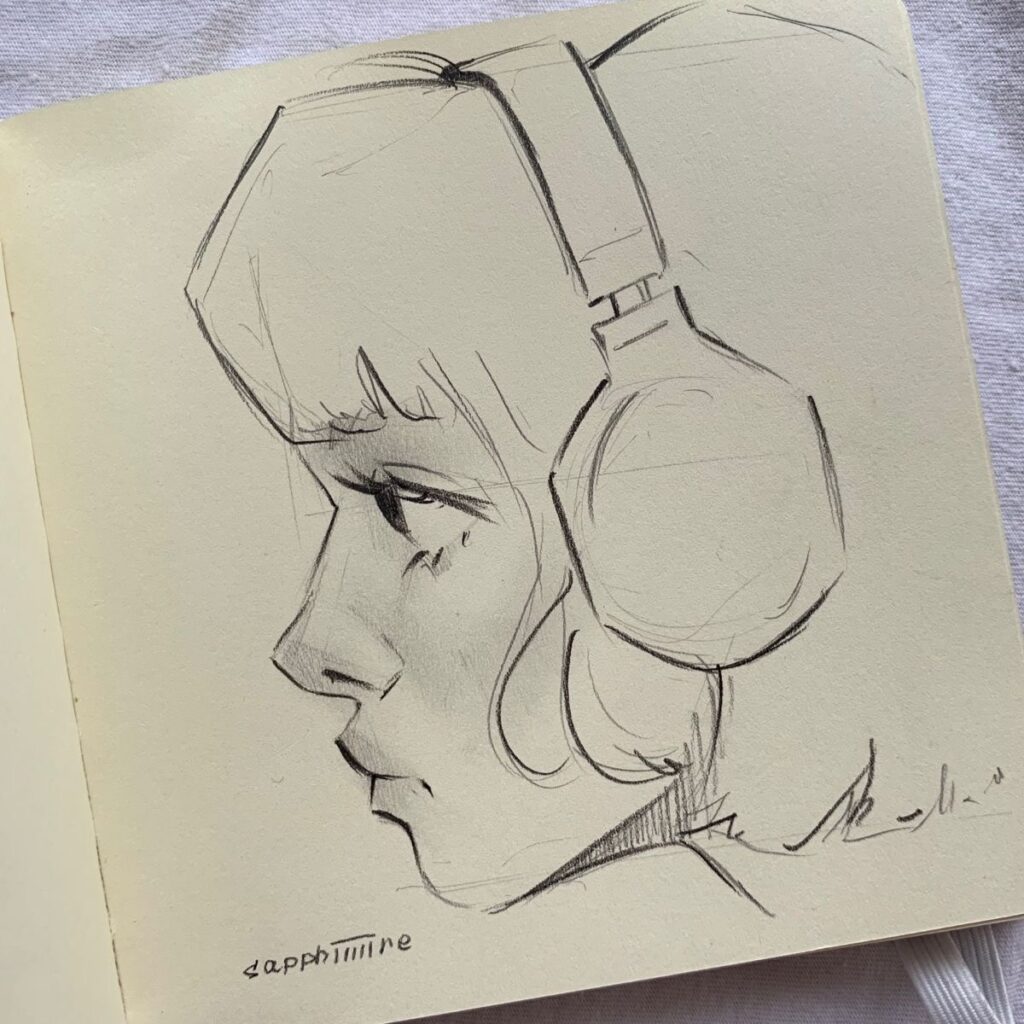
Keep your eyes on the mirror the entire time—never look down at the sketchbook. Blind contour drawing produces chaotic, expressive results that are often more alive than careful, observed portraits. Do three in a row.
33. Draw Hands Holding Something
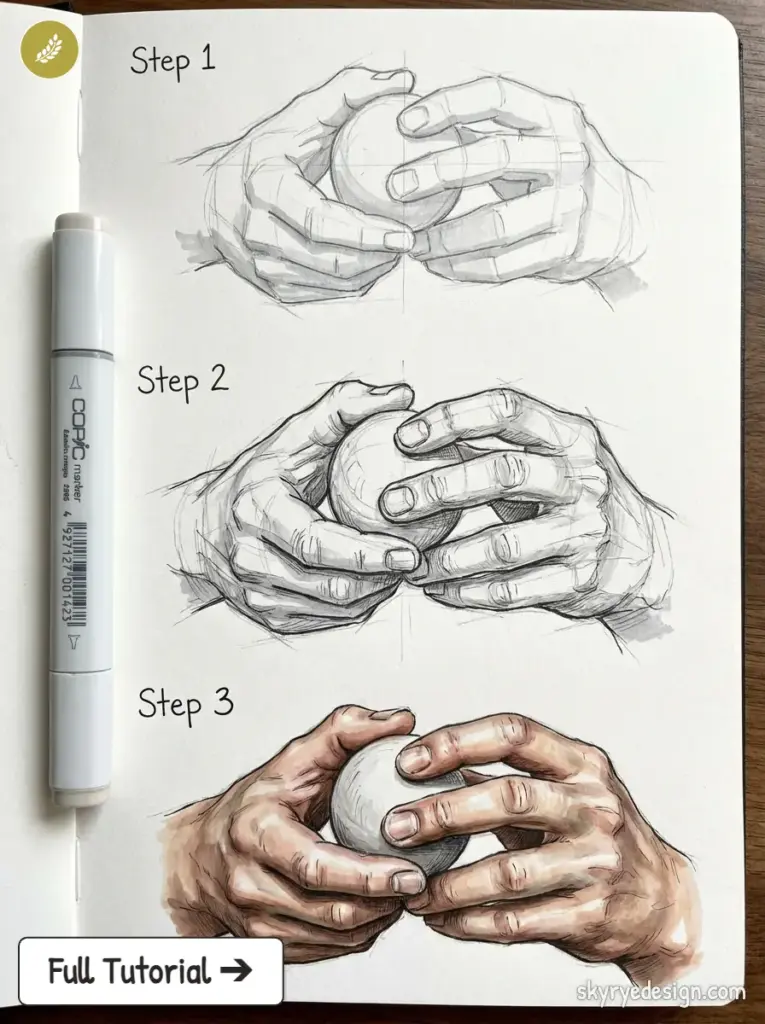
Hands wrapped around a coffee mug, gripping a phone, holding a book open. The interaction between hand and object is far more interesting than either in isolation. One hand holding one object, full page, 20 minutes.
34. Sketch Someone Sleeping
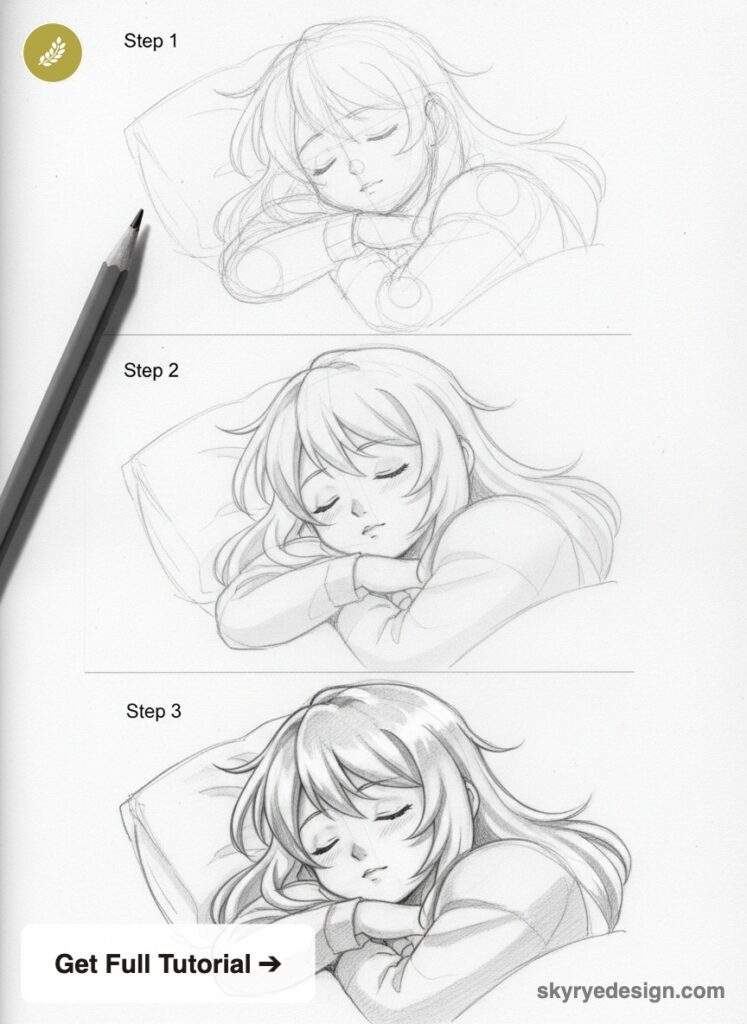
A sleeping subject is still—the rare gift to a figure-drawing artist. The relaxed facial muscles, the soft weight of a resting body, the rumpled fabric. Draw anyone who falls asleep near you. No permission needed for sleeping subjects.
35. Draw a Person from Behind
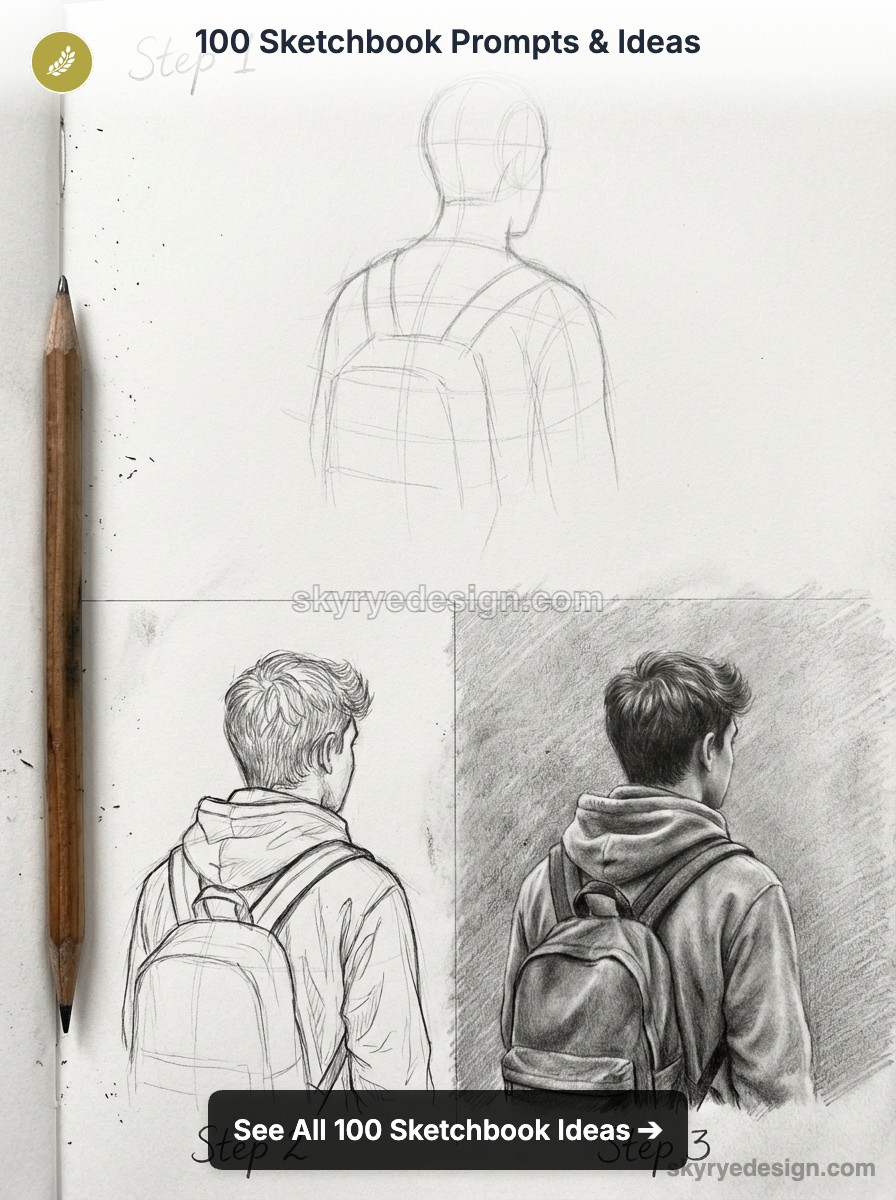
The back of the head, the set of the shoulders, the way a bag sits on a back. We rarely draw people from behind—but it’s often where the most character lives. Try this at a café or on a commute.
36. Sketch a Face Using Only Light and Shadow (No Outlines)
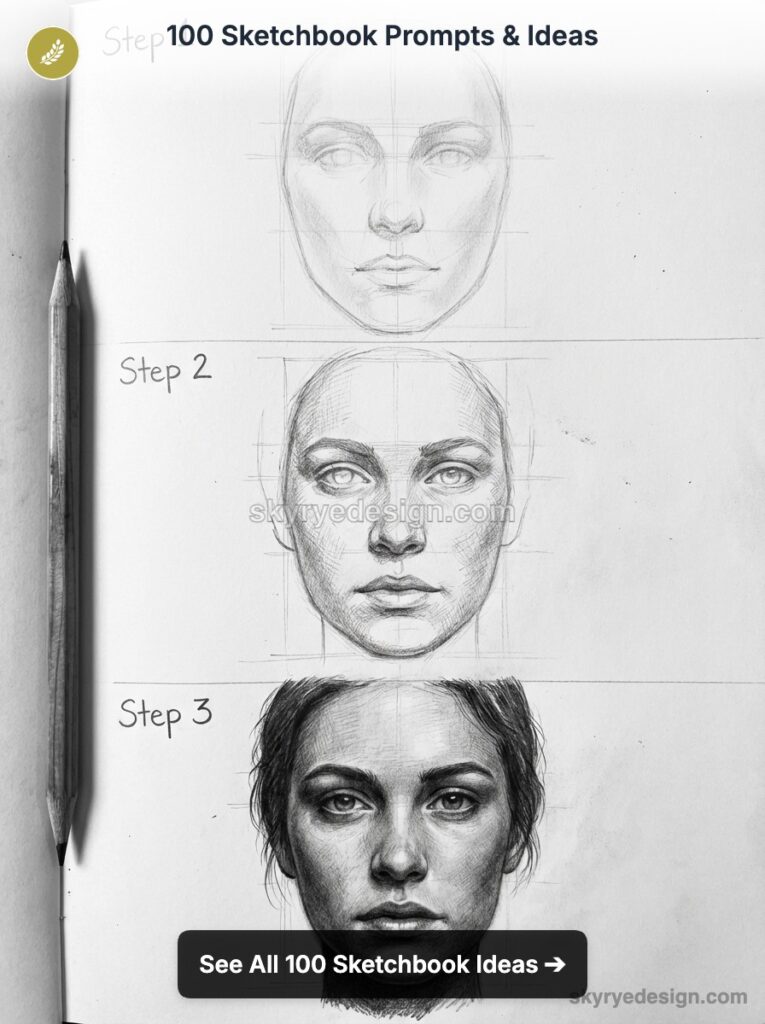
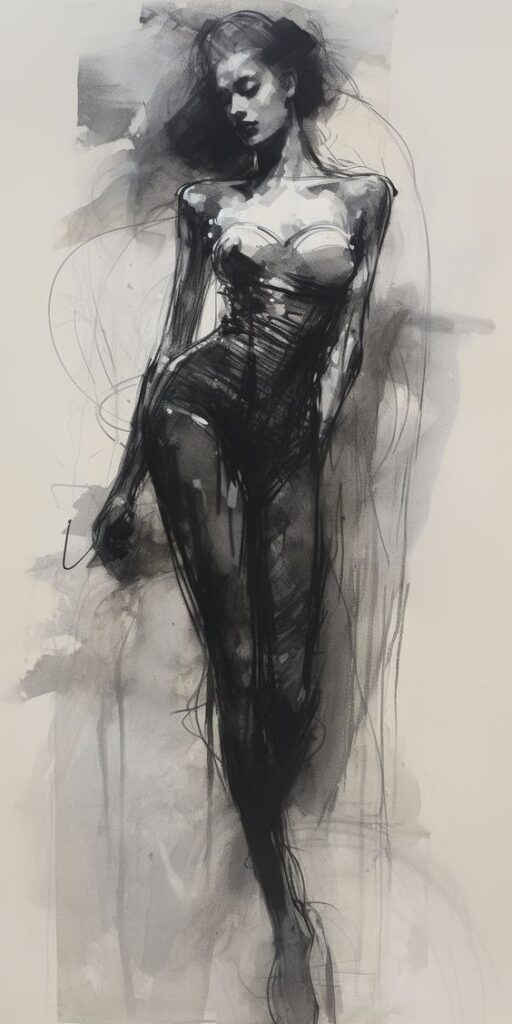
Put down the contour line entirely. Build a face using only value—areas of dark and light—without any defining outline. This technique, used by Zorn and Sargent, is the fastest path to painterly, three-dimensional portrait drawing.
37. Draw Someone Concentrating on Their Phone
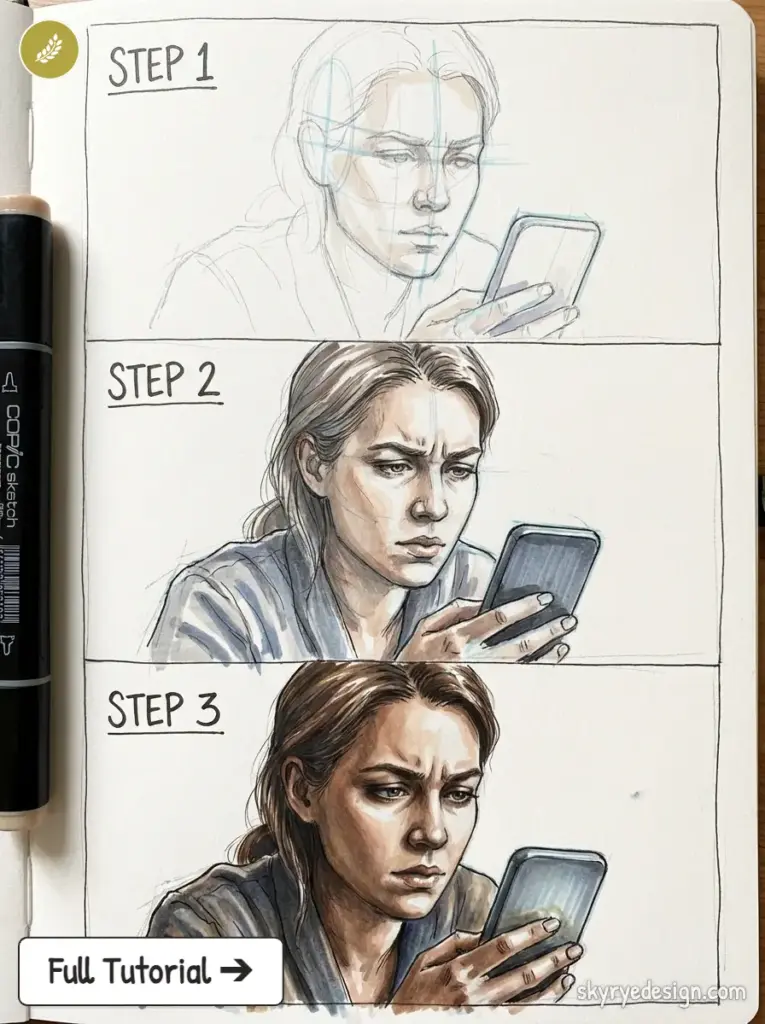
The downward gaze, the particular light from the screen, the hunched posture. This is a 2026-specific figure drawing subject—an entirely new human posture that didn’t exist in academic drawing reference books. Own it.
38. Sketch Feet
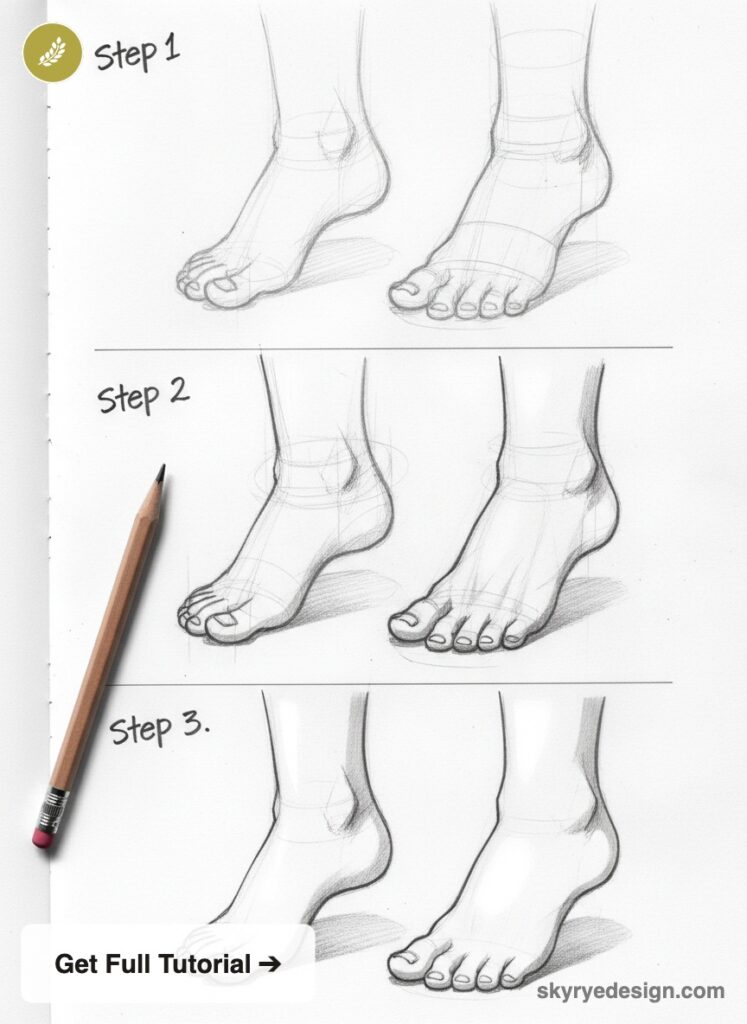
Feet are as expressive as hands and far less often drawn. Bare feet on a floorboard, feet in sandals, the arch of a foot from the sole. Give them the same serious attention you’d give hands.
39. Draw a Person from Memory After Observing for One Minute
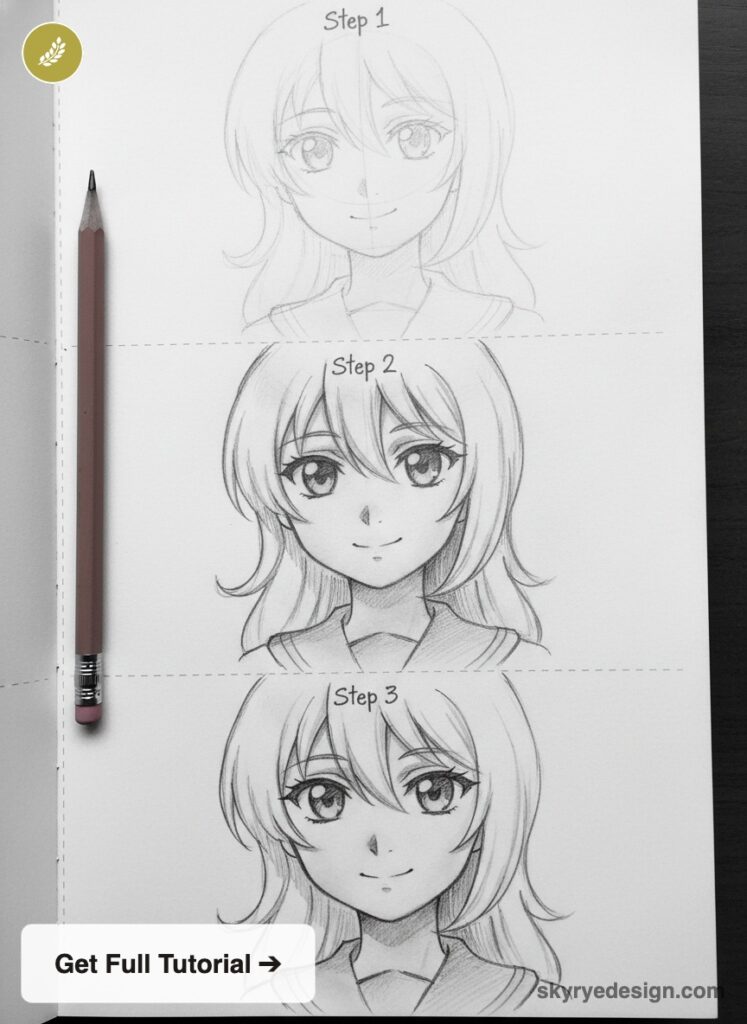
Look at someone in a café for one minute. Then sit somewhere else and draw them from memory. The result reveals exactly what your eye prioritises—proportion, gesture, specific details. Do this repeatedly; the gap between observation and memory shrinks with practice.
40. Sketch Multiple Expressions on One Face
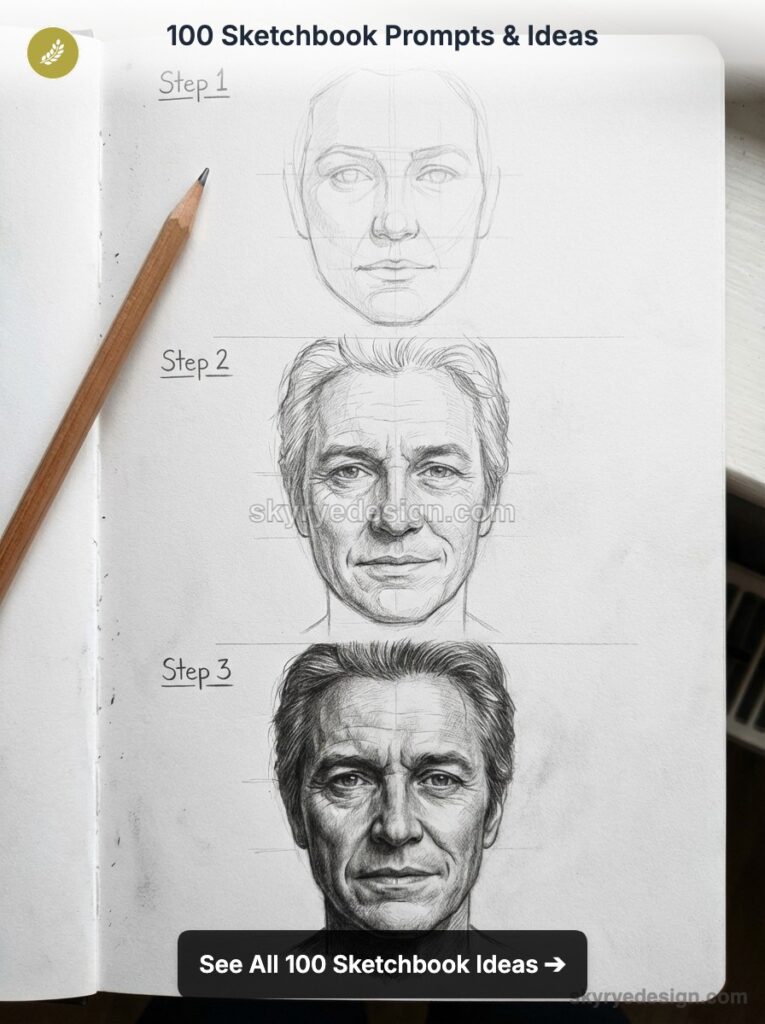
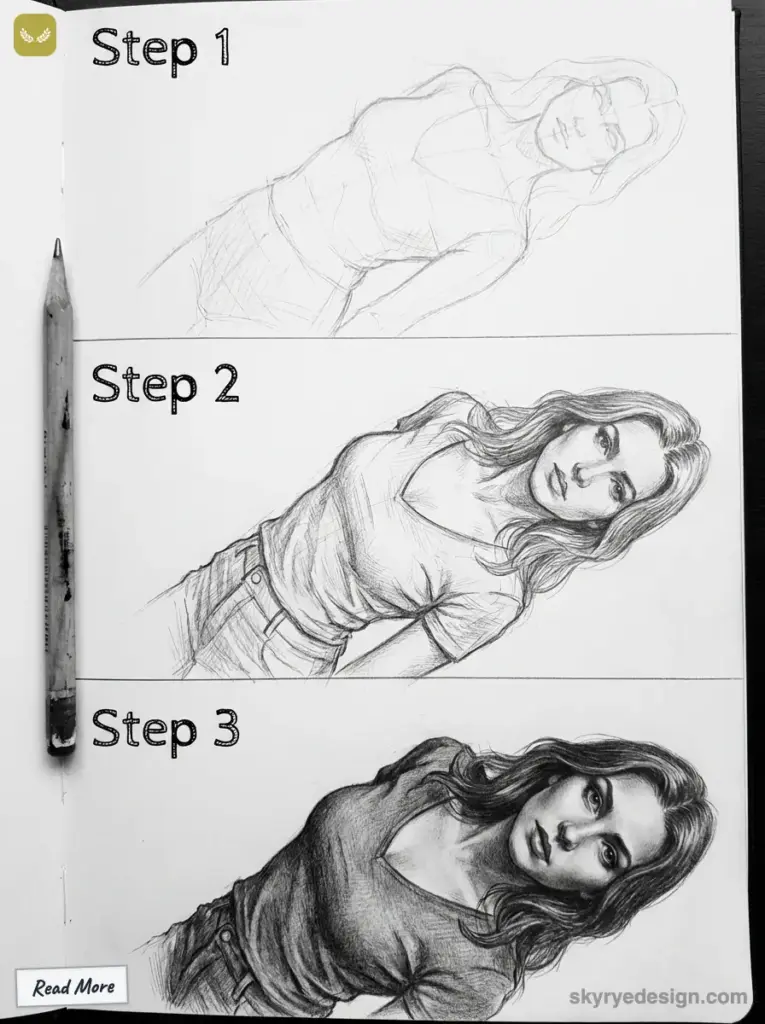
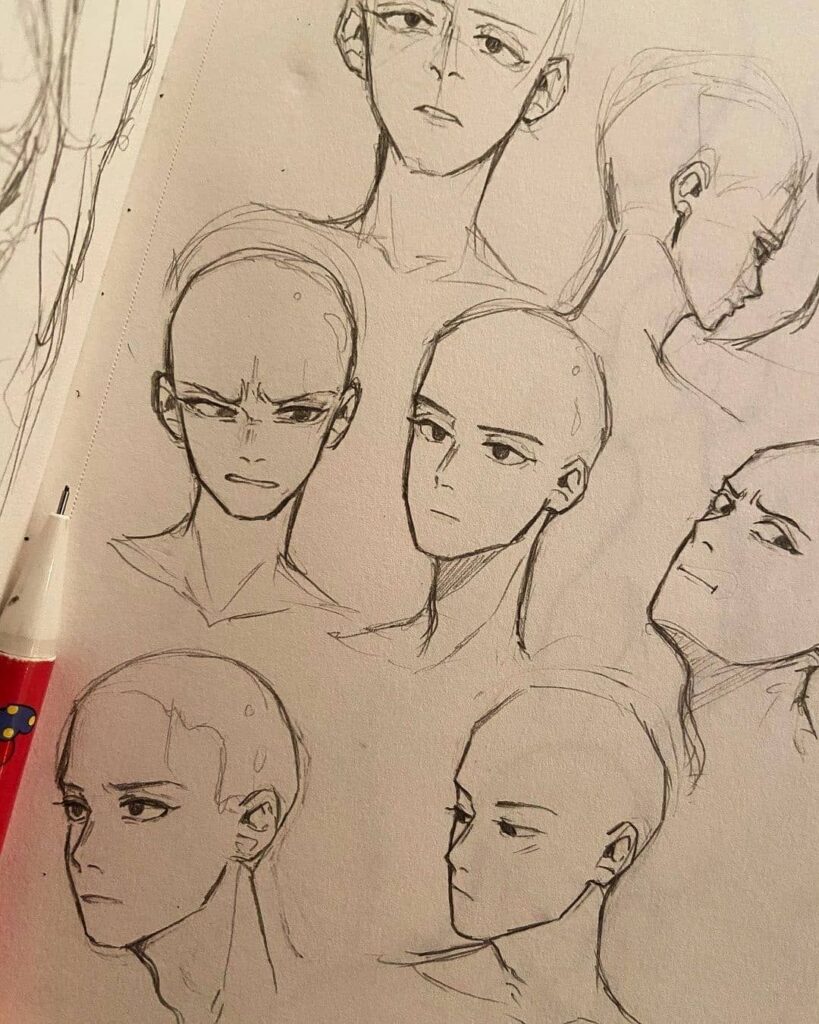
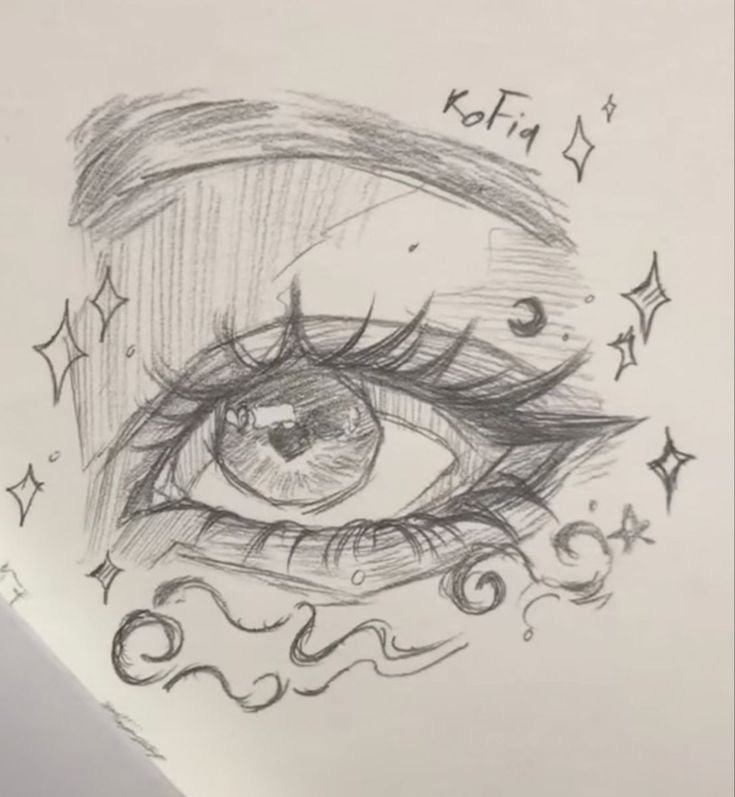
Use your own face in a mirror. Fill a page with quick five-minute studies of different expressions: neutral, laughing, concentrated, sad, surprised. The muscular logic of facial expression is a deep subject that repays years of study.
41. Draw Someone Eating
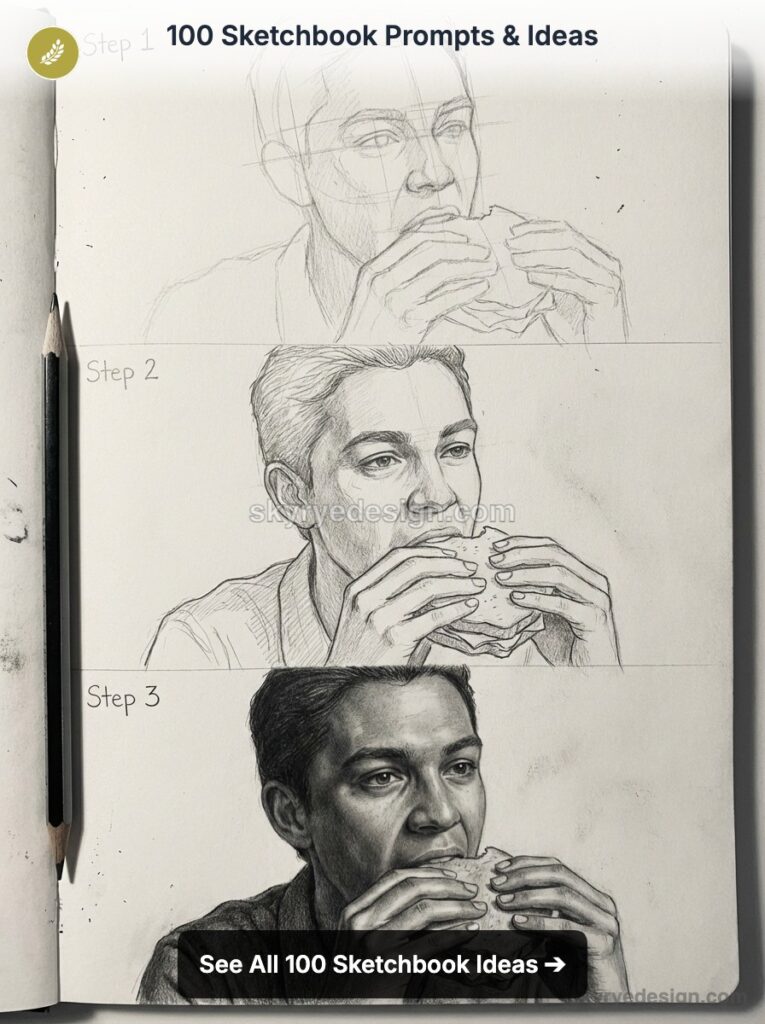
The concentration, the slightly open mouth, the hands around cutlery or a cup. Eating figures are naturally absorbed and unselfconscious—good candid drawing material. Any meal you share with someone is an opportunity.
42. Sketch the Back of Someone’s Head and Neck
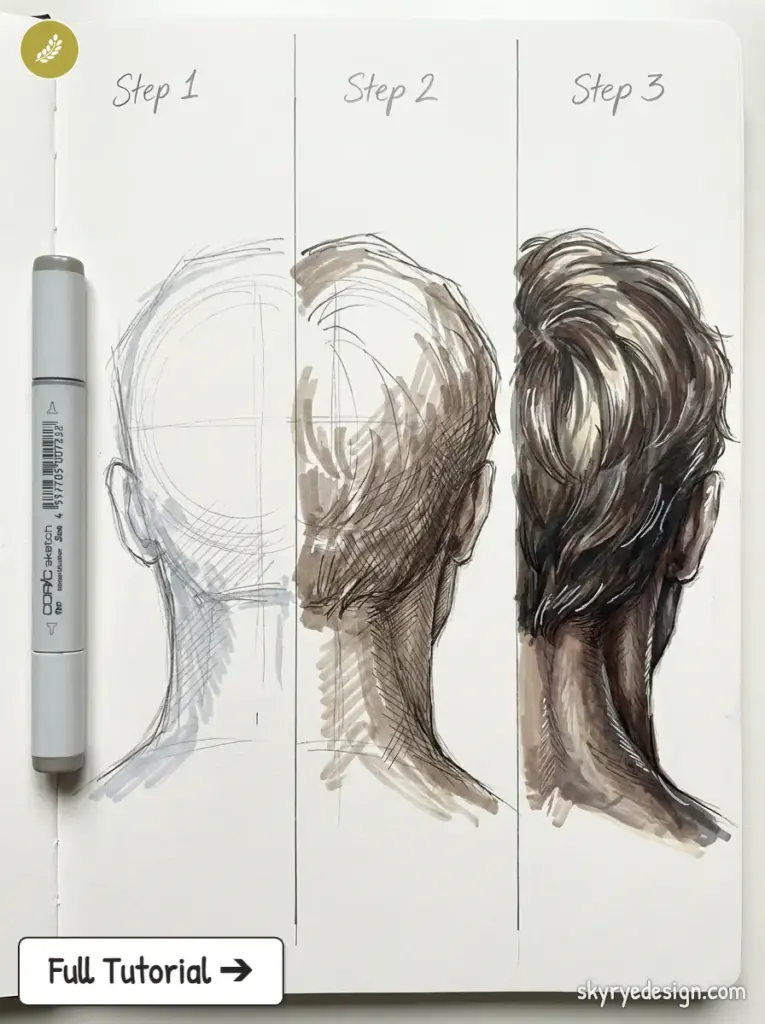
The occipital bump, the hairline, the curve of the neck into the shoulders—this is the most anatomically studied and least drawn view of the human head. Rembrandt’s etchings are the masterclass reference here.
43. Draw an Elderly Person’s Hands
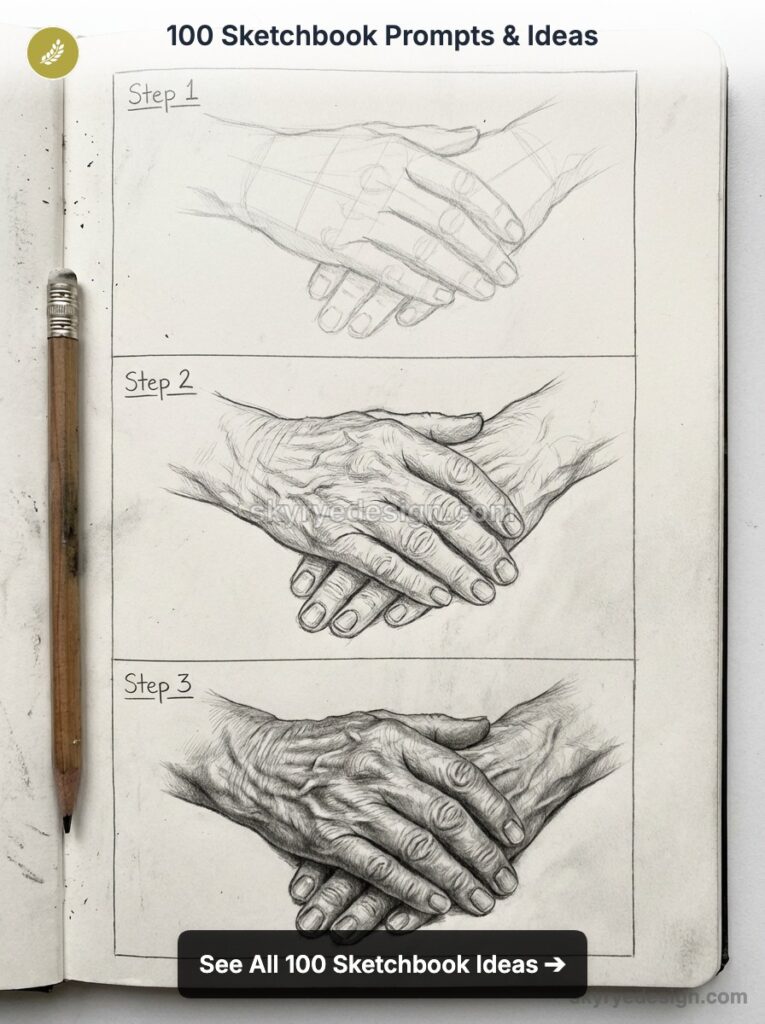
Aged hands carry decades of information in their surface: vein structure, skin texture, the way tendons show beneath thinning skin. There is no more rewarding single-subject portrait study.
44. Sketch a Child Playing
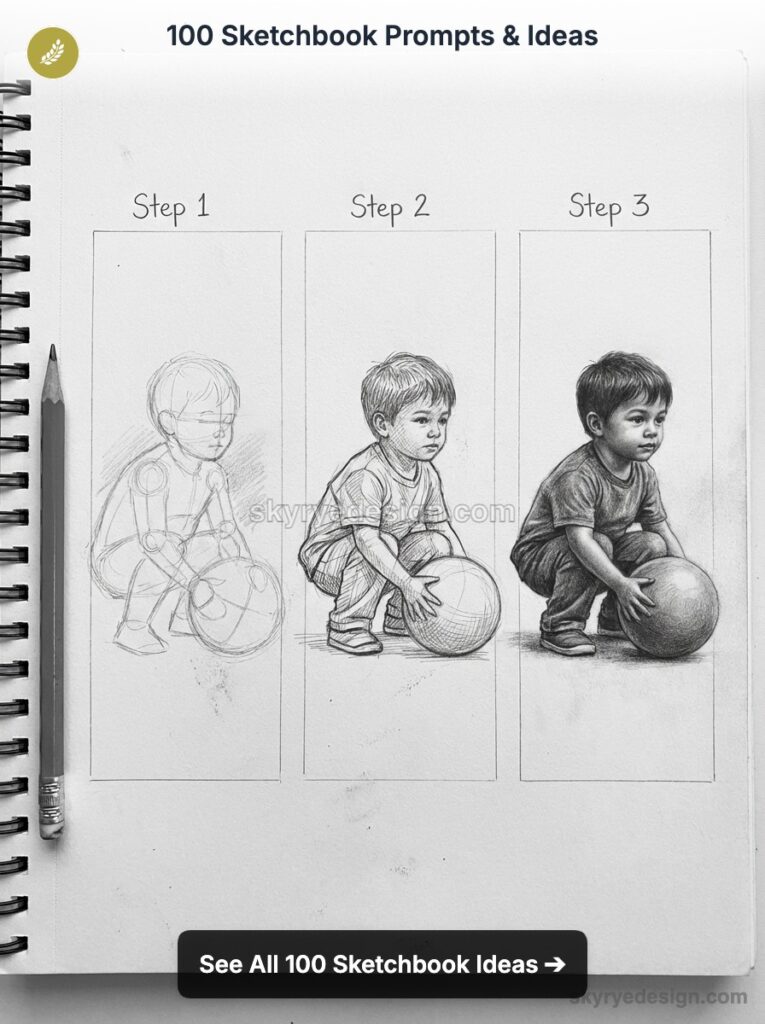
Children’s proportions differ fundamentally from adults—larger heads, shorter limbs, rounder torsos. Drawing a child in motion requires fast work and attention to proportion. Use gesture drawing mode: capture the movement, not the features.
45. Draw a Figure in Dramatic Lighting (One Strong Light Source)
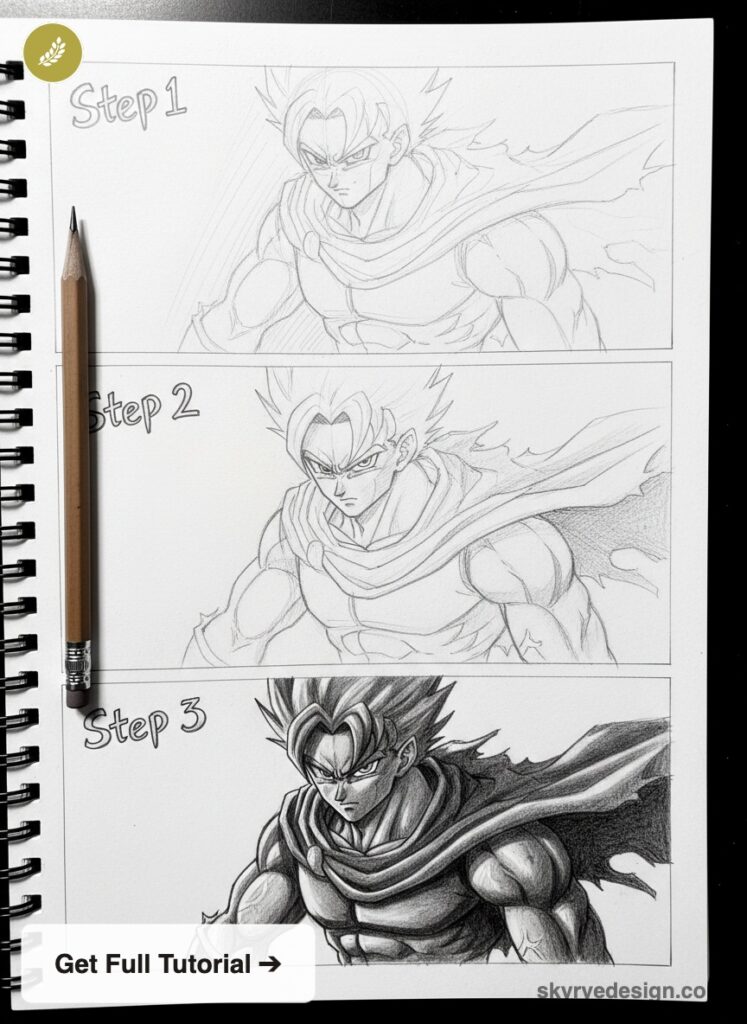
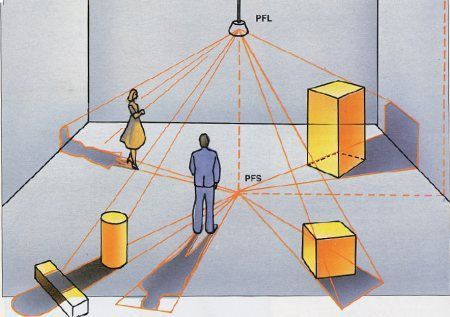
Set up a lamp at a sharp angle, 45° or lower. Observe how half the face or figure is thrown into very deep shadow. Draw purely from this observation—Caravaggio’s chiaroscuro logic applied to your sketchbook.
| ✏️ Pro TipFor portrait prompts 31–45, keep a small (A6) sketchbook specifically for public people-watching drawings. The small format reduces self-consciousness—for you and anyone who notices. |
Abstract and Experimental: 20 Prompts to Break Your Creative Rules
These prompts deliberately remove the safety net of representational drawing. There’s no ‘wrong’ here—only interesting. Each one is designed to disrupt your habitual mark-making and push you into unfamiliar territory, which is exactly where creative growth happens.
46. Fill a Page with One Repeated Mark
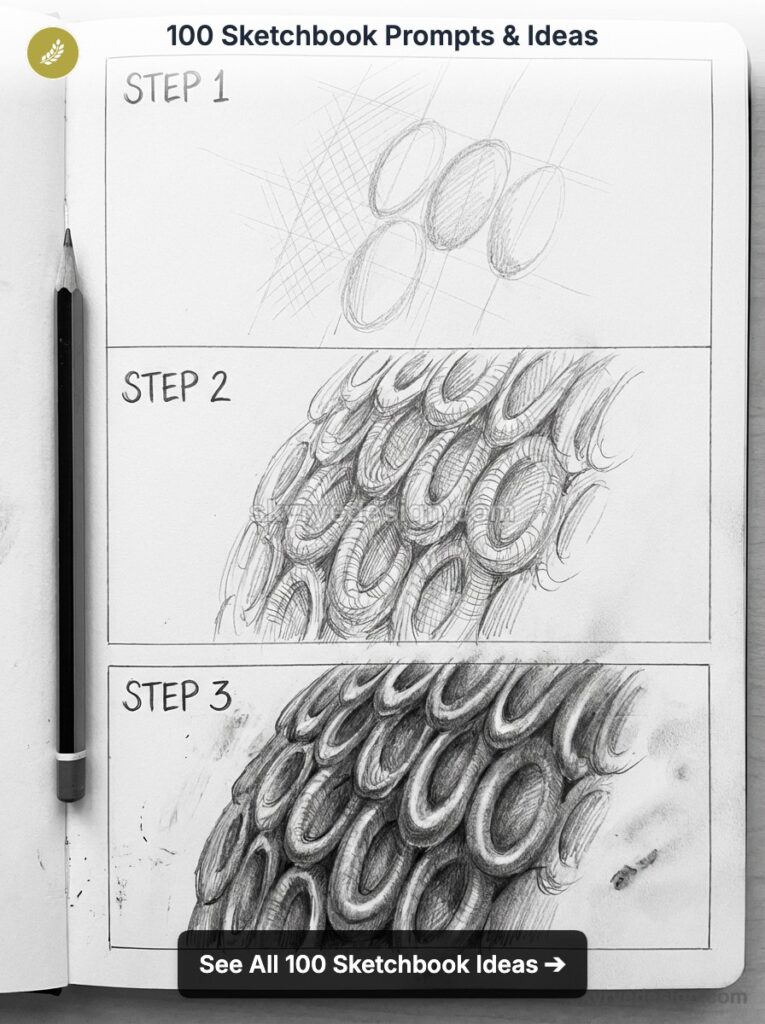
Choose a single mark: a short horizontal dash, a tiny circle, a curved hook. Fill an entire sketchbook page with that mark, varying pressure and density. Observe the patterns and forms that emerge from repetition. This is the foundation of zentangle and meditative mark-making.
47. Draw What Music Sounds Like
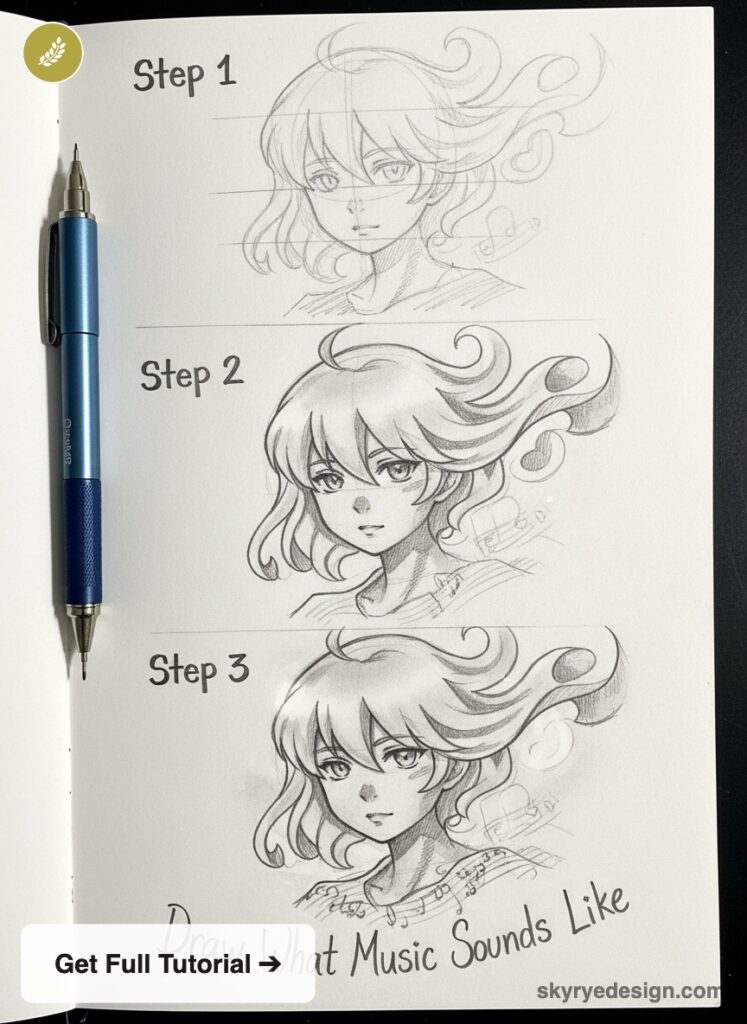
Put on a track—something with strong character. Draw lines, shapes, and marks that respond to the music’s rhythm, energy, and mood without representing anything literal. Wassily Kandinsky spent decades exploring this. Give it ten minutes per track.
48. Make a Drawing Using Only Curves
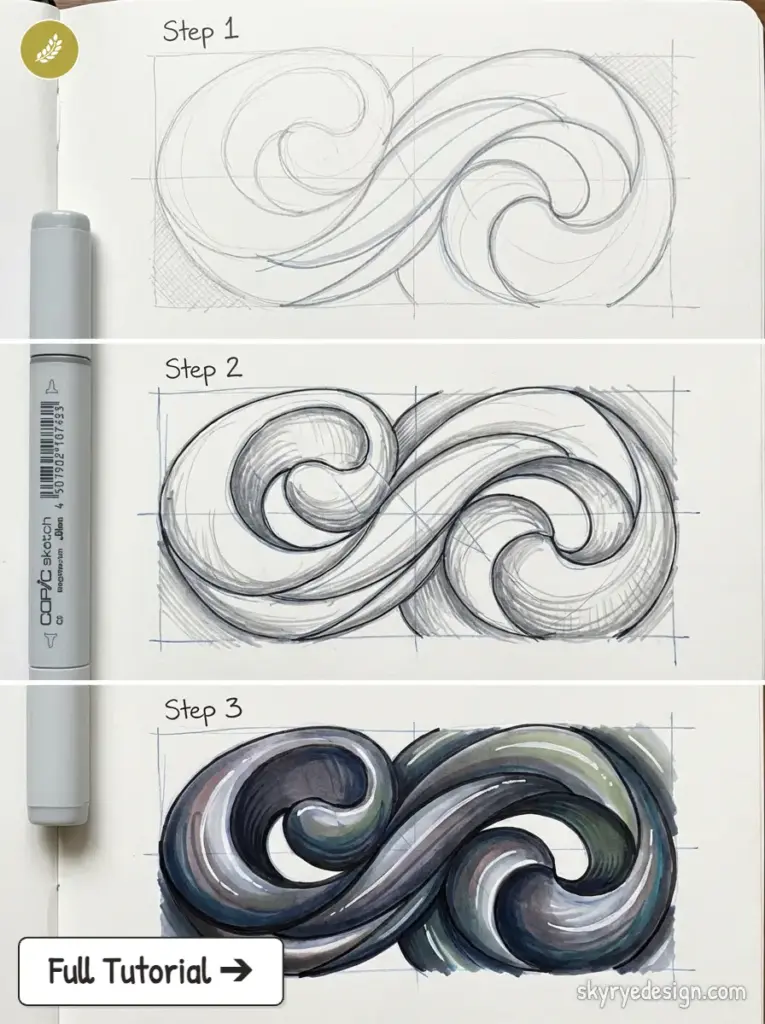
No straight lines allowed anywhere in the composition. Everything must curve—even horizon lines, even architectural shapes. This constraint forces inventive problem-solving and produces surprisingly organic, flowing compositions.
49. Draw with Your Non-Dominant Hand
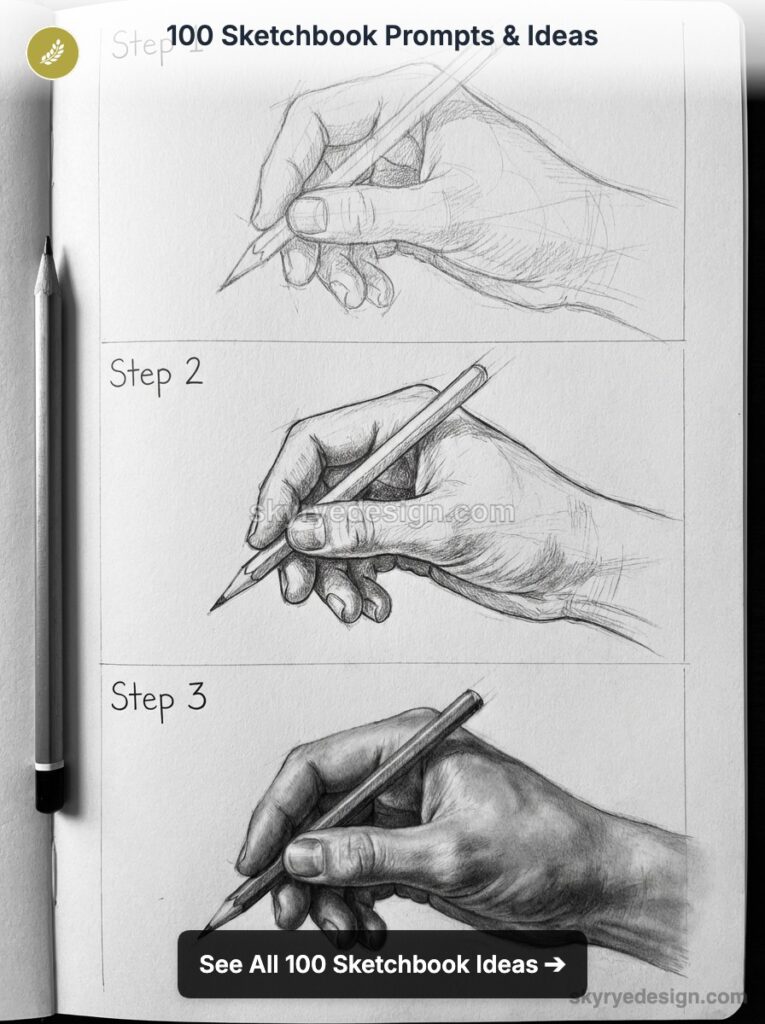
Put the pen in your left hand (or right, if you’re left-handed) and draw anything. The awkwardness is the point—it slows down automatic mark-making and forces genuine attention to the drawing process. Many artists do this specifically to escape technical habits.
50. Create a Drawing Without Lifting the Pen
One continuous line, pen never leaving paper, for a full five minutes. Draw whatever you want—a face, a room, an imaginary landscape—but the pen cannot lift. The result teaches you about line economy and compositional connection in a single session.
51. Fill a Page with Texture Studies: Invent Six New Surfaces
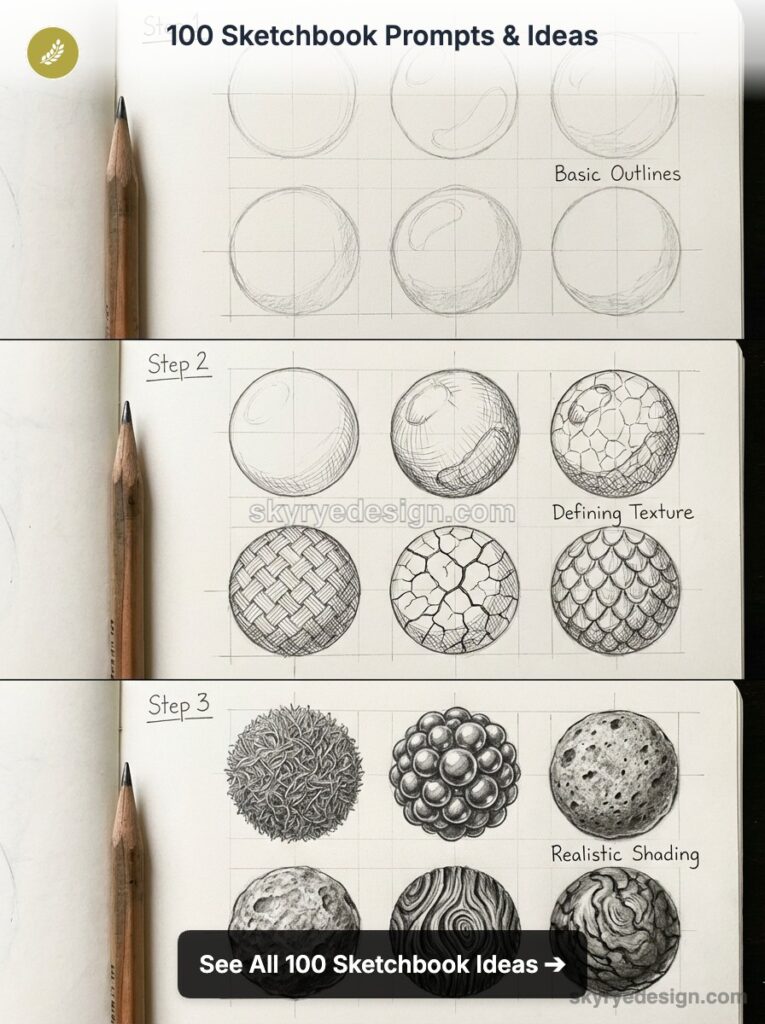
Don’t copy real textures—invent them. Create six different ‘material’ textures using pure mark-making: what does ‘sadness’ feel like as texture? What does ‘electricity’? Abstract texture work like this is used in concept art, textile design, and surface pattern design.
52. Draw a Grid and Distort It
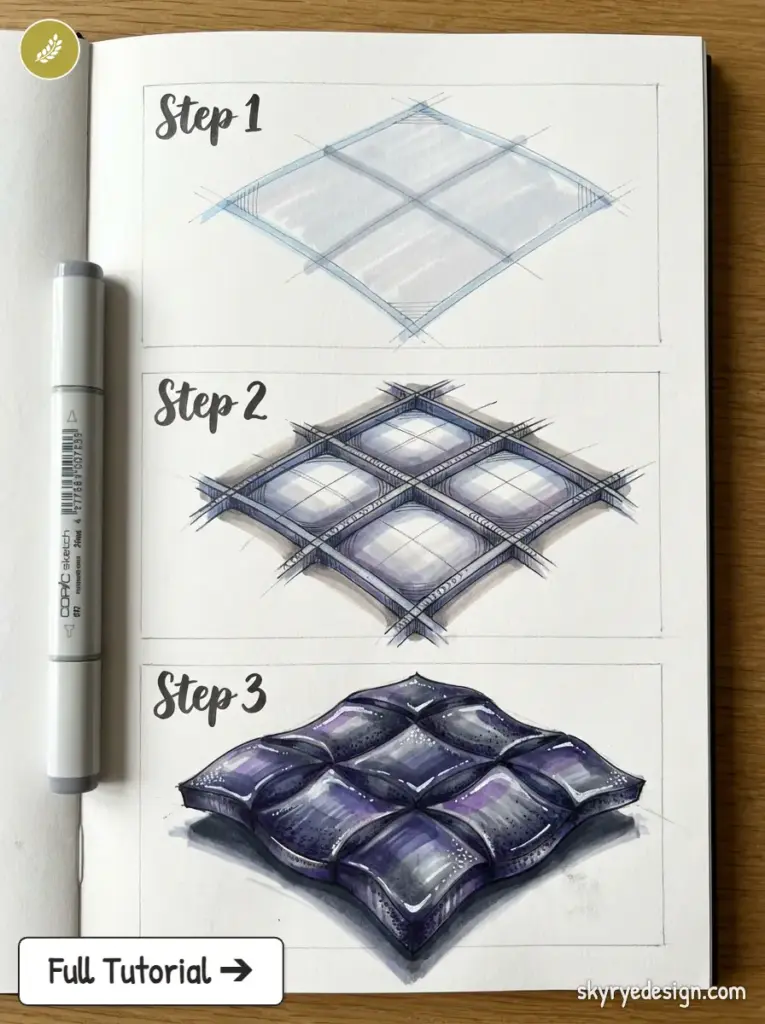
Draw a regular grid of squares across the page, then distort it—bend it around imaginary objects, stretch corners, create perspective illusions. Op art artist Bridget Riley began with exercises exactly like this. The grid gives you structure; the distortion gives you movement.
53. Make a Drawing Using Negative Space Only
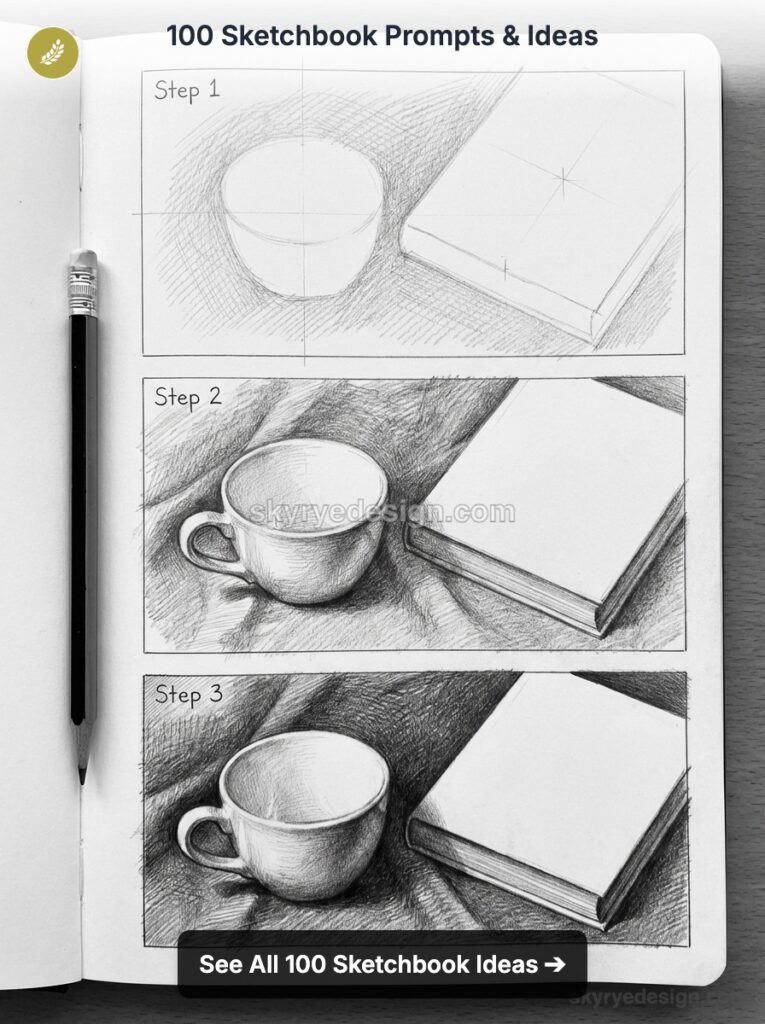
Instead of drawing the objects in a scene, draw only the spaces between them—the shape of the air between chair legs, the gap between books on a shelf. This reversal of attention fundamentally changes how you see and compose.
54. Draw Your Emotional State Right Now
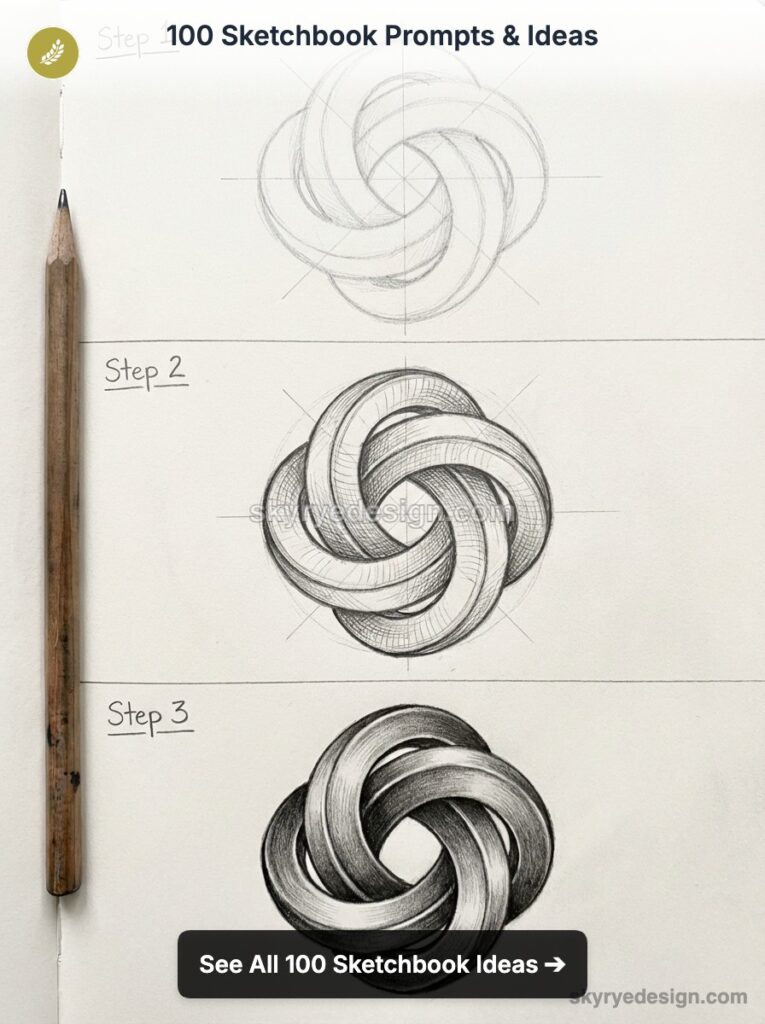
Not a literal scene. Use line weight, pressure, density, direction, and shape to express exactly how you feel in this moment—stressed, calm, scattered, focused. No interpretation required; no explanation owed. Private and honest.
55. Create a Drawing from a Single Ink Drop
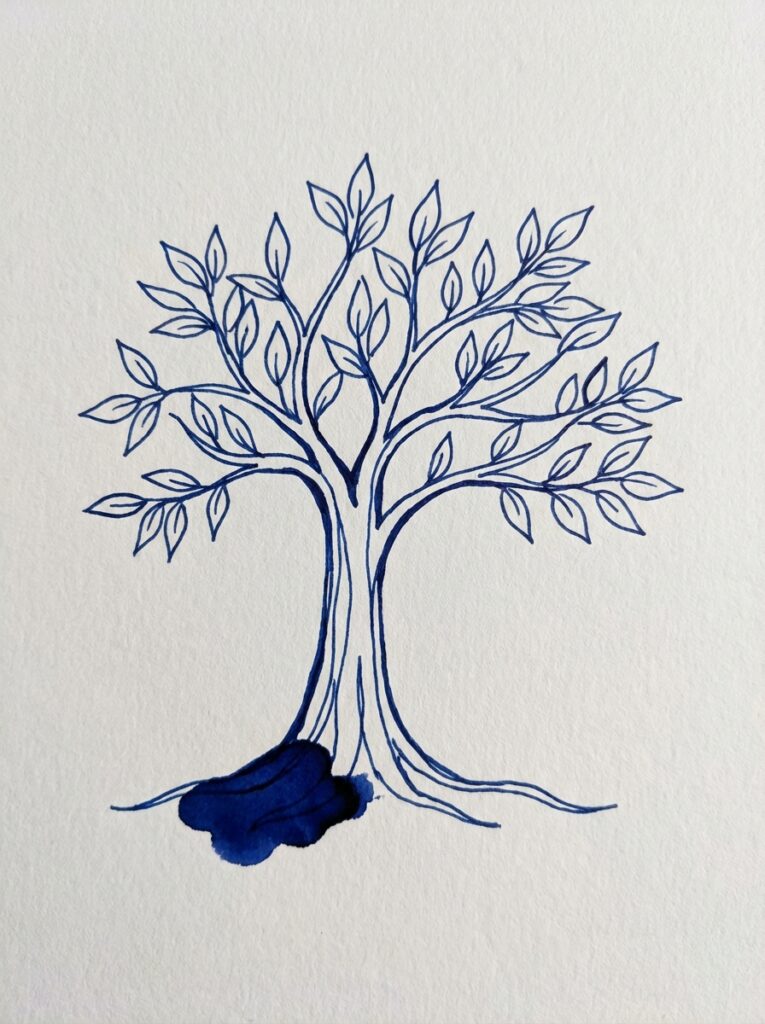
Drop a single drop of ink onto the paper and let it spread. Then use that organic shape as the starting point for a drawing—let it become a figure, a landscape, a creature, a cloud. The ink decides; you respond.
56. Draw the Same Circle Fifty Times
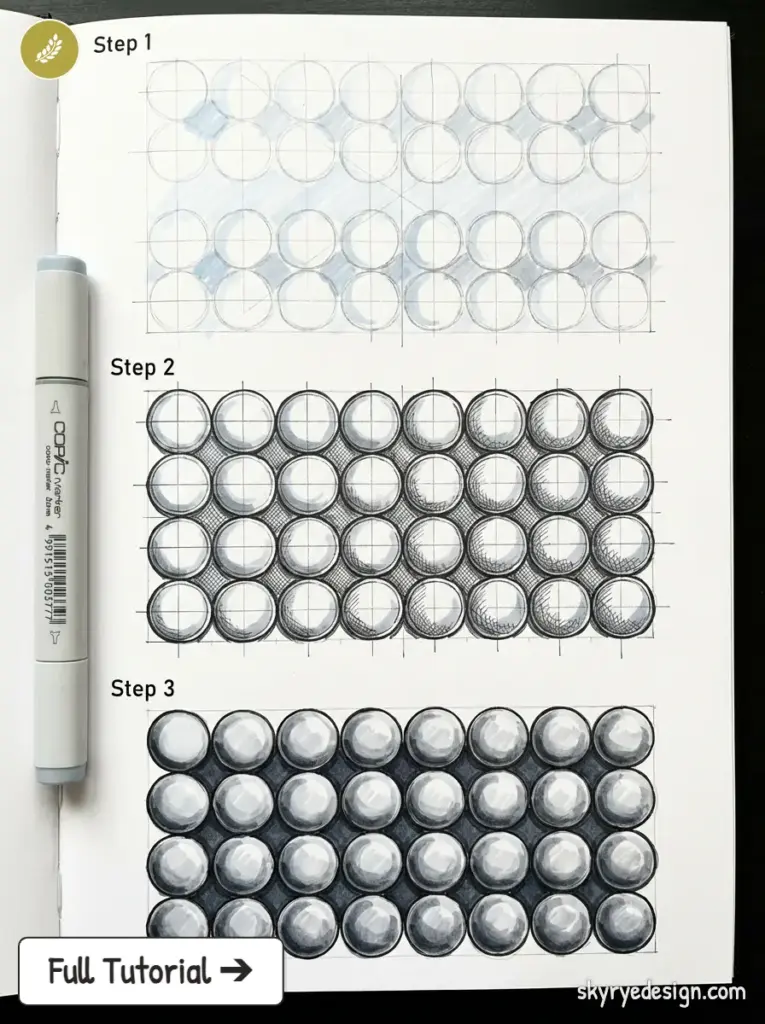
Fifty freehand circles on one page. Observe what happens to your mark-making as you repeat: early ones are effortful, later ones begin to develop character. This is a classic Japanese calligraphy warm-up—the enso circle as daily practice.
57. Sketch in Complete Darkness for Two Minutes
Seriously. Sit in a dark room (or close your eyes) and draw for two minutes. Then turn on the light. The resulting lines reveal what your spatial memory and motor habit produce without visual feedback. Unsettling and illuminating.
58. Make a Drawing Out of Words
Choose a short phrase or a single word and draw it repeatedly—varying size, direction, overlap, density—until the letters become pure visual texture and lose their linguistic meaning. Cy Twombly spent a career at this intersection.
59. Draw the Inside of Your Body (Imagined)
Not anatomically accurate—imaginatively. What does your heart look like in your imagination? Your lungs? Draw your internal architecture as you picture it, based on feeling rather than biology textbook knowledge.
60. Create a Map of an Imaginary Place
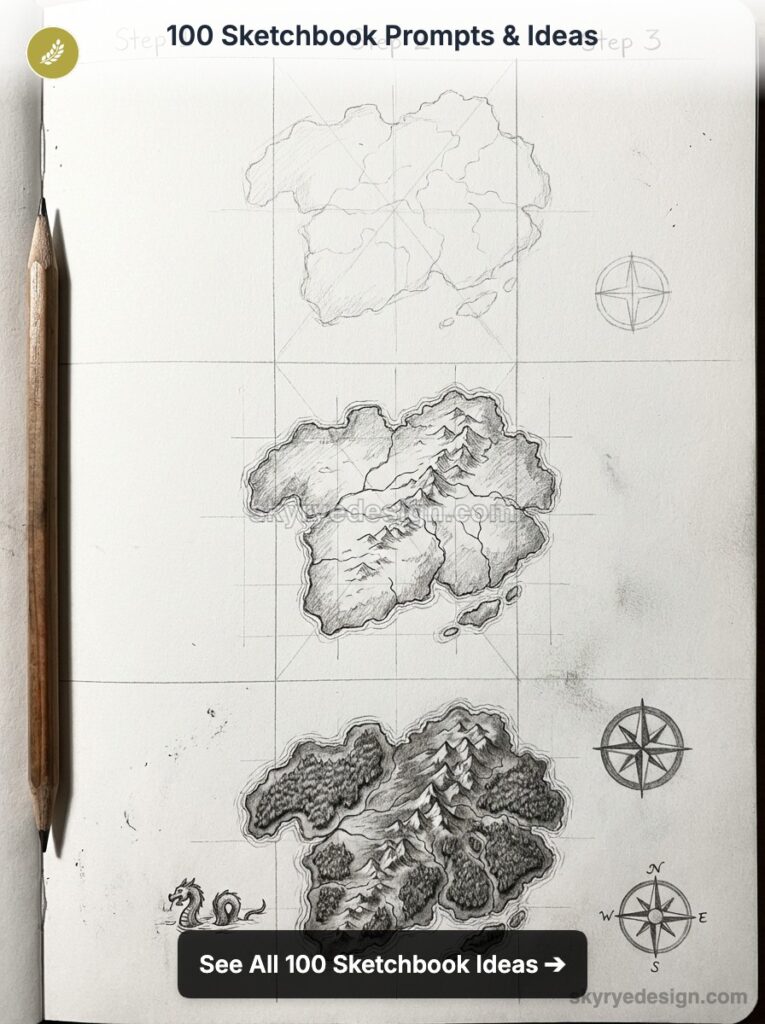
Design the cartography of a place that doesn’t exist—the island of your childhood imagination, the layout of a dream city, the territory of a fictional world. Combine topographic symbols, city layouts, and decorative cartouches. This is world-building as art practice.
61. Draw Using Coffee, Tea, or Wine as Your Medium
Brew a strong cup of coffee or tea. Use it as a wash medium with a brush or even a cotton bud. The warm brown tones and unpredictable pooling create beautiful accidental effects that are impossible to plan and completely your own.
62. Sketch a Dream You Remember
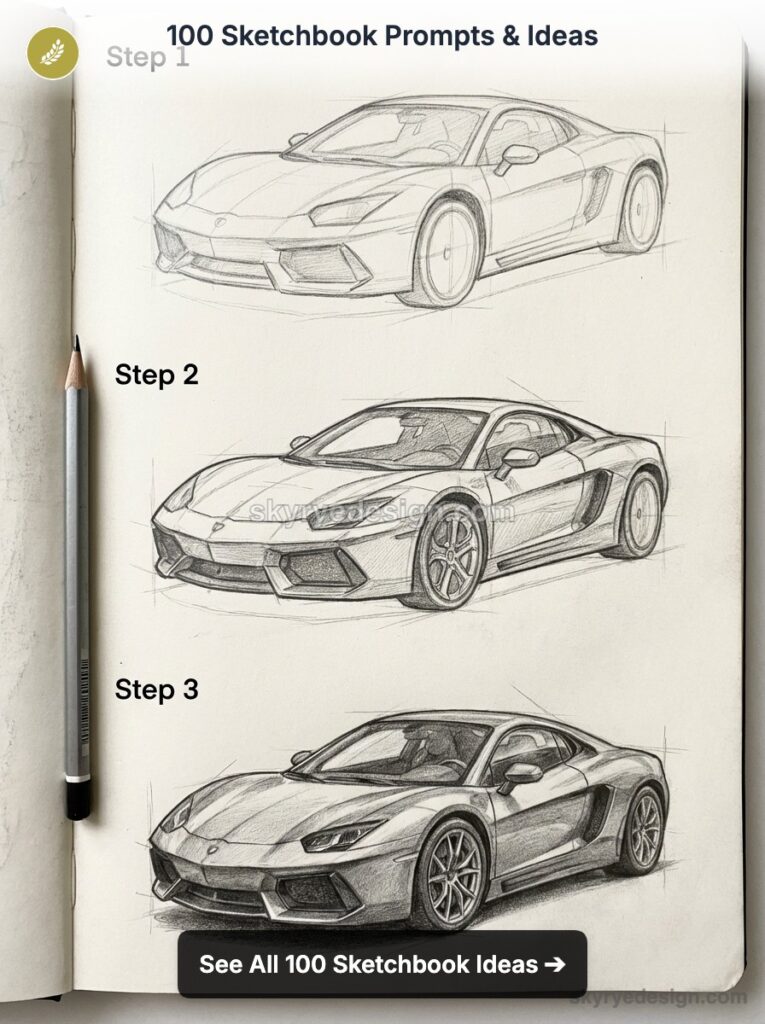
Dreams are visually specific in ways we rarely capture before they fade. If you remember a dream—even a fragment—draw it now. The surreal logic of dream imagery is genuinely useful raw material for any illustrative or conceptual art practice.
63. Draw a Portrait of a Smell
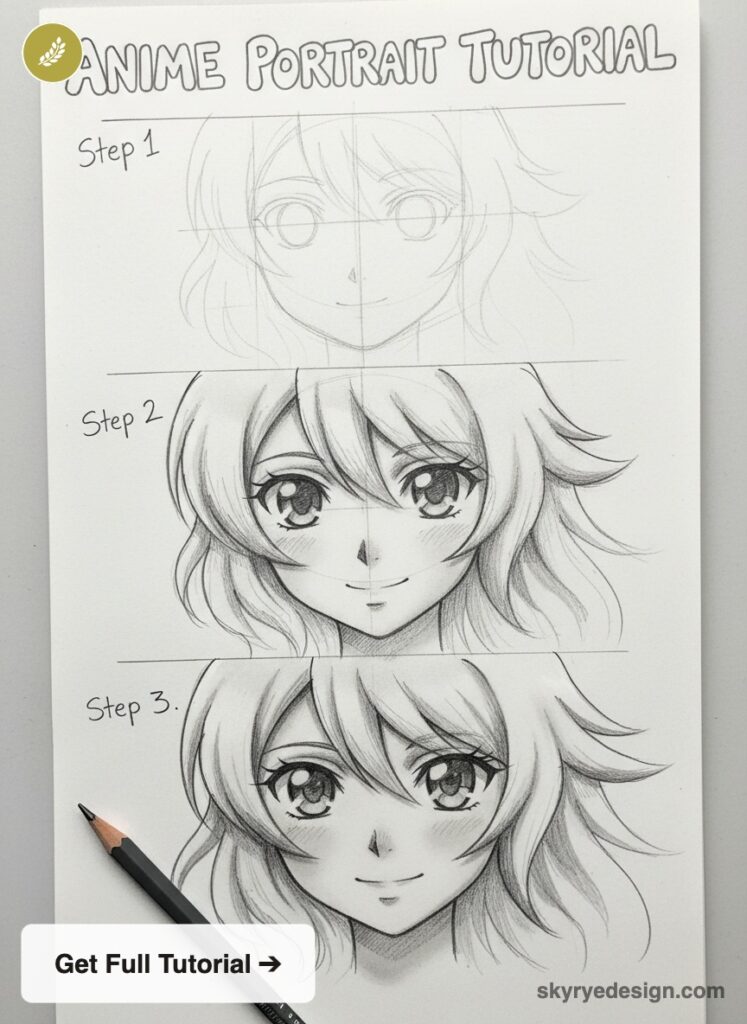
Pick a smell you know well—coffee, rain on concrete, a specific perfume, bread baking. Draw the visual equivalent of that sensory experience using pure abstract marks. Cross-sensory exercises like this are used in Bauhaus-derived design education.
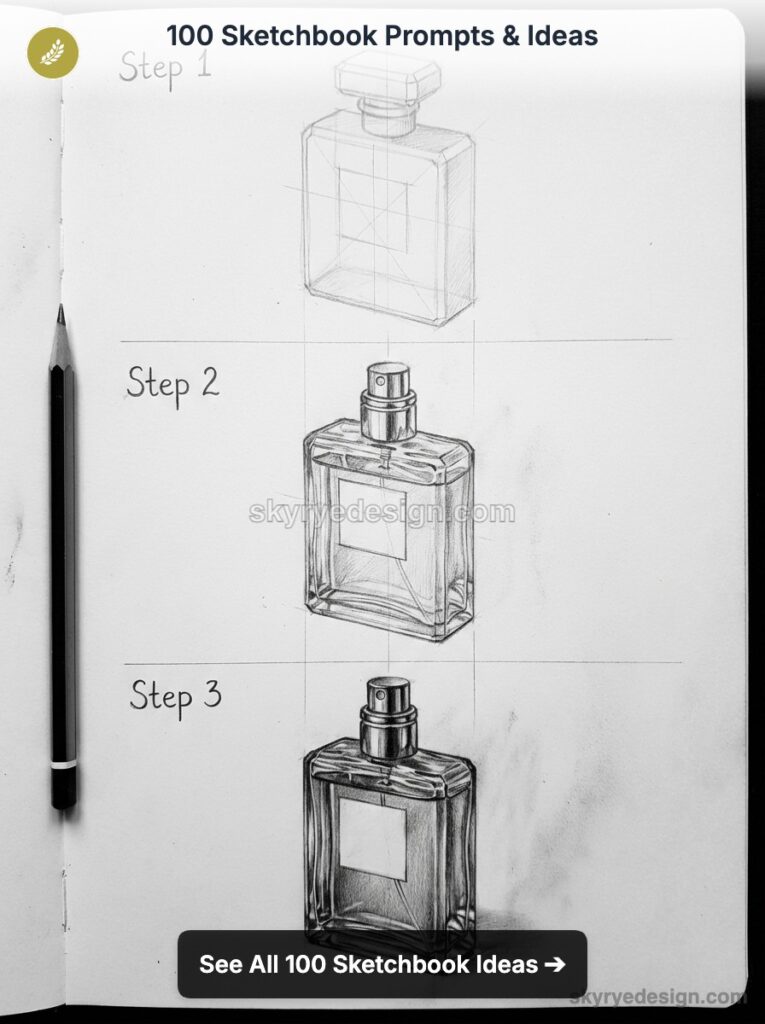
64. Make a Drawing You Intend to Destroy
Draw something with the explicit intention of tearing it up, burning it, or painting over it when you’re done. The freedom this releases is extraordinary—decisions become faster, marks become bolder, the internal critic goes quiet. Then decide whether you actually destroy it.
65. Draw a Five-Second Scribble and Turn It Into Something
Close your eyes, scribble randomly for five seconds. Open your eyes and find something in the scribble—a face, a landscape, a creature—and develop it. This is the adult version of seeing animals in clouds, and it’s a legitimate creative technique used in concept art.
Architecture and Interiors: 10 Prompts for Drawing Spaces
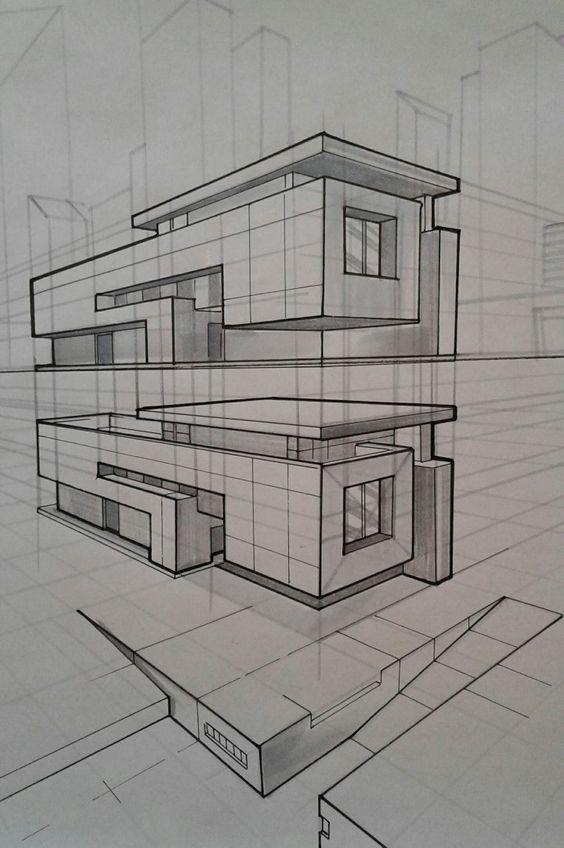
Architectural drawing is one of the most rigorous and most rewarding sketchbook practices. It trains perspective, compositional thinking, scale, and the relationship between structure and light. You don’t need to be an architect—you just need a building and a pen.
66. Draw the Room You’re Sitting In Right Now
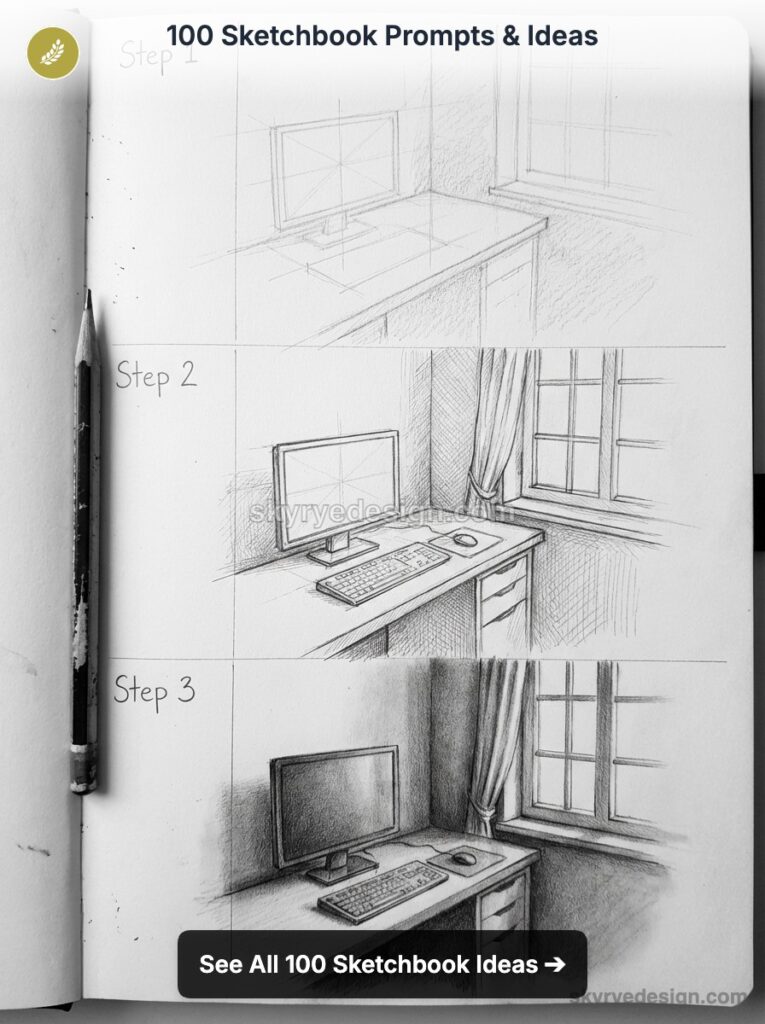
Don’t set up a composed view. Draw the room from your current seated position, exactly as it appears, including whatever clutter is present. Real rooms with real mess are far more interesting than staged interiors, and this is what urban sketching is built on.
67. Sketch a Staircase in Perspective
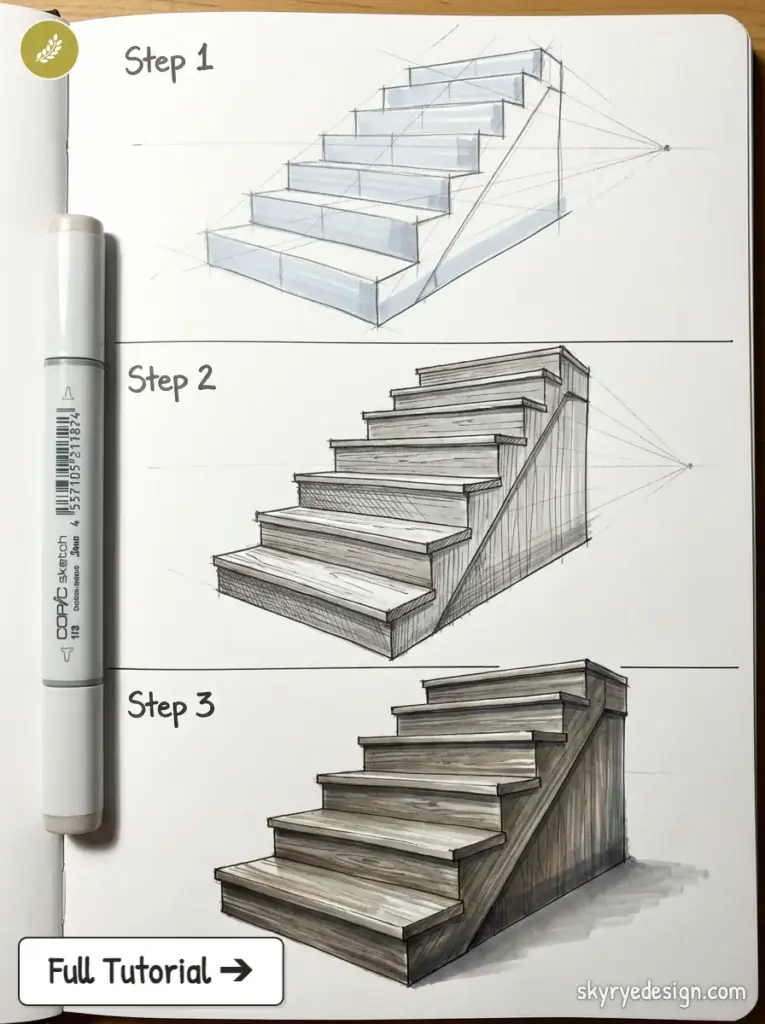
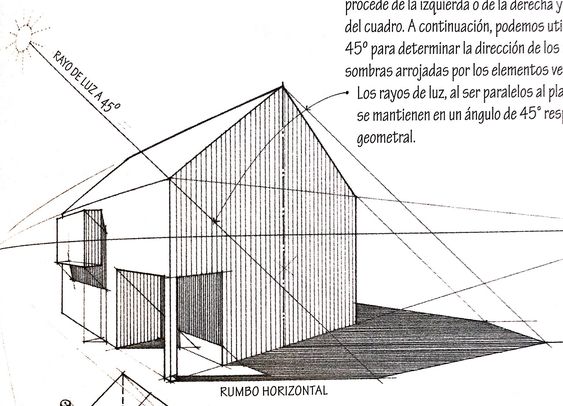
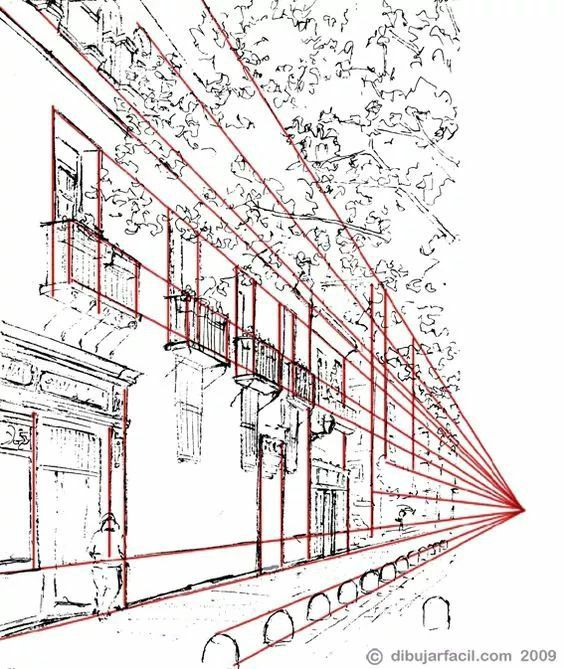
Stairs are a classic and demanding perspective subject—the repeated rhythm of treads and risers in receding space. Find a staircase and draw it from below looking up, or from above looking down. Both perspectives offer distinct compositional challenges.
68. Draw a Doorway from Outside the Room
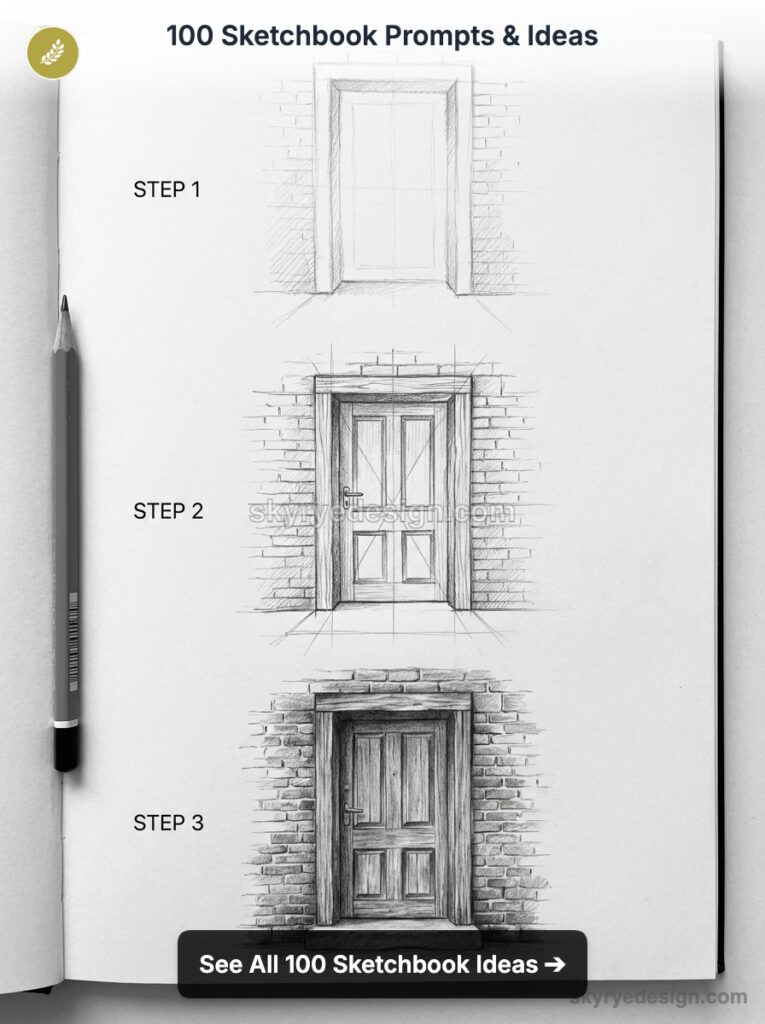
The rectangular portal framing a slice of interior space is a compositional device used in Vermeer, Hopper, and virtually every great interior painter. Draw the dark frame of the doorway and the lit interior beyond. Threshold spaces are architecturally and emotionally rich.
69. Sketch the Corner Where Two Walls Meet the Ceiling
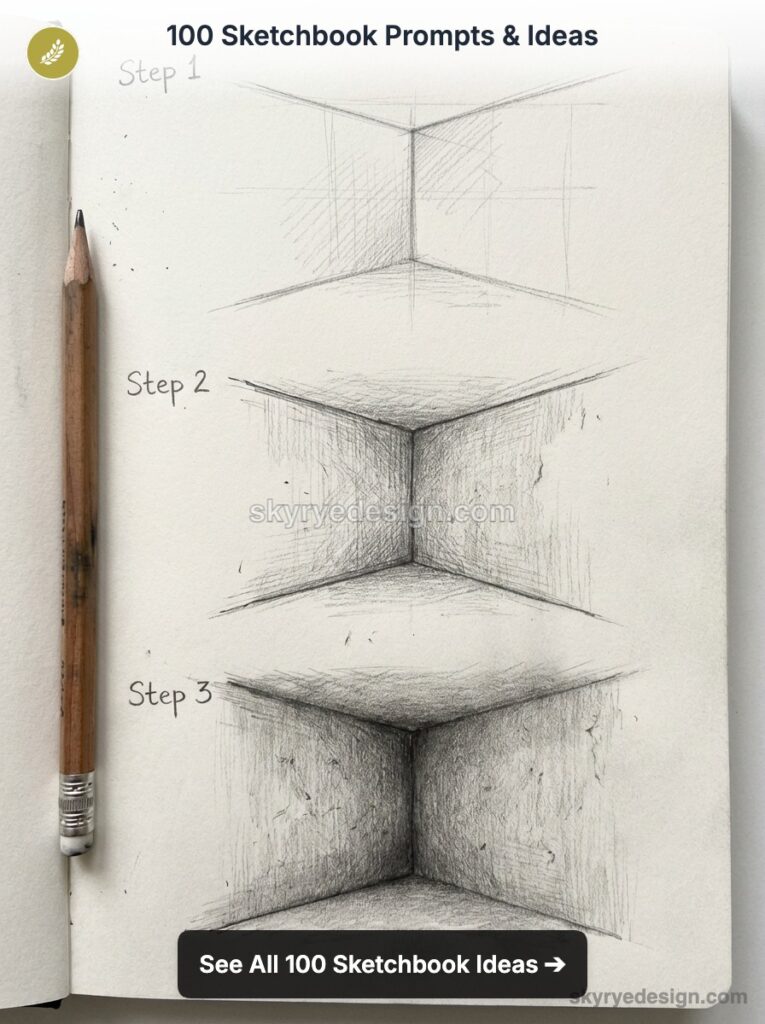
An overlooked composition: the upper corner of a room, where wall, wall, and ceiling planes intersect. The crispness of architectural intersections, any shadow lines, light switch plates, cornices, or damage marks—these are pure observational drawing.
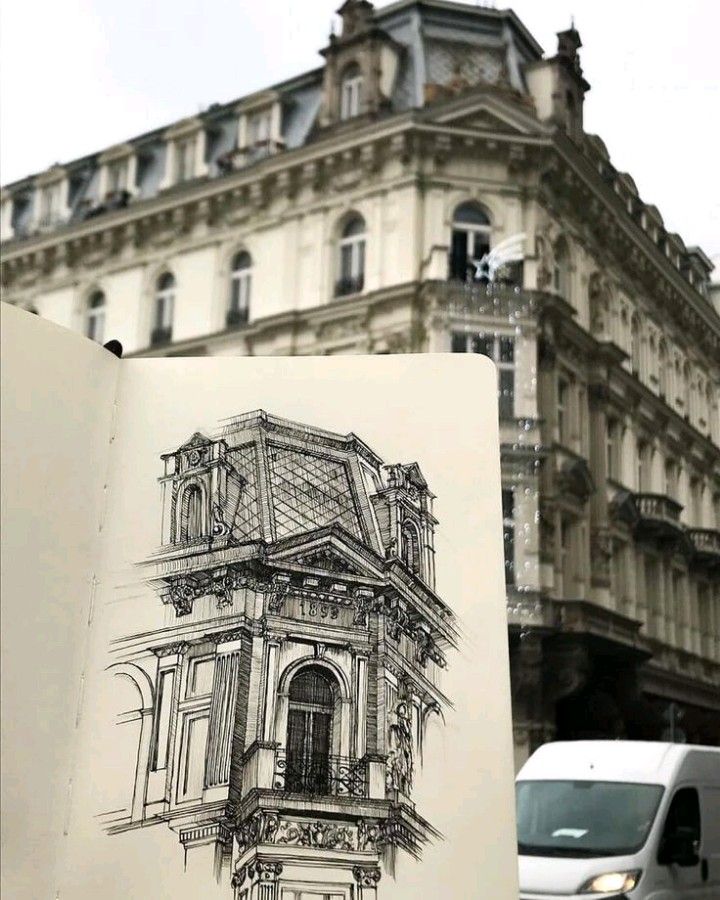
70. Draw a Building Facade Straight On
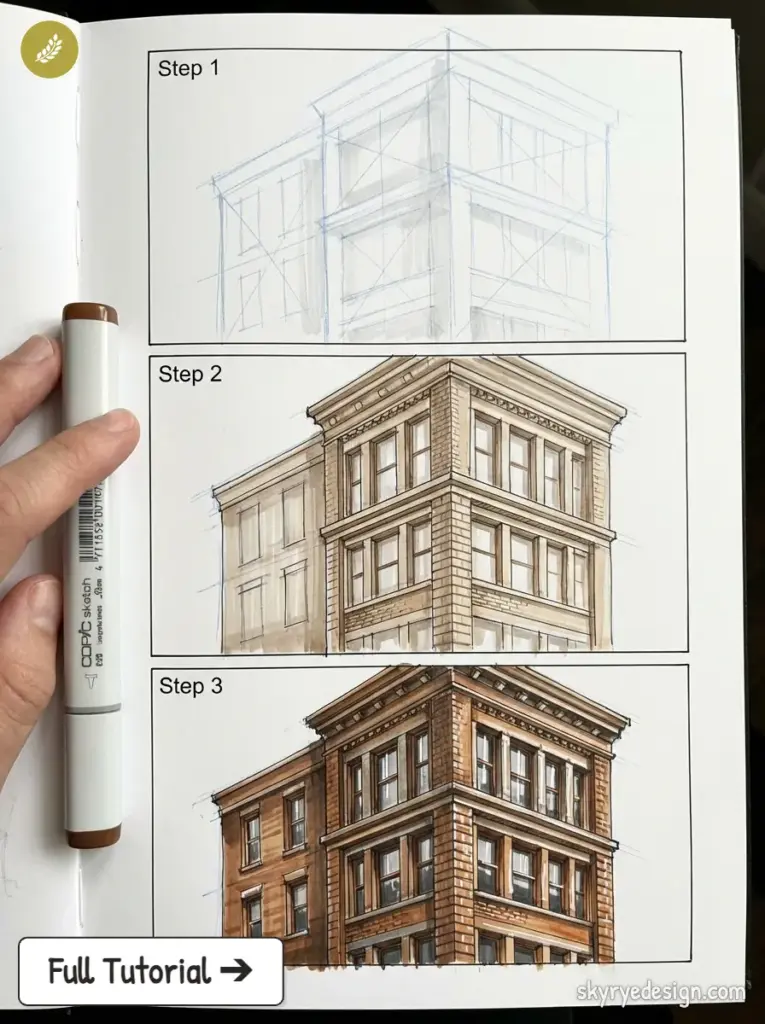
Find a building with an interesting facade—not necessarily grand, just characterful. Draw it head-on (no perspective distortion, just flat elevation) in detailed ink. Urban façade studies are a core practice of the Urban Sketchers community and produce some of the most compelling location-specific artwork.
71. Sketch an Abandoned or Derelict Space
Empty industrial buildings, closed shops, overgrown gardens—spaces where human presence has withdrawn. The peeling paint, the broken windows, the encroaching vegetation. Decay has extraordinary visual texture. It’s also excellent for practising complex, multi-material surfaces.
72. Draw a Library Interior
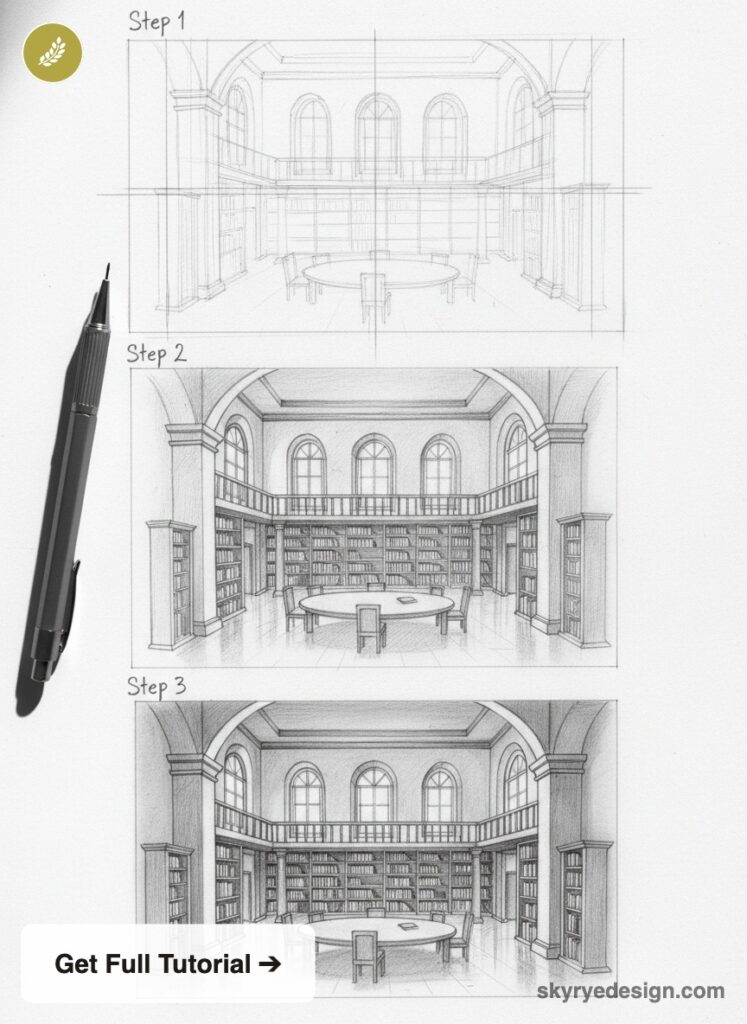
The repetition of bookshelves receding into perspective, the warm light, the mix of human-made geometry and organic disorder. Libraries are among the most compositionally rich interiors available to any artist. Most welcome quiet visitors with sketchbooks.
73. Sketch a Café or Restaurant Interior
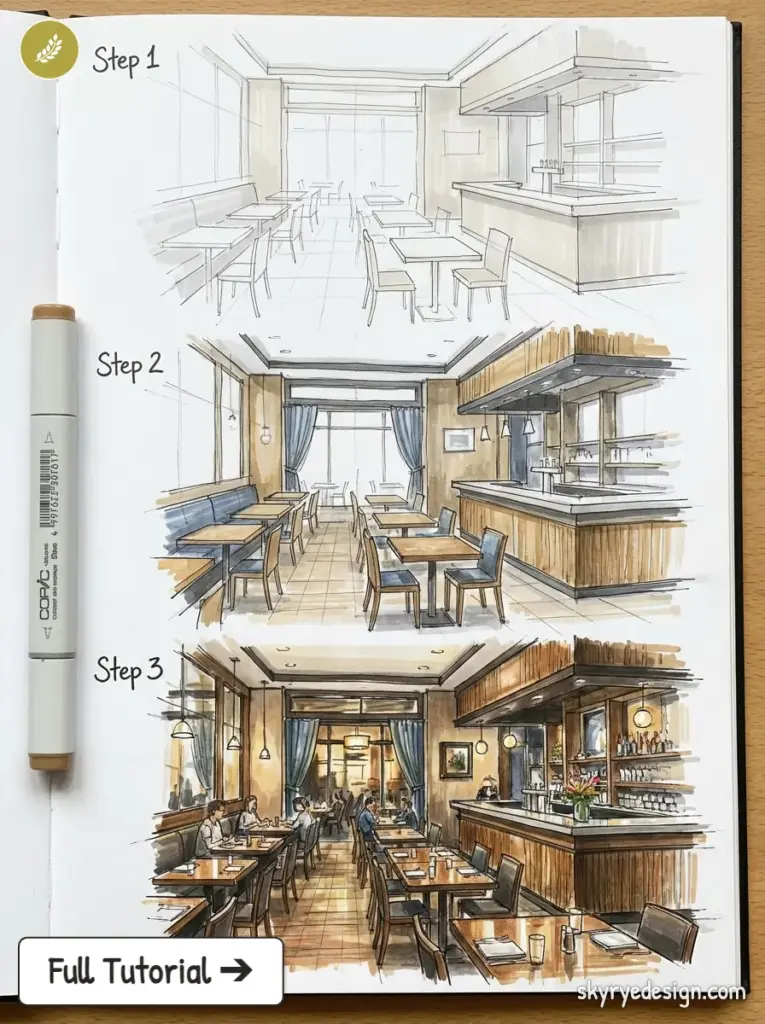
Tables, chairs, people, reflections in the window, the counter at the back. The overlapping layers of an occupied interior—architecture + furniture + people + light—is a complete compositional masterclass. This is where Toulouse-Lautrec and Degas built entire careers.
74. Draw Your Bathroom Mirror and What It Reflects
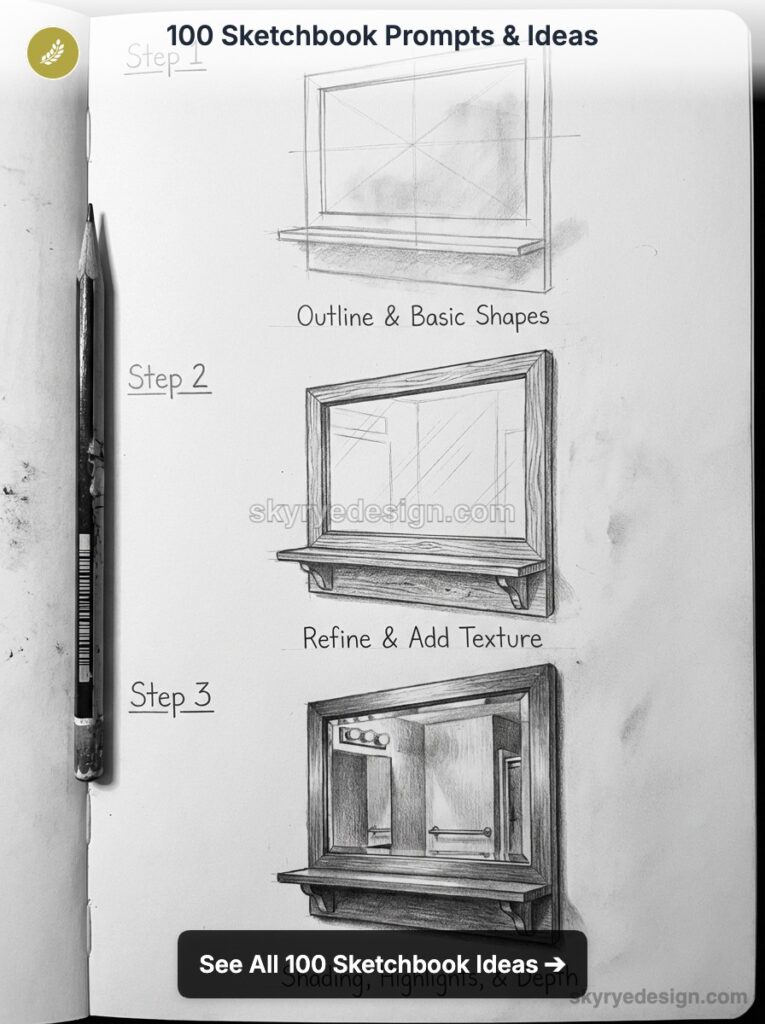
The reflection in a bathroom mirror includes you, the light, the products on the shelf—a complex multi-plane composition in a tight space. The challenge of drawing a reflection that includes the viewer is as interesting as it is old: Velázquez, again.
75. Sketch a Construction Site
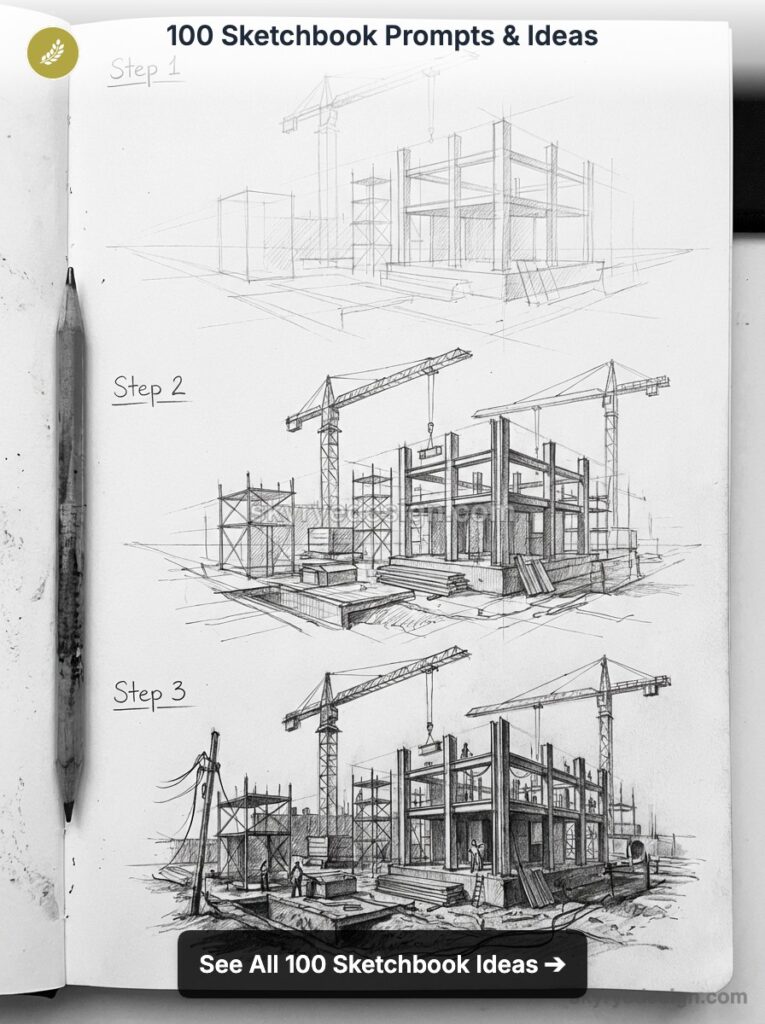
Scaffolding, exposed structure, heavy equipment, the partial building emerging. Construction sites are among the most visually complex and dynamically changing subjects available in any city. The geometry of steel and timber structure is technically demanding and visually spectacular.
Style Challenges: 10 Prompts to Explore New Techniques
These prompts are about how you draw, not what you draw. Each one locks you into a specific stylistic approach or medium constraint that will expand your technical range and—often—permanently change how you work.
76. Draw in the Style of a Single Ink Line Weight
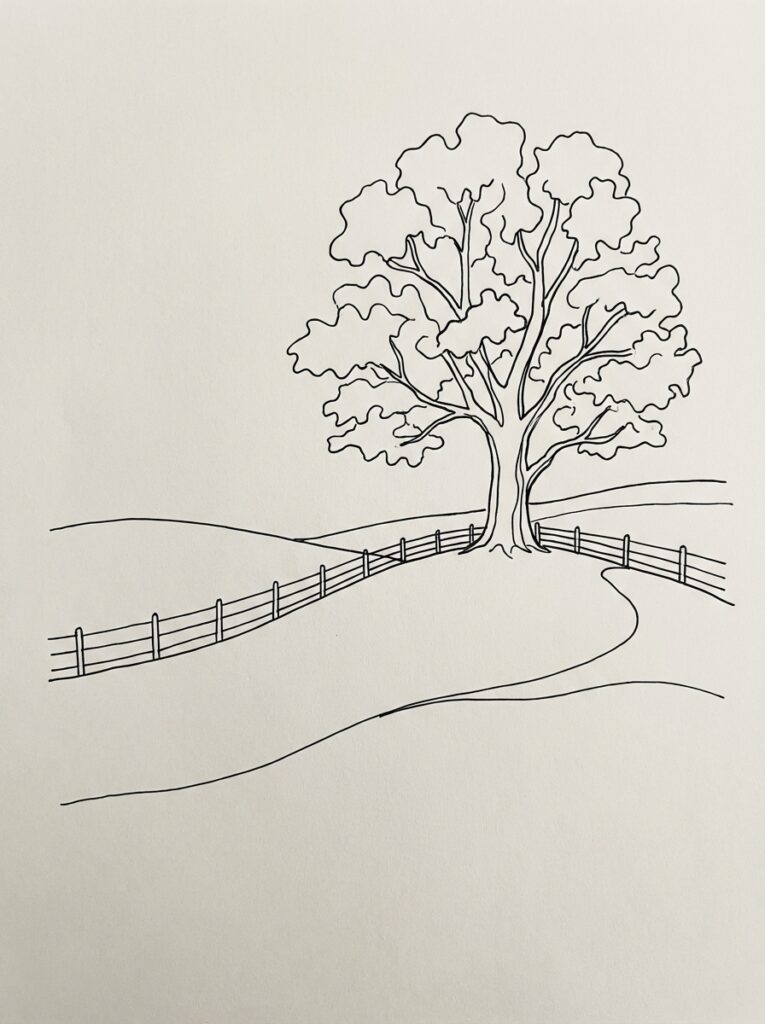
Choose one nib size—say, a Micron 0.3—and draw an entire complex scene using only that one line weight. No variation in pen pressure, no switching pens. The compositional and spatial work must be done through placement, not line variety. Discipline-building at its most focused.
77. Sketch Using Only Dots (Stippling)
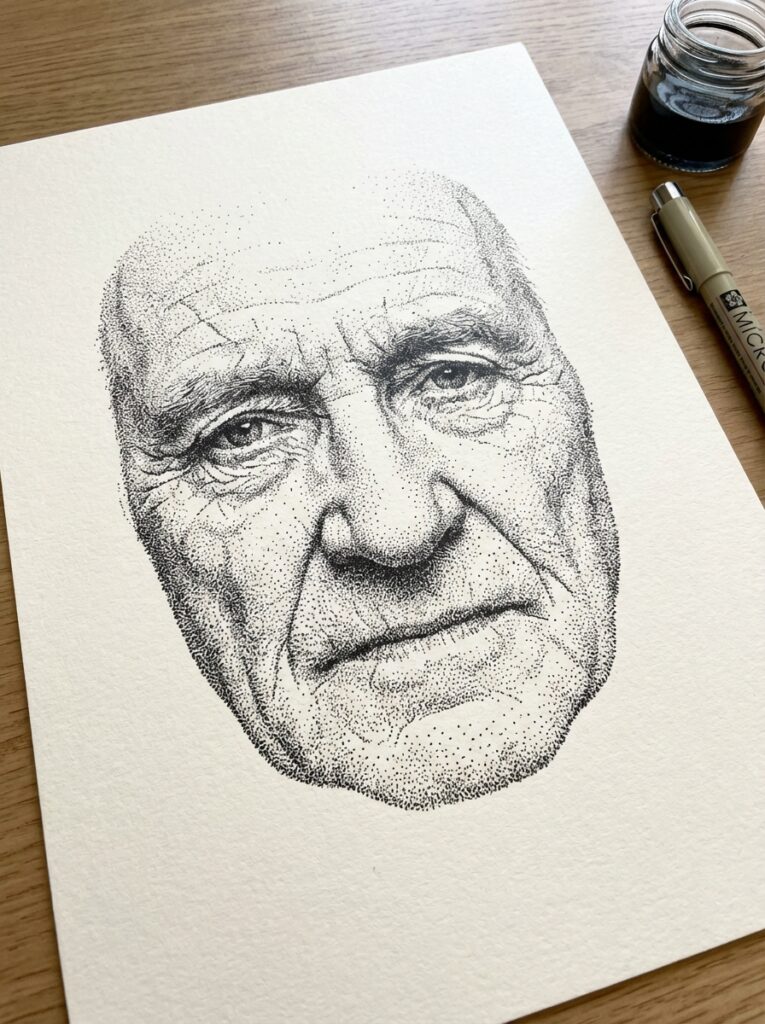
Fill a full page with a stippled drawing—no lines at all, only dots of varying density. Start with the darkest shadow areas (dense dots, close together) and work outward to the lightest areas (sparse, widely spaced dots). This technique, used for centuries in printmaking, develops extraordinary tonal control.
78. Draw Entirely in Hatching: No Blending
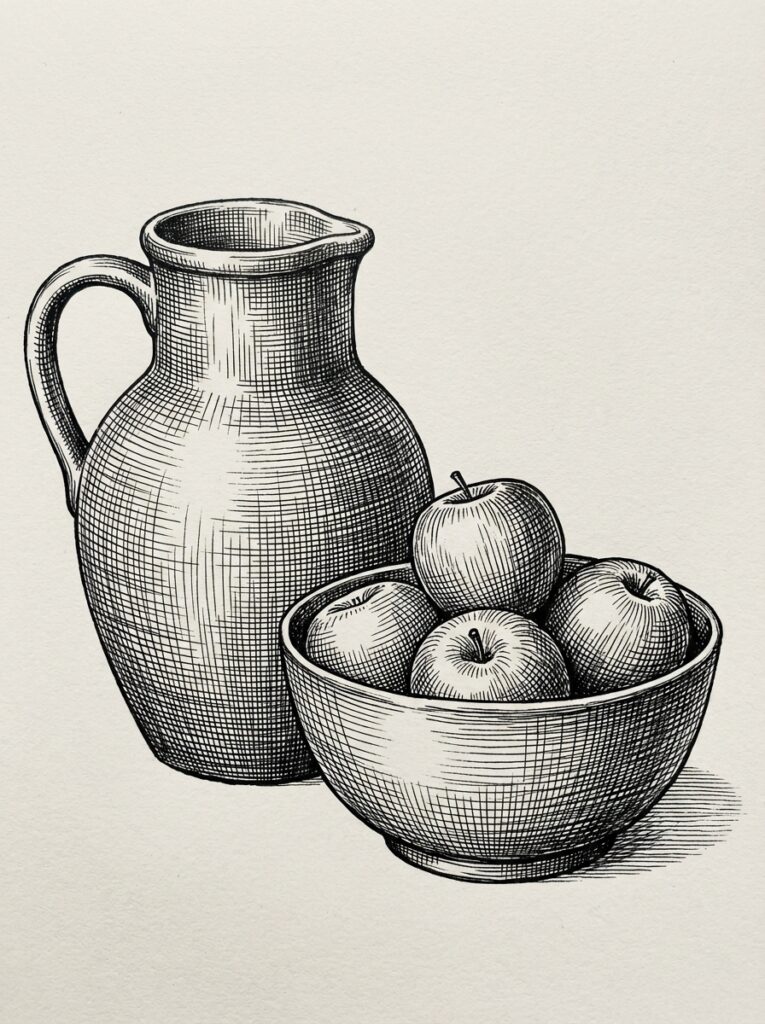
Pure crosshatch, no smudging or blending. This is the classical ink drawing technique used by Dürer, Rembrandt, and every engraver since. Every value must be built through line direction and density. Hard, demanding, and incredibly instructive.
79. Make a Gesture Drawing Series: 30-Second Poses
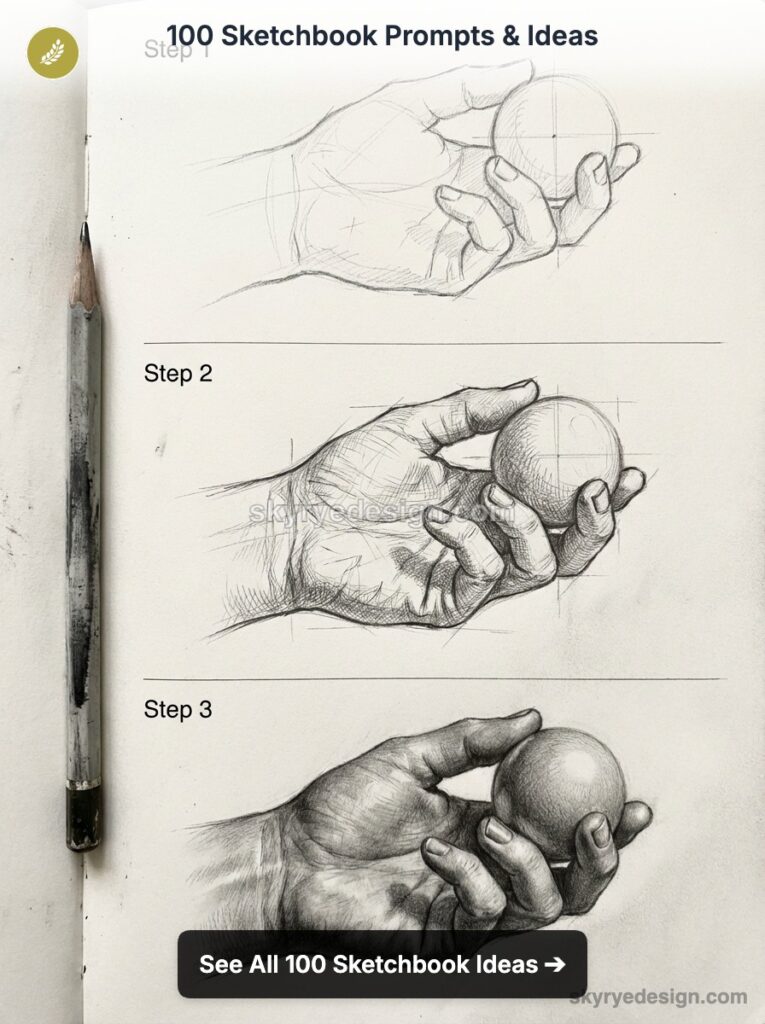
Use a gesture drawing reference tool (Line of Action or SenshiStock on DeviantArt) and draw 20 figures at 30 seconds each. Don’t try to finish—try to capture the essential movement and weight of each pose before time runs out. This trains your eye-hand connection faster than anything else.
80. Draw in a Style You Dislike
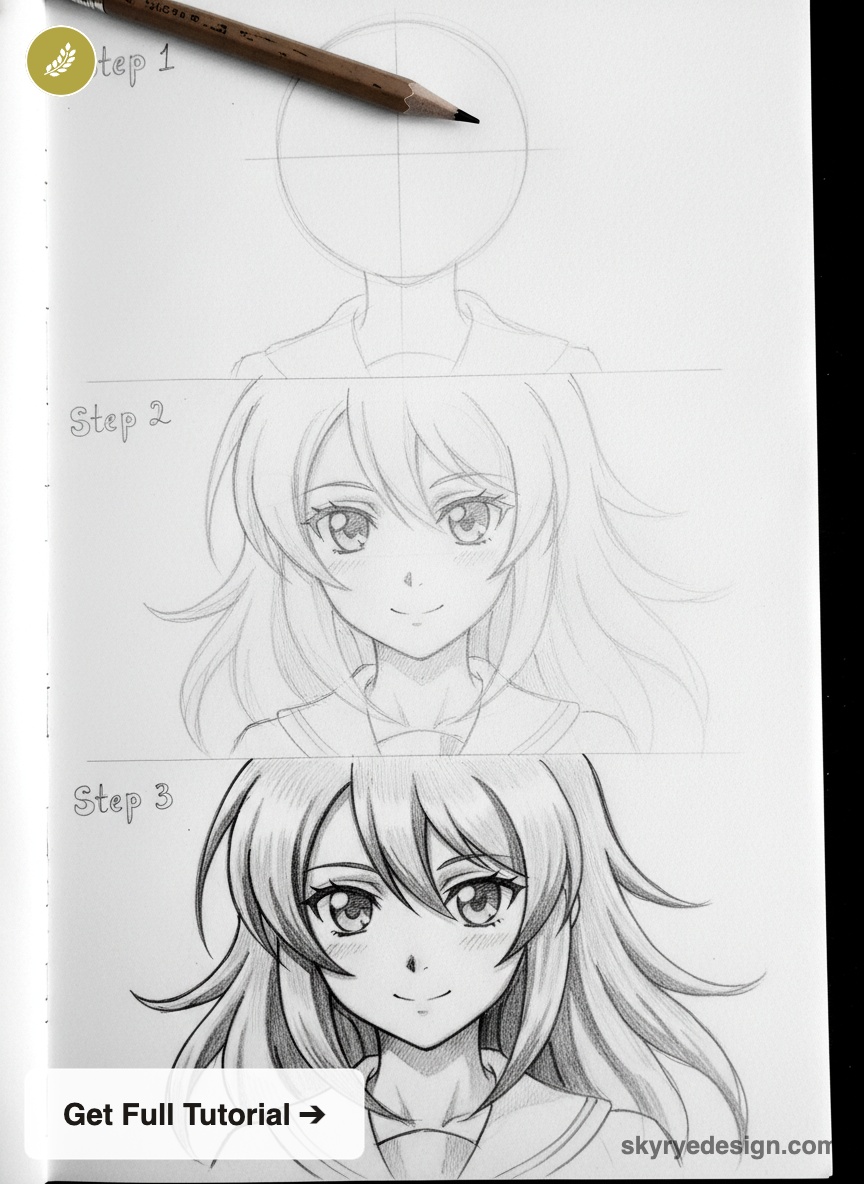
Think of an art style you’ve always dismissed—hyper-realistic, manga, minimalist line art, baroque detail—and spend one full sketchbook session working in that style as seriously as you can. Understanding styles you don’t prefer deepens your relationship with the ones you do.
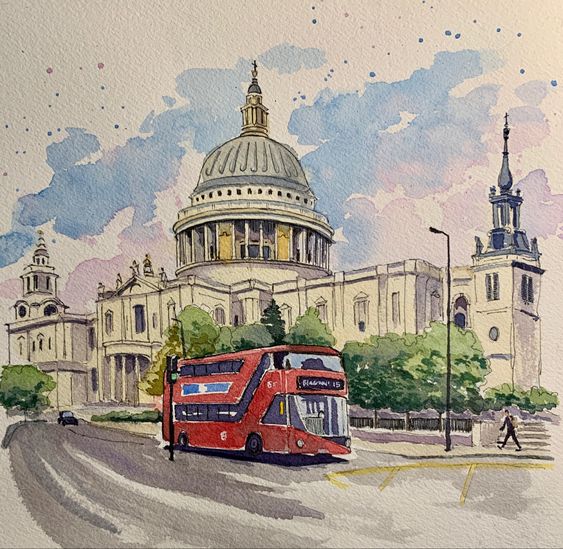
81. Sketch Using Watercolour Wash Without Any Pencil Underdrawing
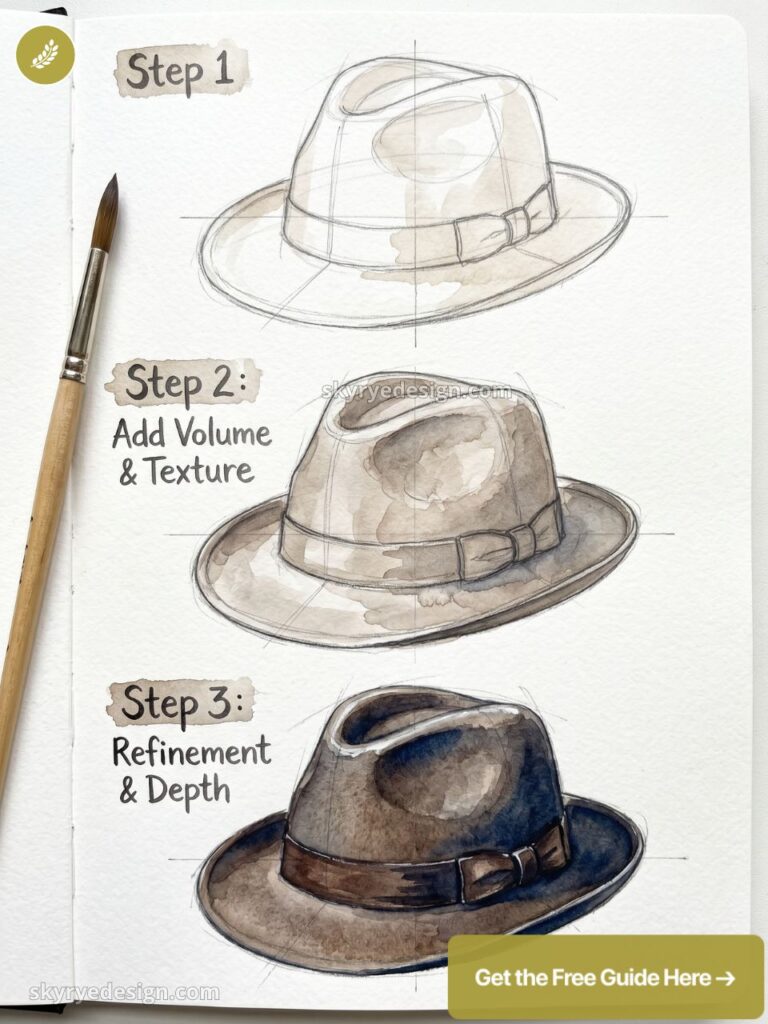
Jump straight into wet colour without any preliminary sketch. This requires committing to shapes directly and forces a different kind of decisiveness. Cézanne worked this way; so did Sargent in his watercolours. The freedom is frightening and exhilarating in equal measure.
82. Draw Using Ink and a Stick or Found Object
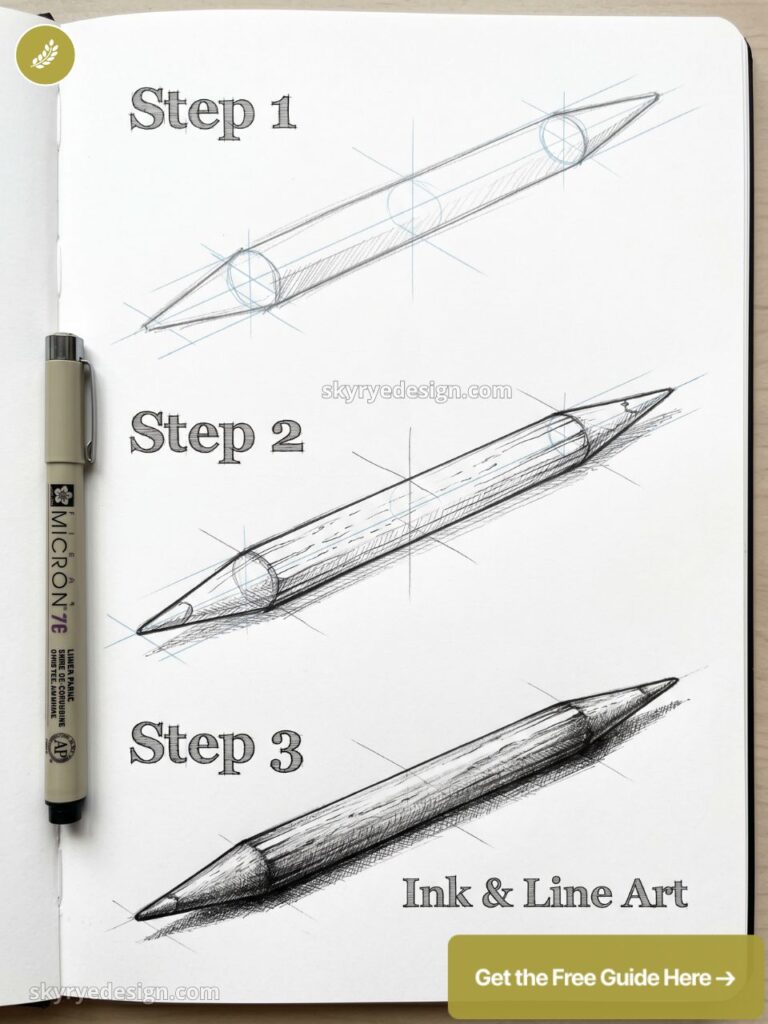
Dip a bamboo skewer, a toothpick, a chopstick, or a twig into ink and draw with it. The unpredictable, slightly scratchy line quality is completely different from any manufactured pen and creates marks that feel ancient and organic. Chinese brush painting tradition is built on related tools.
83. Create a Drawing at 2× Your Usual Scale
If you normally draw in an A5 sketchbook, work on A3 paper today. Scale dramatically changes the physical act of drawing—different arm movements, different relationship to the marks. Many artists who feel constrained discover that scale was the constraint.
84. Draw Using Only Five Marks per Object
Every object in your composition gets exactly five marks—no more. A mug: five marks. A face: five marks. The economy forced by this constraint develops ruthless prioritisation and produces drawings of exceptional graphic clarity.
85. Sketch in a Style Inspired by a Single Artist You Admire
Don’t copy their work—apply their approach to your own subject. If you admire Egon Schiele’s line, use that angularity on a person you draw from life. If you admire Hiroshi Yoshida’s woodblock clarity, apply it to your own landscape. Influence, not imitation.
| ✏️ Pro TipFor the style challenge prompts 76–85, keep a dedicated ‘experiments’ sketchbook separate from your main drawing practice. This removes the expectation that every page must be portfolio-worthy and frees you to work more recklessly—which is usually where the breakthroughs happen. |
If your sketchbook feels stalled, add a few anime sketchbook prompts to your rotation and treat each one like a small mood study.
Imagination and Storytelling: 15 Prompts for Creative Worlds
These prompts live in the territory between observation and invention. They require you to build something from inside your own mind—which is both harder and more personally revealing than observation. This is where illustration, concept art, and visual storytelling begin.
86. Draw Your Childhood Bedroom from Memory
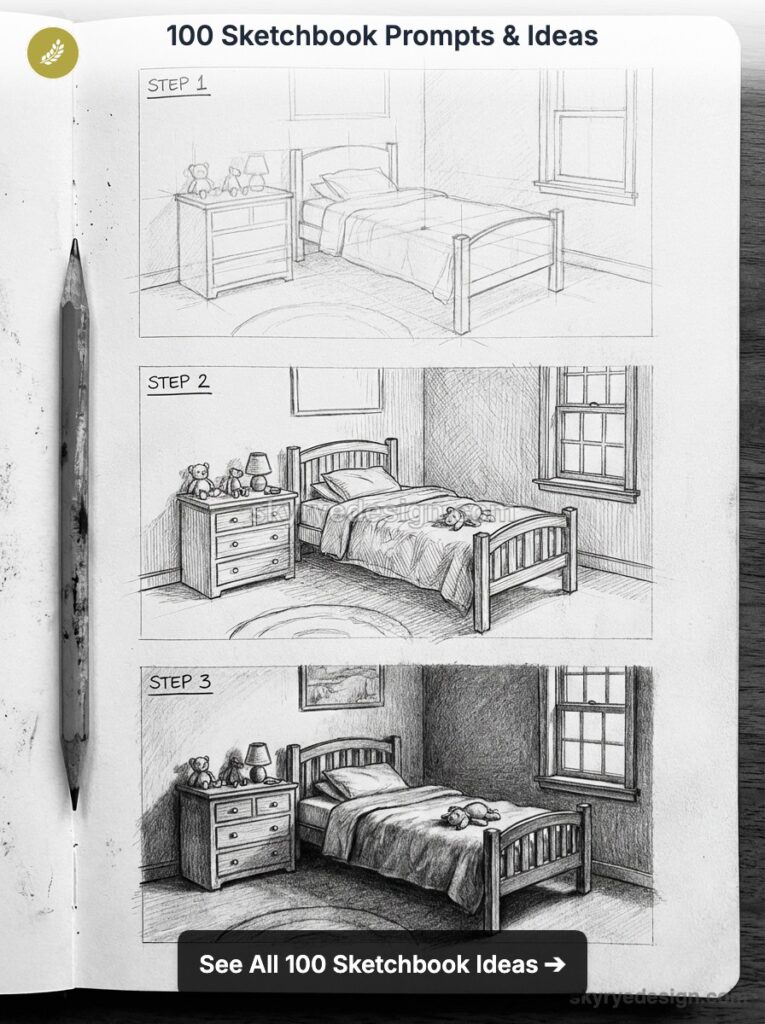
Close your eyes, walk yourself back into that room. What was on the walls? Where was the bed? What was on the floor? Draw it with as much spatial accuracy as your memory allows. Memory drawing reveals what you found significant—not just what was there.
87. Sketch the Interior of a Ship, Train, or Vehicle You’ve Never Been Inside
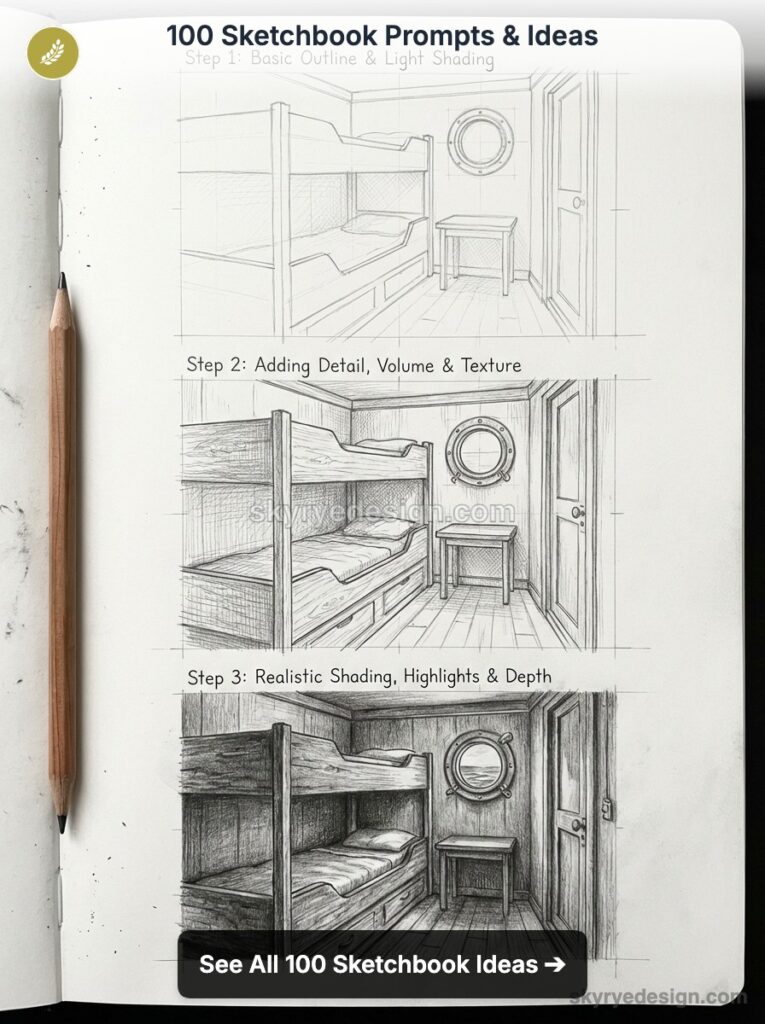
Choose a vessel that intrigues you—a Victorian steam ship, a nuclear submarine, a Formula 1 cockpit—and design its interior based on research and imagination. This is the first step of concept art and production design work.
88. Draw a House That Grows from a Tree
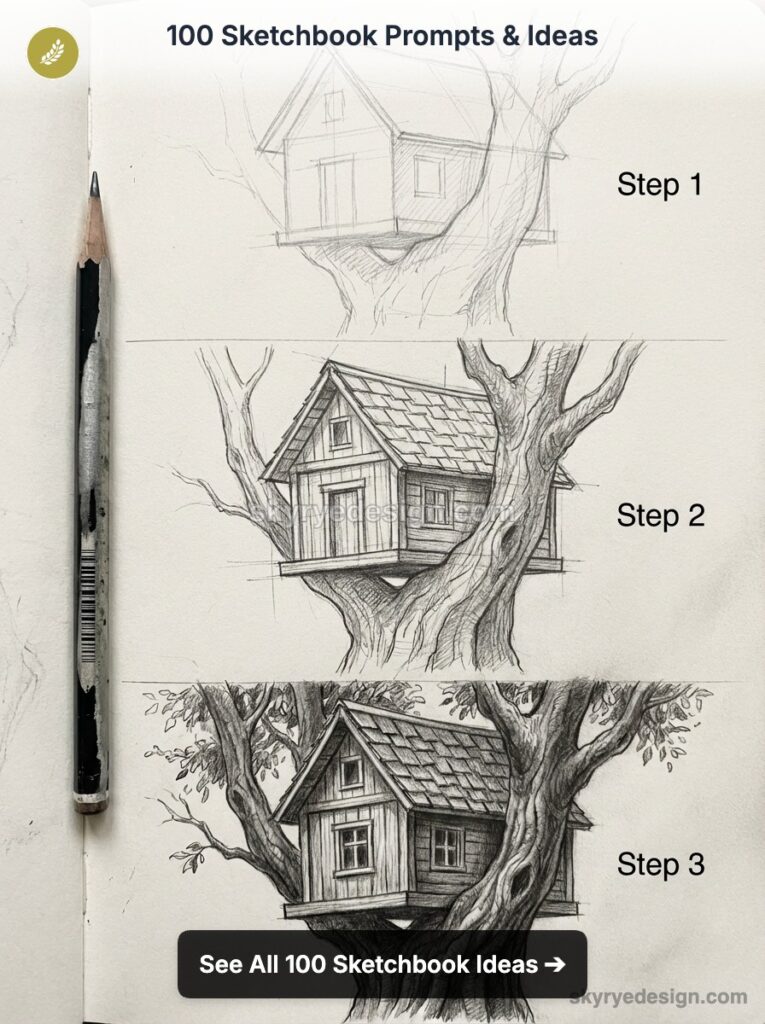
The treehouse of pure imagination—not a practical children’s structure but an actual dwelling that grows from and with a living tree. Architectural fantasy drawing trains visual spatial reasoning and design thinking simultaneously.
89. Sketch a Creature That Doesn’t Exist
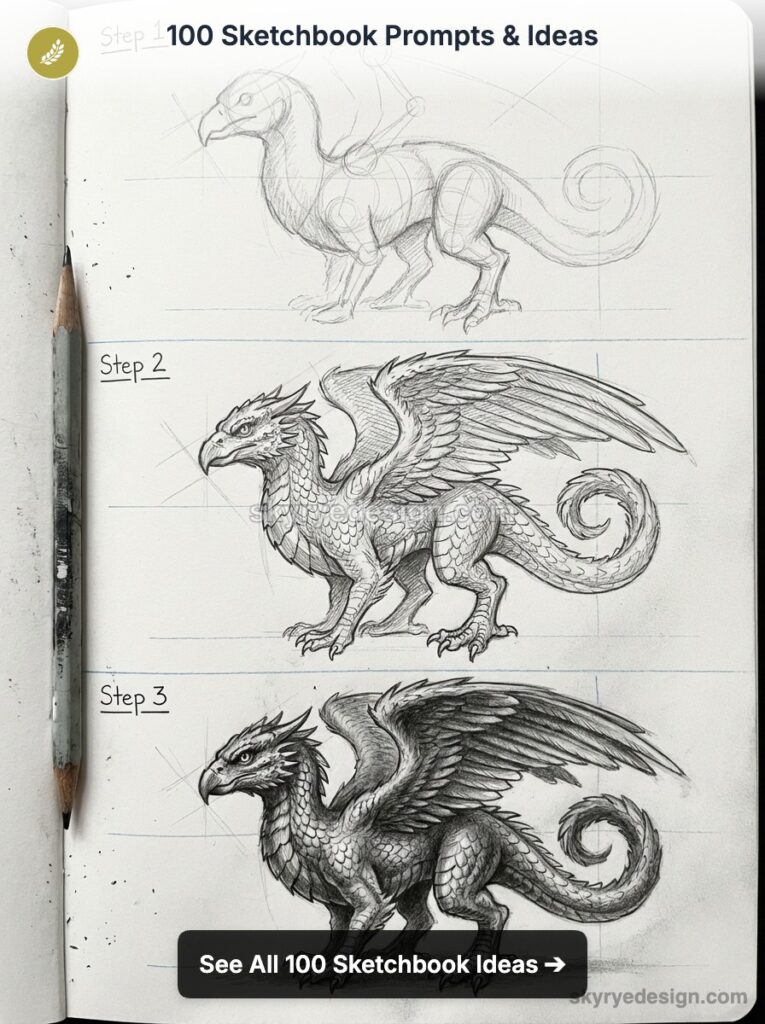
Build an original creature from scratch. What environment does it live in? What does it eat? How does it move? Make design decisions based on functional logic—wings should look like they could actually fly, fins should look hydrodynamic. Fantasy creature design is a serious discipline in animation and game development.
90. Draw the View from an Impossible Window
Your window looks out onto the surface of another planet. Onto the floor of the ocean. Into a forest 10,000 years in the past. Choose the view, establish what the window frame looks like, and draw what’s outside it. The contrast between the domestic window frame and the impossible vista is the whole composition.
91. Sketch the Contents of a Fictional Character’s Bag
Choose a character from any book, film, or your own imagination and draw the objects they’d carry—specific to their personality, era, and circumstances. Sherlock Holmes’s bag would look very different from Frodo Baggins’. Character design through object design.
92. Draw a Map of Your Emotional Geography
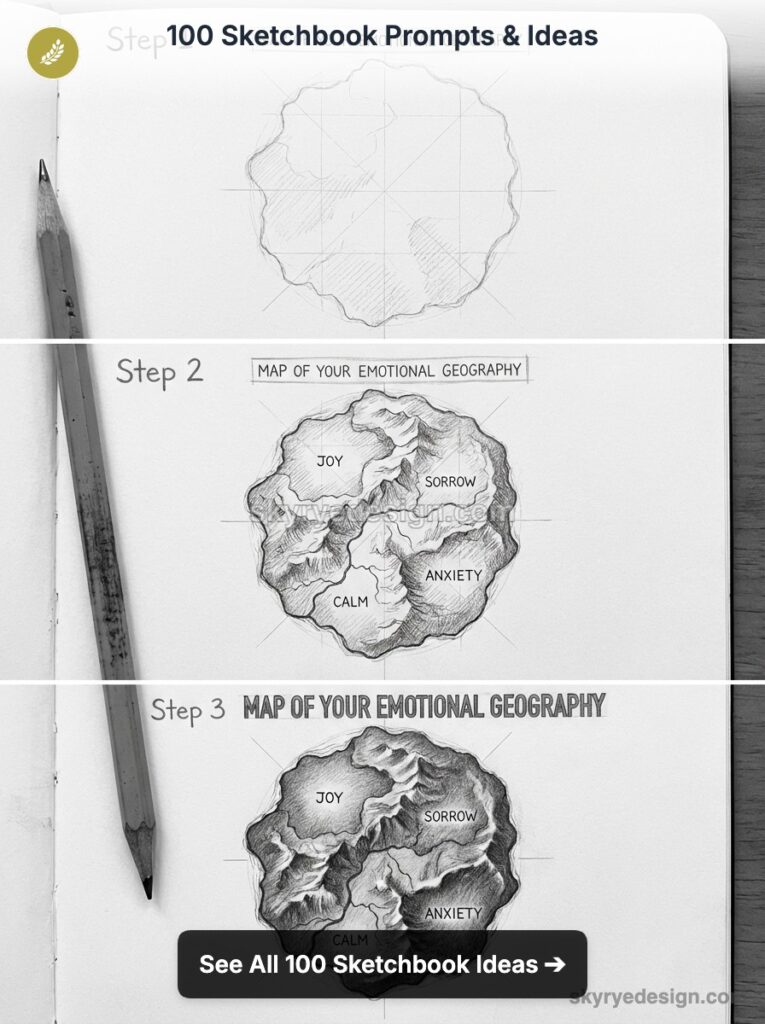
Where are the ‘comfort zones’, the ‘danger areas’, the ‘unexplored territories’ in your emotional landscape? Give them physical form on a map page—mountain ranges of anxiety, warm valleys of connection, coastlines of uncertainty. This is art therapy and cartography combined.
93. Sketch What Your Earliest Memory Looks Like
Most earliest memories are fragmentary—a specific quality of light, a face from an unusual angle, a partial room. Draw it as an image, not as a diagram. The visual quality of early memory—soft, incomplete, colour-shifted—is a specific aesthetic that’s worth exploring.
94. Draw a Clock Tower That Tells a Different Kind of Time
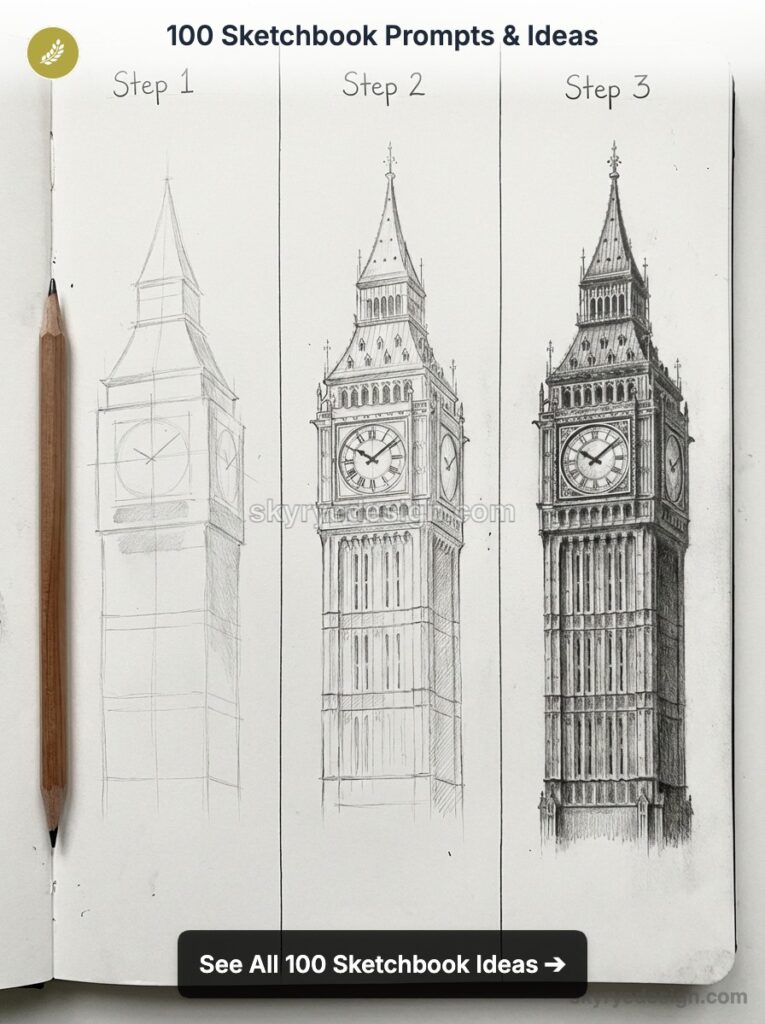
Not hours and minutes—emotional time, seasonal time, geological time, personal time. Redesign the clock face to display something other than standard measurement. This is product/architectural design thinking applied through drawing.
95. Sketch the Last Scene of a Film You’re Inventing
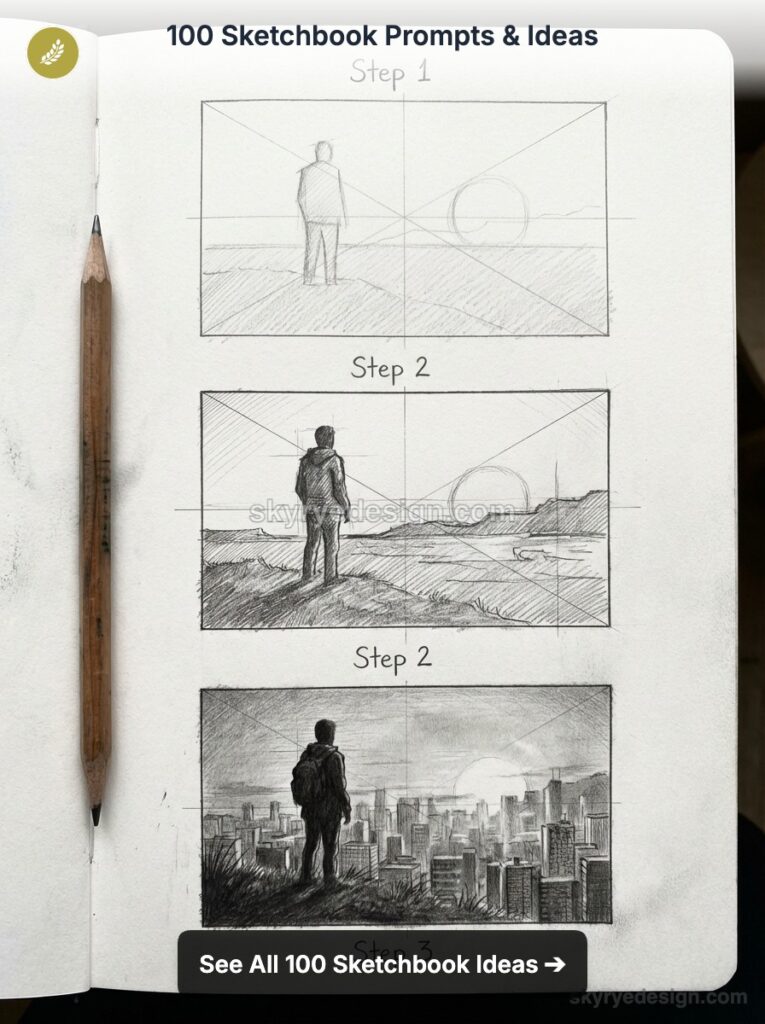
Storyboard the final frame of a movie that doesn’t exist. What’s the composition? Who’s in it? What’s the light? What’s left unresolved, visible in that last image? Cinematic thinking—framing, mood, implication—is one of the most transferable skills in any visual practice.
96. Draw Your Ideal Studio or Workspace
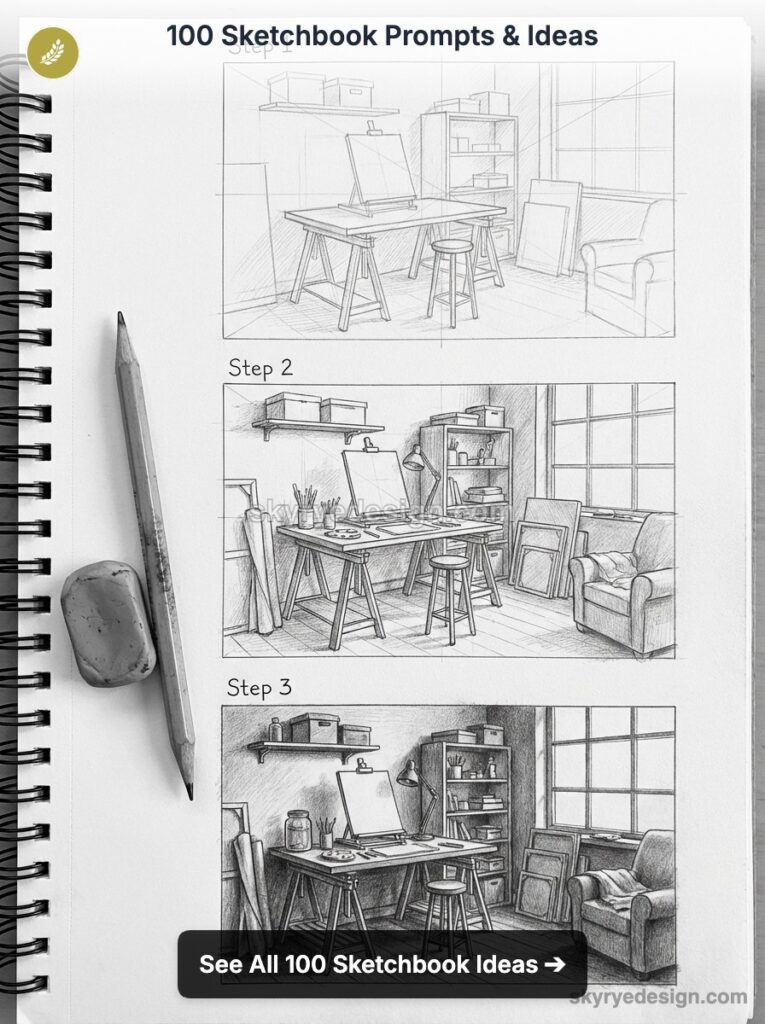
The light source, the surfaces, the storage, the window view. Designing your ideal creative space in drawn form is both a practical exercise (what do you actually need?) and a revealing one (what does your imagined ideal say about your current frustrations?).
97. Sketch a Scene from a Book You Love
Not the movie adaptation—your own visual interpretation of a specific scene from a book. How do you picture the characters’ faces? What does the setting look like? Literary illustration from genuine reading experience is deeply personal work.
98. Draw the Architecture of a Dream City
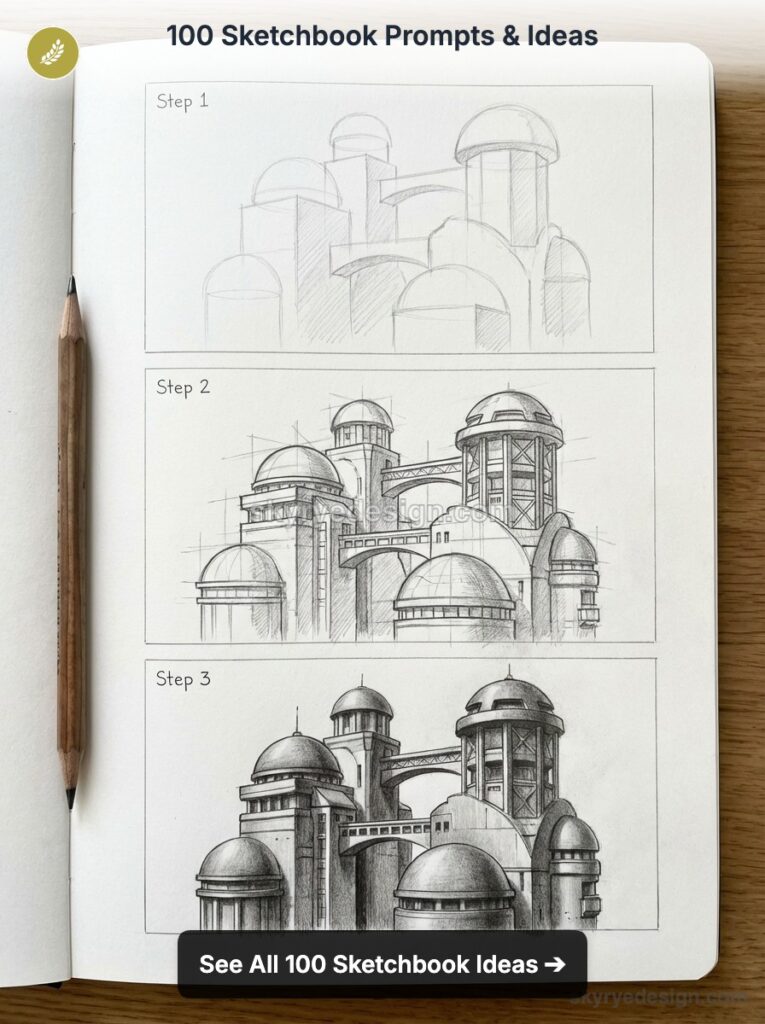
Not utopia—something stranger and more honest. What would a city built entirely by your aesthetic preferences look like? What materials? What scale? What’s the relationship between public and private space? Urban design as pure creative speculation.
99. Sketch a Portrait of Someone You’ve Never Met Based on Their Voice
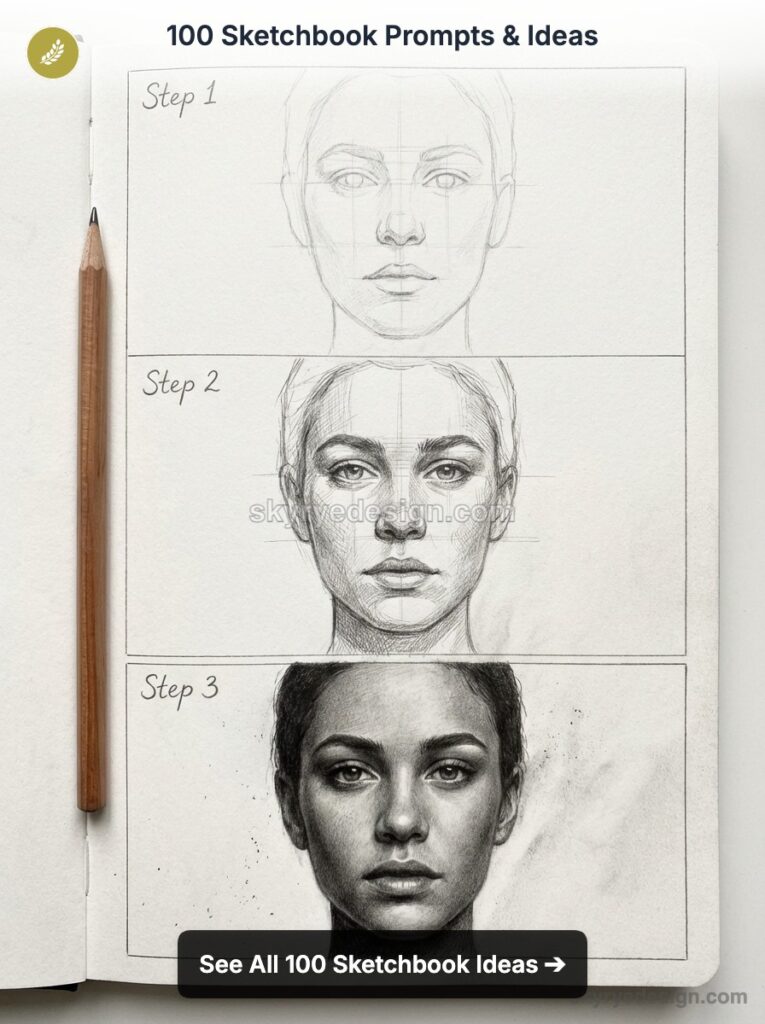
Listen to a podcast, a radio programme, or an audiobook. Draw the speaker based only on their voice—the timber, speed, accent, pauses. How do those sonic qualities translate into visual features? Synesthetic portrait work.
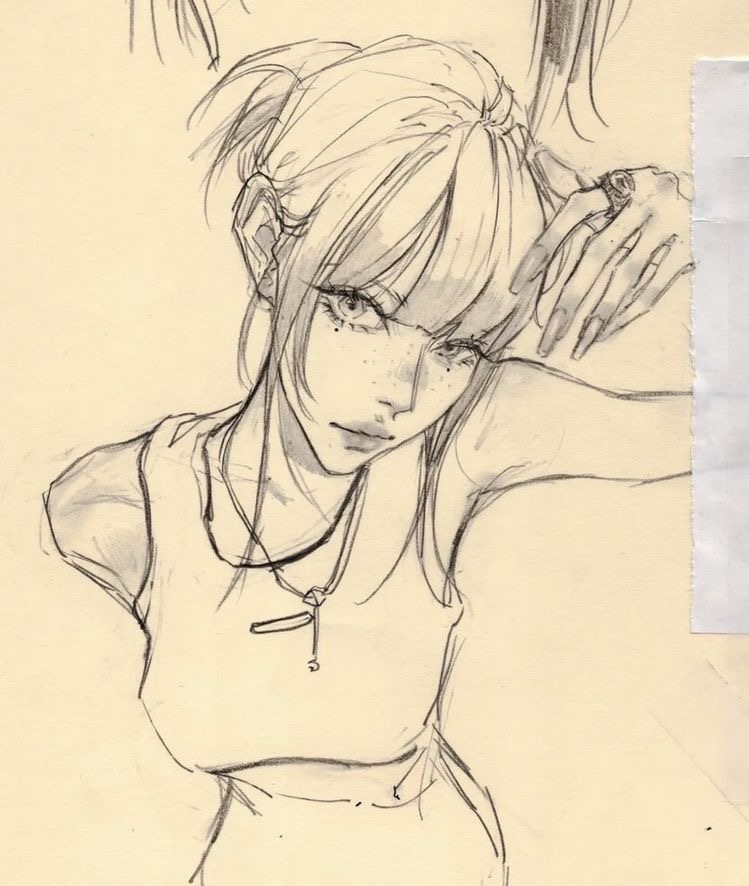

100. Draw Tomorrow
What do you imagine tomorrow looks like—not literally, but as a mood, a quality of light, a space, a scene? This final prompt is deliberately open. Tomorrow is the blank page. Draw it however it feels.
Frequently Asked Questions
What is art block and why does it happen?
Art block is a period where an artist feels unable to create, often characterised by staring at a blank page without knowing what to draw. It’s usually caused by decision paralysis (too many options, none feel right), perfectionism (fear of making something ‘bad’), or creative exhaustion from working in the same style or subject for too long. It affects artists at every level—even professionals with decades of experience.
How do I start drawing when I have no ideas?
The fastest solution: remove choice entirely. Use a prompt (like any from this list), set a five-minute timer, and draw whatever the prompt says before your internal critic can object. The act of starting—even poorly—breaks the paralysis. Keeping a dedicated ‘warm-up’ sketchbook separate from your main portfolio work also removes performance pressure.
How often should I use my sketchbook?
Daily, ideally—but even 10 minutes counts. James Gurney (Dinotopia) and Danny Gregory (Everyday Matters) both advocate daily drawing regardless of how brief. Consistency builds observational habit. The quality of individual sessions matters far less than showing up every day.
What’s the best sketchbook for beginners?
The Leuchtturm1917 hardcover in A5 (dotted or blank) is excellent for mixed media. The Strathmore 400 Series Visual Journal handles ink and watercolour well. For pure pencil work, the Daler-Rowney Graduate sketchbook is affordable and reliable. The honest answer: any sketchbook you’ll actually use is the right one. Expensive paper you’re afraid to ruin defeats the purpose.
Should my sketchbook look ‘finished’ and polished?
No. A sketchbook is a thinking tool, not a portfolio. The most useful sketchbooks—Picasso’s, da Vinci’s, Jean-Michel Basquiat’s—are full of rough studies, failed experiments, written notes, and abandoned starts. Polish belongs in finished work. The sketchbook is where you figure things out.
How do I overcome perfectionism in my sketchbook?
Two strategies that actually work: First, draw in pen only (no erasing forces commitment). Second, use cheap or recycled paper for practice drawings—the psychological barrier to marking low-value paper is far lower than marking an expensive sketchbook. Professional illustrator Paul Heaston recommends filling a cheap spiral-bound pad with ‘throwaway’ daily sketches alongside any nicer sketchbook.
Can I use digital tools alongside a physical sketchbook?
Absolutely. Many artists maintain both: physical sketchbooks for warmup, observation, and experimentation; digital tools (Procreate on iPad, Clip Studio Paint) for finished work or when materials are not practical. If you are making that switch, this beginner guide to drawing on iPad explains the layer, brush, and export workflow. The skills are transferable. Urban sketcher Marc Taro Holmes carries both a pocket sketchbook and an iPad Pro — different tools for different contexts, both valuable.
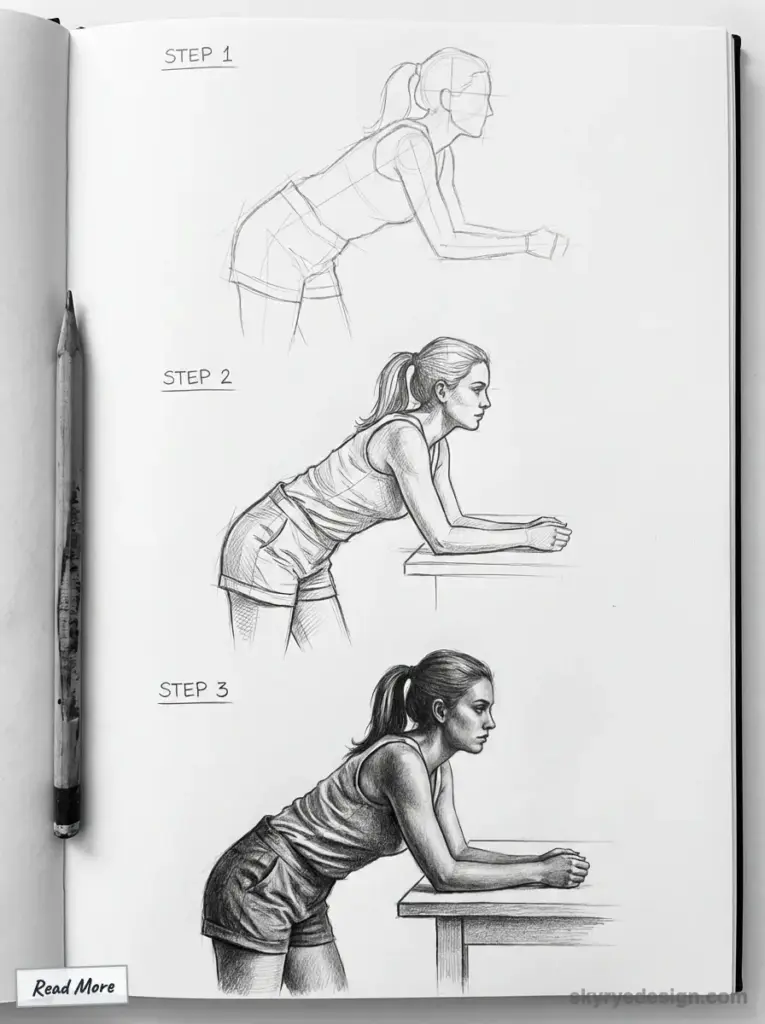
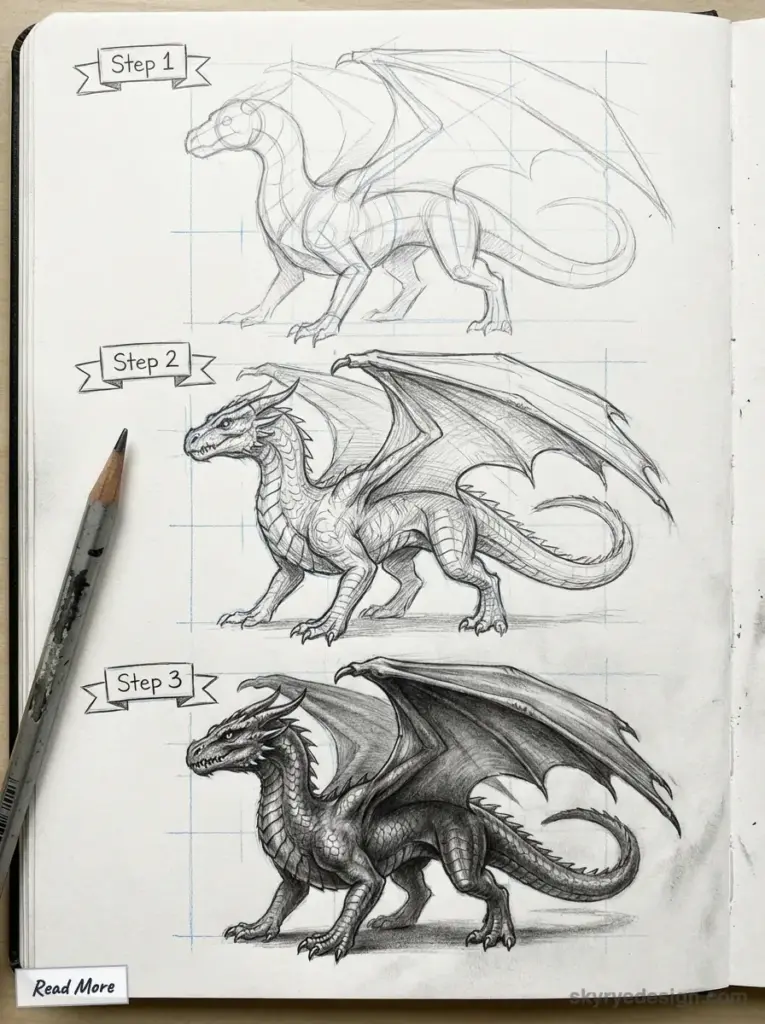
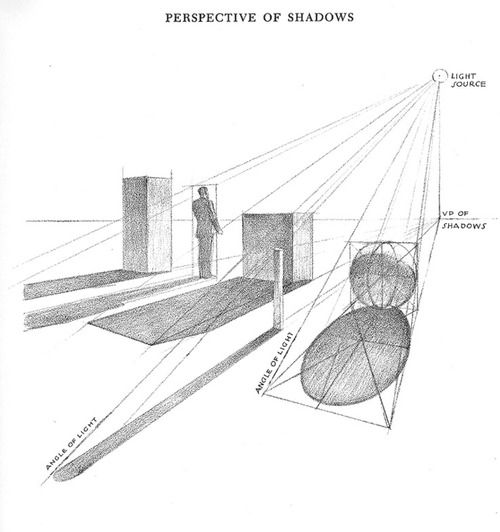
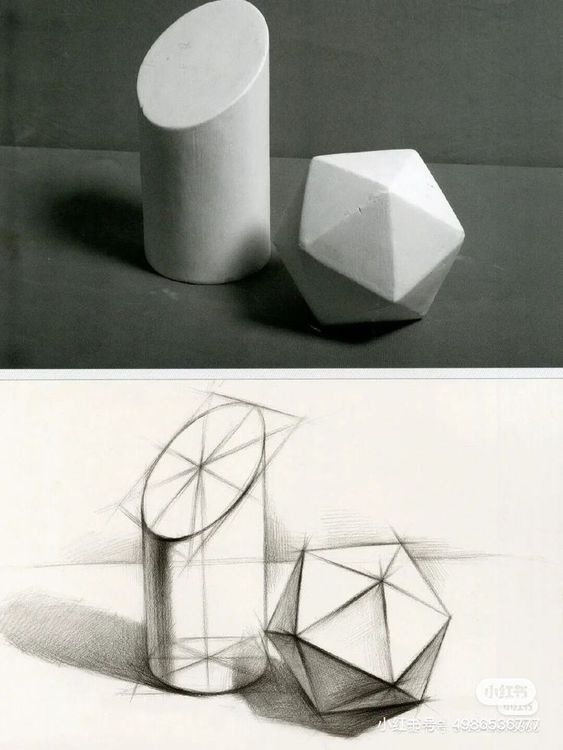

When a sketchbook page needs a playful character prompt, this beginner Stitch drawing tutorial gives you clear shapes, ears, eyes, color, and expression to practice.
If the blank page is still winning, add a coastal theme with these beach sketchbook prompts for waves, shells, palm trees, beachgoers, and simple seaside compositions.
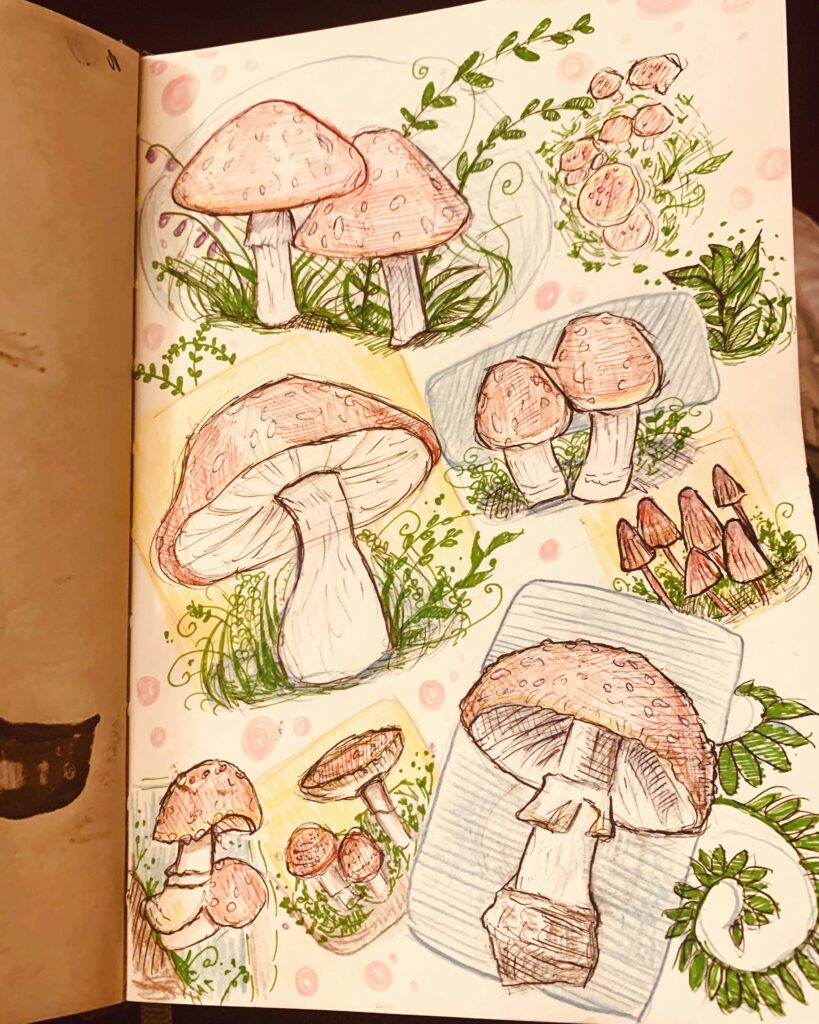
If a sketchbook prompt feels too large for the day, shrink it into journal doodle ideas first: one tiny mushroom, moon, mug, flower, or border in the corner of the page. It keeps the hand moving without turning practice into a whole production.
When a sketchbook prompt feels too open, turn it into girlfriend drawing ideas by adding one personal detail: her favourite colour, a place you visited together, or an object she uses every day.
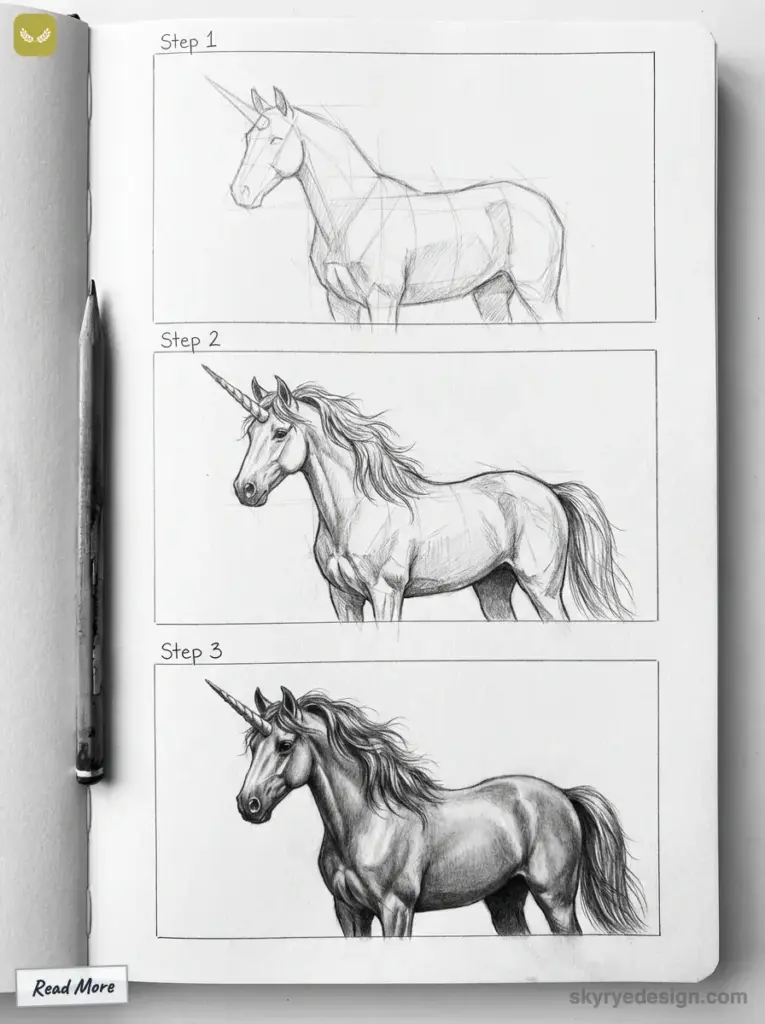
When a blank sketchbook page feels too open, use a focused unicorn drawing prompt such as a rainbow mane, cloud scene, castle background, or kawaii portrait.
When the page feels blank, choose one ordinary subject and give it a single impossible rule. These surreal sketchbook prompts show how changed scale, reflections, and doorways can turn a quick study into a focused idea.
- 13.0Kshares
- Facebook0
- Pinterest13.0K
- Twitter5
- Reddit0