Guitar drawing looks easy until the proportions start arguing with you. The body gets too round, the neck stretches too long, the strings drift, and suddenly the sketch looks more like a toy than an instrument.
The fix is to build the guitar from big shapes first: body, neck, headstock, bridge, sound hole or pickups, then strings. I usually mark the center line and neck angle before drawing details, because one crooked guide line can throw off every fret after it. That one small check saves a lot of erasing later.
- How to draw a guitar step by step
- Guitar anatomy: acoustic vs electric
- Guitar drawing easy: basic shapes
- Guitar drawing techniques
- Finishing Touches
- Digital Guitar Art
- Practice resources for guitar drawing
- FAQ
- Q: What is the easiest way to draw a guitar for beginners?
- Q: How do you draw a guitar step by step?
- Q: Why is a guitar hard to draw?
- Q: What parts of a guitar should I include in a drawing?
- Q: What is the best pencil for drawing a guitar?
- Q: How do you make an electric guitar drawing look different from an acoustic guitar?
- Q: How many strings should I draw on a guitar?
- Q: What are common mistakes when drawing a guitar?
- Q: How can I make my guitar drawing look more realistic?
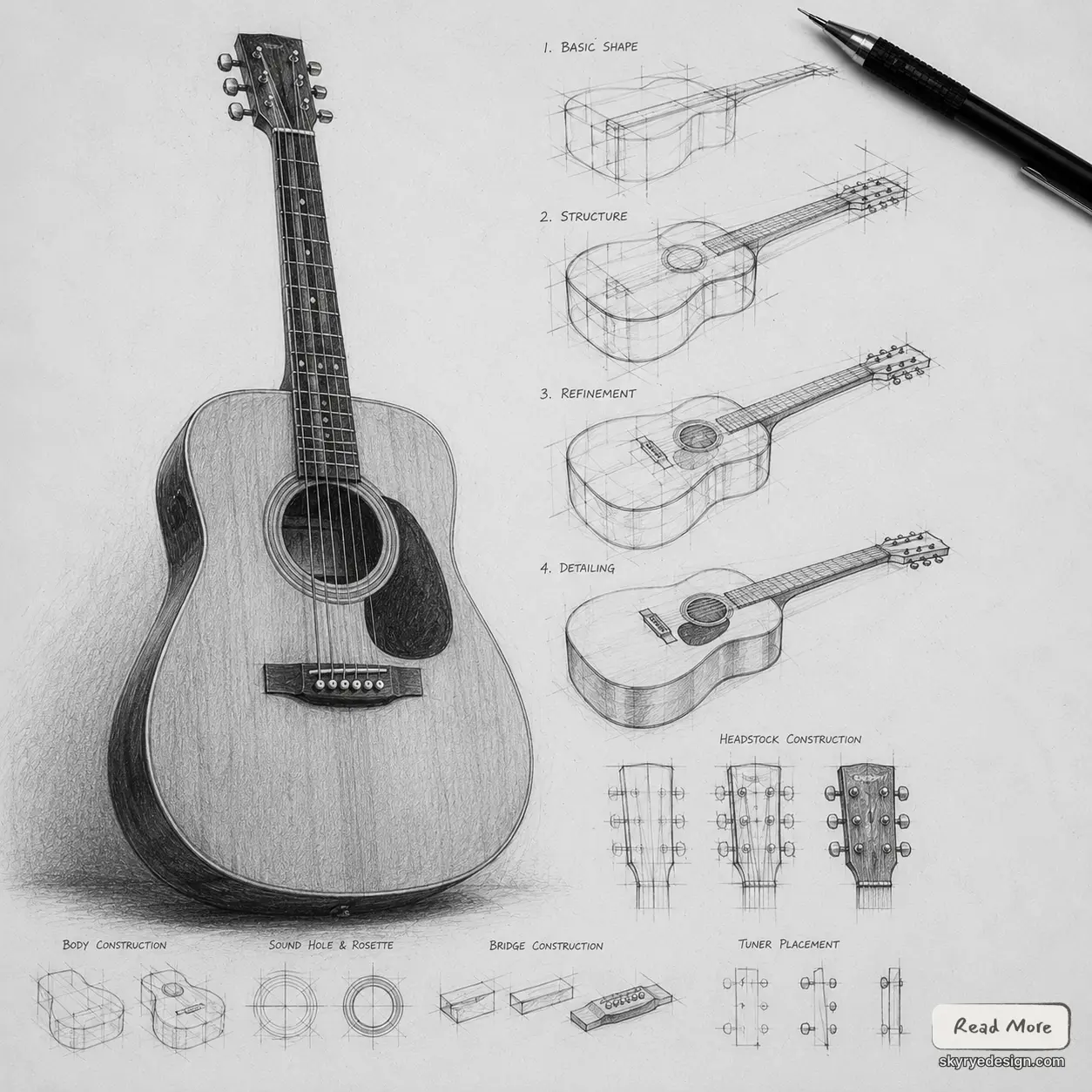
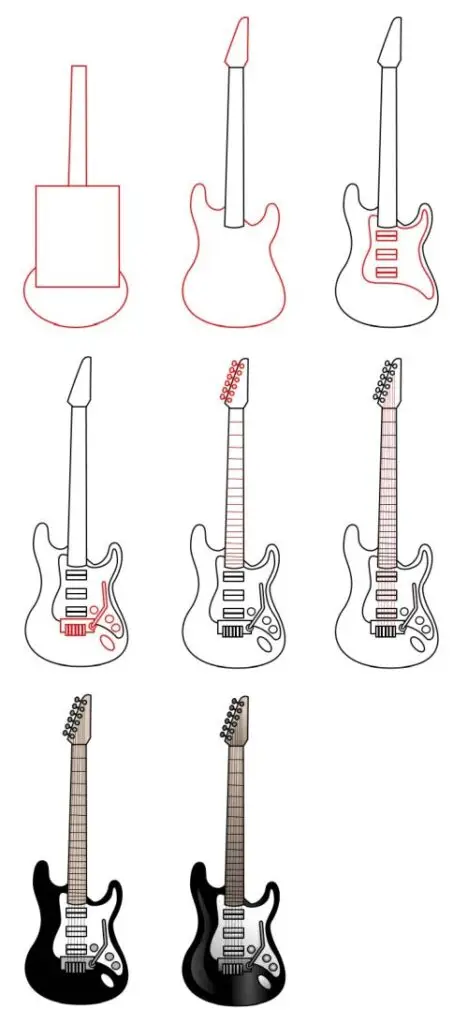
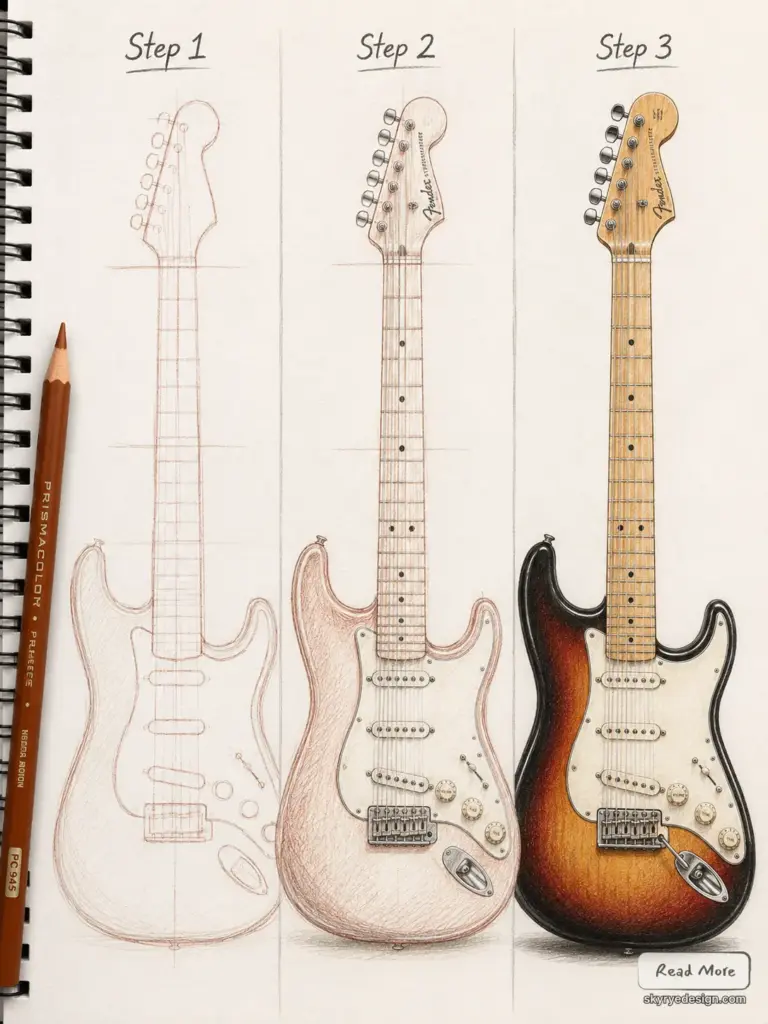
How to draw a guitar step by step
To draw a guitar step by step, start with a light body shape, add the neck as a straight guide, place the sound hole or pickups, mark the bridge, then draw the frets and six strings. Keep everything loose until the proportions work. Once the neck, body, and headstock line up, clean the outline and add soft shading around the sound hole, bridge, and body edge.
| Step | What to check | Why it matters |
|---|---|---|
| 1. Block the body | Use a light oval or hourglass shape. Keep the waist narrow, but not pinched. | The silhouette tells the viewer “guitar” before any details do. |
| 2. Add the neck | Draw it straight and slightly narrower than beginners expect. | A wide or tilted neck is the fastest way to make the instrument feel fake. |
| 3. Place the sound hole or pickups | Use these details to show whether the guitar is acoustic or electric. | These landmarks separate acoustic, classical, bass, and electric guitar drawings. |
| 4. Draw frets and strings | Mark the frets lightly first, then pull six clean strings from headstock to bridge. | Clean spacing makes the drawing read as playable, not decorative. |
| 5. Shade last | Add shadow under the strings, inside the sound hole, and along the body edge. | Shading should support the form after the construction is already working. |
Before putting anything on paper, I usually just stare at a reference for a minute. Not in a deep, analytical way — just noticing stuff. How wide the body actually is. How thin the neck feels compared to it. Where the sound hole sits. Once you see it, it’s hard to unsee.
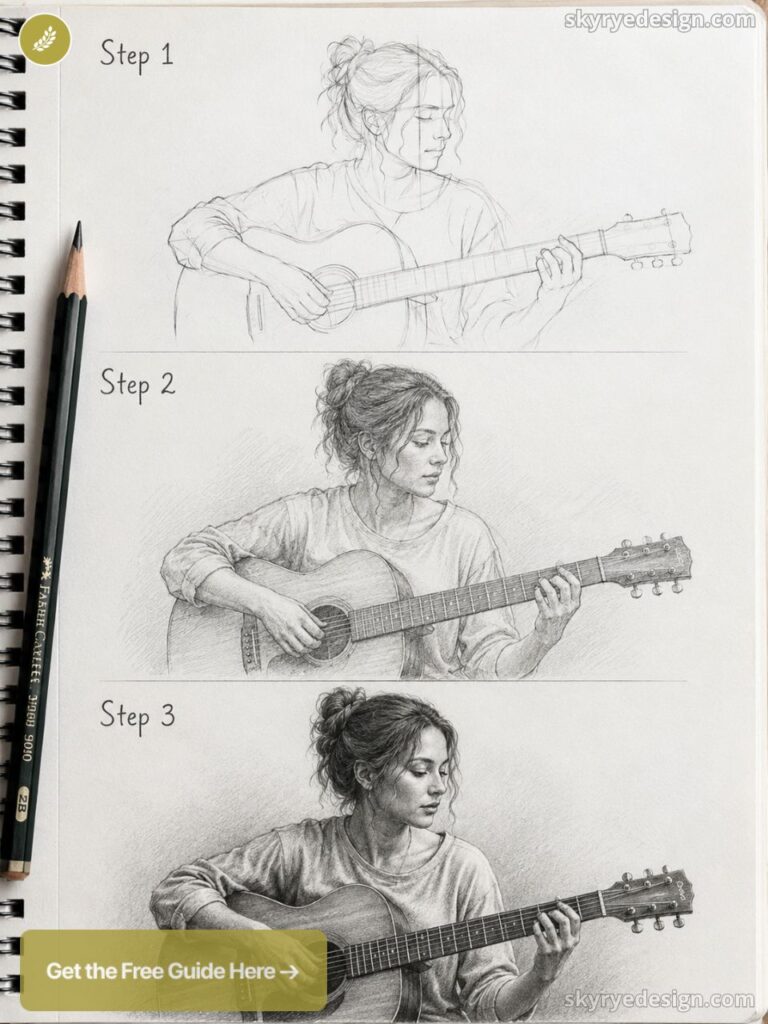
A guitar isn’t just a shape you outline and move on. The headstock, tuning pegs, frets, bridge — they all have their own spacing. Skip that, and the drawing starts to feel like a toy version instead of a real instrument.
I start loose. Quick sketch. No pressure. Just trying to get the overall balance right. Then I go back in and tighten things up — clean the curves, place the frets, add the strings. That part always feels a bit mechanical, but it matters.

Shading is where it finally clicks. Even a few soft shadows along the body edges can make it feel like an actual object instead of a flat cutout. I usually keep it subtle — guitars don’t need heavy shading to read well.
Digital tools are great if you want precision, but I still default to pencil first. It’s faster, messier, and weirdly more honest. You see your mistakes right away, no undo button to hide them.
Key Takeaways
- Start every guitar drawing with the body, neck angle, and headstock before adding strings or decoration.
- For an easy guitar drawing, keep the first sketch light and check the neck-to-body proportion before shading.
- Electric guitar drawing needs pickups, controls, and a sharper body shape; acoustic guitar drawing needs the sound hole, bridge, and hollow body volume.


Guitar anatomy: acoustic vs electric
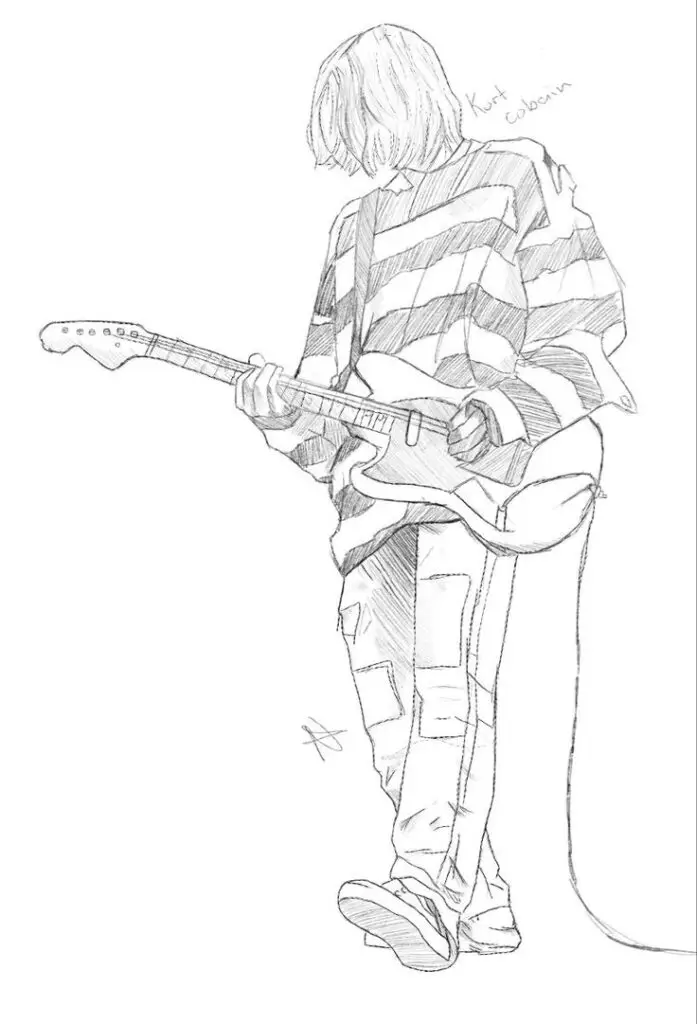
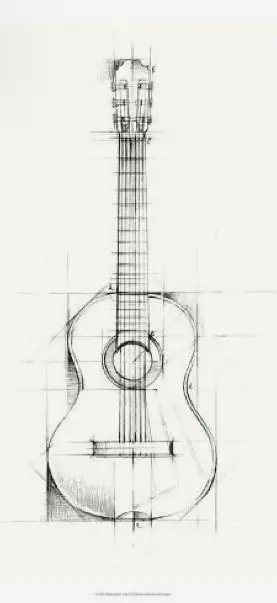
For drawing, guitar anatomy is mostly about placement. You do not need to memorize every luthier term, but you do need to know where the body narrows, how the neck connects, where the bridge sits, and how the headstock tilts away from the strings.
For reference, I check the big visible landmarks against reliable guitar sources: Britannica’s guitar overview for the basic instrument, Yamaha’s acoustic guitar structure guide for the sound hole, bridge, and resonating body, and Fender’s electric guitar guide for pickups, controls, and bridge hardware.
Parts of an Acoustic Guitar
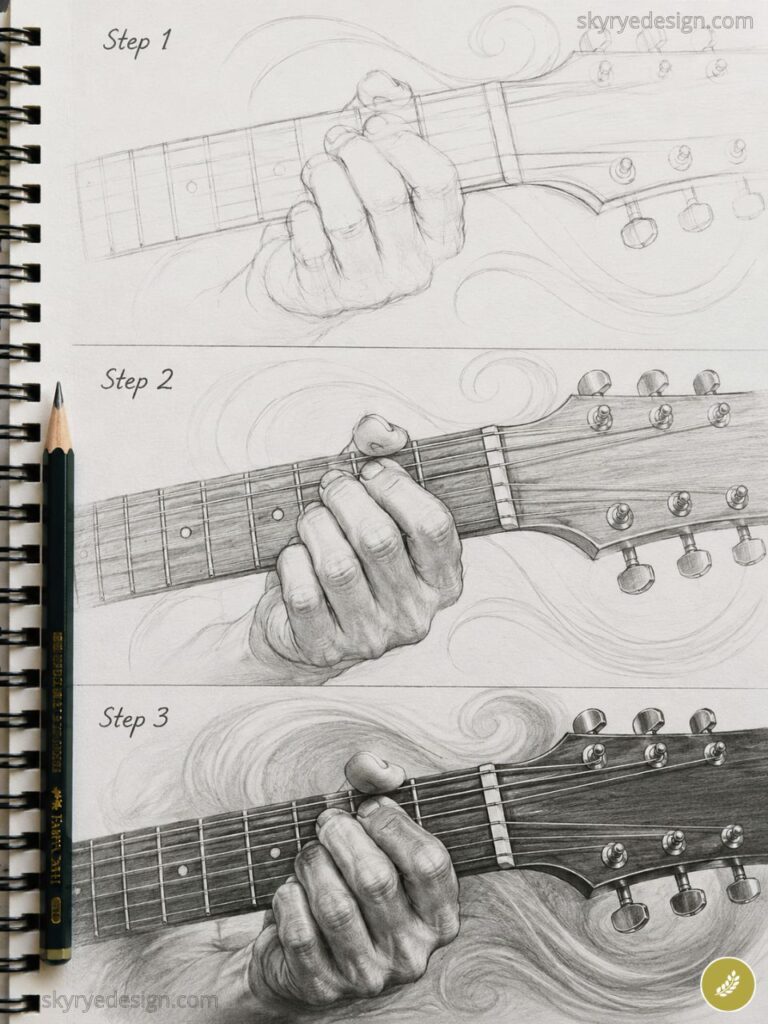
An acoustic guitar has a hollow body, a centered sound hole, and a bridge that anchors the strings near the lower part of the body. In a drawing, those three marks do most of the work. If the sound hole drifts too high or the bridge floats too far down, the whole guitar starts to look off.
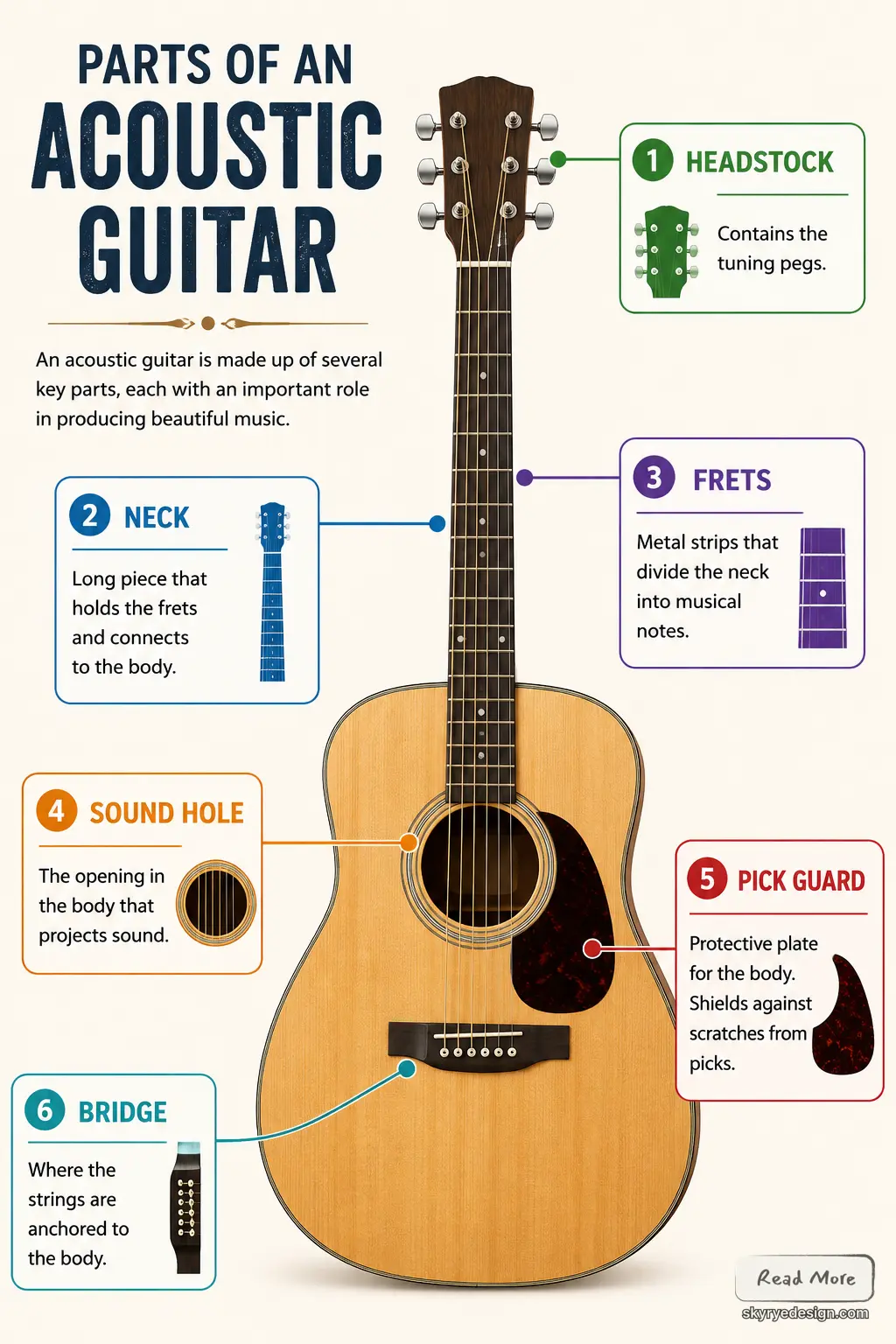
The neck of the guitar is attached to the body and holds the frets, small metal bars that mark different notes. At the top of the neck is the headstock, which includes tuning pegs. These pegs adjust the tension of the strings and, as a result, their pitch. Here are the essential parts of an acoustic guitar:
- Headstock: Contains the tuning pegs.
- Neck: Long piece that holds the frets and connects to the body.
- Frets: Metal strips that divide the neck into musical notes.
- Sound Hole: The opening in the body that projects sound.
- Pick Guard: Protective plate for the body.
- Bridge: Where the strings are anchored to the body.
Components of an Electric Guitar
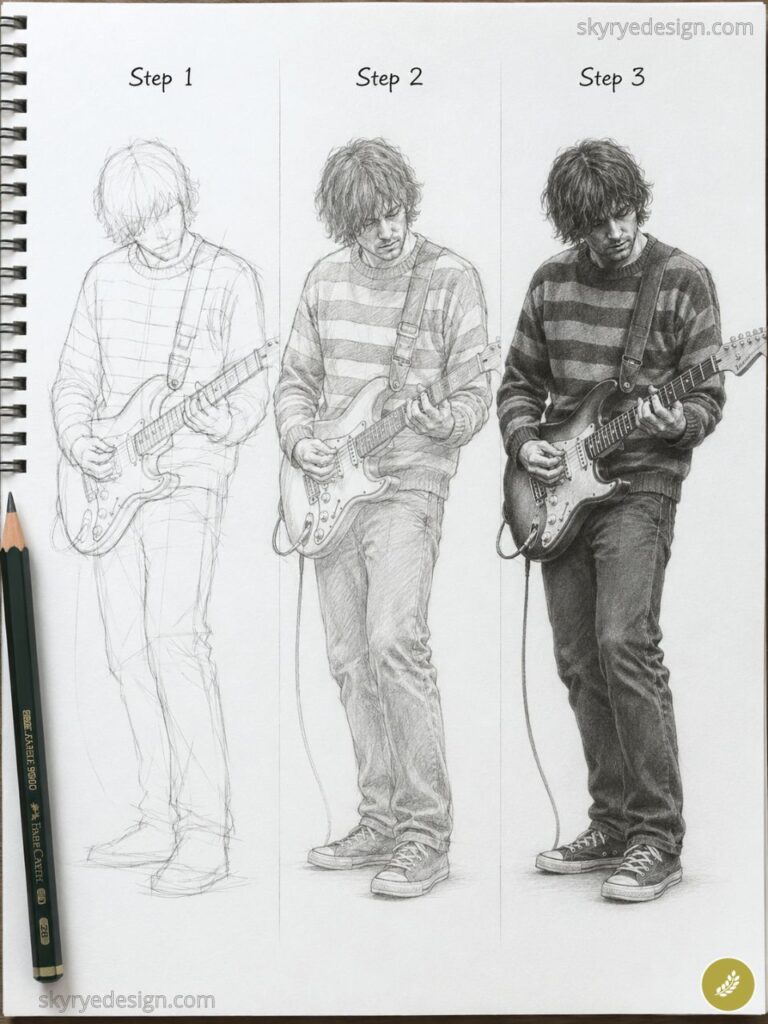
An electric guitar usually has a thinner solid body, sharper cutaways, and visible hardware. It still needs the neck, frets, and strings, but the pickups, control knobs, bridge, and pickguard are what make it read as electric instead of acoustic.
The bridge on an electric guitar can have various designs, some allowing for the strings to be adjusted for better intonation and action. The pick guard is also present, but mainly on models that aim to reduce electrical interference with the pickups. Here are the key components of an electric guitar:
- Headstock: Contains the tuning pegs.
- Neck: Supports the frets and transmits hand movements to pitch.
- Frets: Metal strips on the neck to play different notes.
- Body: Solid and houses the electronic components.
- Pick Guard: Shields from electrical noise and protects the body.
- Bridge: Holds the strings and may alter their height and length.
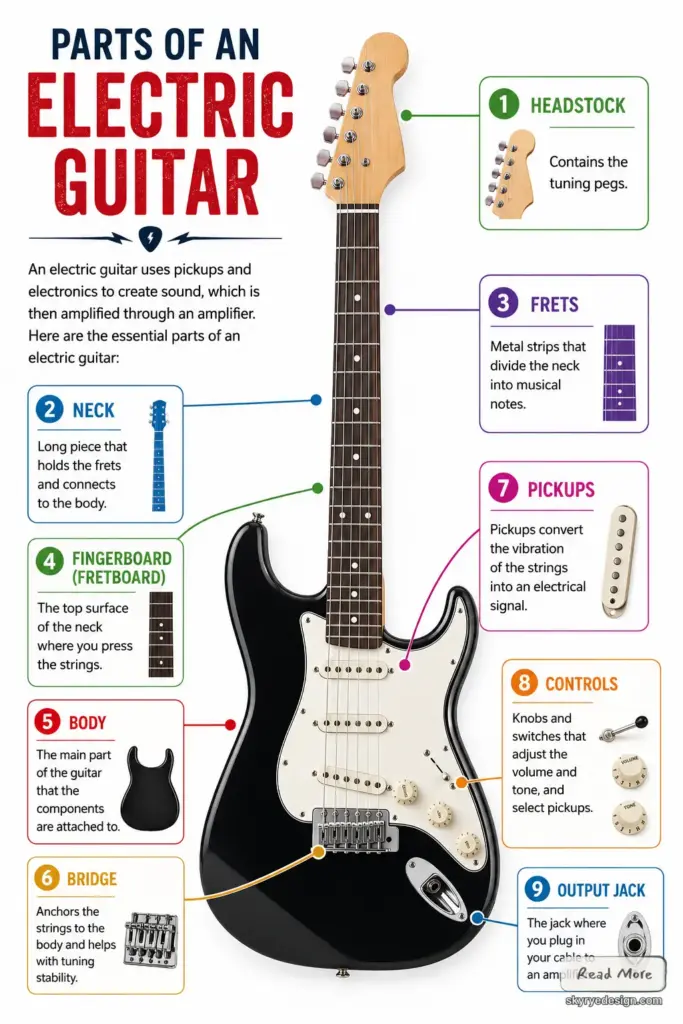
For sketching, simplify the choice like this: acoustic guitars are about hollow body volume and a clean sound hole; electric guitars are about a solid body shape, pickups, controls, and sharper hardware.
For guitar sketches, a compact drawing kit for line and shading helps you switch between crisp strings, soft shadows, and clean corrections.
Guitar drawing easy: basic shapes
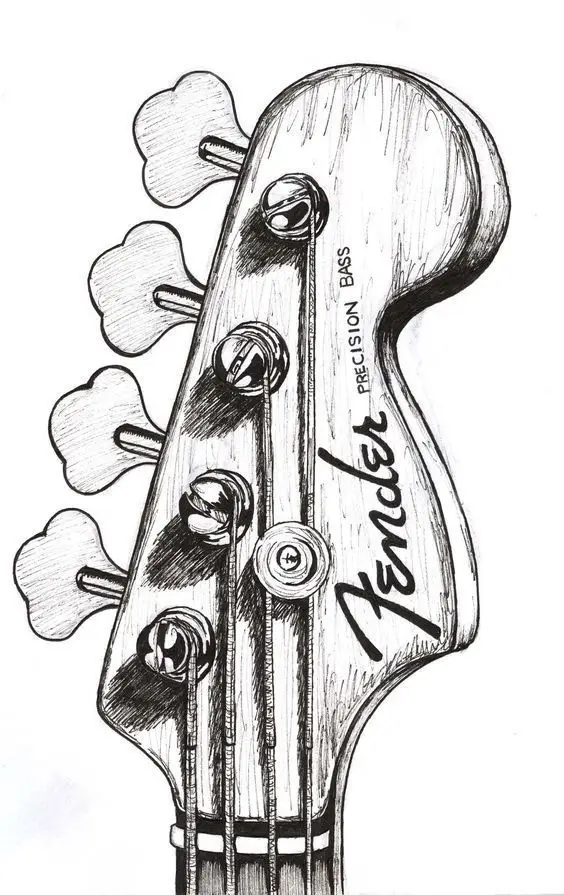
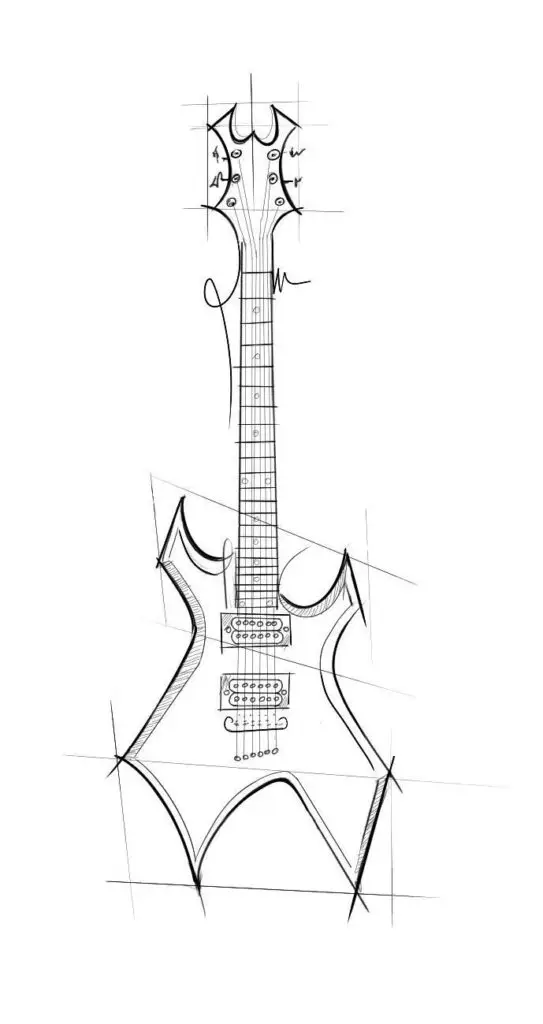
To draw a guitar well, start with a basic outline before adding details like the body, neck, and headstock. If you want a simpler warm-up first, use this easy drawings step-by-step guide to practice construction lines.
Sketching the Outline
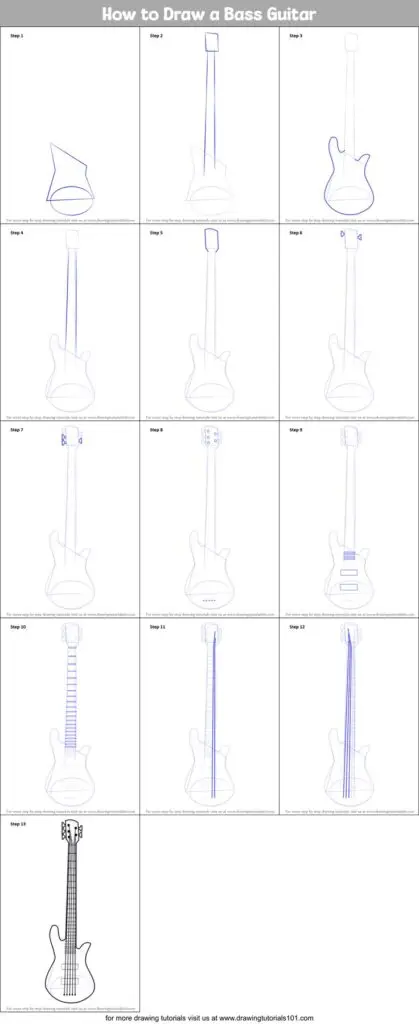
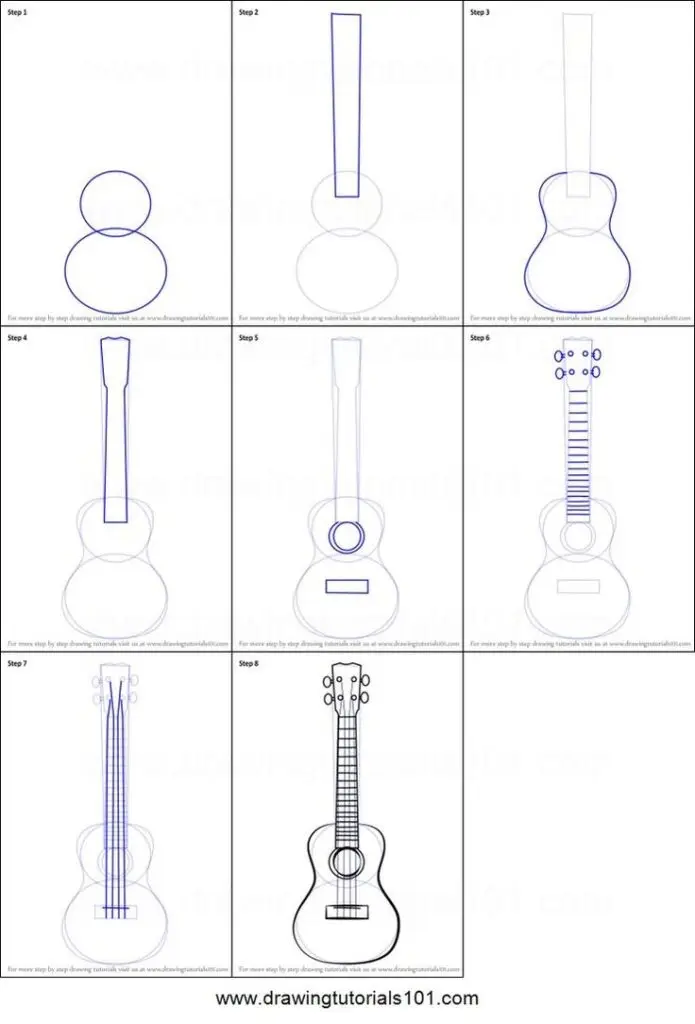
The first step is a simple outline. Draw a light center line for the neck, then build the body around it with two broad curves. Keep a reference nearby and compare angles more than labels: body width, neck tilt, headstock size, and the distance from sound hole to bridge.
Steps for sketching a guitar outline:
- Draw a long, thin rectangle for the neck.
- Sketch an oval shape for the body, making sure it’s symmetrical.
- Connect the neck and body smoothly.
Drawing the Body
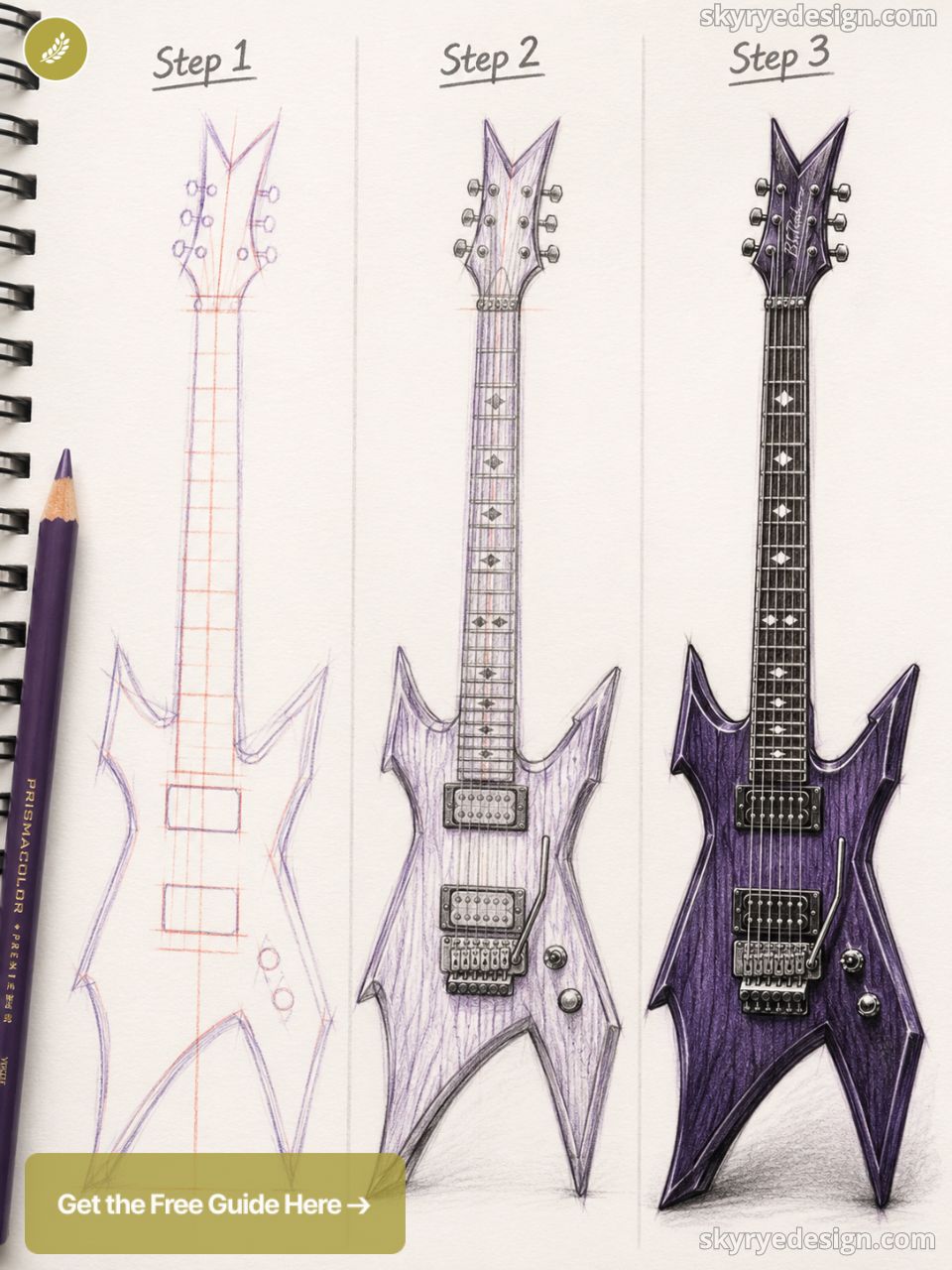
After the outline, define the guitar body with the sound hole, pickguard, and bridge. Use soft curves for the body and sound hole, then switch to firmer, straighter lines for the bridge. That contrast makes the instrument feel built instead of melted.
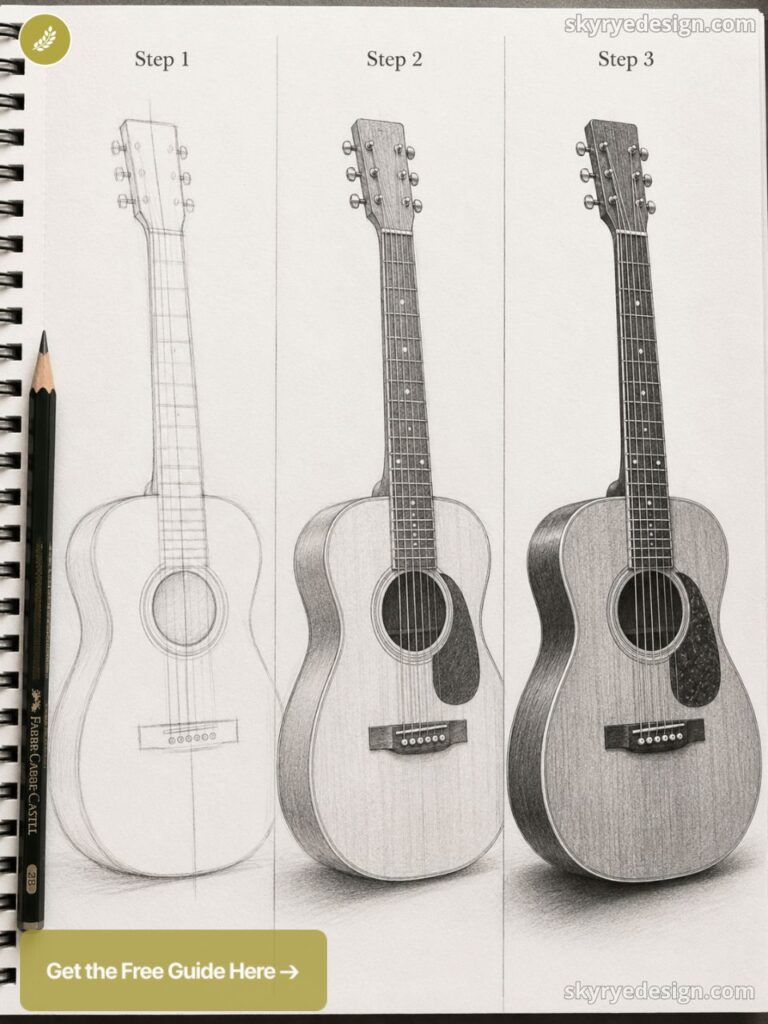
Features to include in the guitar body:
- Sound hole: A perfect circle in the center of the body’s oval shape.
- Pick guard: A teardrop shape near the bottom of the sound hole.
- Bridge: A small rectangle at the base of the body.
Defining the Neck and Headstock
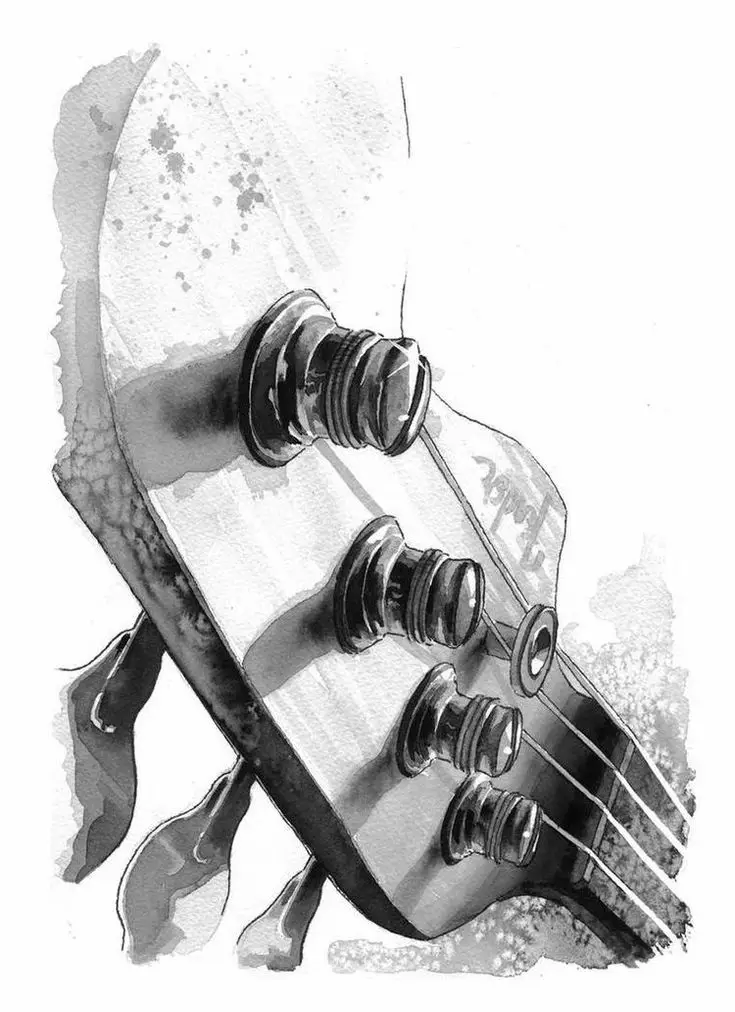
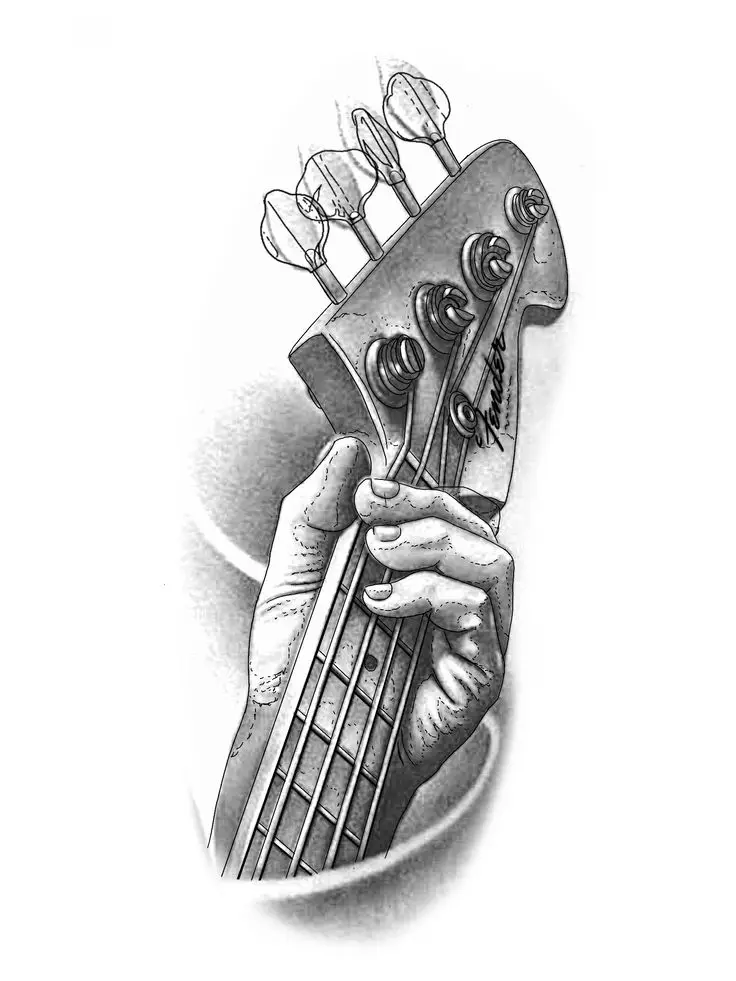
Finally, detail the neck and headstock. The neck holds the fingerboard and frets, while the headstock carries the tuning pegs. I like to mark the fret spacing with tiny ticks before drawing the full lines, because uneven frets are very noticeable once the strings go in.
Aspects to draw on the neck and headstock:
- Frets: Evenly spaced lines across the neck.
- Tuning pegs: Small ovals or circles at the top of the headstock.
Give each component just enough attention to feel intentional. The headstock can stay simple, but the tuning pegs should line up; the bridge can be small, but it needs to sit squarely under the strings.
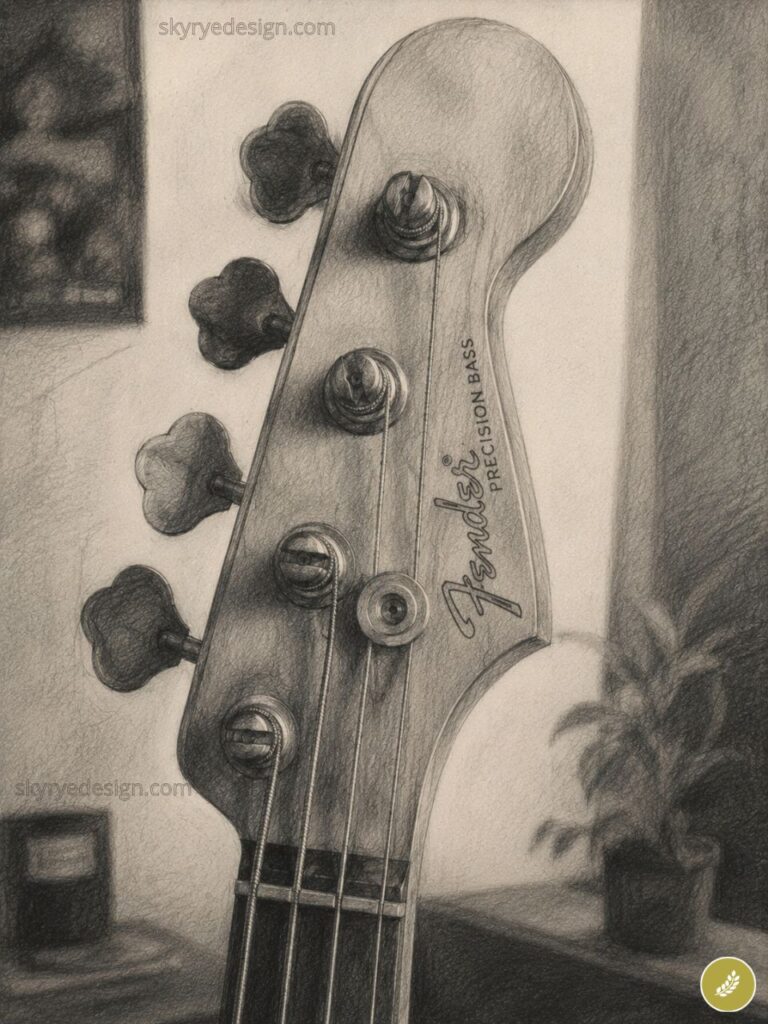
Guitar drawing techniques
Good guitar drawing techniques come down to two things: clean construction and controlled detail. Shading adds volume, but the frets and strings are what convince the eye that this is a real instrument.
Shading and texture

For shading, start with a 2H or HB pencil for the first value layer, then move to 2B or 4B for the deeper shadows. Decide on the light source before you shade. On an acoustic guitar, I usually darken inside the sound hole first, then add softer shadow along the lower body edge and under the strings.
For highlights on a polished body, leave a few slim areas untouched or lift graphite with a kneaded eraser. Do not make every highlight the same size. One stronger highlight and two smaller ones usually feel more natural than a row of identical white stripes.
Drawing frets and strings
For frets and strings, use a ruler for the first pass. Mark the fret positions lightly before committing to dark lines. They do not need engineering-level precision, but they do need rhythm: closer together toward the body, clean enough that the neck feels playable.
Strings should run from the tuning pegs to the bridge in one clear direction. Use a sharp pencil or fine liner and pull the line in one calm stroke when you can. A tiny curve is fine in a loose illustration, but avoid wobbly strings unless the whole drawing is intentionally stylized.
Finishing Touches
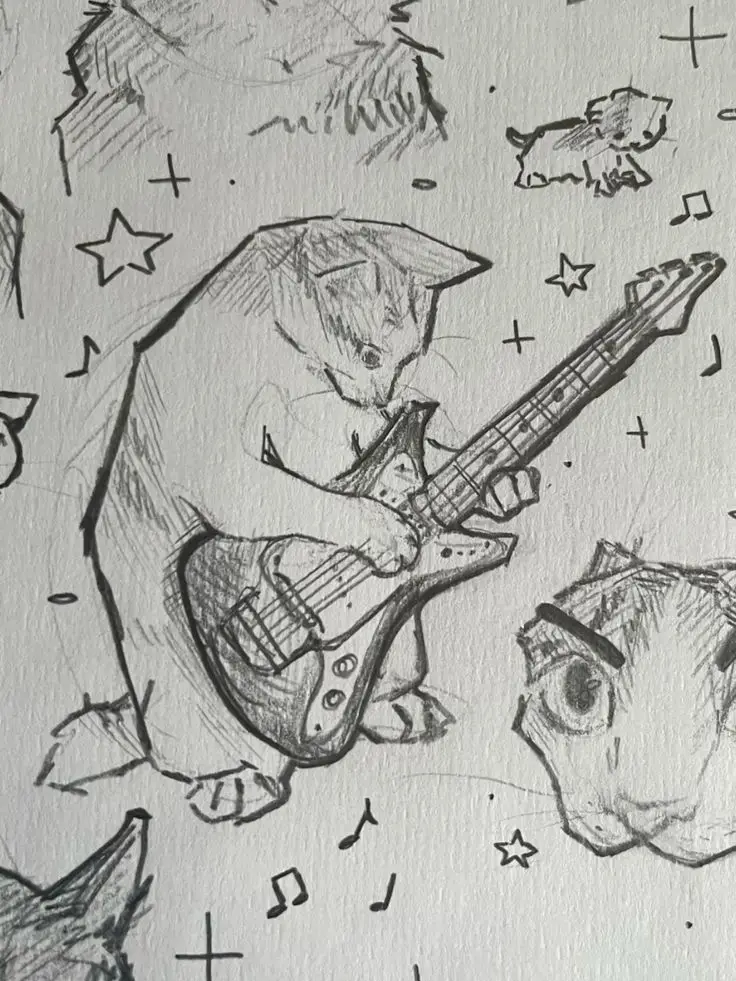

Finishing details should support the guitar, not bury it. Music notes, color, stickers, scratches, wood grain, or stage lighting can all work, but the silhouette and strings still need to stay readable.
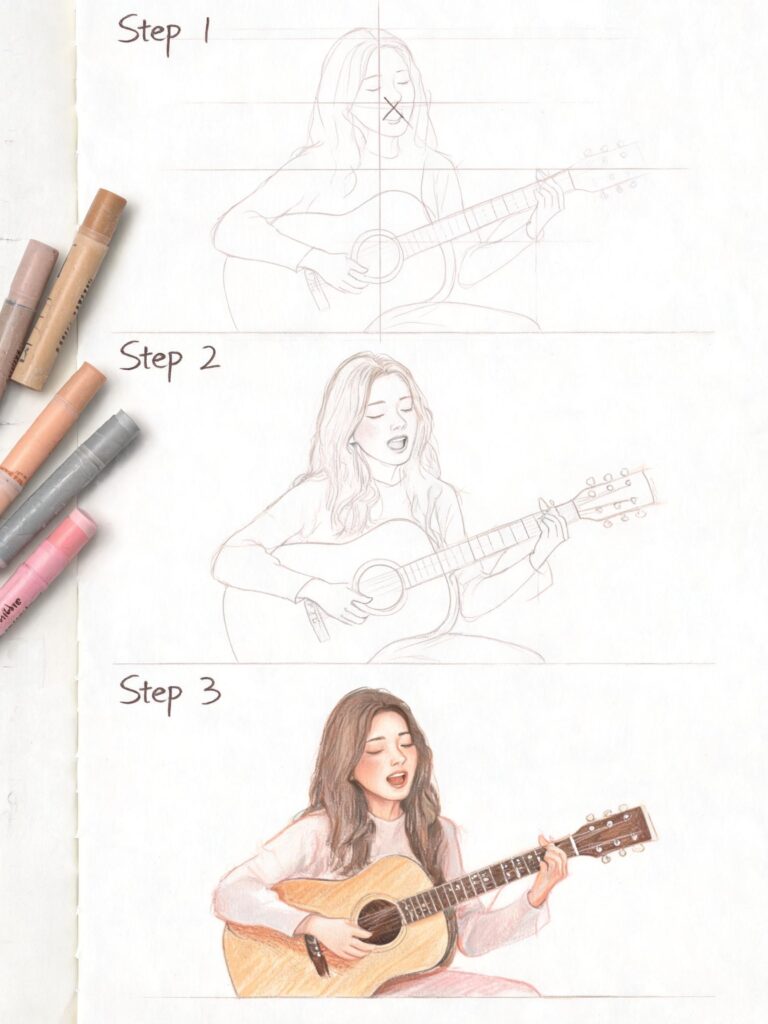
Adding Music Notes
Music notes can be sketched around the guitar to create a sense of rhythm and melody. Keep them light and secondary, because the guitar shape should still carry the drawing. Here are the steps:
- Decide where to place the music notes around the guitar.
- Lightly draw treble clefs and music notes such as quarter notes or eighth notes.
- Use a thin pen to go over the sketches.
Tips for Music Notes:
- Space the notes evenly to suggest a continuous rhythm.
- Use different types of notes (e.g., quarter, eighth, half) to add variety.
Coloring Your Guitar

Choose colors that match the guitar’s style before you start filling large areas. A natural acoustic guitar needs warmer browns and softer grain; an electric guitar can handle cleaner edges, brighter paint, and stronger contrast.
- Outline: Darken the edges of the guitar using a fine-point pen or a sharp pencil to define the boundaries.
- Wood tones: Select brown shades for a natural look, or get creative with colors like blue or red for a more stylized approach.
- Strings: Keep them light or use a gentle gray to hint at their metallic nature.
- Details: Use darker colors for the fretboard and lighter shades for the inlays.
Materials List:
- Colored pencils
- Fine-point pens
- Eraser for corrections
Remember to blend colors smoothly for a realistic appearance or use contrasting colors for a more abstract style.
Digital Guitar Art


Digital guitar art is easier to control if you keep the drawing in layers: body shape, neck, strings, hardware, shadows, and color. That way, a crooked string or oversized pickup does not force you to repaint the whole instrument.


Using Art Software
In Procreate, Photoshop, Krita, or similar apps, separate the parts you are likely to adjust: body, strings, fretboard, hardware, and shadow. I would also keep the first construction sketch on a low-opacity layer until the final line art is finished.
- Layers: Separate elements for organized editing.
- Brushes: Mimic different textures and styles.
- Color palettes: Choose exact colors for a realistic look.
Artists may follow drawing instructions to sketch the guitar step-by-step, starting with basic shapes and then adding details. It’s helpful to reference real guitars for accuracy.
Some artists prefer video tutorials, which provide a visual guide to learn new techniques and tools within the software. They usually show how to start a drawing, which tools to use, and how to add effects for more depth and realism.
Practice resources for guitar drawing
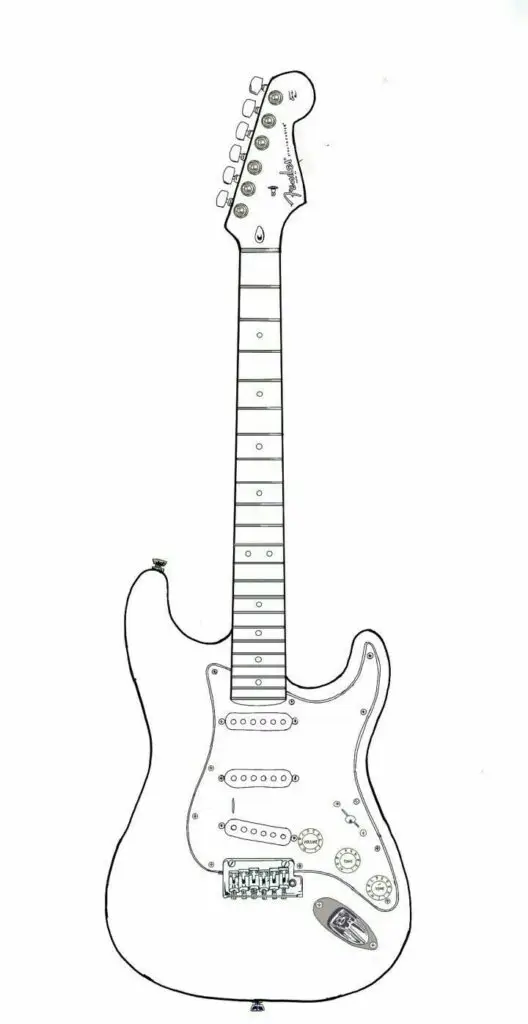
Learning to draw a guitar can be made easier with the right materials. Printable pages are particularly useful for beginners to practice and refine their skills.
Printable Pages for Practice
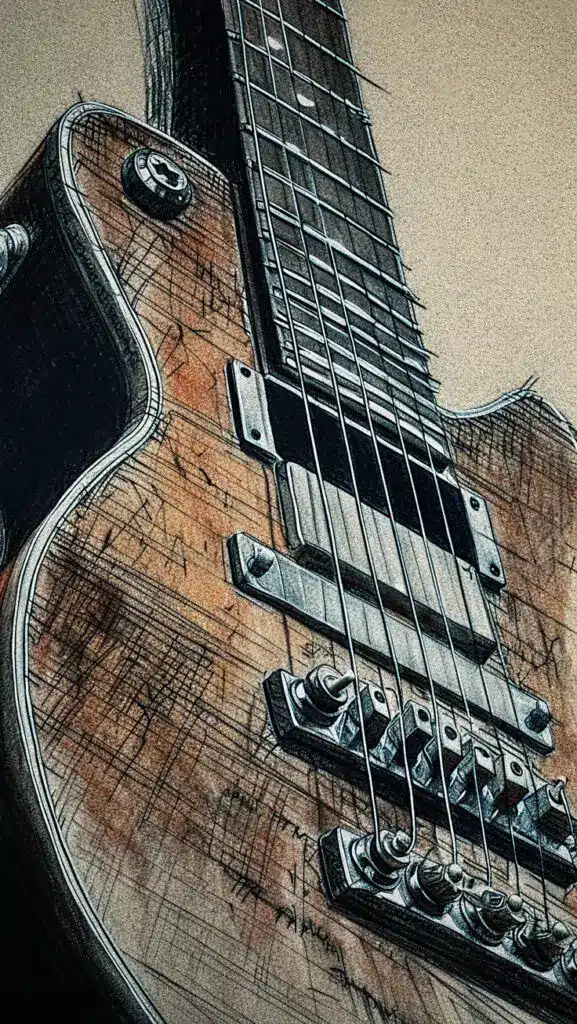
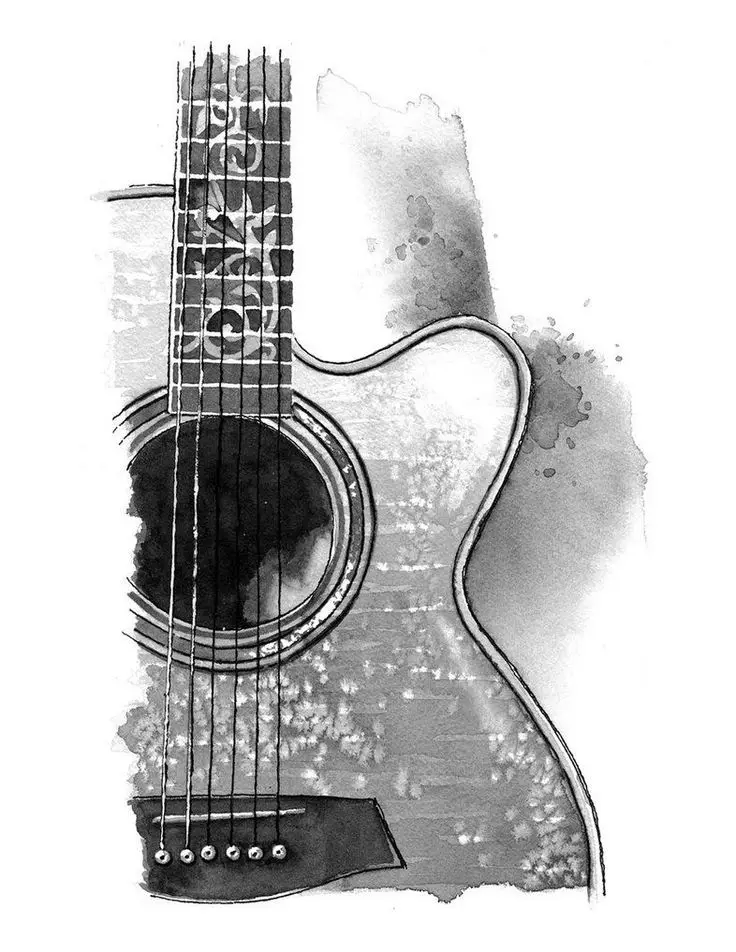
Printable pages are useful when they train the right habit: checking proportion before detail. Use them with simple drawing exercises, then redraw the guitar freehand so you are not only tracing outlines.
- Advantages:
- Structured Learning: Offering step-by-step progression.
- Convenience: Accessible anywhere with a printer.
- Finding Pages:
- Search for websites dedicated to music education or art.
- Look for printable guitar worksheets on online platforms that specialize in educational resources.
Choose practice pages that match the learner’s level. A beginner page should make the body, neck, strings, and bridge easy to read. Save complex hand poses, stage lighting, and detailed wood grain for later.
FAQ
Q: What is the easiest way to draw a guitar for beginners?
A: The easiest way is to start with simple shapes: draw a long rectangle for the neck, an oval or hourglass shape for the body, and a smaller shape for the headstock. After that, add the sound hole, bridge, frets, tuning pegs, and six strings. This keeps the drawing from feeling overwhelming and helps you get the proportions right.
Q: How do you draw a guitar step by step?
A: Start by sketching the guitar body, then add a straight neck and headstock. Next, draw the sound hole in the center of the body, place the bridge near the bottom, and add frets across the neck. Finish by drawing six strings from the headstock to the bridge, then add shading, wood grain, or small details like tuning pegs.
Q: Why is a guitar hard to draw?
A: A guitar can be tricky because it needs balance and symmetry. The body has smooth curves, the neck must stay straight, and the strings need to line up correctly. Beginners often make the body uneven or draw the neck too wide. Using a ruler for the neck and a reference photo makes the process much easier.
Q: What parts of a guitar should I include in a drawing?
A: A basic guitar drawing should include the body, neck, headstock, sound hole, bridge, frets, strings, and tuning pegs. For an acoustic guitar, focus on the round sound hole and wooden body. For an electric guitar, add pickups, knobs, a pickguard, and a more stylized body shape.
Q: What is the best pencil for drawing a guitar?
A: A regular HB pencil is best for the first sketch because it is light and easy to erase. Use a 2B or 4B pencil for darker outlines and shading. A ruler helps with the neck, frets, and strings, while a kneaded eraser is useful for cleaning highlights and fixing small proportion mistakes.
Q: How do you make an electric guitar drawing look different from an acoustic guitar?
A: An electric guitar drawing usually has a thinner solid body, sharper cutaways, pickups, knobs, a bridge, and sometimes a tremolo arm. An acoustic guitar has a hollow body, a central sound hole, and a simpler bridge. Block those differences early so the drawing reads correctly before you add strings or shading.
Q: How many strings should I draw on a guitar?
A: Most standard guitars have six strings, so draw six thin lines running from the headstock down to the bridge. Make sure the strings are evenly spaced and straight. If you are drawing a bass guitar, use four strings instead. Classical, acoustic, and electric guitars usually all have six strings.
Q: What are common mistakes when drawing a guitar?
A: Common mistakes include making the body lopsided, drawing the neck at an angle, spacing the frets unevenly, or forgetting that the strings should connect from the tuning pegs to the bridge. Another mistake is pressing too hard too early. Start with light guidelines, then darken the final lines once the shape looks correct.
Q: How can I make my guitar drawing look more realistic?
A: Add small details like wood grain, shadows under the strings, darker shading inside the sound hole, and highlights along the body curves. Keep the neck straight, make the frets evenly spaced, and vary your line thickness. Even simple shading with a 2B pencil can make a beginner guitar sketch look more polished.
- 6.6Kshares
- Facebook0
- Pinterest6.6K
- Twitter3
- Reddit0