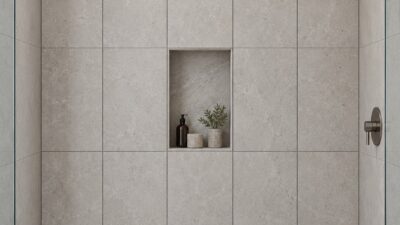
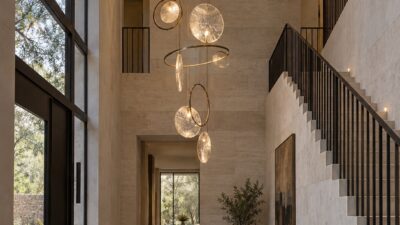
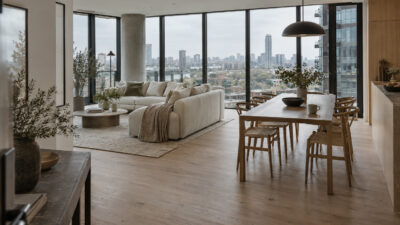
You’ve got the perfect layout. The lighting is dialed in. But your render still looks like a video game from 2010.
The problem isn’t your software. It’s your textures.
I see this constantly — talented designers who understand space but treat materials as an afterthought. They slap on generic wood, add some grey stone, throw in white walls, and wonder why the result feels lifeless.
- The Big 5 Material Categories (Quick Reference)
- How Materials React to Light (The Behavior Guide)
- The Pairing Principles (What Goes With What)
- Warm vs Cool — The Emotional Temperature of Textures
- Scale and Proportion — Why Texture Size Matters
- 5 Texture Mistakes That Kill Your Renders
- FAQ: Interior Design Textures Questions Answered
- Conclusion
Here’s what separates amateur from professional: texture literacy. Knowing not just what materials exist, but how they behave with light, how they interact with each other, and what emotional response they trigger.
This matters even more in 2026. AI tools like Midjourney made everyone capable of generating interior images. But understanding which marble, which oak finish, and why they work together — that’s what makes results feel intentional.
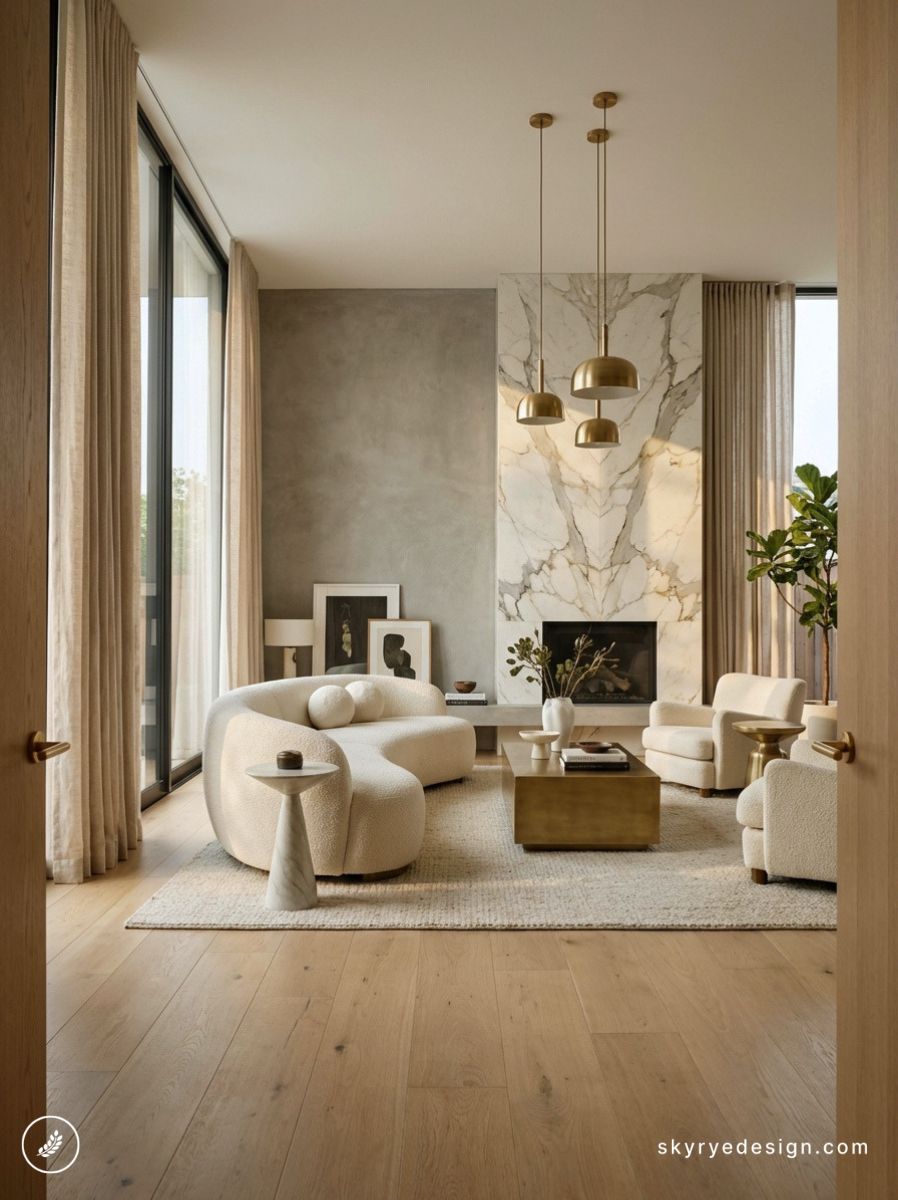
This is your reference sheet. The combinations that work, the mistakes to avoid, and the principles that make any material palette feel designed.
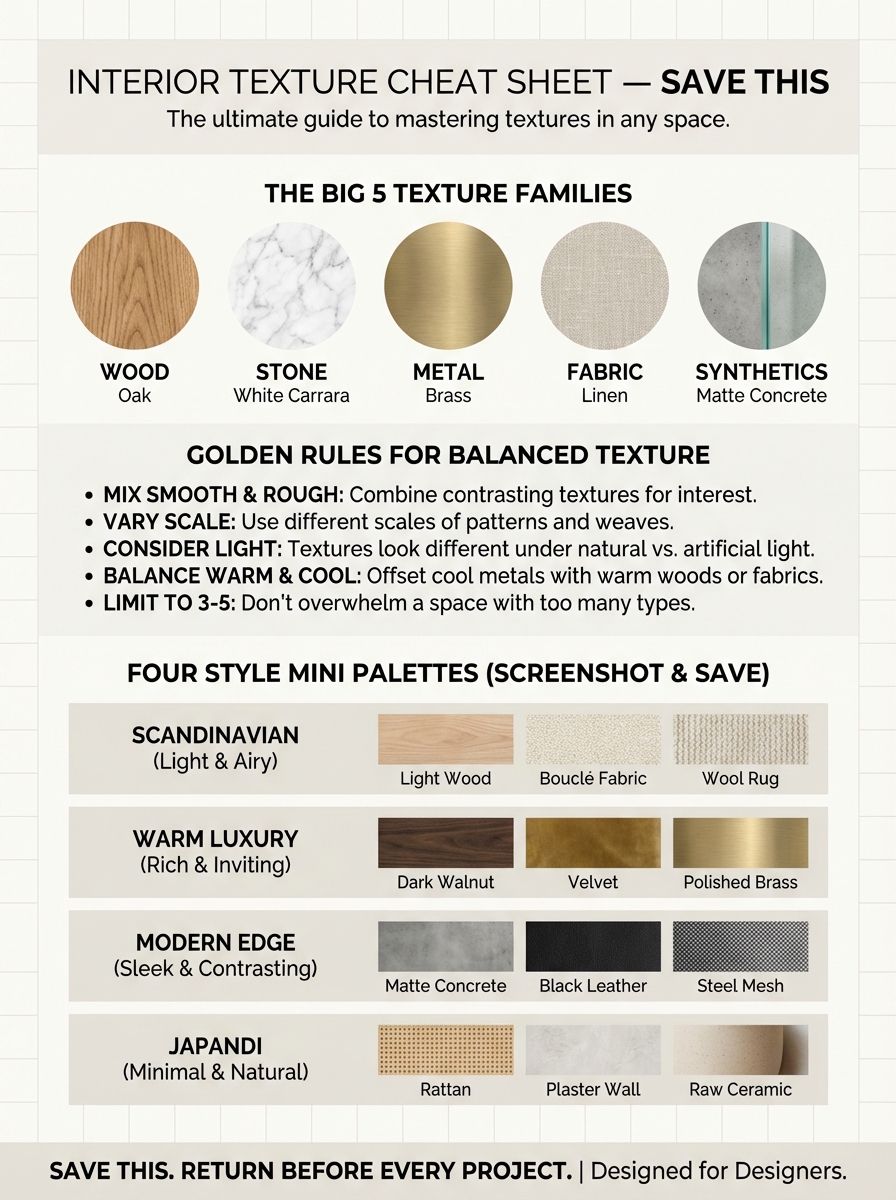
The Big 5 Material Categories (Quick Reference)
Every interior builds from five material families. Master these, and you can decode what’s working in any space.
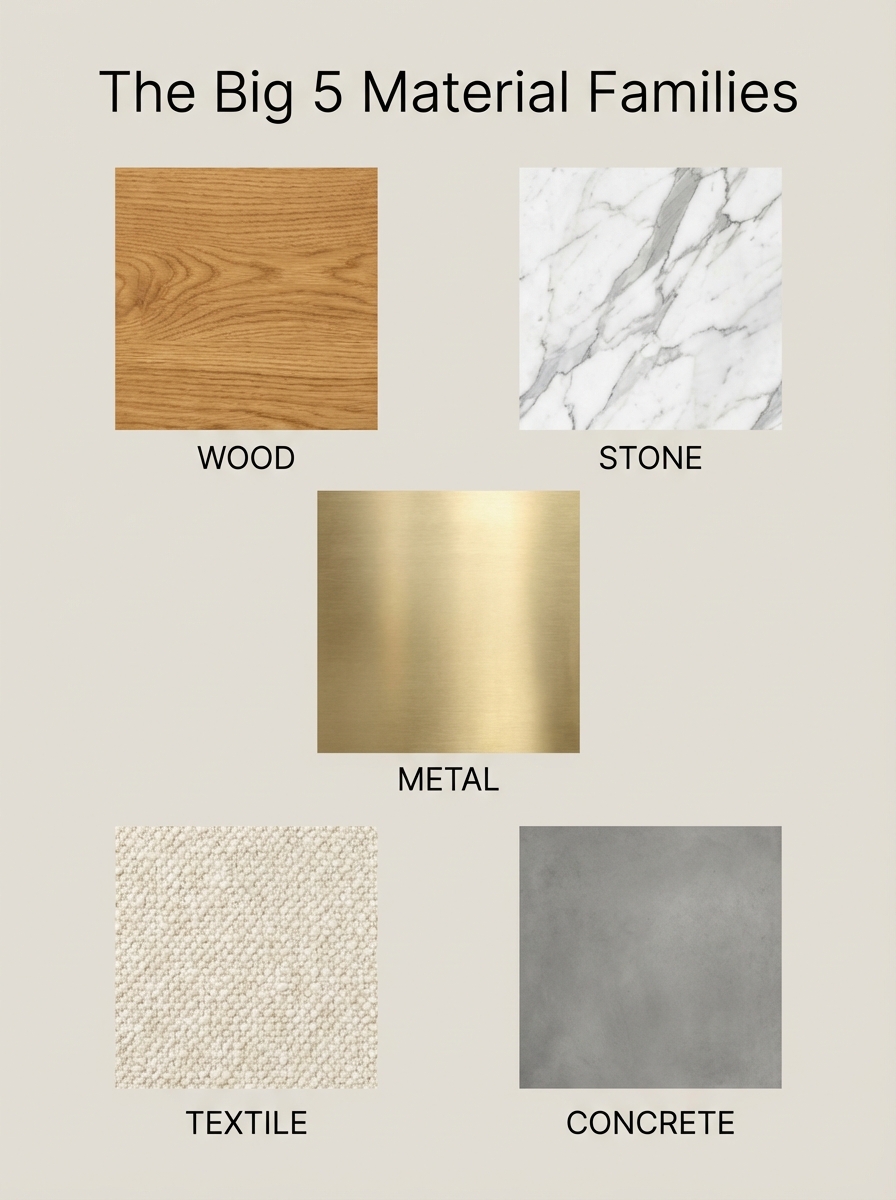
Wood — The Universal Anchor
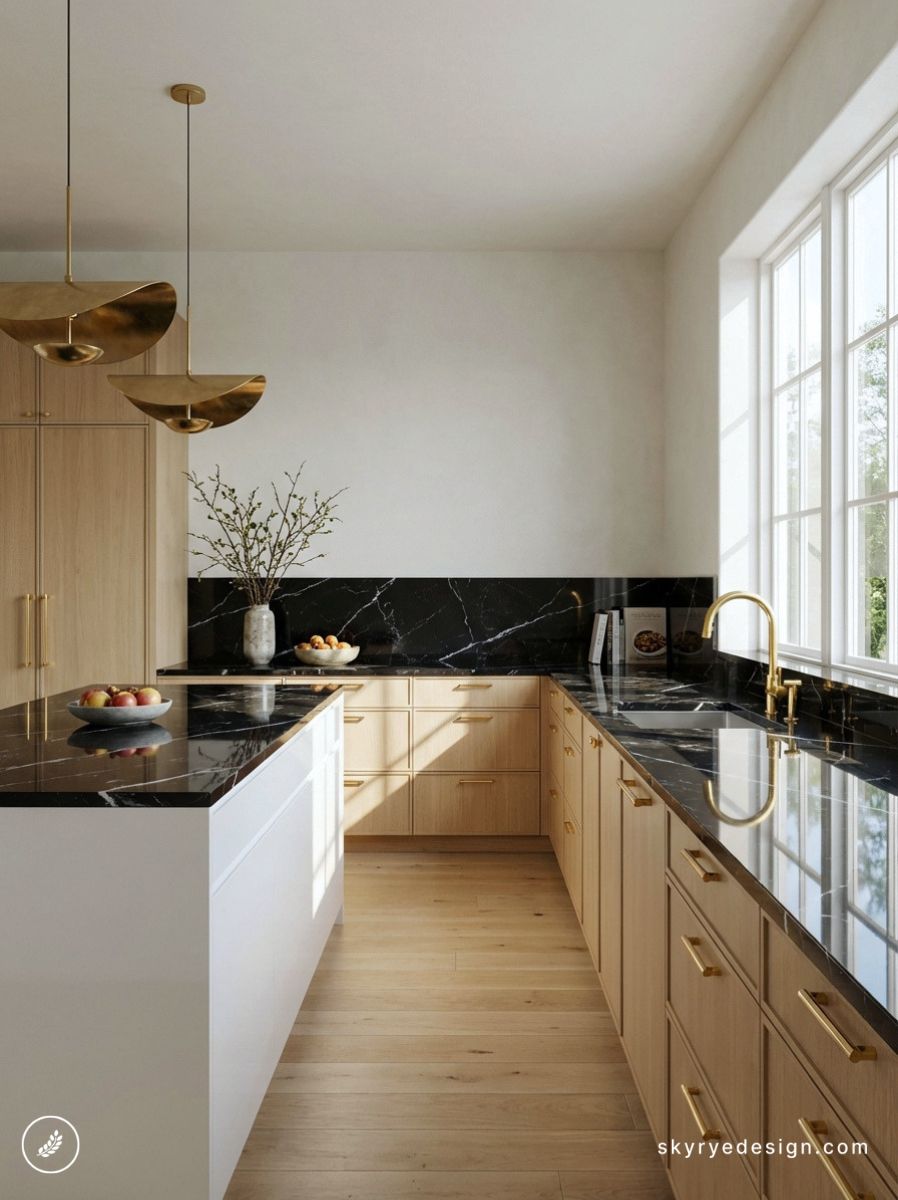
Wood goes with everything. Oak reads Scandinavian. Walnut feels mid-century. Teak says heritage. Grain direction matters: horizontal calms, vertical adds height. Finish changes everything — raw feels casual, satin says polished, high gloss reads formal.
Stone — The Statement Maker
Stone commands attention. Calacatta marble with bold veining makes statements. Carrara plays softer. Limestone feels warmer. Slate reads moody. Critical rule: busy patterns need quiet neighbors. Let stone star or support — never compete.
Metal — The Modern Edge
Metal bounces light into dead corners. Brass and copper run warm. Steel and chrome run cool. Black steel reads neutral. Finish matters enormously: polished reflects like mirror, brushed softens to glow. Small doses = sophistication. Too much = cold.
Fabric — The Comfort Layer
Fabric absorbs sound, softens light, signals “this space is for humans.” Velvet reads luxury. Linen says relaxed. Bouclé adds texture. Every room needs something soft — without it, spaces feel like showrooms.
A wedding table is a useful small-scale test for texture: linen, porcelain, glass, metal, and flowers all sit close together. These linen and porcelain table styling notes show how to keep that mix elegant instead of busy.
Synthetics & Composites
Concrete, plaster, resin, glass, ceramics. Often “neutral” but carry strong character. Textured plaster walls (Tadelakt, lime wash) are huge in 2026. Glass provides transparency plus reflection — complex light behavior no other material offers.
How Materials React to Light (The Behavior Guide)
Same marble, different lighting, completely different feeling. Understanding light behavior is where renders come alive.
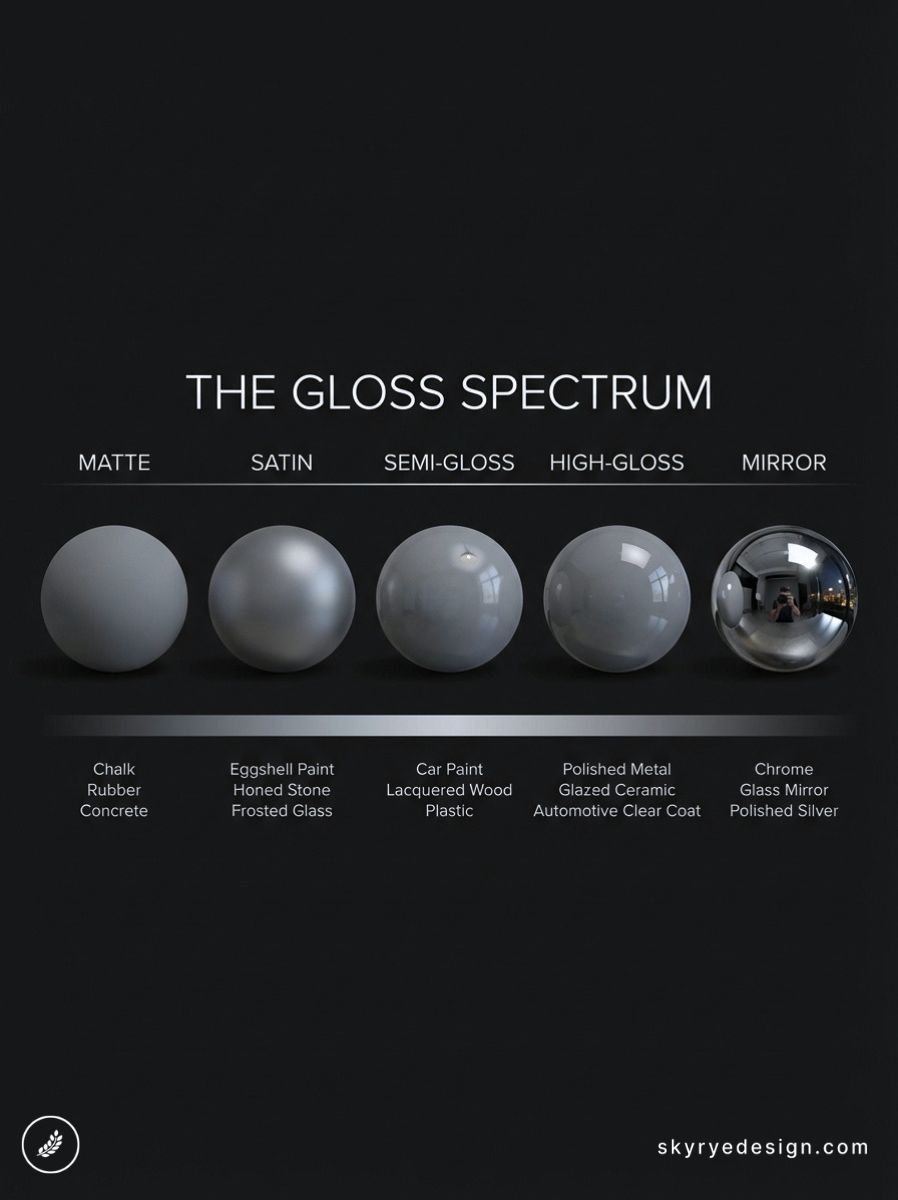
The Gloss Spectrum
Matte (0-10%): Light scatters. Feels soft, quiet. Raw wood, honed stone, chalk paint.
Satin (10-35%): Subtle sheen. Most versatile zone. Sealed wood, brushed metal, eggshell paint.
Semi-gloss (35-70%): Noticeable reflection. Reads “finished.” Lacquered surfaces, polished terrazzo.
High gloss (70-100%): Mirror-like. Dramatic but unforgiving. Polished marble, chrome, glass.
The mistake: Every surface at same gloss level. All matte = flat. All glossy = cold. Real spaces have rhythm — matte walls, satin floors, gloss accents.
Reflective vs Absorptive
Reflective materials (metal, glass, polished stone) bounce light, make rooms feel larger. Absorptive materials (fabric, matte wood, concrete) soak light, create cozier pockets. Balance is essential — all reflective feels like a jewelry store, all absorptive feels flat.
Lighting Conditions Change Character
North light makes warm materials glow. Direct sunlight reveals texture depth. Warm artificial light shifts cool materials neutral. Rendering tip: Test materials under multiple lighting conditions before committing.
The Pairing Principles (What Goes With What)
This is the “cheat” part of your cheat sheet.
The Rule of Three
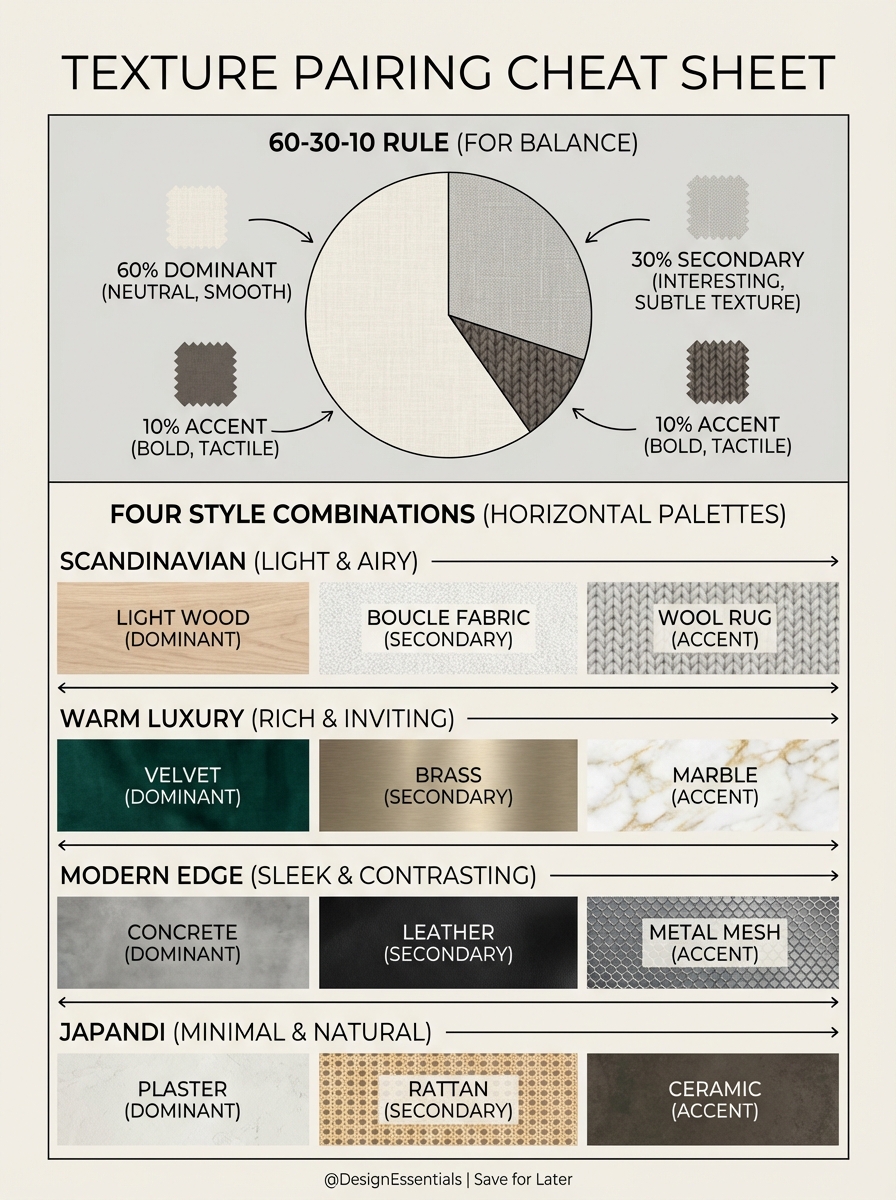
Limit major materials to three per space. 60% dominant (floors, walls), 30% secondary (furniture, counters), 10% accent (fixtures, hardware). More than three = visual chaos. Fewer = potentially boring.
Example: Oak flooring (60%) + white plaster walls (30%) + brass fixtures (10%).
Temperature Matching
Warm + warm: Cozy, enveloping. Walnut + cognac leather + brass.
Cool + cool: Crisp, modern. White oak + Carrara marble + chrome.
Warm + cool: Balanced, sophisticated. The interplay keeps eyes moving.
Avoid: Fighting temperatures without intention.
Texture Contrast Creates Interest
Smooth + rough. Shiny + matte. Hard + soft. Contrast makes spaces alive. Flat renders happen when everything shares same texture level.
Fail-Safe Combinations
Scandinavian Calm: Light oak + white plaster + linen + black steel accents.
Warm Luxury: Walnut + Calacatta marble + brass + velvet.
Modern Edge: Concrete + black steel + tan leather + warm wood accent.
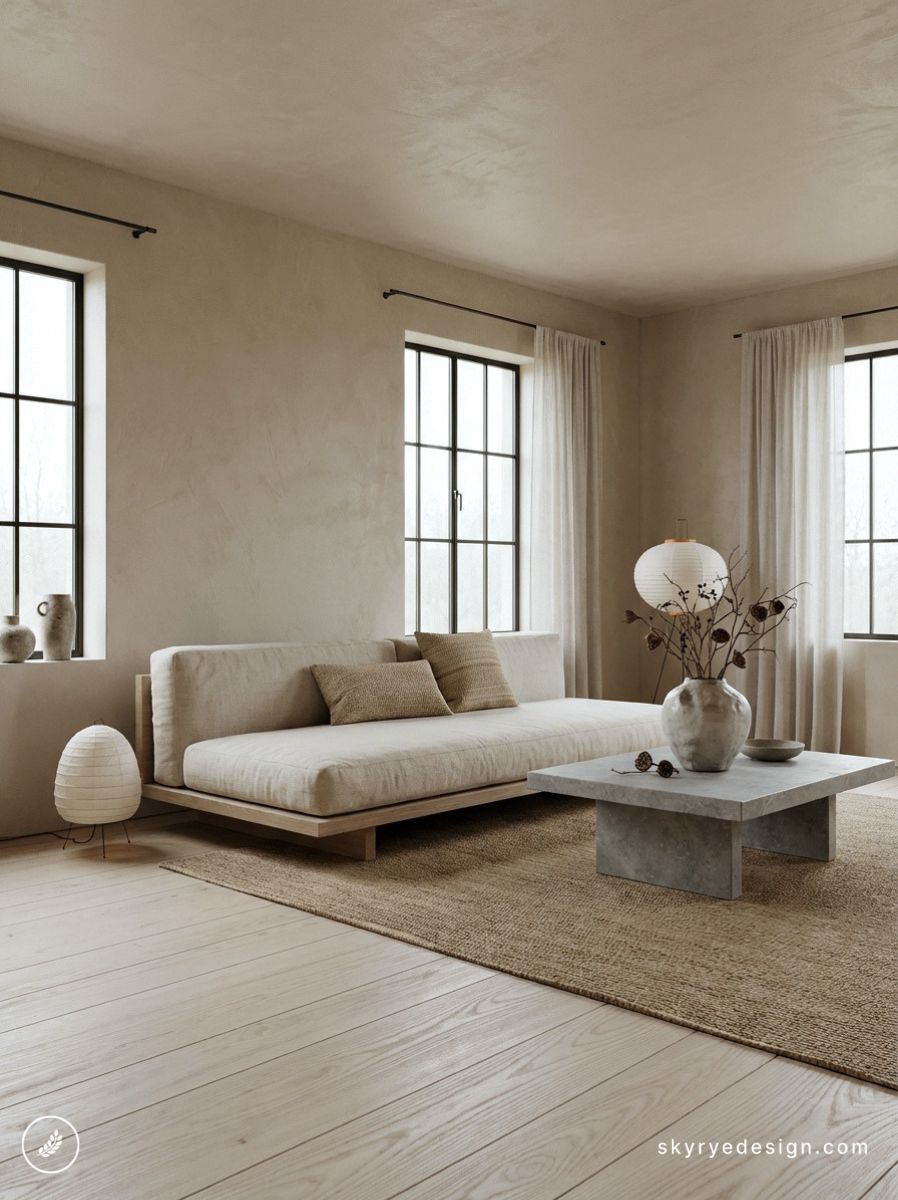
Japandi: Raw ash + lime plaster + stone + undyed linen.
What to Never Pair
Multiple busy patterns competing. All high-gloss everything. Competing warm woods (oak + cherry + mahogany). Mixed metal chaos without intention.
Warm vs Cool — The Emotional Temperature of Textures
Rooms feel “off” when temperature is unintentional.
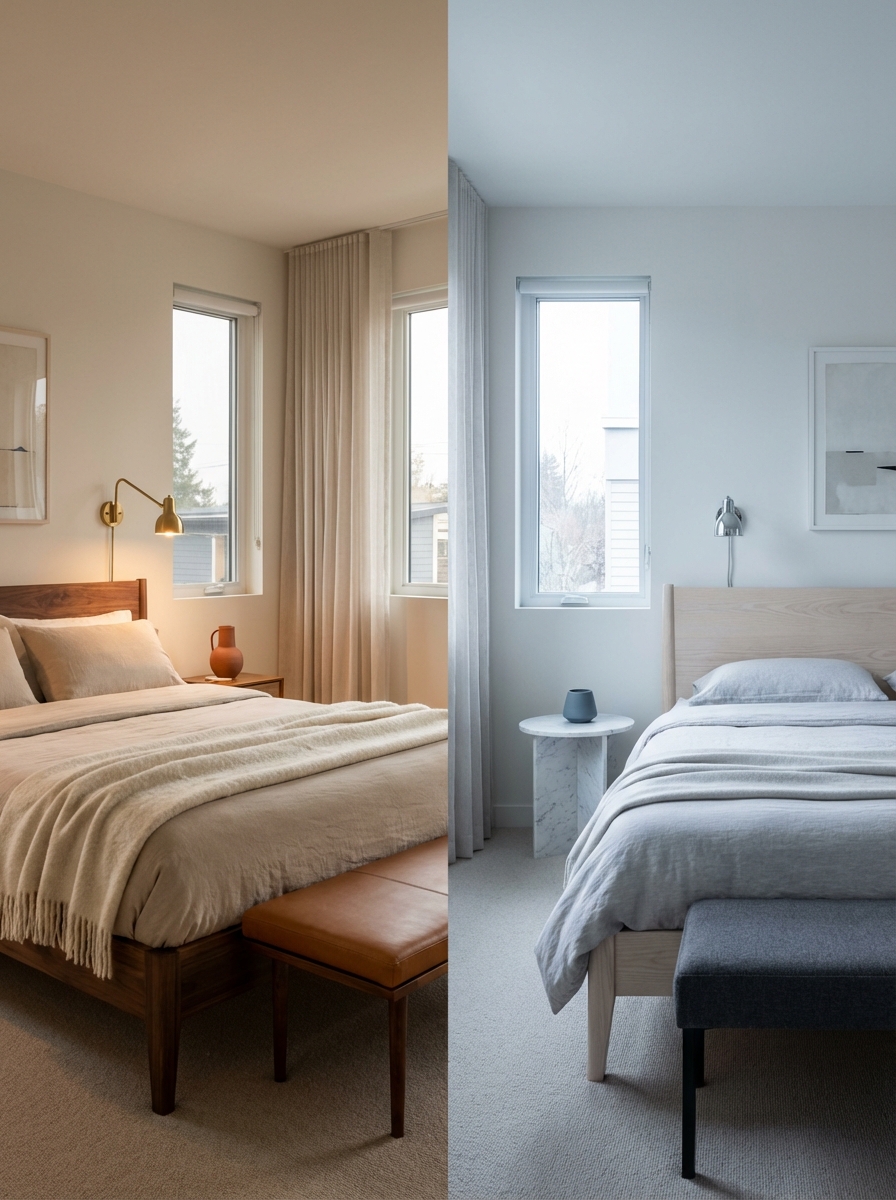
Warm Materials (Inviting, Cozy)
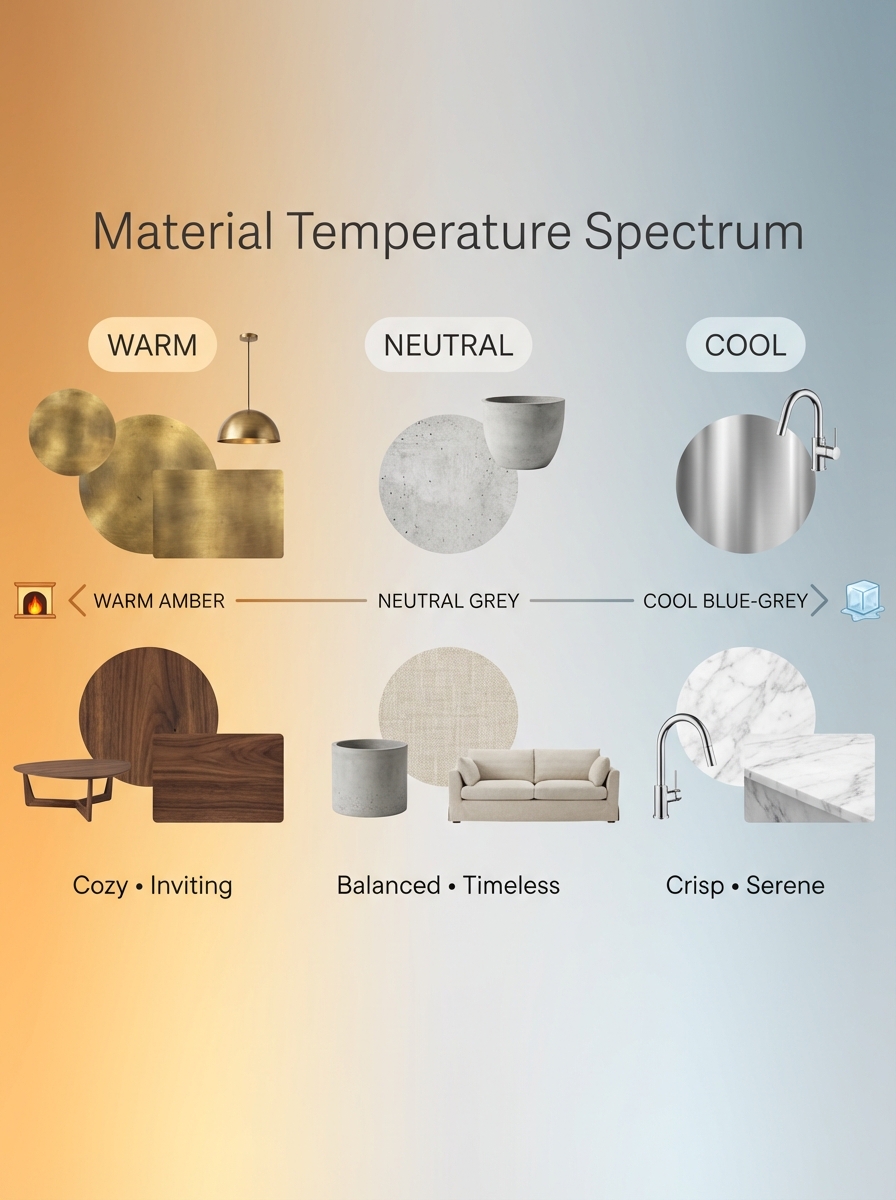
Woods: Walnut, honey oak, teak, cherry. Metals: Brass, copper, bronze. Fabrics: Velvet, wool, cognac leather. Stones: Travertine, terracotta, warm limestone.
Best for: Living rooms, bedrooms, restaurants — anywhere people should linger.
Cool Materials (Crisp, Sophisticated)
Woods: Ash, grey-washed oak, bleached walnut. Metals: Steel, chrome, nickel. Fabrics: Linen, light cotton, grey leather. Stones: Carrara marble, bluestone, slate.
Best for: Bathrooms, offices, galleries — clarity over coziness.
Neutral Materials (Bridge Builders)
Concrete, white plaster, black steel, clear glass. Take temperature from neighbors. Use to bridge warm and cool elements.
The Balance
All warm = heavy, dated. All cool = sterile. Sweet spot: Dominant temperature (70-80%) plus accent from opposite (20-30%). Warm room + cool marble table. Cool bathroom + warm wood vanity.
Scale and Proportion — Why Texture Size Matters
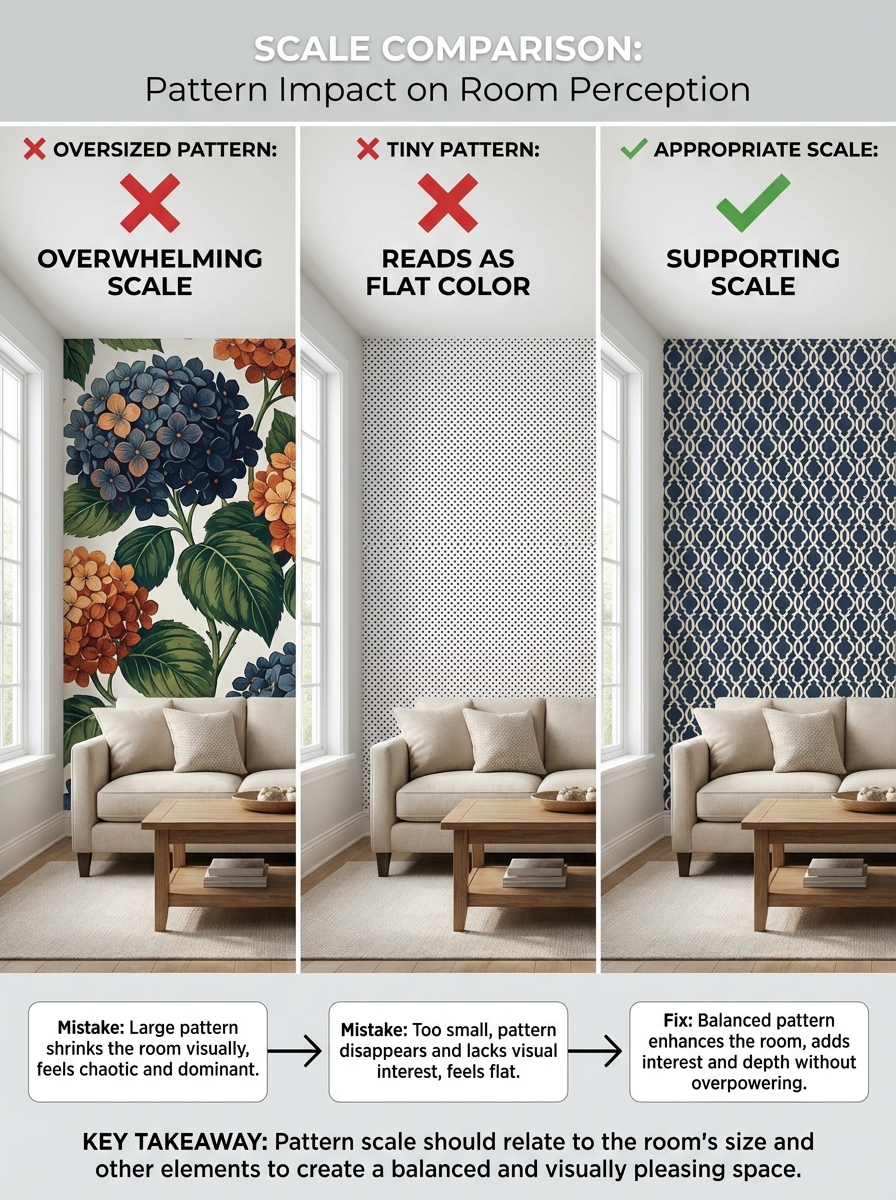
Scale is the silent killer of otherwise good material work.
Match Texture to Room
Large patterns in small rooms overwhelm. Small patterns in large rooms disappear. Principle: Pattern complexity scales with space volume.
Plank Width and Tile Size
Wide planks (8″+): Fewer seams, more spacious feel, modern read.
Narrow planks (3-5″): More traditional, can make small spaces feel busier.
Large format tiles: Minimal grout lines, cleaner, bigger feeling.
Small tiles/mosaics: Best as accents, not primary surfaces.
Viewing Distance Matters
Close-up surfaces (backsplash): fine detail works. Room-distance surfaces (floors): only large-scale texture reads. Rendering checkpoint: Check textures at realistic eye level and distance, not zoomed-in viewport.
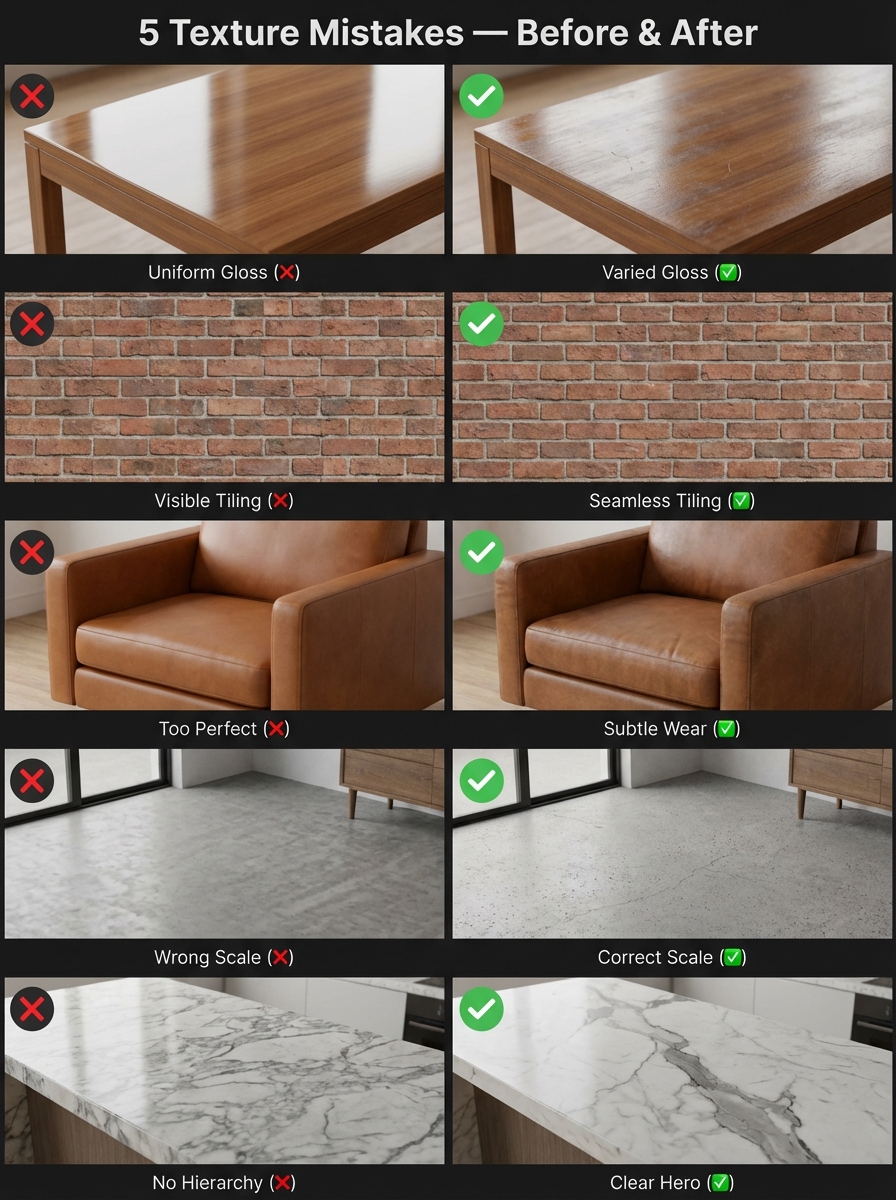
5 Texture Mistakes That Kill Your Renders
Mistake #1 — Uniform Gloss
Every surface identical sheen. Fix: Vary intentionally — matte walls, satin floor, gloss accents.
Mistake #2 — Visible Tiling
Obvious pattern repeats on large surfaces. Fix: Larger texture maps (4K minimum), rotation/variation, blend multiple textures.
Mistake #3 — Too Perfect
No wear, no fingerprints, no history. Fix: Add subtle imperfection — micro-scratches, dust at 5-10% opacity. Real materials show use.
Mistake #4 — Wrong Scale
Wood grain or stone veining at unrealistic size. Fix: Reference actual dimensions. Oak planks = 6-12″ wide. Google before applying.
Mistake #5 — No Hierarchy
Everything competing for attention. Fix: One hero material, supporting materials step back. 60-30-10 rule.
Quick diagnostic:
- Gloss varies across surfaces
- No visible pattern repetition
- Some imperfection present
- Scale matches real-world reference
- Clear material hierarchy
FAQ: Interior Design Textures Questions Answered
Q: How many textures per room?
A: 3-5 major materials. One dominant, one or two secondary, one or two accents. Beyond five = visual noise.
Q: What makes small rooms feel bigger?
A: Light colors, low contrast, large-format tiles, wide planks, reflective surfaces, consistent temperature palette.
Q: How to make renders less “CG”?
A: Add imperfection, vary gloss levels, check scale against physical references, render under multiple lighting conditions.
Q: Best free texture resources?
A: Poly Haven (CC0, up to 8K), Ambient CG, Quixel Megascans (free with Unreal). 2K minimum for backgrounds, 4K for hero surfaces.
Q: Do these rules apply to AI prompts?
A: Yes. Be specific: “honed Calacatta marble” not “marble.” Include finish: “brushed brass” not “gold metal.” Same vocabulary, better results.
Q: What’s trending 2026?
A: Textured plaster walls, fluted surfaces, sustainable materials, dramatic stone veining, wabi-sabi imperfection.
Texture adds shadow and depth, so an interior color palette for living rooms should leave room for woven rugs, matte walls, glossy ceramics, and wood grain.
Conclusion
Great interiors aren’t about expensive materials. They’re about intentional combinations.
The cheat sheet:
- 3-5 materials per space
- 60-30-10 hierarchy
- Mix gloss levels
- Balance warm and cool (70-30)
- Match scale to room and viewing distance
- Add imperfection
Bookmark this. Return before every project. Screenshot the palettes and test them.
Tag @skyryedesign with your results.
If the wall itself is part of your texture plan, pair this cheat sheet with the guide to wallpaper and textured wall finishes; it explains when grasscloth, relief, and tonal pattern work better than flat paint.
Texture matters in small utility zones too: a cozy coffee corner can use wood trays, ceramic mugs, glass jars, and soft lighting to feel warm instead of busy.
- 95shares
- Facebook0
- Pinterest95
- Twitter0
- Reddit0