Every portrait drawing I did in my first two years had the same problem: the hair looked like it had been printed onto the face rather than growing out of the head. I would carefully draw individual strands, add the right dark areas, even lift some highlights with an eraser — and the result was consistently flat, wig-like, pasted-on. It took me a long time to understand that the problem was not insufficient detail. It was the wrong sequence.
- The Foundational Principle: Hair Is a Form, Not a Collection of Lines
- How Highlights Work on Hair: The Band-of-Light Principle
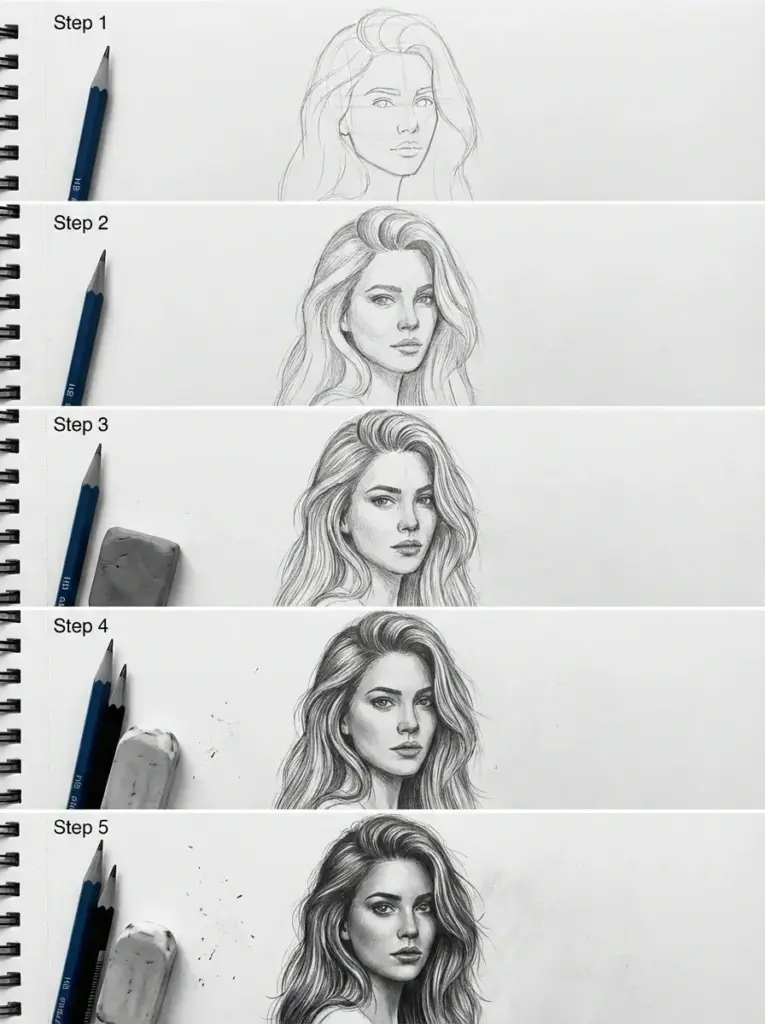
- The Five-Step Hair Drawing Process
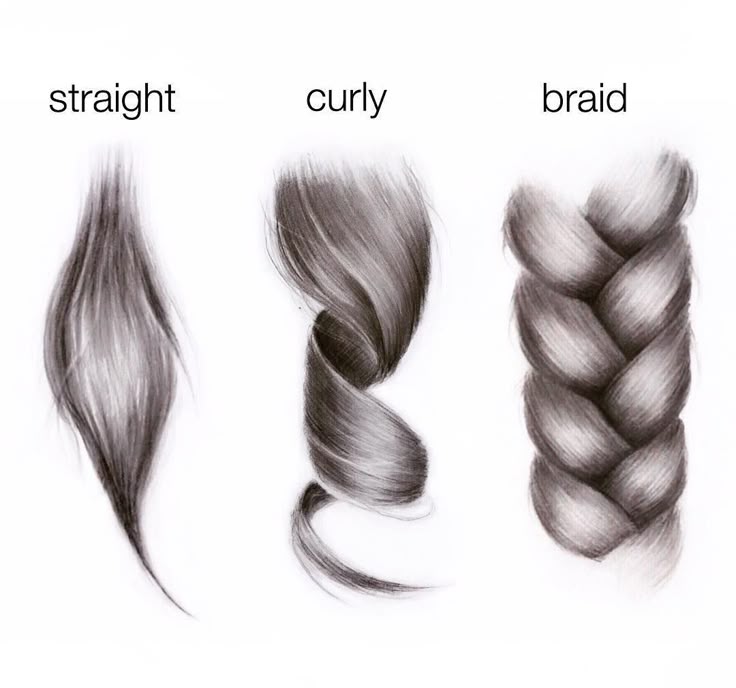
- Four Hair Types: Specific Techniques for Each
- Dark Hair vs Blonde Hair: Two Completely Different Approaches
- Materials for Drawing Hair
- FAQ: How to Draw Hair
I was starting with strands when I should have been starting with mass. The human head has over 100,000 individual hairs, and not one of them is what you should be thinking about when you draw. What you should be thinking about is the volume: the hair as a single three-dimensional form that wraps around a round skull, catches light on its curved surfaces, falls into shadow between layers, and generates highlights that follow the roundness of the head beneath it. Once that volume is established with value, individual strands are a very small finishing detail – not the main event.
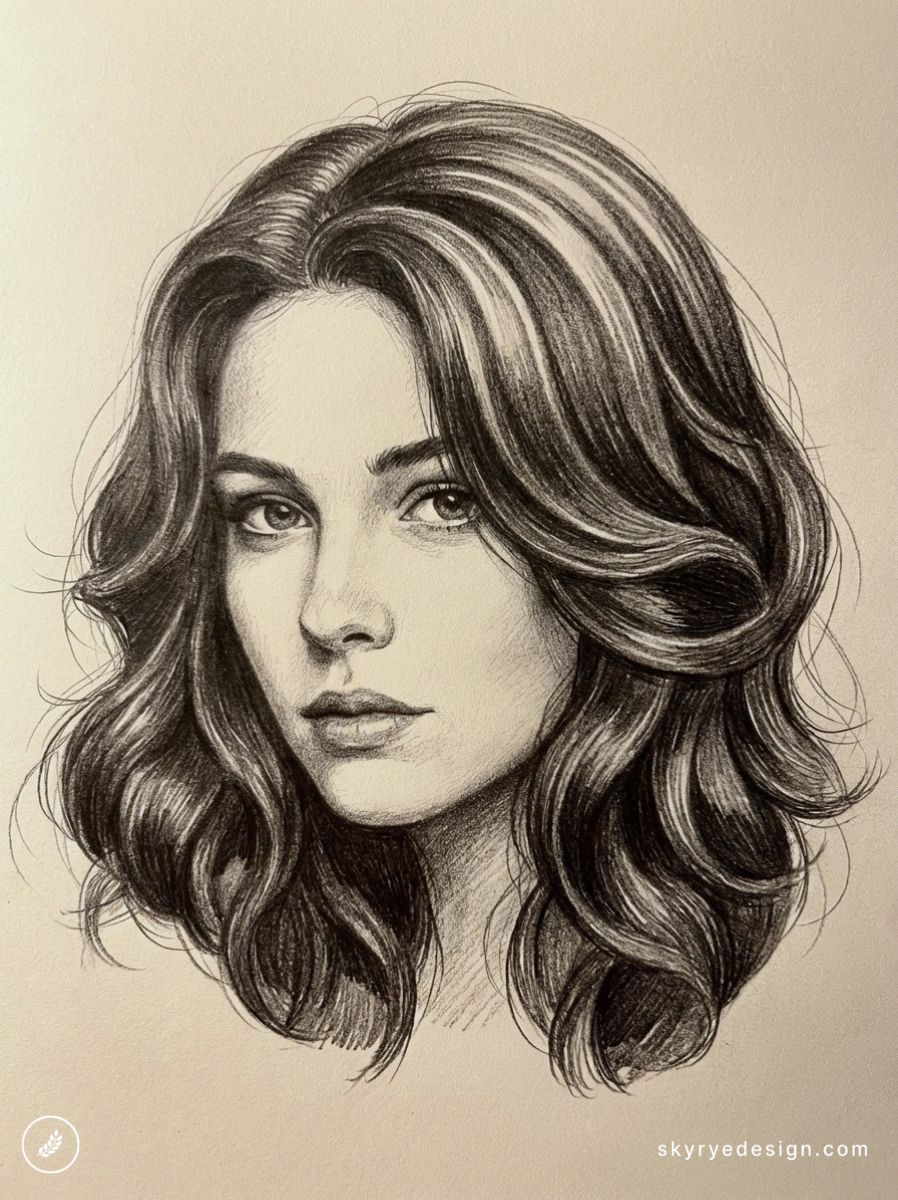
This guide covers hair drawing from this foundational principle outward: why mass comes before strands, how highlights actually work on round forms, the step-by-step construction sequence that works for any hair type, specific guides for straight, wavy, curly, and short hair, and the common errors that make hair look flat or artificial.
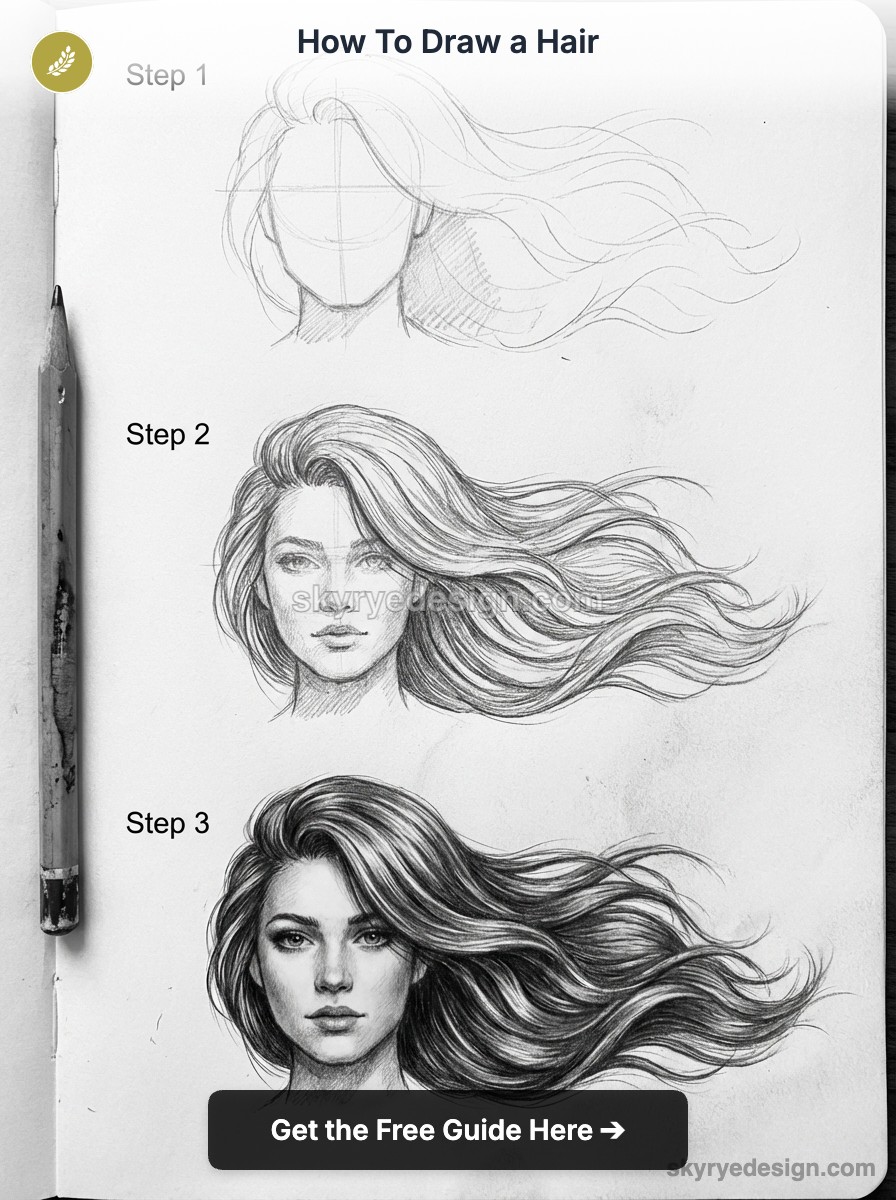
The approach draws on techniques used by professional portrait artists and figure drawing instructors – Stan Prokopenko’s mass-first approach, Lee Hammond’s band-of-light principle, and the negative space method for rendering dark hair that produces depth that direct rendering cannot achieve.
The Foundational Principle: Hair Is a Form, Not a Collection of Lines
The single most common instruction given in hair drawing tutorials is also the most misleading: ‘draw in the direction of hair growth. This instruction is correct at the strand-detail stage but catastrophically wrong if applied from the beginning, because it encourages you to think of hair as a mass of individual lines rather than as a sculptural form with volume, shadow, and highlight. The direction of growth is relevant at step seven. It is irrelevant at step one.
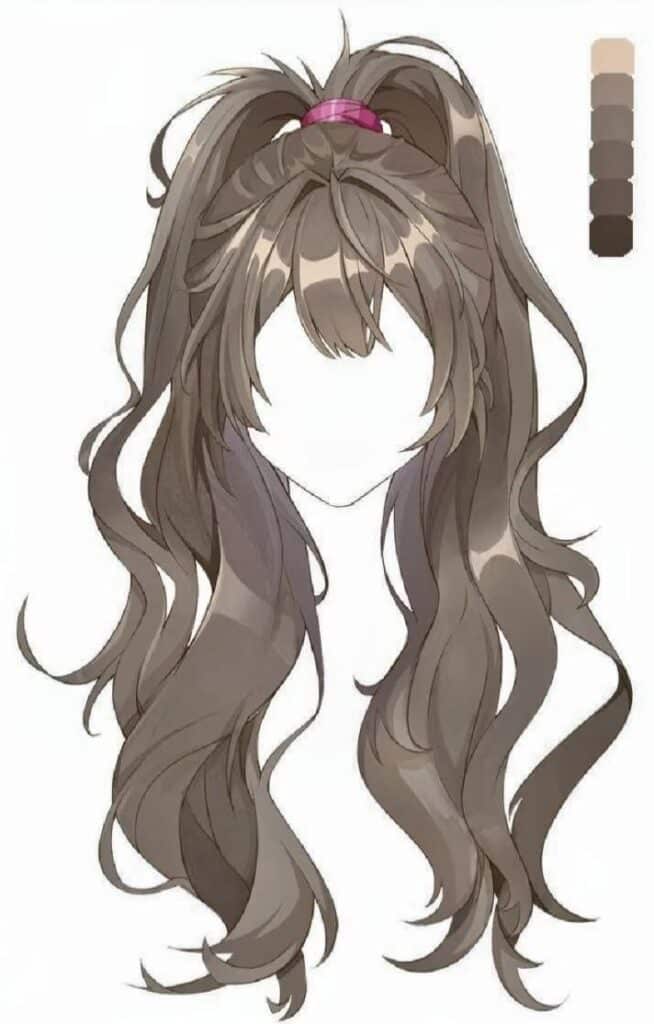
The correct mental model, as instructor Stan Prokopenko articulates in his portrait drawing course, is to think of a lock of hair as a ribbon. A ribbon has width, depth, and curvature. It has a lit surface facing the light source, a shadow surface facing away, and a highlight on its most prominent outward-facing curve. The individual threads that make up the ribbon are visible on close inspection but are not what makes the ribbon look three-dimensional. What makes it three-dimensional is the way light falls across its curved surface.
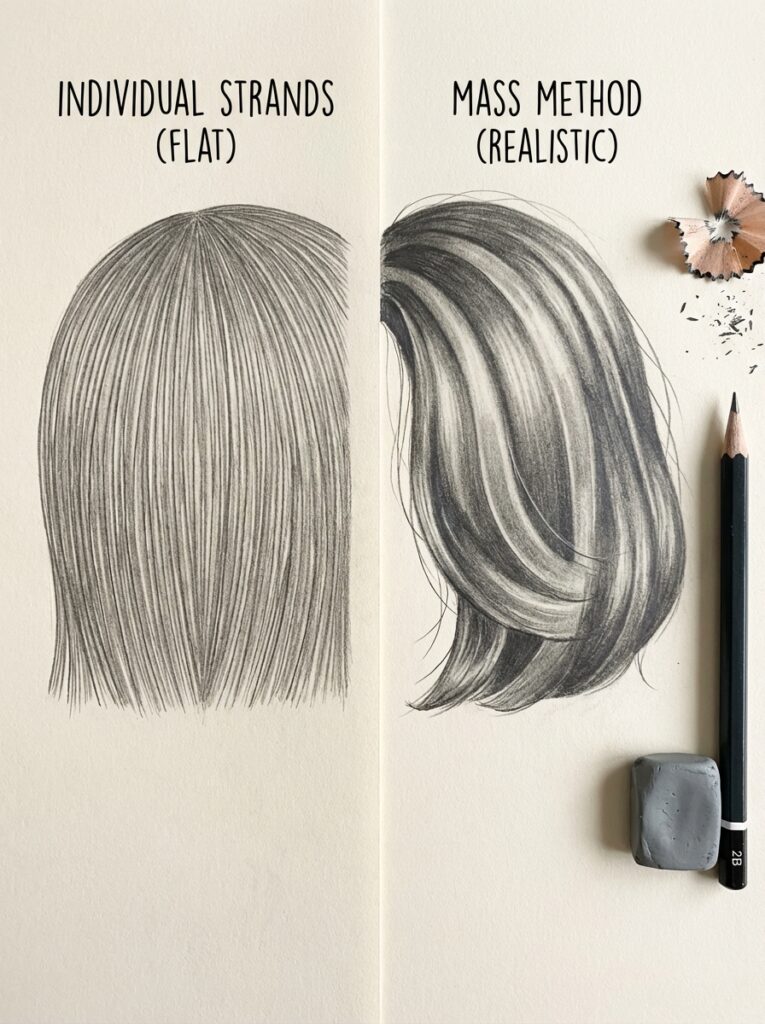
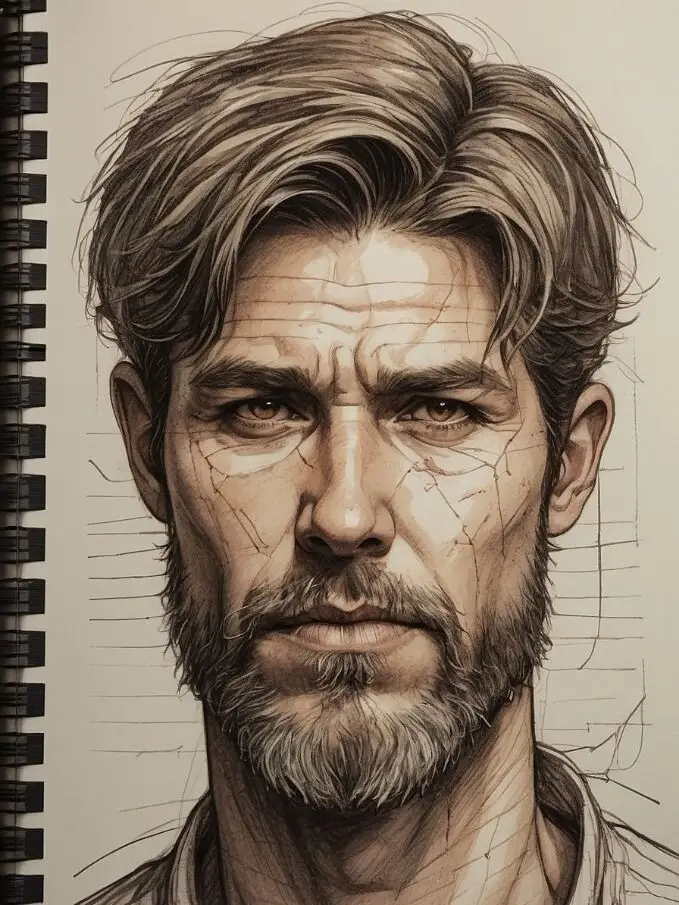
Apply this thinking to hair: before you draw a single hair stroke, the hair mass should read as three-dimensional through value alone. Block in the shadow zones. Identify where the skull’s roundness catches the light and create a curved highlight band there. Add the mid-tones between shadow and highlight. Once that value structure reads correctly, the hair will already look like hair — and the individual strands you add at the end serve to confirm and refine that impression, not to create it.
✏ Drawing note: Before starting any hair drawing, spend two minutes with the reference photograph identifying the hair’s major value zones: where is the deepest shadow (typically under layers, behind ears, at the nape of the neck), where is the main highlight band, and where are the mid-tones? Sketch these three zones as flat shapes on the paper before adding any directional strokes. This value map is the foundation everything else builds on.
How Highlights Work on Hair: The Band-of-Light Principle
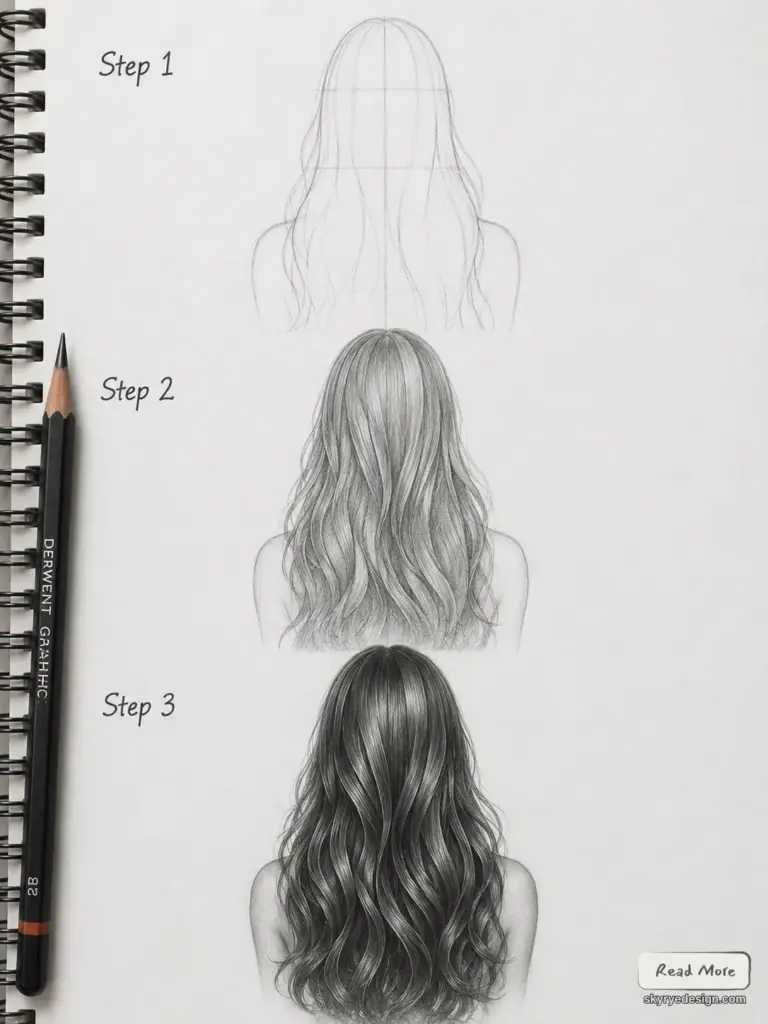
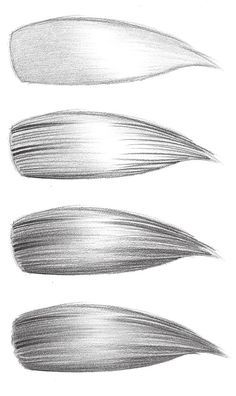
Highlight placement is the single detail that most determines whether a hair drawing reads as three-dimensional or flat, and it is consistently the element that beginners place incorrectly. Artist Lee Hammond calls this the ‘band of light’ — the elongated highlight that appears on hair wherever the surface curves away from direct light. The critical insight: this band must curve with the roundness of the skull beneath the hair, not run as a straight horizontal stripe across the head.
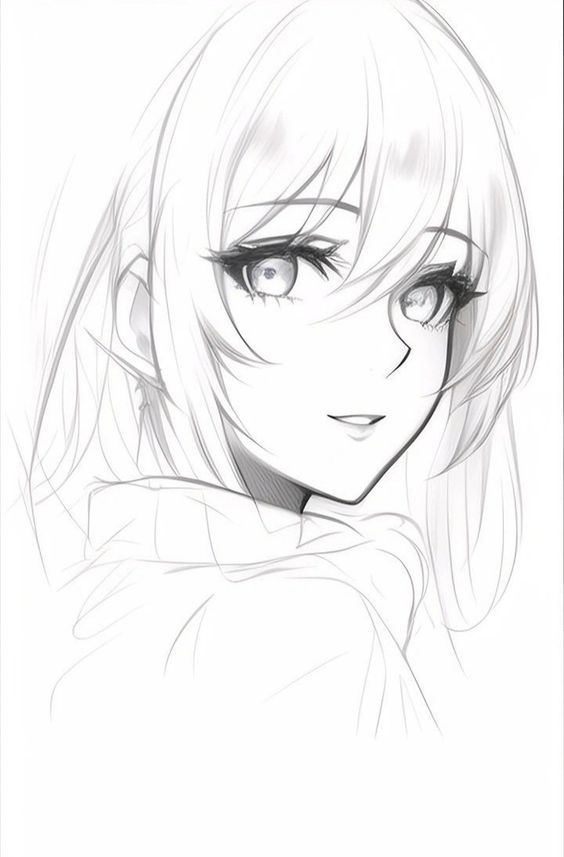
Once the hair mass feels believable, try placing it inside one of these aesthetic anime drawing ideas so the hairstyle reacts to light, weather, movement, and story.
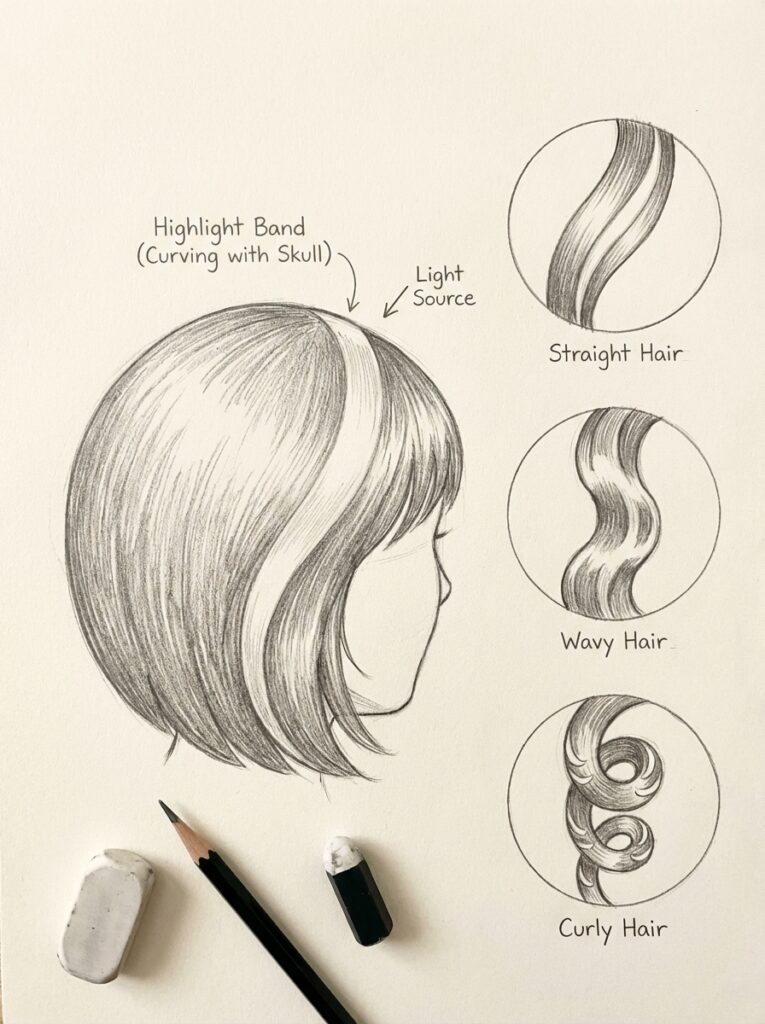
Think of the skull as a sphere. When light hits a sphere from, say, the upper left, the highlight appears on the upper-left surface and the shadow occupies the lower-right. The hair covering that sphere follows the same lighting logic — the highlight appears on the upper-left quadrant of the hair mass and it is curved, not straight, because the surface it sits on is curved. A straight horizontal highlight band tells the viewer that the head is flat. A curved highlight band that follows the dome tells the viewer that there is a round skull underneath.
For a related creative prompt, see How to Draw Ponytails.
Where Highlights Appear by Hair Behaviour
- Straight hair: one long, smooth, gently curved band running over the most prominent part of the head. The highlight is relatively wide and even-edged because straight hair creates a smooth, uninterrupted surface.
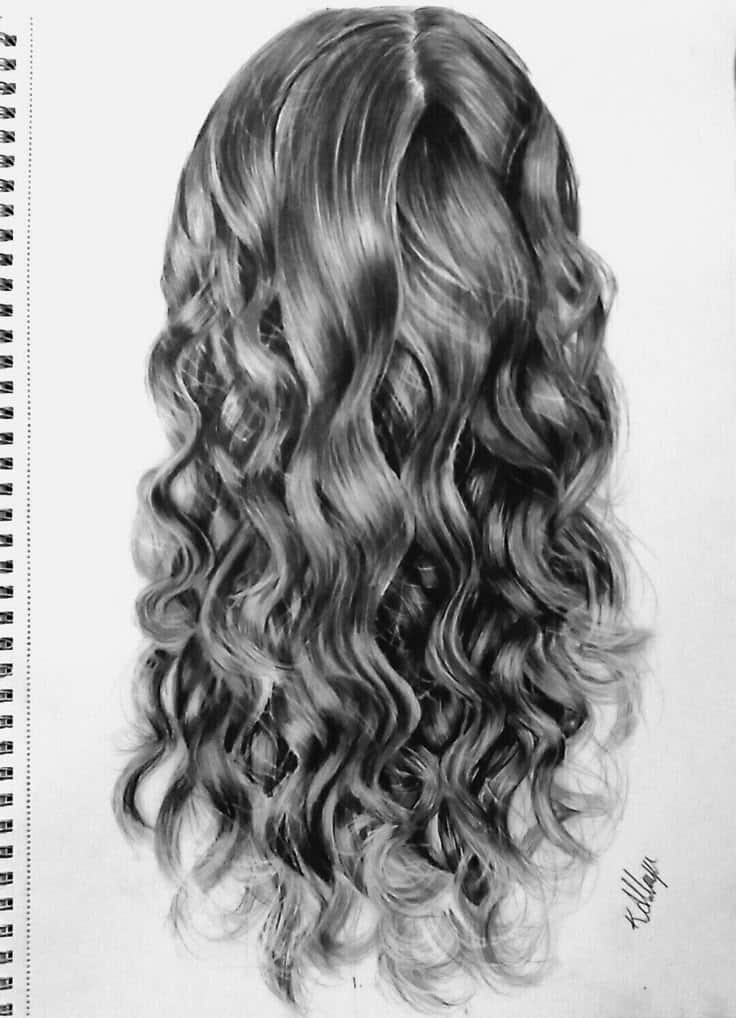
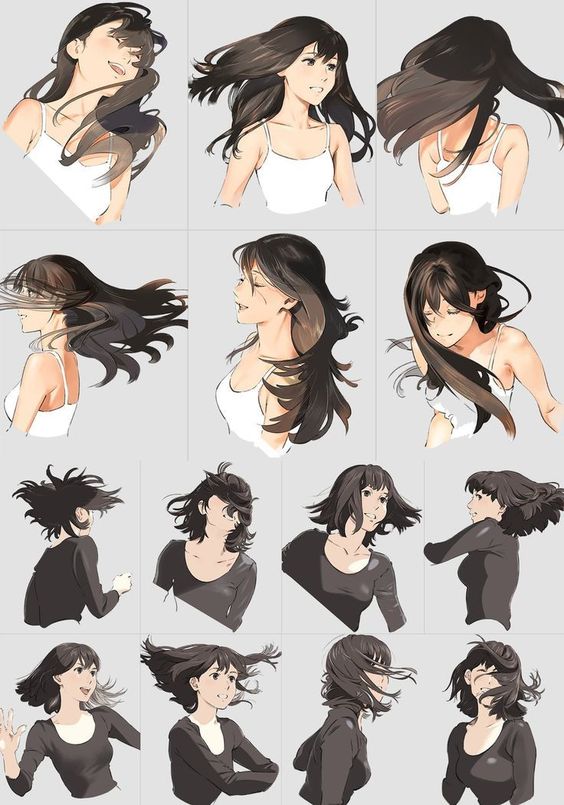
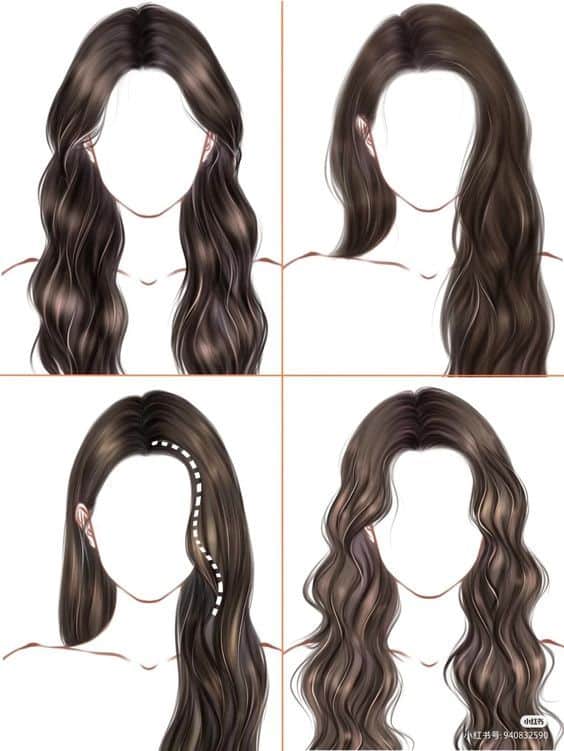
- Wavy hair: the highlight is interrupted by the wave peaks — each crest catches light, each trough falls into shadow. The overall highlight still curves with the skull, but it is broken into smaller sections at each wave.
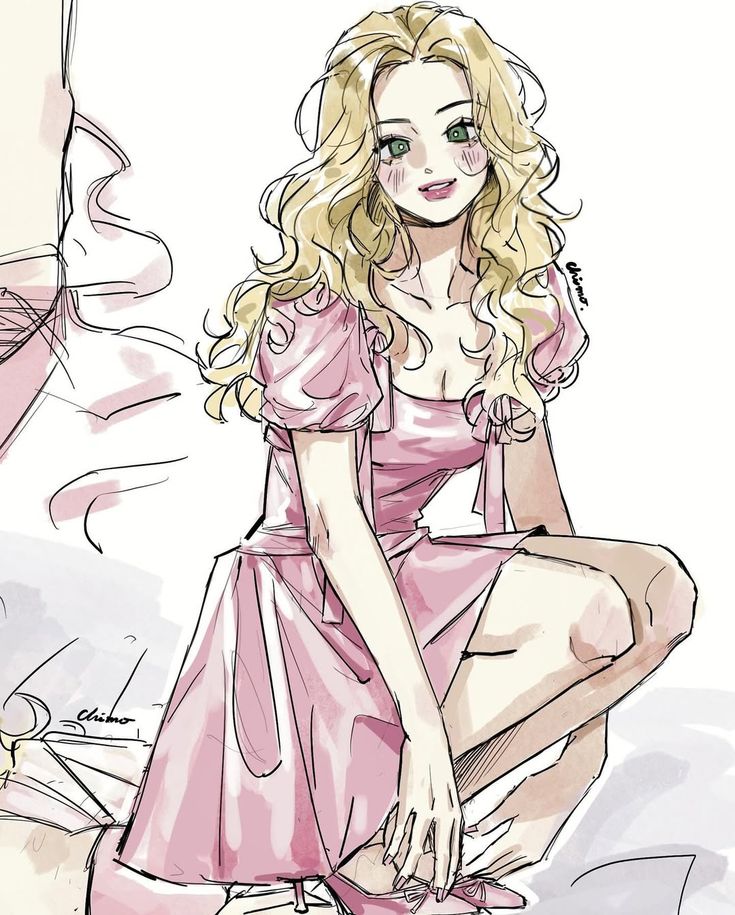
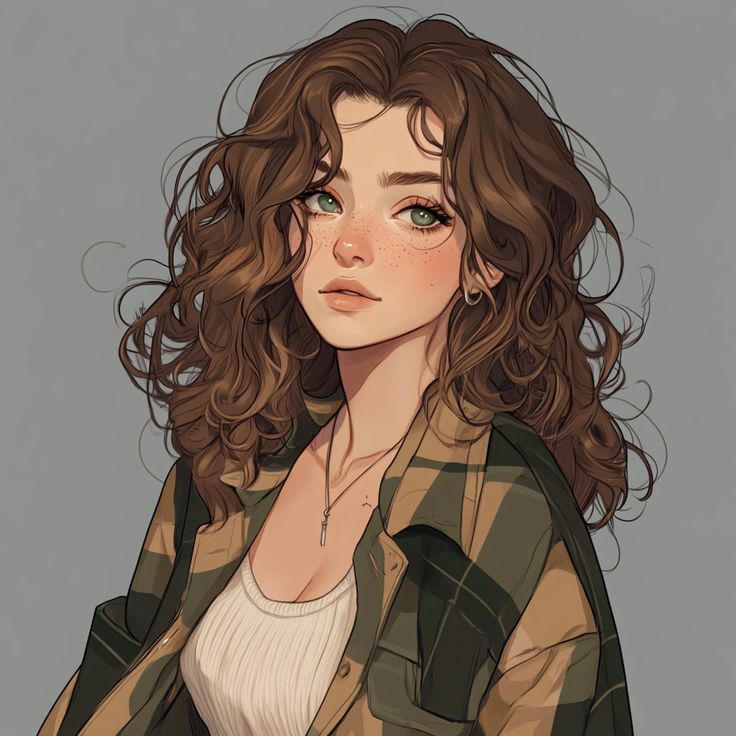
- Curly hair: the highlight appears on the outer, upward-facing surface of each individual curl. Because the curls face in many directions, the highlights are scattered across the hair mass rather than forming one continuous band. They still collectively follow the skull’s roundness.
- Short or cropped hair: the skull shape is most visible in short hair because there is minimal hair volume to create its own form. The highlight follows the skull’s shape very directly — it is the tightest and most clearly skull-following of all hair types.
✏ Drawing note: A kneaded eraser is the highlight tool, not the pencil. Build the full mid-tone and shadow structure of the hair first, then press the kneaded eraser against the highlight zone in a long, curved pulling motion — following the curve of the skull — to lift a band of lighter tone. The eraser lifts graphite to create the highlight rather than leaving it as blank paper from the beginning, which allows you to control the highlight’s shape and softness precisely. Shape the eraser to a flat edge for broad highlights; pull it to a thin ridge for precise highlight lines.
The Five-Step Hair Drawing Process
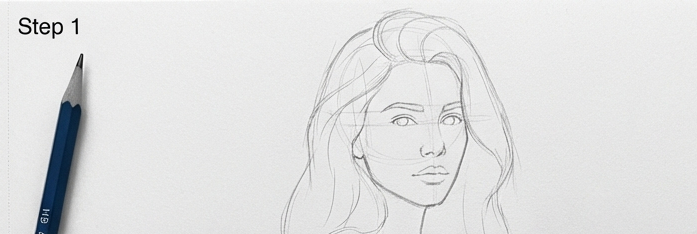
Step 1: Establish the Skull Volume
Lightly sketch the head as a sphere first, confirming its size and position before adding any hair. Hair sits on top of this volume — it does not replace it. The hair’s overall outer silhouette is always larger than the skull because of thickness and volume, but it must appear to be growing from the skull’s surface. Identify the parting point (where the hair originates and divides) and mark it lightly on the skull form.
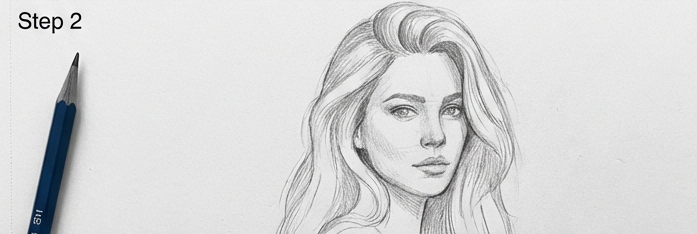
Step 2: Block the Hair Silhouette
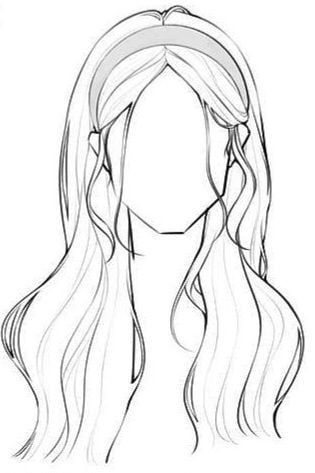
Draw the outer boundary of the hair mass as a single continuous shape. Do not draw individual strands at this stage. Focus on the overall silhouette: where does it sit highest above the skull (the crown, which is usually the fullest point), where does it fall to the shoulders, how wide is it at the sides? The silhouette is the container that all the detail will live inside. For loose or wavy styles, indicate major groupings (a bang section, the main body, separated locks at the sides).
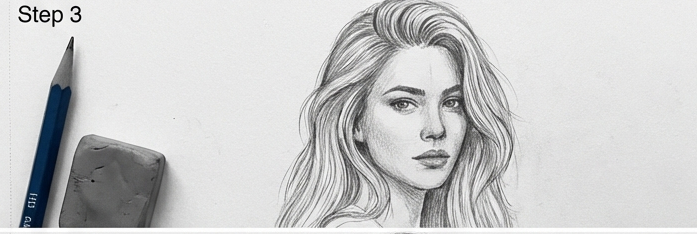
Step 3: Map the Value Zones
Before adding any directional strokes, identify and mark the three major value zones as flat shapes: the highlight band (following the skull’s curve), the mid-tone (the majority of the hair surface), and the shadow areas (under layers, behind ears, at the nape). This map is made with very light HB marks. Getting this value map right is the most important single step in the entire process – the rest of the drawing builds on it.
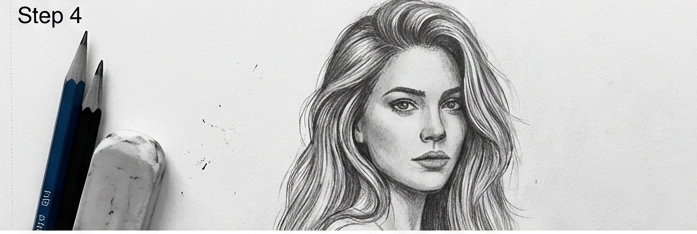
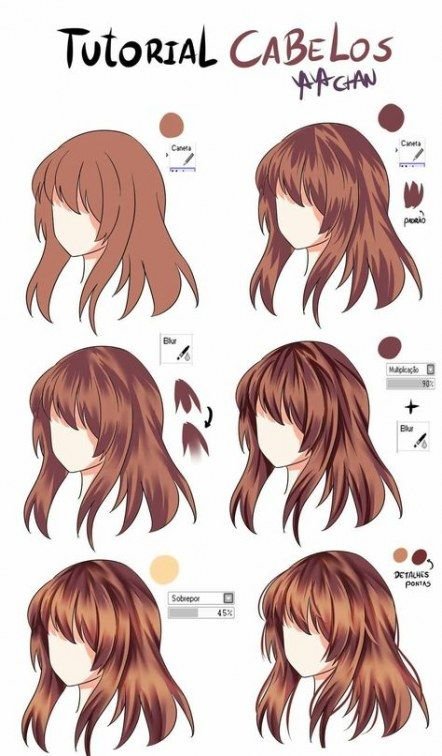
Step 4: Build Tones with Directional Strokes
Apply tones in sequence from lightest to darkest. Start with a light, even HB wash over the entire hair mass (except the highlight zone — leave that as white paper for now). Then build the mid-tones with 2B, using strokes that follow the general direction of hair flow from root to tip. Deepen the shadow areas with 4B-6B, pressing harder and layering multiple passes. Where layers of hair overlap, the receding layer needs to go significantly darker — these overlap shadows are what creates the visual separation between hair groups.
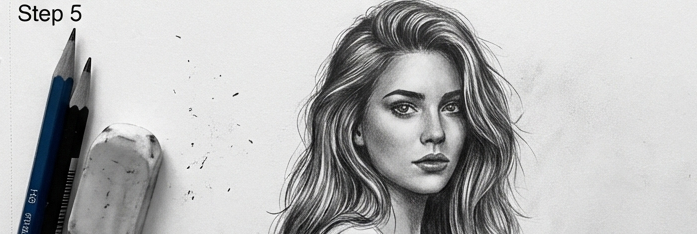
Step 5: Lift Highlights and Add Detail
Use a kneaded eraser to lift the highlight band in a long, curved motion following the skull’s roundness. The lifted highlight should be brightest at its centre and fade gradually at its edges. For wavy or curly hair, lift individual curved highlights for each wave crest or curl outer surface. Once the highlight is established, use a sharp HB or mechanical pencil to add a small number of individual hair strands — only in the highlight areas (where light-coloured strands catch light) and at the outer silhouette edges (where stray hairs soften the boundary between hair and background).
✏ Drawing note: Stray hairs at the silhouette edges are the detail that most transforms a hair drawing from looking drawn to looking real. Use a sharp HB pencil and quick, confident single strokes that start from within the hair mass and extend beyond the outer silhouette into the background. These strokes should be lighter and finer at the tip (as a real hair would be). Draw no more than five to eight per area — the goal is softness at the edge, not a corona of lines.
Four Hair Types: Specific Techniques for Each
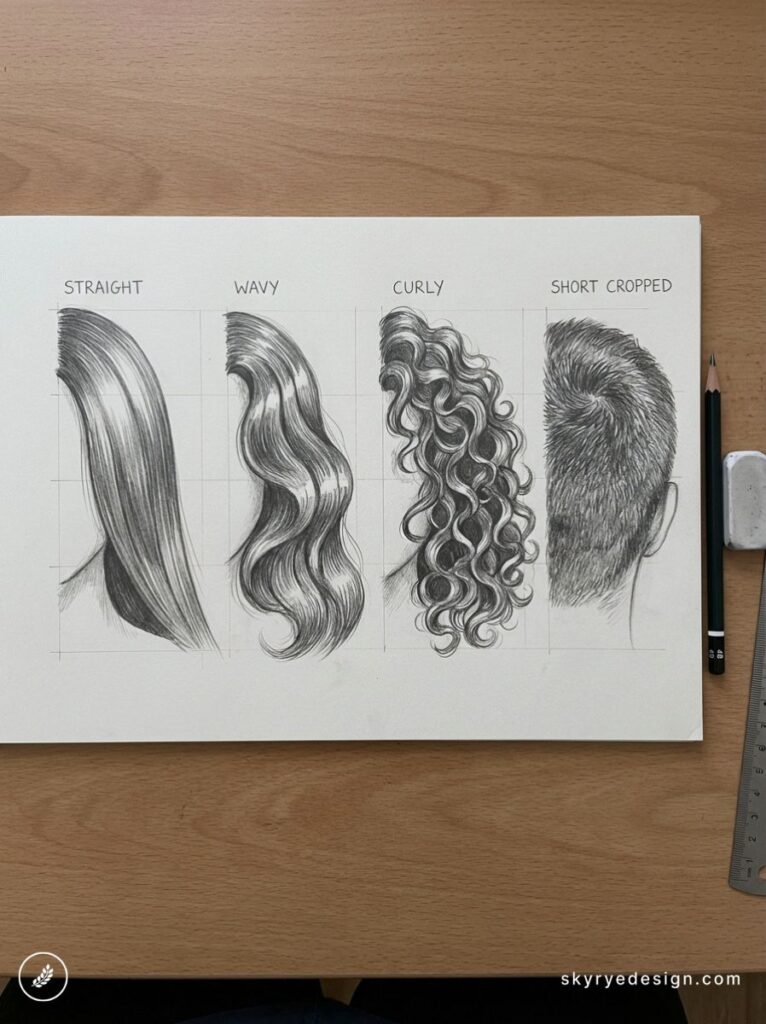
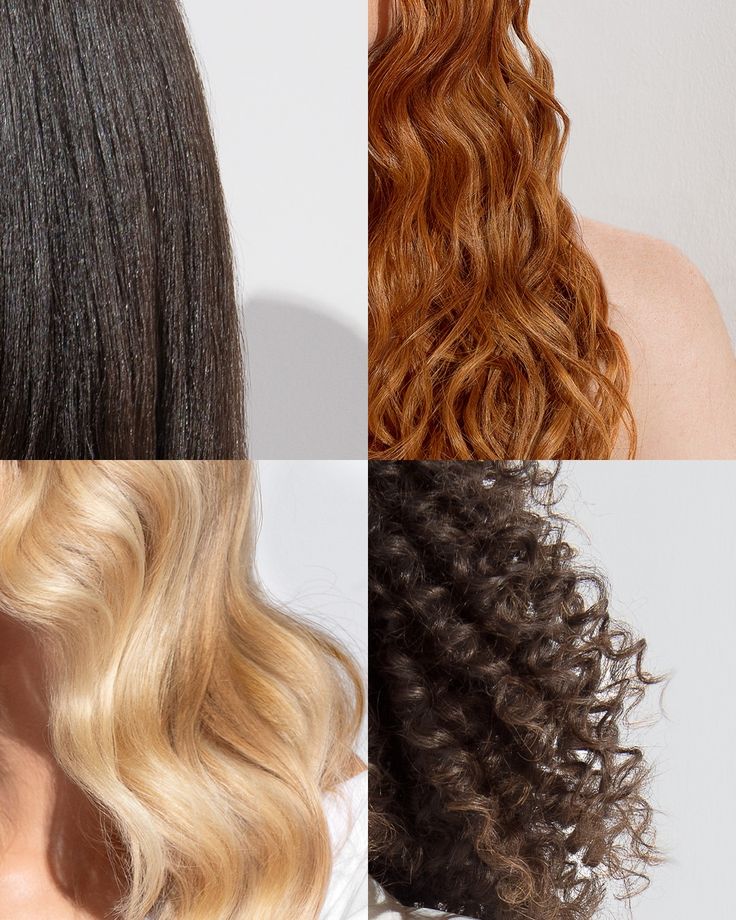
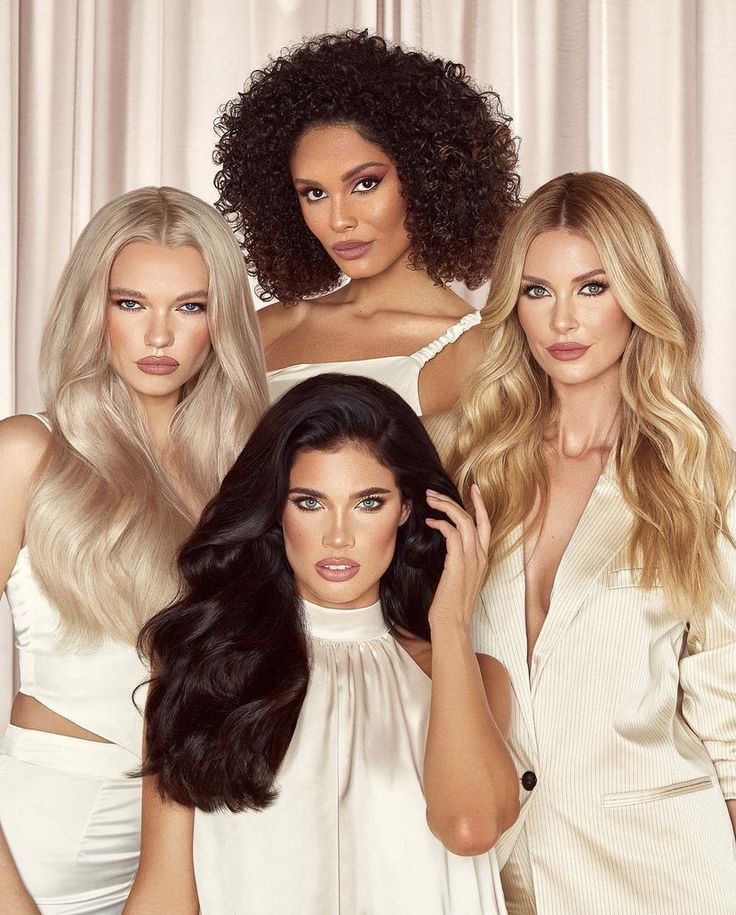
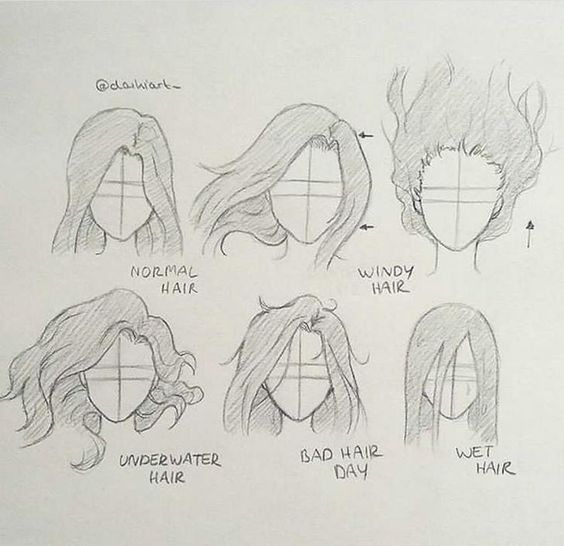
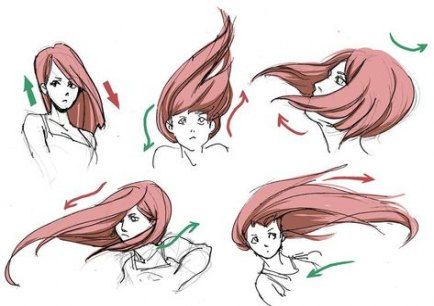
The foundational principles — mass before strands, curved highlights, correct value sequence — apply to all hair types. But each type has a specific approach to constructing its form and a specific stroke technique that captures its character.
Straight Hair
Think of it as: A smooth surface wrapping around a sphere — the simplest highlight situation of all four types
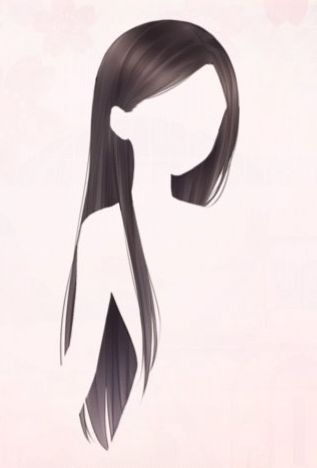
If you want to push the stylized side further, these anime hair drawing techniques show how to turn hair mass, value, and flow into readable character shapes.
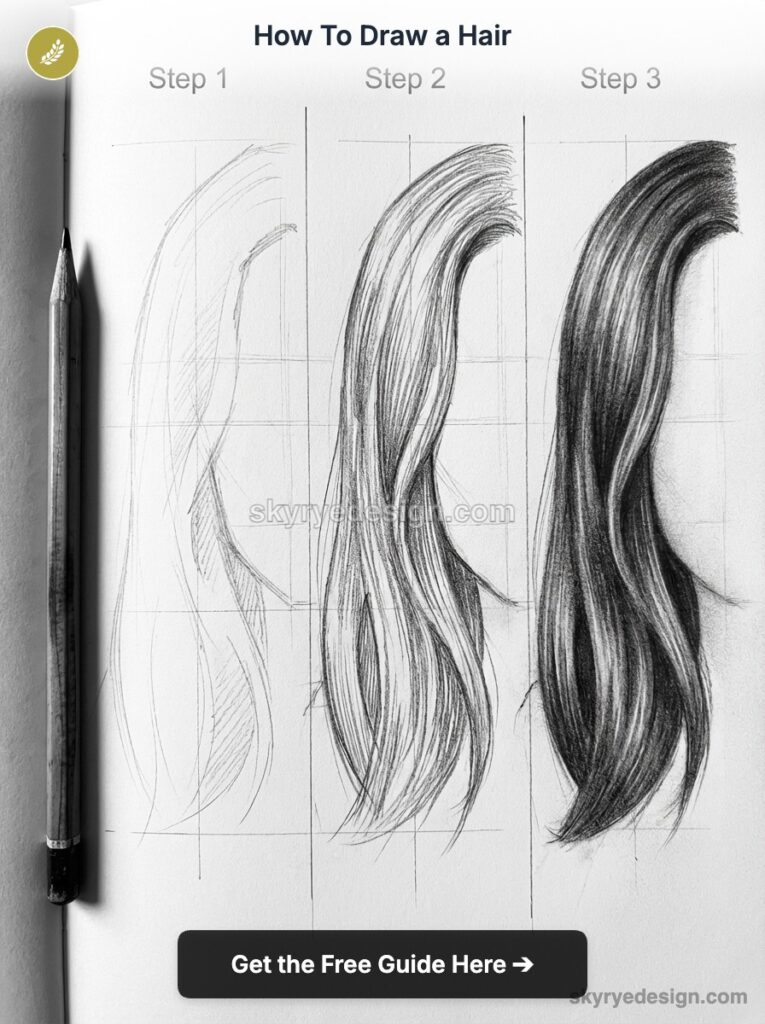
Stroke method: Long strokes from root to tip, following the direction of fall. Use a slightly blunted 2B for the main tonal strokes (a very sharp point produces overly separate lines that look like individual hairs rather than smooth texture). Blend lightly with a tortillon in the mid-tone areas to smooth the transition between tones, but keep the shadow areas unblended for depth.
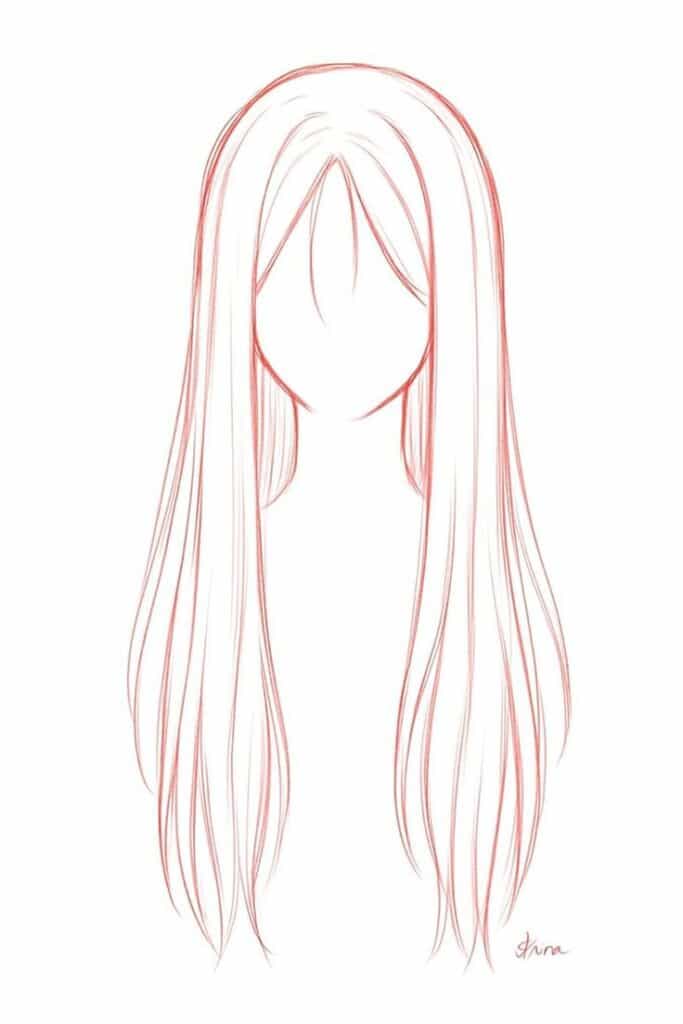
Highlight method: A single elongated band, smoothly lifted with the kneaded eraser along the full length of the hair mass. The highlight is widest at the most prominent curved area of the head and narrows toward the ends where the hair falls. Preserve the paper white here from the start — once shadow tone is applied, lifting a perfect bright highlight is difficult.
Common mistake: Making the highlight too straight. Straight hair is smooth, but the head it grows on is round. The highlight must curve with the skull’s dome, even if that curve is subtle.
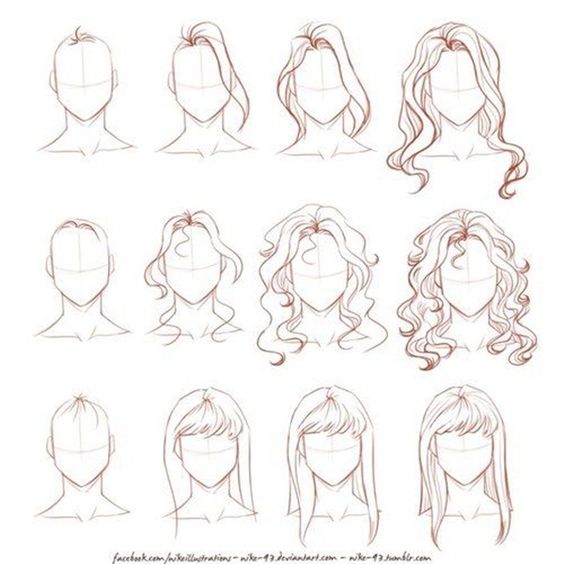
Wavy Hair
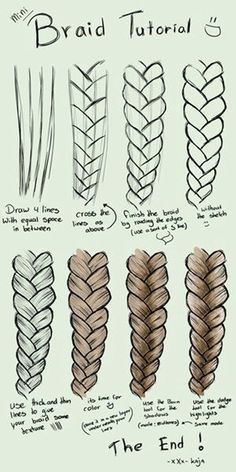
Think of it as: Ribbons of hair that curve in S-shapes — each ribbon is a small form with its own lit surface and shadow
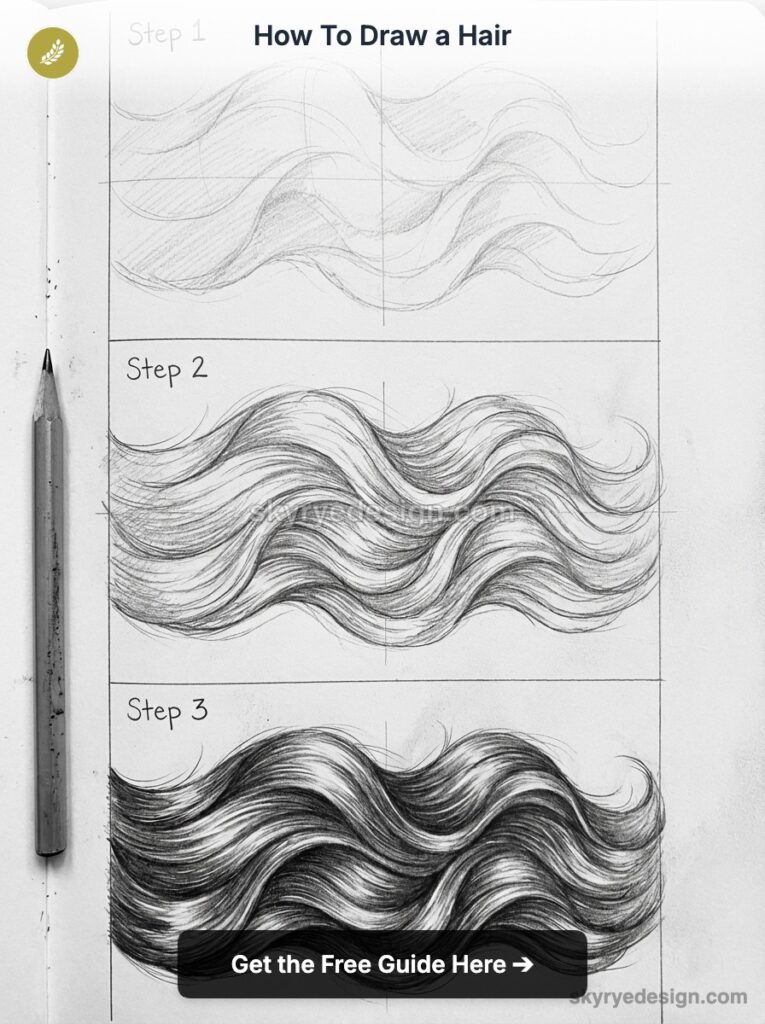
Stroke method: Start by sketching the S-curve direction of each major wave section. Build shadow inside the curves and on the underside of each wave. The stroke direction changes with the wave — it follows the curve rather than staying in one direction. Where two waves overlap, the one behind goes significantly darker.
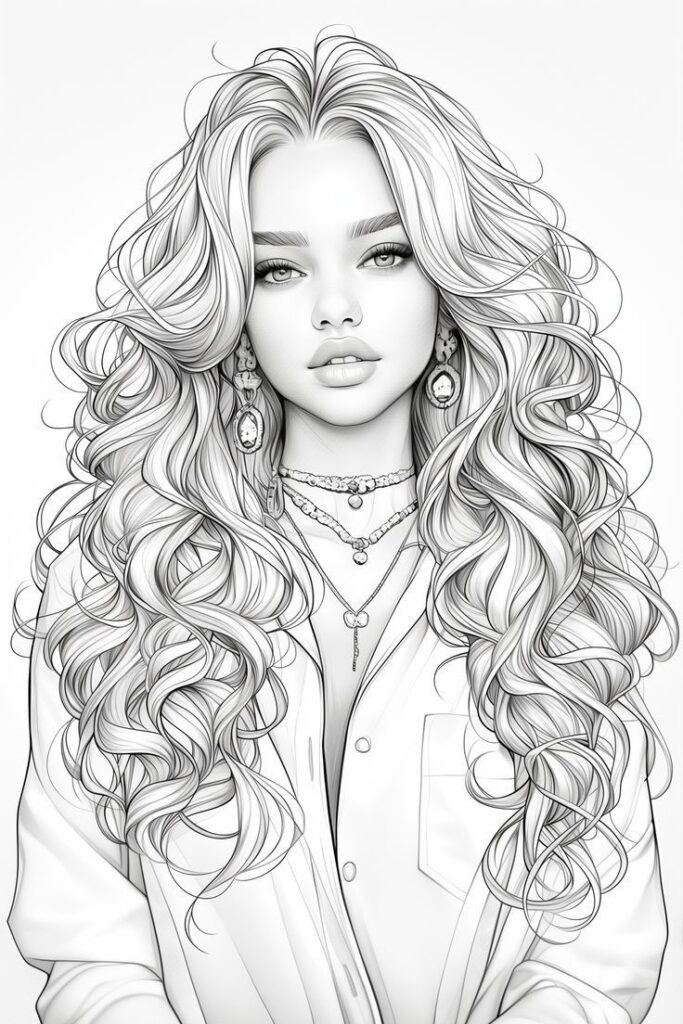
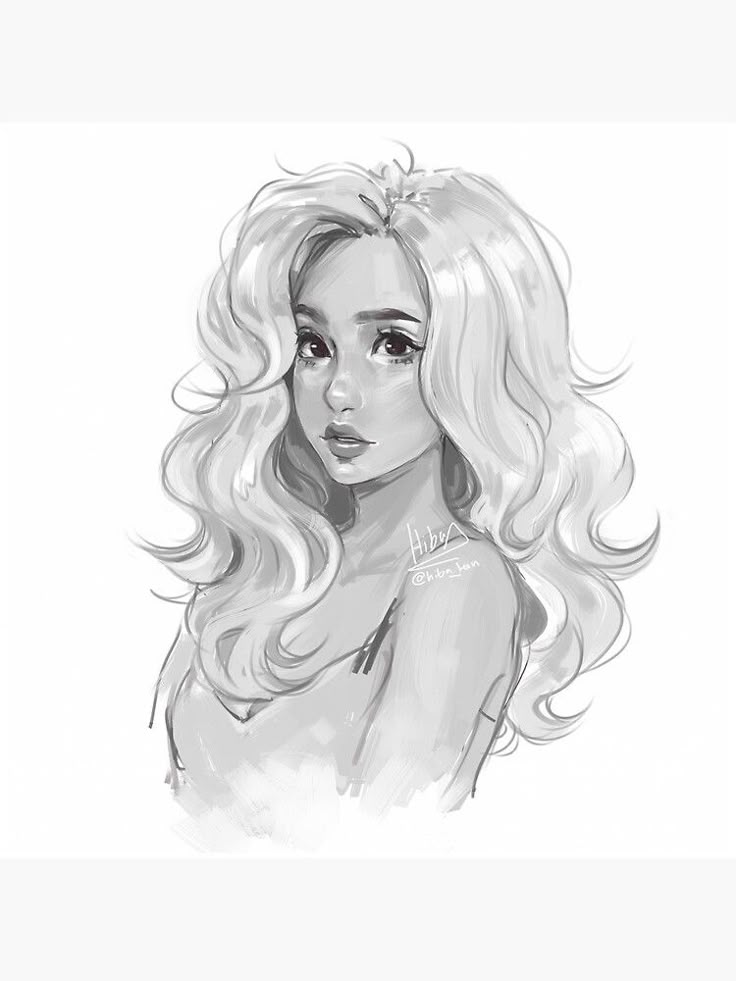
Highlight method: Interrupted curved bands — a highlight on the outer crest of each wave, with shadow inside the curve and between waves. The highlights collectively follow the skull’s roundness but are broken by the wave pattern. Lift each wave highlight individually with the kneaded eraser, following the specific curve of that wave.
Common mistake: Treating wavy hair as straight hair with a small amount of S-curve added. Wavy hair needs distinct shadow inside each curve — without that internal shadow, the waves look like marks rather than three-dimensional forms.
Curly Hair
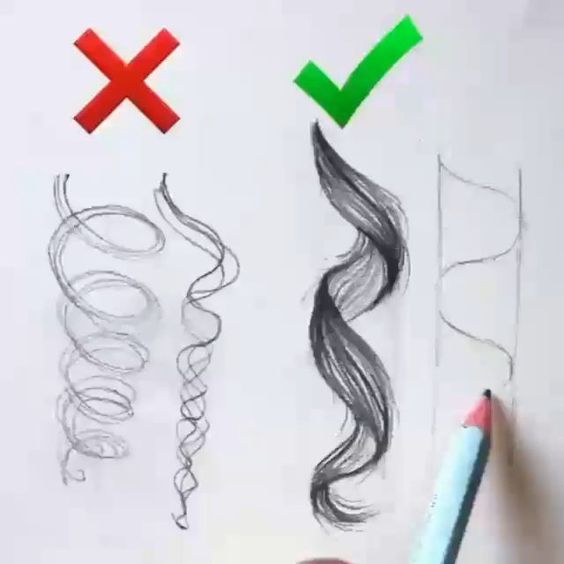
Think of it as: Cylindrical forms spiralling in space — think of each curl as a small rounded tube, not a flat circle
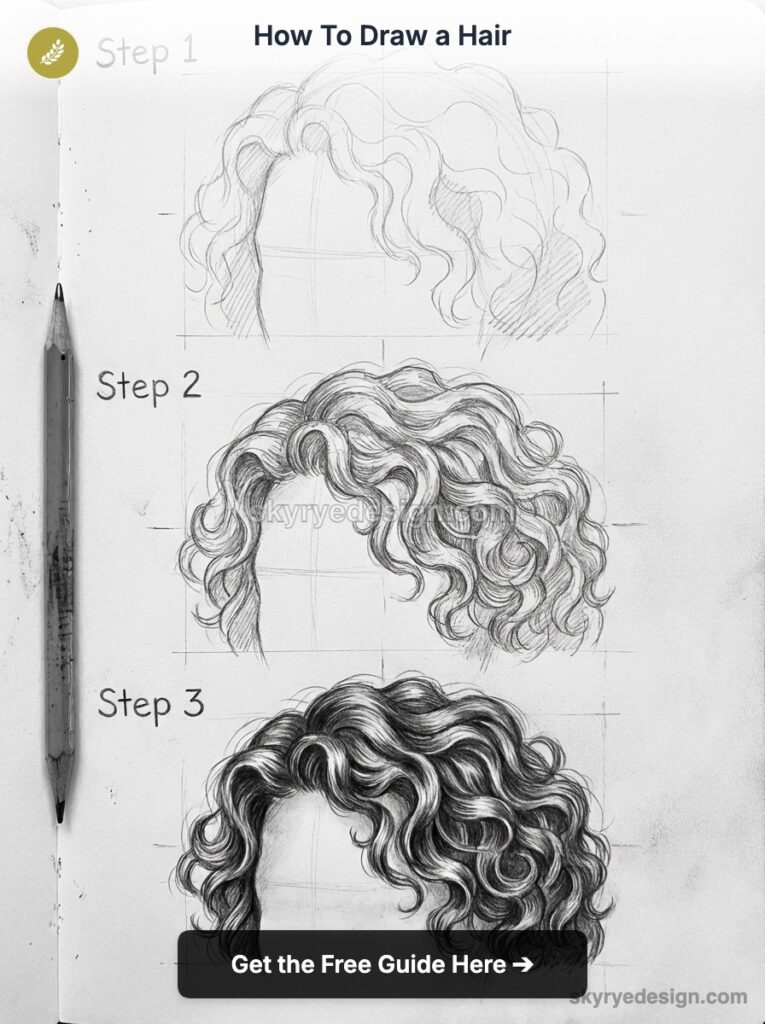
Stroke method: Sketch loose C-shapes and S-shapes for each curl cluster. Do not draw individual spiral strands. Build shadow inside the curve of each curl with 4B — this inner shadow is what makes the curl appear to have depth. The overlap shadow where one curl passes in front of another is the darkest mark in the entire drawing. Use short curved strokes following the curl direction, not long flowing lines.
Highlight method: Small, curved highlights on the outer surface of each curl. For tight curls, these highlights are tiny and scattered. For loose curls, they are more extended. Avoid over-blending — the visible texture of the strokes is part of what makes curly hair read as curly. Lifting highlights for curly hair requires a pointed kneaded eraser, not a flat edge.
Common mistake: Over-blending. Curly hair needs the visible marks and distinct edges between curls. Blending it to a smooth graduation destroys the texture that distinguishes curly from wavy hair.
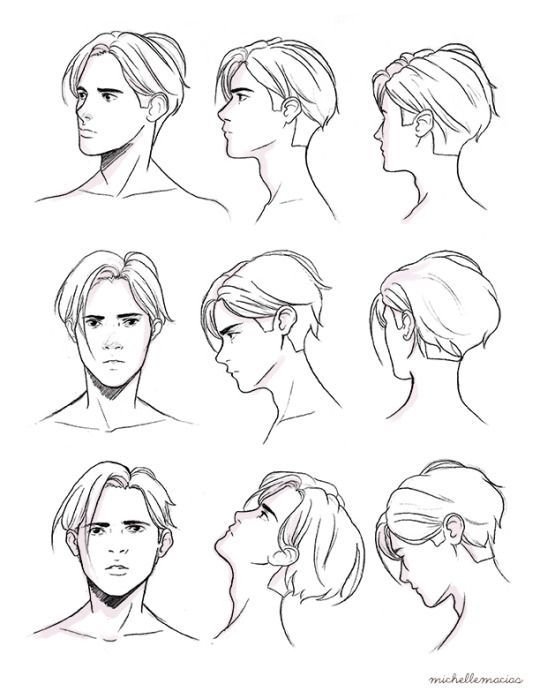
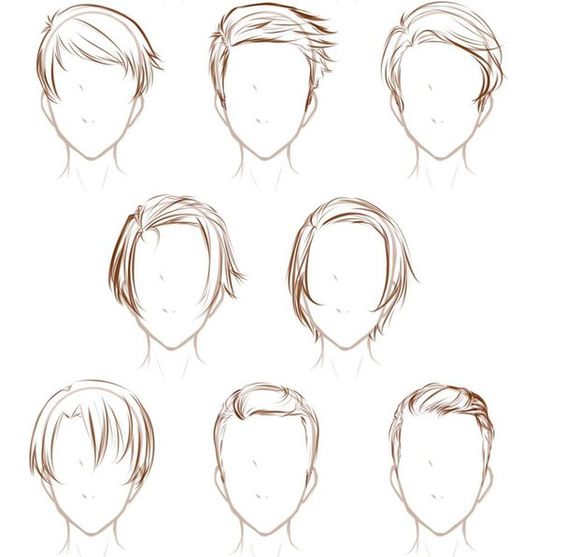
Short and Cropped Hair
Think of it as: The skull form directly visible through the hair — the drawing is almost as much about the skull as the hair
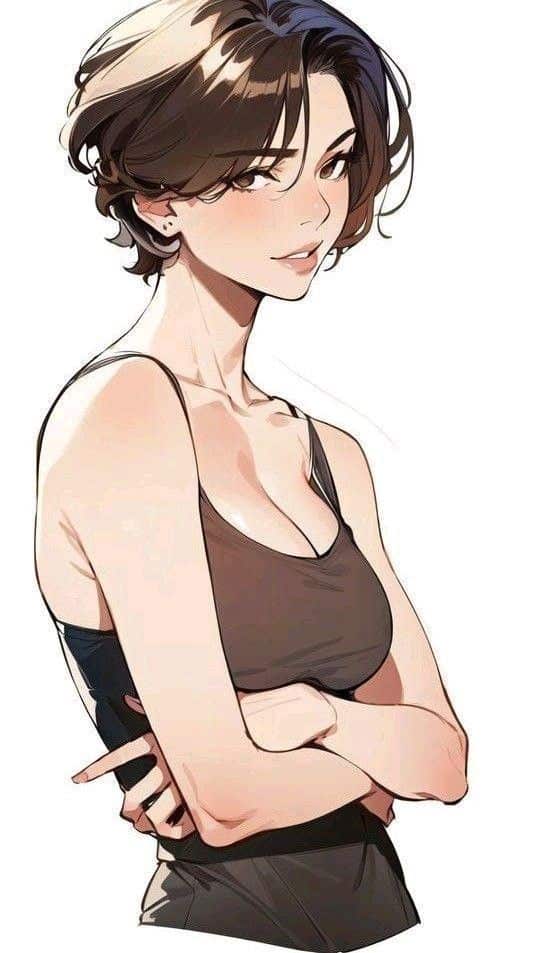
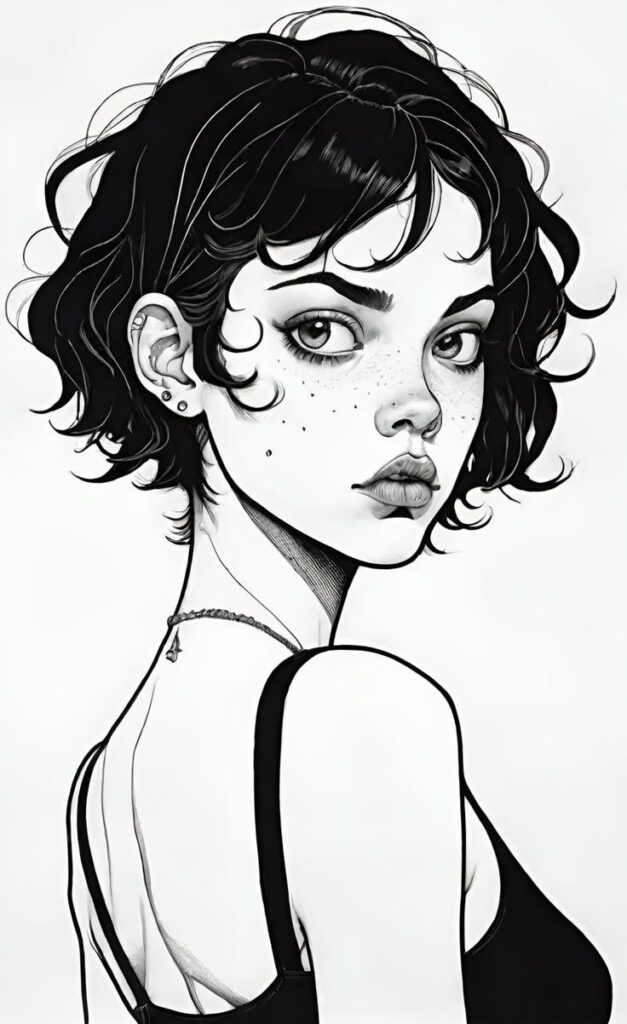
Stroke method: Short hairs are represented not as individual strands but as a textural tone applied with cross-hatching or very close parallel hatching that simulates the dense, directional quality of short hair. Build the tone in multiple light layers rather than one heavy pass. The hatching direction follows the direction of growth from the scalp.
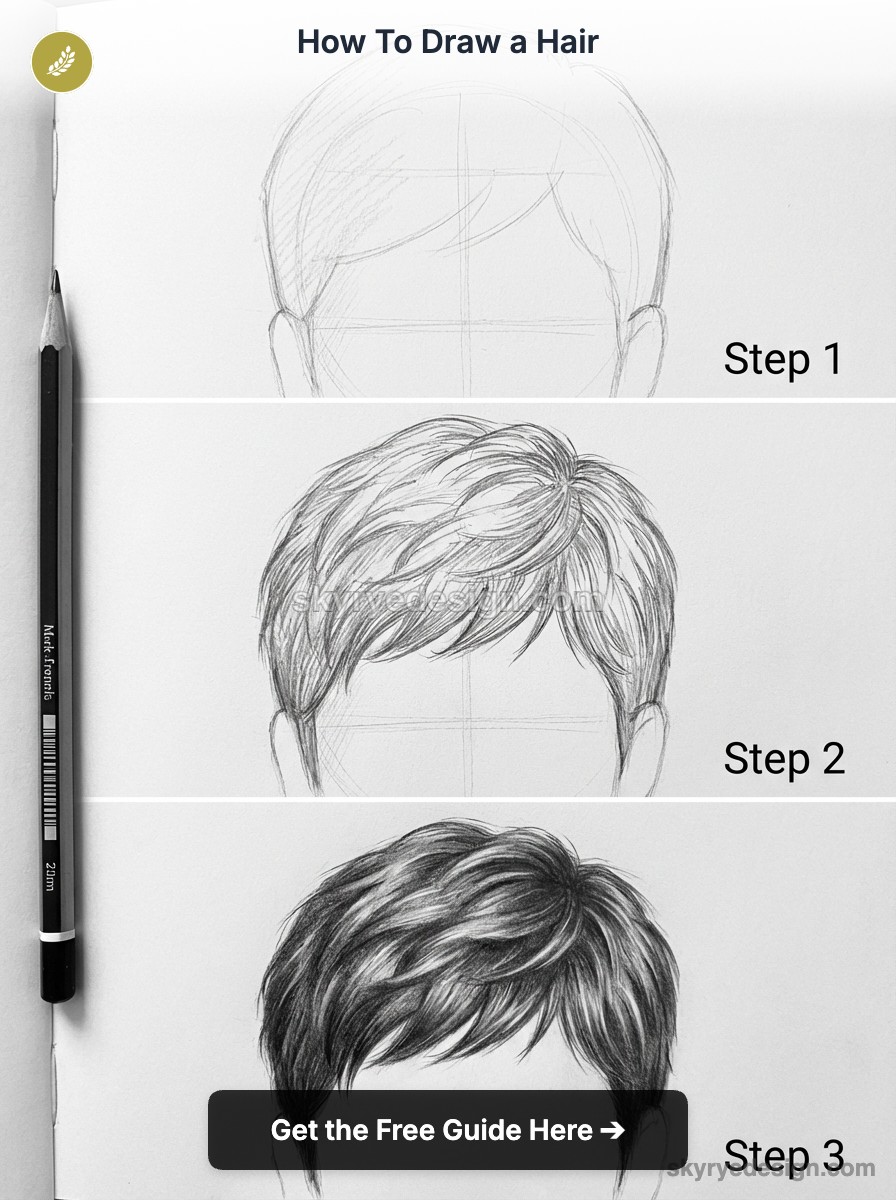
Highlight method: Because the hair volume is minimal, the skull shape is the main form creating the highlight. The highlight follows the skull very closely. For very short hair (buzz cut), the highlight is essentially the same as a skin highlight — a smooth curved area rather than a hair-specific band.
Common mistake: Adding too much detail in shadow areas. In short hair, the shadow regions should read as dense, rich dark tone without individual marks. The detail lives in the lighter areas where individual hairs are more visible.
Dark Hair vs Blonde Hair: Two Completely Different Approaches
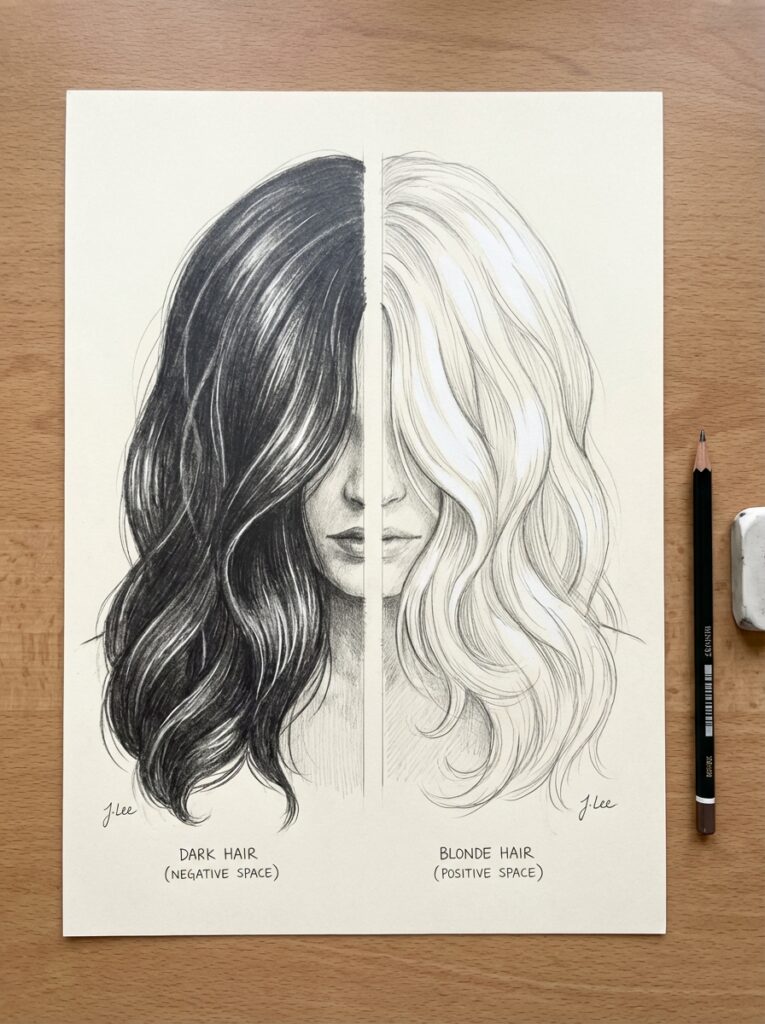
Dark hair and light hair require fundamentally different drawing strategies because the relationship between the hair, its highlights, and its shadows is inverted. Getting the right approach for the hair colour in your reference is as important as the technique itself.
Dark Hair: The Negative Space Method
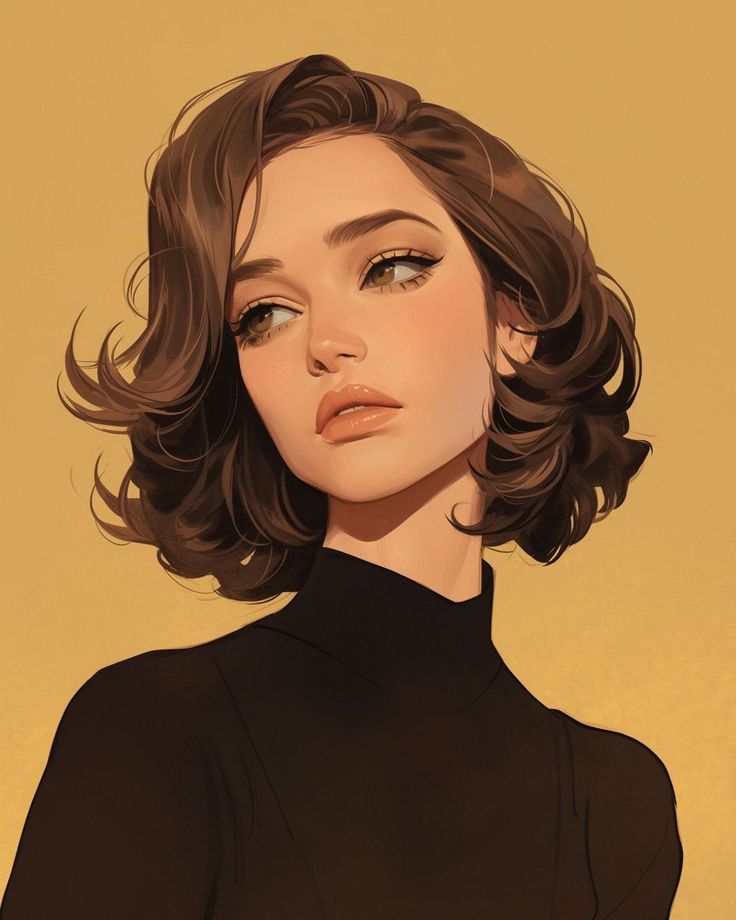
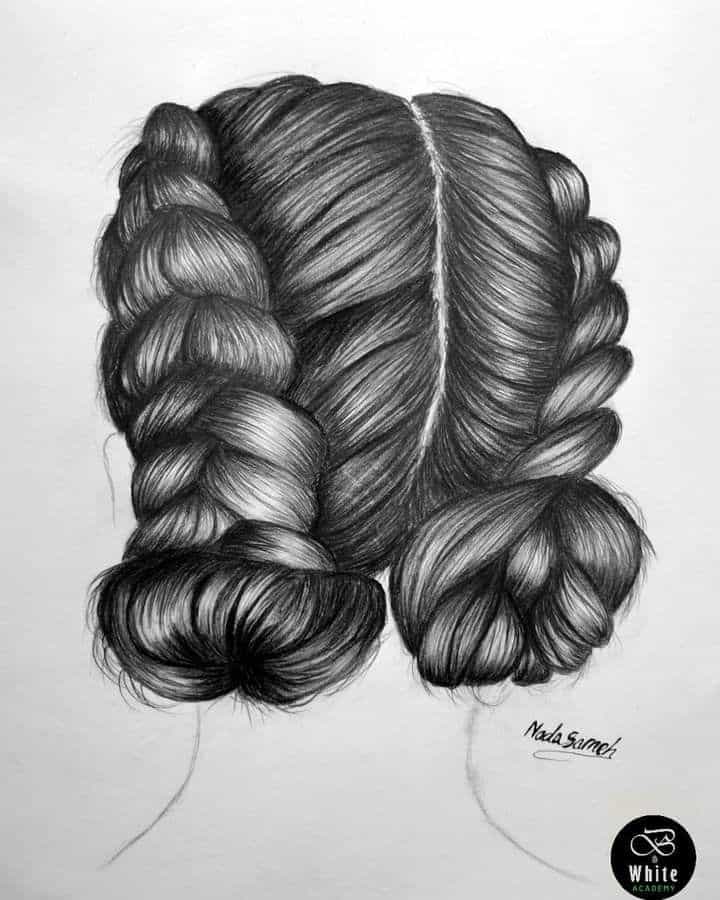
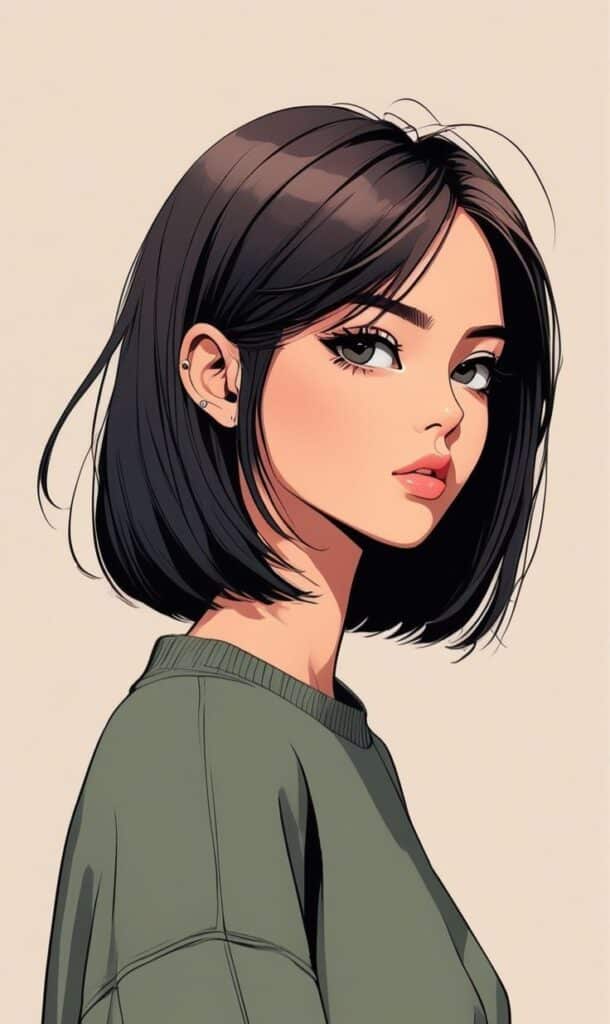
For black or very dark brown hair, the most effective pencil technique is what drawing instructors call the negative space method: instead of drawing dark hair with dark marks, you build the darkest possible graphite tone across the entire hair area and then use the eraser to create the visible strands by lifting graphite. You are drawing the light, not the hair. The brilliant white highlights of dark hair are one of the most striking visual elements in a portrait, and they are best achieved by fully building the dark tone first, then pressing and pulling the kneaded eraser to lift brilliant white strands from the dark ground.
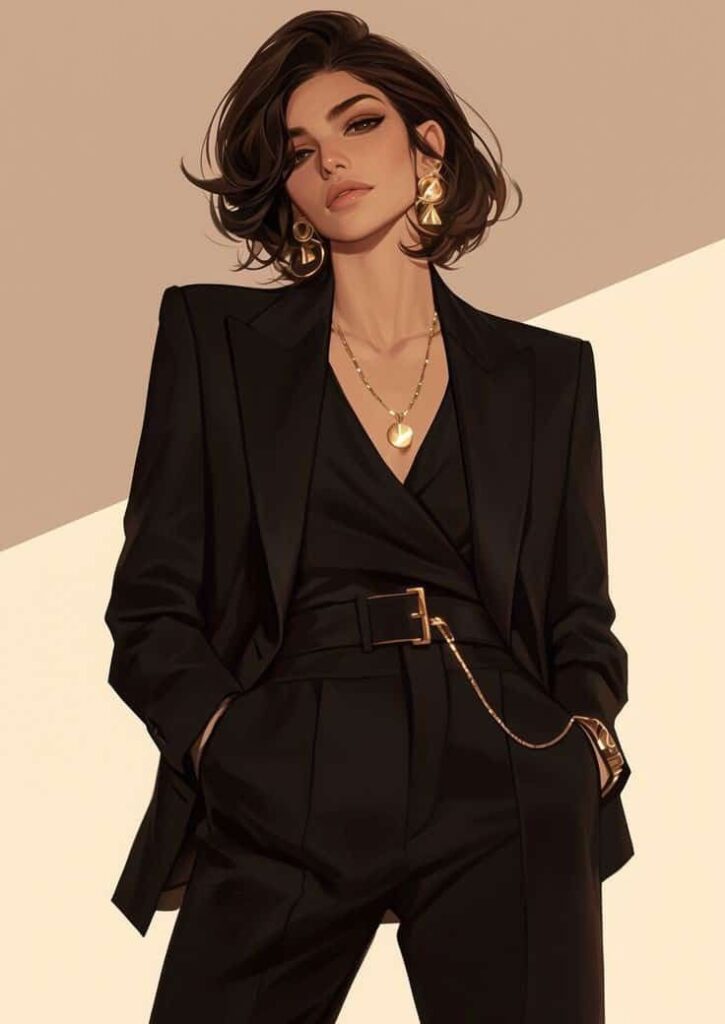
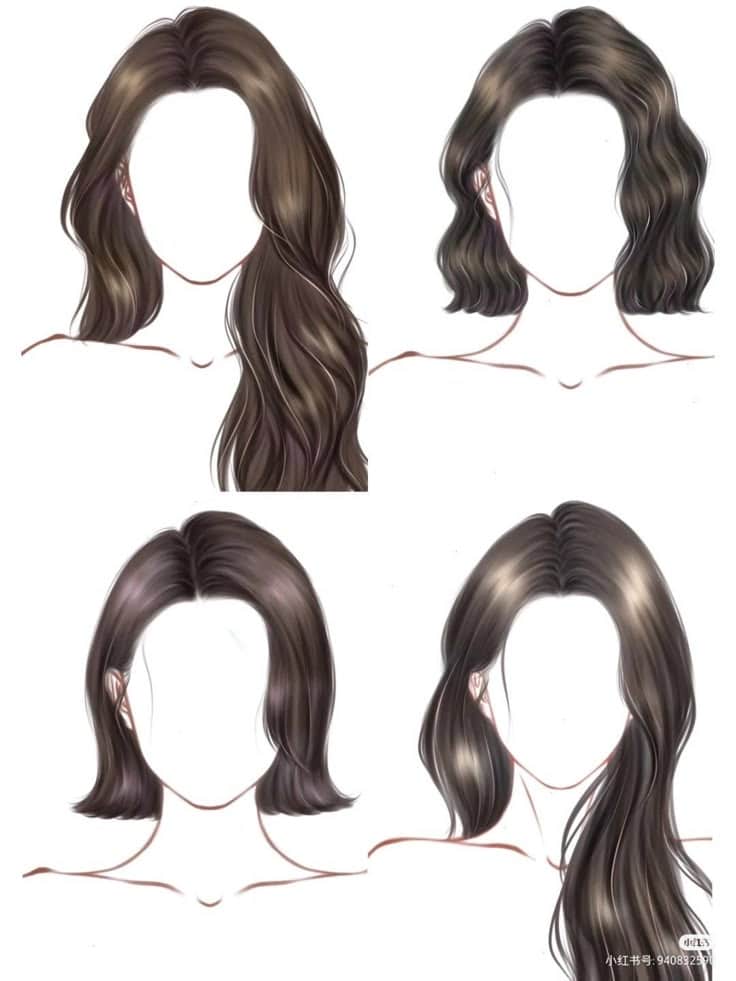
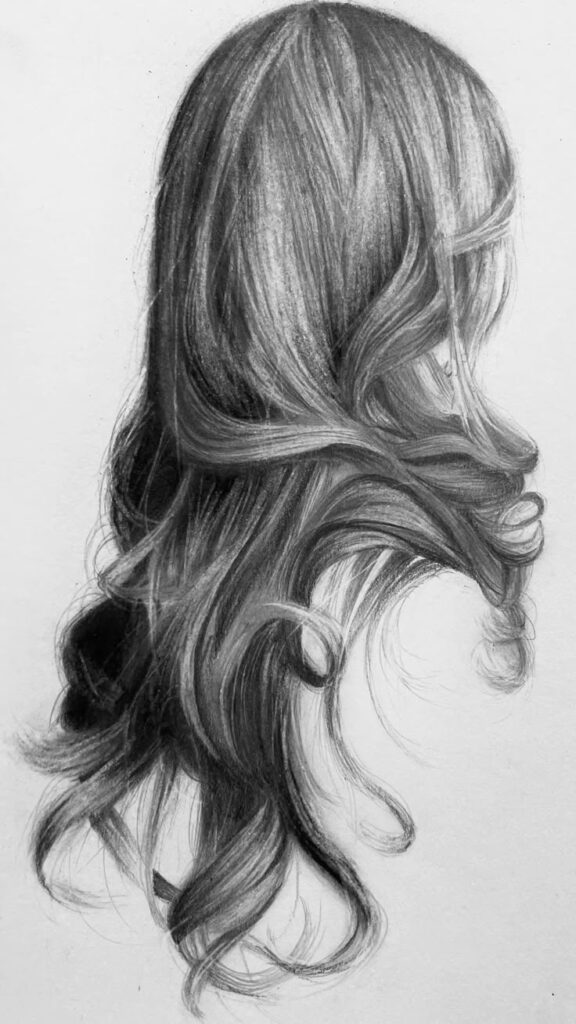
The dark shadows of black hair need to be very dark — 6B in the deepest areas. The highlights are brilliant white (or very close to it) because black hair has very high contrast between lit and shadow areas. Do not be afraid to go very dark in the shadow areas of dark hair. The contrast that feels extreme while drawing will read as correct in the finished portrait.
Blonde and Light Hair: Building from the Light
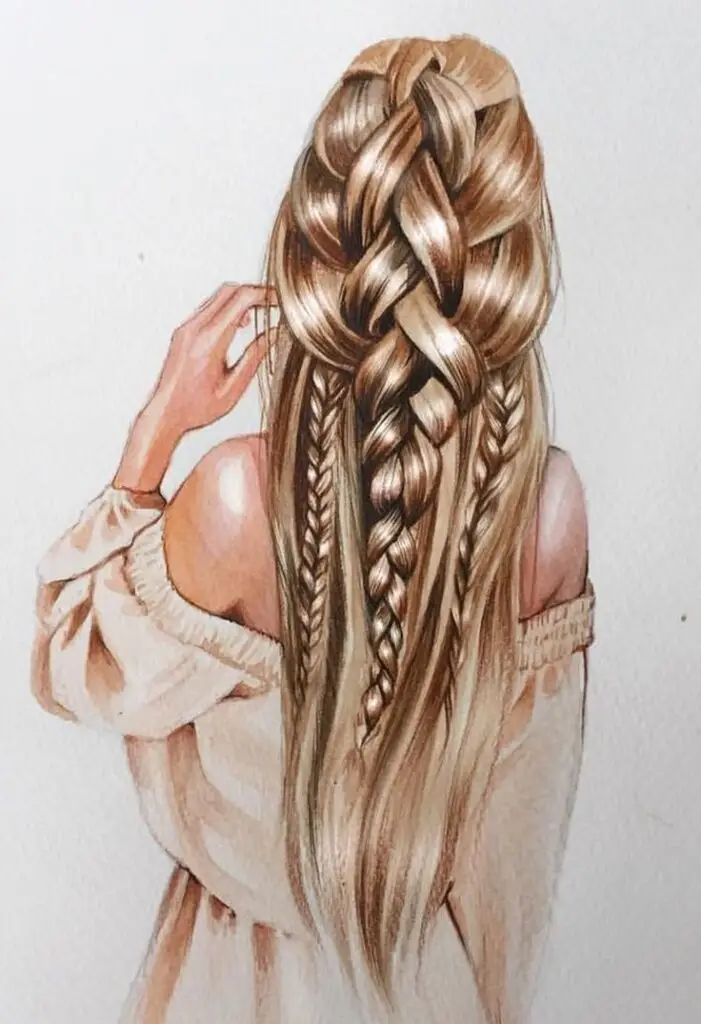
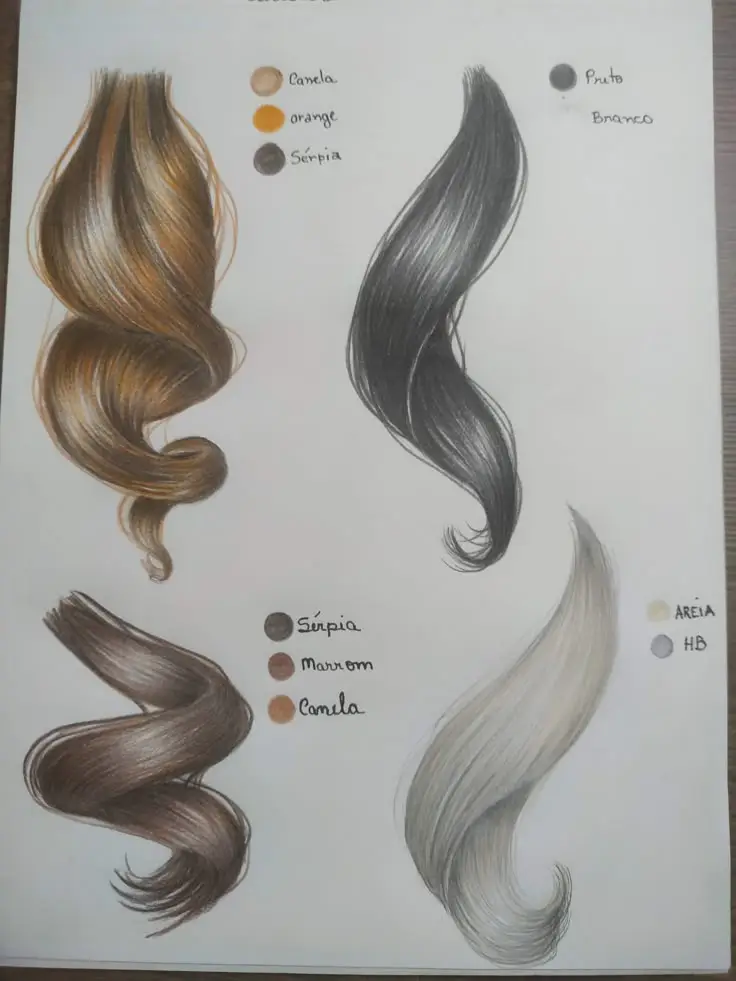
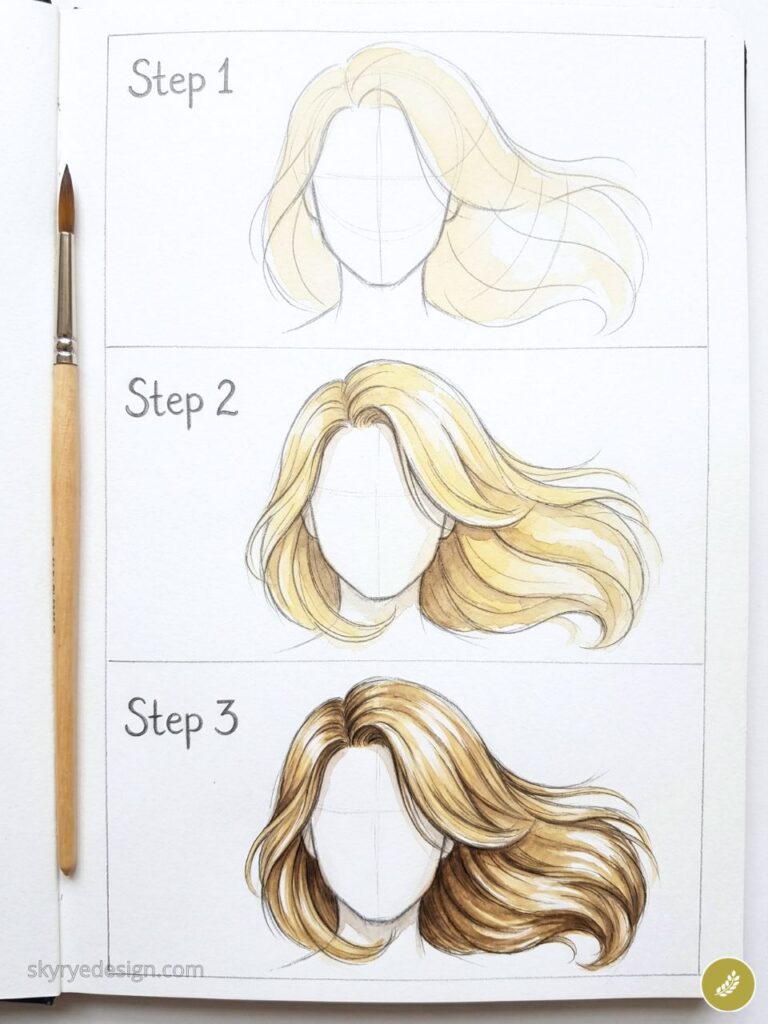
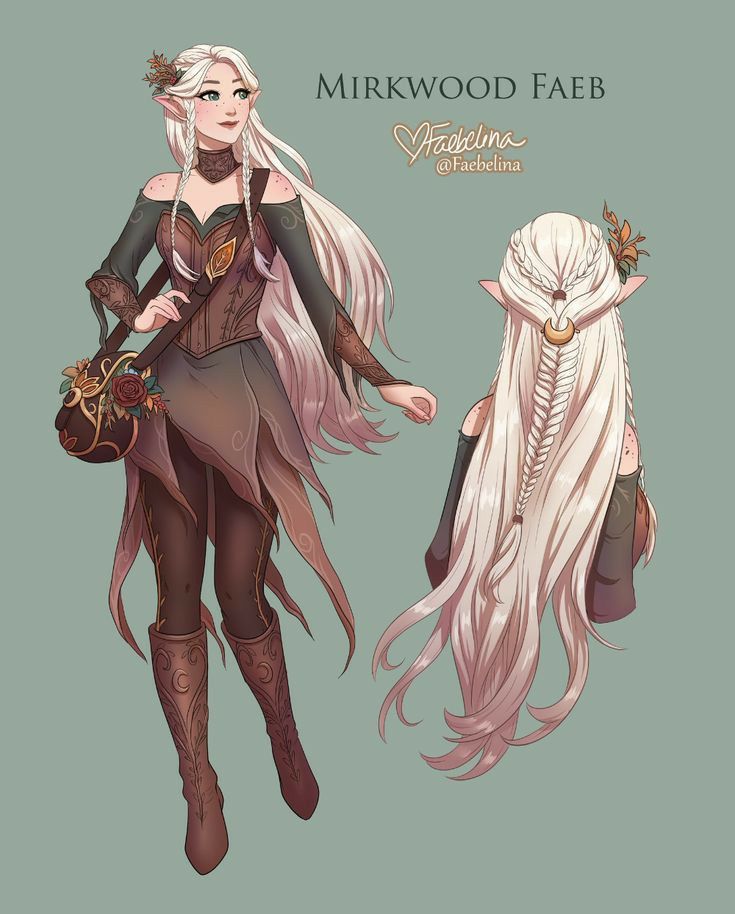
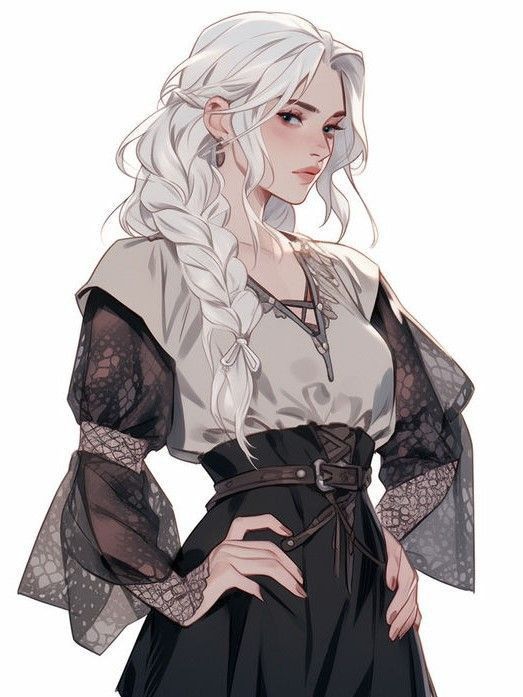
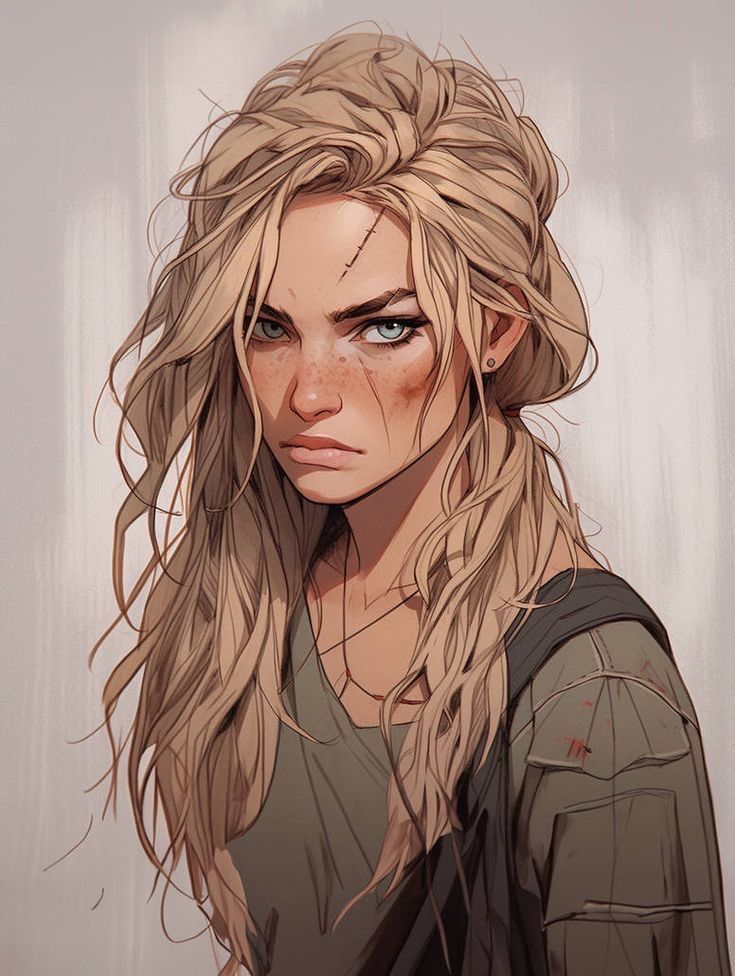
Blonde hair reverses the approach: because the hair itself is light, the shadows are relatively subtle and the highlights are wide and bright. The technique is additive — you preserve the white paper in the highlight areas from the beginning and build shadows lightly around it. The individual strands of blonde hair are often visible as slightly darker lines within the generally light hair mass, which is the opposite of dark hair where the strands catch light from a dark background.


For blonde hair, use H or HB pencil for the lightest shadow areas and 2B for the deeper shadows. The darkest marks in blonde hair are significantly lighter than the mid-tones of dark hair — the full value range of a blonde hairstyle might span from white to mid-grey, where dark hair spans from brilliant white to near-black.
Materials for Drawing Hair
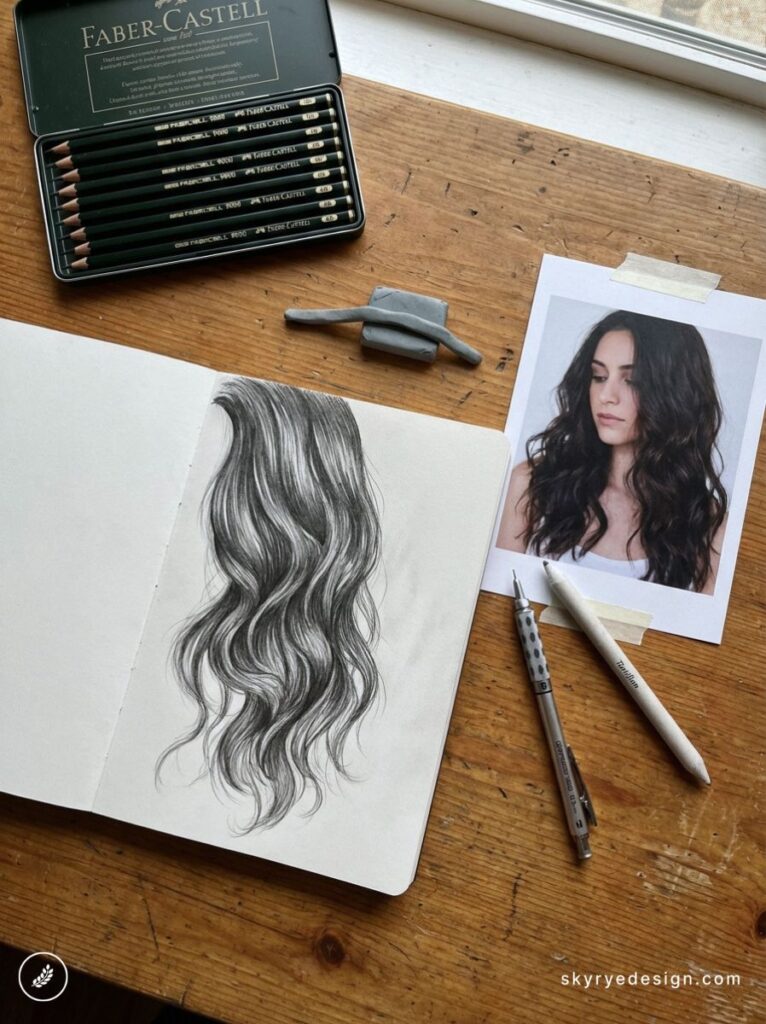
- Pencils: Faber-Castell 9000 set in HB (tonal washes and construction), 2B (directional strokes and mid-tones), 4B (shadow layers and overlap darks), 6B (deepest shadows in dark hair). A 0.5mm mechanical pencil (HB) for individual strand detail added last.
- Kneaded eraser: The most important tool in hair drawing. Faber-Castell kneaded eraser (~$3). Shape it to a flat edge for broad highlight bands, to a thin ridge for individual highlight strands. Knead it clean when it becomes grey from lifted graphite.
- Paper: Strathmore 300 Bristol smooth (~$18, 9×12 inch). The smooth surface allows clean lifting with the kneaded eraser without tearing, and supports the fine sharp strokes needed for individual strand detail. Avoid textured paper for hair — the paper texture competes with the hair texture.
- Blending stump: Use only in straight and wavy hair mid-tone areas to smooth the shadow-to-mid-tone transition. Do not blend curly hair — the visible marks are part of the texture. Keep a separate clean stump for light areas and a darker stump for shadow blending.
- Mechanical eraser pen: For very precise highlight lines in dark hair — individual bright strands that cross the shadow area. A standard kneaded eraser cannot produce the sharp-edged bright line that a mechanical eraser pen achieves.
FAQ: How to Draw Hair

Q: How do you draw hair step by step?
In this sequence: (1) Sketch the skull volume. (2) Block the hair mass silhouette. (3) Map value zones (shadow, mid-tone, highlight). (4) Apply tonal wash HB, deepen shadows 2B-6B with directional strokes. (5) Lift highlight band with kneaded eraser following the skull’s curve. Add individual strands only in highlighted areas and at outer edges. Mass and value first; strands last.
Q: Why does hair look flat when I draw it?
Two causes: missing skull volume (the highlight runs straight across rather than curving with the head) and insufficient contrast (shadows and mid-tones too similar in value). Fix: make darks darker and lights lighter than feels comfortable, and curve the highlight band to follow the dome of the skull. The high-contrast version that looks exaggerated in isolation will read as correct at viewing distance.
Q: How do you draw curly hair?
Think of each curl as a cylindrical tube, not a flat circle. Build shadow inside the curve of each curl with 4B, darkest where curls overlap. Lift small curved highlights on the outer surface of each curl. Do not blend — the visible texture of the marks is what makes curly hair read as curly. Use short curved strokes, not long flowing lines.
Q: What pencils should I use for drawing hair?
HB for initial wash and construction, 2B for directional mid-tone strokes, 4B for shadow areas and overlap darks, 6B for the deepest shadows in dark hair. Kneaded eraser is as important as the pencils — it creates highlights by lifting graphite rather than leaving blank paper. A mechanical pencil (0.5mm HB) for individual strand detail added last.

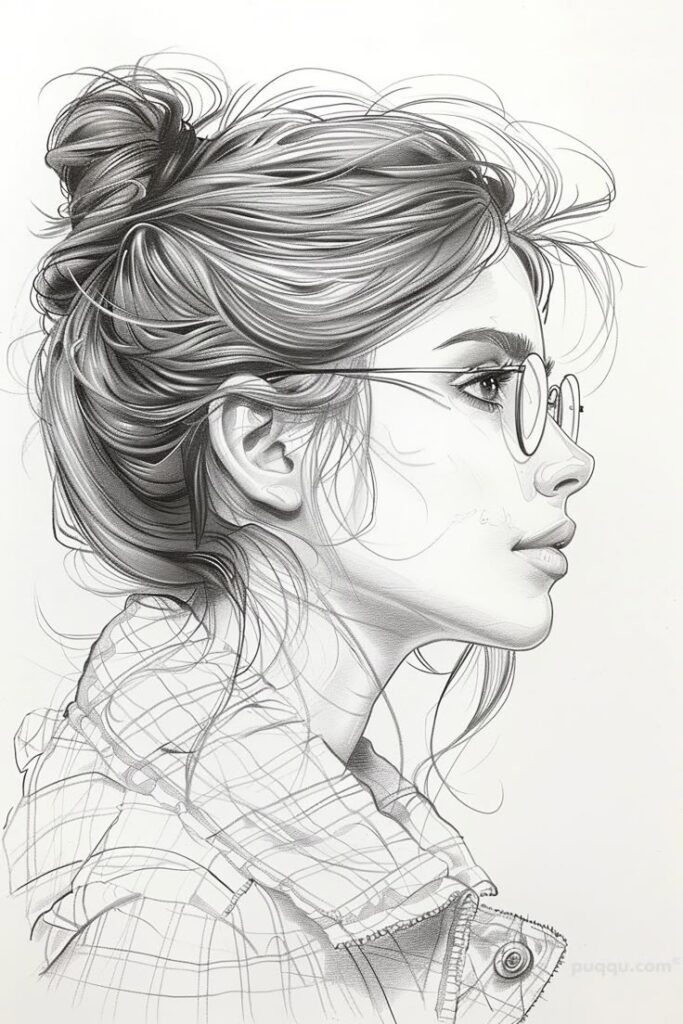
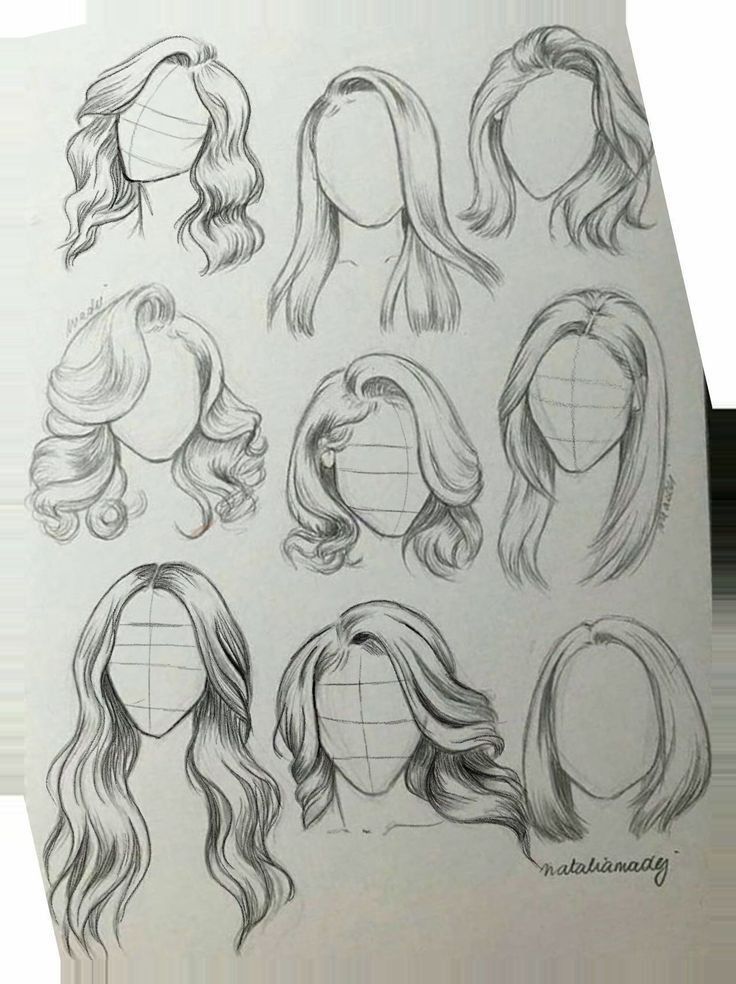
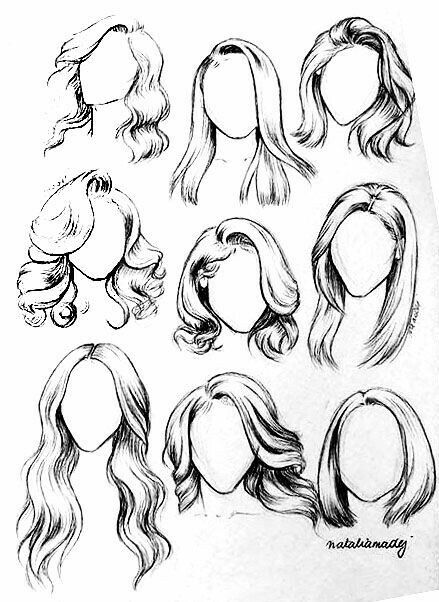
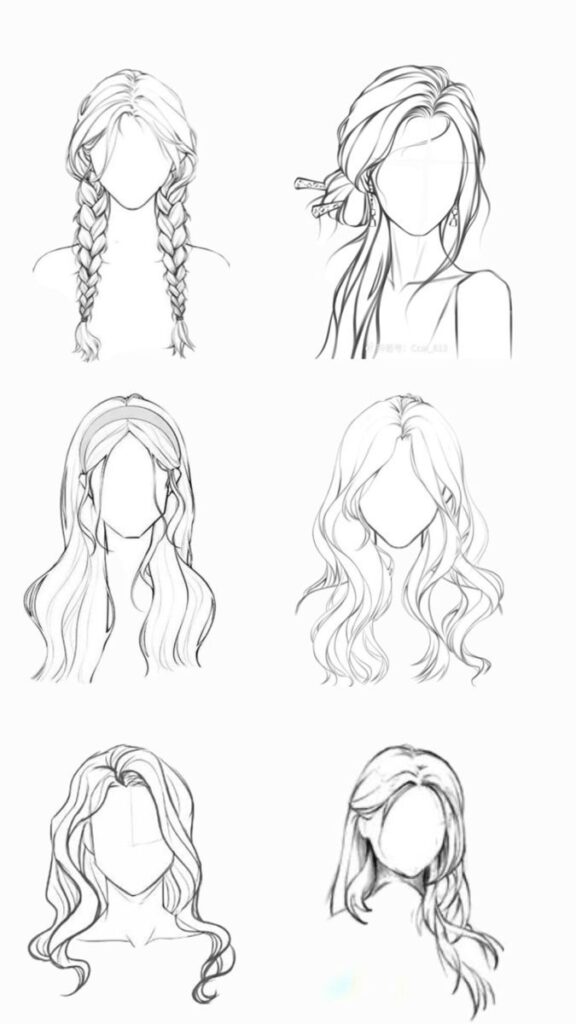
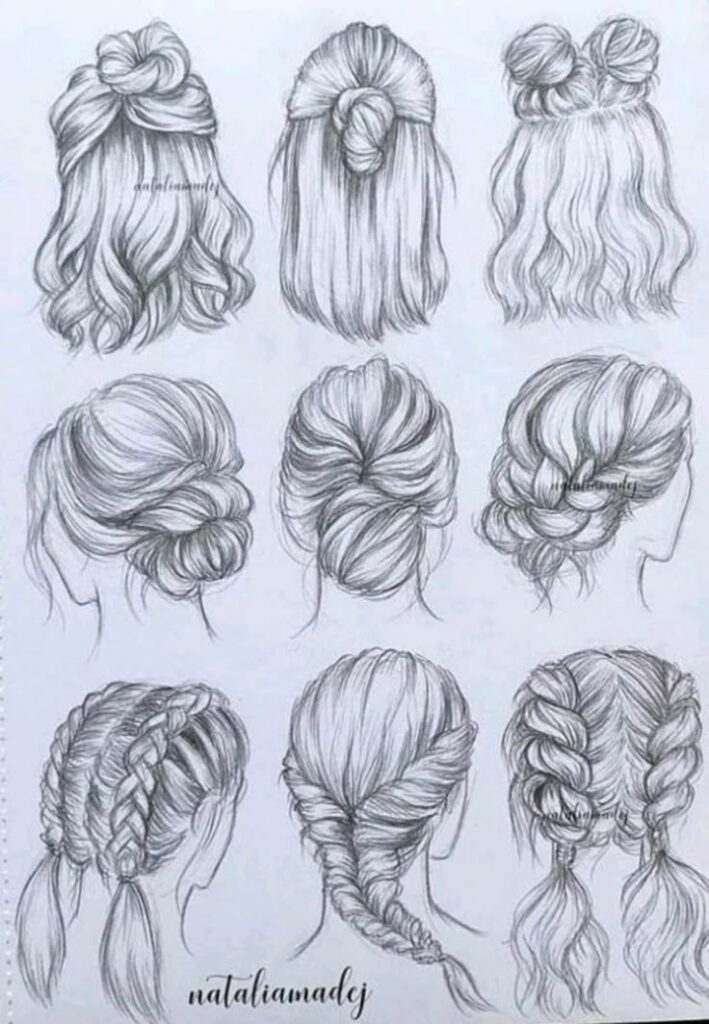



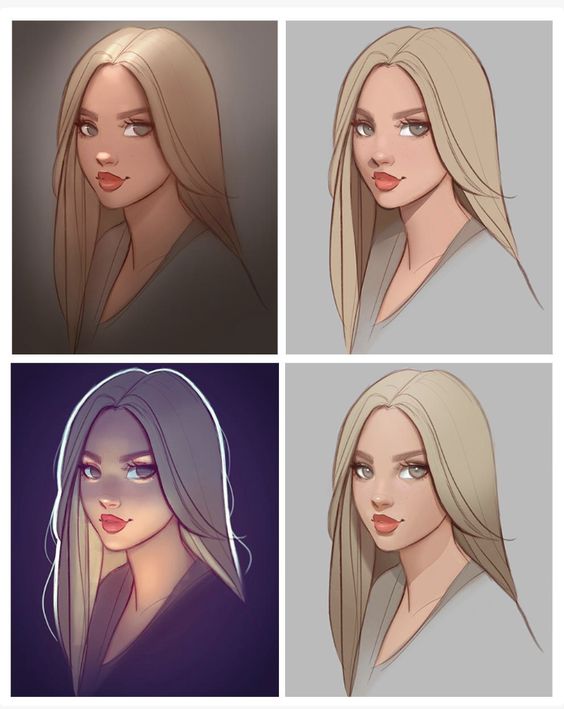

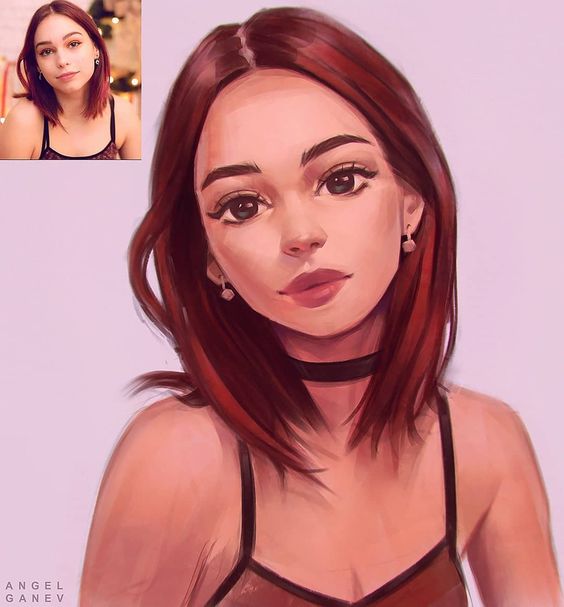
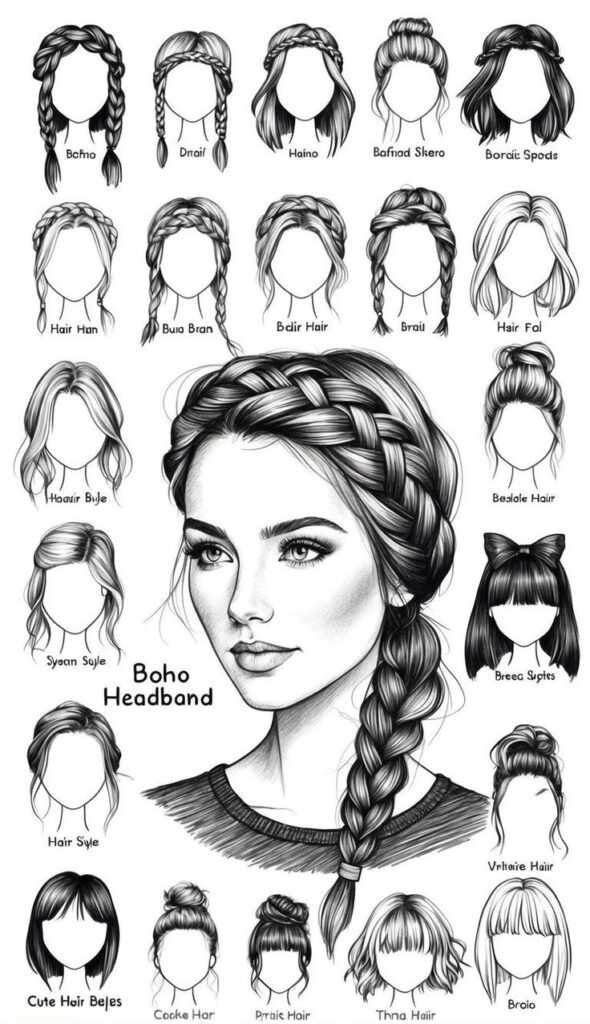
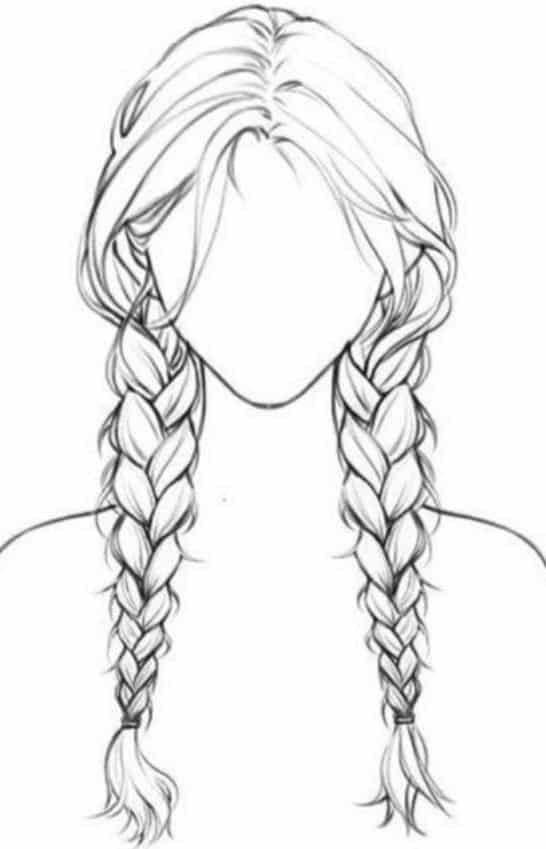


Hair reads more naturally when it sits on a believable skull and body, so after practicing hair mass, move into full human figure drawing to connect the head, neck, shoulders, and gesture into one coherent pose.
Hair drawing gets easier when the head structure is solid first; this side profile hairline guide shows where the forehead, skull, ear, and hair mass should sit.
- 10.9Kshares
- Facebook0
- Pinterest10.9K
- Twitter3
- Reddit0