My daughter went through a serious unicorn phase when she was five, and I went through it with her. Not reluctantly. I’m a designer, and there’s something genuinely interesting about the visual grammar of unicorn illustration: the challenge of making a horse read as magical with minimal additions (a spiral horn, a slightly more dramatic mane), or the opposite problem of building out a full galaxy scene where the unicorn is almost incidental to the cosmos around it.
Unicorn coloring pages cover that entire range, from the simplest three-line sketch a toddler can fill in with a single crayon, to adult mandala designs that take two hours and a full set of Prismacolors. What makes a good coloring page in either direction is clarity of outline, well-sized color zones for the intended age group, and enough visual interest to reward the time spent.
- How to choose the right unicorn coloring page by age and skill
- Simple unicorn coloring pages (toddler and beginner friendly)
- Medium complexity unicorn coloring pages (ages 5-10)
- #3 Unicorn with flower crown
- #8 Unicorn and castle
- #9 Unicorn underwater
- #10 Unicorn with wings (alicorn)
- #14 Unicorn in a forest
- #16 Unicorn and moon
- #19 Unicorn with butterflies
- #21 Unicorn with stars and planets
- #23 Unicorn running at sunset
- #25 Unicorn in winter snow
- #26 Unicorn with musical notes
- #27 Unicorn and dragon friends
- #29 Unicorn with four-leaf clover field
- #30 Tiny unicorn in a teacup
- #32 Unicorn with autumn leaves
- #36 Unicorn and fairy
- #38 Unicorn bookworm
- #39 Unicorn chef
- #40 Unicorn astronaut
- #41 Unicorn superhero
- #44 Unicorn garden scene
- #47 Unicorn in hot air balloon
- #53 Unicorn family (mom, dad, baby)
- #4 Galaxy unicorn
- #12 Unicorn with crystals
- #13 Kawaii unicorn
- #15 Unicorn head portrait
- #18 Unicorn mermaid (sea-unicorn)
- #20 Geometric unicorn
- #22 Unicorn princess
- #31 Unicorn zodiac: Aries
- #34 Unicorn with magic wand
- #37 Unicorn self-care spa
- #42 Unicorn mermaid princess
- #43 Unicorn with dragonfly wings
- #46 Unicorn silhouette landscape
- #49 Unicorn and Phoenix
- Adult and advanced unicorn coloring pages
- How to use these image prompts to generate your own coloring pages
- Coloring tips for better results at every level
- Frequently Asked Questions
- What are good unicorn coloring pages for toddlers?
- Are unicorn coloring pages good for adults?
- What colors should I use for a unicorn coloring page?
- How do you make a unicorn coloring page?
- What is the best paper for printing unicorn coloring pages?
- Can unicorn coloring pages be used as tattoo stencils?
- What age are unicorn coloring pages suitable for?
This list covers 53 distinct ideas across every style, difficulty level, and theme. Each one includes both a photo-realistic reference prompt and a coloring page line art prompt so you can generate exactly what you need for your project.
How to choose the right unicorn coloring page by age and skill
Age is the first variable that changes everything about coloring page design. A four-year-old needs thick outlines (3pt or heavier), large open color areas with minimal internal detail, and simple recognizable shapes. A nine-year-old can manage medium complexity: defined petal shapes, simple background elements, a bit of interior line work. Adults need the opposite: fine detail, small color zones, and enough visual complexity to genuinely occupy attention for an extended session.
Toddlers and preschoolers (ages 2-5)
Go for the simplest silhouette designs: a single standing unicorn with no background, a sleeping foal, or a unicorn with a balloon. The outline should be as thick as a crayon tip and the interior almost empty. Ideas #2 (baby unicorn foal), #17 (unicorn with cupcake), #33 (jumping over clouds), and #35 (sleeping baby unicorn in a nest) are ideal at this level. Resist the temptation to add detail that will frustrate small hands.
Elementary age (ages 5-9)
Medium complexity works well here: flower crowns, simple backgrounds, a second character like a butterfly or fairy. The outline can be thinner, and some interior line work is appropriate. Ideas #3 (flower crown), #7 (sleeping in meadow), #11 (birthday scene), and #27 (unicorn and dragon) hit this range well. This is also the age where themed scenes, the underwater unicorn, the space unicorn, the chef, start to produce real engagement.
Tweens, teens, and adults (ages 10+)
Intricate mandala pages, art nouveau designs, zentangle fills, and detailed portrait compositions with fine botanical elements. The line weight can be as light as 0.5pt and the color zones as small as the tip of a fine-liner pen. Ideas #5 (mandala), #28 (floral wreath), #48 (Celtic knotwork), #50 (art nouveau), and #51 (zentangle) are designed for this audience. Gel pens, fine-tip alcohol markers, and colored pencils all work better than crayons at this complexity level.
Coloring paper tip: standard 80gsm printer paper works for crayons and dry markers. For alcohol-based markers like Copics or for watercolor, use 160gsm cardstock or cold-press watercolor paper to prevent bleed-through and buckling. Printing with a laser printer rather than inkjet tends to give crisper line edges that hold up better under wet media.
For a related creative prompt, see Baddie Coloring Pages.
Simple unicorn coloring pages (toddler and beginner friendly)
The designs below prioritize big shapes, thick outlines, and minimal interior detail. They’re the right choice when the goal is participation over precision.
#1 Classic standing unicorn
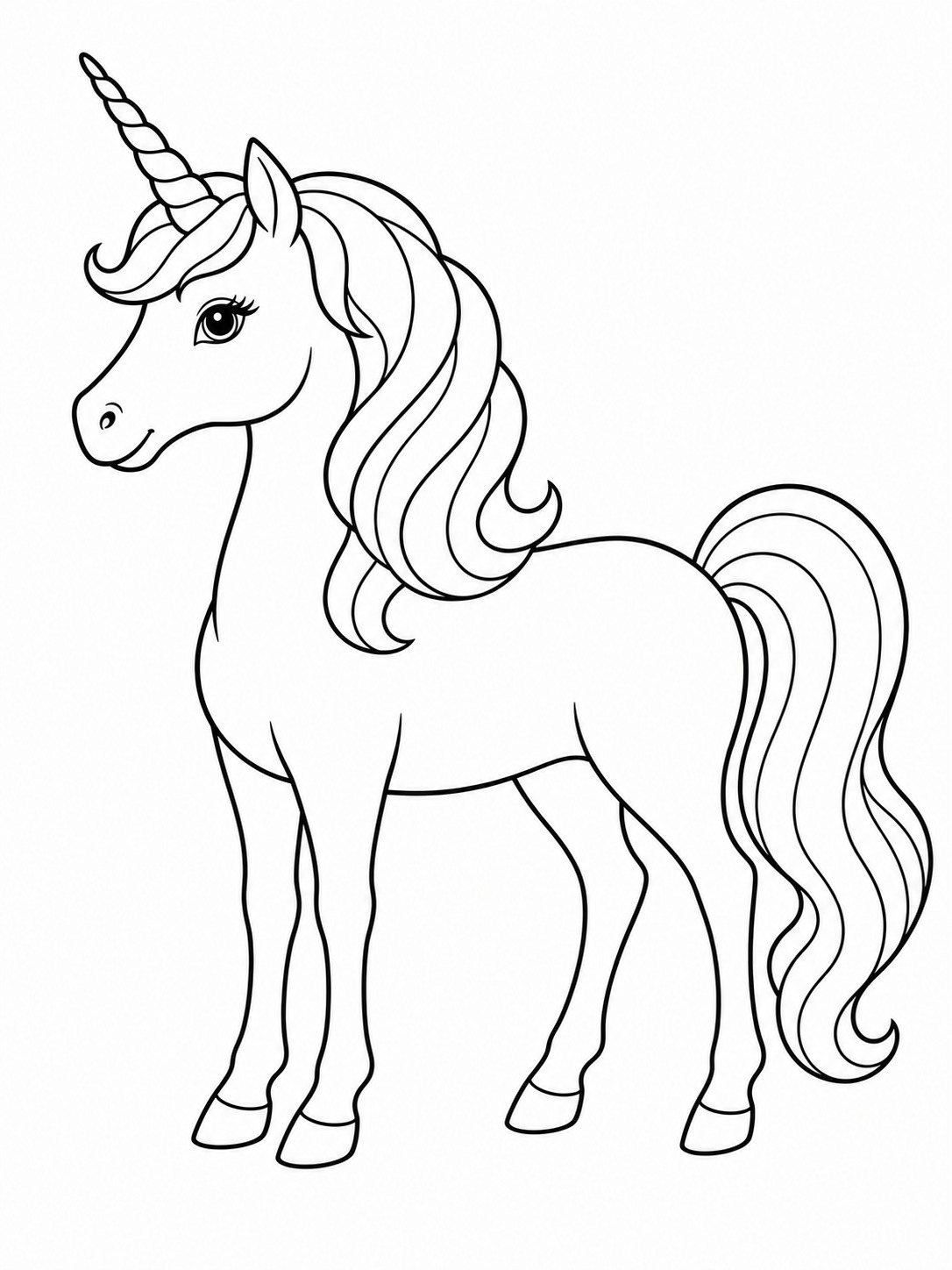
#2 Baby unicorn (foal)
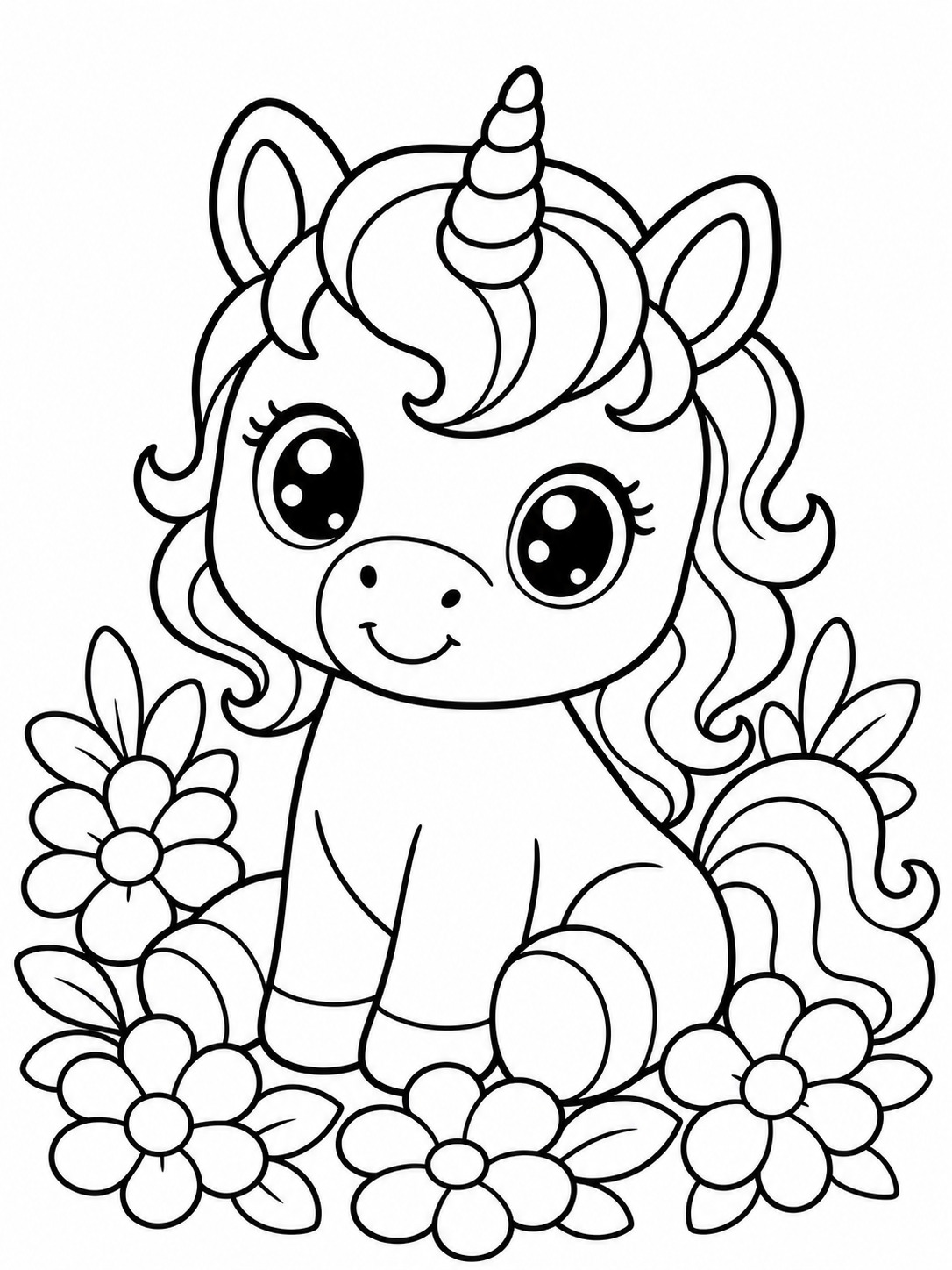
#6 Unicorn in a rainbow
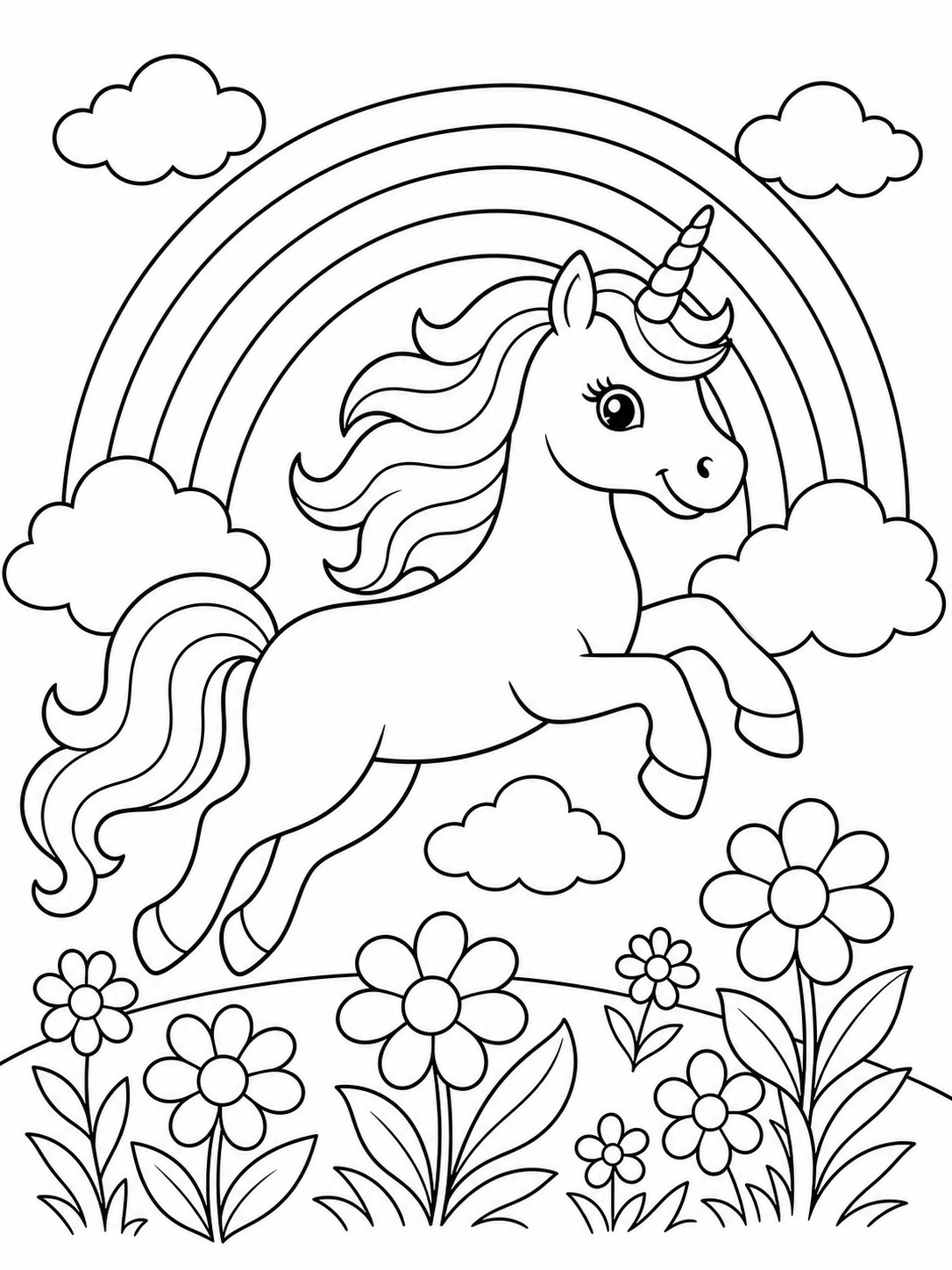
#7 Sleeping unicorn
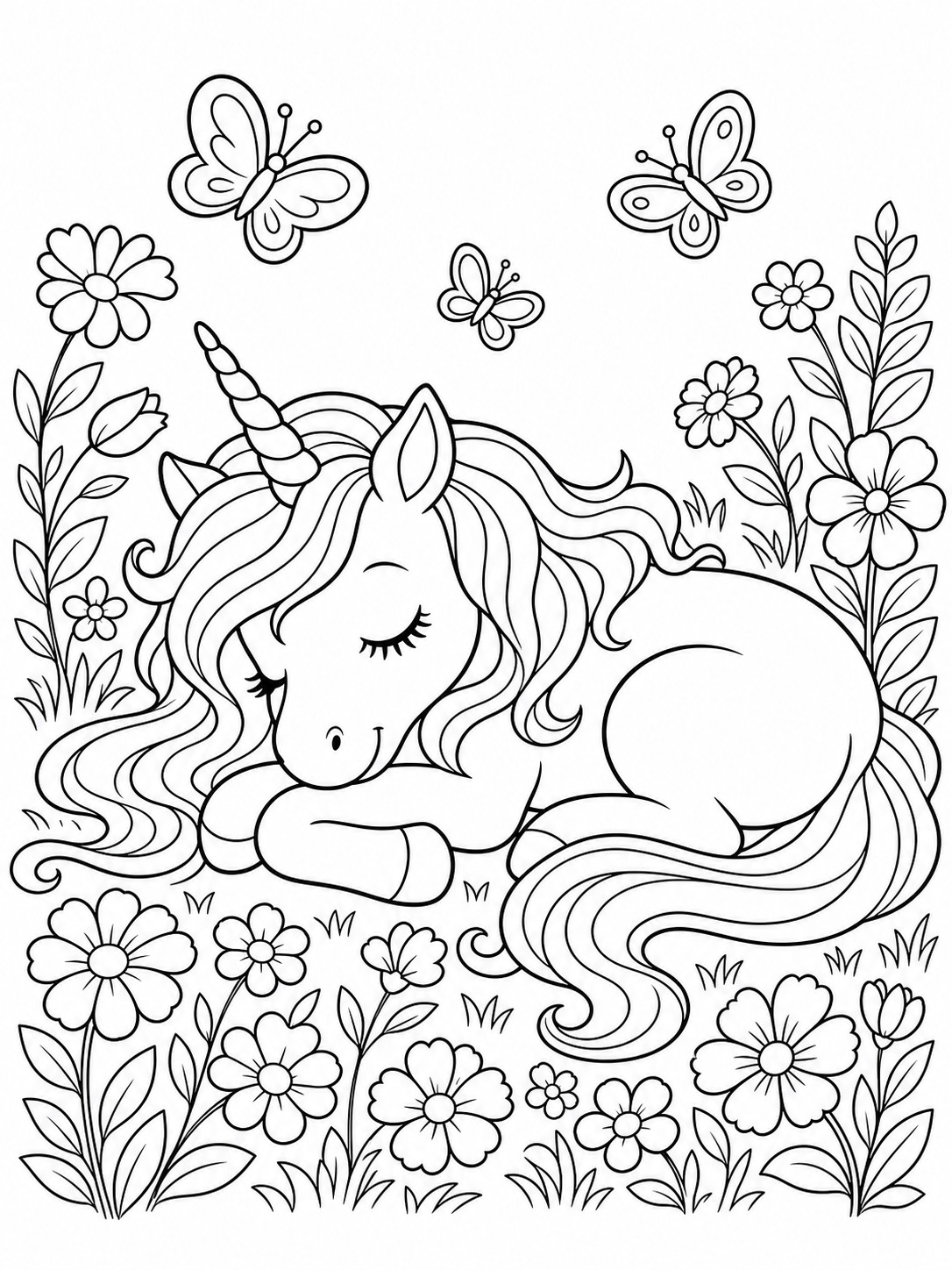
#11 Unicorn birthday scene
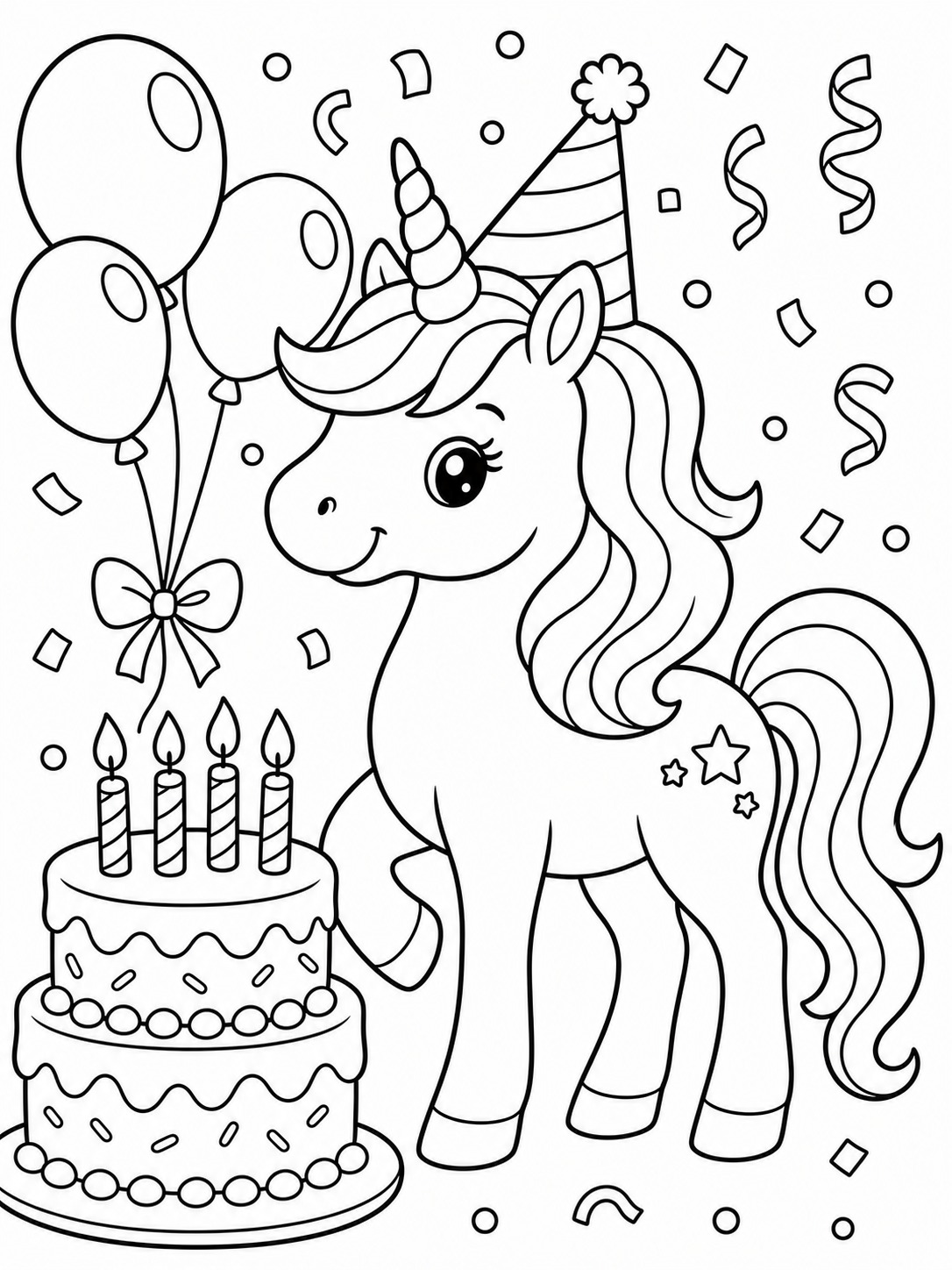
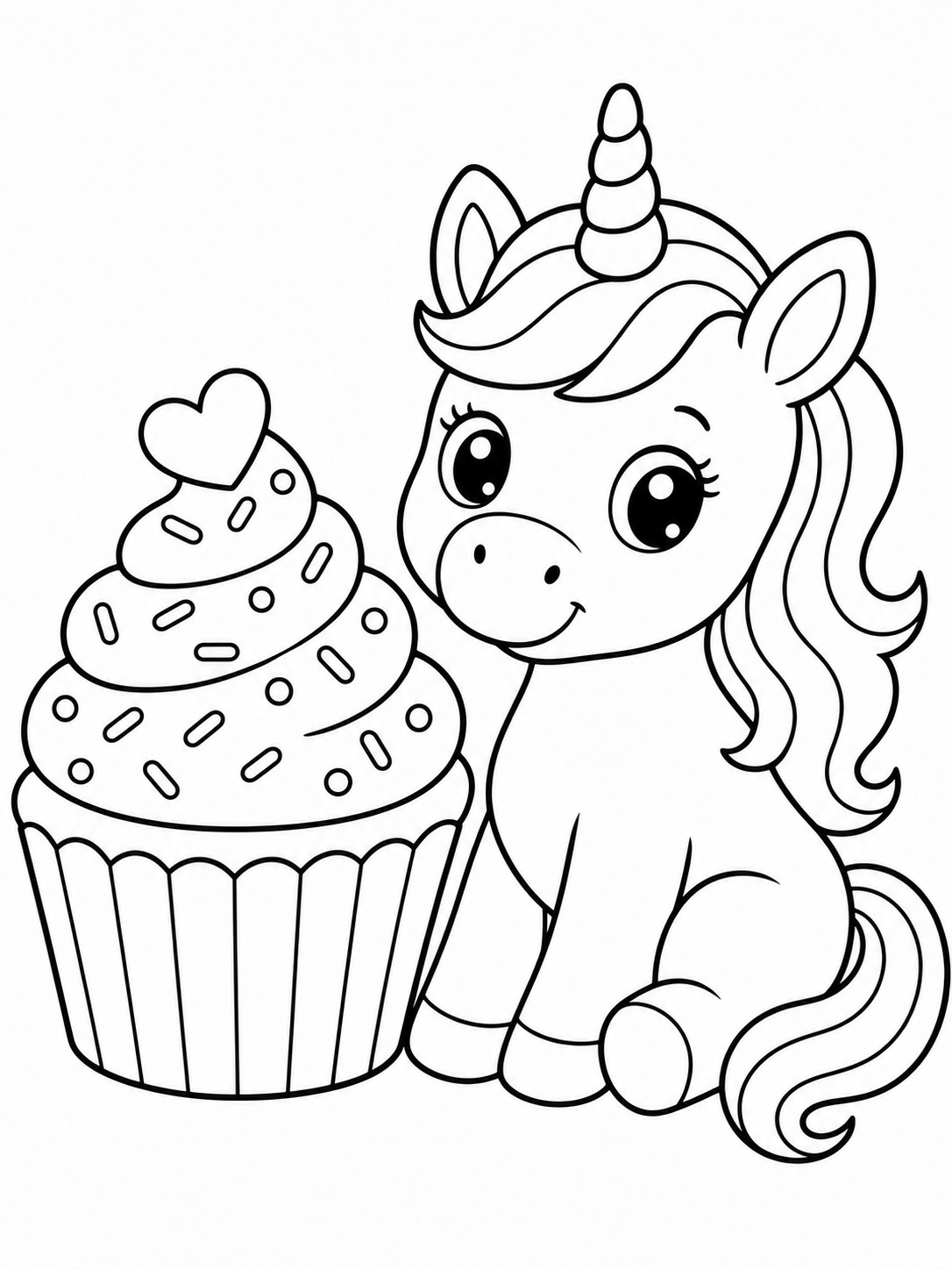
#17 Cute unicorn with cupcake
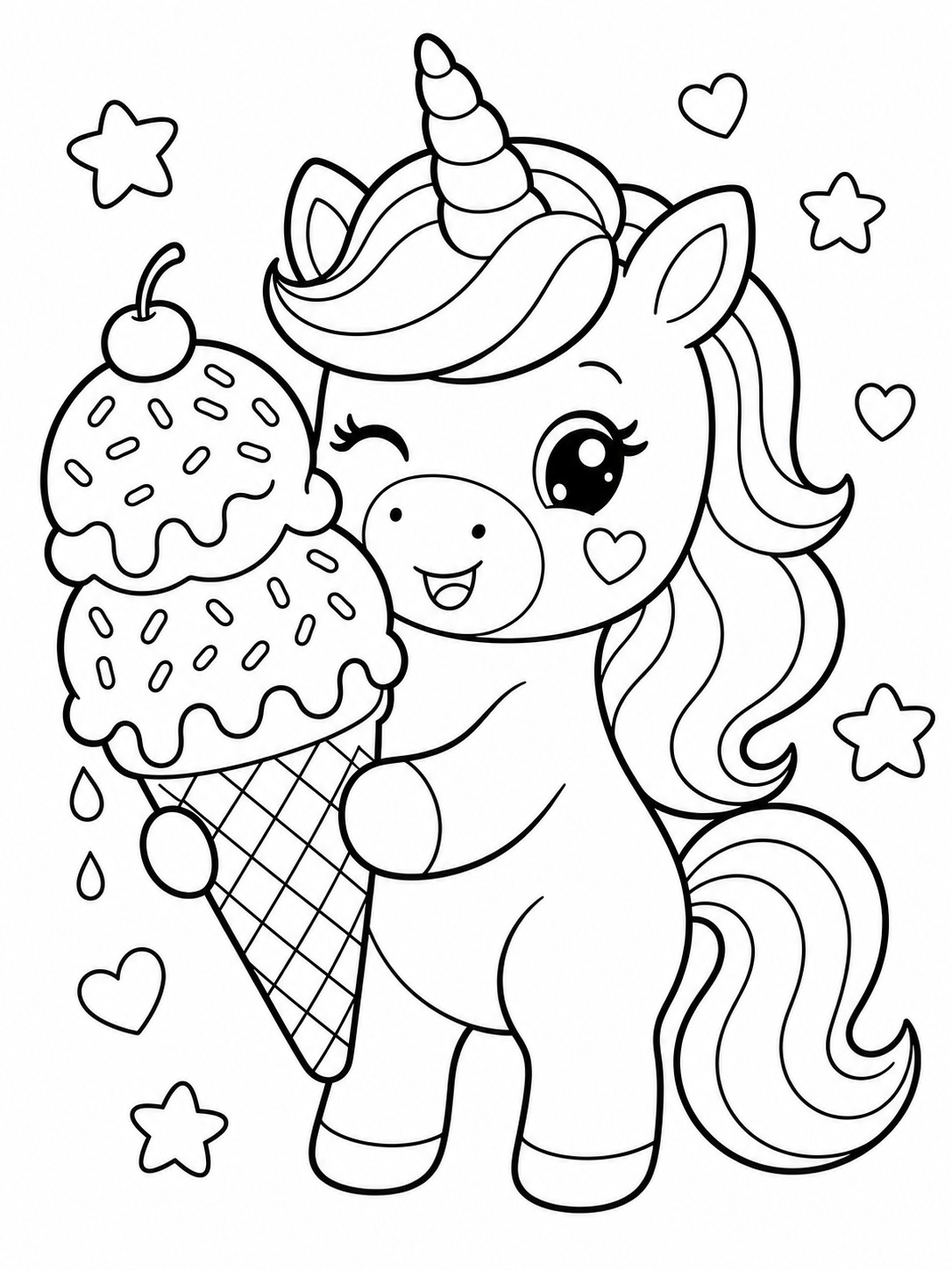
#24 Unicorn with ice cream
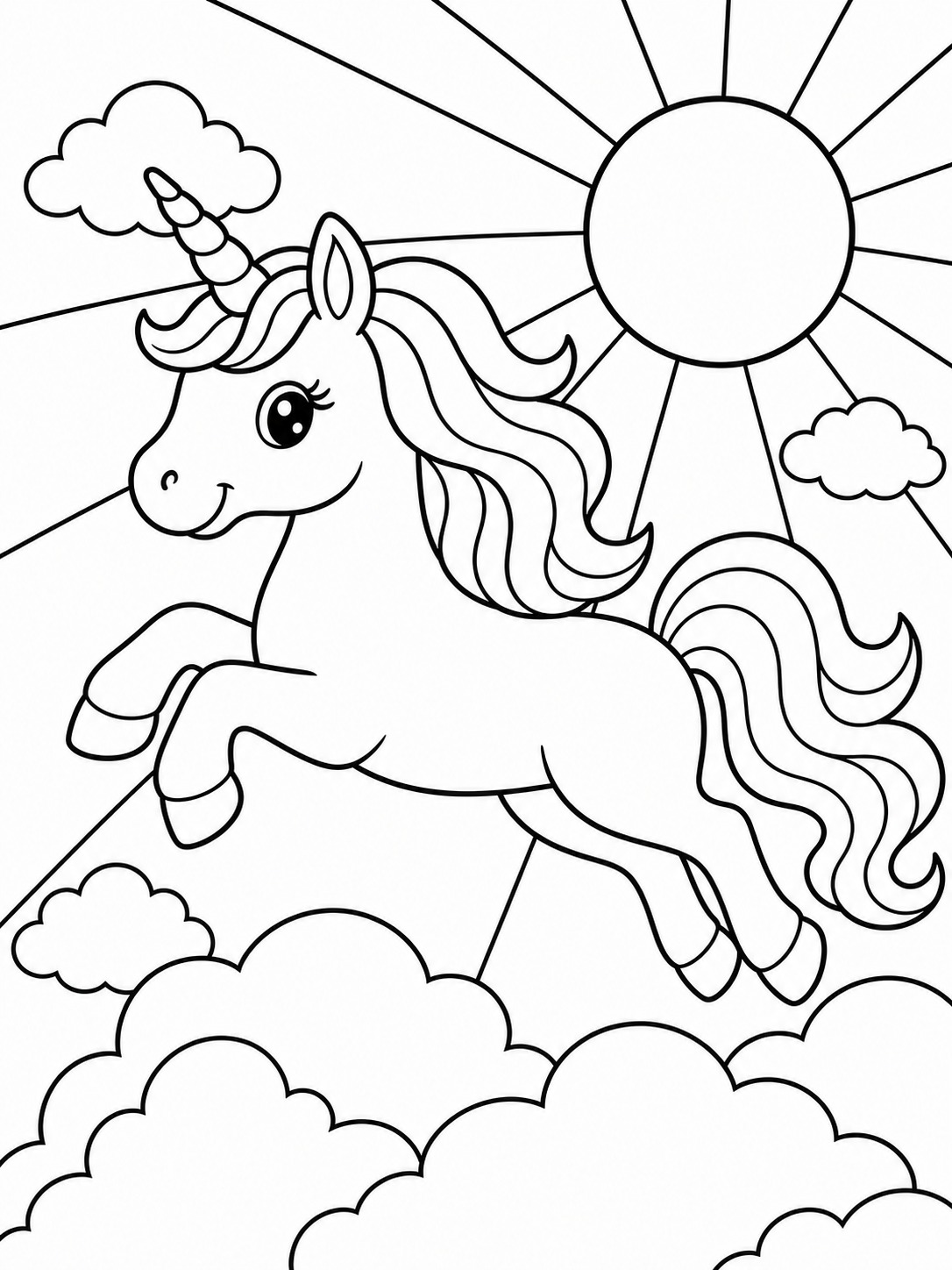
#33 Unicorn jumping over clouds
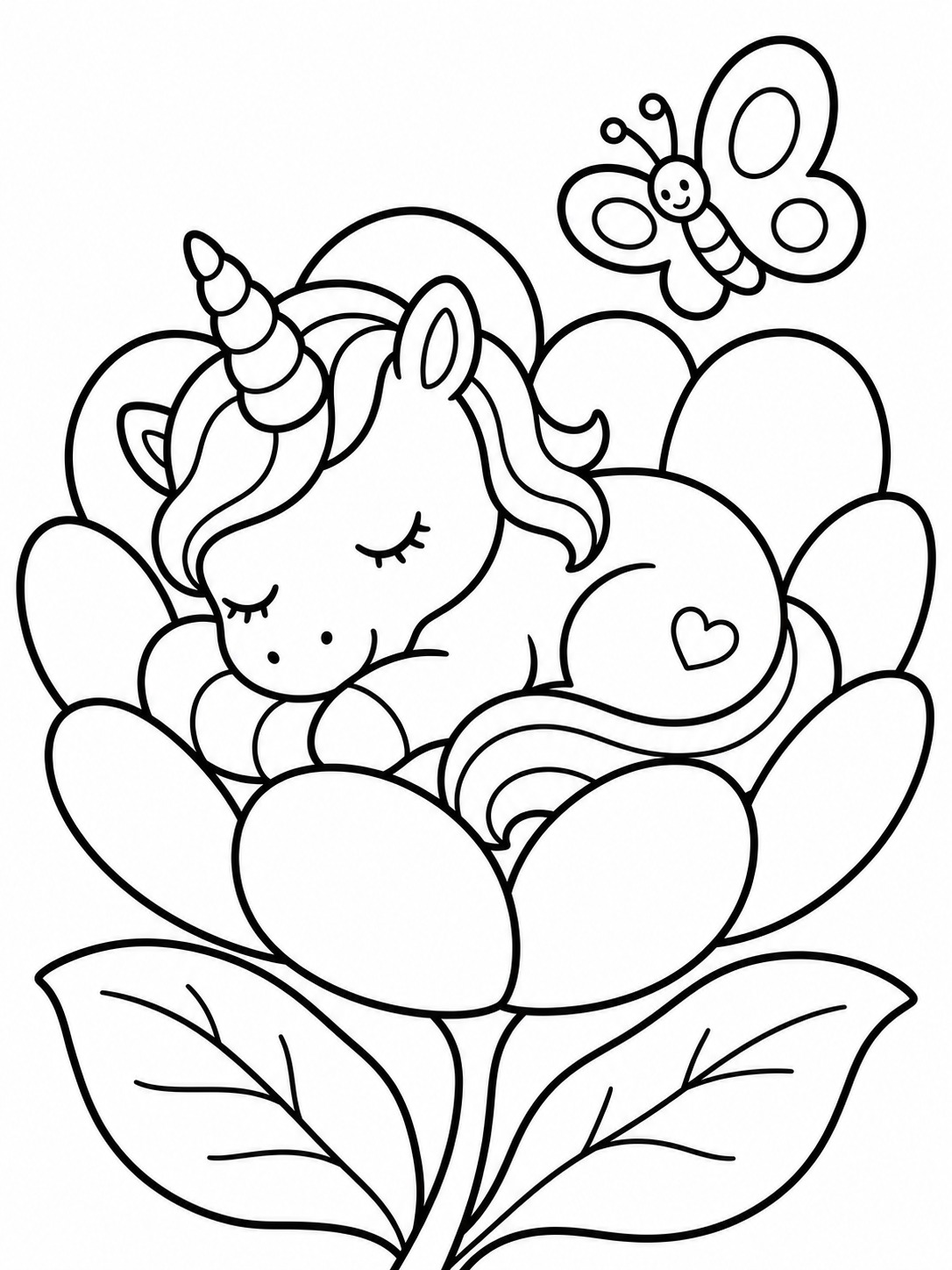
#35 Sleeping baby unicorn in a nest
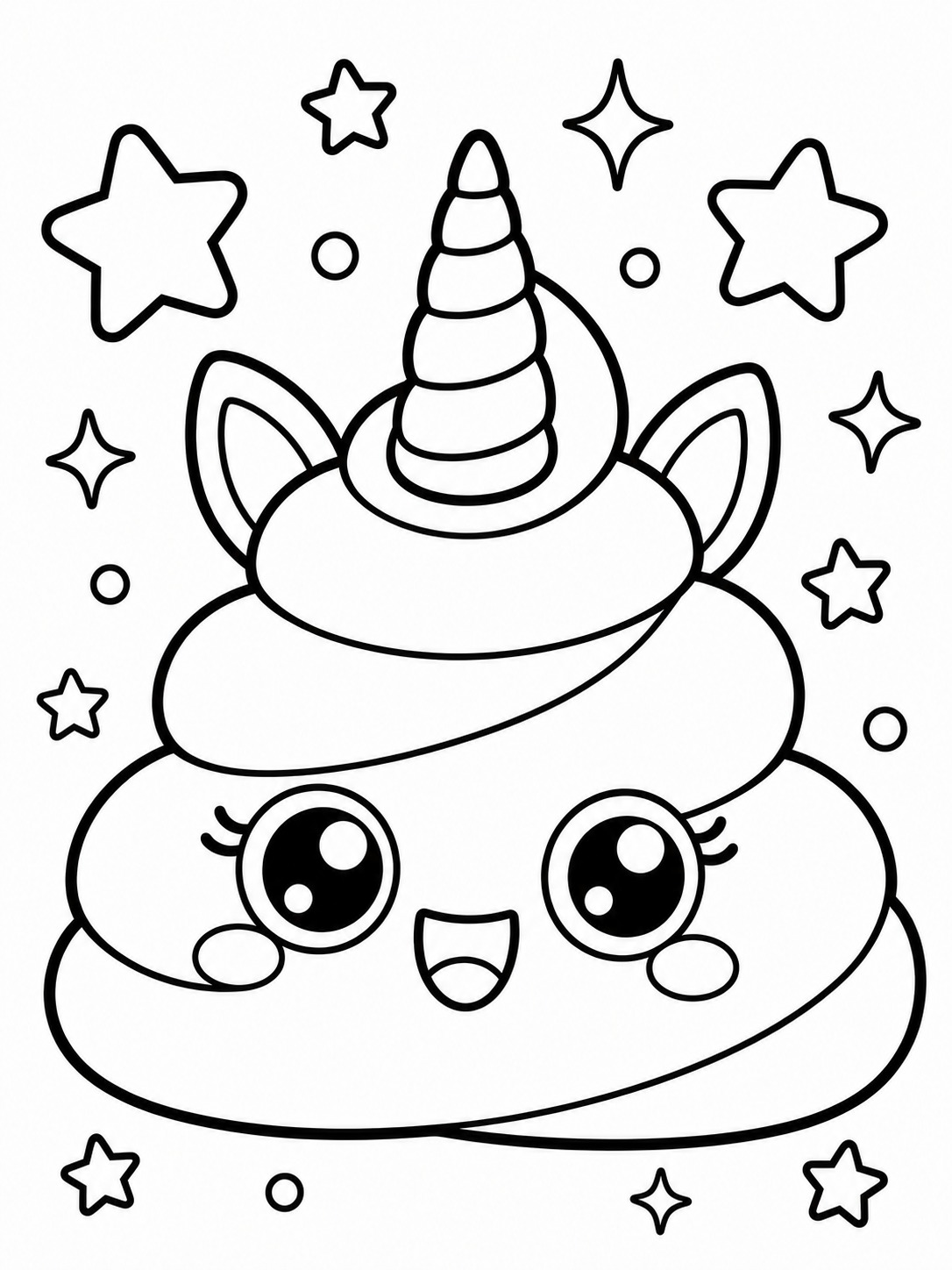
#45 Unicorn rainbow poop (emoji style)
Medium complexity unicorn coloring pages (ages 5-10)
These designs have more interior detail, defined backgrounds, and secondary characters or elements. They give kids enough to work with across multiple coloring sessions without being frustrating.
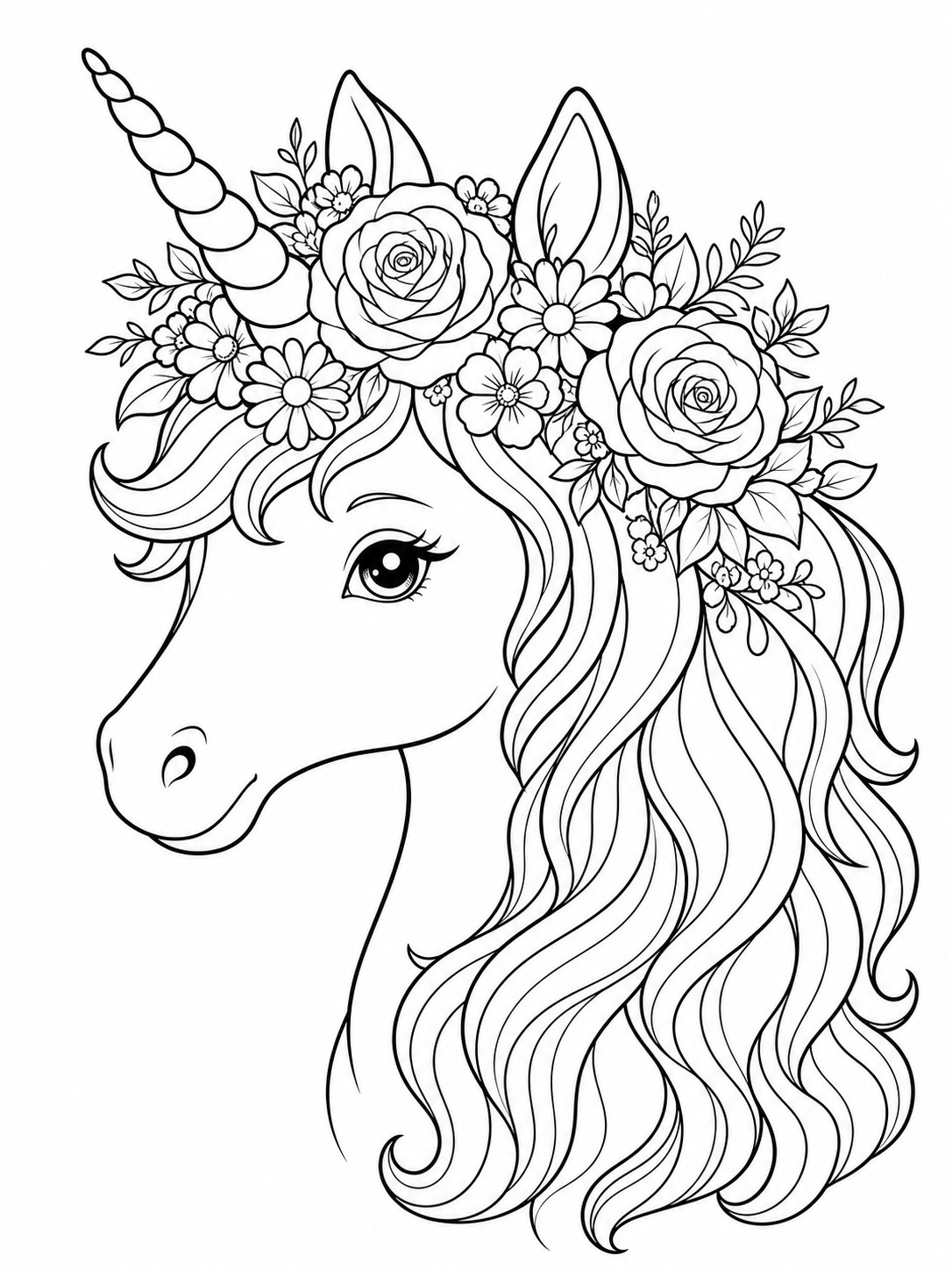
#3 Unicorn with flower crown
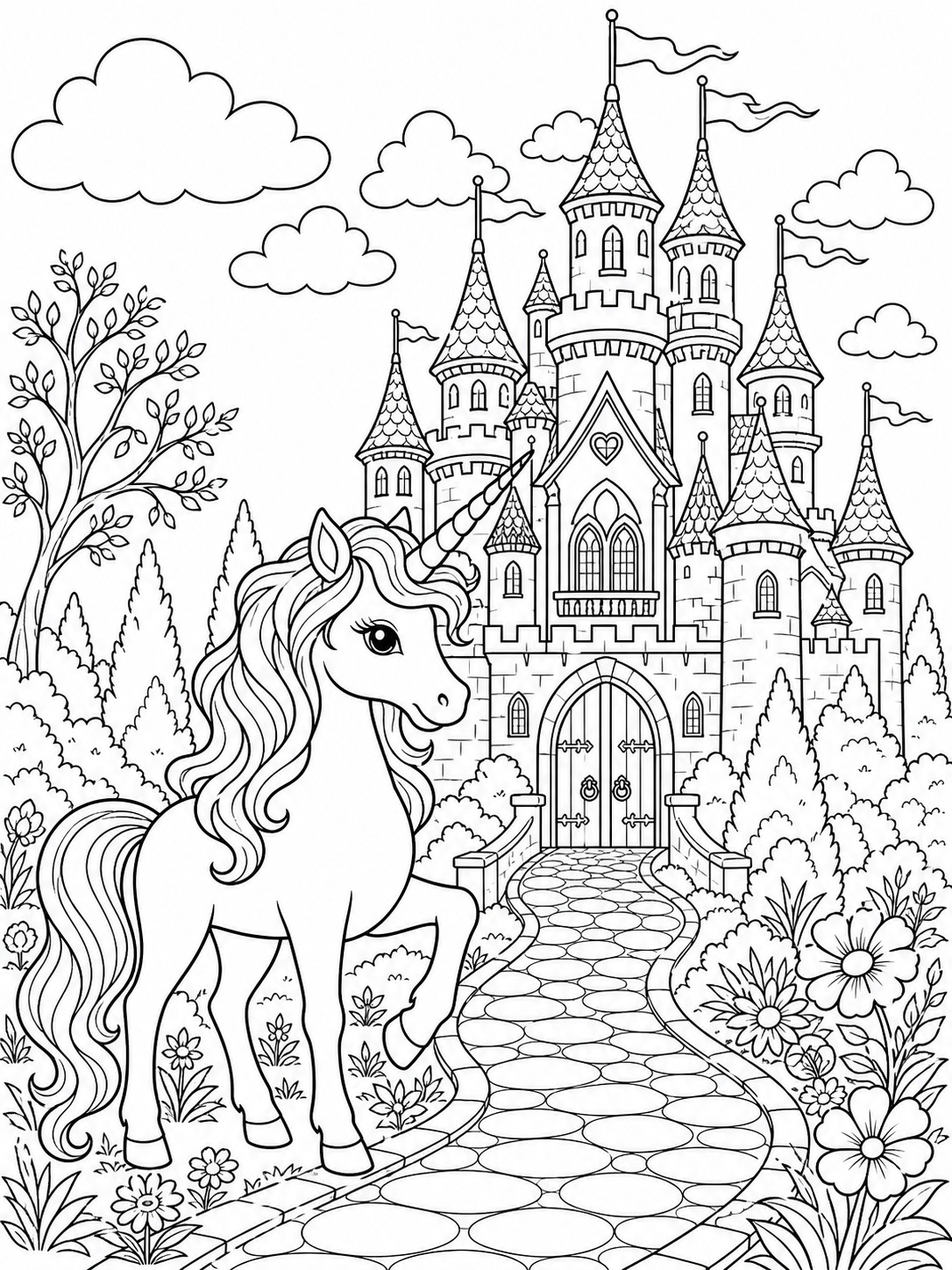
#8 Unicorn and castle
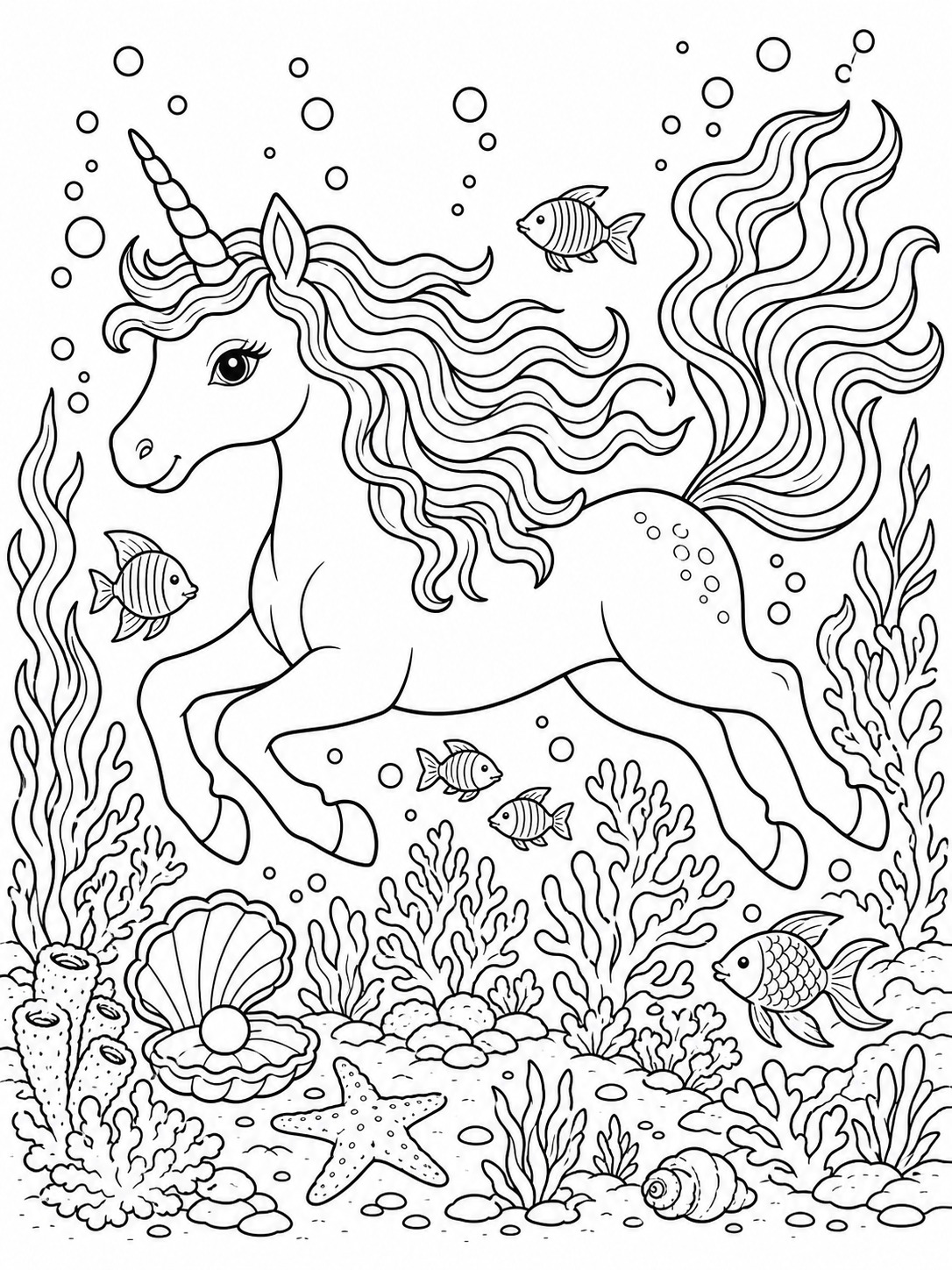
#9 Unicorn underwater
#10 Unicorn with wings (alicorn)
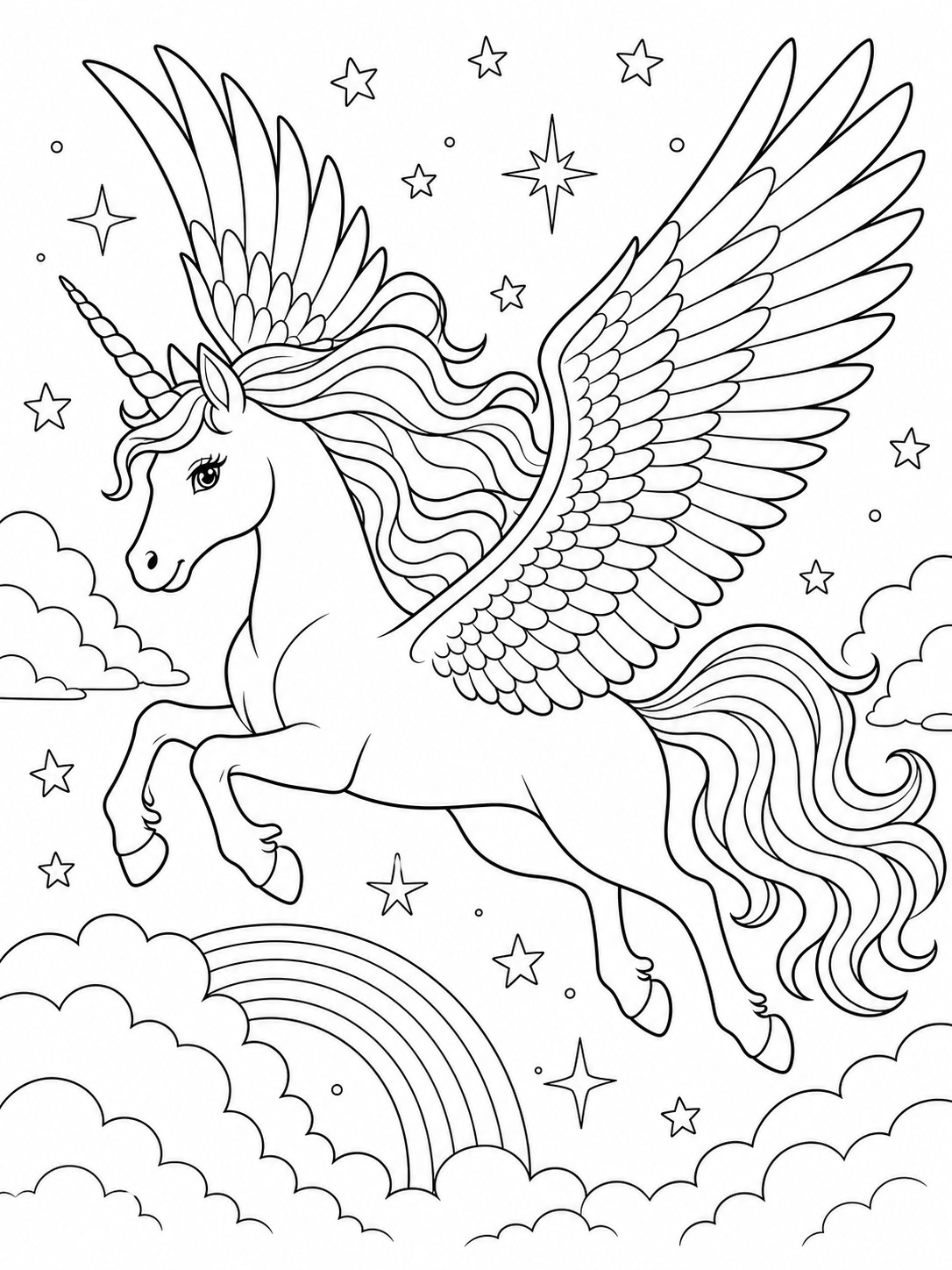
#14 Unicorn in a forest
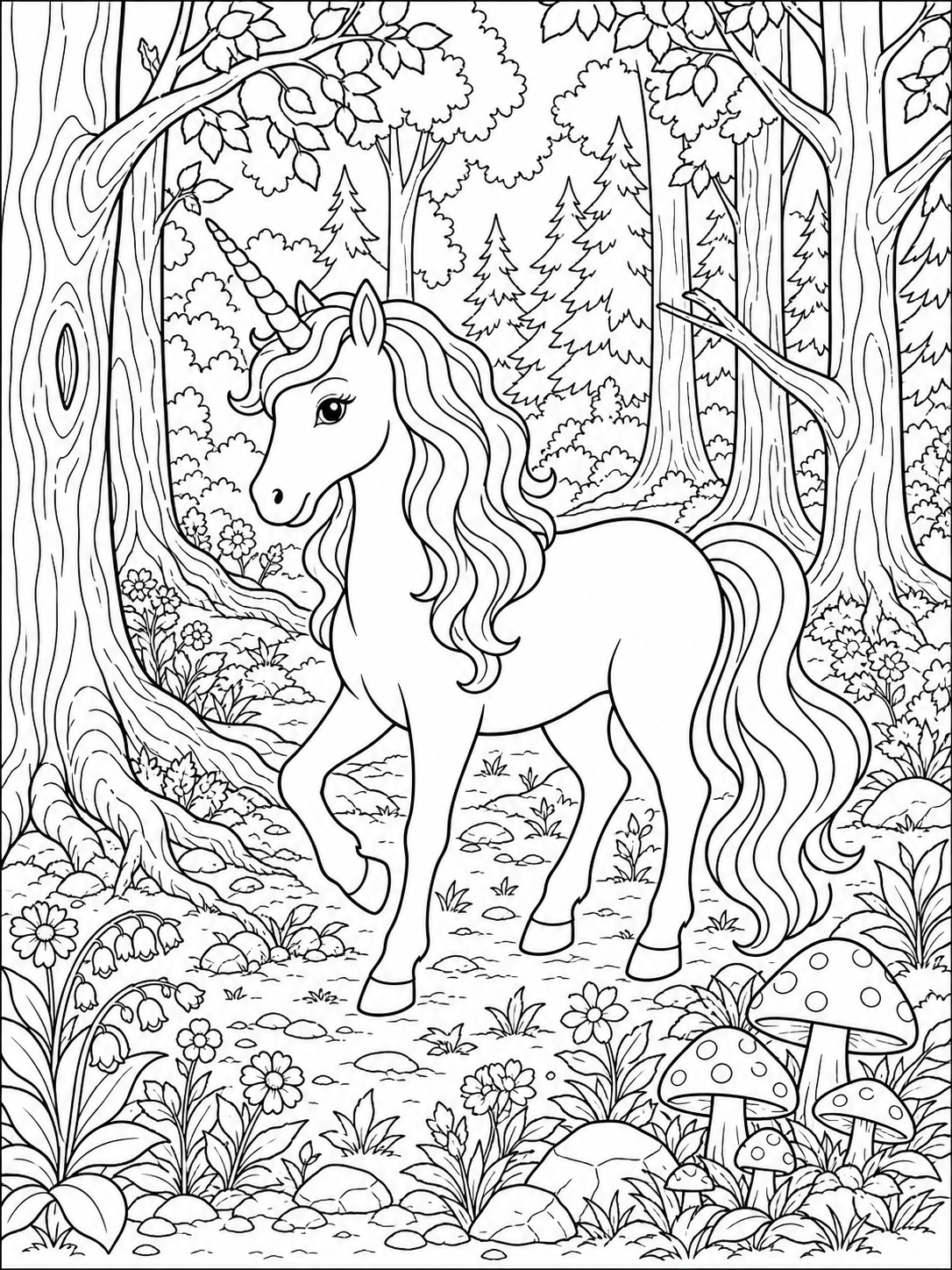
#16 Unicorn and moon
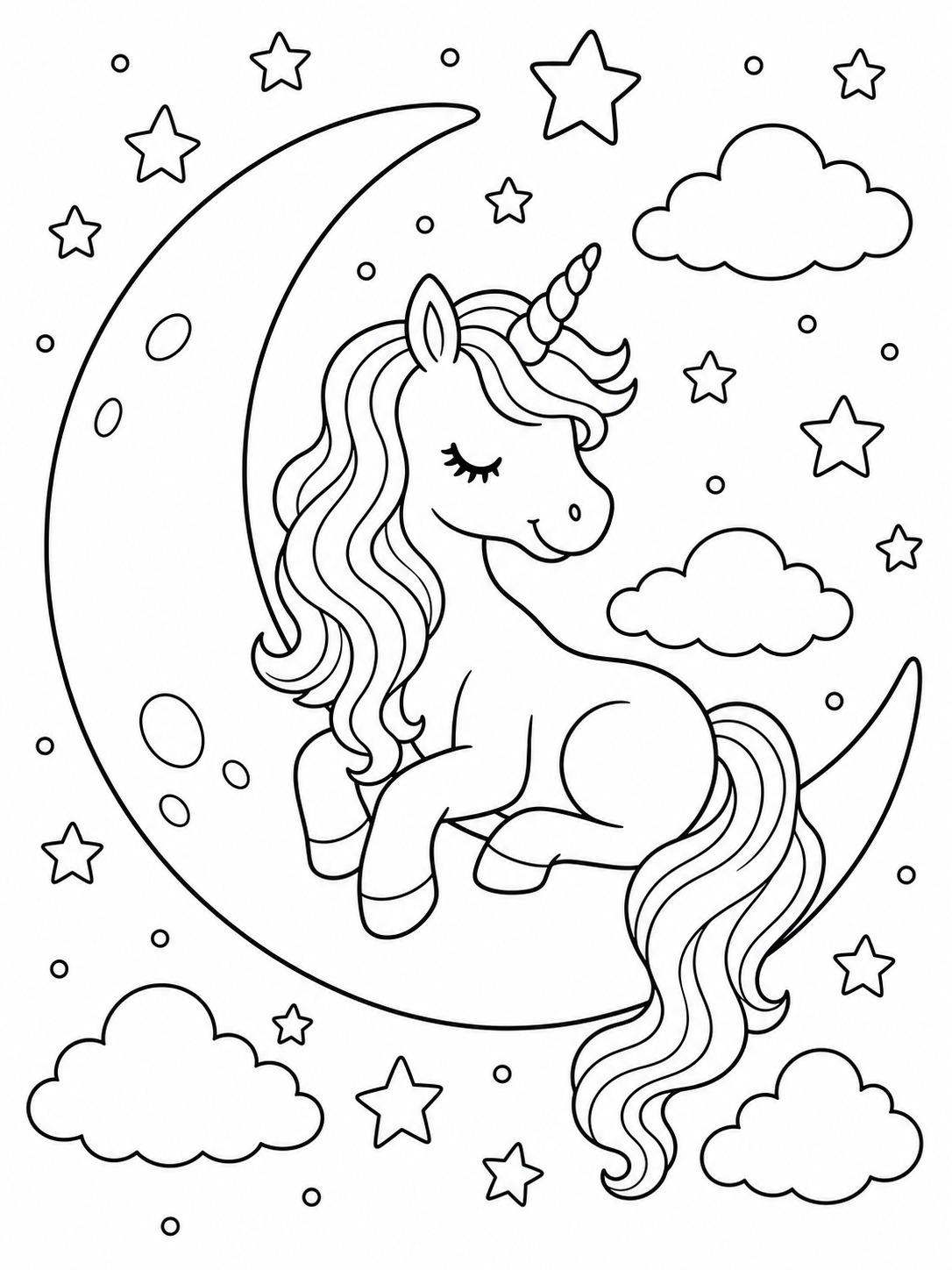
#19 Unicorn with butterflies
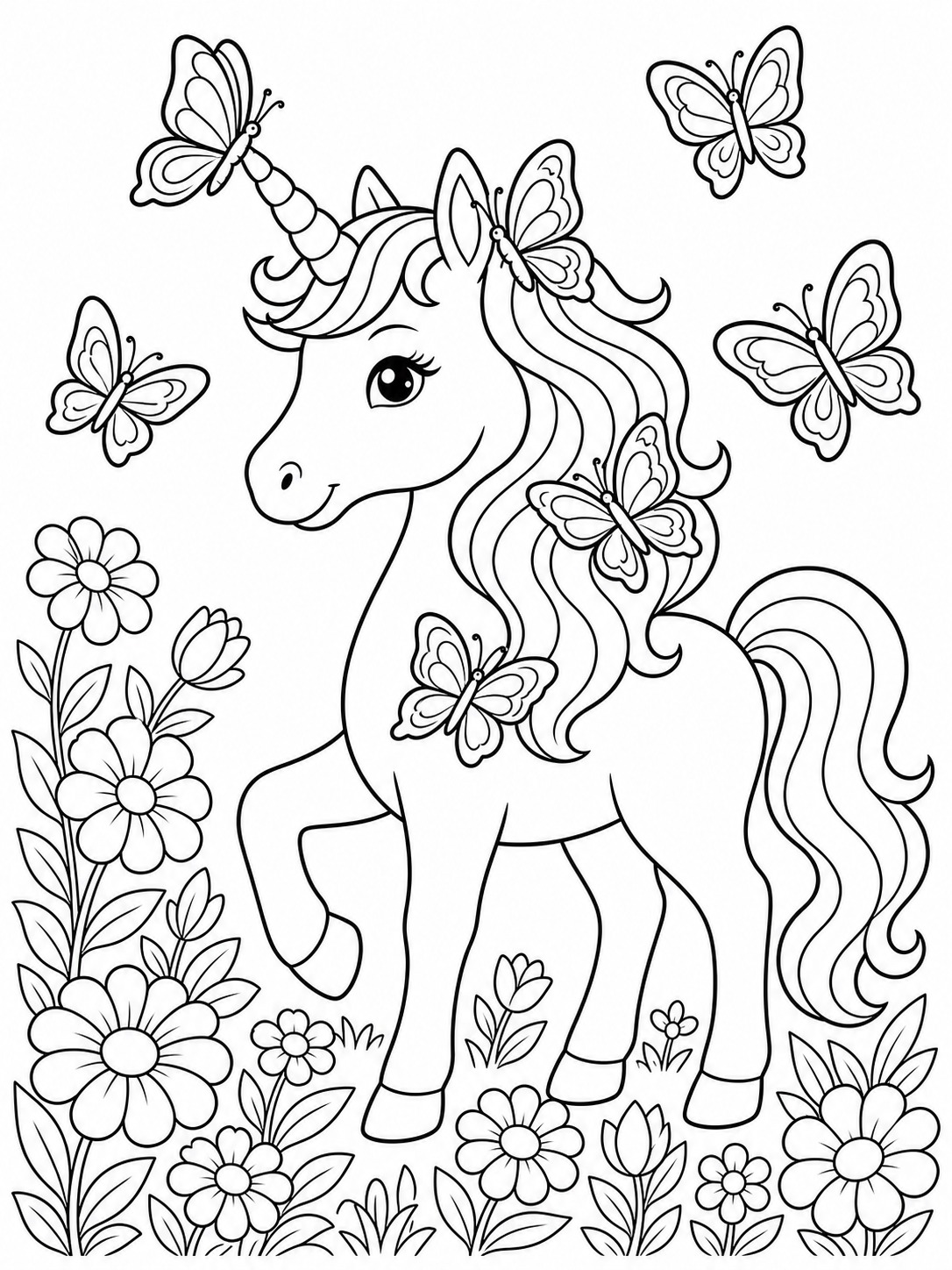
200 Bold & Easy Coloring Pages
Get 200 bold, simple and relaxing printable coloring pages for adults and kids — featuring animals, nature, food, fantasy, patterns and seasonal designs.
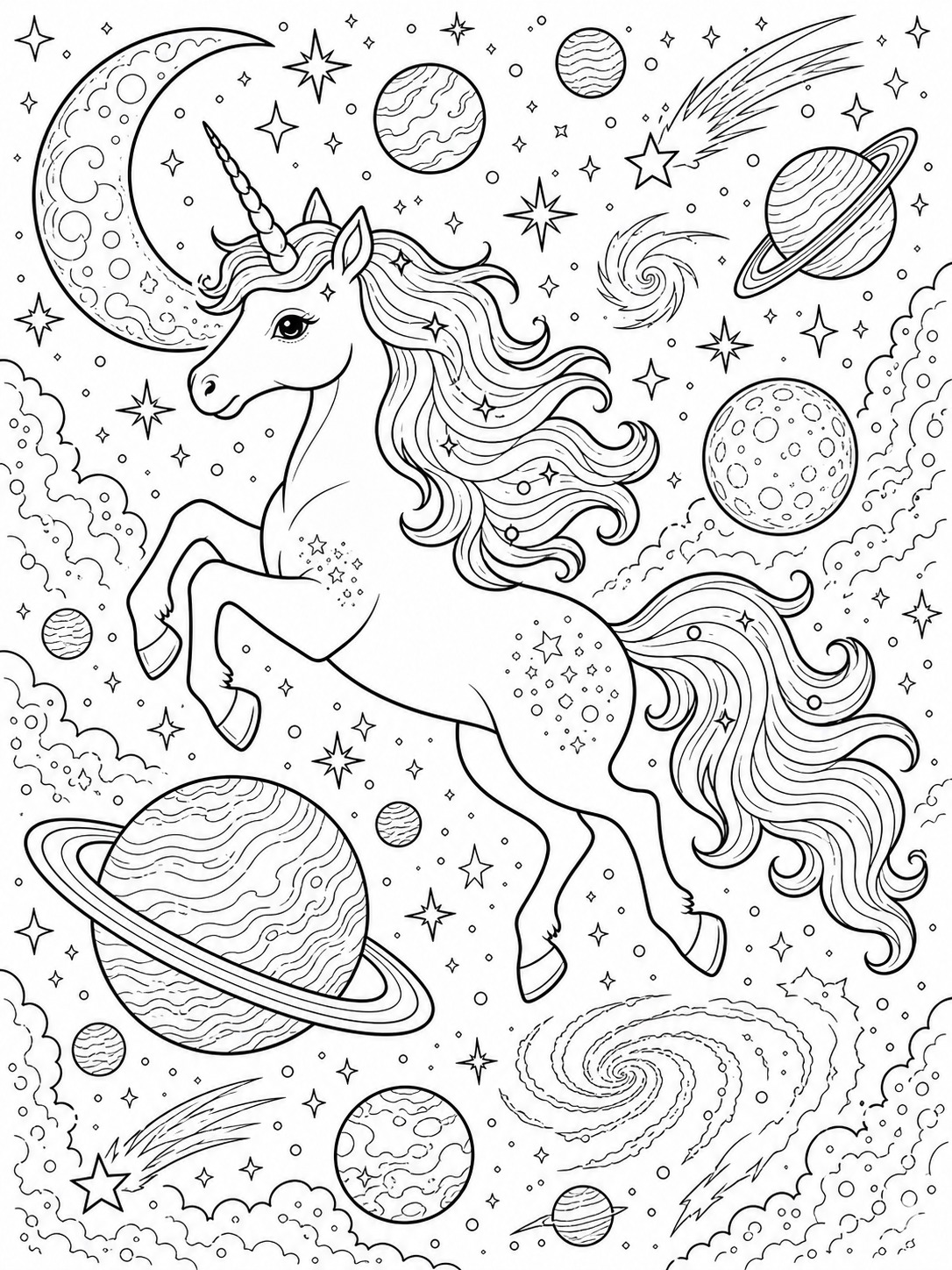
#21 Unicorn with stars and planets
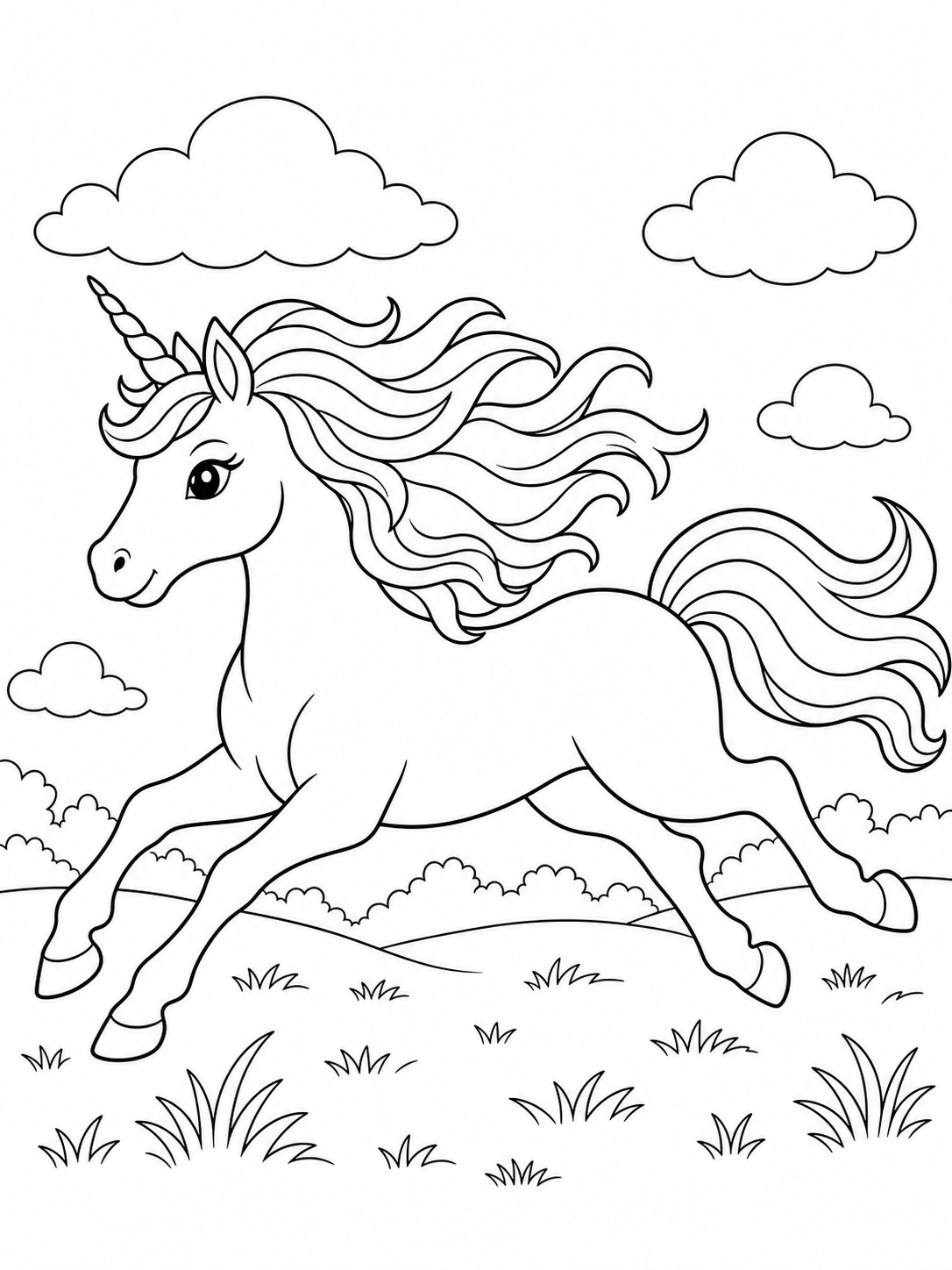
#23 Unicorn running at sunset
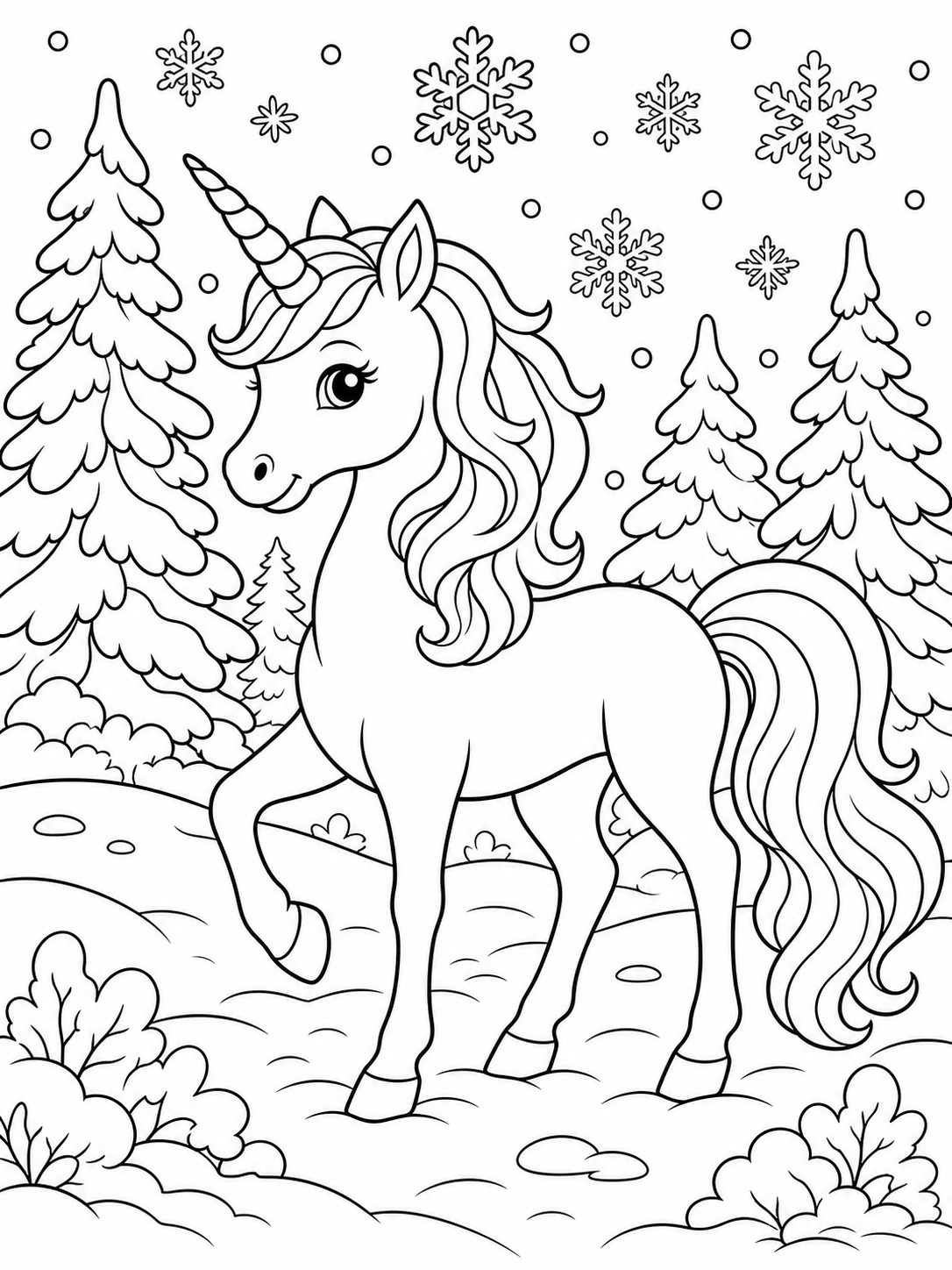
#25 Unicorn in winter snow
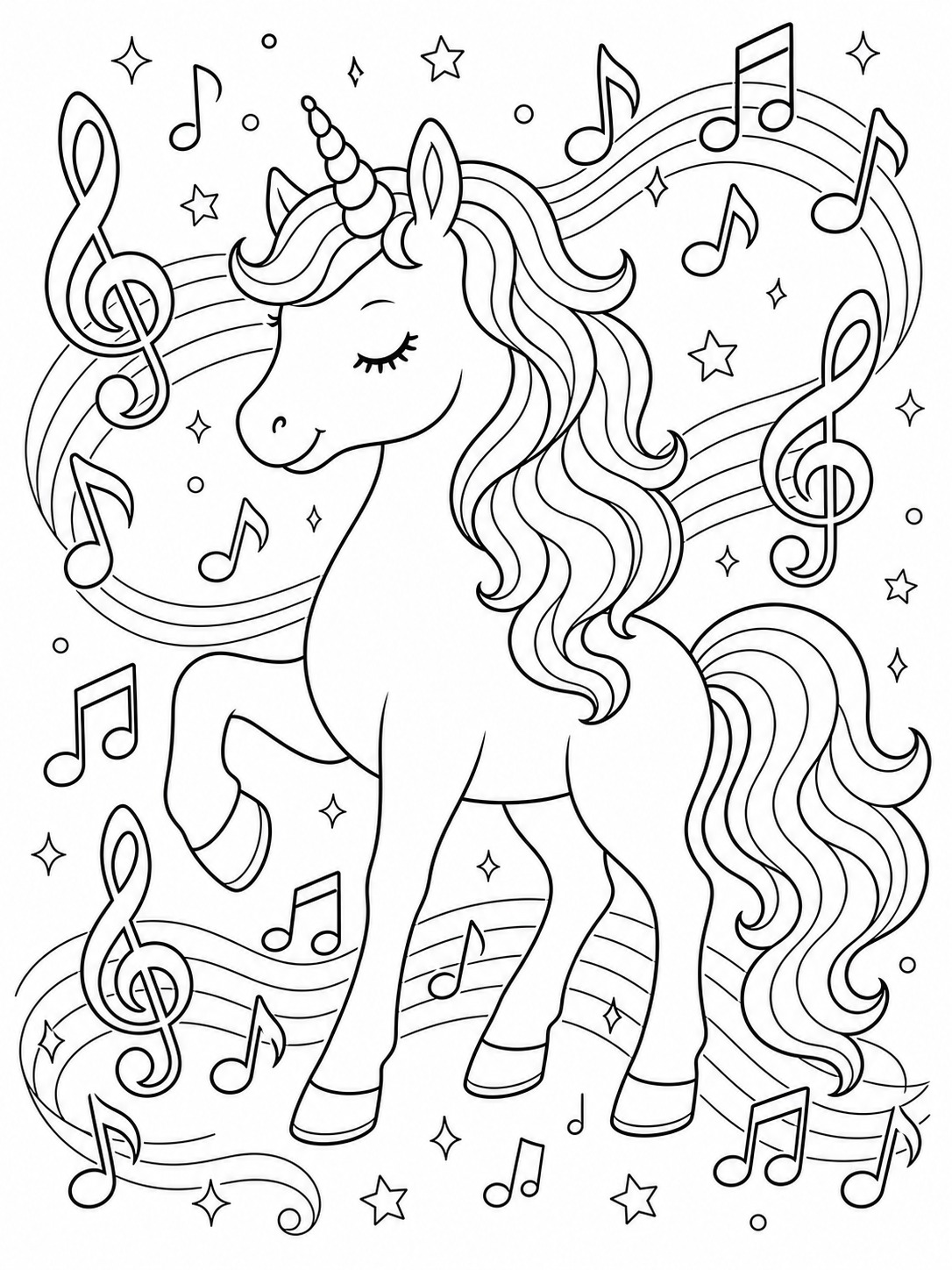
#26 Unicorn with musical notes
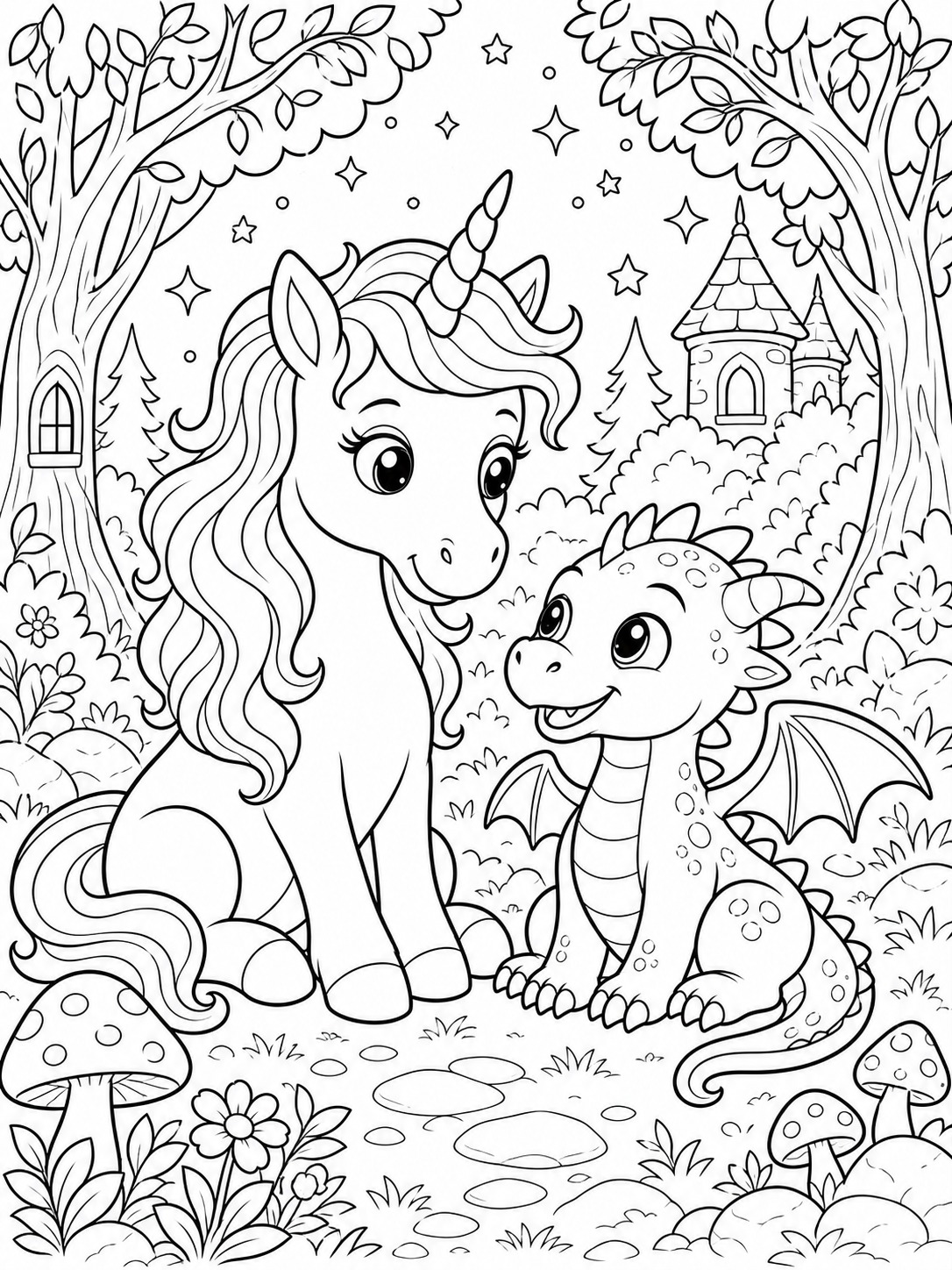
#27 Unicorn and dragon friends
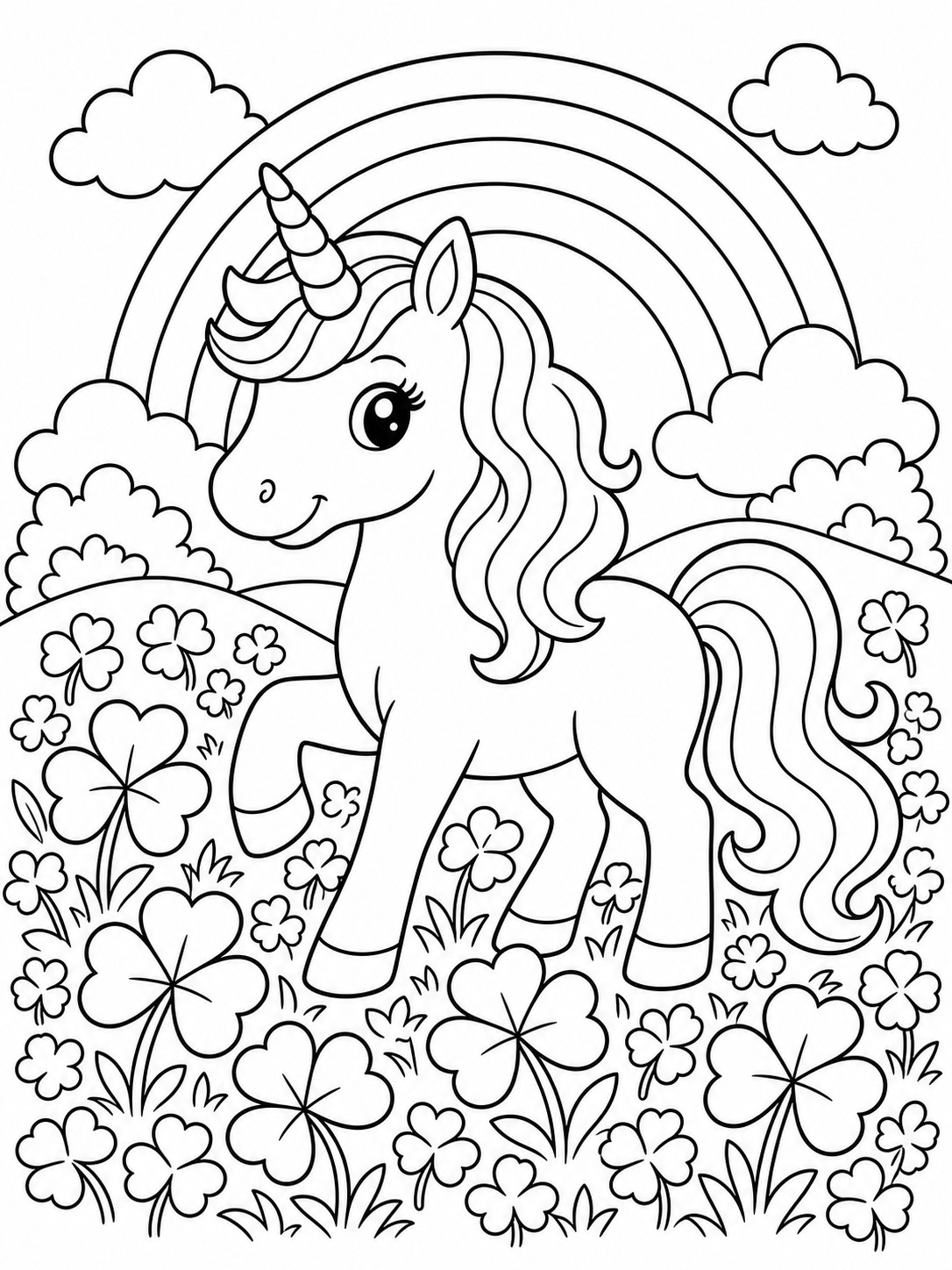
#29 Unicorn with four-leaf clover field
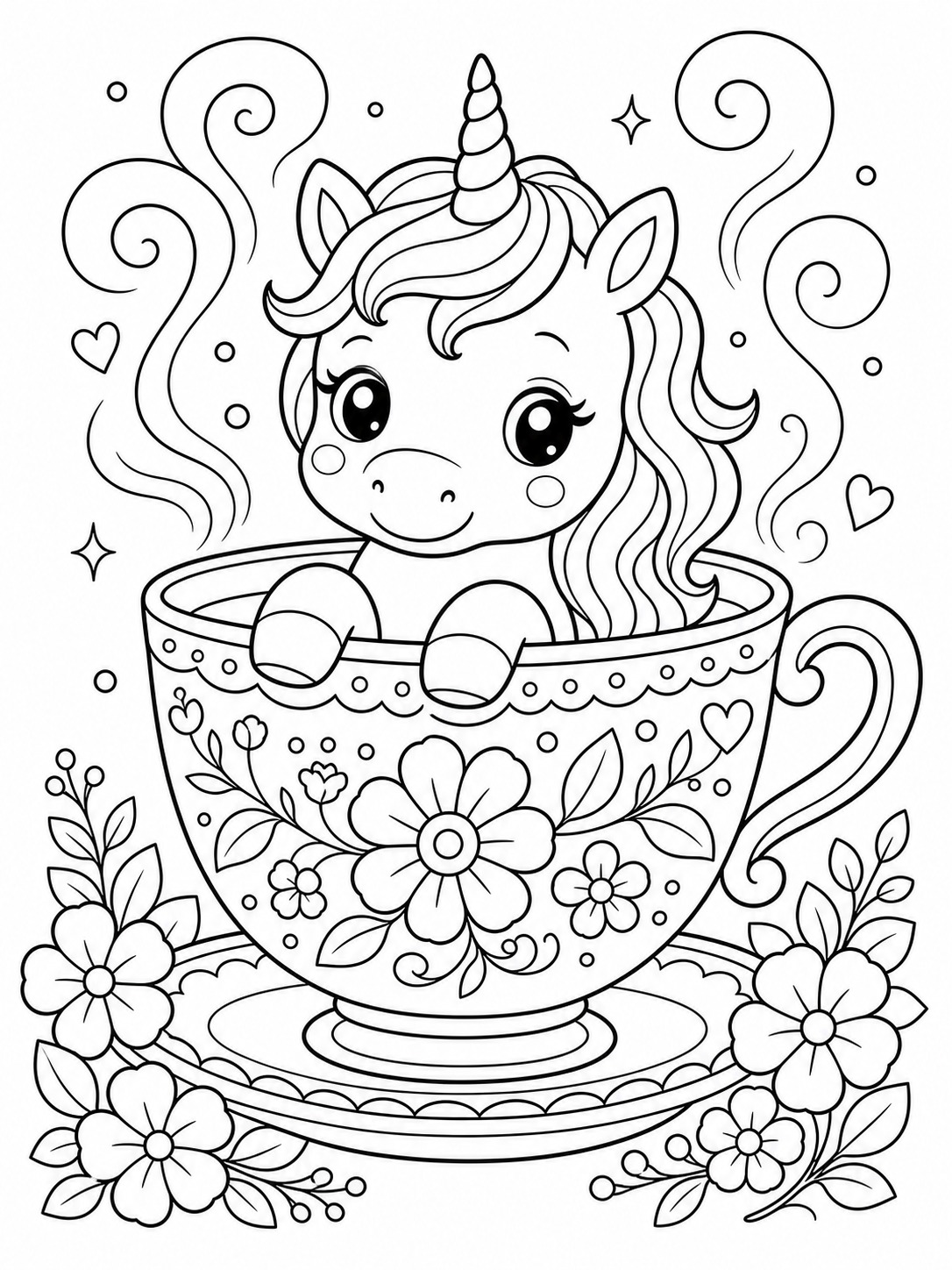
#30 Tiny unicorn in a teacup
#32 Unicorn with autumn leaves
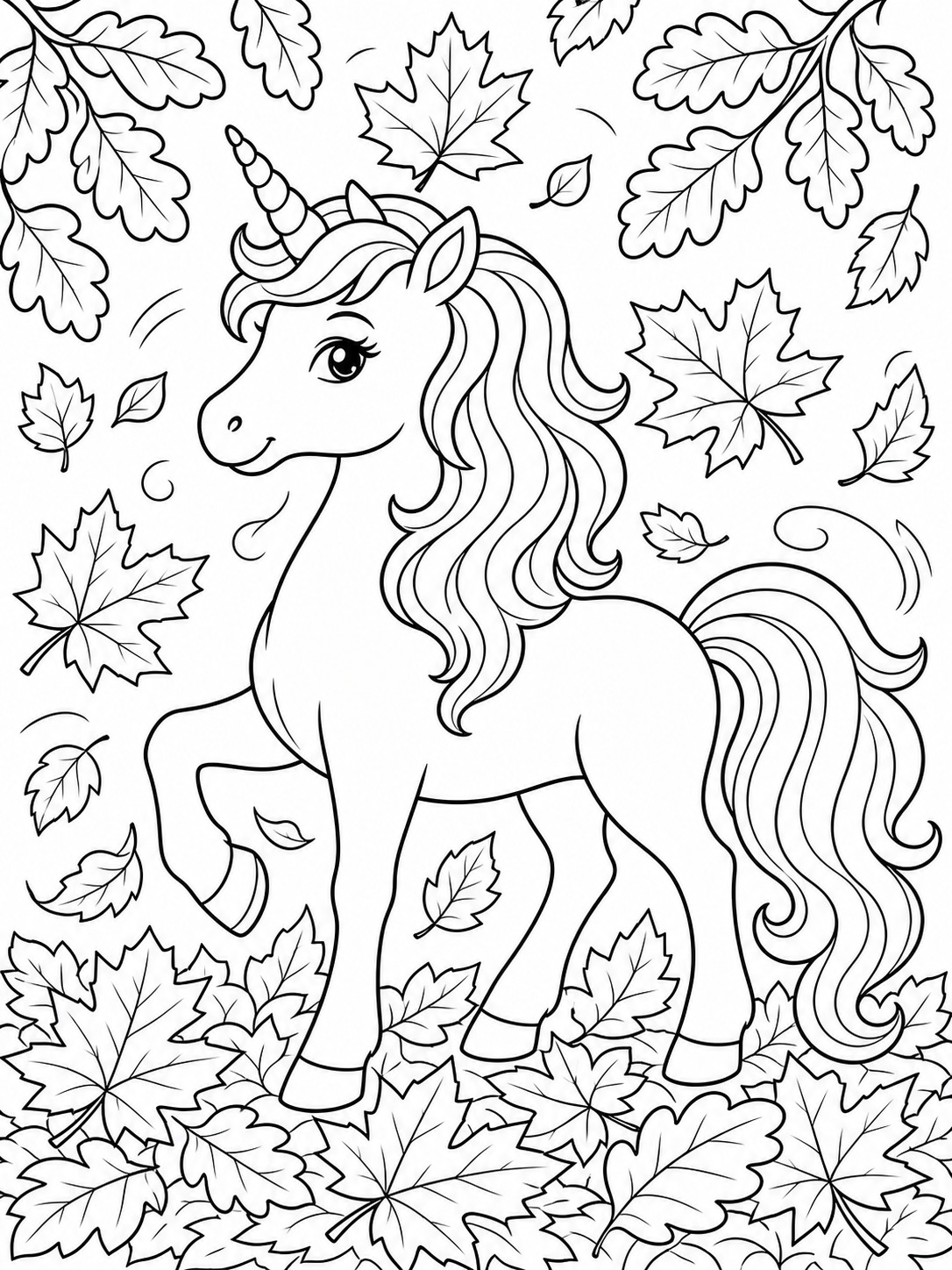
#36 Unicorn and fairy
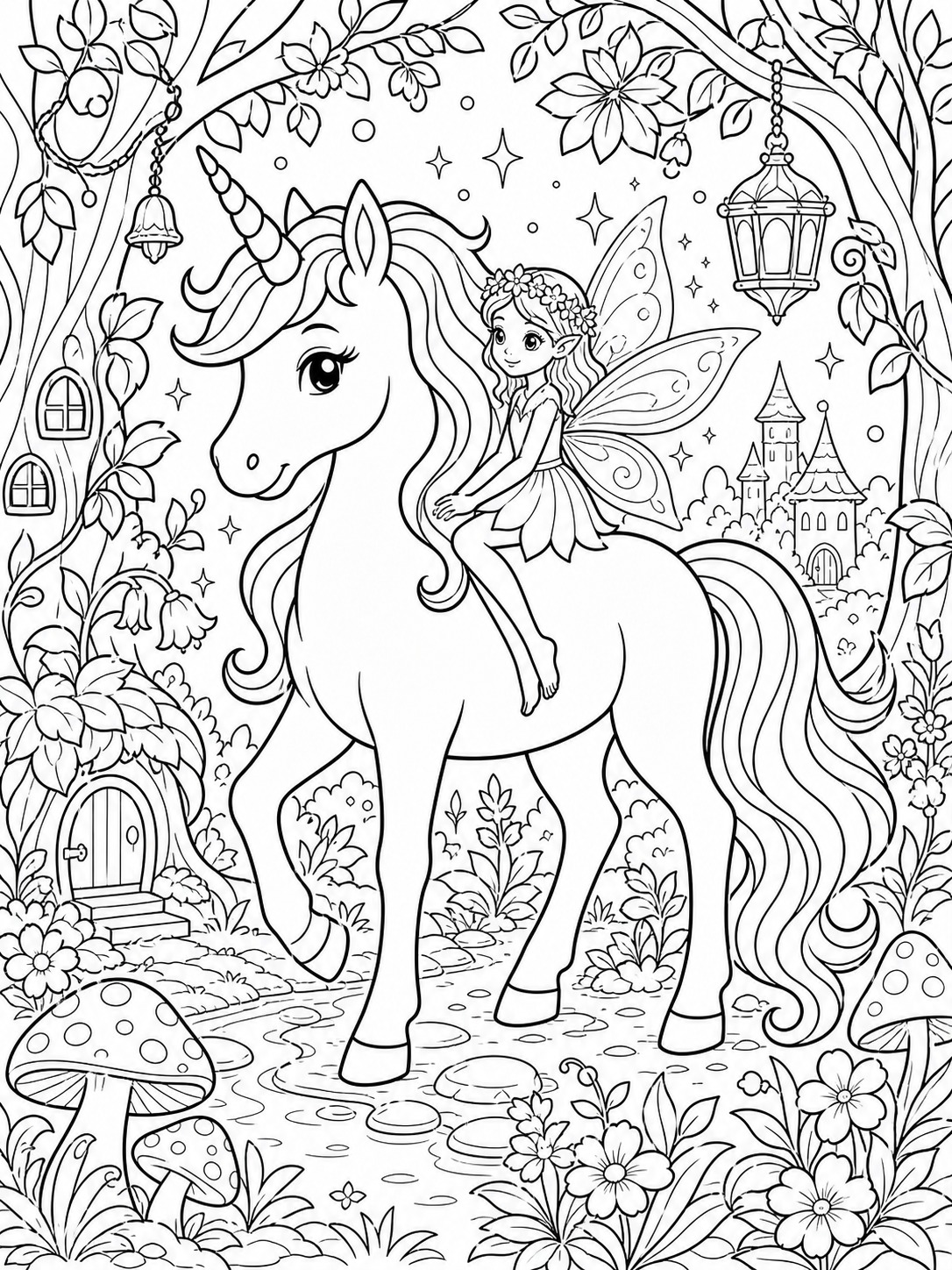
#38 Unicorn bookworm
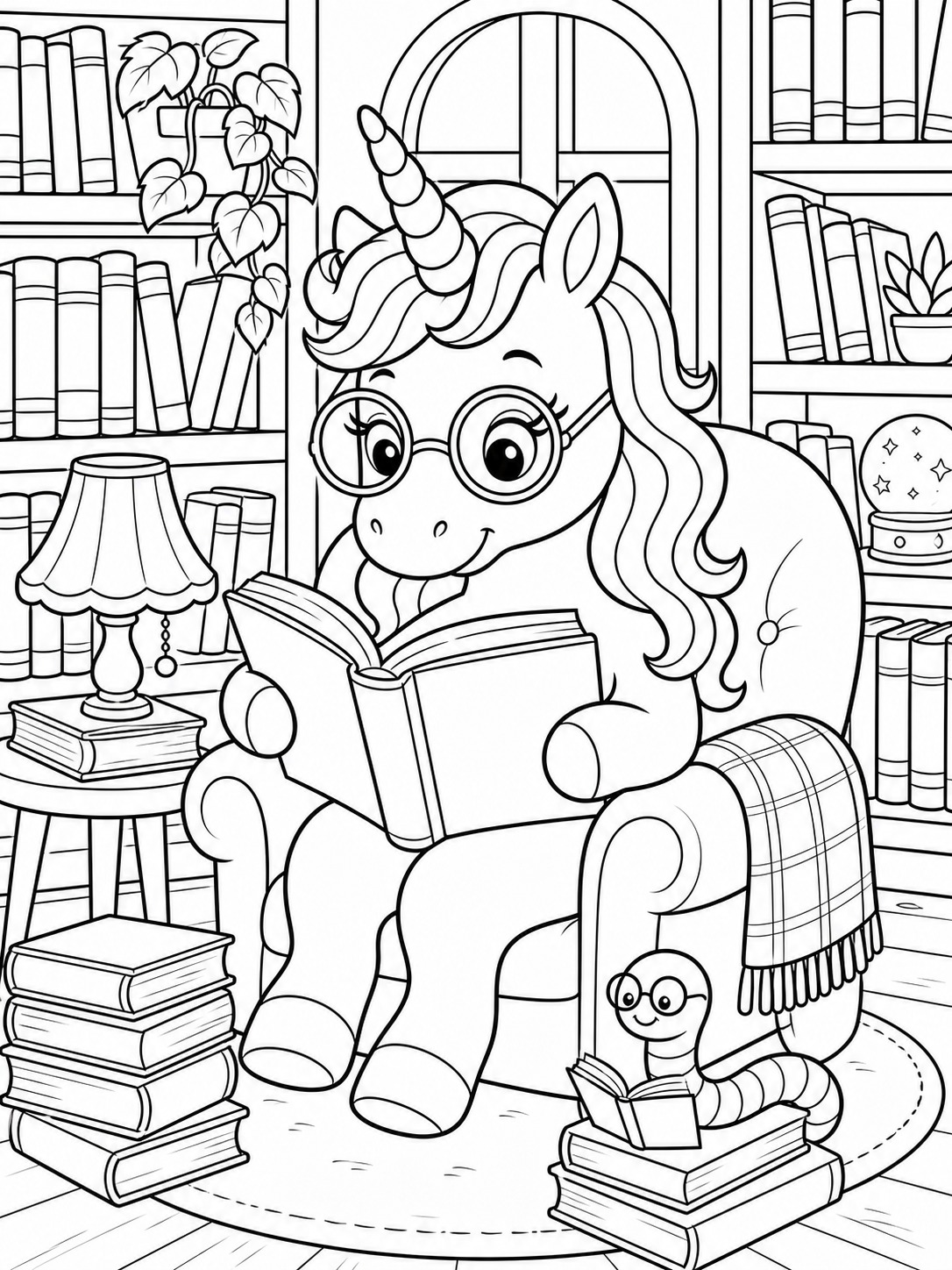
#39 Unicorn chef
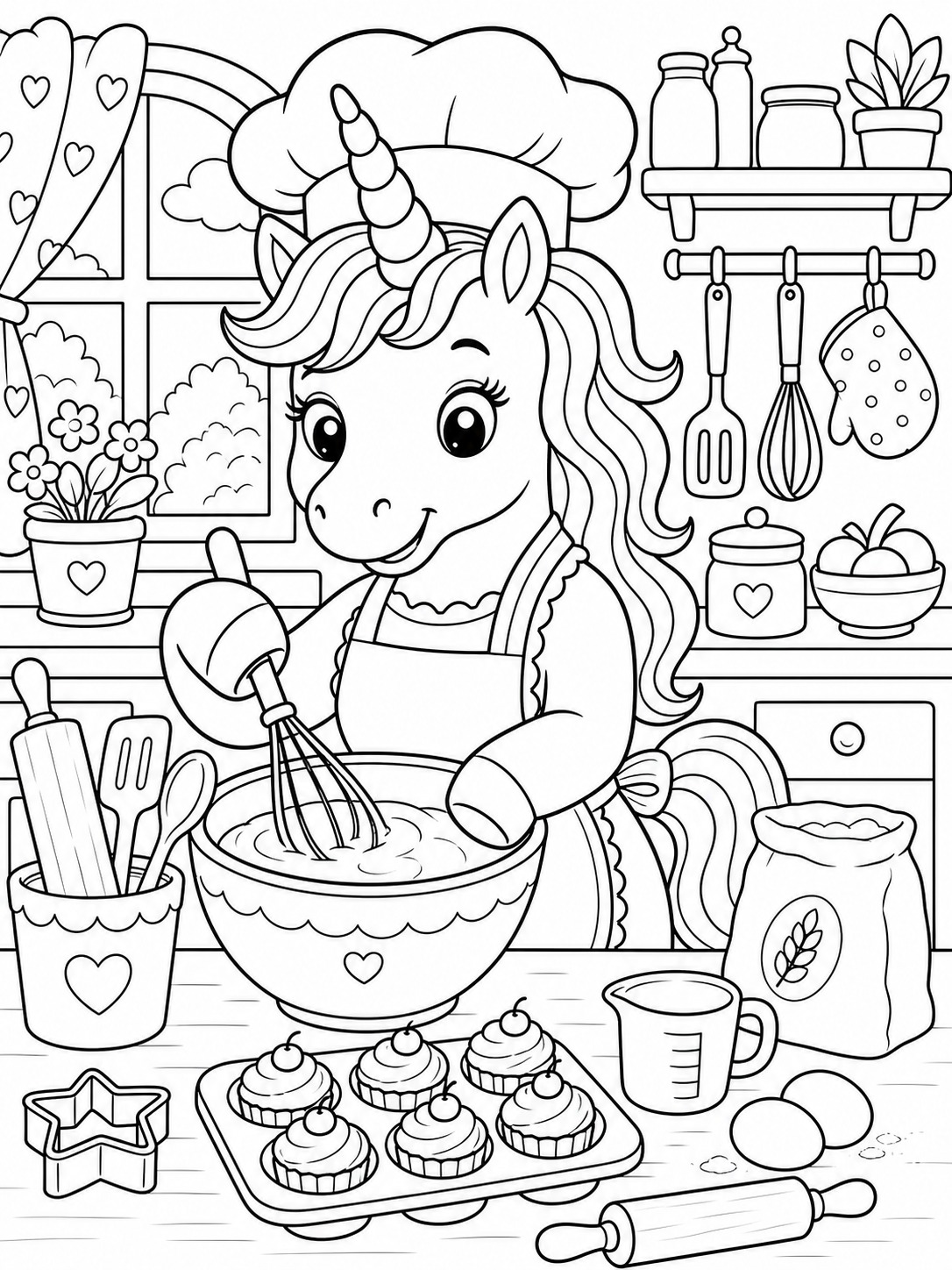
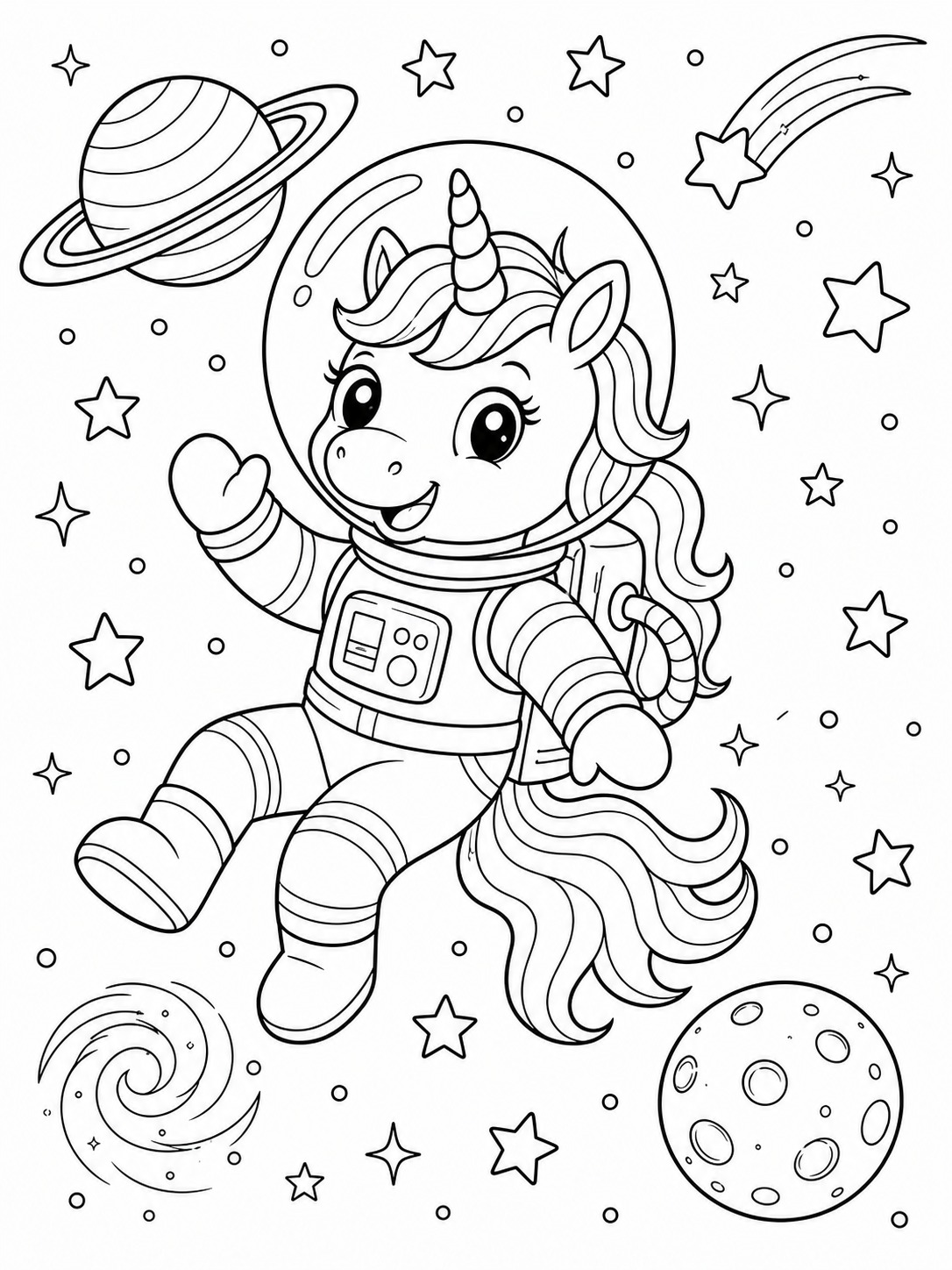
#40 Unicorn astronaut
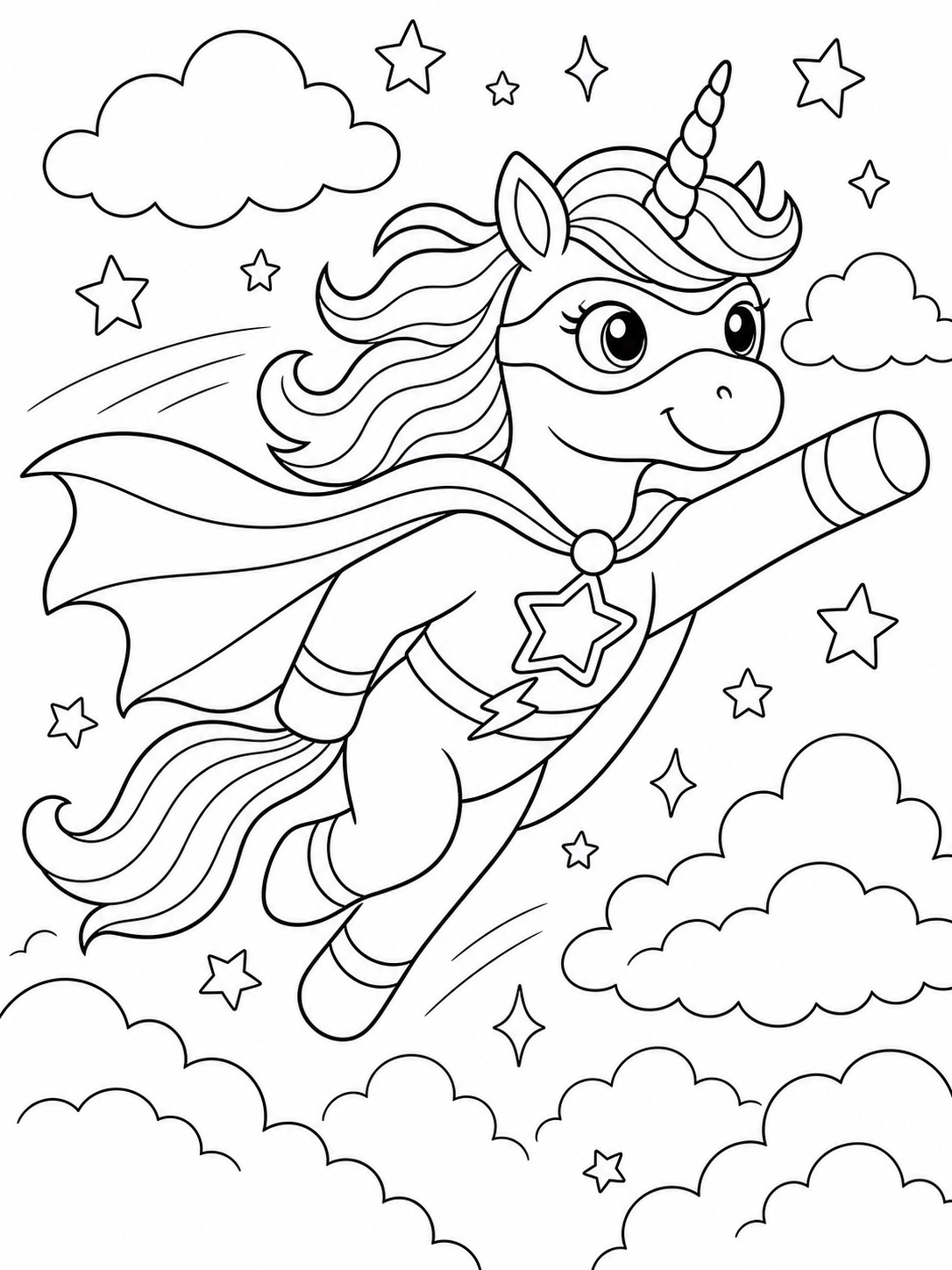
#41 Unicorn superhero
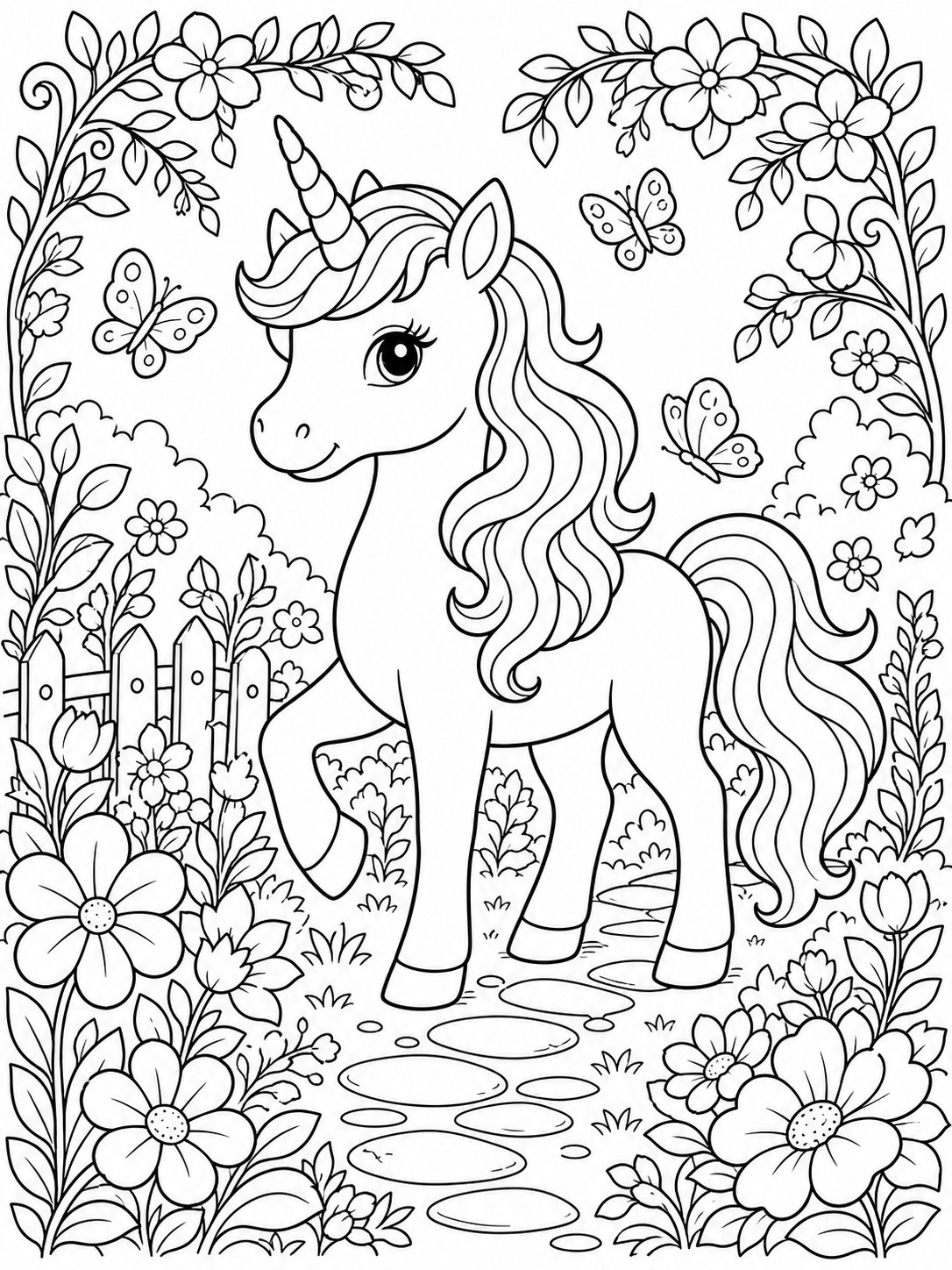
#44 Unicorn garden scene
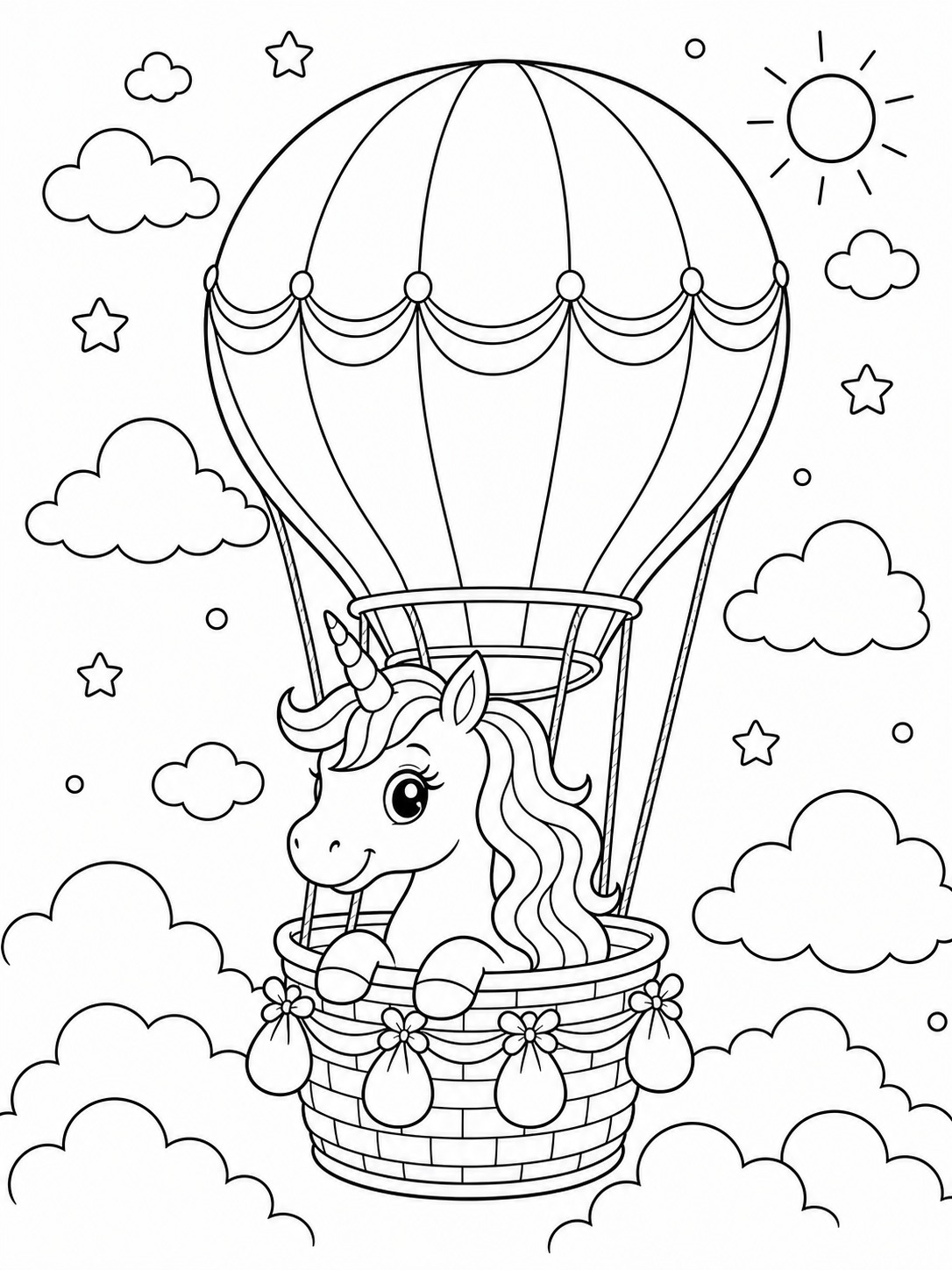
#47 Unicorn in hot air balloon
#53 Unicorn family (mom, dad, baby)
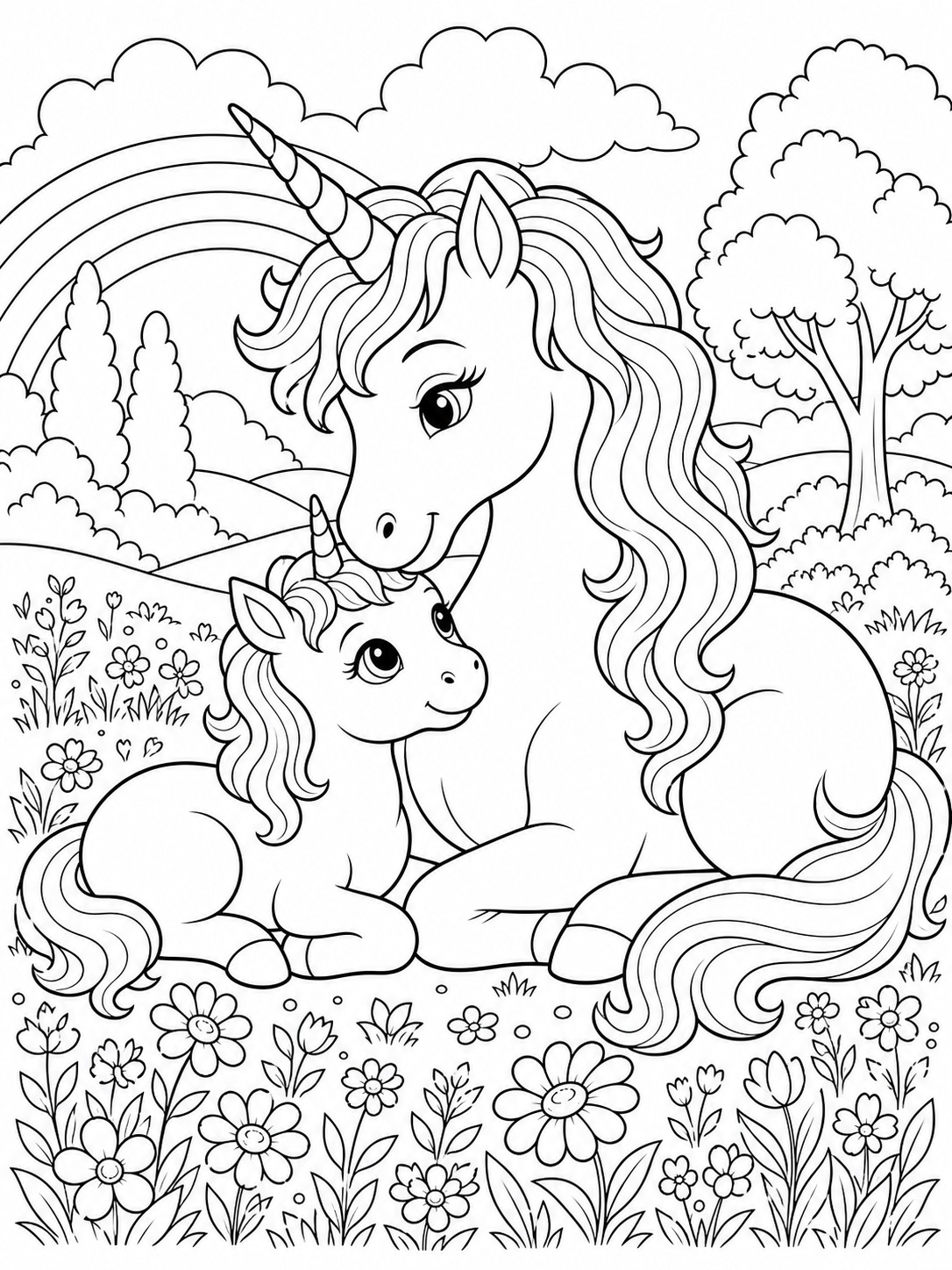
Themed and character-style unicorn coloring pages
These ideas move beyond the standard horse-with-horn and into specific aesthetic territories: kawaii, fantasy hybrid creatures, and personality-driven character designs. They work across a wider age range depending on execution complexity.
#4 Galaxy unicorn
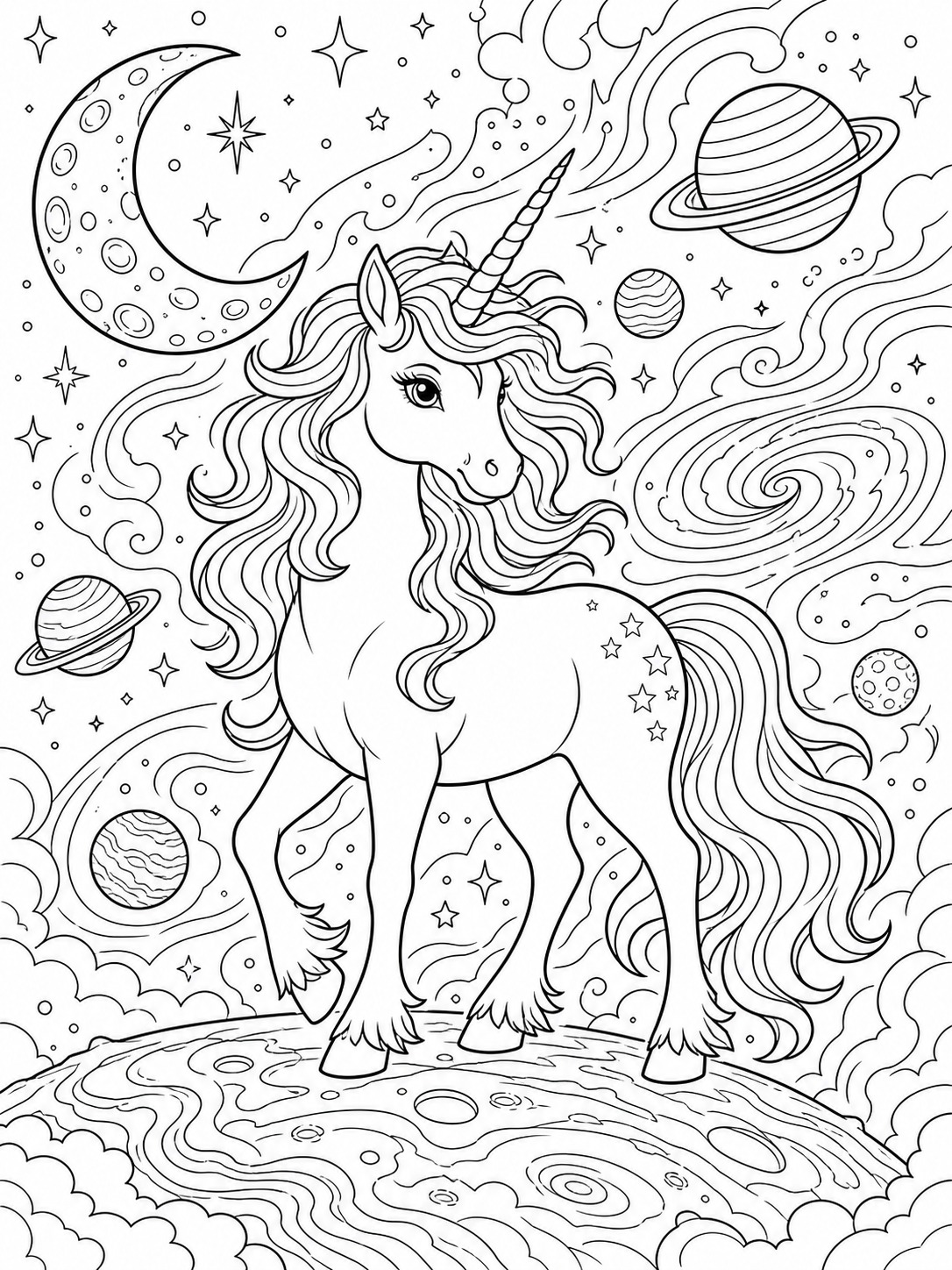
#12 Unicorn with crystals
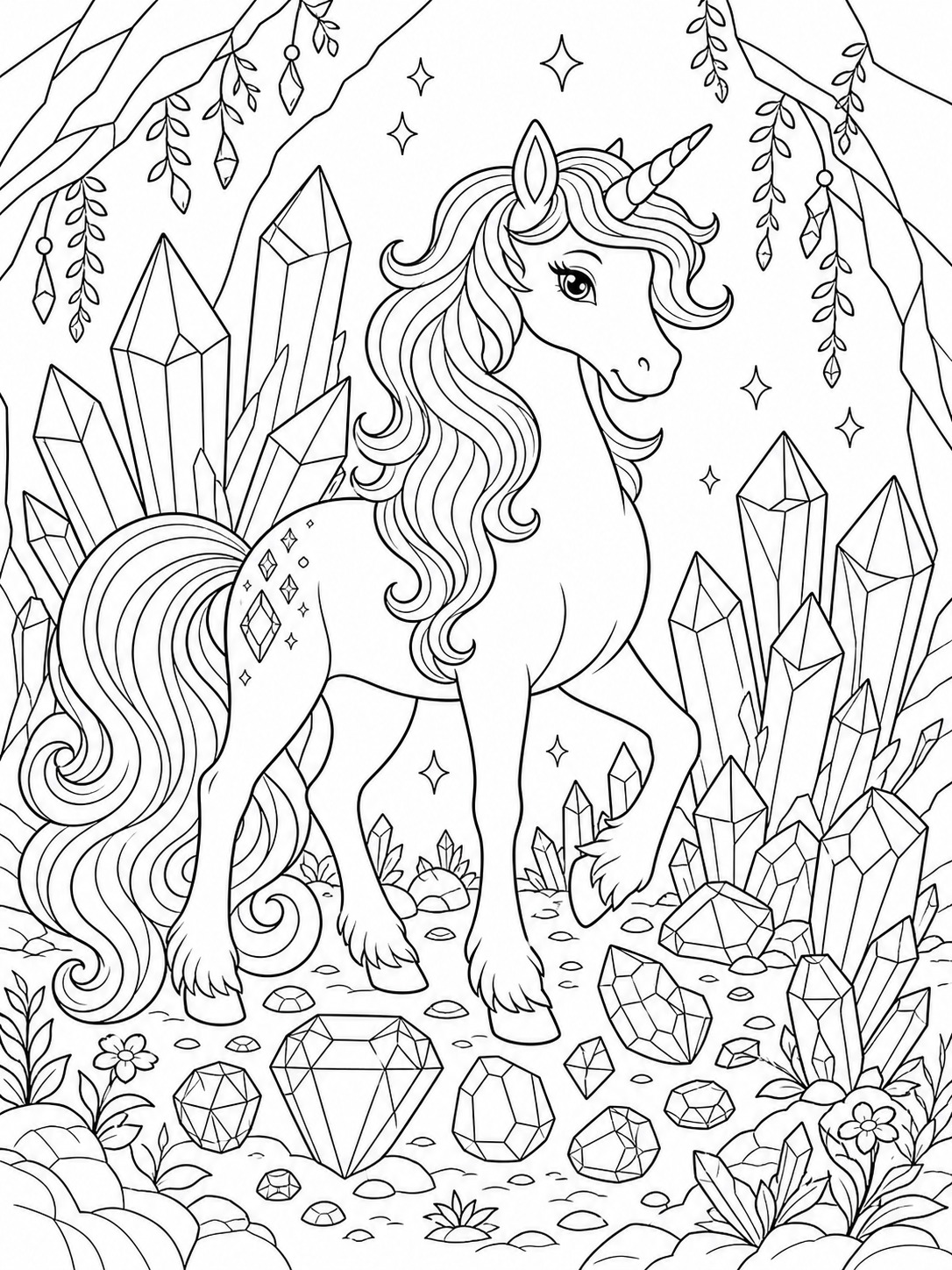
#13 Kawaii unicorn
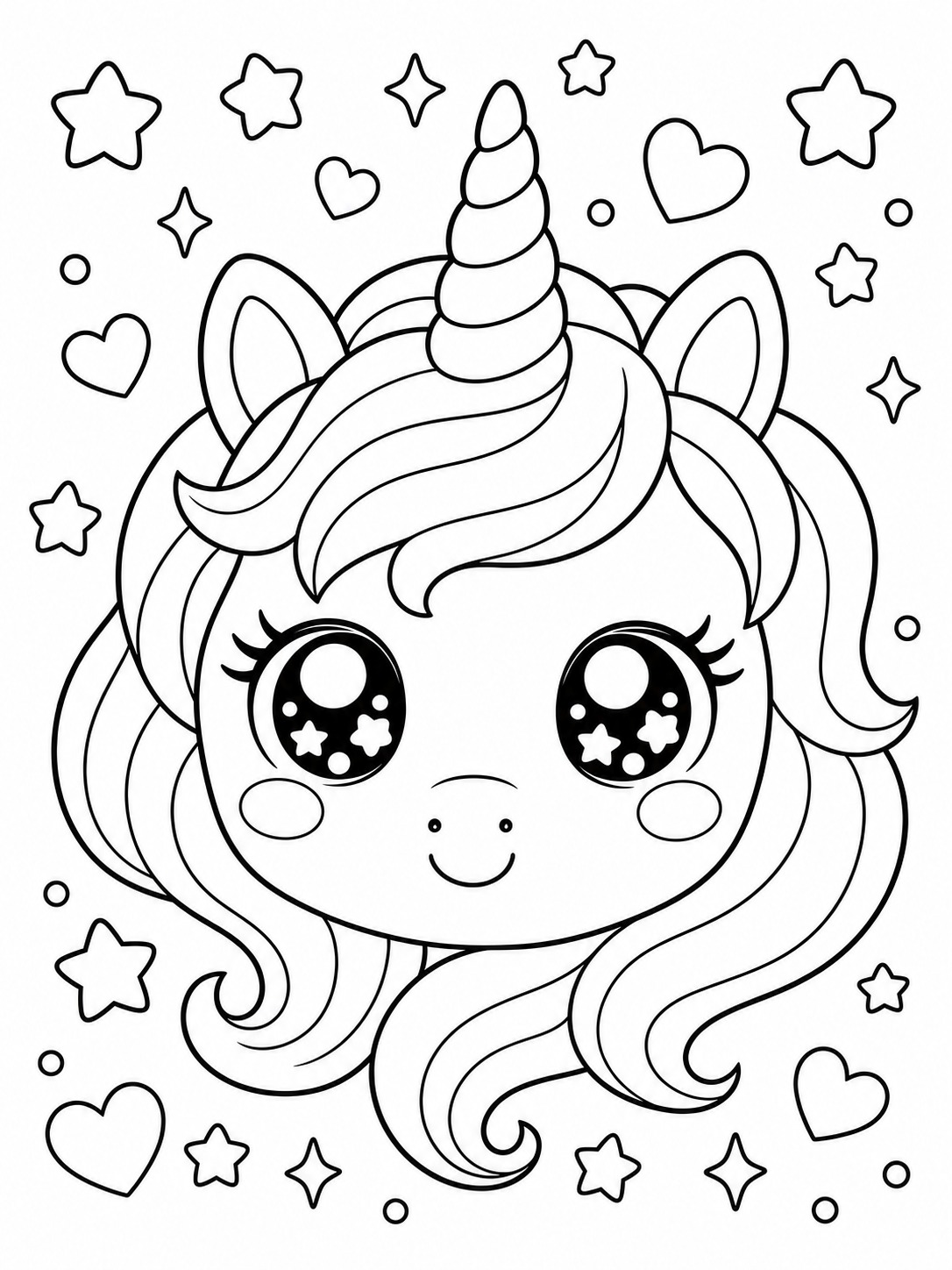
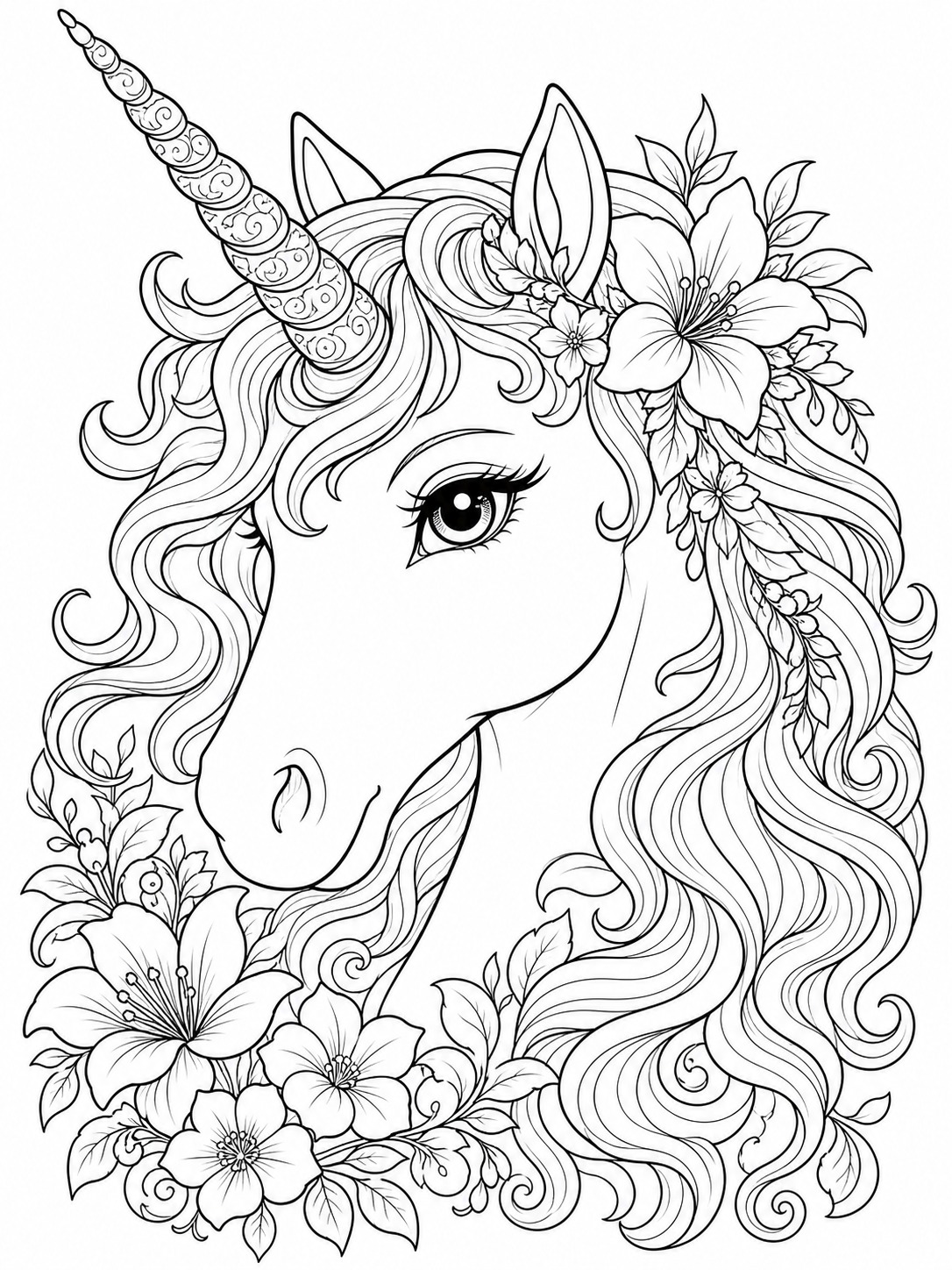
#15 Unicorn head portrait
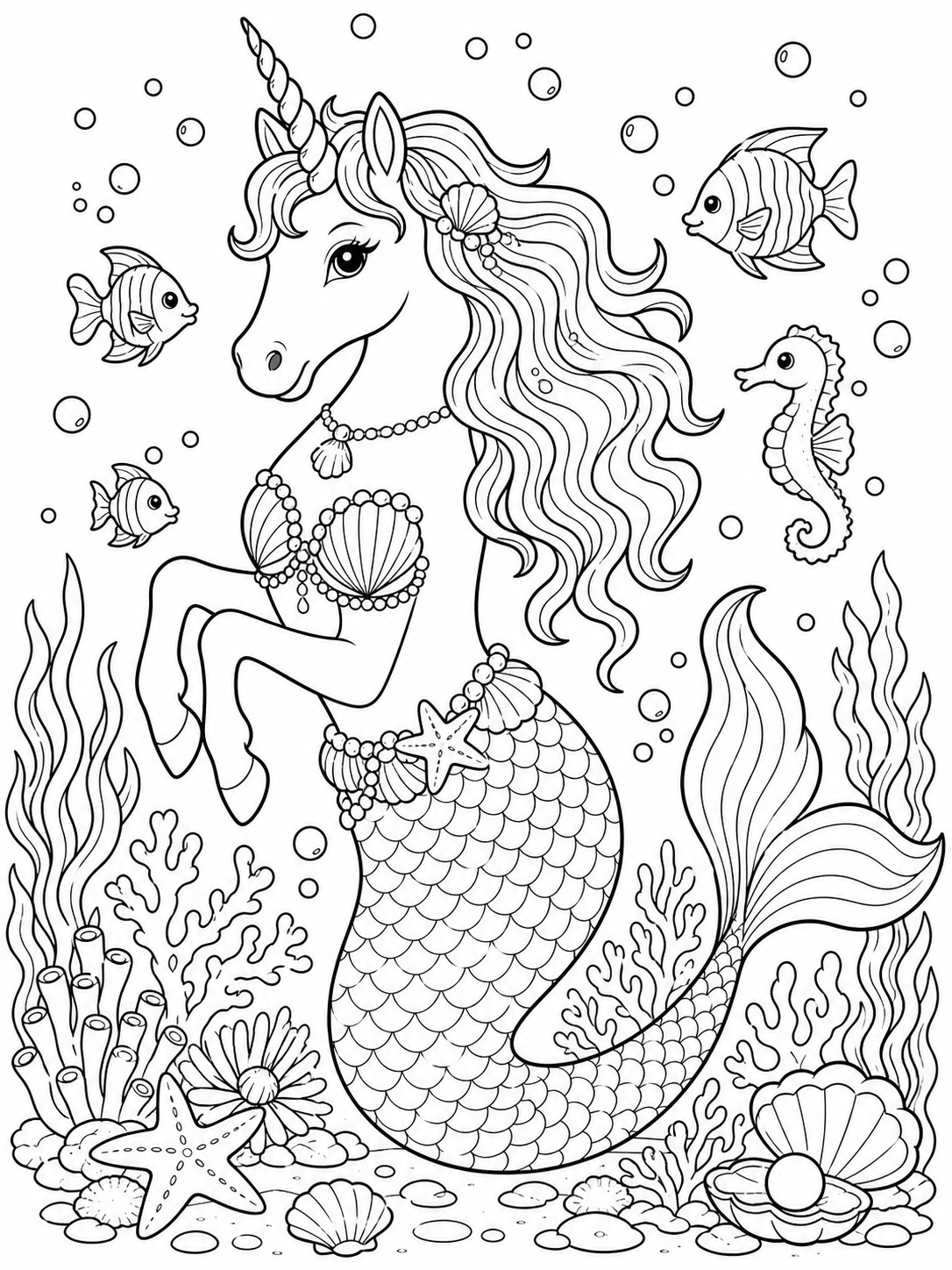
#18 Unicorn mermaid (sea-unicorn)
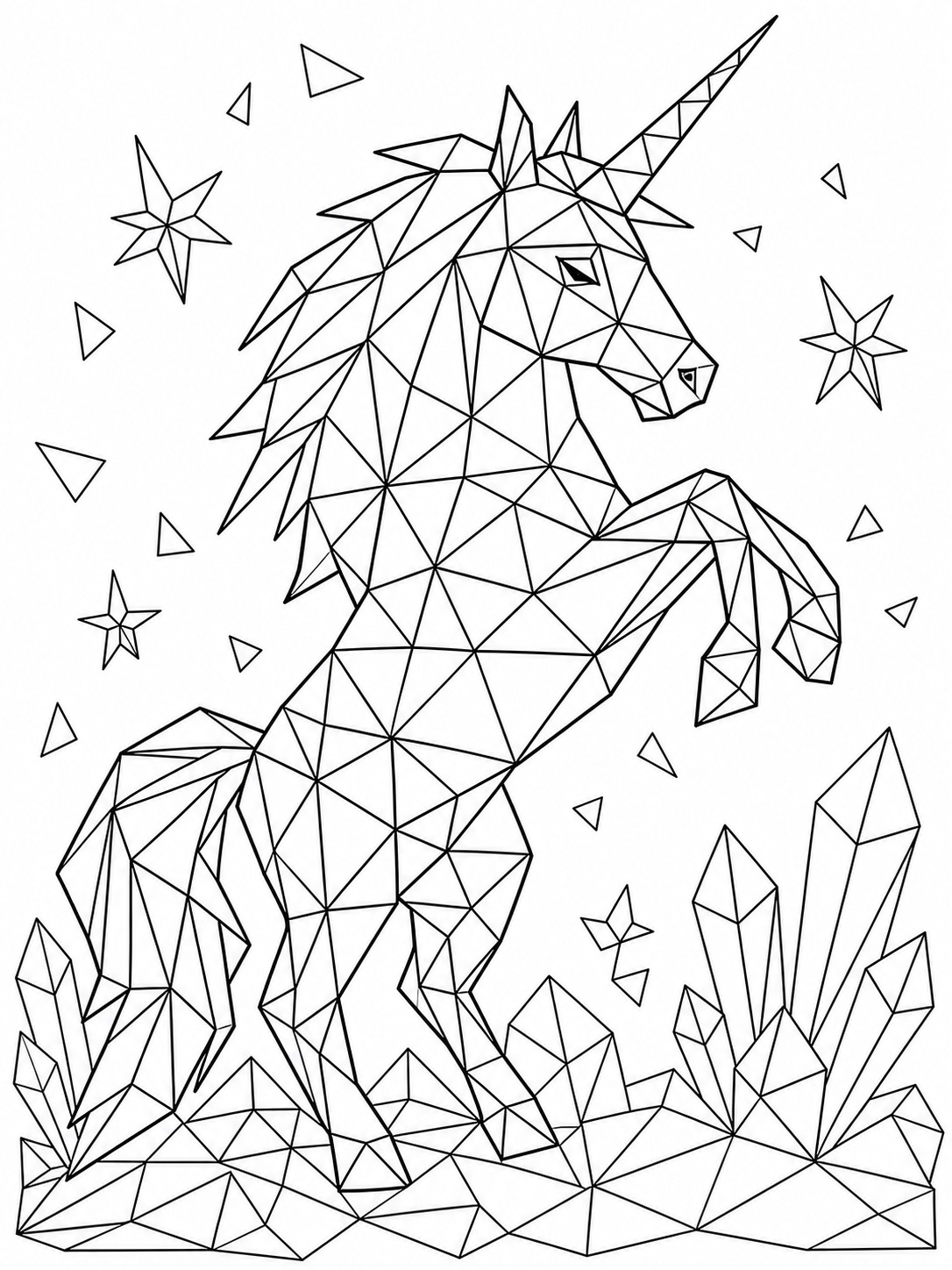
#20 Geometric unicorn
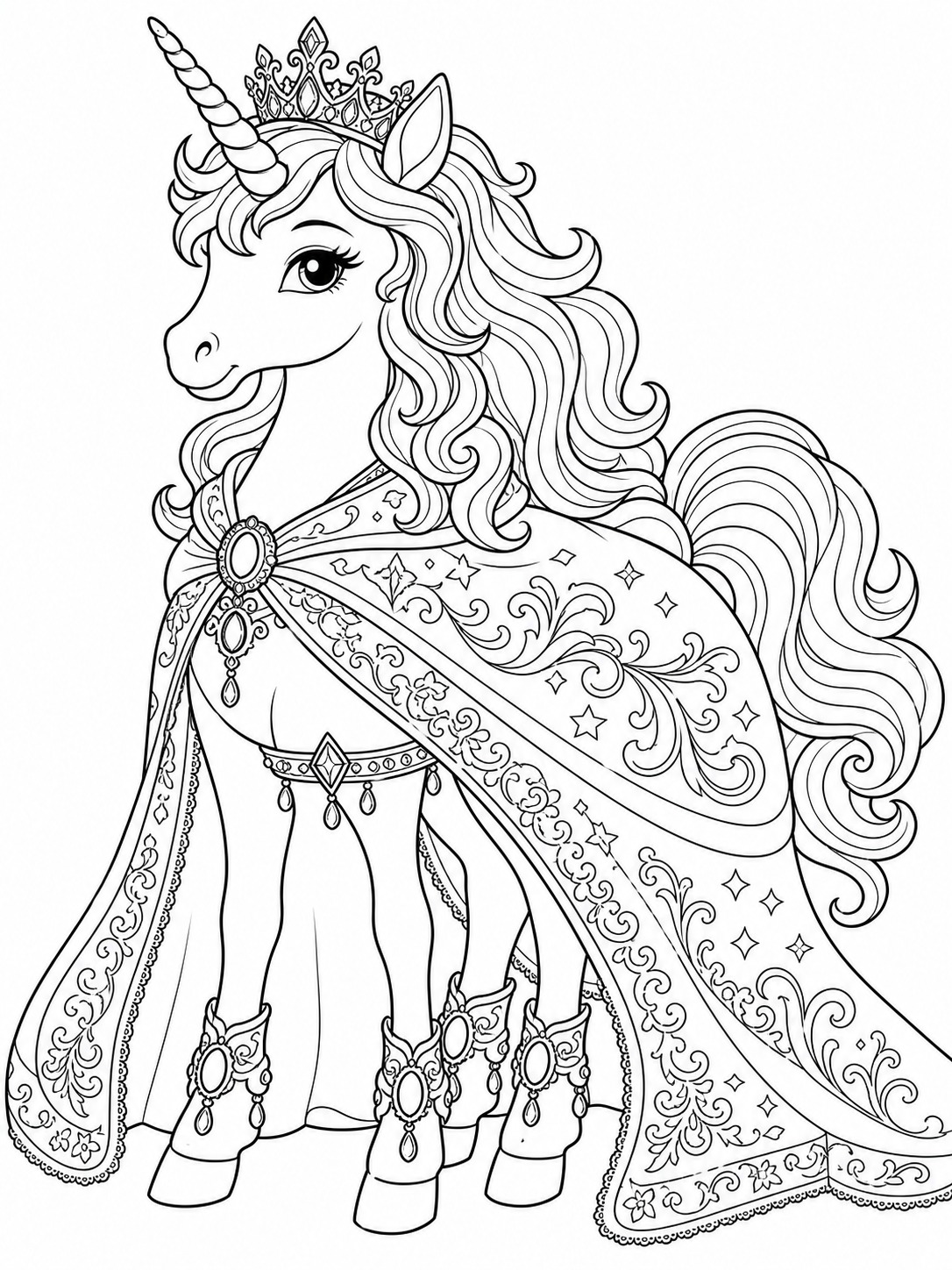
#22 Unicorn princess
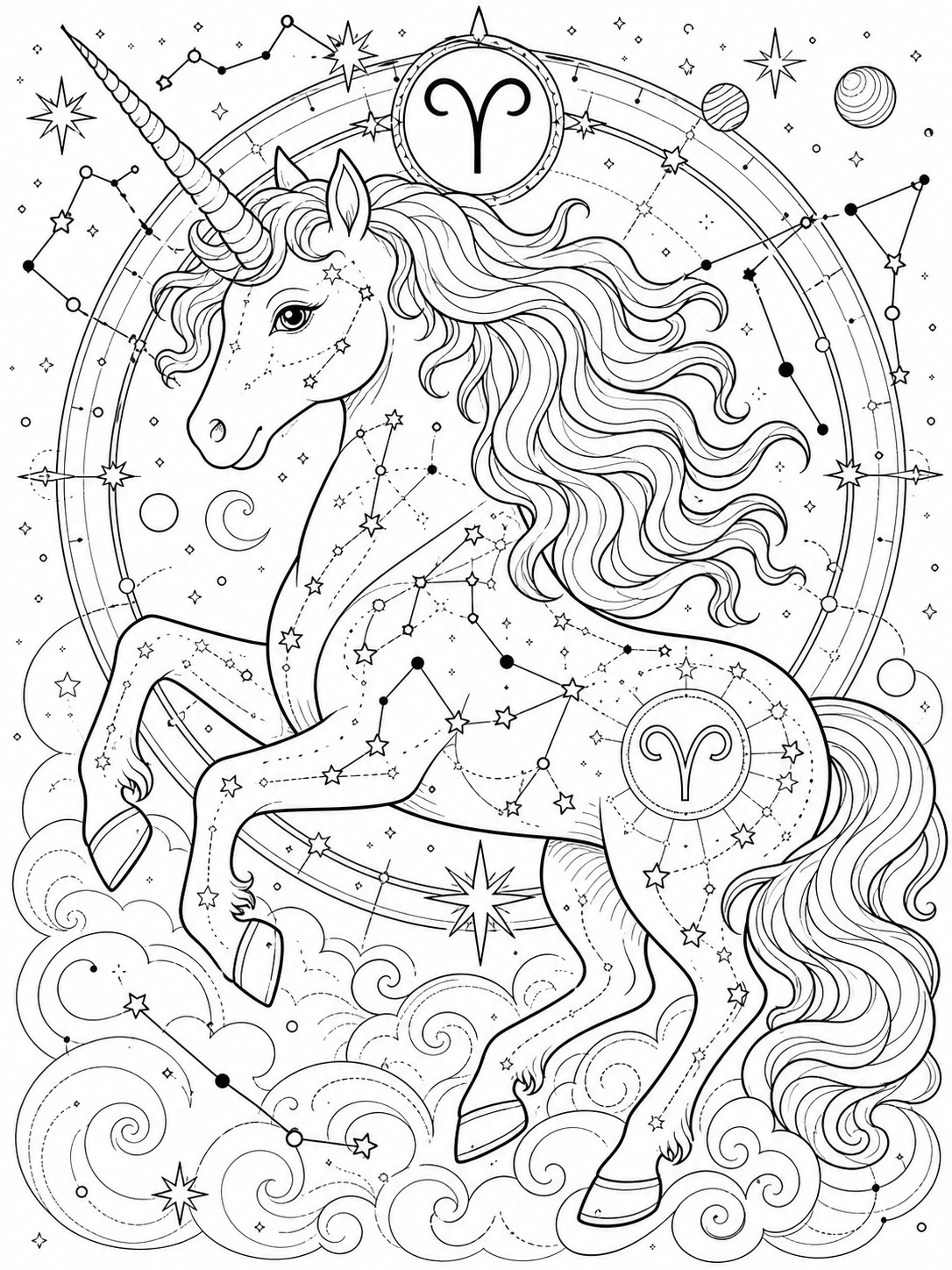
#31 Unicorn zodiac: Aries
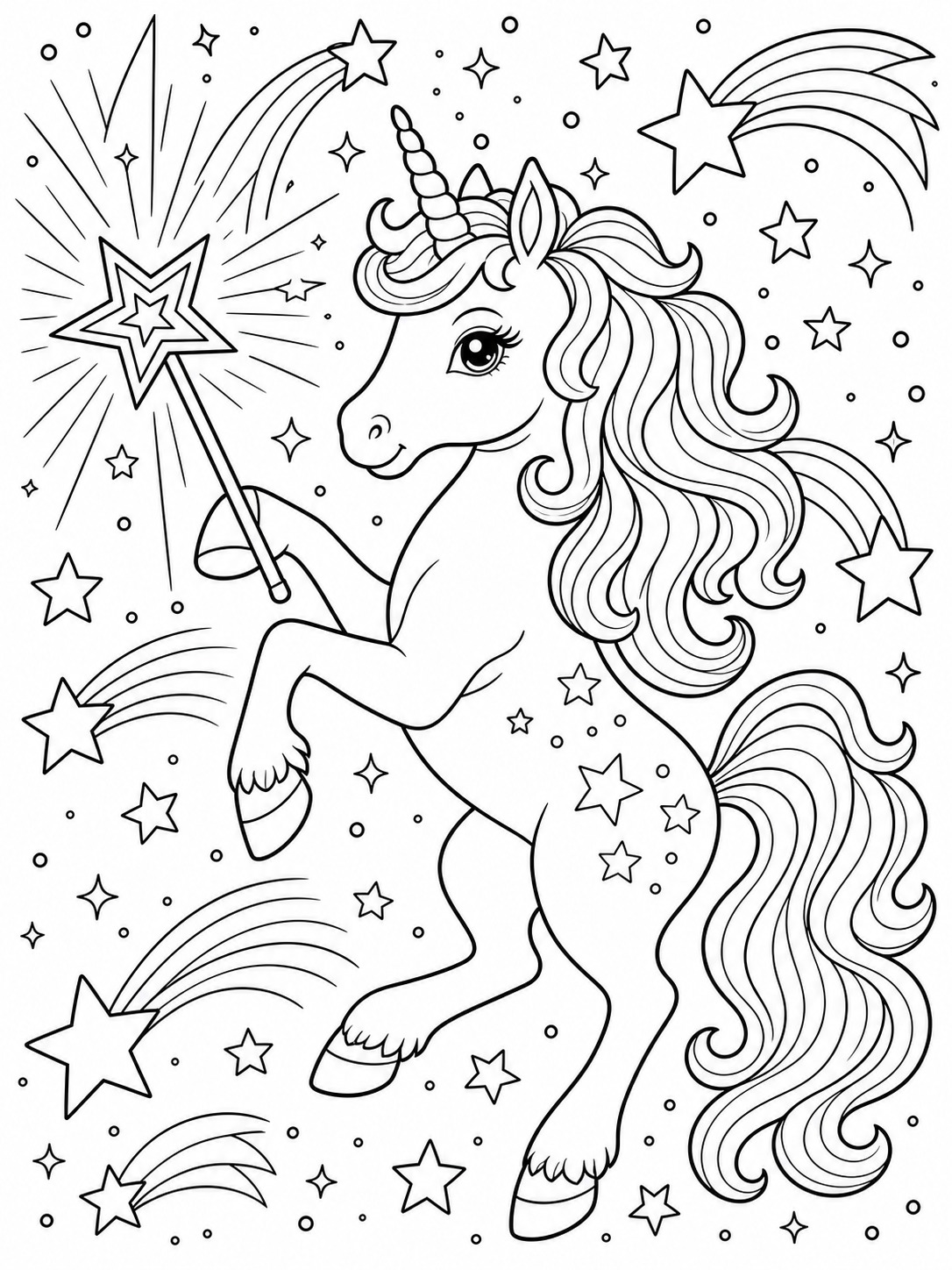
#34 Unicorn with magic wand
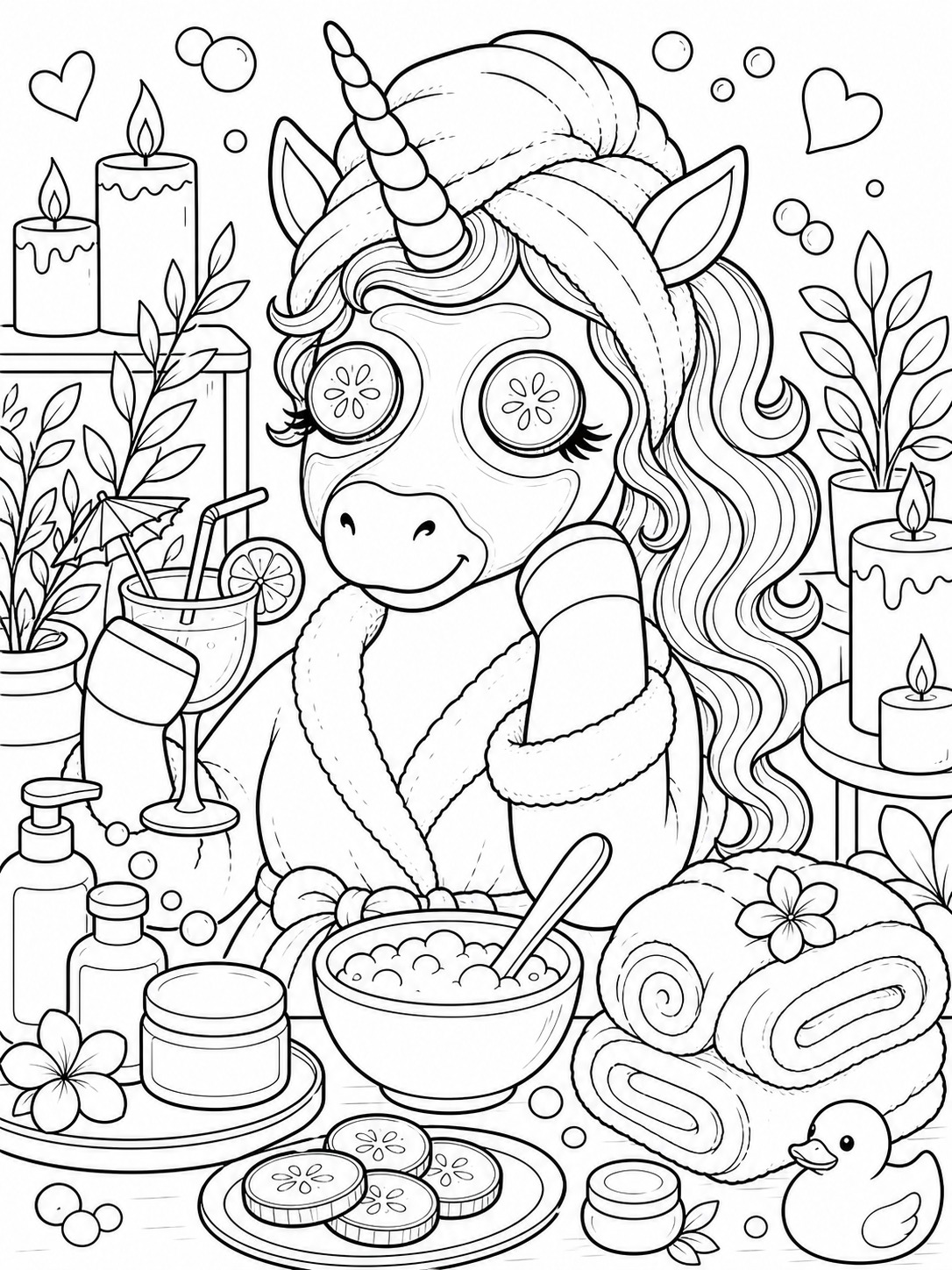
#37 Unicorn self-care spa
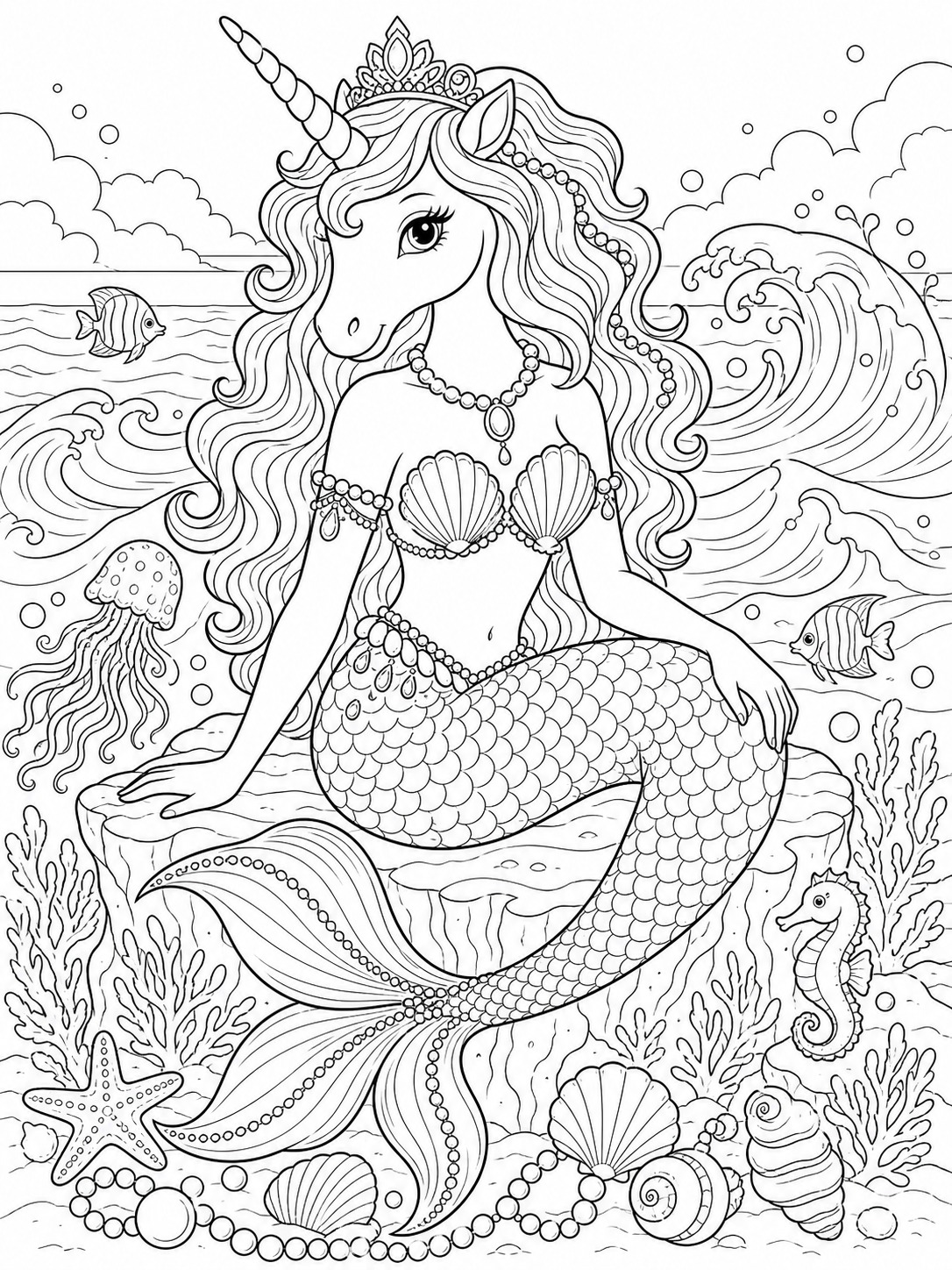
#42 Unicorn mermaid princess
#43 Unicorn with dragonfly wings
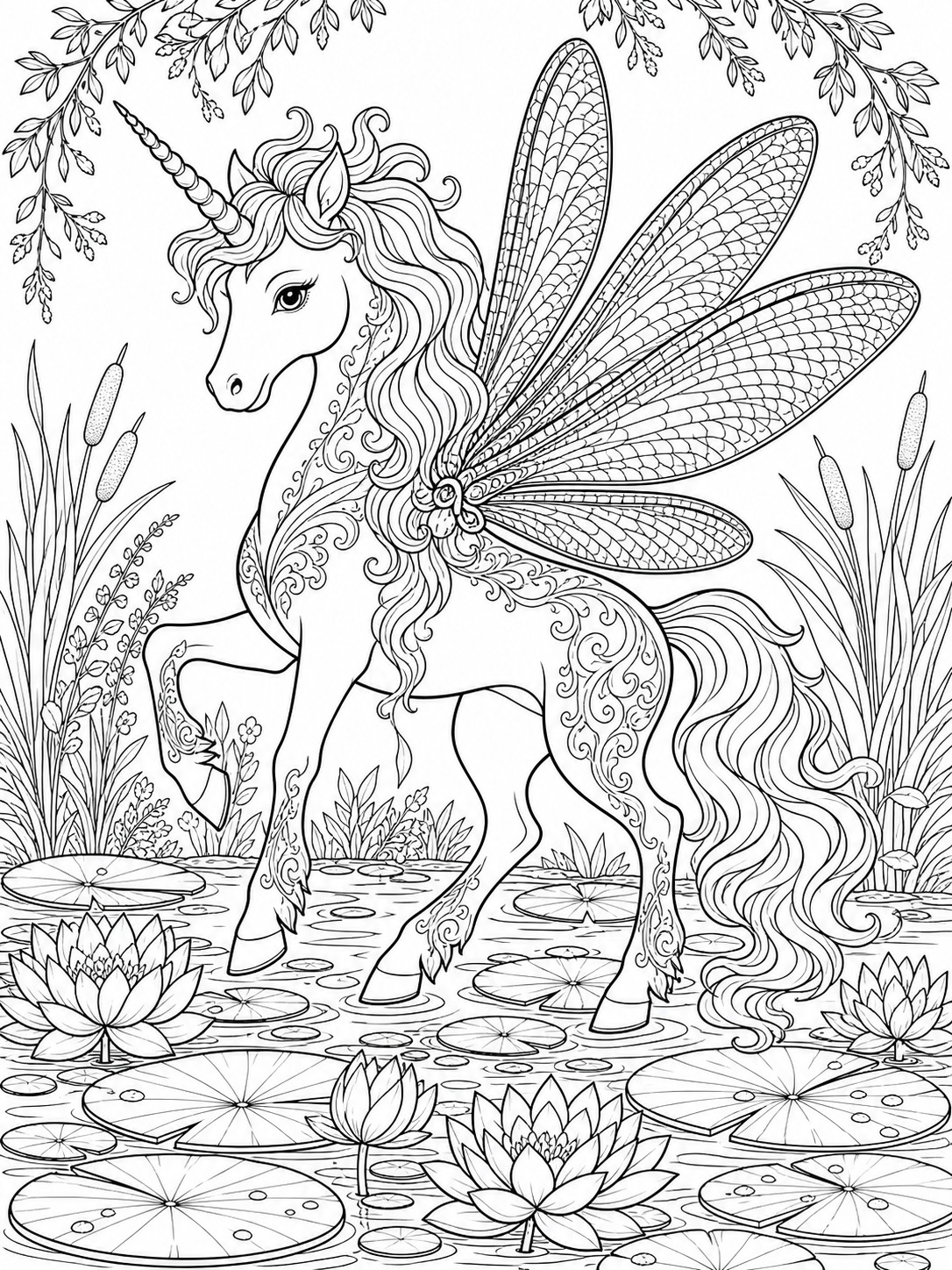
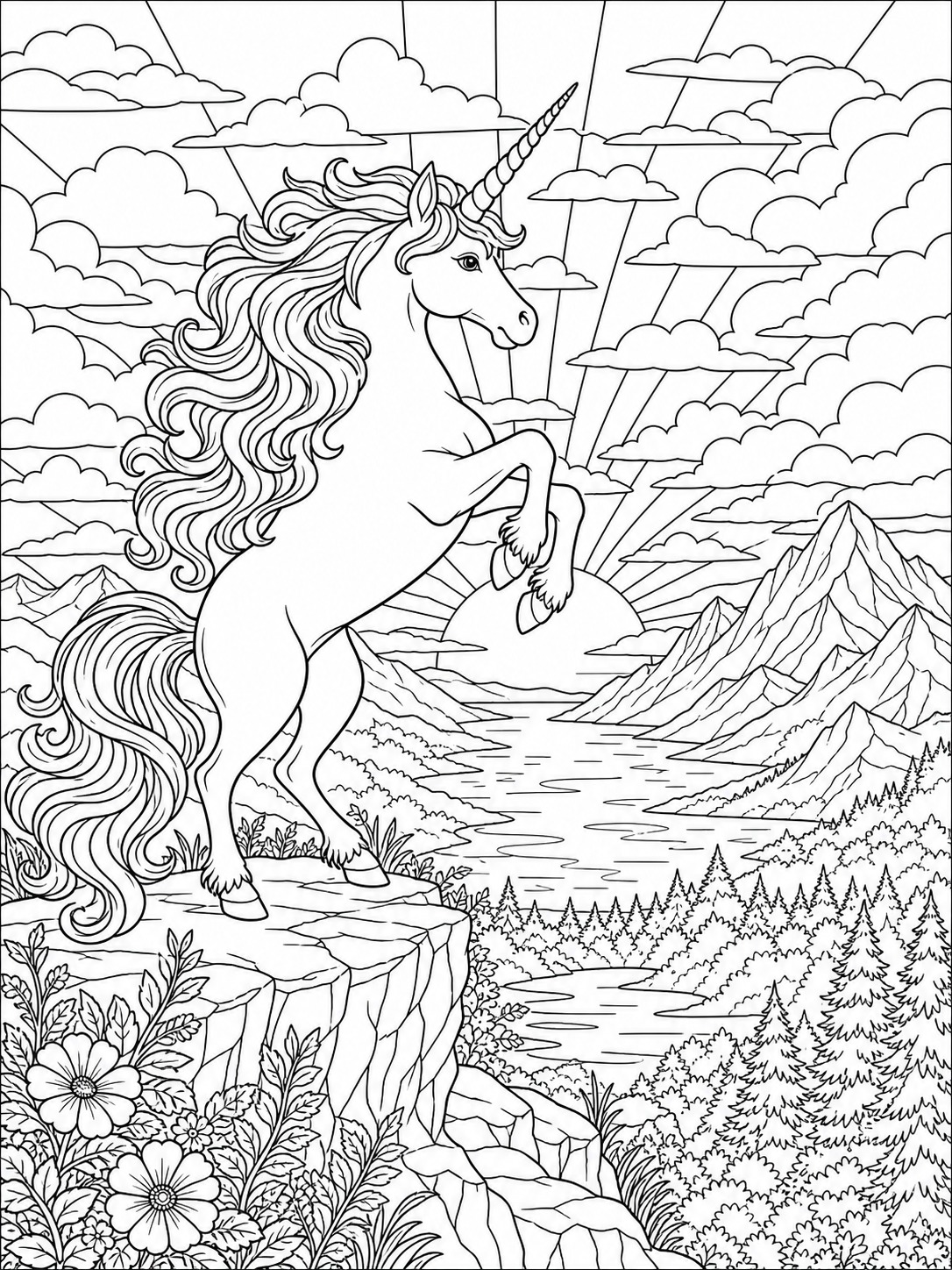
#46 Unicorn silhouette landscape
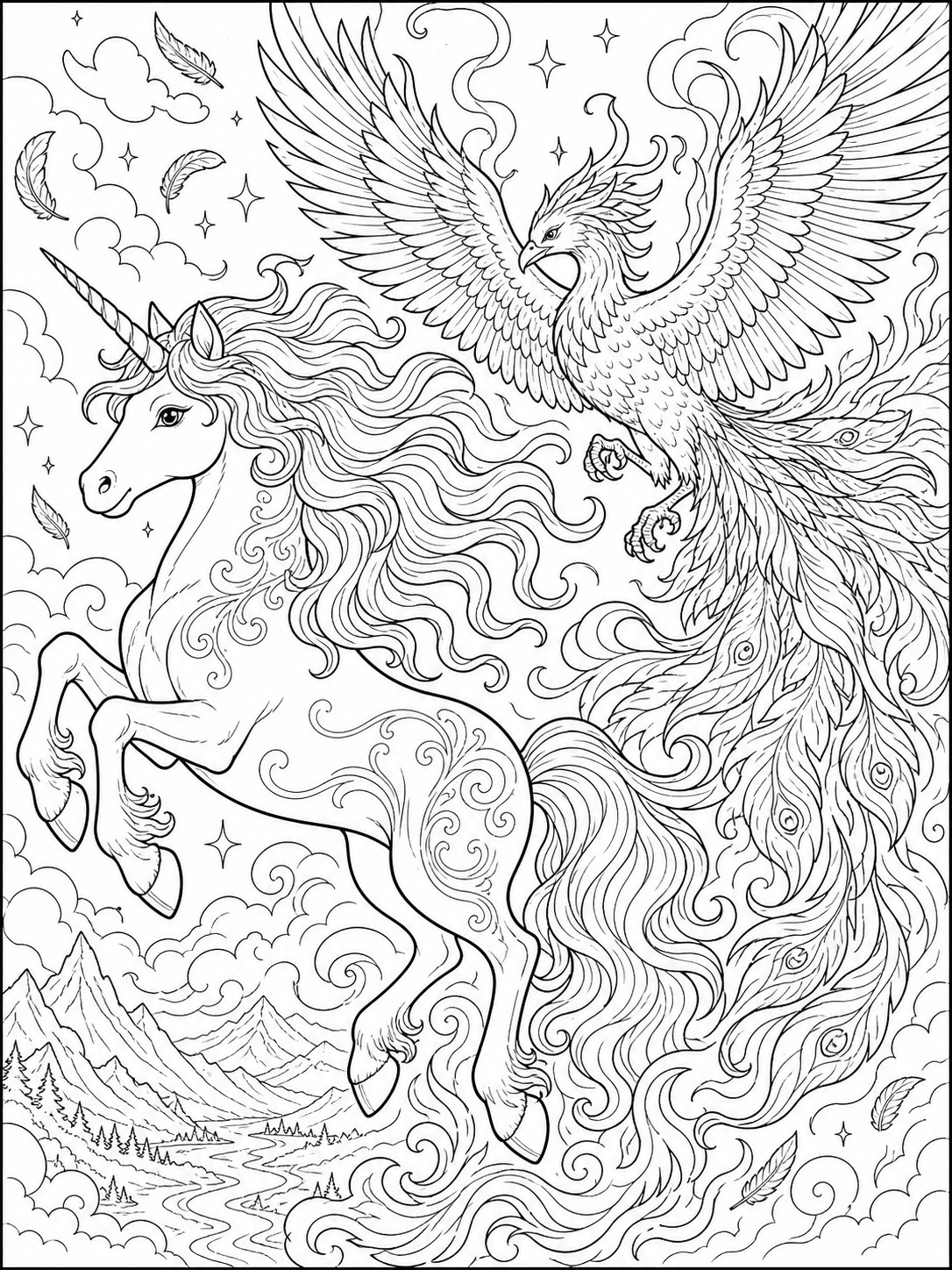
#49 Unicorn and Phoenix
Adult and advanced unicorn coloring pages
These designs are built for extended coloring sessions with fine-tip tools. The complexity level assumes patience and a range of marking tools, not a box of eight crayons.
#5 Unicorn mandala
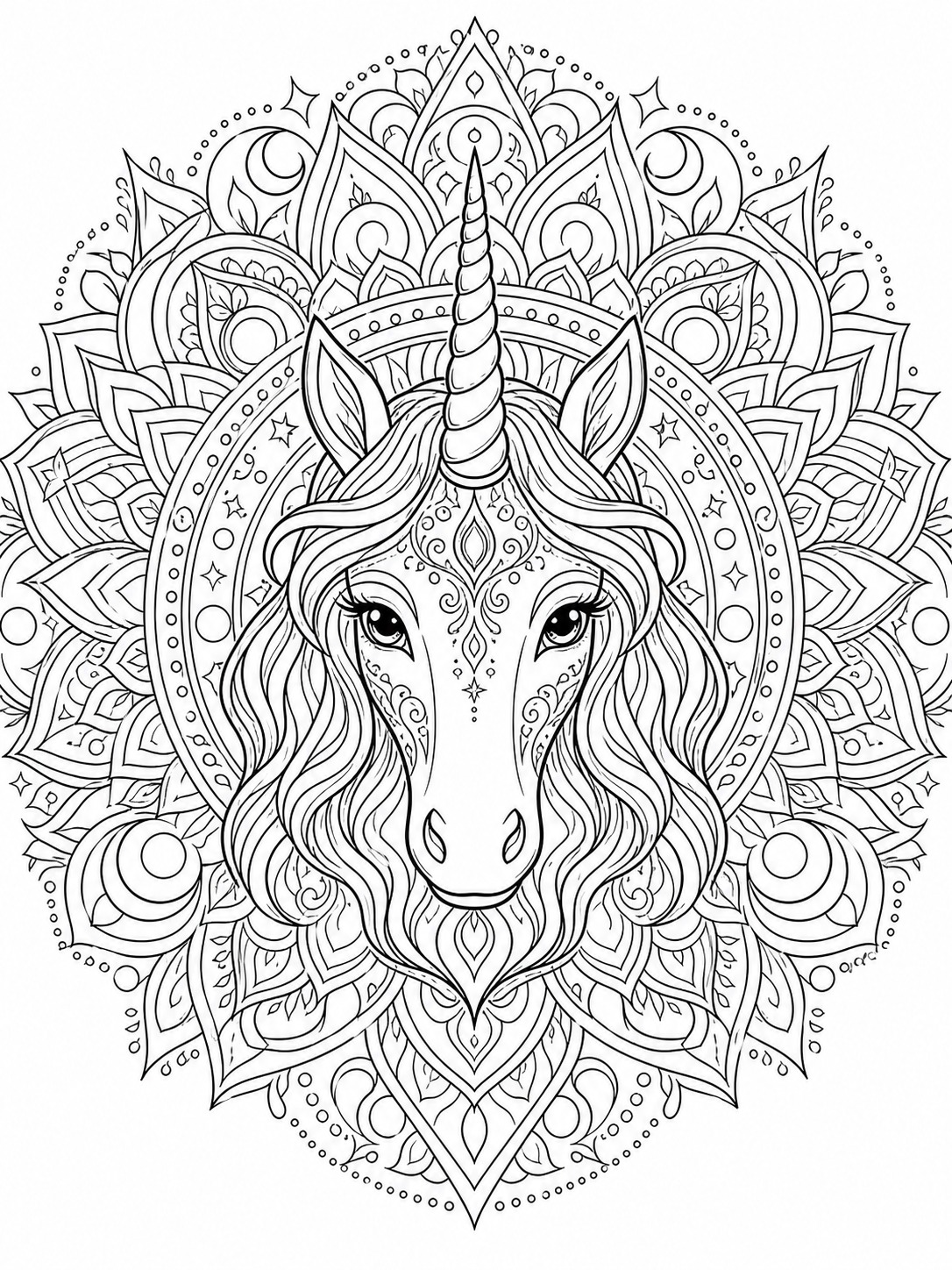
#28 Unicorn head floral wreath
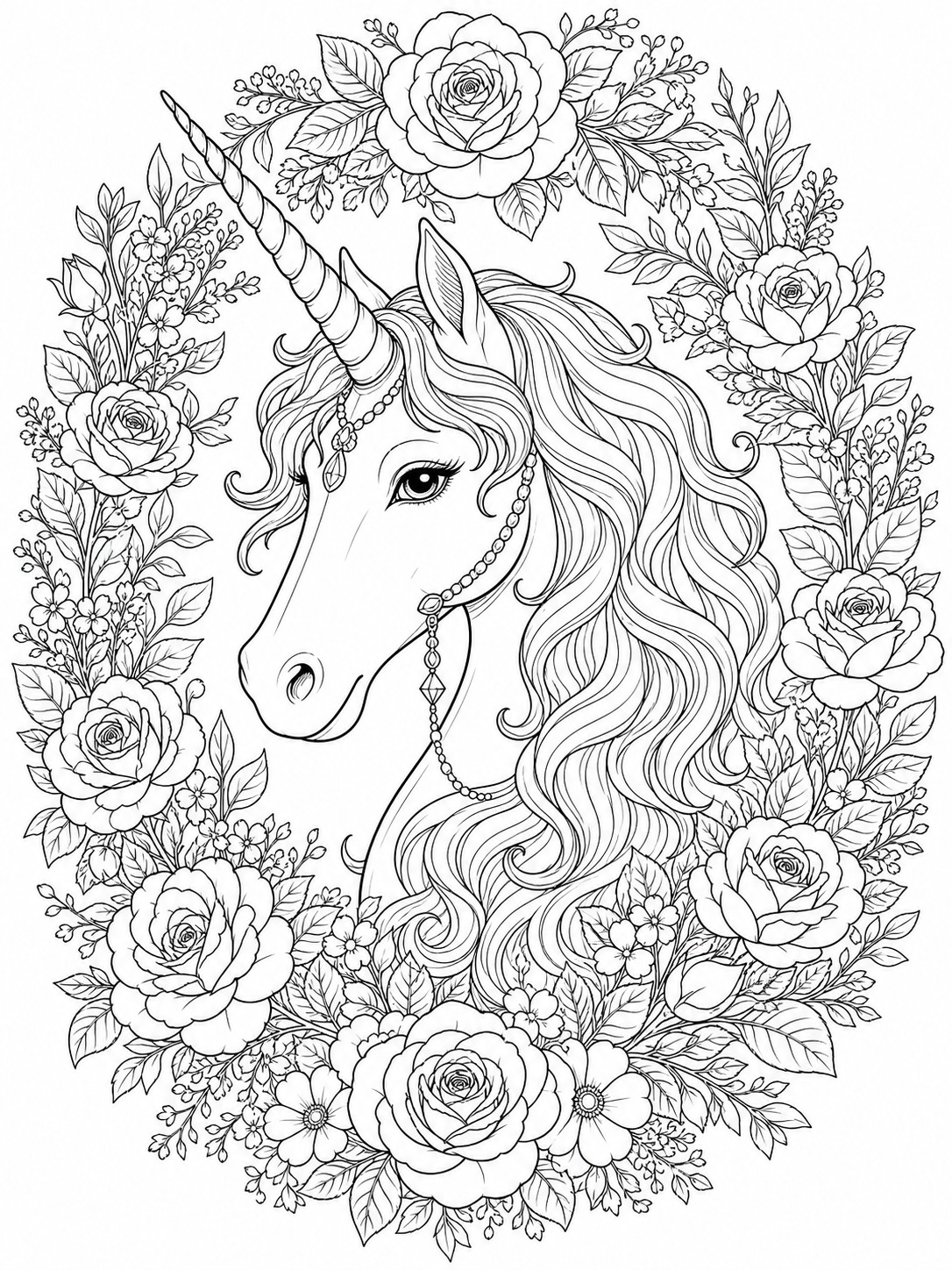
#48 Adult coloring: intricate Celtic knotwork unicorn
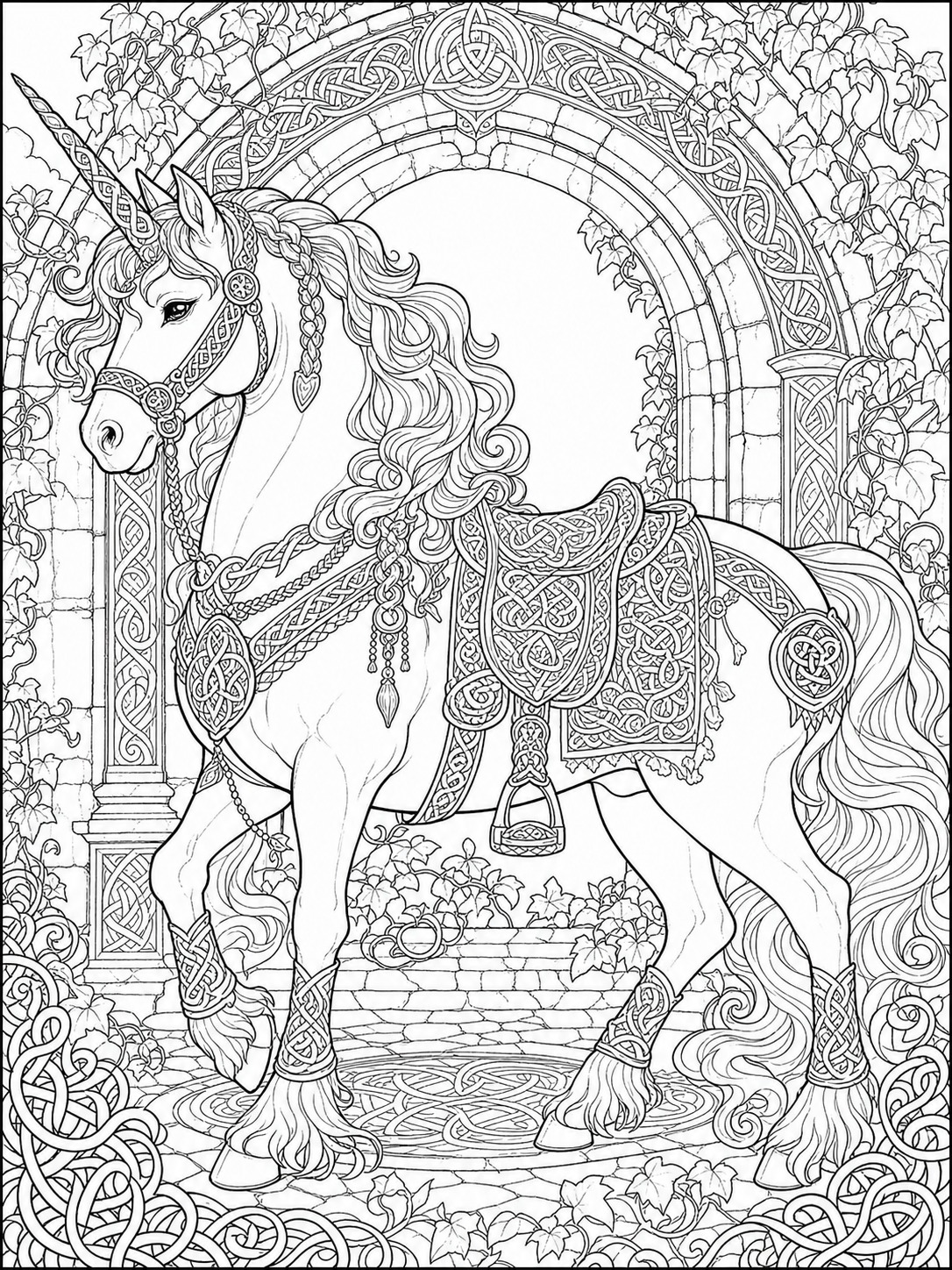
#50 Unicorn art nouveau style
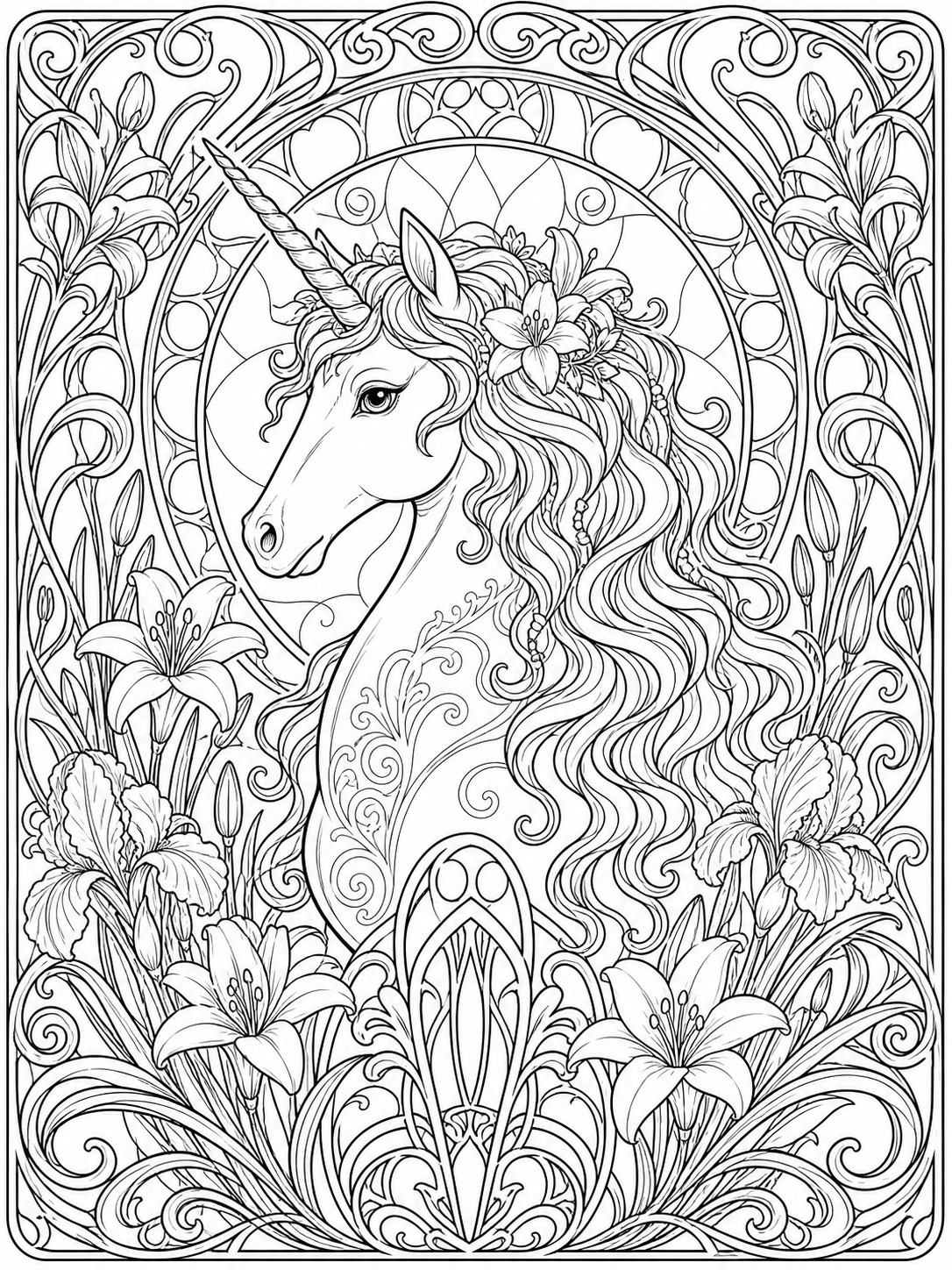
#51 Unicorn zentangle
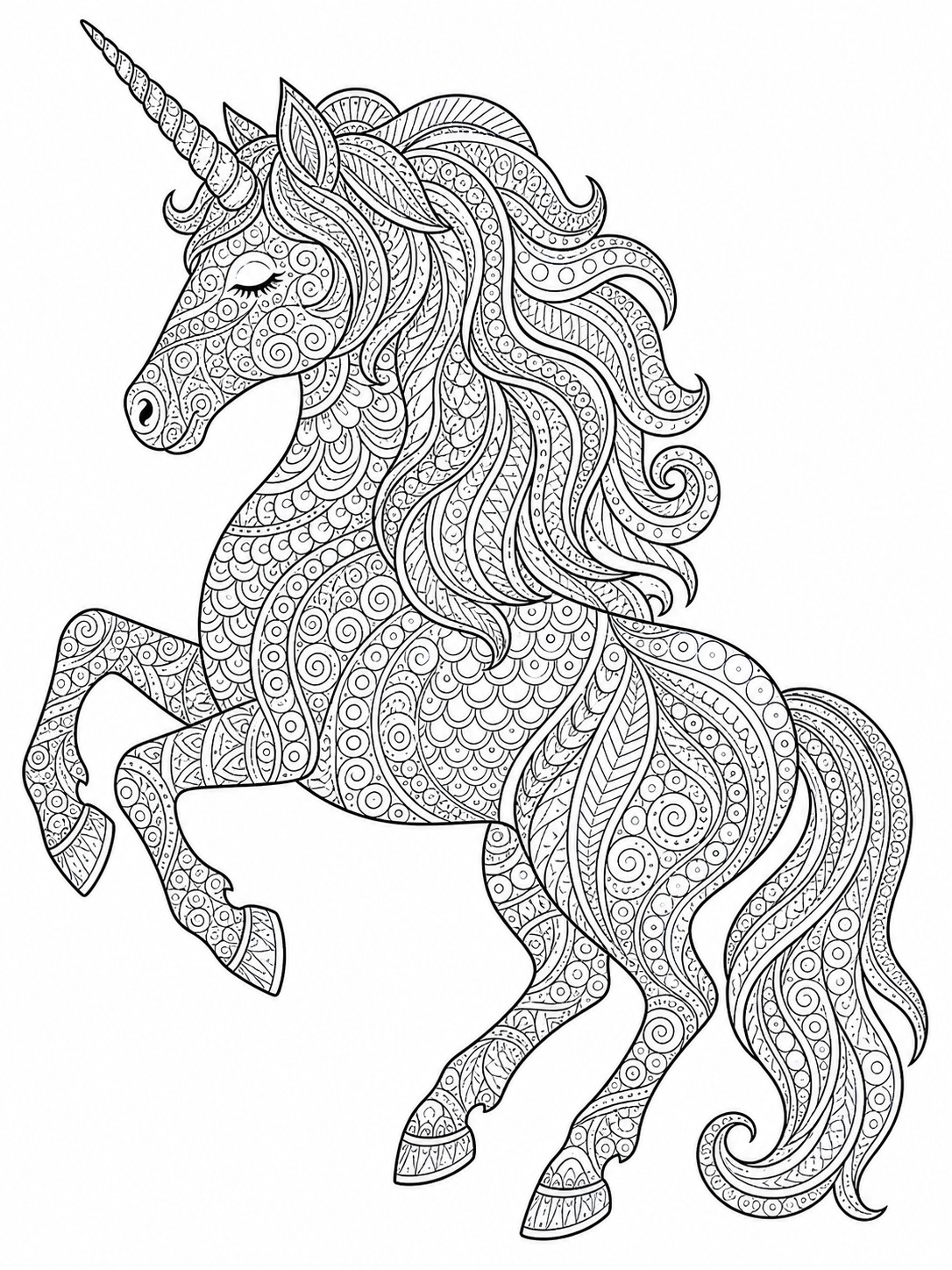
#52 Unicorn portrait with tattoo style
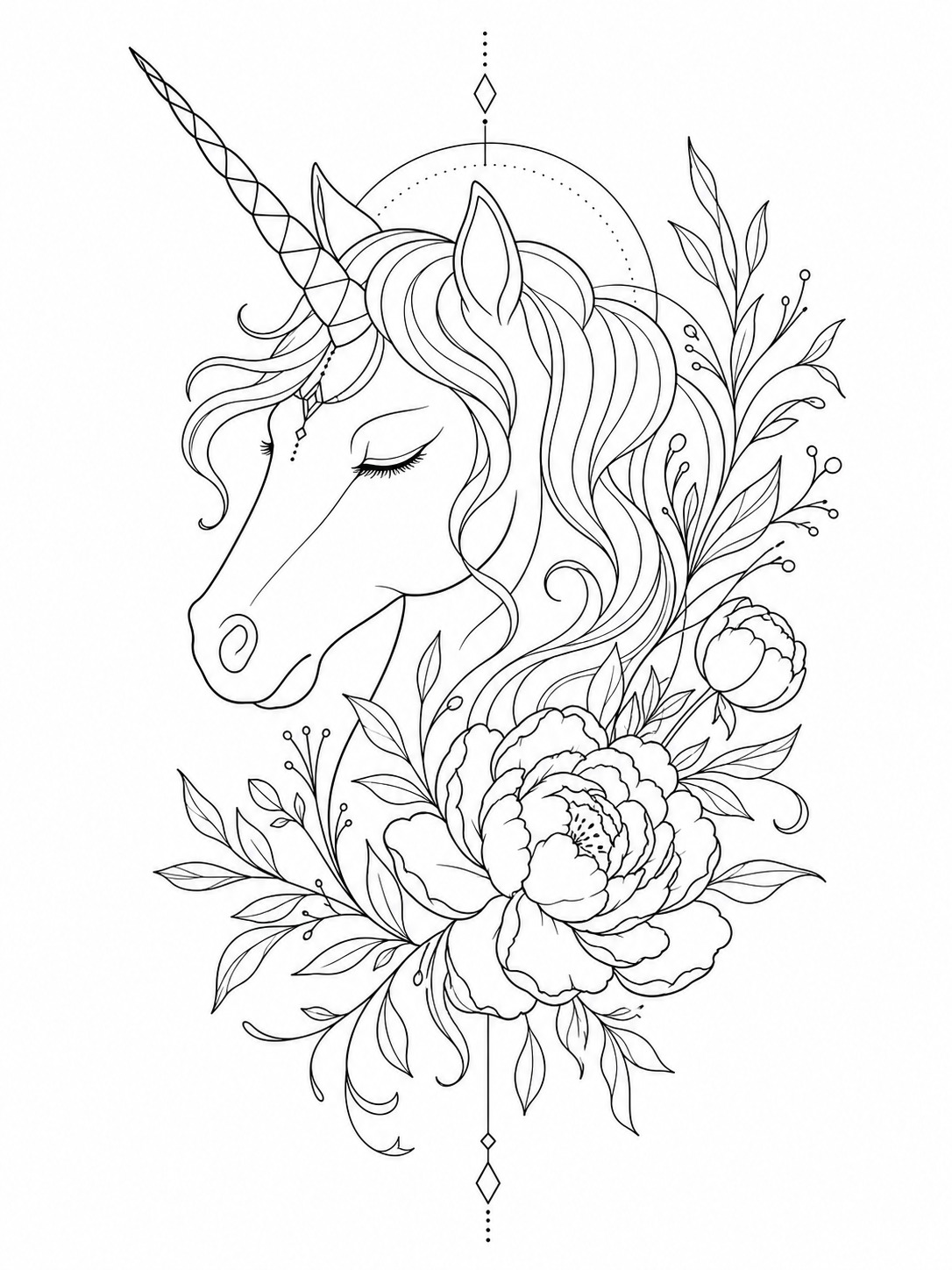
For adult mandala and zentangle coloring pages: start from the center outward when applying color. Completing the central zone first establishes your palette before you commit to the larger outer areas.
Use a test strip of paper to check how your chosen markers or pencils layer before applying them to the final page. Alcohol-based markers like Copics blend more smoothly on smooth Bristol than on textured watercolor paper.
How to use these image prompts to generate your own coloring pages
Each idea above includes two prompts. The first generates a photorealistic reference image: useful for visualizing the scene, understanding the subject’s form, or creating an inspiration board alongside the coloring page. The second (gemini/nano-banana) generates the actual coloring page line art with clean outlines on a white background.
For the coloring page prompts, a few refinements improve results consistently. Adding ‘thick 3pt outlines’ or ‘bold outlines’ in the prompt makes the page more suitable for young children. Adding ‘fine 0.5pt lines’ shifts it toward adult complexity. Specifying ‘no shading, line art only’ prevents the AI from adding gray tones that make coloring over them look muddy. And ‘printable A4 format, black on white, high contrast’ ensures the output is practical for actual printing.
If the line art comes out with too much gray or too many thin lines for the intended age group, running the output through an image editor to increase contrast and threshold the image to pure black and white (Photoshop Levels, GIMP Threshold, or even a free tool like Canva’s contrast slider) produces a cleaner printable page.
Coloring tips for better results at every level
Coloring pages are deceptively forgiving. You can go outside the lines and nobody cares. But a few approaches separate finished coloring pages that look genuinely good from ones that look rushed.
Color direction and layering
Color in the same direction within each zone: either all horizontal strokes or all following the curve of the shape. Layering two colors on top of each other (a light pink base with a deeper rose for shadow areas) adds dimension that a single flat color doesn’t achieve. This works with colored pencils, with markers, and even with good crayons if you press lightly on the first layer.
Leave white space intentionally
Not every zone needs to be filled edge to edge. Leaving a small strip of white along the top edge of a petal or a mane strand suggests light catching the surface. This is the single quickest technique for making a flat coloring page look three-dimensional, and it costs nothing beyond a tiny bit of restraint.
A gold or silver metallic gel pen on the unicorn horn changes the whole read of the finished page. It’s the one element that almost never works well with standard colored pencil or marker, because the metallic quality is what makes it read as magical rather than just yellow. Sakura Gelly Roll in Gold or Silver is the reliable choice at around $2 to $4 per pen.
If you want to sketch before you print or color, this unicorn drawing ideas guide gives you easy head, full-body, kawaii, and fantasy scene prompts.
200 Bold & Easy Coloring Pages
Get 200 bold, simple and relaxing printable coloring pages for adults and kids — featuring animals, nature, food, fantasy, patterns and seasonal designs.
Frequently Asked Questions
What are good unicorn coloring pages for toddlers?
The best unicorn coloring pages for toddlers have large, simple outlines with minimal interior detail. A single standing unicorn with a bold horn, a flowing mane, and no small intricate lines works best. Thick outlines (3pt or heavier) help small hands stay within the lines. Avoid mandala or floral crown designs until age 6 or 7.
Are unicorn coloring pages good for adults?
Yes. Detailed mandala pages, celestial scenes, and intricate floral designs give adults a genuinely absorbing coloring challenge. The combination of symmetry and fantasy detail holds attention and provides stress-reduction benefits similar to other structured coloring activities. Gel pens and fine-tip markers work better than crayons for small areas at adult complexity level.
What colors should I use for a unicorn coloring page?
Pastel pinks, lavenders, and mint greens give a soft magical feel. Galaxy palettes (deep purple, midnight blue, magenta, and silver) read more dramatic. For the horn, gold or silver metallic gel pens add an authentic touch that plain colored pencils cannot replicate. There are no fixed rules: the coloring page is yours to interpret.
How do you make a unicorn coloring page?
Draw a simplified horse silhouette, then add the spiral horn, a flowing mane with wave lines, and a tail. Keep all lines clean and closed so colored areas do not bleed into each other. Scan or photograph the line drawing and increase contrast in any image editor to get a clean black-on-white page. Print on 80gsm or heavier paper.
What is the best paper for printing unicorn coloring pages?
Standard 80gsm printer paper works for crayons and dry markers. For watercolor or alcohol markers (like Copics), use 160gsm cardstock or watercolor paper to prevent bleed-through and buckling. Inkjet printing produces cleaner line quality, though markers may not adhere as smoothly as on laser-printed pages.
Can unicorn coloring pages be used as tattoo stencils?
Simple unicorn line drawings with clean, unbroken outlines can be adapted as tattoo reference sketches. The minimal single-line design (#52) and the fine-line botanical style translate well into fine-line tattoo aesthetics. Always work with a professional tattoo artist who will redraw the design to the correct scale and placement for your body.
What age are unicorn coloring pages suitable for?
Simple unicorn outlines with thick borders work from age 2 upward. Medium complexity designs work well for ages 5 to 8. Intricate mandala unicorn pages, art nouveau, zentangle, and adult-level designs are best for ages 10 and up through adults. The main variable is outline thickness and the size of interior color zones, not the unicorn theme itself.
- 3.5Kshares
- Facebook0
- Pinterest3.5K
- Twitter0
- Reddit0