A good ponytail drawing starts with the head, the hair tie, and the direction of pull. If you want to learn how to draw ponytails, do not begin by copying individual strands. Block the hair as one moving shape first, then build volume, clumps, flyaways, and texture around that structure.
I usually treat a ponytail like a small design problem before I treat it like hair. Where is the anchor? How much lift does the hair have before gravity takes over? What does the silhouette say about the character? Answer those three questions and the drawing already feels more intentional.
- Why ponytails are useful in character drawing
- Start with the head, not the hair
- Place the ponytail anchor
- Block the ponytail as one big mass
- Build volume without making the hair stiff
- Draw texture after the big shape works
- Common ponytail styles and how to draw them
- Use the ponytail to show mood and motion
- How to draw a ponytail step by step
- Practice drills that actually help
- Common mistakes to avoid
- Quick reference for ponytail drawing decisions
- Ponytail drawing FAQ
- Final takeaway
This guide walks through the practical parts: blocking in the big shape, building volume, choosing texture, adding flyaways, and using the ponytail to show mood or motion. You can use the same approach for anime ponytail drawing, fashion sketches, comic characters, quick ponytail sketches, or more realistic portrait work.
Why ponytails are useful in character drawing
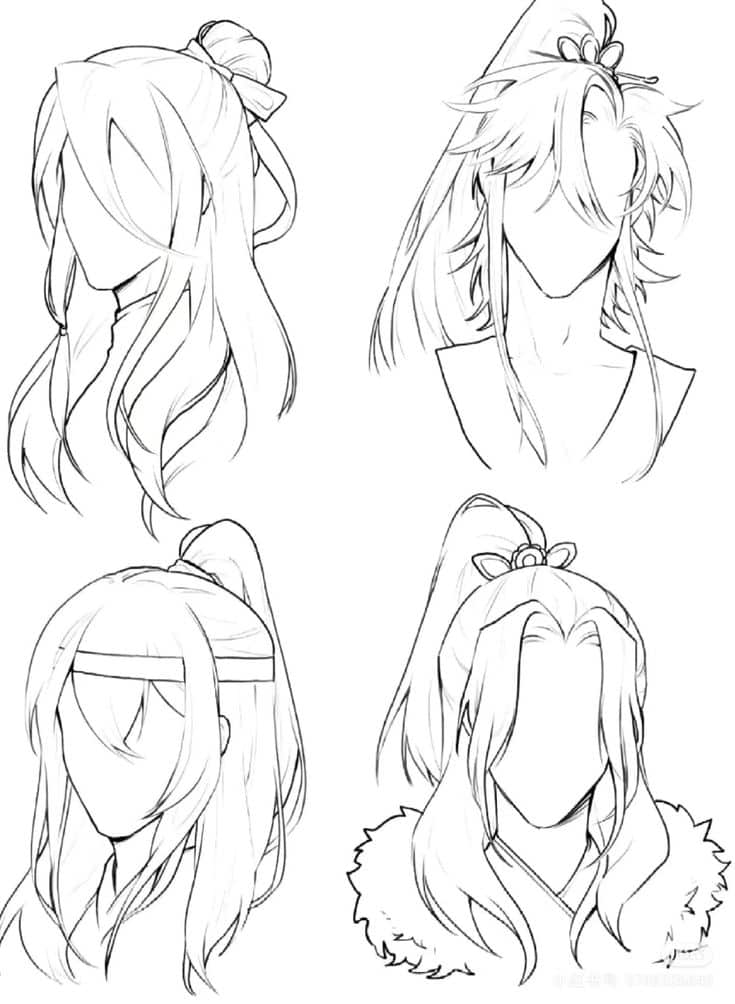
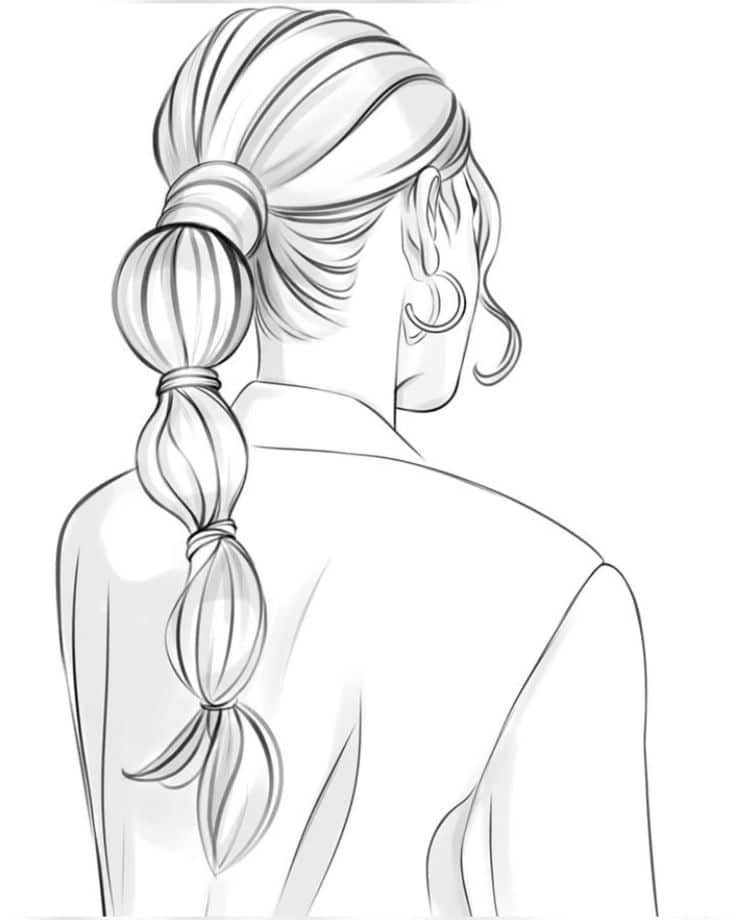
A ponytail changes the whole read of a character. A high, tight ponytail can make someone feel athletic, alert, or severe. A low loose ponytail feels calmer and heavier. A messy ponytail with escaped strands suggests motion, fatigue, wind, or a character who is too busy to keep every hair controlled.
For character hair specifically, the Disney drawings guide is worth keeping nearby; the Disney hair section shows why you block the whole hair mass before adding strands or shine lines.
From a drawing standpoint, ponytails are valuable because they show force clearly. If the character turns their head, runs, jumps, or leans forward, the ponytail reacts. That reaction gives the pose more life without needing a complicated background or dramatic gesture.
The first thing I check is the silhouette. If the outline of the ponytail reads well in flat black, the details will probably work. If the silhouette is confusing, adding strands usually makes the drawing busier instead of better.
Start with the head, not the hair

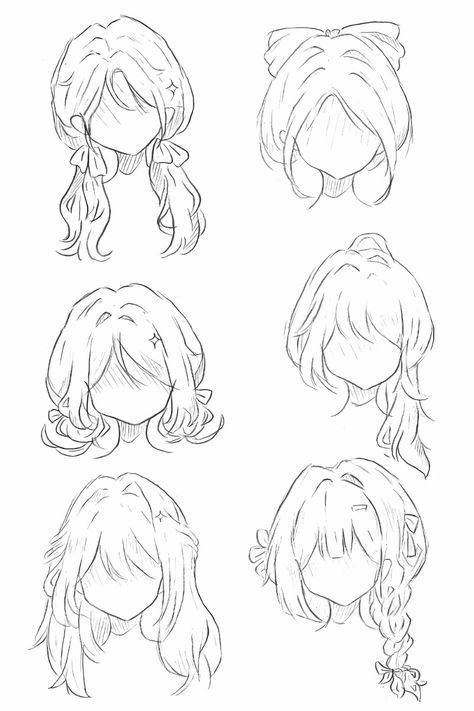
Before drawing the ponytail, lightly place the skull, jaw, neck, ears, and hairline. This sounds basic, but it fixes a common beginner mistake: attaching the ponytail to the back of the head like a sticker. Hair grows from the scalp and wraps around the form before it reaches the tie.
If you need a refresher on the broader structure, the site’s how to draw hair guide is a good companion piece. For ponytails specifically, pay attention to three construction points: the hairline, the crown, and the tie. Those points control the direction of almost every line.
- Hairline: marks where the pulled-back hair begins around the forehead, temples, ears, and nape.
- Crown: gives the hair volume before it compresses toward the tie.
- Tie: works like the anchor point. Every major clump should feel pulled toward it.
Keep this stage light. A 2B pencil, a pale digital brush, or a low-opacity sketch layer is enough. You are building a map, not decorating the hair yet.
Place the ponytail anchor
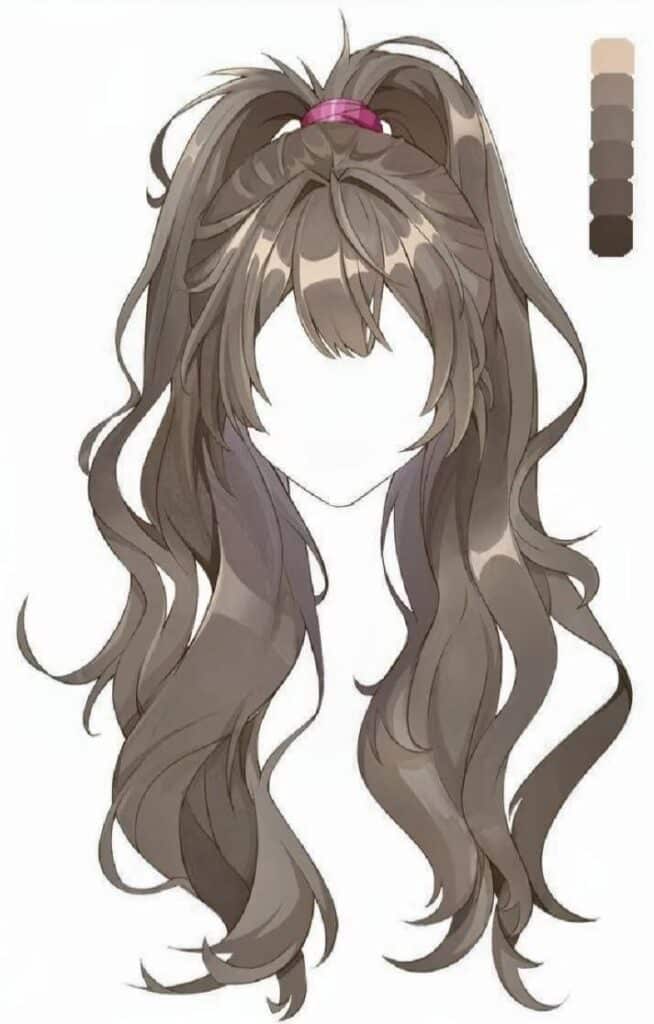
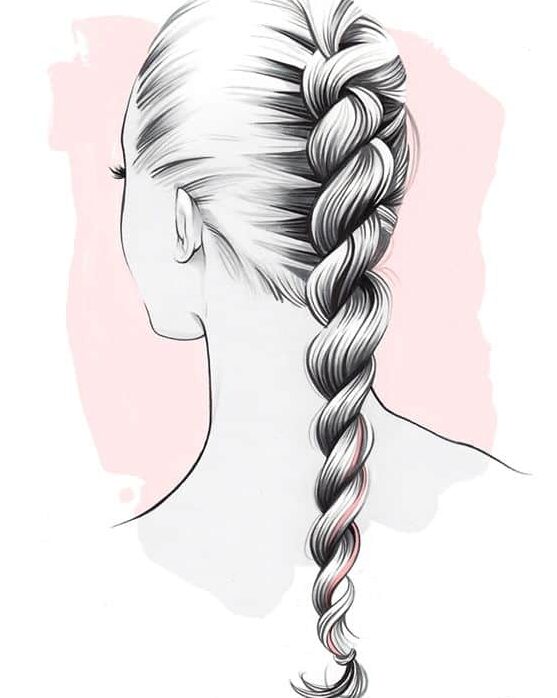
The anchor is the spot where the hair is gathered. Move it higher, lower, or sideways and the entire personality of the drawing changes. A high anchor creates more bounce and lift. A low anchor makes the tail hang closer to the neck. A side anchor creates asymmetry, which can feel playful or stylized.
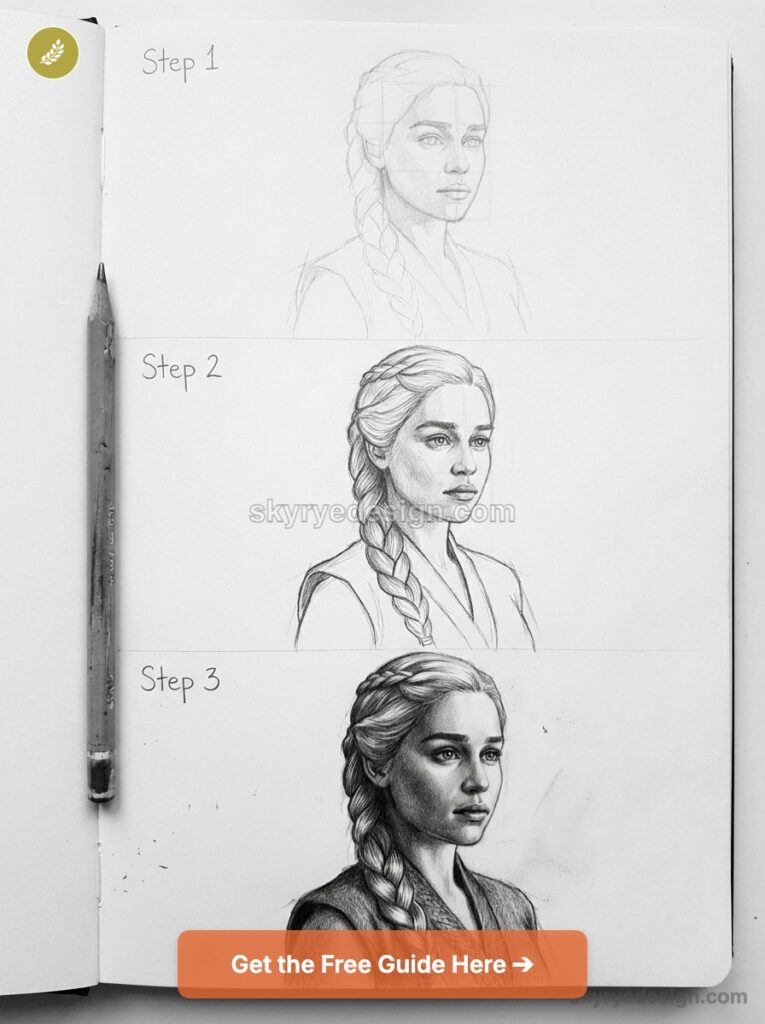
Draw the tie as a small wrapped form, not a flat line. Even a simple elastic has thickness. It pinches the hair, creates tiny shadows, and tells the viewer where the tension starts. If the character has thick hair, the tie should look like it is holding volume, not floating on top of it.
For fashion or costume sketches, this is also where you decide whether the tie is visible, hidden under wrapped hair, decorated with a ribbon, or replaced by a clip. A small accessory can support the character design without stealing attention.
Block the ponytail as one big mass
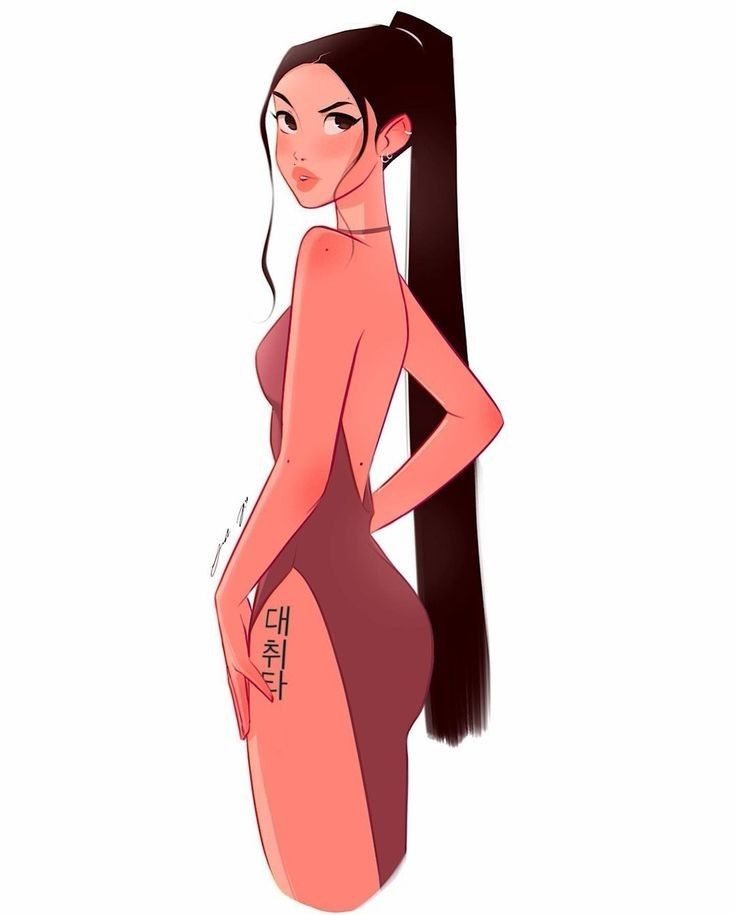
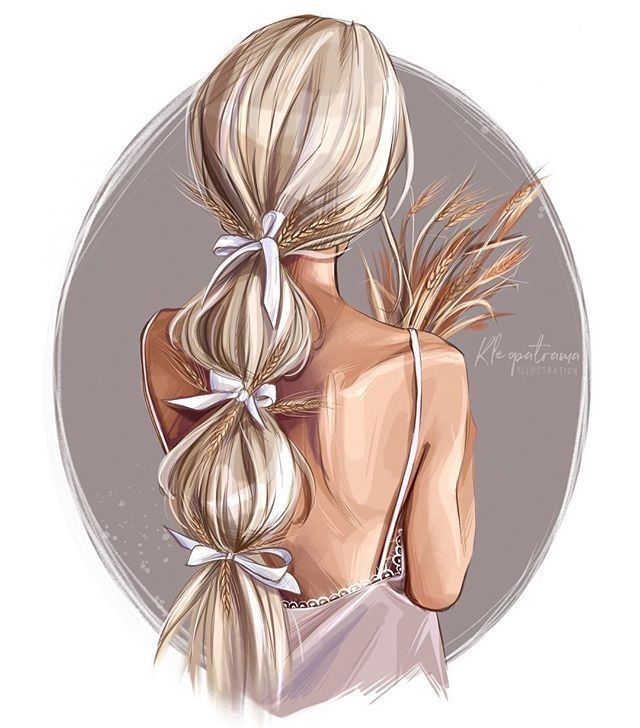
Do not begin with individual strands. Start with one large shape that describes the whole ponytail. Think of it as a soft ribbon, rope, cone, or teardrop depending on the hairstyle. This gives you a clean silhouette and keeps the hair from turning into a pile of unrelated lines.
A high ponytail usually lifts away from the tie first, then curves down. A long heavy ponytail drops sooner and has slower, broader curves. A short ponytail can stick out more before it bends. Curly and coily ponytails often expand outward, so their outer shape may be rounder and less smooth.
When I sketch this stage, I draw through the form with loose S-curves. The lines are not final strands. They are direction notes. They remind me where the hair wants to travel before I start carving it into sections.
Build volume without making the hair stiff
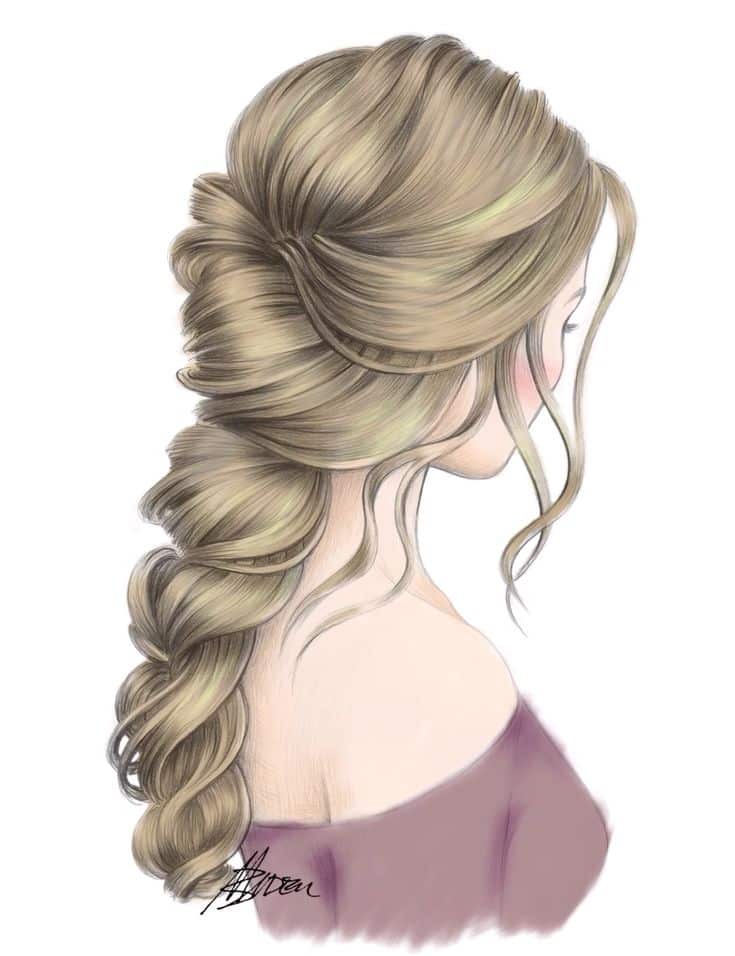
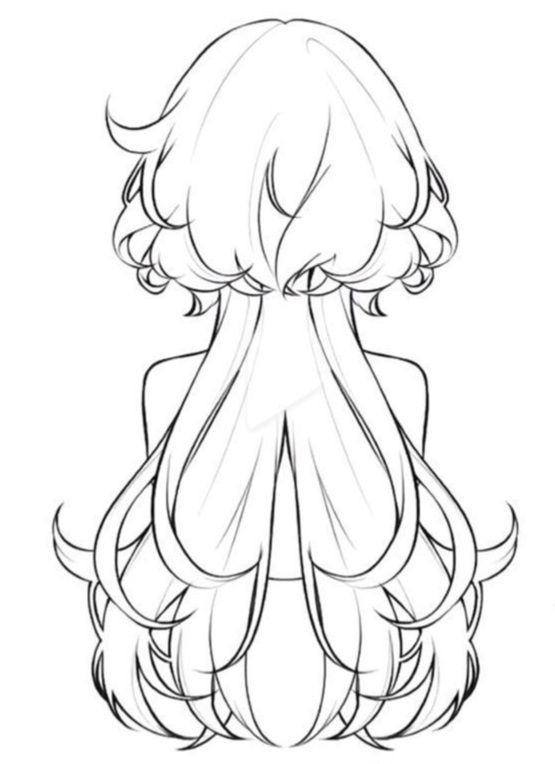
Flat hair is usually a construction problem, not a detail problem. Even pulled-back hair has lift at the roots. Around the crown and sides of the head, use soft curves that rise slightly before they travel toward the tie. That small lift keeps the hairstyle from looking painted onto the skull.
Volume also comes from overlapping clumps. Instead of drawing fifty separate hairs, divide the ponytail into a few large sections, then break some of those into medium and small shapes. The overlap gives you places for shadow and highlight.
- Thick hair: use fewer, heavier sections with broader curves and denser shadow near overlaps.
- Fine hair: use lighter edges, more flyaways, and narrower clumps.
- Long hair: show weight with a stronger downward arc.
- Short hair: allow more spring and lift near the tie.
A useful check: cover the interior lines and look only at the outside edge. If the outline still feels full and balanced, the volume is working.
Draw texture after the big shape works
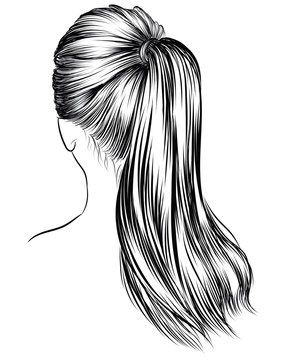
A hairstyle often becomes more convincing once it belongs to a character, so pair this practice with a few pencil girl drawing ideas for portraits and outfit sketches.
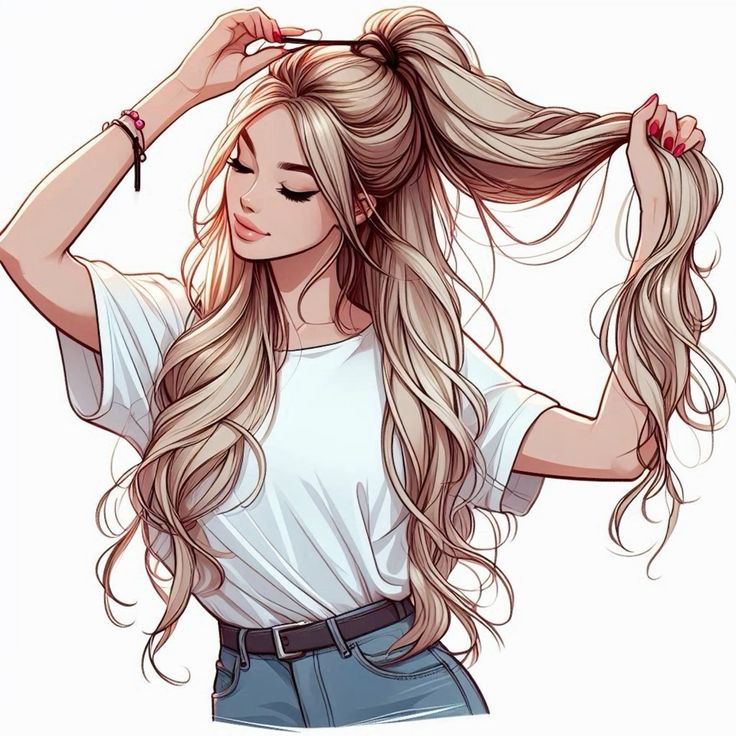
Texture should follow the form you already built. Straight hair falls in longer, cleaner bands. Wavy hair bends in wider S-curves. Curly hair forms repeating coils and grouped spirals. Coily hair often creates a fuller outer mass, with tighter rhythm and more broken edges.
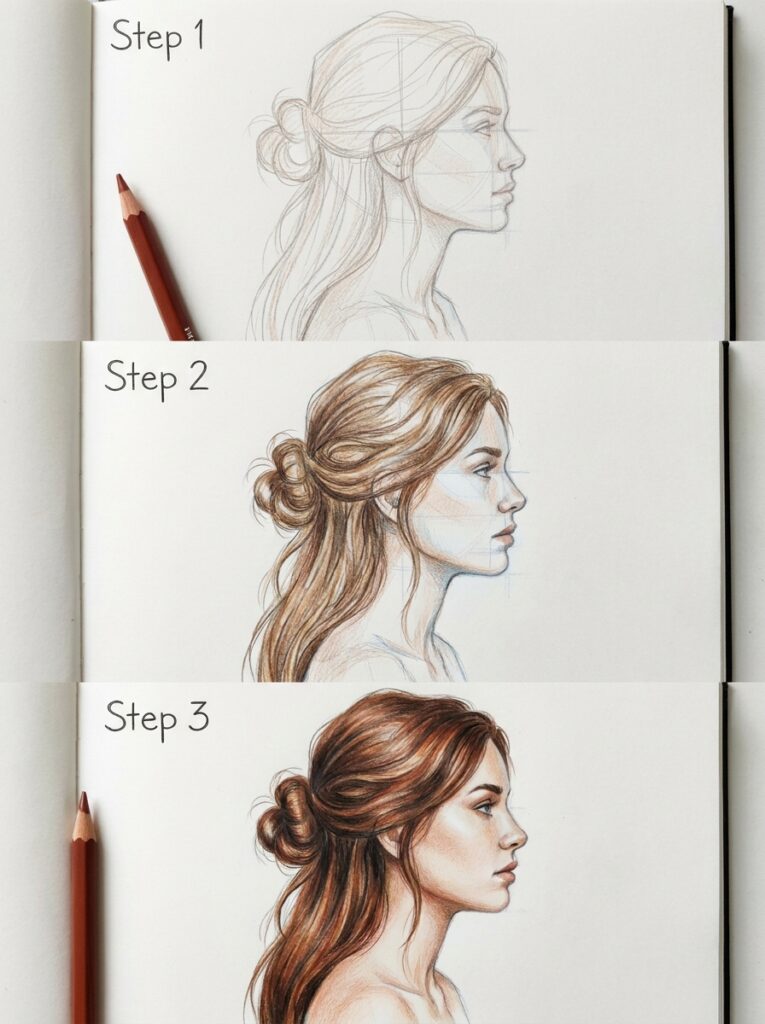
The mistake is drawing texture as decoration. A curl, wave, or straight strand still needs direction, overlap, and light. Put darker lines where clumps tuck under each other. Keep the brightest areas simple. Hair often looks more convincing when you leave some highlight shapes untouched instead of outlining every strand.
For line art, vary line weight. Use stronger lines on the outer silhouette and under overlapping clumps. Use thinner, tapered lines inside the tail. If every line has the same thickness, the hair can look flat even when the shape is correct.
Common ponytail styles and how to draw them
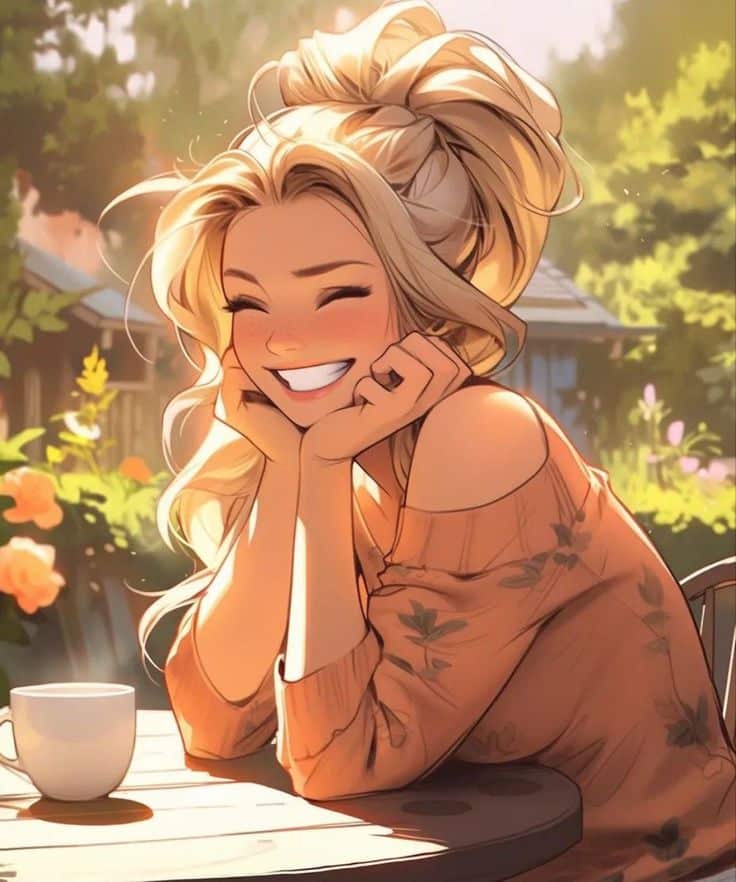
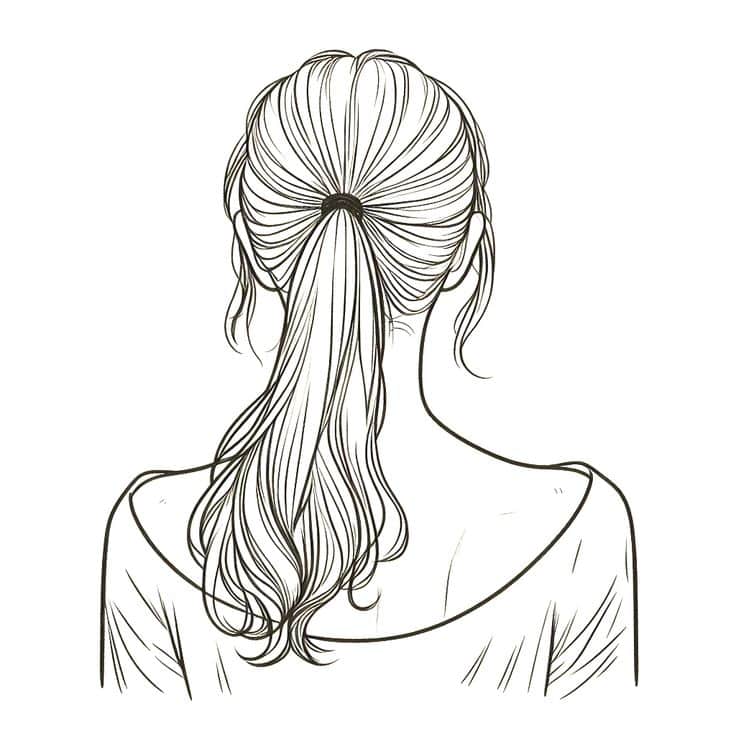
Different ponytail styles need different drawing decisions. The anchor, silhouette, texture, and amount of control should all match the character.
- High ponytail: start with lift from the tie, then let the tail fall in a clean arc. Good for action poses and energetic characters.
- Low ponytail: keep the hair close to the head and let the tail hang with more weight. Good for calm, mature, or elegant characters.
- Side ponytail: show hair sweeping across the skull toward one side. Watch the weight as it drapes over the shoulder.
- Messy ponytail: break the silhouette with loose strands, uneven clumps, and small bumps around the tie.
- Braided ponytail: build the braid as repeating overlapping sections, then shade each section as a small form.
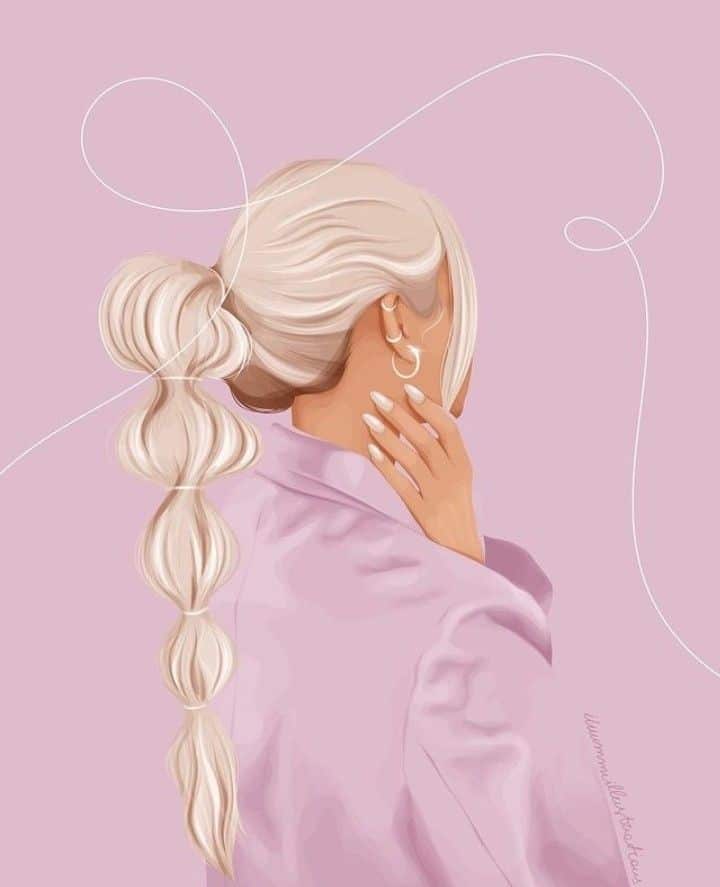
- Bubble ponytail: draw rounded sections between ties, with each section having its own highlight and shadow.
- Pigtails: treat each side as a separate ponytail, then compare size and angle so the pair feels balanced.
If the ponytail is part of a full outfit sketch, connect the hair choice to the pose and clothing. The fashion sketching for beginners tutorial is useful for that, because hairstyle, gesture, and costume all affect the same silhouette.
Use the ponytail to show mood and motion
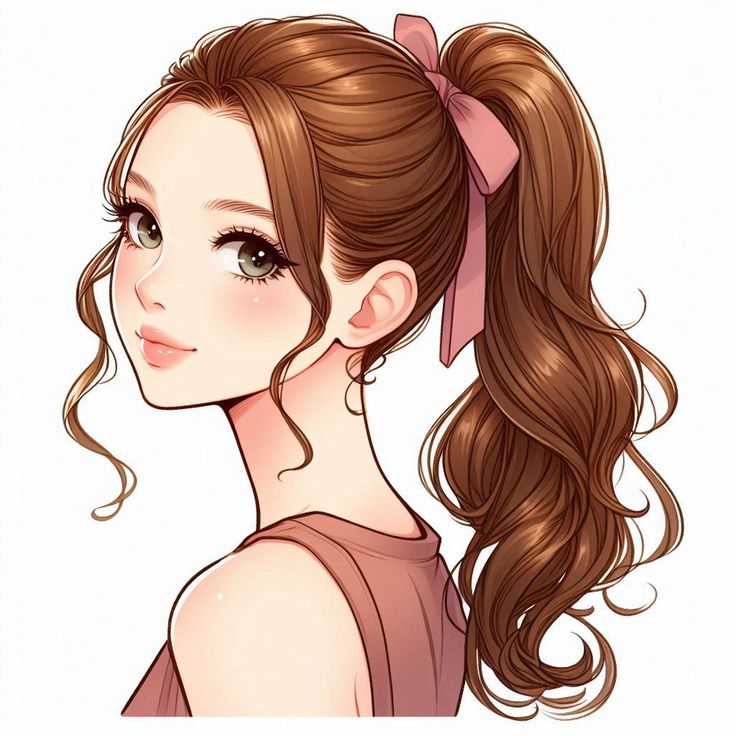
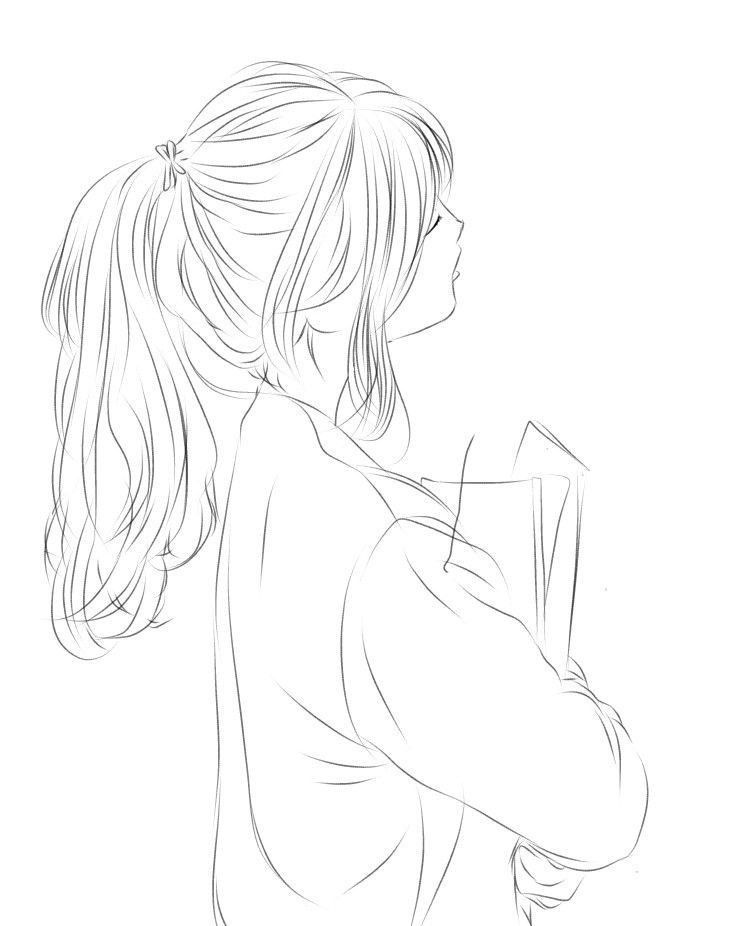
Hair can act almost like a secondary gesture line. When a character turns sharply, the ponytail can lag behind the head. When they jump, it can float upward. When they are tired or sad, it can hang close to the body. These small choices make the pose feel less frozen.
For more dramatic character sketches, combine hair movement with spicy drawing poses so the ponytail, shoulders, and gaze all move in the same direction.
For action, exaggerate the curve of the tail in the opposite direction of the movement. For quiet scenes, reduce the curve and let gravity do more of the work. For wind, let the flyaways move first and the heavier mass follow more slowly.
This is where references help. Do not copy a reference blindly; ask what force is acting on the hair. Is it gravity, wind, speed, a head turn, or the weight of the hair itself? Once you know the force, you can simplify the reference into a cleaner drawing.
How to draw a ponytail step by step
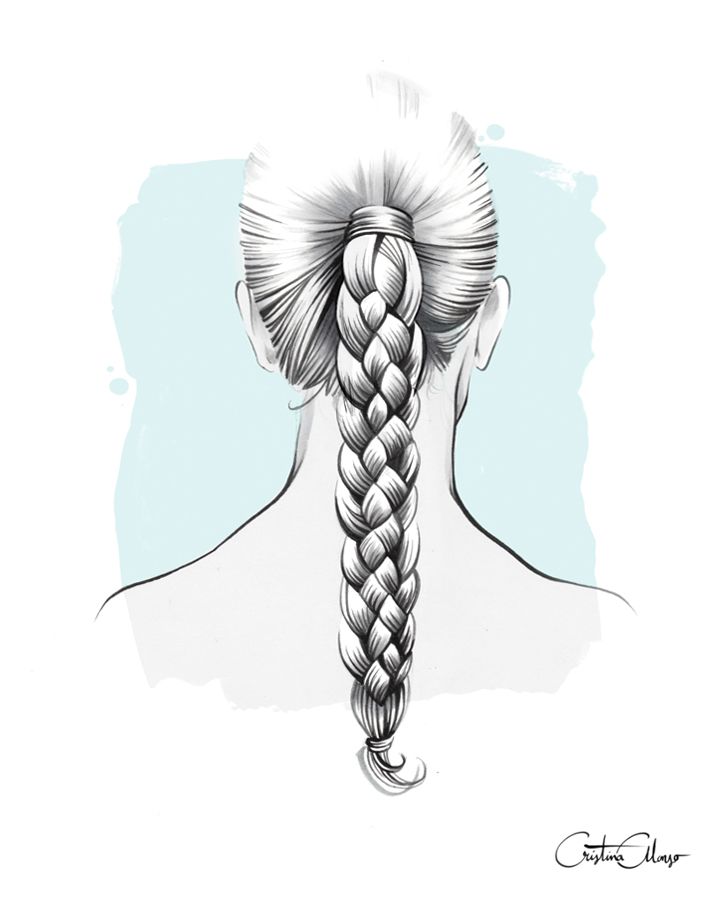
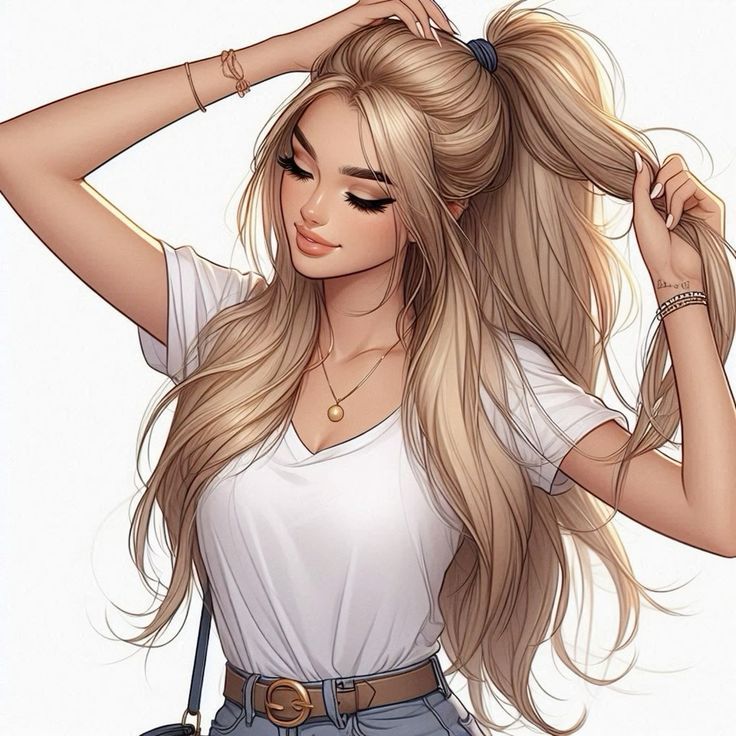
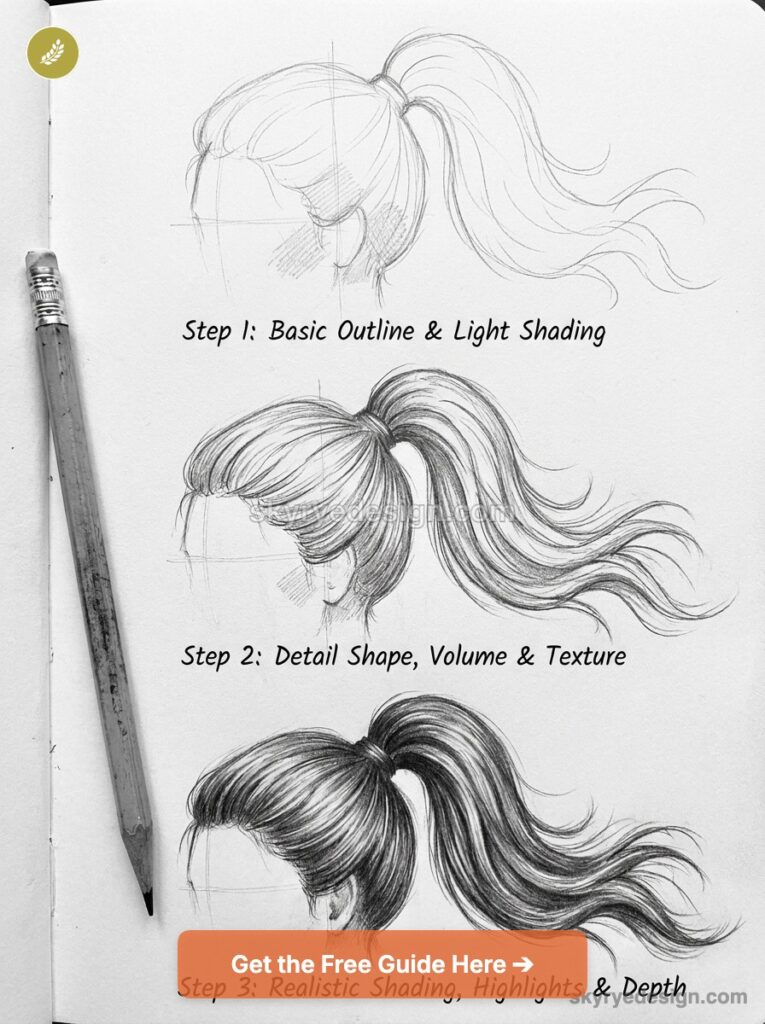
- Draw the head and neck. Keep the skull visible in your mind, even if hair will cover most of it.
- Mark the hairline. Place the forehead, temple, ear, and nape edges lightly.
- Choose the tie position. High, low, or side placement sets the energy of the style.
- Sketch the pull lines. Draw broad lines from the hairline and crown toward the tie.
- Block the tail silhouette. Use one large shape first, with gravity and motion in mind.
- Divide into clumps. Add 3 to 5 major sections before smaller details.
- Add texture and flyaways. Use them sparingly, mostly along edges, overlaps, and the hairline.
- Shade the overlaps. Put shadow where clumps tuck under, where the tie compresses the hair, and where the tail turns away from the light.
If you are building a full figure underneath the hairstyle, sketch the pose first. A good base drawing keeps the ponytail connected to the head, neck, shoulders, and overall gesture.
Practice drills that actually help
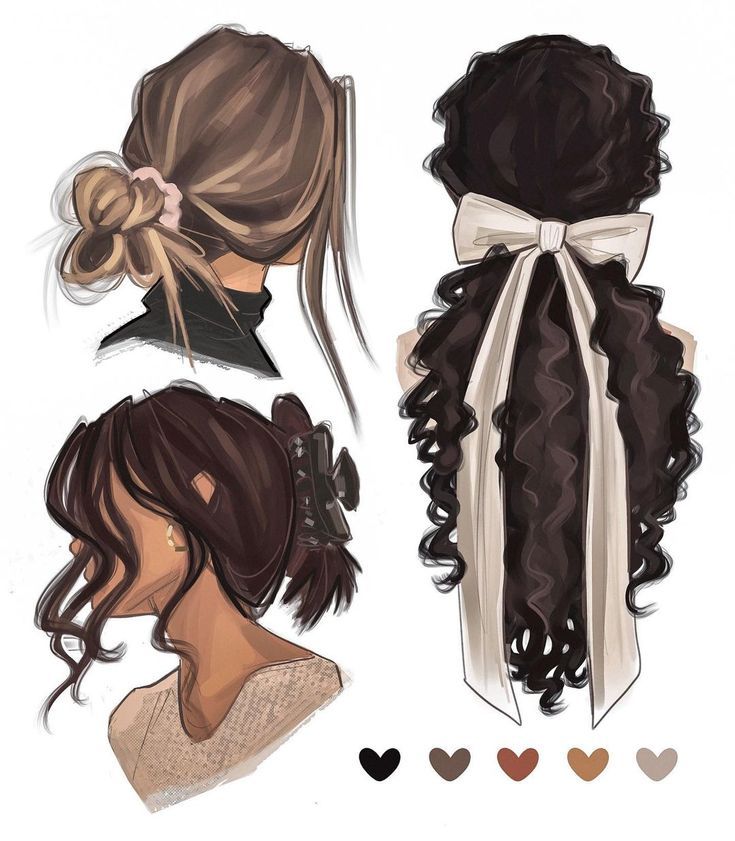
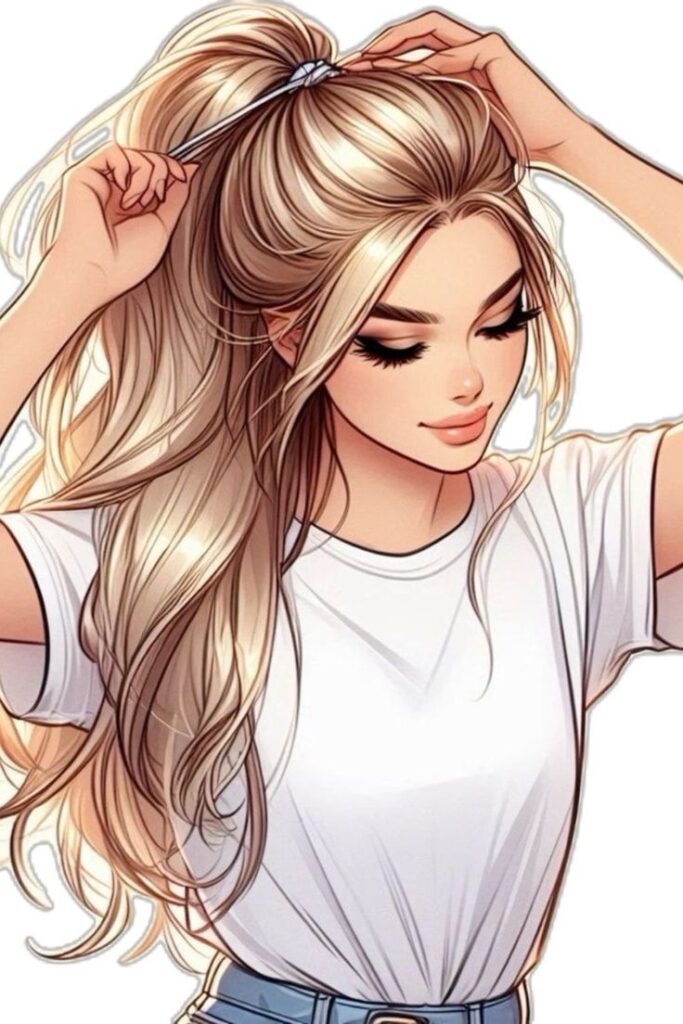
The fastest practice is not one polished ponytail. It is a page of small attempts. Draw ten tiny heads and put a different ponytail on each one: high, low, side, messy, braided, curly, straight, short, long, and windblown. Keep them rough. The goal is to train placement and silhouette.
Then do a second pass where you focus on one problem only. Maybe all ten sketches are about root volume. Maybe all ten are about curly ponytails. Maybe all ten are about shading the tie area. Focused repetition teaches more than casually noodling one drawing for an hour.
- Draw the ponytail as a solid black silhouette before adding details.
- Redraw the same ponytail with straight, wavy, curly, and coily texture.
- Use one light source and shade only the overlaps.
- Draw a running character and make the ponytail show the direction of movement.
- Take one reference photo and simplify it into three major clumps.
For more prompts when you run out of subjects, browse the art drawing ideas list and turn a few of them into character studies with different hairstyles.
Common mistakes to avoid
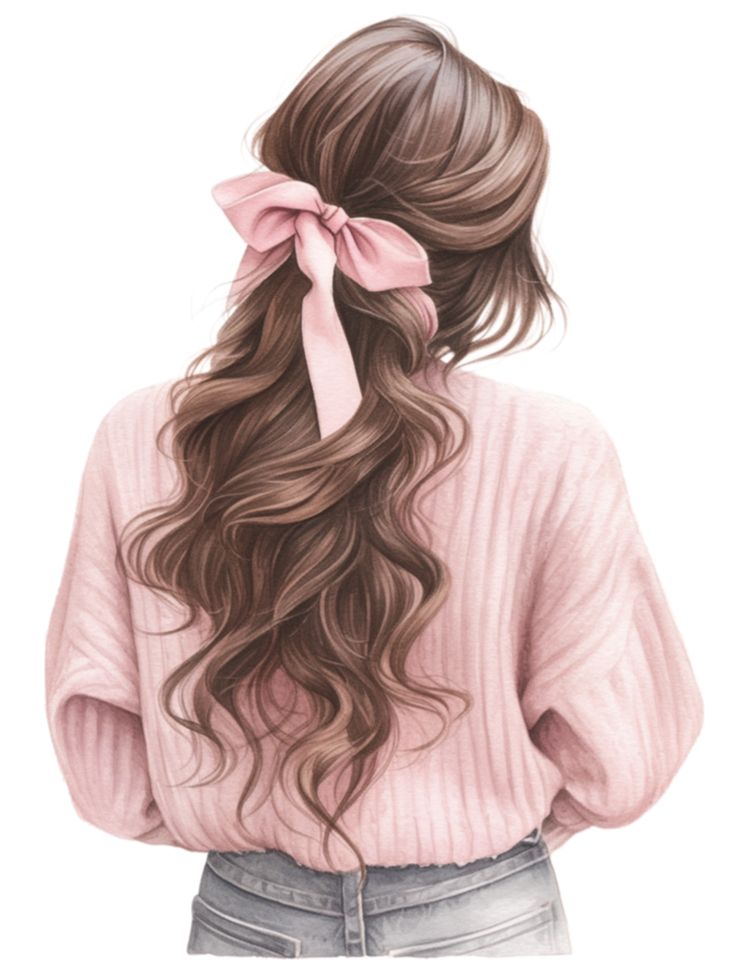
- Attaching the tail too high or too far back: check the skull shape and make sure the tie sits on the head, not behind it.
- Drawing every strand: use clumps first, then add a few strands where they matter.
- Ignoring gravity: even bouncy hair has weight. Let the curve eventually fall.
- Using identical flyaways: vary length, angle, and pressure so they feel natural.
- Forgetting the tie compression: the hair should pinch inward where it is held.
A ponytail drawing works when the viewer can feel the pull toward the tie and the weight of the hair after it leaves the head. Start there. Details are the polish, not the structure.
Quick reference for ponytail drawing decisions
If the drawing feels off, diagnose the hairstyle before adding more detail. Most ponytail problems come from one of four places: the anchor is unclear, the tail has no weight, the texture ignores the form, or the silhouette does not match the character.
| Drawing problem | What to check | Quick fix |
| The ponytail looks pasted on | The tie does not sit on the skull shape | Redraw the head lightly and move the tie onto the back or crown of the head. |
| The hair looks flat | There is no root lift or overlap | Add a small lift at the crown and separate the tail into 3 to 5 large clumps. |
| The ponytail feels stiff | The main curve is too straight | Use one flowing S-curve before adding interior strand lines. |
| The texture looks noisy | Every strand has the same weight | Keep the outer silhouette stronger and make interior lines thinner and fewer. |
| The style does not match the character | The anchor and silhouette are generic | Choose high, low, side, messy, braided, or bubble placement based on the character mood. |
This kind of quick diagnostic is especially useful in sketchbook practice. Instead of erasing the whole drawing, name the problem and fix one layer: placement, mass, clumps, texture, or shading.
Ponytail drawing FAQ
Q: What is the easiest way to draw a ponytail?
A: Start with the head shape, then place the hair tie before drawing the tail. Pull the hair from the hairline and crown toward that tie, block the ponytail as one simple mass, and only then add clumps, flyaways, and texture. This keeps the drawing from turning into random strands.
Q: How do you make a ponytail look like it has volume?
A: Give the hair a little lift at the roots and divide the ponytail into overlapping clumps. The tie should pinch the hair inward, while the tail expands slightly before gravity pulls it down. Shadows under overlaps and near the tie will make the hair feel thicker without adding hundreds of lines.
Q: How do you draw a high ponytail?
A: Place the tie high on the crown or upper back of the head. Sketch the tail lifting away from the tie first, then curving downward as the hair gets heavier. A high ponytail usually has a cleaner, bouncier silhouette, so exaggerate the first upward curve if the character is moving.
Q: How do you draw a messy ponytail?
A: Keep the main ponytail shape readable, then break the edges with uneven flyaways, escaped strands near the temples and nape, and small bumps around the tie. The trick is control: messy hair still needs a clear direction toward the anchor, or it will look like scribbles instead of loose hair.
Q: Should I draw every strand of hair in a ponytail?
A: No. Draw the big mass first, then a few major clumps, and save individual strands for the edges, overlaps, highlights, and flyaways. Too many equal-weight strands flatten the drawing. A few tapered lines in the right places usually describe the texture better than covering the whole tail with lines.
Q: How do ponytails change in anime versus realistic drawing?
A: Anime ponytails usually simplify the hair into bold clumps, sharp silhouettes, and clear motion curves. For an anime ponytail drawing, push the silhouette a little more: a high ponytail can lift like a ribbon before it drops, while a low ponytail can frame the neck and shoulders. Realistic ponytails need softer overlaps, texture changes, and lighting.
Final takeaway
To draw ponytails well, think like a designer first and a strand-counter second. Place the head, choose the anchor, block the mass, show the weight, then add texture only where it supports the form. That order keeps the drawing clean and believable.
For the broader cluster, keep this guide next to the main Drawing tutorials archive, then branch into hair, figure bases, fashion sketching, and character drawing as needed. Ponytails are a small subject, but they touch almost every part of good character design: silhouette, movement, proportion, texture, and mood.
When the hairstyle needs to sit on a simplified chibi head, a gacha art base gives you a quick body and head template to test the ponytail shape.
Ponytails and buns depend on head structure, so a side profile hairstyle drawing study helps place the hairline, ear, skull mass, and neck more convincingly.
Hair shape changes the whole head, so compare your sketches with artists who paint watercolor portraits and watch how loose hair edges frame the face.
- 6.0Kshares
- Facebook0
- Pinterest6.0K
- Twitter0
- Reddit0