Side profile drawing is great for showing what makes a face feel real. A profile view has a different kind of beauty than a front-facing portrait. You notice the slope of the forehead, the shape of the nose, the lips, the chin, and that little angle where the jaw turns into the neck.
- How to draw a side profile step by step
- Understanding the Basics of Side Profile Drawing
- Tools and Materials for Side Profile Illustration
- Preparing to Draw a Side Profile
- Drawing the Side Profile
- Stylizing and Character Design
- Enhancing Your Drawing Skills
- Side profile drawing FAQ
- Q: How do you draw a side profile for beginners?
- Q: What are the basic proportions for a side profile drawing?
- Q: Where should the ear go in a side profile?
- Q: How do you draw the nose in side profile?
- Q: Why does my side profile drawing look wrong?
- Q: How do you shade a side profile drawing?
- Q: Can you stylize a side profile drawing?
- Q: What should I practice after side profile drawing?
It can be tricky at first. Small changes matter a lot. If the nose is too far forward or the jaw sits too low, the whole face starts to feel off. That’s why side profile drawing teaches you to slow down and actually study the structure of the head instead of guessing.
How to draw a side profile step by step
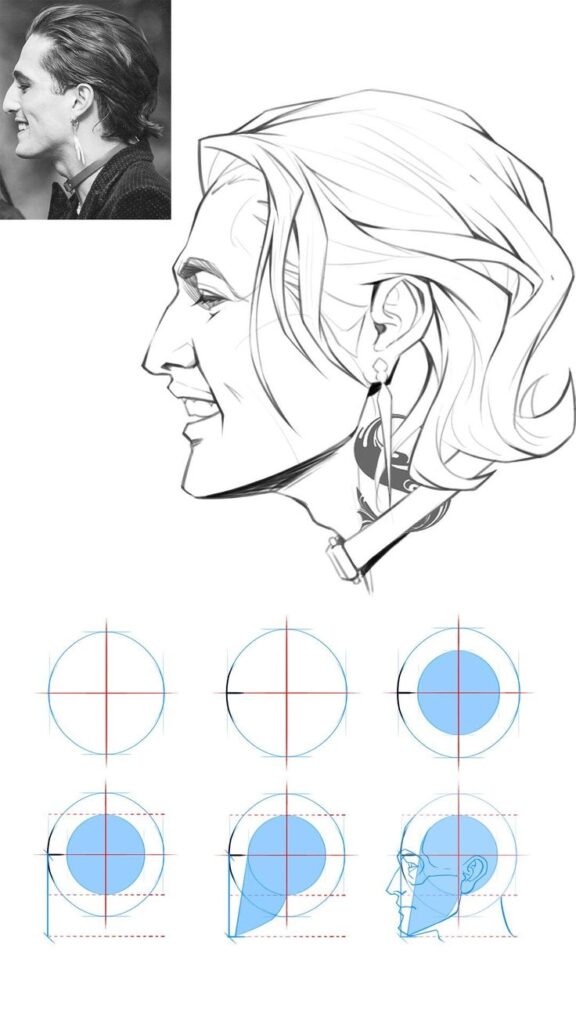
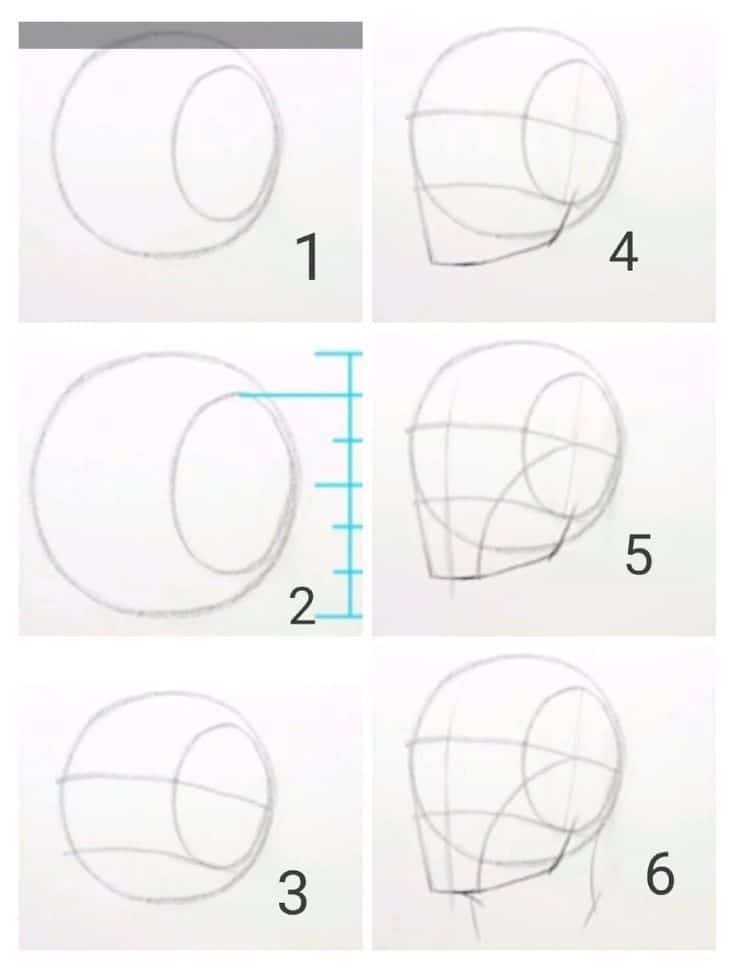
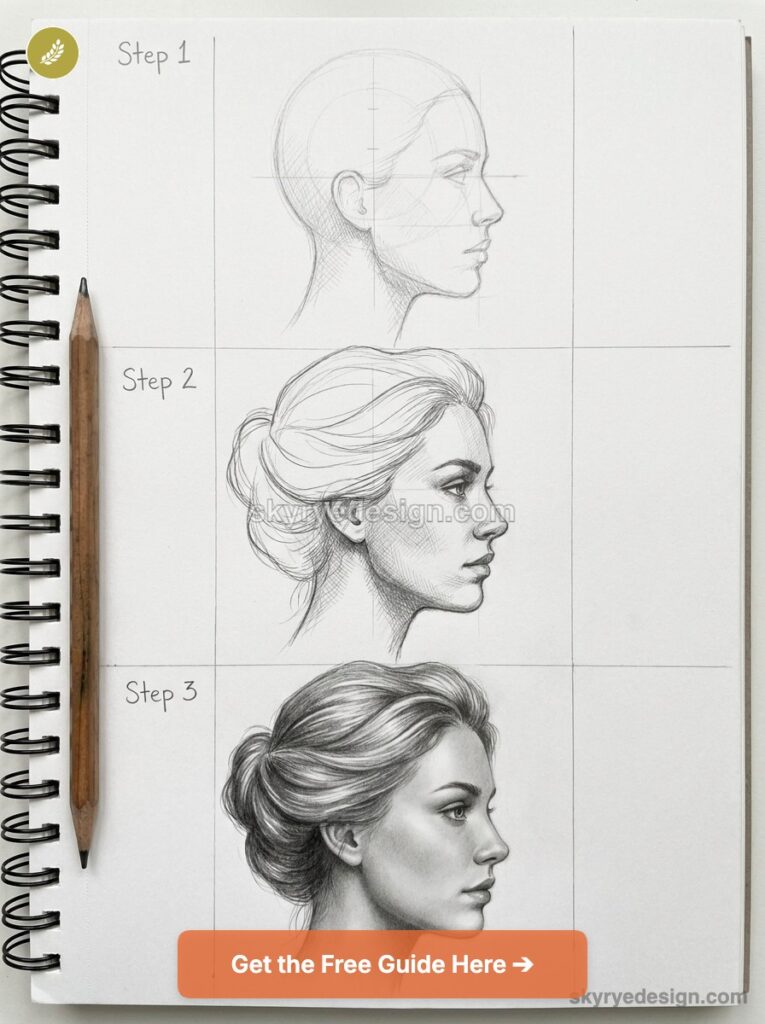
To draw a side profile, start with a simple head shape, place the ear near the back half of the skull, then line up the brow, base of the nose, lips, chin, and jaw before adding hair or shading. The profile works when the silhouette is clear. In academic drawing, this is where you slow down and compare angles instead of guessing: forehead to nose, nose to lips, lips to chin, and chin to neck.
| Profile feature | Check this first | Common fix |
|---|---|---|
| Forehead and nose | The bridge should flow from the brow, not float forward | Soften the forehead-to-nose angle before detailing the nostril |
| Lips | The mouth sits behind the nose tip and above the chin | Draw the upper lip as a small wedge, not a flat line |
| Ear | The ear usually sits between the brow line and the base of the nose | Move it back toward the skull if the face feels crowded |
| Jaw and neck | The jaw should turn into the neck with a believable angle | Avoid a straight vertical neck under the chin |
Start with the basics: the skull shape, the center line, the placement of the ear, and the way the features line up. A sharp pencil, clean paper, and a good eraser are enough. Once the proportions are working, shading and line weight can make the drawing feel more natural. A heavier line under the chin or around the lashes can add depth without overworking the sketch.
After that, you can start playing with style. Maybe you exaggerate the nose for character design, soften the jaw for a gentler look, or push the hair shape to make the silhouette more interesting. That’s where profile drawing gets fun. The more you practice, the more you start seeing faces as shapes, angles, and stories instead of just features on a page.
For a related creative prompt, see Portrait Drawing: Essential Techniques for Capturing Lifelike Features.
Key Takeaways
- Start with the head mass, ear placement, and silhouette before adding detail.
- Use a light pencil, clean eraser, and paper that lets you correct proportion lines.
- Practice noses, lips, ears, jawlines, and hair shapes as separate studies.
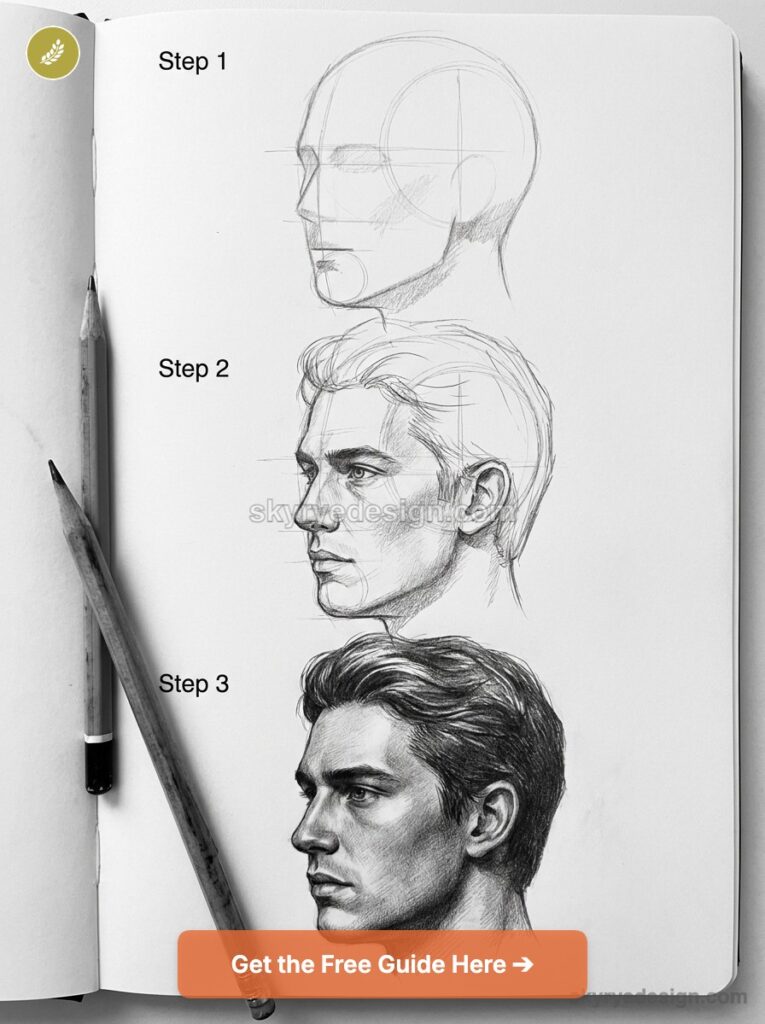
Understanding the Basics of Side Profile Drawing
A strong side profile drawing starts with three checks: the skull shape, the feature line, and the outside silhouette. If those are wrong, no amount of eyelashes, hair texture, or shading will save the portrait. Get the big angles right first, then move into likeness and style.
Anatomy of a Side Profile
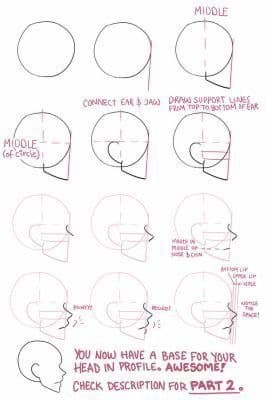

In a profile view, the silhouette does most of the work. The forehead, nose, lips, chin, jaw, and back of the skull create one readable outer edge. Before adding detail, squint at the shape. If the silhouette does not look like a head yet, fix the proportions before moving on.
The jawline changes direction at the chin, angles back toward the ear, then drops into the neck. I usually mark that jaw-to-neck turn early because it stops the profile from looking like a mask pasted onto a tube.
The nose controls much of the likeness in a profile. Keep the bridge connected to the brow, place the nostril under the tip, and compare how far the nose projects against the lips and chin. Put the ear behind the jaw, not on the cheek.
Importance of Facial Features Proportions
Proportion guides keep the drawing honest. They are not prison bars; they are measuring marks you can adjust once the face starts looking believable.
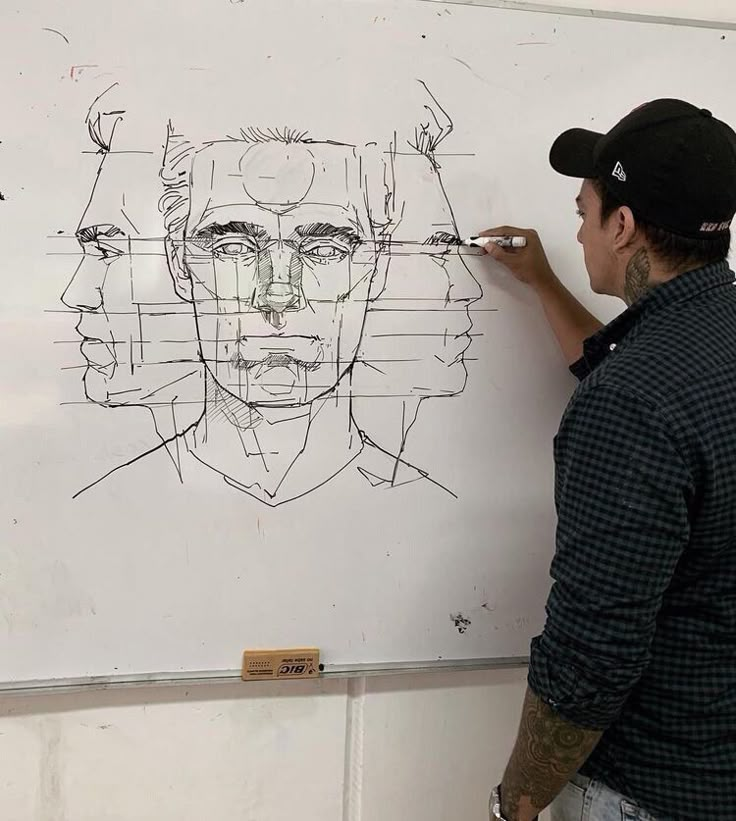
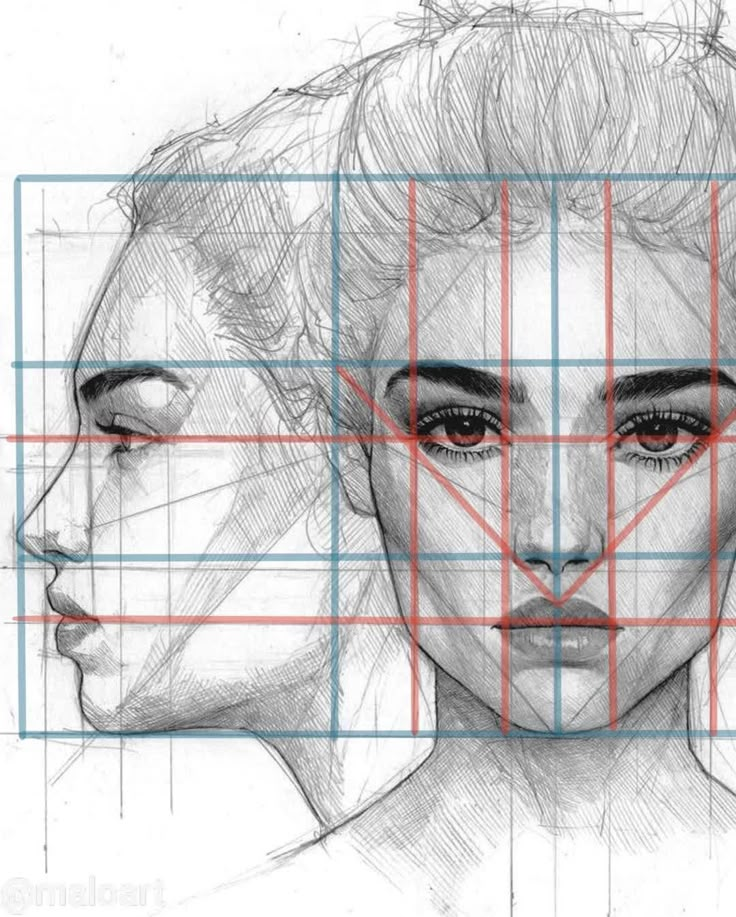
Start by dividing the head into thirds: hairline to brow, brow to base of nose, and base of nose to chin. Then check the ear against the brow and nose lines. The mouth usually sits behind the nose tip, and the chin should not outrun the whole face unless you are deliberately stylizing.
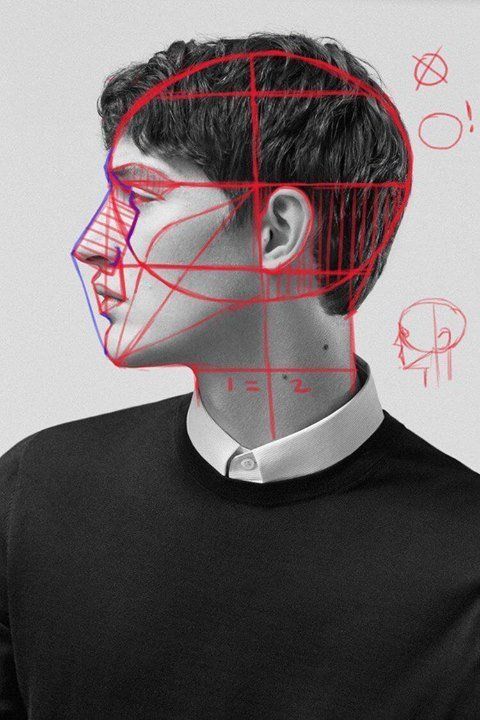
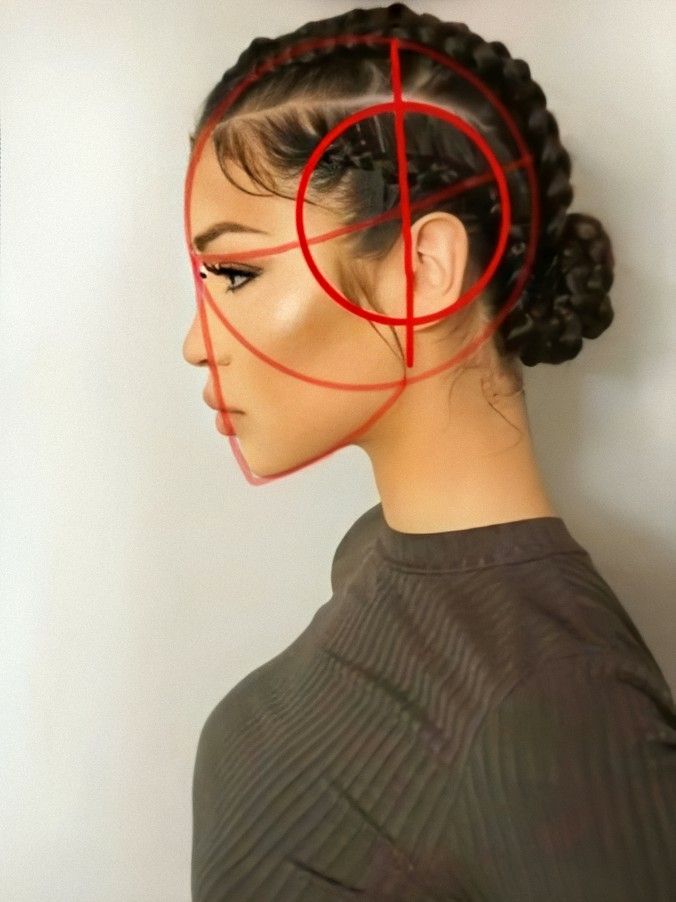
Pay attention to the brain case, which includes the cranium. It contributes to the overall shape and size of the head. Correctly aligning these proportions makes our drawings more realistic and true to life.
Different Perspectives in Profile View
Though often overlooked, different perspectives in profiles can add depth and interest to our drawings. Profiles can be subtle variations from a strict side view to a more angled view.
A three-quarter view adds dimension, revealing part of the other side of the face. This perspective highlights the facial features more clearly than a strict side profile.
The silhouette is a critical aspect in these views, as it defines the profile’s unique characteristics. Understanding these different perspectives allows us to capture varied and expressive profiles.
Tools and Materials for Side Profile Illustration
You do not need expensive tools for profile practice. A sharp HB or 2B pencil, a kneaded eraser, and paper that can handle light correction are enough. Better materials help, but clean measuring and patient edge control matter more.
Choosing the Right Drawing Utensils
Use an HB pencil for the first construction lines, then switch to 2B or 4B for darker accents around the nostril, lashes, hair mass, and cast shadow under the chin. Keep the first pass light. A heavy outline too early makes the profile harder to correct.
Colored pencils or crayons can add life to the drawing. They are useful for shading skin tones or adding small details. An eraser, especially a kneaded one, helps in correcting errors without damaging the paper.
Drawing Surfaces and Paper Types
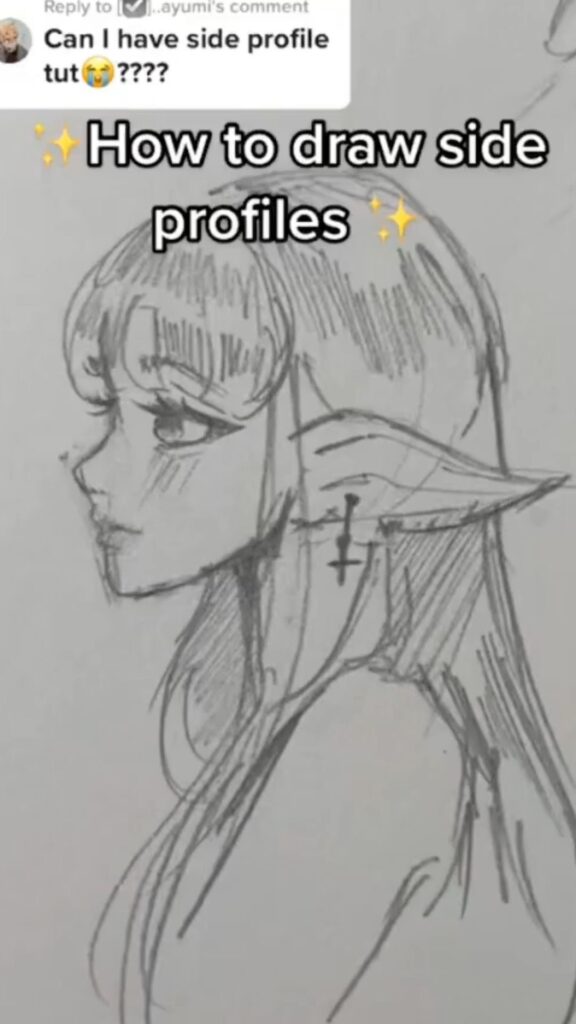
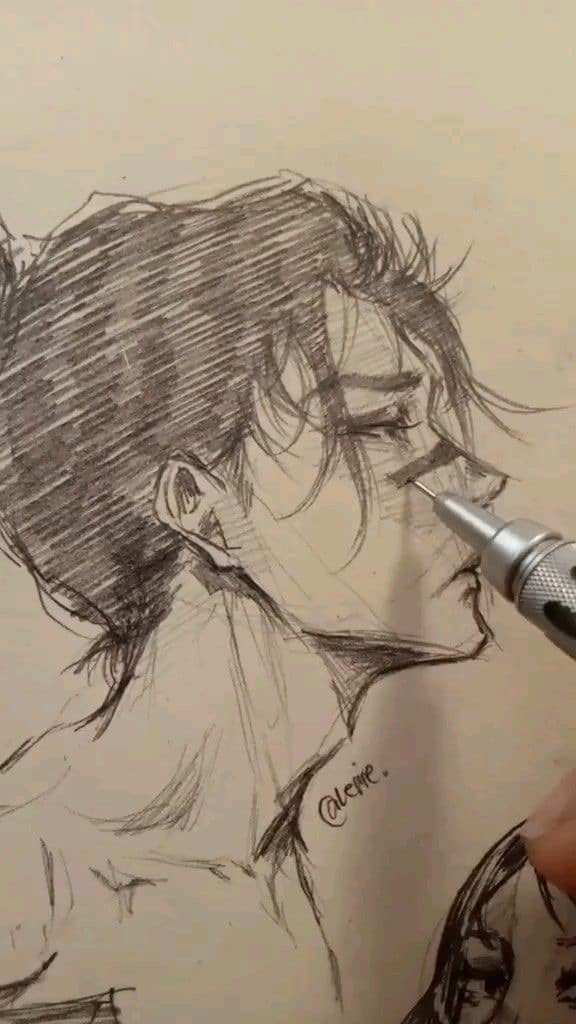
The choice of paper affects the quality of our side profile drawings. It’s important to use a drawing surface that accommodates various techniques without smudging. Smooth, heavyweight paper is ideal as it can handle pencils, ink, and blending tools well. This type of paper provides a solid base for creating consistent strokes in black and white line sketches.
Side profiles make the hairline easier to see, so practice drawing anime hair from the side when bangs, back volume, or neck-length hair feels confusing.
Consider using sketchbooks or loose sheets depending on our workflow. Loose sheets can be advantageous if scanning or sharing artwork is required. The right kind of paper enhances our ability to produce clear and precise illustrations.
Use of Software for Vector Illustrations


For those who prefer digital methods, vector illustration software offers a range of tools to create polished side profiles. Programs like Adobe Illustrator provide capabilities for creating scalable vectors. This is beneficial for making precise, adjustable shapes and lines that are important in vector drawing.
Such software allows us to experiment with colors and layers efficiently. Using digital tools, we can quickly adjust designs without starting from scratch. This is particularly useful for professional work or when developing designs for multiple uses or sizes.
Preparing to Draw a Side Profile
Before drawing side profiles, set up a clean page, choose one reference, and decide what you are practicing: proportions, likeness, stylization, or shading. If the reference comes from the web, check the usage rights before turning it into finished portfolio work.
Setting Up Your Workspace
Creating the right environment for drawing can greatly impact our productivity. First, ensure that our workspace is well-lit and free of distractions. A clean desk with only the necessary supplies, such as sketch pads, pencils, and erasers, helps us focus better.
Investing in a comfortable chair and an adjustable desk can make a big difference. Not only will our posture improve, leading to less fatigue, but we can also spend more time on our art. Organizing our materials efficiently allows us to access our tools quickly when inspiration strikes.
Drawing from Stock Photos and Panoramic Images


Stock photos are excellent resources for practicing side profile drawings. They offer high-quality images with clear details, which are useful for honing our skills. We should choose photos with different angles and expressions to broaden our understanding.
For a more immersive experience, 360° panoramic images offer a unique perspective. This type of imagery allows us to view profiles from various angles, adding depth to our practice. By incorporating these resources, we expand our artistic vision and become more versatile in our creations.
Understanding Licensing: Extended License
When using images from the web for our projects, it’s vital to understand licensing terms. Many stock photos come with basic licenses, but an extended license might be needed if our artwork is for commercial use. This license allows us to reproduce or sell our work without legal complications.
We should check whether the images require an extended license for web design purposes. Knowing these details can save us from potential legal issues and ensures respect for the original creators. By being mindful of licensing, we maintain ethical standards while pursuing our art.
Drawing the Side Profile
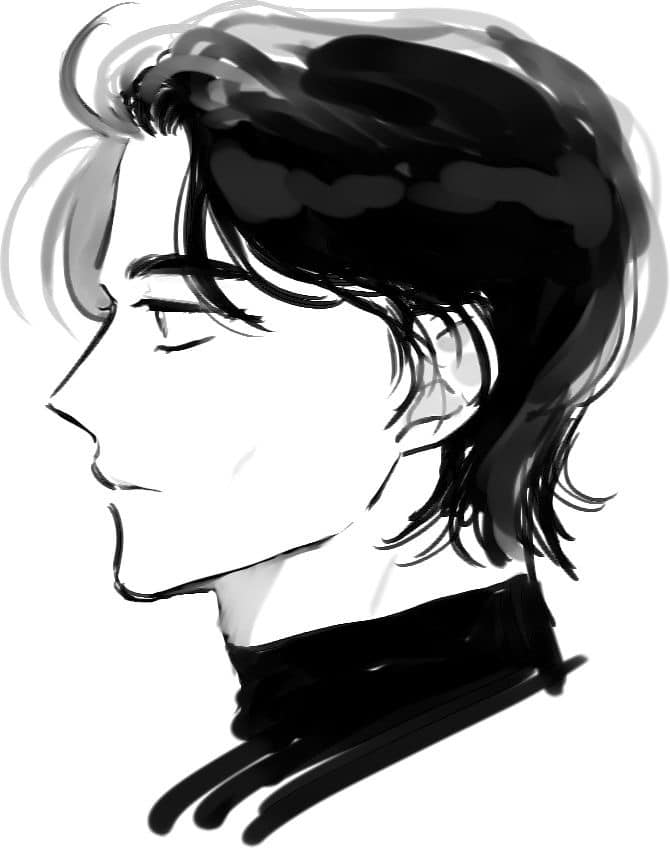

When drawing a side profile, it’s vital to focus on individual facial elements like the nose and hairline while also considering the overall shape and shading. We can create a striking side profile by breaking it down into understandable steps.
A side profile becomes more expressive when the head angle works with the whole body, so keep a few spicy pose reference ideas nearby when planning character attitude.
Step-by-Step Guide to Draw the Nose
Our first focus is on drawing the nose in the side profile view, which can greatly define the face’s likeness. Begin by sketching a simple curve to outline the bridge of the nose. The tip should slightly extend, as this part often curves downward or upward depending on the person.
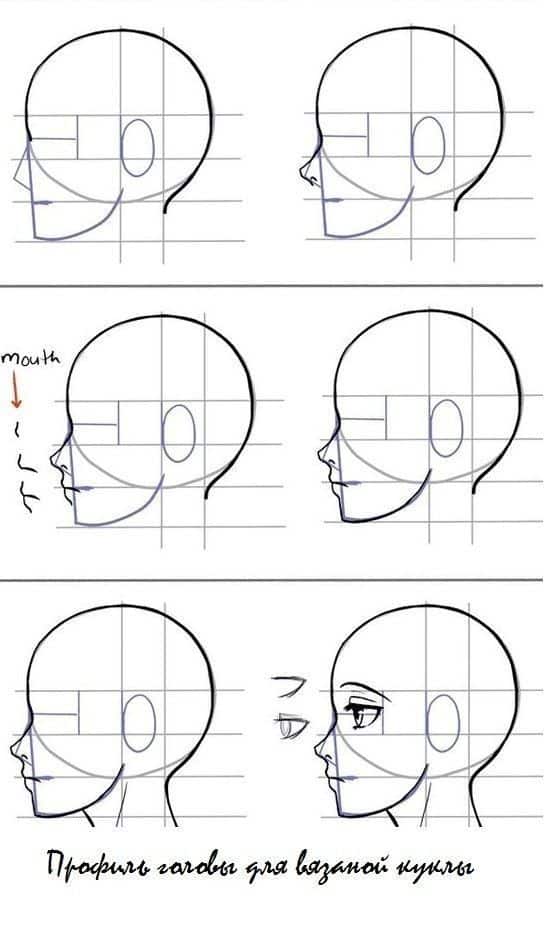
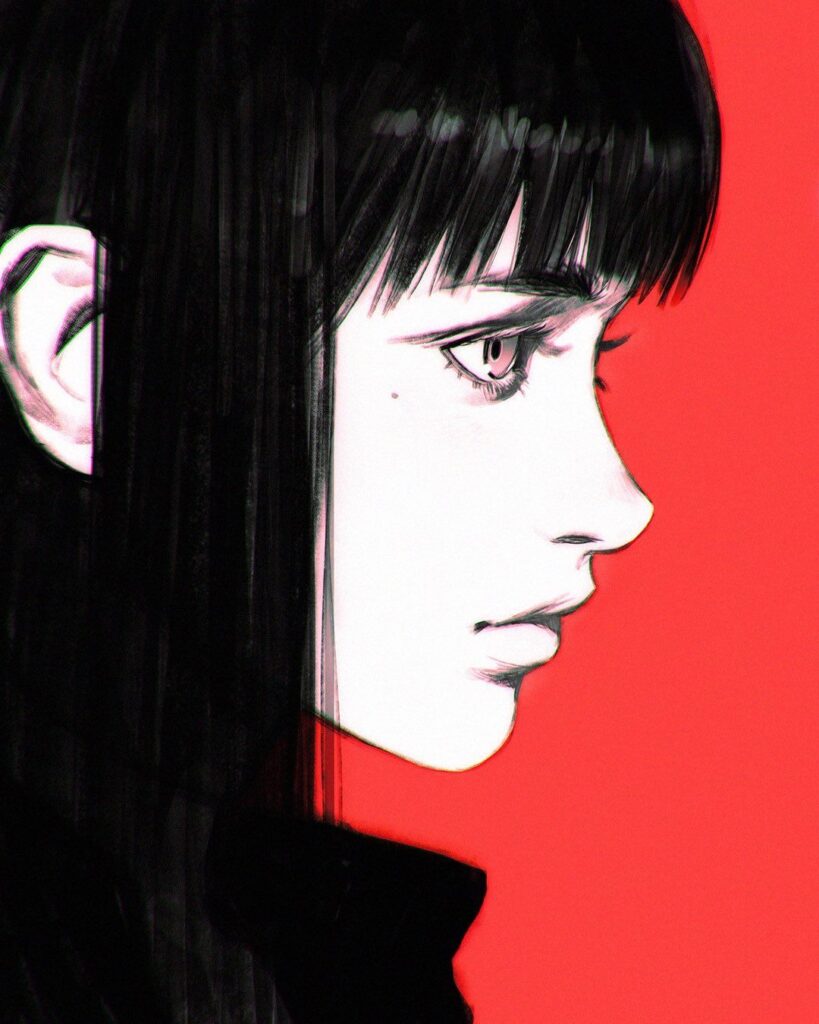
The nostril can read as a small wedge, oval, or soft triangular shadow depending on the face. Study your reference instead of forcing one default nose shape onto every profile. Wider bridges, fuller nostrils, sharper tips, flatter bridges, and softer transitions all change the likeness. Put the shadow under the nose carefully; too much dark value there can make the face look older or harsher than intended.
Crafting the Perfect Hairline and Hairstyles
Next, let’s explore hairlines and hairstyles. Begin by marking the starting point of the hairline, which generally begins around the upper forehead. The shape can vary, appearing straight, curved, or even slightly zig-zagged for a natural effect.
Hairstyles add personality to our drawing. Sketch different styles like sleek back, flowing waves, or short curls. Pay special attention to how hair falls in a side profile. For an African American woman, textured hair might require detailed attention to curls and volume. Lightly draw the outer boundary of the hair before filling in the details. Adjust the hair thickness and texture by varying line pressure and spacing.
Adding Details and Shading to the Drawing
Once we’ve established the foundational elements, it’s time to add details and shading. Start with the eye, which should be placed midway between the top head and chin. In a side profile, we see more of the eyelash and less of the eye itself.
For shading, identify the light source and apply shadows on the opposite side. Use softer shading for a smooth skin texture and bolder strokes for features like the hairline and jawline. To highlight the black outline, darken areas like the pupil, nostril, and hair border. This contrasts effectively against highlighted areas such as the forehead and cheekbones, enhancing dimension and realism.
Creating a Side Profile Vector
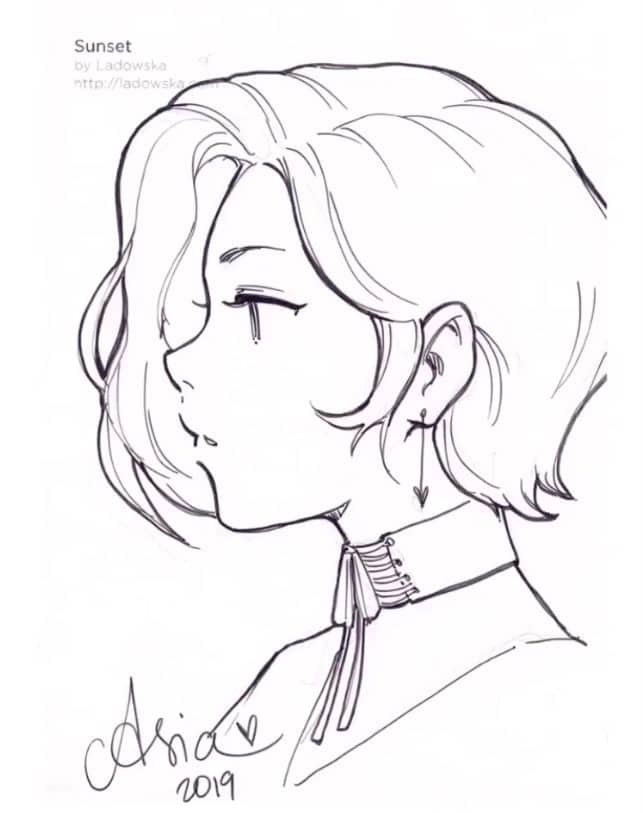
For digital artists, a side profile vector works best when the sketch already has a strong silhouette. Scan or photograph the pencil drawing, lower the opacity, then trace the big profile edge first. Clean vector paths can sharpen the result, but they will also expose every proportion mistake.
Ensure the paths follow the natural curvature of the face. For a professional touch, choose colors that match skin tones and hair, applying gradients to mimic natural lighting. This is effective when illustrating a vector woman’s face, providing a polished and scalable artwork suitable for various applications.
Stylizing and Character Design
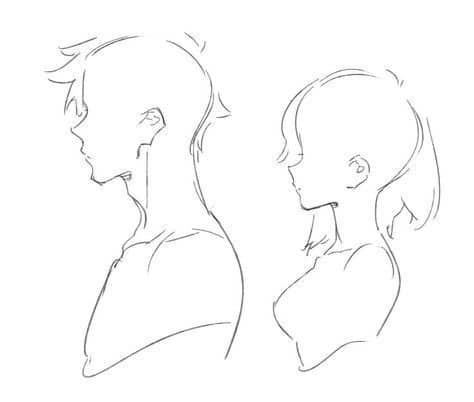

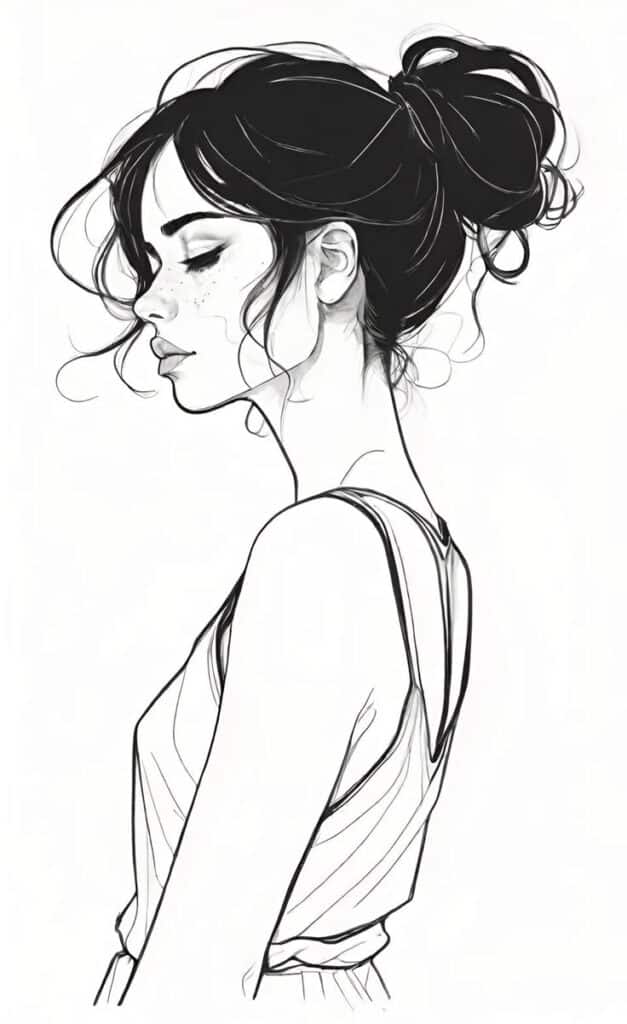
Once the profile is structurally sound, style becomes much easier. You can exaggerate the nose, simplify the lips, sharpen the jaw, or use bold outlines for character design. The rule is simple: distort on purpose, not by accident.
Illustrating a Cartoon Style Profile
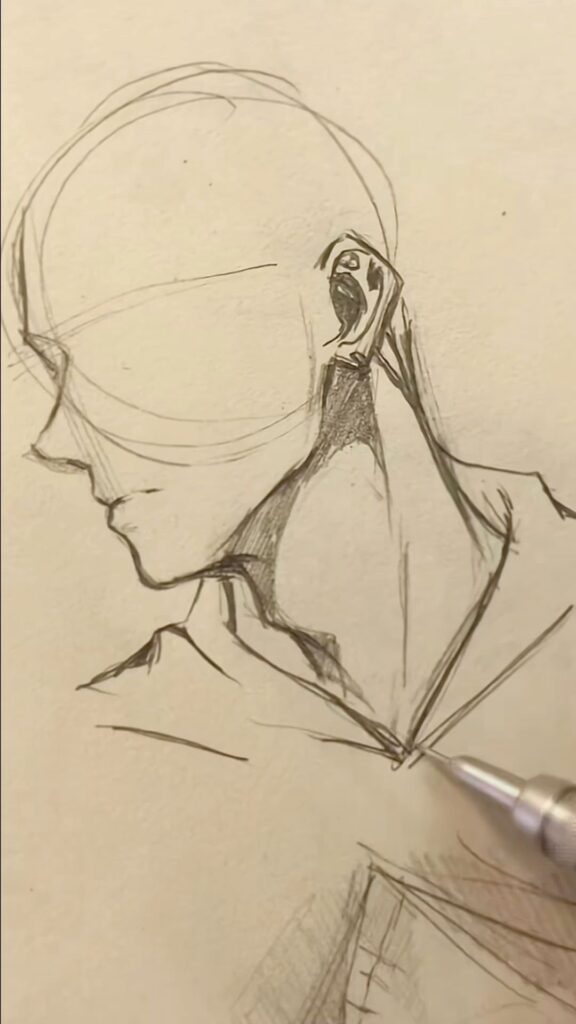
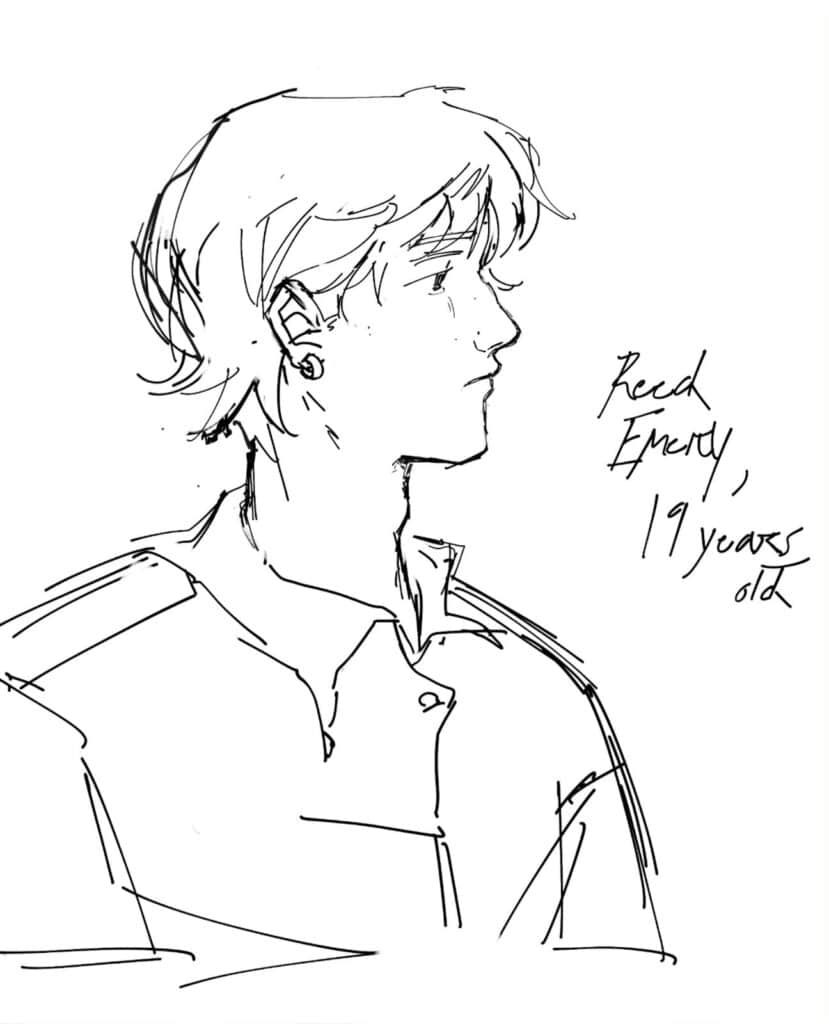
In our experience, cartoon styles rely on exaggeration and simplified shapes. These elements help convey personality and emotion efficiently. Bold and vivid colors make characters pop, while oversized features like eyes or heads amplify expressiveness.
Using references can help us mimic different cartoon styles. For example, by analyzing anime and Disney styles, we notice how exaggerated proportions and simplified lines create a playful look. Simplification is key; less is often more in communicating character traits.
Designing a Gradient Silhouette
A gradient silhouette provides depth and dimension to our side profiles. This involves blending colors or shades smoothly to suggest light and shadow. By experimenting with gradients, we can create a dramatic effect, making our art stand out.
Side views become easier when you study lips in anime side profile, especially the tiny gap between the nose, upper lip, and chin.
Keep the color palette simple at first. One light, one mid-tone, and one shadow color are enough to test whether the silhouette works. If the profile needs a gradient to feel interesting, the shape probably needs more attention.
Line Art and Black Outline Techniques
Incorporating line art with black outlines adds crispness and definition. When we use strong outlines, they frame our characters distinctly against any background, emphasizing shape and form.
Drawing clear and consistent lines requires steady hands, good quality tools, and sometimes digital software aids. Understanding when to use thicker or thinner lines enhances the character’s features. For instance, thick lines can signify shadows, while thin lines highlight delicate details. This method is essential for styles focusing on visual impact and precision.
By mastering these techniques, we enrich our stylized side profile drawings, capturing the essence of character design effectively.
Enhancing Your Drawing Skills
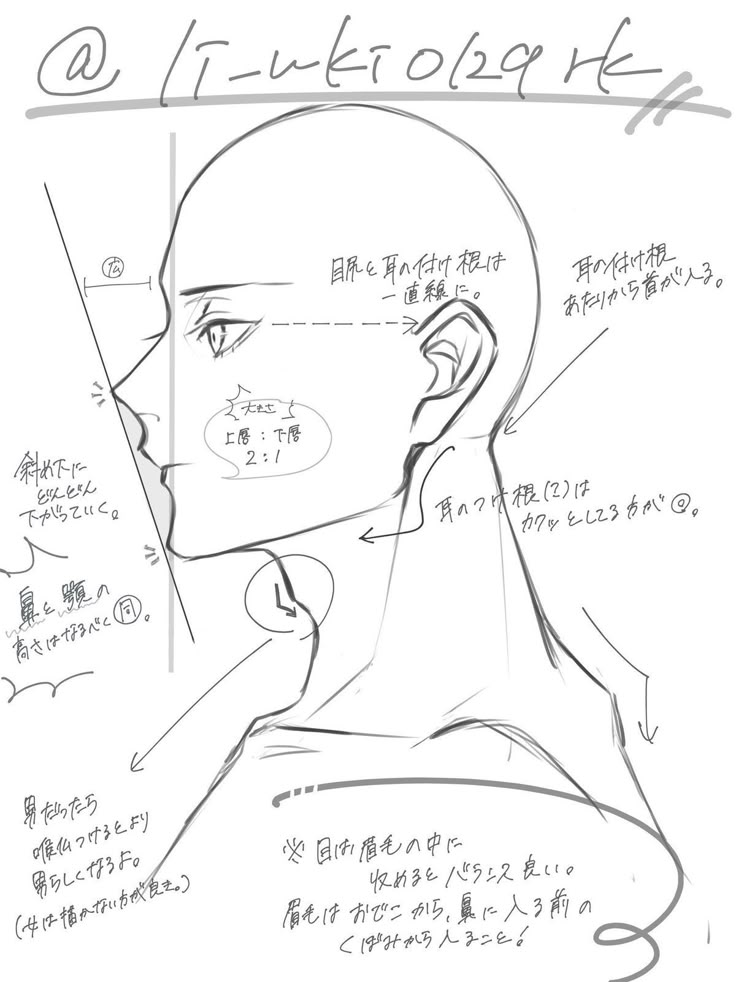
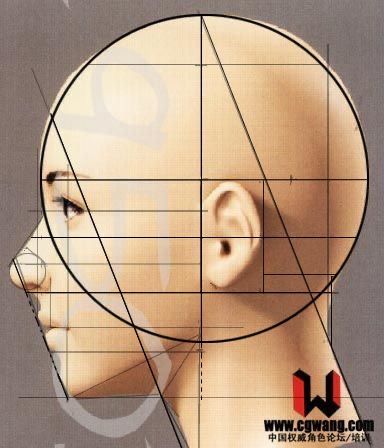
Side profiles improve fastest when you practice one problem at a time. Spend one session on noses, another on jaw-to-neck angles, another on ears, and another on hair silhouettes. Full portraits are useful, but targeted studies show you exactly where the drawing breaks.
Engaging in Drawing Challenges
Participating in drawing challenges can be an exciting way to enhance our skills. Challenges like Inktober or Draw This in Your Style push us to draw consistently and creatively. These activities encourage us to try new techniques and step out of our comfort zones.
By engaging regularly in such challenges, we gradually build confidence. They help us develop a routine that improves our line work, composition, and imagination. This continuous practice is vital for progress in our journey to become better artists.
Following Online Drawing Guides and Videos
Online drawing guides and videos can help, but do not watch five tutorials and call it practice. Pick one profile reference, pause often, and redraw the same head three times: construction only, clean line, then shaded version. That repetition teaches more than scrolling.
For instance, learning to draw facial features can be simplified by following a portrait drawing guide. By studying these guides, we can focus on specific aspects of drawing where we feel less confident. This targeted learning allows us to progress faster in our art journey.
Creating a Diverse Portfolio


A portfolio isn’t just something you show other people—it’s how you check yourself. When I look back at my older drawings next to newer ones, it’s pretty obvious where I’ve improved… and where I’ve been avoiding certain things.
Mixing styles helps with that. If I only do clean line art for weeks, I start getting stiff. So I’ll switch to rough sketches or mess around with shading just to loosen up. It’s uncomfortable at first, but that’s usually a sign it’s working.
Trying different subjects does the same thing. Faces, hands, full figures—they all expose different weaknesses. Anatomy and perspective, especially. You can’t really hide from those once they show up in your work.
Feedback helps too, but only if there’s variety in what you’re showing. If everything looks the same, people don’t have much to react to. I like updating my portfolio every now and then, even if it’s just replacing one drawing with a better version. It’s a small thing, but it makes progress feel real.
When the hairstyle needs to show direction instead of just decoration, use this side-view ponytail drawing to study the tie point, tail weight, and silhouette before adding strand texture.
A profile study is not only a face problem; the neck angle and shoulder line decide whether the pose feels alive. Pair this lesson with human figure drawing practice so the head, torso, and gesture support the profile instead of floating separately.
Side profile drawing FAQ
Q: How do you draw a side profile for beginners?
A: Start with a simple head shape, then place the ear, brow line, base of the nose, mouth, chin, and jaw before adding hair or shading. Keep the first pass light. The most useful check is the silhouette: if the forehead, nose, lips, chin, and neck do not read clearly from the outside shape, fix that before adding detail.
Q: What are the basic proportions for a side profile drawing?
A: Use three simple divisions: hairline to brow, brow to base of nose, and base of nose to chin. The ear usually sits between the brow line and base of the nose, toward the back half of the head. These are guides, not rigid rules, but they help stop the face from sliding forward or collapsing into the neck.
Q: Where should the ear go in a side profile?
A: Place the ear behind the jaw, not in the middle of the cheek. In a natural adult head, it usually lines up between the brow and the base of the nose. If the ear is too far forward, the profile feels flat; if it is too high or low, the head starts to look tilted even when it is not.
Q: How do you draw the nose in side profile?
A: Begin with the brow-to-bridge angle, then place the tip and nostril underneath it. The nostril is usually a small wedge or oval shadow, not a heavy black dot. Compare how far the nose projects against the lips and chin so it feels attached to the skull instead of pasted onto the face.
Q: Why does my side profile drawing look wrong?
A: The usual problems are a missing back of the skull, an ear placed too far forward, a nose that floats away from the brow, lips drawn as flat lines, or a neck that drops straight down from the chin. Step back and check the big silhouette before correcting tiny features.
Q: How do you shade a side profile drawing?
A: Choose the light source first. Then keep the forehead, nose bridge, cheek, and chin planes consistent with that light. Use soft shading for skin transitions and sharper dark accents for the nostril, upper lip shadow, lashes, hair mass, and cast shadow under the chin.
Q: Can you stylize a side profile drawing?
A: Yes. Once the basic structure works, you can exaggerate the nose, simplify the lips, sharpen the jaw, enlarge the eye, or push the hairstyle for character design. Stylization works best when the underlying skull, ear placement, and jaw-to-neck connection still make sense.
Q: What should I practice after side profile drawing?
A: Practice front-view heads, three-quarter portraits, individual noses, ears, lips, and hair silhouettes. Then draw the same person from several angles. That teaches you whether you understand the head as a form, not just one attractive outline.
Related face expression practice
After the side profile structure works, practice face expressions from different angles so the mouth, brow, and jaw still read clearly when the head turns.
Profile drawings also need clear eye placement, so this anime eyes tutorial can help you compress the iris and lid shape when the head turns sideways.
Perfecting the side profile is highly useful when drafting reference turnarounds to document your profile character design ideas for animation or 3D modeling.
A side profile also depends on eyebrow placement in a face drawing, especially where the brow turns around the brow ridge.
After practicing profile construction, study portrait painters in watercolor to see how they soften noses, lips, chins, and hairlines without losing the drawing.
For the eyelid shape in profile, use the side-view eye sketch notes from the eye guide before you darken the lashes.
- 6.5Kshares
- Facebook0
- Pinterest6.5K
- Twitter3
- Reddit0