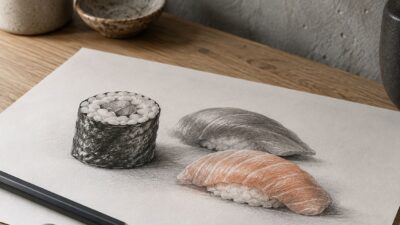
Shading drawing is where a flat outline starts to feel like an object you could touch. The first drawing I made that actually looked three-dimensional came six months after the first one I thought would. I was drawing a still life — a single ceramic mug on a white cloth — and the outline was fine: the ellipses worked, the handle attached correctly, the proportions held. Then I shaded the shadow side as one dark zone and flattened the whole mug. There was no transition, no reflected light, and no clear relationship between the light source and each surface.
- The Five-Zone Value System: What Shading Is Actually About
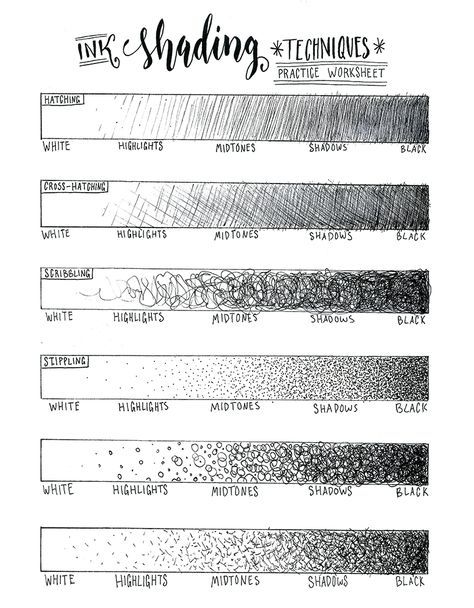
- Shading Drawing Techniques: Six Ways to Build Depth
- Creative shading drawing ideas for practice
- The Sphere Exercise: Learning All Five Zones in One Drawing
- Pencil Grades for Shading: What Each Does
- Light, Shadow and Value: The Visual Principles Behind Shading
- Common Shading Errors and How to Fix Them
- FAQ: Shading Drawing
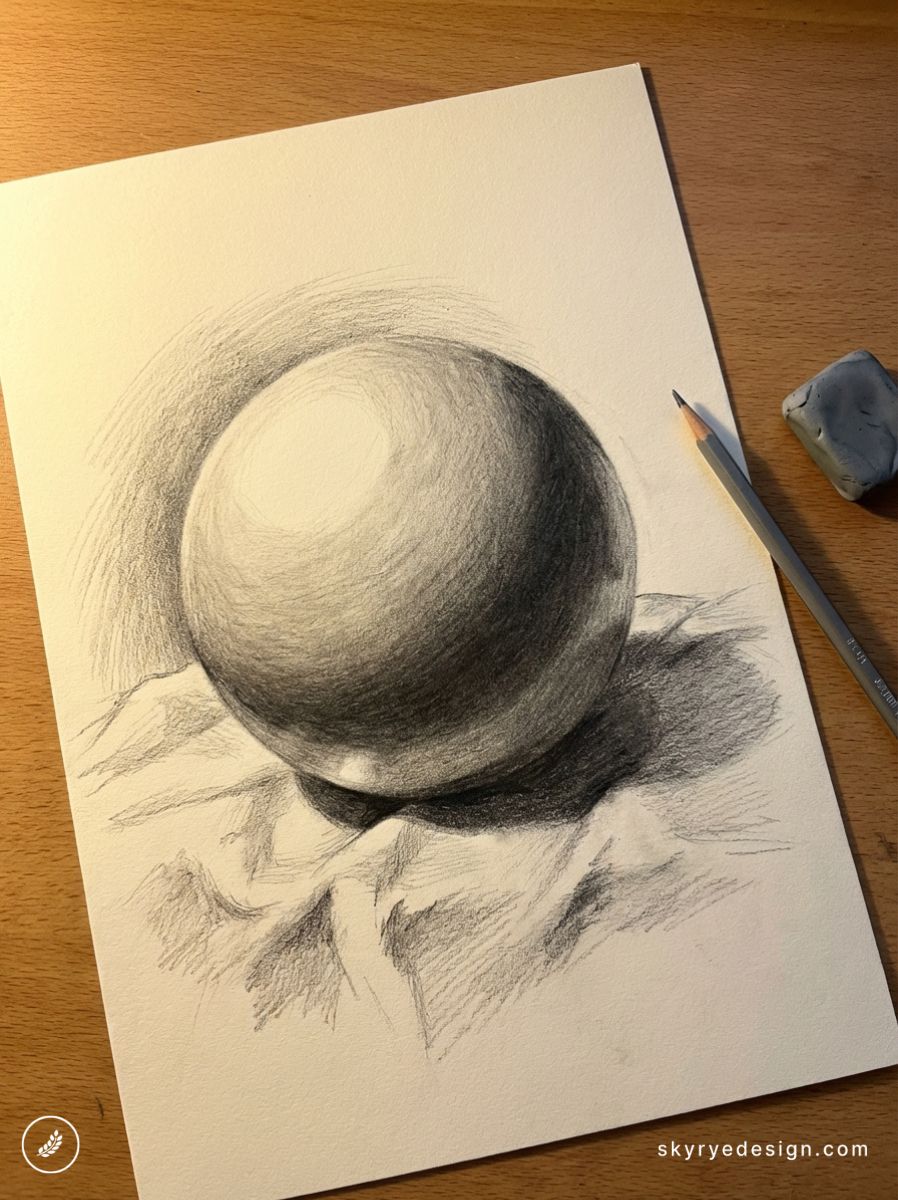
For a shading drawing to read as three-dimensional, you need more than a dark side. You need five distinct tonal zones that appear on a form under one light source: highlight, lit area, mid-tone, core shadow, and reflected light. Miss one of these zones, or blend two of them into the same value, and the form collapses into flatness. Get all five right and even a rough sketch starts to feel solid.
This guide covers shading drawing from the tonal system underneath it – the value scale and the five zones – through the main techniques artists use for hatching, cross-hatching, blending, stippling, scumbling, and more creative shadow choices.
Then a sphere exercise that teaches the five zones in practice, pencil selection, and the most common shading errors and their corrections. Whether you have never shaded a drawing or you are trying to understand why your shaded drawings still look flat, the answers are in the tonal system and the specific techniques that apply it.
A simple practice trick: photograph one object on your desk and convert the photo to black and white. The color disappears, so you can judge the value pattern honestly: brightest light, soft middle tones, darkest cast shadow. I use this whenever a drawing feels muddy because it shows whether the problem is the outline or the value structure.
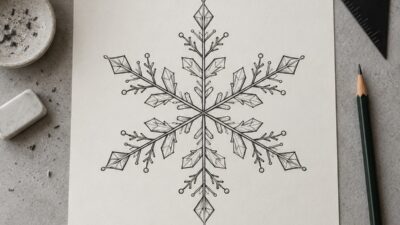
Leaves are a useful shading subject because the veins, curled edges, and dry patches all need different values. This fall leaves drawing guide gives you a compact subject for testing those tonal zones.
The Five-Zone Value System: What Shading Is Actually About
Before choosing any technique, understanding why shading works prevents the most common drawing error: using darkness to represent shadow without understanding what shadow actually is.
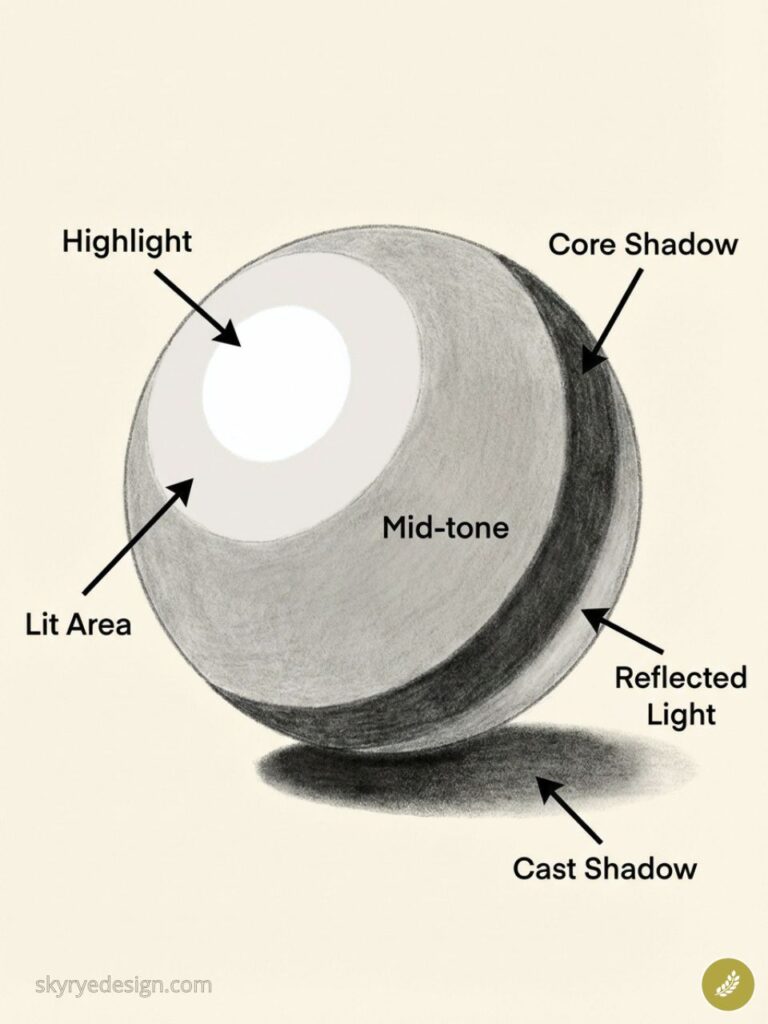
Shadow is not colour absence. It is the way a surface receives less light because it faces away from the light source — and the specific way it does this produces five distinct zones that appear on every three-dimensional form.
Zone 1: The Highlight
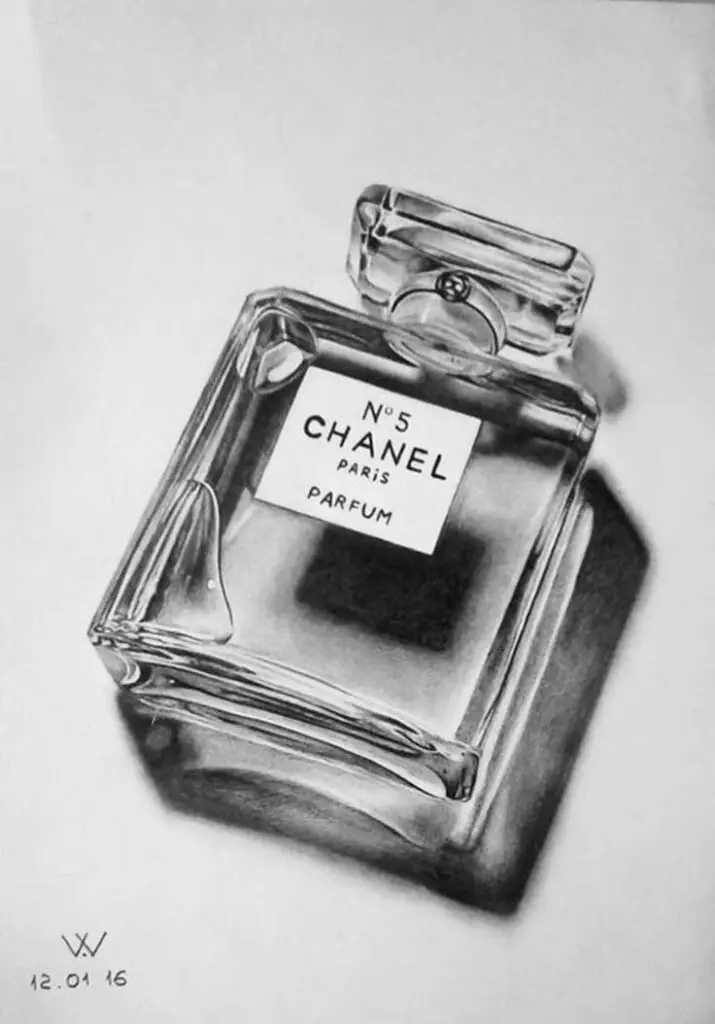
The highlight is the brightest point on the form — the area directly facing the light source at the optimal angle for maximum reflection. On smooth, shiny surfaces, the highlight is a small, hard-edged bright spot. On matte surfaces, it is larger and softer-edged. In drawing, the highlight is almost always represented by the white of the paper — either left untouched (in pencil and ink) or lifted with a kneaded eraser after surrounding tones are established (in charcoal and graphite). The most common shading error is losing the highlight by inadvertently shading over it early in the process.
Zone 2: The Lit Area
The lit area surrounds the highlight and represents the broadly illuminated surface of the form — the portion facing generally toward the light source but not at the optimal reflective angle. This is the largest tonal zone on most forms and should read as clearly lighter than the mid-tone. The transition from highlight to lit area is gradual; the transition from lit area to mid-tone is where the form begins to turn away from the light.
Zone 3: The Mid-Tone
The mid-tone is the transitional zone where the form’s surface is roughly perpendicular to the direction of light — neither directly lit nor in shadow. It is the grey area between the clearly lit and clearly shadowed portions of the form. In many drawings, the mid-tone is the most difficult zone to render convincingly because it requires a precise middle value — too dark and it collapses into the shadow; too light and it merges with the lit area.
Zone 4: The Core Shadow
The core shadow is the darkest zone on the form itself — the area that receives the least direct or reflected light because it faces most directly away from the light source. This is NOT the cast shadow (which falls on the surface beneath the object). The core shadow is on the surface of the form, typically a band running along the side of the object away from the light. Getting this distinction right — core shadow on the form, cast shadow on the ground plane — is fundamental to three-dimensional rendering.
Zone 5: The Reflected Light
The reflected light is a subtle lighter area within the shadow zone, caused by ambient light bouncing from the surface beneath or surrounding the form back into the shadow side. On a white surface, reflected light can be quite bright. On a dark surface, it is subtle. This zone is frequently omitted by beginners – which makes shadow areas look uniformly flat and heavy. Including it, even subtly, immediately makes the shadow side of a form read as a curved, three-dimensional surface rather than a flat dark zone.
✏ Drawing note: Build a seven-step value scale before starting any shaded drawing — a strip of squares running from white paper through five progressively darker greys to near-black. Pin this strip beside your drawing as a reference. Every time you apply tone to the drawing, check it against this scale and identify which value zone it belongs to. This prevents the most common tonal error: all shadows at the same value, all lights at the same value, with no differentiation between zones 2-4.
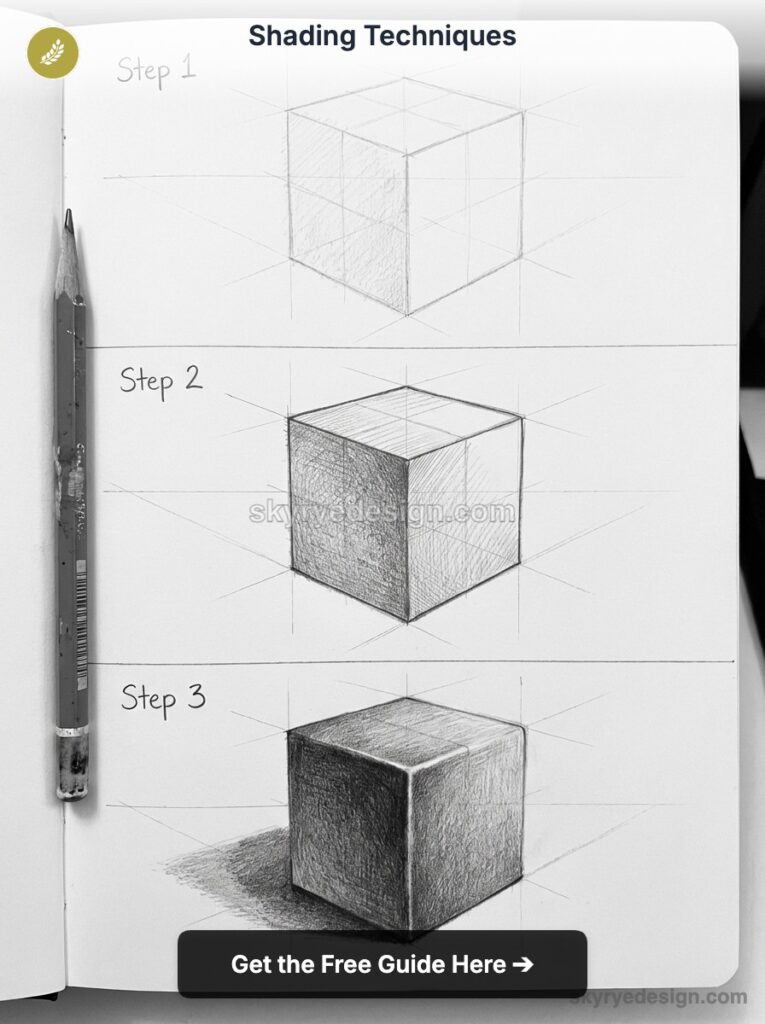
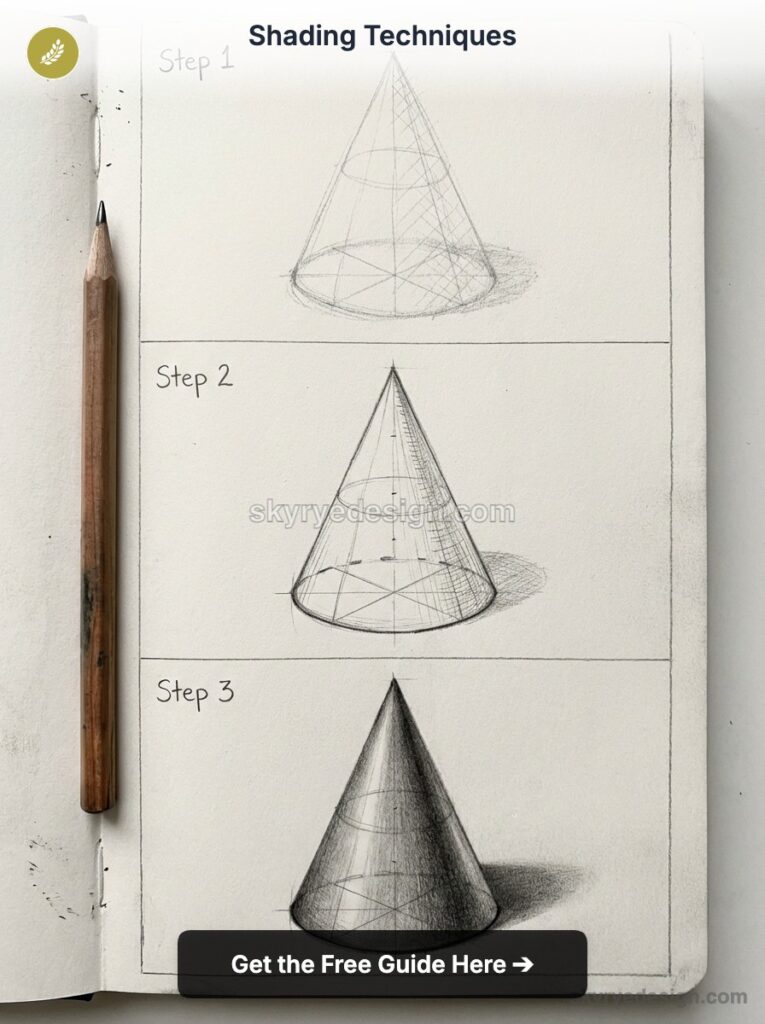
Shading Drawing Techniques: Six Ways to Build Depth
The technique you choose for shading determines not just how the drawing looks, but what qualities it can express.
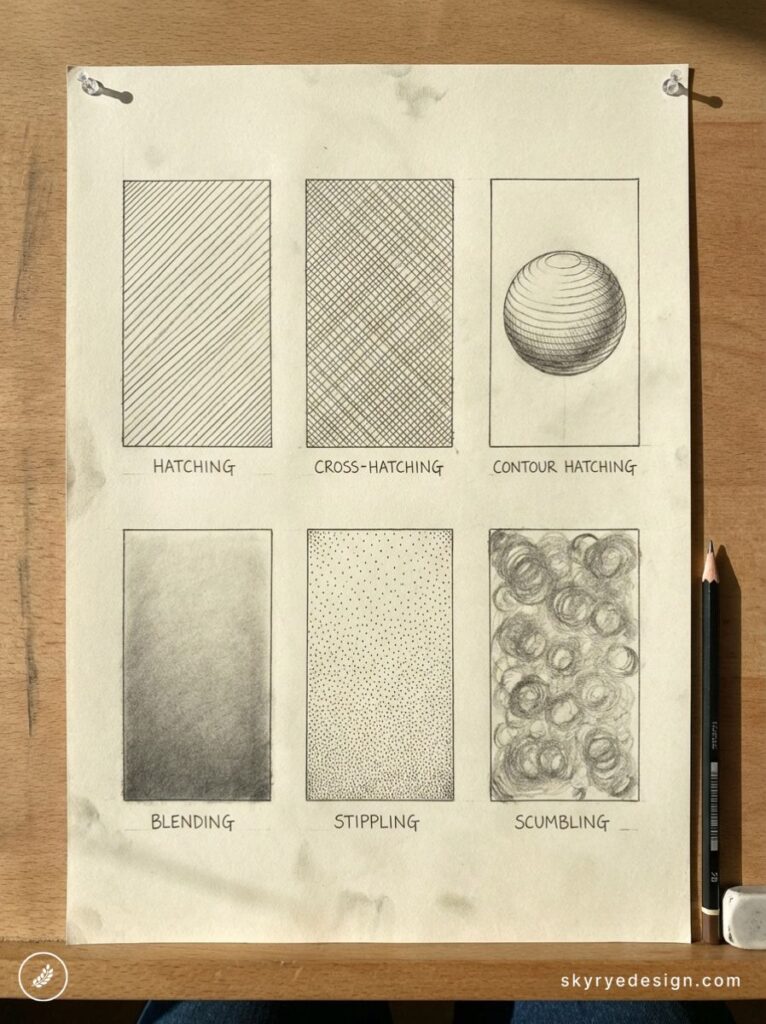
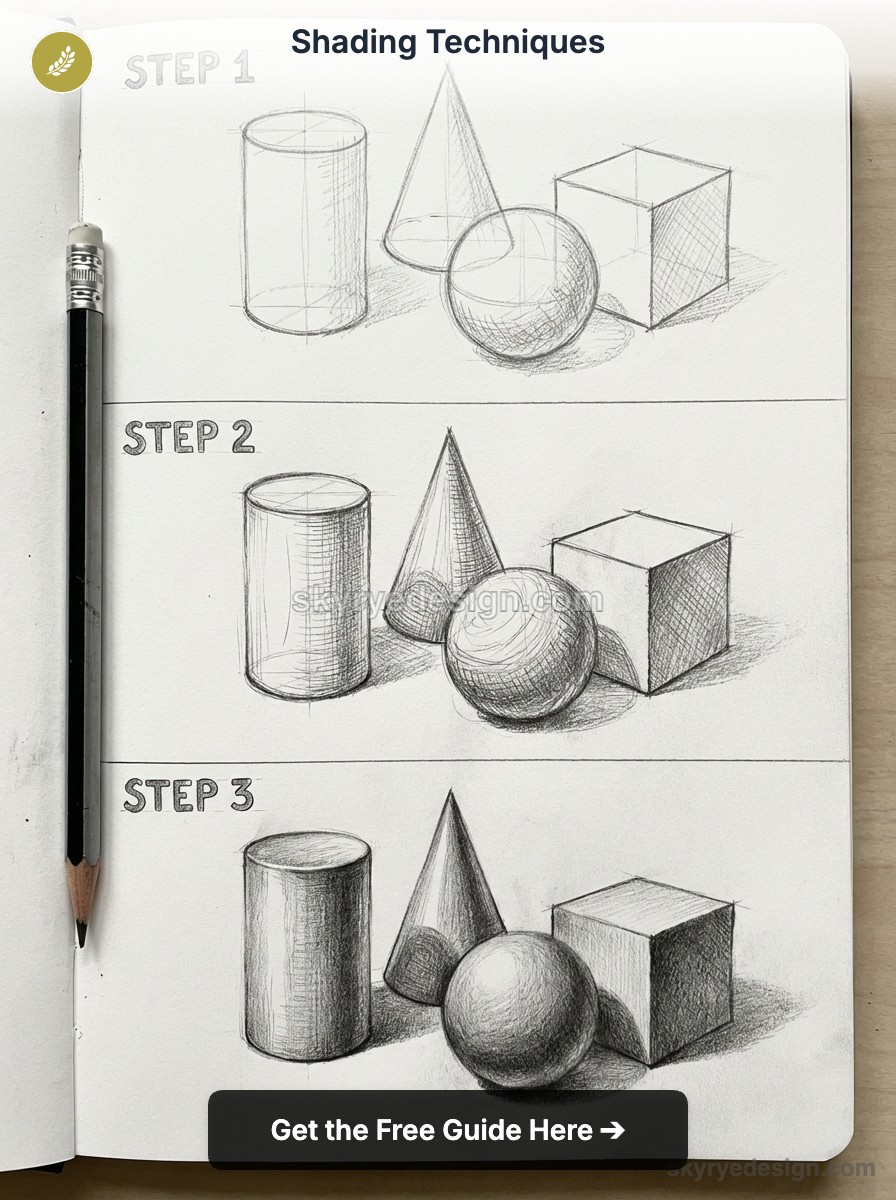
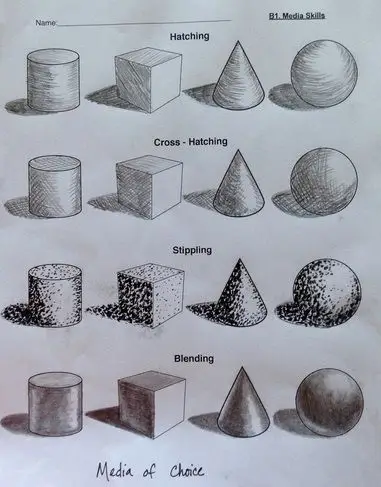
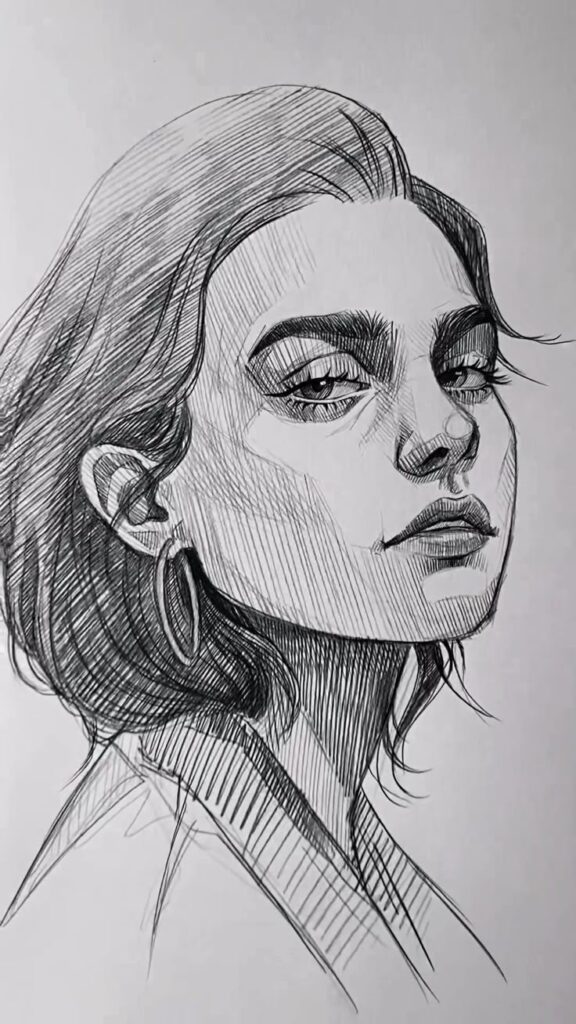
Hatching and cross-hatching produce graphic, mark-visible drawings with a structural quality. Blending produces smooth, atmospheric tonal gradients. Stippling produces a meditative, dot-built surface. Scumbling produces a loose, energetic texture. Most accomplished drawings use at least two techniques in combination.
Hatching
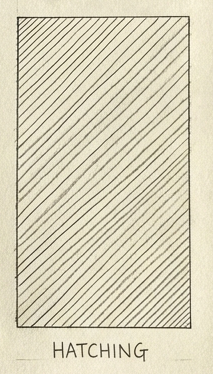
How it works: Parallel lines placed side by side, controlling tone through line density and spacing. Closer lines produce darker tone; wider spacing produces lighter tone. Line length, angle, and thickness can all be varied to modify the effect.
Best medium: Pen and ink (where blending is impossible), silverpoint, graphite pencil. The overhand grip — holding the pencil nearly flat to the paper — produces the most consistent parallel strokes for large areas.
Master reference: Leonardo da Vinci used hatching extensively in his silverpoint drawings, where the medium prevented blending. His Madonna drawings at Windsor Castle show contour hatching following the surface of draped fabric.
Drawing tip: Hatch lines should follow the form’s surface, not the direction of gravity or the edges of the paper. Lines that follow the contour of a sphere communicate three-dimensionality; lines that run parallel to the paper’s edge look like flat tone applied to a flat shape.
Cross-Hatching
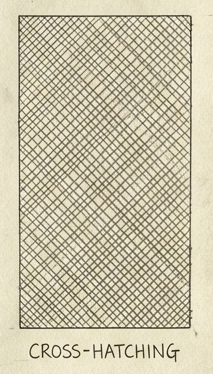
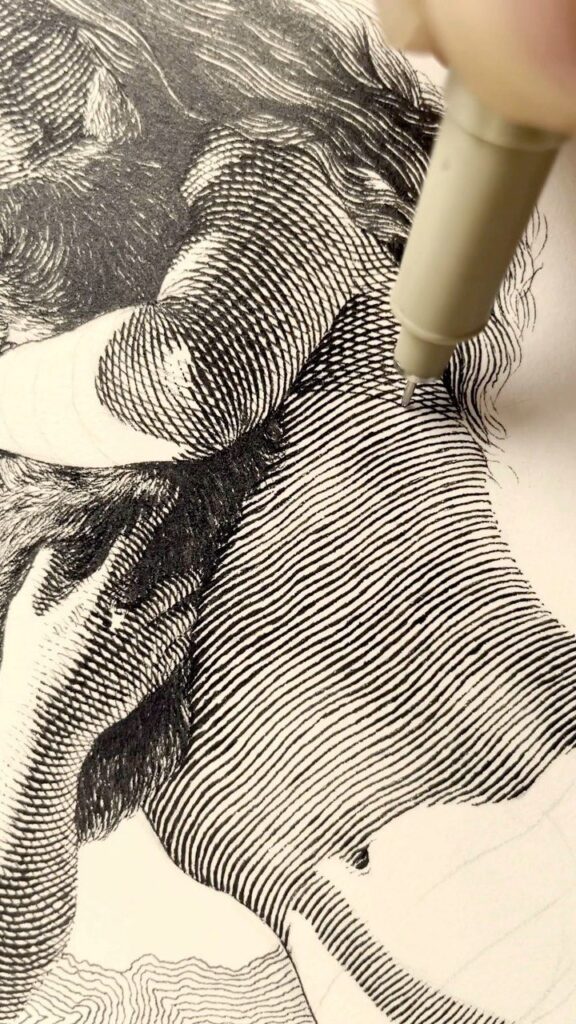
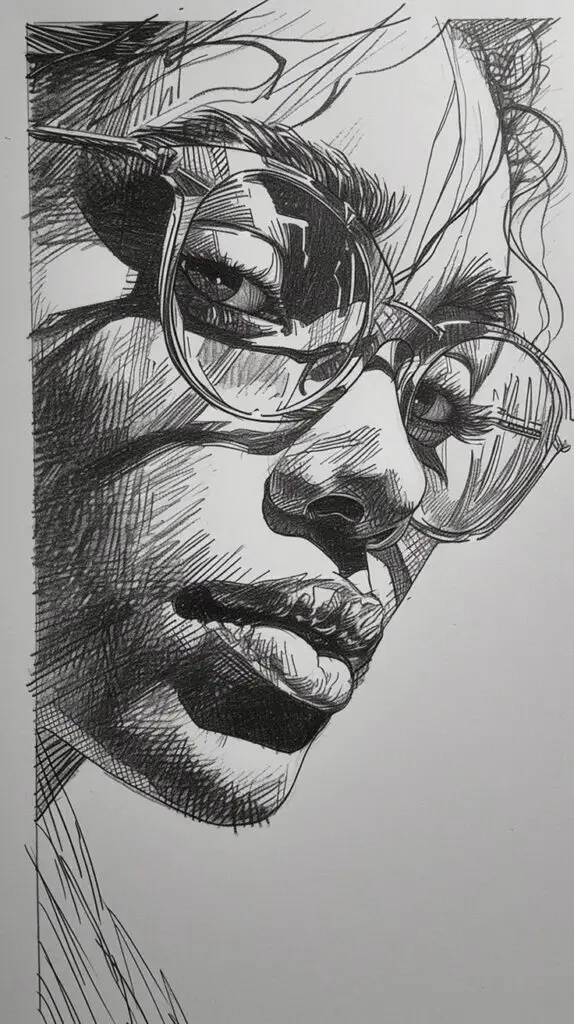
How it works: A second set of parallel lines overlaid at an angle to the first set, typically 45-90 degrees. The intersection creates denser, richer tone. Multiple layers of cross-hatching can build toward deep blacks that no single-direction hatching achieves.
Best medium: Pen and ink (where cross-hatching is the primary tonal tool), graphite pencil, silverpoint. Works across any smooth or medium-tooth paper. Finer-tipped pens produce the most controllable cross-hatching.
Master reference: Albrecht Durer (1471-1528) perfected cross-hatching in both engraving and woodcut. Rembrandt (1606-1669) used swirling, expressive cross-hatching in his etchings — most notably in Self Portrait Drawing at a Window, where the hatched marks create shadow and direct the viewer’s eye simultaneously.
Drawing tip: Vary the angle of the second cross-hatch layer deliberately. At 45 degrees to the first layer, the intersection reads as texture. At 90 degrees, it reads as flat dark tone. By rotating the angle progressively with each additional layer, you build a rich tonal mesh that retains visual interest in the deepest shadow areas.
Contour Hatching
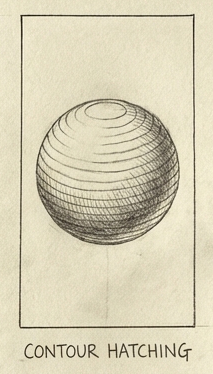
How it works: Hatching lines that follow the three-dimensional contour of the form’s surface rather than running in a fixed direction. The lines curve with the form, actively communicating its three-dimensional shape.
Best medium: Graphite pencil, pen and ink, silverpoint. Any medium where individual marks are visible. The technique requires understanding the form’s surface well enough to follow it with each stroke.
Master reference: Michelangelo’s figure drawings show contour hatching at its most sophisticated — the hatch lines on muscular forms follow the surface of each muscle group individually, making the anatomy readable from the shading pattern alone.
Drawing tip: Before applying contour hatching to a complex form, sketch the form’s cross-section lines lightly in pencil — imaginary horizontal slices through the form. These become the guides for your hatch line directions. The hatching follows these contour guides, then the guides are erased.
Blending (Smooth Shading)
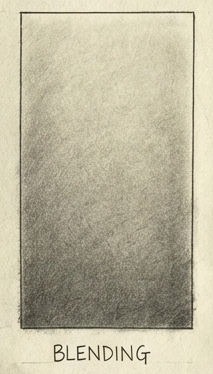
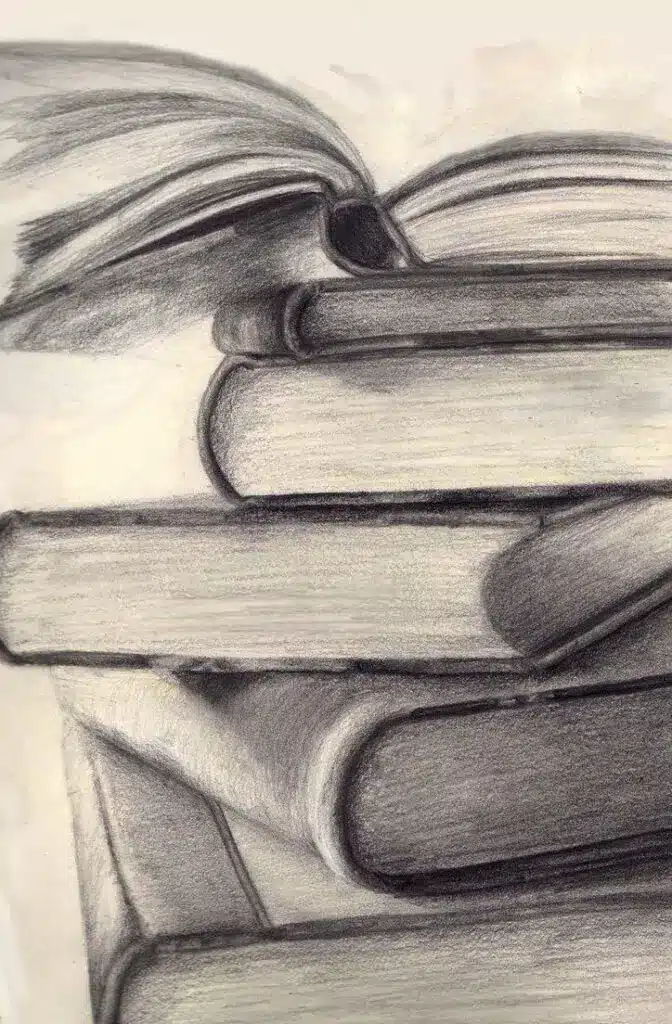
How it works: Gradual tonal transitions created by applying graphite or charcoal and then spreading it with a blending tool to eliminate individual mark texture. Produces the smoothest, most photographic tonal gradients of any technique.
Best medium: Graphite pencil and charcoal (both blend easily). Blending tools: finger (warmth helps blend), tortillon or paper stump (for small areas), chamois leather (for large areas), tissue paper (for soft blending without pressure).
Master reference: The academic realist tradition — exemplified by Ingres, Bouguereau, and the 19th-century French Salon painters — relied heavily on blended graphite for portrait and figure drawings with smooth, photographic tonal quality.
Drawing tip: Never blend with a dirty tool. A contaminated tortillon deposits dark tone into light areas, creating grey patches in what should be the lit zone. Clean the blending stump frequently by rubbing it on clean scrap paper. Keep a separate clean stump reserved for working in the lightest tonal zones.
Stippling
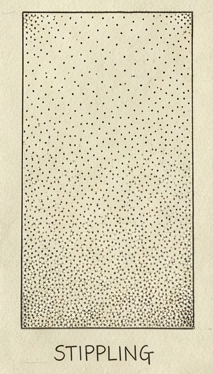
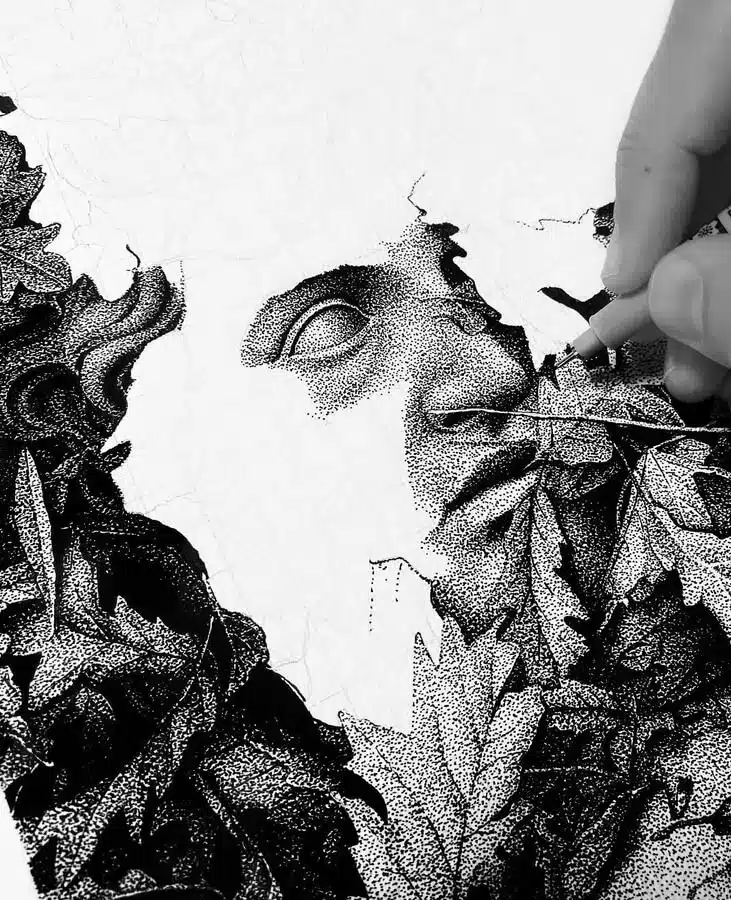
How it works: Building tone entirely from individual dots, where dot density creates value — dense dots read as dark, sparse dots read as light. At viewing distance, the dots blur together into smooth tonal areas. Up close, the individual dot texture is fully visible.
Best medium: Pen and ink (the most precise stippling medium), fine-pointed graphite pencil. Stippling requires firm, even dot pressure and consistent dot size for the technique to read as intentional rather than random.
Master reference: Pointillism in painting (Seurat, Signac) operates on the same optical principle as stippling, but with colour. In drawing, stippling’s most notable use is in scientific illustration and natural history drawing, where the technique produces highly controlled, reproducible tonal surfaces.
Drawing tip: Stippling is meditative and time-consuming but produces a very specific quality of mark that no other technique replicates. Start from the darkest areas and work outward, decreasing dot density as you move toward lighter zones. Do not start from light and try to build dark — the dots fill in unevenly and the final dark areas look overworked.
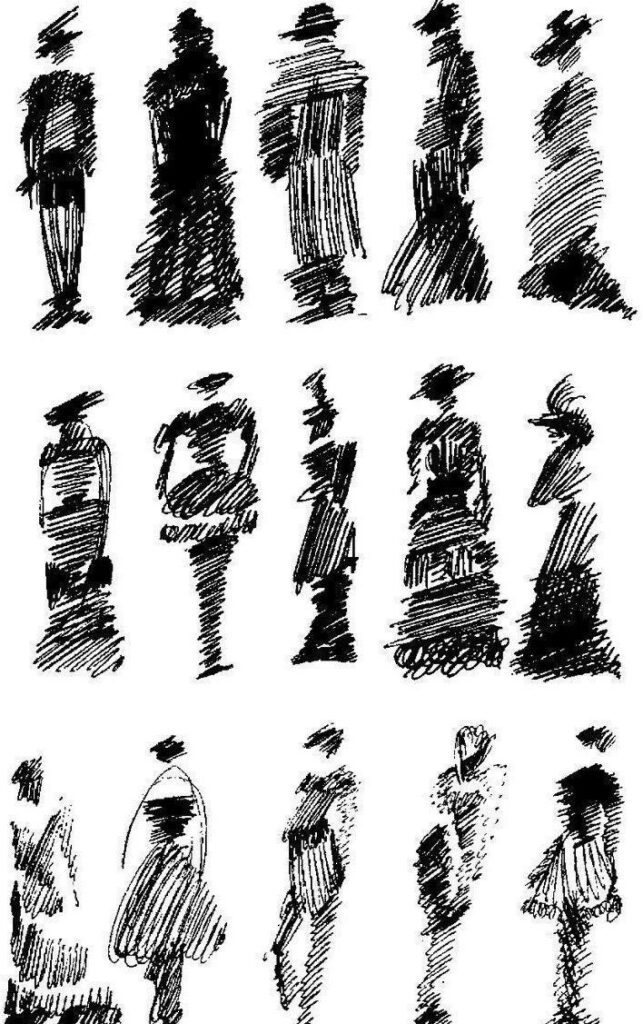
Scumbling and Scribbling
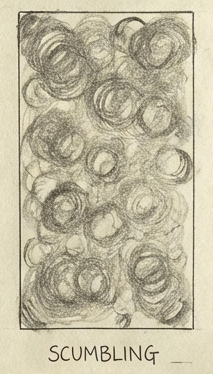
How it works: Loose, layered circular or random strokes that build up tone through accumulation rather than through controlled parallel lines. The marks overlap and vary in direction, creating a rough, energetic texture that can suggest surface quality as well as tone.
Best medium: Charcoal (best for loose scumbling), graphite, pastel. The technique works with any medium that can be applied in loose strokes. The overhand grip — pencil held nearly flat — facilitates the free wrist movement that scumbling requires.
Master reference: Rembrandt’s reed pen drawings use an energetic scumbling quality in shadow areas — the marks swirl and overlap, creating rich darks with a vibratory quality that controlled hatching cannot produce.
Drawing tip: Use scumbling for initial tonal blocking — establishing the broad value structure quickly with loose marks — then refine with hatching or blending where precision is needed. Scumbling first, hatching second is a useful workflow sequence that takes advantage of each technique’s strengths.
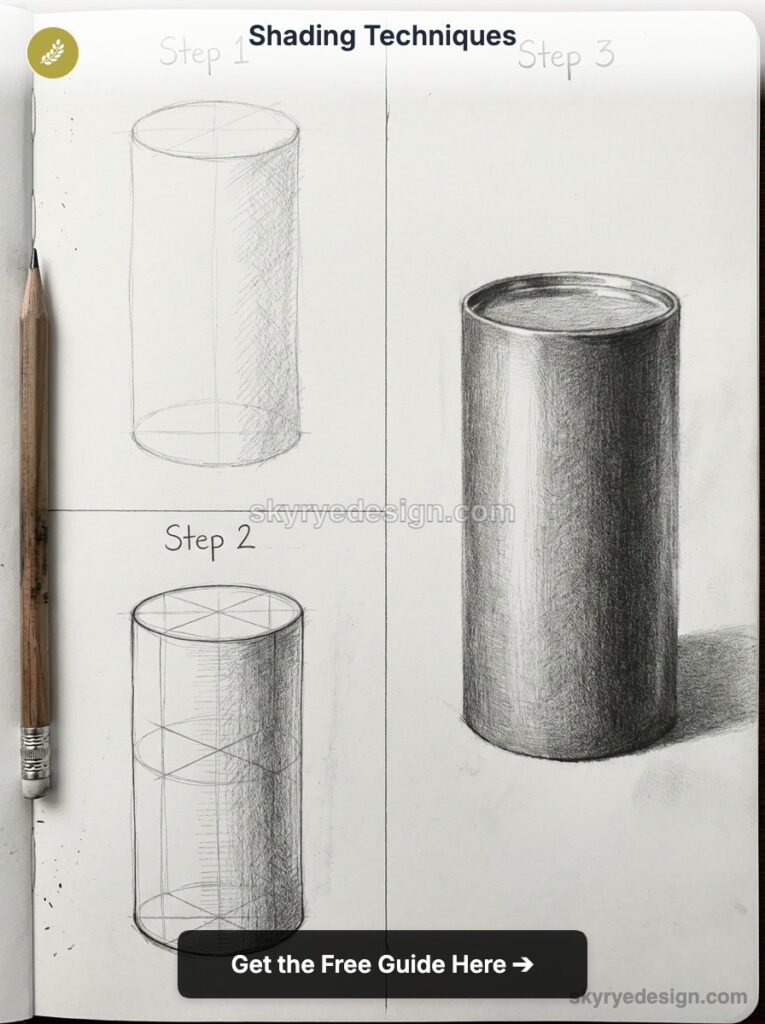
✏ Drawing note: The most useful combination in standard pencil drawing: scumble the broad tonal areas first with the pencil held loosely in the overhand grip, then refine the edges between value zones with controlled hatching, then blend the lit-area transitions with a paper stump. This three-stage sequence uses each technique for what it does best and produces a drawing with both tonal richness and tonal precision.
Creative shading drawing ideas for practice
Creative shading drawing does not mean ignoring the value system. It means changing the mark, edge, or light setup while the five zones still stay readable. Try one object three ways: smooth graphite blending for realism, cross-hatching for a graphic ink look, then scumbling for a rougher sketchbook texture. Same light source, different mood.
- High-contrast study: use only three values — white paper, middle gray, and deep shadow — to make the light pattern obvious.
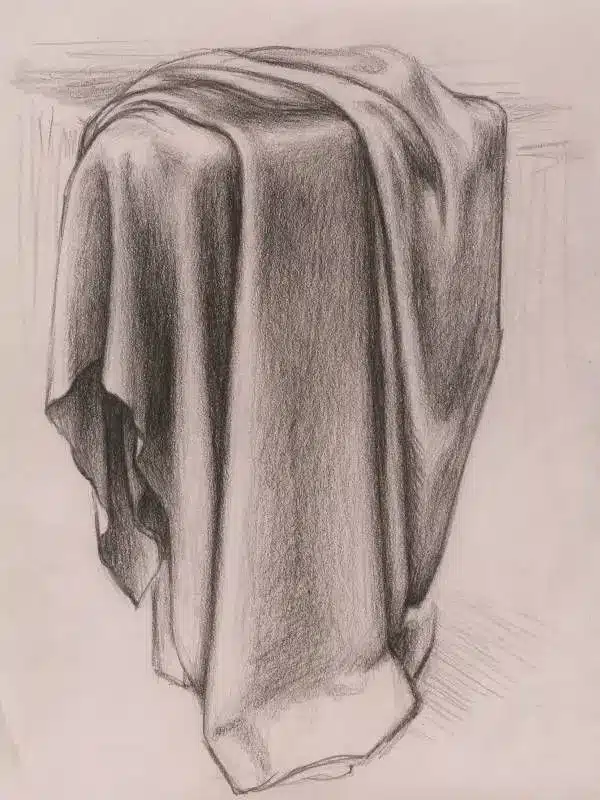
- Textured shadow study: shade a fabric fold, leaf, or hair mass with scumbling first, then sharpen only the edges that need attention.
- Directional hatching study: curve the hatch marks around the form so the shading describes volume, not just darkness.
- Negative-light study: draw the shadow shapes first, then lift highlights with a kneaded eraser instead of outlining the object.
The useful rule: if the light direction is unclear, the creative effect will look accidental. Decide the light source first, then let the mark-making become expressive.
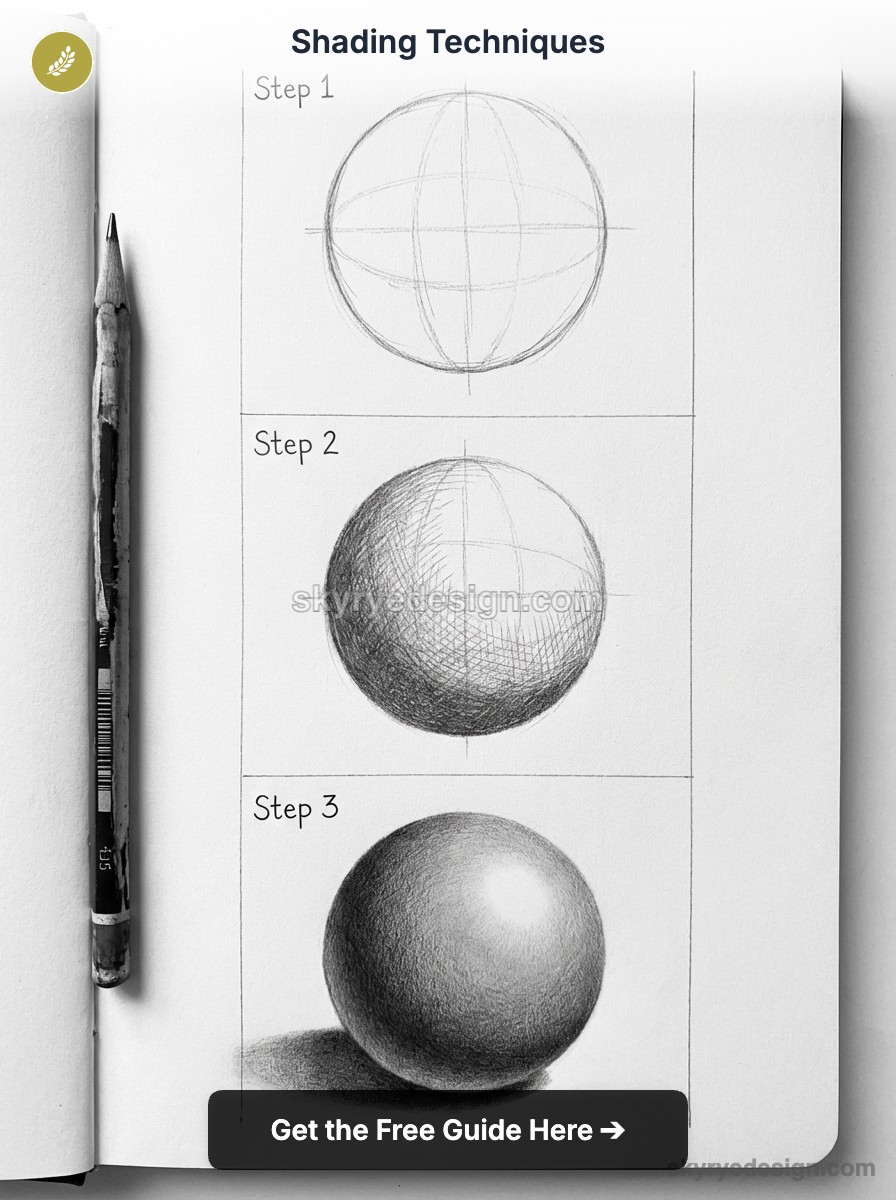
The Sphere Exercise: Learning All Five Zones in One Drawing
The sphere is the most instructive shading exercise available because it contains all five tonal zones in their simplest, most clearly separated form. Before shading portraits, drapery, or complex still life subjects, the sphere teaches you to find and render each zone separately and in correct relationship to each other.
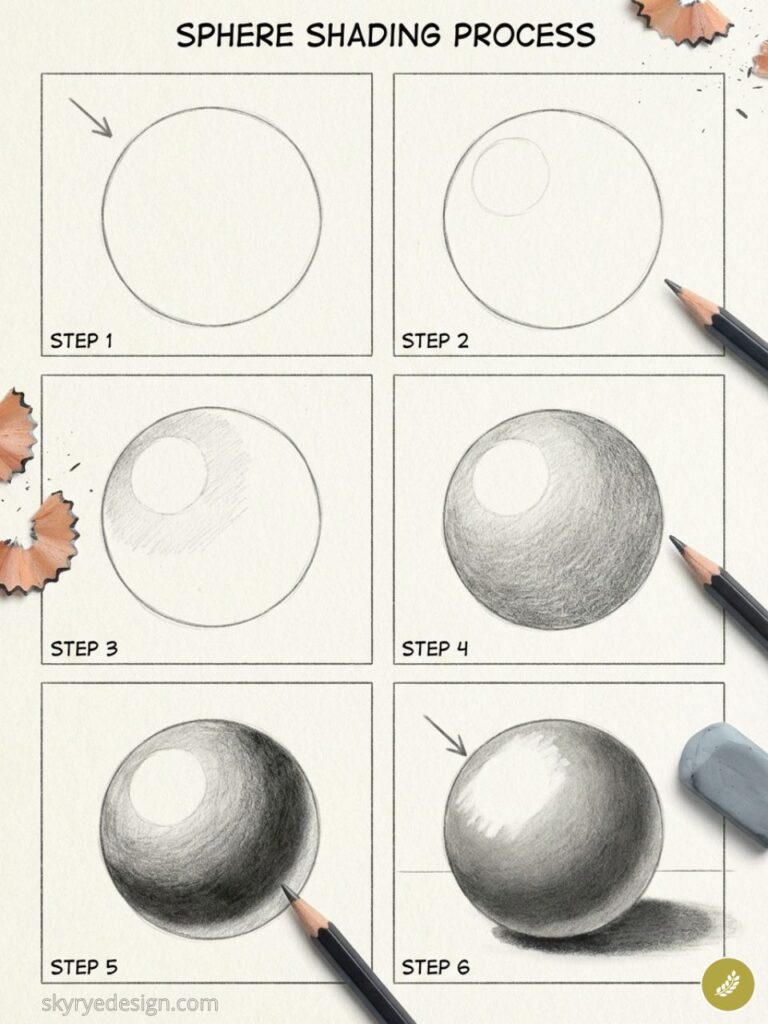
Every other shading challenge is a variation on the sphere problem.
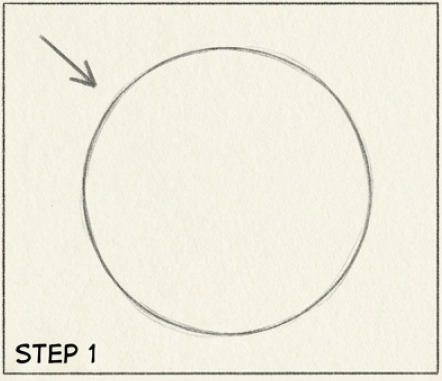
Setting Up: Light Source and Value Plan
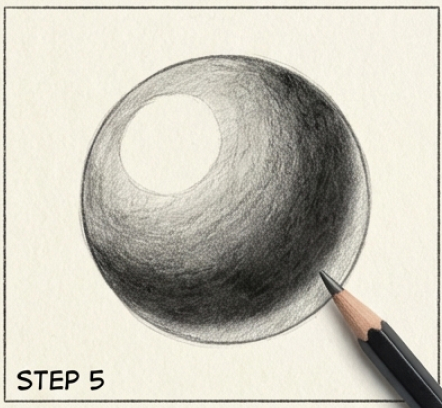
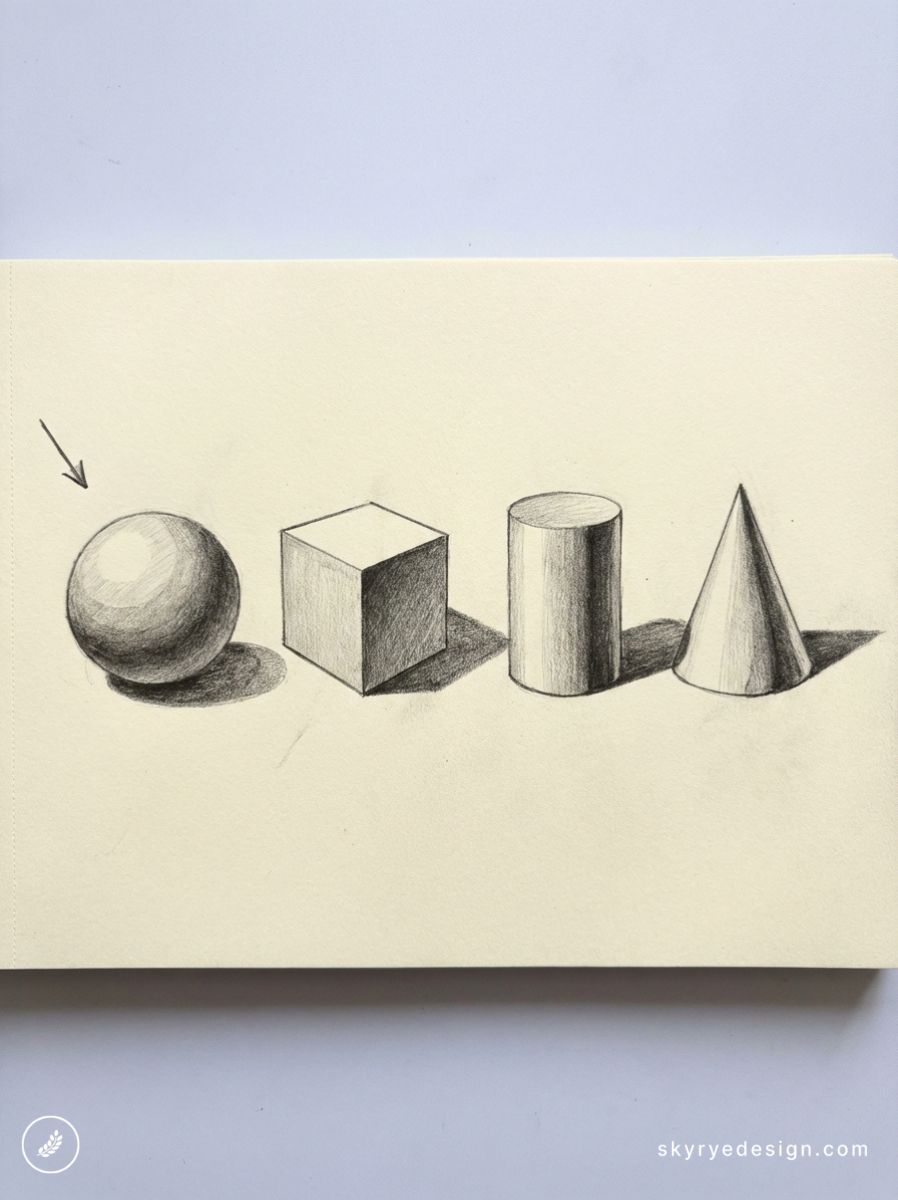
Draw a circle approximately 10cm in diameter. Mark the light source position with a small arrow in the margin — upper left is standard for drawing instruction. Before adding any tone, locate each of the five zones on the circle in your mind: highlight at upper left (approximately 10-11 o’clock), lit area surrounding it, mid-tone across the centre, core shadow at lower right (approximately 4-5 o’clock), reflected light at the very bottom right edge. The cast shadow falls to the lower right of the sphere’s base.
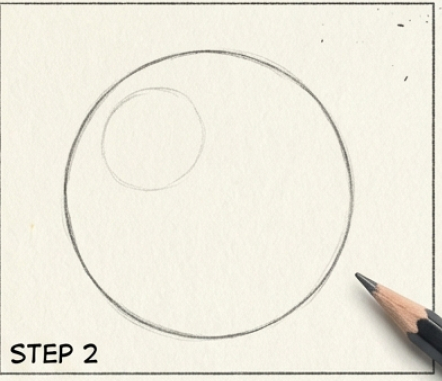
Applying Tones in Sequence
Apply tones in this specific sequence — from light to dark, not dark to light. Begin with the mid-tone, applying a light, even layer of HB or 2B pencil across the entire sphere except for the highlight zone (leave that as white paper). Then deepen the shadow side toward the core shadow with 2B-4B, using progressively heavier pressure. Leave a narrow sliver of lighter tone at the very edge of the shadow side — this is the reflected light. Deepen the core shadow to its maximum dark with 4B. Finally, blend the lit area transitions gently with a paper stump.
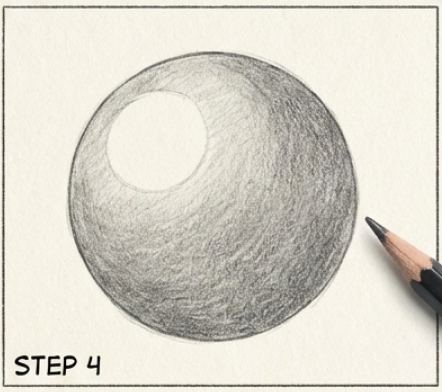
The Cast Shadow
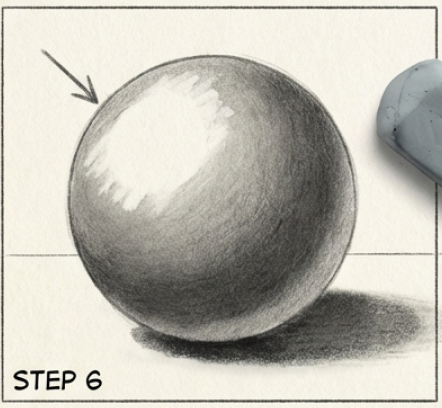
The cast shadow is a separate zone from the form’s shadow and follows different rules. It is darkest at the edge closest to the sphere — where very little light can reach under the form — and gradually lightens as it extends away. The cast shadow also has a soft edge on the far side and a slightly harder edge near the object. Apply the cast shadow with 4B in a concentrated zone directly beneath the sphere, then extend and soften it with the blending stump as it extends away.
Refinements: Kneaded Eraser as Drawing Tool
Once the full tonal structure is established, use a kneaded eraser to sharpen and clarify the highlight by gently pressing and lifting in the highlight zone. This restores the white paper and gives the highlight a clean, sharp quality that sets the entire sphere’s tonal reading. Also use the kneaded eraser to subtly lift tone in the reflected light zone if it has become too dark during the shadow-building phase.
✏ Drawing note: Do the sphere exercise ten times before moving to any other shading subject. Not with increasing complexity — the same sphere, the same light source, ten times. Each repetition improves your tonal judgment and makes the five-zone structure more automatic. The artist who can shade a sphere confidently from memory can shade most other subjects, because the same five zones appear on every curved form, just in more complex arrangements.
Pencil Grades for Shading: What Each Does
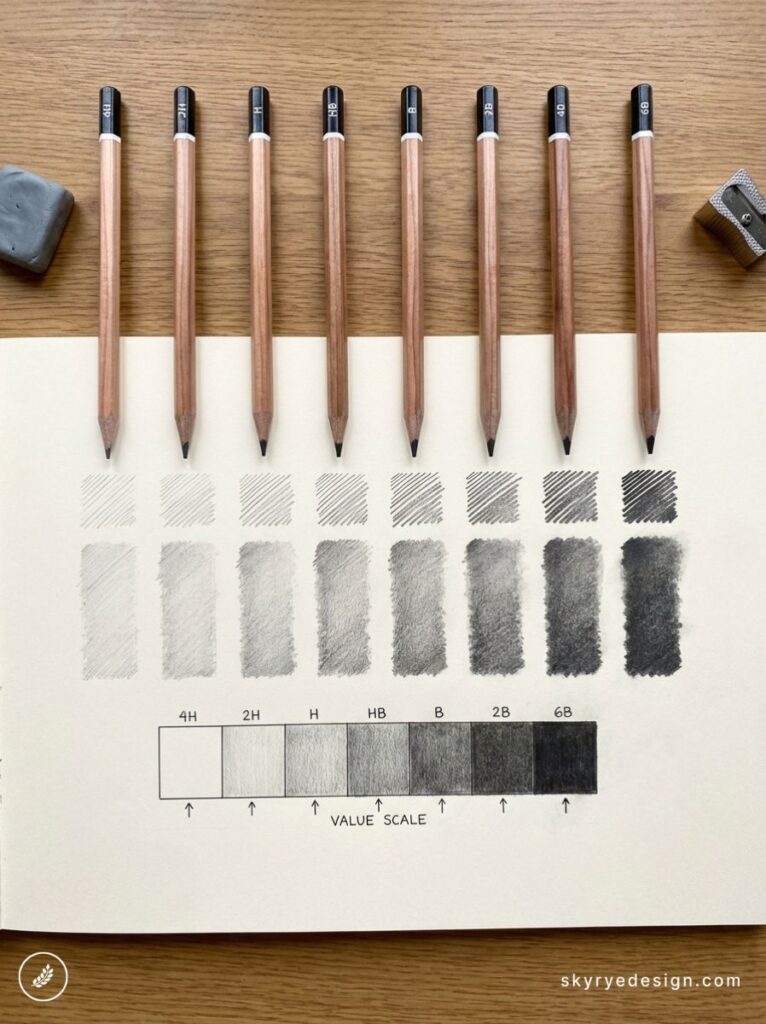
Pencil grade selection is not arbitrary. Each grade has a specific hardness, colour, and blendability that makes it appropriate for specific tonal zones and shading purposes.
- 4H-2H: Very hard, pale silver-grey marks. Resist blending. Best for construction lines, initial guidelines, and the very lightest values in a drawing. These grades are easily erased and leave little paper tooth damage.
- H: Hard but usable for light shading. Produces crisp, clean lines with minimal smudge. Useful for preliminary hatching in the lit area before moving to softer grades.
- HB: The standard starting grade for most shading work. Mid-range hardness that produces marks dark enough to be useful and light enough to be adjustable. Blends moderately well. Use HB for the mid-tone zone and initial tonal blocking.
- 2B: Softer, darker, blends easily. The primary shading grade for most pencil drawing. Use 2B for confirmed shadow areas, medium-pressure hatching, and the main tonal buildout of a drawing.
- 4B: Soft and dark. Good for core shadow areas where rich, deep darks are needed. Blends very easily — almost too easily in areas where precision is required. Use with controlled pressure.
- 6B: Very soft, very dark. The darkest standard pencil grade for most applications. Use 6B exclusively in the very deepest shadow areas and only after all lighter tones are established. 6B applied early is nearly impossible to correct.
✏ Drawing note: The most practical three-pencil shading kit for beginners: HB (initial tonal blocking and mid-tones), 2B (confirmed shadow areas and main tonal work), 4B (core shadows and deep darks). These three grades cover the full value range of most drawings without the complexity of managing a full pencil set. Add 6B only when you need the very darkest values that 4B cannot reach.
Light, Shadow and Value: The Visual Principles Behind Shading
Shading is the conversion of three-dimensional light behaviour into a two-dimensional tonal record. Understanding how light behaves — specifically, that the angle between a surface and the light source determines how bright that surface appears — makes shading a logical process rather than a guessing exercise.
The Single Light Source Rule
The most common shading error in complex drawings is inconsistent lighting — some forms shaded as if the light comes from the left, others as if it comes from the right. Every drawing should have one primary light source, established at the start and maintained throughout. For beginners, upper left is the conventional position because it produces the five tonal zones in a clear, readable arrangement. Before shading any element of a drawing, check: where does the light hit it first? Where does the surface turn away from the light? Where does ambient light reflect into the shadow side?
Cast Shadows vs Form Shadows
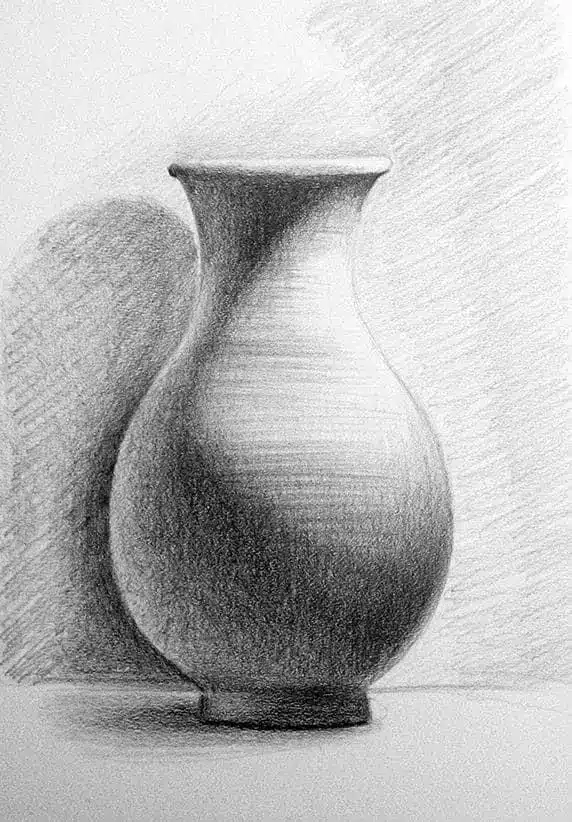
The distinction between form shadows and cast shadows confuses many beginners because both involve dark tone. Form shadows are on the surface of the object itself — they describe the object’s three-dimensional shape. Cast shadows fall on other surfaces beyond the object — they describe the relationship between the object and the surface it sits on. Form shadows have soft edges (because the transition from lit to shadow is gradual on a curved surface). Cast shadows have harder edges near the object and softer edges further away.
The Value Scale as a Reference Tool
A value scale — a strip of tonal steps from white through mid-grey to black — is one of the most practically useful tools in a drawing kit. During shading, comparing a tone in the drawing against the value scale gives an objective measurement of where that tone sits in the tonal range. Most amateur drawings are tonally compressed — the darkest darks are not dark enough and the lightest lights are not light enough, so the drawing lacks contrast and visual punch. Using a value scale as reference helps identify and correct this compression.
Common Shading Errors and How to Fix Them
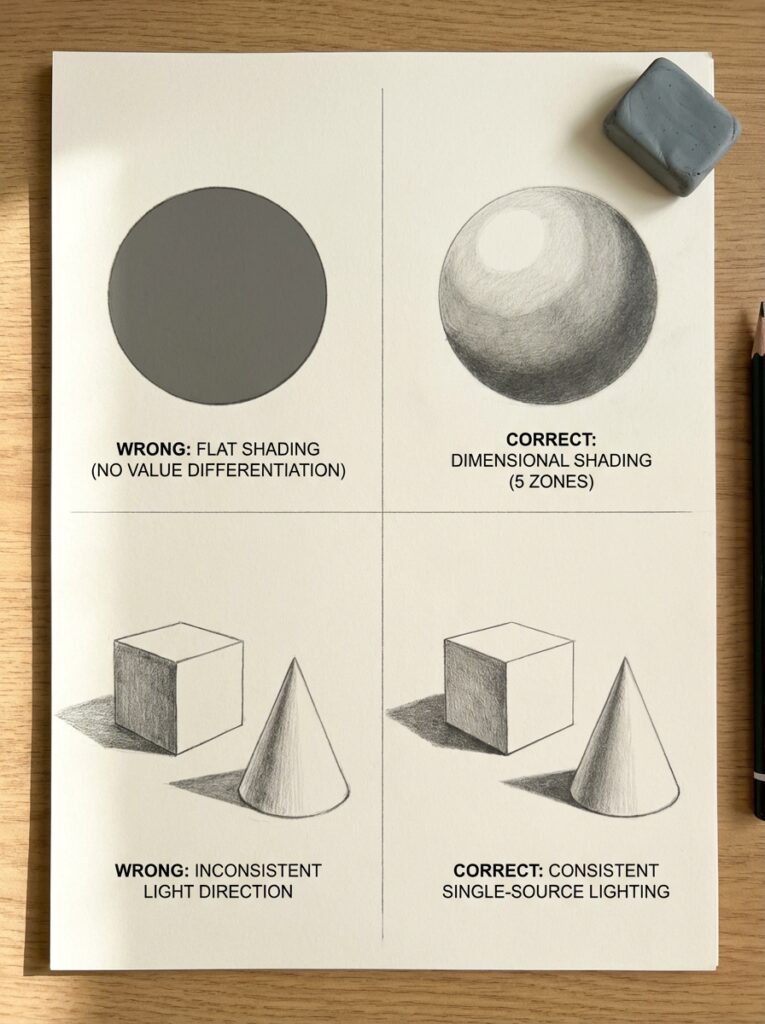
- Missing the reflected light: the shadow side reads as one flat dark zone. Fix: always preserve or lighten the very edge of the shadow side. Even a subtle lighter value at the shadow edge transforms a flat shadow into a curved form.
- Losing the highlight: shading over the highlight zone makes forms look matte and dull. Fix: identify the highlight before starting and protect it actively. Use masking (light blue painter’s tape over the highlight area, removed after shading) or lift it after with a kneaded eraser.
- Tonal compression: darks not dark enough, lights not light enough. The drawing looks grey and flat. Fix: force yourself to go darker in the core shadow zone and protect the white paper in the highlight zone. The full value range from paper-white to near-black should be present in most drawings.
- Inconsistent light source: different objects in the same drawing are shaded from different angles. Fix: decide the light source position before starting any shading and mark it with a small arrow on the page margin. Check every shadow against this reference before applying tone.
- Hard edges in blended areas: blending leaves a visible line at the boundary between zones. Fix: extend the blending tool well into both zones, not just along the boundary. The blending should overlap into the lit area and into the shadow area, not just blend the edge itself.
- Overworking: too many passes of shading produce a muddy, overworked surface where the paper tooth is saturated and no further tone can be added. Fix: stop shading before the surface looks finished — add a final round of light, precise marks rather than heavy pressure passes. If the surface is already saturated, the only correction is fixative plus light additional shading.
For a focused value exercise, this cloud drawing tutorial is a good place to practice soft transitions and clean highlights. See the full cloud drawing tutorial.
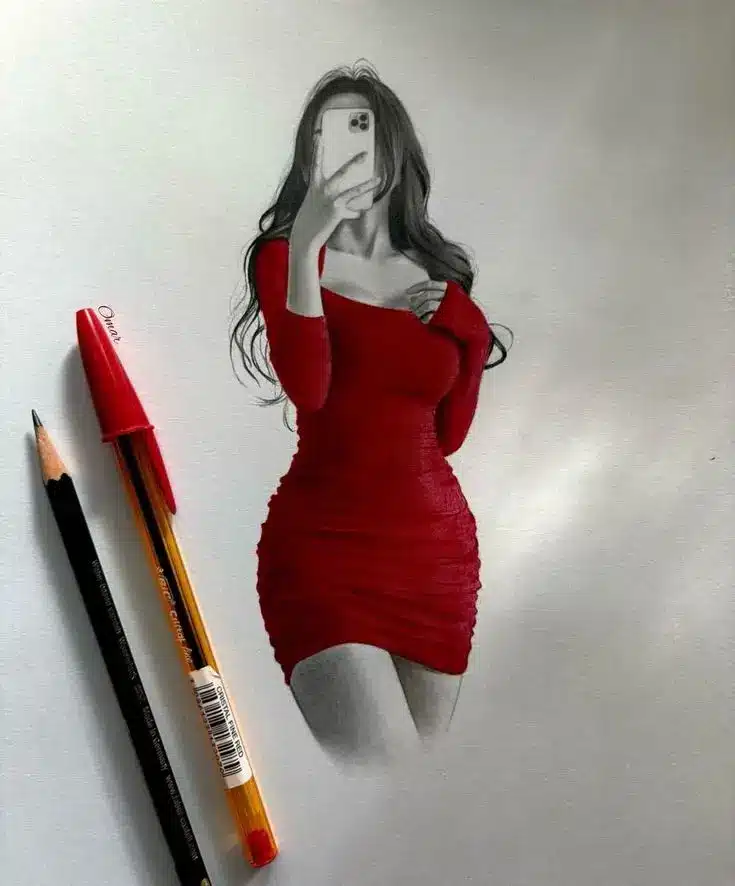
The same light logic applies to fabric folds for outfits: shade under collars, cuffs, hems, belts, and overlapping layers before adding texture.
FAQ: Shading Drawing
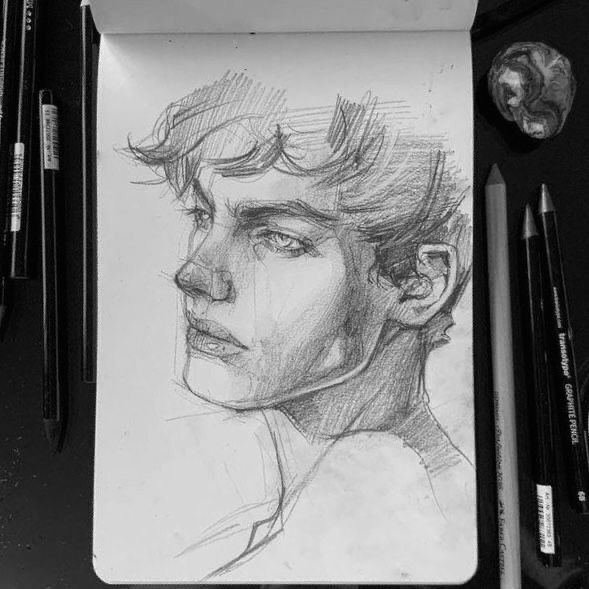
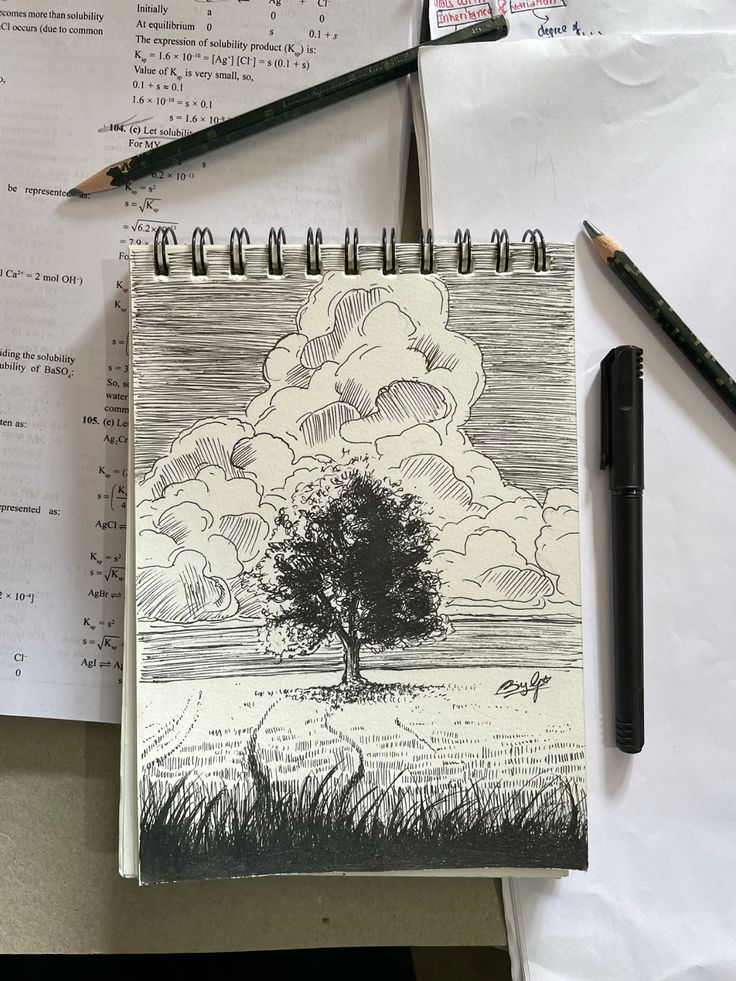
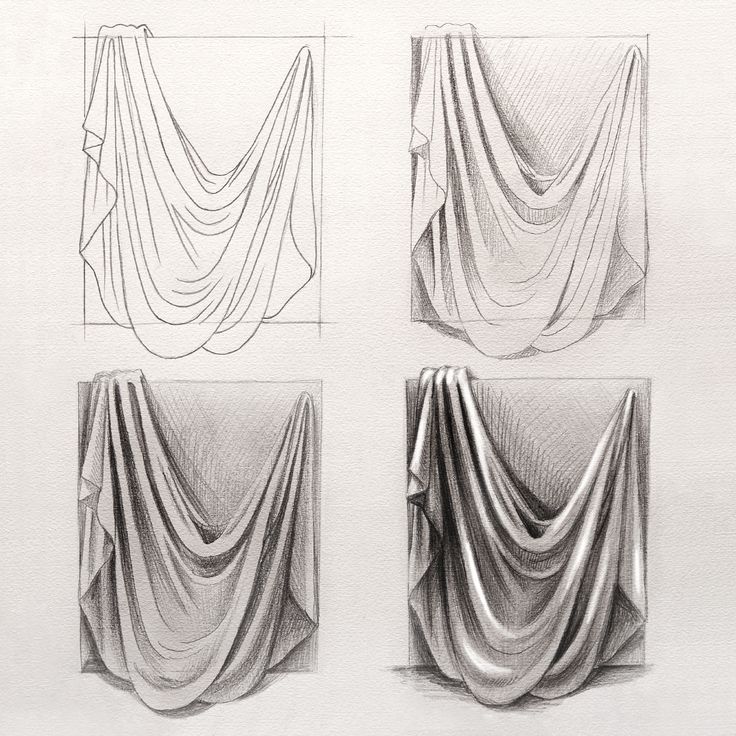
Q: What are the main shading techniques in drawing?
Five main shading techniques: hatching (parallel lines), cross-hatching (intersecting line sets), blending (smooth tonal gradients), stippling (dot density), and scumbling (loose circular marks). Hatching and cross-hatching suit pen and ink; blending suits graphite and charcoal; stippling suits pen; scumbling suits charcoal and pastel. Most drawings use two or more techniques in combination.
Q: What is the difference between hatching and cross-hatching?
Hatching uses parallel lines in a single direction — density controls value. Cross-hatching adds a second layer of lines crossing the first at an angle, producing richer and darker tone. Albrecht Durer (1471-1528) perfected cross-hatching in engraving and woodcut. Rembrandt (1606-1669) used expressive cross-hatching in his etchings to create shadow and direct the viewer’s eye simultaneously.
Q: How do you shade a sphere for beginners?
Identify your light source. Leave the highlight as white paper. Shade the lit area lightly (HB). Build the mid-tone (2B). Deepen the core shadow (4B), preserving a subtle reflected light at the shadow edge. Graduate the cast shadow darkest beneath the sphere, fading outward. All five zones must be present for the sphere to read as three-dimensional rather than flat.
Q: What pencil grades are best for shading?
Practical three-pencil set: HB for mid-tones and initial blocking, 2B for confirmed shadow areas and main tonal work, 4B for core shadows and deep darks. Add 6B only for the very darkest zones. H-grade pencils (2H, 3H) suit construction lines and the lightest values but resist blending.
Q: What is the five-zone value scale?
The five zones on any lit three-dimensional form: highlight (brightest, directly facing light), lit area (broadly illuminated), mid-tone (transitional, surface perpendicular to light), core shadow (darkest, facing away from light), reflected light (subtle lighter zone within shadow from ambient bounce). Missing any zone makes the form read as flat.
Q: How can you make creative shading drawing more interesting?
Keep the light source simple, then change the mark-making. A sphere can feel soft with blending, graphic with cross-hatching, rough with scumbling, or delicate with stippling. The creative part should support the form, not hide it. If the highlight, mid-tone, core shadow, reflected light, and cast shadow still read clearly, the drawing can be expressive without becoming confusing.
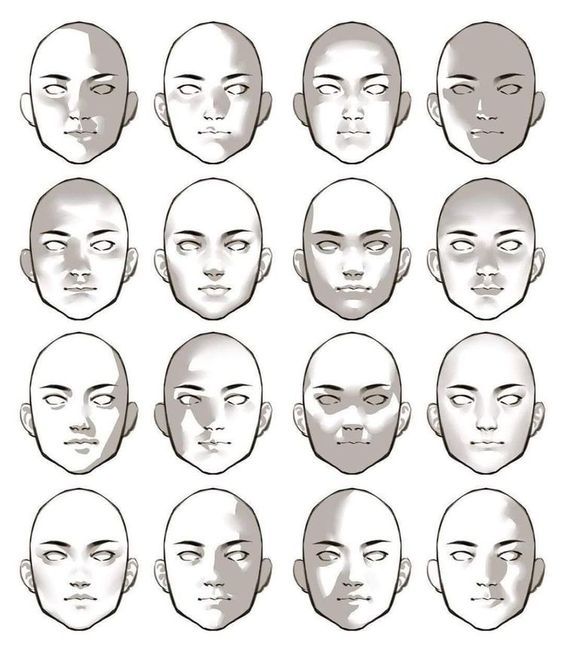
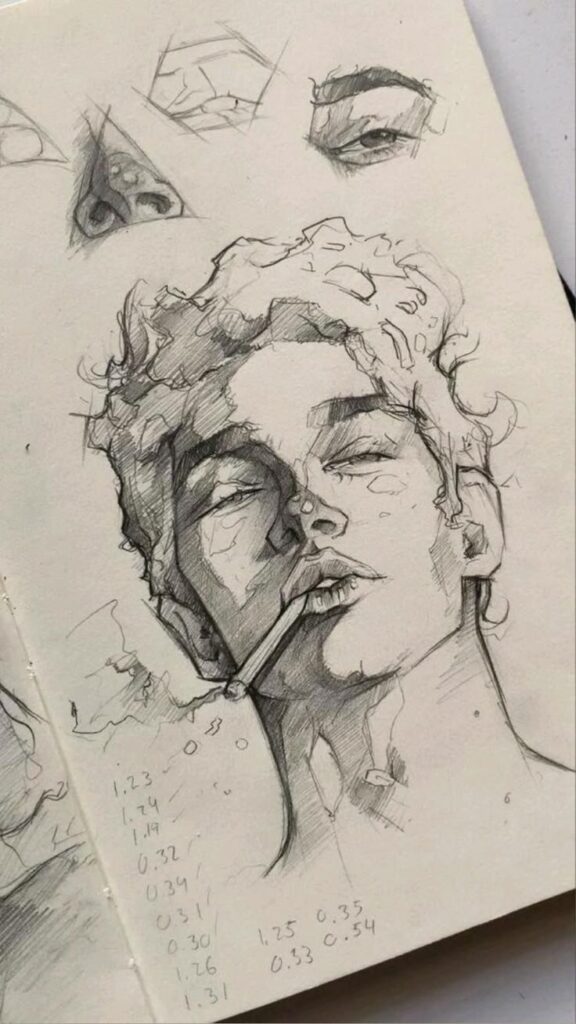
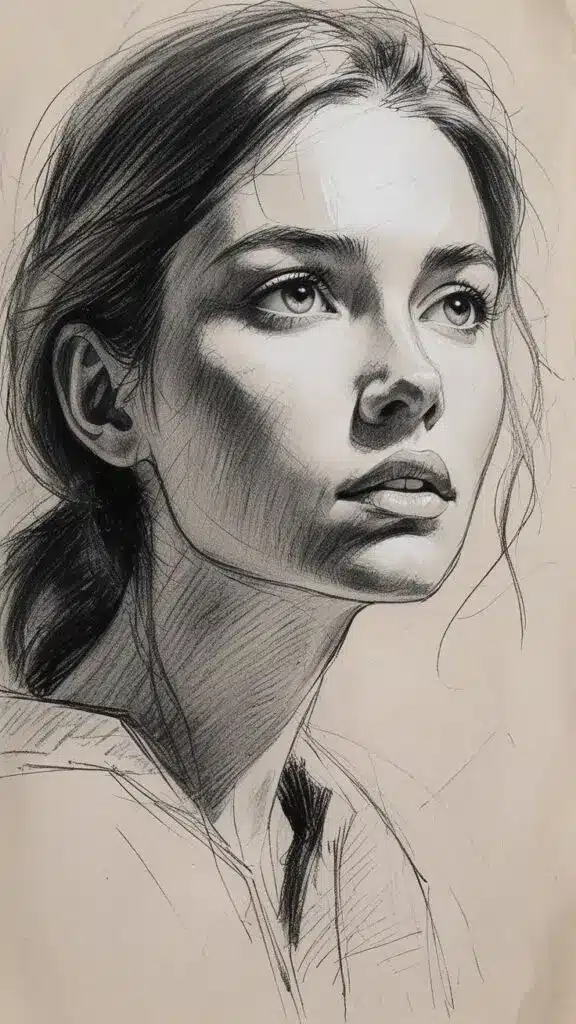
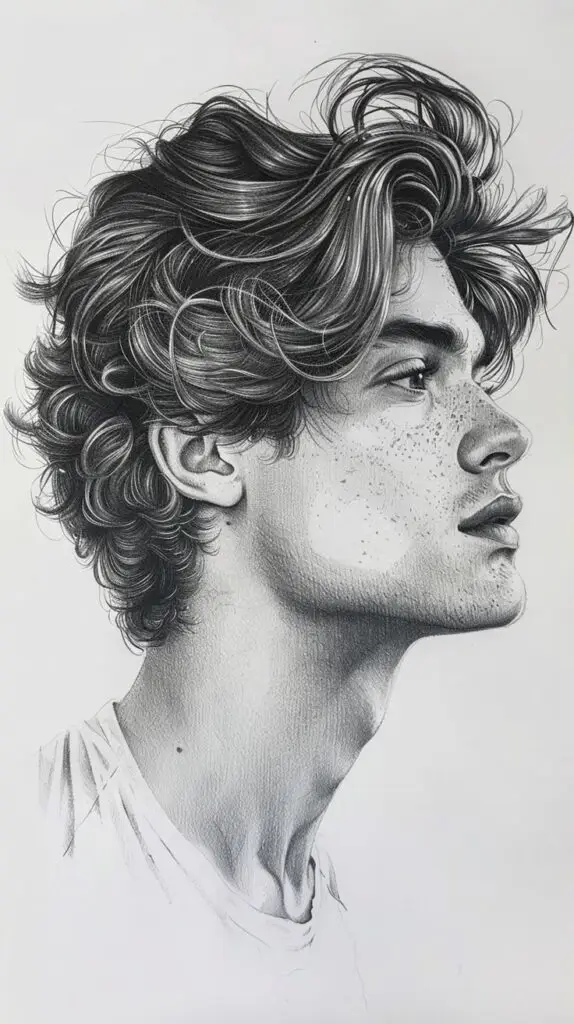
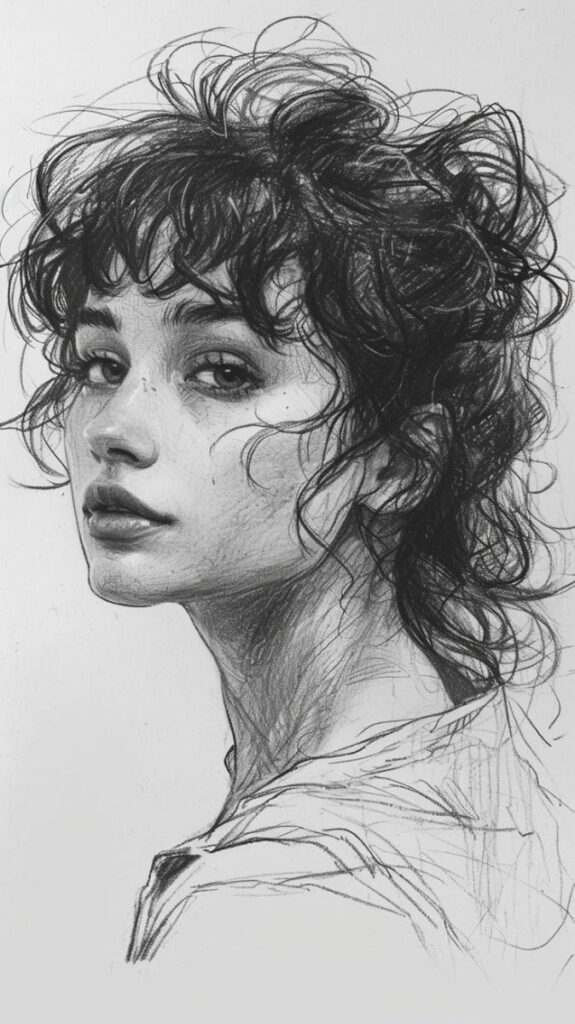
If you are practicing portrait values, side profile shading is a good study for the nose bridge, upper lip shadow, jaw, neck, and hair mass.
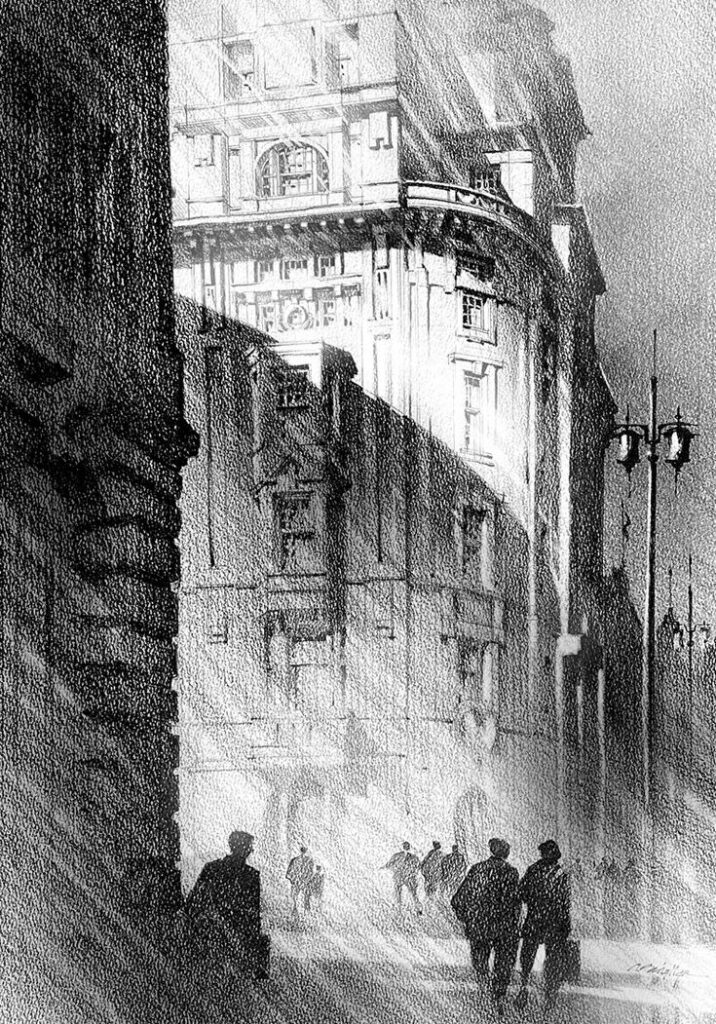
For a subject with windows, arches, and deep recesses, this architecture sketch line and shading practice helps connect shading practice to believable architectural depth.
- 7.5Kshares
- Facebook0
- Pinterest7.5K
- Twitter0
- Reddit0