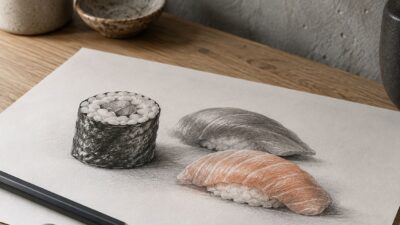
If your sketchbook feels too blank, start with sketching ideas that give you a subject and one small decision to make. A book scene, a remembered dream, a view from your window, or an object turned into a character is enough to get your pencil moving without planning a finished artwork.
I like prompts that force one clear choice: where is the light coming from, what is the main shape, what detail tells the story? Keep the first pass loose. Use a pencil, pen, marker, or whatever is already on your desk, then spend most of the time observing instead of decorating too early.
- What should I sketch when I have no ideas?
- 1) Start with a playful quote or phrase.
- 2) Draw a scene from your favorite book.
- 3) Illustrate a dream you remember.
- 4) Sketch the view from your window.
- 5) Create a character from a random object in your room.
- 6) Draw a memory from childhood.
- 7) Invent an imaginary world.
- Benefits of daily sketching
- How to make sketching part of your routine
- Sketching ideas FAQ
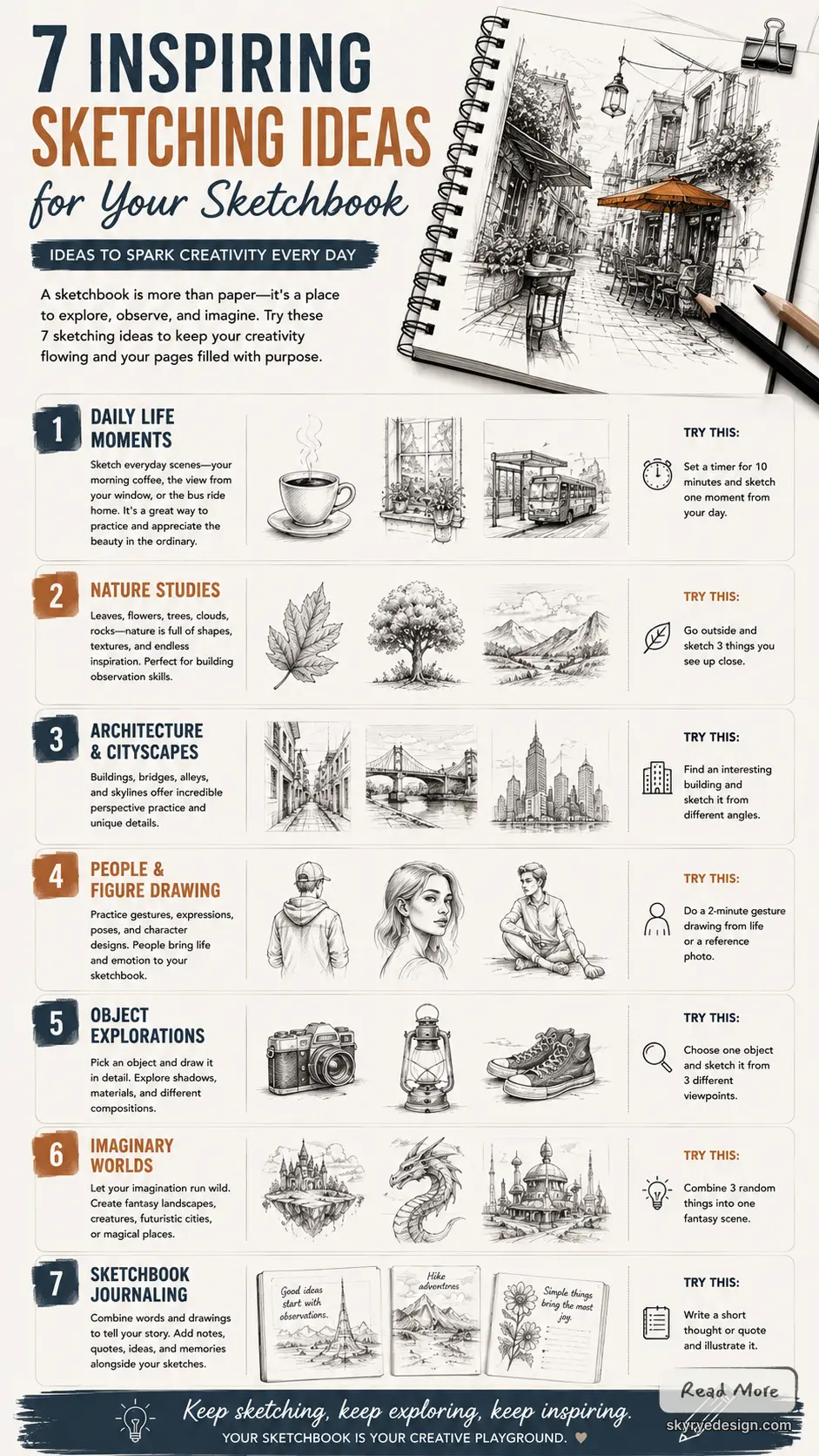
Below are seven sketching ideas for your sketchbook, followed by a few habit-building tips if you want to turn them into a daily drawing routine.
For a focused sketchbook prompt, draw one dragon eye sketchbook prompt three ways: realistic graphite, colored pencil, and glowing fantasy style.
What should I sketch when I have no ideas?
When you have no sketching ideas, choose a prompt that gives you a subject, a mood, and one visual problem to solve. Draw a room object as a character, sketch a window view for perspective practice, or turn a memory into a simple scene.
The point is not to make a perfect drawing; it is to make the first mark and let the page start talking back.
| Sketchbook prompt | Best for | Quick start |
|---|---|---|
| Favorite book scene | Storytelling and composition | Pick one moment, then block in the largest shapes first. |
| Dream image | Mood, symbols, and surreal ideas | Write three remembered details before drawing. |
| Window view | Observation, light, and perspective | Mark the horizon line, then add only the details that matter. |
| Object character | Character design and shape language | Turn the object’s silhouette into a face, pose, or costume. |
| Childhood memory | Emotion and personal subject matter | Draw the place first, then add one object that carries the memory. |
| Imaginary world | Worldbuilding and visual invention | Choose the climate, landmark, and one inhabitant before adding texture. |
1) Start with a playful quote or phrase.
Choose a short quote, lyric fragment, overheard sentence, or phrase from your notes app, then draw the image hiding inside it. The Einstein line, “Creativity is intelligence having fun,” works because it gives you a mood before it gives you a subject.
Do not illustrate every word. Pick one visual hook: a pencil doing something impossible, a desk turning into a playground, or a brain-shaped maze with tiny figures exploring it. I usually thumbnail three tiny versions first, because the first idea is often the most obvious one.
Keep the drawing loose and playful. Let the line wobble, exaggerate the shapes, and leave room for mistakes. This is a good warm-up when you want to unleash your creativity without staring at a blank page for half an hour.
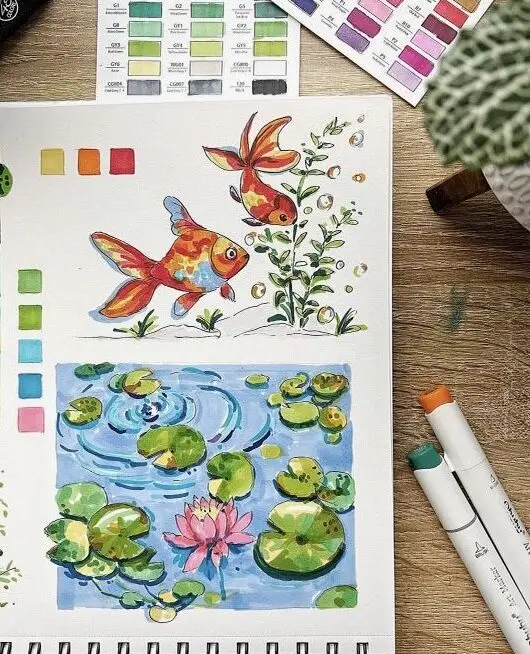
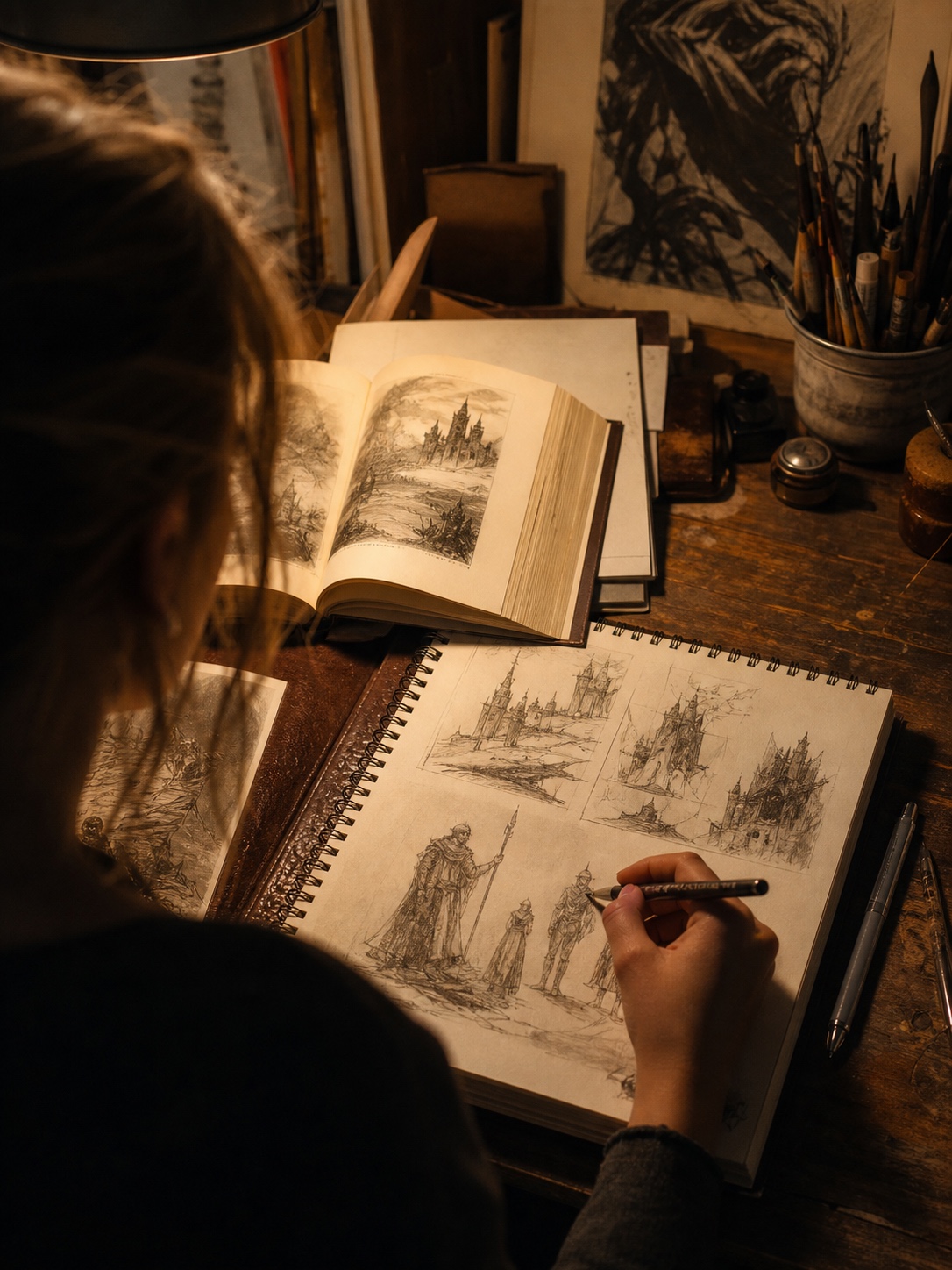
2) Draw a scene from your favorite book.
Choose a scene that resonates with you. It could be a moment of action, a quiet conversation, or a significant discovery. The emotional weight of the scene will inspire your creativity.
Start by visualizing the details. Consider the setting, the characters, and their expressions. What emotions are conveyed through their actions? This will help you capture the essence of the moment.
Use your sketching tools to translate this vision onto paper. Focus on key elements like the background, character poses, and any objects that hold meaning in the scene. Don’t worry about perfection; aim for capturing the spirit of the story.
Allow the characters to come to life through your drawings. Experiment with different angles and perspectives to bring depth to the scene. This exploration can enhance your skills and deepen your connection to the narrative.
As you sketch, think about how this scene reflects the overall themes of the book. This can inform your choices in shading, composition, and color. Let your interpretation shine through, making the sketch a unique reflection of your experience with the book.
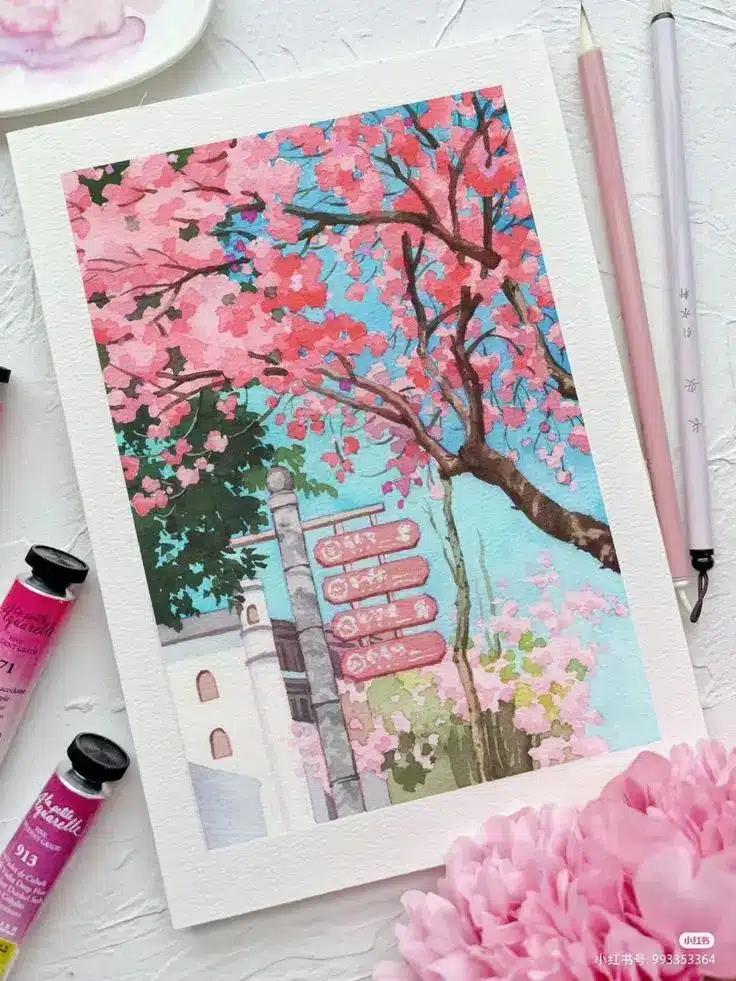
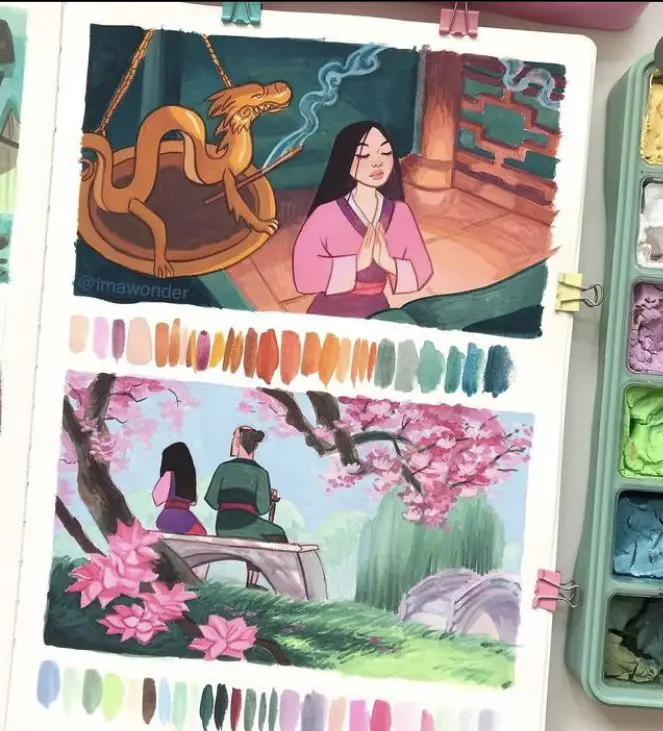
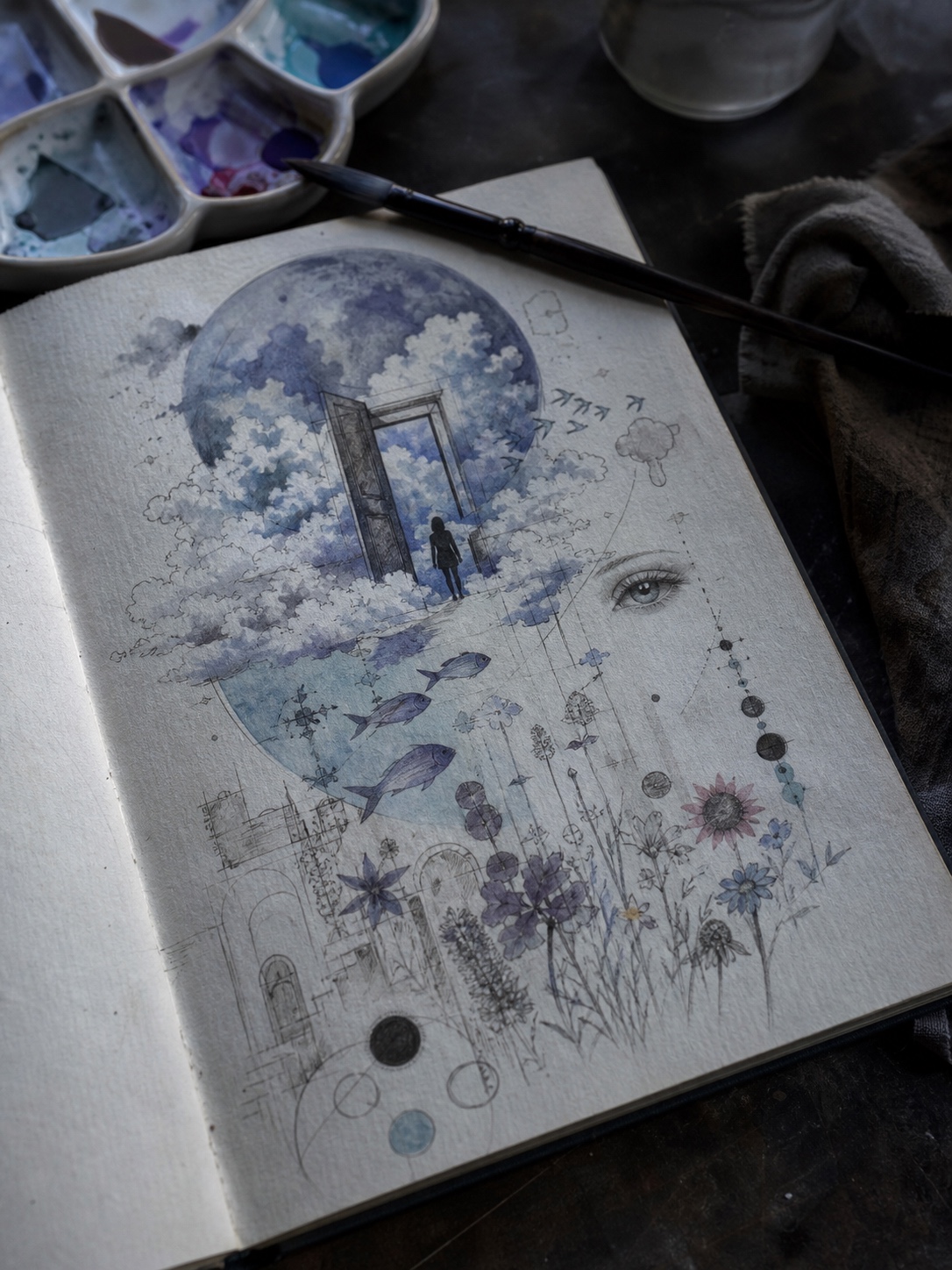
3) Illustrate a dream you remember.
Recall a dream that stayed with you. It could be vivid or abstract; either way, it holds potential for creativity.
Start by writing down the key details. Consider the emotions you felt and any notable images. Were there specific colors or shapes that stood out? Capture these elements in your mind before beginning to sketch.
Visualize the scene. Imagine your dream as a visual story. Focus on the setting and characters involved. If your dream was surreal, embrace that quality in your art.
Use a variety of textures and lines to represent different feelings. A dream often blends reality and fantasy, so allow your sketch to reflect that fluidity.
Take your time to depict the dream’s essence. Sketch freely, letting your imagination guide your hand. Don’t worry about perfection; prioritize capturing the atmosphere and emotions.
This prompt encourages introspection and artistic exploration. Your unique interpretation can reveal insights about your subconscious. Enjoy the process of translating your dream into visual form.

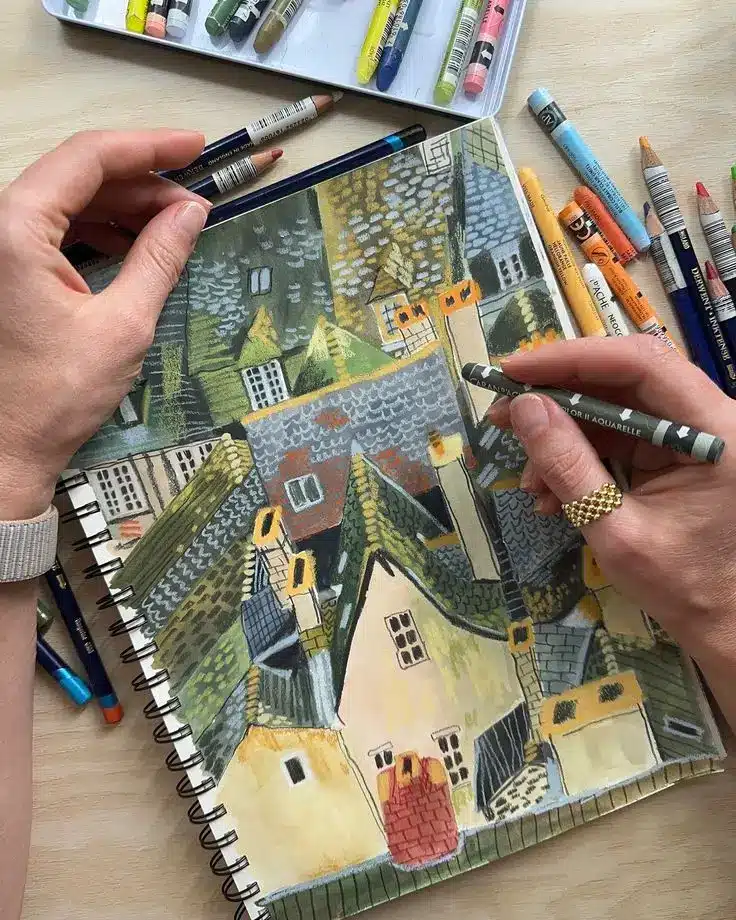
4) Sketch the view from your window.
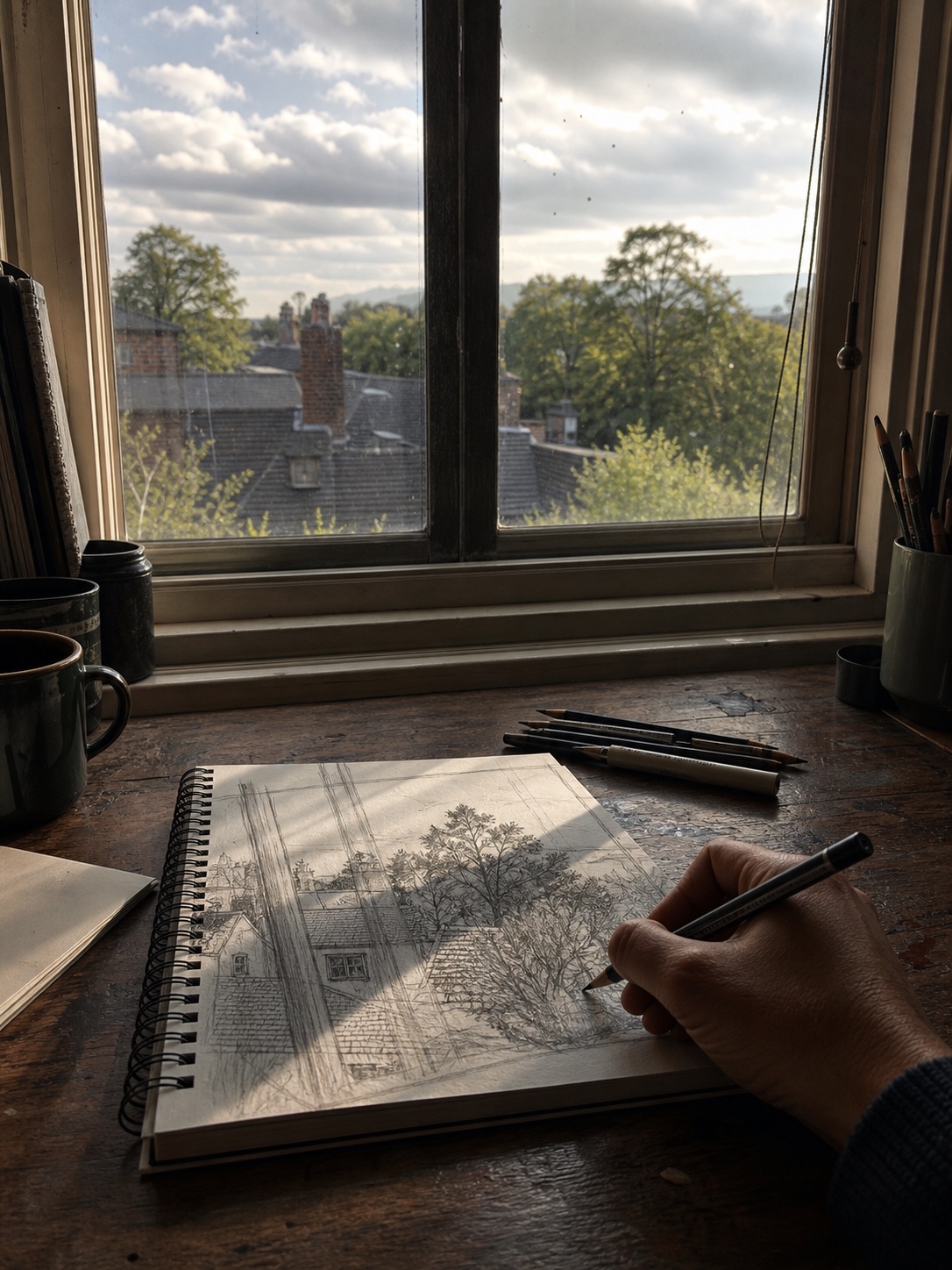
Take a moment to observe the scene outside your window. Notice the shapes, colors, and movements that catch your eye. This is your canvas waiting to be filled.
Begin by sketching the basic outlines of the buildings, trees, or landscape you see. Focus on the horizon line and how it interacts with the sky.
Add details that interest you, such as the texture of bark on a tree or the pattern of clouds. You might find inspiration in the small elements that you often overlook.
Consider the time of day and how it affects the light. Early morning light is soft, while afternoon sun brings vibrant colors. Use this to influence your shading and contrast.
Experiment with different perspectives. Lean closer to the window or try sketching from a different angle. This will give your artwork a fresh look and deepen your understanding of composition.
Remember, this is a personal exercise. Your sketches don’t need to be perfect; they just need to reflect your interpretation of the world outside. Enjoy the process and let your creativity flow.

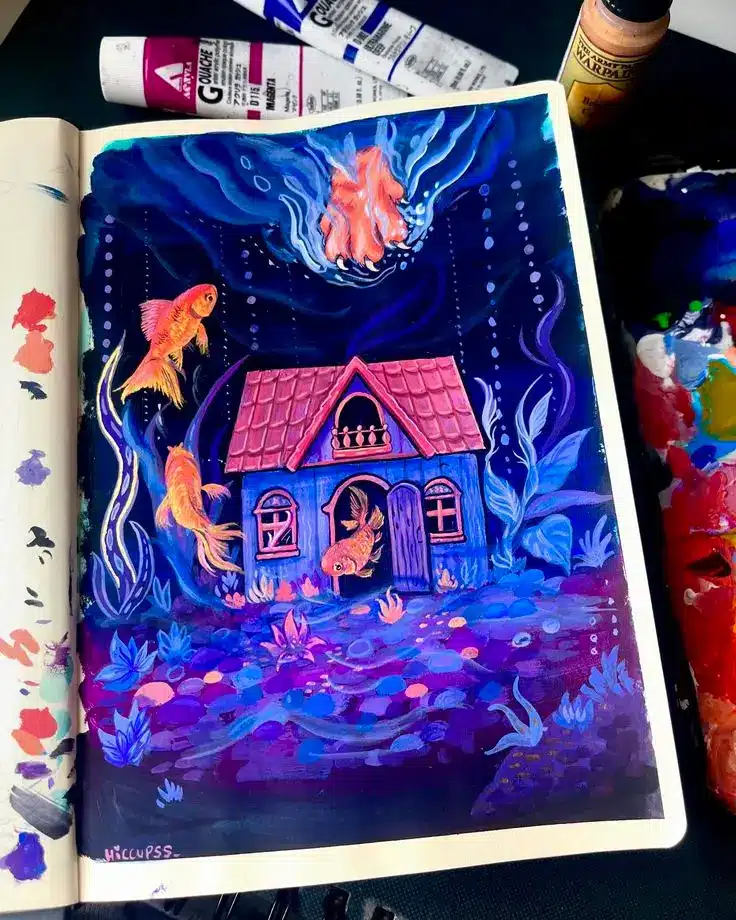
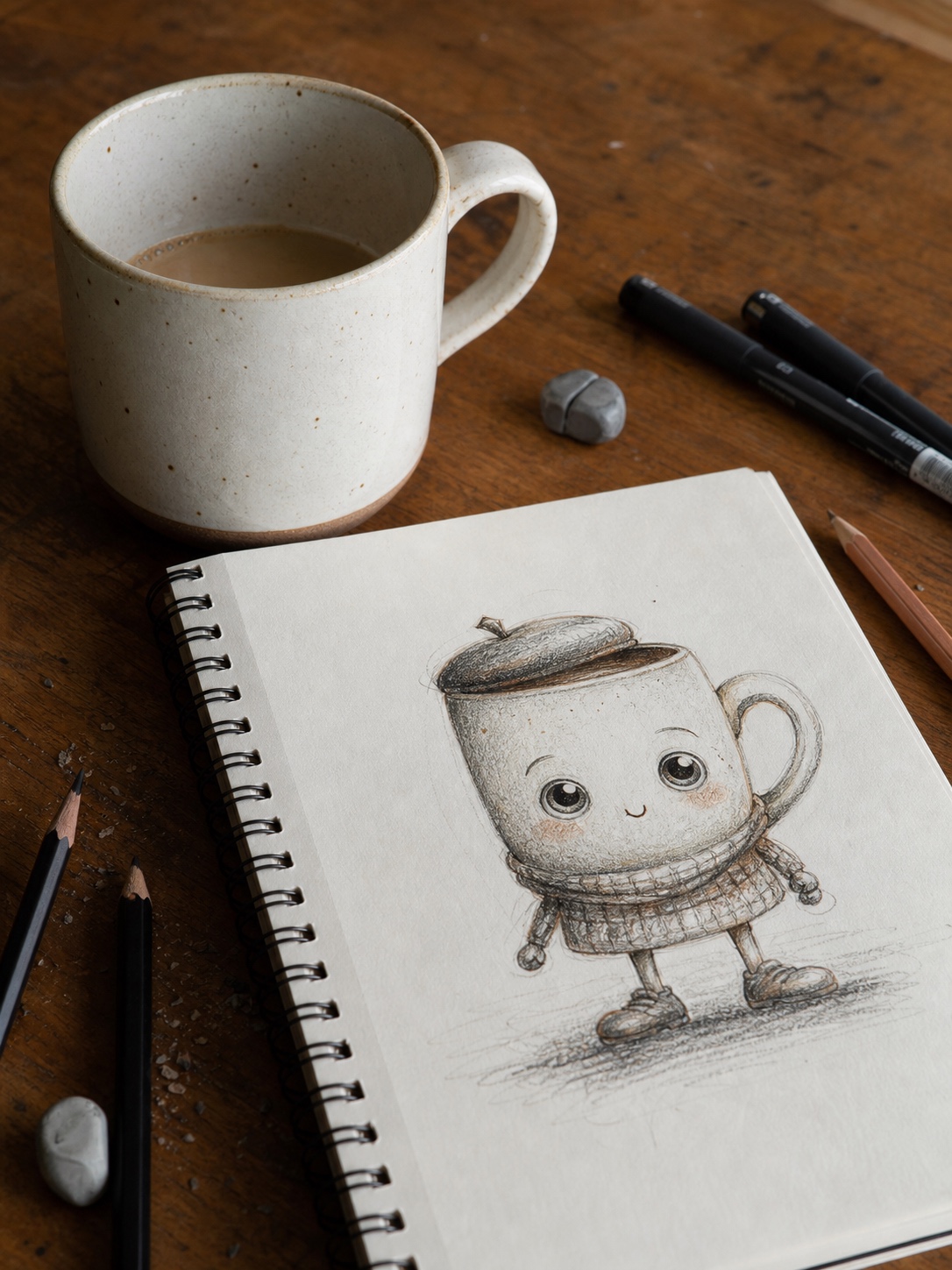
5) Create a character from a random object in your room.
Look around your room and choose any object that catches your eye. It could be a book, a mug, or even a piece of furniture.
Imagine this object has a personality. What would it be like? Think about its shape, color, and function.
For example, a worn-out book might be a wise old mentor who has seen many adventures. A bright coffee mug could be a lively, energetic character who always keeps the mood light.
Consider how this character interacts with others. What are its motivations? Does it have dreams or fears? Use these attributes to create a backstory.
Sketch your character, focusing on how its physical traits convey its personality. Add expressions or accessories that highlight its characteristics.
This exercise not only boosts your creativity but also helps you see familiar objects in a new light. It encourages you to think outside the box and transform everyday items into imaginative characters.

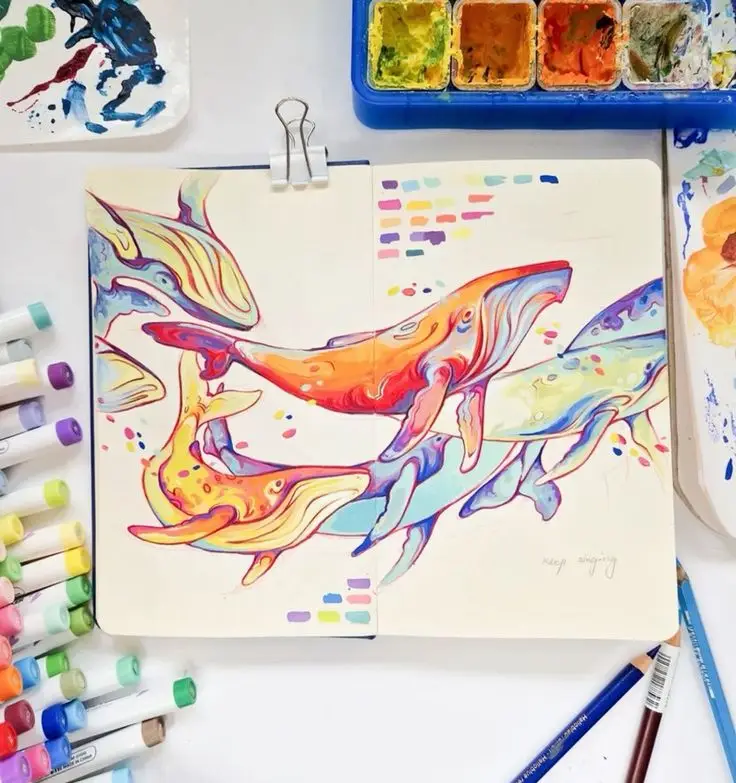
6) Draw a memory from childhood.
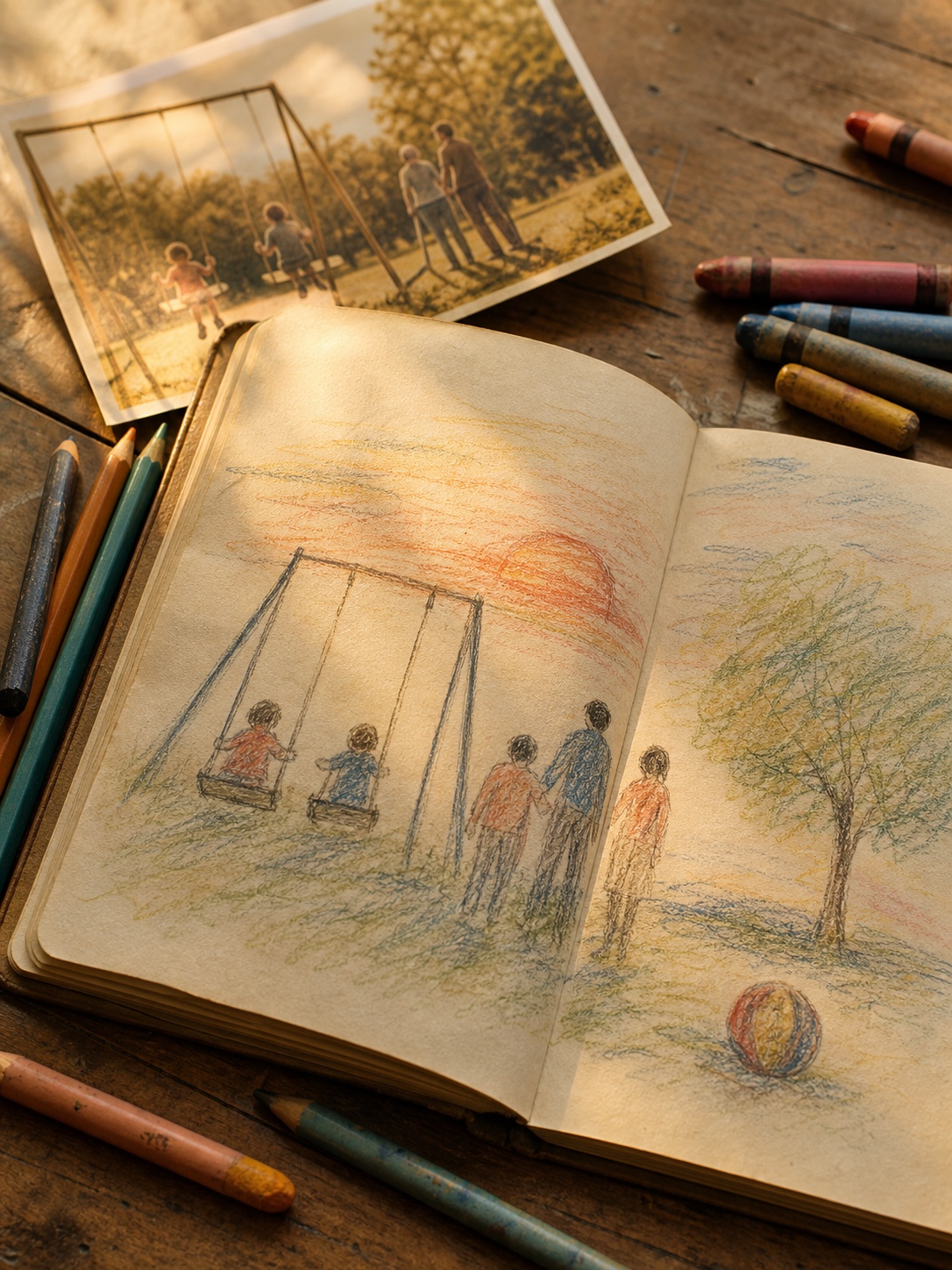
Think back to a moment in your childhood that stands out. It could be a family gathering, a day at the park, or a special event. Select a memory that evokes strong feelings.
Begin by sketching the environment. Include details that made the place unique, such as trees, houses, or toys. Make your lines loose to capture the essence of the moment without focusing too much on precision.
Next, add figures if they are part of your memory. Draw friends, family, or pets that were present. Focus on their expressions and interactions. These details can bring your memory to life.
Use color to convey the mood of the memory. Warm tones can reflect joy, while cooler shades might evoke a sense of calm or nostalgia. Let the colors you choose resonate with how you felt during that time.
Remember, the goal is to express your personal experience. There’s no right or wrong way to approach this prompt. Embrace the process and enjoy revisiting a cherished memory through your art.


If your sketchbook still feels too open-ended, these things to draw for starters give you seven compact ideas before you move into longer sketchbook prompts.
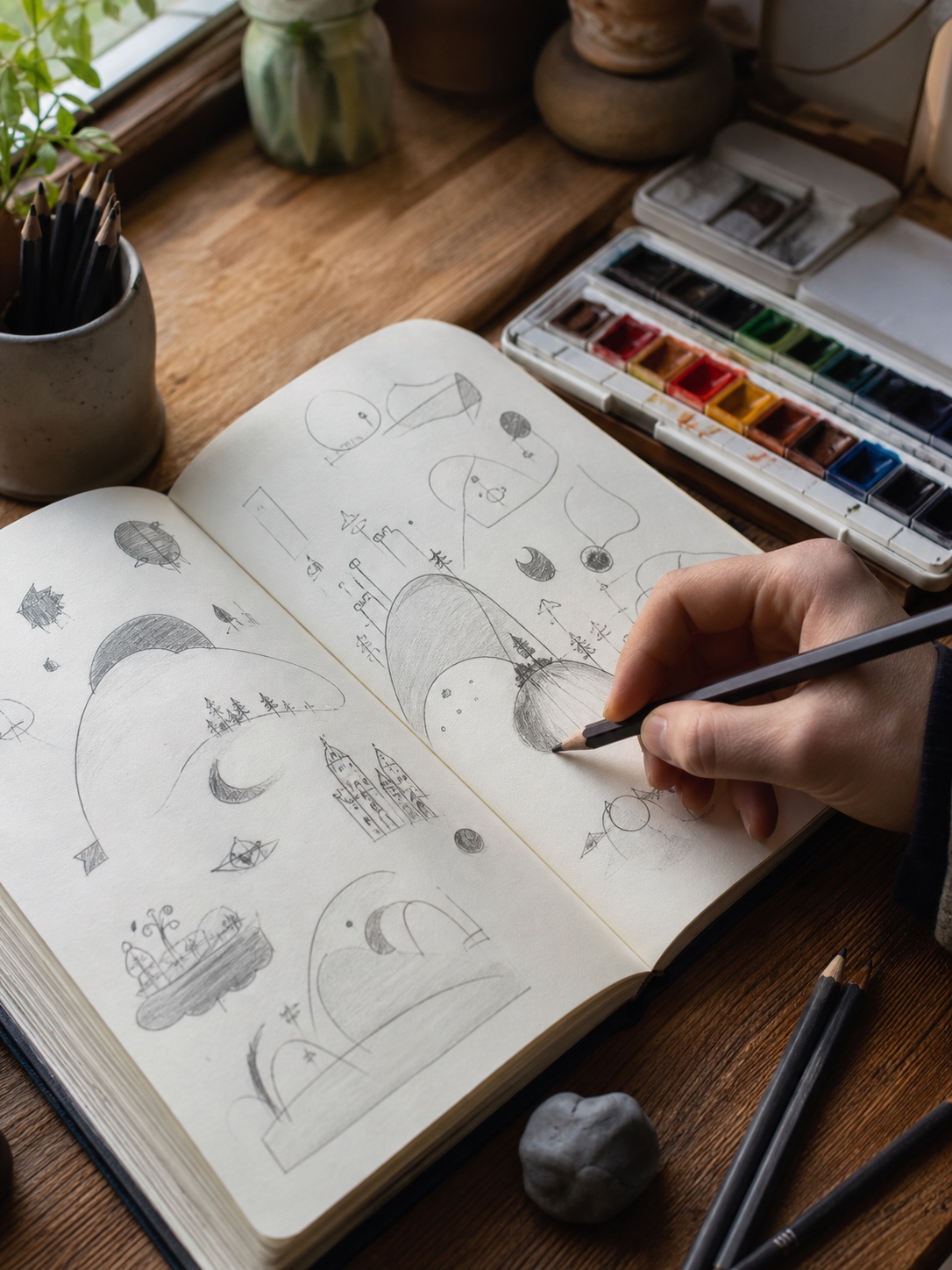
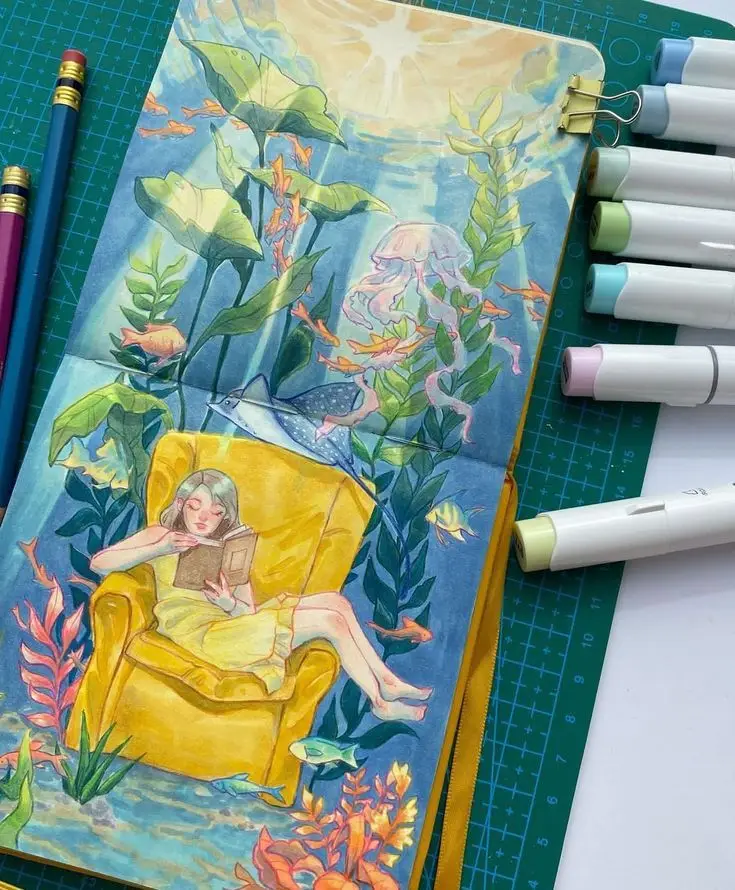
7) Invent an imaginary world.
Create a unique setting that sparks your imagination. Start with the basics: decide on the environment. Will it be lush and green, or arid and barren?
Next, think about the inhabitants. What species or creatures live there? Consider their cultures, languages, and how they interact.
Add details that make the world intriguing. What are the significant landmarks? Are there mountains, rivers, or ancient ruins?
Focus on the climate and how it shapes daily life. Does it have constant sunshine, or are storms frequent?
Incorporate elements of magic or technology if desired. Think about how these aspects affect your world’s dynamics.
Finally, sketch scenes that capture the essence of this imaginary world. You could depict the bustling marketplace or a serene landscape at sunset.
Use your creativity freely; there are no limits. Immerse yourself in this new world and let your sketches reflect its uniqueness.


Benefits of daily sketching
A daily sketching habit works because it lowers the pressure. You stop waiting for a perfect idea and start collecting small observations: the angle of a chair, the shadow under a mug, the way a jacket folds over a shoulder.
Building creative momentum
Sketching regularly trains you to notice small visual problems and solve them quickly. One day you might study line weight; the next day you might test a strange color palette or a tighter crop.
You can experiment with different styles, subjects, and techniques during your daily sketches. Each drawing provides a new opportunity for artistic expression, nurturing your unique voice.
The real benefit is momentum. A rough five-minute page is easier to continue than a perfect plan you never start.
Improving observation and technique
Regular sketching helps you refine your techniques because it repeats the fundamentals in a low-stakes way: line control, proportion, shading, composition, and edge quality.
By dedicating time each day to sketch, you build muscle memory and develop a keen eye for observation. This continuous practice enhances your ability to capture details and proportions accurately in your artworks.
Date your pages if you can. Looking back at older sketches makes progress visible, especially in the quiet areas beginners miss at first: cleaner silhouettes, better spacing, and more confident dark values.
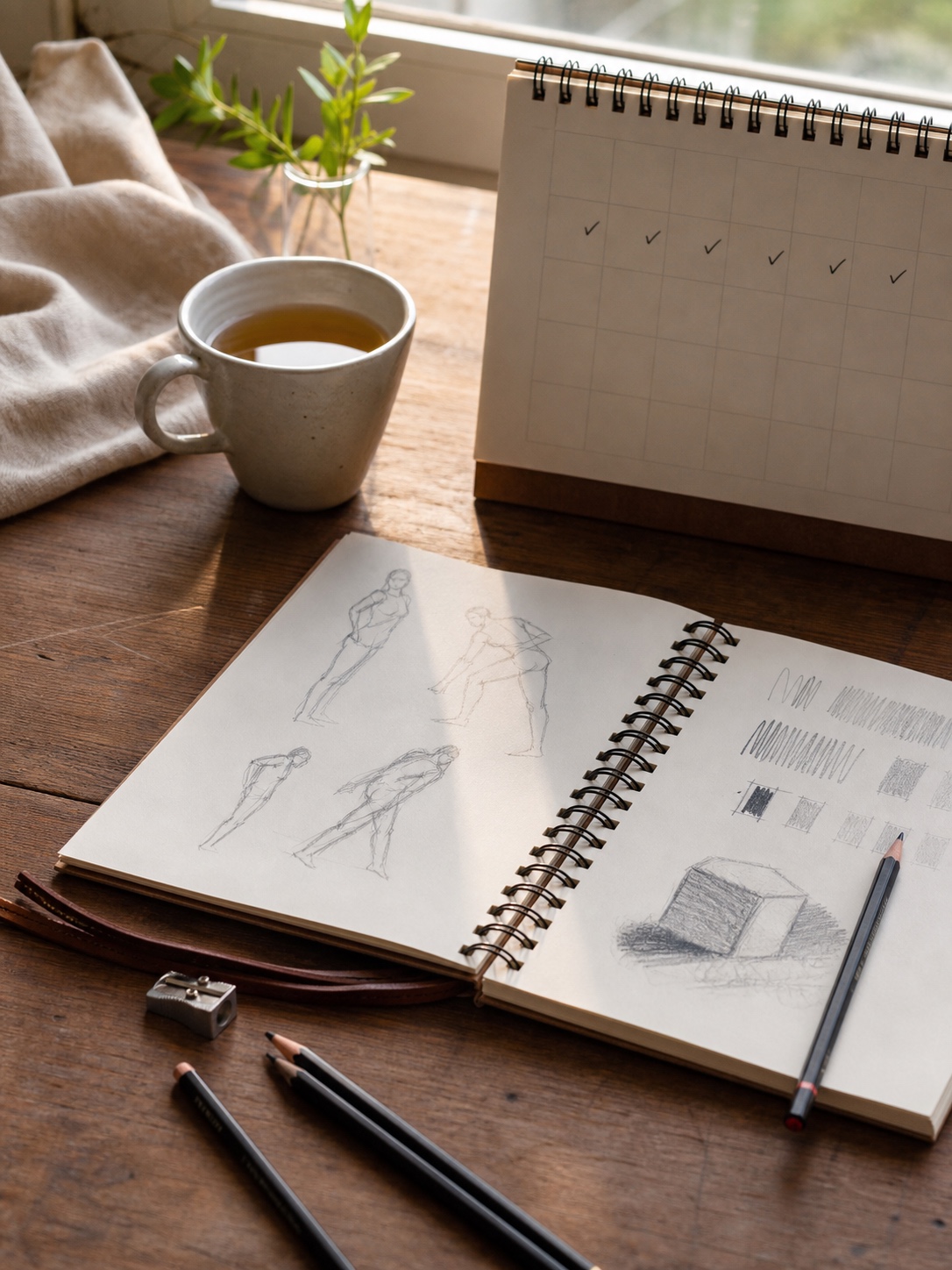
How to make sketching part of your routine
Make sketching easy to begin. Keep the sketchbook visible, keep the tools simple, and give yourself a small rule: one page, one subject, or ten minutes. That is usually enough to get past resistance.
Finding inspiration
Start with what is already near you. A shoe by the door, a plant leaning toward the window, a hand holding a cup, or the corner of a messy desk can all become useful studies.
Use a visual diary or mood board for colors, poses, textures, and shapes you want to revisit. Pinterest and Instagram are useful, but so are museum collections, old family photos, packaging, street signs, and the view from the bus.
If you feel stuck, change the source instead of blaming your drawing ability. Try art books, local exhibitions, sketch groups, or a walk where you only photograph shadows and silhouettes.
Setting up a small sketching space
You do not need a massive workspace. Choose one comfortable spot with decent light, whether it is a desk corner, a cafe table, or a cozy setup inspired by practical home art studio ideas that fit your budget.
Keep the kit boring on purpose: one sketchbook, one pencil or pen, an eraser if you use one, and maybe a gray marker for quick values. Too many supplies can turn into another reason to delay the drawing.
Pick a repeatable cue, such as sketching after coffee or before bed. The routine matters more than the length of the session; ten honest minutes will teach you more than waiting all week for a perfect afternoon.
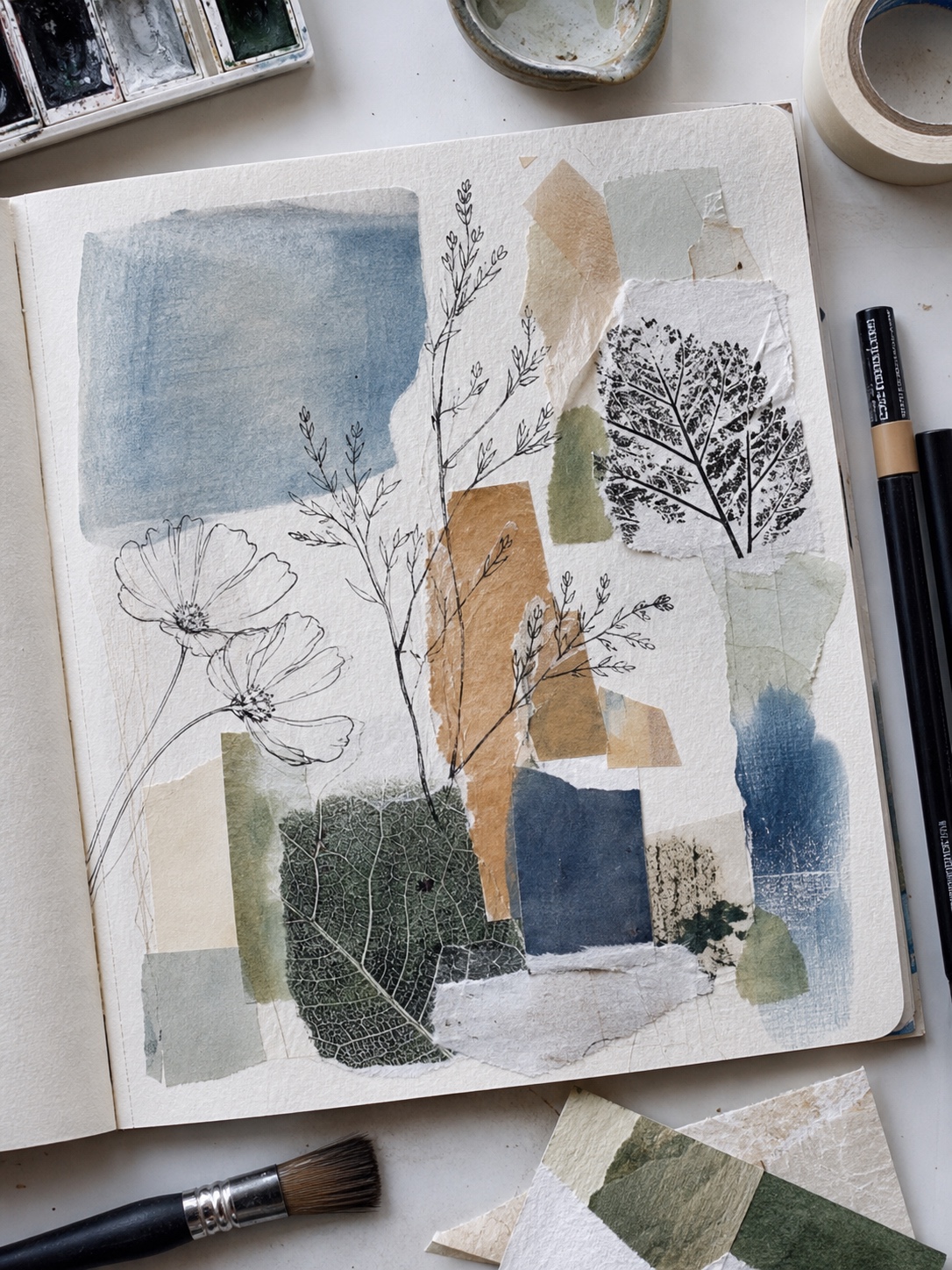
If you want to move a sketchbook prompt onto a tablet, the digital drawing ideas guide gives you small layer, color, and brush exercises to try next.
For a more dimensional sketchbook prompt, try 3D drawings for beginners that focus on paper edges, shadows, and one fixed viewpoint.
For sketchbook pages that need a living subject, add a quick human figure sketch after the object or scene idea. A loose body map gives your page scale, movement, and a stronger story without needing a polished portrait.
A dinosaur sketchbook prompt is useful when you want one page with shape practice, texture, motion, and a small colored-pencil finish.
For a bolder prompt, try easy graffiti sketch ideas after everyday object studies; letter weight and shadow placement are useful warm-ups for line confidence.
When the sketchbook feels too open, use fantasy things to draw as a narrow prompt list: one creature, one object, one place, and one character with a clear silhouette.
Sketching ideas FAQ
Q: What are good sketching ideas for beginners?
A: Good beginner sketching ideas use simple subjects with one clear challenge. Try a mug, shoe, window view, book scene, childhood memory, or random object turned into a character. Keep the first drawing small so you can focus on shape, proportion, and light instead of finishing a polished artwork.
Q: How do I fill a sketchbook when I feel stuck?
A: Use prompts that remove the first decision. Choose one page for dream images, one page for window views, one page for object characters, or one page for memory sketches. If the blank page feels intimidating, divide it into four boxes and make four tiny drawings instead of one large one.
Q: Should sketchbook drawings be finished?
A: No. A sketchbook is allowed to hold rough studies, messy thumbnails, half-finished scenes, color tests, and notes. Finished pages are nice, but the real value is practice. Use the sketchbook to test ideas before they become bigger drawings, paintings, or digital pieces.
Q: How often should I sketch to improve?
A: Sketching for ten to fifteen minutes most days is enough to build momentum. Short sessions work well because they are easy to repeat. Focus on one skill at a time, such as line weight, simple shading, gesture, composition, or drawing from observation.
Q: What tools do I need for sketchbook prompts?
A: You only need a sketchbook and one drawing tool. A graphite pencil is the easiest starting point, but a ballpoint pen, fineliner, colored pencil, brush pen, or marker can work. If you are trying to build a habit, use the tool that feels easiest to pick up.
Q: How do I choose between different sketching ideas?
A: Match the prompt to the skill you want to practice. Pick a window view for perspective, a childhood memory for storytelling, a room object for character design, or an imaginary world for composition and mood. When in doubt, choose the prompt you can start in under one minute.
Related realism study: For a more advanced sketchbook prompt, use a Marco Grassi artist reference and copy only one feature: an eye, lace edge, shoulder shadow, or fabric fold.
If you want a more focused graphite prompt after filling a sketchbook page, this list of pencil drawing ideas gives you still life, portrait, animal, landscape, and abstract subjects to practice next.
For lower-pressure pages, try the same prompt as small bullet journal doodles: draw it at icon size first, then repeat it larger only if the shape feels good.
If you enjoy structural topics, consider exploring our list of easy architecture drawing ideas designed specifically for sketchbook practice.
For a low-pressure gift sketch, choose easy drawing ideas for your girlfriend that can be finished in one sitting, then spend the extra time cleaning the lines and lettering.
If a sketchbook prompt turns into two characters, use this couple poses drawing guide as a reference stop. It gives you sitting, standing, playful, and quiet interaction ideas without overbuilding the scene.
A reliable way to stretch a familiar sketch is to keep its structure believable and change only one relationship. Explore a surreal drawing technique built around scale, transformation, or an altered reflection when you want a fresh composition.
- 3.5Kshares
- Facebook0
- Pinterest3.5K
- Twitter0
- Reddit0