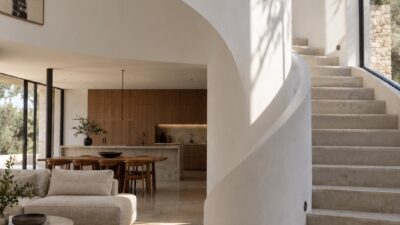
I once spent three weeks reworking the layout for a client’s lot on a dense city block, a plot barely wider than a two-car garage. The brief was not “make it bigger.” Square footage was not moving. The brief was “make it stop feeling like a hallway with rooms attached.” That distinction is the entire problem urban home design exists to solve.
Most advice about small-space living still treats square footage as the only variable that matters: buy a smaller couch, add more shelves, paint everything white. None of that addresses what actually makes a compact city home feel cramped, which is almost always a layout, light, or material problem rather than a size problem.
- What urban home design needs to solve
- Compact layouts that still feel open
- Natural light in narrow or dense city lots
- Flexible rooms for work, rest, and storage
- Indoor-outdoor transitions in small footprints
- Materials that make city homes feel calmer
- Privacy without closing the home off
- What Urban Series Homes can teach about modern city living
- 10 urban home design ideas at a glance
- How the ten ideas compare
- Want to go deeper on small-space design?
- Frequently asked questions
- What does "urban home design" actually mean?
- How do you make a small city home feel bigger without adding square footage?
- What is a light well, and do I actually need one?
- What materials work best for calming a small urban interior?
- How do you keep privacy in a dense neighborhood without blocking natural light?
- Can a narrow lot still have a real indoor-outdoor connection?
- What can micro-housing concepts like the Terra Urban teach traditional homeowners?
- How much does custom urban home design typically add to a build?
This piece walks through the design moves that genuinely change how a small urban footprint feels to live in: layouts that read open even when they are not large, light strategies for lots boxed in by neighbors on three sides, flexible rooms, real indoor-outdoor connection, calming materials, and privacy that does not require sealing the place shut.
Custom builders are running into this exact brief, market by market. Kirkland luxury homes increasingly take on lots in that same tight, in-demand category: close to job centers, narrow by suburban standards, priced per square foot in a way that punishes wasted space. The design thinking in this piece applies whether the lot sits in a dense coastal city or a Seattle-area suburb like Kirkland; what changes is the zoning, not the underlying design problem.
What urban home design needs to solve
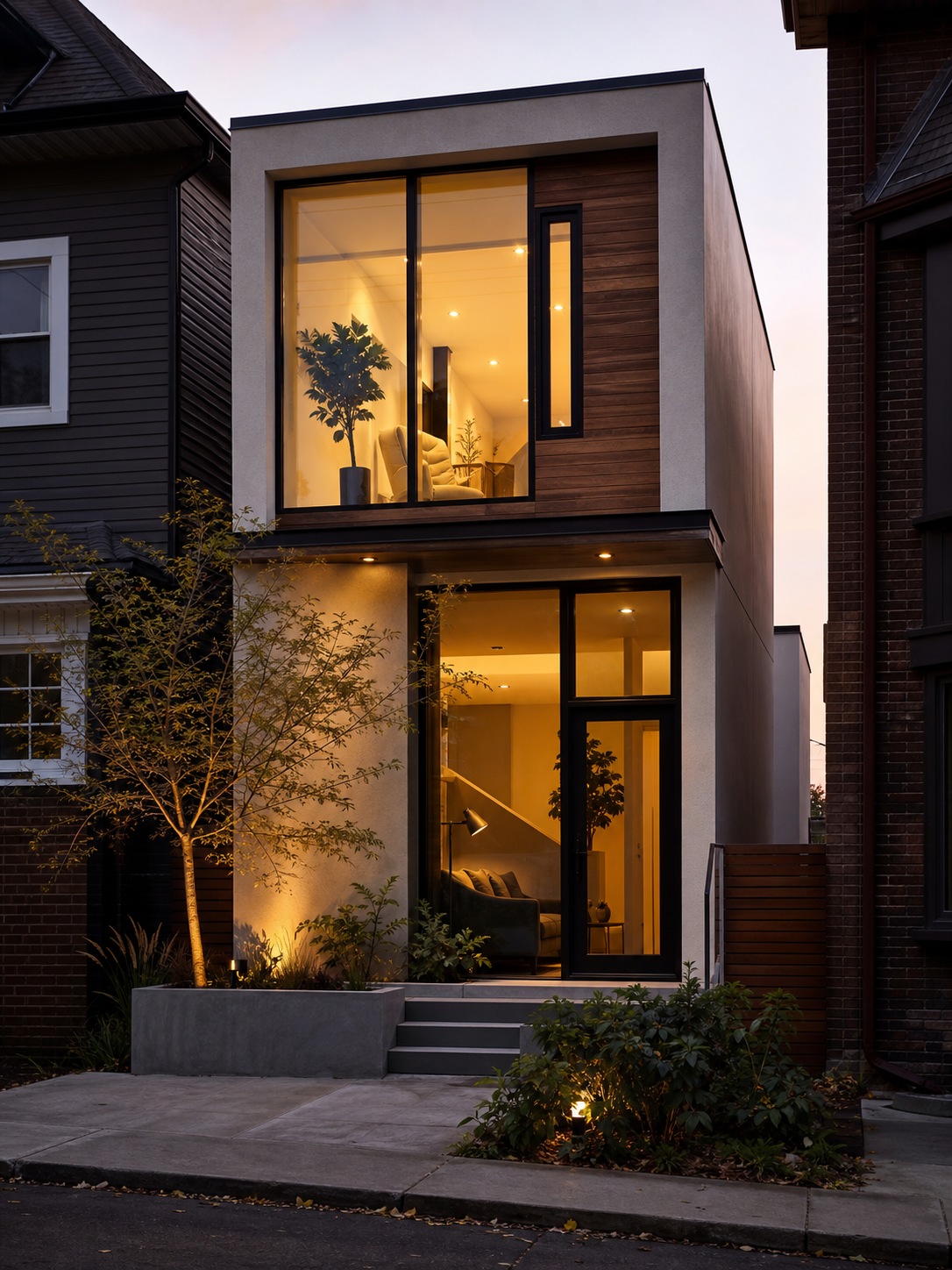
Three problems show up on almost every compact city lot, and they compound each other if you do not address them in order.
The first is light. Narrow lots usually mean close neighbors on at least two sides, sometimes three, which kills the side-window strategy that works fine on a suburban half-acre. The second is the multifunction problem: a 900-square-foot home still needs to do everything a 2,400-square-foot home does, host guests, store gear, give someone a quiet place to work, just without four extra rooms to spread those jobs across. The third is psychological as much as physical: privacy. Sit eight feet from your neighbor’s kitchen window and even a generously sized room can feel like it is on display.
Recent national housing data backs up how widespread this brief has become. Compact plans, homes between 1,000 and 2,000 square feet, now make up roughly half of all house plans sold, and the share keeps climbing. The shift reads as intentional rather than forced; buyers are choosing right-sized homes designed well over larger homes designed carelessly.
That reframe matters. Urban home design is not a smaller, sadder version of suburban design. It is its own discipline, with its own toolkit: light wells instead of side yards, vertical stacking instead of sprawl, multipurpose furniture instead of dedicated rooms for things you use twice a month. The rest of this piece walks through that toolkit section by section.
Compact layouts that still feel open
Open floor plans get recommended so often for small homes that the advice has become background noise: true, but not very useful without the next layer, which is how you keep an open plan from becoming one big room with too much in it.
Vertical stacking is the real lever on a narrow lot. Instead of spreading the kitchen, living room, and a home office across one cramped floor, stack distinct zones on different levels and let a central stair do double duty as the visual anchor that ties them together. A deep, narrow floor plate, longer than it is wide, also reads larger than a square room of the same area, simply because the eye travels farther before hitting a wall.
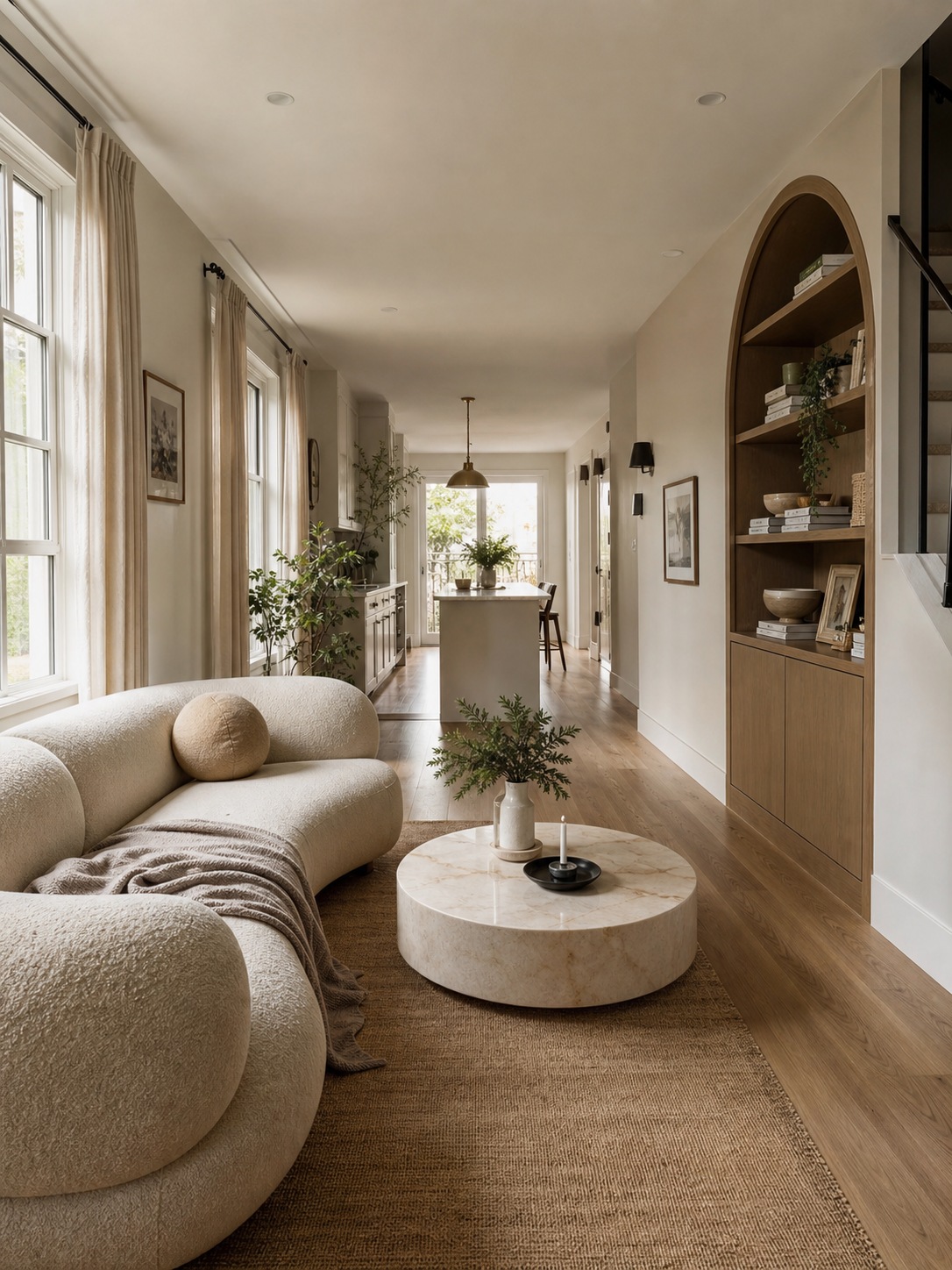
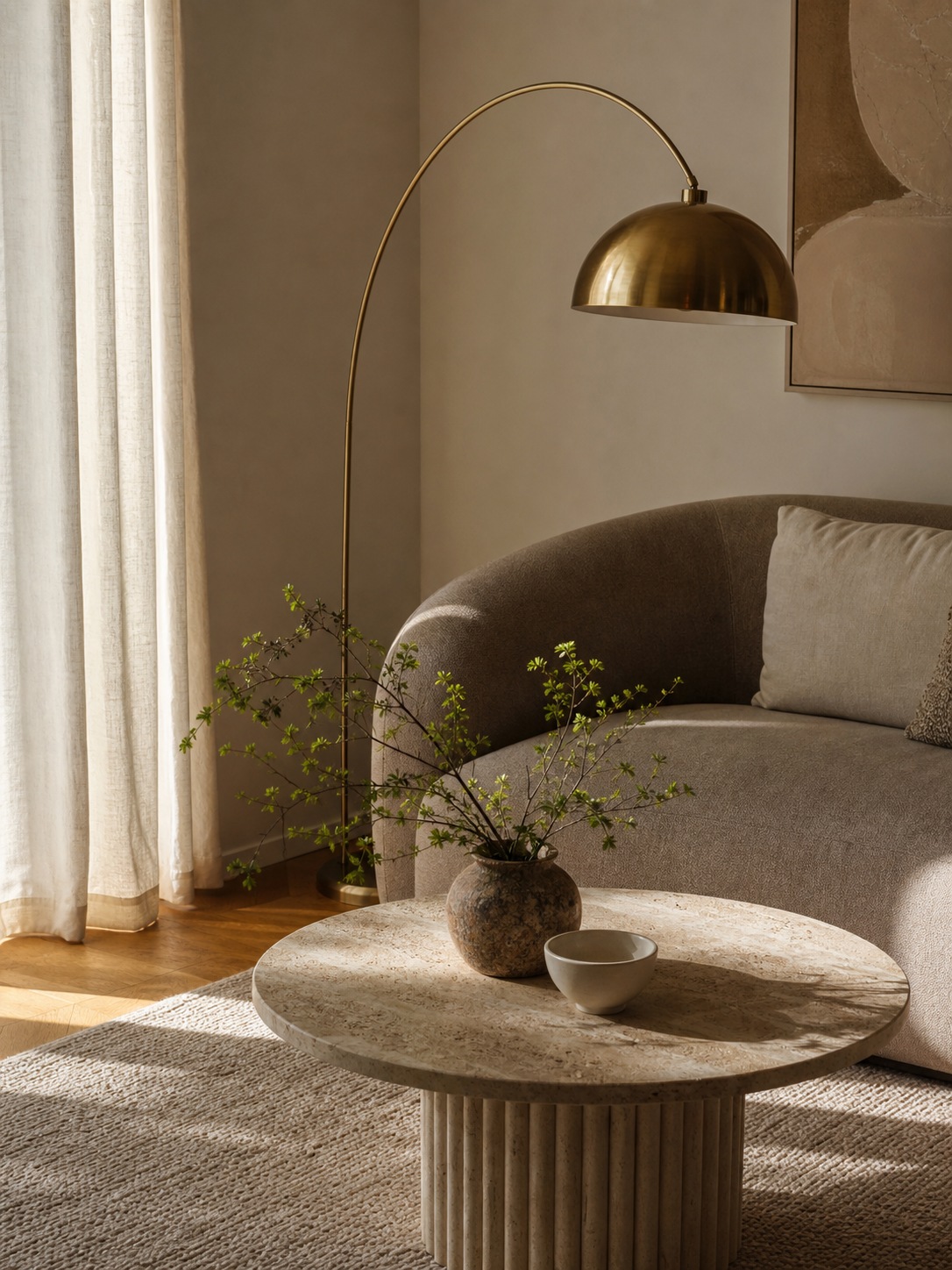
Furniture choice does more work than people expect, too. I have noticed sharp-cornered furniture makes small rooms feel like obstacle courses; you are constantly aware of the edges. Rounded sofa backs, a circular coffee table, an arched shelf unit, the softened geometry that became popular in 2026 interiors is not just an aesthetic trend. It genuinely improves how people move through compact rooms, because there is nothing left to bump into.
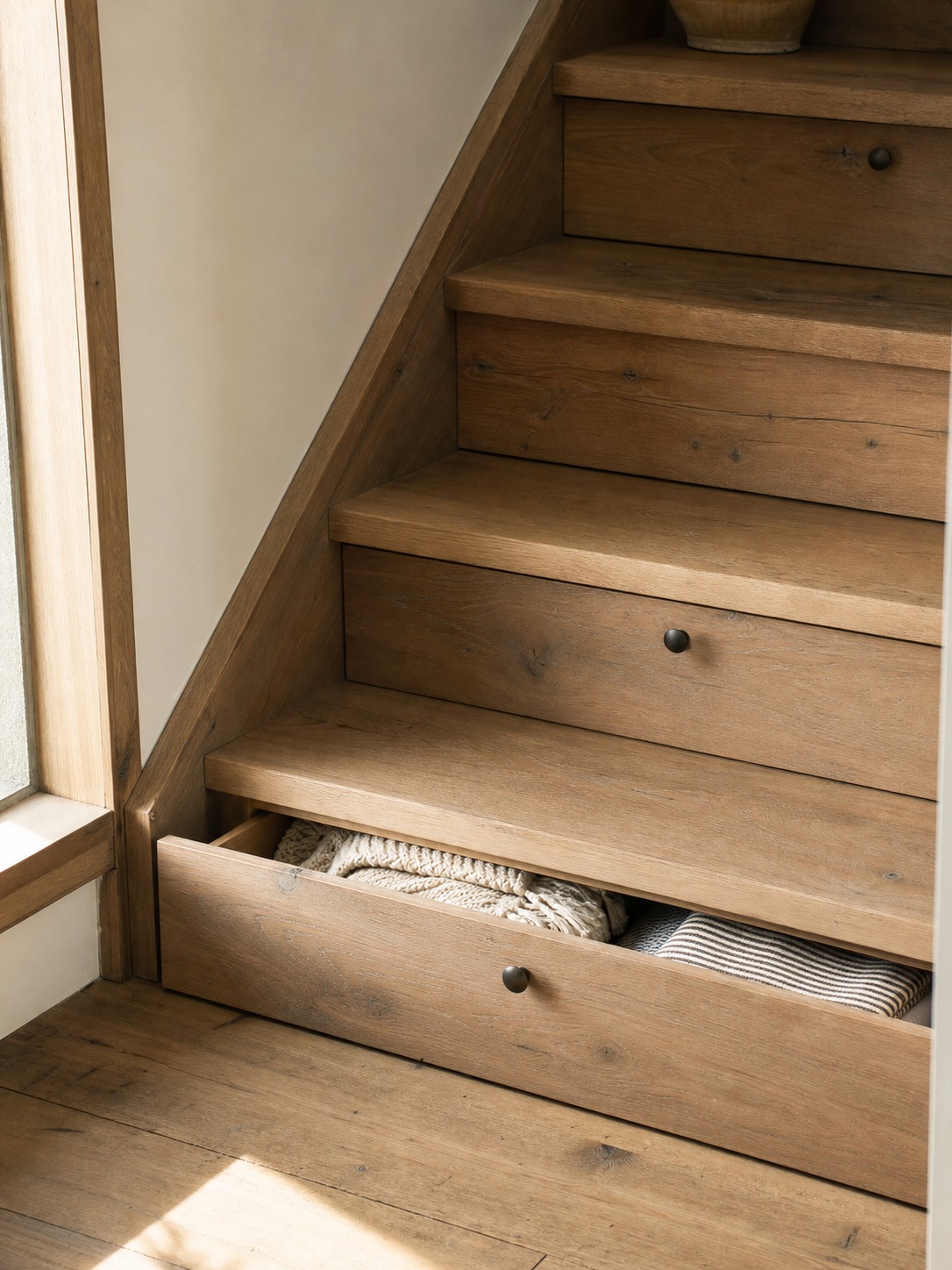
TIP: Build storage into the architecture rather than adding it as furniture: a bench with a lift-up seat, stair risers that double as drawers, a headboard wall that is actually a closet. Every piece of furniture you do not need to buy is floor space you get to keep.
Natural light in narrow or dense city lots
Side windows are the first casualty of a narrow lot. Build close enough to your neighbor and most of your side wall either has no windows at all or windows facing straight into someone’s siding, which is worse than no window at all, since it still costs you wall space and privacy without delivering usable light.
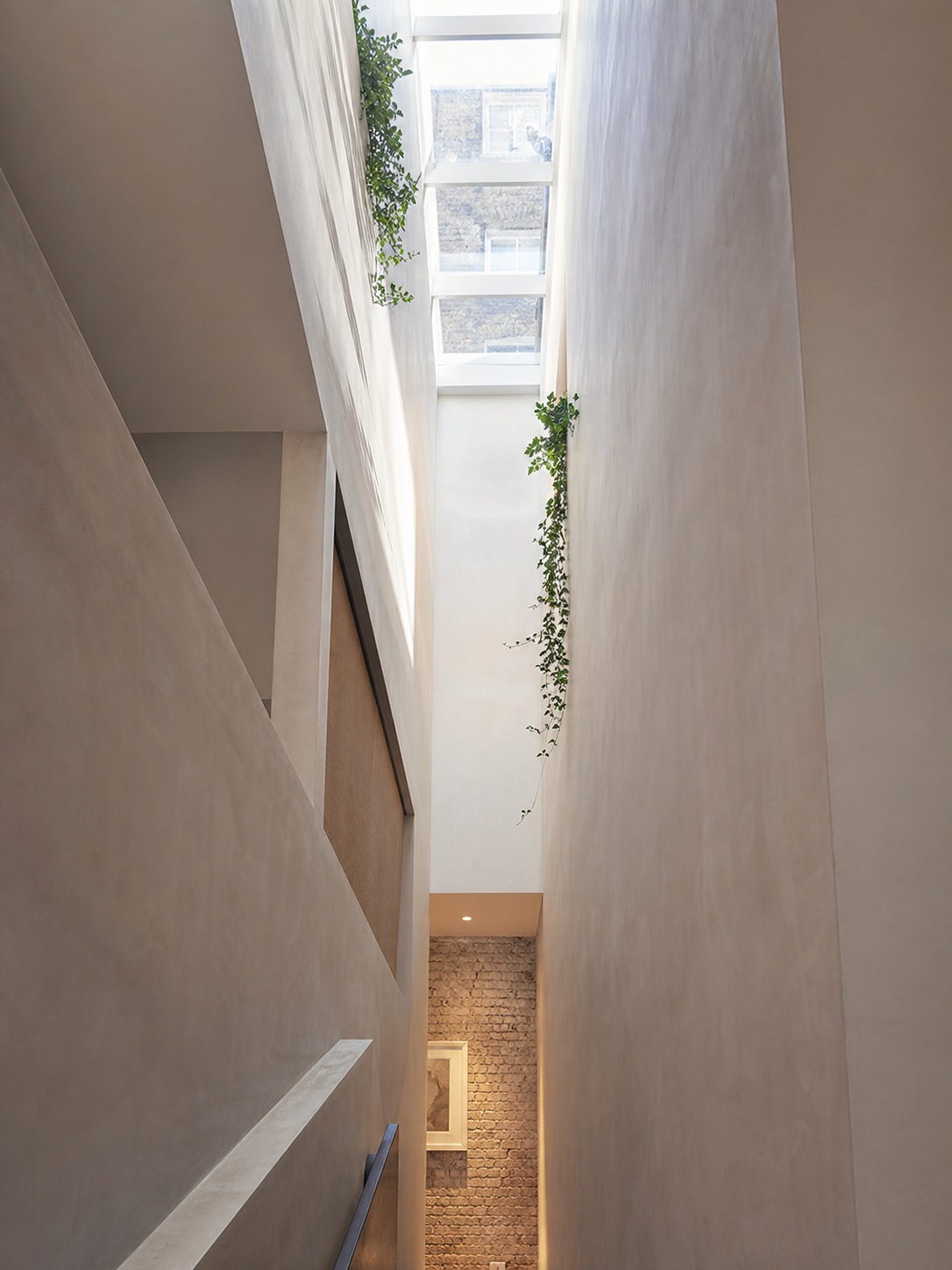
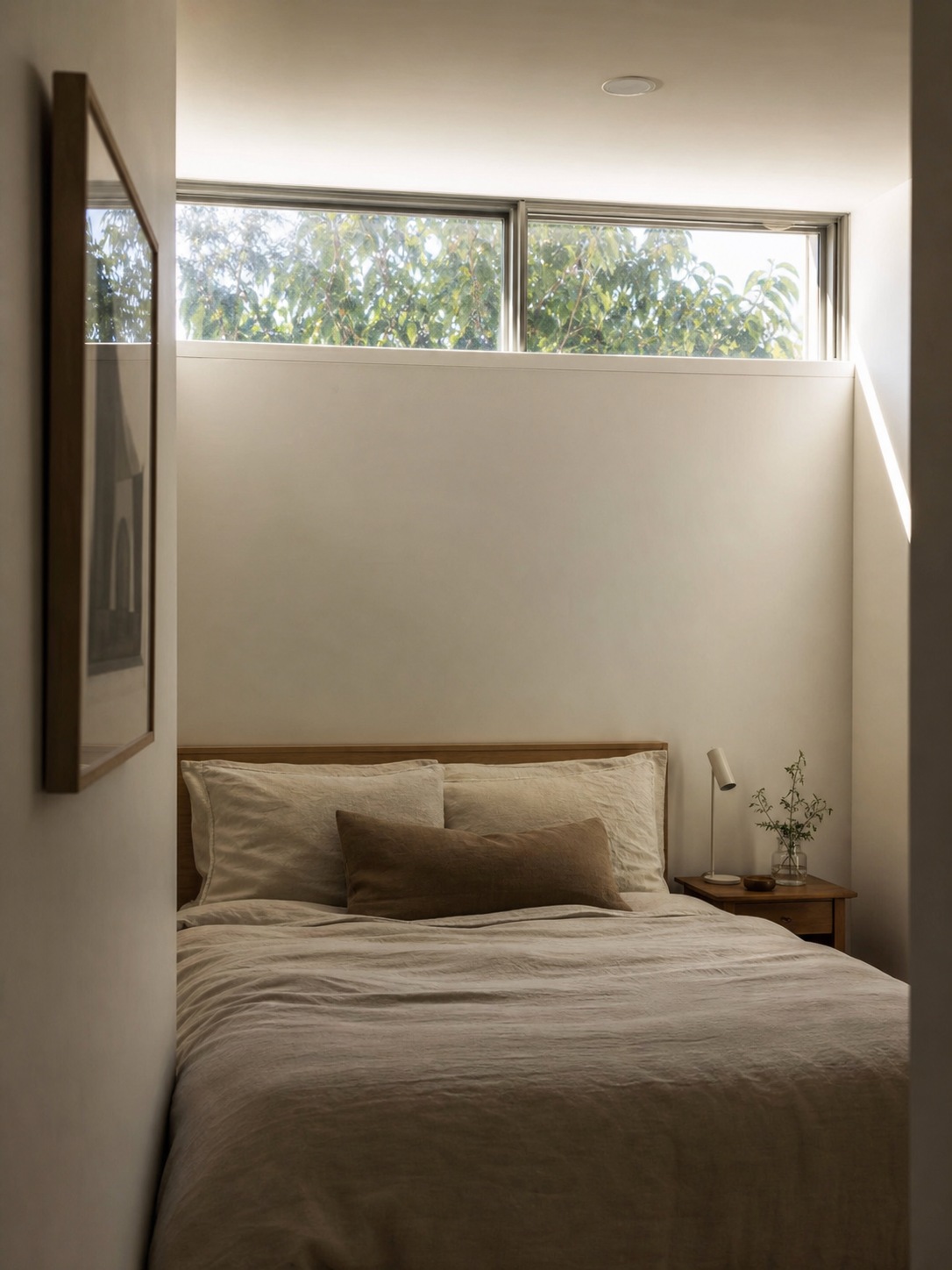
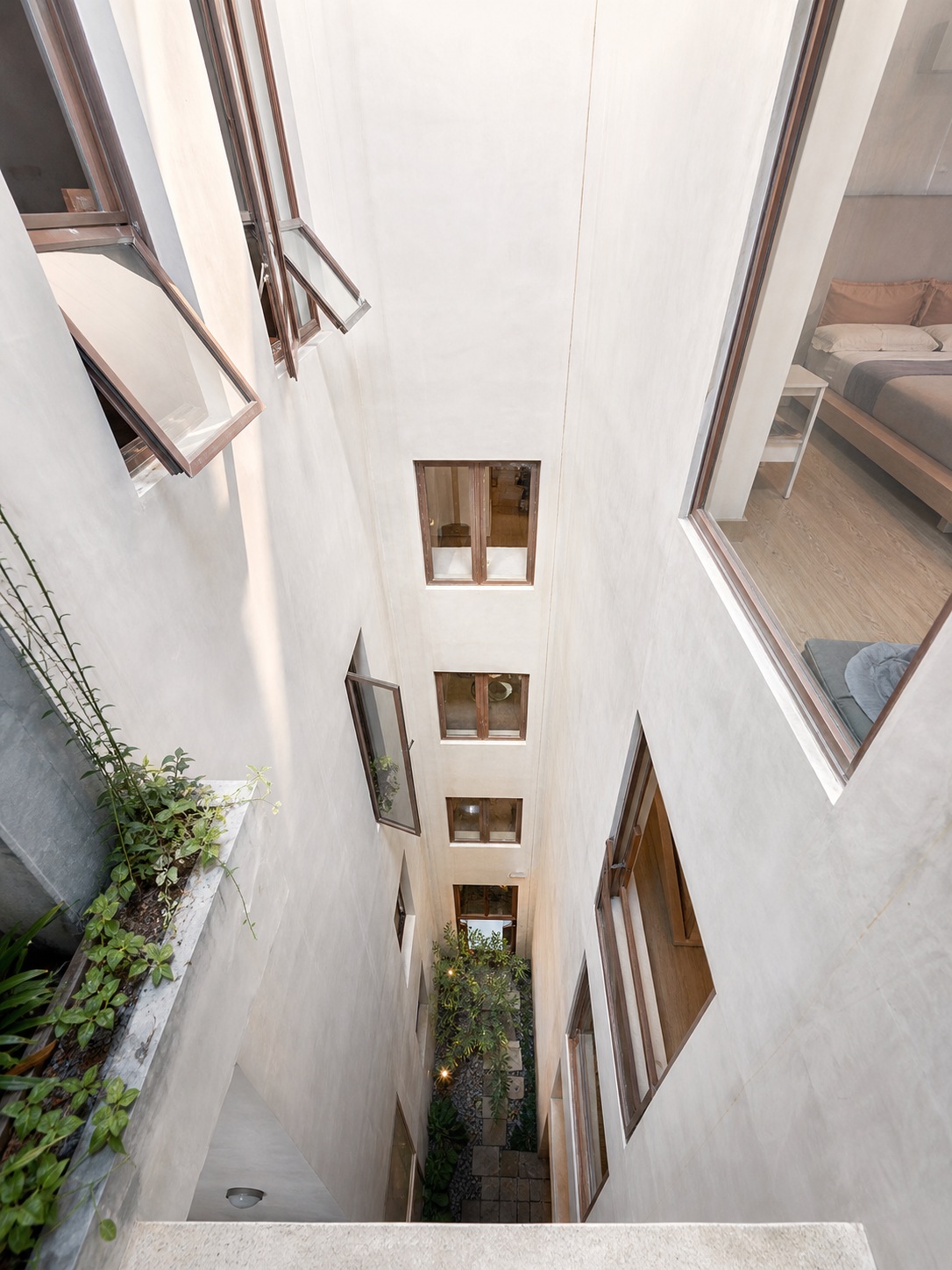
The fix that comes up again and again in dense urban architecture is a central light well, or a small courtyard cut into the middle of the floor plate. Instead of pushing light in sideways, you create a vertical shaft, sometimes no bigger than a stairwell, that pulls daylight down through the core of the house and bounces it off pale interior walls into the rooms around it. A space that would otherwise sit dark in the center of the plan becomes the brightest room in the house.
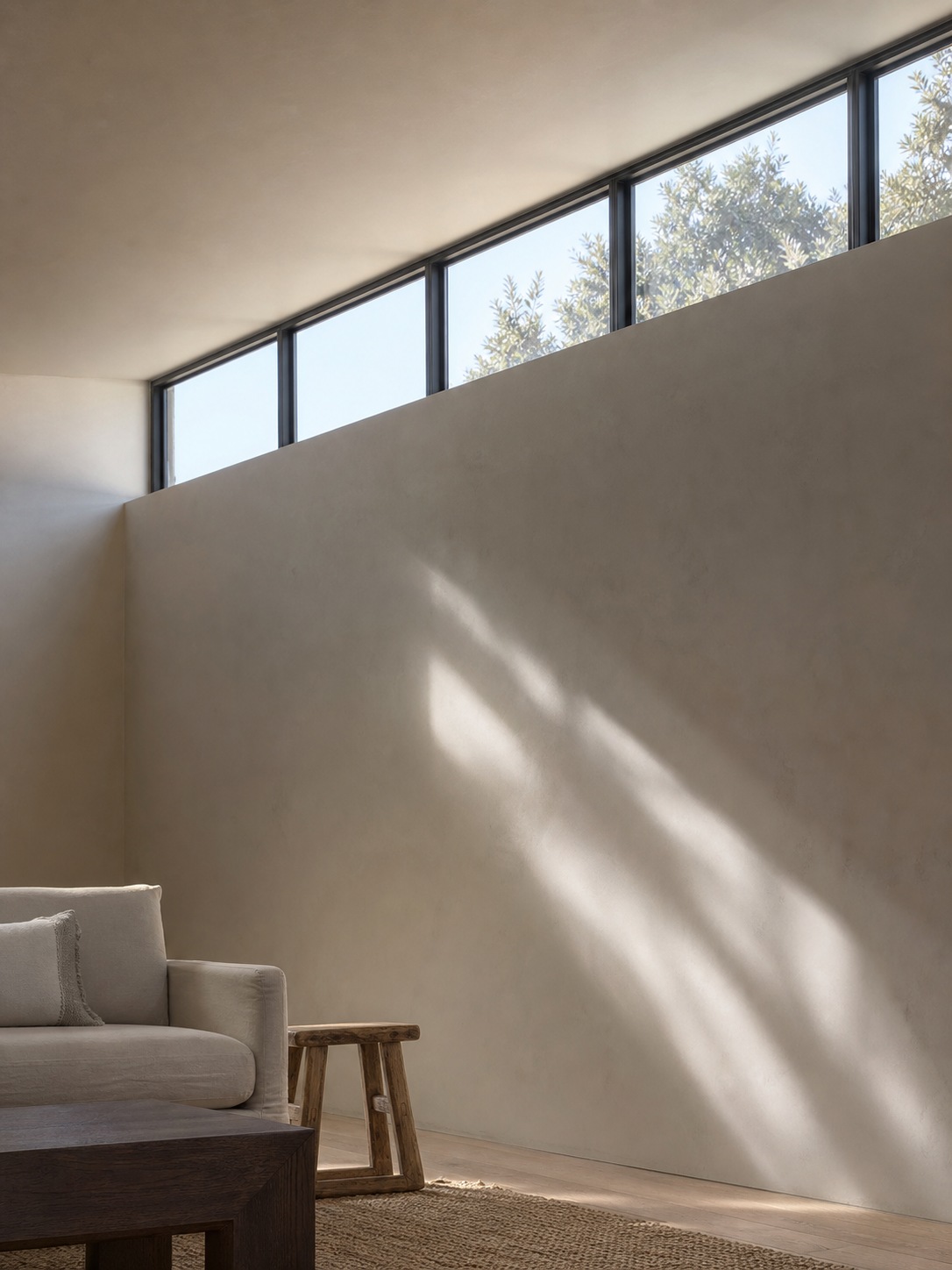
Clerestory windows, the narrow band of glass set high on a wall, do similar work on a smaller budget than a full light well; they catch sky light above the sightline of a neighboring fence or wall. Staircases help too, when you place them right: running a stair along the narrowest interior wall, rather than carving it out of the middle of the floor plan, frees up the floor plate for a light well or an open stairwell that doubles as a daylight shaft.
On a recent residential project, the single change that made the biggest difference was not a bigger window. It was repositioning the stair to free up six feet of wall for exactly this kind of vertical light shaft. Light access on a tight lot is rarely about adding glass. It is about giving daylight a clear path to travel.
Flexible rooms for work, rest, and storage
A spare bedroom that earns its square footage only one weekend a month is expensive real estate sitting idle the other twenty-nine days. Flexible-room design solves that by making rooms switch jobs instead of multiplying them.
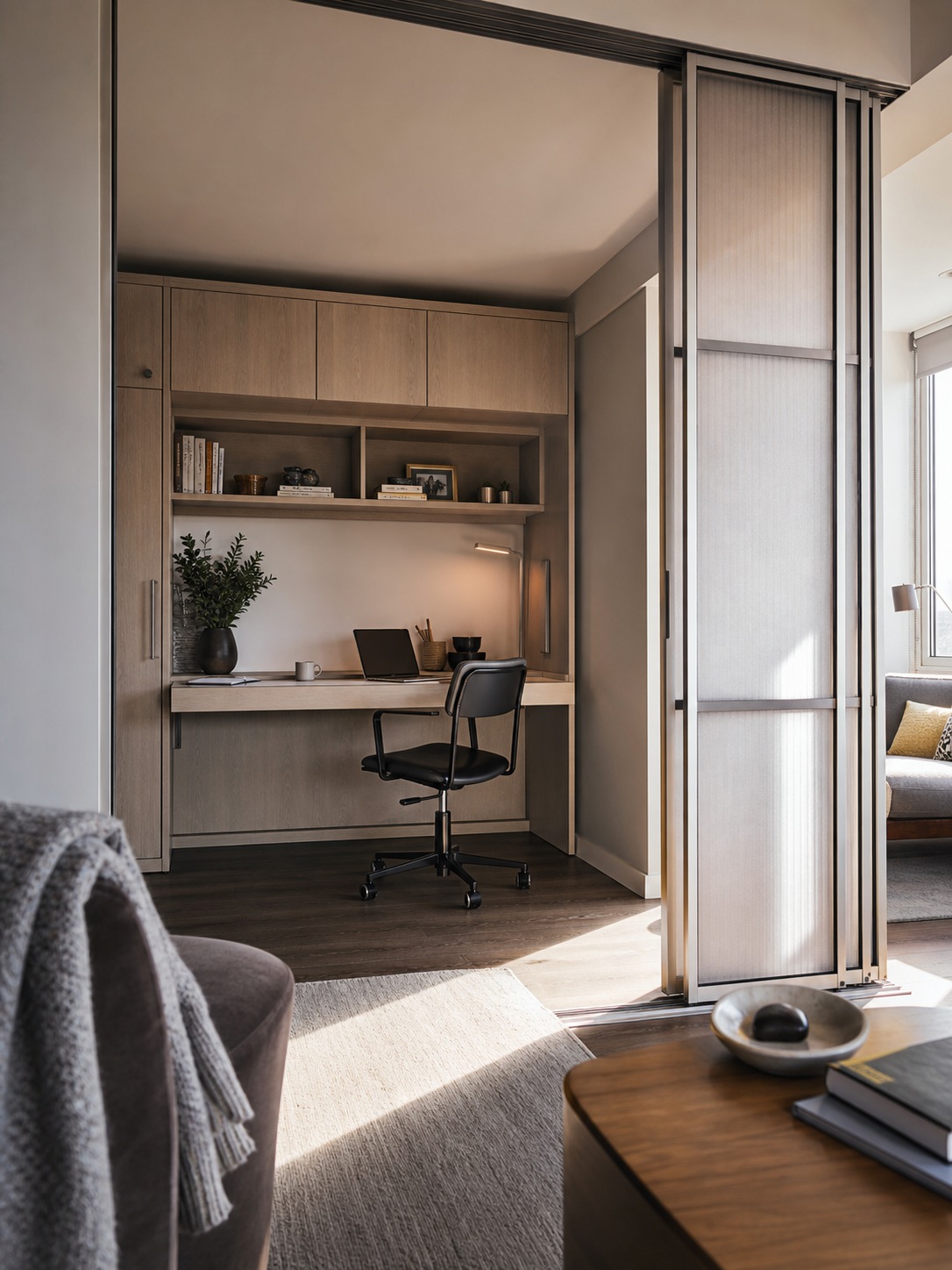
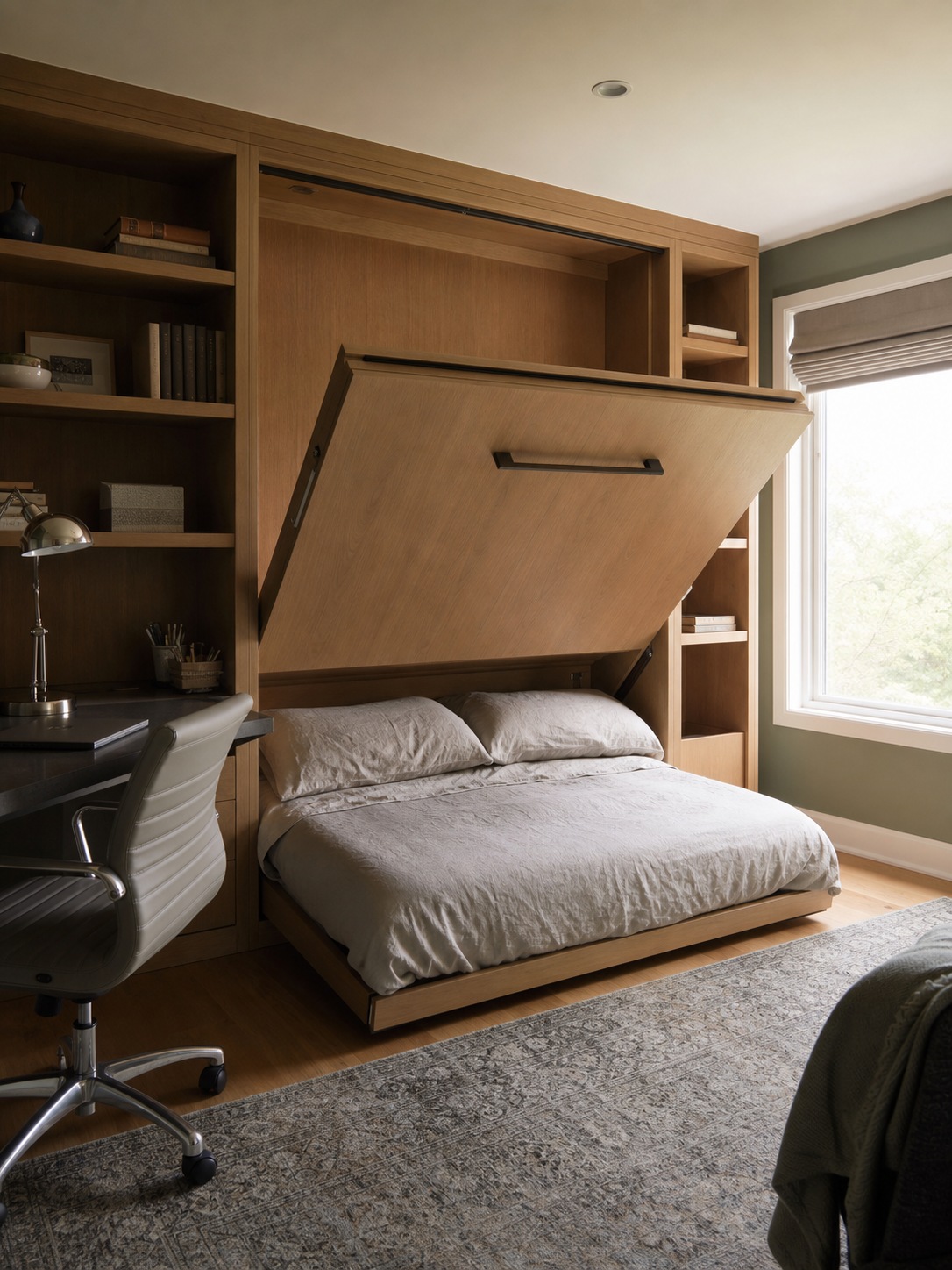
Wall beds, the modern version of a Murphy bed, considerably less creaky than the ones from old apartments, turn a home office or living room into a guest bedroom in under a minute, no separate room required. Sliding or pocket partitions let you close off a workspace during the day and open the whole floor back up by evening, which matters more than people expect when video calls and family dinner happen in the same general footprint. Built-in storage under stair treads, inside window seats, and behind a headboard wall handles the overflow that a smaller home simply has nowhere else to put.
The trick that separates a flexible room people actually use from one that quietly becomes a storage dump: design the transition to take under a minute. If folding the bed away or sliding the partition shut takes real effort, people stop bothering after the second week, and the room reverts to its messiest possible state. I always test this with clients before finalizing a plan; time the transition yourself, more than once, before committing to the mechanism.
TIP: A home office that converts to a guest room only works long-term if both versions of the room feel intentional, not like one is a compromise hiding behind the other.
Indoor-outdoor transitions in small footprints
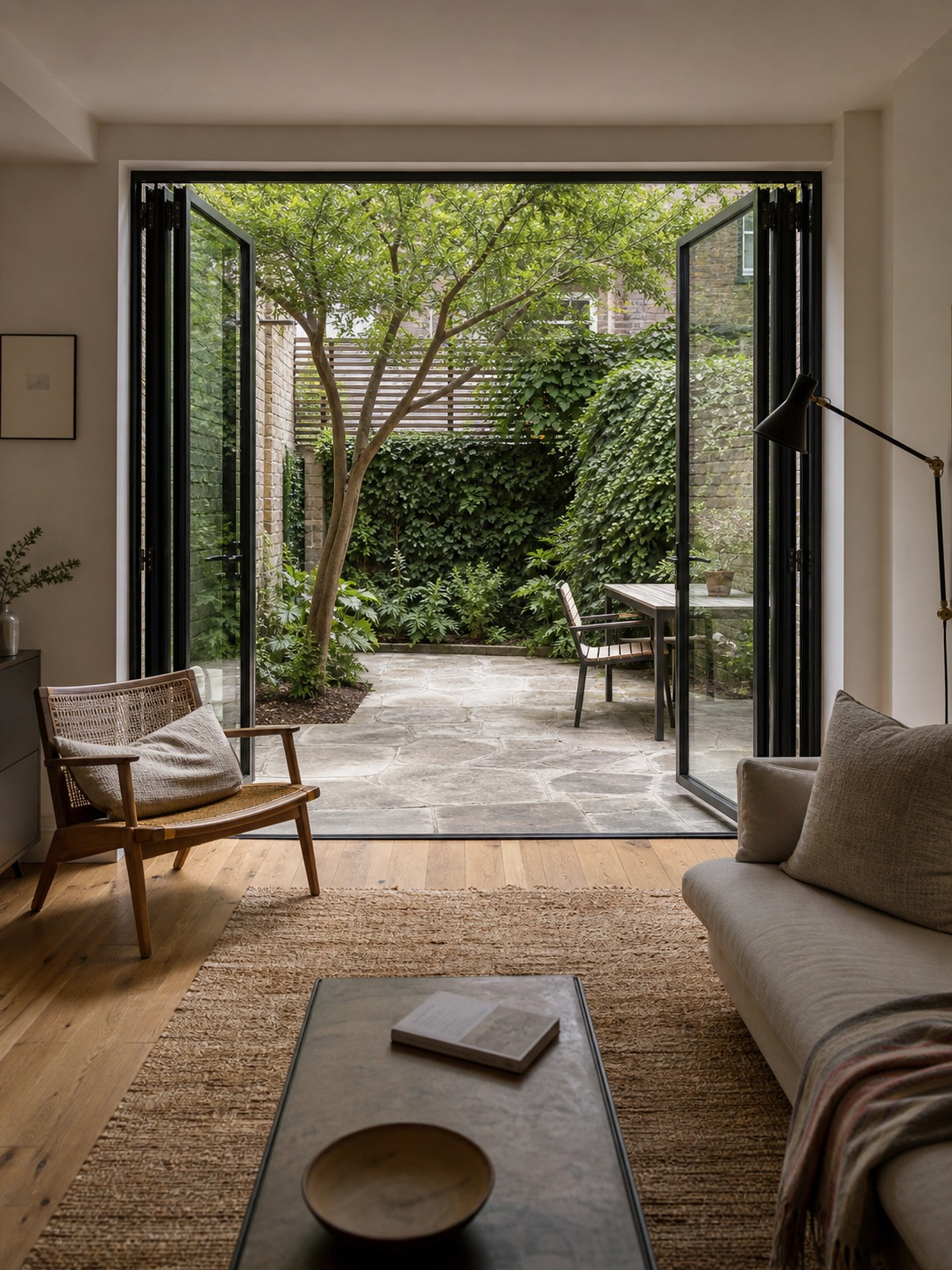
A small footprint feels considerably larger the moment the boundary between inside and outside turns blurry instead of hard. That is the entire logic behind indoor-outdoor design, and on a compact city lot, it usually does more for the sense of space than any interior layout change.
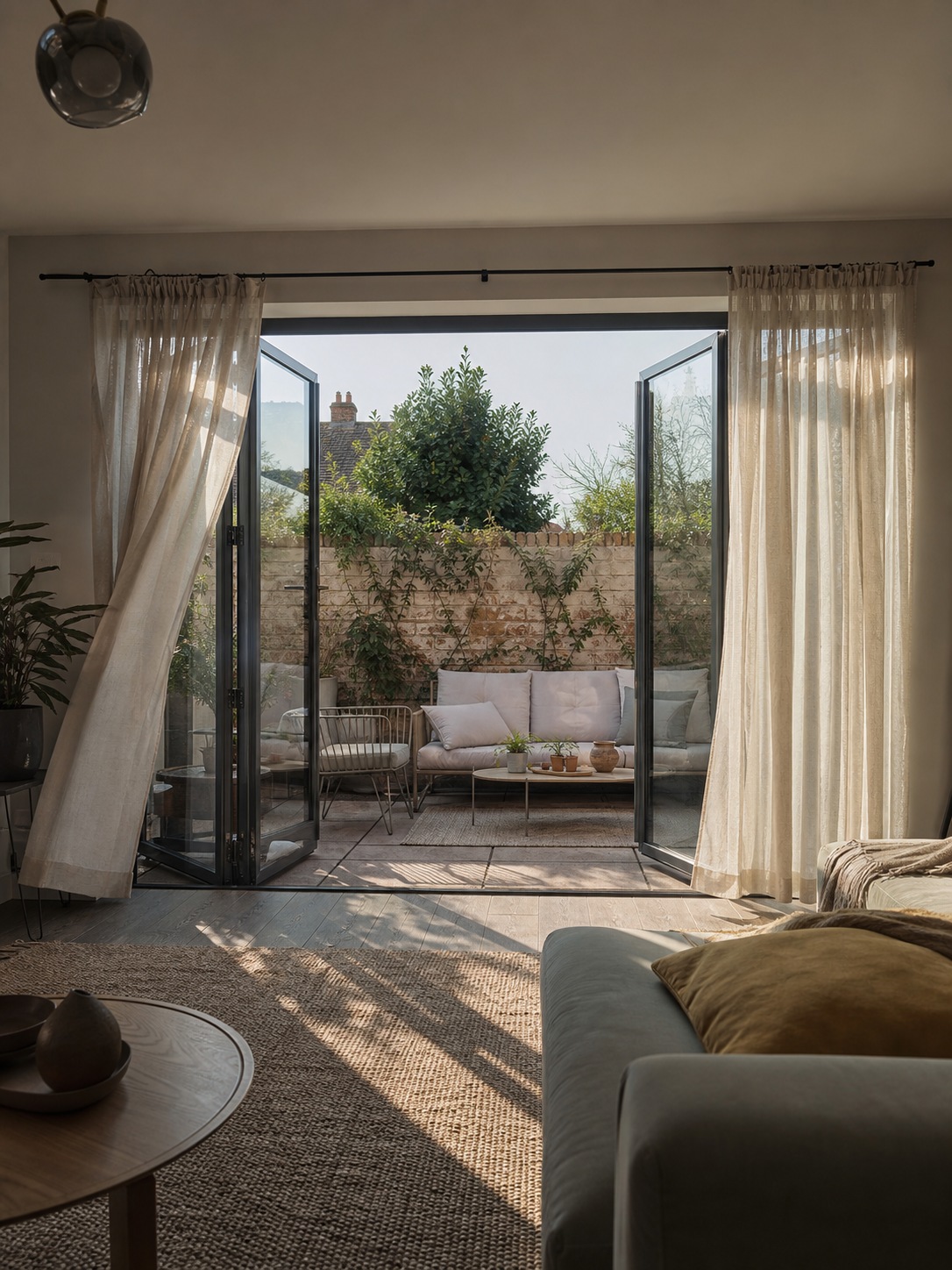
Full-width sliding or folding glass doors are the obvious move. Opening a living room directly onto even a modest patio or courtyard erases the wall that would otherwise cap how far the room visually extends. A Juliet balcony, just a railing and a door rather than a full platform, achieves something similar on upper floors where a real balcony would not fit the lot.
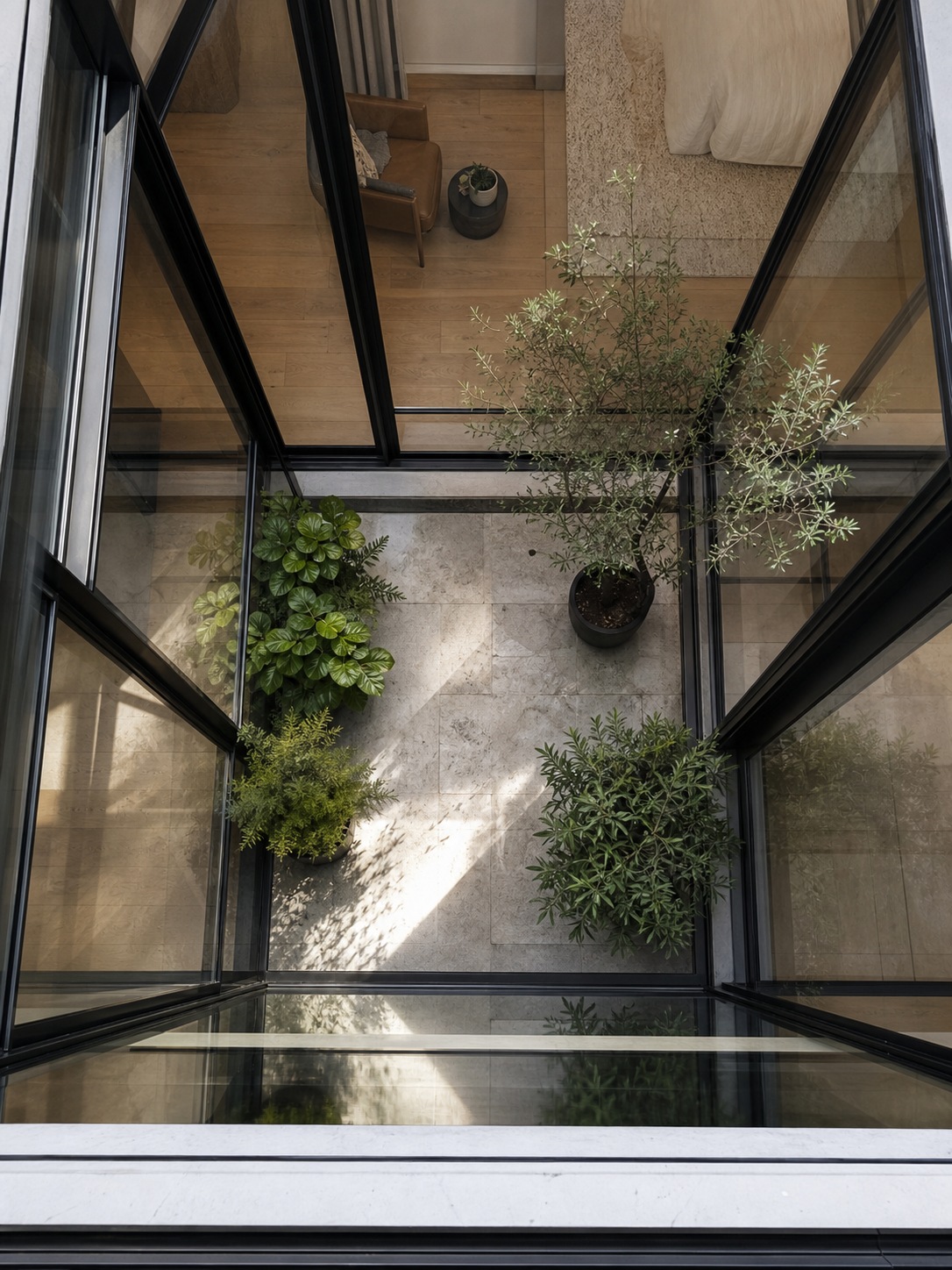
Courtyard-style compact homes are having a real moment internationally right now, and for good reason: a small interior courtyard, even one as modest as eight feet by ten, gives every adjacent room its own private outdoor view without needing a single foot of backyard. A compact urban project I came across recently in Vietnam built its entire design language around exactly this, a private courtyard every room opens onto, with stone and timber materials carrying the interior straight through to the exterior so the threshold barely registers at all.
On a narrow lot specifically, even a five-foot side setback can become a usable green buffer rather than wasted space: gravel, a few well-chosen plants, maybe a single bench. It does not need to function as a yard to change how the rooms beside it feel.
Materials that make city homes feel calmer
Dense city living comes with a baseline level of sensory noise, traffic, close neighbors, constant low-grade visual clutter outside the window, that most interior design advice never accounts for. Material choice is one of the few tools that pushes back against that directly.
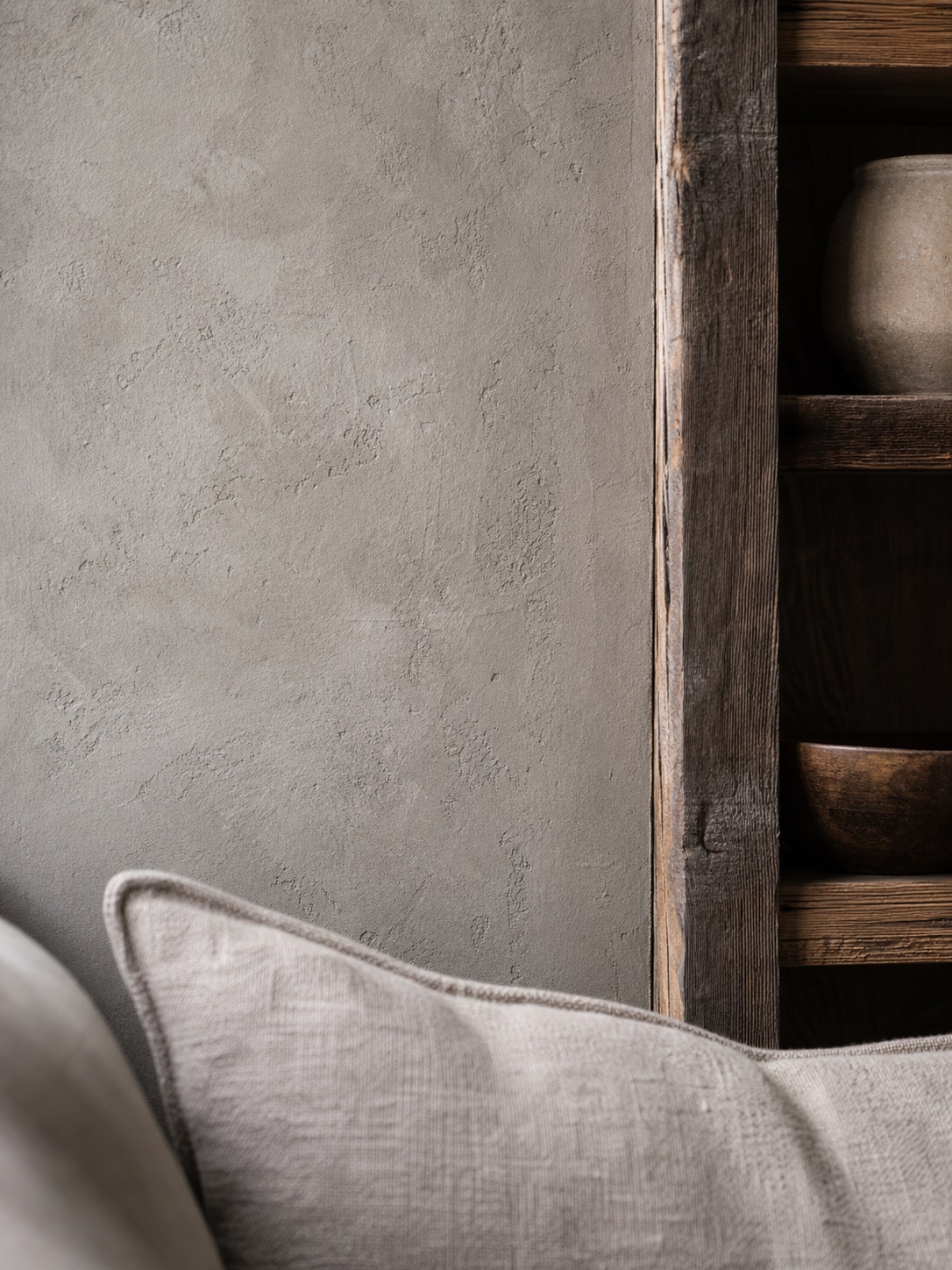
Limewash paint is having a deserved comeback for exactly this reason. Unlike flat modern paint, it has a soft, slightly uneven texture that catches light differently across a wall, the kind of subtle variation your eye reads as calming rather than sterile. Pair it with warm-toned natural materials, white oak, reclaimed timber, raw travertine, and a small room stops feeling clinical without needing a single extra square foot.
I trained as an academic painter before I trained as an industrial designer, and the lesson that stuck from those years is that flat, uniform surfaces read as cold regardless of color, while surfaces with visible texture and slight irregularity read as warm even in a neutral palette. That principle holds for a wall finish exactly the way it holds for a canvas.
Linen upholstery instead of synthetic blends, handmade rather than machine-perfect tile, a reclaimed wood shelf with visible grain and the odd knot left in; none of this is rustic styling for its own sake. It is about giving a small, dense-city interior enough tactile and visual variation that the eye has somewhere to rest, rather than bouncing off perfectly flat, perfectly matched surfaces that read as more sterile than the room actually needs to feel.
Privacy without closing the home off
The instinct on a tight lot is to choose between light and privacy: big windows or curtains, an open plan or a closed-off one. Good urban home design refuses that trade entirely.
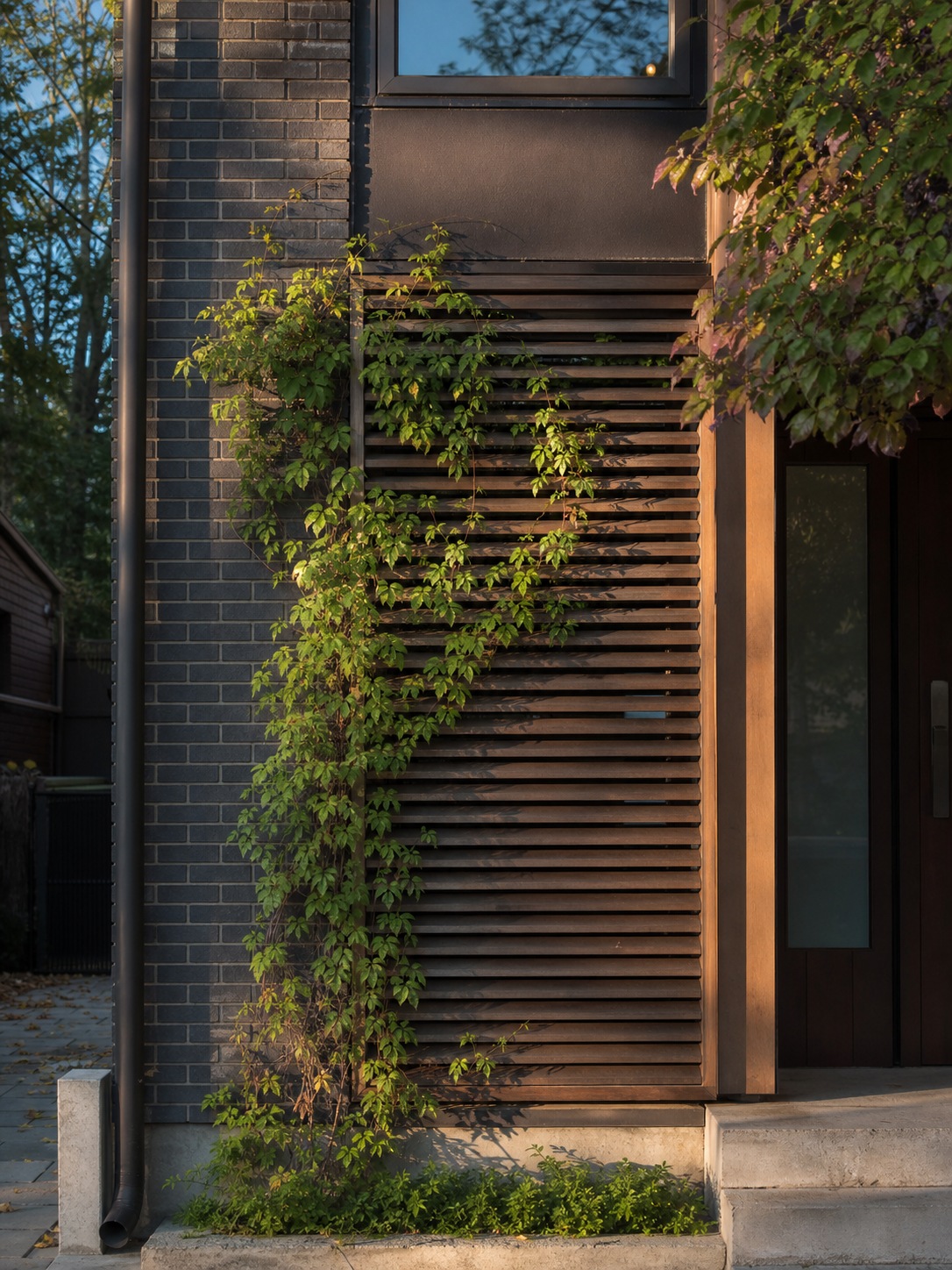
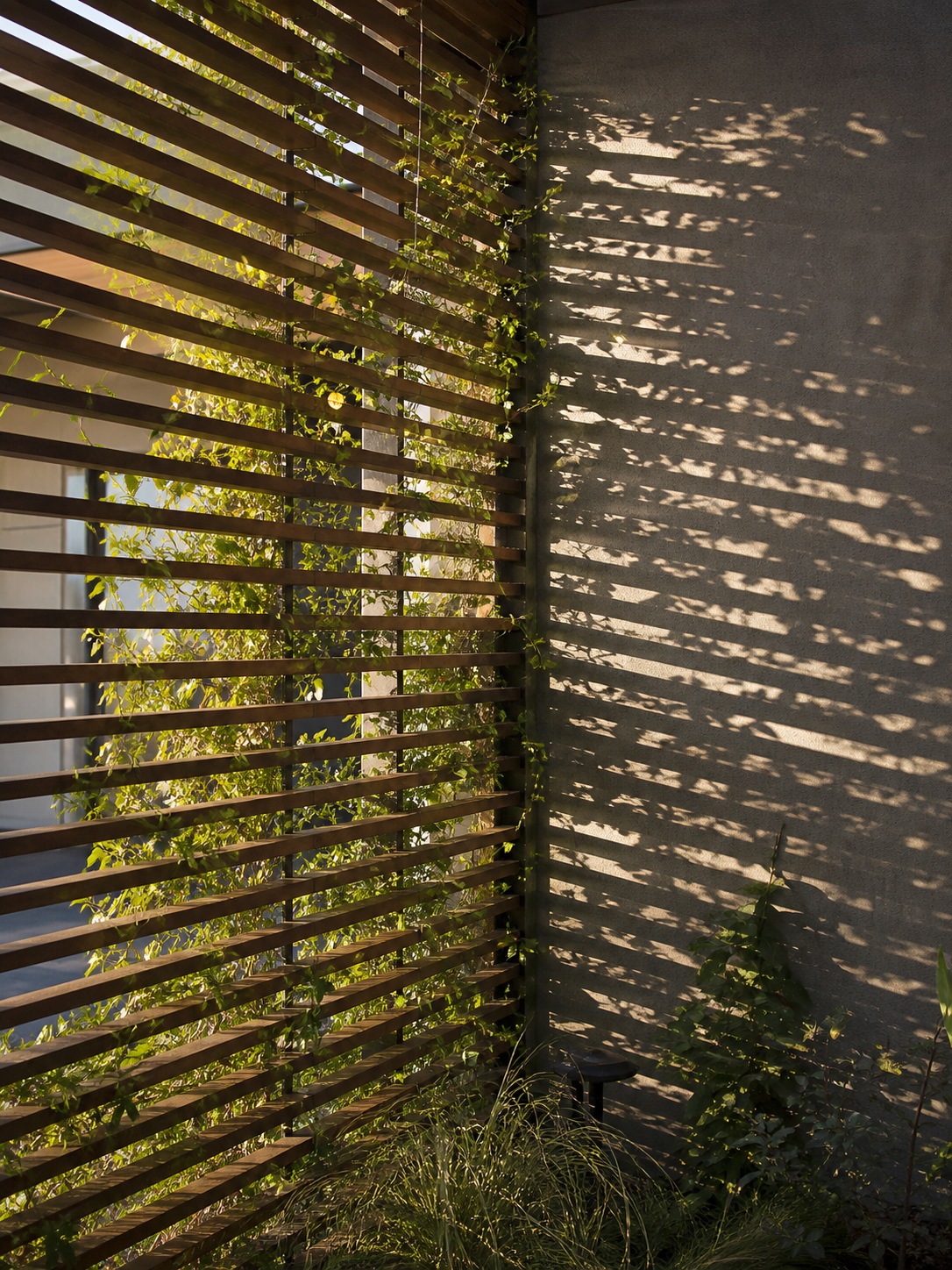
Fluted or frosted glass is the simplest fix. It scatters direct sightlines while still passing daylight through, so a bathroom or a ground-floor window facing a neighbor’s wall does not need to stay covered all day to feel private. Louvered screens, whether wood, metal, or a planted version using climbing vines on a simple frame, do something similar at a larger scale: on a porch, a side yard, or a window that otherwise looks straight into the house next door.
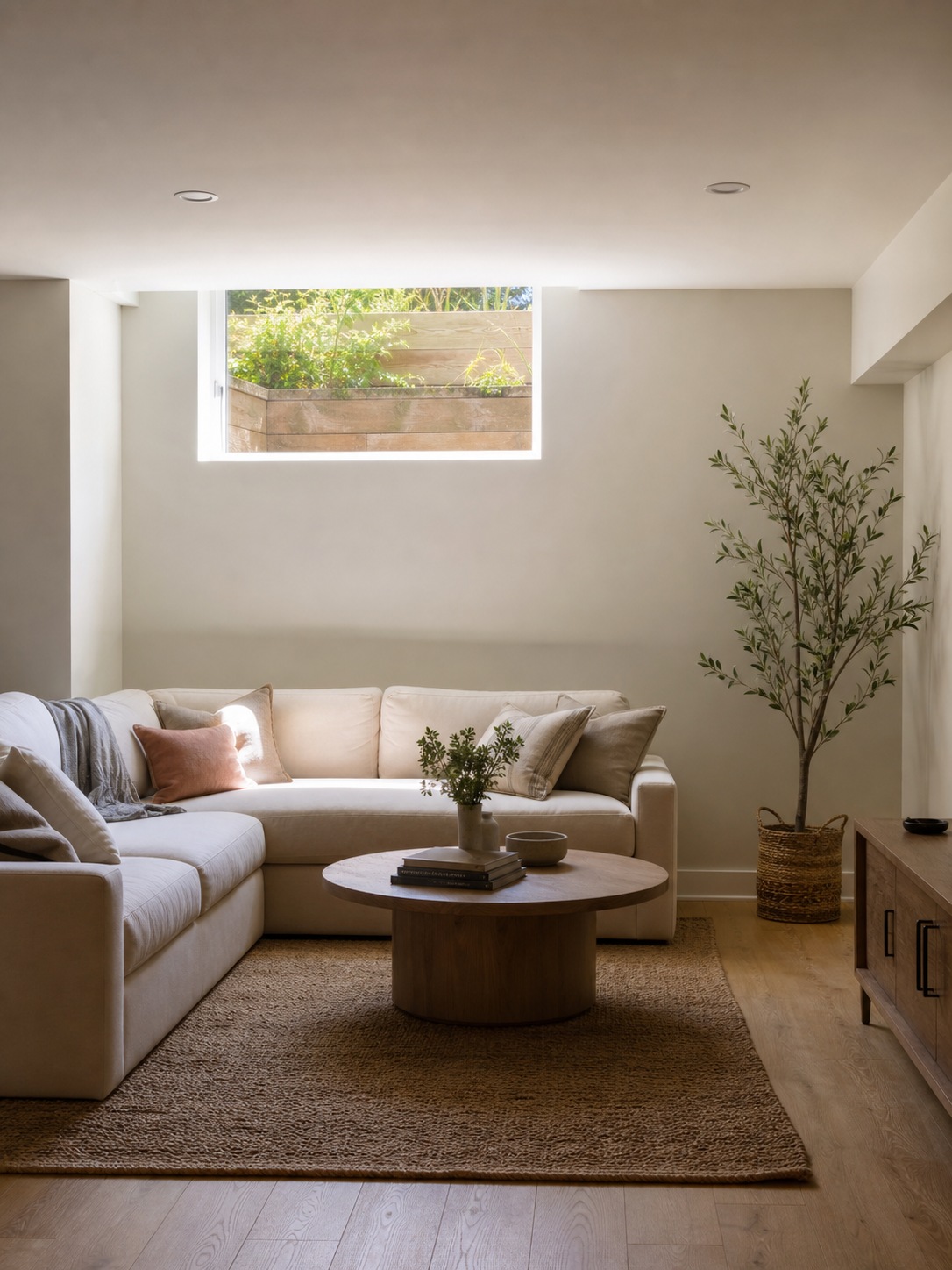
Vertical separation helps too. Staggering the upper floor slightly back from the lower one, or simply placing the most private rooms on the level least visible from the street and neighboring yards, reduces how much privacy work the windows themselves need to do. A daylight basement, sunk just enough to sit below eye level from the sidewalk but still bright thanks to a light well or recessed window, gives you an entire additional private level without sacrificing the natural light a basement usually loses.
TIP: None of these solutions require giving up the open, light-filled feel that makes a small home work in the first place. They just move the privacy problem somewhere smarter than a closed curtain, so the windows can keep doing their job.
What Urban Series Homes can teach about modern city living
Pull the lessons above together and you land somewhere close to what the Urban Series concept gets right: treating a small footprint as a design problem worth solving properly, not a smaller, lesser version of a normal house.
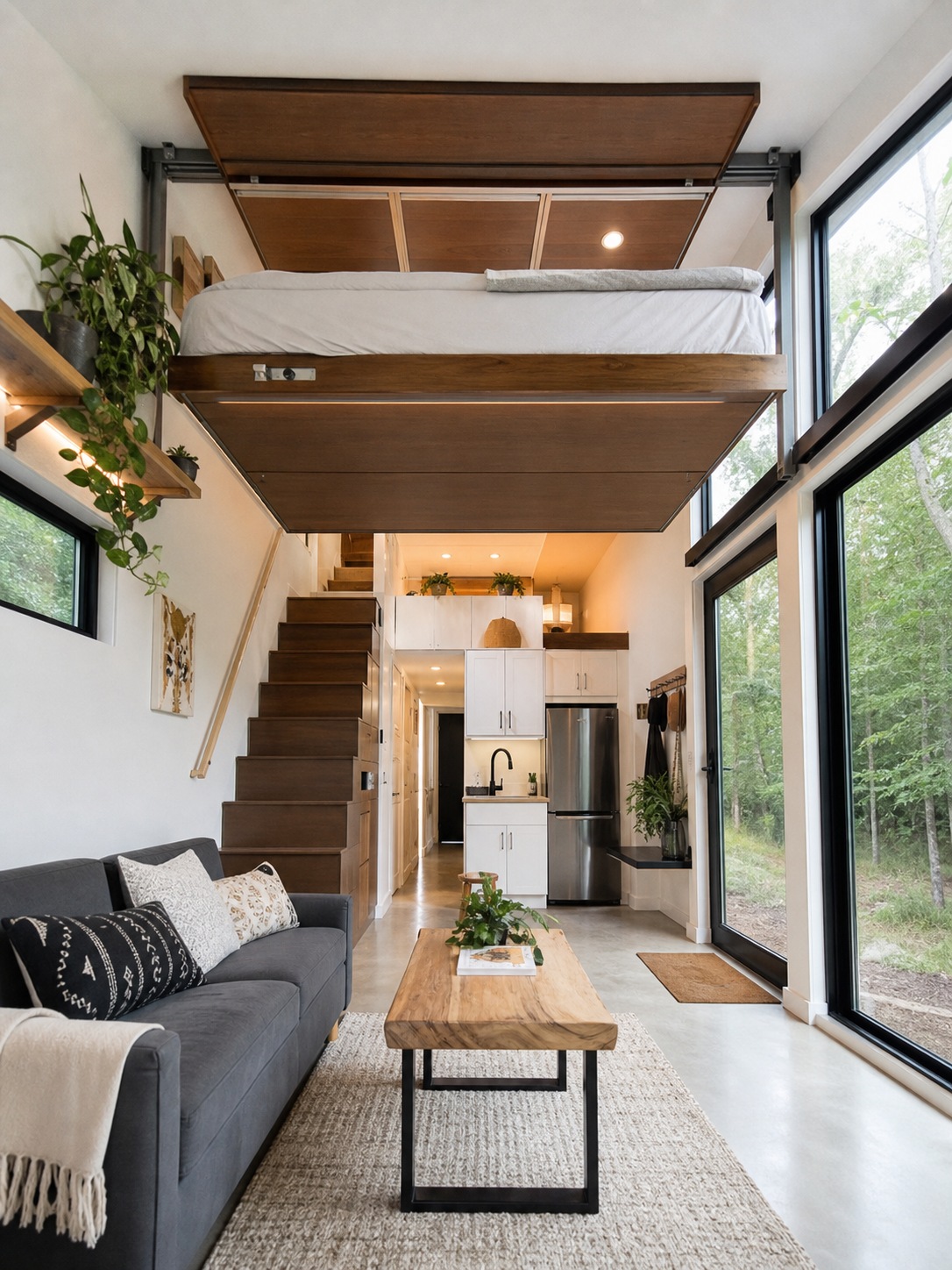
The clearest example in this category recently is the Terra Urban, a 26-foot tiny home built by Tru Form Tiny. Its signature feature is a motorized bed that lifts into the ceiling at the push of a button, turning the living room into a full bedroom at night and handing the space back during the day. It is a literal, mechanical version of the flexible-room principle covered earlier, executed at the smallest possible scale, paired with floor-to-ceiling windows and a limewash wall doing exactly the calming-material work described above.
Compact city homes also need compact clothing storage. A better wardrobe room layout can turn one tight zone into a dressing area, linen overflow, and everyday storage without asking the bedroom to do all the work.
Micro-townhouses under twelve feet wide push the same thinking into a more permanent, less mobile format: narrow enough to fit lots that conventional construction would skip entirely, designed well enough that the width stops being the first thing you notice. Accessory dwelling units extend the idea further, adding a second, smaller home onto an existing lot for rental income or for a family member, without needing more land than most homeowners already have sitting unused in a side yard.
None of this works without the design fundamentals from the sections above. A motorized bed in a poorly lit room is still a poorly lit room with an expensive mechanism in it. The Urban Series concept matters because it pairs the mechanism with the design thinking, light, layout, materials, privacy, that actually makes a compact home worth living in.
None of these moves require a bigger lot or a bigger budget, just a willingness to treat square footage as a design puzzle instead of a limitation to apologize for. Start with light, since it affects nearly every other decision on this list, then work outward from there. The smallest lot on the block can still be the best-designed home on it.
10 urban home design ideas at a glance
Everything above boils down to ten moves you can actually point at. Use this as a quick-reference board, then go back to the relevant section for the reasoning behind whichever one fits your lot.
1. Central light well
Cut a narrow vertical shaft through the middle of the floor plan and let it pull daylight down to rooms a side window cannot reach. Pair it with pale interior walls so the light bounces instead of getting absorbed.
2. Wall bed for flexible rooms
A modern wall bed folds down in under a minute, turning a home office back into a guest room without a dedicated bedroom eating into the floor plan. Best for studios and any room asked to do two jobs.
3. Rounded, sculptural furniture
Soft-edged sofas, a circular coffee table, an arched shelf: rounded silhouettes cut the obstacle-course feeling sharp corners create in a tight room, in almost any small living room regardless of lot shape.
4. Limewash textured walls
Limewash’s slightly uneven, light-catching texture reads as warm rather than sterile, the opposite of flat modern paint. A relatively low-cost upgrade for any interior that feels too clinical.

5. Full-width folding glass doors
Even on narrow municipal lots, orienting living spaces and selecting materials based on passive solar house fundamentals can produce high energy efficiency.
Swapping a single door for a folding glass wall erases the hard line between a living room and even a small patio, making the interior read considerably larger. Needs a ground-floor room with at least a little exterior space to open onto.
6. Small interior courtyard
An eight-by-ten-foot courtyard cut into the center of a deep, narrow lot gives every surrounding room its own private outdoor view, no backyard required.
7. Louvered privacy screen
Wood or metal louvers, sometimes woven through with climbing vines, block a direct sightline from the street or a neighbor’s window while still letting air and filtered light through.
8. Clerestory windows
A narrow band of glass set high on the wall catches sky light above a neighboring fence, recovering daylight a low side window would lose entirely. Especially useful on tight side setbacks.
9. Built-in stair storage
Stair risers that double as pull-out drawers turn dead vertical space into real storage without adding a single piece of furniture, on any multi-level home, narrow lot or not.
10. Daylight basement
Sunk just enough to sit below sidewalk eye level but still bright thanks to a light well or recessed window, a daylight basement adds an entire private level without losing natural light.
How the ten ideas compare
| Design idea | Solves | Relative cost | Best lot type |
|---|---|---|---|
| Central light well | Dark interior core | $$ | Neighbors close on 2–3 sides |
| Wall bed | Idle single-purpose room | $ | Studios, single-bedroom homes |
| Rounded furniture | Tight, obstacle-like circulation | $ | Any small living room |
| Limewash walls | Sterile, cold-feeling interior | $ | Any interior |
| Folding glass doors | Closed-in feeling | $$$ | Ground floor with some exterior space |
| Interior courtyard | No usable backyard | $$$ | Deep, narrow lots |
| Louvered privacy screen | Overlooked windows | $ | Street-facing or close-set lots |
| Clerestory windows | Blocked side light | $$ | Tight side setbacks |
| Built-in stair storage | Lost storage space | $ | Multi-level homes |
| Daylight basement | Need for an extra private level | $$$ | Sloped or graded lots |
Want to go deeper on small-space design?
Skillshare has dedicated courses on residential space planning and interior design fundamentals that go further than any single article can. Use code AFF30D25 for a discount on your first month. Search for “small space interior design” or “residential space planning” once you are in.
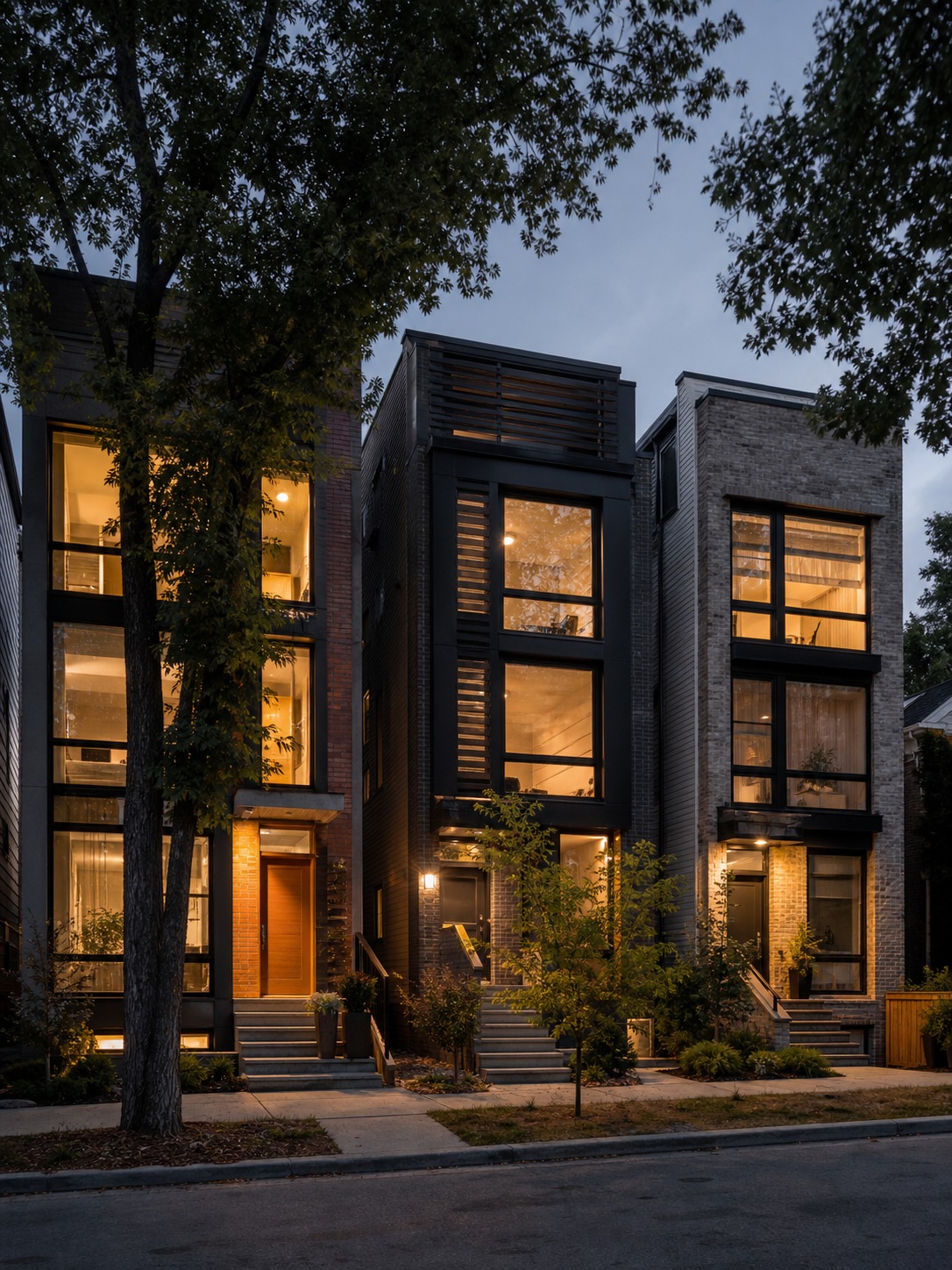
Compact city homes work better when they respect urban architectural rhythm, especially the repeat of entries, window bands, planting, and privacy screens along the street.
Frequently asked questions
What does “urban home design” actually mean?
It is the design discipline focused on making homes on small, dense, or oddly shaped city lots feel comfortable and spacious, using strategies like light wells, vertical stacking, and flexible rooms instead of simply scaling down a suburban floor plan. It treats the constraints of a tight lot as a design problem with its own toolkit, not a smaller, worse version of a bigger house.
How do you make a small city home feel bigger without adding square footage?
Layout and light do more than square footage. A central light well, a deep rather than square floor plate, rounded furniture that avoids sharp obstacle-course corners, and full-width glass doors connecting to even a small courtyard all make a compact home read larger than its actual footprint.
What is a light well, and do I actually need one?
A light well is a vertical shaft, often no wider than a stairwell, cut through the center of a home to pull daylight down into rooms that side windows cannot reach because neighboring buildings block them. Lots with close neighbors on two or three sides benefit the most; a lot with clear side access may not need one.
What materials work best for calming a small urban interior?
Limewash paint, white oak, reclaimed wood, raw travertine, and linen upholstery all bring visible texture and slight irregularity that reads as warm rather than sterile, even in a small room. Flat, perfectly uniform surfaces tend to feel colder and more clinical, regardless of color.
How do you keep privacy in a dense neighborhood without blocking natural light?
Fluted or frosted glass scatters direct sightlines while still passing daylight through. Louvered screens and strategic vertical separation, putting the most private rooms on the level least visible from the street, work the same way at a larger scale, without resorting to permanently covered windows.
Can a narrow lot still have a real indoor-outdoor connection?
Yes. Full-width sliding or folding glass doors, a Juliet balcony on upper floors, or a small interior courtyard as modest as eight by ten feet can all create that connection without needing a traditional backyard.
What can micro-housing concepts like the Terra Urban teach traditional homeowners?
That flexible-room thinking, designing a single space to do two or three jobs, works at almost any scale once the underlying design fundamentals of light, layout, and materials are handled first. The mechanism, a motorized bed, a fold-down desk, matters less than the design thinking behind it.
How much does custom urban home design typically add to a build?
It varies by market and scope, but most of the strategies in this piece, light wells, built-in storage, flexible partitions, add design and planning cost rather than major construction cost. Talking through site-specific options with a local custom builder early, before finishes are chosen, is the most reliable way to get an accurate number for a specific lot.
For narrow lots and compact city sites, compare these urban modern house design ideas with the urban-series strategies above before deciding on massing and windows.
For city dwellers looking to make the most of their outdoor space, functional apartment balcony decor ideas can turn a small deck into a private oasis.
While modern city homes focus on compact footprint, they sometimes borrow ideas from historic brutalist buildings regarding honest material expression.
Compact city homes can still borrow timber warmth without feeling heavy. This compact wood home design is useful when you want wood, glass, and efficient layout choices in one plan.
Compact urban homes need careful street presence. These curb appeal design ideas can help you compare privacy, window rhythm, entry lighting, and material contrast.
- 1.1Kshares
- Facebook0
- Pinterest1.1K
- Twitter0
- Reddit0