A driveway is the one piece of exterior architecture that has to satisfy two completely different design briefs at once: it has to work as a surface for a vehicle, and it has to work as the first line of the house’s visual composition, the thing every guest walks across before they see anything else.
In my design work — including years spent on automotive surface language for production vehicles — I’ve never stopped noticing how rarely those two considerations actually get designed together.
- Why Driveway Design Matters for Curb Appeal
- Start With the Right Driveway Material
- Shape the Driveway Around the Entrance
- Use Borders and Edging to Make the Layout Feel Intentional
- Mix Textures Without Making the Exterior Look Busy
- Add Green Space Around Hard Surfaces
- Plan Drainage as Part of the Design
- Match the Driveway Style to the House
- Make Sustainability Part of the Driveway Plan
- Bringing the Whole Approach Together
- Final Thoughts
- Frequently Asked Questions
Most driveway advice treats material selection and curb appeal as separate conversations. They’re not. The same surface that has to handle a car’s weight and turning radius is also setting the tone for the entire front elevation.
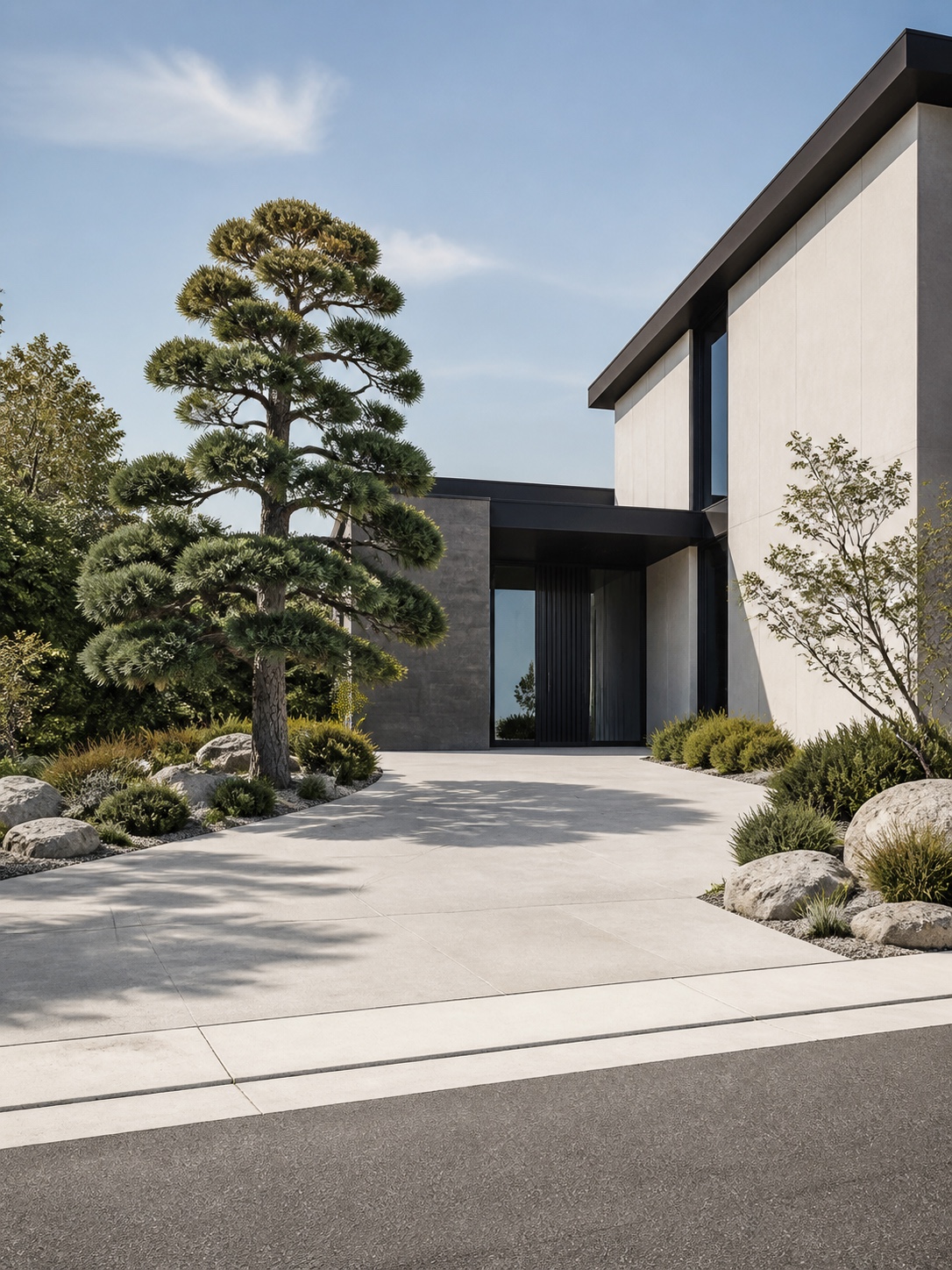
This guide treats the driveway as what it actually is: a piece of exterior composition connecting the street, the landscaping, the facade, and the front door — not just a parking pad that happens to sit in front of the house.
Why Driveway Design Matters for Curb Appeal
Most curb appeal advice focuses on the front door, the garden, or a fresh coat of paint. The driveway rarely gets the same attention, despite being one of the first things any visitor actually registers — often before they’ve even reached the front walk.
A driveway isn’t just a place to park. Its material, shape, and condition set the visual tone for the entire approach to the house, and a driveway that reads as an afterthought drags the rest of an otherwise well-designed exterior down with it.
Good driveway design also does real functional work — safe surface traction, proper water management, durability under a vehicle’s weight — while still contributing meaningfully to the home’s overall composition. Whether you’re planning a new build or updating an existing space, the driveway deserves the same design intention as any other visible exterior element.
Start With the Right Driveway Material
Material is the foundation every other driveway decision builds on, and it needs to match both the home’s architectural style and how the space actually gets used day to day.
Concrete Driveways
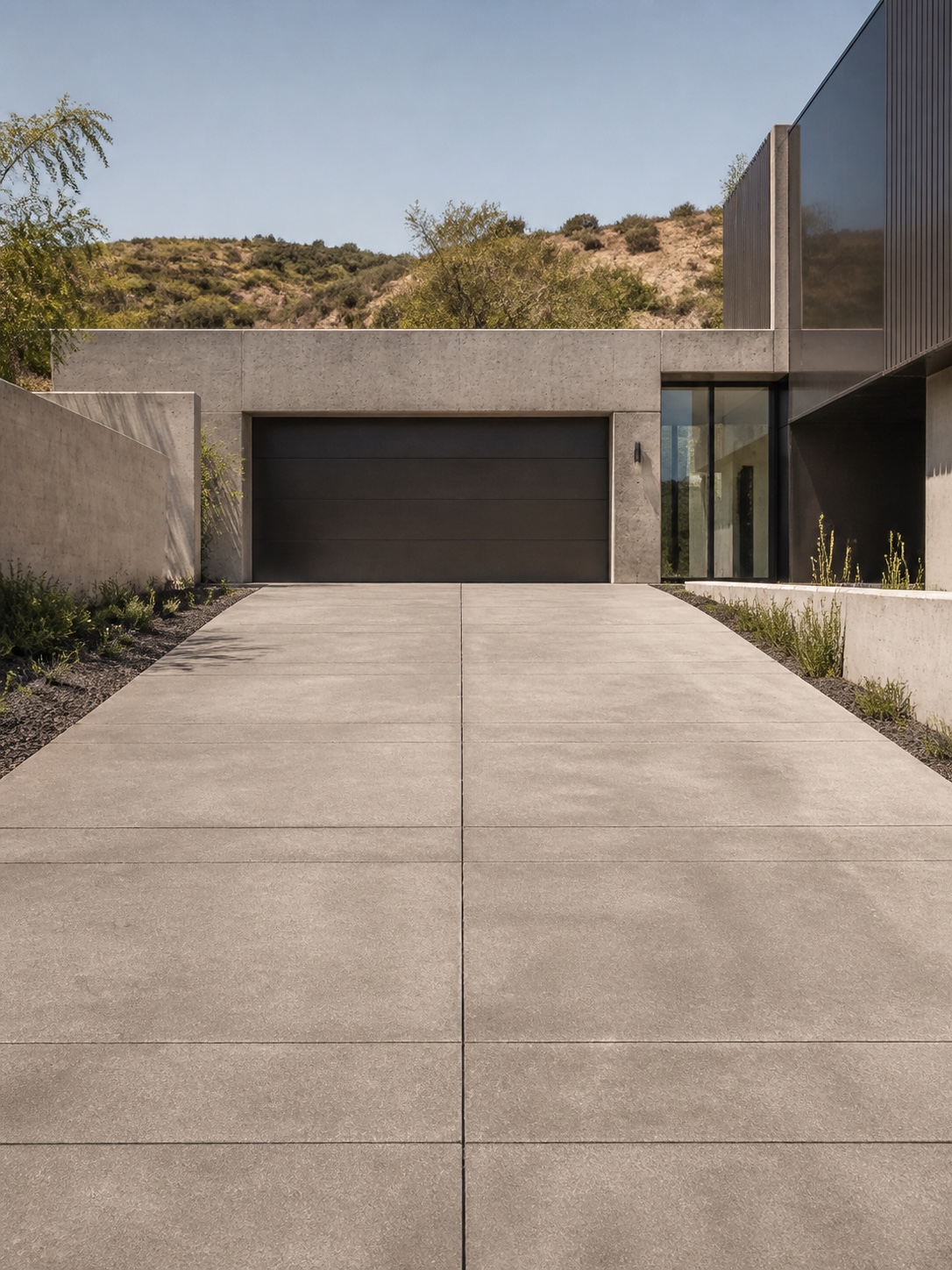
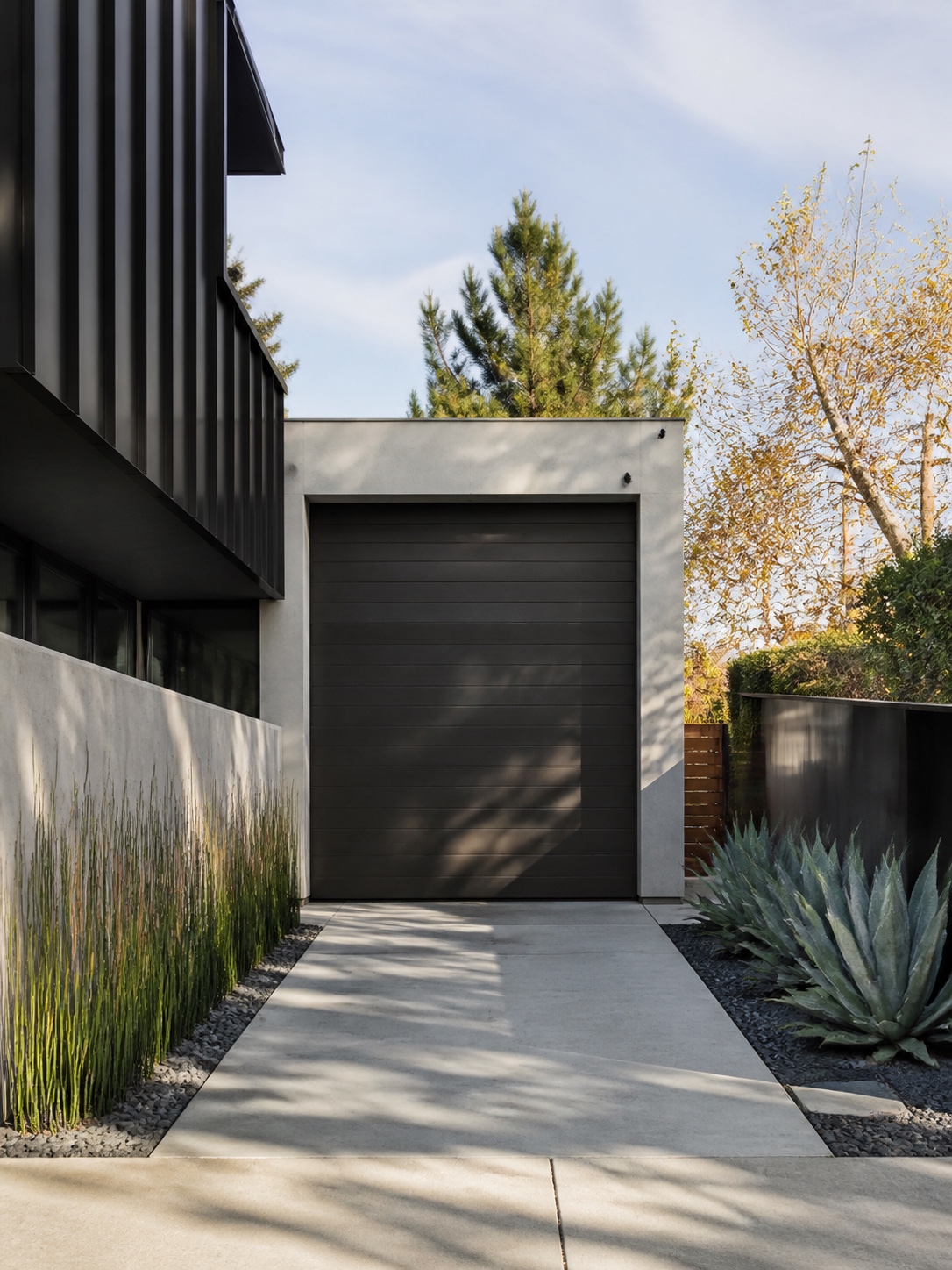
Concrete delivers a clean, contemporary surface that reads as deliberate and modern when installed well, and it holds up for years under normal residential use. Its main design strength is the crisp, consistent line it gives the whole approach — concrete doesn’t compete visually with anything else in the composition, which makes it a strong neutral base for a driveway that’s going to carry other design elements, like a contrasting border or an adjacent landscaping strip.
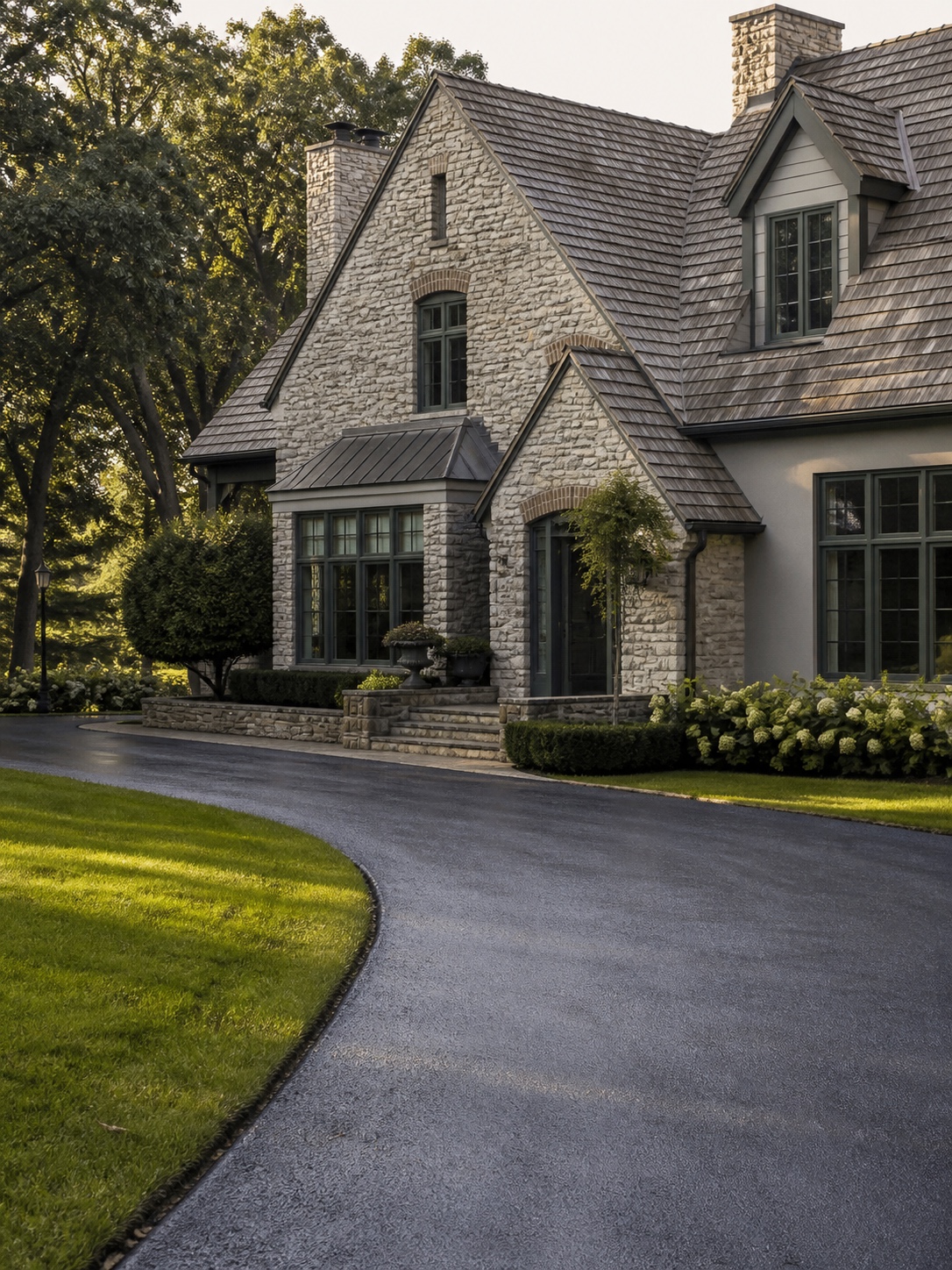
Asphalt Driveways
Asphalt typically costs less than concrete and performs particularly well in cold-climate conditions, where its slight flexibility resists the cracking that more rigid surfaces are prone to under freeze-thaw cycling. Regular sealing extends its life and keeps the surface reading dark and finished rather than faded and chalky, which matters more for this material than most — an unsealed asphalt driveway ages visibly faster than almost any other option on this list.
Gravel Driveways
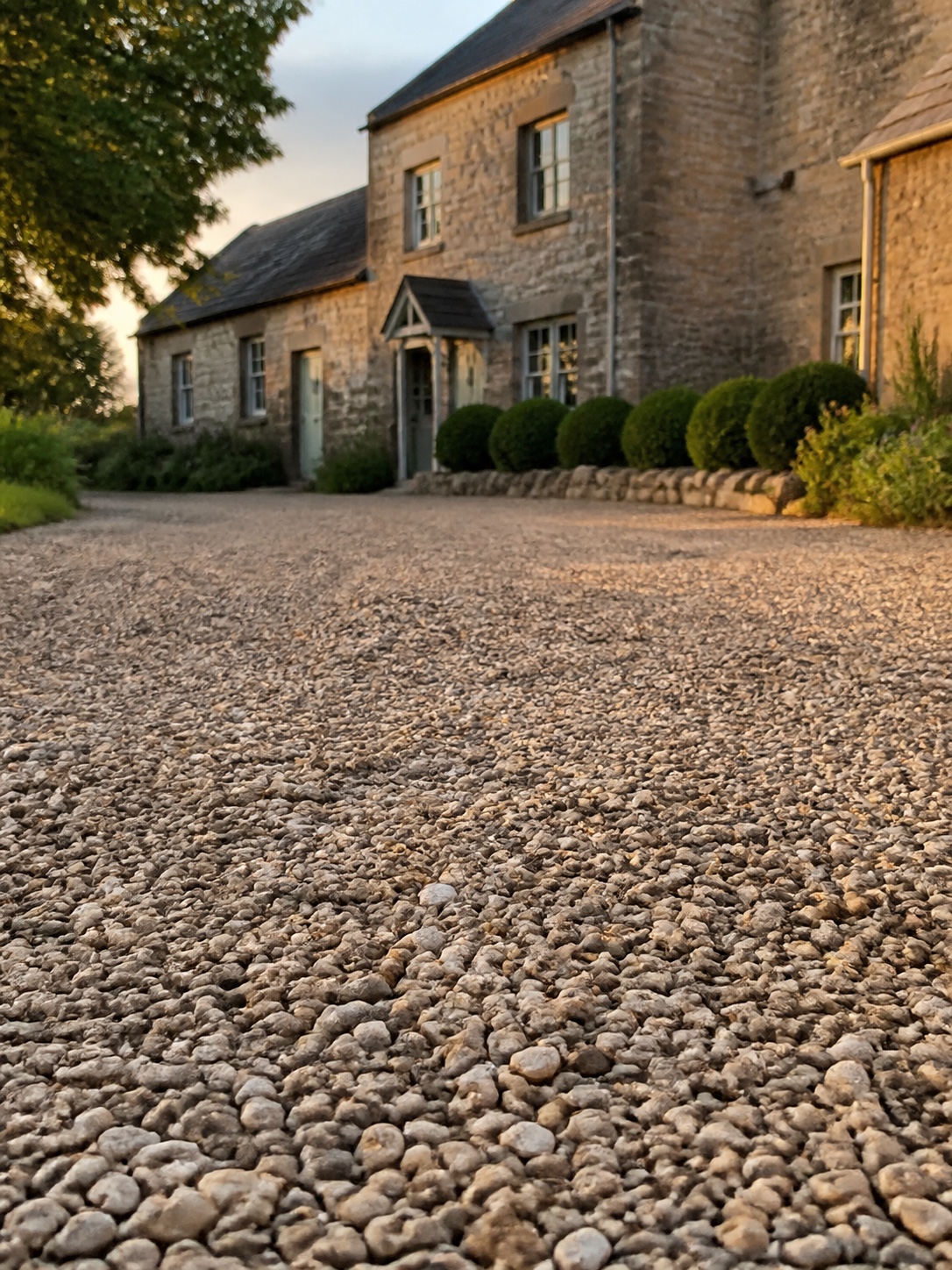
Gravel is genuinely one of the most affordable driveway materials, drains water essentially on its own without any additional engineering, and gives a home a distinctly natural, unfussy character that suits rural properties, cottages, and larger lots particularly well. Homeowners comparing options often start by comparing driveway gravel against poured surfaces specifically for that combination of low cost, natural drainage, and the relaxed, textured look it gives a front approach that a hard, uniform surface can’t replicate.
Paver Driveways
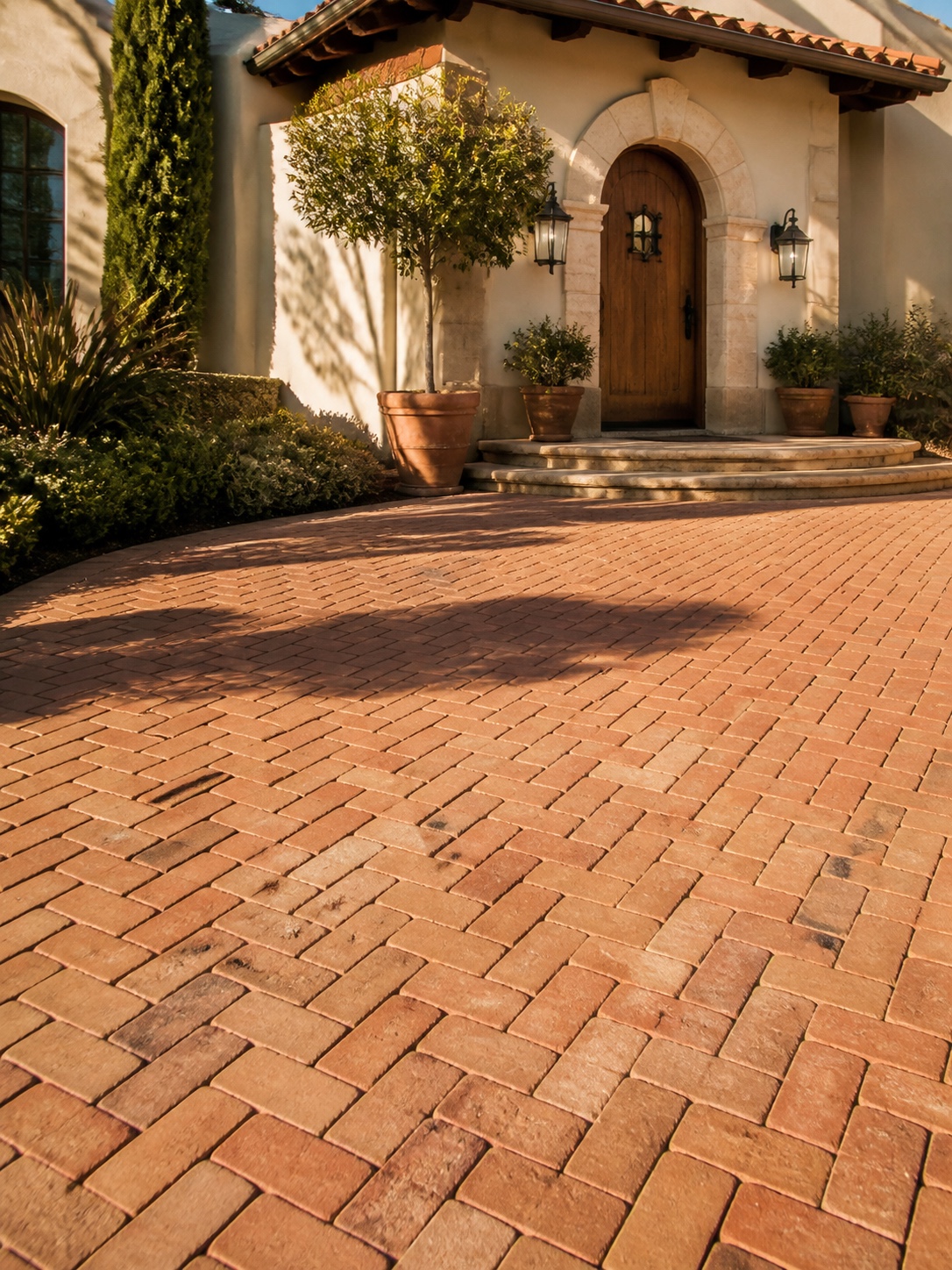
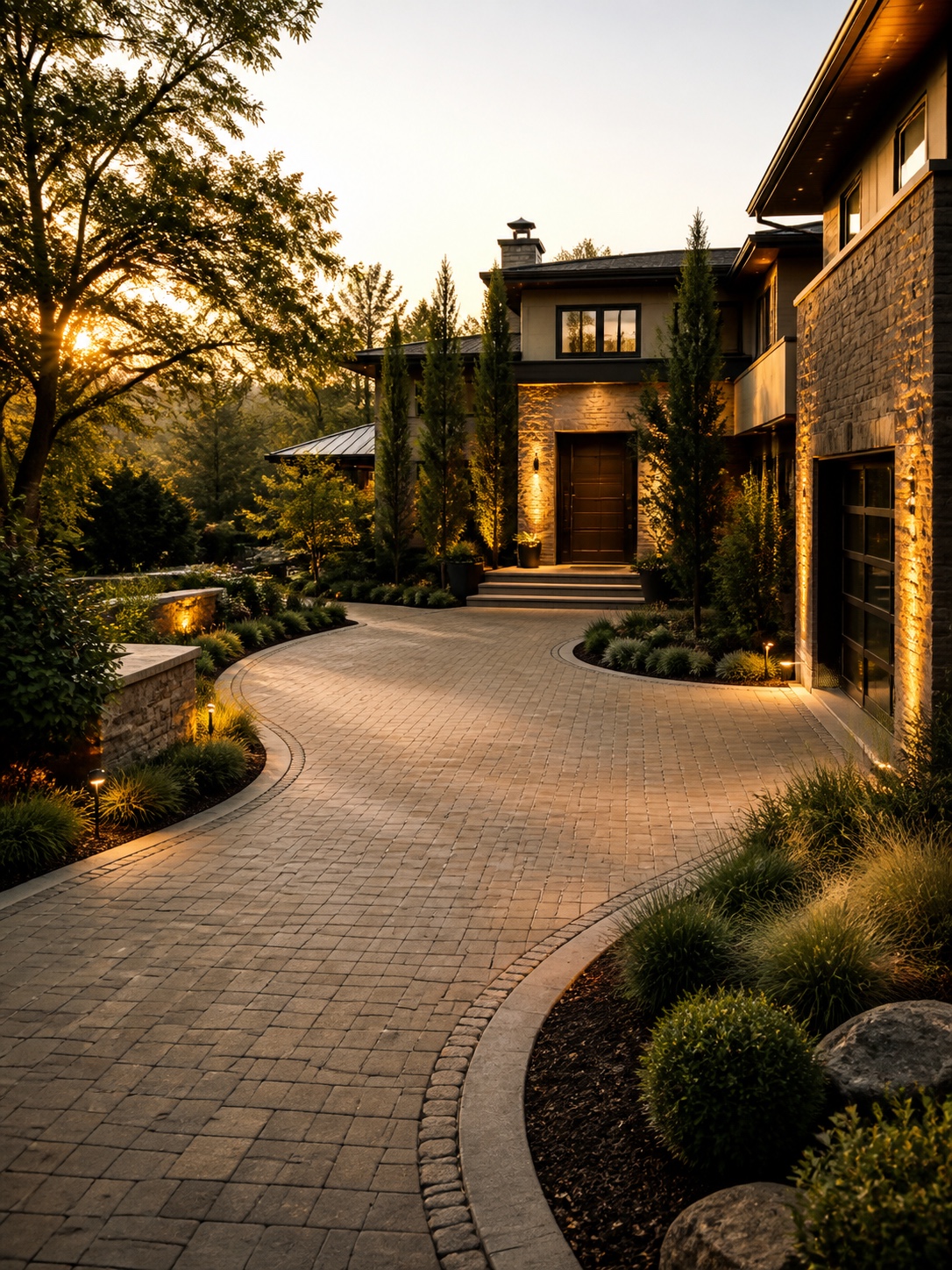
Pavers offer more design flexibility than any other material here — a genuinely wide range of colors, patterns, and laying configurations, and a practical advantage worth noting directly: if one section gets damaged, you can replace just that section rather than redoing the entire surface. That repairability is a real design consideration, not just a maintenance footnote, since it means a paver driveway’s appearance stays consistent over a much longer timeline than a material that has to be patched as a visible, mismatched repair.
Shape the Driveway Around the Entrance
The driveway’s shape should actively guide a visitor toward the front door rather than just providing the shortest path between the street and the garage.
Straight Driveways for Compact Lots
A straight driveway makes the most sense on a smaller lot, where a curve would eat into usable yard space without adding real visual benefit. The efficiency of a straight line also suits more contemporary, geometric home styles, where a curved approach would actually work against the architecture’s own visual language rather than complementing it.
Curved Driveways for Softer Front Yards
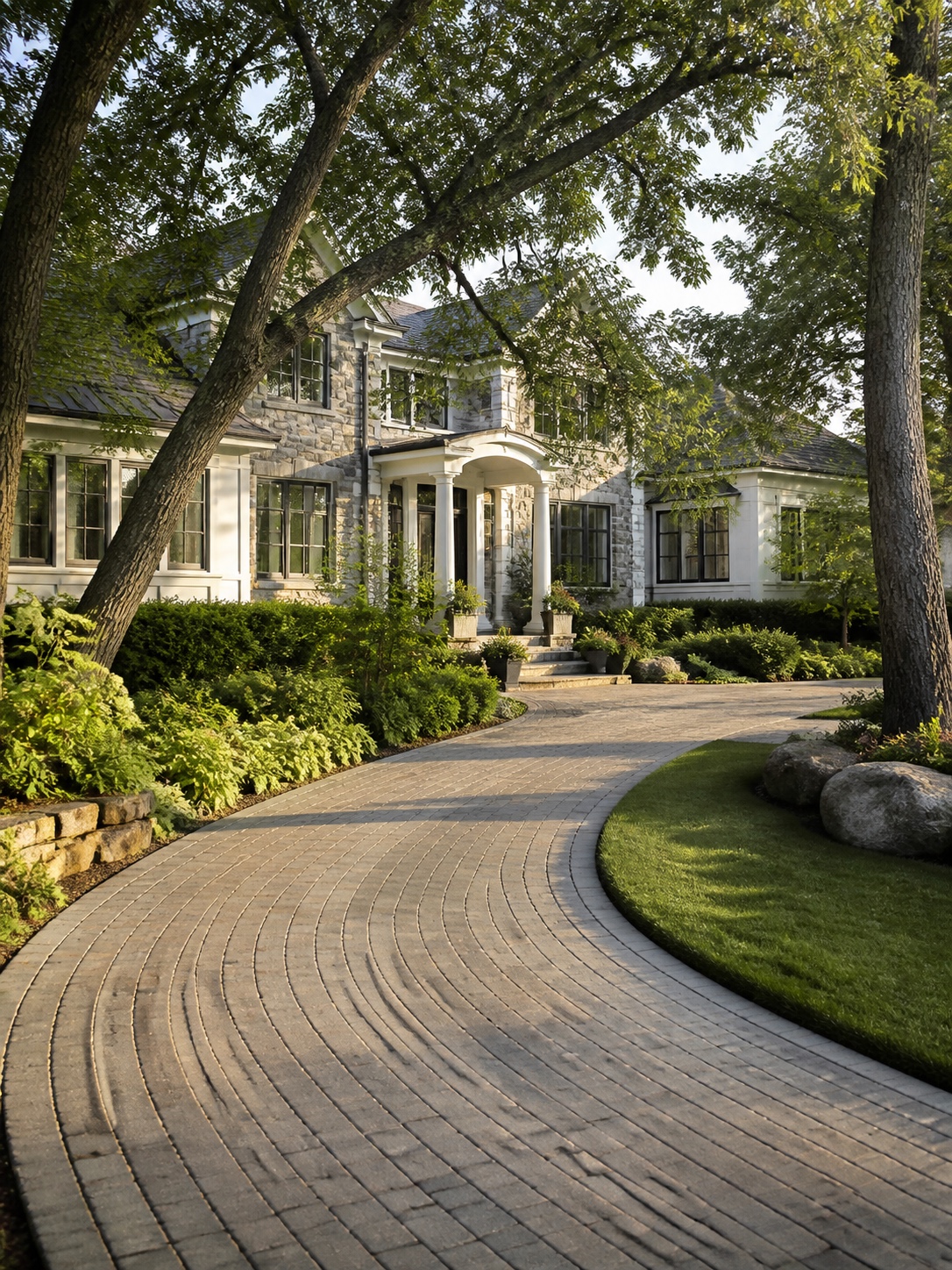
A gentle curve does real work on a larger front yard, breaking up what would otherwise be a long, visually flat approach and giving the landscaping around it more natural shape to work with. Even a modest curve — nothing dramatic — can meaningfully soften a home’s overall exterior character without requiring any additional landscaping investment beyond the driveway reshaping itself.
Use Borders and Edging to Make the Layout Feel Intentional
A defined border does more for a driveway’s finished appearance than almost any other single design move, and it’s often the lowest-cost way to elevate an otherwise plain surface. Brick edging, stone borders, decorative pavers, and metal landscape edging all serve the same core function: they hold the driveway’s material in place at the edges while giving the whole layout a crisp, deliberate boundary instead of a surface that just fades into the surrounding lawn or gravel.
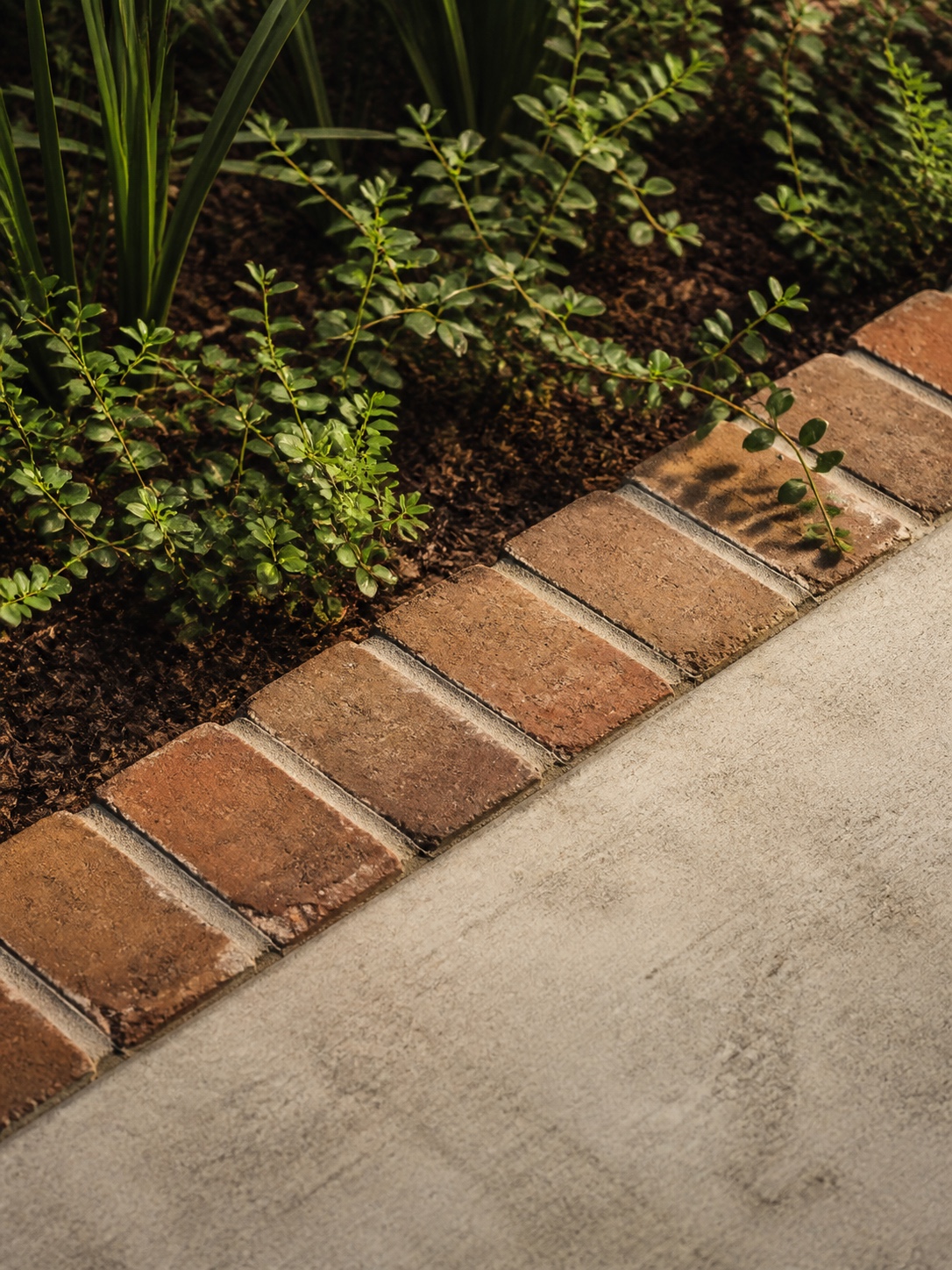
The contrast a border creates is doing real compositional work too, not just a practical one — a driveway with a defined edge reads as planned in a way an unbordered surface simply doesn’t, even when the actual paving material is identical. For more on how edging and borders integrate with the landscaping immediately around them, I go deeper into that specific relationship in my driveway and front yard harmony guide.
Mix Textures Without Making the Exterior Look Busy
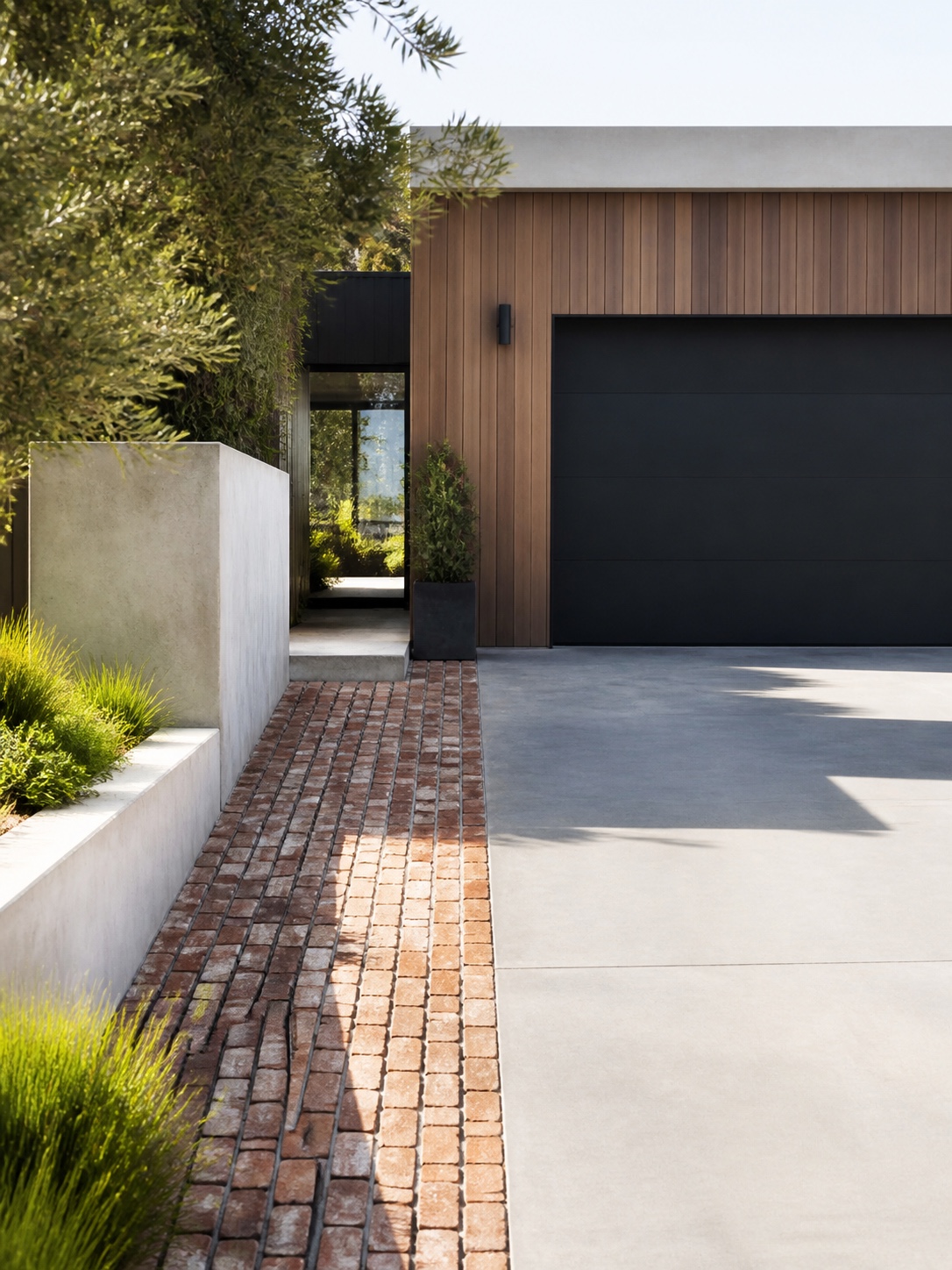
Combining materials — concrete paired with brick edging, or stone accents worked along the sides — adds genuine visual interest to a driveway that would otherwise read as one flat, uniform surface. The key constraint worth naming directly: this only works with restraint. Two materials, thoughtfully paired, read as intentional. Four or five competing textures on one relatively small surface start to read as visual noise rather than design, the same principle that governs texture mixing in any other part of a home’s exterior or interior. Pick one primary surface material and let a second material do supporting work at the edges or in a defined accent area, rather than treating every material choice as equally weighted.
Add Green Space Around Hard Surfaces
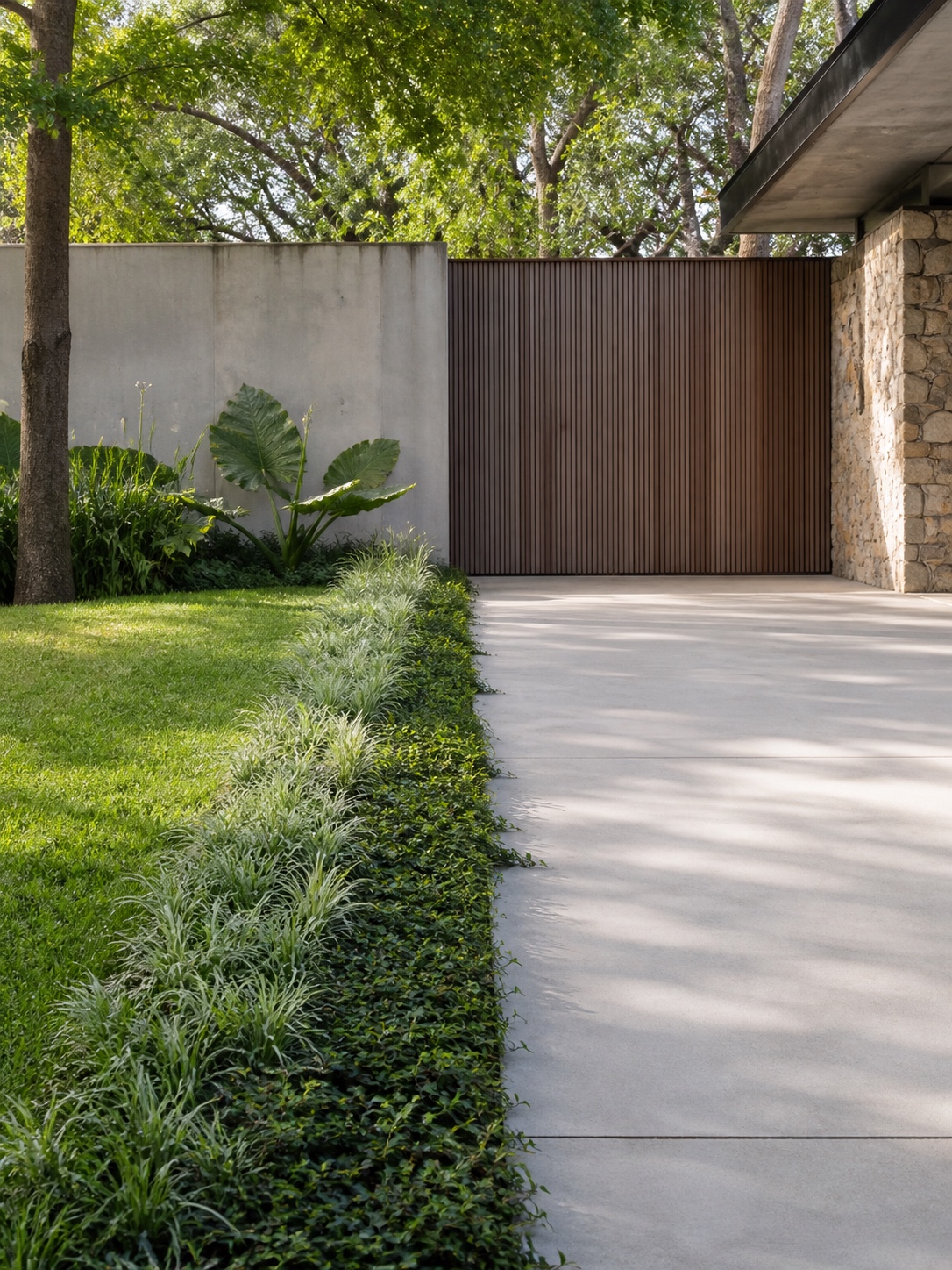
Hard surfaces don’t need to cover every available inch of the front yard, and driveways specifically benefit from having their hard edges broken up by strips of grass, ground cover, or small planting beds running alongside them. Beyond the visual softening effect, these green transition zones genuinely help keep the surrounding area cooler in warm weather, since a large uninterrupted paved surface holds and radiates heat in a way a landscaped edge doesn’t.
Even a narrow planting strip — not a full garden bed, just a consistent green edge — does meaningful work softening what would otherwise be a hard, uninterrupted material transition straight from driveway to house.
Plan Drainage as Part of the Design
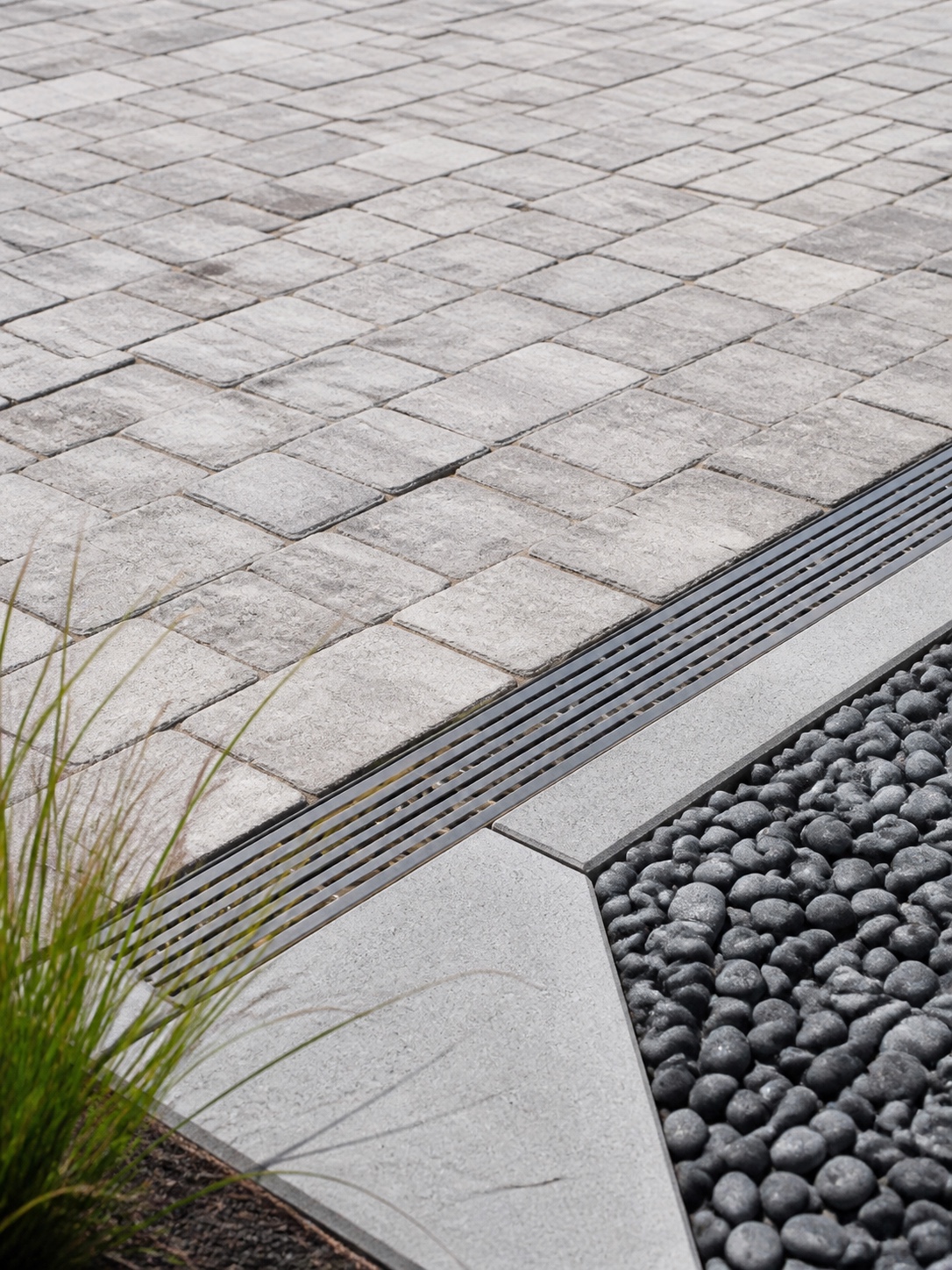
Water is the single biggest long-term threat to any driveway surface, and drainage needs to be part of the original design decision rather than a problem addressed after cracks and erosion have already appeared. Poor drainage doesn’t just create standing water — it actively degrades the surface over time, working into small cracks, freezing and expanding in cold climates, and gradually undermining the base beneath the material.
A gentle, deliberate slope lets rainwater run off naturally without pooling, while dedicated drainage channels or permeable materials give water somewhere controlled to go rather than accumulating on the surface itself. Planning this properly at installation is genuinely one of the highest-value decisions in the entire driveway project — it’s invisible when done right, and expensive to retrofit once erosion or cracking has already set in.
Match the Driveway Style to the House
A driveway that ignores the home’s architectural character, regardless of how well-executed it is on its own terms, always reads as slightly disconnected from the rest of the exterior.
Modern Homes
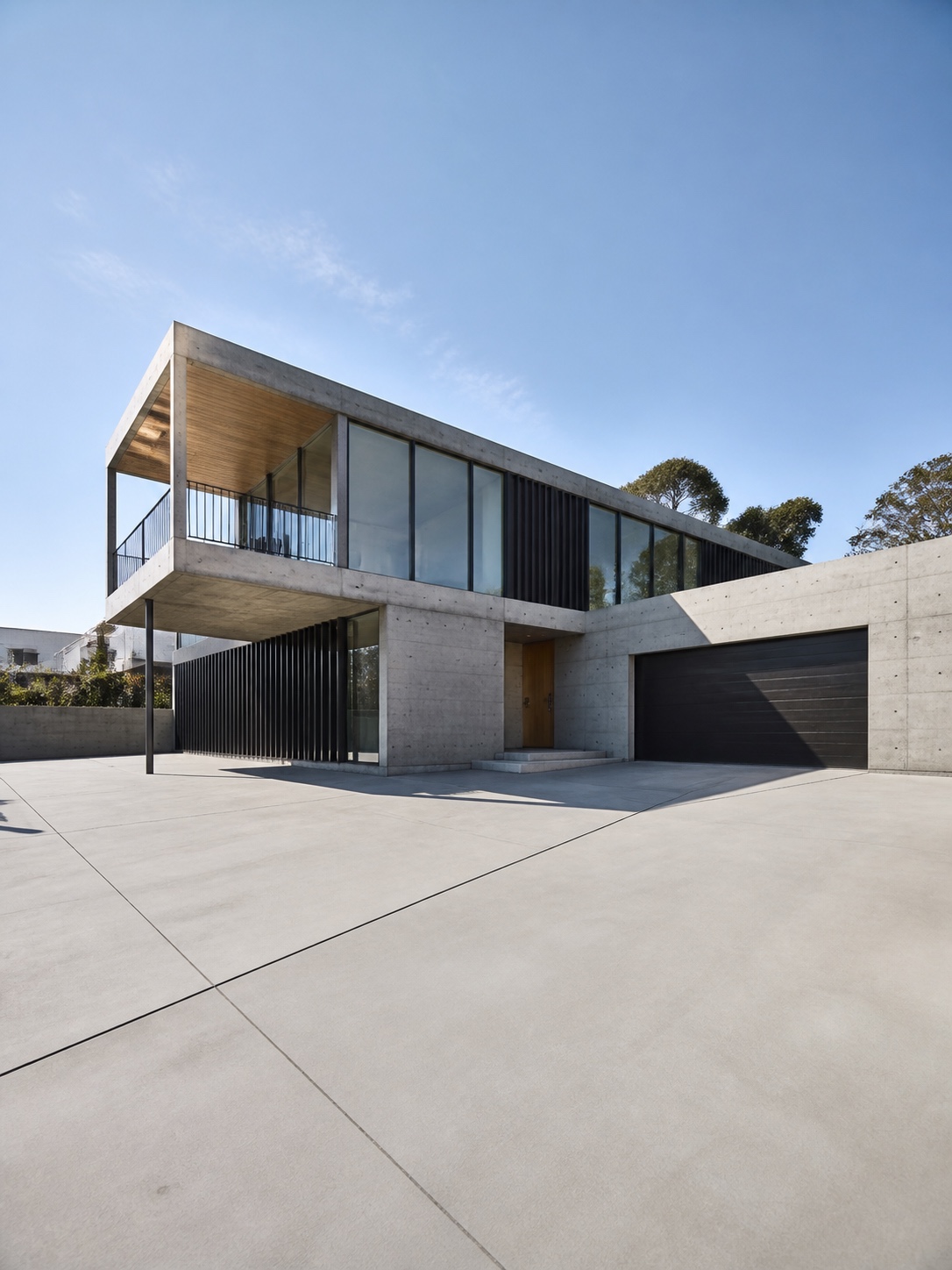
Smooth concrete with clean, minimal lines suits contemporary architecture best — the material’s inherent restraint matches a modern home’s broader design language, where visual noise is generally the enemy and a quiet, precise surface supports the architecture rather than competing with it.
Traditional Homes
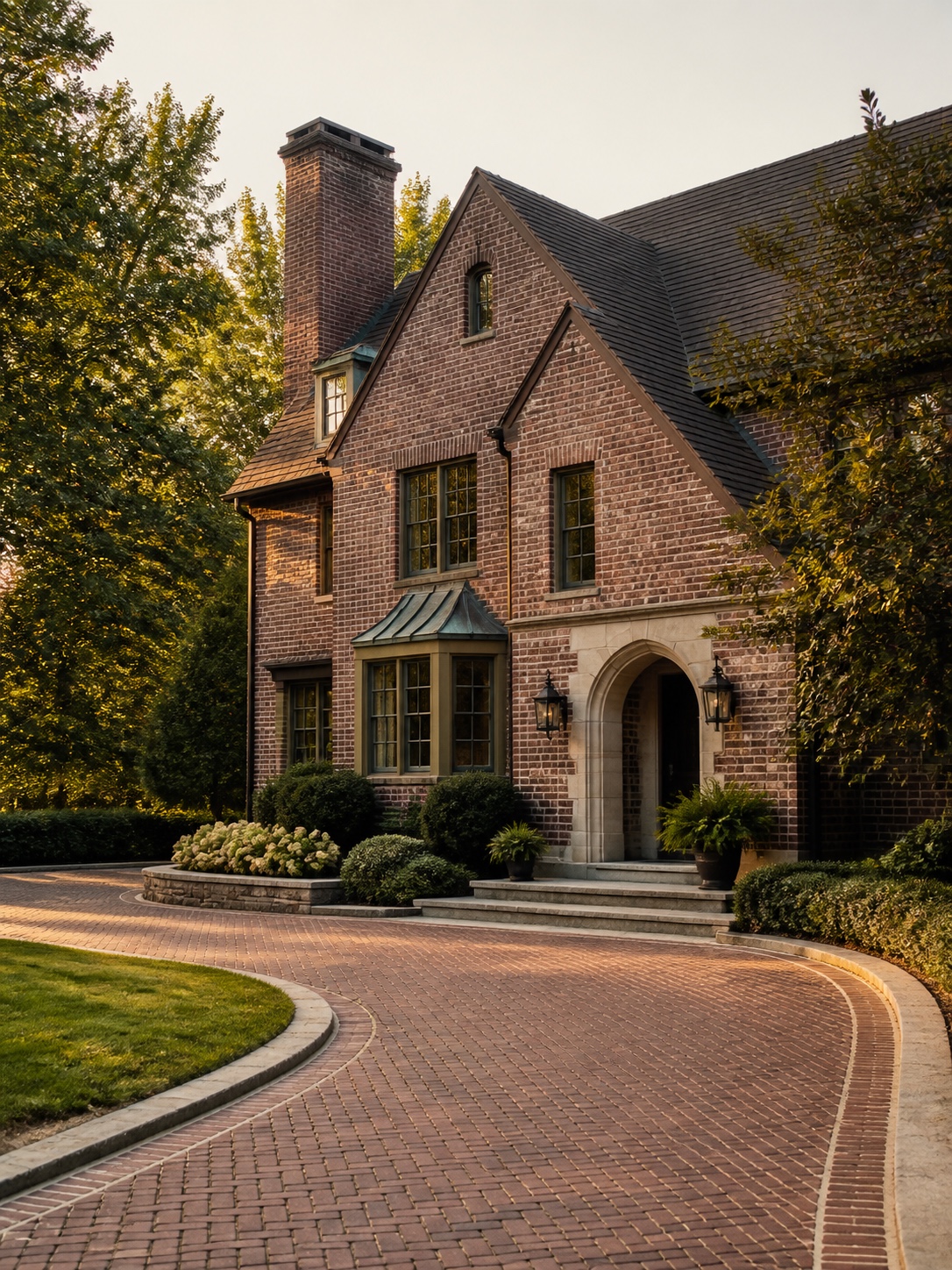
Brick or stone detailing, whether as the primary surface or as border and accent work, complements traditional architecture’s existing material vocabulary. These homes already carry brick, stone, or similar detailing elsewhere on the facade, and a driveway that echoes those materials reads as considered rather than arbitrary.
Farmhouse and Country Homes
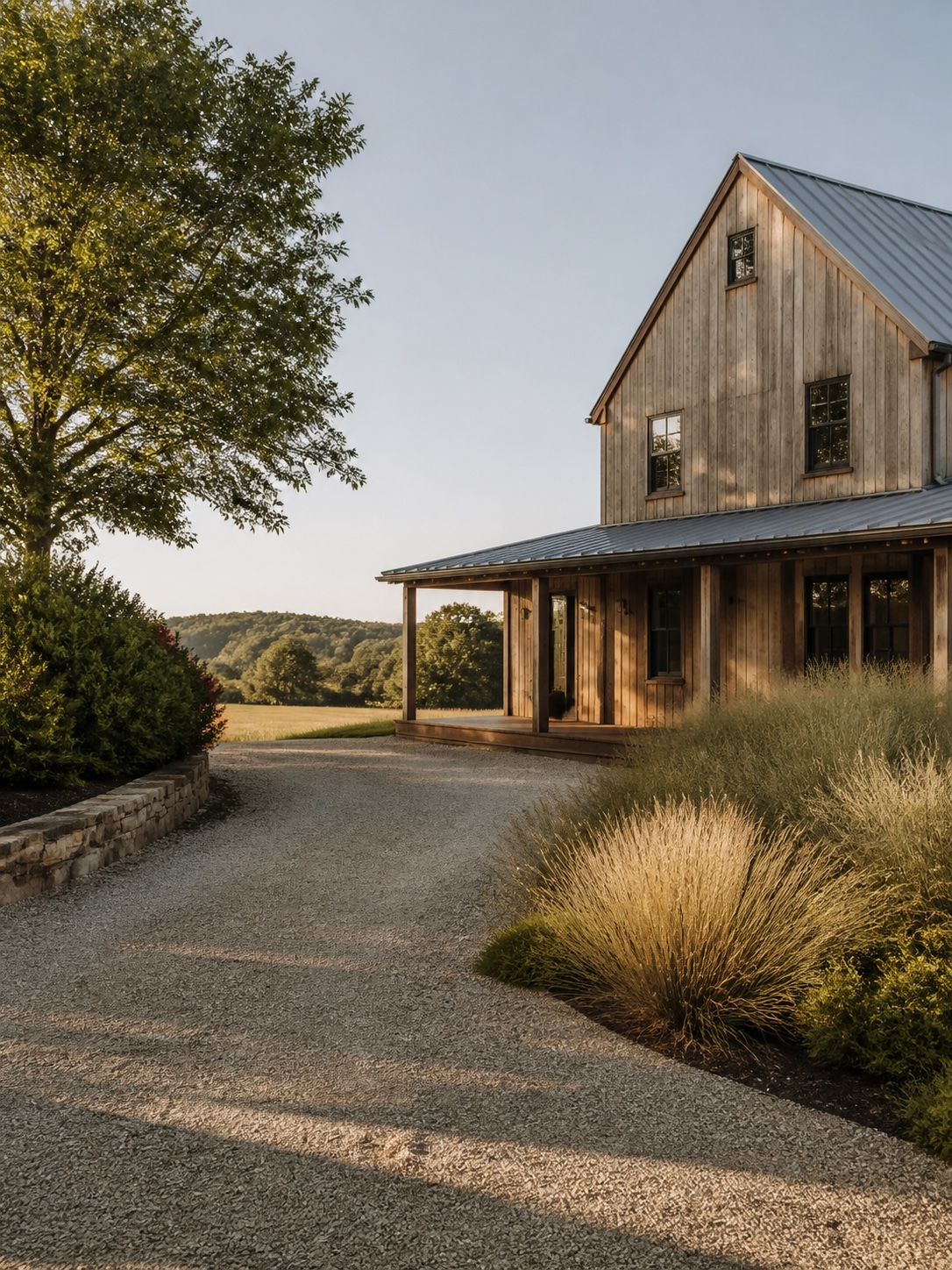
Natural gravel finishes suit farmhouse and country properties particularly well, reinforcing the relaxed, unpretentious character these homes are generally going for. A highly polished concrete or paver surface can actually work against a farmhouse’s intended character here, reading as too formal for the architecture surrounding it.
Mediterranean Homes
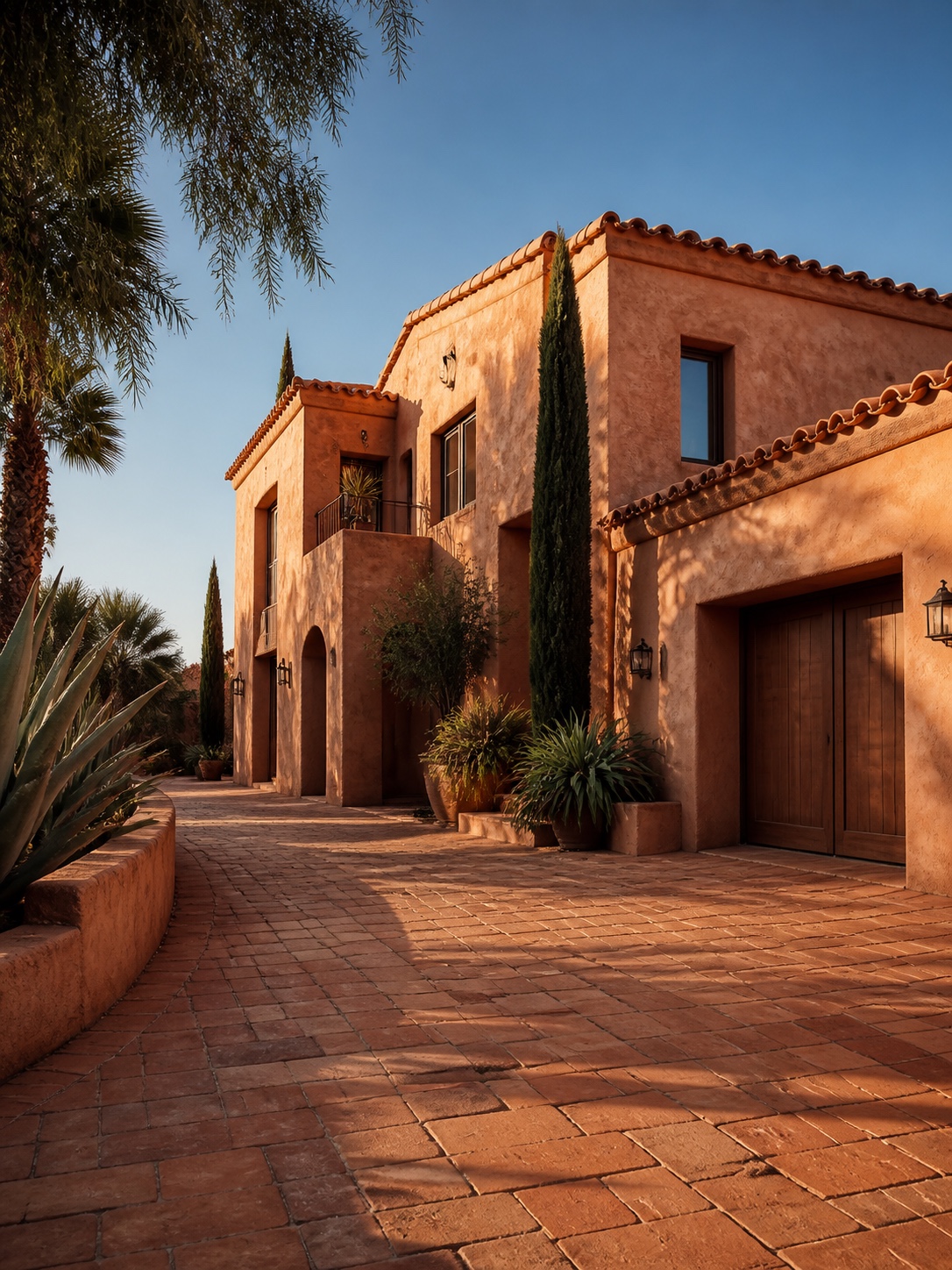
Warm-toned pavers pair naturally with Mediterranean architecture’s characteristic material palette — terracotta, warm stone, sun-weathered tones — carrying that same warmth down from the facade into the approach itself rather than introducing a colder, more neutral surface that breaks the home’s overall material story.
Make Sustainability Part of the Driveway Plan
Sustainable driveway choices have moved well past a niche consideration for most homeowners planning new or replacement surfaces. Permeable pavers, recycled paving materials, and properly engineered drainage systems all let rainwater soak into the ground naturally rather than running off into storm drains, which reduces erosion pressure on the surrounding landscape and generally supports healthier plant growth in the areas immediately around the driveway.
These choices genuinely improve both the driveway’s long-term performance and its appearance — a permeable surface that’s actually managing water correctly ages more evenly than one that’s fighting constant runoff and pooling. For a broader look at balancing hard paved surfaces against the planted areas around them, I cover that relationship in more depth in my hardscape and softscape balance guide.
Bringing the Whole Approach Together
None of these decisions — material, shape, borders, drainage, style match — function well in isolation from each other. A well-chosen material undermined by poor drainage will crack regardless of how good it looked on installation day. A perfectly shaped curve loses its impact without landscaping to actually frame it.
Once the driveway itself is planned, extending that same intentionality to how it’s lit after dark rounds out the whole approach; I cover that specifically in my driveway lighting guide, and for landscaping ideas that work well alongside a newly designed driveway without a major budget, my front yard landscaping guide covers practical, low-cost options that pair naturally with most of the material choices above.
Final Thoughts
A driveway does more design work than it usually gets credit for — it’s the first surface anyone actually walks or drives across, and it sets the tone for everything that follows it toward the front door. Material, shape, borders, drainage, and landscaping all need to work as one coordinated decision, not five separate ones made independently. Get that coordination right, and a driveway stops being just a parking surface and starts being the opening line of the home’s whole exterior composition.
Frequently Asked Questions
What is the best material for a driveway?
There’s no single best material — it depends on climate, budget, and the home’s architectural style. Concrete suits modern homes and cold-durability needs, asphalt offers a lower-cost option that handles freeze-thaw cycling well, gravel gives natural drainage and a relaxed rural character, and pavers offer the most design flexibility along with easier section-by-section repairability.
How can I make a driveway look more attractive?
Add a defined border or edging material to give the layout a crisp, intentional boundary, introduce a second complementary texture in moderation rather than one flat uniform surface, and soften the hard edges with a strip of grass or planting alongside the paved area. A gentle curve on a larger lot also does real visual work without major additional cost.
Are gravel driveways good for curb appeal?
Yes, particularly for rural, farmhouse, or larger properties where gravel’s natural, textured character suits the home’s overall style. It drains well on its own, costs less than most hard-surface alternatives, and reads as intentional rather than unfinished when paired with a defined border to keep the material contained.
What driveway design works best with landscaping?
Driveways that leave room for planting strips, small trees, or ground cover along their edges integrate best with the surrounding landscape, since hard-surface-to-hard-surface transitions read as more abrupt than a driveway with a green buffer easing into the rest of the yard. Avoid placing larger trees too close to the driveway edge, since root growth can damage the surface over time.
How do permeable driveways help with drainage?
Permeable materials — porous pavers, certain gravel configurations, specially engineered surfaces — let rainwater soak directly into the ground beneath the driveway rather than running off across the surface into storm drains. This reduces standing water, lowers erosion risk in the surrounding landscape, and generally extends the driveway surface’s own lifespan by reducing water pressure against the material.
- 120shares
- Facebook0
- Pinterest117
- Twitter3
- Reddit0