I worked on a residential project where the client had spent $40,000 on a new entry door and foyer renovation. The door was beautiful. The surrounding yard looked like nobody cared. Every person who drove past that house saw the yard first — the door came second. The renovation investment was invisible from the curb.
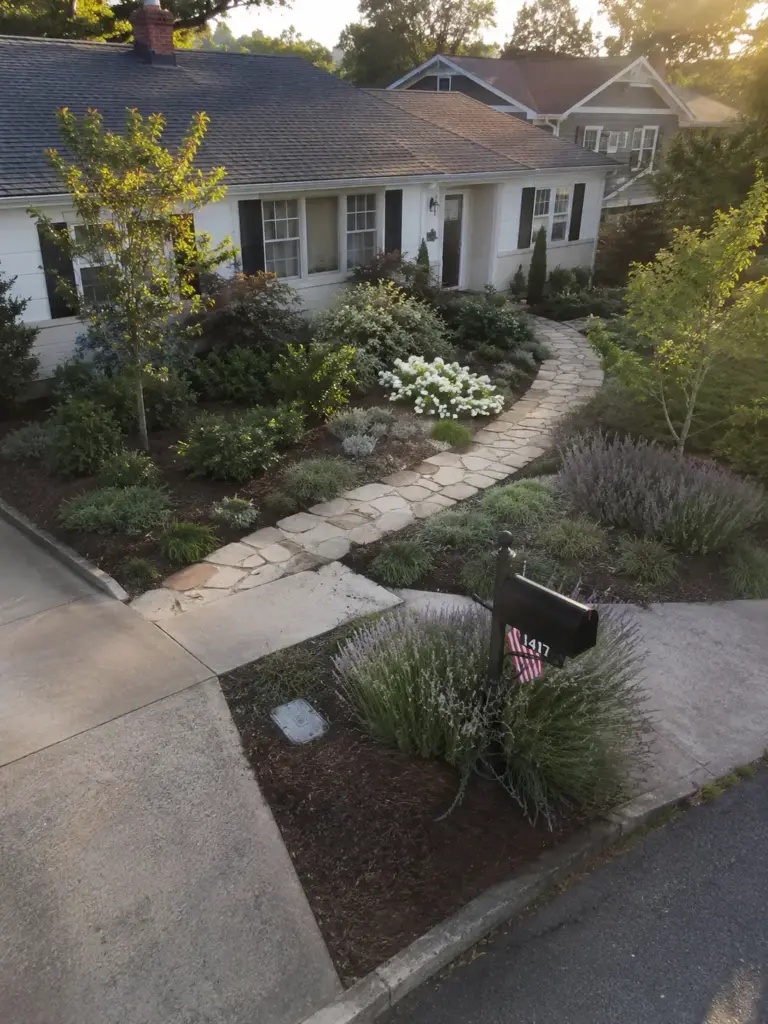
That’s the problem with most front yard advice: it focuses on individual plants or materials rather than the reading sequence. When someone approaches your house, they build a first impression in roughly three seconds. What registers in that time is overall order, then color, then detail. Most cheap landscaping mistakes spend money on detail without establishing the first two.
These ten ideas are ordered by their design impact per dollar, not by price. Some cost under $50. None requires professional installation. All of them are informed by how designers actually think about exterior space: proportion, sequence, material consistency, and the difference between a house that looks maintained and one that looks designed.
1. Edge Everything First
| ✓ Cost: Under $30 | Impact: High |
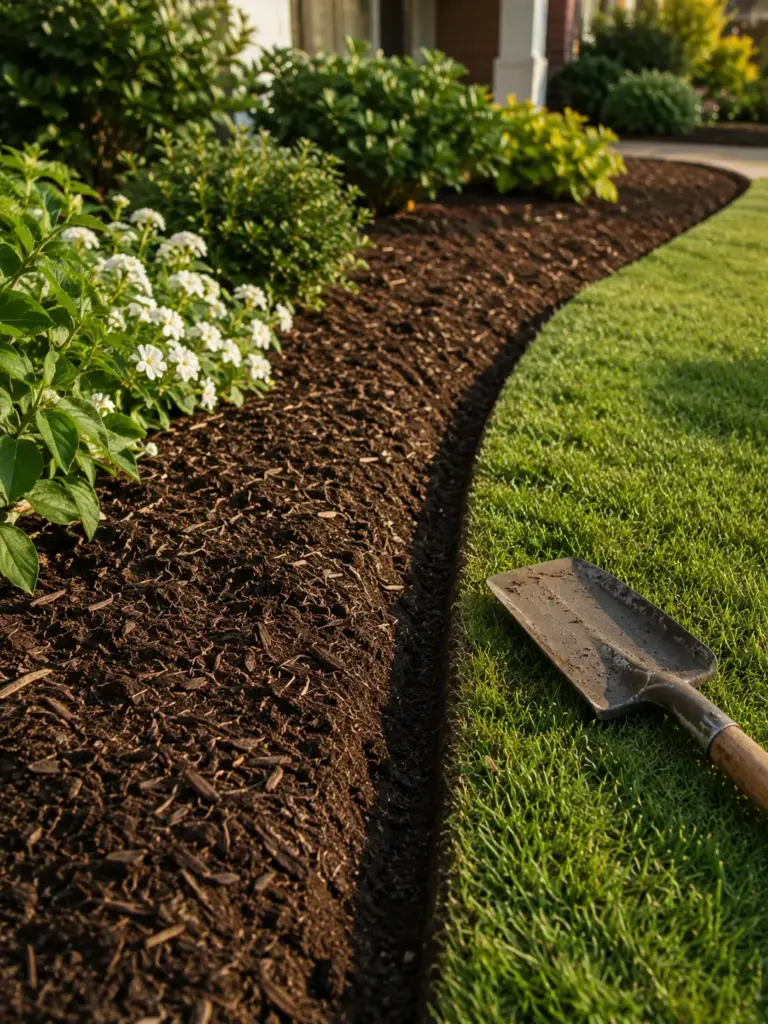
Before you buy a single plant or bag of mulch, edge your existing beds. Clean edging is the difference between a yard that looks like a designed landscape and one that looks like grass is slowly winning. A flat spade or rotary edger costs $20 to $30 and two hours of a Saturday morning.
The design principle here is boundary definition. When a bed has a crisp edge, everything inside it reads as intentional — even if the plants are inexpensive and sparse. Without edges, even expensive plants look random. I’ve seen $5 marigolds in a well-edged bed look more considered than $30 ornamental grasses left to blur into a lawn.
Cut a clean curve with a garden hose as your guide, slice 3 to 4 inches down at 90 degrees, remove the turf strip, and backfill with a shallow line of mulch or crushed gravel. That physical boundary tells the eye where the designed area ends. It is the cheapest design move in exterior landscaping and one of the most effective.
Edge twice a year minimum: once in spring when growth starts and once in early fall. The maintenance cost is time only. The visual return is disproportionately high relative to anything else you can do for $0.
2. Refresh Mulch in All Beds
| ✓ Cost: $40–$120 | Impact: High |
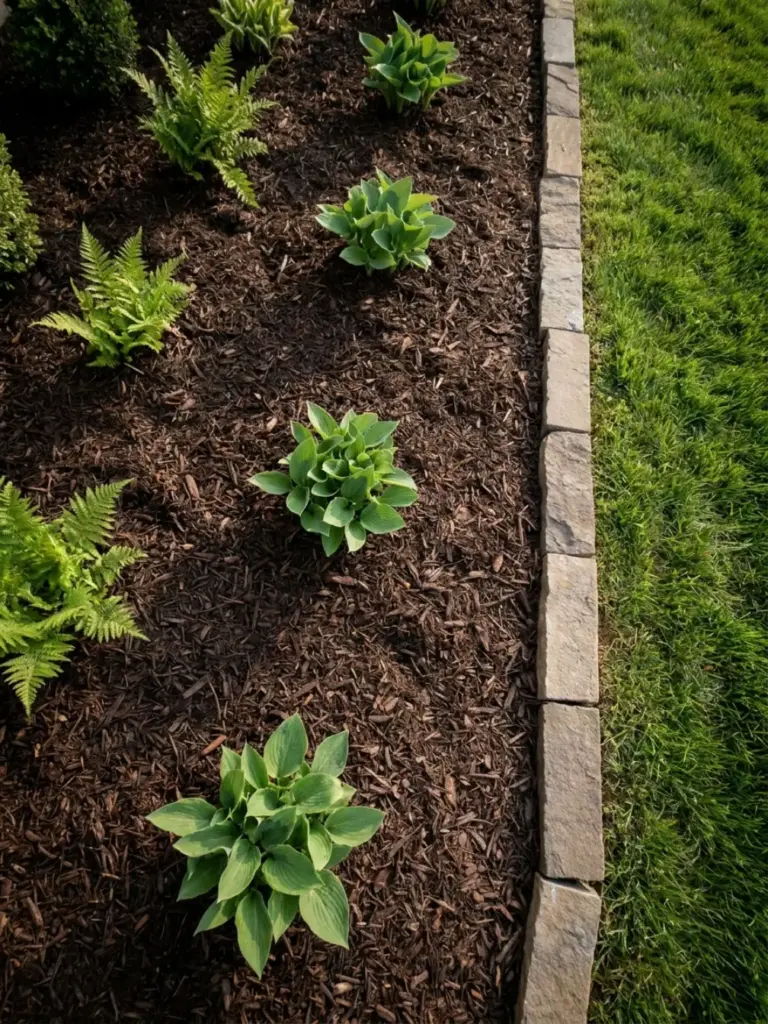
Fresh mulch does three things at once: it suppresses weeds, retains soil moisture, and gives every bed a consistent base material that reads as clean and intentional. A 2 to 3-inch layer of shredded hardwood mulch across a typical front yard costs $40 to $120 depending on bed size.
The design decision that matters here is color. Black mulch reads as modern and graphic, making plants pop with high contrast. Brown hardwood reads as natural and traditional, better for craftsman or cottage aesthetics. Red mulch tends to fight with most brick exteriors. Choose based on what your home’s exterior palette is doing, not what was cheapest at the hardware store.
From a material harmony standpoint, mulch is the background layer of your planting composition — the equivalent of a neutral wall in interior design. Getting it consistent across all beds instantly unifies a front yard that previously looked like a series of unrelated decisions made over several years.
Mulch Math
One cubic yard of mulch covers roughly 100 square feet at 3 inches deep. A standard bag (2 cubic feet) covers about 8 square feet. Measure your bed area before buying. Most front yards need 3 to 6 bags. Bulk delivery from a landscape supply yard costs less per cubic yard than bagged from a hardware store for quantities over 3 yards.
3. Plant in Groups of Three or Five, Not Randomly
| ✓ Cost: $30–$80 | Impact: High |
This is the single design principle that separates a composed planting from a collection of individual purchases. When you plant one of this and one of that, you get a botanical inventory. When you plant in odd-numbered groups, you get a landscape.
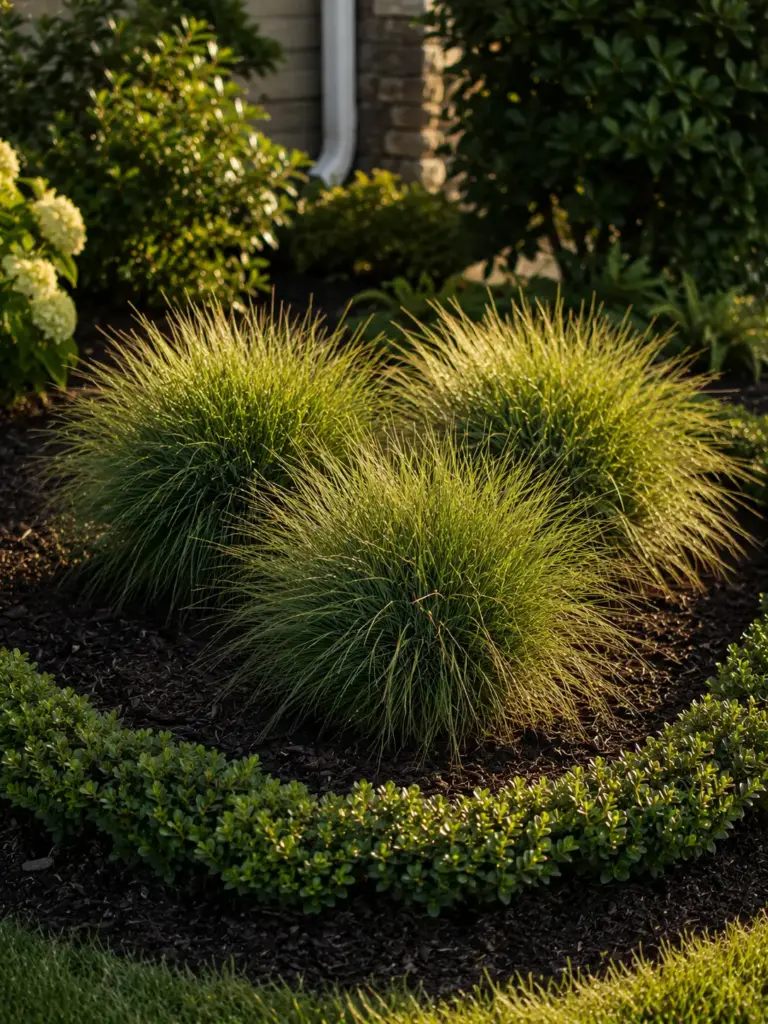
Three of the same ornamental grass, five of the same low perennial, or seven of the same groundcover read as a mass planting with visual weight. That weight anchors the composition. The eye moves through grouped masses the same way it moves through furniture arrangements — it needs clusters and open space, not equal individual elements scattered at regular intervals.
The cost to do this correctly is the same as doing it wrong. Buy three of one thing instead of three different things. Echinacea, ornamental grasses, Russian sage, or Black-eyed Susan are all in the $5 to $12 range per plant and perform well in most US climate zones. Three plants in a tight triangle grouping looks more intentional than six individual plants spread evenly.
When selecting plants, think: one tall anchor, one mid-height filler, one low edge plant. That layered height profile at different scales is what professional planting compositions use at every price point.
4. Add a Defined Pathway to the Front Door
| ✓ Cost: $50–$200 | Impact: High |
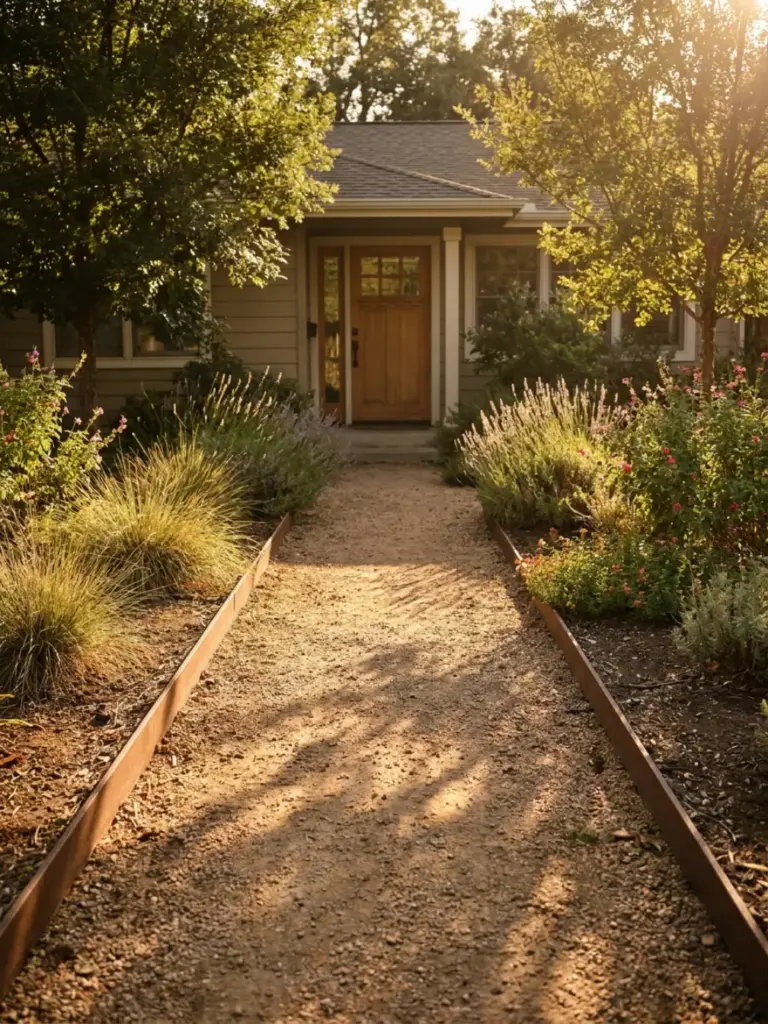
A path to the front door does two things: it gives visitors a clear route and it creates a line that the eye follows from the curb to the entry. Without a defined pathway, the entrance composition lacks direction. The house looks like you arrive at it rather than approach it.
Gravel is the most budget-accessible option: lay landscape fabric, edge with steel or aluminum edging strip, pour 2 to 3 inches of pea gravel or crushed stone. The material cost for a 3-foot wide, 20-foot path runs $50 to $100. Stepping stones set in gravel or grass cost slightly more but give a cleaner, more formal look.
The design choice that matters most is the path width. Anything under 36 inches reads as secondary, like a service path. A primary entry path should be 36 to 48 inches wide to read comfortably for two people walking side by side. That single proportion change, even in the cheapest material, elevates the entrance sequence considerably.
5. Replace the Mailbox (and Treat It as Street Furniture)
| ✓ Cost: $60–$200 | Impact: Medium-High |
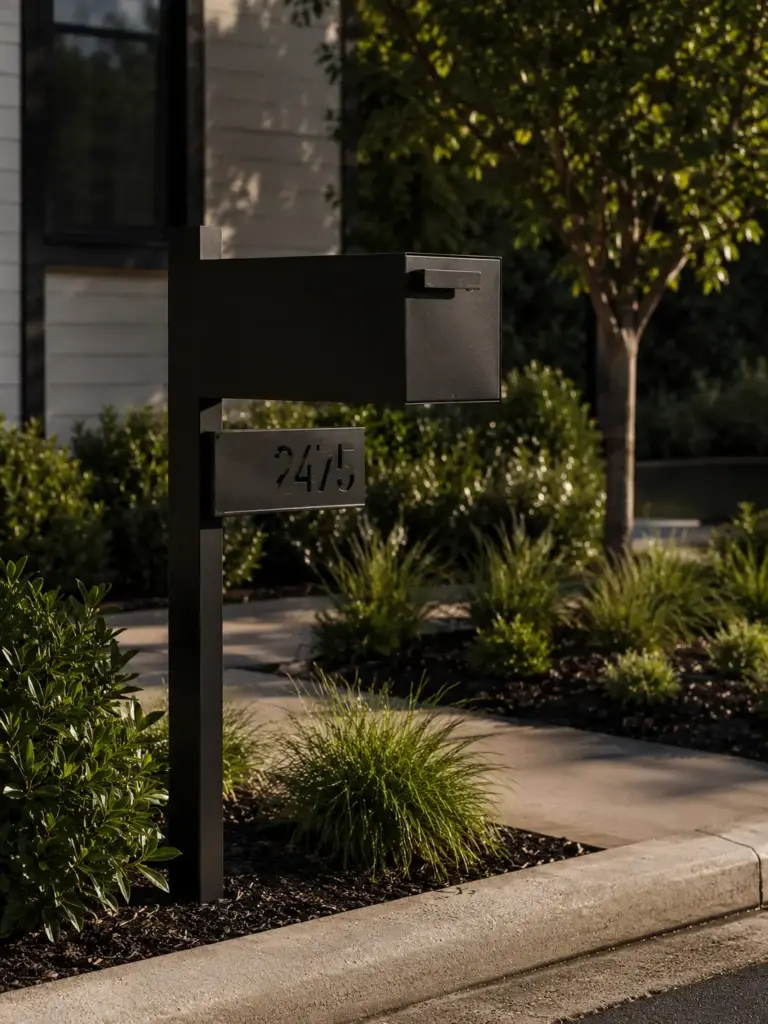
The mailbox is the first object a visitor interacts with before reaching your door. Most homeowners ignore it completely. When it’s a weathered plastic unit from a previous decade, it undermines every other design improvement you’ve made to the exterior.
From a designer’s perspective, the mailbox belongs in the same category as outdoor lighting and house numbers: it’s street furniture, not a utility fixture. It should match your home’s material palette. A matte black powder-coated steel mailbox reads as modern and intentional. A bronze or oil-rubbed finish suits craftsman or traditional homes. The post finish should align with your porch railing, window trim, or fence if any of those exist.
The functional requirement is real: the USPS has specific height and setback guidelines, and for multi-family or community properties, USPS-approved cluster mailbox units combine compliance with visual cohesion, available in finishes that work with most exterior palettes. For single-family homes, choosing the right outdoor mailbox means matching finish to your home’s dominant metal tone and sizing the post to be visible but not dominant from the street. A mailbox post that is too tall and visually heavy pulls attention away from the entry. One that matches the fence or gate hardware reads as part of a considered composition.
The practical cost: a quality powder-coated steel pedestal mailbox and post runs $80 to $150. Installation is two lag bolts and 20 minutes. The visual return is immediate and permanent.
Pair the new mailbox with matching house numbers in the same finish. The combination of consistent metalwork at the curb line creates a design detail that reads as intentional from a moving car.
6. Use Native Plants to Cut Costs and Maintenance
| ✓ Cost: $20–$80 | Impact: Medium-High |
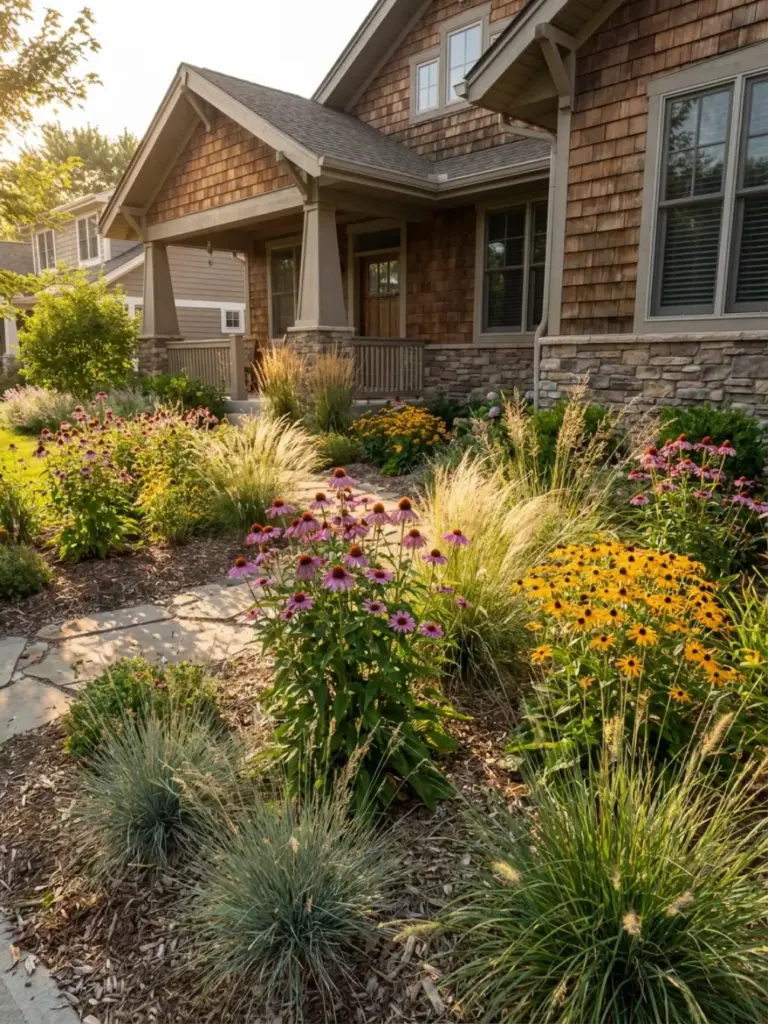
Native plants are the budget landscaper’s strongest tool and the professional designer’s first specification choice for low-maintenance projects. They’re adapted to your local climate, which means they establish faster, need less water once in, and don’t need the annual replacement cycle that non-adapted ornamentals often require.
The cost advantage is real. Native plants from local native plant nurseries or plant swaps typically run $3 to $8 per plant versus $12 to $30 for comparable ornamental cultivars at big box stores. A pollinator bed of coneflower, black-eyed Susan, and little bluestem grass can be planted for under $50 and provides four-season interest without irrigation after the first year.
The design principle here is regional authenticity. A front yard planted with species native to your region looks like it belongs to its environment in a way that a collection of tropical ornamentals never does. That belonging reads as sophisticated to a trained eye, even when it’s achieved on a very small budget.
7. Add Solar Path Lighting Along the Entry Walk
| ✓ Cost: $30–$80 | Impact: Medium |
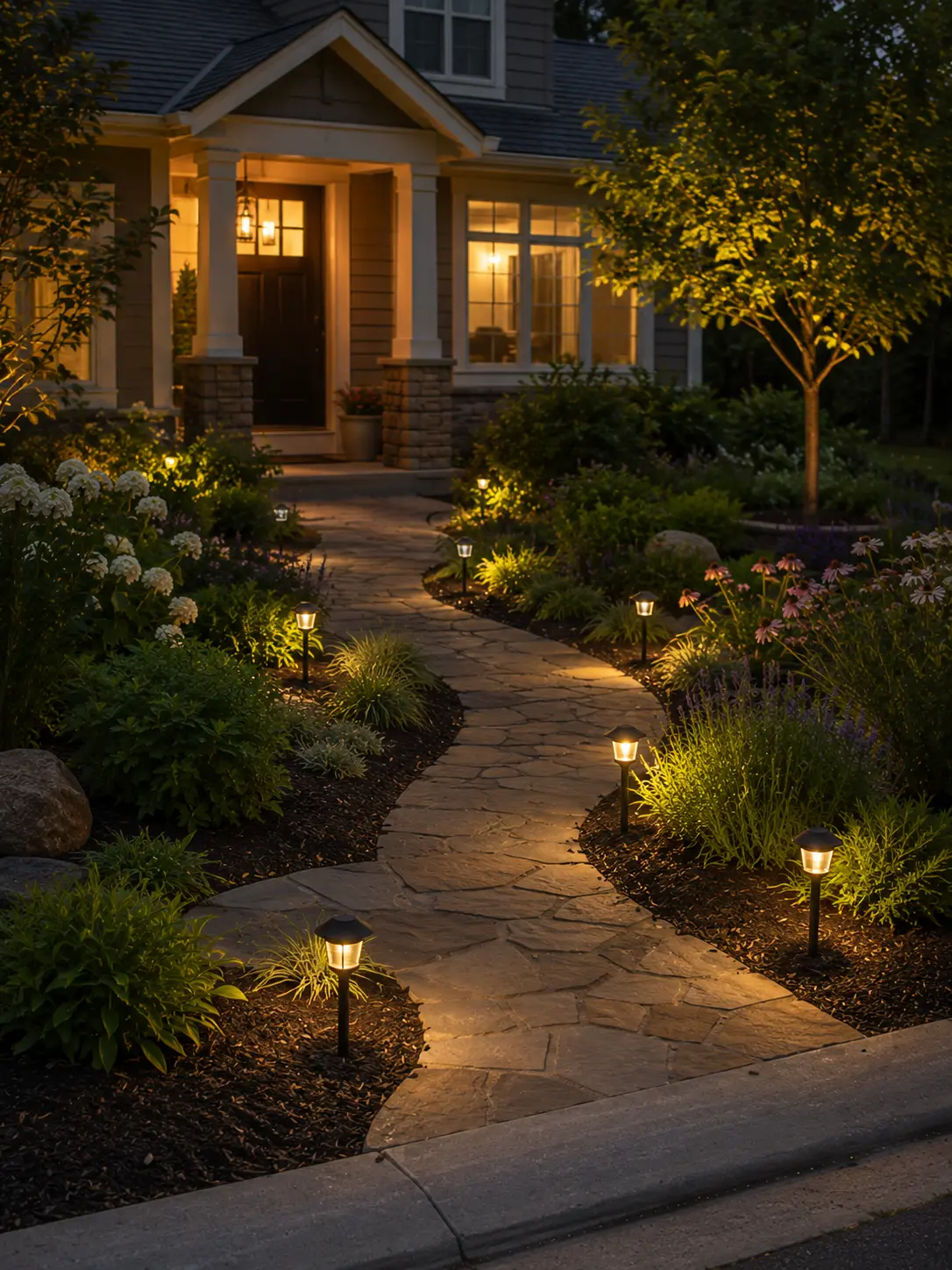
Outdoor lighting extends the designed hours of your front yard from daytime to evening and changes the entire experience of approaching the house after dark. Solar stake lights along a pathway cost $30 to $80 for a set of six to eight and require no wiring.
The design consideration is restraint. A single even row of identical stake lights at 18-inch intervals along a straight path reads as orderly and deliberate. Scattered lights at inconsistent spacing or mixing different fixture styles reads as an afterthought. Pick one style, one finish (brass or matte black or bronze), and stick to it across your entire front yard if you add lights anywhere else.
From a design layering perspective, pathway lighting does something plant material can’t: it makes the approach sequence visible at night and gives the facade a reflected glow that reads as warmth from the street. Even modest solar fixtures achieve this effect when their placement and consistency are deliberate.
8. Plant One Focal Point Shrub or Small Tree
| ✓ Cost: $40–$120 | Impact: Medium-High |
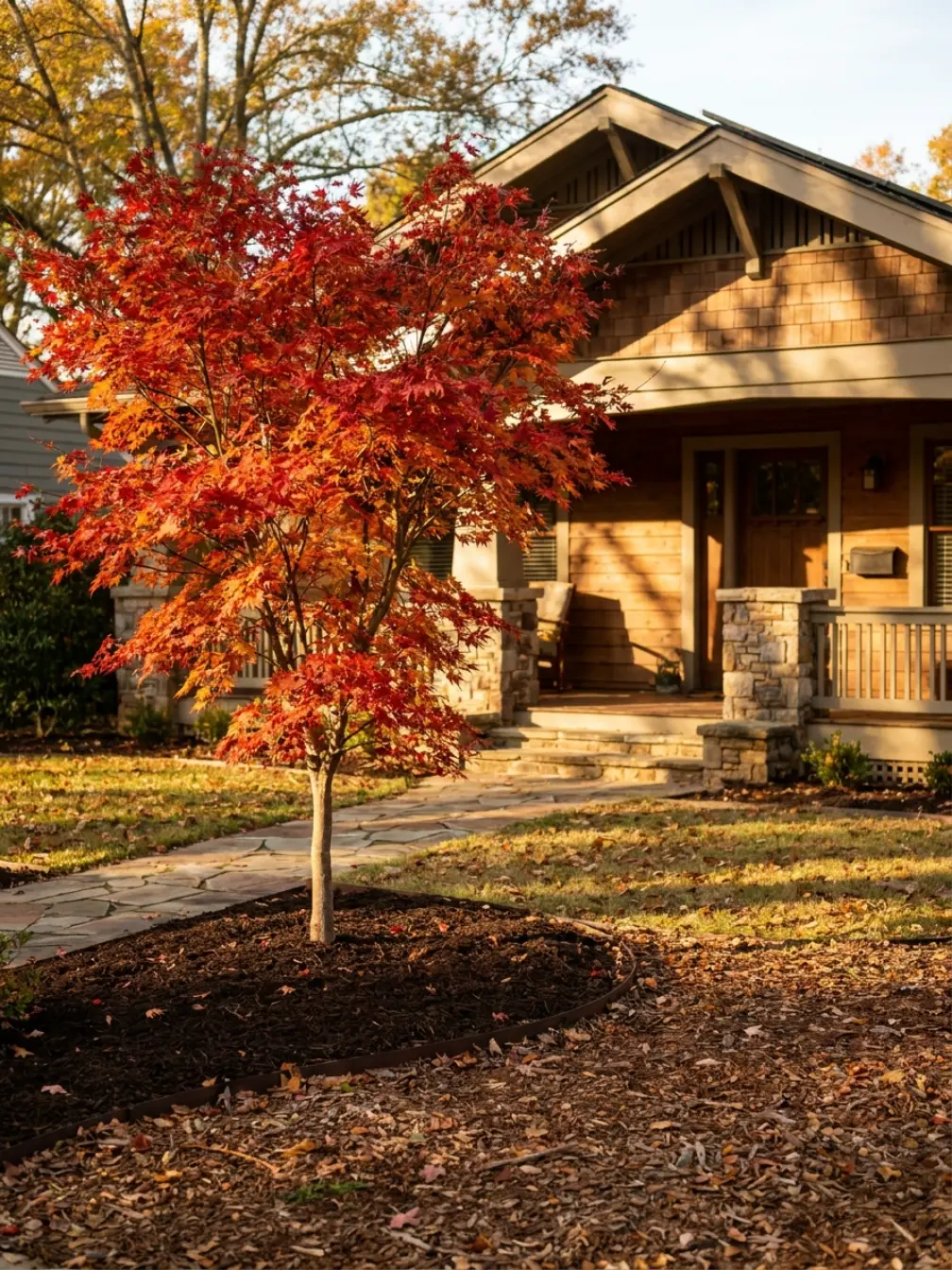
A front yard without a focal point is a flat plane. One well-placed specimen plant anchors the composition and gives the eye somewhere to land. This doesn’t need to be expensive. A 3-gallon ornamental shrub at $30 to $50 or a 5-gallon small tree at $50 to $120 accomplishes this when placed correctly.
The placement rule: the focal point should be off-center from the front door, not directly in front of it. Placing a specimen plant directly centered on the entry axis competes with the door and blocks sightlines. Set it to one side of the main bed at roughly one-third of the facade width. Let the path curve toward it slightly before turning to the door.
Good focal point choices by region: Japanese maple for year-round structure in temperate climates, vitex or crape myrtle for heat-tolerant color in southern zones, serviceberry for multi-season interest in northern climates. Any of these at modest size will grow into the dominant visual element of your front yard within two to three seasons.
9. Paint the Front Door and Frame
| ✓ Cost: $25–$60 | Impact: High |
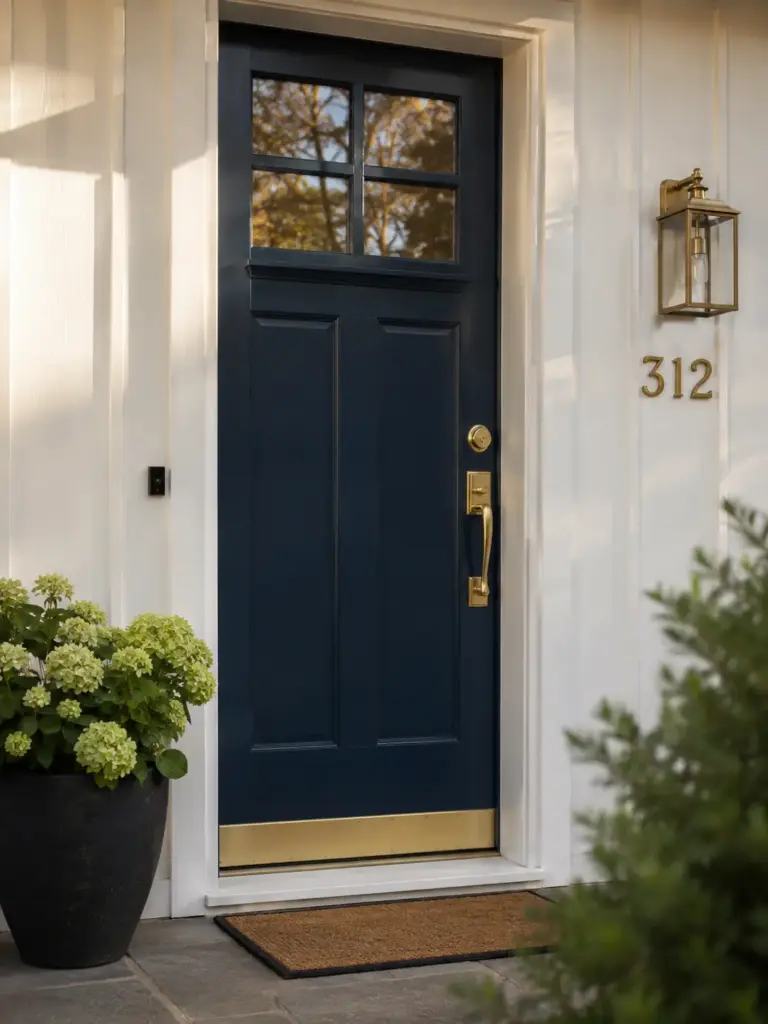
A gallon of exterior paint costs $35. A painted front door can completely change the reading of a house from the curb. This is the highest design return for the lowest material cost in exterior improvement, and it’s consistently underused by homeowners who are afraid of color.
The design logic for front door color: the door is the terminus of the approach sequence, the last thing the eye lands on before you arrive. It should be distinctive from the surrounding facade material without fighting it. A deep navy or forest green on a white or grey house. A warm terracotta or mustard on a brown or tan house. A matte black on nearly anything modern.
One often-skipped detail: paint the door frame and the exterior trim immediately around the entry the same color as the door, or a slightly darker version of the body color. This frames the entry and gives it architectural weight that a painted door floating in an unpainted frame doesn’t achieve.
Use exterior satin or semi-gloss paint for doors, not flat. The slight sheen adds depth and resists the scuffs and handprints that matte paint on a high-touch surface collects within a season.
10. Add a Container Planting at the Entry
| ✓ Cost: $40–$100 | Impact: Medium |
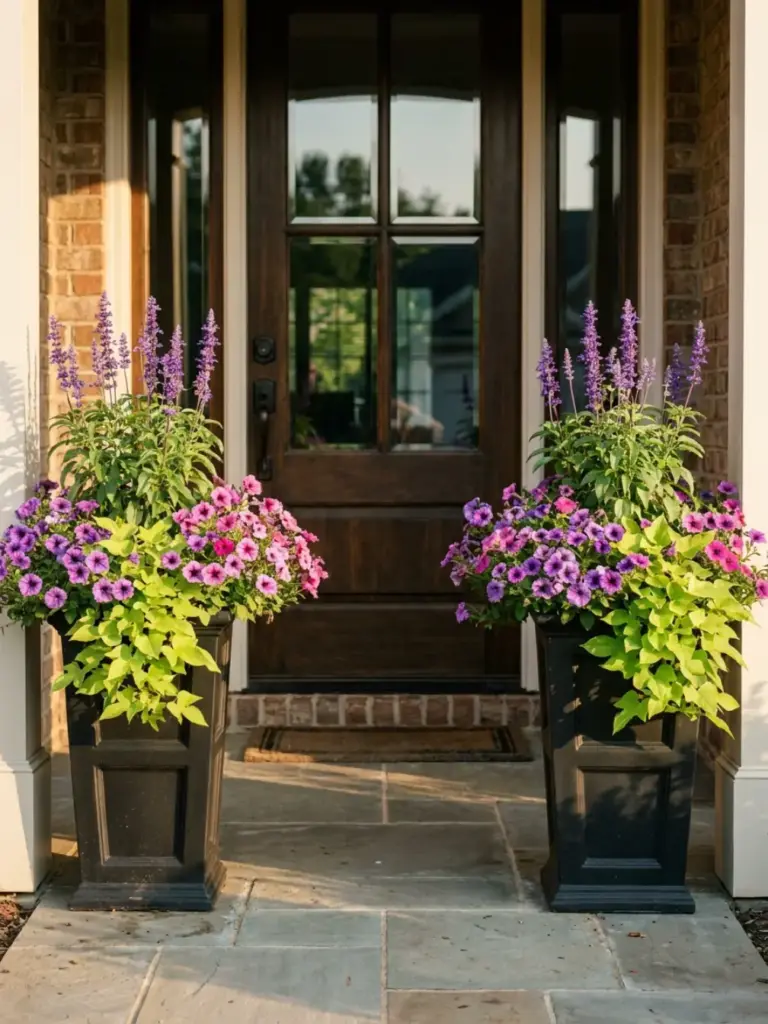
Two matching planters flanking a front door signal that someone lives here intentionally. It’s one of the oldest exterior design moves in residential architecture and one that works at every price point, from terracotta to cast concrete.
The key is the word matching. Two identical planters read as a designed pair. Two different planters read as two things that happened to end up near the door. For a budget-friendly version: two identical black plastic nursery containers inside two matching wicker or coir sleeve covers, or two galvanized steel buckets from a hardware store in the same size. The material matters less than the consistency.
The planting inside should follow the thriller-filler-spiller formula: one tall, spiky or bold plant (thriller), one mounding plant that fills the middle (filler), one trailing plant that drapes over the edge (spiller). This three-plant formula in each container produces a container planting that looks professional at any price point and works in any style context.
Seasonal cost: a basic thriller-filler-spiller combination per container runs $20 to $40 at a garden center in season. Replace the seasonal plants twice a year (spring and fall) for year-round interest. The containers are a one-time purchase. The ongoing cost is just the plants.
The Design Principle That Ties All Ten Together
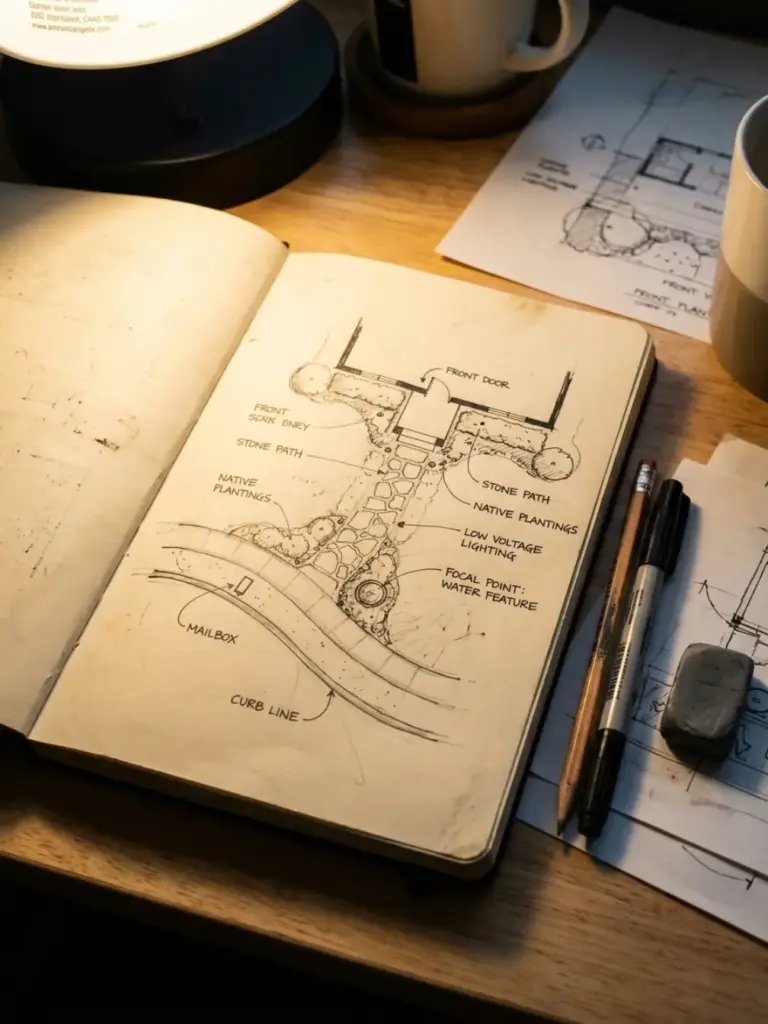
All ten of these ideas work because a front yard is an approach sequence, not a collection of independent decisions. The curb is the beginning. The door is the end. Everything between them either supports that movement or fights it.
The mistake most homeowners make is treating each purchase as isolated. A new mailbox here, some flowers there, a solar light near the garage. Each one might be fine. Together they add up to a yard that looks busy and unconsidered rather than composed.
A designer reads a front yard the way a reader reads a sentence — left to right, curb to door, looking for clarity and rhythm. The edging sets the boundary, the mulch fills the base, and the path gives you the line to follow. Plantings create rhythm along that line. The mailbox and house numbers are your opening punctuation. There should be one plant that makes you pause. The door is the full stop.
Sequence the improvements in that order and $200 to $400 goes further than it has any right to. Not because the materials are special — they’re not — but because the arrangement is doing the work.
For cheap curb appeal with a stronger outline, sleeper edging for front yards can define beds, lawns and gravel paths without a full rebuild.
FAQ: Cheap Front Yard Landscaping Ideas
What is the cheapest way to improve front yard curb appeal?
Edge your existing beds and refresh mulch. These two steps cost under $100 combined and have the highest visible design return of any cheap landscaping action. Clean edging immediately makes everything inside the bed read as intentional, and fresh dark mulch provides a consistent base layer that unifies whatever plants are already there. Do these before buying any new plants.
How do I landscape the front of my house on a tight budget?
Start with the sequence: edge first, mulch second, add a path or improve the existing one third. Those three investments establish the structure that everything else reads against. Then add plants in odd-number groups of three or five rather than single specimens, starting with the focal point position first. A total budget of $150 to $300 spent in this sequence produces more visual impact than $500 spent randomly on plants without first establishing the bed structure.
What low-maintenance plants are good for a front yard?
Native perennials specific to your climate zone give the best performance for the lowest long-term cost. Broadly applicable across most US zones: coneflower (Echinacea), black-eyed Susan (Rudbeckia), ornamental grasses like Karl Foerster or Little Bluestem, and creeping phlox as a groundcover edge. These establish in one season, need no irrigation after year one, and provide multi-season interest. Check your local extension office website for the native plant list specific to your region.
Does landscaping actually increase home value?
Yes, and more than most homeowners expect. According to the American Society of Landscape Architects, well-designed landscaping can add 10 to 12% to a home’s value. A 2025 survey by the National Association of Realtors found that standard lawn care and simple landscape improvements recover 100% or more of their cost at resale. The key word is “designed” — a composed landscape that reads as intentional performs significantly better than the same dollar amount spent on random additions.
What size should a front yard path be?
A primary entry path should be a minimum of 36 inches wide, and ideally 42 to 48 inches. Anything narrower reads as a service path rather than a designed entry. The path surface should be consistent with your home’s material language: gravel for cottage or casual aesthetics, concrete pavers for modern or transitional, flagstone for traditional. The material choice matters less than the width and the consistency of the edge treatment along the path’s sides.
How do I choose the right mailbox for my home’s style?
Match the mailbox finish to your home’s dominant metal tone: the same finish as your exterior light fixtures, door hardware, or porch railing. Matte black reads as modern and works with most contemporary homes. Bronze and oil-rubbed finishes suit craftsman, colonial, and traditional homes. The post height should bring the box to 41 to 45 inches above the road surface per USPS guidelines. Treat the mailbox, house numbers, and entry lighting as a consistent metalwork trio — when all three match, the curb-level detail reads as designed rather than accumulated.
Start at the Curb
The front door renovation that nobody noticed was a real project, and a real lesson. The $40,000 spent inside the entry was invisible from the street because the yard hadn’t given anyone a reason to look that far.
The ten ideas in this list are a sequence, not a menu. Edge and mulch establish the container. The path provides the axis. The focal point plant provides the pause. The mailbox and house numbers open the reading. The door closes it. When those elements work together, the yard reads as designed — regardless of what any individual element cost.
Start at the curb. Work your way in. Spend in order of sequence, not in order of what catches your eye at the garden center. That discipline is what separates a composed front yard from a well-intentioned collection of things.
Front yard landscaping reads better when the driveway edge is clean and structurally sound. If the paved surface needs work too, set a separate driveway paving budget instead of hiding it inside the planting plan.
For a softer entry sequence, these English cottage exterior ideas show how roses, lavender, painted doors, and terracotta pots change the first impression of a home.
If you want the front yard to stay easy after the first refresh, pair these curb-appeal moves with a low maintenance landscape design plan that maps watering, paths, and zones before you buy plants.
Beyond landscaping, matching these quick yard improvements with low-stress interior features can fully transform your home. Learn how to combine effortless exterior landscaping with smart indoor fixtures in our step-by-step guide to creating a peaceful home inside and out.
For a softer front yard, use countryside aesthetic house ideas as a filter before buying plants, edging, path gravel, or porch details.
- 80shares
- Facebook0
- Pinterest80
- Twitter0
- Reddit0