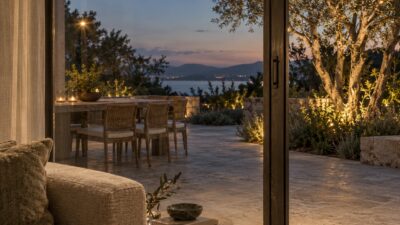
When I was working on an automotive design project years ago, one of the senior designers said something that stayed with me: the first impression of a product is made in the first half-second of seeing it, and everything the viewer experiences after that is colored by that first read. He was talking about cars, but the principle applies equally to buildings. A facade isn’t decoration. It’s the moment of contact between a structure and everyone who passes it.
I’ve looked at a lot of before-and-after renovation photography over the years, both as research and as professional reference. The transformations that stop me aren’t the ones with the biggest budgets. They’re the ones where someone understood the architectural logic of the building before they touched it, and then made decisions that sharpened rather than obscured that logic. Painted brick done wrong looks like a cover-up. Painted brick done right looks like the house was always that color.
- Why the facade is the highest-ROI surface on any property
- The 10 transformations: what changed, what it cost, and why it worked
- 1. Painted brick ranch: the most common facade transformation
- 2. Garage door replacement: maximum impact per dollar
- 3. Front door pivot replacement: the focused accent strategy
- 4. Window frame update: the detail that changes the age of a building
- 5. Driveway resurfacing: the horizontal surface that ties everything together
- 6. Landscaping redesign: the highest-multiple intervention
- 7. Cladding and render update: changing the material logic of the building
- 8. Roof fascia and soffit update: the frame that holds the facade together
- 9. Swimming pool and outdoor transformation: extending the livable facade
- 10. Kitchen-driven exterior renovation: inside-out transformation
- How to sequence multiple facade interventions
- Frequently Asked Questions
These ten transformations are chosen for exactly that quality. Each one tells a story about which intervention produced the change, what it cost relative to the value it added, and what the design thinking was. Before you commission a single sample board, understanding what works and why makes every subsequent decision better.
Why the facade is the highest-ROI surface on any property
From a pure return-on-investment standpoint, exterior improvements consistently outperform interior ones. This seems counterintuitive until you understand the mechanism. Buyers make their emotional decision about a property within the first minutes of seeing it. Everything that follows, the room sizes, the kitchen specification, the storage, is evaluated through the lens of that first impression. A facade that reads as well-maintained and deliberately designed pre-disposes buyers to see the interior generously. One that reads as neglected does the opposite.
The ROI data supports this at every level. Landscaping investments, which are entirely about exterior first impression, can return 100% to 200% of their cost at resale because they directly influence whether a buyer wants to see more. A new garage door, which changes the dominant visual element on many house frontages, returns between
80-90% of your costs for a new garage door according to industry analysis. These aren’t marginal improvements. They’re the most efficient point of investment in most properties.
The table below summarizes the cost ranges and ROI for the ten facade interventions covered in this article. Use it as a planning reference before choosing which transformation to pursue.
| Intervention | Avg. Cost Range | Typical ROI |
|---|---|---|
| Garage door replacement | $1,200-$3,500 | 80-90% |
| Exterior paint / brick paint | $2,000-$8,000 | 55-75% |
| New front door (steel/pivot) | $800-$4,000 | 65-88% |
| Window frame replacement | $4,000-$15,000 | 60-75% |
| Driveway resurfacing | $1,500-$6,000 | 50-70% |
| Landscaping / garden design | $2,000-$10,000 | 100-200% |
| Cladding / render update | $6,000-$20,000 | 50-65% |
| Roof fascia + soffit update | $1,500-$5,000 | 55-70% |
| Swimming pool addition | $35,000-$80,000 | ~7% value gain |
| Minor kitchen remodel | $10,000-$25,000 | 96.1% |
Design principle: before committing budget to any facade renovation, photograph the front of your property at the same time of day, in the same weather, for a week. You’ll see the light behavior and the condition of fixed elements more clearly than you would in a single walk-around. This is what site analysis looks like at residential scale.
The 10 transformations: what changed, what it cost, and why it worked
A facade redesign does not always need a flat modern box; A-frame house design ideas are a useful reference for strong roof geometry, glass gables, and a simple exterior silhouette.
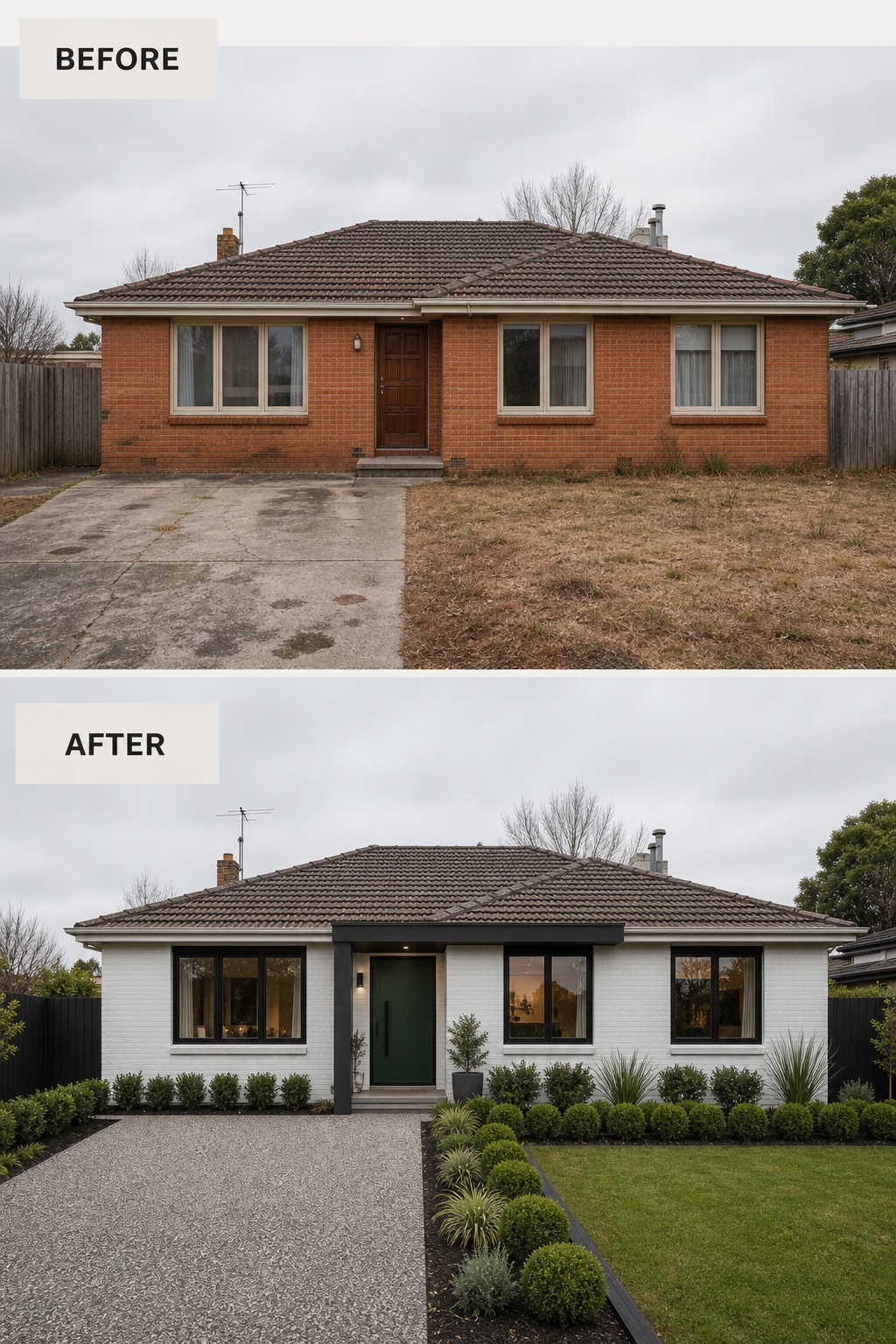
1. Painted brick ranch: the most common facade transformation
Red-orange clay brick was the dominant exterior material in suburban residential construction from the 1950s through the 1980s. It was durable and relatively low-maintenance, but its warm, busy color palette conflicts with most contemporary design directions. Painting it is one of the most discussed and most misunderstood facade interventions.
Done well, as in the transformation above, painted brick produces a facade that reads as clean, intentional, and significantly more current than the original. The key decisions are color temperature (warm whites tend to work better with the original brick undertones than cool whites), sheen level (flat or low-sheen paints read as architectural, high-sheen reads as domestic), and the treatment of the mortar lines. Consistent application that allows the mortar texture to show reads as genuine; patchy application reads as improvised.
Cost range: $2,000 to $8,000 depending on house size and prep requirements. ROI: 55 to 75%. The transformation moves the visual conversation from the material to the form of the building, which almost always improves the read.
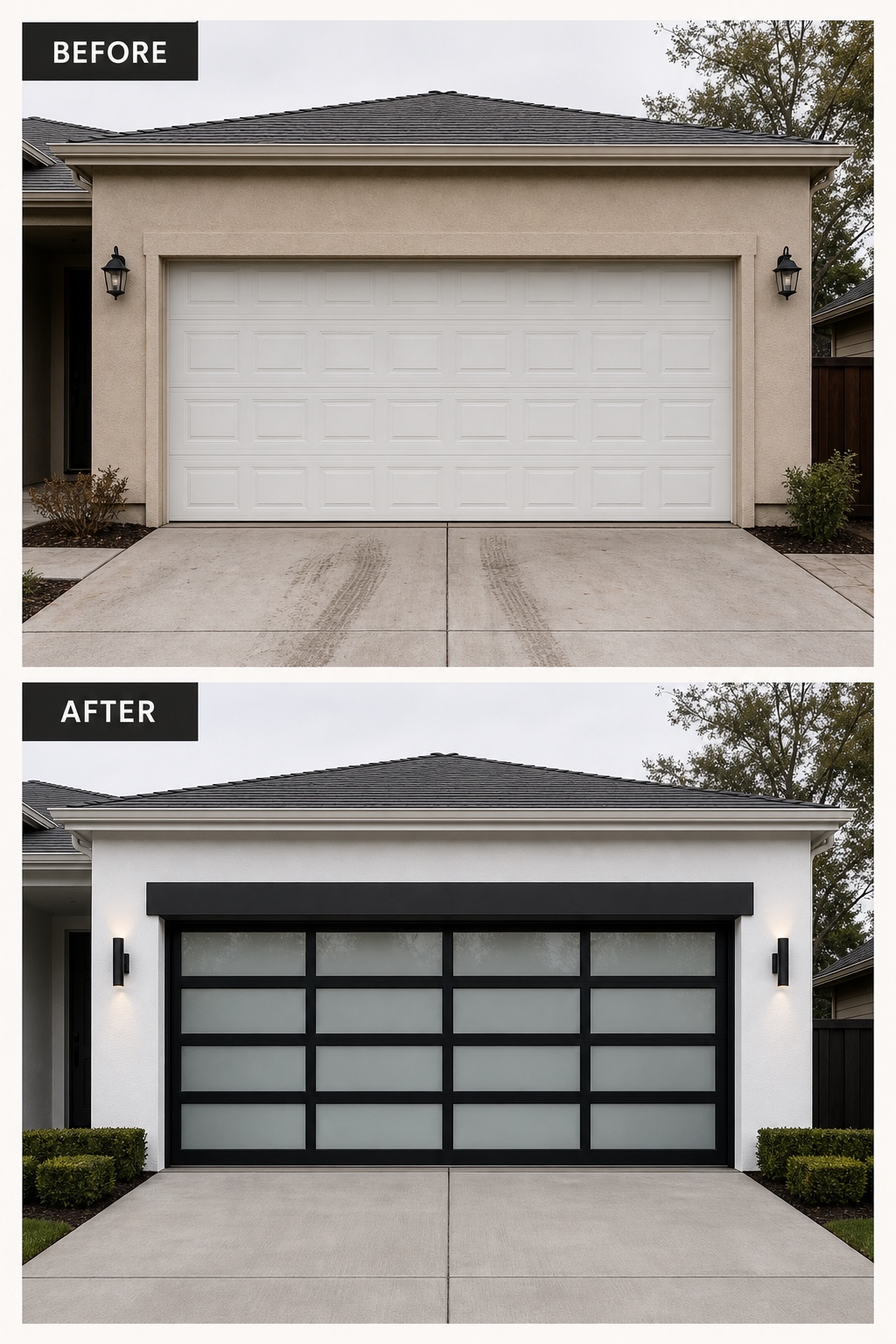
2. Garage door replacement: maximum impact per dollar
On properties where the garage faces the street, the garage door is often the single largest visual element on the facade. An original raised-panel steel door in faded white or off-white can consume 30 to 40% of the visual field from the curb. What it communicates in that position matters enormously.
A modern garage door in a carriage-house style, full-view steel frame with glass panels, or contemporary horizontal slat design changes the entire register of the facade. It signals an upgrade without requiring structural change. The installation is typically a single day. The visual effect is immediate and cumulative: it makes everything adjacent to it look more considered by association.
The ROI figure for garage door replacement is among the strongest of any exterior improvement. The combination of high visual impact, straightforward installation, and relatively modest cost makes it the correct first intervention on many properties where the facade needs improvement across multiple elements.
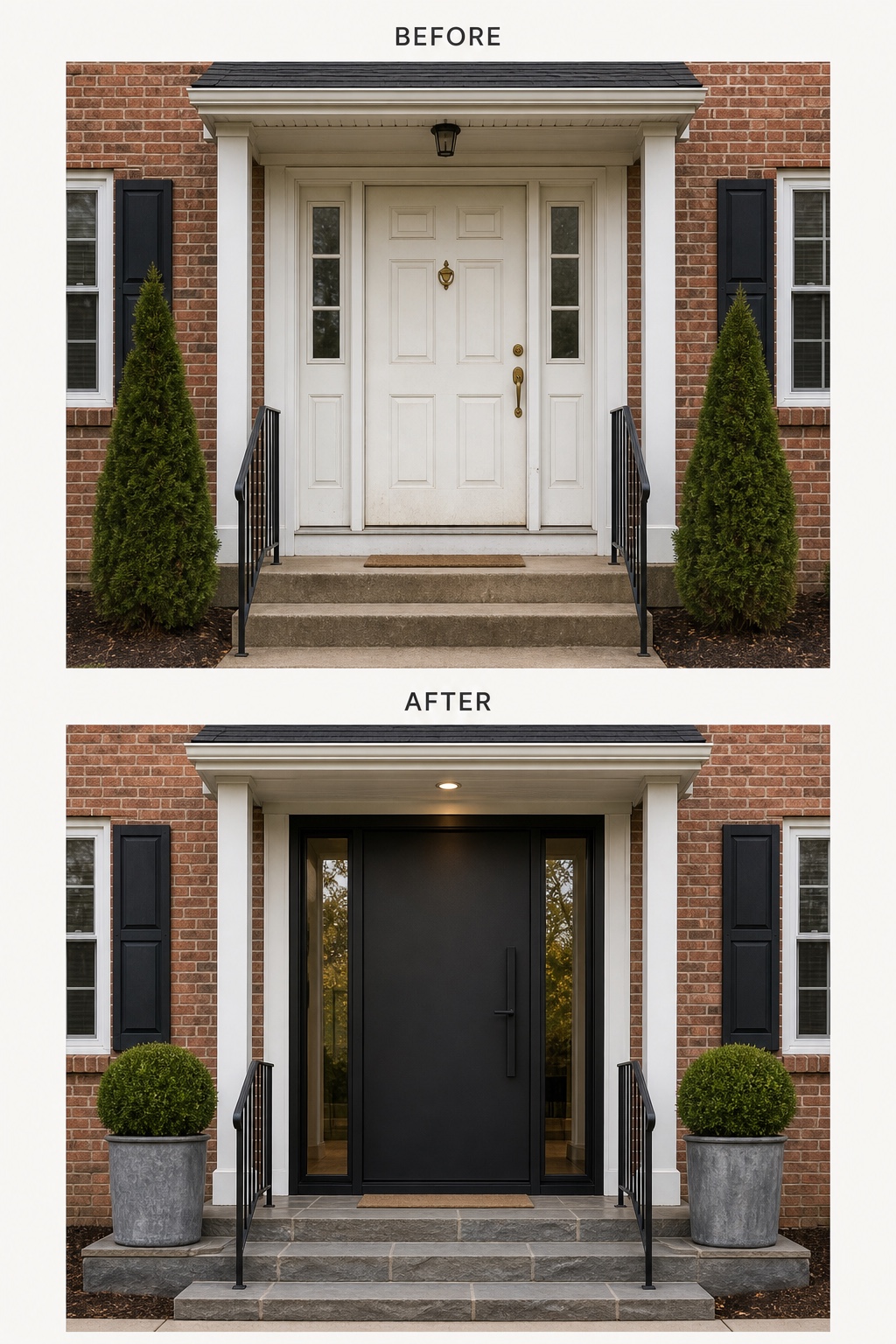
3. Front door pivot replacement: the focused accent strategy
A pivot door is a design statement that works precisely because of its proportion and hardware logic. Unlike a standard hinged door that swings from one side, a pivot door rotates on a central or offset vertical axis, creating a visual weight and opening gesture that reads as architectural rather than domestic.
The transformation this produces on a plain facade is disproportionate to the cost. A bold color choice, forest green, deep navy, matte black, ochre, on a pivot door creates a focal point that the eye moves to immediately. It anchors the facade composition and makes everything around it feel more organized, even if nothing else has changed.
This is the intervention I recommend to clients who want maximum visual impact with minimum disruption. A pivot door replacement can be completed in a day. Combined with new door hardware in a consistent finish, it produces a change in character that feels like a much larger renovation.
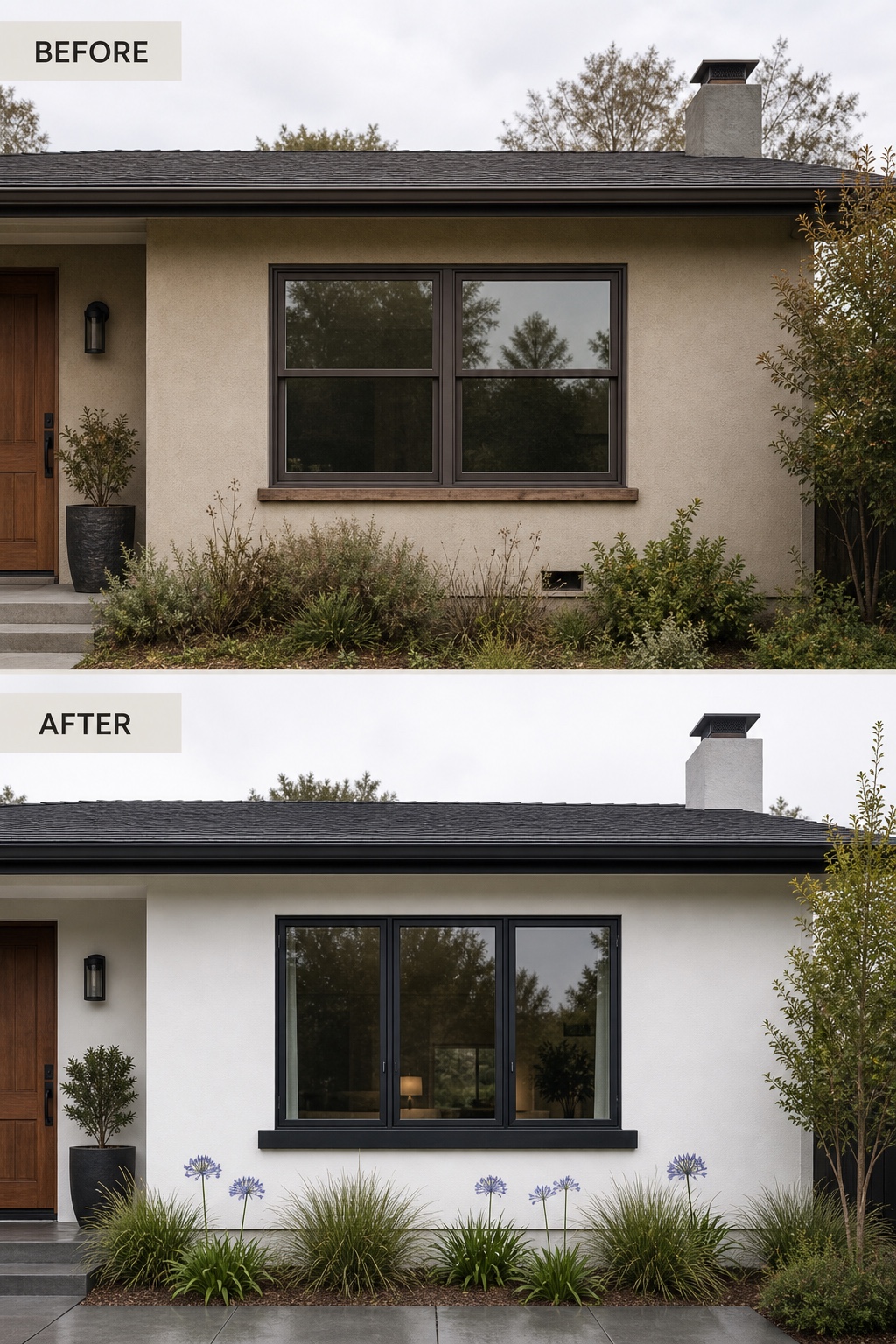
4. Window frame update: the detail that changes the age of a building
Window frames are the most repeated element on any facade. Whatever character they carry, they carry it across every opening. Original aluminum frames in dark brown or bronze from the 1970s and 1980s communicate age more clearly than almost any other element. They’re also among the harder elements to update, because window replacement is genuinely involved in terms of installation and cost.
The transformation produced by replacing original frames with slim black steel-profile windows is one of the most dramatic in residential architecture. The thin sightlines of steel-look frames increase the apparent size of the glazing, reduce the visual weight of the facade, and introduce a material character that reads as contemporary and considered. The same wall with original brown aluminum frames versus slim black frames looks like it was designed in different decades.
This is a higher-cost intervention: $4,000 to $15,000 depending on the number of openings and window specification. The ROI of 60 to 75% reflects this cost. It’s worth pursuing when the original frames are a dominant negative element on an otherwise sound facade.
5. Driveway resurfacing: the horizontal surface that ties everything together
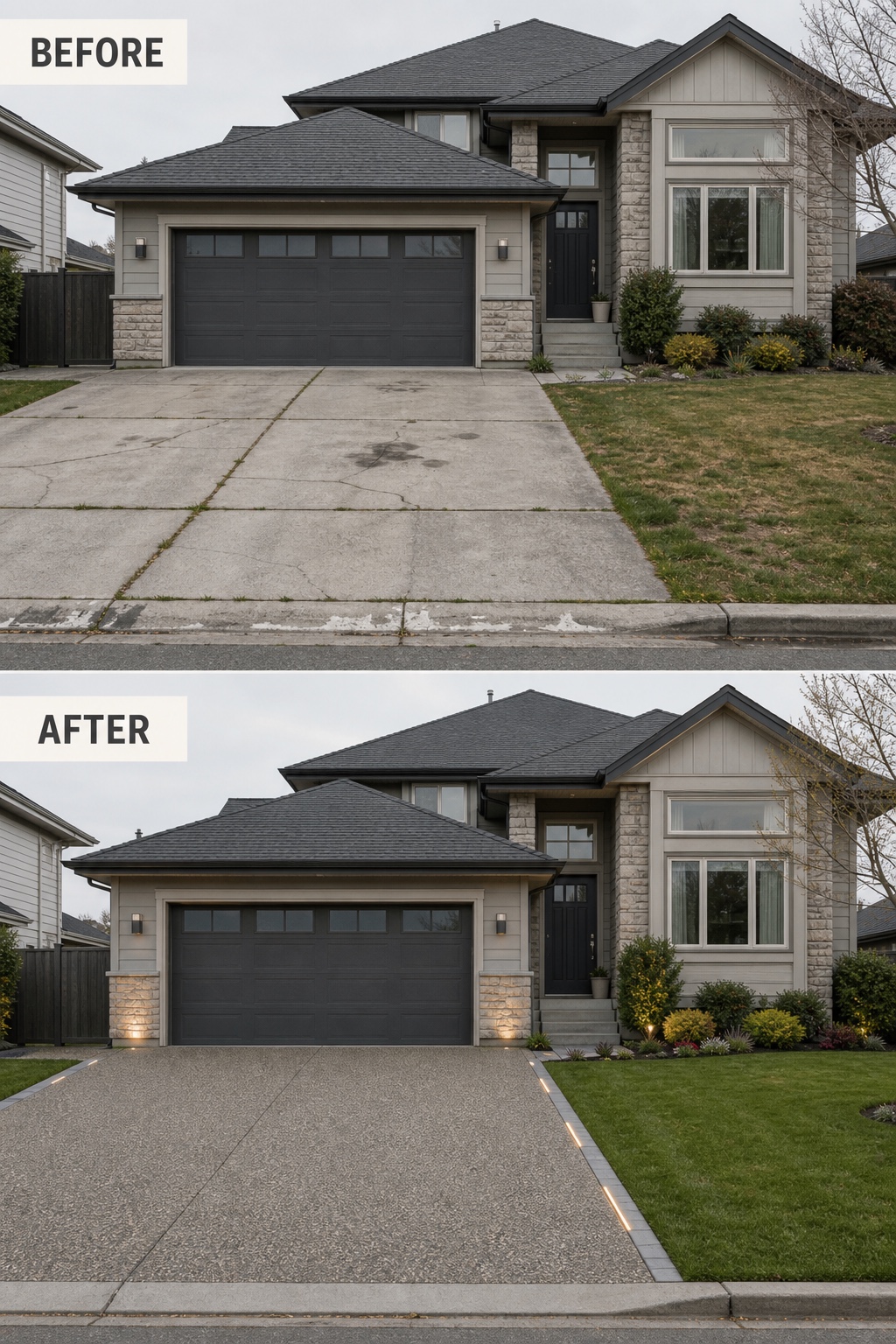
Most facade analyses focus on vertical surfaces. The driveway is horizontal, but in photograph and in person it occupies a significant portion of the visual field. A cracked, oil-stained concrete driveway communicates neglect as clearly as peeling paint. A resurfaced or replaced driveway communicates care, and it ties the exterior composition together from ground level.
The material choice matters significantly. Exposed aggregate concrete (grey pebble finish) reads as clean and contemporary. Resin-bonded gravel reads as warm and informal. Block paving reads as traditional and high-maintenance. Tarmac reads as functional and unremarkable. Choosing the driveway material as part of the facade palette, rather than as a separate functional decision, produces a more coherent result.
Cost range: $1,500 to $6,000 for standard residential driveways. ROI: 50 to 70%. The multiplier effect on adjacent elements, the way a clean driveway makes the planting and facade look more intentional, makes this one of the better-value interventions on a facade with multiple elements that need work.
6. Landscaping redesign: the highest-multiple intervention
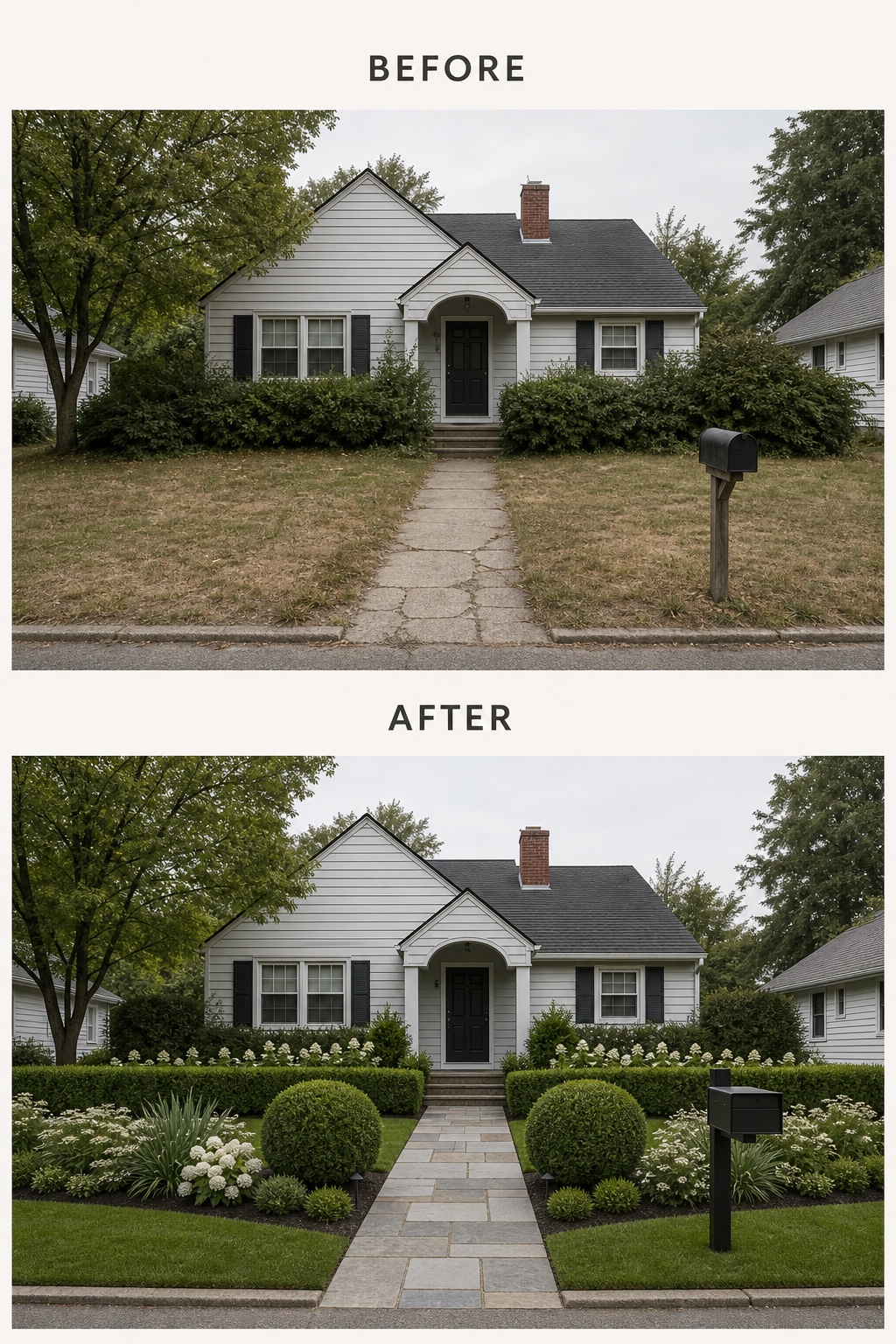
Landscaping returns more per dollar invested at resale than almost any other exterior intervention. The reason is partly financial and partly perceptual. Mature, well-structured planting signals time invested in a property, which buyers read as evidence of care. It also frames the architecture, which makes the building look more considered even if nothing structural has changed.
The design principle that separates high-return landscaping from low-return landscaping is structure over abundance. Formal symmetry, repeated plant species at consistent spacing, defined edges between lawn and planting beds, and scale-appropriate plant selection all contribute to a facade that reads as designed. A single architectural tree in the right position can change the character of an entire frontage. Three of them, badly placed, can obscure it.
Landscaping investments in the range of $2,000 to $10,000 can return 100% to 200% of their cost because they operate on perception rather than specification. A buyer who drives past a beautifully planted frontage doesn’t evaluate it by cost per plant. They evaluate it by how it makes them feel about the property.
7. Cladding and render update: changing the material logic of the building
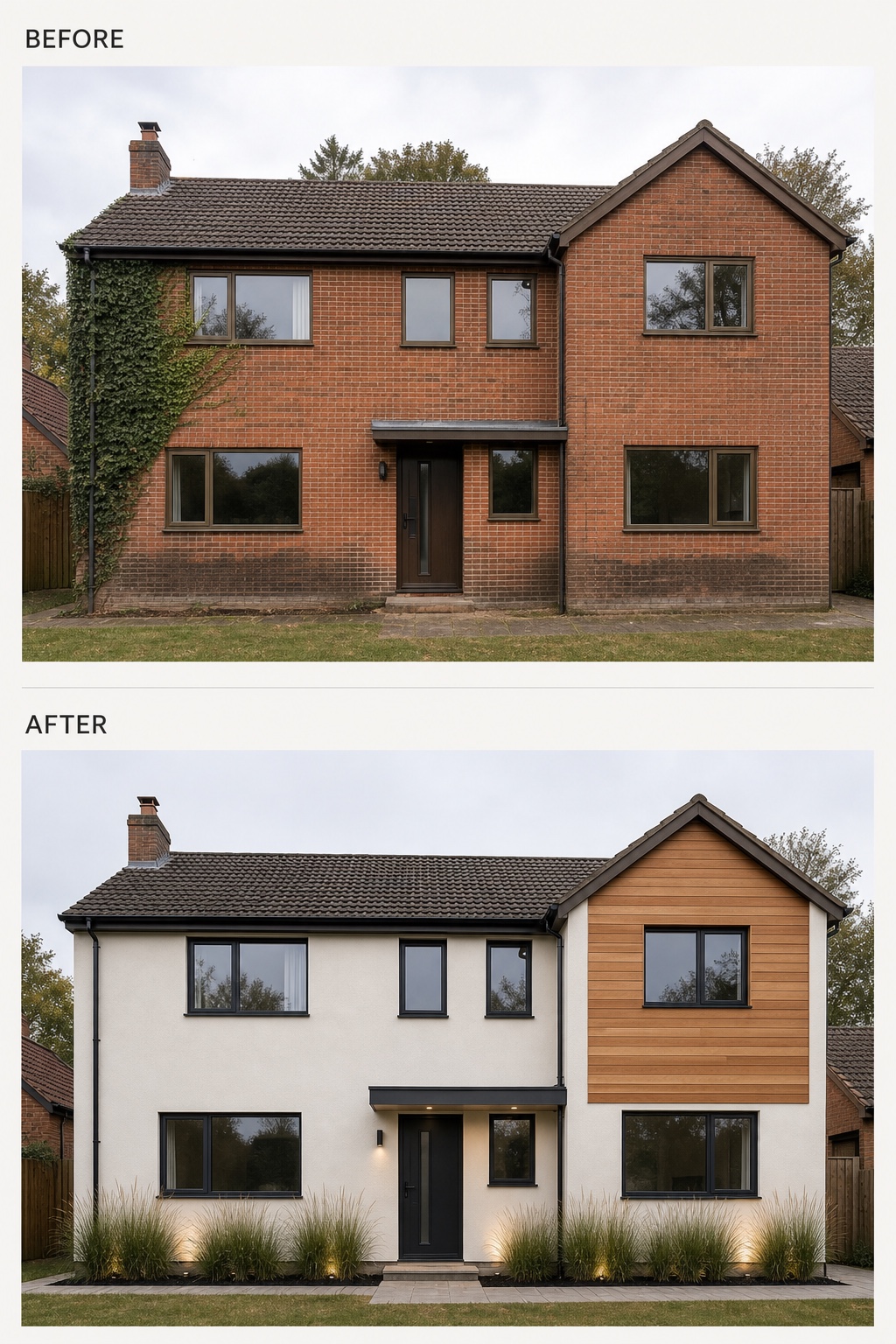
When brick or original cladding has deteriorated beyond paint as a fix, or when the architectural direction requires a genuine material change, re-cladding or render application changes the fundamental material logic of the facade. This is a larger intervention, both in cost and in design commitment.
The transformations that work well use the new material to clarify the building’s form rather than just to cover the old one. A rendered facade in a warm grey or white can reduce the visual complexity of an older brick exterior and allow the window arrangement and massing to read more clearly. Timber or composite cladding introduced to a gable or entrance zone creates material contrast that organizes the facade into zones with distinct character.
Cost range: $6,000 to $20,000 depending on scope and material. ROI: 50 to 65%. This is a higher-commitment intervention that requires careful material selection and professional application. Done correctly, it can change the perceived era of a building by two or three decades.
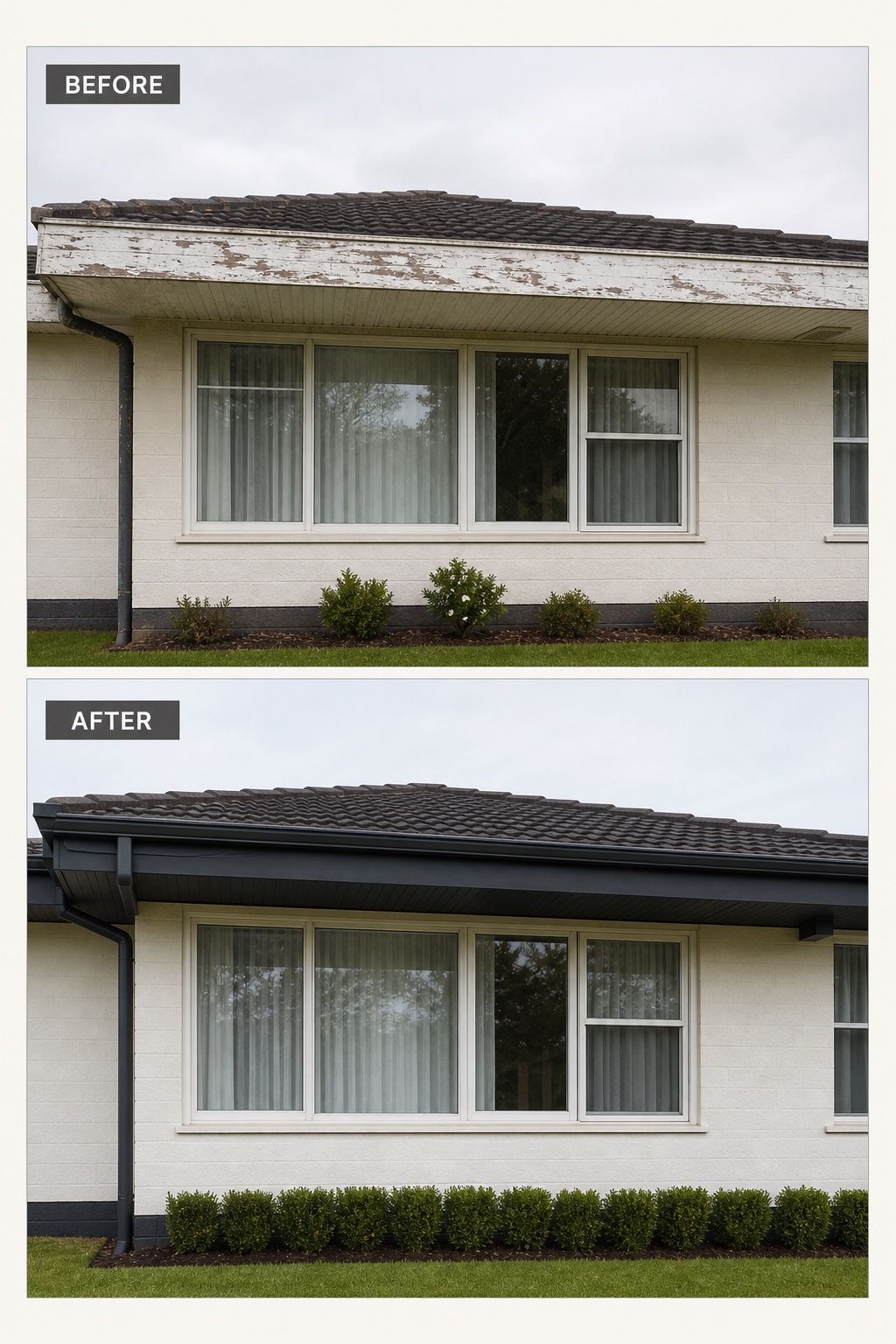
8. Roof fascia and soffit update: the frame that holds the facade together
Fascia and soffit are the horizontal bands at the roofline that most people don’t consciously notice until they’re in poor condition. Once they’re updated, the effect is immediately visible in how the building reads as a complete composition. Clean fascia in a strong color, charcoal or black against a white or pale exterior, creates a definitive frame at the roofline that makes the whole facade feel more finished.
This is one of the most cost-effective interventions available. Cost range: $1,500 to $5,000 for a standard residential property. The material choice between painted timber, UPVC, and aluminum affects both the look and the maintenance requirement. Painted timber in good condition reads most warmly. Powder-coated aluminum reads most architecturally. UPVC reads adequately but doesn’t age as well under sustained UV exposure.
The design logic here is the same as adding a frame to a painting. The roofline frame defines the top edge of the facade composition and makes everything below it read as more intentional, even if the wall and door and windows are unchanged.
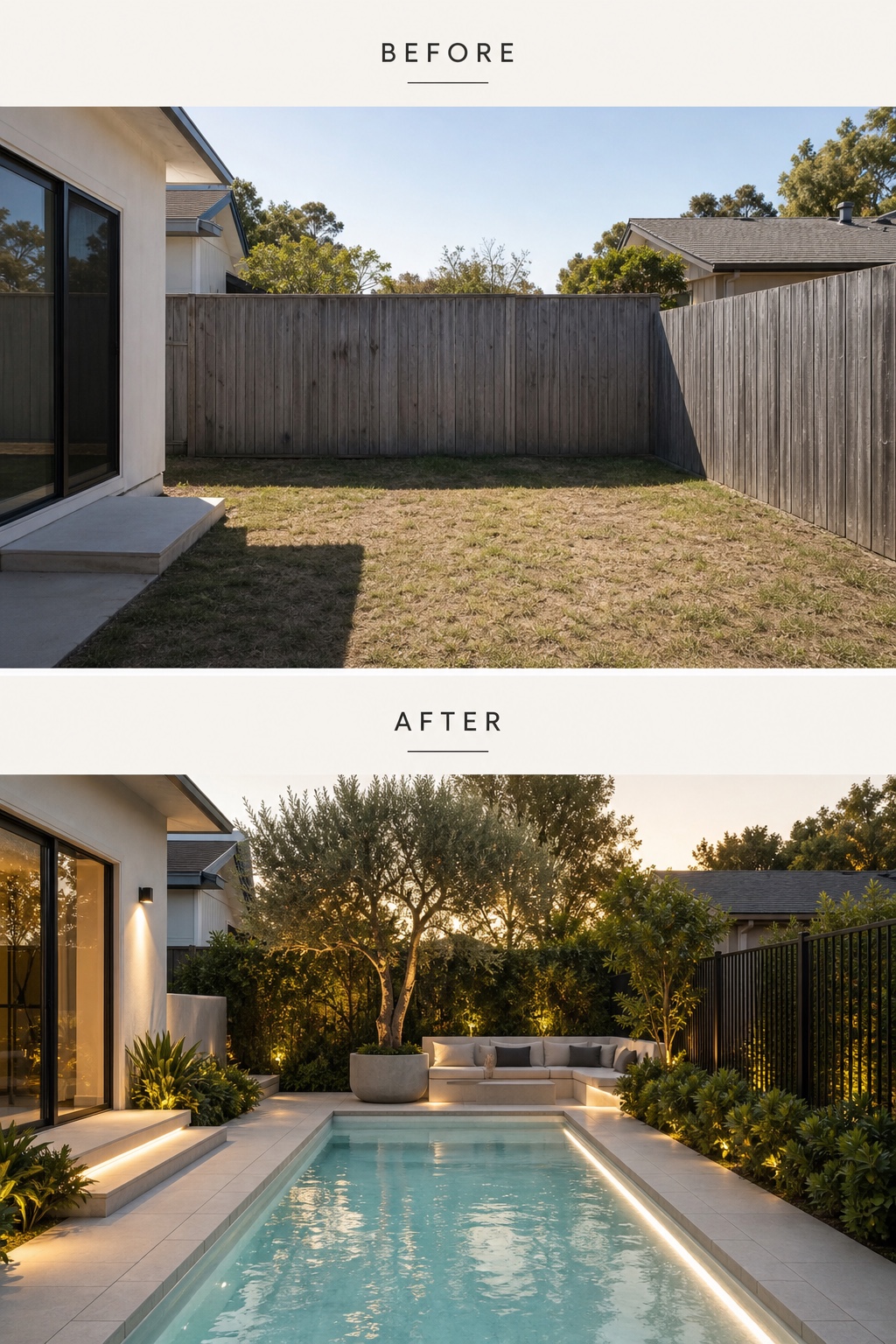
9. Swimming pool and outdoor transformation: extending the livable facade
A swimming pool is technically a backyard intervention rather than a street-facing facade element, but it changes the spatial character and perceived value of a property so significantly that it belongs in any discussion of high-ROI exterior transformation. The key word in the ROI equation is context: pools add the most value in warm climates and in neighborhoods where pools are common and expected.
According to industry data, a swimming pool can boost the value of a property by approximately 7%. On a $500,000 property, that’s $35,000 of value added, against a pool installation cost that ranges from $35,000 to $80,000 in most markets. The financial return is roughly break-even to slightly negative on pure resale math, but the lifestyle return and the speed-of-sale benefit in pool-dense markets can make it worthwhile.
The design decisions that distinguish a pool transformation from a hole in the ground: poolside material consistency with the house exterior, landscaping that frames the pool zone as a room rather than an open space, and lighting design that makes the pool usable and visually appealing in the evening hours. These are architectural decisions, not just contractor decisions.
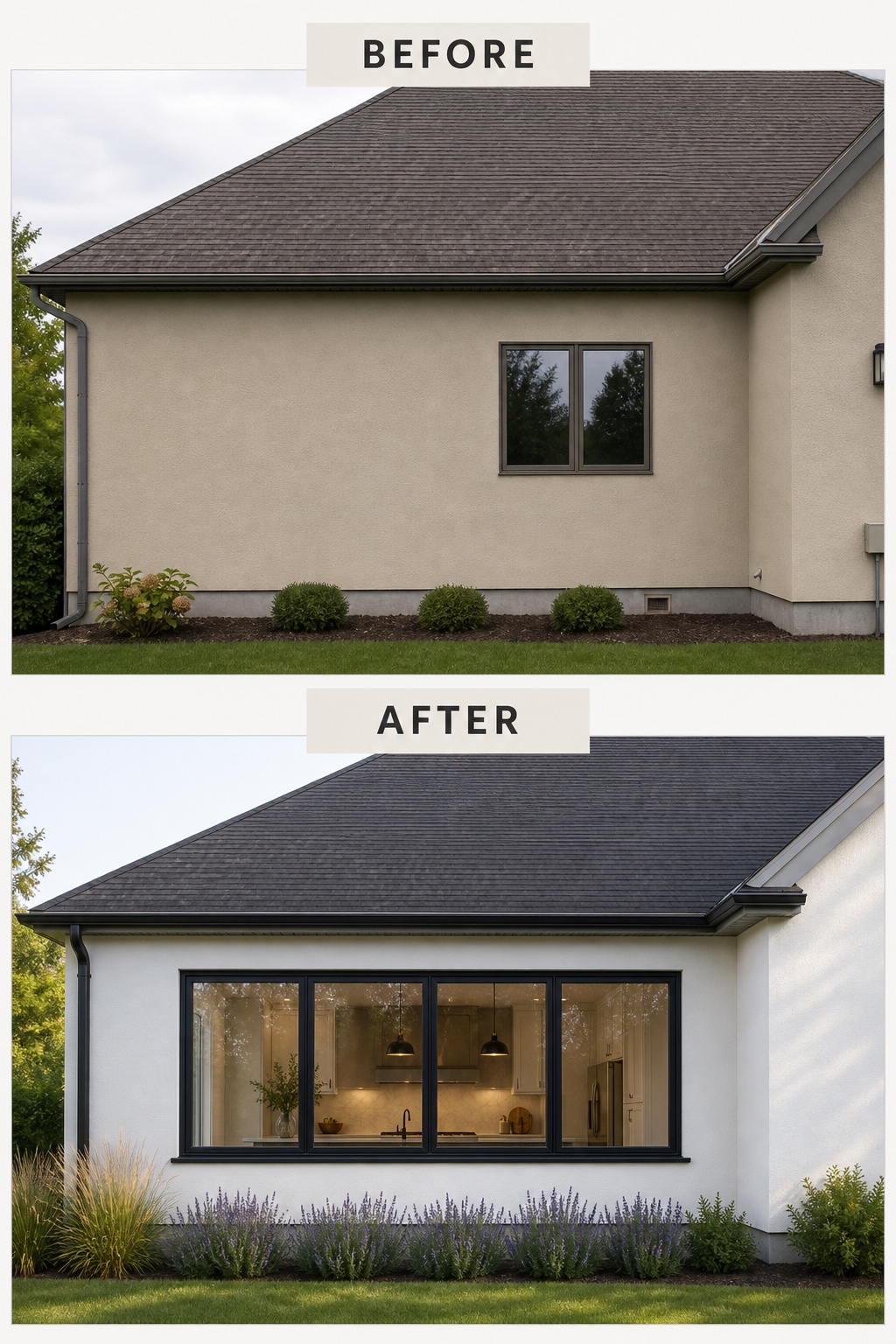
10. Kitchen-driven exterior renovation: inside-out transformation
The final transformation in this series is less conventional: a kitchen remodel that reads outward. When a kitchen renovation includes new window placement, window enlargement, or the addition of a glazed door to an outdoor space, the change becomes visible on the exterior facade and changes its character.
A minor kitchen remodel carries an industry-tracked remodel has an ROI of 96.1%, meaning the investment is almost fully recovered at resale. When that remodel includes elements that affect the exterior, the facade benefit comes essentially for free alongside the interior improvement.
The design approach: treat the kitchen renovation as a facade opportunity. Where does additional glazing make sense? Is there a side wall that could take a larger window or a full-width steel casement, changing the read of the building from the side elevation? Does the layout allow for a glazed back door that becomes a design element in the rear facade? These questions, asked at the renovation planning stage, produce exterior results that cost nothing beyond what the interior work already required.
How to sequence multiple facade interventions
Most properties need more than one intervention to reach the facade quality they’re capable of. The question is order. Which change produces the most clarity about what else is needed, and which changes become redundant or counterproductive if done in the wrong sequence?
The principle I apply: fix the frame before the fill. Fascia, roofline, and boundary definition (fencing, driveway edges) should be addressed before investing in wall finishes or planting. These elements define the composition that everything else sits within. Getting them right first means every subsequent decision has a clear spatial context.
Second: address the dominant negative element. On every property there’s usually one thing that the eye goes to first and reads as wrong. It’s almost always worth fixing that single element before spreading budget across multiple smaller improvements. A beautiful planting scheme against a dilapidated garage door is a composition with a large hole in it.
Third: invest in landscaping last, because it’s the element most subject to change and most sensitive to the finished state of everything around it. Planting selected against the final wall color and door color will be more coherent than planting selected before those decisions are made.
One principle from industrial design that applies directly to facade renovation: visual weight should be intentional. Every dark element on a facade adds visual weight. Every light element reduces it. Before choosing colors and materials, sketch the facade in black and white and ask whether the weight is where you want it. Dark roofline, mid-tone walls, and a strong door color is a classic weight distribution that works across almost all residential architecture.
Before-and-after facades are also useful photo subjects; these facade photography ideas explain how light, angle, and scale can make exterior changes read clearly.
A strong facade redesign usually starts by repairing facade rhythm in architecture: the window spacing, vertical bays, entry emphasis, and material breaks need to feel intentional together.
Frequently Asked Questions
What is a facade redesign?
A facade redesign is any intervention that changes the appearance of a building’s exterior: paint, cladding, windows, doors, roofline treatment, landscaping, or driveway. It can range from a single focused change, like a front door replacement, to a full transformation involving multiple materials and elements. The goal is to improve how the building reads from the street while increasing its market value.
Which facade improvement has the best ROI?
Landscaping returns the highest multiple in most markets: 100% to 200% of investment. Garage door replacement returns 80 to 90% of cost for one of the strongest focused-intervention ROIs. Front door replacement is close behind at 65 to 88%. The best choice depends on which element is currently the most significant negative on your specific facade.
Does painting brick increase home value?
Yes, when done correctly. Painted brick on a well-prepped surface in an appropriate neutral color consistently improves curb appeal scores and buyer first impressions. The ROI of 55 to 75% reflects solid financial return. The risk is in poor execution: patchy application, wrong color temperature, or inadequate primer prep can produce a result that’s harder to reverse than the original brick.
How much does a facade renovation typically cost?
A focused single-element renovation like a garage door ($1,200 to $3,500) or front door ($800 to $4,000) sits at the lower end. A full facade transformation involving paint, windows, landscaping, and driveway typically runs $20,000 to $60,000 for a standard residential property. Each element adds independently, so most homeowners sequence improvements across one to three years rather than tackling everything simultaneously.
Do swimming pools add value to a home?
In warm climates and pool-dense neighborhoods, yes: approximately 7% of property value on average. In cold climates or neighborhoods where pools are uncommon, the value addition is more limited and the maintenance cost can offset it. The financial case is strongest when the pool is designed as part of a broader outdoor living strategy rather than as a standalone feature.
What facade changes do buyers notice most?
Buyers consistently notice the front door first, followed by the garage door on properties where it faces the street. Window condition and frame quality register early in the impression-forming process. Landscaping structure and maintenance level affect the general read of the whole property rather than creating a single focal point. Driveway condition is noticed primarily as a negative when poor, rather than as a strong positive when good.
Is it worth updating windows as part of a facade renovation?
When original frames are a dominant negative element, yes. Slim black steel-profile replacement windows produce one of the most dramatic facade transformations available because window frames repeat across every opening and carry their character cumulatively. The cost ($4,000 to $15,000) is significant but the visual effect is permanent and requires no ongoing maintenance beyond what any modern window requires.
For exterior transformations that affect paths, planting, and arrival sequences, aerial site analysis for architecture projects gives the design team a wider view.
- 768shares
- Facebook0
- Pinterest768
- Twitter0
- Reddit0