A friend of mine used to spend nearly every Saturday on lawn triage: patching worn spots, pulling weeds, dragging a hose across a yard that still looked tired by the end of summer. The garden had stopped being a place she relaxed in and turned into a standing chore on the calendar. That’s the story behind most grass alternatives conversations I have with clients. Nobody starts by wanting less grass. They start by wanting their weekend back.
- Why replace a traditional lawn in the first place?
- The main grass alternatives designers use
- Where synthetic grass actually makes design sense
- Where artificial grass can look wrong
- Cost and value: compare the whole landscape, not just turf installation
- Drainage and base preparation as design details
- Heat, comfort, and outdoor zoning
- How to combine synthetic turf with real planting
- FAQ
- What is the best alternative to grass in a backyard?
- Is synthetic grass better than natural lawn?
- What are low-maintenance alternatives to grass?
- Does artificial grass need drainage?
- How do you make synthetic turf look natural in landscape design?
- Can synthetic grass be combined with a vegetable garden or edible planting?
- Design the yard around how you actually use it
Synthetic turf is one answer, but it’s only one of several, and treating it as the automatic replacement for a struggling lawn is how you end up with a yard that reads as a single flat green rectangle instead of a designed outdoor space. The better question isn’t “turf or grass.” It’s which combination of surfaces actually fits how a family uses that specific patch of ground.
I approach a struggling lawn the same way I’d approach any material problem on a project: figure out what’s actually failing and why, before reaching for the material everyone’s already talking about. Sometimes that’s synthetic turf. Just as often, it’s a groundcover, a gravel path or a planting bed that solves the underlying issue without covering the whole yard in one material.
Why replace a traditional lawn in the first place?
Most lawn-replacement conversations start with one of a handful of recurring complaints: the water bill during dry months, a mowing schedule nobody enjoys keeping, a shaded side yard where grass has never once taken properly, mud tracked in by kids or dogs, or simply a stretch of lawn nobody actually walks on except to mow it. None of these problems require ripping out every blade of grass on the property. They usually point to one specific zone that’s fighting its conditions.
I always start by asking what the space is actually used for, not what’s currently planted there. A rarely used side lawn and a daily-use pet run have completely different design answers even if they’re both currently “grass that isn’t working.” I’ve written more broadly about that shift in mindset in low-maintenance landscape design, which is worth reading before deciding what replaces the lawn specifically.
Underused lawn is the case people notice least, even though it’s often the easiest fix. A stretch of grass that only gets walked on to mow it doesn’t need a low-maintenance replacement so much as a different use altogether: a gravel seating area, a raised planting bed, or a small deck. Swapping the surface material without changing the function just gets you a different kind of unused space.
The main grass alternatives designers use
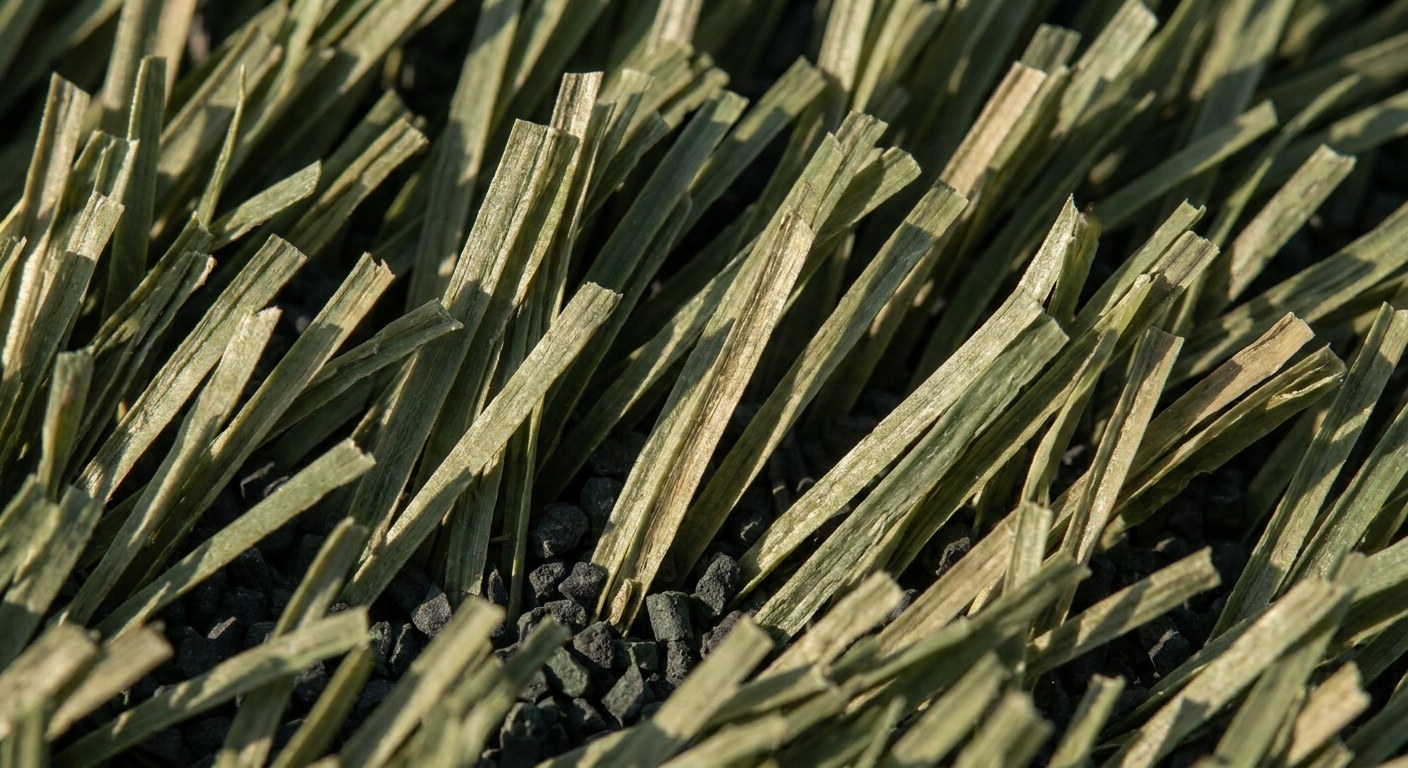
Synthetic turf is the option most people think of first, and it earns that reputation in the right spot: consistent green, minimal upkeep, and a surface that tolerates heavy foot traffic without turning to mud. I’ve gone deeper into where it fits a backyard specifically in transforming a backyard with synthetic turf, but it’s genuinely just one tool among several.
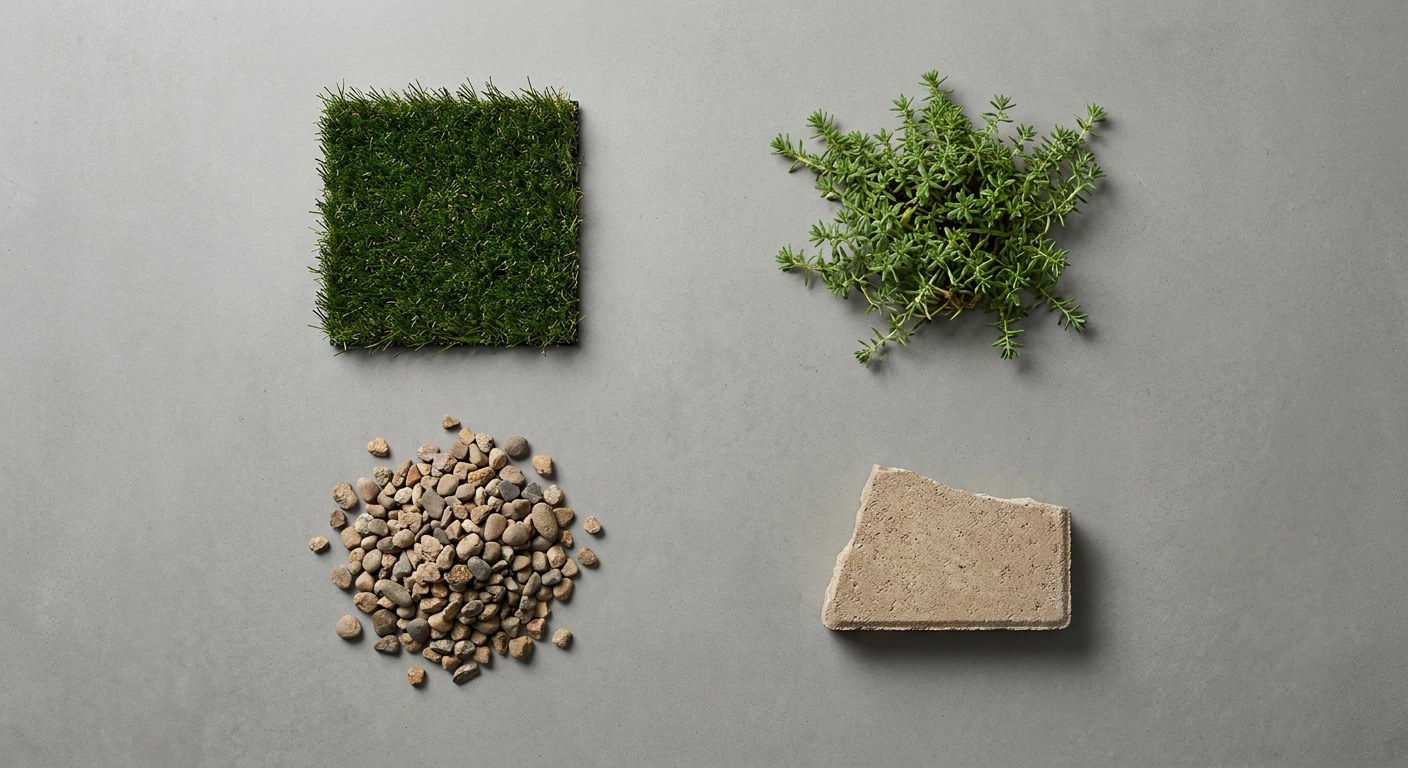
Groundcovers like creeping thyme or clover handle light foot traffic while staying alive and textured in a way plastic can’t fake. Gravel and decomposed granite work well for paths and transitional zones, draining fast and reading as intentional rather than neglected. Pavers set with planting between the joints soften a hard surface visually while keeping it functional.
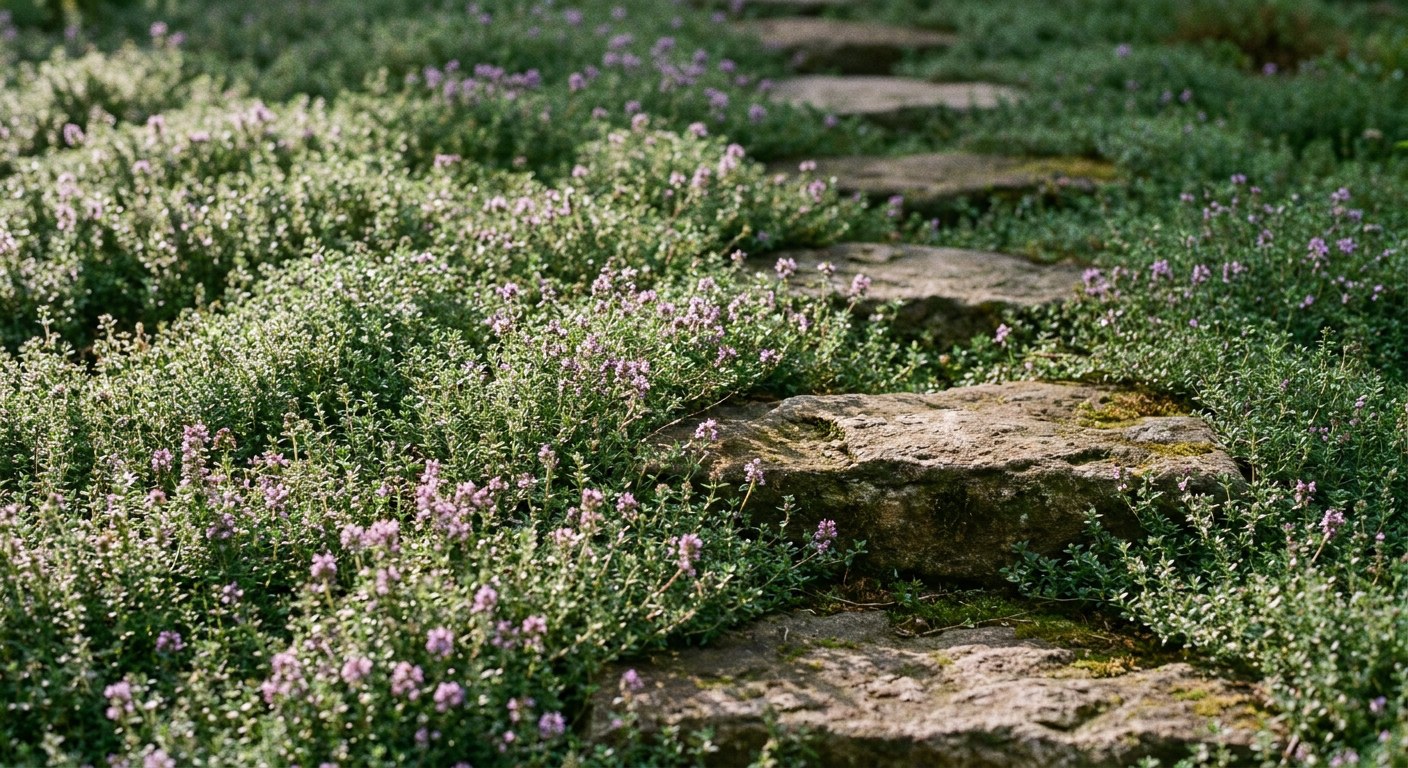
Mulched beds and meadow-style native planting cost the least to establish and, once established, often need less attention than either grass or turf. Xeriscape beds built around drought-tolerant species solve the water problem without covering ground in synthetic material at all. Most well-designed low-maintenance yards use three or four of these together, not one alone.
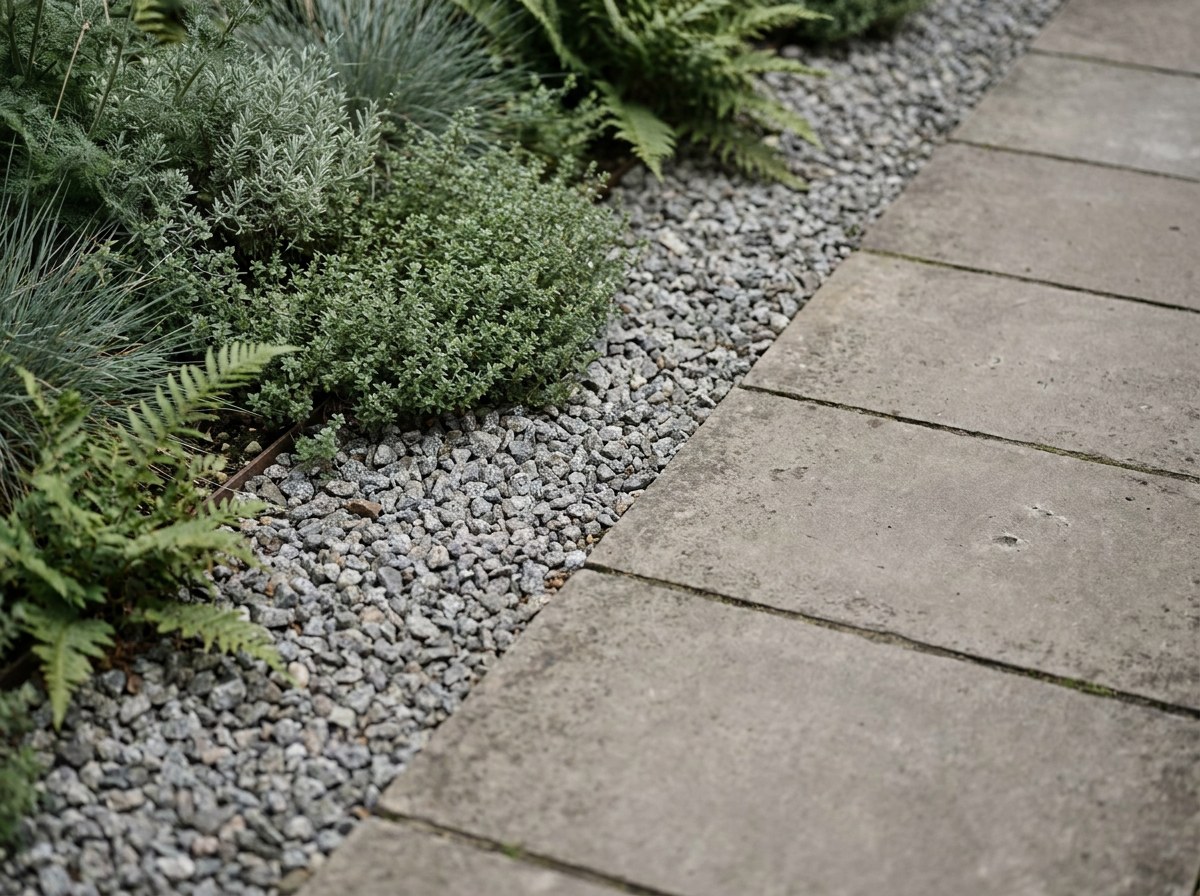
Think of these as a materials palette rather than competing options. A single yard might use gravel for the main path, a groundcover along a low-traffic border, a xeriscape bed catching full afternoon sun, and a small patch of synthetic turf right where the dog actually runs. None of these choices has to dominate the whole property, and mixing them is usually what keeps a low-maintenance yard from reading as flat or generic.
Where synthetic grass actually makes design sense
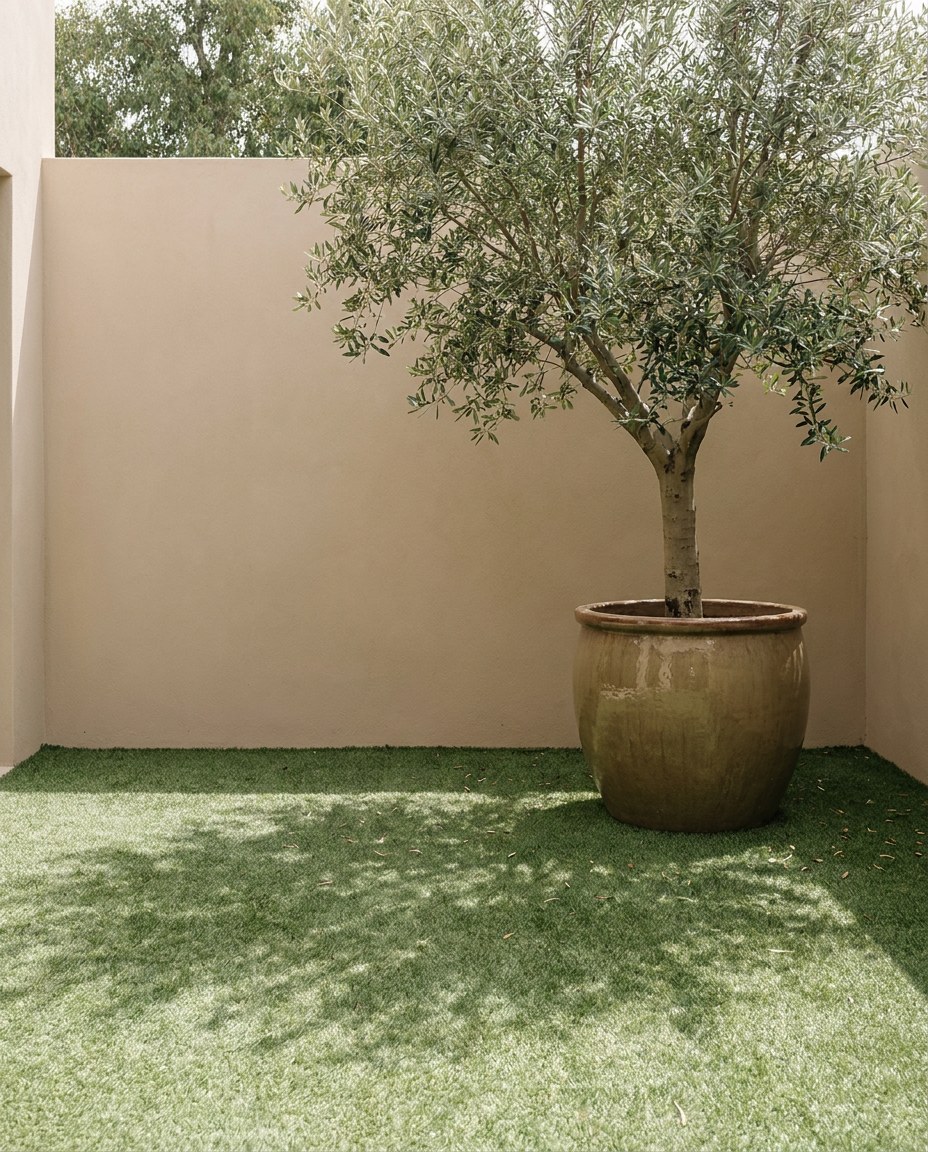
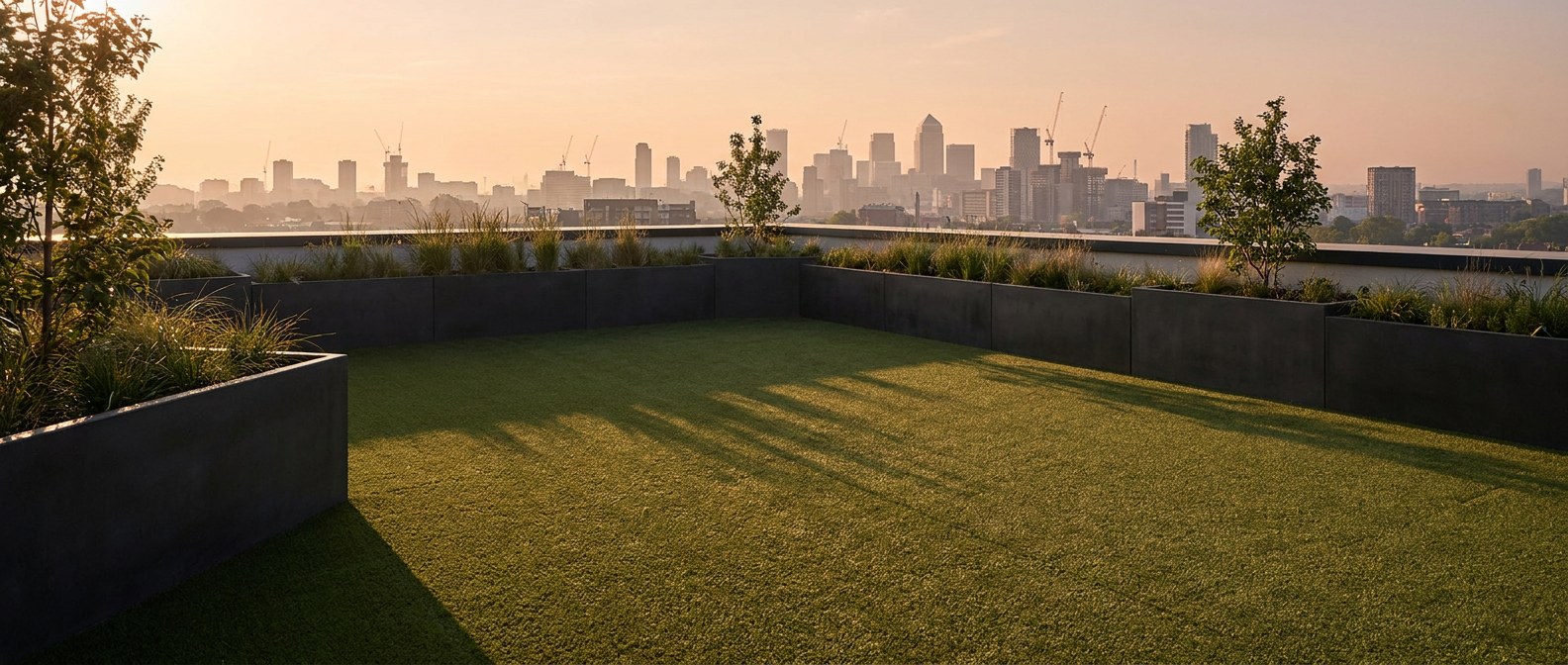
Synthetic turf earns its place in specific conditions rather than as a default. Small enclosed courtyards benefit because the scale hides the giveaway uniformity that reads as fake at a larger size. A dedicated play strip for kids gets year-round use without the bare, muddy patches real grass develops under a swing set or trampoline within a season.
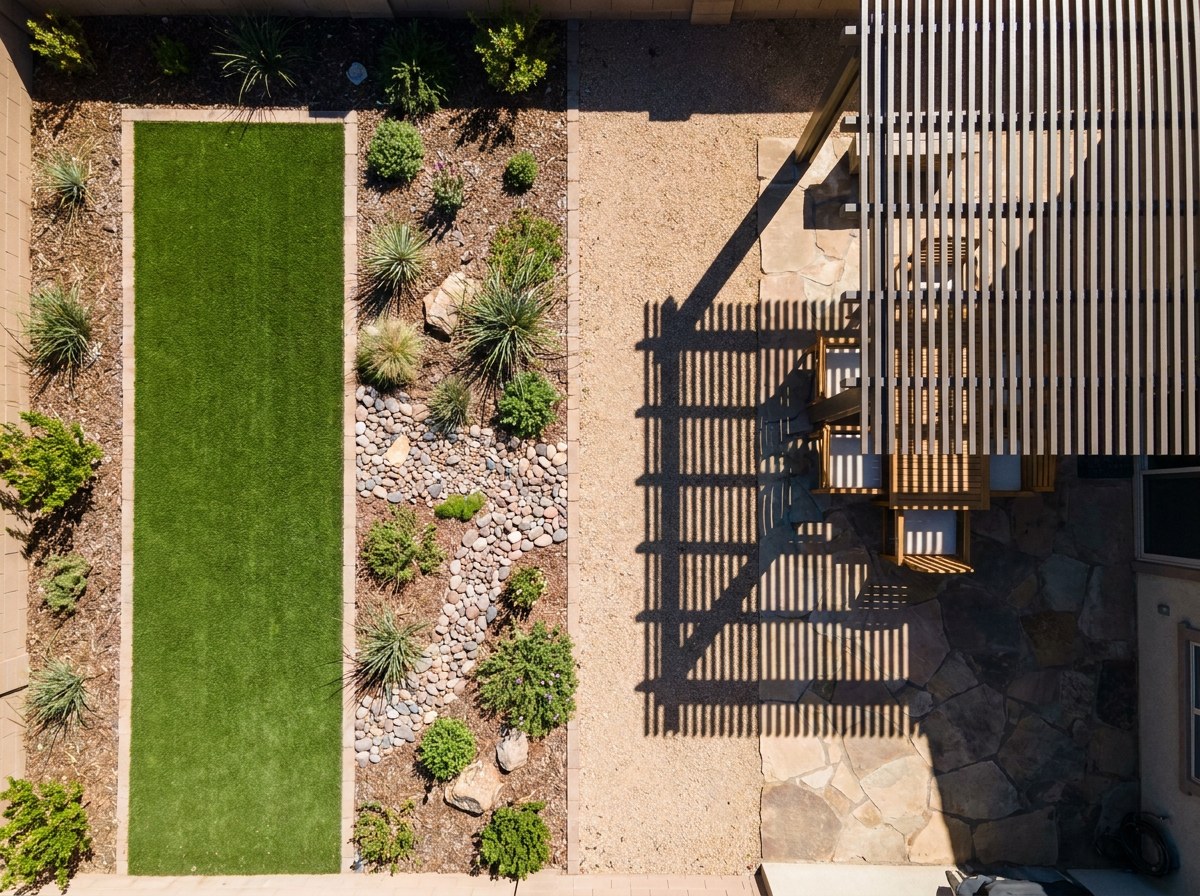
Pet zones are a strong fit too, since the surface handles daily traffic and cleans up faster than soil that dogs have already worn into a dirt path. Roof terraces and awkward shaded corners round out the list, both being places where living grass genuinely struggles regardless of care. A north-facing strip beside a fence that never gets direct sun will fight you every season if you keep replanting grass there; synthetic turf, or better yet a shade-tolerant groundcover, ends that fight permanently.
High-traffic paths deserve a mention on their own, separate from the general yard. Any strip of grass that connects a gate to a door, or a driveway to a side entrance, takes far more wear than the rest of the lawn and shows it first. Turf or a hard path material both solve this better than grass ever will in that exact location, since the problem isn’t shade or water, it’s simple daily compression that grass roots can’t recover from fast enough.
Where artificial grass can look wrong
The failure mode I see most often is coverage: turf run edge to edge across an entire yard with no planting, gravel or hardscape breaking it up. From a distance it reads as a green rectangle rather than a landscape, and that flatness is exactly what makes synthetic turf look artificial even when the product itself is decent quality. For a closer look at where this material genuinely earns its reputation as a low-maintenance win, the benefits of low-maintenance landscaping and where artificial grass fits is worth reading alongside this piece, since the two angles complement each other.
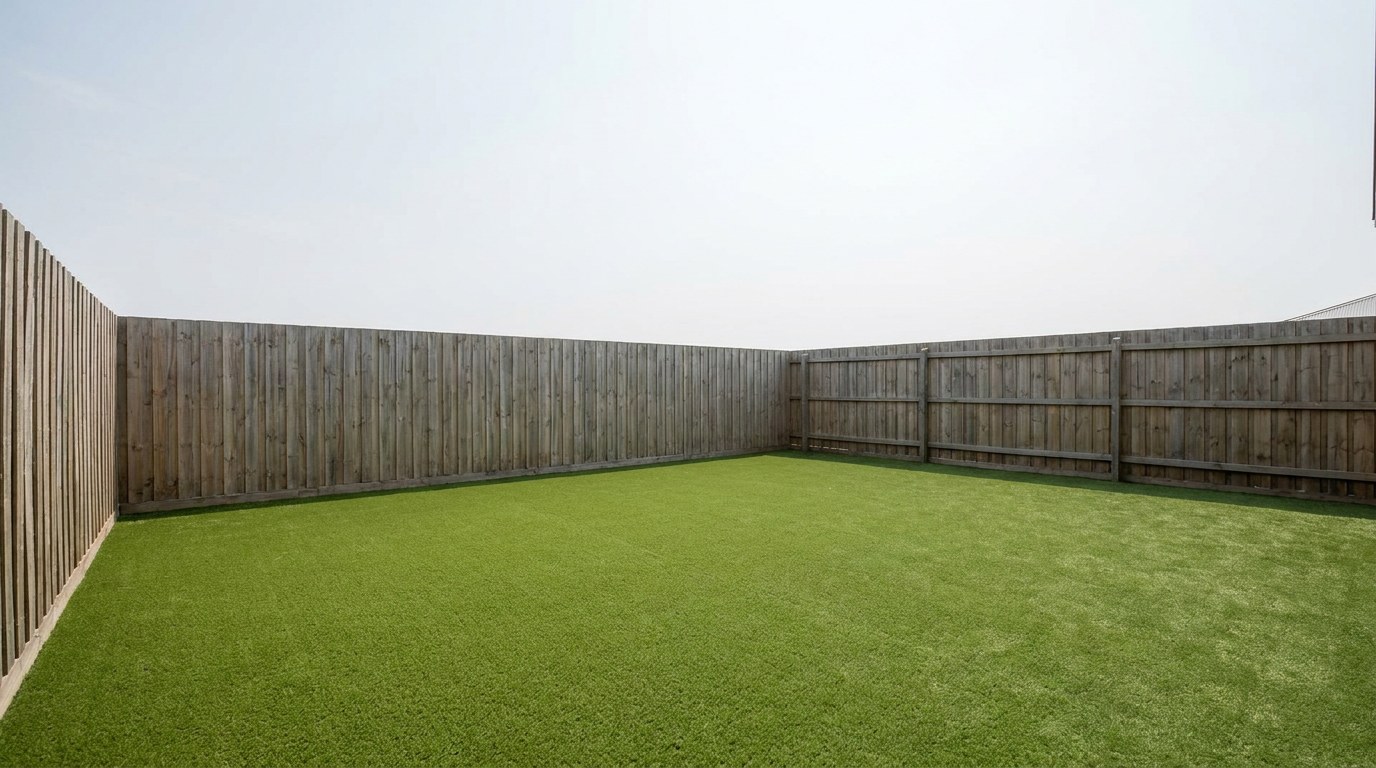
Sloppy edging is the second giveaway, a hard straight line where turf meets a garden bed with no transition material to soften it. Add surface heat that makes a yard uncomfortable barefoot in summer, drainage that pools instead of clearing, and zero living planting anywhere in the composition, and you get the exact look most people are picturing when they say they don’t like artificial grass. Every one of those problems is a specification or design failure, not an inherent limit of the material itself.
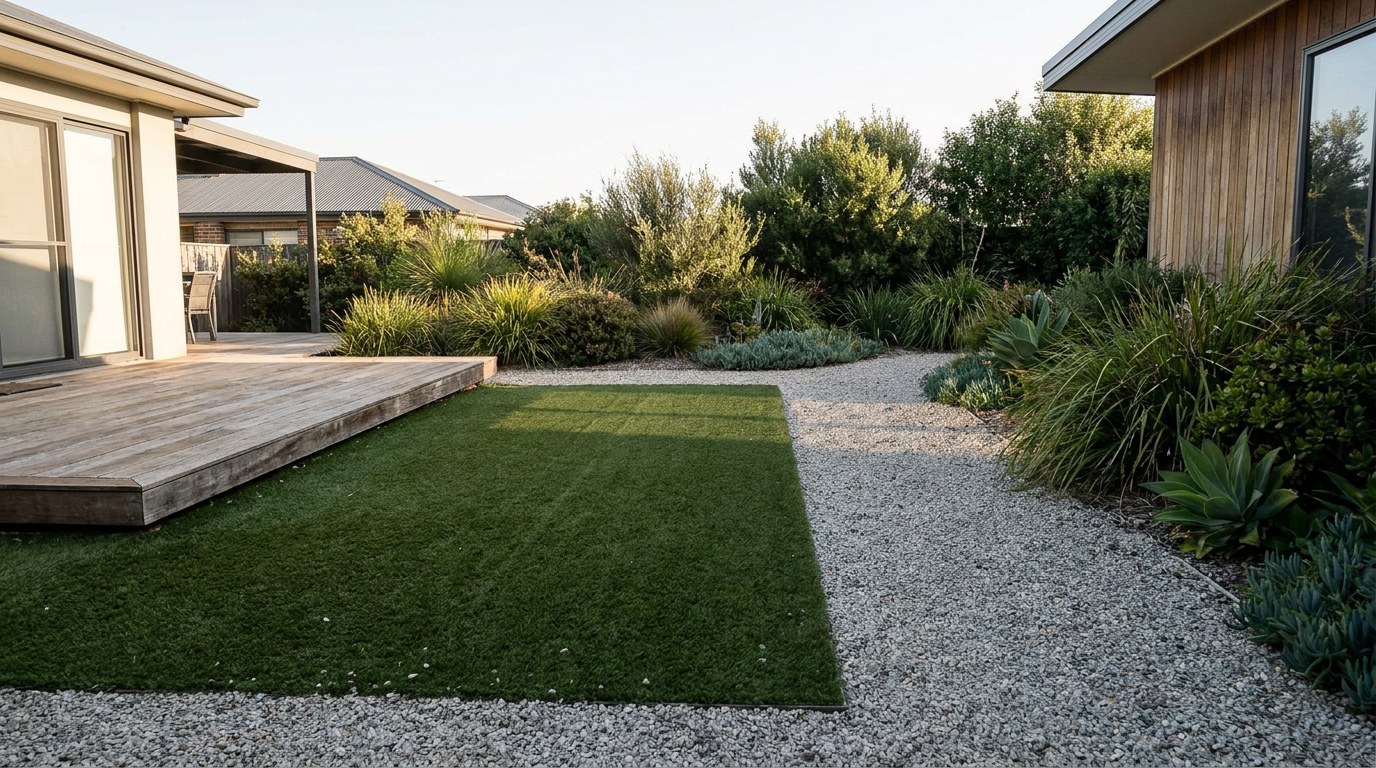
I can usually tell within a few seconds of seeing a photo whether a synthetic lawn was designed or just installed. The designed ones almost always have a curved or irregular edge line, at least one tree or large shrub breaking up the surface, and some change in material, gravel, stepping stone, low wall, somewhere in the composition. The installed-only ones are a rectangle of green with a fence around it, and that flatness is what reads as fake far more than the fiber quality ever does.
Cost and value: compare the whole landscape, not just turf installation
Comparing synthetic turf to grass by installation price alone misses most of the picture. A living lawn carries an ongoing pattern of watering, mowing, seasonal repair and the occasional full reseed after a rough summer, none of which shows up on day one but all of which adds up across years of ownership. Turf shifts that pattern toward a bigger upfront job followed by lighter, more predictable upkeep: brushing, rinsing and occasional infill top-ups rather than a weekly mowing cycle.
The more useful comparison looks at the whole yard rather than turf versus grass in isolation. A design that pairs a smaller turf zone with drought-tolerant beds, a gravel path and a shaded seating area usually ends up easier to maintain, and better looking, than either an all-grass yard or a wall-to-wall synthetic one. For a practical read on what ongoing turf care actually involves once it’s installed, maintaining artificial grass for lasting results lays out the real routine rather than the sales pitch version.
Long-term upkeep also depends heavily on how much of the yard is doing which job. A yard that’s mostly living planting with a small turf zone has different upkeep than one that’s mostly turf with a narrow planted border, even if the total square footage of each material is similar. Planting beds need seasonal attention but very little water once established with the right species, while turf needs almost no seasonal attention but a bit more ongoing care than people expect when it’s covering a large area.
Repairs follow a similar logic. A living lawn recovers from most damage on its own given enough water and time, while a synthetic lawn needs a proper repair, a reseated seam, a topped-up infill, a re-secured edge, if something goes wrong. Budgeting a little time for that kind of occasional upkeep, rather than assuming turf is entirely hands-off, keeps expectations realistic from the start.
Drainage and base preparation as design details
Drainage is the part of a turf installation nobody sees and everybody eventually notices if it’s done wrong. Water needs a clear path through or around the surface, and that means checking slope, downpipe locations, door thresholds and soil condition before a single roll of turf goes down, not after. A courtyard tight against a house wall needs particular care around thresholds, since water pooling against a foundation is a much bigger problem than a soggy lawn ever was.
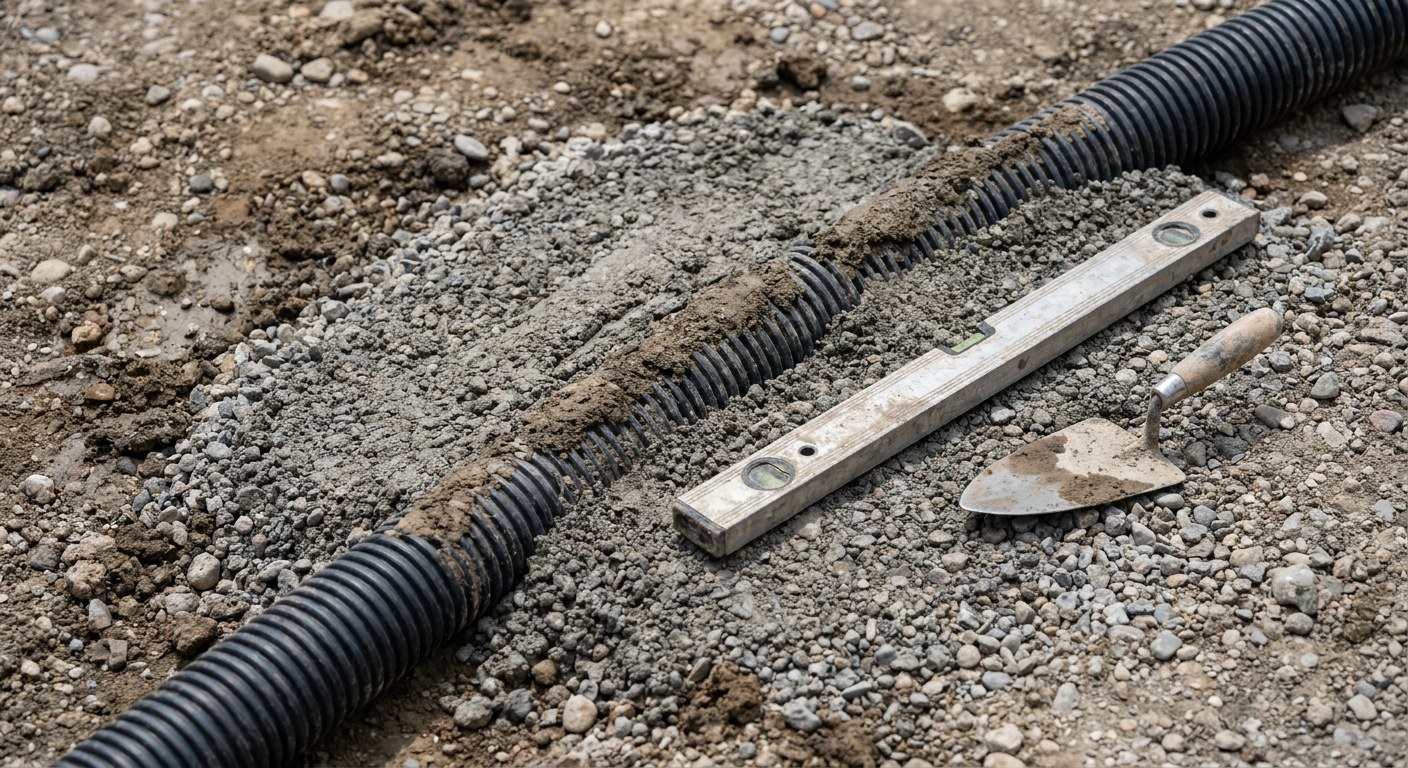
The base and fixing method matter as much as drainage. I’ve written specifically about why adhesive often outperforms nails for securing artificial grass, and it’s a good example of how much of a synthetic lawn’s long-term success is decided by details you’ll never see once the installation is finished. Pet zones deserve extra attention here too, since they need drainage that handles regular rinsing without holding odor, which is a different spec than a purely decorative area needs.
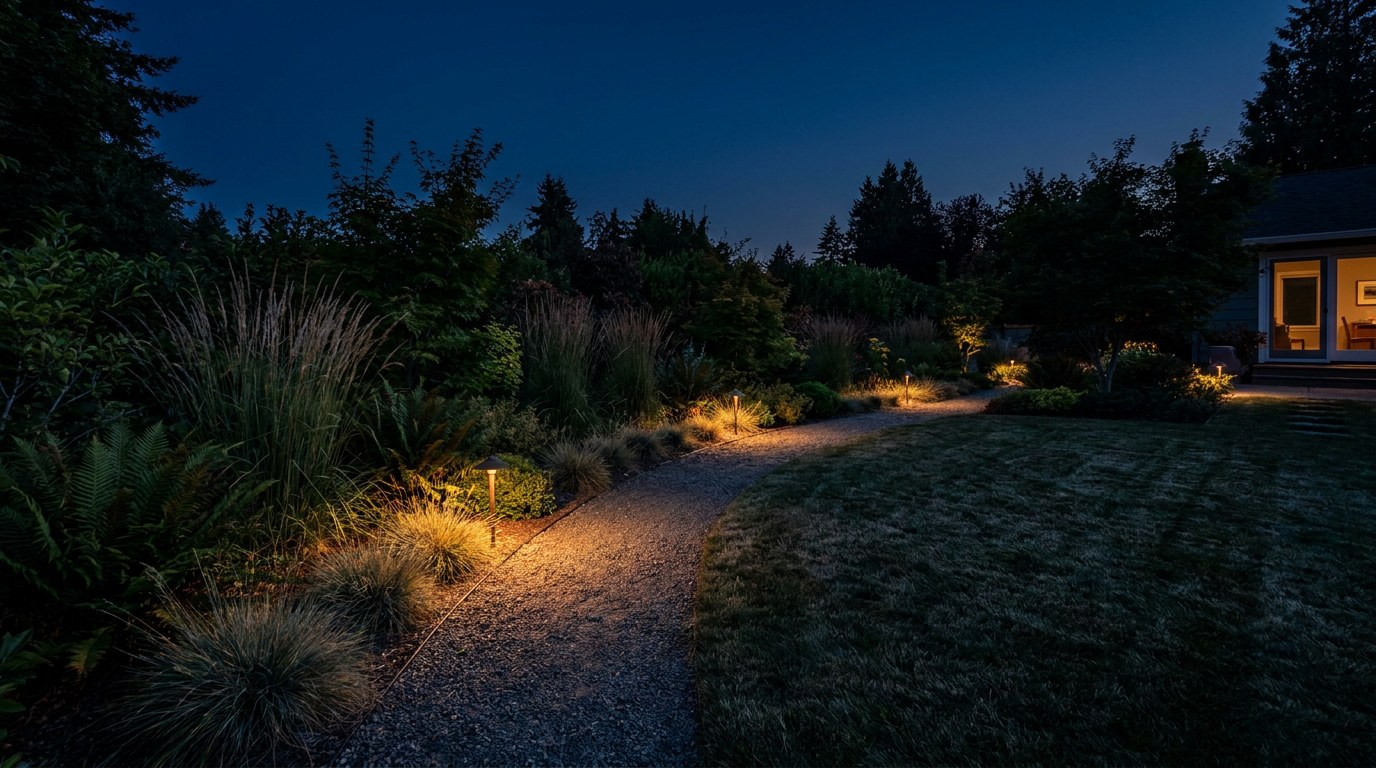
Permeable transitions matter just as much as the drainage under the turf itself. Where a lawn meets a hard patio or a driveway, water needs somewhere to go besides straight across the surface toward the house. A gravel or planted buffer between a hard edge and the turf handles this quietly, doing double duty as both a drainage path and the kind of material break that keeps the whole yard from reading as one flat surface.
Heat, comfort, and outdoor zoning
Synthetic turf runs hotter underfoot than living grass in direct summer sun, sometimes by a wide enough margin that a surface comfortable in the morning is genuinely unpleasant by mid-afternoon. Good zoning plans around this instead of ignoring it: put turf where it gets morning or filtered light, keep the harshest afternoon sun for hardscape or planting that doesn’t mind the heat, and route a barefoot path through shaded ground rather than across open turf.
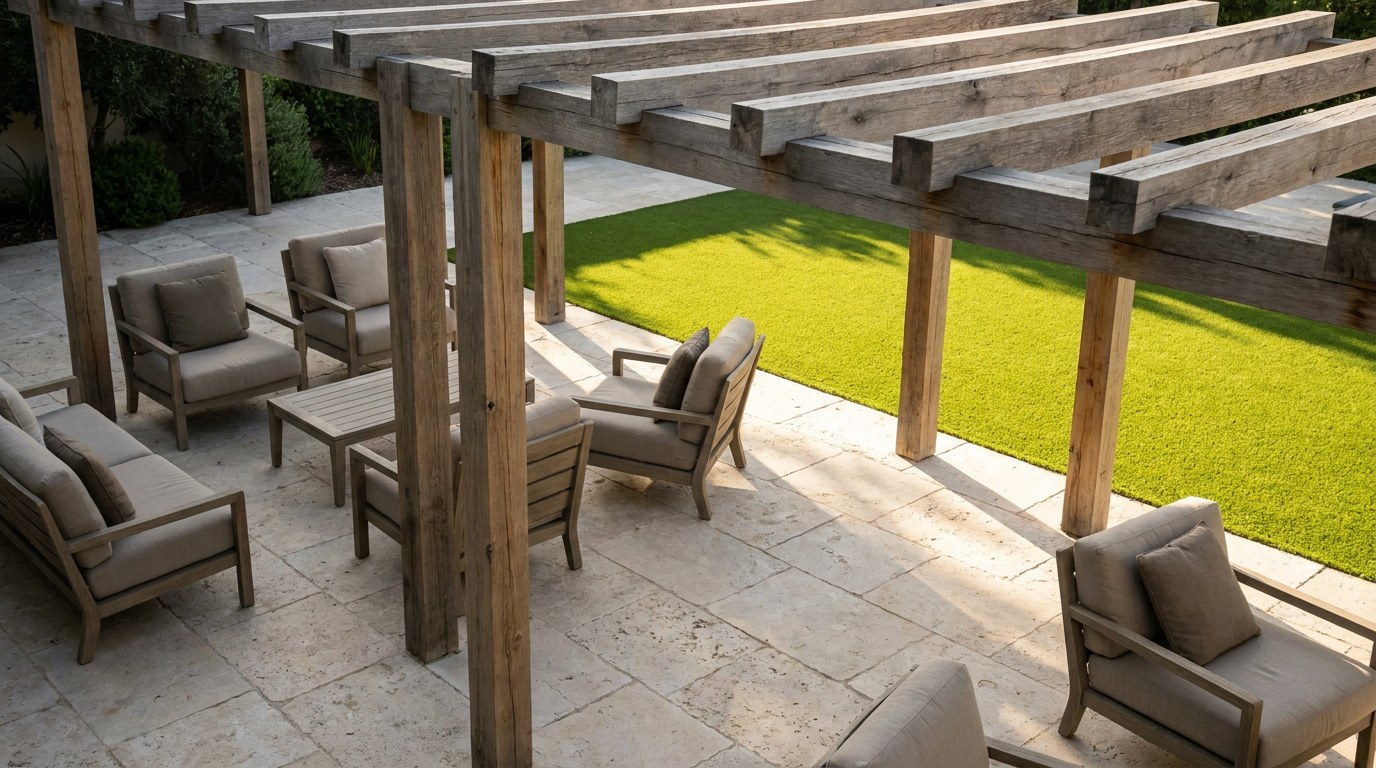
Shade structures, trees and pergolas do double duty here, cooling the immediate area while also breaking up the visual flatness that makes large turf areas look artificial in the first place. I go into laying out a full outdoor space around these considerations in designing the perfect outdoor living space, which treats shade and material choice as one connected decision rather than two separate ones.
Lighter-colored hardscape near a turf zone helps more than people expect, since dark pavers and dark turf fibers both absorb and hold heat that radiates back into the space for hours after direct sun has moved on. A lighter gravel or stone path running alongside a turf area keeps the whole zone a few degrees more comfortable through the evening, which matters most exactly when a family actually wants to use the yard.
How to combine synthetic turf with real planting
The single best fix for a yard that reads as “all turf” is a planted border, even a narrow one, running along the edges where turf meets a fence or wall. Native plants in that border do more design work than almost anything else in the yard, since they add movement, seasonal change and texture that no synthetic material can fake. A gravel band between turf and a planting bed gives both surfaces a clean, deliberate edge instead of one material awkwardly butting into another.
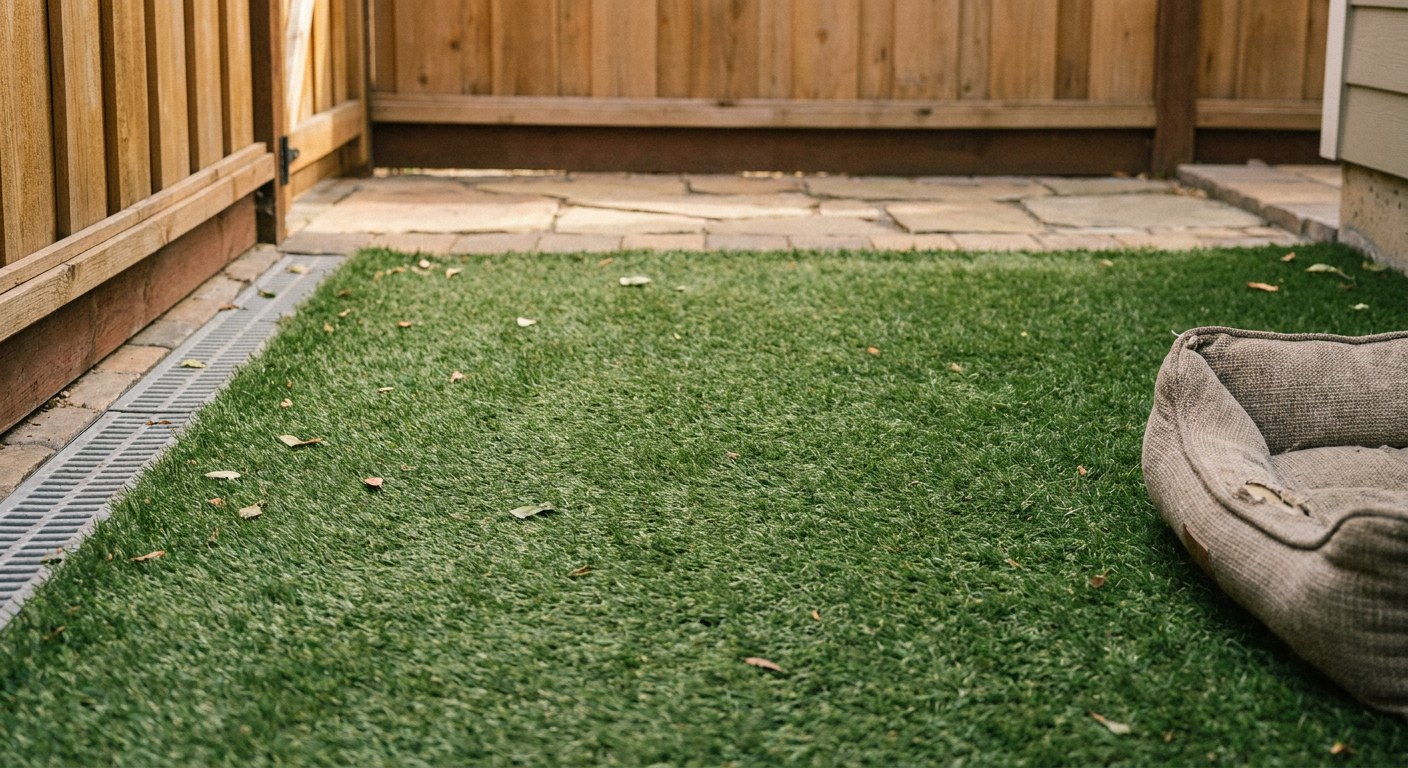
Stepping stones set into turf or gravel break up a flat expanse and create an obvious, intentional path rather than an undifferentiated green field. Layer in a few large planters near seating areas, and the composition starts reading as a designed landscape that happens to include synthetic turf, rather than a synthetic lawn with a few plants added around the edges. I’ve put together more detail on that layering approach in design tips for working synthetic grass into a larger outdoor space, which walks through several real layouts.
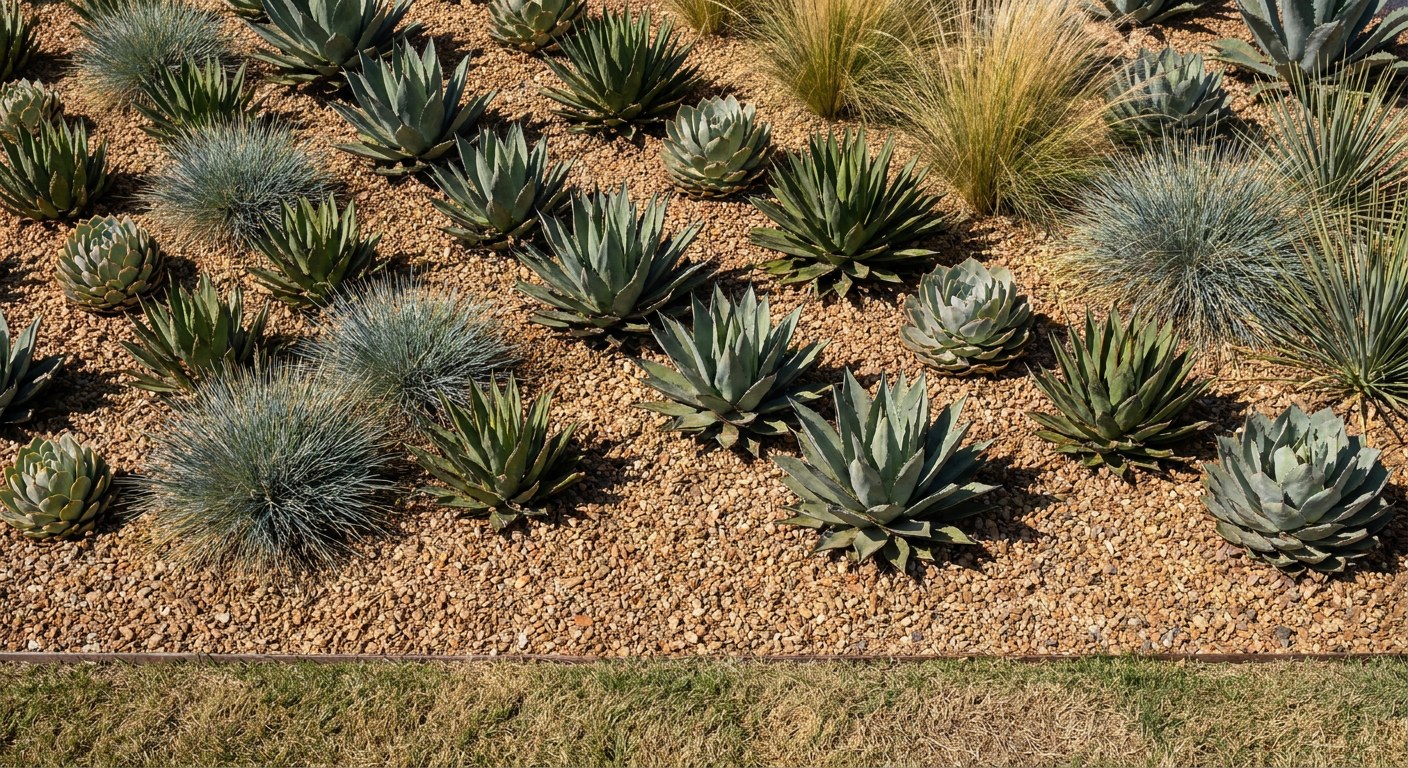
Height variation matters as much as material variation. A yard where every plant sits at roughly knee height or lower reads as flat no matter how many species are in the border. Mix in a few taller shrubs or a small tree near a corner of the turf, and the same layout gains depth and shadow that a purely horizontal planting scheme can’t produce on its own, even with good material choices everywhere else.
If you’re at the stage of comparing quotes rather than concepts, a specialist like Synthetic Grass Installation in NSW can walk the site and flag drainage or base issues before a design commits to turf in a spot that might not actually suit it.
FAQ
What is the best alternative to grass in a backyard?
There’s no single best alternative; the right answer depends on how the space is used, how much sun and foot traffic it gets, and how much visual softness you want to keep. Synthetic turf suits high-traffic and shaded zones, groundcovers suit light-traffic areas that still need a living surface, and gravel or mulch suit paths and transitional zones.
Is synthetic grass better than natural lawn?
Neither option is universally better; they solve different problems. Synthetic turf reduces water use and weekly maintenance and holds up well under heavy or awkward-shade conditions where grass struggles. Natural lawn stays cooler underfoot, supports more biodiversity, and suits properties where the owner enjoys garden care and the existing grass is already healthy.
What are low-maintenance alternatives to grass?
Groundcovers such as creeping thyme or clover, gravel and decomposed granite paths, mulched native planting beds, and synthetic turf all reduce the ongoing work of a traditional lawn. Most low-maintenance yards combine two or three of these rather than relying on just one material across the whole property.
Does artificial grass need drainage?
Yes. Without a properly designed base and drainage path, water can pool on or beneath synthetic turf, leading to odor, soft spots or water tracking toward a nearby foundation. Drainage planning, including slope, downpipe location and base material, should happen before installation, not after problems appear.
How do you make synthetic turf look natural in landscape design?
Break up large turf areas with planted borders, gravel bands, stepping stones and a few well-placed trees or shrubs rather than running turf edge to edge across the whole yard. Curved or irregular turf shapes that follow planting beds also read as more intentional than a straight-edged rectangle of green.
Can synthetic grass be combined with a vegetable garden or edible planting?
Yes, and it’s a common pairing. Turf handles the general lawn area while raised beds or in-ground plots nearby carry the edible planting, keeping the vegetable garden’s soil, watering and seasonal turnover separate from the low-maintenance turf zone. This split lets a household keep the parts of gardening they enjoy while removing the parts they don’t.
Design the yard around how you actually use it
Grass alternatives work best as a toolkit, not a single swap. The yards that end up genuinely low-maintenance and good-looking almost always mix synthetic turf, living groundcovers, gravel and planting rather than replacing one flat green surface with another. Start by mapping how each zone of the yard actually gets used, match the surface to that use, and let the material choices follow from there. Do that, and the result reads as a landscape someone designed on purpose, not a lawn someone gave up on and paved over with plastic.
Walk your own yard zone by zone before deciding anything. Note where grass genuinely struggles versus where it’s simply neglected, where the sun sits at different times of day, and where feet actually go versus where they don’t. That short audit will tell you more about which grass alternatives belong on your property than any general ranking of materials ever could.
- 23shares
- Facebook0
- Pinterest23
- Twitter0
- Reddit0