A few years back, I walked a client’s backyard that looked genuinely great on paper. Healthy lawn, decent plant beds, a patio that photographed well. But standing in it, something felt off, like the space wasn’t actually built to be used, just admired from the kitchen window. It took about ten minutes of walking the property to see why: nothing connected. The seating area had no clear path to it. The garden beds fought the lawn for space instead of working with it.
- Why "Low Maintenance" Isn't About the Plants First
- Irrigation — The System Nobody Designs on Purpose
- Garden Pathways — The Detail That Organizes Everything
- Defining Outdoor Zones Without Fragmenting the Yard
- Smarter Plant Selection for Real Maintenance Savings
- Lawn and Garden Working Together Instead of Competing
- Features That Reduce Work Instead of Adding It
- Conclusion
- Frequently Asked Questions
- Q: What makes a landscape design actually low maintenance?
- Q: Why does my lawn have dry patches even though I water it regularly?
- Q: How wide should a garden pathway be?
- Q: How many outdoor zones does a typical backyard need?
- Q: Do lawn and garden areas have to compete for space?
- Q: What plants require the least maintenance long-term?
- Q: Are dual-purpose landscape features worth the extra upfront cost?
That disconnect is the real story behind low maintenance landscape design in 2026. Homeowners have stopped asking does this look good in photos and started asking how a yard performs on an ordinary Tuesday afternoon, where the kids actually gather, which corners get used, which ones just get mowed around. Low maintenance isn’t a plant list. It’s a system.
This guide skips the 10 drought-tolerant plants approach entirely. Instead, you’ll learn to treat your yard the way an architect treats a floor plan: irrigation as infrastructure, pathways as circulation, zones as rooms. Get that right, and the plant choices practically make themselves.
Why “Low Maintenance” Isn’t About the Plants First
Ask ten homeowners what low maintenance landscaping means and nine will describe a plant list, succulents, ornamental grasses, maybe some gravel instead of lawn. That’s not wrong, exactly. It’s just answering the wrong question first.
The Pinterest Trap
Social media has trained people to shop for landscapes the way they’d shop for furniture, browse until something looks good, then figure out how to fit it into the yard. I see this constantly: a client sends me a screenshot of a lush, layered garden bed from an account with two million followers, and what they don’t see is the three-person maintenance crew keeping it alive off-camera.
The plants themselves usually aren’t the problem. It’s that they were chosen for how they photograph in June, not for how they’ll perform in your specific yard, your specific water schedule, your specific amount of weekend time. A landscape built plant-first tends to look great for one season and demanding for the other three.
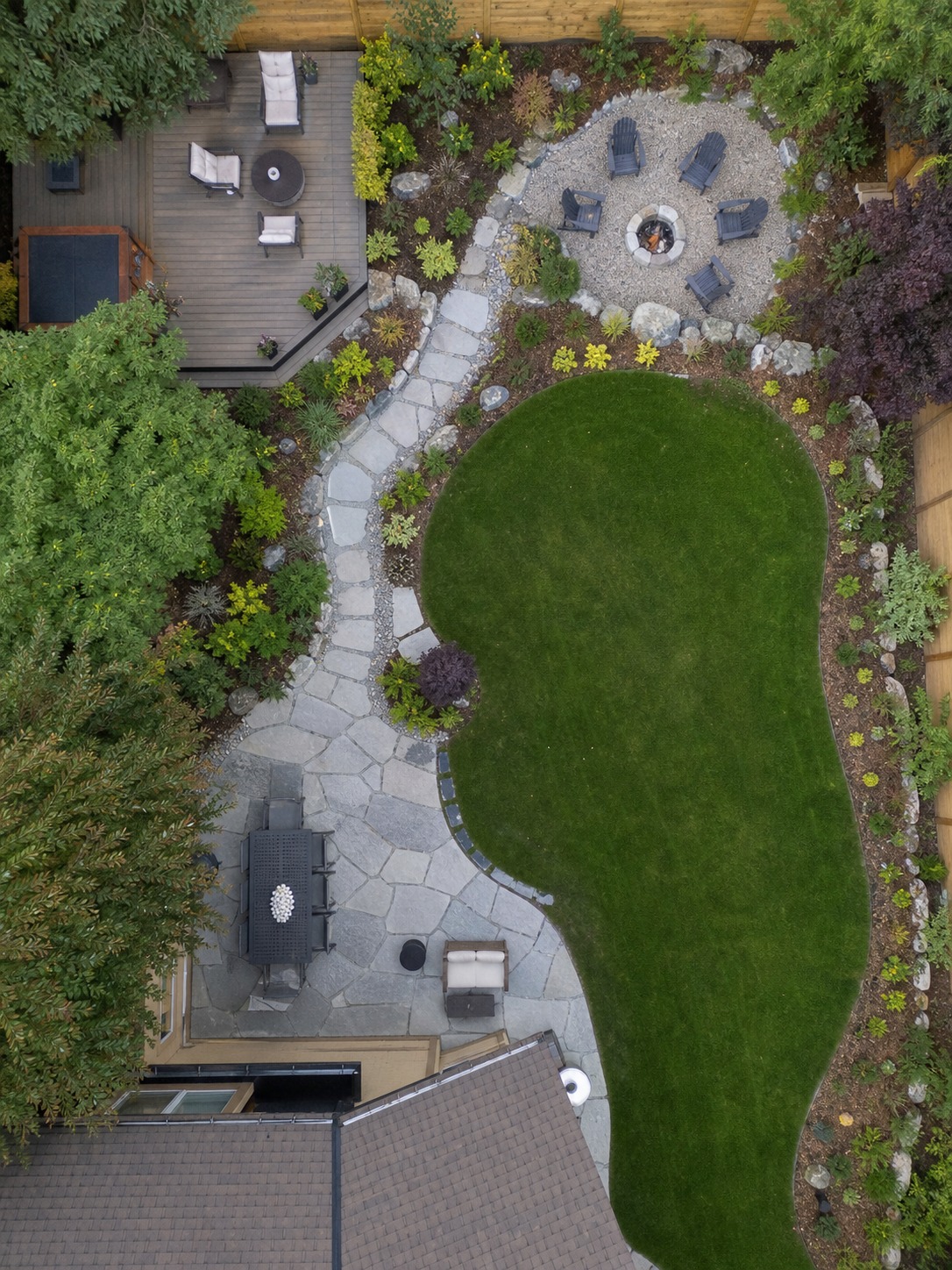
Treating a Yard Like a Floor Plan, Not a Picture
Here’s where my architectural training actually changes how I approach this. When you design a floor plan, you don’t start by picking furniture, you start with circulation: how does someone move from the front door to the kitchen, where does the hallway need to widen, which rooms need to sit next to each other. Only after that structure is solid do you think about finishes.
A yard works the same way. Before a single plant goes in the ground, I want to know: where does water reach easily, where do people naturally want to sit, and how do they get from one spot to another without cutting across the lawn diagonally (which, if you’ve ever seen a worn dirt path cutting across a finished lawn, you already know happens constantly).
Quick tip: Before buying a single plant, walk your yard for a week and just notice where you actually go — where you sit with coffee, where the dog runs, where guests naturally cluster. That pattern is your real floor plan, and it should drive every decision that follows, starting with how water gets to each zone.
Irrigation — The System Nobody Designs on Purpose
A beautiful yard is only as good as its water delivery, and almost nobody thinks about irrigation until something goes wrong. That’s backwards. Irrigation isn’t a maintenance chore you bolt on after the design, it’s infrastructure, the same way plumbing is infrastructure in a house.
Why Dry Patches and Soggy Corners Happen Even in “Good” Designs
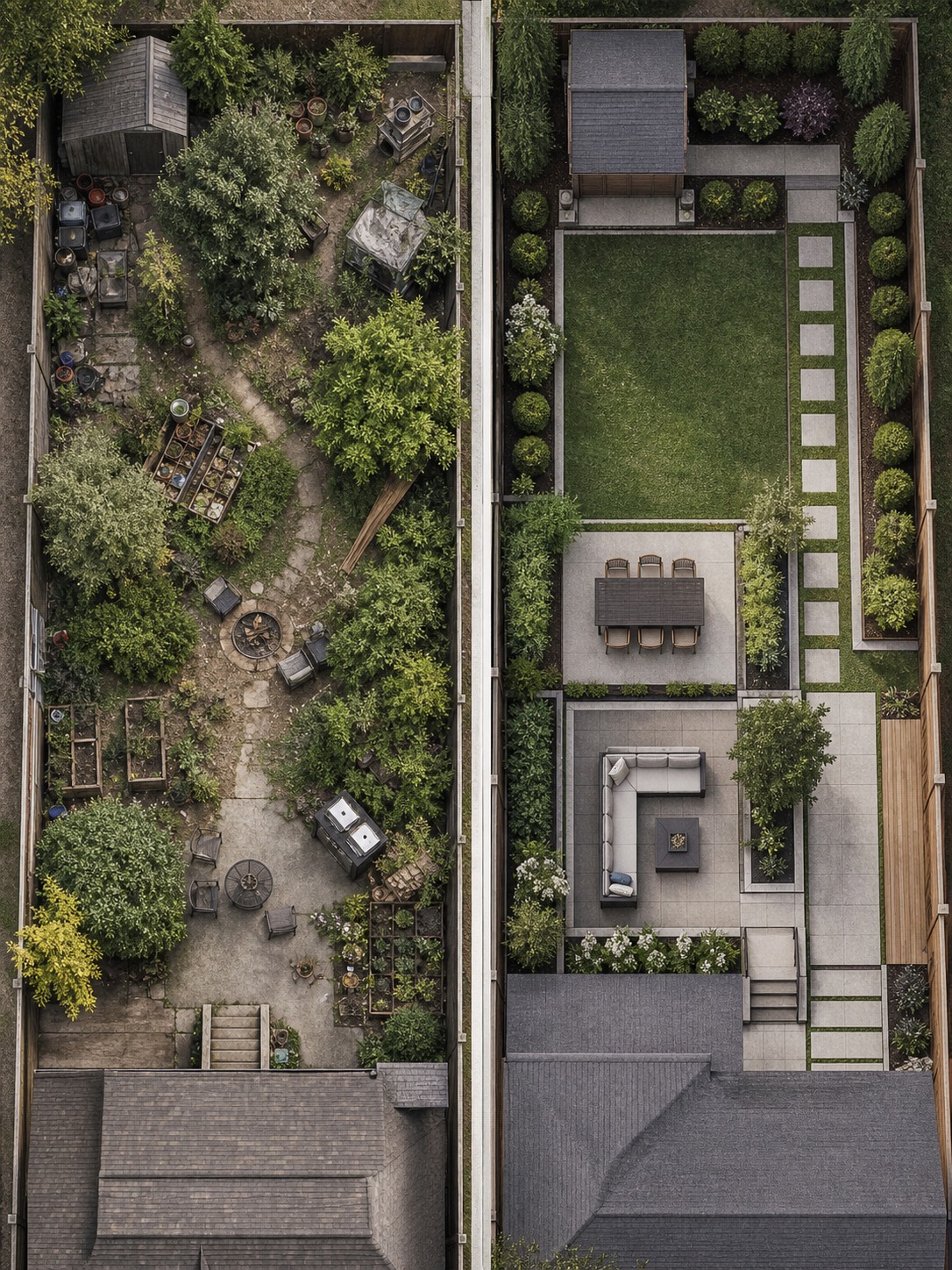
Here’s what surprised me the first time I actually studied a broken irrigation system properly: the plants and lawn almost always looked fine on the design plan. The problem showed up later, in the field, once water pressure, sprinkler head overlap, and soil drainage all interacted in ways nobody modeled ahead of time.
Overspray is the most common culprit, a sprinkler head throwing water past its intended zone, soaking a pathway while starving the bed six feet away. I walked a property last spring where three garden beds looked stressed despite getting watered every day, and the actual cause was a single head that had drifted out of alignment after a mower clipped it. Fifteen minutes with a wrench, zero cost, completely different lawn within two weeks.
Zoning Water Delivery the Way You’d Zone Electrical Circuits
This is the part most homeowners skip entirely: irrigation should be zoned by plant water needs, not by convenient pipe runs. Full-sun turf, shaded groundcover, and drought-tolerant shrubs all want different watering schedules, and putting them on the same zone guarantees somebody’s getting the wrong amount.
I think about this the same way I’d think about circuit planning on an architectural project, group by demand, not by proximity. A yard with four or five properly zoned circuits, each running on its own schedule, almost always outperforms a single sprawling zone trying to do everything at once.
What Consistent Watering Actually Enables
Once irrigation is dialed in, something interesting happens: plant selection gets a lot more forgiving. You stop fighting dry patches and start actually choosing plants because you like them, not because they’re the only thing that survives your yard’s water inconsistencies.
A low maintenance landscape design only works if watering is consistent. When dry patches, overspray, or soggy corners start disrupting the layout, sprinkler repair in Englewood can be part of keeping the design functional rather than starting the whole yard over.
Quick tip: Run each irrigation zone manually for five minutes and walk the yard while it’s running. You’ll spot misaligned heads, dry gaps, and overspray in real time — far faster than waiting for the lawn to show symptoms weeks later.
Garden Pathways — The Detail That Organizes Everything
Pathways are the most underrated design element in any yard, and I mean that literally, nobody budgets for them the way they budget for a patio or a fence, yet they’re doing more work than almost anything else on the property.
Width, Material, and What They Signal
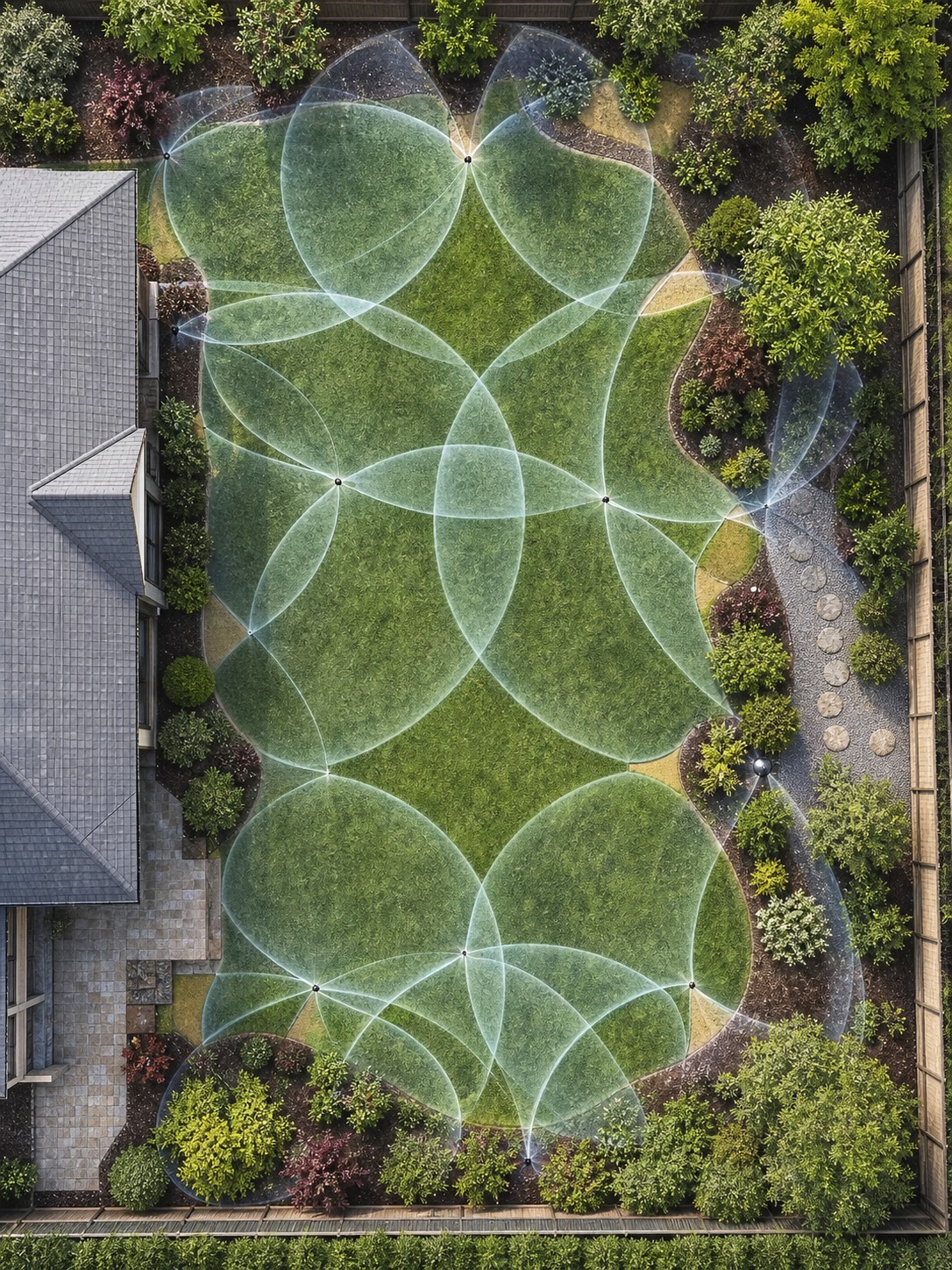
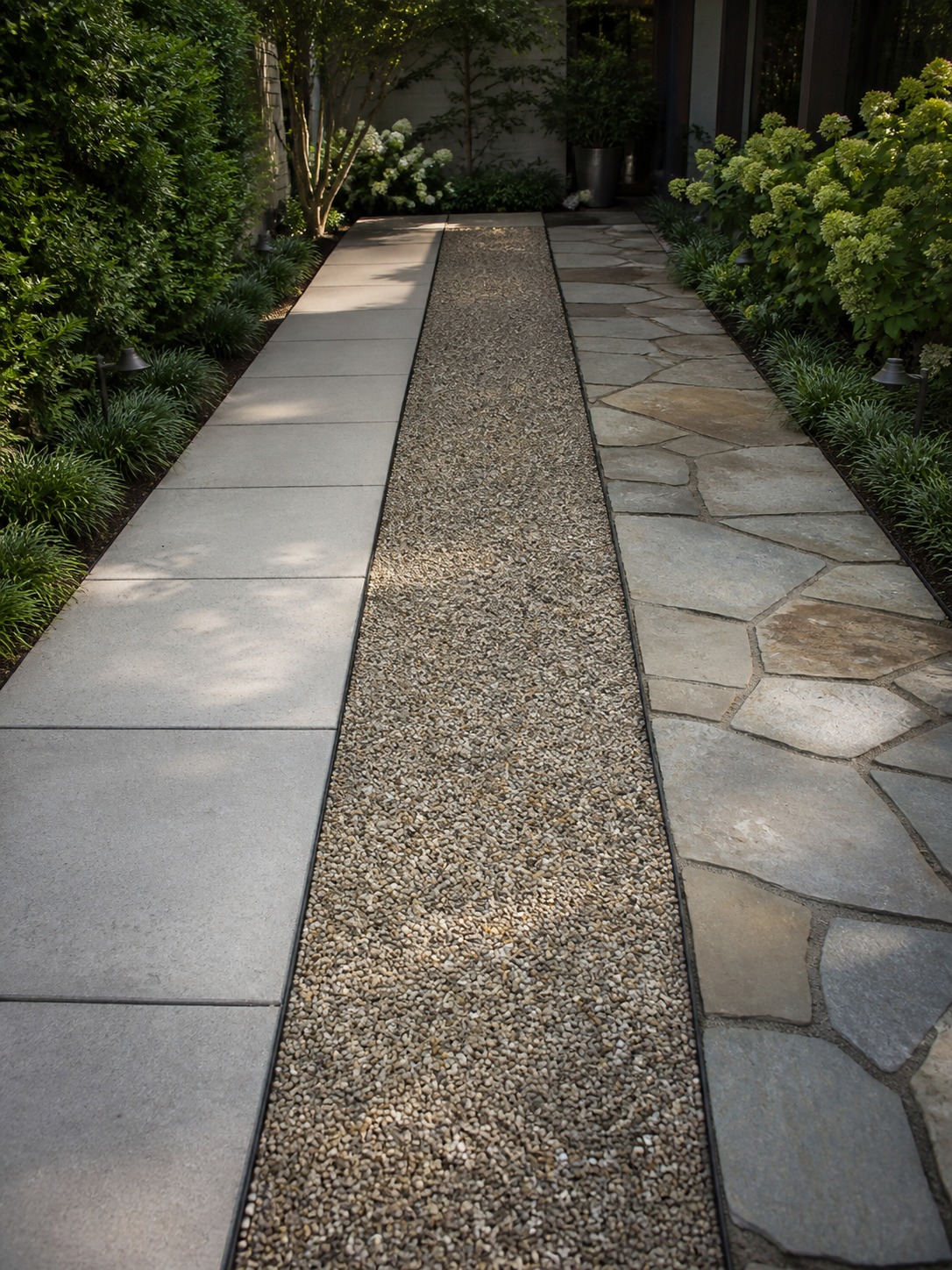
A pathway isn’t just a surface to walk on, it’s a signal to anyone using the yard about where they should go and how important that route is. A main circulation path, the one connecting the back door to a seating area or fire pit, needs real width: 42 to 48 inches lets two people walk side by side comfortably. A secondary path, say to a garden shed or a side gate, can drop to 24-30 inches without feeling cramped, because it’s read differently, a service route, not a destination.
Material choice reinforces that hierarchy. I used large-format concrete pavers (24×24 inches) for a client’s main path last year, spaced with tight joints for a clean, deliberate look. For the side path to her compost area, we went with simple pea gravel over a compacted base, a fraction of the cost, and the visual difference actually helps everyone on the property intuitively understand which route matters more.
How Pathways Reduce Maintenance by Controlling Foot Traffic
Here’s the part most people miss: a well-placed pathway doesn’t just look good, it protects everything around it. Without a defined route, foot traffic wears its own path across the lawn, you’ve seen this, a diagonal dirt track cutting across grass because that’s the shortest line between two points humans actually use, regardless of what the design intended.
I’ve watched a beautifully seeded lawn develop a permanent brown scar within one season simply because the patio-to-gate route wasn’t paved. Once we added a simple flagstone path along that exact line, the wear stopped completely, and the lawn recovered within a month.
Quick tip: Before installing any permanent pathway, watch where foot traffic naturally happens for a few weeks — worn grass, flattened mulch, or a visible shortcut tells you exactly where the path needs to go, no guessing required.
Get pathways right, and they do something bigger than organize traffic. They start to define the zones on either side of them, which is exactly where we’re headed next.
Defining Outdoor Zones Without Fragmenting the Yard
Once pathways establish where people move, the next question is where they stop. That’s what zoning is really about, deciding which parts of the yard function as distinct rooms without making the whole property feel like a maze of disconnected corners.
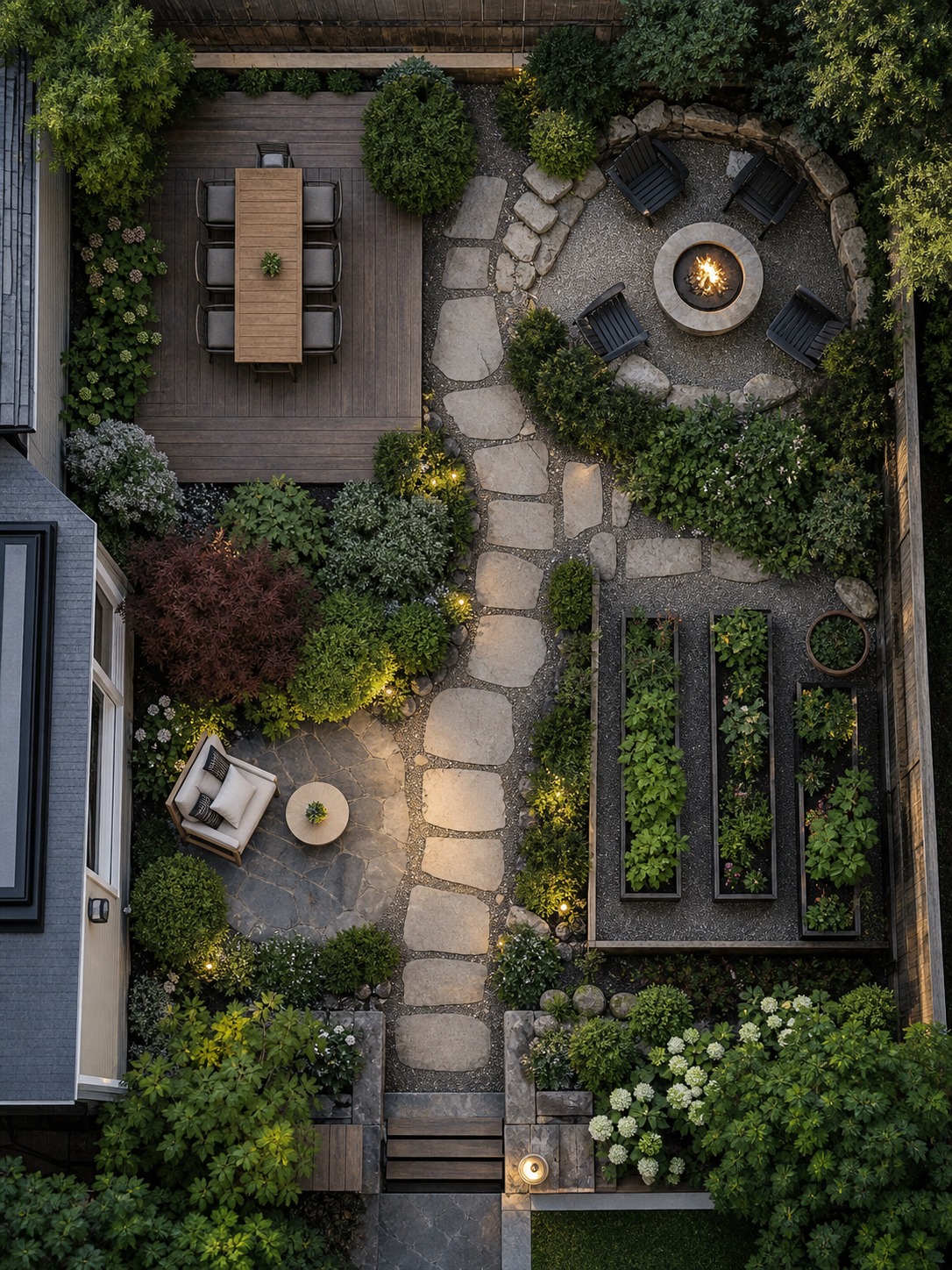
Dining, Seating, Gardening, Fire Pit — Treating Each as a “Room”
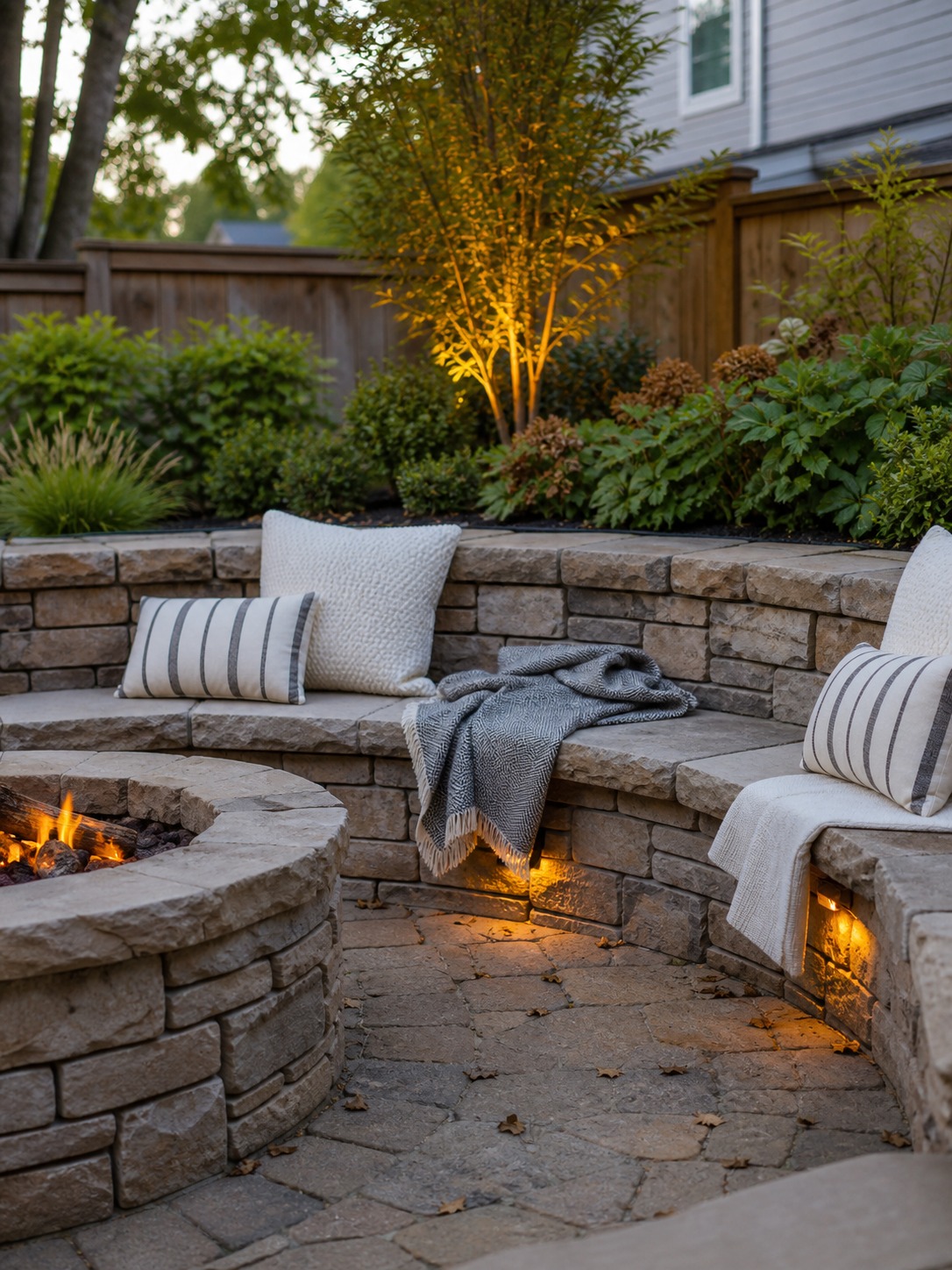
I approach this exactly the way I’d approach an open floor plan interior. A dining zone needs a hard surface, usually 10×12 feet minimum for a table and chairs with room to push back comfortably, positioned near the kitchen door for obvious reasons. A fire pit gathering zone wants a looser, circular arrangement, I typically plan for a 12 to 14-foot diameter of usable seating space around a 36-inch fire pit, enough for six people without anyone’s knees touching the flames.
A quiet reading corner doesn’t need much, a single Adirondack chair and a small side table tucked near a planting bed does the job, and it’s often the cheapest zone to build. I added one for a client last spring using a $180 teak chair and some existing shrubs as a backdrop; it became her most-used spot on the entire property within a month.
What Keeps Zones Feeling Connected Instead of Chopped Up
Here’s where a lot of DIY zoning goes wrong, people build each zone in isolation, and the yard ends up reading like four separate mini-projects instead of one coherent space. The fix isn’t complicated: repeat two or three materials across every zone (say, the same paver used for the dining patio edge and the fire pit surround), and keep sightlines open between areas instead of blocking them with tall planting.
I redesigned a backyard last year where the previous layout had five zones, each fenced off with its own hedge border, visually exhausting, and it made a medium-sized yard feel cramped. Removing three of those internal hedges and replacing them with low ornamental grasses opened up sightlines across the whole property. Same square footage, completely different feel.
Quick tip: Stand at your back door and count how many zones you can actually see from that single point. If the answer is zero because everything’s boxed off, that’s usually the first thing worth fixing — before you touch a single plant.
Smarter Plant Selection for Real Maintenance Savings
Once irrigation is zoned and pathways define your circulation, plant selection stops being a gamble. This is where most low maintenance landscape design guides start, and honestly, it should be step five, not step one.
Growth Habit and Seasonal Performance Over Visual Novelty
I’ve learned to ask three questions before recommending any plant: how big does it get in five years, what does it look like in February, and how much water does it actually need once established. Skip any of those, and you end up with the client who bought a gorgeous Japanese maple for a full-sun spot, watched it scorch by July, and blamed themselves for having a black thumb.
Ornamental grasses like Karl Foerster feather reed grass are a favorite of mine for exactly this reason, upright, low-water once rooted, and they hold visual interest from spring through winter instead of disappearing after one bloom cycle. Compare that to a bed of annual petunias that needs replanting every single year, and the maintenance math isn’t close.
Matching Plant Choice to Your Actual Irrigation Zones
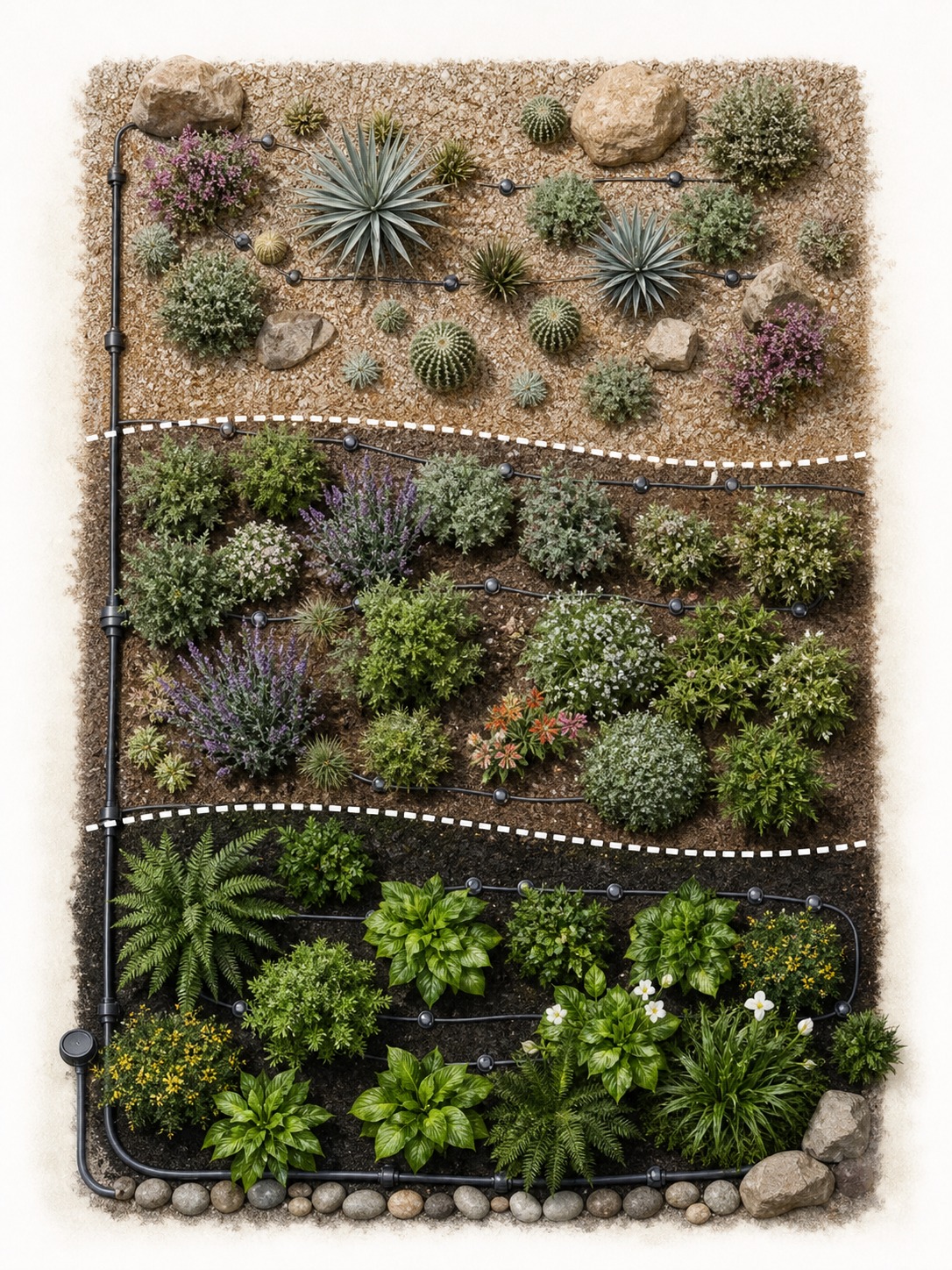
Here’s the part that connects straight back to the irrigation section: plants should be grouped by water need, not by how they look together in a catalog photo. Hydrozoning, grouping drought-tolerant shrubs on one irrigation line and thirstier perennials on another, is the single biggest lever for reducing both water waste and plant stress.
I redesigned a client’s front bed last year where lavender and hostas had been planted side by side, sharing one sprinkler zone. The lavender was rotting from overwatering while the hostas were bone dry at the edges. Splitting them into separate zones with different run times fixed both problems in a single afternoon, no new plants required.
Quick tip: Before adding a new plant to an existing bed, check what’s already growing nearby and ask whether it shares similar water needs — if not, either move it to a compatible zone or plan for a dedicated drip line.
Lawn and Garden Working Together Instead of Competing
Lawn versus garden feels like a strange thing to frame as a competition, but walk enough properties and you’ll see it constantly, one element crowding out the other until the whole yard feels unbalanced.
Why Oversized Lawns and Dense Gardens Both Backfire
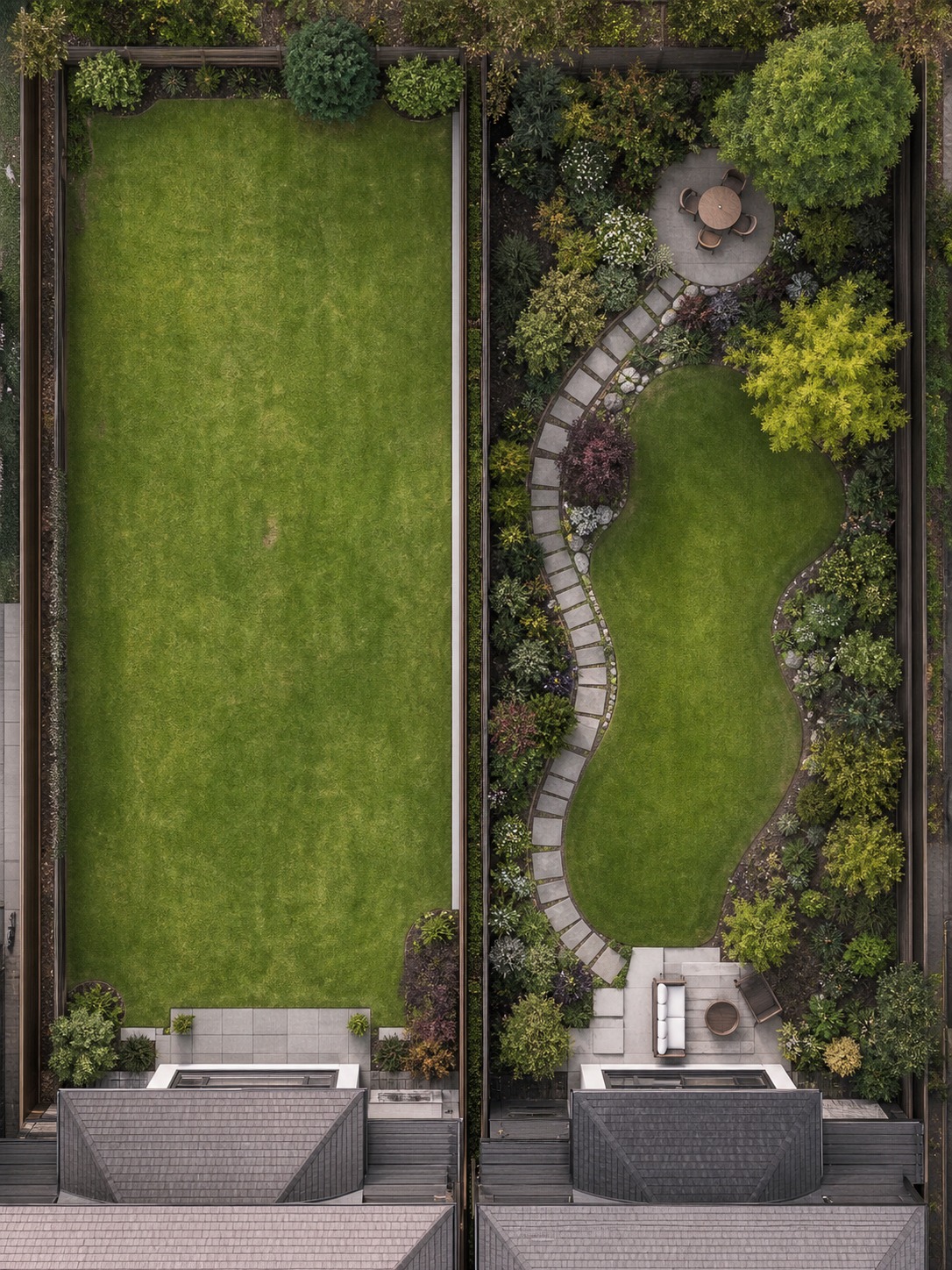
A lawn that eats 80% of a backyard’s square footage looks like a missed opportunity, flat, green, and mowed, sure, but doing almost nothing for anyone who actually wants texture, shade, or a place to sit among plants. I’ve walked properties like this where the client asked for more interest without realizing the lawn itself was the problem, not the plant selection.
The opposite mistake is just as common. I redesigned a yard two years ago where the previous owner had packed garden beds into nearly every square foot, leaving barely a six-foot strip of grass for the family’s kids to actually play on. Gorgeous in June, completely unusable for a game of catch.
Finding the Balance Point for a Specific Yard Size
There’s no universal ratio here, but I use a rough starting point: for a typical quarter-acre suburban lot, 40-50% open lawn for recreation and breathing room, with the rest split between garden beds, pathways, and hardscape zones. Smaller urban lots often flip that ratio entirely, since there’s less need for a play lawn and more value in dense, layered planting.
The real test isn’t a percentage on paper, though. It’s whether the lawn is actually getting used for something, and whether the garden beds are adding texture and seasonal interest instead of just filling space because gardens are supposed to be there. I’ve had clients cut their lawn size by a third and immediately said the yard felt bigger, not smaller, because the remaining space finally had a job to do.
Quick tip: If your lawn hasn’t been walked on, played on, or sat on in the last month, it’s probably oversized for how you actually live. That reclaimed space is often the easiest place to add a garden bed or a second seating zone without touching anything else.
Features That Reduce Work Instead of Adding It
When designing your outdoor space, aligning vegetation with the home’s structure is a core tactic of passive solar design to naturally reduce energy costs.
Not every landscape feature earns its keep. Some just sit there looking nice while demanding weekly attention. The ones worth investing in do double duty, solving a problem while also contributing to how the yard looks.
Retaining Walls, Shade Structures, Raised Beds — Dual-Purpose Thinking
A retaining wall built at 18 inches tall does more than manage a slope, cap it with a flat, wide top and it becomes informal seating for six people around a fire pit, no extra furniture budget required. I built one for a client last year using stacked concrete block faced with thin veneer stone, and the extra seating ended up being the most-used feature on the entire property.
Shade structures work the same way. A simple cedar pergola over a dining zone doesn’t just block afternoon sun, it defines the room the way a ceiling defines an interior space, giving the eye a clear boundary for where that zone starts and ends. Raised garden beds, built at 24-30 inches tall, add visual structure to a flat yard while also solving the very real problem of bending over to weed, which matters more than people admit once they hit their forties.
What “Low Maintenance” Actually Costs Upfront vs. Saves Long-Term
Here’s the honest math nobody likes hearing: a well-built retaining wall with integrated seating costs more upfront than a basic timber version, often by a few thousand dollars depending on materials and site conditions. But it replaces a furniture purchase, needs zero cushions to store for winter, and outlasts wood seating by decades.
I’ve had clients balk at that upfront number, choose the cheap version, then call me two years later once the timber’s rotting and the outdoor furniture’s faded from sun exposure. The dual-purpose feature isn’t just smarter design, it’s the actual low-maintenance choice, even though it doesn’t look that way on the initial quote.
Quick tip: Before adding any single-purpose feature to your yard, ask whether a slightly more expensive version could solve two problems at once. Retaining walls become seating. Raised beds become visual dividers between zones. Shade structures become outdoor ceilings. That mindset alone cuts long-term maintenance more than any plant choice will.
When aligning your outdoor areas with your indoor living zones, it is helpful to look at home and garden improvements as a single system. To coordinate your exterior layout with smart interior features, explore our guide on creating a peaceful home that combines low-maintenance yard design with effortless indoor routines.
Conclusion
Low maintenance landscape design isn’t a plant list, it’s irrigation, circulation, and zoning working together as one system. A yard with properly zoned watering, pathways that guide real foot traffic, and rooms that connect instead of fragment will always outperform one built around a curated collection of drought-tolerant species alone.
Walk your own yard this weekend and identify where water, paths, and zones aren’t currently working together. Start with irrigation, since almost everything else in this guide depends on getting that system right first.
Related outdoor design guides
To represent terrain and facade details accurately, check out our guide on rendering in architecture for lighting and textures.
Once the basic system is clear, the next choices usually come down to budget, materials, and how the yard will be used. For the front of the house, start with cheap front yard landscaping ideas or budget-friendly landscaping tips, then use the broader outdoor architecture archive when you want more exterior planning examples.
If the design leans on stone or structure, compare landscaping rocks, essential landscaping materials, and retaining wall ideas. For the overall layout, the outdoor living design guide, hardscape and softscape balance, and smart watering tips are the closest next reads.
Frequently Asked Questions
Q: What makes a landscape design actually low maintenance?
A: It’s not the plant list, it’s the system underneath it. Consistent irrigation zoned by plant water needs, pathways that control foot traffic, and clearly defined zones all reduce the weekly upkeep a yard demands. Skip any of those three and even drought-tolerant plants end up needing constant intervention.
Q: Why does my lawn have dry patches even though I water it regularly?
A: Usually it’s a sprinkler head that’s drifted out of alignment, overspray hitting a pathway instead of the grass, or a single irrigation zone trying to cover areas with very different water needs. Walk the yard while each zone runs for five minutes, misalignment shows up immediately, and it’s often a fifteen-minute fix.
Q: How wide should a garden pathway be?
A: Main circulation paths, the ones connecting the house to a seating area or fire pit, work best at 42 to 48 inches, wide enough for two people to walk side by side. Secondary paths to a shed or side gate can drop to 24-30 inches without feeling cramped, since they read as service routes rather than destinations.
Q: How many outdoor zones does a typical backyard need?
A: For a standard quarter-acre lot, three to four zones usually covers it well, a dining area, a lounge or fire pit space, and either a garden or quiet reading corner. More than that on a small property tends to fragment the yard rather than organize it.
Q: Do lawn and garden areas have to compete for space?
A: No, but they do need a deliberate ratio. A rough starting point for a quarter-acre suburban lot is 40-50% open lawn for recreation, with the rest split between garden beds, pathways, and hardscape. Smaller urban lots often flip that balance toward more planting and less turf.
Q: What plants require the least maintenance long-term?
A: Look for plants matched to your specific irrigation zone rather than generic low-water labels. Ornamental grasses like Karl Foerster feather reed grass hold visual interest year-round with minimal input once established, while hydrozoning, grouping plants by water need, prevents the overwatering and underwatering conflicts that create extra work.
Q: Are dual-purpose landscape features worth the extra upfront cost?
A: Usually, yes. A retaining wall built with a flat 18-inch cap doubles as seating; raised beds at 24-30 inches reduce weeding strain while defining zones visually. These cost more upfront than basic versions but outlast furniture and timber alternatives by years, which is the actual low-maintenance math even when the initial quote looks higher.
A thoughtful garden layout complements the underlying architectural style of your home.
- 248shares
- Facebook0
- Pinterest245
- Twitter3
- Reddit0