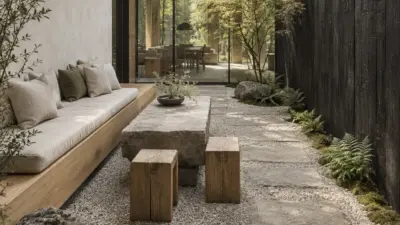
Watering should feel like a quiet lap of the garden, not a series of lunges, snagged hoses, and accidental blasts at tender stems. Much of that difference comes down to the short tool between hose and hand. Choosing the best watering wand for your garden means looking past the feature list and asking a simpler question: does its shape help you put the right flow exactly where the plant needs it?
A good wand extends your reach while keeping control under your thumb. You can stand on the path, aim at the soil, and move from a seedling tray to a mature shrub without turning the job into a wrist workout. The right choice is rarely the longest model or the one with the most patterns. It is the one whose proportions, balance, controls, and spray face suit the way your garden is laid out.
Start With the Garden Layout, Not the Feature List
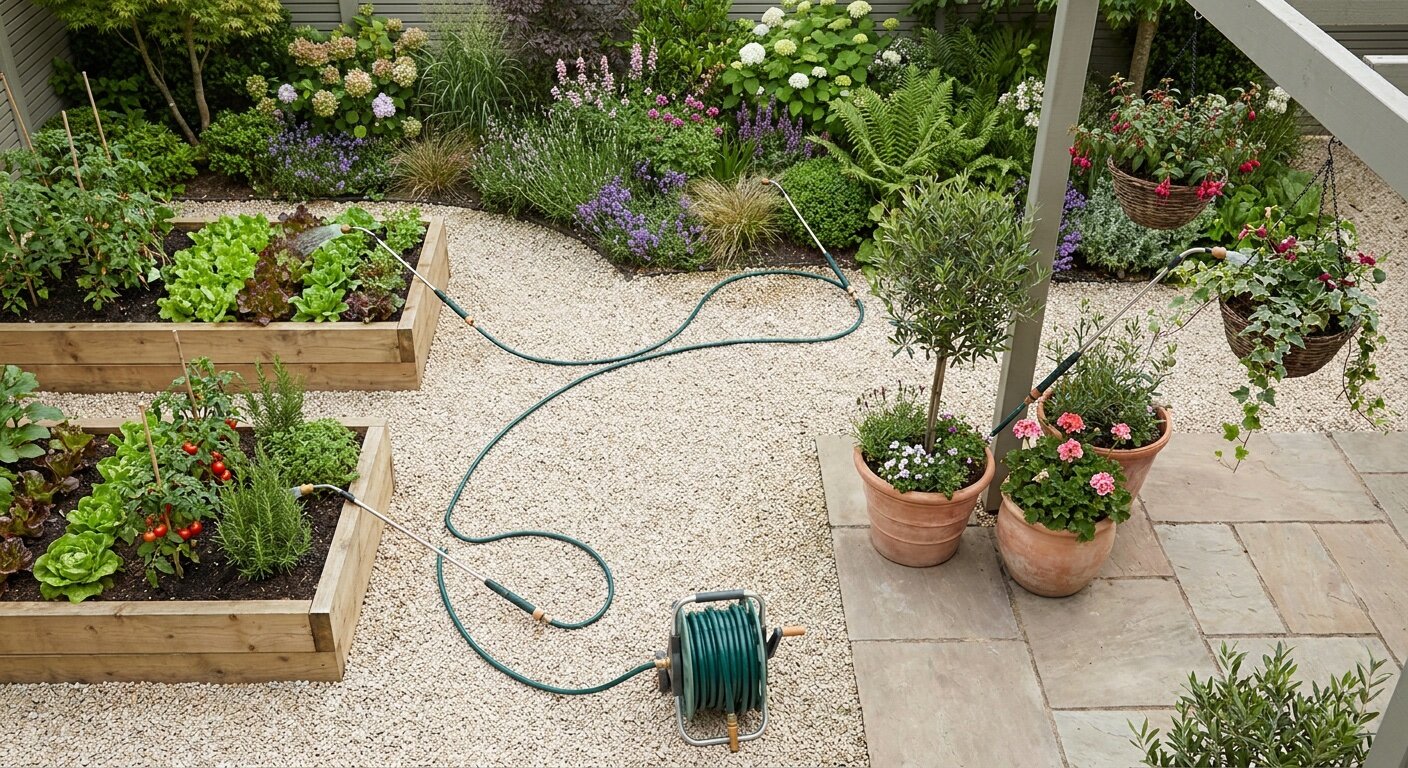
Before comparing materials or counting settings, walk your usual watering route. Note where you stand, where the hose reaches each bed, and which plants make you stretch, crouch, or lean over foliage. Those points of friction are the design brief for the tool.
Treat Reach as a Proportion Problem
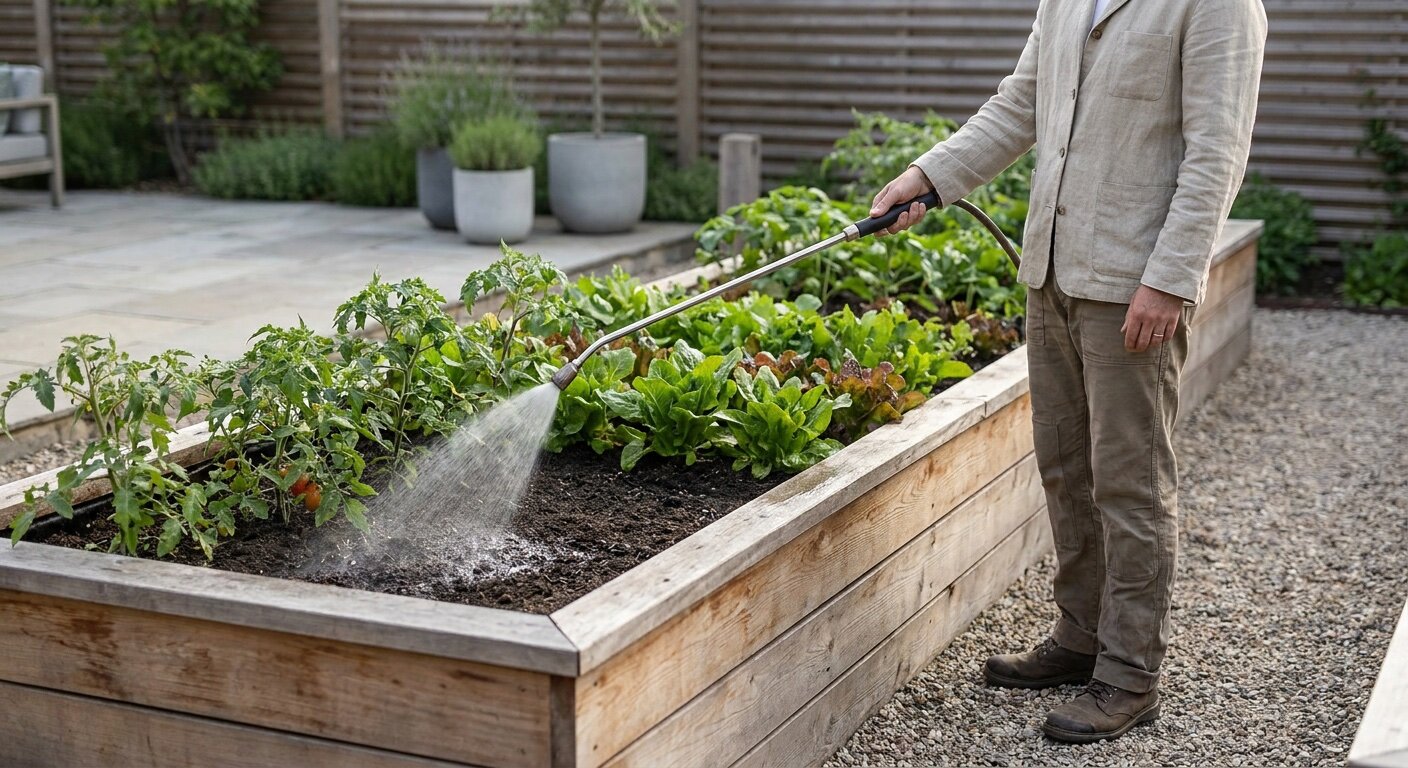
Length should bridge the gap between a comfortable stance and the root zone. A long shaft earns its place when you regularly water hanging baskets, deep borders, tall planters, or the middle of a raised bed. It keeps boots out of cultivated soil and forearms clear of thorny shrubs.
On a balcony or crowded patio, a compact or mid-length wand usually works better. You are already close to the pots, and surplus length knocks leaves, catches railings, and pushes the elbow into awkward angles. Measure the deepest bed and highest basket you actually water, then buy for those distances, not for inches that only look capable in a product photo.
Know When Length Turns Clumsy
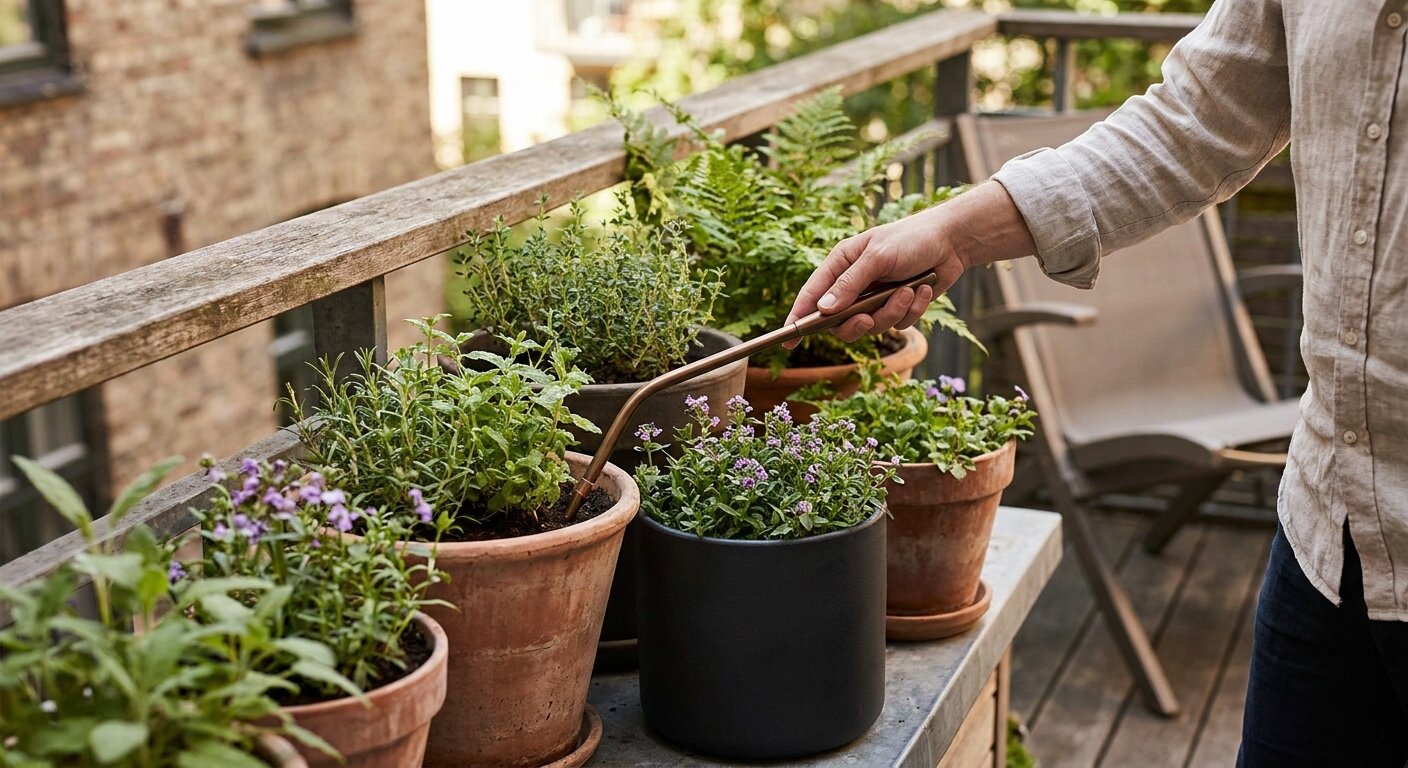
Length is leverage. A light head at the end of a long tube can feel effortless, while a heavy multi-pattern head at the same distance drags the wrist down. A long wand also needs room to turn: in a narrow passage, the handle can meet the wall while the spray is still over the wrong pot.
If one awkward basket is driving the purchase, ask whether a pivoting head on a medium wand solves it more neatly than maximum length. The goal is useful reach, not reach at any cost.
What Good Wand Design Feels Like
Mechanically, a watering wand is simple: handle, valve, tube, and spray head. The relationships between those parts decide whether the tool disappears into the task or demands constant correction.
Balance Matters More Than Weight
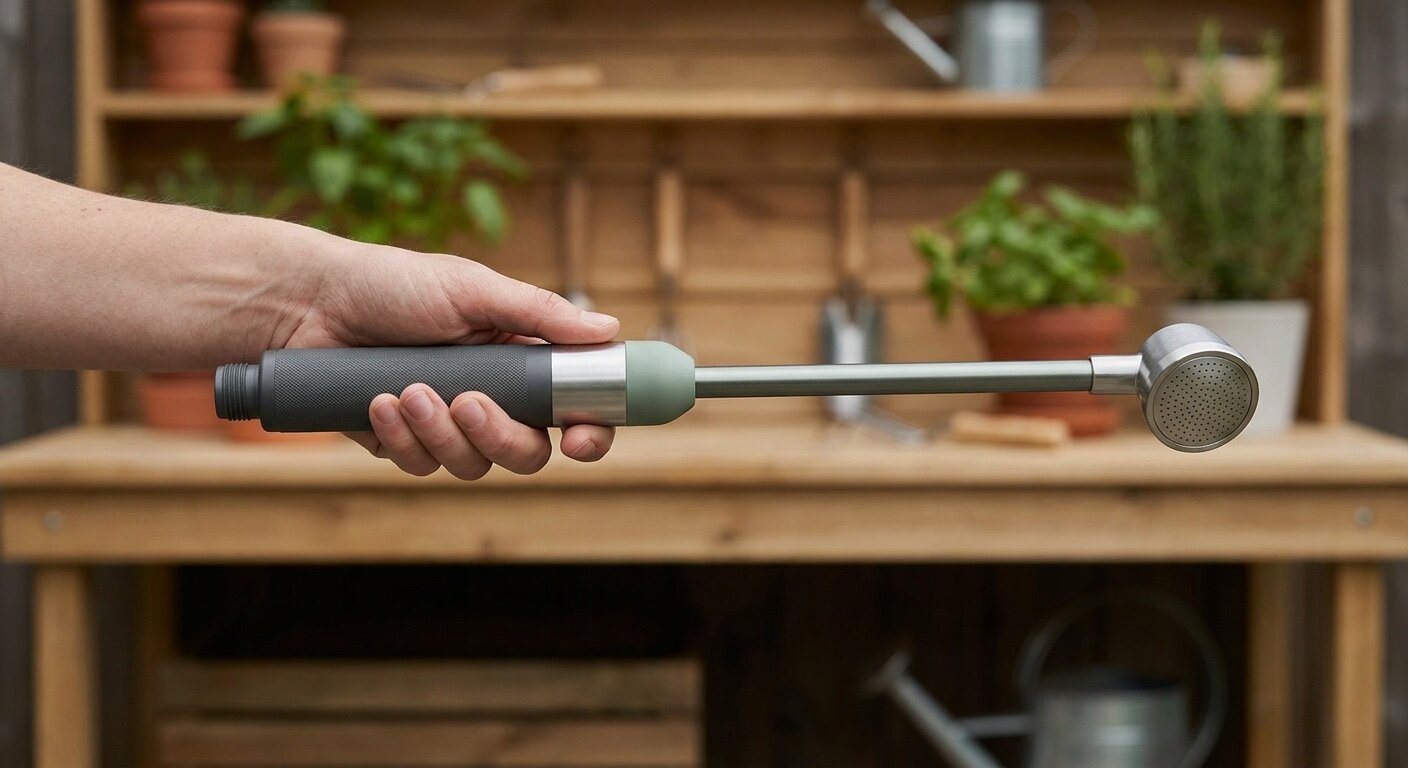
Listed weight is only half the story; balance tells you where you feel it. Mass concentrated in the head creates a long lever, so a wand that looks light on paper can still tire the forearm. A lighter head, or more mass near the grip, tends to feel steadier.
Hold the wand horizontally by the grip with your wrist neutral, remembering that the head will carry some water in use. If the nose drops immediately, you will spend every session lifting it back up. A well-balanced wand responds to small movements instead of asking your forearm to hold it aloft.
Check Grip, Valve, and Trigger Placement
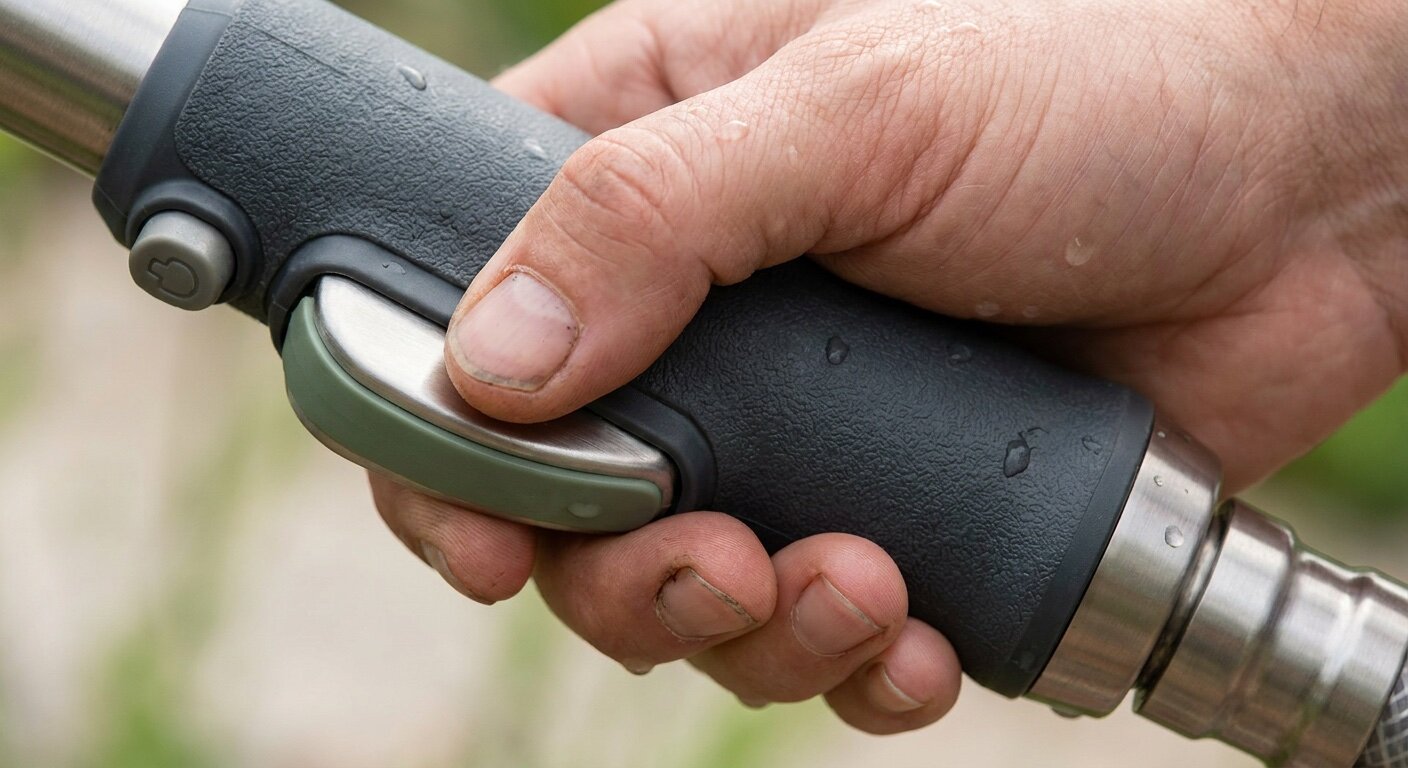
The grip needs enough texture for wet hands without being abrasive. Its diameter should let your fingers close naturally; a handle that is too thick is as awkward as one that is too thin. Padding is pleasant, but shape and control placement matter more than a foam sleeve.
A thumb-operated flow valve lets you throttle back or stop between plants, saving a walk to the spigot and keeping a pressurized stream from sweeping across the path. Check that your thumb reaches it without sliding your whole hand forward. If the valve feels stiff in the store, it will not improve after twenty minutes of watering.
A lockable trigger helps during a slow soak because your hand does not have to hold the lever, but it should release just as quickly. Outdoors, large, legible controls beat small switches that are hard to work with soil on your gloves.
Treat the Pivoting Head as a Working Joint
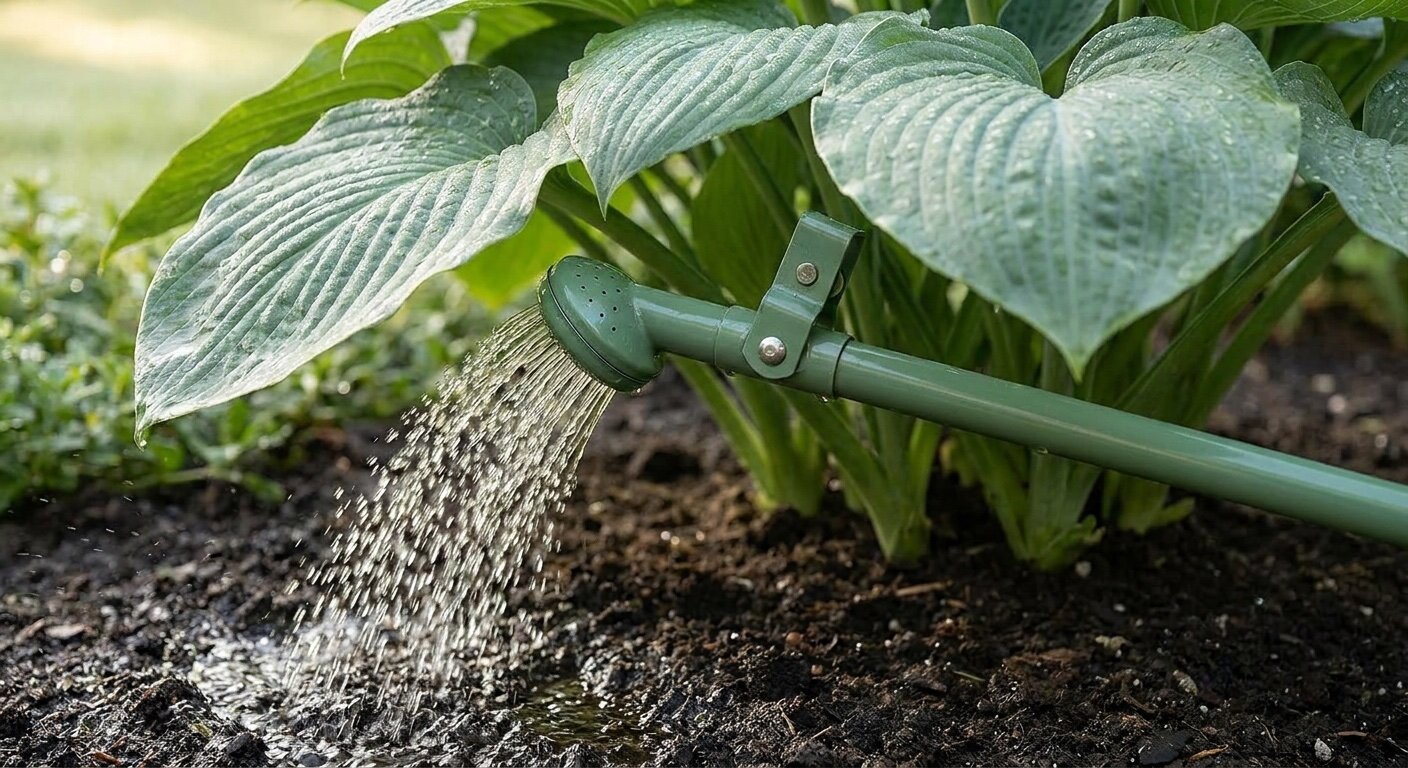
An adjustable head redirects the spray so your wrist does not have to. Angle it down beneath broad leaves, up toward a hanging basket, or sideways behind a dense border. The hinge should hold its angle under water pressure and move without feeling brittle.
The joint is worth having when it replaces contortion. On a wand used only for open beds, it may simply add weight at the wrong end, so judge it against your route rather than as an automatic upgrade.
Choose the Spray Your Plants Actually Need
Packaging often advertises a long list of patterns, yet most gardeners return to one gentle shower and an occasional fuller flow. Spray quality matters more than spray count.
A Gentle Shower for Seedlings and Flowers
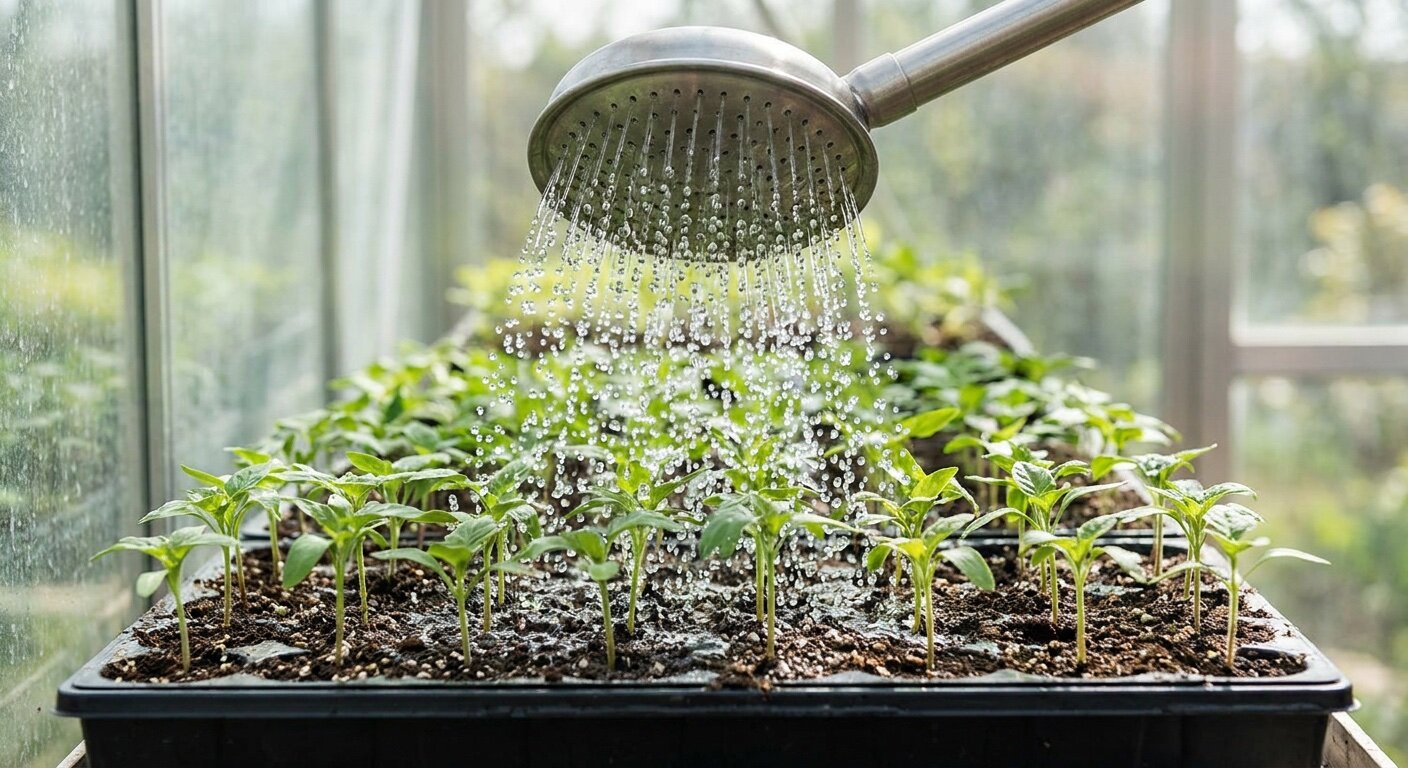
A broad, rain-like shower spreads force across many small droplets. It moistens loose potting mix without cutting channels, exposing roots, or flattening stems. Look closely at the spray face: evenly spaced holes and a clean, consistent pattern are worth more than a dial crowded with near-identical icons.
According to University of Maryland Extension, annuals and perennials can be hand-watered with a hose fitted with a wand or nozzle so water is directed toward their root systems. Not every leaf has to stay perfectly dry, but root-zone delivery becomes the default rather than a happy accident.
Flow Control Between Plants
Pressure at the spigot and flow at the wand are separate decisions. Set the supply high enough for the hose run, then use the wand valve to soften delivery at each plant. Start low around seedlings and freshly filled containers, open the flow for established shrubs and larger beds, and stop when water pools or runs off.
If you are already planning a water-wise landscape design, a controllable wand complements the bigger moves: mulch, plant grouping, and efficient irrigation. It handles the precise exceptions, such as new transplants, containers, or the one dry pocket a broader system misses.
Materials and Fittings for Real Use
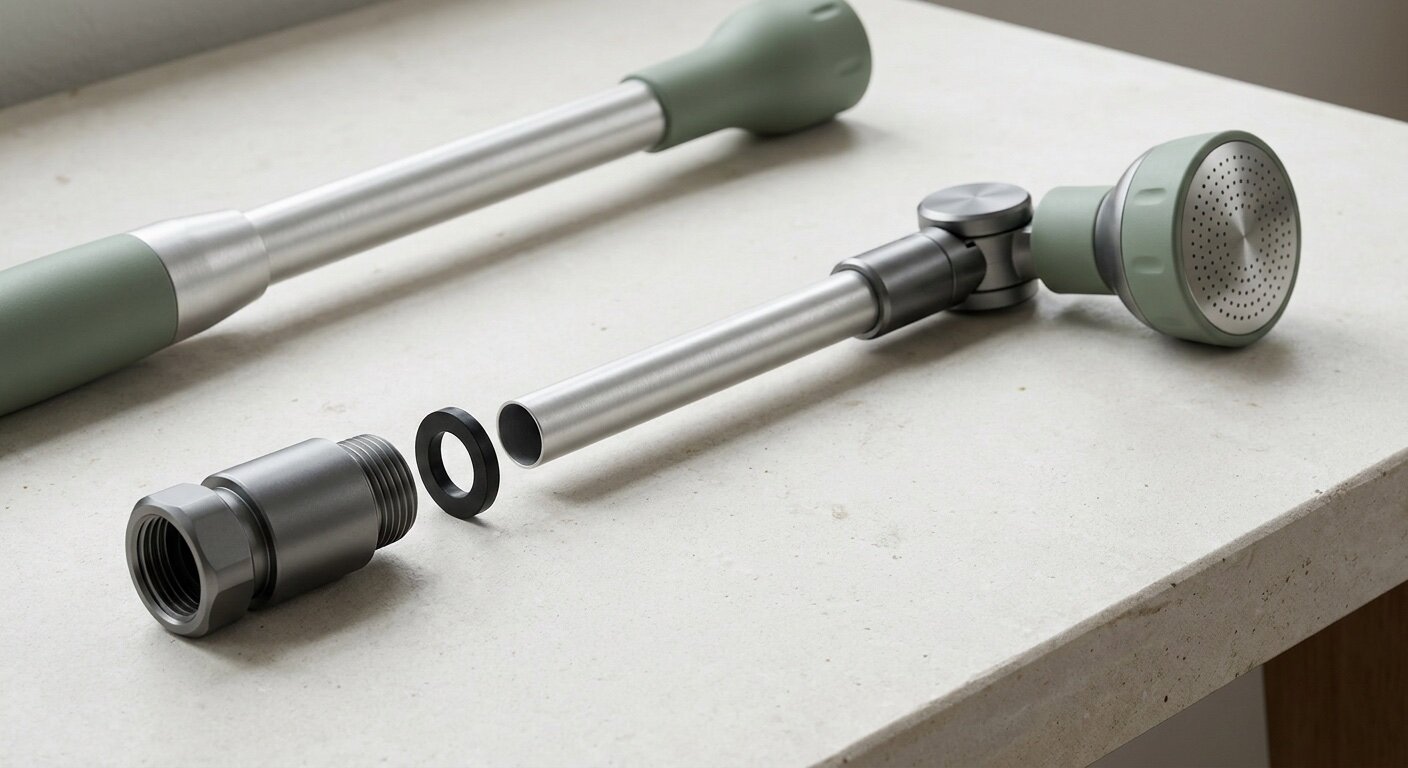
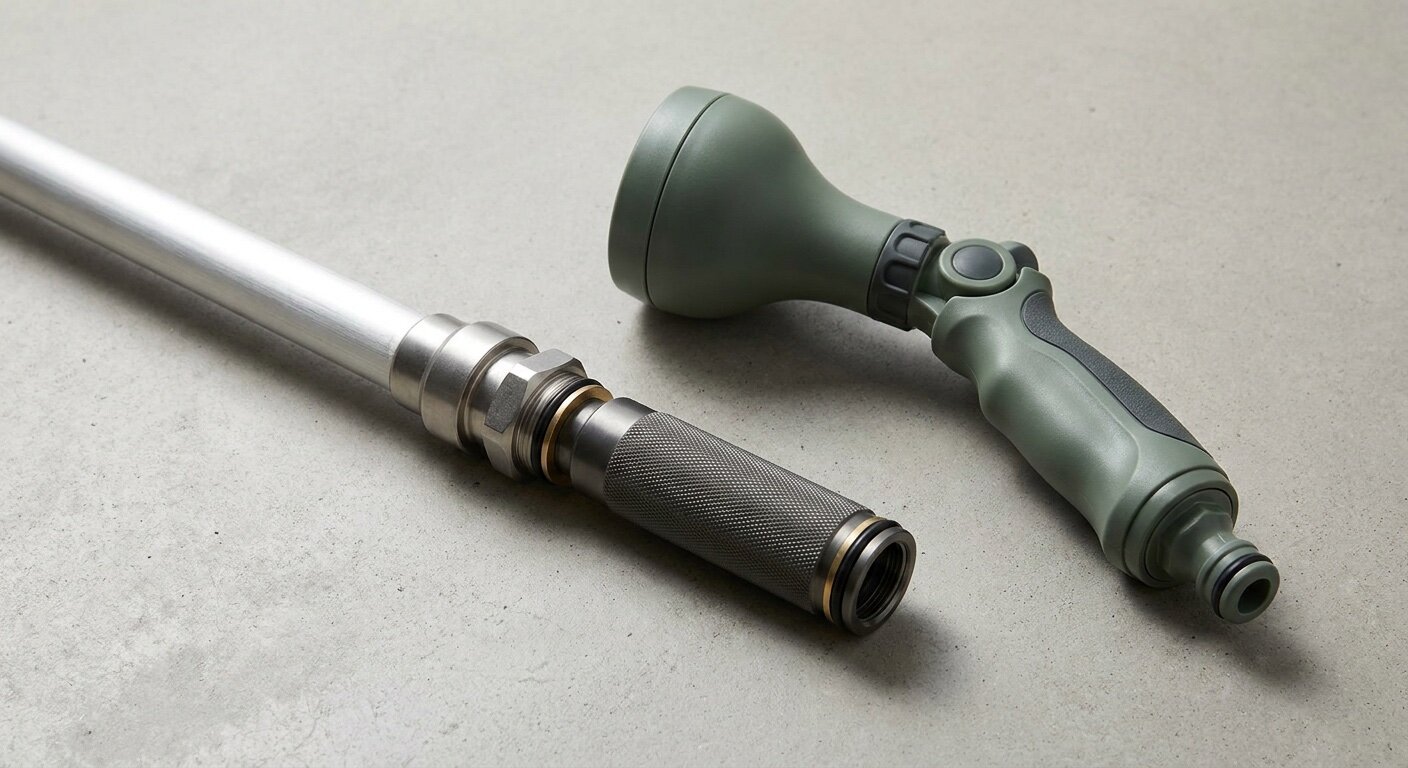
Metal tubes and fittings resist knocks and feel reassuringly solid, but metal is not automatically durable. Thin tubing can dent, exposed finishes heat up in strong sun, and an elaborate metal head can make the tool nose-heavy. Plastic reduces weight and handles everyday use when the molding, seals, and joints are well made.
The hose connection deserves the closest look. Threads should engage smoothly without cross-threading, and the coupling should turn without twisting the whole wand. A sound rubber washer inside the fitting is essential; many apparent failures are simply a worn or missing washer. Confirm that the connector matches your hose standard, especially when buying from an overseas marketplace.
Storage details count, too: a hanging loop that fits your hook, a valve that drains easily, and a profile that does not snag neighboring tools. Before freezing weather, disconnect and drain the wand so trapped water cannot expand inside the head or valve.
Match the Wand to Beds, Baskets, and Containers
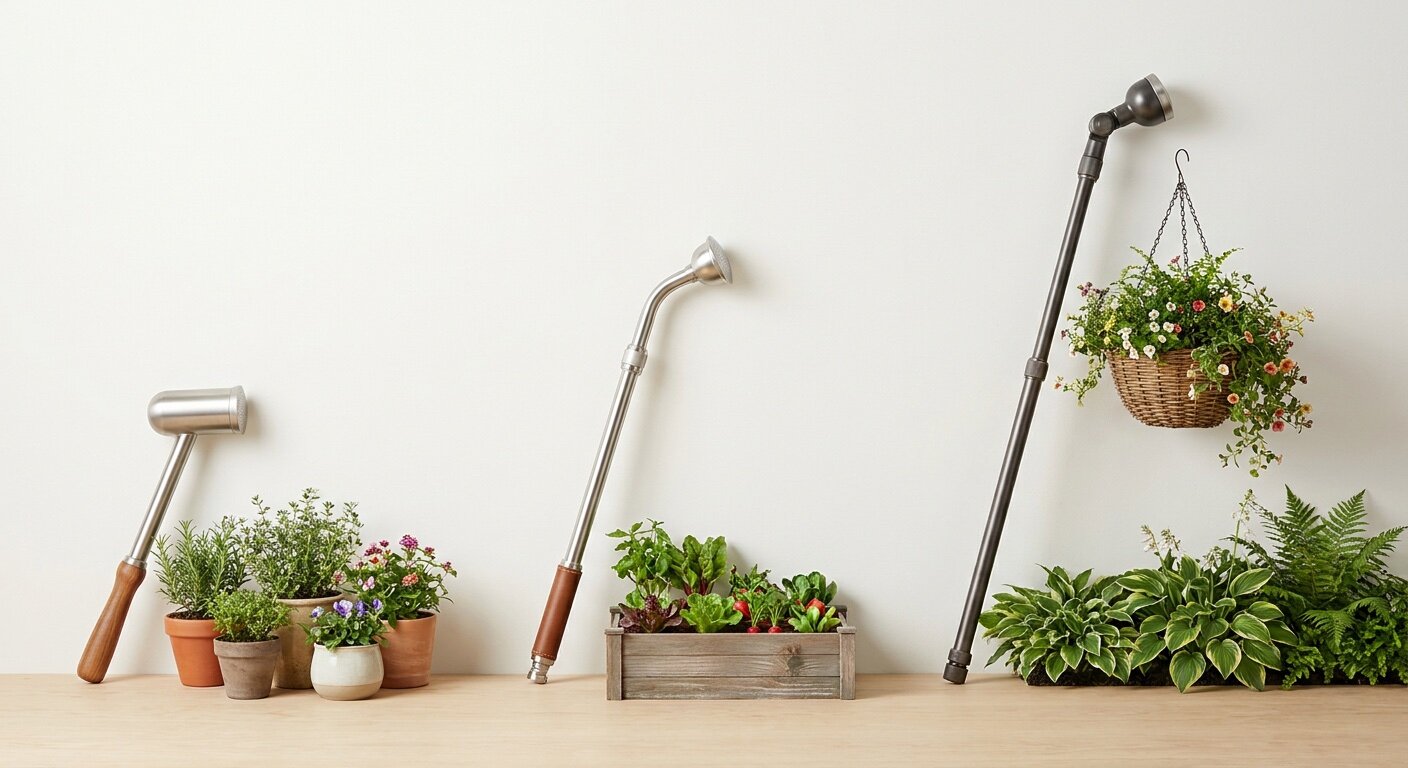
Each garden zone rewards different proportions. Use this table as a starting point, then adjust for your height, path width, and hose position.
| Garden situation | Useful reach | Head design | Control to prioritize |
|---|---|---|---|
| Crowded patio pots | Short to medium | Compact, gently angled | One-hand shutoff |
| Mixed flower border | Medium | Soft shower, pivoting | Easy thumb flow control |
| Raised vegetable bed | Medium to long | Angled or pivoting | Lockable low flow |
| Hanging baskets | Long enough to reach from the ground | Upward-adjustable head | Precise shutoff between baskets |
| Deep shrub border | Long | Broad shower with stable joint | Comfortable continuous flow |
| Seedling trays | Short to medium | Very gentle, even shower | Fine low-flow adjustment |
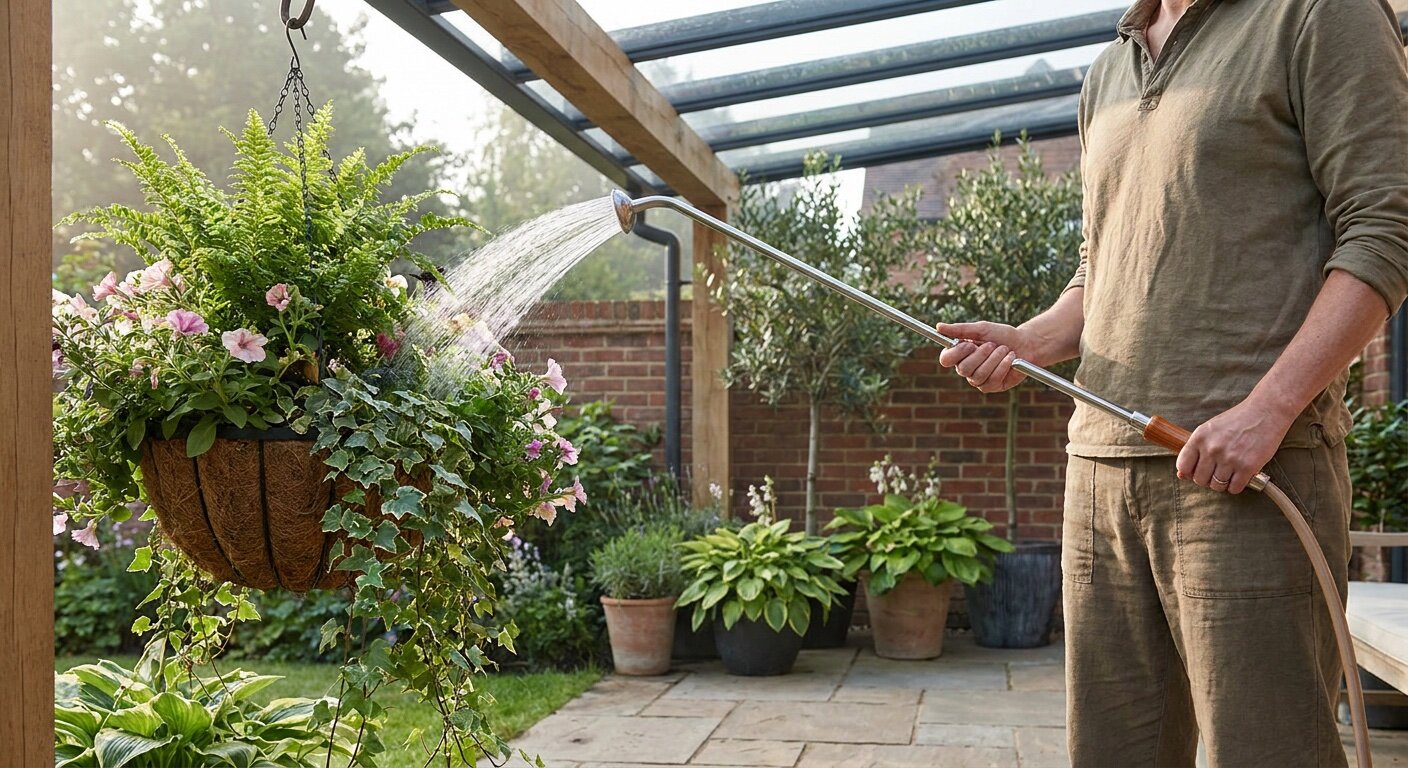
In a small patio garden layout, maneuvering room is usually the constraint, so compactness wins. For vertical gardens and planter boxes, an adjustable head serves several heights without moving furniture or stepping into the planting. During raised garden bed planning, decide where the gardener will stand and whether the center can be reached with a neutral wrist.
Large containers need extra care. Upper foliage can hide dry pockets near the rim, while water may race down a single channel in the mix. Pair the wand with thoughtful large outdoor planter design, and move the shower across the surface rather than flooding one spot.
Water in a Plant-Safe, Water-Smart Way
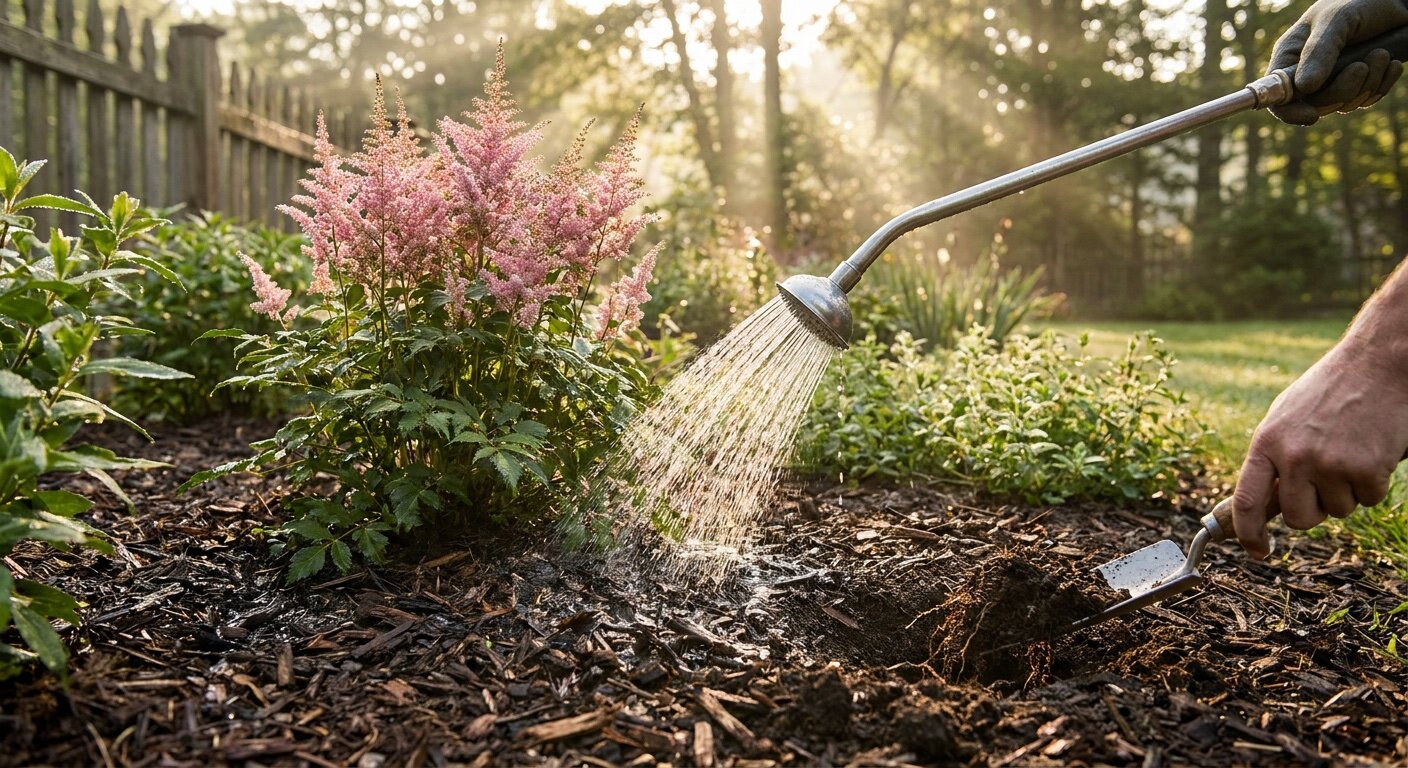
The wand improves aim; technique decides what happens after the droplets land. Water in the morning when practical, target the root zone, and water deeply enough to encourage roots below the surface rather than sprinkling everything on a rigid daily schedule. Guidance from University of Minnesota Extension recommends morning watering, getting water to roots, and watering deeply but less often.
Avoid the middle of the day, when evaporation is high, and pause whenever water pools or runs off instead of soaking in. EPA WaterSense gives the same practical cautions about midday loss and runoff.
Let the soil provide feedback. Check below the surface with a finger or small trowel before assuming a plant is dry, then apply water slowly across the root area so it can infiltrate. University of Maryland Extension recommends checking soil moisture and watering trees and shrubs slowly and deeply at the root zone. Containers and hanging baskets may still need more frequent visits because their smaller soil volume dries faster.
For a broader seasonal routine, pair tool choice with smart watering tips for lawns and gardens. The wand should support observation, not replace it; weather, soil, plant maturity, exposure, and container size all change the answer.
Run a Six-Step Fit Test Before You Commit
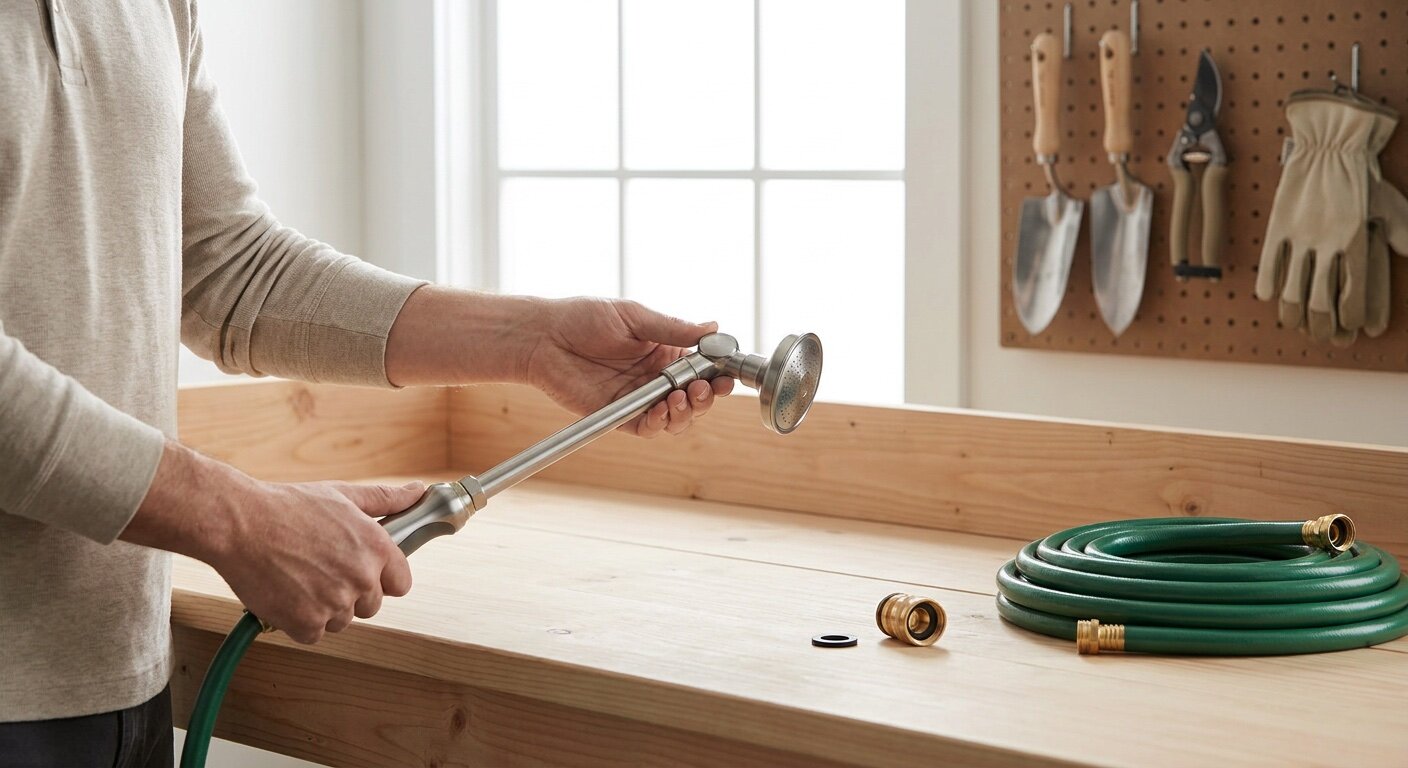
You do not need a full season to spot a poor fit. In the store, or before removing labels and discarding packaging, work through these checks:
- Dry-fit the grip. Hold the wand in your usual hand and confirm that your fingers and thumb reach every control without stretching.
- Check horizontal balance. Extend it at waist height for 30 seconds and notice whether the head pulls your wrist down.
- Move through your real angles. Mimic watering a low pot, the back of a bed, and a high basket. Make sure the tube and handle clear your body.
- Inspect the joint and threads. Pivot the head, turn the valve, and examine the coupling and washer for rough movement, gaps, or damaged threads.
- Connect at low pressure. Look for leaks, then cycle the flow from low to high. The pattern should stay even, and the head should hold its angle.
- Test the shutoff. Move between two pots with the water paused. A control that drips heavily or needs two hands defeats one of the wand’s main benefits.
This is not a laboratory durability test. It is a fit-and-function check that catches the most common mismatch: a tool that looks capable on the shelf but feels wrong in your garden.
Watering Wand FAQ
What is the ideal watering wand length?
There is no universal ideal. Choose the shortest wand that reaches your deepest bed or highest regularly watered basket from a comfortable stance. Medium lengths suit many mixed gardens; longer designs earn their size in deep borders, raised beds, and hanging displays.
How many spray patterns do I need?
Usually fewer than the package suggests. A uniform gentle shower plus responsive flow control covers most plant watering. Extra patterns matter only if the same tool must also rinse paving, mist foliage, or fill containers.
Is a metal watering wand better than a plastic one?
Not automatically. Metal may offer robust threads and impact resistance, while plastic can reduce head weight and stay cooler in hot sun. Judge the complete assembly: balance, wall thickness, joints, seals, valve feel, and a replaceable washer.
What should I look for when watering hanging baskets?
Prioritize sufficient reach, a head that angles upward, and an easy shutoff between baskets. Together, those features let you see and wet the soil surface from the ground without pushing the basket or soaking everything below it.
What hose setting is safest for seedlings?
Use a gentle shower at low flow. Start the water away from the tray, reduce it with the thumb valve, and then bring the spray over the soil. Stop if the surface mix shifts, seeds float, or water begins to pool.
The Takeaway
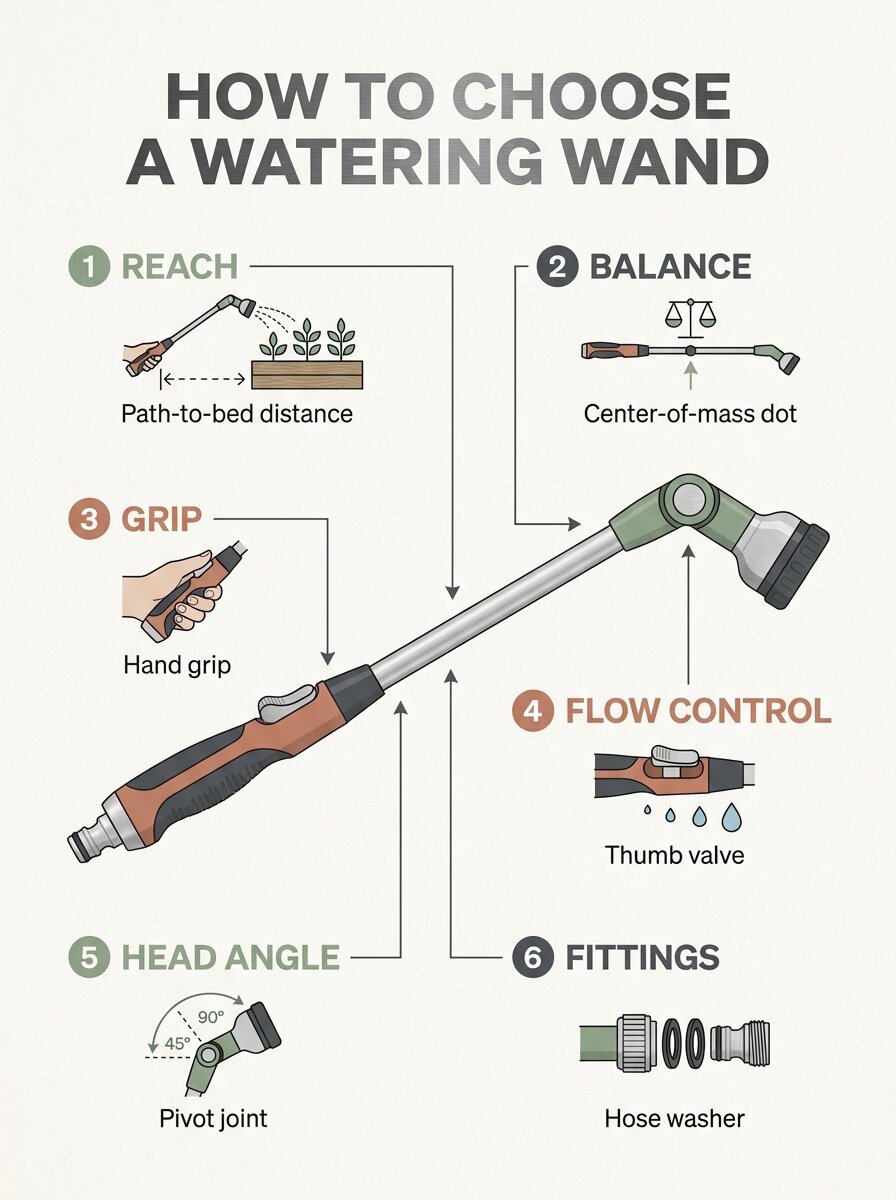
The best watering wand for a garden hose fits both the geometry of the space and the movement of the person using it. Start with reach, then judge balance, grip, control placement, head angle, spray quality, and the hose connection. Favor the few features that solve real frustrations over a crowded specification list.
When those choices line up, the wand becomes almost invisible. You stay on the path, water reaches the root zone gently, and each plant gets attention without needless stretching or waste. That is good tool design: not more complexity, but less effort between intention and result.
- 0shares
- Facebook0
- Pinterest0
- Twitter0
- Reddit0