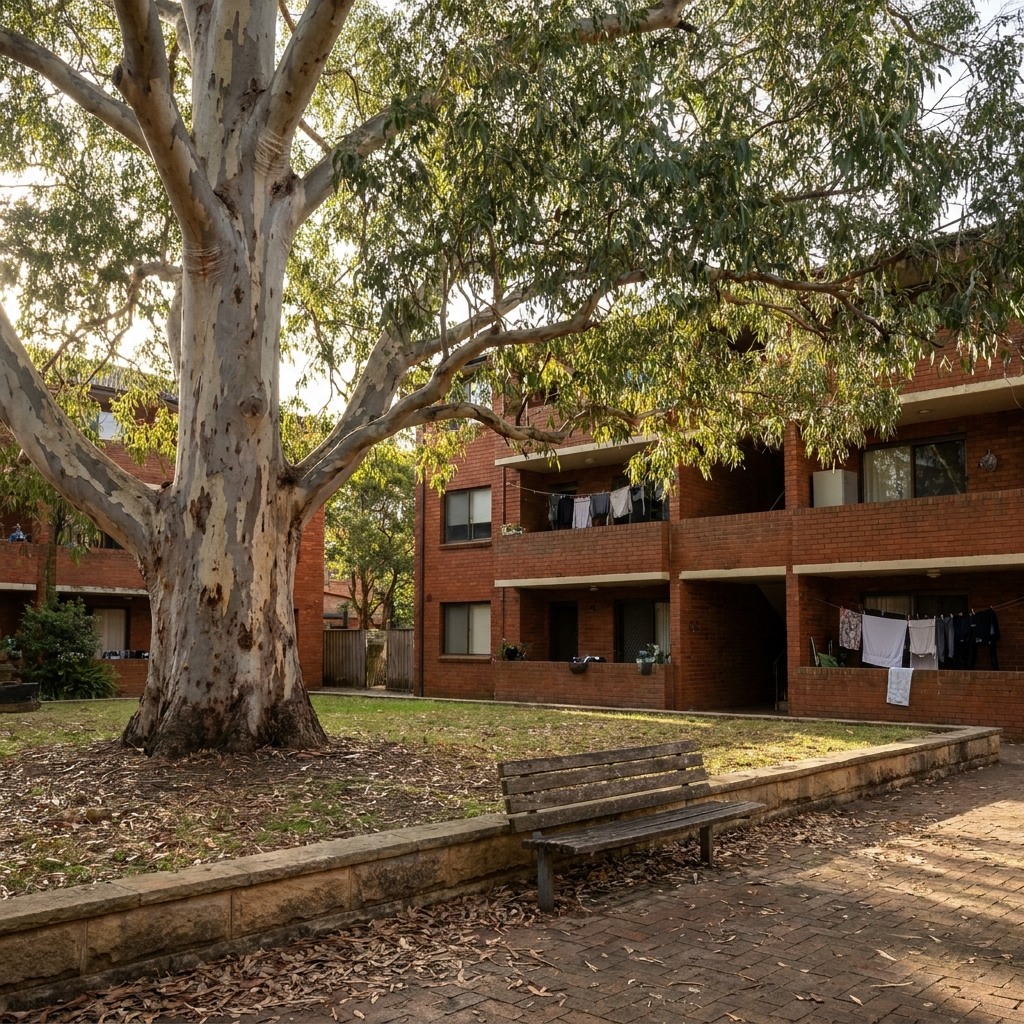
Before removing a tree on a managed property, check five things. First, confirm whether the council requires a permit. Second, get written approval from the owner or strata body. Third, obtain a qualified arborist's risk assessment. Fourth, inspect the tree for wildlife and hollows. Fifth, work out what the site loses with it, such as shade, privacy and screening.
Skipping any of these can lead to penalties, disputes with owners or a courtyard nobody wants to use. This checklist is for Australian property and strata managers and the designers who plan shared outdoor space. It covers each step, along with the alternatives to removal and how to restore the site afterwards.
Start with what the tree does for the site
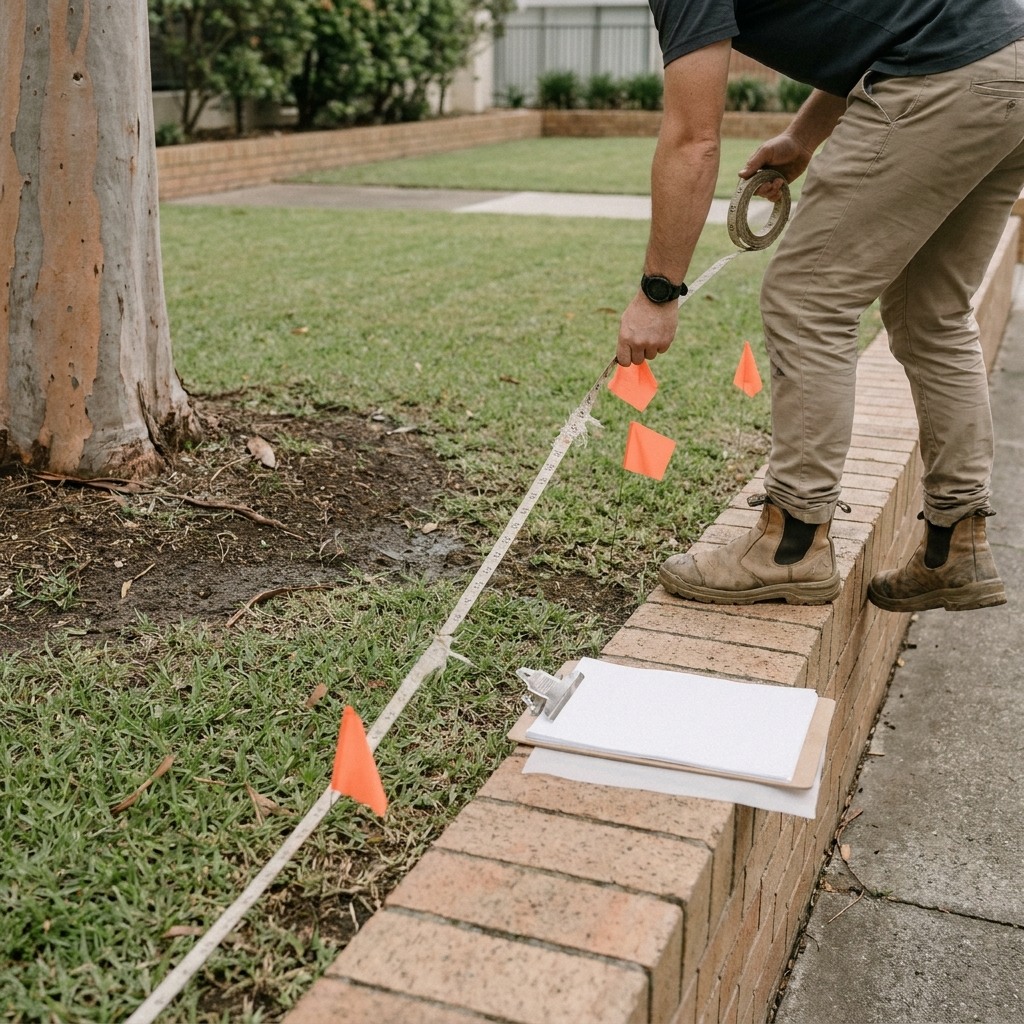
List every job the tree currently does before deciding it should go. Most mature trees are neither simply a hazard nor simply an asset.
A tree may shade a seating area, screen a neighbour's windows, support wildlife and make shared space more pleasant. On some sites it may also help stabilise soil on a bank. Ask the arborist whether that applies to your tree.
The same tree can cause problems. Branches can overhang roofs, block paths or interfere with powerlines. Roots can affect paving, drainage and underground services, and weak limbs may fail in storms.
A practical rule: draw the canopy outline on your site plan and mark everything beneath it. That includes seating, paths, car spaces, windows, bins and play areas. Everything inside that line will change when the tree goes. If you don't yet have a base plan, the landscape planning guide explains how to map existing conditions.
Who has to approve the work
Don't assume a tree on private land can be removed without permission. Approval can be needed from the council and from the owners.
Council rules
Tree protection rules differ between states and often between councils within a state. Whether a permit is needed can depend on the tree's species, size and location. Removing a protected tree without approval may lead to penalties, so ask the council before booking any work.
NSW example: NSW Planning explains that councils use their development control plans (DCPs) to identify protected trees and the approvals required, and it advises checking with the local council. Outside NSW, the planning instruments are different. The first step is the same, though: contact the council for that property.
Owner and strata authority
Next, confirm who can authorise the work within the property. That may be the owner, a landlord, a strata committee, an owners corporation or a body corporate, depending on the arrangement and the state.
For shared residential developments, body corporate tree removal may require formal approval before contractors can start. Check the scheme's by-laws and approval procedure, brief committee members early, and keep written records of every approval and decision. A dated record is much easier to defend than someone's memory if an owner disputes the work later.
NSW example: North Sydney Council's tree works application form accepts applications from the owner, a strata chair or secretary, a managing agent or an authorised contractor. That is one council's form. Other councils may set different rules on who can apply.
Get an arborist's risk assessment first
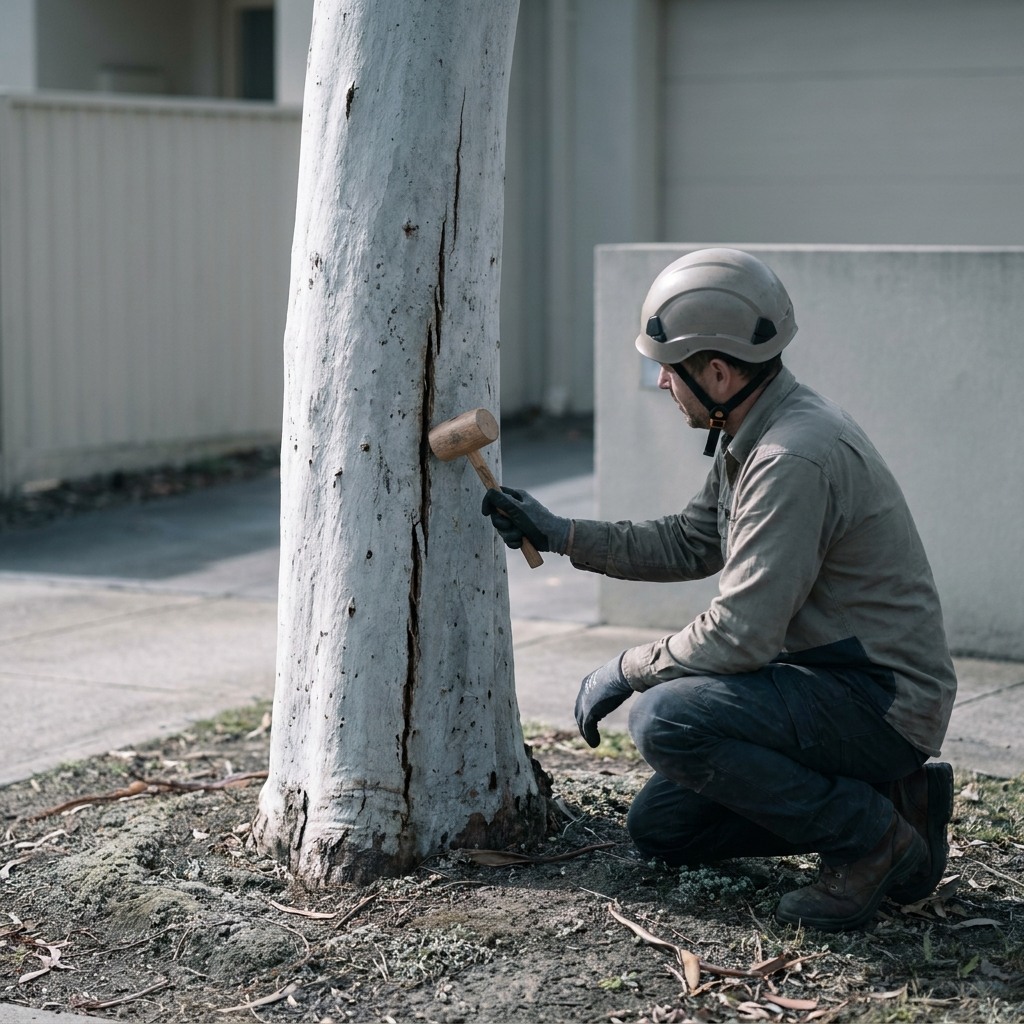
A tree that looks unhealthy may not need removing. A qualified arborist should assess it first.
Signs worth reporting include:
- dead branches
- deep cracks in the trunk
- fungal growth
- a new or worsening lean
- exposed or damaged roots
- discoloured leaves or unusual leaf drop
These signs justify an inspection. They don't decide the outcome on their own.
Arboriculture Australia describes tree risk assessment as a structured process carried out by trained practitioners. It weighs the tree's condition against what could be harmed if part of it failed. On shared sites, location matters a great deal. The same defect carries different risk over a little-used garden bed than over a building entry.
Ask for a written report that covers the tree's condition, its level of risk, options other than removal and any recommended works. A report like this often supports both the council application and the strata decision.
Check for habitat before booking a crew
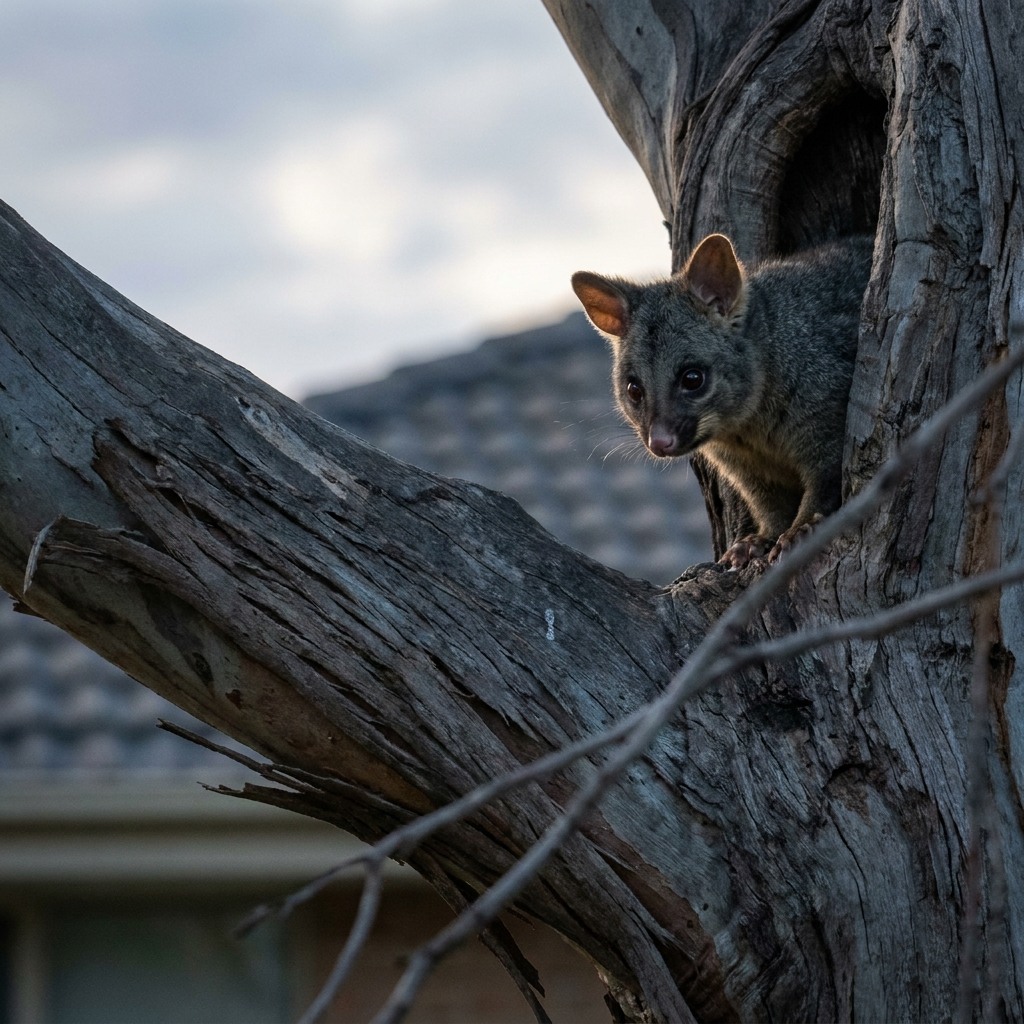
Look for nests, hollows and resident wildlife before you set a removal date.
NSW Environment notes that many native animals depend on tree hollows for shelter and breeding, and that hollows take a very long time to form. A newly planted replacement tree can't provide the same habitat for many years.
If protected species may be affected, further assessment or permission may be needed. Check with the council and the relevant state environment agency.
Even where no permission is needed, you can reduce harm:
- schedule work away from active nesting
- keep nearby vegetation
- ask whether a dead tree could be made safe as a shorter habitat stump instead of being removed completely
Whether a habitat stump is suitable depends on the arborist's advice and any council conditions.
Map what the site loses with the canopy
Losing a mature tree changes how people use the space around it. Plan for that before the tree is cut. This section deals only with the tree decision. The wider workflow is covered in our landscape design process guide.
Shade and seasonal use
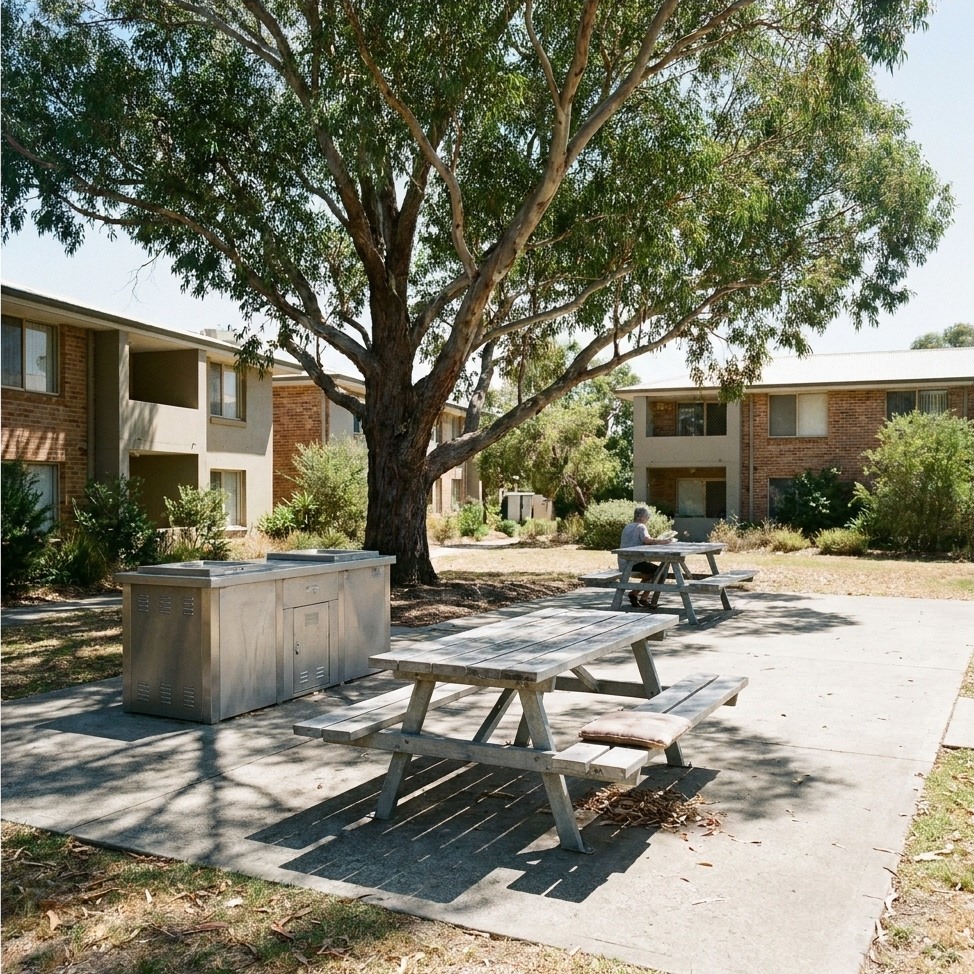
The Australian Government's YourHome guide recognises vegetation as a way to shade buildings and outdoor areas. It notes that deciduous plants can provide summer shade while letting winter sun through.
Mark every space that currently depends on the tree's shade. That might be seating, play equipment, west-facing units or parking. Then plan two kinds of replacement:
- Short term: a shade sail, pergola or umbrellas
- Long term: a new tree that will eventually restore the canopy
Removing a hazard doesn't help much if the seating area becomes too hot to use in summer.
Paths, sightlines and access
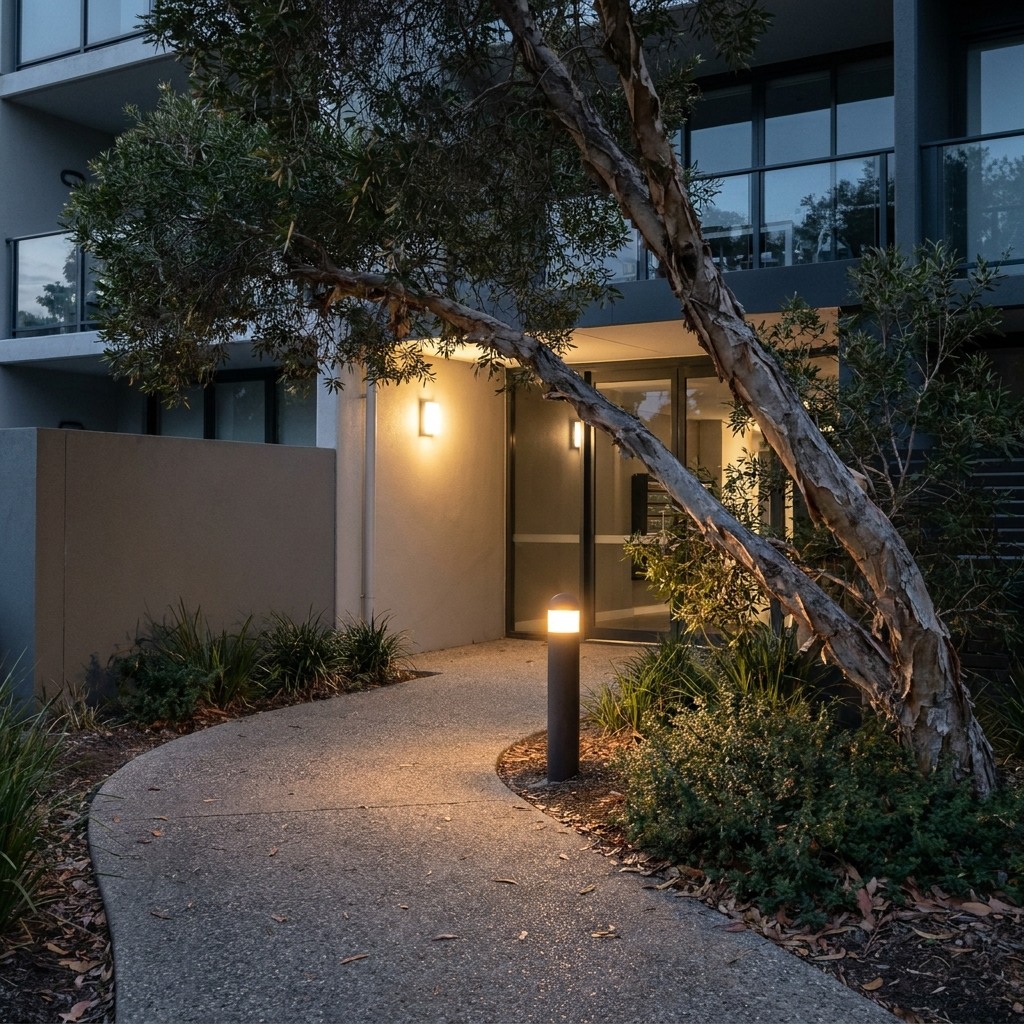
Trees often hide things people would rather not see, such as bin stores, meters or a neighbour's balcony. Walk the site from each entry, window and seating area, and note what will come into view.
Removal can also improve a site. It may reopen a view along a path, brighten a dark corner near an entry or give maintenance vehicles room to get through.
Check the lighting too. If the canopy blocked a fitting or held uplights, the space will look different after dark. Our garden lighting plan guide covers how to rethink views and fittings.
Hardscape, roots and irrigation
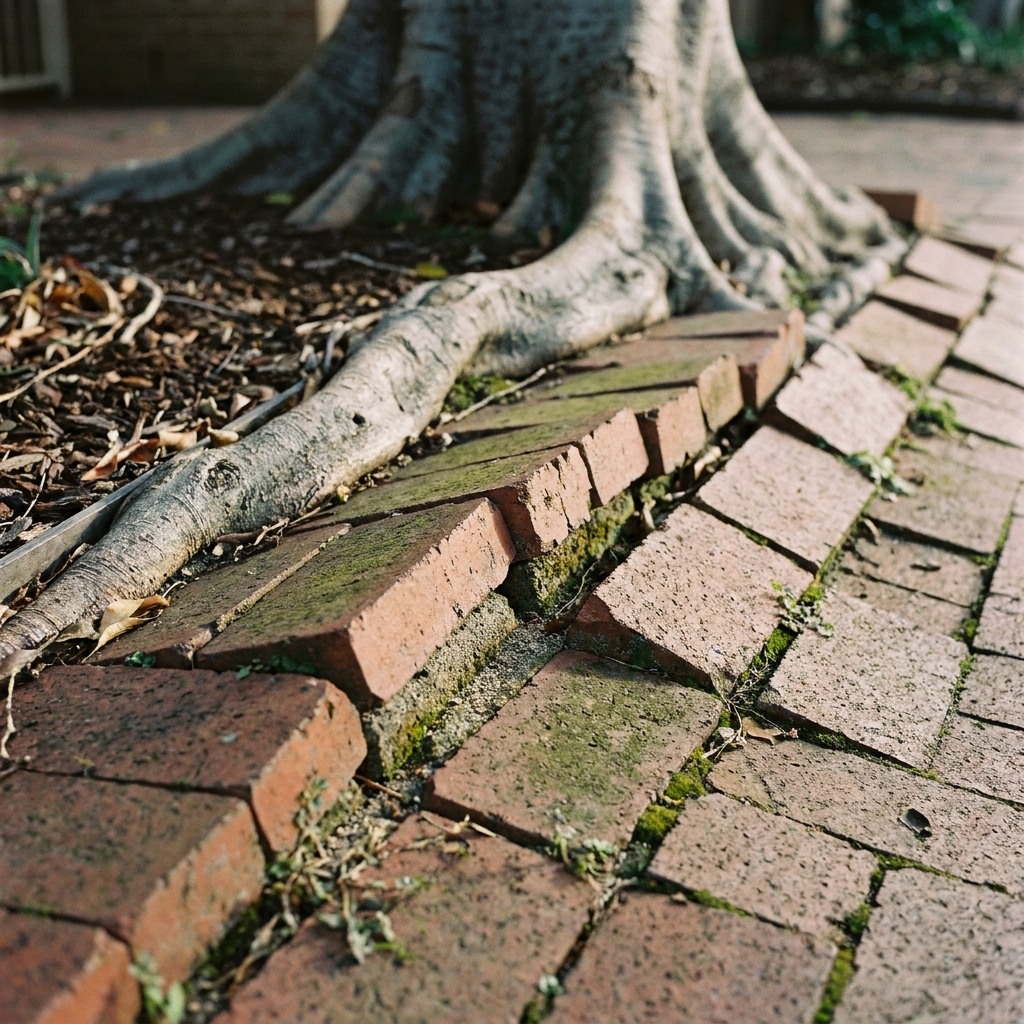
Removing a tree doesn't fix the paving its roots have lifted. Budget for relaying it. Ask the arborist whether decaying roots could cause the ground to settle later.
Irrigation lines often run close to trees, and stump grinding can damage them. A replacement tree will also need reliable water while it establishes. Review zones and drip lines before work starts, using the principles in this irrigation layout plan.
Alternatives to removal: a decision table
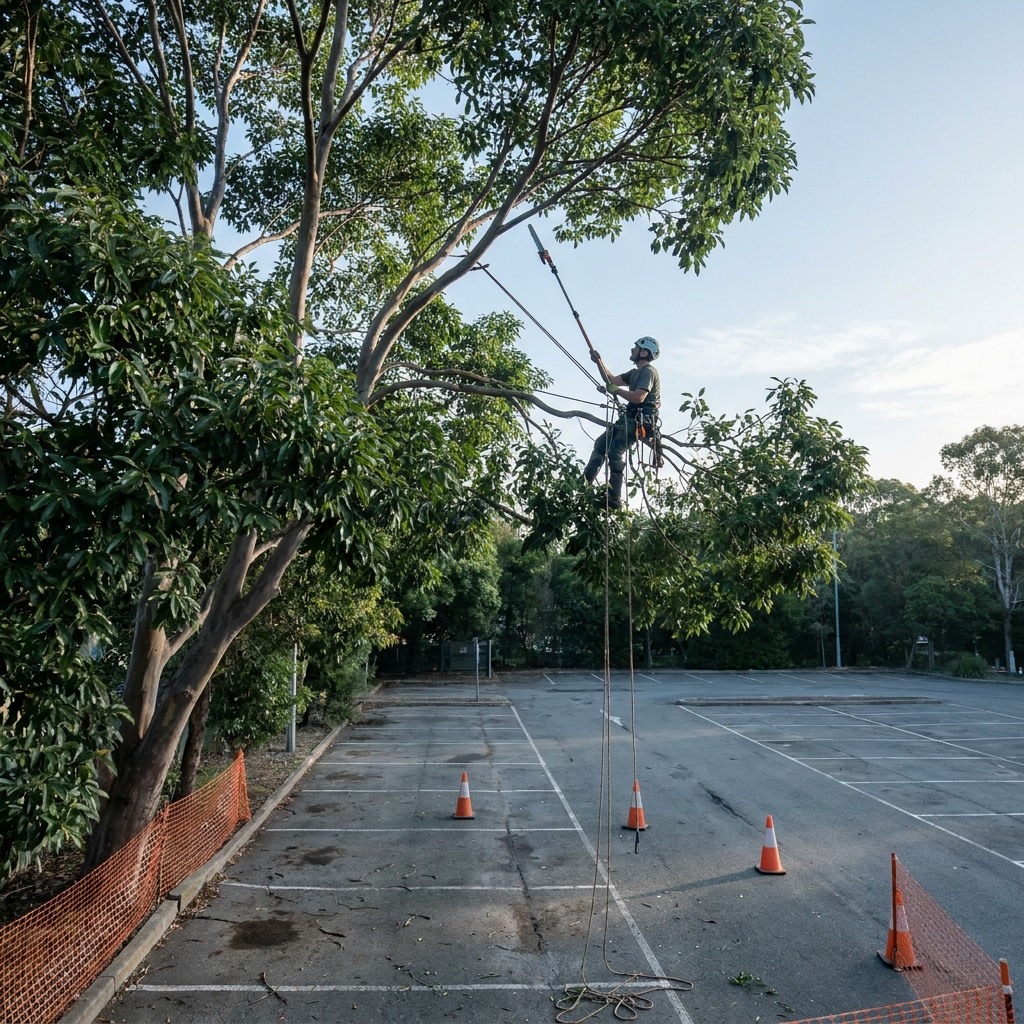
If the tree is healthy and structurally sound, targeted maintenance may solve the problem. Use this table to guide the conversation with the arborist and committee. It doesn't replace their advice.
| Problem raised | Options to ask the arborist about | When removal may be considered | Design follow-up |
|---|---|---|---|
| Branches over roof, path or powerlines | Clearance pruning, deadwood removal | Defects that pruning cannot make safe | Recheck shade and lighting |
| Tree too large for the space | Crown reduction to arboricultural practice | Species unsuited to the site long term | Plan replacement canopy |
| Roots lifting paving or walls | Root management, barriers, redesigned paving | Root damage affects stability | Budget paving and drainage repair |
| Dead or severely diseased | Assessment for recovery, or reduction to a habitat stump | Arborist finds it cannot recover or be made safe | Habitat check, replacement shade |
| Blocked views or dark areas | Selective pruning, crown lifting | Rarely enough on its own; check council rules | Review lighting and sightlines |
The right option depends on the tree's species, its root structure and where it stands. In many council areas, a healthy tree that only blocks a view is unlikely to be approved for removal.
Plan the worksite and hire the right contractor
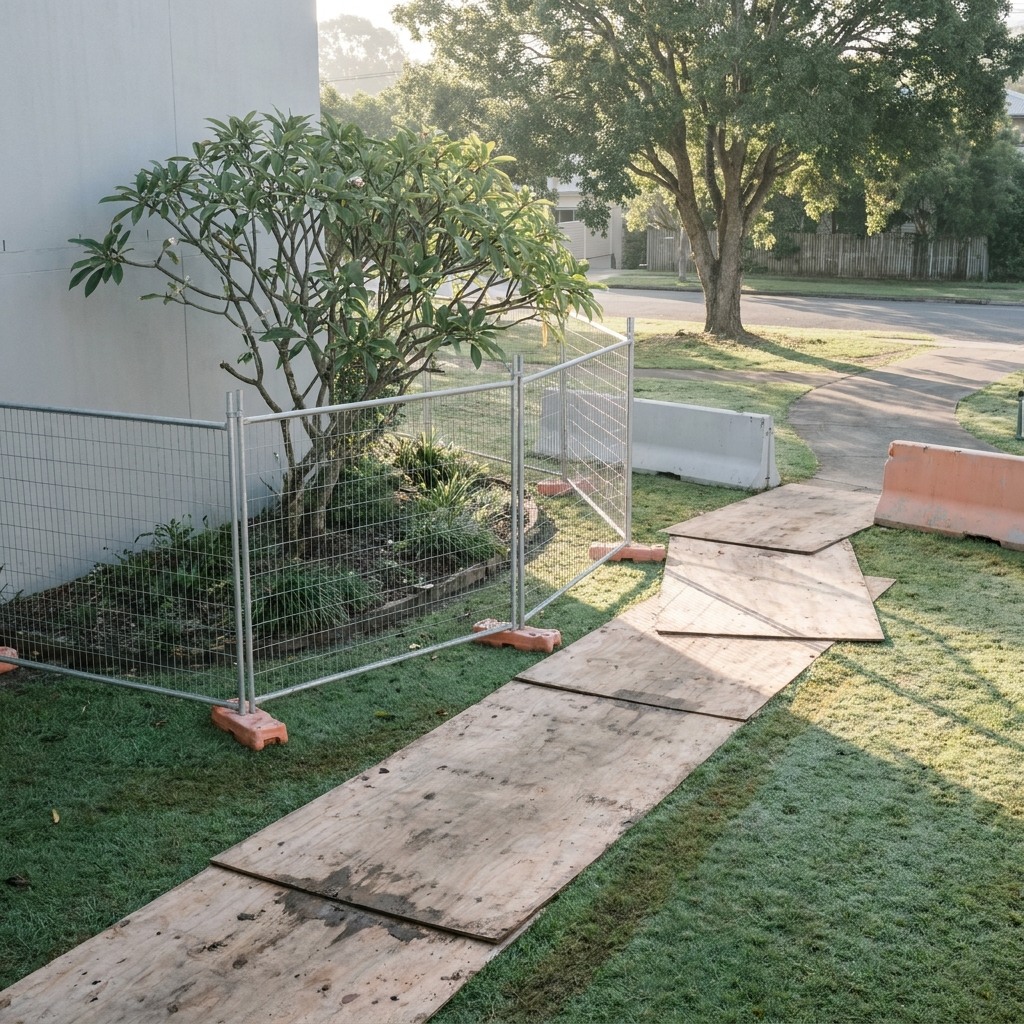
Treat tree removal like a short construction job on an occupied site. It isn't a DIY task, especially for large trees or sites with tight access.
Worksite planning
Before the work date, confirm:
- access for trucks, elevated work platforms or cranes, and any load limits on driveways or podiums
- exclusion zones and pedestrian diversions, especially around shared entries
- noise restrictions and permitted working hours
- the location of overhead powerlines and underground services
- protection for plants, paving and fences that are staying
- notice to residents, tenants and neighbours, especially where shared access is affected
Hiring the contractor
Choose a qualified, experienced arborist or tree removal contractor with current public liability insurance and workers' compensation cover. Ask to see the certificates.
Get a written quote covering scope, equipment, waste disposal, stump treatment and any extra costs. Keep the quote, the arborist's report and all approvals in one file.
After removal: stump, soil and replacement canopy
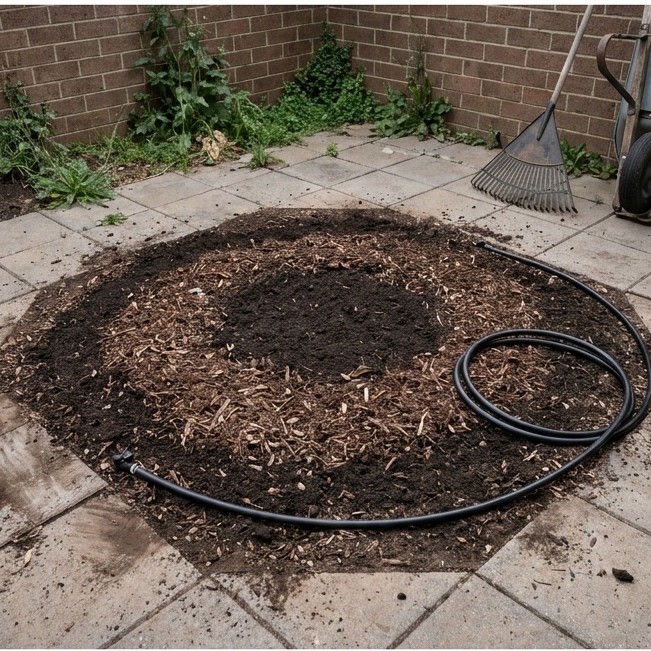
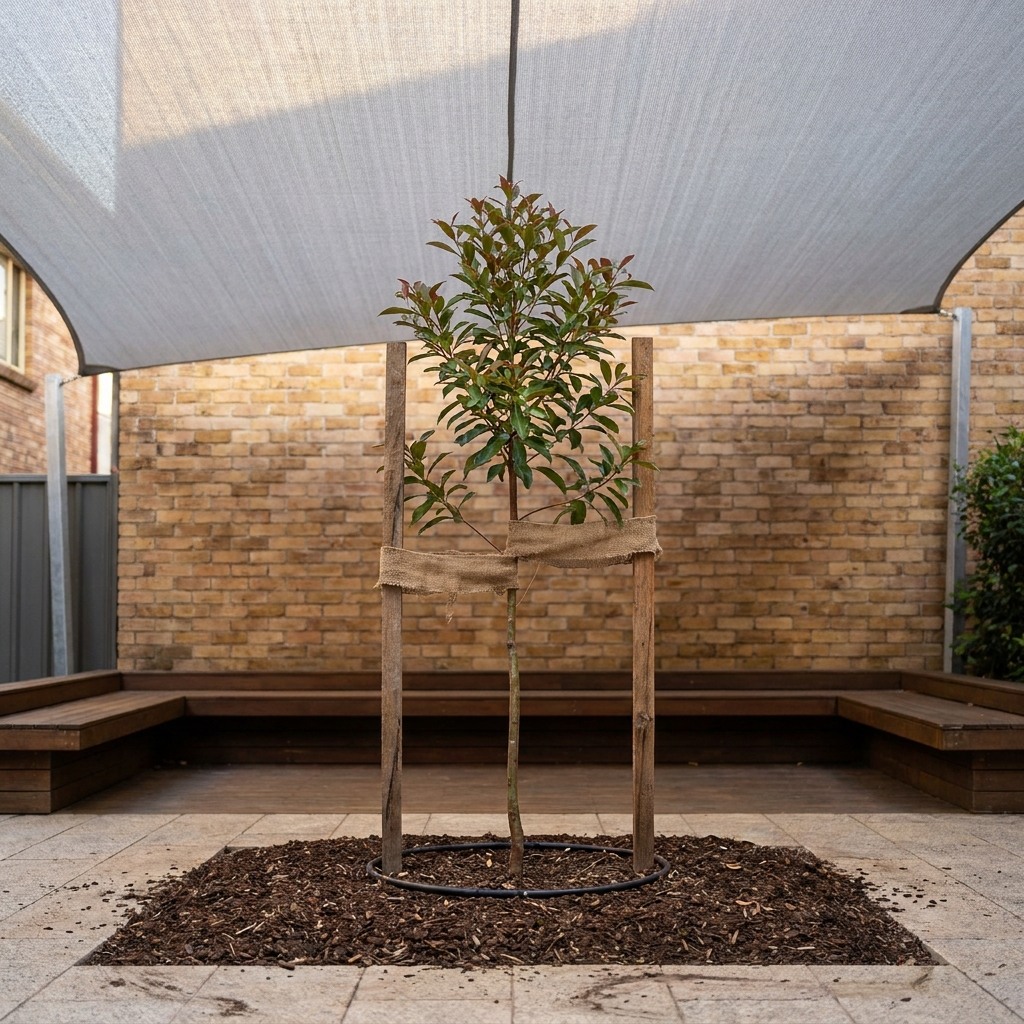
The job isn't finished when the trunk is gone. Stumps can create trip hazards, attract pests and get in the way of future planting or construction.
Choose the stump treatment based on what the space will become:
- Grinding may be enough for a lawn or garden bed.
- Fuller removal may be needed for a new path, slab or replacement tree in the same spot.
Afterwards, inspect the area, fill any hollows and confirm it is safe to use.
Where space and council conditions allow, plant a replacement tree. Choose a species that suits the mature space, the soil and nearby infrastructure. A practical rule: draw the replacement at its full mature canopy width, then check that it clears buildings, services and paths. Approvals may include replacement planting conditions, so read them before choosing a species.
Set a schedule of regular inspections and pruning so the new tree doesn't develop the same problems.
One-page checklist
Before deciding
- ☐ Canopy outline drawn on the site plan, with every use beneath it marked
- ☐ Tree's functions listed: shade, privacy, screening, habitat and any site-specific soil stabilisation
- ☐ Qualified arborist's written risk assessment obtained
- ☐ Alternatives to removal reviewed with the arborist
Approvals
- ☐ Local council contacted; permit requirement confirmed in writing
- ☐ Strata by-laws or owner authority checked
- ☐ Committee or owner approval recorded
- ☐ Any environmental or habitat permissions resolved
Design impacts
- ☐ Shade replacement planned: short-term cover and long-term canopy
- ☐ Sightlines, privacy and lighting reviewed
- ☐ Paving, drainage and irrigation repairs budgeted
Worksite
- ☐ Machinery access, exclusion zones and pedestrian routes planned
- ☐ Residents and neighbours notified
- ☐ Contractor's insurance and qualifications verified; written quote on file
After
- ☐ Stump treatment matched to the future use of the space
- ☐ Site inspected and made safe
- ☐ Replacement tree chosen for its mature size; irrigation in place
- ☐ Inspection and pruning schedule set
FAQ
Do property managers need council approval to remove a tree?
Often, yes. Requirements vary by state and by council, and they can depend on the tree's species, size and location. In NSW, according to NSW Planning, councils identify protected trees and approval requirements in their DCPs. Confirm with the local council before booking any work.
Who can apply for tree works on a strata property?
It depends on the council's process and the scheme's by-laws. In NSW, North Sydney Council's form accepts applications from the owner, a strata chair or secretary, a managing agent or an authorised contractor. Internal strata approval is a separate step.
Can a tree that looks sick be kept?
Sometimes. Dead branches, cracks or fungal growth are reasons to get an arborist's risk assessment, not automatic grounds for removal. Pruning, crown reduction or root management may reduce the risk enough to keep the tree.
What should replace a removed tree?
Choose a species that suits the mature space, the soil and nearby infrastructure, and plan irrigation for its first years. Add temporary shade wherever people relied on the old canopy, and check any replacement planting conditions in the approval.
- 0shares
- Facebook0
- Pinterest0
- Twitter0
- Reddit0