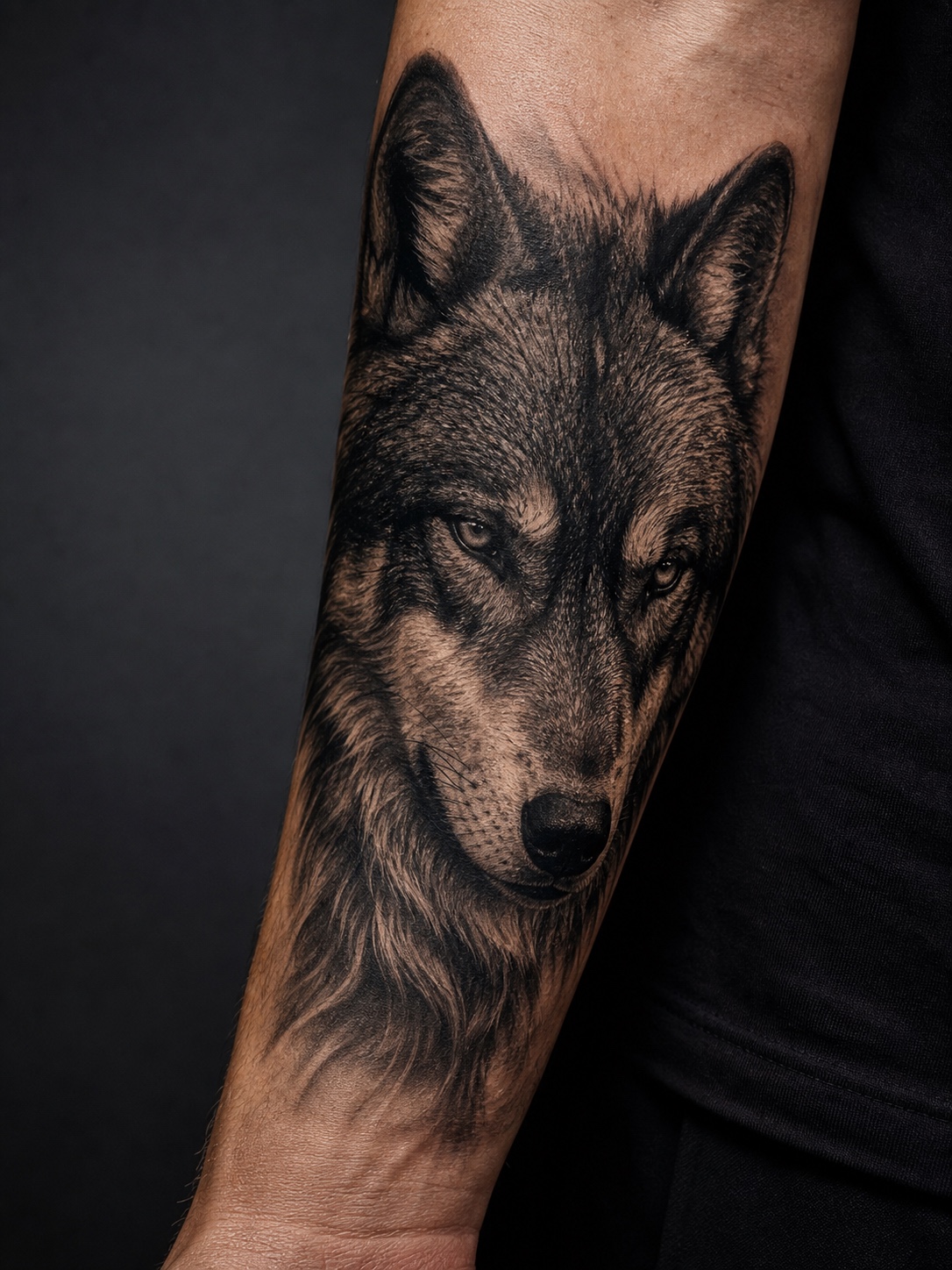
A friend of mine got a wolf tattoo after his dad died. Not a wolf howling at the moon, not a geometric wolf with compass lines. Just a wolf’s face looking straight out, rendered in black and grey on his upper arm. When I asked what it meant, he said his dad used to call himself the pack leader. That was it. No mythology required.
That story stuck with me, because it gets at why wolf tattoos keep showing up decade after decade. The animal is versatile enough to carry almost any meaning you need it to carry. Loyalty, independence, grief, protection, strength. It bends to fit the story without breaking.
This guide goes through wolf tattoo meanings by design type, cultural tradition, and what specific elements add or shift the symbolism. Whether you’re picking your first wolf piece or trying to understand one you already have, the goal is the same: give you enough context to make the choice yours.


What Wolf Tattoos Mean: The Core Symbolism
Most wolf tattoo meanings cluster around a handful of themes that cut across cultures and design styles. These aren’t abstract ideas. They’re the specific qualities people associate with the wolf as an animal.
Loyalty and Pack Bonds
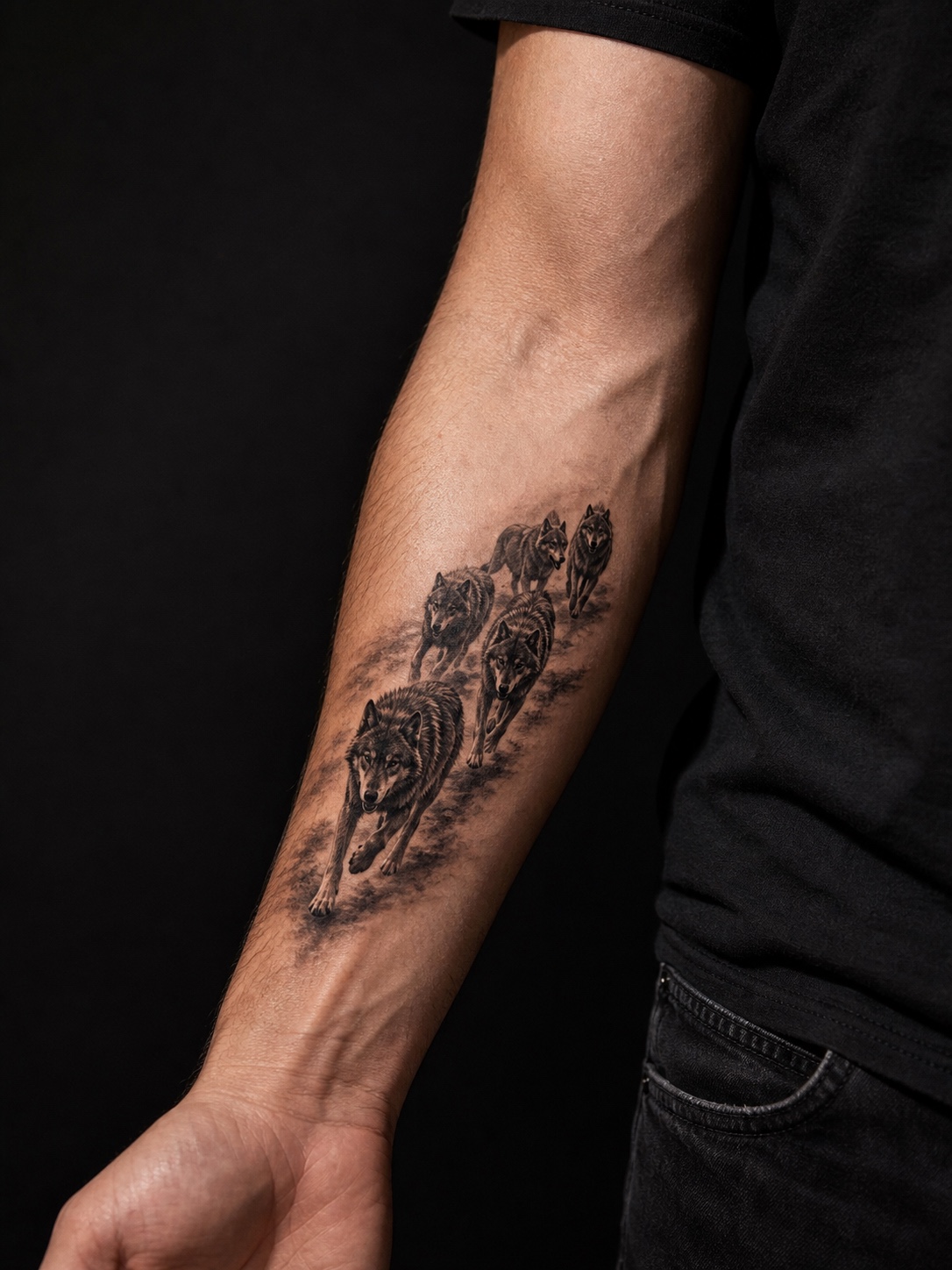
Wolves are not solitary animals. They live and hunt in family units where every member has a role. That pack structure is the most consistent thing people point to when they explain a wolf tattoo. The animal earns its symbolic weight through behavior, not mythology. It stays, it protects, it comes back.
Pack tattoos, which show two or more wolves together or a wolf with cubs, read specifically as family loyalty. I’ve seen these done in memory of someone or as a tribute to a tight group of people. The design element that signals family most clearly: wolves in motion together rather than posed alone, or a larger wolf with smaller ones sheltered nearby.
Independence and the Lone Wolf
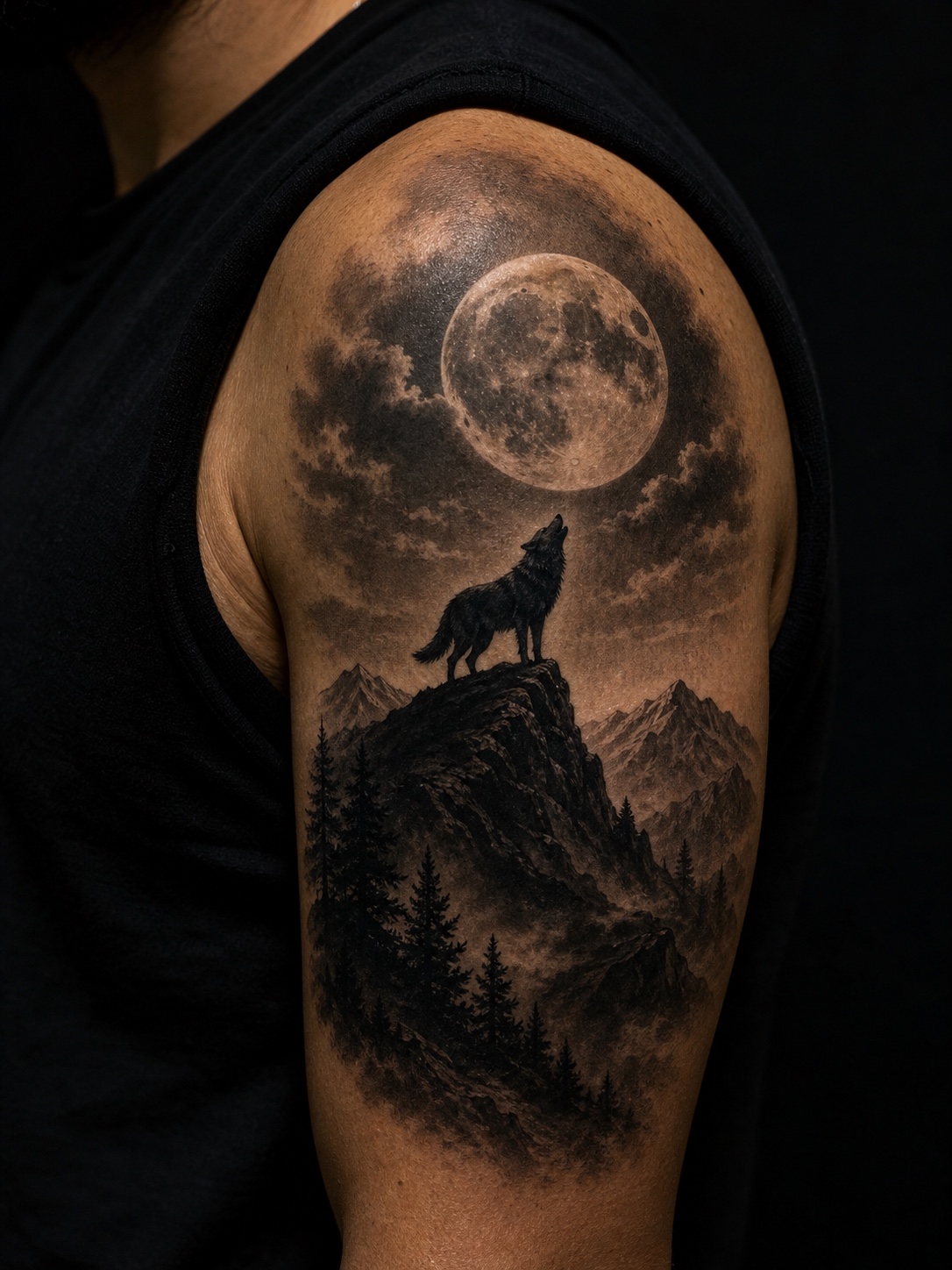
The lone wolf sits at the opposite end. A single wolf, usually shown against a wide open landscape, moon, or just empty space, reads as self-reliance and solitary strength. This is probably the most popular wolf tattoo configuration in Western tattooing because it taps into something specific: the idea of the person who functions outside the normal social structure and does fine.
It’s worth knowing that the “lone wolf” in nature is usually a wolf between packs, not a wolf that permanently rejects community. Most people who get a lone wolf tattoo aren’t bothered by that nuance. The symbolic shorthand works too well.
If independence is the meaning you want to signal, placement matters. A lone wolf on the forearm reads as a public statement. The same design on the ribcage or upper chest reads as private, held close.
Strength and Survival
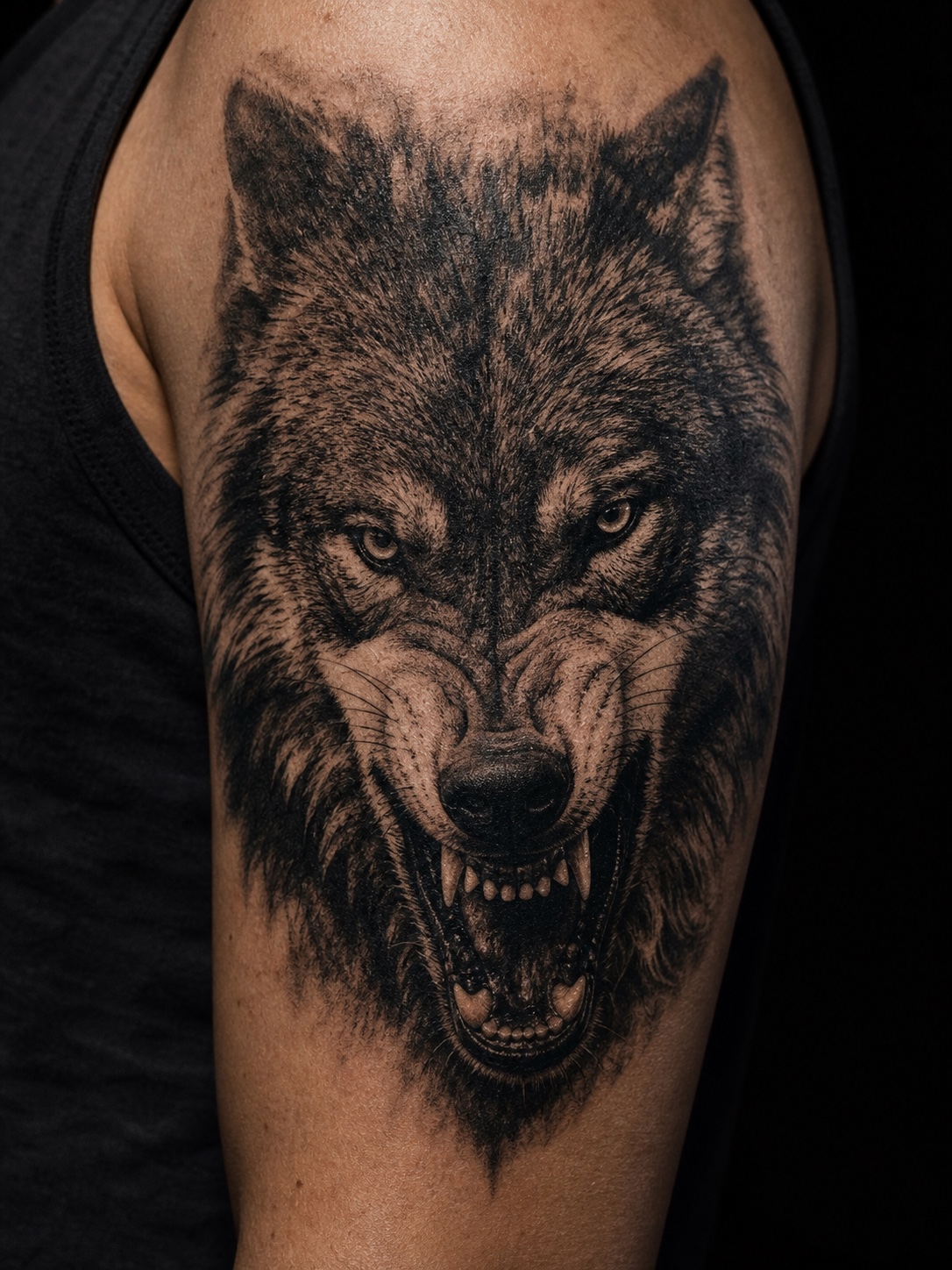
A wolf bares teeth or is shown in an aggressive posture when the meaning is raw strength rather than loyalty or independence. This is common in American traditional style wolf tattoos where the image is bold, confrontational, and unambiguous. The animal isn’t asking permission.
Survival tattoos using the wolf come up after difficult periods. Job losses, illness, relationships ending badly. The wolf is a useful symbol here because it has genuine survival credentials in nature. It can go weeks without food, navigate hundreds of miles of territory, and function in harsh conditions that eliminate other predators. That’s not projection. That’s what wolves actually do.
Intuition and Spiritual Guidance
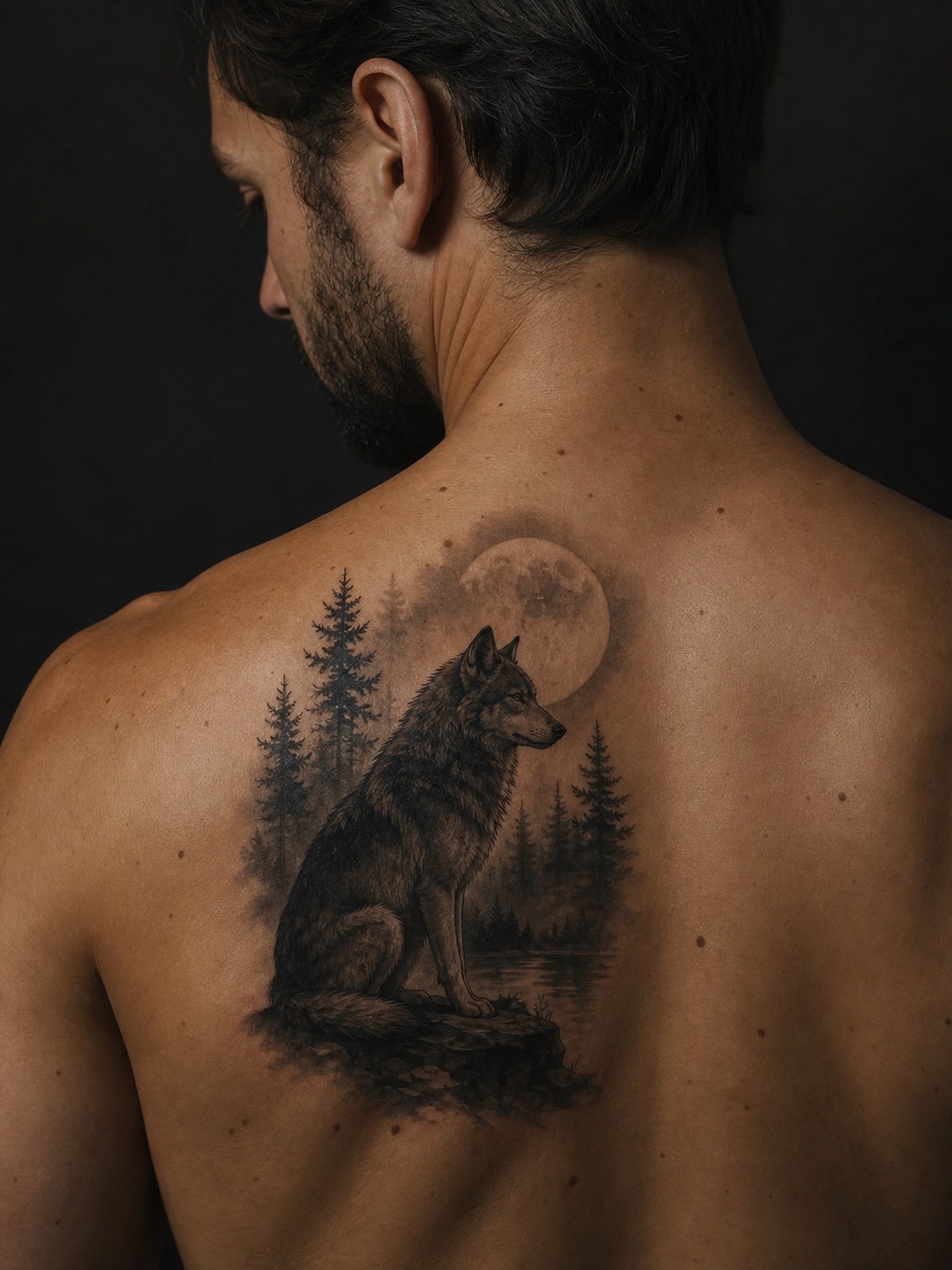
In shamanic traditions across Siberia and the Americas, the wolf is a guide animal specifically because of its navigational ability and its sensitivity to the environment. People who connect with the wolf as a spirit animal tend to describe similar traits in themselves: strong gut instincts, a preference for a few close relationships over many surface-level ones, and some tension between wanting community and needing space.
Wolf tattoos in this register tend to be quieter in composition. The wolf is watching or walking rather than attacking. Eyes that suggest intelligence rather than aggression. Often placed alongside natural elements: trees, mountains, a crescent moon. The mood is observant, not confrontational.
Wolf Tattoo Meanings Across Cultures
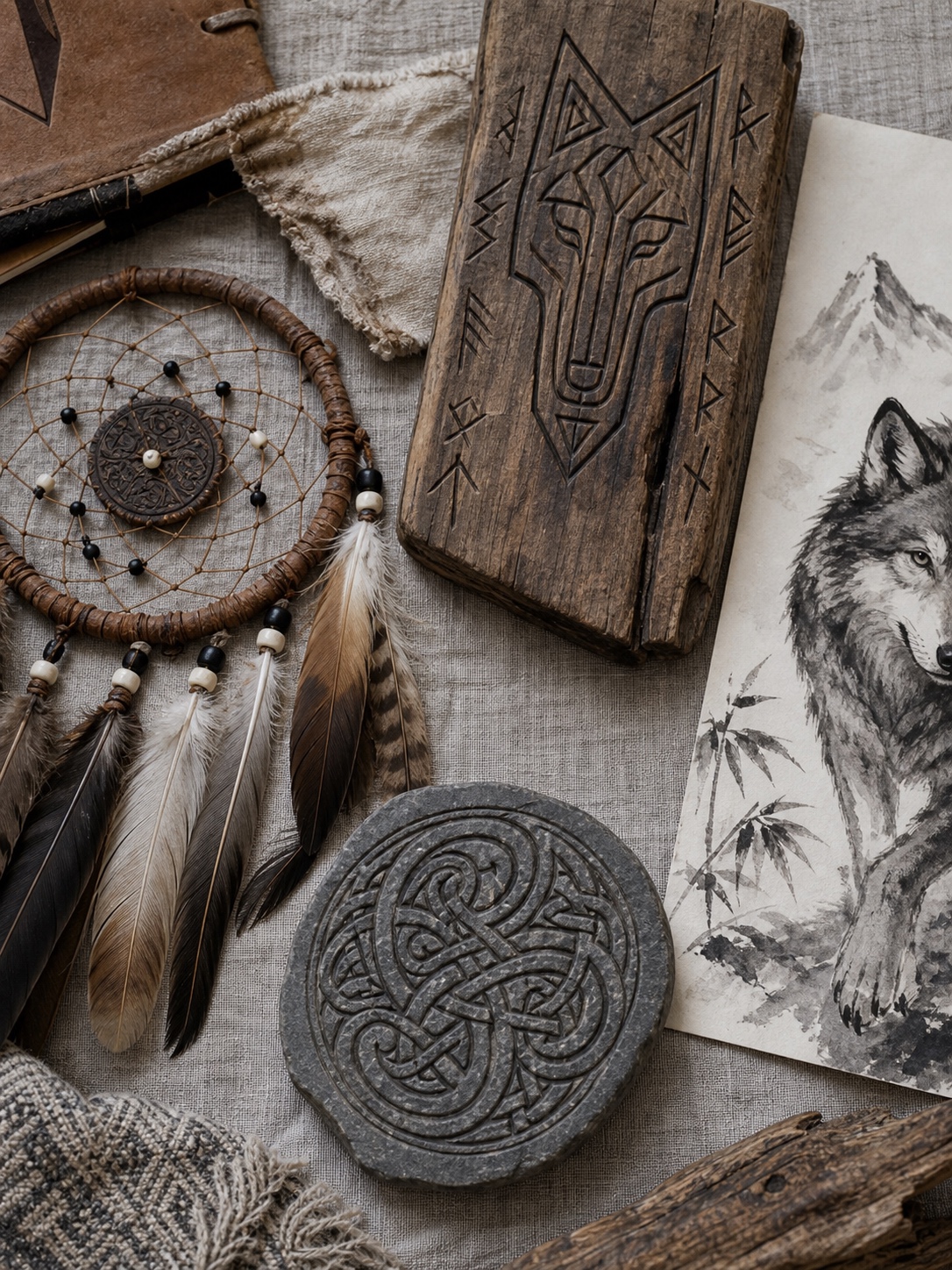
The wolf shows up in every major mythological tradition. The meanings are not always the same. Knowing where your design pulls from adds a layer that makes the tattoo more specific and harder to read as generic.
Norse: Power, Destruction, and Divine Companionship
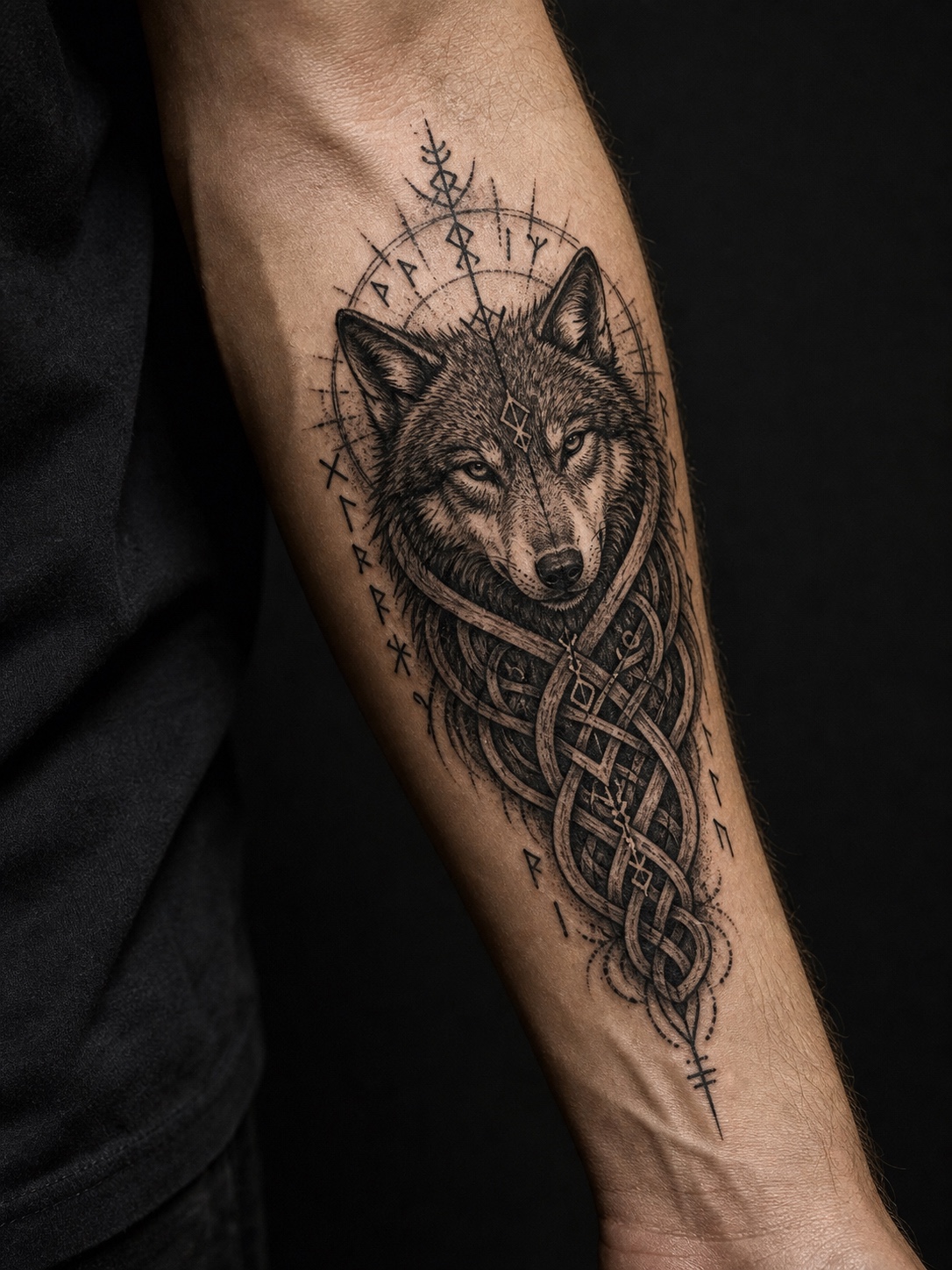
The Norse wolf is genuinely contradictory. Fenrir is chained by the gods because he’s too dangerous to run free, a force of destruction destined to kill Odin at Ragnarök. But Odin keeps two wolves, Geri and Freki, as constant companions who eat his food while he drinks. The same mythology holds the wolf as destroyer and as trusted ally of the most powerful god.
Viking and Norse wolf tattoos have been growing in popularity since around 2018 and haven’t slowed down. The aesthetic typically involves blackwork, geometric knotwork borders, and sometimes rune integrations. Fenrir specifically is popular for people who identify with the misunderstood or restrained side of power. Odin’s wolves lean toward loyalty and divine companionship.
Design Note: Norse Wolf ElementsValknut symbol nearby: connection to Odin and warrior tradition. Mjolnir or Thor’s hammer nearby: strength and protection. Interlaced knotwork body: continuity, infinity, cycles. Chains or broken chains: Fenrir specifically, freedom from constraint.
Native American: Teacher, Guide, and Sacred Animal
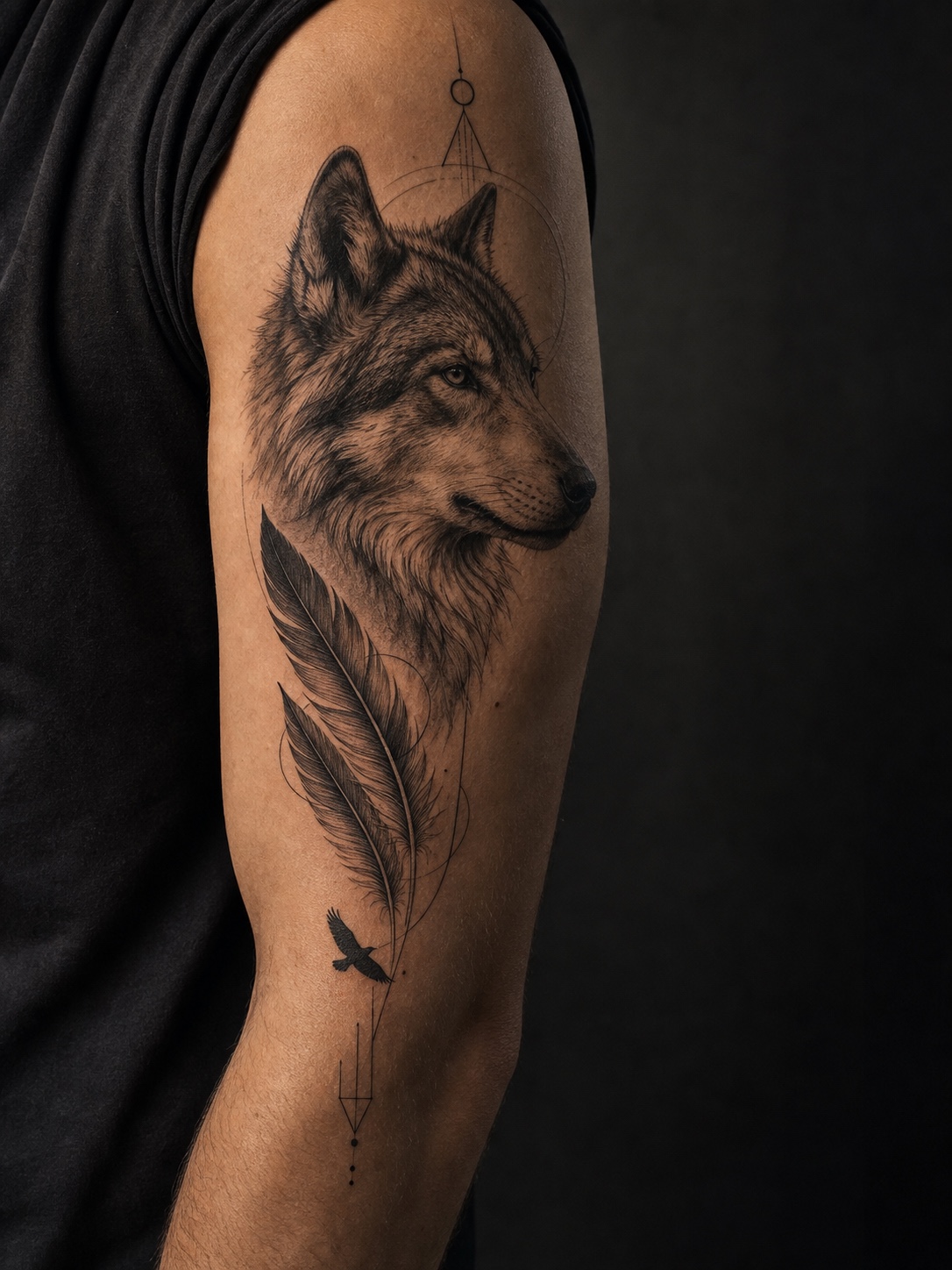
Wolves appear across dozens of distinct Native American traditions, and the specific meanings vary by tribe. The Pawnee associated the wolf with the morning star and positive agricultural cycles. The Nuu-Chah-Nulth of the Pacific Northwest considered wolves divine beings capable of communicating with the spirit world. In Pueblo traditions, the wolf is a guardian of the east and protector of hunters.
The common thread is the wolf as teacher and guide rather than threat. It shows the way, literally and spiritually. If you’re not Native American and want to incorporate wolf imagery from this tradition, the respectful path is to focus on universal wolf symbolism (strength, guidance, family) and avoid directly appropriating sacred designs like specific tribal patterns or medicine wheels without genuine connection to that heritage. This is worth thinking through honestly before booking.
Japanese: Ookami, the Divine Guardian
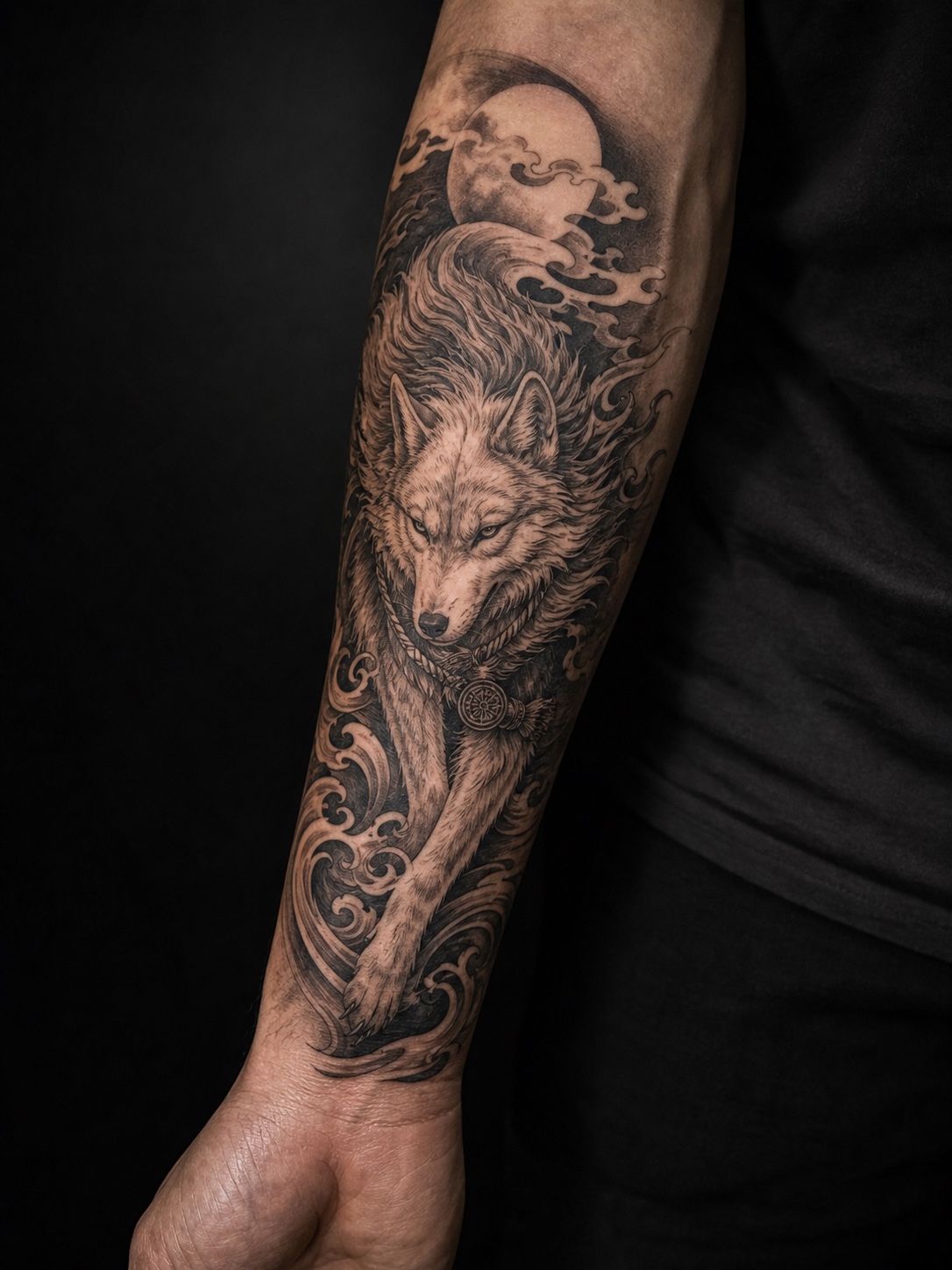
The Japanese word for wolf, Ōkami, also means “great god.” That tells you most of what you need to know. In traditional Japanese belief, the wolf was a guardian spirit that protected travelers, farmers, and village boundaries. Shrines dedicated to wolf spirits existed across Japan, and farmers would leave offerings asking for protection of their crops.
Japanese wolf tattoos in irezumi style read very differently from Western wolf designs. They tend toward flowing composition, graceful line work, and a spiritual rather than aggressive character. The wolf watches over, it doesn’t threaten. White wolves carry extra significance, associated with purity and divine favor. If you want a wolf tattoo that reads as protective and spiritual rather than raw and powerful, Japanese-influenced design is worth exploring with an artist who knows the tradition.
Celtic: Forest Guardian and Lunar Symbol
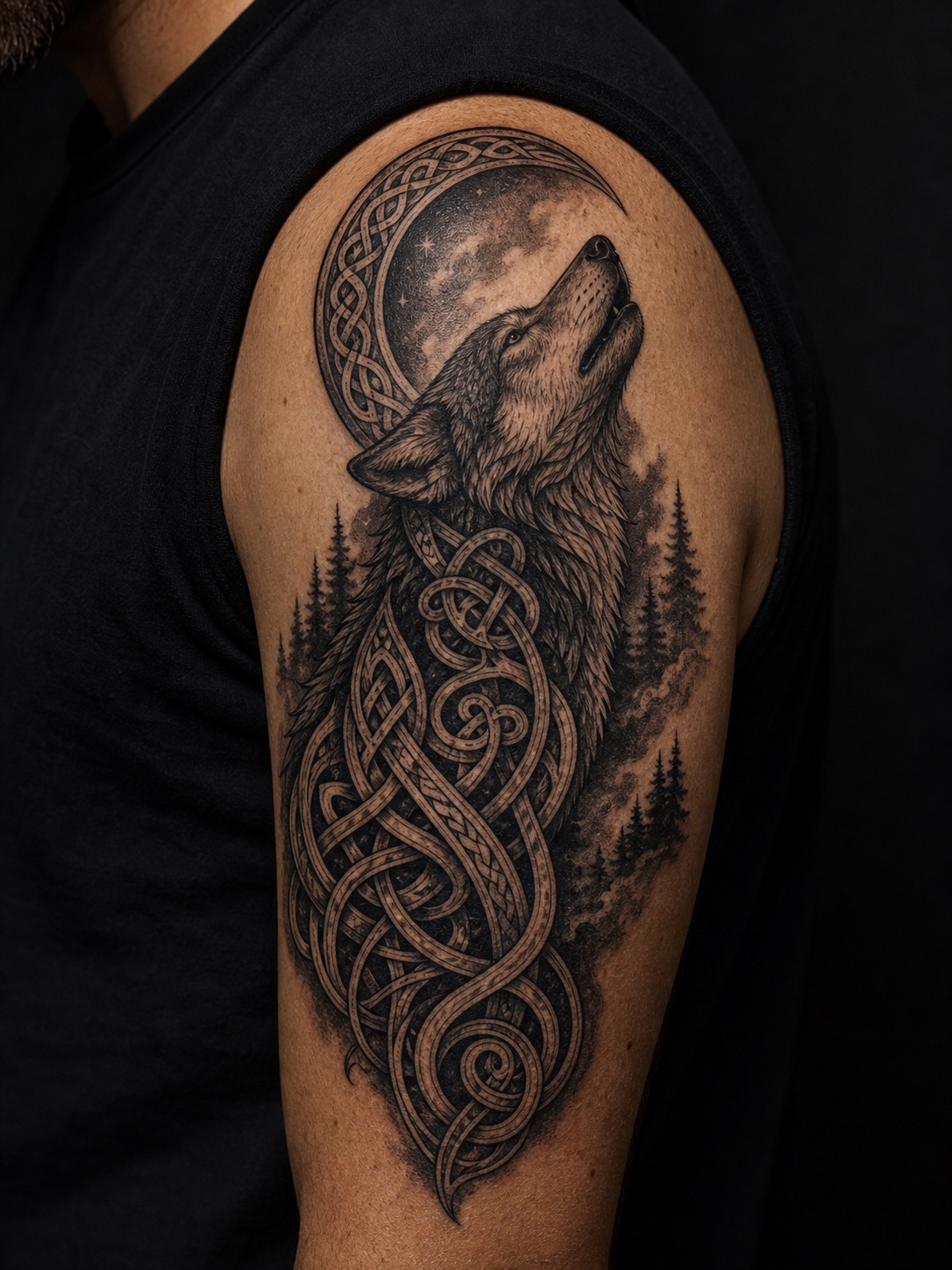
Celtic wolf mythology links the animal to the moon, the forest, and liminal spaces between worlds. The goddess Morrigan could take wolf form, connecting the wolf to transformation and the divine feminine. Celtic knotwork wolf designs are popular precisely because the interweaving pattern body suits the flowing, non-beginning-and-no-end aesthetic of Celtic decorative tradition.
Celtic wolf tattoos tend to read as spiritual and ancestral. People with Irish, Scottish, or Welsh heritage often choose them as a connection to that lineage. The symbolism sits closer to guardianship and mystery than to raw power, which distinguishes it from Norse wolf imagery even when both use similar blackwork and knotwork execution.
Wolf Tattoo Design Elements and What Each One Adds
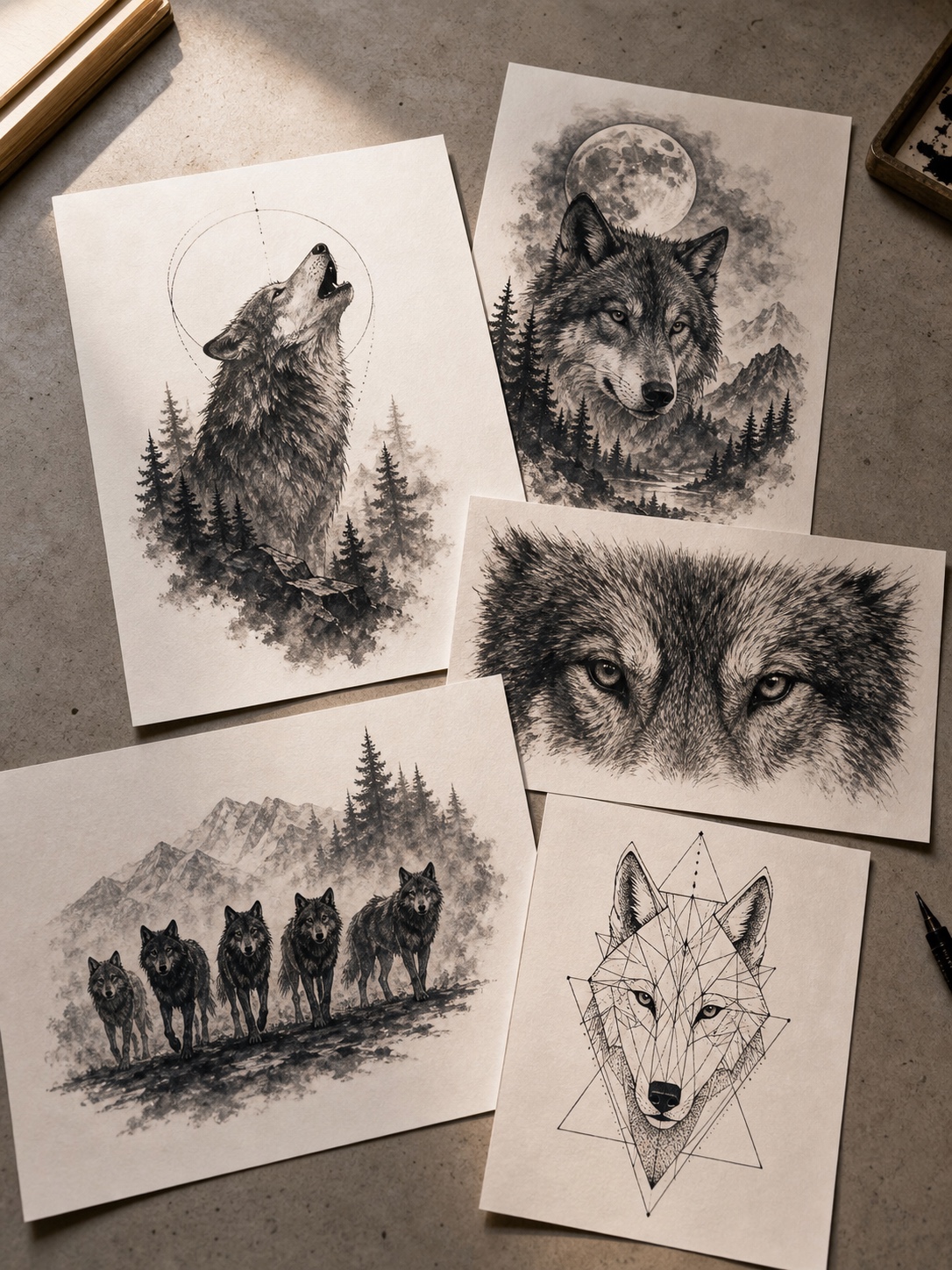
The wolf alone carries plenty. But what you put with it shifts the reading considerably. These combinations come up most often.
Wolf and Moon
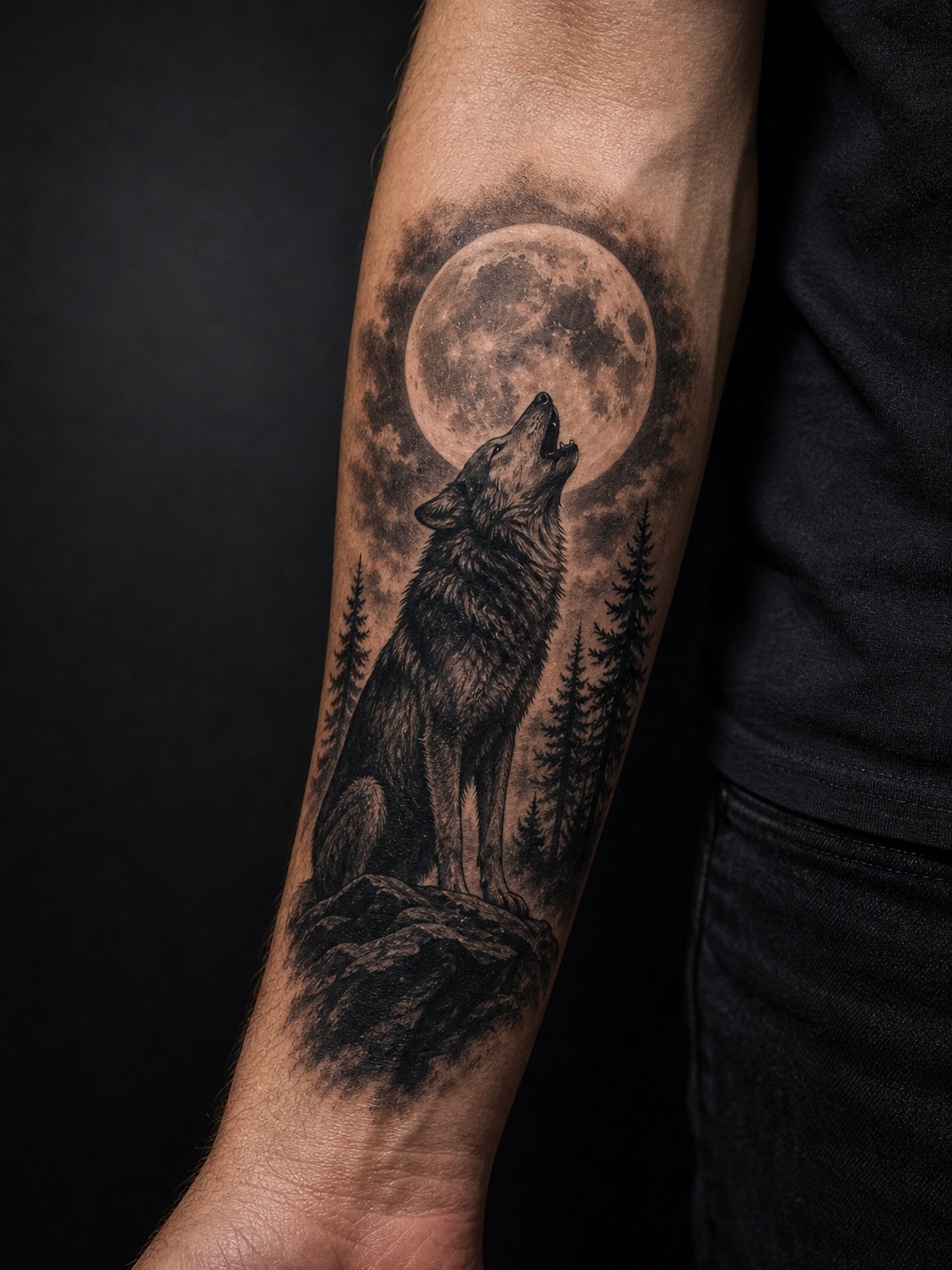
The most popular wolf combination by a significant margin. The moon adds cycles, intuition, mystery, and a pull toward the unconscious. A full moon reads as wholeness or completion. A crescent moon leans toward new beginnings or the divine feminine. A wolf howling at the moon specifically adds communication and longing to the mix.
The wolf-moon combination works for people who feel pulled between instinct and reflection, between the wild side and the contemplative one. It’s also just a genuinely strong visual composition that works across sizes and placements, which probably explains as much of its popularity as the symbolism does.
Wolf Eyes
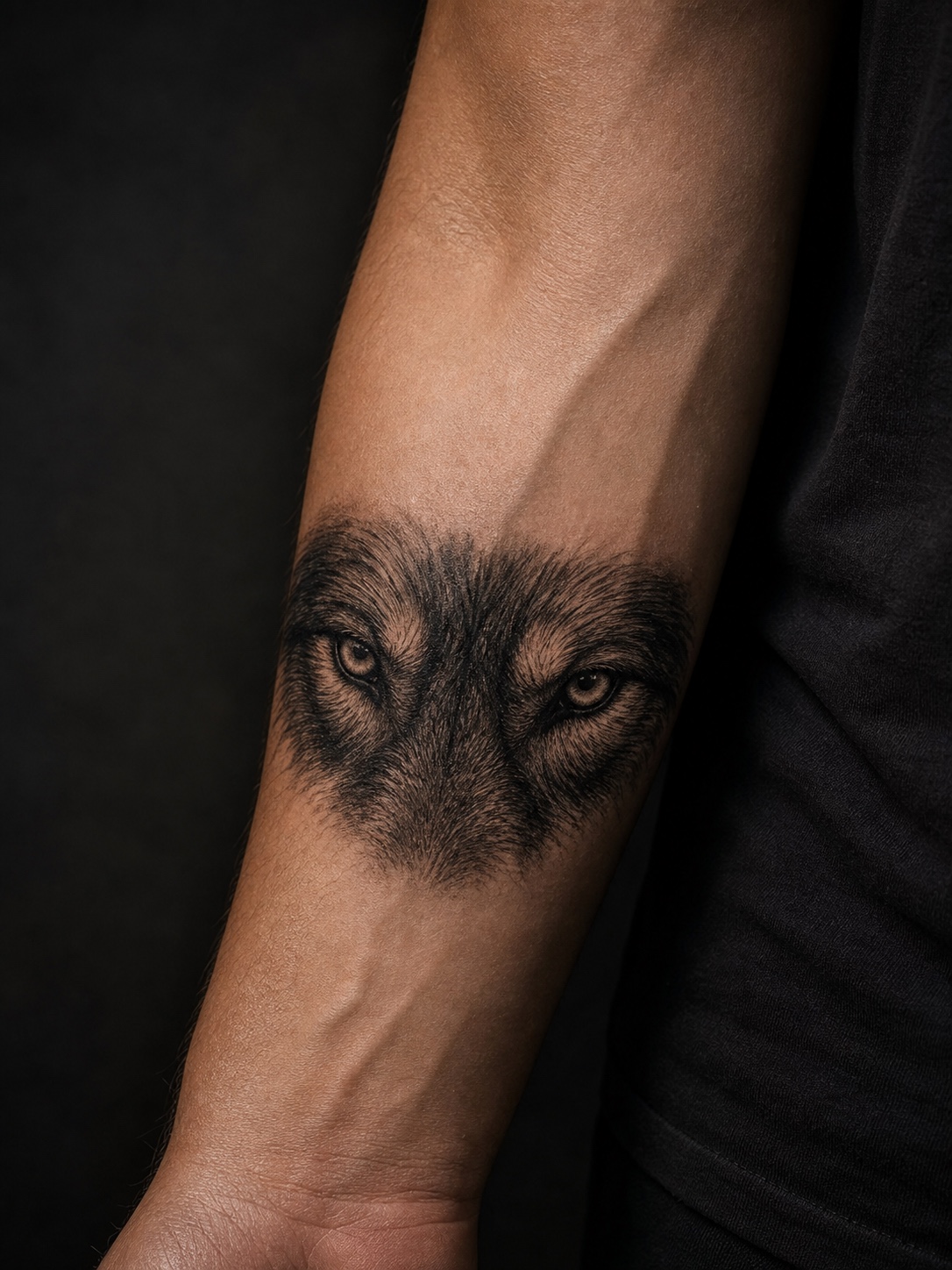
Just the eyes, no full face, no body. Wolf eye tattoos signal vigilance, inner vision, and the sense of being watched over. They tend to be smaller and more minimalist than full wolf portraits. Because the eyes are the emotionally loaded part of any wolf image, the meaning concentrates around perception and awareness rather than strength or pack dynamics. A common placement is the inner wrist or forearm where the eyes can meet the wearer’s gaze easily.
Wolf and Raven
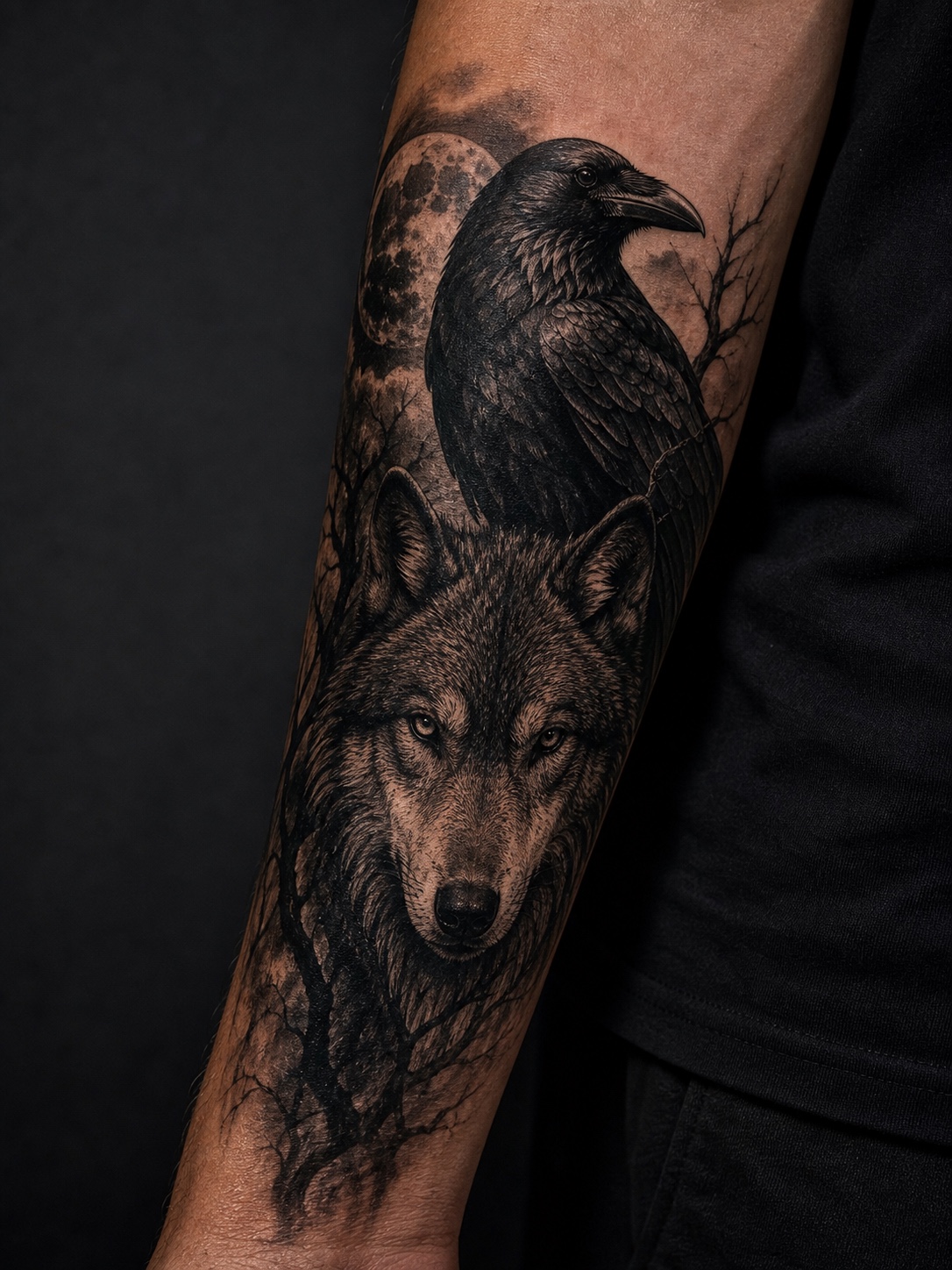
Both animals are associated with Odin in Norse mythology. Odin’s ravens, Huginn and Muninn (thought and memory), work alongside his wolves Geri and Freki. In nature, wolves and ravens have a documented cooperative relationship: ravens scout food sources and lead wolves to prey, then feed on what the wolves leave. The tattoo combination reads as intelligence, wisdom, and the partnership between wild instinct and sharp thinking.
Geometric Wolf
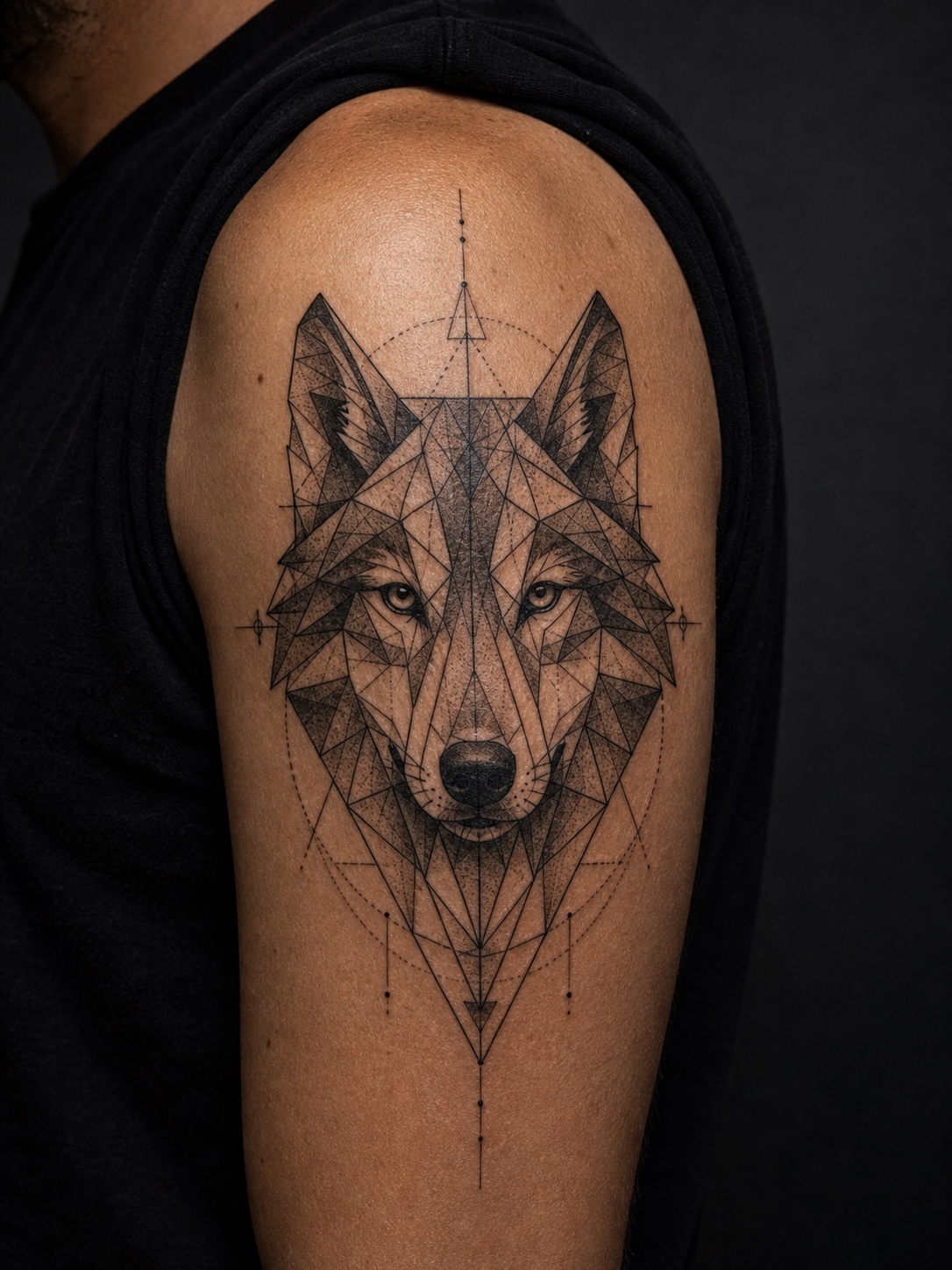
Geometric wolf designs use angular shapes and often leave visible construction lines. The meaning shifts from the wolf’s natural qualities toward structure, precision, and the balance between wild and ordered. These work well for people who are drawn to the wolf symbol but want something that reads as modern and designed rather than naturalistic. The geometric format also ages more predictably than fine-line work, which is worth factoring in.
Wolf with Flowers
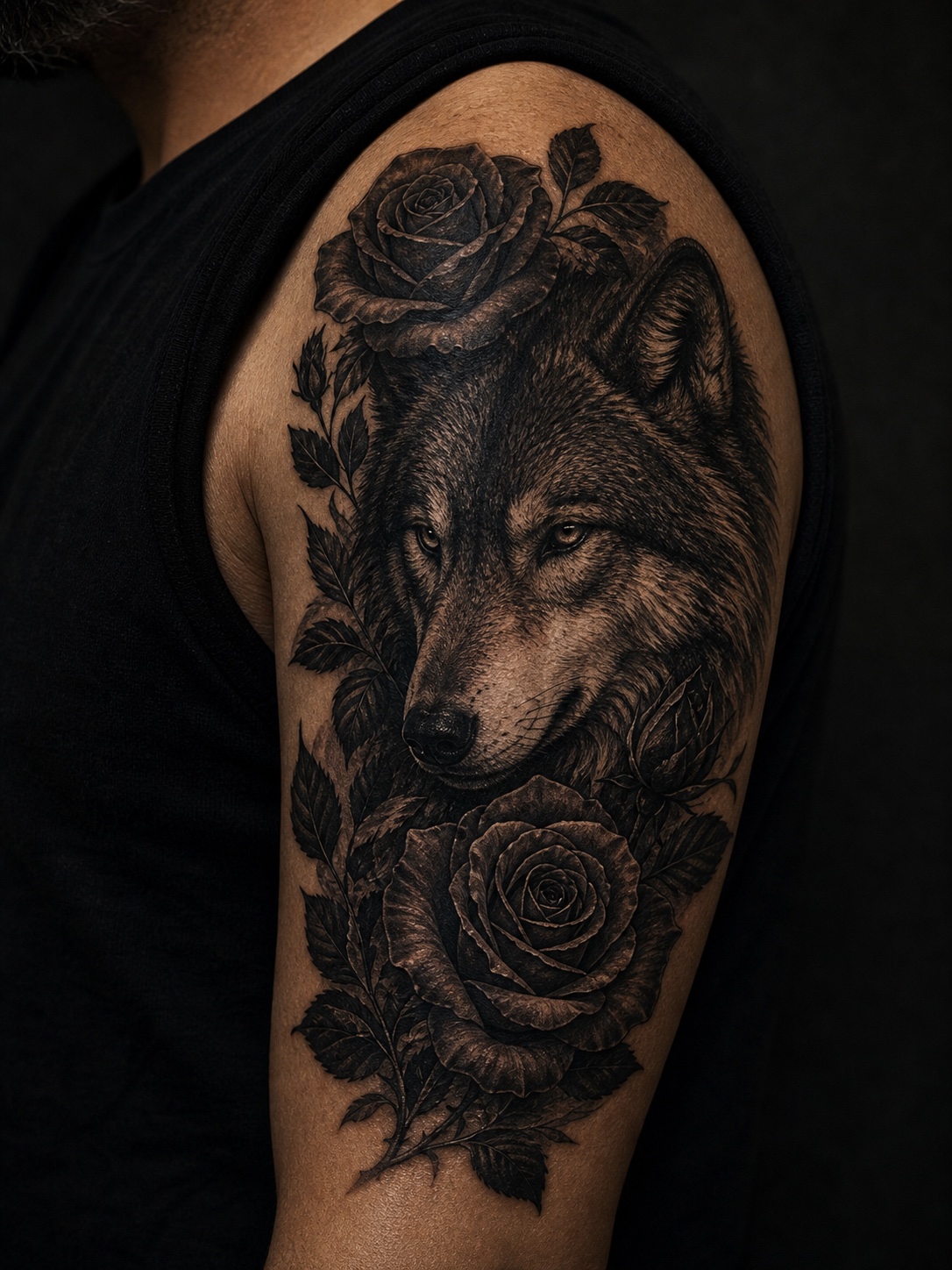
A wolf paired with florals, usually roses or wildflowers, creates a tension between the two elements that carries its own meaning. The softness of petals against the directness of the wolf reads as duality: gentle and fierce, open and guarded. Neo-traditional artists like Chris Rigoni have pushed this combination into strong territory where the wolf isn’t softened by the flowers so much as made more complex.
Wolf Tattoo Meanings by Style
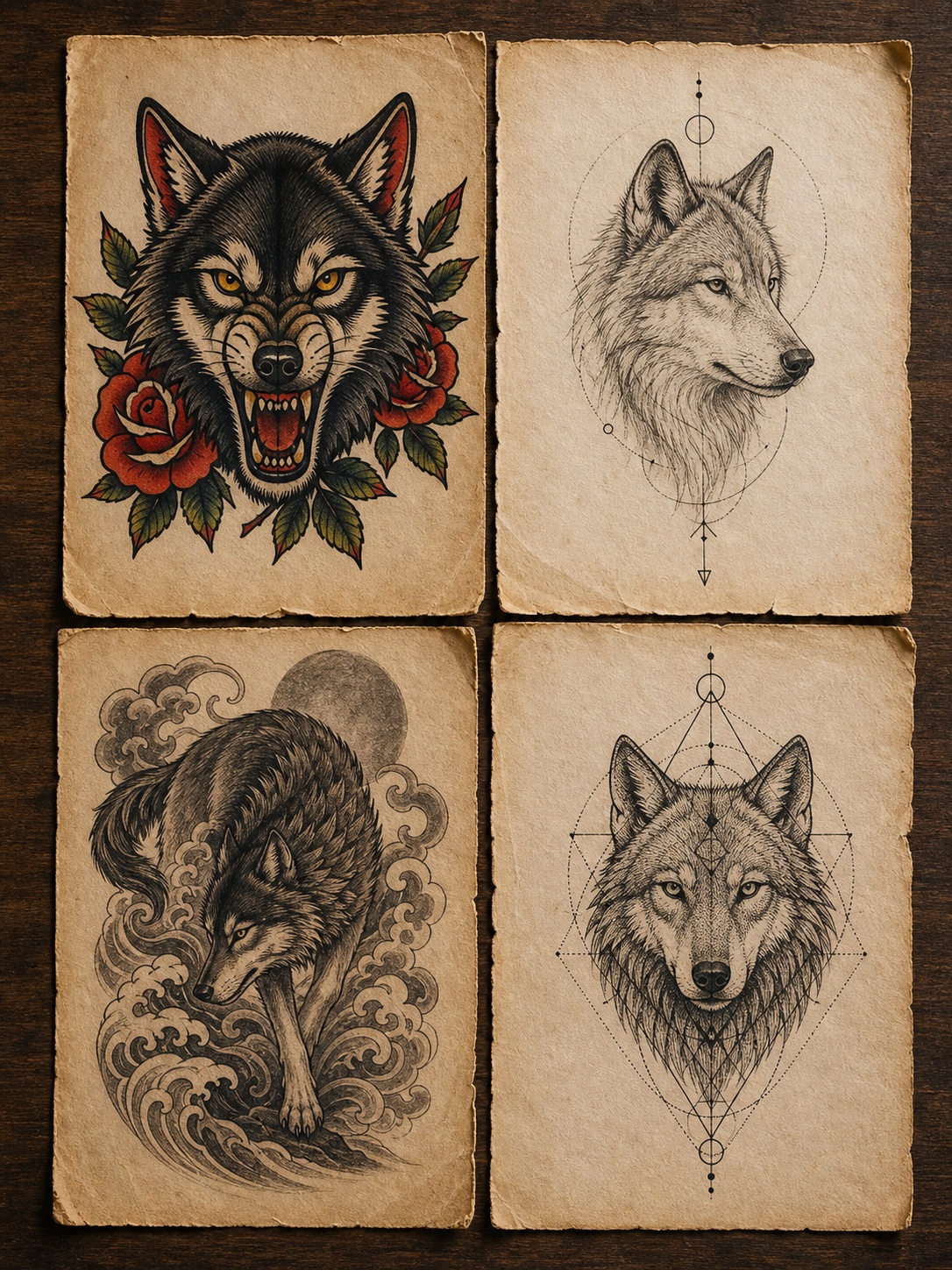
The style you choose doesn’t just affect how the tattoo looks. It affects how the meaning reads.
Black and Grey Realism
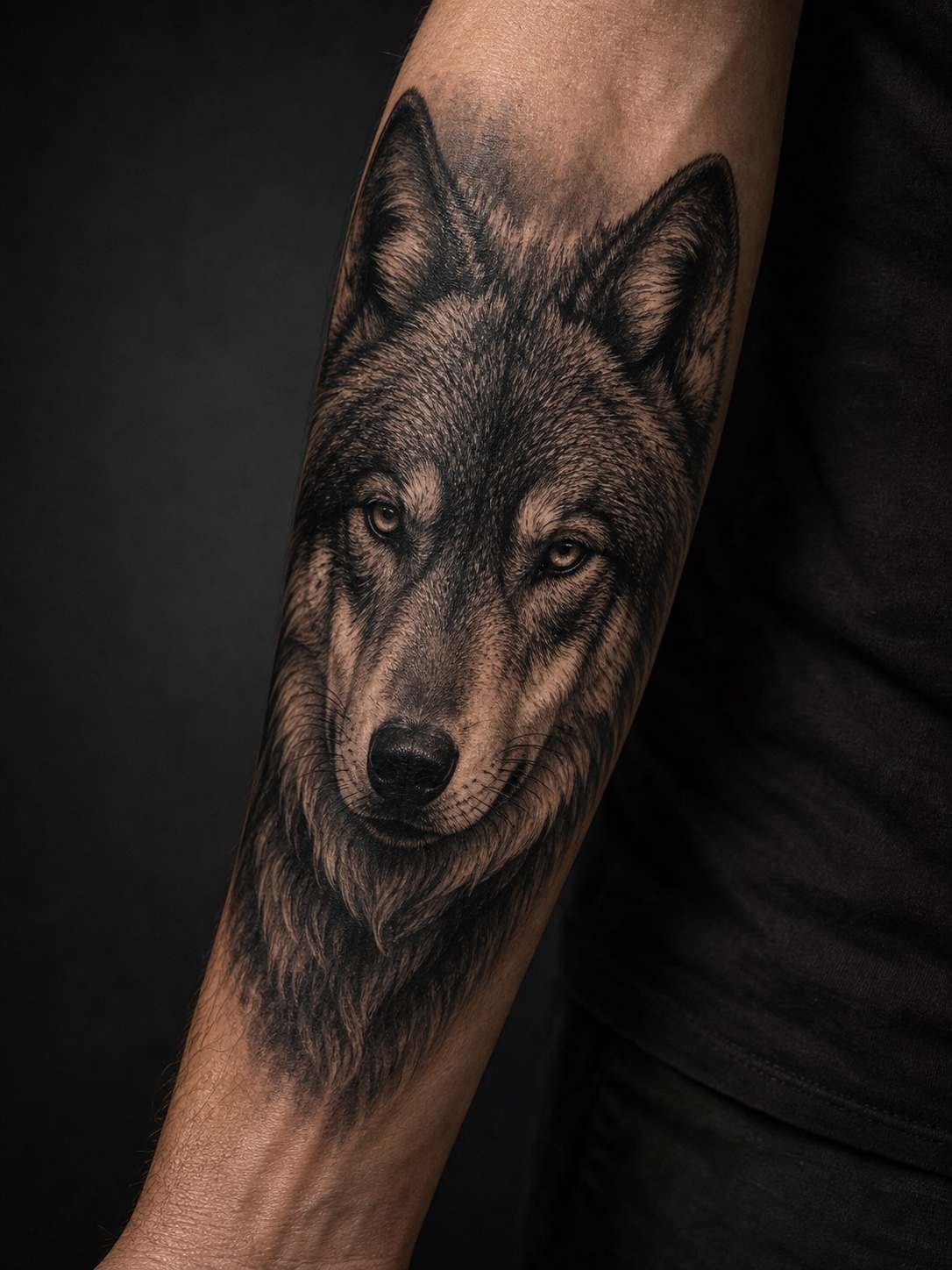
The most detail-specific style. A well-executed black and grey wolf portrait conveys the animal with enough individual character that the tattoo feels like a specific wolf rather than a generic symbol. Artists like Jack Rudy and Bob Tyrell established the black and grey realism language, and wolf portraits are one of the most requested subjects in the style. The shading gives depth that reads as emotional weight.
If the wolf feels too grounded and you want the design to show a clean emotional reset, compare it with rebirth tattoo ideas based on a phoenix. The upward wing shape can make the message feel more active, especially on the forearm, shoulder, ribs, or back.
Black and grey realism suits memorial tattoos, personal tribute pieces, and anyone who wants the wolf to feel like a genuine creature rather than an emblem. It requires the most technical skill from the artist, so portfolio research matters more here than in simpler styles.
American Traditional
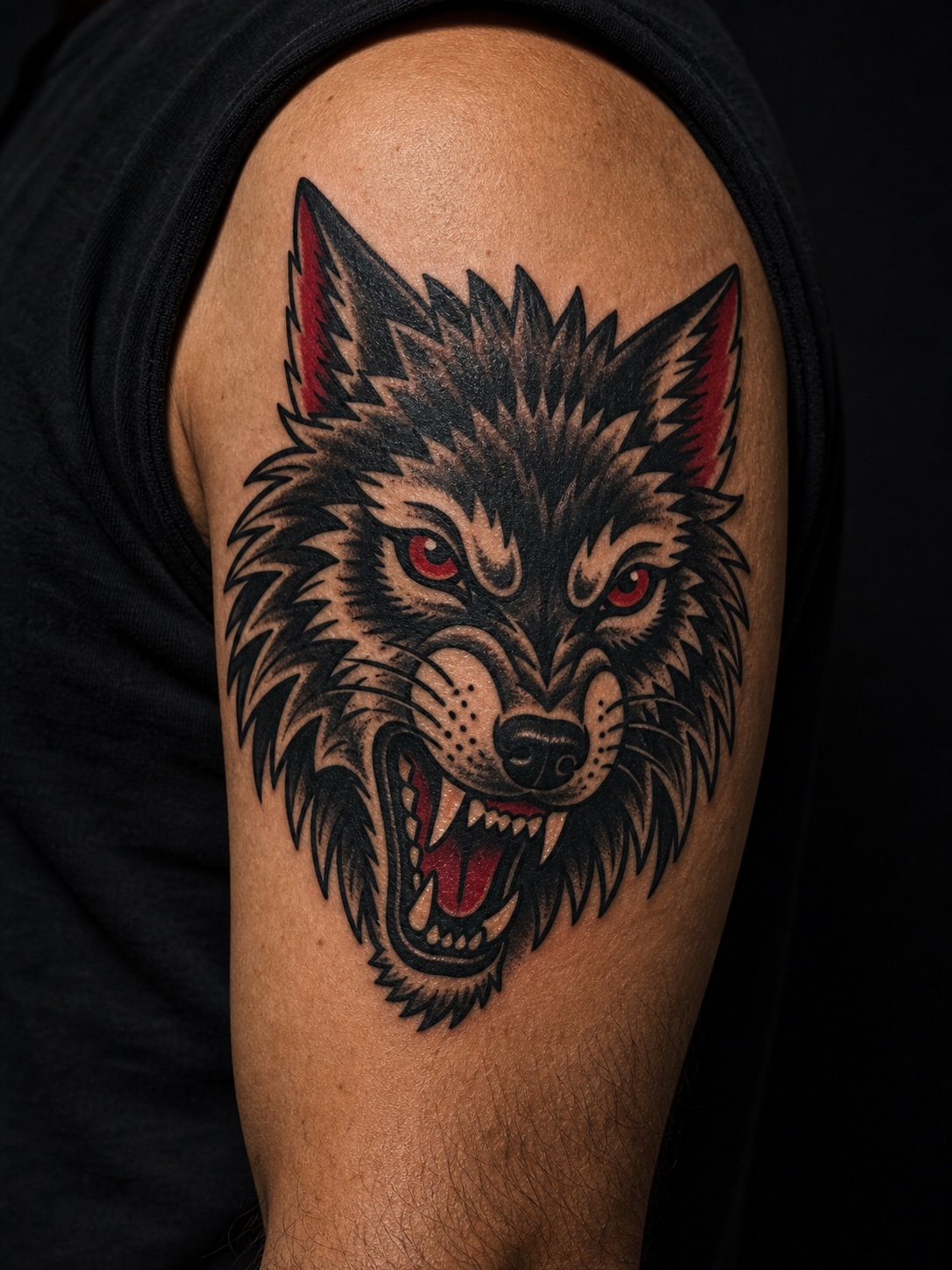
Bold outlines, flat color fills, limited palette. Traditional wolf heads are confrontational by design. They look you in the eye. This style reads as strength and directness, without much room for ambiguity. The aesthetic comes from early 20th century sailor flash, and a wolf done in proper traditional style has a timelessness that hyper-detailed work sometimes lacks. It’ll still read clearly in 40 years.
Watercolor Wolf
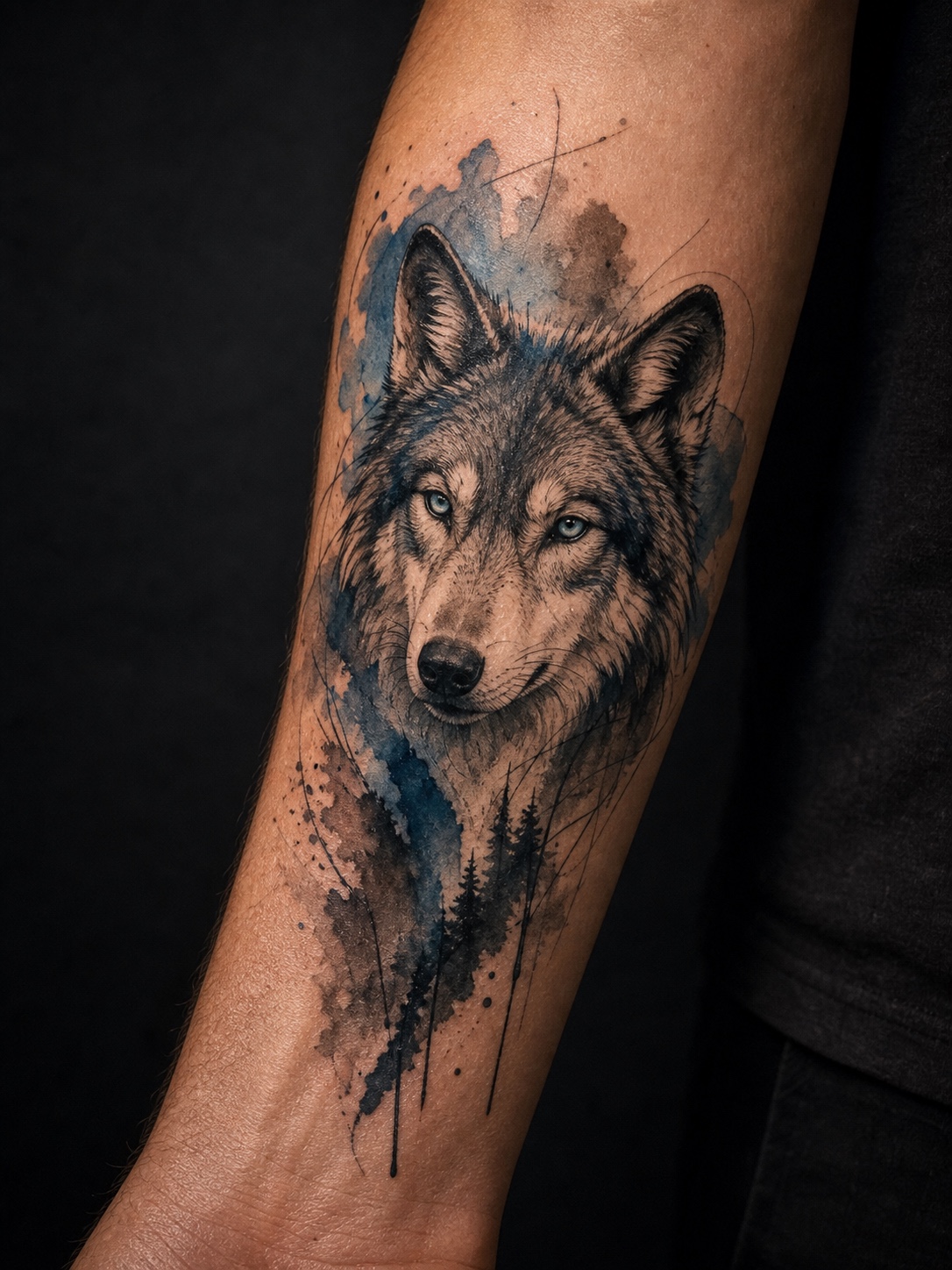
Watercolor wolf tattoos prioritize feeling over precision. The washes of color, bleeding edges, and loose brushstroke quality create a dreamlike version of the wolf that suits spiritual or emotional meanings better than strength or aggression. The honest note about watercolor style: it fades faster than traditional or black and grey work. Touch-ups every three to five years are realistic. Sun protection is not optional.
Fine Line and Minimalist
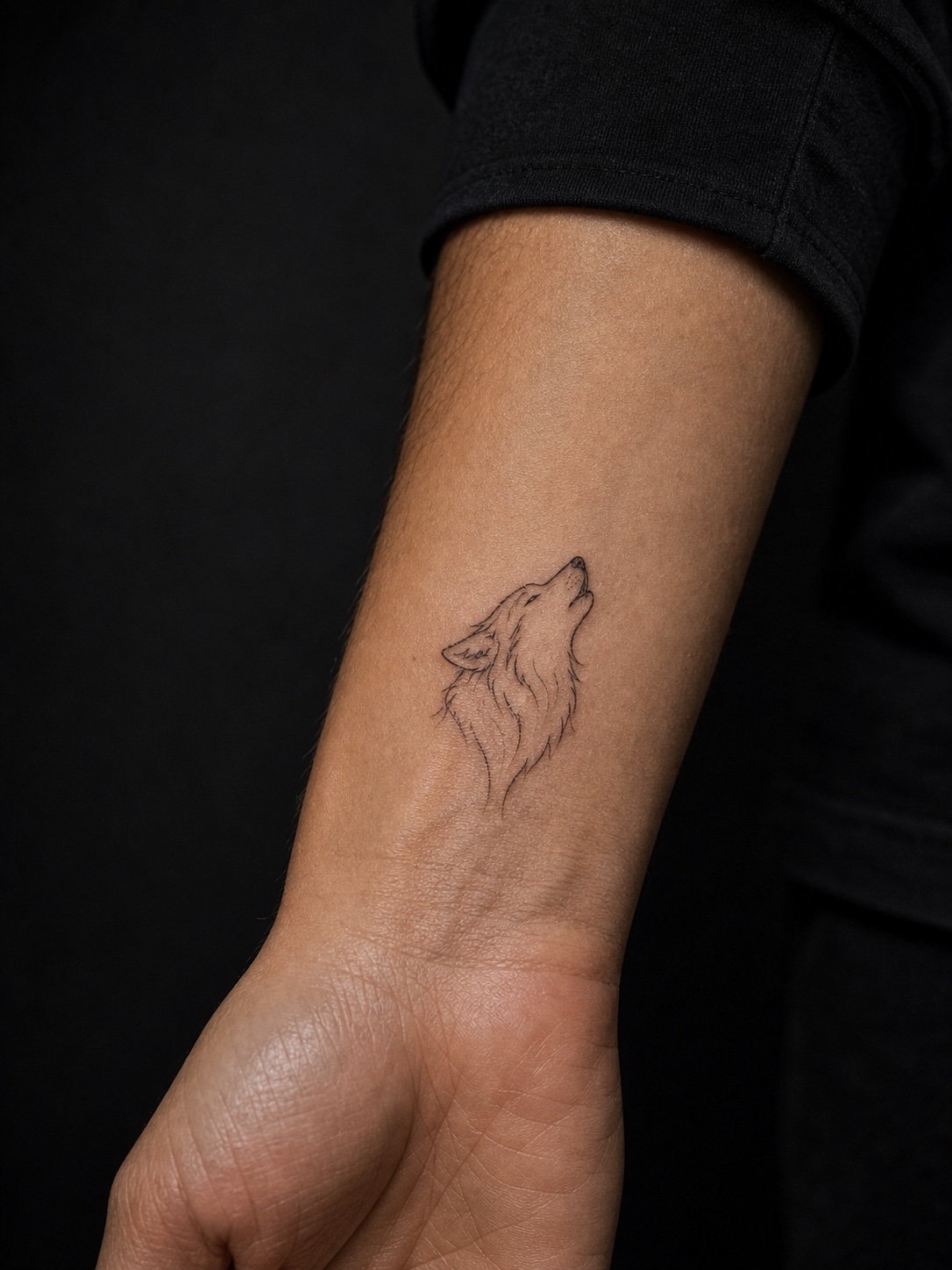
A wolf reduced to its essential lines. These designs work small, which opens up placements that detailed work can’t use: behind the ear, inner wrist, collarbone, ankle. The minimalist approach strips out the aggression and reads as quiet personal significance rather than bold statement. Same aging caveat as watercolor: fine lines spread and soften over years. Go into it knowing that.
Placement and What It Changes
Forearm and Sleeve
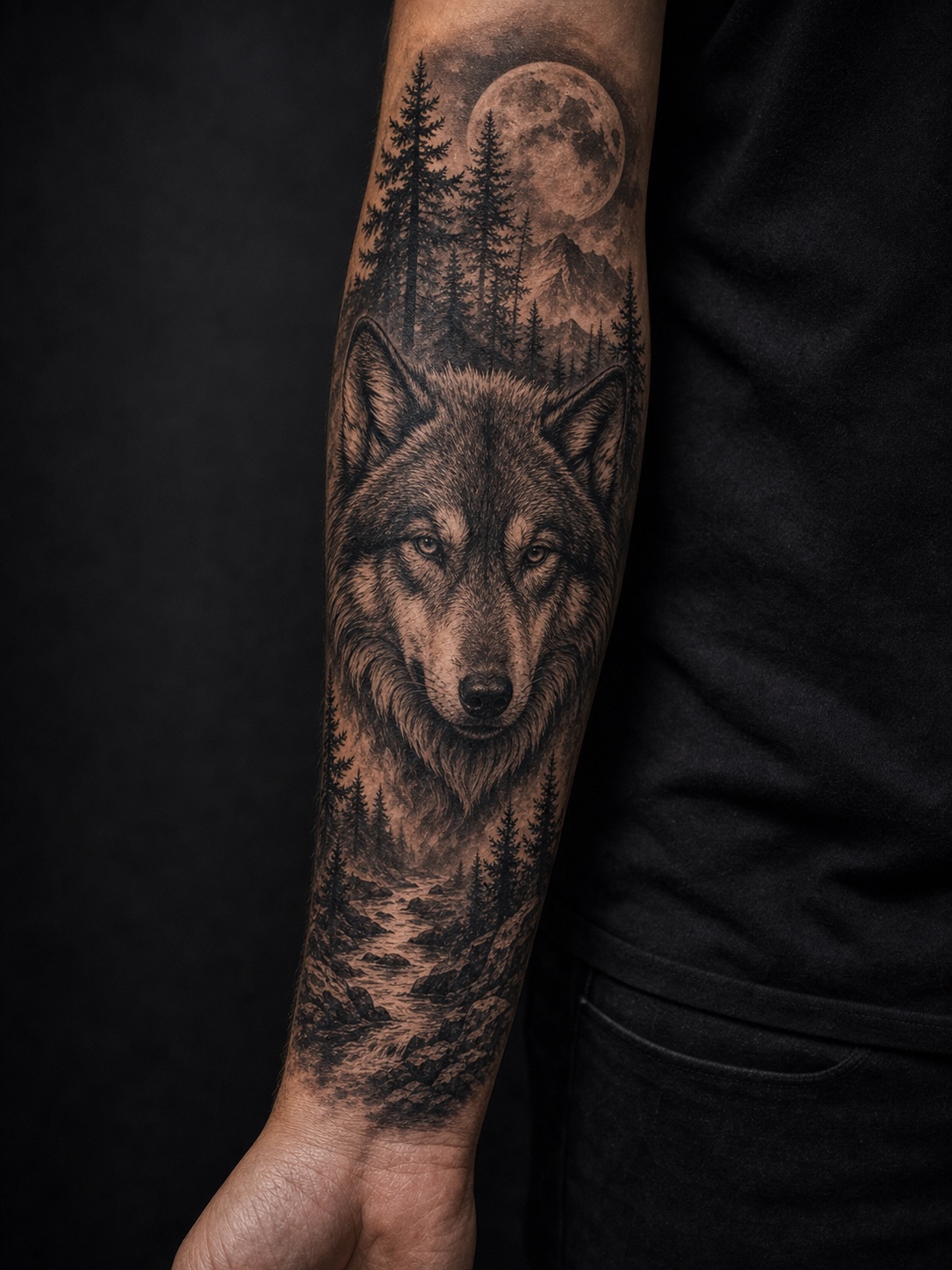
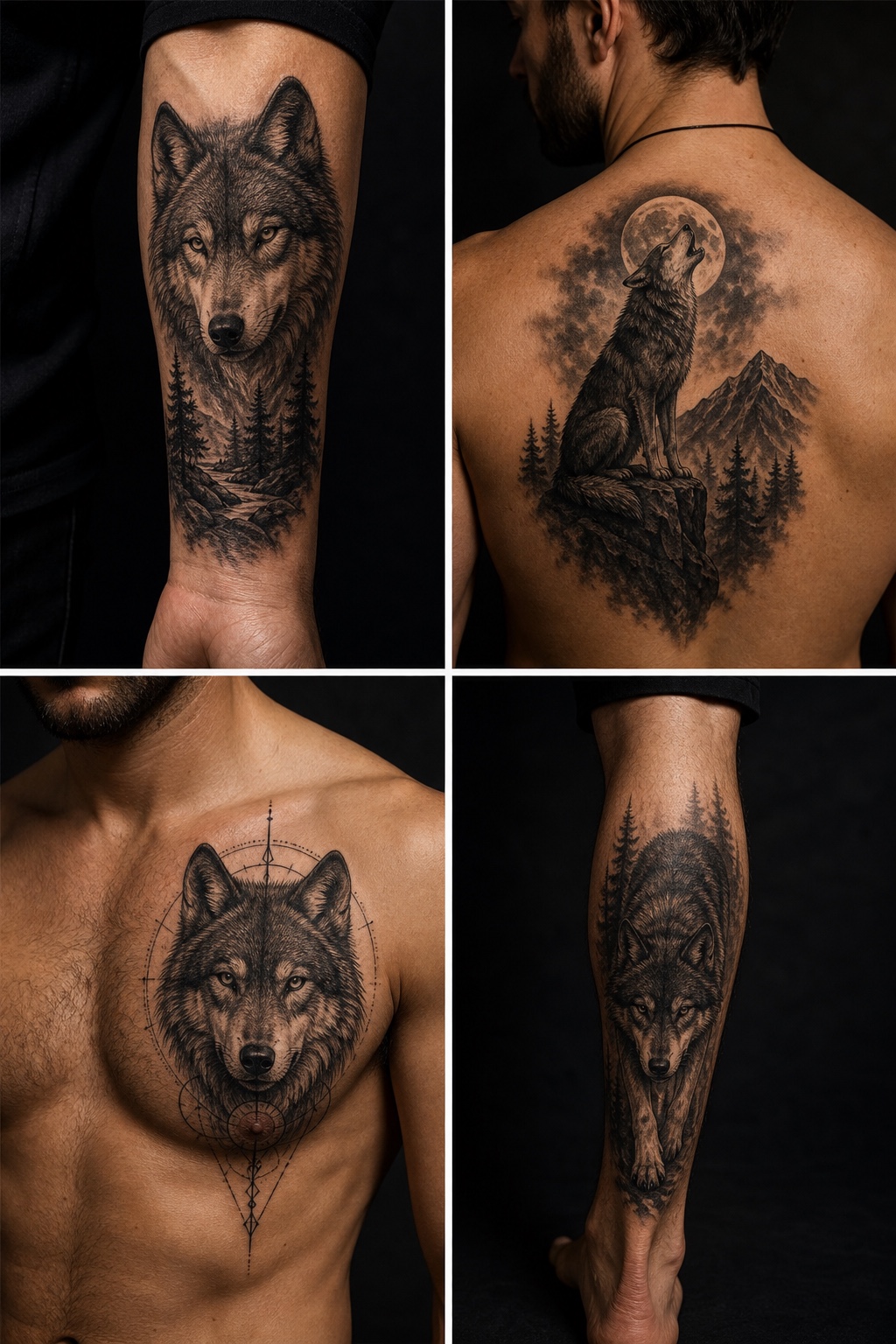
The forearm is the most public wolf placement. Whatever the wolf means to you, putting it on your forearm means you’re sharing it whether you choose to or not. Full sleeves let the wolf anchor a larger narrative, usually with a landscape, moon, or pack built around it. The forearm’s relatively flat surface works well for detailed portrait work.
Chest and Sternum
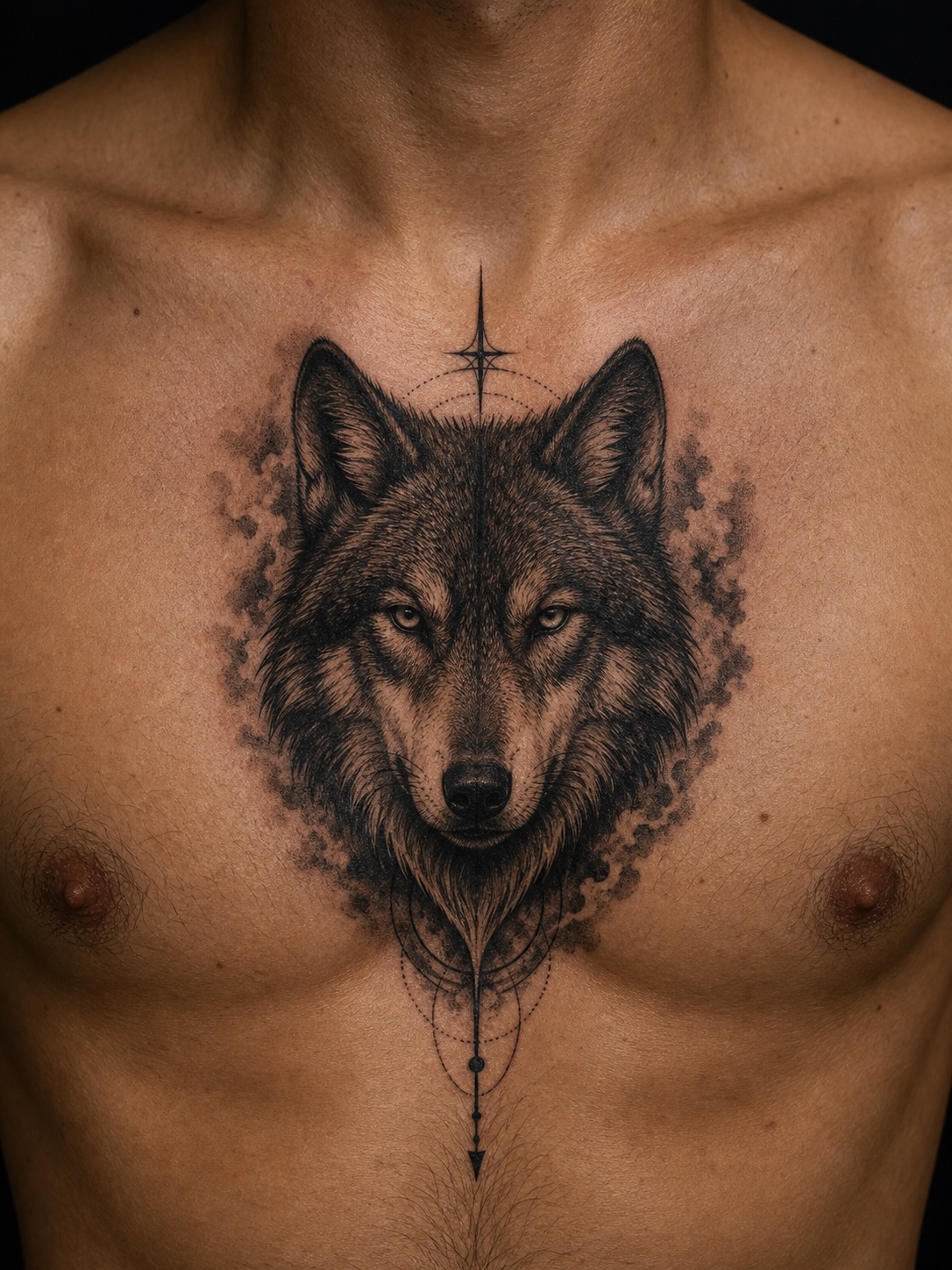
Chest wolf tattoos sit close to the heart, which lines up with the loyalty and protection meanings. A wolf centered on the sternum, howling upward, is probably the most common chest placement. It’s a large canvas that allows detail but remains private. The chest is also painful, particularly near the sternum and collarbone, which some people factor into the meaning of the commitment. For broader examples beyond wolf imagery, compare chest and sternum tattoos.
Back and Shoulder Blade
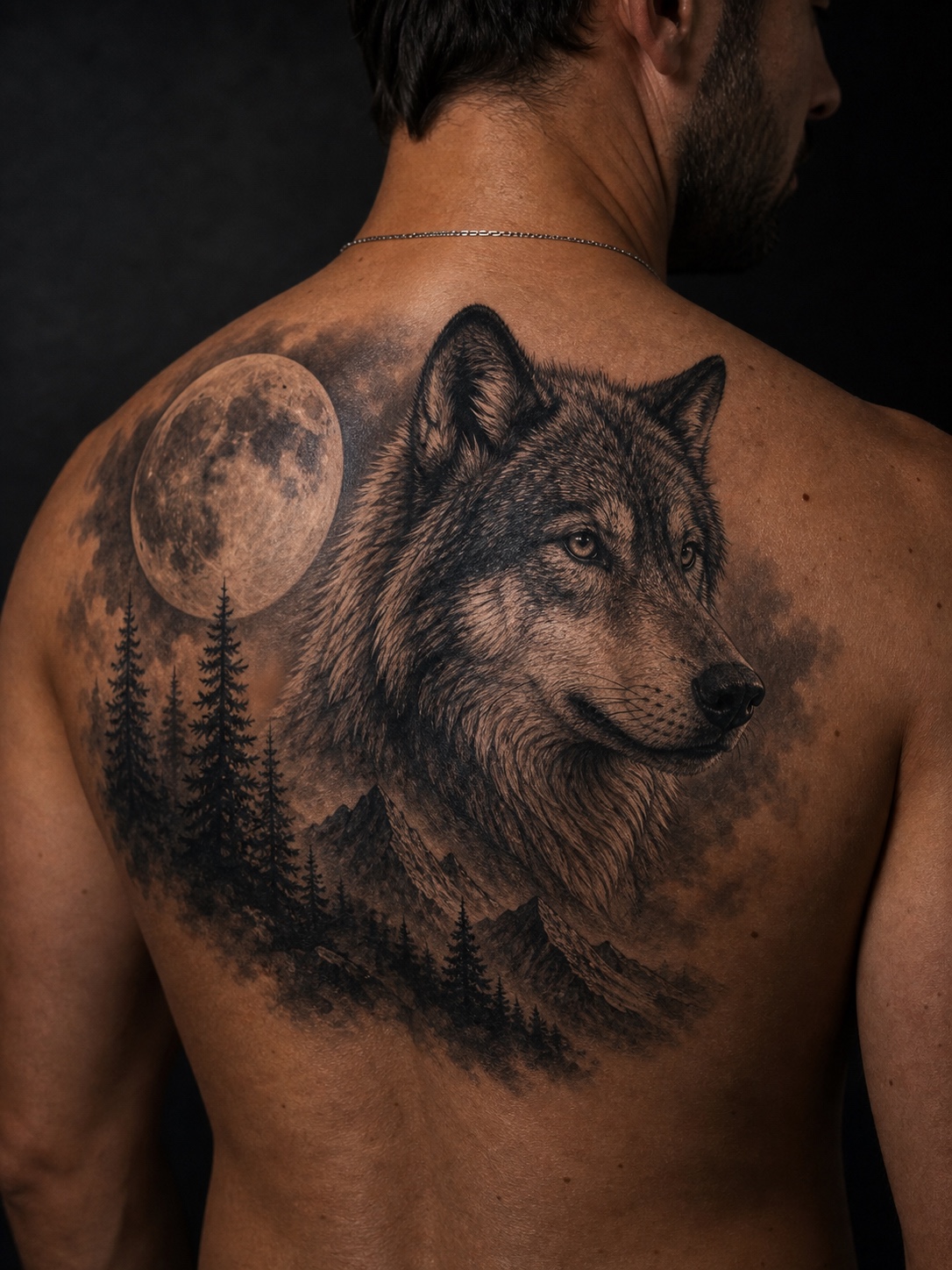
The back is the largest canvas on the body. Full back wolf pieces, usually with a landscape or pack scenario, are serious projects: 15 to 30+ hours across multiple sessions, $2,000 to $6,000 or more from a quality artist. The shoulder blade is a common starting point for people who want a detailed wolf but aren’t ready for full back scale. The shoulder blade moves interestingly with the body, which gives the wolf a sense of presence when the wearer is in motion.
Calf and Thigh
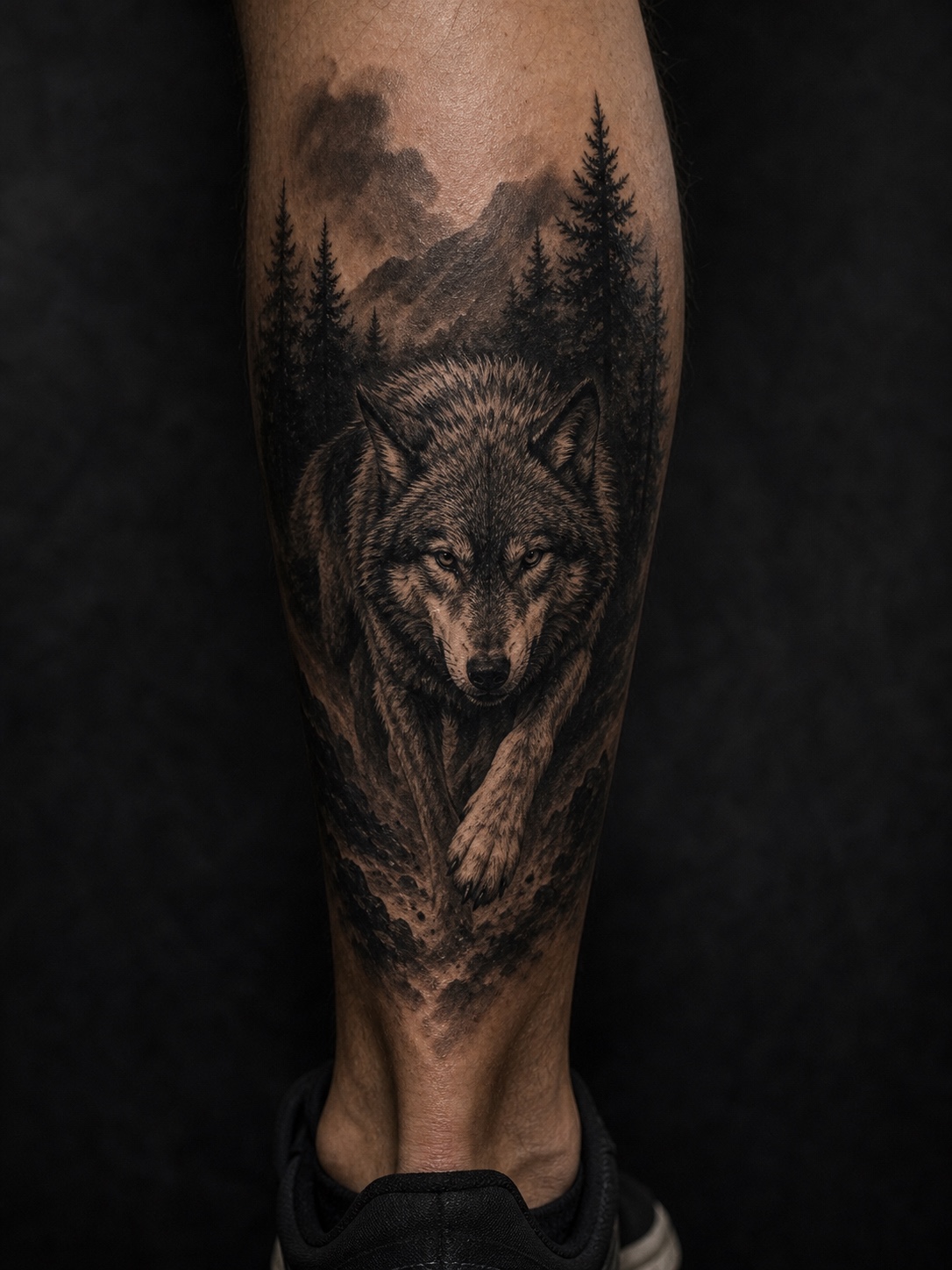
The calf and thigh offer significant surface area with manageable pain levels compared to ribs or sternum. Wolf tattoos here tend toward large compositions with landscape integration. The calf specifically works well for a wolf in motion, running or howling, because the natural muscle movement gives the composition energy. Semi-private placement: visible in summer, hidden in winter.


FAQ: Wolf Tattoo Meanings
What does a wolf tattoo mean?
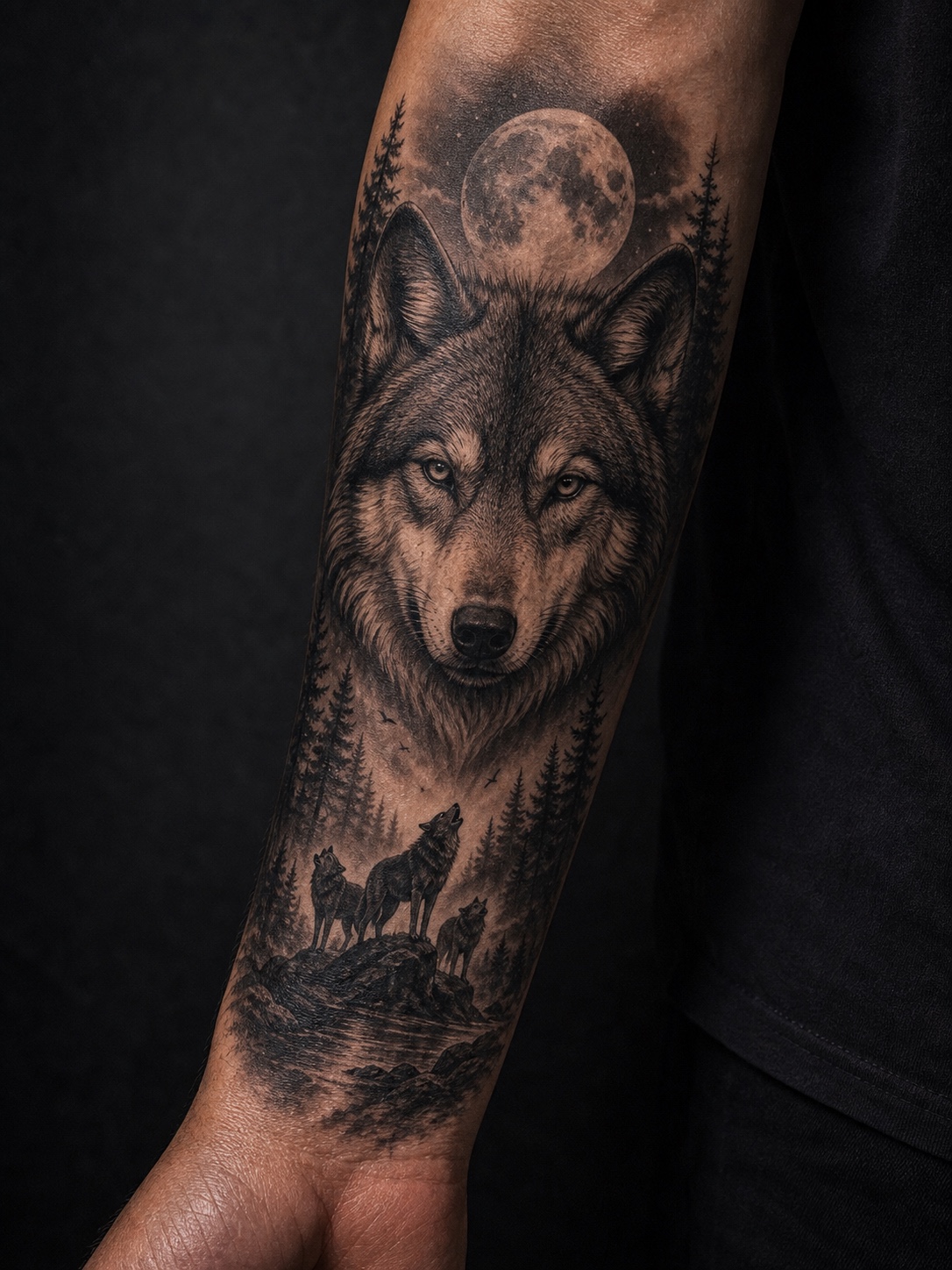
The core meanings: loyalty (particularly family and pack bonds), independence (the lone wolf), strength and survival, and spiritual guidance or intuition. The specific meaning shifts based on design elements. A pack scene signals family. A lone wolf signals self-reliance. A howling wolf adds communication and longing. Cultural tradition (Norse, Native American, Japanese, Celtic) layers in additional meaning on top of these basics.
What does a lone wolf tattoo mean?
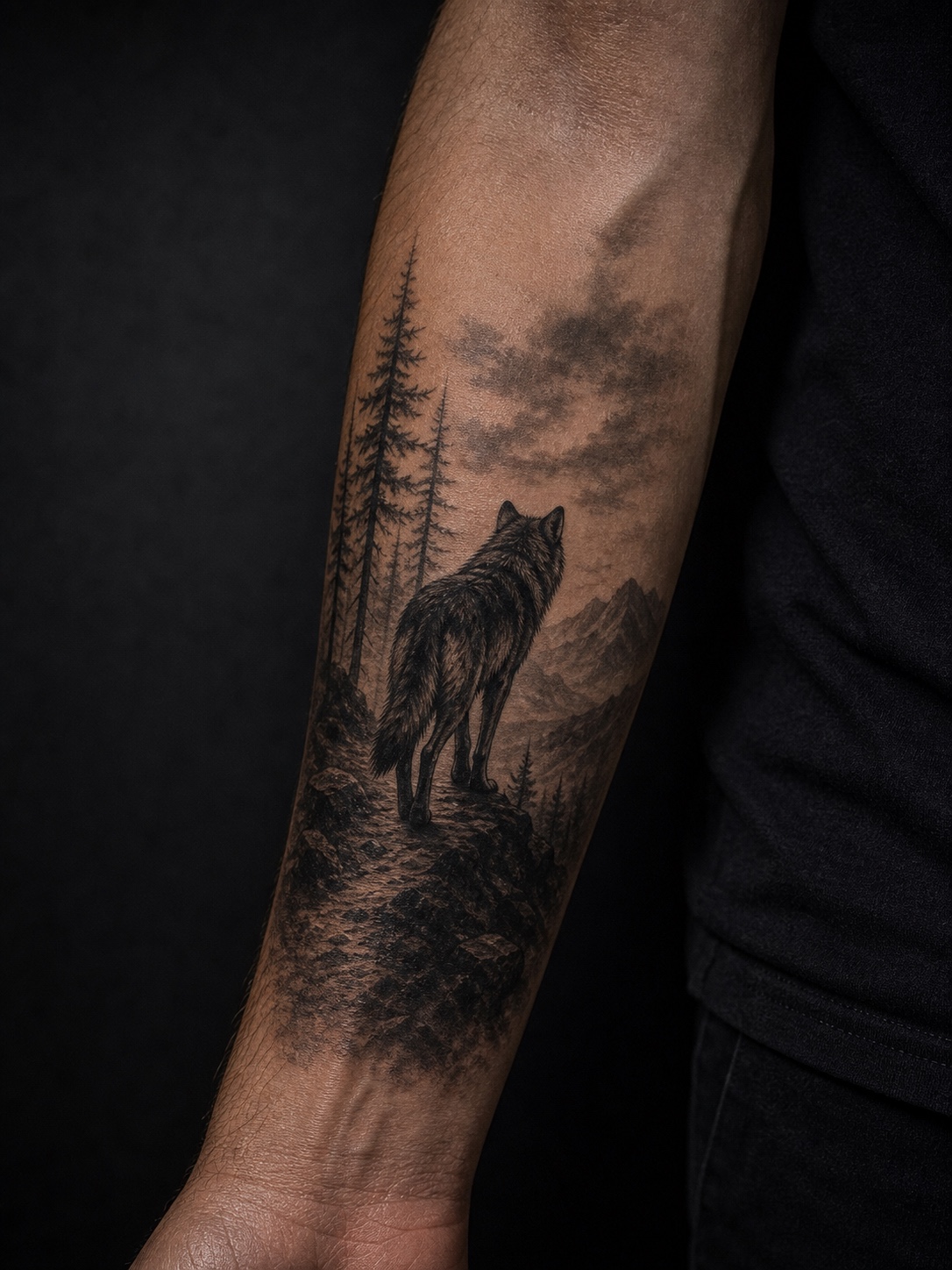
Independence, self-reliance, and the choice to go your own way. Often chosen after a major life change: leaving a relationship, starting over in a new city, stepping away from a group. The lone wolf in nature is usually a wolf transitioning between packs, not one that permanently rejects community, but the symbolic shorthand of the solitary individual is the more common reading in tattoo culture.
What does a wolf and moon tattoo mean?
The wolf with moon combination adds cycles, intuition, and mystery to whatever the wolf alone carries. A full moon reads as completion or wholeness. A crescent moon leans toward new beginnings or the divine feminine. A wolf howling at the moon specifically adds the element of communication and longing. It’s the most popular wolf combination because the symbolism is layered and the visual composition works across sizes and styles.
What does a wolf pack tattoo mean?
Family, unity, and belonging. A wolf pack tattoo usually signals close bonds with specific people: a family, a friend group, a team. The design element that communicates this most clearly is wolves moving together or a larger protective wolf with smaller ones nearby. Memorial pieces sometimes use a pack with one wolf slightly separate or looking back, representing the lost person.
What does a howling wolf tattoo mean?
Communication, longing, and finding your voice. A wolf howling sends sound across long distances, calling to others who are out of sight. As a tattoo, it tends to represent someone who has found (or is searching for) their voice, their people, or their place. It can also read as a connection to nature and the night, particularly when paired with moon or forest elements.
Is a wolf tattoo good or bad luck?
In most cultural traditions, the wolf is a positive symbol. Japanese tradition treats the wolf (Ōkami) as a guardian deity. Native American traditions see it as a teacher and guide. Norse mythology gives wolves both protective and destructive roles, but the protective side (Odin’s companions) is equally present. There is no widespread cultural tradition that treats wolf tattoos as unlucky.
What does a black wolf tattoo mean?
A black wolf tends to lean toward shadow, mystery, and the acceptance of darkness as part of the self. In some traditions, a black wolf represents the shadow self: the parts of personality that are hidden or suppressed. It can also simply read as power and intimidation. A white wolf, by contrast, carries associations with purity, spiritual guidance, and rarity. The grey wolf, the most common, holds the widest range of meaning without leaning strongly in any direction.
How much does a wolf tattoo cost?
A small minimalist wolf outline: $80 to $200. A medium black and grey wolf portrait on the forearm or shoulder: $300 to $800. A large detailed wolf piece or partial sleeve: $800 to $2,000. A full back wolf scene from a specialist artist: $2,000 to $6,000 or more across multiple sessions. Pricing reflects artist experience and the time the piece requires, not the complexity of the symbolism. Research portfolios, not hourly rates, when choosing.
The Wolf as Your Symbol


Pick the specific element that resonates first. Not the wolf in general, but what about it. The pack behavior. The lone traveler. The eyes that don’t miss anything. The animal that calls in the dark and waits to hear what calls back.


Once you know that, the design choices follow naturally. Loyalty leads to pack imagery. Independence leads to a lone wolf against open landscape. Spiritual guidance leads to quieter compositions: forest backgrounds, moon elements, a wolf that watches rather than attacks.
Bring that specific clarity to an artist whose portfolio shows they can execute in that territory. A great black and grey realism artist and a great American traditional artist are solving completely different technical problems, even if the subject is the same animal.
For more placement and style inspiration, browse the broader Sky Rye Design tattoo ideas hub.
Some spiritual back pieces combine fierce animals with softer elements. A wolf paired with a lotus back tattoo creates a striking balance of strength and peace.
- 1.2Kshares
- Facebook0
- Pinterest1.2K
- Twitter0
- Reddit0