A bird tattoo has about one second to work. That’s roughly the time your eye needs to read a car’s side profile across a parking lot — a lesson that stuck with me from a decade in automotive design, where a shape either reads clean at a glance or it doesn’t. Same rule applies to a silhouette inked on skin.
Right now people are moving hard toward fine-line and minimalist bird designs. That shift showed up clearly when I pulled the search data for this piece. But most “bird tattoo ideas” roundups online treat every bird the same: same bold linework, same generic meaning, same Pinterest grid.
- Species with the Strongest Symbolism
- Fine-Line & Minimalist Bird Designs
- Bold Blackwork & Traditional Styles
- Flight & Movement Compositions
- Placement-Specific Concepts
- Bird + Symbolic Elements
- FAQ
- What does a bird tattoo signify?
- What's the “rule of thirds” in tattoo placement?
- Which bird tattoo is most popular right now?
- What does two birds together mean?
- Is there a real difference between bird tattoos for men and women?
- How much does a bird tattoo typically cost?
- What's the biggest mistake people make with small bird tattoos?
- Conclusion
I sorted these 40 by what actually matters: species and symbolism, style, movement, placement, and symbolic pairings. Every idea comes with the design logic behind it — why a certain wing angle holds up on a wrist, and why that same design falls apart on a hand. Pick the concept, then pick the placement that won’t fight it.
Species with the Strongest Symbolism
Some birds carry so much folklore that the shape barely matters — people choose the species first, design second. Here’s what each one actually signals, and where that meaning gets overused.
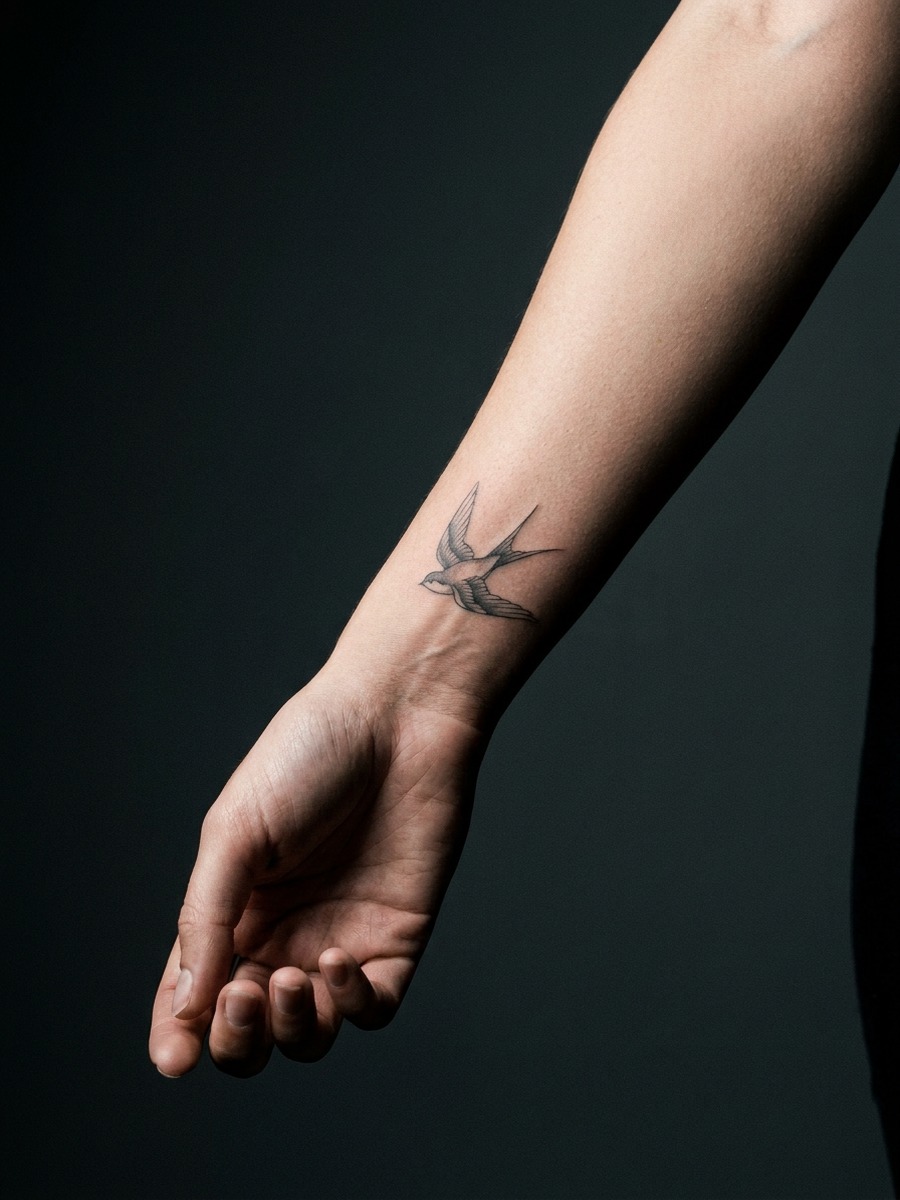
Swallow
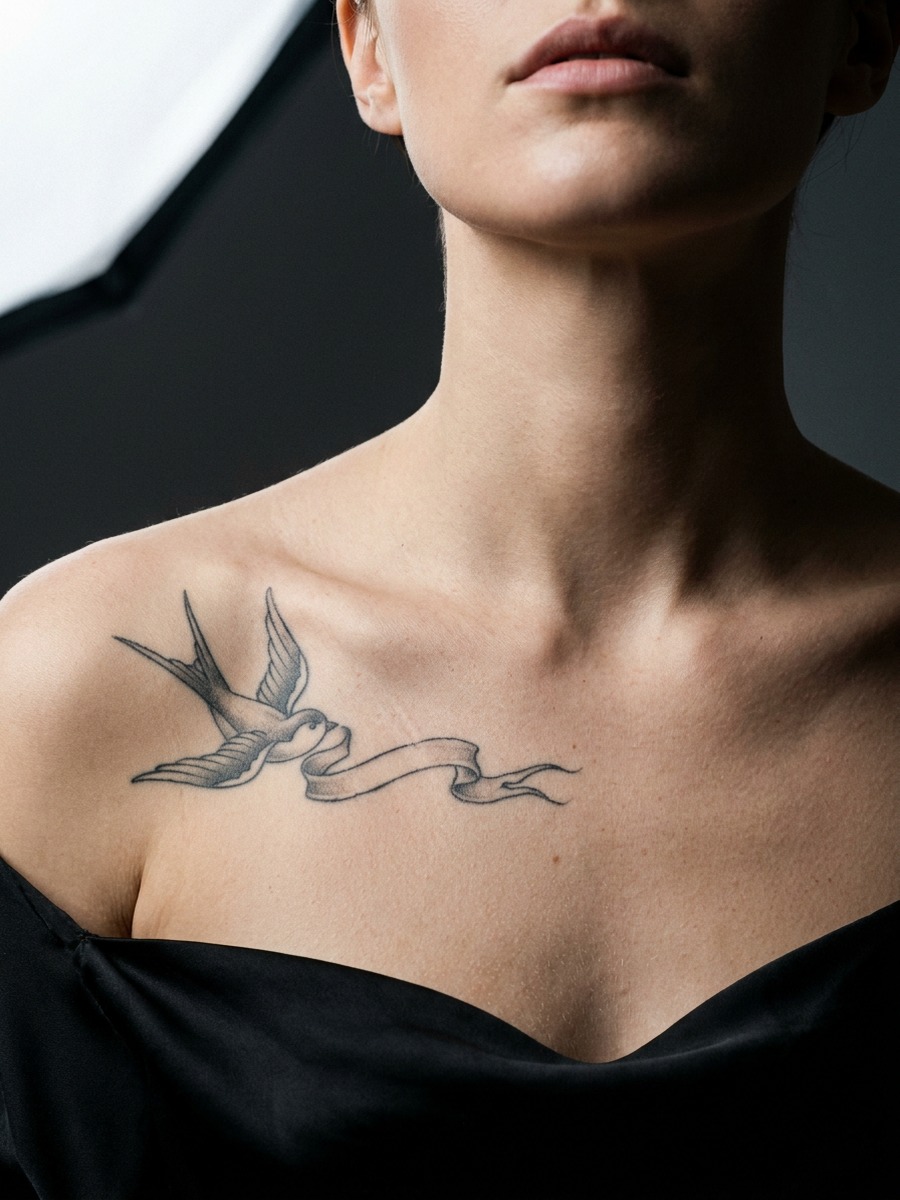
Sailors got swallows tattooed after 5,000 nautical miles at sea, historically — one bird per crossing. Today it reads simpler: homecoming, loyalty, someone who always finds their way back. Keep that forked tail sharp in the design, or the silhouette collapses into a generic bird shape at a distance.
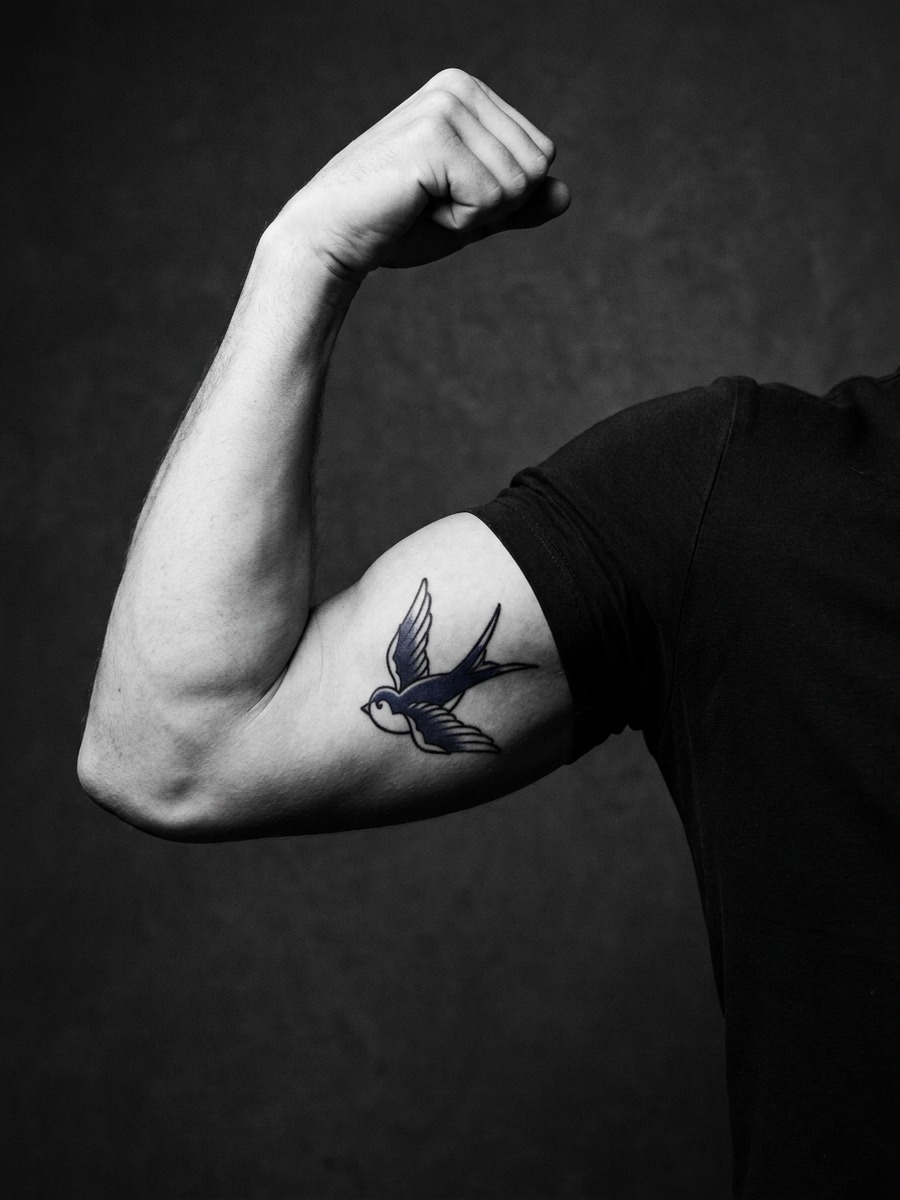
Sparrow
Sparrows meant something different from swallows on a sailor’s knuckles — working-class grit, surviving on very little. I like this one on a bicep at 2-3 inches; smaller than that and the wing detail turns to mush within a few years.
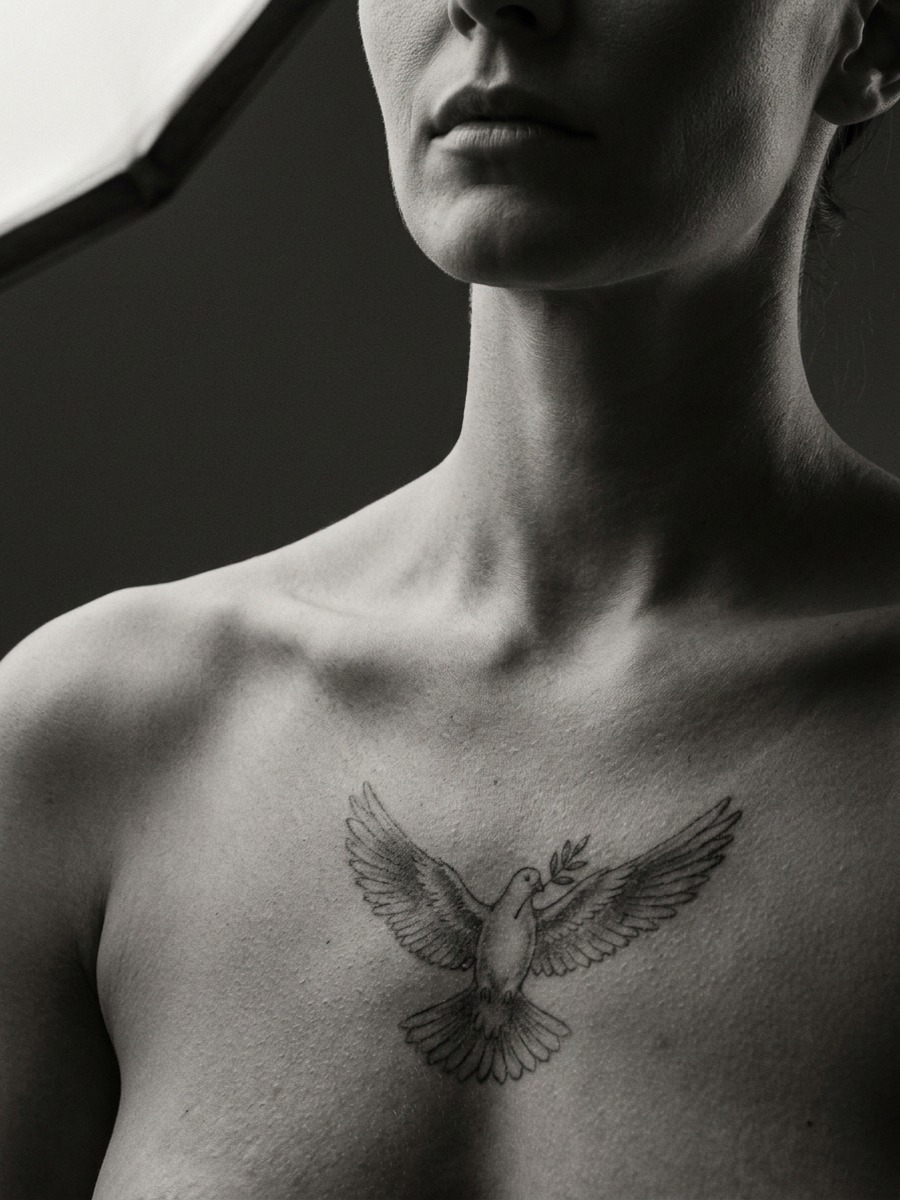
Dove
Doves carry the most literal symbolism on this list: peace, and increasingly, memorial pieces for people who’ve passed. An olive branch in the beak is the detail that separates it from a generic pigeon — skip it and you lose the entire point of the design.
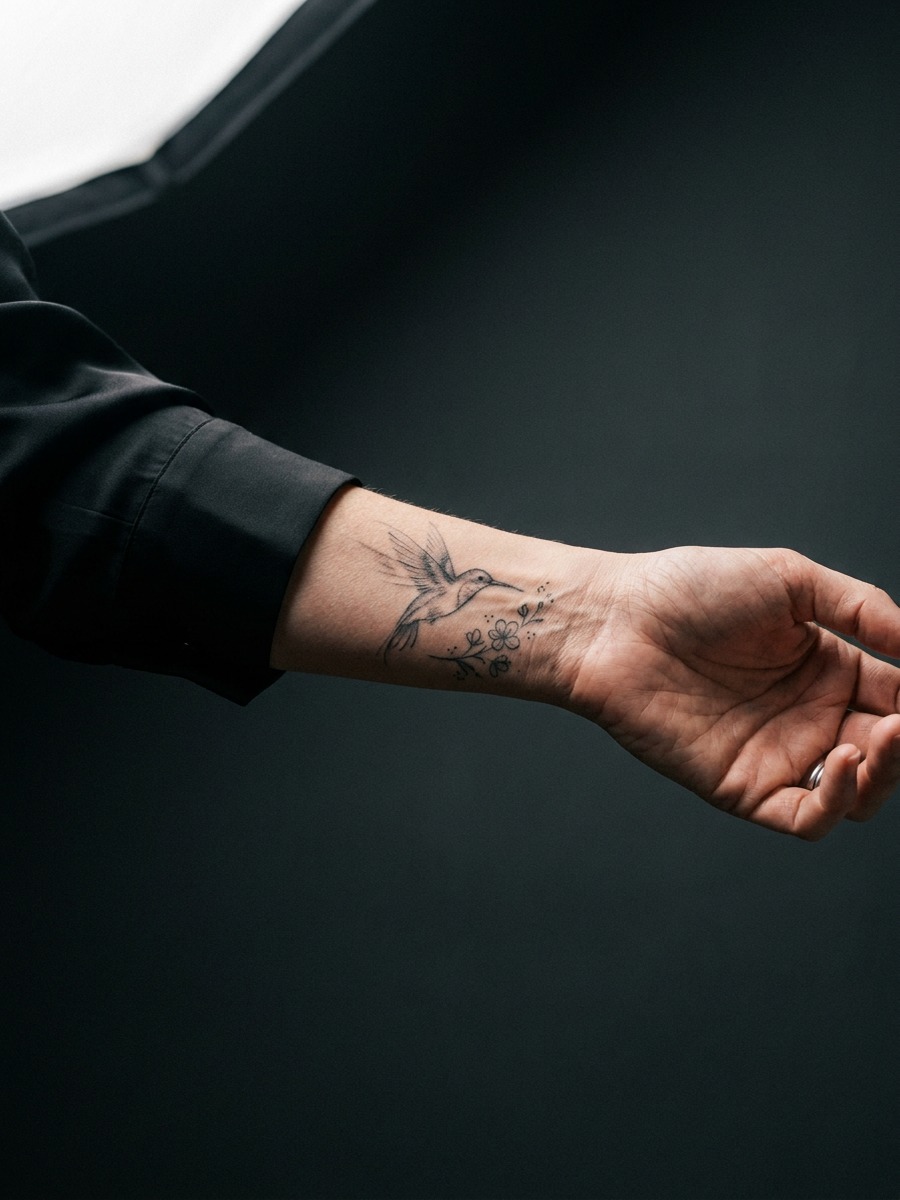
Hummingbird
Joy, resilience, movement — hummingbirds test an artist’s linework more than almost any other bird here, because the wings need to suggest motion without turning into a blur. Ask for slightly asymmetric wing strokes; perfectly symmetrical ones read as stiff, not fast.
Owl
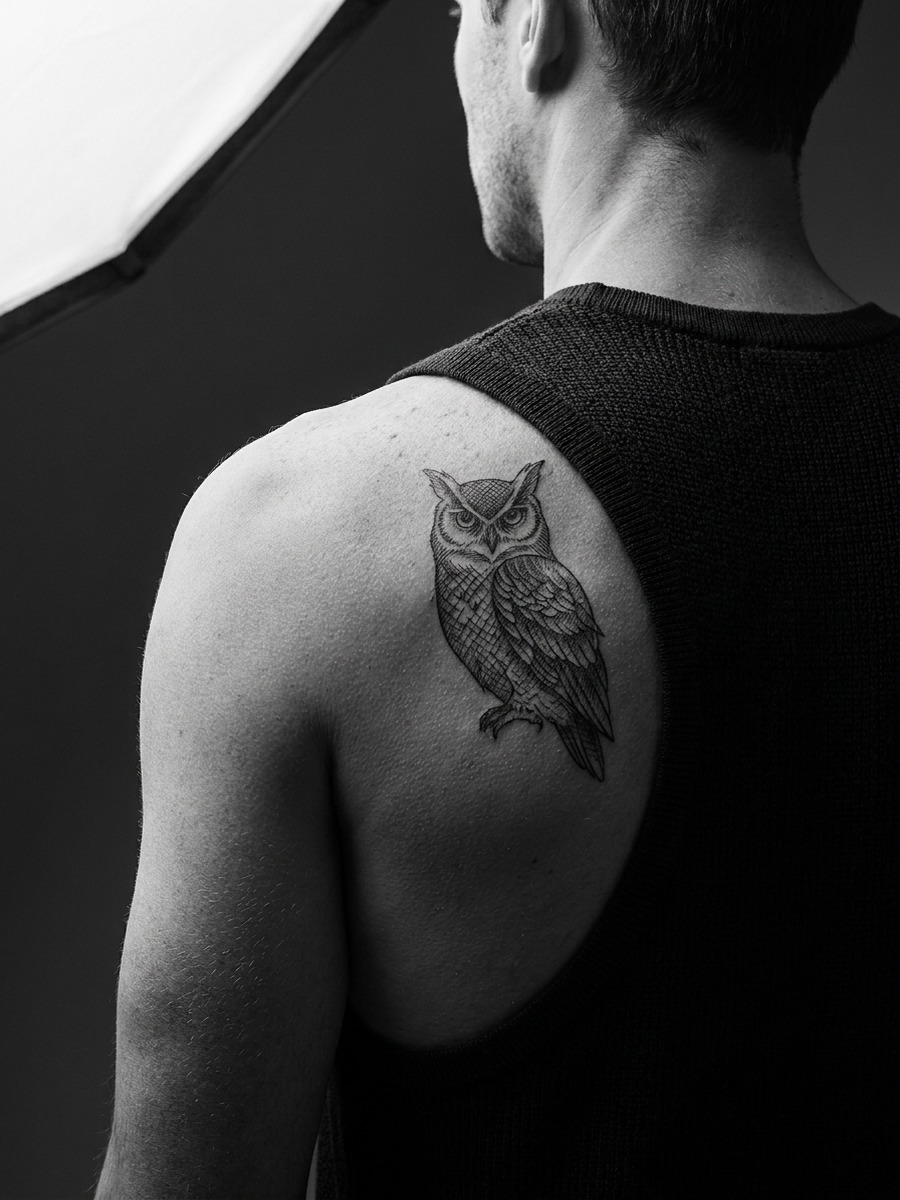
Wisdom and intuition, yes, but owls also carry real composition risk. That facial disc is round and busy — cram it onto anything smaller than 3 inches and the feather detail turns to noise. Give it room: a shoulder blade or upper arm, not a wrist.
Phoenix
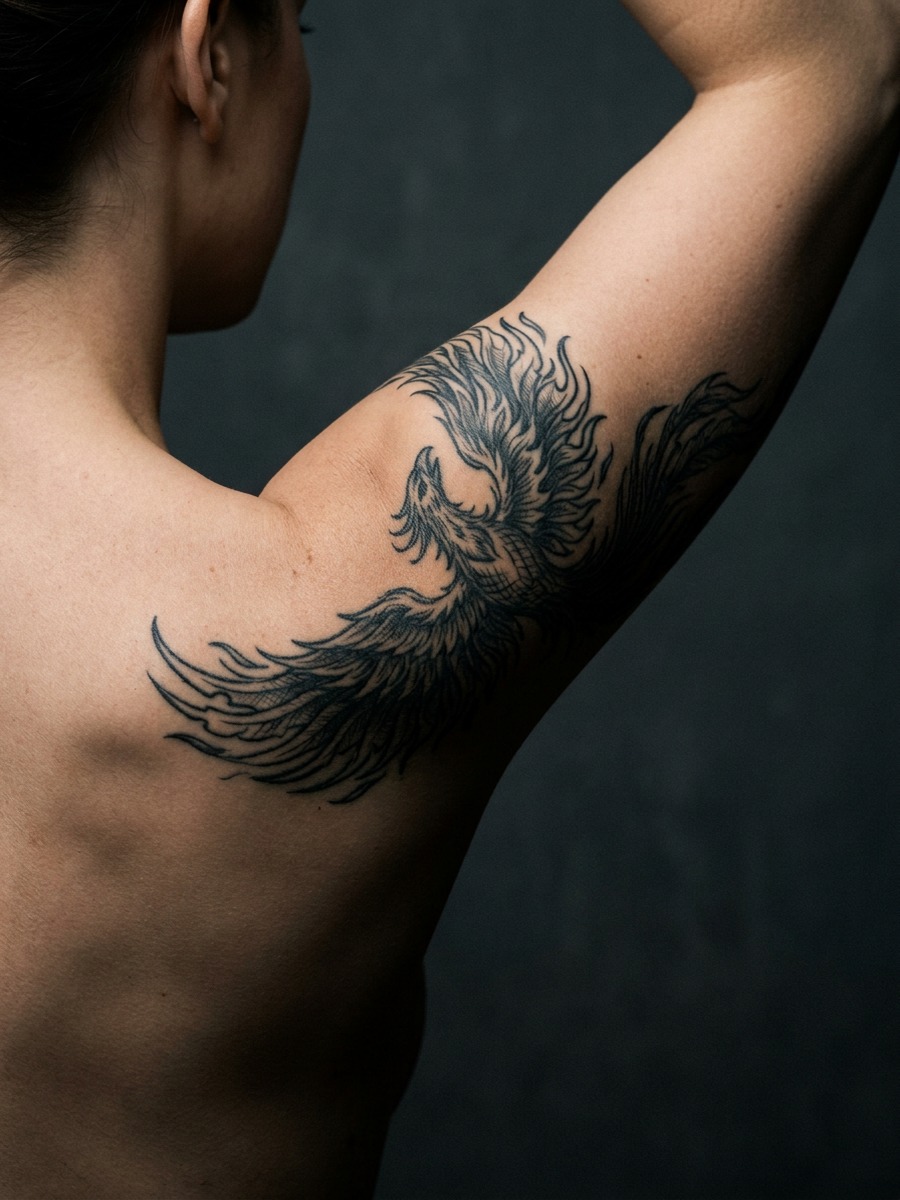
Rebirth after hardship. Bigger pieces work best here — a cramped wingspan kills the drama that’s the entire reason someone picks this bird. Budget a 3-4 hour session if you want the flame detailing to actually hold up over time.
Crane
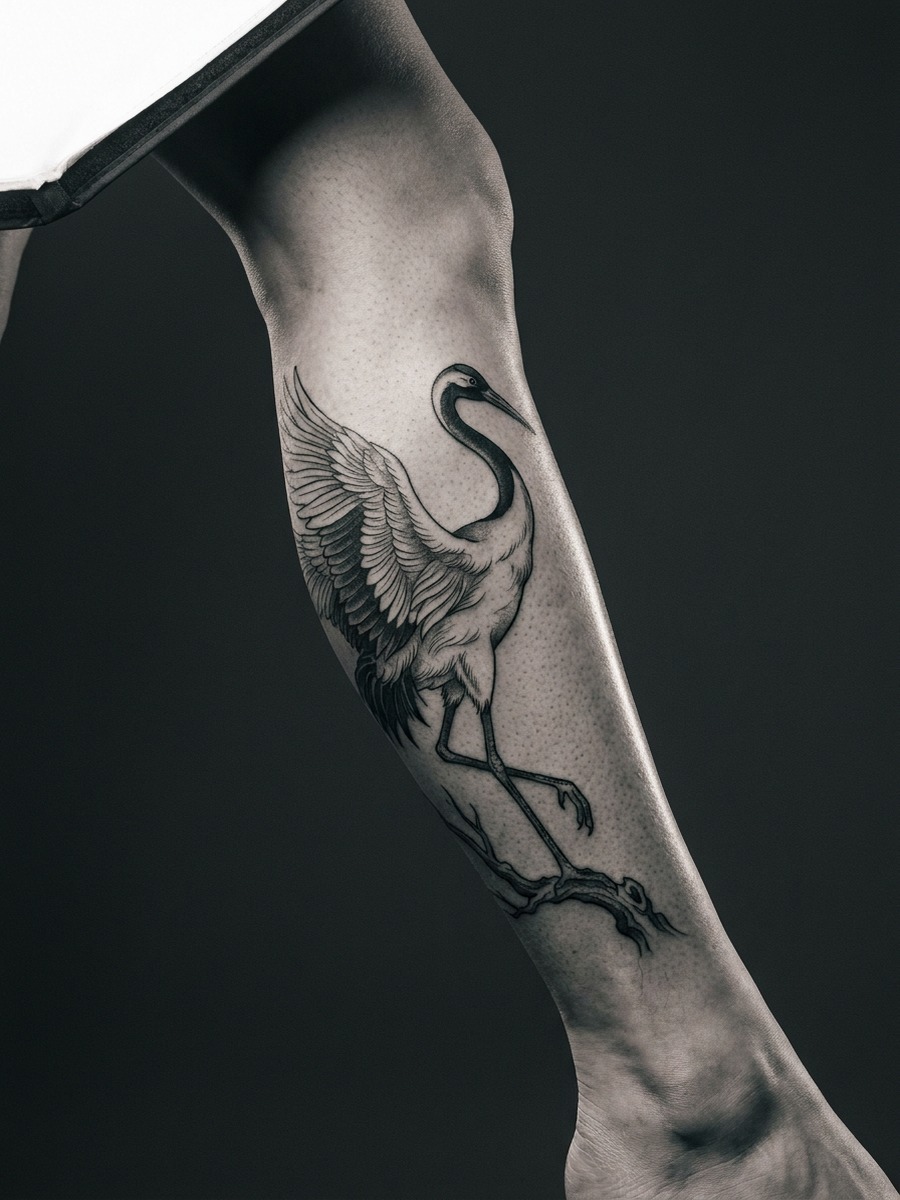
Longevity, pulled from Japanese tattoo tradition. That long neck curve is unforgiving at small scale — one degree off and the bird looks broken-necked instead of graceful. This is one where I’d trust an artist who’s drawn cranes before over one who’s improvising.
Raven
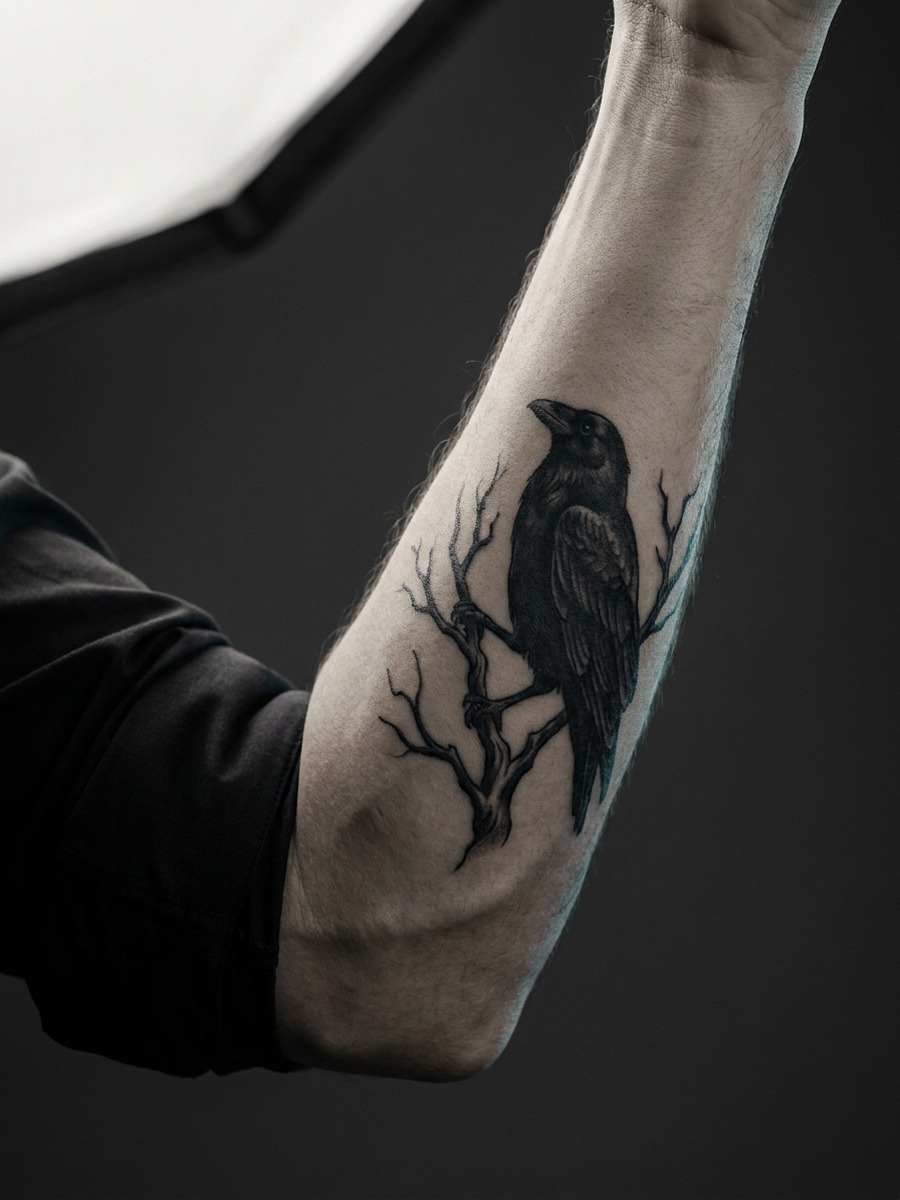
Mystery, and in Norse tradition, knowledge — Odin’s ravens Huginn and Muninn were literally named Thought and Memory. Solid black silhouette versions age the best of any bird here; there’s no fine interior linework left to blur out over a decade.
Fine-Line & Minimalist Bird Designs
Fine-line searches have climbed nearly 50% over the past year — and the SERP hasn’t caught up, with mostly bold-linework stock photos still ranking. Here’s where the style actually pays off, and where it doesn’t.
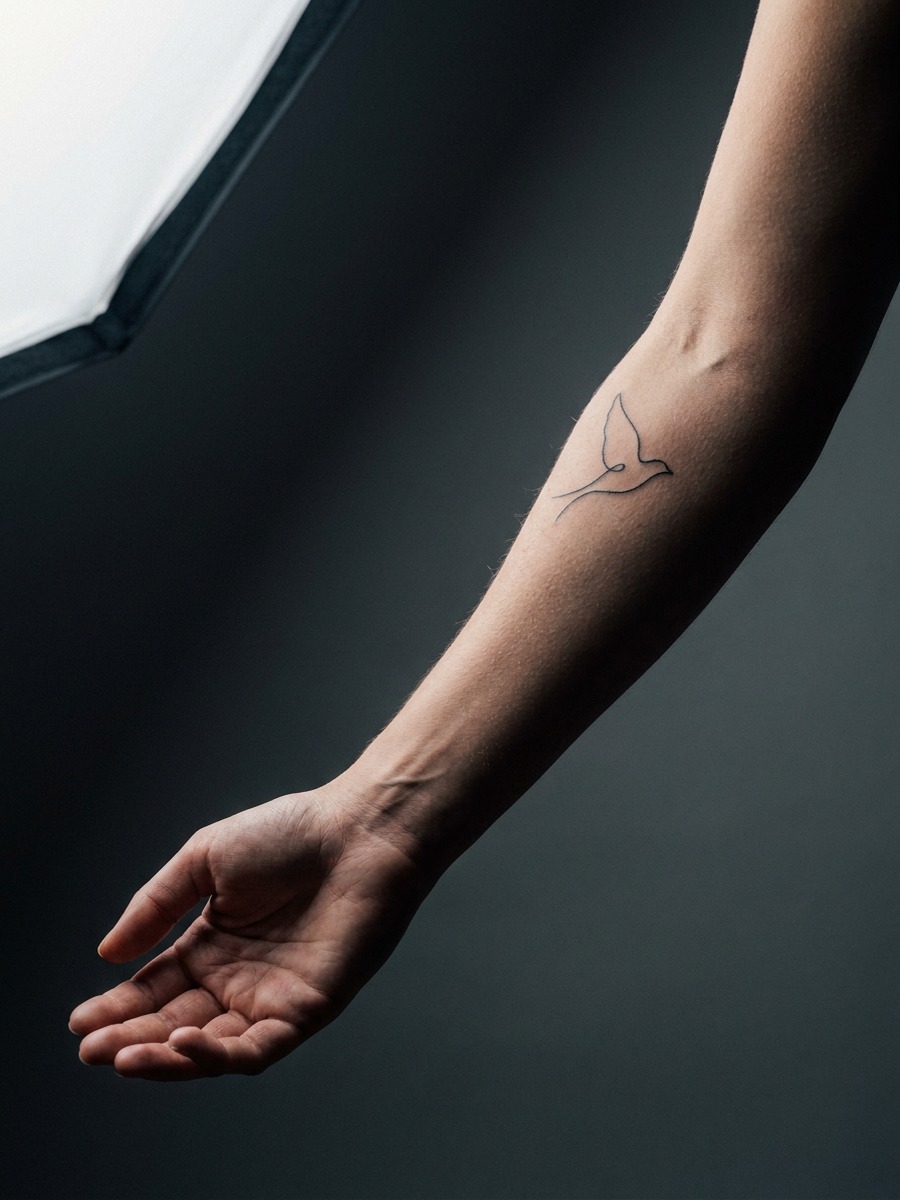
Single continuous-line silhouette
One unbroken stroke, no shading, no interior detail. This is the design equivalent of a car’s wireframe sketch — every line has to earn its place because there’s nothing to hide behind. Works best inner-forearm, where the skin stays flat and the line doesn’t warp.
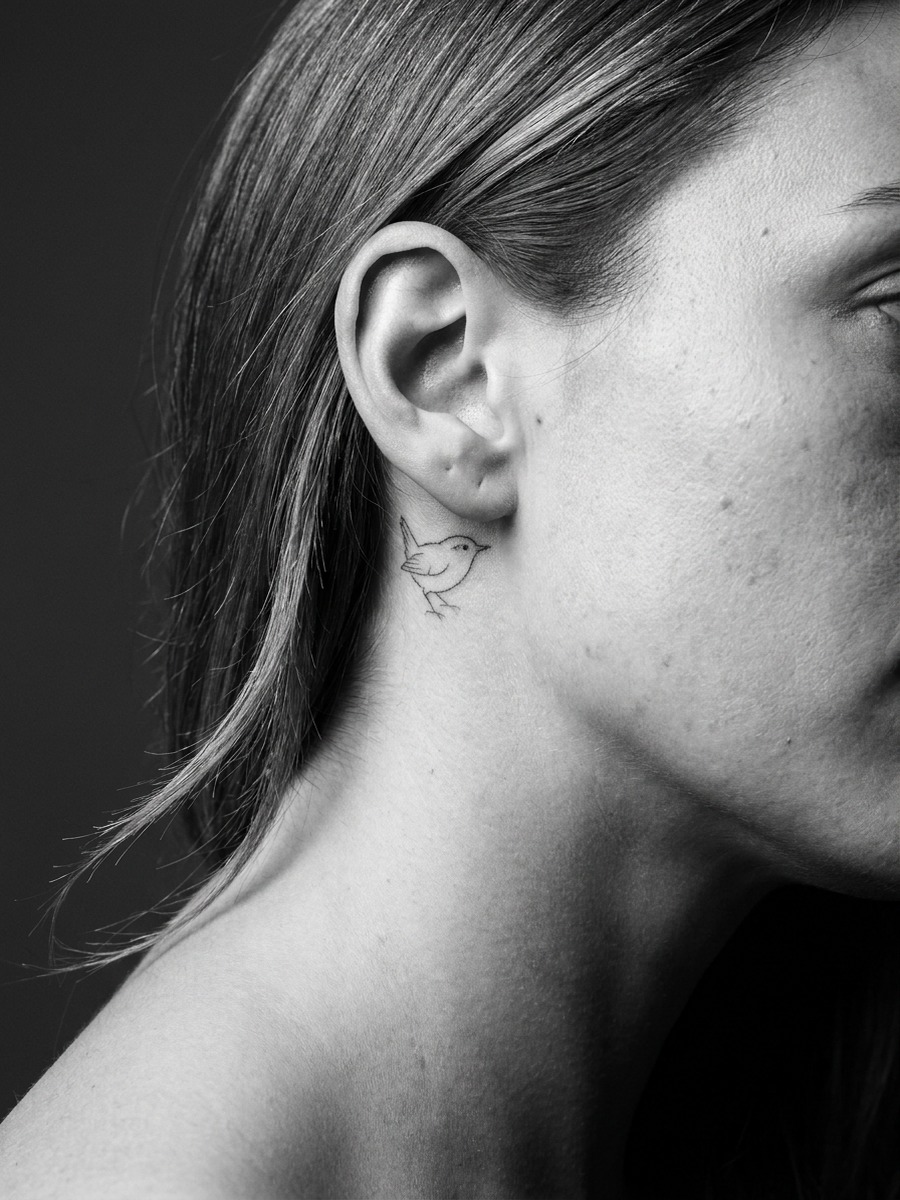
Tiny wren outline
I’ve noticed clients ask for “something small” and picture a quarter-sized tattoo, then get surprised when the artist recommends going even smaller. A wren behind the ear or on the ankle should sit around thumbnail-size — anything bigger loses the minimalist point entirely.
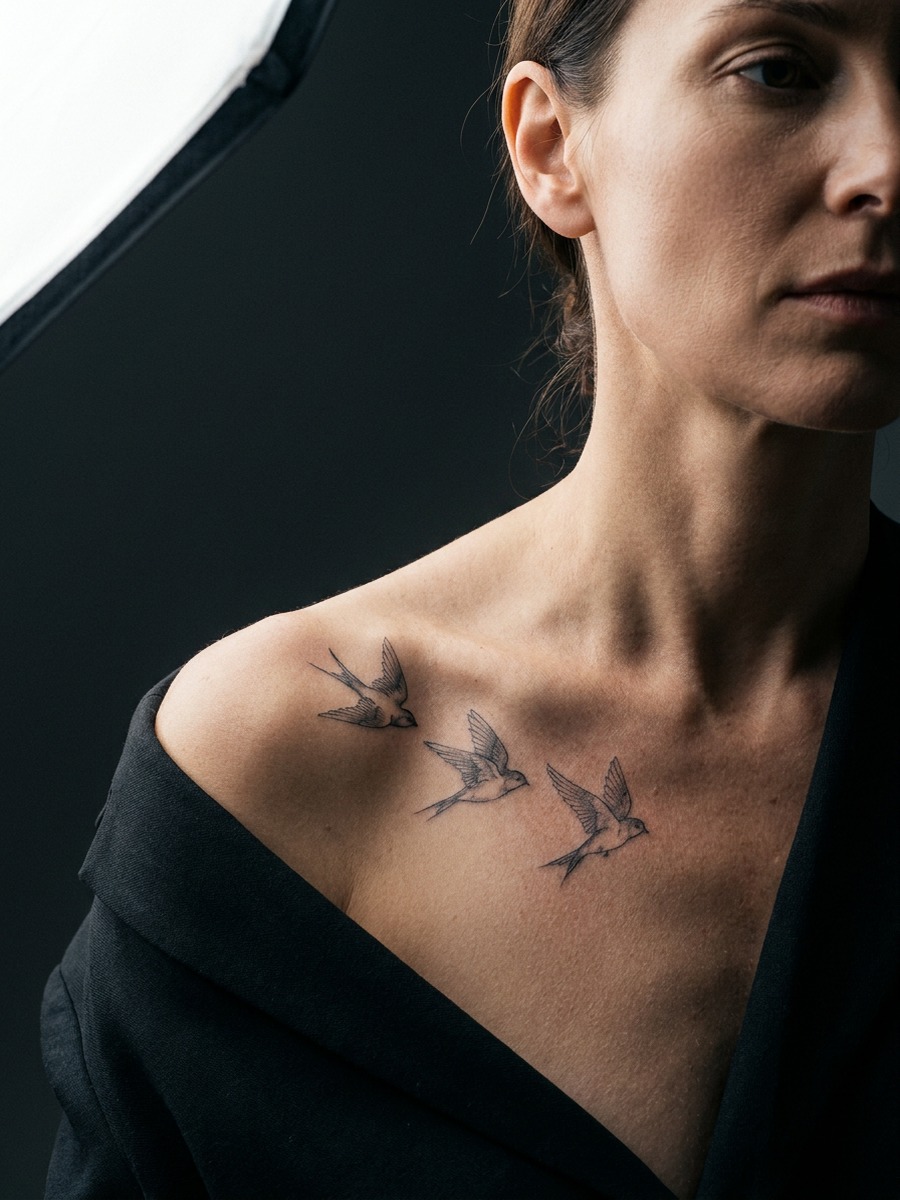
Line-art trio in flight
Three birds, matching style, ascending diagonally. The trick is varying the wing angle on each one slightly — identical copies read as clip art, not tattoo art. Collarbone placement lets the diagonal follow the bone’s natural line instead of fighting it.
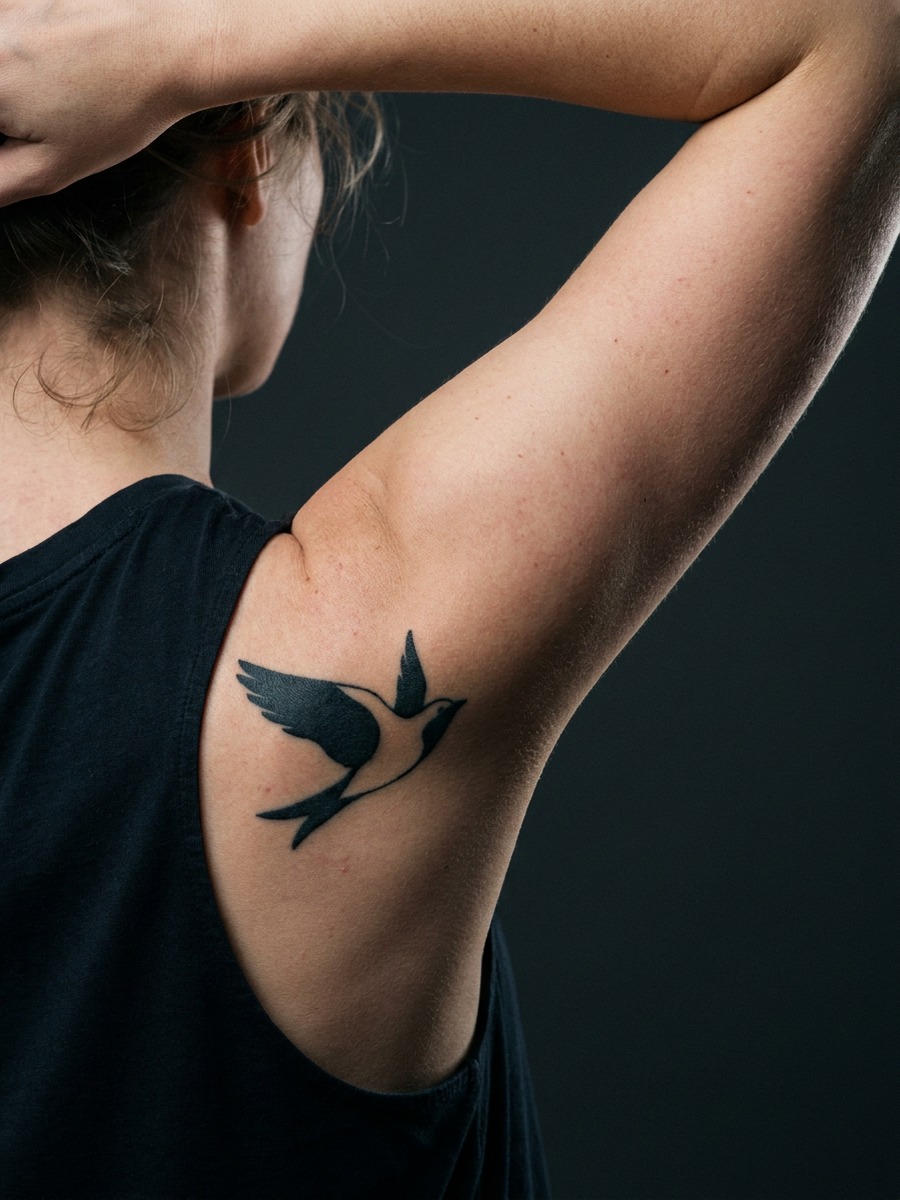
Negative-space wing
Solid black body, the wing shape carved out of unmarked skin. High-contrast and genuinely striking, but it’s unforgiving on tan or darker skin tones where the negative space won’t pop the same way. Ask to see the artist’s negative-space portfolio specifically before booking.
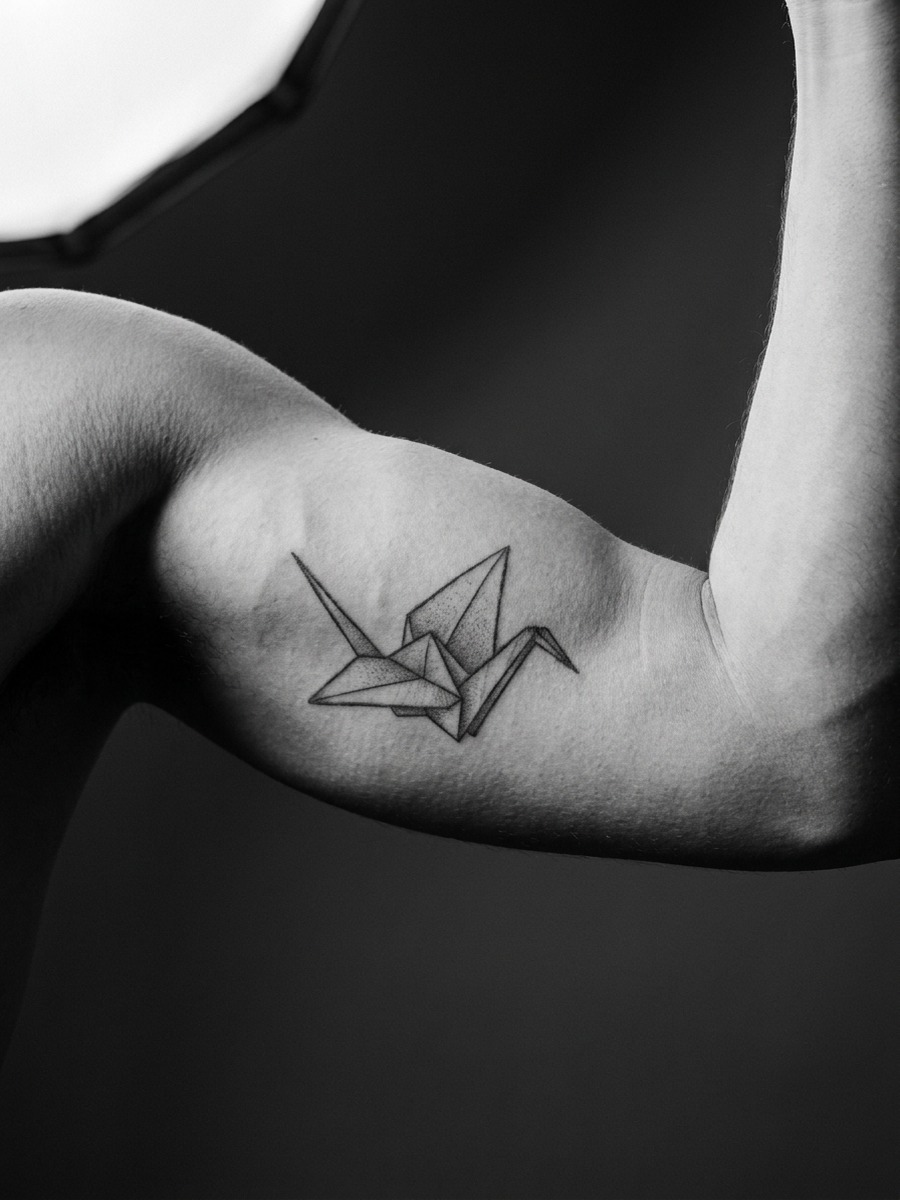
Geometric origami-style bird
Angular, faceted planes instead of organic curves — closer to product design sketching than classic tattoo flash. I like this one on the inner bicep, where the soft muscle contrast plays against the hard geometric lines.
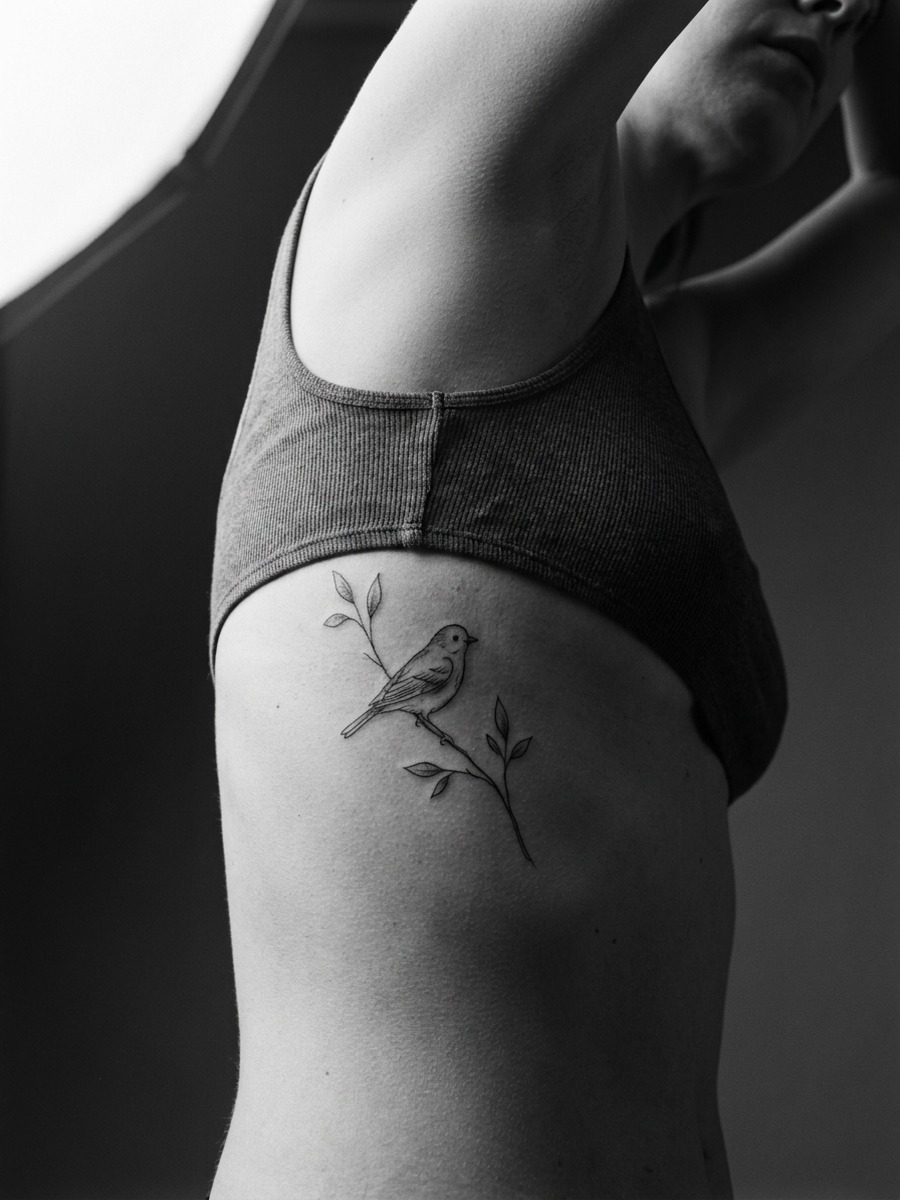
Fine-line bird on a branch
A perched bird with a few small leaves, run vertically down the ribcage. Ribs are a notoriously painful placement (thin skin over bone), so this is usually a one-session piece — plan the design tight and simple rather than adding extra botanical detail you’ll regret sitting through.
Bold Blackwork & Traditional Styles
Black bird tattoo searches are up over 200% year over year — a real trend, not a rounding error. This group covers the opposite end of the spectrum from fine-line: thick, saturated, built to survive decades without turning to mush.
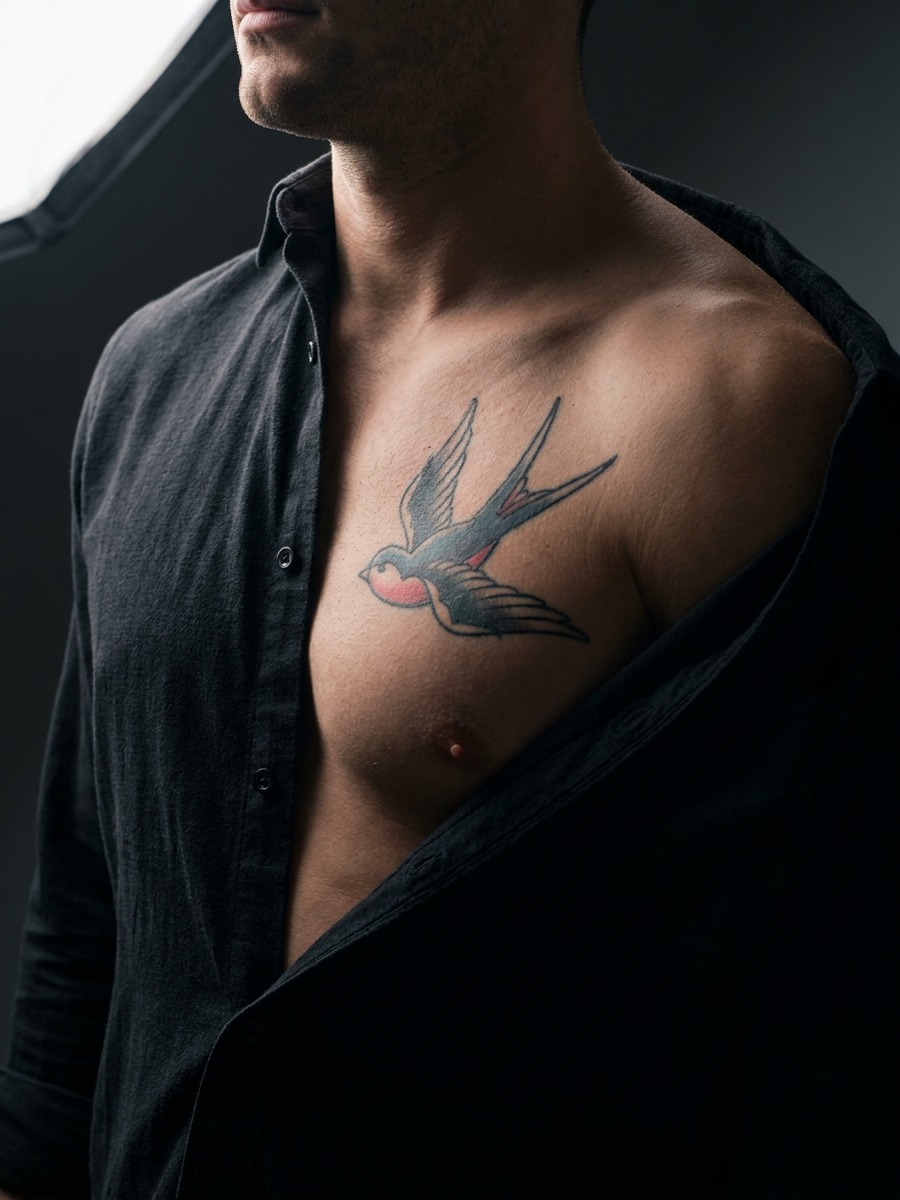
Bold traditional swallow chest piece
American traditional at its source — thick black outlines, solid red and blue fills, zero ambiguity in the linework. This is the style that actually gets more legible with age, not less; the bold lines are doing exactly what they were designed to do a century ago on sailors’ skin.
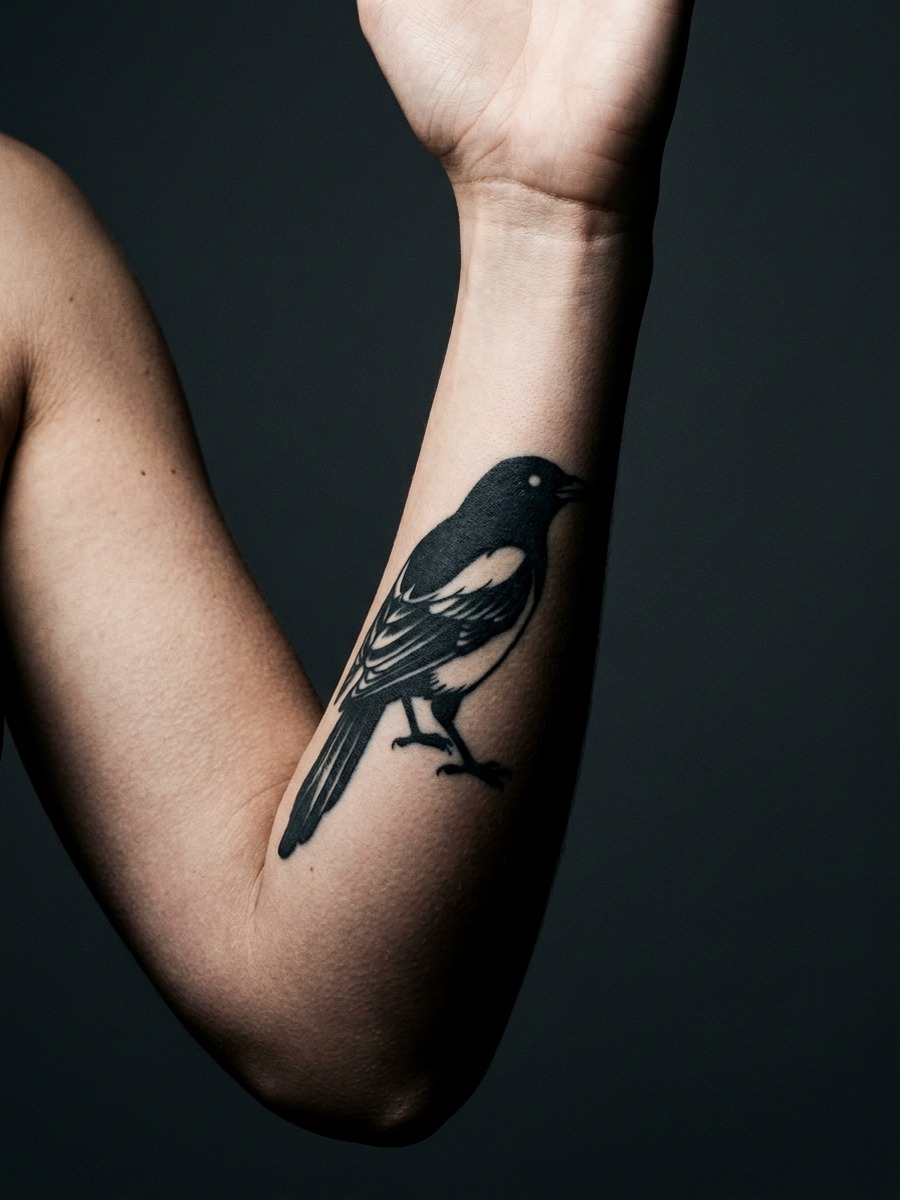
Blackwork magpie
Solid black body with sharp negative-space highlights carving out the wing pattern. Magpies have a genuinely striking black-and-white plumage in real life, and this technique is one of the few that translates that contrast honestly instead of flattening it into a generic silhouette.
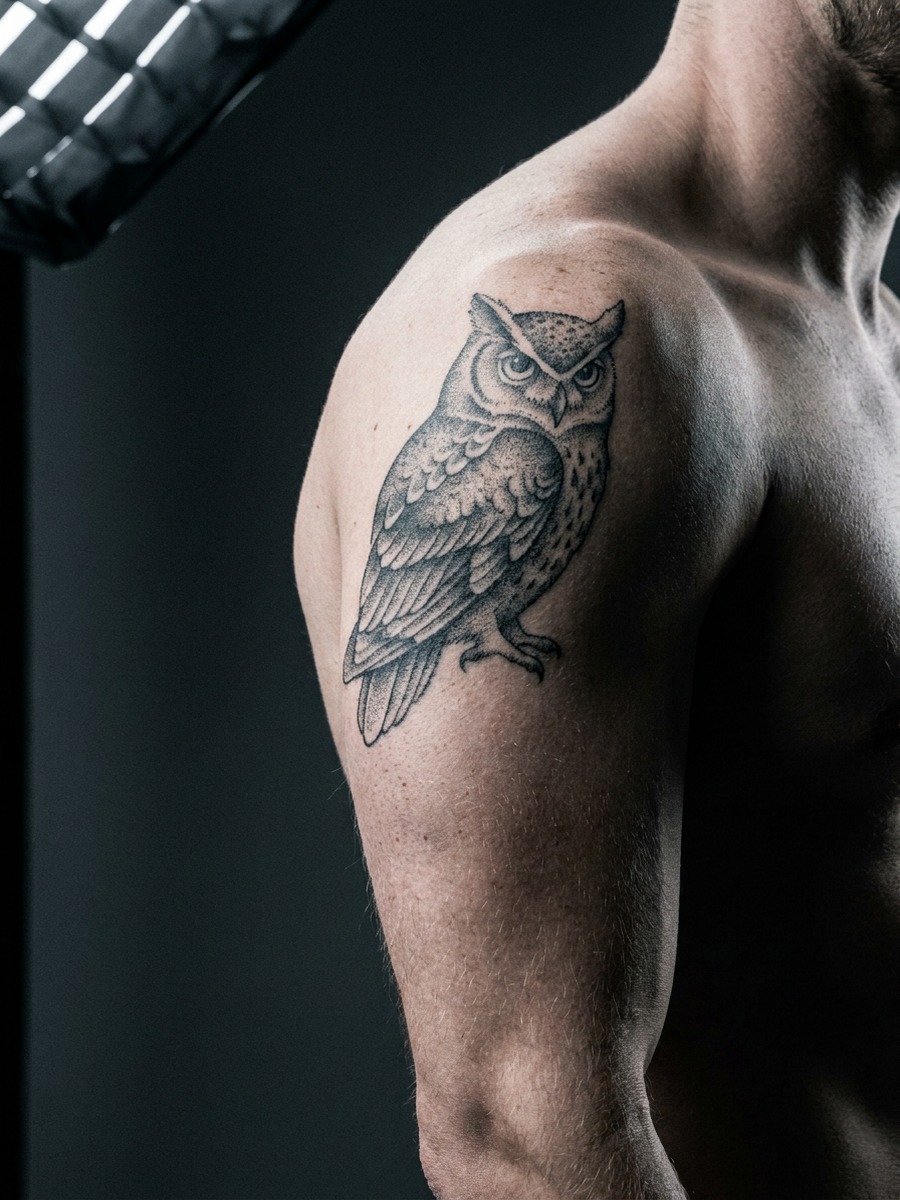
Dotwork owl
No linear outlines at all — the entire form built from stippled dots creating gradient shading. It’s the slowest technique on this list to tattoo (expect a long single session or a follow-up appointment), but the gradient depth it produces is something linework simply can’t fake.
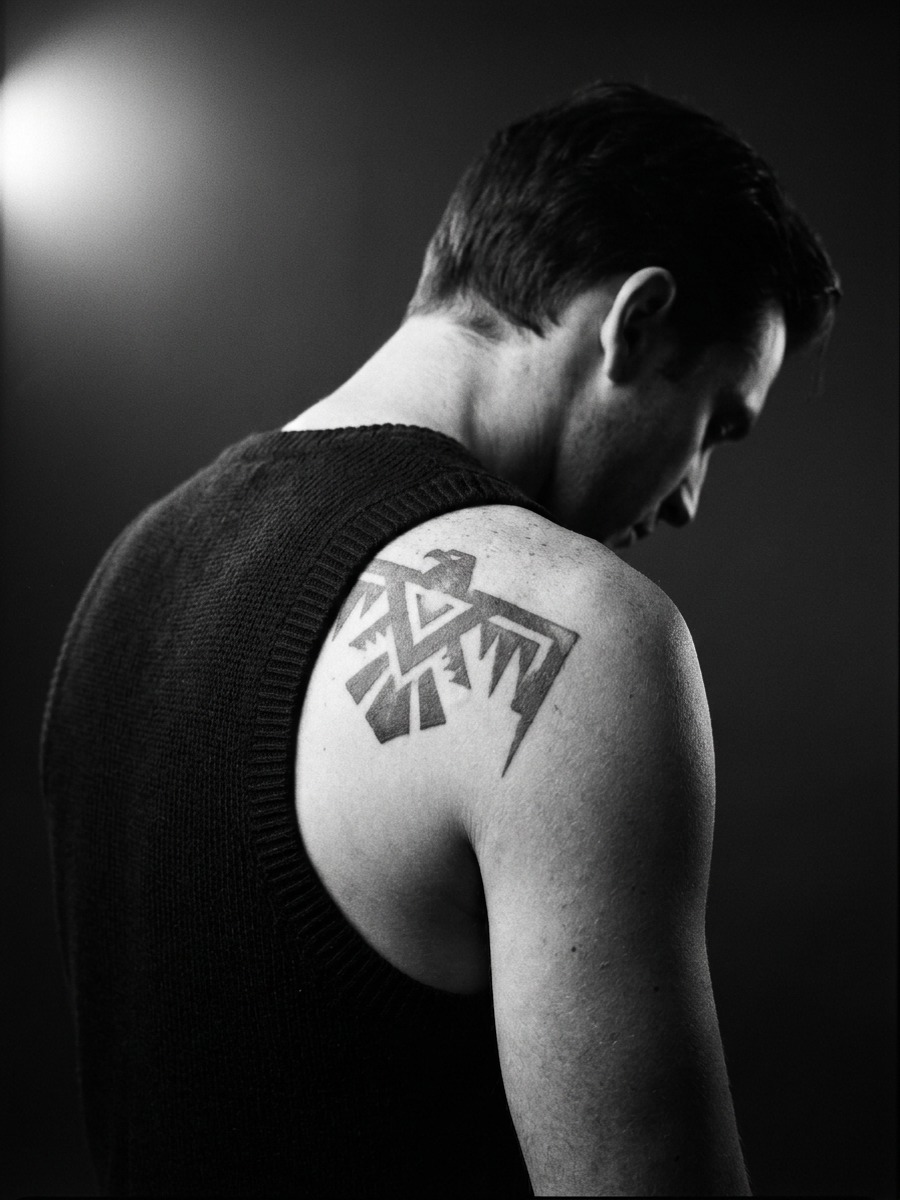
Tribal-inspired thunderbird
Sweeping black shapes, sharp angular points, wings spanning the shoulder blade. I’d treat this one carefully — thunderbird imagery comes from specific Indigenous traditions, so talk to your artist about a design that reads as bold blackwork rather than borrowing directly from a culture’s sacred symbol.
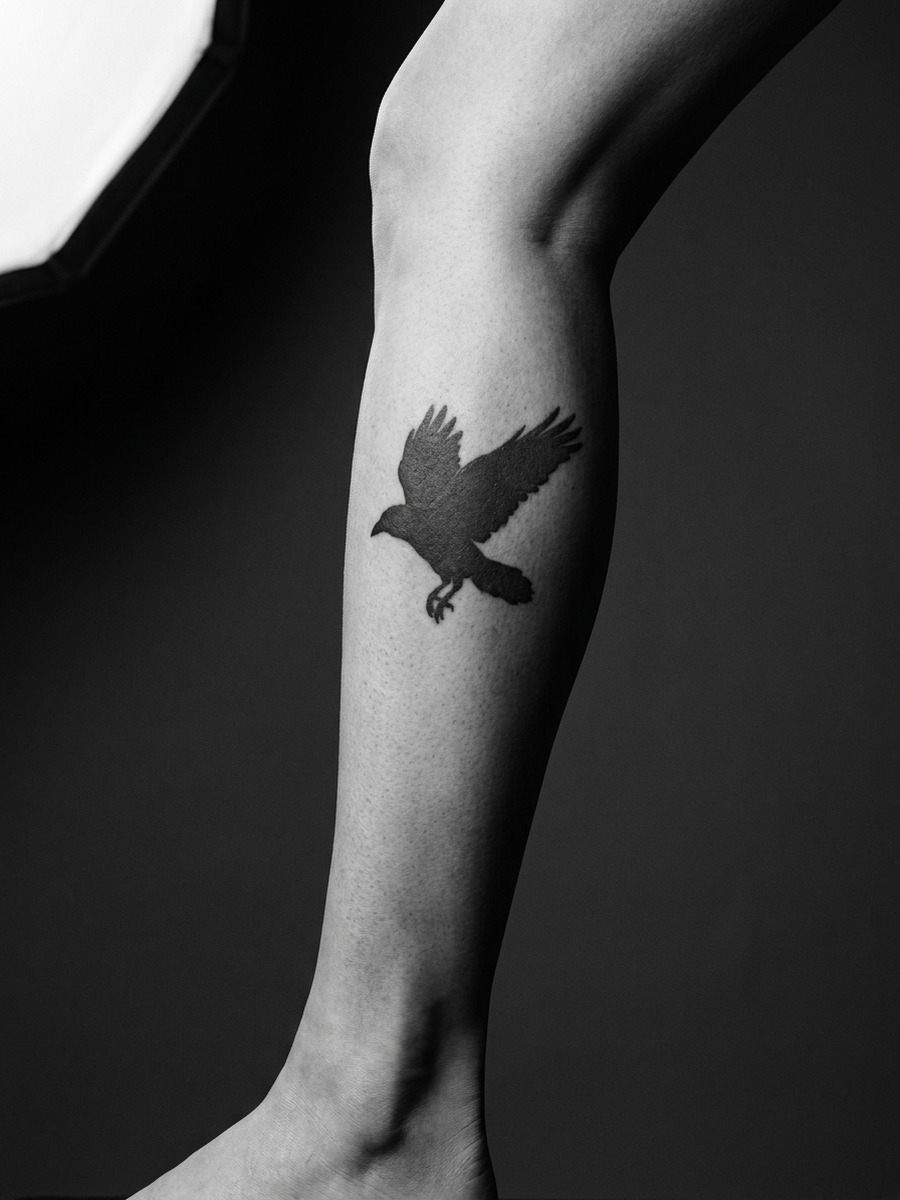
Solid silhouette raven
Completely filled black, no interior detail left to blur. Out of everything in this piece, this is the design that ages best, full stop — there’s nothing inside the shape that can soften or spread over ten years, because there’s nothing there to begin with.
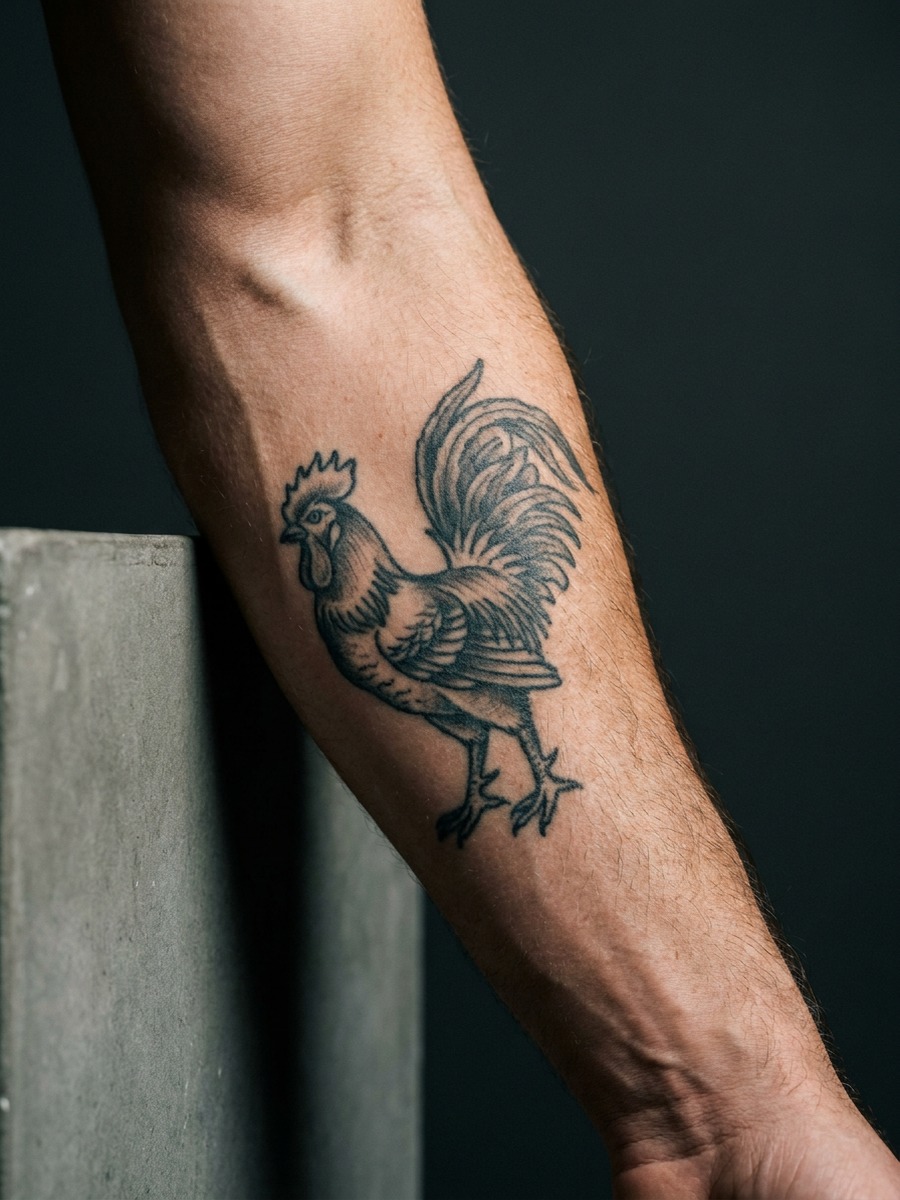
Bold linework rooster
Thick, confident lines, upright stance, tail feathers fanned wide. Roosters carry a folk-art energy that most bird tattoos don’t — think farmhouse weathervane rather than delicate songbird. Forearm placement gives the fanned tail room to actually read as a fan, not a smudge.
Flight & Movement Compositions
Static, perched birds are easy. Motion is where most tattoo artists (and most stock reference photos) start cutting corners. This group is all about compositions that actually read as movement, not just a bird shape with wings out.
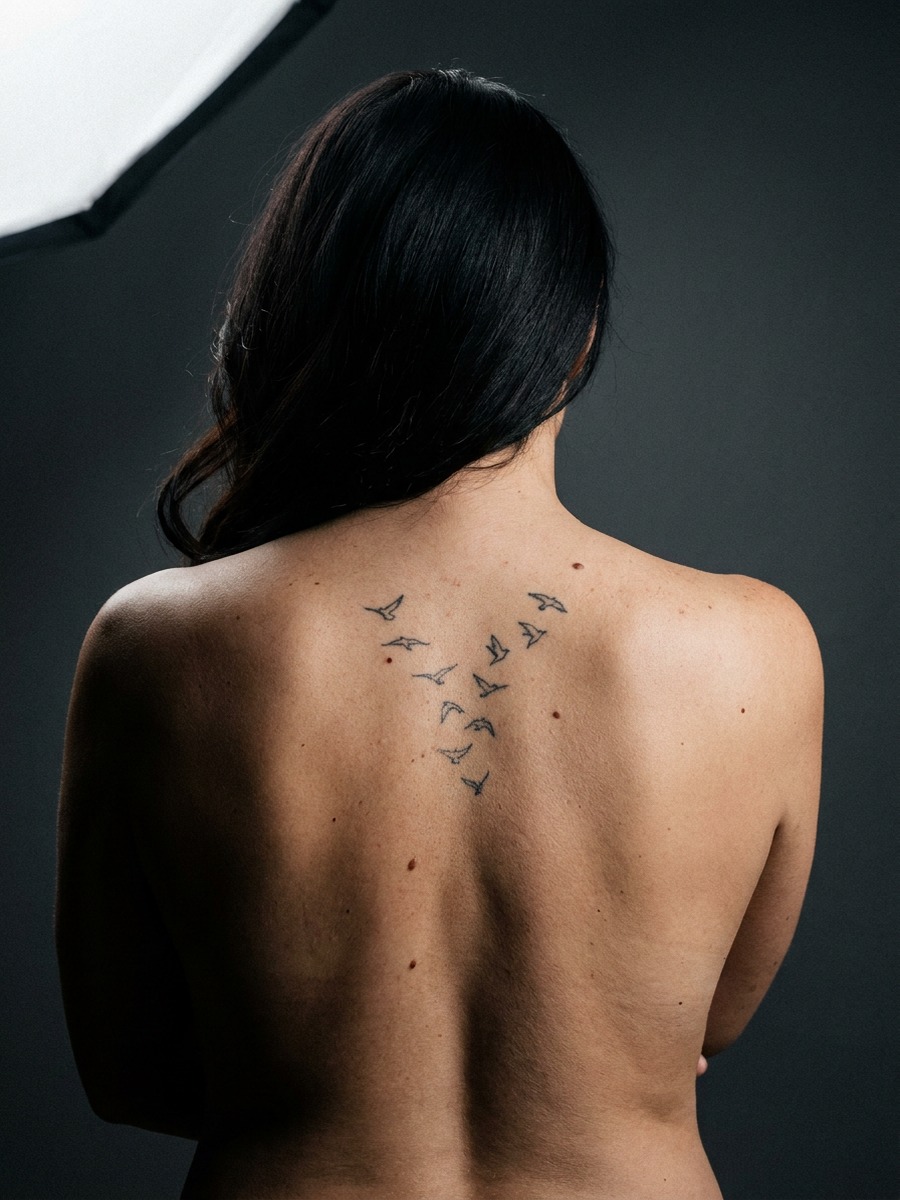
V-formation flock
Small birds descending the spine in a V, fine-line style. I like this one specifically because the spine already gives you a built-in composition guide — the vertebrae curve does half the design work before the needle even touches skin. Keep the flock to 5-7 birds; more than that and it turns into visual noise on a narrow strip of skin.
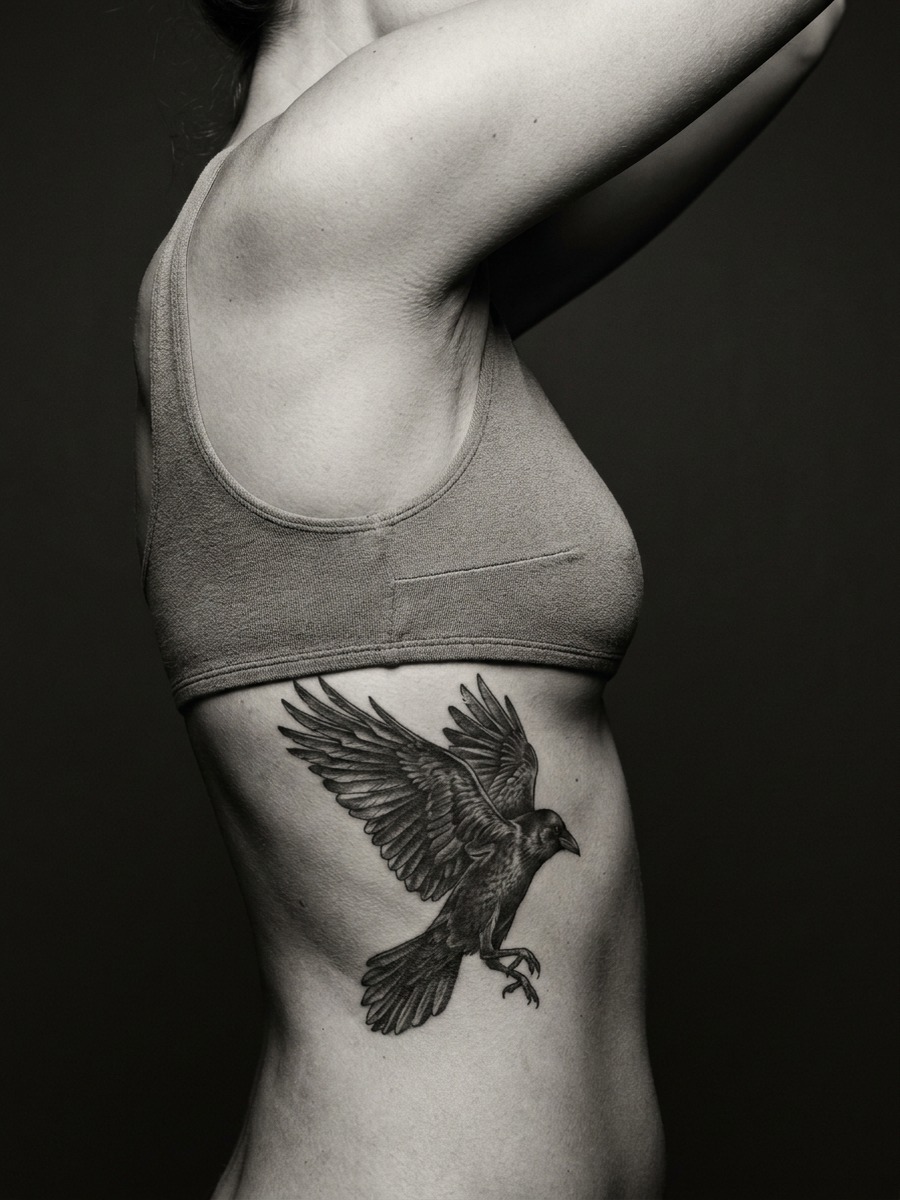
Bird mid-takeoff, full wingspan
Full wingspan across the ribs, feathers detailed, diagonal composition. This is the most anatomically demanding design in the whole list — a wing spread wrong reads as broken, not powerful. Ask to see reference sketches before the session, not just after.
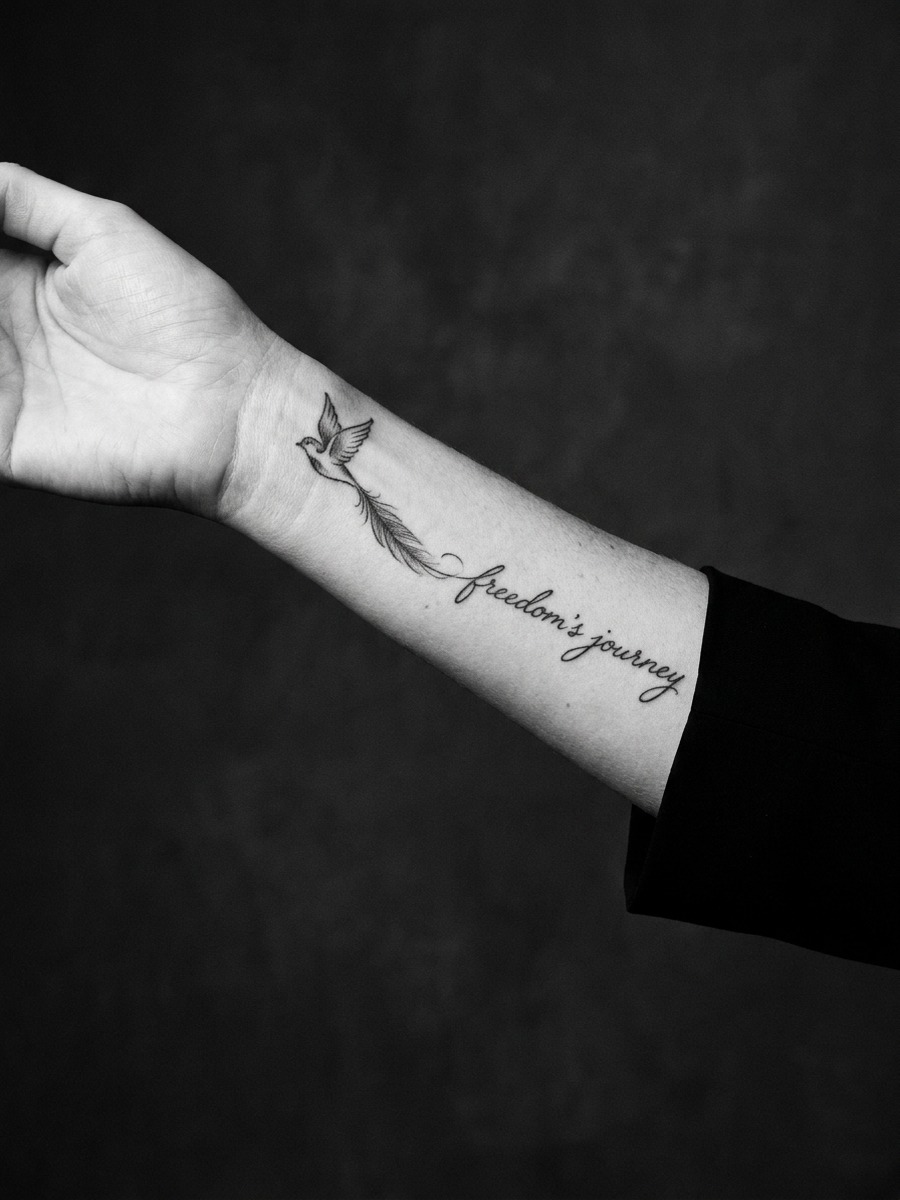
Trailing feather dissolving into script
A bird in flight with one feather that trails off into cursive lettering. In my experience this is where people get too ambitious with the phrase length — a single word or short name works; a full sentence turns into an illegible smudge within a few years as fine script ink migrates.
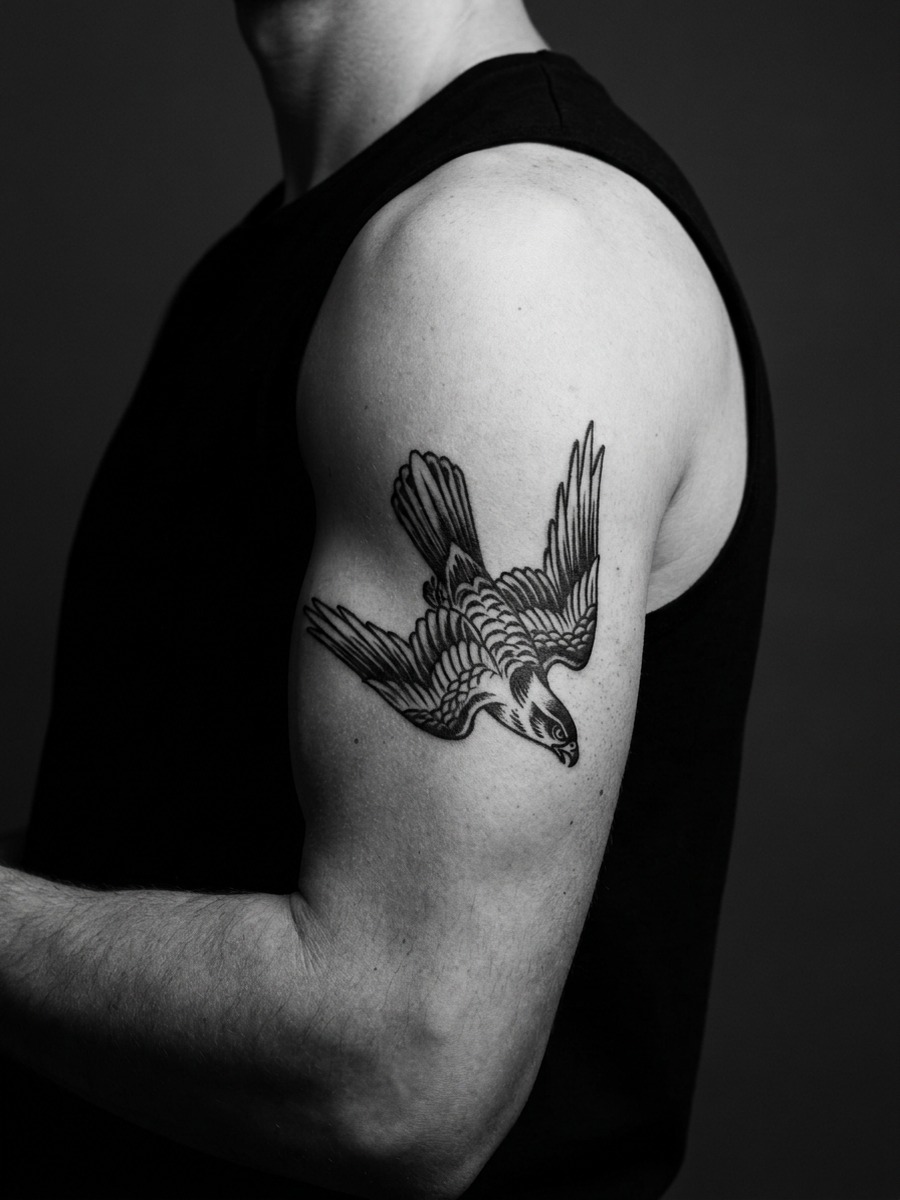
Bird diving/hunting pose
Hawk or falcon, wings pulled back, talons extended. Different energy entirely from the peaceful-symbolism birds earlier in this list — this one’s about speed and intent, not freedom. Bold linework holds the dynamic angle better than fine-line here; the pose needs weight behind it.
Bird carrying a ribbon or banner
A flight pose with a flowing banner in the beak, usually left blank or filled with a name, date, or short phrase. Classic sailor-tattoo structure, but I’d size the banner generously from the start — trying to cram text into an undersized ribbon is the most common revision request artists get on this design.
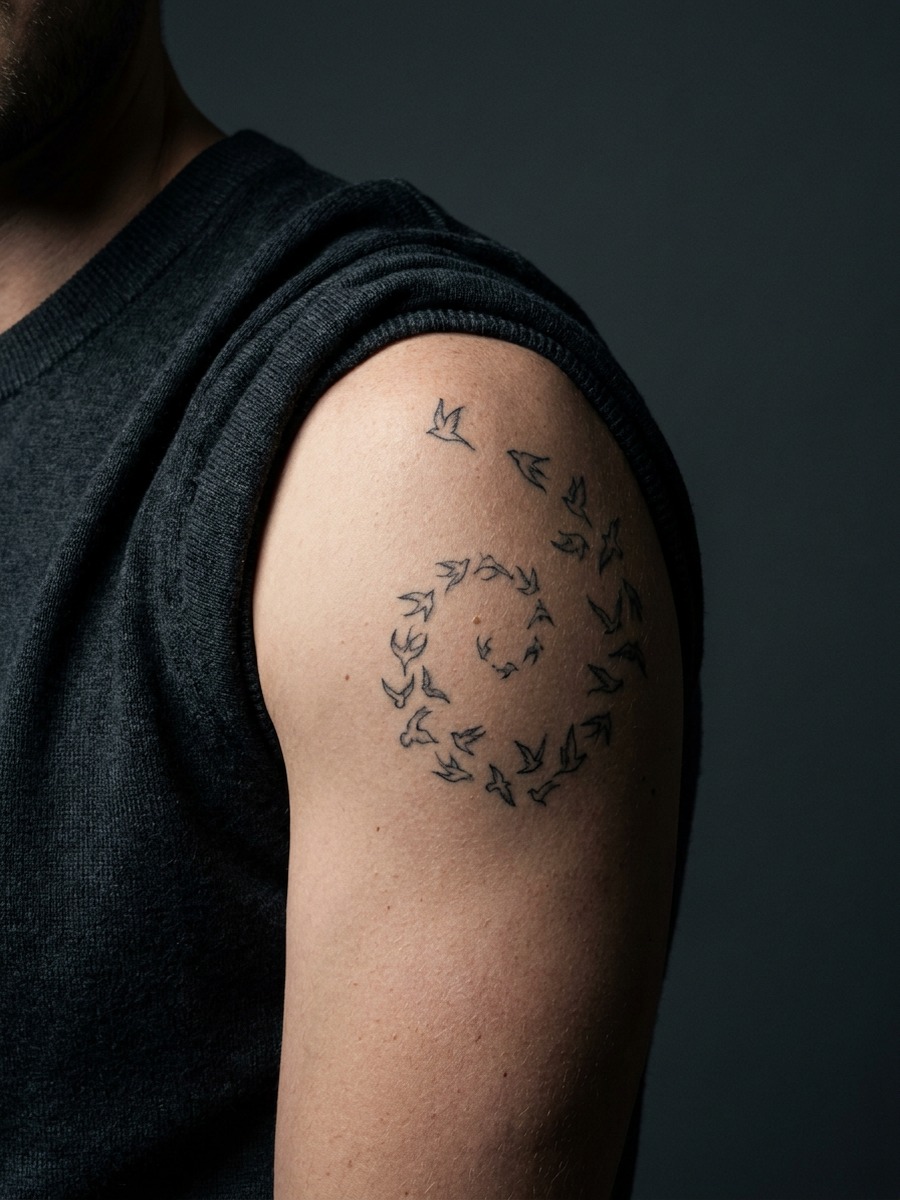
Spiral flock forming a shape
A swirling formation of small birds circling upward into a loose circular composition. This one benefits from an artist who understands negative space and flow, not just individual bird anatomy — the spiral has to feel continuous, like the flock is actually moving through the air together, not just scattered around a circle.
Placement-Specific Concepts
Everything above was about the bird. This section is about the body — because the same design that looks perfect on a mockup can fall apart on the wrong spot. “Birds tattoo on hand” is one of the highest-intent searches in this whole cluster, and for good reason: hand tattoos have specific rules that don’t apply anywhere else.
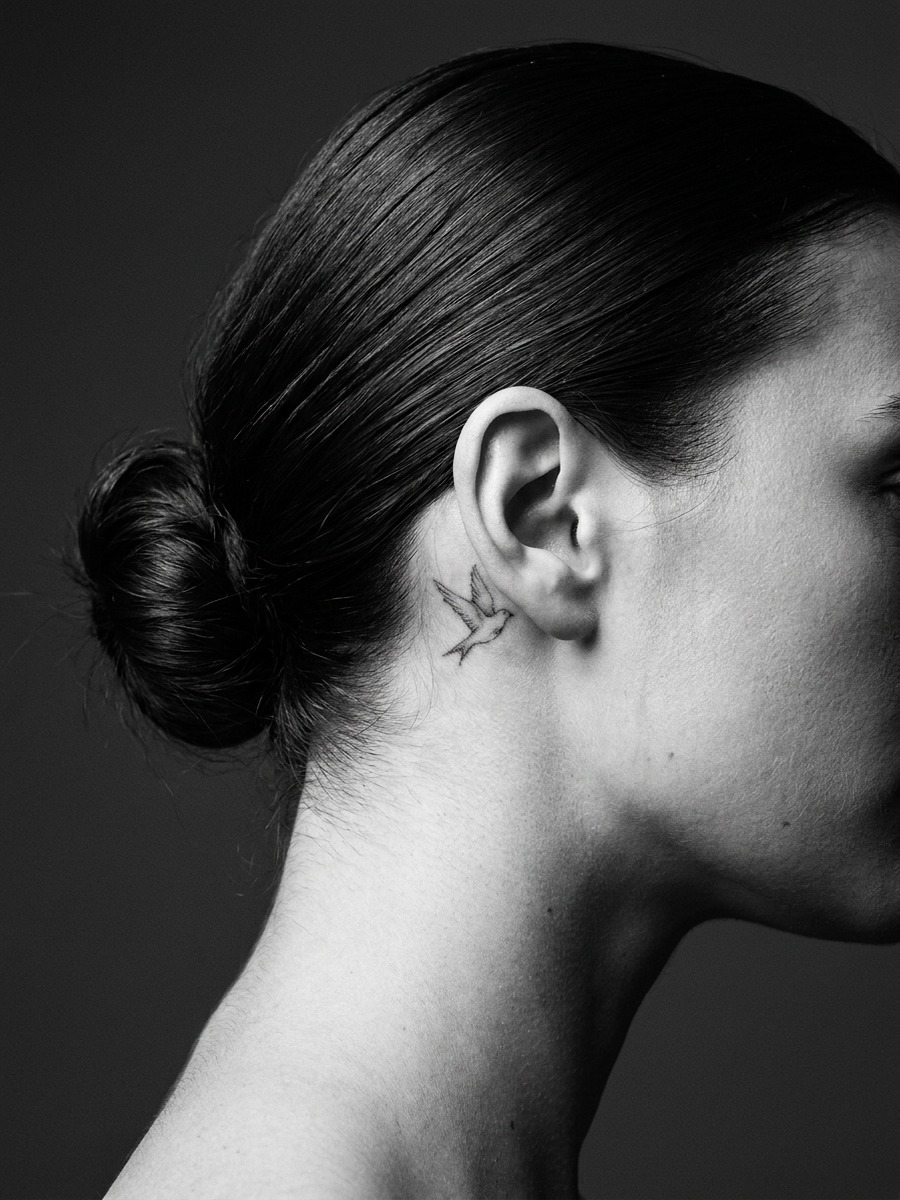
Behind-the-ear micro bird
No larger than a fingernail. This spot has almost no fat padding over bone, so it’s a genuinely painful placement for a first tattoo — worth knowing going in. The upside: it’s easy to hide with hair down, easy to show with hair up.
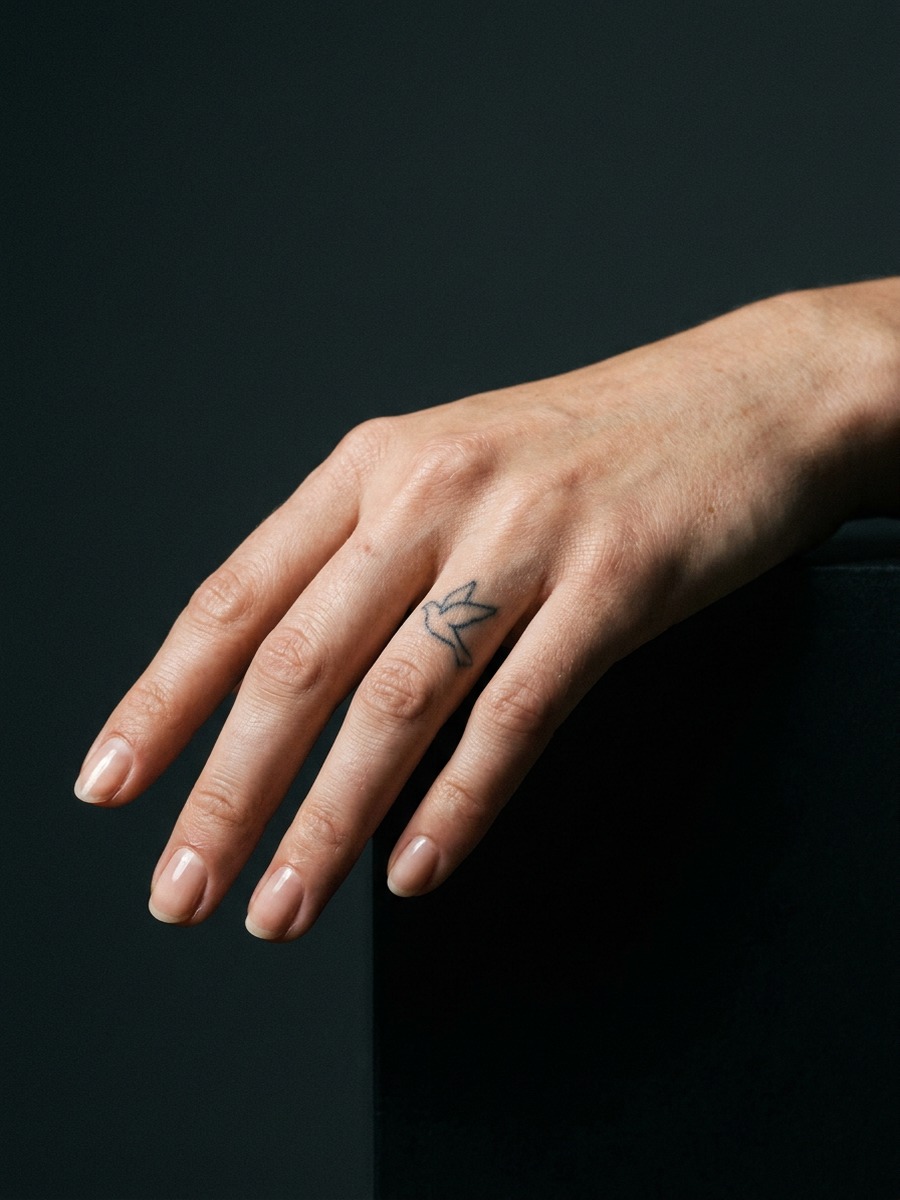
Finger/hand bird
Hands are the fastest-fading placement on the body, full stop. Constant washing, sun exposure, and skin turnover mean a delicate fine-line bird here can need a touch-up within 2-3 years. If you want longevity, go bolder and smaller than you’d think — thick short lines outlast thin ambitious ones on hands.
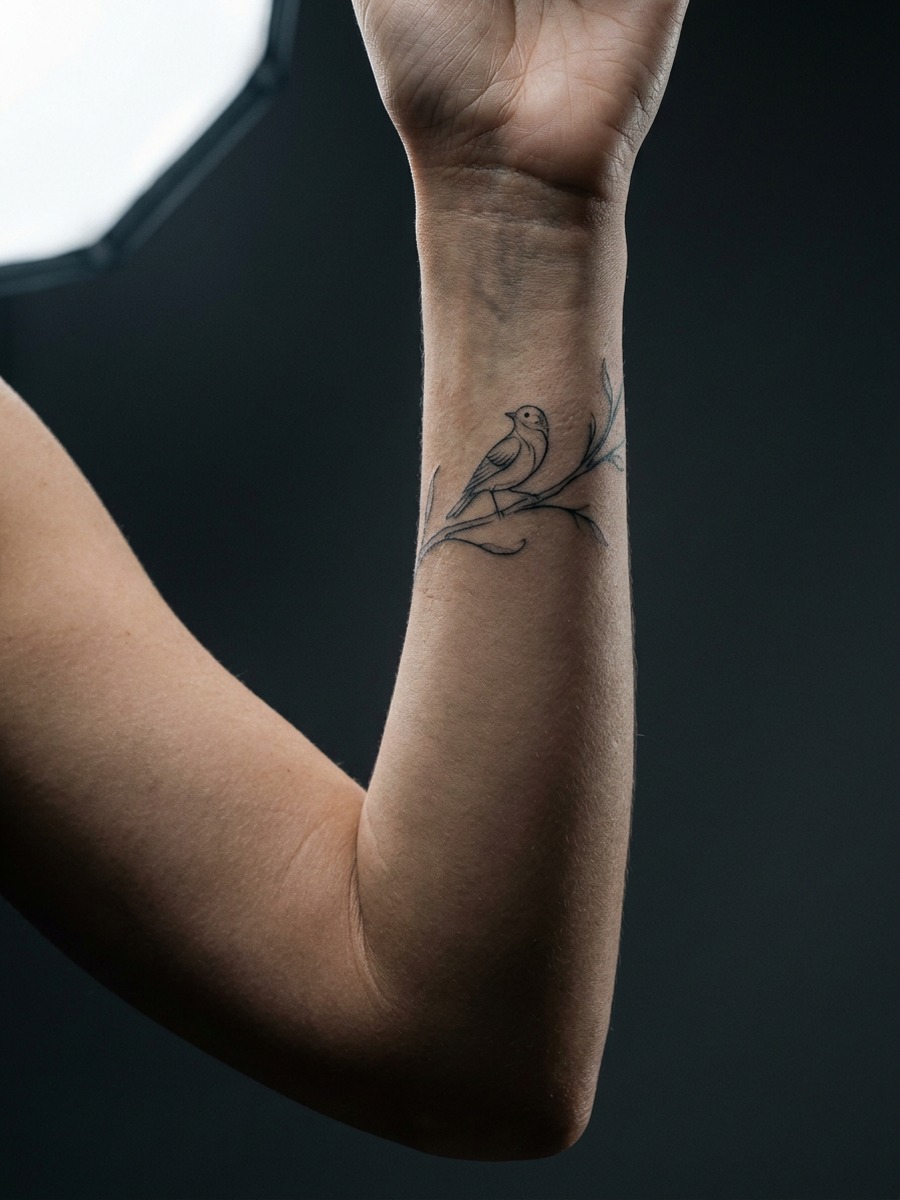
Wrist bird with a branch
A perched bird wrapping partway around the wrist. The wrist curves, so a design drawn flat on paper needs to be re-mapped by the artist to actually wrap correctly — ask to see the stencil applied to your skin before the needle starts, not just the flat sketch.
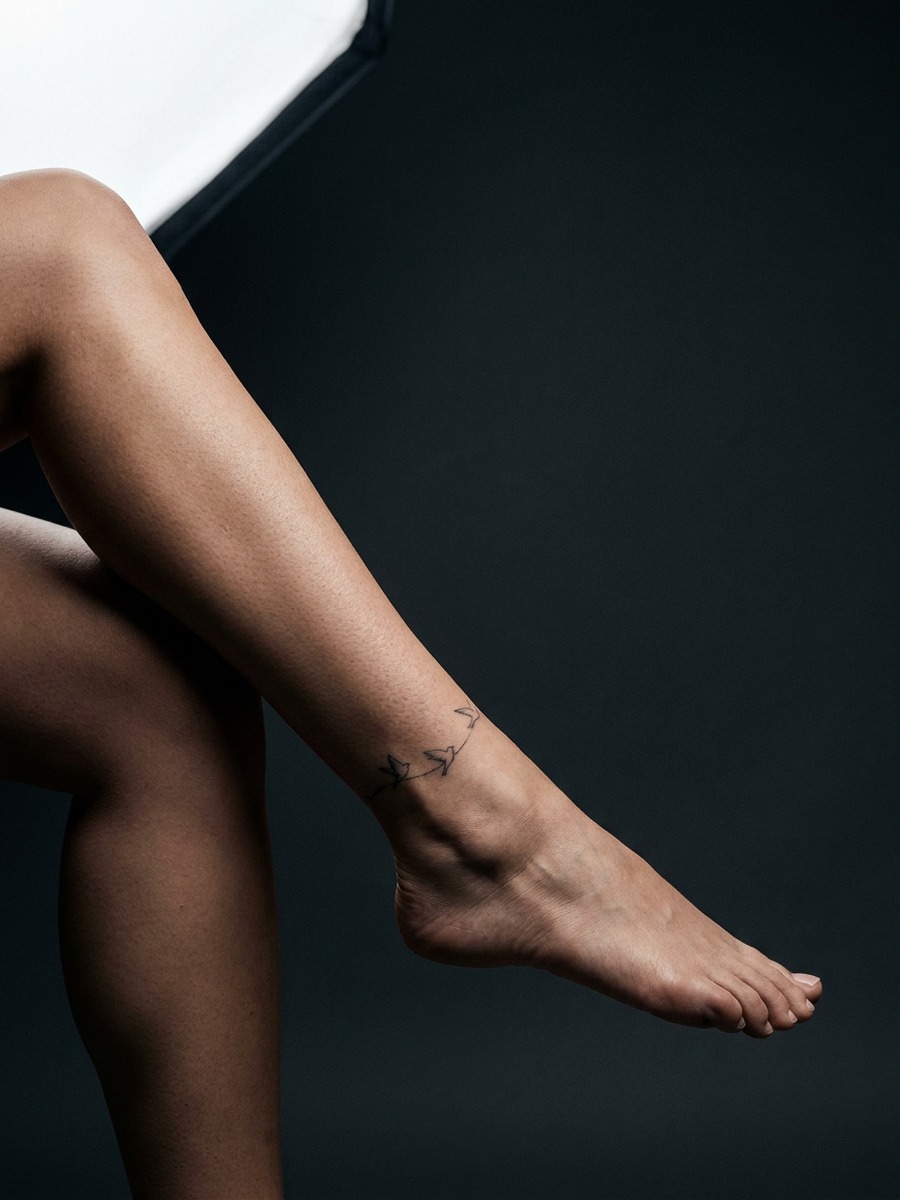
Ankle chain of small birds
Three tiny birds circling like a bracelet. Ankles see a lot of friction from socks and shoes, which is the main reason fine-line ankle tattoos blur faster than people expect. Slightly bolder linework than you’d use elsewhere buys real longevity here.
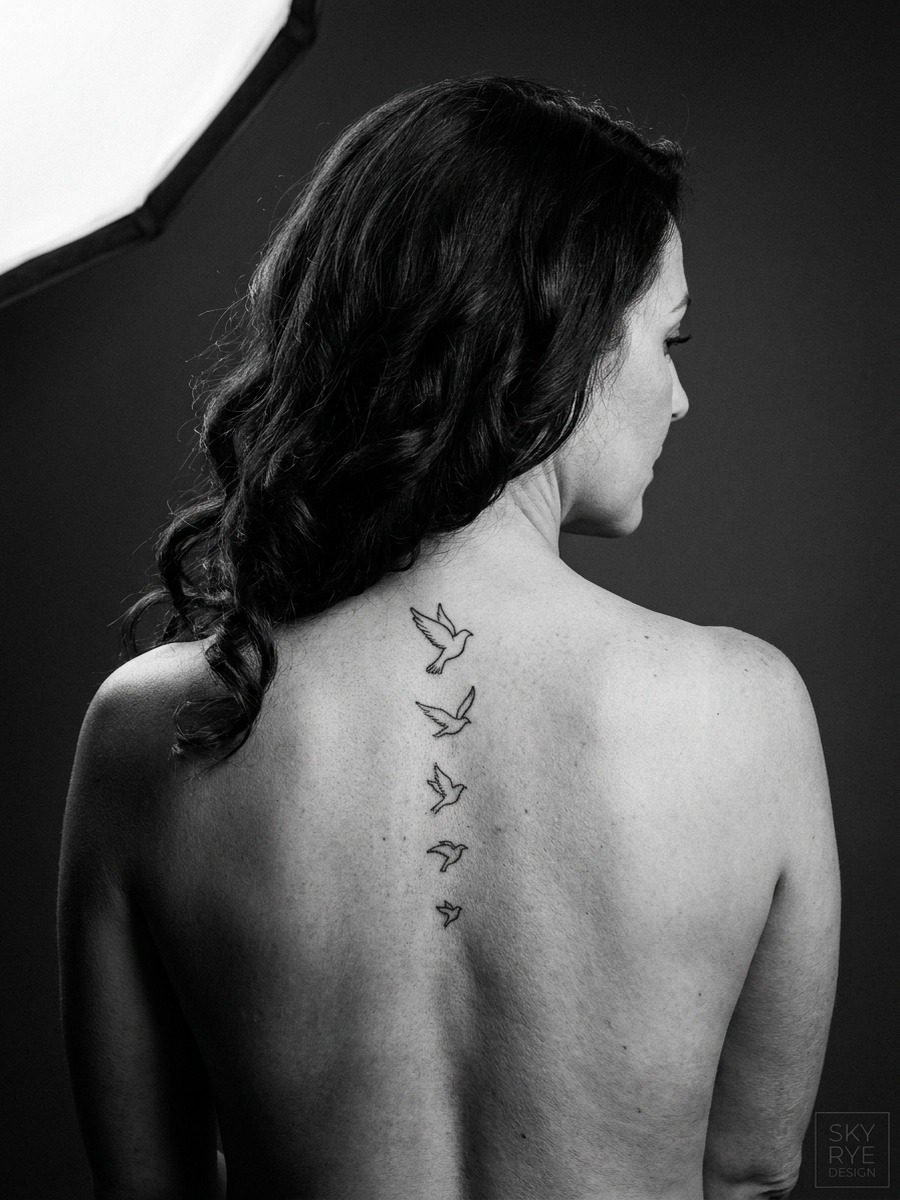
Spine ladder of birds
Five birds descending the spine, decreasing in size. Genuinely one of the more painful placements — thin skin directly over bone, no muscle to cushion the needle. Worth budgeting for it mentally, not just financially.
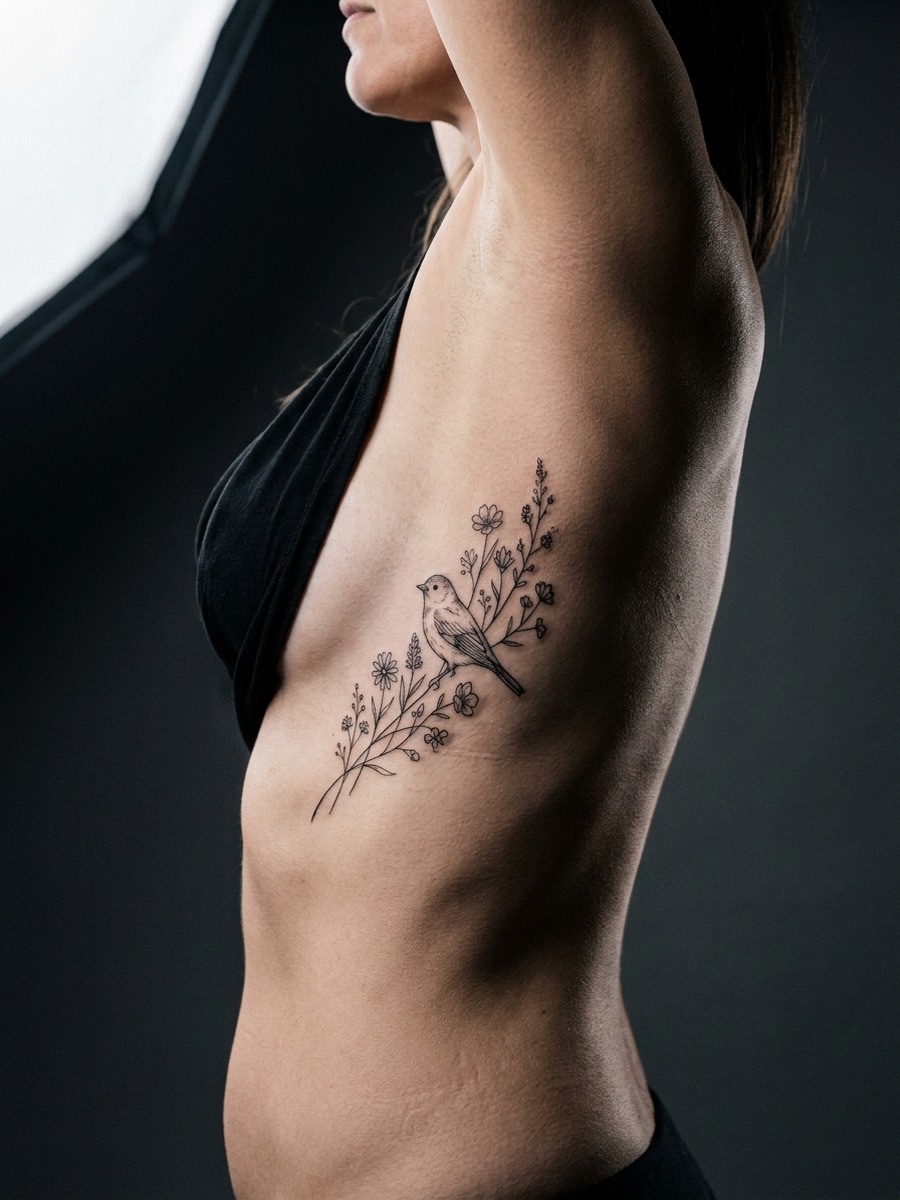
Rib-cage bird with flowers
Same pain profile as the spine — thin skin, bone close underneath. I’d keep the design simple for a first rib piece; this isn’t the placement to test how much detail you can handle in one sitting.
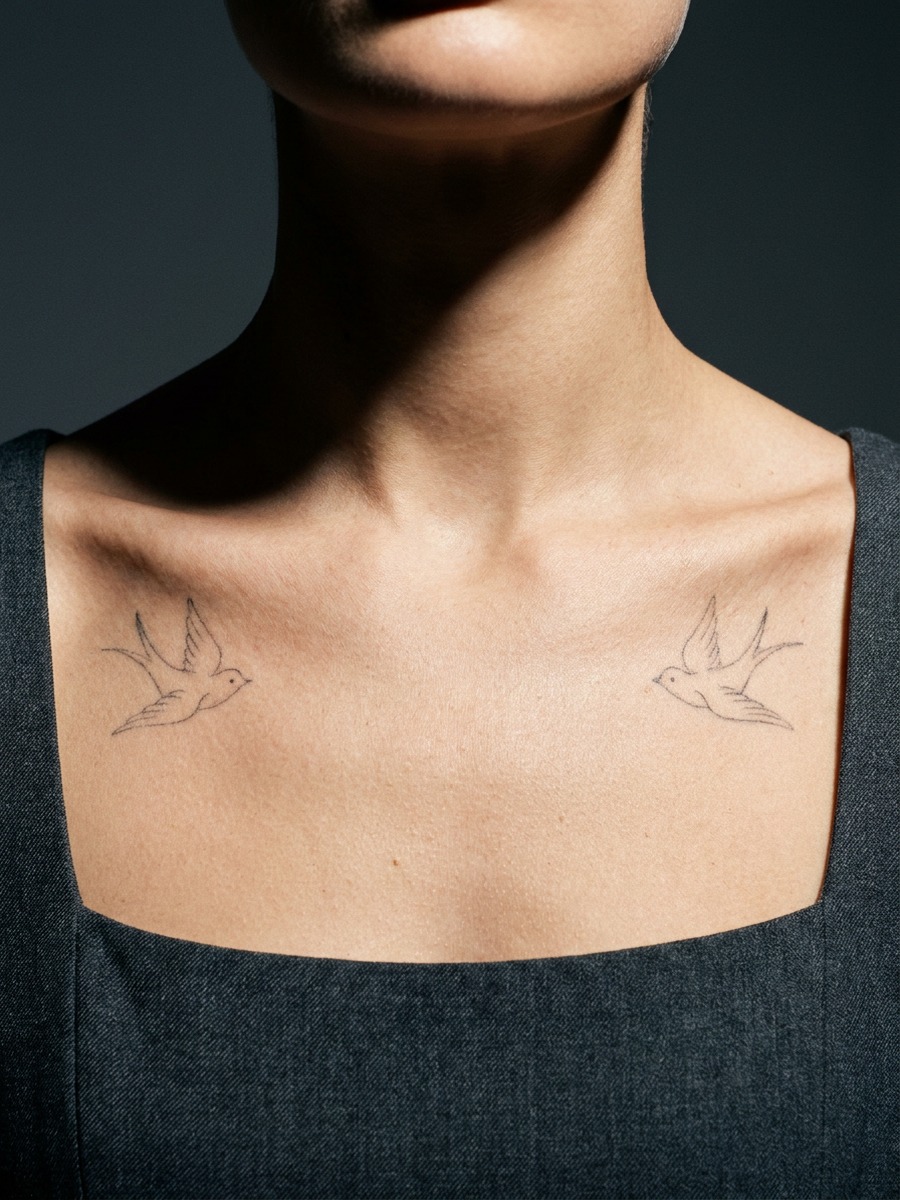
Collarbone mirrored pair
Symmetry is unforgiving here — even a millimeter of misalignment between the two sides is visible at a glance, the same way an asymmetric badge on a car grille reads as “wrong” before you consciously clock why. Get both sides stenciled and compared before either gets inked.
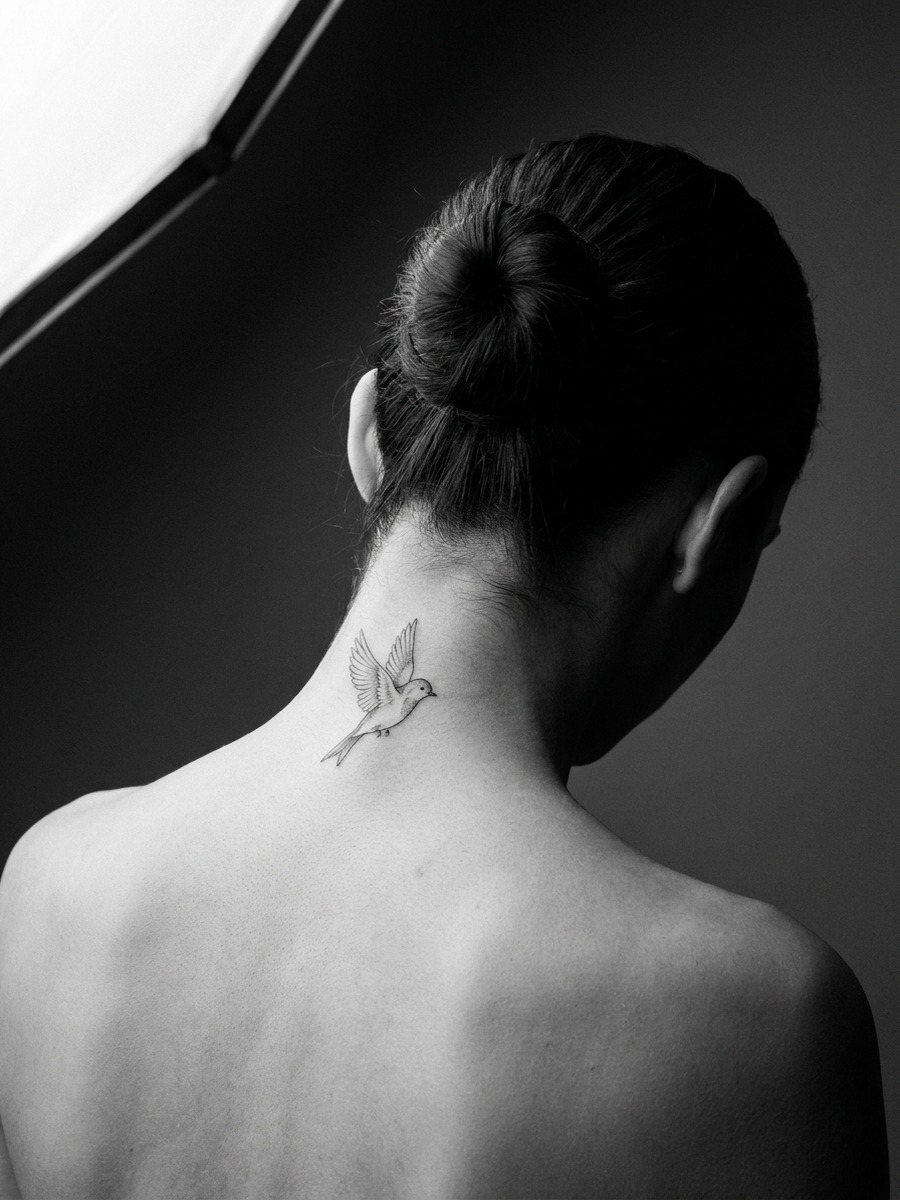
Nape-of-neck bird
Easy to conceal with hair down, which makes it a popular first placement for people easing into visible ink. Small and fine-line works well here since the skin stays relatively flat and unstretched.
If you like tiny winged symbols but want something softer than a bird, a small butterfly tattoo gives a similar sense of movement while staying delicate enough for behind-the-ear, wrist, or ankle placement.
Bird + Symbolic Elements
The final group pairs a bird with a second symbol — which doubles the meaning but also doubles the ways a design can get cluttered. These work best when the second element stays secondary, not competing for attention.
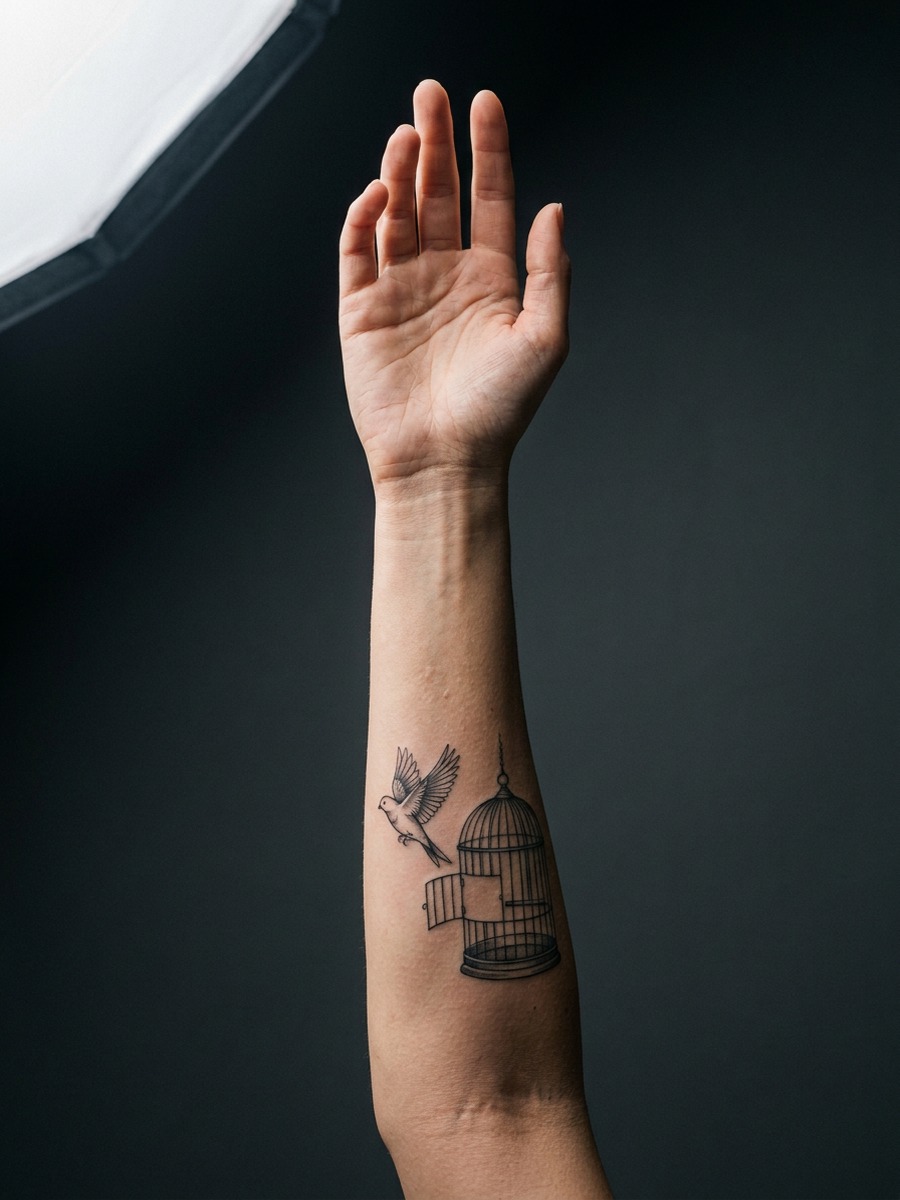
Bird breaking free of a cage
An open birdcage with the bird already mid-flight above it, door swung wide. The most literal “freedom” tattoo on this list, and also the easiest to overcomplicate — keep the cage as simple linework in the background so the bird stays the visual focus, not the bars.
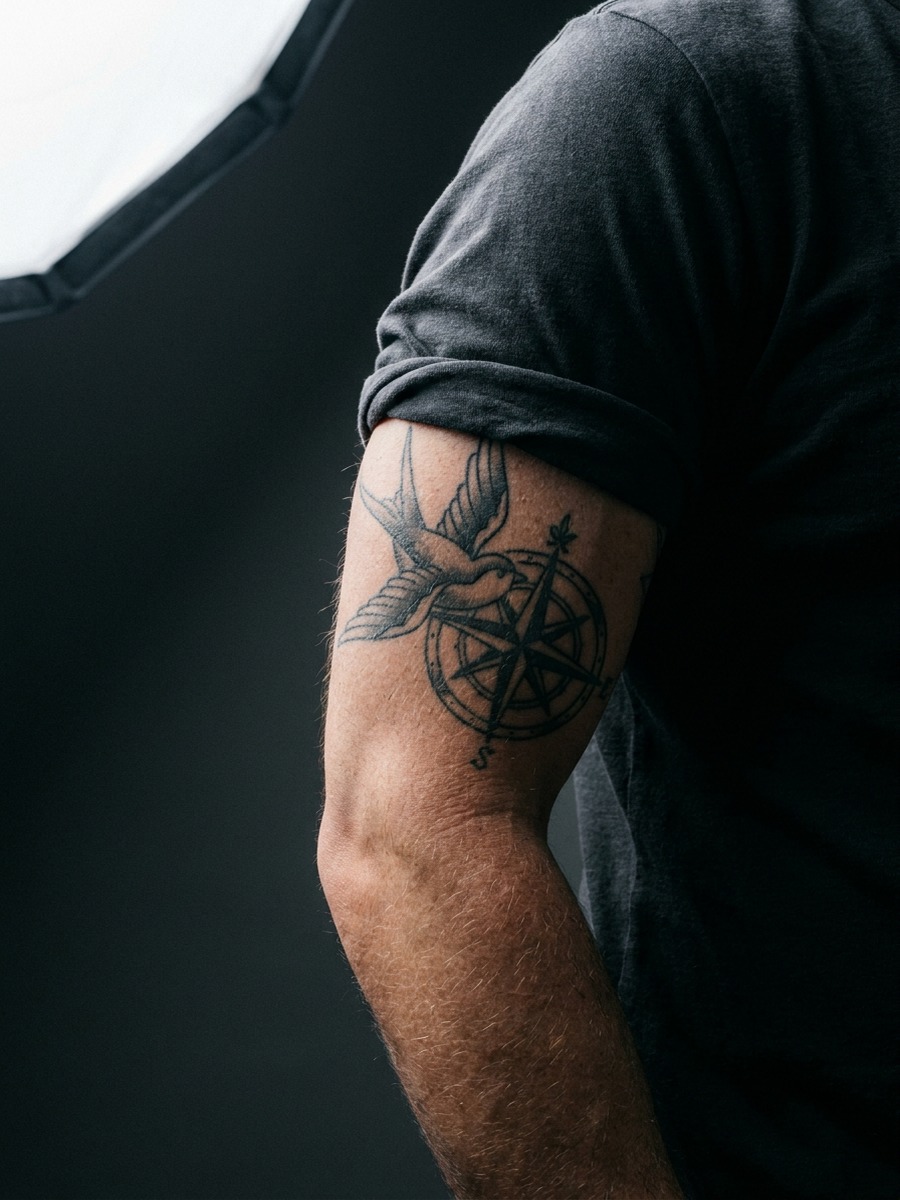
Bird with a compass rose
A bird in flight above a detailed compass, bold traditional style. Popular with people marking travel or a specific journey. The compass needs real detail to read as a compass and not just a circle with lines through it, so this pairing wants more room than a standalone bird — bicep or forearm, not wrist.
Bird with moon phases
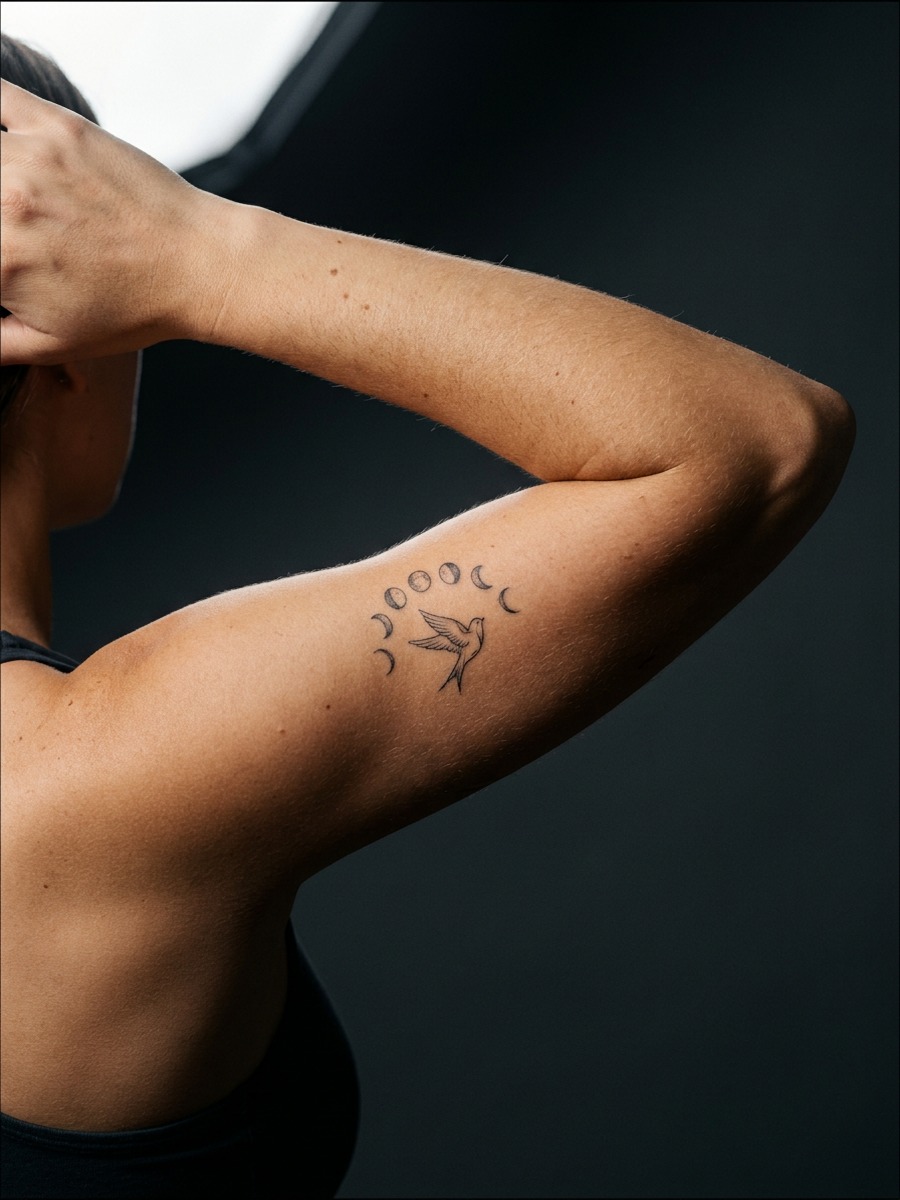
A small bird flying beneath an arc of moon phases curving across the shoulder. I like this one structurally — the phase arc gives the composition a natural curve to follow, similar to how the collarbone or spine guides other designs on this list. Keep the moons small and evenly spaced; uneven spacing is the most common flaw I see in reference photos for this design.
Bird with a skull (memento mori)
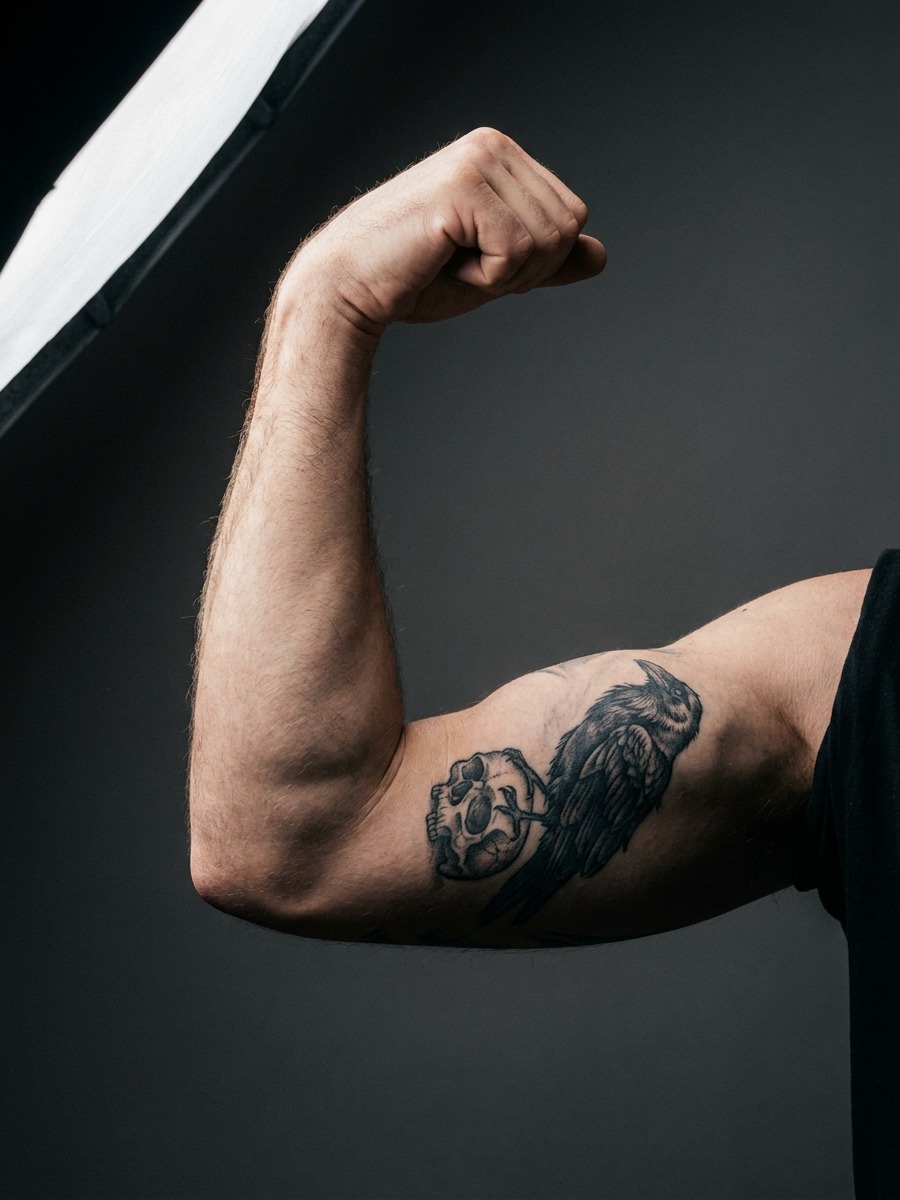
A raven perched on a small skull, bold blackwork with crosshatch shading. Heavier symbolism than anything else here — mortality awareness rather than freedom or peace. Needs a confident hand from the artist; the crosshatch shading on the skull is what sells the whole piece, and thin or inconsistent shading reads as amateur fast.
Bird with a watercolor splash
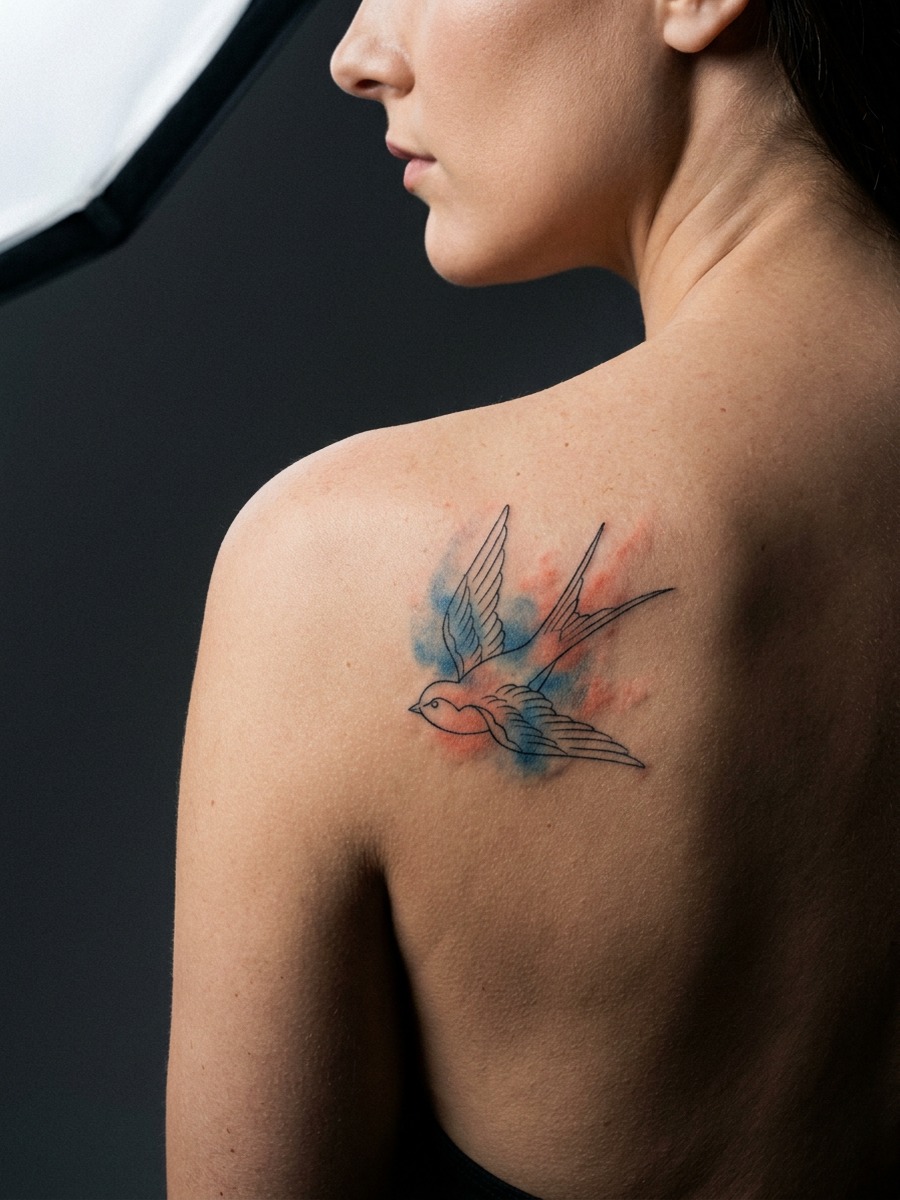
This is the trend piece of the group — striking in fresh photos, but worth knowing that watercolor technique fades and blurs faster than solid ink, sometimes within 3-5 years depending on skin and sun exposure. Ask your artist directly about their watercolor healing track record before committing.
Bird against a mountain silhouette
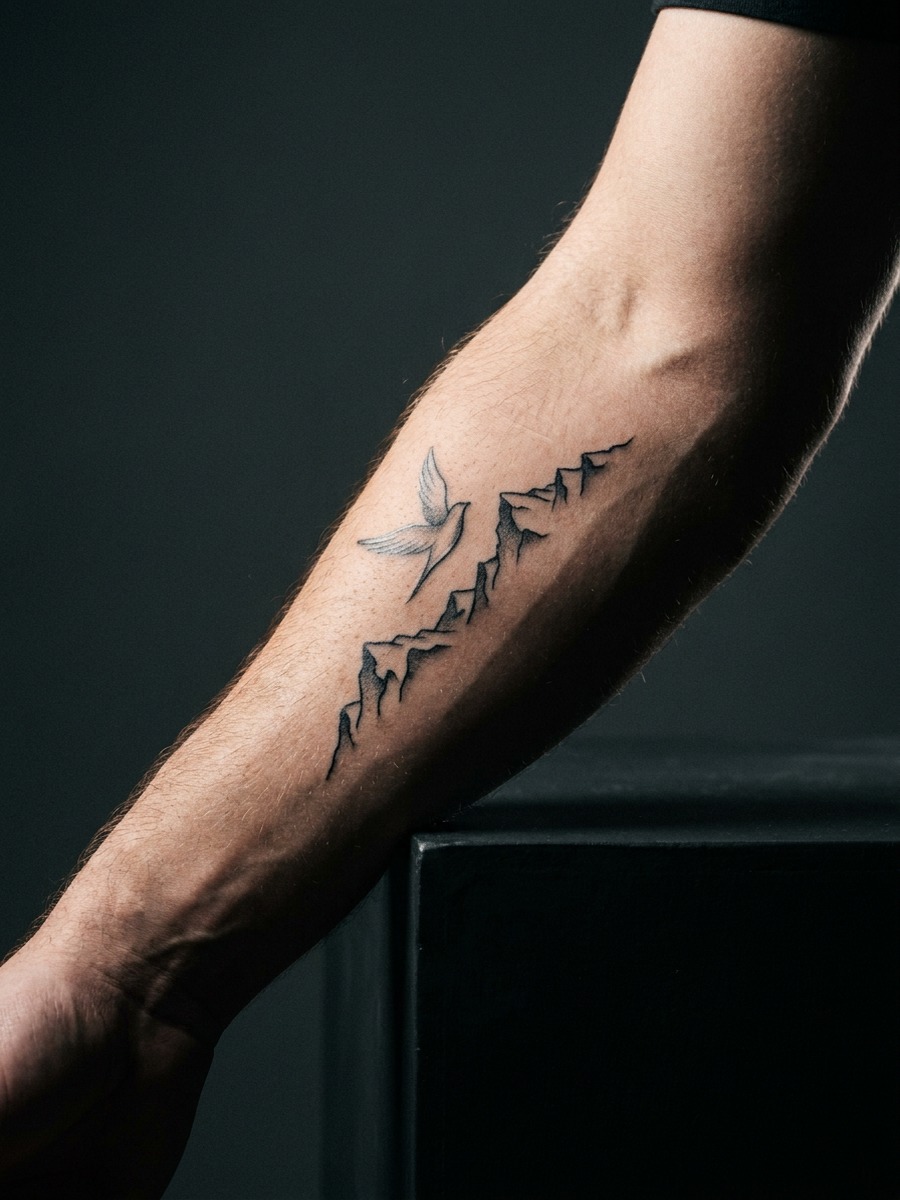
A bird in flight above a jagged mountain range, horizontal composition along the forearm. Landscape-and-bird pairings read almost like a tiny scene rather than a single subject — that horizontal format is exactly why it suits a forearm over a rounder placement like a bicep or calf.
FAQ
What does a bird tattoo signify?
It depends entirely on the species — that’s the most common misconception in this whole category. A swallow means something different from a raven, which means something different from a dove. Generic “birds represent freedom” answers apply to almost nothing on this list beyond doves and eagles. Pick your species first, then look up that bird’s specific symbolism instead of the catch-all one.
What’s the “rule of thirds” in tattoo placement?
It’s the same composition principle photographers and painters use: split the body area into thirds and place the focal point (the bird’s head, or the wing tip) off-center rather than dead-center. A bird sitting exactly in the middle of a forearm often looks stiff and static. Shift it slightly and the whole piece reads as more natural, more like it’s actually perched or flying rather than stamped on.
Which bird tattoo is most popular right now?
Fine-line and minimalist bird designs, based on the search data — that category’s grown nearly 50% over the past year while bold traditional styles have cooled slightly. Swallows and sparrows still carry the most search volume overall because of their traditional symbolism, but the style people are choosing to render them in has shifted noticeably toward thinner, simpler linework.
What does two birds together mean?
Usually a pair — partners, siblings, a parent and child, sometimes twins. The meaning shifts depending on whether the birds are mirrored and facing each other (unity, partnership) or flying in the same direction (shared journey). I’d treat this as a design decision as much as a symbolic one: mirrored pairs need near-perfect symmetry to actually work.
Is there a real difference between bird tattoos for men and women?
Not in symbolism — a raven means the same thing regardless of who’s wearing it. The search data shows a split mostly in placement and scale: smaller, fine-line pieces on wrists and collarbones skew toward searches from women, while bolder chest and forearm pieces skew toward men. That’s a trend, not a rule; plenty of people cross it in both directions.
How much does a bird tattoo typically cost?
Small fine-line pieces (behind the ear, finger, ankle) often run on an hourly or flat small-piece rate, frequently $80–150 depending on your city and artist’s experience. Larger pieces (a full phoenix, a spine ladder, a chest piece) get billed hourly and can run several hundred dollars across one or more sessions. Always ask your specific artist directly; rates vary a lot by region and reputation.
What’s the biggest mistake people make with small bird tattoos?
Choosing intricate detail (full feather texture, fine crosshatch shading) at a size that can’t physically hold it. Skin spreads ink slightly over the years, and fine detail packed too tight blurs into a smudge faster than people expect. If you want something small, simplify the design to match the size instead of shrinking a detailed design down to fit.
Conclusion
Forty ideas, one rule underneath all of them: species, style, and placement aren’t three separate decisions — they’re one decision made three times. A detailed dotwork owl and a wrist are a bad match before you even sit down. A bold traditional swallow and a chest piece are a good one for the same reason.
Pick the bird for what it means to you. Pick the style your artist actually specializes in — ask to see their healed work, not just fresh photos. Then pick the placement last, once you know how much detail the design needs to hold up over the next decade.
That’s the difference between a tattoo that still reads clean in ten years and one that turns into a smudge by year three.
For a broader look at styles, placements, and symbolism, browse the Sky Rye Design tattoo ideas hub.
- 375shares
- Facebook0
- Pinterest375
- Twitter0
- Reddit0