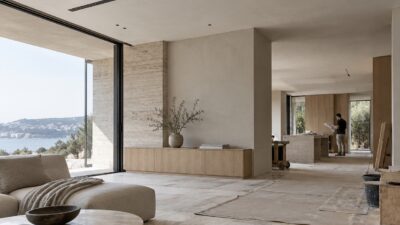
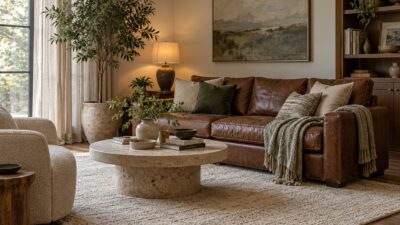
Early in my career, working on apartment interiors, furniture selection was where I learned the most about the gap between catalogue and real space. A sofa that photographs beautifully in a staged loft can read completely wrong in an actual living room — wrong for the wall length, wrong for the ceiling height, wrong for the particular flatness of light through a north-facing window in January. The object matters. So does whether it was designed for your space or for a photo shoot.
- What each brand is actually building
- Construction: what is inside the sofa you are buying
- Fabric and customization: where the design experience differs most
- Sizing and fit: the question that matters most in practice
- Aesthetics: which design language fits your space
- Price, delivery, and the ownership experience
- How to decide: two questions that clarify the answer
- The honest summary
- Side-by-side comparison
- Frequently Asked Questions
DreamSofa and Joybird both sit in the made-to-order segment and both attract buyers who care about design. They get there differently. Joybird leads with a designed aesthetic and opens it up to personalization. DreamSofa starts with your room’s specific requirements and builds around them.
I’ve watched people choose wrong between these two not because one is worse but because they picked the brand whose pitch appealed to them rather than the one whose process fit how they actually make decisions.
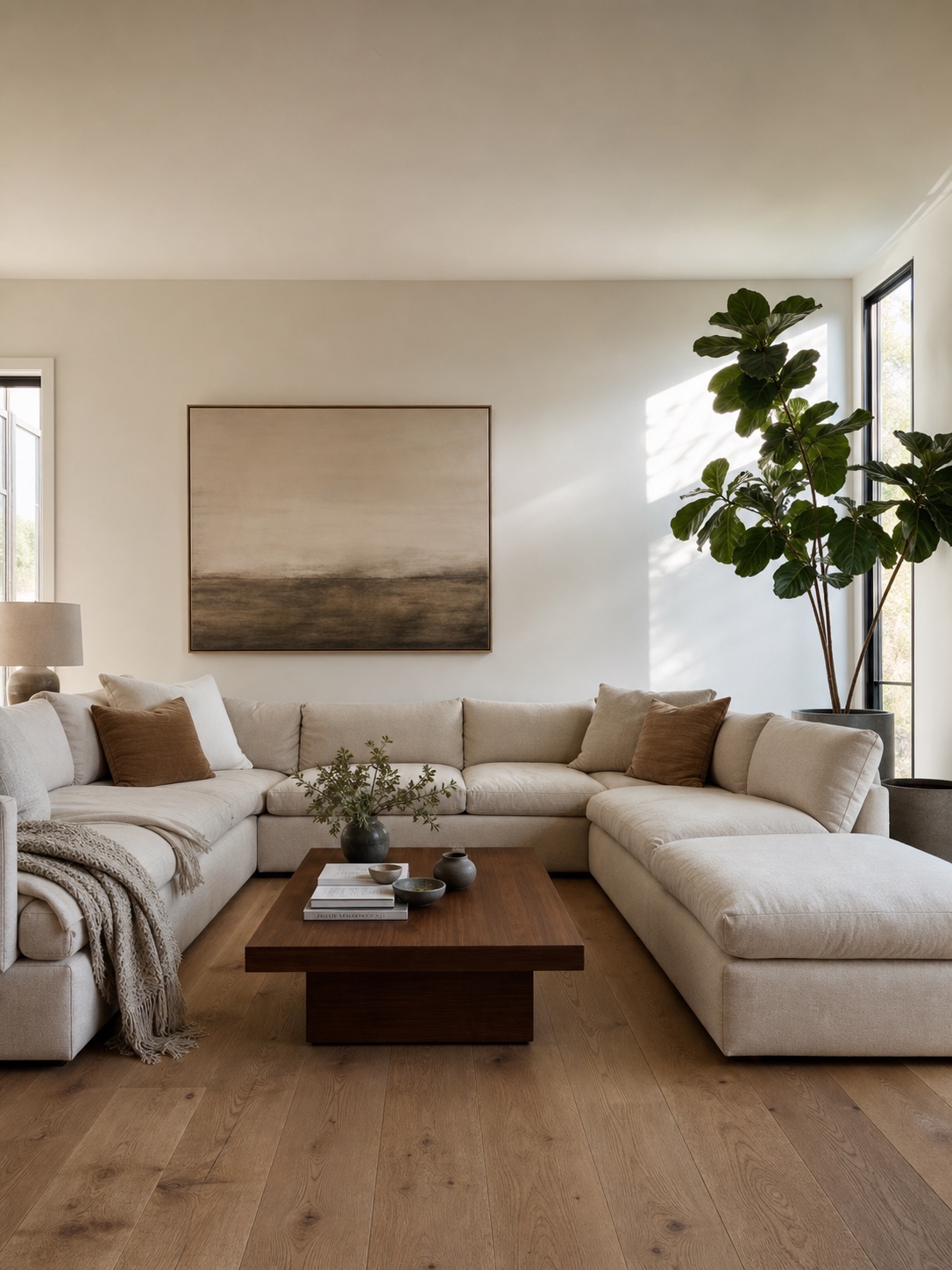
Construction, sizing, materials, aesthetics, long-term ownership. That’s what I want to go through. If you’re choosing between these two, that’s where the decision lives.
What each brand is actually building
Understanding the design philosophy behind each brand makes every subsequent comparison sharper. These are not two versions of the same product at different price points. They are genuinely different objects with different design logics.
Joybird: a curated aesthetic delivered at scale
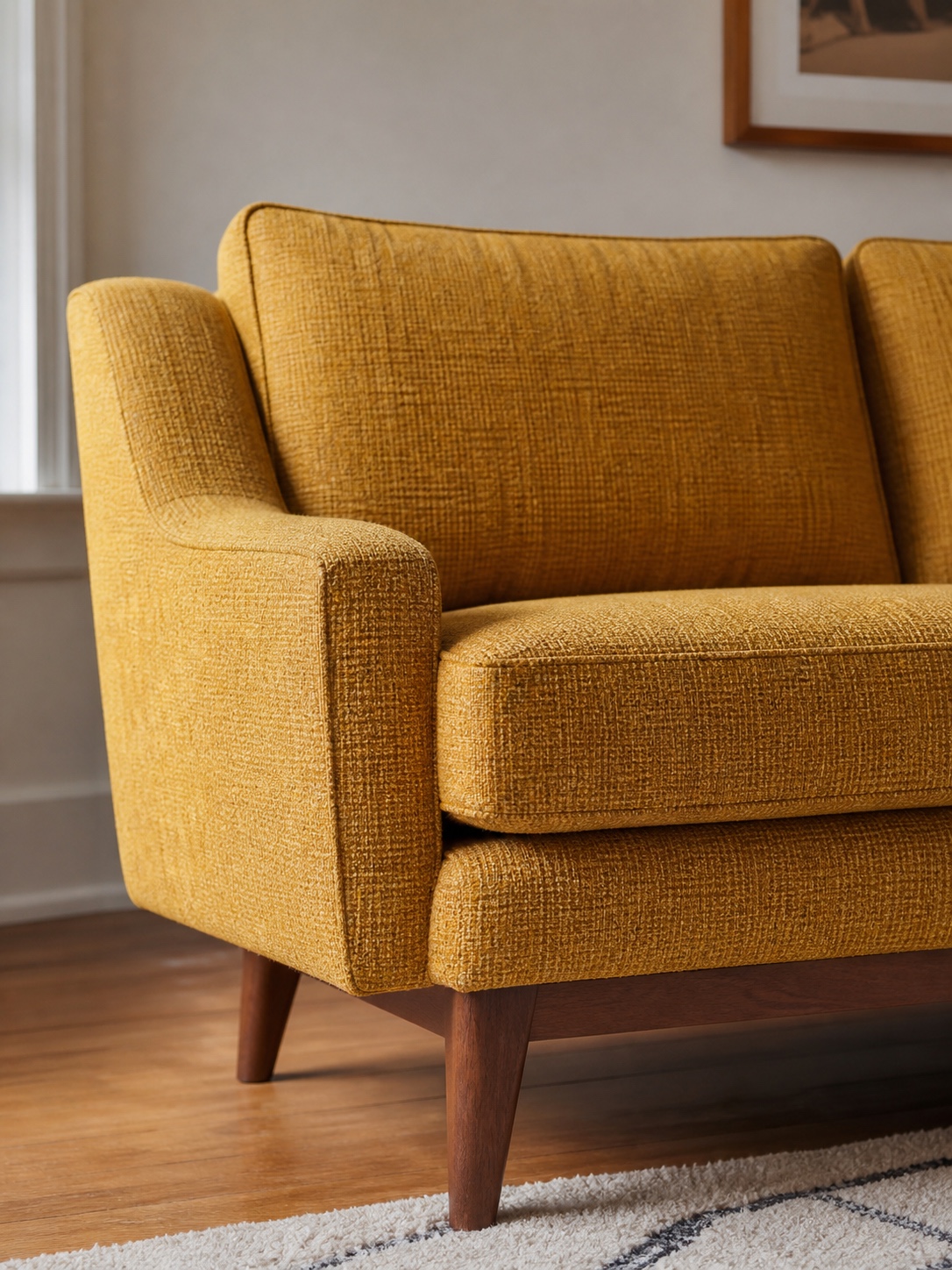
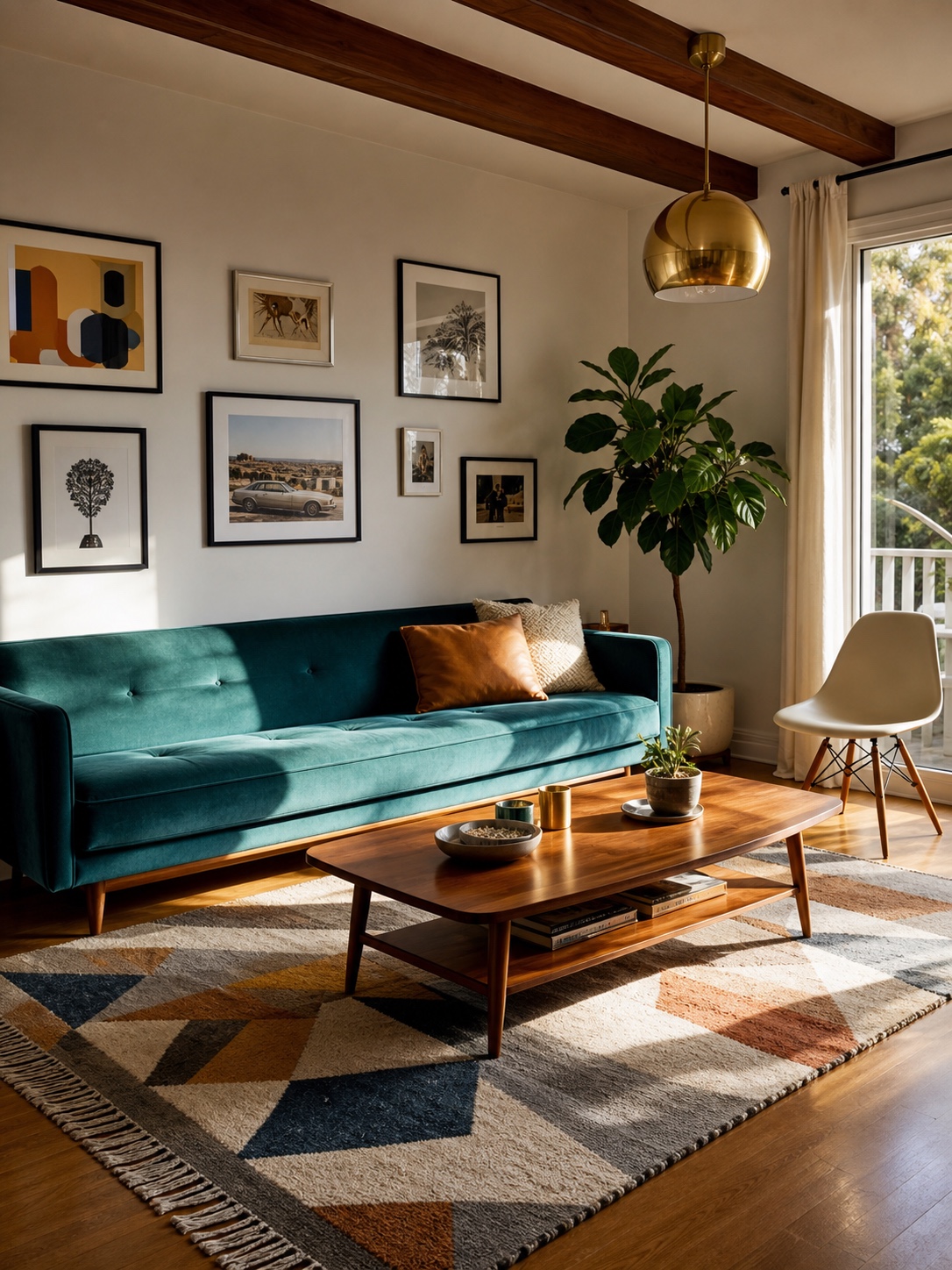
Joybird launched in 2014 out of Commerce, California, with a specific point of view: mid-century modern furniture at a mid-range price. Its catalogue is a collection of designed silhouettes, low-slung profiles, tapered legs, clean knife-edge arms, the visual grammar of 1950s and 1960s American furniture. Every piece is designed to coordinate with every other piece, which makes furnishing a whole room straightforward.
Sofas run from around $1,200 to $3,500. That’s genuinely mid-range for built-to-order furniture, and Joybird’s sales, which are frequent and often substantial, push the effective price lower. What you’re buying is access to a well-executed aesthetic at a price that doesn’t require a long justification conversation.
DreamSofa: the room as the brief
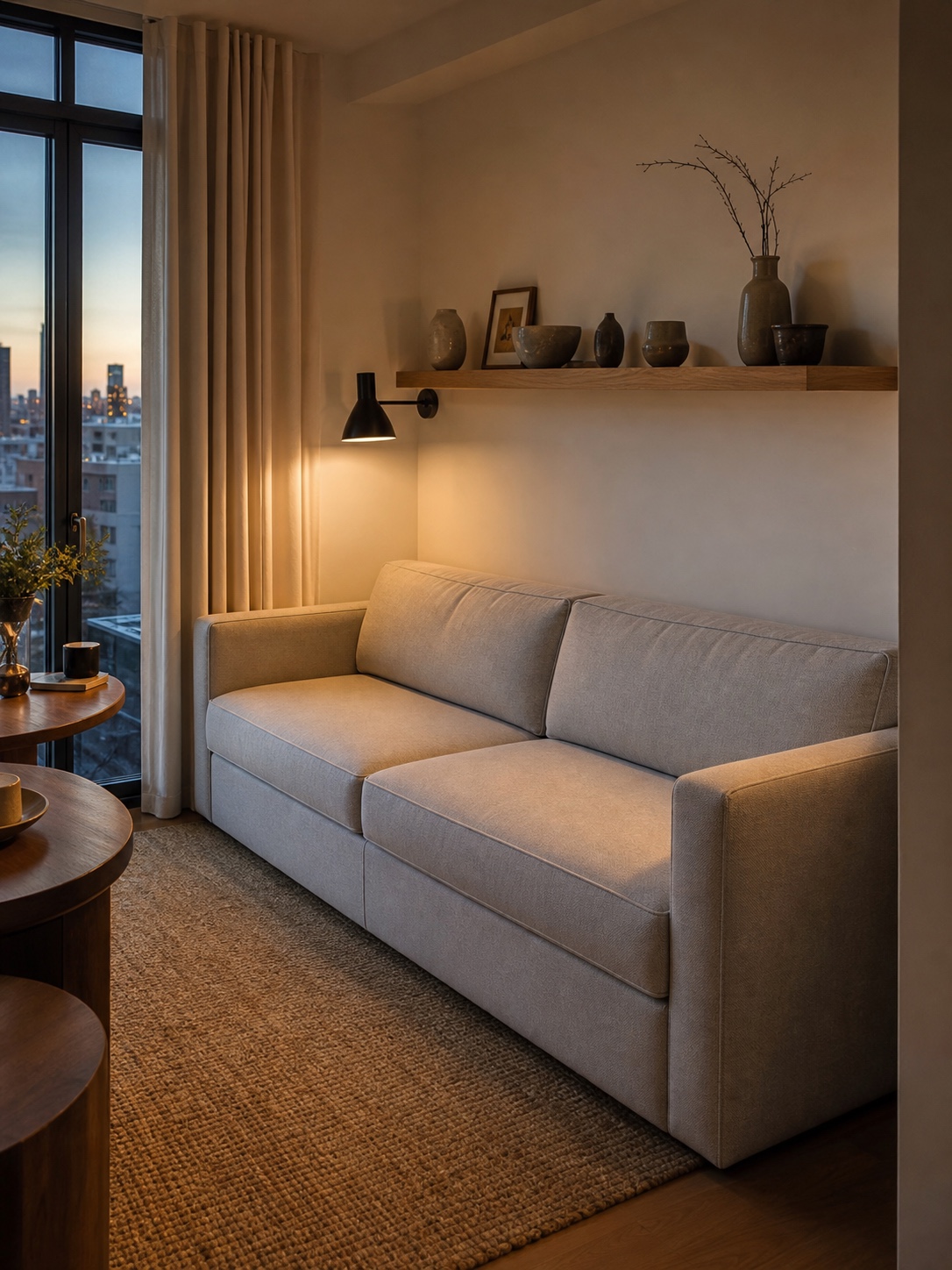
DreamSofa approaches the sofa from the other direction. The starting point isn’t an aesthetic category or a designed silhouette. It’s your room: its specific length, the depth of the sitting zone, the configuration that works for the traffic patterns in your household. From those parameters, the sofa is built.
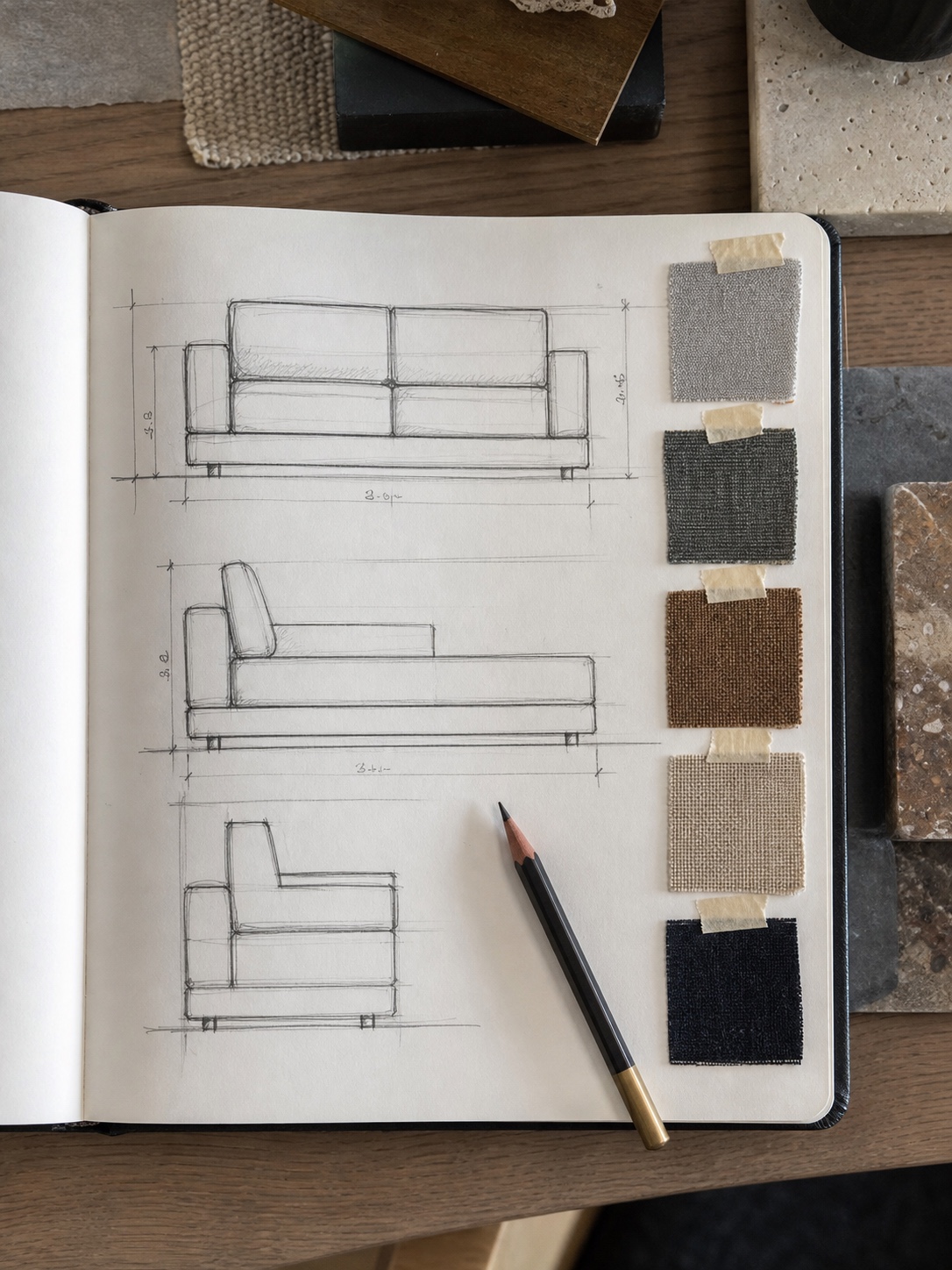
This is a different design philosophy. Joybird asks you to choose from a catalogue. DreamSofa asks you to describe what you need and then makes it. The FlexForm™ sizing system lets you specify length, depth, and arm style to the inch, which is the difference between a sofa that fits a wall and a sofa that fills it correctly. For designers and for homeowners who have dealt with a standard-size sofa that sits awkwardly in their room, this distinction is significant.
Construction: what is inside the sofa you are buying
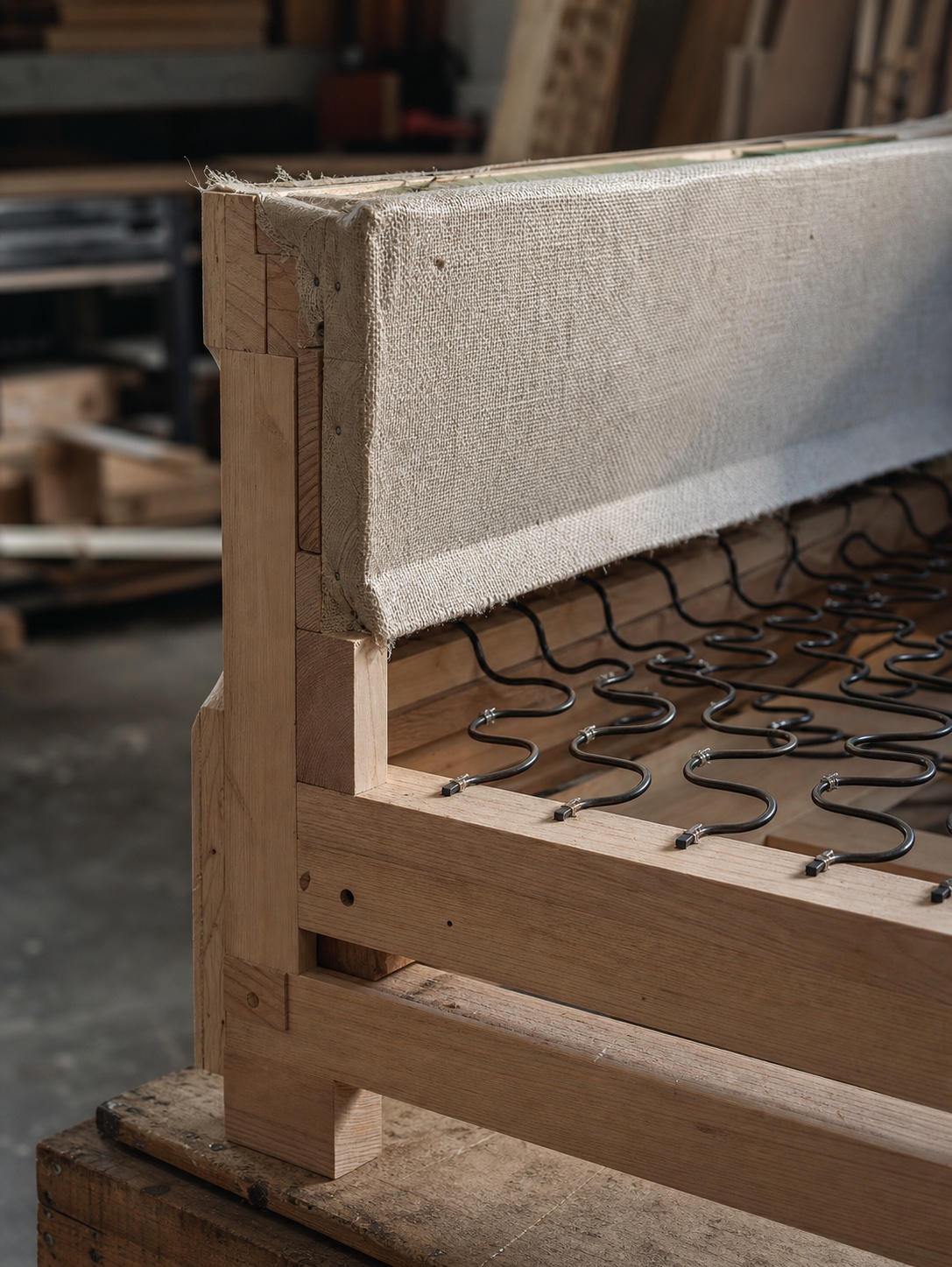
Both brands lead with kiln-dried hardwood frames. Kiln-drying removes moisture from the wood before construction, which reduces warping and joint movement over time. It’s the right material choice for a piece expected to hold its structure across a decade of daily use. Where the two brands diverge is in the specifics of what they build on that frame.
Frame and spring system
DreamSofa publishes its construction specifications, which is itself useful information. The frame uses 8-gauge sinuous springs, a heavier gauge than standard residential furniture (which typically uses 9 or 10 gauge), and the frame is backed by a lifetime warranty. That combination of published specs and warranty is a statement of confidence in the construction.
Joybird’s construction is solid for its price tier. The frames are kiln-dried hardwood and the seating holds up well in normal use. Where owner reviews become more candid is around the three to five year mark with heavy daily use: cushion compression and fabric pilling appear in a meaningful number of long-term reviews. That’s not a disqualifying finding for a sofa purchased at Joybird’s price point, but it’s relevant if the sofa will see genuine daily household traffic across a decade.
Foam specification
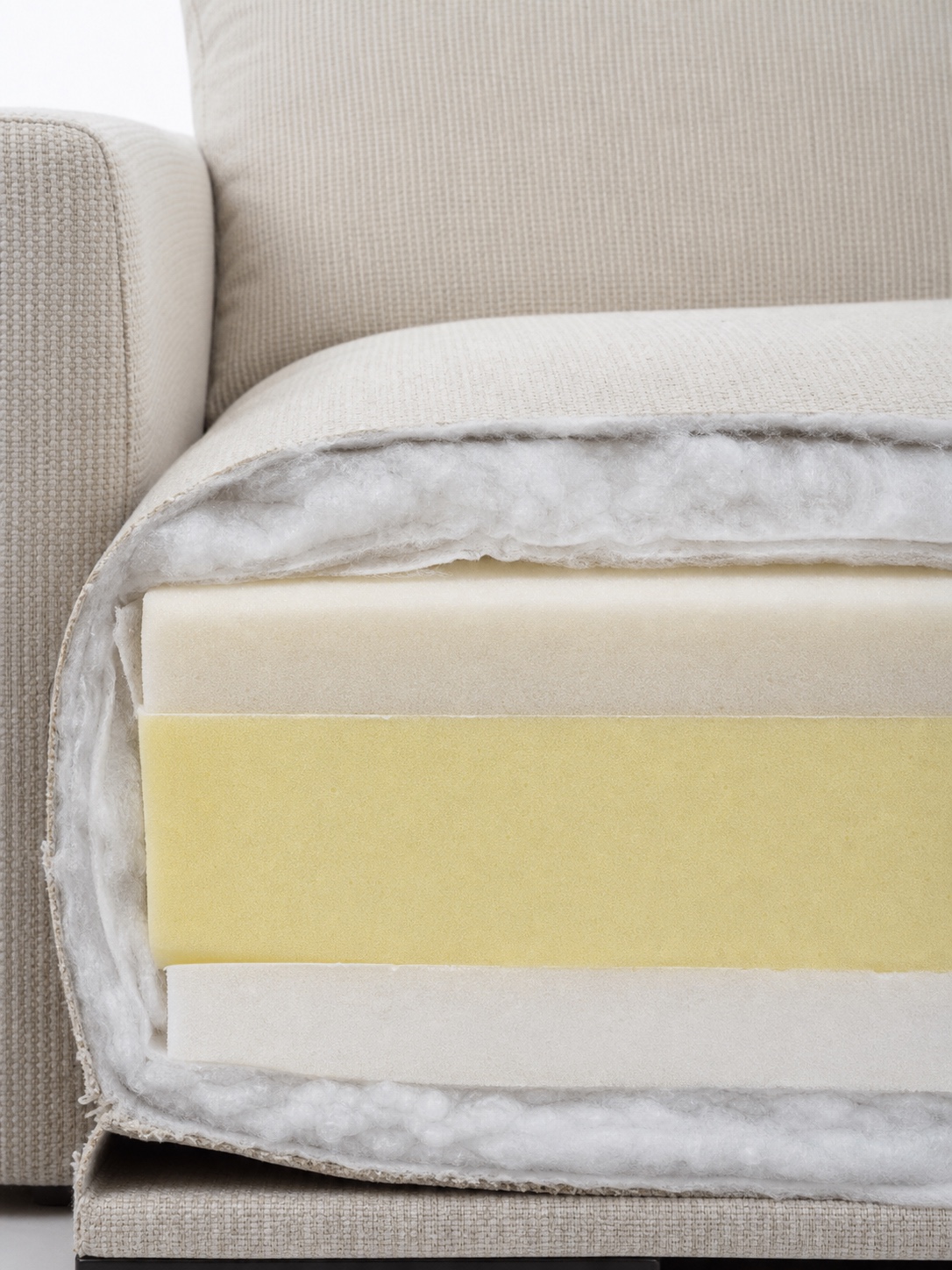
Foam density is one of the more concrete ways to evaluate sofa longevity, and it’s a specification many brands don’t publish. Higher-density foam retains its shape under compression better than lower-density foam. A 2.5-lb density foam, which is what DreamSofa specifies (CertiPUR-US® certified), is at the top of the residential range. Standard mid-market furniture typically uses 1.8-lb to 2.0-lb foam.
Joybird specifies high-density foam without publishing the exact figure. Based on long-term owner reports, it performs well initially and shows signs of compression in high-use zones after several years. Neither outcome is surprising given the foam density standards at each price tier.
What to ask any sofa brand before buying: what is the foam density in lb/ft³, is the foam CertiPUR-US certified, what gauge are the springs, and what does the warranty cover and for how long. A brand that cannot or will not answer these questions specifically is telling you something about what it knows its materials will do under sustained use.
Fabric and customization: where the design experience differs most
Both brands call themselves custom furniture companies. The customization on offer is genuinely different in scope, which matters for the buying experience and for what you end up with.
Joybird fabric selection
Joybird offers more than 70 upholstery options across fabric types: performance weaves, velvets, and linen-look textures. The selection is curated toward the mid-century aesthetic, which means the color and texture palette sits within a relatively warm, tactile range. For buyers who love the look, the selection is generous. For buyers who want something outside the mid-century color language, the options narrow.
The sofa dimensions themselves are not adjustable. You choose from the available models, then personalize the fabric, leg finish, and in some cases the configuration. This is customization within a fixed template, which is a legitimate and well-executed approach. It’s just not the same as specifying a sofa from a blank start.
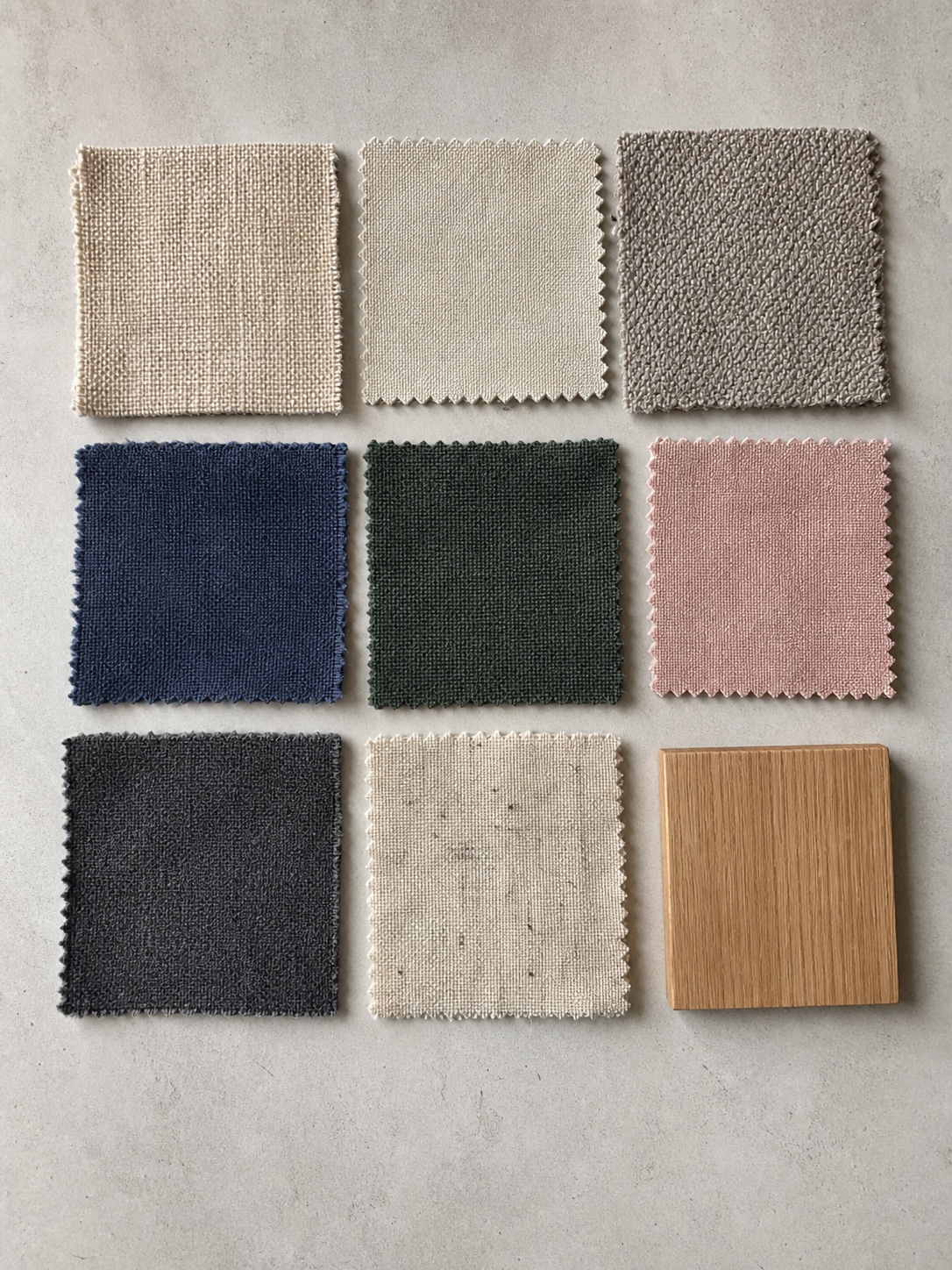
DreamSofa fabric and the DesignXChange program
DreamSofa offers more than 200 fabric options, and its DreamThread™ performance fabric is engineered specifically for scratch resistance and everyday household use: PFAS-free, Low-VOC certified, and designed to be cleaned rather than just replaced. At 200-plus options, the palette covers a genuinely wide range of directions, from warm neutrals to cooler architectural tones, without being anchored to a single aesthetic period.
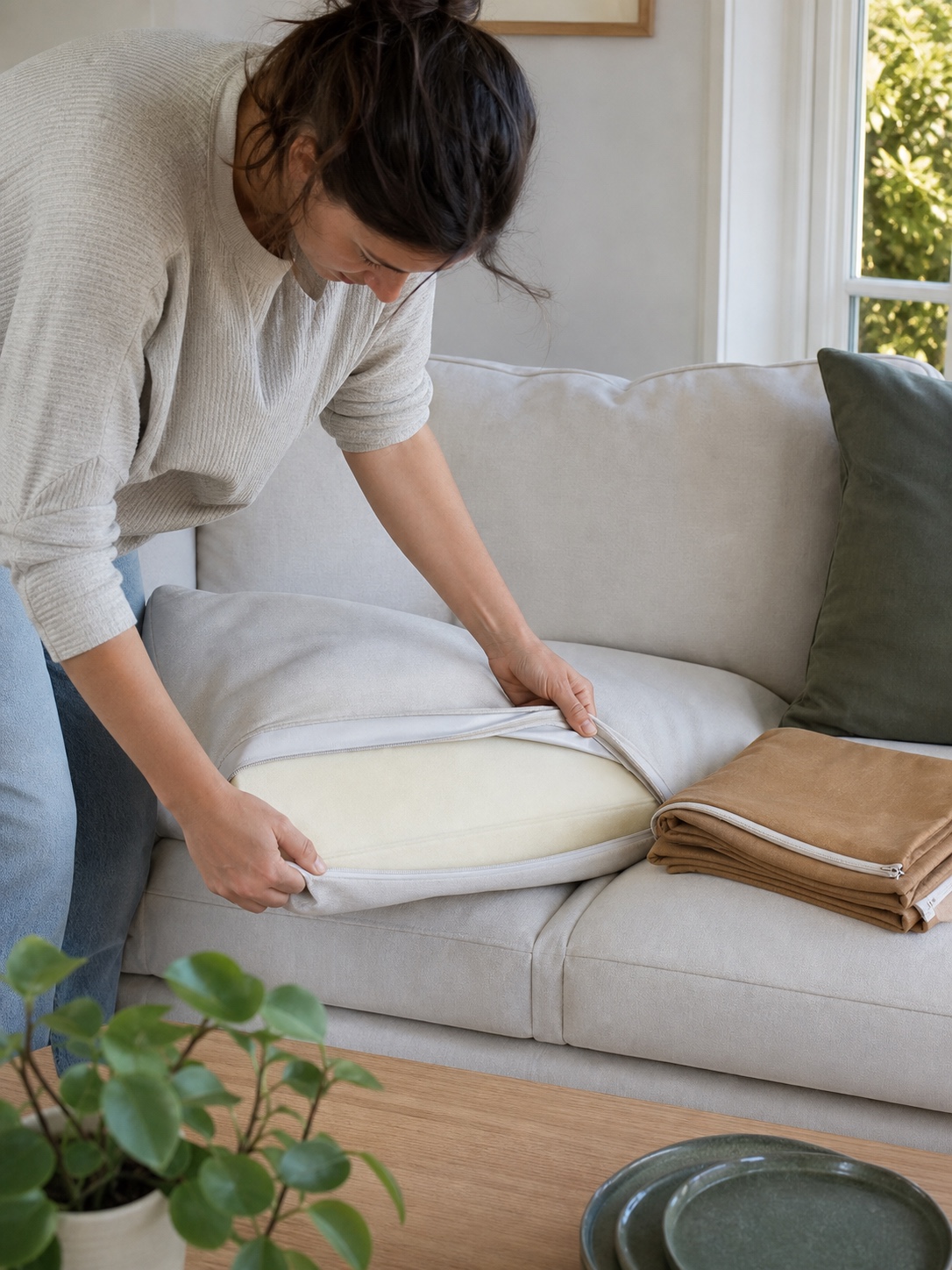
The DesignXChange™ program is the feature that stands out from a long-term ownership standpoint. It allows slipcover replacement: when the fabric shows wear or when aesthetic preferences change, covers can be swapped rather than reupholstered. Reupholstery on a quality sofa typically costs $400 to $800 or more. A cover swap is a fraction of that. For a piece you plan to keep for ten or more years, this changes the economics of ownership significantly.
Sizing and fit: the question that matters most in practice
The sofa that looks right in a living room is not necessarily the most expensive one or the most beautifully designed one. It is the one that fits the specific proportions of that specific room. Getting this wrong is one of the most common and most visible furniture mistakes in residential interiors.
Joybird sizing
Joybird sofas are available in standard configurations: two-seat, three-seat, and sectional arrangements in defined dimensions. If your wall is 108 inches wide and the available sofa options run to 90 or 120 inches, you are working around the sofa rather than with it. This produces the gap problem (too much wall visible on either side) or the overrun problem (sofa that extends past a visual boundary). Both are common, and both are immediately visible.
This is not a criticism of Joybird. Fixed dimensions are a normal feature of designed furniture objects. It does mean that Joybird works best in rooms with standard layouts or rooms where the buyer has confirmed the dimensions in advance and found a match.
DreamSofa FlexForm sizing
DreamSofa’s FlexForm™ system takes dimensions as the starting specification rather than a selection criterion. If your wall is 108 inches and you want the sofa to fill it to within two inches on either side, that’s the brief. The sofa is built to those measurements.
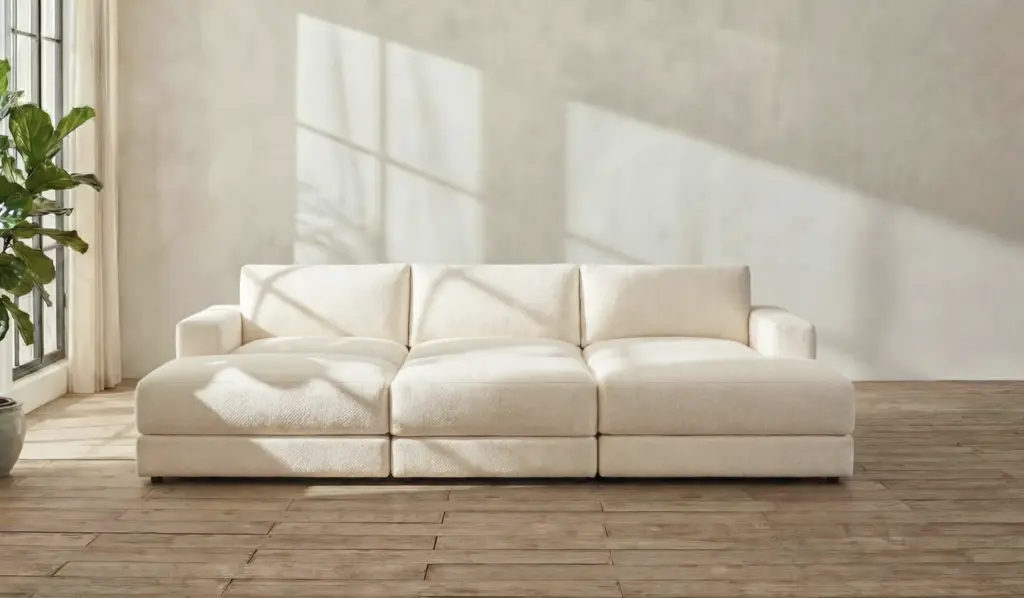
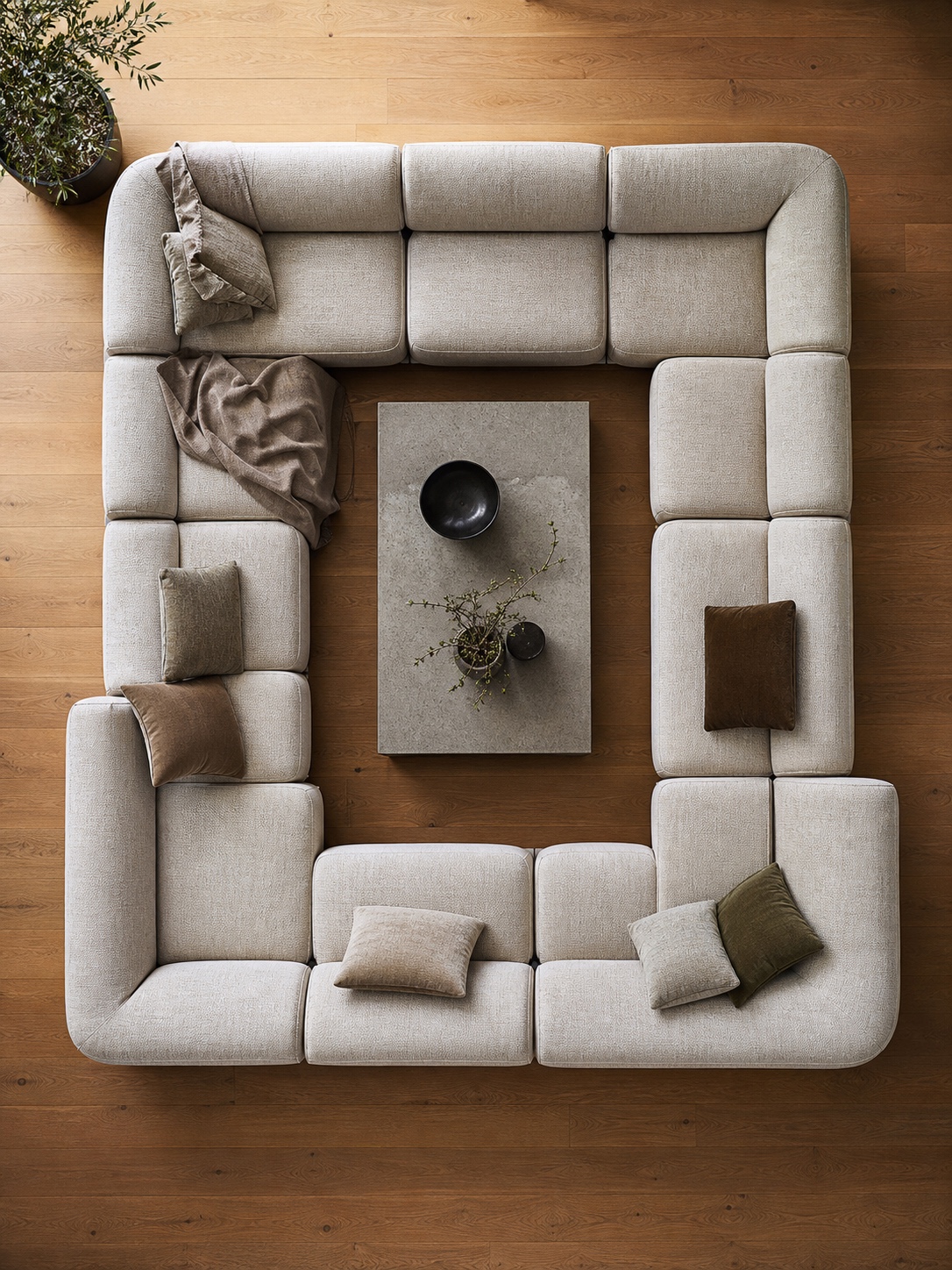
This becomes especially relevant for the brand’s sectional range. The DreamModular™ system extends the made-to-measure logic into reconfigurable sectionals: individual modules sized to your specifications that can be rearranged or expanded as room requirements change. For buyers in apartments who expect to move, or for families who know the living room will need to adapt over time, the modular approach changes the value calculation significantly.
Aesthetics: which design language fits your space
This is where honest self-knowledge matters. The right aesthetic choice is not the one that looks best in a Pinterest board, it’s the one that works in your actual room with your actual light and your actual existing pieces.
Joybird: a defined point of view
Mid-century modern is a specific design language. Clean horizontal profiles, tapered legs in walnut or oak, an emphasis on upholstered surface over frame visibility, warm fabric tones, geometric precision without ornament. Joybird executes this well and consistently across its catalogue. If you want the mid-century look and your room is ready to receive it, Joybird gives you a lot of confident options without forcing you to make every decision from scratch.
The limitation is the mirror image of the strength. If your room is not mid-century, or if you are building toward a different aesthetic direction, Joybird’s point of view can feel like a constraint. The brand’s design vocabulary is coherent, which is part of why it works. It’s also narrow.
DreamSofa: aesthetically neutral by design
DreamSofa does not have a house style. Its sofas take the visual character of the fabric and configuration choices rather than asserting a specific period or aesthetic. This is a deliberate philosophy: the sofa is built to fit the room and the buyer’s direction, not to express the brand’s design identity.
For design-conscious buyers who already have a clear point of view about their space, this flexibility is exactly right. The sofa does not compete with other furniture choices or architectural details. It completes them. For buyers who want the brand to make the aesthetic decision for them, DreamSofa is less helpful, because the brand offers few guardrails.
Price, delivery, and the ownership experience
Both brands require a wait. Neither sells furniture from warehouse stock. The difference is in how that wait is managed and what you can expect from the delivery process.
Price positioning
Joybird’s pricing is genuinely accessible for the quality on offer. A well-chosen Joybird sofa during a sale is competitive with mass-market furniture at meaningfully better construction quality. For a buyer who wants a specific look at a mid-range price and who expects to replace or update the sofa within five to eight years, Joybird is a logical choice.
DreamSofa costs more at the initial purchase, and the premium is real. The made-to-measure process, the heavier materials, the lifetime frame warranty, and the cover-swap program are not features that can be added to a mid-range price point. The frame for evaluating the cost is not the purchase price in isolation but the per-year ownership cost across the sofa’s actual lifespan. A sofa that lasts fifteen years at a higher upfront price can cost less per year than a sofa replaced twice at a lower price.
Delivery and coordination
DreamSofa quotes a 3 to 5 week delivery window for custom pieces. This is a specific, plannable number, which is useful for renovation projects, new apartment moves, or any context where timing matters.
Joybird’s delivery experience is more variable. Built-to-order furniture with distributed logistics produces delivery coordination challenges, and this is Joybird’s most consistently cited customer service friction point. The sofa itself typically arrives in good condition. The process of getting it there on a reliable timeline is less predictable. For a purchase where the arrival date matters, this is worth factoring in explicitly.
How to decide: two questions that clarify the answer
The choice between DreamSofa and Joybird simplifies down to two questions. Neither question is about which brand is objectively better, because that’s the wrong frame. Both are good brands doing different things well.
How specific is your room?
If you have a standard rectangular living room, a straightforward layout, and the proportions work with Joybird’s available dimensions, the sizing question resolves easily. If you have an awkward wall length, a narrow apartment, a specific seat depth requirement based on how your household actually sits, or a layout where getting the sofa wrong visually is particularly costly, DreamSofa’s to-the-inch sizing solves a problem Joybird cannot.
I’ve seen both situations. The standard room where a well-chosen Joybird looks perfectly right. And the specific room where the only way to get it right was to build the sofa to the space. Knowing which situation you’re in before you start looking at fabric options saves significant time and avoids the regret of beautiful furniture in the wrong proportion.
How long are you planning to keep it?
For a sofa you will replace in four to six years, Joybird’s value pricing is appropriate. The construction holds up well at its price tier, the aesthetic is consistently executed, and the lower upfront cost reflects a genuine trade-off in material specification rather than a hidden compromise in design quality.
For a sofa you want to keep for a decade or more, DreamSofa’s heavier materials, lifetime frame warranty, and cover-swap program change the financial logic. A sofa that can be recovered when the fabric shows wear, configured differently when the room changes, and expected to hold its structural integrity across fifteen years of use is a different category of purchase, justified by a different time horizon.
The honest summary
Joybird is the right choice for buyers who love the mid-century aesthetic, want mid-range pricing, and are working with a room where standard dimensions fit. It delivers a specific, well-executed look at a price that doesn’t require extended justification. Its construction is honest for its tier and the design language is coherent.
DreamSofa is the right choice for buyers who need the sofa to fit their room precisely, who care about material specification and long-term durability, and who want the flexibility to adapt the sofa’s appearance over its lifespan without replacing it. It costs more. The materials, the warranty, and the sizing flexibility justify that cost for the right buyer.
The decision is not which brand is better. It’s which one was built for the problem you are actually trying to solve.
Side-by-side comparison
| DreamSofa | Joybird | |
|---|---|---|
| Sizing | To-the-inch (FlexForm™) | Fixed models, custom fabric |
| Frame | Kiln-dried hardwood, 8-gauge sinuous springs | Kiln-dried hardwood |
| Foam | 2.5-lb high-density CertiPUR-US® | High-density foam |
| Fabric options | 200+ PFAS-free, Low-VOC certified | 70+ options |
| Cover swap | Yes (DesignXChange™) | No |
| Aesthetic range | Flexible — adapts to your style | Mid-century modern specialist |
| Price tier | Premium | Mid-range |
| Frame warranty | Lifetime | Limited |
| Delivery window | 3–5 weeks quoted | Variable (complaints documented) |
Frequently Asked Questions
Is DreamSofa or Joybird better quality?
Both use kiln-dried hardwood frames and high-density foam. DreamSofa specifies 8-gauge sinuous springs and 2.5-lb CertiPUR-US foam with a lifetime frame warranty. Joybird delivers solid mid-tier construction at a lower price. For sustained heavy daily use over a decade, DreamSofa’s material specification has the technical advantage.
What is the DreamSofa FlexForm system?
FlexForm is DreamSofa’s made-to-measure sizing system. It lets buyers specify sofa length, depth, and arm configuration to the inch. This differs from Joybird, where sofa dimensions are fixed to set model templates and customization covers only fabric, leg finish, and configuration choices within those templates.
Is Joybird a custom sofa brand?
Yes. Joybird builds to order with 70-plus fabric options, leg finish choices, and sectional configurations. The core sofa dimensions stay fixed to set models. DreamSofa sizes each piece to the buyer’s exact specifications, which is a meaningfully different kind of customization.
What is DreamSofa DreamThread fabric?
DreamThread is DreamSofa’s performance fabric, engineered for scratch resistance and certified PFAS-free and Low-VOC. It is compatible with the DesignXChange program, which allows slipcover swaps rather than full reupholstering when fabric shows wear or aesthetic preferences change.
Which is better value, DreamSofa or Joybird?
Joybird costs less upfront, typically $1,200 to $3,500 with frequent sales. DreamSofa costs more but is built for longevity, with a lifetime frame warranty and replaceable covers. Over a ten-year period, DreamSofa’s per-year ownership cost can be lower depending on daily use intensity.
How long does DreamSofa take to deliver?
DreamSofa quotes 3 to 5 weeks for custom-built pieces, a specific and plannable figure. Joybird also builds to order, but delivery coordination is its most frequently cited customer complaint, with less predictable lead times. For projects with fixed move-in or staging dates, DreamSofa’s quoted timeline is the more reliable planning input.
Can you reconfigure a DreamSofa sofa?
Yes. The DreamModular system builds reconfigurable sectionals from individual modules that can be rearranged or expanded as room requirements change. This suits buyers in apartments likely to move, or families who expect their living room needs to evolve over time.
- 552shares
- Facebook0
- Pinterest552
- Twitter0
- Reddit0