I’ve specified furniture for client interiors across a few different countries, and the conversation about sofas always lands in the same place eventually. Not the fabric. Not even the dimensions, though those matter enormously. The conversation comes down to this: how much of what this brand is telling me can I actually verify?
Custom furniture made in the United States carries a genuine premium, and for good reason when the claim is real. Shorter supply chains, closer quality control, a manufacturing environment with material accountability. But the phrase American-made has become marketing language as much as a production claim, and the phrase custom has followed it.
- The 7-Point Custom Sofa Checklist
- Check 1: Is it genuinely American-made, or just American-branded?
- Check 2: What is the frame made from, and how do you know?
- Check 3: What is the spring system?
- Check 4: What is the foam density?
- Check 5: How real is the customization?
- Check 6: What does the warranty actually cover?
- Check 7: Can you see the healed portfolio?
- A note on brands
- Applying the checklist: what the sequence looks like in practice
- Frequently Asked Questions
- What does American-made actually mean for a custom sofa?
- What kind of frame should a quality custom sofa have?
- What foam density should I look for in a custom sofa?
- What is the difference between sinuous springs and webbing?
- How long does an American-made custom sofa take to deliver?
- What does a custom sofa warranty typically cover?
- What is real customization in a custom sofa?
A sofa built to fixed dimensions in a fixed fabric library is personalized, not custom. A sofa with a kiln-dried hardwood frame is built to a different standard than one with an engineered wood frame that the brand is careful not to describe specifically.
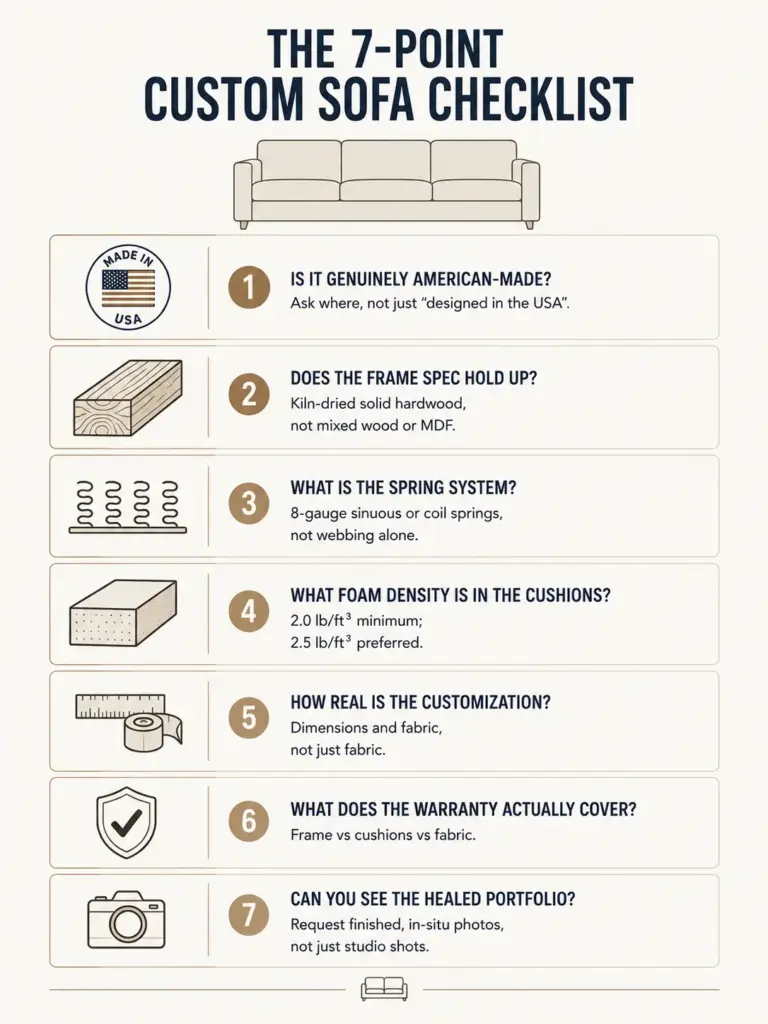
This guide is a pre-purchase checklist. Seven things to verify before you place the order, drawn from both design practice and a close look at what separates the sofas that hold up from the ones that disappoint. The checklist card is at the top of the article for quick reference; the detail behind each item follows below.
The 7-Point Custom Sofa Checklist
- 1. Is it genuinely American-made? (Ask where, not just “designed in the USA”)
- 2. Does the frame spec hold up? (Kiln-dried solid hardwood, not mixed wood or MDF)
- 3. What is the spring system? (8-gauge sinuous or coil springs, not webbing alone)
- 4. What foam density is in the cushions? (2.0 lb/ft³ minimum; 2.5 lb/ft³ preferred)
- 5. How real is the customization? (Dimensions and fabric, not just fabric)
- 6. What does the warranty actually cover? (Frame vs cushions vs fabric)
- 7. Can you see the healed portfolio? (Request finished, in-situ photos, not just studio shots)
Check 1: Is it genuinely American-made, or just American-branded?
This is the first question to ask and the one most brands would rather you didn’t ask specifically. The FTC’s Made in USA standard requires that a product be ‘all or virtually all’ manufactured domestically, with all significant parts and processing in the United States. That is the bar. What many brands offer is something softer: designed in the USA, crafted with American craftsmanship, or assembled in the USA, which can describe a sofa whose frame was produced overseas and whose upholstery was applied domestically.
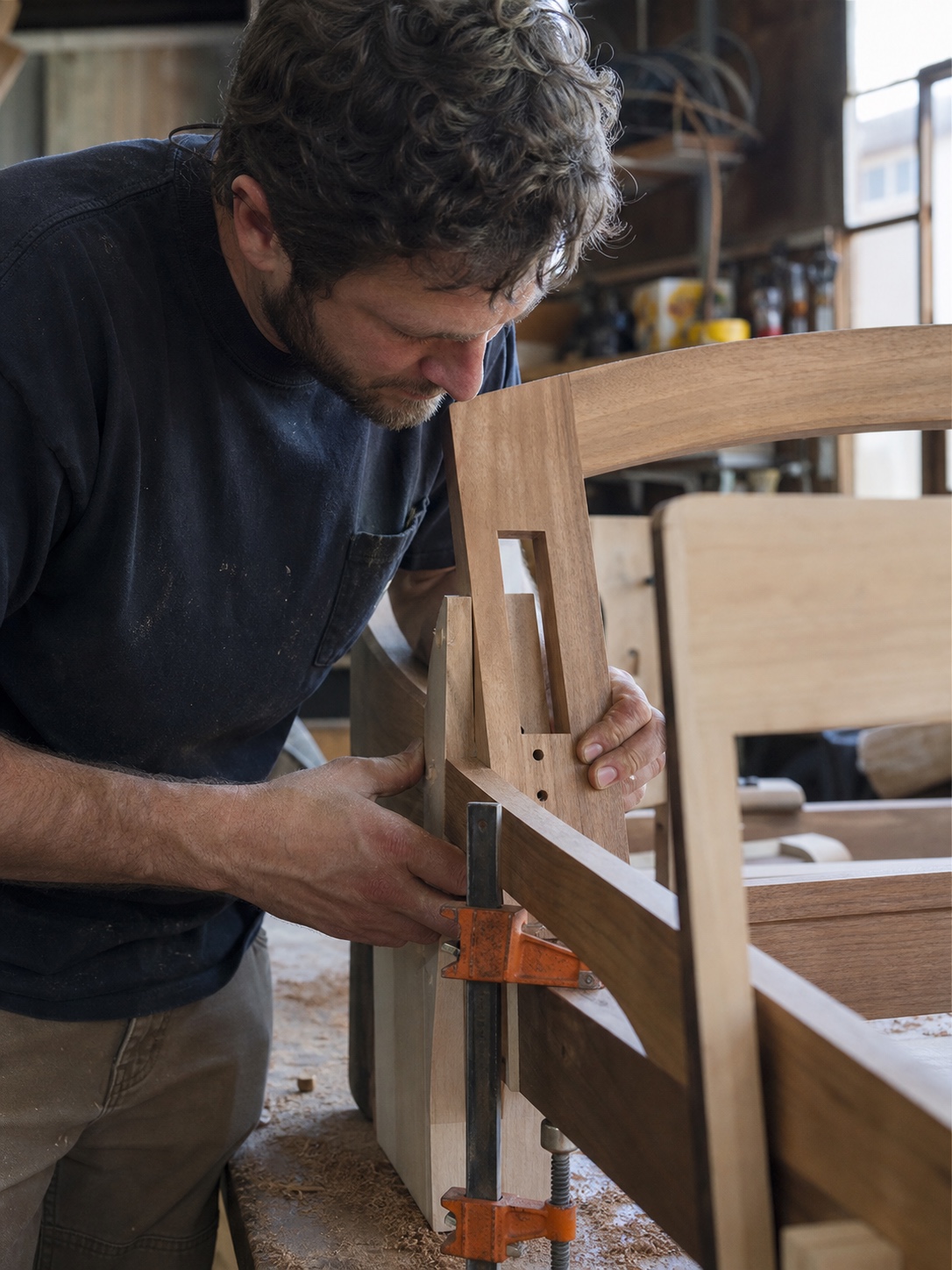
The question to ask directly: where is the frame built, and where is the upholstery applied? If the answer to the frame question is vague or redirected to where the company is headquartered, treat the manufacturing claim with corresponding caution.
What to ask
“In which state and facility is the frame constructed?” is the most direct version. A brand that builds genuinely in the US will answer this without hesitation. They’re proud of it. Brands that cannot answer it specifically are usually brands where the claim is softer than the marketing implies.
You can also check the FTC’s website for formal complaints related to Made in USA claims in the furniture category. Brands that have faced enforcement actions tend to adjust their language but not always their manufacturing.
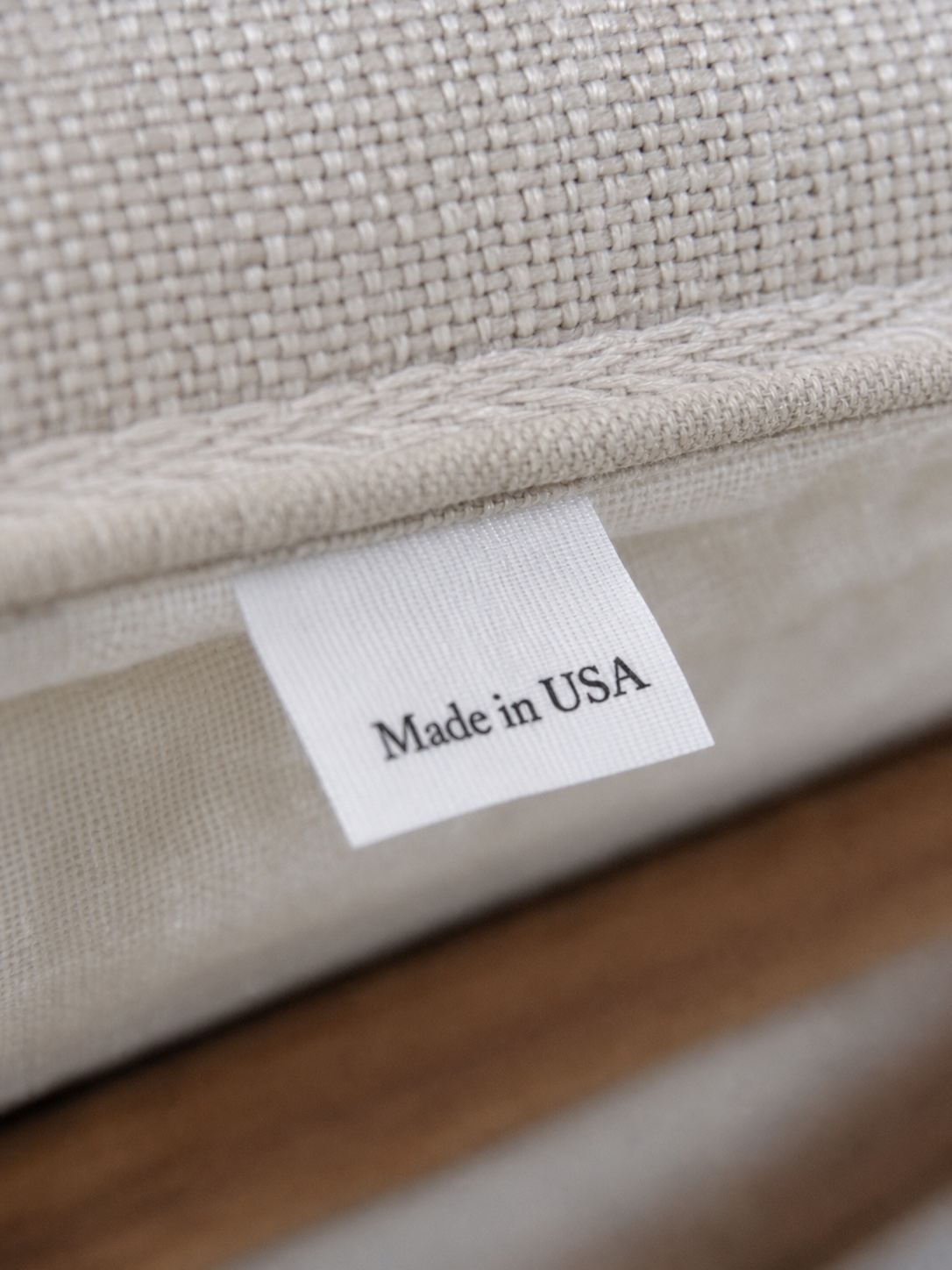
Ask: ‘Where specifically is the frame built?’ Not ‘where is the company based?’ Not ‘where is your headquarters?’ Where is the frame built. The answer tells you everything the marketing does not.
Check 2: What is the frame made from, and how do you know?
The frame is the structural skeleton of the sofa. Everything else, the foam, the fabric, the cushion depth, is replaceable. The frame is not, or at least not without costs that approach the price of the original sofa. A frame that fails structurally at year six is a sofa that has to be replaced at year six. A frame that holds its geometry for twenty years is a different investment entirely.
What to look for
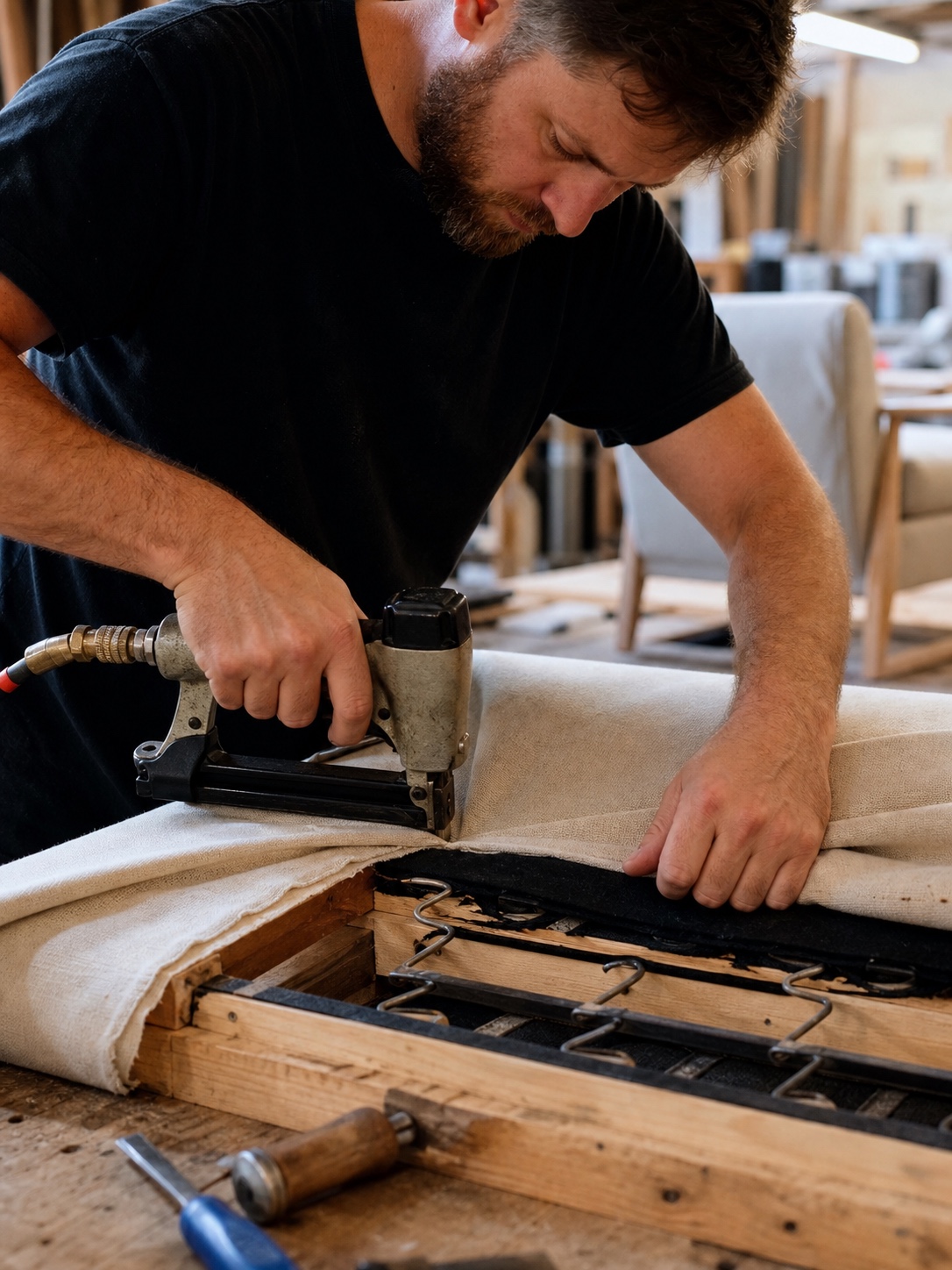
Kiln-dried solid hardwood is the correct specification. Kiln-drying removes moisture from the wood before construction, which prevents the warping, joint loosening, and creaking that develops in green or air-dried wood under the temperature and humidity cycles of a real home. The specific hardwood species matters less than the drying method and the consistency of the grain throughout the structural members.
Terms to treat with caution: engineered wood, mixed wood, and composite wood all describe frame materials that include particleboard, MDF, or plywood in varying combinations. These are cheaper to produce and structurally inferior to solid hardwood for furniture under daily load. Brands that use these materials sometimes describe the frame as ‘wood’ without further specification. Ask for the specification.
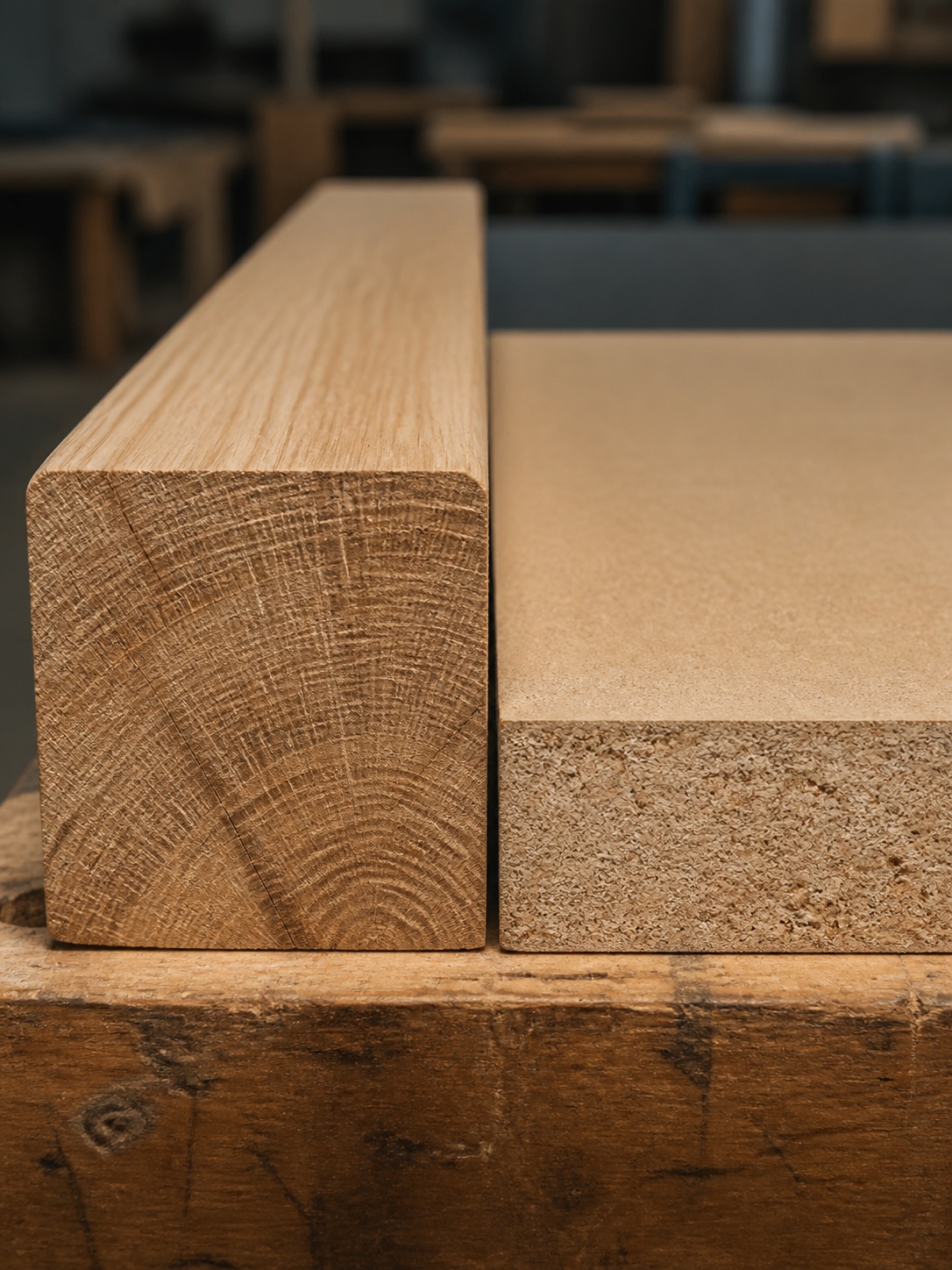
A strong American-made custom sofa brand will publish the frame specification in the product description. Brands that keep frame materials vague are usually keeping them vague for a reason. A lifetime frame warranty, like the one offered by
DreamSofa, is a meaningful signal: it means the manufacturer is confident enough in their frame material and joinery to cover it for the life of the sofa. That kind of warranty would be commercially unsustainable with an engineered wood frame.
Check 3: What is the spring system?
The spring system sits between the frame and the cushions and is the primary determinant of the sofa’s seat support over time. Unlike foam, which you can see compressed and test by hand, the spring system is invisible once the sofa is upholstered. This makes it one of the easiest specifications to downgrade invisibly.
Sinuous springs vs webbing
Sinuous springs, also called no-sag springs, are S-shaped steel wire springs attached across the frame from front to back. They distribute seated weight across the entire span and return to their original shape after each use. 8-gauge sinuous springs are the standard specification in quality American-made sofas: the lower the gauge number, the thicker and stronger the wire.
Webbing uses interlaced nylon, jute, or elastic straps as the seat support surface. It is cheaper to manufacture and does the job at the beginning. Under sustained daily use, elastic webbing stretches and sags faster than a spring system and is more difficult to repair without reupholstering. Some quality sofas use a combination of springs and webbing. The key question is whether the primary support is a spring system.
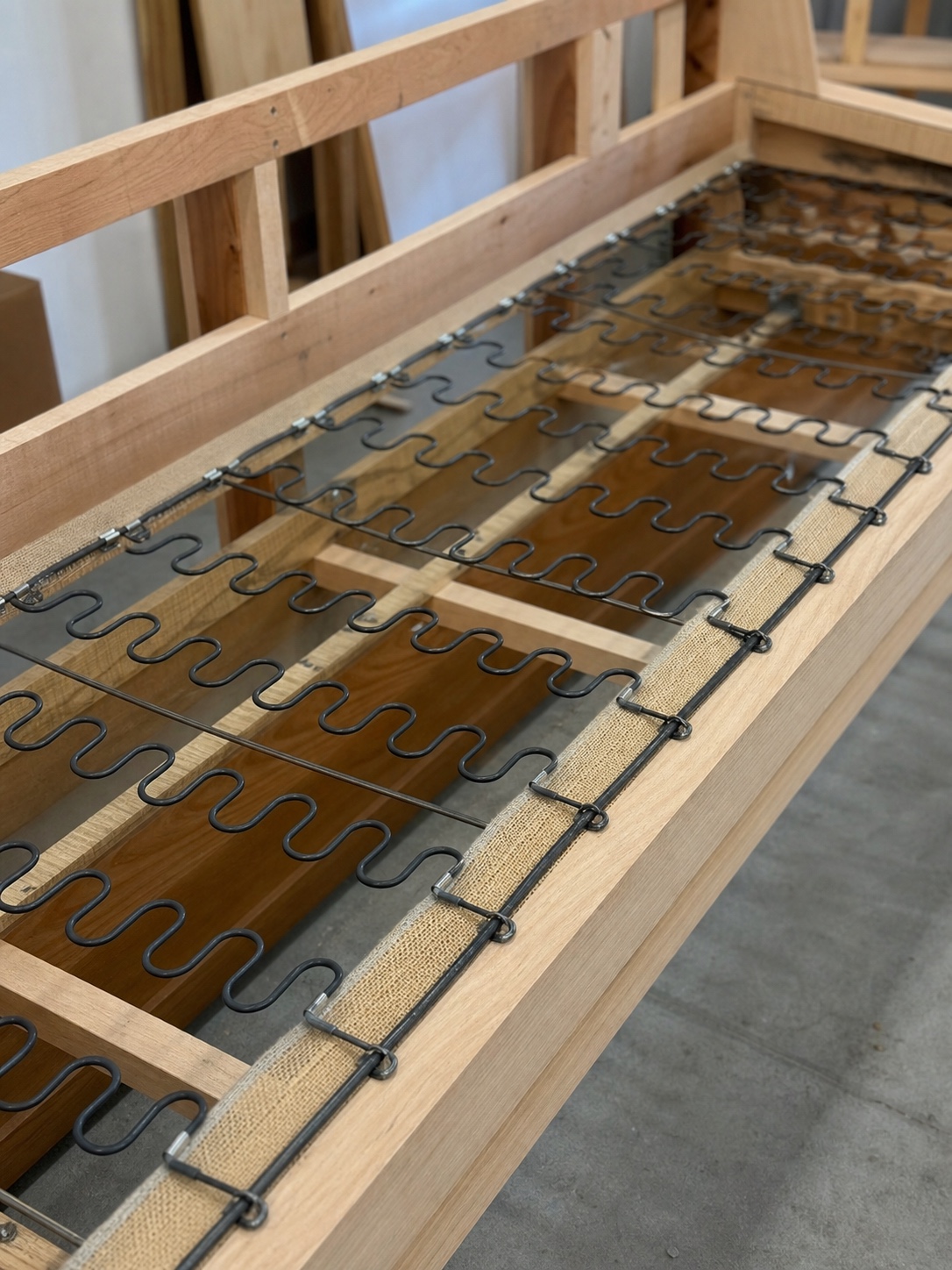
Ask: ‘What is the spring system and what gauge are the springs?’ If the answer is ‘we use a high-quality support system’ without a specific answer, that usually means webbing or a system they prefer not to specify.
Check 4: What is the foam density?
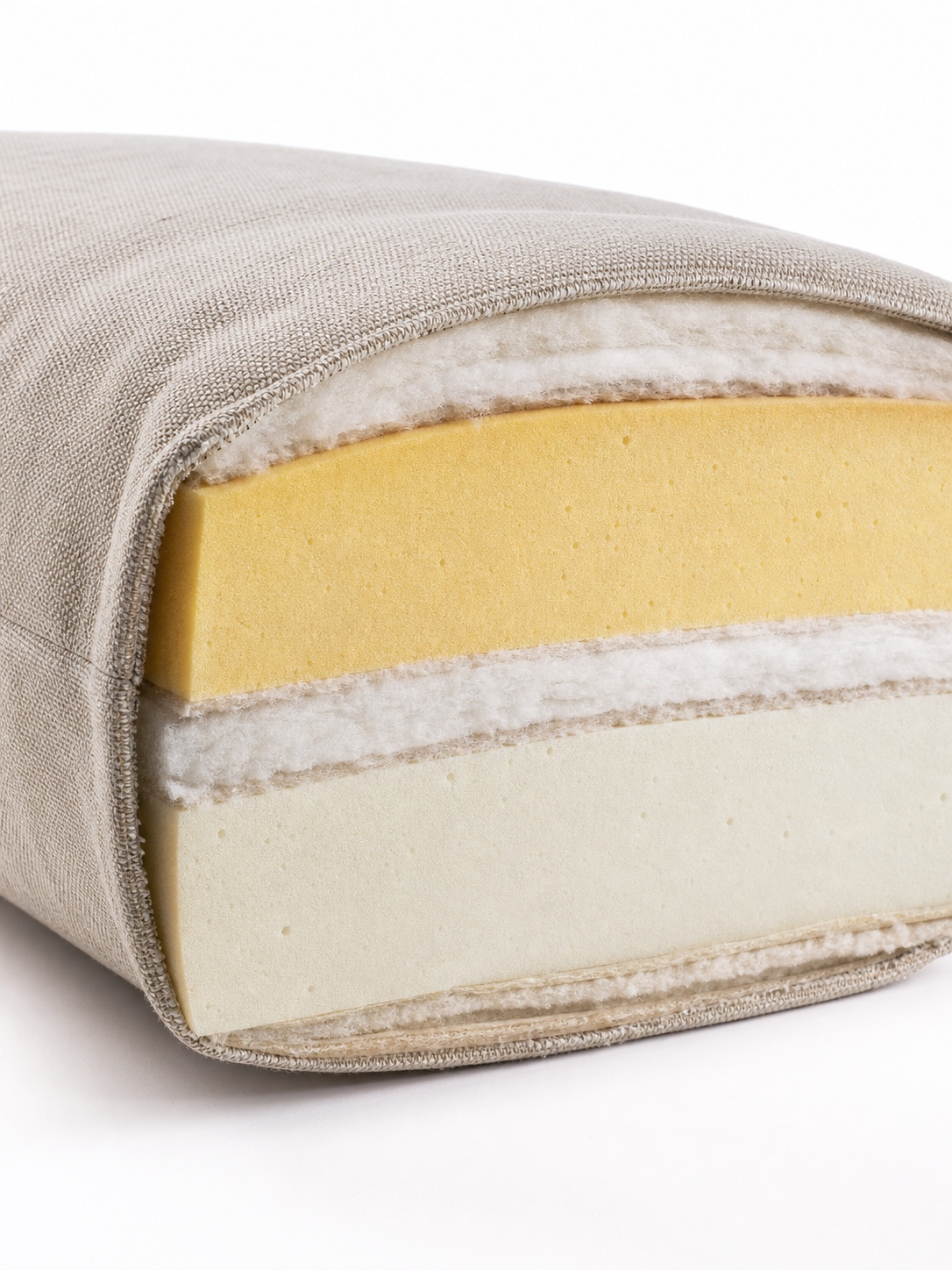
Foam density is measured in pounds per cubic foot. It is not the same as firmness. A high-density foam can be soft or firm depending on the ILD (Indentation Load Deflection) rating. Density determines how well the foam maintains its shape under repeated compression over time. Low-density foam feels the same as high-density foam for the first year or two. After that, the difference is visible and felt.
The numbers that matter
For seat cushions that will be used daily, 2.0 lb per cubic foot is a practical minimum. Below that, expect visible cushion breakdown within three to five years under regular household use. 2.5 lb per cubic foot is the specification used by brands at the top of the American-made custom category, and it produces noticeably better cushion life across a decade of use.
CertiPUR-US certification is a separate but related check. It means the foam has been independently tested for harmful chemicals including formaldehyde, certain flame retardants, and heavy metals that are sometimes found in imported foam. The certification is voluntary but common among US-focused custom sofa brands and is worth confirming separately from the density specification.
Check 5: How real is the customization?
Custom is the word that needs the most scrutiny in this category. It ranges from choosing a color from twelve options on a fixed-dimension model, to specifying every dimension, configuration, fabric, and cushion firmness independently. These are very different products and very different experiences. Knowing which kind of custom you’re buying before you order prevents the most common disappointment in this category.
Fabric-only customization
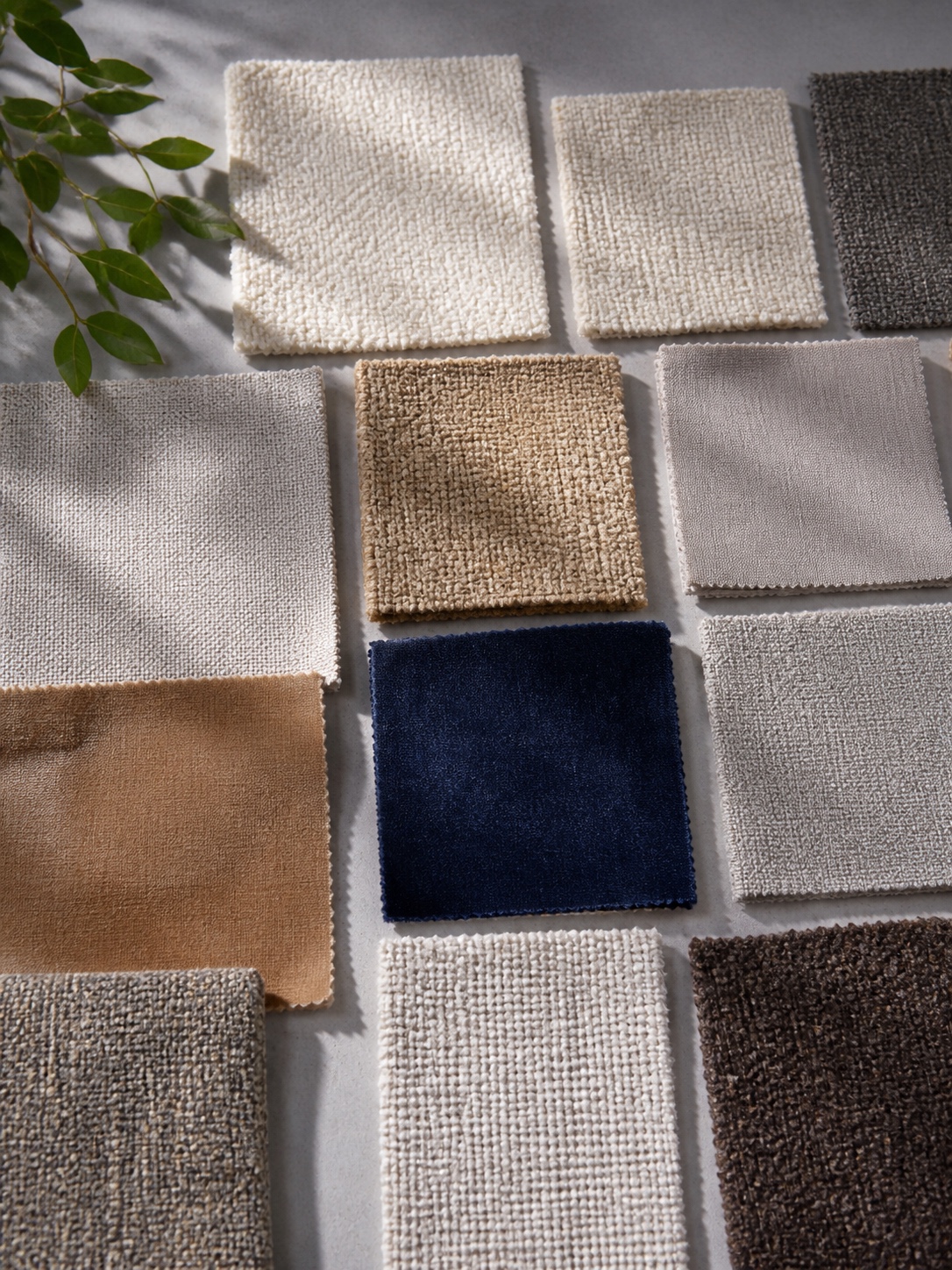
Most brands that describe themselves as custom sofa brands offer fabric-only customization. You choose from their library of fabrics and apply it to a model that comes in fixed overall dimensions, fixed seat depth, and fixed arm height. This is personalization. The sofa is yours in the sense that the color is yours. The proportions are the manufacturer’s.
This model works well when the fabric choice is the primary driver and the room’s dimensions accommodate the available sizes. It becomes a problem when the room has a specific wall length, an unusual depth requirement, or a layout where the standard arm height conflicts with an adjacent window or architectural element.
Dimension-level customization
Genuine dimension-level customization, where you specify length and seat depth to the inch, is significantly rarer. It requires a more flexible manufacturing setup and a longer design conversation before the order is finalized. The sofa produced at this level fits its specific room in a way that a fixed-dimension model cannot, and that fit is visible in the finished interior.
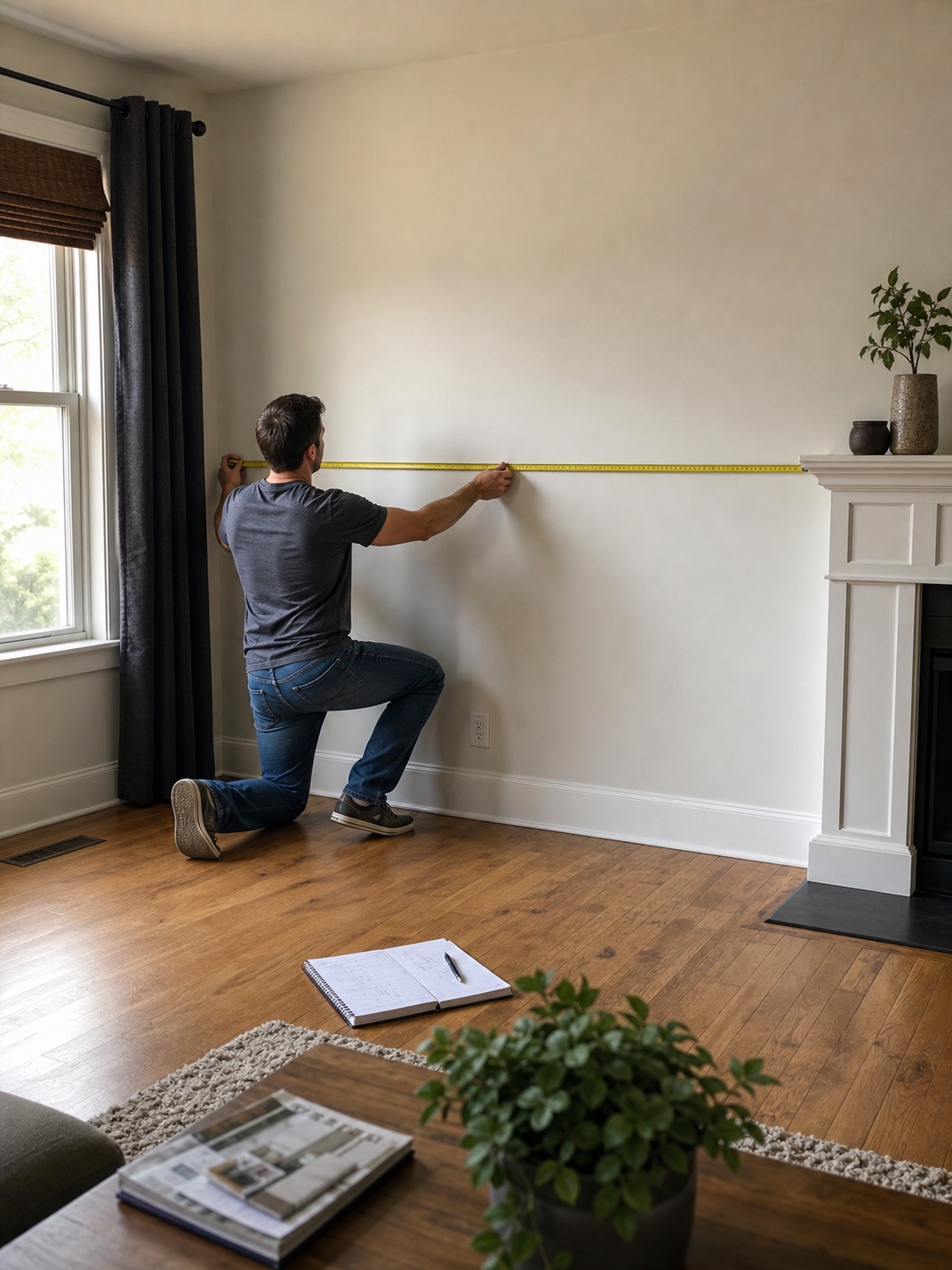
Before deciding between the two, measure the specific wall or zone the sofa will occupy and compare those measurements to the available sizes in the brand’s range. If the standard sizes fall within 5 to 8 centimeters of your available space, the fixed-dimension model will likely work. If the gap is larger, dimension-level customization becomes the more appropriate path.
Check 6: What does the warranty actually cover?
Warranty language is the clearest indicator of how confident a manufacturer is in their own product. A broad, vague warranty that promises to ‘stand behind the quality’ of the sofa is not a warranty. A warranty is a specific document that names what is covered, for how long, under what conditions, and what the process is when something fails.
Read the coverage categories separately
A quality custom sofa warranty separates three elements: the frame, the cushions, and the fabric. Frame warranties at the top end of the American-made category run to lifetime coverage, meaning structural failure of the frame and spring system is covered for as long as you own the sofa. This is a commercially significant commitment that only makes sense for brands whose frames are built to genuinely hold.
Cushion warranties typically cover significant and premature loss of resilience, not normal compression over years of use. The distinction matters: all foam compresses. A warranty claim requires demonstrating that the compression is beyond what would be expected given the foam specification and the years of use. Read the claim process before you buy, not after you need it.
Fabric warranties cover manufacturing defects, usually for one to three years. They do not cover normal wear, fading from sun exposure, or damage from pets, liquids, or cleaning products. Know what yours covers before an incident requires the information.

Download the warranty document before you order, not after. Read the claim process section specifically: what documentation is required, how quickly must the claim be filed, is service at your location or do you ship the sofa? These procedural details tell you as much about the brand’s intentions as the coverage terms do.
Check 7: Can you see the healed portfolio?
Every sofa looks good in studio photography taken two weeks after completion. The cushions are fresh, the fabric is unworn, the lighting is controlled, and the product is at its absolute best. That photograph tells you what the sofa looked like on day one. It tells you very little about what it will look like in year three or year five.
What healed portfolio means
In tattooing, artists show healed work rather than fresh work because fresh tattoos look sharper and more saturated than they will once settled. The same principle applies to furniture. A sofa shown in situ, in a real home, in real use, two or three years after delivery shows you the actual aging character of the materials. The fabric’s hand after washing. The cushion’s silhouette after regular seating. The frame’s stability.
Request finished, in-situ photographs from customers two or more years out, not just from the brand’s own portfolio. Some brands have customer galleries or are willing to provide references. Brands that can only show studio shots are brands that cannot show you what their sofas look like in real conditions.

What the in-situ photograph reveals
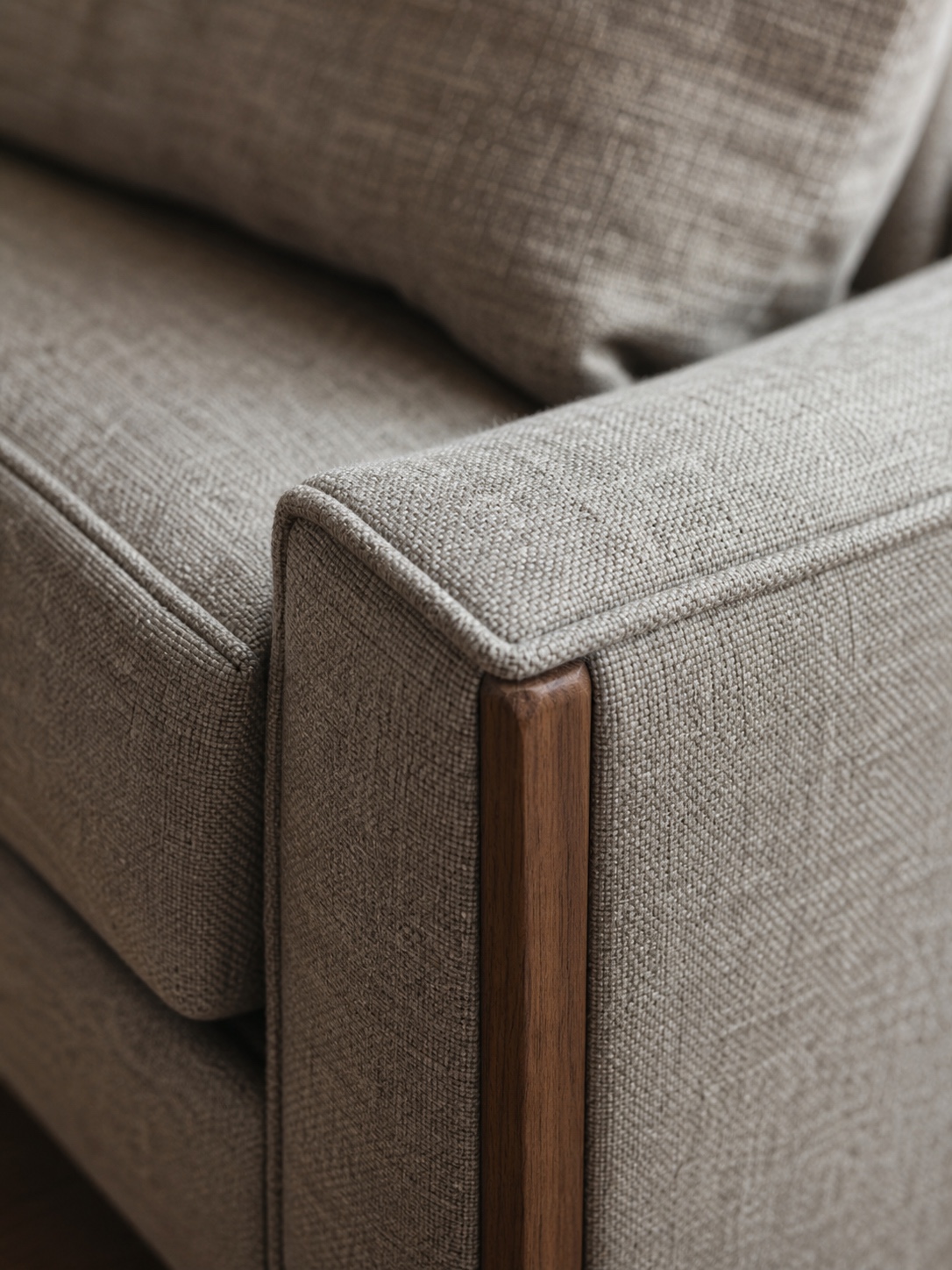
In a real home photograph, look at the cushion silhouette: does it hold its edge or has it begun to lose definition? Look at the arm corners: is the upholstery still tight at the most stress-tested point, or has it begun to wrinkle and pucker? Look at the fabric surface: does it pill, fade, or show wear patterns in the high-contact zones?
These observations are available in every photograph of a real-use sofa if you know to look for them. They cannot be seen in studio photography. This is why the healed portfolio is the check that most buyers skip and most brands don’t volunteer.
A note on brands
This guide covers the questions to ask before buying, not a ranking of who to buy from. If you want a comparison of specific brands in the American-made custom sofa category, see our brand-by-brand guide linked below.
Want brand examples?
For a brand-by-brand comparison, see our guide to the best American-made custom sofa brands for design-led spaces.
Applying the checkl
The same upholstery questions that affect a sofa also affect a statement chair. This leather vs fabric seating guide breaks down comfort, cleaning, pets, and long-term material ageing through wingback chairs.
ist: what the sequence looks like in practiceThe seven checks above are not a sequential process. They happen simultaneously during the brand research phase, before you’ve chosen a model or selected a fabric. The sequence that works is: confirm the manufacturing claim first (eliminates some brands immediately), then verify the frame specification and warranty (together, these are the most revealing indicators of long-term quality), then assess the customization depth against your specific room requirements.
Fabric selection and delivery timeline come after those structural decisions. The fabric is something you can see and feel in a sample. The spring gauge and foam density are harder to verify post-purchase. That’s why they come first.
A brand that passes all seven checks without deflection or vague answers is a brand that is confident in what they’re selling and how they’ve built it. That confidence, expressed in specific answers to specific questions, is probably the clearest signal of all.
Frequently Asked Questions
What does American-made actually mean for a custom sofa?
Under the FTC standard, a product labeled Made in USA must be all or virtually all made domestically. For sofas, this means the frame is cut and assembled in the US and all or nearly all components originate domestically. Phrases like designed in the USA or assembled in the USA do not meet this standard and often describe sofas with imported frames upholstered domestically. If the brand cannot tell you where the frame is built, treat the claim carefully.
What kind of frame should a quality custom sofa have?
A quality custom sofa frame uses kiln-dried solid hardwood throughout the structural members. Kiln-drying removes moisture before construction, preventing warping, joint loosening, and structural failure. Avoid frames described as engineered wood, mixed wood, or composite wood, which include particleboard, MDF, or plywood and are structurally inferior under daily load.
What foam density should I look for in a custom sofa?
For seat cushions in regular use, 2.0 lb per cubic foot is the practical minimum. 2.5 lb per cubic foot is preferred for longer cushion life and better recovery. CertiPUR-US certification means the foam has been independently tested for harmful chemicals. Foam density is more predictive of long-term performance than initial softness or firmness.
What is the difference between sinuous springs and webbing?
Sinuous springs are S-shaped steel wire springs attached across the frame that distribute seated weight and return to original position after each use. 8-gauge is the standard in quality custom sofas. Webbing uses interlaced nylon or elastic straps, which is cheaper but less durable under sustained daily use. The key question is whether the primary seat support is a spring system.
How long does an American-made custom sofa take to deliver?
Most American-made custom sofa brands deliver in 3 to 8 weeks from order confirmation, significantly faster than imported custom furniture at 8 to 16 weeks or more. Made-to-order means production begins after your order is confirmed, so the lead time reflects actual build time. Brands promising very short delivery on genuinely custom pieces may be fulfilling from stock in your chosen fabric rather than building to specification.
What does a custom sofa warranty typically cover?
Custom sofa warranties typically separate the frame, cushions, and fabric. A lifetime frame warranty covers structural failure for as long as you own the sofa. Cushion warranties (typically 3 to 5 years) cover premature loss of resilience. Fabric warranties (1 to 3 years) cover manufacturing defects but not wear, fading, or pet damage. Read the warranty document and claim process before purchasing.
What is real customization in a custom sofa?
Real customization means you control the dimensions of the sofa, not just the fabric. Genuine customization includes overall length, seat depth, arm style, and leg finish alongside fabric selection. At the deepest level you specify length and depth to the inch, arm configuration, and firmness preference. If customization is limited to choosing a fabric on a fixed-dimension model, that is personalization, not customization.
- 168shares
- Facebook0
- Pinterest165
- Twitter3
- Reddit0