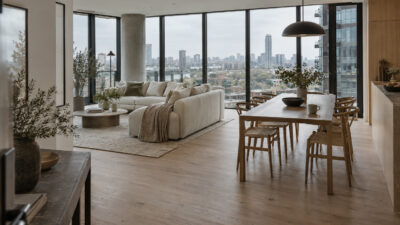
The most common mistake I see in interior projects is furniture chosen at catalogue dimensions and then fitted into a room that was never measured to receive it. The sofa arrives, it runs 15cm past the window frame, or it sits too close to the TV cabinet, or the L-shape blocks the natural traffic path through the space. None of these errors are catastrophic, but they all signal that the furniture came first and the room had to adjust.
A made-to-order sofa reverses that logic. You measure the room first, you specify the dimensions to match what the room actually requires, and the sofa is built to those numbers. The idea is straightforward. The question is how well a specific brand’s process translates that idea into a practical buying experience.
- Why custom sofa design starts with the room
- Step 1: choose the silhouette before the fabric
- Step 2: size the sofa to the room, not the other way around
- Step 3: test fabric in your actual light
- Step 4: separate comfort from appearance
- Step 5: use 3D planning to check scale
- Who this process suits
- The design takeaway
- Frequently asked questions
- How does the DreamSofa customization process work?
- Can you really size a DreamSofa to the inch?
- How do you test DreamSofa fabric before ordering?
- How long does a custom DreamSofa take to arrive?
- Is DreamSofa good for small or awkward rooms?
- What is the DreamSofa 100-day trial?
- Is the DreamSofa customization process too complex?
DreamSofa is one of the few custom sofa brands that makes sizing to the inch the center of its process rather than an afterthought. This review is not a spec sheet. It’s a walkthrough of how the design decisions in that process work, and more specifically, how thinking about them in the right order changes the outcome.
Why custom sofa design starts with the room
Most sofa decisions start with style: you browse images, something catches your eye, you check whether it comes in the right color. The room is treated as a constraint to navigate after the aesthetic decision is made. Custom design inverts that. The room comes first, and it provides the brief that every subsequent decision answers.
The room has a wall length. It has a traffic path from the entrance to the kitchen or the bedroom. It has natural light coming from a specific direction that affects which wall reads as the primary visual focus. It has a floor area that, once the sofa footprint is placed, determines how much space remains for the coffee table, the side chair, and the human being walking through all of it.
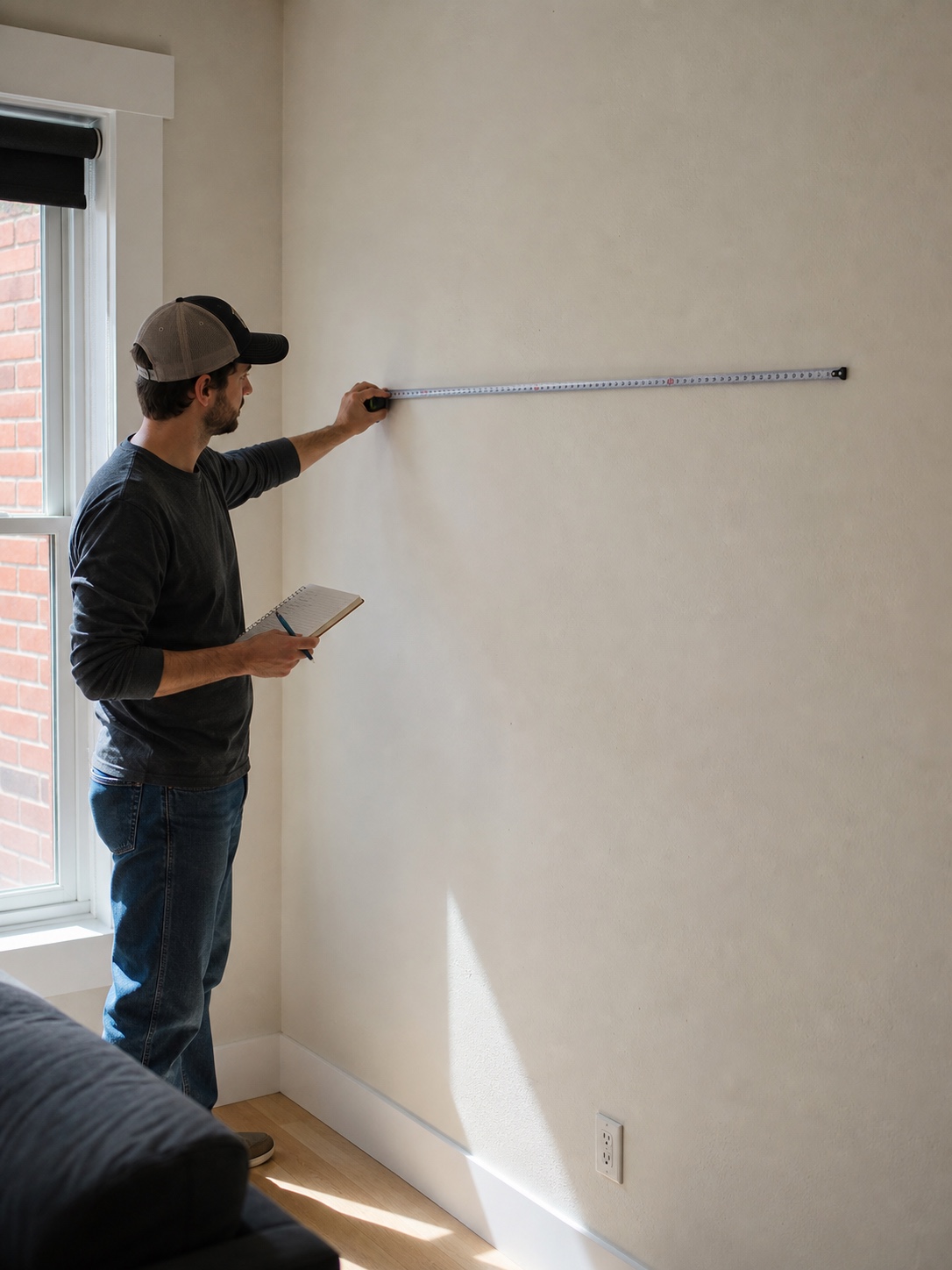
Before opening any product configurator, measure the specific wall the sofa will occupy. Write down the usable length (wall edge to the next obstruction: a doorway, a radiator, a window reveal). Measure the clearance between where the back of the sofa will sit and the opposite wall or furniture. This number is the maximum depth of the sofa. Then measure the doorway through which the sofa will be delivered. This is not a detail to check later.
The numbers that determine the brief
A sofa sits at roughly 85cm height at the back and 45cm at the seat. The seat depth from front to back runs from around 85cm for a relaxed lounging sofa to 65cm for a more upright, formal piece. Multiply the seat depth by the number of people who typically sit on it and you have a minimum floor area requirement. Against the remaining room area, that tells you whether an L-shaped sectional is realistic or whether a linear sofa is the correct decision for the space.
These calculations take ten minutes. They’re the difference between arriving at the configuration step with a clear set of requirements and arriving without them and choosing by feel. Choosing by feel on a made-to-measure order is how you end up with the wrong dimensions on a sofa that can’t be returned.
Step 1: choose the silhouette before the fabric
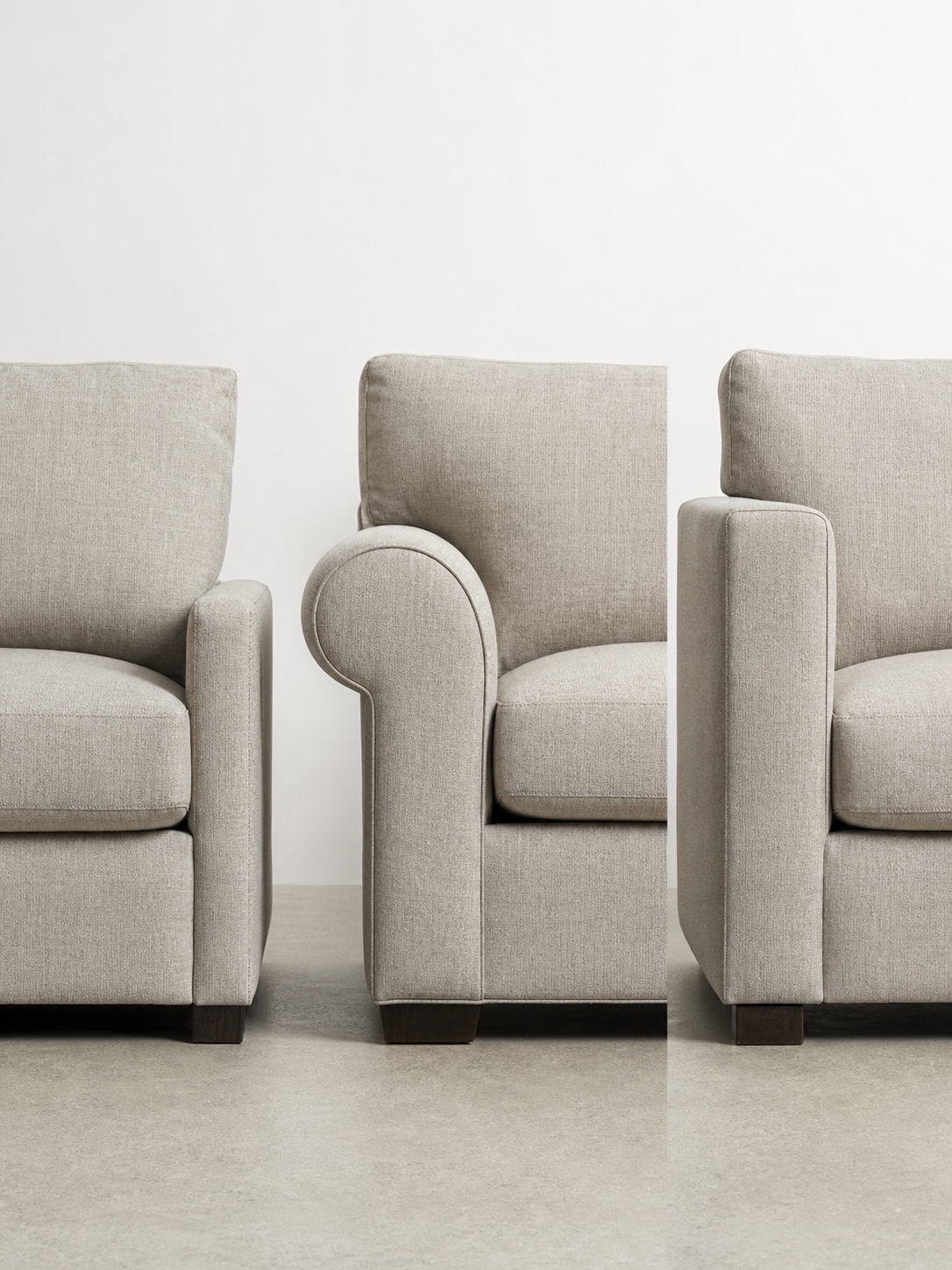
The first decision in DreamSofa’s process is the silhouette: the overall shape, the arm style, and whether you want a standard sofa or a reconfigurable modular sectional. This is the right decision to make first, because the silhouette determines the visual character of the piece in the room more than any material choice.
Arm height is one of the most underestimated variables in furniture design. High arms read as enclosing and traditional. They make the sofa feel more self-contained but reduce the visual openness of the room from adjacent zones. Low or track arms read as contemporary and spatially open, which suits open-plan rooms where the sofa needs to feel like part of the larger space rather than a closed object within it.
Back height and visual weight
Back height works similarly. A high back sofa creates a visual barrier that can define space, useful in open-plan contexts where you want to separate the sitting zone from the dining or kitchen zone without a wall. A lower back reads as less dominant in the room, allowing other elements (a fireplace, a large window, an art piece) to remain visually primary.
The modular vs standard choice is a planning decision, not just a preference. A modular sectional allows the configuration to change over time, which matters if you expect to move, change rooms, or add children or housemates. A standard sofa is a single resolved piece, which often reads as more intentional in a static room. Both choices are available at the same point in the DreamSofa process.
Step 2: size the sofa to the room, not the other way around
This is where the DreamSofa process delivers its most specific design value. The FlexForm sizing system sets length, depth, and height to the inch rather than offering fixed standard dimensions. For most rooms, this doesn’t change the aesthetic at all. For rooms with specific requirements, it changes everything.
Consider a living room with a usable wall length of 236cm. Standard sofa sizes jump from 220cm (two-seater) to 250cm (three-seater). Neither fits cleanly. The 220cm leaves an awkward gap. The 250cm overruns the window. At 236cm, the sofa fits the wall. That’s the FlexForm problem it solves.
Circulation and open-plan zoning
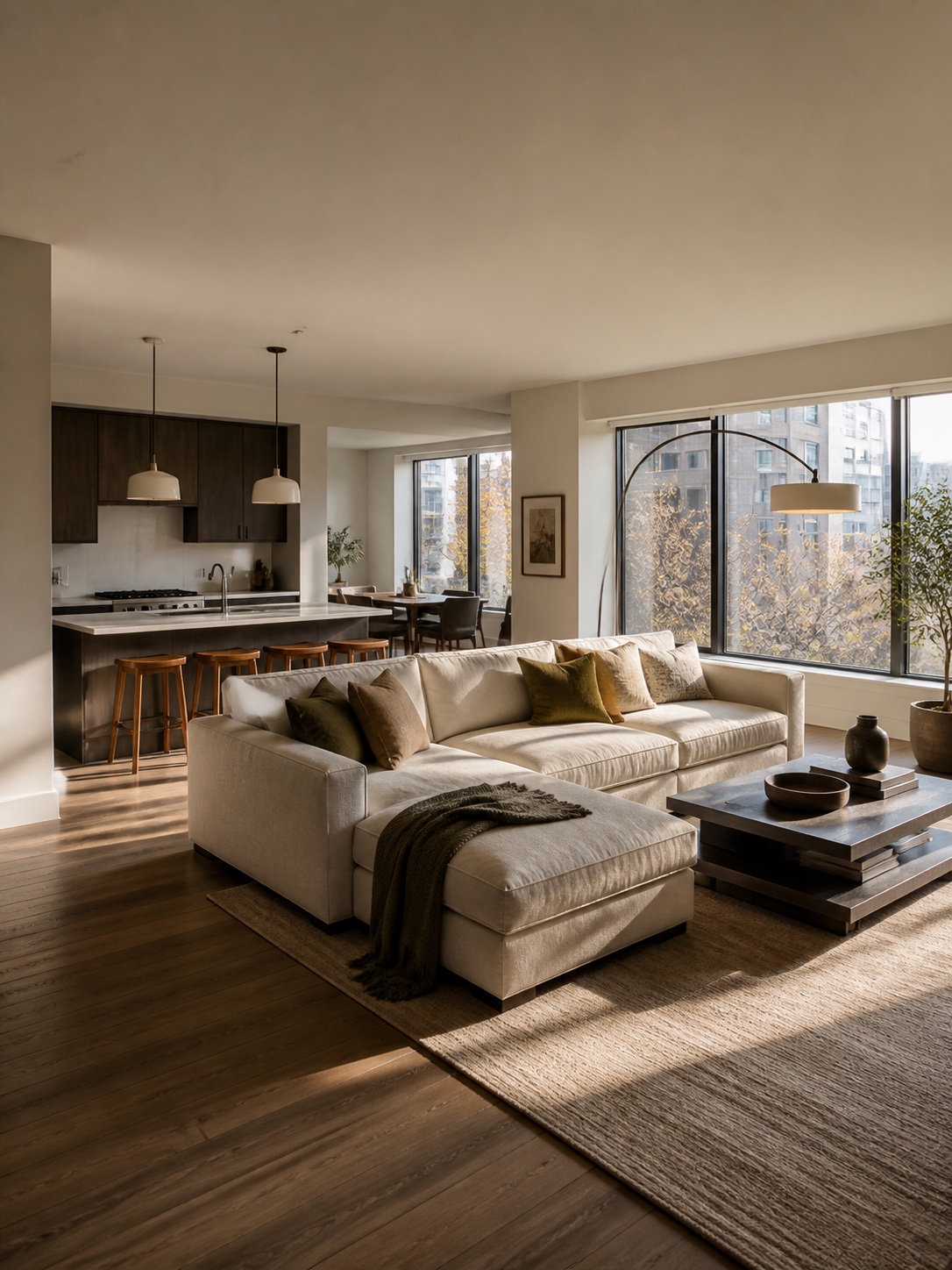
In open-plan spaces, the sofa often does the work of a wall: it defines the sitting zone by its position rather than by an architectural boundary. The depth of the sofa determines how much floor area the zone occupies and how much remains for movement. A 90cm deep seat in a 4-meter-wide room leaves 3.1 meters behind the sofa. The same room with a 105cm deep seat leaves 2.95 meters. That 15cm is roughly the difference between a corridor that feels comfortable and one that feels constrained.
Open-plan zoning also determines whether a corner L-shape or a linear sofa makes better sense. An L-shape creates a visual barrier on two sides, which defines the zone strongly but can block sightlines across the space. A linear sofa leaves the zone more open and tends to suit rooms where the view (to a garden, to a fireplace, across a large kitchen) should remain uninterrupted.
Doorway clearance: the measurement most people miss
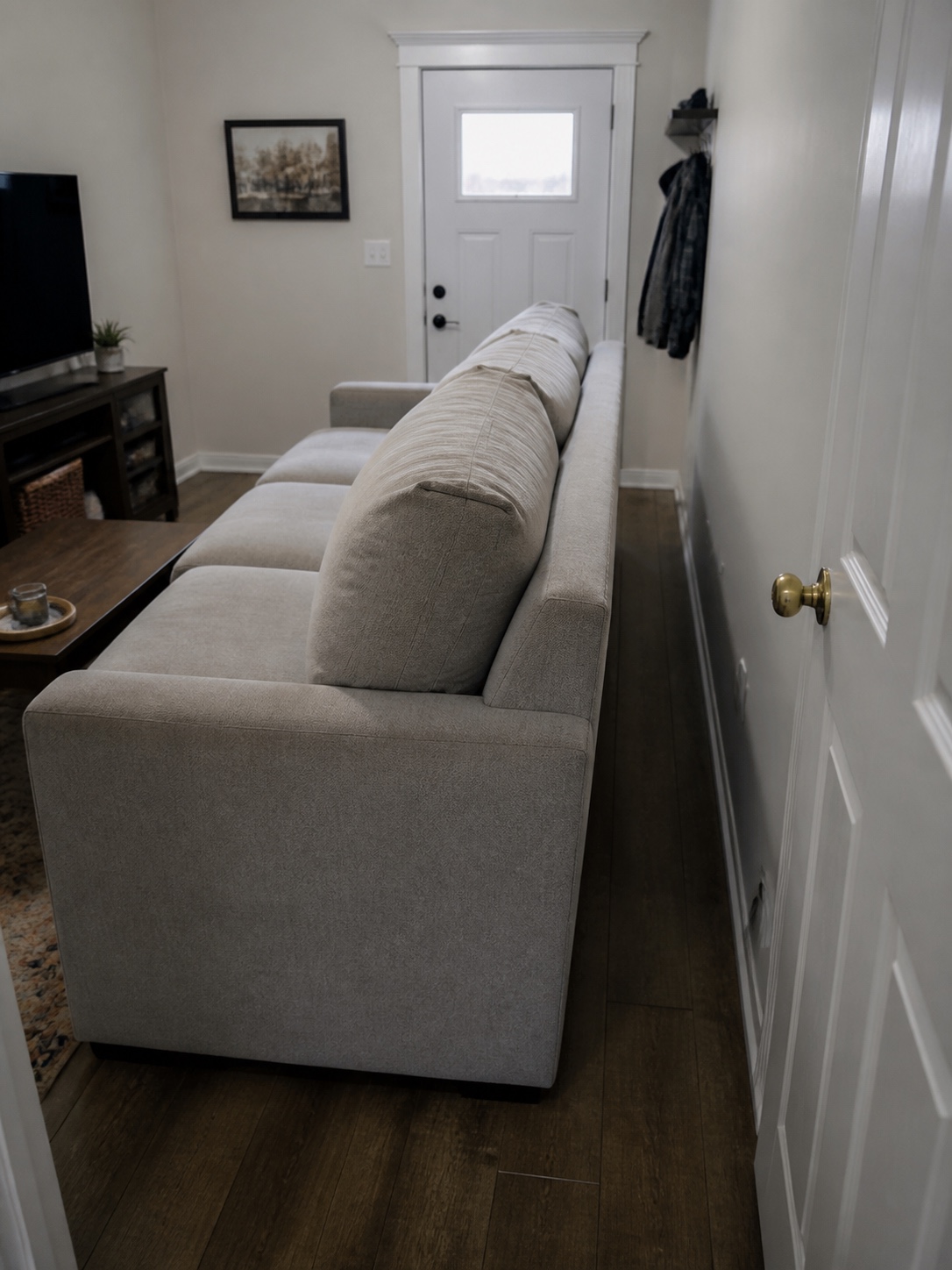
A sofa built to specific dimensions that cannot be delivered through the front door is a problem with no good solution. Measure every doorway the sofa must pass through, including any right-angle turns in the hallway. The critical measurement is not just the door width but the diagonal of the door opening, which determines the maximum length of a rigid item that can be carried through it.
For most single-piece sofas, the diagonal needs to exceed the sofa length. Sectional sofas (including the DreamModular system) solve this problem by splitting into modules that can be carried separately and assembled inside the room. For apartments with tight corridors or lifts, clarifying this with the brand before ordering is a step worth taking.
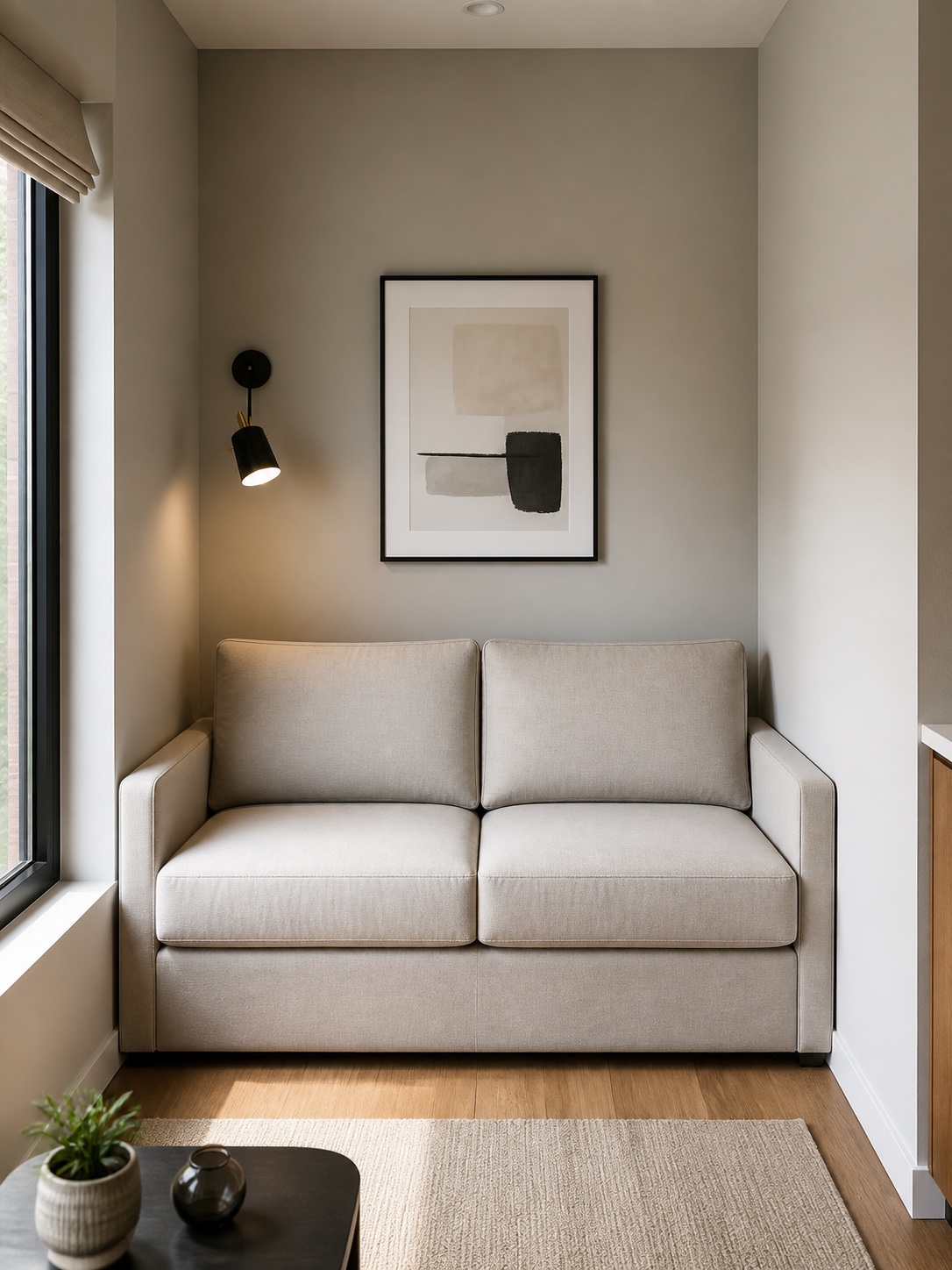
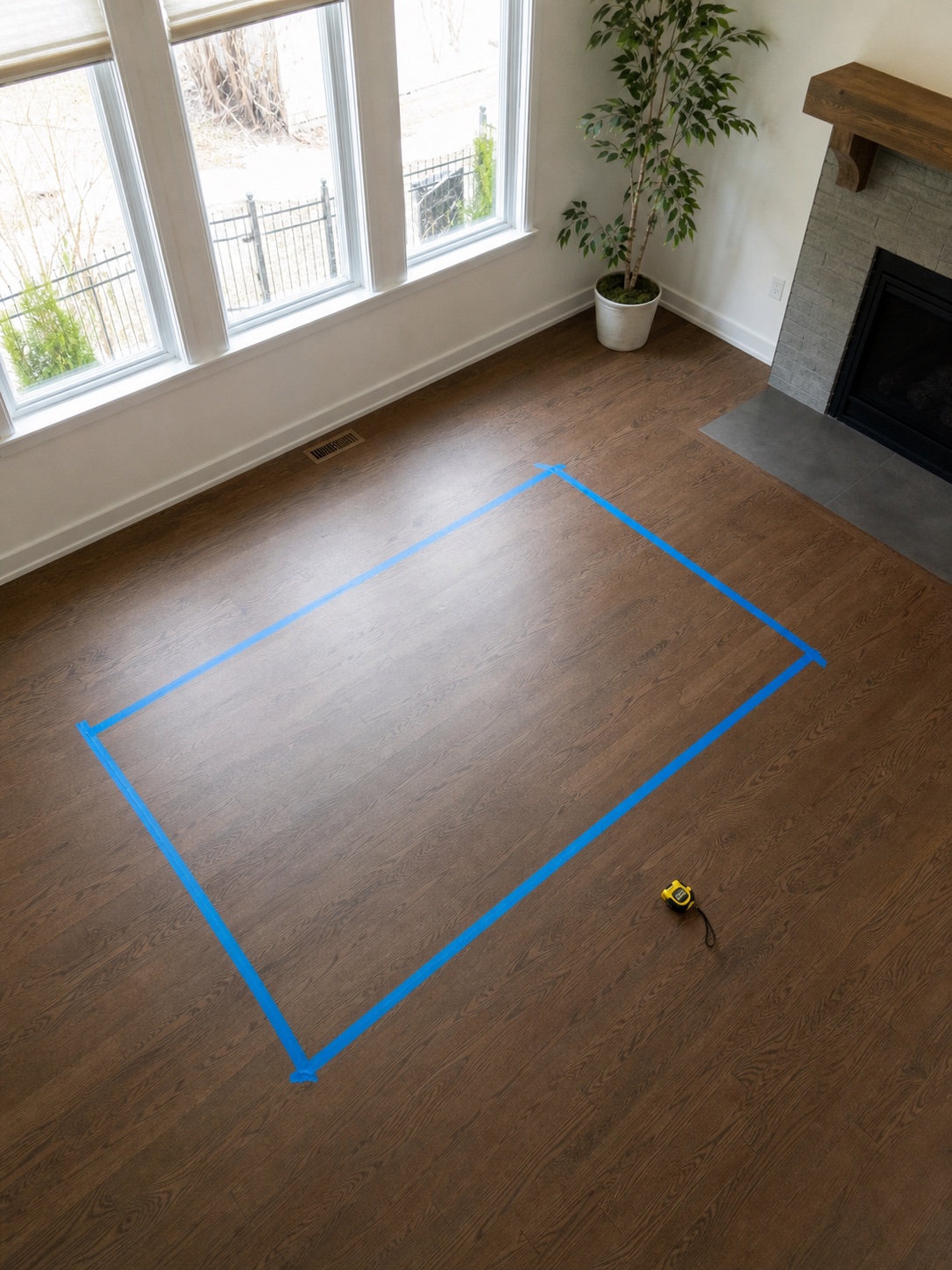
Before confirming any sofa order: tape the exact footprint on the floor using painter’s tape and walk around it for a day. Sit on a chair placed at the sofa’s seat height inside the taped area. The tape test catches proportion problems that are invisible in product photographs and reveals whether the walkway alongside the sofa is genuinely comfortable or just theoretically adequate.
Step 3: test fabric in your actual light
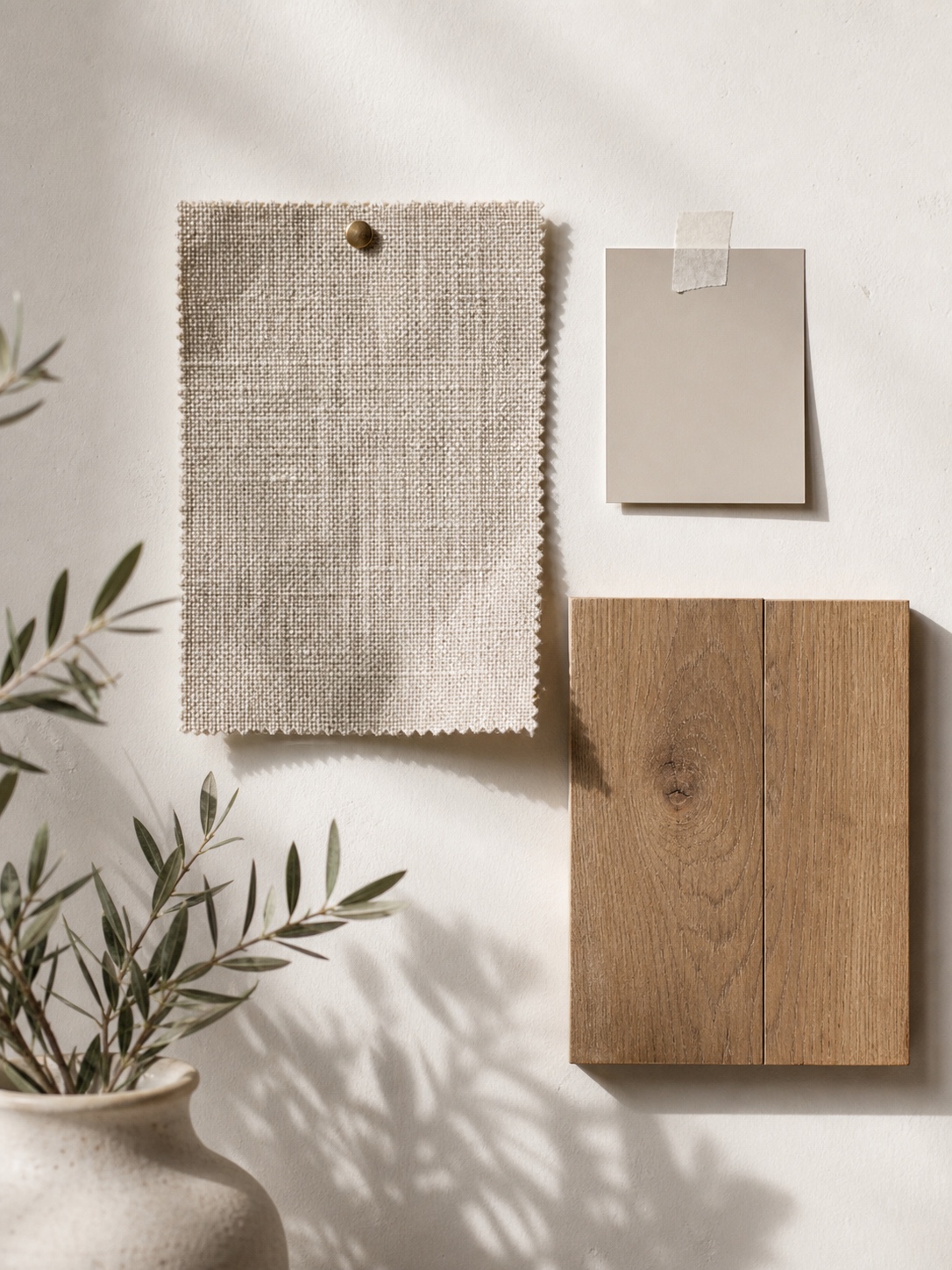
Screen-based fabric selection is one of the least reliable decisions in the custom furniture process. Monitor calibration, color profile, and the brightness settings of the device you’re shopping on all affect how a fabric color renders. A warm stone linen that looks balanced on screen can read as green-grey against a warm wood floor. A mid-tone blue can shift purple in the warm light of a floor lamp.
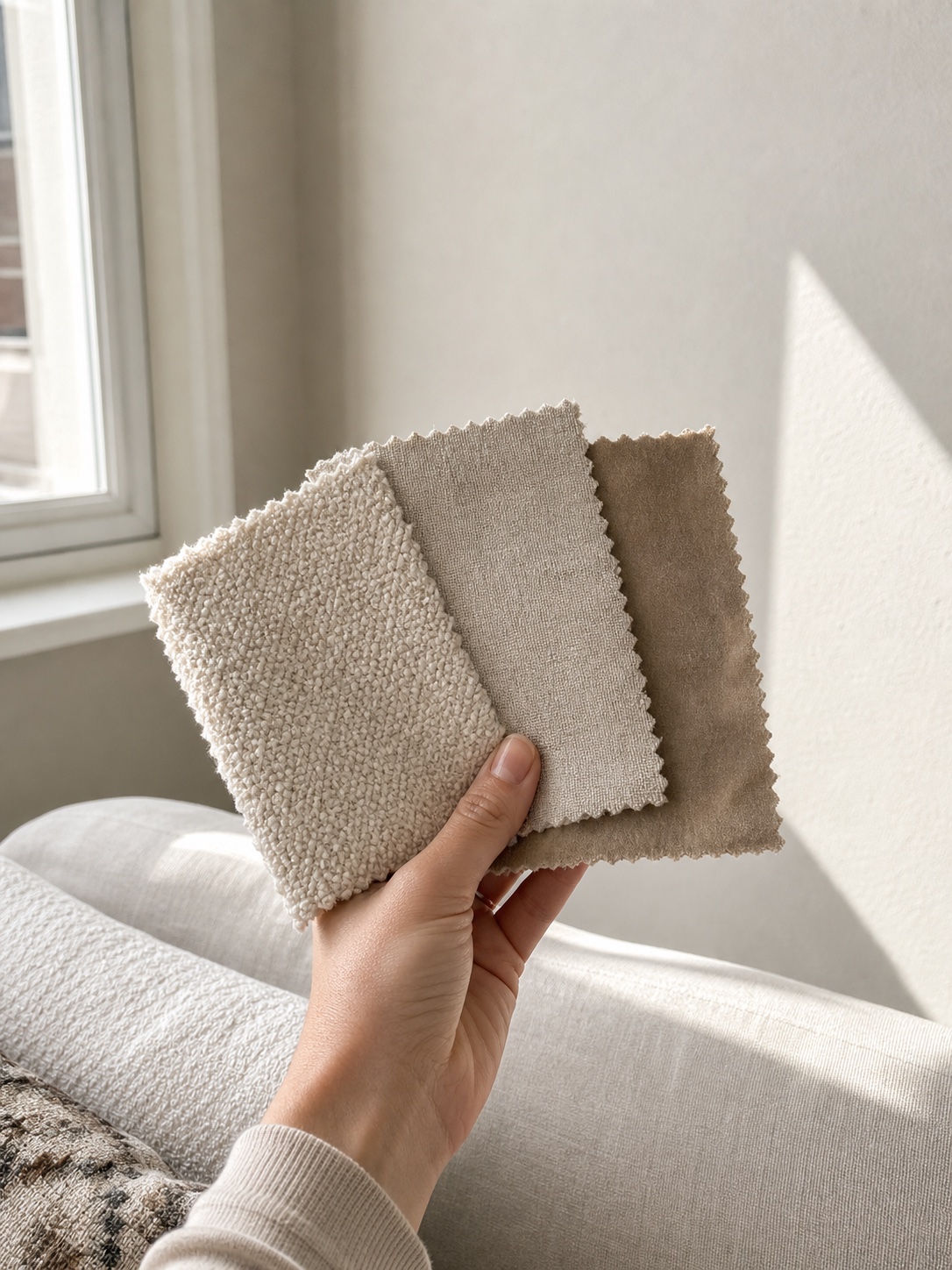
DreamSofa offers free fabric swatches, and using them is not optional if you want an accurate result. Order a swatch of the primary candidate and at least two alternatives. Test them in the room at different times of day: morning light, afternoon direct sun if the room receives it, and evening with the lamps on. A fabric swatch that holds across all three conditions is a fabric that will work in the room.
Fabric and flooring: the relationship most people underestimate
The sofa fabric reads against the floor more than it reads against the walls, because the floor is the other large horizontal plane in the room. A cool grey sofa on a warm amber oak floor creates a temperature contrast that can feel energetically unresolved. A warm beige sofa on the same floor holds together. Neither is right or wrong by some universal standard, but the interaction is predictable and worth checking with physical swatches before committing.
Performance fabrics (DreamSofa’s DreamThread option is in this category) are specified for durability and cleanability rather than purely for hand and appearance. For households with children or pets, the performance specification matters more than the aesthetic choice. For a formal sitting room used occasionally, the opposite may be true. The process separates these considerations rather than bundling them into a single ‘this is what this model comes in’ decision.
Step 4: separate comfort from appearance
In standard sofa buying, the firmness of the cushion is fixed to the model you choose. You sit on it in the showroom and either accept it or choose a different sofa. There’s no mechanism for getting the look of one sofa with the comfort of another. DreamSofa’s process separates these into distinct decisions: fabric choice and cushion firmness are set independently.
This matters most when the fabric you want (a tightly woven performance linen, say) comes in a standard model that has a cushion specification you don’t prefer. On a made-to-order piece, you choose the linen and then separately choose whether you want a firmer or softer seat construction. The two decisions don’t constrain each other.
Cushion firmness as a spatial and lifestyle decision
Cushion firmness is not just a comfort preference. It affects how the sofa reads in the room over time. Soft, loose-fill cushions require fluffing and repositioning after each use to maintain their appearance. A room where the sofa is heavily used daily and rarely groomed will show this. Firmer cushions hold their shape better between uses, which suits rooms where the sofa is visible from an adjacent zone even when not in use (a kitchen-dining-living open plan, for example).
Deeper seats with softer cushions tend toward a casual, relaxed reading. Shallower seats with firmer cushions read as more formal and upright. This is the physical expression of the same choice you made at the silhouette stage: the cushion specification should be consistent with the arm height and back height decisions made earlier in the process.

Step 5: use 3D planning to check scale
DreamStudio is the 3D room planning tool included in the DreamSofa process. You input the room dimensions and place a scaled model of your configured sofa within it. The tool is not for discovering whether you like the aesthetic (that decision was made at the silhouette stage). It’s for verifying that the configuration you’ve chosen actually fits the room at its specified dimensions.
The most common error the tool catches is proportion mismatch: a sofa that is correctly sized in absolute terms but reads as too large or too small relative to the ceiling height, the window scale, or the other furniture in the room. A sofa in a room with 2.4-meter ceilings needs different proportions than the same sofa plan in a room with 3-meter ceilings.
What 3D planning reveals that floor plans miss
A floor plan shows the footprint. It tells you whether the sofa fits on the wall. The 3D view adds the vertical dimension, which reveals whether the back height reads correctly against the windows, whether the arm height aligns with the windowsill, and whether the overall scale of the piece is appropriate for the room’s volume rather than just its floor area.
The tool also shows the view from the primary entry point into the room, which is where first impressions form. A sofa that reads well from overhead on a floor plan may not read well from the doorway if the proportion is wrong. The 3D view catches this before delivery.
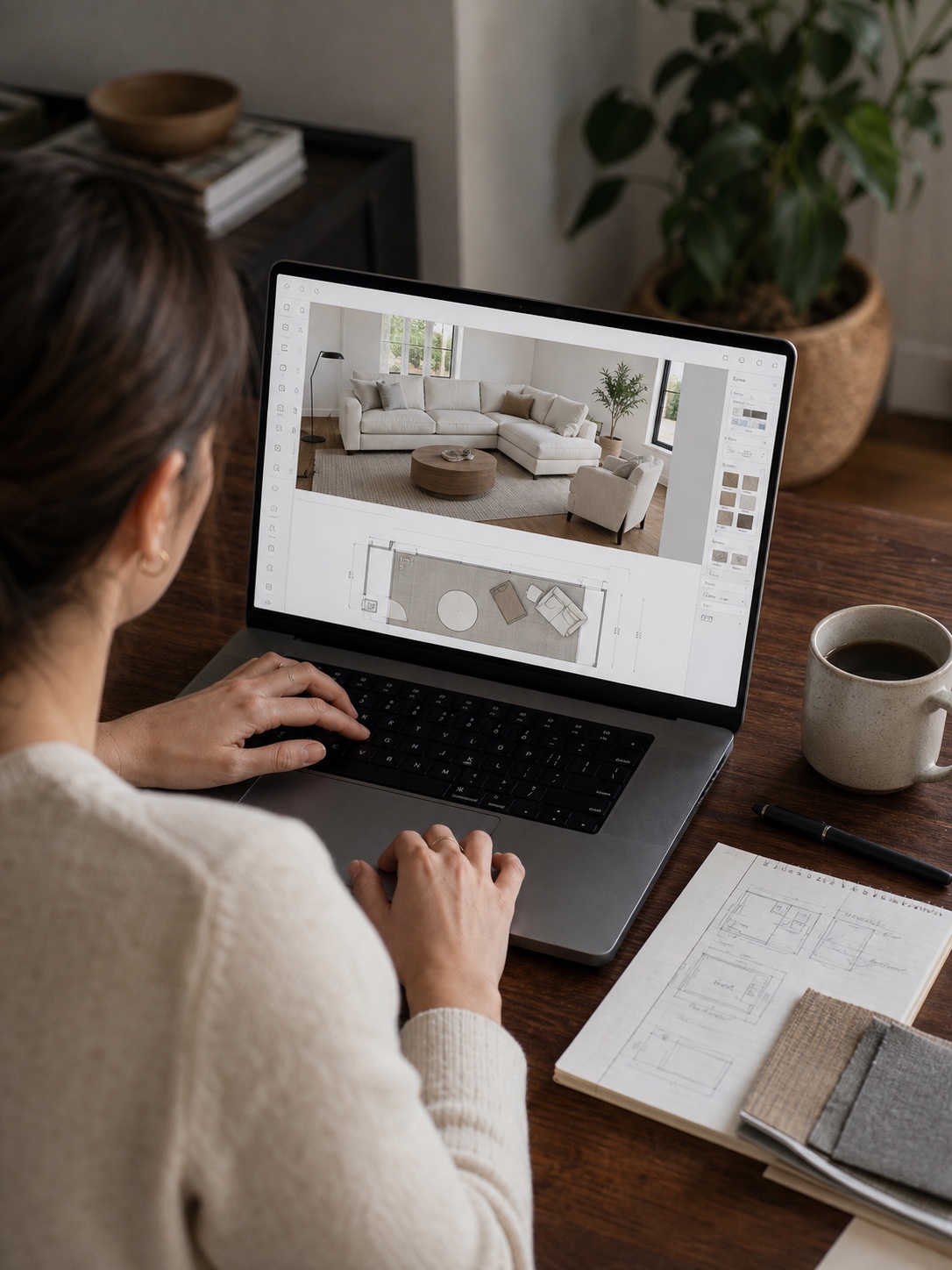
After placing the sofa in the 3D tool, screenshot the view from the primary entry point into the room. Compare it with any reference images you’ve been using as inspiration. The proportional relationship between the sofa and the room should read as similar. If the sofa appears to dominate the space in the 3D view more than in your reference, reduce the depth or back height before confirming.
Who this process suits
The five-step made-to-order process works well for specific buyer profiles. Knowing which one you are before starting saves time and prevents the frustration of an approach that doesn’t match how you make decisions.
Rooms where it makes the most difference
Awkward room dimensions benefit the most directly. A living room with a usable wall length that falls between standard sofa sizes, a bay window that creates an irregular footprint, or an open-plan zone where the sofa needs to define a specific area precisely are all contexts where the to-the-inch sizing changes the outcome.
Design-conscious buyers who have already thought through what they want in terms of silhouette and proportion will find the process efficient. The five stages map onto decisions they’ve already made or are prepared to make. For someone who knows they want a low-arm contemporary sofa at 220cm with a medium seat depth in a performance fabric, the process is simply the mechanism for turning that specification into a sofa.
Open-plan living rooms
Open-plan spaces require furniture that can define zones without walls. The sofa in an open plan is a spatial tool as much as a seating piece. Getting its configuration, depth, and length precisely right determines whether the sitting zone reads as intentional or arbitrary. The custom sizing process is particularly well-suited to this context because the room’s requirements can be stated precisely.
Who should skip it
Buyers who need a sofa within days of ordering should choose from in-stock alternatives. The 3 to 5 week lead time is fast for a made-to-order piece but slow relative to immediate need. Buyers who are genuinely undecided about what they want and would prefer to sit on multiple options in a showroom and choose the one that feels right will find the decision-heavy process more tiring than helpful. The process works for people with clarity. It doesn’t create clarity for people who don’t have it yet.
The design takeaway
A custom sofa is worth the extra process when fit and proportion matter more than speed. Not every room has specific requirements that standard sizing can’t meet. A straightforward rectangular room with a 3-meter wall and no unusual constraints is well-served by a standard sofa at a standard depth. But most rooms, in practice, have at least one dimension that’s slightly off, one constraint that means the nearest standard size is nearly right rather than right.
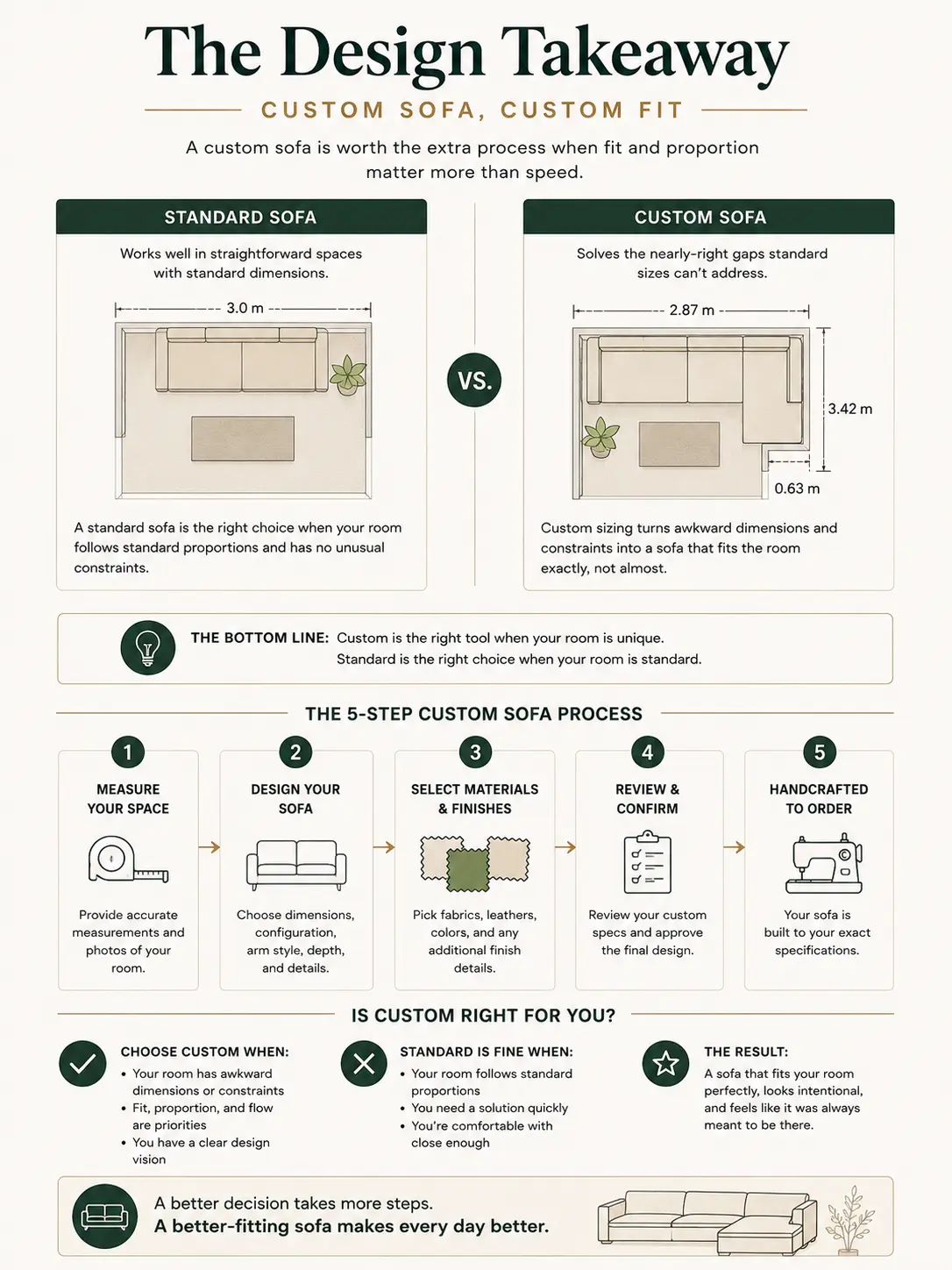
The made-to-order model treats those nearly-right gaps as problems worth solving rather than compromises worth accepting. The five-step process DreamSofa uses to do that is more involved than walking out of a showroom with a decision made in an hour. But the decision at the end of it is a better one: a sofa specified to the actual room rather than the nearest available approximation of it.
For a design-focused buyer who has measured the room, understood the constraints, and has a clear sense of the aesthetic they’re after, the process is the right tool for the job.
Frequently asked questions
How does the DreamSofa customization process work?
DreamSofa uses a five-step process. You start by choosing the silhouette and arm style, then set the dimensions to the inch using the FlexForm system. Next you select fabric from over 200 options (free swatches available). After that you choose cushion firmness independently of the fabric. The final step covers finishing details. The DreamStudio 3D planning tool lets you preview the sofa in a room before confirming. Delivery runs around 3 to 5 weeks.
Can you really size a DreamSofa to the inch?
Yes. The FlexForm sizing system lets you specify length, depth, and height to the inch rather than choosing from fixed standard dimensions. This matters most for rooms with specific wall lengths, narrow apartments, or open-plan zones where the sofa needs to define a space precisely. Standard sofa sizes typically come in 6 to 12-inch increments, which means most rooms are served with a gap or an overhang. DreamSofa eliminates that compromise.
How do you test DreamSofa fabric before ordering?
Free fabric swatches are available through the website. Test them in your actual room in morning light, afternoon direct sun if applicable, and evening lamp light. A fabric that holds across all three conditions is one that will work. Also test the swatch against the flooring material specifically, as the sofa reads against the floor more than the walls. The DesignXChange program means covers can be swapped later if preferences change.
How long does a custom DreamSofa take to arrive?
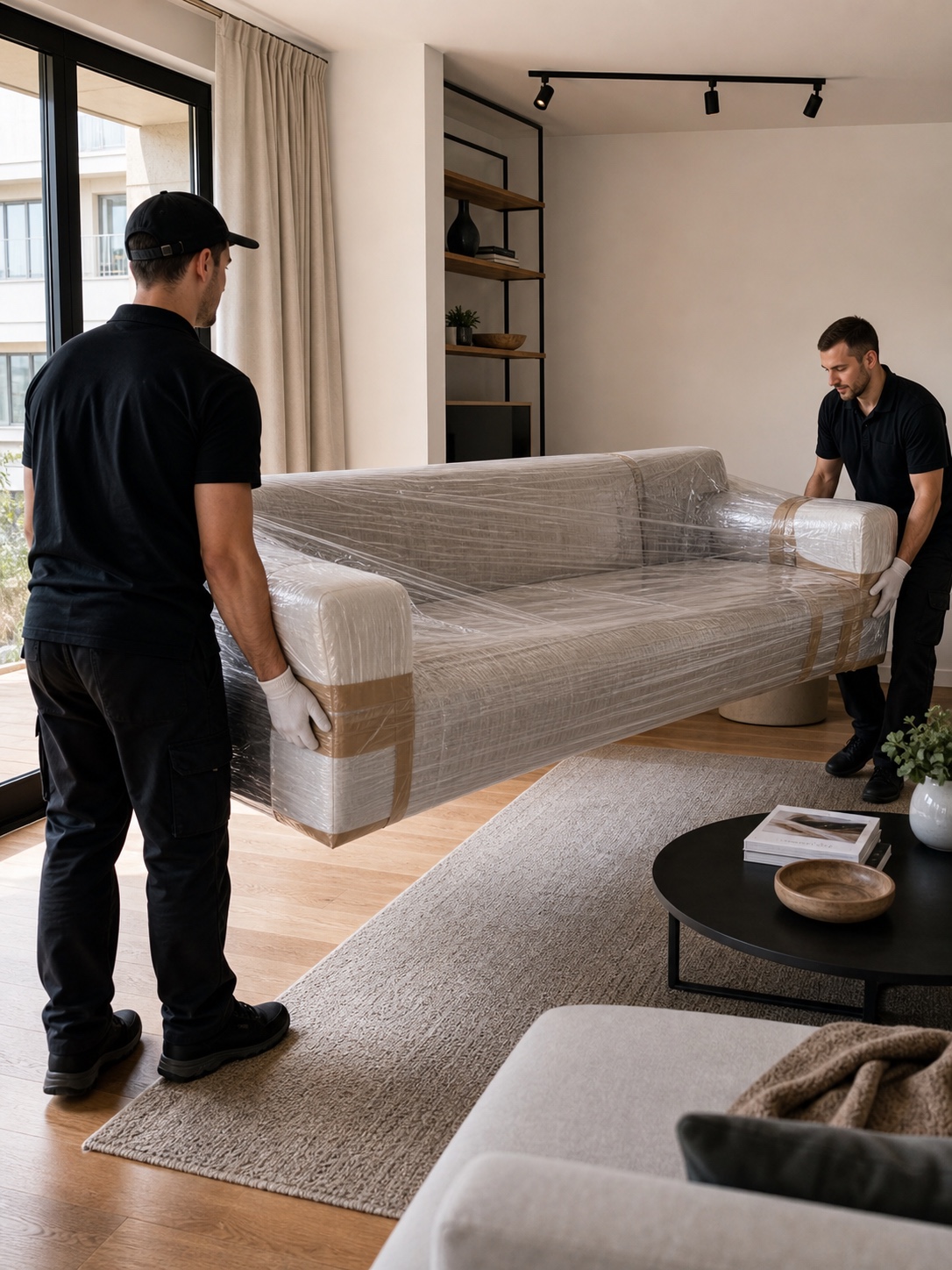
Delivery typically runs 3 to 5 weeks from order confirmation. Production begins after the order is placed and all specifications confirmed. This is faster than much of the made-to-order market but slower than off-the-shelf options. White-glove delivery is included. Planning the lead time means no gap in seating between old sofa removal and new sofa delivery.
Is DreamSofa good for small or awkward rooms?
It is particularly well-suited to rooms with specific constraints: a wall length that standard sofa sizes overshoot or fall short of, an open-plan space needing a sofa to define a zone precisely, or a room where doorway clearance limits delivery options. The to-the-inch sizing means the sofa is specified to those constraints rather than chosen as the closest available fit. The 3D planning tool lets you verify scale and configuration before committing.
What is the DreamSofa 100-day trial?
DreamSofa offers a 100-day home trial period after delivery. If the sofa does not work in the space, you can initiate a return or exchange within that window. For a made-to-order piece where you have not sat on the final product before it arrives, the trial period reduces the purchase risk meaningfully. Read the trial terms before ordering to understand what the return process involves.
Is the DreamSofa customization process too complex?
It is more involved than choosing a finished sofa from a showroom. The five-step structure breaks a complex decision into distinct stages, which makes it manageable for buyers who have a clear picture of their room and preferences. For buyers who are genuinely undecided and would prefer to sit on options and choose by feel, the process may feel like more work than it is worth. The process works for people with clarity about what the room needs.
A custom sofa usually exposes whether the surrounding walls feel finished or flat. Use the wallpaper and textured wall finish guide to decide when the backdrop needs grasscloth, relief, or a quieter tonal surface.
- 103shares
- Facebook0
- Pinterest103
- Twitter0
- Reddit0