Most lawn decisions start with grass and work backward, which is exactly the wrong order. Someone picks a sod variety, has it installed, and only then notices that the shape reads as an afterthought against the house it’s supposed to be framing. I’ve reviewed enough exterior compositions to know the lawns that actually work were never decided first.
They were decided last, after the architecture, the hardscape, and the planting had already established what the space needed the grass to do. A lawn is foreground. Treat it that way from the start and the whole composition holds together.
Most homeowners never consciously register why one house’s yard reads as designed and another’s reads as merely maintained, even standing in front of both. The difference is rarely the grass itself.
It’s whether the lawn’s shape, edges, and proportion were actually considered alongside the architecture, or whether the grass simply filled whatever space was left over once everything else got decided.
Why the lawn should start with the house, not the grass
A house has a visual language before a single blade of grass gets planted: the roofline, the material palette, the proportions of window to wall. A lawn shaped without reference to that language ends up feeling like a separate decision bolted onto the property rather than part of it.
I think about this the same way I’d think about negative space in any composition: the lawn is rarely the subject, but it’s the space that lets everything else, the facade, the entry, the planting beds, actually read clearly. Get that foreground wrong and even a beautifully designed house looks slightly unresolved from the street.
I’ve walked properties where every individual element, the facade material, the entry door, the planting, was genuinely well chosen, and the whole composition still felt slightly off.
The lawn was almost always the culprit, shaped by whatever curve felt pleasant in isolation rather than by what the house actually needed from the space in front of it. Fixing the lawn’s shape alone, without touching anything else, often resolves that unease completely.
Match lawn shape to your home’s architecture
Every architectural style has an implicit expectation for how the ground plane around it should behave, and matching that expectation is what makes a lawn feel connected to the house rather than incidental to it.
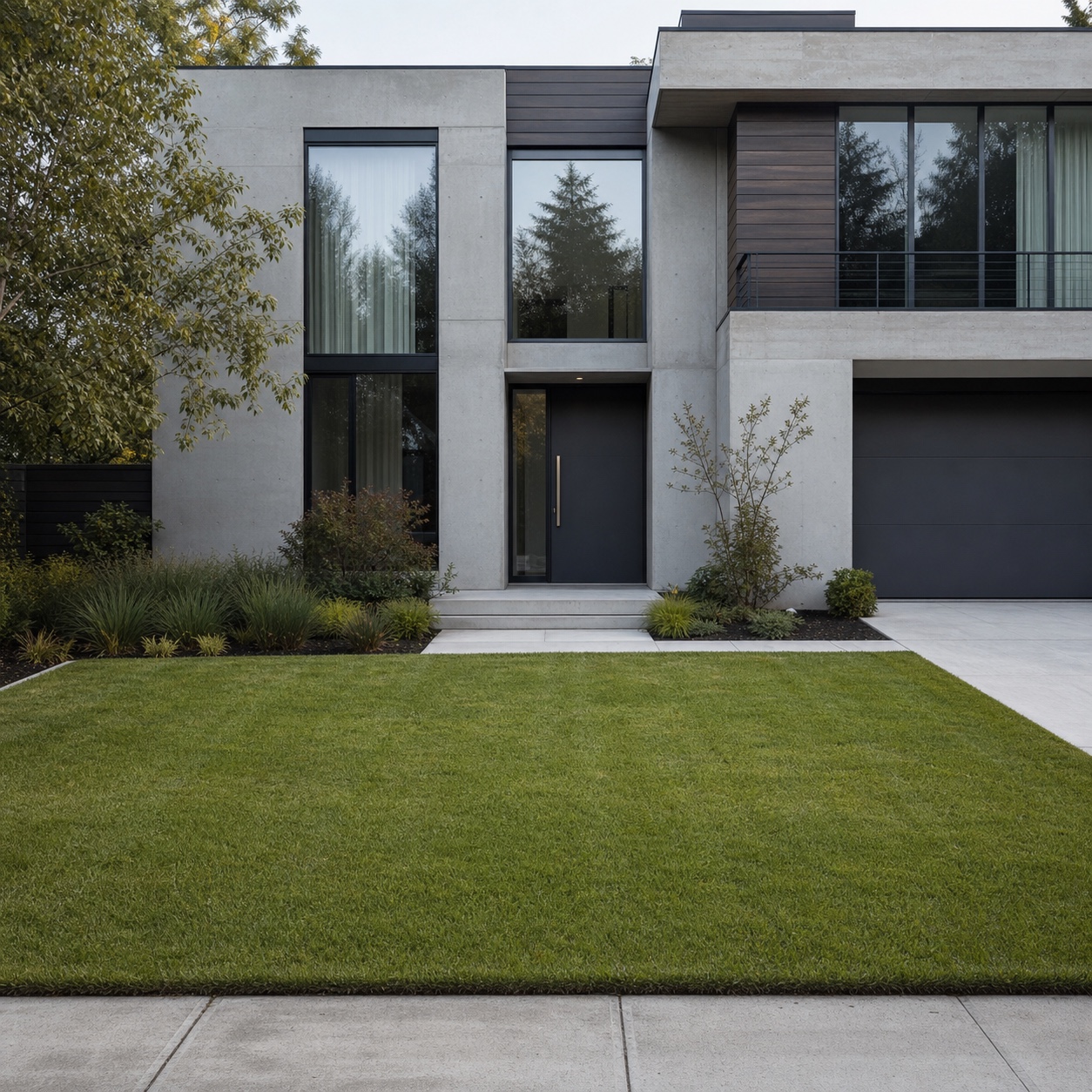
Clean lines for modern homes
Modern facades built on precise geometry want a lawn that reinforces that same discipline: crisp, straight edges, minimal curve, planting kept restrained rather than layered. A soft, organic lawn shape against a hard-edged modern house creates a visual argument between two different design languages, and the house usually loses that argument since the lawn sits closer to eye level and reads first.
I think about a modern facade’s lawn the same way I’d think about the surfacing language on a clean, minimal product design: every line either reinforces the overall discipline or quietly undermines it. There’s very little room for a decorative flourish that doesn’t actually serve the geometry, and a curved bed line dropped into an otherwise rectilinear composition reads as a mistake rather than a softening touch.
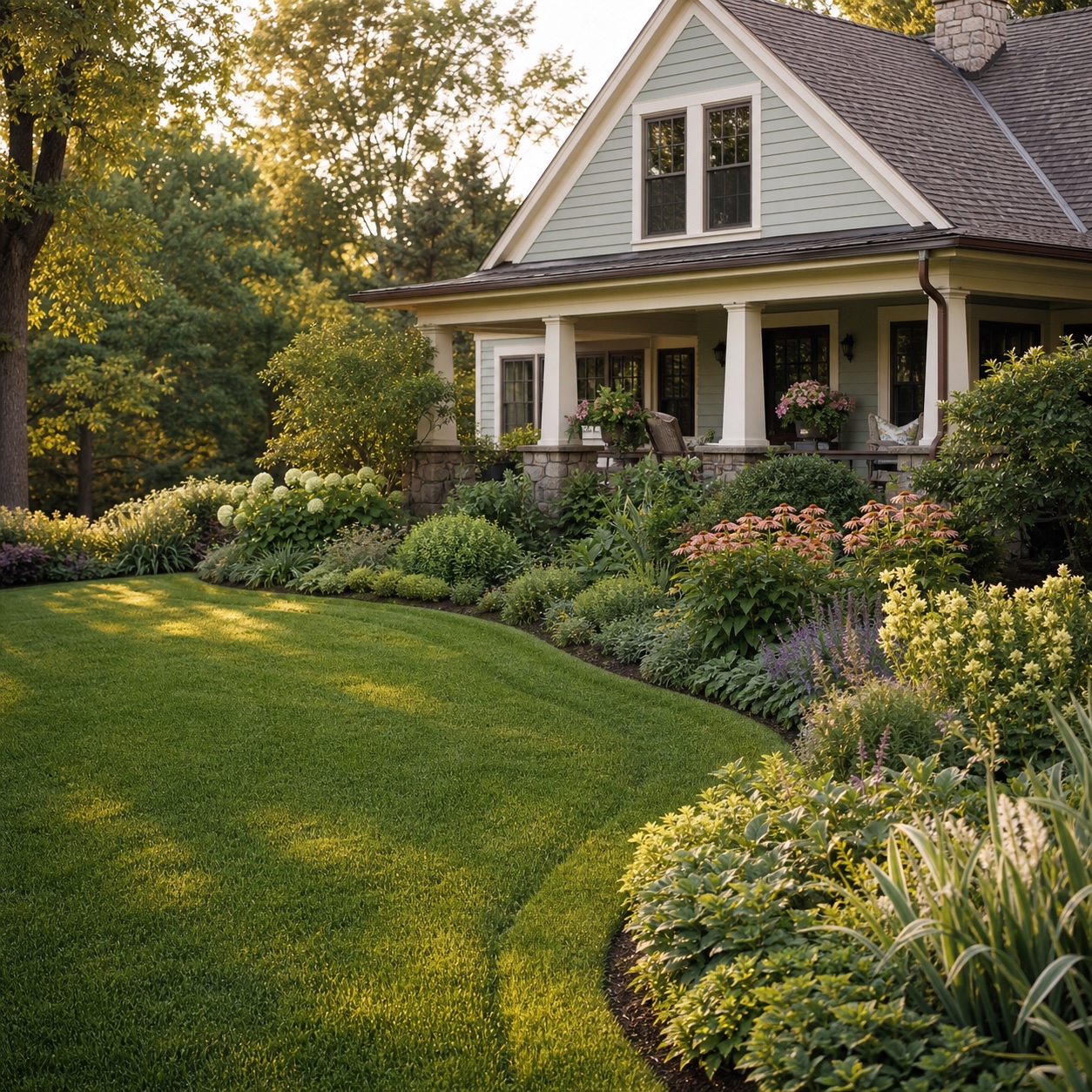
Softer curves for traditional and cottage-style homes
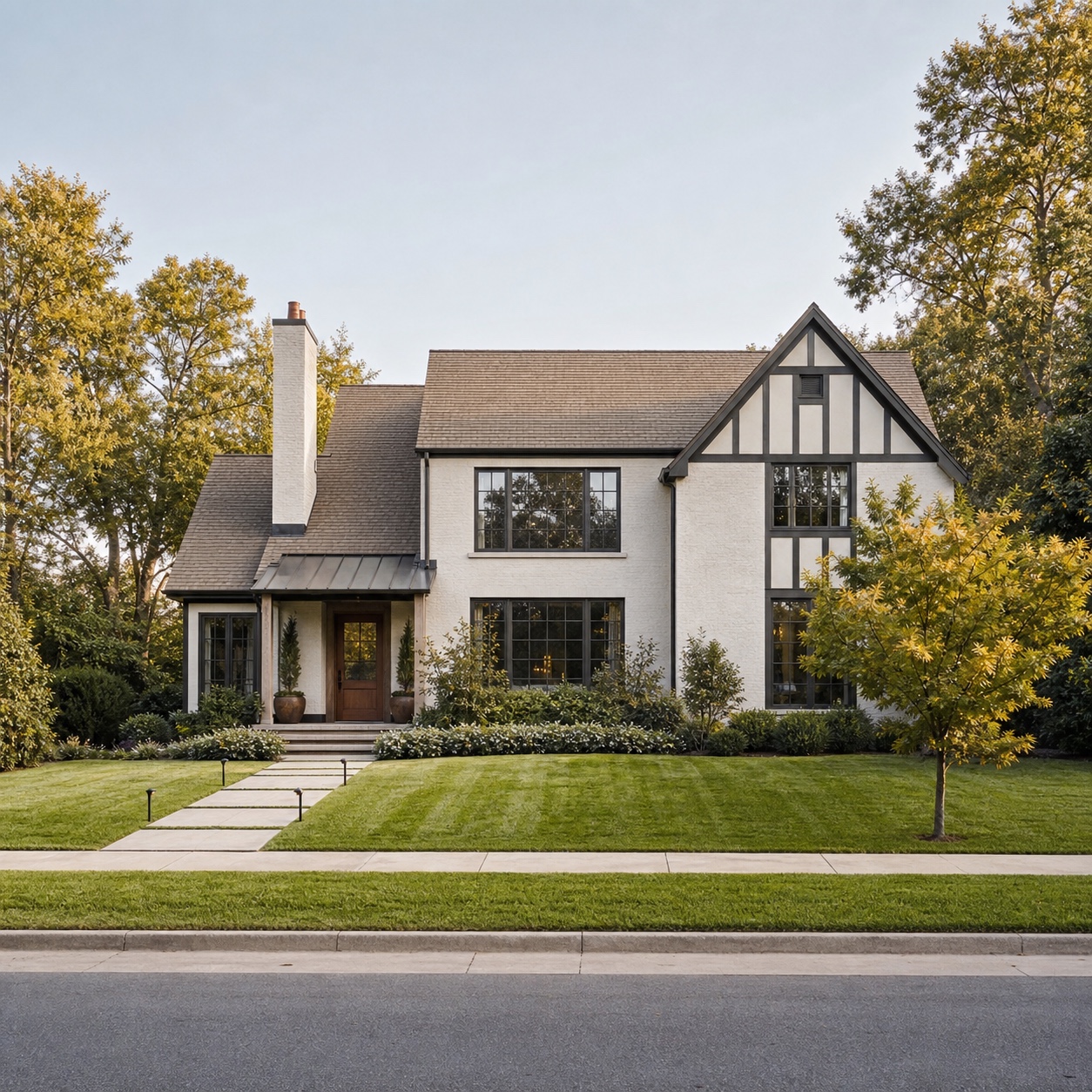
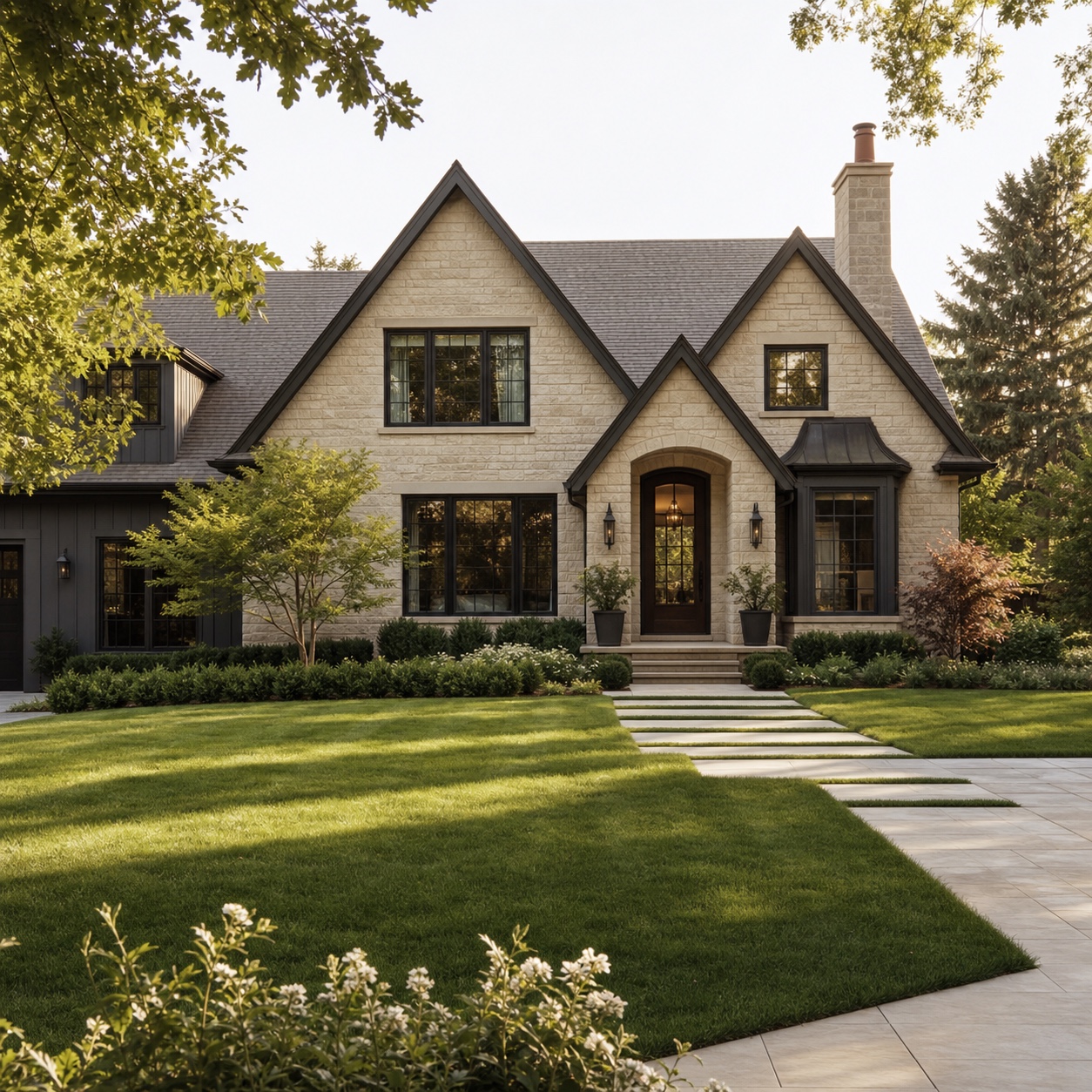
Traditional and cottage architecture tolerates, and often wants, a gentler lawn geometry: curved bed lines, softer transitions between grass and planting, less insistence on perfect symmetry. The looseness that would undercut a modern facade actually supports a traditional one, since it echoes the more ornamented, less rigidly geometric language the house itself is already speaking.
The key is deliberate softness, not undesigned softness. A curved bed line drawn with genuine intention reads completely differently than one that simply meanders because nobody committed to a clear shape. Traditional architecture forgives more geometric variation than modern does, but it still rewards a curve that was actually decided rather than one that just happened.
Open lawn panels for low ranch-style houses
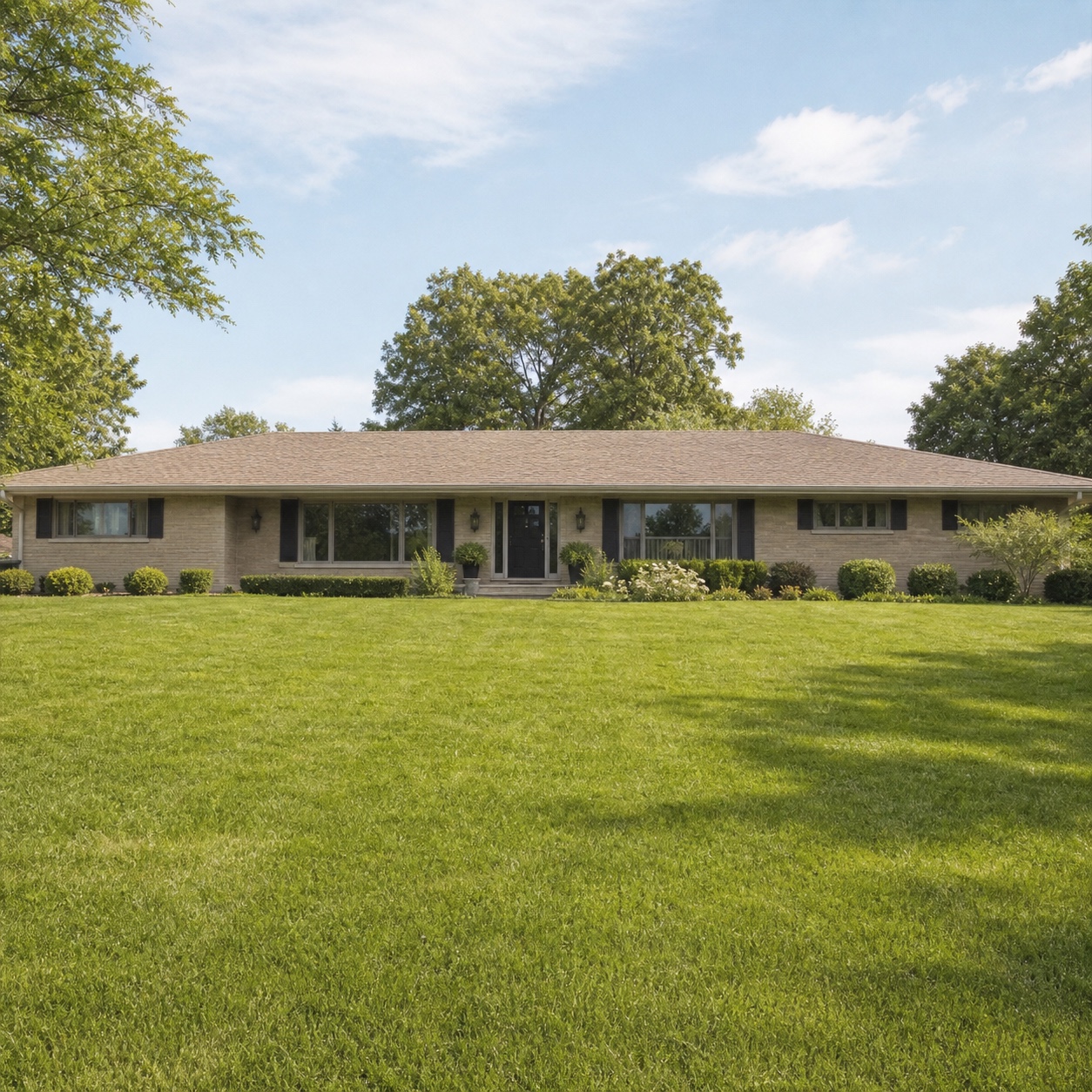
A low, horizontal ranch house benefits from a lawn that emphasizes exactly that horizontality: wide, open panels rather than broken-up zones, which makes the property read as more expansive than its actual footprint. Chopping that same lawn into smaller segments with excessive bed lines fights the house’s natural proportions instead of supporting them.
This is one of the clearest cases where restraint genuinely outperforms elaboration. A ranch house’s whole visual appeal rests on its horizontal line, and a lawn broken up into fussy, individually planted sections directly undercuts the exact quality the architecture is trying to express. The simplest move, one continuous open panel, is almost always the correct one here.
Use grass as a visual frame for curb appeal
Front lawn proportions
A front lawn’s proportion relative to the house matters more than its absolute size. A lawn that’s too small for the facade it’s fronting makes the house look oversized for the lot. One that’s too expansive relative to a modest facade can make the house look lost in its own yard. Walking the property line and actually looking back at the house from the street, the way a visitor would first see it, catches proportion problems no plan-view drawing reveals as clearly.
I do this walk-back check on every exterior project I’m involved in, regardless of scale, because a plan drawn from directly overhead genuinely lies about how a space will actually feel from a human eye level. The proportion that looks balanced on paper can read completely differently once you’re standing where a visitor actually stands.
Edging, walkways, and planting beds
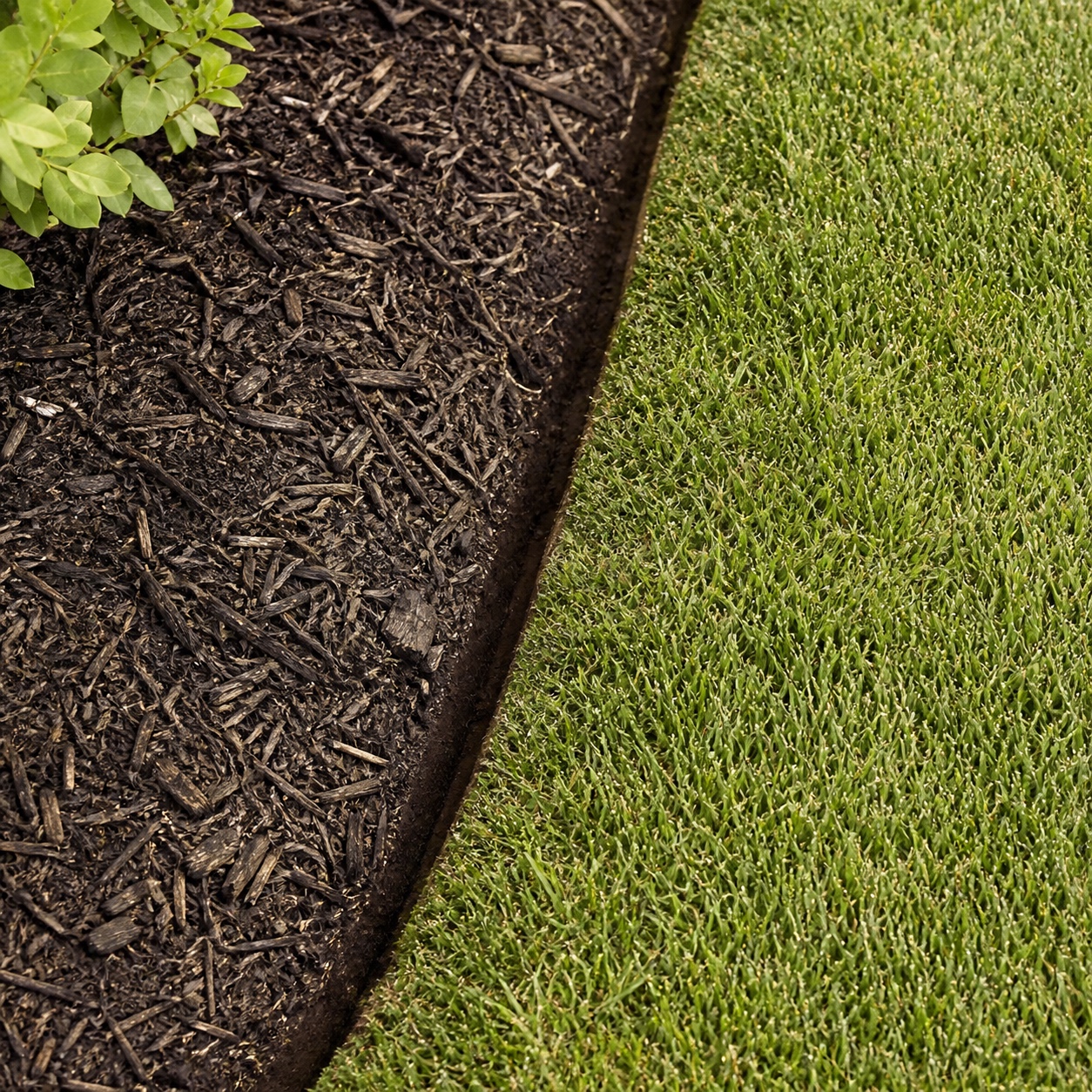
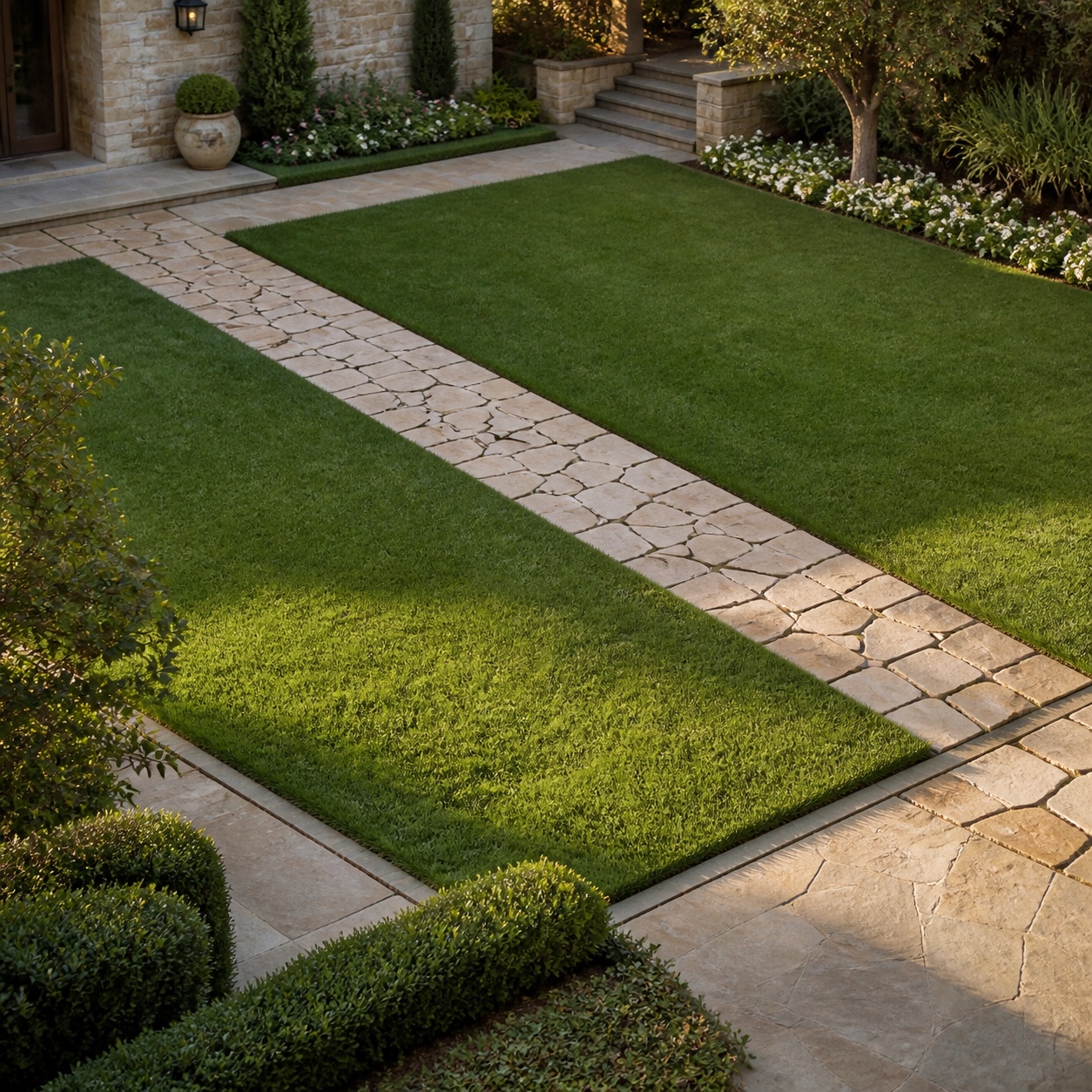
Clean edging is what makes a lawn read as designed rather than simply mowed. A hard, consistent edge between turf and bed or walkway does more visual work than almost any planting choice layered on top of it, since it’s the line the eye actually follows first. Walkway placement deserves the same intentionality: a path that cuts diagonally across an otherwise rectangular lawn panel breaks the composition in a way that’s hard to unsee once you notice it.
A blurred, inconsistent edge is the single most common reason an otherwise decent lawn reads as neglected rather than designed. It’s also one of the cheapest problems to fix, since a clean edge costs almost nothing compared to the planting or hardscape decisions around it, yet it changes the overall impression more than most of those bigger, more expensive choices ever do.
When less lawn looks more designed
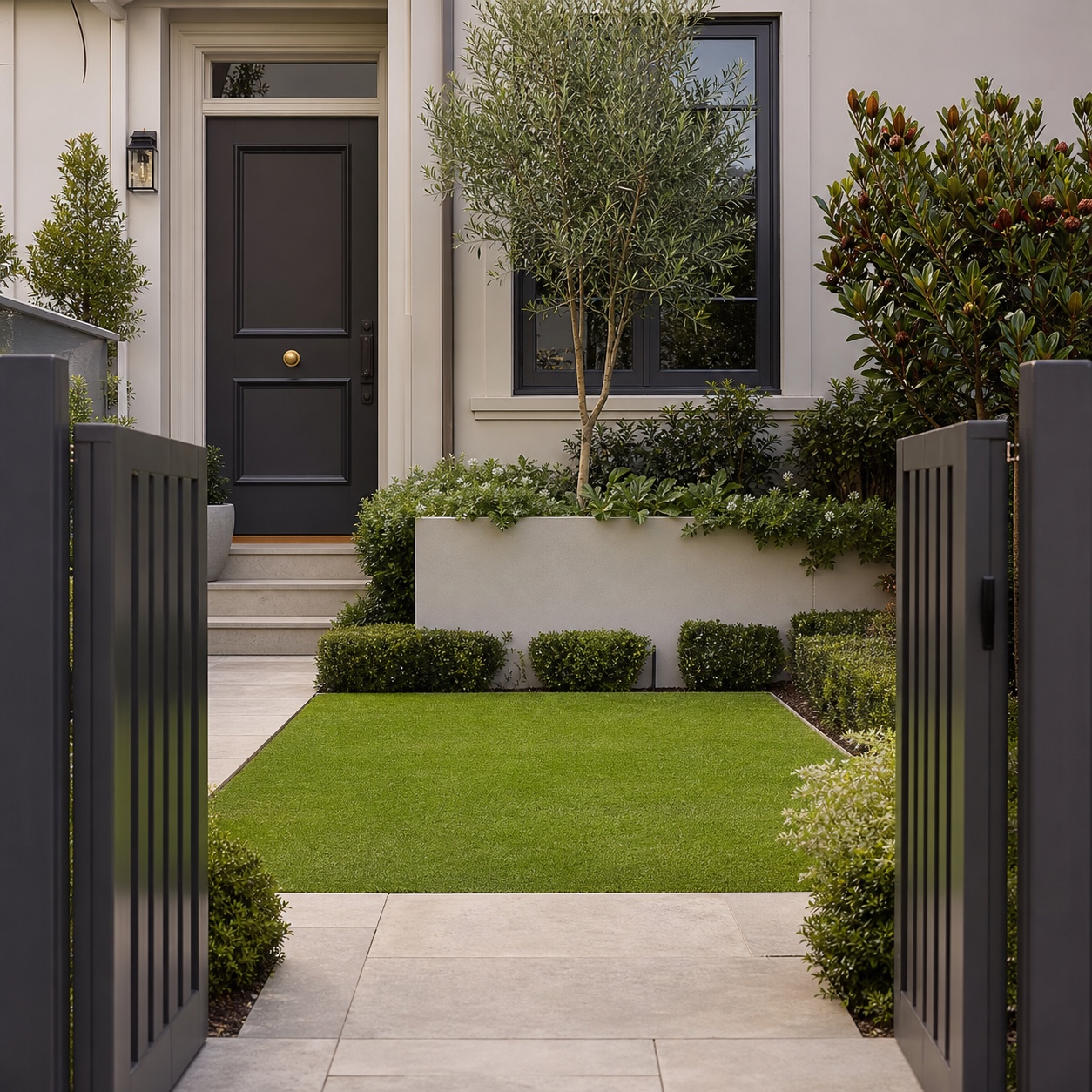
A smaller, precisely shaped lawn panel almost always reads as more intentional than a larger, loosely bordered one. I’ve watched homeowners assume more grass automatically means more curb appeal, when the opposite is often true: a tightly edged, proportionally correct lawn framed by well-considered hardscape looks like a deliberate design decision, while an oversized lawn with soft, undefined borders looks like the default nobody actively chose.
This is a genuinely counterintuitive point for most homeowners walking into a landscape conversation for the first time, since more square footage of anything usually feels like the safer, more generous choice. Lawn is one of the few elements in exterior design where restraint reads as confidence and excess reads as indecision.
Plan backyard lawn zones around outdoor living
A backyard lawn earns its place by supporting how the space actually gets used, not by defaulting to grass simply because that’s what was there before.
Lawn beside patios and decks
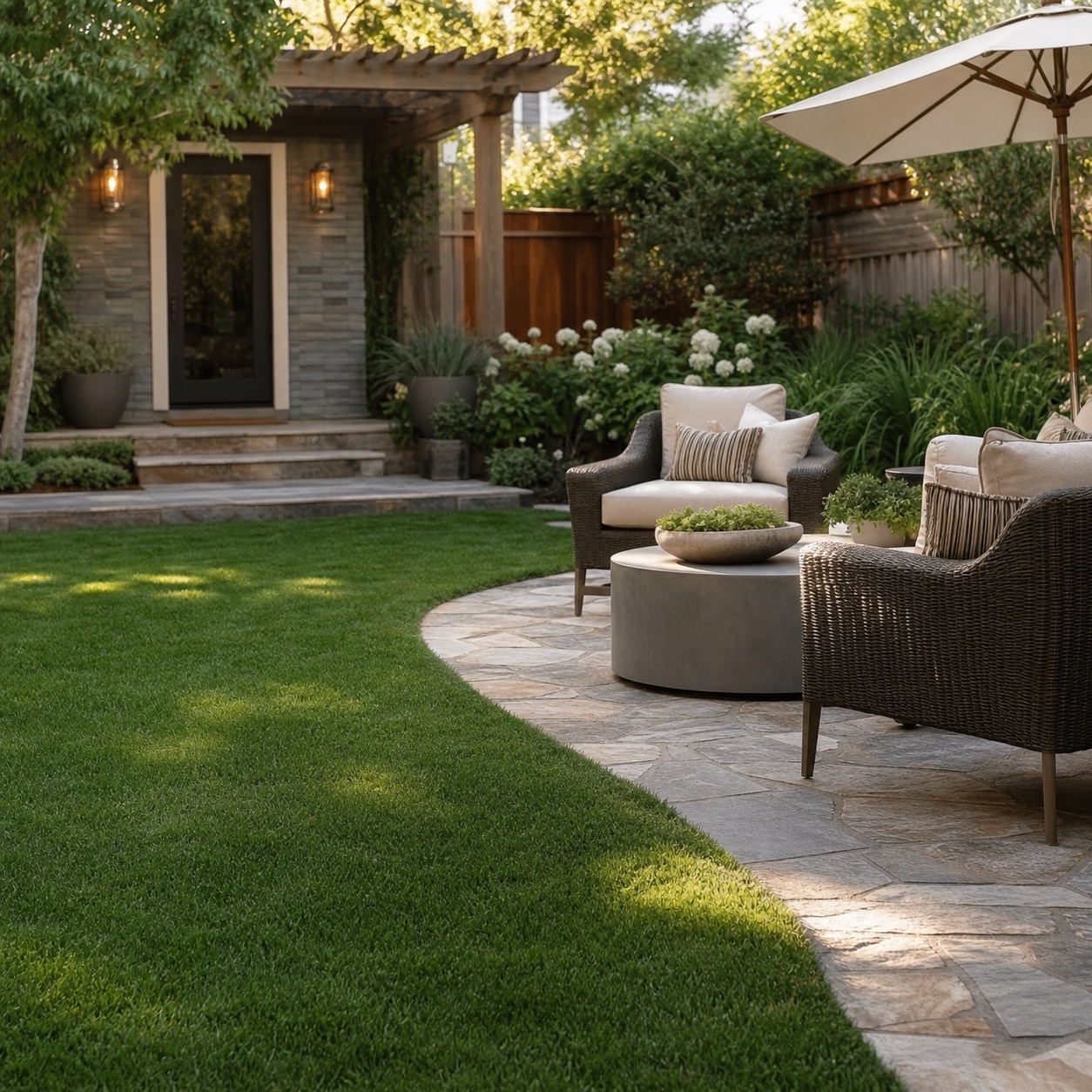
A backyard lawn adjacent to a patio or deck works best when it’s treated as an extension of that hardscape rather than a completely separate zone. The transition matters: a lawn that starts immediately at the patio edge with no buffer reads differently than one separated by a defined border, and the choice should follow how the space actually gets used, not just how it looks in a single photograph.
I favor a direct transition, grass meeting hardscape with no buffer strip, when the space genuinely needs to function as one continuous area for entertaining. A defined border works better when the lawn and patio serve genuinely different purposes and benefit from reading as two distinct zones rather than one blended space.
Flexible space for pets, kids, seating, and entertaining
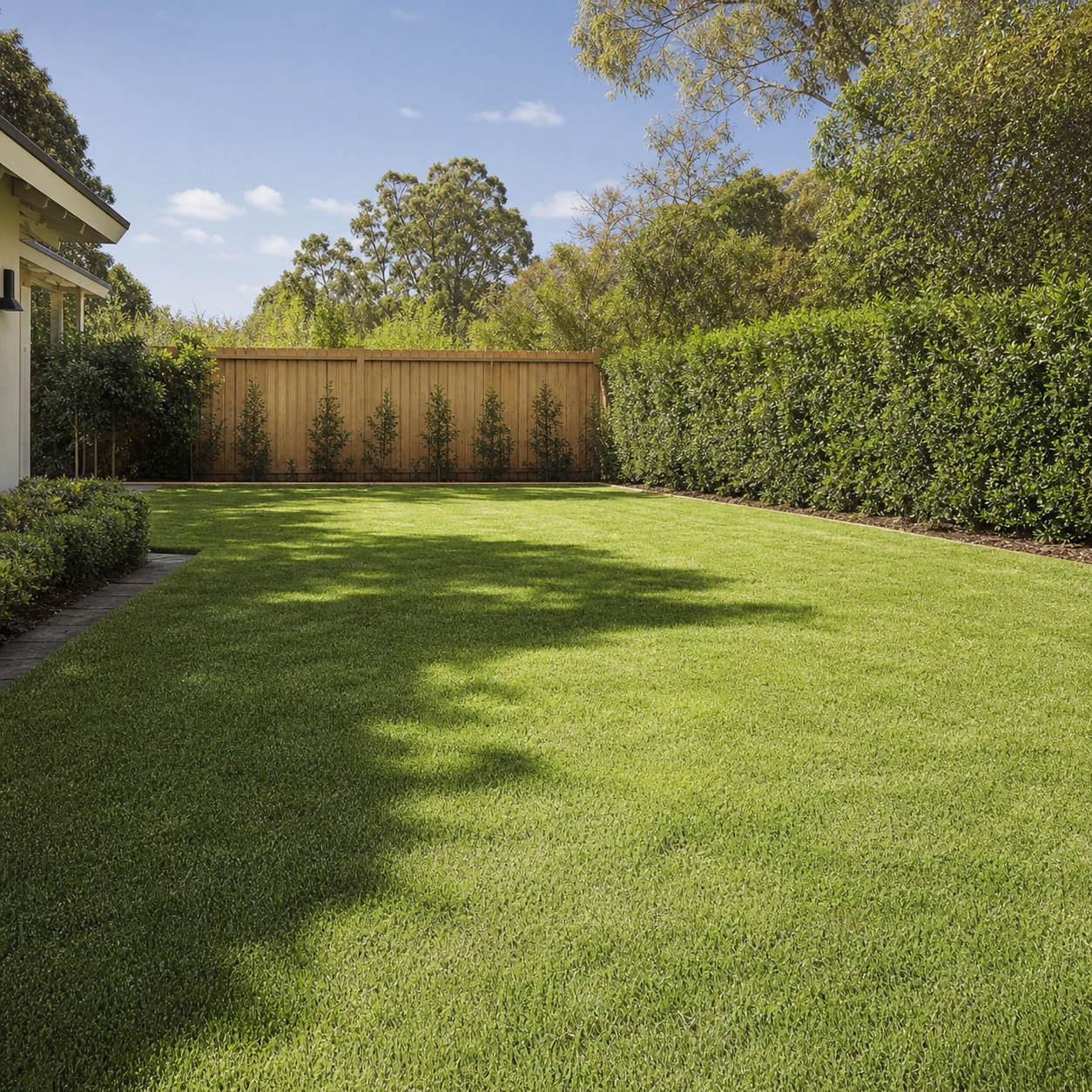
An open lawn panel is one of the few outdoor elements that stays genuinely flexible across completely different uses: a play space one afternoon, an overflow seating area the next, a place for a dog to actually run. Preserving that flexibility means resisting the urge to fill every square foot of backyard with fixed hardscape or planting, since the open lawn is often doing more functional work than any single built feature would.
Views from windows, sliders, and covered outdoor rooms
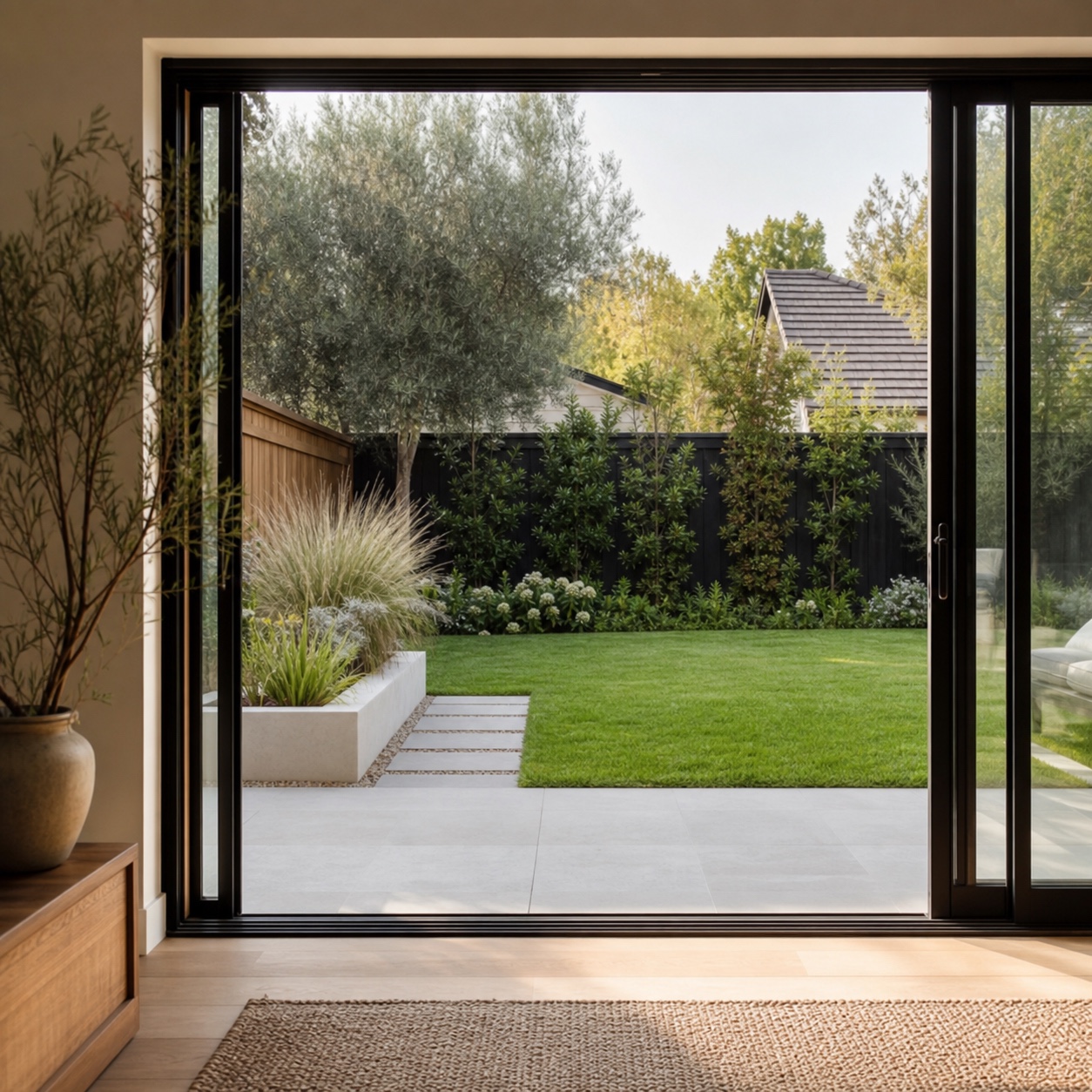
A backyard lawn gets seen from inside the house far more often than it gets walked on, through kitchen windows, sliding doors, a covered porch. Designing the lawn’s shape with those specific sightlines in mind, not just the view from standing in the yard itself, changes decisions about where the strongest lines and cleanest edges actually need to be.
Stand at the exact spot where you’ll actually be looking out most often, the kitchen sink, the spot on the couch facing the sliders, and evaluate the lawn’s shape from there before finalizing anything. That specific vantage point matters more than any other single viewpoint on the property, since it’s the one you’ll actually experience daily, far more often than the view from the yard itself.
Balance lawn with hardscape, planting, and drainage
Paths and patios before turf
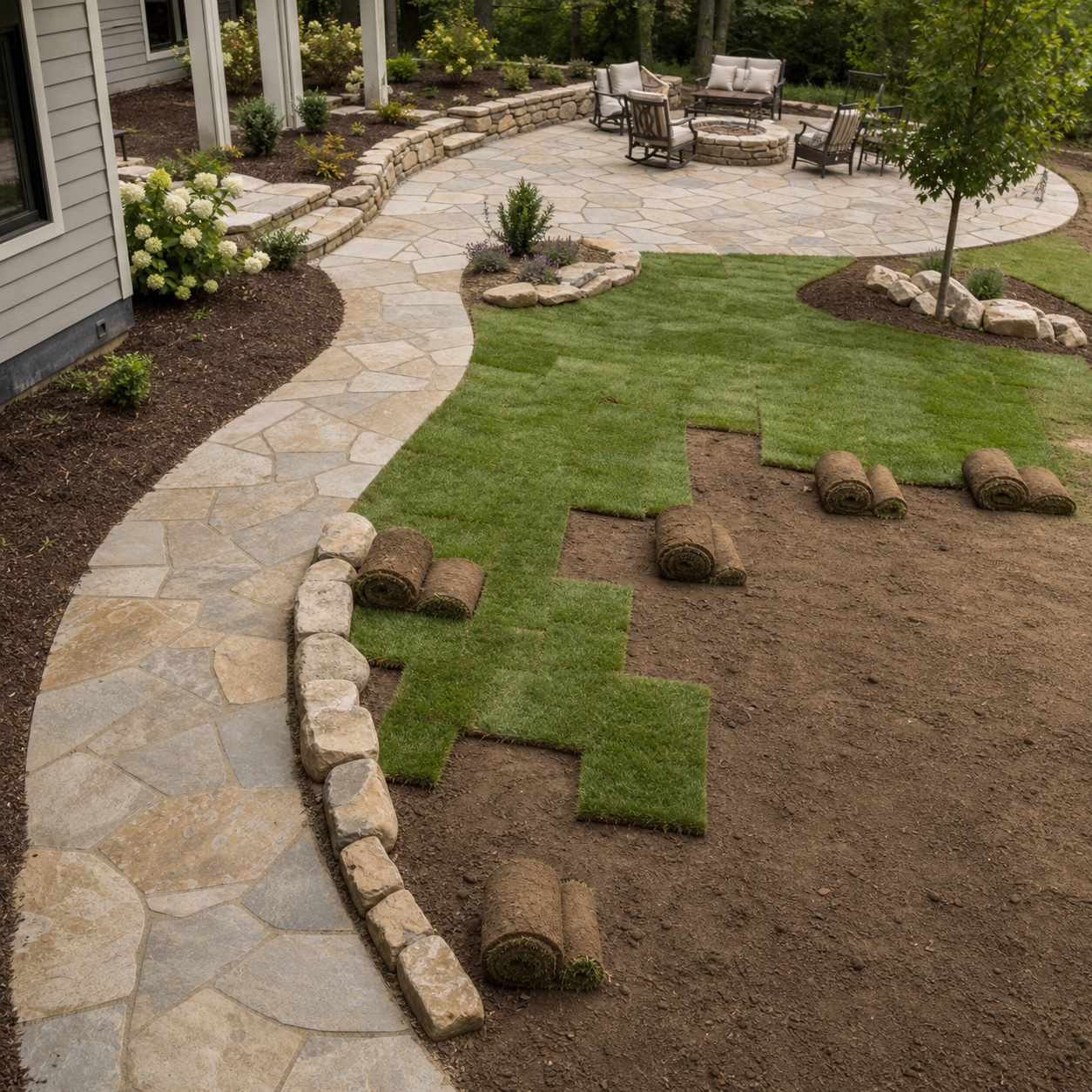
Sequencing matters more than people expect. Laying hardscape after a lawn is already established means either compromising the hardscape’s ideal placement or tearing out established turf to make room for it. Planning paths and patios first, then filling the remaining shape with lawn, produces a far more resolved composition than the reverse order most projects default to.
This sequencing mistake is one of the most common I encounter, mostly because grass feels like the fast, low-commitment choice early in a project while hardscape feels like the bigger decision worth deferring. That instinct is backwards. The hardscape is the part that’s genuinely difficult to move later, which makes it exactly the decision that should happen first, with the lawn designed around it rather than the other way around.
Drainage as a design constraint
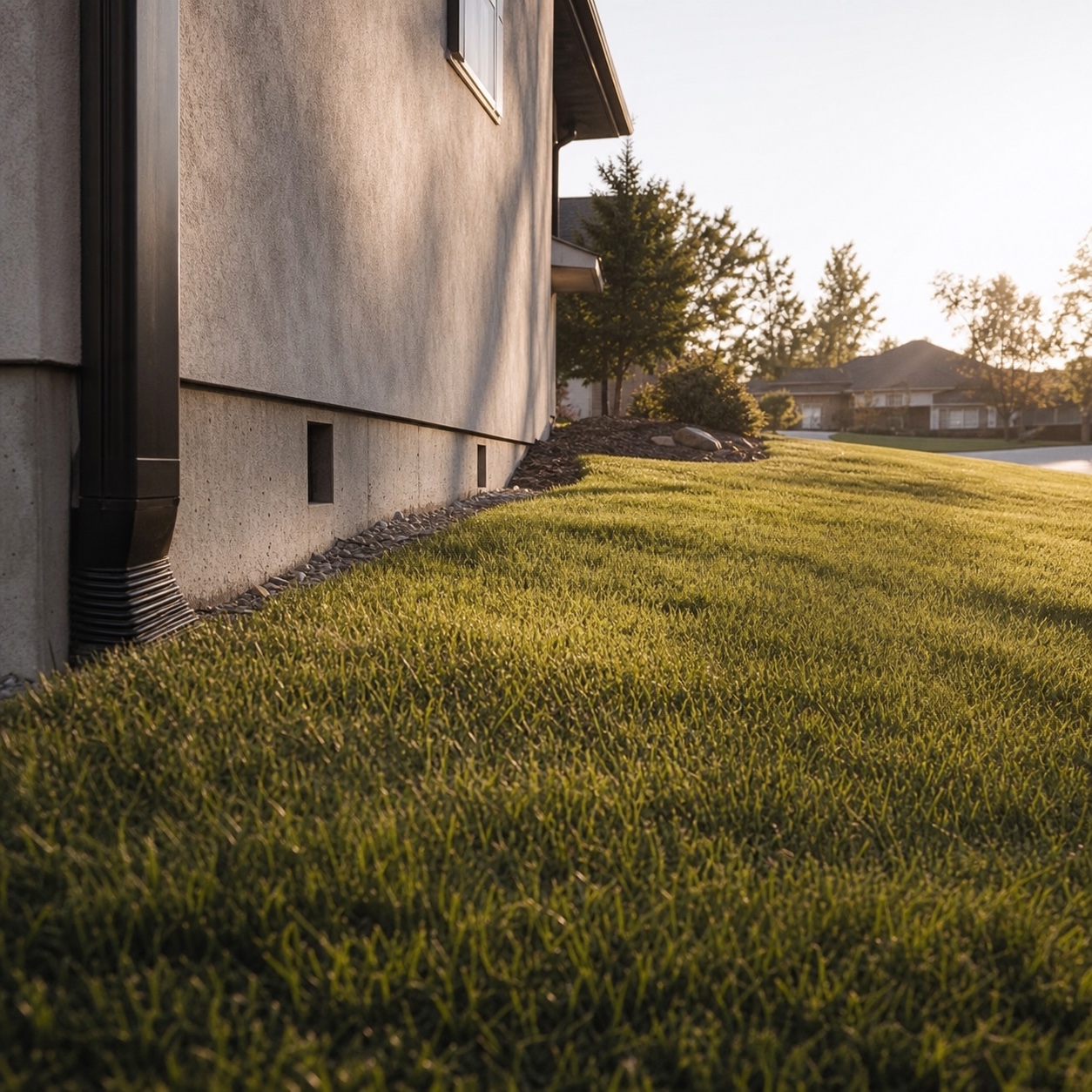
Water moves across a property whether or not anyone planned for it, and a lawn shape that ignores that movement inherits problems no amount of planting can fix. A low spot that collects standing water after every storm isn’t a maintenance detail to solve later. It’s a constraint that should shape where the lawn panel actually sits and how it’s graded, decided at the same stage as the shape itself rather than discovered after installation.
I treat a site’s water behavior the same way I’d treat any hidden structural constraint on a design: invisible on a dry day, completely obvious the first time real conditions test it. Walking a property during actual rain, not just imagining how water might move based on a site plan, catches problems that stay hidden until the first real storm proves the composition wrong.
Grass alternatives for shade, slopes, and high-maintenance corners
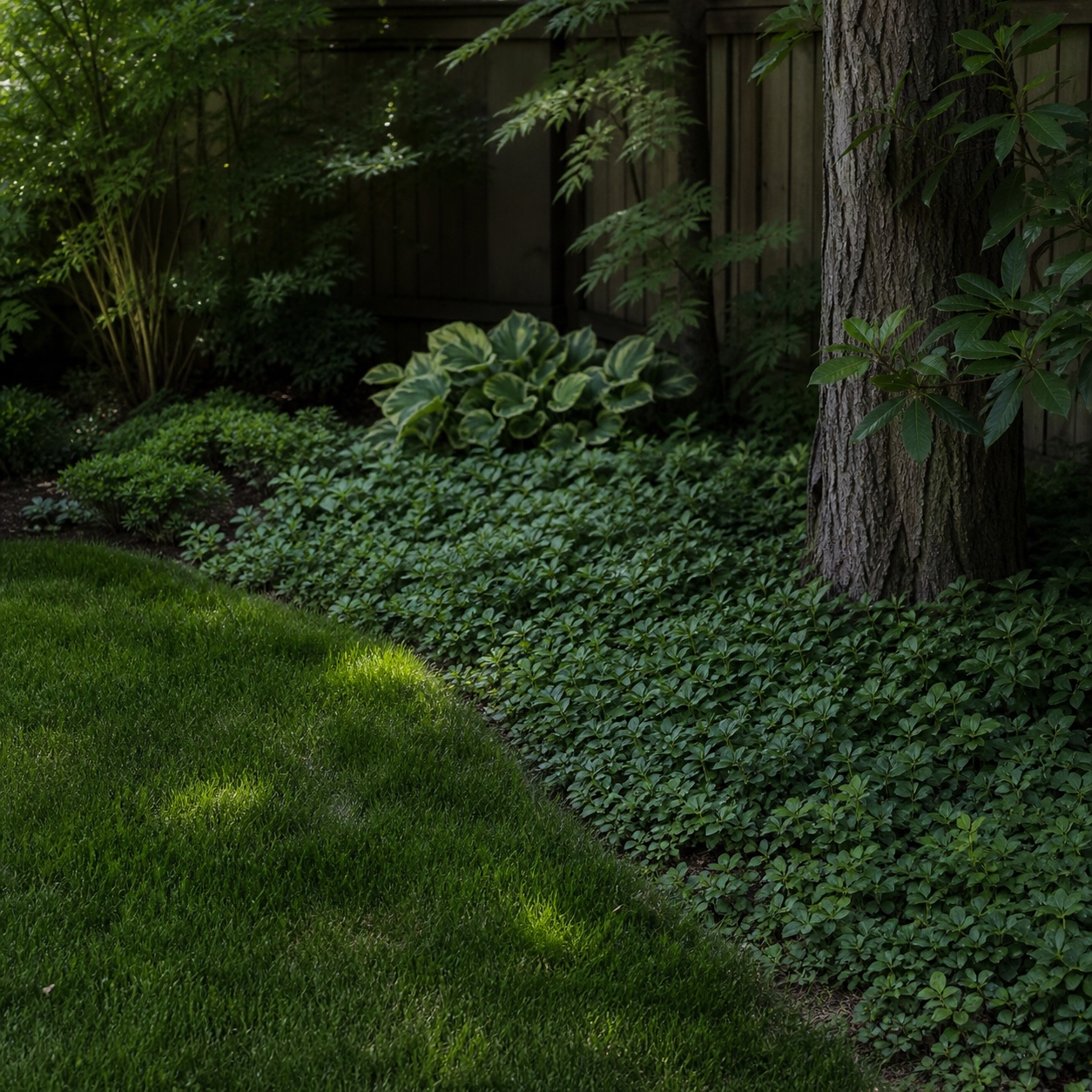
Not every corner of a property wants to be lawn, and forcing turf into deep shade or a steep slope usually produces a section that struggles regardless of care. Ground cover, mulch beds, or a hardscape treatment in those specific difficult zones protects the overall composition better than a patchy, struggling lawn section would, and it removes a recurring maintenance fight from the equation entirely.
I treat these difficult zones as an opportunity rather than a failure to force turf everywhere. A shaded corner planted with genuine shade-tolerant ground cover, or a steep slope treated with terracing and planting instead of grass fighting gravity and erosion, often becomes one of the more interesting parts of a property precisely because it stopped trying to be something the site never actually supported.
Choose a lawn layout you can actually maintain
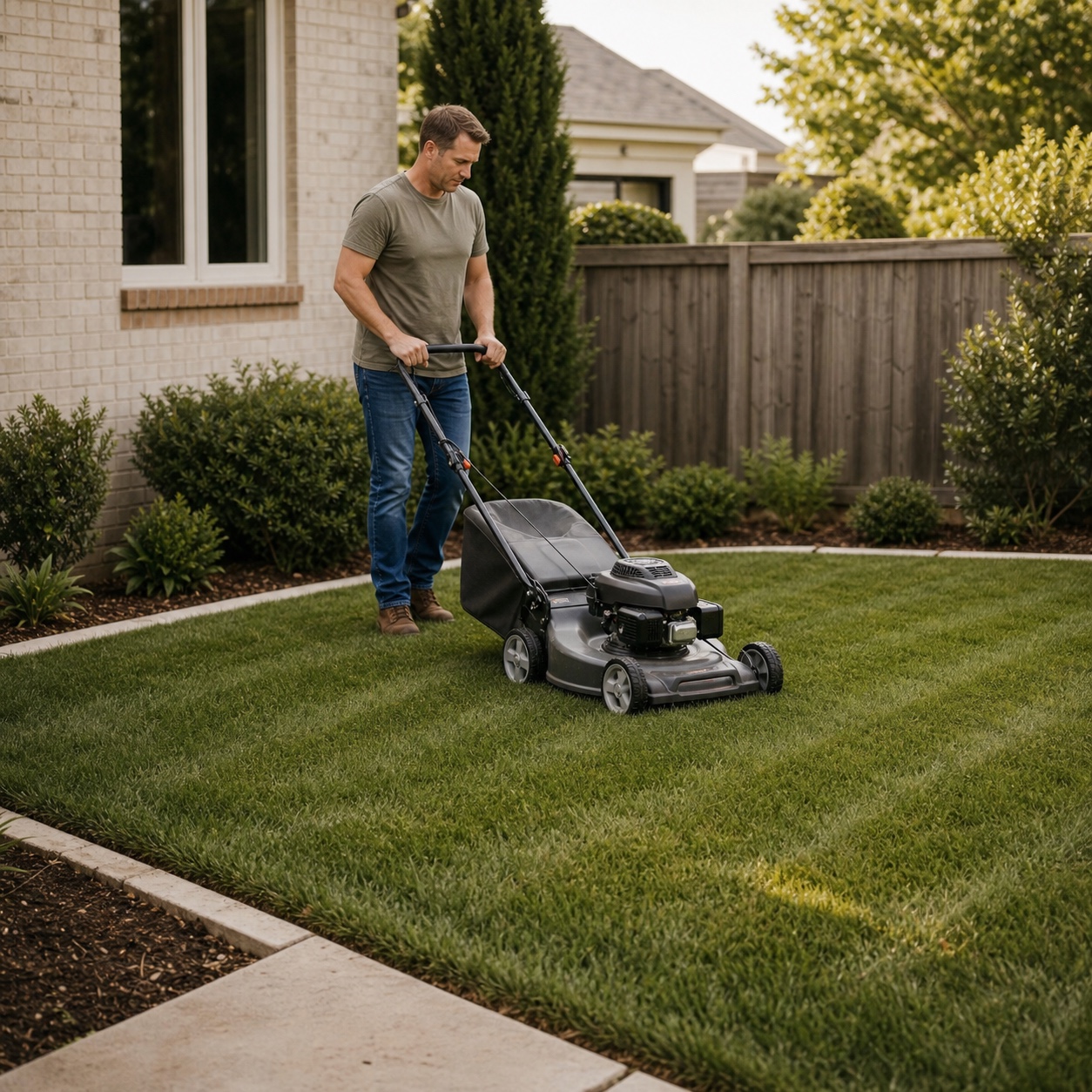
The best-looking lawn design on paper still fails if it demands more upkeep than anyone’s actually going to give it. Scale the lawn’s footprint to the realistic maintenance effort available, not to an idealized version of a lush, uniform yard nobody has time to sustain.
Grass variety matters here too, and it’s genuinely regional: what performs well in one climate and soil type struggles badly in another, which is why working with someone who actually knows local conditions pays off. I’ve seen homeowners get much better results consulting a regional specialist like Sunrise Sod Services in New Tampa rather than choosing a grass variety purely off a general online recommendation that never accounted for their specific site.
This regional matching matters more than most homeowners expect going in. A grass variety that thrives in one soil composition and sun pattern can genuinely struggle a few miles away under slightly different conditions, and no amount of design intention around shape and edging survives a variety fighting its actual site every single season. Get the grass itself right for the specific property first, then the shape and proportion decisions have something healthy to actually work with.
Keep mowing paths free of awkward obstacles, match irrigation zones to actual sun and shade patterns rather than a single uniform schedule, and hold clean bed edges to prevent grass creep from slowly eroding the composition you originally designed. A lawn scaled to realistic effort stays looking intentional for years. An overly ambitious layout usually starts looking neglected within a single season.
FAQ
What is the best lawn design for a front yard?
The best front lawn design matches the architectural language of the house: clean, geometric edges for modern facades, softer curved lines for traditional homes, and proportions scaled correctly to the actual size of the facade it’s fronting. There’s no single universal shape, only the one that reinforces the house it belongs to.
How do you make a lawn look intentional?
Clean, consistent edging between turf and every adjacent surface does more than any single planting choice to make a lawn read as designed rather than simply mowed. Proportion relative to the house and clear sightlines from key viewing points, the street, the front door, key windows, matter just as much as the shape itself, and both are decisions made before a single blade of grass gets installed.
Should a small yard have grass?
Yes, often in a smaller, more precisely shaped panel than a larger, loosely defined one. A tight, well-proportioned lawn framed by considered hardscape frequently reads as more designed in a small yard than an attempt to maximize turf coverage ever would, since a small space has even less room to absorb an undefined, sprawling edge.
How do you connect a lawn with patio design?
Treat the lawn as an extension of the patio rather than a separate zone, deciding deliberately whether the transition should be immediate or buffered by a defined edge. Sequence the hardscape first, then let the lawn fill the remaining shape, rather than retrofitting patio placement around grass that’s already established and harder to redesign around.
What can I use instead of lawn in difficult areas?
Ground cover, mulch beds, or a hardscape treatment all work better than forcing turf into deep shade, steep slopes, or persistently wet corners where grass will struggle regardless of care. Reserving lawn for the areas where it can actually thrive protects the rest of the composition from a patchy, high-maintenance section that undermines the overall design and demands constant, ultimately futile attention.
A lawn that actually completes a home exterior was never really about the grass. It’s about proportion, sequencing, and how honestly the design accounts for the house, the site, and the realistic effort available to maintain it. Start with the architecture, let the hardscape and planting establish the shape, and the lawn that fills what’s left will read as intentional in every season, not just the week after installation.
I keep coming back to the same idea across every scale of design I’ve worked on, whether it’s a facade, a product surface, or a front yard: the elements that read as effortless are almost never the ones decided first or fastest. They’re the ones that came last, shaped by everything genuine that came before them, which is exactly why a good lawn feels inevitable rather than added on.
- 133shares
- Facebook0
- Pinterest133
- Twitter0
- Reddit0