Dotwork tattoo ideas are about spacing first, design second. The style uses tiny dots to build shade, texture, and soft gradients, so a good piece needs enough open skin around the detail. If the dots are crowded too tightly, the tattoo can heal into a gray patch instead of a crisp pattern.
Use this guide as a planning pass before you save a reference image or message an artist.
- What is a dotwork tattoo?
- Dotwork tattoo ideas by style and placement
- Plan the design before the dots
- Placement notes for dotwork tattoos
- Minimalist and small dotwork tattoo designs
- Nature-inspired dotwork tattoos
- Geometric and sacred geometry dotwork tattoos
- Dotwork tattoo female references
- Cosmic dotwork tattoo ideas
- Animal and symbolic dotwork tattoos
- Hybrid dotwork with linework and blackwork
- Longevity, aging, and aftercare
- New dotwork tattoo references
- Related dotwork tattoo reading
- Sources and further reference
- Dotwork tattoo ideas FAQ
- Final planning note
We will look at minimalist pieces, geometric and sacred-geometry patterns, nature motifs, cosmic designs, symbolic work, placement choices, aging, and aftercare, with a caption under every visual example so the images are easier to compare.
What is a dotwork tattoo?
A dotwork tattoo is a tattoo made from repeated dots rather than smooth filled shading. The artist changes the distance between dots to make parts of the design feel lighter or darker. Close dots read as shadow; wider spacing reads as air, glow, mist, skin, or soft texture.
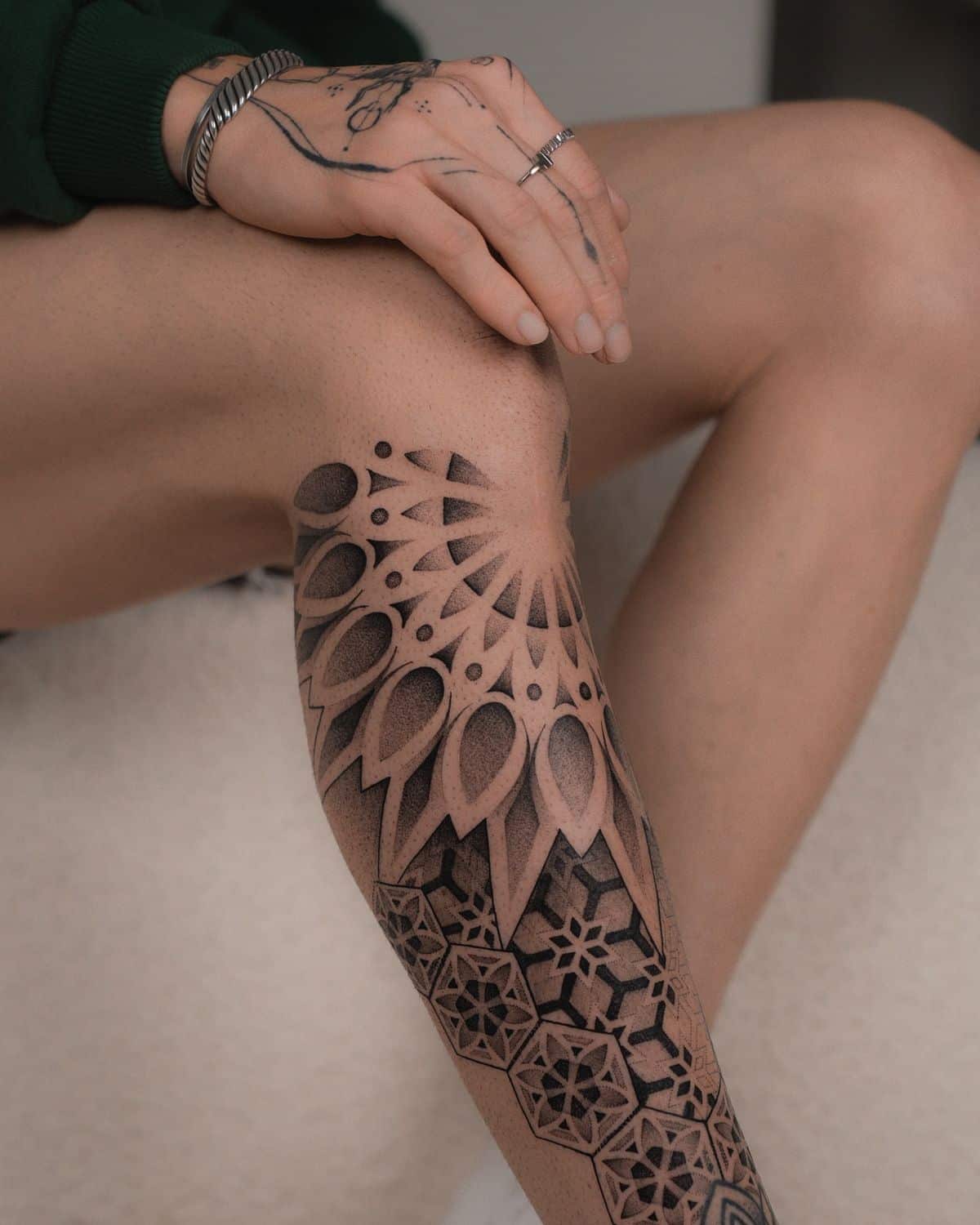
That is why dotwork works so well for mandalas, flowers, mountains, moon phases, animals, sacred geometry, and abstract blackwork. It can look quiet and precise at small sizes, or dramatic when scaled across the back, forearm, thigh, calf, or sleeve. The key is not adding more dots. The key is knowing where to leave space.
Dotwork tattoo ideas by style and placement
| Style | Best placements | Why it works |
|---|---|---|
| Minimalist dotwork | Wrist, ankle, inner arm, behind ear | Small dot clusters add texture without making the tattoo feel heavy. |
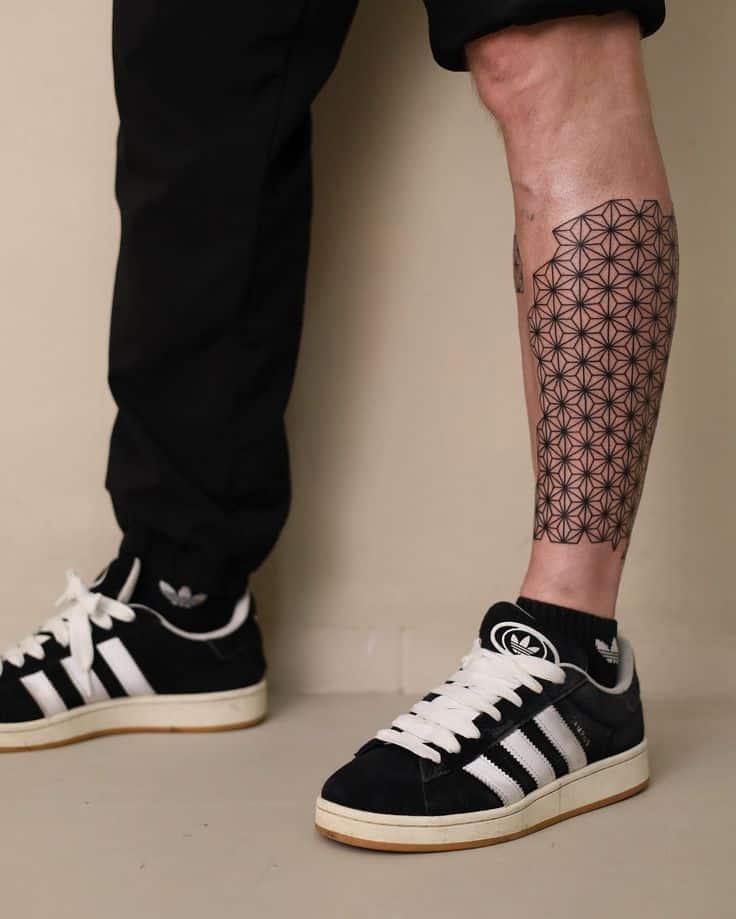
| Geometric dotwork | Forearm, calf, shoulder blade, back | Straight edges and repeated shapes give the dots a clean structure. |
| Nature dotwork | Forearm, thigh, ribs, upper arm | Dots can suggest bark, leaves, mountains, mist, and animal fur. |
| Cosmic dotwork | Sleeve, forearm, upper arm, calf | Stars, planets, and galaxies already rely on dotted visual language. |
| Symbolic dotwork | Chest, back, sternum, forearm | A restrained dot pattern can support meaning without overexplaining it. |
Plan the design before the dots
Before you book, decide what has to read from a normal viewing distance. A mandala needs its main circles and petals to stay sharp. A mountain scene needs the horizon and foreground to separate. A tiny floral piece needs a clear stem or bloom before the artist adds texture.
The best dotwork tattoo designs usually have one strong silhouette, one area of dense shading, and one area of open skin. I use the same logic in drawing thumbnails: if the value pattern is confusing in black and white, detail will not rescue it later. Dotwork on skin is even less forgiving because the ink has to heal inside living texture.
Placement notes for dotwork tattoos
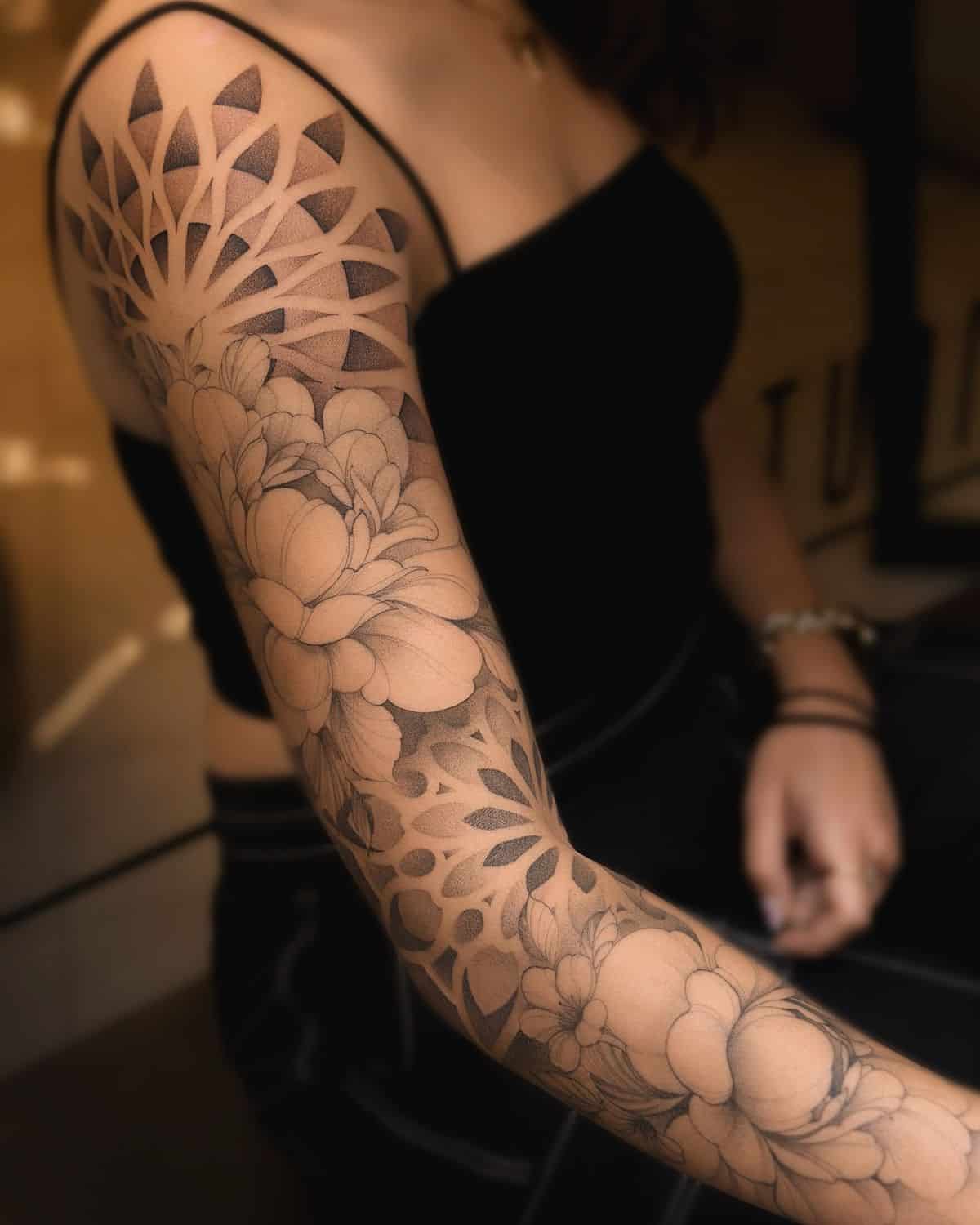
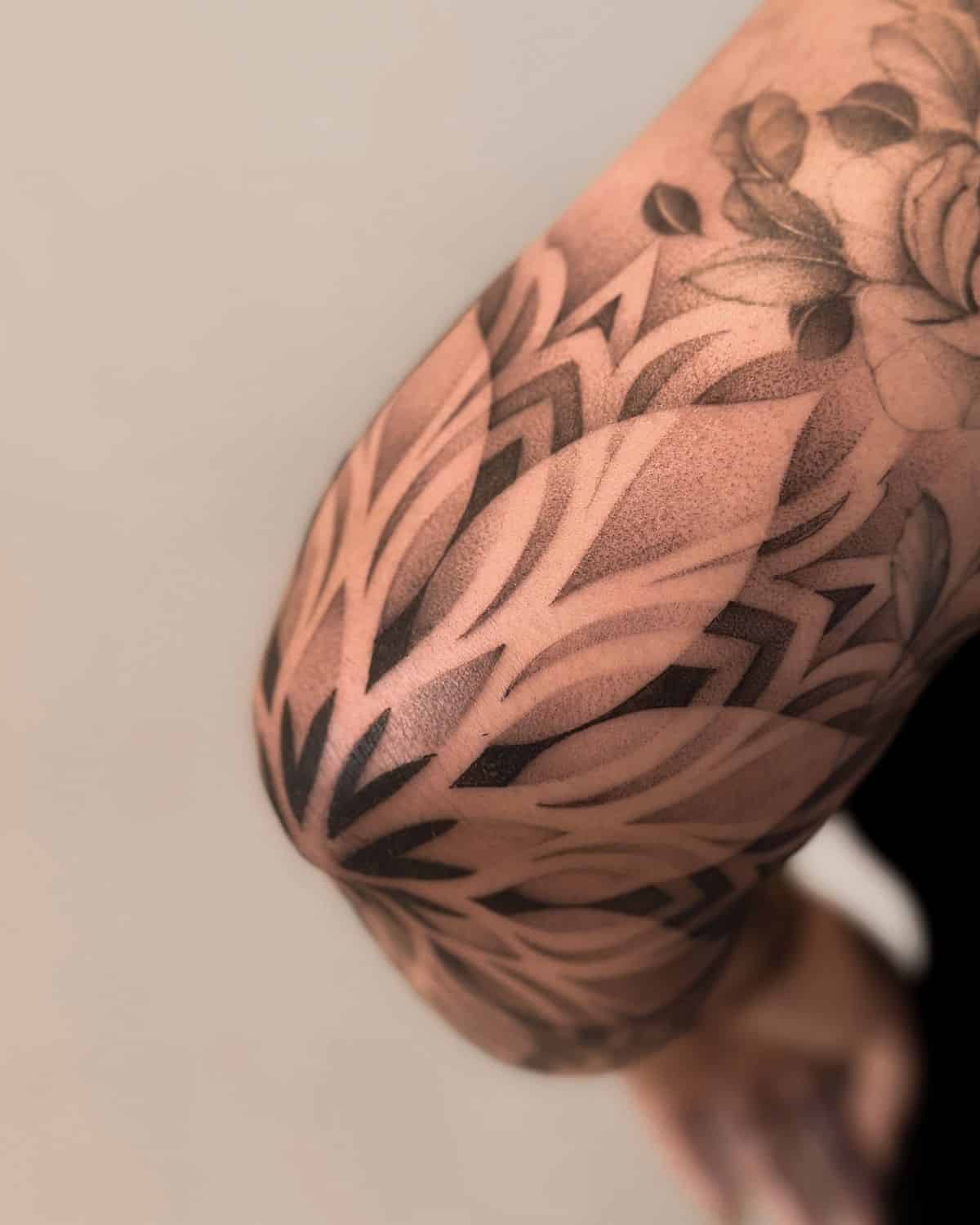
Forearm, calf, shoulder blade, upper arm, and upper back are forgiving because they give the artist room for dot density and negative space. These placements also let geometric and nature pieces stay legible instead of wrapping too aggressively around a joint.
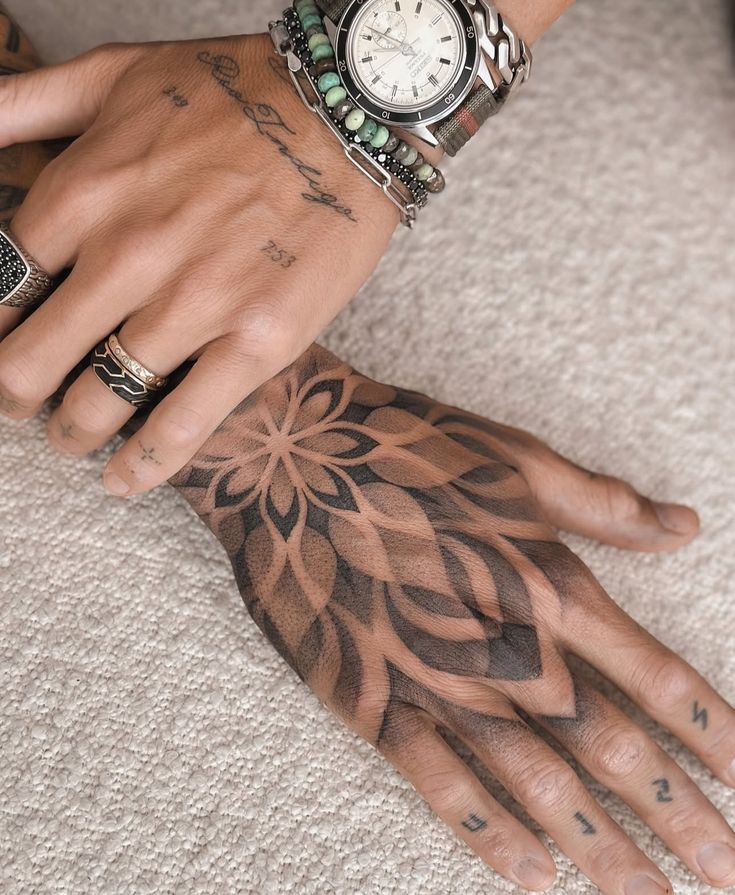
Hands, fingers, ankles, hips, ribs, and bum tattoo placements can look beautiful, but they need simpler layouts. Small dotwork tattoo designs on high-friction skin should not depend on hairline details. If the placement bends, rubs, or stretches a lot, ask the artist what they would simplify.
Minimalist and small dotwork tattoo designs
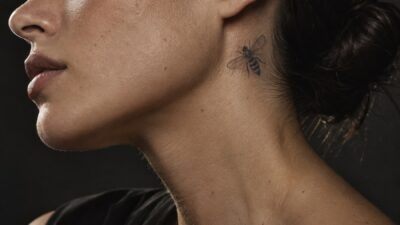
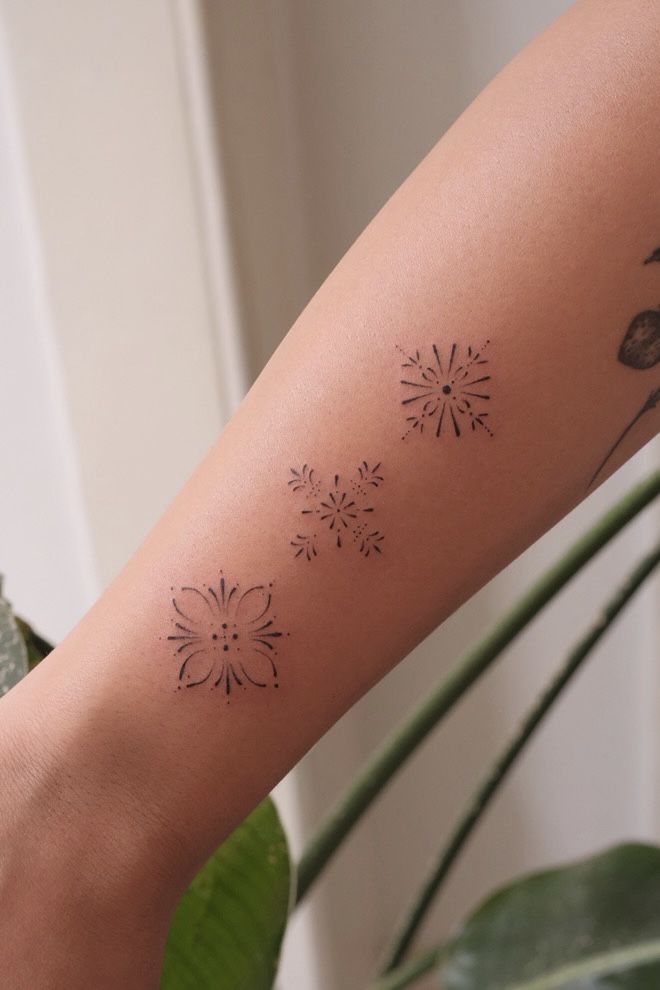
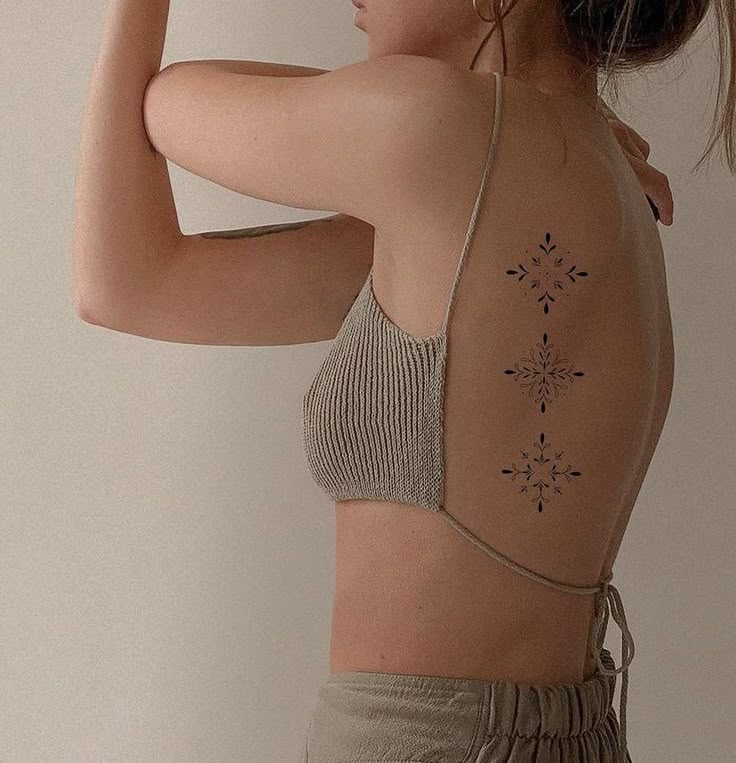
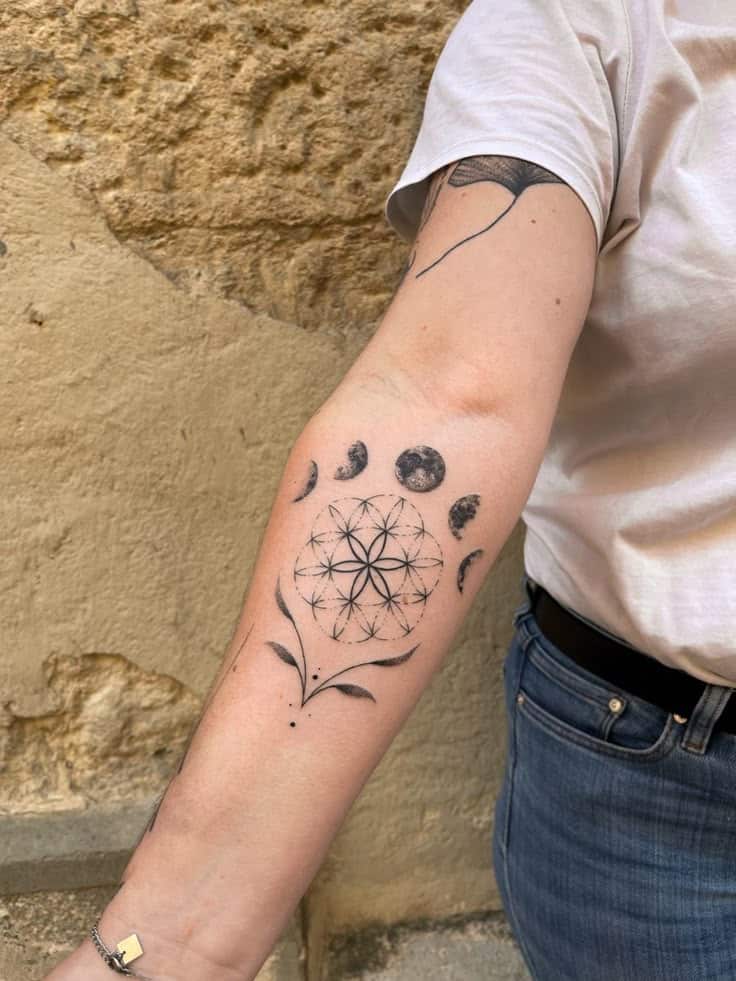
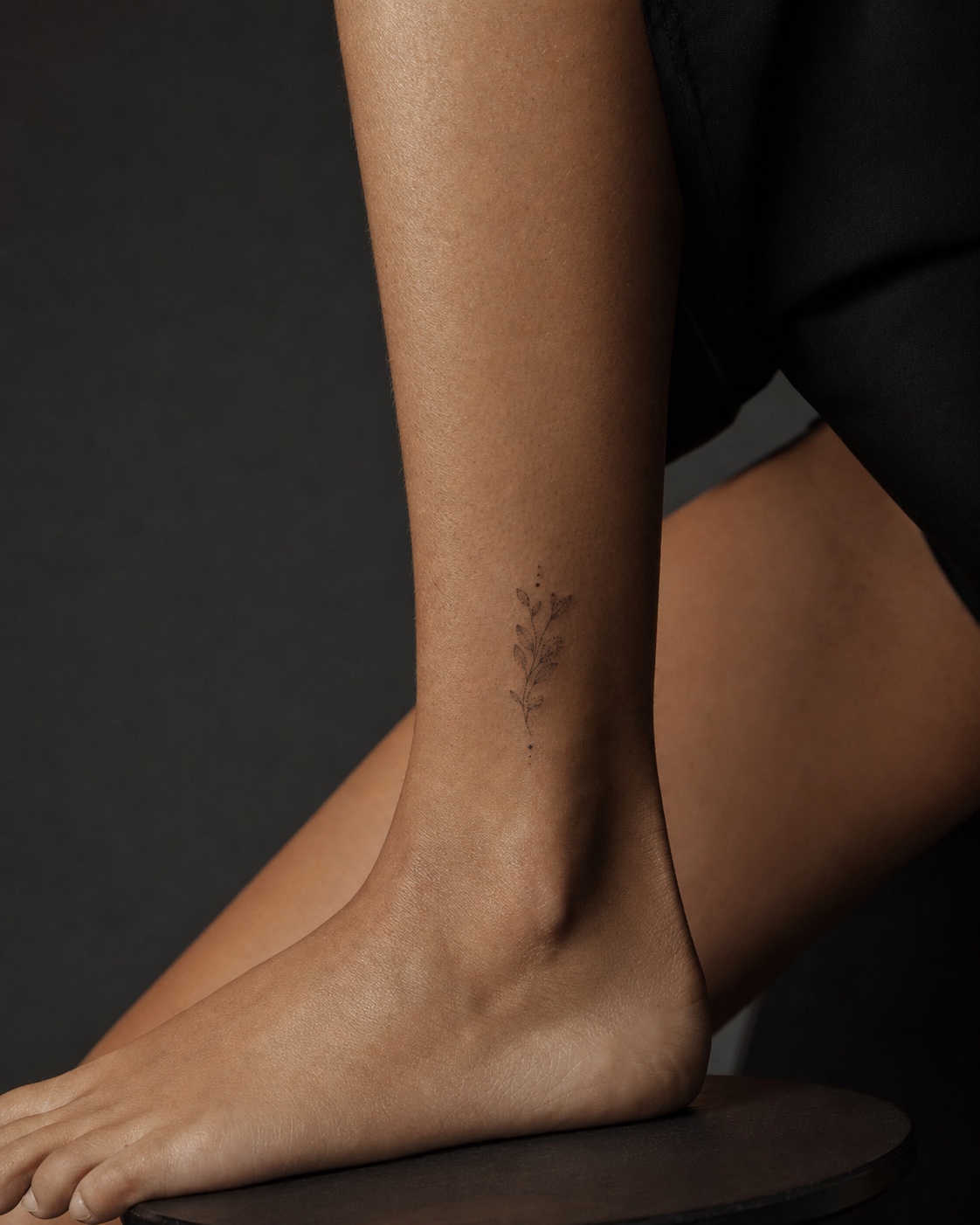
Minimalist dotwork is strongest when the dots are used as a quiet accent, not as filler. A tiny flower, moon, abstract timepiece, or narrow geometric line can feel more elegant when the artist uses dots to soften one side of the form.
For small dotwork tattoo designs, avoid cramming a full scene into a tiny area. Choose one subject and let it breathe. A little negative space often makes a small tattoo look more expensive than another layer of micro-detail.
Nature-inspired dotwork tattoos
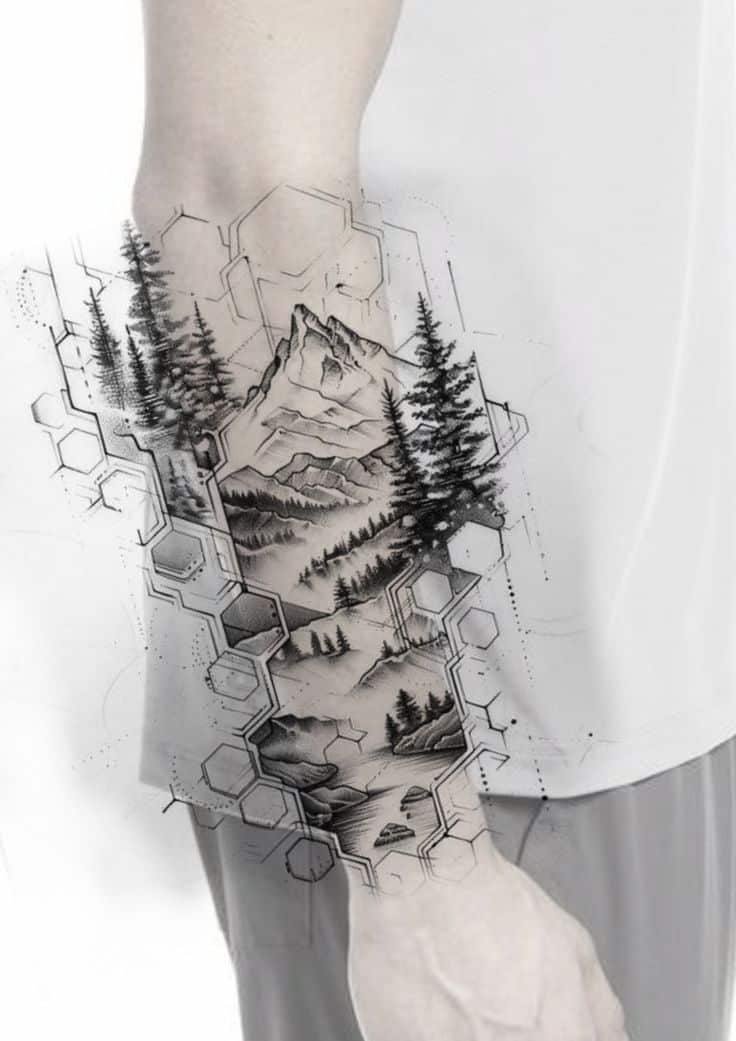
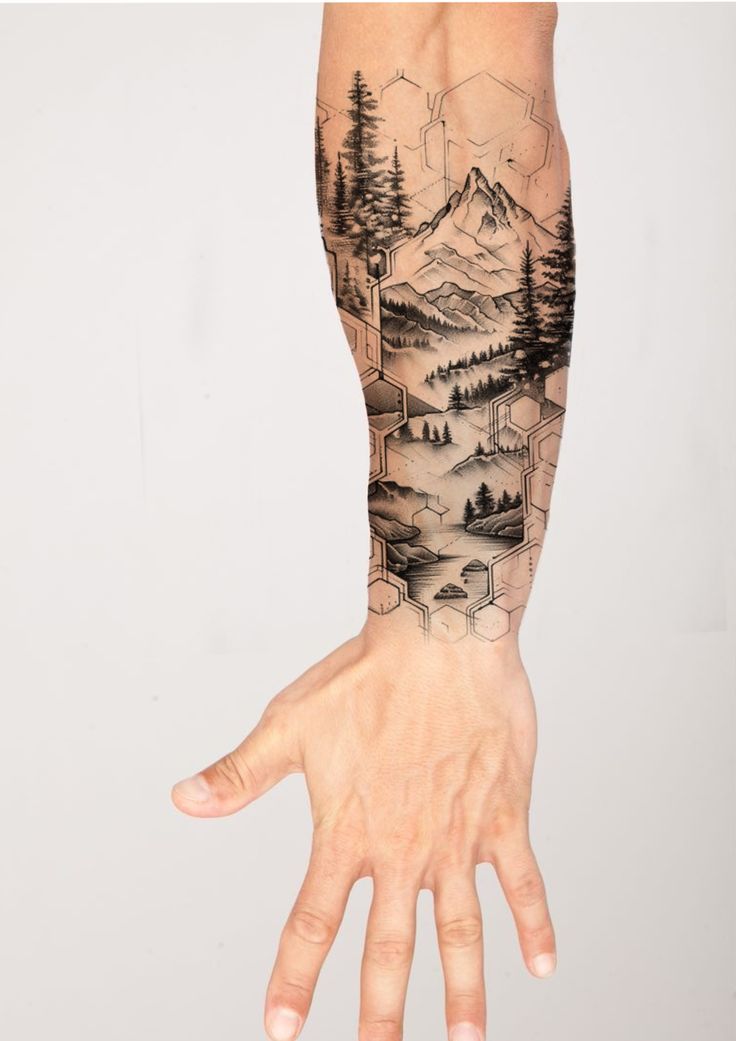
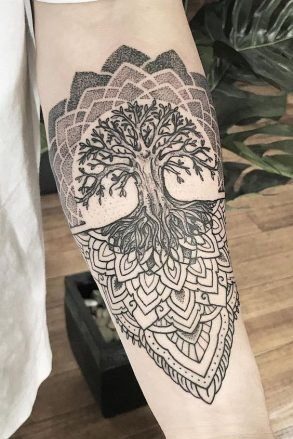
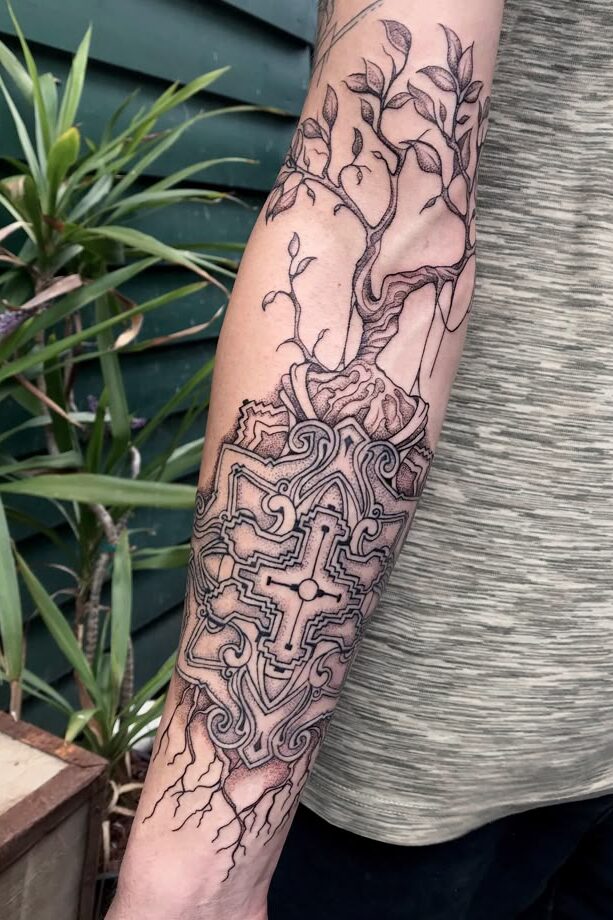
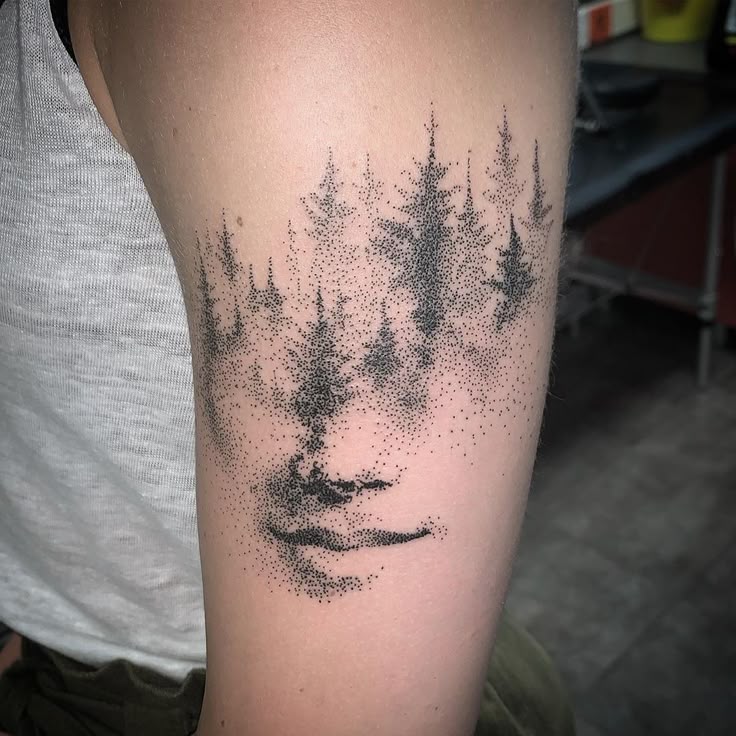
Trees, mountains, leaves, insects, and animal forms suit dotwork because natural texture is rarely perfectly smooth. Dot spacing can suggest mist behind a mountain, bark on a tree, softness in fur, or a shadow under a leaf.
The common mistake is over-detailing every branch and rock. Let the largest nature shape read first, then use dotwork only where it adds depth. If the tattoo has a forest, the trunk direction matters more than the number of tiny leaves.
Geometric and sacred geometry dotwork tattoos
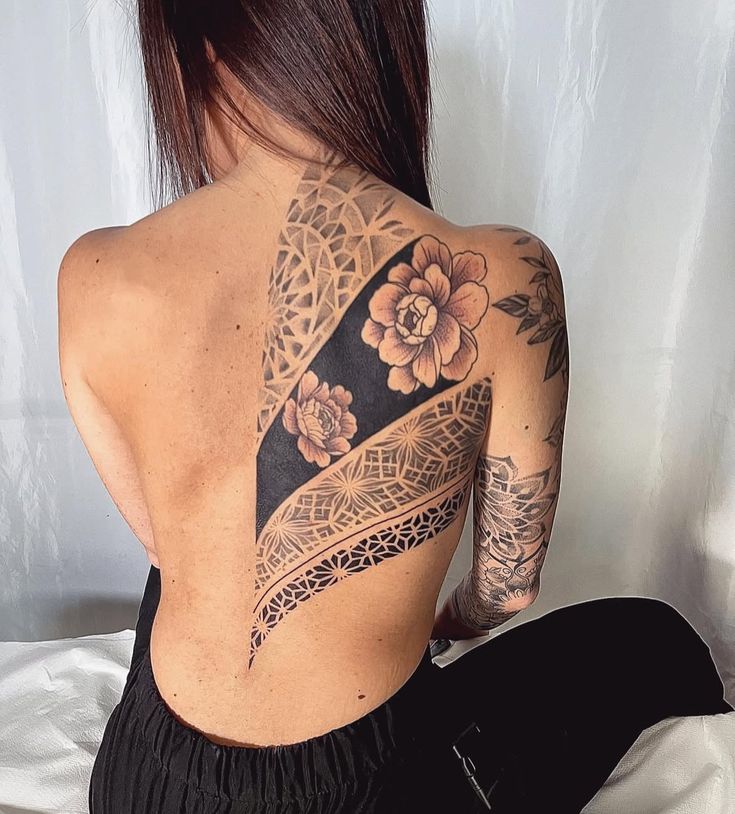
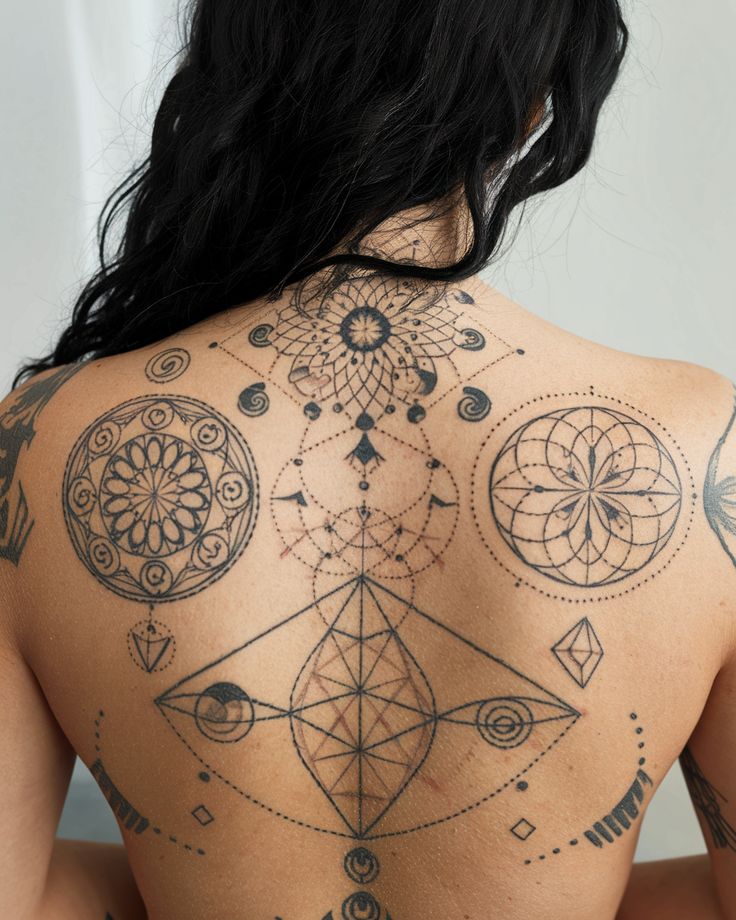
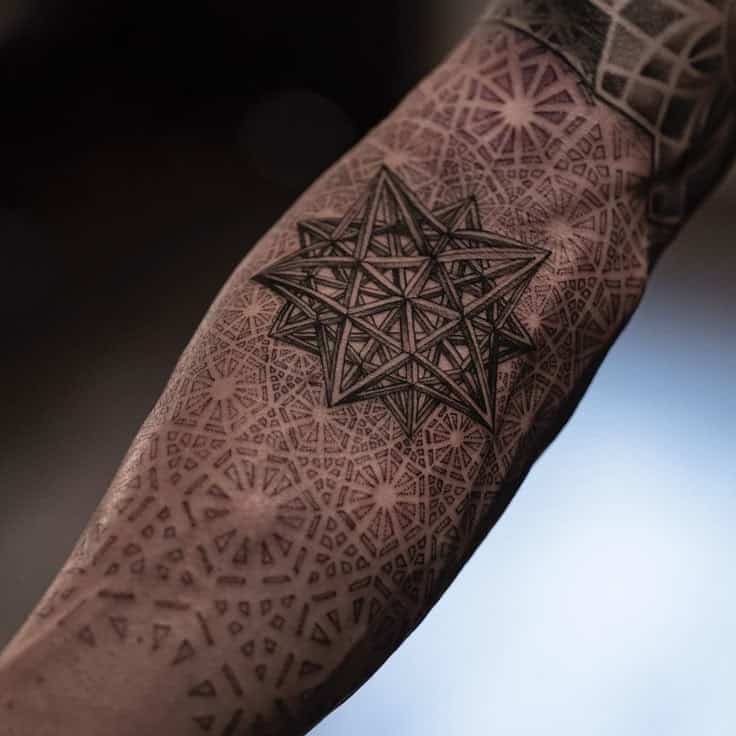
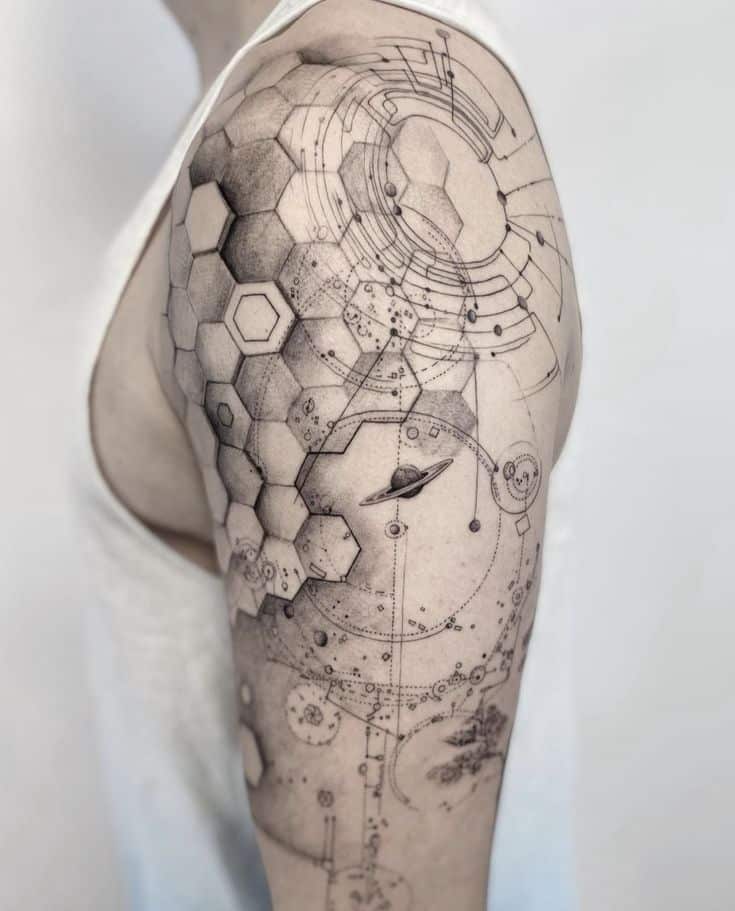
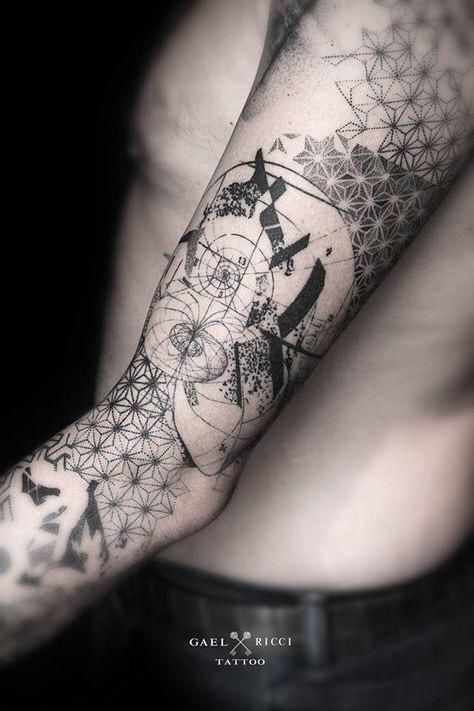
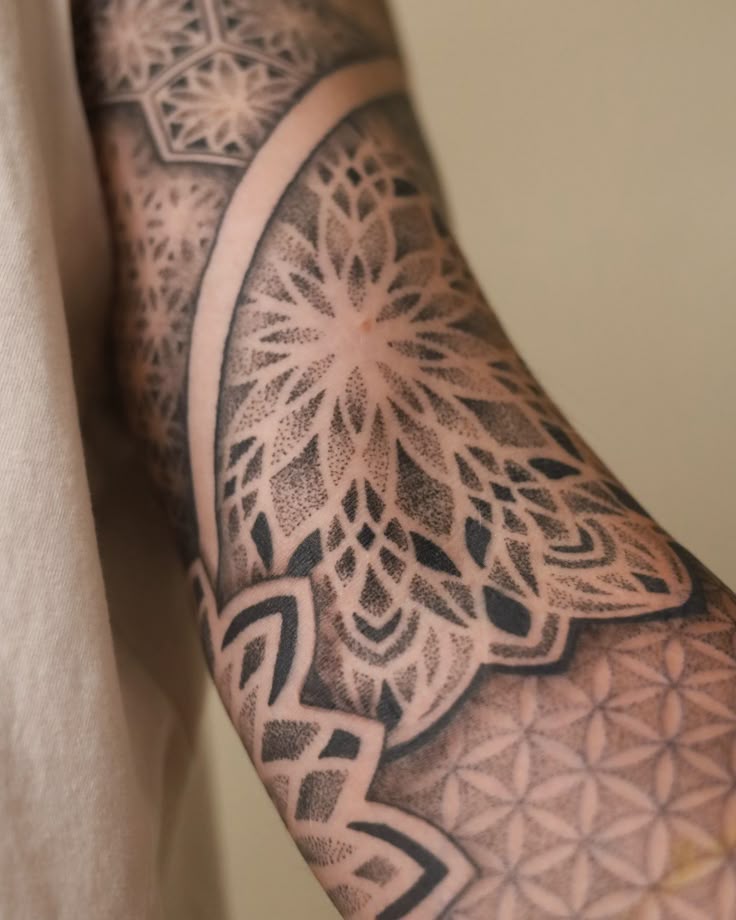
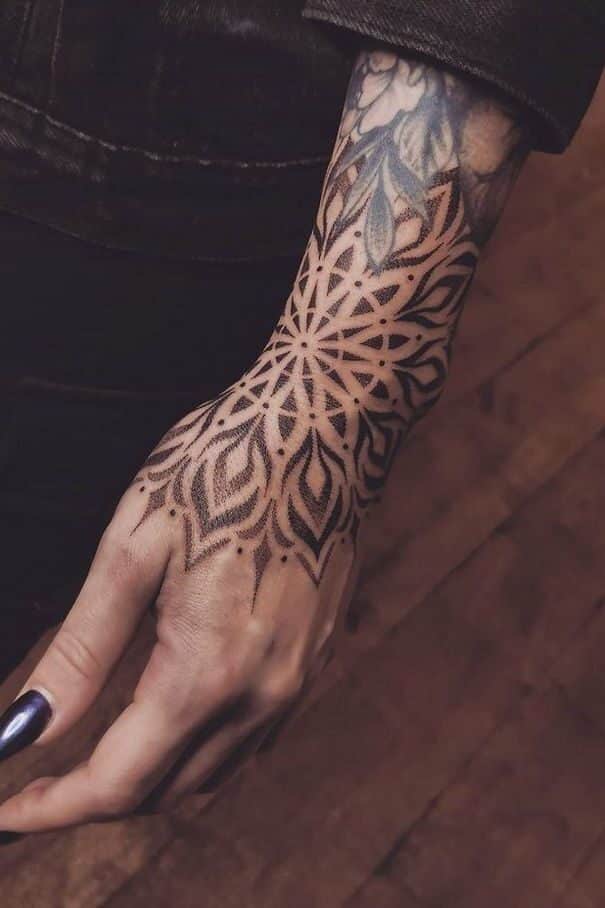
Geometric dotwork needs accuracy. Circles, triangles, mandalas, flower-of-life patterns, and moon phases are beautiful because they repeat, but that repetition also exposes uneven spacing. This is the category where artist selection matters most.
Look for healed examples, not only fresh photos. Fresh geometric dotwork can look razor sharp on the day it is posted; healed work tells you whether the dot clusters, lines, and negative spaces were planned at the right scale.
Dotwork tattoo female references
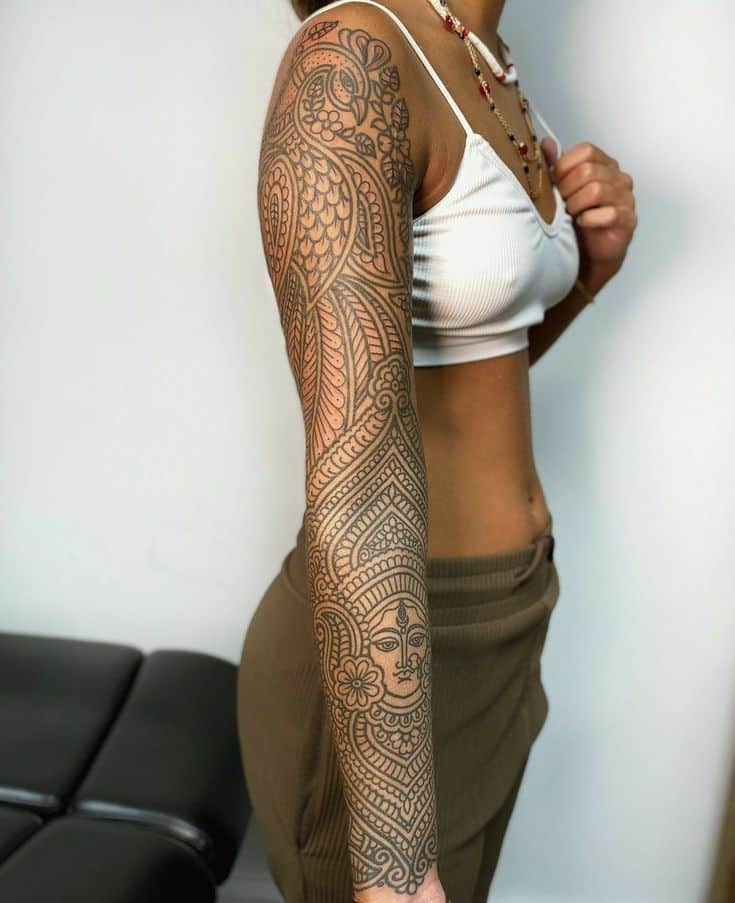
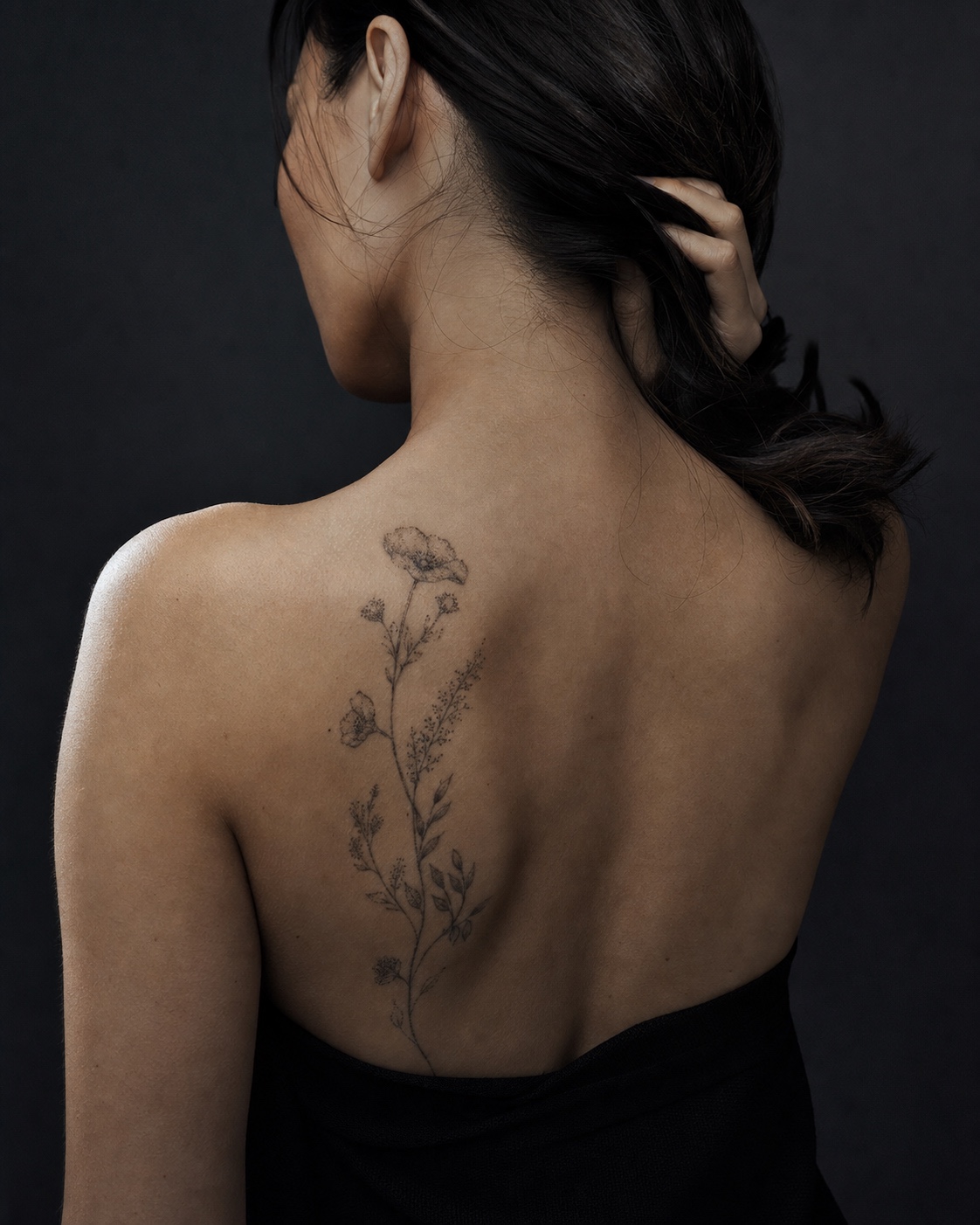
A dotwork tattoo female reference does not have to mean tiny or fragile. It often means the composition uses lighter transitions, ornamental spacing, florals, celestial shapes, or a softer edge around a bold geometric center.
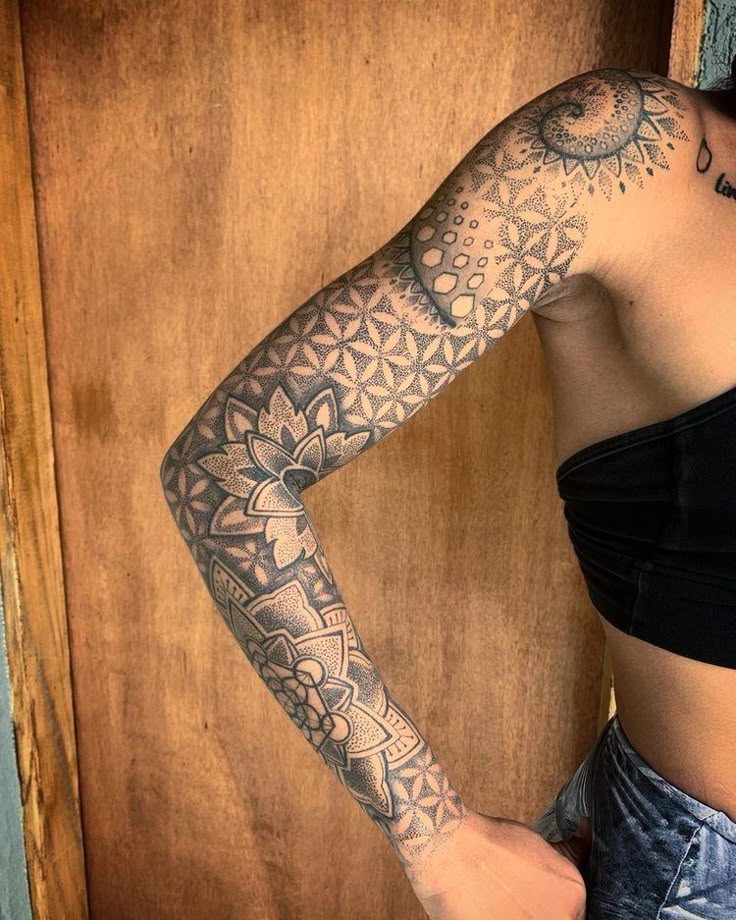
Sleeves, shoulder caps, upper-back pieces, sternum ornaments, and thigh designs can all work in this style. The best version depends less on gender and more on proportion: how much skin shows between the pattern, how the shape follows the body, and where the darkest value sits.
Cosmic dotwork tattoo ideas
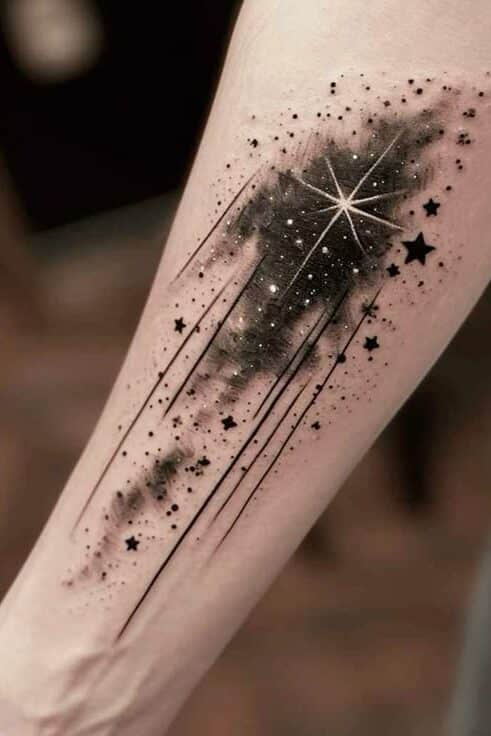
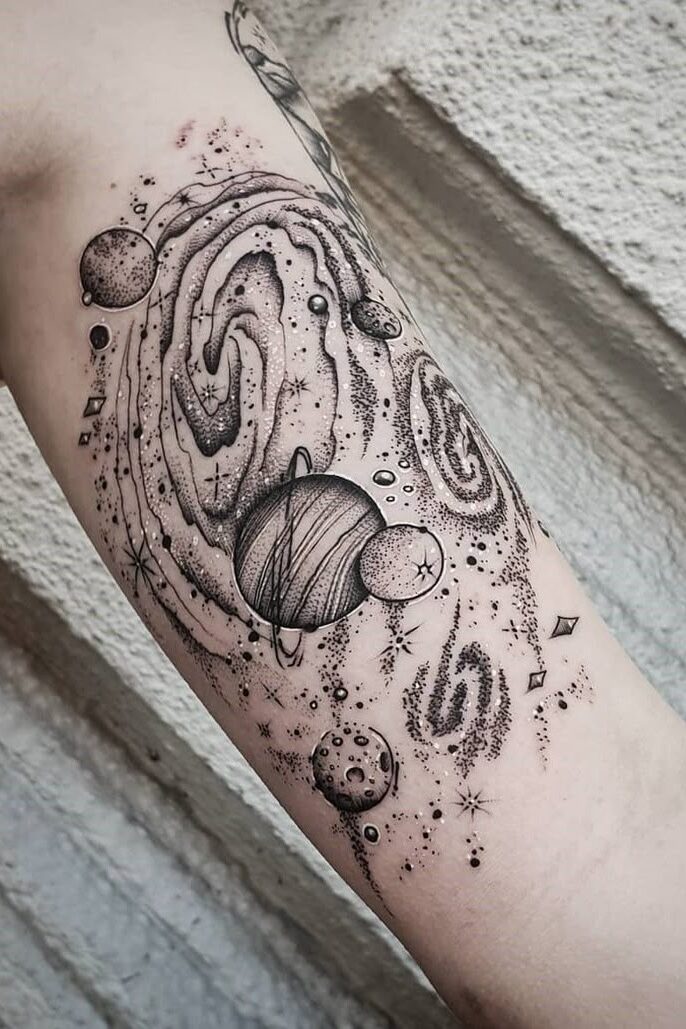
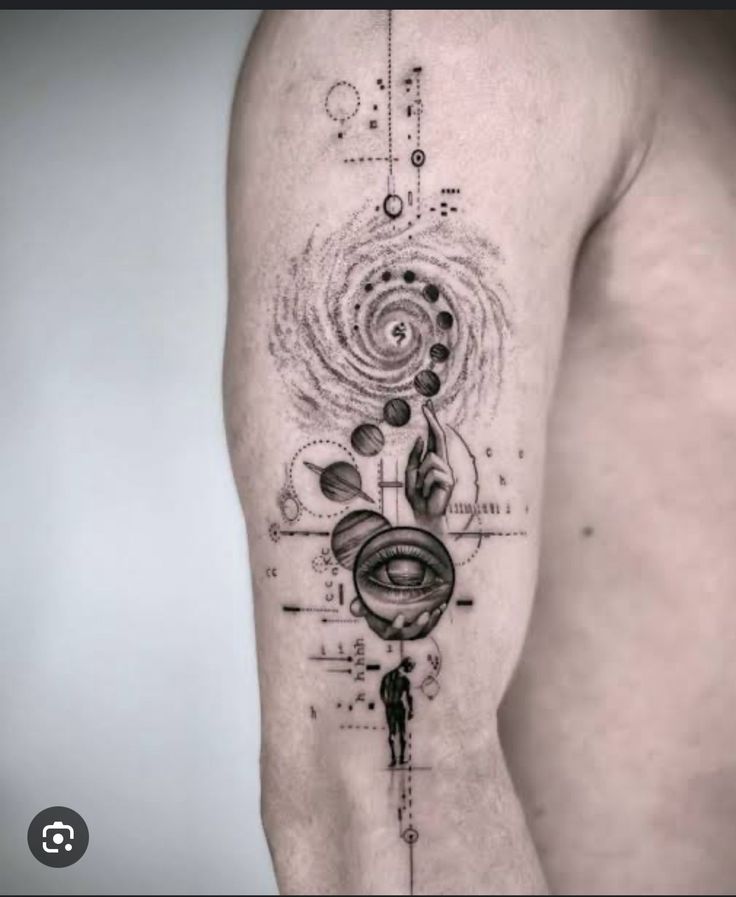
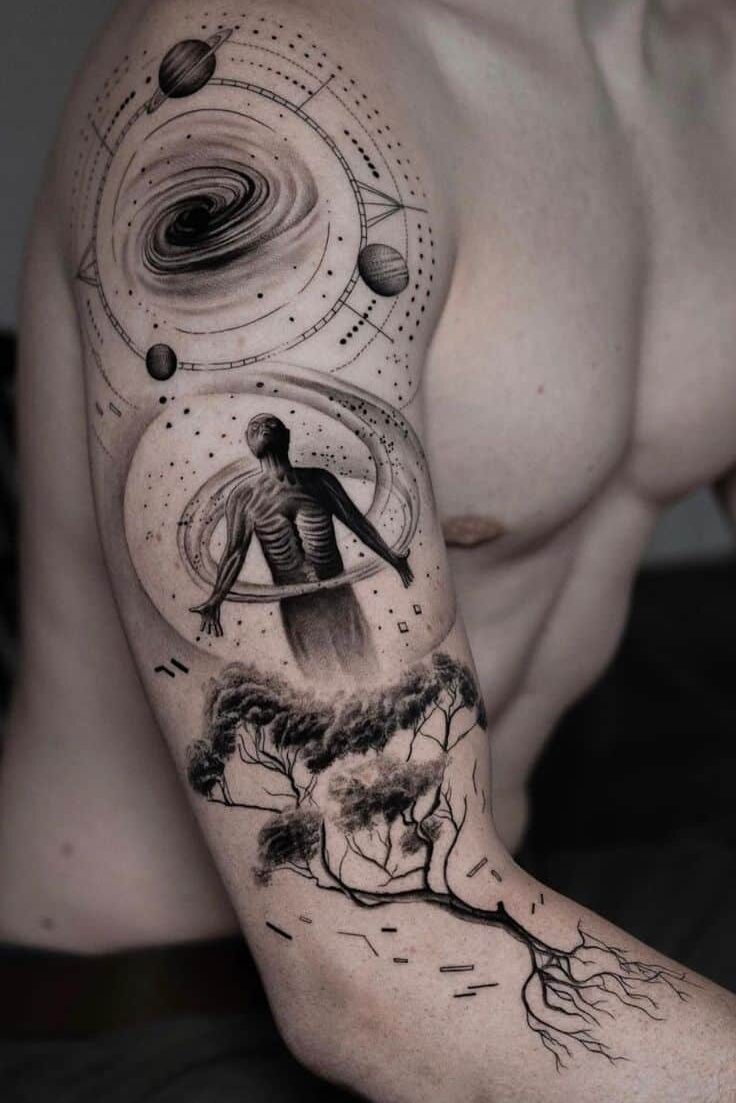
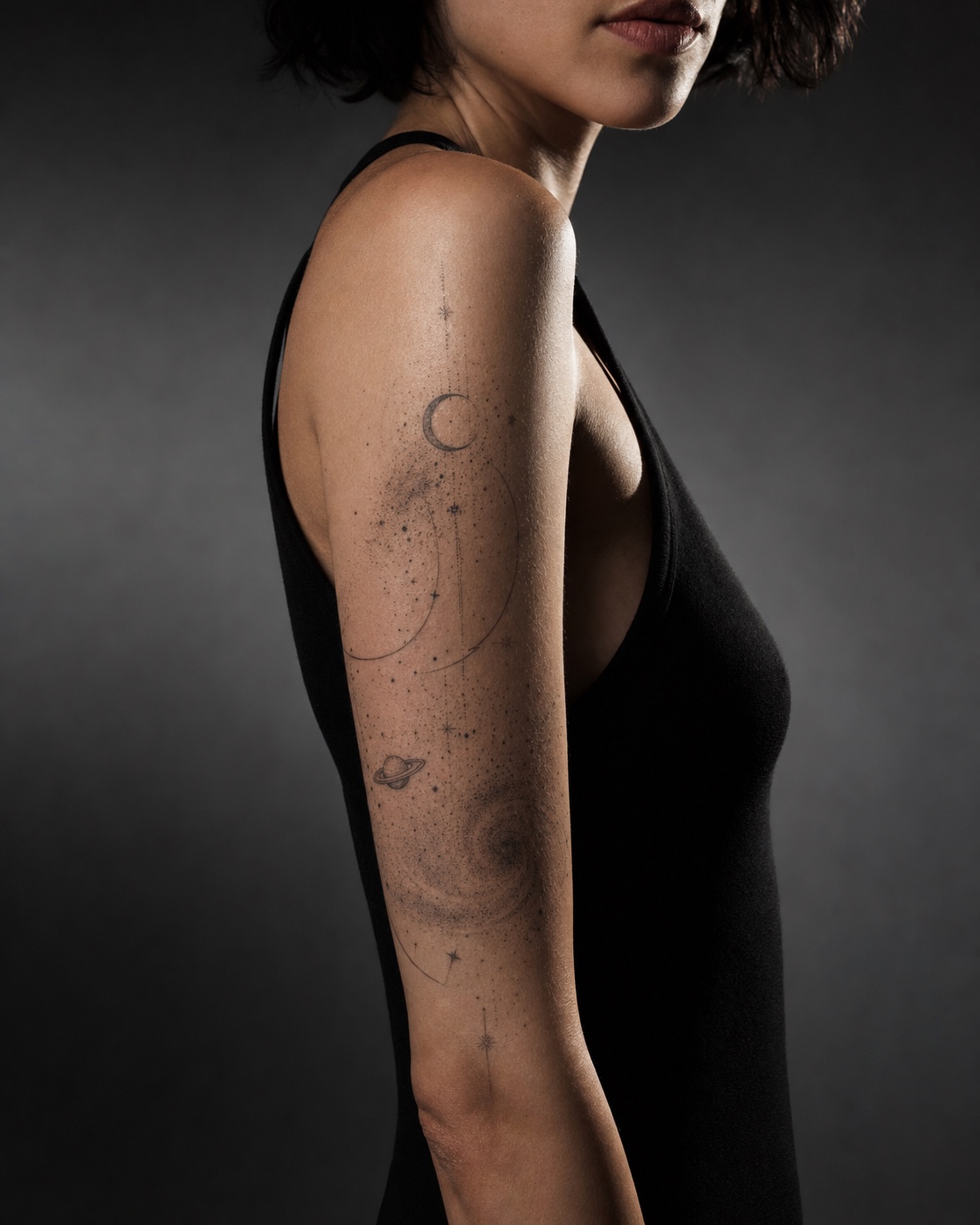
Cosmic tattoos are a natural match for dotwork. Stars, dust, orbits, moon phases, planets, and black holes can be built with dots while the main shapes stay crisp. The style gives a galaxy effect without requiring heavy color.
Keep one planet, eye, moon, or spiral as the focal point. If every star is the same size and every area is equally dark, the design turns flat. Varying dot density is what creates the sense of space.
Animal and symbolic dotwork tattoos
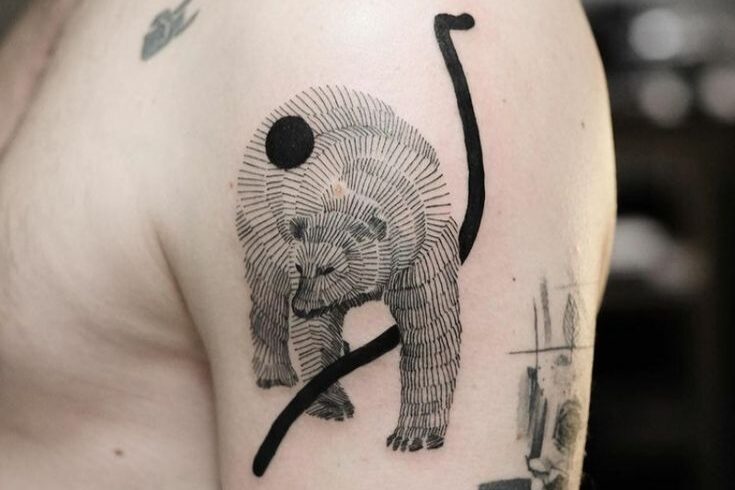
Animal dotwork should protect the silhouette before it adds texture. A bear, bird, koi, moth, snake, or wolf needs a strong outer shape. Once the animal reads, dots can create fur, feathers, scales, or shadow.
Symbolic tattoos need even more restraint. A tree of life, cross, mandala, eye, or geometric star can carry meaning without a paragraph of visual explanation. The cleaner the symbol, the easier it is for dotwork to support it instead of burying it.
Hybrid dotwork with linework and blackwork
Dotwork can sit beside fine line, blackwork, watercolor, or illustrative tattooing. The safest hybrid approach is to give each style a job: linework defines the form, blackwork anchors the dark areas, and dots create the transition between them.
If you love complex sleeves, ask the artist where the eye should land first. A sleeve with planets, trees, faces, geometry, and symbolic details can work, but only if the composition has a clear order from large forms to small texture.
Longevity, aging, and aftercare
Dotwork tattoos can age beautifully, but they are not magic. Dots spread a little as the tattoo heals and as skin changes over time. That is normal. The question is whether the original design left enough space for that softening.
Good aftercare protects the spacing. Do not pick scabs, soak the tattoo, tan it, scratch it, or rub tight clothing over it while it is healing. Once healed, sunscreen matters. Sun exposure is one of the fastest ways to flatten fine dot gradients.
New dotwork tattoo references
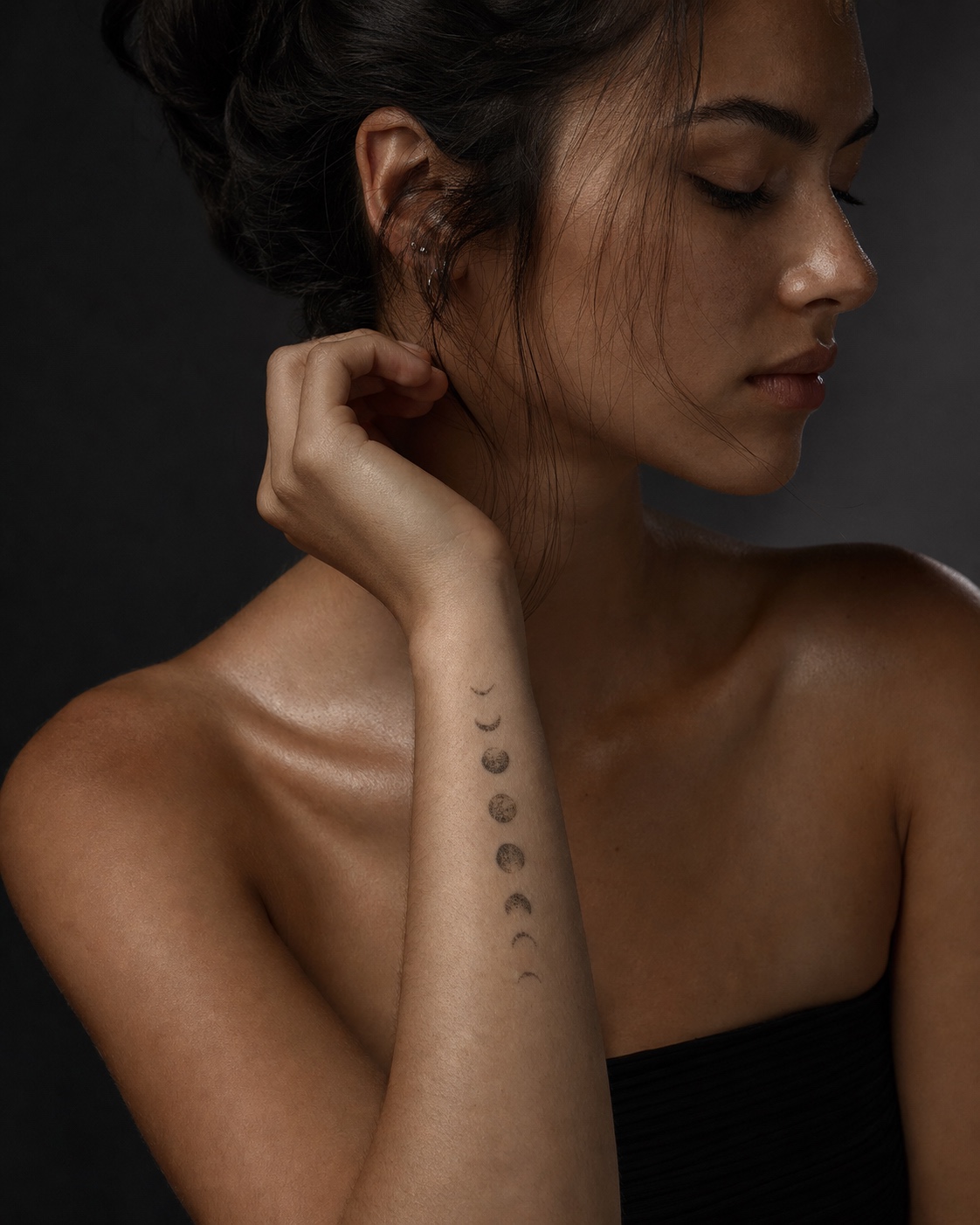
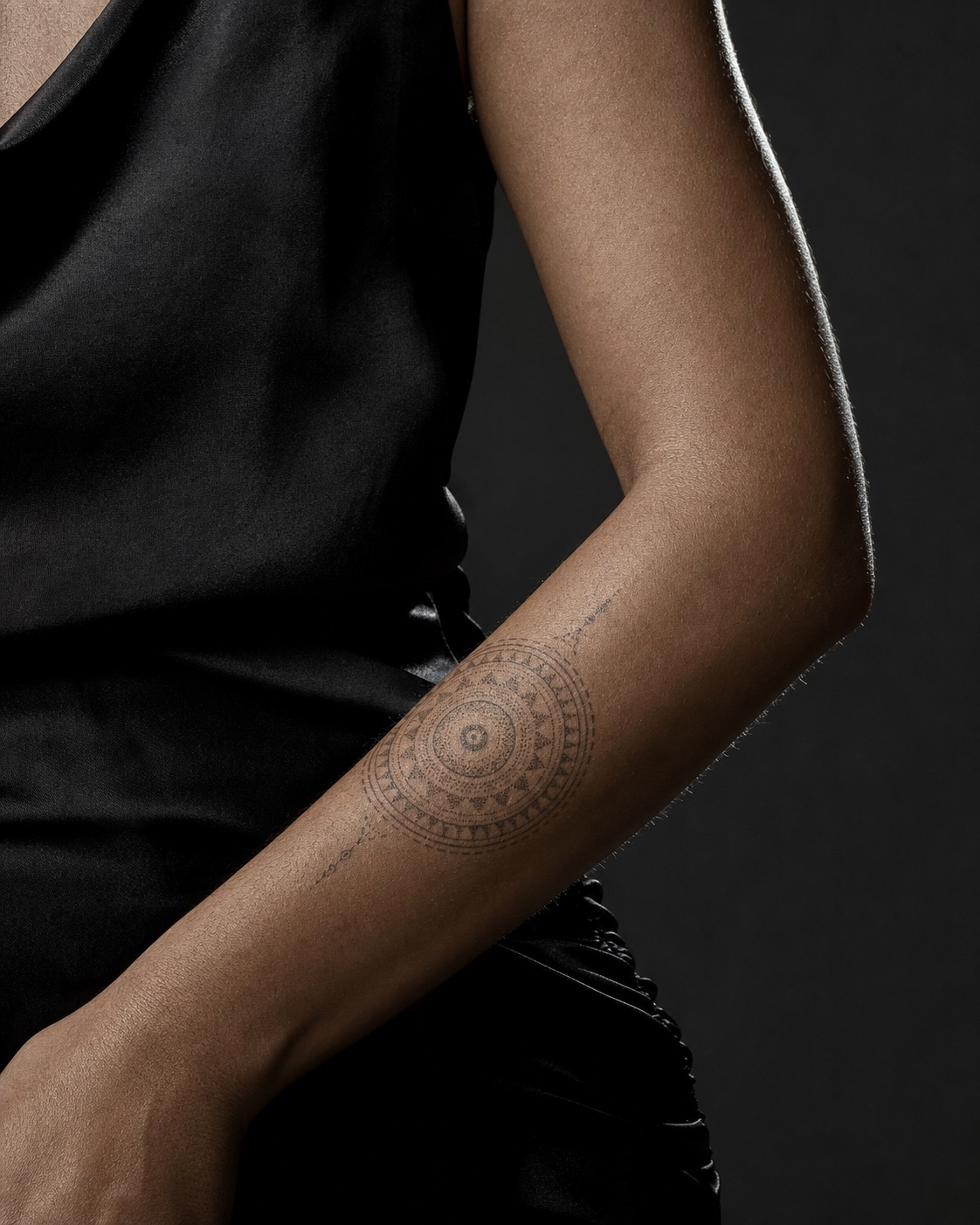
These new references show how the same dotwork logic changes by placement: small moons on the forearm, a geometric mandala, botanical back work, a cosmic upper-arm idea, and a tiny ankle sprig. Use them as direction, then ask your tattoo artist what they would simplify for your skin and scale.
Related dotwork tattoo reading
If you are still choosing a direction, compare this page with tattoo drawing, drawing ideas for tattoo, outline tattoo drawing ideas, how to care for a new tattoo, meaningful tattoo ideas for women, small tattoo ideas, tattoo ideas hub. Start broad in the tattoo ideas hub, then narrow down by drawing style, placement, meaning, and care before you book.
Sources and further reference
For technique and care context, I compared this update with Vlad Blad dotwork explainer, Tim Lease dotwork tattoo notes, iNKPPL dotwork style guide, CrocArt dotwork tattoo guide, AAD tattoo aftercare basics. These are supporting references, not a replacement for advice from the artist who will tattoo your skin.
Dotwork tattoo ideas FAQ
Q: What is a dotwork tattoo?
A: A dotwork tattoo is built from many individual ink dots instead of one smooth block of shading. The artist changes dot size, spacing, and density to create shadow, texture, and contrast. It works especially well for mandalas, sacred geometry, florals, animals, cosmic designs, and small symbolic tattoos where soft value matters.
Q: Do dotwork tattoos age well?
A: Dotwork tattoos can age well when the design has enough breathing room. Very tiny dots placed too close together may soften into gray patches over time, especially on high-friction areas. Larger shapes, clear negative space, and good aftercare usually keep the design more readable. Ask the artist how they size dot clusters for long-term healing.
Q: Are dotwork tattoos more painful than line tattoos?
A: Pain depends more on placement, session length, needle grouping, and your own tolerance than on the word “dotwork.” Some people find dot-by-dot shading less harsh than long packed lines, while others dislike the repeated tapping feeling. Ribs, sternum, inner arm, ankle, and hip can feel sharper than outer forearm or calf.
Q: What designs work best for dotwork tattoo ideas?
A: The strongest dotwork tattoo ideas have clear silhouettes and value changes: mandalas, geometric sleeves, moon phases, botanical stems, animal heads, mountain scenes, eyes, planets, and ornamental frames. Designs that depend on tiny text or very thin micro-details can be risky because dots need space to heal cleanly.
Q: Where should I place a dotwork tattoo?
A: Forearm, calf, shoulder blade, upper arm, thigh, and upper back are forgiving placements because they give the artist space for dot density and negative space. Small wrist, ankle, hip, or bum tattoo placements can work too, but the design should be simpler so the detail does not close up as it heals.
Q: Is dotwork the same as stippling?
A: They are closely related. Stippling is the drawing and shading method that uses dots to build value. Dotwork is the tattoo style that uses that dot-based approach on skin. In practice, many tattoo artists use both words when talking about shaded dots, geometric patterns, and soft gradients.
Q: How do you care for a dotwork tattoo?
A: Follow the aftercare instructions from your tattoo artist first. In general, keep the tattoo clean, avoid picking or scratching, use a thin layer of recommended moisturizer, and keep it away from direct sun, swimming, and heavy friction while it heals. Dotwork depends on clean spacing, so damaged scabs can make the texture heal unevenly.
Final planning note
Save three references before booking: one for subject, one for dot density, and one for placement. Then ask the artist what they would simplify so the tattoo heals cleanly. The best dotwork tattoo ideas are not the ones with the most dots. They are the ones where every dot has a reason to be there.
Dotwork can give bark, roots, and shadow more breathing room than a dense outline. See these tree tattoo style ideas to compare dotwork, blackwork, fine line, and traditional approaches.
- 640shares
- Facebook0
- Pinterest640
- Twitter0
- Reddit0