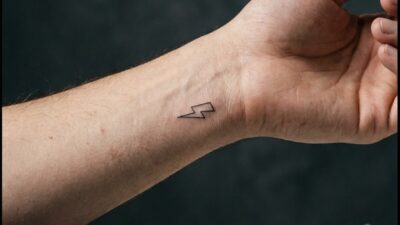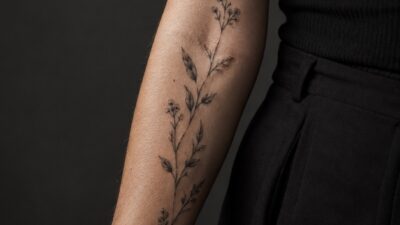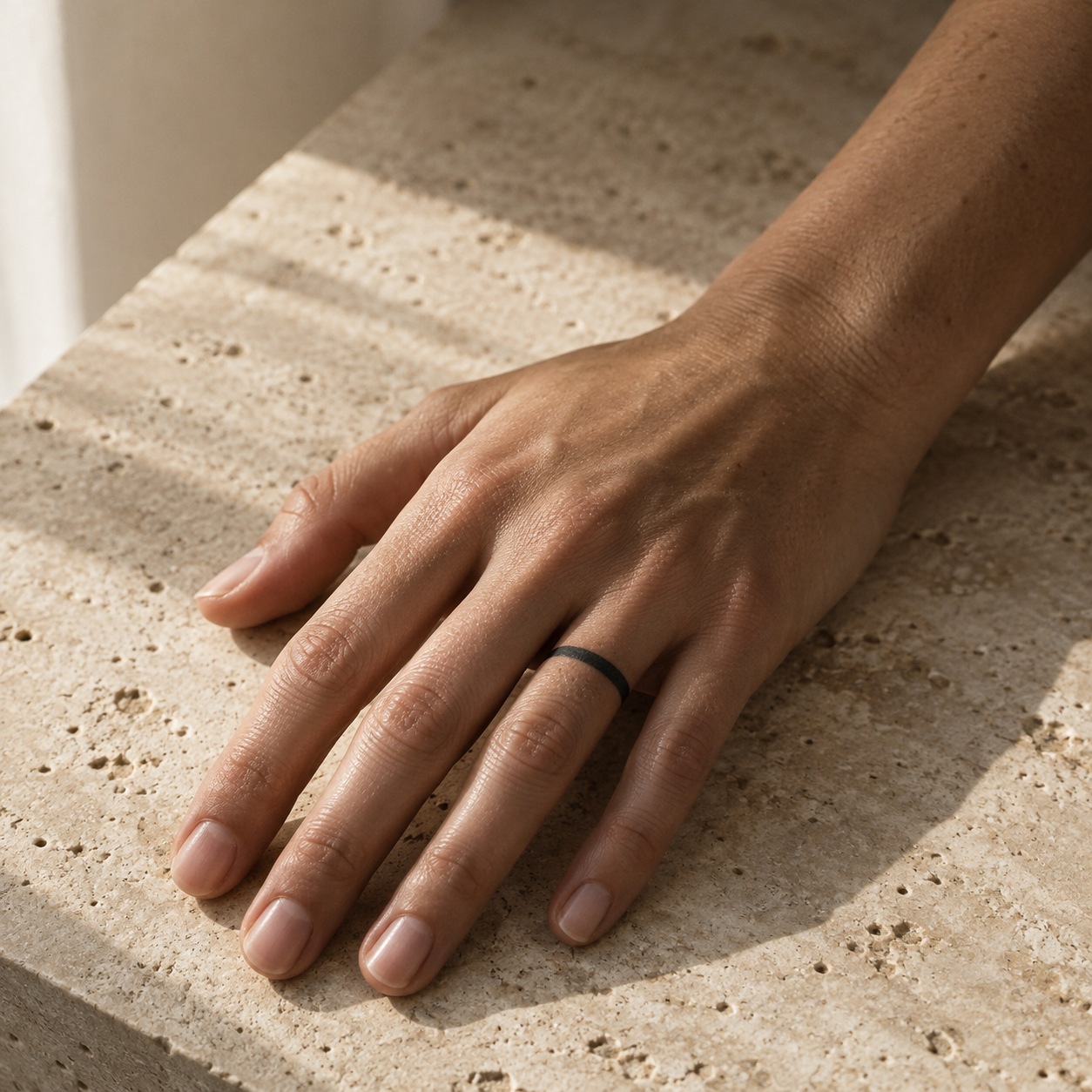
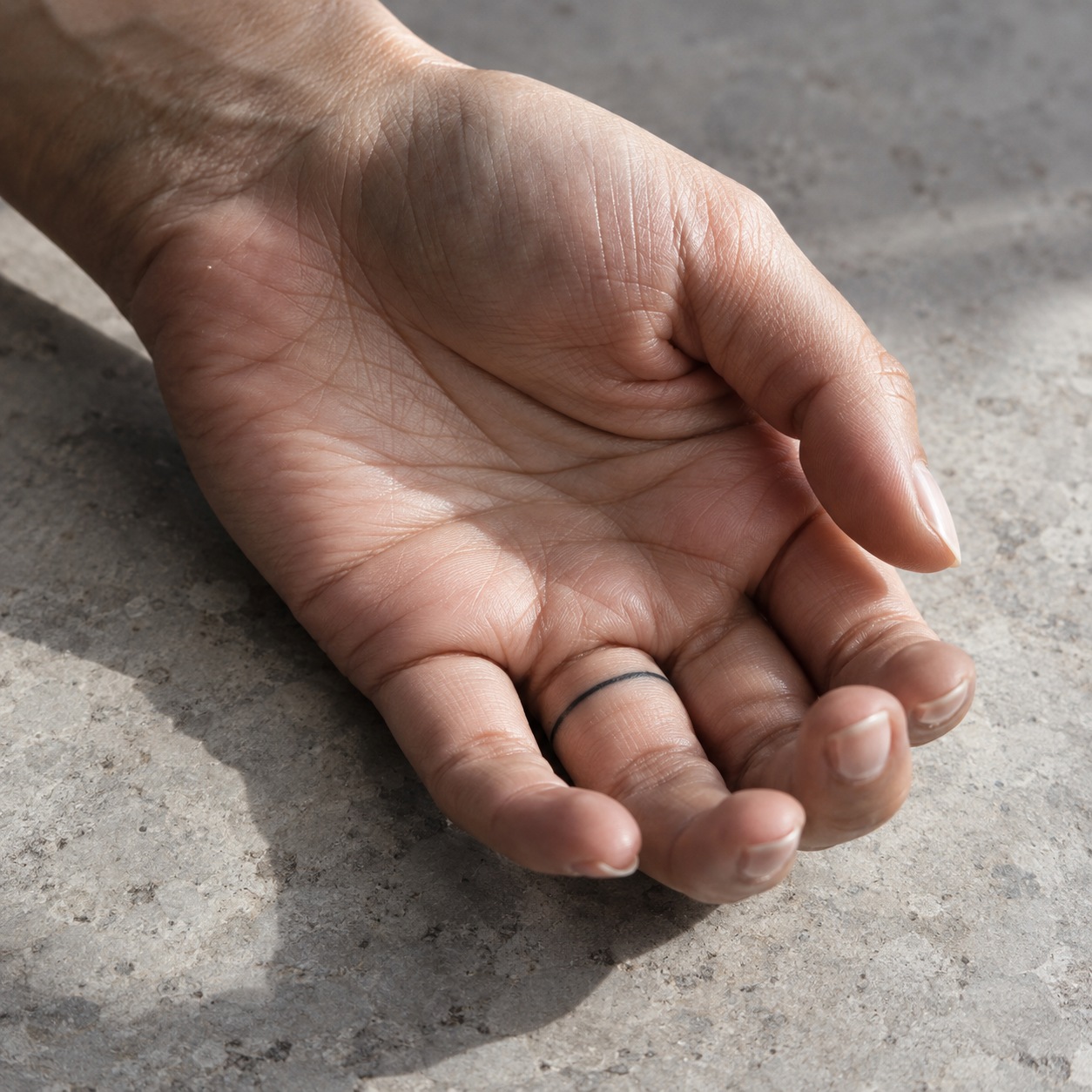
A metal ring gets cast once and stays the same for fifty years. A tattooed one sits in skin that stretches, creases and sheds on the most-washed, most-bent part of your body. Same circle, a completely different engineering problem.
I spent years in jewelry CAD, where a band’s thickness gets argued over in tenths of a millimeter. That habit changes how you look at wedding ring tattoo ideas. Most pages hand you 30 or 49 photos and call it a day. Nobody tells you why one band stays crisp while another blurs by year three.
So this guide works differently. You’ll get 25 designs sorted by how well they age, plus real numbers on cost, pain and healing: roughly $50 to $300, about six weeks to fully heal, and a hand that many people rate around 8 out of 10 for pain. (Those figures come from published tattoo guides, and I’ll flag where they vary.) I’ll also give you one drawing rule I’d apply to any finger tattoo before it touches your skin.
Pick the design for the skin you’ll have in five years. The photo on day one takes care of itself.
Why a Tattooed Ring Is Not a Ring
Pick up a Cartier Trinity ring and you are holding three interlaced, mobile bands first designed in 1924. The metal moves as a mechanism, but its dimensions do not change with your skin. Your finger does.
Metal is rigid, skin is not
Finger skin stretches every time you grip a mug, crease at every knuckle and renews itself constantly. Ink sits in that moving layer. Green Wedding Shoes puts it plainly: finger tattoos fade faster than most, and fine lines tend to blow out.
In CAD, I drew a band once and trusted it forever. On skin, the drawing is only the starting point. I’ve noticed that the designs people regret aren’t the ugly ones. They’re the ones drawn like metal: razor-thin, evenly spaced, no tolerance for drift.
Line weight and negative space
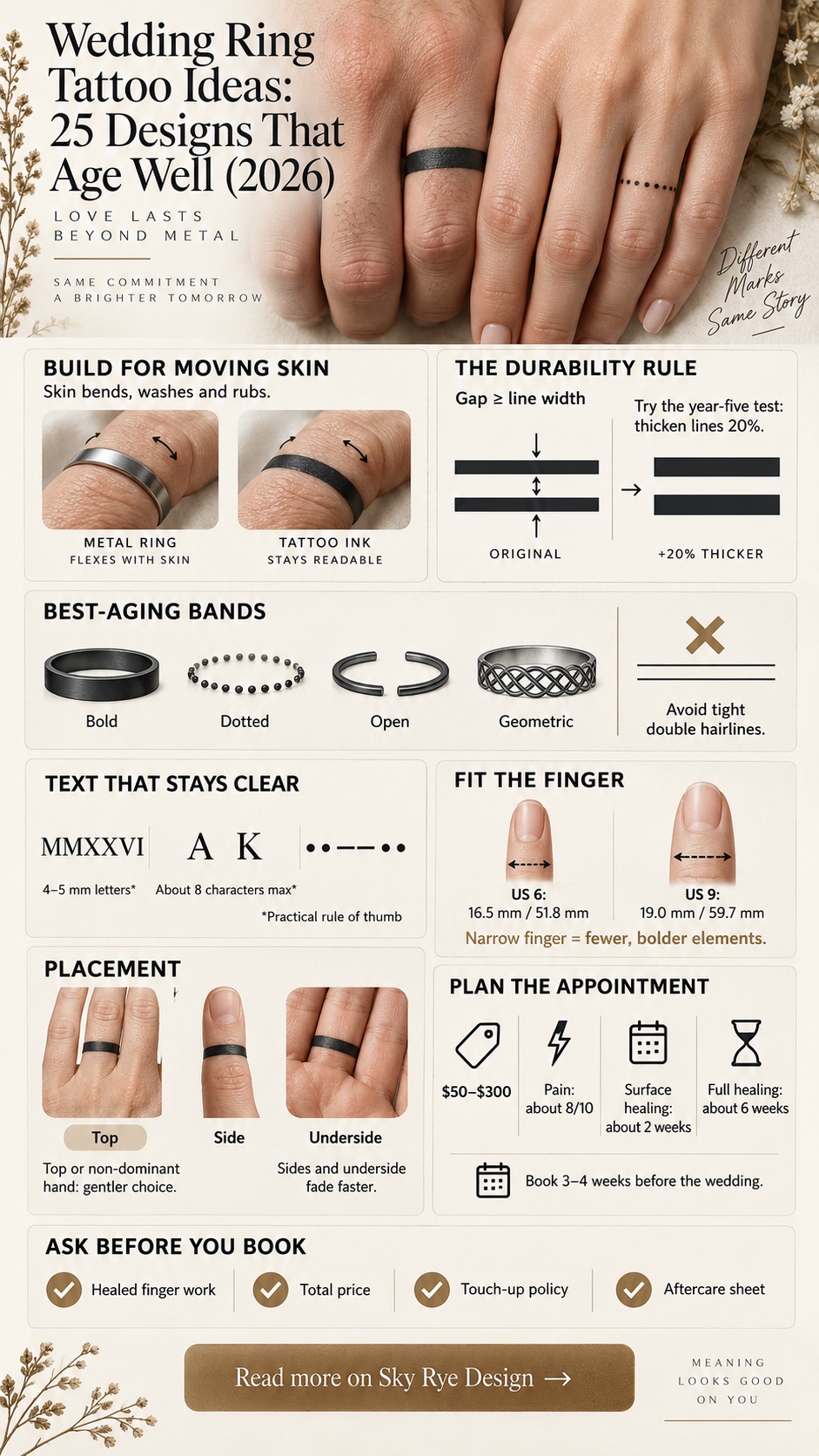
Here’s the rule I’d apply to any finger design. Keep every gap at least as wide as the lines around it. (That’s my own rule of thumb, not an industry standard, so run it past your artist.) Ink spreads a little over the years, and a gap that starts narrow closes first.
A band that is 2 to 3 mm wide, the range of a classic slim wedding band, leaves almost no room for error. A bolder line, or a dotted one, survives drift far better than two hairlines sitting close together.
Tattoo, ring or both?
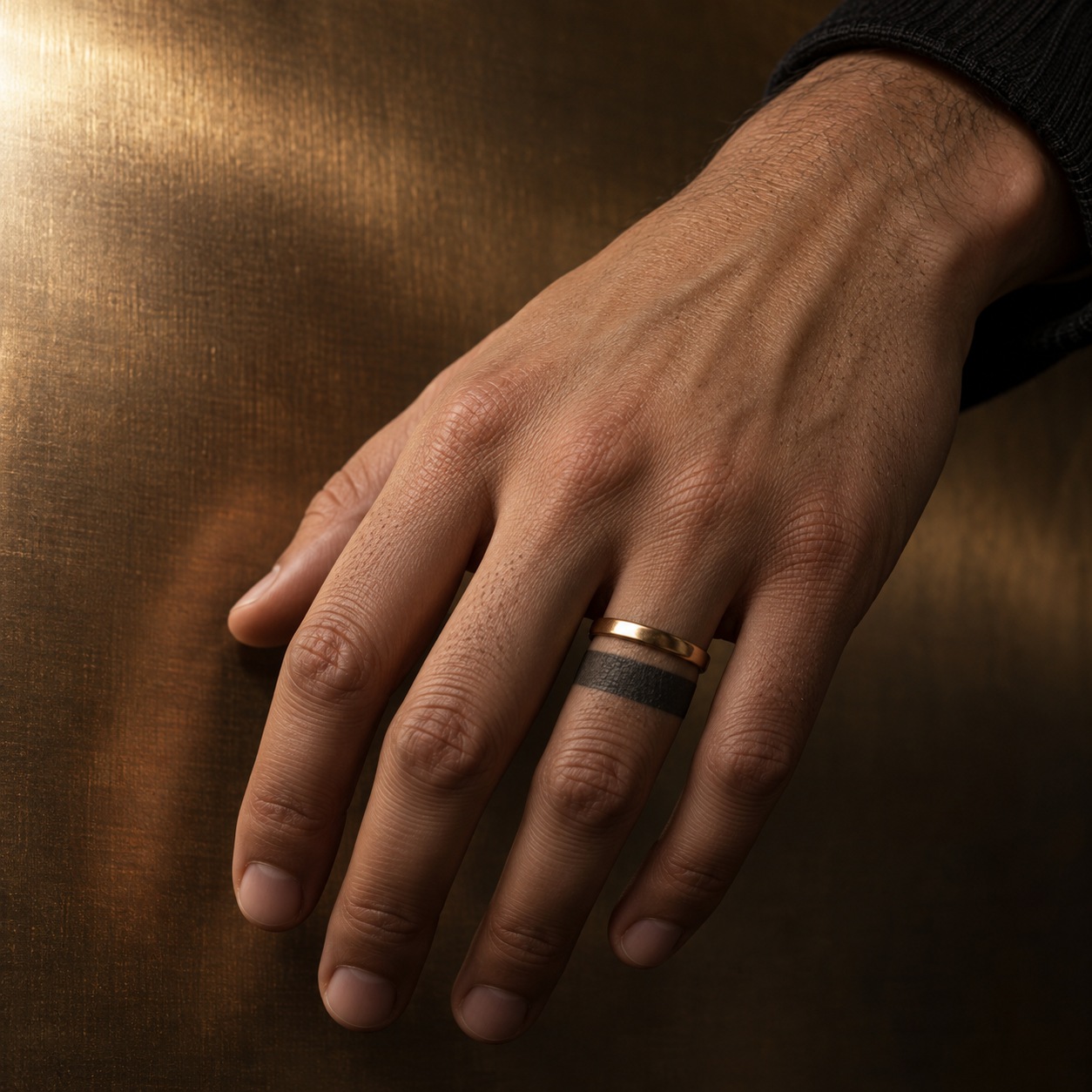
Plenty of couples now choose both. They wear a metal band for the ceremony and keep the ink as the permanent version. Others skip metal entirely, especially if they work with their hands, lift weights or take off jewelry for hospital shifts.
Money matters too. AMM quotes about $50 to $100 for a simple line band and around $300 for more complex work. A plain gold band from a mainstream retailer commonly costs several hundred dollars, though you should check current prices yourself, since AMM’s own comparison figure of $700 to $1,200 is unsourced. Just remember the tattoo needs touch-ups, and the ring doesn’t.
Try this: Before you book, print your design at actual size and tape it around your finger for a day. If the gaps look tight on paper, they’ll look tighter in five years.
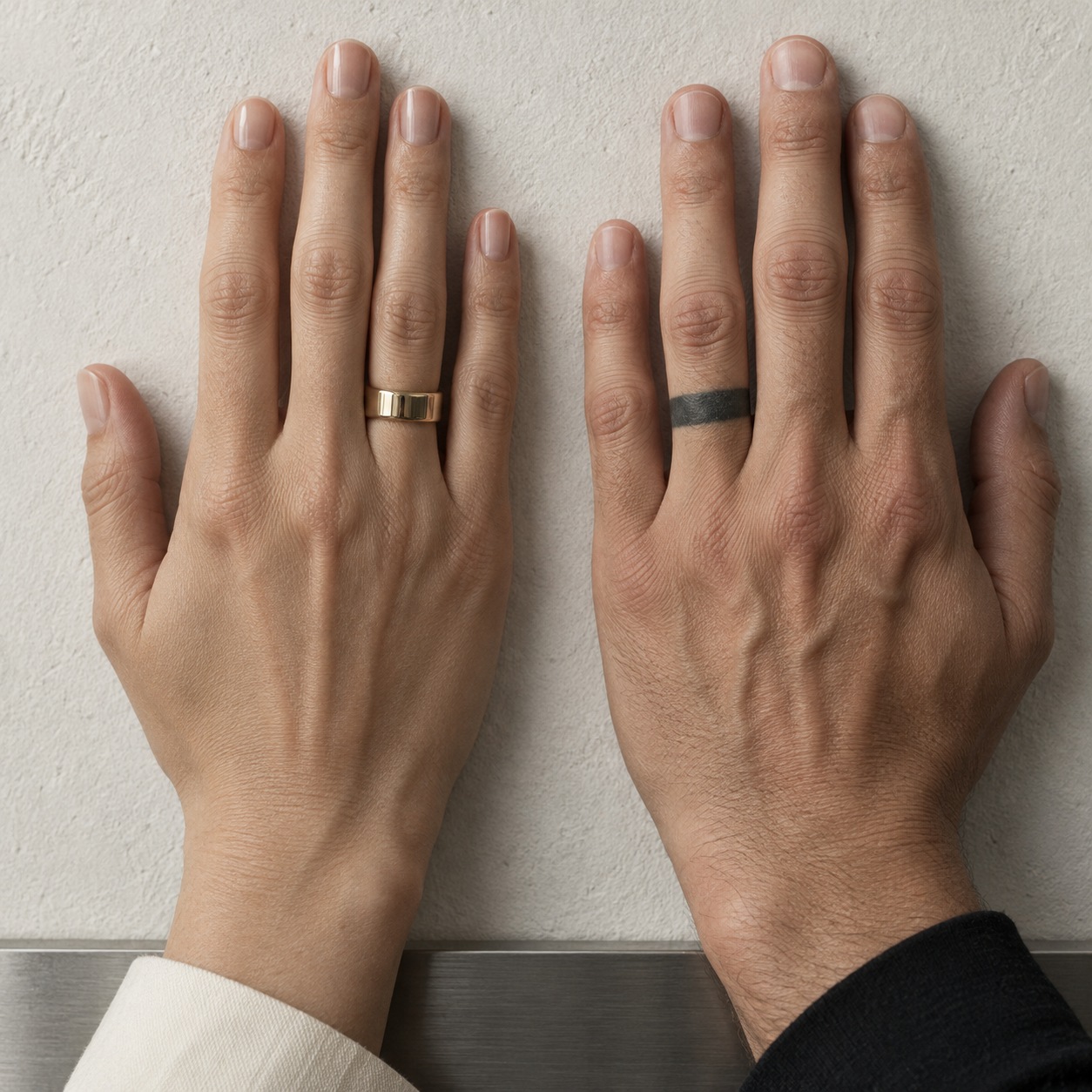
Minimal Band Designs That Last
Van Cleef & Arpels’ Perlée collection is built around polished golden beads. Nobody calls the effect plain, and the repeated beads carry the design. A tattoo can borrow the same trick.
Single and double line bands
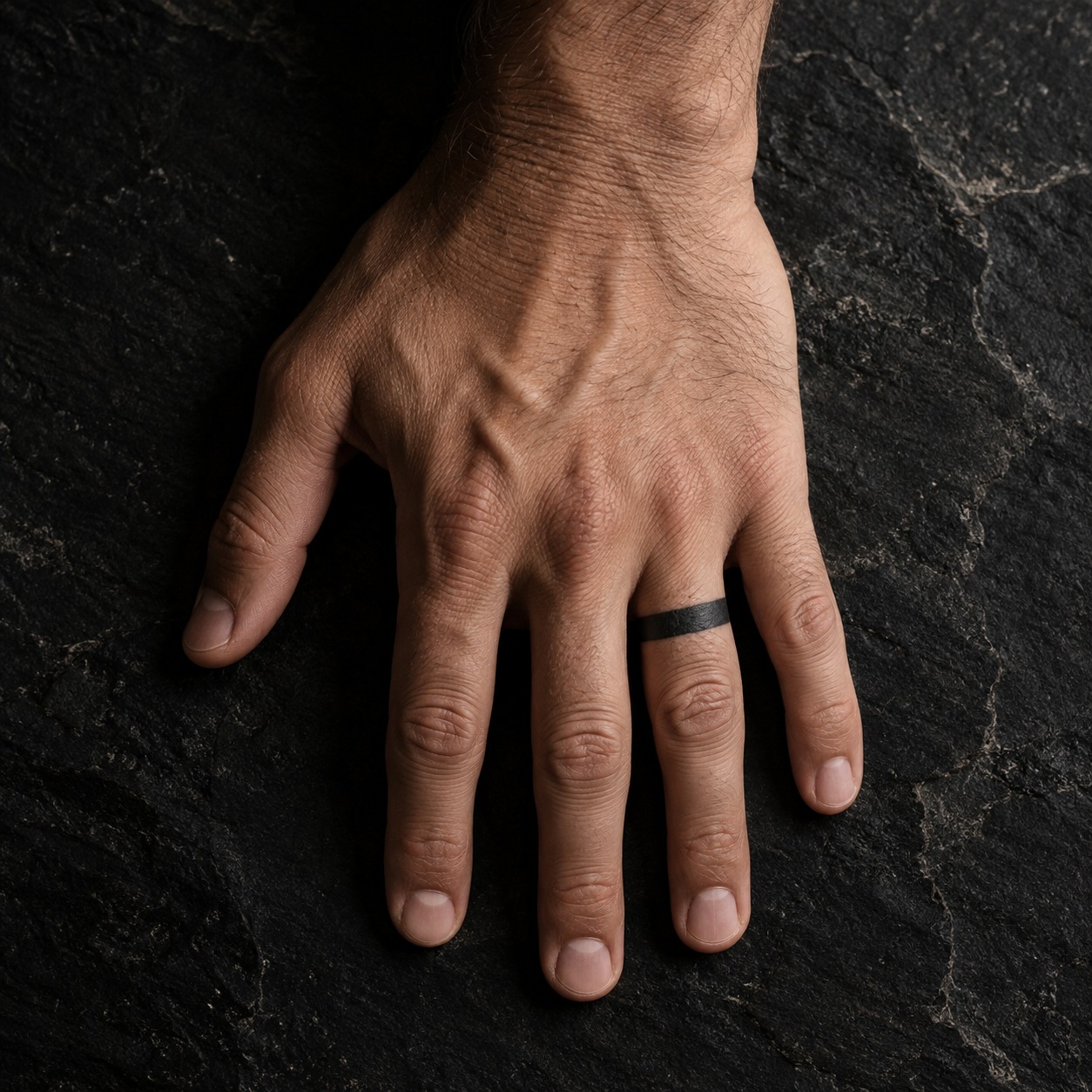
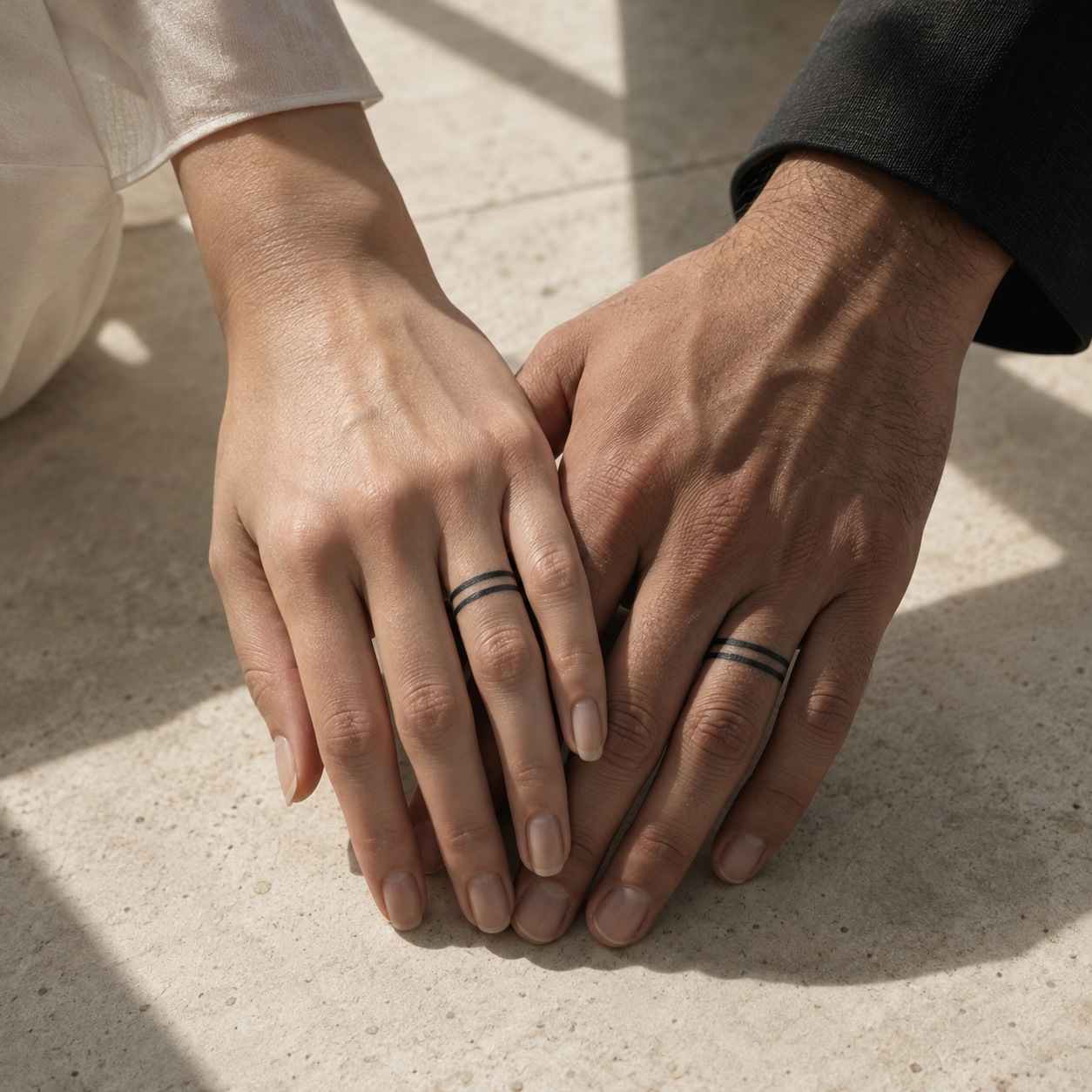
One bold line is the safest tattoo a ring finger can wear. One line has nothing beside it to merge into, so even if it spreads a little, it still reads as a band.
Double lines are where I see trouble. Two hairlines separated by a hair of skin look elegant on day one. Over the years, ink drifts and the gap closes, so your delicate pair turns into one fat smudge. If you love the look, ask your artist to widen the gap and thicken each line.
Bold, dotted and half-circle bands
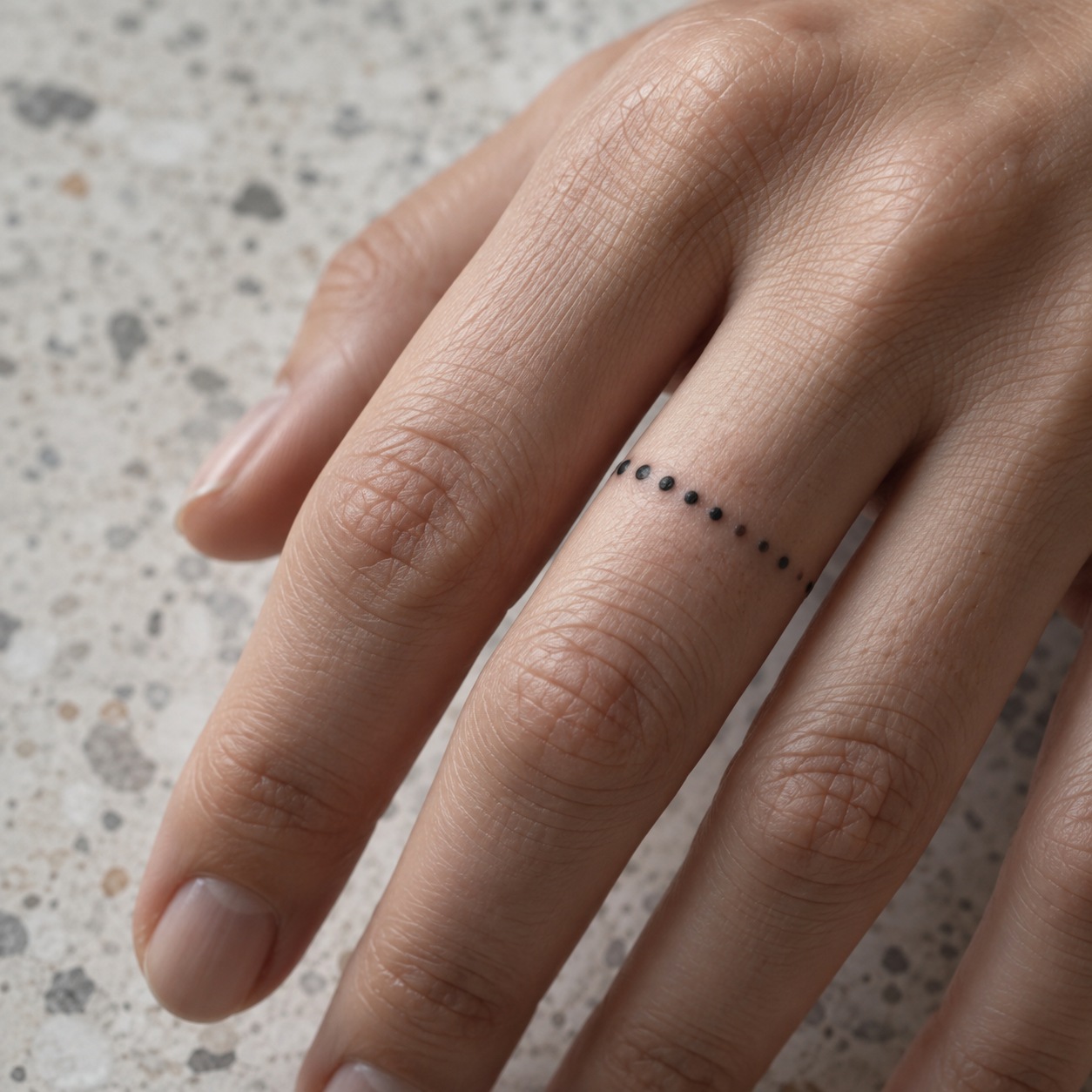
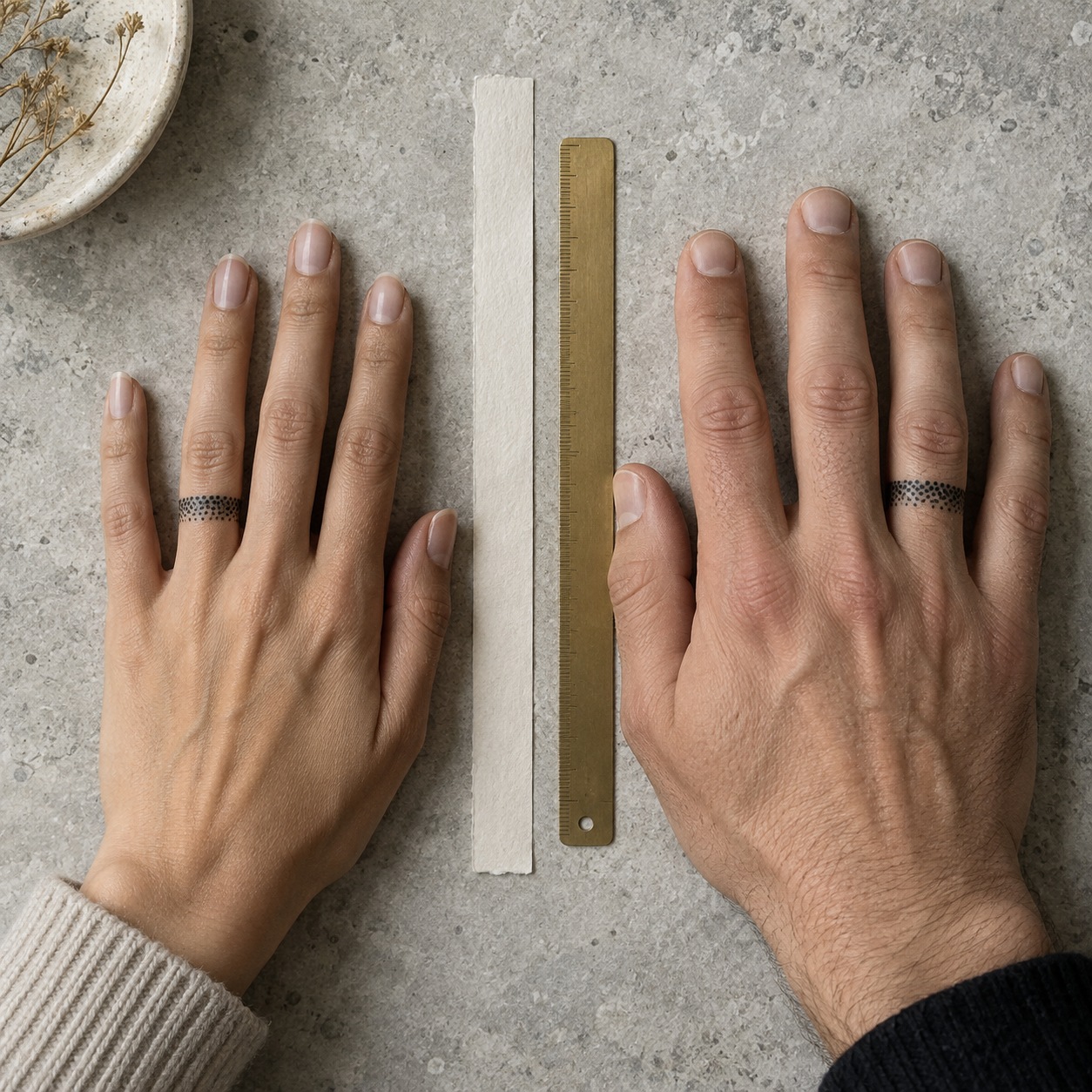
A dotted band is my favorite pick for longevity. Each dot is a small island, so slight spreading changes the look gently instead of destroying it. Green Wedding Shoes lists dotted bands and ombre dots among its popular designs for a reason. (More on the technique in our dotwork tattoo guide.)
A bold band, thick enough to look like a real ring, has the opposite strength: mass. Ink at that weight holds up well, and fading shows as softness rather than loss. Half-circle bands, which wrap only part of the finger, are also forgiving, since a slightly uneven edge looks intentional.
Negative-space and engraved-style bands
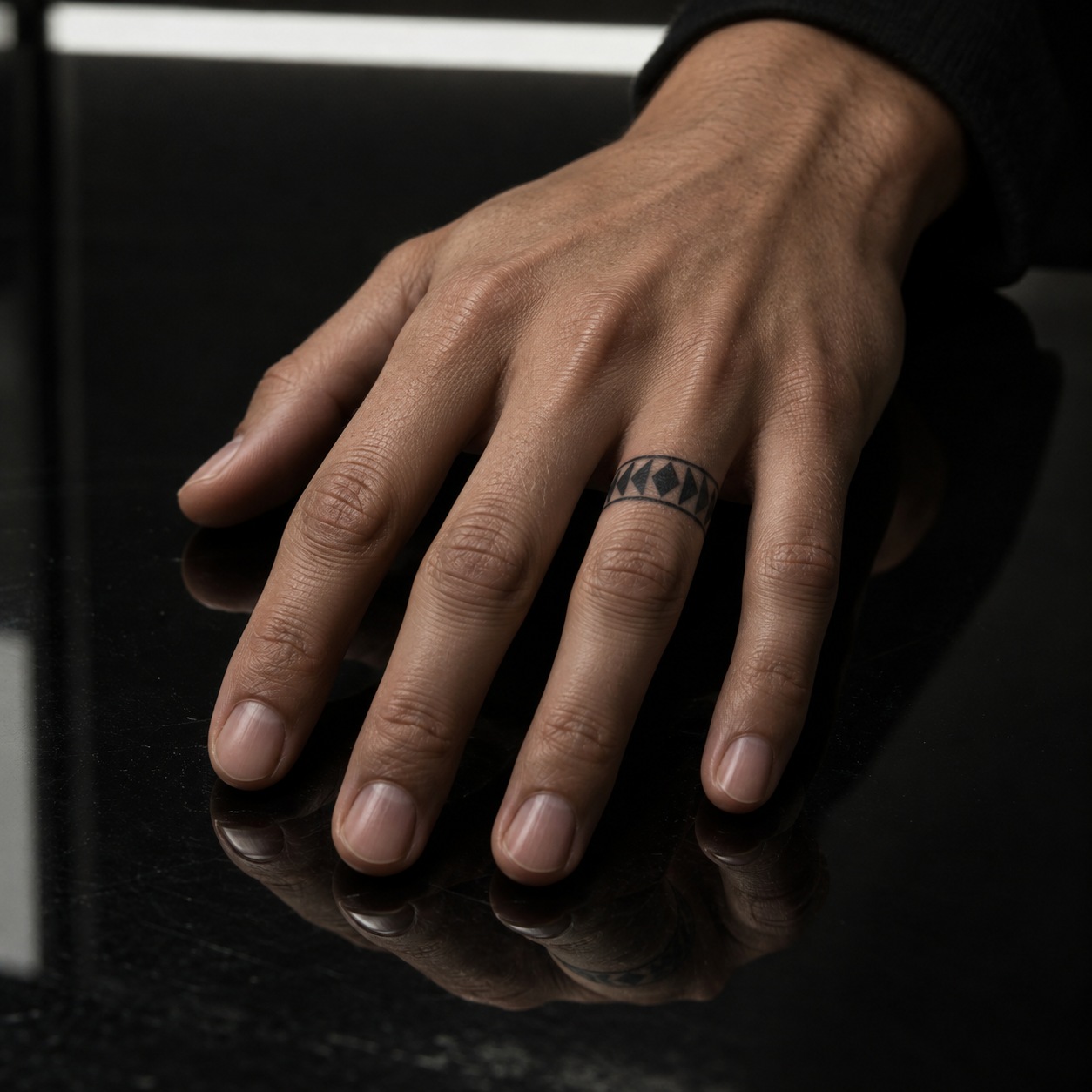
This is where jewelry experience helps most. Old ring engraving uses milgrain (a row of tiny beads along an edge) and Art Deco geometry (stepped lines and repeating triangles). Both work because repetition hides small errors. If one beads drifts, you can’t tell.
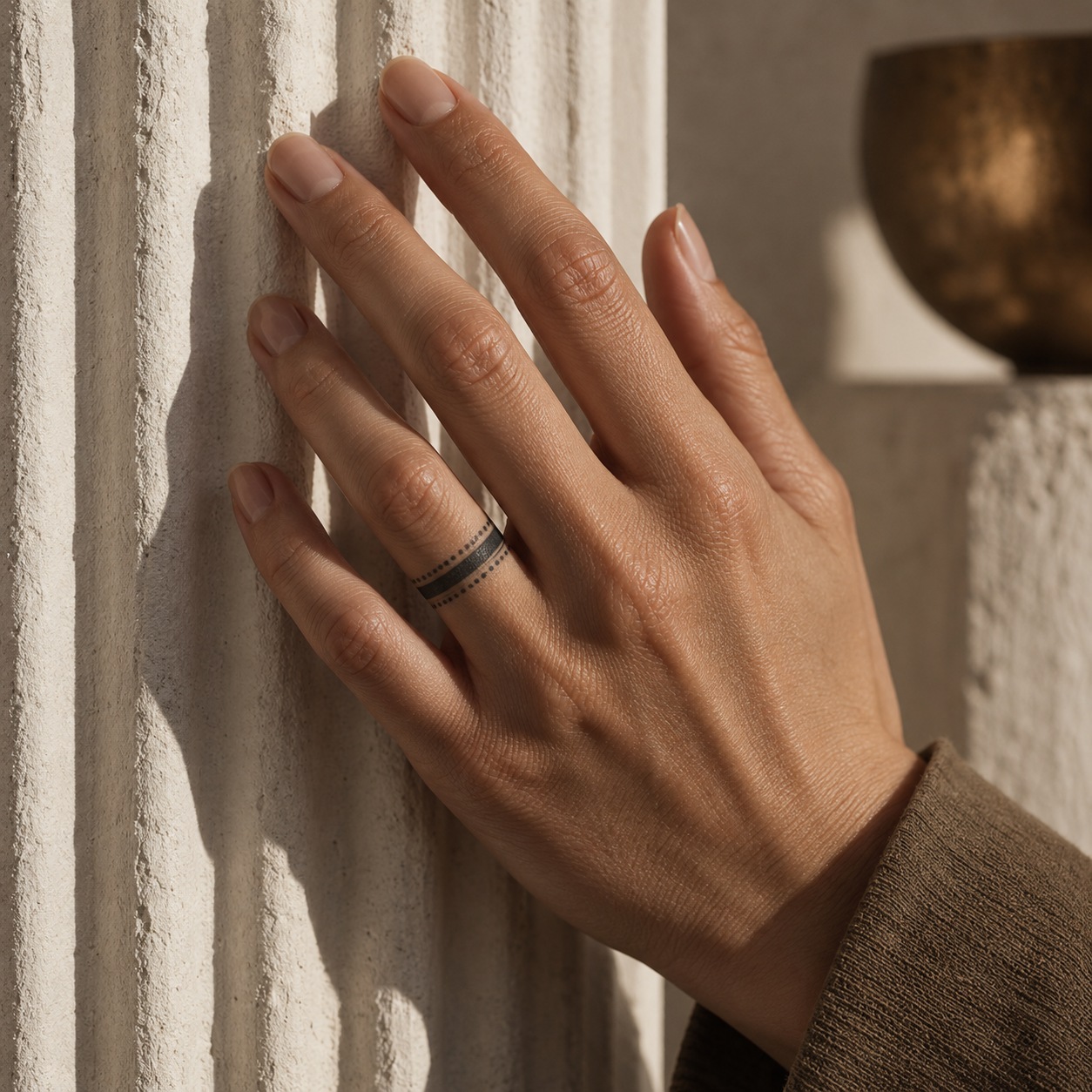
A tattooed version might use a solid band with tiny dots cut out of it, or a thin dotted line framing a bold one. In my experience, these sell better with artists than with clients at first, because they look busier on paper. They age far better than clean hairlines.
The year-five test
Here’s how I check any minimal design before it goes on skin. Take your drawing, thicken every line by about 20%, and look at it again. If it still reads as a ring, it will survive. If two lines touch, redraw it.
These durability notes are my design judgment, not lab data. Ask your artist to confirm with healed photos of their own finger work.
Dates, Letters and Hidden Messages
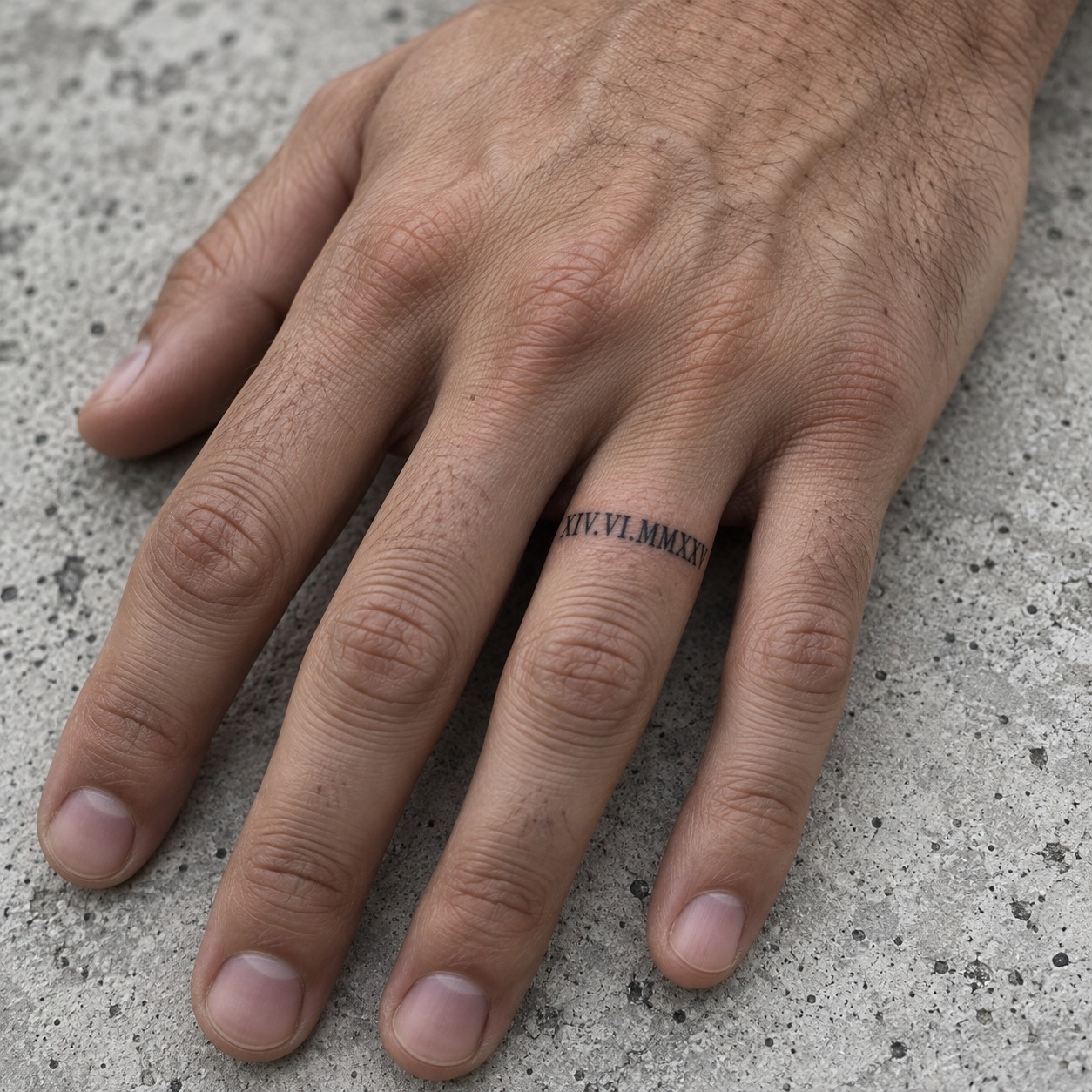
The wedding date is the most popular ring tattoo idea for good reason, and the most misdrawn. Take 14 June 2025. Written as numbers it’s a cramped string. Written in Roman numerals it becomes XIV.VI.MMXXV: straight strokes, wide gaps, a rhythm that wraps around a finger.
Roman numerals and wedding dates
Roman numerals show up on almost every competitor list, including Green Wedding Shoes. They survive because they’re built from simple vertical and diagonal strokes. There are no tight curves where ink can pool.
The catch is length. A full date runs long, and long text means small letters. In my experience, designers trim it to the year, or split the date across both partners’ fingers. One wears the day and month, the other wears the year.
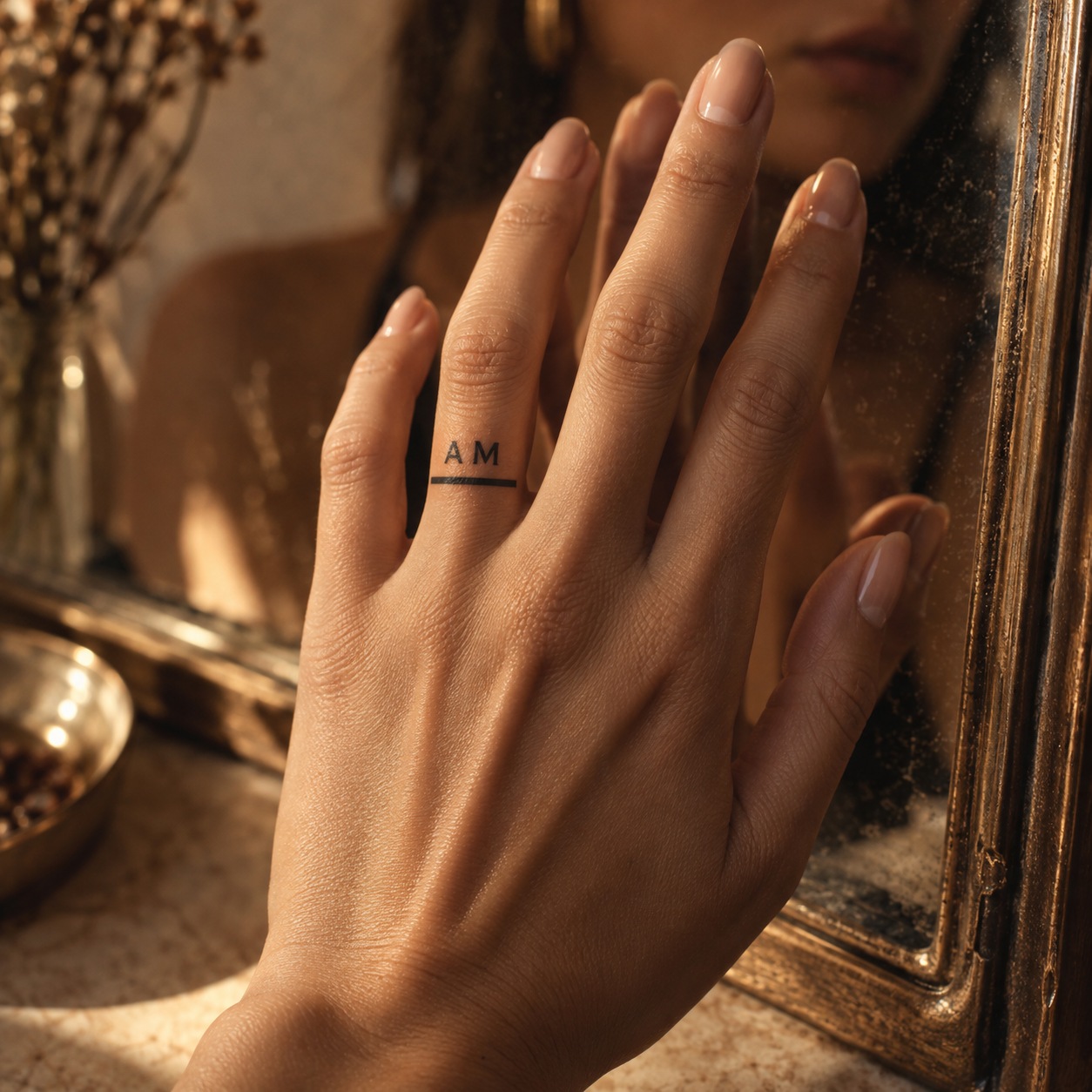
Initials, names and cursive
Script is the hardest design to keep readable on a finger. Think of a high-contrast typeface like Didot: thick strokes next to hairlines so thin they vanish first. A geometric sans like Futura keeps even stroke weight and holds up much better. Capital letters beat cursive for the same reason.
As a rough rule of thumb (mine, not an industry standard), letters smaller than about 4 to 5 mm tall start to blur as the years pass. Ask your artist how small they’ll go on a finger and look at their healed work, not fresh photos.
Coordinates, Morse code and symbols
These are the ideas with real meaning. AMM lists both Morse code and the coordinates of where a couple first met. Kyiv, for example, is 50.4501° N, 30.5234° E, which makes a long string of digits. Cut it down to a few numbers or a short line of dots and dashes.
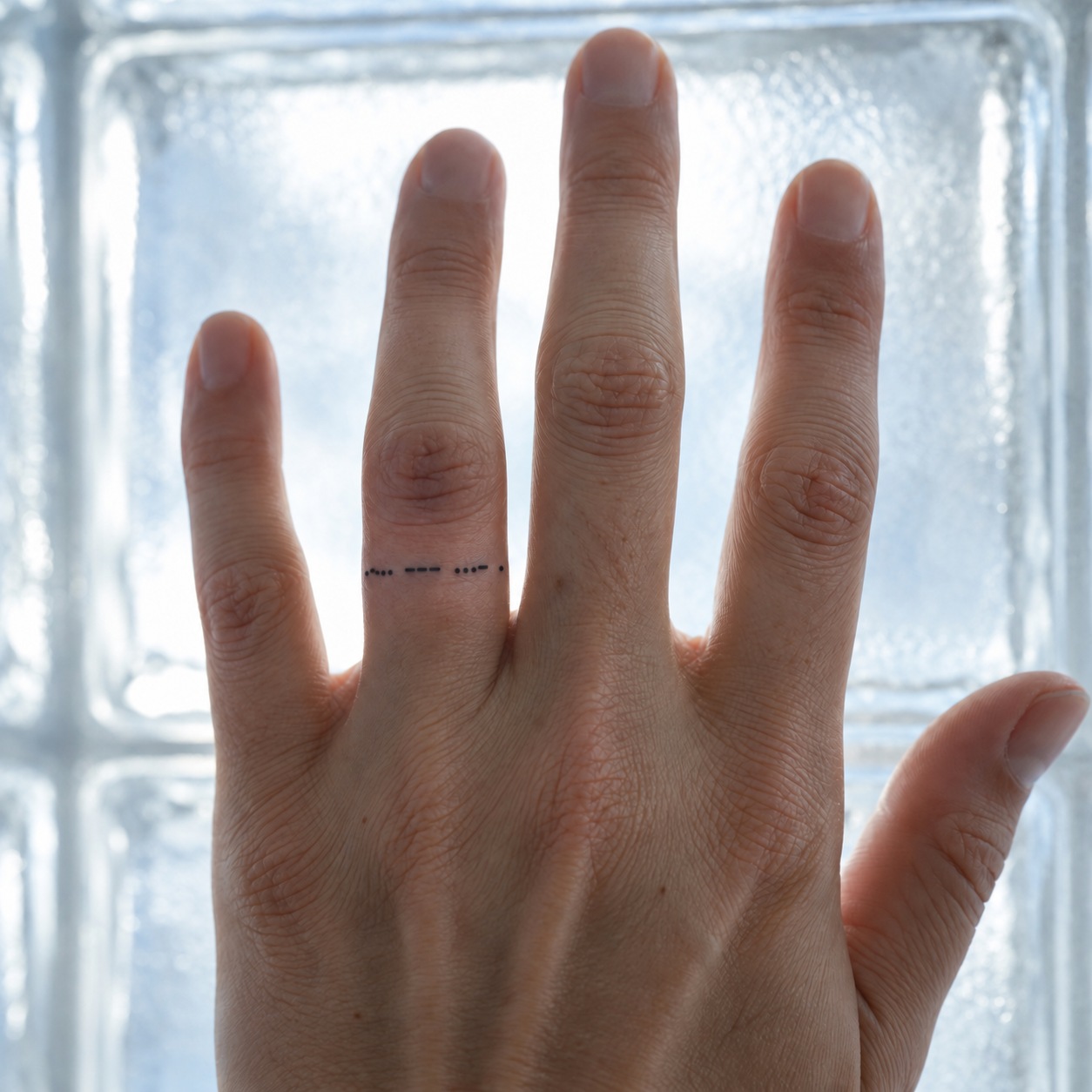
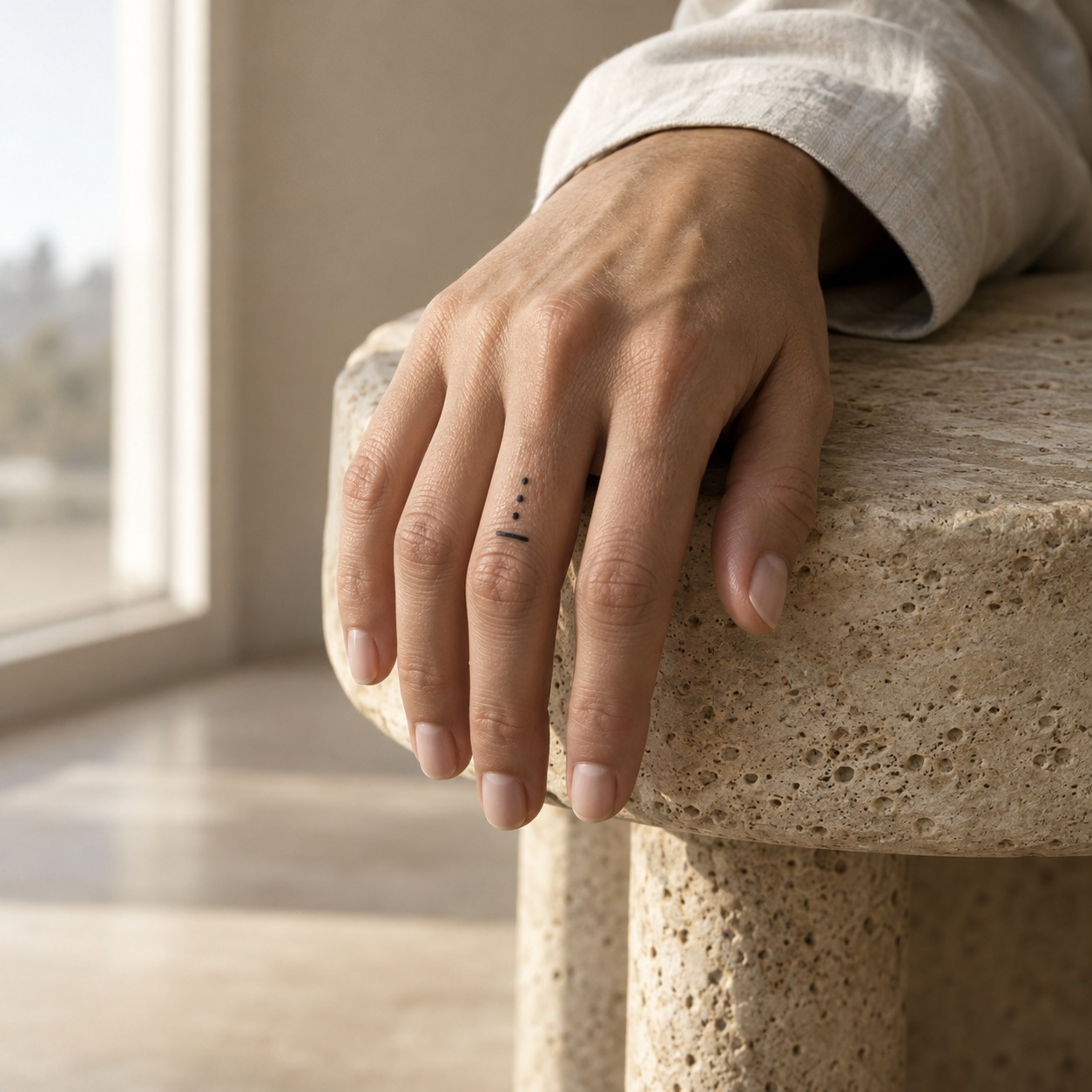
Morse works well because it’s already a band. “Love” is .-.. — …- . and the dots and dashes sit in a line like a beaded ring, with plenty of room between marks. It’s also a private message. Most people will read it as decoration.
Try this: Whatever text you pick, count the characters. Anything past about eight on a single finger is a warning sign. Move the rest to your partner’s ring or drop it.
Couples Sets and Symbolic Motifs
The oldest known Claddagh ring in Galway City Museum dates to around 1700: a pair of hands holding a crowned heart. It is proof that couples have long wanted rings that say something. Tattoos can do the same, as long as the motif is drawn to survive.
Matching vs. mismatched sets
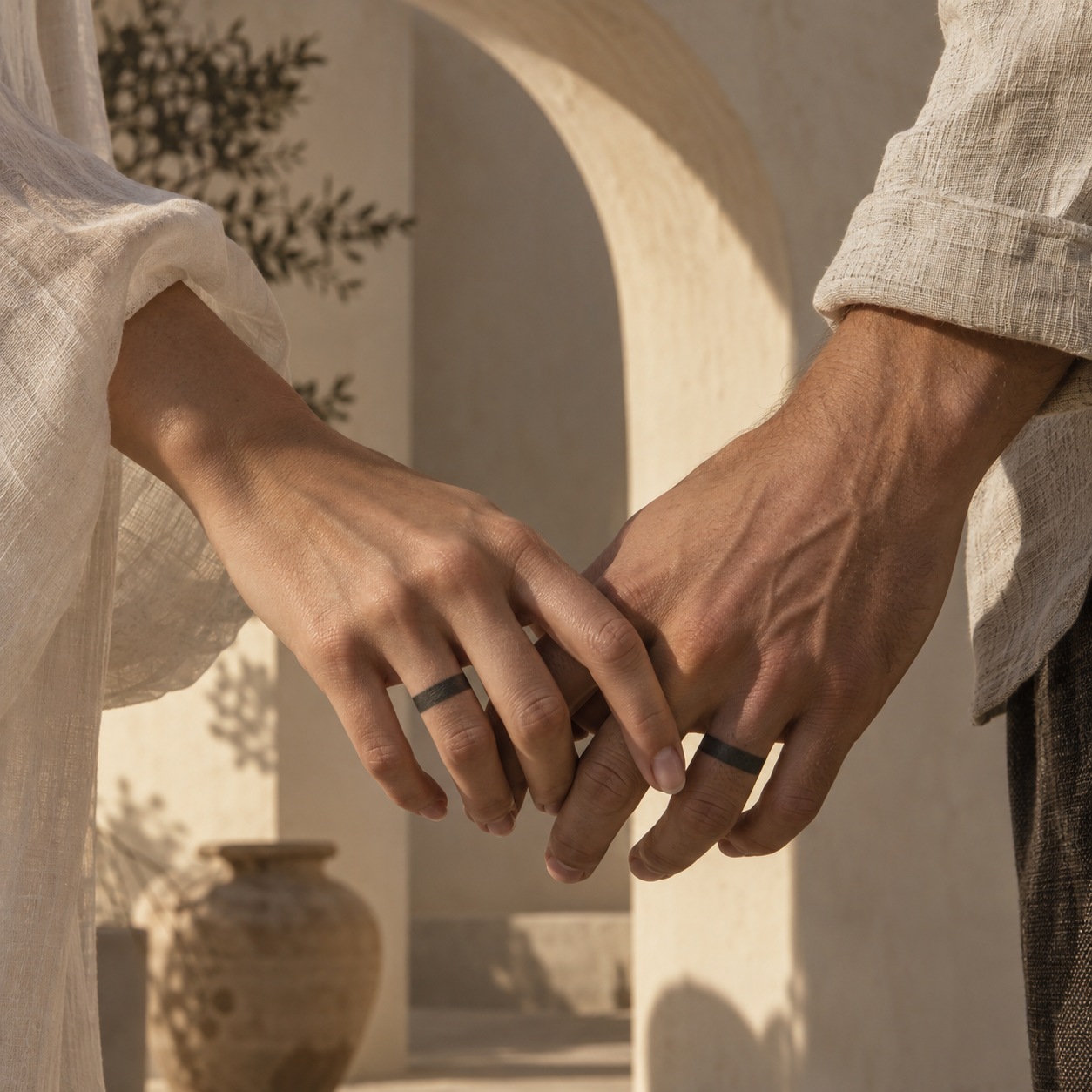
Matching bands are the classic couples ring tattoo. Mismatched sets are more fun. AMM lists a half-heart on each finger and puzzle pieces, and Green Wedding Shoes shows pairs that only make sense together.
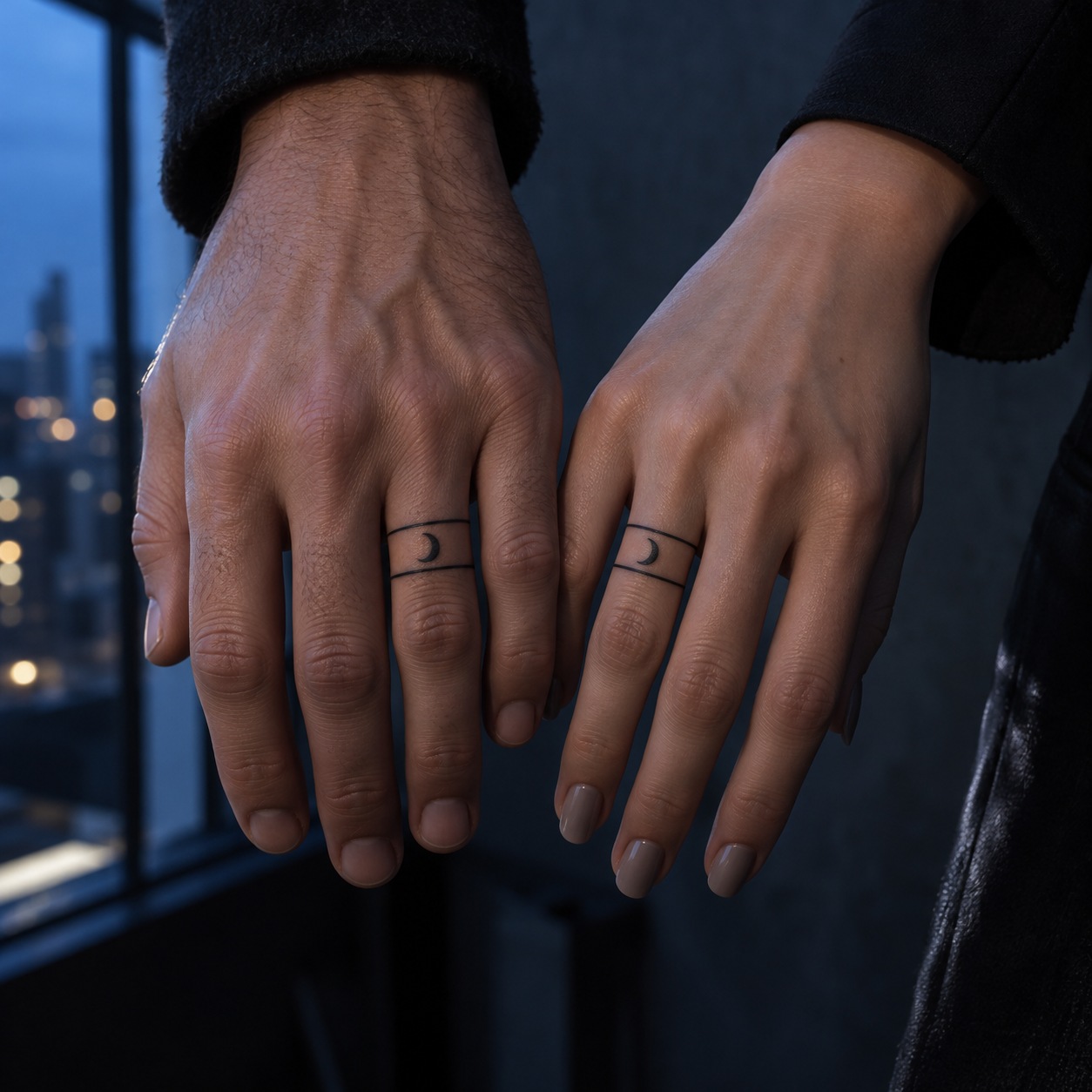
I’ve noticed the split designs fail in one specific way: alignment. If each half drifts differently as the ink ages, the join stops meeting. Design the join with a little overlap or a gap on purpose, so slight movement reads as intended. A moon phase pair works well for this, since two different phases never need to touch.
Celtic, Norse and knot motifs
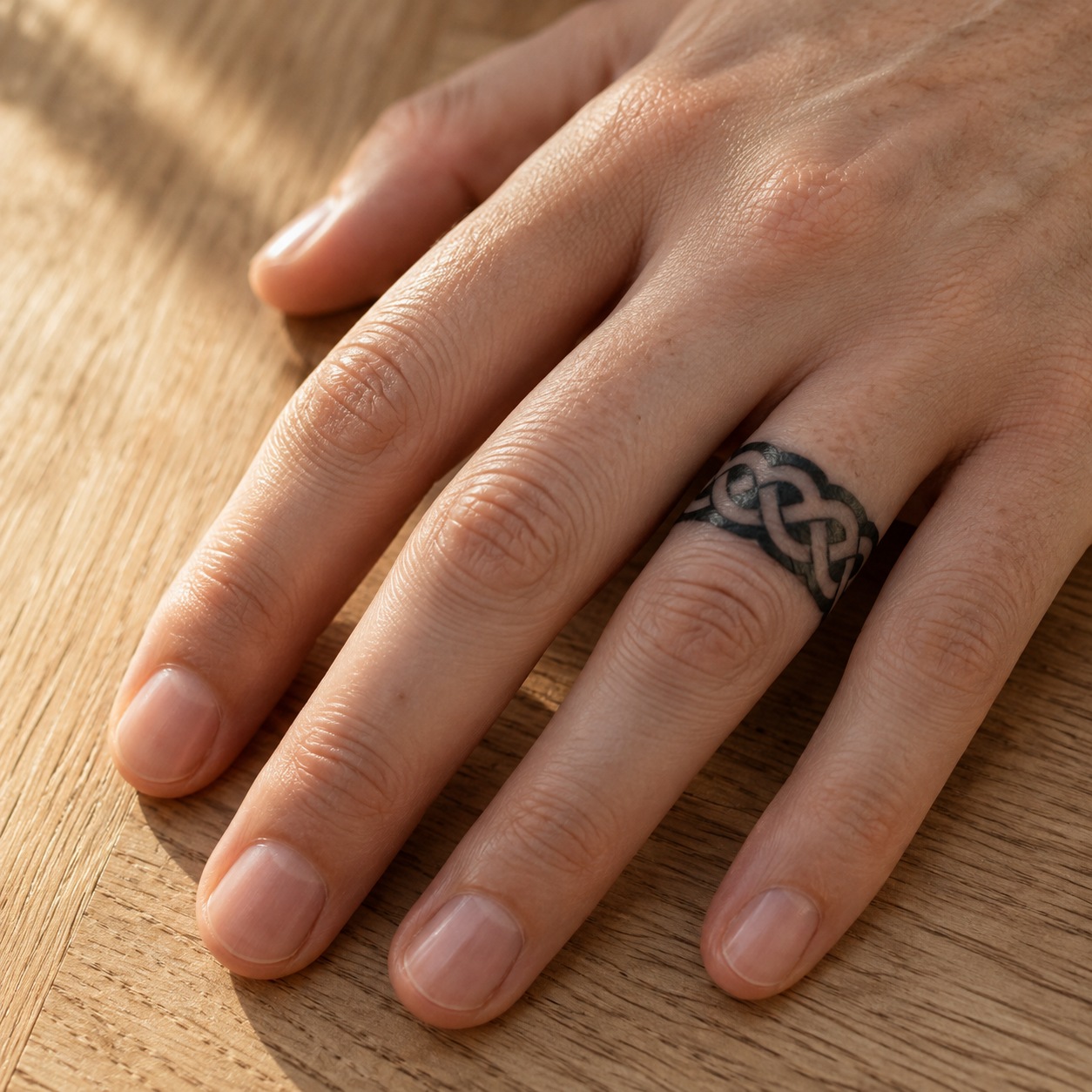
A Celtic knot is one continuous line looping over and under itself, which makes it the perfect eternity symbol. It’s also forgiving. The pattern is busy enough that small blur hides in the weave, as long as the lines are thick and spaced out.
Norse runes appear on Green Wedding Shoes and AMM lists. A short rune can look lovely, but check the symbol’s meaning with your artist first, because some runic marks have been taken over by hate groups. A quick conversation costs nothing.
Nature, celestial and geometric options
You’ll see ivy, laurel wreaths, sprigs, suns, stars and mountain lines across the competitor lists. Leaves and vines are the riskiest, since fine veins disappear first. Solid geometric shapes such as triangles, diamonds and tiny circles last longest.
Search data suggests people look for “for men” and “for women” versions. The designs rarely differ. What changes is width: a broader finger can carry a heavier line and a bolder knot, while a slender finger needs fewer elements. Choose by finger, not by label.
Try this: If you’re getting a matching or paired set, book the same artist and the same session. Ask them to trace both designs from one master drawing, so line weight and spacing match.
Placement, Sizing and Which Hand
Ask a German and a Brit which hand wears the wedding ring and you’ll get two different answers. In Germany, Ukraine and much of Eastern Europe, the ring goes on the right hand. In the US and UK, it goes on the left. I spent years working in Germany, so I’ve seen both on the same meeting table. Before you book, decide which tradition your tattoo follows.
Ring finger, inside finger or knuckle
Green Wedding Shoes lists the main options: a full band, an inside-finger line, a knuckle design, a wrap-around and four-knuckle sets. They don’t age equally.
Artists commonly say that the sides and underside of the finger fade fastest, because those areas rub against everything. I haven’t found hard data on that, so ask your artist and look at healed work. A band on the top of the finger, or a design on the knuckle, tends to hold better than a line tucked on the inner edge.
Scaling a design to your finger width
No competitor explains this, and it matters. The GIA ring-size chart lists a US size 6 at 16.5 mm inside diameter and 51.8 mm around. A size 9 is 19.0 mm across and 59.7 mm around. That is nearly 8 mm of extra circumference for the design to wrap.
The easy way is to measure with a strip of paper or string, mark where it overlaps, and give that number to your artist. A motif with five elements might spread nicely on a wide finger and cramp on a narrow one. Ask the artist to scale by element count, not just by overall width. Fewer, bolder elements fit narrow fingers best.
Dominant or non-dominant hand
Your dominant hand works harder. It washes, grips and rubs more, so ink there tends to wear sooner. If you want the tattoo on your dominant hand, expect more touch-ups. If you have a choice, the other hand is the gentler pick.
If you’re stuck between two placements, my choice is the top of the finger on the non-dominant hand. It’s the combination I’d bet on for longevity, though it’s a judgment call, not a guarantee.
Try this: Measure your finger at the end of the day, when it’s slightly larger, and again in the morning. If the numbers differ by more than a millimeter or two, use the larger one for your design.
Cost, Pain, Healing and Keeping It Sharp
A tattooed wedding band is cheap on the day and fussy afterward. The price on the quote is only the first line of the budget.
What it costs
AMM puts a simple line band at roughly $50 to $100, and a more detailed design at about $300. Green Wedding Shoes quotes about $75 to $300. Shop minimums and the artist’s hourly rate drive most of the difference, so a tiny design can still cost the minimum.
Budget for touch-ups too. Ask what your artist charges before you book, because policies vary. Some include a free touch-up in the first year, and others charge again.
How much it hurts
AMM reports that many people rate hand and finger tattoos around 8 out of 10, and quotes an artist, Zakk Powers (via Byrdie), explaining that there’s little tissue between skin and bone. Expect a sharp sting, not a dull ache.
Numbing cream is a mixed bag. AMM advises talking to your artist first, since some oppose it. It also won’t make the session painless. Don’t apply anything before asking.
The healing timeline
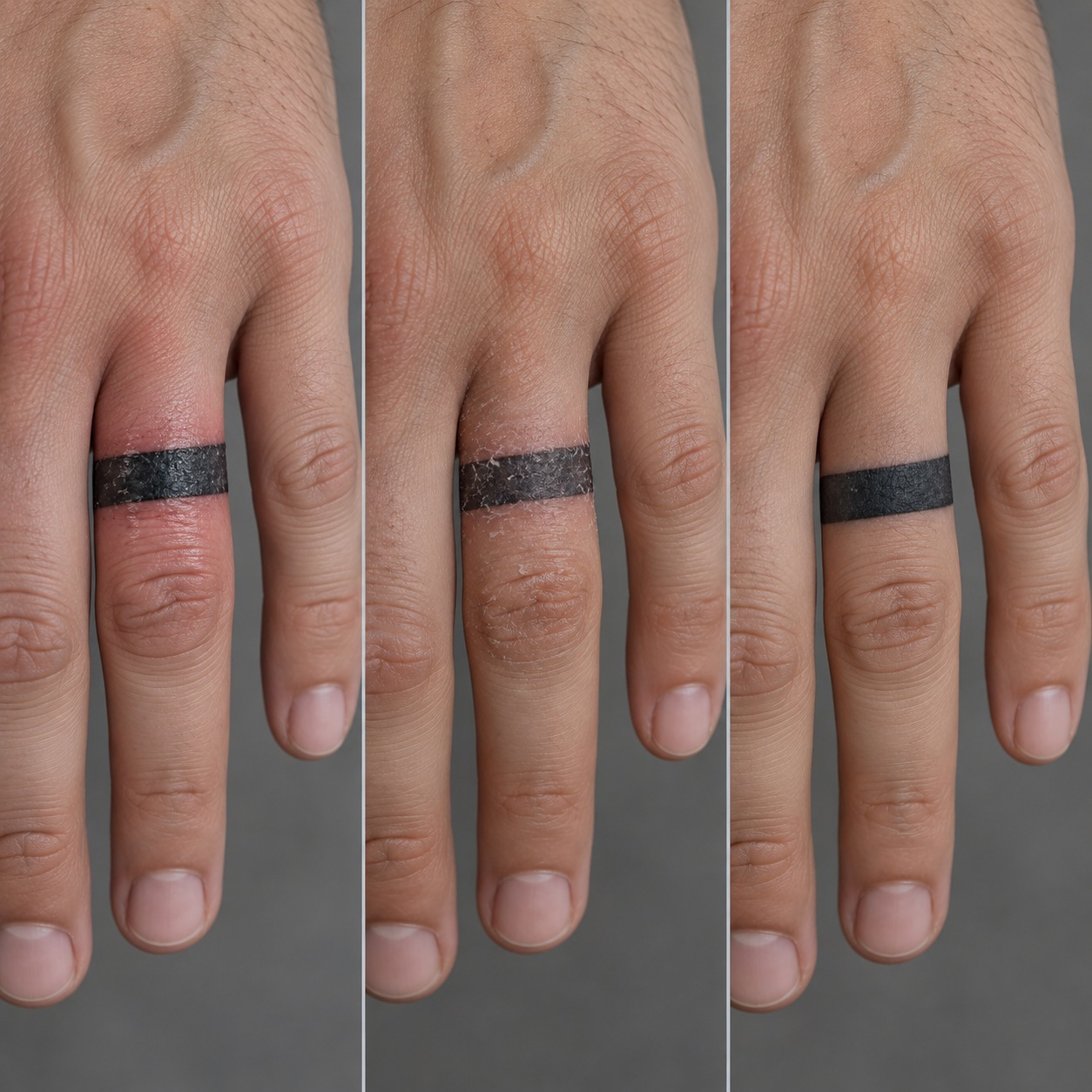
According to AMM, redness, swelling, weeping and scabbing usually ease after about two weeks, and full healing can take around six. Aftercare comes down to a few habits: keep it clean, moisturize lightly, stay out of the sun and don’t pick scabs. Green Wedding Shoes adds daily sunscreen once healed, plus avoiding harsh chemicals.
Timing matters if there is a wedding. AMM suggests getting inked at least three to four weeks beforehand. The American Academy of Dermatology advises medical care if redness darkens or spreads, pain worsens, or you develop pus, fever, chills or open sores.
Fading, blowout, touch-ups and cover-ups
Fingers lose ink faster than most body parts. Blowout, where lines blur and bleed into the surrounding skin, is permanent. AMM suggests a touch-up after a few months and then every few years, and says to pick a design that can handle ageing.
Cover-ups and removal are the gap in every top page. I could not find a reliable source with costs, so I will leave numbers out. The FDA’s tattoo-removal guidance says laser removal needs multiple treatments and may not remove a tattoo completely. A cover-up usually needs a darker or busier design. Talk to an experienced artist and a dermatologist before assuming you can undo it.
Picking an artist
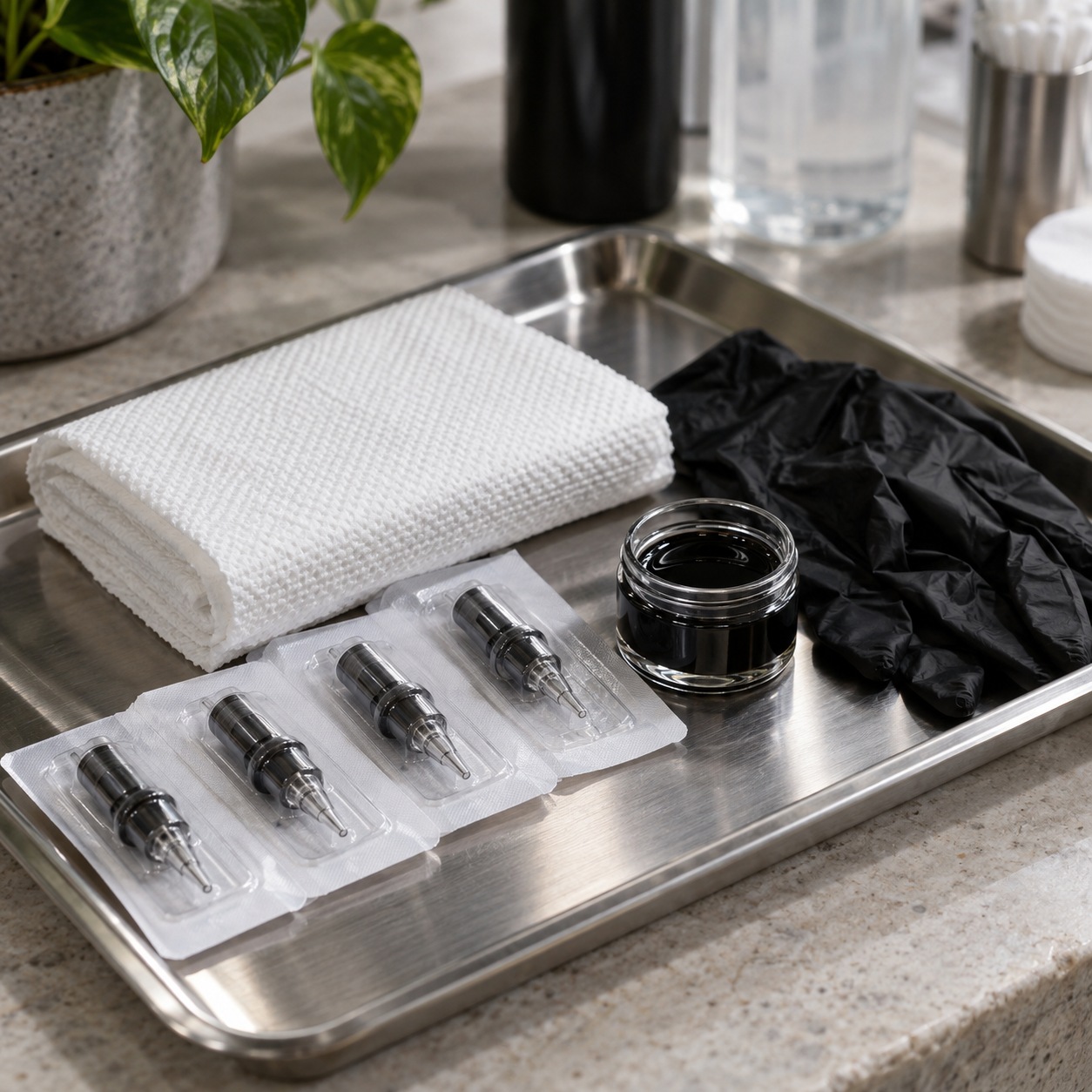
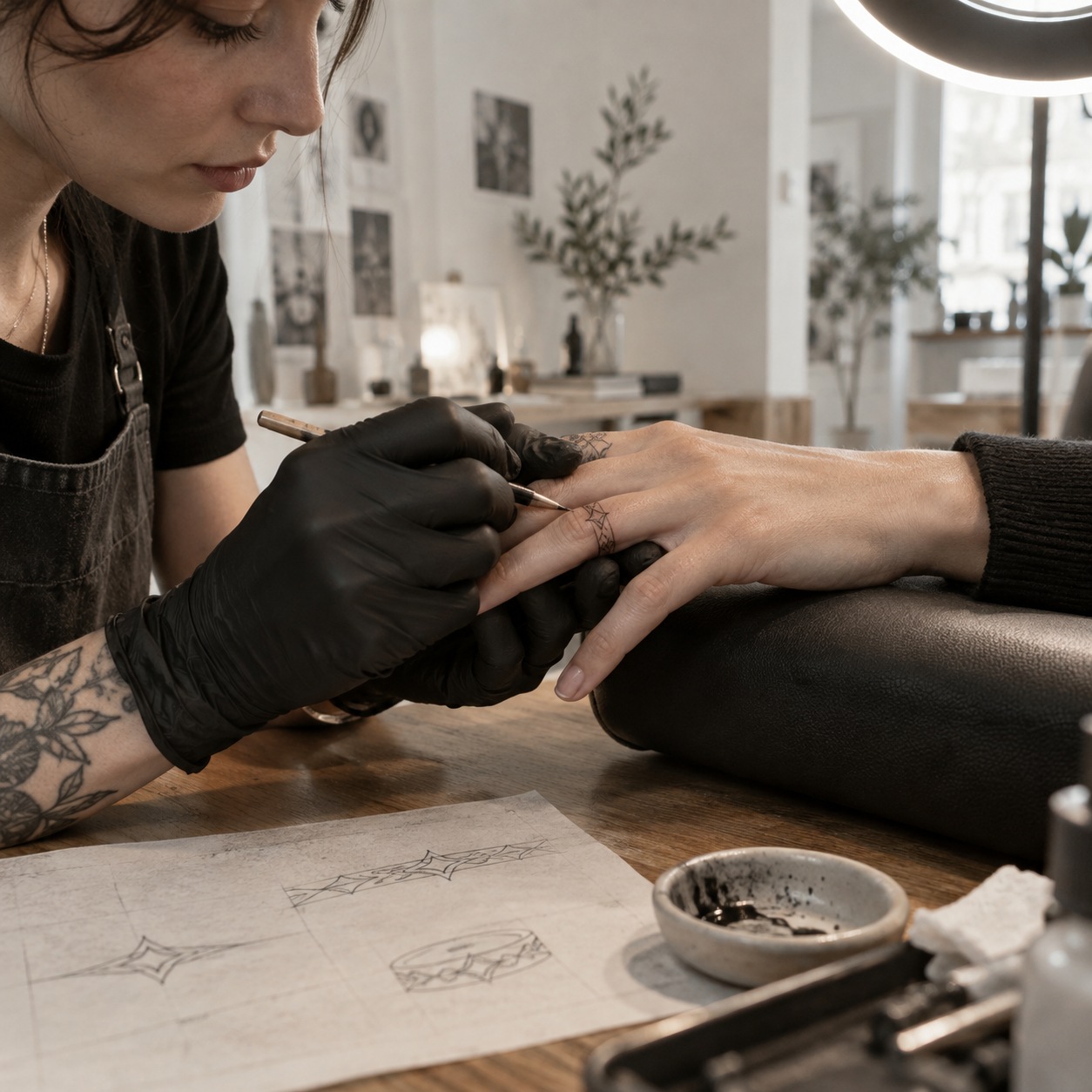
Don’t pick on price. Ask to see healed finger work, not fresh photos, because fresh ink always looks perfect. Check that the studio follows hygiene rules in your region and has a clear touch-up policy. Green Wedding Shoes also suggests looking at handpoke artists, who work without a machine and often with a gentler touch.
In my experience, a good artist will talk you out of part of your design. If yours says yes to everything, keep looking.
Try this: Ask for three things in writing before you pay: the total price, the touch-up policy and the aftercare sheet.
Conclusion
A wedding ring tattoo is a drawing that has to live in moving skin for decades. So draw it like jewelry: bold lines, wide gaps, a design that can drift 20% and still read as a ring.
If I were choosing today, I’d go for a dotted or bold band on the top of the finger, on the non-dominant hand, drawn by someone whose healed finger work I’d checked myself. Book it a month before the wedding, and budget for a touch-up.
Want more ideas to pair with your band? Browse our guides to infinity tattoo ideas, heart tattoo ideas and tattoo placement, or see the bridal accessories post for what to wear around the ink. And if you’d like to practise drawing your own design before you commit, there’s a Skillshare class below.
Frequently asked questions
Do wedding ring tattoos hurt?
Yes, and more than most spots. AMM reports that many people rate hand and finger tattoos around 8 out of 10, since there’s little tissue between skin and bone. Expect a sharp sting, not a dull ache. Sessions are short, though, because a band takes minutes. Talk to your artist before using any numbing cream, as some artists object to it and it won’t make the session painless.
How much does a wedding ring tattoo cost?
A simple line band runs about $50 to $100, and a more detailed design around $300, according to AMM. Green Wedding Shoes quotes roughly $75 to $300. Most of the gap comes from shop minimums and the artist’s rate. Ask about touch-up pricing before you book, since some studios include one and others charge again.
Do wedding ring tattoos fade?
They do, and faster than tattoos elsewhere on the body, because fingers wash, bend and rub constantly. Fine lines can also blow out, meaning they blur into the surrounding skin. Plan on a touch-up after a few months and again every few years. Bold lines and dotted bands age best, so choose weight over detail.
How long does a ring finger tattoo take to heal?
Redness, swelling and scabbing usually ease after about two weeks, and full healing can take around six, according to AMM. Keep it clean, moisturize lightly and stay out of the sun. If you’re getting inked before a wedding, book it at least three to four weeks ahead. See a doctor if redness spreads, or if you notice pus or a fever.
Which hand and finger should I choose?
Follow your own tradition: the left ring finger in the US and UK, the right in Germany, Ukraine and much of Eastern Europe. Your dominant hand works harder, so ink there tends to wear sooner, and the non-dominant hand is gentler. I’d pick the top of the finger over the sides or underside, which artists commonly say fade first.
Can I remove or cover up a wedding ring tattoo?
Often, but not easily. Laser removal usually takes several sessions, and a cover-up needs a design darker or busier than the original. Finger skin heals unpredictably, so results vary. Talk to an experienced artist and a dermatologist before you assume you can undo it. The safest plan is choosing a design you’ll still like in ten years.
Is a wedding ring tattoo cheaper than a ring?
Upfront, usually yes. A tattooed band costs $50 to $300 per AMM, while a plain gold band from a mainstream retailer commonly costs several hundred dollars. But the tattoo needs touch-ups and may not last as long without them. A ring can also be resized, passed down or sold, which ink can’t.
For more starting points, browse the full tattoo ideas guide.
- 12shares
- Facebook0
- Pinterest12
- Twitter0
- Reddit0