A tree tattoo meaning can be growth, family, resilience, a place you miss, or a season you survived. The image is flexible enough to hold all of those ideas, which is why it works best when you choose the story first and the decorative details second.
This guide turns the broad idea into practical choices: roots or branches, a specific species, a style that suits the drawing, a placement that lets it breathe, and the questions worth taking to an artist. The images below are references for composition, not templates to copy exactly.
- What does a tree tattoo mean?
- Tree tattoo symbolism by species and motif
- Choose a tree tattoo style that supports the drawing
- Placement and scale for tree tattoos
- Turn inspiration into a tattoo brief
- More tree tattoo ideas to explore
- Tree tattoo meaning FAQ
- What does a tree tattoo mean?
- What do roots mean in a tree tattoo?
- What does a bare tree tattoo symbolize?
- Where is the best placement for a tree tattoo?
- Do fine-line tree tattoos age well?
- Is a tree of life tattoo the same as a family tree tattoo?
- How should I prepare a tree tattoo reference for an artist?
- Choose the story before the branches
What does a tree tattoo mean?
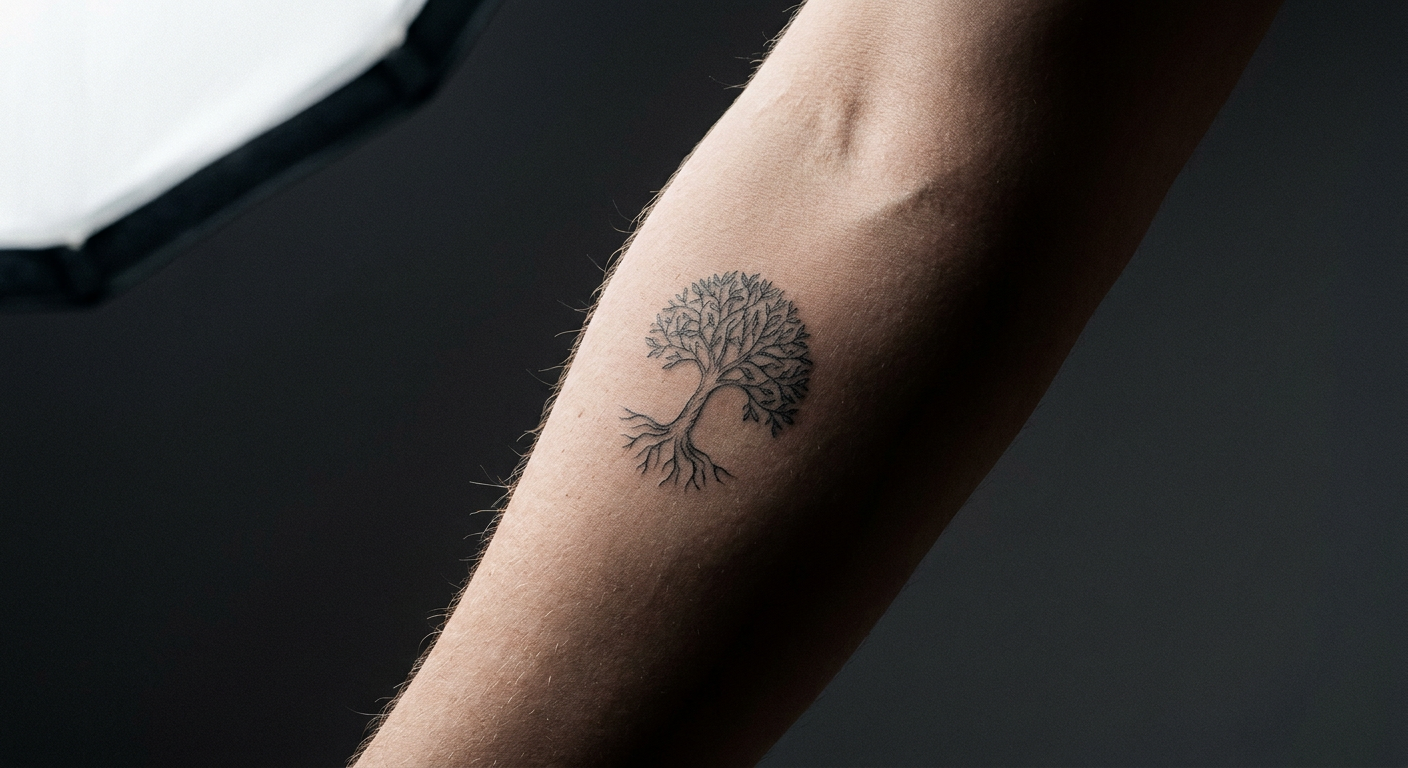
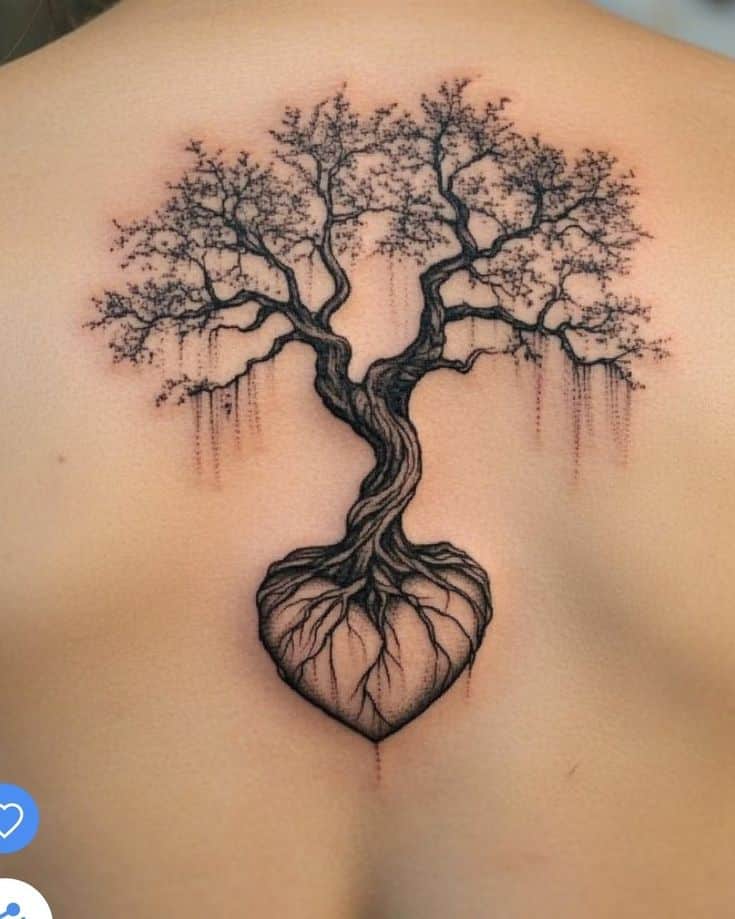
At its core, a tree tattoo is often a way to picture continuity. Roots can point backward to origin or family; a trunk can stand in for a steady self; branches can suggest growth, choices, or people connected to a life. A bare canopy may feel honest about change or loss, while leaves and blossom can make the same design feel like renewal. Those are useful starting points, not rules. Meanings shift between cultures, and a design becomes stronger when its owner can say why this tree, this detail, and this placement belong together.
If your idea starts with a broader emblem, this guide to tattoo symbols and meanings can help you compare a tree with other motifs before you commit to one permanent image.
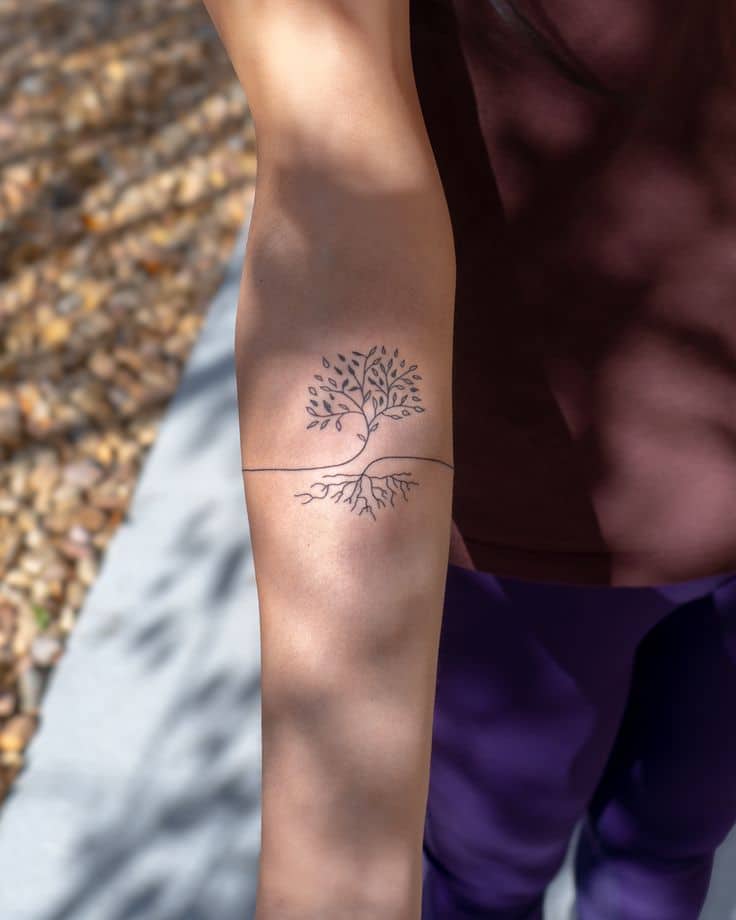
Use the detail to tell the story
| Design detail | A common reading | A practical design note |
|---|---|---|
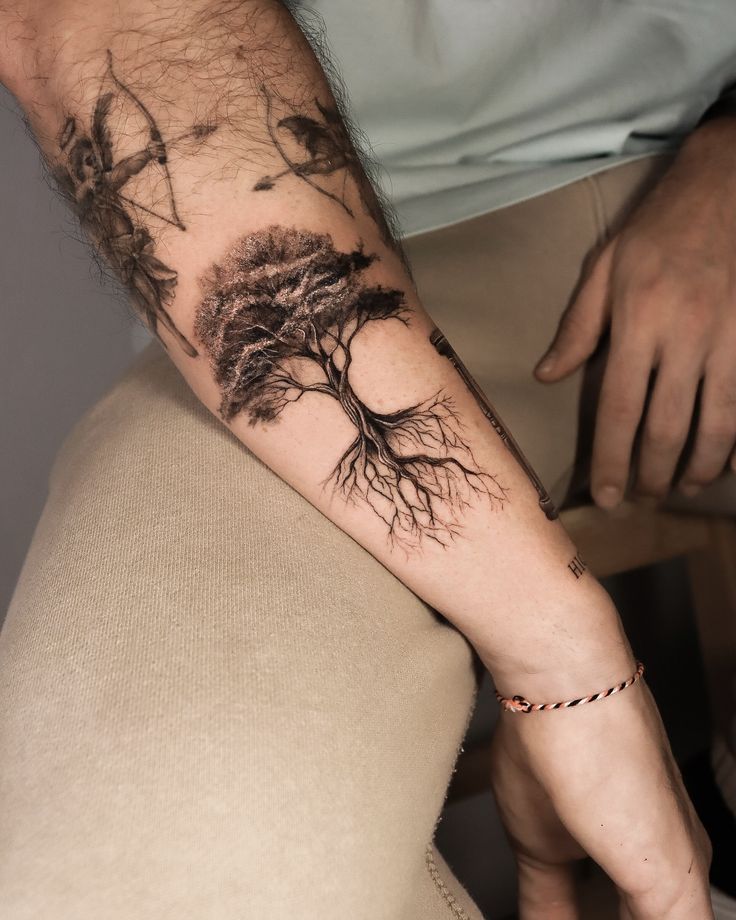
| Roots | Origin, grounding, ancestry, or endurance | Keep only the roots that matter at small scale; the silhouette needs open skin between them. |
| Strong trunk | Steadiness, survival, or personal growth | Make the trunk the visual anchor before adding bark texture or background scenery. |
| Open branches | Possibility, change, connection, or a growing family | Space branch tips apart so they do not turn into one dark mass. |
| Leaves or blossom | Renewal, a season, joy, or a specific memory | Choose a species or colour palette only when it supports the actual story. |
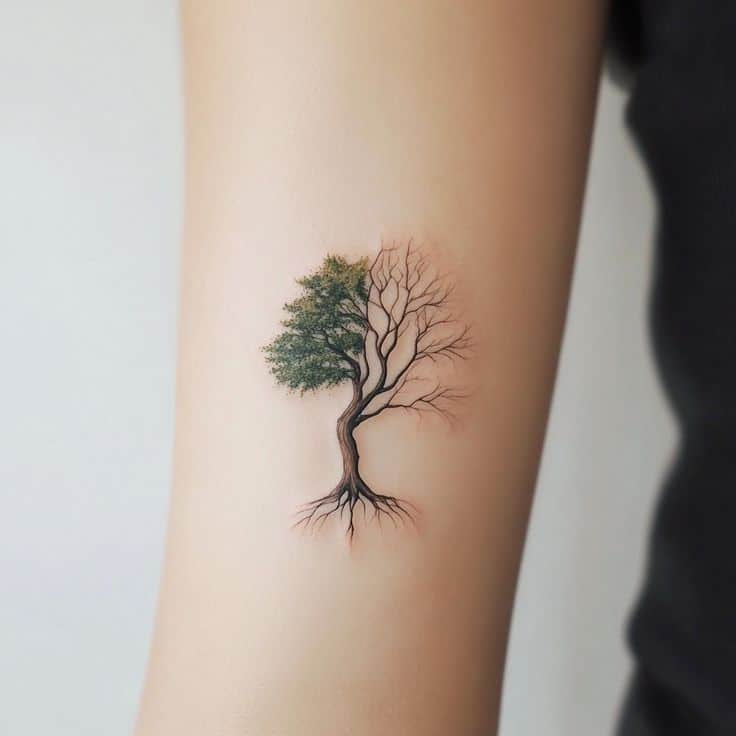
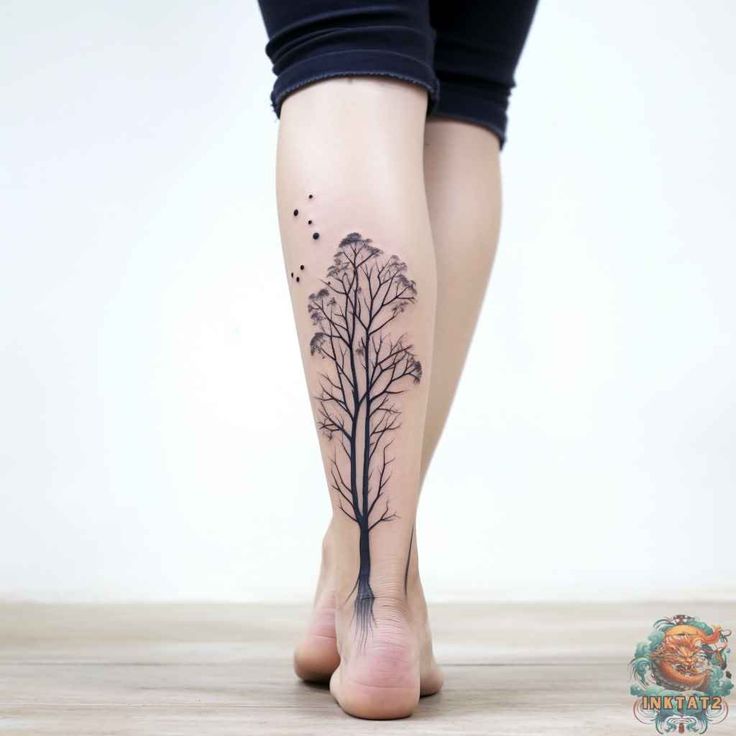
| Bare canopy | Transition, reflection, loss, resilience, or winter | A clean negative-space outline can be more readable than dozens of thin twigs. |
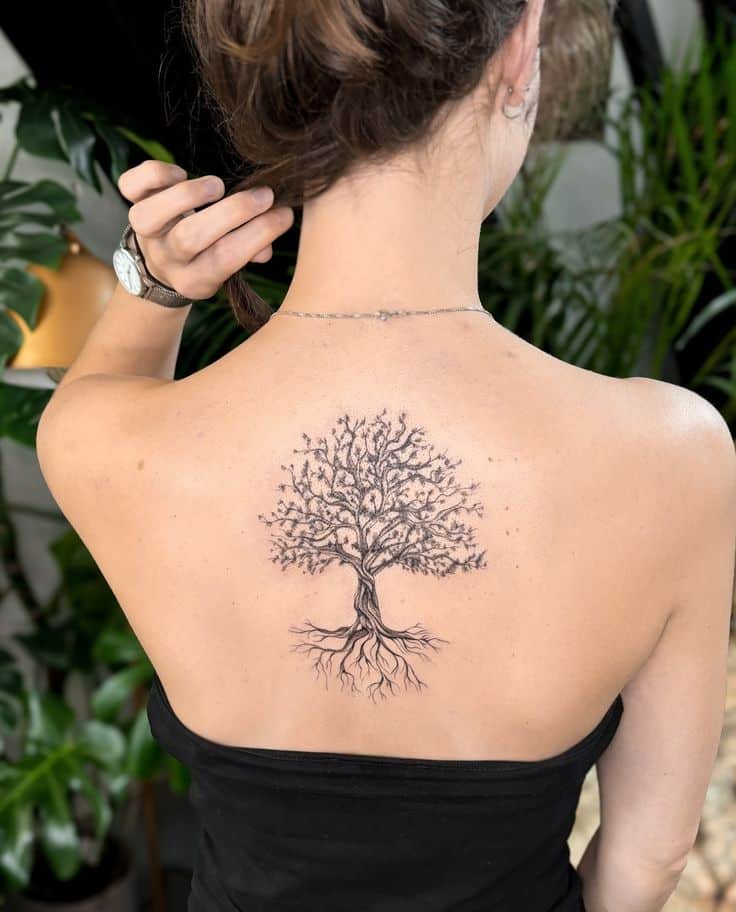
| Circle of roots and crown | Continuity or an interconnected life | Use symmetry deliberately; it needs a centered placement to feel settled. |
For a design built around roots, decide whether you want a literal family connection or a looser sense of grounding. The distinction matters: a self-love tattoo idea may use a similar root motif but tell a very different story.
Tree tattoo symbolism by species and motif
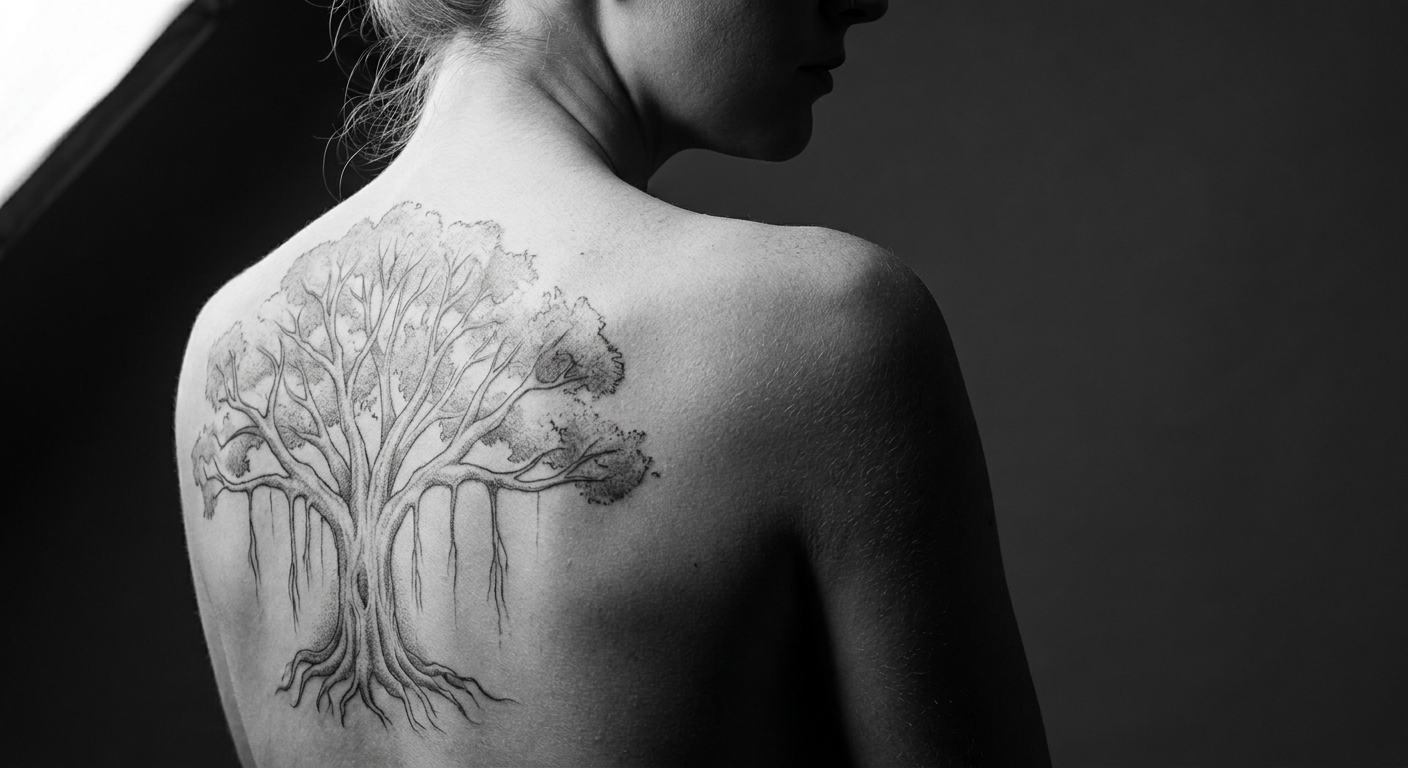
A species can give the tattoo a sharper point of view. An oak can evoke durability because of its broad, sturdy form. A pine can feel calm and enduring because its evergreen silhouette reads through winter. A willow lends movement and softness. A banyan, with aerial roots becoming supporting trunks, is visually rich for ideas about shelter and interconnectedness. Still, personal association has more weight than a generic dictionary definition. A tree from a childhood street can say more than a species selected solely for a list of meanings.
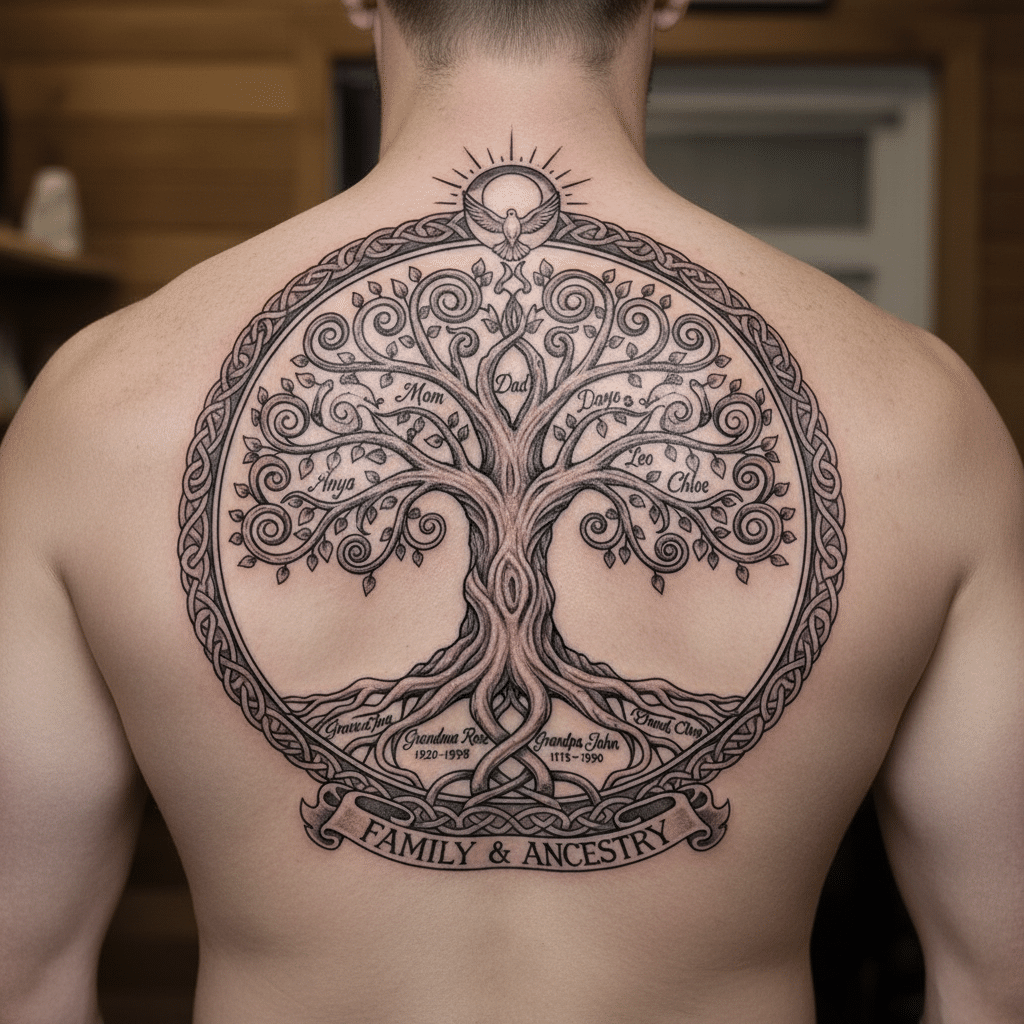
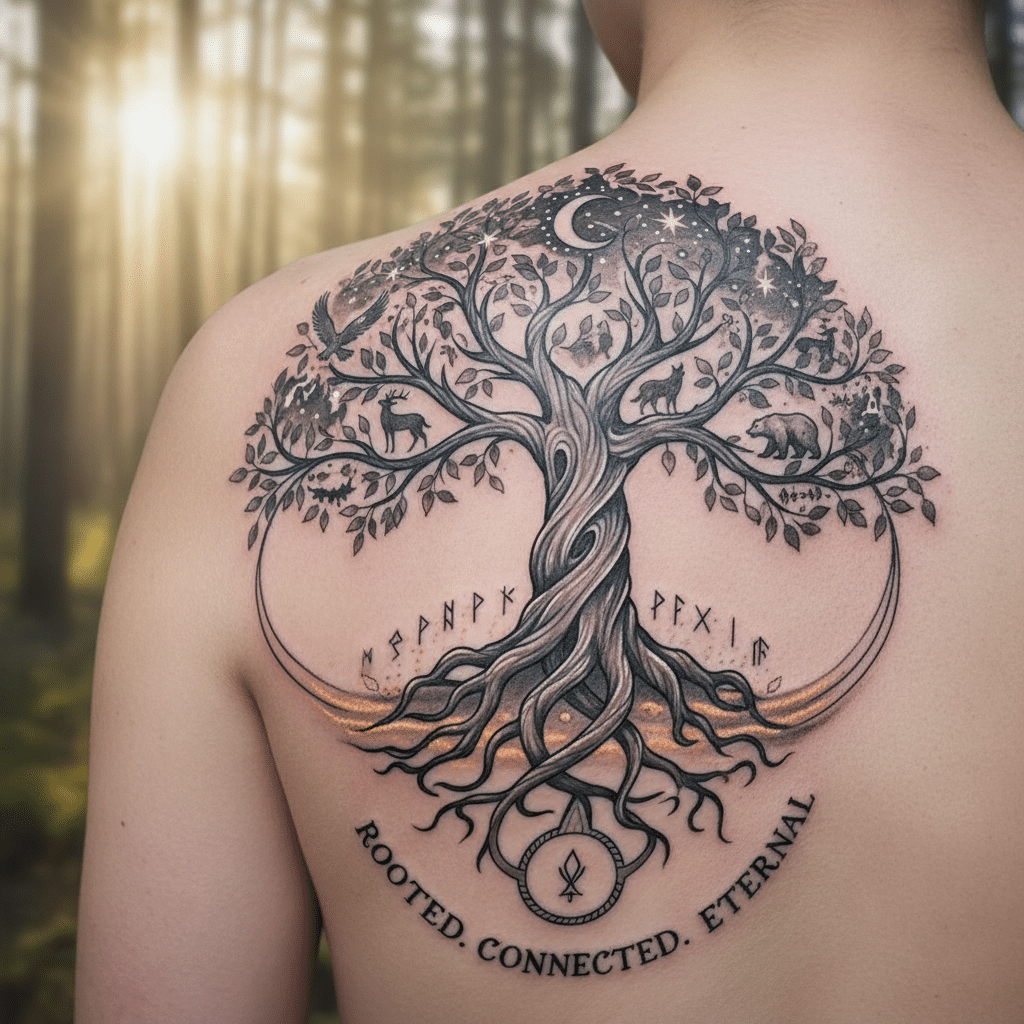
- Oak tree tattoo: a good choice when you want a solid trunk, broad canopy, and a visual language of steadiness or strength.
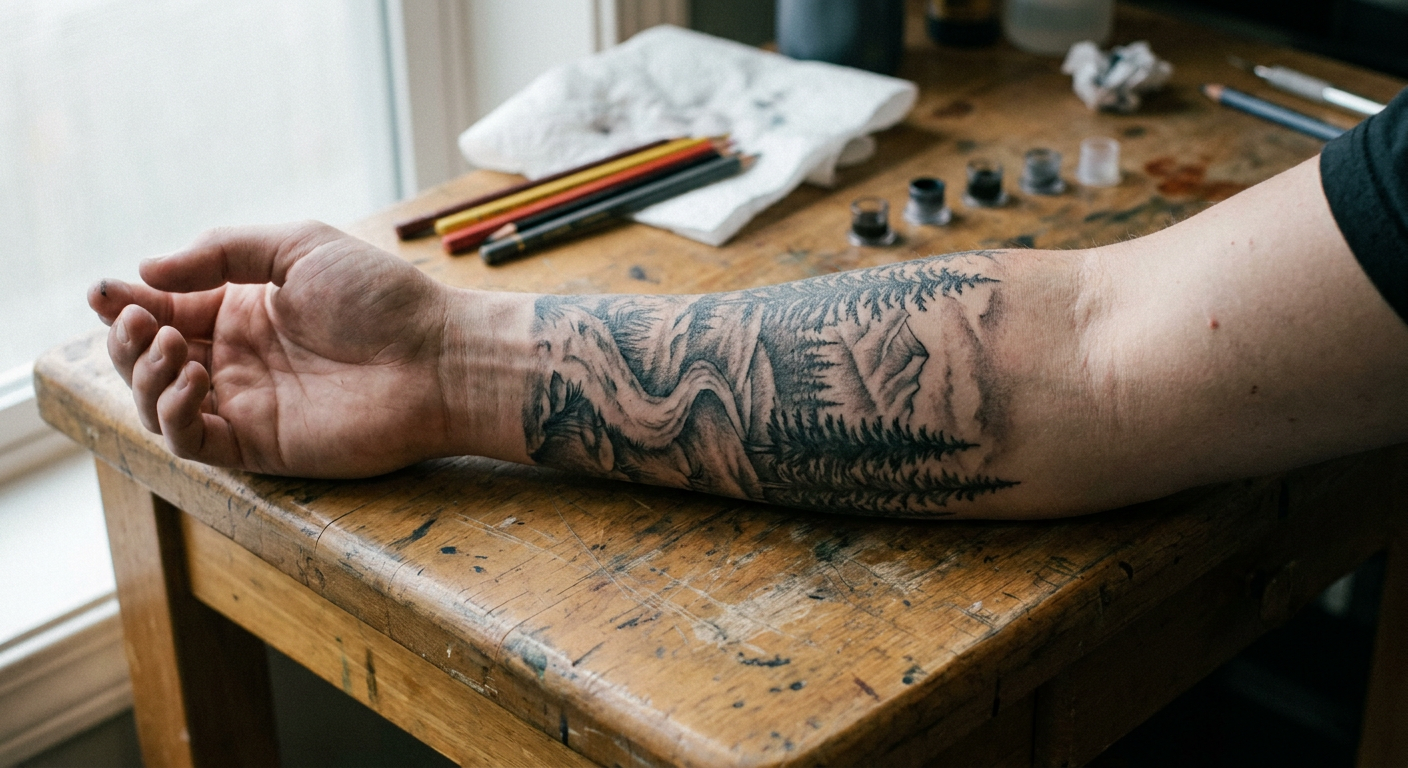
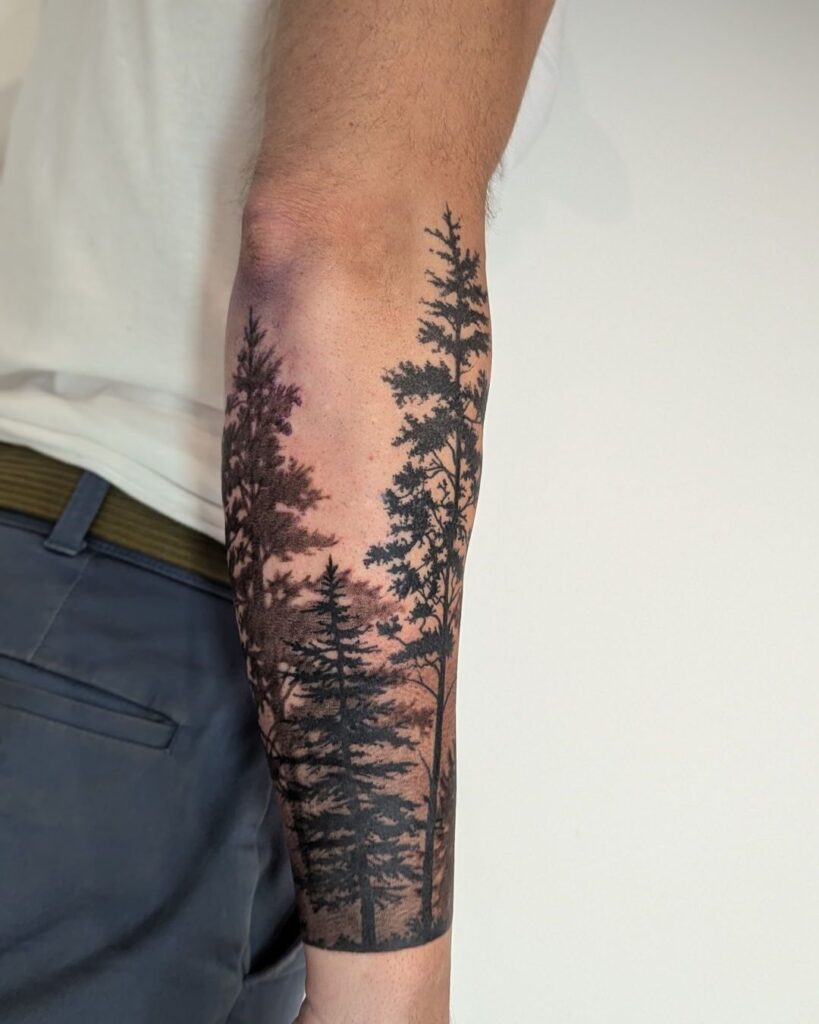
- Pine tree tattoo: effective for a small silhouette, forest landscape, mountain memory, or a design that needs to read quickly from a distance.
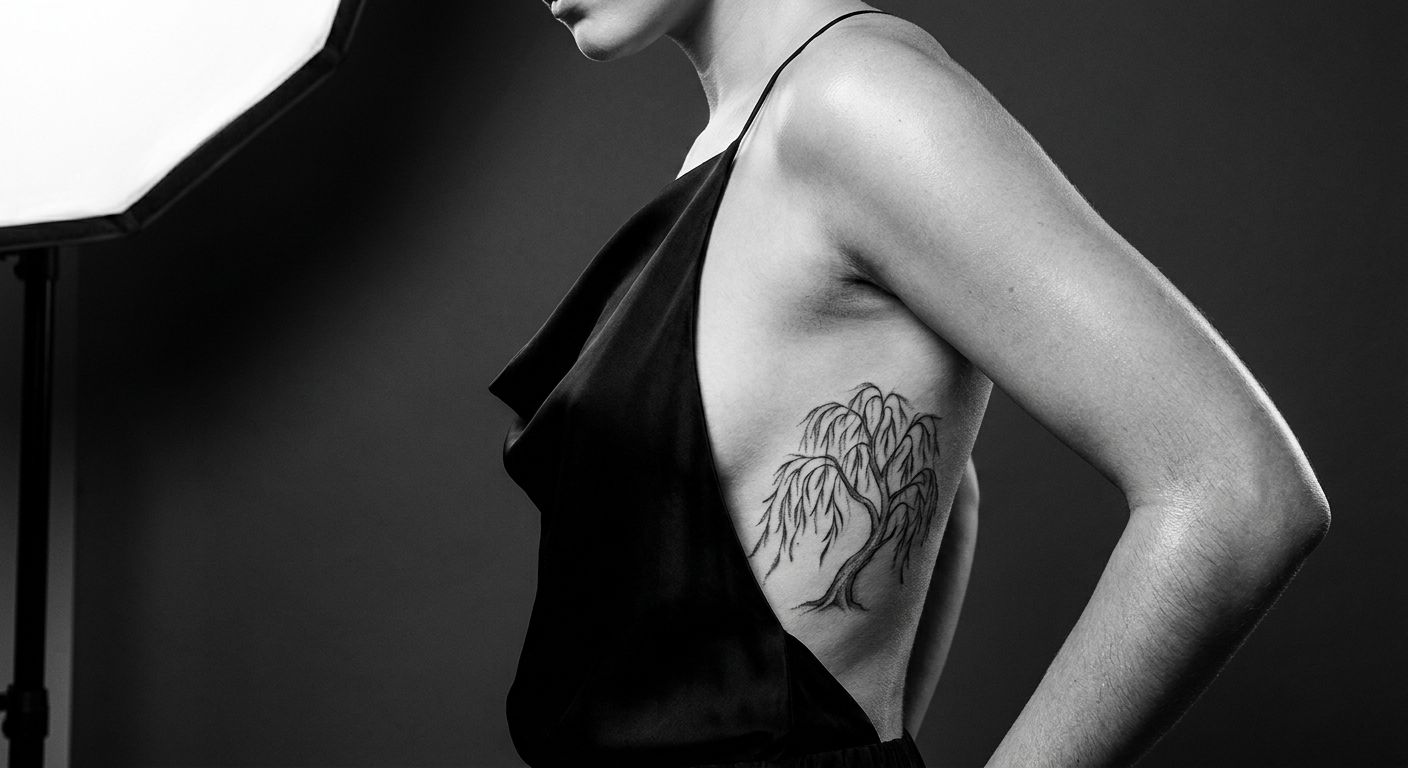
- Willow tree tattoo: works beautifully for a flowing rib, thigh, or arm composition because the branches naturally follow movement.
- Banyan tree tattoo: uses prop roots and repeated trunks to make a more intricate statement about connection, shelter, or a sprawling family story.
- Tree of life tattoo: suits a circular, balanced composition and can be personal, spiritual, familial, or simply visual rather than one prescribed symbol.
Cherry blossom is a useful example of why context matters. The tree can refer to a personal place or season, while Japanese artistic references have their own histories. See cherry blossom tattoo ideas and placement for a more focused route into that subject rather than treating every flowering branch as interchangeable.
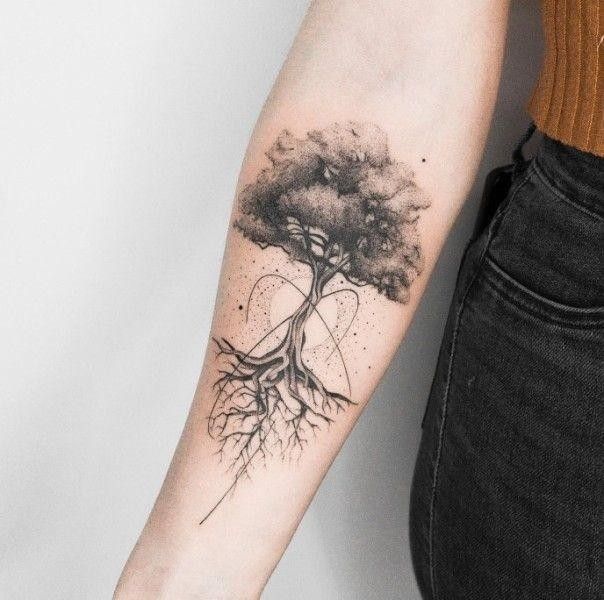
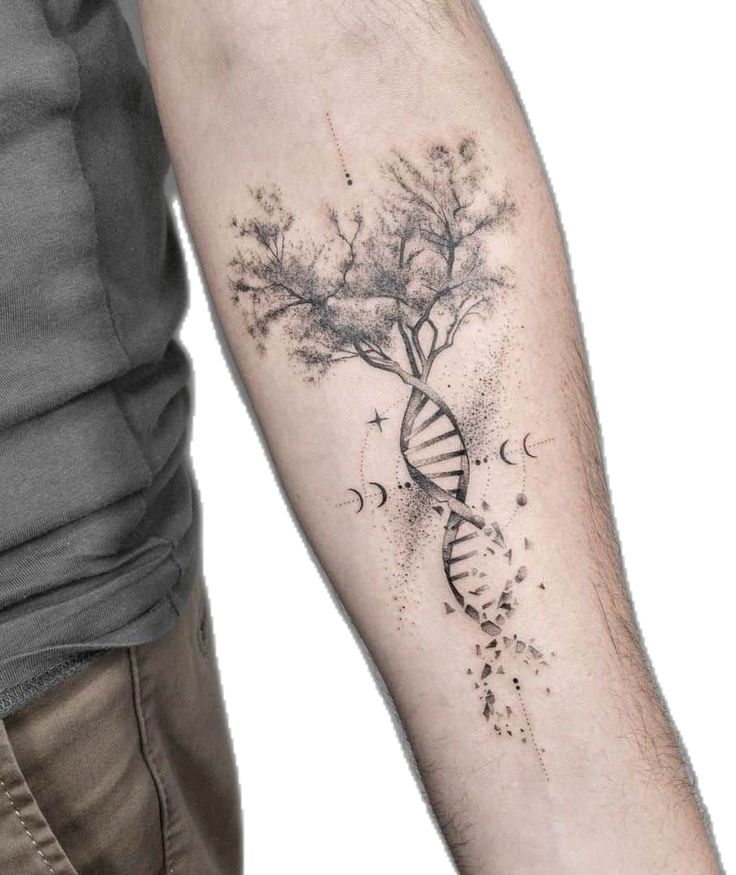
Research cultural references before you wear them
The tree of life is not one single symbol with one owner or translation. Museum collections show how tree motifs appear in different places and periods, including a Met collection record for a Tree of Life textile and a British Museum object with a tree-of-life interpretation. Use research as a way to ask better questions, not as permission to flatten a living tradition into a decorative shortcut.
For a contemporary example with a specific history, the British Museum’s Tree of Life sculpture from Mozambique was made from decommissioned weapons to represent peace. That is a reminder that the phrase can carry a particular story, not just a generic visual mood.
Choose a tree tattoo style that supports the drawing
Style decides what the tree can do on skin. Fine line excels at a quiet, spare outline, but it needs restraint. Blackwork makes a trunk or silhouette immediately legible. Dotwork can create misty depth and bark texture. Traditional work favours confident outlines and a simplified shape; realism needs enough scale for light, shade, and leaves to read as something more than noise. Pick the style that serves the image, rather than forcing every tree through the same trend.
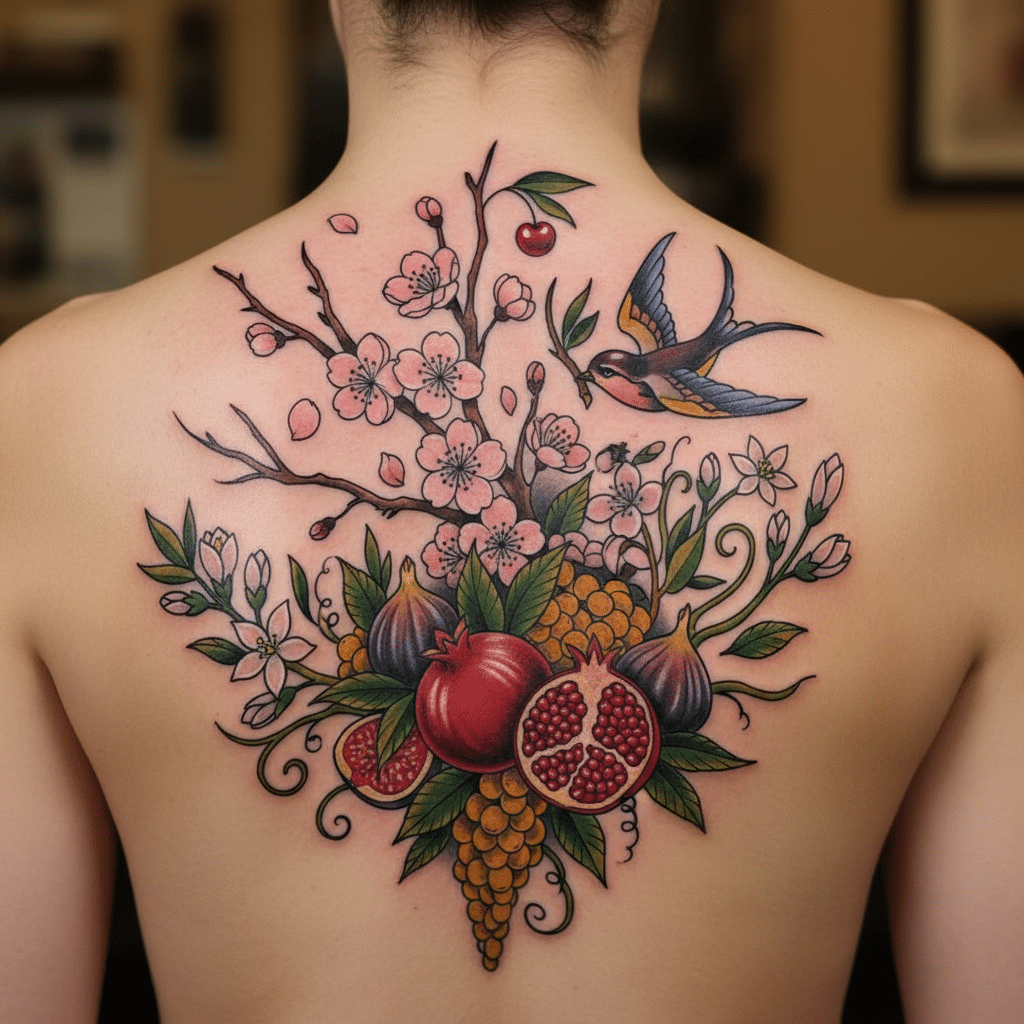
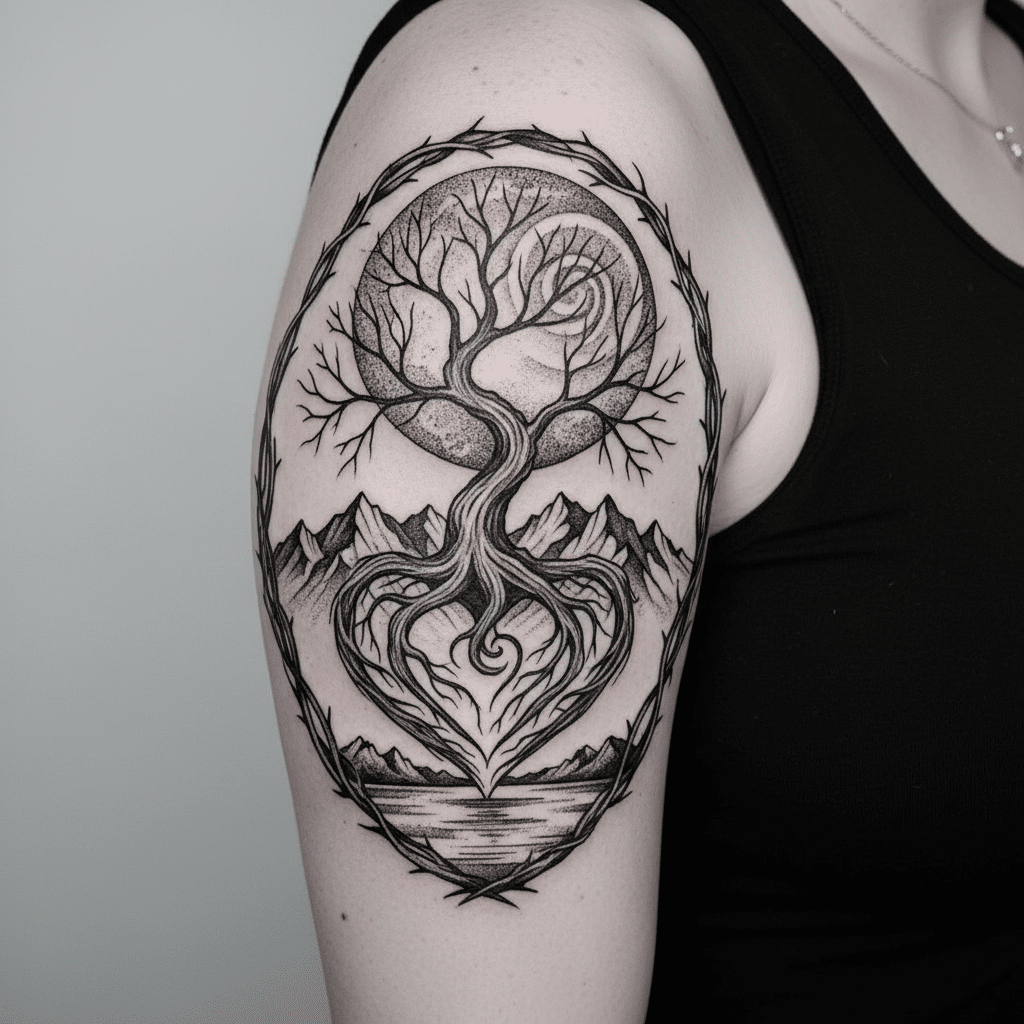
Fine line, blackwork, dotwork, or traditional?
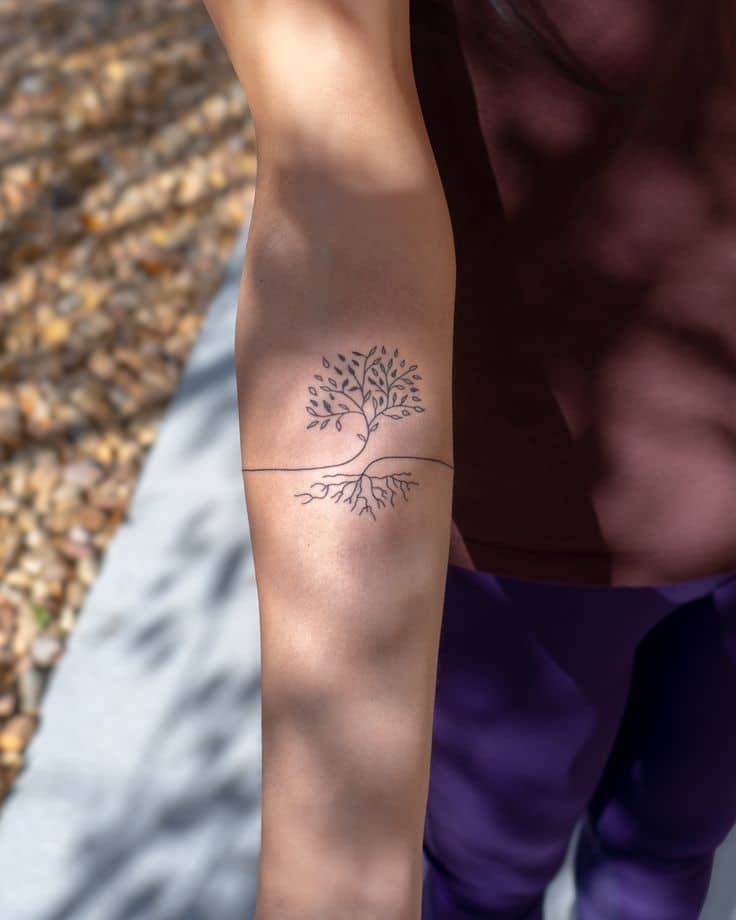
- Fine line: best for a small, restrained tree silhouette, a root-and-branch drawing, or a single botanical reference. Leave visible gaps between tiny branches.
- Blackwork: best when the trunk, canopy, or negative space needs a bold graphic read. It is a strong fit for a bare tree or forest skyline.
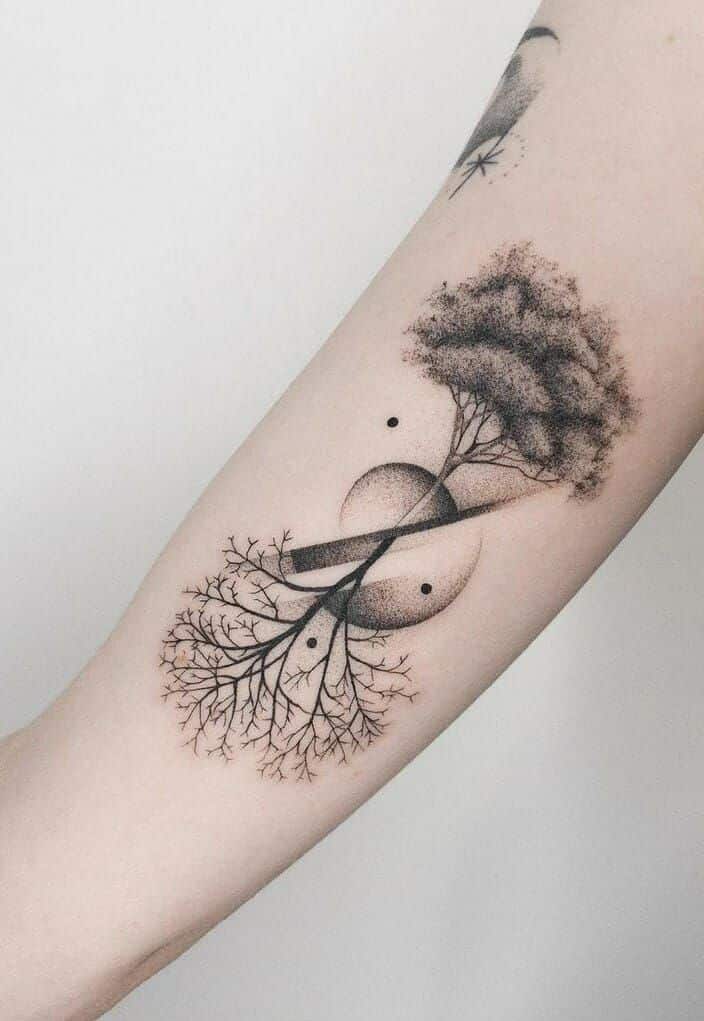
- Dotwork: best for texture, gradients, and a quieter geometric tree of life. See dotwork tattoo ideas to compare the technique before choosing it.
- Traditional or neo-traditional: best for a recognizable tree paired with a banner, moon, heart, or landscape, where line confidence matters more than fine realism.
- Illustrative or geometric: best when you want the tree to meet another idea, such as a book, mountain, family name, or abstract frame.
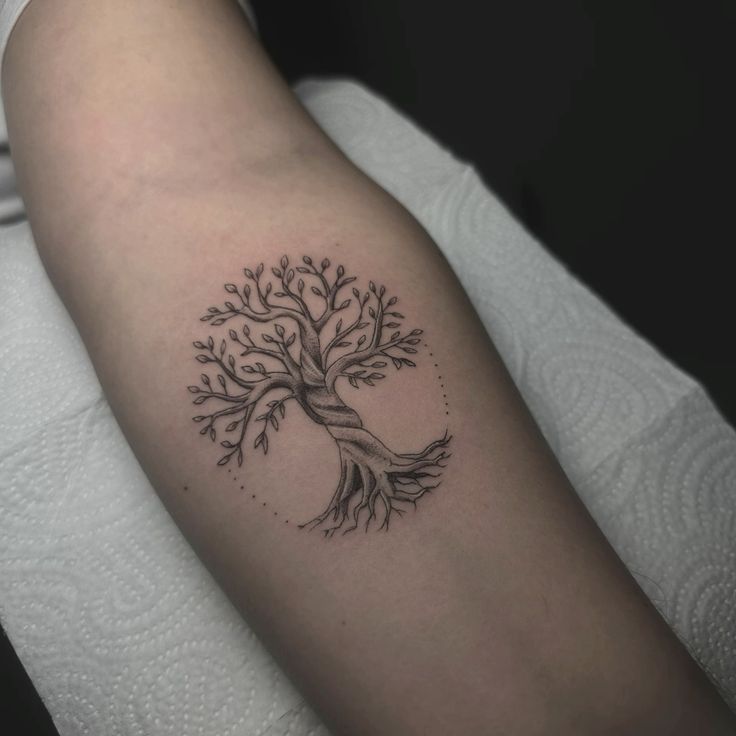
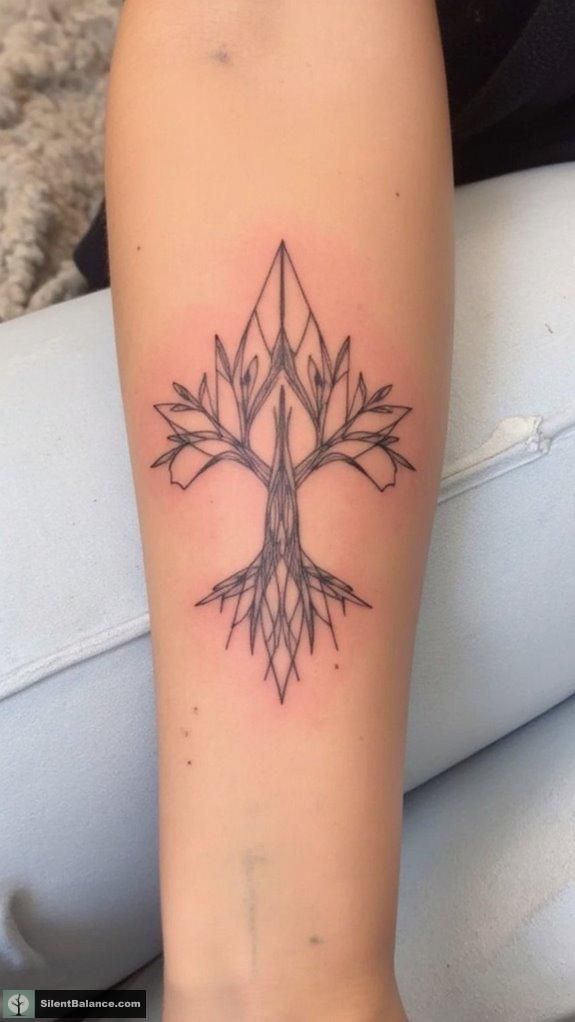
A practical rule: edit the smallest roots and leaf clusters before you edit the trunk silhouette. The trunk is the sentence; the fine detail is punctuation. If all the punctuation survives but the trunk loses clarity, the tattoo no longer reads as the design you wanted.
Placement and scale for tree tattoos
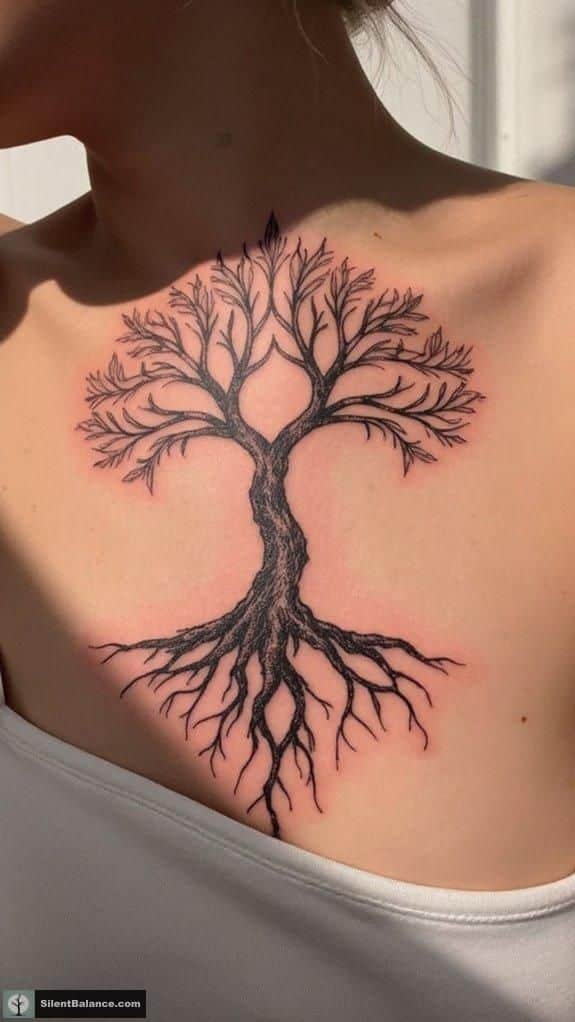
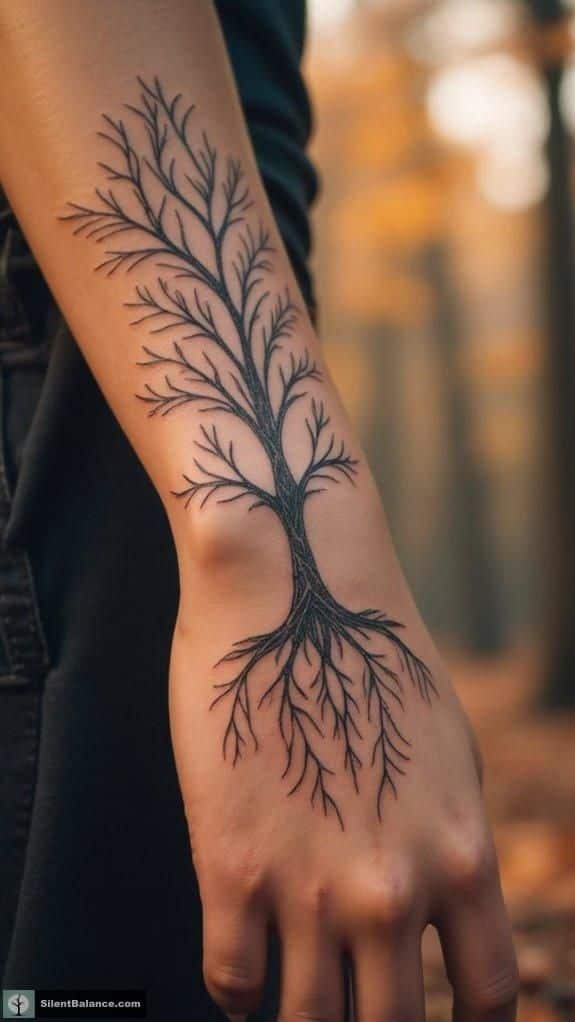
Tree tattoos naturally suit vertical areas because the trunk creates a line from roots to canopy. A forearm, calf, rib, or side gives that line a clear direction. The back, thigh, and chest give you room for a broad canopy, surrounding landscape, or family names. There is no universally best placement, only the place where the composition has enough room to keep its crucial details.
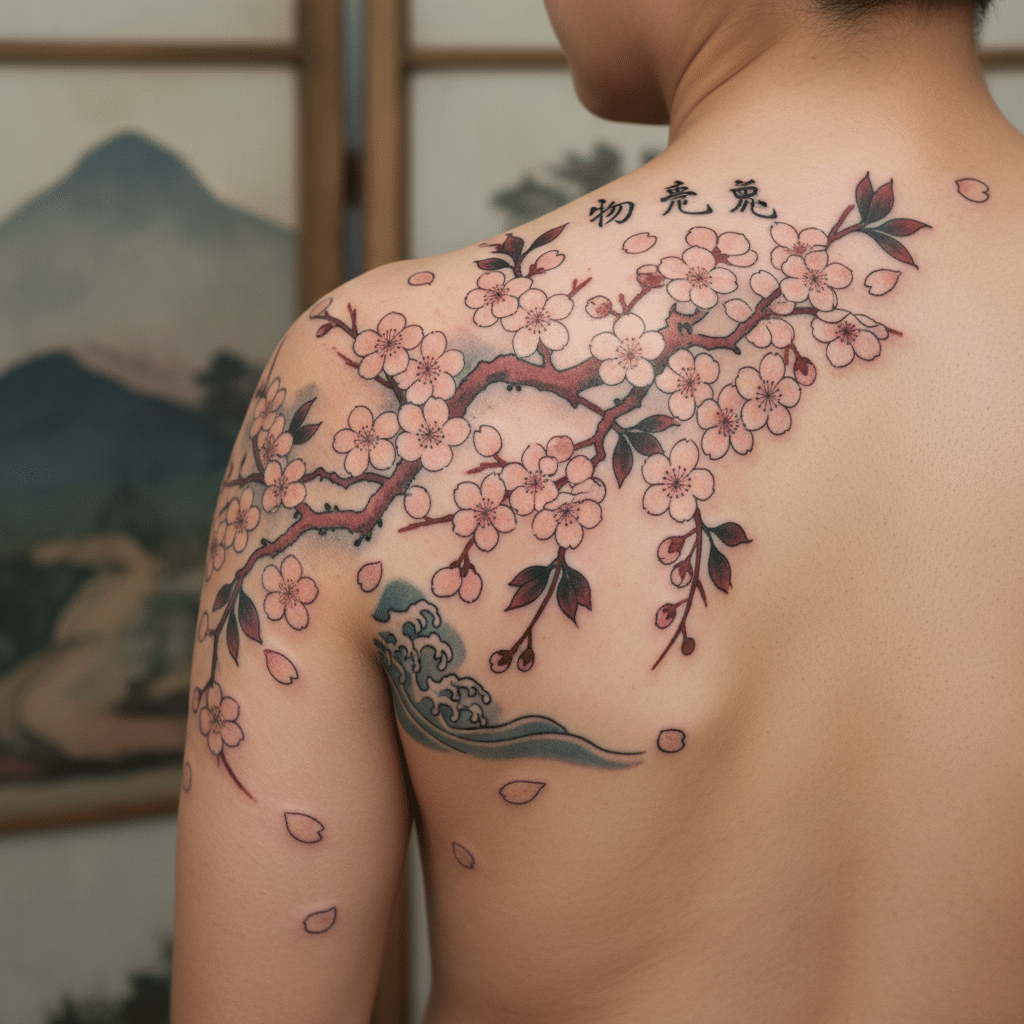
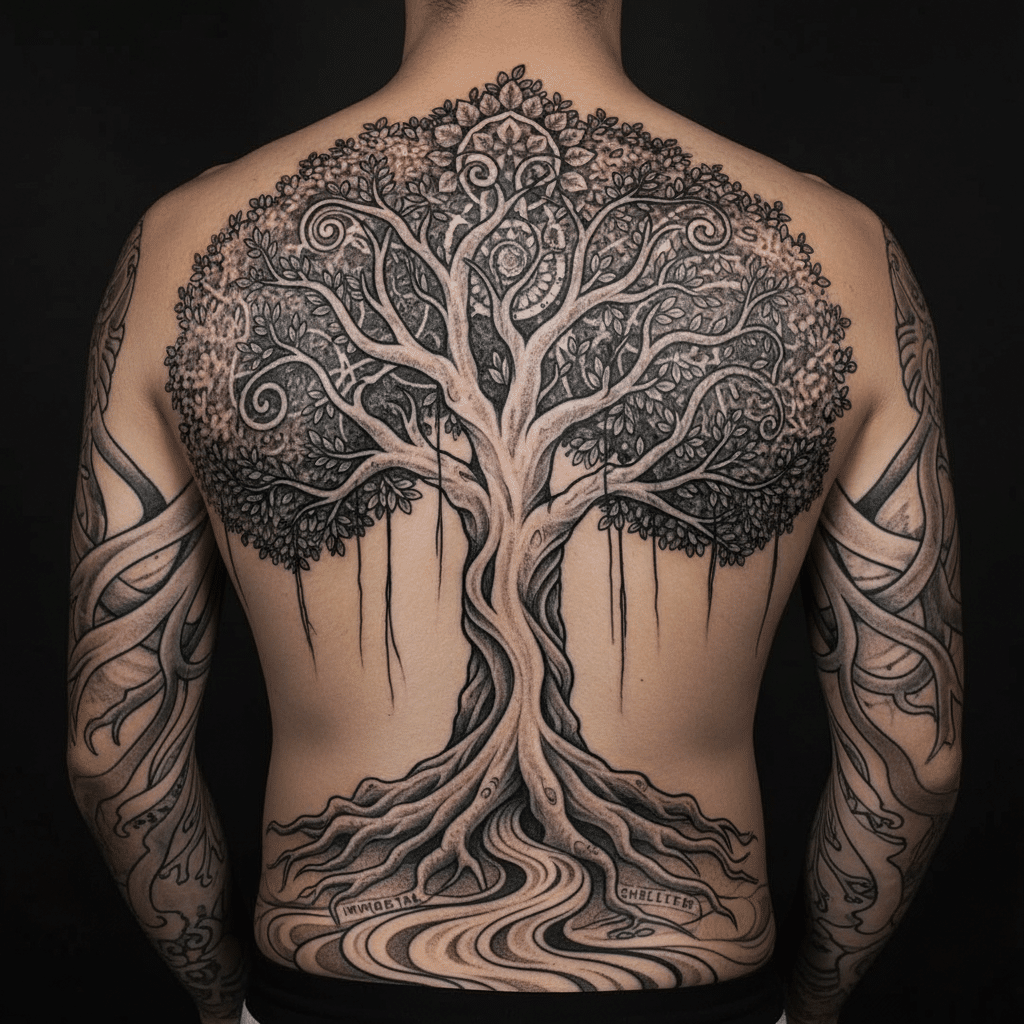
| Placement | Works well for | Watch for |
|---|---|---|
| Forearm | A vertical trunk, simple roots, pine silhouette, or compact tree of life | Avoid cramming a full forest and fine roots into the narrowest part of the arm. |
| Back | Large tree of life, family tree, forest, or a canopy that spans the shoulders | Plan the viewing distance; details that look good close up need a strong overall shape. |
| Ribs or side | Willow, bonsai, or a long trunk that follows the body | Choose a style you can sit for, and let the design follow the anatomy. |
| Calf or thigh | A standalone tree, landscape, or a larger illustrative scene | Think about how the trunk reads when the leg bends and how much of the canopy faces forward. |
| Wrist or ankle | A very simple tree, branch, or tiny evergreen | Small scale demands fewer roots, leaves, and background details than reference photos suggest. |
For an arm-based composition, compare flow and available canvas in these arm tattoo placement ideas. The same placement principles apply regardless of who is wearing the tattoo.
Make a small tree tattoo readable
Small does not mean miniature realism. It means choosing one recognisable move: a pine silhouette, a bare branch, a trunk with three roots, or a simple tree of life circle. The more you ask a tiny tattoo to explain, the harder it becomes to read. These small tattoo ideas are useful for seeing how a clear outline can do more than a crowded scene.
Turn inspiration into a tattoo brief
A good consultation starts before you arrive. Bring references for shape, style, and placement, but explain what you are responding to in each one. The artist needs your priorities more than a folder of unrelated images. It is also worth giving them permission to remove an attractive detail when it will not work at your chosen scale.

- Write one sentence about the personal meaning: a person, place, change, family line, or season you want the tattoo to hold.
- Choose one visual priority: roots, canopy, a species, a landscape, names, or a geometric frame. Let the rest support it.
- Bring two or three style references, not twenty. Note what you like about each: line weight, contrast, colour, placement, or mood.
- Tell the artist the smallest size you would accept, then ask what details they would simplify for that canvas.
- Ask to see a custom composition rather than requesting an exact copy of an existing tattoo or online image.
Safety and aftercare belong in the decision
Design comes first in this guide, but the tattoo is still a skin procedure. The FDA’s tattoo safety guidance and fact sheet on tattoos and permanent makeup explain why sterile practice, ink questions, and aftercare deserve the same attention as the drawing. Follow the licensed artist’s instructions and seek medical care for symptoms that concern you rather than trying to diagnose a reaction from a style guide.
Keep a note of the studio, artist, inks, and any aftercare instructions. For U.S. readers, the FDA also explains how to use its MedWatch safety reporting program if a product-related problem needs reporting. Local licensing and public-health rules still matter, so check the authority where the appointment takes place.
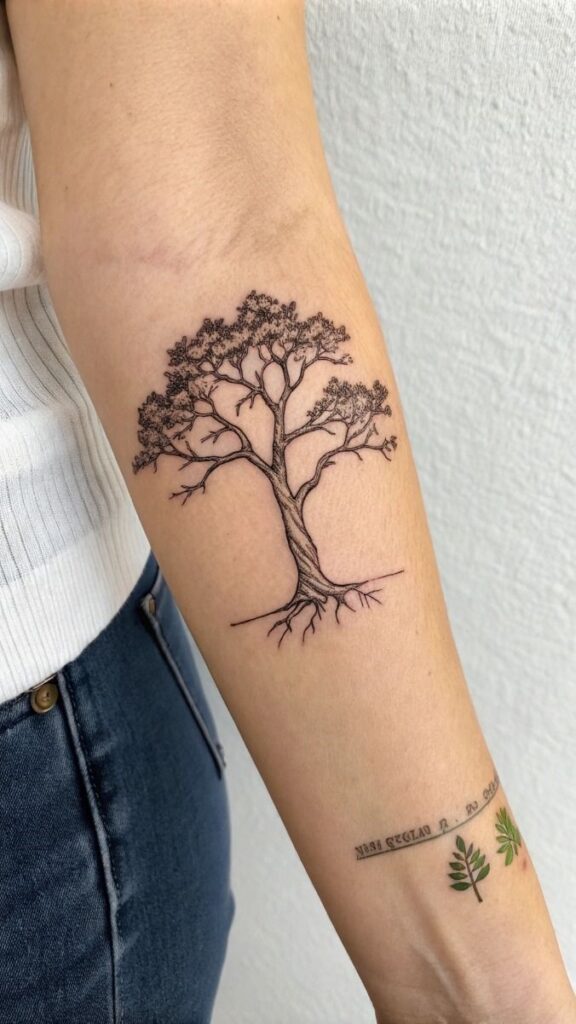
More tree tattoo ideas to explore
Once you know the balance of meaning, scale, and style, explore nearby ideas with a narrower question in mind. A moon can shift a tree toward a night landscape; a book can make it about learning or a shared story; a floral element can mark a season. Keep one focal point so the design remains yours rather than a catalogue of symbols.
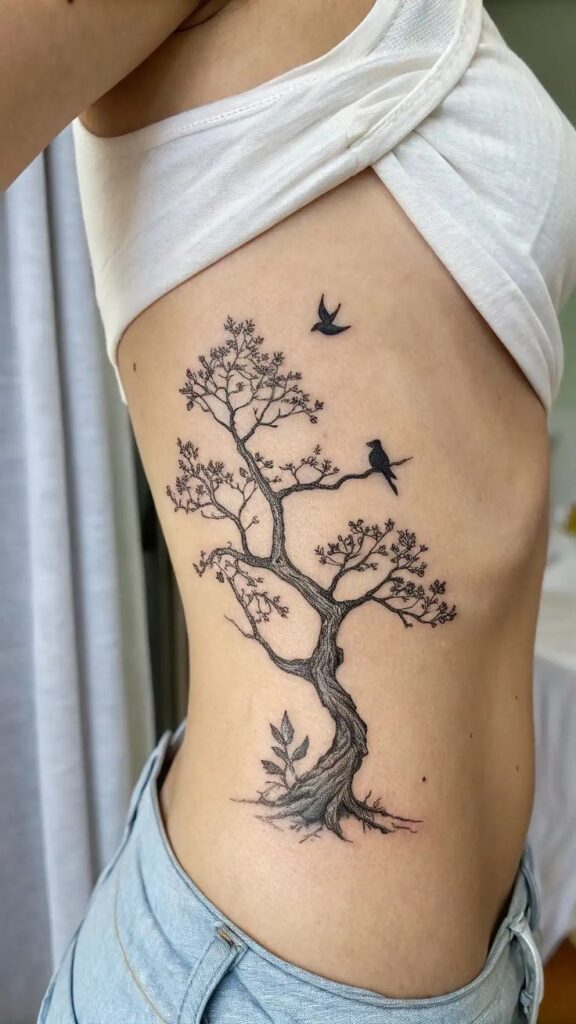
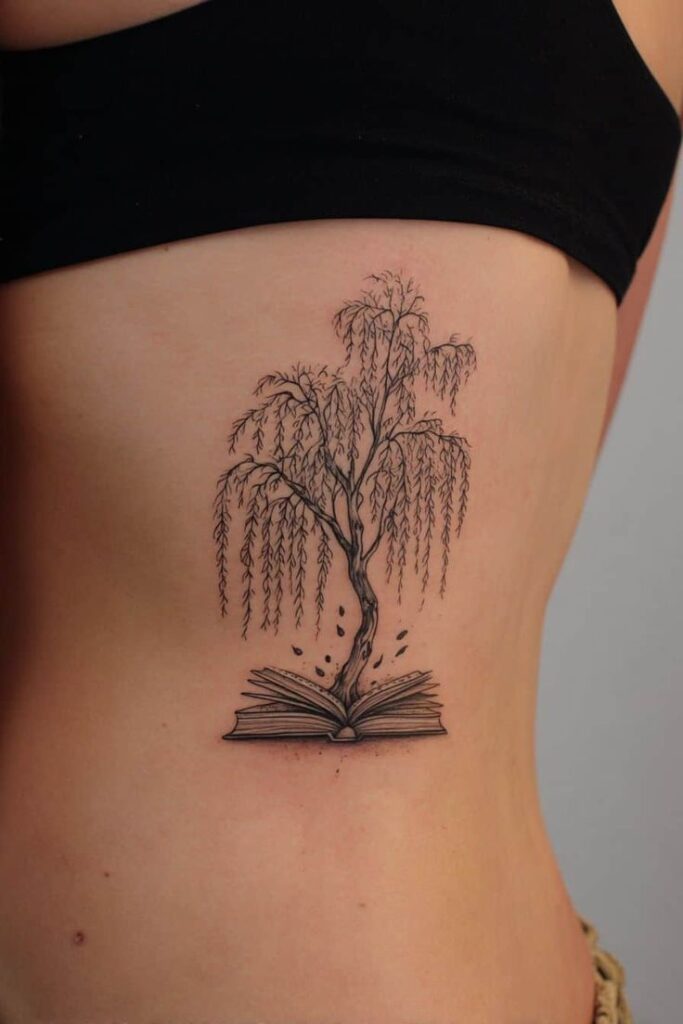
For more references in the same category, browse tattoo ideas. For art research beyond tattoo reference boards, the British Museum’s Africa gallery guide gives another example of a Tree of Life with a defined social and historical context.
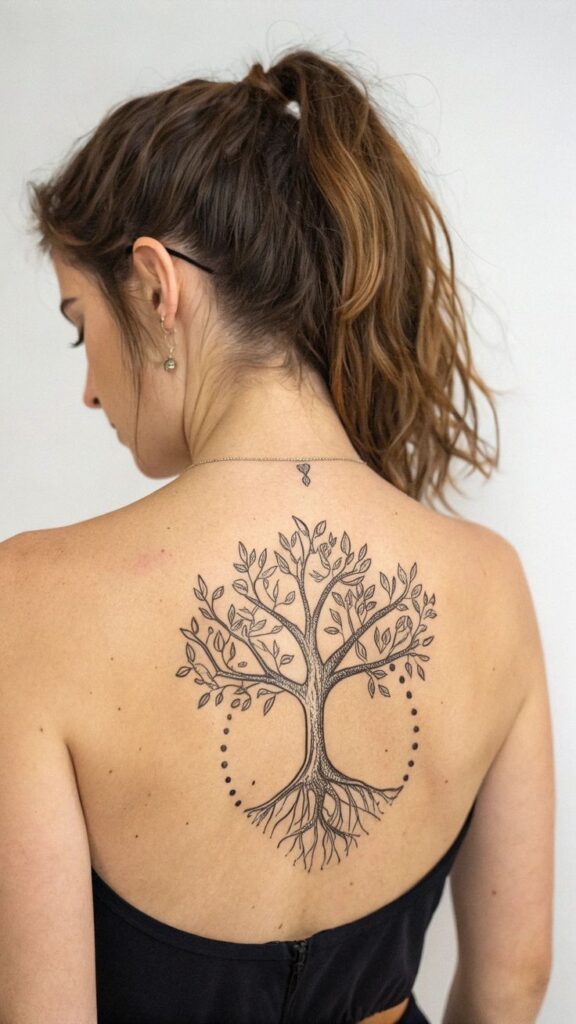
Tree tattoo meaning FAQ
What does a tree tattoo mean?
A tree tattoo commonly represents growth, grounding, resilience, family, or a connection to a place or season. It does not carry one fixed meaning. The most convincing interpretation is the one tied to the wearer’s own memory, culture, or intention, then supported by the specific tree, roots, leaves, and placement they choose.
What do roots mean in a tree tattoo?
Roots are often used to suggest origin, family, stability, or a period that shaped someone. In visual terms, they also anchor the composition. Ask the artist to simplify the smallest roots, especially on a wrist or forearm, so they do not merge into a grey blur as the tattoo settles.
What does a bare tree tattoo symbolize?
A bare tree can suggest winter, transition, survival, grief, clarity, or simply a preference for a graphic silhouette. The meaning is personal rather than universal. Pairing it with a date, landscape, moon, or one chosen branch can make the intended story clearer without explaining everything in words.
Where is the best placement for a tree tattoo?
Choose placement by the shape of the design. A back, thigh, or calf gives a large canopy and roots room to spread. A forearm, rib, or side suits a vertical trunk. For a small wrist design, use a simple silhouette rather than trying to fit every root and leaf into a few centimetres.
Do fine-line tree tattoos age well?
They can, provided the artist adapts the drawing to the size and placement. A durable fine-line tree keeps the main trunk and outer silhouette clear, leaves space between fine branches, and avoids packing tiny roots or leaf clusters into a small area. A tattooer can advise on the limits of their own line weight and technique.
Is a tree of life tattoo the same as a family tree tattoo?
They can overlap, but they do not have to. A family tree usually points directly to ancestry, names, or relatives. A tree of life is a broader visual motif that can stand for connection, continuity, or a personal worldview. Decide which story matters before adding names, symbols, or a circular root-and-branch layout.
How should I prepare a tree tattoo reference for an artist?
Bring a short note about what matters, two or three images for style and placement, and one clear answer about scale. Tell the artist which details are essential and which are flexible. Avoid asking them to copy another person’s tattoo exactly; a custom drawing will fit your body and hold up better.
Choose the story before the branches
The strongest tree tattoo is not the one with the longest list of borrowed meanings. It is the one whose silhouette, species, roots, and placement all pull in the same direction. Start with what you want to remember, give the artist a clear visual priority, and leave enough skin for the tree to keep speaking when the fine detail softens with time.
- 669shares
- Facebook0
- Pinterest669
- Twitter0
- Reddit0