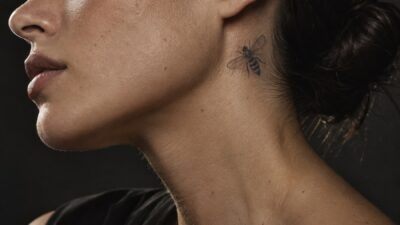
Small tattoo ideas usually work best when you stop trying to cram too much into them. The tiny tattoos that age well tend to be simple: a fine-line flower, a small wave, initials, a date that actually means something, maybe a tiny animal or symbol you won’t get tired of looking at.
For a simple design that still feels masculine, small forearm tattoos for men are a good middle ground between tiny hidden ink and a full sleeve.
As a designer with over 15 years of experience in visual composition and academic drawing, I’ve learned that the smaller the canvas, the simpler the silhouette must be. When I thumbnail concepts, I always look for a strong, clean outline first. If the silhouette of your tiny tattoo is weak or overly complex, no amount of delicate shading will save it as it ages under your skin.
If you like tiny celestial pieces, compare them with these small moon tattoo ideas before choosing wrist, ankle, or behind-the-ear placement.
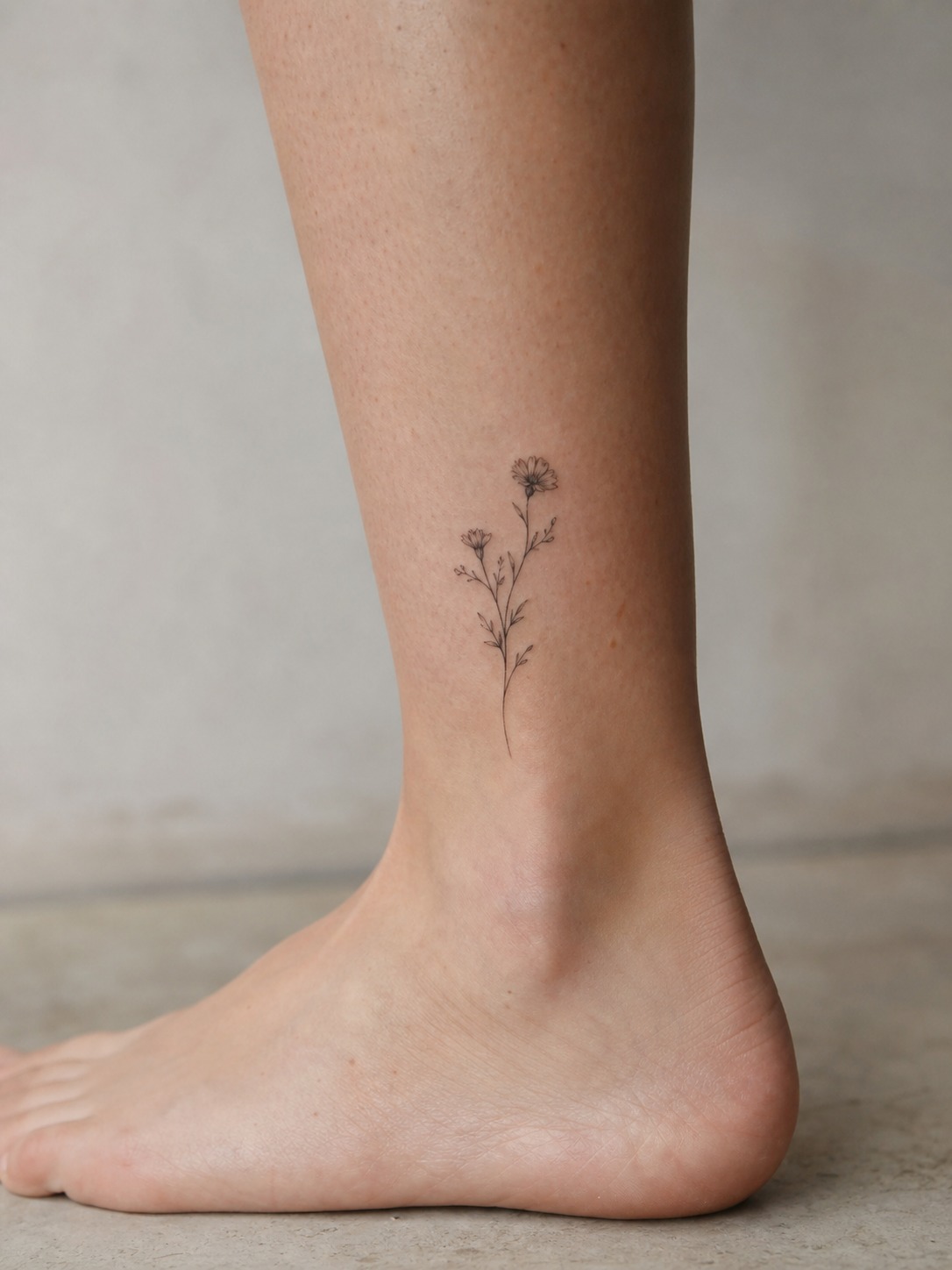
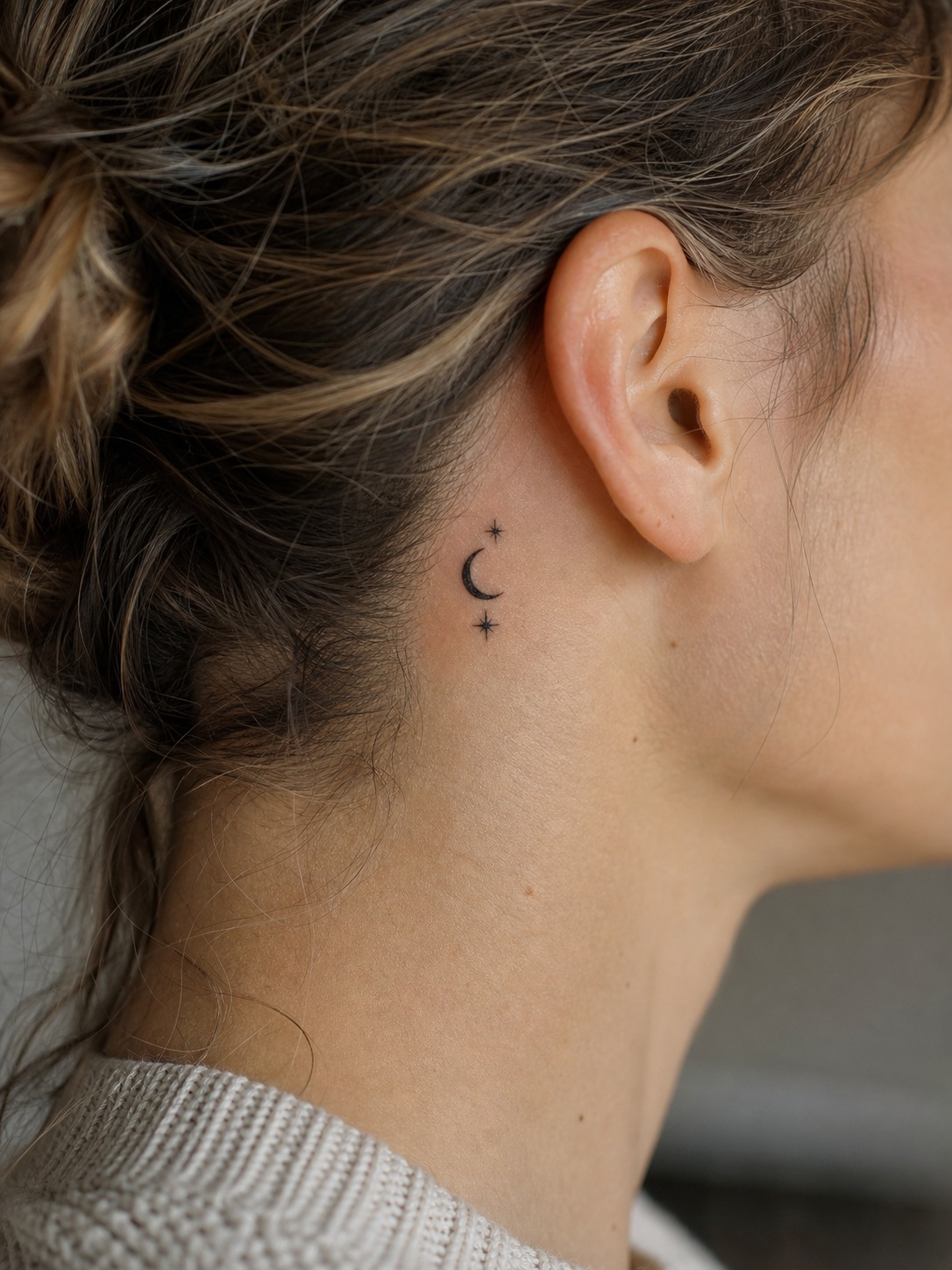
Placement matters more than people think. A wrist can handle something clean and small — a word, a wave, a little star. Ankles look better with narrow shapes like floral stems. Behind the ear is trickier. Heavy detail there usually turns muddy faster than people expect.
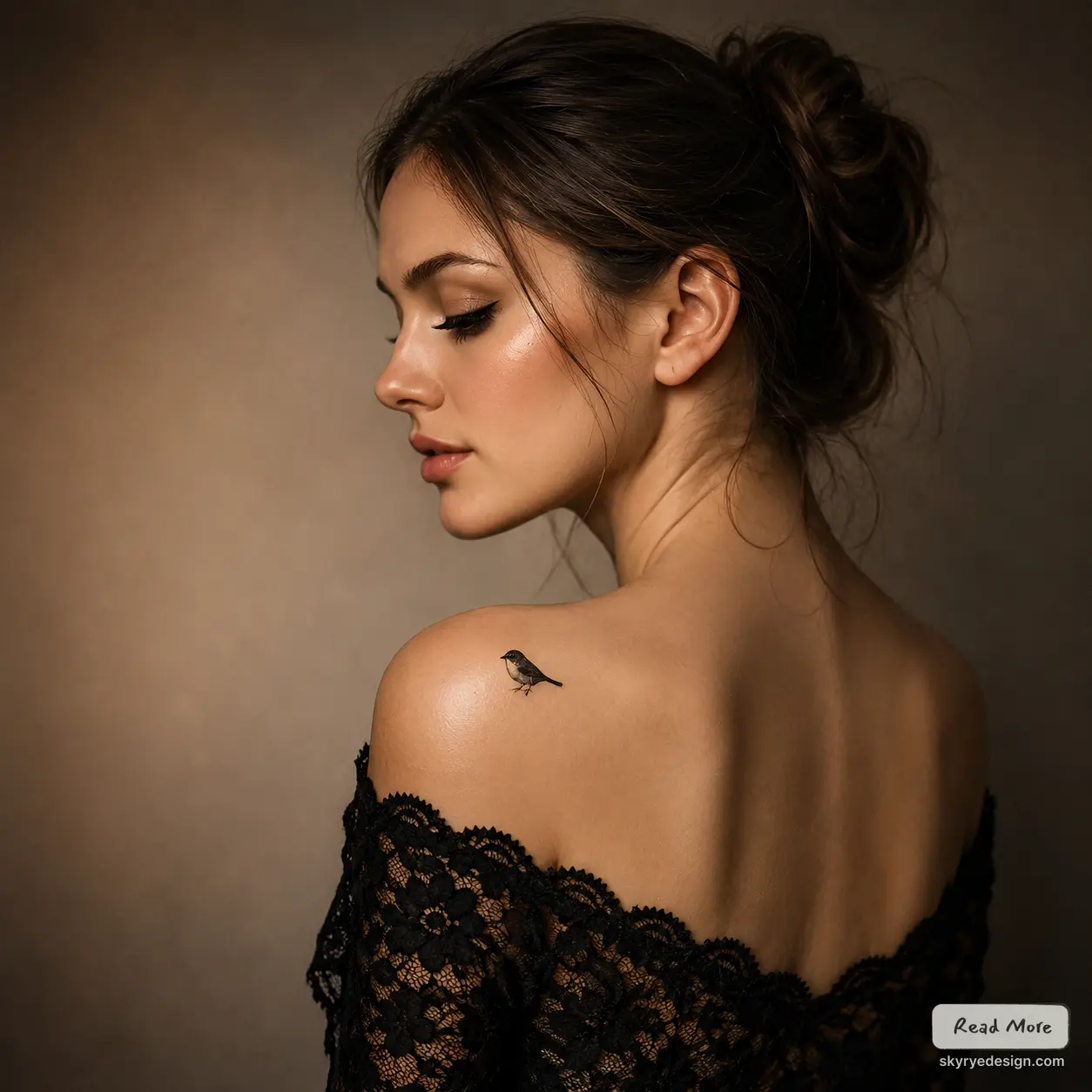
Honestly, if a design only looks good when you zoom in on Pinterest, it’s probably too detailed for a small tattoo. The best ones still read clearly from a distance. Good line work beats extra shading every time.
If this is your first tattoo, keep it simple. Bring a couple of ideas to your artist and ask how the piece will actually age on that spot. Sometimes the best edit is making the tattoo smaller in concept, not size.
If the tiny symbol you keep coming back to is a heart, compare these small ideas with heart tattoo designs that show minimalist outlines, initials, wings, flowers, and matching-symbol options.
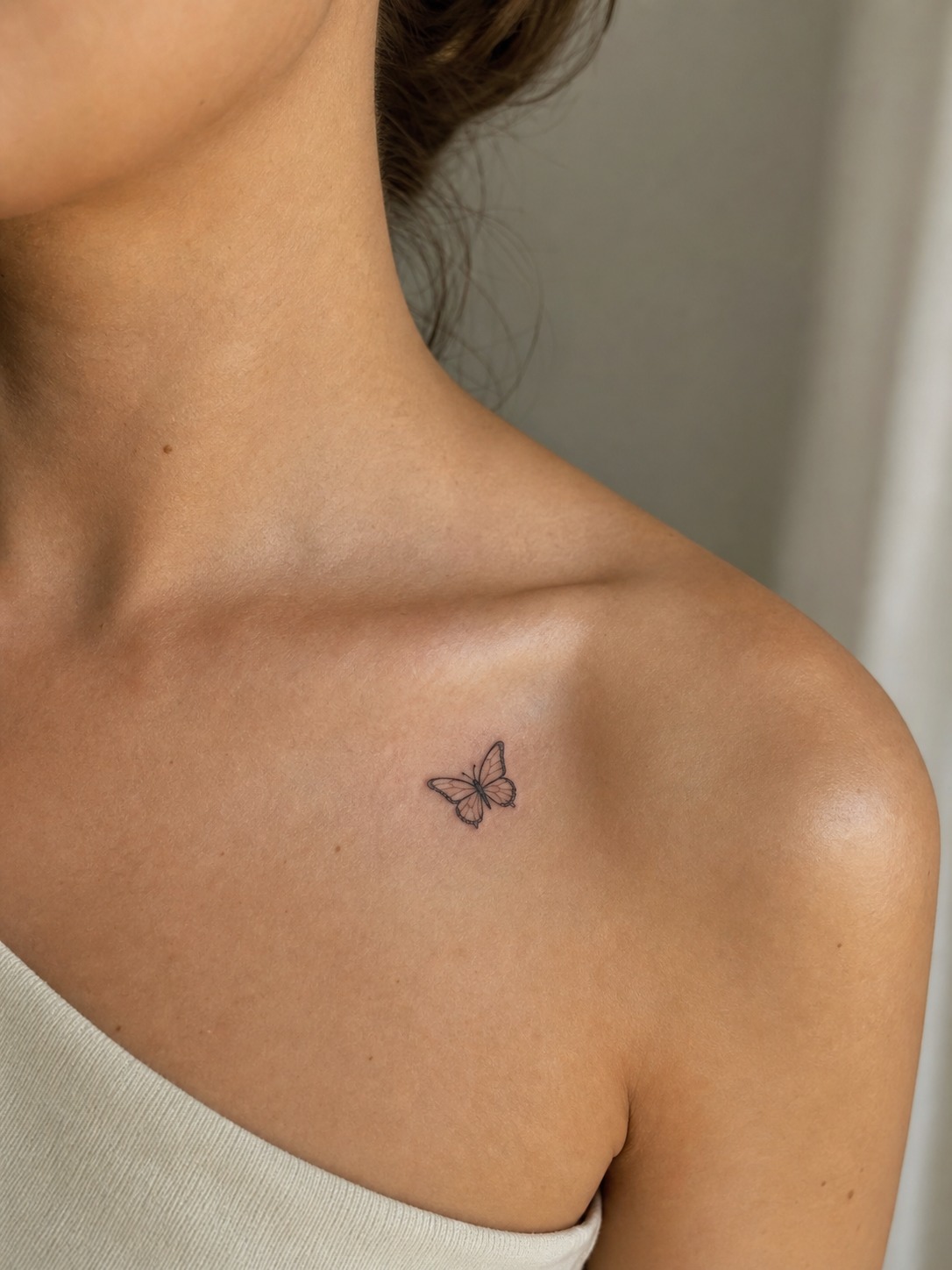
If you want a small design with soft symbolism, meaningful small butterfly tattoos are worth comparing with flowers, stars, and initials because the shape stays readable at wrist, ankle, or collarbone size.
Small tattoo photo inspiration
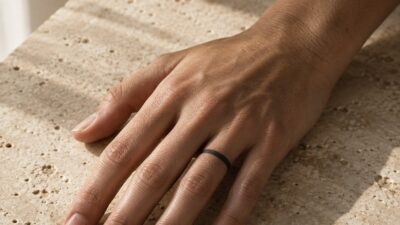
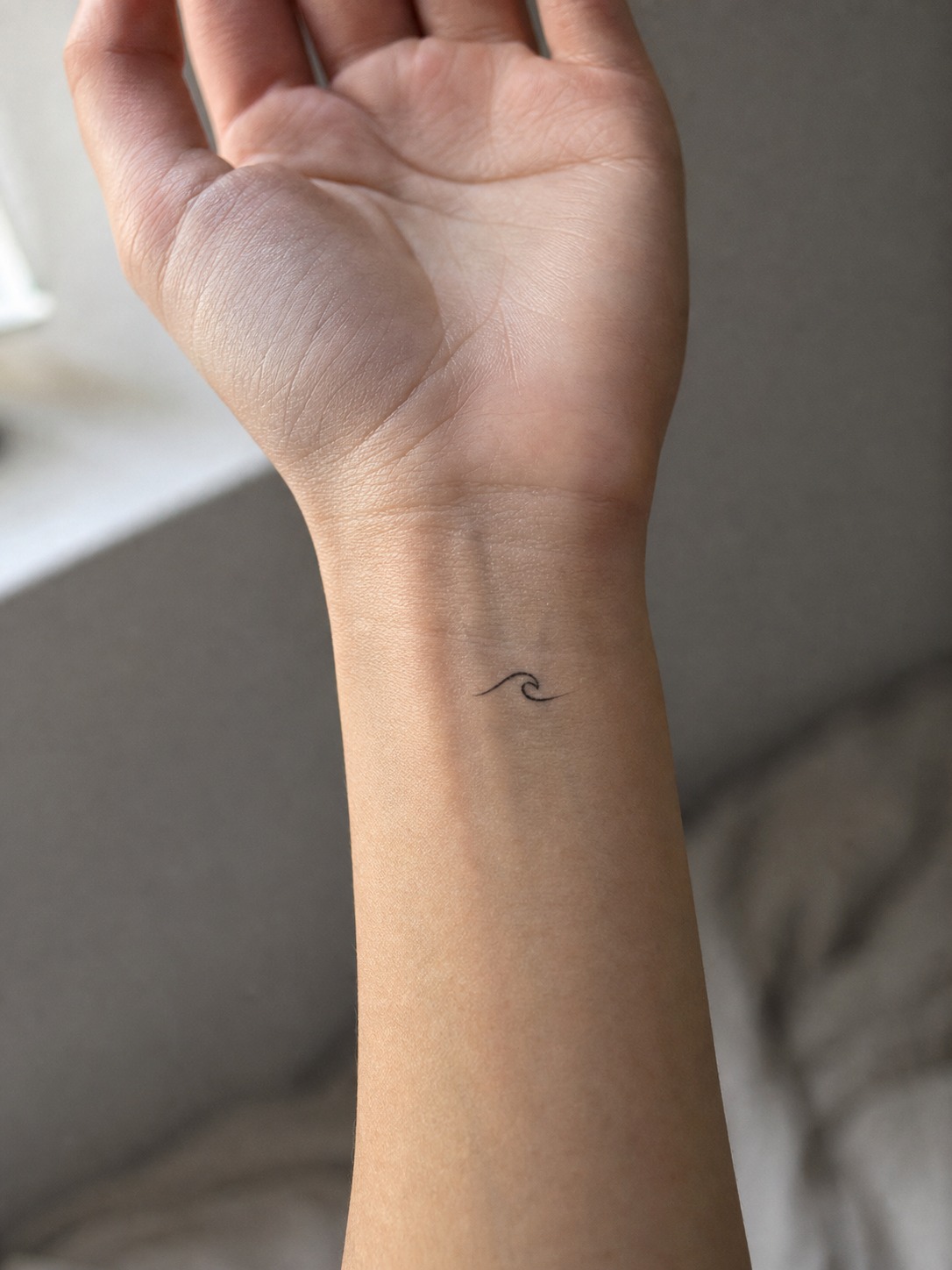
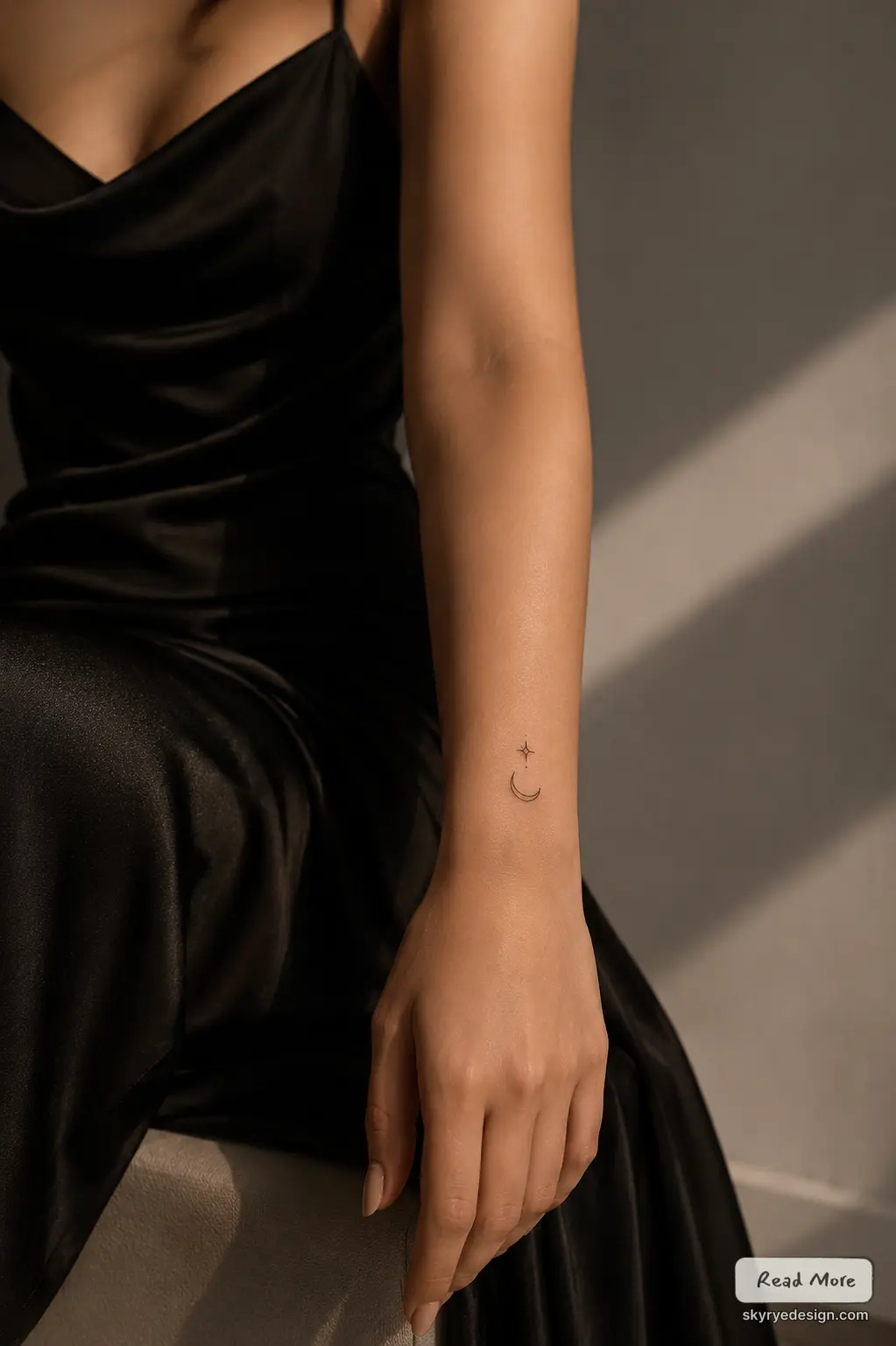
These four photo examples show how a tiny tattoo can change mood depending on placement. Notice how each design leaves enough skin around it, which helps the small line work stay readable.
Popular Small Tattoo Ideas
Small tattoos often focus on clear, simple designs that carry personal meaning. People choose styles that fit well on small spaces while still standing out with detail and charm.
Minimalist Designs
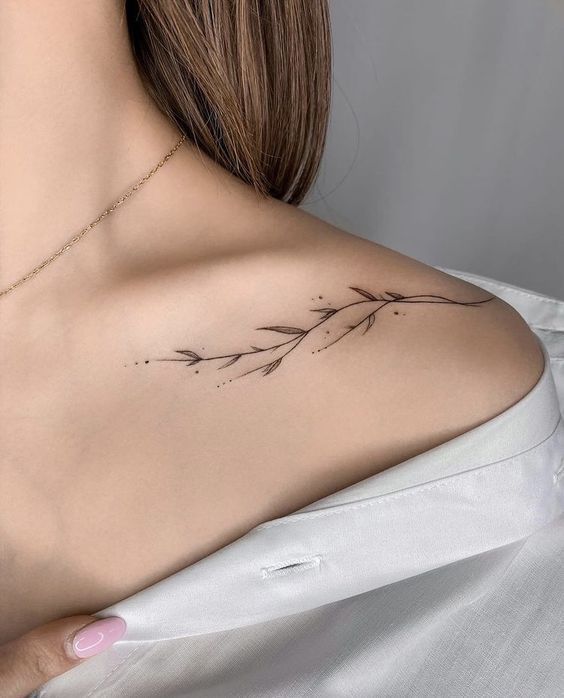
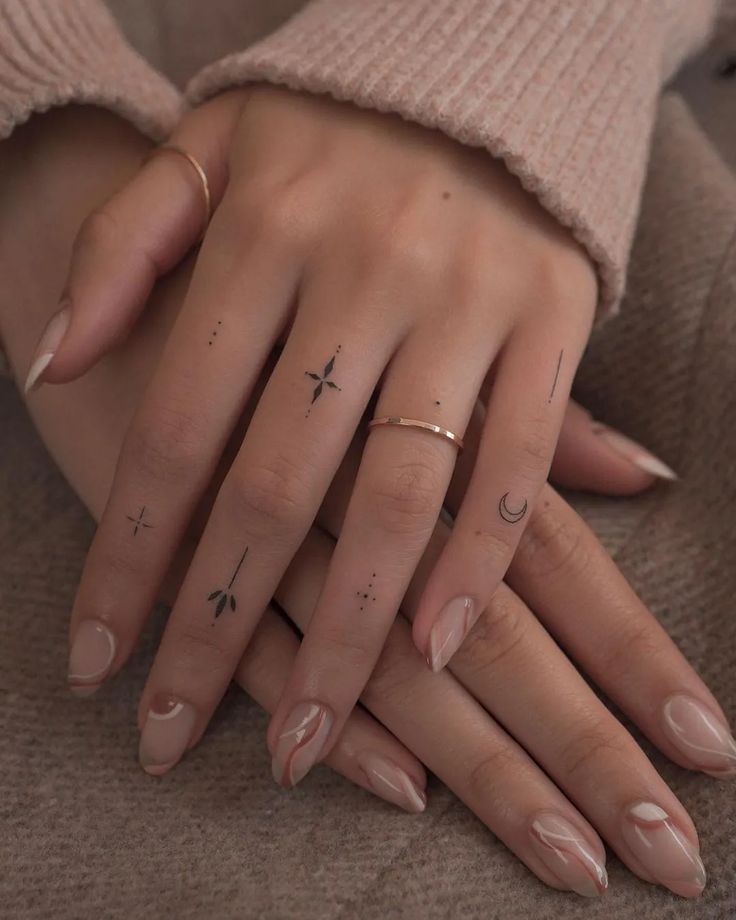
Clean lines, simple shapes, fits almost anywhere on the body. That’s the real appeal of minimalist tattoos — a small dot behind the ear or a thin bar on the wrist reads as intentional, not accidental.
Dots, bars, and basic geometric forms are the most common choices, They scale exceptionally well on tight spots like fingers or the inner wrist. There’s no line weight competing for attention and no shading to soften. Just the clean shape.
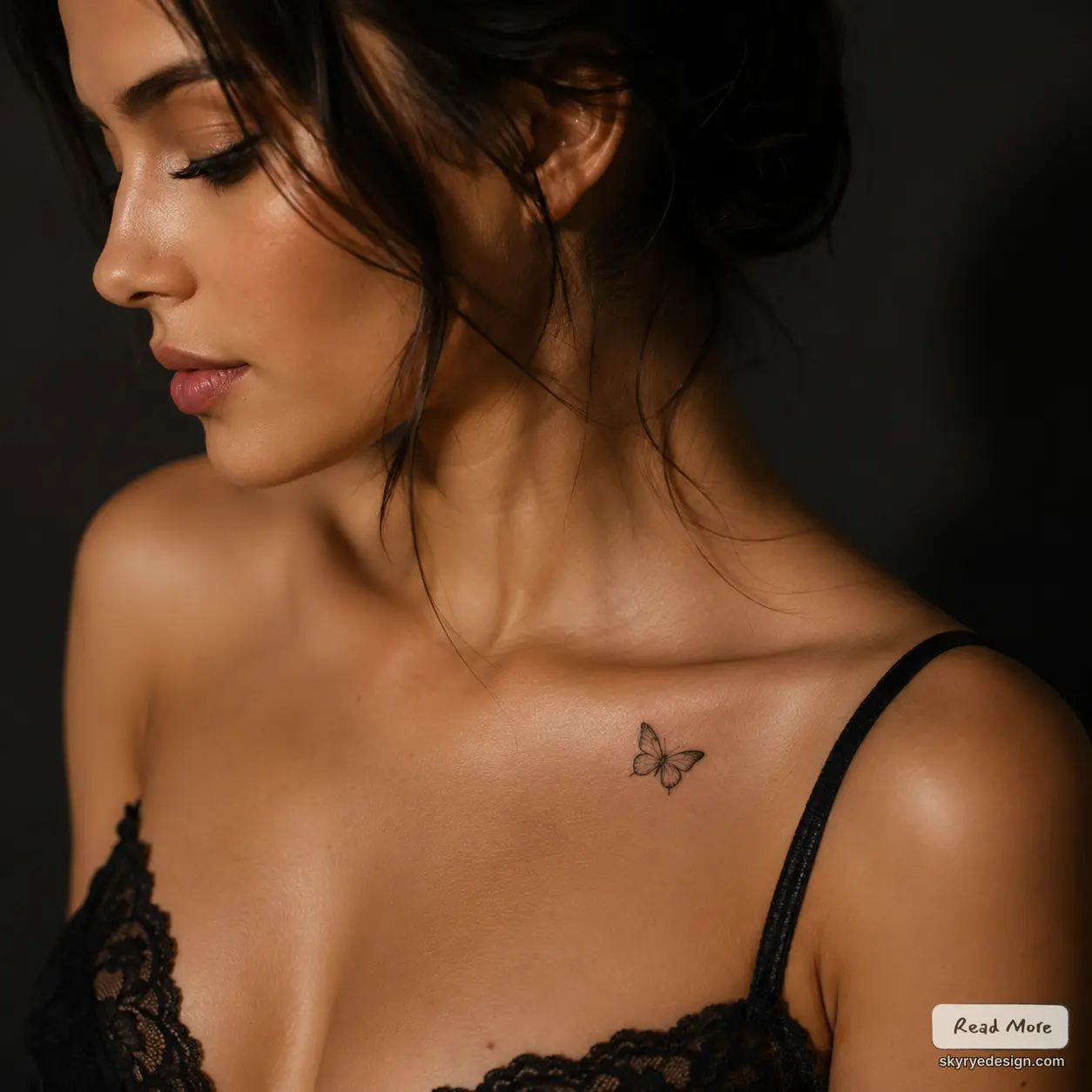
What I find interesting about this style is how much weight a single line can carry. A small triangle or a thin arc doesn’t need to “mean” something elaborate — it just sits there, precise and quiet, and somehow that reads as confidence. People use them to represent balance, strength, or purity, but honestly, half the appeal is the breathing room they leave on the skin.
My academic training in life painting and composition taught me that negative space—the breathing room around a mark—is just as active as the mark itself. In minimalist tattoos, this empty space is what actually makes a tiny geometric shape stand out, rather than get lost against the texture of your skin.
They also work as a starting point rather than an endpoint. A minimalist piece is easy to build around later — add another simple shape nearby, and suddenly you have a constellation. Mess around with placement and you’ve got something that looks designed, not accumulated.
Tiny Nature Tattoos
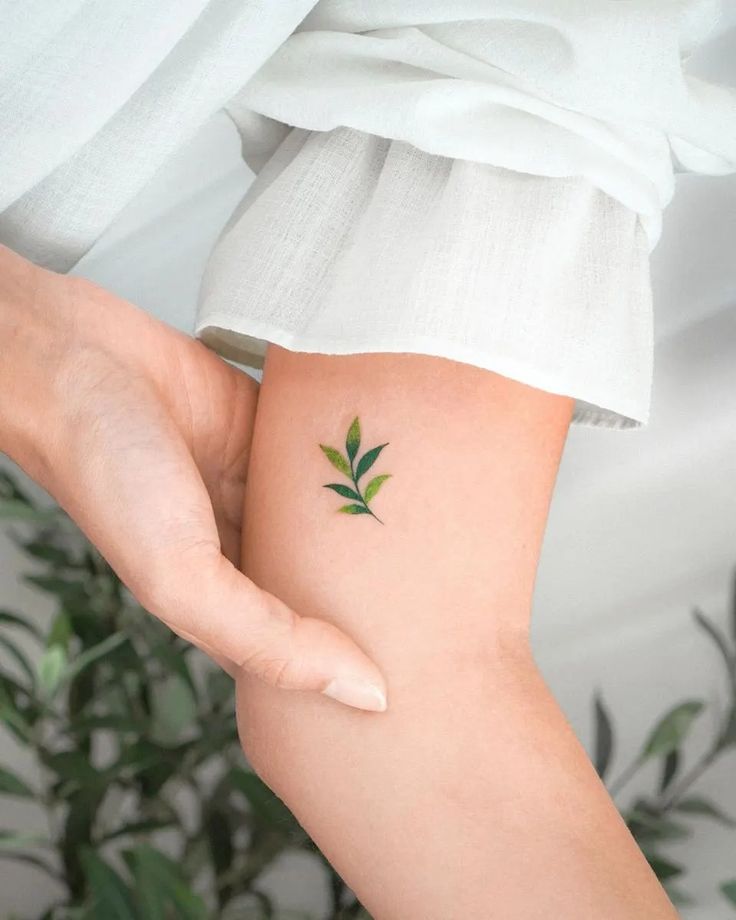
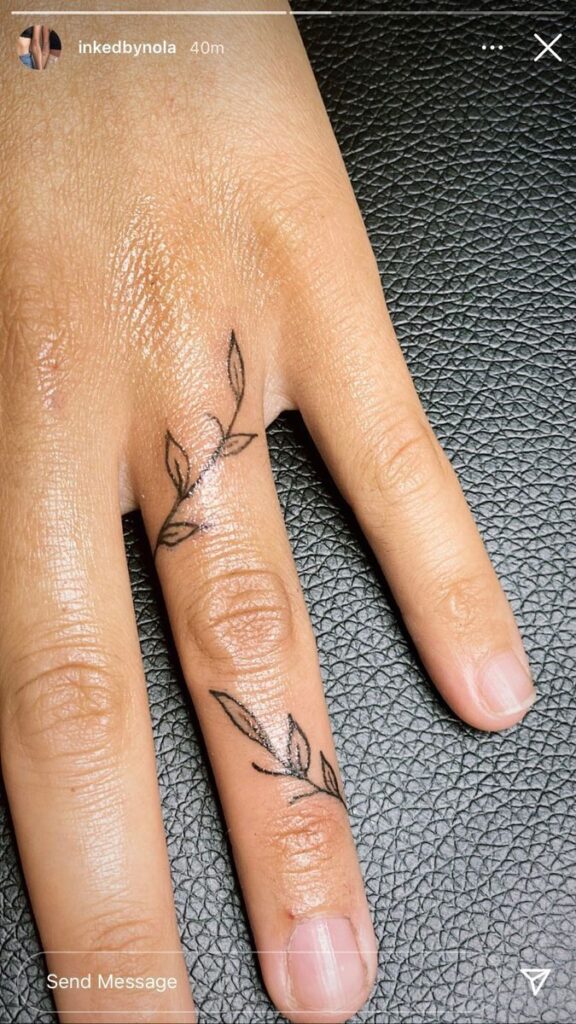
Leaves, petals, tiny waves — nature tattoos work because the shapes already exist. You’re borrowing something the world has been refining for a long time.
Wrists and ankles suit this style well. A small leaf or a few stacked petals sit perfectly into those spots. They follow the anatomy instead of fighting it. That’s where line weight matters. Heavy outlines push the design into graphic territory. Fine lines keep it delicate, almost like something pressed from a notebook page and transferred to skin.
People reach for growth, change, connection to the earth when they explain the choice. And maybe. But I suspect most people pick a small flower for the inner wrist because it genuinely looks good there. The symbolism comes after. Or it doesn’t come at all, and that’s fine too.
Delicate Symbols
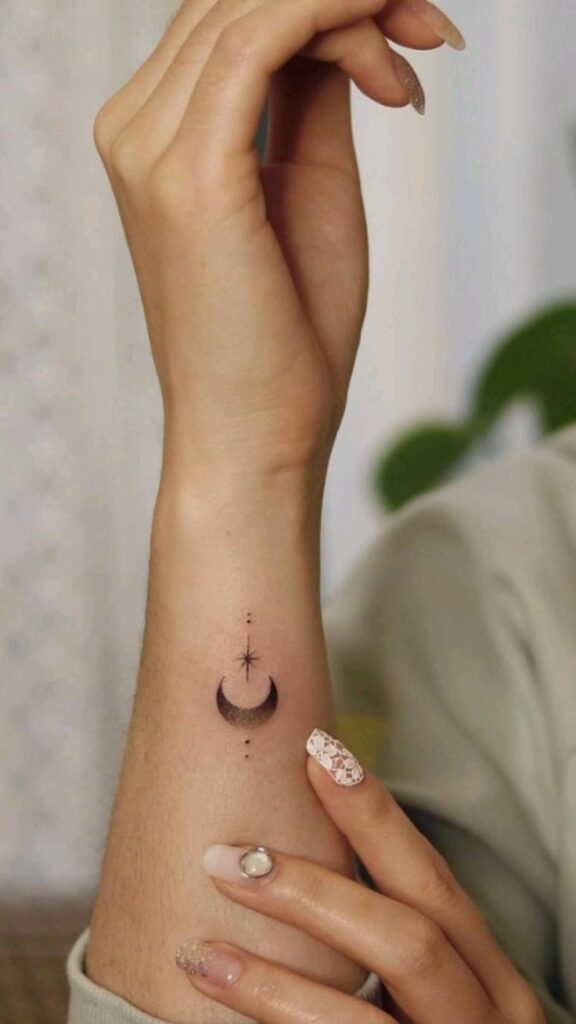
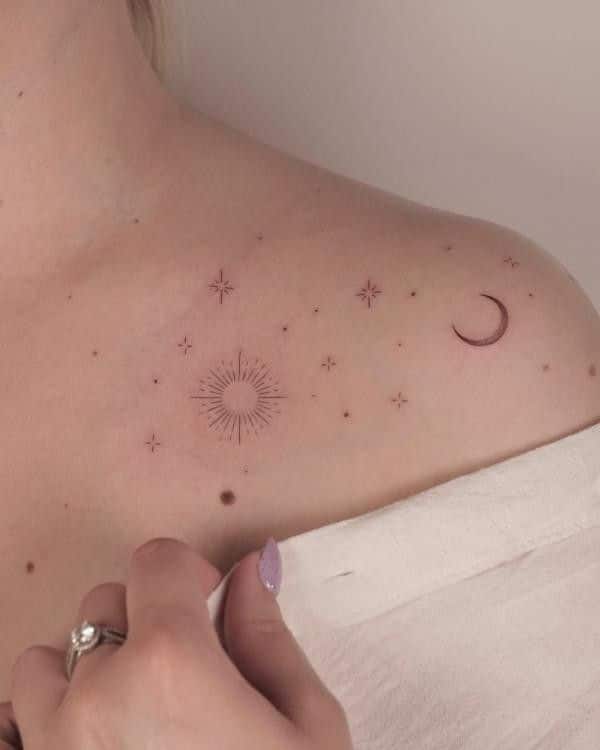
Small symbolic tattoos include shapes like hearts, stars, or arrows. These symbols can represent emotions, direction, or goals. Arrows, for example, often mean moving forward or protection.
These tattoos are popular for their clear messages in a small space. They work well with minimal shading and crisp outlines. Many choose symbols that relate to personal beliefs or inspirations.
Micro Animal Tattoos
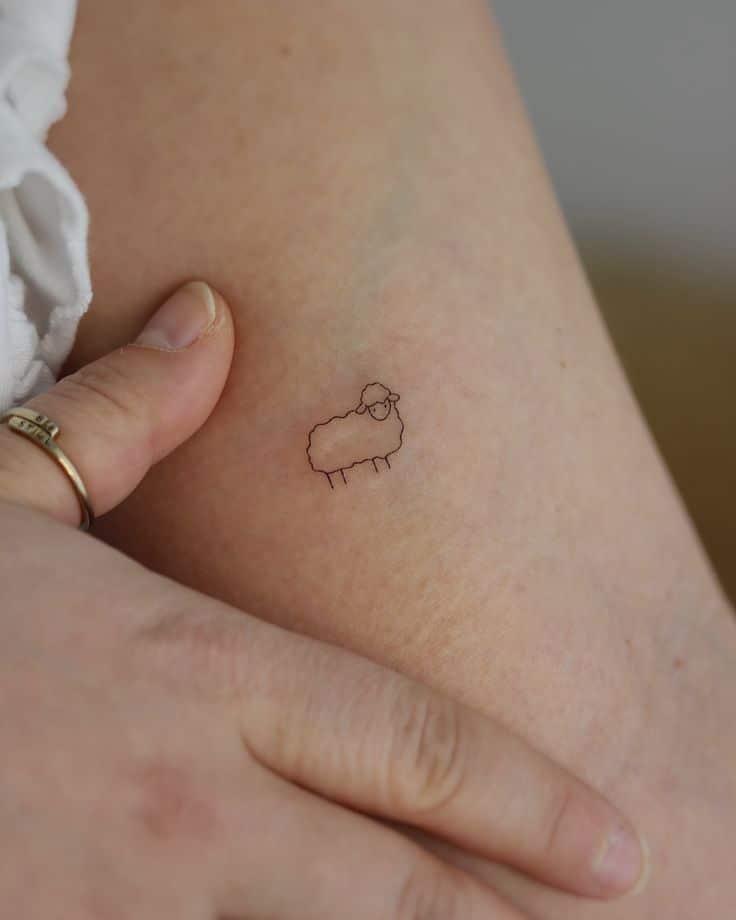
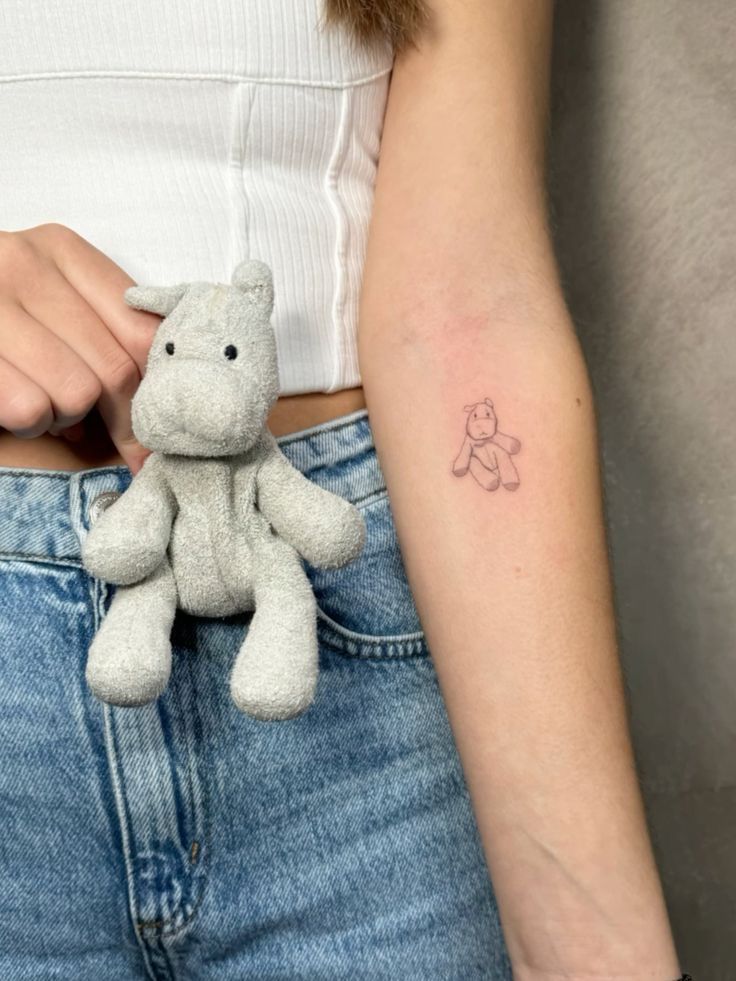
Small animal tattoos work because the animals do half the job already. A bird mid-flight doesn’t need a caption. A cat just sitting there communicates something about independence the way cats actually do — without trying.
Silhouettes make sense at this scale. Reduce an animal to its outline and you keep the part that reads: wing angle, tail curve, the way a butterfly holds still. Fine linework can push further — a tiny moth with actual wing texture behind the ear, a hummingbird on a finger with feather detail that somehow fits. When that kind of work lands, it’s hard not to stare.
Fingers, behind the ear, inner wrist. These spots suit small marks because the proportions are already close. A well-placed animal tattoo at this size doesn’t look like a placeholder for something bigger. It just looks right where it is.
Personalized Small Tattoos
Personalized small tattoos offer a way to carry meaningful symbols or words in a discreet, simple style. These tattoos focus on details like letters, dates, or short phrases that hold personal significance. Each choice often tells a story or marks a special memory.
Initials and Names
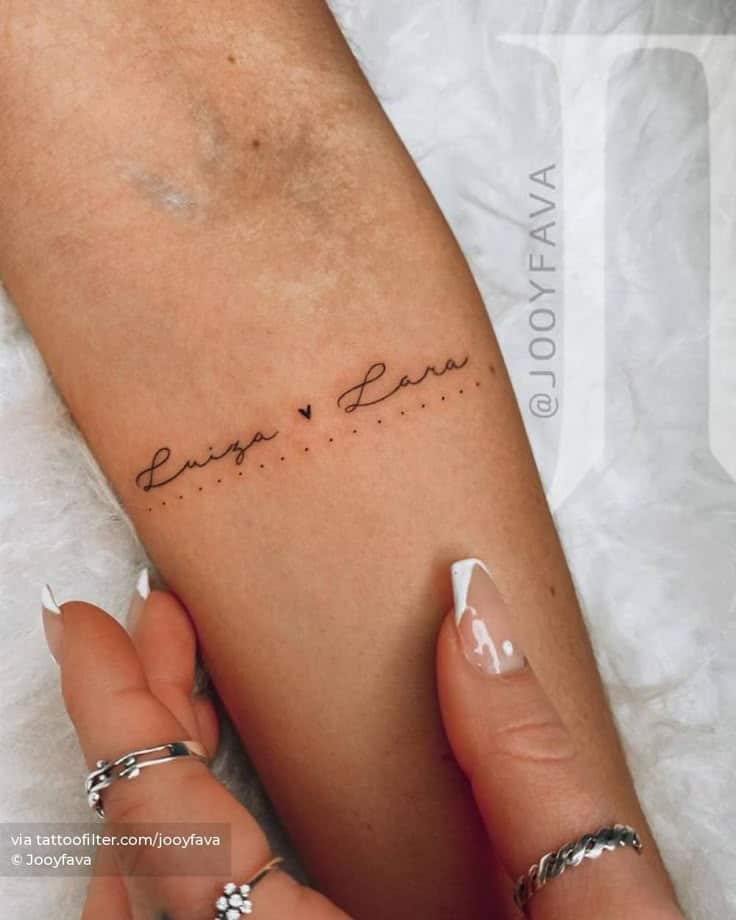
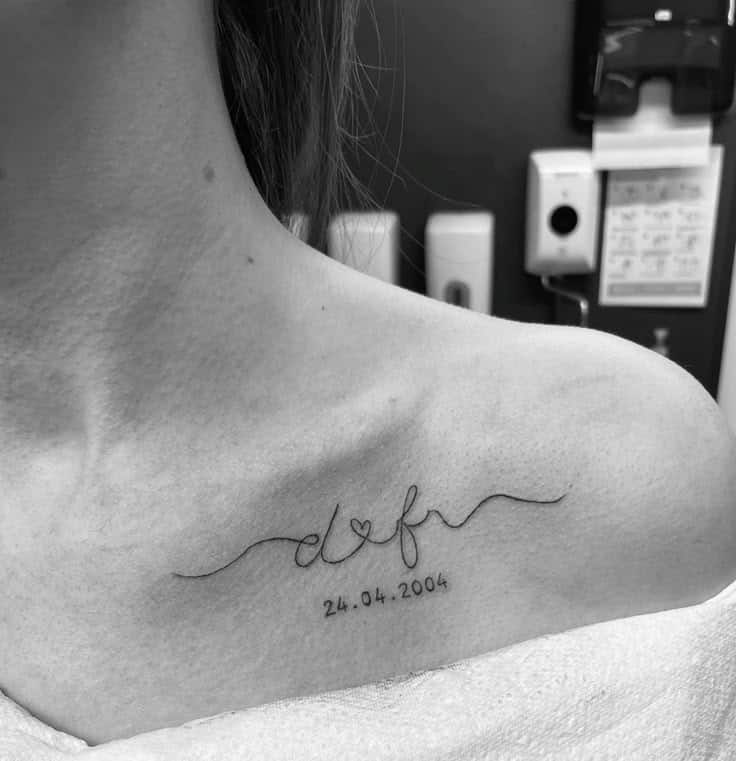
Initials and names are popular for small tattoos. They are simple but carry deep personal meaning. People often choose the initials of loved ones, such as a partner, child, or close friend. Names can be stylized in elegant fonts. They can also be made tiny enough to fit on the wrist, finger, or behind the ear.
This tattoo works well if you want a constant reminder of someone important. It keeps the design minimal without needing a large, complex piece. Adding small decorative elements, like a heart or a star next to the initials, can make it more unique and personal.
Birthdates and Coordinates
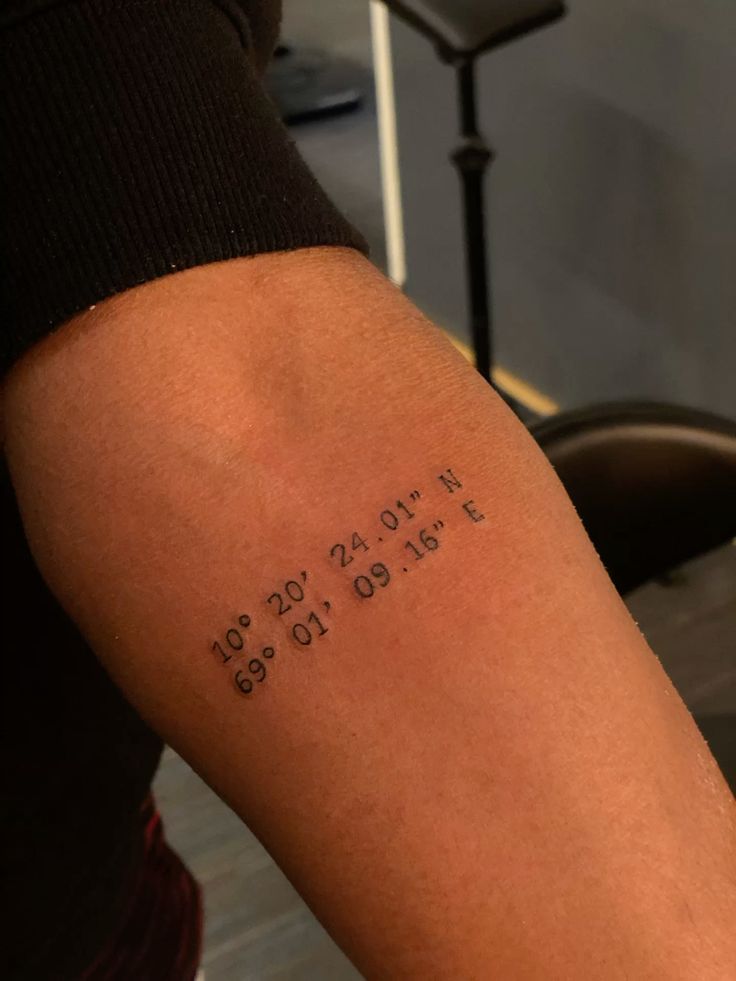
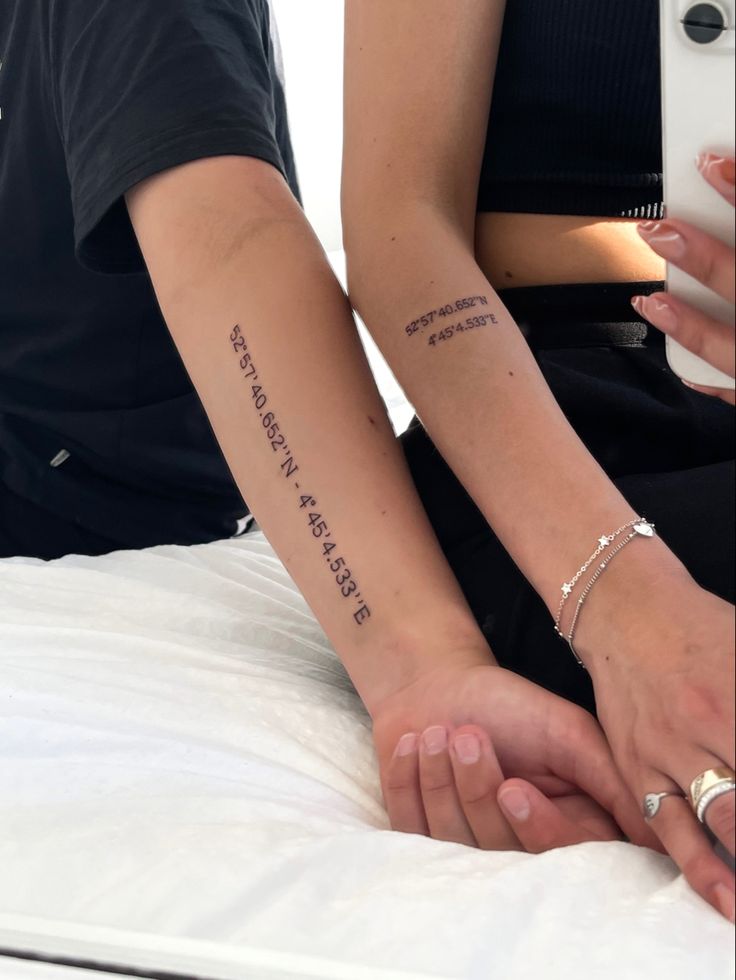
Numbers do something imagery can’t — they’re exact. A birthdate is just a date to anyone walking past. To the person wearing it, it’s the morning their kid was born, or the last day they saw someone, or the date they finally left.
Coordinates work the same way. A string of numbers pointing to a street corner in Lisbon or a lake in Minnesota means nothing out of context. That’s kind of the appeal. It belongs to one person and doesn’t ask to be understood by anyone else.
Most are done in a thin, clean font. No decoration competing with the numbers. Inner wrist, collarbone, ribs — spots that stay close to the body rather than facing outward. The whole design logic is understated: small, legible, and not explaining itself to anyone.
I think that’s why these hold up. No symbol to second-guess later, no image that might date itself. Just a number you already know by heart.
Tiny tattoos often work best when the detail is controlled, and these small dotwork tattoo designs show how spacing can keep a small idea readable.
Custom Quotes
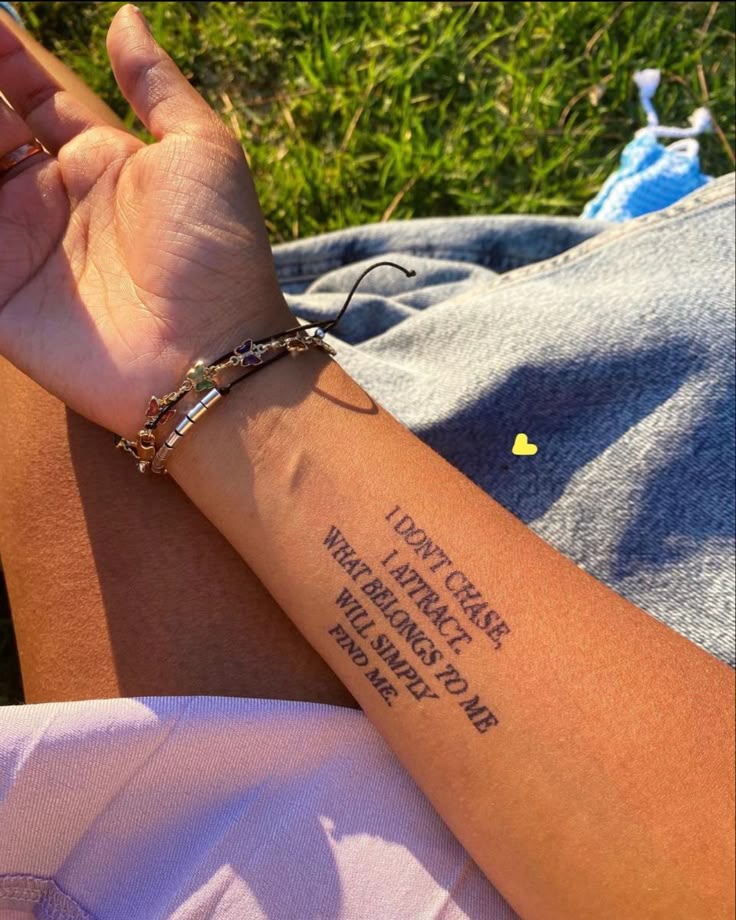
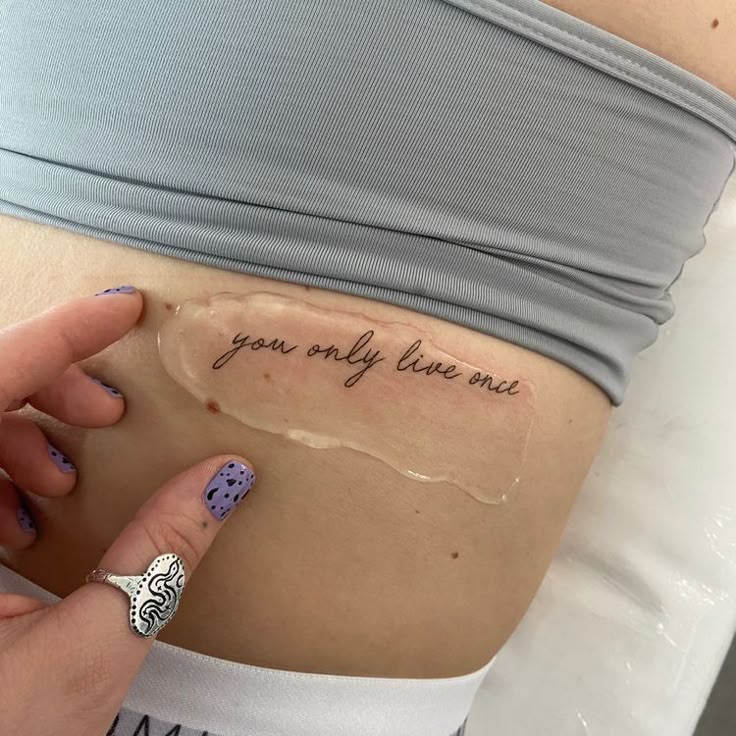
Short quotes and phrases are great for tattoos with personal messages. They act as daily motivators. People tend to choose words that inspire or remind them of important beliefs. These quotes are kept brief to fit the small canvas. However, they still express strong personal values.
The writing style can vary widely. You can choose anything from simple typewriter fonts to flowing cursive. Custom quotes allow for creative freedom. They keep the design personal, meaningful, and unique to you. They are often placed on the forearm, ribcage, or collarbone for easy visibility.
Placement Tips for Small Tattoos
Choosing the right spot for a small tattoo matters a lot. Some places hide the artwork, while others display it proudly. Think about comfort, visibility, and how the skin holds ink. Consider these factors carefully before deciding.
For men specifically, compare tiny symbols against broader tattoo ideas for men so you can decide whether a small piece, forearm design, sleeve, chest tattoo, or first-tattoo placement fits better.
Behind the Ear
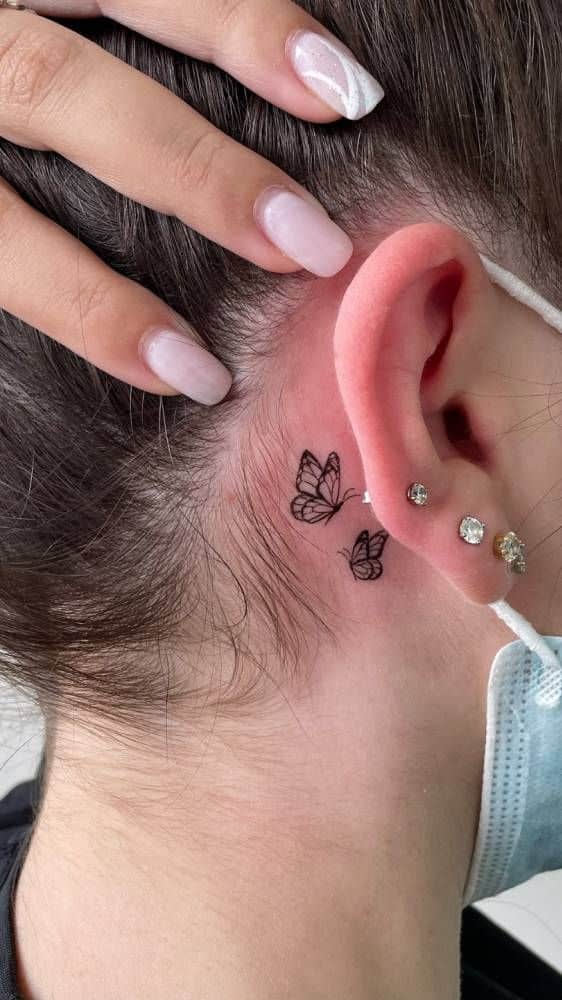
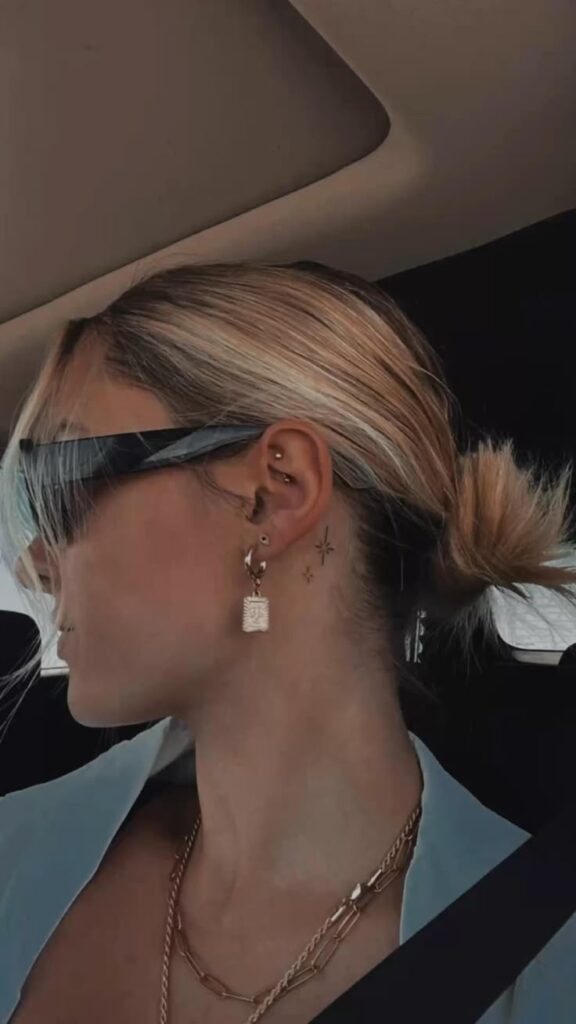
The area behind the ear is a popular spot for small tattoos. It’s perfect for tiny, delicate designs like stars or small flowers. This spot is great if someone wants a tattoo that is easy to cover with hair or accessories. You might want a design close to the face that is still somewhat coverable. Compare these small neck tattoo ideas before choosing between behind-the-ear, nape, or under-jaw placements.
The skin here is thin, so the tattoo may fade faster and might need touch-ups. Also, getting a tattoo behind the ear can feel a bit more painful due to the lack of cushioning. Still, it is a discreet and stylish option.
From a designer’s eye, the curve behind the ear is a very small, natural recess. When I look at placements, I notice that the best designs follow this anatomical curve rather than fight it—like a soft crescent or a simple botanical stem. If you try to place a rigid, straight line here, the perspective of your skull will make it look warped from most angles.
Fingers and Hands
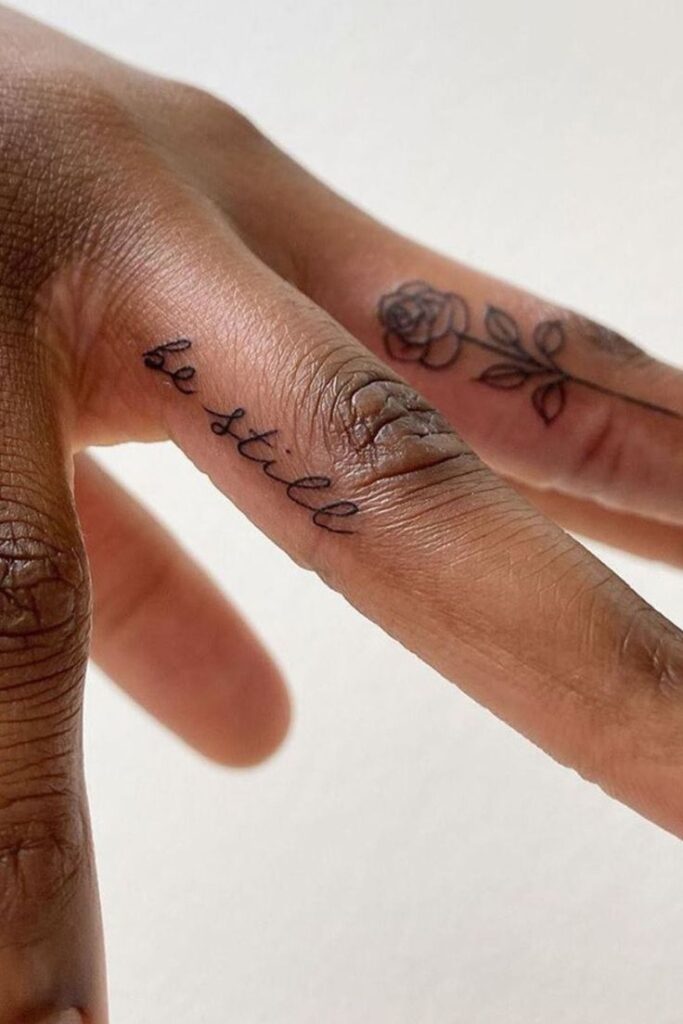
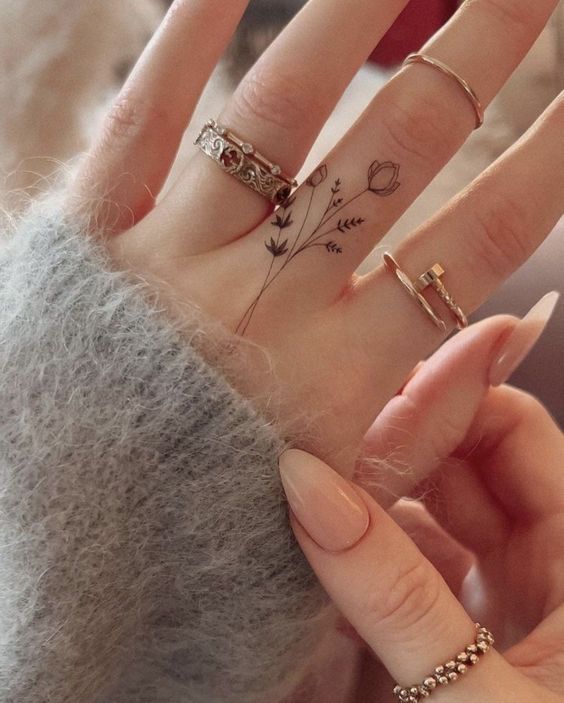
Fingers and hands are bold places for small tattoos. Designs on your hands are always visible. This is perfect if you want to show off your ink daily. Simple symbols or letters work best on fingers. High-detail artwork in this area tends to blur over time.
Hand skin is exposed to constant washing and movement. This exposure causes faster fading and higher touch-up needs. Careful aftercare and choosing the right design can help tattoos last better in these spots.
For a closer look at this placement, compare these small ideas with finger and hand tattoo designs that are built around fading, touch-ups, and line weight.
Ankles and Feet
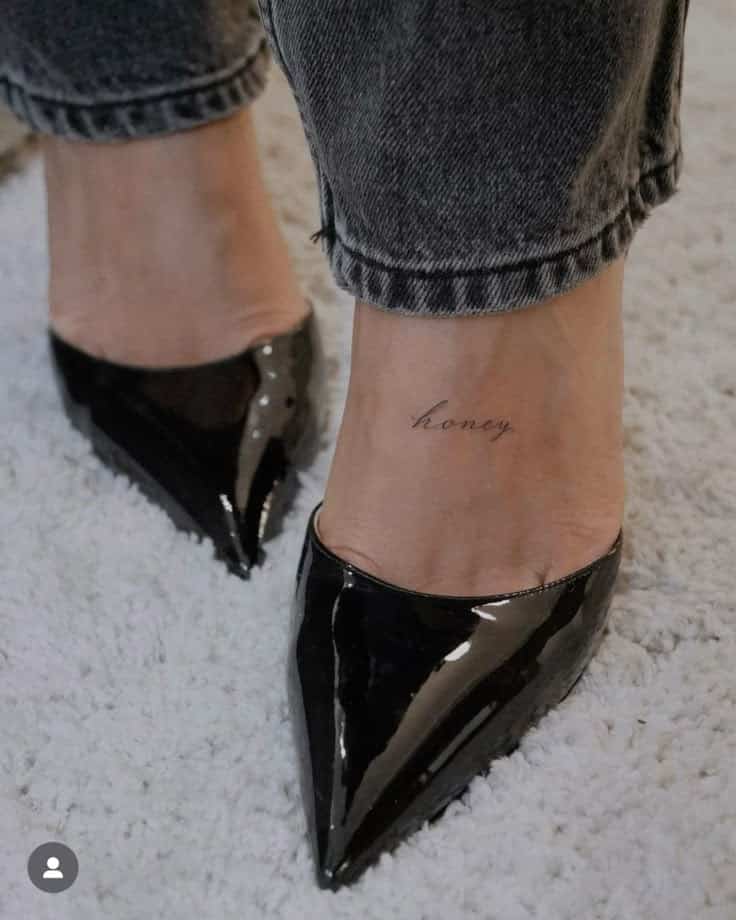
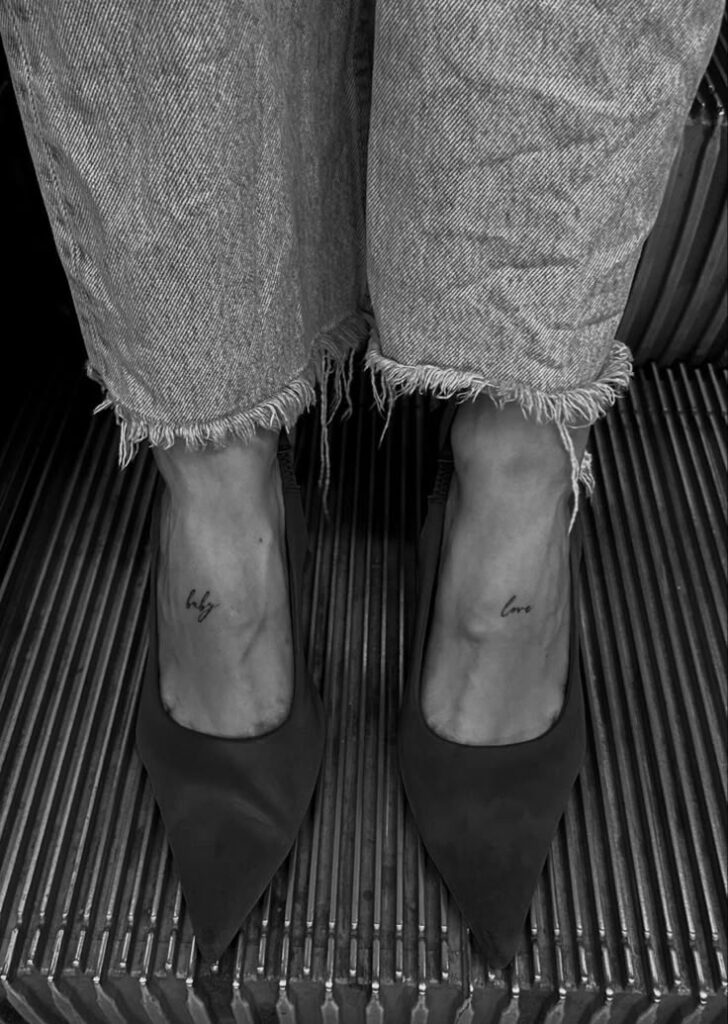
Ankles and feet offer nice spaces for small artwork. You can cover these spots easily with socks or shoes. This makes them ideal if you need to conceal your tattoos for work. Small designs like shapes or names look good here.
Tattoos on feet and ankles fade quickly from constant shoe friction. Healing can also take longer because the area receives less air. Patience and good care matter a lot for tattoos in this region.
Caring for Your Small Tattoo
Small tattoos need careful attention right after getting them and even after they heal. Proper care helps keep the design sharp and reduces the risk of infection or fading.
Aftercare Basics
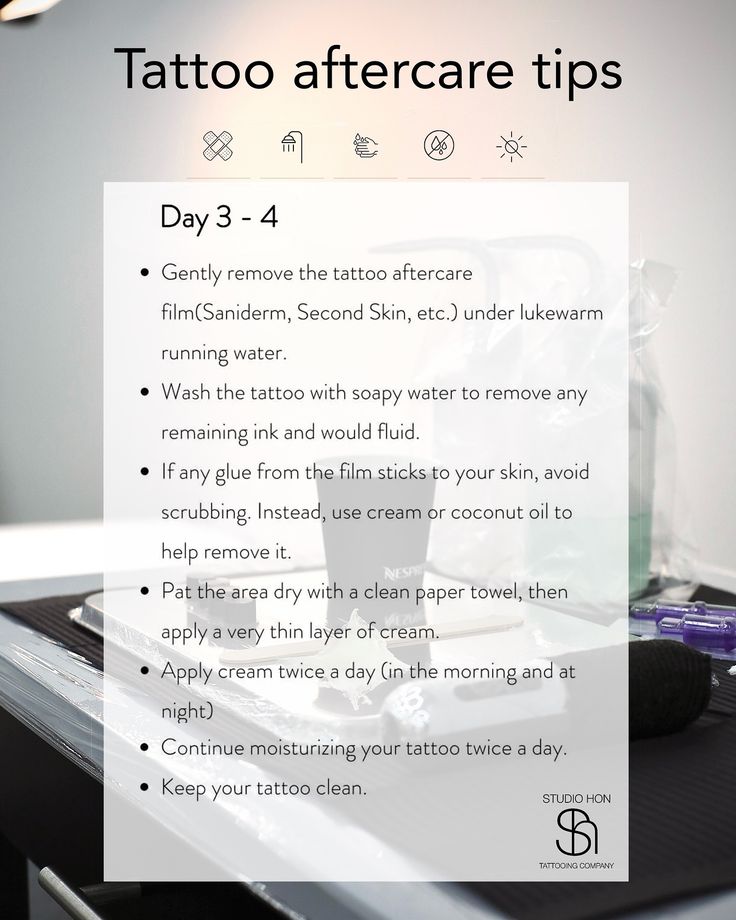
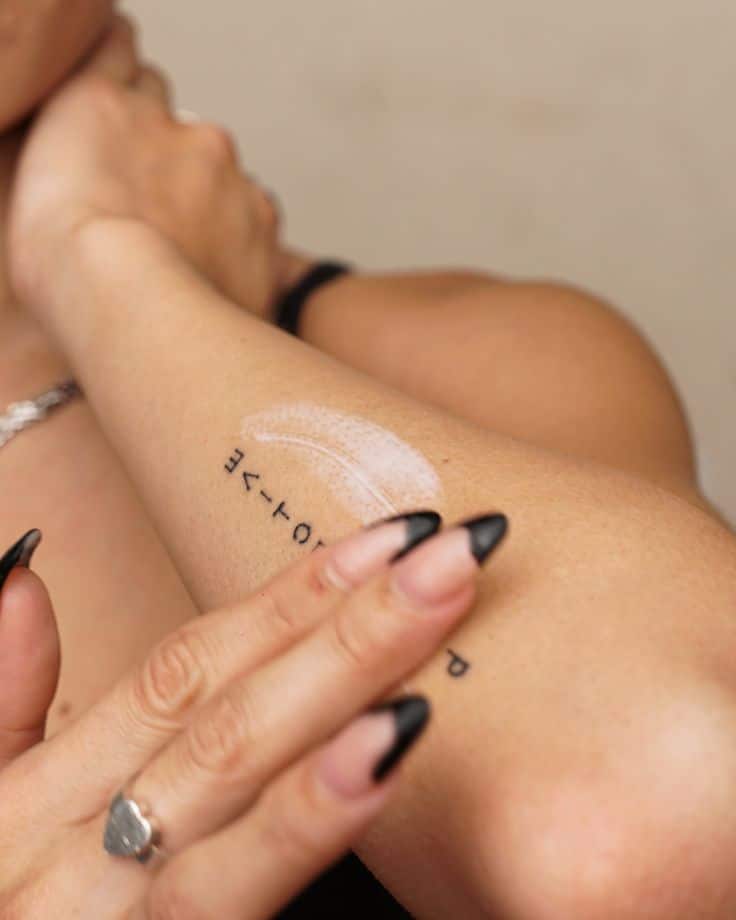
Right after getting a tattoo, it needs to stay clean and moisturized. Wash the tattoo gently twice a day. Use warm water and a mild, fragrance-free soap.
Never scrub with cloths or sponges. These materials easily irritate fresh, healing skin. After washing, pat the area dry with a clean towel or let it air dry.
Applying a thin layer of ointment like A&D ointment helps keep the skin hydrated. It’s best to apply this ointment about three times a day for the first few days.
During this healing time, no direct sunlight should touch the tattoo. It’s also important to avoid saunas, heavy sweating, or submerging the tattoo in water.
Long-Term Maintenance
Once a tattoo heals, the work isn’t over. Daily moisturizing is the one habit worth building — unscented lotion, nothing that’ll react with the ink, just enough to stop the skin from drying out. Dry skin makes pigment look chalky and dull. A minute in the morning adds up over a year.
Sun is the real problem. UV doesn’t announce itself — it just quietly breaks down pigment until one day the lines look softer than you remember. Anything exposed to daylight needs sunscreen. Decent SPF, before you go out, not after you’re already in it. Color tattoos feel it first, but black ink isn’t immune. It just fades more slowly, which almost makes it worse — harder to catch until it’s already happened.
Clothing friction is easy to overlook. The first few weeks are obvious — loose fits, nothing rubbing while the skin closes up. But it doesn’t stop mattering after that. A waistband that sits on a hip tattoo every day, a bra strap crossing a shoulder piece — that constant low-level friction grinds edges down over time. Gradual enough that you won’t notice until you pull up an old photo.
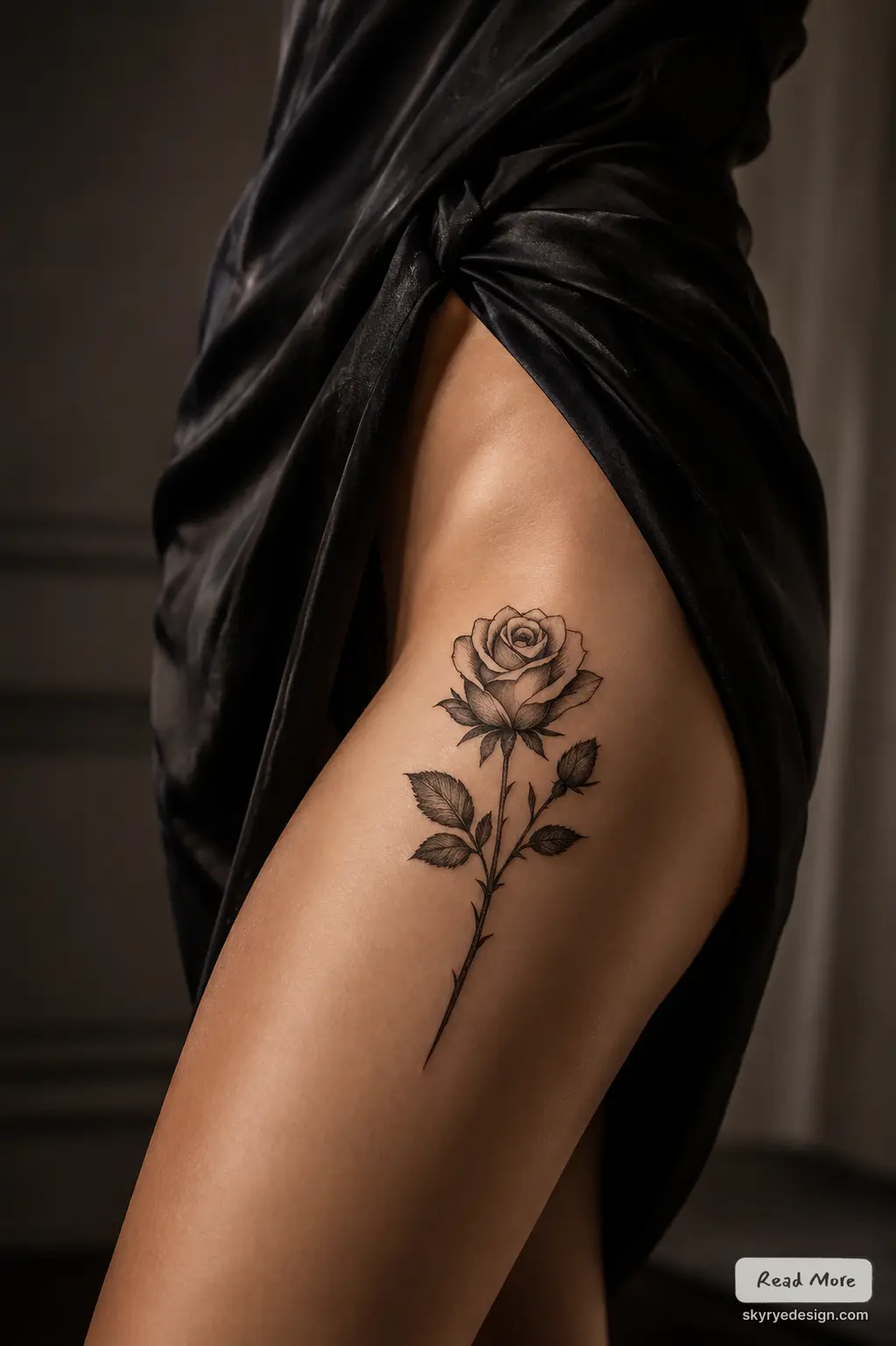
Most healed tattoos are fine. Occasionally something lingers — a patch that stays red, swelling that should’ve gone by now, skin texture that feels wrong. Don’t wait on it. A good tattoo artist can look at it and tell you within a minute if it’s healing normally or needs a dermatologist. Either way, you’ll know faster than if you just kept watching it.
If your tiny idea starts to feel too detailed for a small wrist or ankle placement, compare thigh tattoos for women; the thigh gives delicate symbols more space without making them public every day.
Small tattoo ideas FAQ
Q: What are the best small tattoo ideas for beginners?
A: Good beginner small tattoos are designs with clean outlines and very little tiny detail: a flower stem, small heart, simple wave, star, initial, date, or tiny animal silhouette. These ideas are easier for an artist to place neatly, and they usually age better than designs packed with miniature shading.
Q: Where do small tattoos look best?
A: Small tattoos usually look best on areas with enough flat space for the design to breathe, such as the inner wrist, ankle, forearm, collarbone, upper arm, or behind the ear. Fingers and hands can look beautiful, but they fade faster because the skin moves and washes constantly.
Q: Do small tattoos fade faster than larger tattoos?
A: They can fade faster if the lines are extremely thin, the placement gets a lot of friction, or the tattoo is exposed to sun without protection. A simple design with enough spacing, good aftercare, and daily sunscreen after healing will usually stay clearer for longer.
Q: How much detail can a tiny tattoo have?
A: A tiny tattoo should not rely on detail that only looks good in a close-up photo. If the design has tiny petals, lettering, or shading, ask the artist to simplify it. Clear silhouettes, open spacing, and confident line weight usually age better than miniature realism.
Q: Are small tattoos less painful?
A: Small tattoos often hurt for less time because the session is shorter, but pain still depends on placement. Areas with thin skin or bone underneath, like ribs, ankles, fingers, and behind the ear, can feel sharper than softer areas like the upper arm or outer forearm.
Q: How should I choose a meaningful small tattoo?
A: Start with the meaning, then reduce the idea to its simplest visual form. A place can become coordinates, a person can become an initial or birth flower, and a memory can become a small symbol. If the design still makes sense when drawn very small, it is a stronger choice.
Still comparing directions? Browse the full tattoo ideas hub for more styles, meanings, placements, and theme-based guides before you choose your final tiny design.
If you are comparing tiny tattoo styles, this fine line tattoo guide explains placement, aging, and aftercare in more detail.
If your shortlist keeps shifting between tiny symbols, florals, and script, this guide to small tattoo ideas for women gives more placement and aging context.
If you like the meaning but not the size of a full back piece, start with a small phoenix tattoo idea and keep the silhouette simple.
A small UV tattoo idea can work well for stars, moons, words, symbols, and tiny accents, but it still needs the same safety checks as any permanent tattoo.
If your shortlist is mostly tiny symbols or fine-line pieces, compare the scale against these small wrist tattoo ideas before you choose a final placement. The wrist makes simple designs feel intentional, but it also exposes weak spacing quickly.
Editorial & Health Disclaimer: This article is curated and regularly reviewed by professional artists at Sky Rye Design. Our tattoo aftercare recommendations and skin safety guidelines are designed to align with the safety standards of the Association of Professional Tattoo Artists (APT). However, tattoo healing can vary by individual skin type and placement. If you experience persistent redness, swelling, or signs of irritation, please consult a professional tattoo artist or a qualified dermatologist.
Compare style and placement
Before settling on a design, compare small sexy tattoo ideas with the scale, visibility, and natural line of the body. A clear silhouette and enough breathing room usually matter more than a trend.
If you want a tiny animal symbol, a small sea turtle tattoo can work beautifully as long as the shell pattern is simplified.
Tiny designs work better when the lettering has room to breathe. For text-based options, compare these small word tattoos before choosing a wrist, ankle, or finger placement.
Small tattoos need one clear visual idea, especially when branches and roots are involved. This guide to small tree tattoo meaning shows how to simplify a silhouette without losing the personal story behind it.
- 2.9Kshares
- Facebook0
- Pinterest2.9K
- Twitter4
- Reddit0