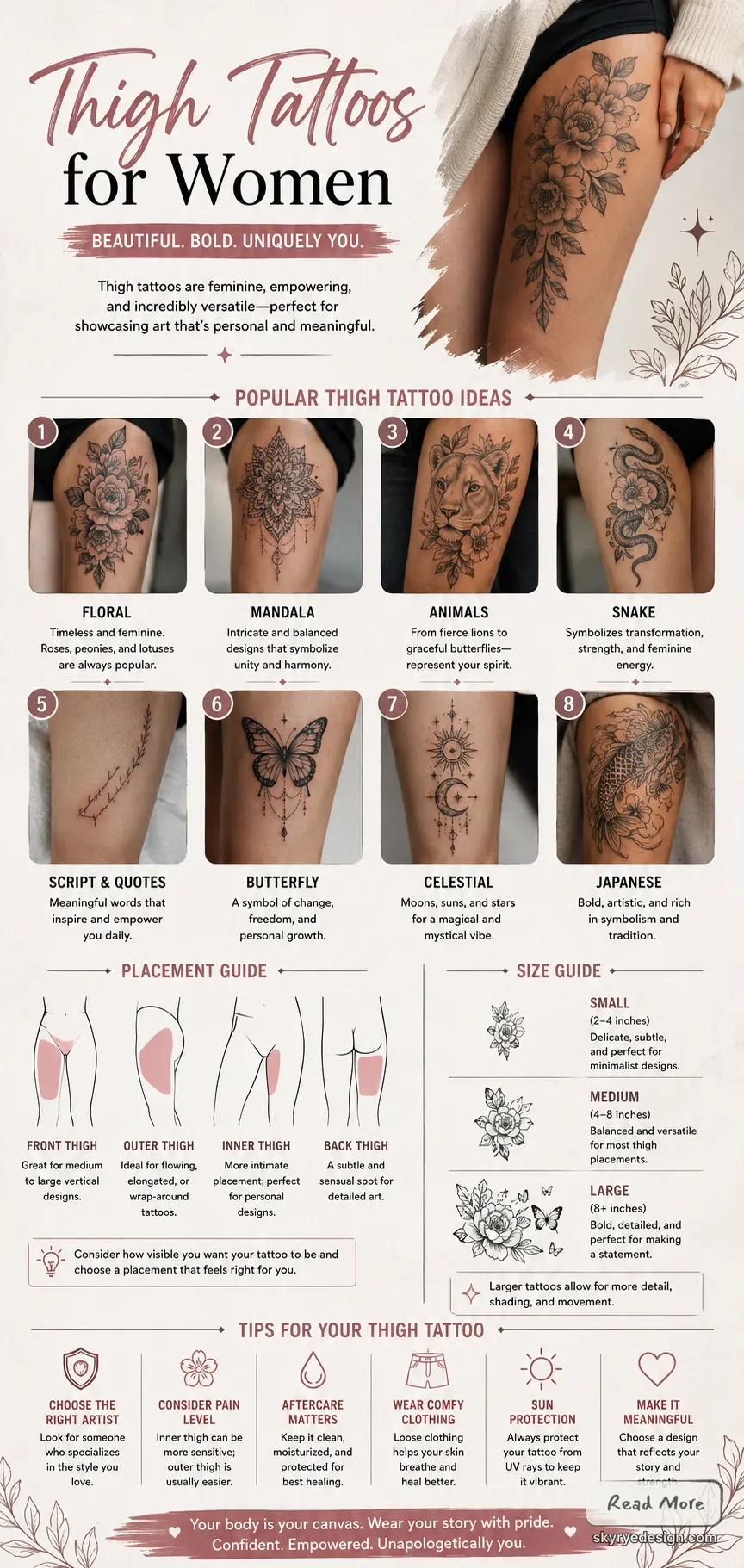
Thigh tattoos for women work best when the design follows the curve of the leg, not when it is copied straight from a flat reference. The thigh gives you enough space for florals, mandalas, animals, script, ornamental work, and full wrap pieces, but the placement still needs to make sense on the body.
That is what makes this area so flexible. You can keep the tattoo private under clothing, show it with shorts or swimwear, or build a larger piece that wraps around the leg over time.
- Thigh tattoos for women: quick placement guide
- Why thigh tattoos are so popular with women
- Outer thigh tattoos for women
- Inner thigh tattoos: private but more sensitive
- Upper thigh tattoos and hip-to-thigh flow
- Front thigh tattoos for statement designs
- Full-thigh designs need a clear layout
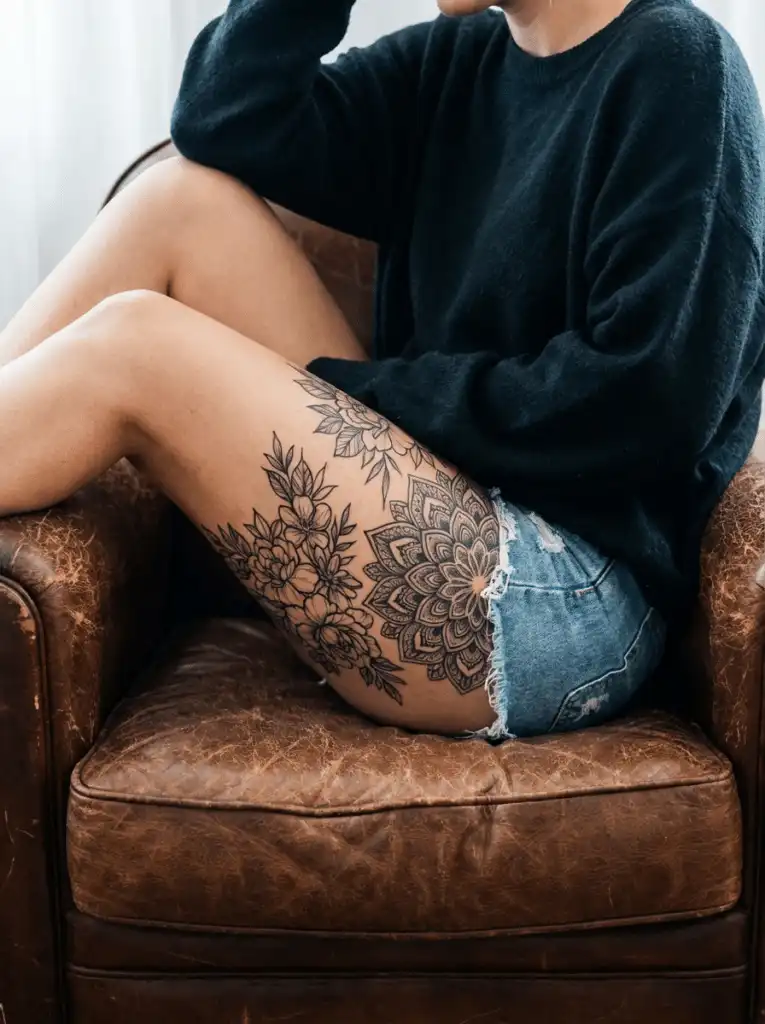
- Floral thigh tattoos
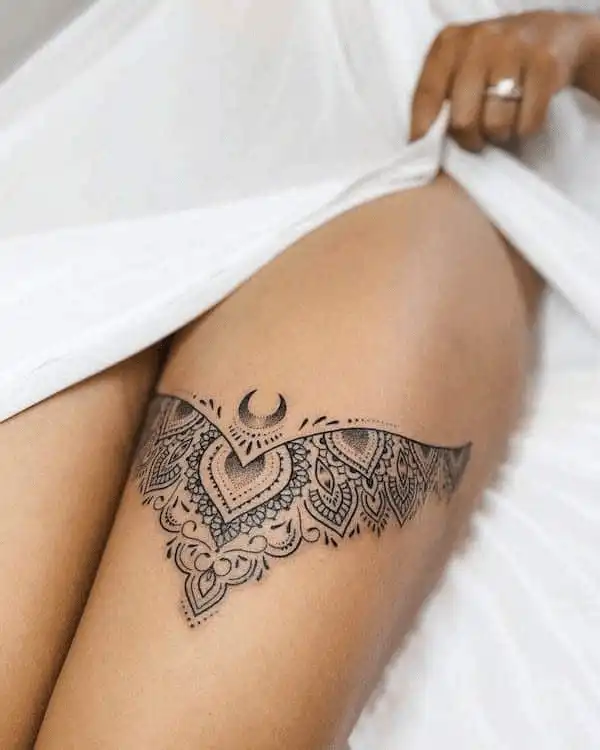
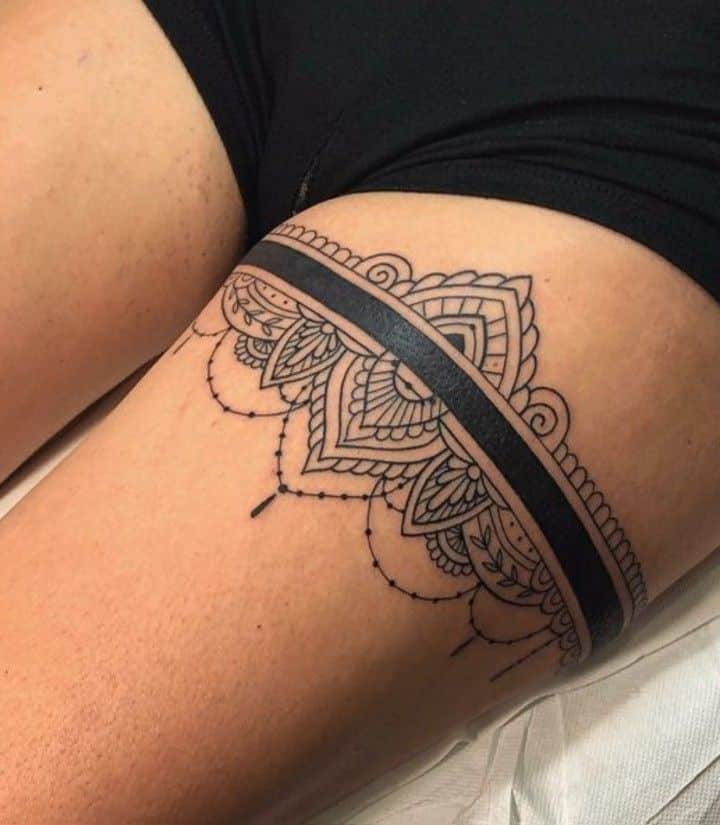
- Mandala and ornamental thigh tattoos
- Script, quotes, and word tattoos
- Thigh tattoo aftercare: healing without friction
- Design Tips Before You Commit
- Final thoughts: is a thigh tattoo right for you?
- Frequently asked questions
- Are thigh tattoos good for first-timers?
- Which thigh tattoo placement hurts least?
- What style works best for a thigh tattoo?
- Do thigh tattoos age well?
- Can thigh tattoos stretch with weight changes?
- How long does a thigh tattoo session take?
- How much do thigh tattoos cost?
- What should I wear while a thigh tattoo heals?
This guide breaks down outer, inner, upper, front, and full-thigh placements, with style ideas, pain notes, aftercare, and a few questions worth asking your artist before you book.
My usual design rule is simple: check the silhouette first. If the tattoo reads clearly from a few steps away, the small details have a much better chance of aging well. If the shape turns into a blur, the design probably needs cleaner spacing, stronger contrast, or a slightly larger placement.
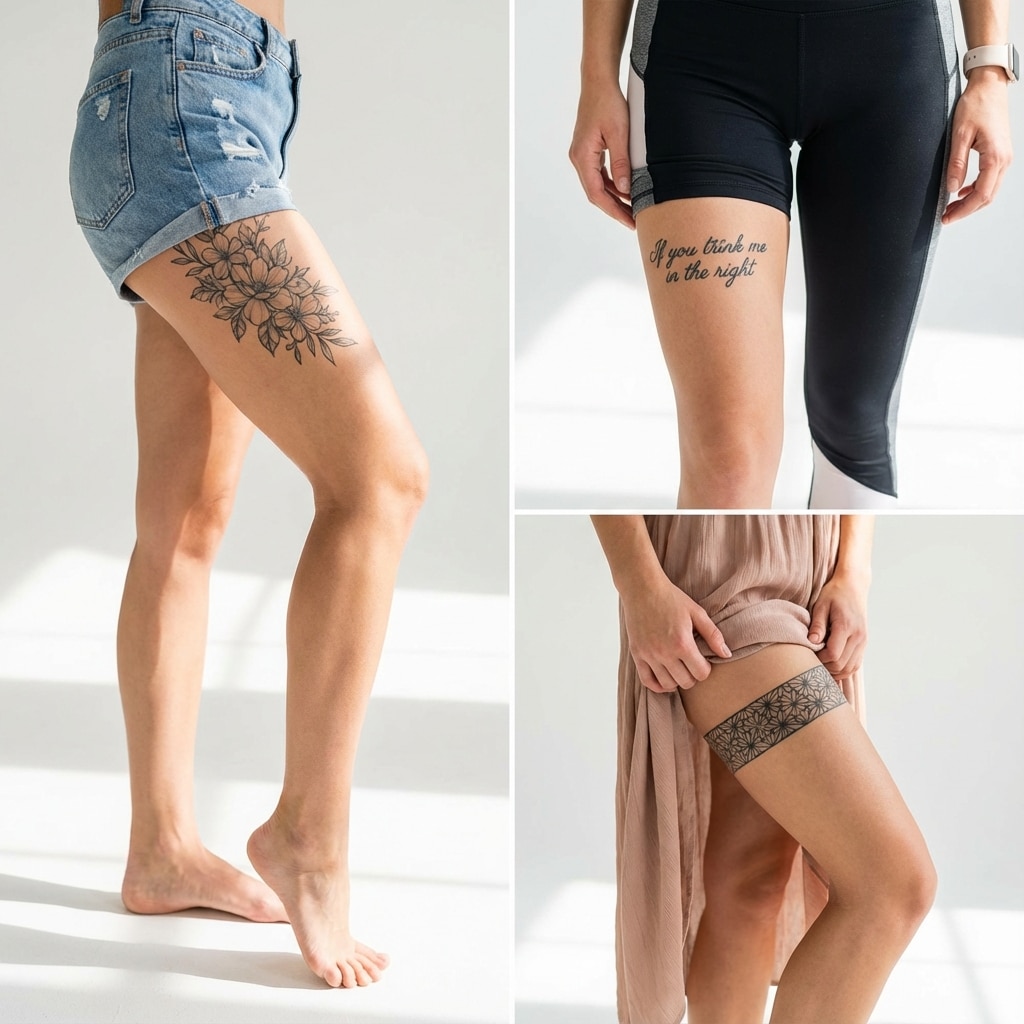
Thigh tattoos for women: quick placement guide
Start with placement before you choose the style. A thigh tattoo can look completely different depending on where it sits, and some spots are much easier to work with than others.
The outer thigh is usually the safest place to begin. It has more padding, less friction than the inner thigh, and enough flat space for medium or large artwork. Florals, ornamental pieces, animals, script, and fine-line designs all have room to breathe there.
The inner thigh feels more private, but it is also more sensitive. It works best for softer, more personal designs, especially if you want something that only shows when you choose.
Front-thigh tattoos are easier to see and admire yourself, which is part of the appeal. They work well for centered designs, vertical compositions, and pieces that follow the natural line of the leg.
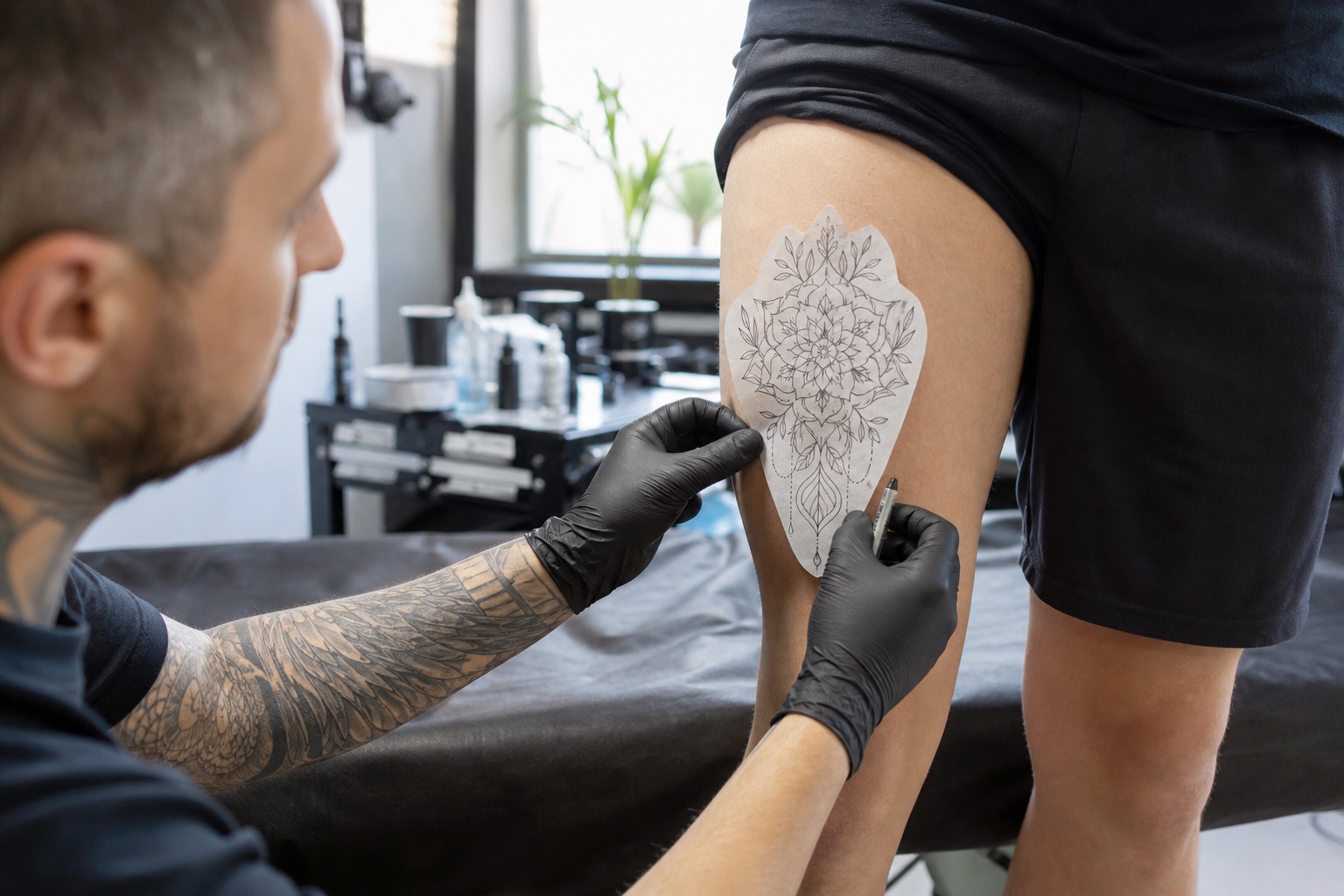
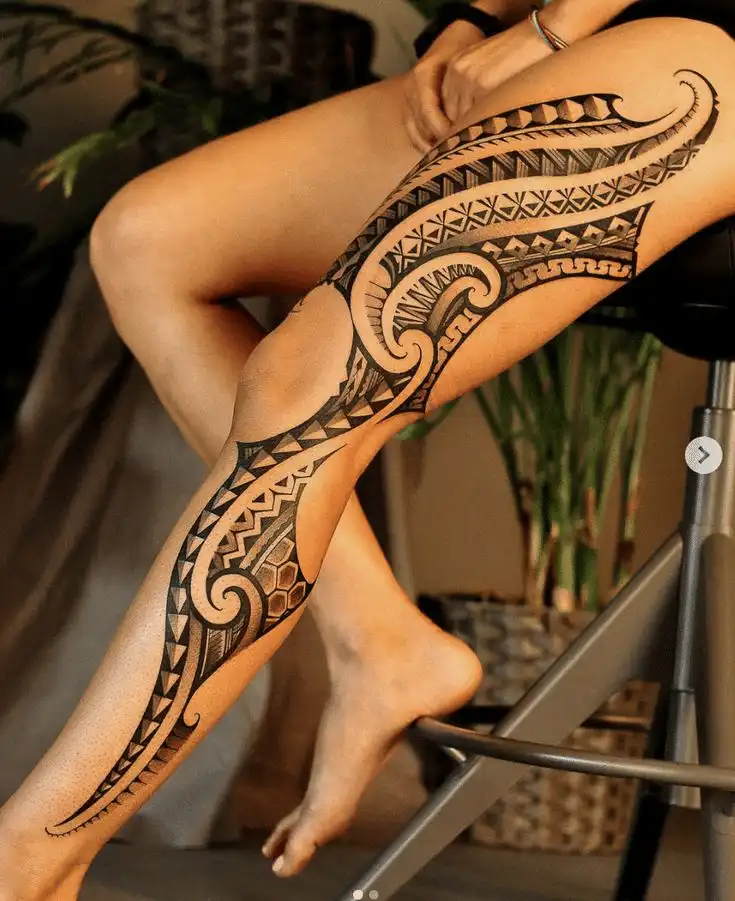
Full-thigh tattoos need more planning. The artwork has to wrap around the leg without looking chopped off from one angle. This is where a good stencil matters. Walk around, sit down, look in the mirror, and make sure the design still feels balanced before the needle starts.
If you are still comparing leg placements, this leg tattoo ideas for women guide is a good next read. For a smaller first piece, compare the scale with our small tattoo ideas before you commit to a large thigh panel.
For a related ink idea, see Oni Mask Tattoos.
| Thigh placement | Best for | Pain and visibility notes |
|---|---|---|
| Outer thigh | Florals, animals, portraits, mandalas | Usually more beginner-friendly and easy to hide under clothing. |
| Inner thigh | Private script, small florals, ornamental pieces | More sensitive because the skin is thinner and friction is higher. |
| Upper thigh | Hip-to-thigh florals, lace, large curved designs | Easy to cover, but placement must work with shorts, swimwear, and underwear lines. |
| Front thigh | Statement pieces, symmetrical designs, lettering | Highly visible to you and works well for medium-to-large art. |
| Full thigh | Large botanical, mythic, ornamental, or mixed-theme work | Needs a stronger layout plan and may require more than one session. |
Why thigh tattoos are so popular with women
Thigh tattoos strike a rare balance between visibility and privacy. You can show them off in shorts, skirts, or swimwear – or keep them completely hidden when you want. This flexibility makes them ideal for both first-time tattoo clients and seasoned collectors.
For a related ink idea, see Belly Tattoo.
Key reasons women choose thigh tattoos:
- Large surface area for detailed artwork
- Naturally flattering curves enhance design flow
- Easier to conceal than arm or neck tattoos
- Strong association with confidence and body autonomy
The thigh is also an area where artists can create designs that move with your body. That matters for tattoo patterns for women, because a vine, mandala edge, or animal shape should follow the leg instead of fighting against it.
Outer thigh tattoos for women
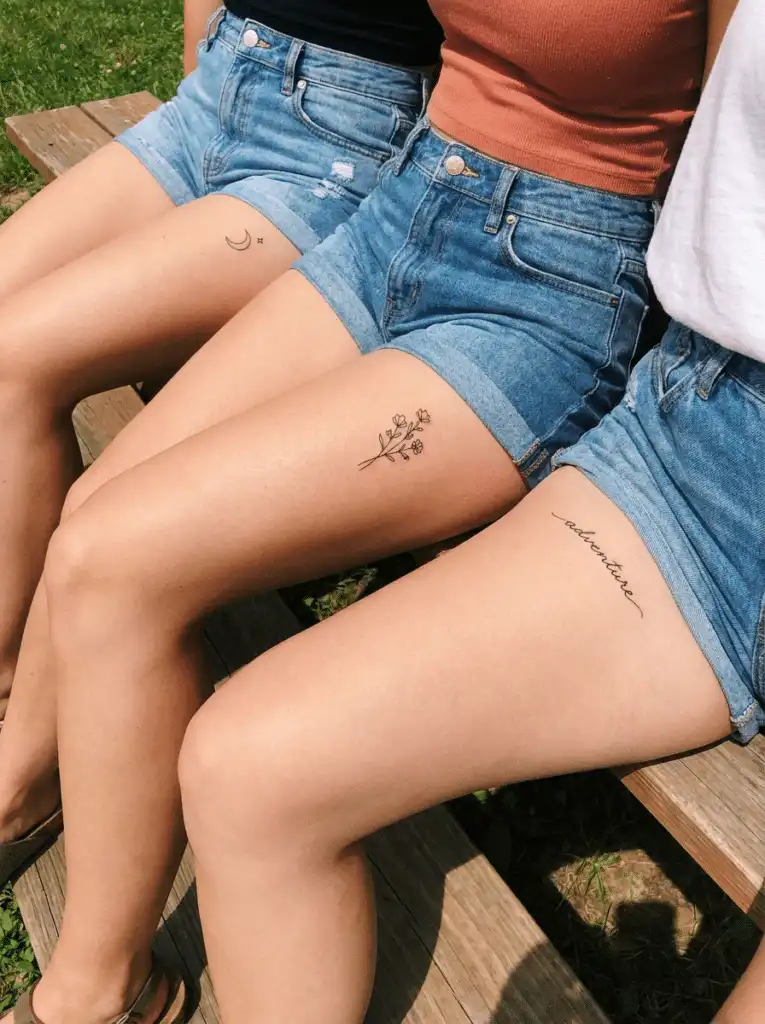
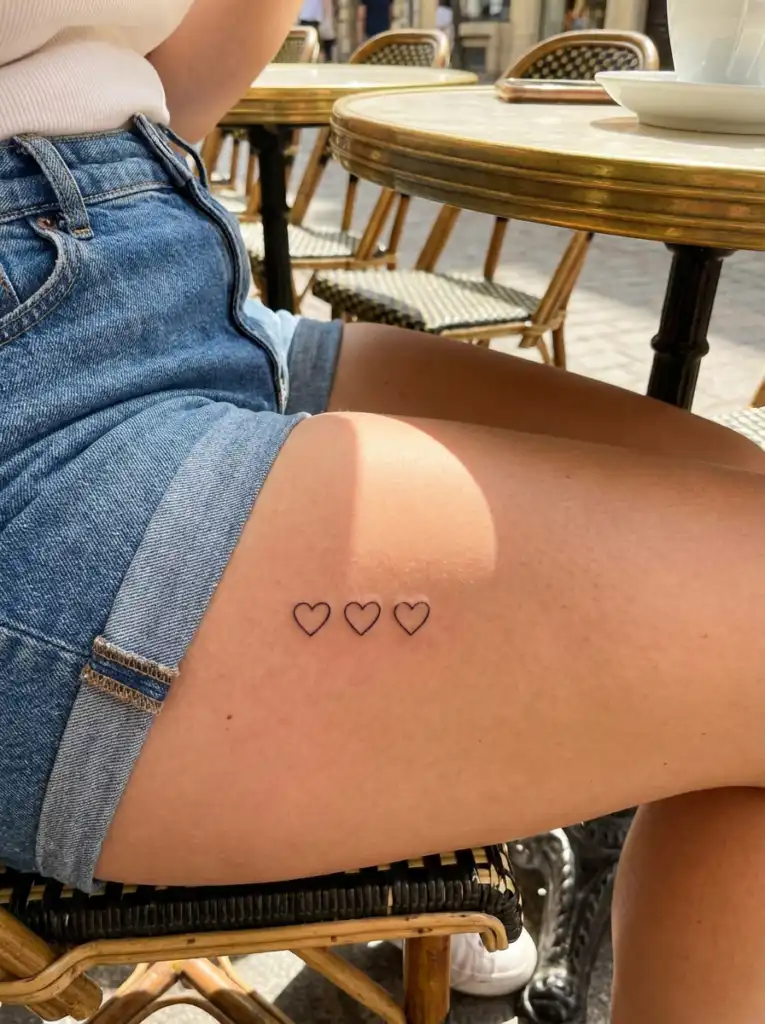
The outer thigh is a popular first-tattoo choice thanks to its relatively low pain level and smooth surface. You have more cushioning from muscle and fat here, which many people find reduces discomfort.
- Why choose it: If you want a statement piece that remains easy to hide under shorts or skirts, the outer thigh is a standout option. It’s also a great spot for bolder, more detailed designs such as portraits or geometric patterns.
- What research says: Outer thigh tattoos often fall in the moderate pain range (around 4-6 on the pain scale) and experience less movement and stretching over time, helping maintain ink stability (LoonyTattoony).
Inner thigh tattoos: private but more sensitive
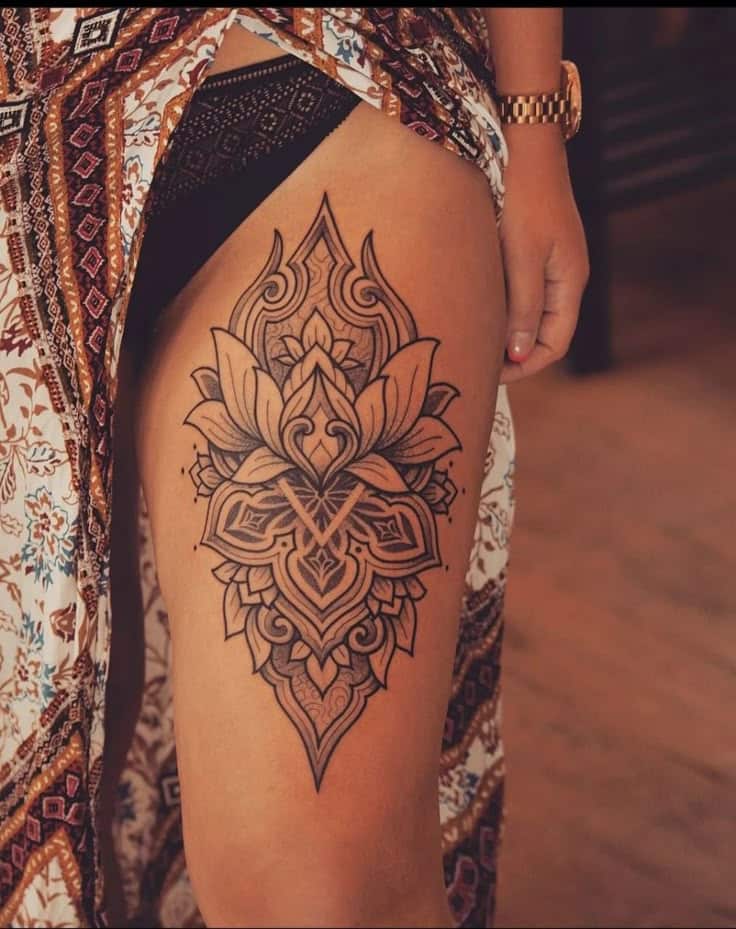
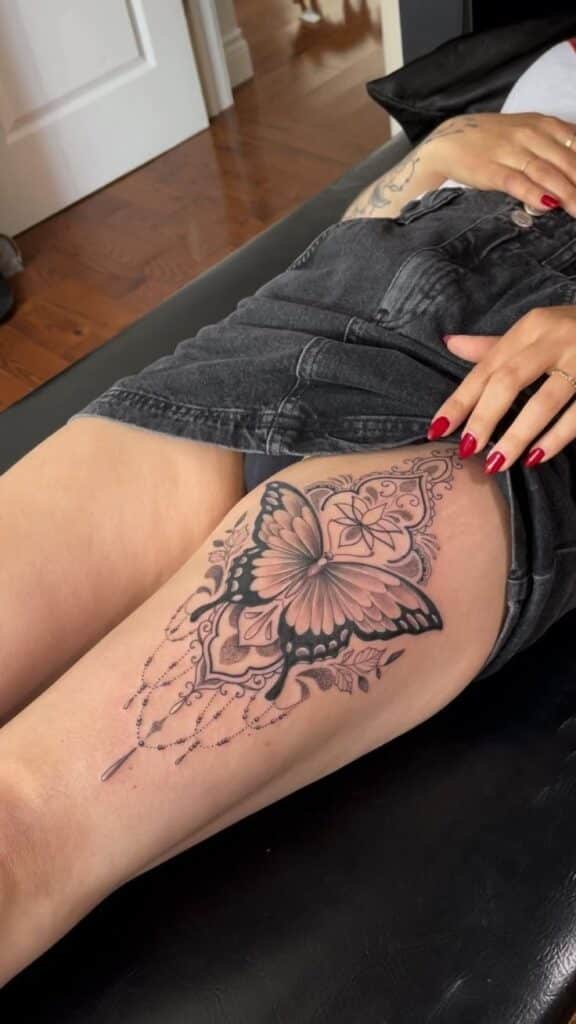
If you are seeking a more intimate or private look, the inner thigh might be just the right fit. The skin here is thinner, so the area is more sensitive, but it lends itself beautifully to delicate artwork.
- Why choose it: You can opt for small floral motifs, mandalas, or even watercolor tattoos. Because the inner thigh is easily concealed, you don’t have to worry about professional settings.
- What research says: Pain levels tend to be higher (often 6-8 on the scale), but many people embrace the privacy this spot offers (Hyper Inkers).
Upper thigh tattoos and hip-to-thigh flow
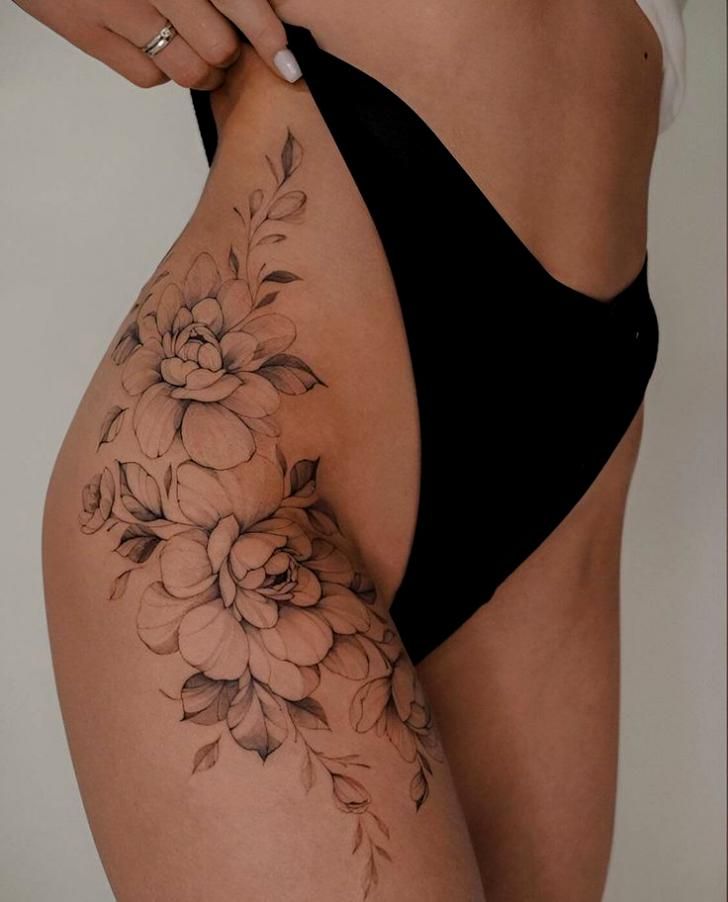
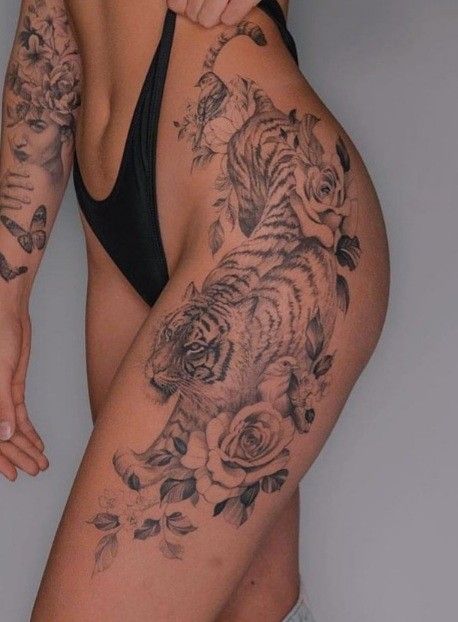
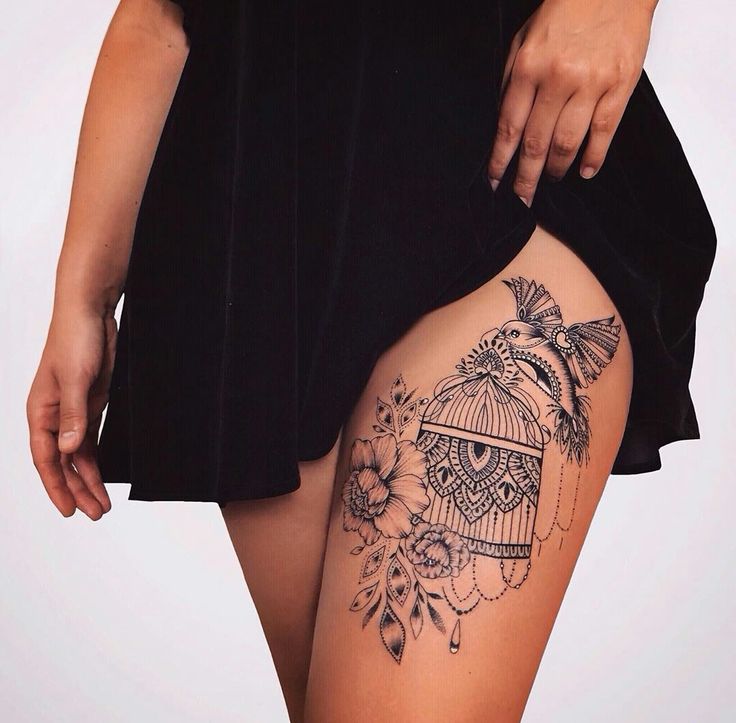
The upper thigh is a versatile space with just the right amount of visibility and privacy. You can show off your ink in shorts or a skirt, yet cover it up when you need to. If you are still deciding how public you want the tattoo to be, compare these with other visible tattoo placement ideas before moving from thigh to neck, hand, or collarbone.
- Why choose it: Designs that flow along your natural curves – like ornate floral vines – fit especially well here. A single large piece or a series of smaller ones can look equally stunning.
- What research says: Upper thigh placement reduces pain compared to more sensitive thigh areas and offers a smooth canvas for flowing patterns (Hyper Inkers).
Front thigh tattoos for statement designs
If you love seeing your tattoo front and center, consider the front thigh. This placement lets you appreciate the design without twisting in the mirror, and it gives your artist a broad, relatively flat surface for medium-to-large tattoos. If you like bold symbolic artwork, compare the scale with these phoenix tattoo ideas before shrinking a detailed concept too much.
- Why choose it: You can showcase intricate portraits, stylized lettering, or nature-inspired elements where they are always in your line of sight.
- What research says: The front thigh typically ranges from mild to moderate in pain level and is one of the largest areas to work with, especially for medium-sized pieces (Florida Tattoo Academy).
Full-thigh designs need a clear layout
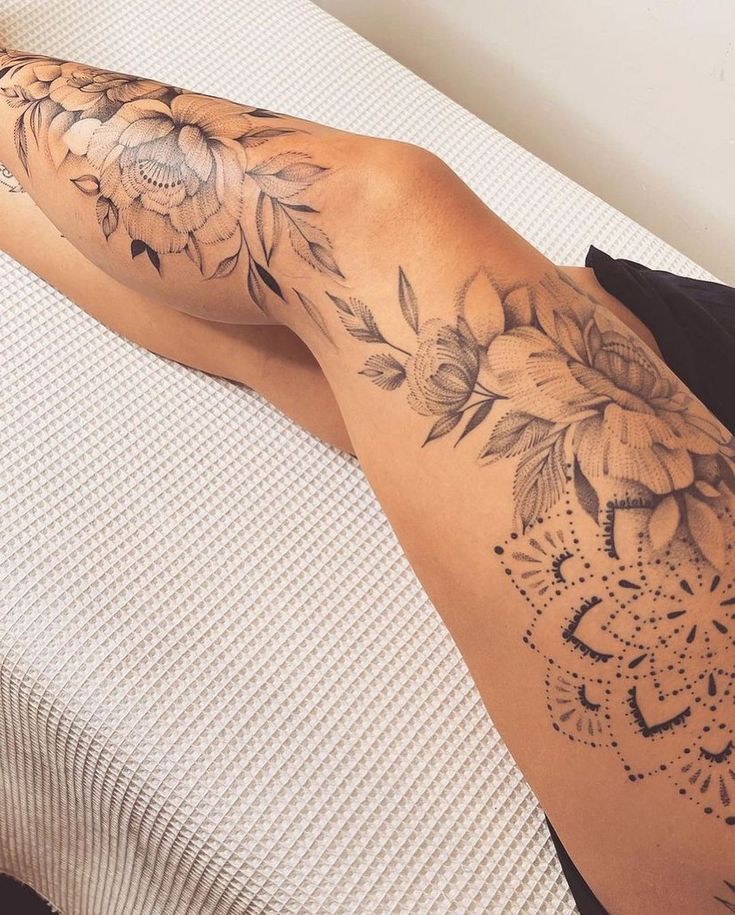
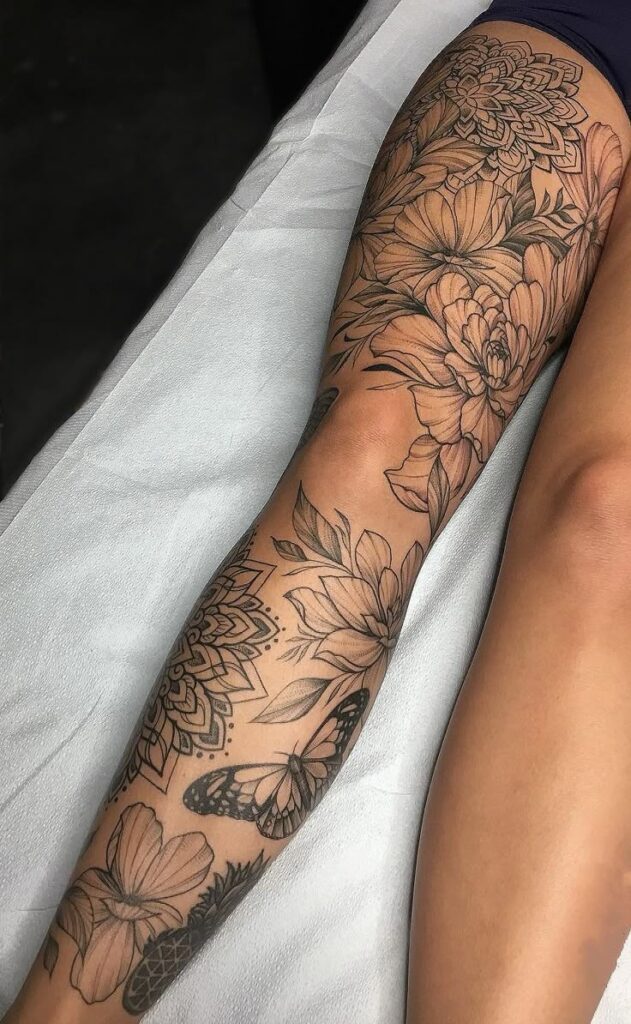
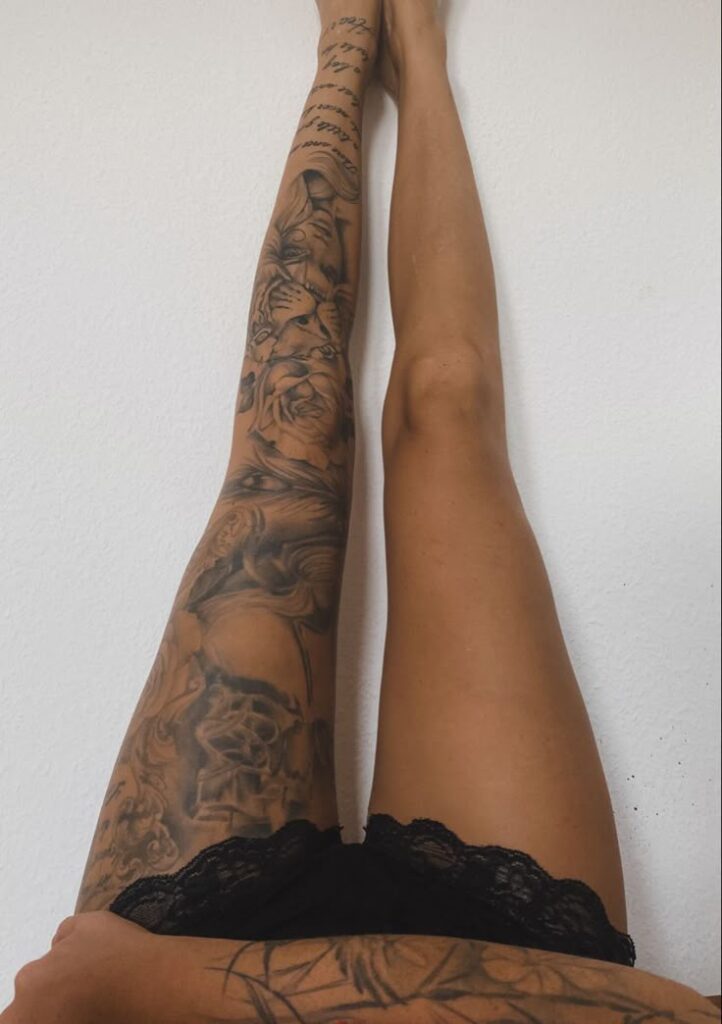
For a striking, cohesive piece, a full-thigh design can work like a single mural. You can combine flowers, script, geometric shapes, or symbolic animals, but the layout needs one clear focal point. Otherwise the thigh can turn into a crowded collage instead of a strong design.
- Why choose it: A full-thigh tattoo creates an unforgettable statement piece that emphasizes the natural lines of your body.
- What research says: Larger tattoos (6-12 inches or more) can look stunning on the entire thigh, allowing you to enjoy more detail and a traditional flow that complements your shape (LoonyTattoony).
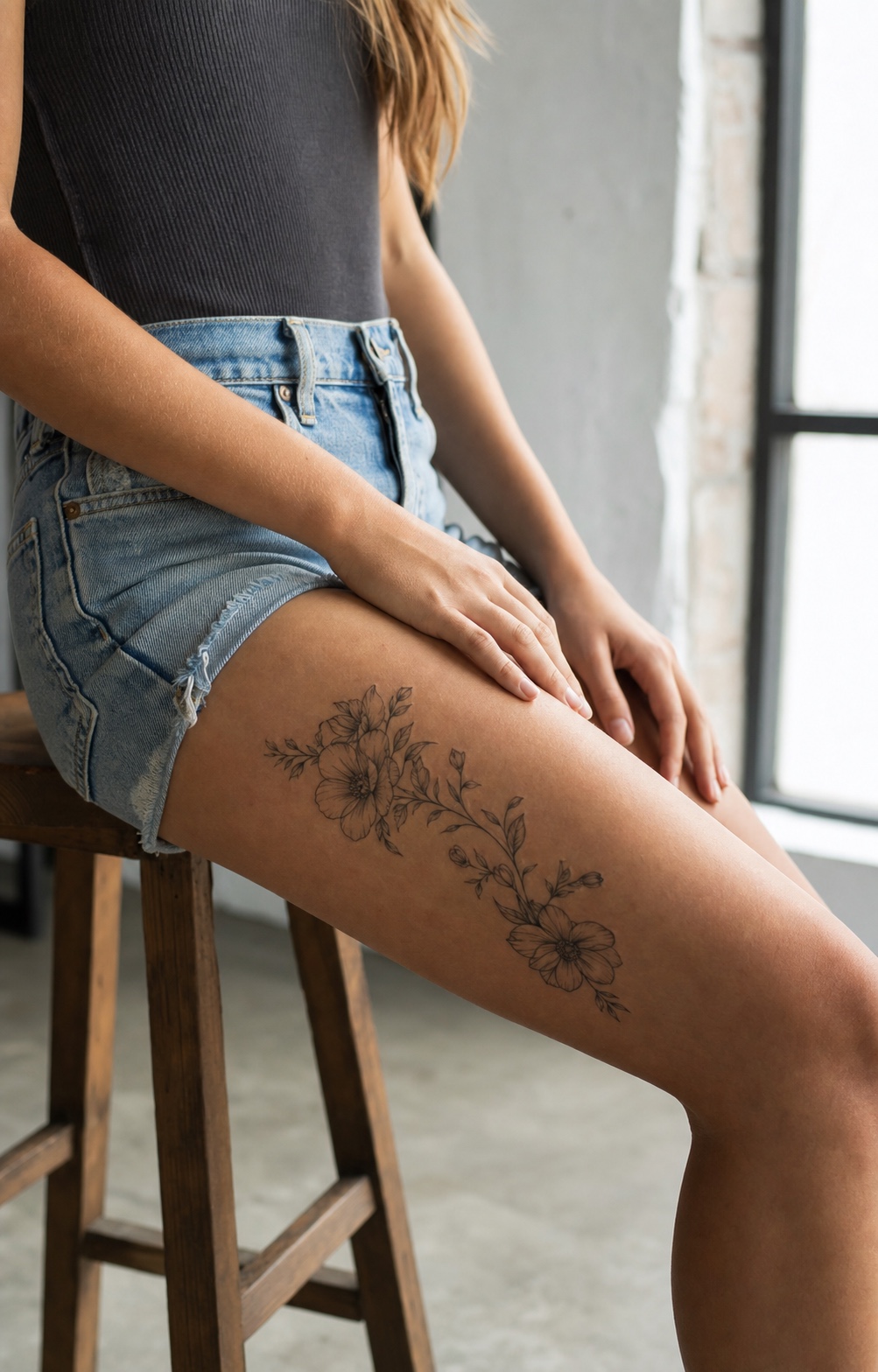
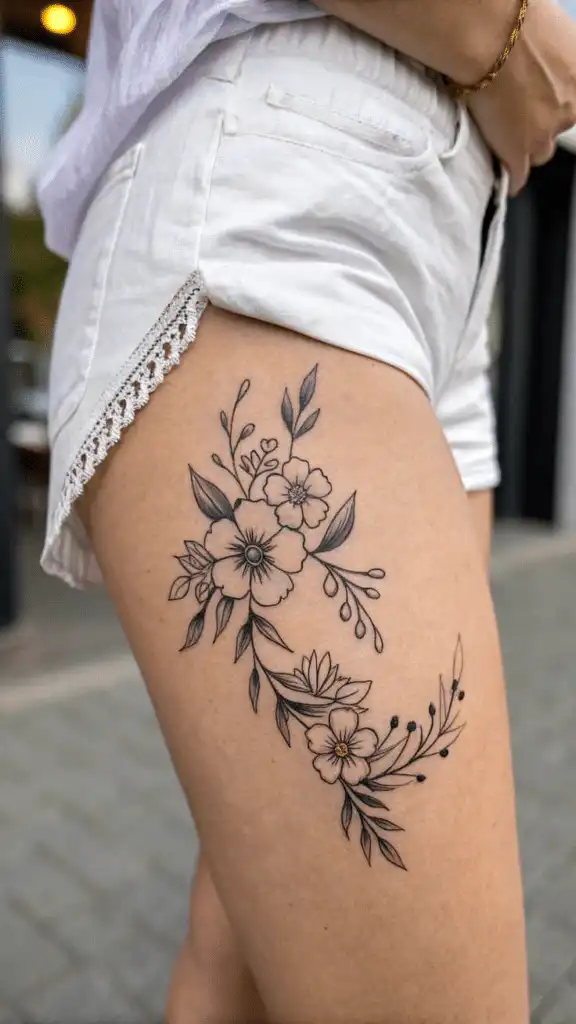
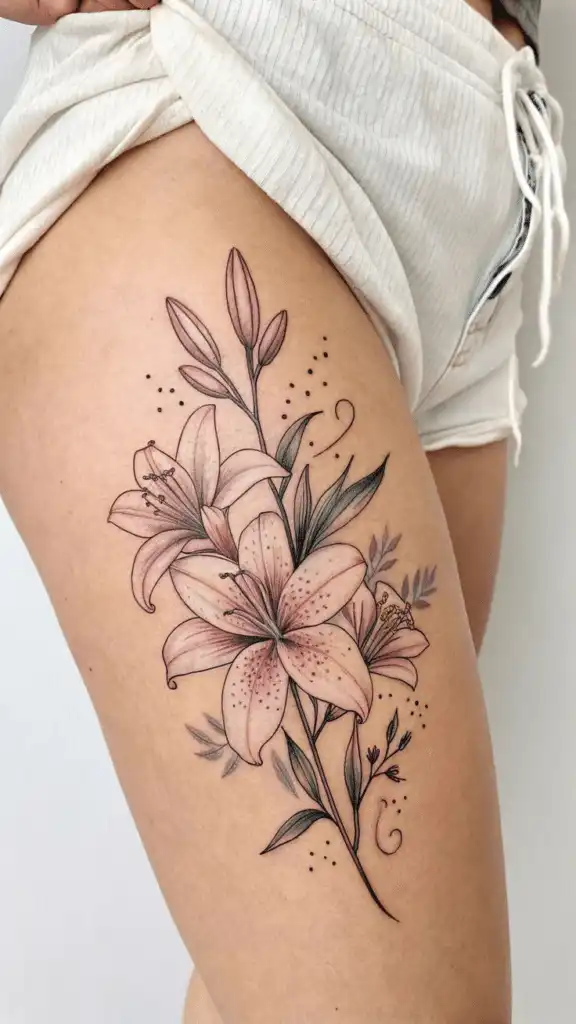
Floral thigh tattoos
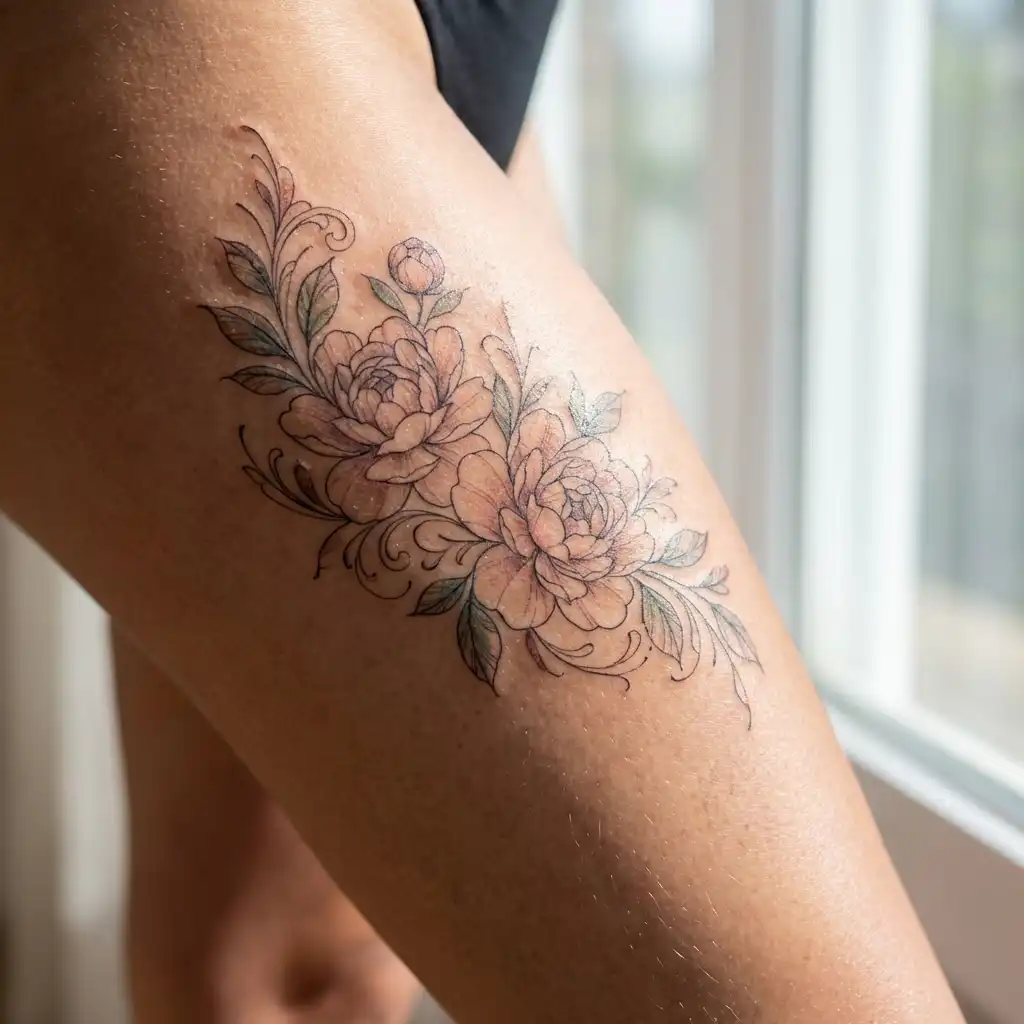
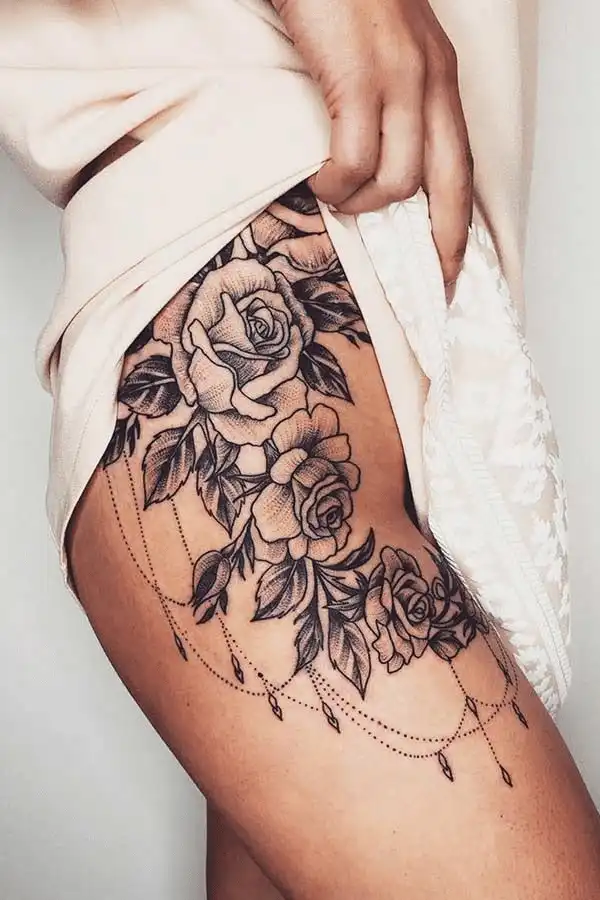
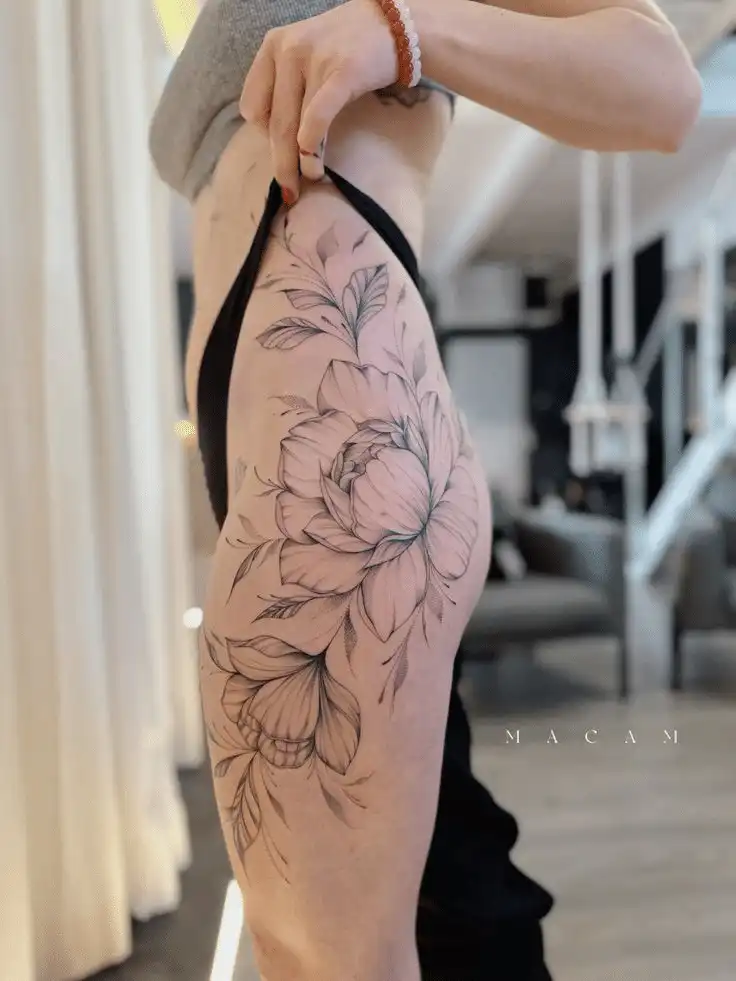
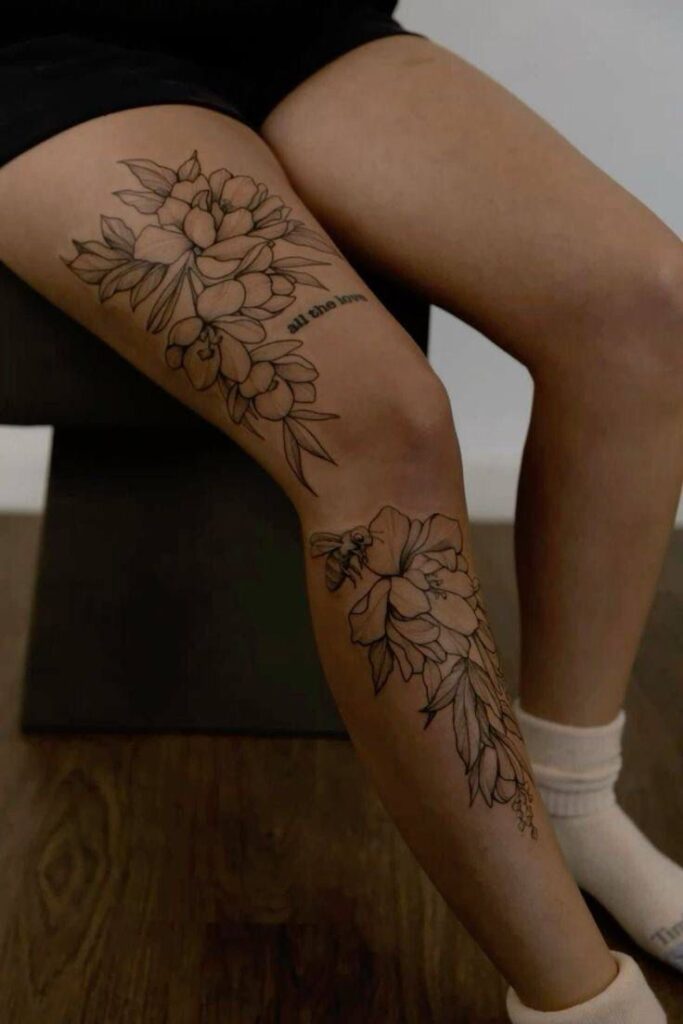
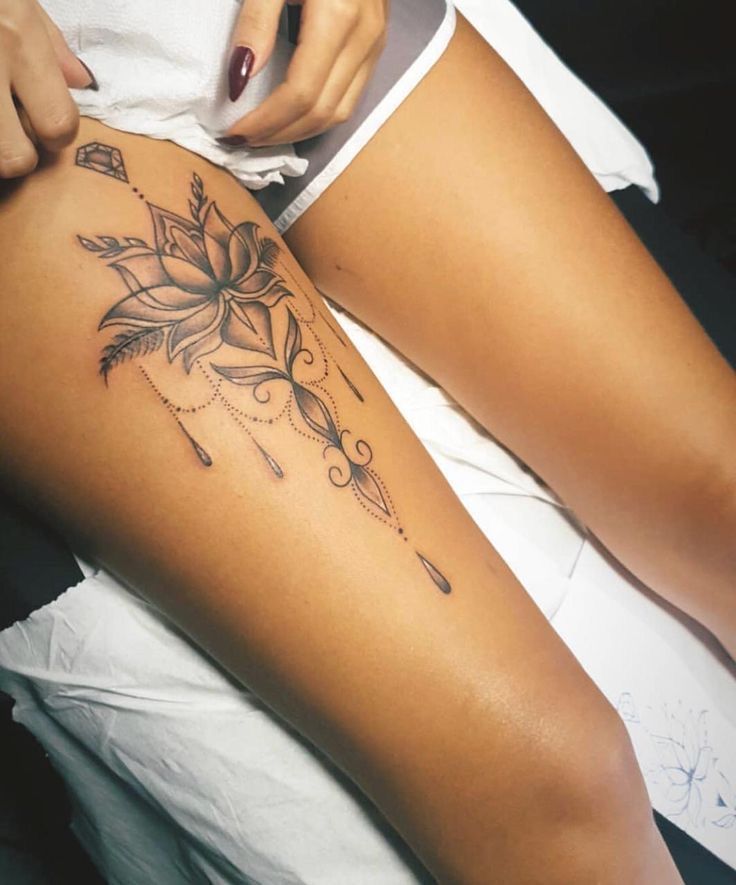
Florals are popular because they can stretch, curve, and taper without looking forced. Roses, peonies, lotus flowers, and wildflowers all work on the thigh, but they need breathing room between petals and leaves so the design does not blur into one dark patch later.
For more botanical direction, compare these realistic rose tattoo ideas and small butterfly tattoo ideas before choosing the final mix of flowers, wings, and leaves.
What they symbolize:
- Growth, beauty, resilience
- Femininity and self-renewal
- Emotional healing or transformation
Florals work beautifully along the curve of the thigh and can be soft and romantic or bold and dramatic.
Mandala and ornamental thigh tattoos
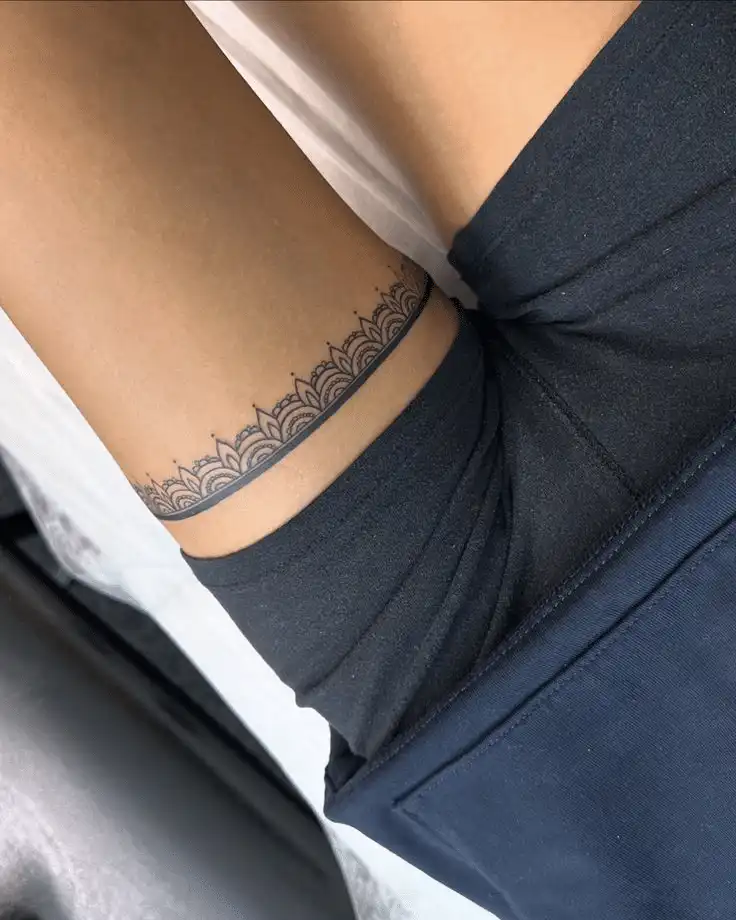
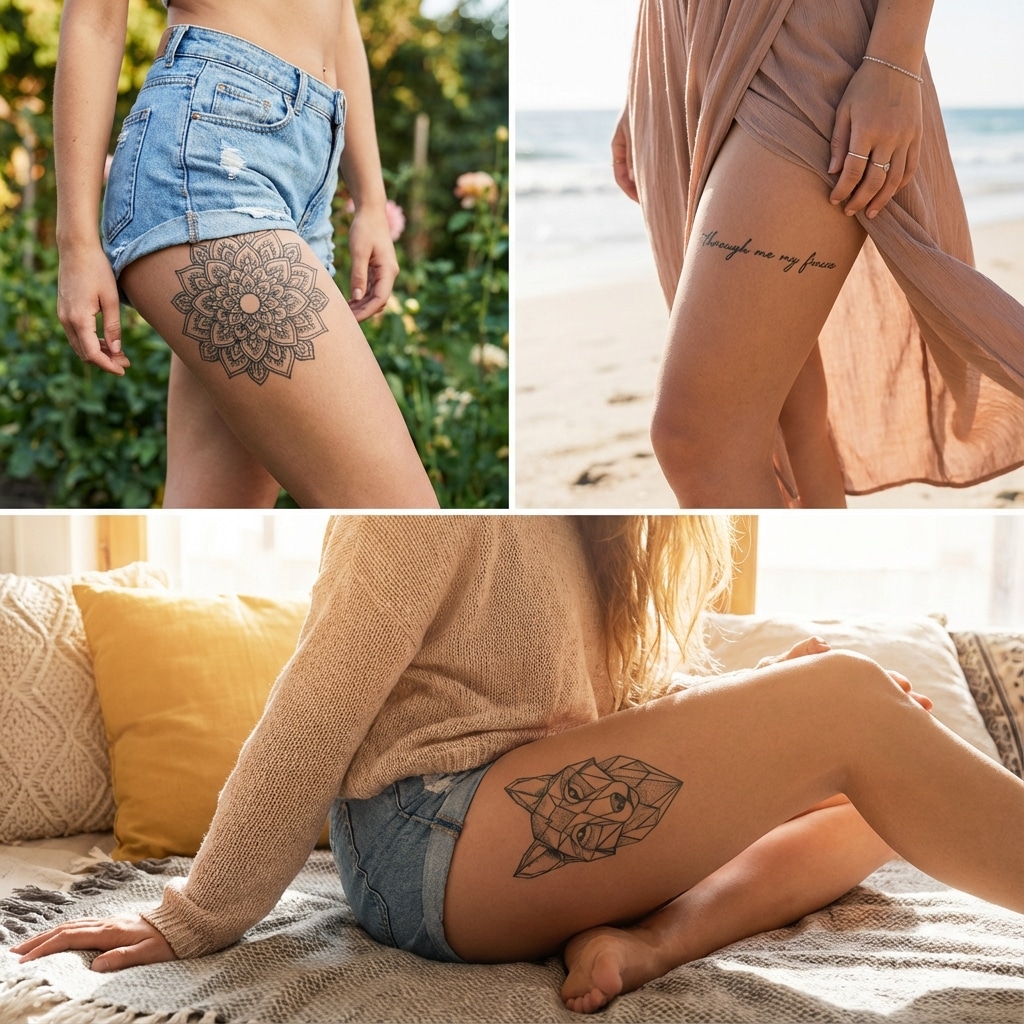
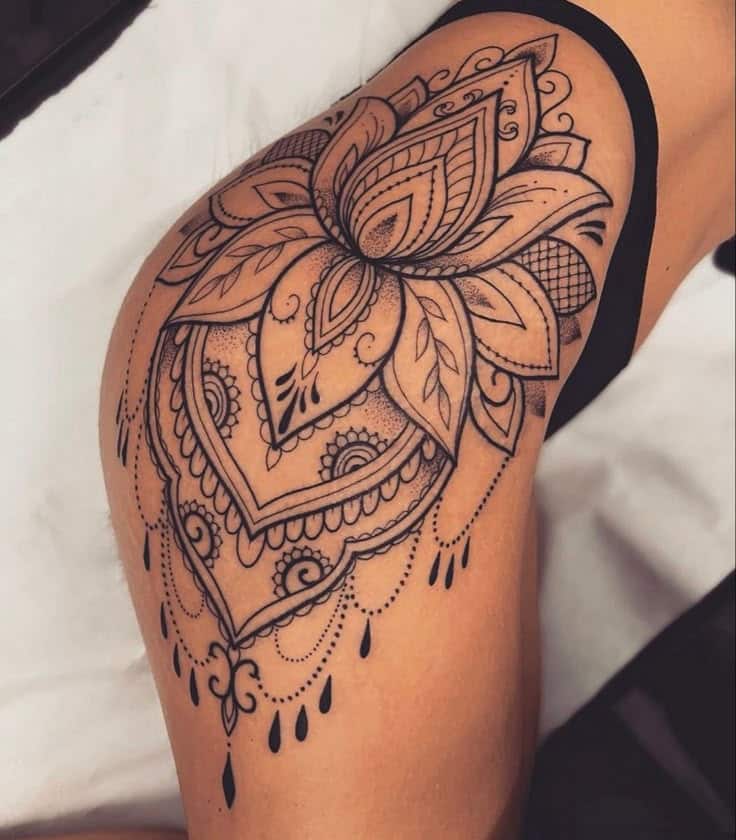
Mandala thigh tattoos depend on symmetry, spacing, and line weight. Before you approve the stencil, check whether the center point sits where you want the eye to land. A beautiful mandala can feel slightly off if it is rotated awkwardly around the leg.
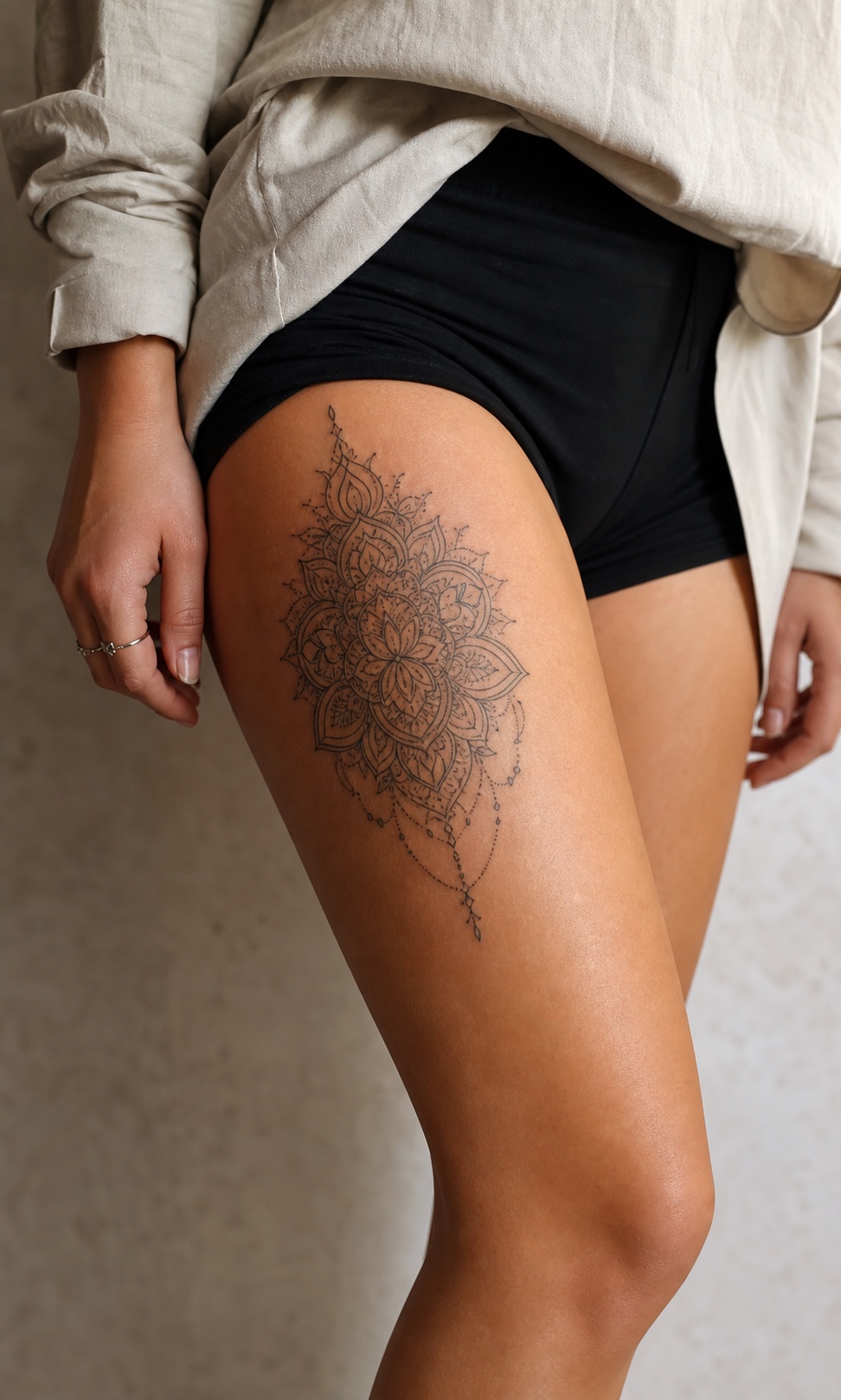
Ornamental designs also pair well with lace, moon, and jewelry-inspired details. Keep tiny dots and chains a little larger than they look on the stencil, because ultra-small decorative marks can soften as the tattoo ages.
What they symbolize:
- Balance and inner harmony
- Spiritual growth
- Wholeness and grounding
These designs are commonly placed on the upper or outer thigh to allow for full detail and symmetry.
Script, quotes, and word tattoos
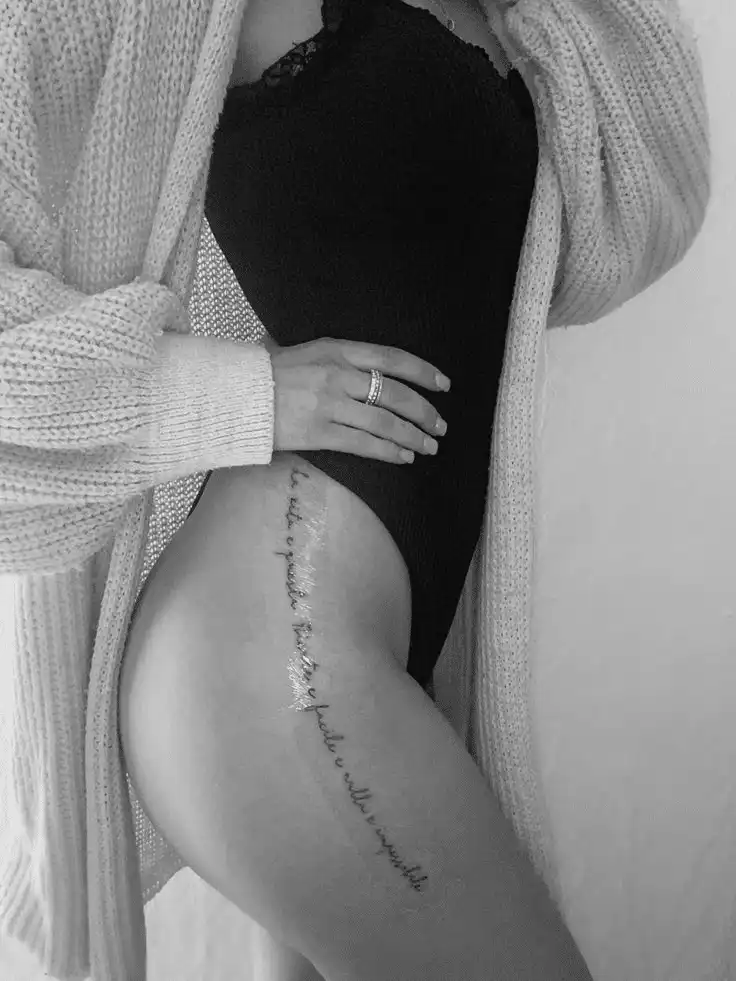
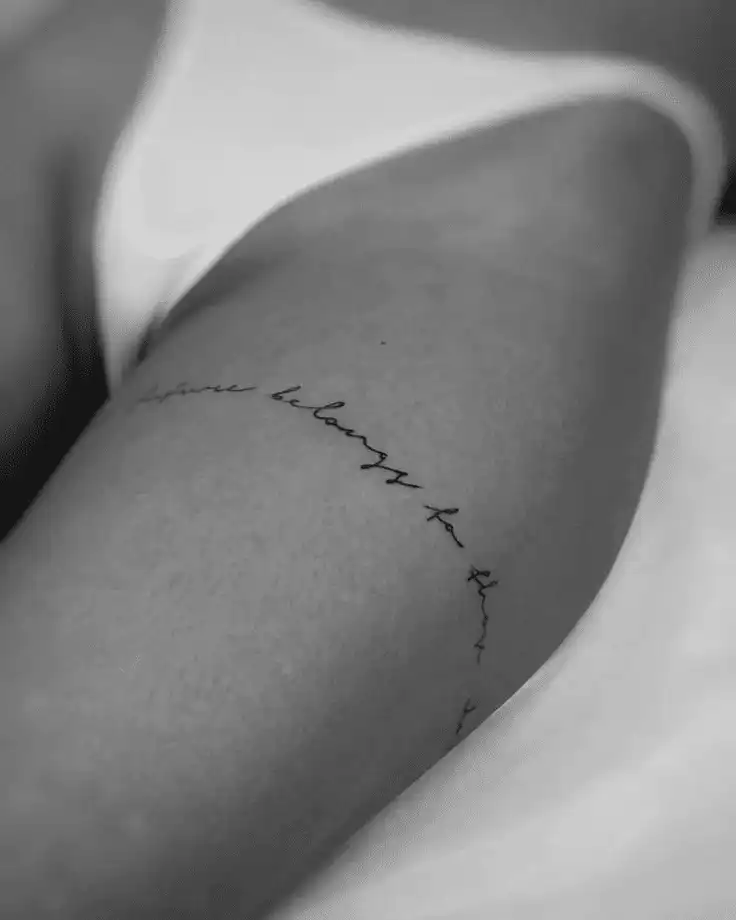
A meaningful phrase, mantra, or single word can make a powerful thigh tattoo. Script tattoos usually look best when they are placed horizontally, diagonally, or gently curved with the body’s natural lines. If words are your main idea, browse more quote tattoo ideas before choosing a font or phrase length.
Popular choices include:
- Empowering affirmations
- Names or dates
- Lyrics or poetry
This style is especially popular for first tattoos because it is personal, discreet, and flexible in size.
Thigh tattoo aftercare: healing without friction
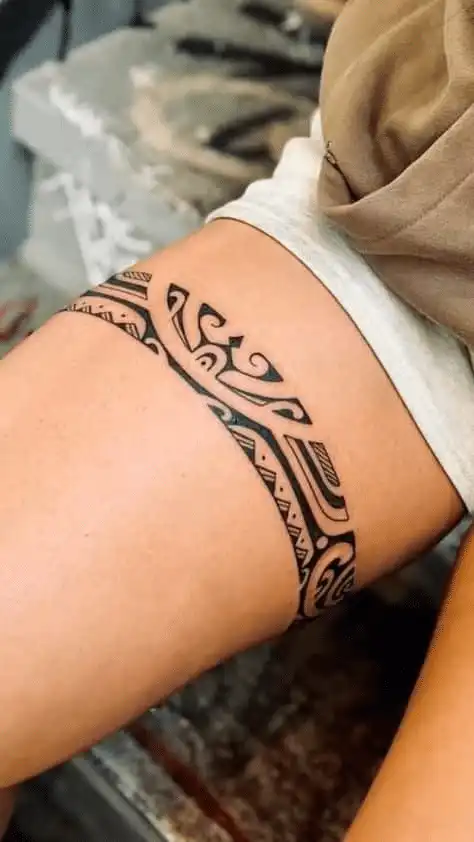
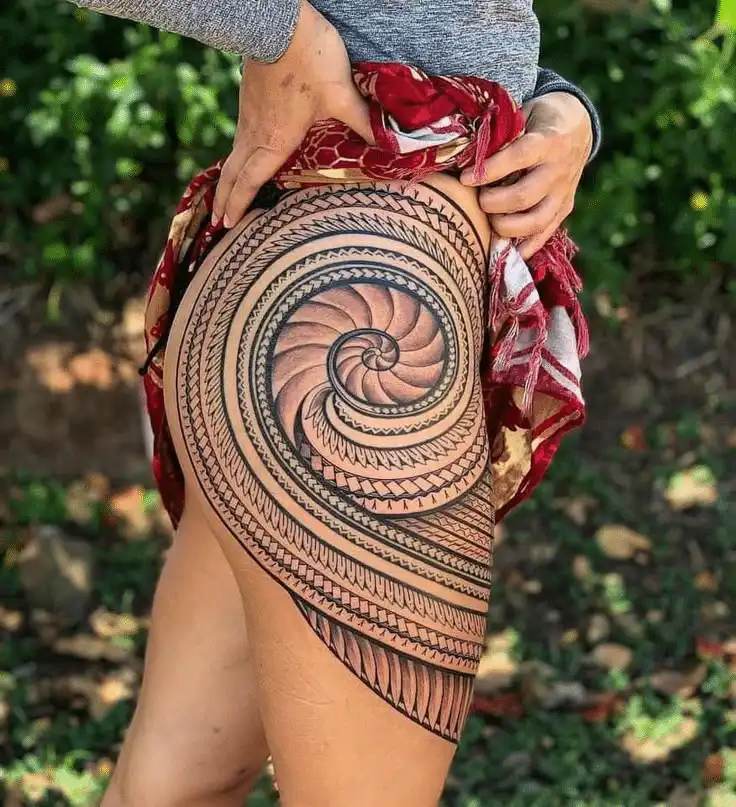
Good aftercare protects the linework while the skin closes and settles. The thigh has one extra challenge: clothing rubs. Loose shorts, soft fabrics, and a thin layer of fragrance-free moisturizer are usually easier on a fresh thigh tattoo than tight denim or workout leggings.
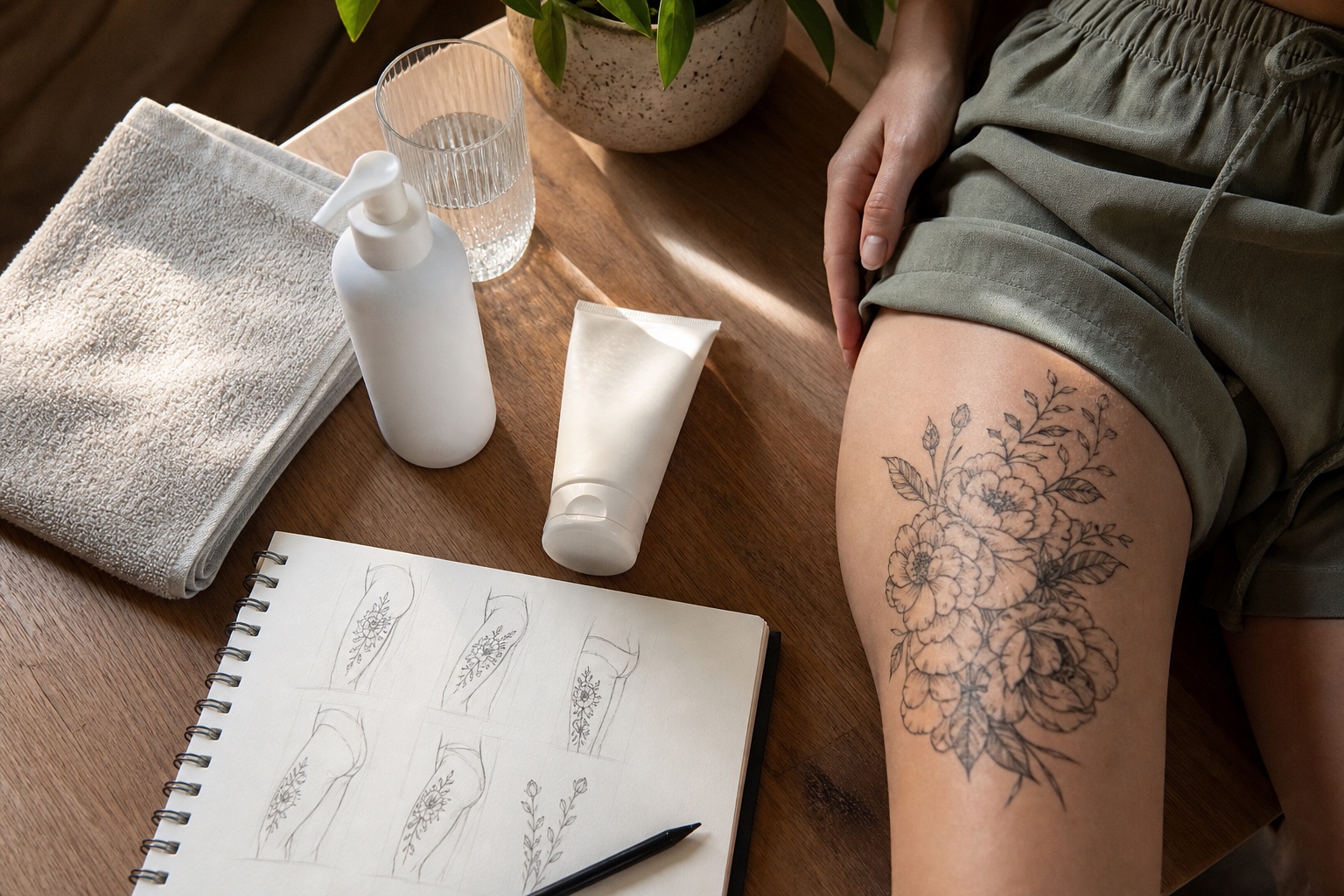
Follow your artist’s instructions first. For general safety, the FDA tattoo safety guidance notes that contaminated ink and poor hygiene can cause reactions or infections, and the Cleveland Clinic tattoo aftercare tips stress sunscreen, gentle washing, and medical care if infection signs appear.
First 48 Hours
- Keep the bandage on as instructed
- Wash gently with fragrance-free soap
- Apply a thin layer of tattoo-safe ointment
First 2 Weeks
- Moisturize regularly (not excessively)
- Avoid tight clothing that rubs
- No swimming, hot tubs, or intense workouts
Long-Term Care
- Avoid sun exposure or use SPF
- Keep skin hydrated
- Don’t pick or scratch peeling skin
Thigh tattoos may take slightly longer to heal due to movement and friction, but good care makes all the difference.
Design Tips Before You Commit
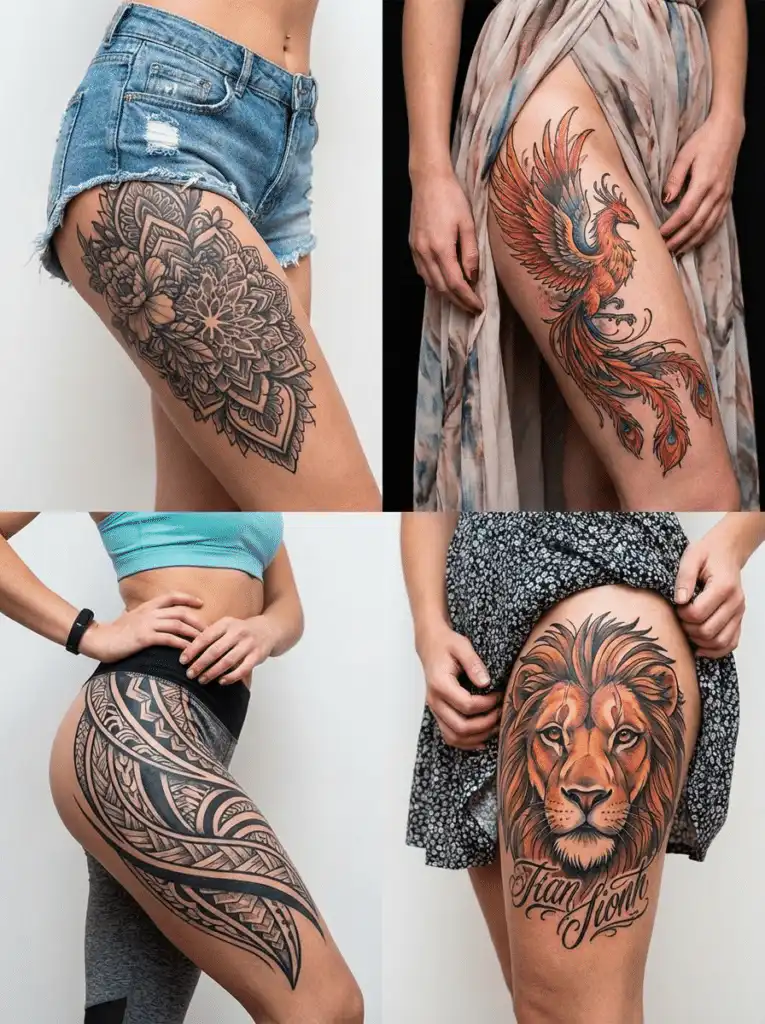

- Size matters: Thigh tattoos look best when they have room to breathe
- Trust placement flow: Let the artist design with your anatomy in mind
- Think long-term: Trends fade – meaning lasts
- Choose the right artist: Look for experience with thigh and large-scale work
A consultation is essential. Bring inspiration, but stay open to professional guidance. If this is your first piece, read the first tattoo guide before your appointment so you know what to ask about pain, healing, and artist fit.
Final thoughts: is a thigh tattoo right for you?
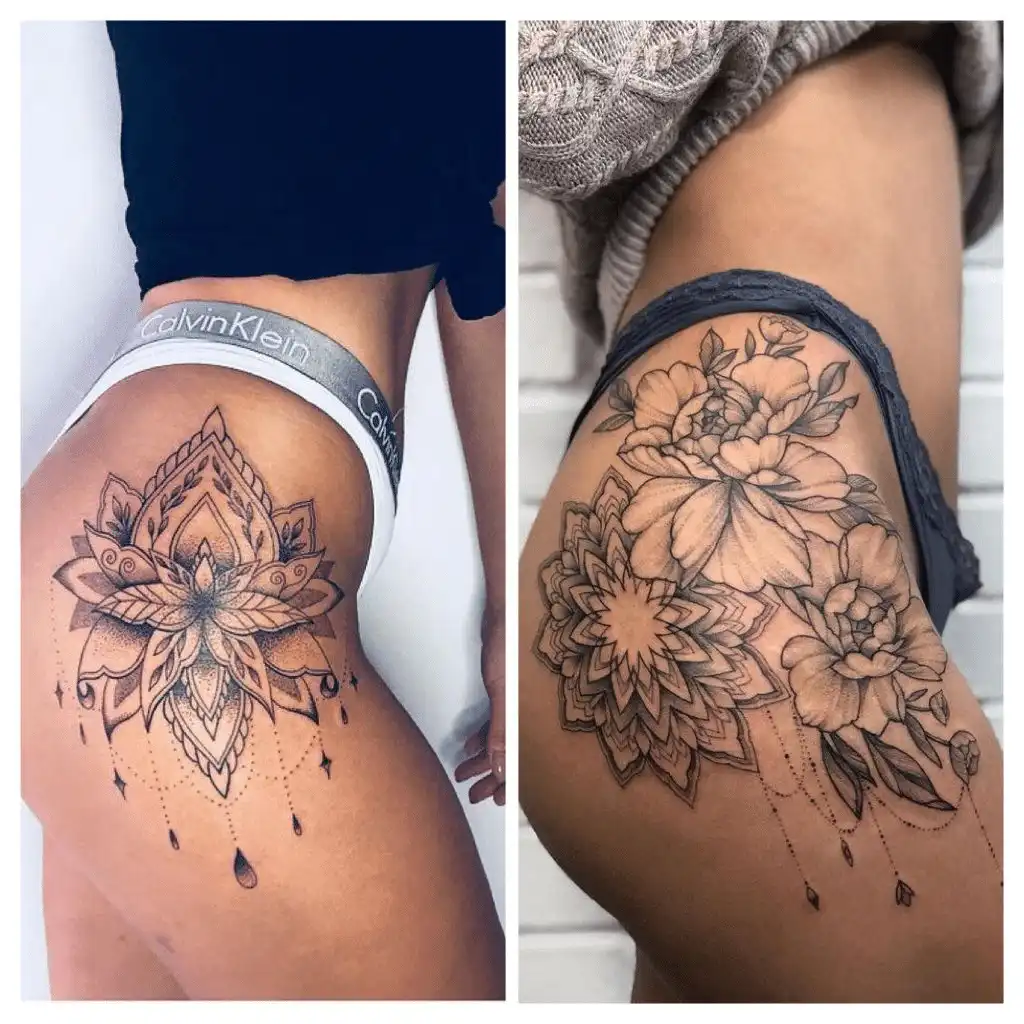
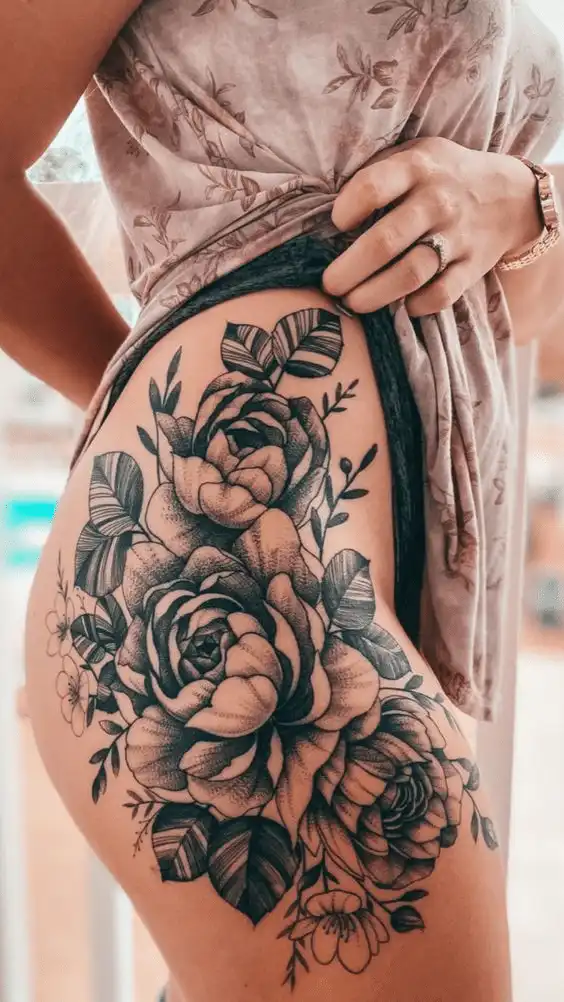
A thigh tattoo is a strong choice if you want artwork with room to breathe and enough privacy to control when it is visible. The best designs are not just pretty references; they are adjusted for your leg shape, clothing habits, pain tolerance, and long-term plans.
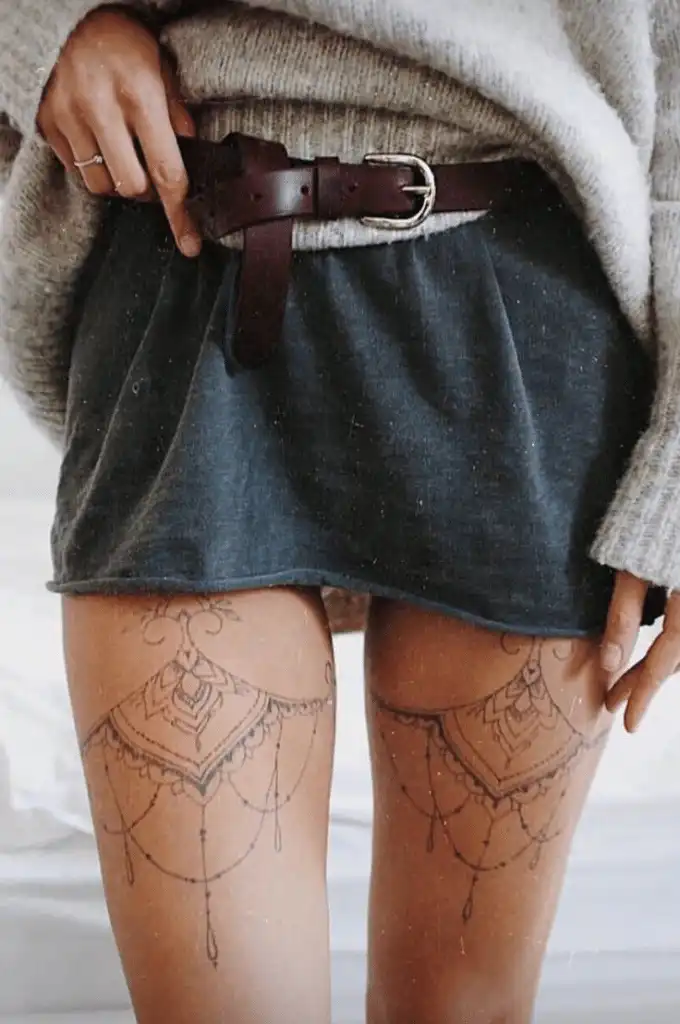
If you are ready to take the next step, collect references, look closely at healed work from artists you like, and ask for a stencil placement photo before the needle starts. A thigh tattoo should feel considered from the first outline, not rescued at the end.

Frequently asked questions
Are thigh tattoos good for first-timers?
Yes. The outer thigh is one of the friendlier first-tattoo placements because it has more padding than ribs, feet, or spine, and it is easy to cover while you heal. Start with a design that has clear spacing and a manageable size, then ask your artist how long the session will realistically take.
Which thigh tattoo placement hurts least?
The outer thigh is usually the least intense thigh placement for many people because the skin is thicker and the area has more muscle and fat. Inner thigh tattoos tend to feel sharper because the skin is more sensitive and clothing friction is harder to avoid during healing.
What style works best for a thigh tattoo?
Florals, mandalas, animals, ornamental lace, script, and large illustrative designs all work well on the thigh. The best style depends on scale. Fine-line tattoos need enough spacing, while full-thigh pieces need a clear focal point so the design does not become visually crowded.
Do thigh tattoos age well?
Thigh tattoos can age well because the area is often protected from daily sun exposure. Line spacing, contrast, and aftercare matter more than the placement alone. Tiny details packed too tightly together may blur over time, so ask your artist to simplify areas that look cramped on the stencil.
Can thigh tattoos stretch with weight changes?
Minor changes are normal and usually not dramatic. Larger weight changes, pregnancy, muscle gain, or skin texture changes can shift the shape slightly. Organic designs such as flowers, vines, snakes, and ornamental patterns often handle small changes better than rigid boxes or very symmetrical borders.
How long does a thigh tattoo session take?
A small thigh tattoo may take about 1-2 hours, while a medium floral, mandala, or script piece can take several hours. Full-thigh tattoos often need multiple sessions. Ask for a time estimate after the artist sees the final size, placement, shading level, and amount of detail.
How much do thigh tattoos cost?
Cost depends on the artist, city, size, detail, color, and number of sessions. A tiny design may be priced near a shop minimum, while a large thigh piece can become a serious investment. Do not choose only by price; healed portfolio quality matters more than a cheap quote.
If you like the look but do not want permanent ink yet, try henna thigh tattoo ideas first; they work well for testing mandala, lace, and floral placement.
What should I wear while a thigh tattoo heals?
Wear loose, soft clothing that does not rub the tattoo. For upper or outer thigh pieces, loose shorts, skirts, or relaxed pants are usually easier than tight denim or compression leggings. Avoid swimming, soaking, heavy friction, and direct sun until your artist says the tattoo is ready.
For more starting points, browse the Sky Rye Design tattoo ideas hub for broader tattoo styles, meanings, and placement guides.
Still deciding whether the thigh is the right canvas? Compare it with this guide to tattoo ideas for women by placement before you lock in the size.
If you are testing a larger placement, these soft feminine tattoo ideas can help you keep the design delicate without losing presence.
If a thigh piece feels too large for the idea, look at small meaningful wrist tattoos instead. Dates, initials, tiny flowers, and slim symbols can carry the same meaning with a much lighter footprint.
If you want a piece that wraps nicely, a small lotus flower tattoo or a large geometric lotus can both work beautifully on the thigh.
Compare style and placement
Before settling on a design, compare thigh tattoo placement ideas with the scale, visibility, and natural line of the body. A clear silhouette and enough breathing room usually matter more than a trend.
- 732shares
- Facebook0
- Pinterest729
- Twitter3
- Reddit0