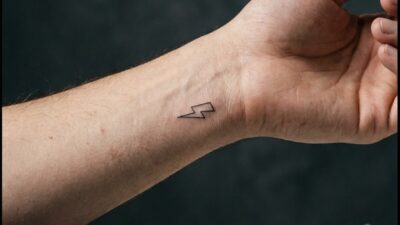
I’ve spent time studying classical proportion systems in the context of figure drawing — the same contrapposto logic and academic construction covered in my Aphrodite drawing guide — and the single thing that stands out looking at Greek tattoo content right now is how little of it actually uses any of that. Nearly every “Greek tattoo ideas” list is a mythology glossary: here’s Zeus, here’s Athena, here’s what each god symbolizes.
Nobody’s explaining that a genuinely convincing Greek-mythology tattoo follows the same classical proportion and pose logic real Greek sculpture used, or that the meander pattern bordering half these designs is an actual geometric system with real construction rules, not a decorative squiggle.
- Mythological Figures, Done as Real Classical Studies
- Geometric and Pattern-Based Greek Motifs
- Pottery and Vase-Painting Style Designs
- Architectural and Symbolic Motifs
- Text, Letters, and Philosophical Designs
- Final Thoughts
- FAQ
- What is the most popular Greek tattoo design?
- What does the Greek meander pattern mean?
- What's the difference between black-figure and red-figure tattoo styles?
- Are Greek tattoos culturally appropriate for non-Greek people?
- What's a good placement for a Greek key (meander) tattoo?
- How do you keep Greek lettering tattoos accurate?
These 20 ideas are organized by design technique rather than by mythological trivia — figure-based classical studies, geometric pattern work, vase-painting linework, architectural motifs, and typographic designs — because the thing that makes a Greek tattoo read as genuinely classical isn’t which god you pick.
It’s whether the design actually understands the visual language it’s borrowing from.
Mythological Figures, Done as Real Classical Studies
Figure-based Greek tattoos are the most commonly requested category, and also where the gap between generic and genuinely classical shows up most clearly.
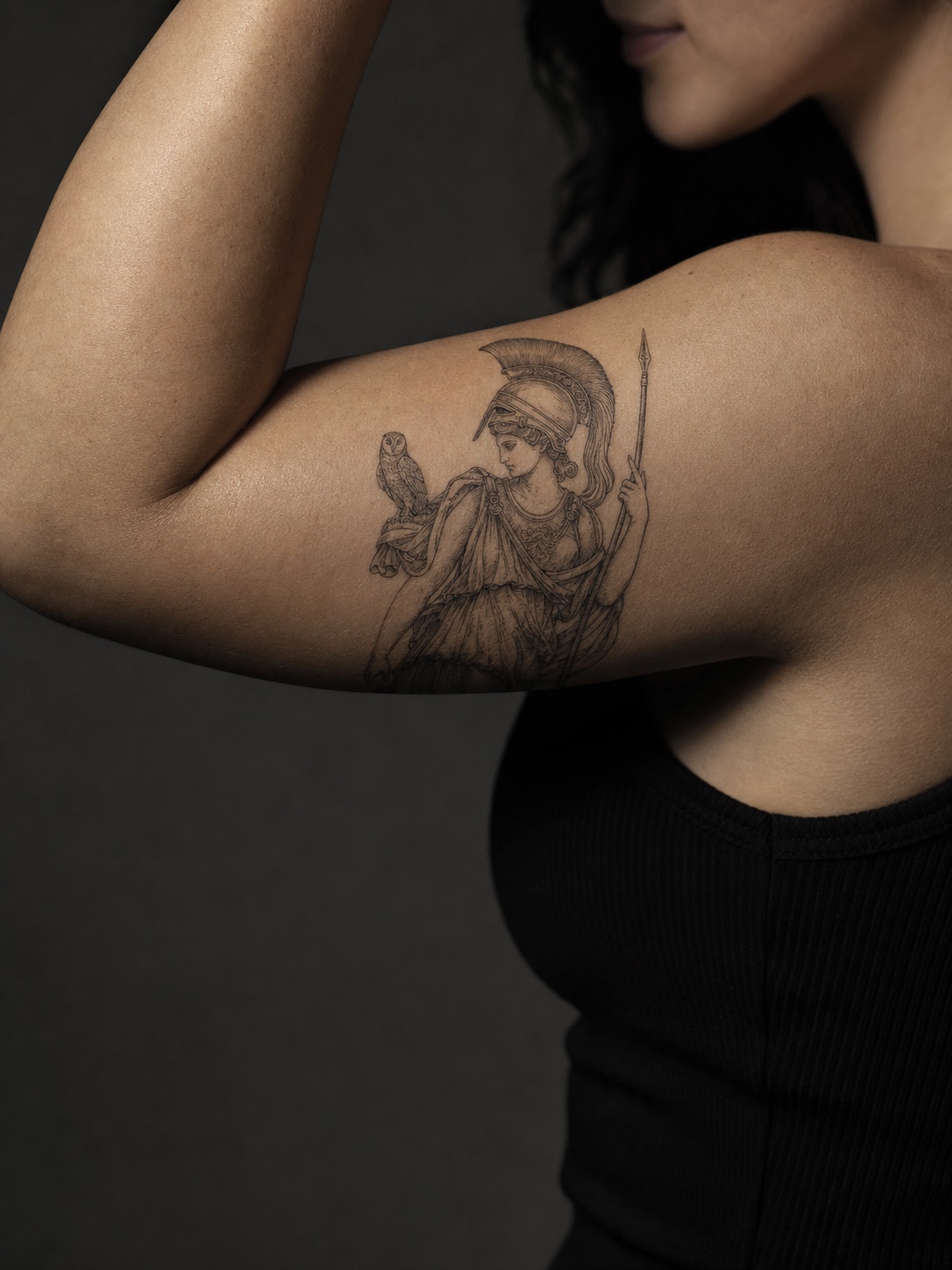
1. Athena in Contrapposto, Classical Proportion
Athena rendered as an actual classical figure study — weight-shifted contrapposto stance, proportion built against the eight-head canon, helmet and owl placed as compositional attributes rather than floating symbols — reads as a genuine classical piece rather than a generic warrior-goddess illustration. The pose logic here is the same weight-shift technique covered in depth in my Aphrodite guide, applied to a very different attitude and attribute set.
2. Zeus With Genuine Classical Drapery Logic
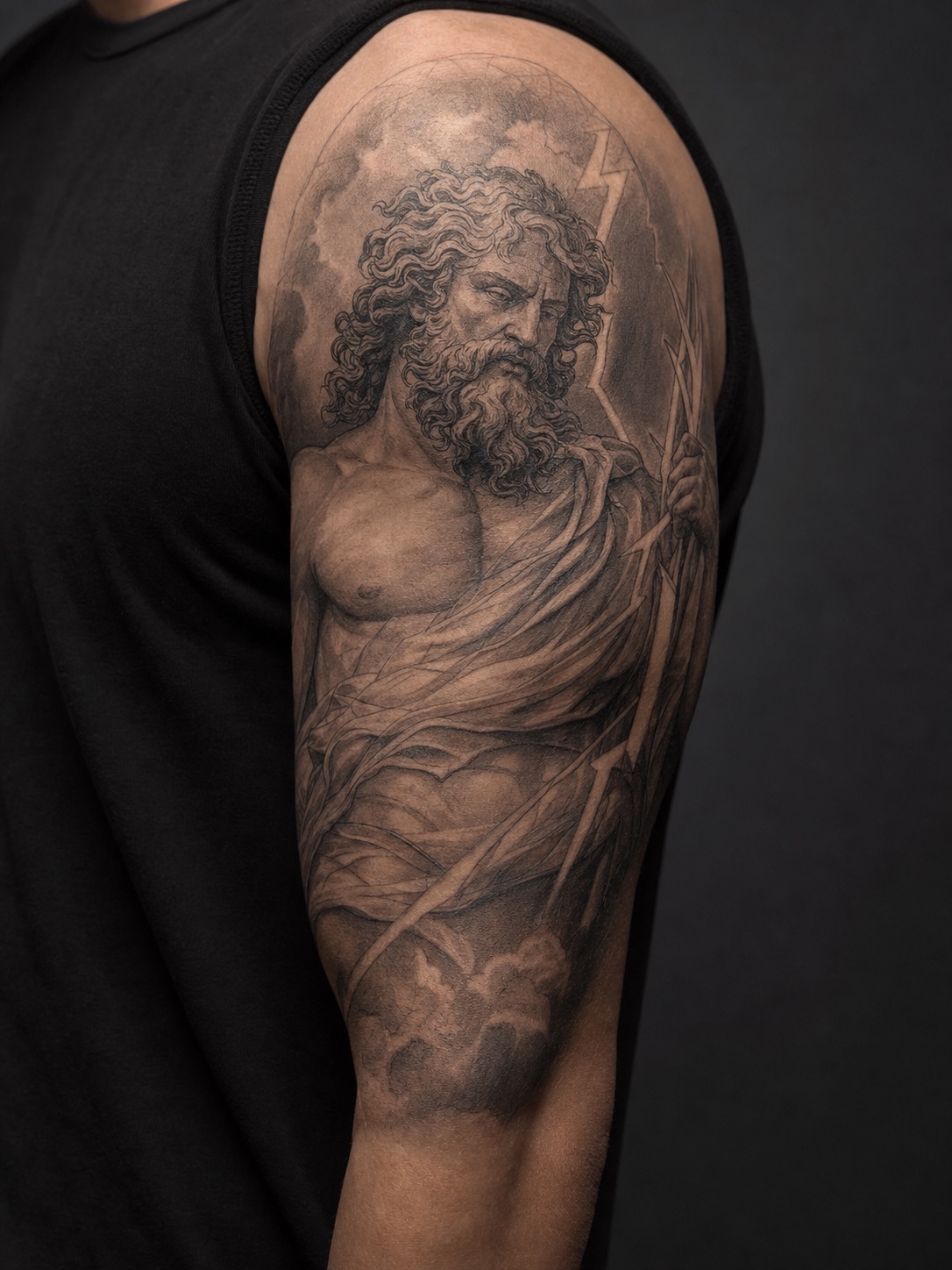
Most “Zeus tattoo” results default to a generic bearded old man holding a lightning bolt. A design built with actual wet-drapery technique — fabric clinging to and revealing the underlying form rather than hanging as a flat costume — immediately reads as more sophisticated and more specifically Greek, since drapery logic is one of the most recognizable signatures of classical sculpture.
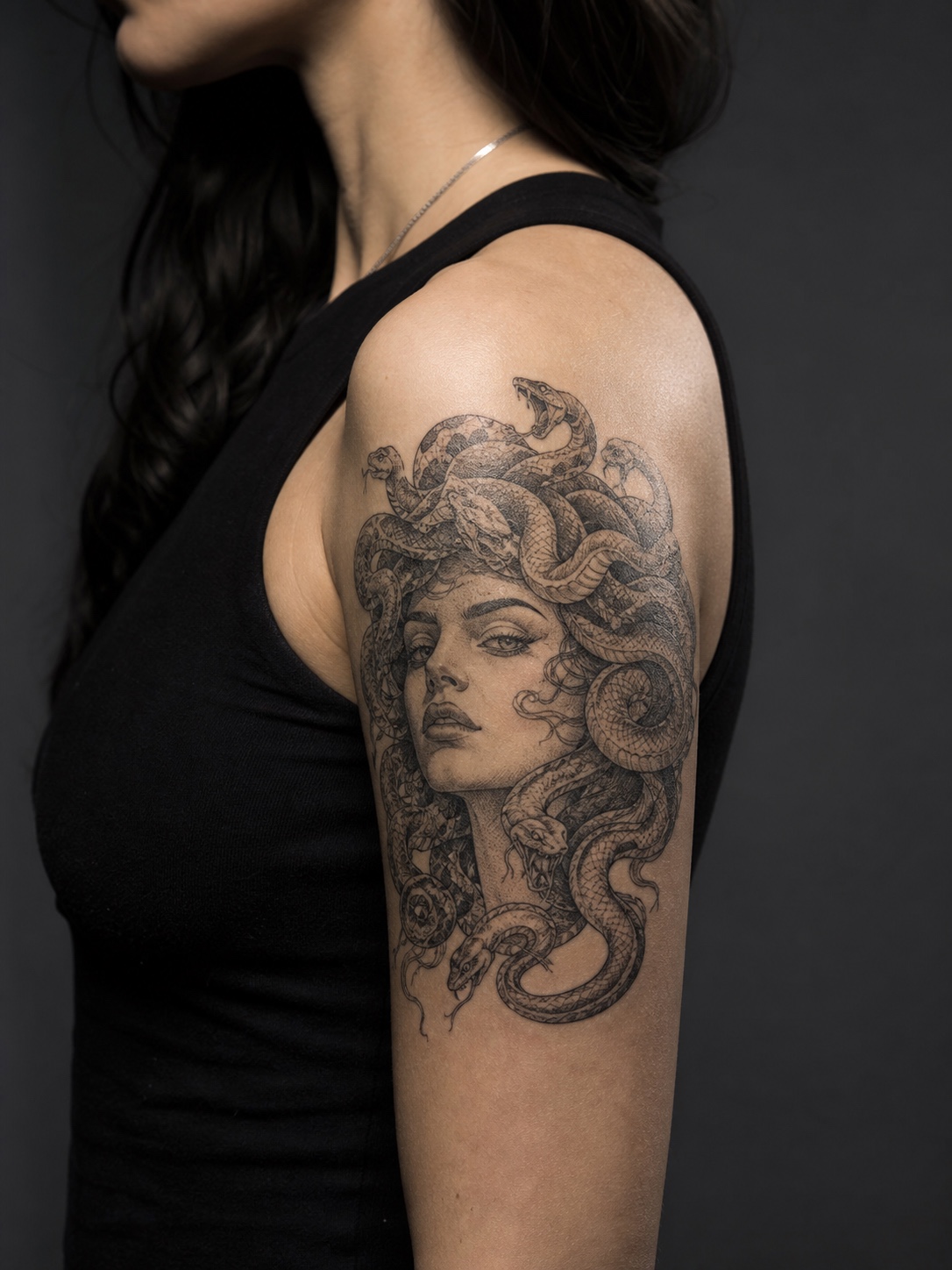
3. Medusa, Treated Lightly
Medusa is one of the most requested Greek mythology tattoo subjects, carrying real survivor symbolism alongside the mythological imagery. Rather than duplicating that full breakdown here, I’ve covered Medusa’s meaning, symbolism, and design considerations in complete depth in my Medusa tattoo meaning guide — worth reading directly if she’s the design you’re after.
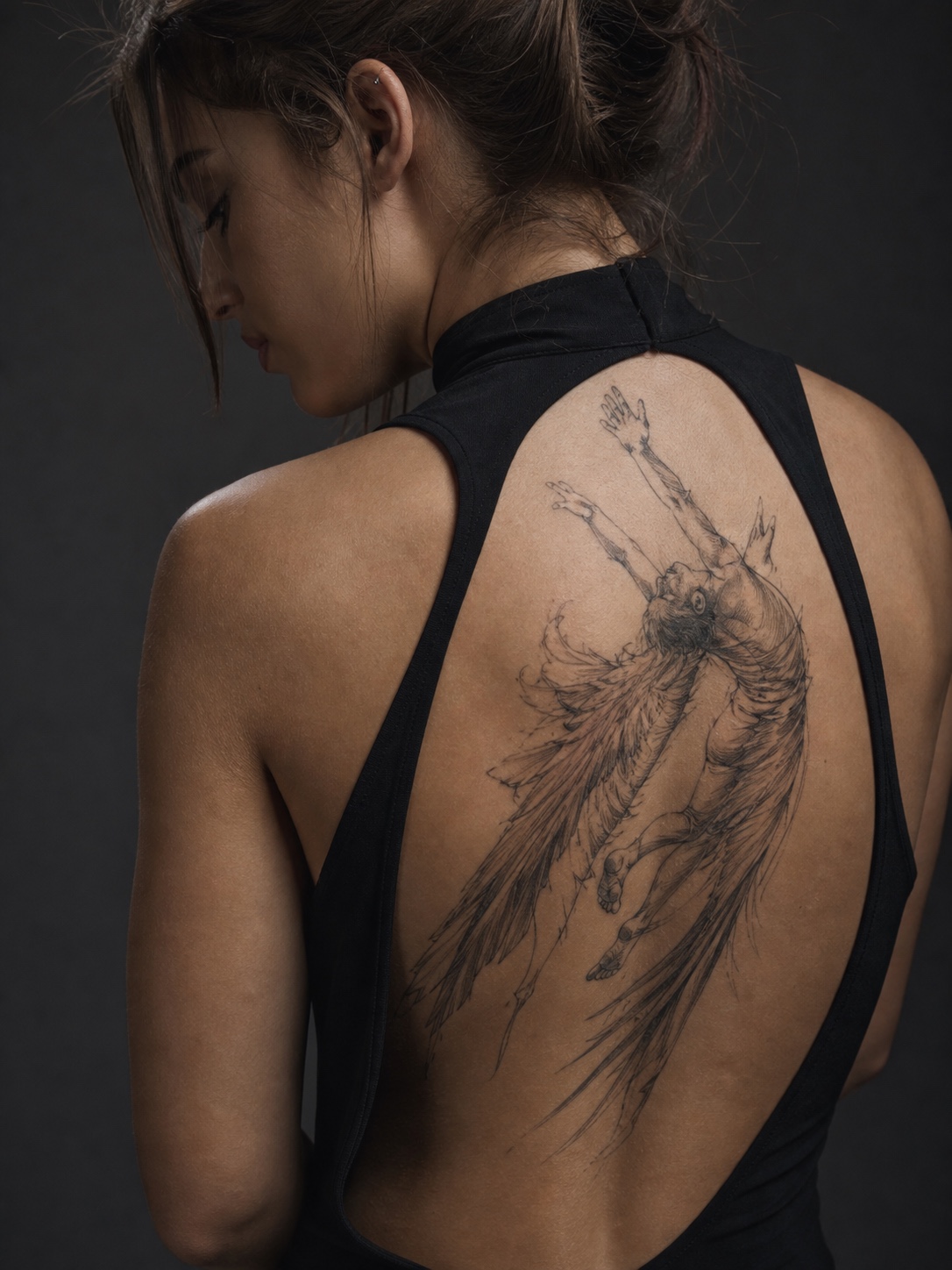
4. Icarus Mid-Fall, Dynamic Classical Pose Study
Icarus offers something most mythological tattoo subjects don’t: genuine dynamic motion. A mid-fall pose, limbs extended and wings trailing, built with real gesture and weight logic rather than a static frontal illustration, captures the actual drama of the myth instead of just labeling a generic winged figure “Icarus.”
Geometric and Pattern-Based Greek Motifs
The meander pattern and its relatives are genuinely underused in current tattoo content, despite being some of the most recognizable and tattoo-friendly Greek visual elements available.
5. Meander (Greek Key) Band, Built With Real Construction
The meander — the continuous, angular “Greek key” pattern found on pottery borders and architecture — is an actual geometric system, not a freehand squiggle. Built correctly, it’s a repeating unit constructed on a consistent grid, which is exactly what makes it read as precise and intentional rather than approximated. This pattern alone, done well, communicates “classical” more immediately than almost any figurative design.
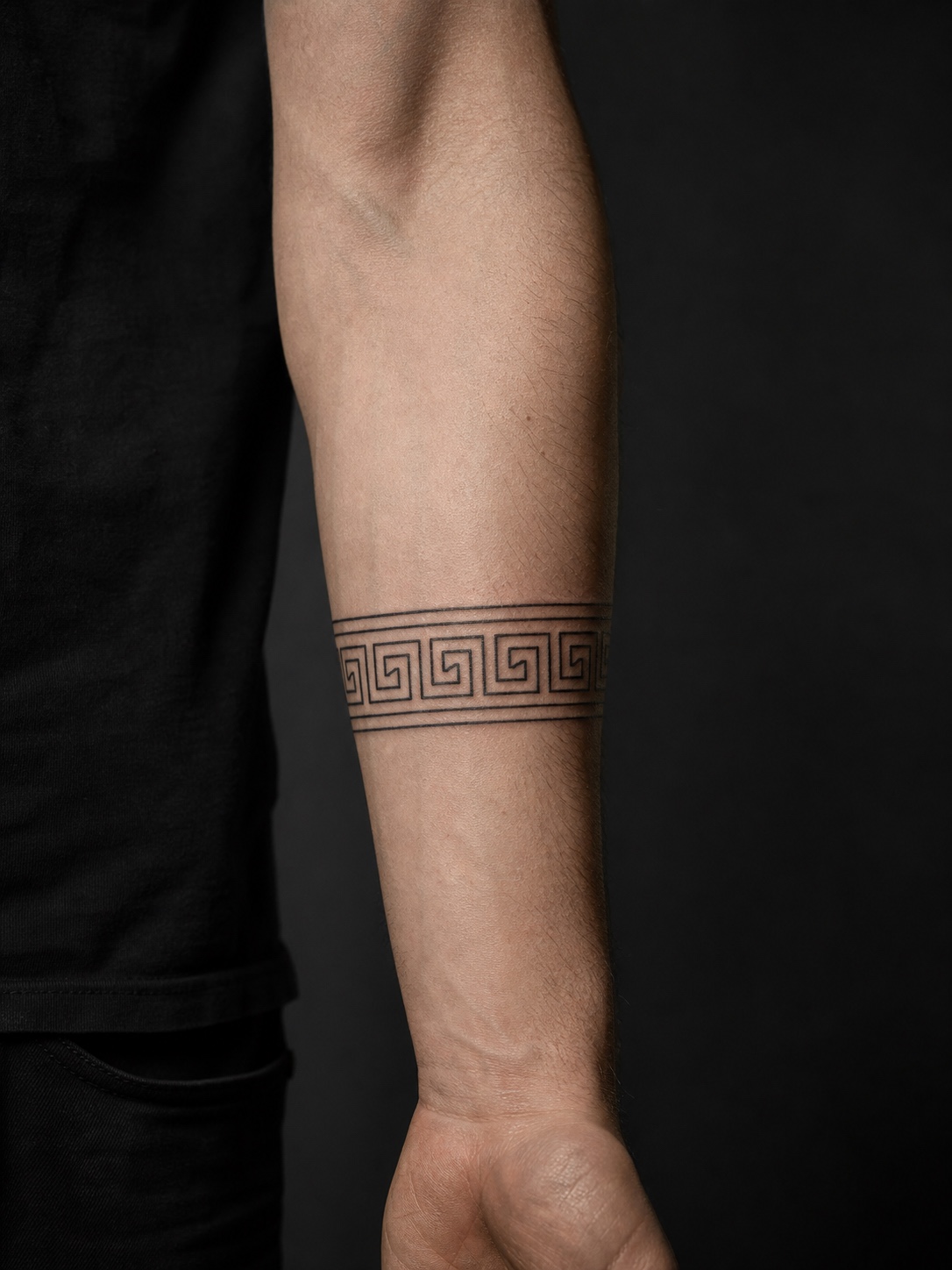
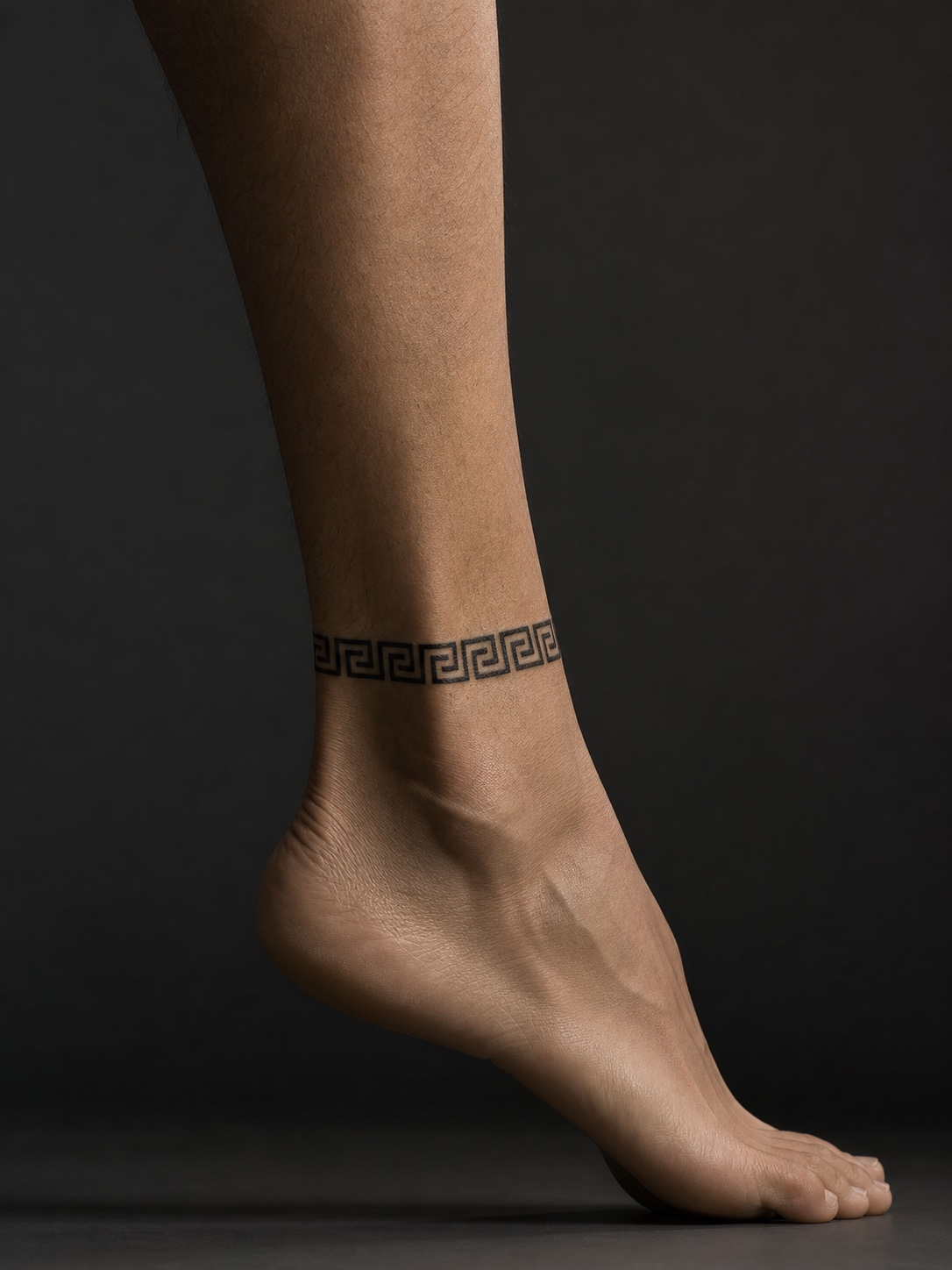
6. Meander Pattern Wrapped as a Wrist or Ankle Band
The meander’s repeating, linear structure suits a wraparound band placement naturally — wrist or ankle — where its geometric rhythm can circle the limb continuously, the same way it traditionally borders a vase or temple frieze.
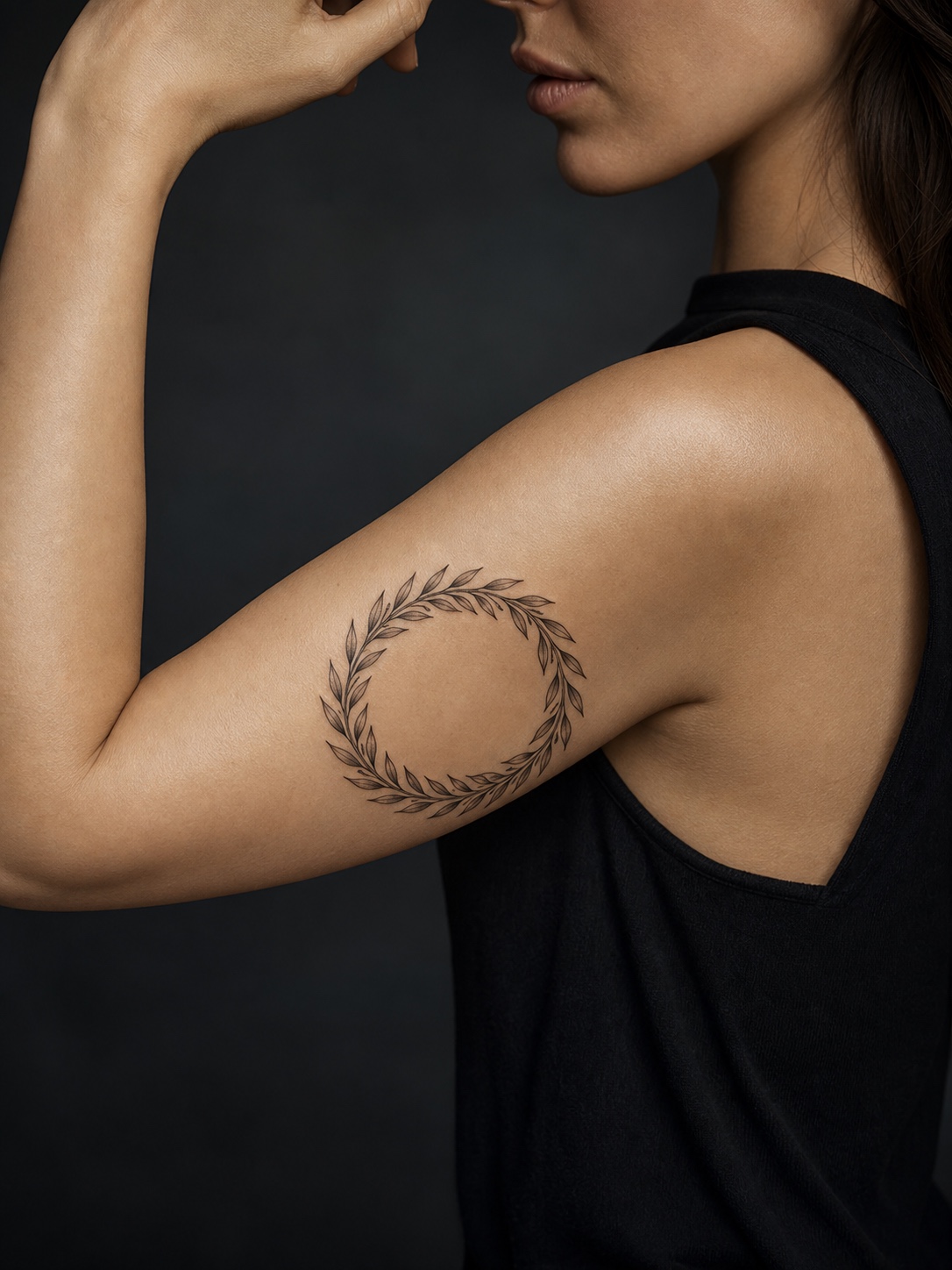
7. Laurel Wreath, Composed as a Genuine Circular Design
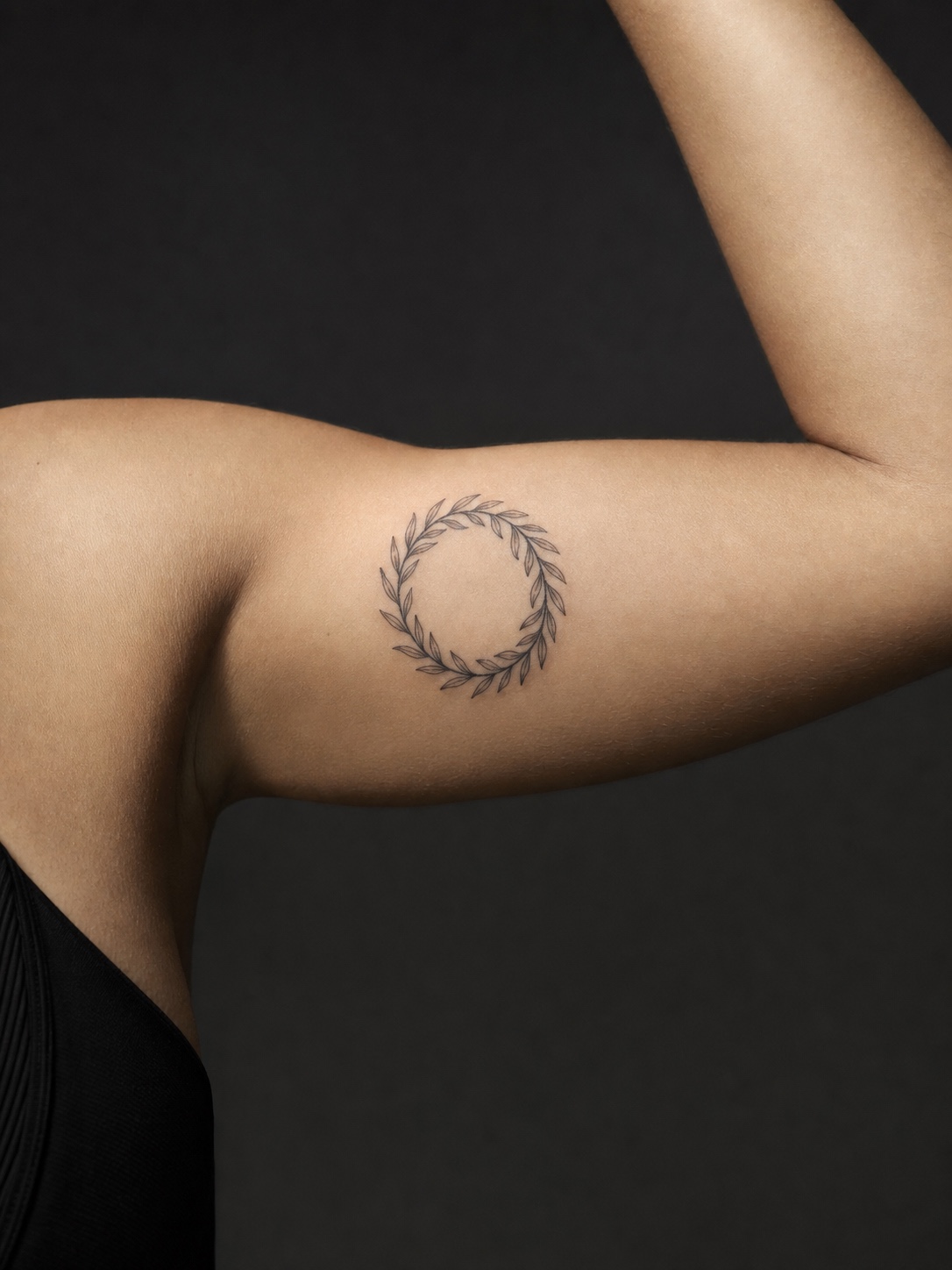
A laurel wreath built as an actual circular composition — leaves radiating with real botanical logic around a defined ring, rather than a generic leafy circle — carries its victory symbolism more convincingly. This works especially well as a frame around another small element, echoing how laurel wreaths function compositionally in classical art and coinage.
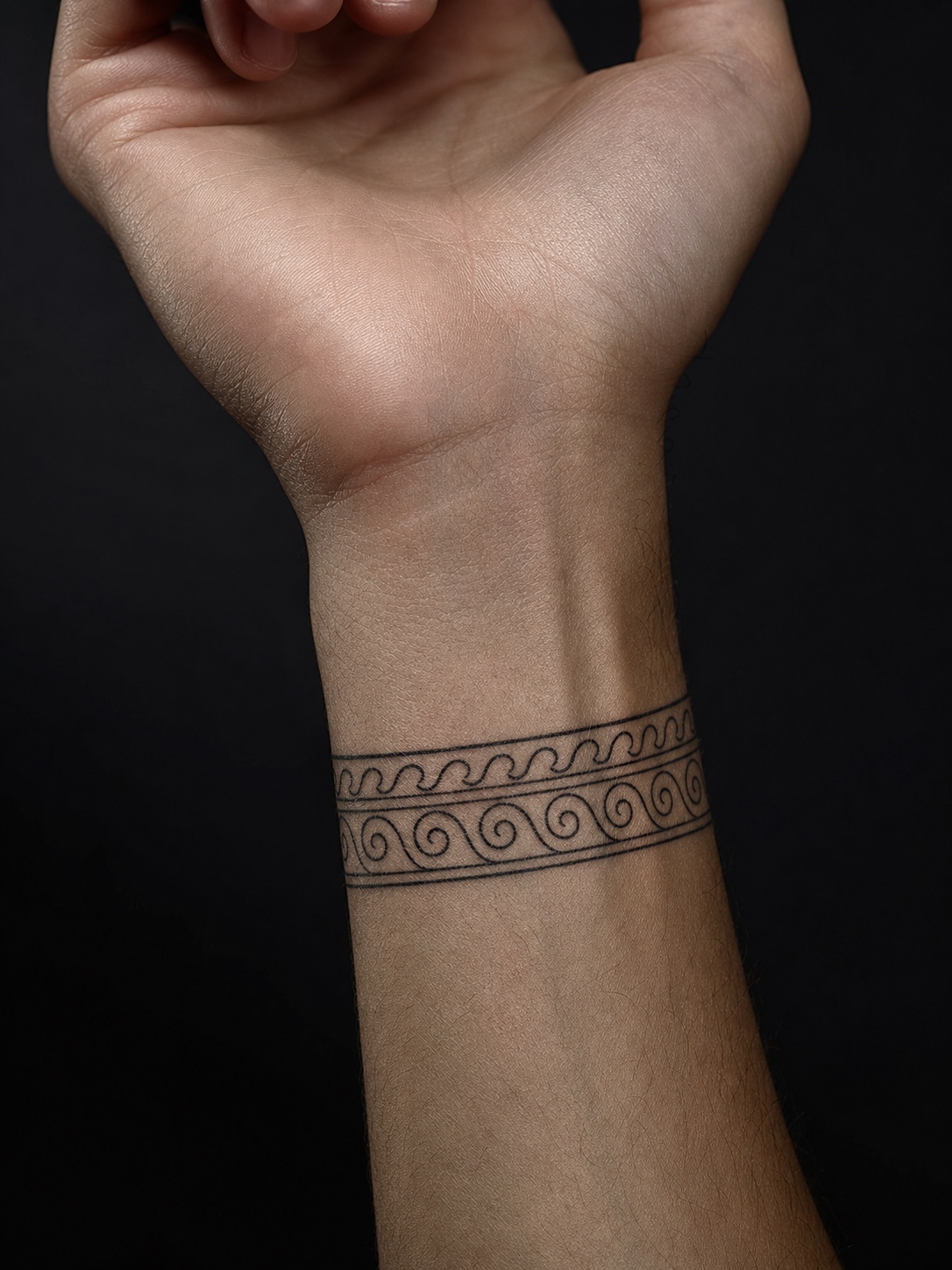
8. Geometric Wave or Spiral Pattern From Pottery Borders
Beyond the meander, classical pottery borders frequently use wave and spiral patterns with their own construction logic — worth exploring specifically for anyone who wants the geometric-Greek aesthetic without defaulting to the meander specifically.
Pottery and Vase-Painting Style Designs
Black-figure and red-figure pottery painting represents an entire distinct linework tradition that almost never shows up correctly in current tattoo content.
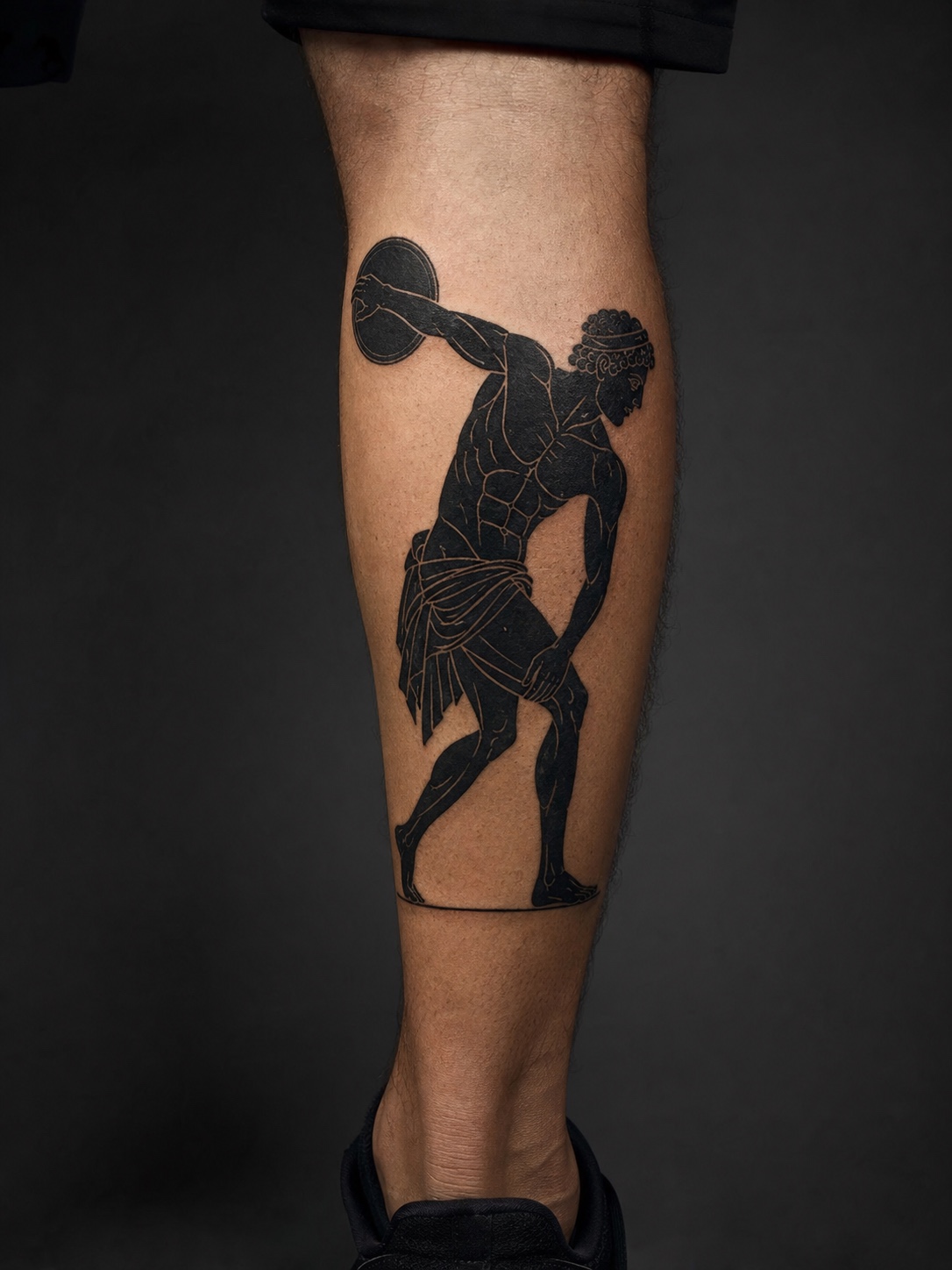
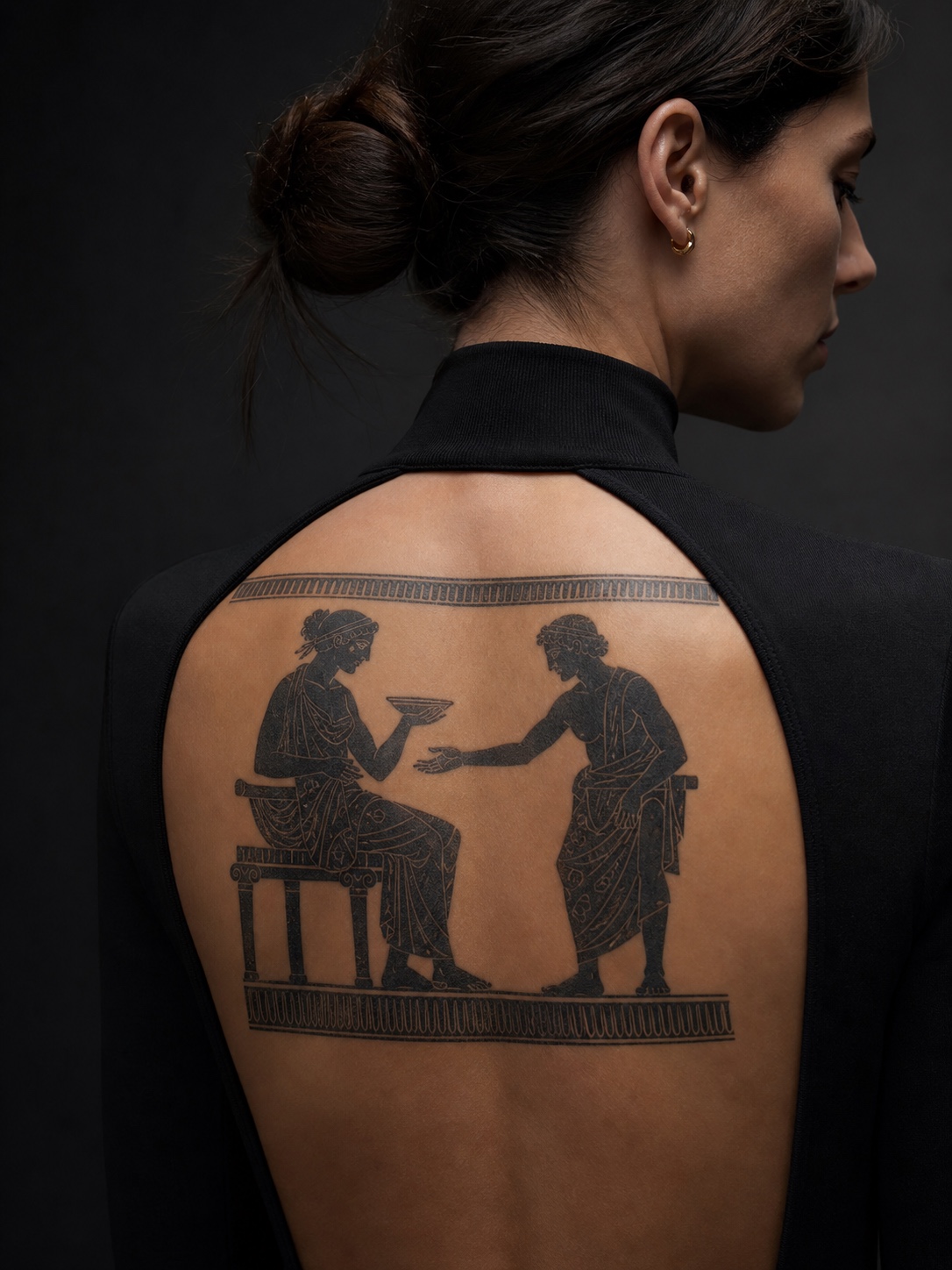
9. Black-Figure Style Silhouette Scene
Black-figure pottery painting renders figures as solid black silhouettes with fine incised interior detail — a genuinely distinct technique from simple silhouette work, since the internal linework (musculature, drapery folds, hair) is scratched through the black rather than drawn in a contrasting color. A single-figure scene done in this style reads as authentically ancient in a way generic black silhouette work doesn’t.
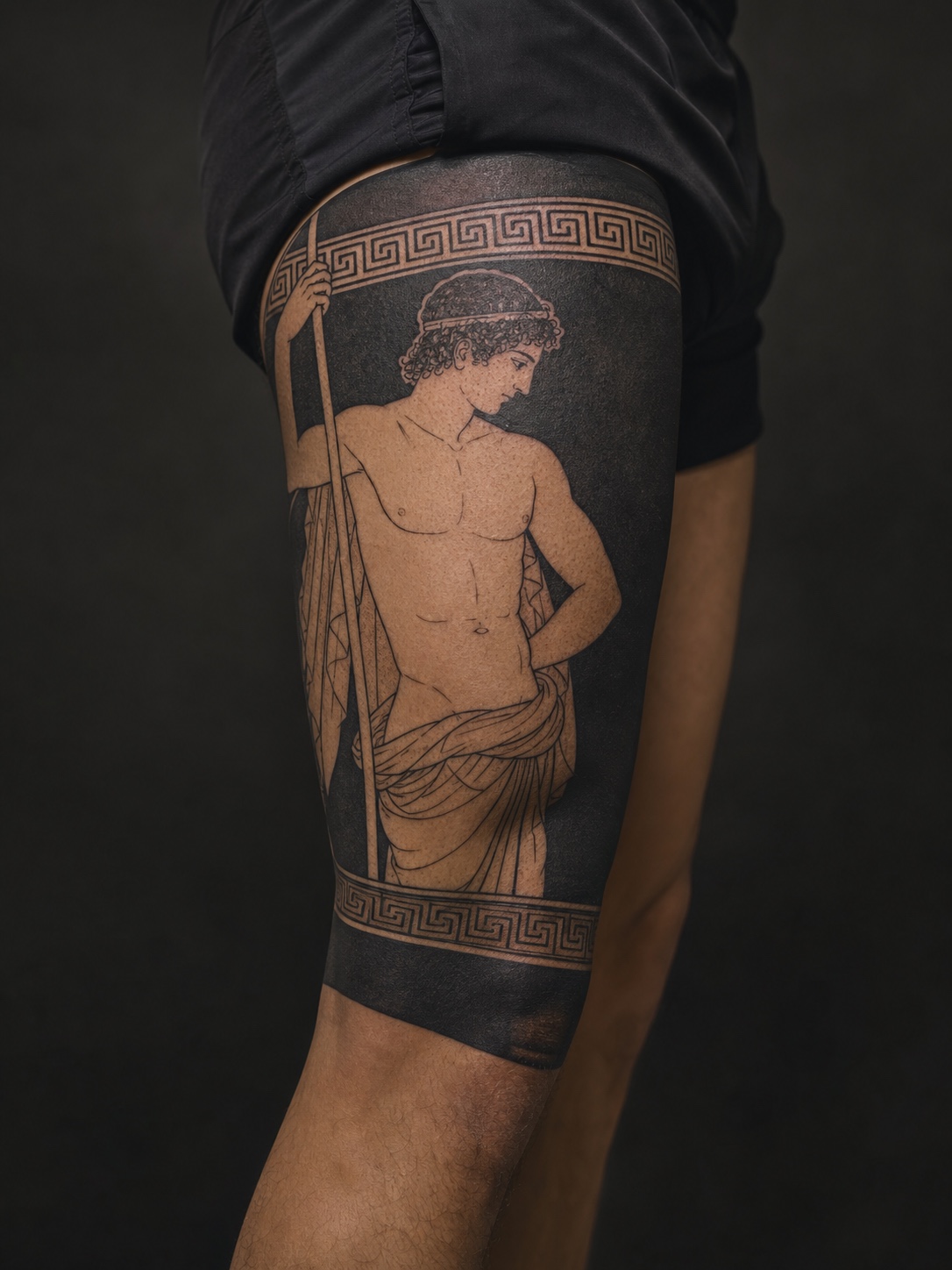
10. Red-Figure Style Figure With Fine Internal Linework
Red-figure technique inverts the black-figure approach — the background goes solid black or dark, and the figure itself stays in the lighter base tone with fine linework detail painted directly onto it. This style generally allows more anatomical and drapery nuance than black-figure work, since the linework sits on a lighter surface rather than being incised through dark pigment.
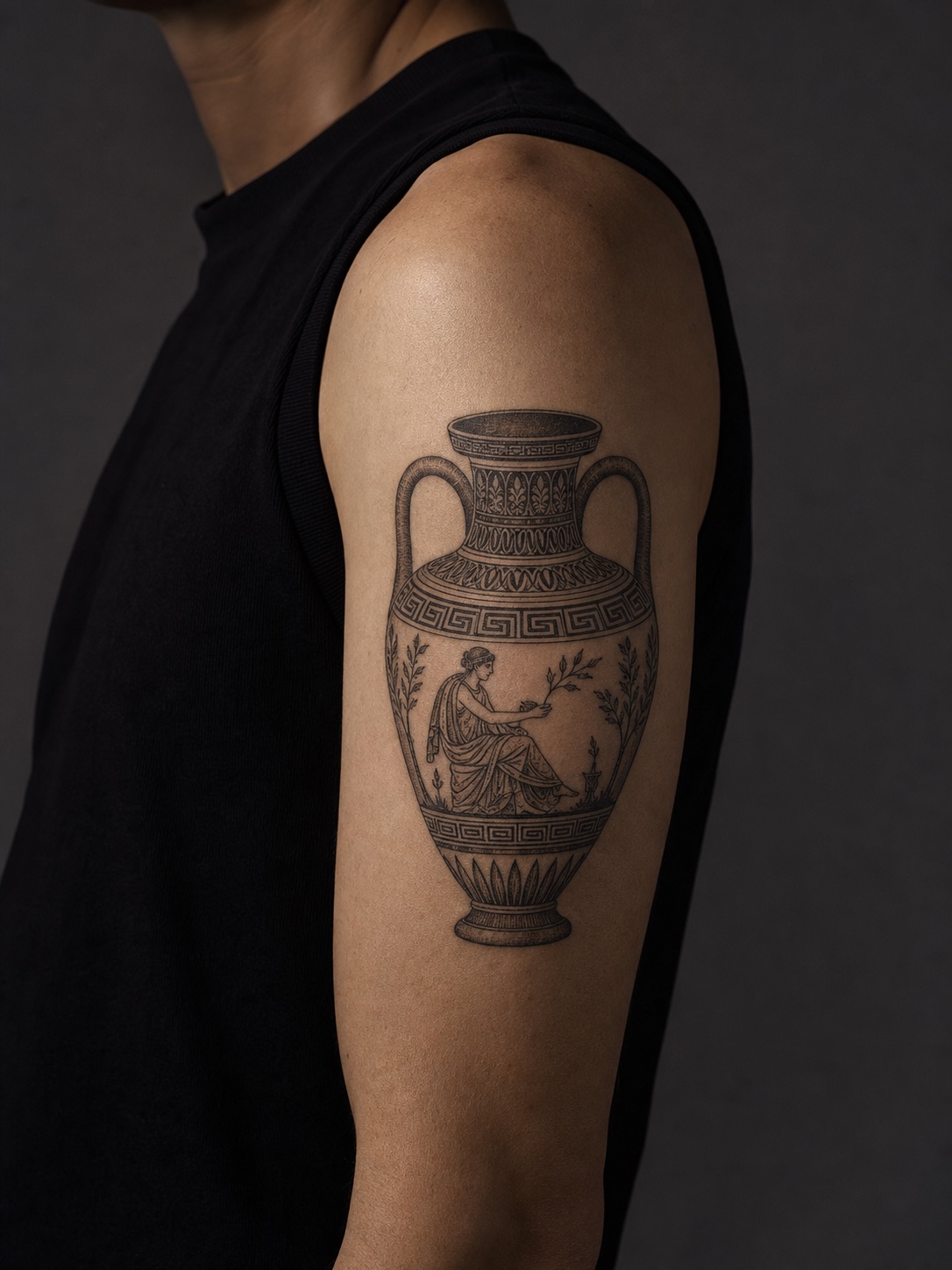
11. Amphora Illustrated in Pottery’s Own Decorative Style
An amphora (the classic two-handled storage vase) rendered using the same decorative conventions found on actual pottery — its own surface pattern, figure work, or geometric border echoing real vase design — works as a self-referential piece, a vessel depicted in the exact visual language it would have originally been painted in.
12. Multi-Figure Pottery-Style Narrative Scene
For a more ambitious, larger-scale piece, a small multi-figure scene — two or three figures interacting, built in consistent black-figure or red-figure style — captures the narrative storytelling function actual Greek pottery painting served, rather than isolating a single figure out of context.
Architectural and Symbolic Motifs
Greek architecture and a handful of enduring symbols offer strong tattoo material that rarely gets the precision it deserves.
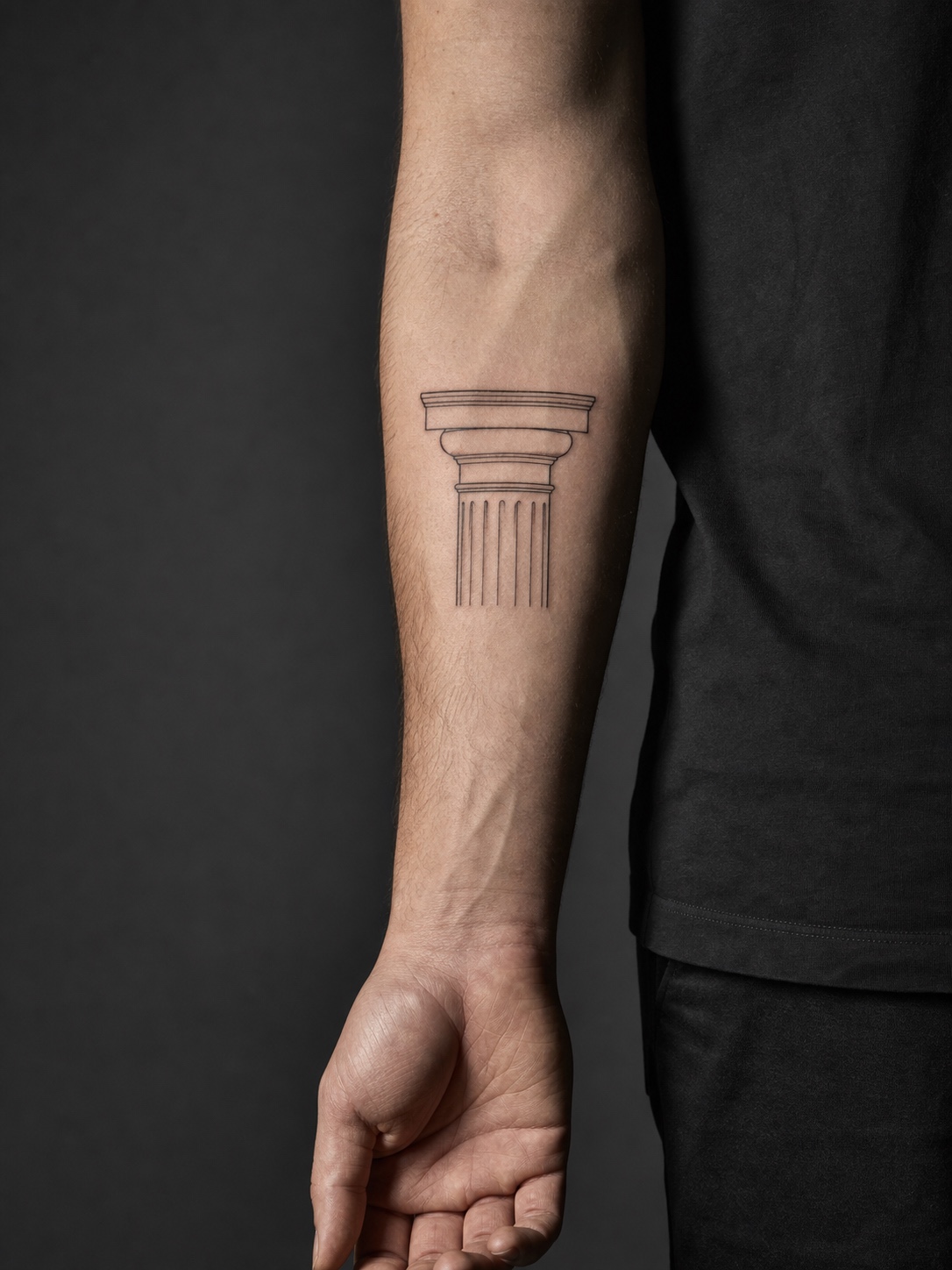
13. Doric Column Capital, Precise Proportional Study
The Doric capital — plain, unadorned, structurally direct — is the simplest of the three classical orders and reads clean as a minimal, geometric tattoo when its actual proportions (not an invented, decorative version) are respected.
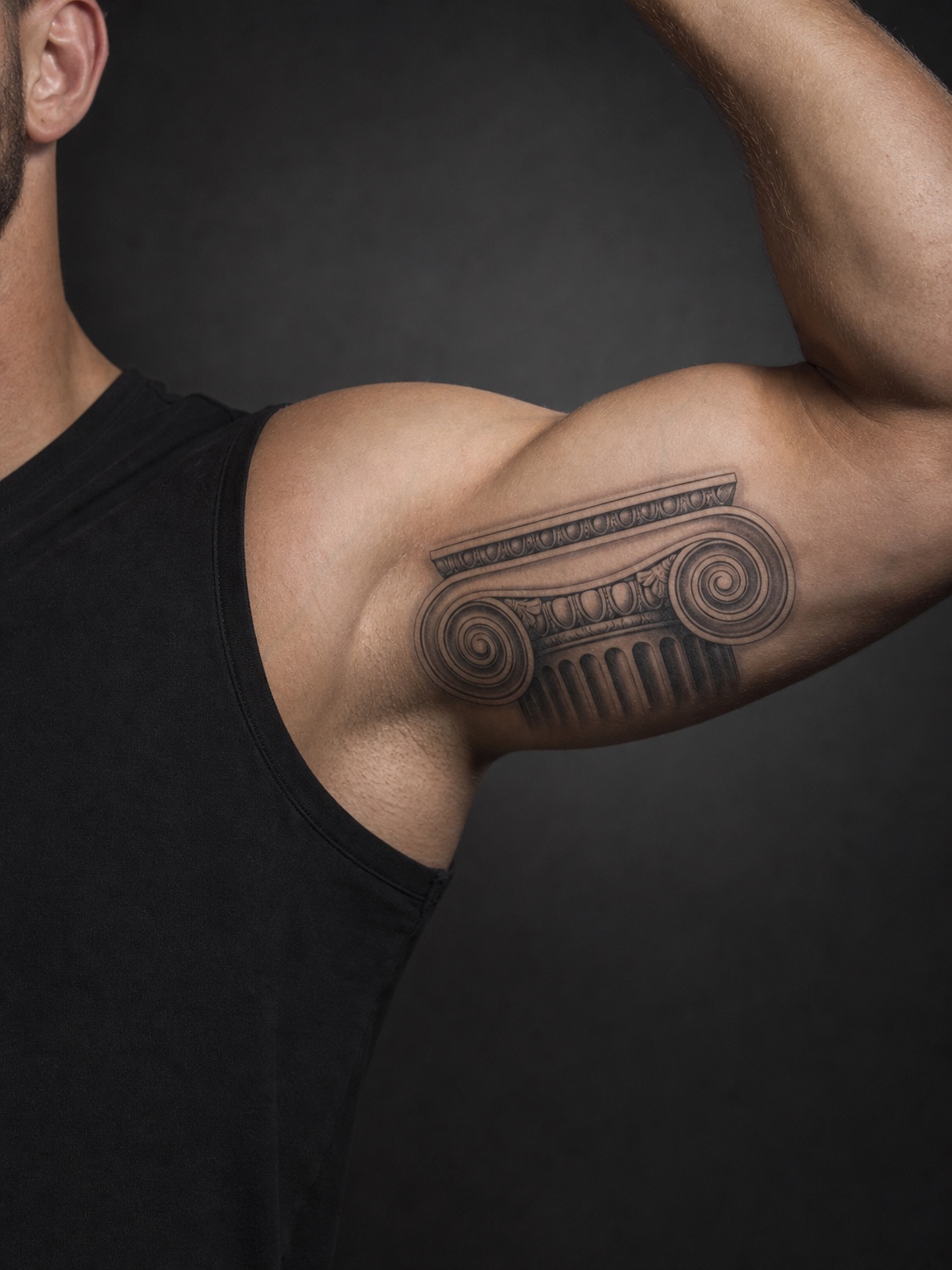
14. Ionic Column Capital With Its Scroll Detail
The Ionic capital’s distinctive volute (scroll) detail gives it considerably more visual complexity than the Doric, and getting that spiral scroll geometry accurate is what separates a genuinely Ionic-reading design from a generic “column top.”
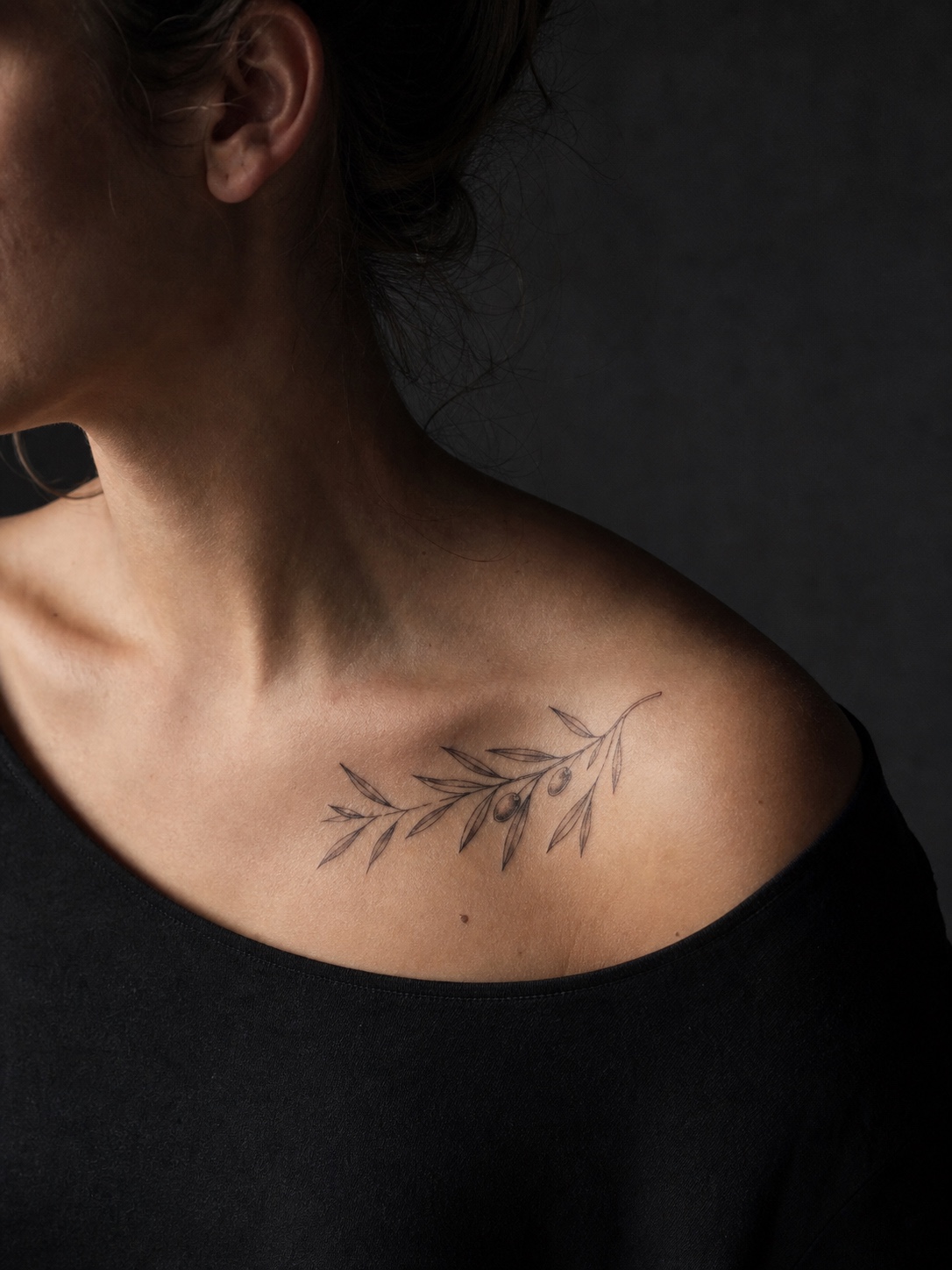
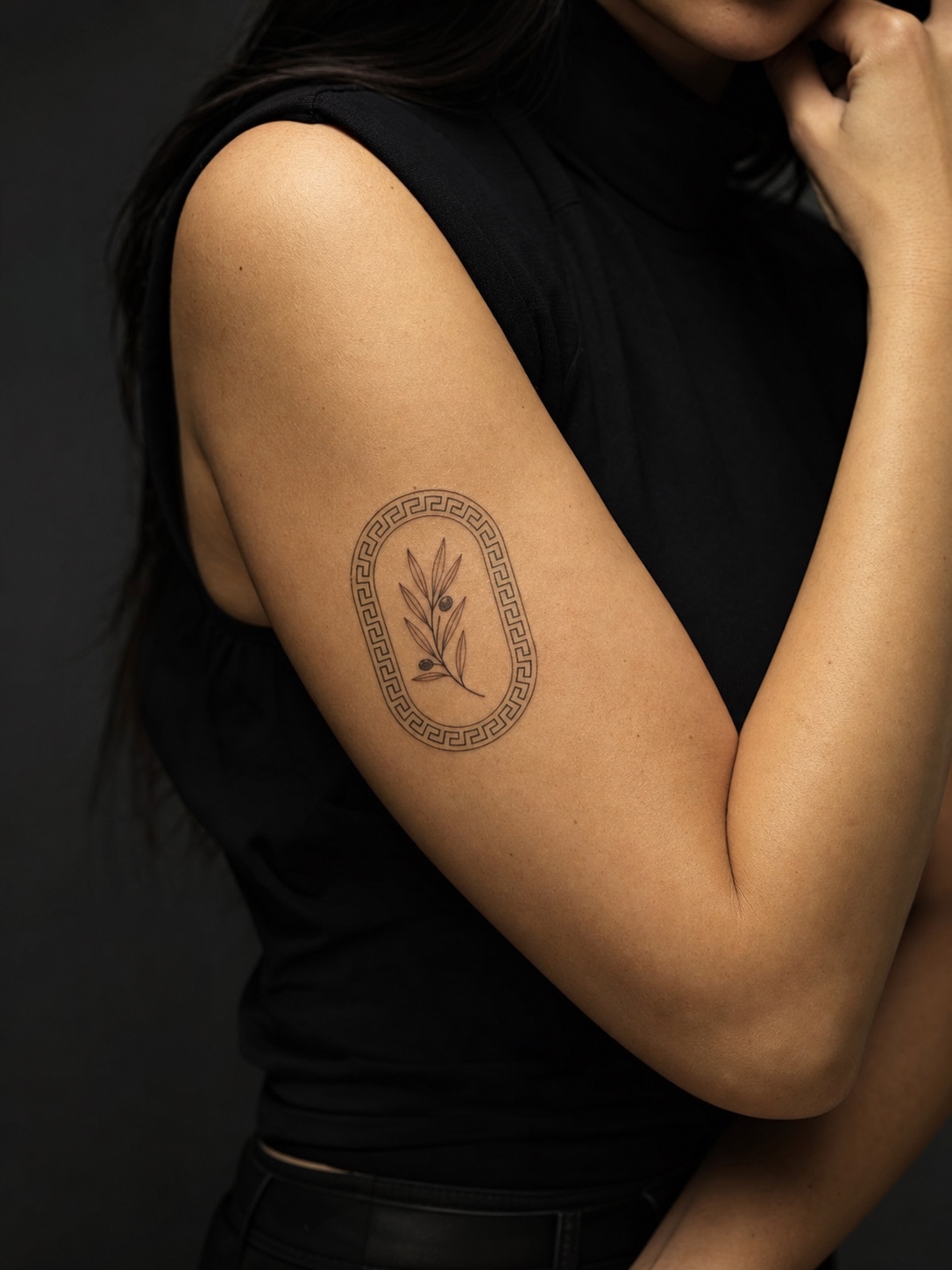
15. Olive Branch, Botanically Accurate
The olive branch carries real symbolic weight (peace, victory, Athena’s gift to Athens) that gets diluted when it’s drawn as generic, indistinct leaf clusters. A botanically accurate branch — correct leaf shape, growth pattern, and proportion — reads as considered rather than decorative filler.
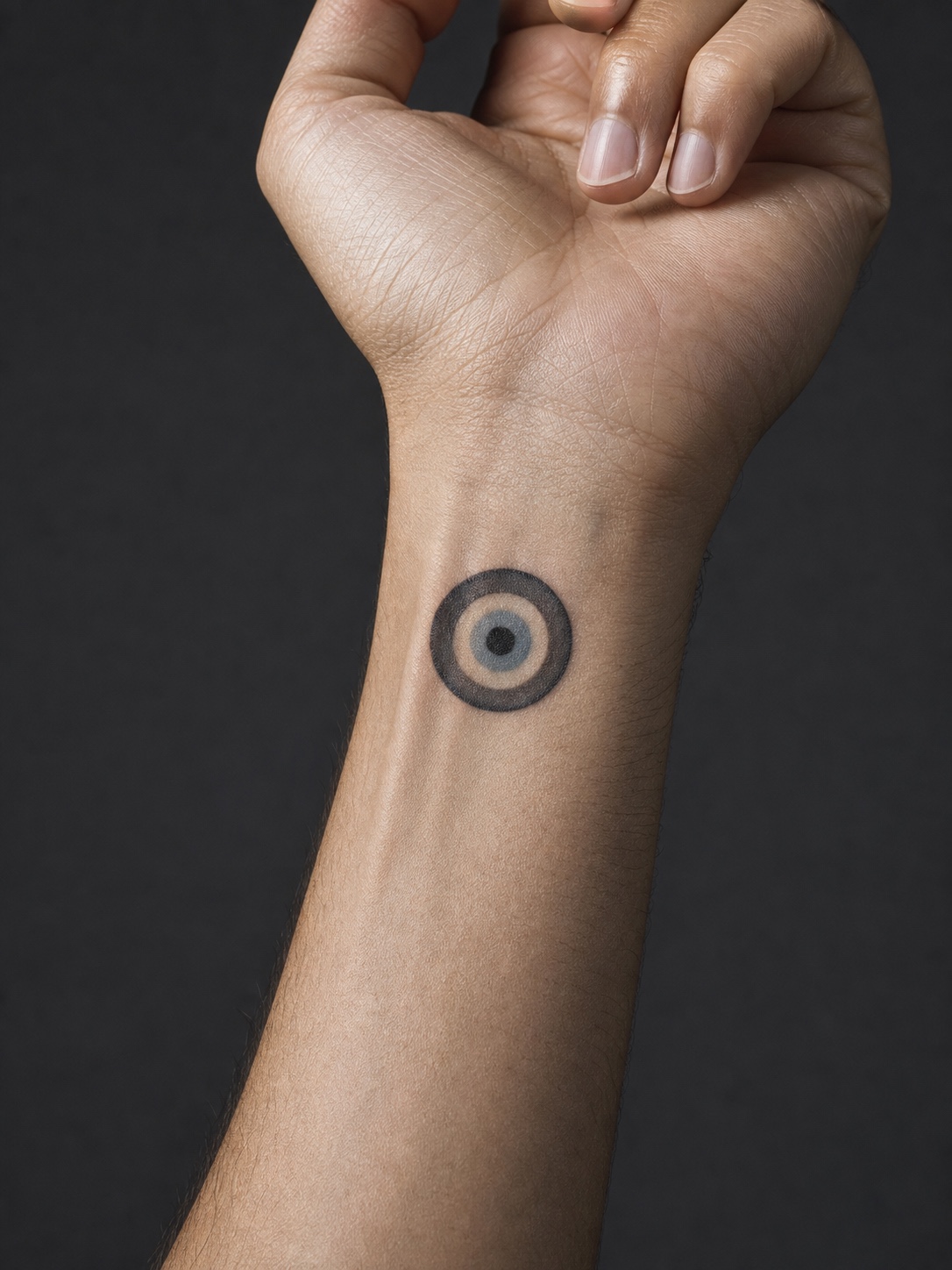
16. Evil Eye (Mati), Authentic Layered Detail
The evil eye symbol, while broader Mediterranean rather than exclusively Greek, is a genuinely popular and meaningful choice within Greek-heritage tattoo requests specifically. Built with its traditional layered concentric-circle structure rendered with real depth and shading rather than a flat emoji-style icon, it carries more visual weight and cultural authenticity.
Text, Letters, and Philosophical Designs
Greek lettering and philosophical phrases are consistently requested, and typographic precision matters more here than most people assume.
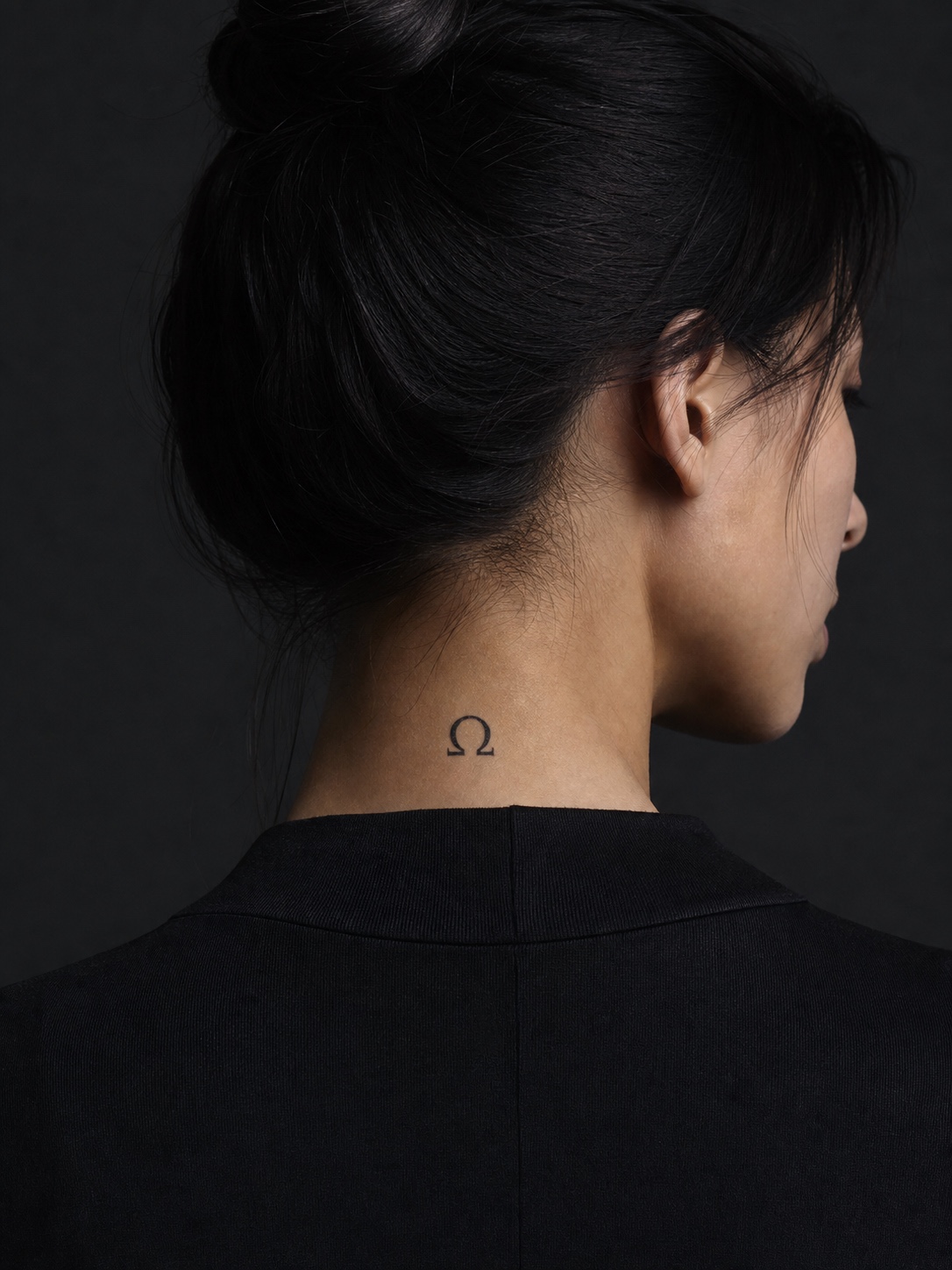
17. Single Greek Letter With Real Typographic Weight
A single letter — Omega, often chosen for its “completion” symbolism as the alphabet’s final character — reads as considered when it’s built with actual classical letterform proportion and stroke-weight logic, rather than a generic font pulled from a design template.
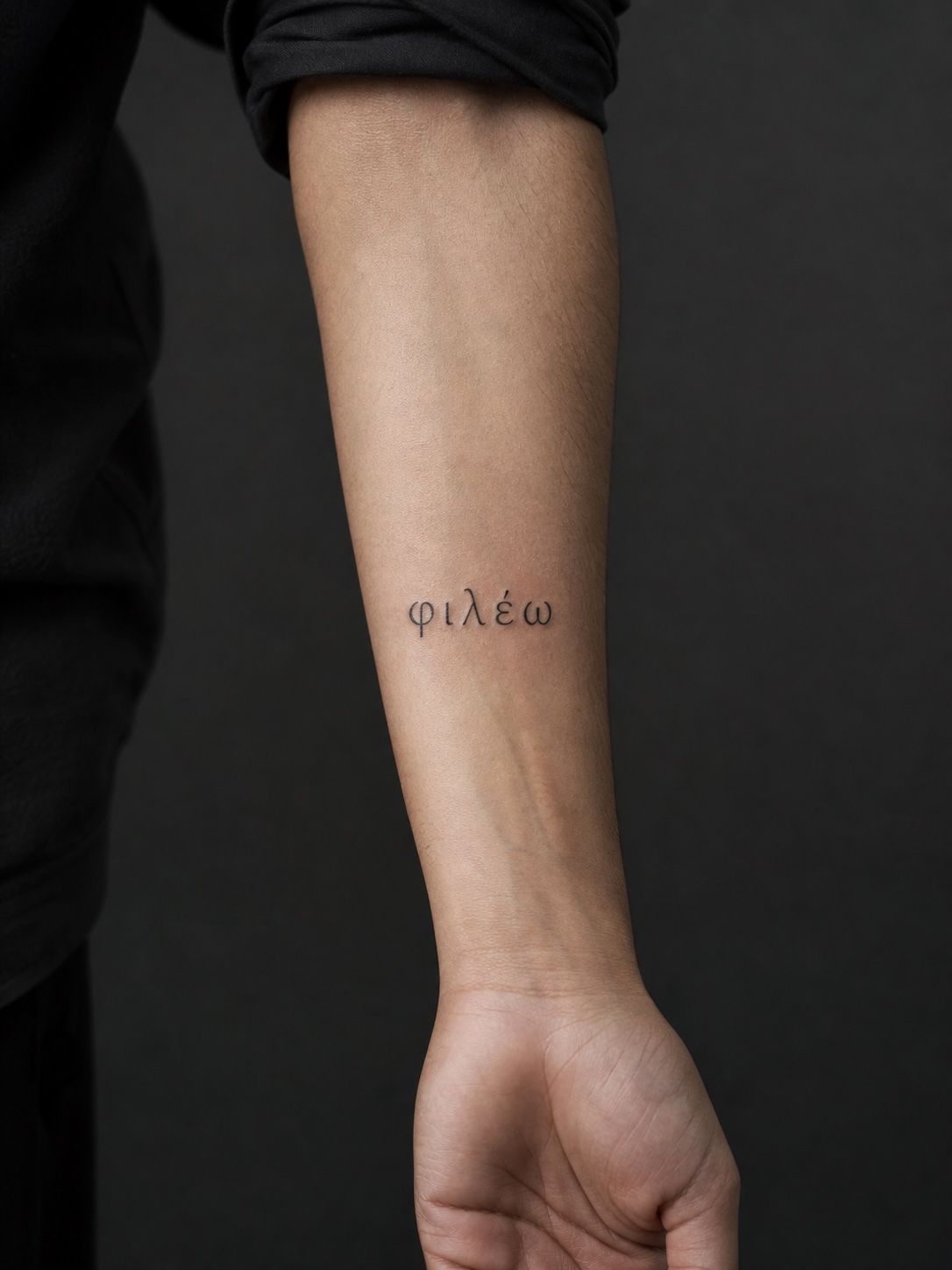
18. Short Philosophical Phrase in Authentic Greek Lettering
A short phrase, genuinely short (a handful of words, not a full sentence crammed into a small space), rendered in lettering that respects real Greek letterform proportions rather than a stretched or distorted default font, holds up considerably better as the tattoo ages.
19. Fibonacci or Golden Ratio Spiral
The golden ratio spiral, tied to Greek mathematics and the proportion systems that also underlie classical architecture and figure canon, offers a genuinely elegant geometric option for anyone drawn to the mathematical rather than mythological side of Greek culture.

20. Combined Meander-Framed Symbol Piece
Bringing several elements together — a meander border framing a small central motif, whether a mythological figure, an olive branch, or an architectural detail — creates a genuinely composed piece rather than several unrelated symbols placed near each other, using the meander’s structural, bordering function exactly the way it worked on the pottery and architecture it originally decorated.
Final Thoughts
Every one of these 20 ideas comes back to the same underlying principle: a Greek tattoo reads as genuinely classical when it actually understands the visual system it’s borrowing from — real proportion, real geometric construction, real linework conventions — rather than when it simply names a mythological figure and calls it done. The mythology gives you the subject. The technique is what makes it convincing.
FAQ
What is the most popular Greek tattoo design?
Mythological figures — particularly Medusa, Athena, and Zeus — remain the most commonly requested Greek tattoo subjects, alongside the meander (Greek key) geometric pattern and the evil eye symbol. Popularity varies by whether someone is drawn to mythology, geometric pattern work, or symbolic protection pieces specifically.
What does the Greek meander pattern mean?
The meander, also called the Greek key, traditionally symbolizes infinity, unity, and the eternal flow of life, based on its continuous, unbroken geometric structure. It appears throughout classical pottery borders and architecture, which is why it remains one of the most immediately recognizable Greek visual motifs.
What’s the difference between black-figure and red-figure tattoo styles?
Black-figure style renders the main subject as a solid black silhouette with fine detail incised or scratched through the dark pigment, while red-figure style inverts this, keeping the figure in a lighter base tone with fine linework detail painted directly onto it against a dark background. Red-figure generally allows more anatomical nuance since the detail work sits on a lighter surface.
Are Greek tattoos culturally appropriate for non-Greek people?
Classical Greek mythology and symbolism have been part of shared Western visual and literary culture for millennia and are generally considered open cultural reference points rather than restricted heritage symbols, though approaching the subject with genuine interest and accuracy — rather than a shallow, decorative treatment — is worth taking seriously regardless.
What’s a good placement for a Greek key (meander) tattoo?
The meander’s repeating, linear structure suits wraparound placements particularly well — wrist bands, ankle bands, or as a border framing a larger central design — since its geometric rhythm was originally designed to run continuously along an edge, exactly the function it serves on ancient pottery and architecture.
How do you keep Greek lettering tattoos accurate?
Work from an artist or reference familiar with actual Greek letterform proportions rather than a generic font stretched to fit, keep any phrase genuinely short to avoid cramped, distorted lettering, and double-check the specific letterforms and spelling directly rather than relying on translation tools alone, since small errors are common and hard to reverse once tattooed.
For more placement and style directions beyond classical Greek motifs, browse the Sky Rye Design tattoo ideas hub.
- 126shares
- Facebook0
- Pinterest126
- Twitter0
- Reddit0