Half the “ohana tattoo ideas” you’ll find on Pinterest are the same cursive script wrapped around a wrist, with zero thought given to what sits next to it or where it’s actually shown. That’s the problem I keep running into scrolling through these boards — the word gets tattooed like a hashtag, disconnected from where it actually comes from.
Ohana means family in Hawaiian, but it carries more weight than that one-word translation suggests: family that includes blood relatives and the people you choose, with an unspoken rule that nobody gets left behind. The word had a moment in the 2000s thanks to Lilo & Stitch, and it’s having another one now with the franchise’s live-action push pulling a fresh wave of matching family tattoos into shops.
- What “ohana” actually means (it's not just “family”)
- Classic Hawaiian symbols people actually use (honu, hibiscus, shark)
- Ohana word tattoos: script, font, and why typography matters
- Ohana tattoo with flower or heart: combining elements without clutter
- Placement and scale: where ohana tattoos actually hold up
- Getting it right: respecting the culture, avoiding generic filler
- The takeaway
- More ohana tattoo reference ideas
- Frequently asked questions
- What does an ohana tattoo mean?
- Is it okay to get an ohana tattoo if you're not Hawaiian?
- What's the best placement for an ohana tattoo?
- What does an ohana tattoo with a flower mean?
- How much does an ohana tattoo cost?
- What's the most common mistake people make with ohana tattoos?
- What does an ohana tattoo with a heart mean?
Here’s what I want to cover instead of another generic script roundup: the Hawaiian symbols that actually carry ohana’s meaning — honu, hibiscus, shark tooth — how typography choices change whether a word tattoo reads well in five years, where these designs hold up on skin versus where they blur into nothing, and the mistakes worth skipping before you sit in the chair.
What “ohana” actually means (it’s not just “family”)
Ask ten people what ohana means and you’ll get “family” from all ten. Ask what makes it different from just saying “family,” and most go quiet. That gap is exactly why so many ohana tattoo ideas end up feeling flat — the word gets inked without the meaning behind it.
Where the word comes from, and why “no one gets left behind” matters
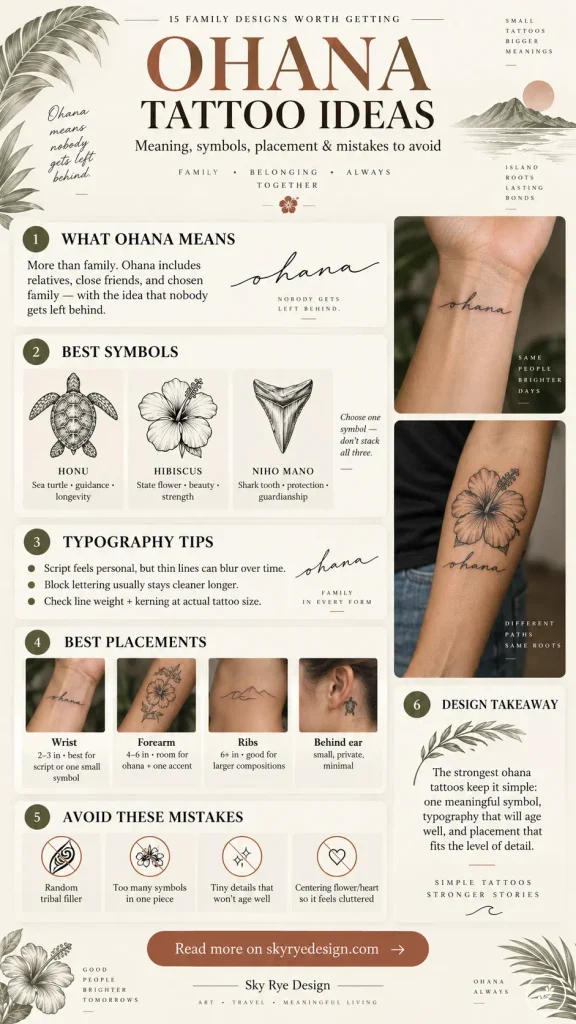
Ohana is a Native Hawaiian concept, and it stretches further than the nuclear family unit most of us default to. It includes extended relatives, close friends, and anyone folded into that circle of mutual responsibility — the phrase most people know from the film is “ohana means family, and family means nobody gets left behind or forgotten.” That line wasn’t invented for the movie. It reflects a real value in Hawaiian culture around collective care, where the group looks after its members without exception.
I think about this the same way I think about a well-designed dashboard layout: every element earns its place because it serves the whole system, not because it looks good on its own. Ohana works the same way — it’s not decoration, it’s structure.
Why Lilo & Stitch popularized it — and flattened it
The 2002 film introduced “ohana” to a global audience, and that’s mostly a good thing. But two decades of merchandise, temporary tattoos, and Instagram captions have worn the word down to a cute catchphrase for some people, disconnected from its cultural roots. The live-action remake is pushing another surge of ohana ink right now, and a lot of it repeats the same mistake: script with no context, no symbol, no connection to where the word actually comes from.
If you’re getting this tattoo, the fix is simple — pair the word with something that actually means what it says, which is exactly what the next section covers.
Classic Hawaiian symbols people actually use (honu, hibiscus, shark)
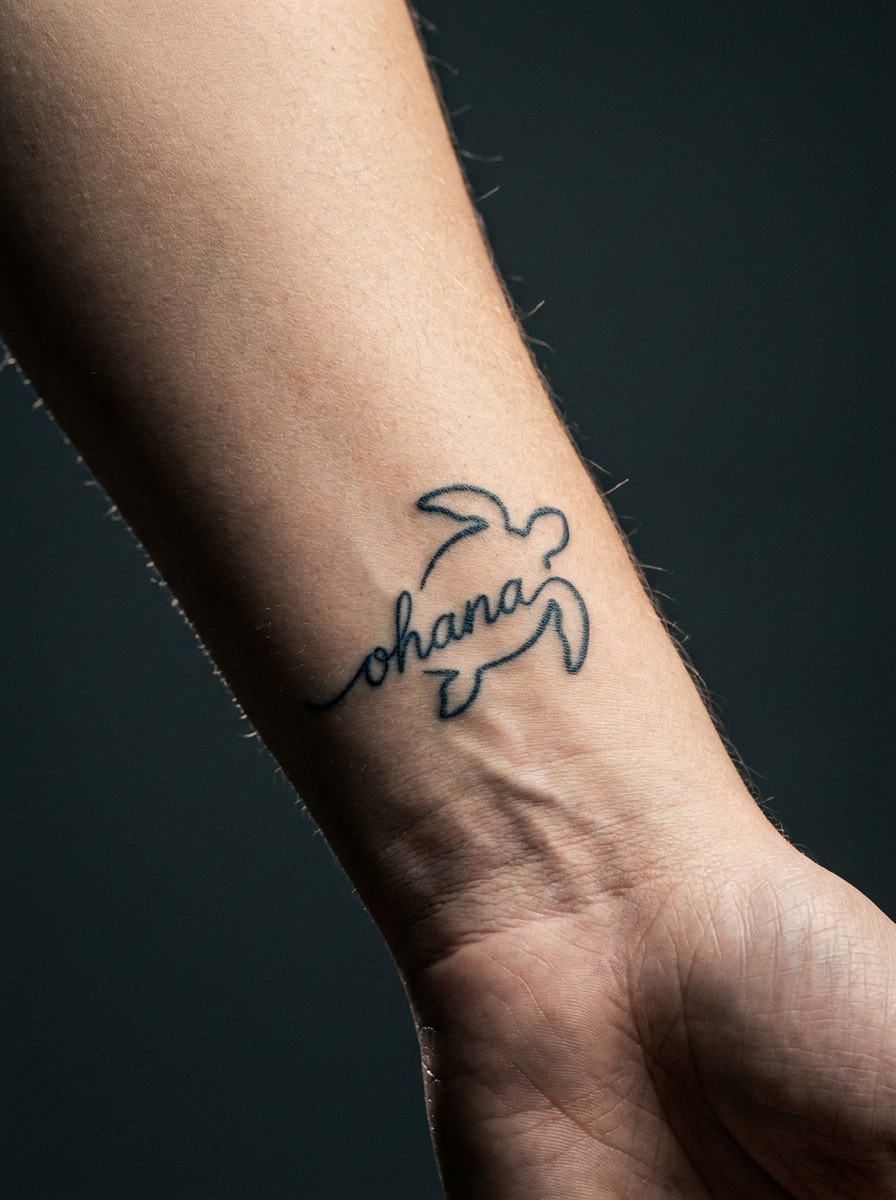
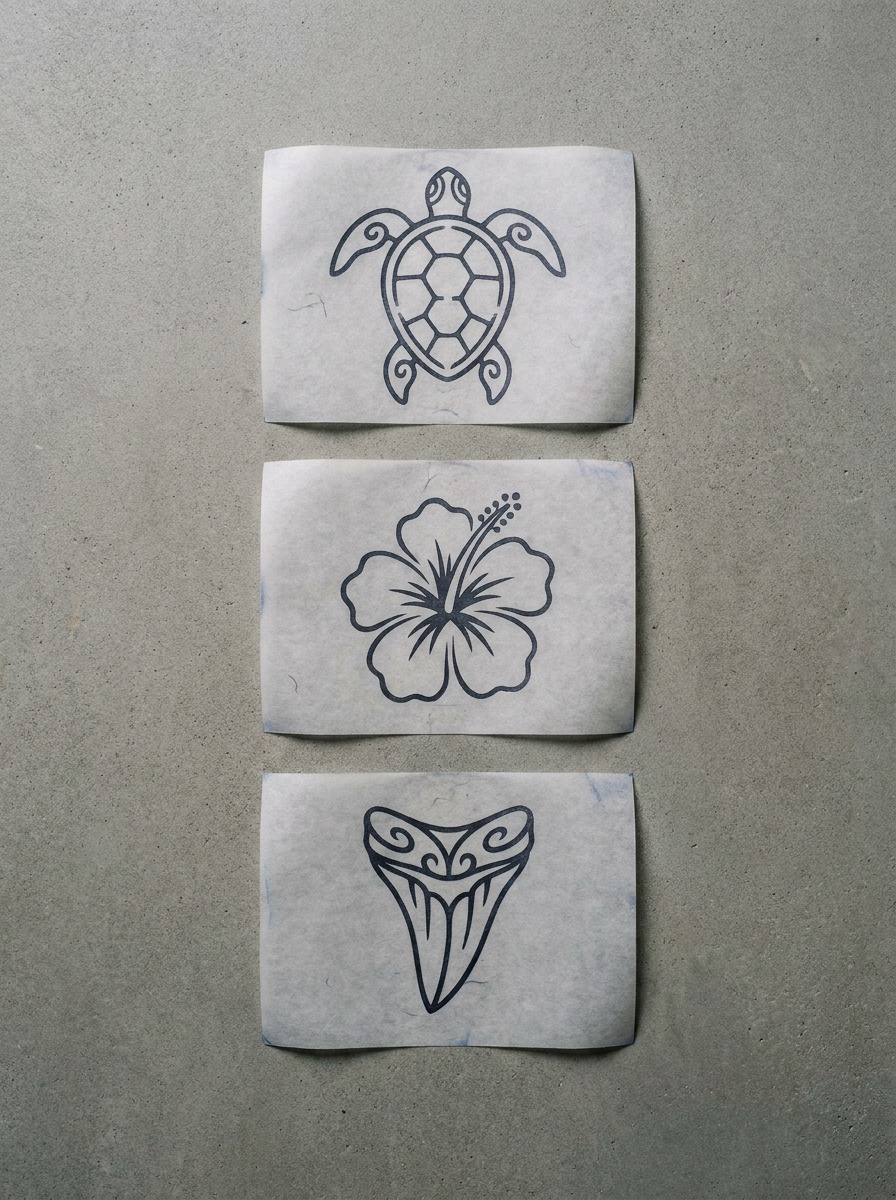
Once you move past the word itself, three symbols show up again and again in real Hawaiian tattoo tradition — and they’re the ones I’d point anyone toward if they want an ohana design that actually means something beyond “I saw this on Pinterest.”
Honu (sea turtle) — longevity and guidance
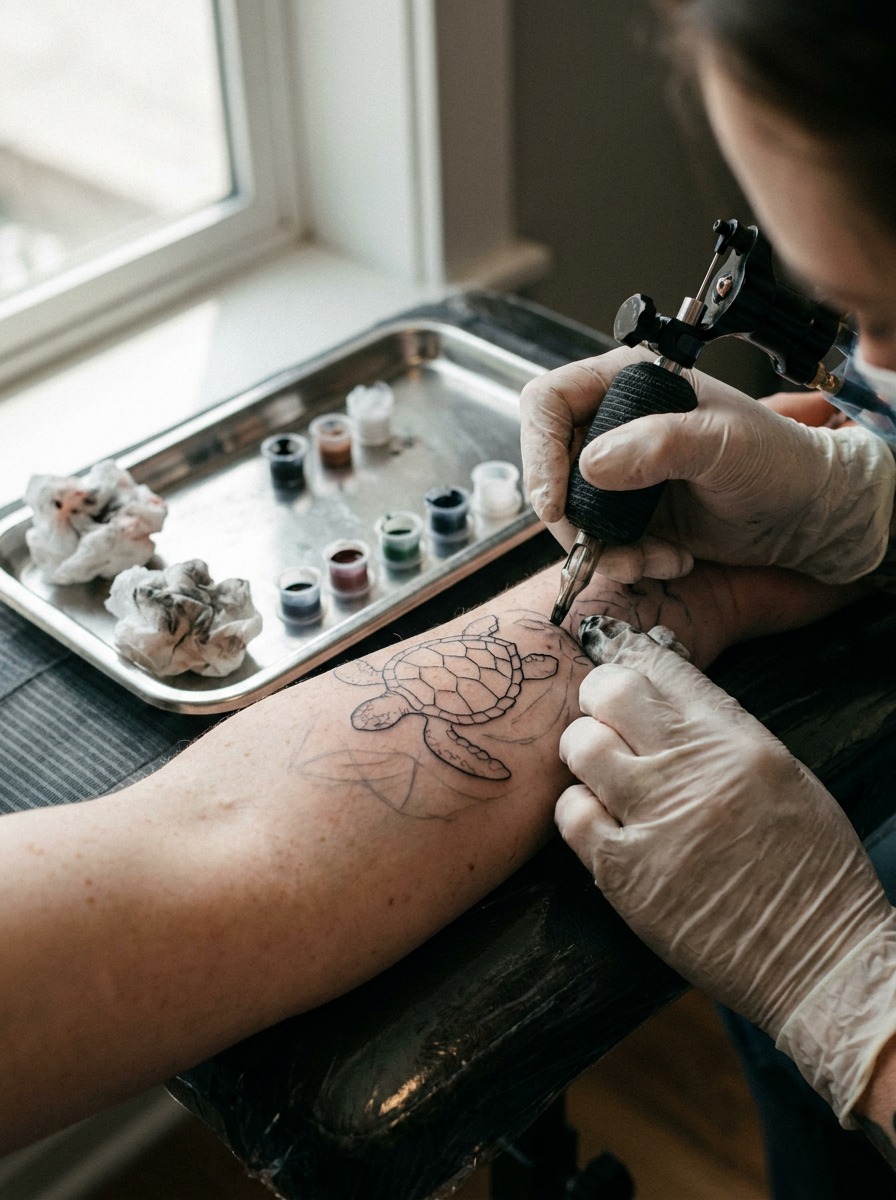
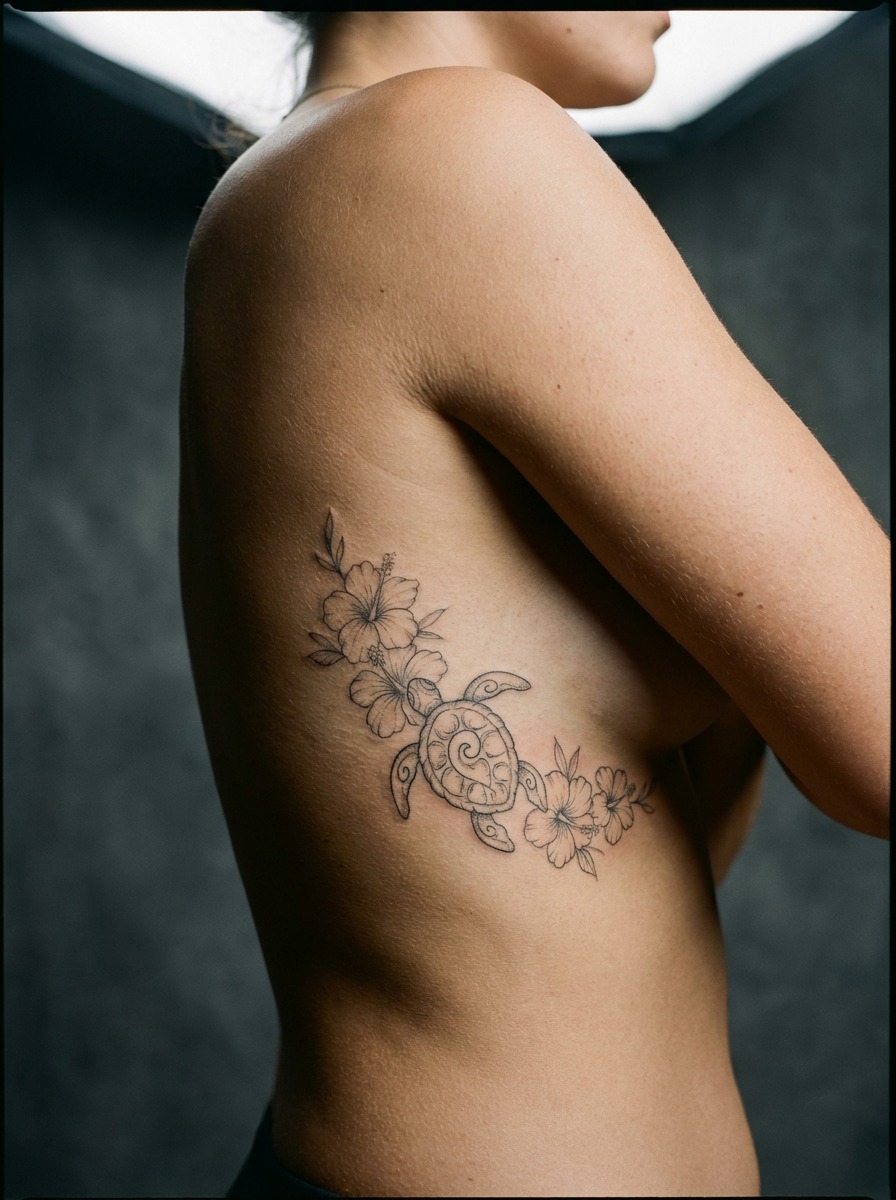
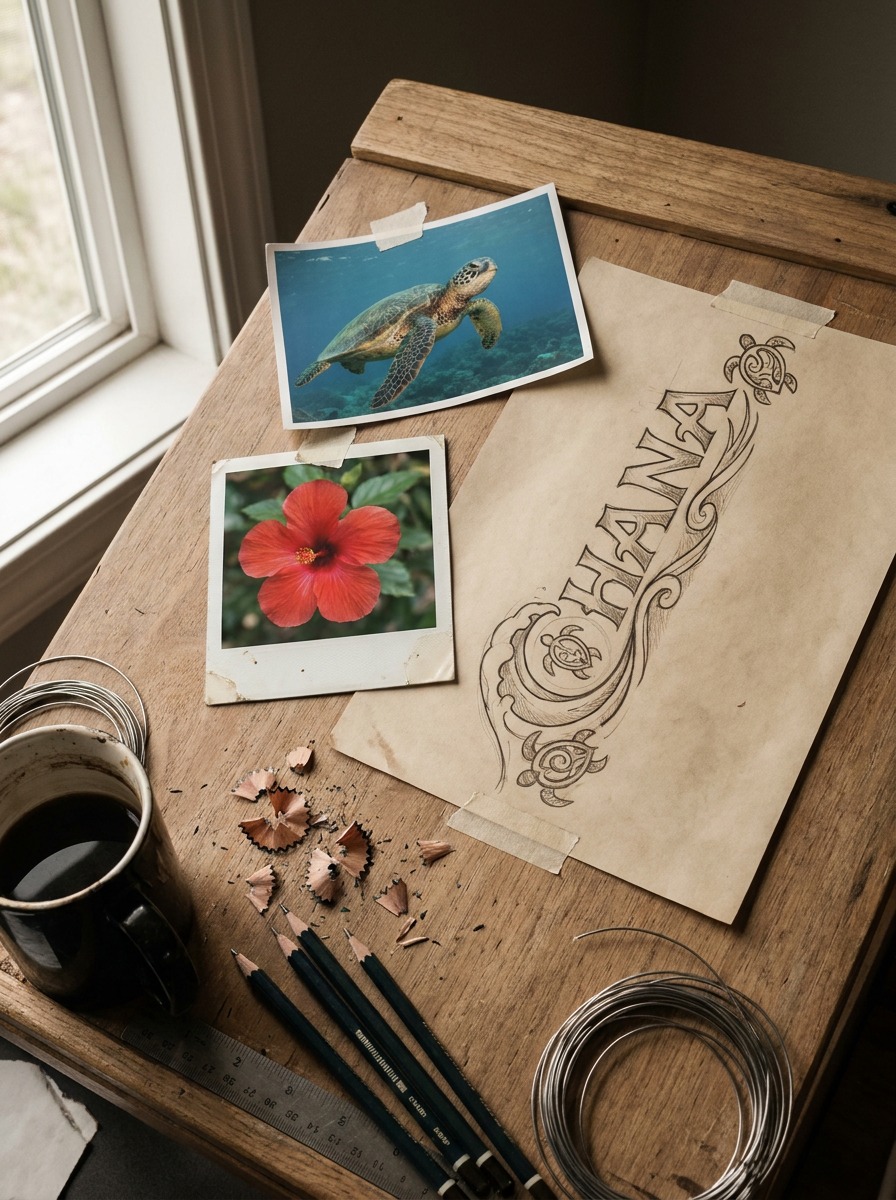
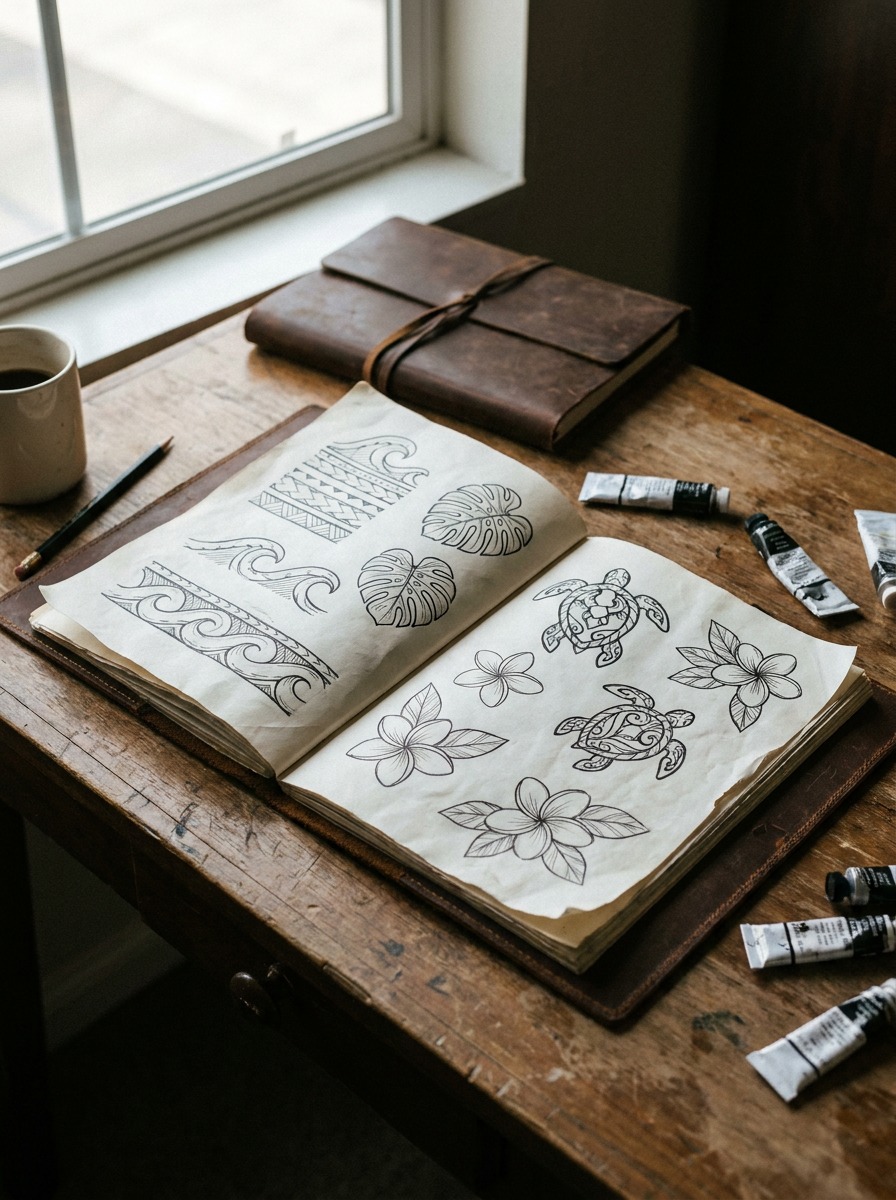
The honu shows up everywhere in Hawaiian art for a reason: it’s tied to longevity, safe passage, and guidance for the family it’s protecting. In old Hawaiian navigation, sea turtles were seen as guides that led voyagers home — which is a fitting symbol for a design about family bonds. Visually, the honu also does something useful that a lot of tattoo symbols don’t: its shell pattern gives an artist a built-in place to work in ohana’s script or small linework without cluttering the design.
Hibiscus — the state flower, not just decoration
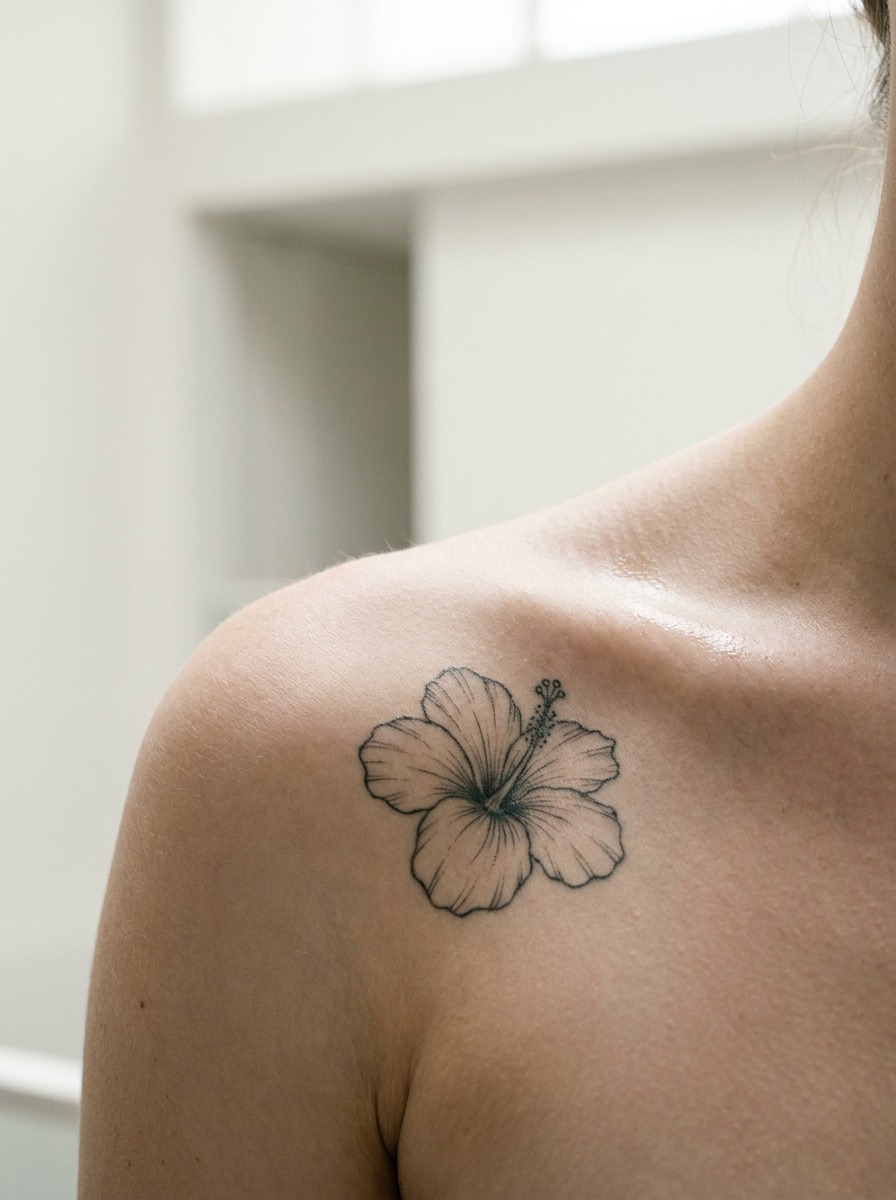
The yellow hibiscus is Hawaii’s official state flower, and it’s one of the most requested additions to ohana tattoo ideas with flower elements. Paired with ohana, it usually signals beauty and delicate strength held within family bonds — not just “I like flowers.” I’ve noticed the hibiscus works best as a small accent rather than the main event; a 2-inch bloom tucked beside script reads cleaner at a distance than one blown up to dominate the piece.
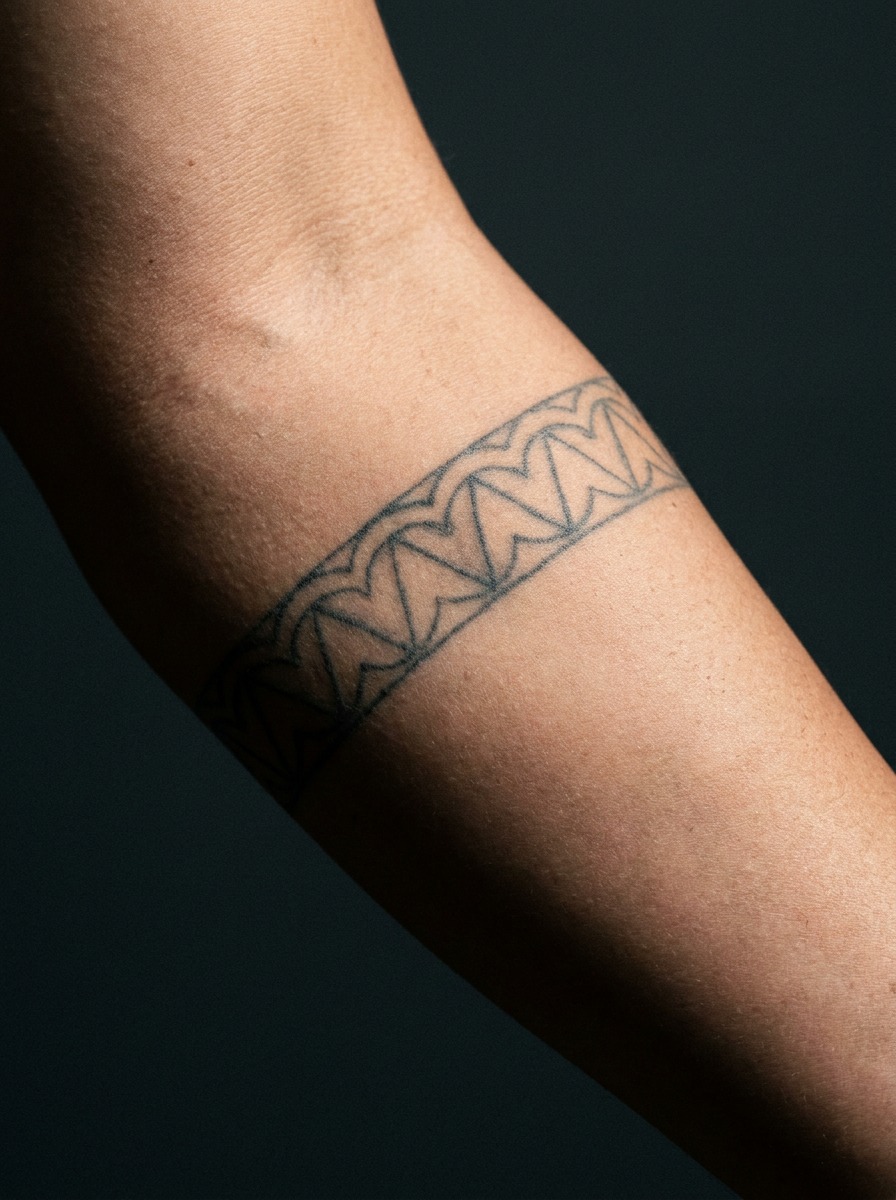
Shark tooth (niho mano) — protection, not aggression
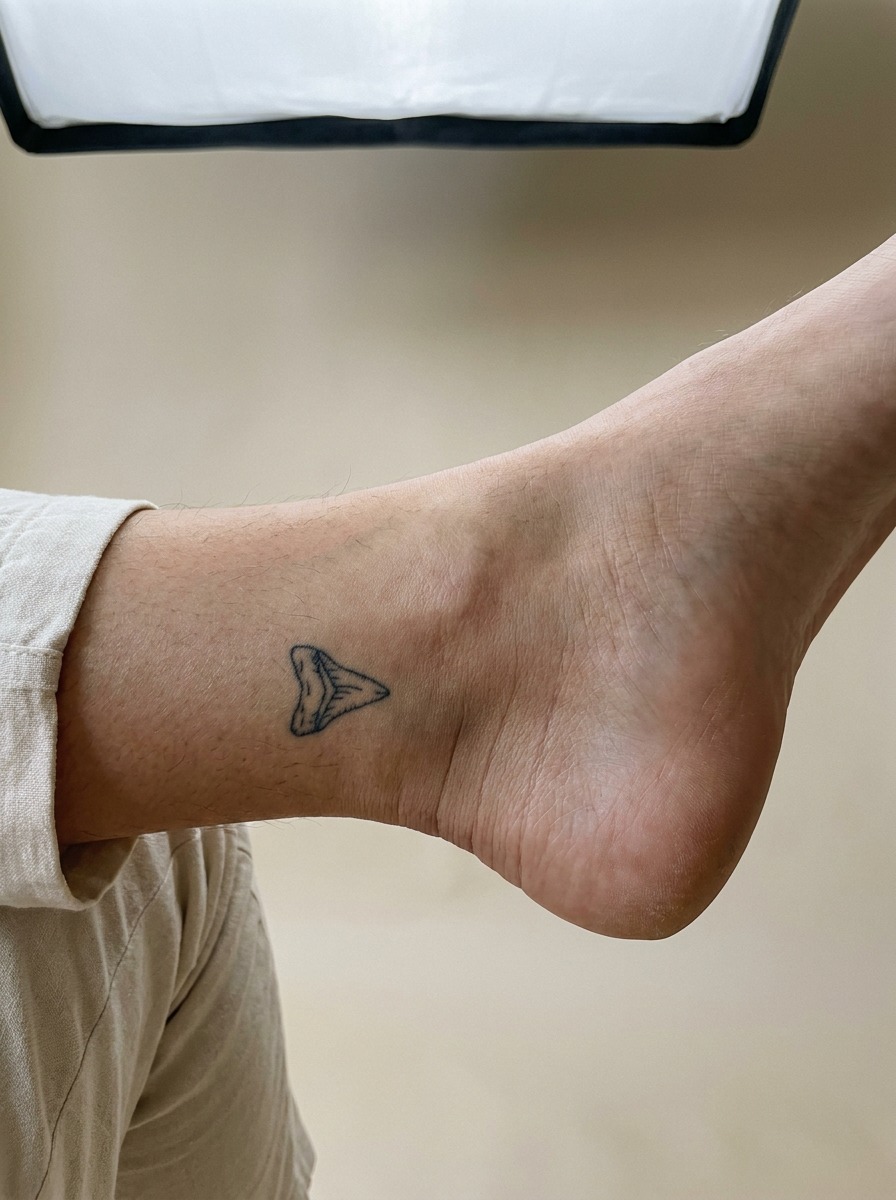
Niho mano, the shark tooth pattern, gets misread constantly as an aggressive symbol. In actual Hawaiian tradition it’s about protection and strength — guardianship, not violence. It’s a strong pairing with ohana specifically because the meaning lines up: a family that protects its own. As a design element, the repeating triangle pattern also holds up better at small scale than most people expect, since the shapes stay legible even shrunk down to an inch or two.
Picking one of these — not stacking all three — is usually the stronger move. The next section gets into how the word itself, not just the symbol beside it, changes the read of the whole piece.
Designer’s tip
Choose one symbol and let it anchor the piece. Stacking honu, hibiscus, and niho mano together usually just competes for attention — pick the one whose meaning matches your reason for getting the tattoo.
Ohana word tattoos: script, font, and why typography matters
Most people picking a font for their ohana tattoo spend less time on it than they’d spend picking a font for a wedding invitation. That’s backwards — this is text that’s permanent, and the letterform choice decides whether it still looks clean in ten years or turns into a smudge.
Cursive script vs. block lettering — how each ages
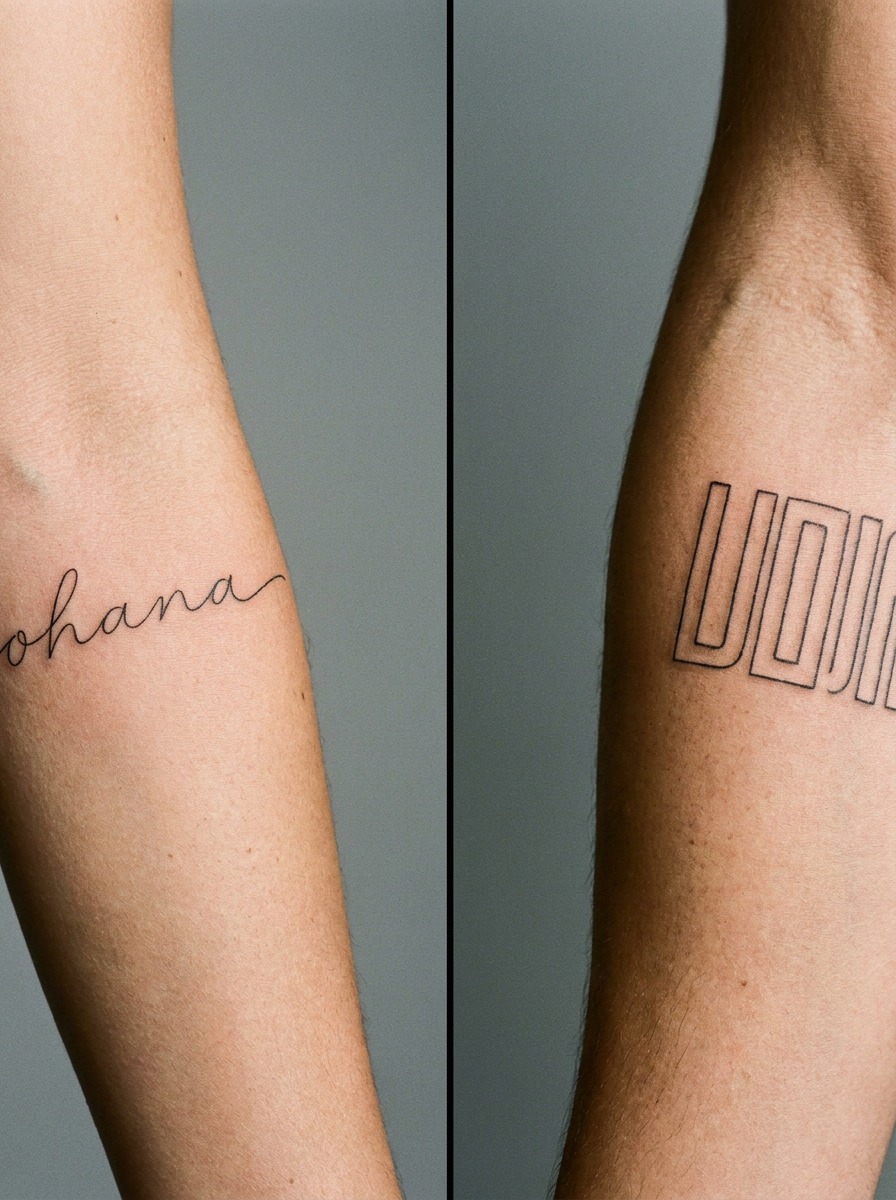
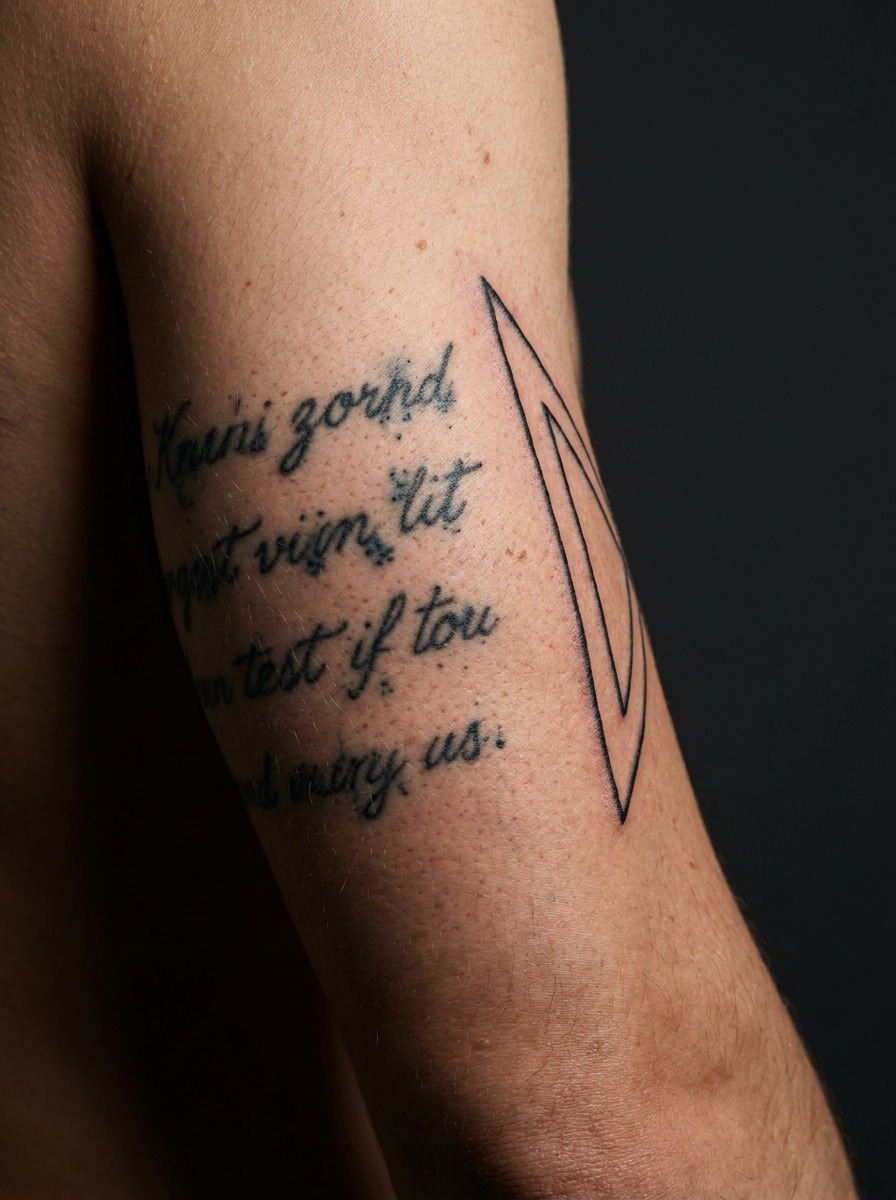
Cursive script is the default for ohana tattoos, and there’s a reason: the connected letters mimic handwriting, which reads as personal and warm. The tradeoff is that thin script lines spread under skin over time — ink migrates slightly with age, and fine serifs or thin connecting strokes are the first thing to blur. Block lettering, by contrast, holds its shape longer because the strokes have more surface area for the ink to sit in.
If you want script, ask your artist to thicken the connecting strokes slightly beyond what looks “correct” on paper. It costs nothing in the design and buys you years of legibility.
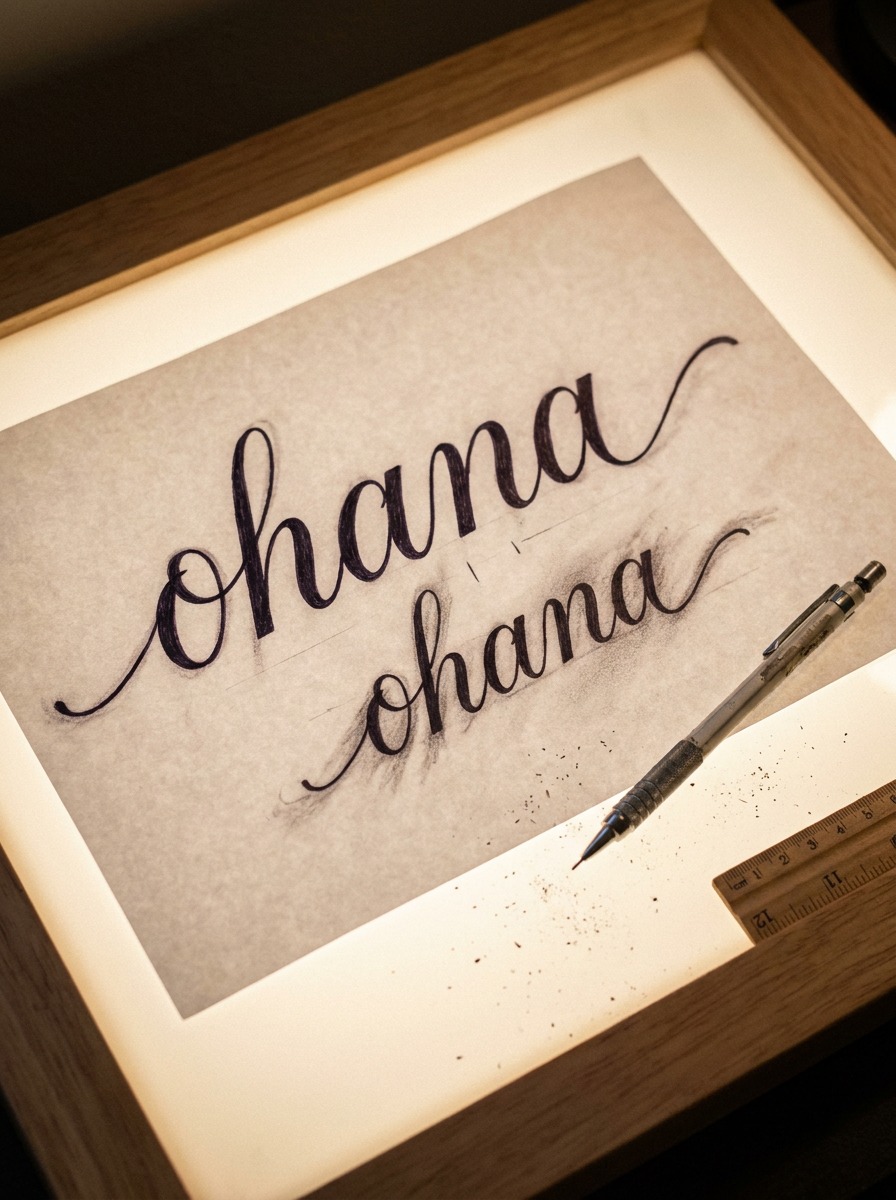
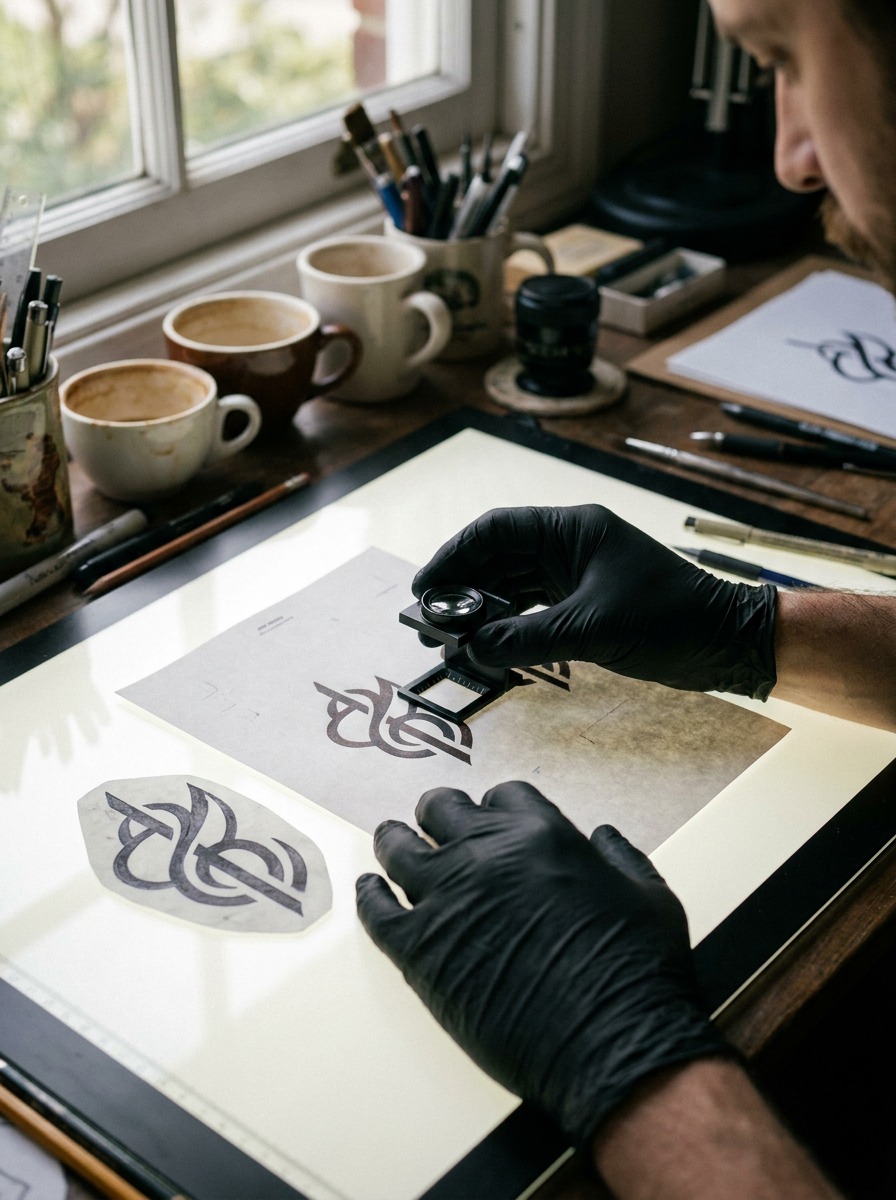
Reading a tattoo the way you’d read a logotype — line weight, kerning at skin scale
I spent years working on brand identity and product graphics before automotive design pulled me in, and one lesson carried over directly: legibility at small scale is about line weight and spacing, not the letterforms themselves. A logotype that looks perfect at business-card size can fall apart shrunk to a favicon. Skin works the same way — a script that looks elegant sketched at 8 inches on paper needs adjustment when it’s inked at 2 inches on a wrist.
Kerning matters more than people expect too. Letters crammed too close together turn into a dark blob at a glance; too much space and the word stops reading as one unit. A good tattoo artist adjusts this instinctively, but it’s worth asking to see the stencil at actual size before it goes on skin — not just the digital mockup.
Get the typography right and the word alone can carry the piece. Add a flower or heart on top of that, and you’re building a composition, which is where things start going wrong if you’re not careful — that’s next.
Ohana tattoo with flower or heart: combining elements without clutter
Adding a flower or heart to an ohana tattoo sounds simple — tuck a small shape next to the word and call it done. In practice, this is where a lot of ohana tattoo ideas fall apart, because two elements fighting for attention read worse than either one alone.
Ohana + hibiscus flower placement
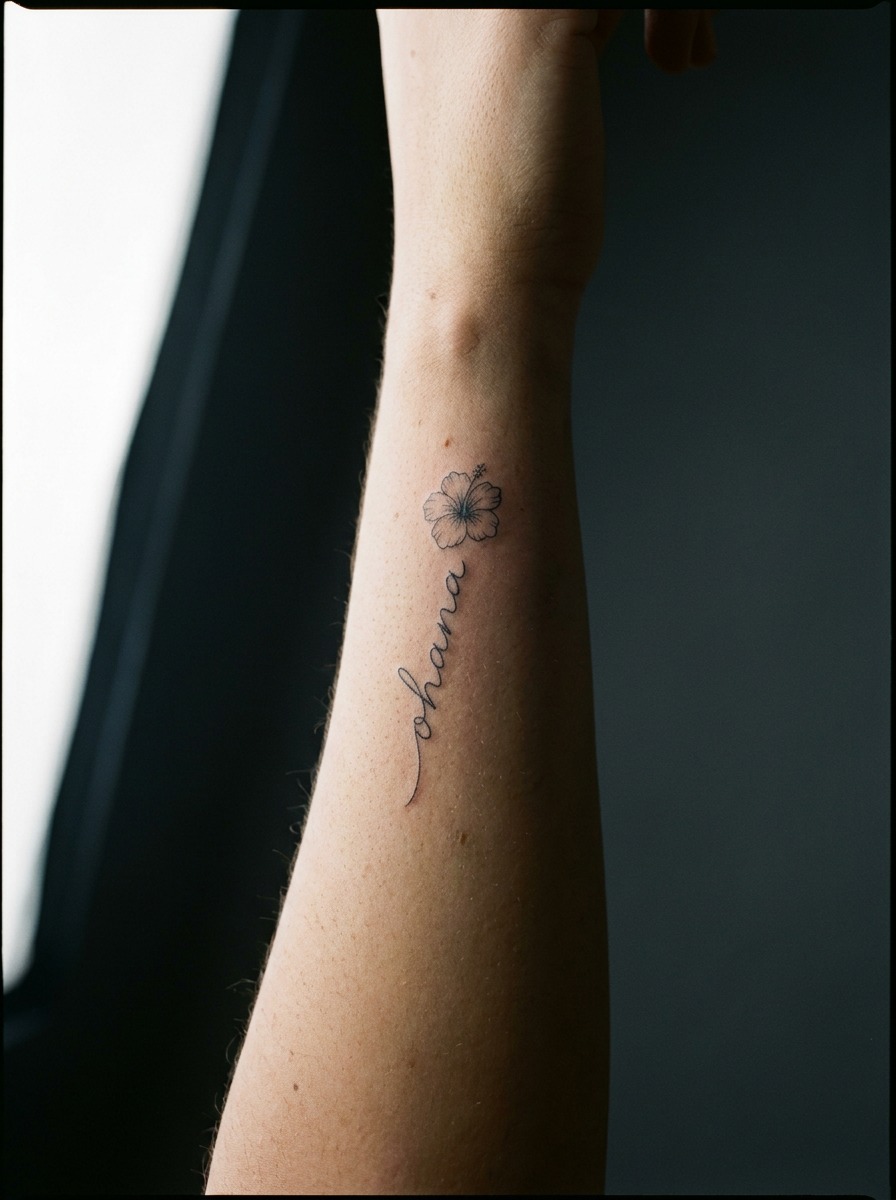
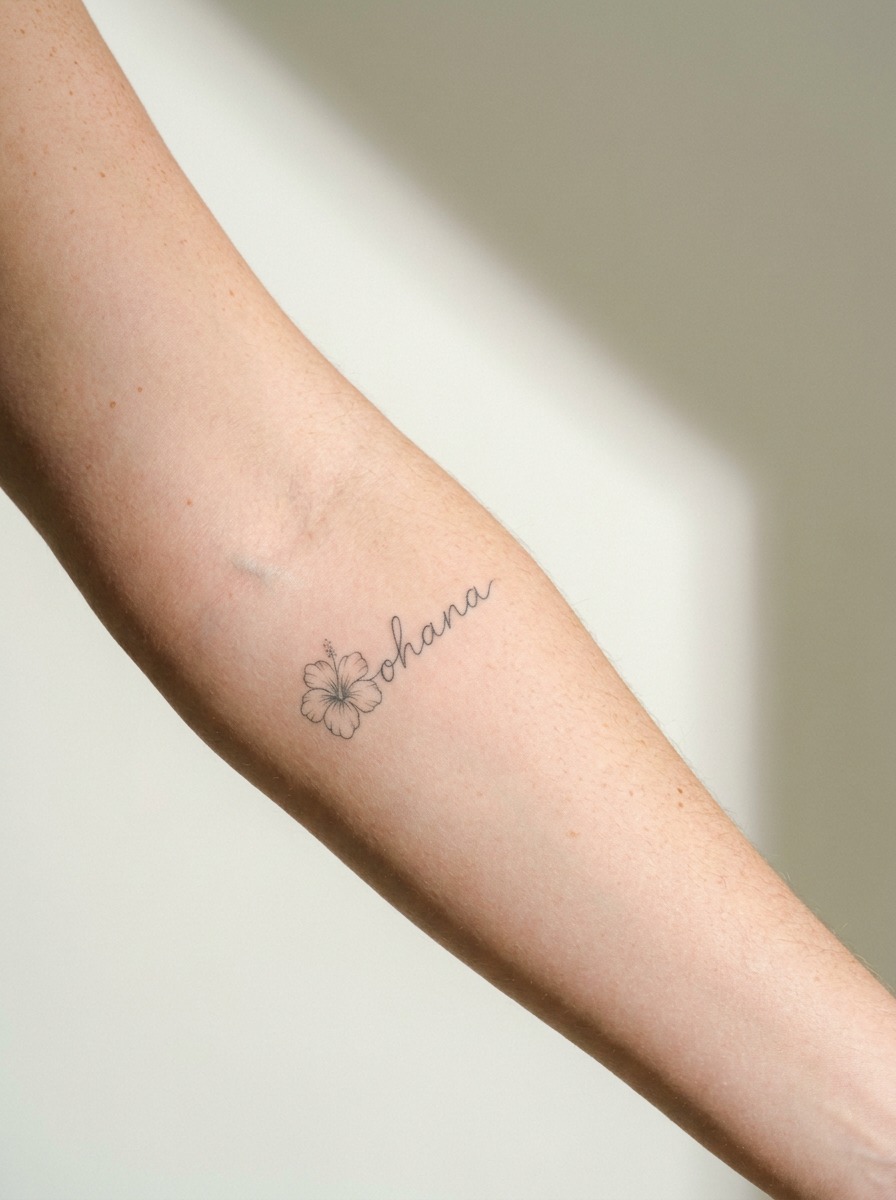
A hibiscus bloom next to ohana script works when it sits to one side of the word, not centered above or below it — centering creates a symmetrical layout that reads as a logo rather than a personal piece, which most people don’t actually want. Keep the flower to roughly a third the size of the script and let it anchor one end of the design, the way a comma sits at the end of a clause rather than in the middle of it. This is the most requested version of ohana tattoo with flower searches, and for good reason: it’s simple to execute clean, and it ages well if the artist keeps the flower’s linework thick enough to hold up over time.
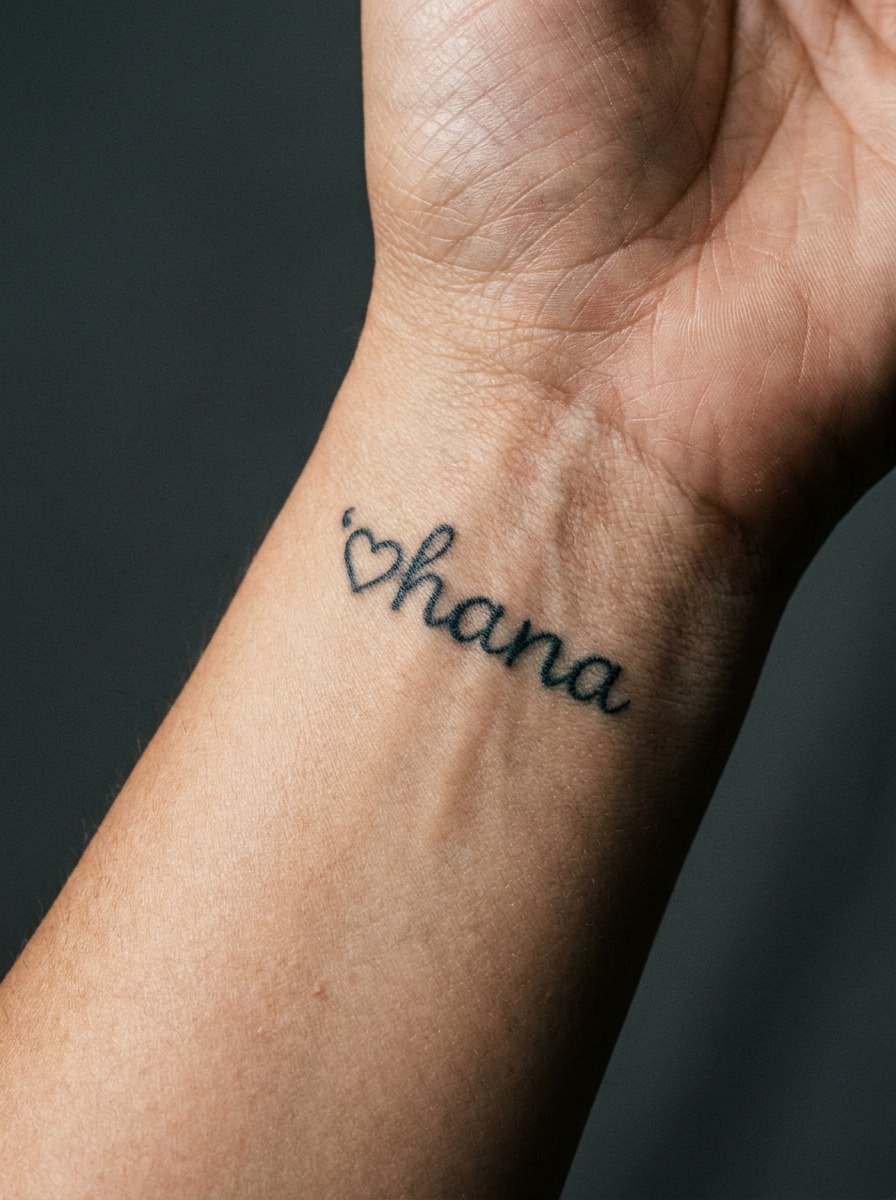
Ohana + heart — when it works, when it’s visual noise
A heart shape paired with ohana can work, but I’ve noticed it works best when the heart replaces a letterform rather than sitting beside the word entirely — swapping the “o” in ohana for a small heart outline, for instance. Bolting a separate heart shape next to or above the script usually just adds visual weight without adding meaning; the word already communicates the emotional core, so the heart ends up redundant. If you want the heart in there, make it earn its place structurally, not just decoratively.
Either combination should stay small and controlled. Once you’ve settled on which single element pairs with your ohana piece, the next question is where on your body it actually holds up — because placement changes everything about how these details read.
Placement and scale: where ohana tattoos actually hold up
I look at tattoo placement the same way I’d look at where a badge sits on a car body — position dictates scale, and scale dictates how much detail you can actually get away with. Get that backwards and even a well-designed ohana piece falls apart on skin.
Wrist and forearm — high visibility, limited detail budget
The inner wrist is the most requested spot for ohana word tattoos, and it makes sense — it’s visible when you want it seen, easy to cover with a watch or sleeve when you don’t. The catch is space. A wrist gives you maybe 2 to 3 inches of usable width before the design wraps awkwardly around the joint. That’s enough for clean script or a single small symbol, not both at full size. The forearm buys more room — 4 to 6 inches of relatively flat surface — which is why it’s the better spot if you’re pairing ohana with a hibiscus or honu rather than just the word alone.
Ribs and behind the ear — more room, less exposure
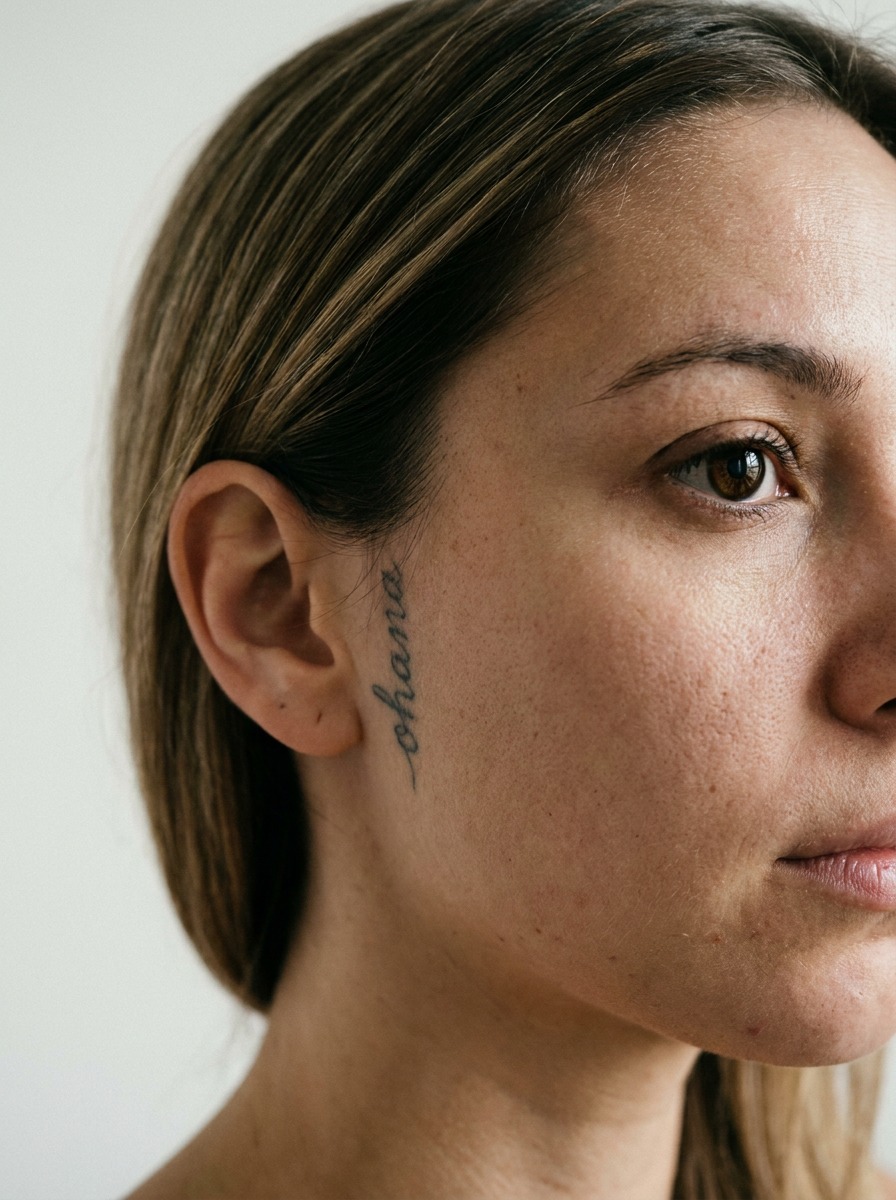
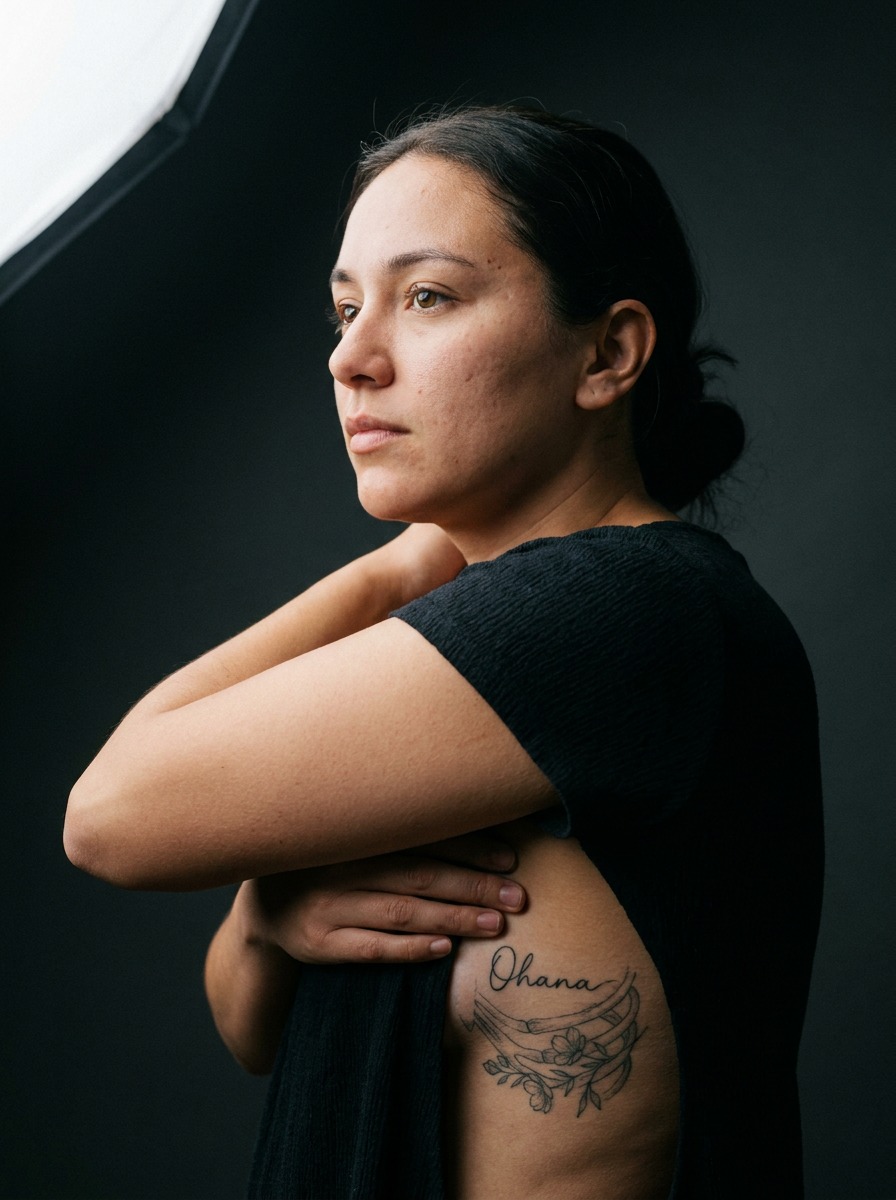
Ribs give you the most real estate of any common placement, easily 6 inches or more of space to work with a larger honu or a full ohana-plus-flower composition. The tradeoff is pain — the rib cage has thin skin over bone with little cushioning, and most people find it one of the more uncomfortable spots to sit through. Behind the ear works for the opposite reason: it’s small, private, and forces restraint, which actually suits a minimal ohana script better than most visible placements do.
Sizing rule of thumb from a designer’s eye
Here’s the test I’d apply to any tattoo before it goes permanent: step back six feet and ask if the design still reads as intentional, not as a smudge. Fine details under a quarter-inch — thin serifs, small gaps between letters, delicate line work — are the first things to lose definition as skin ages and ink settles. If a design only works up close, it’s undersized for where it’s going.
Getting placement and scale right solves most of the technical problems. What’s left is making sure the design itself respects where ohana actually comes from — which is where a lot of well-intentioned tattoos still go wrong.
Placement cheat sheet
Wrist: 2–3 in, script or one small symbol only. Forearm: 4–6 in, room for ohana plus one accent. Ribs: 6+ in, best for larger compositions but more painful. Behind the ear: small and private, suits minimal script.
Getting it right: respecting the culture, avoiding generic filler
The most useful question to ask before getting an ohana tattoo isn’t “will this look good” — it’s “do I understand what this word is actually connected to.” Most of the tattoos I see get the visual right and the context wrong.
Ohana isn’t a Polynesian tribal symbol — don’t conflate the two
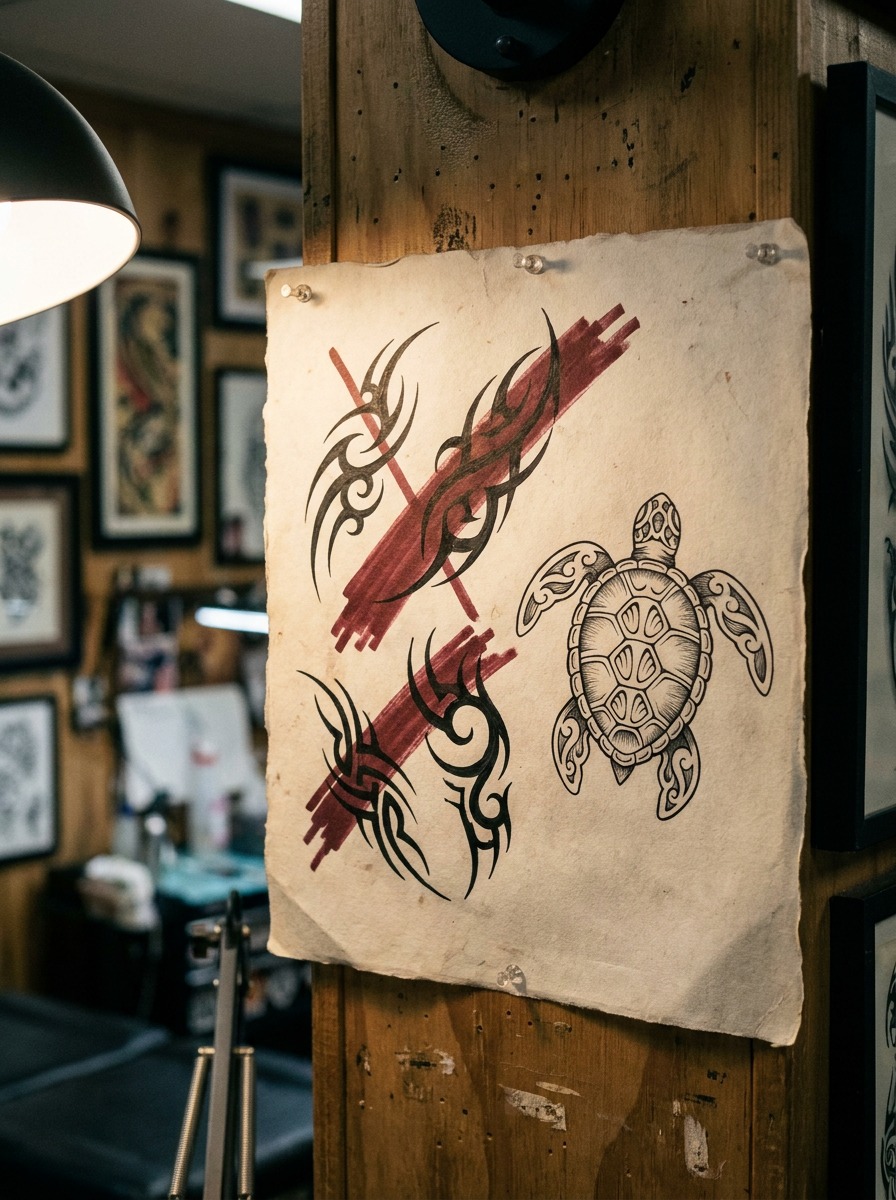
This comes up constantly, so let’s be direct: ohana is a Hawaiian word, not a Polynesian tribal design. Traditional Polynesian tribal tattooing — kakau in Hawaiian, tatau in Samoan — is a distinct practice with its own patterns, meanings, and cultural protocols, often tied to genealogy and status in ways that aren’t meant for casual borrowing. Ohana as a word and concept is different; it’s a value, not a closed ceremonial system, and getting it tattooed with a symbol like the honu or hibiscus stays respectful because those are broadly recognized Hawaiian cultural touchstones, not restricted tribal marks. The line worth holding is simple: know what you’re getting and where it comes from, and skip anything that borrows tribal patterning just because it “looks Polynesian.”
Common mistake — bolting on random “tribal” swirls that mean nothing
I see this constantly in flash sheets: an ohana word tattoo surrounded by generic swirling linework labeled “tribal” that has no connection to any actual tradition. It’s decorative noise pulled from a stock design library, not a real symbol. If a shape doesn’t have a specific meaning you can name — the way honu, hibiscus, and niho mano do — leave it out. A clean, simple design beats a busy one padded with meaningless filler every time.
Finding an artist who knows the difference
Ask to see an artist’s portfolio for Hawaiian or Polynesian-influenced work specifically, not just their general tattoo book. An artist who’s done this before will ask you questions about which symbol you actually want and why, rather than pulling up a generic template. That conversation alone tells you whether they’re going to give you something considered or something copied.
The takeaway
The ohana tattoos that hold up over time all share the same pattern: one real symbol, sized for where it’s actually going, with nothing extra bolted on for the sake of filling space. Skip the generic tribal swirls, skip stacking three symbols at once, and pick typography that’s built to age — not just look good on day one.
If you’re planning yours, start with placement, not the design itself. Figure out whether you want a wrist-sized piece or something with room to breathe on the ribs, and let that decision drive everything else — the symbol, the size, whether the flower or heart earns its spot. Do it in that order and you’ll end up with something that still reads clean five years from now, not a smudge you’re planning to cover up.
More ohana tattoo reference ideas

Frequently asked questions
What does an ohana tattoo mean?
Ohana is the Hawaiian word for family, but it covers more than blood relatives — it includes close friends and anyone folded into that circle of mutual care, built on the idea that nobody gets left behind. As a tattoo, it usually pairs with a symbol like the honu (sea turtle) for longevity, a hibiscus for beauty within the bond, or a shark tooth (niho mano) for protection, rather than standing alone as just script.
Is it okay to get an ohana tattoo if you’re not Hawaiian?
Ohana is a word and value, not a closed ceremonial practice, so getting it tattooed with a recognized Hawaiian symbol like a hibiscus or honu is generally considered respectful. The line to watch is conflating it with actual Polynesian tribal tattooing — kakau or tatau — which carries specific cultural protocols around genealogy and status. Know the difference, skip generic “tribal” swirls with no real meaning, and you’re fine.
What’s the best placement for an ohana tattoo?
The inner wrist is the most requested spot for a simple word tattoo, but it only gives you 2 to 3 inches of usable space. The forearm offers 4 to 6 inches, which works better if you’re pairing ohana with a flower or symbol. Ribs give the most room for a larger design but hurt more to sit through, while behind the ear suits a small, private script.
What does an ohana tattoo with a flower mean?
Pairing ohana with a hibiscus — Hawaii’s state flower — usually signals beauty and delicate strength within family bonds. The cleanest version places the flower to one side of the script rather than centered, at roughly a third the size of the word, so it reads as an accent instead of competing for attention.
How much does an ohana tattoo cost?
A small wrist-sized script tattoo typically runs $80 to $150 at most shops, since it’s usually under an hour of work. Add a symbol like a hibiscus or honu, or go bigger on the forearm or ribs, and expect $150 to $350 depending on detail and your artist’s hourly rate. Custom work from an artist experienced in Hawaiian-influenced designs tends to sit at the higher end.
What’s the most common mistake people make with ohana tattoos?
Bolting on generic “tribal” swirls that have no connection to any real tradition — pulled from a flash sheet rather than chosen for meaning. The fix is simple: if you can’t name what a shape represents the way you can with honu, hibiscus, or niho mano, leave it out. A clean design with one intentional symbol beats a busy one every time.
What does an ohana tattoo with a heart mean?
It’s meant to reinforce the emotional core of ohana, but it only works cleanly when the heart replaces a letterform — swapping the “o” for a small heart outline — rather than sitting as a separate shape next to the word. A heart bolted on beside the script usually just adds visual weight without adding new meaning, since the word already carries that weight on its own.
If you are still comparing directions, the cultural-symbolism angle in Greek tattoo ideas, the floral balance in floral sleeve tattoo ideas, and the fine-line restraint in dotwork tattoo ideas are useful next reads.
- 80shares
- Facebook0
- Pinterest80
- Twitter0
- Reddit0