Tattoo ideas for women work when the design and placement actually match. Fine-line flowers, micro-realism, butterflies, celestial symbols, script, ornamental lower-back pieces, botanical sleeves, blackwork — I’ve seen all of them go wrong, and it’s almost never the artist’s fault.
- What are the best tattoo ideas for women in 2026?
- Understanding Tattoos
- Why Women Choose Tattoos
- Tattoo ideas for women by style
- Best tattoo placements for women
- Symbolism in Tattoos
- Cultural Significance of Tattoos
- Personalized Tattoo Ideas
- Tattoo Styles and Techniques
- Working with Tattoo Artists
- How much do tattoo ideas for women cost?
- Tattoo aftercare and safety
- Tattoo ideas for women FAQ
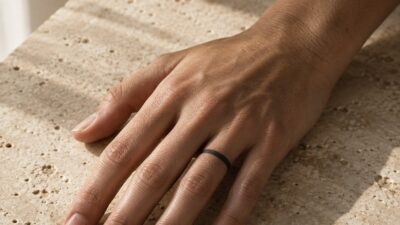
Scale is the problem nobody talks about. A wrist tattoo needs simple, clean shapes. Anything with too much detail in that space softens into a smear over time — sometimes within a few years. A thigh, shoulder, rib, or back piece can hold shading and movement and layered linework. Put a complex design on a spot that can’t support it and the result looks muddy no matter how good the needle work was.
The best tattoo ideas for women in 2026 are designs that match the body area, detail level, and how the style ages. Fine-line flowers, butterflies, script, celestial symbols, ornamental lower-back pieces, botanical sleeves, micro-realism, and bold blackwork can all work when the scale is right. Small wrist, finger, and ankle tattoos need simple shapes because tiny details blur faster.
Thigh, shoulder, rib, back, and upper-arm placements can hold shading, movement, and layered linework better. Before booking, compare healed photos, ask how the design ages, check studio hygiene basics, and choose an artist whose portfolio already shows the style you want. Treat Pinterest references as mood, not a blueprint; the final design should be redrawn for your skin, size, and placement.
What are the best tattoo ideas for women in 2026?
The best tattoo ideas for women in 2026 aren’t really about trends — they’re about fit. Your style, the placement, how much detail the skin can hold, and whether you want to think about touch-ups in five years. Fine-line flowers, butterflies, celestial symbols, script, ornamental lower-back pieces, botanical sleeves, micro-realism, blackwork — I’ve seen all of these look stunning and all of these look like mistakes. Usually the design isn’t the problem.
Small wrist, finger, and ankle placements need clean, simple shapes. Tiny detail blurs as skin ages — what looked sharp in the reference photo turns soft and muddy faster than most people expect. Thigh, shoulder, rib, back, upper arm — those areas can handle shading, movement, layered linework. More room means more options. Before you book, ask the artist for healed photos, not fresh ones. Fresh tattoos always look good. It’s the two-year photo that tells you something.
| Tattoo idea | Best placement | Best for | Aging and cost note |
|---|---|---|---|
| Fine-line flower | Wrist, collarbone, ankle | Soft, feminine, easy-to-personalize ink | Keep petals simple; tiny florals may need touch-ups |
| Butterfly | Shoulder, forearm, rib, ankle | Transformation symbolism with a clear silhouette | Larger wings hold detail better than micro versions |
| Script | Inner arm, ribs, collarbone | Names, dates, handwriting, short phrases | Readable lettering matters more than a fancy font |
| Mandala or ornamental piece | Shoulder, spine, back, thigh | Symmetry, jewelry-like detail, statement placement | Needs enough size for clean pattern spacing |
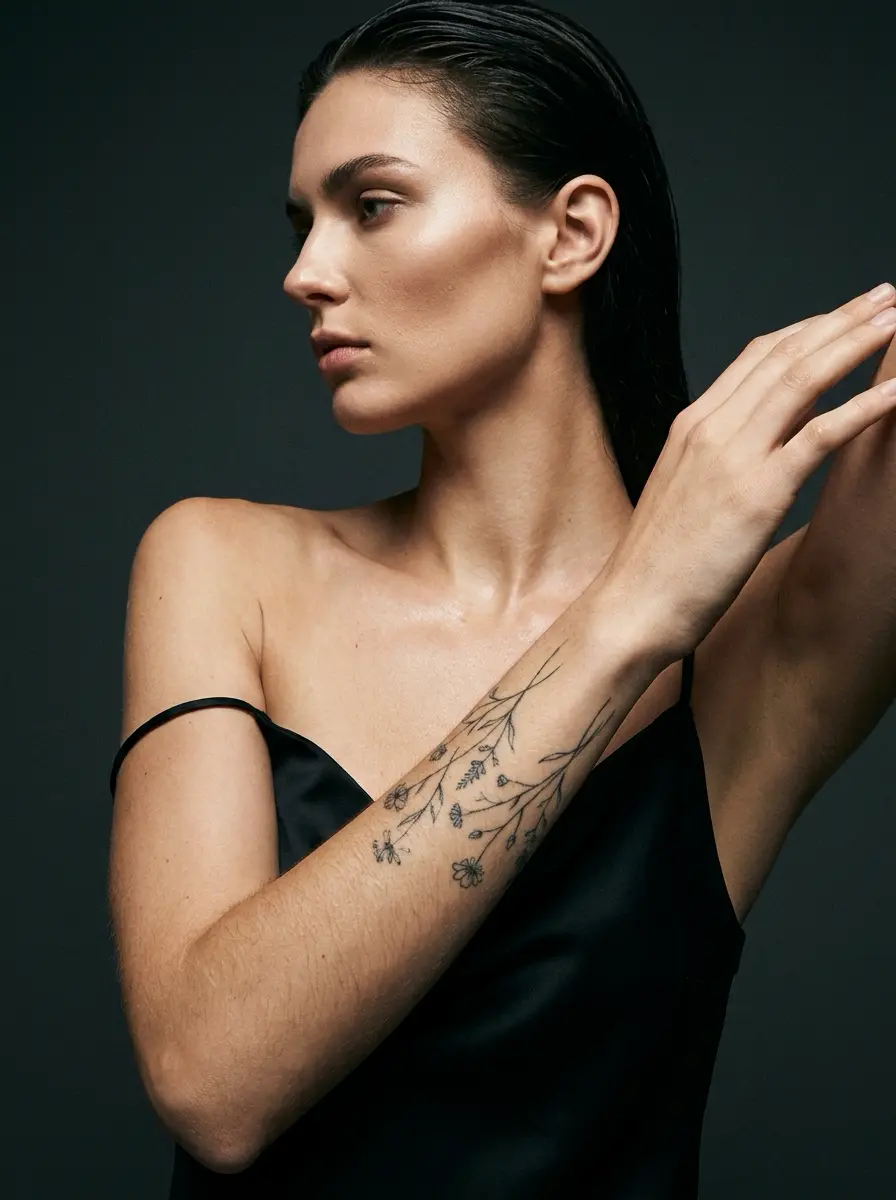
| Botanical sleeve | Upper arm, forearm, shoulder | Layered flowers, vines, leaves, birth flowers | Costs more, but the larger canvas protects detail |
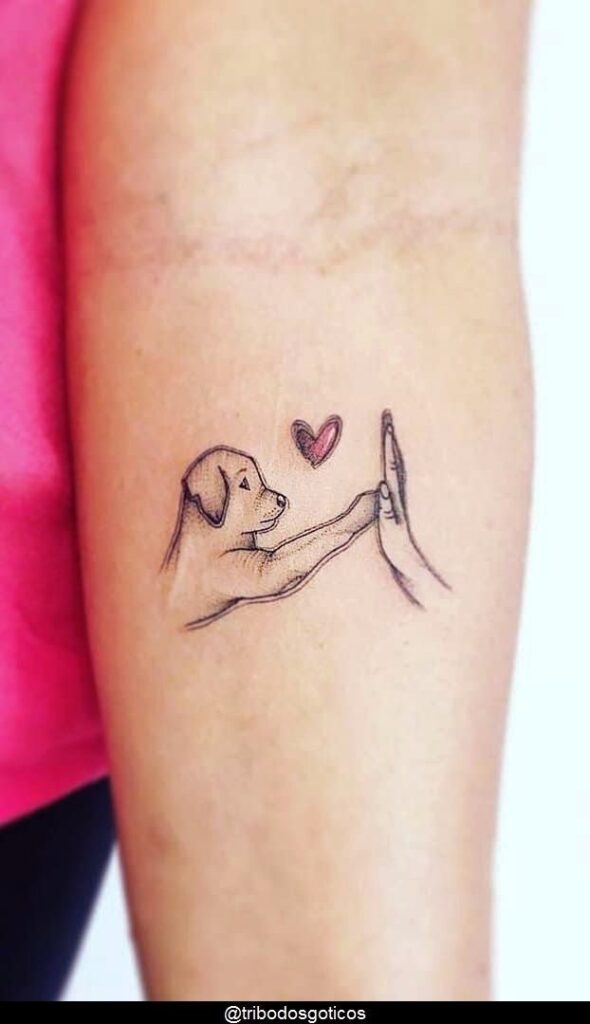
| Micro-realism | Upper arm, thigh, shoulder blade | Pets, portraits, tiny objects, detailed memories | Only works when the artist has healed examples |
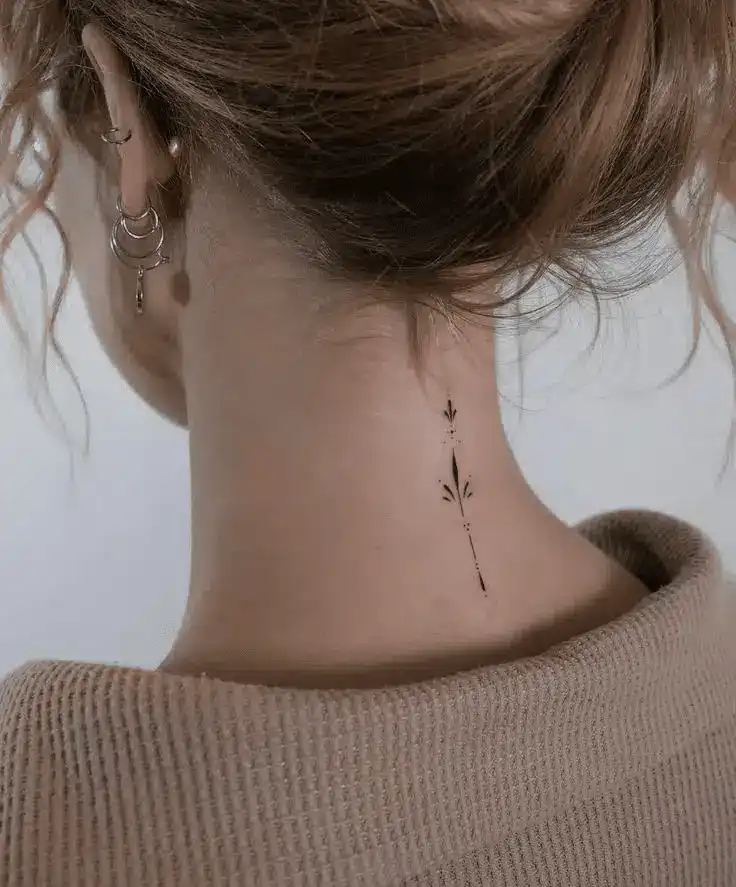
| Celestial symbol | Wrist, sternum, spine, ankle | Moons, stars, constellations, zodiac ideas | Simple shapes age better than crowded star maps |
| Bold blackwork | Arm, thigh, back, lower back | High contrast, graphic shapes, stronger visual impact | Usually ages better than pale or tiny detail |
For small feminine designs with a lighter mood, browse these delicate tattoo ideas before choosing placement.
Three things worth checking before you commit to a reference: how that style holds up after five years of sun and skin, whether the artist has healed photos — not fresh photos, healed — and how often you’ll actually be looking at it. A forearm piece is visible every time you reach for something. A ribcage tattoo is basically private. Neither is wrong, but they’re different decisions. If you are replacing older ink instead of starting fresh, compare these cover up tattoo ideas before choosing something lighter or smaller than the old design.
For soft symbolic ink, this guide to heart tattoo designs is worth checking before you decide between fine-line, floral, anatomical, or matching pieces.
This guide covers tattoo ideas for women that have staying power — placement logic, what things actually cost, questions to ask before you book, and how to take care of it after. The goal is a tattoo you’re still glad you got when you’re forty-five.
If you prefer something discreet, this guide to small tattoo ideas covers tiny symbols, fine-line designs, and placement notes before you commit.
Picking a first tattoo is harder than most people expect. The design is only part of it — placement, scale, and finding an artist whose portfolio actually matches the style you want all matter just as much.
Tattooing has been around for centuries. What changed recently is who’s in the chair and who’s holding the needle. More women are getting tattooed, more female artists are running their own studios, and the whole industry shifted away from walk-in flash toward booked-out custom work.
Some tattoo designs keep getting chosen for a reason. A fine-line flower, a snake wrapping around the arm, a small moon on the wrist — these hold up because they still look good ten years in, not just fresh off the needle.
Some women want something tiny and easy to hide. Others go all in with sleeves, back pieces, or bold blackwork. There’s no single right direction anymore, and that’s made the whole conversation around tattoos more interesting than it was fifteen years ago.
Tattoos are permanent designs made by placing ink under the skin. Artists use tattoo machines, though some work with hand-poking techniques depending on the style. The rebellious-by-default image the medium used to carry is mostly gone — at this point, your dentist probably has a sleeve.
If you like dramatic black-and-gray portraits, roses, or script, look at Chicano art references for a stronger sense of symbol, contrast, and placement.
At this point, tattoos are just part of everyday life. People get them for memories, aesthetics, personal stories, or sometimes for no deep reason at all. I think that’s part of the appeal too. Not every tattoo needs a dramatic meaning behind it. Sometimes you just want artwork you enjoy looking at every day.

For celestial ink with softer symbolism, these moon tattoo ideas for women cover crescent, floral, full moon, and phase designs.
Women choose tattoos for a lot of different reasons, and most of them aren’t what people assume. Sometimes it’s about marking a major life moment. Sometimes it’s tied to a person, a memory, or a version of yourself you don’t want to lose.
Other times it’s way less serious. You saw a design, loved the way it looked, and decided you wanted it on your skin.
For some women, tattoos come after trauma, surgery, illness, or a difficult stretch — a way of taking ownership of their body again. I’ve heard that described more times than I can count. But not every tattoo needs that kind of weight behind it.
A tiny fine-line piece, a floral sleeve, matching symbols with friends, random flash picked on impulse — it all counts. Tattoos got mainstream because there’s room for all of it: meaning, aesthetics, spontaneity, or none of the above.
Understanding Tattoos
Tattooing has been around for thousands of years — Egypt, Greece, Rome, most of human history in some form. The method hasn’t changed much: ink injected into the skin, permanent.
What has changed is who’s sitting in the chair. Women now account for a large share of studio bookings in most cities, and the work reflects it — more fine line, more botanical and floral styles, more attention to how a piece interacts with the body rather than just sitting on it.
For those reconsidering their ink, technology has made it easier than ever to experiment with a tattoo removal app, offering a glimpse of what life might look like without certain designs.


Most tattoos are still done with black ink. It heals well, ages better than a lot of colors, and works with almost every style — fine-line, traditional, blackwork, realism, all of it. The artist pushes the ink under the skin with needles, adjusting depth and speed depending on the linework or shading they’re doing. That’s why two artists can tattoo the same design and get completely different results.
The meaning behind tattoos varies a lot too. Some people carry deeply personal pieces connected to family, loss, relationships, or major life changes. Other people just think a design looks cool. Honestly, both approaches make sense.
Even now, tattoos still get judged in certain spaces. Some people hear “tattoo” and immediately think rebellious teenager, biker stereotype, or someone being unprofessional. That mindset hasn’t fully disappeared, especially in older generations or stricter workplaces.
But compared to even ten or fifteen years ago, the difference is huge. Ink is everywhere now — teachers, designers, doctors, athletes, office workers. At this point, most people see body art the same way they see fashion or hairstyles: another way someone presents themselves. And with so many styles out there, from tiny wrist pieces to full-body work, almost anyone can find something that fits their taste.
In conclusion, tattoos are a unique and personal form of body art that have been around for thousands of years. While there are still some negative stereotypes associated with tattoos, they are becoming more accepted in society and are a popular way for people to express their individuality and creativity.
Why Women Choose Tattoos
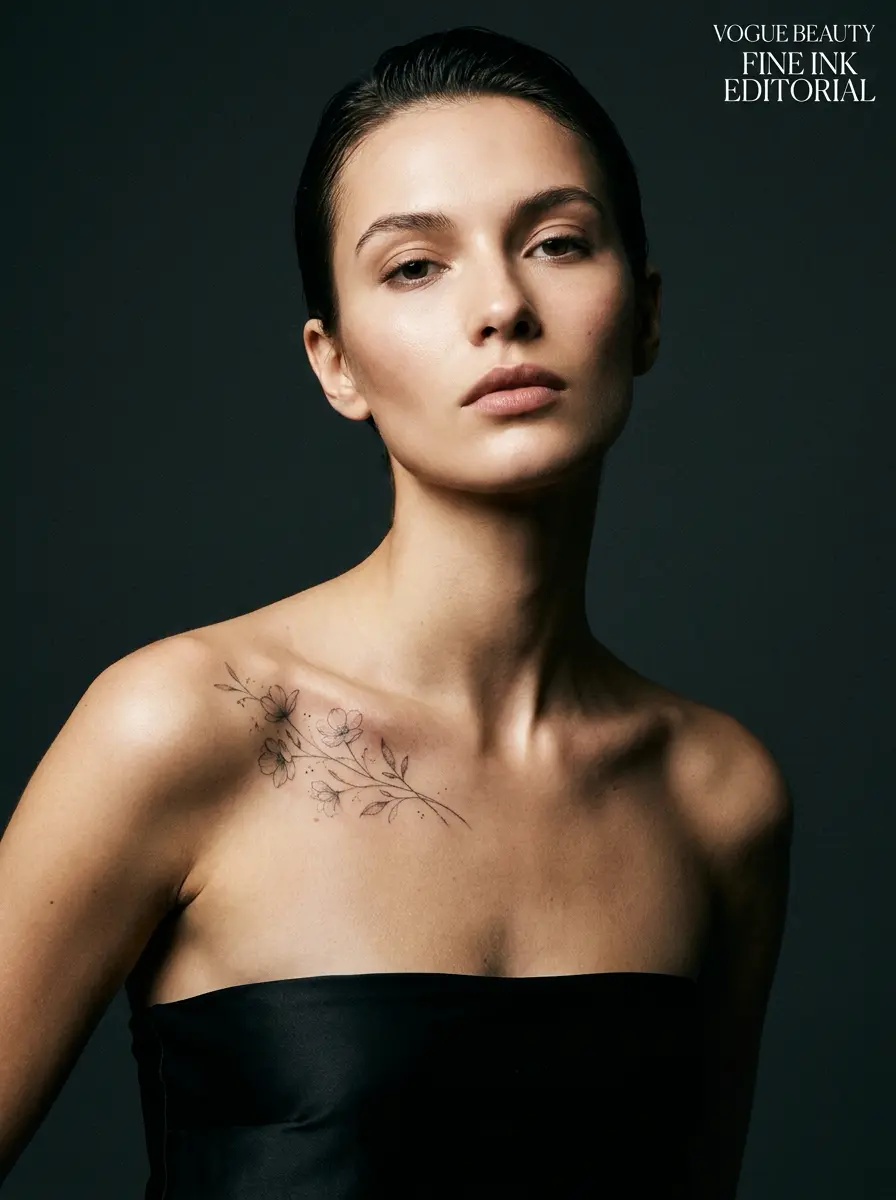
Women choose ink for different reasons: a memory, a body change, a style shift, a private reminder, or simply because the artwork looks right on them. The reason does not have to be dramatic, but it should be clear enough that you still understand the choice years later. Common motivations include:
- Empowerment: Tattoos can be a powerful symbol of self-empowerment for women. Getting a tattoo can be a way to take ownership of their bodies and express their independence and confidence, as well as fulfill a desire to express themselves or to achieve spiritual growth through meaningful tattoo choices.
- Femininity: While tattoos were once seen as a masculine art form, more and more women are embracing tattoos as a way to express their femininity. From delicate flowers to intricate lace designs, tattoos can be a beautiful and feminine addition to a woman’s body. Many designs also symbolize joy and serve as reminders of happiness, positivity, and personal growth.
- Personalization: Tattoos allow women to express their unique personalities and values. Whether it’s a symbol of love, a tribute to a loved one, or a representation of their cultural heritage, tattoos can be a deeply personal and meaningful form of self-expression.
- Strength: Tattoos can also be a symbol of strength and resilience for women. Whether it’s a tattoo of a powerful animal or a quote that inspires them, tattoos can be a constant reminder of their inner strength and power, and can serve as reminders to persevere through dark times.
- Community: Tattoos can also be a way for women to connect with others who share similar interests or experiences. From matching tattoos with friends to getting a tattoo to commemorate a shared experience, tattoos can be a way to build community and connection.
Overall, body art has become a normal form of self-expression for women from all walks of life. Whether it is a small symbol, a floral piece, a quote, or a larger custom design, the strongest choice is the one that still fits your style after the first excitement wears off.
Tattoo ideas for women by style
Start with the mood before the motif. Do you want something soft and botanical, sharp and graphic, symbolic, romantic, dark, or barely visible? Flowers, butterflies, mandalas, feathers, celestial symbols, anime references, and lettering can all work, but the best version usually comes from matching the idea to the right scale and placement.

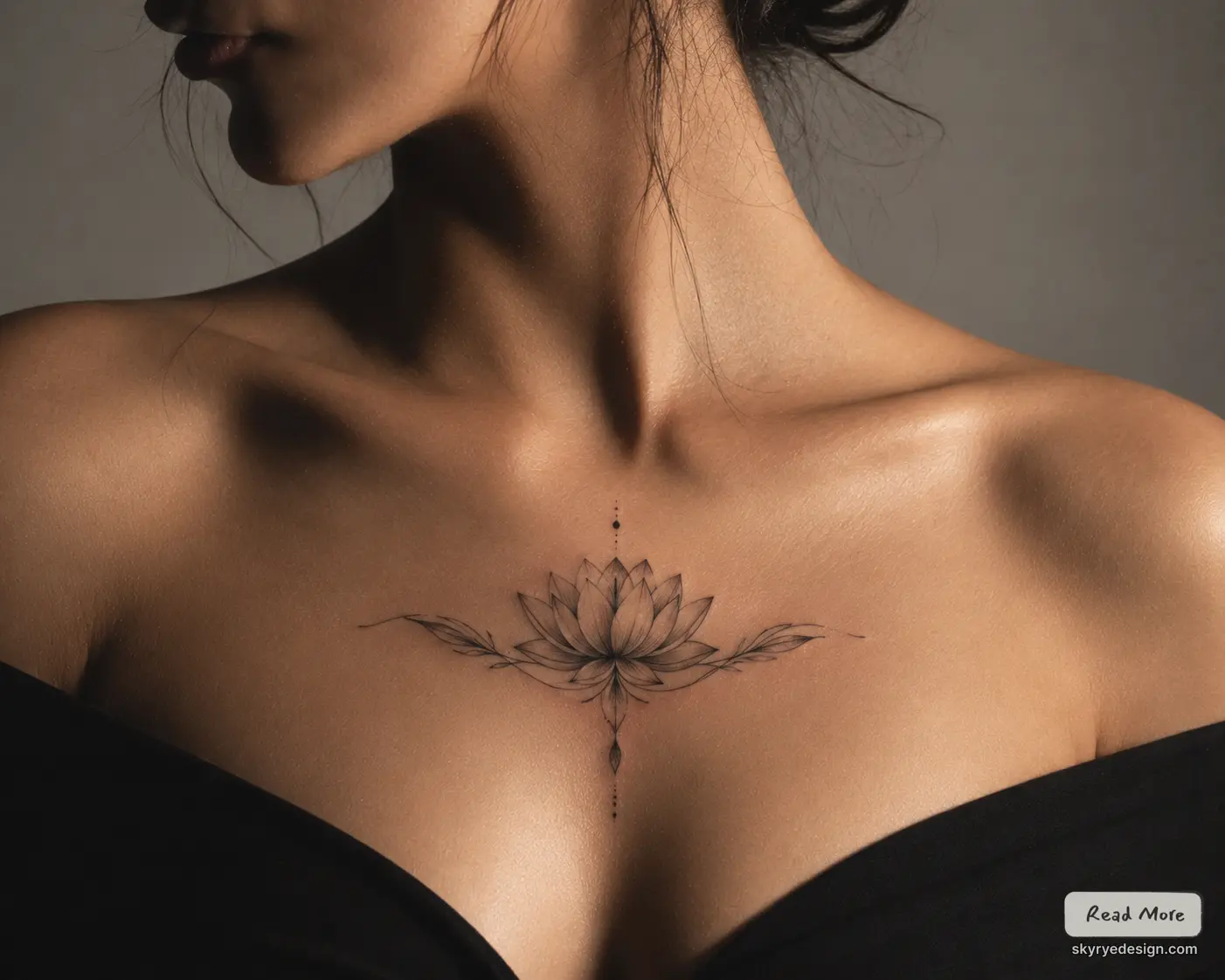
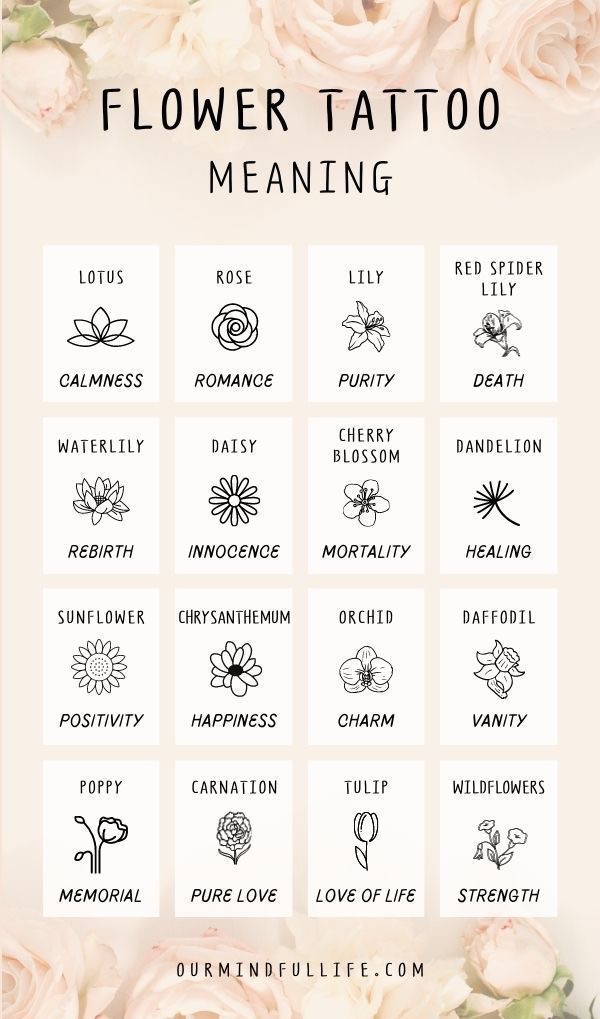
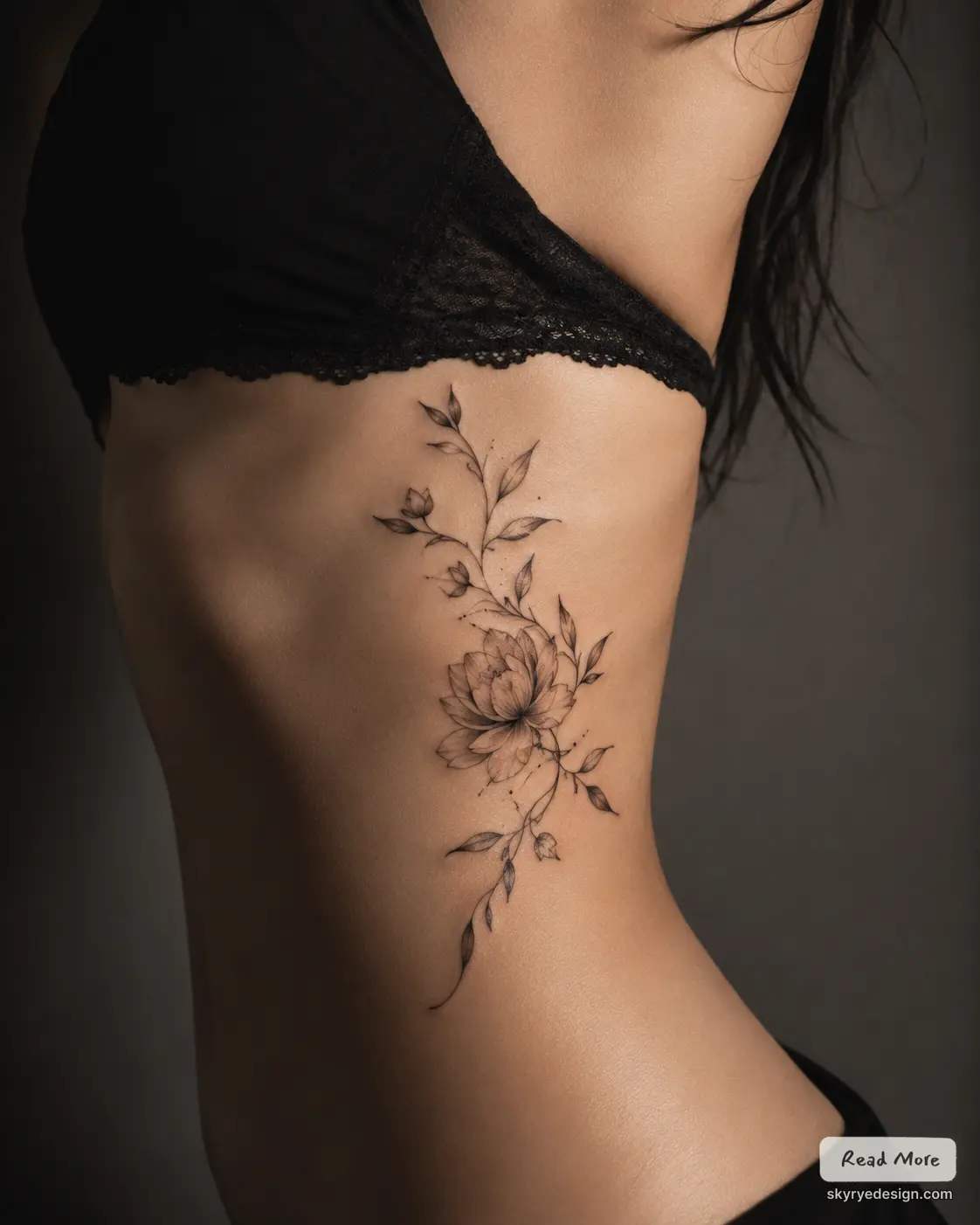
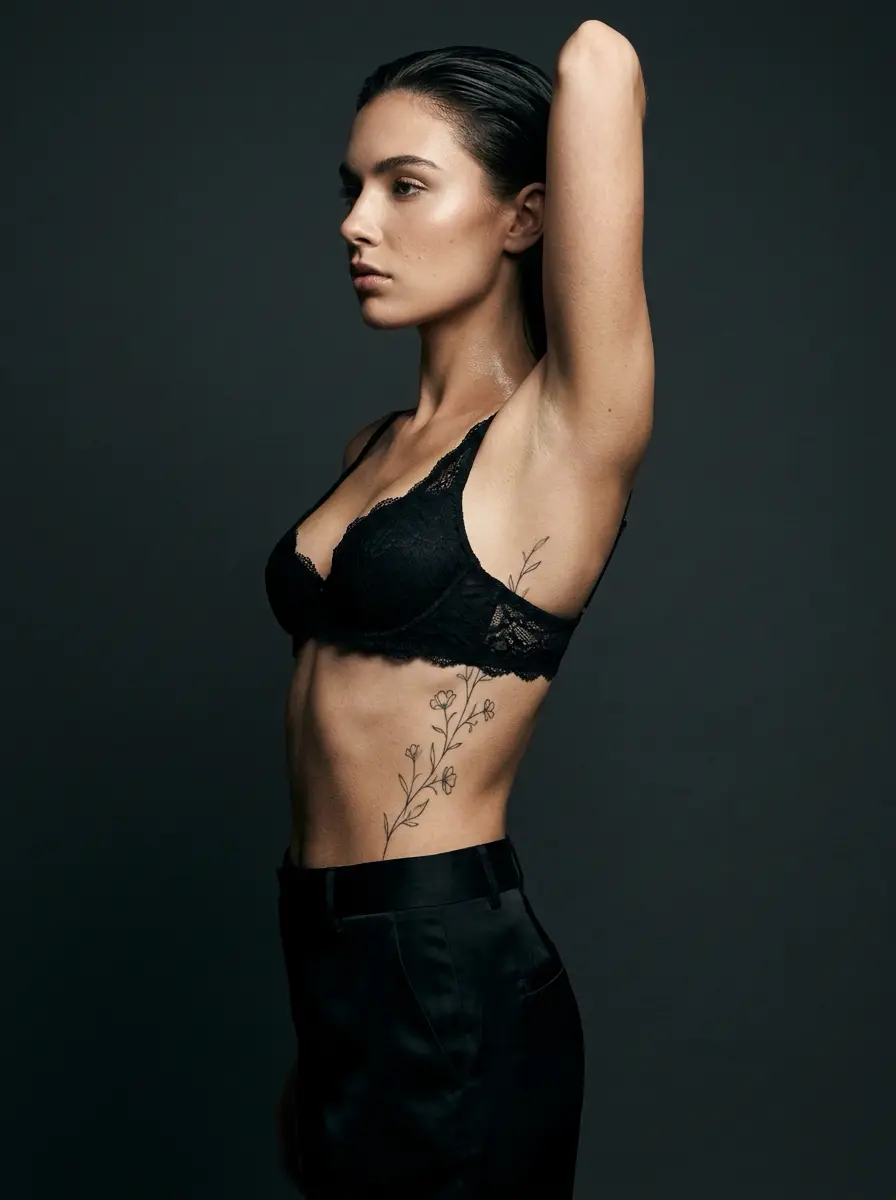
Flower pieces are popular because they adapt well. Roses can look classic or dramatic. Sunflowers feel brighter and more open. Lotus designs are calmer and more symmetrical. If you want color, ask how the pigment usually heals on your skin tone; if you want longevity, a little black structure often helps the shape stay readable.

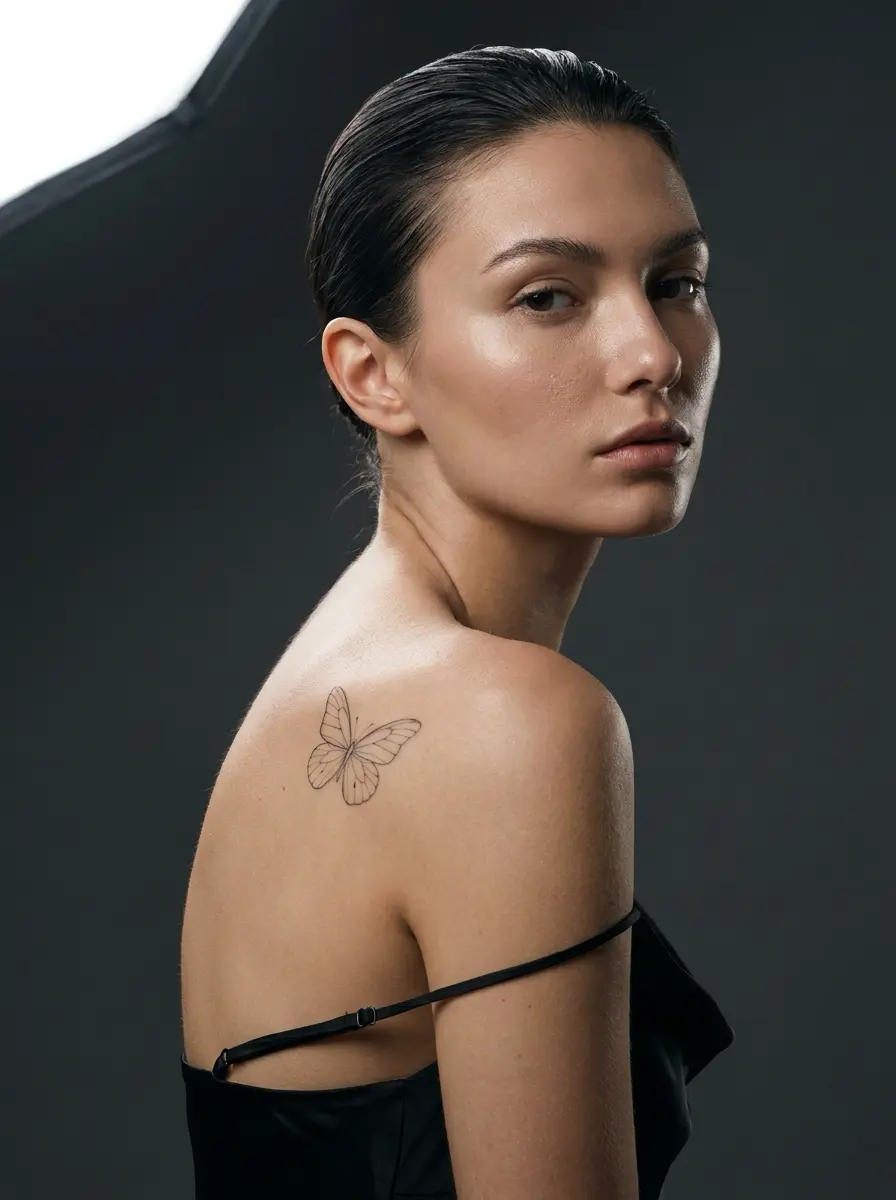
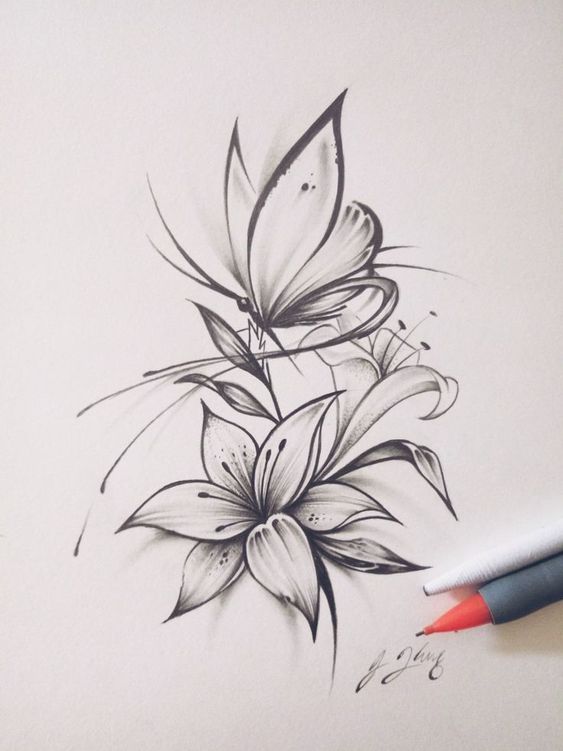
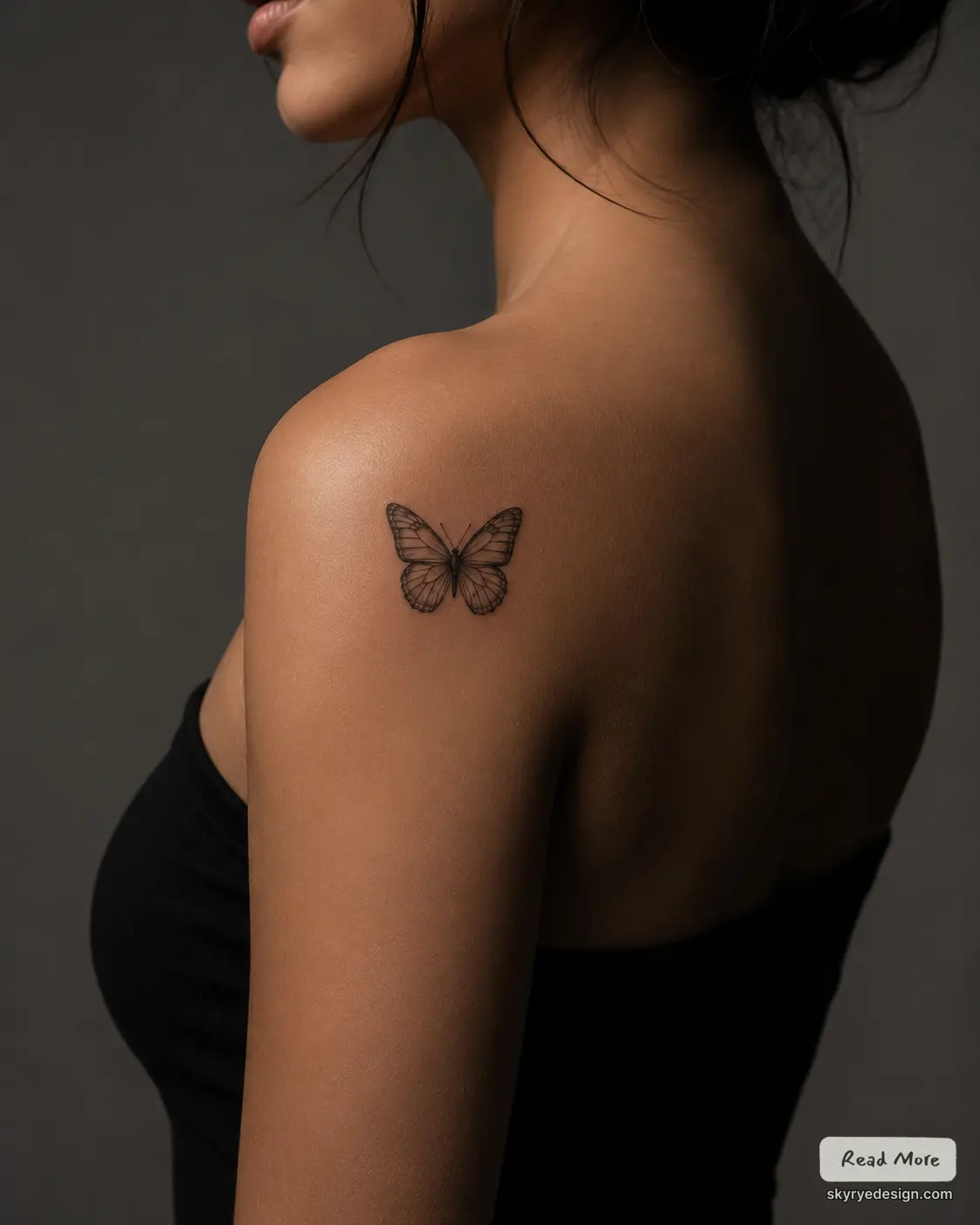
Butterflies work when the silhouette is clean. A tiny fine-line butterfly can sit on the wrist, ankle, or collarbone; a larger version can become part of a floral shoulder, rib, or back piece. They are often linked with change and growth, but the wing shape, line weight, and placement decide whether the result feels delicate or bold.

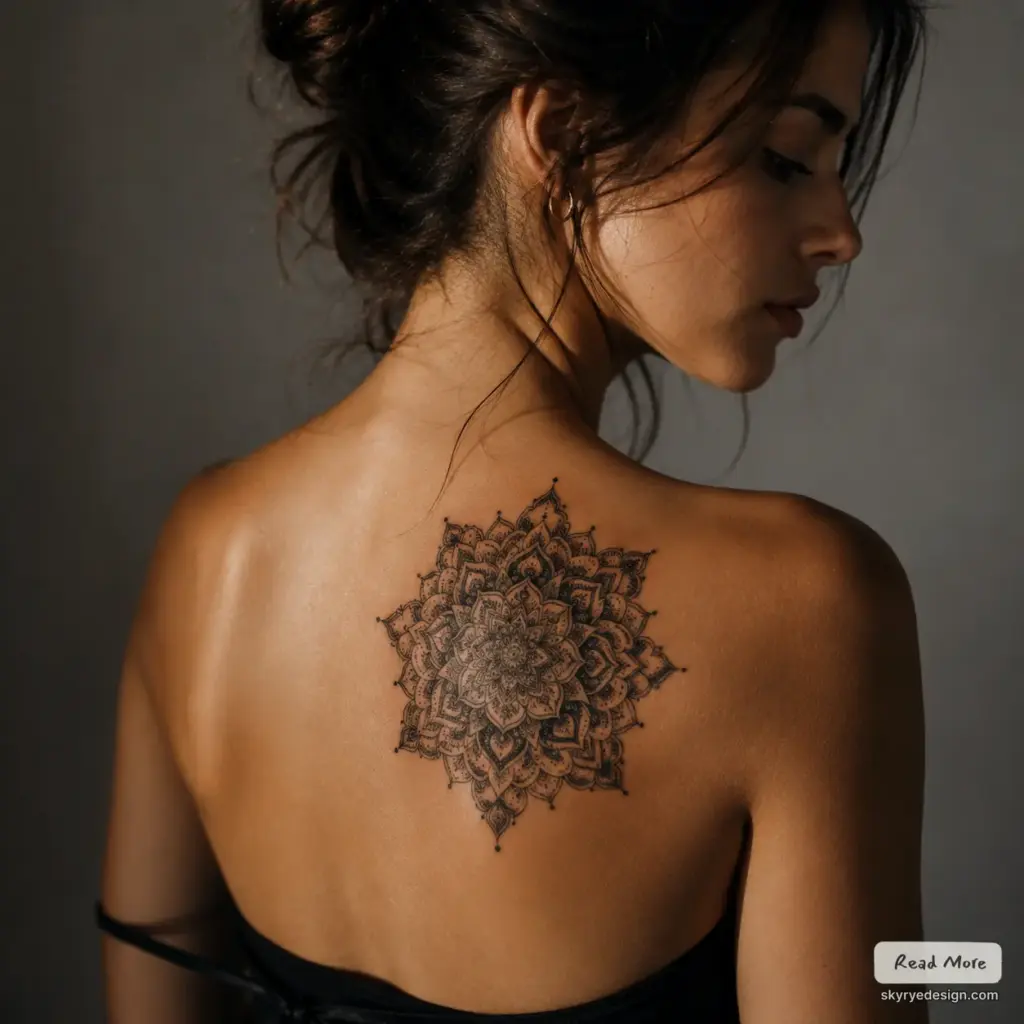
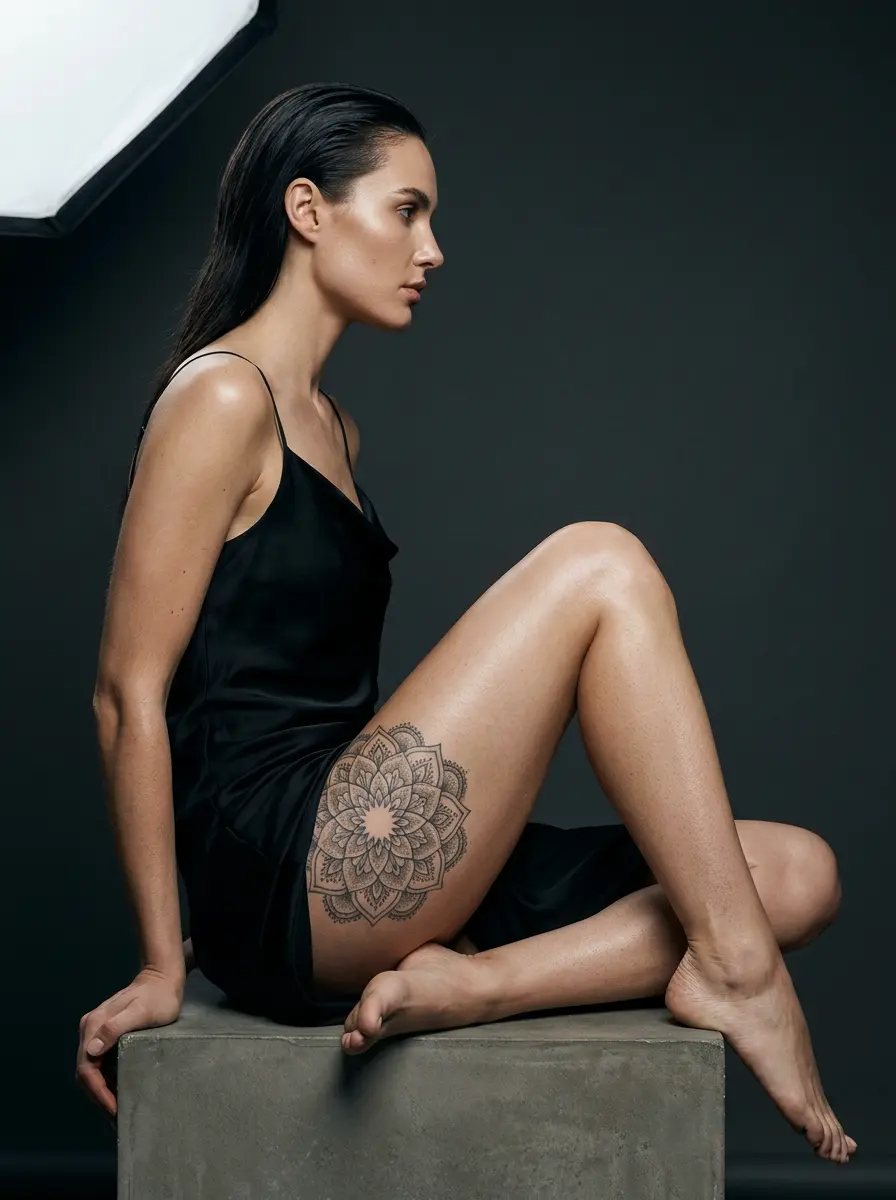
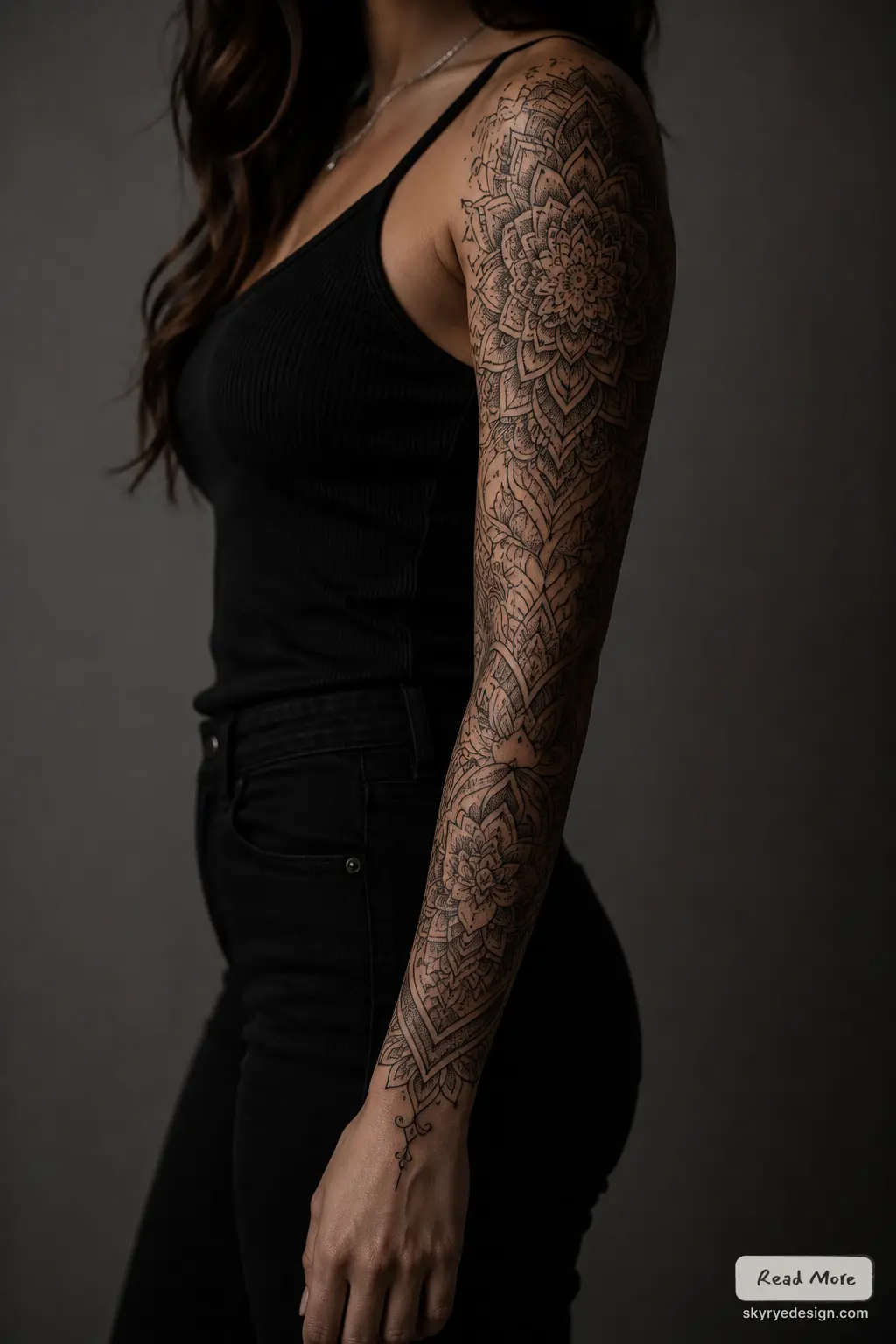
Mandala tattoos just make sense visually. The geometry carries a lot of the weight on its own. You’ve got the circular shape, the repeated patterns, the symmetry — everything already feels balanced before extra details even get added.
And they’re weirdly flexible size-wise. A small one on the wrist or forearm still looks complete. Go bigger and it can turn into the center of a sleeve without feeling awkward or overdesigned. Some tattoos only work at one size. Mandalas don’t really have that problem.
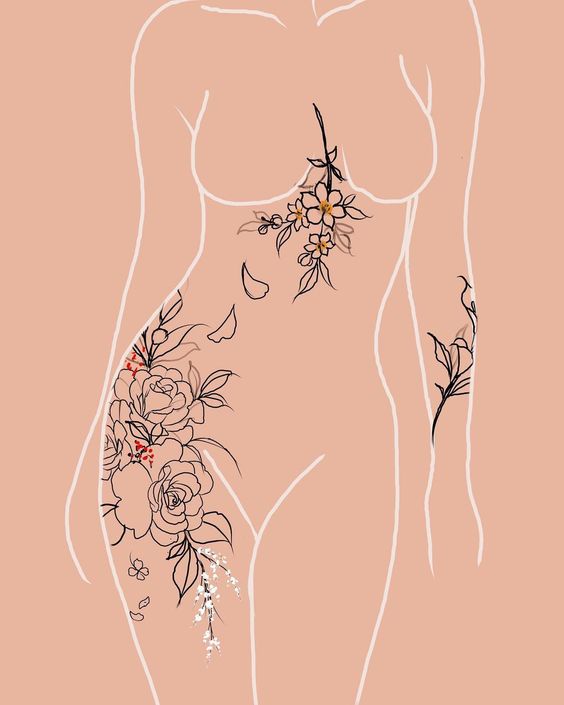

Feathers suit minimalist work because the outline already has movement. Keep the barbs simple for a small wrist or ankle piece, or let the artist add shading if the design is going on the ribs, shoulder, or forearm.


If meaning matters most, choose a symbol with a clear emotional job. Stars can mark direction, skulls can point to mortality or courage, dragons bring strength and protection, and phoenixes are the obvious choice for a restart. The design should still look good without the explanation, though. Meaning cannot rescue weak composition.
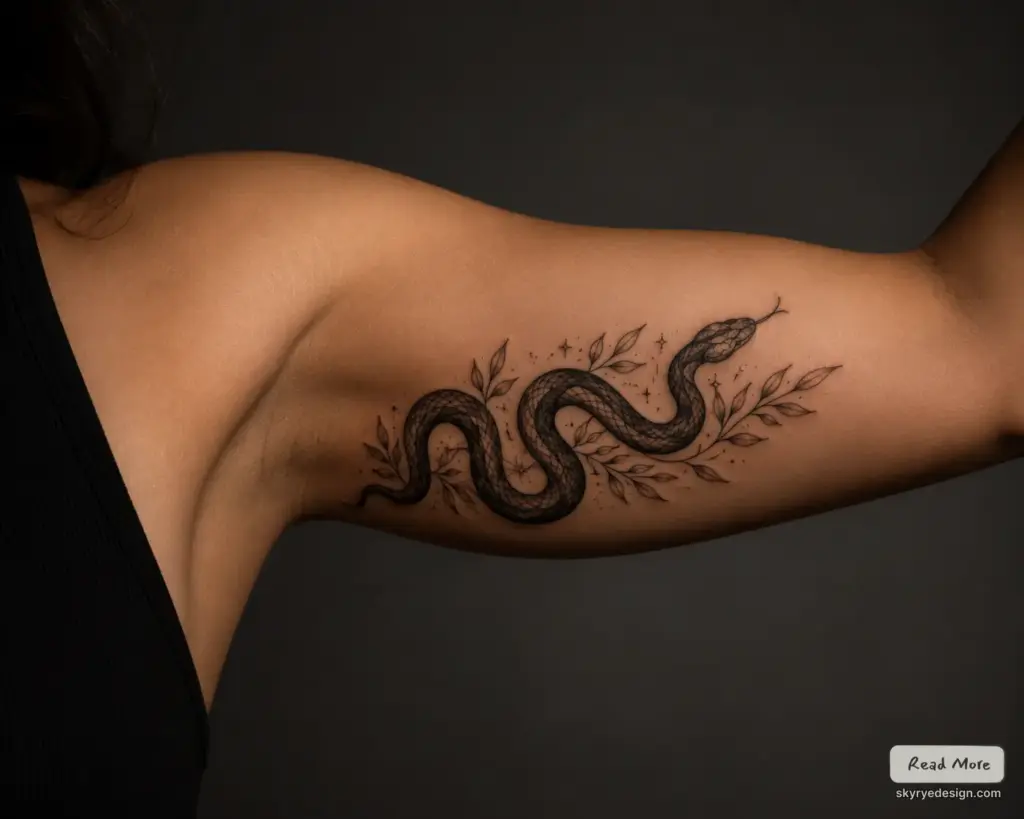
A snake tattoo is also a striking choice for women, symbolizing transformation, rebirth, and sensuality. The snake’s aesthetic versatility allows it to represent both mystical and protective qualities, making it a beautiful and meaningful motif that can reflect femininity and complex personality traits.

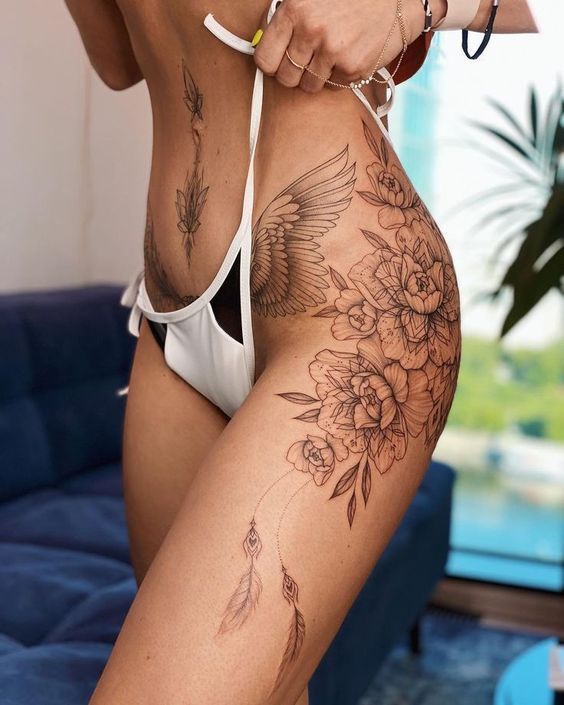
The safest design direction is usually the one you can explain in one sentence. If you want something soft and symbolic, look at florals, butterflies, birth flowers, and small nature pieces. If you want more edge, snakes, phoenixes, blackwork, and ornamental back pieces give the artist more structure to work with. For more focused inspiration, compare these small butterfly tattoo ideas, sunflower tattoo ideas, and this guide to snake tattoo meaning.
Best tattoo placements for women
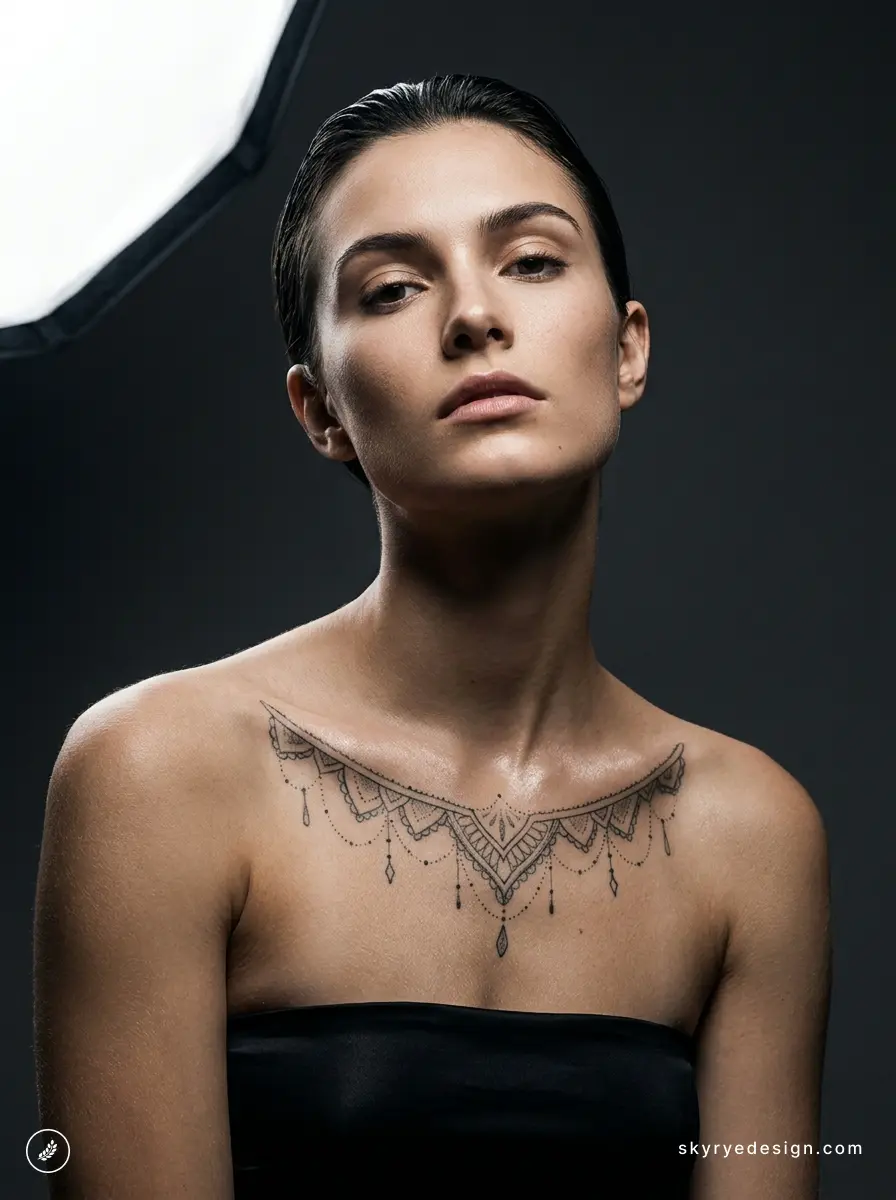
Small placements can be especially easy to wear if you want something visible only when you choose. For a softer lower-leg option, see these ankle tattoos for women with floral, butterfly, moon, and anklet-style ideas.
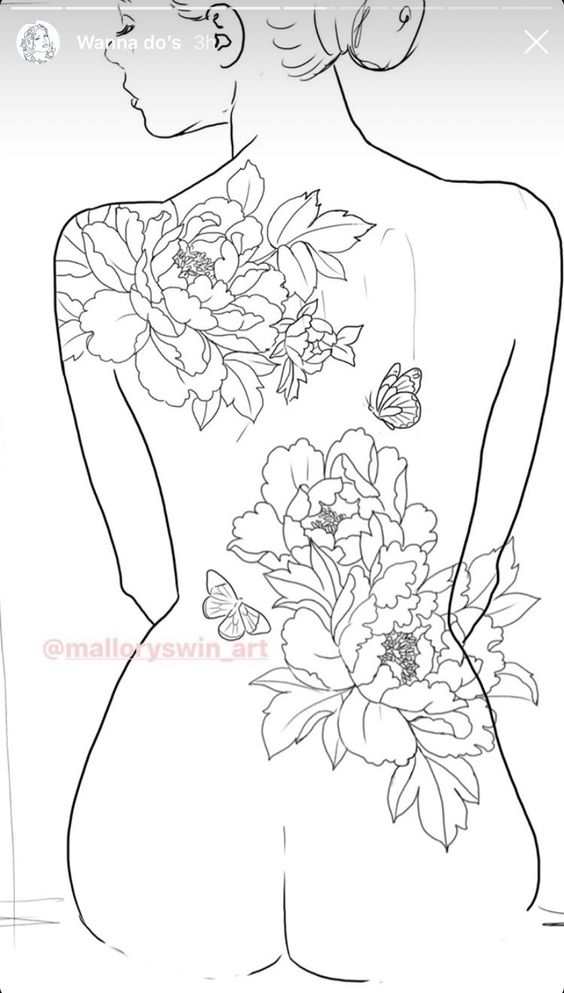
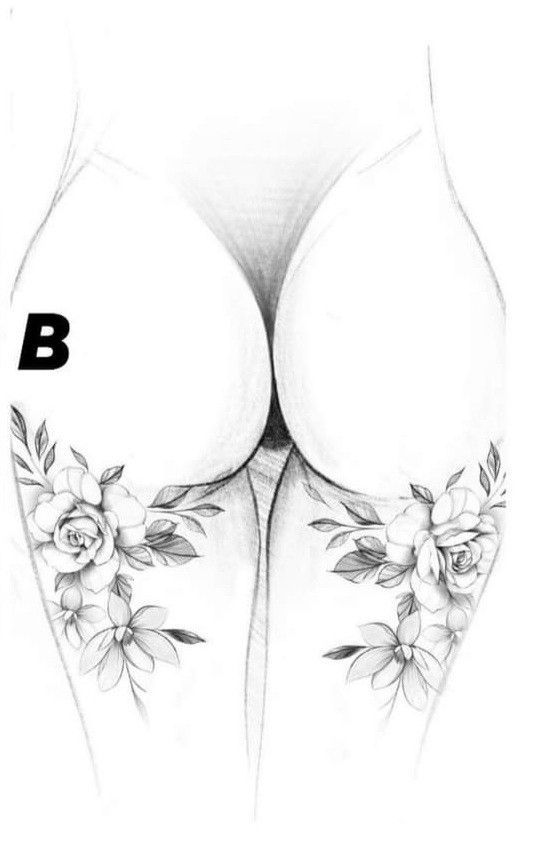
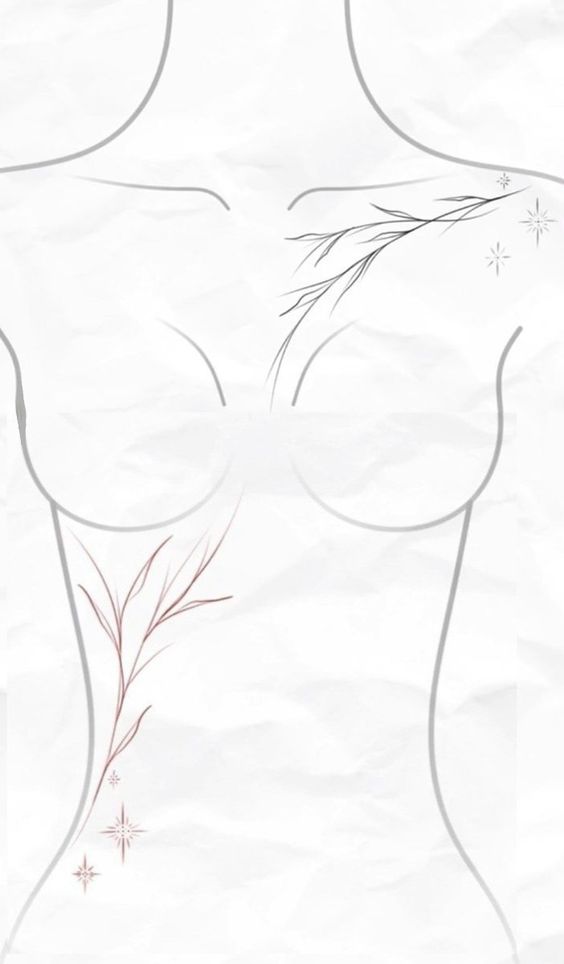
Placement changes the whole read of a design. A tiny symbol can feel elegant on the wrist and almost lost on the thigh; a detailed floral piece can look cramped on a finger but beautiful across the shoulder or ribs. Use the placement to control visibility, pain level, scale, and how the lines will age. If you are considering sternum, collarbone, or upper-chest work, review chest tattoo placement before finalizing the design size.
| Placement | Best for | Visibility | Aging note |
|---|---|---|---|
| Wrist | Small symbols, script, fine-line flowers | Easy to show, easy to cover with jewelry | Keep details simple so they stay readable |
| Finger | Tiny hearts, initials, minimal marks | Very visible | Fades faster and often needs touch-ups |
| Thigh | Florals, animals, mandalas, larger custom pieces | Private unless styled to show | Enough space for shading and detail |
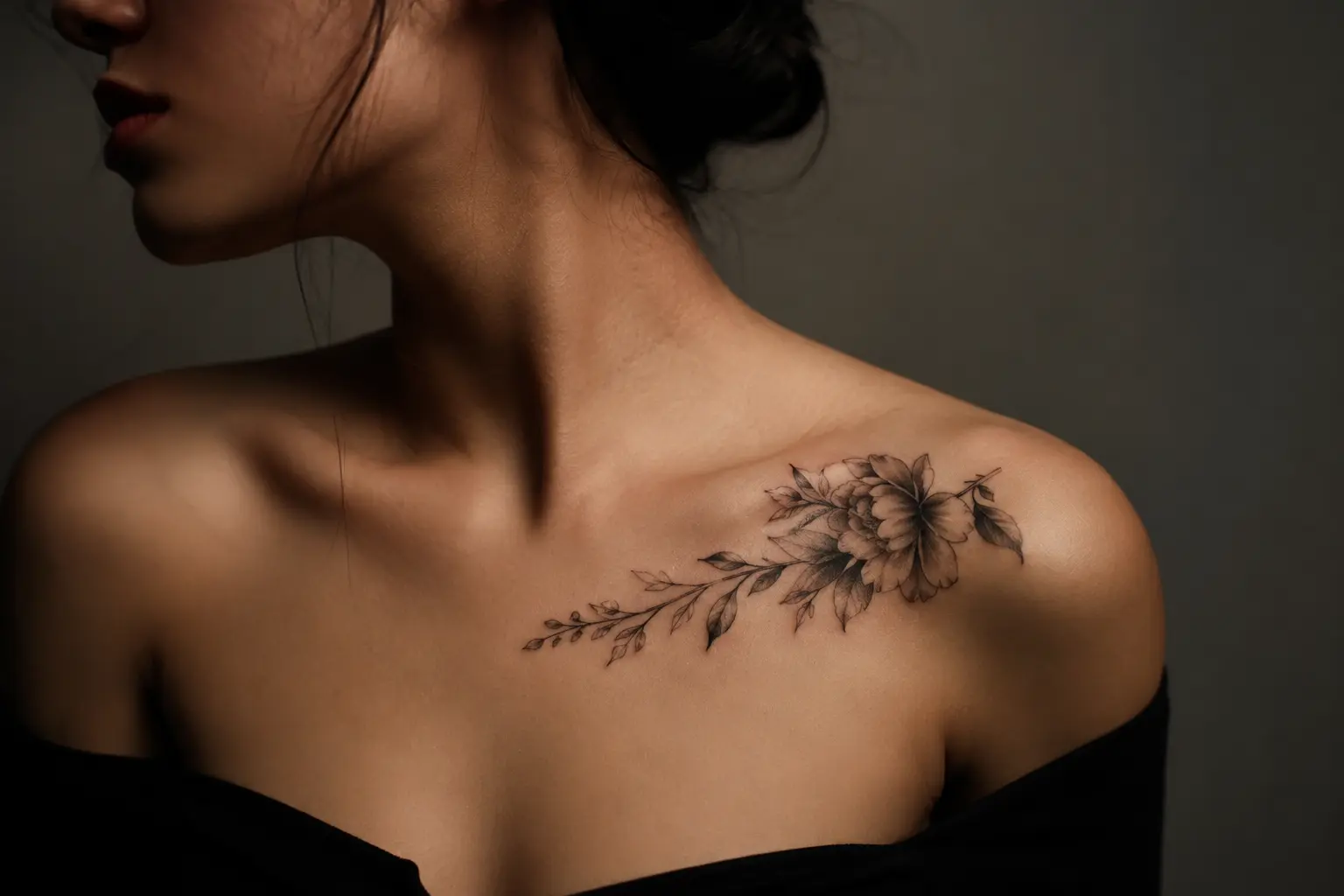
| Shoulder or collarbone | Botanical pieces, birds, moons, ornamental designs | Flexible with clothing | Works well when the design follows the bone line |
| Lower back | Ornamental, symmetrical, or flowing designs | Usually private | Large canvas, but placement must be balanced carefully |
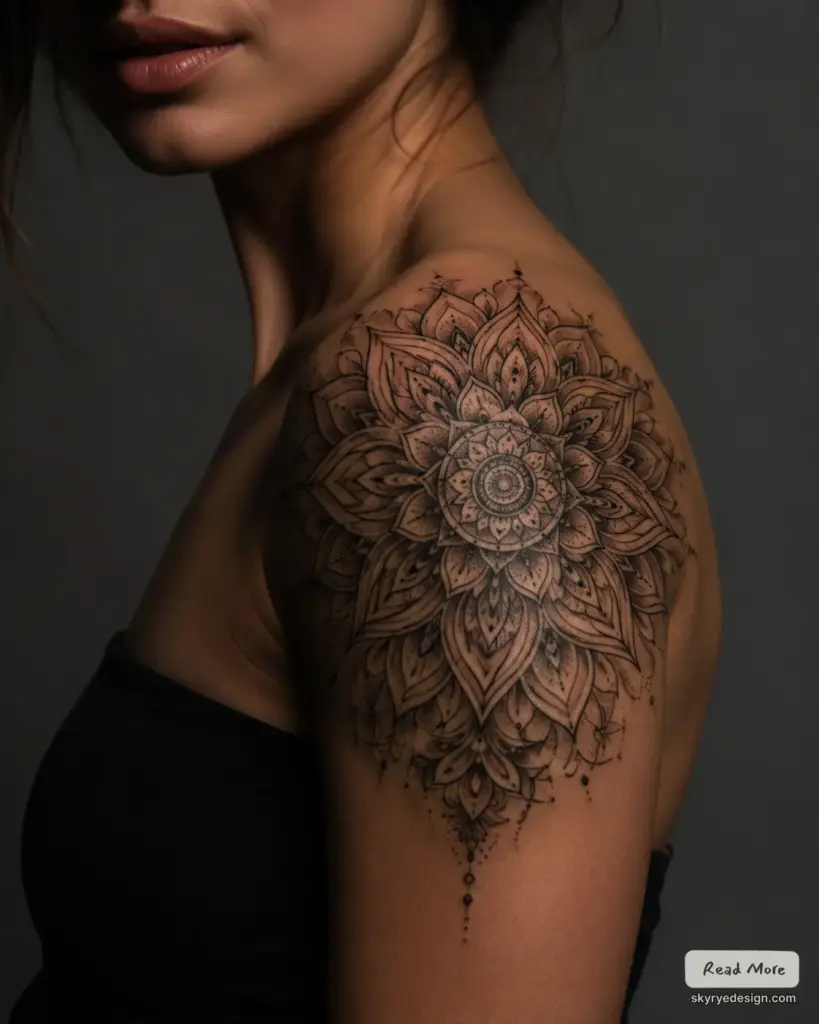
The shoulder is a popular area for tattoos, especially for those who want their ink to be visible yet easy to cover with clothing if needed. It’s an ideal spot for nature-inspired designs like butterflies and birds, which can symbolize transformation, freedom, and growth.
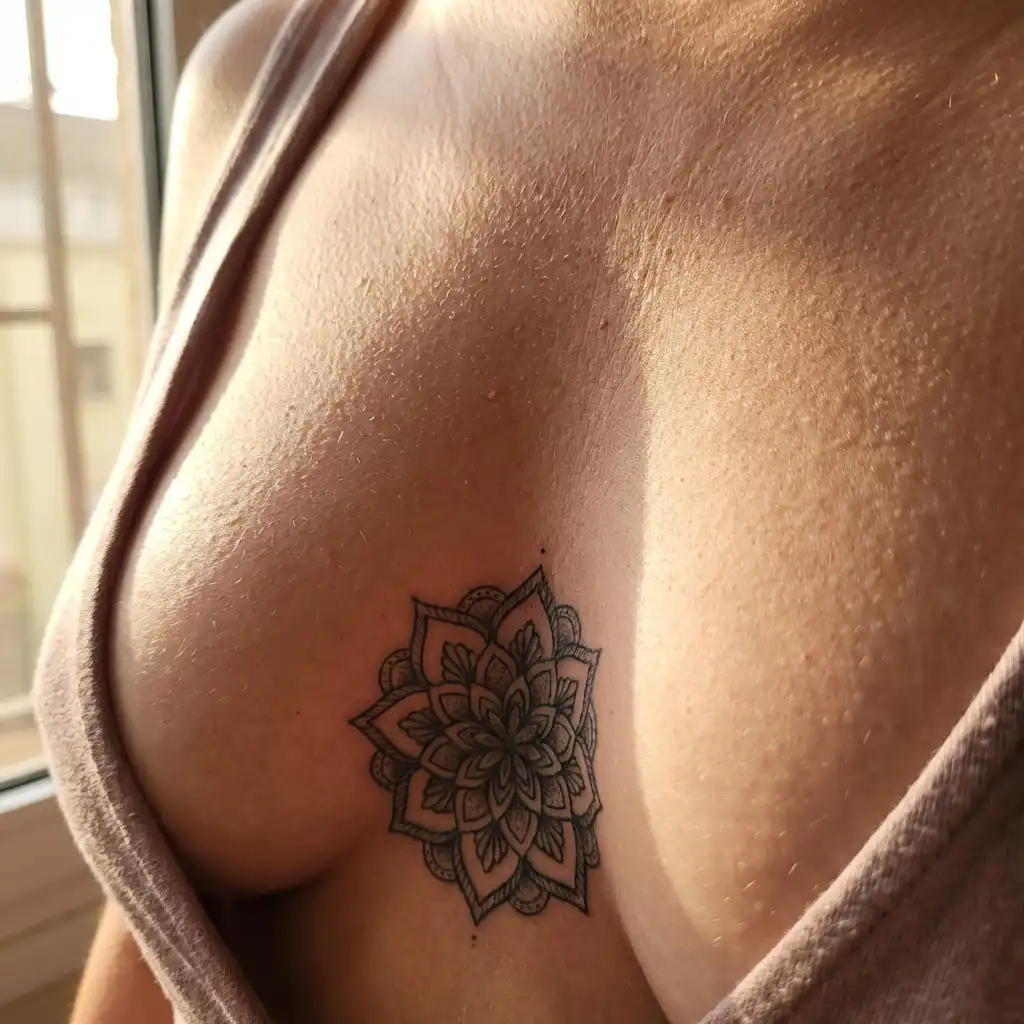
Another placement that has seen a resurgence in popularity is the lower back, often referred to as the “tramp stamp.” Once stigmatized, this area is now being reclaimed as a bold and empowering choice, offering a large, versatile canvas for detailed and feminine designs.
Wrist Tattoos
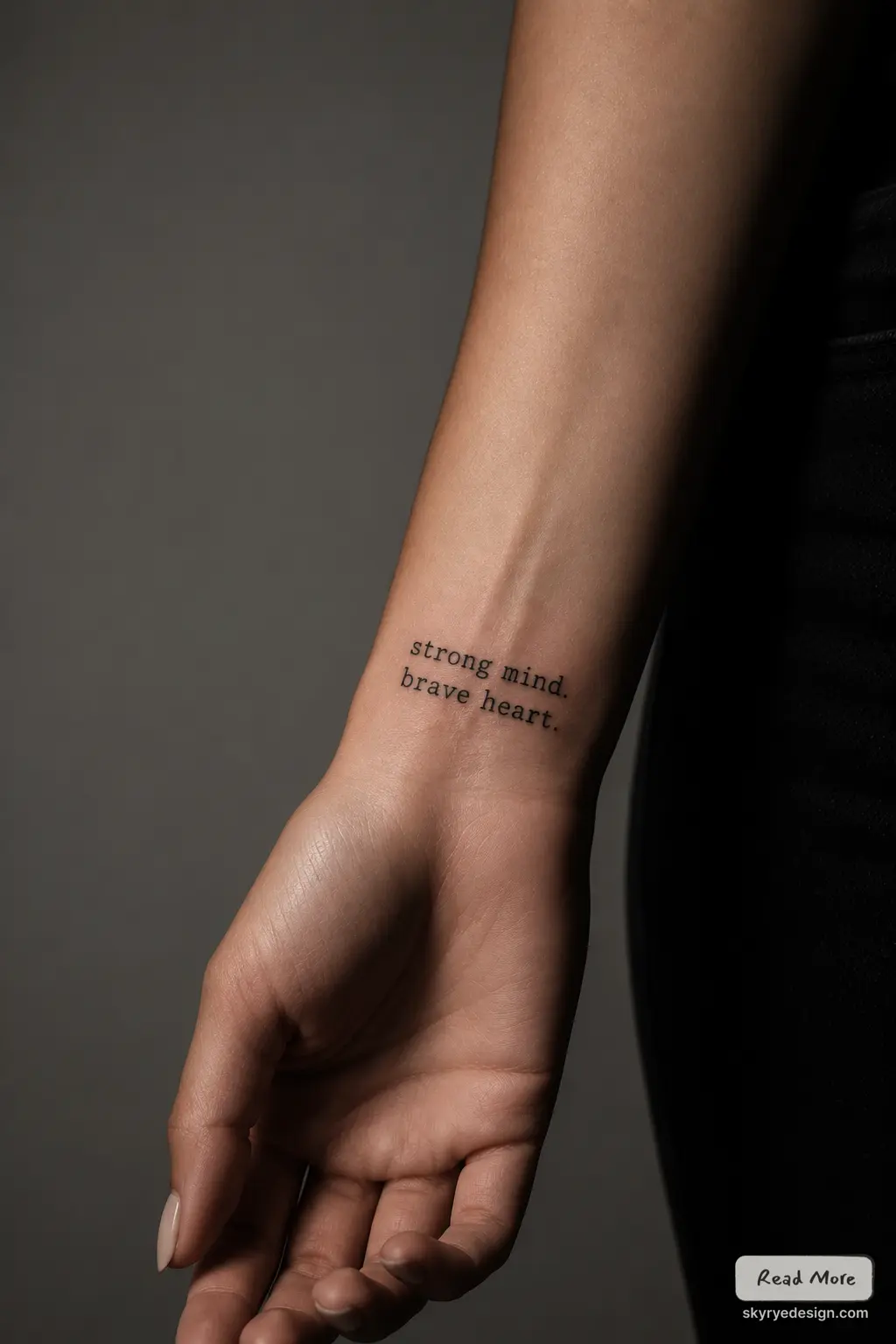
Wrist tattoos are a popular choice for women due to their visibility and versatility. They can be easily covered up with a watch or bracelet, or shown off with short sleeves or tank tops. Delicate designs such as flowers, butterflies, and quotes are often chosen for this area.
Finger Tattoos
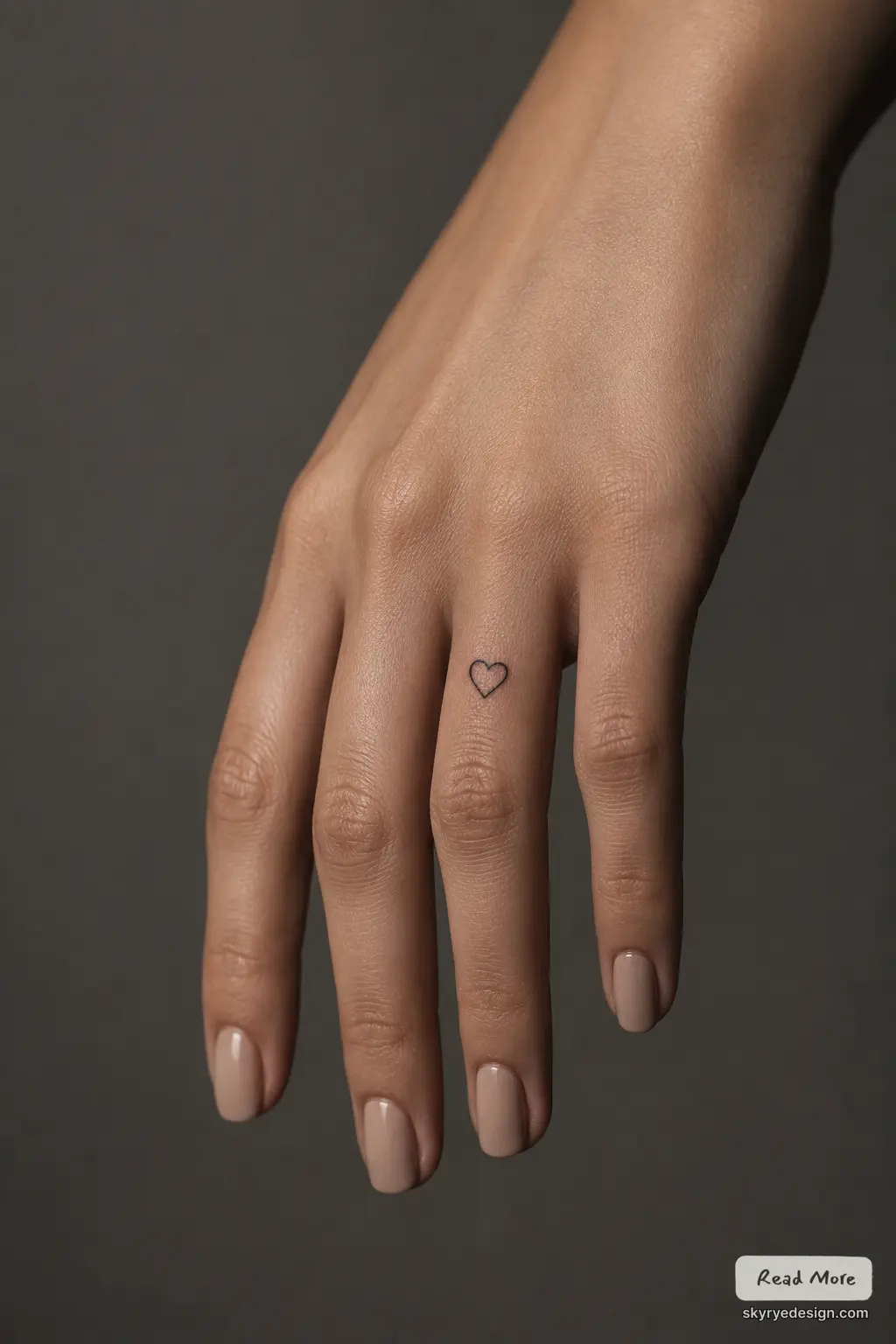
Finger pieces are small and subtle, but they are not low-maintenance. Hearts, initials, and infinity symbols fit the area well, but ink on fingers tends to fade quickly and may need touch-ups.
Thigh Tattoos
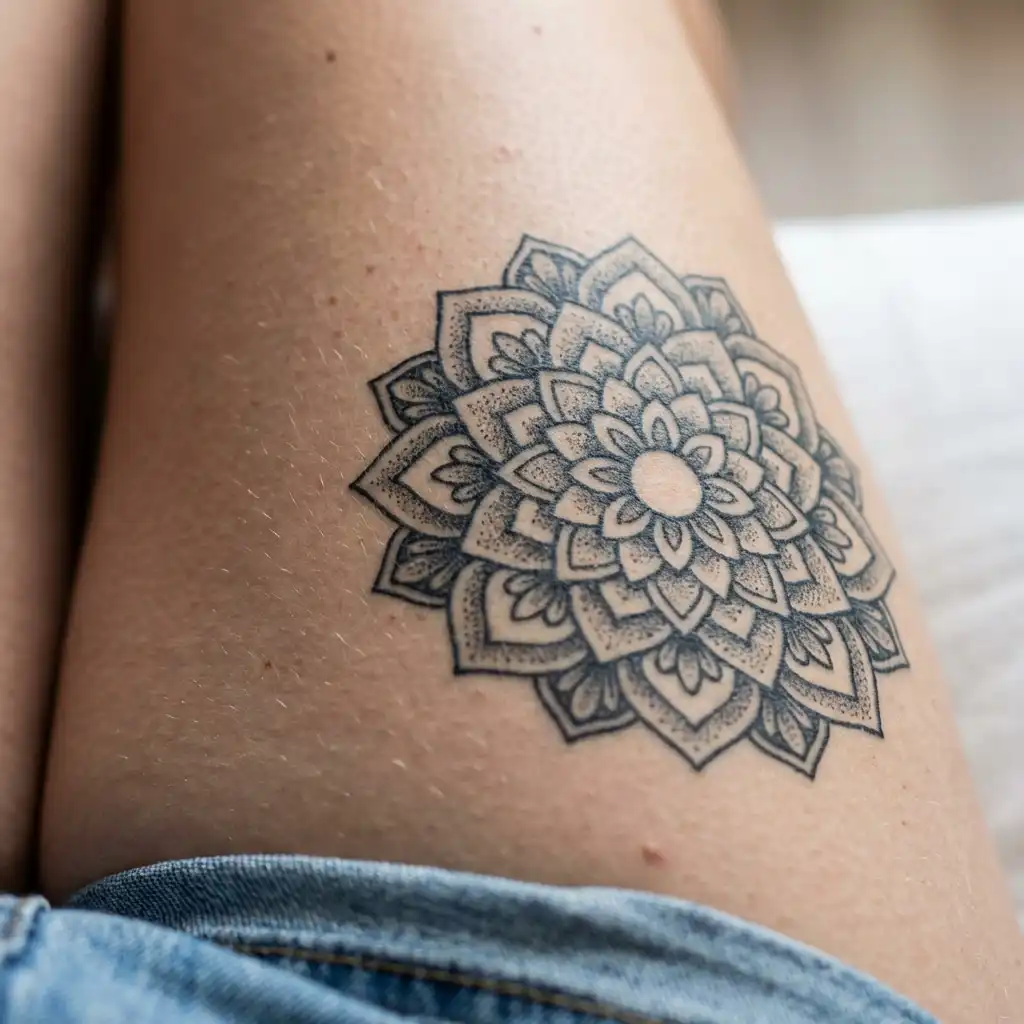
Thigh tattoos are a great option for those who want a larger design that can be easily covered up. They can be placed on the front, side, or back of the thigh and can range from delicate to bold. Popular designs include flowers, mandalas, and animals.
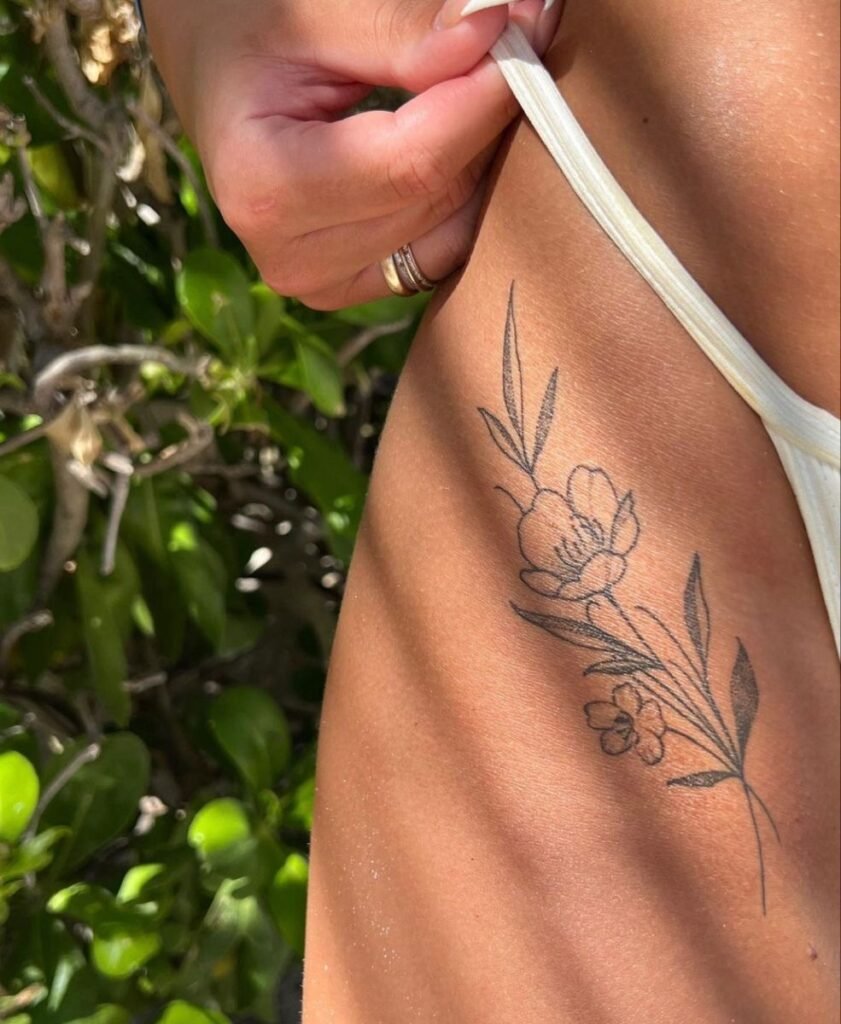

In conclusion, there are many tattoo placements to choose from, each with their own unique benefits. When deciding on a placement, it’s important to consider factors such as visibility, symbolism, and the size of the design. Ultimately, the right placement will enhance the overall look of the tattoo and make it more meaningful.
Lower Back Tattoos
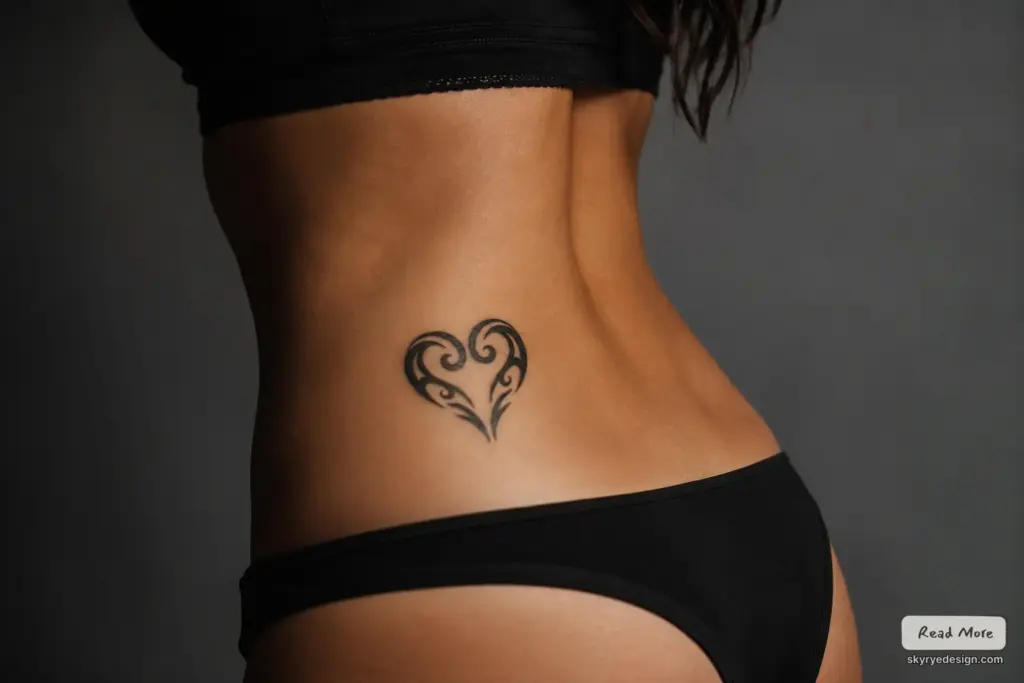
Lower back tattoos are having a comeback, whether people want to admit it or not. For years they got treated like a punchline from early 2000s pop culture, but lately the style feels different again — cleaner designs, better placement, stronger tattoo work overall.
And honestly, the placement works really well. The lower back gives enough space for symmetry, which is why ornamental tattoos, tribal-inspired pieces, butterflies, florals, and wing designs fit there so naturally. A lotus flower across the center can look soft and balanced, while something darker in blackwork instantly feels bolder.
A lot of women choose this area because the tattoo can stay personal. Easy to hide when you want, easy to show when you don’t. I’ve also noticed people lean toward designs with meaning here — symbols tied to transformation, healing, freedom, spirituality, or starting over after a rough period.
But sometimes there’s no deep symbolism behind it. You just like the way it looks with low-rise jeans, swimwear, or the curve of the body itself. That’s valid too. The best lower back tattoos usually work because the design fits the person wearing it, not because it’s trying too hard to say something profound.
Symbolism in Tattoos
Snake designs are worth considering when you want something feminine without making it soft by default. The guide on snake tattoo meaning on a woman covers the difference between rebirth, protection, sensuality, and boundary-setting.
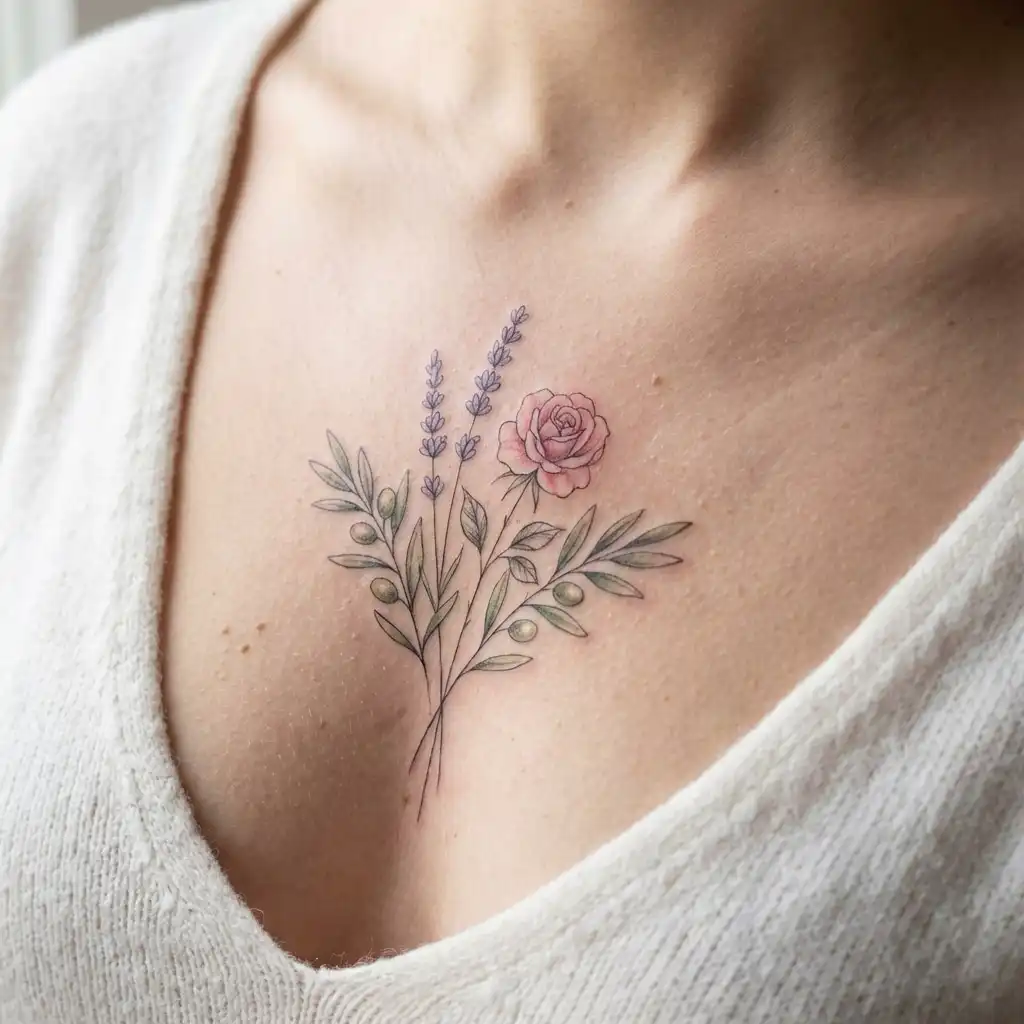
People have been tattooing symbols onto their bodies for centuries. Long before tattoos became mainstream, they already carried meaning — protection symbols, spiritual markings, family identity, status, grief, survival. The styles evolved. The human reasons behind them mostly didn’t.
For a lot of women, a tattoo becomes a way to wear something private where other people can see it. Sometimes it’s tied to a memory or a difficult period. Sometimes it’s just a design that felt right the second they saw it.
Anchor tattoos are a good example. They’ve been around forever, but people still get them because the symbolism is direct — stability, strength, staying grounded when things get messy. A small anchor can end up meaning more to the person wearing it than a full back piece that took forty hours. Simpler image, clearer connection.
And that’s usually what separates a tattoo someone loves fifteen years later from one they regret. Not the size or the complexity — how true it felt when they chose it.
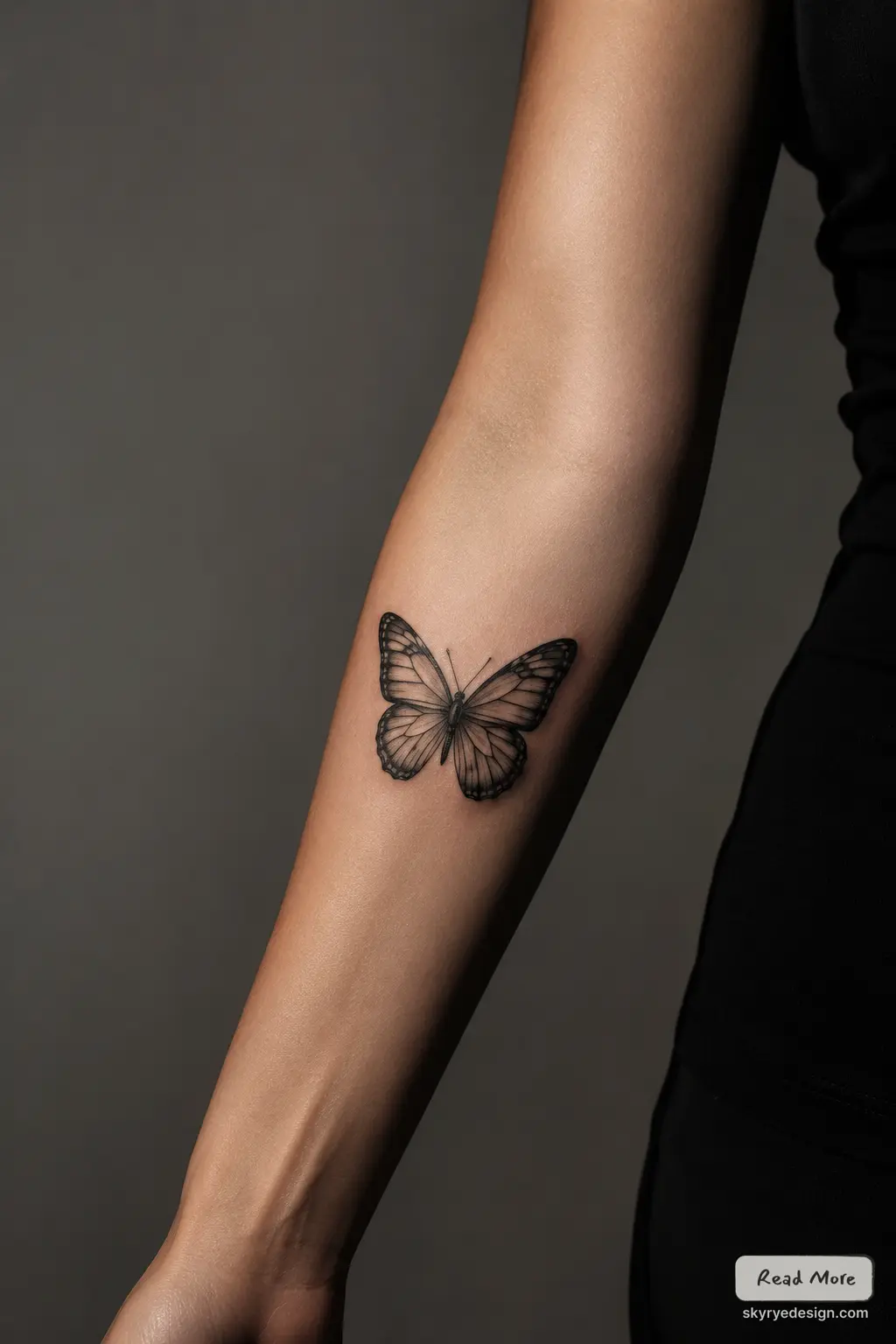
Butterfly tattoos never really disappear. Some people get them because they just look good, but for a lot of women the meaning matters too. They’re usually tied to change — getting through something hard, growing into a different version of yourself, starting over, even just marking a new chapter. It sounds cliché until there’s actually a story behind it.
Family tattoos usually feel more personal. Tiny hearts, infinity symbols, initials, birth flowers, old family crests — things that mean something without needing an explanation every time someone asks about them. Sometimes it’s matching tattoos with siblings or parents. Sometimes it’s one small detail that quietly reminds you who matters most.
Some tattoos lean more into feeling than symbolism. Moons, stars, suns, constellations — celestial tattoos have been popular for years because they can mean a hundred different things depending on the person wearing them. For some women it’s spirituality. For others it’s freedom, intuition, a fresh start, or honestly just loving the look of something a little dreamy and mysterious.
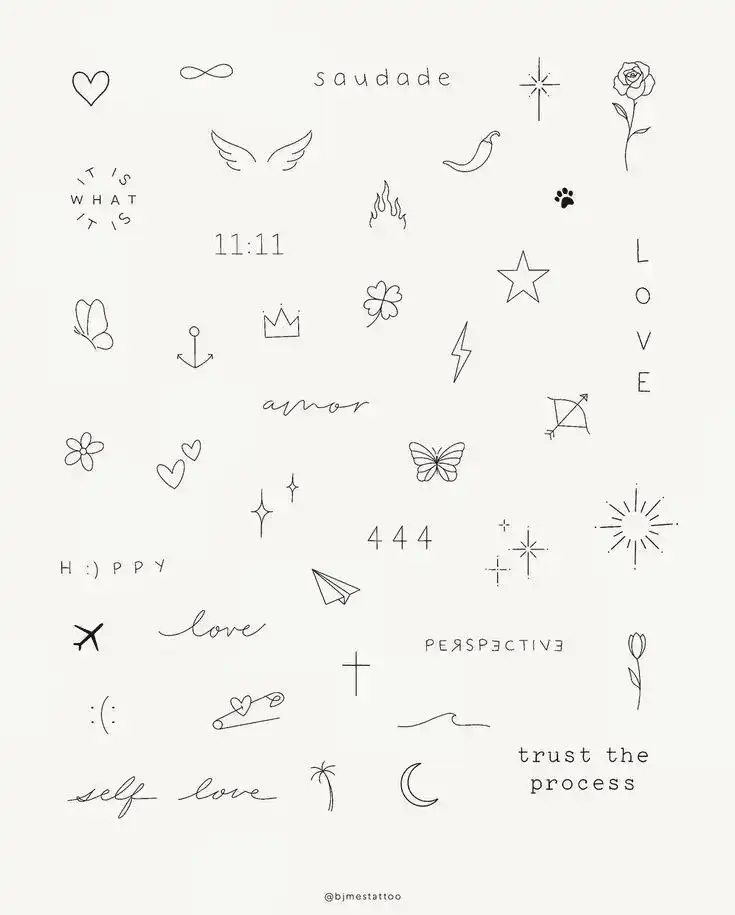
And small pieces? They’re popular because they’re easy. Easy to place, easy to hide if you want, and usually less intimidating if it’s your first one. A tiny symbol on the wrist, a small moon near the collarbone, fine-line stars on the ankle — subtle, but still personal. Sometimes the smallest designs end up meaning the most.
For a more visible placement, hand tattoos for women can be a useful next step after comparing shoulder, wrist, and arm ideas.

If soft florals or tiny symbols aren’t really the vibe, a lot of women go in the opposite direction. Dragons, lions, snakes, ravens, tigers — tattoos that feel strong the second you look at them. Some pick these designs for what they represent: strength, survival, confidence, getting through hard things. Sometimes it’s less symbolic and more instinctive. You just connect with the image.
A lion can feel protective. A dragon feels powerful in a different way, almost untouchable. And honestly, people read meaning into tattoos differently anyway. What feels fierce to one person might feel grounding to someone else.
At the end of the day, tattoos are personal. Some women want something tiny that stays mostly private. Others want a full piece that tells a bigger story. Family, spirituality, strength, freedom, starting over — whatever the reason is, the best tattoo ideas usually feel like they still make sense years later, not just while a trend is hot.
Cultural Significance of Tattoos
Some symbols carry cultural or spiritual weight, so it is worth slowing down before you copy a design from a mood board. Lotus flowers are often tied to growth and renewal. Angel wings can suggest protection, grief, or guidance. Zodiac signs and evil-eye motifs are common too, but they work better when the line style, placement, and scale feel personal instead of pasted on.
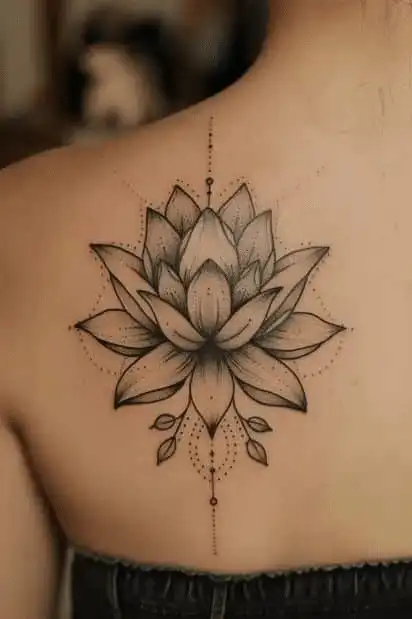
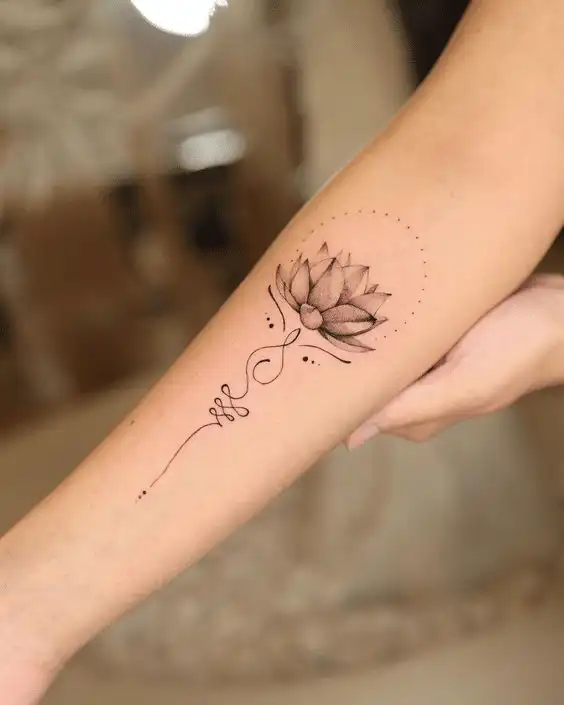
Zodiac signs let you carry a piece of your astrological identity, while the evil eye is worn as a daily reminder of protection against negativity. When you choose a tattoo, consider the cultural significance behind each symbol and how it aligns with your own story. By understanding the meaning woven into these designs, you can create a tattoo that’s not only visually stunning but also a true reflection of your self expression and personal journey.
Personalized Tattoo Ideas

A personalized design does not have to be complicated. The trick is to add one detail that belongs to you: a date, a place, handwriting, a flower connected to someone, or a tiny object with a story behind it.
Simple Designs
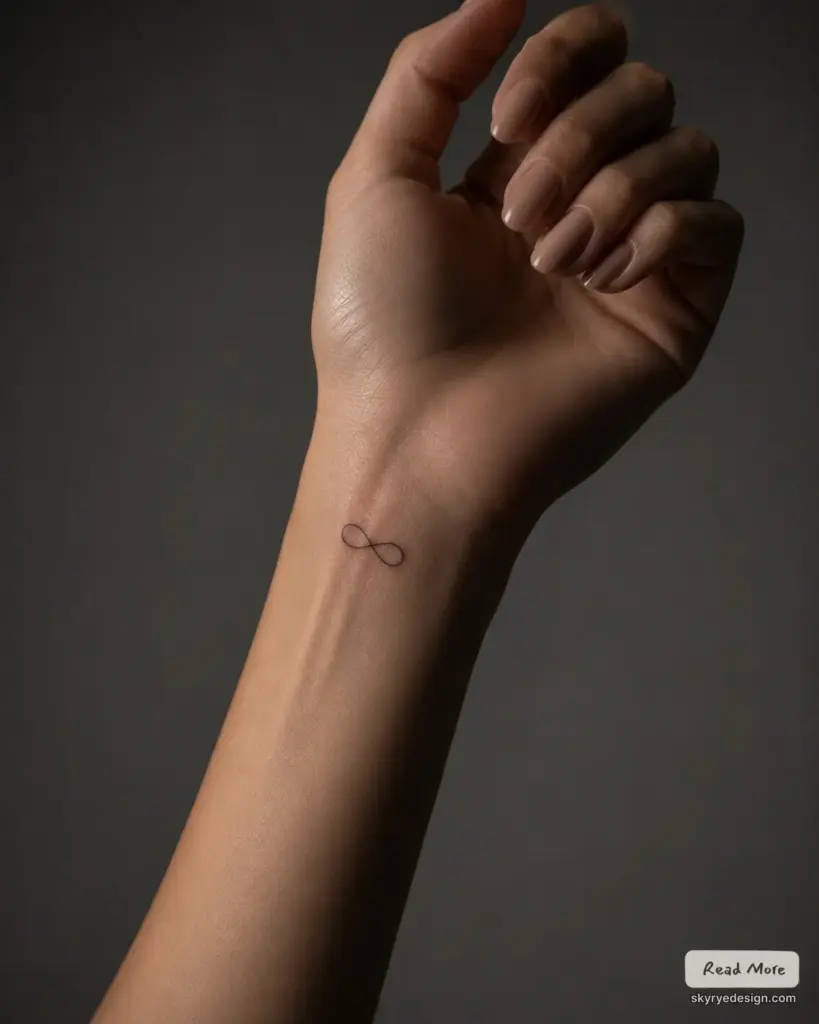
Simple designs work best when the shape is instantly readable. A small heart, star, flower, moon, or single word can sit nicely on the wrist, ankle, behind the ear, or near the collarbone. If the idea needs a long explanation to make sense, it may need a cleaner symbol.
Interests
Hobbies are an obvious starting point, but the difference between a good tattoo and a generic one is usually specificity. A treble clef is fine. A bar of music from the song that was playing at a specific moment in your life is better. A world map outline is everywhere. Coordinates from one place that actually meant something are harder to forget.
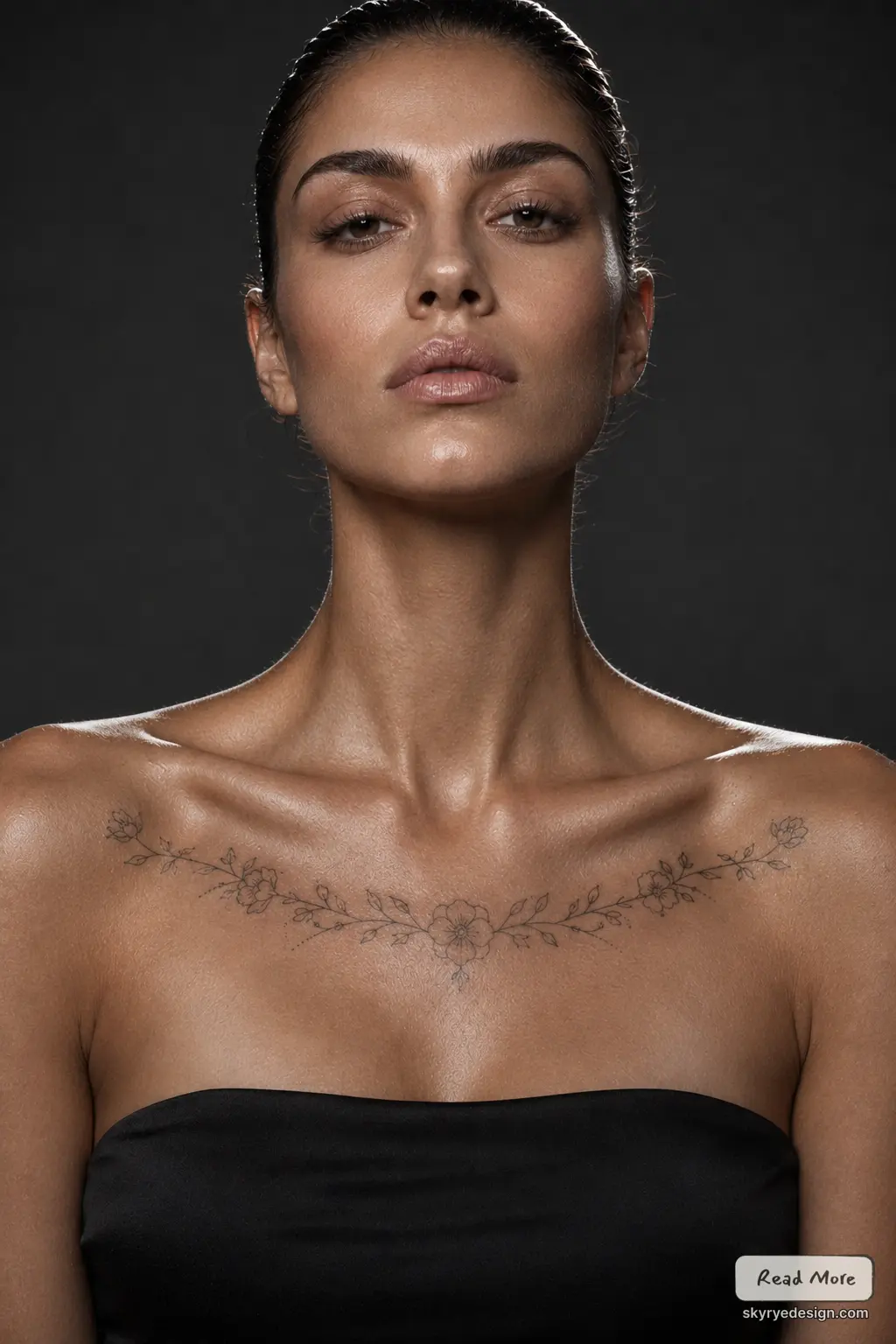
The more specific the reference, the less explanation it needs — and the more it holds up twenty years later.
Personalized Symbols
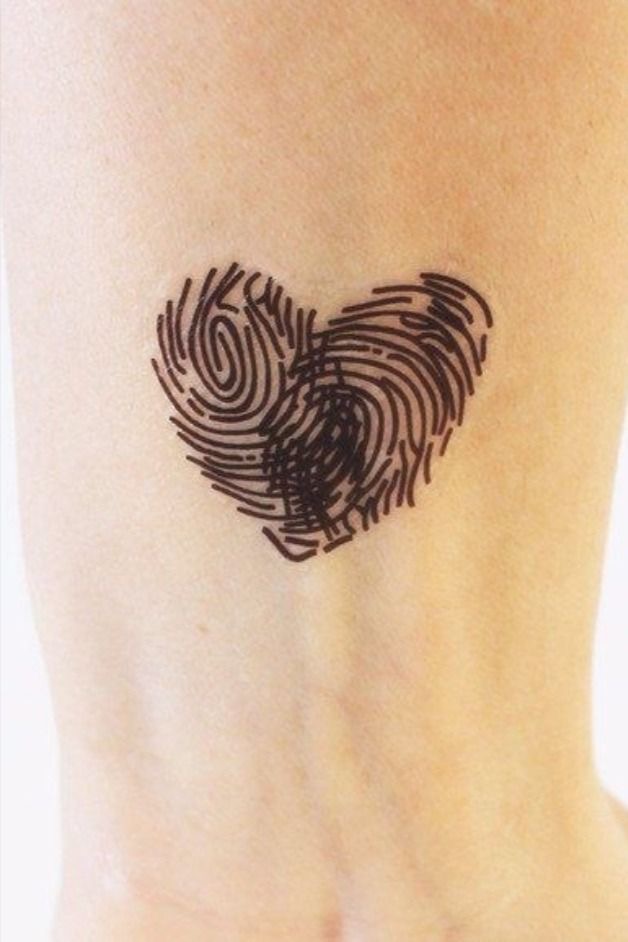

A tattoo usually feels more unique when there’s something personal built into it. Maybe it’s your zodiac sign, initials, a birthdate, or even a tiny symbol that only makes sense to you. Those little details tend to matter more than picking the trendiest design on Pinterest.
Some people also tie tattoos to a specific memory or turning point. A wedding date. A child’s birthday. Coordinates from a place that changed something for you. Even something subtle pulled from an old ring, handwriting, or a photo. The nice thing is it doesn’t have to scream meaning to everyone else — sometimes the best tattoos are the ones only you fully understand.
The personal detail is what keeps a design from feeling copied. A simple shape can still feel specific if the placement, scale, or reference means something to you.
Tattoo Styles and Techniques
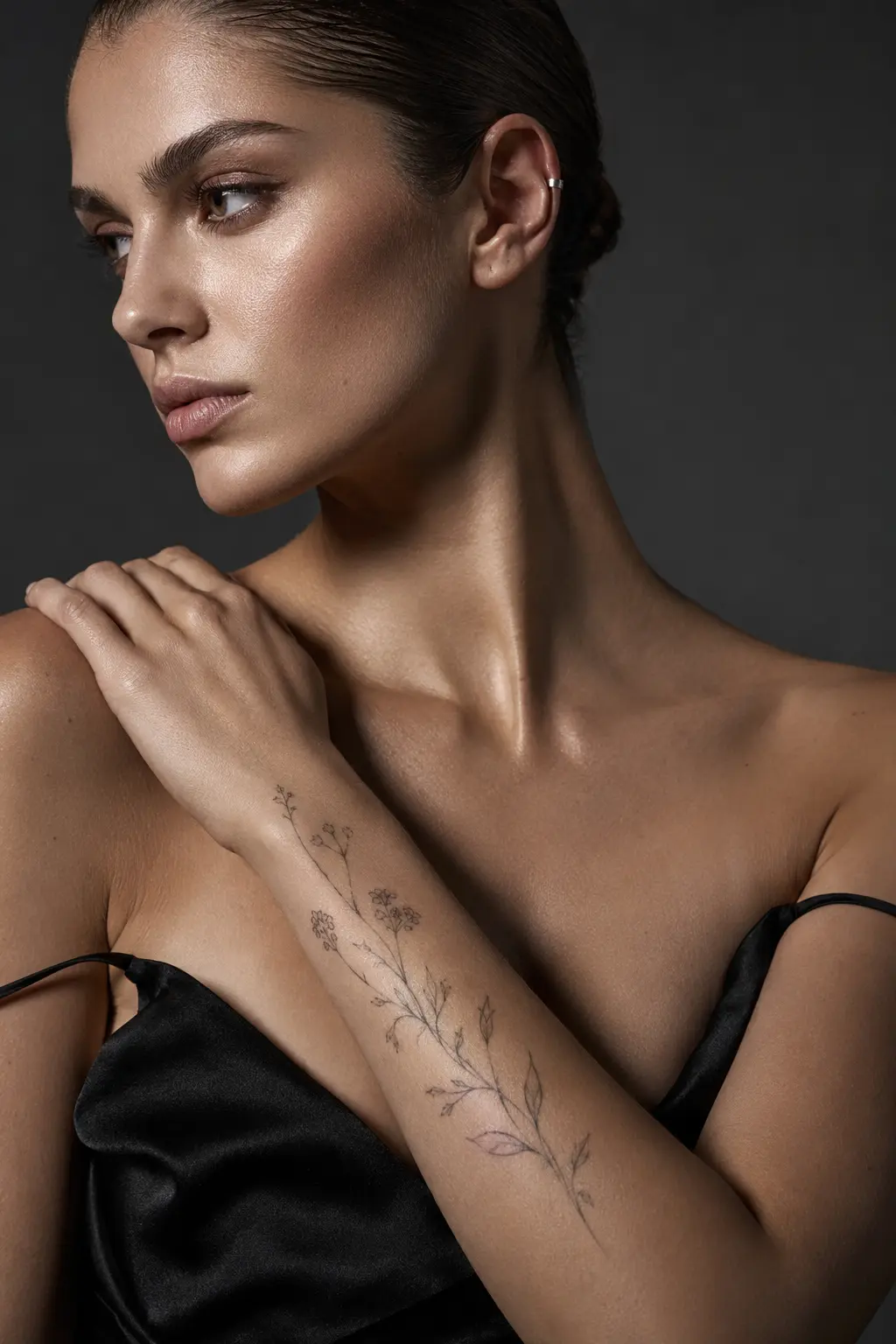
Style matters because it controls how the piece looks on day one and how it softens over time. Fine-line work feels delicate, blackwork stays readable, watercolor gives you softness, and realism depends heavily on the artist’s control of value and texture.
| Style | Works best for | Ask your artist |
|---|---|---|
| Fine line | Flowers, script, tiny symbols, constellations | Can I see healed examples, not only fresh photos? |
| Blackwork | Ornamental pieces, sleeves, bold florals, geometric shapes | How will the solid black sit with my skin tone and placement? |
| Micro-realism | Portraits, animals, small detailed objects | Is this detail large enough to hold after healing? |
| Watercolor | Soft florals, abstract color, painterly designs | Should we add a light outline so the shape ages better? |
| Dotwork | Mandalas, sacred geometry, shading, ornamental borders | How dense should the dots be for the size I want? |
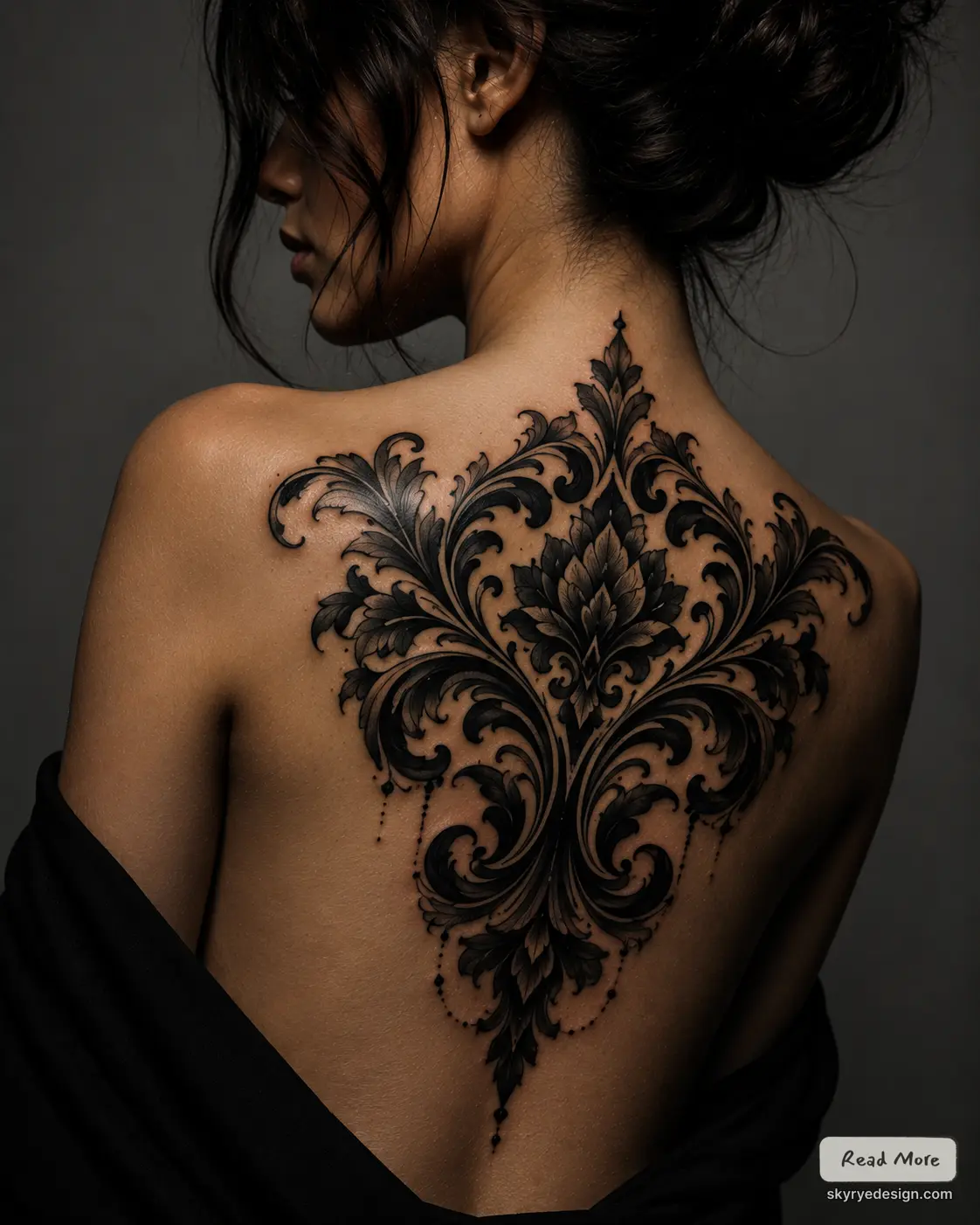
Black and bold tattoos never really disappear. Thick outlines and solid black ink just work. They stay readable over time, they heal well, and even from across the room you can still tell what the design is supposed to be. That’s why traditional tattoos, blackwork, and heavy ornamental pieces still hold up decades later.


Detailed tattoos take longer to appreciate. Fine lines, tiny shading transitions, small texture details — this is work you end up staring at for five minutes, noticing things you missed the first time. When the artist is good, realism tattoos look almost unsettlingly sharp up close. They also take a long time to sit through, and even longer to heal properly.
Watercolor tattoos go the opposite direction — looser, more experimental, no heavy outlines holding the color in place. The pigment bleeds into itself the way paint does on wet paper. Some designs look almost unfinished. Others look like someone brushed ink directly onto skin, which is kind of the point.
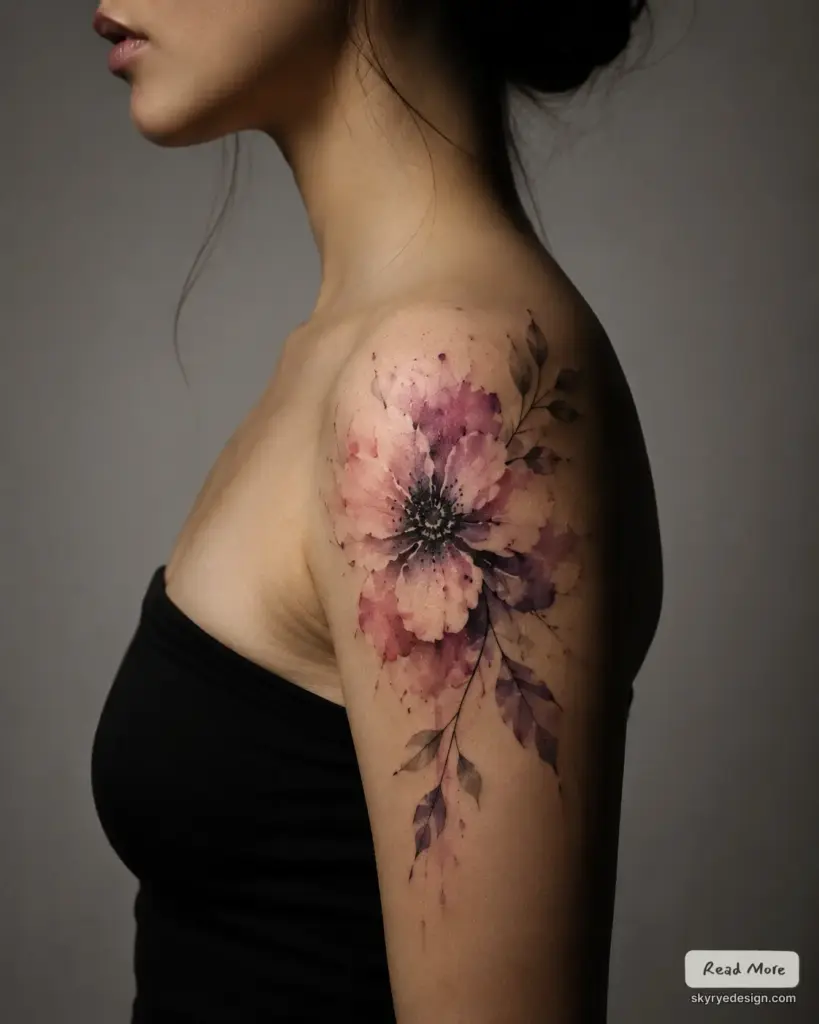
Watercolor tattoos are tricky for me because I genuinely love how some of them look. Fresh, they can be ridiculous in the best way. Soft color bleeding into skin, no harsh outlines, almost like somebody took an actual painting and somehow made it permanent.
But then there’s the part nobody really talks about enough. I’ve seen watercolor tattoos heal beautifully, and I’ve seen others a few years later where the edges just kind of disappeared into each other. Not terrible — just… softer, blurrier, less impact than they had at the start.
That’s why I keep changing my opinion on them. If you love the look, I get it. I really do. Just know you’re trading some long-term crispness for something softer and more artistic. Meanwhile, bold black tattoos are sitting there aging like they don’t have a single problem in the world.
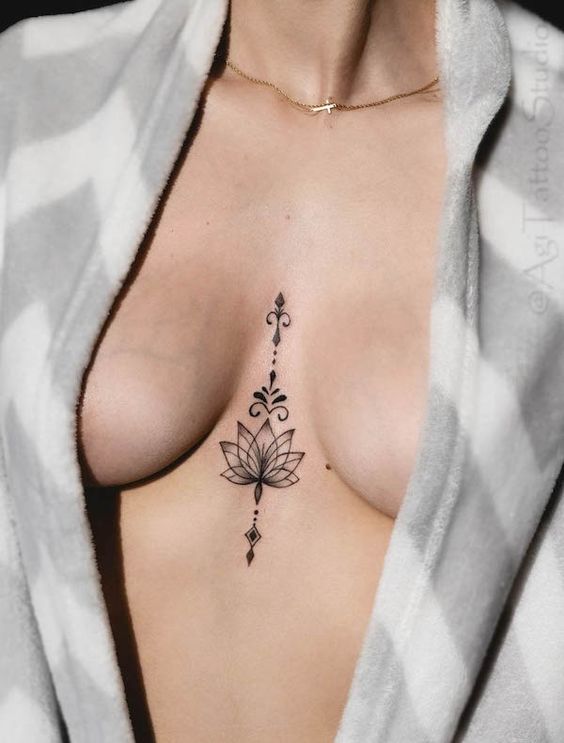
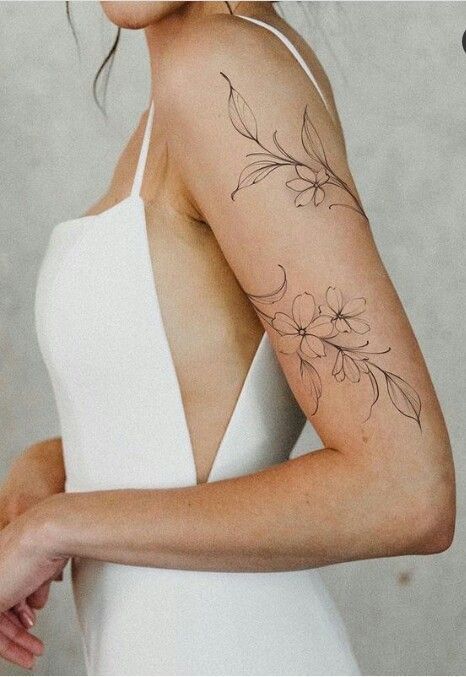
One thing I keep coming back to with tattoos: technique matters way more than people realize. I’ve seen two artists work in basically the same style and somehow end up with tattoos that feel completely different. Same idea, same reference, but the hand behind the machine changes everything.
Whip shading is a good example. I actually didn’t notice what it was at first — I just knew some black-and-grey tattoos looked softer than others. The needle moves fast and gets flicked across the skin instead of dragged through in one steady pass. That’s where those soft fades come from. Wave tattoos use it a lot. Smoke, flowing hair, anything that’s supposed to feel like it has movement.
Dotwork feels like the total opposite. Slower, way more methodical. Tiny dots, packed together little by little until it starts reading like shadow. Honestly, it sounds tedious to sit through, but when it’s done well the detail is hard to beat. That’s probably why I keep seeing mandalas and geometric tattoos done this way — the structure just makes sense for it.


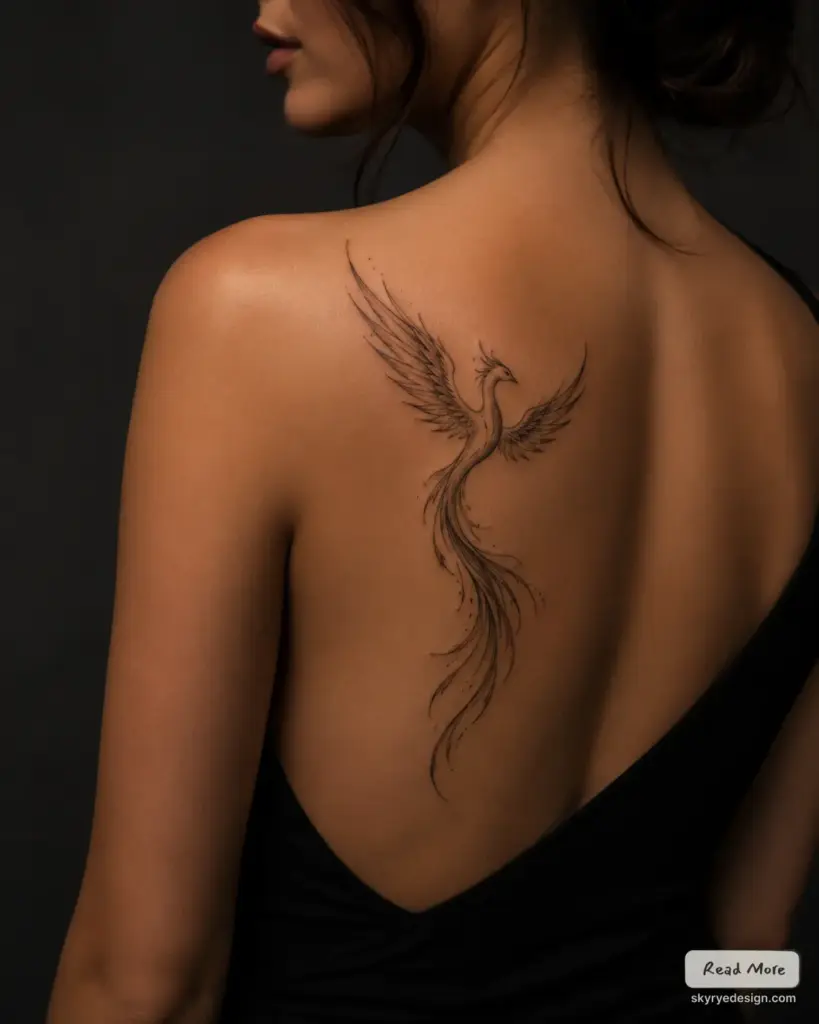
I’ve always liked phoenix tattoos, even if they can get a little dramatic in the best way. There’s something about the meaning that makes sense to people. Starting over. Getting through something rough. Coming out the other side feeling different than before. Yeah, the whole “rising from the ashes” thing is symbolic, but sometimes people want a tattoo that actually says something clearly.
They also give artists a lot to play with visually. Big wings, movement in the feathers, fire wrapping through the design. Some people go all in with bright reds and oranges, others keep it black and grey so it ages a little softer. Either way, a good phoenix tattoo usually ends up being a statement piece.
The longer I look at tattoos, the more I think style comes down to personality more than trends. Some people suit soft fine-line pieces. Others look better with something bold that takes up space. There are so many styles now that the hard part usually isn’t finding ideas — it’s figuring out what still feels right once the Pinterest mood board phase wears off.
Working with Tattoo Artists
One thing I’ve learned with tattoos: don’t rush the artist part. I’d honestly spend more time finding the right person than obsessing over the design itself. You can hand the exact same idea to two artists and somehow get two completely different tattoos back.
If I were getting something custom, I’d want it to feel more like a conversation than just placing an order. Bring ideas, screenshots, random references, whatever helps explain the vibe you’re after. But also be open when the artist pushes back a little. Sometimes the thing that looks amazing on Pinterest just doesn’t translate well to skin or won’t age the way you expect.
And I’d ask questions. Probably too many. Placement, size, healing, how the lines will soften over time, whether a detail is too small to hold up — all of it. At the end of the day, it’s going on your body. You’re allowed to care a lot about getting it right.
Editorial safety note: This guide looks at tattoo ideas from a visual design and placement perspective. For hygiene, healing, allergies, and infection risks, follow your licensed artist’s aftercare sheet and the consumer safety guidance linked in the aftercare section below.

How much do tattoo ideas for women cost?
Tattoo prices vary by city, artist experience, placement, size, detail, color, and session length. As a planning range, a tiny symbol or short word often starts around $100 to $250, while a small fine-line design may land around $150 to $500. Medium floral, ornamental, or shaded pieces can run from about $400 to $1,200, and large thigh, back, sleeve, or realism work can reach $1,000 to $5,000 or more across multiple sessions. These are not fixed quotes; they are budgeting ranges to help compare design scope. A low price is not always a good deal if the work heals poorly or safety standards are weak. Before booking, ask whether the quote includes drawing time, stencil adjustments, touch-ups, color, deposits, and aftercare products.
| Project type | Typical planning range | What affects the price |
|---|---|---|
| Tiny symbol or word | $100-$250+ | Shop minimum, placement, line precision |
| Small fine-line design | $150-$500+ | Detail, stencil time, artist demand |
| Medium floral or ornamental piece | $400-$1,200+ | Shading, custom drawing, session length |
| Large thigh, back, or sleeve work | $1,000-$5,000+ | Multiple sessions, color, realism, coverage |
Do not choose the cheapest artist just because the design is small. Clean lines, safe hygiene, and healed results matter more than saving a little money upfront. Be honest about your budget during the consultation, then ask what size, detail level, or placement fits that range without making the design feel compromised.


Tattoo aftercare and safety
New tattoo aftercare should focus on cleanliness, gentle handling, and avoiding irritation while the skin heals. Follow the bandage instructions from your artist, wash your hands before touching the tattoo, clean the area gently with fragrance-free soap, and pat it dry instead of rubbing. Do not soak the tattoo in baths, pools, or hot tubs during early healing, and do not pick scabs or peeling skin. The FDA notes that tattoos can cause infections or allergic reactions, especially when ink or equipment is contaminated, so worsening redness, swelling, pus, fever, or unusual pain should be taken seriously.


Once the skin has healed, sunscreen is the biggest long-term habit. UV exposure fades pigment and softens contrast, especially on fine-line and color-heavy pieces. The Mayo Clinic also recommends checking studio hygiene and aftercare basics before getting tattooed, which is worth doing before you book, not after something feels off.
If the design is getting too large for a small placement, compare it against this female sleeve tattoo ideas guide before you commit to a full arm plan.
Tattoo ideas for women FAQ
If you are still narrowing your shortlist, start with tattoo drawing ideas rather than finished ink photos. Sketches make it easier to judge the silhouette, detail level, and placement before you commit.
How do I find tattoo ideas?
Start by looking inward and outward. Think about symbols, memories, values, or aesthetics that matter to you personally, then compare them with artist portfolios, Pinterest boards, studio galleries, nature references, quotes, and cultural symbols. Saving designs you’re drawn to helps you spot patterns before committing.
What is the most popular female tattoo?
Some of the most popular female tattoos include floral designs (such as roses, lotus flowers, and wildflowers), fine-line tattoos, butterflies, moons, and meaningful quotes or words. These designs are often chosen for their symbolism, elegance, and versatility, and they work well on areas like the wrist, collarbone, ankle, or forearm.
What are some feminine tattoo ideas?
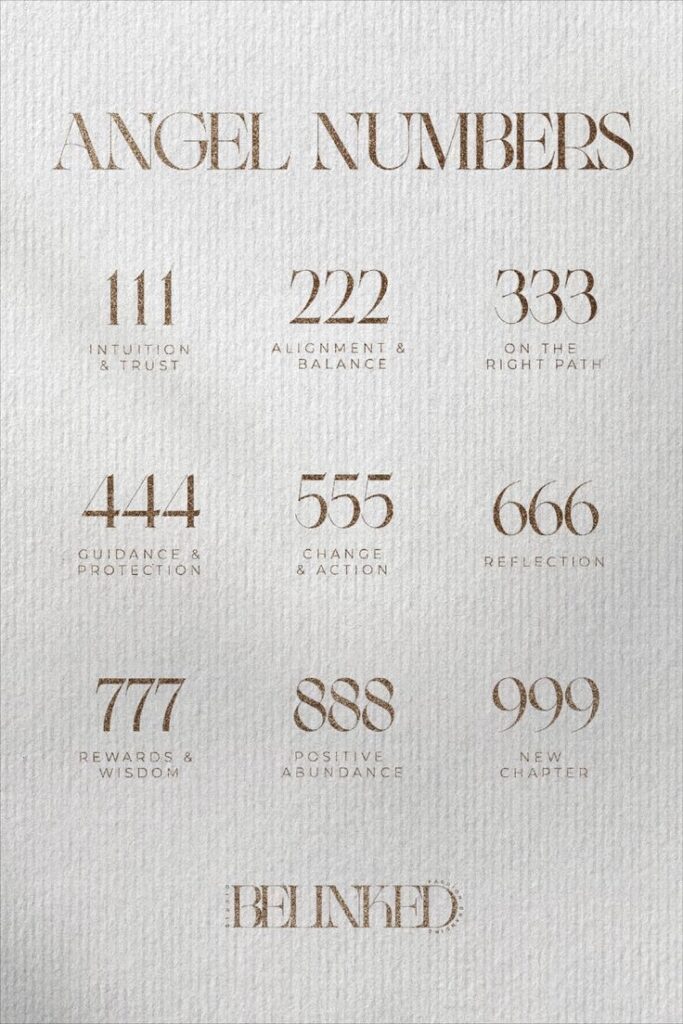
Feminine tattoo ideas often focus on softness, symbolism, and detail. Popular options include flowers, constellations, hearts, angel numbers, birthstones, delicate animals (like birds or butterflies), and minimalist line art. Script tattoos, mandalas, and subtle watercolor designs are also common choices for a feminine look while still allowing for personalization.
What kind of tattoos are trending right now?
Current trends include fine-line florals, micro-realism, minimalist symbols, single-needle work, ornamental placement, soft nostalgia references, and nature-inspired imagery. Allure’s 2026 tattoo trend reporting also points to microrealism, fine-line florals, ornamental designs, and personal meaning as major directions. The safest version is still the one that fits your body and your story, not the one copied straight from a mood board.
For a non-permanent way to test placement, temporary henna tattoo ideas can help you compare hand, wrist, ankle, shoulder, and thigh designs before booking ink.
Where should a first tattoo go on a woman?
A first tattoo usually works best somewhere you can control visibility and size: wrist, ankle, inner arm, upper shoulder, ribs, or thigh. If you want something tiny, keep the shape simple and avoid packed detail. If the design needs shading, lettering, or small texture, give it more room on the shoulder, thigh, ribs, or back so it can age cleanly.
How much should I budget for a small tattoo?
For a small tattoo, plan for roughly $100 to $500 depending on the artist, city, placement, line precision, detail, and whether the shop has a minimum charge. A tiny word can cost less than a small floral piece because stencil time and clean linework matter. Ask what is included in the quote, including touch-ups and aftercare advice.
What are some unique tattoo ideas?
Unique ideas usually combine personal meaning with strong design. Try custom illustrations, coordinates of meaningful places, symbolic animals, abstract emotion-based pieces, or references from family stories, dreams, or heritage. A good artist can turn that raw idea into something wearable instead of copied.
For a quieter first-tattoo option, the fine line tattoo guide breaks down aging, touch-ups, and aftercare for delicate designs.
For more starting points, browse the Sky Rye Design tattoo ideas hub for more placement guides, meanings, style breakdowns, and design-specific inspiration.
If you want a design that feels more dramatic than a flower or small symbol, compare these phoenix tattoo ideas before choosing scale and placement.
If you want a design that stays subtle until the lighting changes, the UV tattoo ideas guide explains blacklight ink, safety questions, cost, fading, and aftercare before you book.
For a smaller feminine idea with a private story, meaningful number tattoos can work better than a large symbol because the design stays clean and personal.
For a focused arm-only guide, compare arm tattoos for women by placement, including forearm, upper-arm, inner-arm, back-of-arm, above-elbow, and sleeve ideas.
Compare style and placement
Before settling on a design, compare sexy tattoo ideas for women with the scale, visibility, and natural line of the body. A clear silhouette and enough breathing room usually matter more than a trend.
- 51.7Kshares
- Facebook0
- Pinterest51.7K
- Twitter0
- Reddit0