
I had a friend show up to a tattoo consultation with a three-inch tribal band from 2003 and a screenshot of this tiny fine-line wildflower she wanted over it. The artist looked at the reference, looked at her arm, paused for a second, then said — politely, but very clearly — “That won’t cover that.”
Six months waiting for the appointment, and the answer took maybe ten seconds.
- Why Cover Ups Are More Complicated Than They Look
- Floral Cover Ups: The Most Forgiving Option
- Blackwork Cover Ups: When Nothing Else Will Work
- Japanese Style Cover Ups: Depth That Hides Everything
- Realism Cover Ups: The Blending Specialists
- Cover Up Ideas by Placement
- How to Pick the Right Cover Up Artist
- FAQ: Cover Up Tattoo Ideas
- Can any tattoo be covered up?
- How much bigger does the cover up need to be?
- How many laser sessions do I need before a cover up?
- What colors work best for cover up tattoos?
- How long does a cover up tattoo take to heal?
- Can I get a fine-line tattoo as a cover up?
- What are the most popular cover up tattoo designs in 2026?
- The Cover Up Is the Start of Something New
That’s honestly the conversation I want people to have before they start building a Pinterest board for cover up tattoos. Because this stuff is way less interchangeable than people think. A faded grey quote from college? Pretty forgiving. A thick black tribal band that’s been sitting there for twenty years? Whole different category.
The old tattoo matters more than the new idea, at least in the beginning. How dark the ink is. Whether it’s blown out or faded. Where it sits on the body. Even the shape matters. A cover up on the shoulder works differently than one wrapping around the wrist.
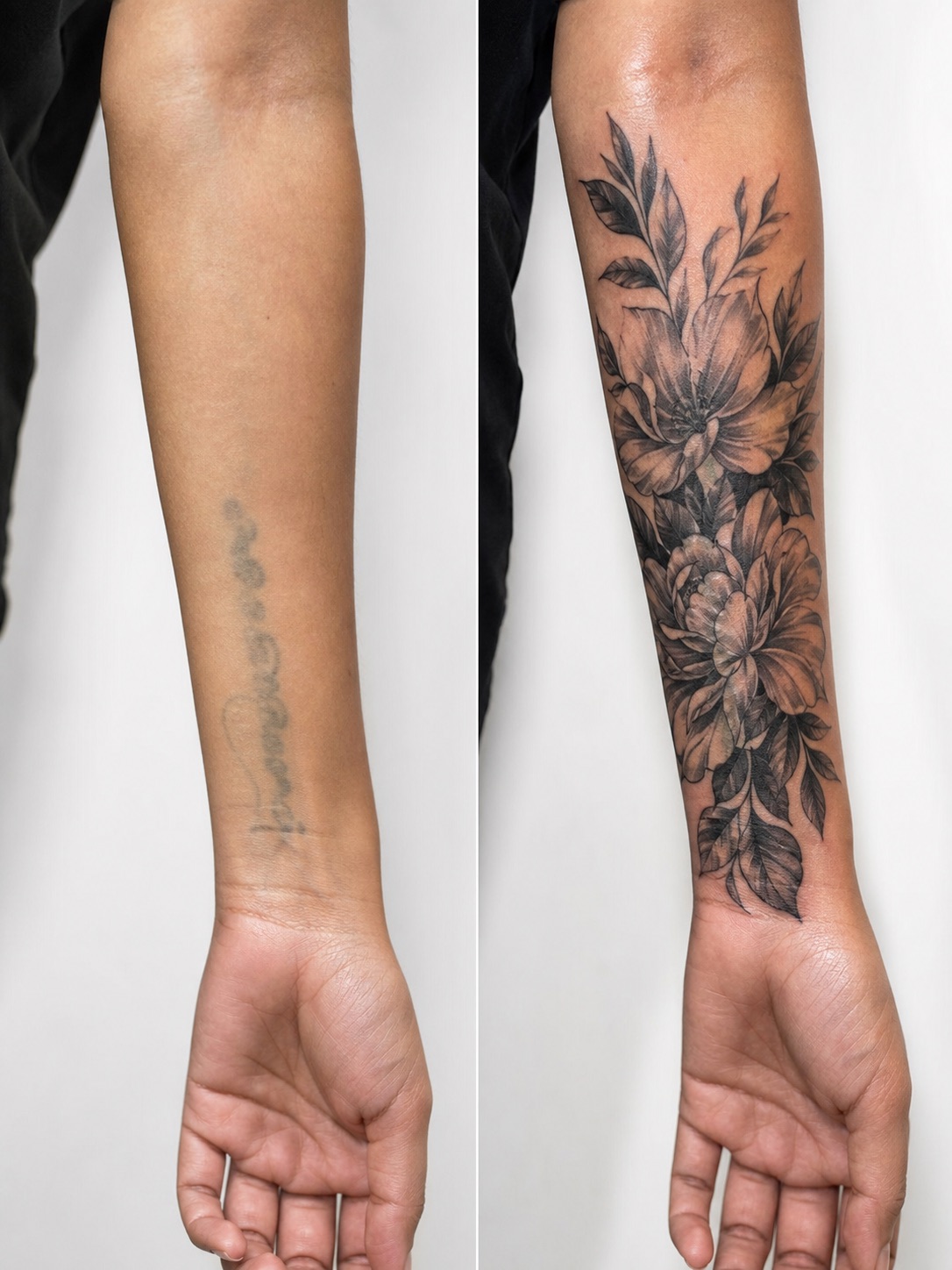
And then there’s size, which catches almost everyone off guard. Most cover ups end up bigger than the original tattoo. Sometimes noticeably bigger. That tiny minimalist design you saved might look great on Pinterest, but old ink underneath changes the math.
This guide covers 15 cover up tattoo ideas by style and placement, with honest notes on what each one actually works for — and what it probably won’t hide. The goal is to walk into your consultation already knowing the right questions to ask, instead of hearing “that won’t cover that” after waiting six months.
Quick cover-up match: old ink type matters more than the new reference photo. Use the table below as a starting point before you book the consultation.
| Old tattoo type | Best cover-up direction | Usually avoid |
|---|---|---|
| Faded name or script | Phoenix, floral, feather, smoke, or dark ornamental work | Tiny fine-line lettering over the same area |
| Black tribal band | Blackwork, Japanese sleeve, dark botanical wrap, or blackout sections | Light watercolor, pastel flowers, thin minimalist designs |
| Small faded symbol | Rose, peony, moth, snake, or compact realism piece | A cover-up that is the exact same size |
| Large dark patch | Ornamental blackwork, dense forest scene, raven, wolf, koi, or dragon | Micro-realism or low-contrast color work |
| Old colored tattoo | Deep jewel tones, black-and-gray realism, or a larger composition with shadows | Trying to hide saturated color with pale ink |
If the old tattoo is still very dark, ask the artist whether laser fading would create more design options. You may not need full removal; sometimes lightening the darkest areas is enough to move from “only blackwork will cover this” to several realistic choices.
Why Cover Ups Are More Complicated Than They Look
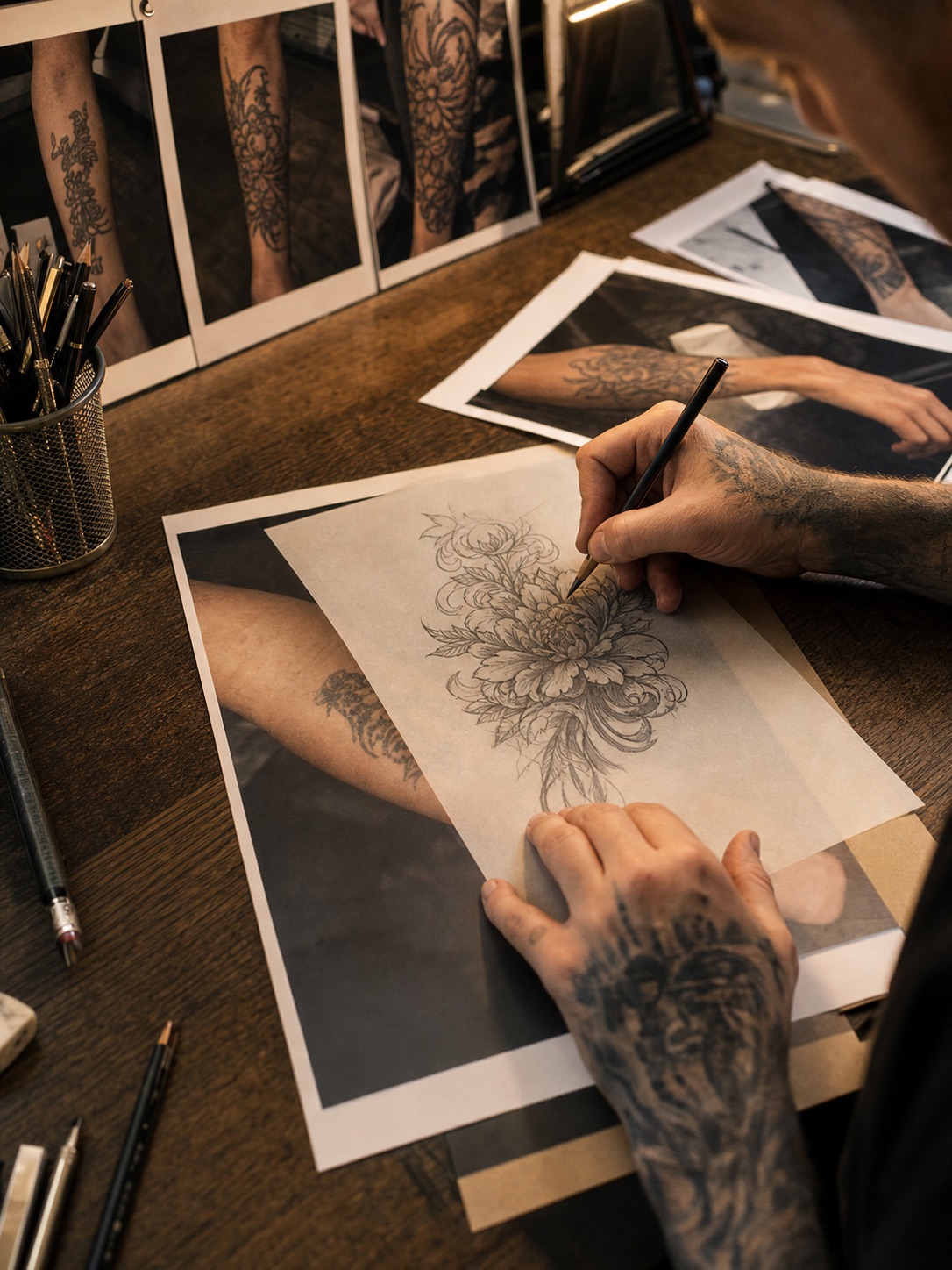
The biggest misconception: you can place any design you want over any old tattoo. You can’t. Old ink is still there under the new design — it doesn’t disappear. The new tattoo has to be darker, denser, and usually larger than what’s underneath, because lighter colors won’t fully suppress what’s below them.
The Size Rule Nobody Mentions
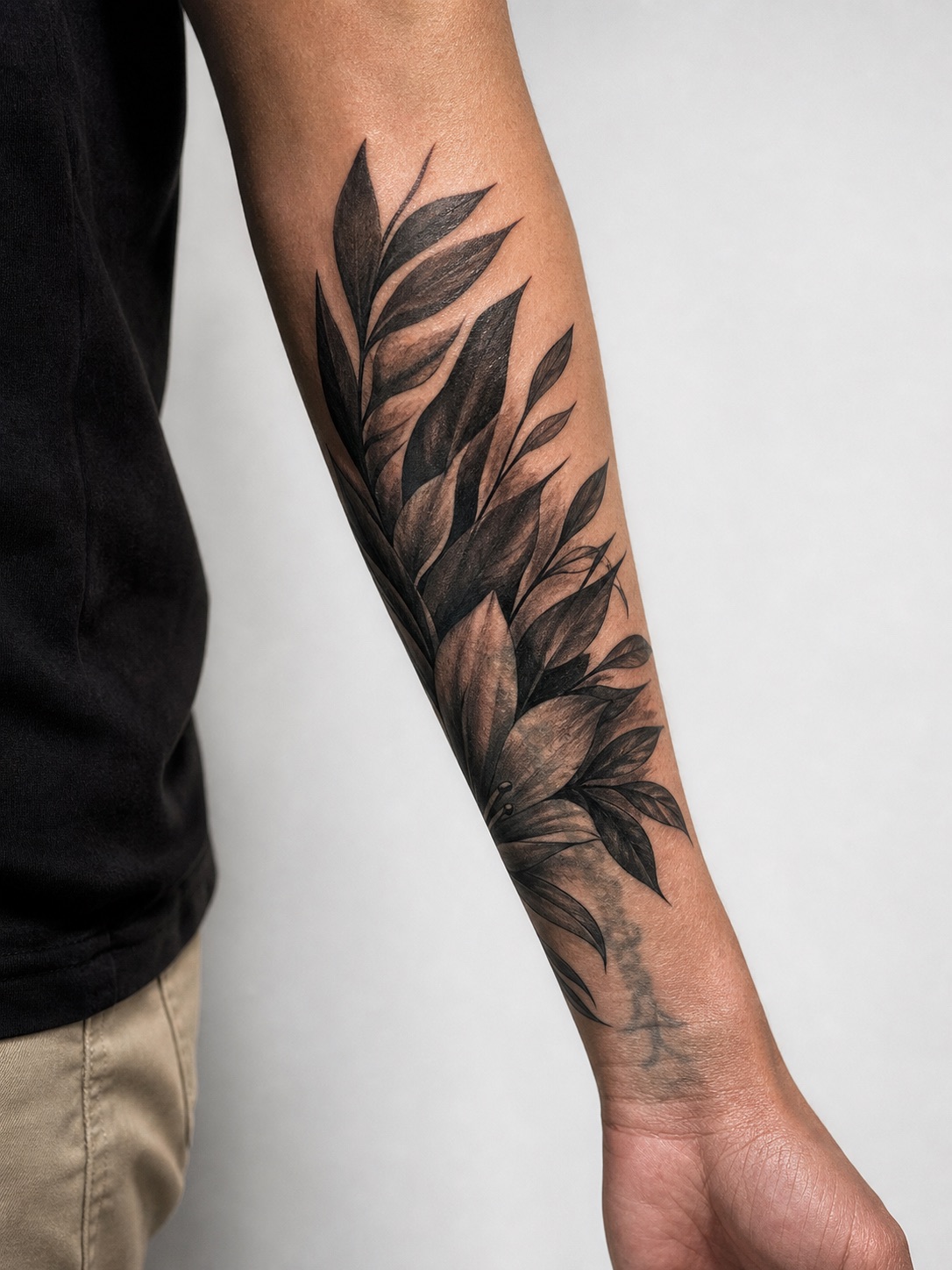
A successful cover up almost always needs to be at least 30% larger than the original. That’s not arbitrary — it’s because the design needs room to build density, shading, and detail around the edges of the old tattoo so nothing bleeds through at the border. An artist who tries to match the original size is setting you up for a result that looks patchy within a few years.
If your old tattoo is, say, 3 inches wide, mentally prepare for the cover up to be 4–5 inches. The additional space is where the artist actually solves the problem.
Color Doesn’t Beat Darkness
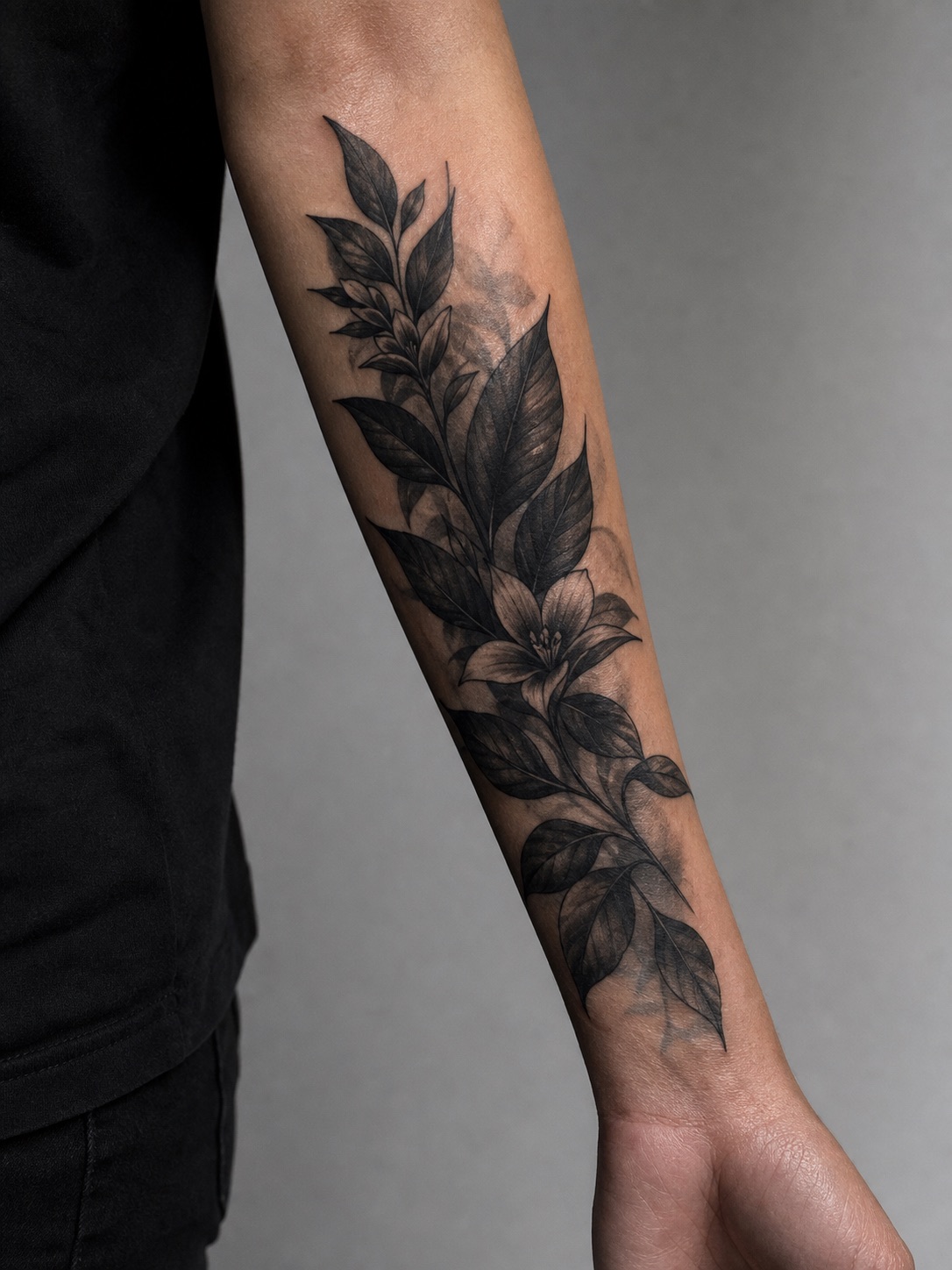
This one surprises people: you cannot cover a dark black tattoo with a light watercolor design. The physics of tattooing don’t allow it. Lighter ink colors are semi-transparent by nature, so the darkness underneath shows through. Deep blues, forest greens, rich purples, and blacks are the palette that actually works. That’s why so many cover ups end up darker than what the person originally wanted — it’s not artistic preference, it’s a technical constraint.
Laser Fading Opens More Options
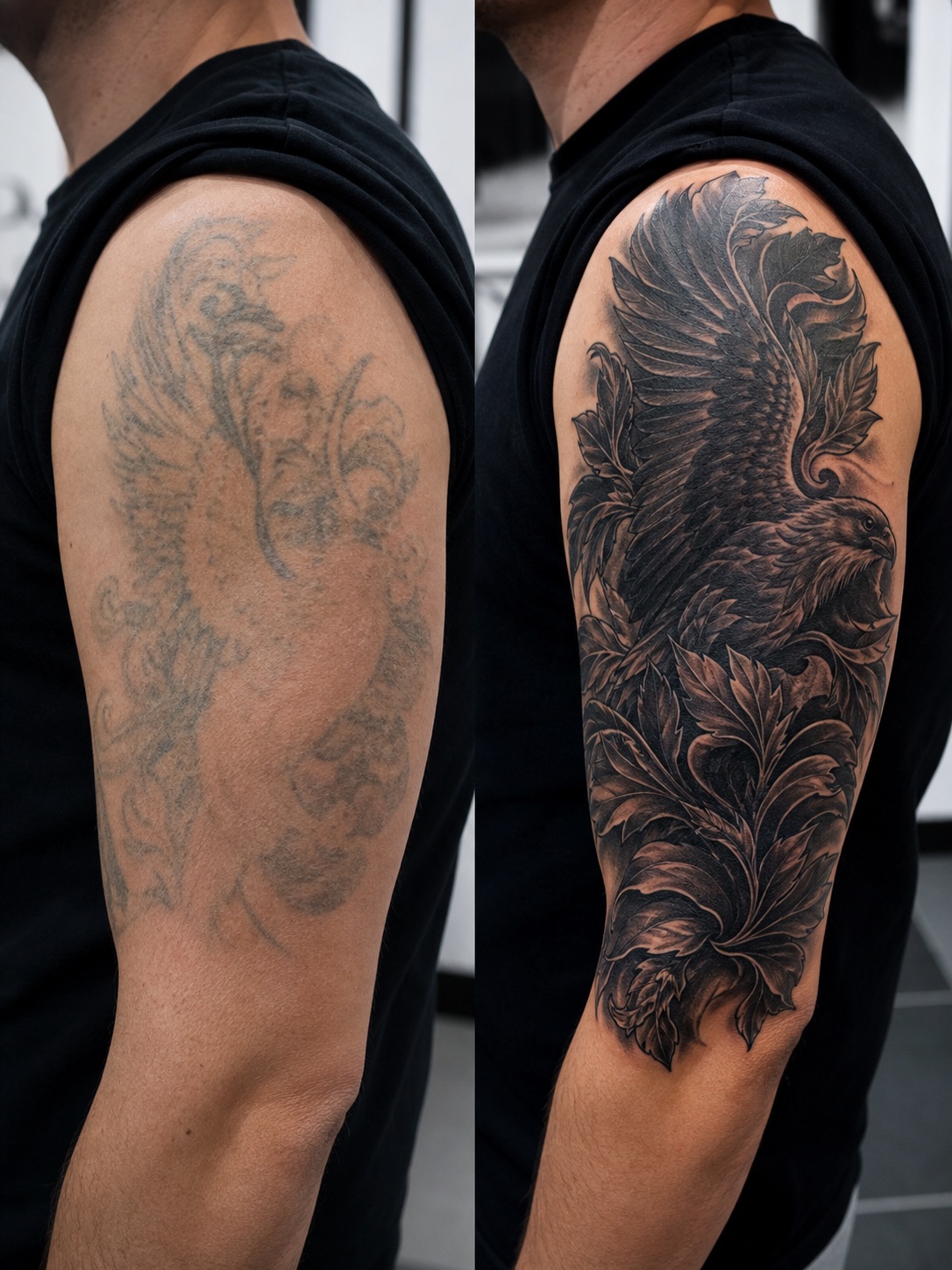
A few sessions of laser tattoo removal — not full removal, just fading to 40–60% of original darkness — opens up a significantly wider range of cover up designs. Artists who specialize in cover up work will often recommend this before doing anything. It costs more and adds months to the timeline, but it’s the difference between “only blackwork will cover this” and “we have real options here.”
Key Numbers
Laser fading sessions needed before cover up: typically 3–6. Time between sessions: 6–8 weeks. Average cost per session: $100–$300 depending on tattoo size and location. Many tattoo studios have partnerships with laser clinics — worth asking.
Floral Cover Ups: The Most Forgiving Option
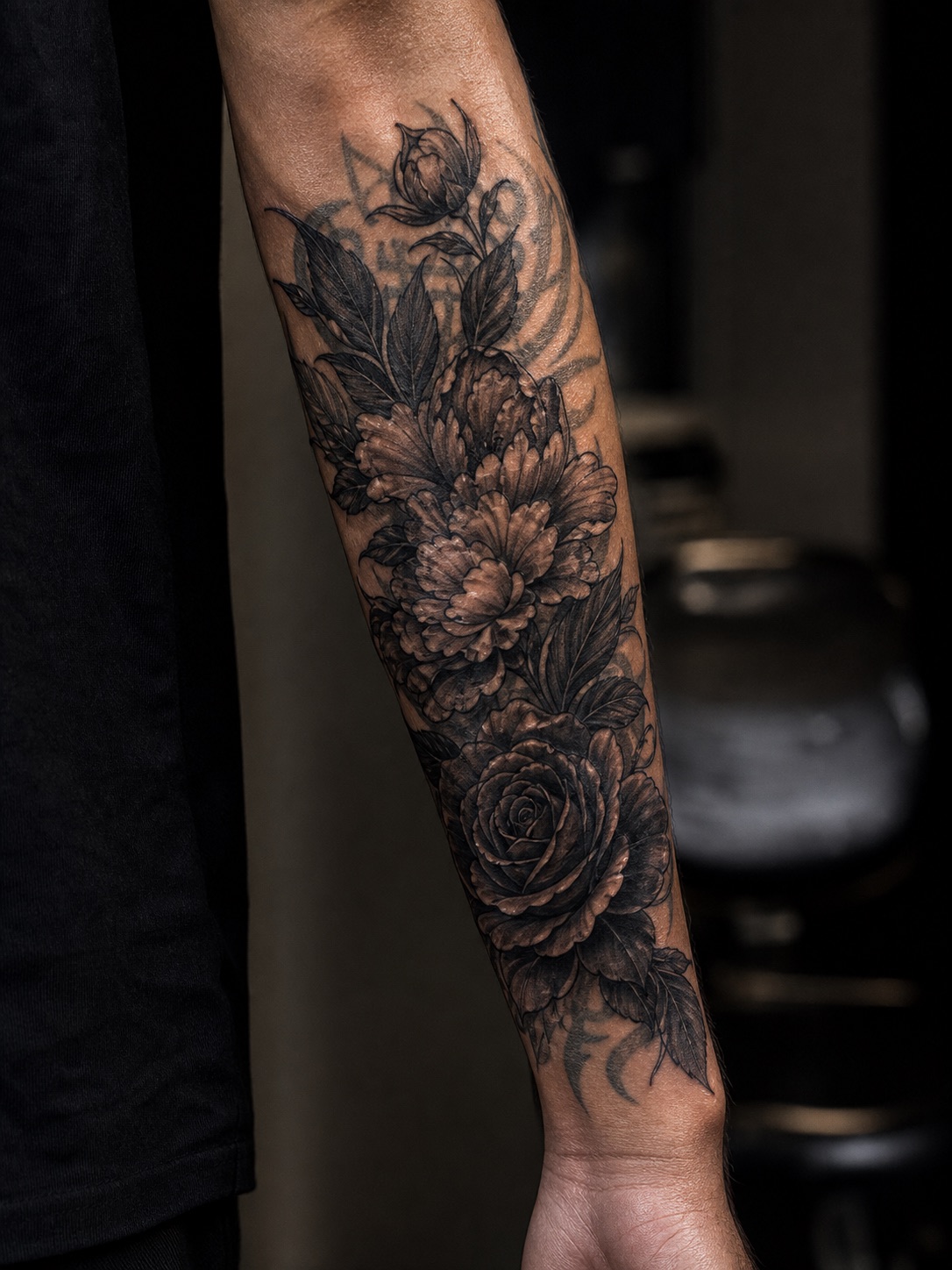
Flowers are the most consistently successful cover up design category, and there are real structural reasons for that — it’s not just that they look good. The layered petals, dark centers, and organic irregular shapes give an artist enormous flexibility to place dark ink exactly where it’s needed without the design looking contrived. If you want to compare blooms by meaning and scale first, use this flower tattoo designs guide as a reference.
Rose and Peony Cover Ups
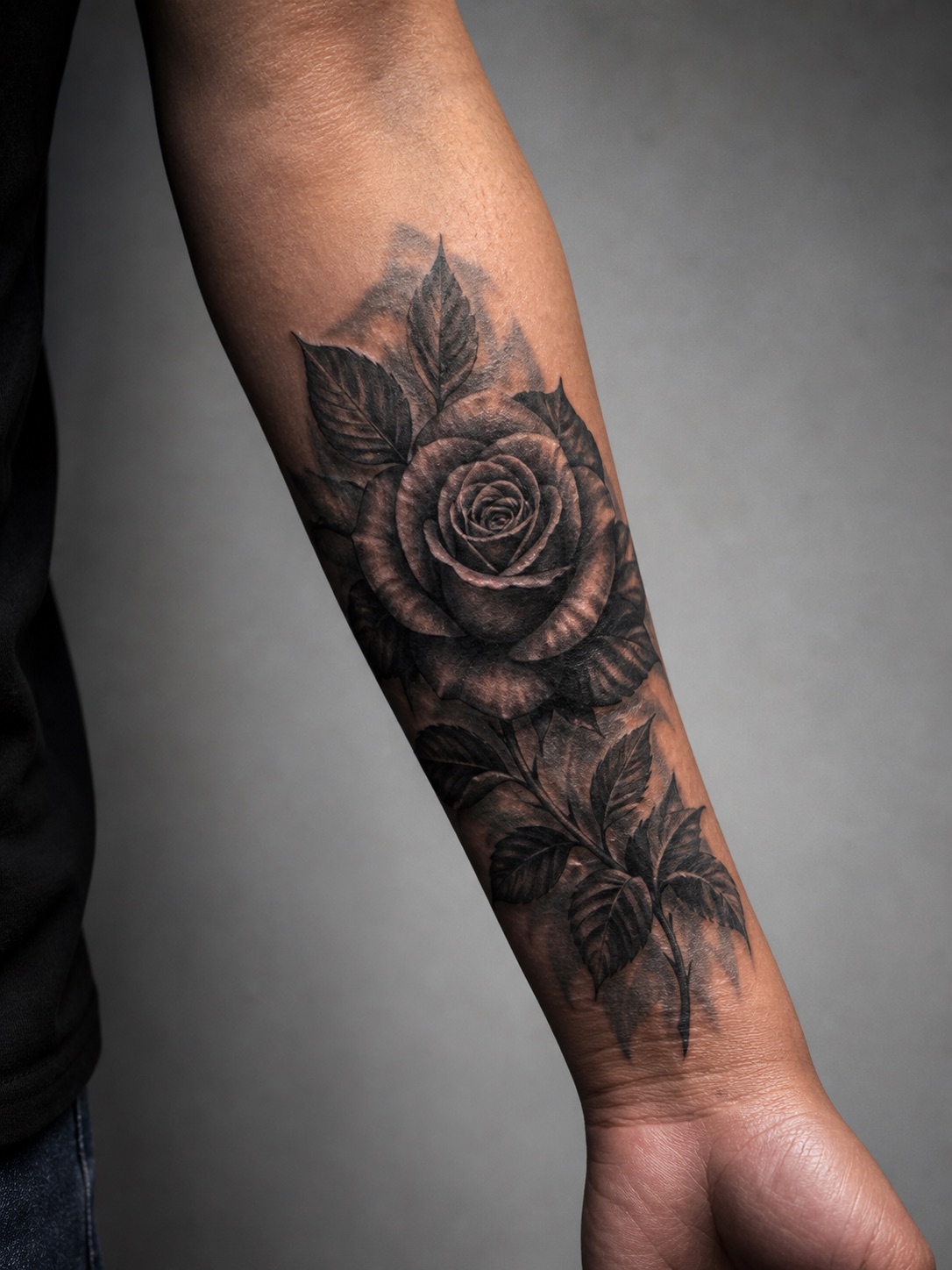
Roses and peonies are the workhorses of floral cover ups because their anatomy is genuinely useful: the dense, dark center can sit directly over the darkest part of the old tattoo, and the layered petals shade outward in a way that naturally transitions from dark to medium. A large neo-traditional rose with heavy blackwork shading can cover a surprising amount — I’ve seen artists bury entire name tattoos under a single well-placed peony with a realistic shadow.
The catch: these designs work best when the old tattoo is relatively contained. A scattered, sprawling old piece with irregular edges is harder to anchor a single floral element over. For those, you’re looking at a bouquet arrangement or a botanical sleeve rather than a single flower.
Botanical Sleeve Cover Ups
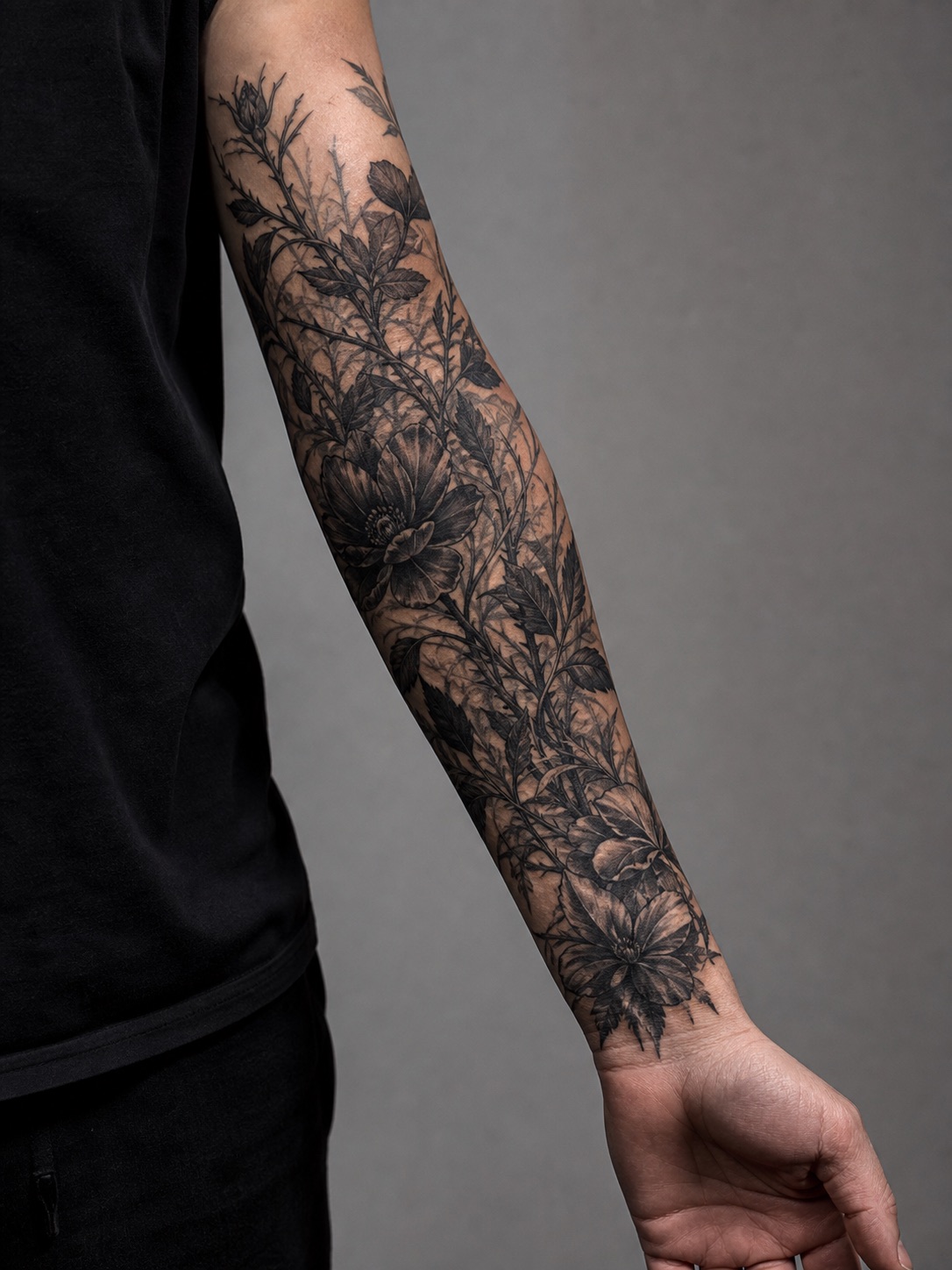
When a single element won’t do it — maybe the old tattoo is too spread out, or there are multiple pieces in different stages of fading — a full botanical sleeve gives the artist a complete framework. The dense layering of leaves, stems, thorns, and multiple flowers means dark ink can go almost anywhere without looking forced. This is the design direction that tends to produce the most transformative before-and-after results; these botanical tattoo ideas show why layered leaves and stems are so flexible.
Plan for at least two to three sessions and a budget in the $800–1,600 USD range for a quality forearm sleeve from a specialist. Rushed botanical sleeves look rushed. This is one category where taking time with the planning genuinely pays off in the final result.
Dark Floral for Specific Problem Areas
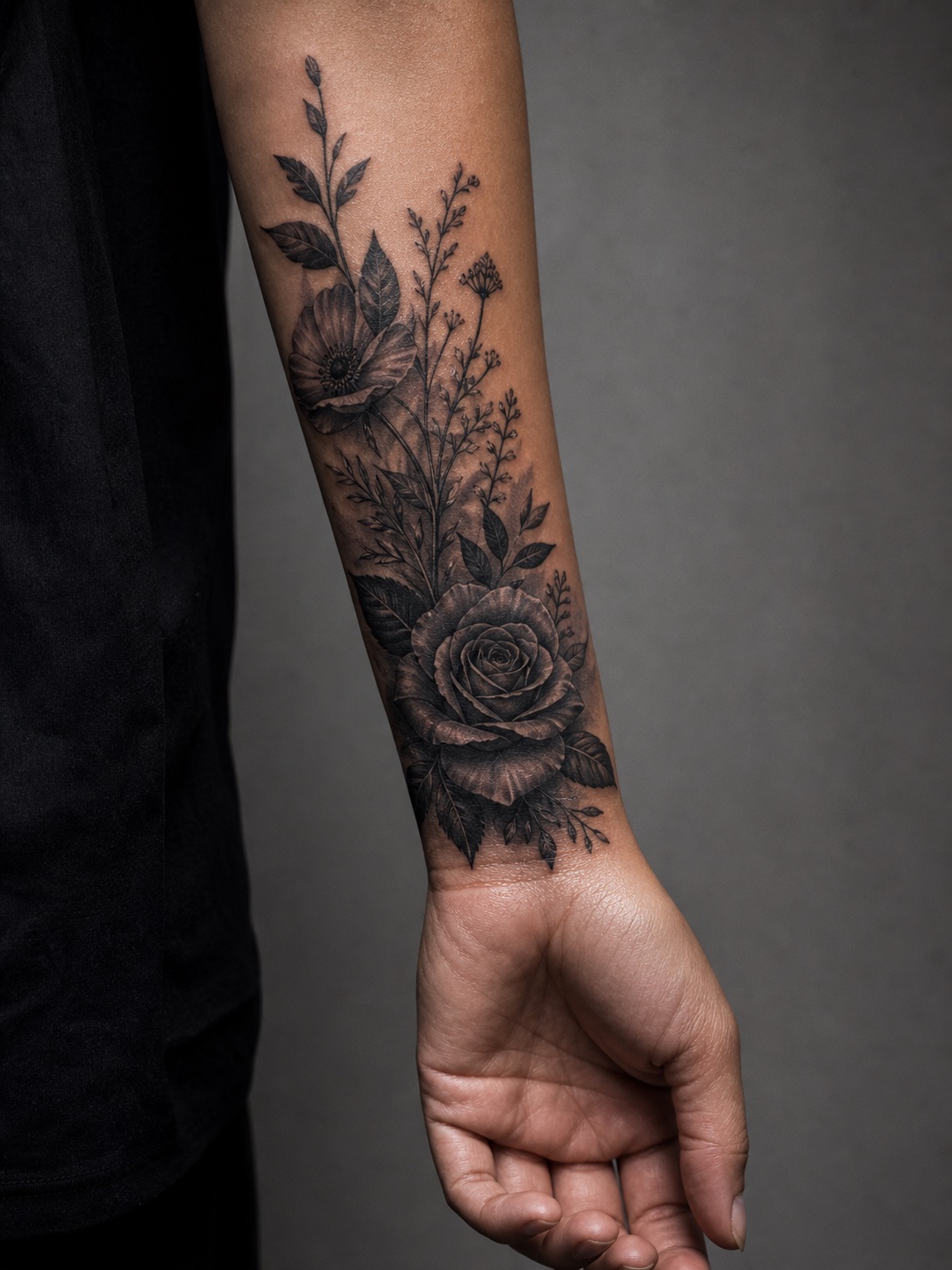
Gothic botanical designs — black roses, dead flower compositions, heavily shaded wildflowers — have enough density to handle the darkest existing tattoos without needing to go full blackout. They also read as intentionally dark rather than like a cover up that had to be dark. If you had a black tattoo and want something that doesn’t look like a compromise, dark floral is usually the strongest direction.
Blackwork Cover Ups: When Nothing Else Will Work
Snakes are strong cover-up shapes because curves and scales can hide uneven old lines. The black snake tattoo meaning guide may help if you are leaning toward heavier blackwork.
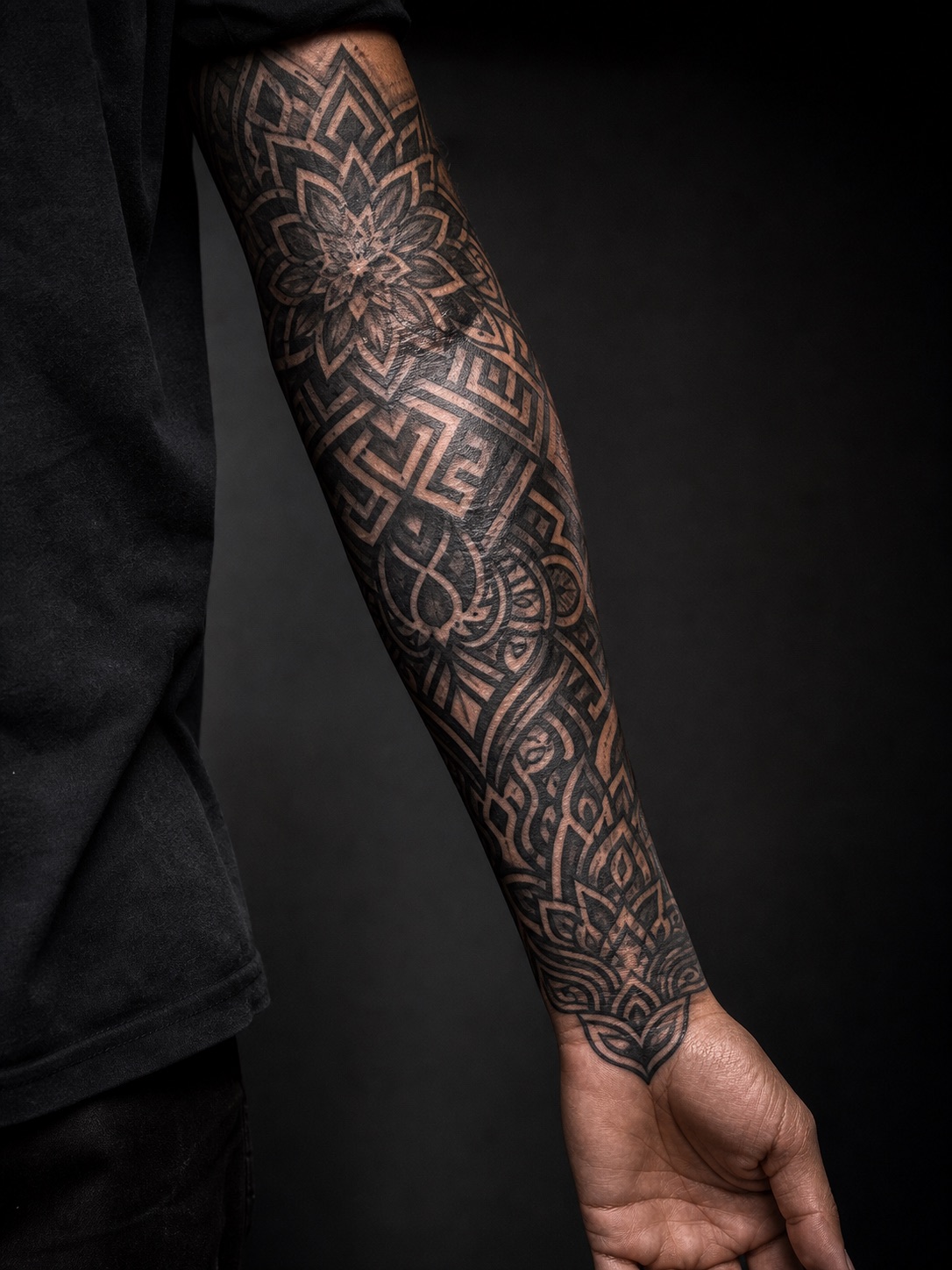
Blackwork is the nuclear option of cover ups — dense, solid black ink that covers everything underneath without compromise. When an old tattoo is very dark, heavily saturated, or poorly placed, blackwork is often the only realistic solution. The result looks deliberate and modern when done well, and the quality of artist you choose matters enormously.
Ornamental Blackwork
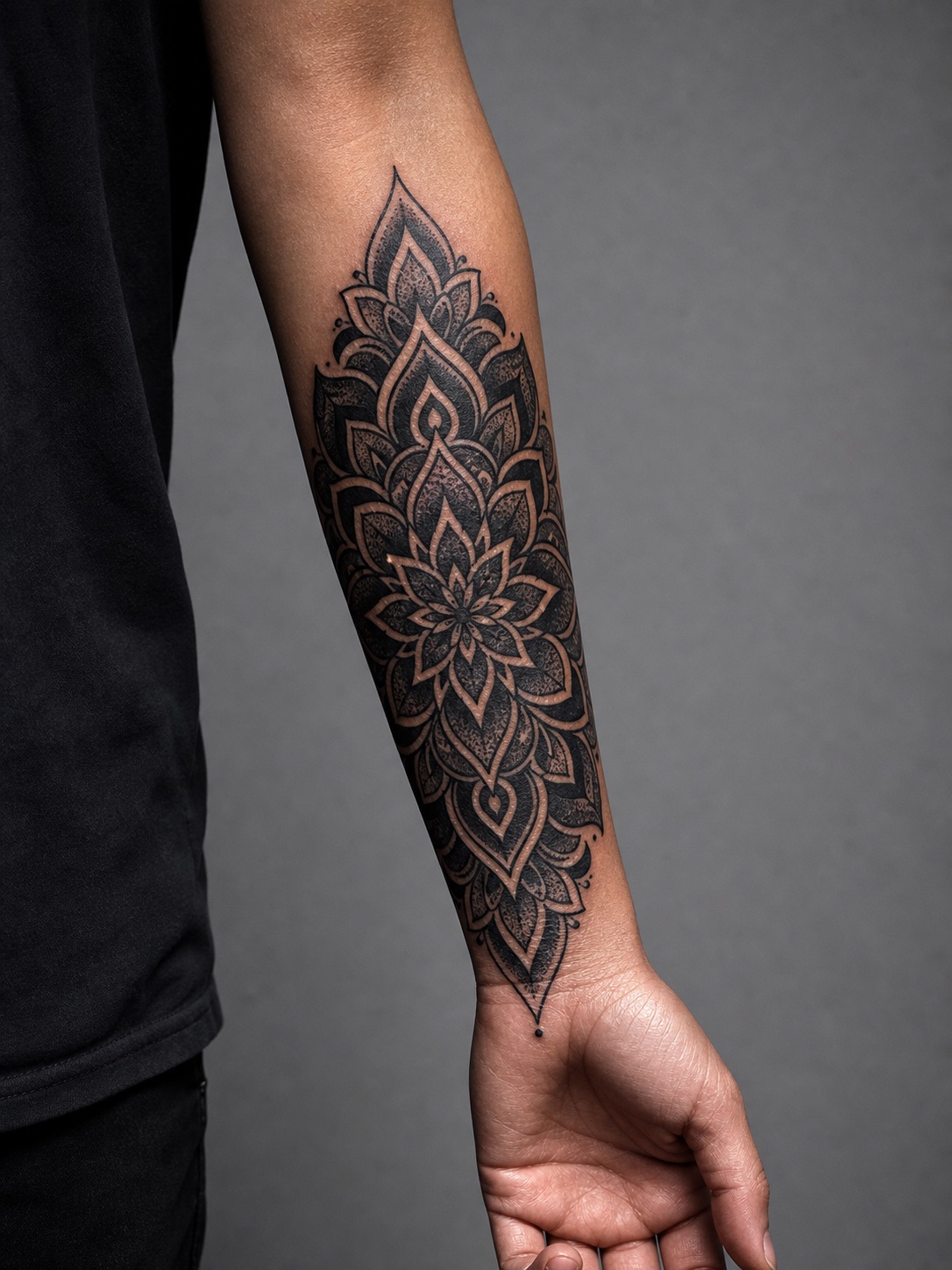
Ornamental blackwork — symmetrical patterns, decorative mandalas, intricate linework with heavy fill areas — is probably the most visually impressive outcome possible for a dark cover up. The design looks architectural and intentional. Artists like Bang Bang NYC and Maxime Buchi have made this style widely recognized. The density means complete coverage; the symmetry means it reads as a designed piece, not a patch job.
Blackout Sleeve
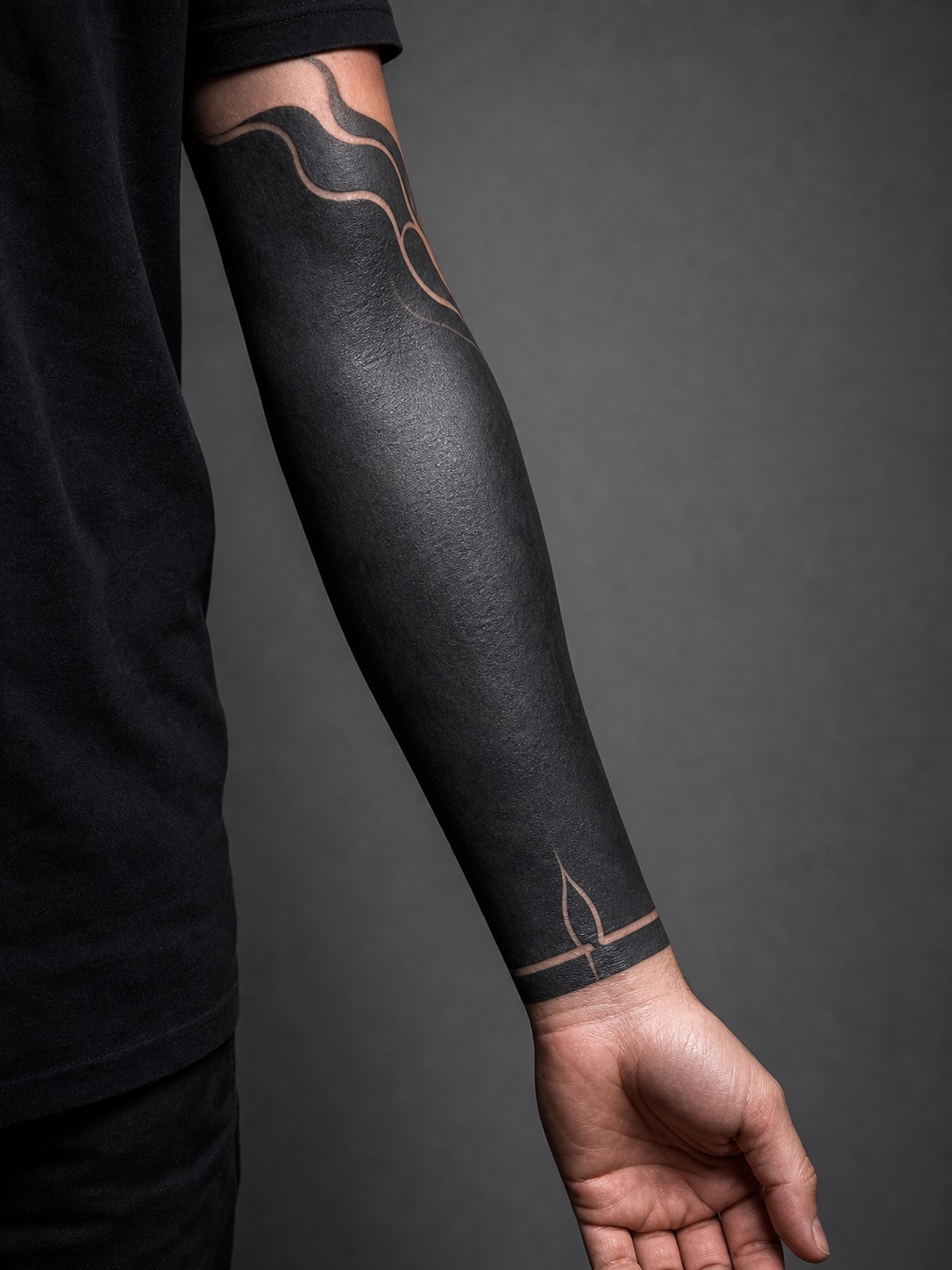
A full blackout sleeve — complete, solid black coverage from wrist to elbow or beyond — is the most extreme cover up option and the one with the most divided opinions. It’s permanent and very visible. What it does do: it completely eliminates whatever was underneath, no exceptions. Some artists add negative space designs or white ink details within the blackout to create texture. This approach is growing in popularity as a deliberate aesthetic choice, not just a last resort.
The healing process for blackout sleeves is significantly more demanding than standard tattoos. Expect extended peeling, more aftercare sessions, and potential touch-ups where ink lifts. Budget two to three touch-ups into your plan from the start.
Geometric Blackwork
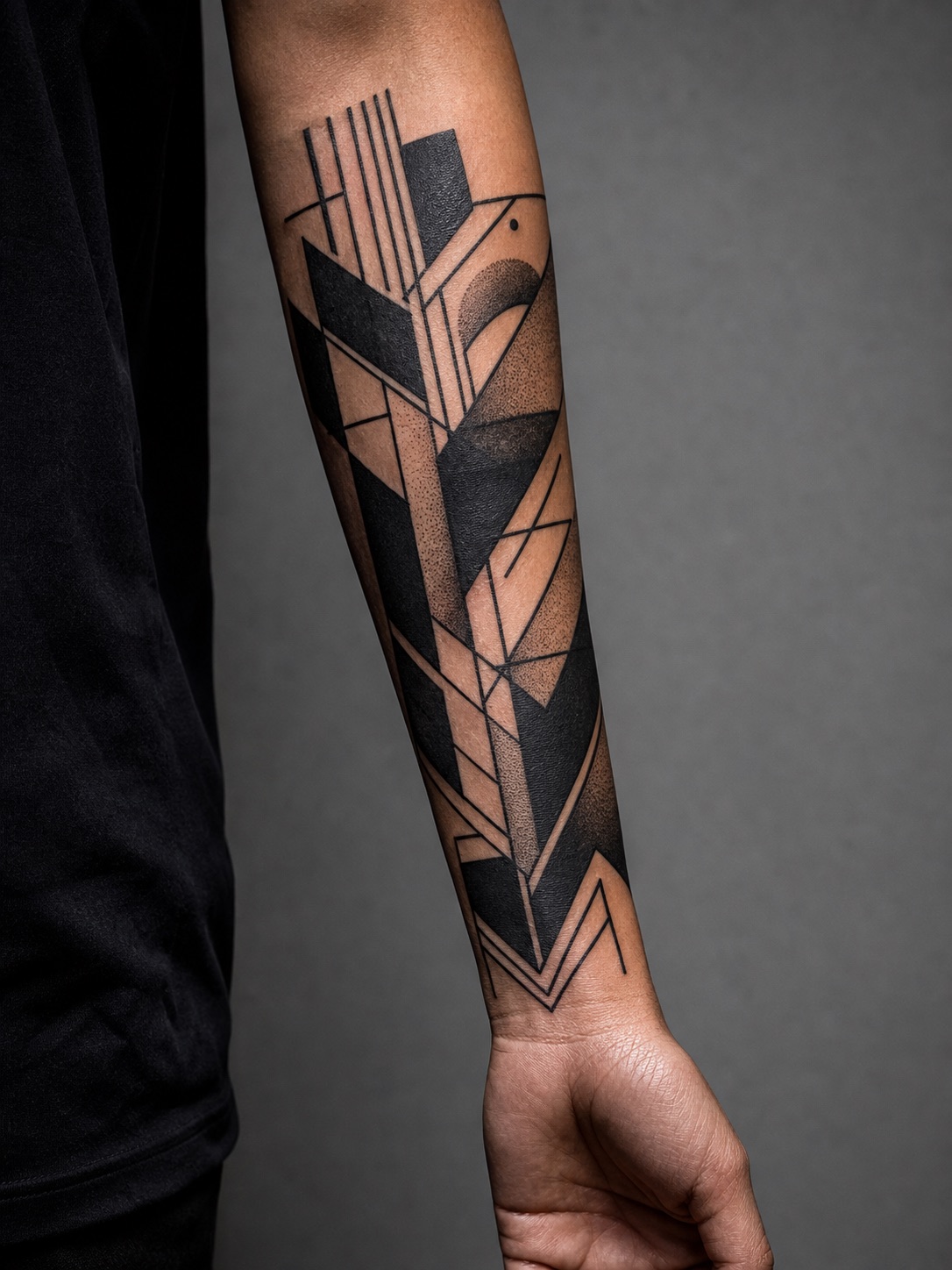
Sacred geometry, tessellated patterns, and angular abstract designs give artists structure to work within while placing heavy black fills exactly where they need to go. The geometric grid means the dense areas look purposeful rather than arbitrary. Mandala-inspired designs on the upper arm or shoulder work particularly well because the radial symmetry gives a natural framework that reads as planned, not reactive.
Japanese Style Cover Ups: Depth That Hides Everything
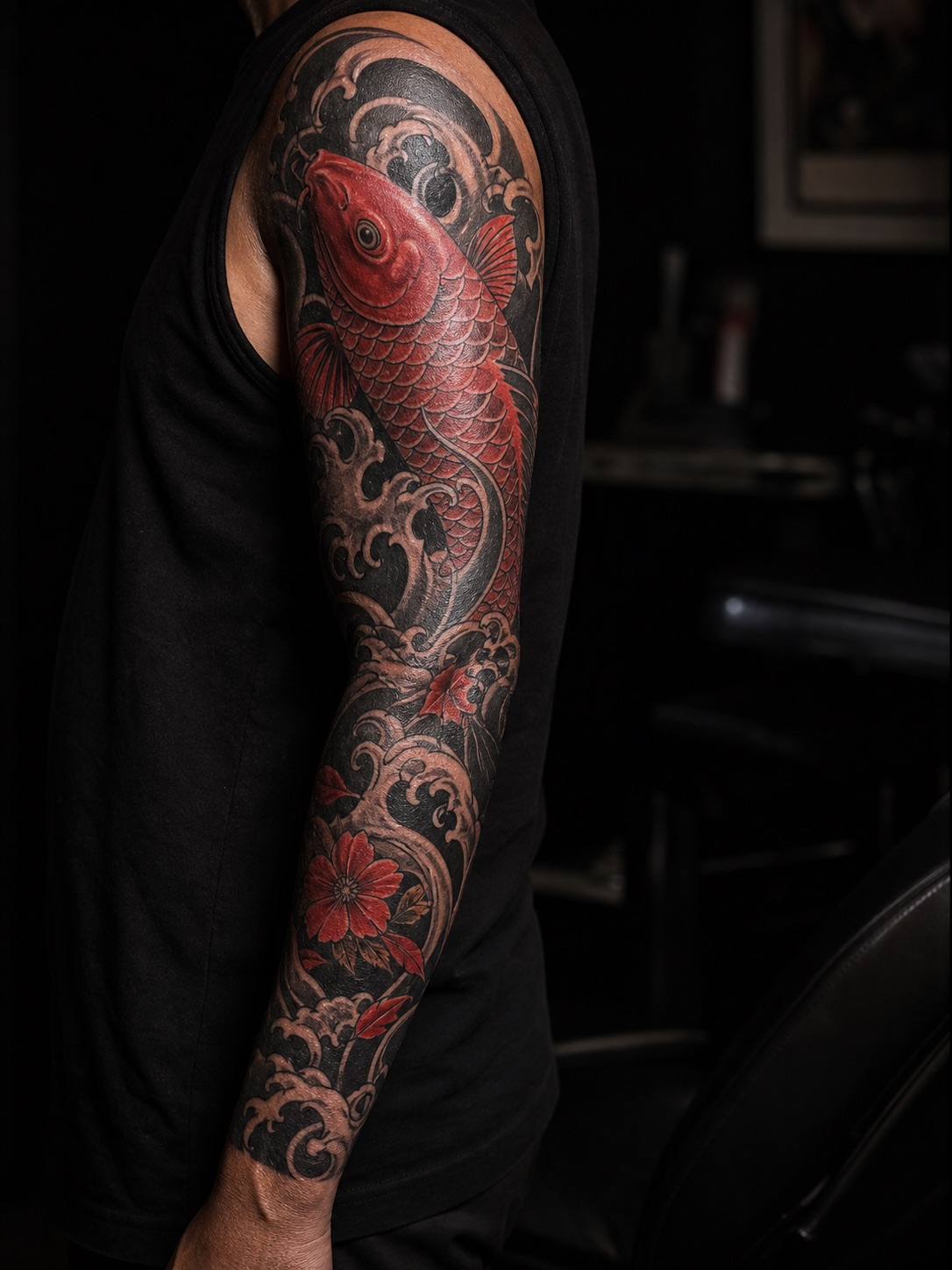
Japanese tattooing — irezumi-influenced work with koi fish, dragons, waves, cherry blossoms, and bold negative space — is structurally excellent for cover ups. The style relies on deep blacks in background areas (water, shadow, rock textures) and bold colored fills, which gives artists the density they need without the design looking like a blackwork piece.
Koi Fish and Water
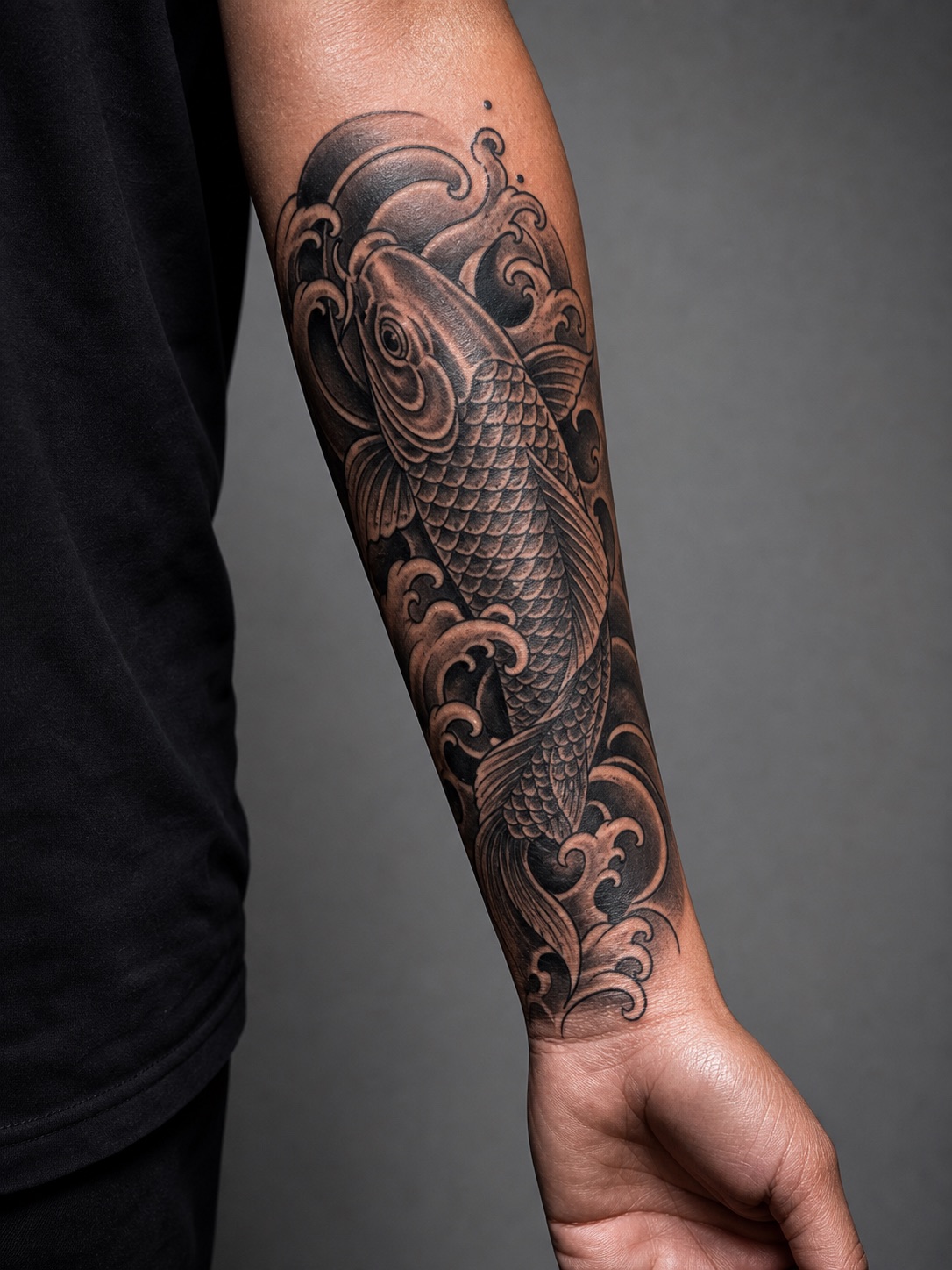
The koi fish is the most reliably versatile Japanese cover up subject. The fish body itself can anchor over the old tattoo center, and the flowing water background — which is traditionally rendered with heavy black ink in waves and foam — provides unlimited coverage area in all directions. A koi composition can expand to fill exactly the space it needs to, which makes it unusually adaptable to awkward old tattoo shapes.
Dragon Sleeve
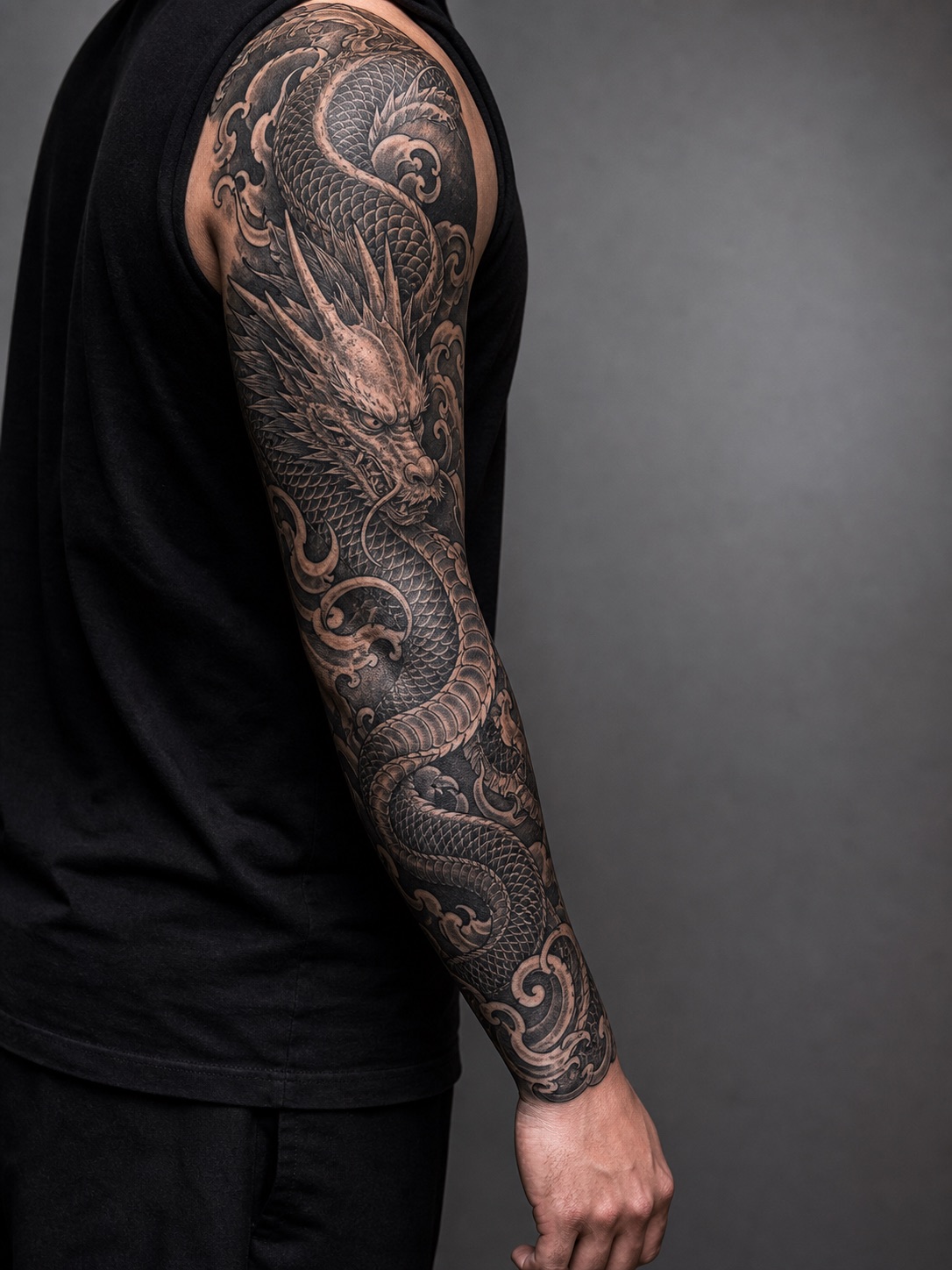
A dragon sleeve has the same advantage as the koi: the body wraps and flows, scales provide texture, and the dark background elements can go wherever the problem is. Dragons are larger compositions that generally need more real estate — a half sleeve or full sleeve — but the scale means there’s more room to build the design around the old tattoo’s shape rather than fighting it. Artists who specialize in Japanese work approach this as a collaboration with the existing piece, not an erasure.
Phoenix for Names and Text
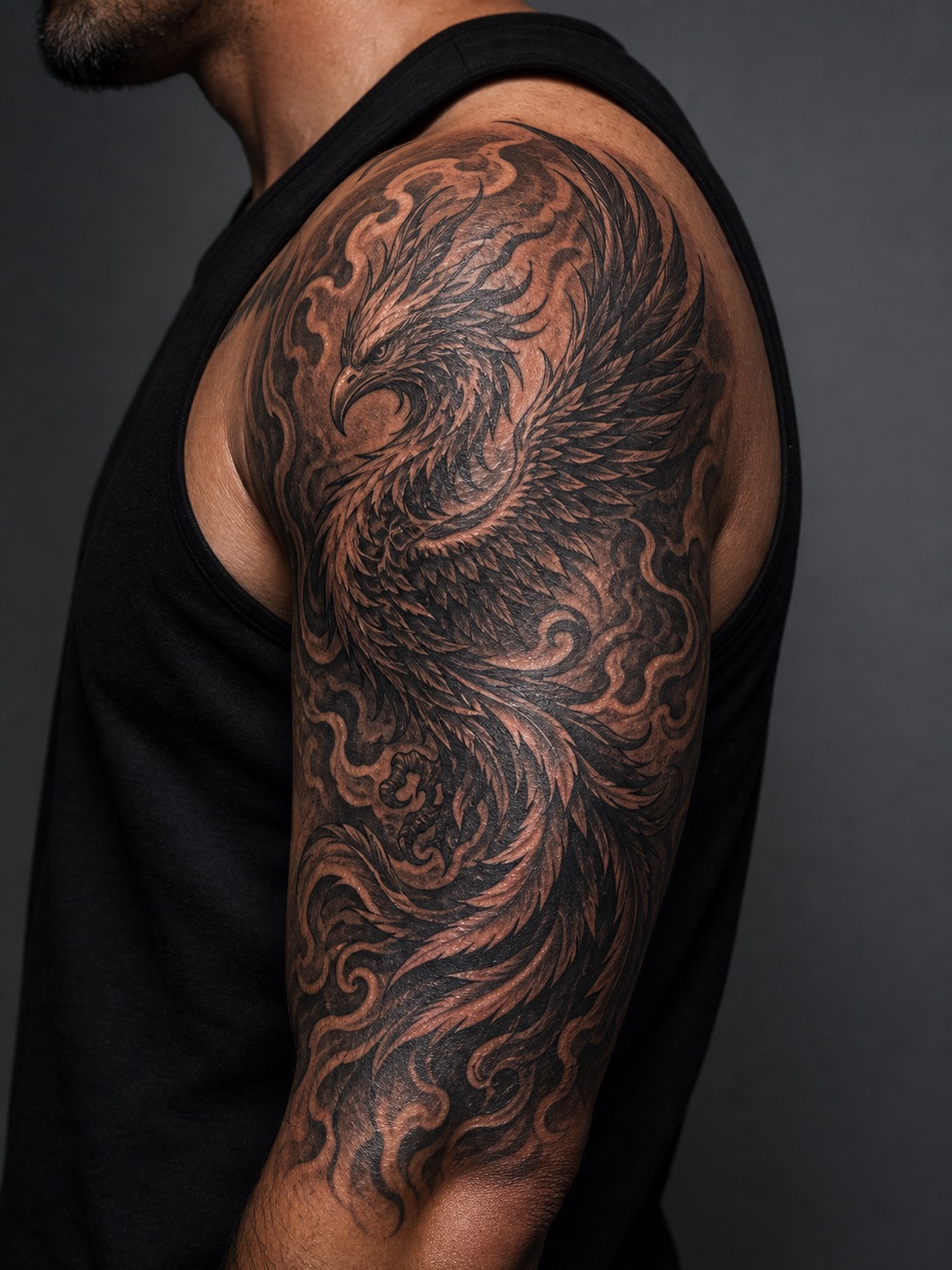
Name and text cover ups are among the most requested — and among the trickiest — because the linear, structured nature of letters creates sharp edge contrast that bleeds through softer designs. A phoenix works specifically because the feathers can be arranged to point in multiple directions, breaking up the linear pattern of text. The dark fire and smoke elements at the base of the bird absorb the darkest ink in the old tattoo. It’s not a subtle approach, but it works reliably.
Realism Cover Ups: The Blending Specialists
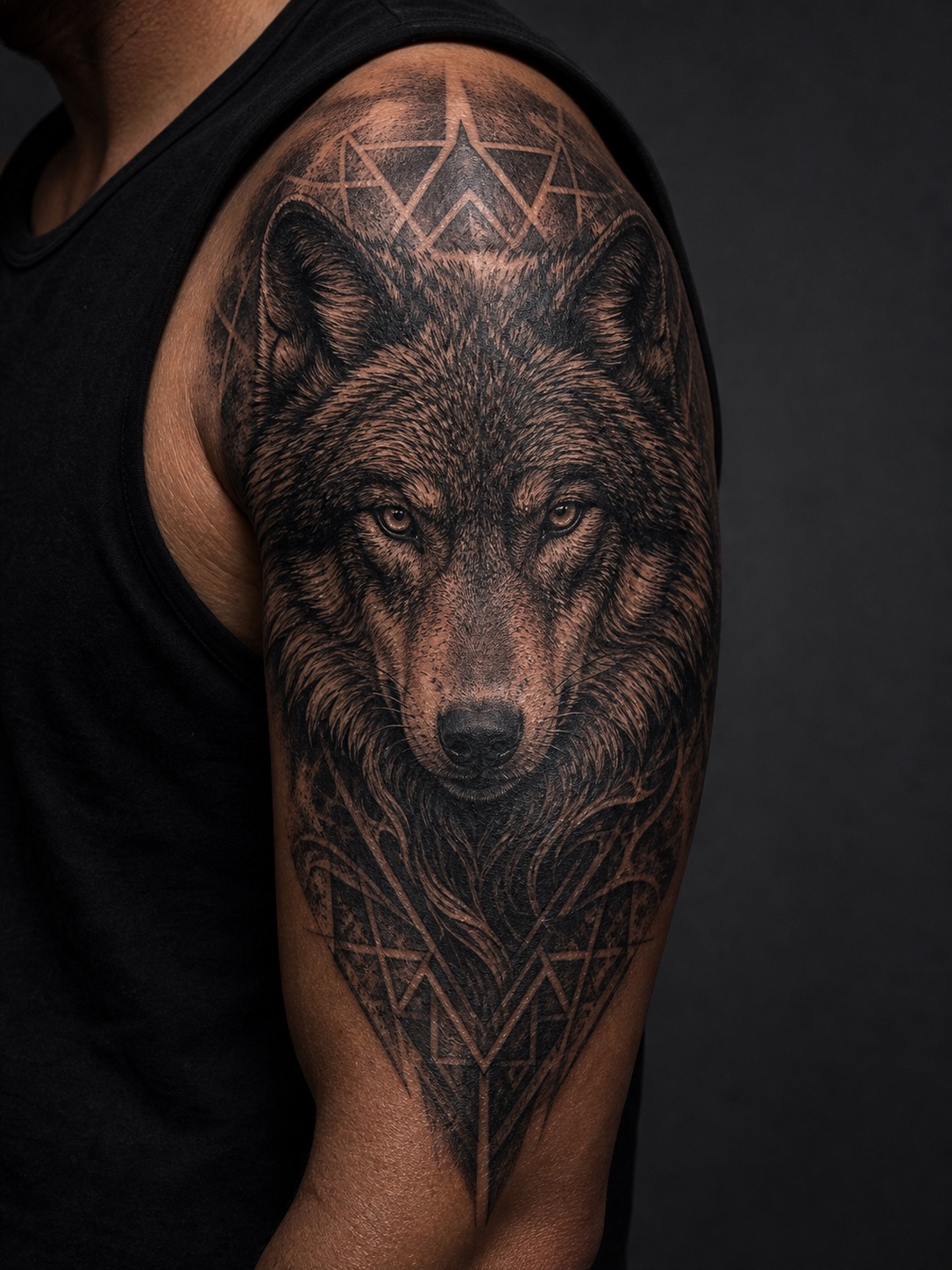
Realistic tattoos — portraits, animals, landscapes — work as cover ups because their shading is inherently varied and complex. Where a geometric design needs dense black in specific areas, a realistic wolf or raven uses shadow naturally throughout the composition, which means an artist has organic reasons to go dark wherever the old ink requires it.
Animal Realism
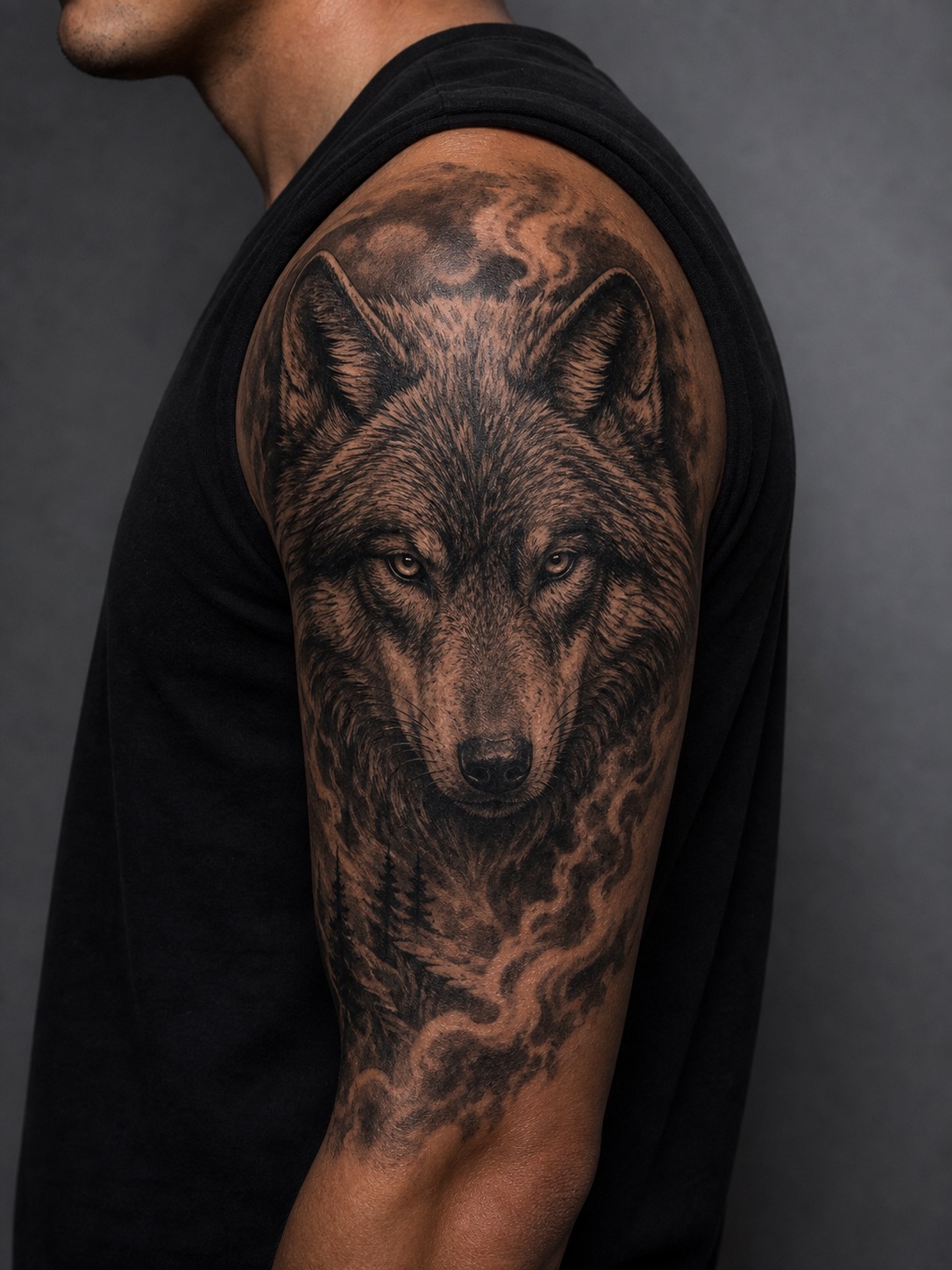
Wolves, ravens, owls, and big cats are the most common realism cover up subjects. All of them have fur or feathers that provide texture and tonal variation, and all of them have naturally dark areas (eye sockets, muzzle shadows, undersides of wings) that an artist can position strategically. The key word here is “strategically” — a good realism artist will design the composition so the animal’s darkest areas land precisely over the darkest areas of the old tattoo. This is why the consultation matters as much as the execution.
Landscape and Nature Scenes
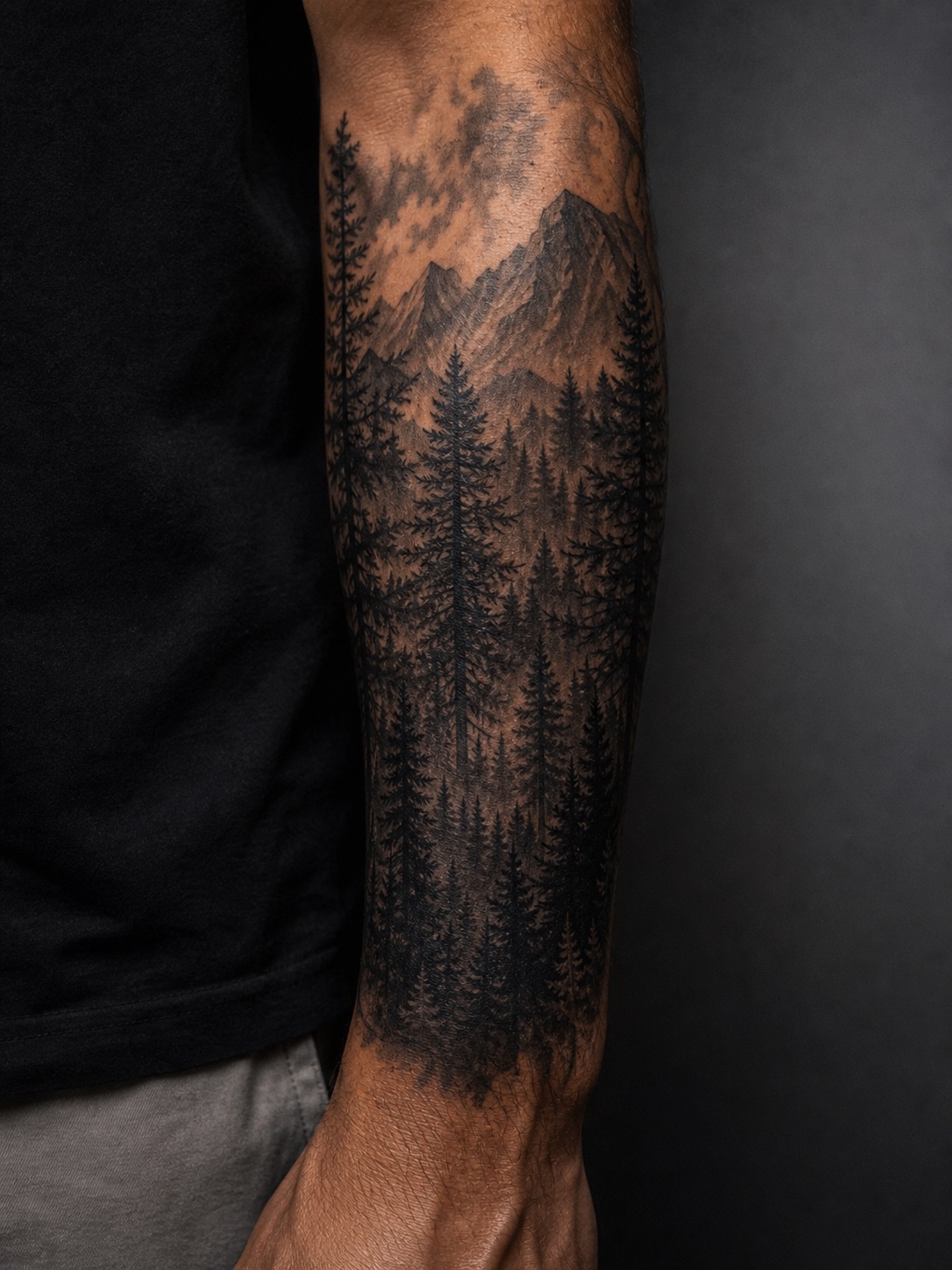
Mountain silhouettes, dense forest scenes, and nighttime seascapes give artists the widest possible distribution of dark ink across a large area. A forest scene where every tree trunk is a solid dark mass can effectively hide a sprawling old piece that no single-subject design could handle. These work best on the back, chest, or as sleeve elements — they need scale to read properly. A forest scene squeezed onto a 3×3 inch space loses all the depth that makes it work as a cover up.
Portrait Covers
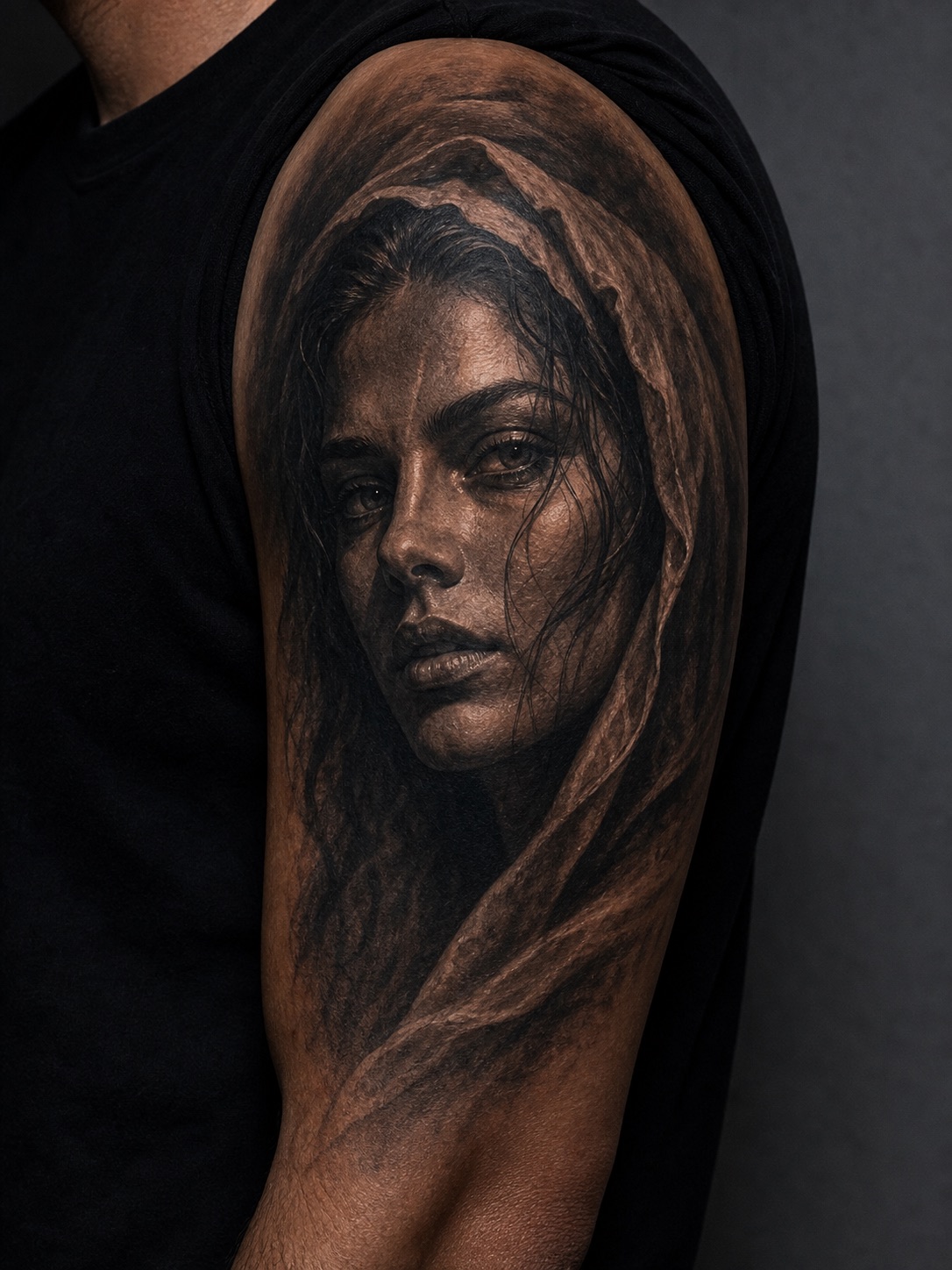
Portrait cover ups are specialist territory. They require an artist with a genuine track record in realism portraits specifically (not just realism generally), because the margin for error in a face is nearly zero. When they work, they’re extraordinary — the level of detail in a well-executed portrait provides shading density that covers almost anything underneath. When they don’t work, you’re left with a portrait that looks wrong and an old tattoo underneath. Vet the artist’s portfolio obsessively before booking this one.
Cover Up Ideas by Placement
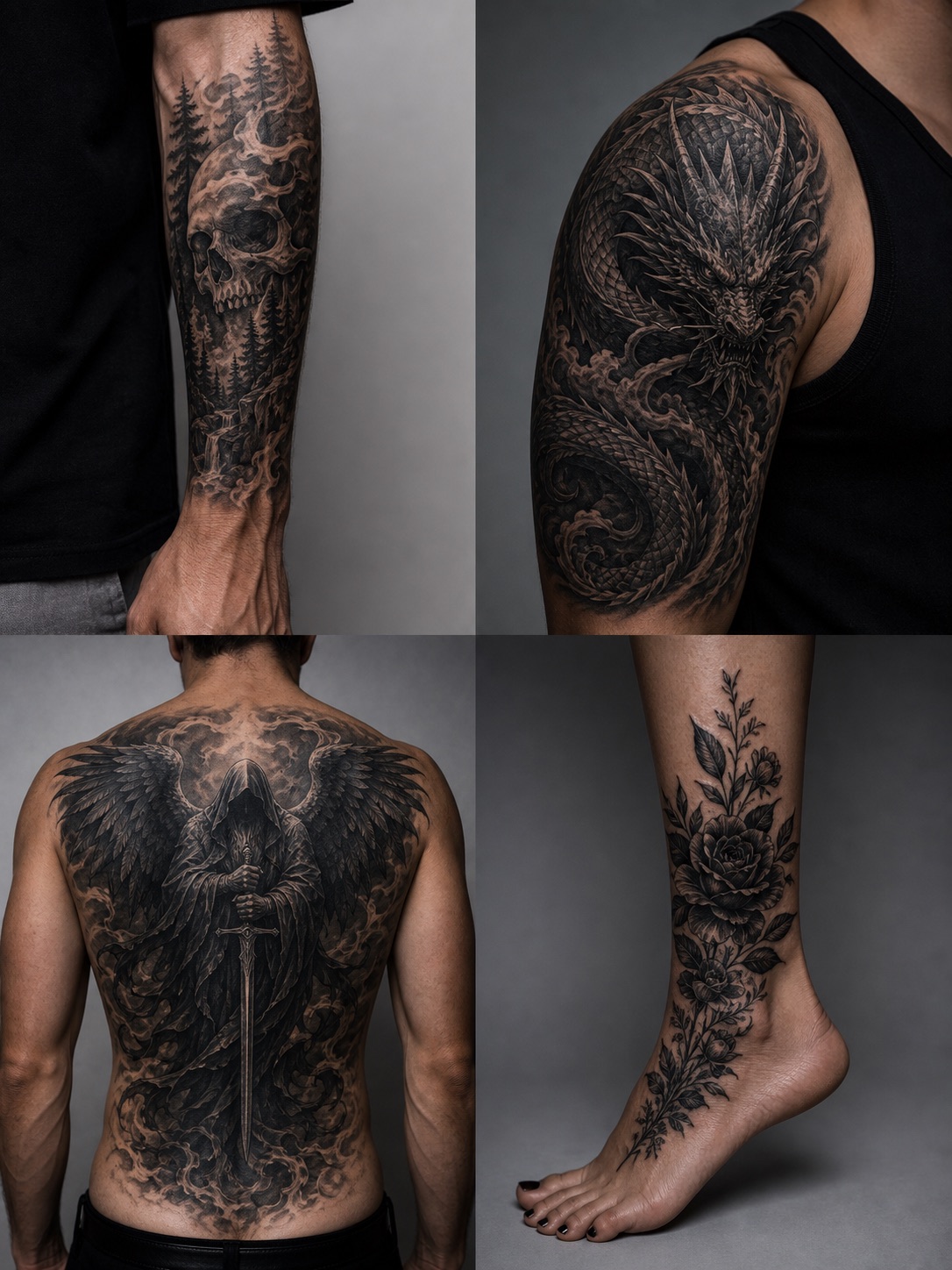
Where the old tattoo lives changes the options significantly. Some placements allow for large, flowing designs. Others are constrained by anatomy and skin behavior.
Forearm and Wrist Cover Ups
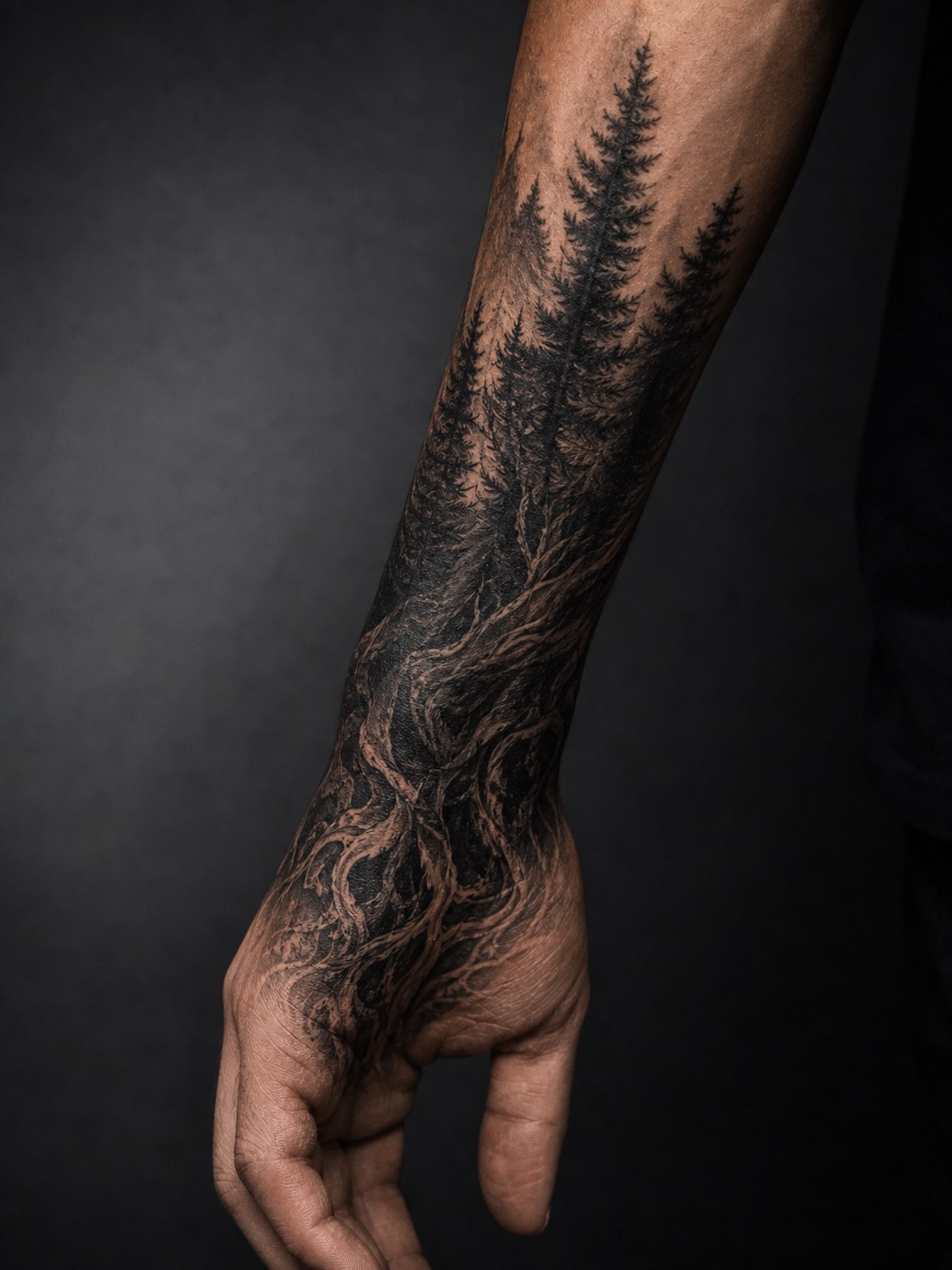
The forearm is the most common cover up location because it’s where a lot of first tattoos land. Good news: the forearm’s flat, relatively consistent skin texture holds ink well and gives an artist a reliable canvas. Full forearm botanical sleeves, blackwork ornamental pieces, and large single-subject realism all work here. Wrist cover ups are more constrained by size but follow the same rules: the new design needs to be darker and larger, so expect a single-subject piece to become a small scene.
Shoulder and Upper Arm
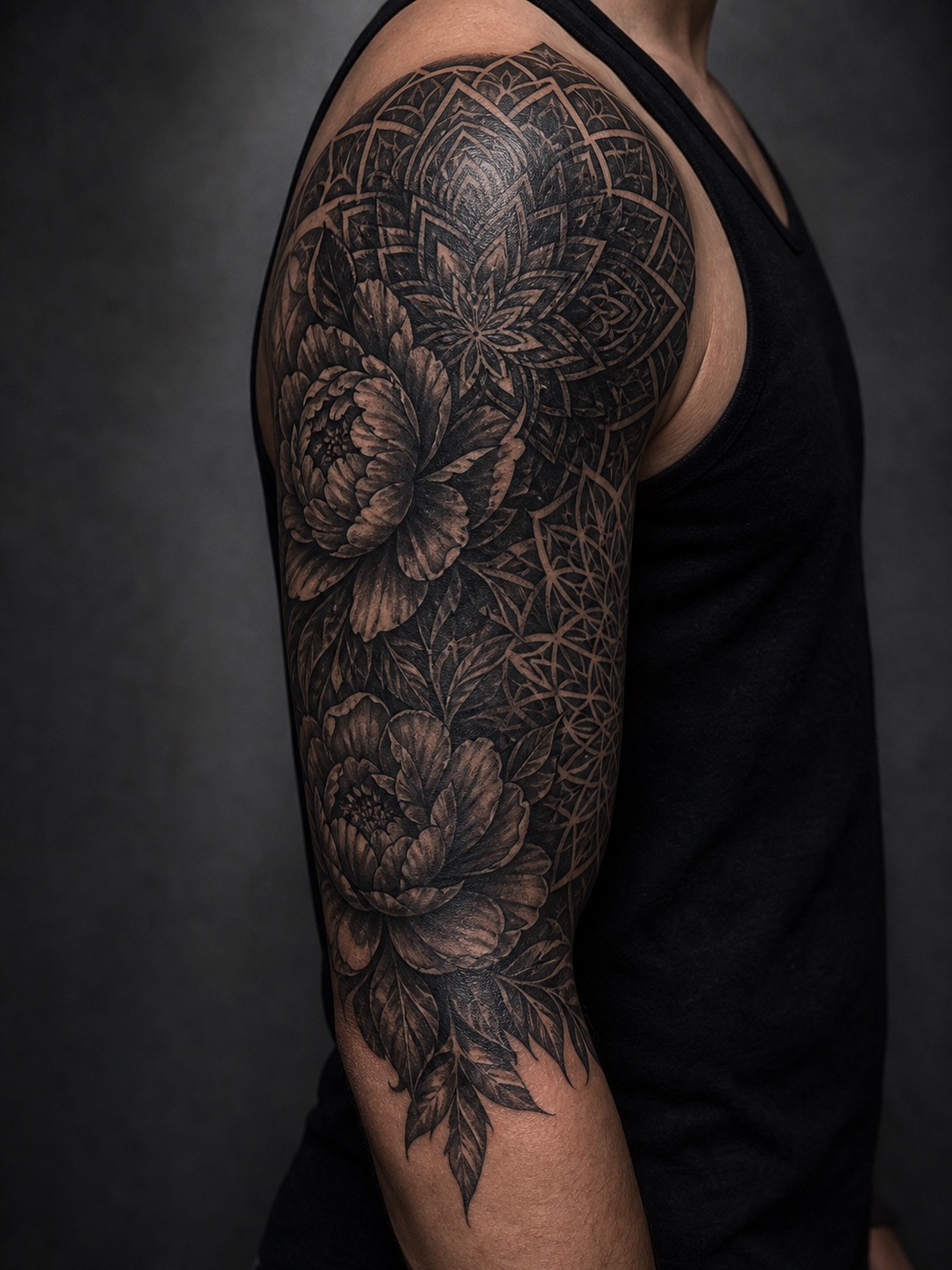
The shoulder and upper arm have the most skin real estate of any single body zone, which means the most design flexibility. Old tribal pieces from the early 2000s — the most common cover up request I see for this area — can go in almost any direction: Japanese sleeve, blackwork geometric, large floral, or full realism animal. The curvature of the shoulder actually helps: a design can wrap naturally and use the three-dimensional surface to create depth.
Back Cover Ups
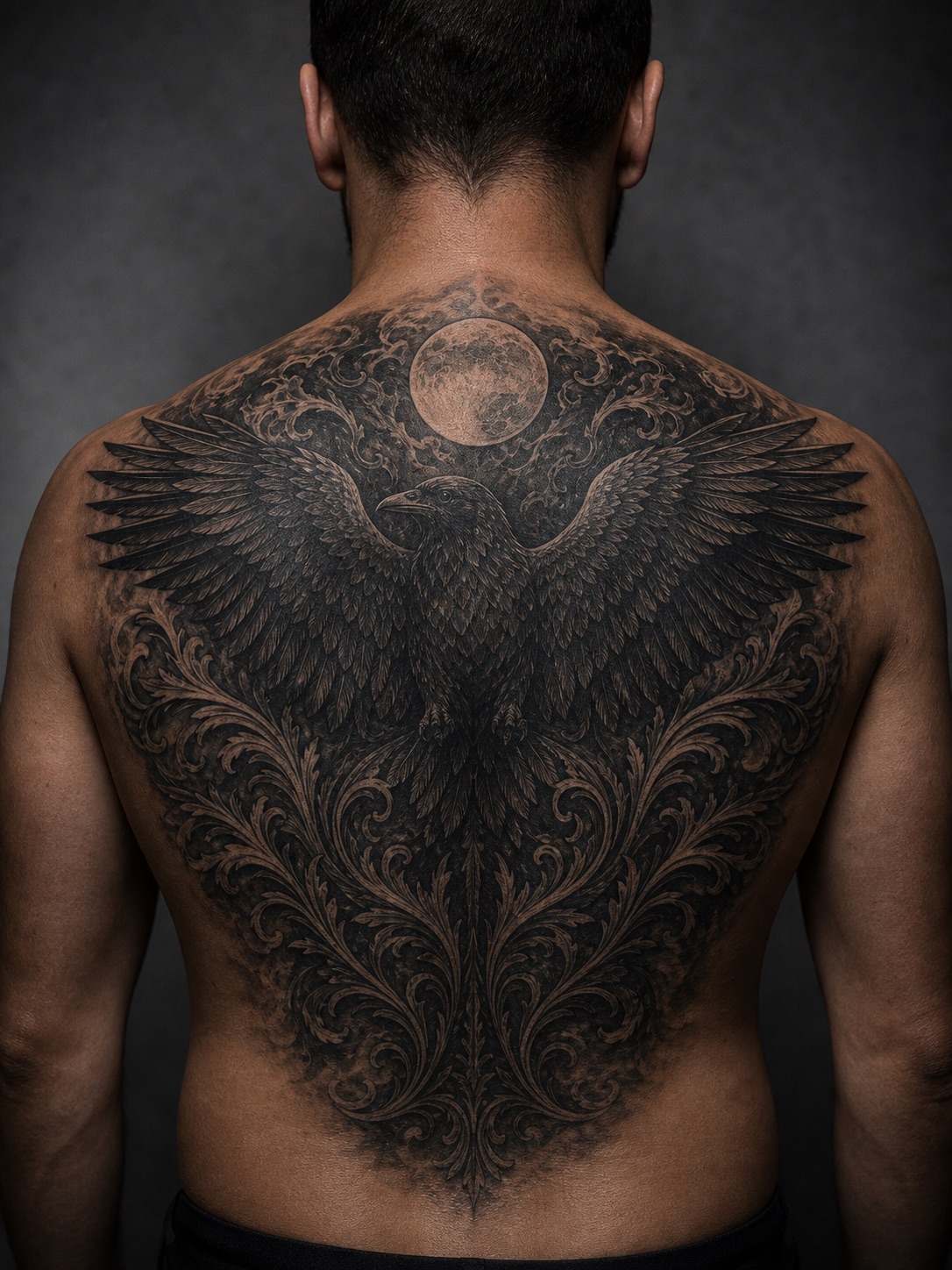
The back is the most forgiving placement for cover ups — large surface area, relatively flat skin, and distance from joints means ink holds well. A full back piece can absorb an enormous amount of old work. The challenge is time and cost: a full back cover up from a specialist artist is a 20–40+ hour project that can run $4,000–8,000 USD across multiple sessions. Gothic architecture back pieces, full Japanese bodysuit panels, and large-scale surrealism are all viable. This is not a rushed decision.
Ankle and Lower Leg
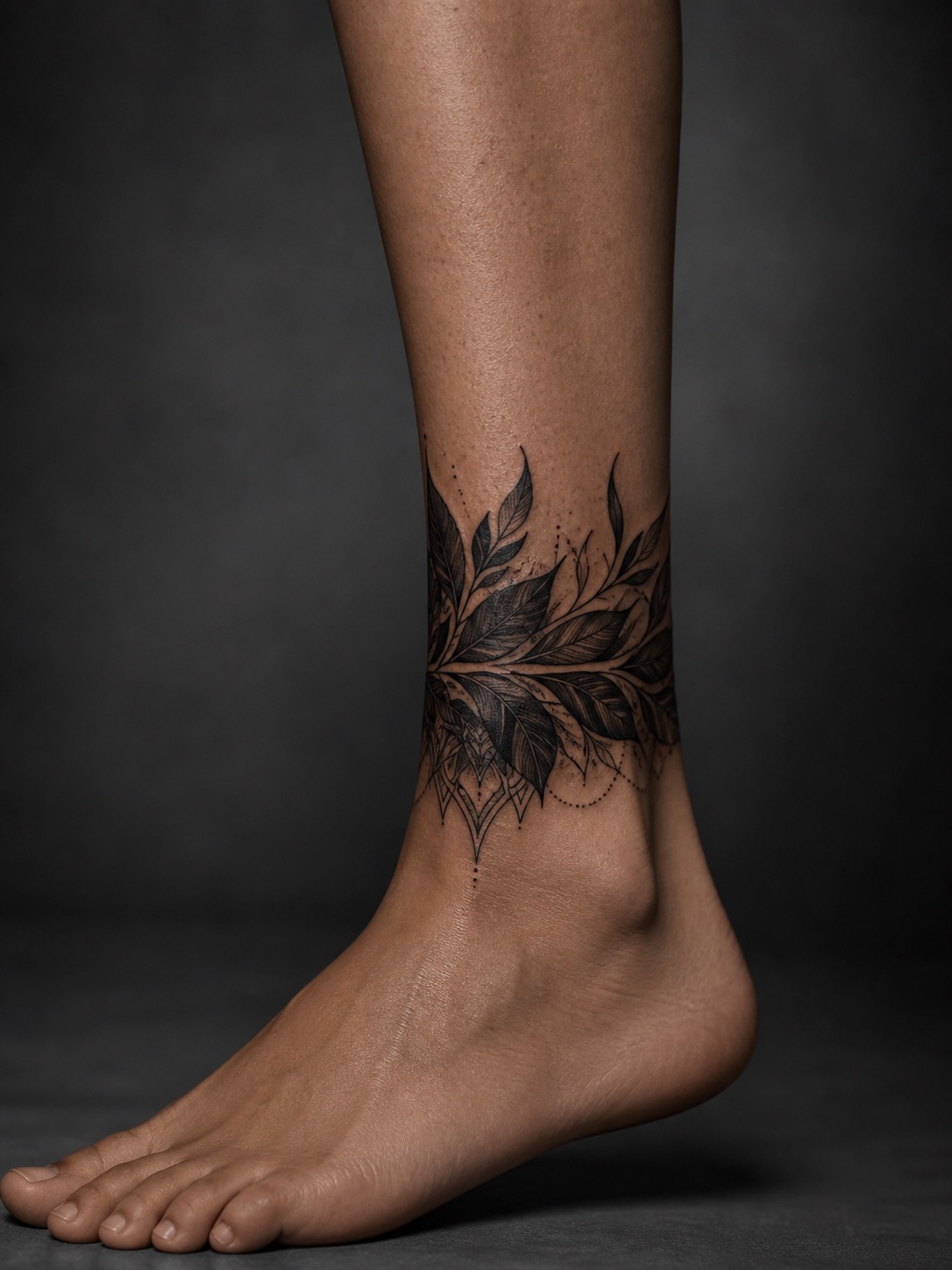
Ankle cover ups are technically challenging because the skin over the ankle bone is thin and close to the surface, which means ink spreads slightly differently than on the forearm or upper arm. The size is also constrained. A name or simple design on the ankle can become a wrap-around botanical element, a blackwork geometric band, or a detailed single subject like a moth or flower. Avoid designs with very fine details close to the ankle bone — the healing is less predictable there.
How to Pick the Right Cover Up Artist
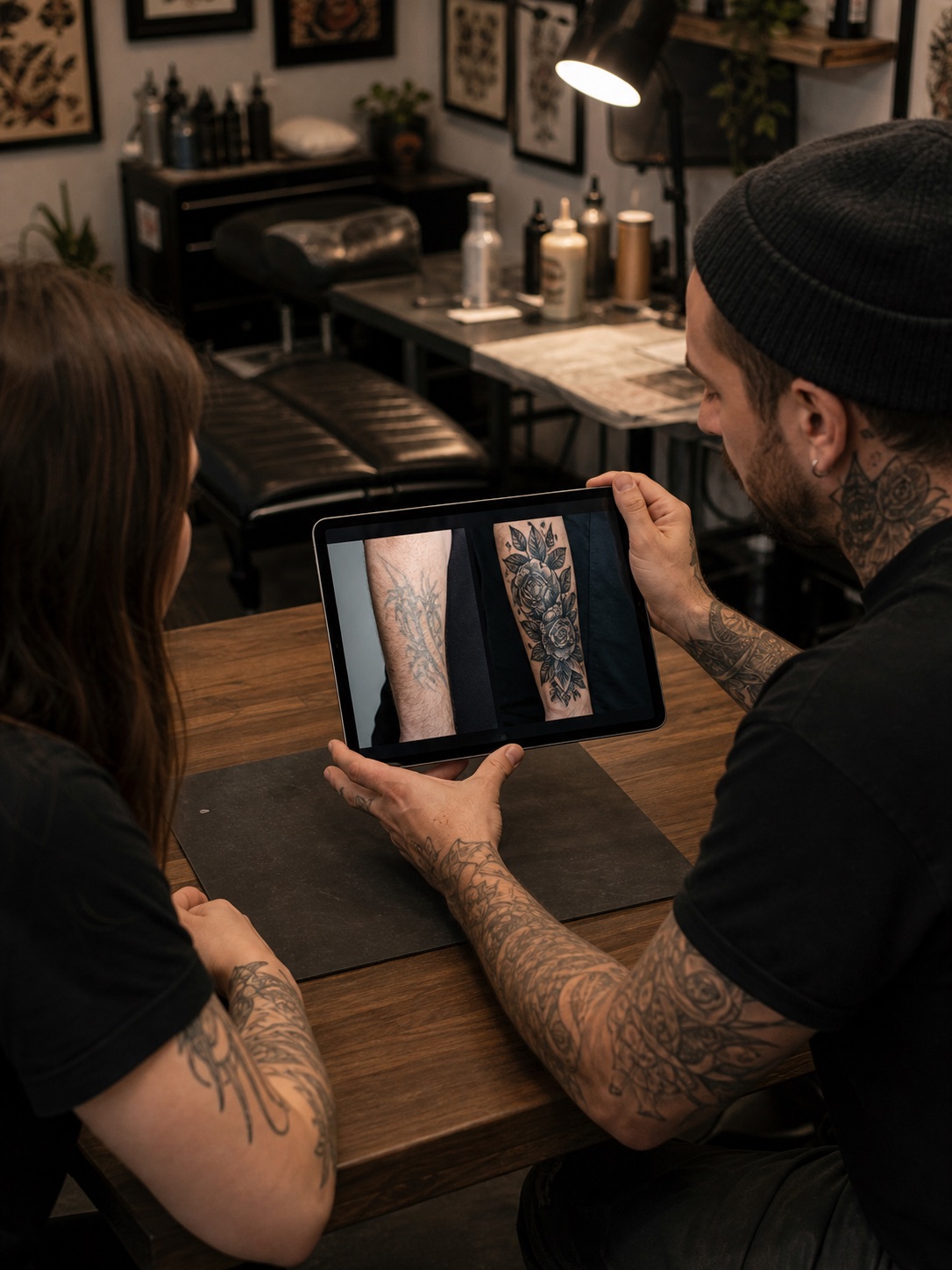
Cover up work is a specialization, not a standard skill that every tattoo artist has. An artist who does excellent fine-line work may have zero experience with the density calculations that a cover up requires. You need someone with a documented track record specifically in cover ups.
What to look for in the portfolio: before-and-after pairs that show the old tattoo and the finished cover up together. Not just finished pieces — actual before and after. If an artist’s Instagram is all finished work with no before shots, you have no evidence their pieces were actually covering anything.
In the consultation, ask them: “What can’t this design cover about my specific tattoo?” A confident specialist will have a direct answer about the constraints and how they’re planning around them. Someone who says “oh we can definitely do that” without examining the old ink closely is someone who’s going to discover problems mid-session.
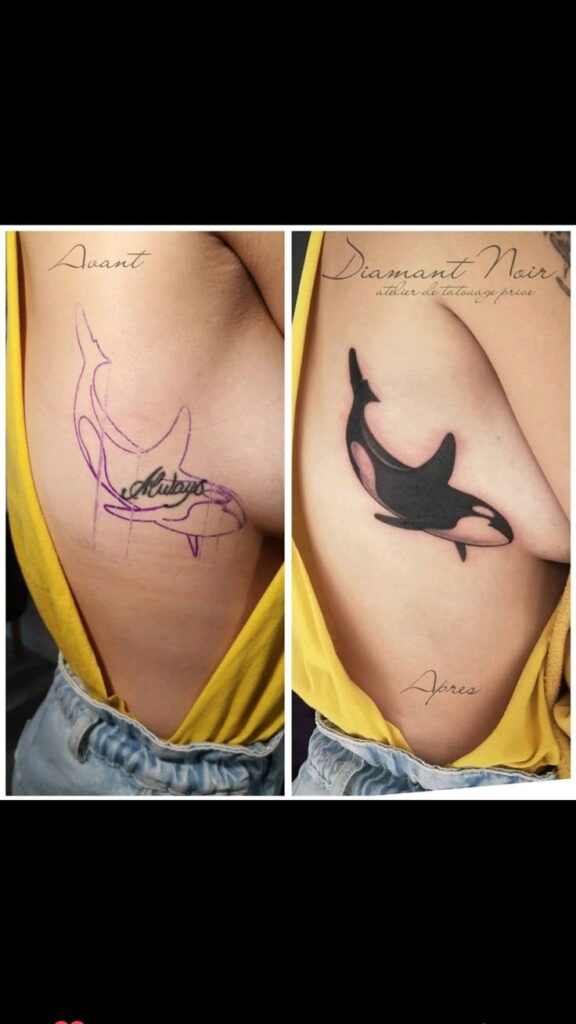
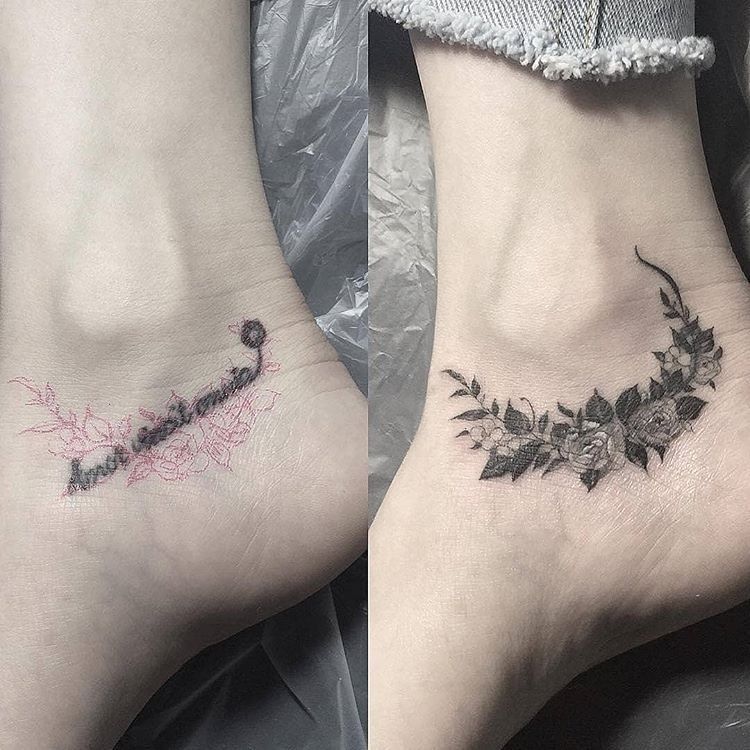
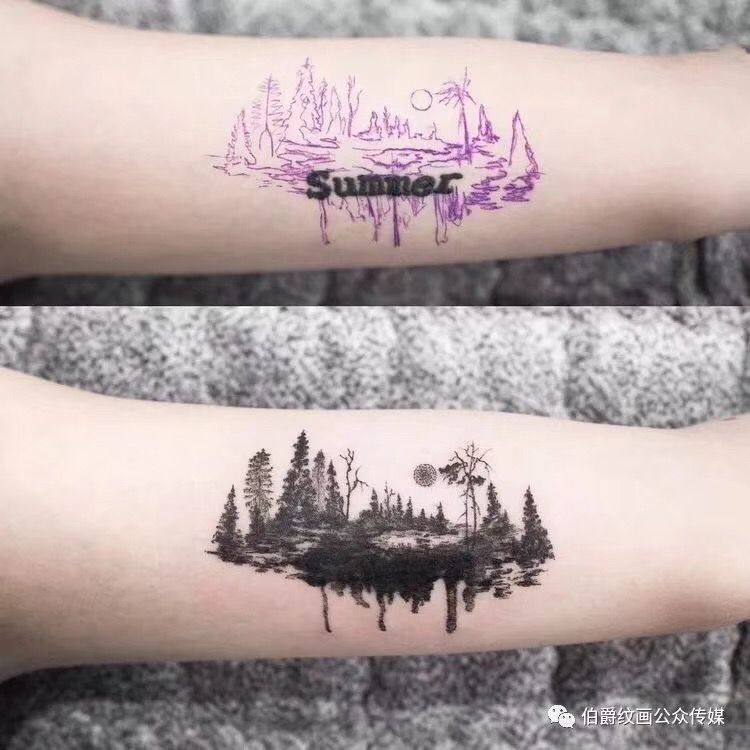
Bring reference photos of your old tattoo in different lighting conditions — harsh direct light, diffused light, and natural outdoor light. The ink reads differently in each, and an artist assessing the darkness and boundaries will benefit from seeing all three.
Before the appointment, also write down the tattoo’s age, whether it has been touched up before, where it has blown out, and what you are willing to change about size or color. The more honest the brief is, the less likely you are to get a cover up that looks patched instead of designed.
Red Flags in a Cover Up Consultation
- Artist doesn’t examine the old tattoo up close.
- No before/after examples in their portfolio.
- Promises a lighter or more delicate design than the darkness of your old ink can support.
- Doesn’t discuss the size increase required.
- Rushes you into a booking without a custom design phase..
Cover-up planning is easier when the new design has strong shadows and symbolic structure For a deeper visual breakdown, see this guide to Chicano tattoo design cues.
FAQ: Cover Up Tattoo Ideas
Can any tattoo be covered up?
Almost any tattoo can be covered, but the design options narrow significantly as the existing tattoo gets darker and more saturated. A very dark, solid-fill black tattoo will likely require blackwork or a very dark Japanese or botanical design. A light, faded gray tattoo opens up far more possibilities including rich color work. The honest answer is: any tattoo can be covered, but not necessarily with the design you originally wanted.
How much bigger does the cover up need to be?
Plan for the cover up to be at least 30–50% larger than the original tattoo. This is a technical requirement, not an aesthetic choice. The new design needs room to build density and shading at the borders of the old tattoo so nothing bleeds through. An artist who agrees to match your original size exactly is either very experienced with a specific design solution, or they’re setting you up for disappointment.
How many laser sessions do I need before a cover up?
If you’re going the laser-fading route, most artists recommend 3–6 sessions spaced 6–8 weeks apart, which means adding 4–12 months to your timeline. You don’t need full removal — fading to roughly 40–60% of original darkness is enough to significantly expand your design options. Budget $100–$300 per session depending on tattoo size and clinic.
What colors work best for cover up tattoos?
Deep, dark, saturated colors. Forest green, midnight blue, rich purple, burgundy, and black are the workhorses. These colors have enough density to suppress what’s underneath. Lighter colors — yellows, light pinks, pastels — are semi-transparent and won’t cover dark ink. If you want color in your cover up, it goes in the lighter areas of the design, well away from the darkest parts of the old tattoo.
How long does a cover up tattoo take to heal?
Healing timeline is the same as a standard tattoo: surface healing in 2–3 weeks, full dermal healing in 3–6 months. The difference is that cover ups are often denser and darker, which means more ink volume in the skin and slightly longer surface healing for the heavily saturated areas. Follow standard aftercare: keep it clean and moisturized, stay out of sun and water for the first two to three weeks, and avoid picking at peeling skin.
Can I get a fine-line tattoo as a cover up?
Only for very light, very faded original tattoos. Fine-line work is low-density by design — the thin lines and minimal shading don’t suppress dark ink underneath. If your old tattoo is mostly faded gray or was never very dark to begin with, a fine-line piece may work. If it’s a solid black old-school design, fine-line won’t touch it. This is the mistake my friend made with her wildflower idea.
What are the most popular cover up tattoo designs in 2026?
Based on what’s moving through studios this year: large floral compositions (especially dark roses and peonies), blackwork ornamental sleeves, Japanese koi and dragon pieces, and dark botanical wraps. The trend toward heavier, bolder aesthetics generally in tattooing has made cover up work more socially visible — pieces that were once the “necessary dark thing” are now being chosen as primary designs because the aesthetic itself is popular.
What tattoo styles should I avoid for cover ups?
Avoid styles that rely on pale color, thin outlines, tiny details, or lots of empty skin when the old tattoo is dark. Watercolor, micro fine-line, pastel florals, and tiny minimalist symbols can work over very faded ink, but they usually fail over black or saturated old tattoos. If your reference needs open skin to look good, it probably is not a strong cover-up candidate.
Can a cover up still show through after healing?
Yes, especially if the new tattoo was too small, too light, or placed without enough dark structure over the old ink. Fresh cover ups can look solid in the studio and reveal faint shapes after healing. That is why healed portfolio photos matter more than fresh reveal photos when you choose an artist.
The Cover Up Is the Start of Something New
The best cover up tattoos I’ve seen — and I mean the ones that make you forget there was ever anything underneath — are the ones where the person stopped trying to get back to what they originally wanted and let the artist solve the actual problem. The constraint of the old tattoo often forces a bolder, more interesting design than what came before it.
A tribal band from 2003 becomes a Japanese sleeve. A faded name becomes a phoenix. A blocky old-school piece that was never right becomes a botanical wrap that actually fits the arm. The cover up isn’t a compromise. Done well, it’s an upgrade.
Find an artist who specializes in cover up work, bring photos of the old tattoo in multiple lighting conditions, and go into the consultation ready to hear what’s actually possible rather than defending what you saw on Pinterest. That conversation is where the real design starts.
If you want to understand the visual logic behind cover up designs — how artists think about darkness, density, and composition — the illustration and tattoo design courses on Skillshare (30 days free with code AFF30D25) are genuinely useful context before your consultation.
For old ink with enough space around it, a phoenix cover-up tattoo idea can use wings, flames, and feather movement to hide darker shapes.
- 978shares
- Facebook0
- Pinterest978
- Twitter0
- Reddit0