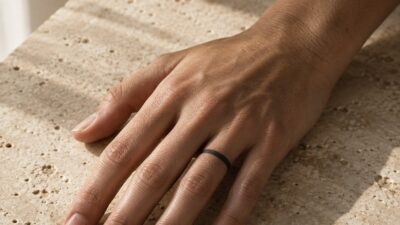
A client of mine — a nurse, actually — got a coiled serpent on her forearm right after finishing chemo. Not as a “survivor” badge. She just said the snake shed its skin and came out clean, and that felt right. No further explanation needed.
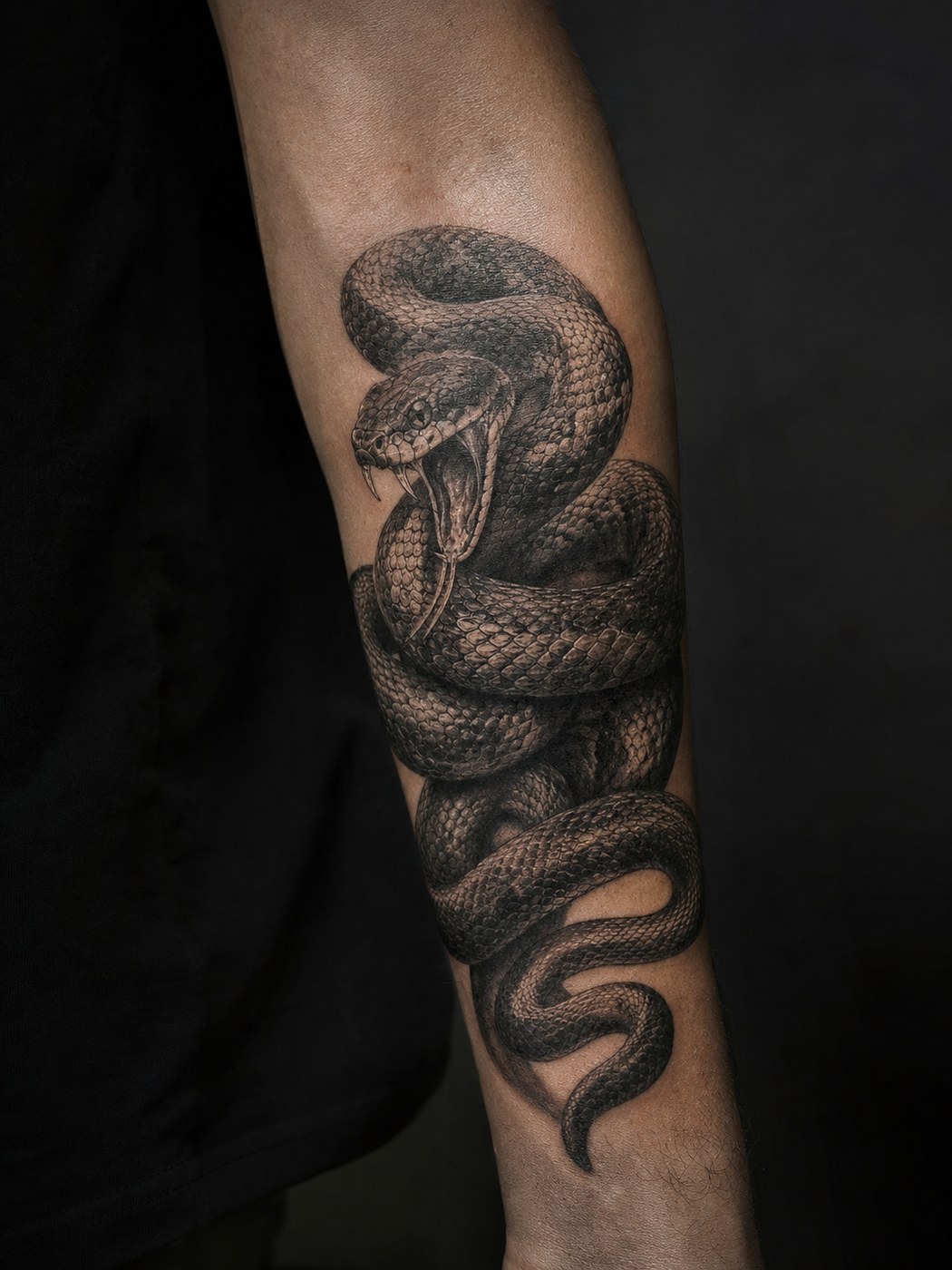
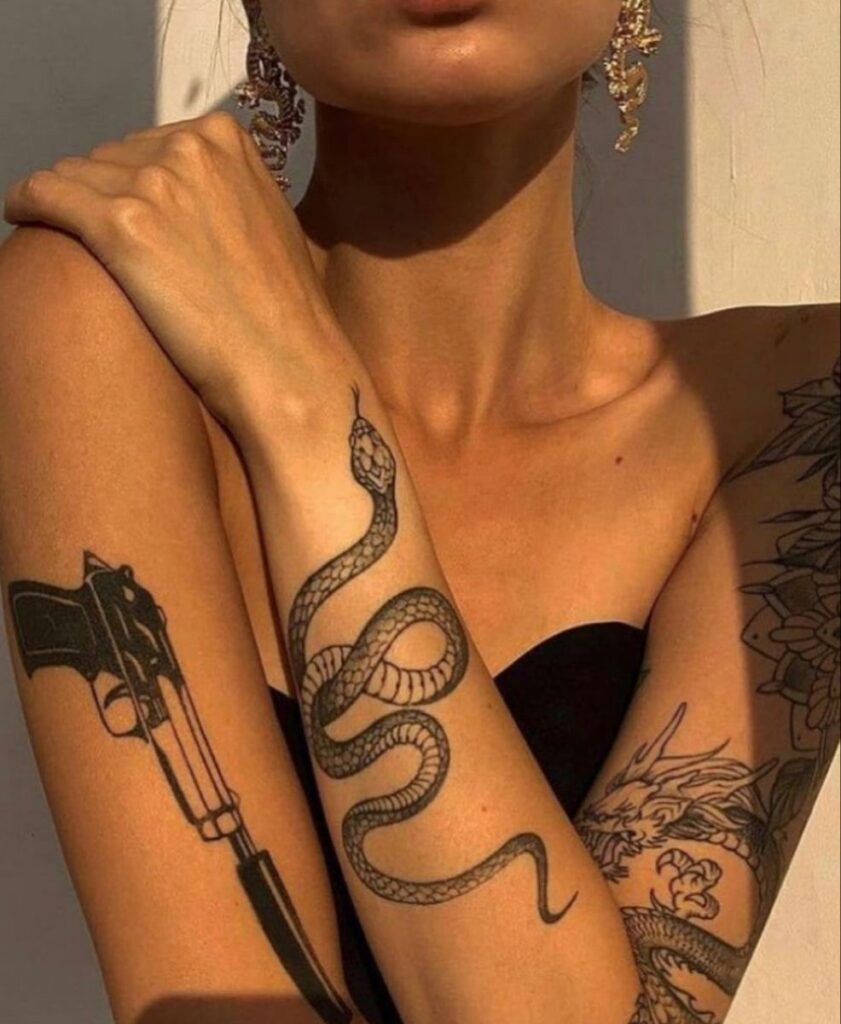
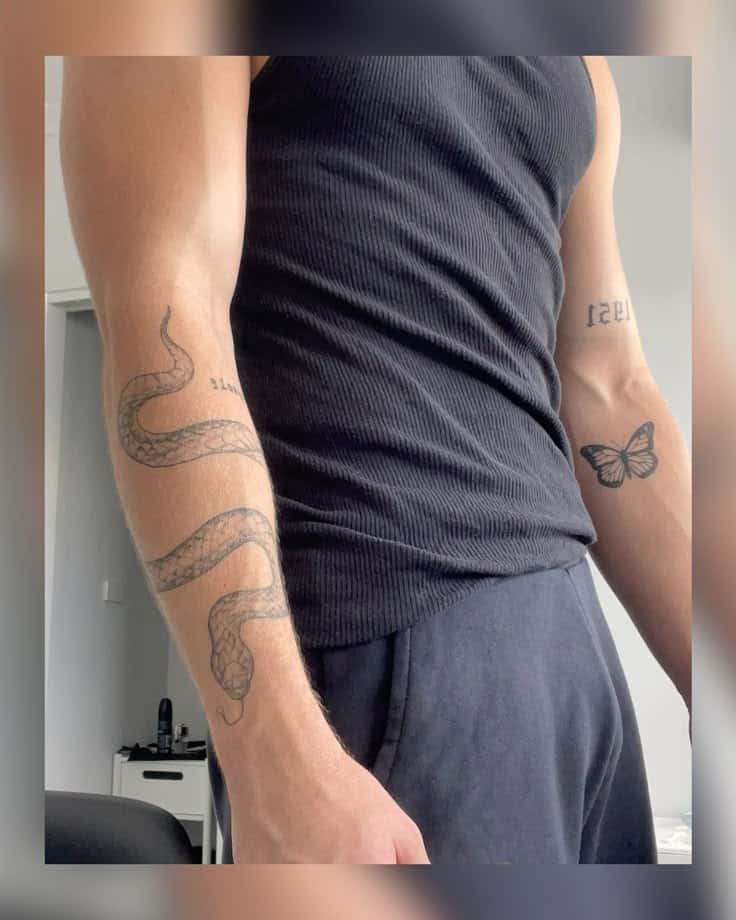
Snake designs need movement, so compare snake forearm tattoo ideas if you want the body to wrap naturally around the lower arm.
What does a snake tattoo mean?
A snake tattoo usually means transformation, rebirth, protection, healing, wisdom, or danger. The exact meaning changes with the pose and design: a shedding snake leans toward renewal, a coiled snake feels protective or watchful, and an ouroboros points to cycles, eternity, and starting over. That is why snake tattoos work for very different people. They can feel soft and spiritual, sharp and dangerous, or calm and self-protective.
| Snake tattoo detail | Common meaning | Best visual direction |
|---|---|---|
| Shedding snake | Rebirth, recovery, personal change | Loose skin, curved body, soft shading |
| Coiled snake | Protection, patience, controlled power | Compact pose, raised head, strong negative space |
| Ouroboros | Eternity, cycles, self-renewal | Circular layout, clean silhouette, minimal clutter |
| Cobra or viper | Warning, confidence, danger, respect | Open hood, fangs, high contrast blackwork |
| Snake with flowers | Growth, beauty, temptation, softness with edge | Fine-line florals or traditional color blocks |
- Why Snake Tattoos Have Stayed Relevant for Thousands of Years
- Snake Tattoo Meaning: The Full Symbolism Breakdown
- Snake Tattoo Designs: Which Style Says What
- Snake Tattoo Combinations: What Each Pairing Adds
- Placement and What It Changes About the Message
- How to Talk to Your Tattoo Artist About Snake Symbolism
- FAQ: Snake Tattoo Meaning
- What does a snake tattoo mean spiritually?
- Are snake tattoos considered bad luck?
- What does a snake tattoo mean on a woman?
- What does a coiled snake tattoo mean versus a stretched-out snake?
- Does snake tattoo placement change the meaning?
- What is the difference between the Rod of Asclepius and the Caduceus?
- How much do snake tattoos typically cost?
- Can I get a snake tattoo if I'm afraid of snakes?
- The Snake as a Symbol Is Yours to Define
That’s the thing about snake tattoo meaning: it doesn’t require a mythology degree. People reach for serpent imagery across wildly different life moments — breakups, breakthroughs, burnout, second chances. The snake holds all of it without breaking a sweat.
In this piece, I’m going through the real symbolism behind snake tattoos — across cultures, across design styles, and across the body placements that actually change how a piece reads. By the end, you’ll know which version fits your story.
Why Snake Tattoos Have Stayed Relevant for Thousands of Years
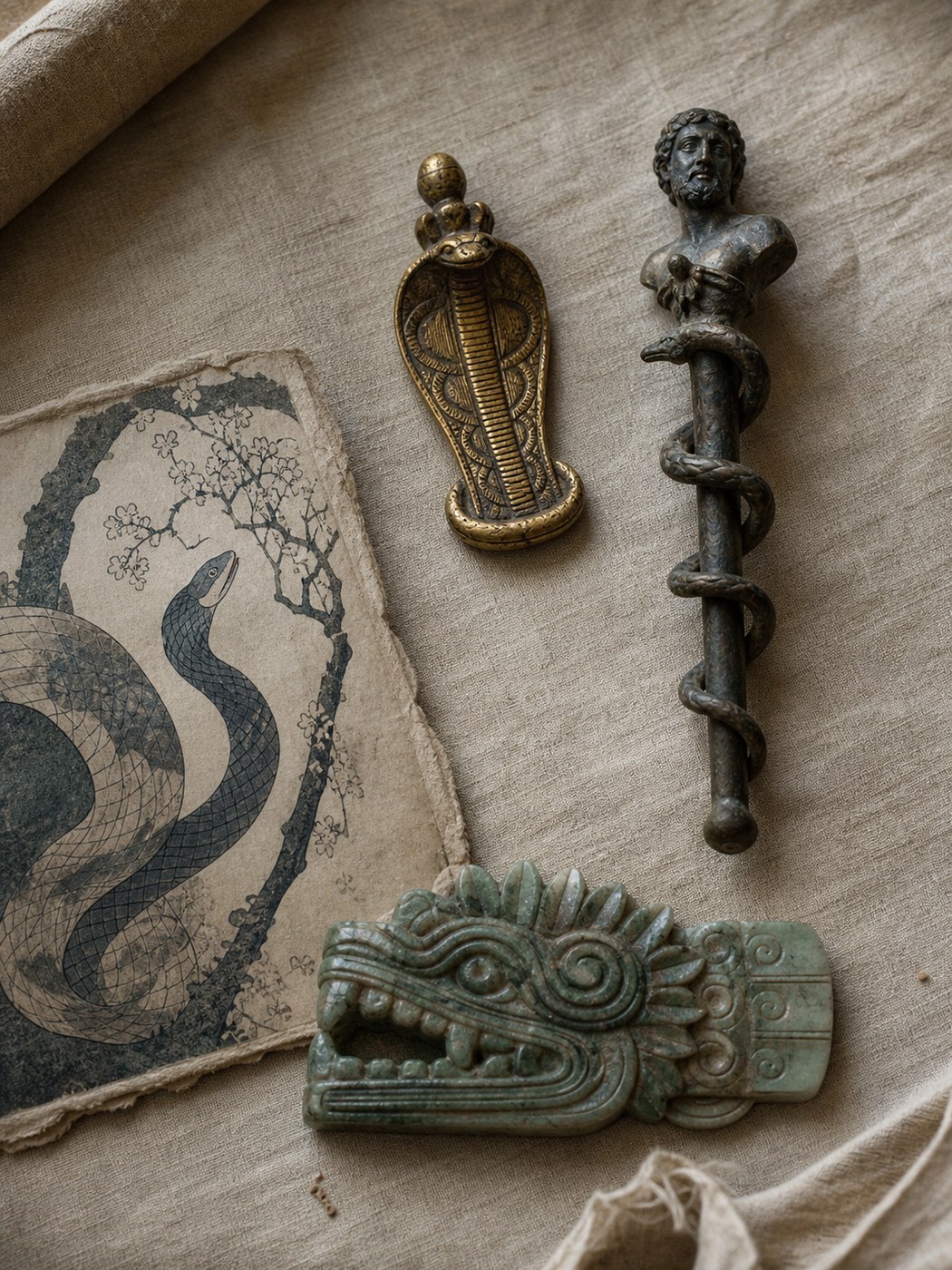
Snakes show up everywhere humans left records. Egyptian pharaohs wore the Uraeus — a rearing cobra — on their crowns as a symbol of divine authority and protection. The Aztecs built a whole religion around Quetzalcoatl, the feathered serpent who represented the union of earth and sky. Greek physicians used the Rod of Asclepius, a staff with a single coiled snake, and that symbol still appears on ambulances and hospital logos today.
That staying power comes from the snake’s biological reality, not just mythology. It sheds its skin. It moves without legs. It can kill with a bite or go months without eating. Every culture that ever encountered one had to make sense of those qualities, and “meaning” is how humans process what they can’t fully explain.
The Shedding Skin Problem
Biologists call it ecdysis. Every culture with snakes called it something sacred. The visual of a snake slipping out of its old skin completely intact is almost too perfect as a metaphor — which is why independently, from Japan to Mexico to ancient Greece, people landed on the same interpretation: death without dying, renewal without loss.
For tattoo purposes, this makes the snake arguably the most efficient symbol for personal transformation. You don’t need to add anything to it. The meaning is built in.
Duality as a Feature, Not a Bug
The snake is one of the only symbols that shows up as both protector and threat across most cultures simultaneously. Western Christianity cast the serpent as the tempter in Eden. Eastern traditions — Hindu, Buddhist, Chinese — revered Nagas as divine protectors of sacred springs and wisdom. The Ouroboros, the snake eating its own tail, appeared in Egyptian funerary texts and Norse mythology without any fixed moral valence. It just meant: everything cycles.
That contradiction is actually useful for a tattoo. It means the meaning can be yours. The same cobra design reads as danger to one person and protection to another, and both are technically correct.
Snake Tattoo Meaning: The Full Symbolism Breakdown
None of these are mutually exclusive. Most people who get snake tattoos are working with several of these at once, even if they can’t articulate it in the chair.
Transformation and Rebirth
The most common reason people land on snake imagery. If you’ve gone through something — addiction recovery, a relationship that needed to end, a career that wasn’t yours — the shedding skin metaphor is almost brutally on-the-nose. That’s not a flaw. Sometimes you want a tattoo that says exactly what it means.
A snake mid-shed (partially revealing new scales under old skin) is a powerful design variation that’s underused. Ask your artist about it if the transformation angle resonates.
Healing and Medicine
The Rod of Asclepius — one snake around a single staff — is the actual symbol of medicine. The Caduceus (two snakes, winged staff) is Hermes’ symbol and technically belongs to commerce and communication, though it got conflated with medicine in the US in the 20th century. If you work in healthcare or have a medical story to carry, a single-snake staff tattoo has about 2,500 years of precedent behind it.
Protection and Warning
A cobra with hood spread isn’t asking permission. That stance is a boundary — clear, final, non-negotiable. Snake tattoos in defensive postures read as protective. Coiled snakes read as watchful. Snakes paired with daggers or skulls shift toward the survival-and-strength territory.
In many indigenous traditions across the Americas and Southeast Asia, snake imagery marked the entrance to sacred spaces. The message was the same: something valuable is guarded here. A snake tattoo can carry that same function for a person.
Wisdom and Hidden Knowledge
In Gnostic traditions and certain mystery schools, the serpent in Eden wasn’t the villain — it was the one who offered genuine knowledge over comfortable ignorance. Chinese astrology places Snake as one of the most intellectual signs: analytical, observant, not easily fooled. A snake tattoo for this angle tends toward subtlety: lidded eyes, a patient coil, no fangs on display.
Eternity and Cycles (Ouroboros)
The Ouroboros is its own category. A snake eating its tail creates a closed loop — no beginning, no end. It appears in alchemical manuscripts from the 14th century, in Egyptian texts from 1600 BCE, and keeps turning up because the idea is genuinely hard to represent any other way. If you believe in cyclical time, reincarnation, or just the idea that things tend to come around — this design has teeth.
Design Note: Ouroboros Variations
Thin line Ouroboros reads as meditative and minimal. Thick traditional lines read as bold and eternal. A geometric Ouroboros with angular scales hits a different audience entirely. The core symbol stays the same; the style changes who relates to it.
Danger, Power, and Respect
Sometimes a snake tattoo just means: don’t test me. That’s not shallow — it’s direct. Rattlesnakes, cobras, and vipers have centuries of earned reputation. A tattoo of a species you genuinely respect, rendered with accuracy, can communicate strength without needing anyone to decode it.
Snake tattoo meaning on a woman or man
A snake tattoo on a woman is often read as transformation, self-protection, sensuality, or quiet power. Fine-line snakes on the ribs, sternum, wrist, or thigh tend to feel more personal and intimate. A larger snake sleeve or back piece reads stronger: less delicate symbol, more statement.
On a man, the same symbol often gets pushed toward strength, danger, resilience, and control. That does not mean the meaning is locked by gender. It is mostly the styling that changes the message: heavy blackwork, sharp fangs, and a coiled pose feel more aggressive, while a relaxed serpent with flowers or an ouroboros can feel reflective instead.
Meanings by snake type and color
Cobra and viper tattoos
A cobra tattoo usually carries a louder warning: confidence, defense, and the ability to strike back when pushed. A viper feels similar, but sharper and more volatile. These designs work best when the head shape is clear. If the snake looks generic, the meaning gets generic too.
Black, red, and white snakes
A black snake tattoo feels serious, protective, and clean, especially in fine-line or blackwork. Red pushes the design toward danger, passion, blood, and warning. White snakes are rarer in tattooing, but symbolically they can suggest purity, spirit, dreams, or a more ghostlike kind of transformation.
Small snake tattoos
A small snake tattoo usually works better as a personal reminder than a public statement. On a finger, wrist, ankle, or behind the ear, it can mean quiet self-protection, private change, or a boundary you do not need to explain. Keep the linework simple; tiny scales often age badly.
Snake Tattoo Designs: Which Style Says What
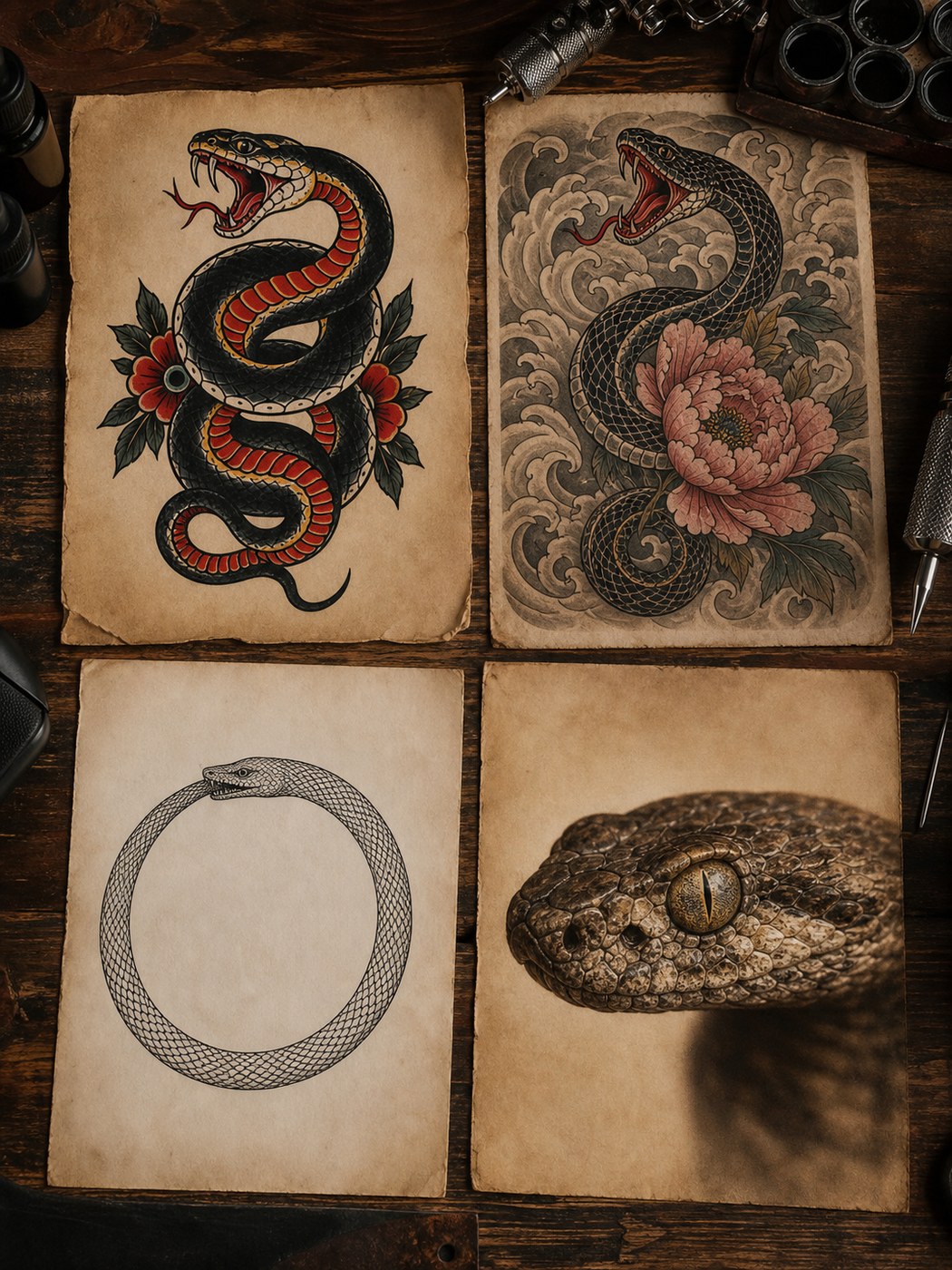
Style isn’t decoration. It changes the entire emotional register of a tattoo. Here’s what the main snake styles actually communicate, beyond aesthetics.
American Traditional
Bold outlines, flat fills, limited color palette. Classic American traditional snake tattoos often coil around daggers, roses, or skulls. The aesthetic comes from sailor flash from the early 1900s — Sailor Jerry Collins popularized the form. The message: timeless, confident, no apologies. These read as deliberately retro, which now reads as cool.
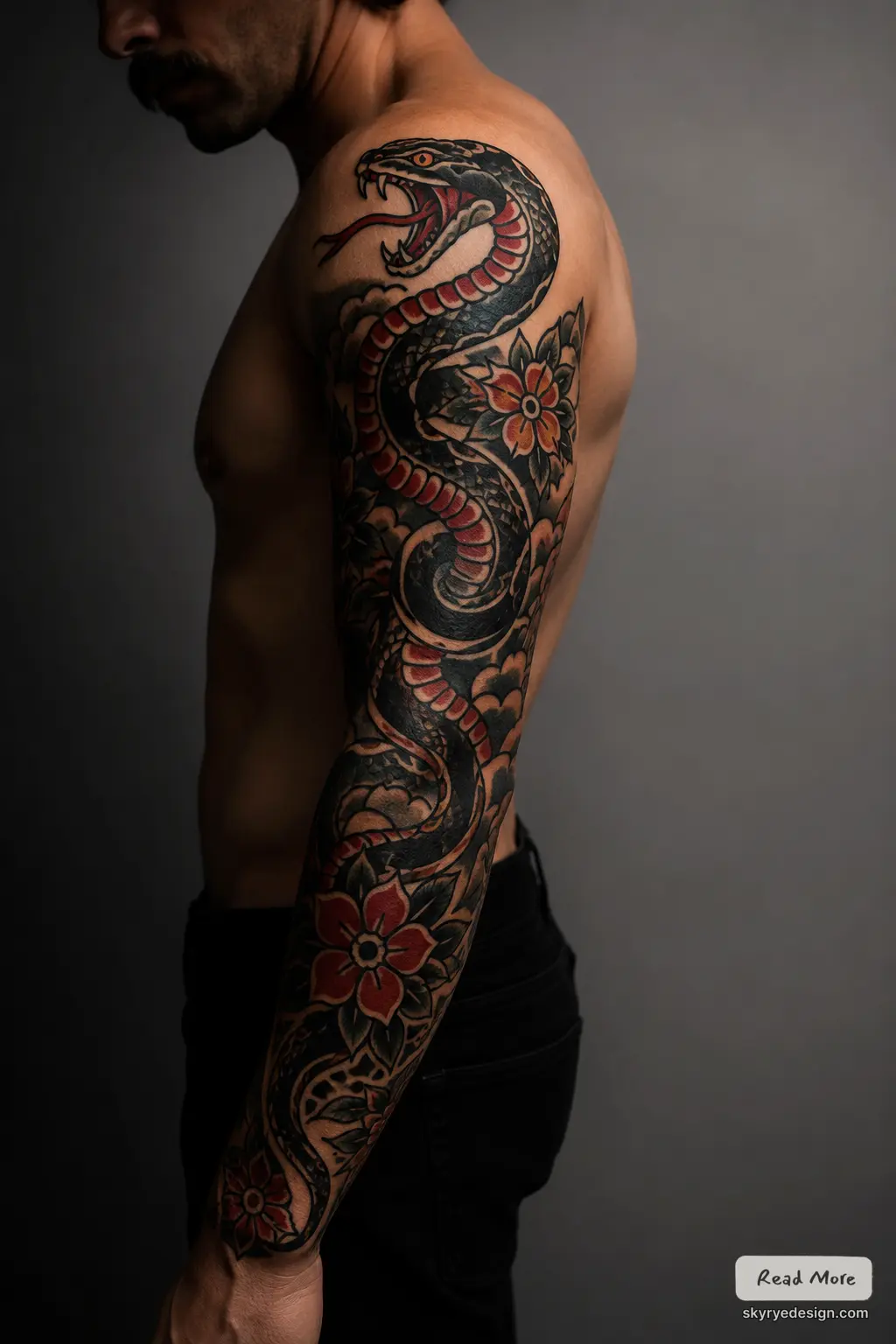
Traditional snake designs hold up better over time than fine-line work. If you’re getting a first tattoo, this longevity factor is worth considering.
Japanese Irezumi (Hebi)
Japanese snake tattoos (hebi) are typically rendered in flowing, sinuous lines with detailed scale patterns, often paired with peonies, cherry blossoms, koi, or water.
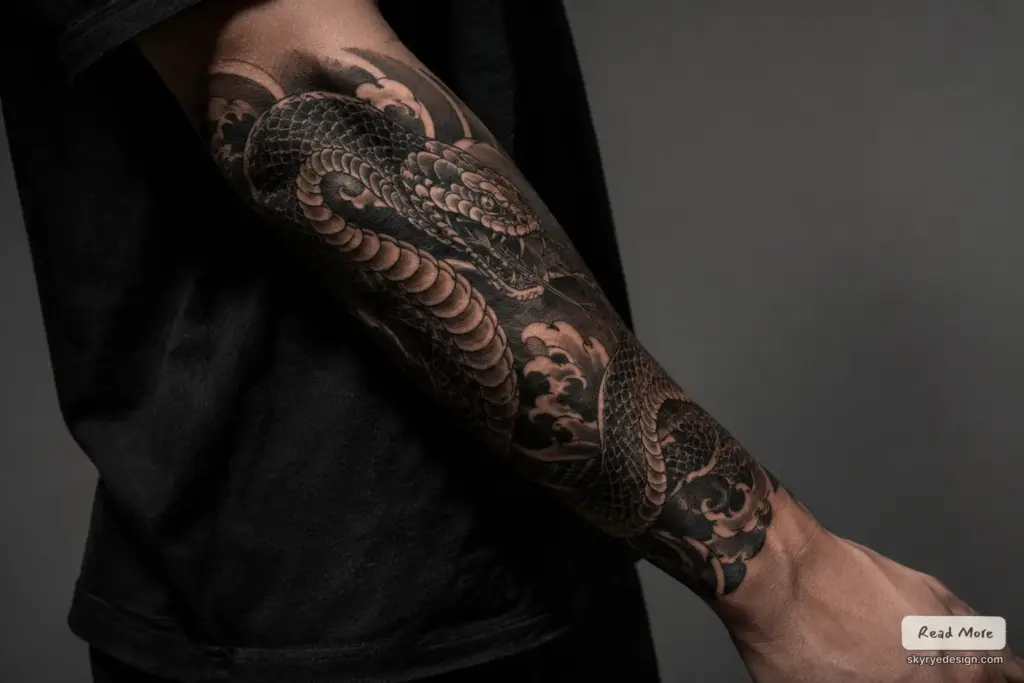
The snake in Irezumi symbolizes protection against illness and misfortune — specifically, it’s considered a guardian of the home and family. White snakes are particularly auspicious in Japanese tradition.
These designs tend to run large: sleeve-length at minimum, full back pieces more commonly. The investment is significant — a quality Irezumi-influenced sleeve from a specialist artist starts around $2,000–3,500 USD — but the scale is part of the meaning. You’re committing to something.
Realism
Photographic accuracy: every scale, every shadow. Realism snake tattoos work best on larger canvas areas — full arm, ribcage, upper back — where the detail has room to breathe.
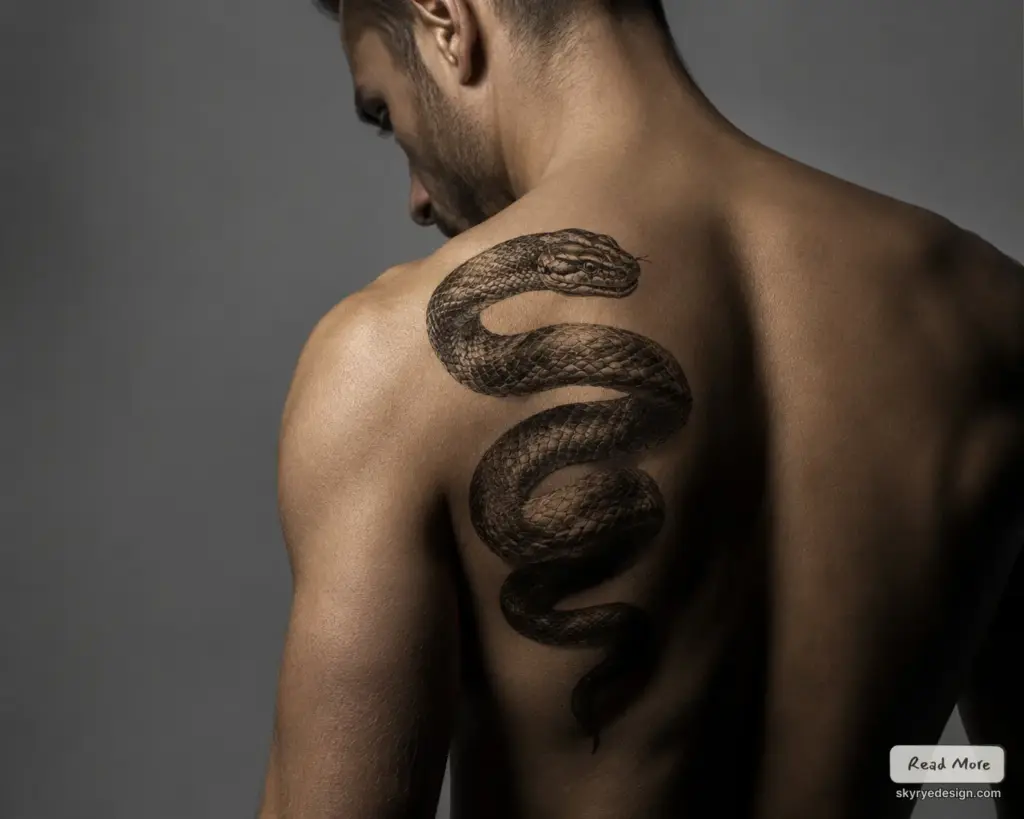
Artists like Dr. Woo and Nikko Hurtado have popularized hyper-realistic wildlife tattoos, and snakes are a recurring subject because the texture is so technically interesting.
The meaning with realism shifts toward the specific. You’re not picking “snake” — you’re picking a king cobra or a ball python or a timber rattlesnake. The species matters. Do some research before you commit to a specific snake if you want the symbolism to be airtight.
Minimalist and Fine Line
Single-weight lines, no fill, sometimes just a silhouette or an S-curve. These read as modern, understated, and personal.
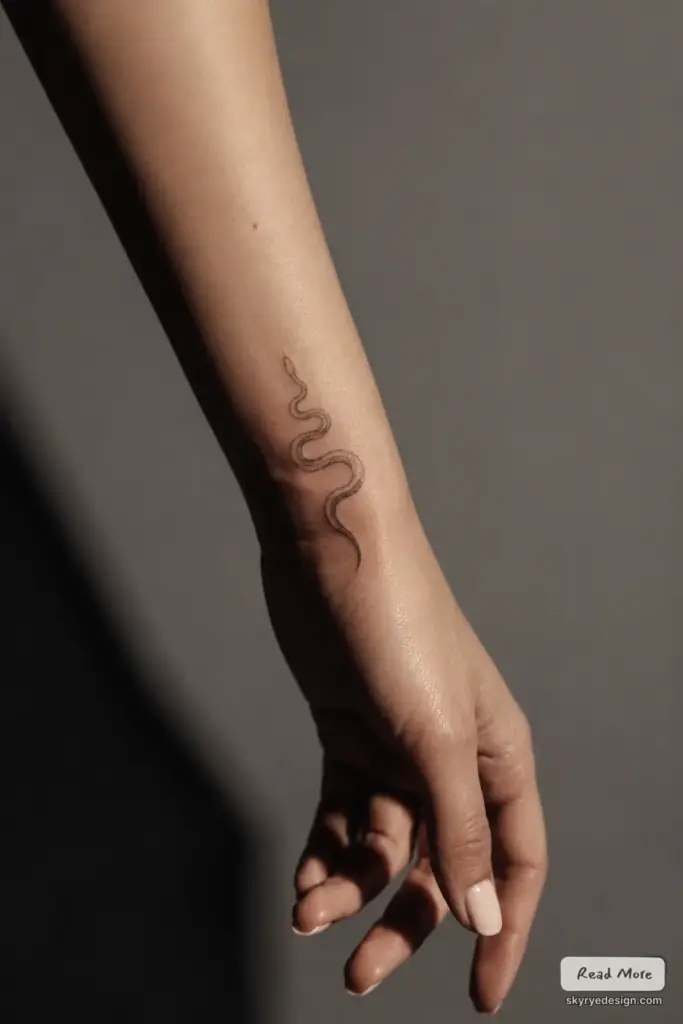
They don’t announce themselves across a room — they reward close attention. Popular placement: wrist, finger, behind the ear, ribcage.
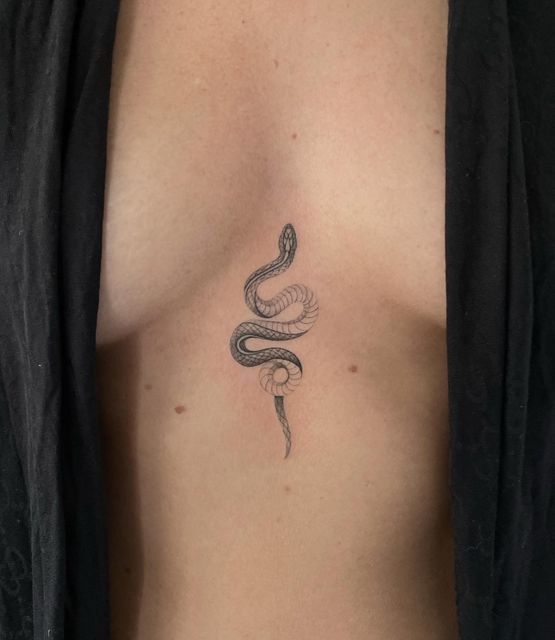
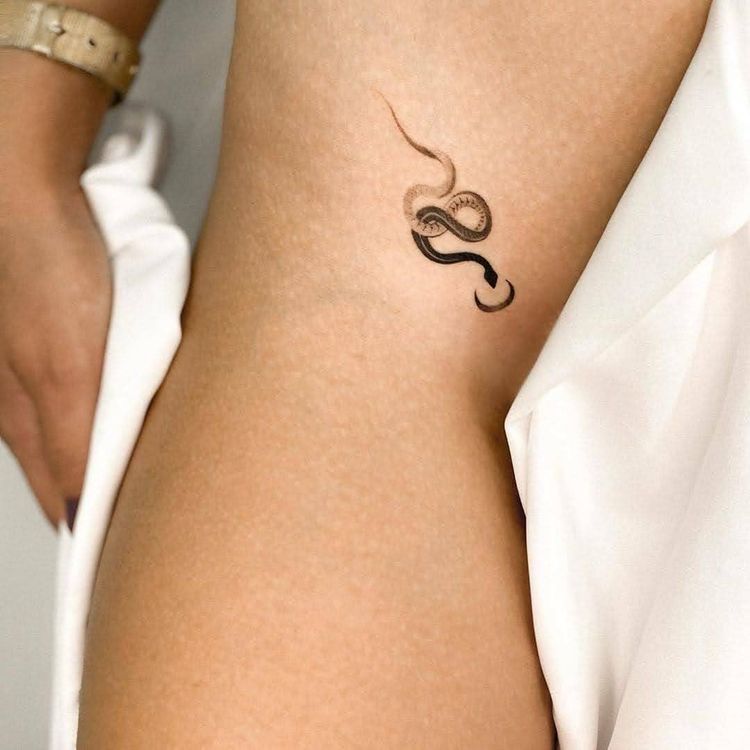
The limitation is longevity. Fine lines spread and soften over years. If you’re going this route, find an artist specifically known for fine-line work and talk to them about long-term aging.
Geometric and Neo-Traditional
Geometric snakes use angular scales, sacred geometry framing, or mandala integration.
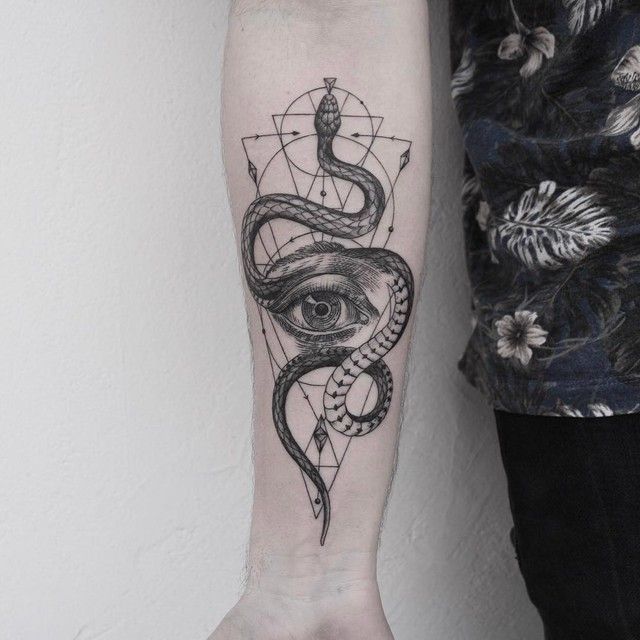
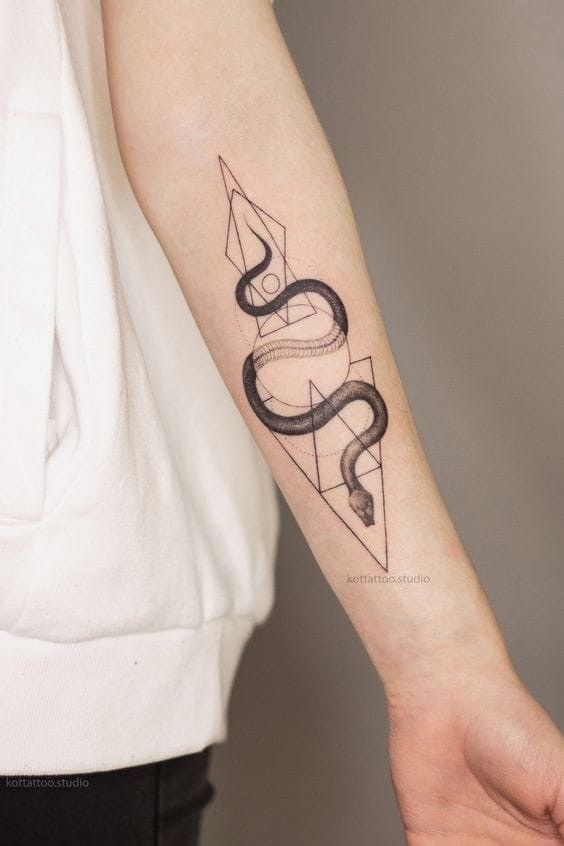
Neo-traditional adds more color and illustrative detail than classic American traditional while keeping the bold outline structure. Both are currently strong in the 2026 market — search volume for geometric snake tattoos has been climbing steadily, particularly among people in their late 20s who want something that reads as designed rather than inked.
Trending in 2026
Biomechanical snake tattoos — the snake partially emerging from torn skin revealing mechanical components underneath — are getting significant traction on TikTok and Instagram.
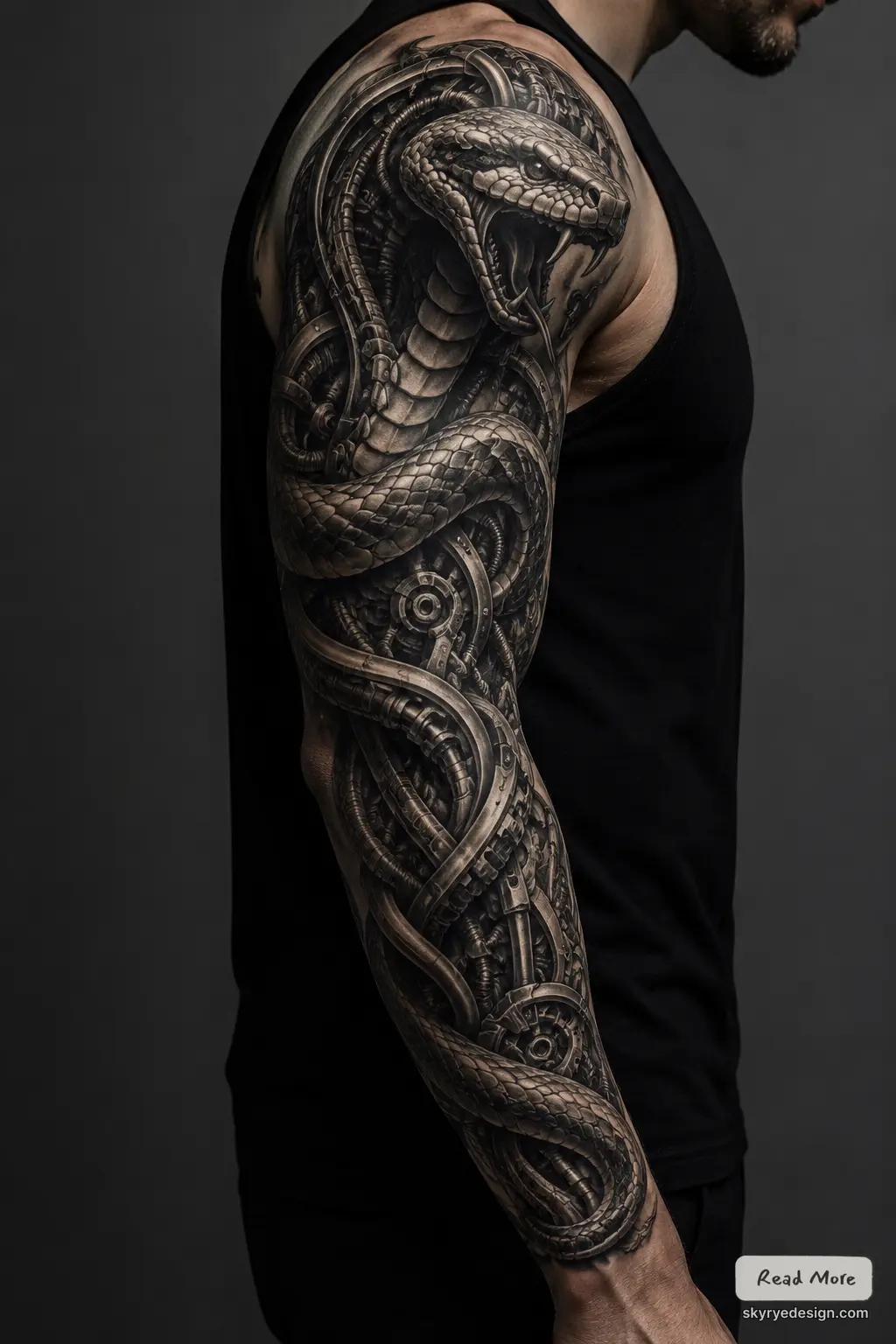
They pair the snake’s transformation symbolism with a cyborg-era aesthetic. High-risk design (requires excellent execution), high-reward if done right.
Snake Tattoo Combinations: What Each Pairing Adds
What you put with the snake changes everything. A snake alone reads one way; a snake with a rose reads another. Here are the combinations that come up most often and what they’re actually saying.
Snake + Rose
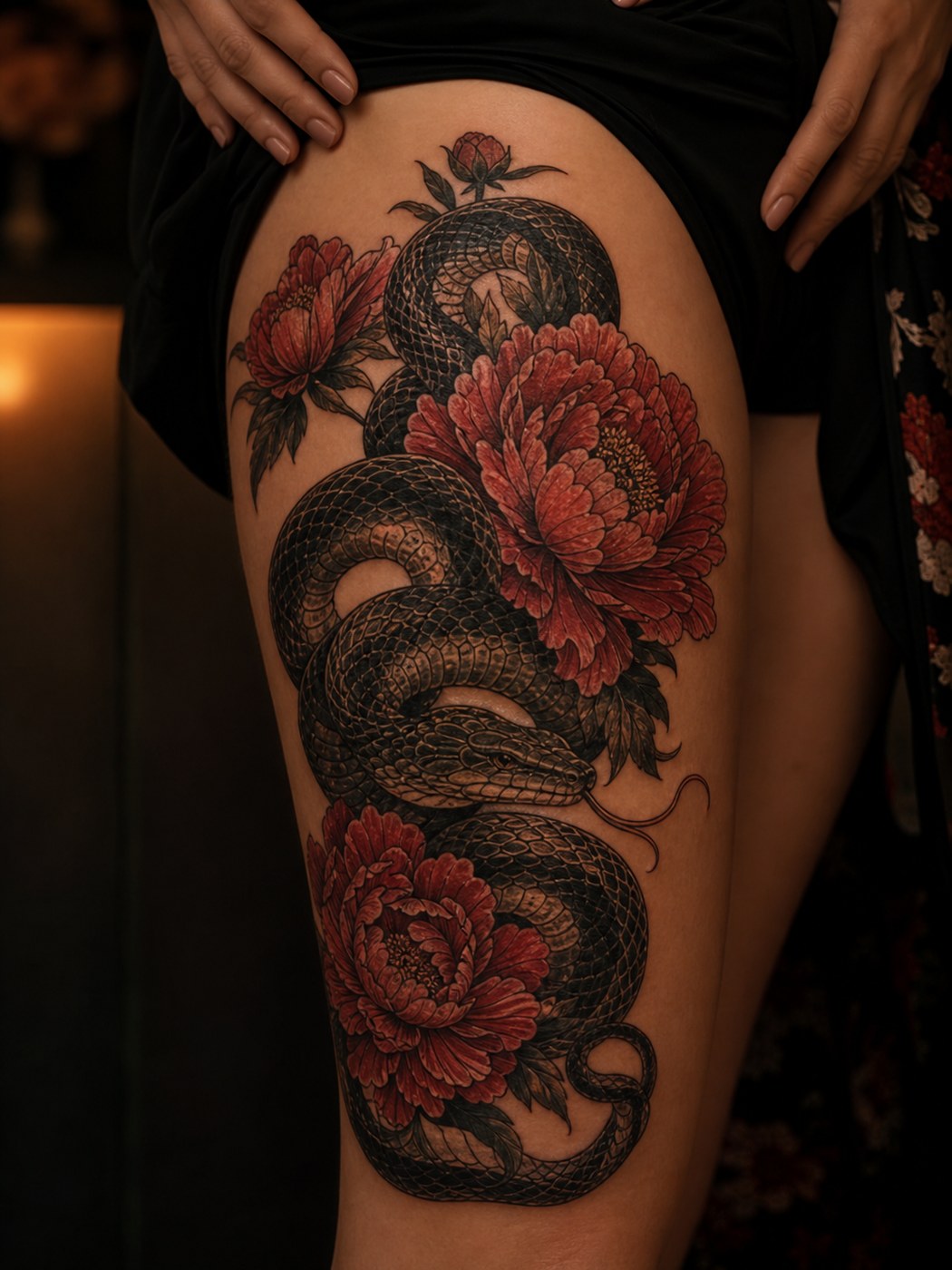
The most common pairing. The rose brings beauty, desire, and vulnerability; the snake brings danger, instinct, and transformation. Together they hit the “beauty and threat coexist” note — which a lot of people find personally accurate. This combo runs across traditional, neo-traditional, and realism styles. Red rose + black snake is the classic. Withered rose + snake adds mortality to the mix.
Snake + Skull
Life and death in direct conversation. The skull grounds the transformation symbolism in mortality — the snake isn’t just changing, it’s changing because everything ends. This combination often shows up after loss. It’s not morbid so much as honest.
Snake + Dagger
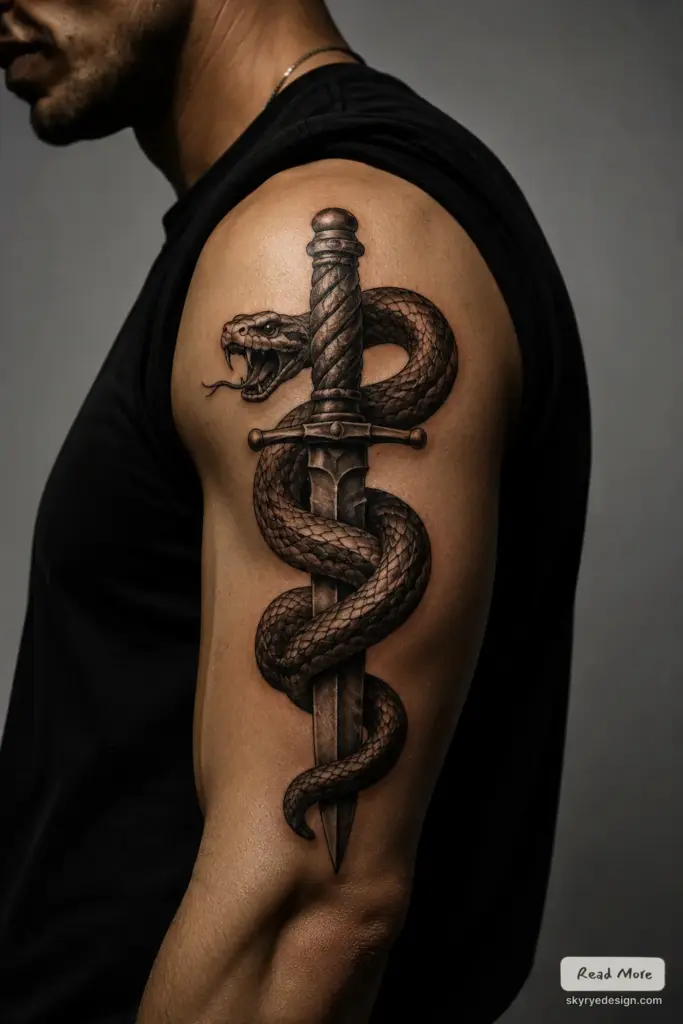
Survival imagery. The dagger represents decisiveness, the willingness to cut something away; the snake represents the danger that was faced. Together they say: I went through something hard and I came out on the other side with tools. This is one of the oldest tattoo pairings — it appears in American traditional flash from the 1920s.
Snake + Flowers (Non-Rose)
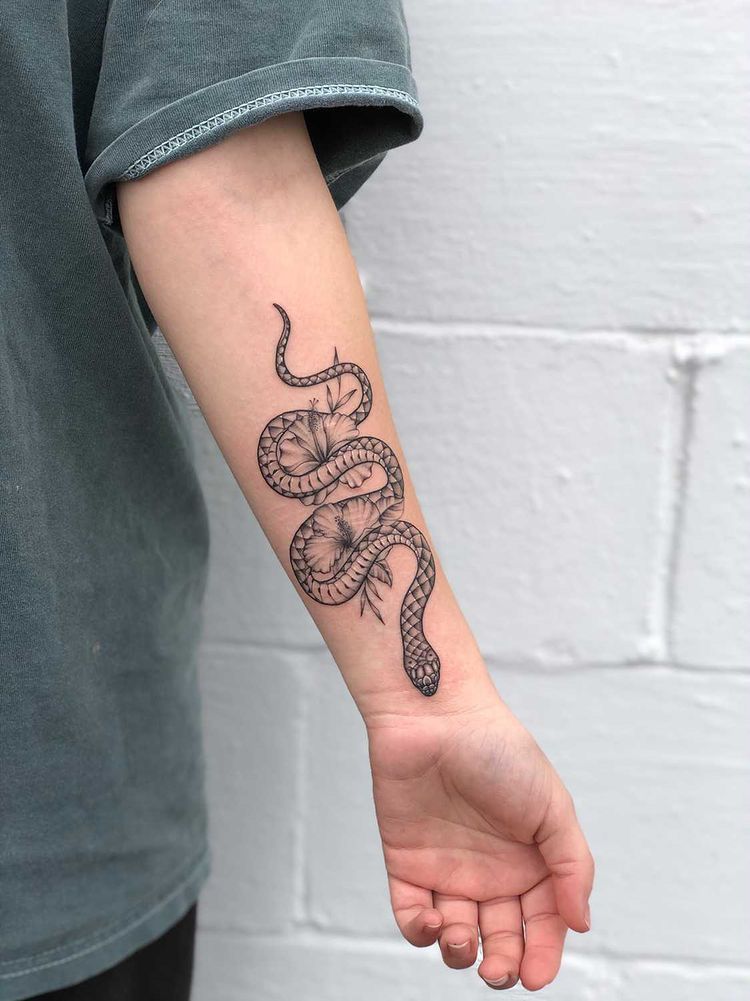
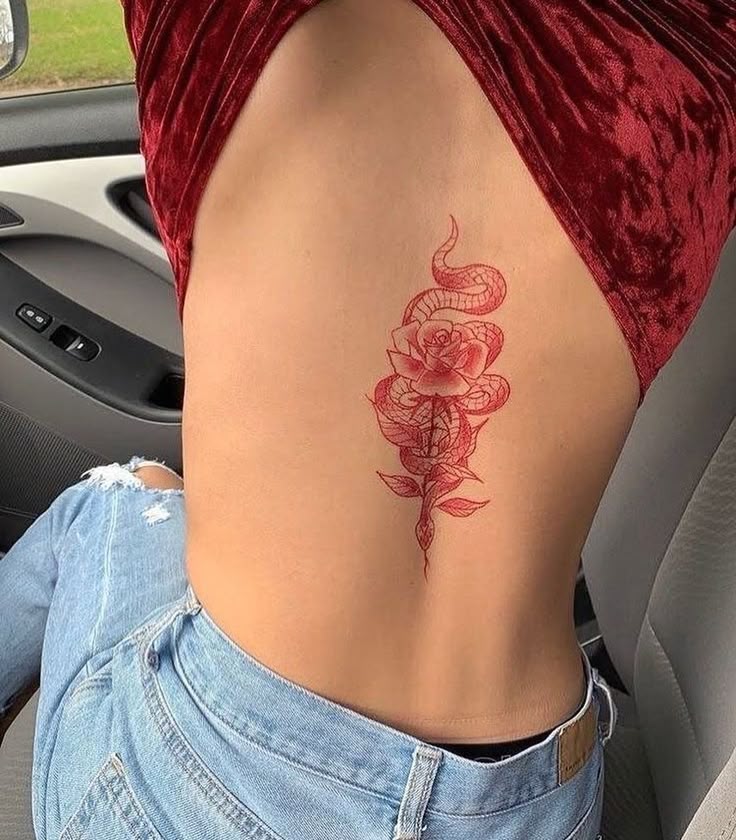
Lotus + snake = spiritual awakening from difficult ground. Peony + snake = the Japanese combination for protection and honor. Cherry blossom + snake = beauty that’s impermanent, transformation that doesn’t last forever. The flower you choose does real symbolic work here, so it’s worth being intentional.
Snake + Butterfly
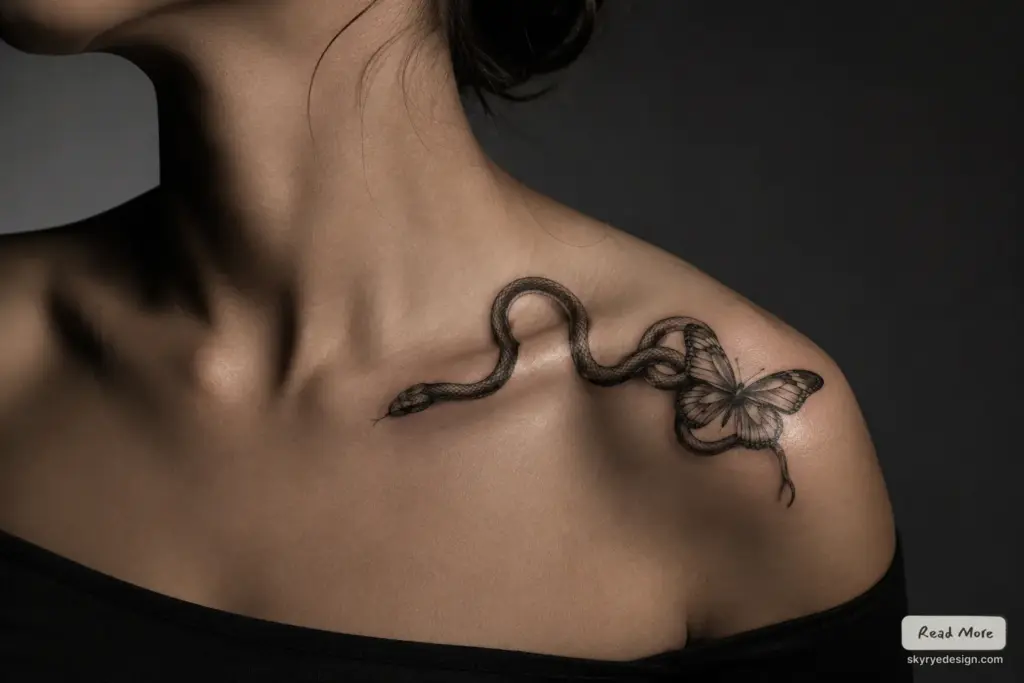
Both are transformation symbols — but they hit differently. The butterfly’s transformation is gentle and public; the snake’s is patient and internal. Together they cover both kinds of change. This pairing shows up frequently in tattoos that mark recovery or personal reinvention.
Want to learn tattoo design fundamentals?
Skillshare has solid courses on illustration, flash design, and traditional tattooing — everything from linework to shading. Use code AFF30D25 for 30 days free.
Browse tattoo illustration courses on Skillshare →
Placement and What It Changes About the Message
Placement does not completely rewrite the meaning, but it changes the volume. A snake on the hand or finger is hard to ignore. A rib, thigh, or spine snake can feel more private, almost like a symbol you choose when to reveal.
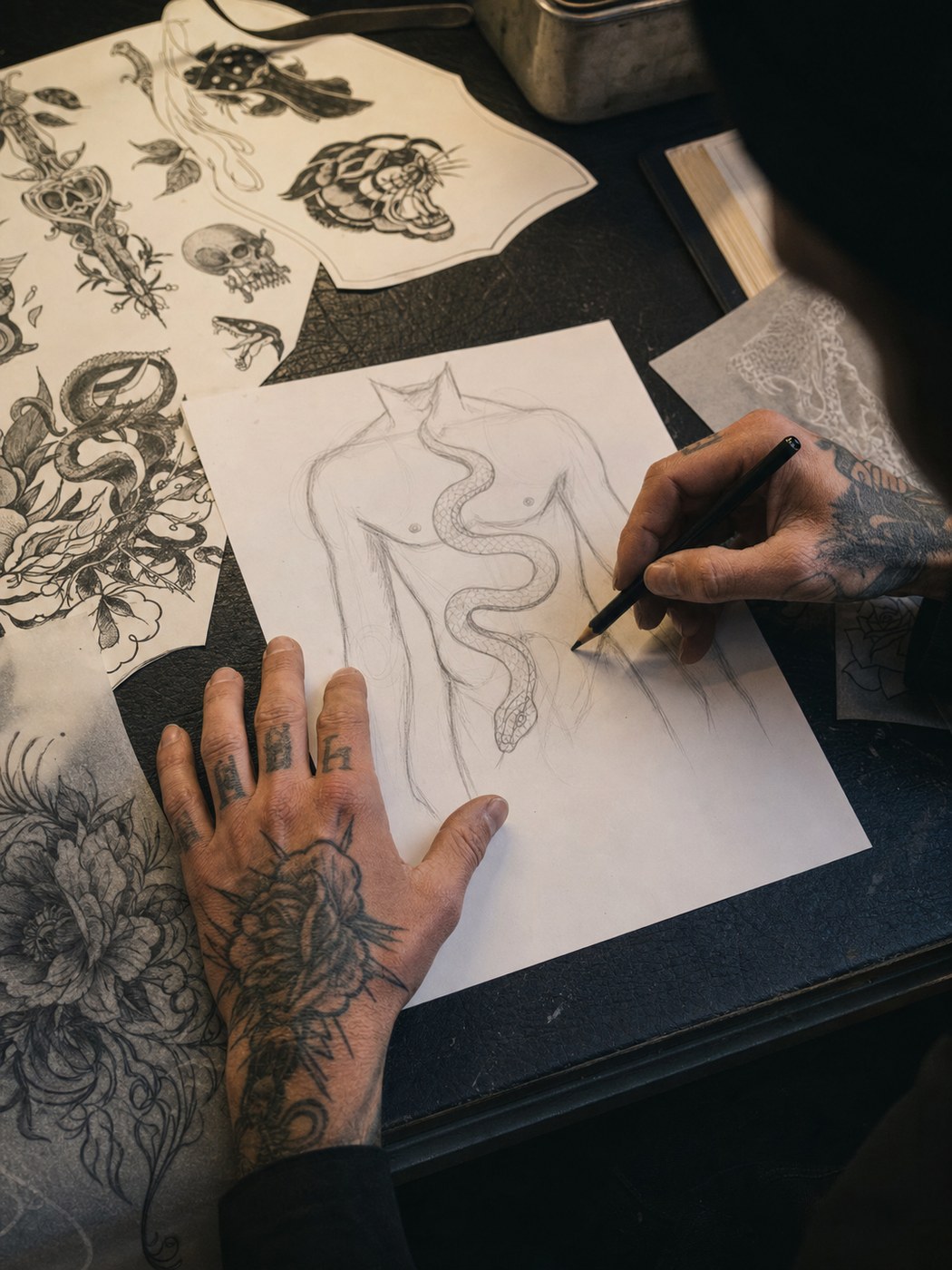
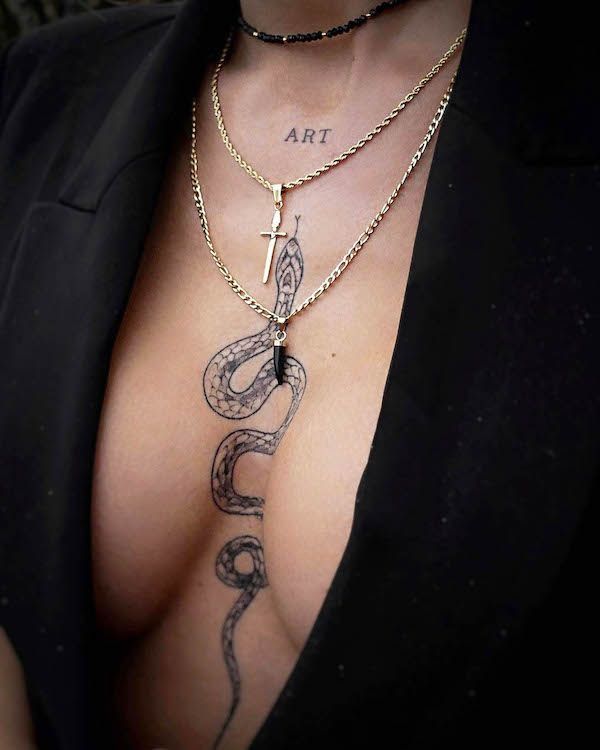
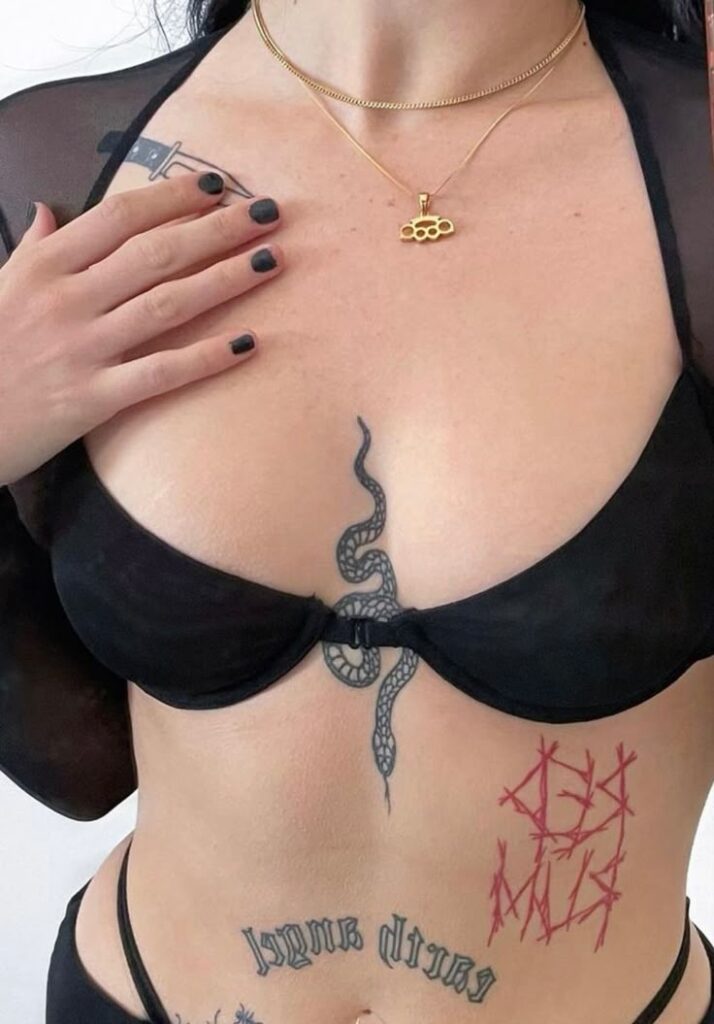
Where a tattoo lives on the body isn’t just aesthetic. It changes visibility, perceived intent, and how the piece reads in motion.
Arm and Forearm
The forearm is the most visible placement. A snake coiling up the forearm is a deliberate, public-facing statement.
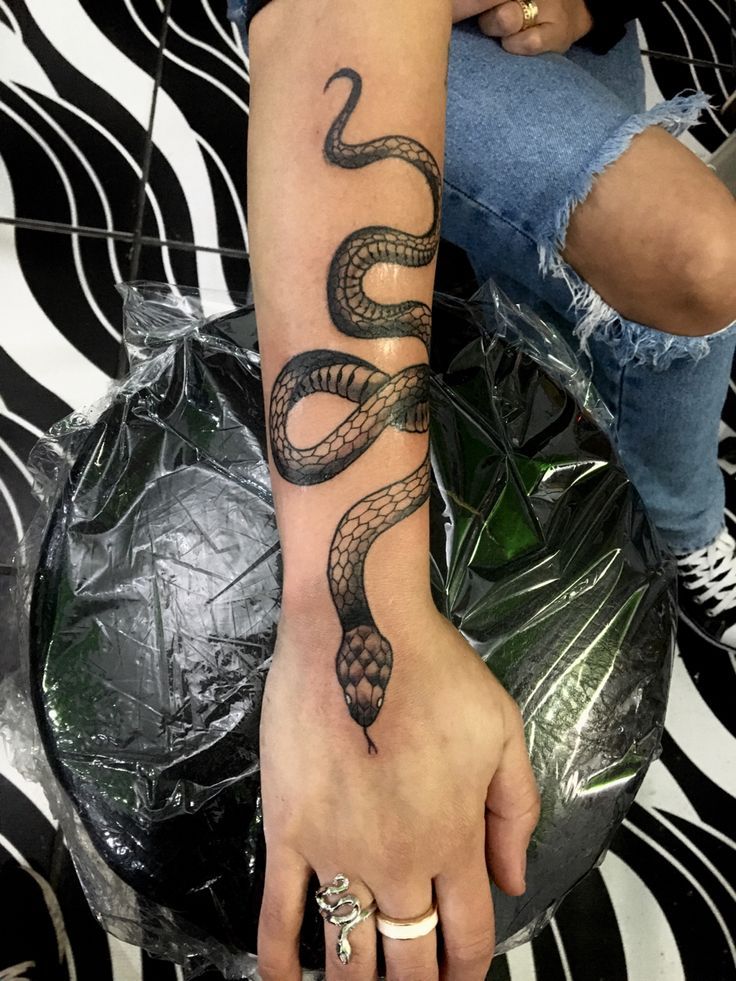
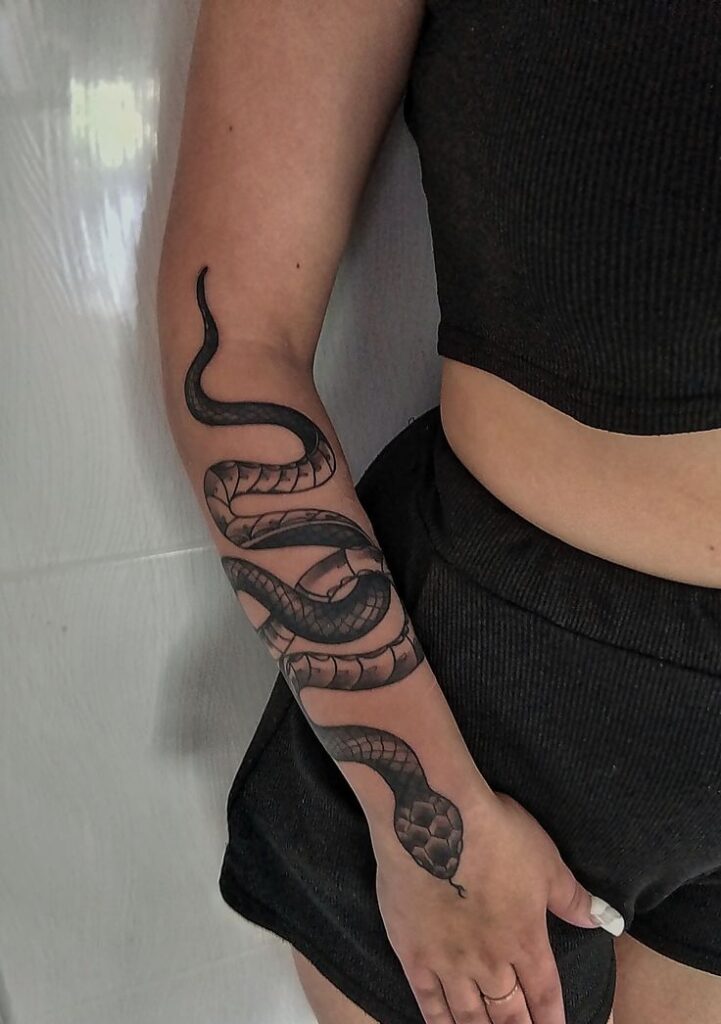
It reads as confident. The arm also allows the snake’s natural coiling motion to follow the muscle and bone structure, which works particularly well with realism and traditional styles. Full sleeve snakes — especially in the Japanese tradition — are a serious commitment that takes years of sessions.
Back and Ribcage
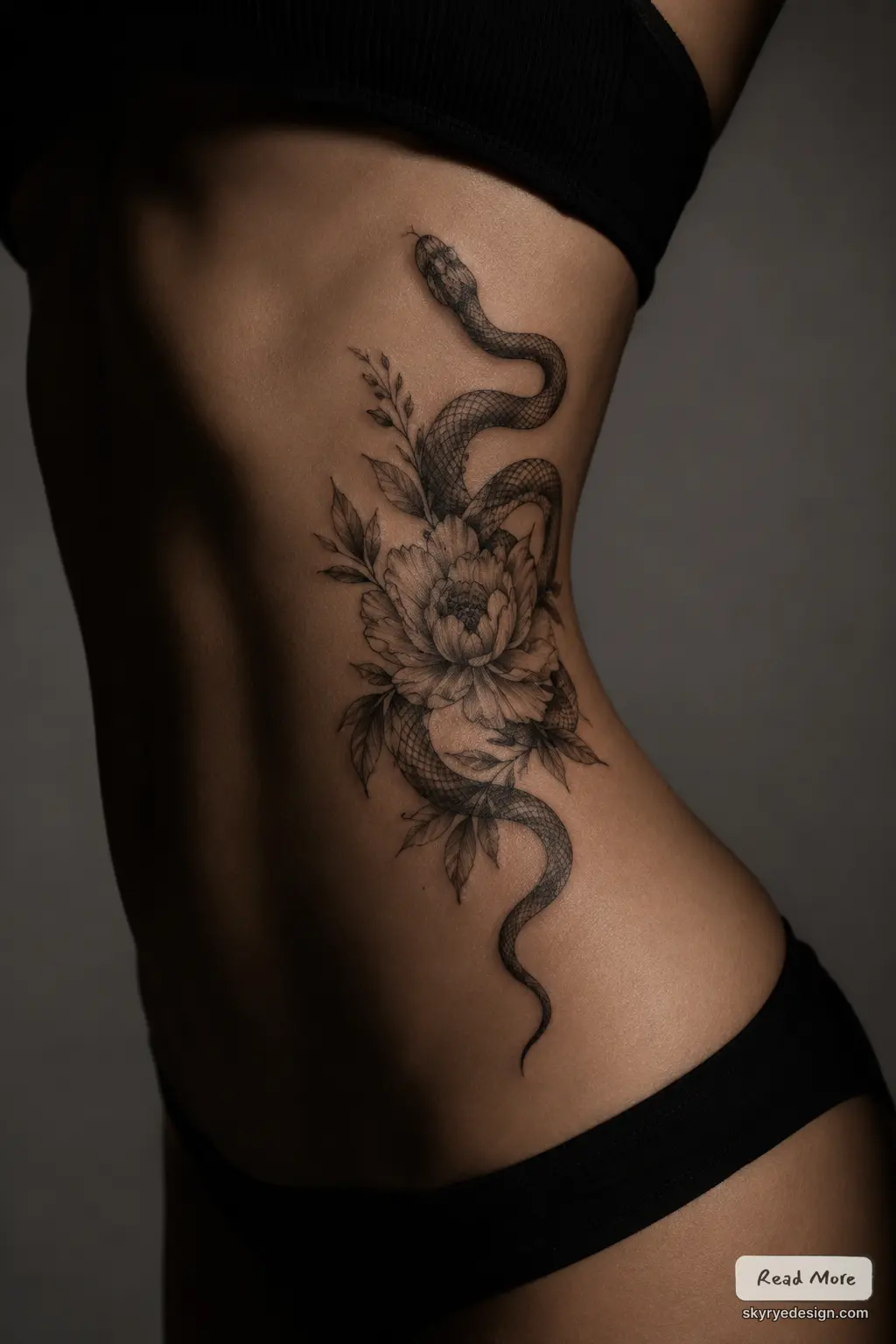
Large-scale placements. The back allows for full narrative — a spine snake running from neck to lower back is architectural in scale. Ribcage snakes are painful to get but have a private, intimate quality. These placements are typically chosen when the symbolism is deeply personal rather than publicly shared.
Neck and Hand
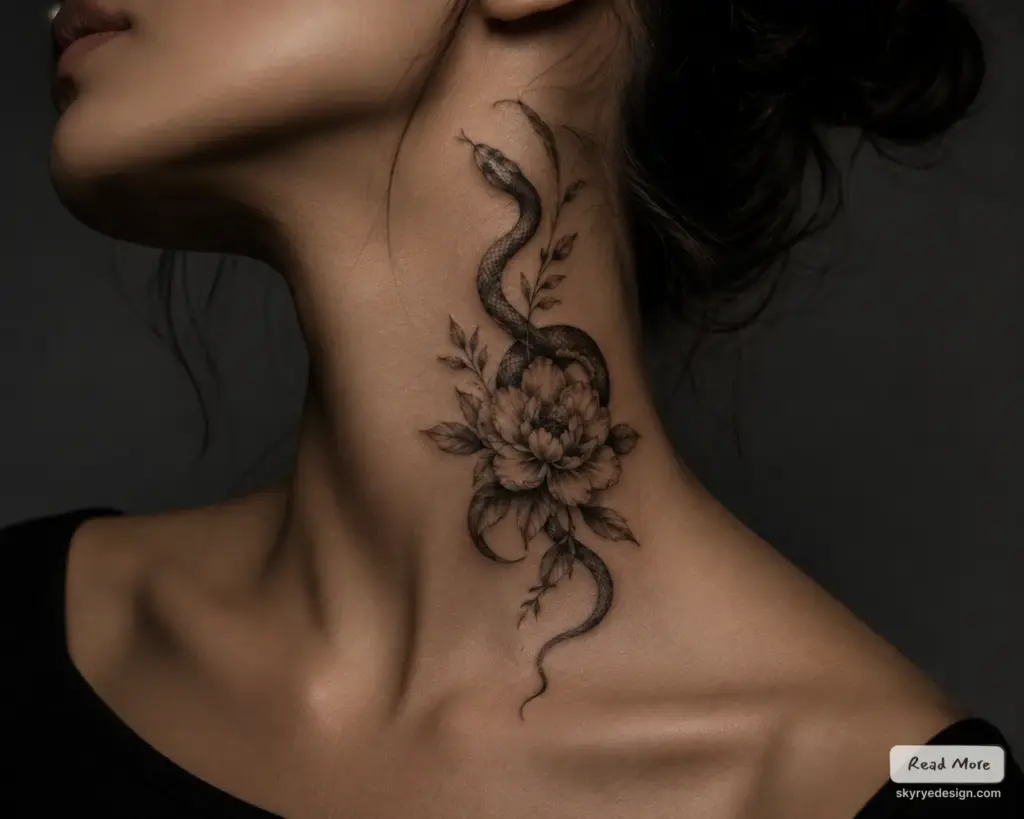
High-visibility, high-commitment. Neck and hand tattoos have shifted significantly in mainstream acceptance since 2015, but they still read as a certain kind of all-in commitment. A small snake behind the ear or on the finger is a very different choice from a neck piece, even if it’s the same subject.
Thigh and Ankle
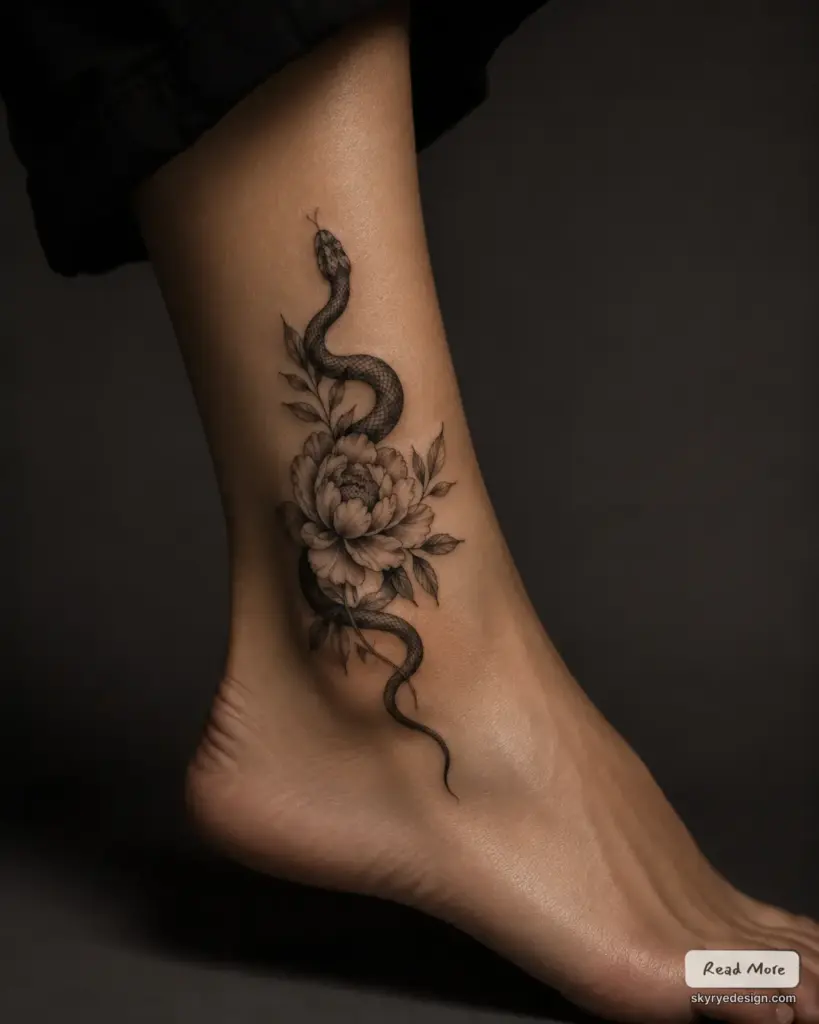
The thigh allows for large-format work in a semi-private location — visible at the beach, not visible in an office. The snake wrapping around the thigh or upper leg follows the anatomy naturally and works well with both minimalist and detailed styles. Ankle snakes are smaller, more delicate, and often more gender-neutral in their aesthetic register.
If you’re in a client-facing profession and haven’t tested the waters with body art before, starting with a thigh or ribcage placement gives you the design you want without the visibility you might not be ready for yet.
How to Talk to Your Tattoo Artist About Snake Symbolism

Most tattoo artists have seen so many snake tattoo requests that they can spot the “Pinterest phase” instantly. You walk in with twelve saved references and they already know which ones will age badly.
The better artists usually ask the same thing first: why a snake?
And the answer actually matters. “I want a cobra” is fine, but “I got through a brutal couple of years and I want something that feels like survival” gives them way more to work with. The posture changes. Maybe the snake coils tighter instead of stretching out. Maybe the head sits lower, more defensive than aggressive. Small choices, but they change the entire mood of the tattoo.
I’ve also seen people get weirdly locked into one style before they even talk to an artist. Someone wants hyper-realism because that’s what looked good on Instagram, then the artist sketches a heavier neo-traditional version that fits the arm ten times better. Happens constantly. If you picked an artist because you love their work, let them interpret the idea a little.
And yeah, ask about aging. Nobody likes hearing it, but tiny fine-line details blur faster than people expect. Especially scales. Especially hands and wrists. Bold traditional snakes stay readable forever for a reason. There’s a reason old biker tattoos still look solid after thirty years while some trendy micro-detail work already looks soft after two.
One underrated thing: show your artist photos of your actual skin in normal lighting. Not filtered selfies. Daylight, bathroom mirror, inside your car — whatever’s realistic. Ink reads differently depending on skin tone and contrast, and experienced artists absolutely adjust saturation and detail based on that.
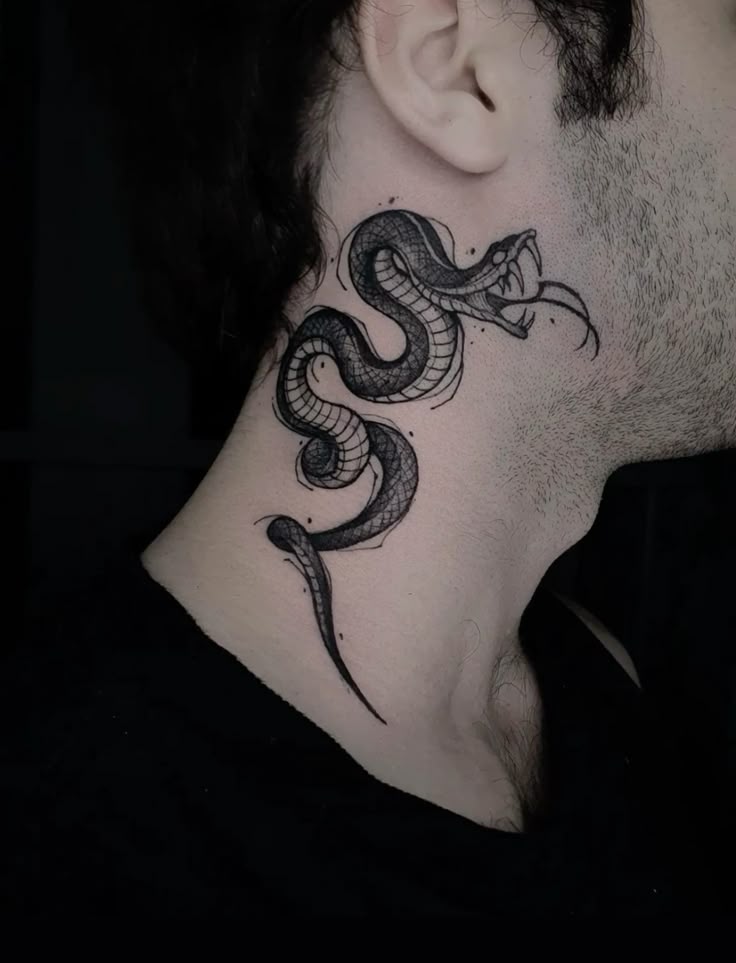
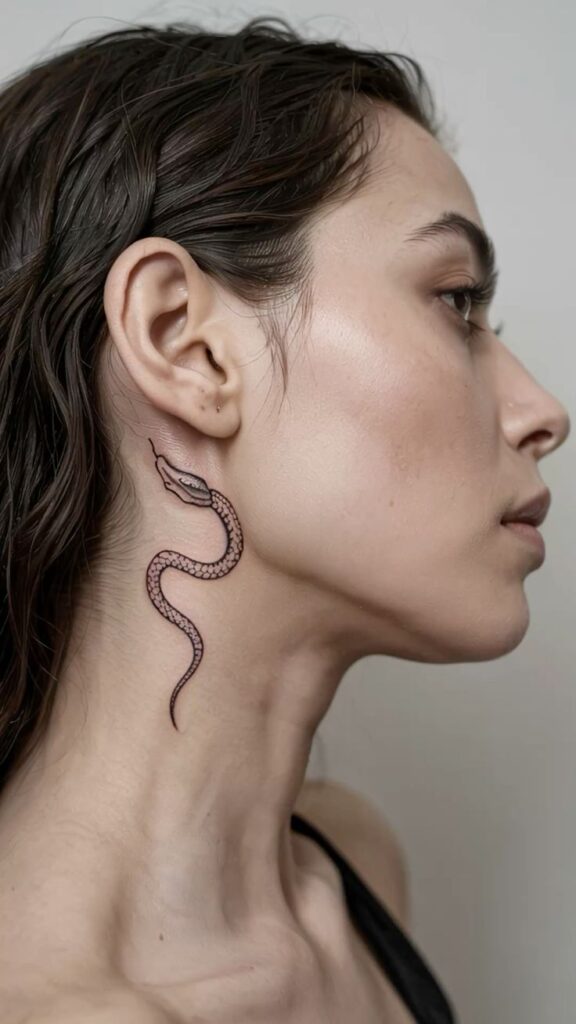
Honestly, the best snake tattoos rarely come from copying one perfect reference image. They usually come from a conversation that starts somewhere personal and ends with the artist building something around it.
Snake symbolism is tied to change and renewal, so an intuitive reading guide can help readers separate useful reflection from overreading every symbol as a prediction.
FAQ: Snake Tattoo Meaning
What does a snake tattoo on the arm mean?
A snake tattoo on the arm usually reads as visible protection, strength, or transformation. A snake wrapped around the forearm can follow the muscle naturally, which makes the design feel active instead of pasted on. A coiled snake near the elbow or wrist feels more guarded and defensive.
What does a snake finger tattoo mean?
A snake finger tattoo is usually about subtle danger, personal boundaries, or a small private symbol of change. It can look elegant, but finger tattoos fade faster than most placements. If the meaning matters to you, keep the design simple enough to survive touch-ups.
What does a snake and rose tattoo mean?
A snake and rose tattoo usually mixes temptation, beauty, desire, and risk. The rose softens the snake, while the snake gives the flower tension. In traditional tattooing, this pairing works especially well because both shapes can curve around each other without looking forced.
What does a snake tattoo mean spiritually?
Spiritually, the snake shows up across traditions as a channel between worlds — earth and sky, life and death, conscious and unconscious. In Hinduism, the Kundalini energy is visualized as a coiled serpent at the base of the spine that rises through awakening. In Buddhism, the Naga serpents protect the dharma. In shamanic traditions across the Americas and Africa, the snake often represents the spirit of the land itself. The most consistent spiritual read is: transformative power that moves between states.
Are snake tattoos considered bad luck?
Depends entirely on cultural context. In Western Christian-influenced cultures, the serpent carries the Garden of Eden baggage and can read as unlucky or morally charged to some people. In Japanese tradition, snake tattoos are considered protective and lucky — particularly white snakes, which are associated with the deity Benzaiten and with financial fortune. In Chinese culture, the Snake is one of the twelve zodiac animals and carries connotations of intelligence and good fortune. There’s no universal verdict here.
What does a snake tattoo mean on a woman?
Many women choose snake tattoos to claim the serpent’s historical association with feminine divine energy — goddesses like Isis, Medusa, and the Hindu Manasa are all serpentine. The snake also resonates with themes of feminine power that operates quietly rather than loudly: patience, observation, striking when the moment is right. The transformation angle hits hard for life events that are specifically female-coded — recovery, motherhood, identity shifts. The short answer: it means whatever it means to the person wearing it.
What does a coiled snake tattoo mean versus a stretched-out snake?
A coiled snake is watchful, contained, ready. The energy is potential rather than kinetic — it hasn’t struck yet. This reads as patient strength. A stretched or slithering snake is in motion — transformation actively happening, forward movement, less about defense and more about progress. A snake mid-bite or with fangs extended is confrontational energy, a direct statement about power and warning.
Does snake tattoo placement change the meaning?
It changes the social meaning more than the symbolic meaning. The same design on a forearm and on a ribcage carries identical symbolism but very different public registers. A forearm snake is a declaration; a ribcage snake is private. Spine placements often emphasize the transformation angle because of the Kundalini association. Wrist and ankle placements tend toward the minimalist and personal. Neck and hand placements read as fully committed to body modification culture, regardless of the specific design.
What is the difference between the Rod of Asclepius and the Caduceus?
The Rod of Asclepius has one snake around a plain staff. It’s the correct medical symbol, associated with Asclepius, the Greek god of medicine. The Caduceus has two snakes around a winged staff and belongs to Hermes, the god of commerce, travelers, and messengers. The US military medical corps adopted the Caduceus by mistake in the early 1900s and it stuck, which is why both appear in medical contexts today. If you’re tattooing a medical symbol for personal or professional reasons, the single-snake Rod of Asclepius is historically accurate.
How much do snake tattoos typically cost?
Small minimalist snake on a wrist or ankle: $80–$200. Medium detailed piece on a forearm: $300–$800. Full sleeve with Japanese-style snake and botanicals: $2,000–$5,000+, typically done across multiple sessions. Factors that drive price up: color work, hyper-realism, large scale, highly sought-after artist. Price is not a reliable indicator of quality — research portfolios, not hourly rates.
Can I get a snake tattoo if I’m afraid of snakes?
Yes, and it’s actually more common than you’d think. Some people get snake tattoos specifically to reframe their relationship with something that frightens them. The tattoo becomes a way of claiming the symbol rather than being claimed by the fear. That said, do think through whether you want to look at the thing you’re afraid of permanently on your own body. For some people it works; for others, a snake tattoo that originally felt empowering becomes uncomfortable over time. There’s no wrong answer, just an honest one to work through before you book.
The Snake as a Symbol Is Yours to Define
The nurse who got her snake tattoo after chemo didn’t need anyone’s permission to use the symbol. She knew what it meant to her, and that was enough.
Snake tattoo meaning has thousands of years of weight behind it — transformation, protection, healing, eternity, duality, danger. But the meaning that actually stays on your skin is the one that connects to your specific story. A Japanese hebi pairing protection and peony is not the same tattoo as an Ouroboros or a minimalist ankle wrap, even if they’re all technically “snake tattoos.”
Find the version that fits your narrative. Bring that narrative to an artist who works in a style you connect with. And if you want to develop your own eye for tattoo design and illustration — the Skillshare courses on flash design and traditional illustration are genuinely useful for understanding what separates a good tattoo from a forgettable one.
The snake has been waiting in human symbolism for millennia. It can wait a little longer while you figure out exactly what you’re saying.
If you want to keep comparing symbolism, placement, and visual style, the main tattoo ideas page is the best next stop after this snake guide.
Snake and phoenix tattoos both point to change, but the mood is different; compare the phoenix tattoo meaning before choosing your symbol.
- 721shares
- Facebook0
- Pinterest721
- Twitter0
- Reddit0