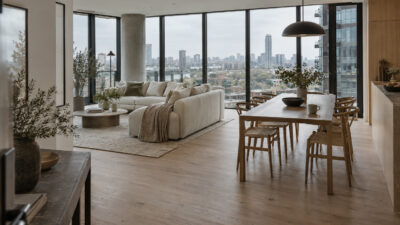
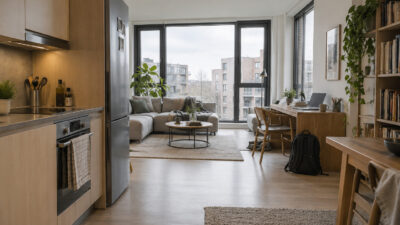
Canvas wall art is one of the fastest ways to change how a living room feels — not just how it looks, but the visual weight and emotional tone of the space. A piece that’s the wrong size makes the room feel off in a way that’s hard to diagnose until you’re standing in it. The right canvas, placed correctly, makes everything else in the room look more intentional.
I’ve been specifying art for interiors across residential and studio projects for fifteen years. What I notice consistently is that most living room canvas decisions go wrong before anyone picks up a tape measure.
- Why canvas wall art works well in living rooms
- Choose the right canvas size for your sofa or wall
- Large canvas wall art vs 3-piece canvas sets
- How to match canvas art with your living room color palette
- Abstract, landscape, minimalist, or graphic canvas art?
- Using canvas art as a focal point in flexible interiors
- Common mistakes when choosing canvas wall art for a living room
- Canvas wall art for living room FAQ
- What size canvas wall art is best for a living room?
- Is a large single canvas or a 3-piece set better for a living room?
- How do I match canvas art color to my living room?
- Where should canvas wall art be placed in a living room?
- What style of canvas art works best in a contemporary living room?
- Can canvas wall art make a small living room look bigger?
- How many pieces of canvas art should I hang in a living room?
- How do I hang a 3-piece canvas set so the spacing looks right?
People start with what they like aesthetically and try to fit it into a space it wasn’t chosen for. Starting with the space — its dimensions, light quality, existing color temperature, and the furniture you’re working around — is how you end up with art that actually works.
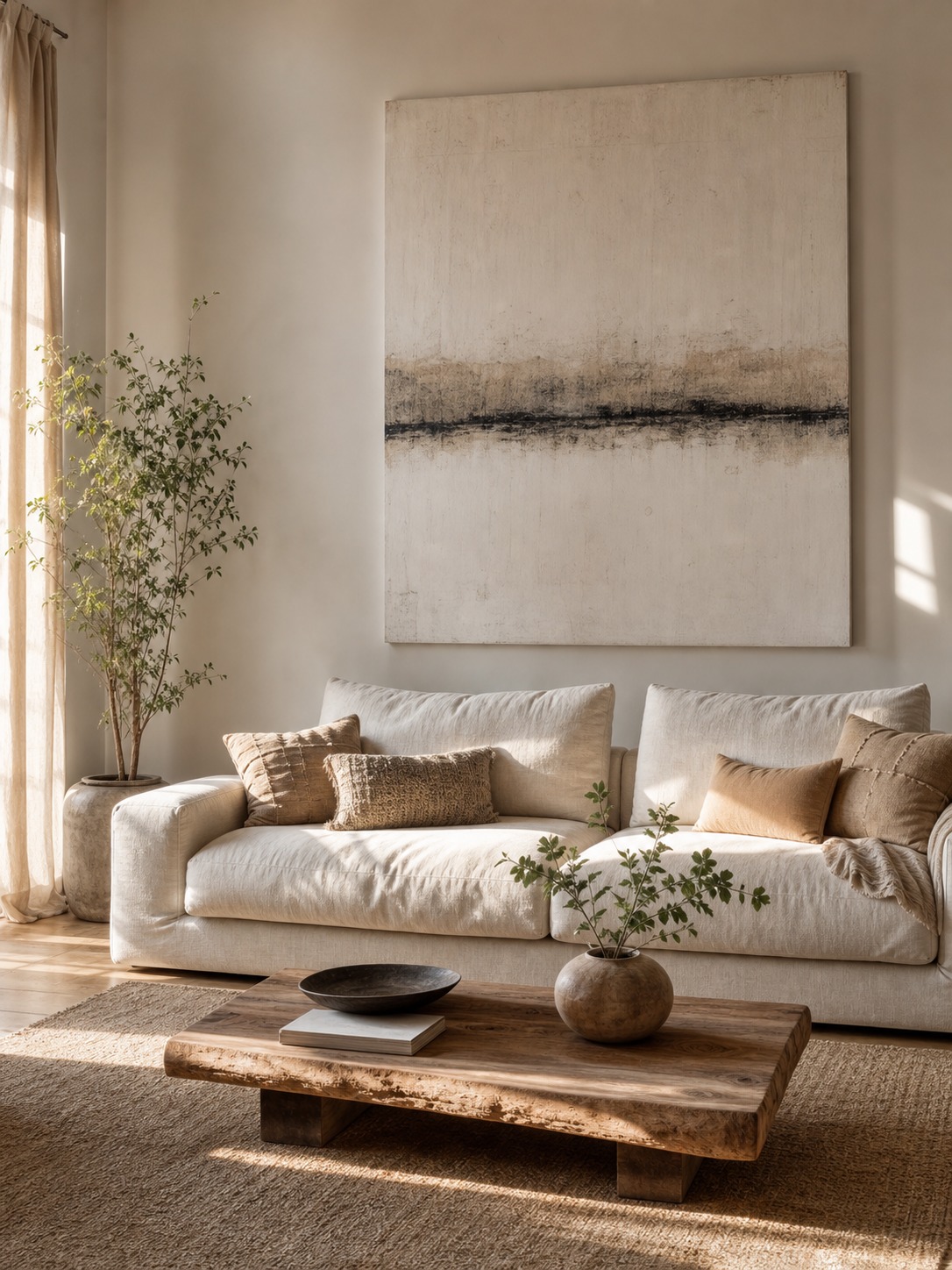
This guide covers the practical and visual decisions: how to choose canvas size relative to your sofa and wall, when a single large canvas outperforms a 3-piece set, how to align canvas color with an existing palette, and what most people get wrong when placing canvas art in a living room.
Why canvas wall art works well in living rooms
Canvas art has specific physical properties that suit living rooms better than most other art formats. The material itself (fabric stretched over a wooden frame) has a three-dimensional quality that flat prints behind glass don’t. The surface texture catches light differently depending on viewing angle and time of day, which means the piece looks alive rather than static across the full day.
This matters in living rooms specifically because these are the spaces where natural light changes most dramatically — from morning sun to afternoon shadow to evening lamplight. A matte canvas surface absorbs light rather than reflecting it, so it reads clearly from multiple angles without the glare problem that glass-framed prints create in direct light. If you’ve ever watched an afternoon glare move across a framed print and make the image briefly unreadable, canvas eliminates that problem.
Canvas is also available in sizes that framed prints can’t practically reach. A 180cm single canvas on a living room wall is a statement that no standard framed print matches without significant custom framing expense. And because a stretched canvas is self-contained (no matting, no frame profile to choose) the art either works or it doesn’t. There’s no styling buffer to compensate for a weak choice.
The other physical advantage: canvas sits close to the wall surface. Unlike framed art that projects several centimeters, a gallery-wrapped canvas lies almost flat. In a living room where furniture is placed near walls, this keeps the visual depth of the room intact.

Choose the right canvas size for your sofa or wall
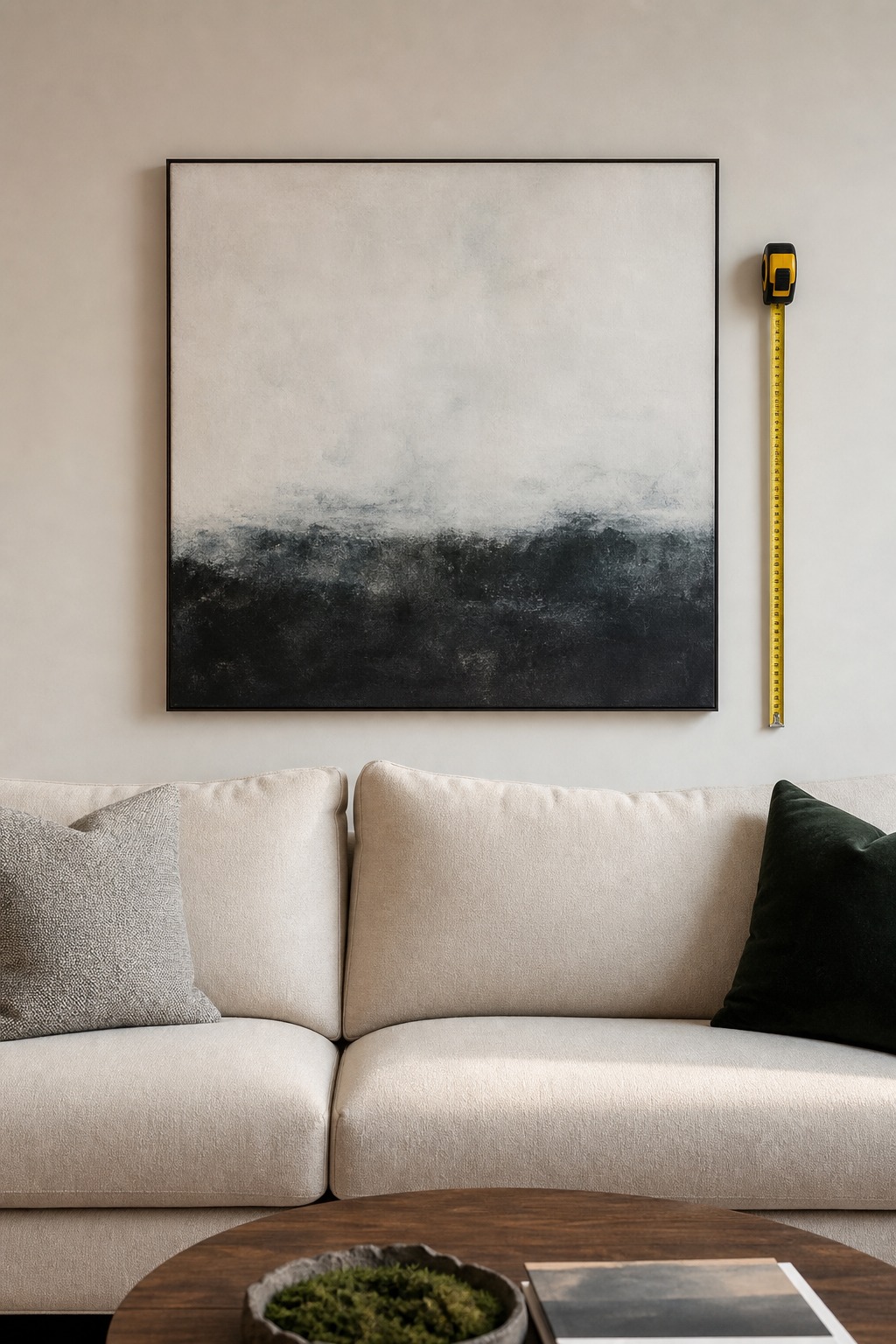
Scale is the single most important variable in canvas wall art for living rooms, and the one most buyers consistently underestimate.
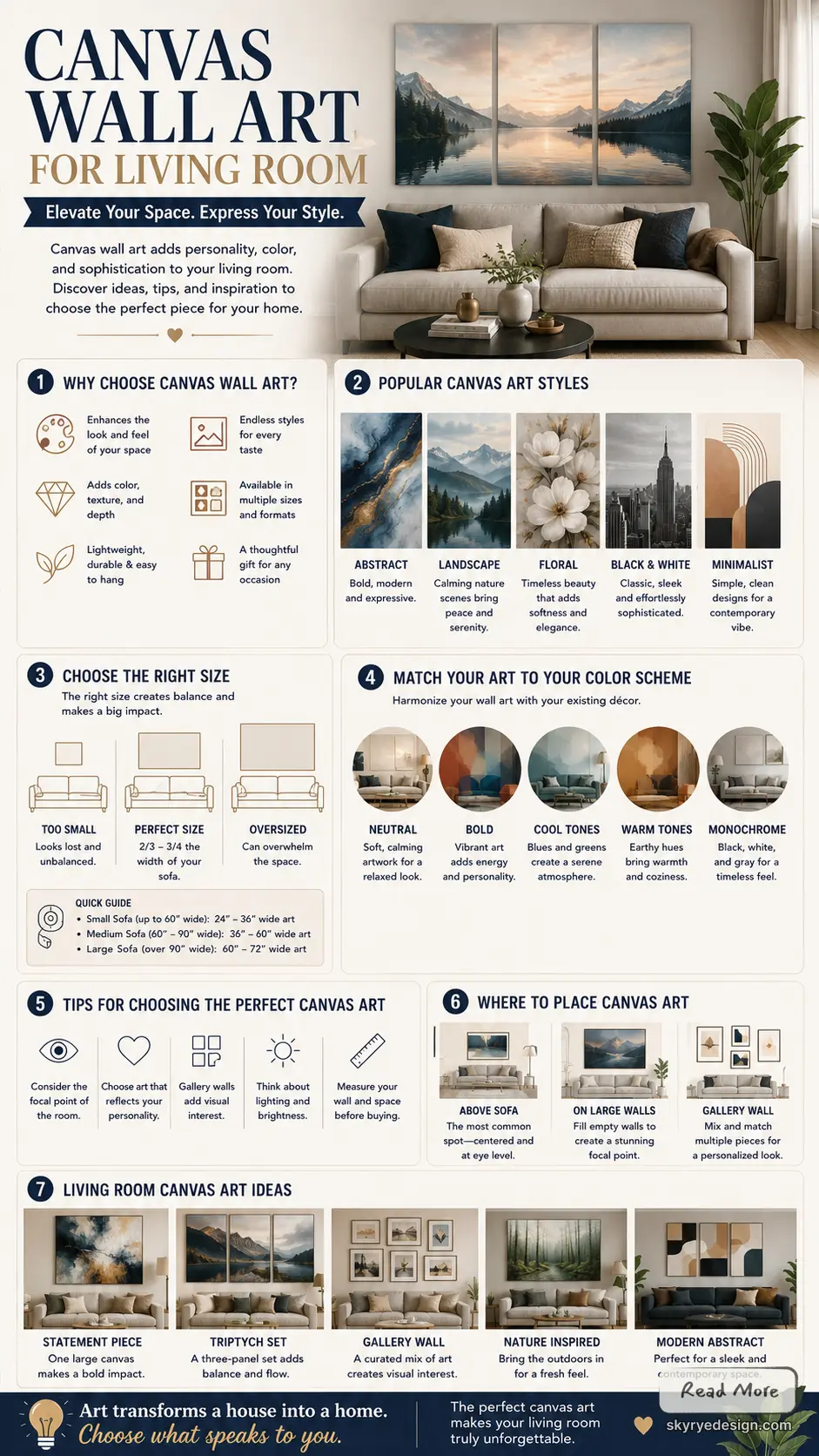
The standard design guideline: a canvas hung above a sofa should span between 60% and 75% of the sofa’s width. A 210cm sofa calls for a canvas roughly 130–160cm wide. Go narrower than that and the art looks disconnected from the furniture beneath it — there’s no visual relationship between the two. Go wider than the sofa and the canvas begins to carry the room rather than anchor the seating group, which only works if the piece is strong enough to hold that responsibility.
Hanging height matters as much as width. The center of the canvas should sit at approximately 145–155cm from the floor to canvas center — roughly eye level when standing. Above a sofa, the bottom edge of the canvas should clear the back cushions by around 20–30cm. Enough to visually separate the canvas from the furniture; close enough to maintain the connection between them.
How wall size changes the formula
On a standalone wall without furniture beneath it, the sizing logic shifts. Without a sofa or console to act as an anchor below, the canvas needs to be larger than the eye-level formula suggests. Either go large enough that the canvas reads as an architectural element (150cm and above in a generous room), or add a sideboard, console, or shelf beneath it to create the visual anchor artificially. An isolated small canvas on a large empty wall always looks like an oversight.
In a compact living room — a typical apartment in an urban building, for instance — a single large canvas almost always outperforms a group of smaller pieces. The bigger canvas simplifies the visual field rather than adding to an already busy surface.
What “large canvas wall art for living room” actually means
In practice, large means anything over 100cm on the longest dimension. A 120×80cm canvas starts to read as large in a small living room. In a generous room with 2.7m or higher ceilings, large means 150cm wide minimum. The useful test: stand back to where you’d normally sit and look at the empty wall. Your canvas should fill more of that field than it leaves empty.
Large canvas wall art vs 3-piece canvas sets
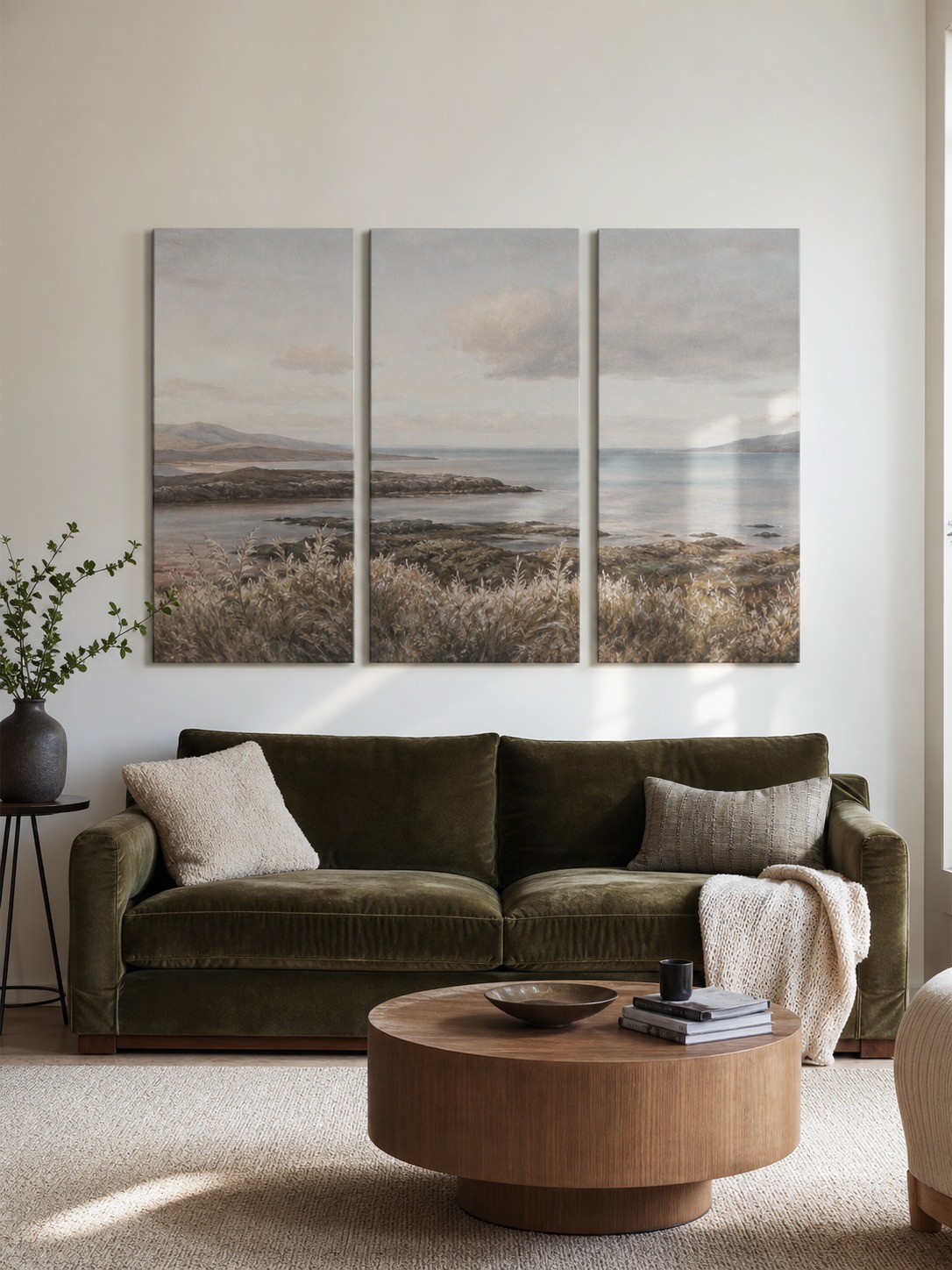
This is one of the most common decisions when buying canvas wall art for a living room, and the right answer depends entirely on the wall and the room.
A single large canvas creates a focal point. It makes one clear statement and it’s easier to execute correctly because there’s only one decision to get right: size and placement. It reads as more considered in contemporary and minimalist interiors, where the design language is about reduction rather than accumulation.
A 3-piece canvas wall art set does something different. It distributes visual attention across three elements, which fills a wide horizontal wall more proportionally than a single canvas at the same price point. A horizontal triptych (three equal-width panels of the same image) creates a cinematic wide format. The gaps between the panels add rhythm that a single uninterrupted canvas doesn’t have. Spacing should be consistent: between 2.5cm and 4cm between each panel, measured precisely. Inconsistent spacing reads immediately and undermines the whole set.
Where 3-piece canvas sets go wrong: when the three panels are treated as independent art pieces rather than a unified composition. Three different subjects at different scales on the same wall is a gallery wall, not a triptych. A triptych works because the image spans all three panels continuously — the gaps are structural pauses in a single composition.
The practical advantage of a single canvas: it’s easier to live with over time. One piece, one hook, one decision. You can move it to another room when the interior changes. A triptych is committed to its wall.
Sizing a 3-piece set above a sofa
For a 3-piece set above a 210cm sofa, each panel should be roughly 50–60cm wide with 3cm gaps between them, giving a total installed width of roughly 165–195cm. The combined set reads as one wide horizontal element — which is exactly the effect you want. It should span between 75% and 90% of the sofa width to hold the visual relationship.
If you want to compare single canvases and triptych sets across a range of subject matter and palette options before committing to a size, you can browse a huge range of canvas art prints and see how different formats read at scale, with dimensions clearly listed alongside each piece.
How to match canvas art with your living room color palette
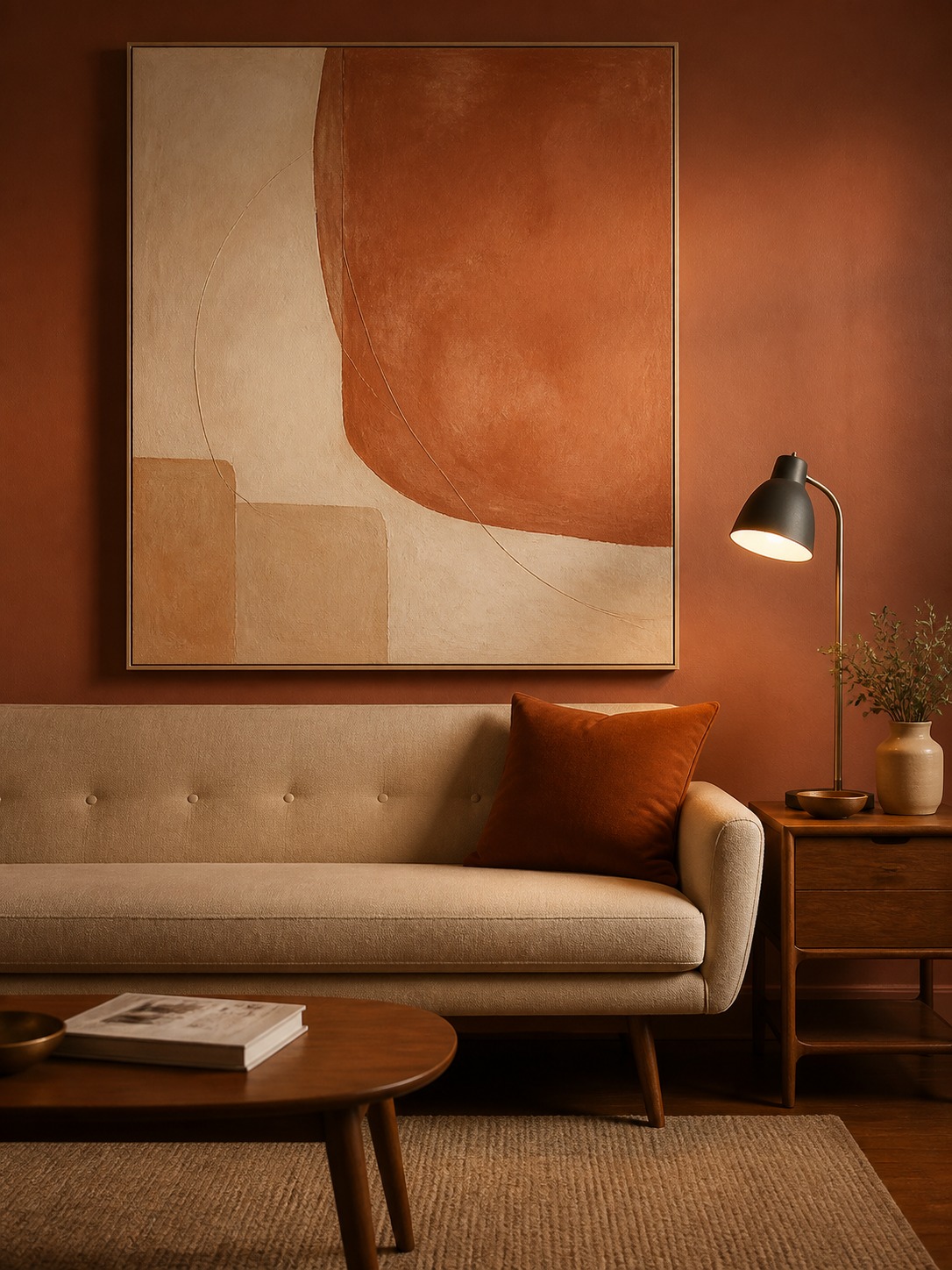
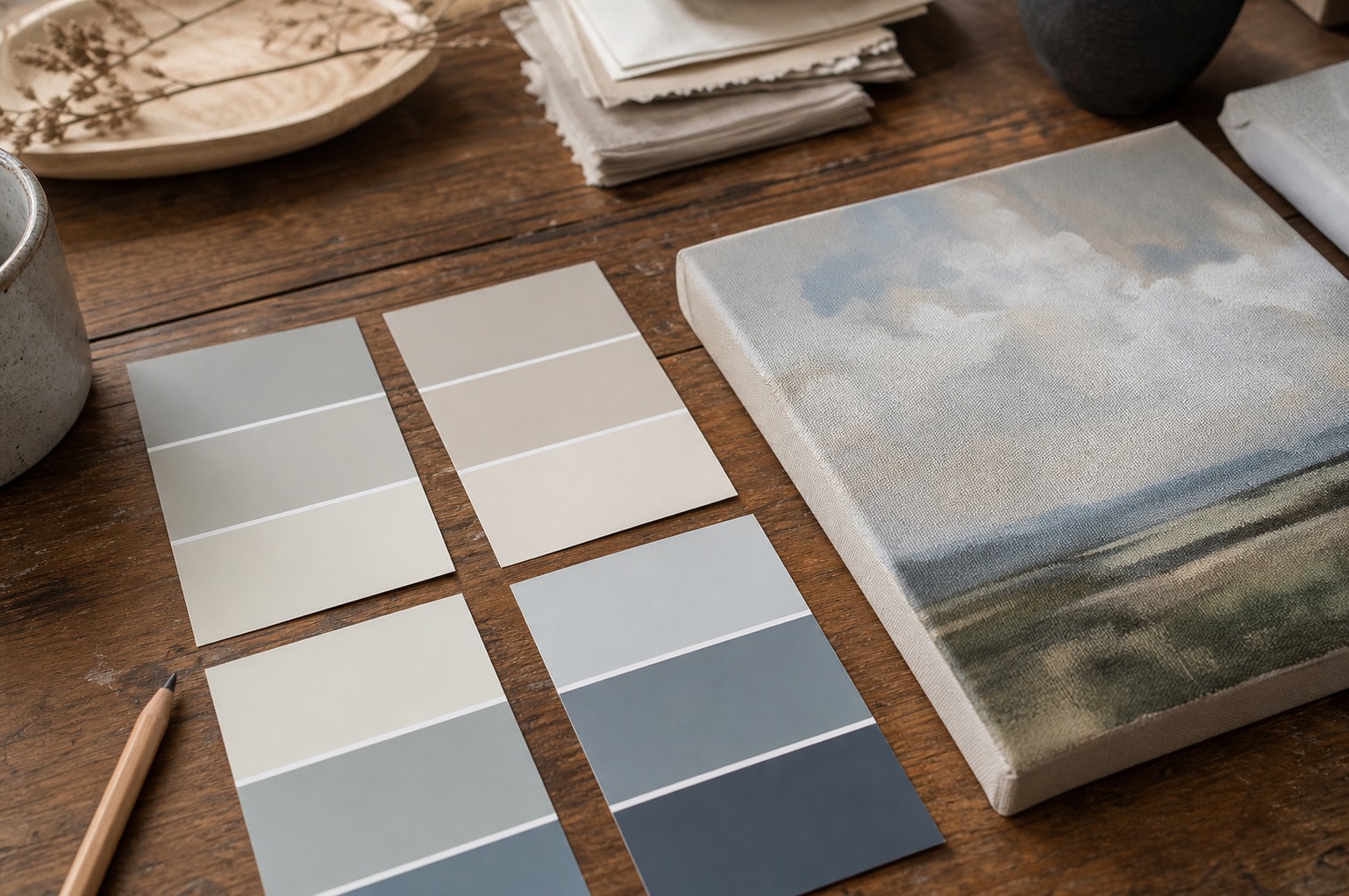
Color matching between canvas art and a living room is the part that feels most personal and is actually the most systematic. Treating it systematically removes the guessing.
The starting point is the room’s dominant color — usually the wall color or the largest furniture piece. Canvas art in a living room doesn’t need to match that color: it needs to relate to it. Three relationships work reliably.
Tonal: a canvas that uses a different shade or saturation of the room’s dominant hue. Warm terracotta walls with a canvas that brings in rust, burnt orange, and deep brown reads as a unified palette rather than a matching exercise. The colors are clearly in the same family but the canvas holds its own identity.
Complementary: a canvas that introduces the opposite of the room’s dominant color on the color wheel. A living room with grey-green walls becomes significantly more alive with a canvas that carries warm amber or deep burnt yellow. The complementary relationship creates visual energy without clashing — the colors define each other rather than fighting.
Neutral anchor: a canvas that’s entirely neutral (black, white, charcoal, raw linen) grounds any color palette. In a room with bold furniture or a heavily patterned rug, a neutral canvas calms the competition for attention and lets the other elements read more clearly.
What to avoid in color matching
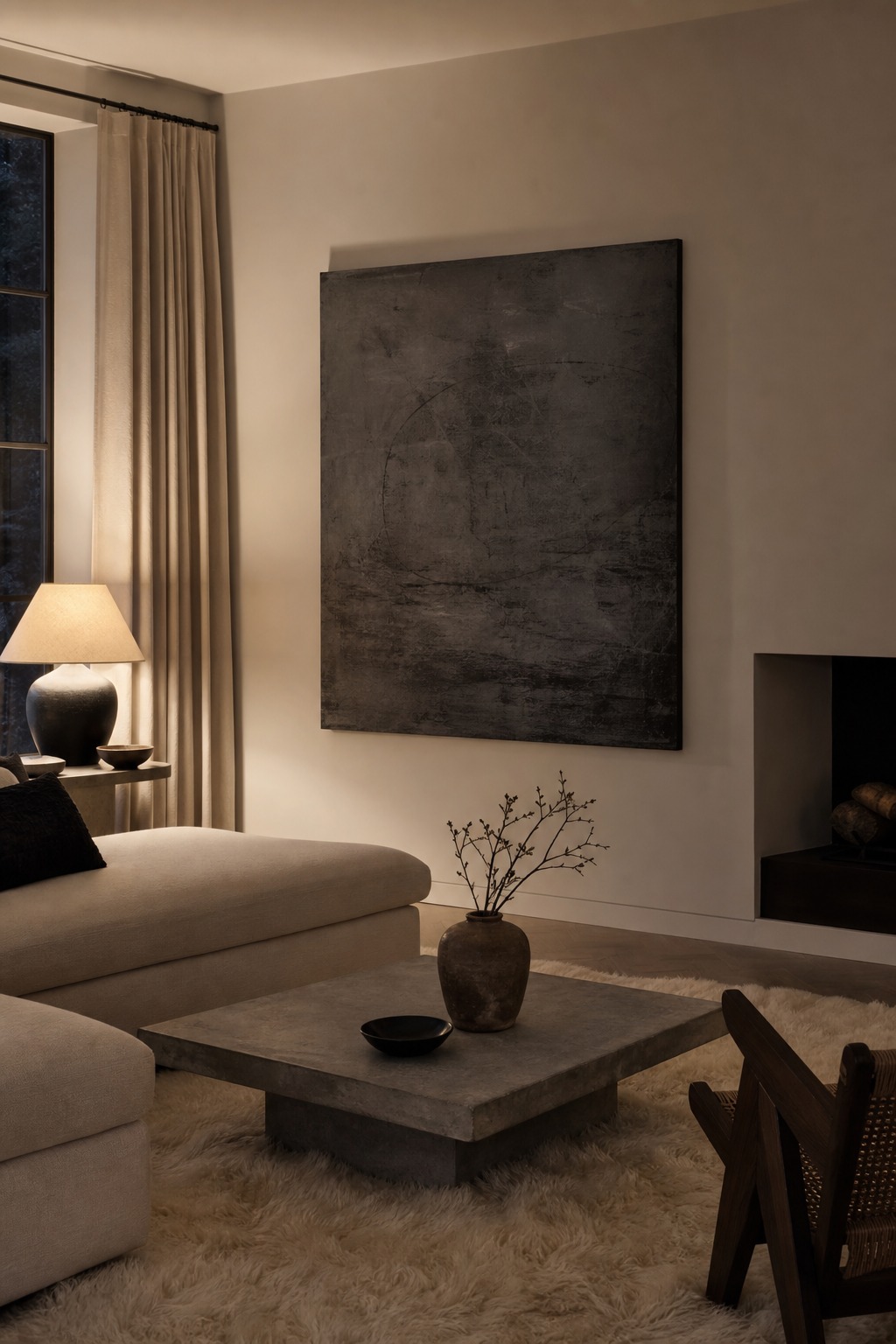
Matching canvas color exactly to accent cushions or throws. This reads as decorative rather than designed — as if the art was purchased to coordinate with soft furnishings rather than chosen on its own terms. The room ends up looking like a catalog photo: everything matches, nothing has any tension.
Abstract art with too many colors in a room that already has a lot happening visually. Each color in the canvas competes with a color in the room. The result is visual noise rather than visual interest. In a complex interior, a canvas with one to three colors — even intense ones — reads cleaner than a canvas with seven.
Testing color before buying

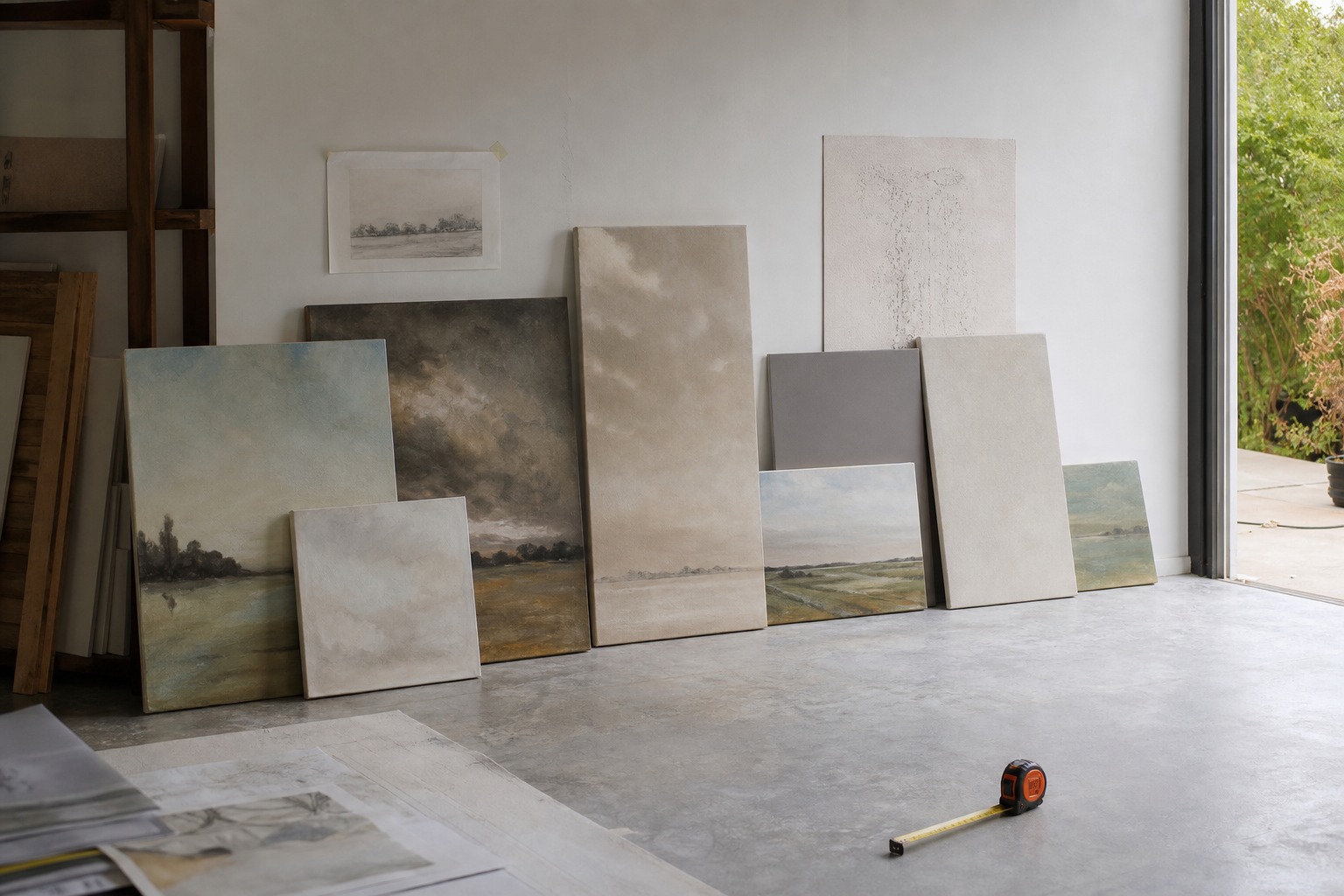
The most reliable method: order a high-resolution print at A3 size and pin it to the wall for a few days. The relationship between the room’s natural light and the canvas colors is more legible at scale and in context than any screen preview. Light changes through the day, and a canvas that looks warm and correct at noon may read differently under evening lamplight. Seeing it in the actual wall position across a full day removes most of the uncertainty.
Abstract, landscape, minimalist, or graphic canvas art?
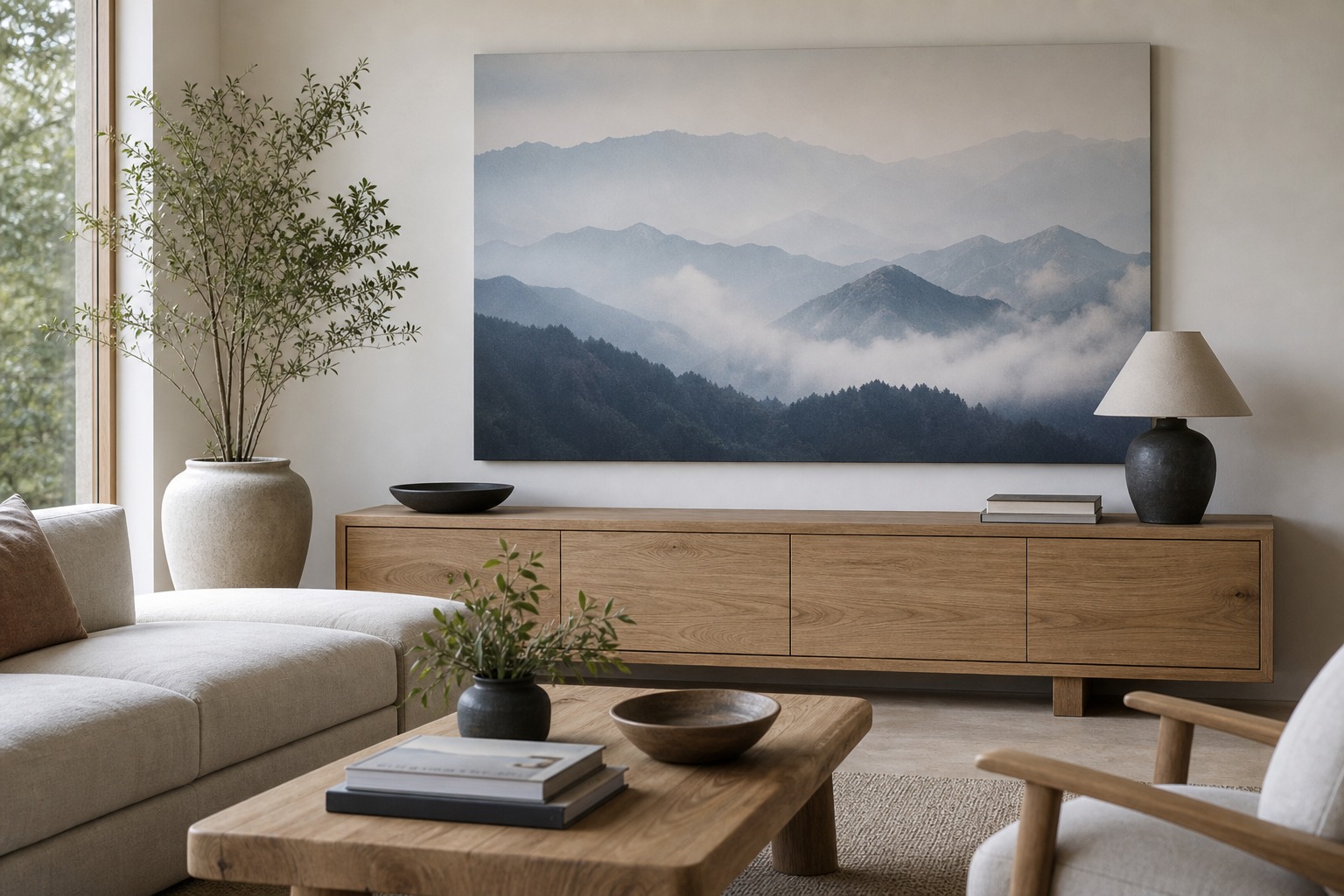
Subject matter is often where buyers start when choosing canvas wall art for a living room, but it should probably be where they end. Once scale and color are confirmed, subject matter is a refinement rather than a foundation. The canvas has to work spatially and chromatically first.
Abstract canvas art is the most versatile choice for living rooms because it doesn’t compete with the room’s narrative. A large abstract in muted earth tones works in a minimal Scandinavian interior as well as a warm, layered eclectic room. It’s also the most forgiving when the interior style isn’t fully resolved — abstract art doesn’t anchor the room to a specific period or mood the way figurative work does. This is probably why it’s the dominant format in contemporary residential projects right now.
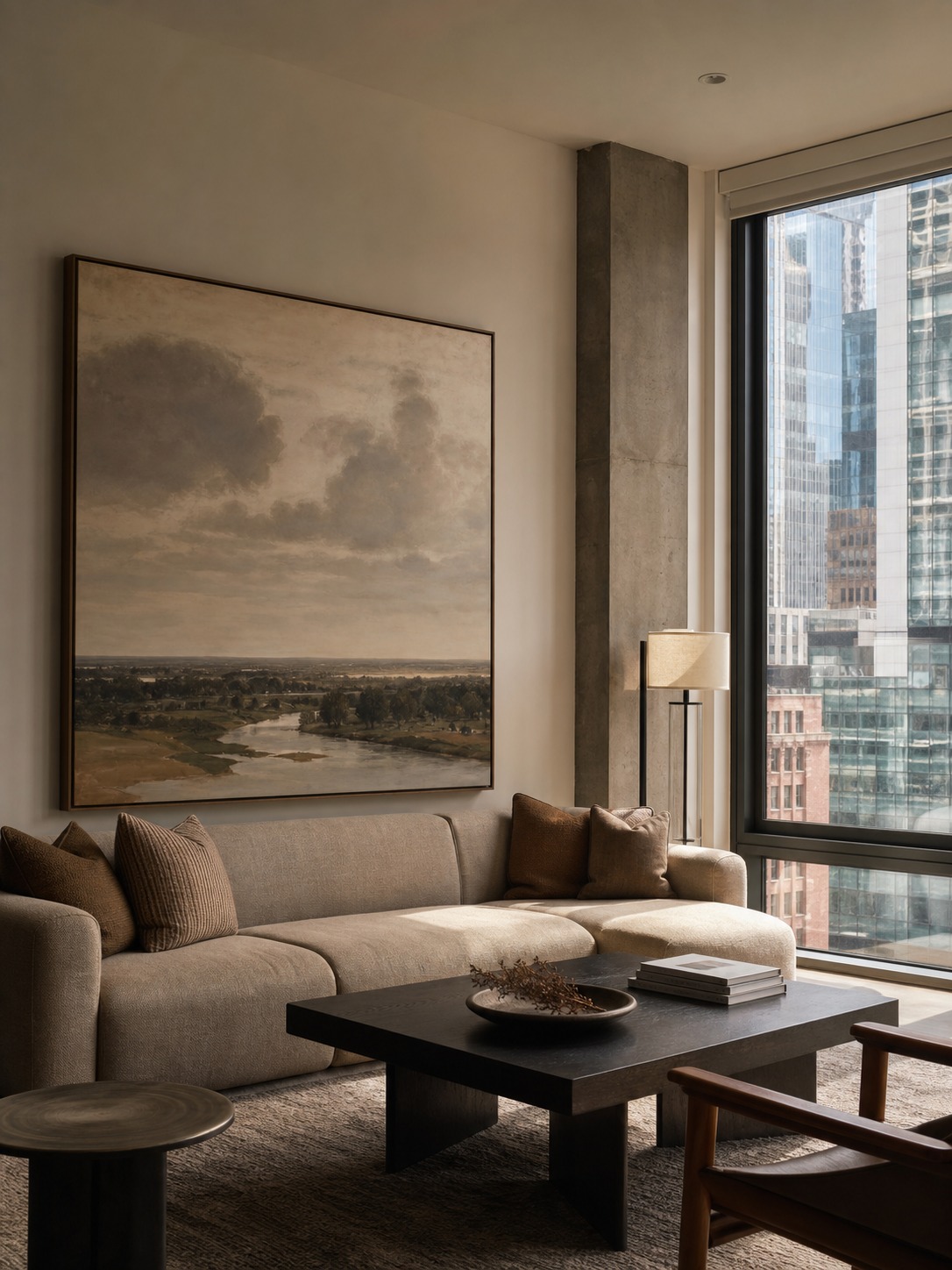
Landscape canvas art works particularly well in living rooms that have a limited view — urban apartments, rooms with small windows, spaces that feel enclosed. A large landscape canvas introduces visual depth that the room itself doesn’t provide. The eye travels into the landscape and the room reads as larger as a result. This is a well-documented perceptual effect in interior design, not just a styling preference.
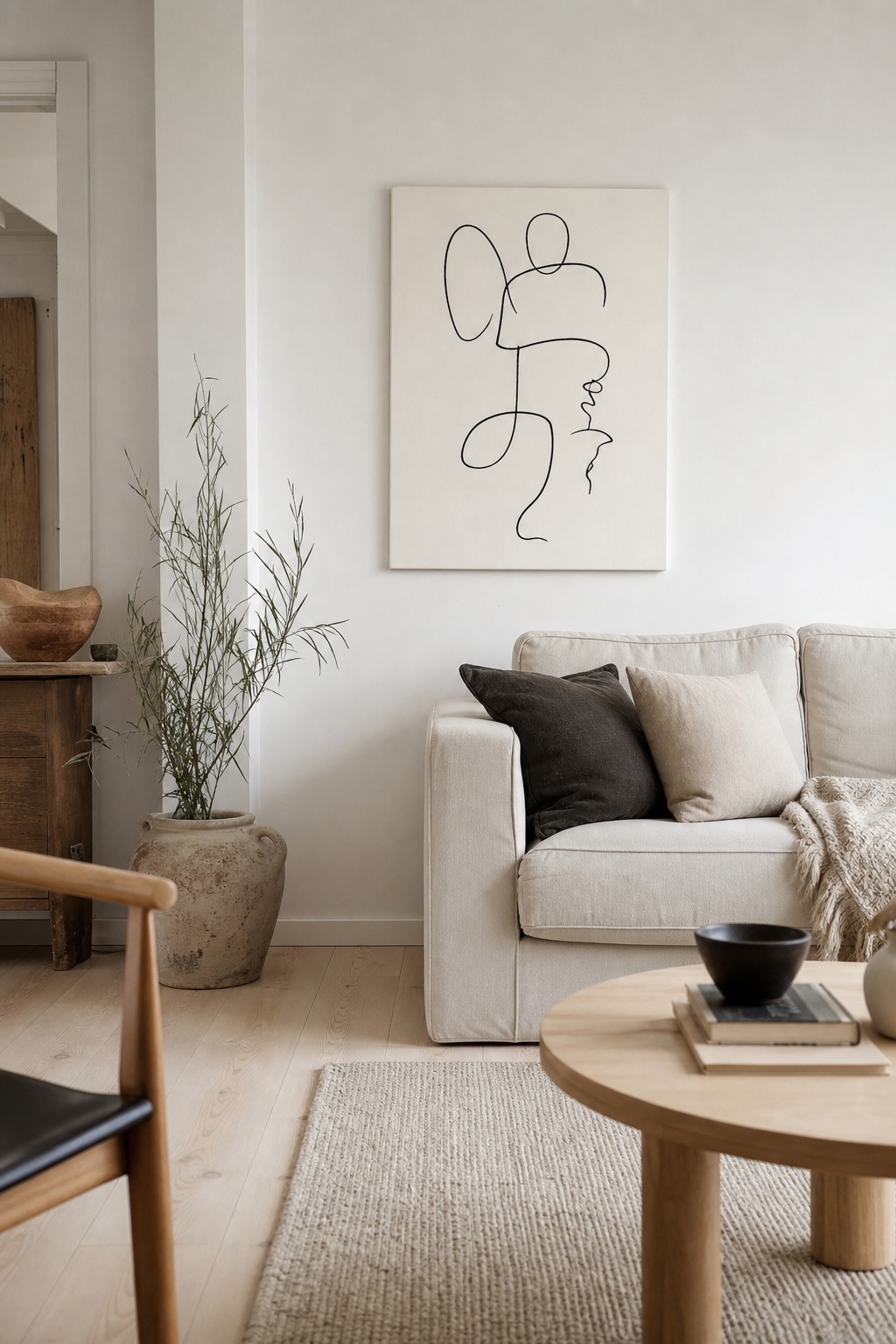
Minimalist canvas art (single-line drawings, geometric forms, very limited palette) is the right choice for interiors where the architecture is the statement and the art is meant to support it without competing. A minimalist canvas above a sofa in a room with strong material character — exposed concrete, textured plaster, visible timber — keeps the visual hierarchy clear. The art supports the architecture; it doesn’t try to outperform it.
Graphic and typographic canvas art is the highest-risk category in a living room. It can be exactly right — bold, confident, adds distinct personality — or it can date the room within a few years as the aesthetic it references shifts. The test I use: would this canvas work in the room if every other decorative object were removed? If the canvas alone carries the wall without a supporting context, it’s a strong enough choice. If it only lands in a very specific current interior context, it may not age as well.
Using canvas art as a focal point in flexible interiors
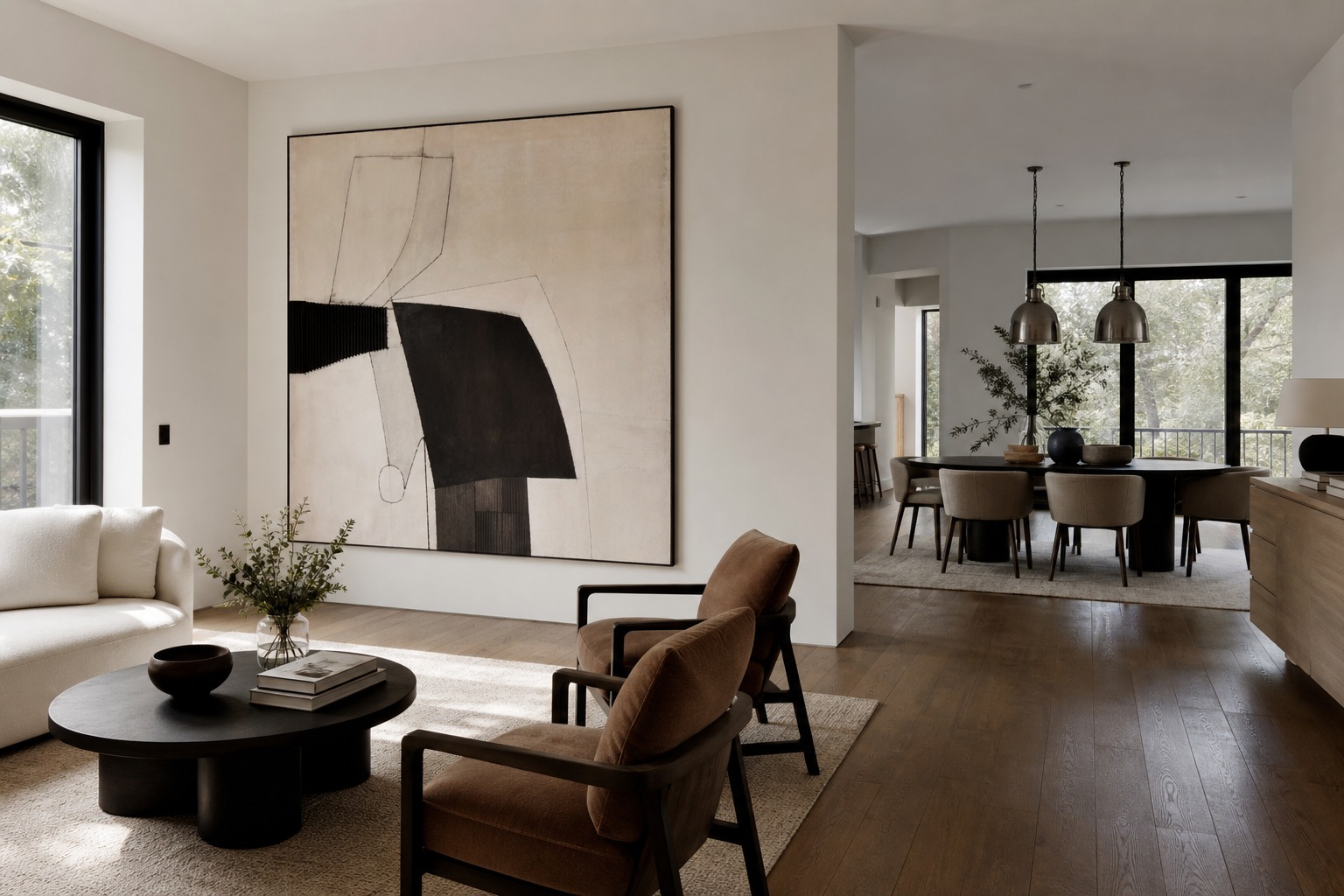
A focal point in interior design is the element the eye goes to first when entering a room. In living rooms, this is often architectural — a fireplace, a large window with a view, a distinctive wall finish. When those features are absent or weak, canvas wall art takes on that role.
For a canvas to work as a genuine focal point rather than a decorative detail, it needs to be large enough to read from the entrance of the room. In most living rooms, that means covering a meaningful portion of the primary wall — not an accent piece but an anchor. The canvas sets the room’s visual temperature before you reach the furniture.
In flexible interiors (rooms that serve multiple functions — living and working space, open-plan kitchen and living area, or a studio apartment where zones need definition) canvas art creates a visual boundary between areas without requiring physical division. A large canvas on the wall behind a sofa signals: this is the living zone. The canvas defines the area the way a rug does on the floor plane, but vertically.
This is especially relevant in contemporary open-plan apartments where zone definition is a recurring design challenge. The canvas doesn’t have to be in the conventional position above the sofa — an oversized piece on a side wall can define the seating group as clearly as one positioned behind it, and sometimes with more visual drama because it introduces depth along the room’s shorter axis.
The relationship between canvas scale and ceiling height
In rooms with standard ceiling heights (2.4–2.6m), a canvas that extends above a certain proportion of the wall height starts to feel oppressive — it takes up too much of the vertical field. In rooms with higher ceilings (2.7m and above), a canvas that reads as generous at standard ceiling height can look lost. The ceiling height directly calibrates what “large” means in that room. In a high-ceilinged space, a 180cm tall canvas may be exactly right; in a standard-height room, 100cm tall is already substantial.
Common mistakes when choosing canvas wall art for a living room
Buying too small
The most common and the most avoidable mistake. A canvas that looks substantial in product photography on a white website background often looks modest on a real wall in a real room. Photographed in isolation against a white background, a 60×80cm canvas looks like a significant piece. On a 4-metre wall above a 200cm sofa, it disappears. When in doubt, buy one size larger than you think you need. If the room is right-sized, a canvas that’s slightly too big creates presence. A canvas that’s slightly too small creates the impression that something is missing.
Hanging too high
The second most consistent mistake. Canvas art hung at the top of a wall loses its connection to the room — it feels like it’s floating above the human scale zone rather than participating in it. The instinct to use the vertical wall height is understandable but wrong. Center at eye level (roughly 150cm from floor to canvas center). Above a sofa, the canvas center should sit between 145 and 160cm from the floor. If that feels too low, the sofa is probably positioned too far from the wall.
Ignoring natural light direction
Canvas art positioned directly opposite a window can be washed out by reflected glare, especially on lighter subject matter or canvases with any gloss in the print finish. The most reliable placement is on a wall perpendicular to the main light source. Raking light across the canvas surface brings out the texture and makes the artwork visually richer throughout the day. Direct frontal light flattens it.
Choosing art before the room is finished
Canvas wall art should be selected after the primary furniture, the rug, and the lighting are all placed. The room tells you what the canvas needs to do once those elements are in place — what color it needs to introduce or reinforce, what scale is required to balance the furniture, whether the room needs energy or calm. Before those decisions are fixed, canvas selection is guesswork. This seems obvious but the majority of living room canvas decisions are made before the sofa arrives.
Treating multiple canvases as independent pieces
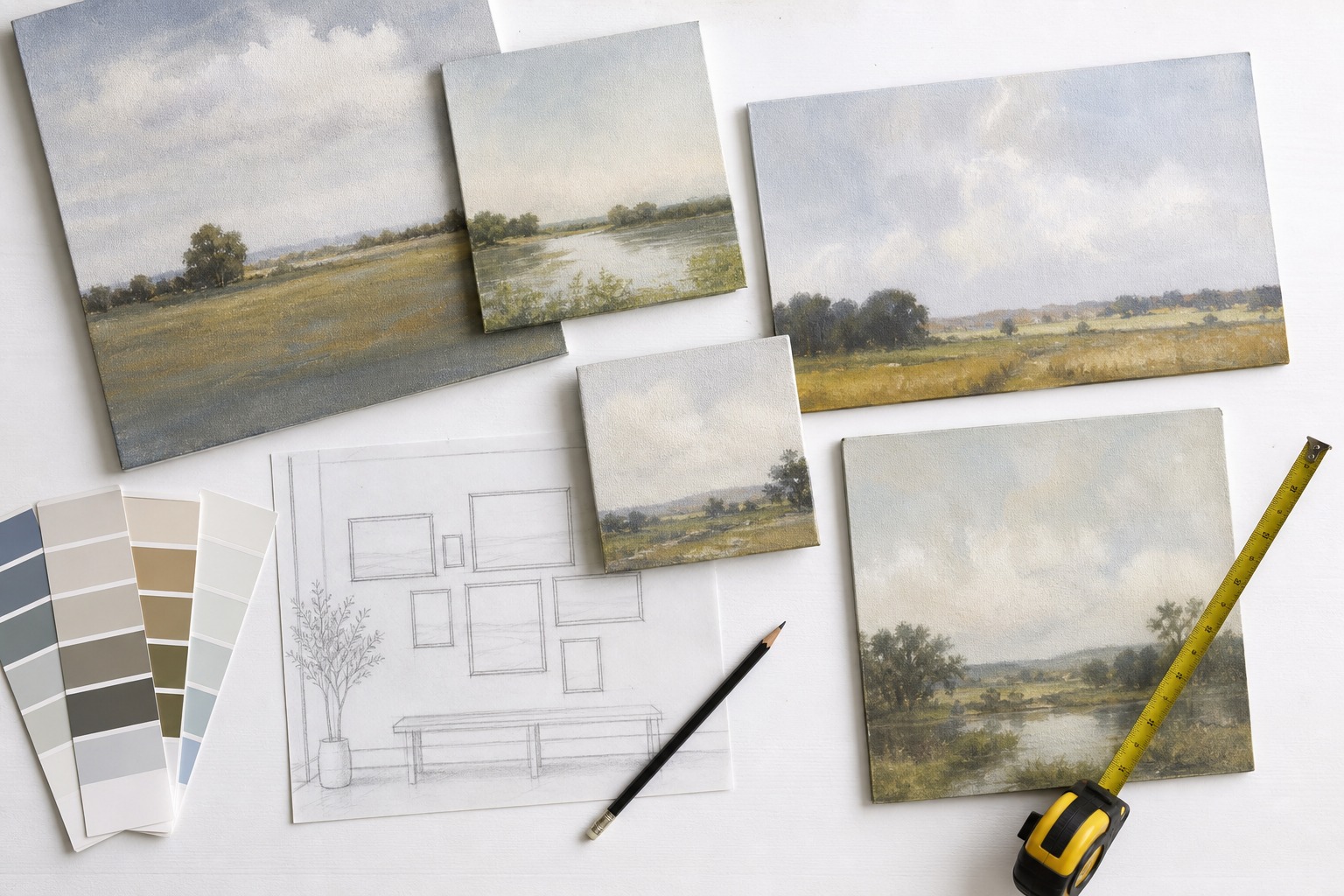
If you’re hanging more than one canvas, they need to be considered as a set from the start: consistent visual weight, coherent color relationship, and deliberate spacing. Three unrelated canvases at different scales hung at slightly different heights on the same wall doesn’t read as a gallery wall. It reads as indecision. A genuine gallery wall arrangement requires as much planning as a single large piece — and for most living rooms, the single large piece is the stronger choice.
Canvas wall art for living room FAQ
What size canvas wall art is best for a living room?
The most reliable formula: the canvas should span 60–75% of the sofa width when hung above it. For a standard 200cm sofa, that’s roughly 120–150cm wide. For a standalone wall without furniture beneath it, go larger — a canvas under 100cm on a large empty wall reads as decorative rather than architectural. When in doubt between two sizes, take the larger one.
Is a large single canvas or a 3-piece set better for a living room?
A single large canvas makes a stronger focal point and is easier to execute well. A 3-piece canvas wall art set fills a wide horizontal space more proportionally and adds rhythm through the gaps between panels. The single canvas reads as more contemporary; the triptych works better above very long sofas or where one canvas would be proportionally undersized. Both require the same attention to total installed width relative to the sofa or wall.
How do I match canvas art color to my living room?
Start with the room’s dominant color (usually the wall or largest furniture piece) and look for one of three relationships: tonal (same hue, different shade or saturation), complementary (opposite on the color wheel), or neutral anchor (black, white, charcoal). Avoid matching canvas color exactly to cushions or throws — it looks coordinated rather than considered. Test a large-scale print in the actual room at different times of day before committing.
Where should canvas wall art be placed in a living room?
The canvas center should sit at approximately 145–155cm from the floor. Above a sofa, the bottom edge should clear the sofa back by 20–30cm. On a standalone wall, add a sideboard or console below the canvas if possible to create a visual anchor. Avoid positioning the canvas directly opposite a bright window — perpendicular to the light source is almost always the better option.
What style of canvas art works best in a contemporary living room?
Abstract canvas art in a controlled palette is the most universally adaptable choice for contemporary interiors. It doesn’t anchor the room to a specific period or mood, and it reads well across different lighting conditions. Minimalist line-art canvases work well in rooms with strong architectural character. Landscape canvas art is particularly effective in urban apartments or rooms with limited natural views.
Can canvas wall art make a small living room look bigger?
A large landscape canvas with visual depth — a wide horizon, a forest receding into distance, an open seascape — creates the perceptual impression of more space behind the wall surface. This is a real effect. One large canvas in a small room also reduces visual clutter compared to multiple smaller pieces competing for attention. The simplification of the wall surface makes the room feel more ordered and, as a result, more spacious.
How many pieces of canvas art should I hang in a living room?
One well-chosen canvas almost always outperforms multiple pieces in a living room. The living room is a space of rest — a single strong canvas gives the eye somewhere to settle. Multiple pieces compete with each other and with the furniture. If you do want more than one canvas, treat them as a deliberate set from the start: consistent visual weight, shared color relationship, and precisely measured spacing. A gallery wall in a living room works when it’s the room’s primary design decision, not an addition to an already complex interior.
If the wall art is driving the room, choose the living room color palette before buying oversized canvas pieces so the artwork, sofa, and rug do not fight each other.
How do I hang a 3-piece canvas set so the spacing looks right?
Measure the total width you want the set to occupy on the wall (aim for 75–90% of sofa width). Subtract the total canvas width from that measurement and divide the remainder by two to get your gap between each panel. For a standard triptych, gaps of 3–4cm are the most visually neutral. Gaps smaller than 2.5cm read as too tight — the panels look like they’re touching. Gaps over 5cm read as three separate pieces rather than one composition.
Artwork needs scale and breathing room; this wall art scale rule connects nicely to balance and focal points.
When artwork sits above pale timber, the light oak flooring decor guide can help balance wall art, rugs, and furniture color.
Choosing appropriate wall art helps accentuate the unique architectural style of your home.
- 54shares
- Facebook0
- Pinterest54
- Twitter0
- Reddit0