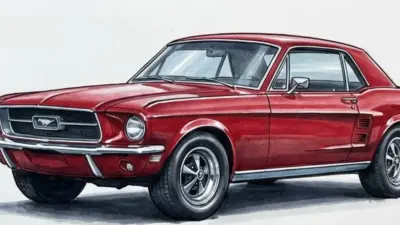
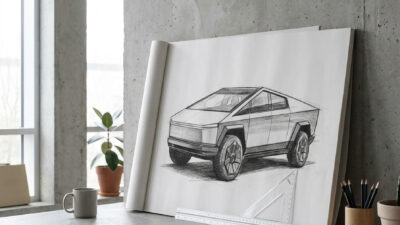
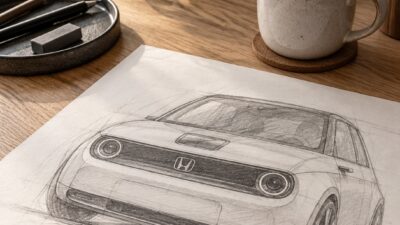
If you want to learn how to draw cars, start with proportion before details. A car drawing looks believable when the wheels sit on the same ground line, the cabin fits the body, and the hood, roofline, and trunk feel like one clear shape.
I usually build a vehicle drawing from a loose box, two wheels, a cabin shape, and then the details. That order keeps the drawing under control, whether you are sketching a small hatchback, a muscle car, or a low sports car.
What is car drawing?
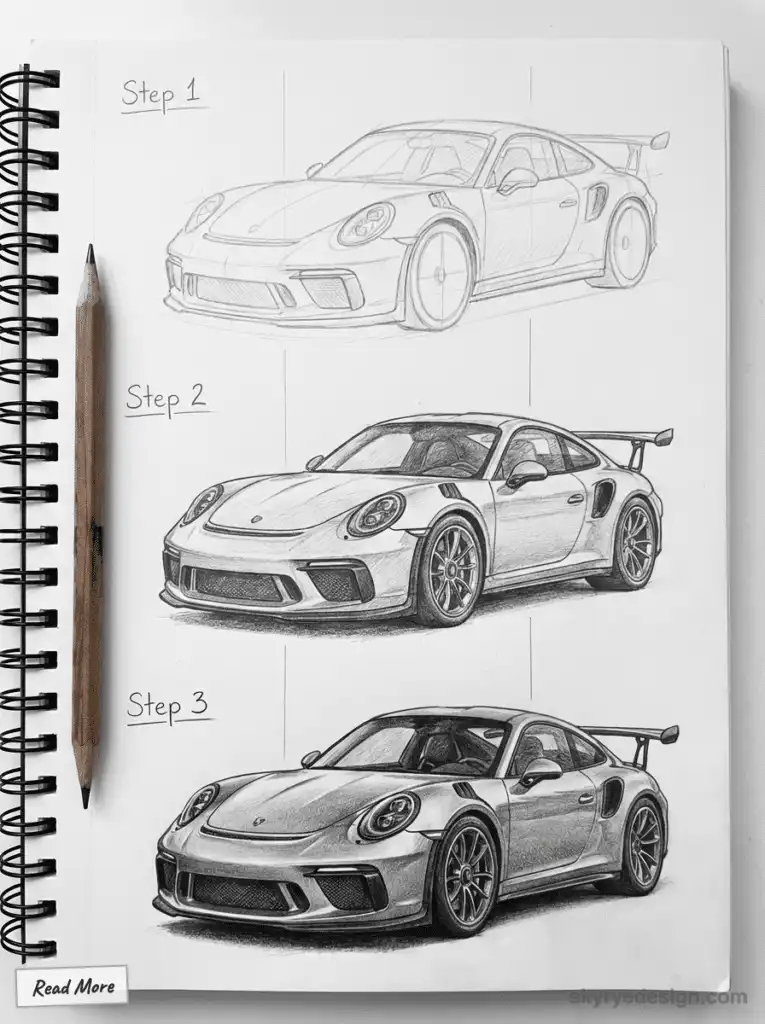
How to draw cars step by step
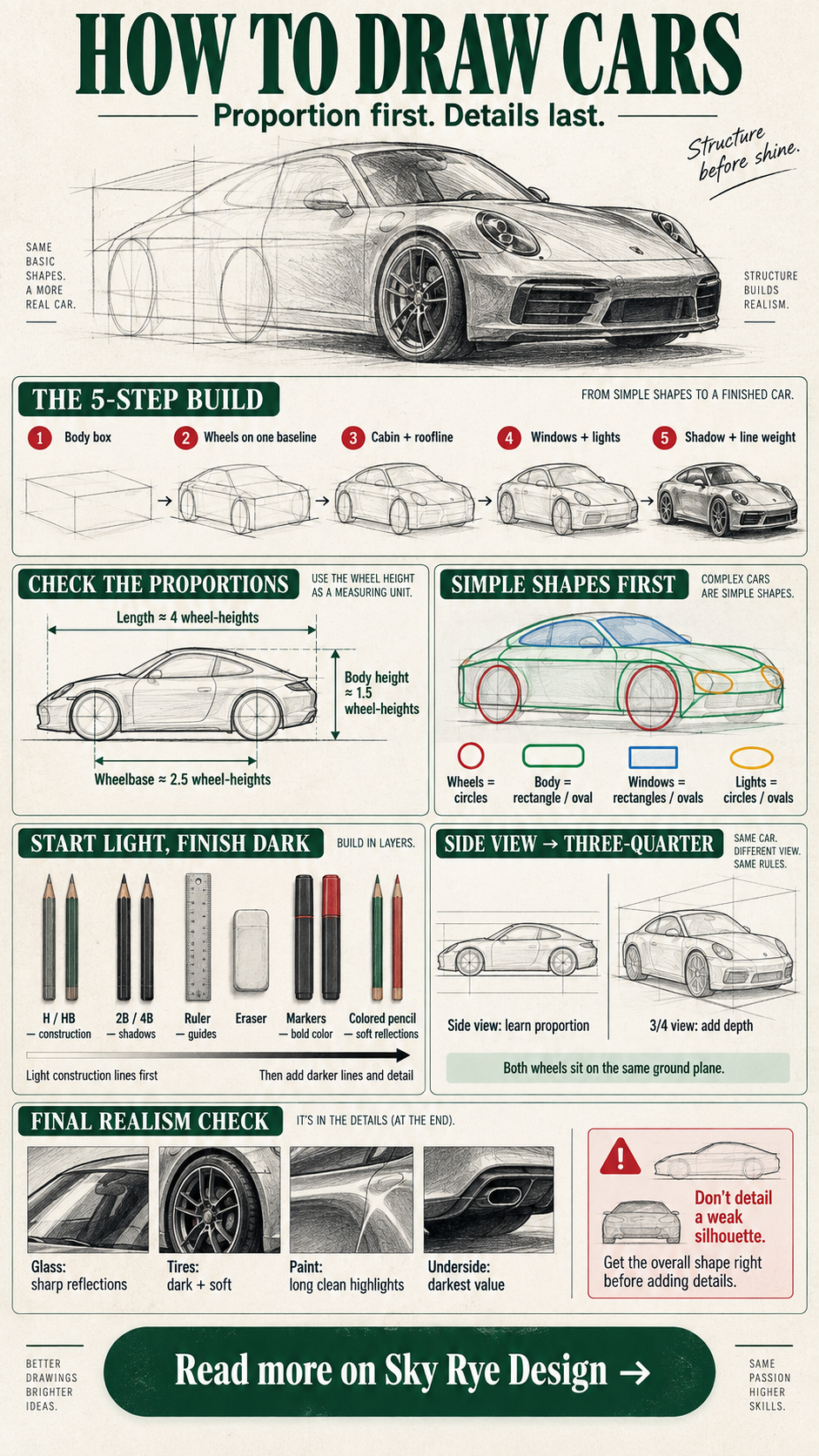
To draw cars, block in a simple body shape first, place the wheels on one ground line, set the cabin and roofline, then add lights, windows, wheel arches, shading, and color. That order keeps the car sketch believable before details start pulling attention away from the structure.
| Step | What to draw | What to check |
|---|---|---|
| 1 | Light body box or wedge | Overall length, height, and stance |
| 2 | Two wheels on one baseline | Same size, spacing, and ground contact |
| 3 | Cabin, hood, trunk, roofline | Car type: hatchback, sedan, SUV, muscle car, or sports car |
| 4 | Windows, doors, lights, grille | Details follow the perspective and body angle |
| 5 | Shadows, reflections, final line weight | Darker underside, cleaner highlights, readable silhouette |
Car drawing starts with geometry, not detail. Block in a long body shape, drop the wheels onto a shared baseline, split the cabin from the hood and trunk — then work toward windows, lights, grille, mirrors, wheel arches. That sequence matters more than most tutorials let on. Beginners who skip straight to headlight details usually end up with something that looks technically careful and completely wrong, because the proportions underneath never got figured out.
Get the structure right first. Wheels sitting evenly, body balanced side to side, roofline that actually matches the car type — a muscle car sits low and stretched, an SUV sits tall with a short hood. Once that reads correctly, shading earns its keep. The difference between a matte bumper and a glossy hood, the way chrome reflects everything around it slightly distorted — none of that lands if the form underneath is off.
And this works regardless of what you’re drawing. I use the same blocked-out approach for a ’69 Camaro as I do for a lifted F-150. The details are completely different. The starting point isn’t.
Beginner car drawing steps in practice
For a clean step-by-step car drawing, block in the big shapes first and leave the dark lines for the end. If the wheelbase or cabin feels wrong early, fix it before drawing headlights, spoilers, reflections, or texture.
- Sketch a light rectangle or wedge for the main body.
- Place two wheels on the same baseline and check the wheel spacing.
- Mark the cabin, hood, trunk, and roofline.
- Add windows, doors, lights, mirrors, grille, and wheel arches.
- Clean the construction lines, then shade from one clear light source.
Car drawing basics to remember
- Start with the car’s structure: body, wheelbase, cabin, and roofline.
- Use simple tools first: an H pencil for layout, a B pencil for darker lines, a ruler, and a clean eraser.
- Practice with reference photos, side views, and three-quarter views before chasing complex reflections.
Understanding basic car structure


Every car drawing starts with the same visual problem: a long body sitting on round wheels. Before you draw badges, reflections, or trim, look for the big masses: the lower body, cabin, hood, trunk, and wheel arches.
What proportions make a car drawing look realistic?

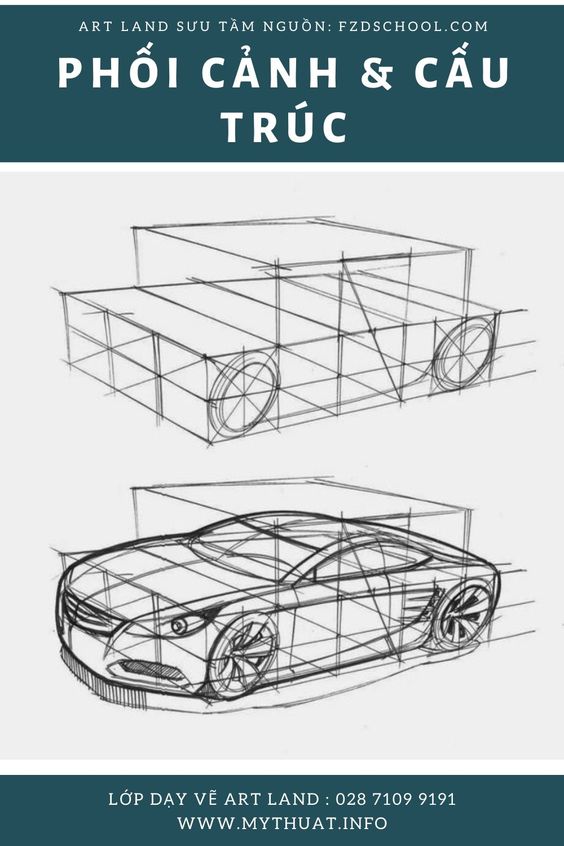


A realistic car drawing usually starts with wheel-based proportions. Use the wheel height as your measuring unit, then compare the body length, wheelbase, cabin height, and overhangs against it. These are not strict engineering measurements, but they give your sketch a believable automotive structure before you add style.
- The full car length is often about four wheel-heights in a simple beginner side view.
- The distance between the front and rear wheels is often about 2.5 wheel-heights.
- The body height is often around 1.5 wheel-heights, though sports cars sit lower and SUVs sit taller.
When a car sketch looks strange, check the wheels first. Uneven wheel size, a tilted baseline, or a cabin that sits too far forward can make the whole vehicle feel off even when the details are nicely drawn.
For a more aggressive stance study, compare those basics with BMW drift car proportions. Drift builds exaggerate steering angle, wheel fitment, tire smoke, and suspension attitude, so the same car construction rules become more dynamic.
Basic shapes to look for in cars
Most cars can be reduced to circles, rectangles, wedges, and soft ovals. The trick is not naming the shapes; it is placing them in the right relationship before you draw the final contour.
- The wheels are usually circles.
- The body of the car is usually a rectangle or oval shape.
- The windows are usually rectangles or ovals.
- The headlights and taillights are usually circles or ovals.
Identifying these shapes turns the car into smaller, manageable parts. This is the same construction habit used in industrial design sketching: simplify first, then sharpen the silhouette and line weight later.

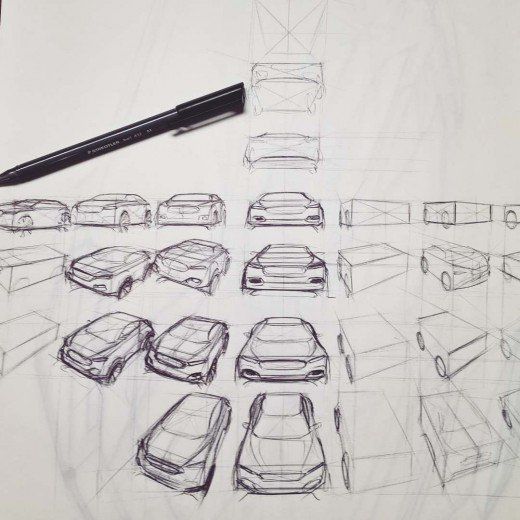
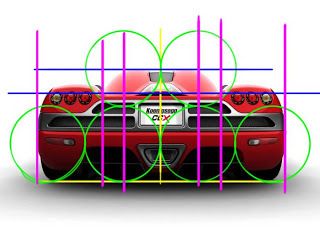
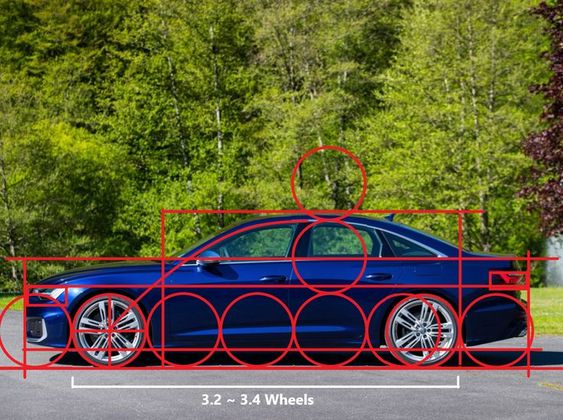
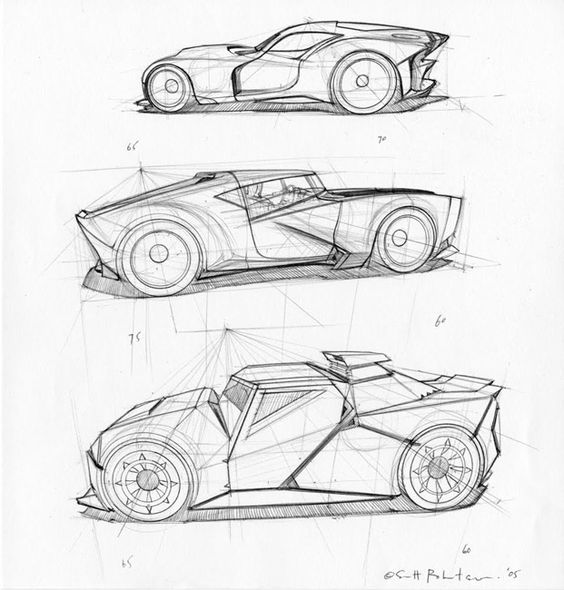
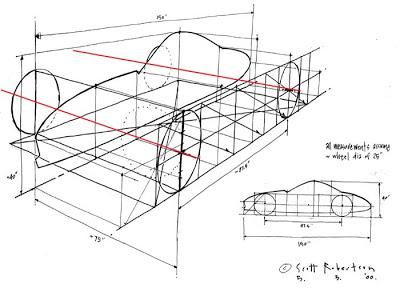
Once the big structure works, the rest of the car drawing becomes easier. Details should support the form, not rescue a weak outline.
Best tools for beginner car drawing
You do not need expensive supplies to start drawing cars. A small pencil set, a ruler, smooth paper, and a good eraser are enough for most beginner car sketches. Add markers or colored pencils only after your construction lines, wheel placement, and perspective feel steady.
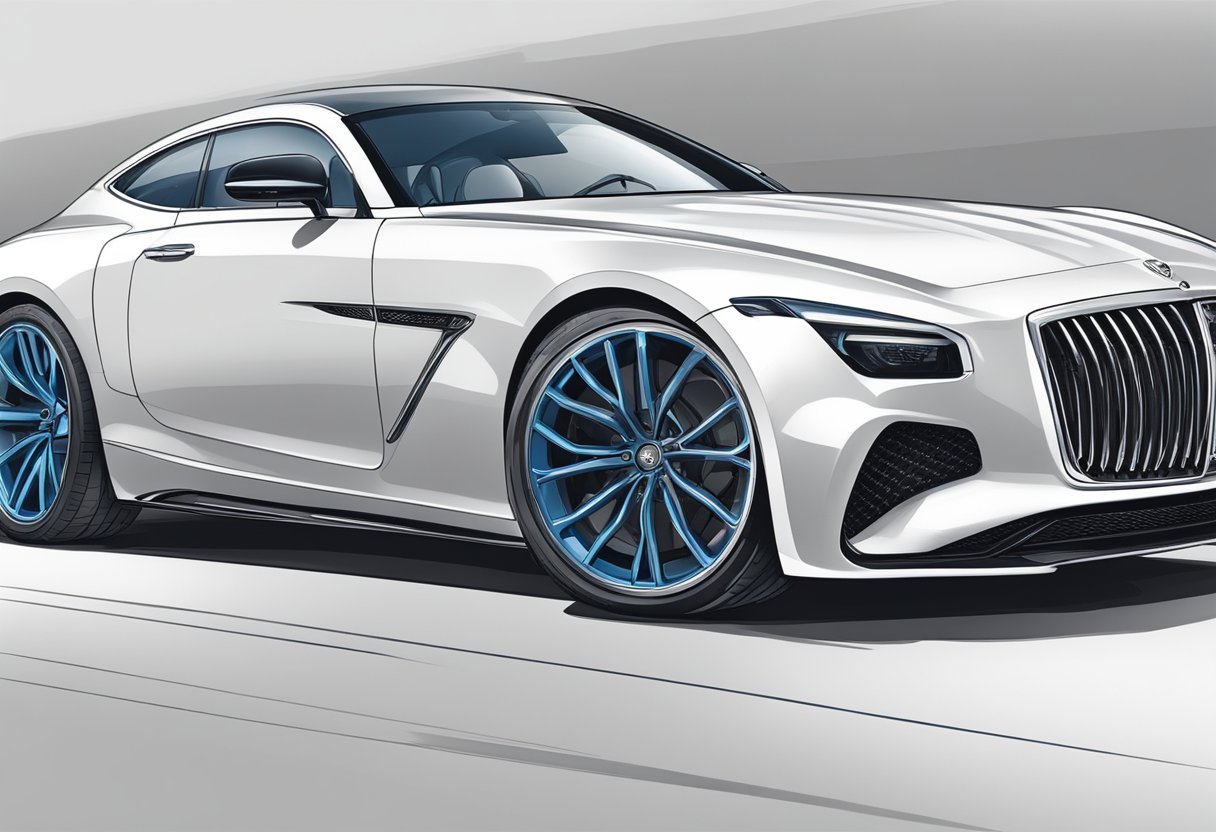
For pencils, I like a simple split: an H or HB pencil for light construction, then a 2B or 4B for darker accents and shadow edges. Keep the first lines pale enough that you can move a wheel, lower the roof, or correct the hood without fighting the paper.
| Tool | Best for | Beginner tip |
|---|---|---|
| H or HB pencil | Light car construction lines | Use it for the body box, wheelbase, and perspective guides. |
| 2B or 4B pencil | Dark outlines and shadows | Add it after the proportions work. |
| Ruler | Wheelbase and straight guide lines | Keep ruler lines light so the sketch does not look mechanical. |
| Markers | Bold concept car sketches | Use marker paper or heavier paper to avoid bleed-through. |
| Colored pencils | Controlled color and soft reflections | Build color in layers instead of pressing hard at once. |


Markers are useful for bold automotive sketching, especially if you want quick concept-style color. Test them on a scrap sheet first. Marker bleed can ruin thin sketchbook paper faster than a bad proportion line.
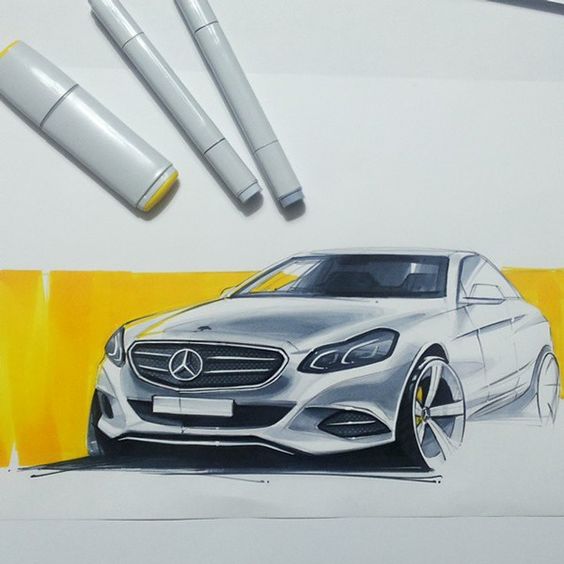
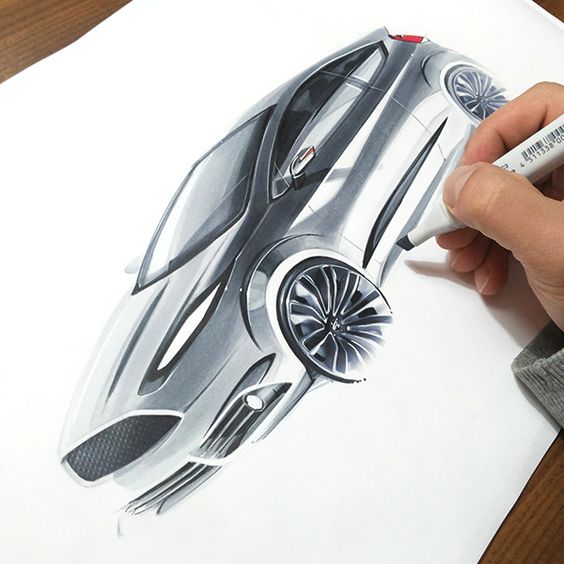
Colored pencils are slower, but they give you more control over soft reflections, tire shadows, and small color shifts in the bodywork. They are a good choice when you want a cleaner beginner car drawing instead of a fast marker render.


Choose paper based on the tool. Smooth sketch paper is fine for pencil practice. Heavier paper is better for markers, colored pencils, and repeated erasing because it holds up when you build value and correct the wheel arches.
A ruler helps with wheel alignment, ground lines, and perspective guides. Use it lightly. If every edge is ruler-hard, the drawing can lose the energy that makes a sketch feel alive.
Digital tools are helpful once you understand the basics. Layers, undo, and perspective guides are powerful, but they will not fix a weak silhouette. Learn the car’s form first, then use Procreate, Photoshop, or another drawing app to speed up rendering.
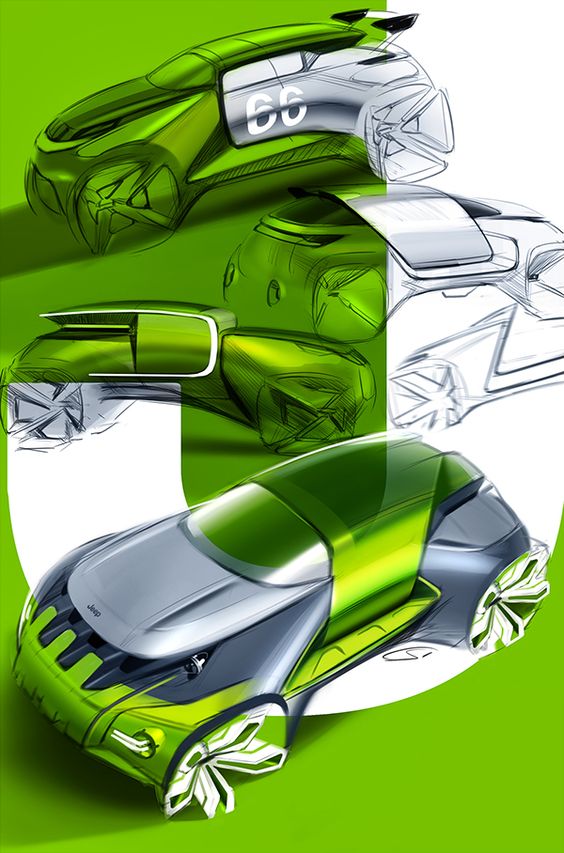
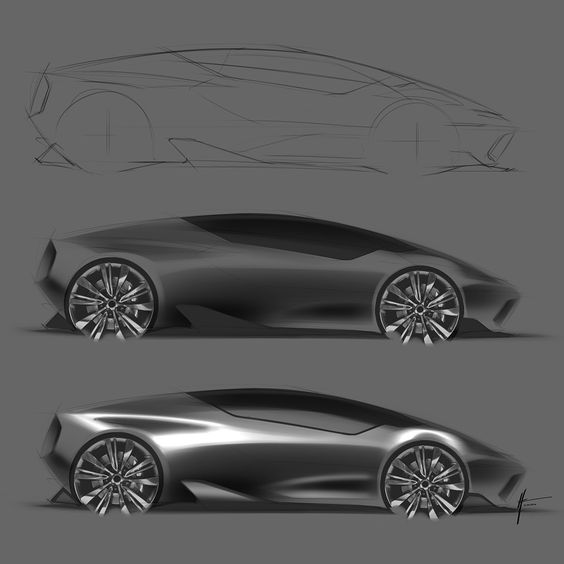
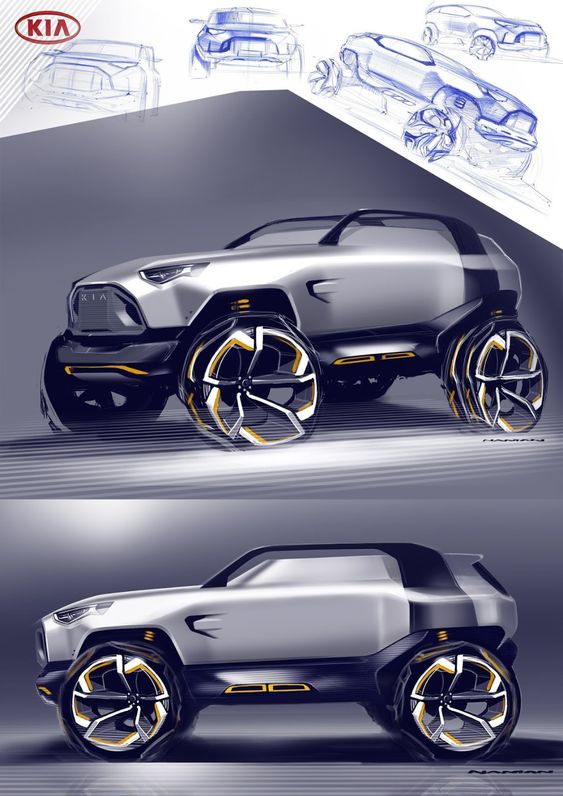
Start with pencil and paper, then add color tools when you can draw a clean outline. That one habit saves a lot of muddy, overworked car sketches.
Once your basic car construction feels steady, try applying the same process to one specific design language. The Lexus car drawing guide is a useful next step because it forces you to control the spindle grille, L-shaped lights, and long luxury-car proportions instead of drawing a generic sedan.
Step-by-step car drawing tutorial
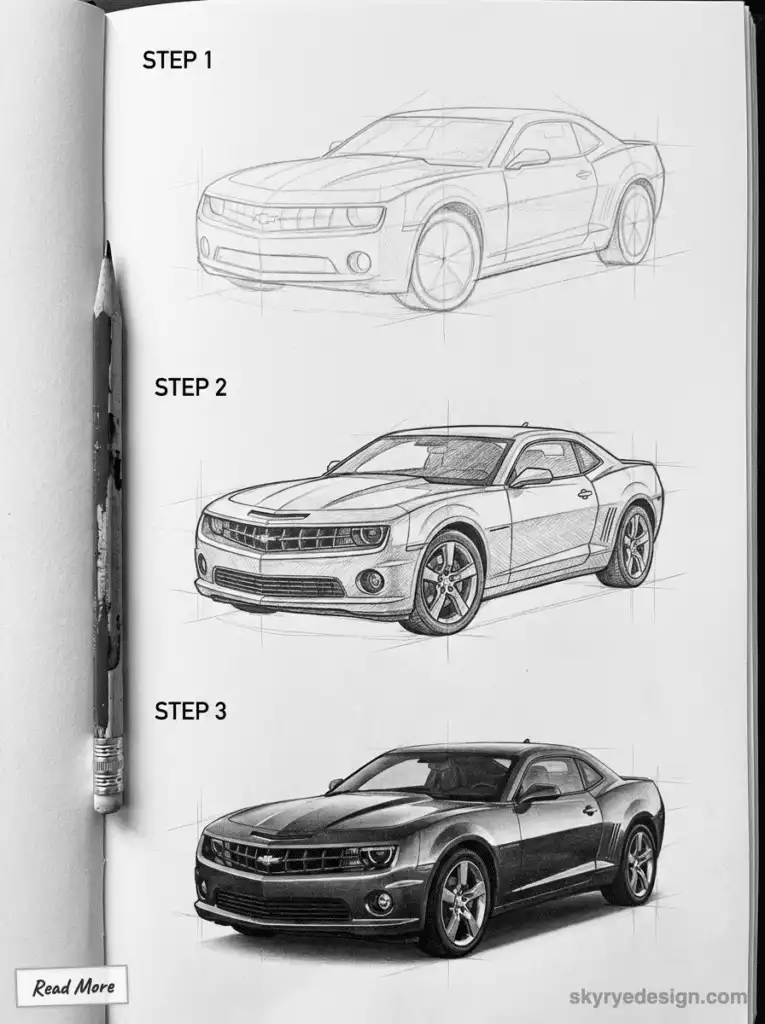

Now put the structure into a real drawing sequence. Work light at first, compare both wheels often, and keep checking the silhouette from a distance. If the outline reads as a car before the details, you are on the right track.
Draw the outline
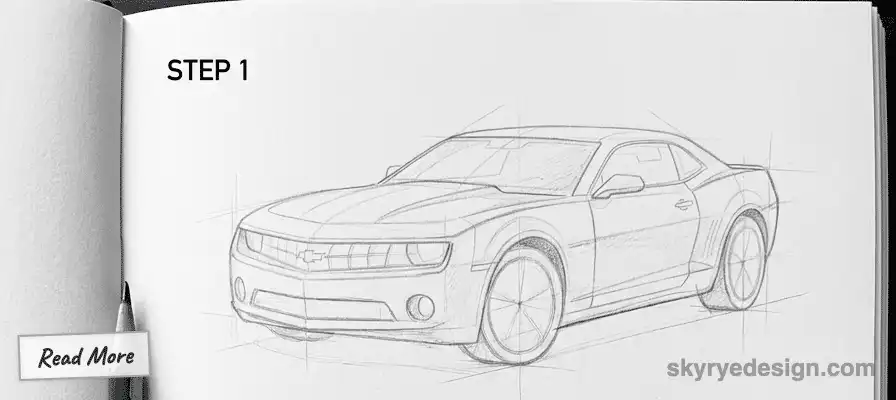
Start with the simplest possible body shape: a rectangle for a normal car, a low wedge for a sports car, or a taller box for an SUV. Add the wheels as circles or ellipses on one baseline. Before you move on, compare the wheel size, wheel spacing, hood length, and cabin placement.


Then sketch the real outline over that construction. Look for the big angles first: windshield rake, roof curve, hood slope, and rear overhang. A reference photo or a real parked car helps you avoid guessing.
Add windows, lights, and body details
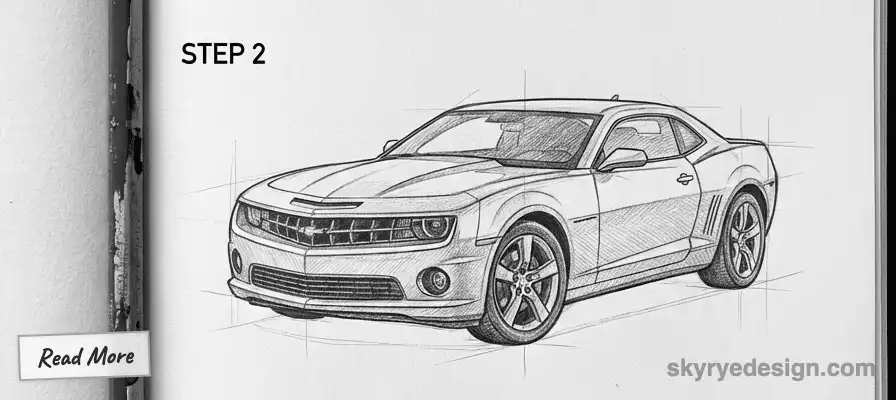
Once the outline works, add the windows, doors, headlights, taillights, mirrors, grille, and wheel arches. Keep these details aligned with the car’s perspective. A door handle or headlight drawn at the wrong angle can make the vehicle feel twisted.


Interior details can stay simple. A few seat shapes, a dashboard line, and a steering wheel are usually enough unless the car has large open windows.
Shade and color the car
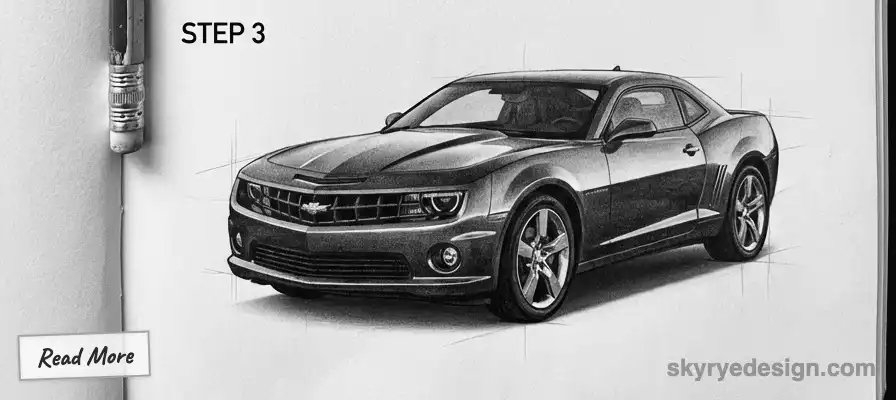
For shading, choose one light direction and stick with it. Put darker values under the car, inside the wheel wells, below the bumper, and on the side facing away from the light. Leave a few clean highlights on the hood, roof, and windows to suggest glossy paint and glass.


For color, start lighter than you think. Car paint gets its shine from value contrast, not from filling every area with the same strong color.
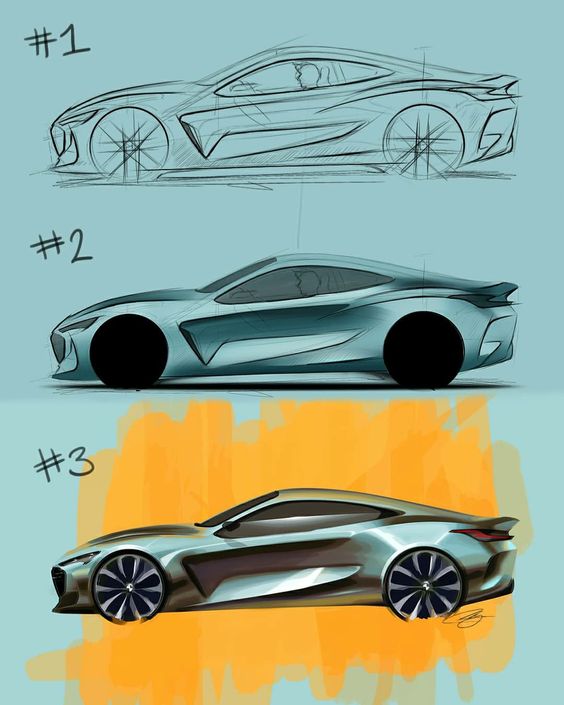
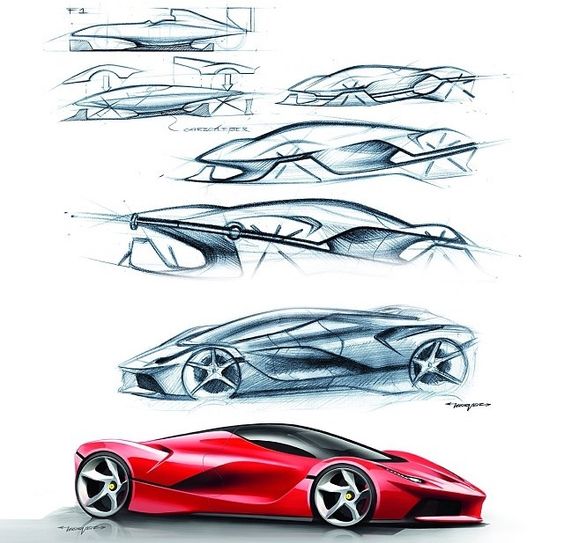
If the final sketch feels stiff, do another small version instead of overworking the same page. Repetition teaches your hand faster than polishing one drawing for too long.
How different car types change the sketch

When it comes to drawing cars, there are many different types to choose from. Here are some tips on how to draw a few specific car types.
How to Draw a Sports Car
Sports cars are known for their sleek, aerodynamic designs. To draw a sports car, start with a long, curved line for the roof and body.
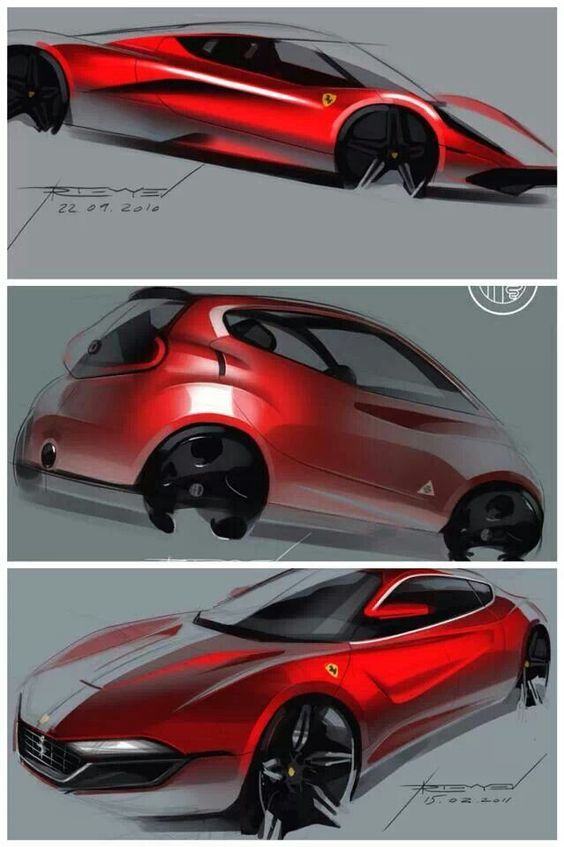
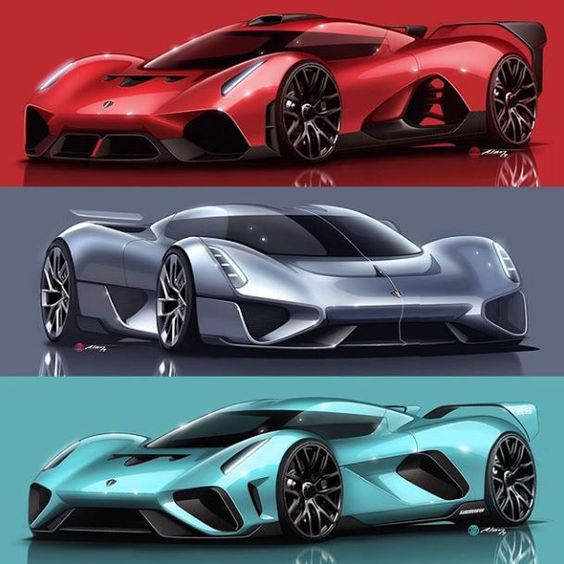
Then, add the wheels and windows. Make sure to pay attention to the proportions and keep the lines clean and sharp. Use shading and highlights to add depth and dimension.
Drawing Classic Cars
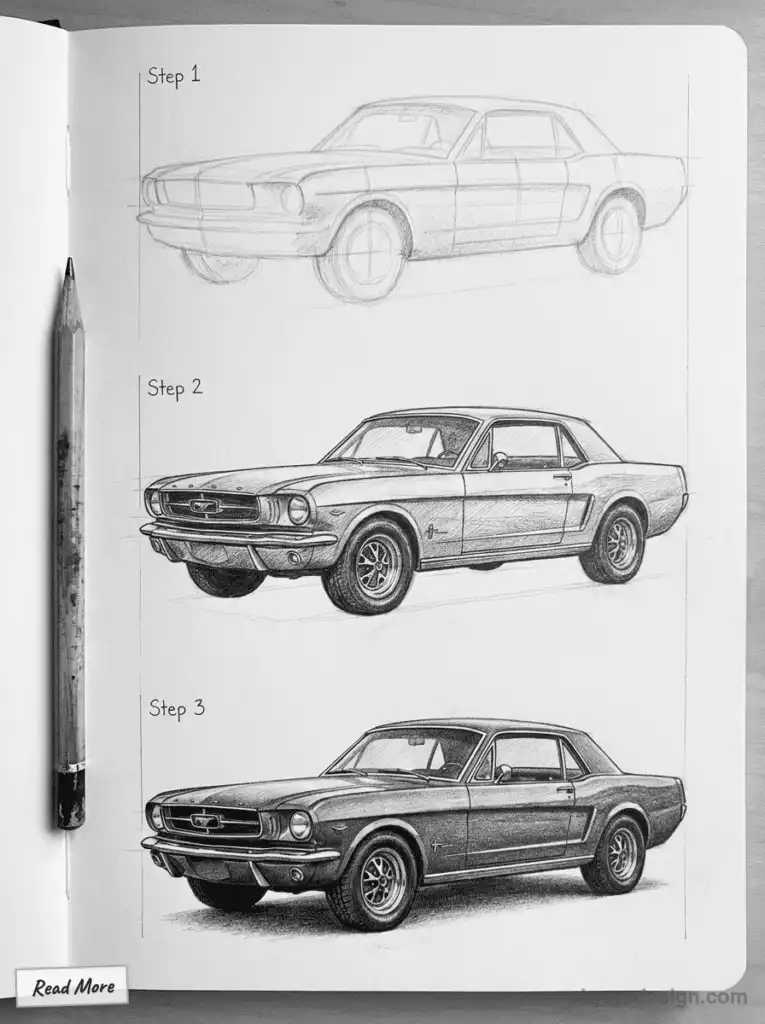
Classic cars have a timeless style that is still popular today. To draw a classic car, start with a boxy shape for the body and add the wheels and windows. Pay attention to the details, such as the grille and headlights, and use shading to add depth and texture.

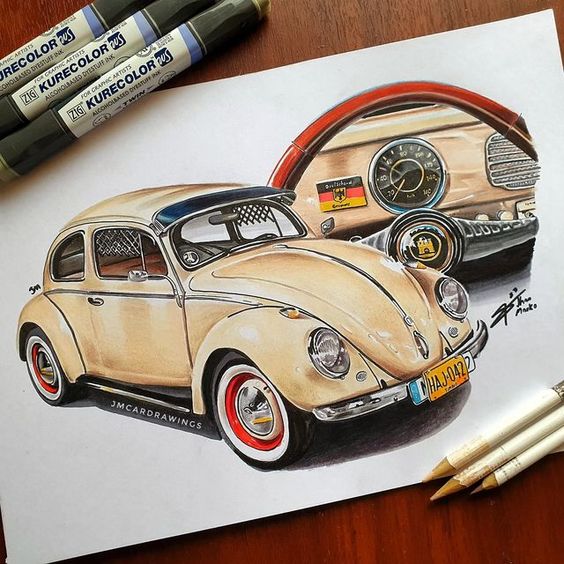
Classic cars often have unique features, so make sure to research the specific car you want to draw for inspiration.
Sketching Trucks and SUVs
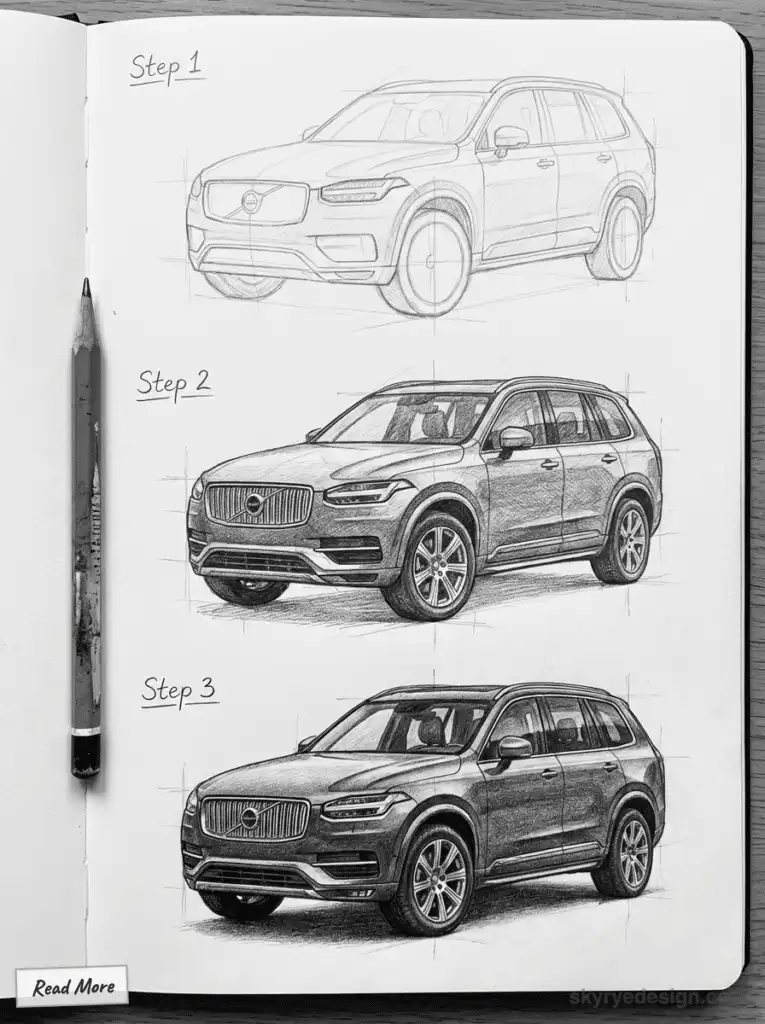
Trucks and SUVs are larger vehicles with more angular shapes. To draw a truck or SUV, start with a rectangular shape for the body and add the wheels and windows. Use straight lines and sharp angles to create the boxy shape. Pay attention to the details, such as the grille and headlights, and use shading to add depth and texture.
If you want a focused tall-vehicle practice page, this SUV car sketch guide breaks down stance, roof height, wheel arches, grille mass, and the boxier cargo volume that separates an SUV from a sedan.
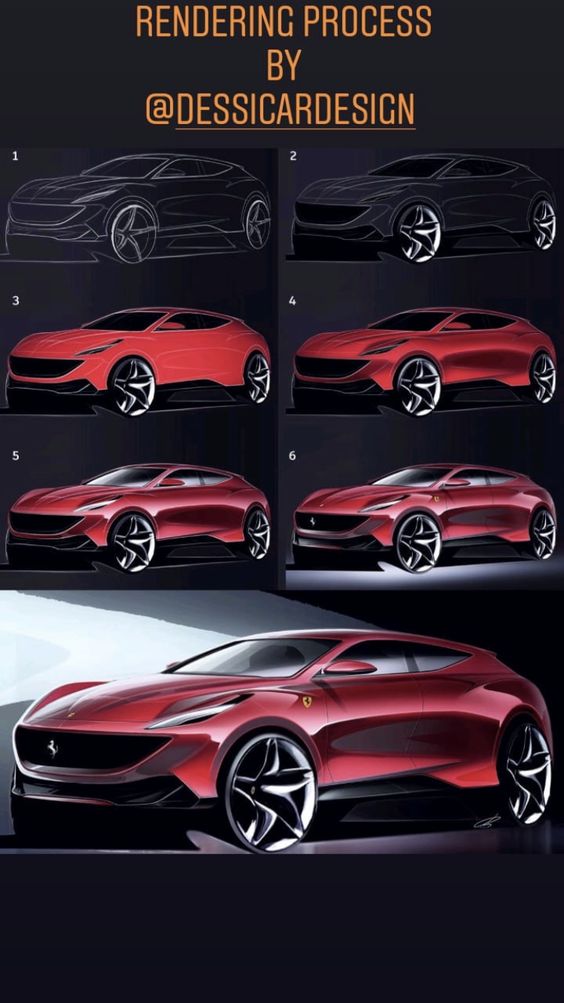
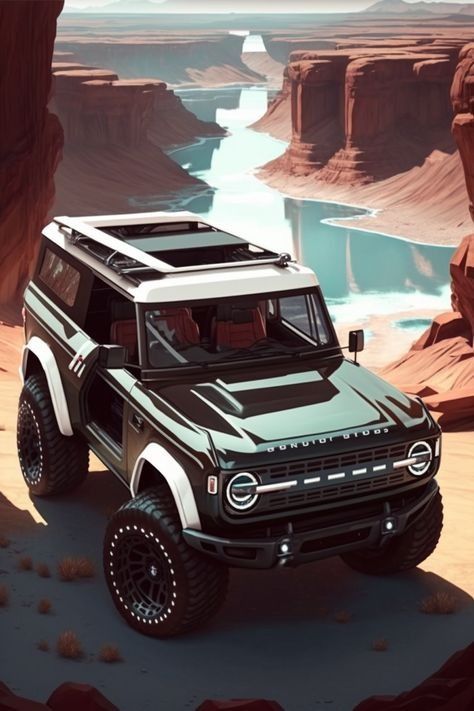
Overall, drawing cars requires attention to detail and a steady hand. By following these tips and practicing regularly, anyone can learn how to draw their favorite car models, whether it’s a Ferrari, Lamborghini, minivan, or any other type of vehicle.
How to make a car drawing look realistic
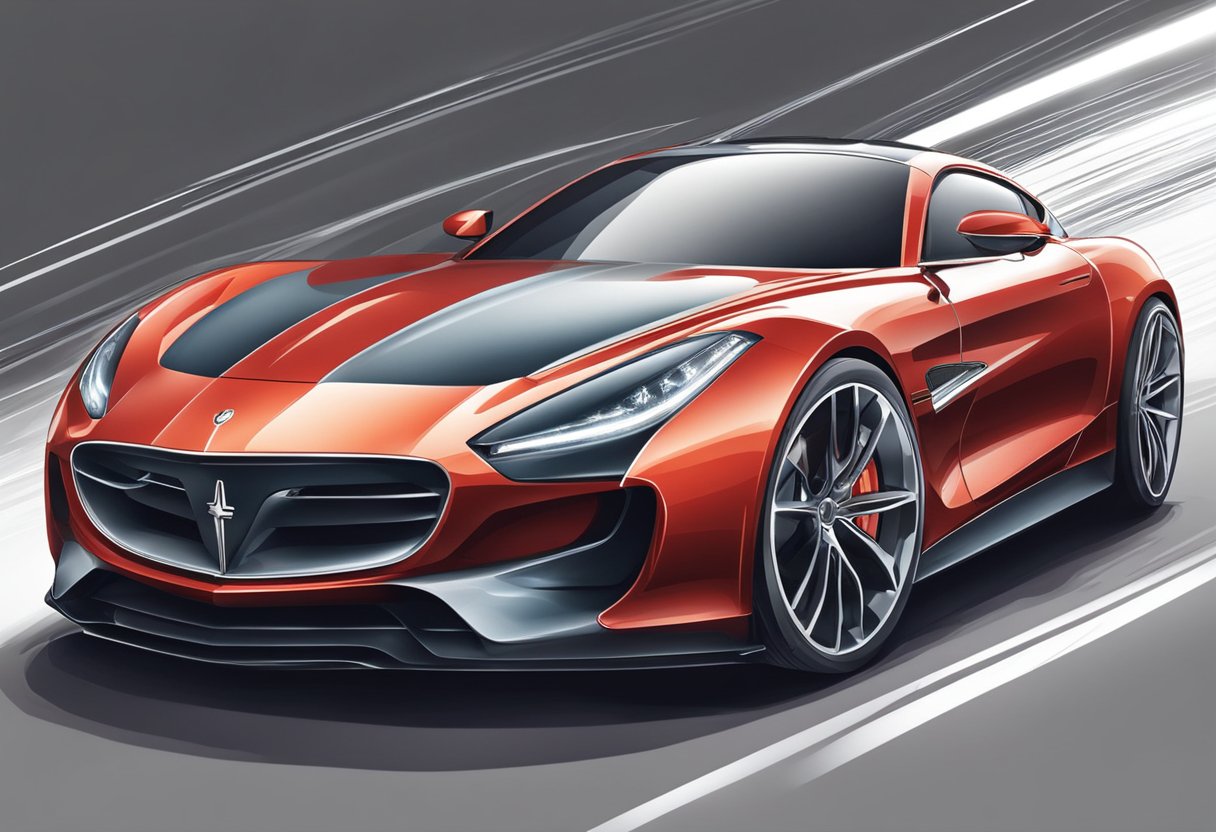
To make a car drawing look more realistic, it’s important to add details that make the car look like a real vehicle. Here are some tips on how to add realistic details to your car drawing:
Windows and Lights
Start by drawing the windows and lights of the car. The windows should be drawn as straight lines, with the front and back windows being slightly curved. The headlights and taillights should be drawn using circles or ovals, depending on the shape of the car’s lights.
Bumpers and Doors
The front and rear bumpers of the car should be drawn as straight lines, with the front bumper being slightly wider than the rear bumper. The doors of the car should be drawn as rectangles, with a small curve at the top to represent the window.
Mirrors and Wheels
The side mirrors of the car should be drawn as small rectangles, with a slight curve at the bottom to represent the mirror’s shape. The wheels of the car should be drawn as circles, with the hubcap drawn as a smaller circle in the center of the wheel.
Roof and Fenders
The roof of the car should be drawn as a flat rectangle, with a slight curve at the front and back to represent the shape of the car’s roof. The fenders of the car should be drawn as curved lines, with the front fenders being slightly wider than the rear fenders.
Grille
The grille of the car should be drawn as a series of small rectangles or squares, depending on the shape of the grille. The grille should be placed between the headlights and should be slightly wider than the headlights.
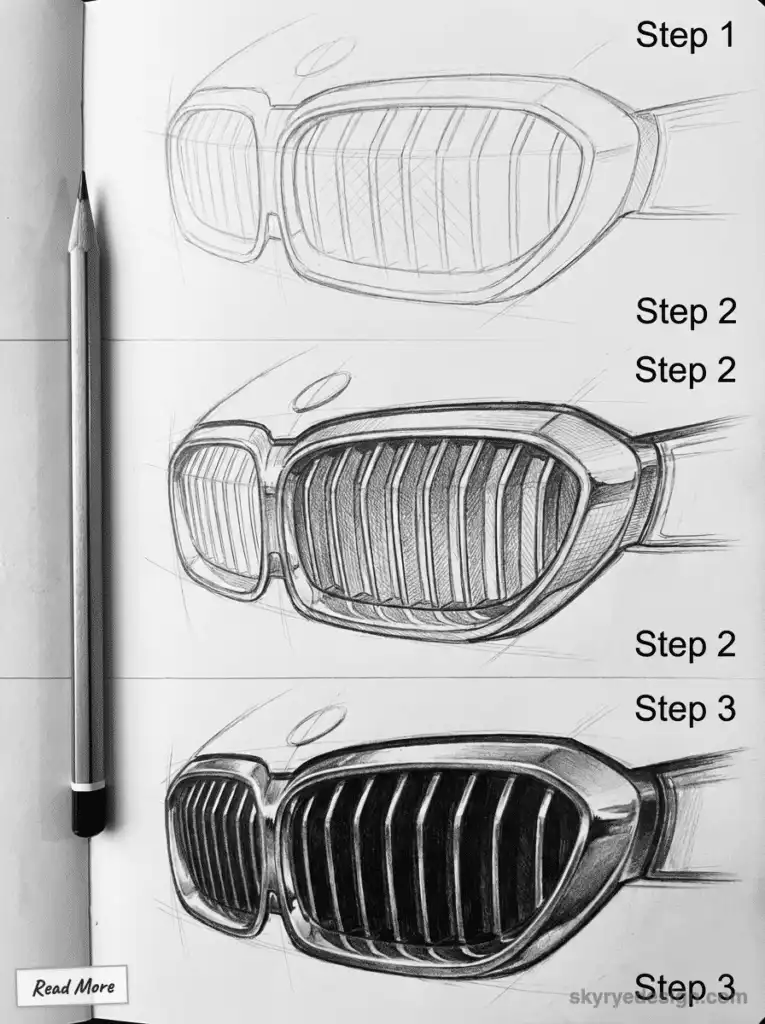
By following these tips, you can add realistic details to your car drawing and make it look like a real vehicle. Remember to take your time and pay attention to the details, as they can make all the difference in the final result.
Practice drills for better car sketches
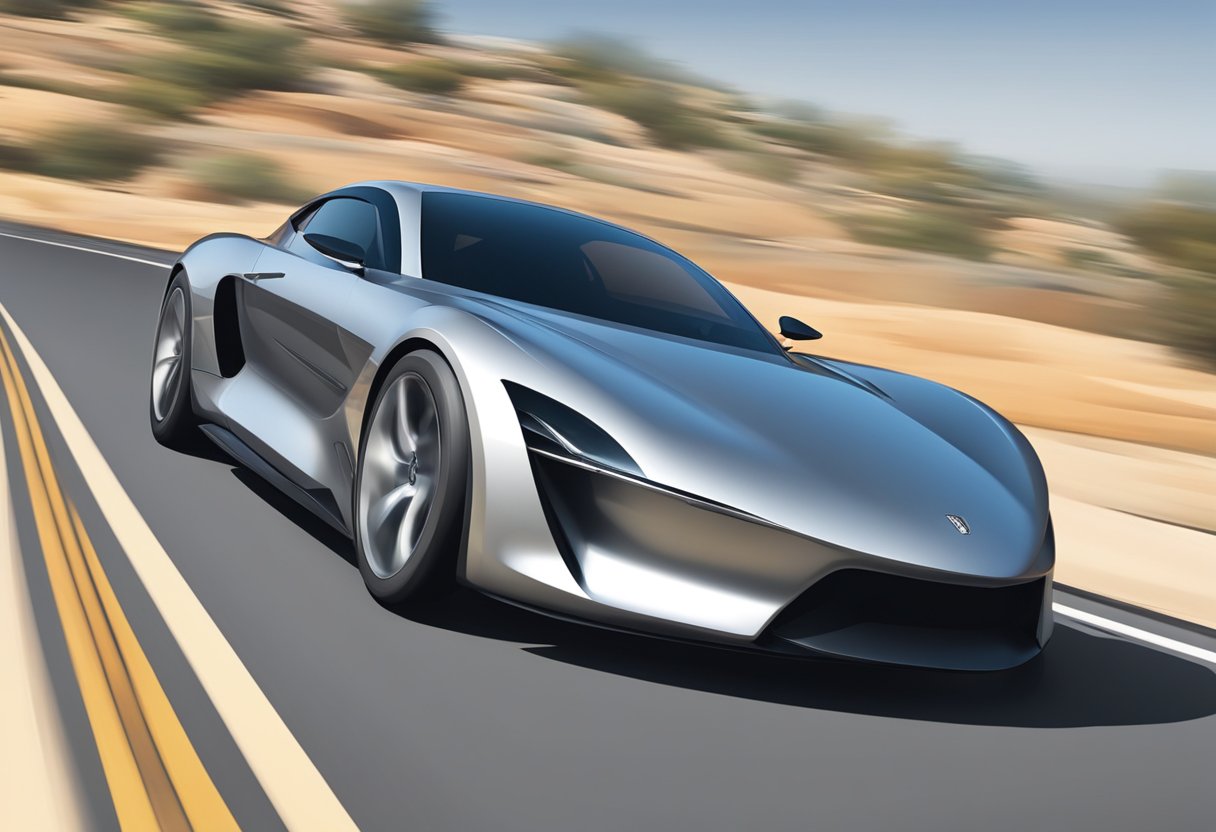
Car drawing improves fastest when you practice one problem at a time. Spend one session only on wheel placement, another on side-view proportions, another on three-quarter perspective, and another on shading glossy surfaces. That is less glamorous than finishing a poster-style drawing, but it works.
Use references, but do not copy every pixel. Thumbnail the car first, check the silhouette, then draw the larger version. For more focused exercises, use these car drawing tips as a warm-up before you start a longer sketch.
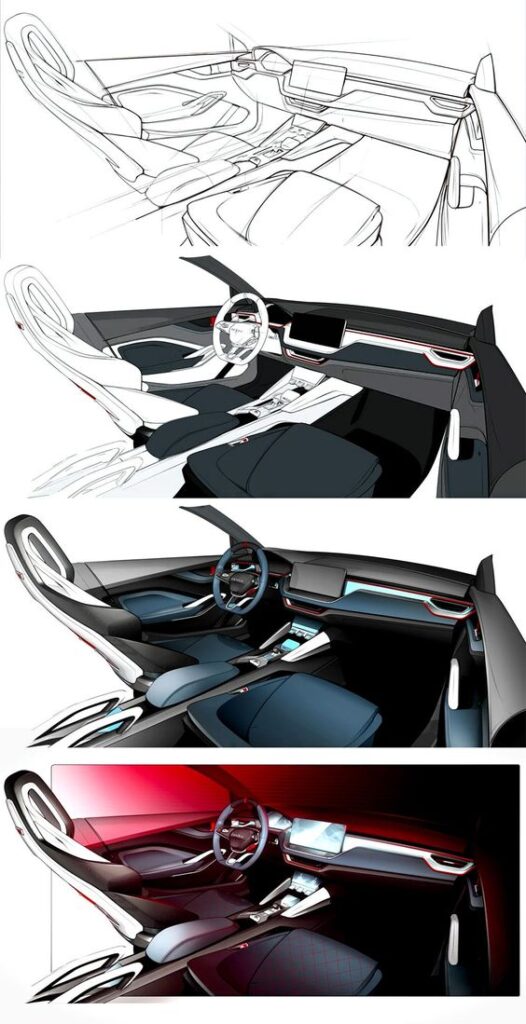
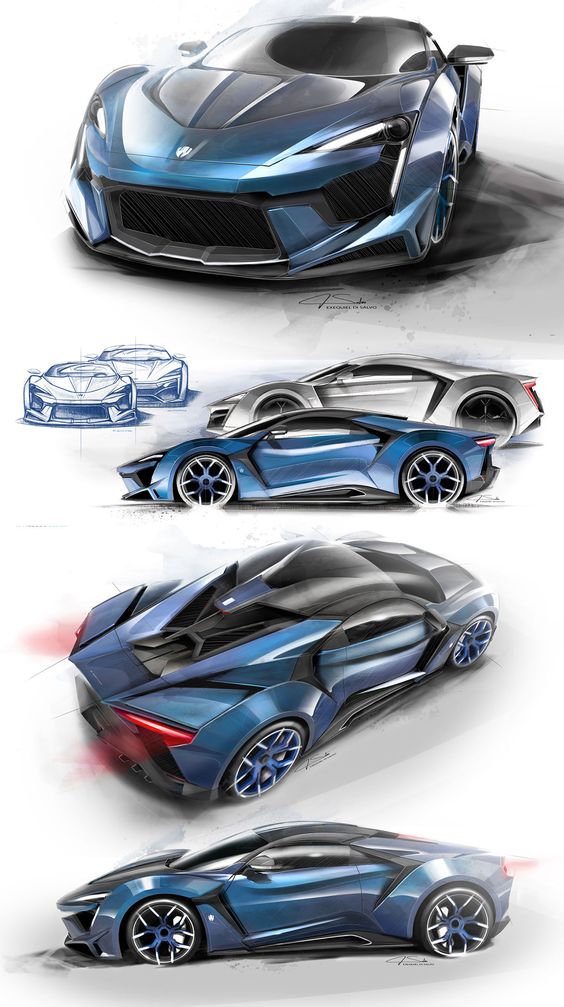
A useful drill is to draw the same car three times: once as a blocky side view, once as a loose three-quarter view, and once as a shaded study. You will quickly see whether your weak point is proportion, perspective, or rendering.
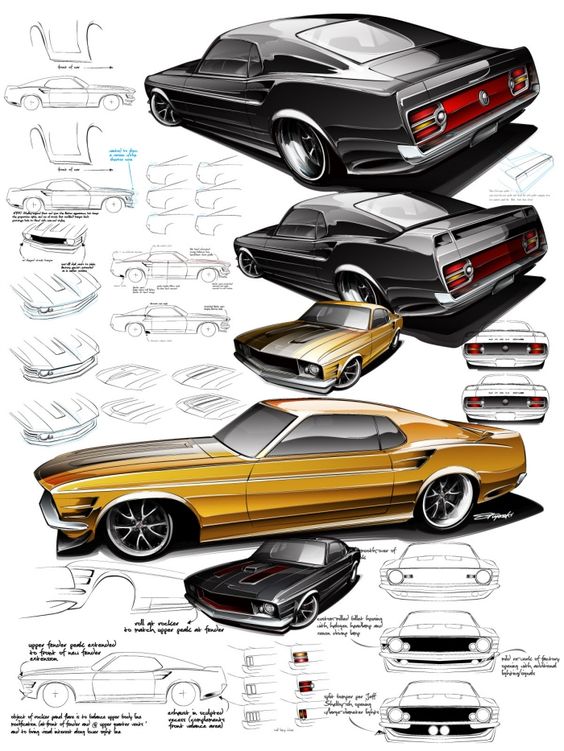
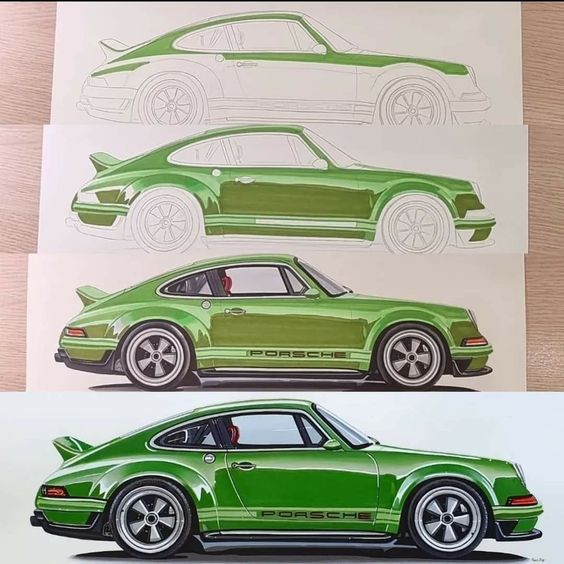
Keep the practice small and repeatable. Ten quick wheelbase studies can teach you more than one overworked drawing with perfect highlights.
How do you draw a car in perspective?

To draw a car in perspective, choose the viewing angle before adding details. A side view is the easiest because the body, wheels, windows, and doors can be aligned on mostly horizontal and vertical guides. A three-quarter view is harder because the front or rear of the car turns toward the viewer, so parallel lines should angle toward one or two vanishing points. Start with a simple box that matches the car’s length, width, and height, then place the wheels inside that box before shaping the roof, hood, trunk, and fenders. Keep the near wheel slightly larger than the far wheel, and make sure both wheels still sit on the same ground plane. After the perspective box feels believable, add lights, grille, mirrors, and shading.
- Use a side view when you want to learn proportions.
- Use a three-quarter view when you want a more dynamic automotive sketch.
- Use light perspective lines first, then erase or soften them before shading.
Advanced car drawing techniques for cleaner sketches

Once the basic car sketch feels solid, advanced drawing is mostly about value control, reflections, and cleaner line hierarchy. This is where the drawing starts to feel designed instead of simply copied.
For shading, separate the car into planes: roof, windshield, side panels, hood, tires, and cast shadow. Give each plane a slightly different value. If every surface is shaded the same way, the car will look flat even when the outline is accurate.
Car paint, glass, chrome, and tires do not reflect light the same way. Keep window reflections sharper, tire values darker and softer, and body highlights longer and cleaner. That contrast is what sells the material.

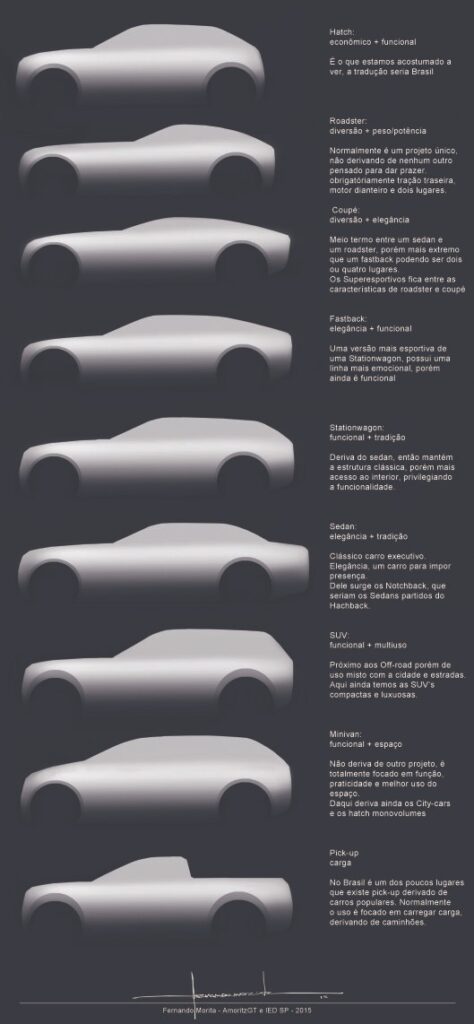
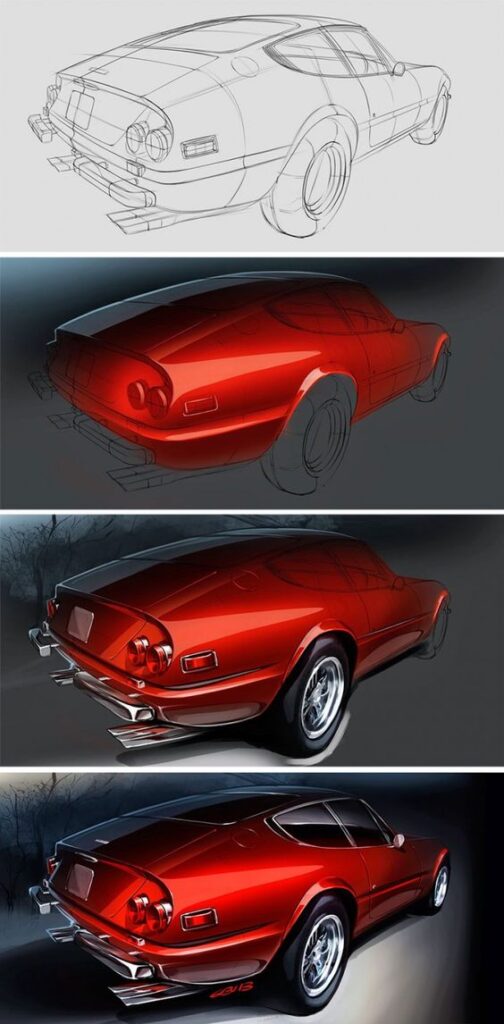
Layering helps, especially in digital car rendering. Keep construction, line art, base value, reflections, and accents separate if your app allows it. On paper, use the same idea by building from pale construction lines to darker final accents.
The advanced stage is not about adding more noise. It is about choosing the few lines, shadows, and highlights that make the vehicle feel solid.
If your car sketch looks twisted, pause before adding details and review these car drawing perspective basics. A clean box, horizon line, and wheel placement solve more problems than extra shading.
Next car drawing practice
Once this beginner method feels comfortable, try a model-specific sketch. A low wedge shape is easier to study in the Lamborghini drawing guide, while rounded classic proportions show up clearly in the Volkswagen Beetle drawing tutorial. If you want more practice prompts, use the car drawing ideas list or add environment depth with cars with residential backgrounds.
Car drawing references and resources
Use these outside resources as technical checkpoints after you understand the basic Sky Rye workflow. They are most useful for perspective, vehicle construction, and seeing how other artists simplify cars before rendering.
- Drawabox perspective lessons for practicing horizon lines, boxes, and vanishing points.
- Adobe guide to perspective drawing for a clean overview of perspective drawing principles.
- Gnomon car drawing workshop when you want a dedicated automotive drawing course reference.
- Behance car drawing techniques for traditional car drawing techniques and process examples.
- Gvaat vehicle perspective guide for vehicle perspective notes when a side view starts to feel too flat.
- HowStuffWorks car drawing tutorial for a beginner-friendly comparison of simple car drawing steps.
- Autodesk automotive design overview for the broader automotive design context behind sketching vehicles.
FAQ about drawing cars
What is the easiest way to draw a car for beginners?
Start with a light rectangle or wedge for the body, place two wheels on the same baseline, then add the cabin, hood, and trunk before details. If the wheel spacing and roofline are wrong, headlights and shading will not save the drawing.
How do you draw cars step by step?
Block in the body, place the wheels, mark the cabin, add windows and lights, clean the construction lines, then shade from one clear light source. Keep the first pass pale so you can move the wheels or lower the roof before committing.
How do I draw a 3/4 car view?
Begin with a simple perspective box for the car’s length, width, and height. Put the wheels inside that box, make the near wheel slightly larger than the far wheel, then shape the hood, roof, trunk, and fenders around the guide.
What proportions make a car drawing look realistic?
Use the wheel height as a measuring unit. In a simple side view, many cars are roughly four wheel-heights long, with a wheelbase around 2.5 wheel-heights. Sports cars sit lower, while SUVs and trucks need taller bodies.
How do I draw car wheels evenly?
Draw a ground line first, then place both wheel centers on it before darkening the circles or ellipses. Compare wheel size, spacing, and body clearance before adding rims, tires, or shadows.
How can I make a car drawing look more realistic?
Make the proportions believable first, then use line weight and value. Darken the wheel wells, underside, cast shadow, and planes facing away from the light. Keep windows and paint highlights cleaner than the tire values.
What is the hardest part of drawing cars?
Perspective is usually the hardest part because wheels, body panels, windows, and reflections all have to sit on the same ground plane. Practice small boxes and wheel ellipses before chasing detailed headlights or chrome.
Conclusion
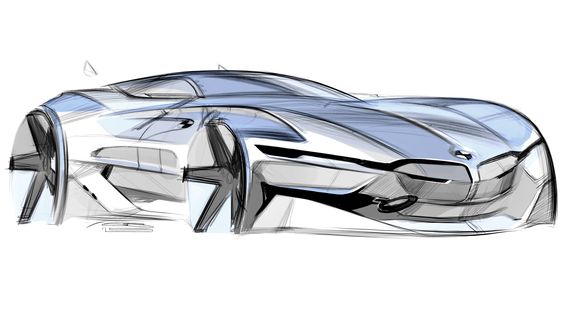
Drawing cars gets much easier when you stop chasing details too early. Build the body, place the wheels, check the cabin, then add the design language of the car you actually want to sketch.
Car designers often sketch on paper before moving into digital modeling because fast hand sketches reveal proportion and silhouette problems quickly. Use the same habit: small thumbnails first, cleaner drawing second, rendering last.
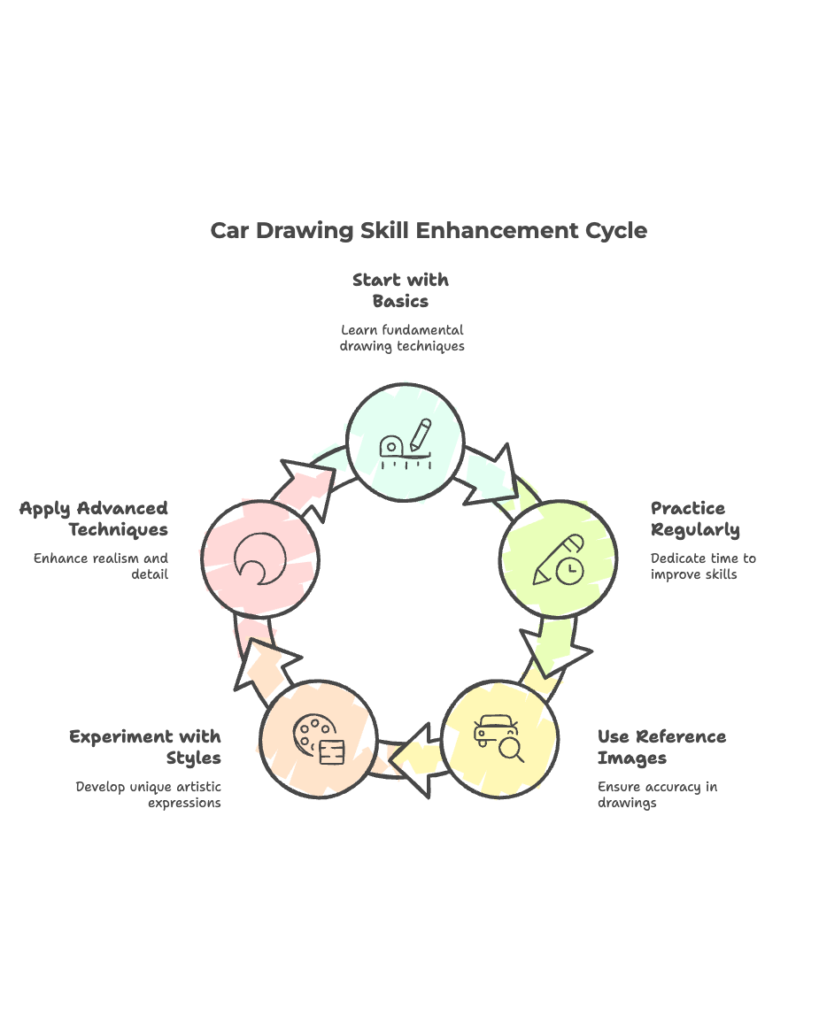
Use reference images for accuracy, but keep checking the big relationships: body shape, wheel position, roofline, and overhangs. Those decisions matter more than a perfectly copied badge or headlight.
For your next page, draw one car in side view and one in three-quarter view. Keep both small, label what went wrong, and redraw the weaker one. That is how car drawing starts to feel natural.
Once you understand the basic car construction steps, practice how to sketch Mercedes models with a 10-car reference pack.
Before adding reflections, study vintage car proportions so your wheels, roofline, hood length, and stance feel believable.
Once car proportions feel steady, try these airplane drawing ideas; aircraft use the same big-shape discipline, just with wings and tail balance instead of wheels.
- 9.1Kshares
- Facebook0
- Pinterest9.1K
- Twitter7
- Reddit0