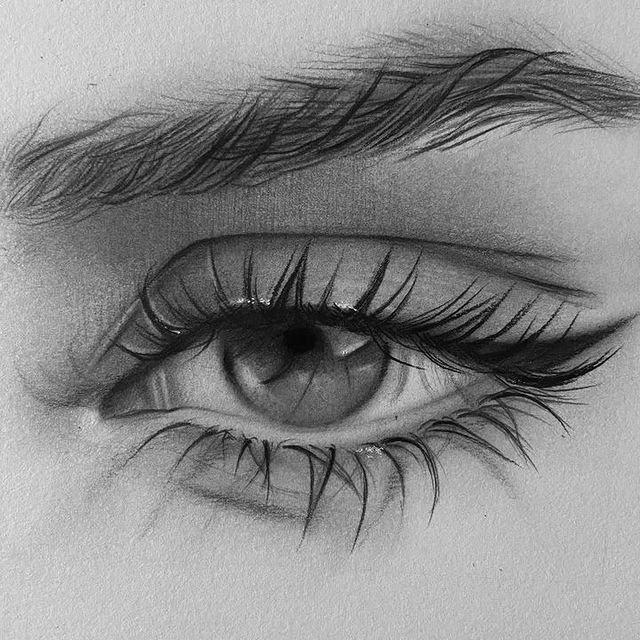
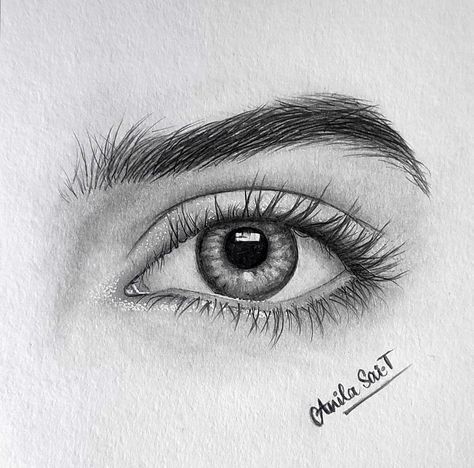
To draw eyes, start with a clean eye sketch drawing: place the corners, tuck the iris under the upper lid, map the shadows, then finish lashes and highlights. This 7-step pencil workflow keeps the eye round instead of flat and gives you a quick way to check proportion before the drawing gets too dark.
- Eye practice sheet to copy into your sketchbook
- Key Takeaways
- Understanding Eye Anatomy
- How to draw eyes step by step in 7 steps
- Preparing for Your Drawing
- Sketching the Outline
- Common eye drawing mistakes and quick fixes
- Shading Techniques
- Adding Textures and Details
- Final Touches
- Different Portrayals of Eyes
- Using Color Effectively
- FAQ: how to draw eyes
- Related eye drawing practice
So I started practicing eyes on their own. Just eyes, filling whole sketchbook pages. This guide now gives you a fast way in: draw a realistic eye in 7 steps first, then use the practice sheet and mistake checks to fix spacing, shading, lashes, and highlights. After that, the anatomy sections below will make much more sense.
For a fantasy twist on the same anatomy, try this dragon eye drawing practice and pay attention to the slit pupil, upper-lid shadow, and scale rhythm.
Eye practice sheet to copy into your sketchbook
Make one page with five small boxes: front view eye, three-quarter view eye, side view eye, two-eye spacing guide, and iris texture drill. In each box, repeat only one problem. For example, fill the iris box with tiny radial strokes and clean highlights instead of drawing a full finished portrait.
Key Takeaways
- Start with a 7-step construction pass before adding lashes, texture, or color.
- Keep the iris partly under the upper lid and shade the sclera lightly so the eye feels round.
- Use the mistake checks and practice sheet to fix spacing, flat shading, random highlights, and stiff lashes.
Understanding Eye Anatomy
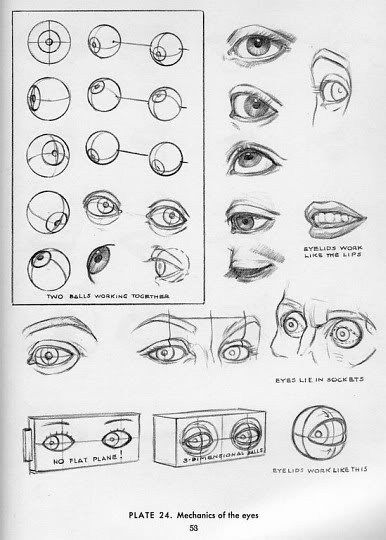
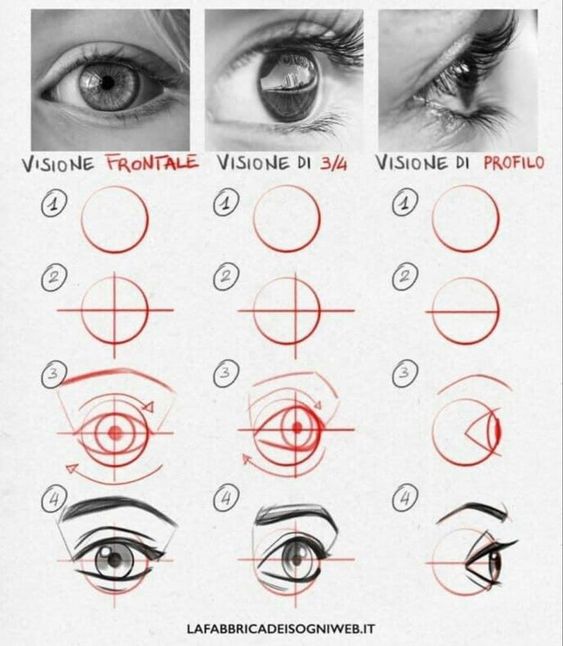
Drawing realistic eyes starts with knowing their parts and how they work together. Let’s look at the key elements that make up the eye and how to capture them on paper.
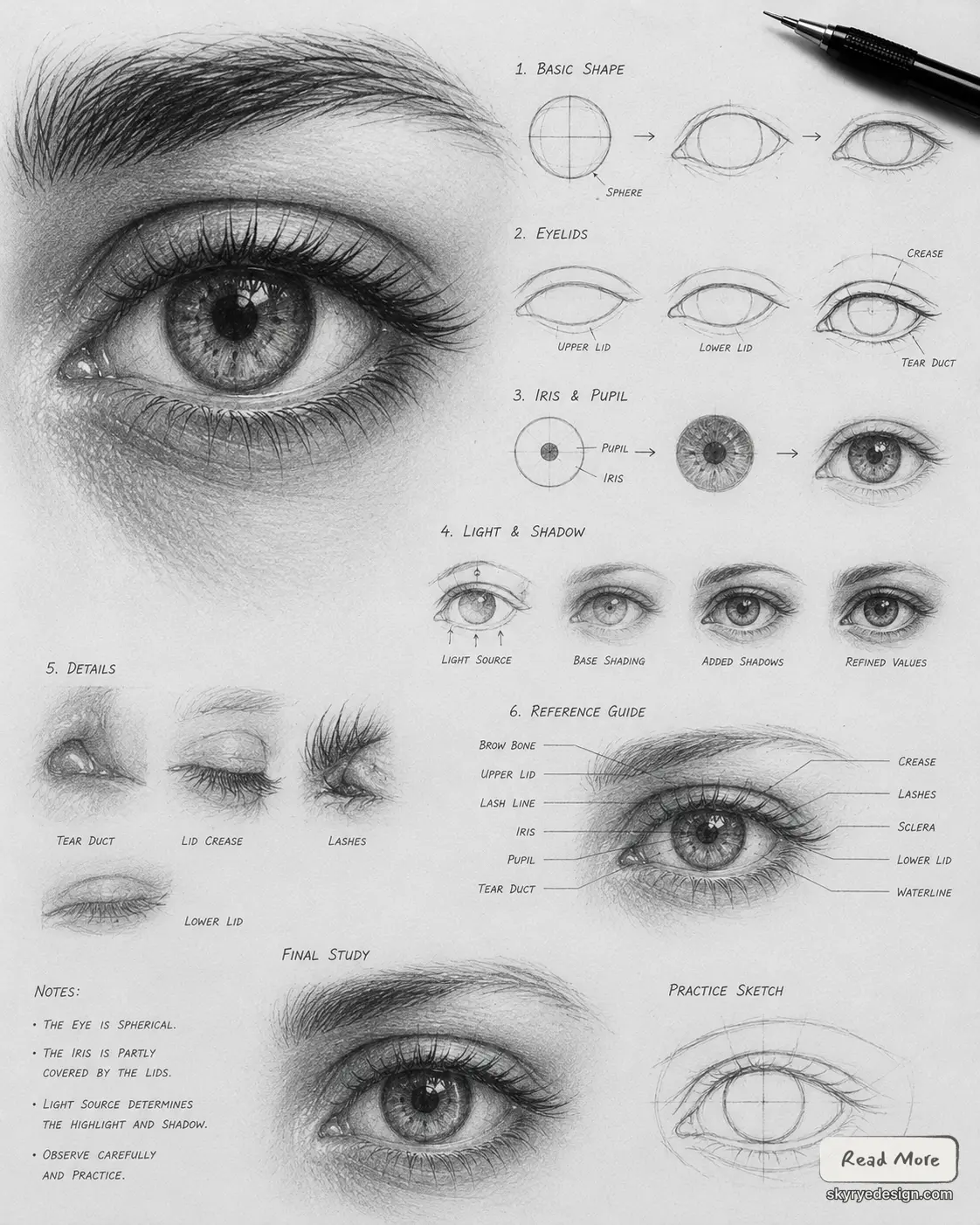
Components of the Eye
The eyeball sits in a protective socket in the skull. It has several important parts:
- Iris: The colored ring around the pupil
- Pupil: The black center that changes size with light
- Sclera: The white part of the eye
- Cornea: The clear outer layer that covers the iris and pupil
Eyelids protect the eye. They have lashes along the edges. Tear ducts in the corners keep eyes moist.
To draw eyes well, focus on these parts. Pay attention to how light hits them. Notice how they move and change with expressions.
Common Eye Shapes
Eyes come in many shapes. Some common types are:
- Almond: Oval with pointed corners
- Round: Circular with curved edges
- Hooded: Extra skin folds over the crease
- Monolid: No visible crease above the eye
Eye shapes vary by genetics and ethnicity. The shape affects how shadows fall on the eye. It changes how the iris and pupil look from different angles.
When drawing, match the eye shape to your subject. This helps create a likeness. Eye shape also adds character to your drawings.
Perspective and Angles
Eyes change based on the angle you see them from. From the side, you might only see part of the iris. From above, the upper lid may hide some of the eye.
Perspective affects how much of the eye is visible. It changes the shape of the iris and pupil. The whites of the eye show more or less depending on the angle.
To draw eyes at different angles:
- Sketch the basic eye shape
- Add the iris and pupil
- Draw in eyelids and lashes
- Adjust based on the viewing angle
Practice drawing eyes from many angles. This skill helps create more dynamic and interesting portraits.
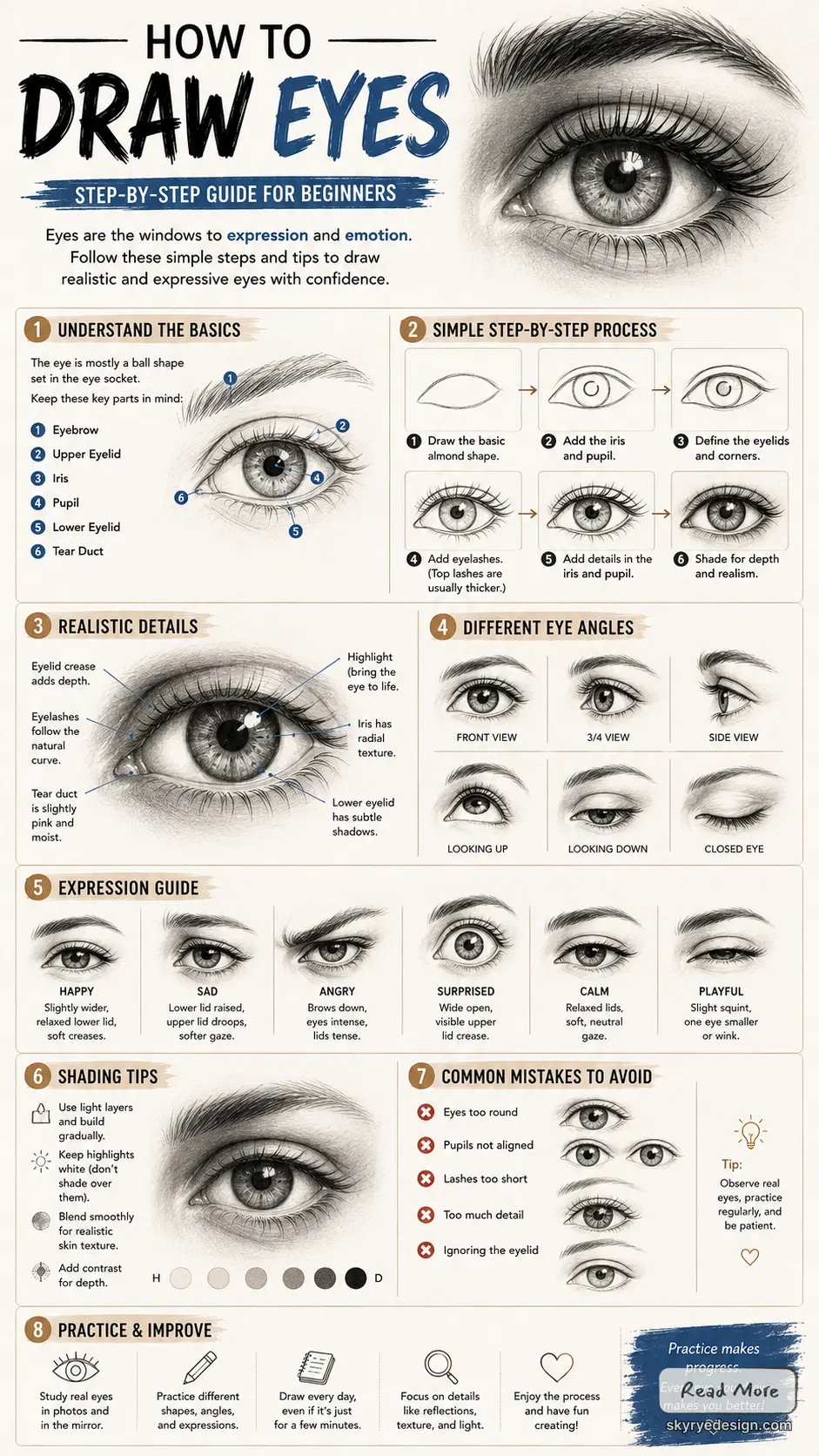
How to draw eyes step by step in 7 steps
To draw eyes step by step, begin with the big construction lines before you chase detail.
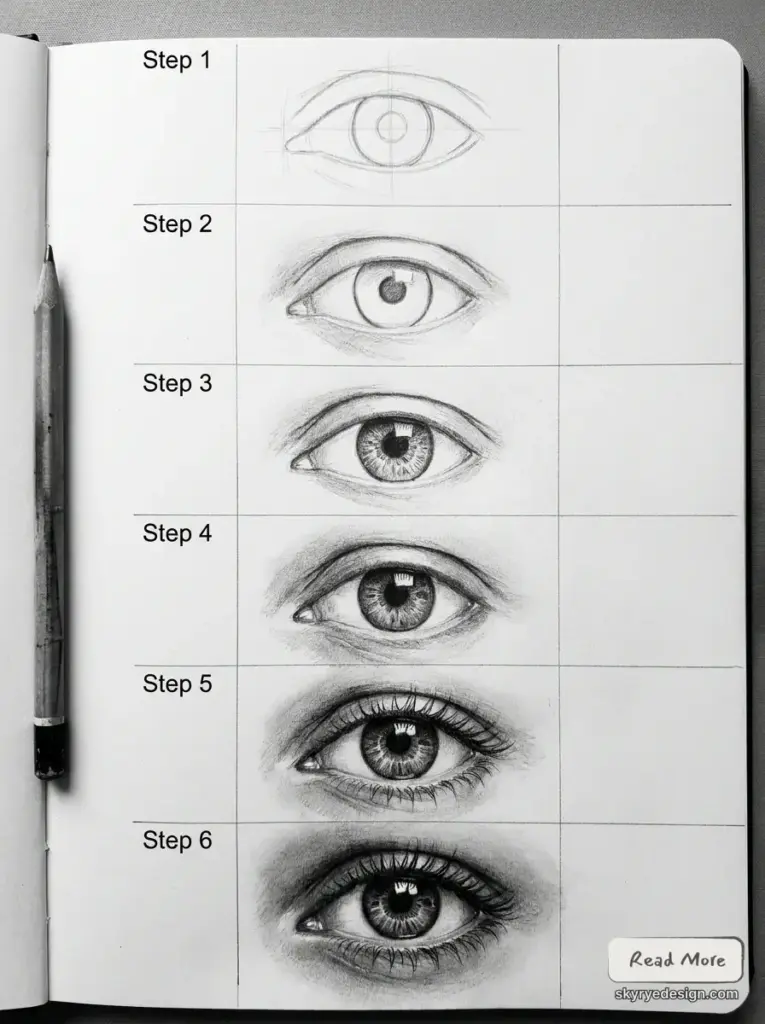
Use HB for the layout, 2B for the main shadows, 4B for the pupil and upper lash line, a kneaded eraser for highlights, and smooth paper that lets you blend without fighting the texture.
| Step | What to draw | Quick check |
|---|---|---|
| 1. Guideline | Draw a pale horizontal line for the inner corner, outer corner, and pupil center. | The eye is placed before it is detailed. |
| 2. Eye opening | Sketch a soft almond opening around the eyeball. Avoid a sharp football shape. | The upper lid feels a little heavier than the lower lid. |
| 3. Iris and pupil | Place the iris as a circle partly tucked under the upper lid, then add the pupil. | The iris is not floating in the middle of the white area. |
| 4. Lids and tear duct | Add lid thickness, the tear duct, and the crease above the eye. | The eye feels wrapped in skin, not pasted on. |
| 5. Shadow map | Choose one light source and shade the upper lid cast shadow, corners, and sclera. | The whites are light gray, not untouched paper everywhere. |
| 6. Iris texture | Add radial iris strokes, a dark pupil, and one clean highlight shape. | The highlight matches the chosen light source. |
| 7. Lashes and final contrast | Pull tapered lashes from the lid edge, deepen the pupil and upper lash line, then lift small highlights with a kneaded eraser. | The darkest marks support the form instead of flattening it. |
If you only have ten minutes, do the first four steps three times instead of finishing one eye. Most beginner eye drawings improve faster when the placement, iris size, and lid thickness get corrected before the shading starts.
How to draw both eyes evenly
When you draw a pair of eyes, do not finish one eye and then try to copy it. Build both eyes in the same passes: guideline, outer corners, iris placement, pupils, lids, shadows, then lashes. Leave about one eye-width between the two eyes, keep both pupils on the same horizontal line, and compare the inner corners before you add dark marks.
| Alignment check | What it fixes |
|---|---|
| One shared eye line | Stops one eye from drifting higher than the other. |
| One eye-width gap | Keeps the pair from looking crowded or too far apart. |
| Matching iris size | Prevents a cross-eyed or uneven expression. |
| Same light source | Keeps both highlights and shadows believable. |
Preparing for Your Drawing
Getting ready to draw eyes involves choosing the right tools, paper, and workspace. These steps set you up for success before you start sketching.
Choosing the Right Tools
Pick graphite pencils in different hardness levels. Softer pencils (B, 2B, etc.) make darker lines. Harder pencils (H, 2H, etc.) create lighter lines. A mechanical pencil works well for fine details.
Get a kneaded eraser. It’s soft and moldable, perfect for lifting graphite off the paper. A blending stump helps smooth out shading. It’s a tightly rolled paper tool with a pointed tip.
Make sure your pencils are sharp. Dull pencils can’t make precise lines needed for eye details.
Selecting Paper Quality
Use smooth bristol paper for eye drawings. It has a flat surface that’s great for detailed work. The paper should be thick enough to handle multiple layers of graphite.
Avoid paper with too much texture. Rough paper can make it hard to draw smooth lines and even shading. Test your paper before starting a big project.
Setting up Your Workspace
Find a spot with good lighting. Natural light is best, but a desk lamp works too. Make sure the light doesn’t cast shadows on your drawing area.
Keep your tools close by. Arrange your pencils, eraser, and blending stump within easy reach. Have a clean cloth nearby to wipe your hands and keep the paper smudge-free.
Use a reference photo of an eye. Place it where you can see it clearly while drawing. This helps you capture the right shapes and details.
Clean your workspace. A tidy area helps you focus on your art. Remove items that might distract you or get in the way.
Sketching the Outline
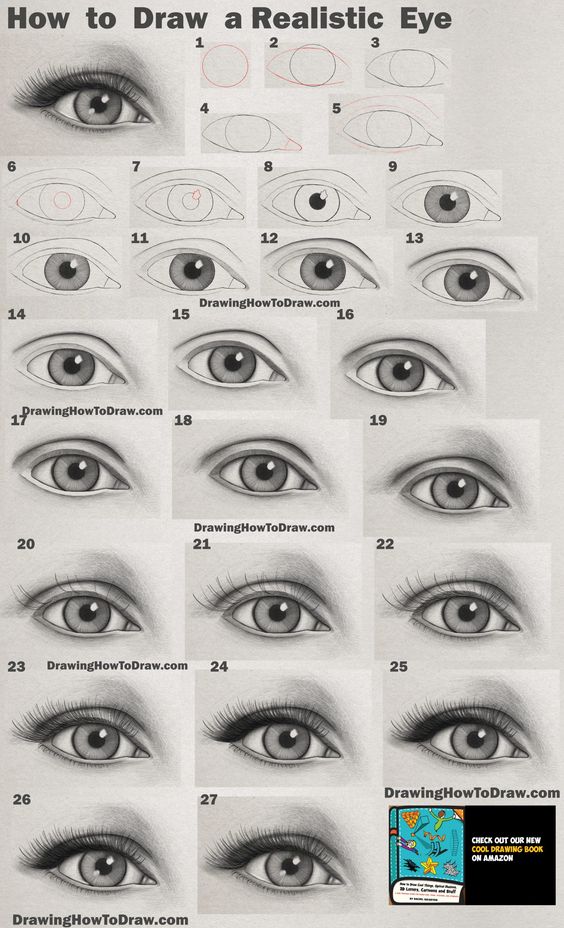
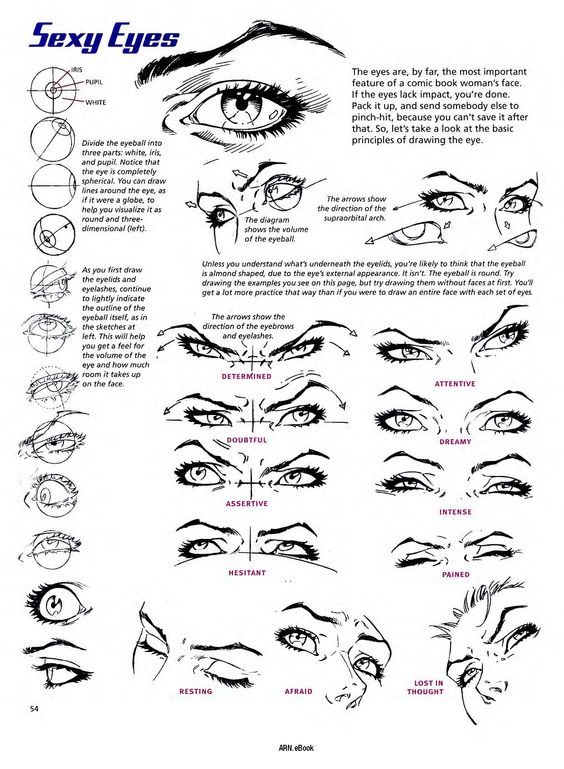
Drawing eyes starts with creating a basic outline. This process involves sketching simple shapes and adding key details to bring the eye to life.
Drawing Basic Shapes
Begin by drawing a circle for the eye’s base shape. This circle represents the visible part of the eyeball. Next, sketch an almond shape that overlaps the circle. This forms the eye’s opening.
Make the almond wider at the center and narrower at the ends. The top curve is usually flatter than the bottom. Adjust the size and angle of the almond shape to create different eye expressions.
Adding Details to the Iris and Pupil
Inside the eye, draw a smaller circle for the iris. Place it slightly behind the upper eyelid for a natural look. In the center of the iris, add an even smaller circle for the pupil.
Shade the pupil solid black. For the iris, add lines radiating from the pupil to the edge. This creates texture and depth. Leave small white spots in the iris for light reflections.
Turn these ideas into real sketchbook practice
Defining Eyelids and Lashes
Sketch the upper and lower eyelids along the almond shape. The upper lid is typically thicker than the lower lid. Add a slight curve to each lid to show its three-dimensional form.
For eyelashes, draw short curved lines extending from the lids. Upper lashes are usually longer and more numerous than lower lashes. Make the lashes thicker at the base and thinner at the tips.
Common eye drawing mistakes and quick fixes
If an eye drawing feels wrong but you cannot name the problem, cover the details and check the construction first. Most mistakes come from drawing a symbol of an eye instead of observing how the lids wrap around a round eyeball.
| Mistake | Why it looks off | Fix |
|---|---|---|
| Football-shaped eye | Both corners become too sharp and symmetrical. | Round the lower lid and let the upper lid overlap the iris. |
| Iris too large | The eye looks startled or cartoonish. | Hide a slice of the iris under the upper lid. |
| Pure white sclera | The eyeball looks flat. | Add a soft light gray value and corner shadows. |
| No lid thickness | The eye looks pasted onto the face. | Draw the rim of the upper and lower lids before lashes. |
| Uneven pair of eyes | The face looks tilted even when the features are detailed. | Use one shared guideline and build both eyes in passes. |
| Random highlights | The eye loses a clear light source. | Keep highlights on the same side in both eyes. |
| Straight lashes | The lashes look stiff and artificial. | Curve each lash away from the lid and taper the tip. |
Shading Techniques
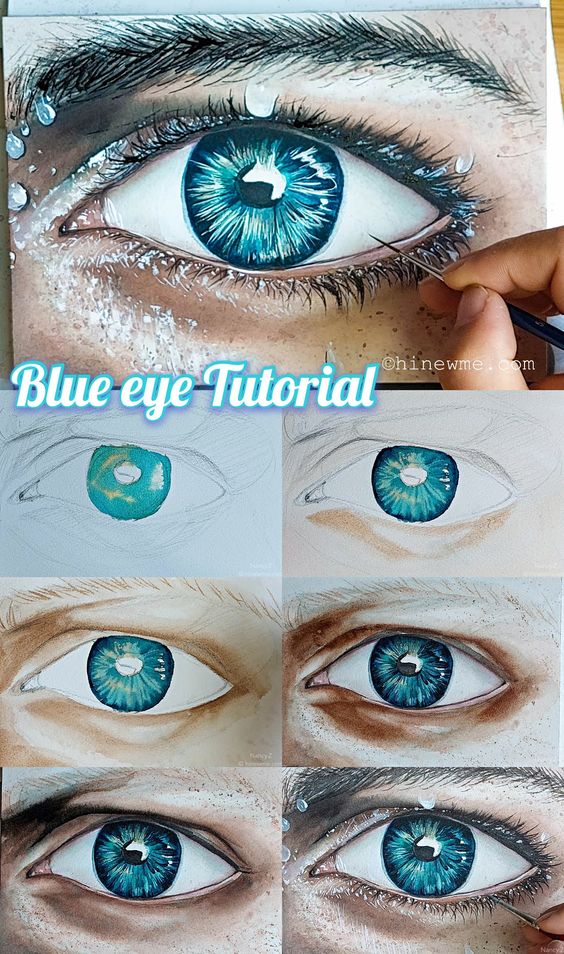
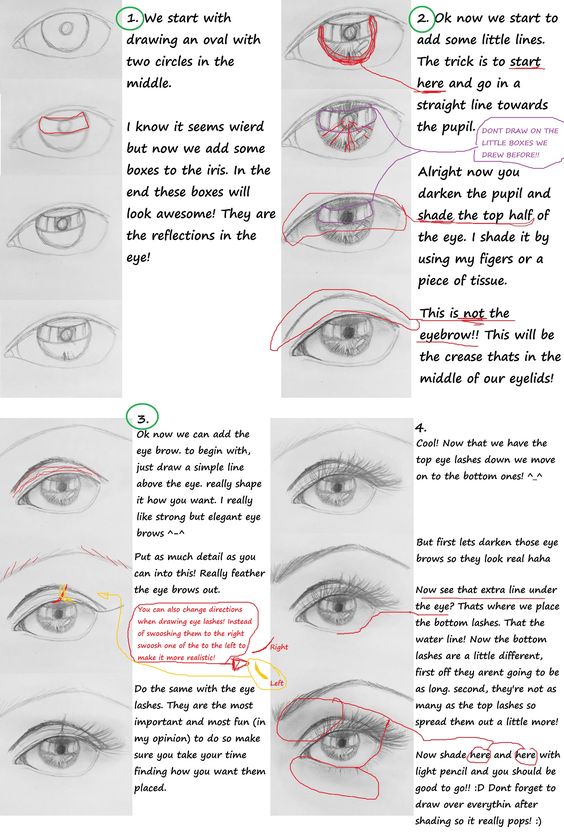
Shading brings eyes to life by adding depth and realism. It involves using light, shadow, and blending to create a lifelike appearance.
Understanding Light and Shadow
Light plays a key role in eye shading. Pick a light source direction to guide your shading choices.
Highlights are the brightest parts where light hits directly. These are often on the iris and cornea.
Shadows fall on areas furthest from the light. The upper eyelid usually casts a shadow on the eye.
Mid-tones bridge highlights and shadows. They help create a smooth transition between light and dark areas.
For a realistic pencil eye, think in three values before you think in detail: light gray on the sclera, medium gray in the upper lid shadow and iris, and near-black only in the pupil, lash line, and deepest crease. That value plan is what makes the eye read from across the room.
| Pencil value | Where to use it | Why it matters |
|---|---|---|
| Light | Sclera, lower lid, soft skin planes | Keeps the whites believable without turning them gray and dirty. |
| Middle | Iris base, upper lid shadow, crease | Builds roundness before texture. |
| Dark | Pupil, upper lash line, deepest corners | Gives the eye contrast and focus. |
Creating Volume and Depth
Start with a base color for the iris. Add darker shades around the edges to create depth.
Use lighter tones near the pupil to make it pop. This mimics how light enters the eye.
Don’t forget the tear duct. A small highlight here adds realism.
Shade the whites of the eyes too. They’re not pure white – add subtle shadows for a natural look.
Blending for Realism
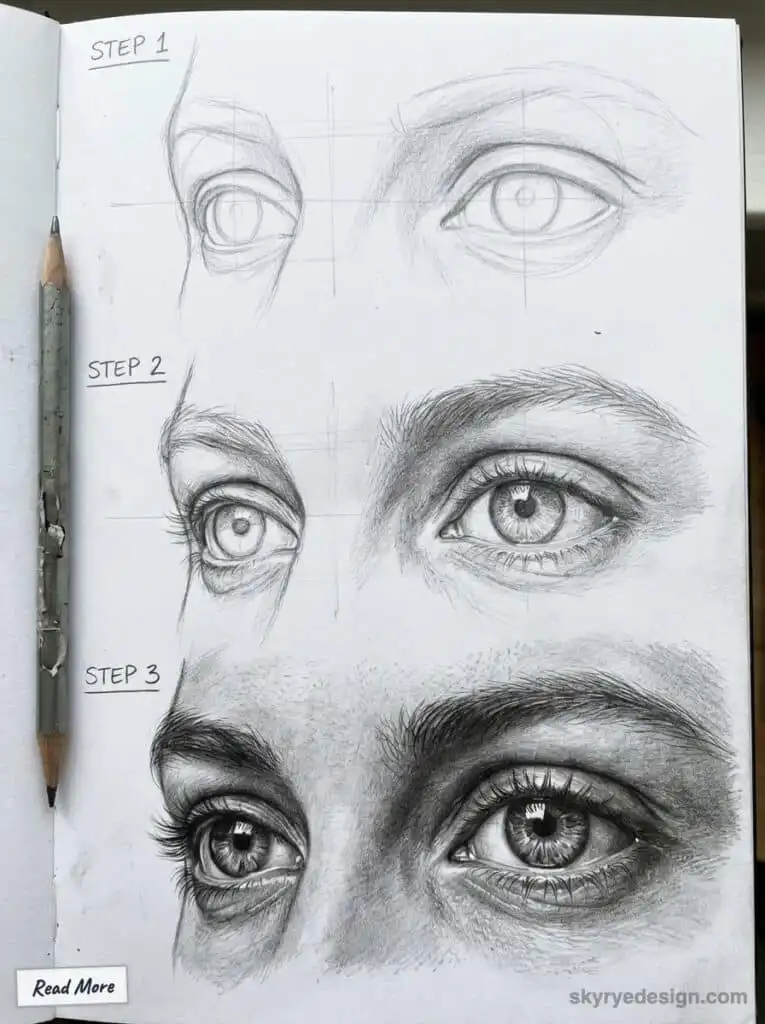
Blending is crucial for realistic eyes. Use tools like blending stumps or soft brushes.
Start with light layers and build up slowly. This gives you more control over the final look.
Blend edges between different shades. Harsh lines can make eyes look flat or cartoon-like.
For extra realism, add tiny blood vessels in the whites. Use a very light touch for this detail.
Try different textures in the iris. Some eyes have more defined patterns than others.
Adding Textures and Details
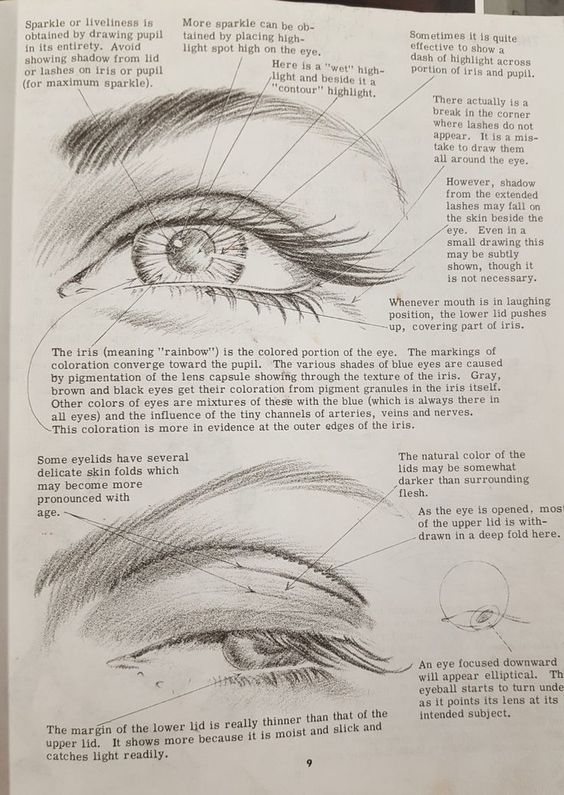
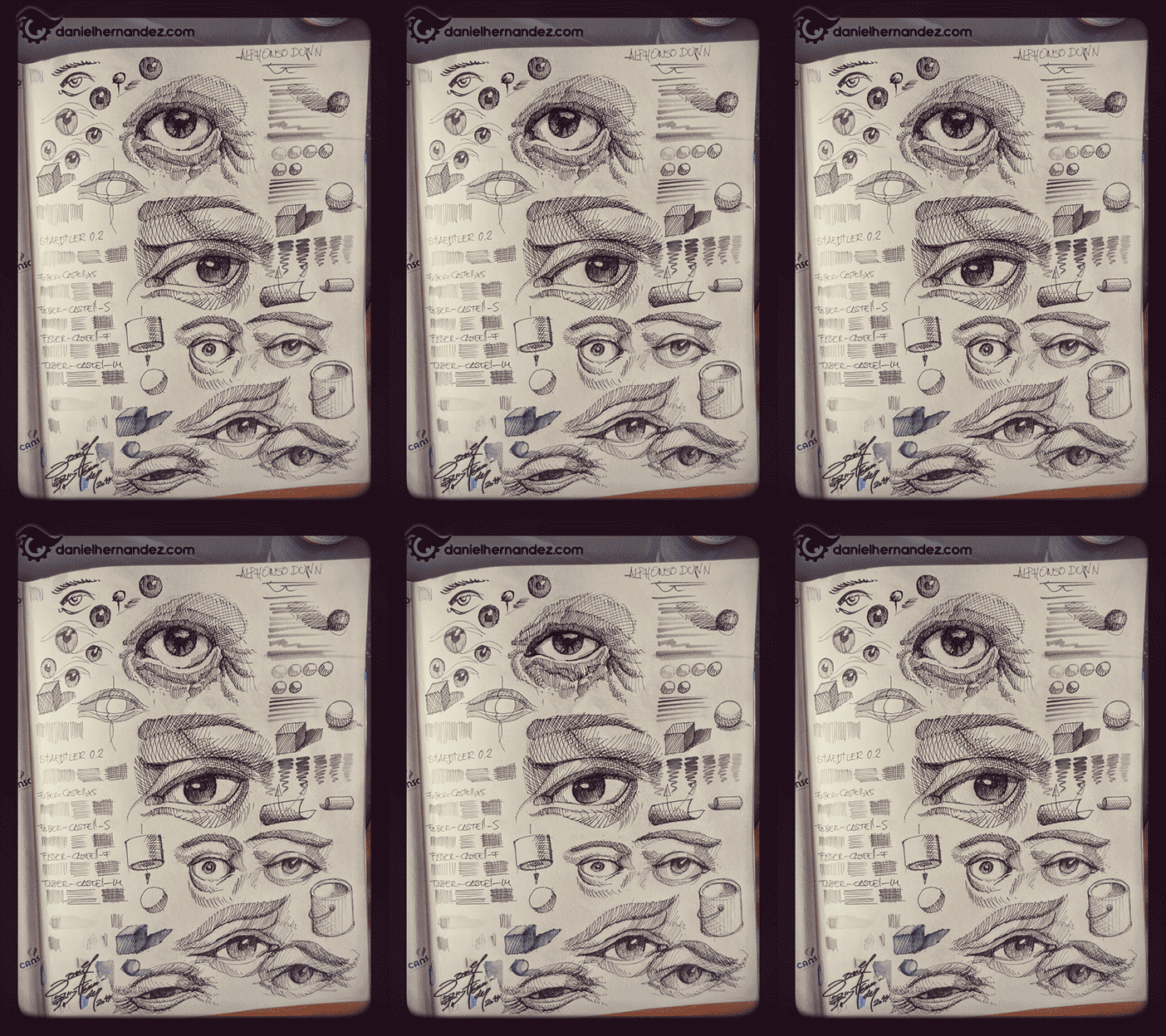
Eyes come to life through subtle textures and details. These elements add depth, realism, and expressiveness to your drawings.
Eyebrows and Skin Texture
Start with the eyebrows. Draw short, fine lines to mimic individual hairs. Vary the thickness and direction of strokes for a natural look.
For skin texture, use light shading and tiny dots around the eye area. This creates a soft, porous effect. Pay attention to the texture differences between the eyelid and surrounding skin.
Add small creases near the tear ducts and outer corners of the eyes. These subtle lines make the skin appear more realistic.
Expression Lines and Wrinkles
Expression lines help convey emotion and age. Draw faint lines radiating from the outer corners for a smiling or squinting effect.
Add a few gentle creases on the eyelids. This gives depth and realism, especially for mature eyes.
For older characters, include some wrinkles around the eye area. Use curved lines that follow the natural contours of the face.
Refining the Eye’s Highlights
Highlights bring sparkle to the eyes. Add a small white spot in the iris to represent light reflection.
Create depth by leaving tiny white areas along the edge of the iris. This mimics the way light interacts with the eye’s surface.
For extra shine, add a faint highlight on the lower eyelid. This subtle touch enhances the eye’s three-dimensional appearance.
For tablet practice, pair this eye tutorial with a few digital drawing tips so you can test line weight, soft shadows, and highlight layers without overworking the eye.
Final Touches
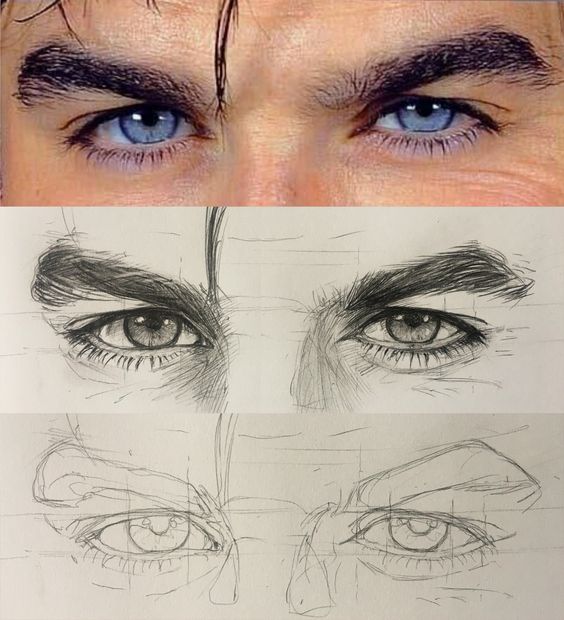
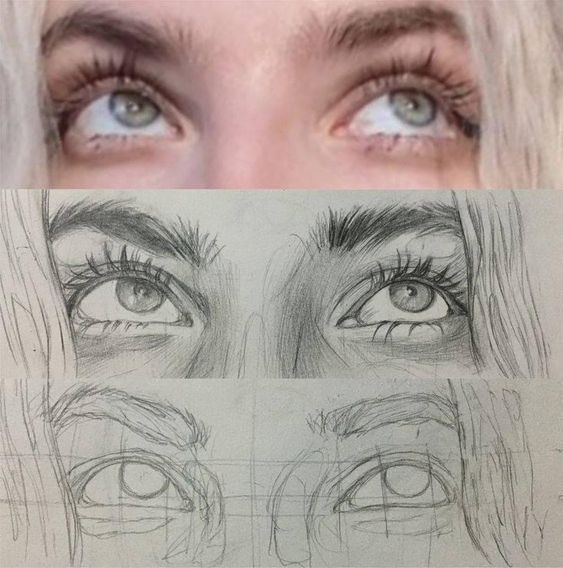
Adding the finishing touches brings your eye drawing to life. These steps refine details and enhance realism.
Reviewing Your Work
Step back and look at your drawing from a distance. Check if the eye shape looks natural. Make sure the iris and pupil are centered properly. Look for any areas that seem off or need more work.
Use a mirror to view your drawing in reverse. This helps spot mistakes you might have missed. Take a short break and come back with fresh eyes. You’ll often notice things you didn’t see before.
Adjusting Contrast and Details
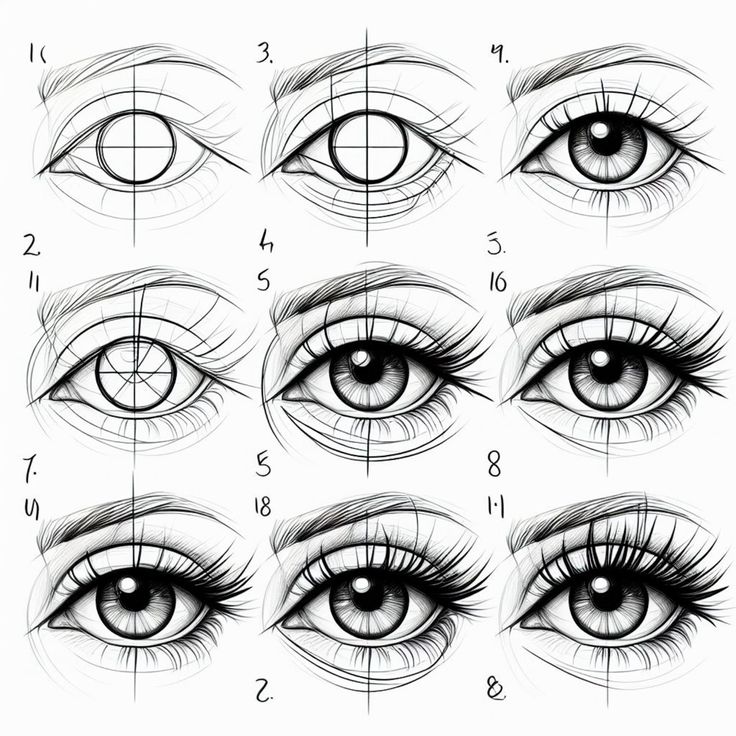
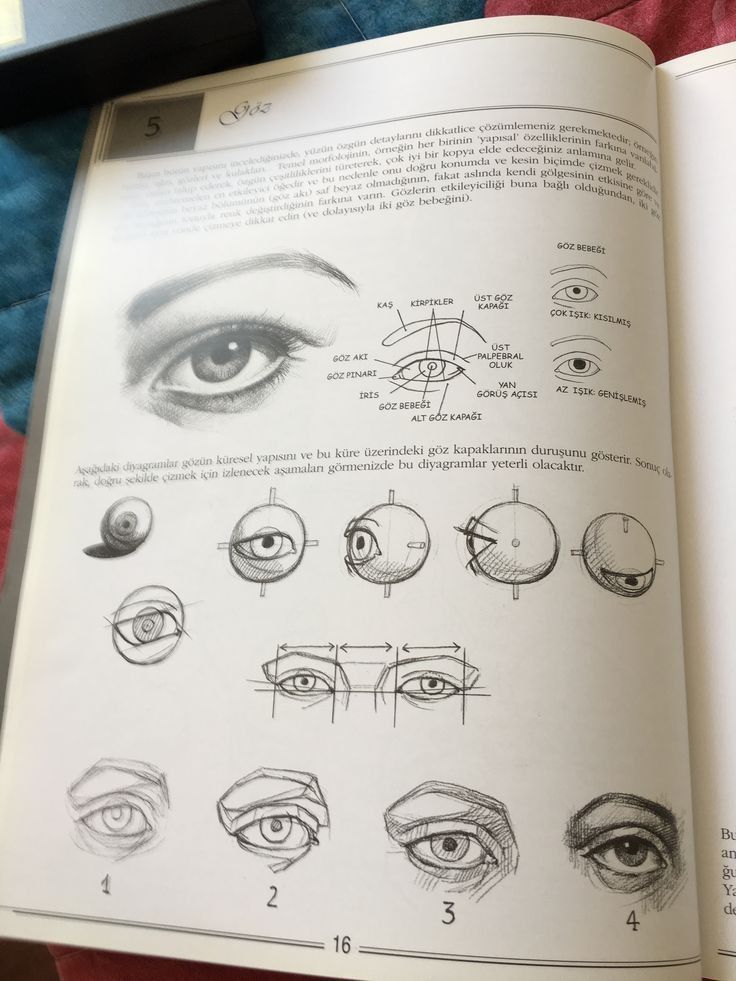
Increase contrast to make the eye pop. Darken the darkest areas like the pupil and upper lash line. Lighten the brightest spots like highlights on the iris. This creates depth and makes the eye look more lifelike.
Add fine details with a sharp pencil. Draw tiny blood vessels in the white of the eye. Create texture in the iris with small lines or dots. Refine the eyelashes, making some overlap or cross each other.
Evaluating Realism
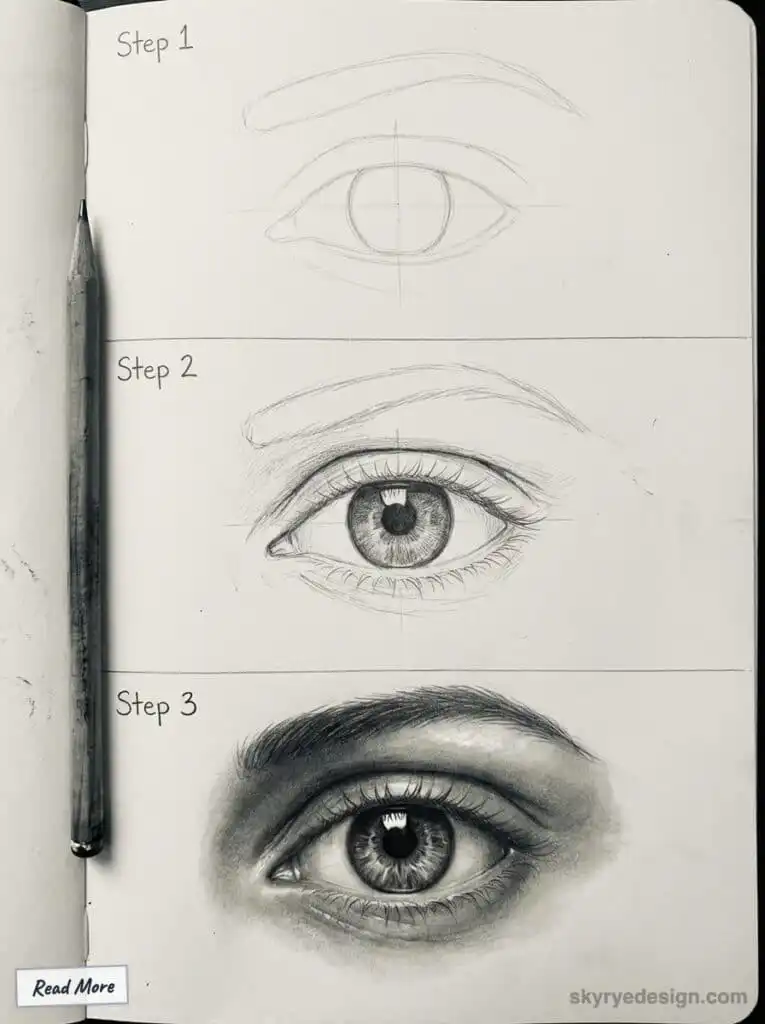
Compare your drawing to a real eye or reference photo. Check if the proportions look right. The iris should be a perfect circle. The white of the eye shouldn’t be too white – add some subtle shading.
Look at the direction of light in your drawing. Shadows should fall consistently. The highlight in the eye should match the light source. Make sure reflections in the eye make sense for the imagined scene.
Adjust your drawing based on these observations. Erase and redraw parts if needed. Keep refining until you’re happy with the result.
Different Portrayals of Eyes
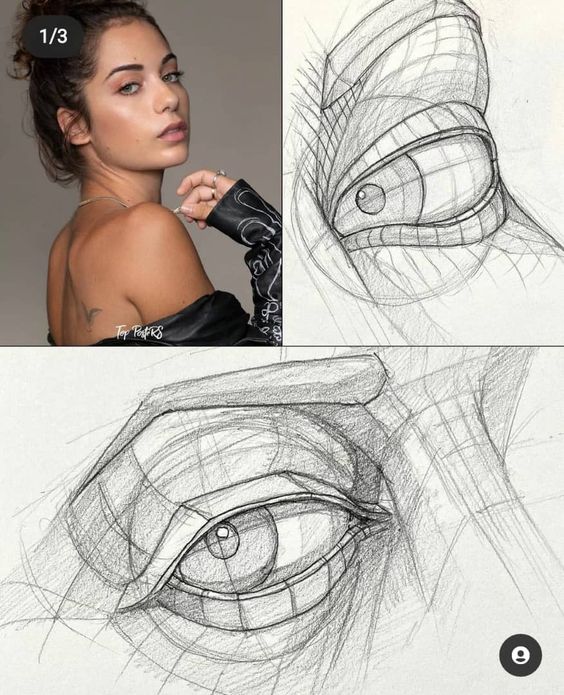
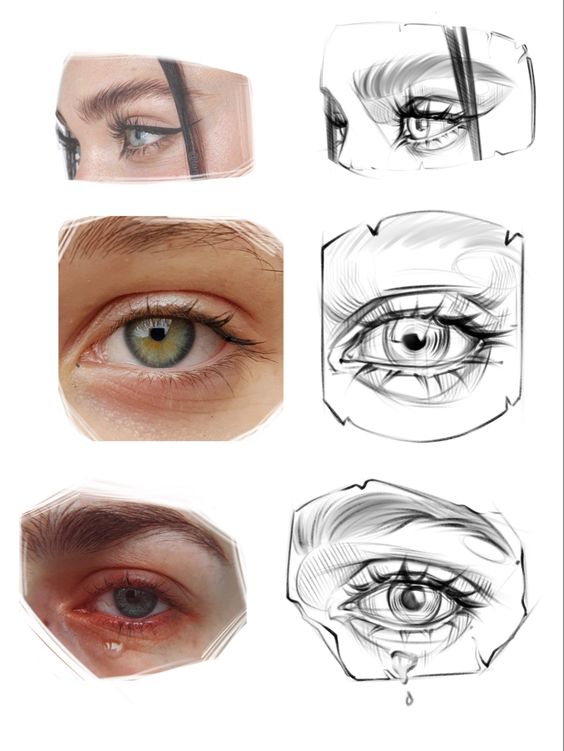
Eyes can be drawn in many styles and from various angles. Artists use different techniques to show emotion and character through eye illustrations.
Cartoon Versus Realistic Eyes
Cartoon eyes often use simple shapes and exaggerated features. They may have large pupils, thick eyelashes, or sparkles to show emotion. Realistic eyes have more detail and shading. Artists draw the iris, pupil, and sclera with careful attention to light and shadow.
Realistic eyes need precise lines and blending. Cartoon eyes can be made with basic circles and curves. Both styles can show feeling, but in different ways.
Eyes at Different Angles
Front view eyes are the easiest to draw. The eye is oval-shaped, with the iris and pupil in the center. Side view eyes show less of the eye’s round shape. Only part of the iris is visible.
Three-quarter view mixes front and side angles. It shows more of the eye’s curve than a side view. Drawing eyes from above or below changes how much of the lid and lower eye area is seen.
| Angle or expression | What changes | Drawing cue |
|---|---|---|
| Front view | Both corners and the iris are easiest to compare. | Use this for spacing practice. |
| Three-quarter view | The far eye narrows and the iris becomes slightly compressed. | Curve the lid around the head form. |
| Side view | The eye becomes a wedge with a narrow iris. | Show the cornea and lid thickness. |
| Happy | The lower lid rises and the cheeks push upward. | Let the eye opening get smaller. |
| Sad | The upper lid droops and the brows pull upward inside. | Soften the outer corner. |
| Angry | The brow presses down and the upper lid becomes sharper. | Darken the lid shadow. |
| Sleepy | The upper lid covers more of the iris. | Lower the top lid before adding lashes. |
Cultural Interpretations of Eyes
Eye shapes and styles vary in art from different cultures. Anime and manga often show large, expressive eyes. Traditional Chinese paintings may use thin, angled eye shapes.
Some cultures view certain eye colors as lucky or special. Art might highlight these traits. Native American art sometimes uses eye symbols in spiritual contexts.
Eye makeup and decorations also change how eyes are portrayed in art. Egyptian art shows eyes with dramatic eyeliner. This affects how artists draw eyes in historical or cultural scenes.
Using Color Effectively
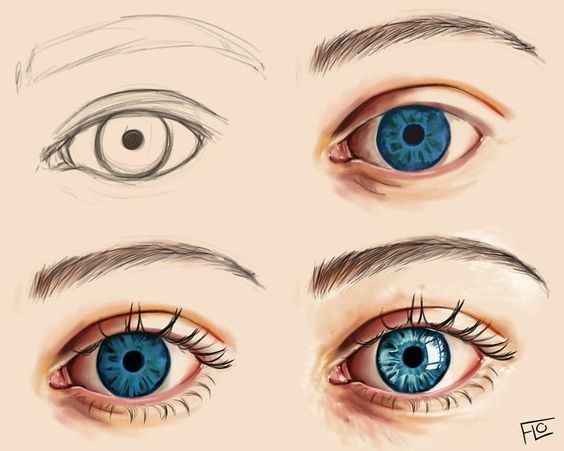
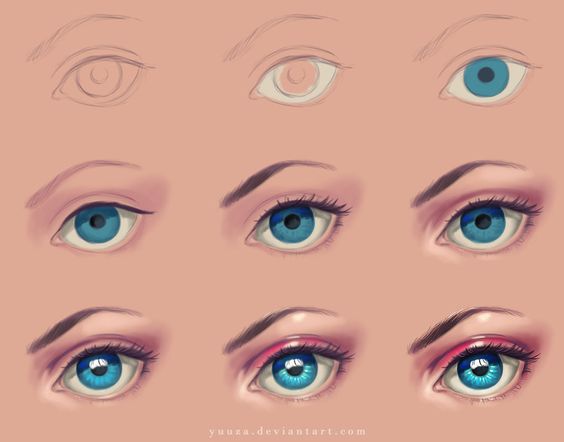
Color brings eyes to life in drawings. It adds depth, realism, and expression. The right colors make eyes pop off the page.
Choosing Color Palettes
Pick colors that match the eye’s natural tones. For blue eyes, use shades of blue, gray, and white. Brown eyes need browns, oranges, and golds. Green eyes work with greens, yellows, and browns.
Start with 3-5 main colors. Include a light, medium, and dark shade. Add 1-2 accent colors for spark.
Mix colors to create custom shades. Blend blue and brown for hazel eyes. Combine yellows and greens for cat eyes.
Layering with Colored Pencils
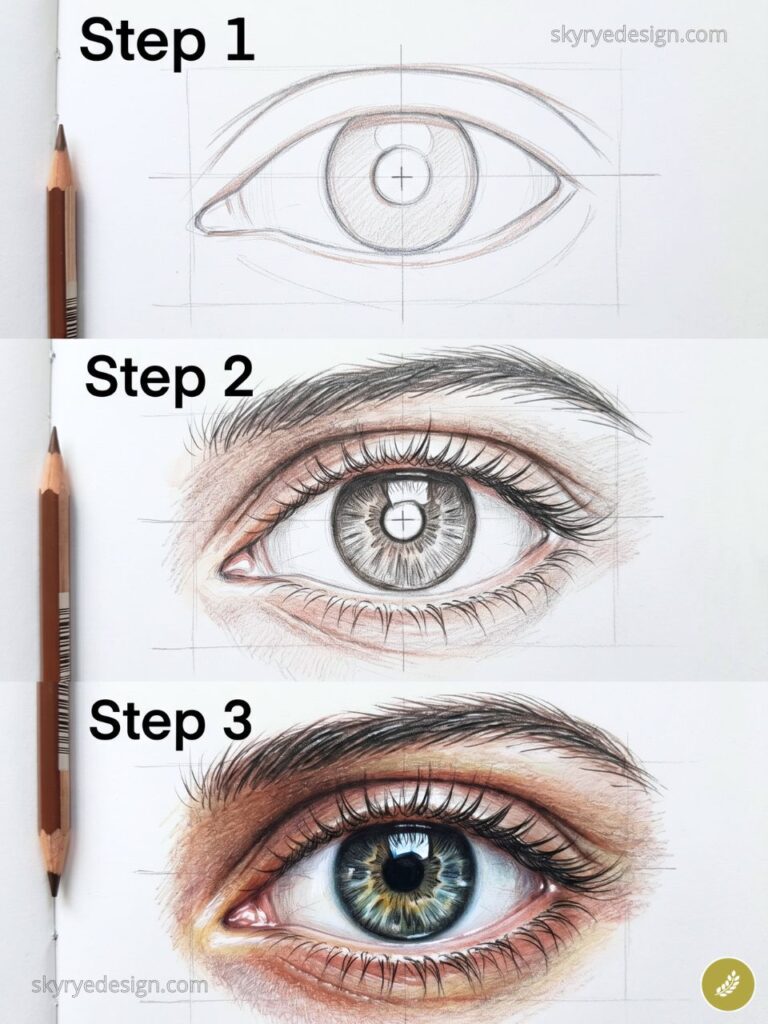
Build up color in thin layers. Start light and add darker shades slowly.
Use circular motions to blend colors smoothly. Press harder for darker areas, lighter for highlights.
Layer complementary colors to add depth. Put orange under blue irises or purple under brown.
Colored pencils work well for realistic eyes. They allow fine detail and smooth blending.
Adding Depth with Color
Use darker colors in the outer iris and pupil. This creates a 3D effect.
Add a light ring around the pupil for a lifelike glow. Use white or pale yellow.
Place highlights strategically. A small white spot shows reflected light.
Vary color intensity across the iris. Make some areas more vivid, others more muted.
Add flecks of color to mimic natural iris patterns. Use short, random strokes in accent shades.
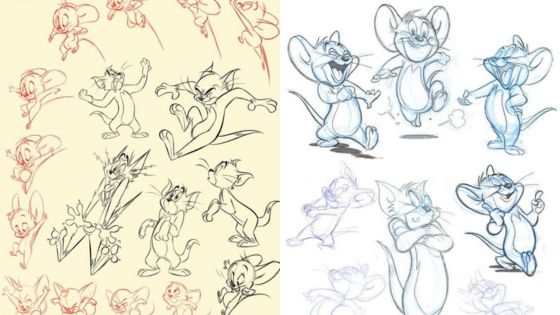
For cartoon-eye practice, try drawing Stitch’s big cartoon eyes as part of a full character sketch, then compare the highlights and spacing to realistic eye studies.
Eye drawing references worth studying
For structure, compare your sketch with Stan Prokopenko’s eye anatomy lesson and Vitruvian Studio’s notes on eye shape mistakes. Use them as reference checks, then come back to your own page and redraw the same eye with cleaner lids, softer sclera shading, and one clear highlight direction.
FAQ: how to draw eyes
Q: How to draw eyes for beginners easy?
A: Start with one simple eye shape, not the lashes. Draw a light horizontal guide, sketch an almond opening, place the iris partly under the upper lid, add the pupil, then shade the upper lid shadow. Keep the first pass pale so you can fix the proportions before adding texture, lashes, and highlights.
Q: How do you draw eyes evenly?
A: Use one long guideline through both inner corners and pupils. Leave about one eye-width of space between the two eyes, then build both eyes at the same time instead of finishing one first. Check the inner corners, outer corners, iris size, and pupil direction before you start heavy shading.
Q: How to make eyes sketch step by step?
A: Sketch the eye in passes: outer opening, iris and pupil, lid thickness, tear duct, main shadows, iris texture, then lashes and final contrast. Do not press hard in the first two passes. A clean eye sketch usually comes from correcting the big shapes early, not from adding more tiny lines later.
Q: How to draw a very good eye?
A: A good eye drawing needs structure, value, and restraint. Make the eyeball feel round, tuck the iris under the upper lid, shade the sclera lightly instead of leaving it pure white, and keep the highlight clean. The darkest darks should usually be the pupil, upper lash line, and cast shadow under the lid.
Q: What pencils are best for drawing eyes?
A: Use an HB or 2H pencil for the construction lines, a 2B for the main shadow shapes, and a 4B or softer pencil for the pupil and upper lash line. A kneaded eraser is useful for lifting highlights, and a blending stump helps soften the skin and sclera without smearing the iris texture.
Q: Why do my eye drawings look flat?
A: Most flat eye drawings have the same three problems: the sclera is left pure white, the upper lid casts no shadow, and the iris looks like a sticker on the surface. Add a light gray value to the whites, darken the upper lid shadow, and curve your shading around the eyeball.
Q: Are eyes difficult to draw?
A: Eyes feel difficult because tiny proportion errors are easy to notice. Make them easier by separating the job into passes: outline, iris, lids, shadows, texture, lashes, and final contrast. If the drawing looks wrong, check the eye opening and iris placement before adding more detail.
Related eye drawing practice
Once this eye study feels solid, move into connected portrait skills. Practice emotion with the drawing face expressions guide, check face proportion and reference habits in portrait drawing tips, and refine the brow shape with drawing eyebrows.
If you want more visual prompts first, browse eye drawing ideas and the realistic eye drawing tutorial. If you want a stylized version, keep this realistic structure in mind while studying anime eyes drawing. For more graphite practice, use pencil drawing ideas or build a loose warm-up page from sketchbook drawing ideas.

Once you master eyes that can express precise emotions, try matching them with overall character drawing ideas to give your new heroes a complete, compelling story.
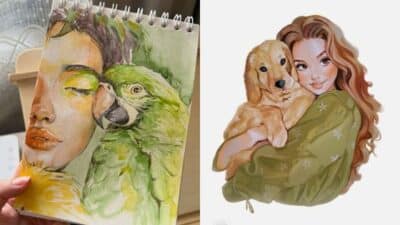
Eye studies translate beautifully into paint; these watercolor portrait techniques show why the darkest accents around the eye must be placed carefully.
Related realism study: When you practice realistic eyes, Marco Grassi hyperrealism is a useful painted reference because the gaze stays sharp while the surrounding skin and hair remain soft.
Once you understand basic eye placement, try an anime character drawing easy drill that combines eyes with a simple face, hair silhouette, and shoulders.
- 13.1Kshares
- Facebook0
- Pinterest13.1K
- Twitter1
- Reddit0