The best sketchbooks for artists are not all trying to do the same job. A graphite portrait study, a waterproof ink sketch, a marker thumbnail, and a watercolor wash all ask different things from paper. If the paper is wrong, the drawing fights back: pencil gets waxy, ink feathers, marker bleeds, watercolor buckles, and the page starts looking tired before the idea is finished.
So this guide is not just a list of pretty blank books. It is a practical way to choose a sketchbook by medium, paper feel, binding, size, and how you actually draw. When I buy sketchbooks, I start with one question: what mark will touch this paper most often? Graphite needs tooth. Ink needs control. Watercolor needs weight. Daily practice needs enough pages that I am not afraid to make ugly drawings.
Here are 10 sketchbooks for artists worth considering in 2026, with clear use cases instead of vague praise.
Quick comparison: 10 best sketchbooks for artists
| Sketchbook | Best for | Main reason to choose it |
| Strathmore 400 Series Sketch | Beginners, graphite, charcoal | Fine-tooth dry-media paper with lots of practice pages |
| Moleskine Art Collection Sketchbook | Everyday carry, travel, ink notes | Hardcover book format that feels polished and portable |
| Stillman & Birn Beta Series | Mixed media and watercolor | Extra-heavy cold-press paper for wet and dry media |
| Canson XL Mixed Media | Budget mixed media | Affordable paper for experiments and light washes |
| Hahnemuhle Nostalgie | Pencil and ink line work | Smooth, controlled surface for clean drawings |
| Leuchtturm1917 Sketchbook | Design ideas and notes | 150 gsm drawing paper in a project-friendly hardcover |
| Bee Paper Aquabee Super Deluxe | Wet and dry practice | Flexible option for artists who change media often |
| Etchr Mixed Media Sketchbook | Watercolor travel work | Built for wet sketching outside the studio |
| Pentalic Traveler Pocket Sketchbook | Pocket drawing | Small enough to keep with you |
| Arteza Mixed Media Sketchbook | Daily practice volume | Good for prompts, tests, and 30-day challenges |
1. Strathmore 400 Series Sketch – best beginner sketchbook
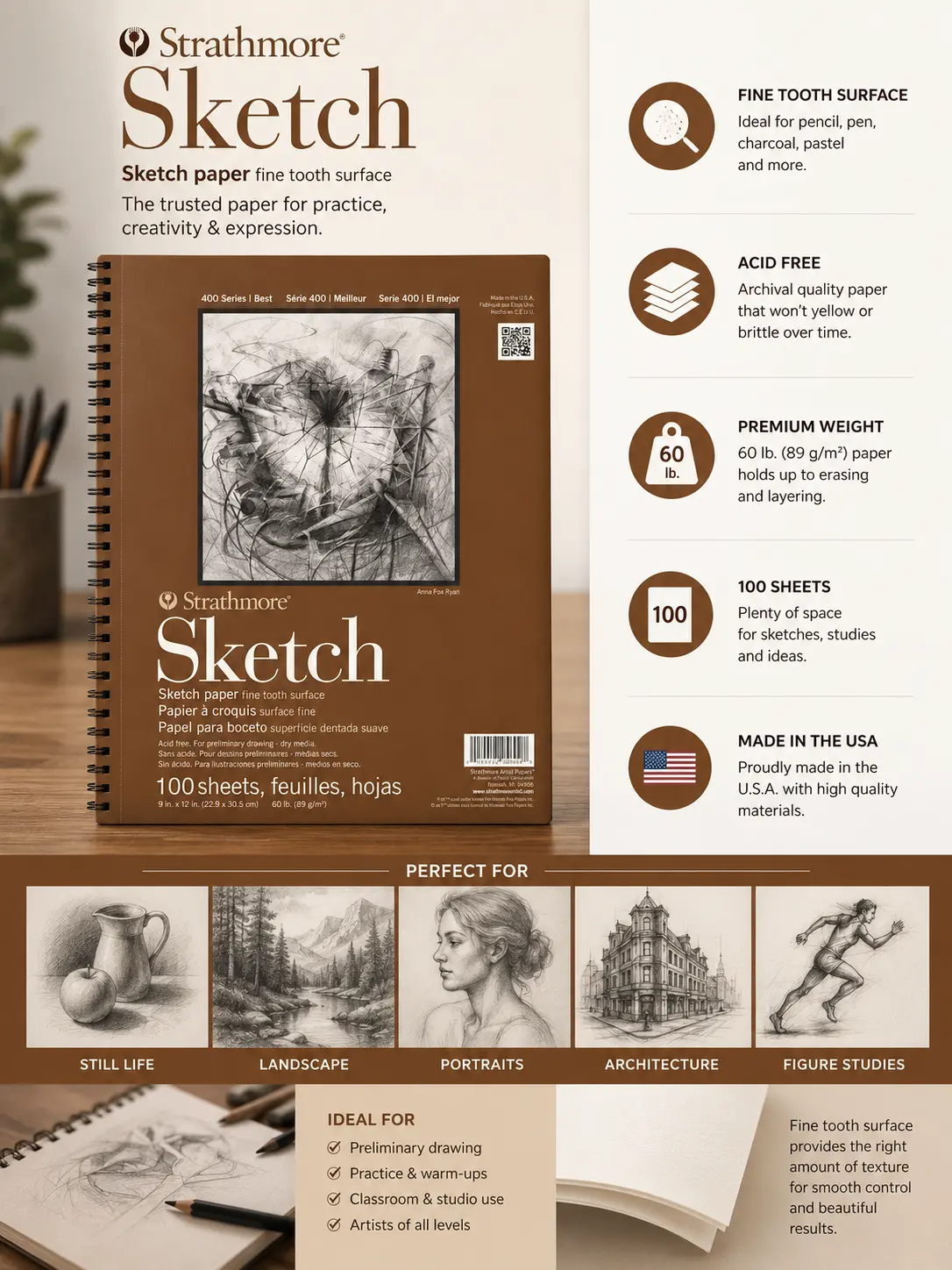
Best for: Graphite, charcoal, colored pencil, quick studies, and everyday practice.
Strathmore 400 Series Sketch is the pick here. This is the book I would hand to someone who wants to draw more but is afraid of wasting good paper. The fine-tooth 89 gsm paper has enough grip for pencil and charcoal, the spiral binding lies flat, and the page count encourages volume. That matters. Beginners improve faster when the book feels usable, not precious.
Watch out: It is not a watercolor sketchbook. Light marker tests and tiny washes are fine, but wet pages will wrinkle.
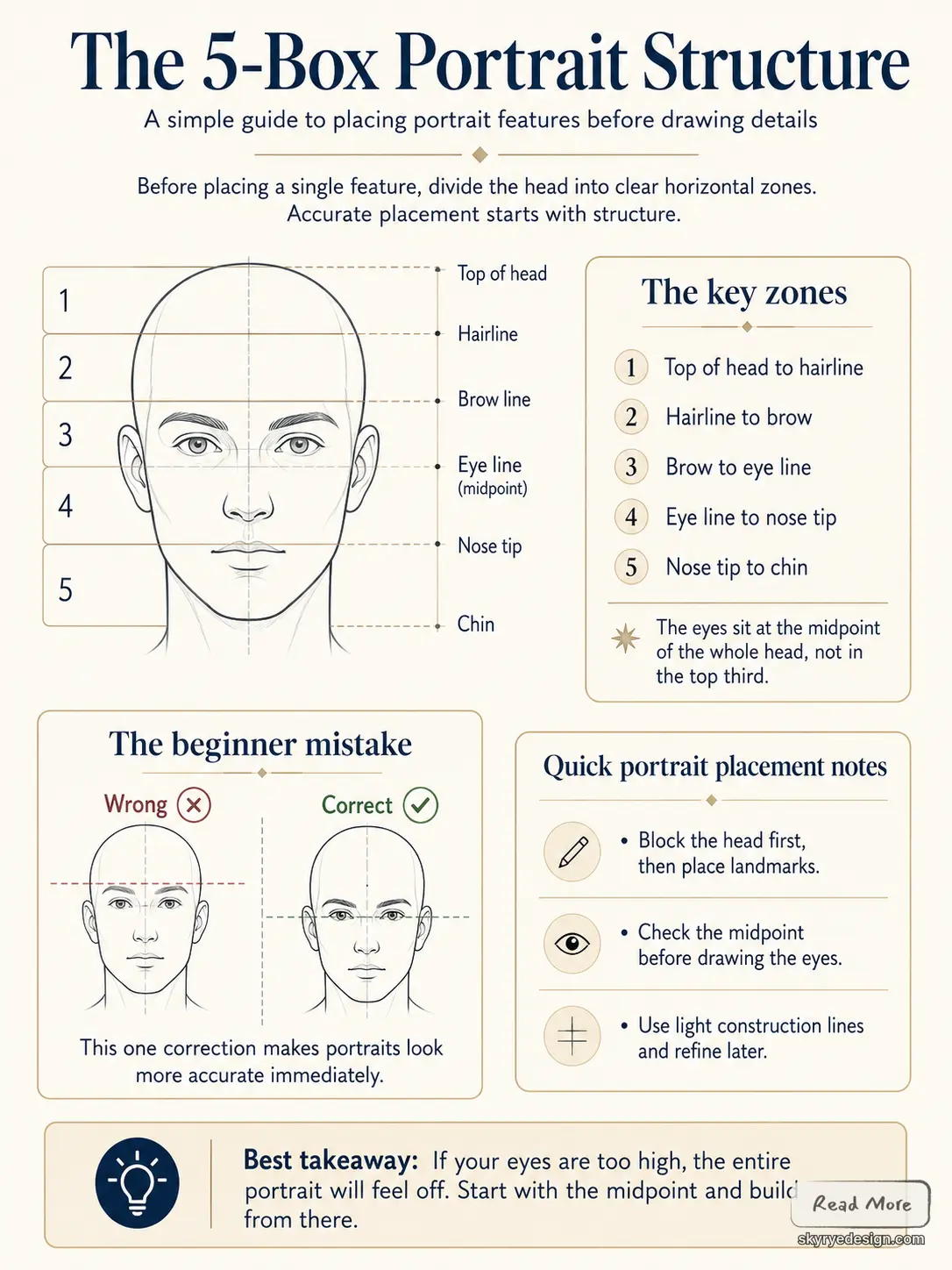
Use it for: Portrait structure, gesture warm-ups, value scales, figure studies, and loose thumbnail pages.
2. Moleskine Art Collection Sketchbook – best everyday hardcover
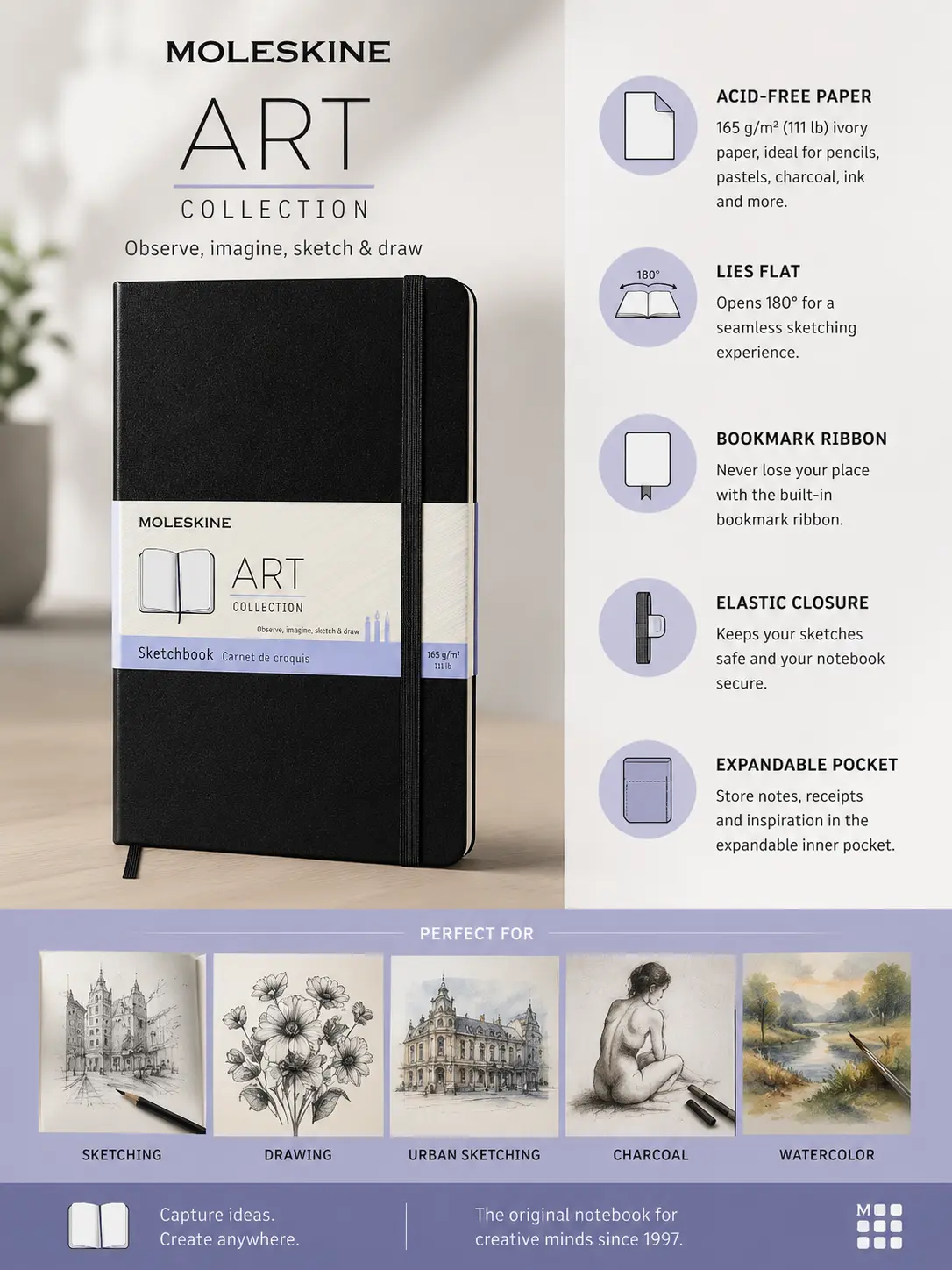
Best for: Daily carry, travel notes, ink sketches, design ideas, and clean presentation.
Moleskine Art Collection Sketchbook is the pick here. Moleskine works when you want one tidy book that can live in a bag without falling apart. The hard cover, elastic band, bookmark, and compact formats make it feel more like a working visual journal than a disposable pad. I like it for ideation pages: product silhouettes, small architecture notes, and quick ink studies.
Watch out: It is not my first pick for heavy watercolor. Treat it as an everyday art notebook, not a wet-media tank.
Use it for: Urban sketching, product thumbnails, cafe sketches, small studies, and travel pages.
3. Stillman & Birn Beta Series – best mixed media sketchbook
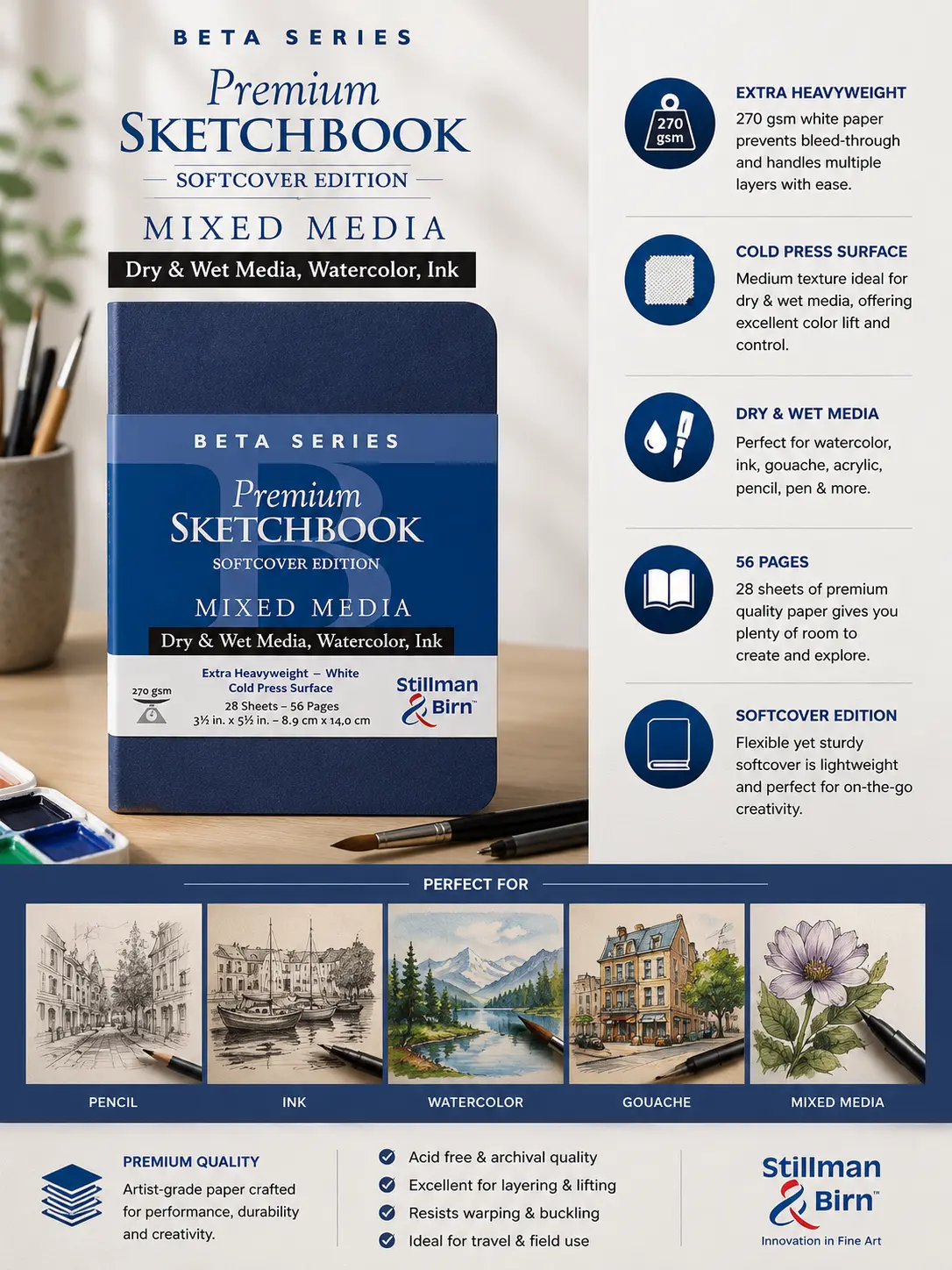
Best for: Ink, watercolor, gouache, colored pencil, brush pen, and mixed media pages.
Stillman & Birn Beta Series is the pick here. This is the sketchbook to buy when paper failure is annoying you. The Beta Series uses extra-heavy 270 gsm cold-press mixed media paper, so it can take wet and dry media far better than a regular sketch pad. If you like ink line with watercolor wash over it, this is the safest pick in the list.
Watch out: The paper is heavier, so you get fewer pages and a thicker book. Use it for finished studies, not throwaway scribbles.
Use it for: Botanical ink-and-wash studies, character color tests, plein air thumbnails, and layered mixed media pages.
4. Canson XL Mixed Media – best budget mixed media sketchbook
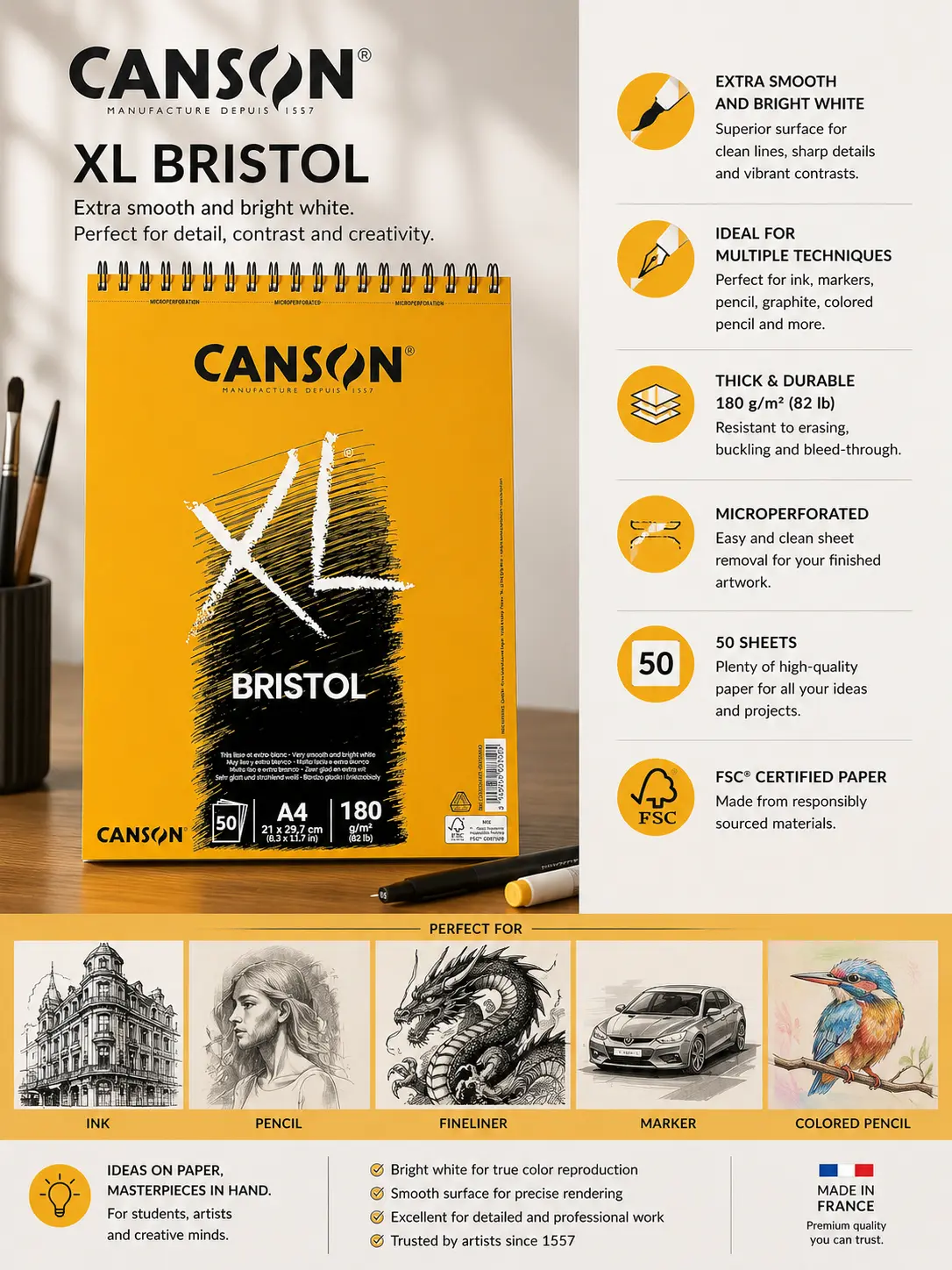
Best for: Students, experiments, ink, light watercolor, gouache tests, and messy practice.
Canson XL Mixed Media is the pick here. Canson XL Mixed Media is the practical choice when you want to experiment without mentally calculating the cost of each page. The paper is heavier than standard sketch paper and forgiving enough for light wet media. It is especially useful for learning what your markers, pens, and washes actually do before you move to a nicer book.
Watch out: It can still buckle with heavy water. Use controlled washes, not full watercolor painting behavior.
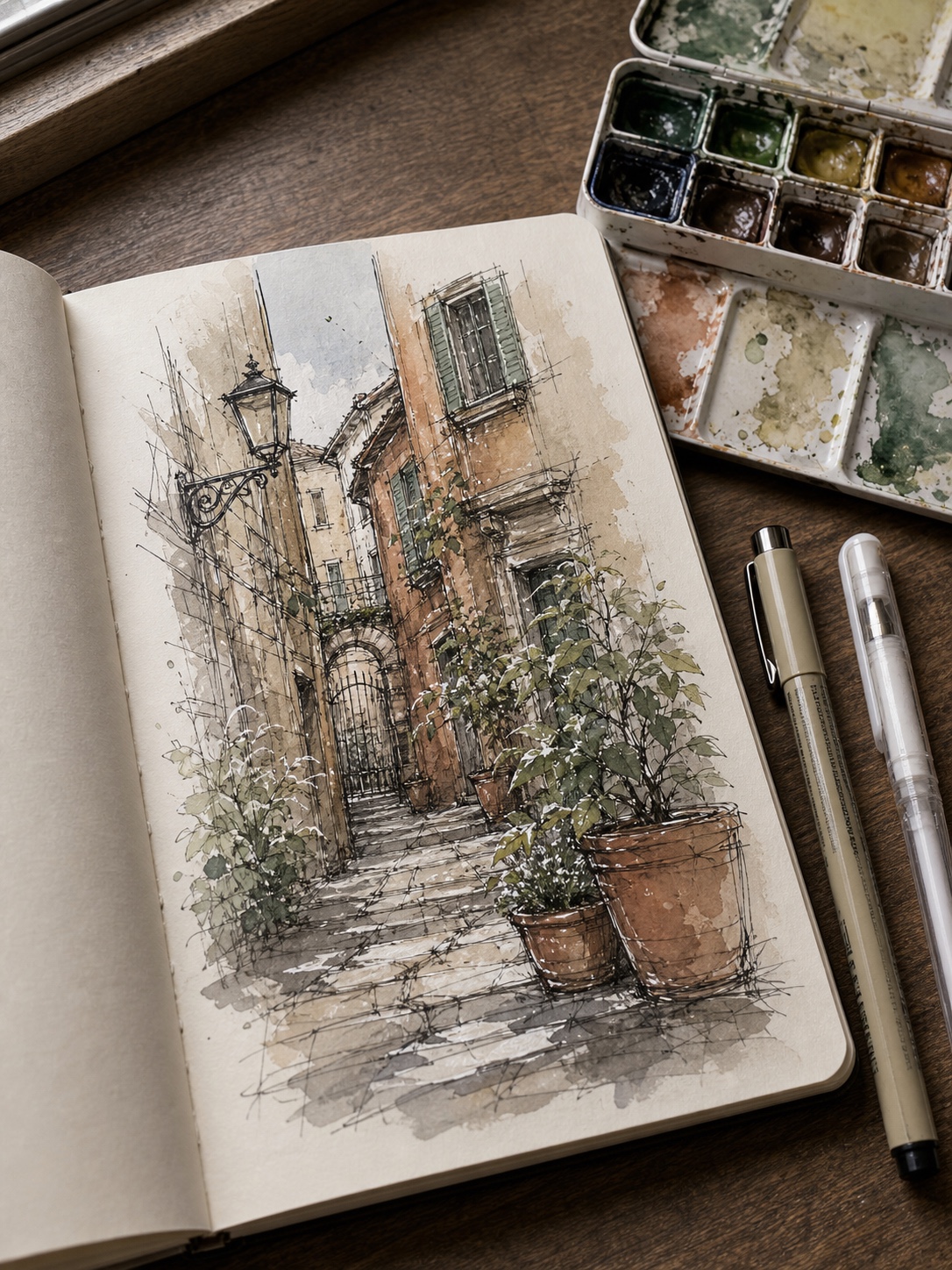
Use it for: Color swatches, mixed media tests, brush pen studies, thumbnail grids, and quick composition pages.
5. Hahnemuhle Nostalgie Sketch Book – best for pencil and ink line work
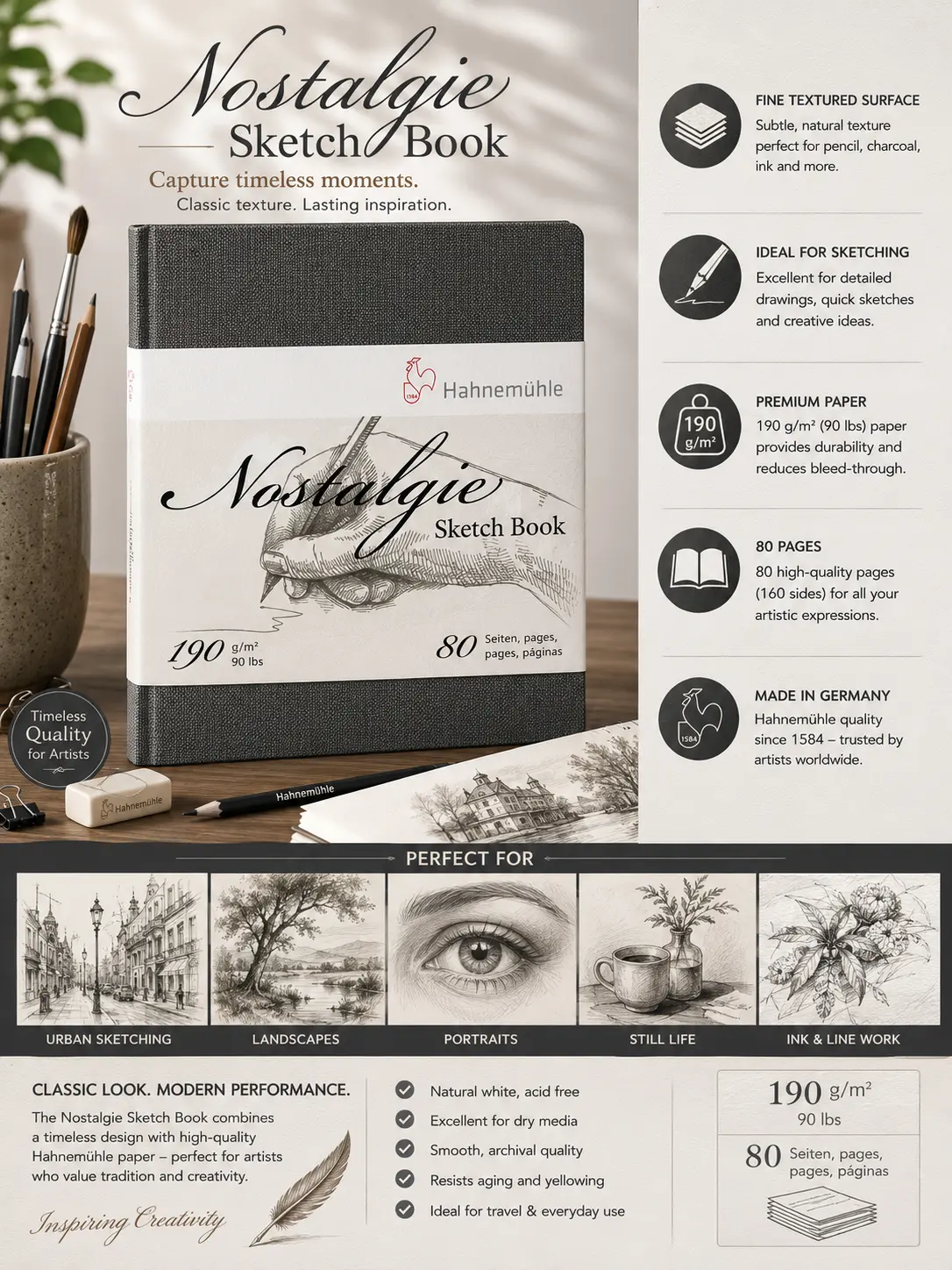
Best for: Clean pencil drawings, fineliner work, controlled shading, and precise studies.
Hahnemuhle Nostalgie Sketch Book is the pick here. Nostalgie is the kind of sketchbook that rewards a careful hand. The surface feels smoother and more refined than rough student paper, so it is good for clean contour, portrait studies, and ink lines that need to stay crisp. If your drawing style is controlled rather than messy, this kind of paper makes sense.
Watch out: Smooth paper can make charcoal feel slippery. If you love aggressive tooth, choose Strathmore or a toned pad instead.
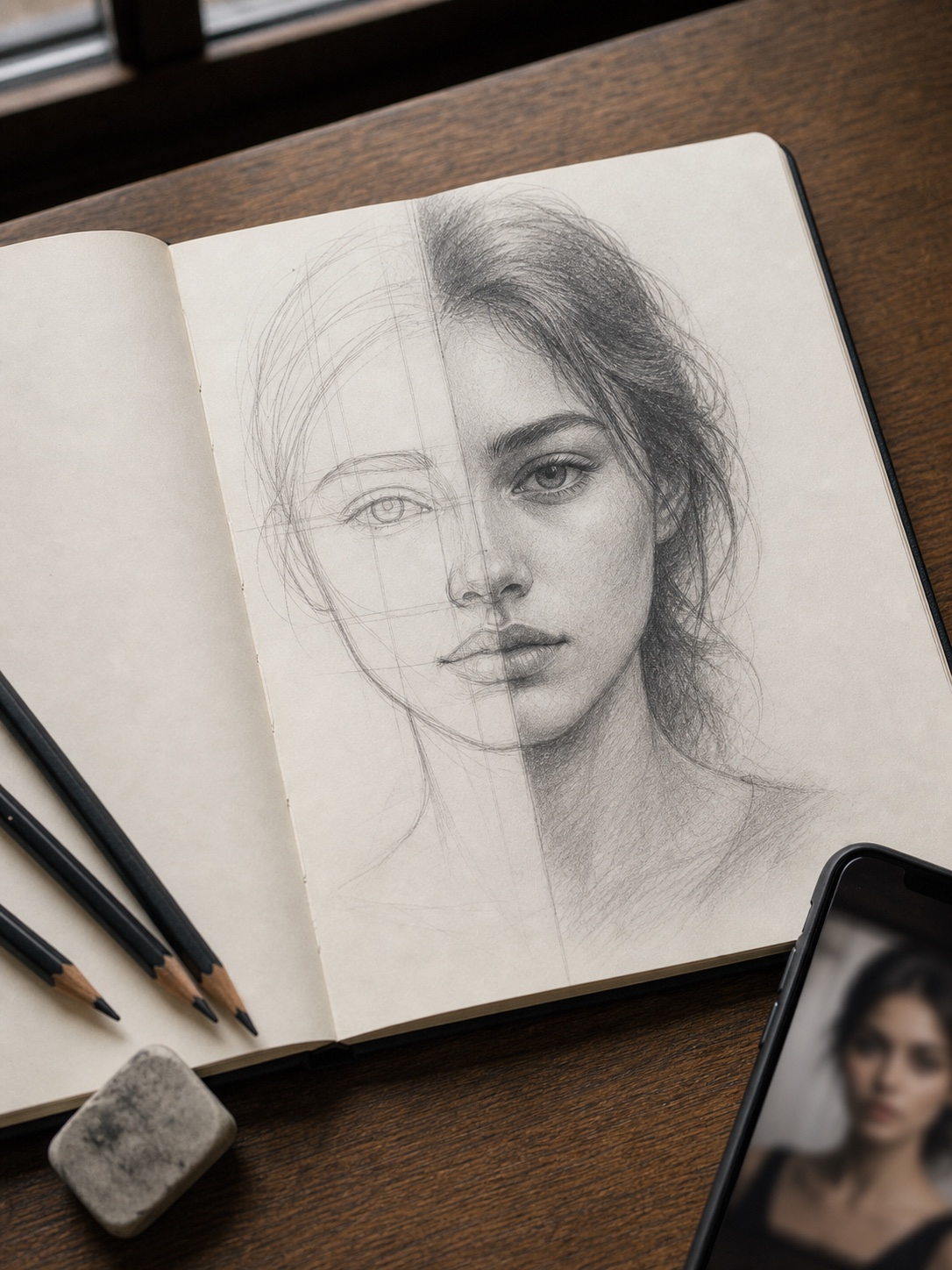
Use it for: Portrait construction, pen studies, master copies, hand studies, and neat visual notes.
6. Leuchtturm1917 Sketchbook – best sketchbook for ideas and notes
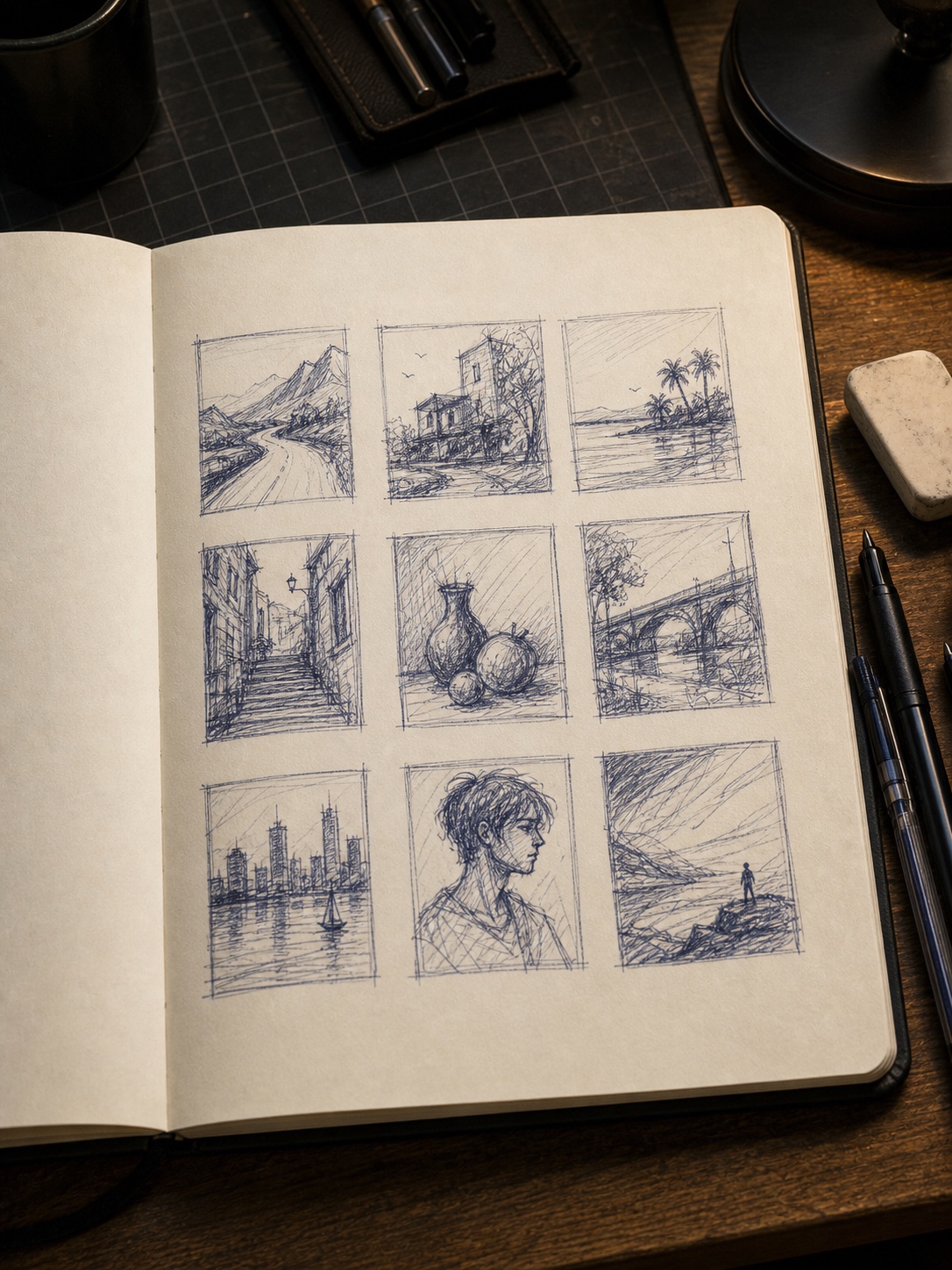
Best for: Design thinking, annotated sketches, project notes, thumbnails, and travel ideas.
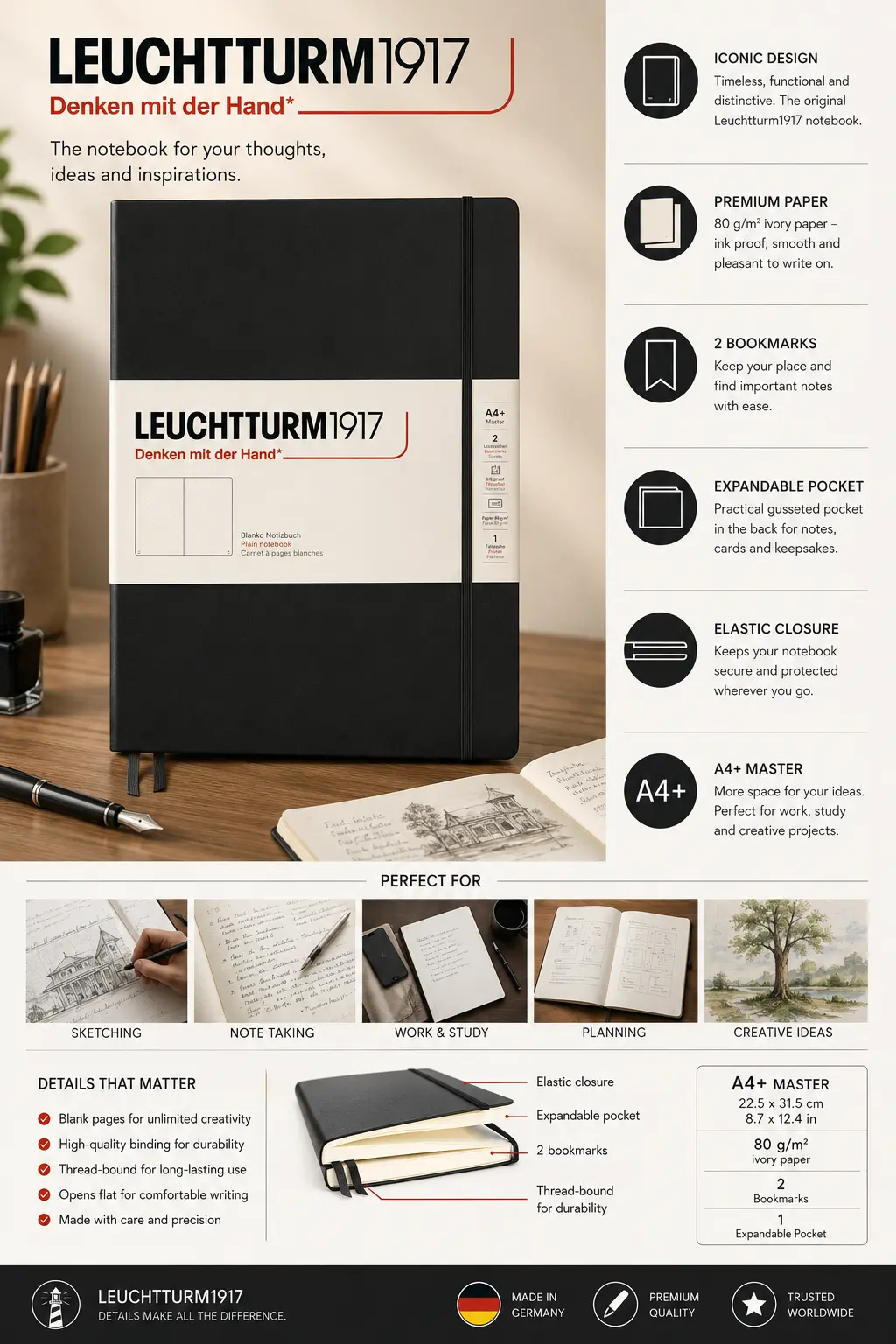
Leuchtturm1917 Sketchbook is the pick here. Leuchtturm1917 is a strong pick when your sketchbook is half drawing book and half thinking tool. The hardcover format, flat-opening binding, pocket, marker ribbon, and 150 gsm drawing paper make it useful for designers who mix sketches with notes. I would use it for concept development more than messy media testing.
Watch out: If you only want cheap practice pages, this may feel too polished. It is better as a project book.
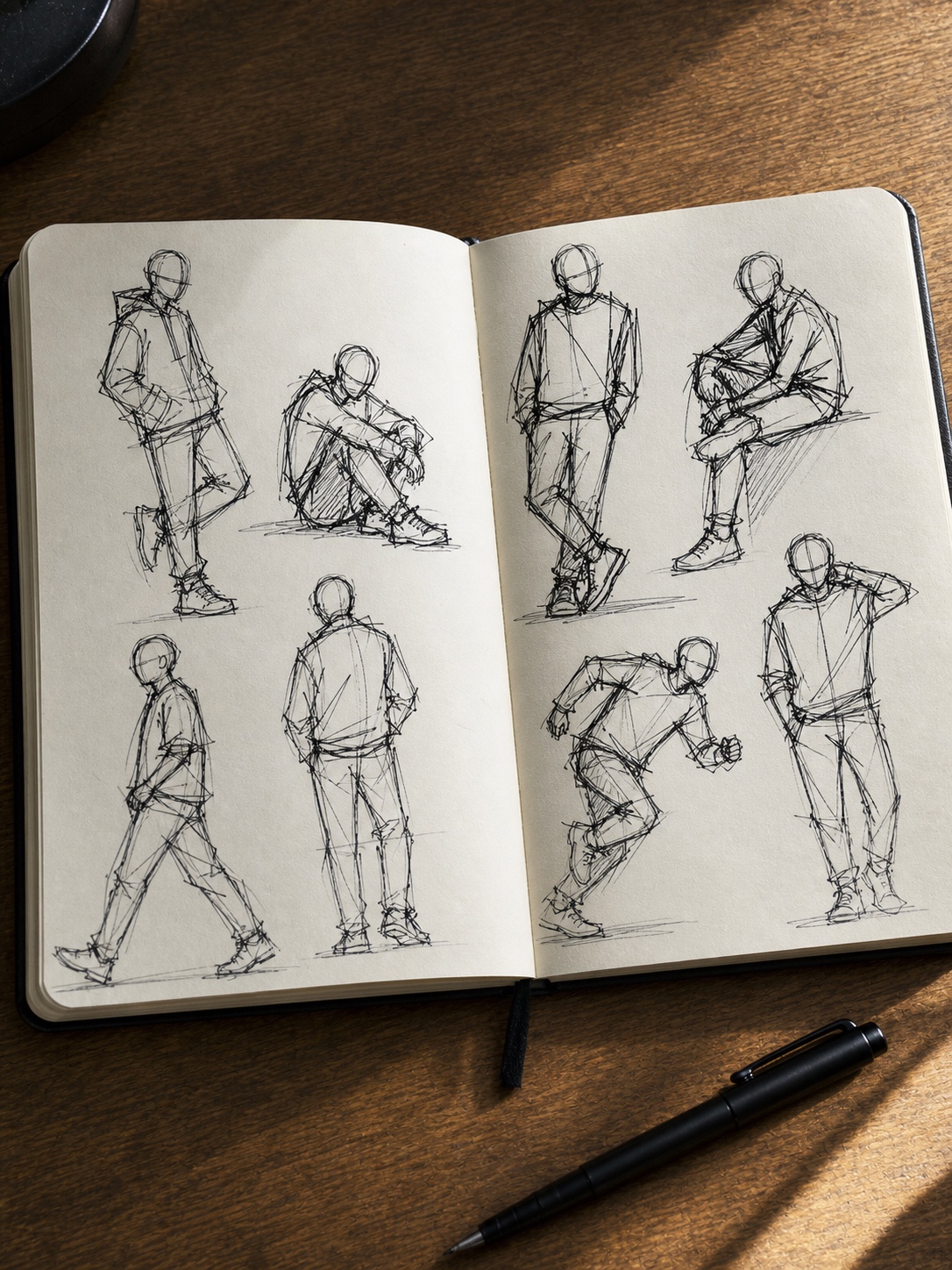
Use it for: Thumbnail grids, architecture notes, product concepts, visual journaling, and planning pages.
7. Bee Paper Aquabee Super Deluxe – best wet-and-dry value
Best for: Artists who bounce between pencil, ink, marker, light wash, and colored pencil.
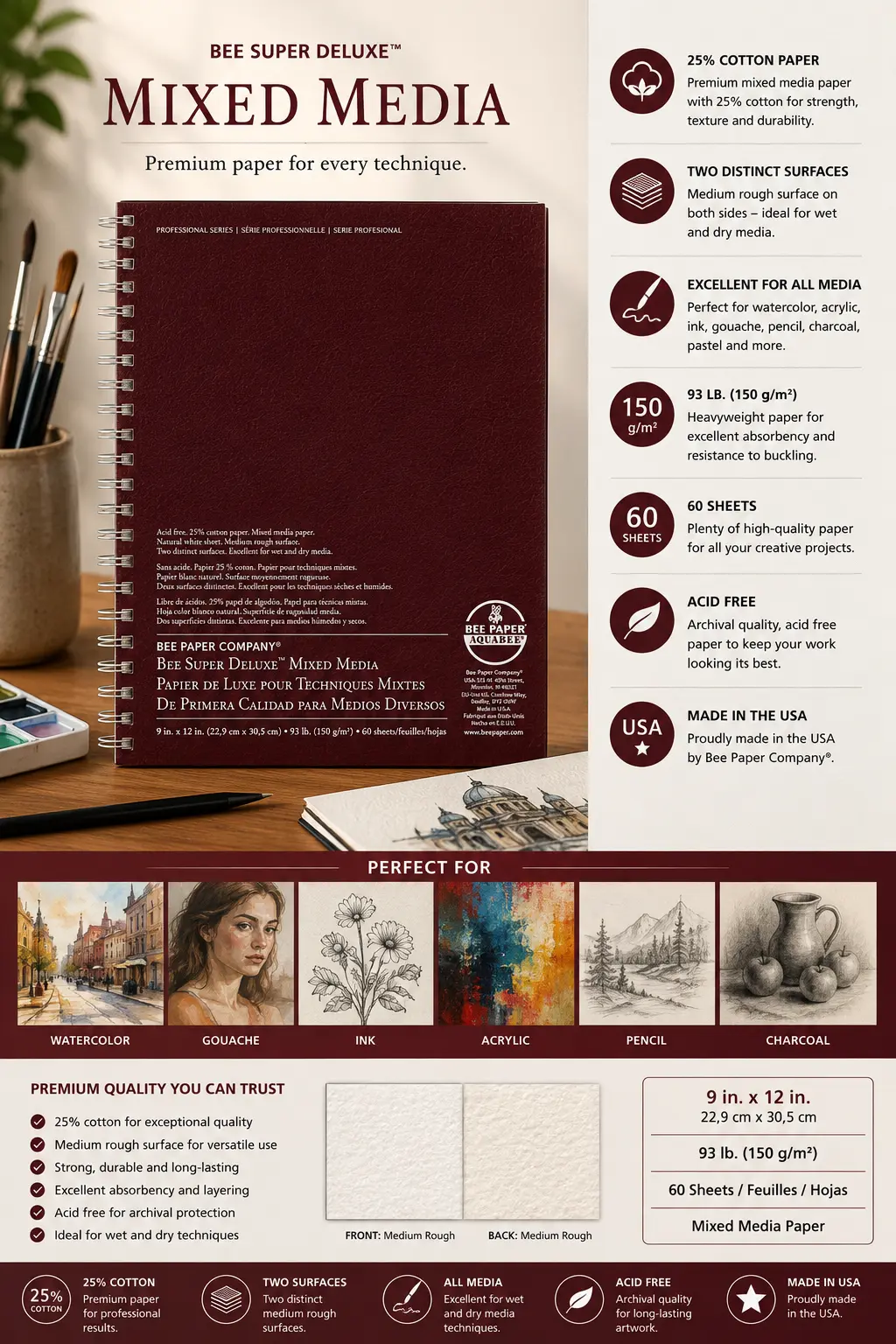
Bee Paper Aquabee Super Deluxe is the pick here. Aquabee is useful when you do not want to commit to one medium. It has a reputation as a flexible wet-and-dry sketchbook: strong enough for experiments, but not so precious that you avoid using it. For students and illustrators who test ideas quickly, that balance is the point.
Watch out: Buy the format that matches your habits. A huge book is useless if it stays on the desk while you draw somewhere else.
Use it for: Illustration roughs, marker tests, ink drawings, color studies, and mixed sketchbook pages.
8. Etchr Mixed Media Sketchbook – best watercolor travel sketchbook
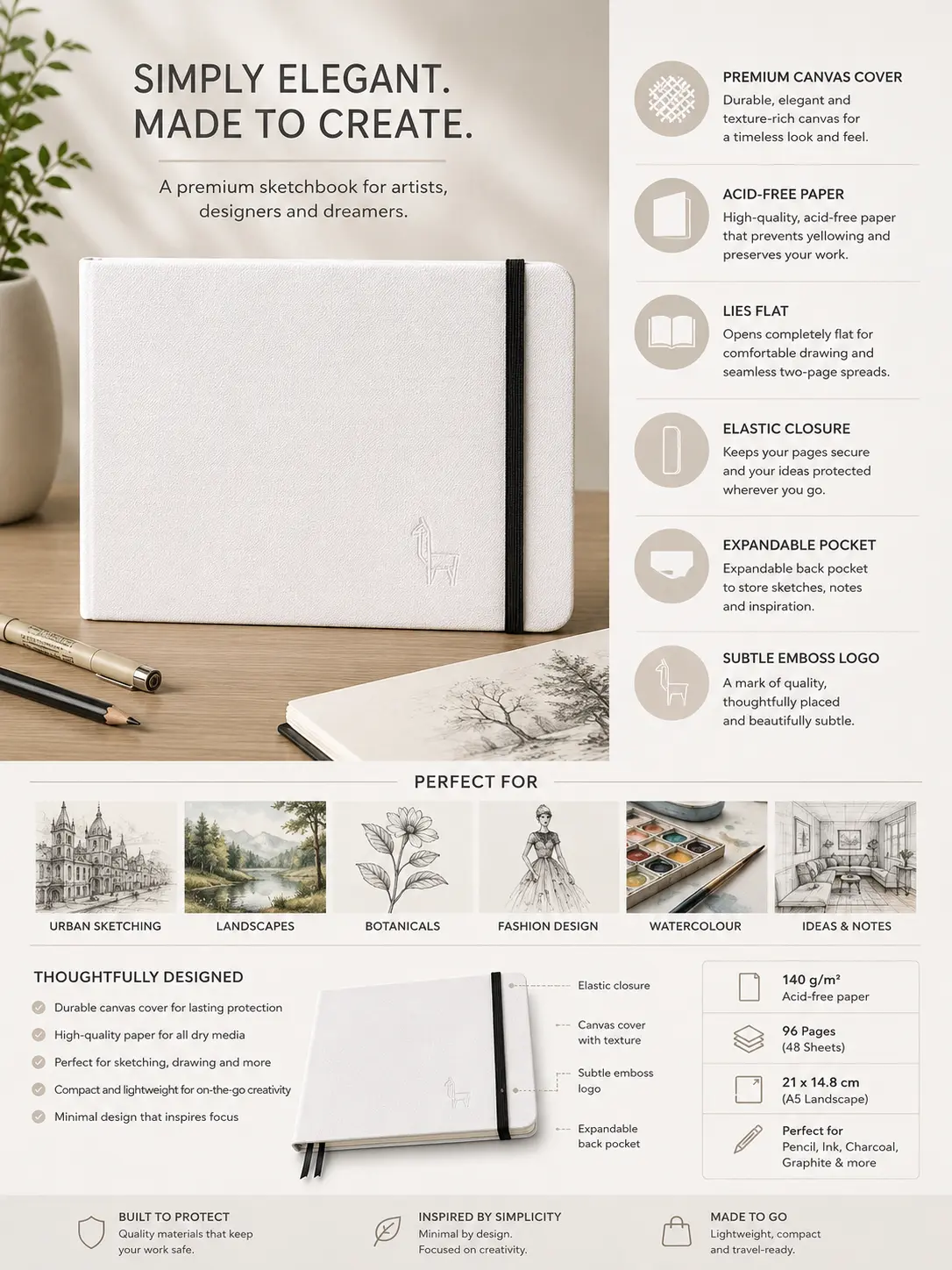
Best for: Travel watercolor, ink-and-wash, plein air color notes, and compact finished studies.
Etchr Mixed Media Sketchbook is the pick here. Etchr sketchbooks are built for artists who actually paint in the book. If you want to carry watercolor, a water brush, and a fineliner outside, this is the kind of sketchbook that makes sense. The stronger paper lets you work slower, lift a little, and build color without the page giving up immediately.
Watch out: It is overkill for pencil-only practice. Save this one for pages where water matters.
Use it for: Travel landscapes, botanical color notes, cafe scenes, architecture washes, and small finished studies.
9. Pentalic Traveler Pocket Sketchbook – best pocket sketchbook
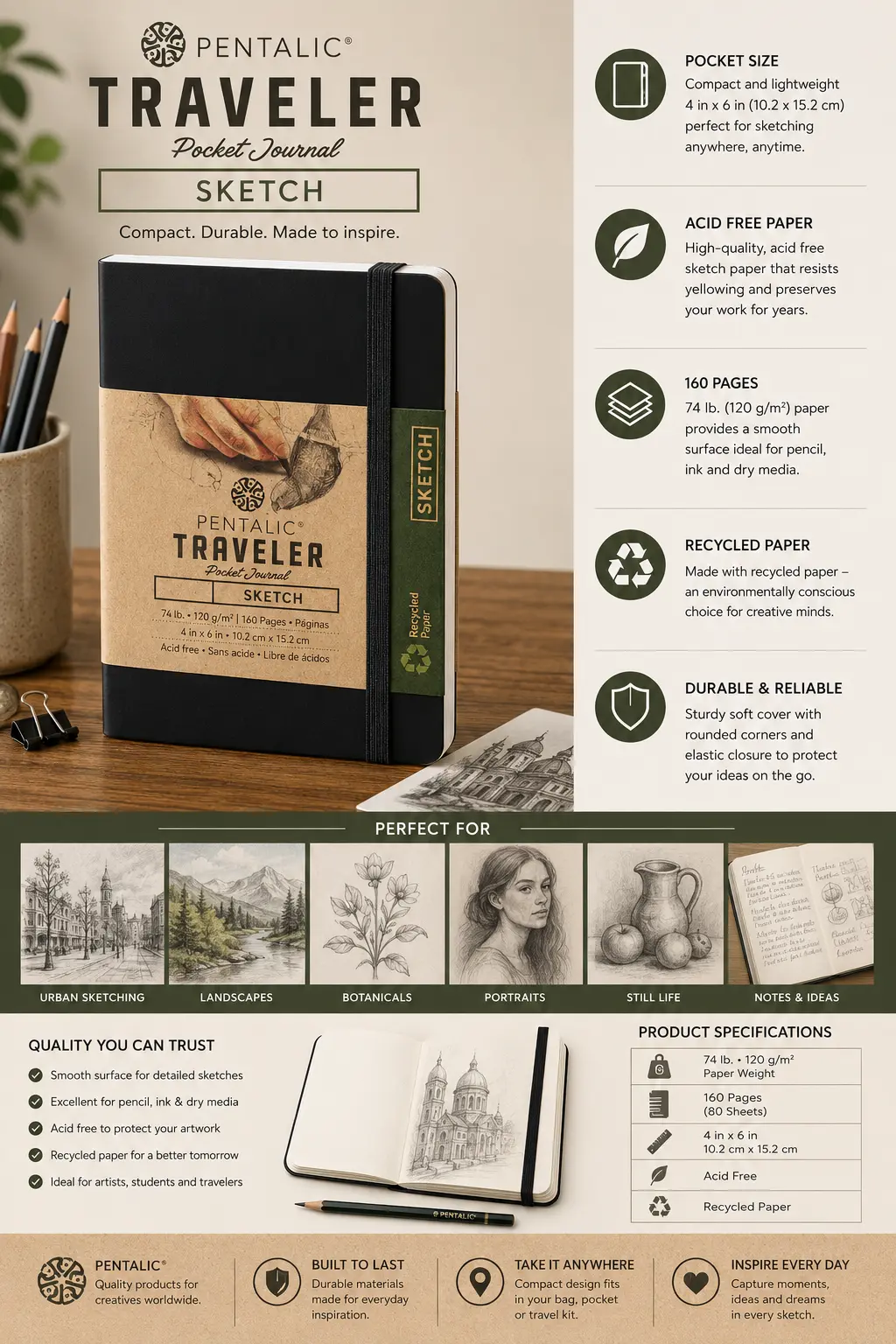
Best for: Commuting, cafes, quick observation, memory sketching, and tiny daily pages.
Pentalic Traveler Pocket Sketchbook is the pick here. A pocket sketchbook solves a different problem: availability. The best paper in the world cannot help if it is at home. A small traveler book lets you catch silhouettes, room corners, cars, hands, street furniture, and memory sketches in the gaps of the day.
Watch out: Small pages can make you draw stiffly. Use the format for quick information, not full polished drawings.
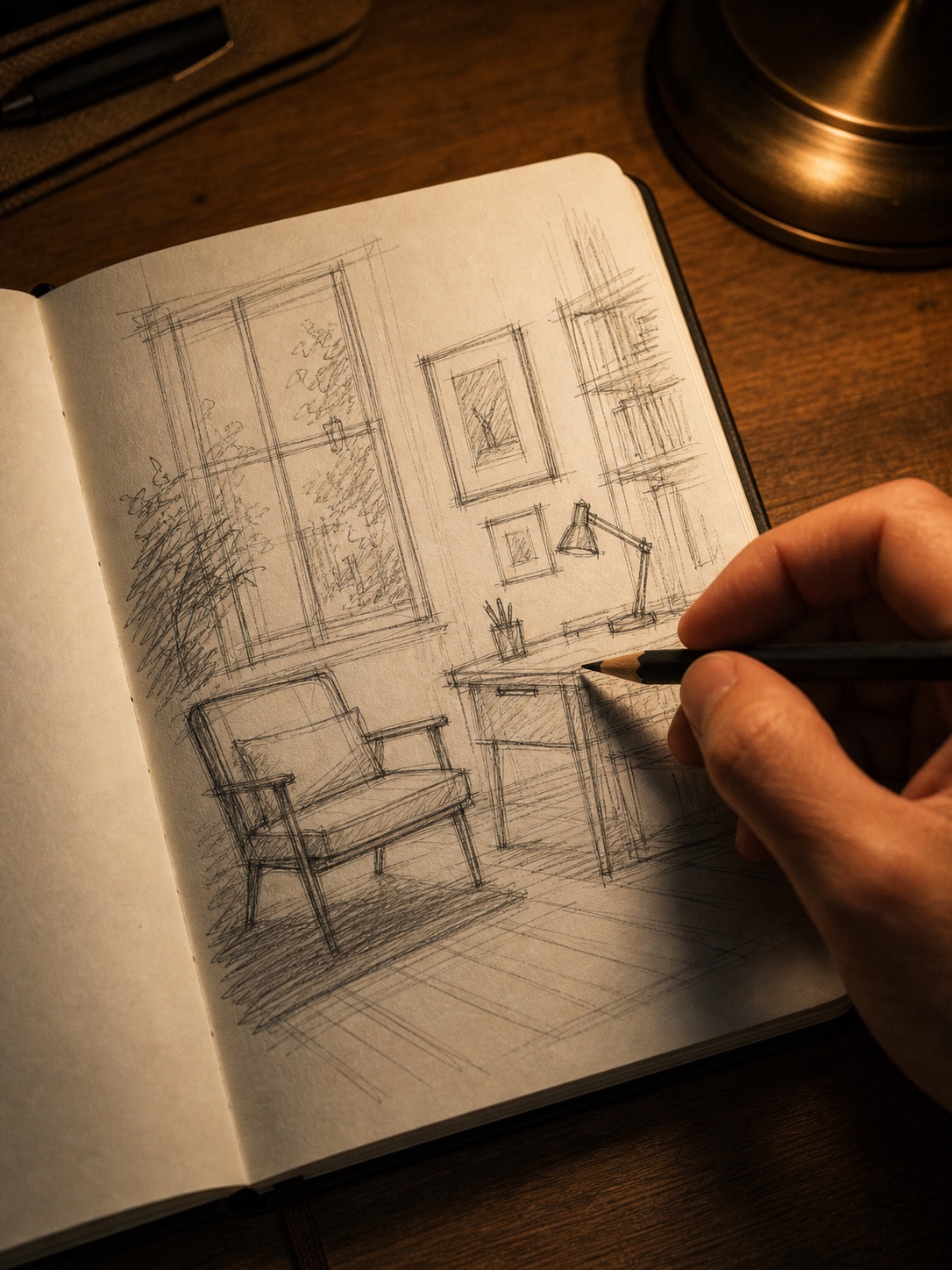
Use it for: Memory sketching, quick people studies, object notes, travel thumbnails, and daily drawing streaks.
10. Arteza Mixed Media Sketchbook – best affordable practice stack
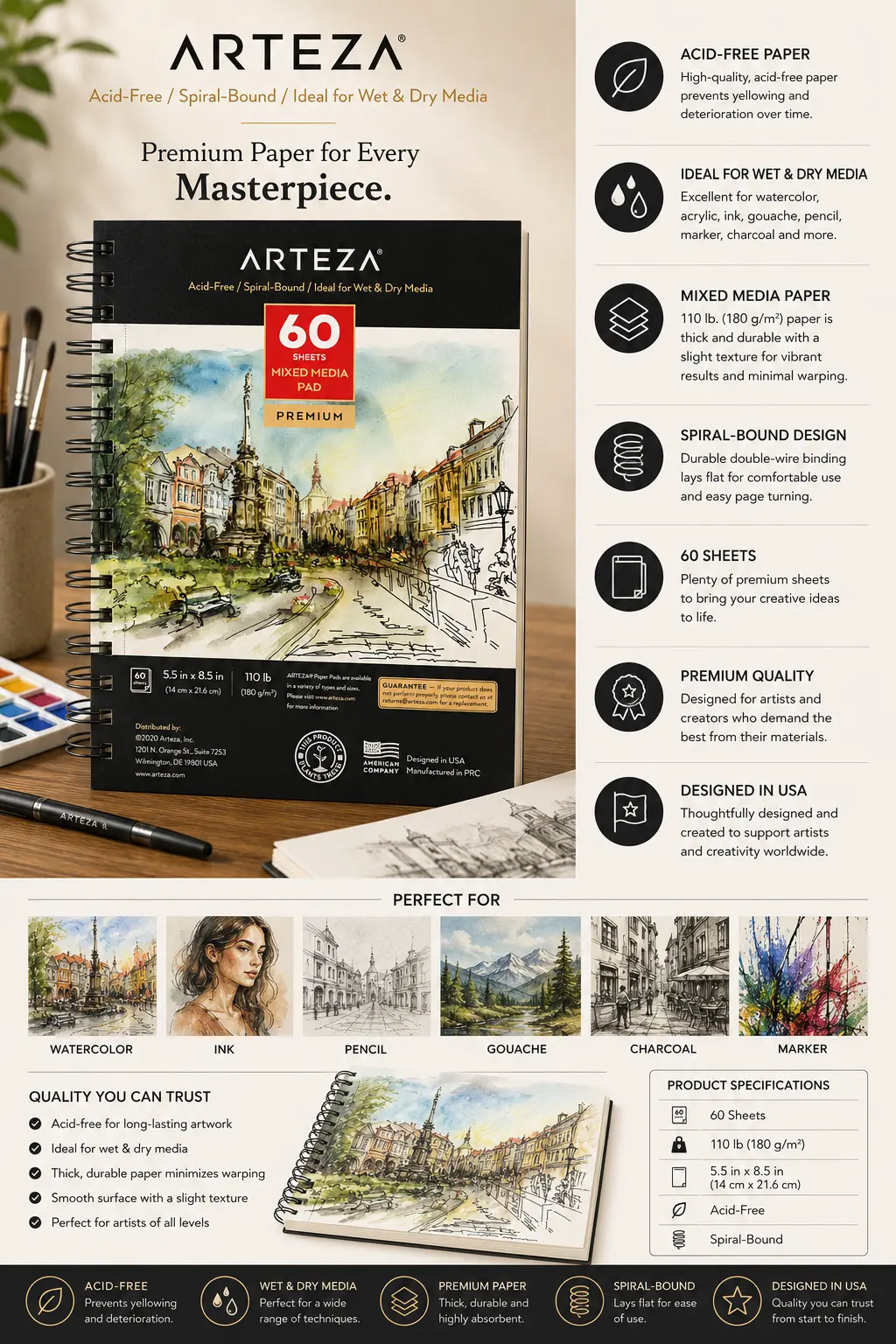
Best for: High-volume practice, classroom work, experiments, prompts, and 30-day challenges.
Arteza Mixed Media Sketchbook is the pick here. Sometimes the best sketchbook is the one you can fill without hesitation. Arteza mixed media books are easy to find in multi-packs, which makes them useful for challenges, student work, and testing materials. I would not treat them as luxury books. I would treat them as pages you are allowed to use.
Watch out: Quality can vary by format, so check the paper weight and size before buying.
Use it for: Daily prompts, warm-ups, thumbnails, color tests, and sketchbook habit building.
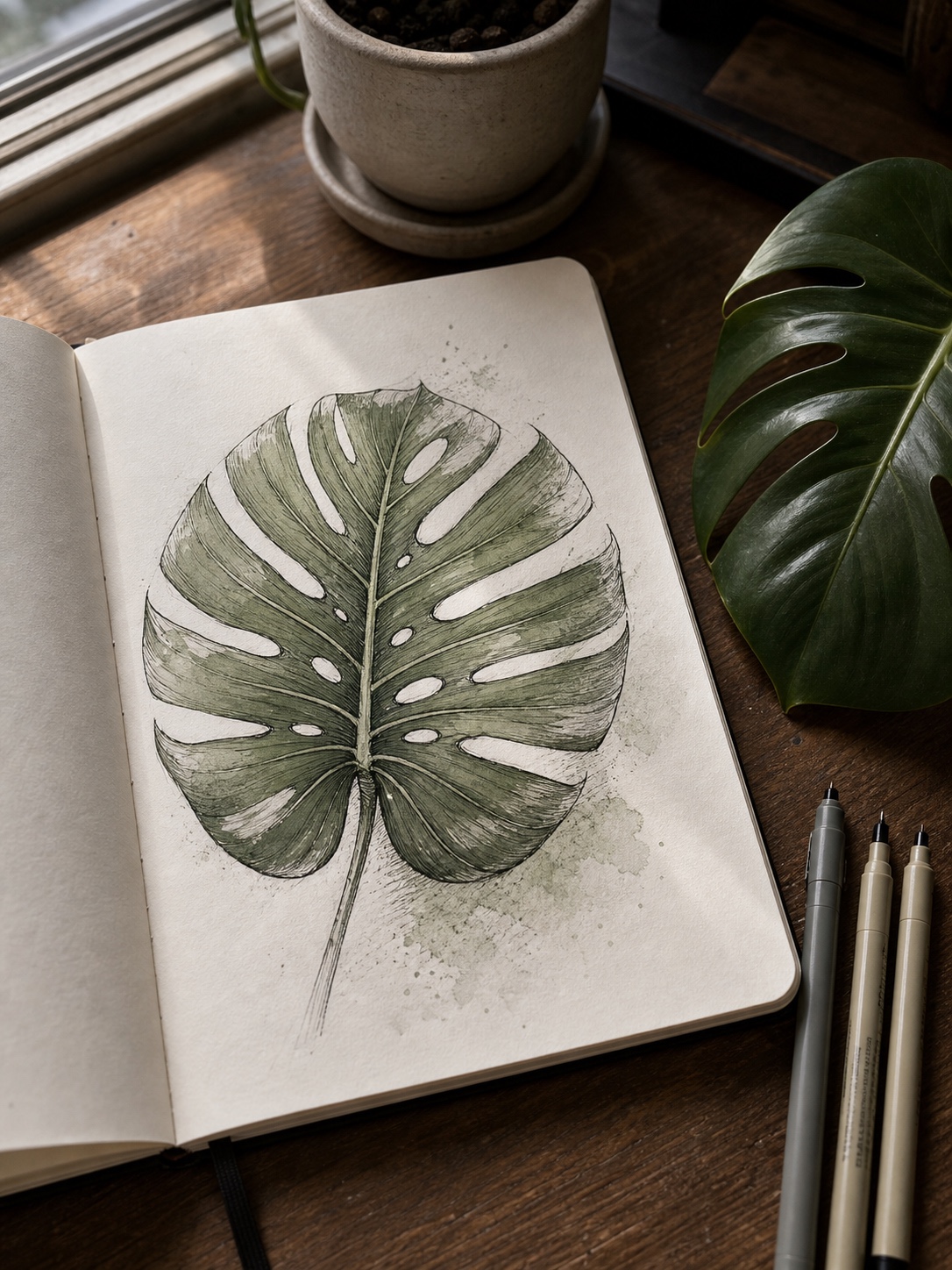
How to choose a sketchbook without wasting money
Do not start with the brand. Start with the medium. A beautiful hardcover book with the wrong paper is still the wrong book. If you draw mostly in pencil, you need tooth and enough pages. If you use ink, you need paper that does not feather. If you use watercolor, you need weight. If you use markers, you need to expect bleed-through or choose marker paper instead of pretending a normal sketchbook will behave.
- For graphite: choose fine tooth, not slick paper. You want the pencil to build value instead of sliding.
- For ink: choose smoother paper with decent sizing so lines stay crisp.
- For watercolor: choose mixed media or watercolor paper. Regular sketch paper will buckle.
- For markers: test the back of the page first. Alcohol markers bleed through many sketchbooks.
- For travel: choose the size you will actually carry. A perfect A4 book at home is not a travel sketchbook.
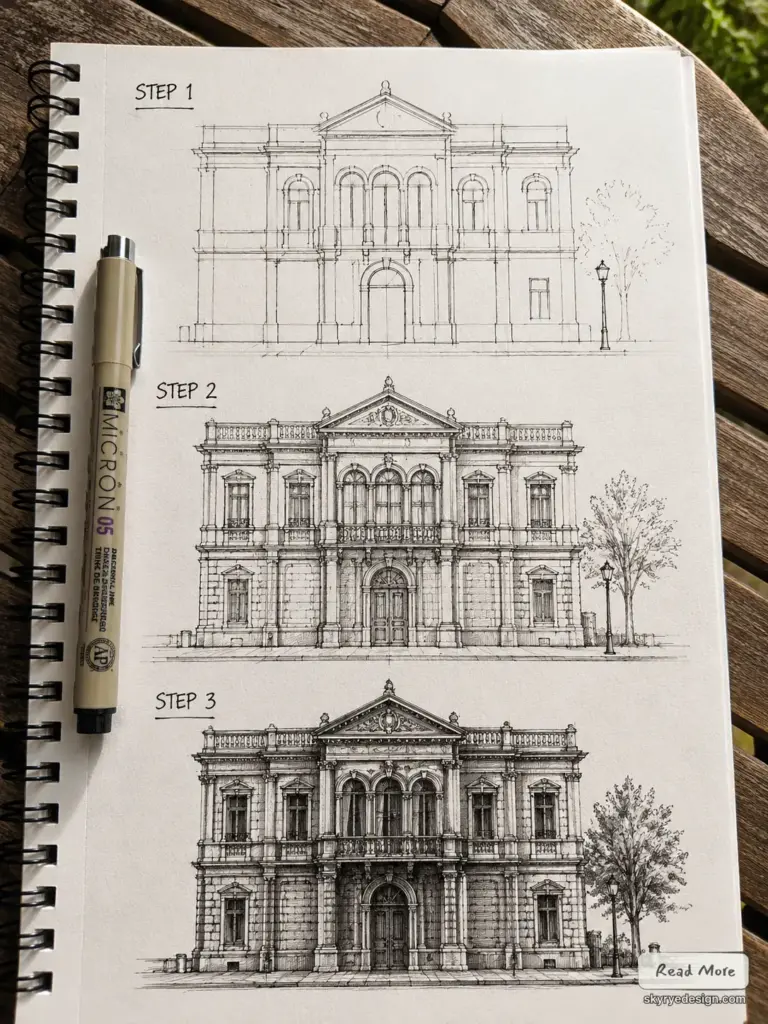
What paper weight means in real use
Paper weight is not everything, but it gives you a quick warning. Around 80-100 gsm is usually fine for dry sketching. Around 150 gsm starts feeling safer for ink, light wash, and mixed pages. Heavy mixed media paper, like the 270 gsm paper in Stillman & Birn Beta, gives you more room for water, layers, and correction.
Surface matters too. Smooth paper keeps ink clean and makes pencil detail easier. Toothier paper grabs graphite, charcoal, and pastel better. Cold press paper gives watercolor texture but can make tiny ink details feel rough. This is why one universal best sketchbook does not exist.
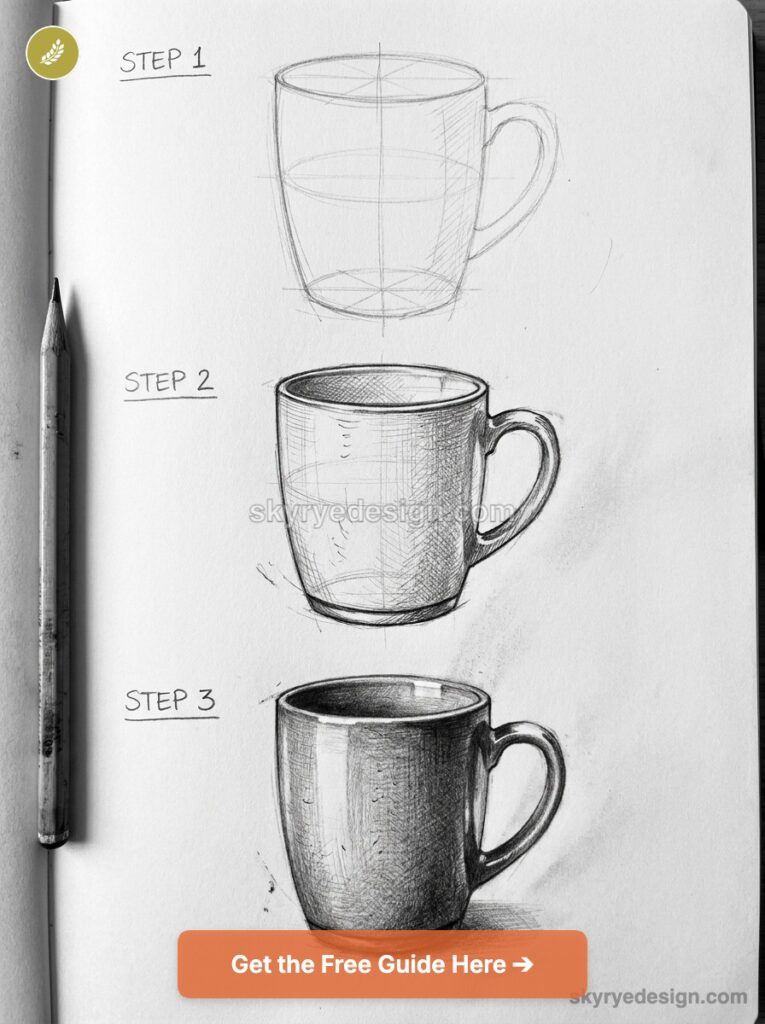
Middle-of-article resources for sketchbook practice
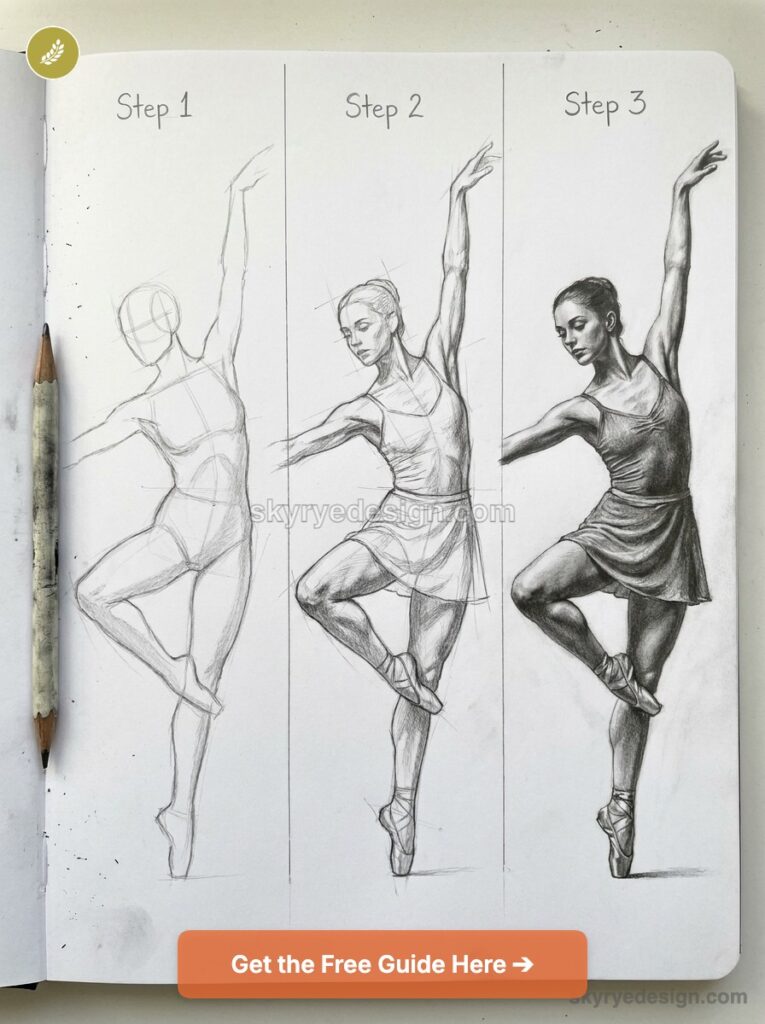
Once you have the right paper, the next problem is filling it. For figure pages, start with gesture drawing poses. For water-based pages, practice a controlled watercolor wash before trying a full scene. For broader supplies, my drawing materials guide is a better next stop than buying random tools one at a time.
Sketchbook tests I run before trusting a new book
Before I commit a sketchbook to a project, I test the last page. It takes ten minutes and tells you more than the product description.
- Pencil range: draw a value strip from 2H to 6B or 8B and see whether the darks build cleanly.
- Ink feathering: draw slow and fast lines with a fineliner, then check whether the edge stays sharp.
- Erase test: erase a light construction drawing and see whether the surface tears or smudges.
- Water test: add one light wash, let it dry, then add a second. If the page pills, keep water away from that book.
- Marker bleed: make one alcohol-marker stroke and check the back of the page before using the book for finished marker work.
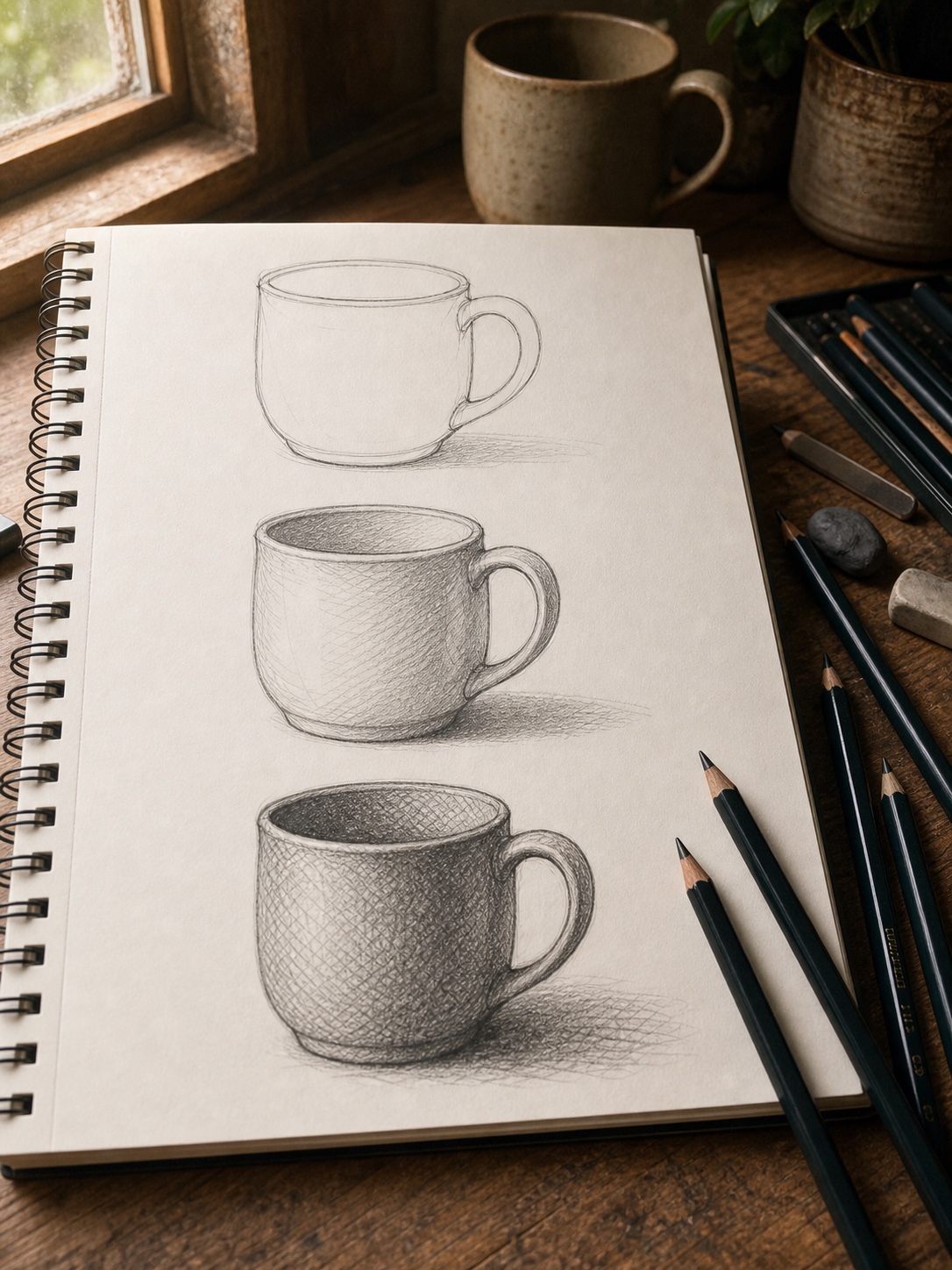
Sketchbook ideas that match the paper
A good sketchbook choice should suggest what to draw in it. Thin dry-media paper is perfect for repetition: gestures, thumbnails, hand studies, value studies, and quick portraits. Mixed media paper is better for botanical ink-and-wash, small travel scenes, and color thumbnails. A pocket sketchbook is best for memory drawing because you can use it while the observation is still fresh.
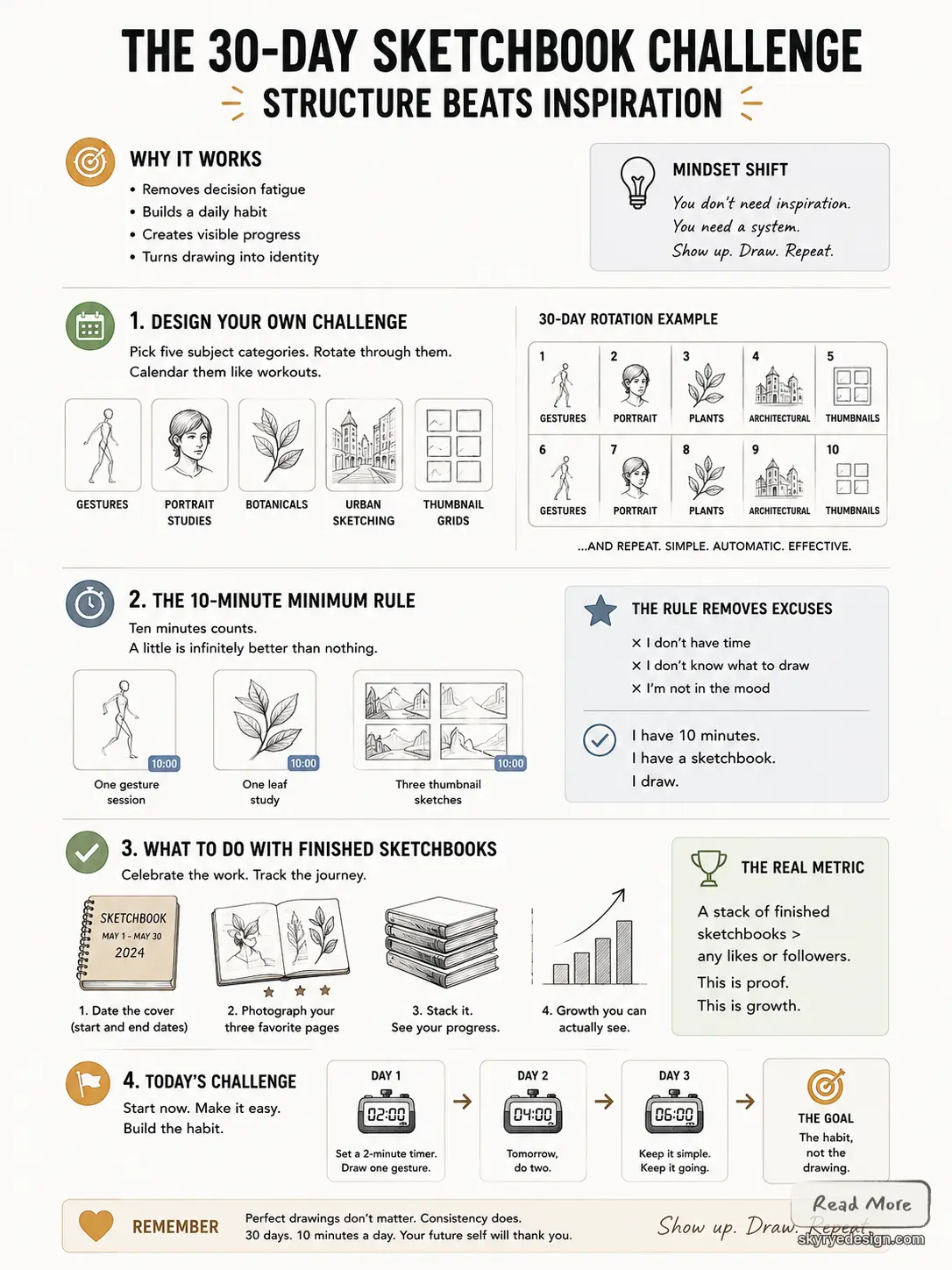
This is where people often get stuck. They buy a nice book, then treat it like a gallery. Do the opposite. Give each sketchbook a job. One can be for ugly warm-ups. One can be for finished ink-and-wash pages. One can be for design thumbnails and notes. The more specific the job, the easier it is to start.
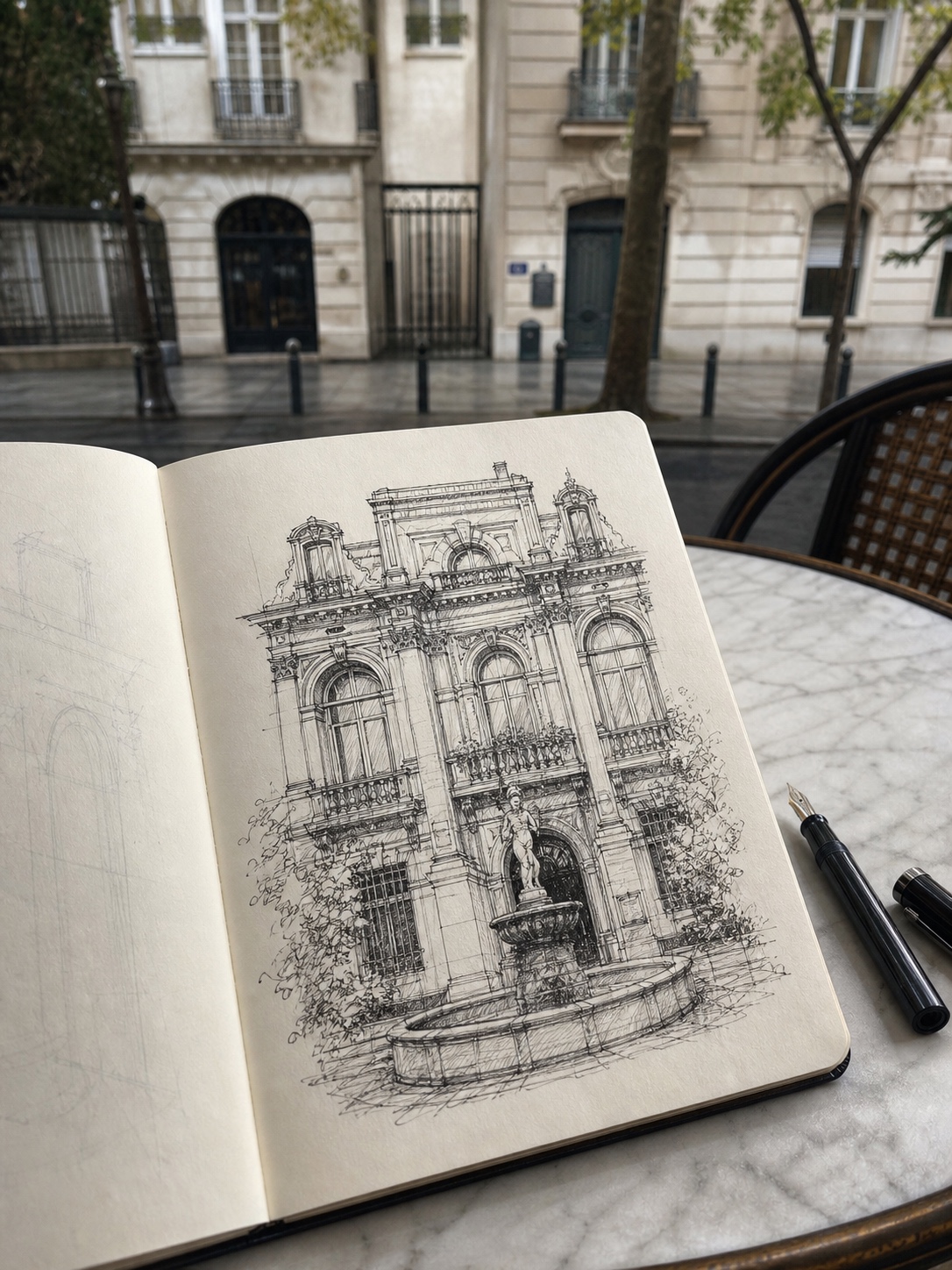
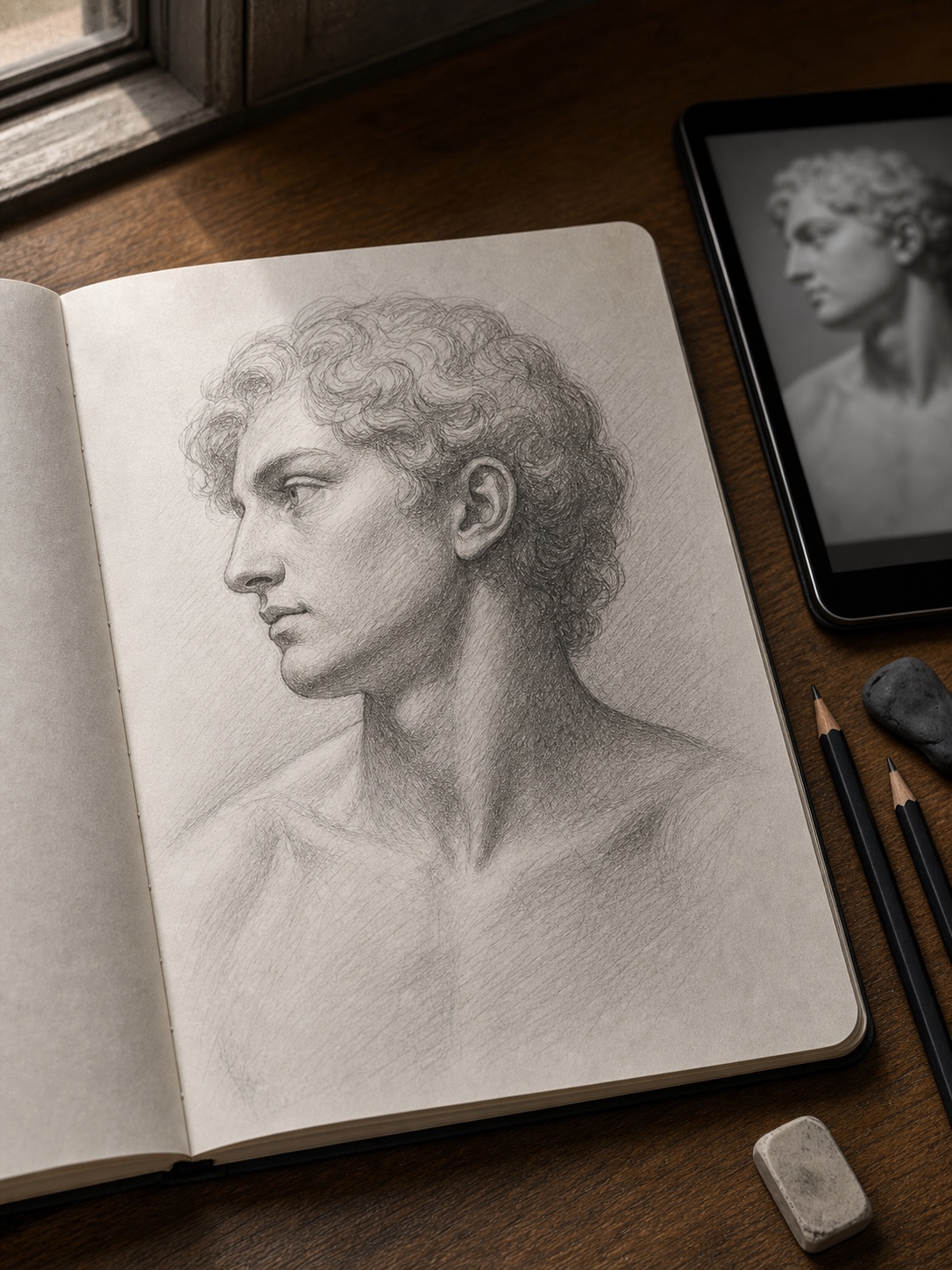
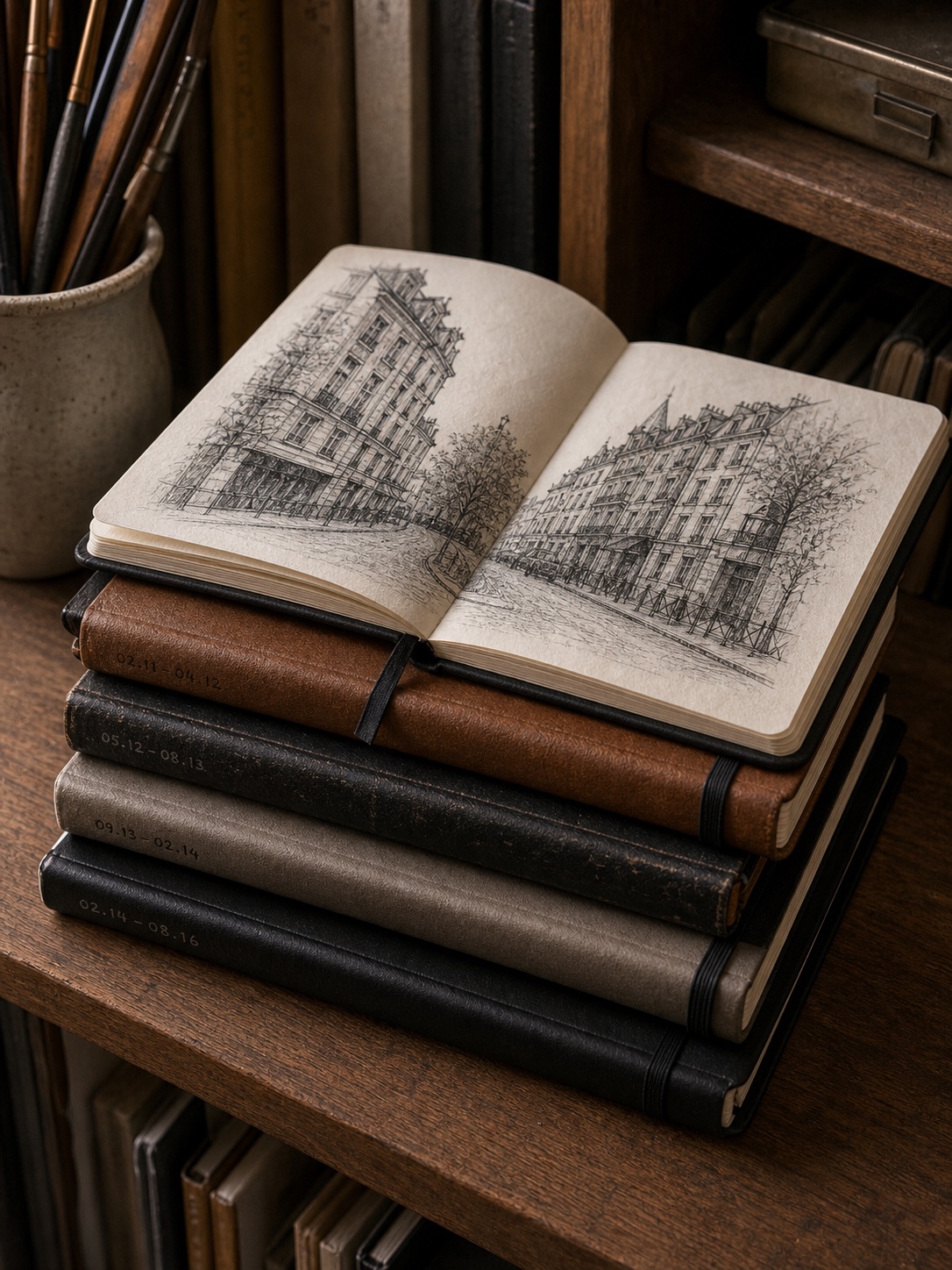
Keep a few pages in your sketchbook for hand sketch practice; repeating palm blocks, finger joints, and simple poses is where the improvement starts to show.
Frequently asked questions
What is the best sketchbook for artists overall?
The best sketchbook for most artists is the one that matches the medium they use most. For graphite and dry studies, Strathmore 400 Series Sketch is easy to recommend. For mixed media and watercolor washes, Stillman & Birn Beta is stronger. For an everyday hardcover book, Moleskine Art Collection or Leuchtturm1917 works better than a loose pad.
What paper weight should an artist sketchbook have?
For pencil, charcoal, and quick studies, 80 to 100 gsm paper is usually enough. For ink, markers, light wash, or mixed media, look closer to 150 gsm or heavier. For watercolor-heavy pages, choose a mixed media or watercolor sketchbook with heavier paper so the page does not buckle immediately.
Is a mixed media sketchbook better than a drawing sketchbook?
A mixed media sketchbook is better if you use ink, watercolor, gouache, acrylic marker, or several materials on one page. A drawing sketchbook is better for dry media because the paper is usually cheaper, lighter, and more comfortable for volume practice. If you mostly use graphite, do not pay extra for heavy watercolor paper.
Which sketchbook is best for beginners?
For beginners, a Strathmore 400 Series Sketch pad is a practical first choice because it gives you plenty of pages for graphite, charcoal, colored pencil, and fast studies. If you know you want watercolor or ink-and-wash pages, start with Canson XL Mixed Media instead. The goal is to buy a book you will actually fill.
Can I use watercolor in a regular sketchbook?
You can test a small watercolor wash in almost any sketchbook, but regular drawing paper will usually buckle. For watercolor, choose mixed media or watercolor paper and keep the first washes light. If the page feels soft, pills, or waves heavily, switch to a heavier sketchbook before building more layers.
What size sketchbook should I buy?
A5 or 5.5 x 8.5 inches is easiest to carry, while 9 x 12 inches gives your wrist more room for figure drawing, portraits, and thumbnails. I like smaller books for travel and larger spiral pads for studio practice. If you are unsure, start with one portable book and one larger practice pad.
Bottom-line recommendation
If you want one safe starting point, buy Strathmore 400 Series Sketch for dry practice. If you want one stronger all-rounder for ink and watercolor, buy Stillman & Birn Beta. If you want a daily carry sketchbook that feels finished and portable, buy Moleskine Art Collection Sketchbook.
The sketchbook is a workshop, not a museum. Pick the paper that matches the work, test the last page, then fill the book. The drawings do not have to be perfect. The pages have to exist.
Related sketchbook practice
While physical sketchbooks remain irreplaceable for fine motor training, modern designers increasingly combine them with drawing AI generators to quickly test complex compositions.
For more page-filling ideas after you choose the book, use these next: sketchbook prompts and ideas, cool mini things to draw, and pencil drawing ideas.
For portrait-specific inspiration after choosing paper, study these famous watercolor portrait artists and notice how cotton paper, soft edges, and clean highlights affect the final face.
Related realism study: For realism practice pages, use small studies from hyper realistic artwork rather than trying to copy a full finished portrait at once.
If you are choosing paper, test pens with bullet journal sketchbook practice: draw the same tiny doodle in pencil, fineliner, brush pen, and marker to see what bleeds or ghosts.
- 1.4Kshares
- Facebook0
- Pinterest1.4K
- Twitter0
- Reddit0