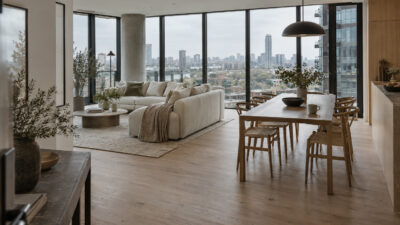
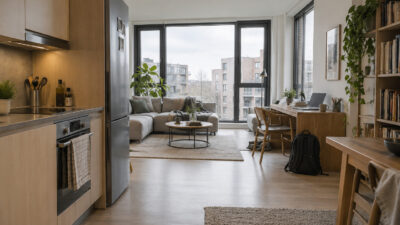
Carpet is one of those material choices that shapes a room before a single piece of furniture goes in. The wrong selection creates visual noise — too much texture competing with everything else, or a pile that flattens within a year. The right choice disappears into the floor in the best possible way, anchoring the space and making everything above it look more considered.
I’ve specified carpets across residential interiors, commercial studio spaces, and office fit-outs over fifteen years of design work. What I’ve noticed is that most buyers make this decision based on color alone and regret it six months later when the fiber starts to mat or the texture reads wrong under natural light. Understanding the categories first — material, then pile construction — makes every decision after that much cleaner.
This guide covers the main types of carpet by fiber and by texture, how to match each to specific room types, how carpet changes the visual and acoustic character of a space, and the practical differences between wall-to-wall carpet and rugs.
What are the main types of carpet?
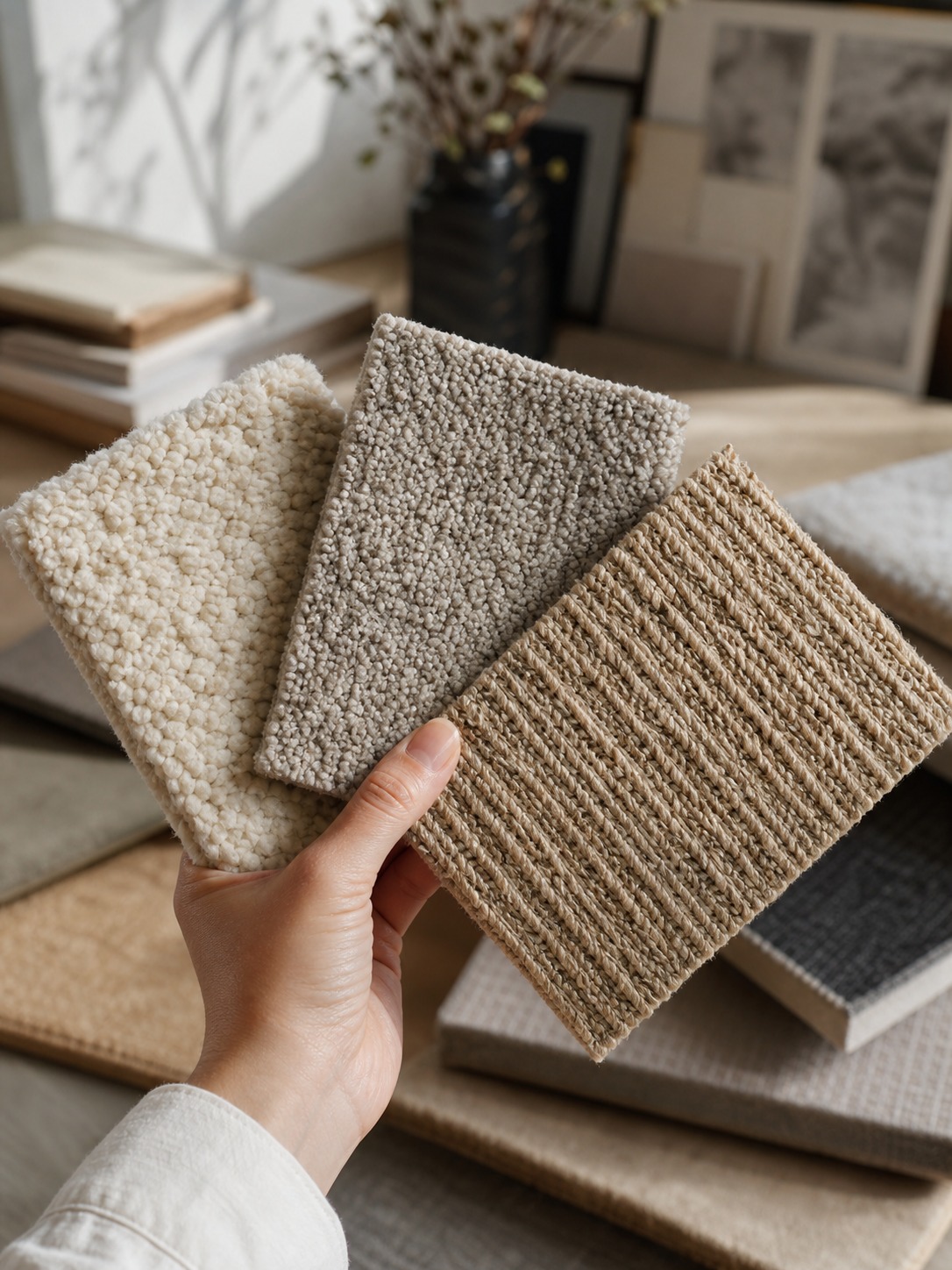
Carpet types fall into two main categories: material and pile construction. Material determines performance — durability, softness, stain resistance, how it ages. Pile construction determines appearance and tactile character: how the fibers are attached to the backing, whether they’re cut or looped, and what visual texture that creates underfoot.
Getting both right for a specific use case is the whole challenge. A luxurious wool plush in a high-traffic hallway is a poor decision regardless of how good it looks in a sample. A commercial nylon loop tile in a master bedroom is depressing. Matching type to context is where most carpet decisions go wrong.
Carpet types by material
Wool
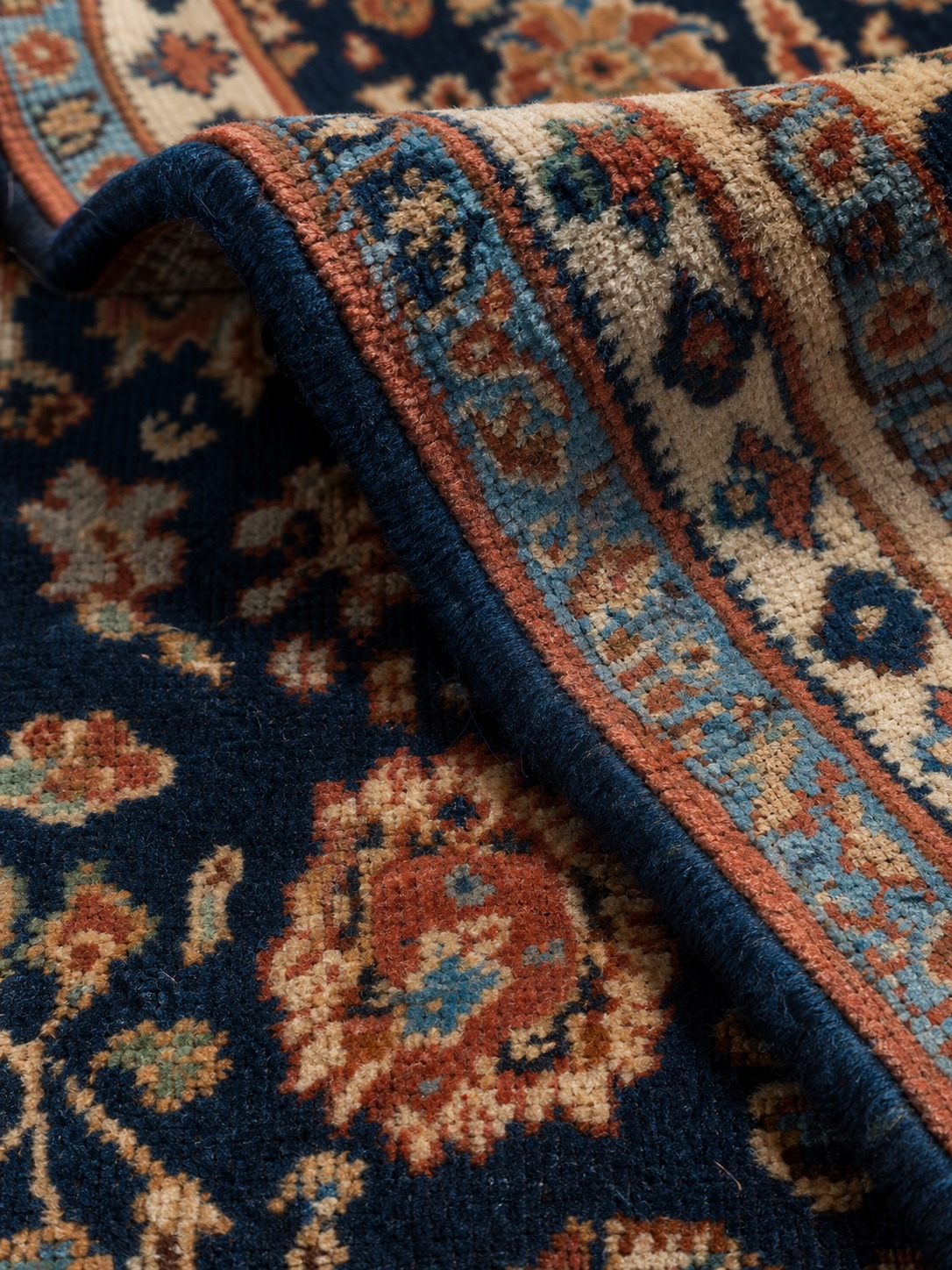
Wool is the benchmark. Natural, resilient, and warm underfoot — it has been used in hand-knotted carpets for centuries because it consistently performs. Wool fibers have a natural crimp that helps the pile spring back after compression, so a wool carpet in a bedroom looks good for years rather than months. It’s also naturally flame resistant and doesn’t hold static, which matters in dry climates.
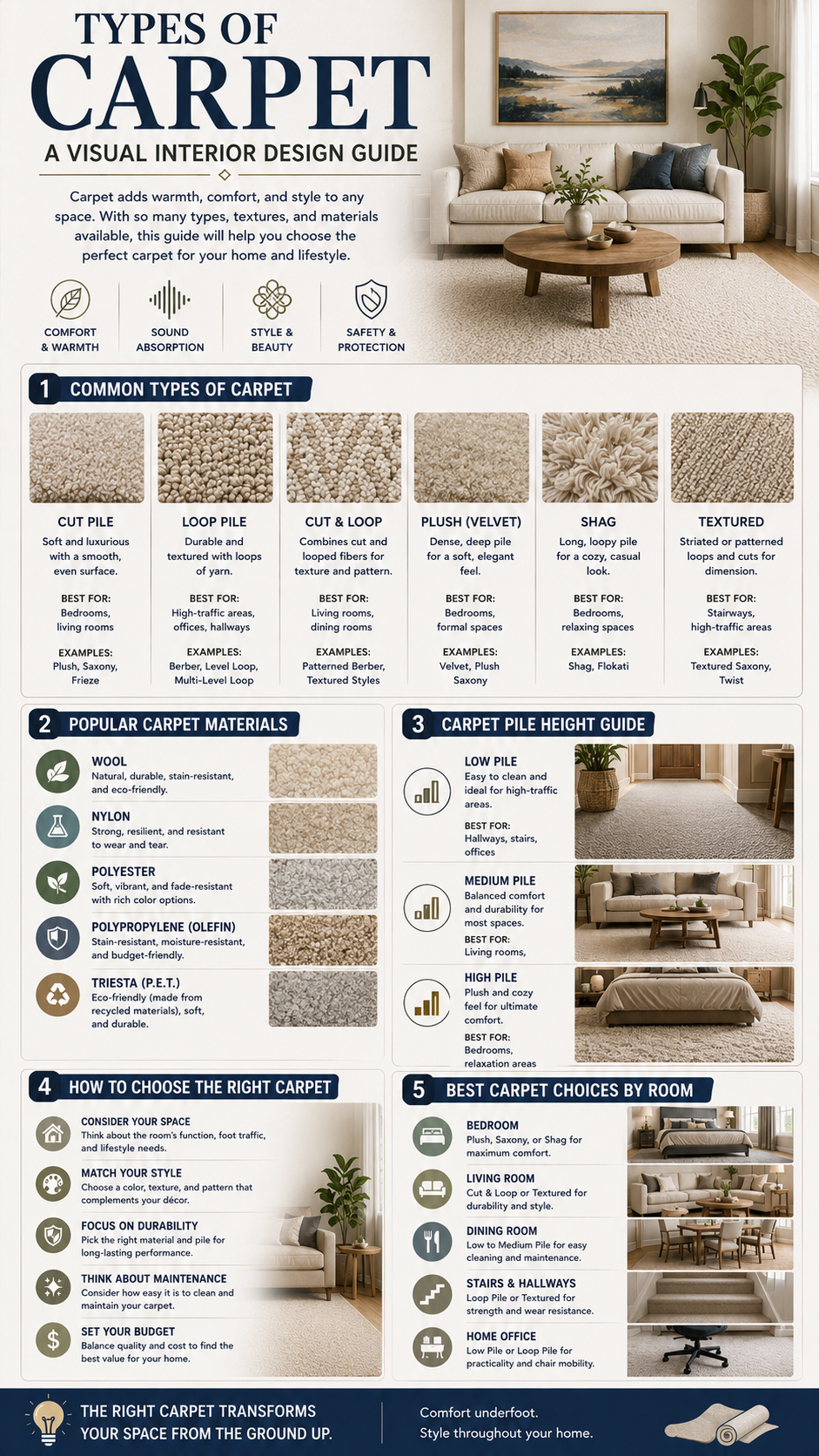
The trade-off: wool costs more than synthetics and needs proper care. Wet cleaning done incorrectly can felt the fibers permanently. In warm, polished interiors (apartments and offices in Abu Dhabi, for instance) wool works well in rooms with moderate traffic and controlled humidity. For curated selections across the region,
Carpet Abu Dhabi carries both handmade wool options and machine-made alternatives worth comparing in person.
Worth specifying from: Brintons, Ulster Carpets, Axminster Carpets.
Nylon
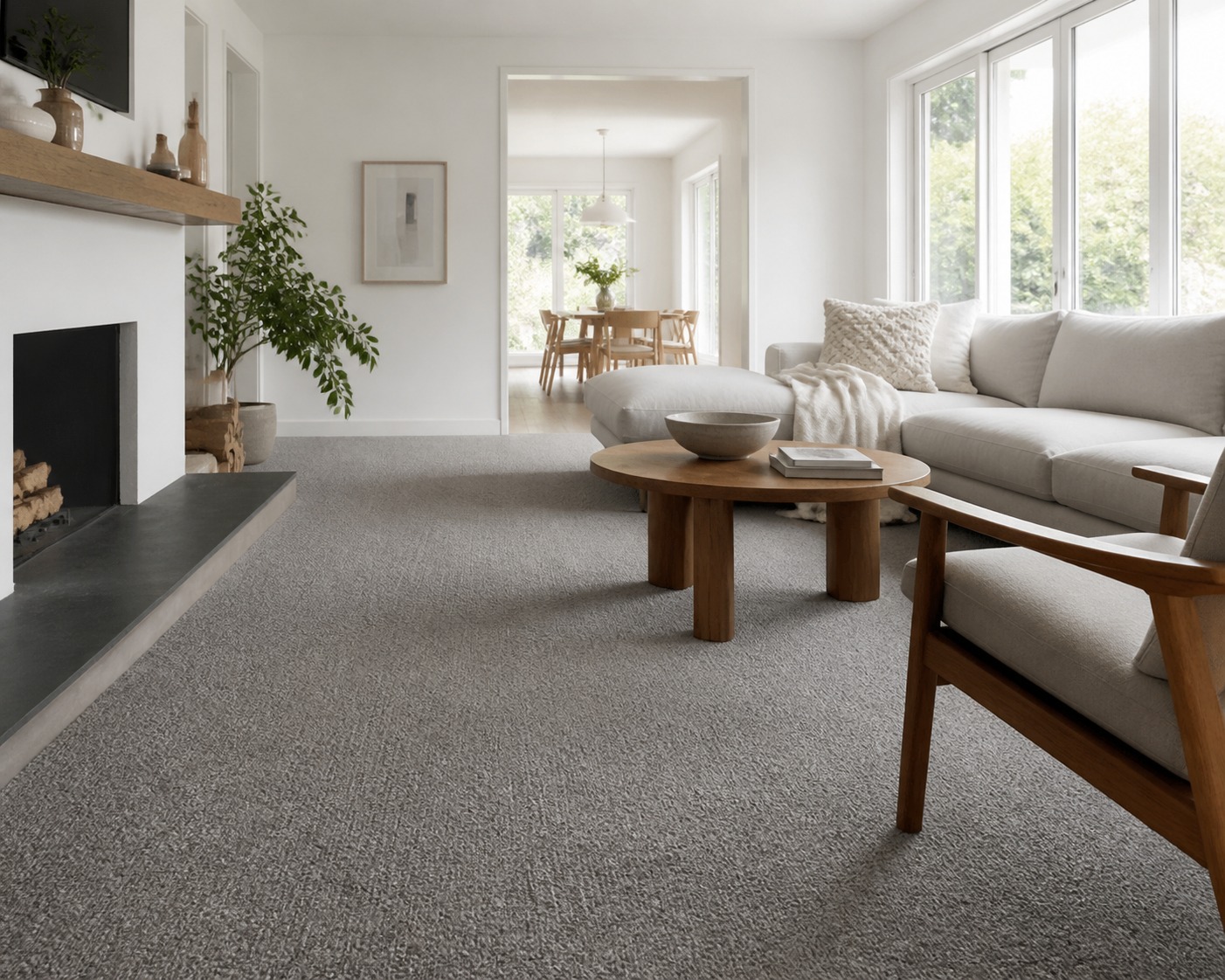
Nylon is the workhorse of synthetic carpet fibers. It handles heavy foot traffic without matting, resists abrasion, and bounces back well after compression. For commercial offices, hallways, or any space that sees real daily use, nylon consistently outperforms other synthetics.
Look specifically for solution-dyed nylon from brands like Shaw or Mohawk. In solution-dyeing, color penetrates the entire fiber rather than sitting on the surface. The result: colorfast performance even in high-traffic zones where lesser carpets fade along main walking routes within two to three years.
Polyester and polypropylene
Polyester is soft and relatively inexpensive — a decent choice for bedrooms and low-traffic living areas where the softness-to-cost ratio matters more than long-term durability. The weakness is fiber recovery. Polyester doesn’t spring back as well as nylon after sustained compression. High-traffic paths through a polyester carpet show up as dull, flattened tracks within a couple of years.
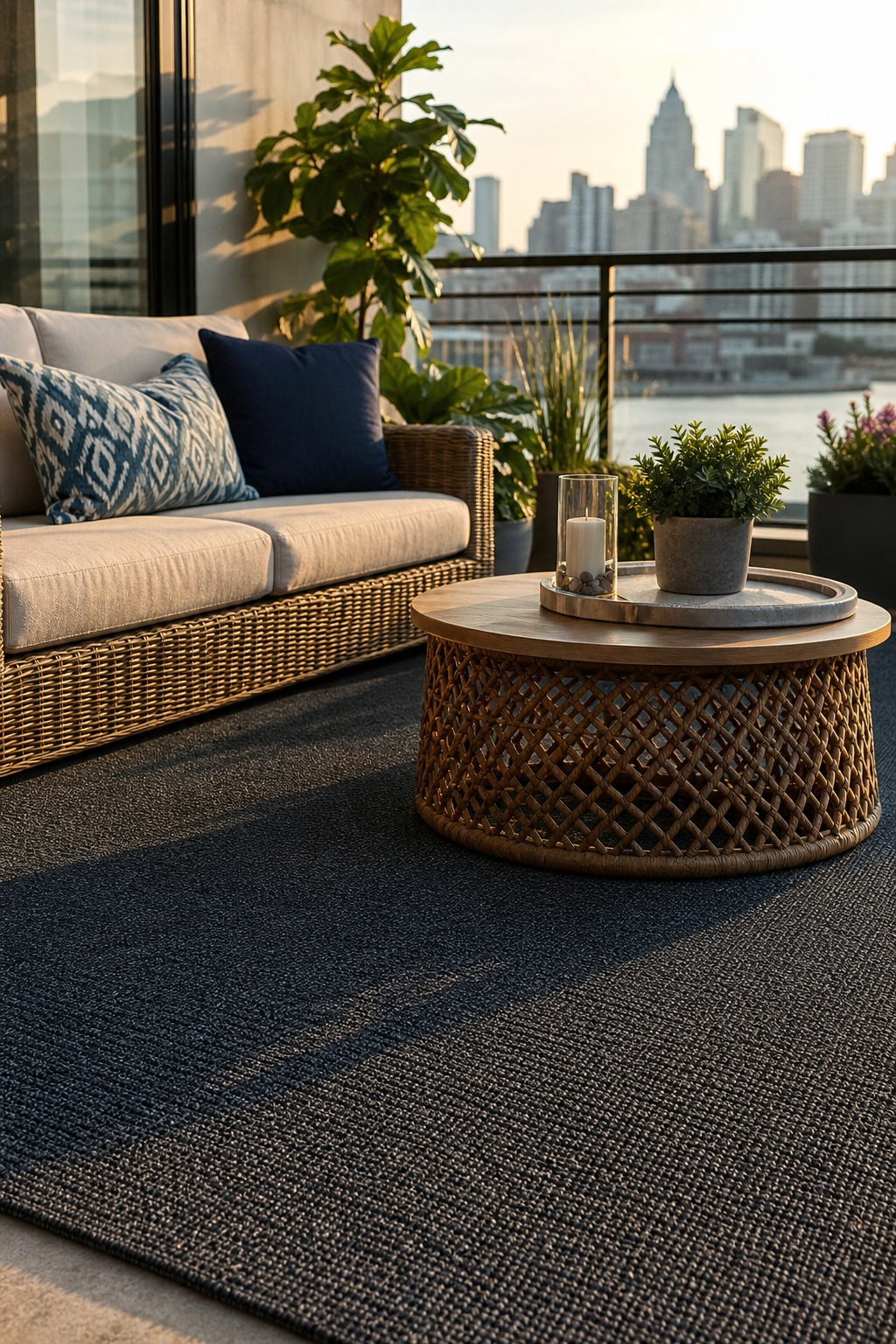
Polypropylene (olefin) is moisture resistant and handles UV exposure better than most synthetic options, making it the practical choice for semi-outdoor spaces: covered balconies, patios, entrance areas. It’s not particularly soft and not as resilient as nylon, but it tolerates what other synthetics won’t.
Natural fibers: sisal, jute, and seagrass
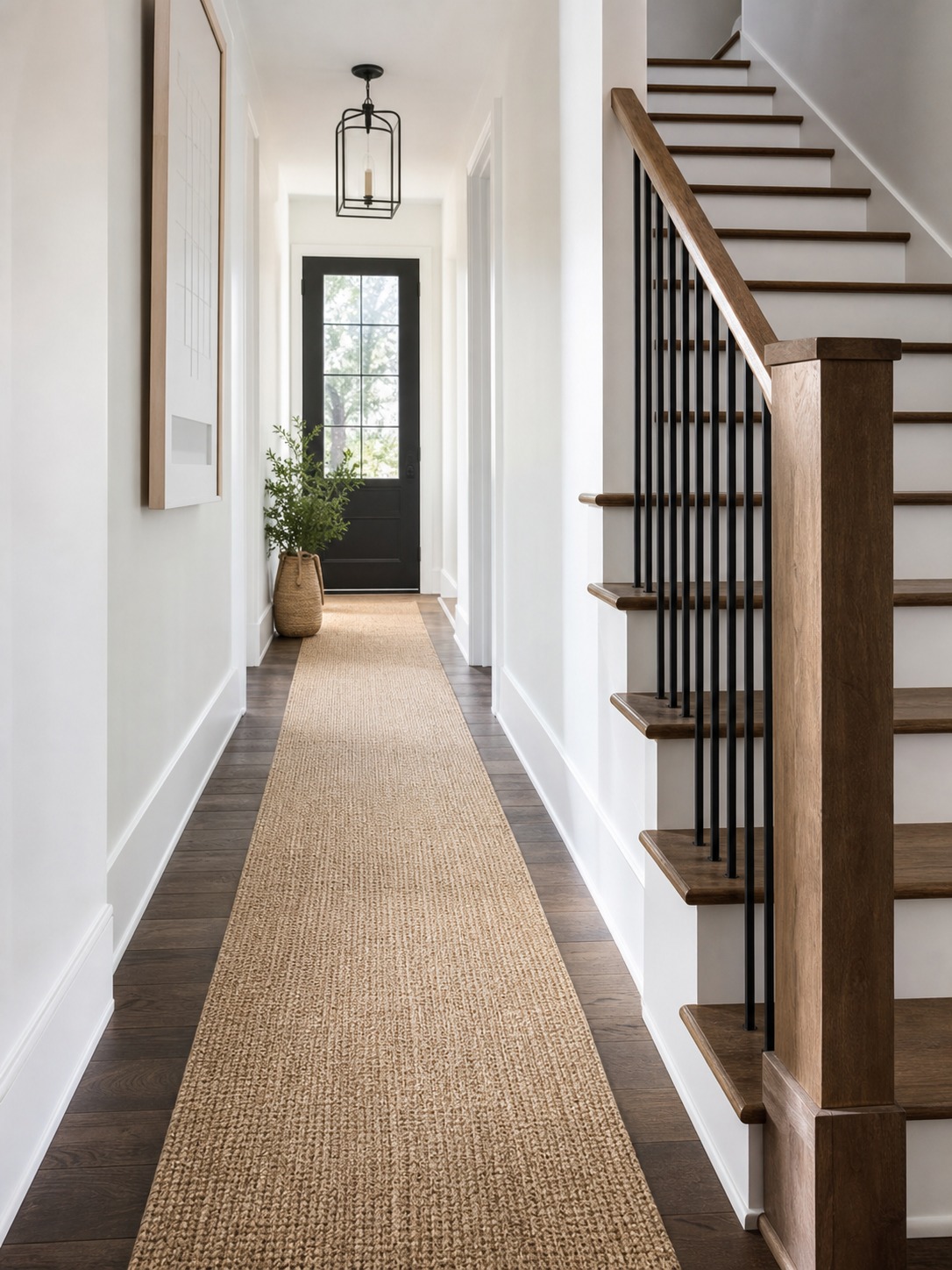
Sisal, jute, and seagrass carpets have a textured, organic quality that no synthetic replicates well. Sisal in particular has a tight weave and clean visual weight that reads well in contemporary interiors alongside exposed concrete, natural wood, or stone. The texture is distinctive enough to carry a room without a rug on top.
The practical limitation: they’re not soft underfoot, and they’re sensitive to moisture. A quality underlay helps with comfort. Bathrooms and kitchens are out. For sustainability-conscious projects, Crucial Trading and Alternative Flooring both offer well-specified natural fiber options worth looking at.
According to Wikipedia’s overview of carpet fibers [nofollow], natural plant-based fibers like sisal offer good durability and biodegradability, though they require careful installation in moisture-prone environments.
Silk and viscose
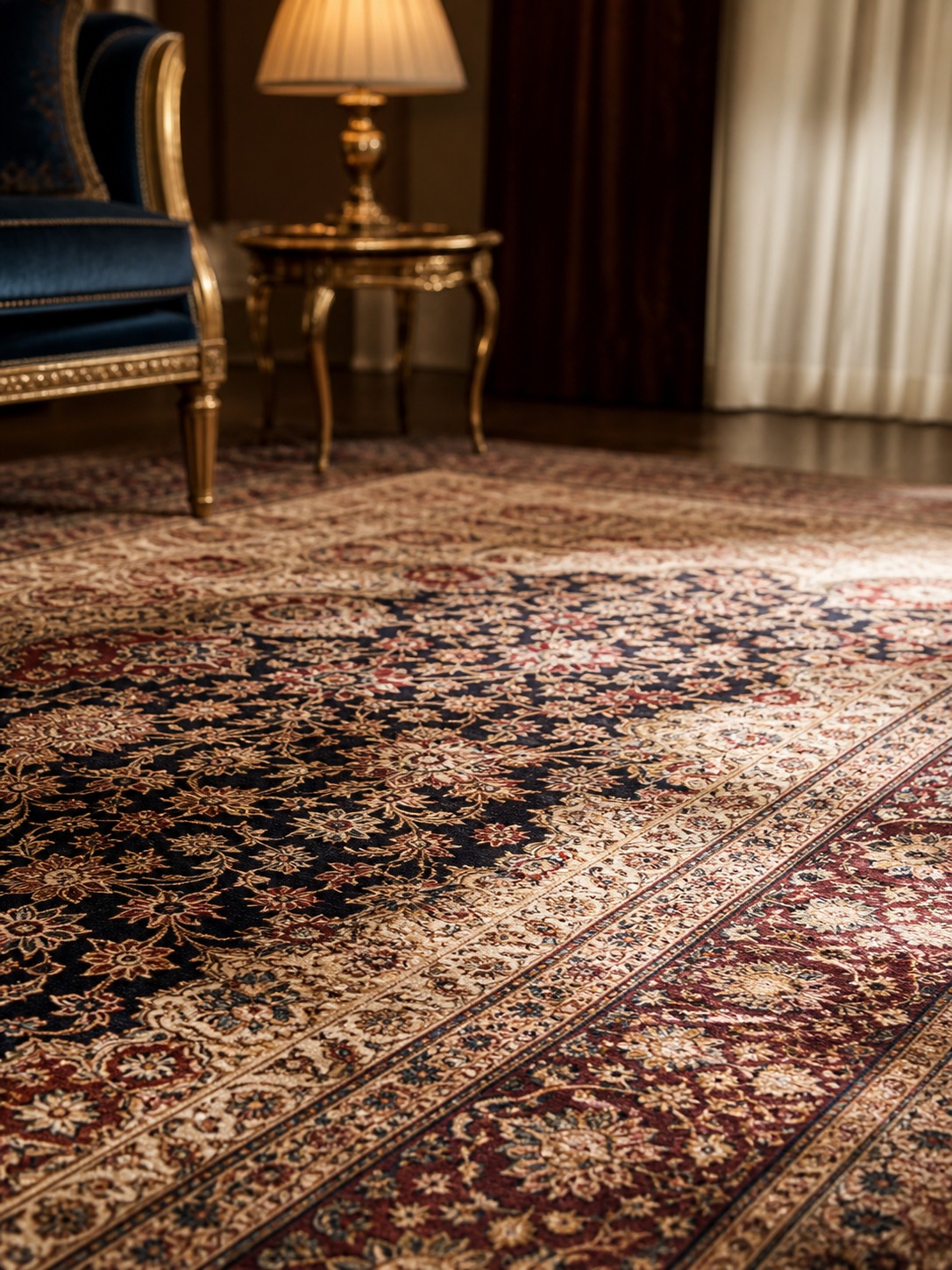
Silk carpets sit at the top of the material hierarchy — fine detail, natural sheen, and exceptional softness. The best handmade Persian and Turkish silk carpets hold intricate patterns that aren’t possible with wool or synthetics. Silk is also genuinely delicate: these carpets belong in low-traffic formal spaces or as display pieces, not family rooms.
Viscose (also called art silk or bamboo silk) mimics silk’s sheen at a lower cost. The catch: viscose fibers crush easily and are difficult to clean correctly without damage. Many buyers confuse viscose for genuine silk when shopping. A burn test distinguishes them — real silk forms a brittle ash and smells like burning hair; viscose burns with a papery smell and leaves a softer residue.
Comparison table: carpet materials at a glance
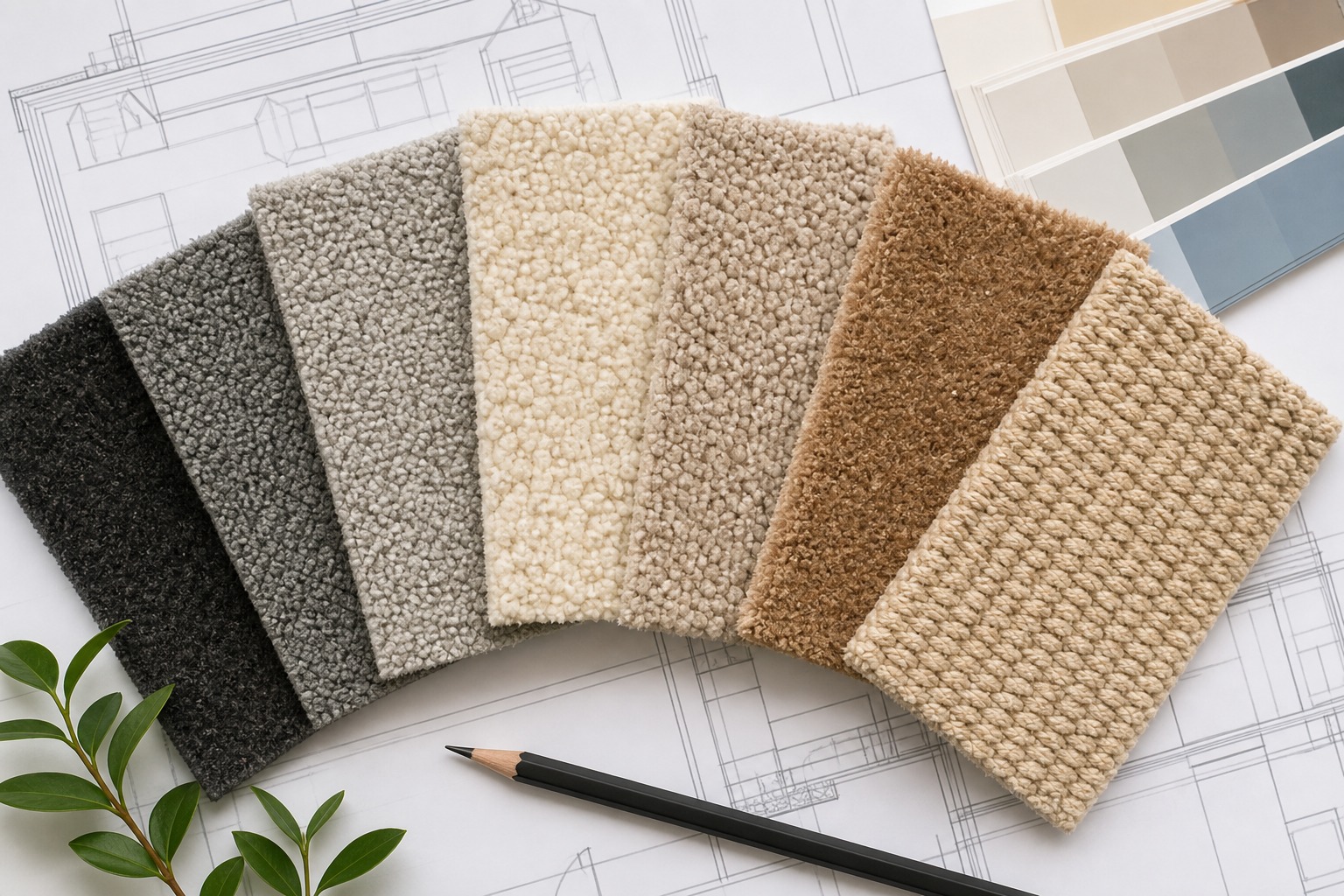
Star ratings are relative within the category — ★★★★★ means best-in-class for that attribute.
Once the material is narrowed down, test the color separately. This carpet colors guide is useful when the fiber choice is right but the room still feels too warm, too flat, or too dark.
| Material | Durability | Softness | Stain resist. | Maintenance | Best for |
|---|---|---|---|---|---|
| Wool | ★★★★☆ | ★★★★☆ | ★★★☆☆ | Medium | Living rooms, bedrooms |
| Nylon | ★★★★★ | ★★★☆☆ | ★★★★☆ | Low | Offices, hallways |
| Polyester | ★★★☆☆ | ★★★★☆ | ★★★★☆ | Low | Bedrooms, budget setups |
| Polypropylene | ★★★☆☆ | ★★☆☆☆ | ★★★★★ | Low | Outdoor, utility areas |
| Sisal / jute | ★★★★☆ | ★★☆☆☆ | ★★☆☆☆ | Medium | Studies, hallways |
| Silk | ★★☆☆☆ | ★★★★★ | ★★☆☆☆ | High | Formal spaces, display |
| Viscose | ★★☆☆☆ | ★★★★☆ | ★★☆☆☆ | High | Accent areas only |
Carpet types by texture and pile construction
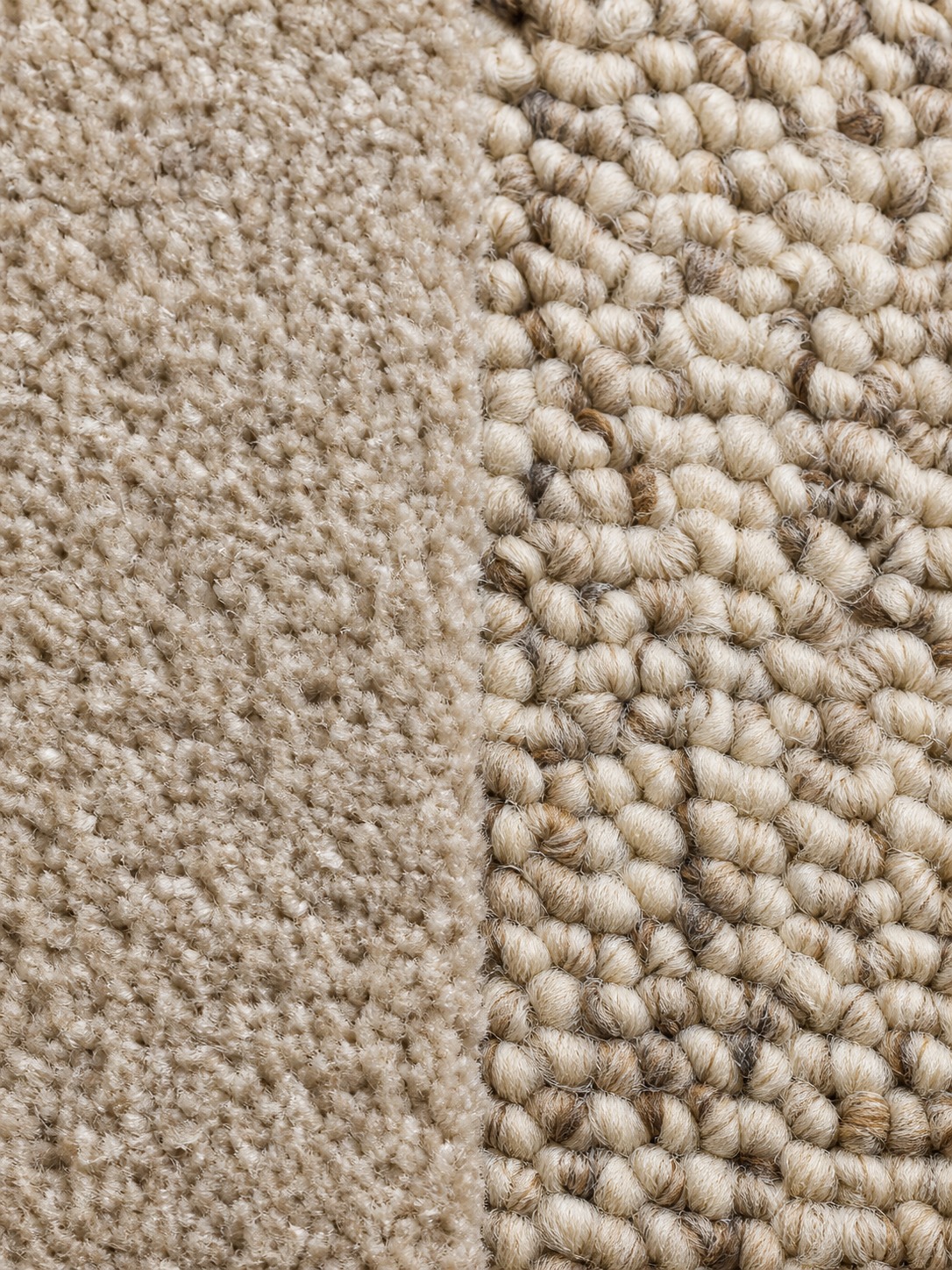
Pile construction determines how the carpet looks and behaves underfoot. Same material, different pile construction — completely different result. This is the part most guides skip, and it’s where specification decisions usually go wrong.
Carpet is also part of the room’s texture system. If you are balancing wood, stone, metal, fabric, and soft flooring, use this interior design textures guide to keep the material mix intentional.
Cut pile
Cut pile carpets are made by cutting the fiber loops to create an upright, open-ended surface. It’s the most common residential carpet construction. Within cut pile there are several distinct sub-types worth understanding.
Plush (or velvet): dense, uniform pile with a smooth formal surface. It looks pristine when new and shows every footprint. Good in a formal sitting room that doesn’t see daily heavy use. Less good in a bedroom where you’ll notice the traffic paths within months.
Saxony: similar to plush but with slightly twisted fibers, giving a softer surface texture and making it more forgiving of footprints. One of the most reliable choices for formal living rooms and master bedrooms. The twist in the fiber catches and diffuses light differently across the pile, which reduces the visibility of compression marks.
Frieze: highly twisted fibers that curl in multiple directions. This construction hides wear and footprints better than any other cut pile type. In a bedroom that sees real daily use, frieze will look better at year three than saxony will.
Loop pile
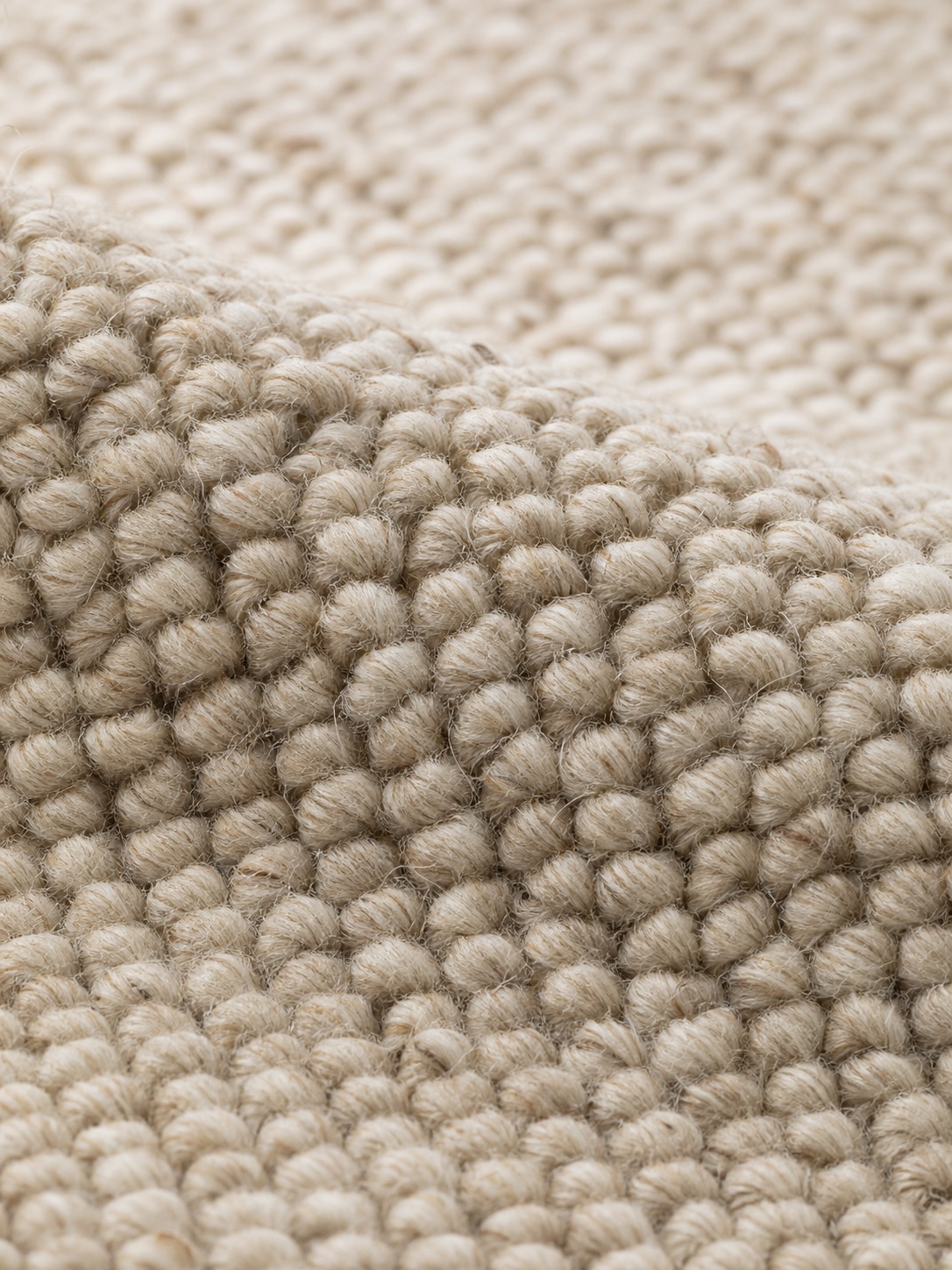
In loop pile carpets, the fiber loops are left intact rather than cut. This creates a textured, typically harder-wearing surface — the loop structure distributes load across the backing more evenly than cut pile.
Berber is the most recognizable loop pile type: thick, natural-looking, available in wool or (more commonly now) nylon and polyester. The looped construction handles commercial traffic and office chair casters well, which is why berber appears in so many offices and basements. The one vulnerability: sharp objects or pet claws can snag a single loop and pull it free, which unravels that section of the carpet.
Level loop and multi-level loop carpets offer a more engineered aesthetic through mixing loops of different heights. These are standard in commercial office environments where consistency, durability, and cleanability are the primary criteria.
Cut-and-loop pile
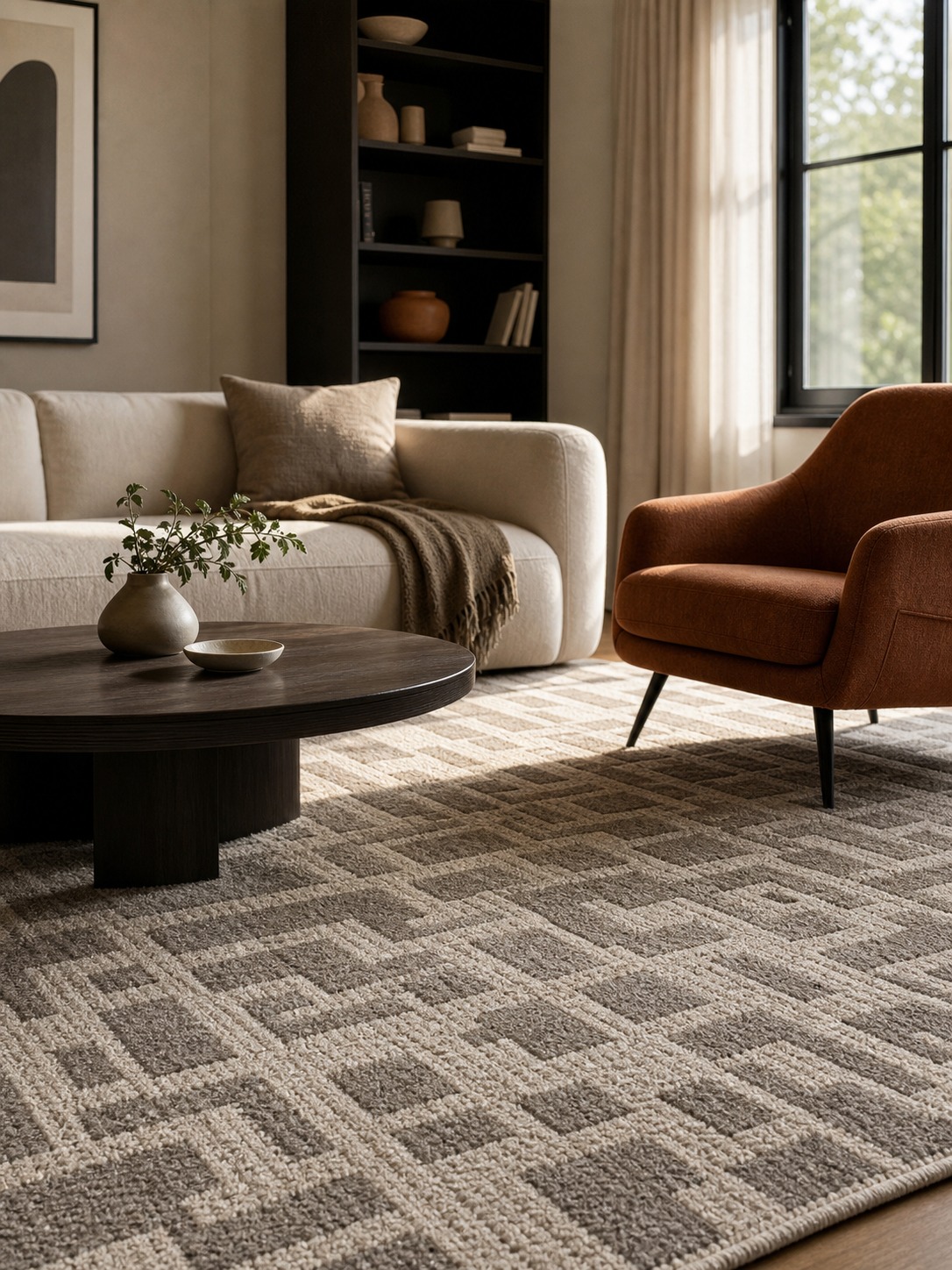
Cut-and-loop carpets combine cut and intact loops in the same surface, creating geometric or sculptural pattern effects through variation in fiber height and texture. These were everywhere in the 1990s and have come back in more restrained, contemporary forms. Used carefully, cut-and-loop adds visual interest to a neutral interior without competing with the furniture.
Best carpet type for each room
Living room
A wool saxony or a solution-dyed nylon in cut pile is the standard choice. The living room takes consistent daily traffic but isn’t a circulation route — you want something that looks good and holds shape over time. Avoid plush in a family living room; it will show use within weeks. If the room is formal, a handmade wool or silk carpet as a central feature piece carries more visual weight than any wall-to-wall option.
For a living room, the carpet choice needs to work with seating layout, light, and daily movement. These living room carpet ideas can help connect the floor decision to the whole room plan.
Bedroom
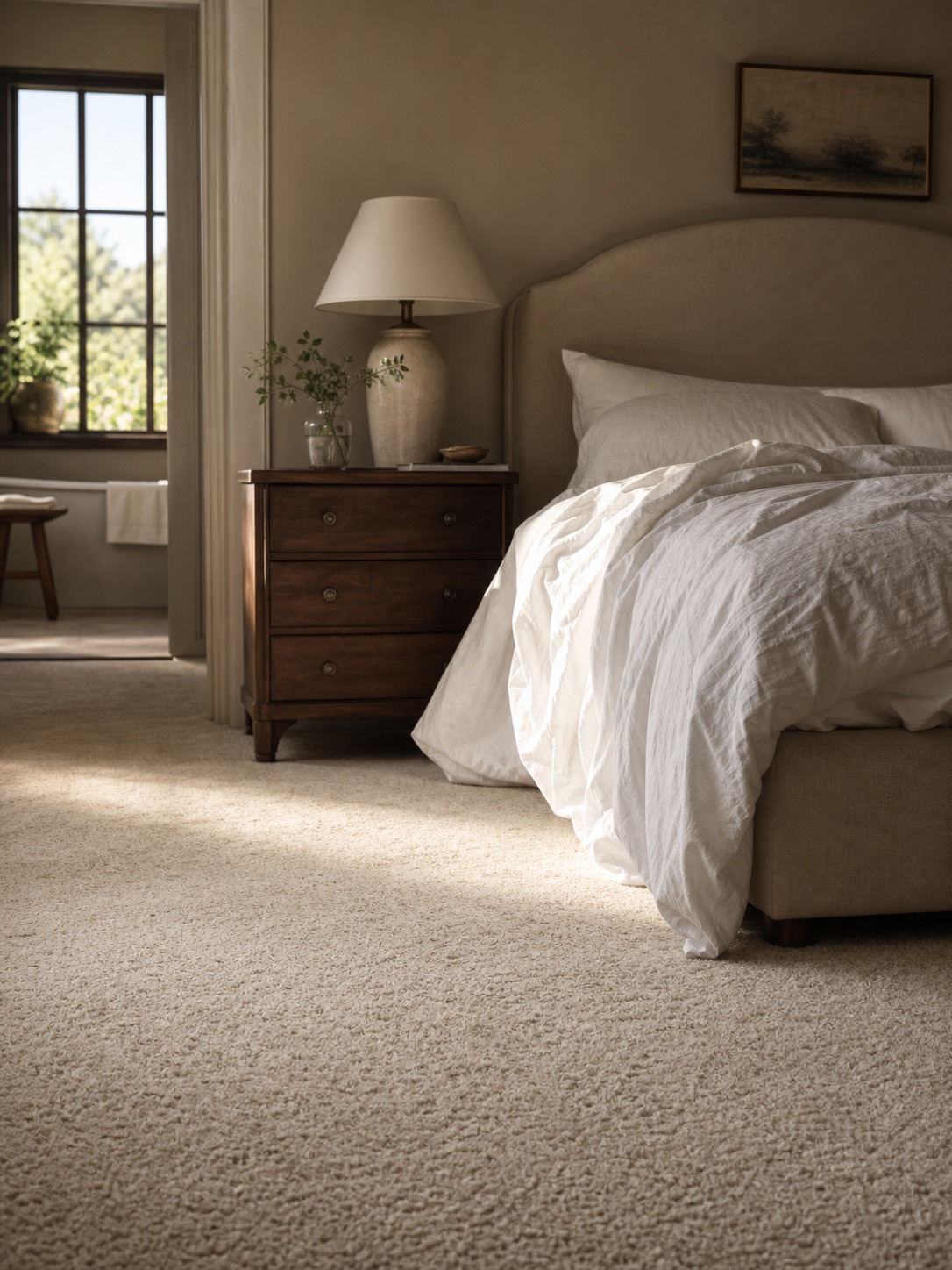
Softness matters here more than durability. A dense wool or quality polyester in a saxony or plush cut pile is right. This is also the one room where higher pile suits the context — you’re stepping out of bed into it, not walking through it all day. Color: test samples at morning light and evening lamplight before committing. A warm-toned carpet in a north-facing bedroom will fight the light all day.
Home office and creative studio
Loop pile or a tight low-pile nylon. You need something that works with a desk chair on casters, doesn’t mat under sustained pressure, and looks clean and professional on video calls. Chair mats help, but a tight berber or commercial-grade loop pile doesn’t strictly need them. I use a commercial-weight loop tile in my studio — easy to clean, handles rolling chair traffic, looks intentionally industrial rather than accidental.
Hallways and stairs
These are the hardest-wearing areas in any home. Nylon cut pile or a tight berber loop are the practical choices. Avoid anything with visible pile direction (saxony and plush both show footprint traffic clearly on stairs). Pattern helps hide wear; a geometric cut-and-loop or a flecked berber distributes visual attention across the surface rather than concentrating it on the traffic path.
Commercial office
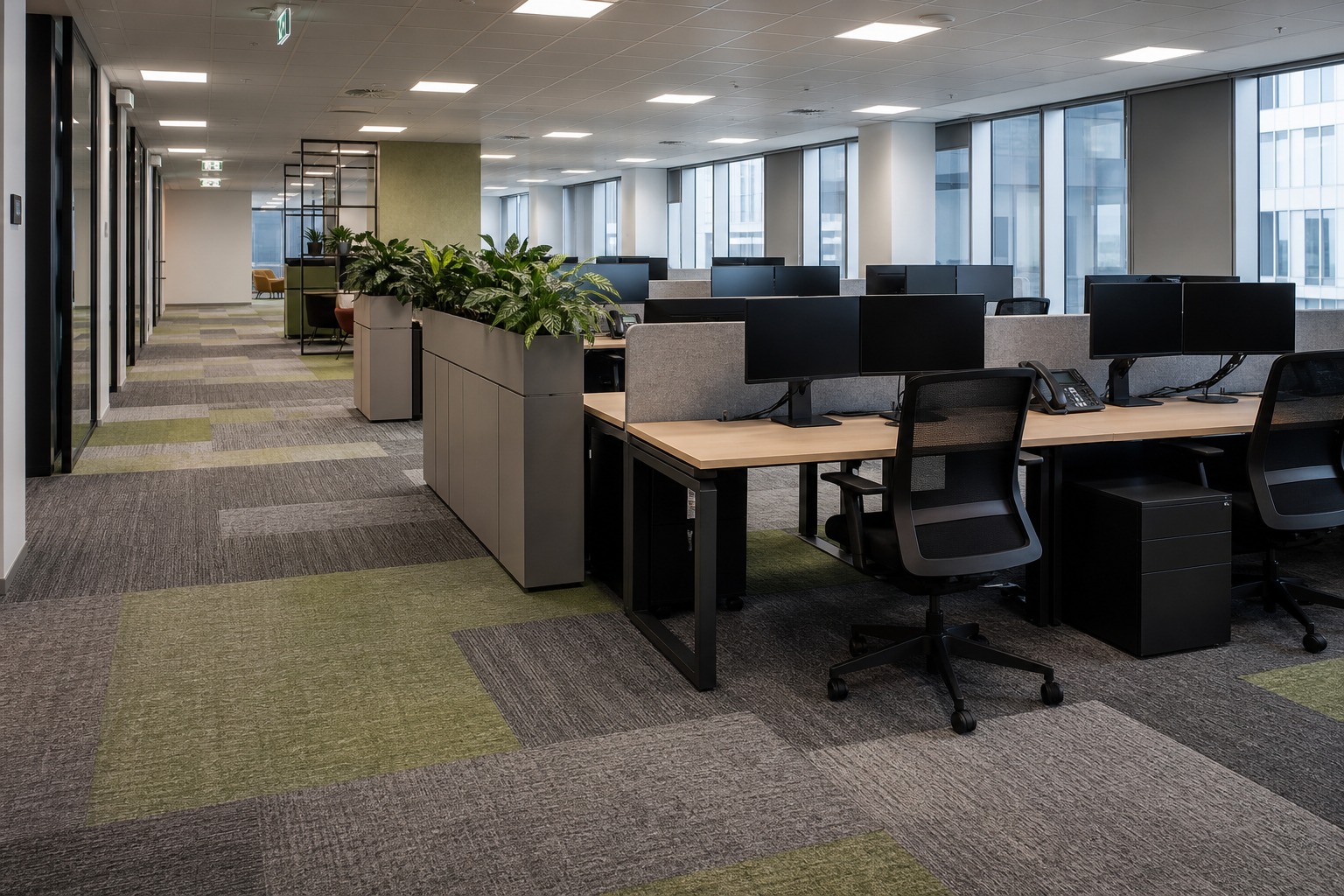
Solution-dyed nylon carpet tiles are the standard specification for a reason. Individual tiles can be replaced when damaged — no need to redo the entire floor. They handle casters, cleaning, and sustained foot traffic better than broadloom in most commercial contexts. Interface and Shaw Contract have developed genuinely interesting tile patterns that go well beyond the standard grey grid.
Dezeen’s coverage of commercial interior design [nofollow] regularly documents how architects and specifiers are using carpet tile in unexpected configurations to define zones in open-plan offices.
How carpet changes the mood of an interior
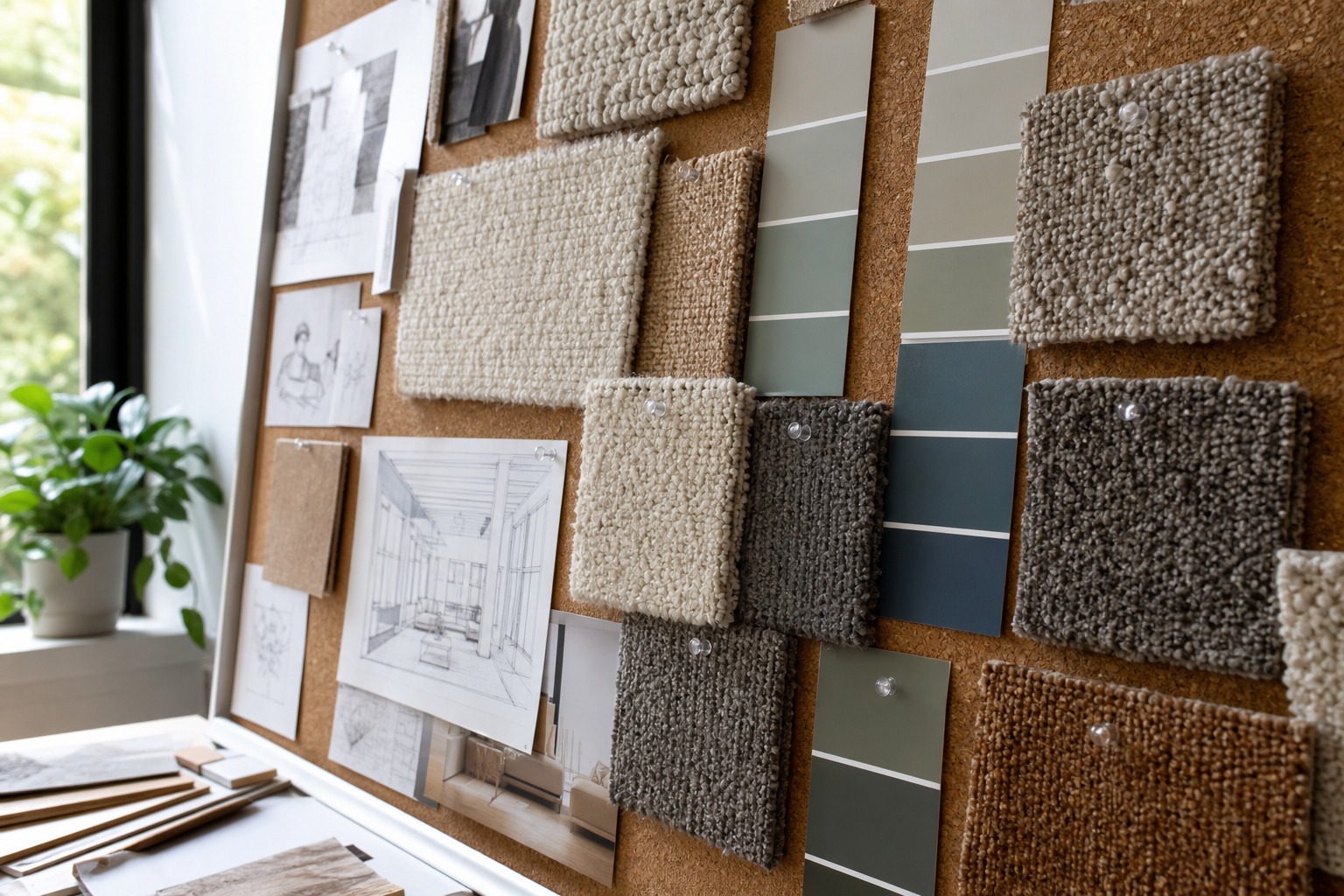
This is the part that matters most from a design perspective, and the part most carpet guides skip entirely.
Pile height affects visual weight. A high-pile shag carpet pulls attention down to the floor plane and makes a room feel intimate and enclosed. That’s useful in a low-ceilinged living area where you want warmth. In a small room it becomes claustrophobic. A low-pile carpet essentially disappears into the floor and lets other elements — furniture, art, architecture — carry the visual load. That’s usually the right call in a room with strong architectural detail or high ceilings.
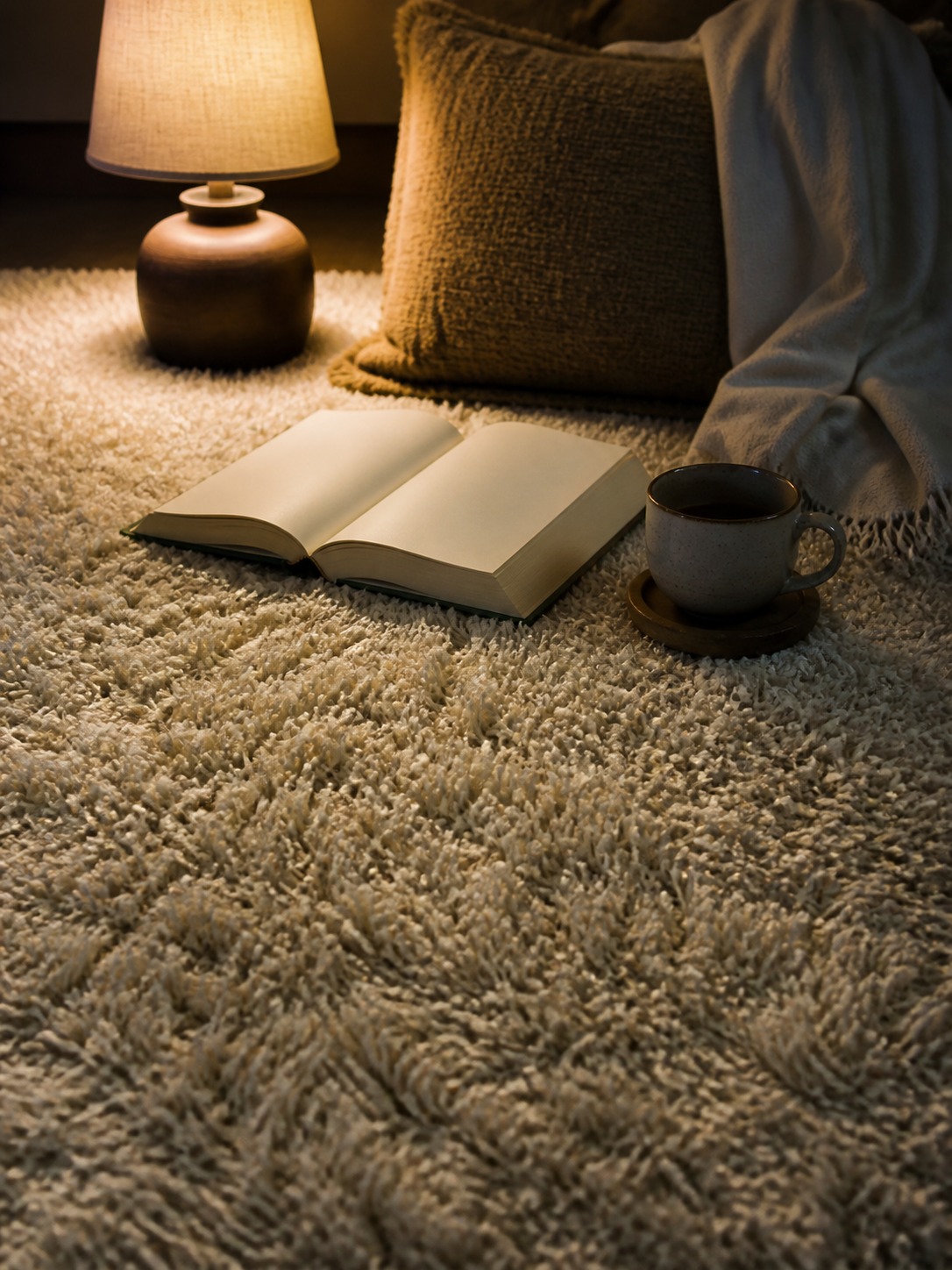
Color temperature interacts with natural light in ways that are easy to get wrong. A warm-toned wool in a north-facing room fights the cold quality of the light throughout the day. A cool grey or neutral in a south-facing room can feel clinical in the afternoon. I always request large samples and test them in the actual space at different times of day before signing off on a specification.
Pattern scale needs to match room scale. A large geometric pattern on a carpet in a small room competes with everything else on the floor plane. In a large open-plan space, a patterned carpet can define functional zones — reading area, seating group, circulation route — without physical dividers. The pattern becomes infrastructure.
Acoustic effect is real and measurable. A fully carpeted room absorbs significantly more ambient sound than a hard-floor room with a rug. In open-plan offices, this is one of the most cost-effective interventions available — carpet tile flooring cuts ambient noise more effectively than most acoustic ceiling panel configurations at equivalent cost.
Carpet vs rugs: what’s the difference?
A carpet is wall-to-wall: it covers the entire floor, is typically fixed or stretched in place, and is part of the room’s permanent material palette. A rug sits on top of an existing floor — hard or soft — as a moveable layer. You can lift a rug, take it with you when you move, swap it out seasonally, and use it to define a zone within a larger space.
A pale timber base changes how carpet and rugs read. If the room already has light oak flooring, choose carpet tones that add softness without turning the palette yellow.
In humid, rental, or high-traffic interiors, LVT flooring can be a practical alternative to carpet when you still want warmth through rugs and textile layers.
If wall-to-wall carpet feels too permanent, compare it with other easy flooring ideas before committing to one material across the whole room.
The design implication: wall-to-wall carpet commits the room to a color and texture until it’s replaced. Area rugs are a more flexible tool — especially over good hardwood or stone floors that are worth preserving. In formal sitting rooms and majlis areas, a large handmade carpet as a central anchor piece often performs better as a design element than wall-to-wall installation, precisely because it sits within the room rather than becoming the room.
As a general rule: if the existing hard floor is in good condition, a rug is the right choice. If the hard floor is damaged, dated, or acoustically inappropriate for the space, wall-to-wall carpet is the cleaner renovation decision.
Carpet can still make sense in bedrooms, but it should be judged alongside maintenance, rent level, and buyer expectations. This rental property flooring decisions guide puts carpet, LVT, hardwood, and staging into the same ROI frame.
For broader room-planning context around finishes, furniture, lighting, and surfaces, browse the interior design materials hub.
FAQ
What are the different types of carpet?
The main categories split by material (wool, nylon, polyester, polypropylene, natural fibers, silk/viscose) and by pile construction (cut pile, loop pile, cut-and-loop). Within each category there are significant sub-types: saxony and frieze within cut pile, berber and level loop within loop pile. The right combination depends on the room, the traffic level, the budget, and the visual result you’re after.
What types of carpet are best for high-traffic areas?
Solution-dyed nylon in broadloom or carpet tile format is the strongest specification for high-traffic domestic and commercial spaces. Berber loop pile is a close second. Both resist matting and abrasion better than polyester or natural fiber options and hold color well in main circulation areas.
What are the types of carpet pile?
The three main pile constructions are cut pile (fibers cut to create an upright surface — includes plush, saxony, and frieze), loop pile (loops left intact — includes berber and level loop), and cut-and-loop (combines both in the same surface to create pattern through height variation). Cut pile is the most common for residential interiors. Loop pile handles commercial traffic better. Cut-and-loop adds visual texture through its construction.
How do I choose a carpet for a bedroom?
Prioritize softness and pile depth over durability. A dense saxony or plush cut pile in wool or quality polyester is the standard bedroom choice. Avoid low-pile commercial types — they perform well underfoot but feel wrong for a sleeping space. Test color samples at morning light and evening lamplight before committing: the difference is often significant.
Is silk carpet worth the cost?
For a formal sitting room or display context: yes. The pattern detail and natural sheen of a good silk carpet (especially hand-knotted Persian or Turkish work) aren’t achievable in any other material at any price. For a family living room or any space with regular foot traffic: no. The maintenance requirements are high and the material crushes under sustained use. Viscose silk alternatives are cheaper but crush even more easily than genuine silk.
What is the easiest carpet type to maintain?
Solution-dyed nylon and polypropylene are the easiest to clean and the most stain resistant. Carpet tiles are the most practical for commercial environments: damaged or heavily stained tiles can be individually replaced without touching the rest of the floor. Silk and viscose require professional cleaning and are the highest-maintenance options in the material category.
Just as an indoor rug defines a room, selecting outdoor rugs is a crucial part of layering apartment balcony decor effectively.
Placing textured layers on the floor is a classic interior tip that works just as well for outdoor settings styled with cozy fall patio decor.
Flooring changes texture and acoustic comfort, so this interior design texture rule is worth checking before choosing carpet.
If you are comparing pile, fiber, and room use, the next practical step is choosing modern carpet choices for a living room that fit daily traffic and comfort.
- 194shares
- Facebook0
- Pinterest194
- Twitter0
- Reddit0