

Home exterior details are the small transitions that make a house feel finished: the door threshold, the garage seal, the soffit vent, the window trim, the utility penetration, and the gap between planting beds and siding. When those lines are clean, the exterior reads as intentional. When they are crooked, cracked, blocked, or patched, even a freshly painted facade can feel slightly off.
- Home exterior details to check first
- Door thresholds reveal everything
- Garage doors as an architectural element
- 10 before-and-after exterior details that show the difference
- 1. Front door threshold replacement
- 2. Garage door repaint and panel swap
- 3. Soffit vent cleaning and repair
- 4. Roof edge and fascia line cleanup
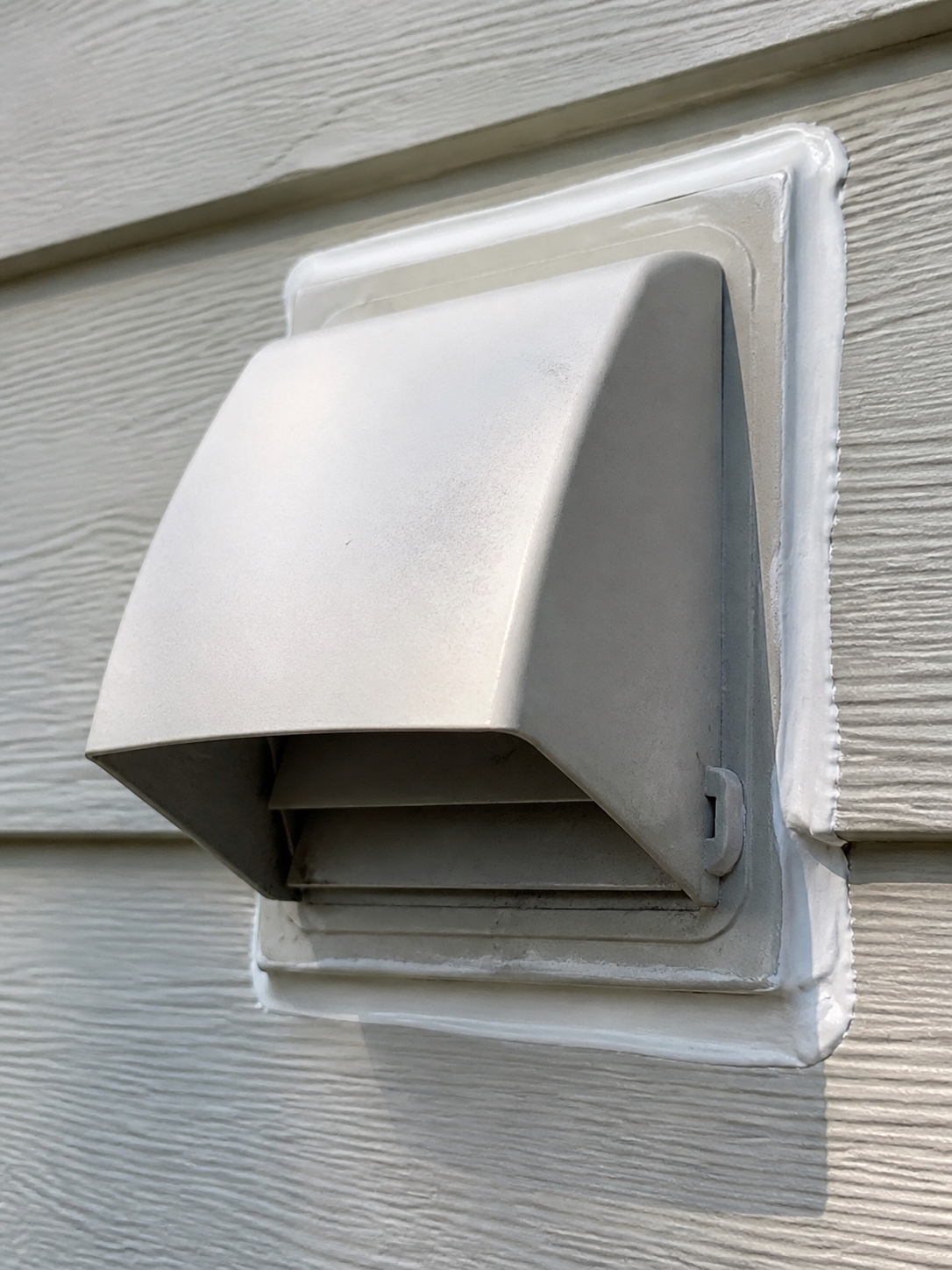
- 5. Utility penetration resealing
- 6. Crawl-space access panel upgrade
- 7. Garage interior storage reorganization
- 8. Window trim and casing refresh
- 9. Driveway and walkway resurfacing
- 10. Facade landscaping clearance and planting
- Vents, soffits, and roof edges where function meets finish
- Utility penetrations are the detail everyone forgets
- Crawl-space access and garage storage need design thinking
- Landscaping as a maintenance decision
- Final exterior walkthrough
- Home exterior details FAQ
- What are the most overlooked exterior details on a home?
- How do I know if my door threshold needs replacing?
- Should soffit vents be blocked or kept clear?
- What's the right way to seal a utility penetration?
- Should crawl-space access panels be sealed or ventilated?
- How close can landscaping be to a house foundation?
- Does garage storage layout actually affect ventilation?
Start with the places where materials change direction or meet a different surface. That is where water gets in, air leaks out, insects find openings, and visual clutter starts. These are not glamorous exterior house design moves, but they are often the difference between a home that looks cared for and one that only looks good from a distance.
This guide walks through the exterior details I check first as a designer: thresholds, trim, garage doors, soffits, vents, crawl-space panels, drainage, and landscaping clearance. Use it as a slow lap around the house before you spend money on bigger curb appeal ideas.
| Exterior detail | What to check first | Why it changes the facade |
|---|---|---|
| Door threshold | Daylight, drafts, water stains, worn sweep gasket | The entry feels tighter and more intentional. |
| Soffit and roof edge | Blocked vents, sagging panels, wavy fascia lines | The roofline reads cleaner and the attic can breathe. |
| Window and utility seams | Cracked caulk, missing backer rod, sloppy penetrations | Small gaps stop looking like repairs and start looking designed. |
| Landscaping clearance | Mulch against siding, shrubs touching walls, poor drainage | The house has room to dry and the facade stays visible. |
Home exterior details to check first
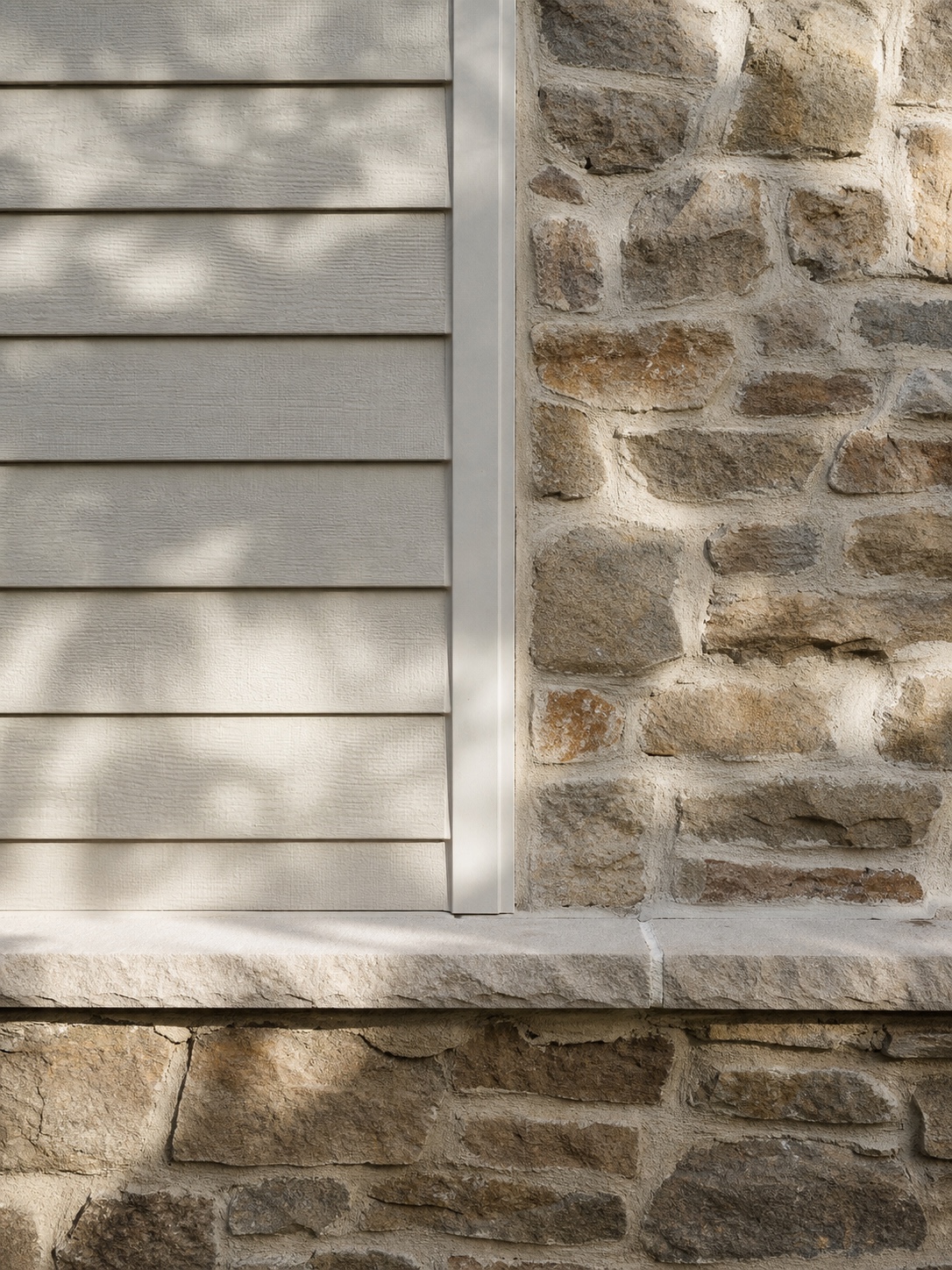
The home exterior details to check first are the seams: siding to trim, roof to wall, door to threshold, vent to cladding, and planting bed to foundation. If those junctions are straight, sealed, and visually calm, the whole facade feels more expensive. If they are uneven or ignored, the eye reads the house as unfinished before the brain knows why.
Why a finished exterior is a story of closed gaps
Walk up to any house that reads as put together and you’ll find, if you look closely, that almost nothing is actually touching anything else directly. There’s always a reveal, a trim piece, a bead of sealant, some intentional buffer managing the fact that wood expands, metal contracts, and two different materials will never quite agree on how to move. A house that feels sloppy usually isn’t missing a big feature. It’s missing a dozen small transitions that were never resolved.
I noticed this most clearly on a project years ago involving a mid-century renovation in Kyiv, where the original steel window frames met a newer stucco facade. The previous contractor had just butted the two materials together and caulked over the gap. Six months later, the caulk had cracked and you could see straight through to the wall cavity. The fix wasn’t more caulk, it was a proper reveal strip that let the materials move independently. That single detail changed how the whole corner of the house read, from patched to designed.
The industrial design parallel: tolerances and reveals
This is where my automotive background actually comes in handy. On a car body, the gap between a door panel and the fender isn’t an accident, it’s a specified tolerance, usually somewhere around 3 to 4 millimeters on a well-built vehicle, tight enough to look precise, loose enough that the door doesn’t bind when the panel expands in summer heat. The Jaguar F-Pace I drove for a few years had panel gaps you could set a watch by; a Lada from the same era, less so.
Houses work the same way, just at a much larger scale. A door threshold, a soffit edge, a garage door seal, these are all parting lines and tolerances, whether anyone building the house thought of them that way or not. When they’re sized and finished with intention, the house reads as designed. When they’re an afterthought, you feel it before you can explain why.
Quick tip
Next time you walk your own exterior, look specifically at where two different materials meet — siding to trim, roof to wall, door to frame. If the transition looks abrupt or uneven, that’s usually your first sign of a detail worth revisiting, long before it becomes a leak or a draft.
Door thresholds reveal everything
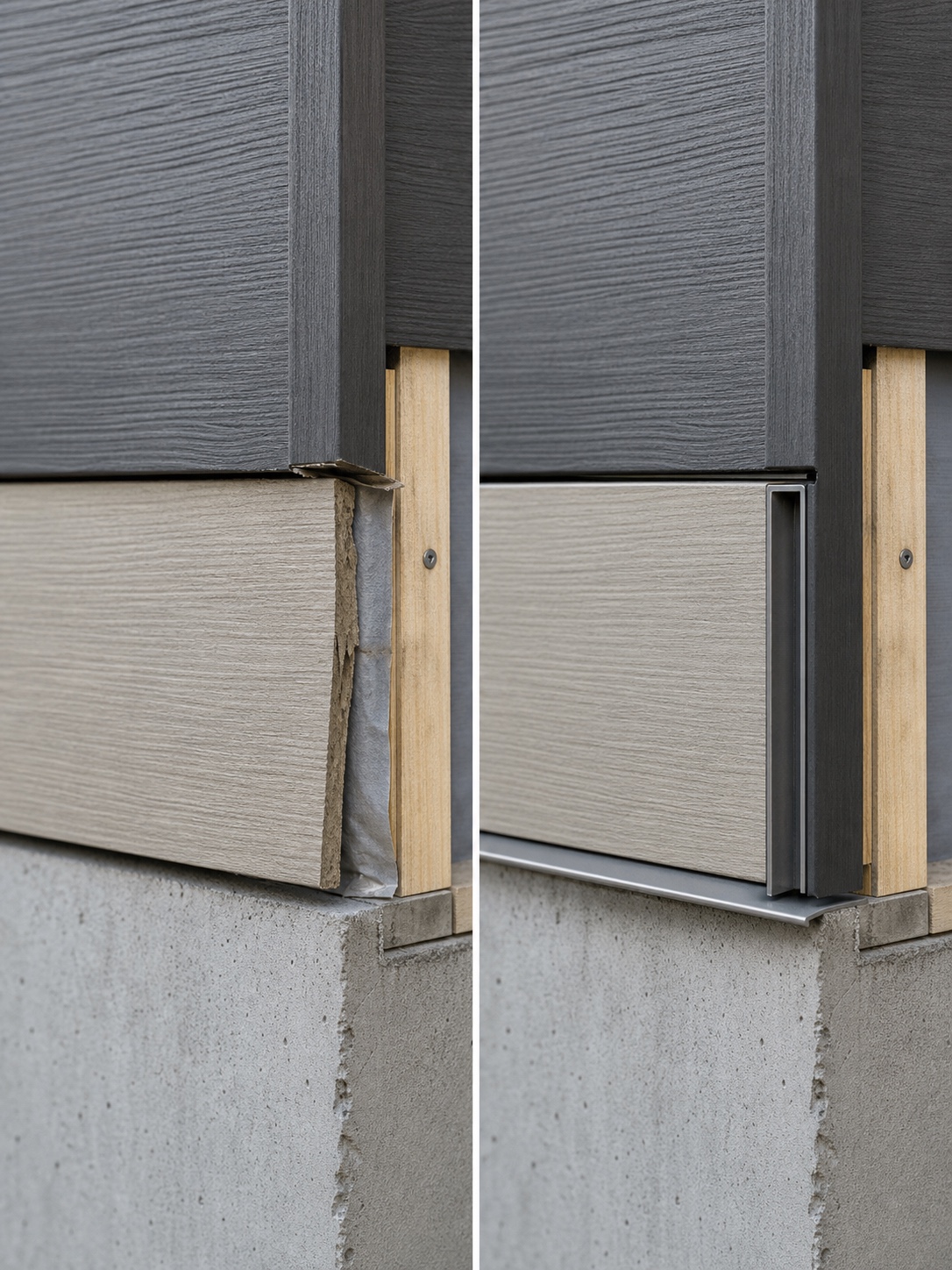
Ask any contractor which single detail causes the most callbacks on a home exterior, and a surprising number will say the threshold. Not the roof. Not the siding. That thin strip of metal or composite under the front door.
What a well-set threshold actually does
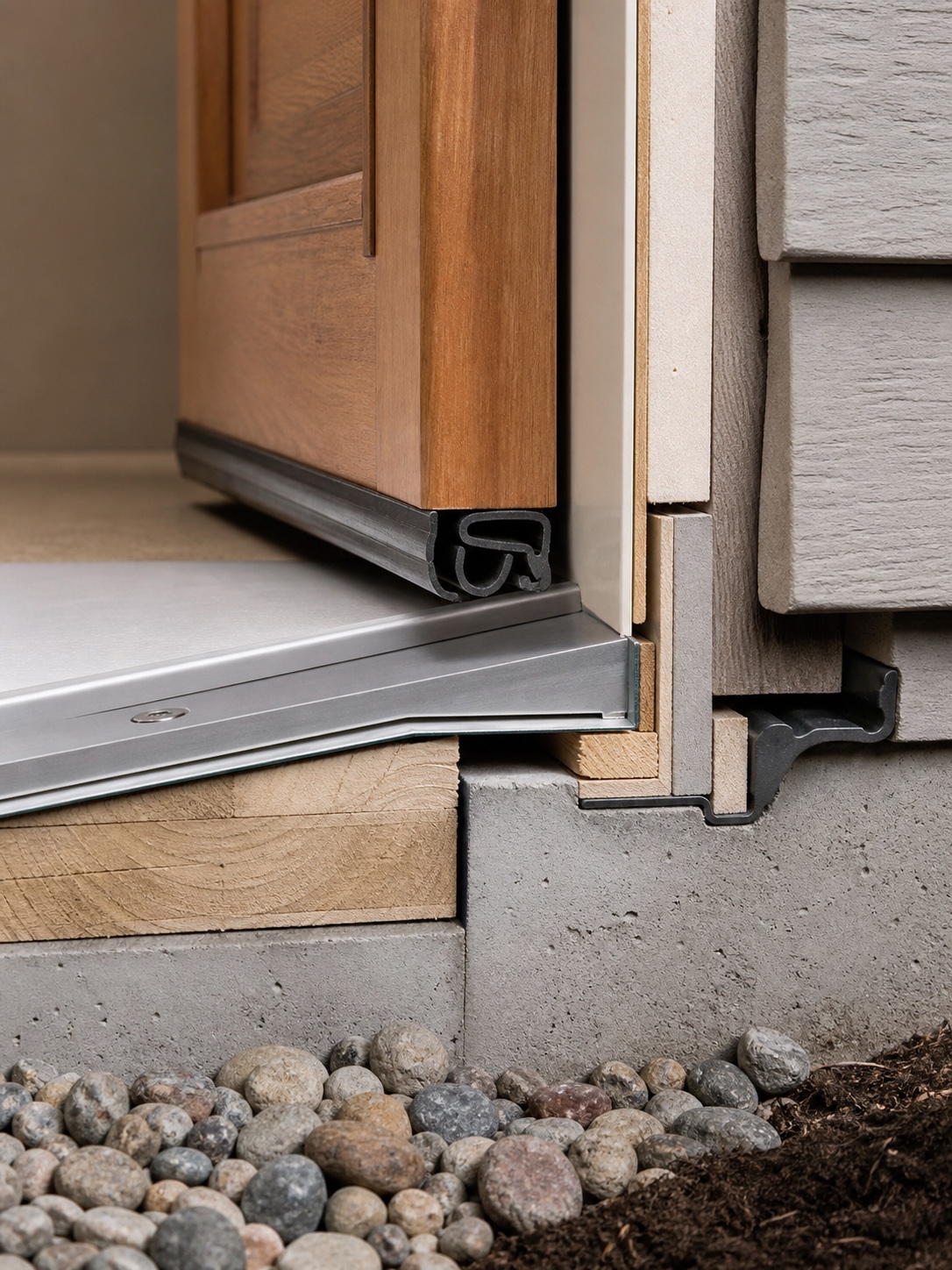
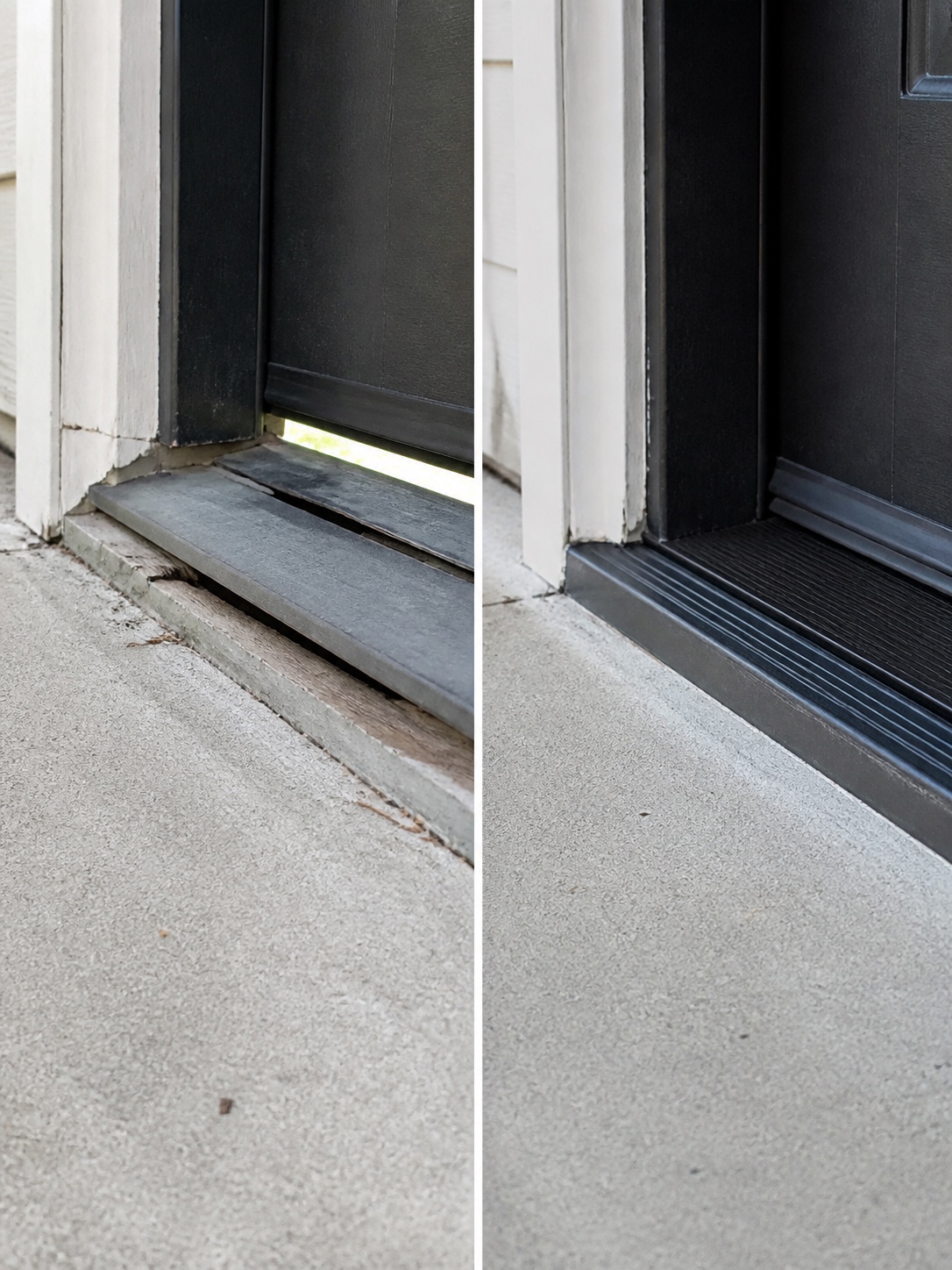
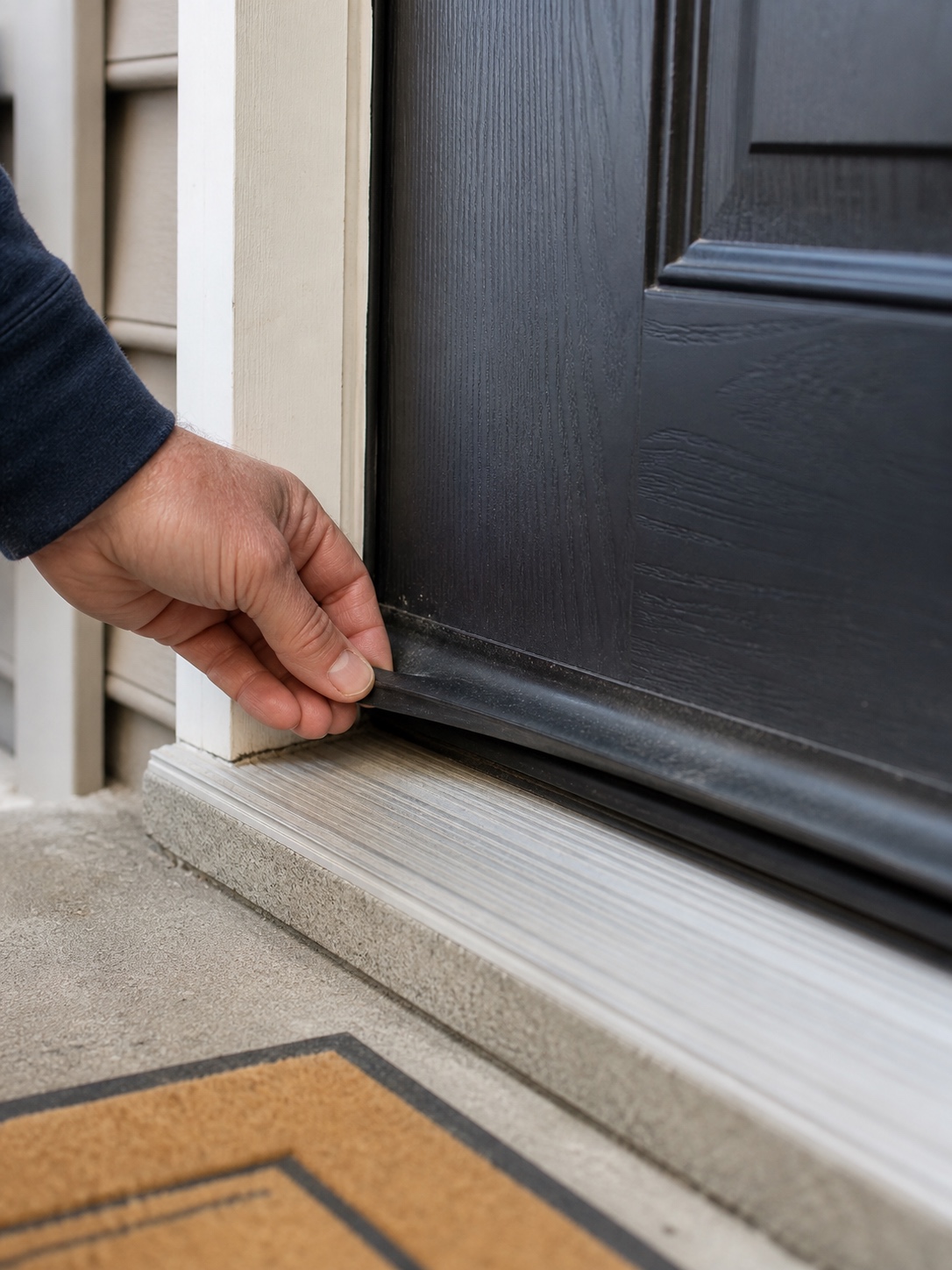
A threshold has exactly three jobs: stop water, block drafts, and create a clean visual line where the door meets the floor. Most people only notice it when one of those jobs fails, a puddle inside after heavy rain, a cold draft across your ankles in January, or just a scuffed, uneven strip that makes an otherwise nice entryway look tired.
The height and slope matter more than most homeowners realize. A saddle threshold needs just enough rise to shed water outward, usually somewhere around half an inch to three-quarters, without becoming a trip hazard. Too flat and it fails at drainage. Too high and you’re stubbing your toe every winter carrying groceries in from the car.
Common threshold failures and what they signal
I once walked a client through her own front entry and pointed out that the threshold gap had widened enough to see daylight underneath. She’d noticed the draft for two years and just kept turning the thermostat up. The fix took an afternoon, a new adjustable threshold and a fresh sweep gasket, maybe $80 in materials. The energy bill difference showed up the very next month.
Cracked sill plates and worn sweep seals are the two failures I see most often, and they rarely happen in isolation. If the sweep is worn, the threshold underneath is usually taking on more moisture than it should, which accelerates wear on both. Water staining just below the door, even faint, is worth investigating before it becomes rot in the subfloor.
Quick tip
Run your hand along the bottom of an exterior door on a windy day. If you feel air movement, the threshold or weatherstripping needs attention now, waiting until winter just means dealing with the fix in worse conditions.
Get the threshold right, and it does something subtle for the whole entryway: it makes the transition from outside to inside feel intentional, not just functional. That same logic, a resolved, deliberate transition, carries straight into the next detail most people overlook entirely: the garage door.
Garage doors as an architectural element
Garage doors get treated like appliances, pick one, install it, forget it exists until it breaks. That’s a mistake. On most suburban facades, the garage door is the single largest visual element on the entire front elevation, often bigger than every window combined.
Panel alignment and seal condition as design signals
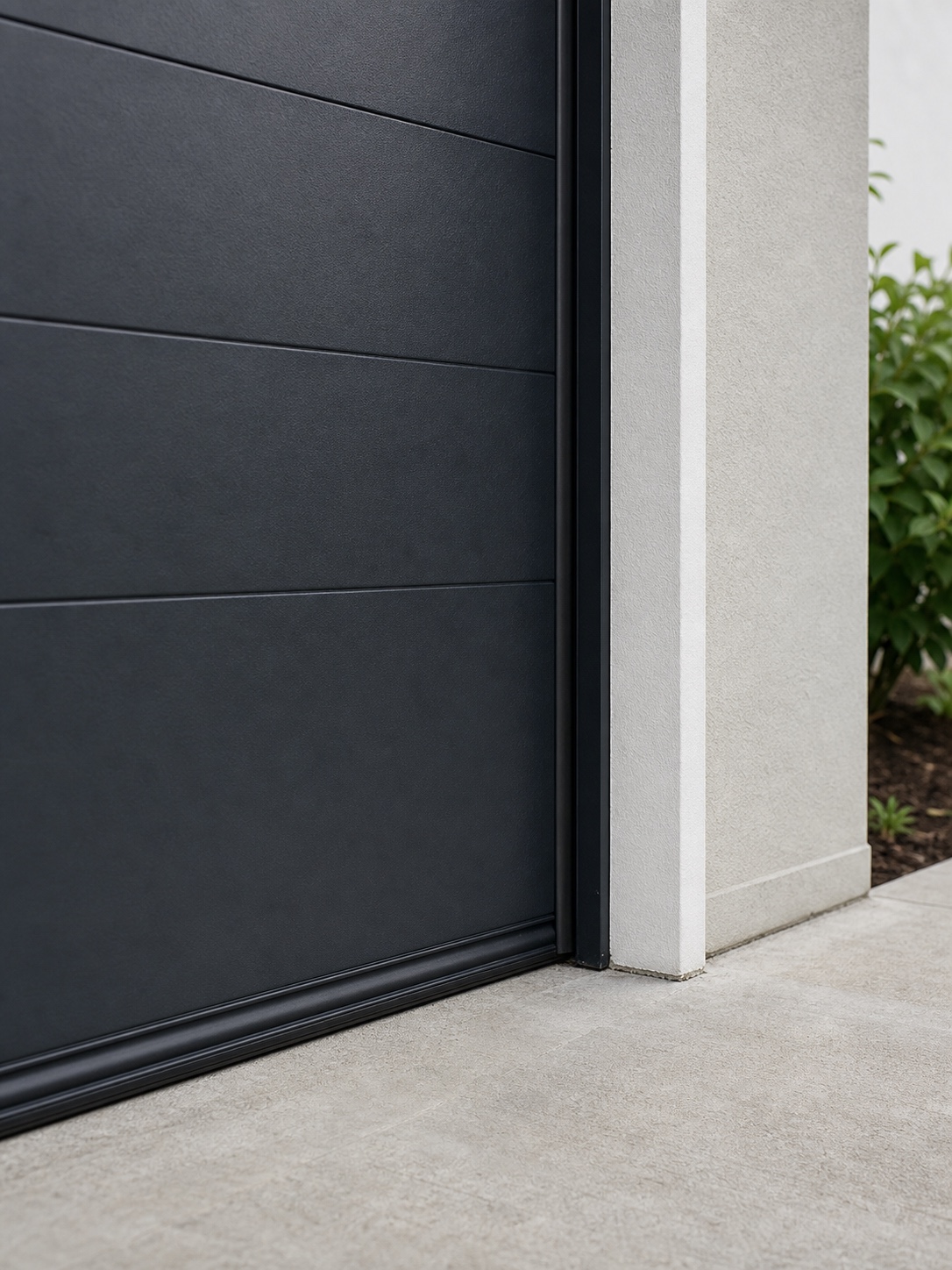
Stand across the street from your own garage door and look at the bottom seal. Is it flush against the concrete, or is there a visible gap letting daylight through on one side? That uneven gap isn’t just an energy problem, it’s the same kind of tell as a misaligned car door. I’ve walked properties where every other detail was dialed in, and the garage door alone dragged the whole facade down because one bottom corner sagged half an inch.
Panel alignment matters just as much. A door with slightly bowed or unevenly spaced panels reads as tired even when it’s structurally fine, the horizontal lines across a garage door are the largest repeating pattern on the house, so any inconsistency in that rhythm is obvious from the street in a way a single crooked shutter never would be.
How garage door choice affects facade proportions
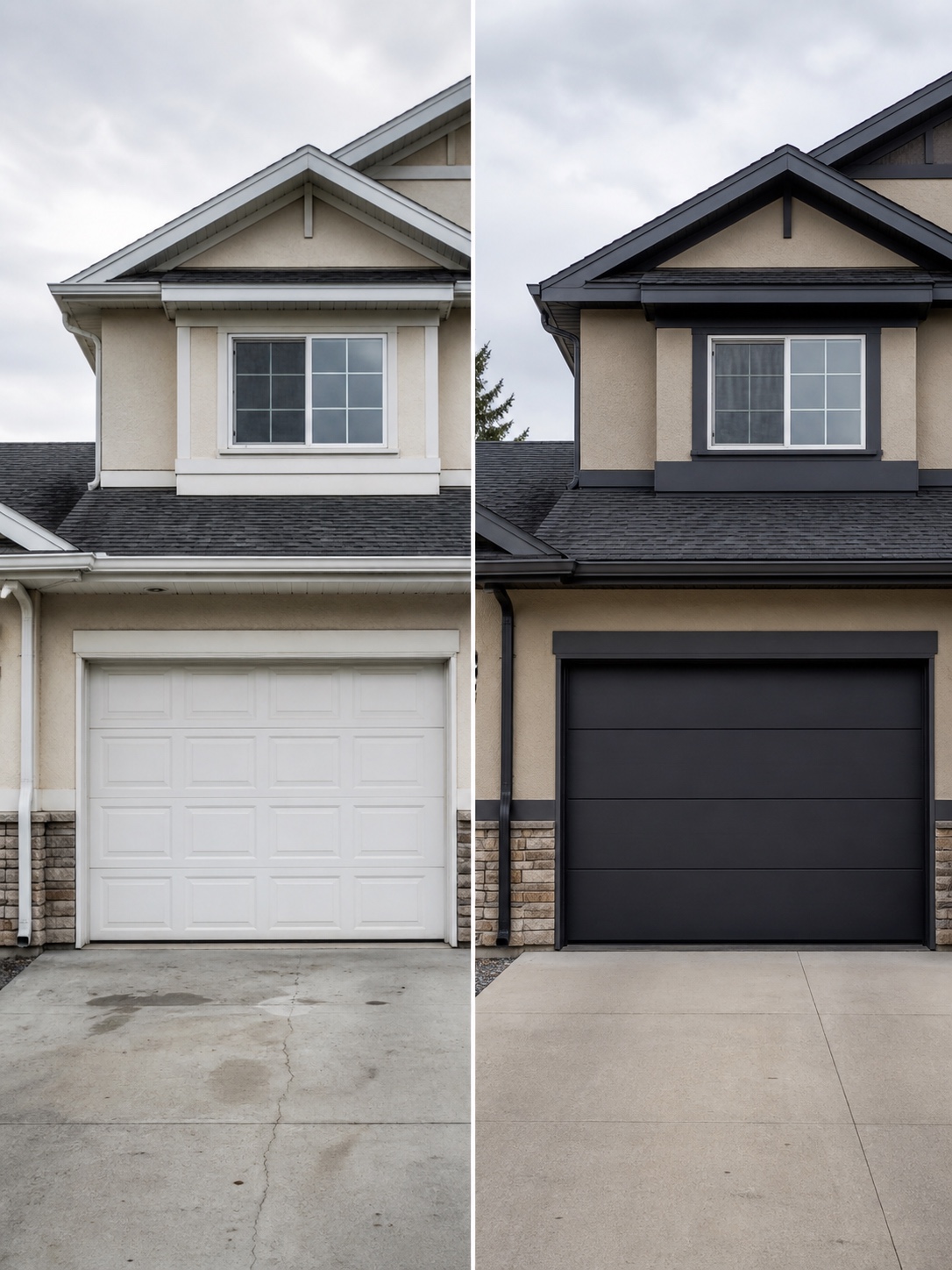
This is where I actually see the most missed opportunity. A dark, flush-panel garage door, something in the range of a matte charcoal or deep bronze, can visually anchor a lighter facade the same way a black window frame anchors white siding. Compare that to a bright white raised-panel door on the same house, and the whole front elevation reads as busier, less resolved, even though nothing else changed.
I worked on a renovation a couple years back where swapping a stock white garage door for a flush dark panel version, alongside repainting the brick, was genuinely the highest-impact single change on the entire project, more visible from the street than the new windows, and a fraction of the cost of re-siding.
Quick tip
If you’re not ready to replace the door itself, check the weatherstripping along the sides and top first. A worn seal is cheap to fix and closes the same kind of gap we’ve been talking about since the threshold section — moving air, water, and a visual line that’s currently broken instead of clean.
10 before-and-after exterior details that show the difference
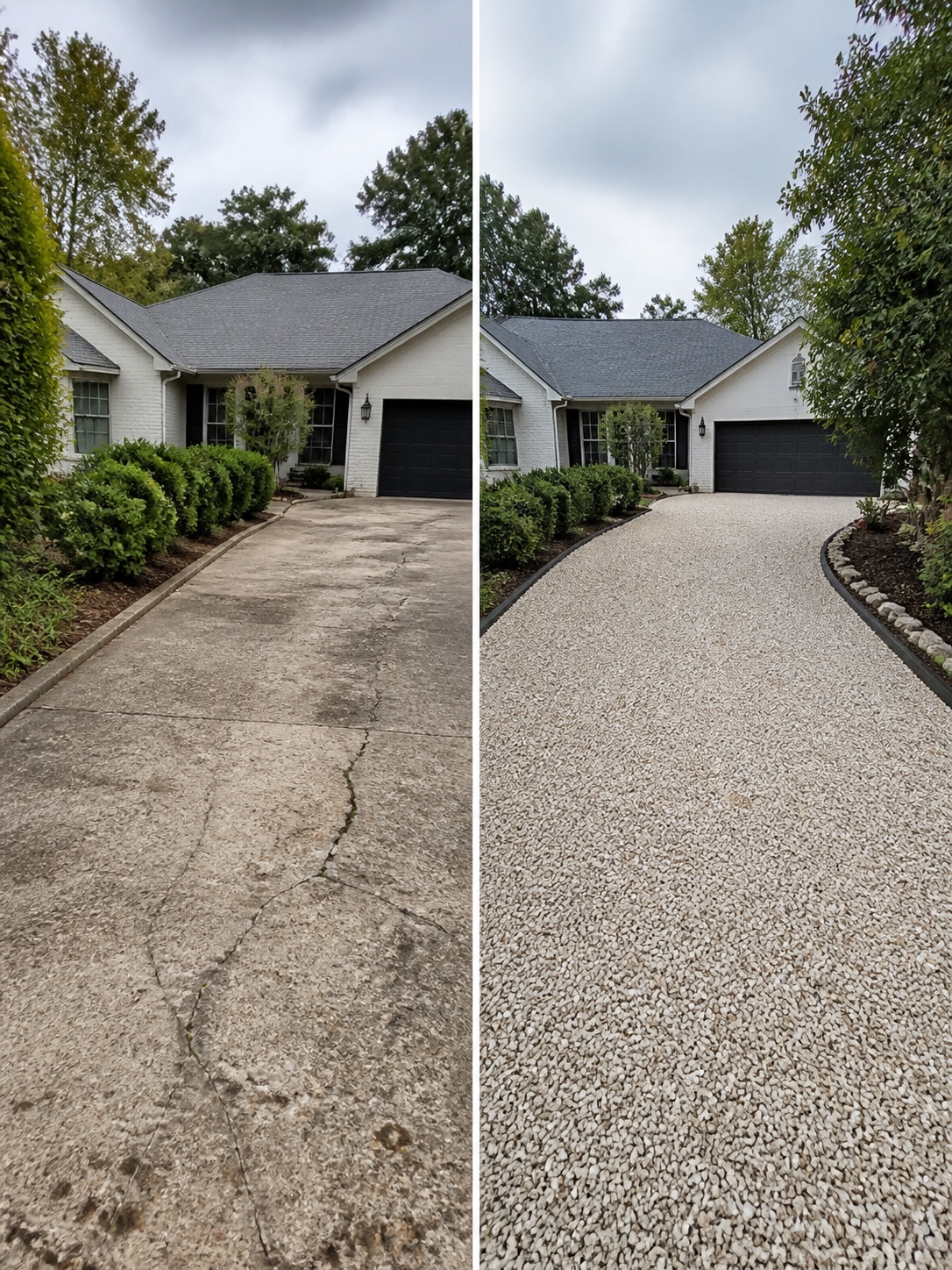
Talking through these details in theory only goes so far. Seeing the same house before and after one focused fix makes the point faster than any paragraph can, the kind of transformation shown when a tired orange-brick bungalow gets repainted white with a dark garage door, blackened window trim, a new gravel driveway, and structured hedge planting replacing dead lawn. For a larger transformation view, compare this with the facade redesign before-and-after cases and the home-value lens in architectural home upgrades ROI.
1. Front door threshold replacement
A worn aluminum saddle threshold with visible daylight underneath, swapped for a properly slanted composite threshold with a fresh sweep gasket — same door, dramatically tighter seal.
2. Garage door repaint and panel swap
A dated white raised-panel garage door replaced with a flush matte charcoal panel door — the single change that reframes an entire facade’s color balance.
3. Soffit vent cleaning and repair
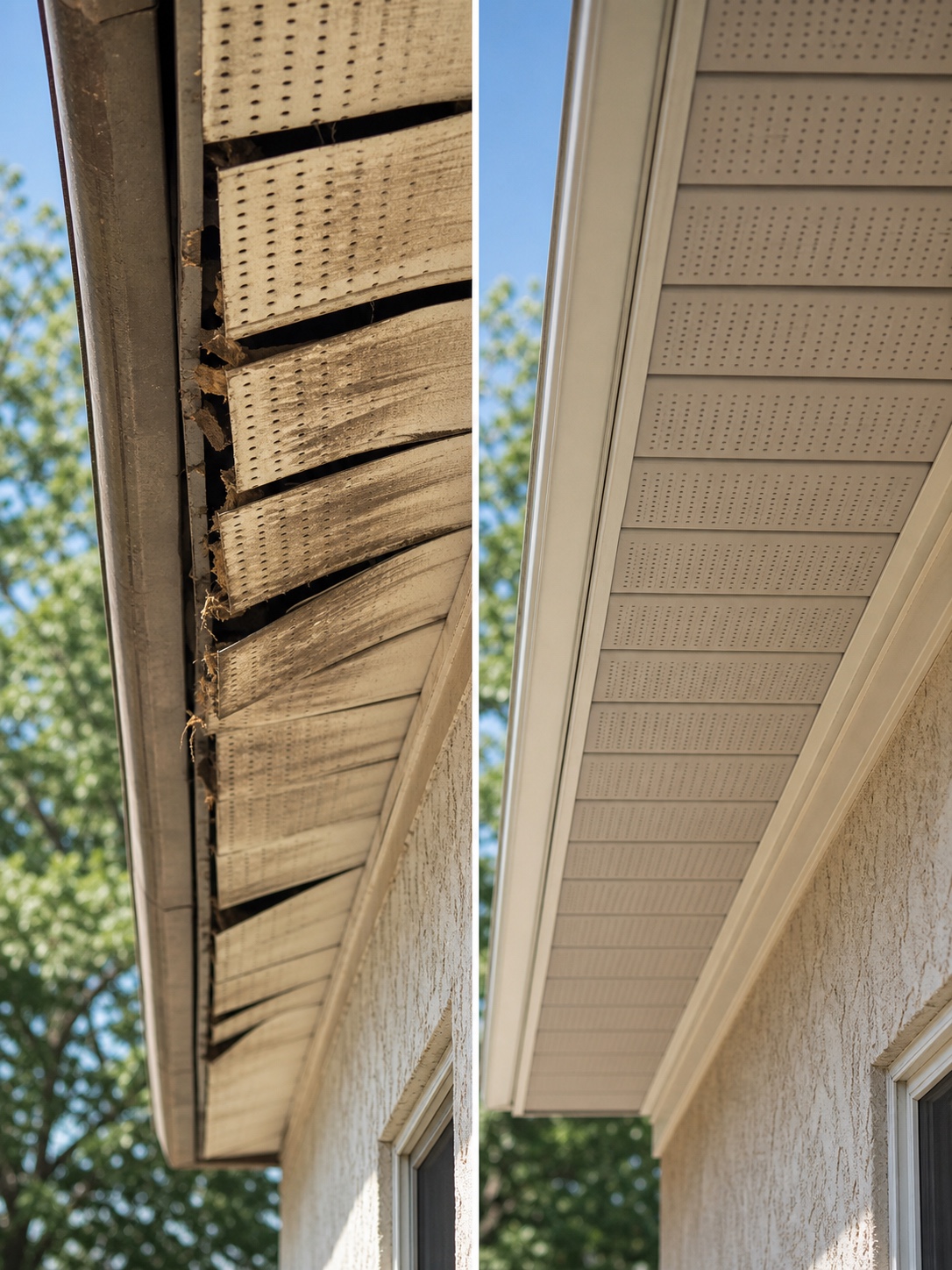
Soffit panels clogged with debris and sagging in one corner, replaced with clean vented panels restoring proper attic airflow.
4. Roof edge and fascia line cleanup
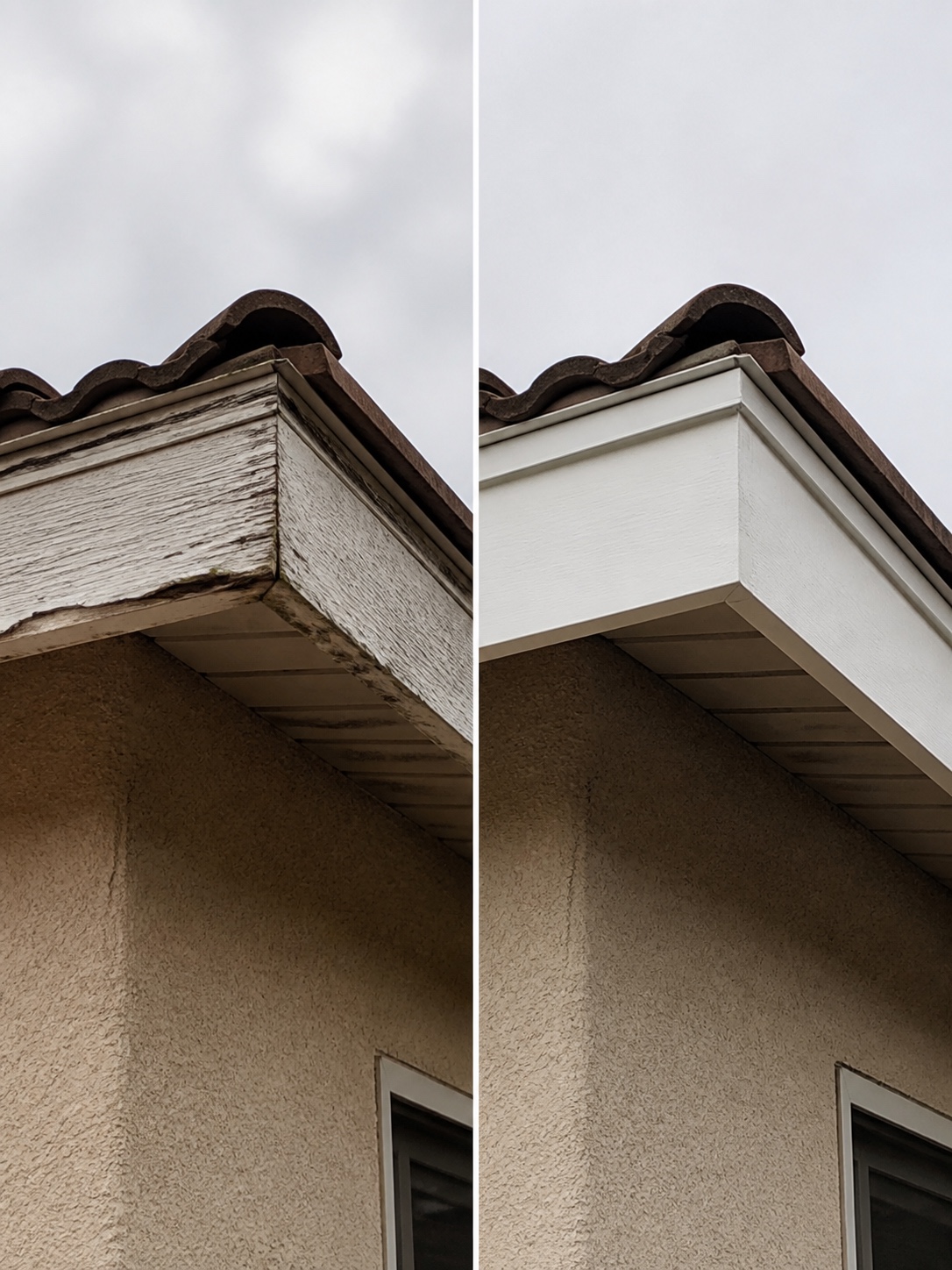
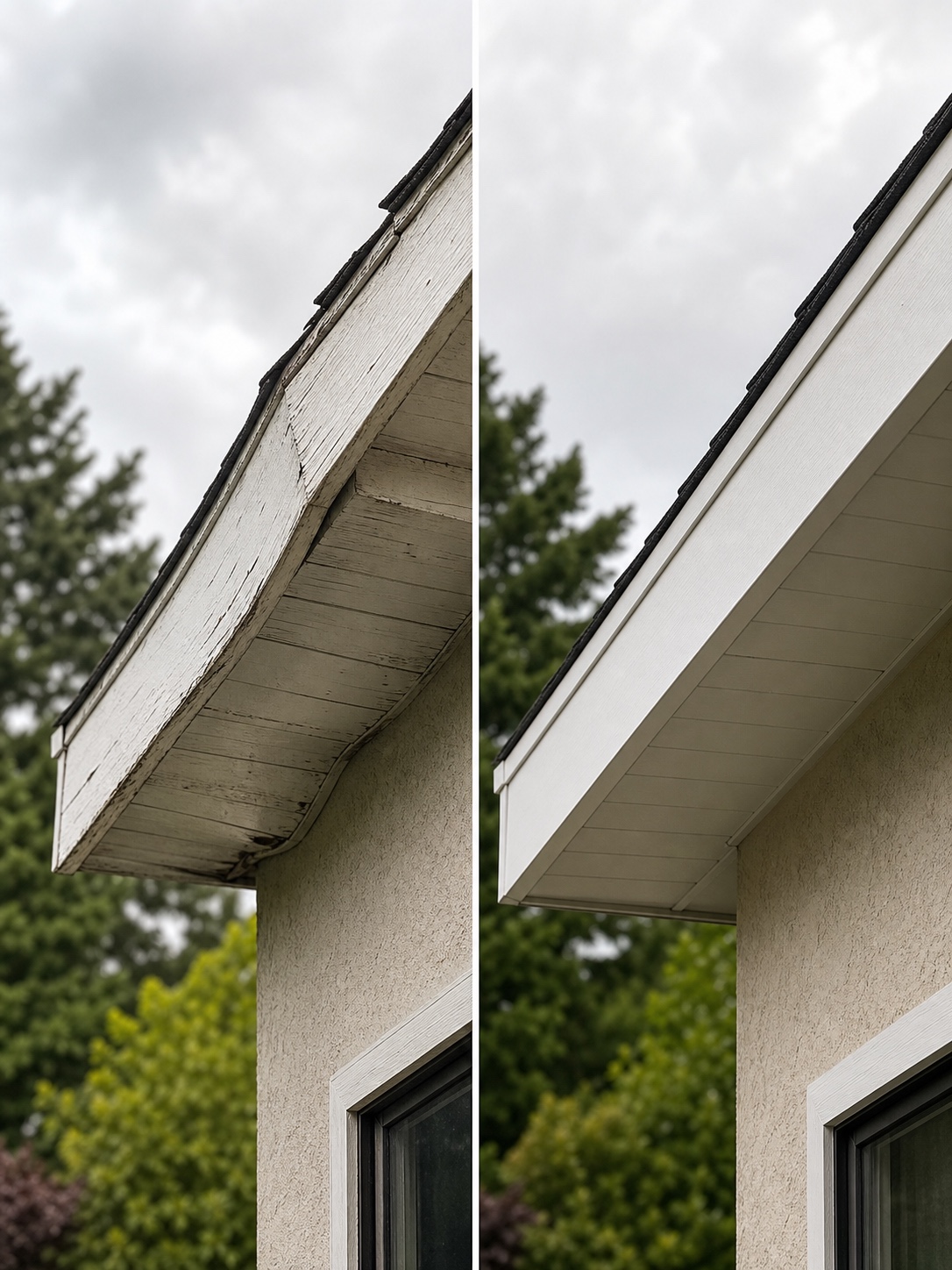
A wavy, weathered fascia board straightened and repainted, sharpening the entire roofline’s silhouette against the sky.
5. Utility penetration resealing
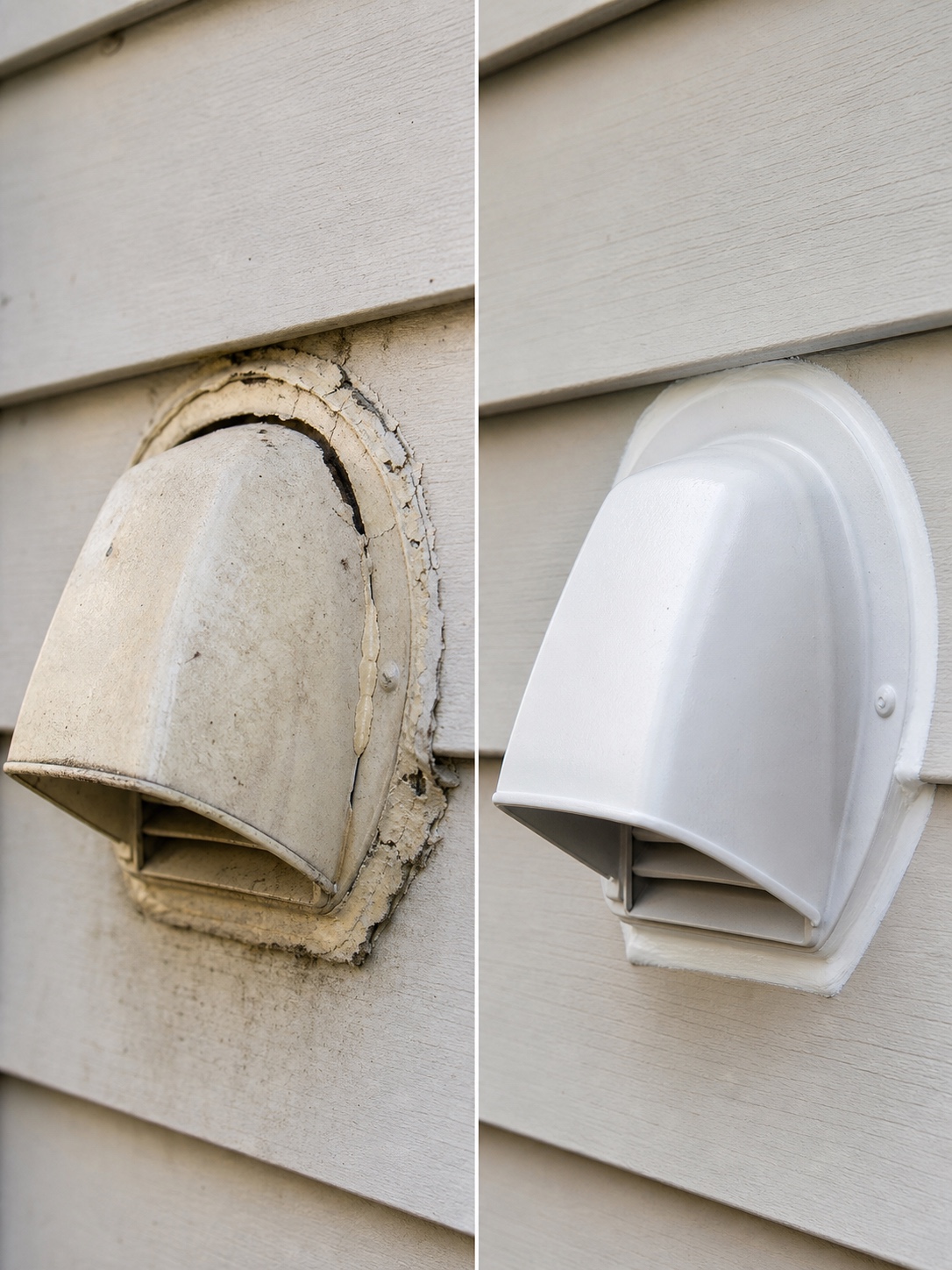
A dryer vent penetration with cracked, yellowed caulk around it, cleaned up and resealed with a proper vent hood and fresh sealant bead.
6. Crawl-space access panel upgrade
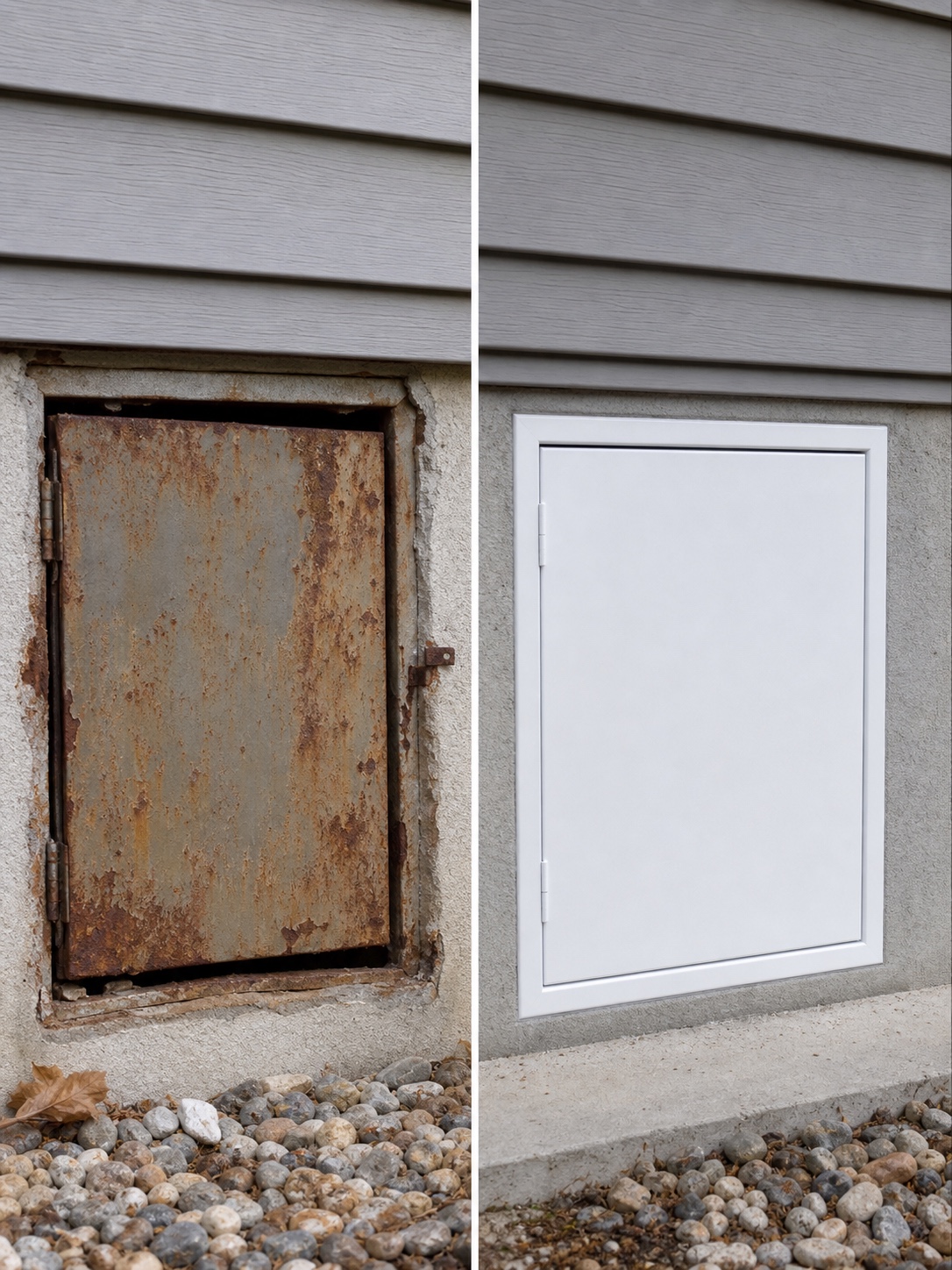
A rusted, ill-fitting metal crawl-space door replaced with a properly sealed, insulated access panel flush with the foundation line.
7. Garage interior storage reorganization
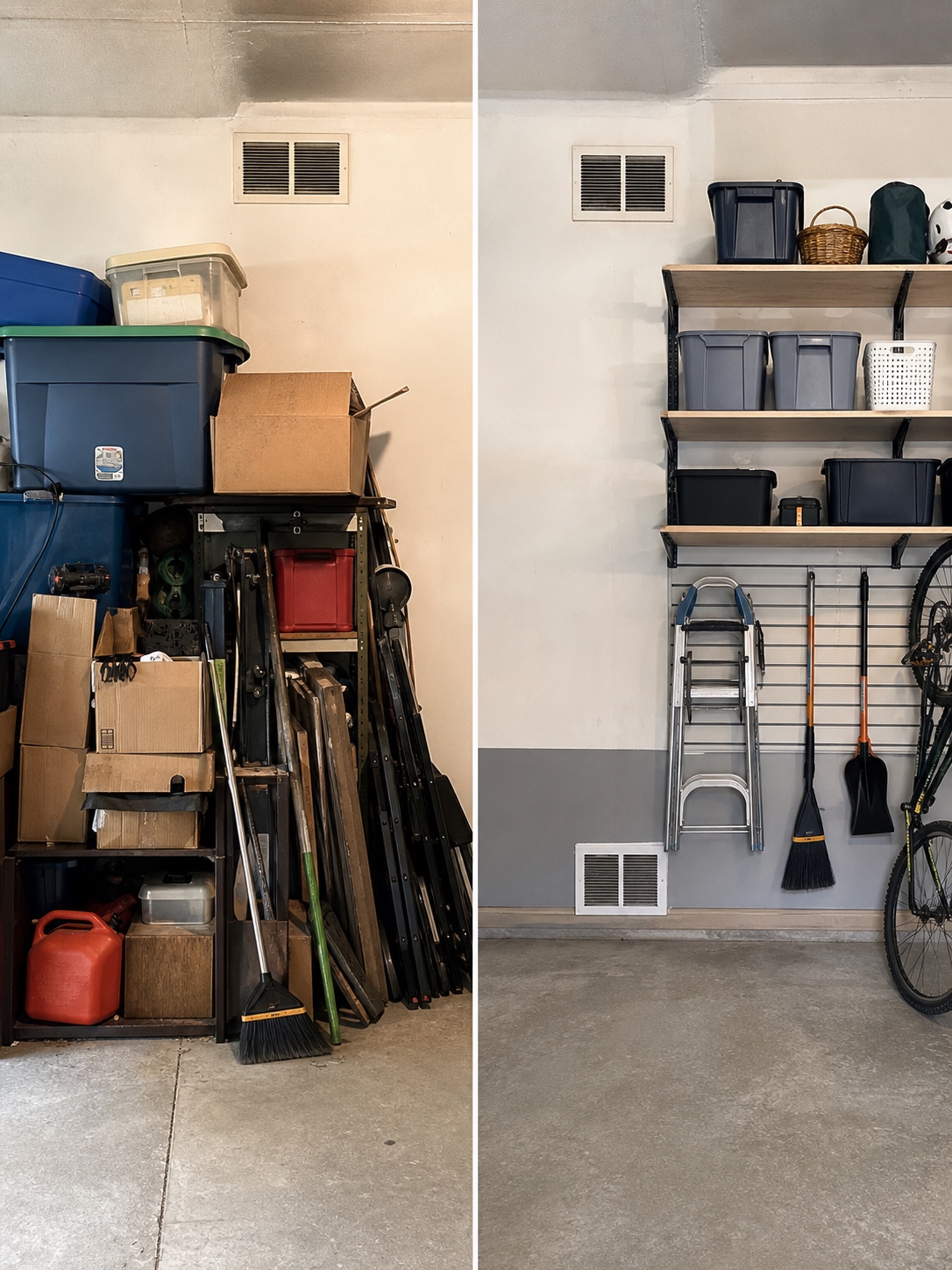
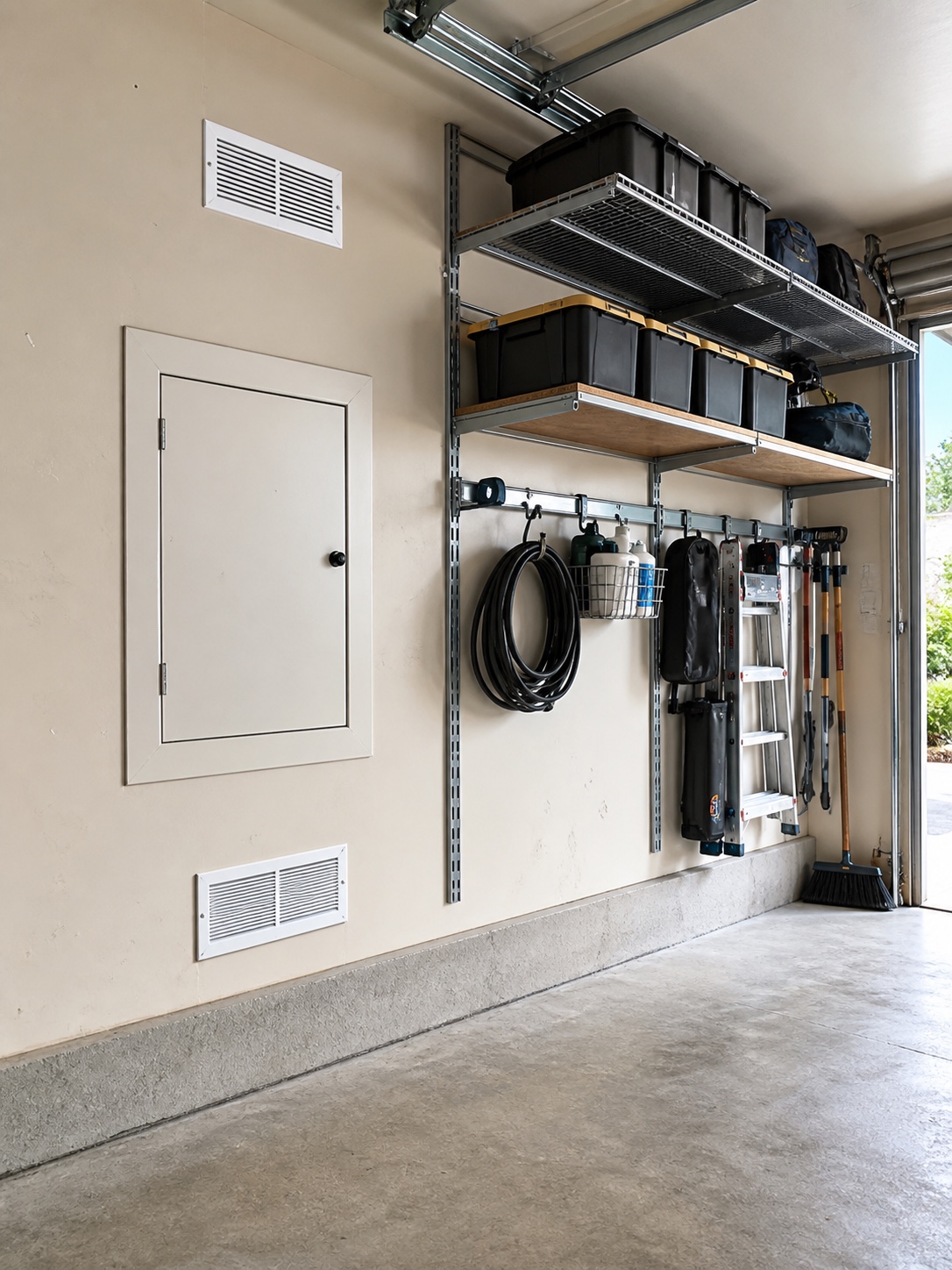
Boxes and equipment piled against the garage’s soffit vent intake, reorganized into wall-mounted storage that keeps airflow paths clear.
8. Window trim and casing refresh
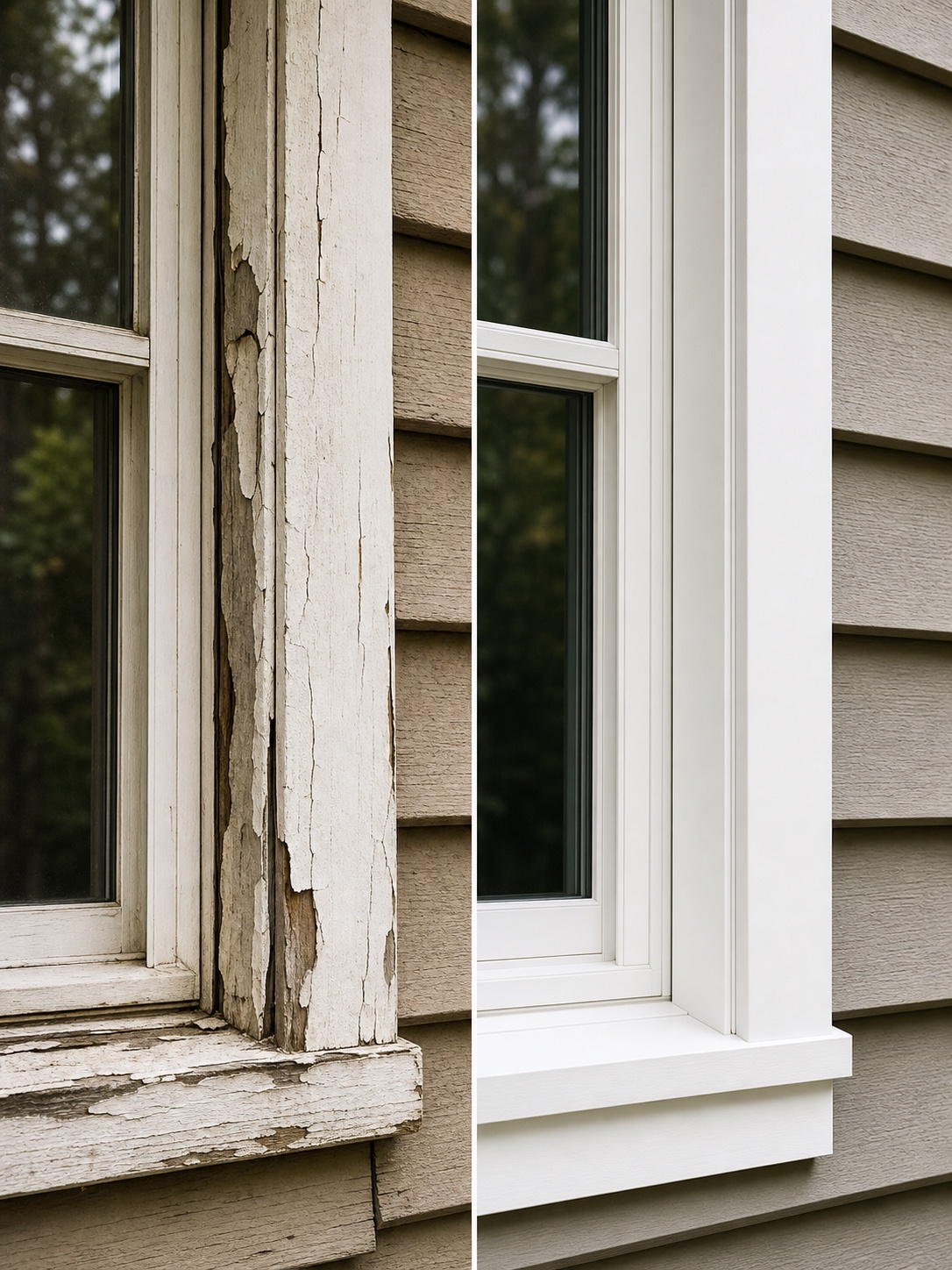
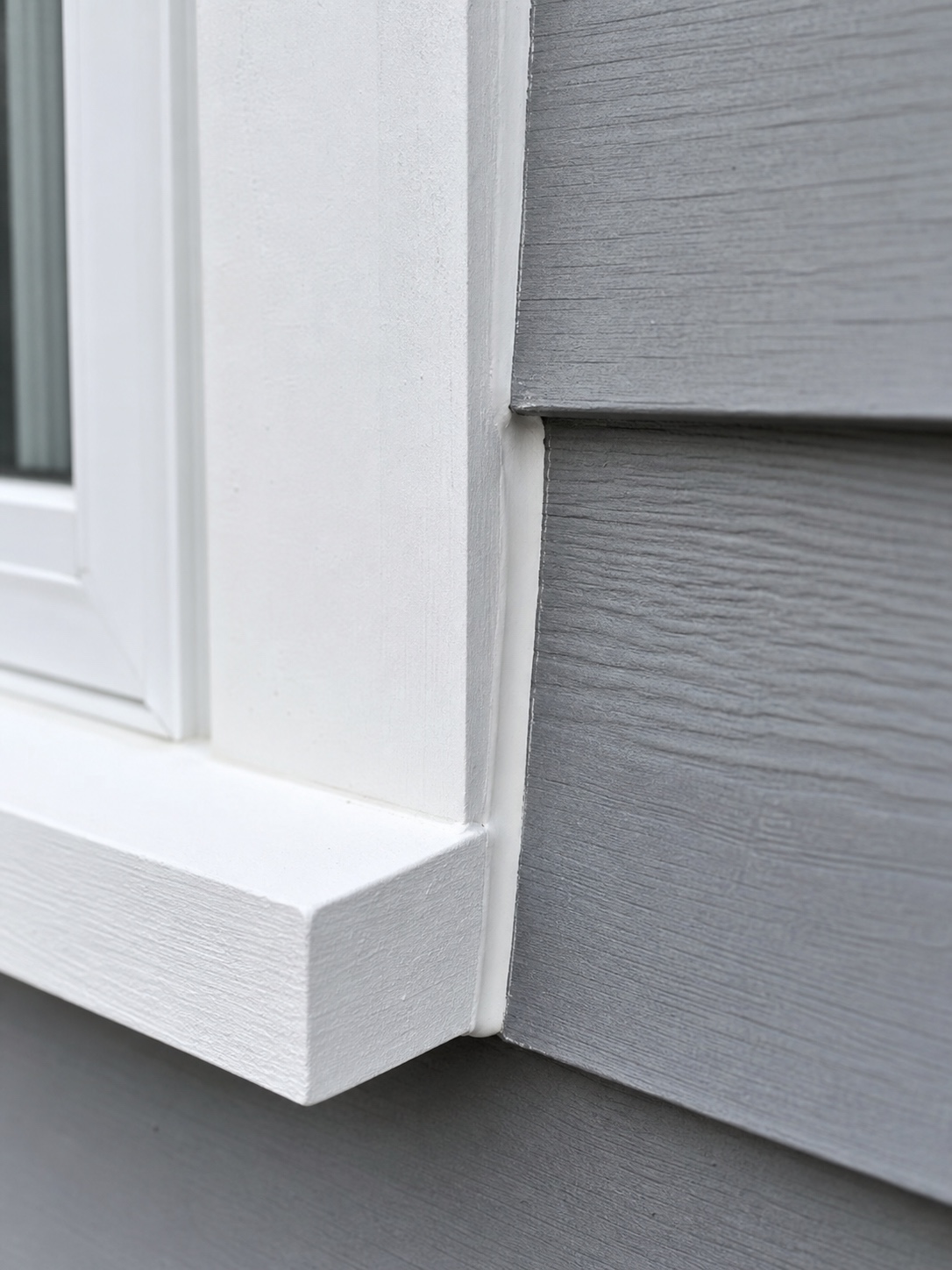
Cracked, gapped window casing sealed and repainted, sharpening the transition between siding and glass.
9. Driveway and walkway resurfacing
A cracked, stained concrete driveway replaced with clean poured gravel, immediately changing how the whole approach to the house feels. If the surface itself needs work, compare material choices and budgeting in the asphalt paving cost guide before you choose a finish.
10. Facade landscaping clearance and planting
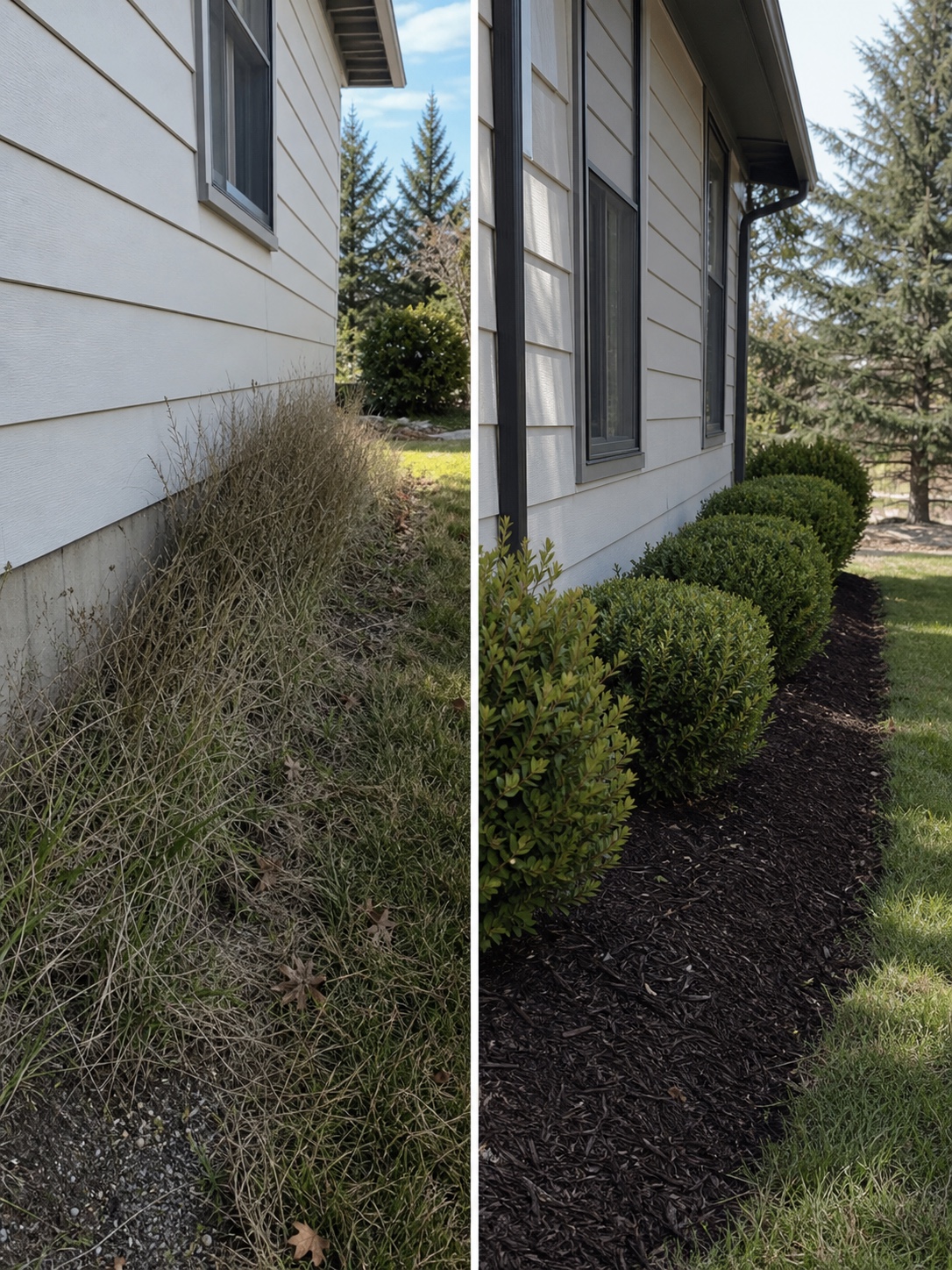
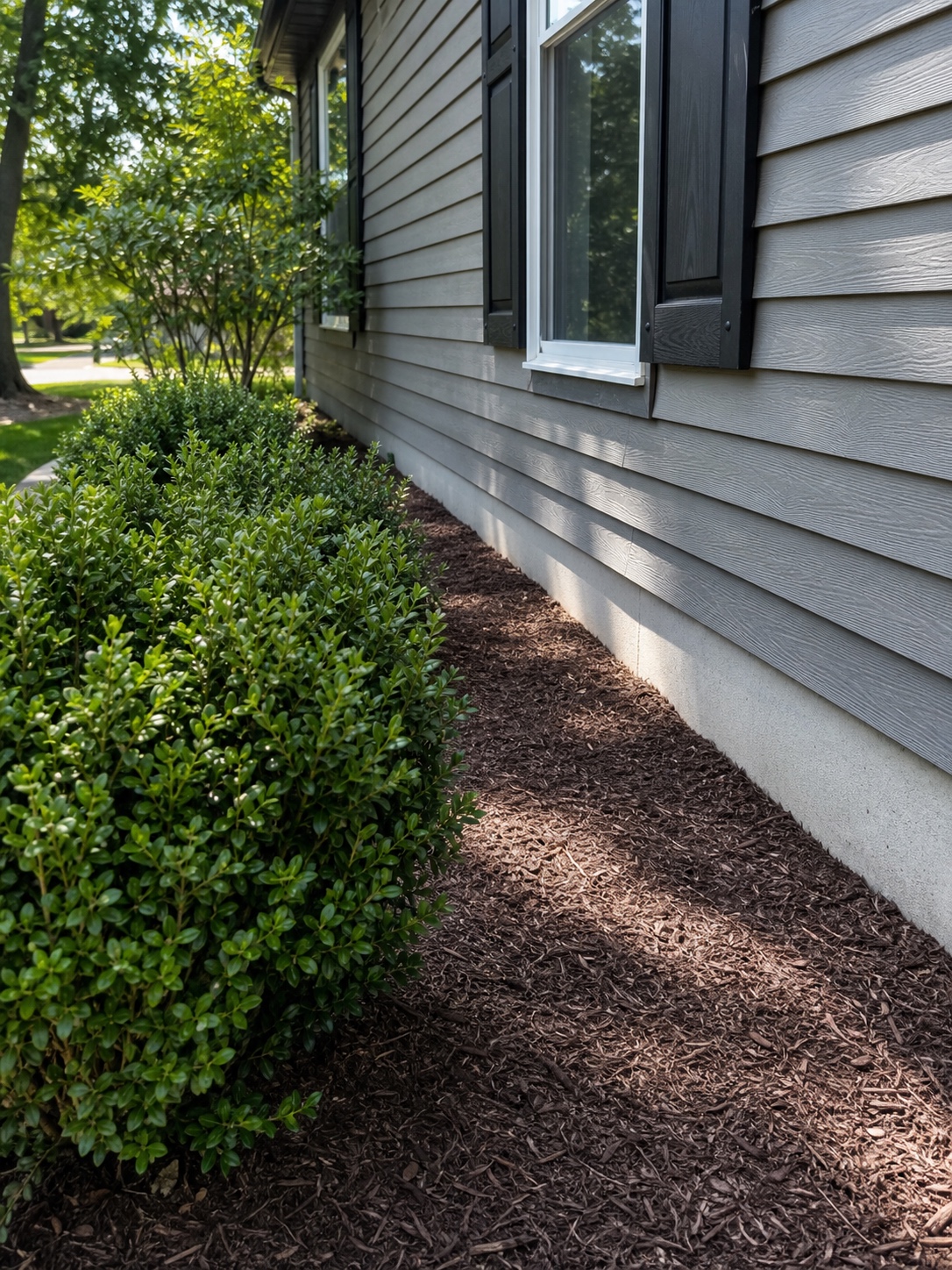
Dead, overgrown lawn touching the foundation directly, replaced with structured low hedges set back with proper drainage clearance.
Vents, soffits, and roof edges where function meets finish
Look up at the underside of almost any roof overhang and you’ll find a flat panel most homeowners couldn’t name if asked. That’s the soffit, and it’s doing more work than practically any other detail on the exterior, while getting noticed least.
What soffit vents are actually doing up there
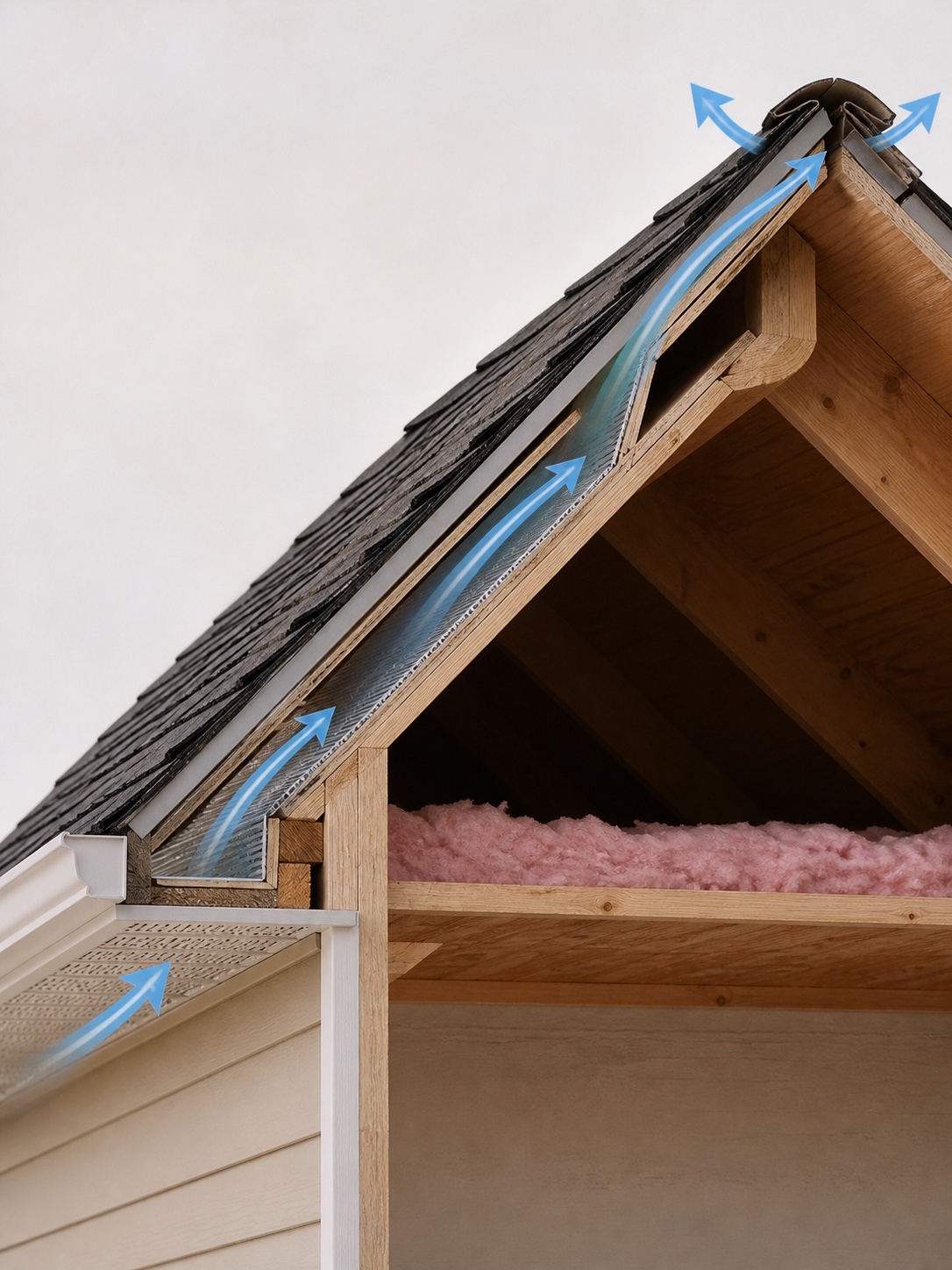
A soffit vent pulls cool outside air into the attic, which pushes hot, moisture-laden air out through vents higher up near the ridge. Without that intake, an attic turns into a slow-cooking box in summer and a condensation trap in winter, and both scenarios shorten the life of whatever’s up there, shingles included.
I learned to actually see this system properly while consulting on a renovation outside Kyiv, where the original soffit had been painted over so many times the perforations were sealed shut. The homeowner had mold showing up on the north-facing attic rafters every winter and blamed the roof. The roof was fine. The soffit just couldn’t breathe anymore.
How roof-edge detailing changes the way a house reads
Here’s the part most inspection checklists skip entirely: a crisp, straight fascia line does something for a house’s silhouette that’s almost architectural in effect. A warped or sagging fascia board reads as fatigue from the street, even from fifty feet away, even if you can’t consciously identify what’s wrong. It’s the roofline equivalent of a car’s shoulder line going soft.
Material choice matters too. Vinyl soffit is the low-maintenance default, it won’t rot, it’s inexpensive, and it holds up fine in most climates, though it can go brittle in serious cold. Aluminum handles humidity better and dents instead of cracking, which I actually prefer on coastal or high-moisture properties. Wood looks the best, honestly, but only if someone’s committed to repainting it every few years.
Quick tip
Walk your roofline once a season and look for debris buildup in the soffit perforations — leaves, wasp nests, blown insulation pushed out from inside. A blocked vent defeats the whole ventilation system even when the soffit panel itself looks perfectly fine.
Utility penetrations are the detail everyone forgets
Every home has a handful of holes punched through its exterior wall on purpose, dryer vent, AC line, cable entry, gas line, and almost nobody thinks about them until something goes wrong. These small penetrations cause a disproportionate share of exterior problems for their size.
Dryer vents, AC lines, and cable entries: small holes, big consequences
A dryer vent penetration that’s just caulked around the edge, with no proper hood or backdraft damper, is basically an open invitation for drafts, moisture, and whatever else wants to get in. I checked one on a property inspection last year where the original installer had used expanding foam and called it done. Eighteen months later, that foam had degraded, cracked, and pulled away from the siding, you could see straight into the wall cavity if you got close enough.
AC line sets are just as commonly mishandled. The refrigerant lines run through a hole that’s often sized generously for easier installation, then never properly sealed once the lines are in. That gap sits right at exterior wall height, exactly where wind-driven rain hits hardest during a storm.
How to seal a penetration without it looking patched
The fix isn’t complicated, but it does need the right materials. A proper vent hood with a backdraft damper for the dryer vent, a foam backer rod pressed into any gap larger than about a quarter inch, and a polyurethane sealant, not silicone, which doesn’t bond well to most siding materials, finished with a clean bead rather than a smeared mess.
I always tell clients the same thing here: if you can see daylight, uneven caulk lines, or mismatched colors around a penetration, it reads as a patch job even after it’s technically sealed. A properly finished penetration should look almost invisible from ten feet away, tight to the material, color-matched, no visible gap.
Quick tip
Check your utility penetrations every fall before the weather turns. A five-minute visual inspection with a flashlight catches most problems before winter moisture makes them worse.
Get these small holes right, and you’ve closed off one of the most overlooked entry points for the exact same issues that show up around crawl-space access and garage storage, which is where we’re headed next.
Crawl-space access and garage storage need design thinking
Nobody designs a crawl-space access panel with love. It’s usually an afterthought, a plywood cutout or a stamped metal door that gets painted once and ignored for a decade. That neglect shows, and it costs more than it should.
Crawl-space panels: sealed vs. vented
The debate over whether crawl-space vents should stay open or get sealed has shifted over the past few years. Older building codes assumed ventilation prevented moisture buildup; newer research on conditioned crawl spaces suggests sealing and insulating often performs better, especially in humid climates. Either approach works, what fails is an access panel that’s neither properly sealed nor properly vented, just loosely fitted and left to age.
I inspected one crawl-space door on a 1970s brick house that had warped enough to leave a half-inch gap along the bottom edge, year-round. The homeowner had no idea it was there until I pointed a flashlight at it. That gap was doing exactly what any other unsealed penetration on this list does: letting in moisture, cold air, and anything small enough to fit through.
Garage storage layouts that don’t block ventilation or access
This is the detail almost nobody thinks about as a design problem, but it is one. Garages accumulate stuff, bikes, seasonal decorations, half-used paint cans, and that stuff tends to pile up exactly where the soffit vent intake or the crawl-space hatch happens to be, simply because that’s the open wall space available.
I redesigned a garage storage layout for a client a couple of years back using wall-mounted slat panels instead of floor stacking, which freed up nearly three feet of clearance along the vent-adjacent wall. It wasn’t just tidier, it meant the ventilation system the soffit was built to support could actually function the way it was designed to.
Features like deep roof overhangs and strategically placed eaves are critical details in passive solar architecture that protect against overheating.
Quick tip
Map your garage’s vent locations and crawl-space access point before you plan storage. Keep at least two feet of clearance around both, and you’ll avoid trapping moisture or heat where you can’t see it happening.
Here’s the honest bottom line on hidden exterior zones: a sealed, well-maintained access point does more than look tidy. It closes off the small openings that invite moisture, drafts, dust, insects, and other unwanted activity. If repeated signs keep showing up around crawl-space access, attic edges, or sealed storage areas, treat it as more than a cosmetic issue and bring in a qualified specialist, such as professional pest control in Tyler, TX, when the problem moves past what caulk and weatherstripping can fix.
Landscaping as a maintenance decision
Most people think about landscaping in terms of curb appeal alone, what looks good from the street. Fair enough, it matters. But plants and grading decisions made purely for looks have a way of causing exterior problems two or three years down the line, quietly, in places nobody’s checking. For budget-friendly planting moves that still respect the facade, see these cheap front yard landscaping ideas.
Clearance zones near the facade
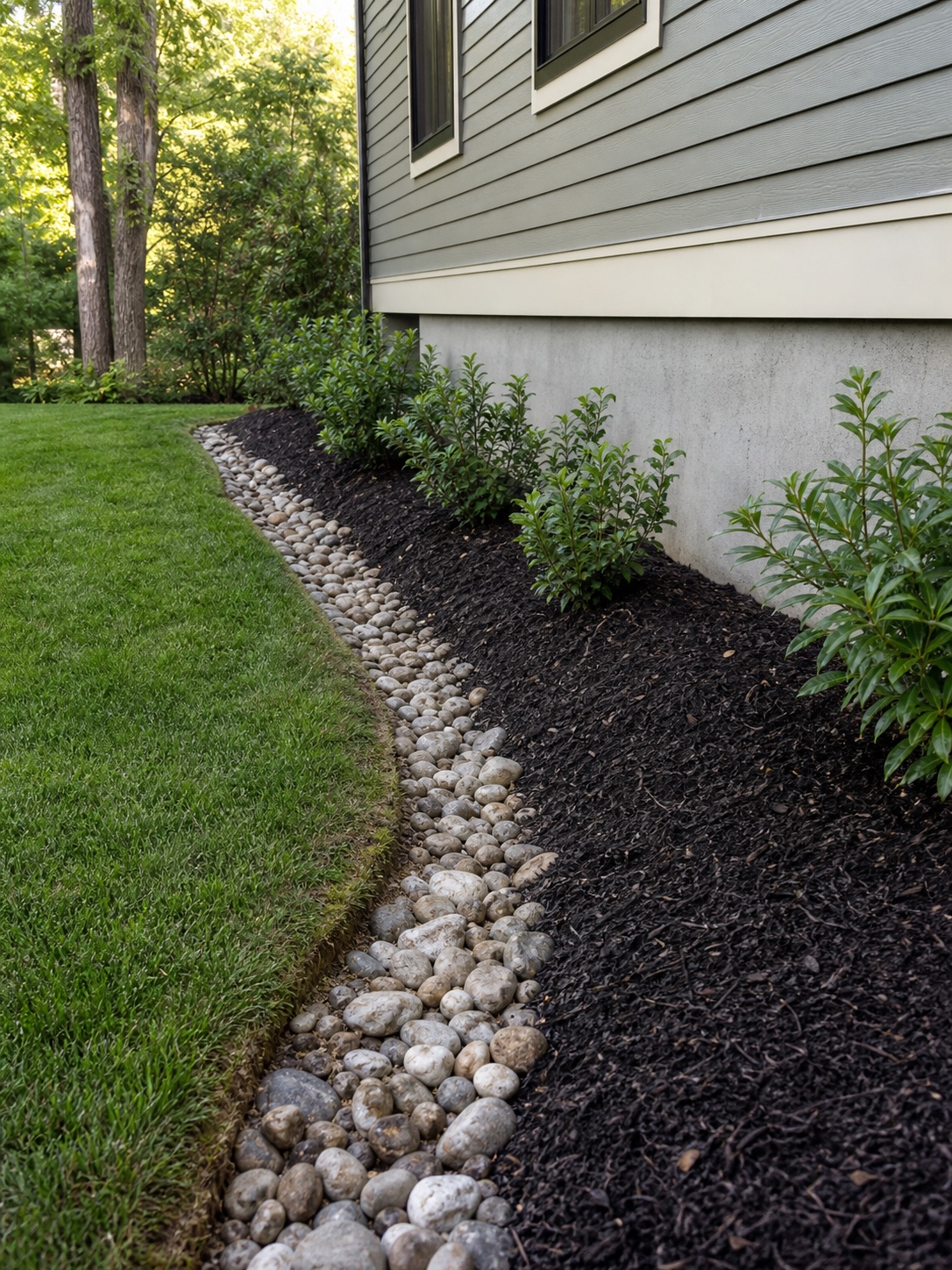
Soil and mulch piled directly against siding is one of the most common mistakes I see, and it’s almost always well-intentioned, someone wanted the planting bed to look lush and full right up to the house. The problem is that siding, especially wood or fiber cement, isn’t designed to sit in constant contact with damp soil. A gap of at least six inches between grade and the bottom of the siding gives materials room to breathe and keeps splash-back moisture away from the wall.
Shrubs planted too close to the foundation cause a similar issue over time. I’ve seen boxwood hedges planted a foot from a brick facade that, five years later, were pressing against the wall and trapping moisture behind their branches every time it rained. Two to three feet of clearance from mature shrub width to wall is a reasonable rule, and it’s worth checking a plant’s full-grown size before it goes in the ground, not after.
How planting choices affect drainage and long-term wear
Grading matters just as much as clearance. Ground that slopes toward the house instead of away from it sends water straight at the foundation every time it rains. Nobody notices that detail until a basement starts smelling damp, a slab cracks, or pests begin settling into the wet soil around the walls.
I worked with a client whose front bed had been mulched so many times over the years that the soil had crept nearly to the first course of brick, well above the original grade. Regrading the bed and cutting a shallow drainage swale solved a mystery damp patch on the interior wall that three different contractors had failed to diagnose.
Moisture around the foundation can also create an easy route for mice, rats, termites, and other unwanted visitors. Homeowners dealing with signs of nesting or gnawing may need professional rodent control in Tyler, while recurring insect activity may call for broader pest control in Tyler, TX. But the drainage problem still needs fixing. Otherwise, the damp conditions that attracted the pests will remain.
Sometimes the real fix isn’t inside the house at all.
Quick tip
After a heavy rain, walk your foundation line and check for standing water or soil that stays visibly wet longer than the rest of the yard. That’s your drainage weak point, and it’s far cheaper to regrade now than to deal with foundation repair later.
Landscaping done with these clearances in mind doesn’t just protect the structure, it finishes the whole exterior the way a well-set threshold or a properly sealed vent does: cleanly, deliberately, with nothing left to chance.


Final exterior walkthrough
A well-designed exterior isn’t one big decision, it’s a dozen small closed gaps working together: a threshold set at the right slope, a soffit that can actually breathe, a garage door seal that sits flush, a planting bed that gives the siding room to dry. None of these details are expensive or complicated on their own. What they need is attention, the same kind of attention a designer gives to a seam line or a parting gap on any well-made object.
Walk your own exterior this weekend and check the details in this guide, starting with the threshold and the soffit vents. Most fixes take an afternoon and cost less than a hundred dollars. For a broader maintenance rhythm, pair this exterior walkthrough with these home maintenance tips and low-maintenance home improvements. The payoff shows up in the next energy bill, and in how the house looks from the street the very next day.
Small exterior details matter because architecture rhythm breaks quickly when trim lines, garage panels, soffit joints, and window spacing stop agreeing with each other.
Home exterior details FAQ
What are the most overlooked exterior details on a home?
Door thresholds, soffit vents, and utility penetrations top the list — small transitions between materials that rarely get attention until they fail. Unlike a cracked driveway or peeling paint, these details often go unnoticed for years because they’re either low to the ground, tucked under a roofline, or hidden behind stored items in a garage.
How do I know if my door threshold needs replacing?
Run your hand along the bottom of the door on a windy day — if you feel air movement, the threshold or sweep gasket needs attention. Visible daylight underneath, water staining just below the door, or a worn, cracked sweep seal are all signs it’s time for a fix, usually an $80 to $150 job for materials and an afternoon of labor.
Should soffit vents be blocked or kept clear?
Always keep them clear. Soffit vents pull cool air into the attic, which pushes hot, moisture-laden air out through higher vents near the ridge. Blocking them with insulation, paint buildup, or stored garage items traps heat and moisture, which shortens shingle life and can lead to mold on rafters.
What’s the right way to seal a utility penetration?
Use a foam backer rod for gaps larger than about a quarter inch, then finish with a polyurethane sealant rather than silicone, which doesn’t bond well to most siding. For dryer vents specifically, install a proper vent hood with a backdraft damper rather than relying on caulk alone.
Should crawl-space access panels be sealed or ventilated?
Both approaches work if done properly — older codes favored ventilation, while newer conditioned crawl space methods favor sealing and insulating, especially in humid climates. What fails every time is a panel that’s neither, just loosely fitted and left to warp over the years.
How close can landscaping be to a house foundation?
Keep at least six inches of clearance between soil or mulch and the bottom of your siding, and two to three feet between mature shrub width and the wall. Check a plant’s full-grown size before planting, since foundation-crowding is almost always the result of underestimating how big something gets.
Does garage storage layout actually affect ventilation?
Yes, more than most homeowners realize. Boxes and equipment stacked against a vent-adjacent wall block the soffit intake the ventilation system depends on. Wall-mounted storage instead of floor stacking usually frees up enough clearance to keep airflow paths open.
Upgrading tiny features on your deck is a fast way to coordinate your fall patio decor for the season.
Exterior details matter even more when wood is the main visual material. Use this wood house design details to compare cladding, roof edges, windows, and maintenance-sensitive surfaces.
The small gaps around trim, steps, roof edges, and lighting decide whether a facade feels finished. This home facade design inspiration gives a broader mood-board view before those details are set.
If you are interested in sketching these exterior details freehand, check out our starting guide on architecture sketching for beginners to learn the basics.
Adding these fine details ensures a finished facade that remains consistent with your chosen architectural style.
Among the most prominent architectural details of any fine exterior is the window projection. Take a look at our complete design breakdown of architectural bay windows to understand how different frame projections create visual depth.
- 394shares
- Facebook0
- Pinterest394
- Twitter0
- Reddit0