Asphalt paving cost in 2026 usually runs $3-$7 per square foot for a new residential driveway, $1.50-$3 for resurfacing, and $4-$9 for heavier commercial paving. Your local quote can move outside those ranges when the base needs excavation, drainage work, thicker asphalt, difficult access, or higher regional labor and material costs.
- Why Asphalt Paving Cost Is Really a Design Question
- Asphalt Paving Cost Per Square Foot: The Real Numbers for 2026
- What a Residential Driveway Actually Costs in 2026
- Design Choices That Change the Cost
- Resurfacing vs Replacement: The Cost Decision That Matters Most
- Sealcoating: Where Lowest Cost Meets Highest Design Impact
- Commercial Paving Cost: Parking Lots and the Brand Communication Value
- How to Read a Paving Quote: What the Specification Tells You
- FAQ: Asphalt Paving Cost
- How much does asphalt paving cost per square foot in 2026?
- What is the total cost to pave a residential driveway?
- What factors affect asphalt paving cost the most?
- How much does asphalt driveway resurfacing cost versus replacement?
- How much does sealcoating cost and is it worth it?
- Why does asphalt paving cost vary so much between quotes?
- Does a better-designed driveway cost more to pave?
That is why I do not treat paving as a commodity purchase. On one driveway project, I saw three quotes for the same dimensions: $2,200, $4,800, and $6,800. The cheapest quote assumed the existing gravel base was adequate. The most expensive included full excavation, 6 inches of compacted aggregate, and a drainage swale. The middle quote did not specify the base at all.
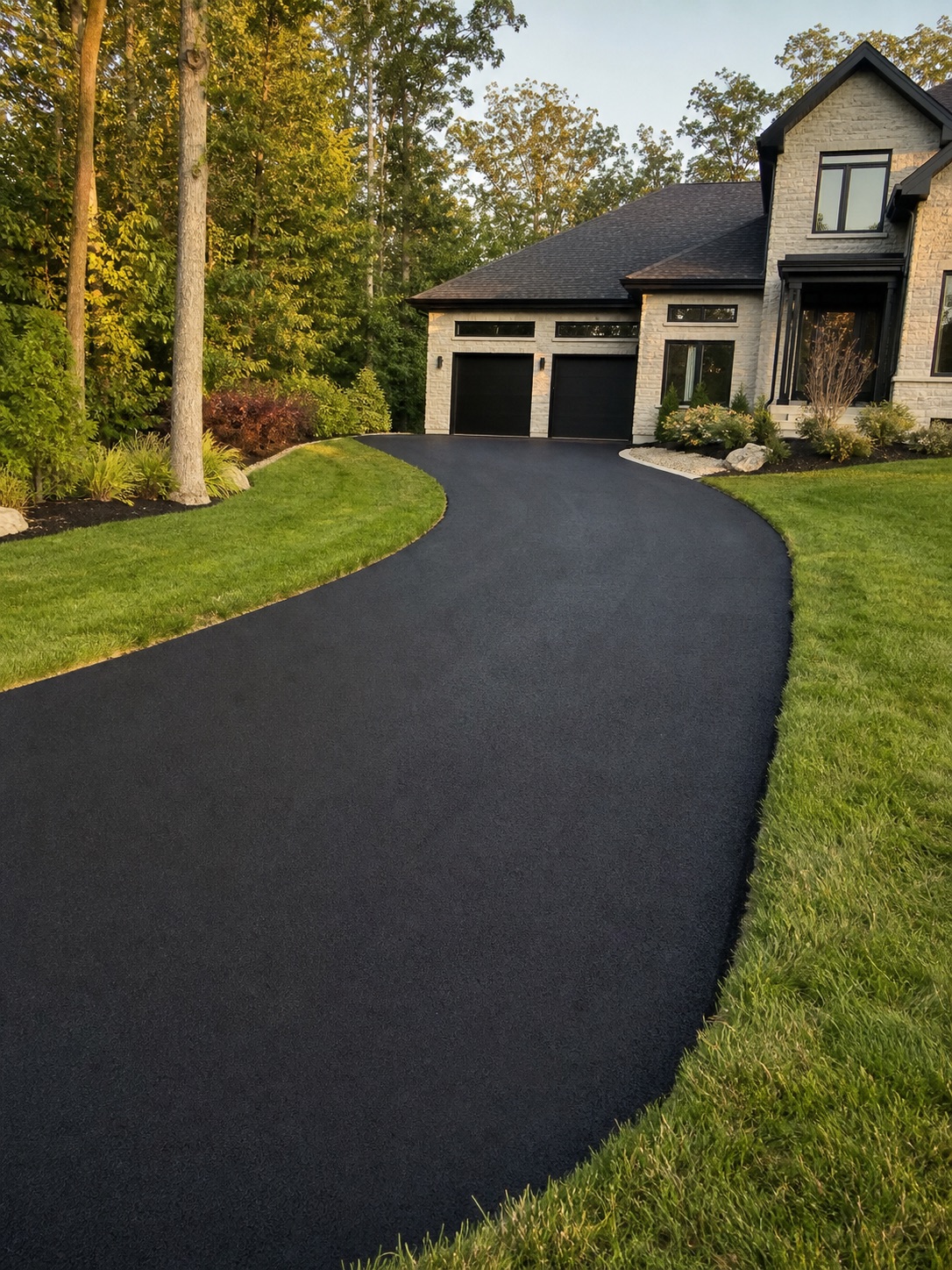
That experience explains why asphalt paving cost discussions that lead with a per-square-foot number are incomplete. The number is real — $3 to $7 per square foot for residential work in 2026 — but it’s the surface of a more layered set of decisions.
What actually determines what you pay is the base condition, the drainage requirements, the design choices you make about width and edge treatment, and how carefully the contractor specifies the job.
This guide breaks down asphalt paving cost from a design standpoint: what the numbers mean, what drives them up or down, and how decisions about proportion, layout, and surface treatment affect both the final invoice and the long-term value of the installation.
For residential and commercial projects in Michigan, Ann Arbor paving contractor Sommerset Paving covers new installation, resurfacing, repair, and sealcoating with the full-specification approach that makes these cost differences transparent before work begins.
Why Asphalt Paving Cost Is Really a Design Question
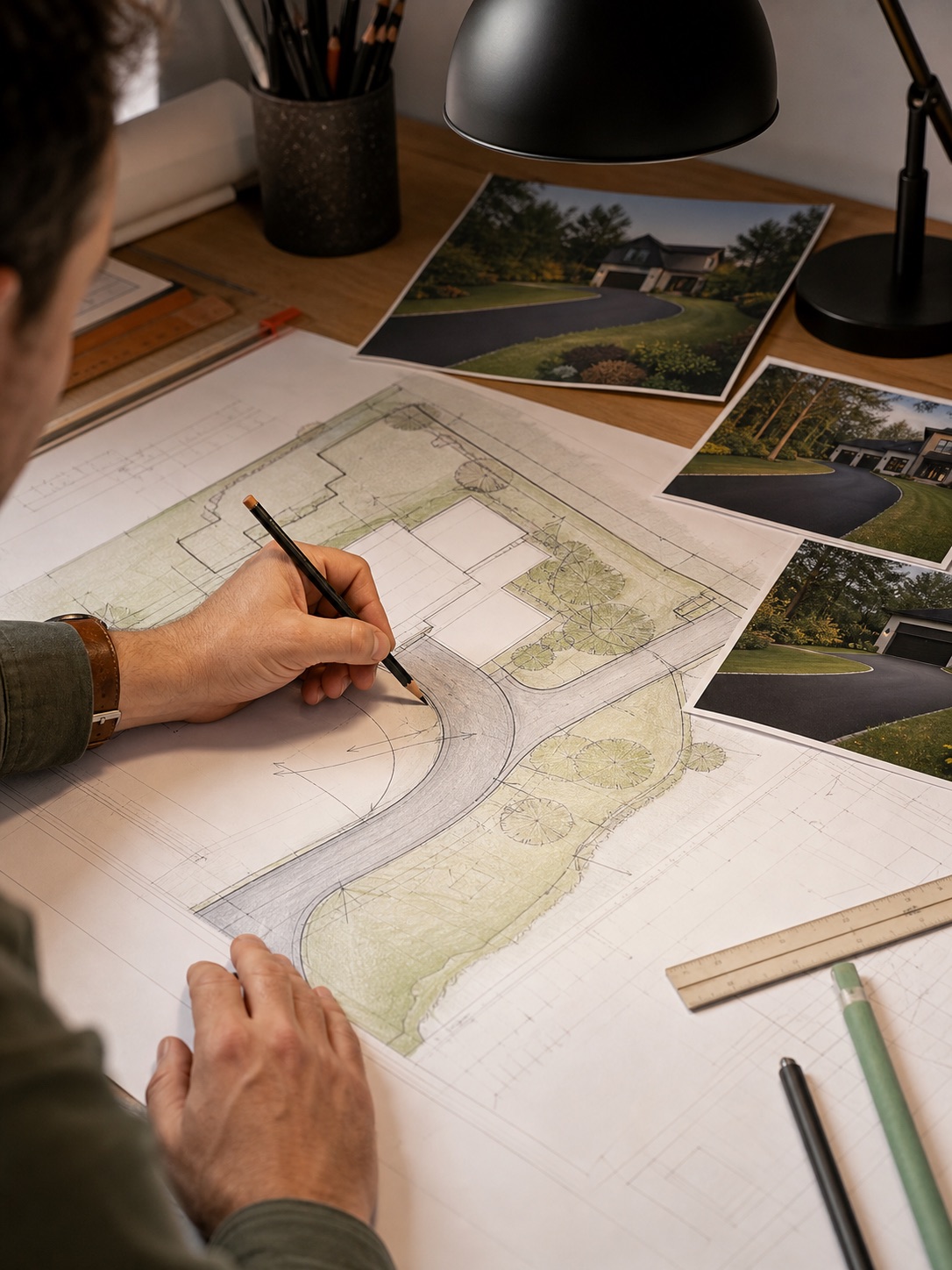
Most homeowners approach asphalt paving as a commodity purchase: same material, same result, find the lowest price. This approach produces the most expensive outcomes over time, because the decisions that determine whether a paved surface lasts 12 years or 28 years are invisible after installation and only visible in the specification before it.
Every design decision about an asphalt surface has a cost implication. The width of the driveway determines square footage. The curve radius at the street entrance affects formwork complexity. The grade and drainage direction determine whether water management is simple or requires additional infrastructure. The edge treatment determines whether the pavement edge holds for two decades or starts cracking within three years.
Understanding cost and understanding design are, in asphalt paving, the same conversation. A wider driveway costs more but may serve a two-car household better for 25 years than a narrow one that creates daily frustration. A curved entrance costs marginally more than a right-angle one but produces a result that reads as considered rather than built to minimum. These are value judgments that belong to the homeowner — but they require understanding what each choice costs to make them well.
Asphalt Paving Cost Per Square Foot: The Real Numbers for 2026
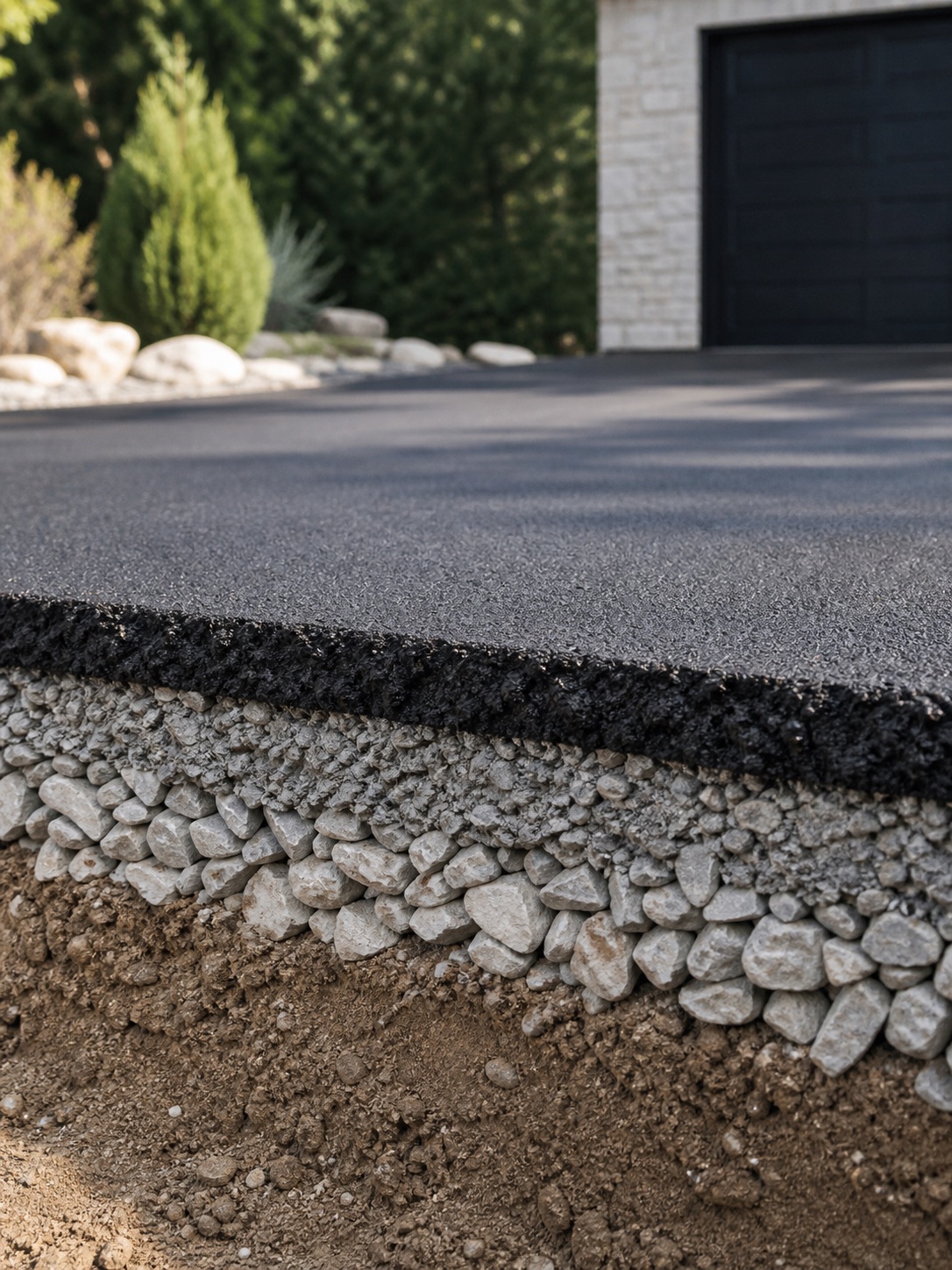
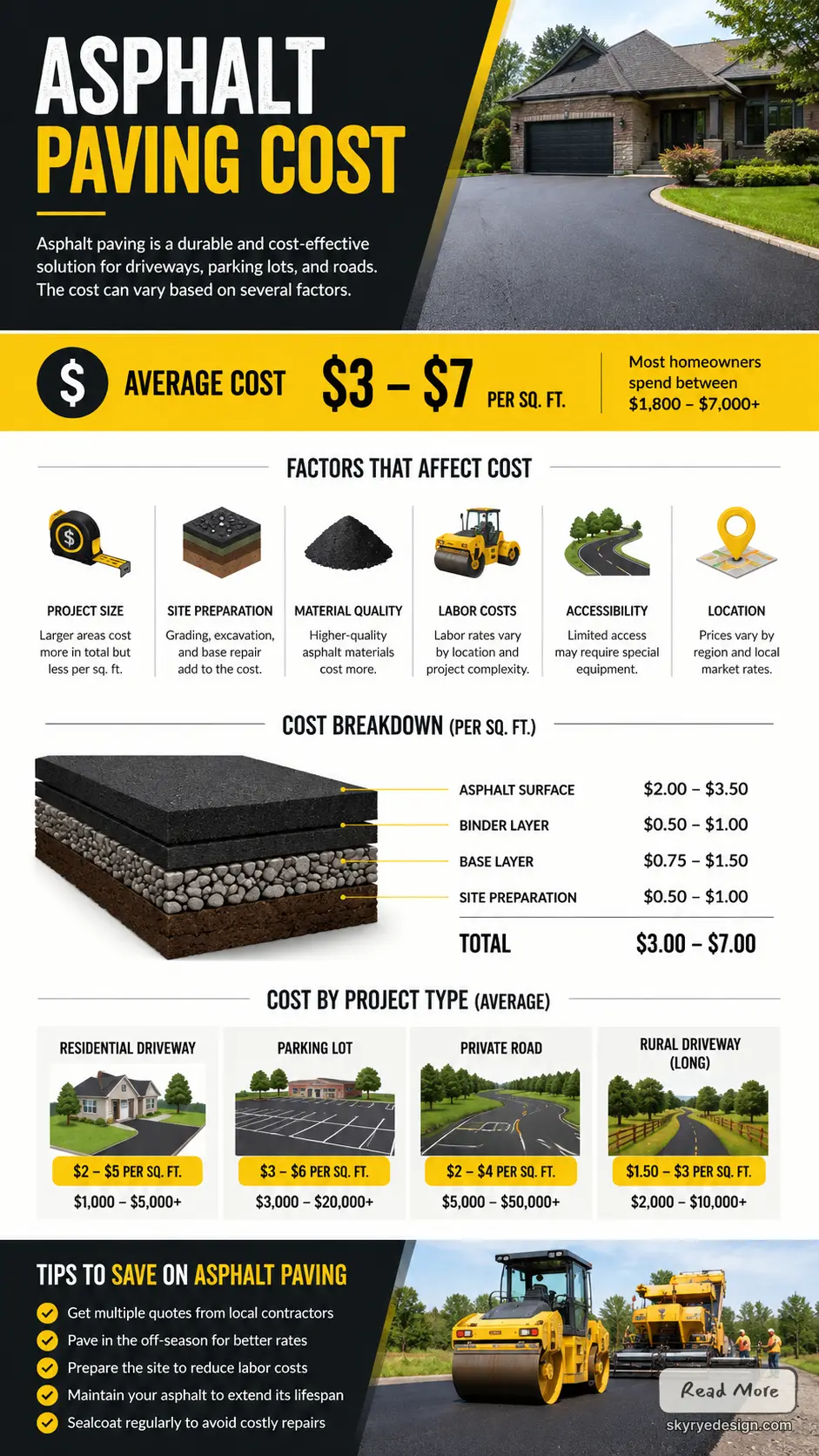
Asphalt paving cost is best estimated in two passes: first by square footage, then by specification. In 2026, many residential driveway projects land around $3-$7 per square foot for new asphalt, $1.50-$3 for resurfacing, and $0.14-$0.25 for sealcoating. Commercial parking lots often run higher, roughly $4-$9 per square foot, because the base and asphalt layer must handle heavier loads. The number a homeowner actually pays depends less on the visible black surface and more on the work below it: excavation depth, compacted aggregate base, drainage, asphalt thickness, machine access, and local labor/material costs. A cheap quote can be real savings if the existing base is sound. If the base is failing, the same cheap quote usually postpones the expensive work rather than avoiding it.
| Project Type | Cost Per Sq Ft | What It Includes |
|---|---|---|
| Residential driveway (new) | $3.00–$7.00 | Base prep + 2–3″ asphalt |
| Residential driveway (resurface) | $1.50–$3.00 | New surface layer only |
| Commercial parking lot (new) | $4.00–$9.00 | Heavier base + 3–4″ asphalt |
| Sealcoating only | $0.14–$0.25 | Protective coat + restripe |
| Crack filling / patching | $1.00–$3.00 | Targeted repair, no base work |
These ranges reflect the US market in 2026 with regional variation of approximately ±15% depending on local material and labor costs. The ranges within each category reflect the base preparation variable more than anything else.
For a second pricing benchmark, Fixr’s asphalt driveway cost guide also treats the base, driveway size, and site preparation as the major variables behind the final number. I use sources like that as a range check, not as a substitute for a local written specification.
The base preparation is the invisible part of the cost. A site with good existing drainage and a stable compacted base needs minimal preparation — minimal excavation, minimal aggregate import. A site with poor drainage, clay soil, or a failed existing base needs excavation to 6–12 inches, aggregate import and compaction, and often drainage infrastructure. That difference can add $1.50 to $3.00 per square foot to the same surface installation.
What a Residential Driveway Actually Costs in 2026
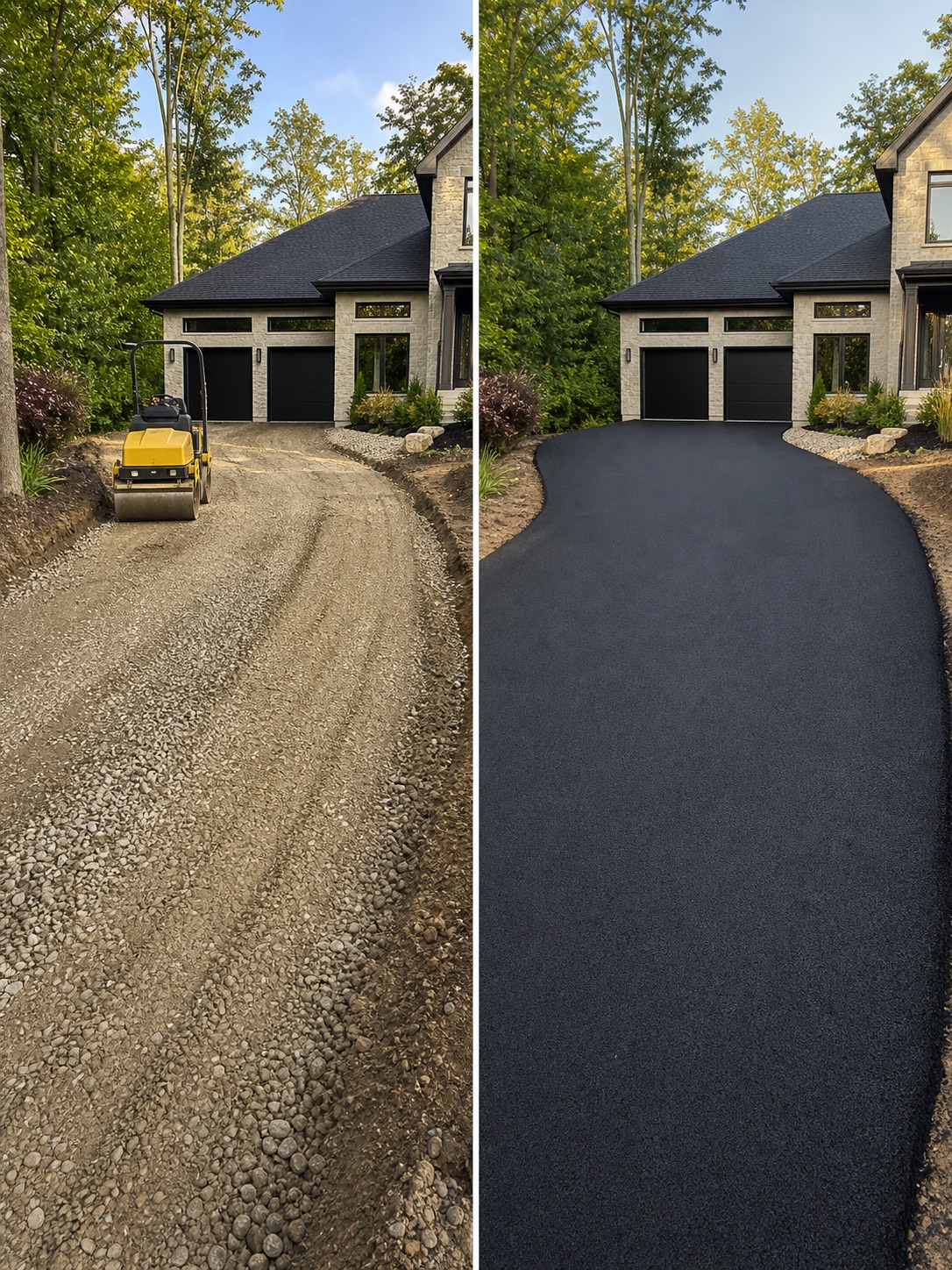
Translating per-square-foot rates into actual project budgets requires knowing the area and the site conditions. Here are realistic total cost ranges for common residential driveway scenarios:
- Single-car driveway (300 sq ft): $1,200–$2,500 for new installation. The lower end assumes minimal base work on a stable site. Upper end includes full excavation and aggregate.
- Two-car driveway (600 sq ft): $2,500–$5,000 for new installation. This is the most common residential scope and the basis for most cost comparisons.
- Long rural driveway (2,000 sq ft+): $7,000–$18,000+. Scale reduces the per-square-foot rate somewhat, but drainage and grading requirements on longer runs add cost.
- Driveway with turnaround: Add 20–40% to the base estimate. The turnaround area adds square footage and the geometry adds finishing complexity.
How to estimate asphalt paving cost near you
For a local estimate, start with square footage, then adjust for the conditions a contractor can only judge on site. A driveway in a freeze-thaw climate, a neighborhood with tight equipment access, or a lot that needs drainage correction will not price the same as a flat, open driveway with a stable gravel base.
| Local cost factor | What to ask the contractor | Why it changes the quote |
|---|---|---|
| Existing base | Will you reuse it, regrade it, or excavate and rebuild it? | Base work can add $1.50-$3.00 per sq ft when the old base has failed. |
| Drainage and soil | Where will water go after the driveway is paved? | Clay soil, low spots, and freeze-thaw movement may require more grading or aggregate. |
| Access and mobilization | Can equipment reach the whole driveway easily? | Narrow urban lots, long rural drives, and tight landscaping increase labor time. |
| Municipal edges | Does the apron, curb cut, or sidewalk edge need special work? | Local rules and street transitions can add forming, saw-cutting, or permit costs. |
| Hauling distance | How far is the mix plant or aggregate supplier from the site? | Material delivery and crew travel can shift prices by region. |
For residential asphalt paving projects, the design variables that add most to cost are: challenging access for equipment (adds mobilization cost), steep grades requiring drainage engineering, and proximity to structures or landscaping that limits machine operation and requires hand work. These are site-specific conditions that no per-square-foot rate accounts for in the abstract.
Design Choices That Change the Cost
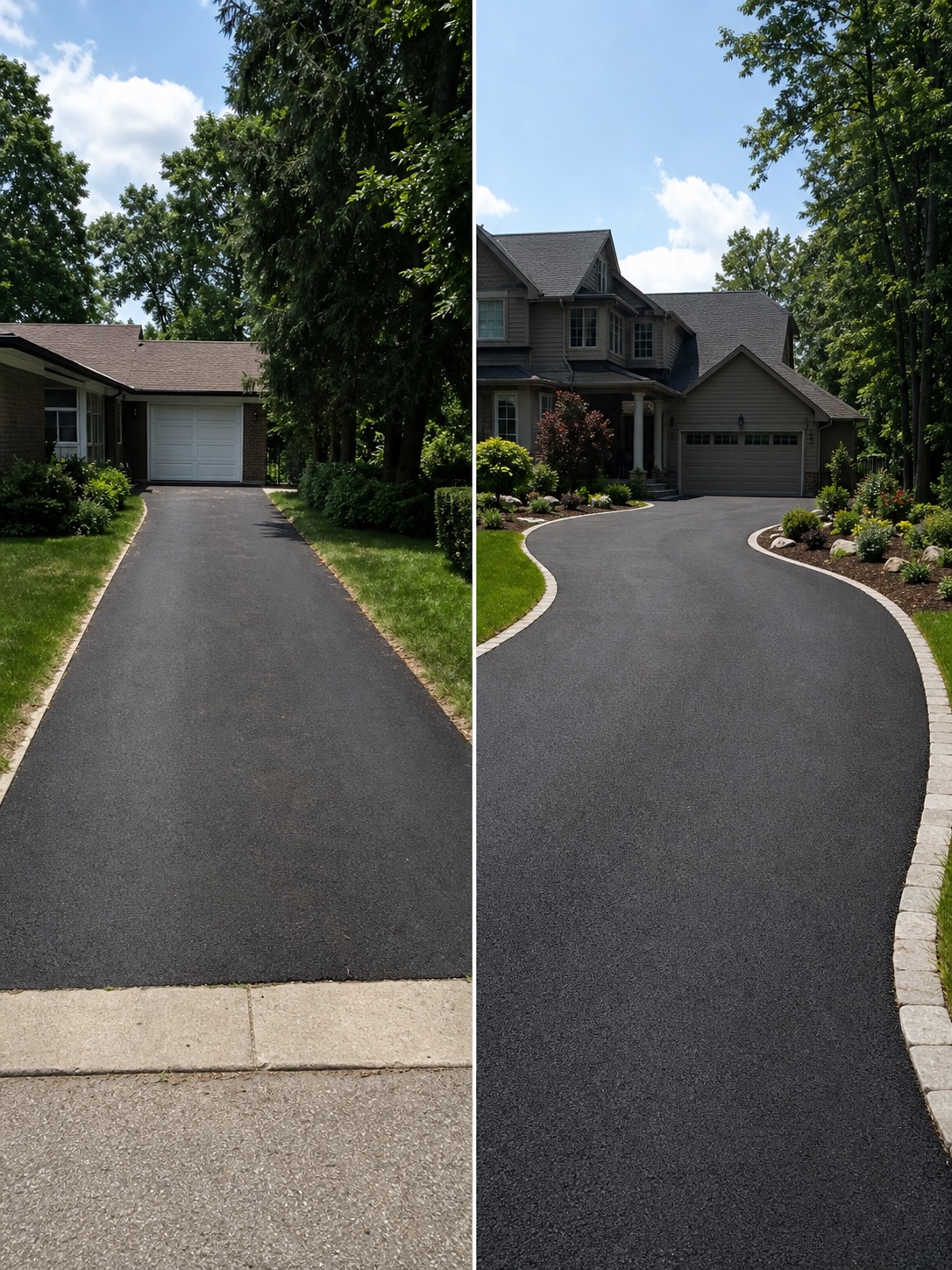
Every design decision in a driveway or parking lot has a cost implication. Most are smaller than homeowners expect. Here’s what each choice actually adds:
Driveway width
Widening a driveway from 10 feet to 14 feet adds 40% to the square footage of a 50-foot driveway — about $600–$900 in additional cost at average rates. For the daily experience of opening car doors without scraping planting beds, this is usually worth it. The design impact is also significant: a properly proportioned driveway reads as deliberate, while one that feels barely wide enough reads as cost-cutting.
Curved entrance and apron
A flared apron at the street — widening the entrance to allow easier turn-in and turn-out — adds 15–25% to the driveway’s total square footage depending on the radius specified. At average rates, this adds $400–$800 to the project cost. The functional benefit is meaningful: a right-angle driveway entrance requires a multi-point turn to back out safely on busy streets. The visual benefit is also real: a flared entrance reads as architectural rather than purely utilitarian.
Edge restraint
Proper edge restraint — a timber, steel, or concrete border that prevents the asphalt edge from spreading over time — adds $1.50–3.00 per linear foot to the project. For a 200-linear-foot driveway perimeter, that’s $300–$600. Without edge restraint, the pavement edge typically begins to crack and spread within 3–5 years in climates with significant freeze-thaw cycling, requiring ongoing repair. With it, the clean edge that makes the installation look designed is maintained for the life of the pavement.
Surface texture and finish
Standard dense-graded asphalt has a fine, relatively smooth surface that is the default for driveways and parking lots. Coarser mixes provide more traction but a more textured visual surface. Some contractors offer open-graded surface courses that have a distinctly different appearance and drainage behavior. The cost difference between surface mix specifications is typically small — $0.25–0.75 per square foot — but the visual outcome differs significantly and is worth specifying rather than defaulting.
Resurfacing vs Replacement: The Cost Decision That Matters Most
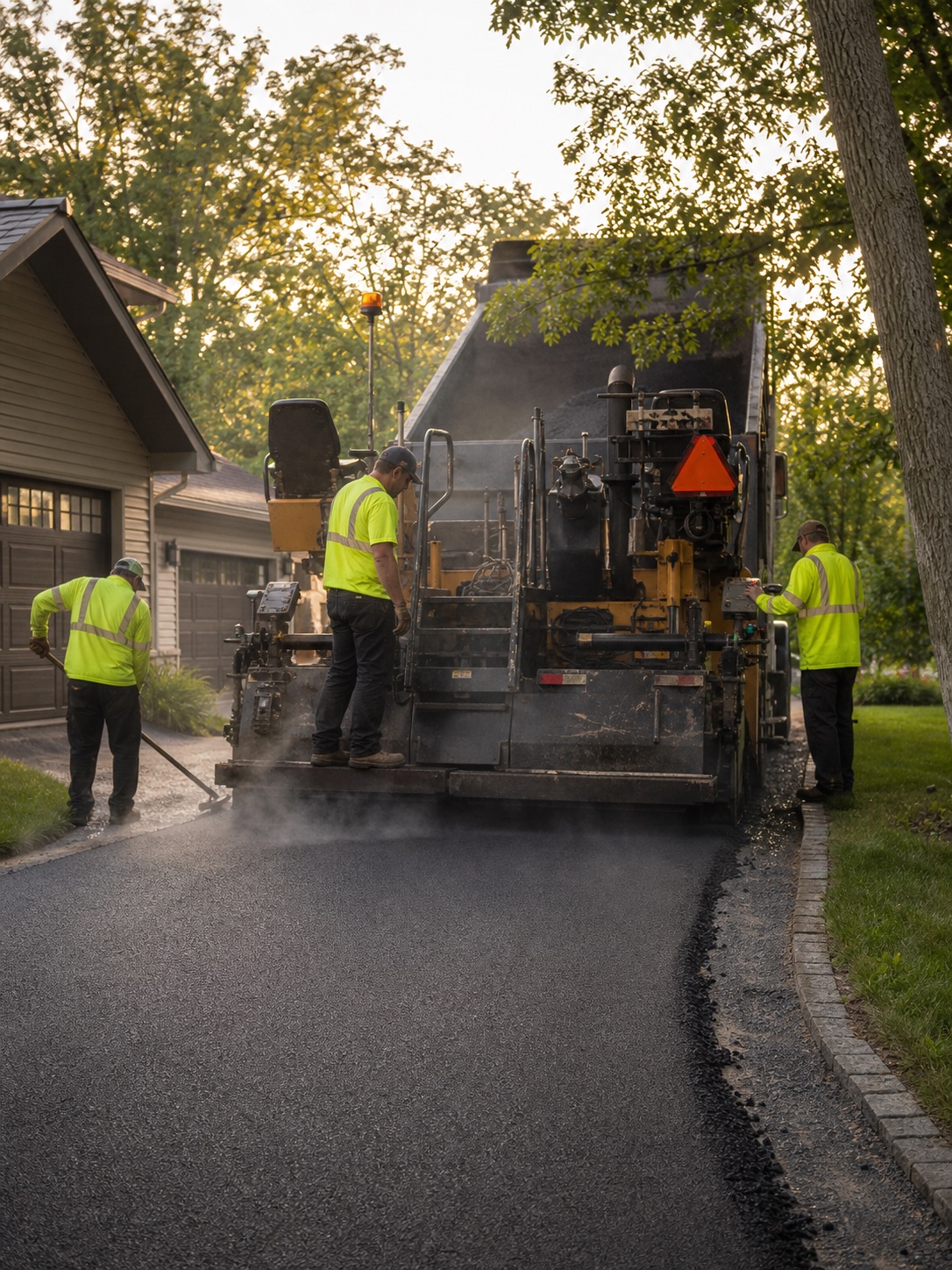
The biggest mistake homeowners make with an aging driveway usually happens before the work even starts: choosing the wrong fix. The real question is whether the driveway needs resurfacing or full replacement, and getting that call wrong can cost thousands.
Resurfacing means adding a fresh asphalt layer — usually around 1.5 to 2 inches — over the existing driveway. It costs a lot less than replacement, often around 40–60% cheaper, and when done right, it looks almost identical to brand-new asphalt. But there’s a catch: the foundation underneath still has to be solid. If the problem only sits at the surface level — fading, small cracks, worn texture — resurfacing often makes sense.
Replacement becomes necessary when the base underneath has started to fail. One of the clearest warning signs is alligator cracking — those web-like cracks that spread across the surface. That pattern usually means the problem runs deeper than appearance. Covering it with fresh asphalt might look fine at first, but the same cracks often push back through surprisingly fast.
This is where contractor recommendations matter. A resurfacing job on a failed base usually means wasted money. On the other hand, replacing a driveway that only needed resurfacing can be overkill. A good contractor should check the condition of the base before making a recommendation, not just glance at the surface and quote a price.
Sealcoating: Where Lowest Cost Meets Highest Design Impact
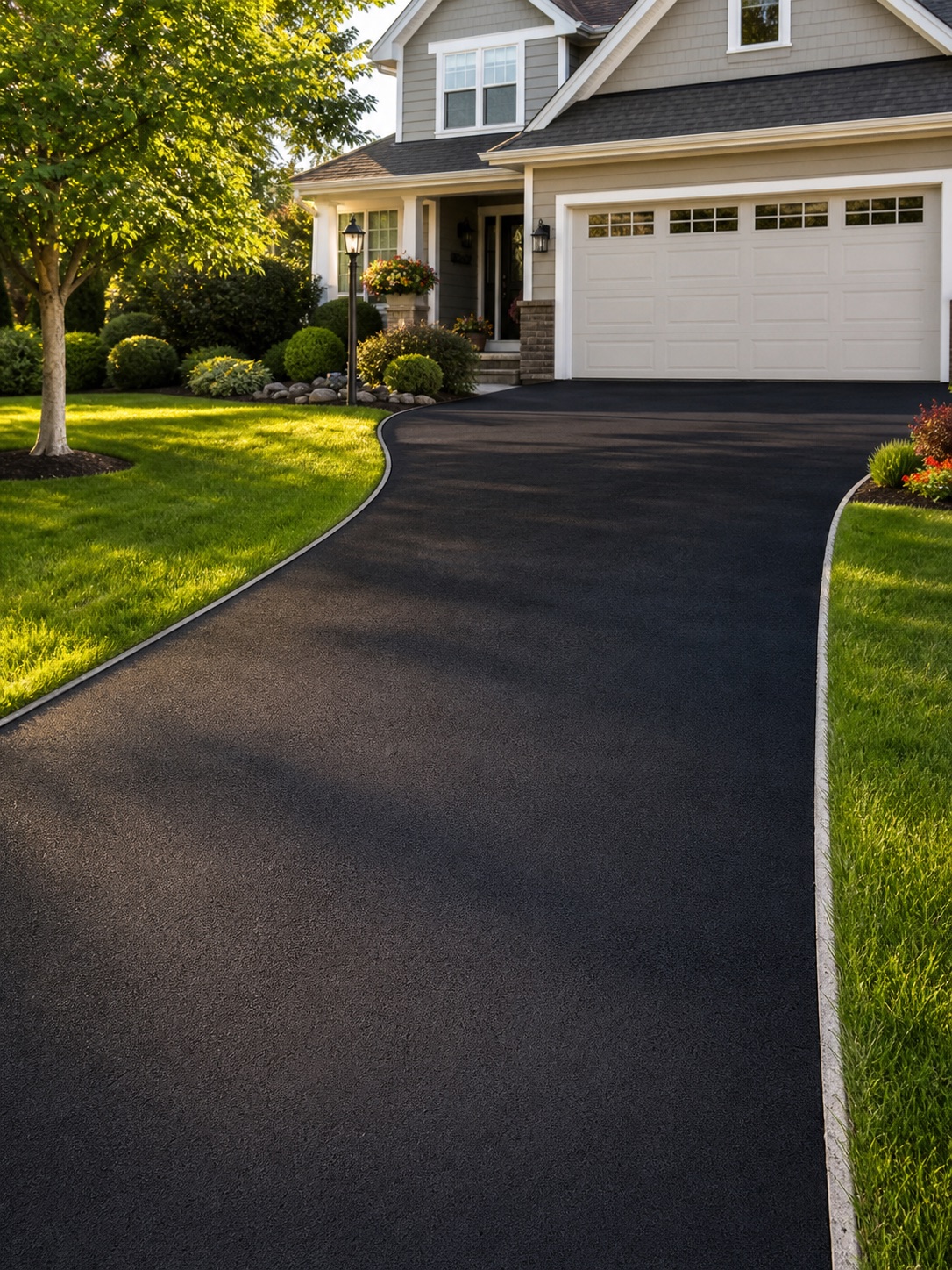
No asphalt maintenance step delivers more visual impact per dollar than sealcoating. At $85–$150 for a standard residential driveway, applied every 3–5 years, it restores the deep charcoal-black appearance of new asphalt and protects the surface from the UV oxidation that turns it progressively grey and brittle.
From a curb appeal standpoint, the contrast between a freshly sealcoated driveway and an oxidized grey one is as significant as the contrast between painted and unpainted exterior trim. The dark surface reads as maintained and considered. The grey surface reads as deferred and aging. For a property where exterior presentation matters — for resale, rental, or simply pride of ownership — sealcoating is the highest-return maintenance investment available.
The structural benefit is equally significant. Sealcoating fills micro-cracks before they admit water and prevents the surface oxidation that weakens the asphalt binder. A surface that is sealcoated on schedule requires less patching and reaches replacement age later than one that isn’t. The total lifecycle cost of a sealcoated driveway over 25 years is meaningfully lower than an unsealed one.
Timing matters: sealcoating should not be applied until 6–12 months after new installation to allow full curing, and should be reapplied every 3–5 years after that. Applying it too early can compromise the asphalt’s ability to harden properly. Waiting too long allows oxidation to progress past the point where sealcoating can fully reverse it.
Commercial Paving Cost: Parking Lots and the Brand Communication Value
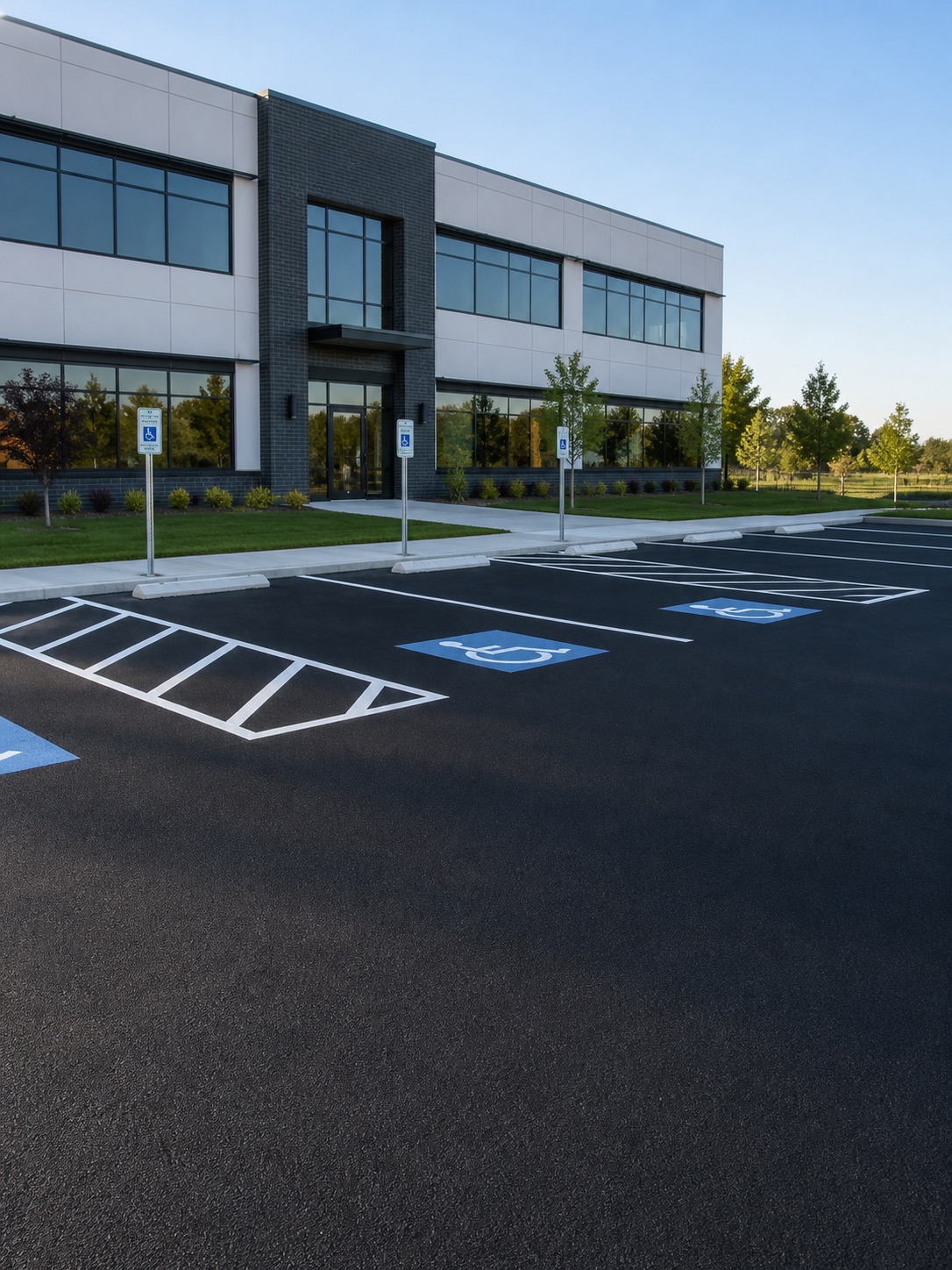
A commercial parking lot is the first surface most customers drive across at a property. Before anyone enters the building, the pavement condition has communicated something about how the business operates and what standards it holds itself to. A smooth, recently sealcoated lot with fresh striping positions the property as professional and well-managed. A cracked, faded lot with barely visible stall markings positions it as neglected — regardless of what the interior looks like.
Commercial paving costs $4.00–$9.00 per square foot for new installation, reflecting the heavier base specification required to handle vehicle loads without premature failure. A 10,000 square foot lot at mid-range rates runs $60,000–$70,000. This is a significant capital investment, which makes the maintenance math compelling: sealcoating and restriping the same lot every 4 years costs approximately $2,500–3,500 per application and extends the pavement life by years while maintaining the visual quality that communicates operational standards to customers.
Line striping is applied graphic design. The stall width (8.5–9 feet is standard), the circulation aisle width (24 feet minimum for two-way traffic), the angle of the stalls (90 degrees for maximum density, 45 or 60 for easier navigation), and the placement of accessible stalls relative to the entrance all affect both function and the visual reading of the lot. Fresh white striping on dark asphalt creates a strong, clean graphic. Faded striping on worn asphalt creates ambiguity that makes navigation harder and signals neglect. The $600–$1,200 cost of restriping after sealcoating is the detail that ties the maintenance investment to its visual purpose.
How to Read a Paving Quote: What the Specification Tells You
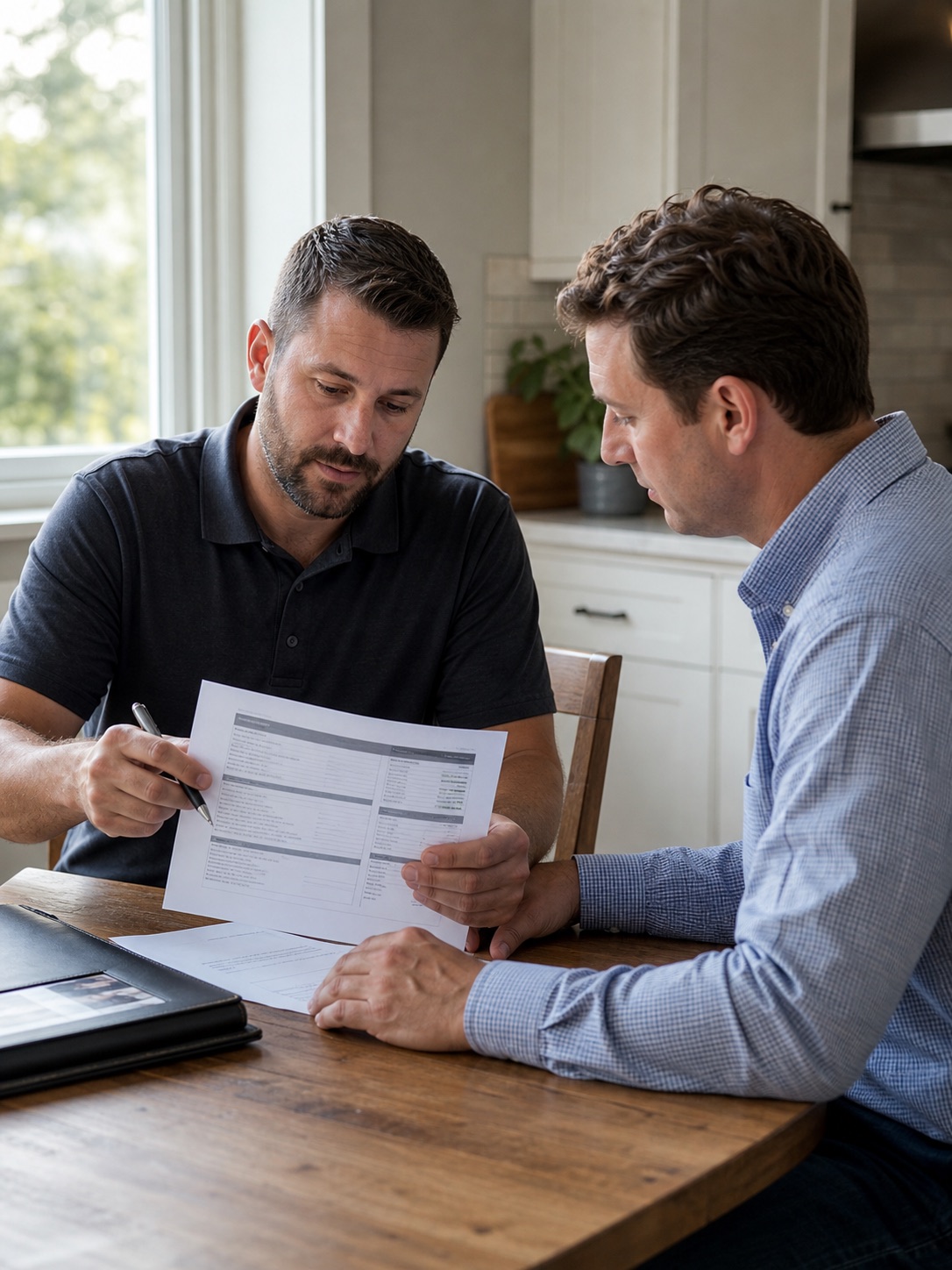
A paving quote that leads with a total price and doesn’t itemize the specification is not a complete quote. The total price is only meaningful in the context of what it covers. Here’s what a thorough quote specifies:
- Excavation depth: how much existing material is being removed, if any. This determines how much aggregate needs to be imported.
- Base specification: the type and depth of aggregate base material (typically crushed stone or recycled concrete). Standard residential driveways need 4–6 inches of compacted base. Light commercial lots need 6–8 inches. Heavy truck traffic requires 8–12 inches.
- Asphalt thickness: the compacted thickness of the asphalt layer or layers. Residential driveways: 2–3 inches minimum. Commercial lots: 3–4 inches.
- Mix specification: the asphalt mix type and grade. Dense-graded surface mixes are standard. Surface course specification affects both the visual finish and the durability of the top layer.
- Drainage and grading: what fall is being designed into the surface, and where water goes when it rains. A quote that doesn’t mention drainage is assuming existing conditions are adequate — which may or may not be true.
- Edge treatment: what restraint system is being used to hold the pavement edge, if any.
When comparing quotes, compare specifications first and totals second. A $2,200 quote with no base specification and a $4,800 quote with a 6-inch compacted base are not comparable prices for the same product. Sommerset Paving’s approach to residential and commercial quoting covers all of these specification elements transparently, which is what allows a client to understand what they’re actually buying.
FAQ: Asphalt Paving Cost
How much does asphalt paving cost per square foot in 2026?
Asphalt paving costs $3–$7 per square foot for residential driveways in 2026, depending on base preparation requirements, local material costs, and access conditions. Commercial lots with heavier base requirements run $4–$9 per square foot. The per-square-foot figure alone is not a reliable budget estimate without knowing the base condition and drainage requirements of the specific site.
What is the total cost to pave a residential driveway?
A standard two-car residential driveway of around 600 square feet typically costs $2,500–$5,000 for new installation including base preparation. Larger driveways with complex layouts or challenging access conditions run higher. The biggest variable is base preparation, which can represent 30–50% of total project cost.
What factors affect asphalt paving cost the most?
Base preparation is the largest variable, often representing 30–50% of total project cost. Other significant factors include total square footage, asphalt thickness specification, site access difficulty, drainage requirements, and regional material and labor costs. Design decisions including driveway width, curve radius, and edge treatment also affect cost.
How much does asphalt driveway resurfacing cost versus replacement?
Resurfacing typically costs $1.50–$3.00 per square foot, compared to $3–$7 for full replacement. For a 600 sq ft driveway, that’s roughly $900–$1,800 for resurfacing versus $2,500–$5,000 for replacement. Resurfacing is appropriate when the existing base is sound. If the base has failed (indicated by alligator cracking), resurfacing is wasted money.
How much does sealcoating cost and is it worth it?
Sealcoating typically costs $0.14–$0.25 per square foot, making a 600 sq ft driveway $85–$150. Applied every 3–5 years, it prevents UV oxidation and extends pavement life significantly. It also restores the dark charcoal appearance of the surface, which has material curb appeal value. It is one of the highest-return maintenance investments in residential property care.
Why does asphalt paving cost vary so much between quotes?
Quote variation primarily reflects what is included in the scope. A low quote may assume minimal base preparation and thin asphalt specification. A higher quote may include full excavation, aggregate import, drainage grading, and thicker asphalt. Always ask each contractor to specify base depth, asphalt thickness, and drainage approach before comparing totals.
Does a better-designed driveway cost more to pave?
Marginally, yes, but less than most homeowners expect. A curved entrance costs slightly more due to formwork and cut waste. A wider driveway costs proportionally more due to square footage. Edge restraint adds a small cost but extends pavement life significantly. Site-specific conditions — access difficulty, grades, base condition — drive cost far more than aesthetic design choices.
How do I estimate asphalt paving cost near me?
Measure the paved area first, then ask local contractors to price the same scope: excavation depth, compacted aggregate base, asphalt thickness, drainage, edge treatment, and cleanup. A useful local estimate should explain what is happening below the asphalt, not just quote a surface price. If two quotes are far apart, compare the base and drainage specification before comparing the totals.
Driveway and paving costs can change the real price of a property quickly, which is why home purchase timing and repair budget should be reviewed together before you make an offer.
Why do asphalt paving prices change by location?
Asphalt paving prices change by location because labor rates, material hauling distance, soil conditions, freeze-thaw exposure, permitting rules, and contractor availability are local. A flat driveway near an asphalt plant usually prices differently from a long rural driveway, a steep site, or a driveway with poor drainage. That is why national cost ranges are only a starting point.
What you pay for asphalt paving is determined mostly before the first load arrives on site. The specification conversation is the design conversation.
For nearby exterior planning, compare the paving numbers with these related guides: architectural home upgrades ROI, smart ways to increase home value, cheap front yard landscaping ideas, low-maintenance home improvements, home maintenance tips, home renovation ideas, and modernizing your home’s exterior architecture.
- 55shares
- Facebook0
- Pinterest55
- Twitter0
- Reddit0