

A client once handed me a ceiling plan for a Kyiv apartment and asked a question nobody had asked me before: “Can the ceiling itself be the design?” Not the lighting fixture hanging from it. Not the molding around it. The ceiling, as a surface.
That question sent me down a rabbit hole into stretch ceiling systems, and the more installations I looked at, the more I realized most homeowners (and a fair number of designers) are choosing finishes based on a showroom sample under perfect lighting, not on how the material behaves in their actual room.
- What a stretch ceiling actually is
- PVC film versus fabric membrane: the tradeoff that actually matters
- Matte, satin, gloss: how finish actually changes a room
- Backlit and printed ceilings: where the category gets genuinely creative
- How to actually judge installation quality
- Matching the type to the room
- What actually drives the price
- A few mistakes I see repeated often
- Final thought
- Reference gallery: 10 stretch ceiling design examples
- 1. Gloss black home office ceiling
- 2. Satin dining room ceiling under a chandelier
- 3. Matte primary bedroom with cove lighting
- 4. Backlit translucent kitchen island ceiling
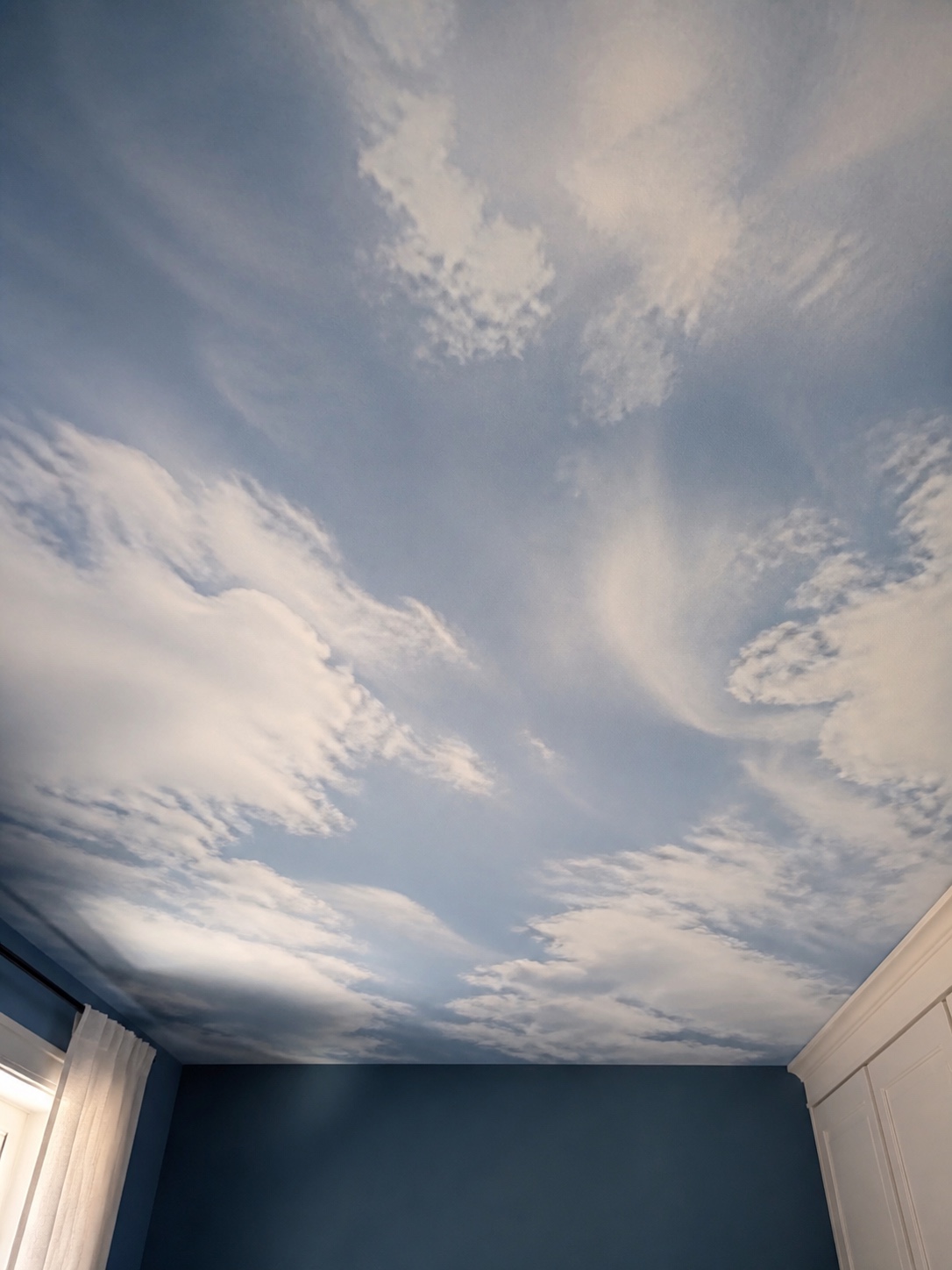
- 5. Printed sky-scene bedroom ceiling
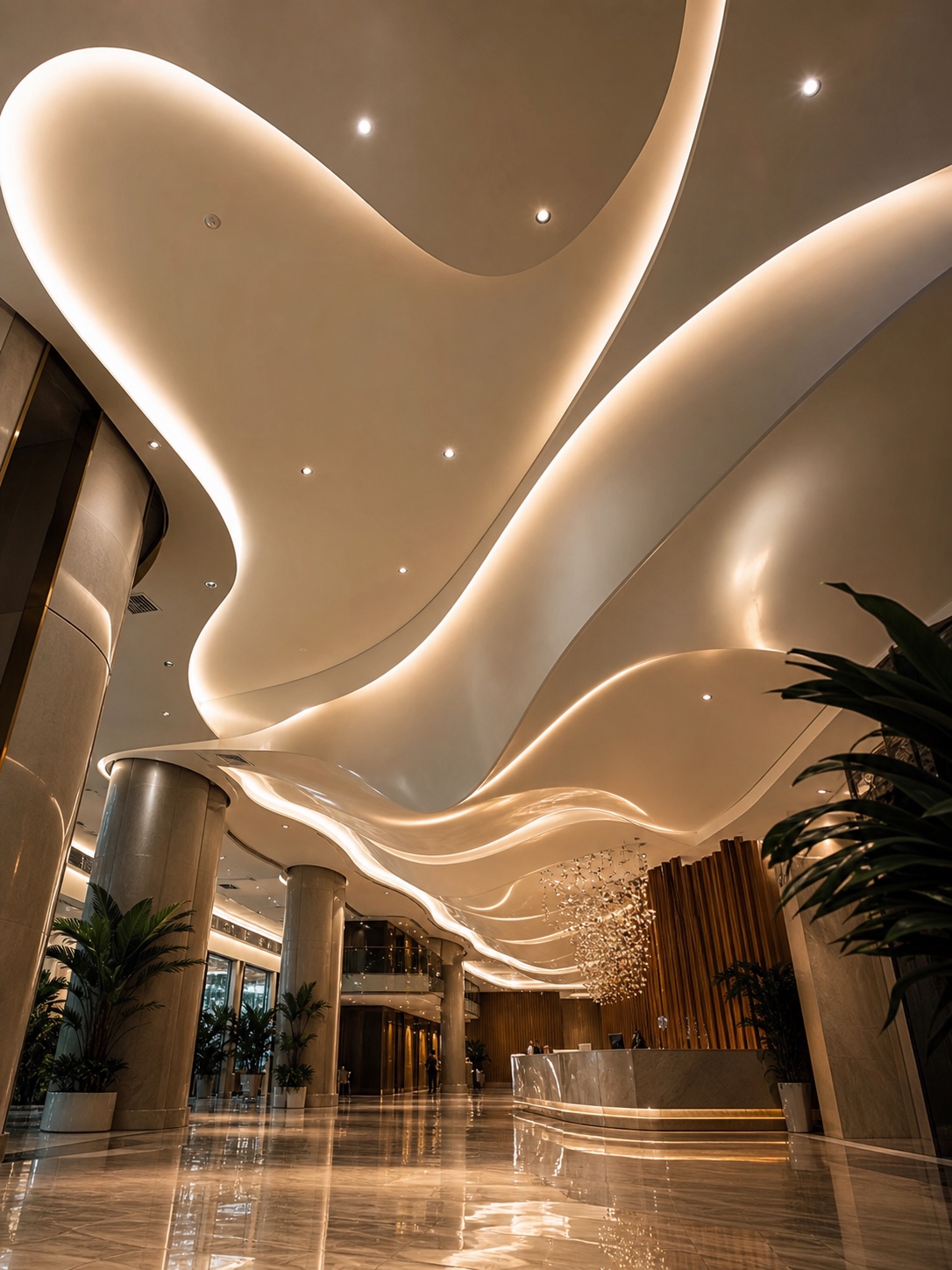
- 6. 3D wave-shaped hotel lobby ceiling
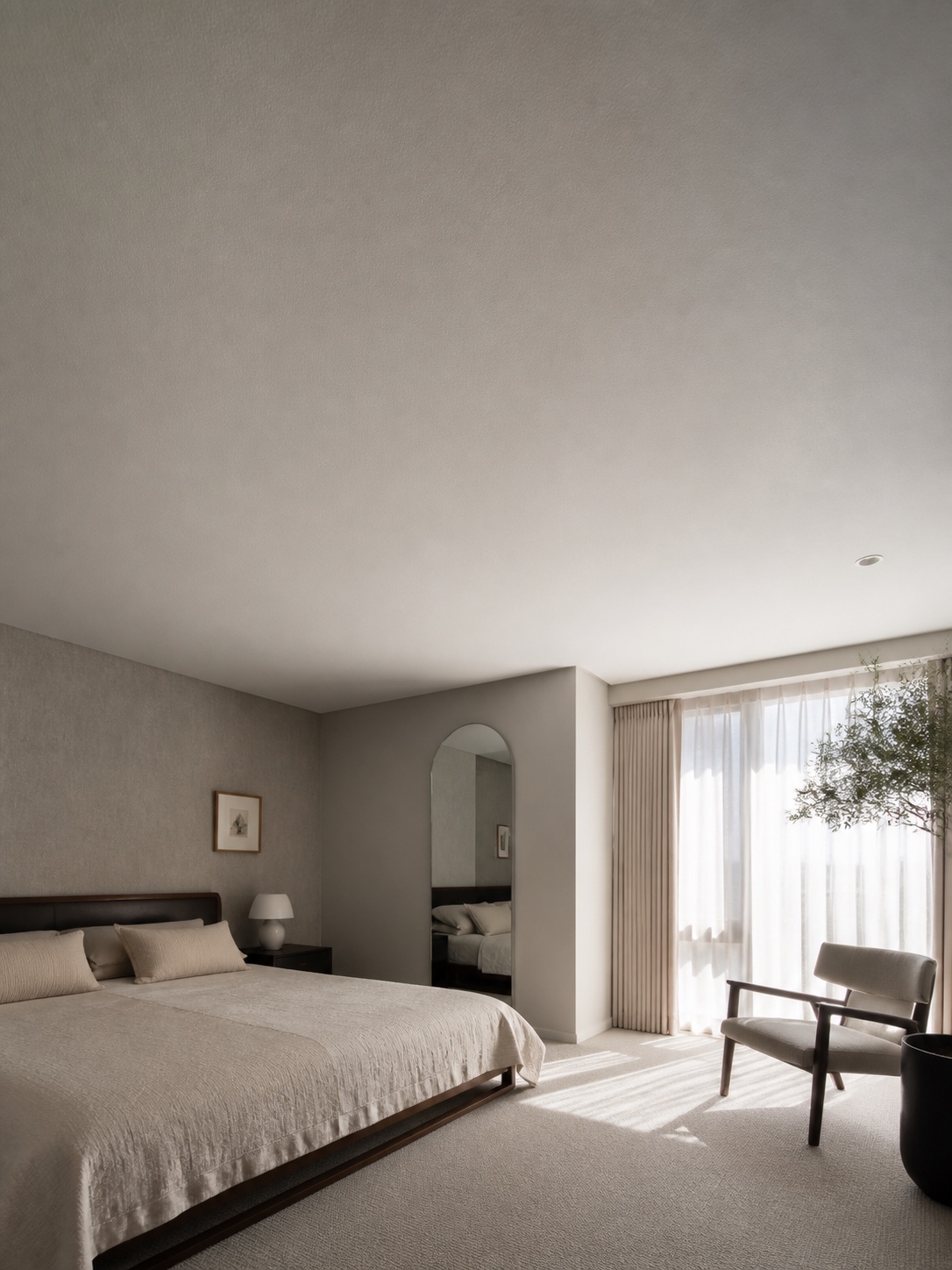
- 7. Seamless fabric primary bedroom (no welds)
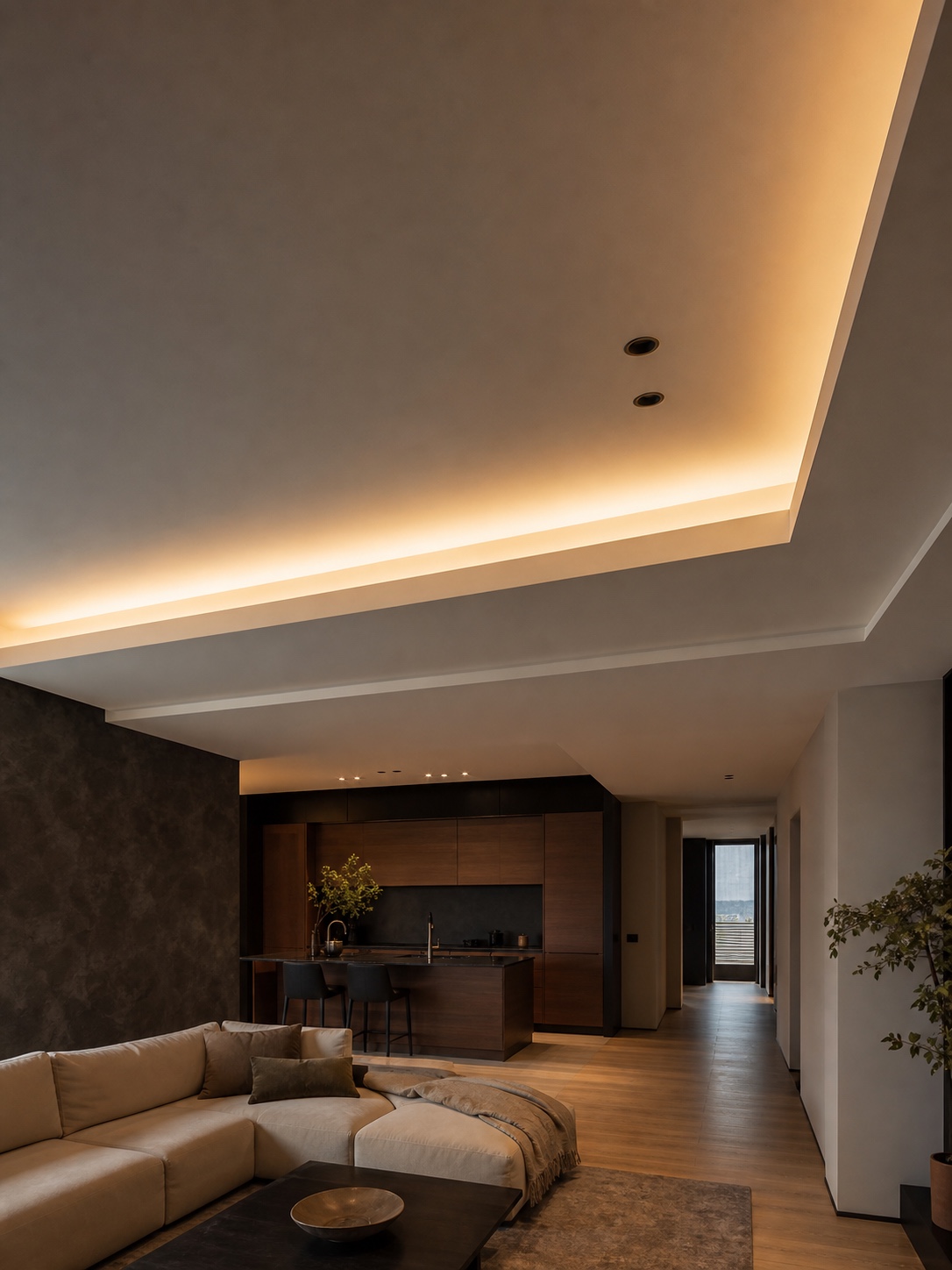
- 8. Two-level cove living room ceiling
- 9. Metallic-finish hallway ceiling
- 10. Waterproof PVC bathroom ceiling
- FAQ
- Is a stretch ceiling cheaper than a drywall ceiling?
- How long does a stretch ceiling actually last?
- Can you install a stretch ceiling over an existing popcorn or damaged ceiling?
- Does a stretch ceiling trap moisture or cause mold?
- Can you fit recessed lighting or a ceiling fan into a stretch ceiling?
- What happens if the membrane gets punctured?
- Is gloss or matte better for resale value?
- How long does installation actually take?
Stretch ceilings aren’t new. The technology has been around since the 1960s and got commercialized hard in France through brands like Barrisol and Clipso. What’s changed is how many options now sit under that one term. PVC or fabric. Matte, satin, gloss, or translucent. Flat, domed, or wave-shaped. Backlit or not. Picking blind off a catalog photo is how people end up with a ceiling that looks great in the brochure and wrong in their living room.
What a stretch ceiling actually is
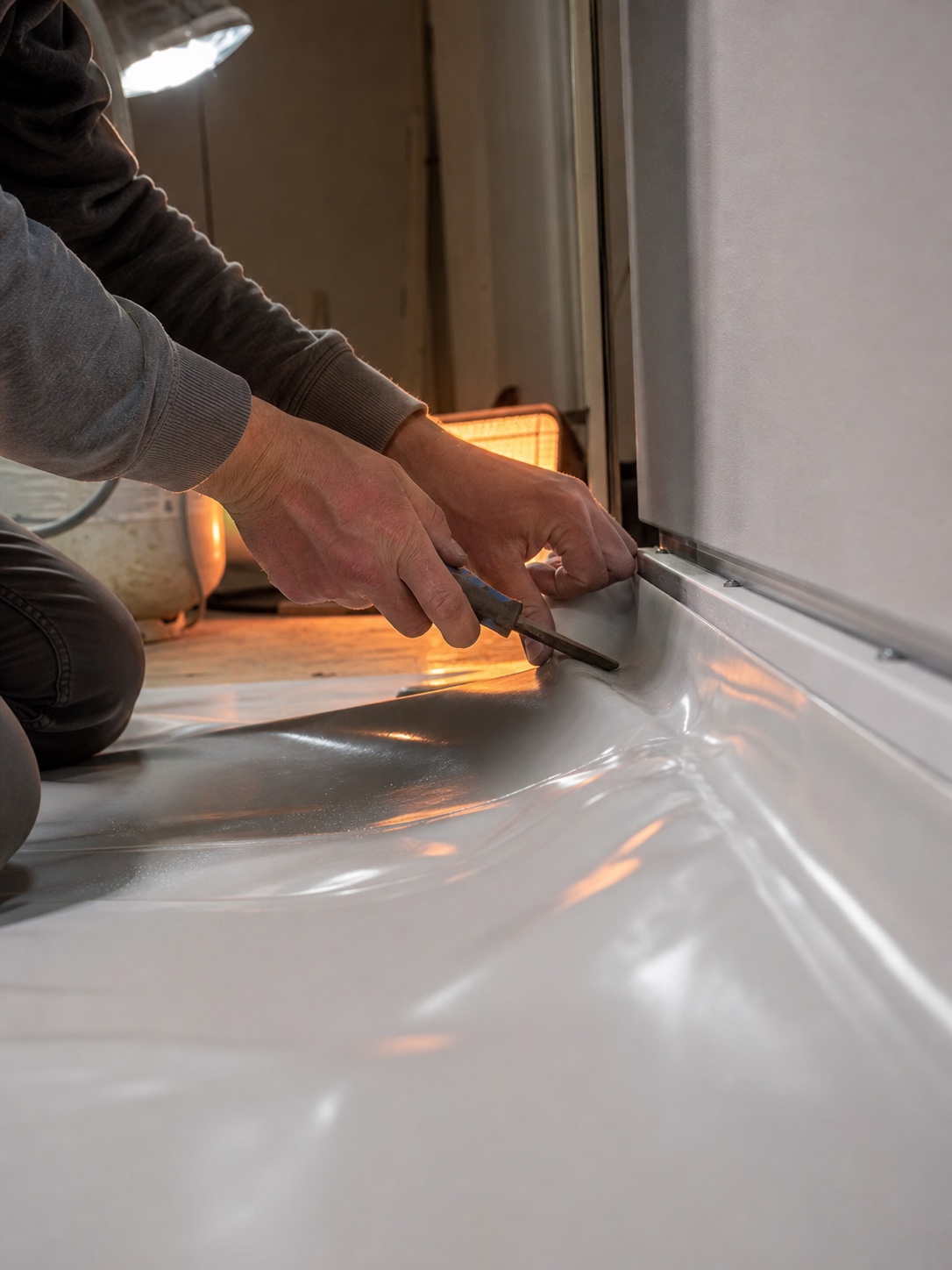
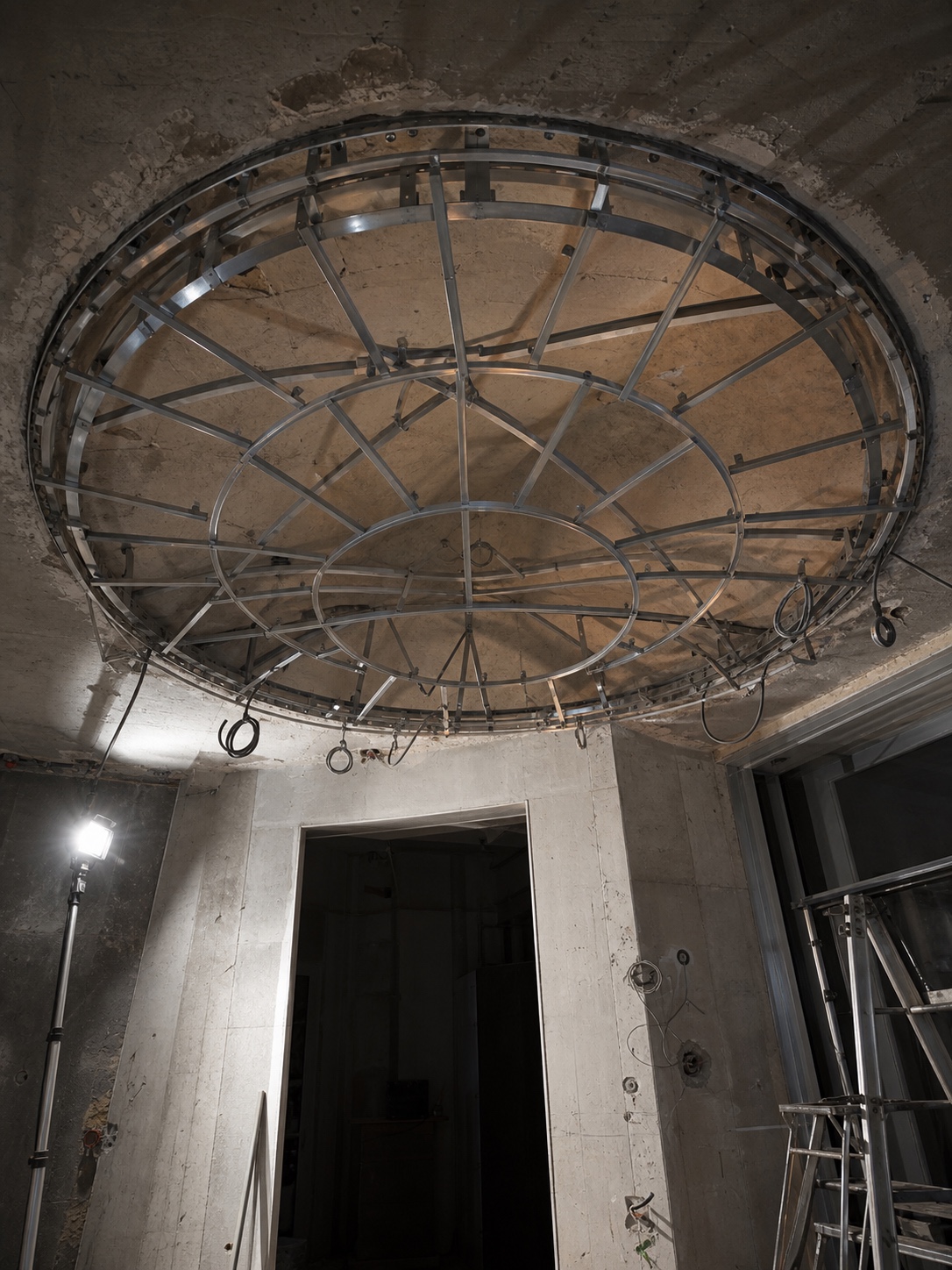
Strip away the marketing language and a stretch ceiling is two parts: a perimeter track (sometimes called a baguette or profile) fixed to the walls a few centimeters below your existing ceiling, and a membrane (PVC film or coated polyester fabric) pulled taut and locked into that track. The result is a perfectly flat plane with zero visible seams in most rooms, installed in hours instead of the days a drywall ceiling demands.
I think about it the same way I think about a car’s body panel. A panel only reads as “clean” if the surface tension is even across the whole span; any slack, any wave, kills the illusion instantly. Stretch ceilings work on exactly that principle. PVC gets heated to roughly 70–80°C with a gas or propane heater until it’s pliable, then pulled into the track and locked in while it cools and tightens. Fabric membranes go in cold, no heat gun required, which is one reason fabric jobs can start and finish the same morning.
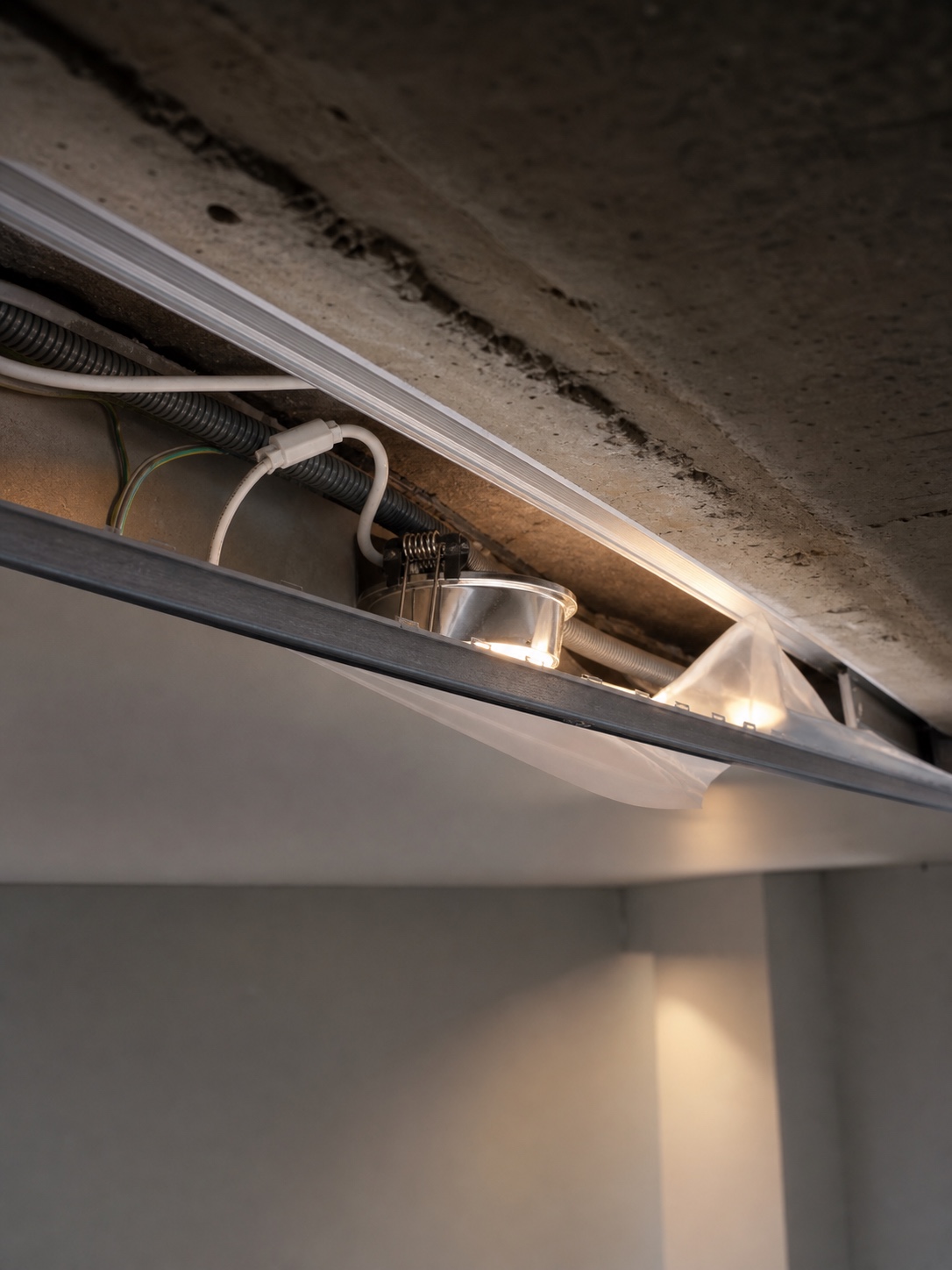
The gap between the real ceiling and the new membrane (usually 2–5 cm, more if you’re hiding ductwork or recessed lighting) is what makes the whole category interesting from a design standpoint. That void is where wiring, HVAC, sprinkler heads, and uneven concrete slabs all disappear. I’ve used that gap to route LED strip lighting around a cove detail on a project where the original ceiling was too damaged to skim-coat economically. The stretch membrane solved a structural problem and a design problem in the same move.
PVC film versus fabric membrane: the tradeoff that actually matters
People ask me “which is better, PVC or fabric” like there’s a single right answer. There isn’t. The two materials solve different problems, and the choice should follow the room, not the trend.
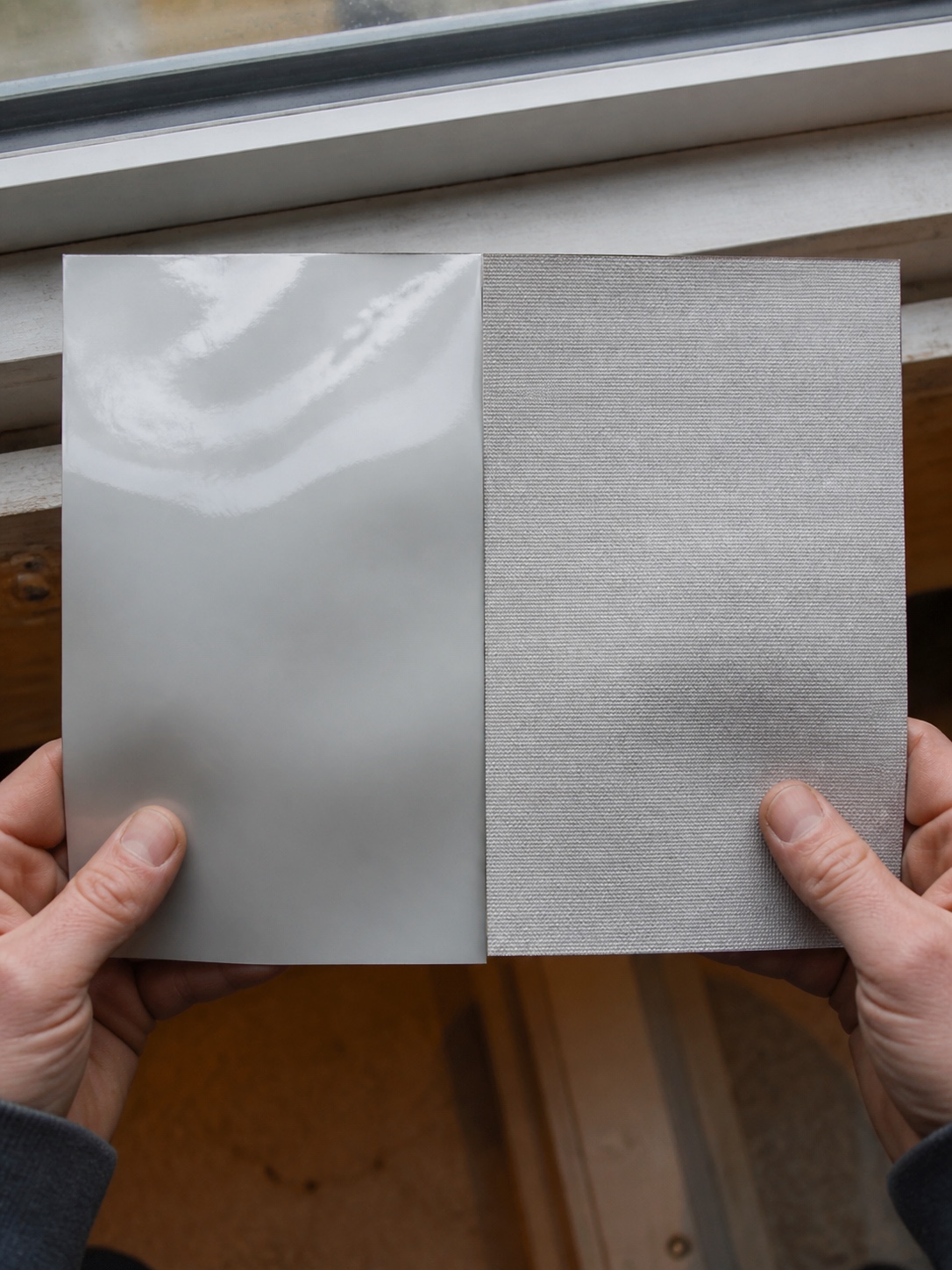
PVC film is the budget-friendly, do-almost-anything option. It comes in a huge color and texture range, it’s fully waterproof, and it tolerates a flood from the unit upstairs without staining or sagging permanently — pull the membrane, drain it, re-tension it, done. That’s a genuinely useful property in an old building with unpredictable plumbing, which describes most of the housing stock I’ve worked in across Kyiv and parts of Germany.
The catch: PVC stiffens and can crack in cold, unheated spaces, and the panel width typically runs 1.5 to 3.2 meters (some manufacturers now reach 5 meters), so larger rooms often need a welded seam. On a glossy finish, that seam shows. On matte, it mostly disappears.
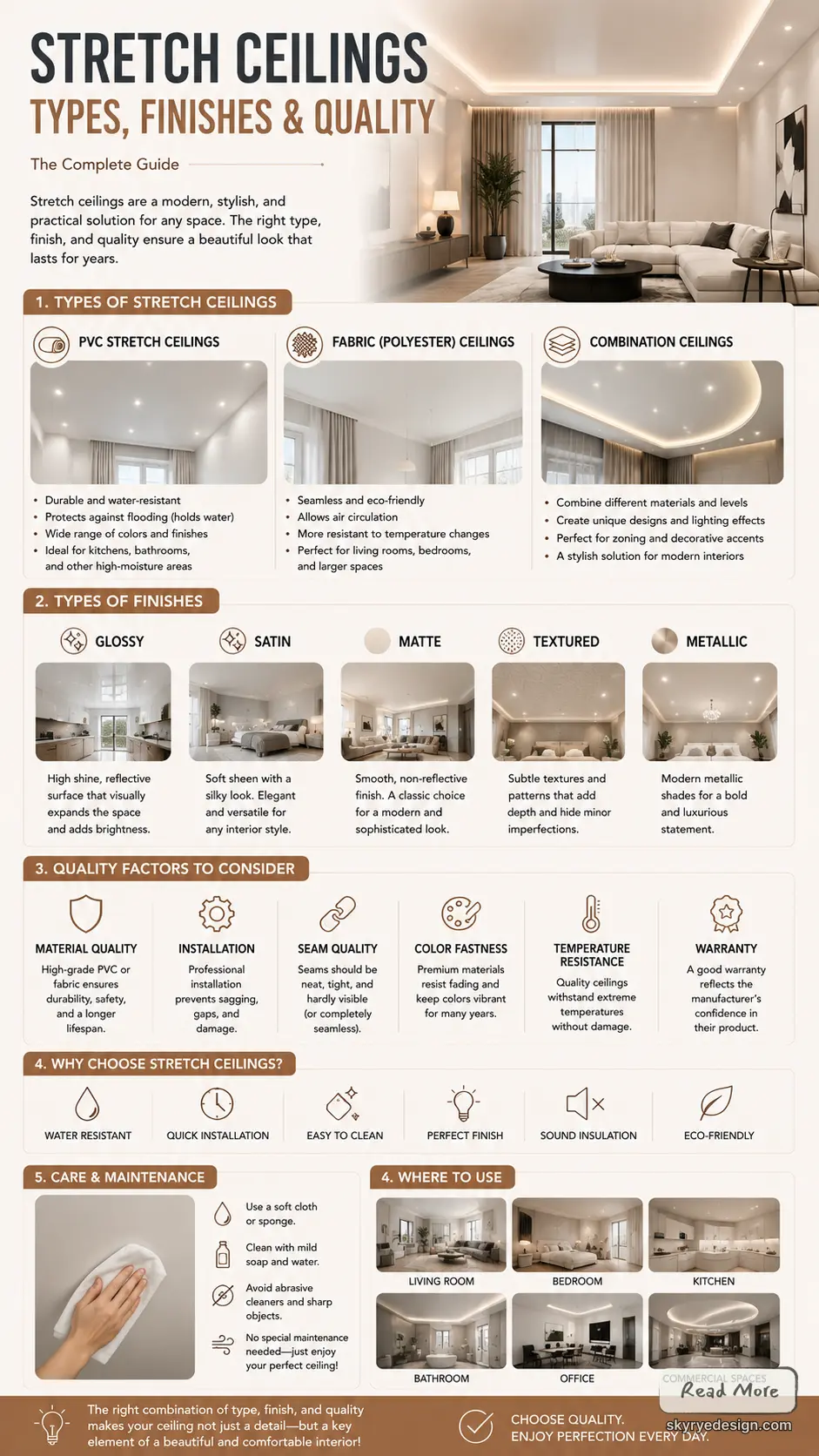
Fabric membranes (polyester coated with polyurethane, the category Clipso popularized) run wider, often 5 meters or more, which means genuinely seamless coverage in larger rooms without a single weld line. Fabric breathes slightly, which cuts down on condensation risk, and it doesn’t go brittle in the cold the way PVC does, so it’s a better call for an unheated country house or a converted attic.
It costs more, generally 15–20% above an equivalent PVC job, and it comes in a tighter palette (it’s basically matte-only, though it accepts paint and high-resolution printing well). I’d reach for fabric in a primary bedroom or a gallery-style living space where the room is wide and a seam would be a visible flaw. I’d reach for PVC in a bathroom, a kitchen, or anywhere moisture is a realistic concern.
Matte, satin, gloss: how finish actually changes a room
This is the part most people skip past too fast, and it’s the part that determines whether the ceiling reads as expensive or cheap six months after install.
Matte is the quiet option. It diffuses light instead of bouncing it, which is exactly why it photographs and prints so well — if you’re considering a printed sky scene or an abstract pattern, matte is almost always the right base because there’s no glare fighting the image. It also reads close to a well-finished drywall ceiling, so it’s the safer pick if you’re not trying to make a statement, just trying to disappear an ugly popcorn texture.
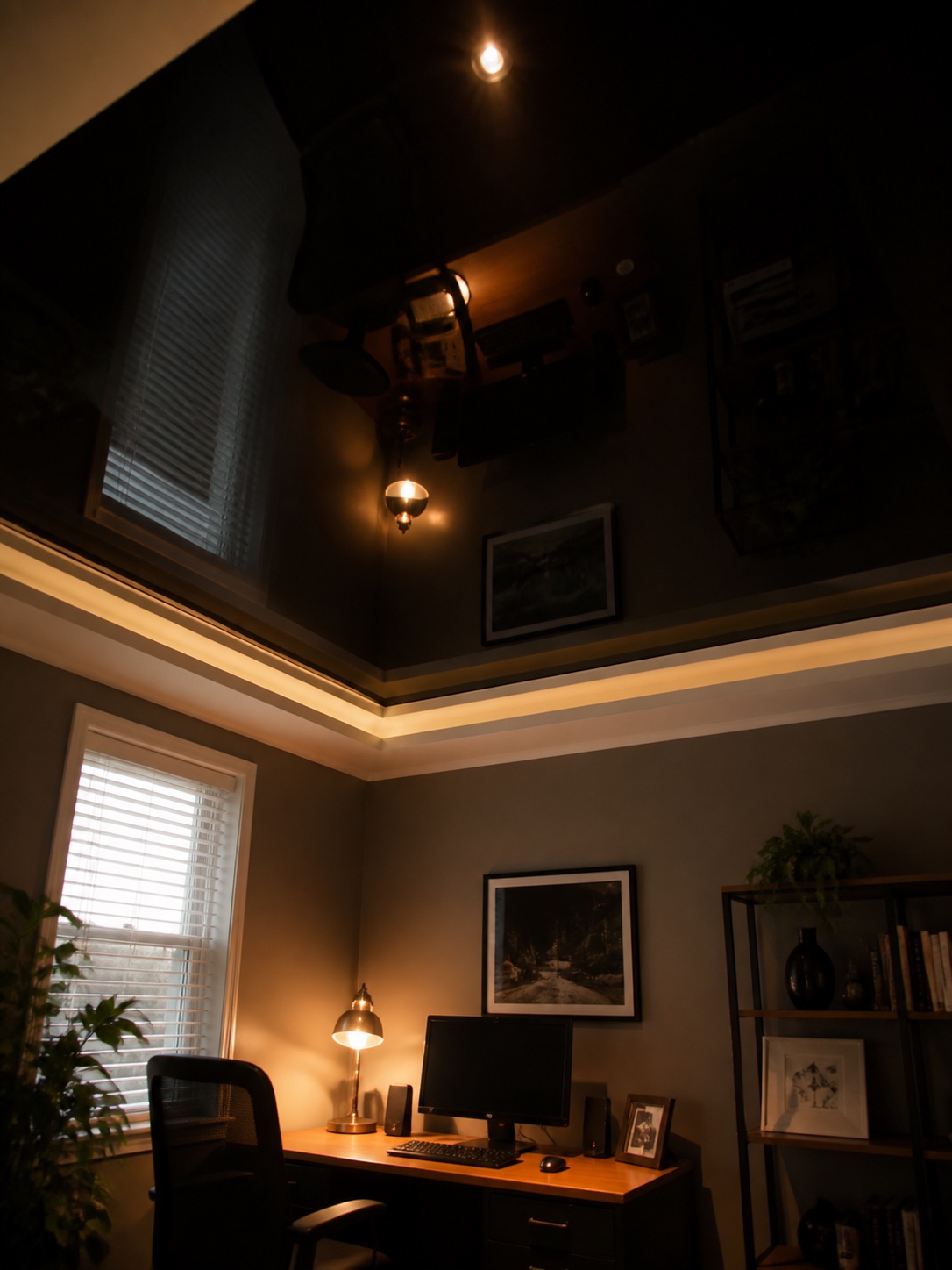
Gloss is a mirror. A genuinely good gloss PVC ceiling reflects the room back at you, which sounds gimmicky until you put it in a small, dark room with a low ceiling and watch the space visually double in height. I specified a black gloss ceiling for a small home office once, paired with warm 2700K lighting, and the effect was closer to automotive lacquer than anything I’d call “ceiling” — there’s a reason gloss black panels show up so often in concept car interiors, and the same light-trapping logic applies overhead. The risk with gloss is that it’s unforgiving. Every wave in the membrane, every seam, every imperfection in the track installation shows up doubled because you’re looking at a reflection of it.
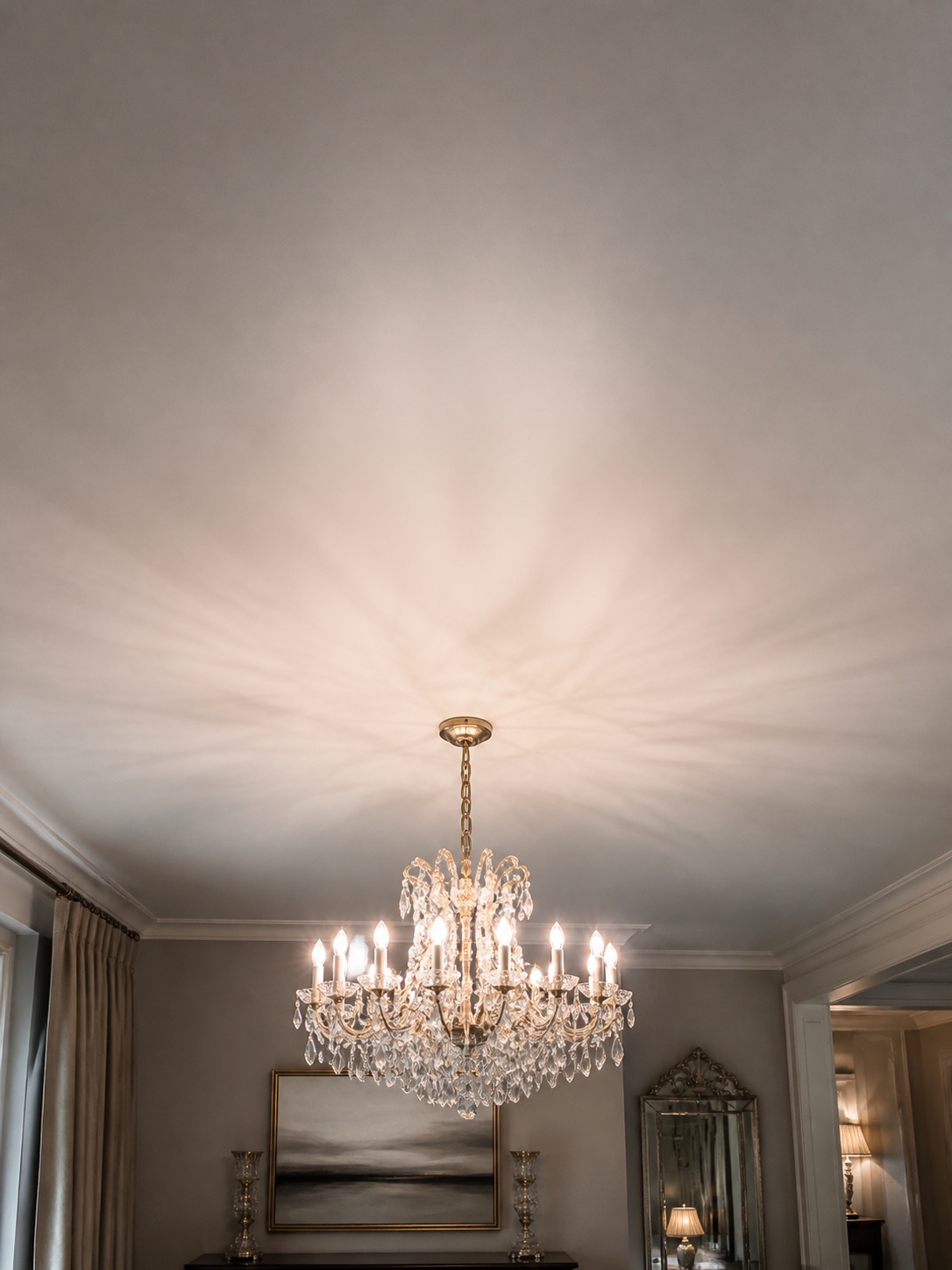
Satin sits between the two, and it’s the finish I recommend most often when someone can’t decide. It carries a soft sheen without hard reflections, so it doesn’t blow out under a chandelier and doesn’t go flat and dead like pure matte. It shifts subtly with the time of day too — cooler and more neutral in daytime light, slightly warmer and more luminous once the lamps come on in the evening. For large open-plan living and dining spaces where you want some shimmer without a full mirror effect, satin is usually the smarter call than gloss.
For a deeper comparison of how matte, satin, eggshell, and gloss behave on broad surfaces, the paint finish hierarchy guide is a useful next read.
There are also metallic, pearlescent, and semi-translucent finishes available from most major manufacturers now, and the translucent option deserves its own mention because it’s not a finish so much as a delivery system for light. More on that below.
Backlit and printed ceilings: where the category gets genuinely creative
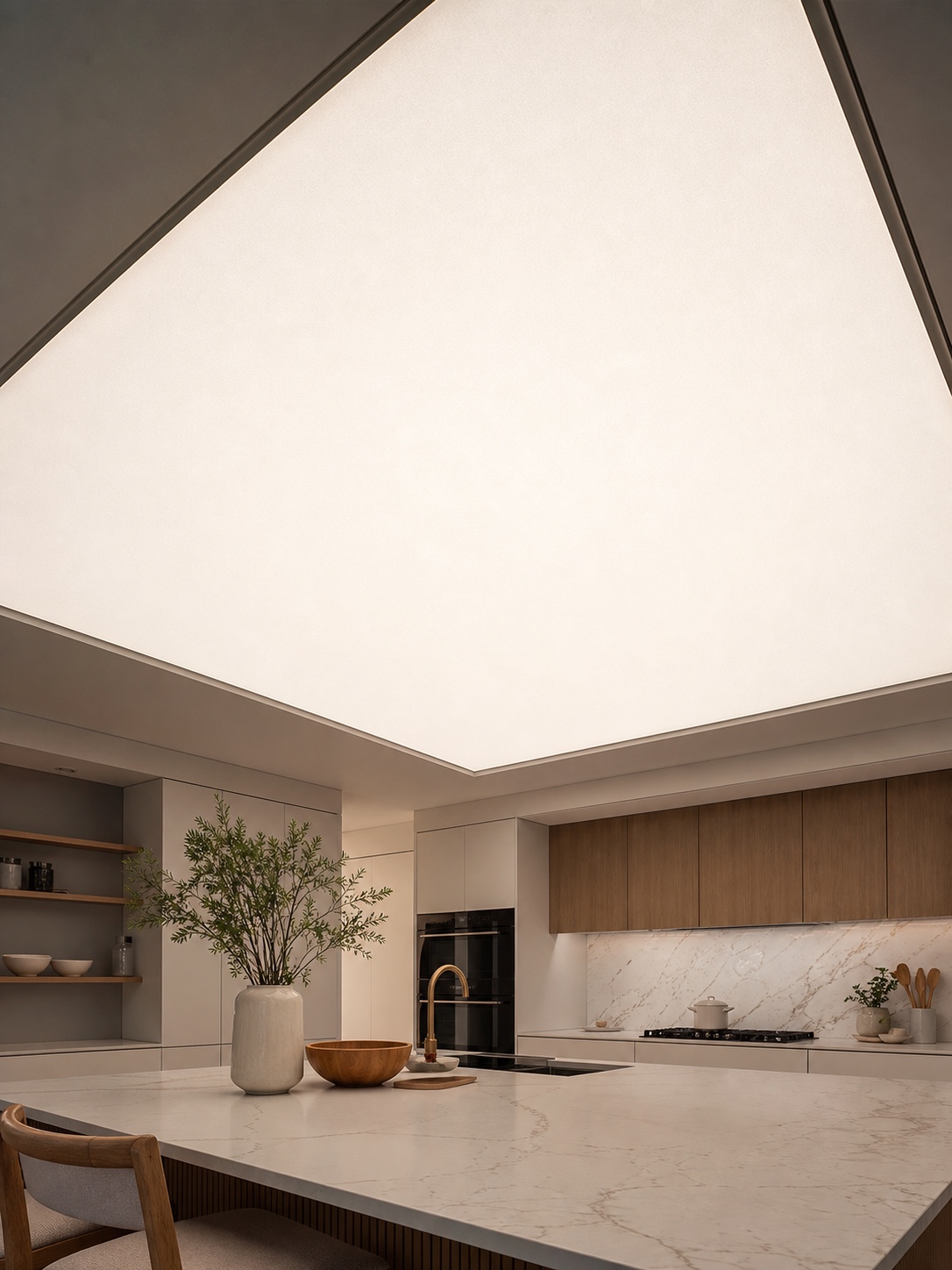
A translucent stretch membrane with an LED panel mounted in the void behind it turns the entire ceiling into one even light source. No visible fixtures, no hot spots, just a soft glow across the whole plane. I’ve seen this done well in a kitchen island zone, where it replaces three or four pendant fixtures with one continuous wash of light, and done badly in a hallway where the installer used too few LED rows and you can see faint banding through the membrane. Spacing the LED strips correctly behind a translucent panel is one of those details that separates a contractor who’s done this fifty times from one who’s done it five.
Printed ceilings are the other genuinely creative branch. Both PVC and fabric accept high-resolution UV printing directly on the membrane, and matte surfaces in particular hold detail and color saturation without the glare distortion you’d get on gloss. I’ve sketched out a few cloud-and-sky concepts for client bedrooms over the years, and the same principle that applies to a good botanical illustration applies here: get the value structure right before you worry about color, because the ceiling is viewed at a steep angle and from a distance, and detail that looks crisp on a monitor can read as mush from six feet below.
If you are weighing printed membranes against wall treatments, compare them with textured wall finishes before committing the whole ceiling plane.

How to actually judge installation quality
This is the section that matters most and gets covered least, because it’s not about the material at all. It’s about the install.
Look at the seams first, if there are any. A welded PVC seam should be flat and nearly invisible under normal lighting; if you can feel a ridge with your fingertips or see a shadow line under raking light, that’s a sloppy weld or a panel that wasn’t tensioned evenly on both sides before joining. Second, check the corners and the perimeter line where the membrane meets the track. There should be no visible wave, no slack pocket, and the line where ceiling meets wall should be crisp, not fuzzy or gapped. Third, push gently on the membrane mid-span. A properly tensioned ceiling has almost no give and returns instantly to flat. Excessive bounce usually means under-heating during PVC installation or an undersized track for the span.
The same inspection habit applies to surface preparation and finish quality on painted walls: raking light tells you more than a perfect showroom sample.
Temperature control during PVC installation is the single biggest quality variable nobody talks about. Heat the room and membrane unevenly and you get differential shrinkage once it cools — sometimes immediately visible as a slight wave, sometimes showing up weeks later as the membrane settles. This is also why I’m wary of installers who rush a job to fit two appointments in one day; tensioning a stretch ceiling correctly, especially in a room with multiple corners or a chase for recessed lighting, takes time to do right.

When I was researching contractors for a New York project a while back, the team at https://nyceiling.com/ walked me through their tensioning process in enough technical detail that it was obvious they weren’t reciting a sales script. That level of specificity, down to dwell time and ambient room temperature targets, is what separates a ceiling that lasts fifteen years from one that needs a callback in six months.
Ask any installer for photos of a job at least a year old, ideally in raking light from a window or a track light, which is the least forgiving angle for any flaw. A fresh install always looks flawless. The one-year-old job tells you the truth about their tensioning and track selection.
Matching the type to the room
For a bathroom or kitchen, PVC wins on practicality alone. Full waterproofing means a slow leak from the unit above doesn’t ruin your ceiling, just sags it temporarily until a technician re-tensions the membrane, often without even replacing it. Satin or matte PVC in these wet rooms gives you the moisture resistance without the maintenance headache of a glossy finish showing every water spot and fingerprint.
For wet-room planning, pair the ceiling choice with a practical bathroom lighting plan so the membrane, downlights, and mirror lighting feel intentional together.
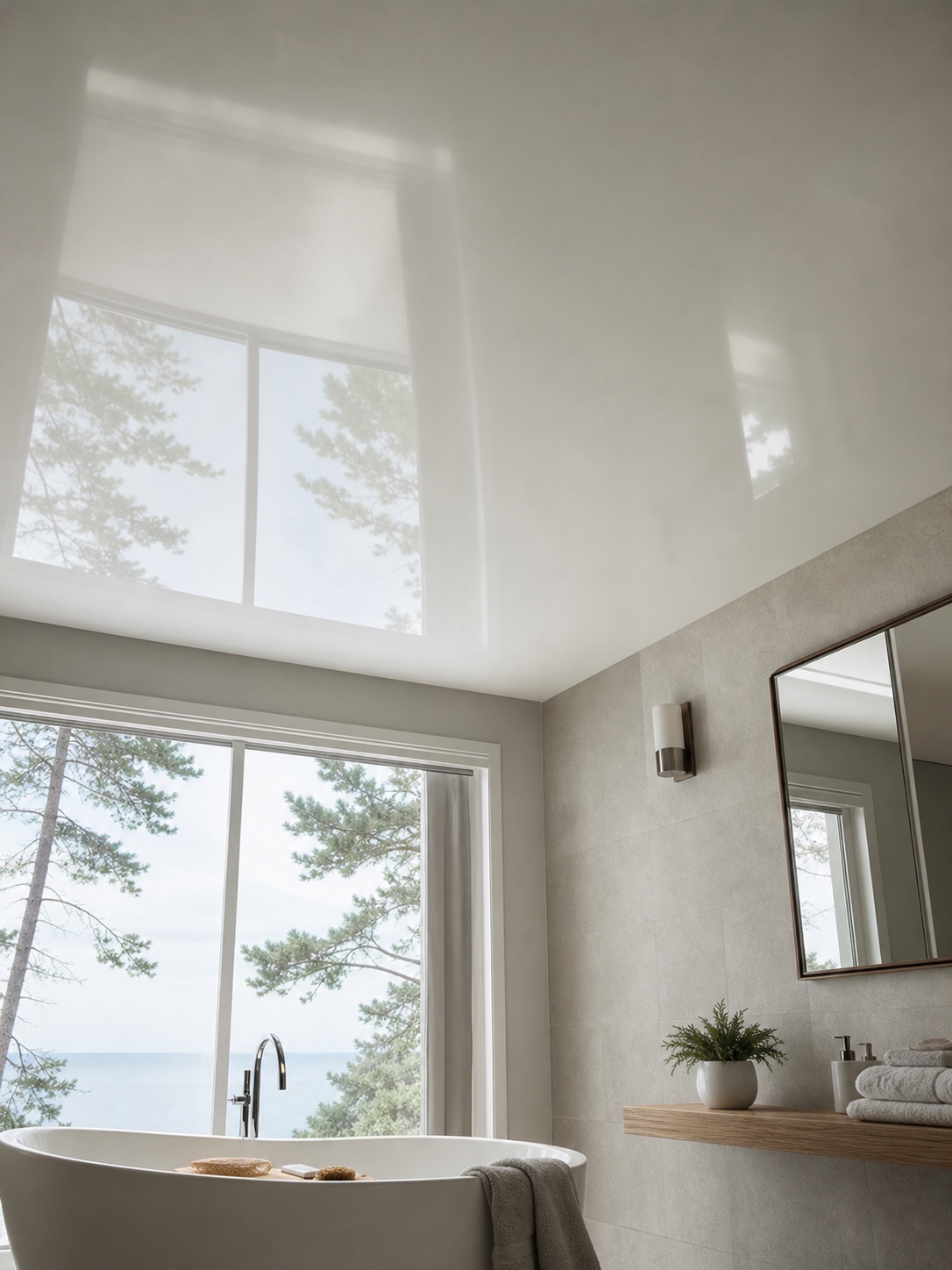
For a primary bedroom, I lean fabric, matte, and ideally seamless if the room width allows it. Bedrooms are where you notice flaws because you’re lying still, staring up, for ten minutes before you fall asleep. A seam directly overhead is the kind of thing that bothers people more than they expect.
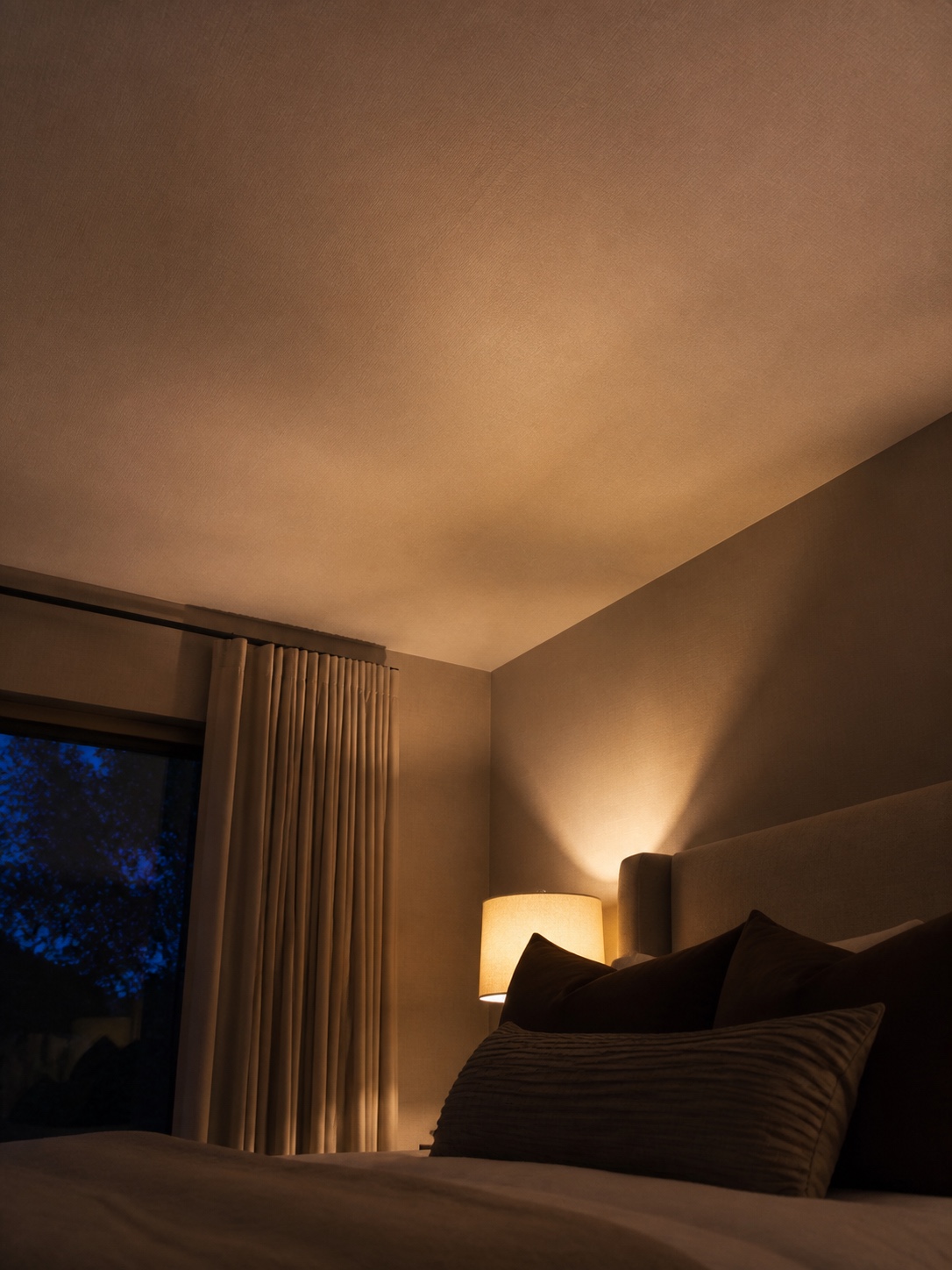
For a living or dining room with real ceiling height and good natural light, satin is the safer creative choice over full gloss, especially if there’s already a lot of reflective material in the room (marble flooring, polished brass fixtures, glass). Too much shine stacked on shine starts to feel like a hotel lobby instead of a home.
If the ceiling is part of a larger seating plan, pair this decision with living room interior design ideas so layout, lighting, and reflective surfaces work together.
For a home office or a small room you want to feel larger, gloss earns its reputation. It’s the one finish where the “tricks the eye” claim genuinely holds up, particularly paired with a darker wall color that gives the reflection something to bounce.
For unheated spaces — a converted attic, a country house used seasonally, a sunroom without full climate control — fabric is close to mandatory. PVC’s cold-weather brittleness isn’t a minor footnote; it’s a real failure mode in winter.
What actually drives the price
Square footage is the obvious factor, but it’s rarely the deciding one once you’ve narrowed down material and finish. Shape complexity adds cost fast: a flat rectangular ceiling is the cheapest configuration possible, and every additional level, curve, dome, or cutout for a recessed light fixture adds labor hours and sometimes a custom-built frame. Backlighting adds the cost of the LED system itself plus the labor to mount and wire it correctly behind the membrane, which is a different skill set than a standard flat install. Printed designs add a per-square-meter printing cost on top of the base membrane price, and complex multi-color or photo-realistic prints cost more than simple geometric patterns.
For the rest of the palette, use material texture choices to keep the ceiling finish, floor, wall surfaces, and fixtures from fighting each other.
Width also matters more than people expect. If your room is wider than the manufacturer’s standard panel width, you’re either paying for a welded seam (cheaper, slightly less premium look) or paying a premium for a wide-format fabric membrane that avoids the seam entirely. On a 6-meter living room, that single decision can shift the bid by a meaningful percentage.
A few mistakes I see repeated often
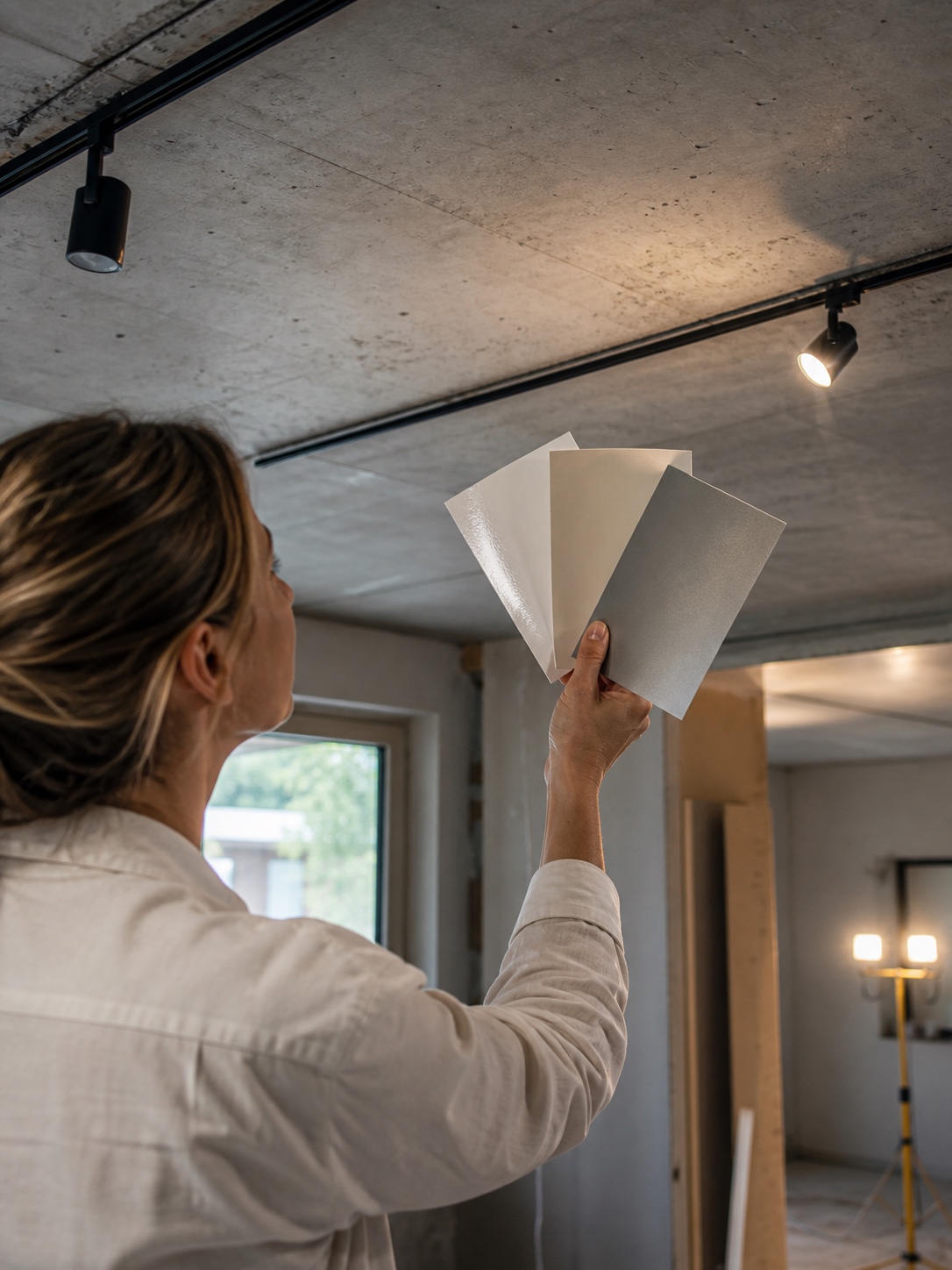
The first is choosing a finish purely off a small sample chip. Gloss and metallic finishes in particular look completely different at full ceiling scale under your actual lighting than they do on a 10x10cm swatch in a showroom with diffused light. Ask for a larger sample, or better, ask the installer if they can show you a completed project in a room with similar light conditions to yours.
The second is underestimating the void depth needed for what you want hidden up there. If you’re routing HVAC ductwork or want a deep cove for indirect lighting, a generic 3cm drop won’t cut it, and finding that out mid-install is expensive to fix.
The third is treating the stretch ceiling as a standalone decision instead of part of the whole room composition. The same way I wouldn’t sketch a car’s hood line without thinking about how it reads against the fender, I wouldn’t spec a glossy black ceiling without thinking hard about what’s reflected in it. A ceiling fan, an exposed beam, a cluttered shelf — all of that doubles in a mirror finish. Sometimes that’s the point. Often it’s an accident nobody planned for.
If you are combining a reflective ceiling with timber or vertical surfaces, this guide to wood wall panels is a useful check on proportion, light, and restraint.
Final thought
A stretch ceiling is one of the few interior elements that changes a room’s entire character without touching a single wall. Get the material right for the room’s actual conditions, get the finish right for how you live in the space rather than how it photographs, and get an installer who can show you a year-old job under bad lighting and have it still look flawless. Do those three things and the ceiling stops being a fix for an ugly popcorn texture and starts being the design move my client was originally asking about.
For more room-level planning around surfaces, light, and material choices, browse the broader interior design archive.
Related room-surface guides that pair well with ceiling planning: carpet types for the floor plane and living room canvas wall art for the wall plane.

Reference gallery: 10 stretch ceiling design examples
A quick visual reference set covering the most common real-world applications, each paired with a ready-to-render image prompt.
1. Gloss black home office ceiling
2. Satin dining room ceiling under a chandelier
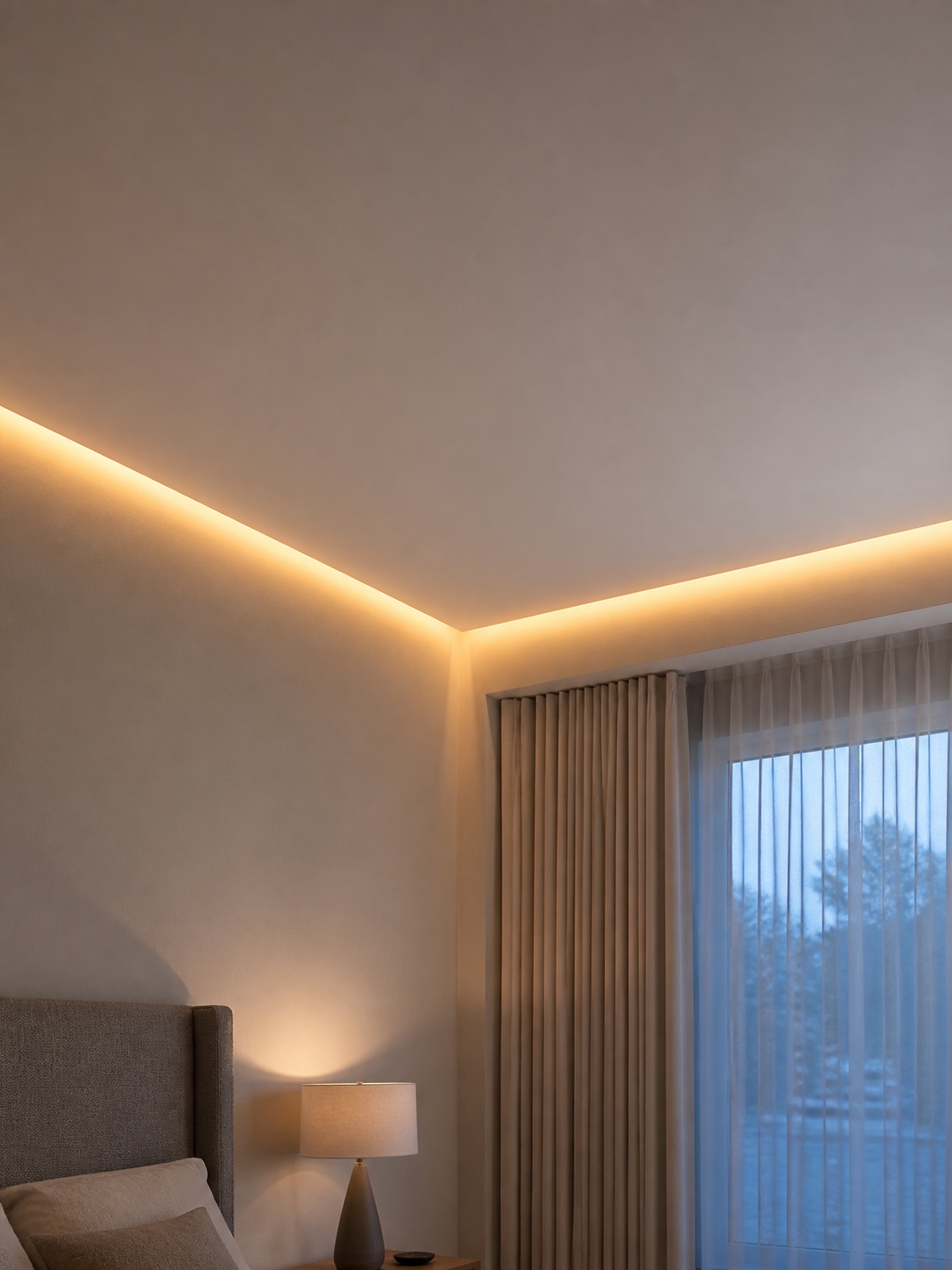
3. Matte primary bedroom with cove lighting
4. Backlit translucent kitchen island ceiling
5. Printed sky-scene bedroom ceiling
6. 3D wave-shaped hotel lobby ceiling
7. Seamless fabric primary bedroom (no welds)
8. Two-level cove living room ceiling
9. Metallic-finish hallway ceiling
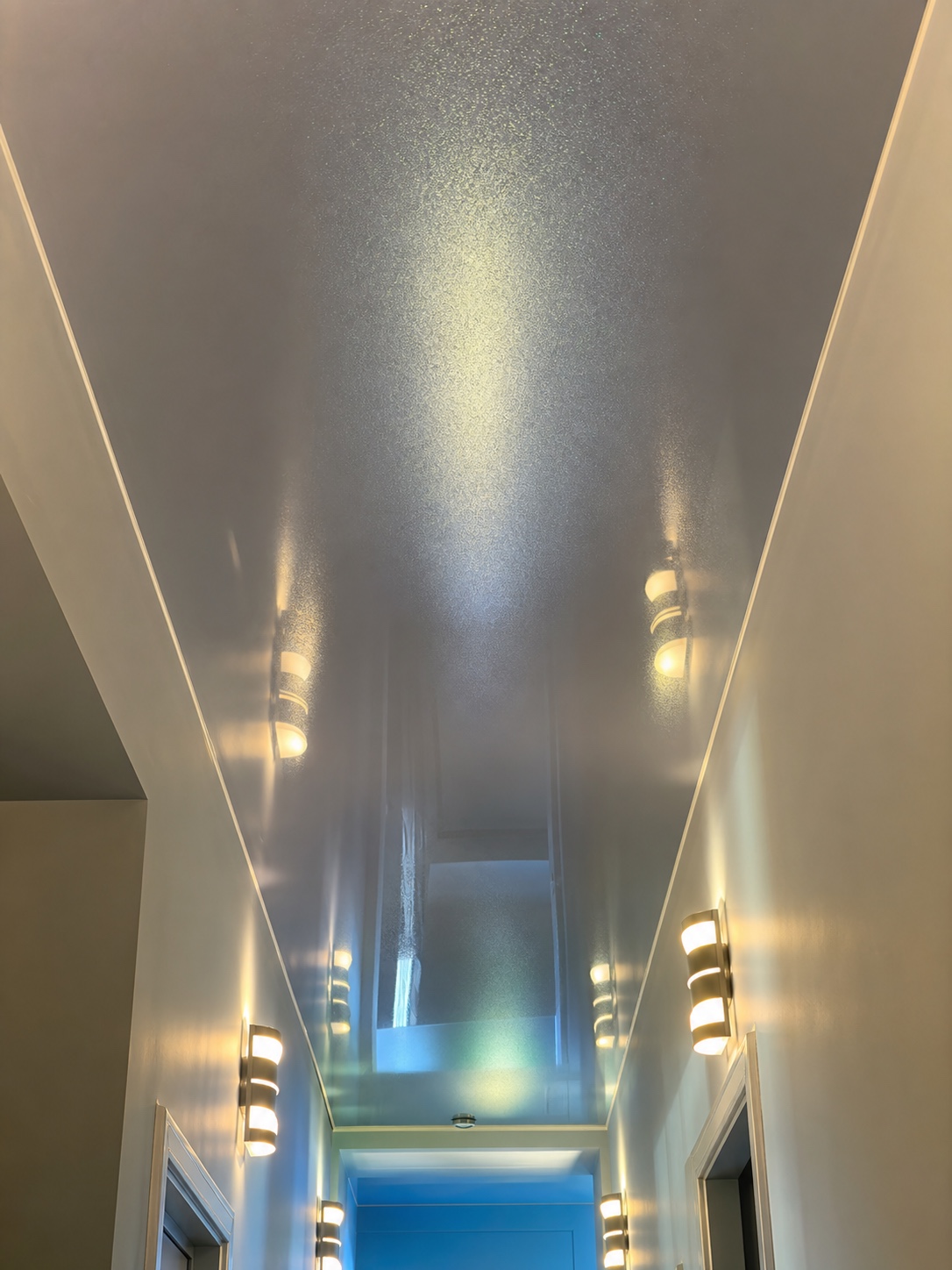
10. Waterproof PVC bathroom ceiling
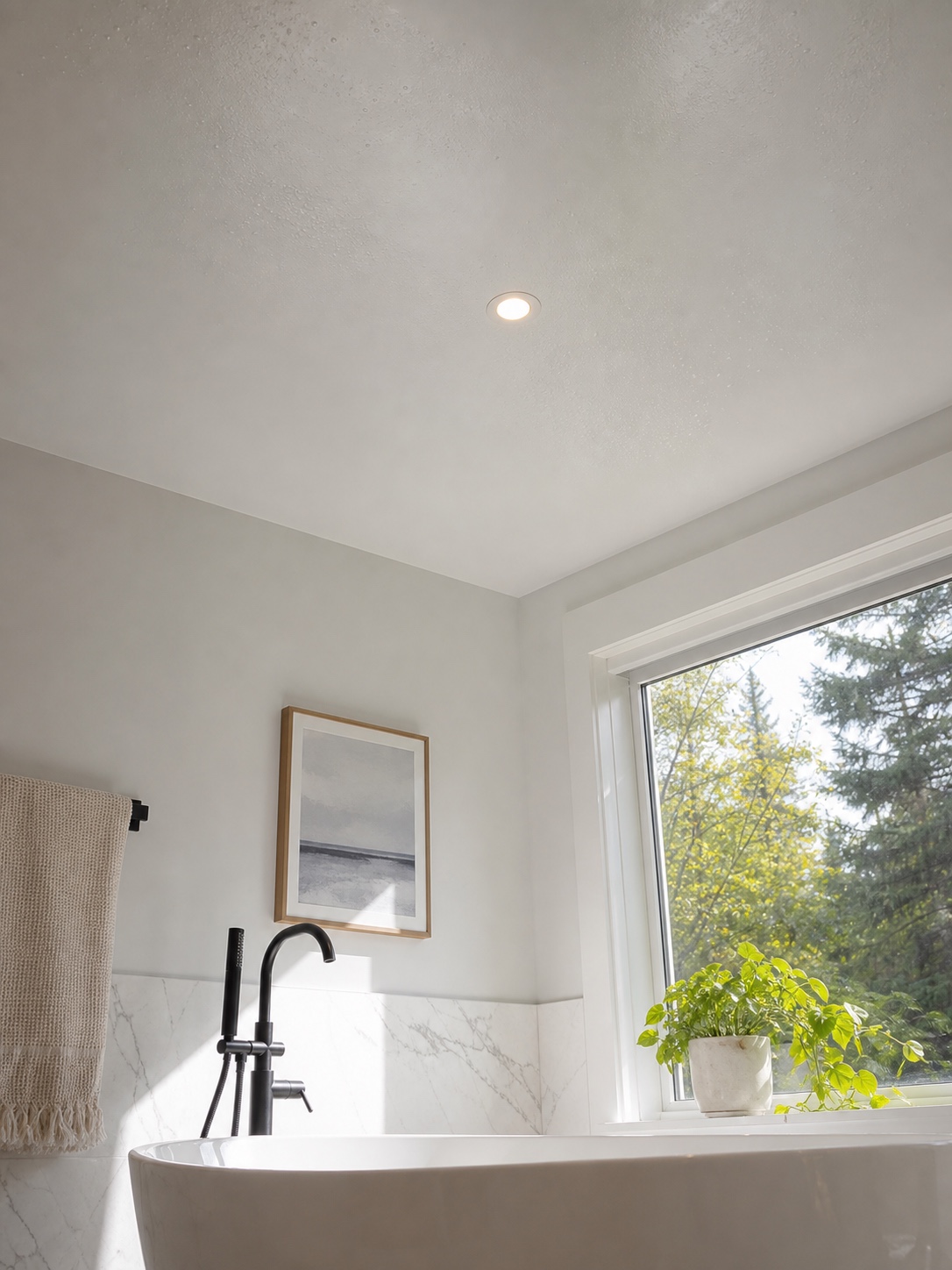
FAQ
Is a stretch ceiling cheaper than a drywall ceiling?
For a flat, simple install, yes — usually comparable to or cheaper than drywall once you factor in the days of dust, sanding, and painting a traditional ceiling requires. Complex shapes, backlighting, or printed designs can push fabric or specialty PVC jobs above drywall pricing, but the installation time stays a fraction of the length.
How long does a stretch ceiling actually last?
Quality PVC and fabric membranes from established manufacturers like Clipso or Barrisol carry warranties of 10–15 years and routinely outlast that in practice. The membrane itself rarely fails first — track quality and installation tensioning are the usual points of premature wear.
Can you install a stretch ceiling over an existing popcorn or damaged ceiling?
Yes, and it’s one of the most common reasons people choose this system. The membrane hides texture, water stains, and minor unevenness without requiring you to scrape or skim-coat the original surface first.
Does a stretch ceiling trap moisture or cause mold?
Properly installed, no. PVC is fully water-resistant and the void above allows airflow; fabric is breathable by nature. Mold risk comes from pre-existing moisture problems in the original ceiling that go unaddressed before install, not from the membrane itself.
Can you fit recessed lighting or a ceiling fan into a stretch ceiling?
Yes, with a reinforced ring or mounting plate installed in the void before the membrane goes up. This needs to be planned before installation day, not added afterward, so flag any fixtures early in the design conversation.
What happens if the membrane gets punctured?
PVC can usually be patched or, for larger damage, the panel re-tensioned or replaced section by section depending on the welding pattern. Fabric is notably harder to puncture in the first place, which is part of its appeal in homes with kids or pets.
Is gloss or matte better for resale value?
While planning clean structural lines, you can add warmth with seasonal accents. Discover how to arrange patio fall decorations for a cozy feel.
Matte and satin tend to read as more broadly appealing to future buyers since they’re closer to a traditional finished ceiling. Gloss is a stronger personal style statement that some buyers love and others find too dramatic, so it’s a judgment call tied to your local market more than a universal rule.
How long does installation actually take?
A standard room runs four to eight hours for PVC, often less for fabric since there’s no heating step. Complex multi-level or backlit ceilings can stretch to multiple days depending on framing and electrical work involved.
- 484shares
- Facebook0
- Pinterest484
- Twitter0
- Reddit0