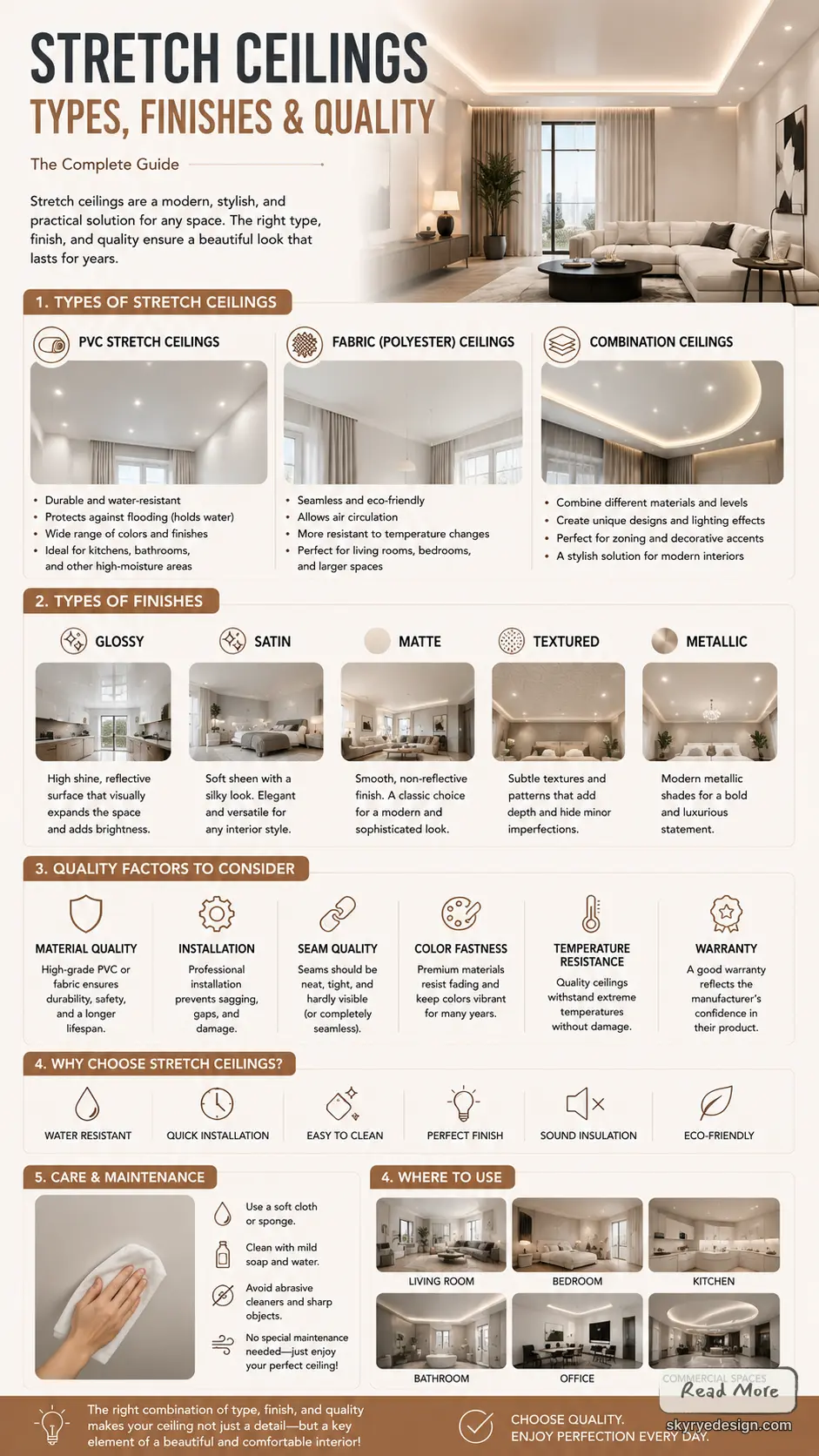
Stretch ceilings use a tensioned membrane held in a perimeter track to create a new ceiling surface below the existing one. The main choices are PVC film and coated fabric, followed by the finish: matte, satin, gloss, printed, or translucent for backlighting. Choose the system around room conditions, panel width, lighting, and access for maintenance before choosing its color.
This guide compares those choices, shows what to inspect in a finished installation, and includes ten design references. Start with a sample under your own lighting and a written specification. A small showroom swatch cannot tell you where a seam will fall or how a whole glossy ceiling will reflect the room.
- What is a stretch ceiling?
- PVC vs fabric stretch ceilings: compare the system
- Matte, satin and gloss: choose by reflected light
- Backlit and printed stretch ceilings: plan the details
- Stretch ceiling quality checklist
- Matching the type to the room
- What affects stretch ceiling cost?
- Stretch ceiling mistakes to avoid
- Before you approve the ceiling
- Reference gallery: 10 stretch ceiling design examples
- 1. Gloss black home office ceiling
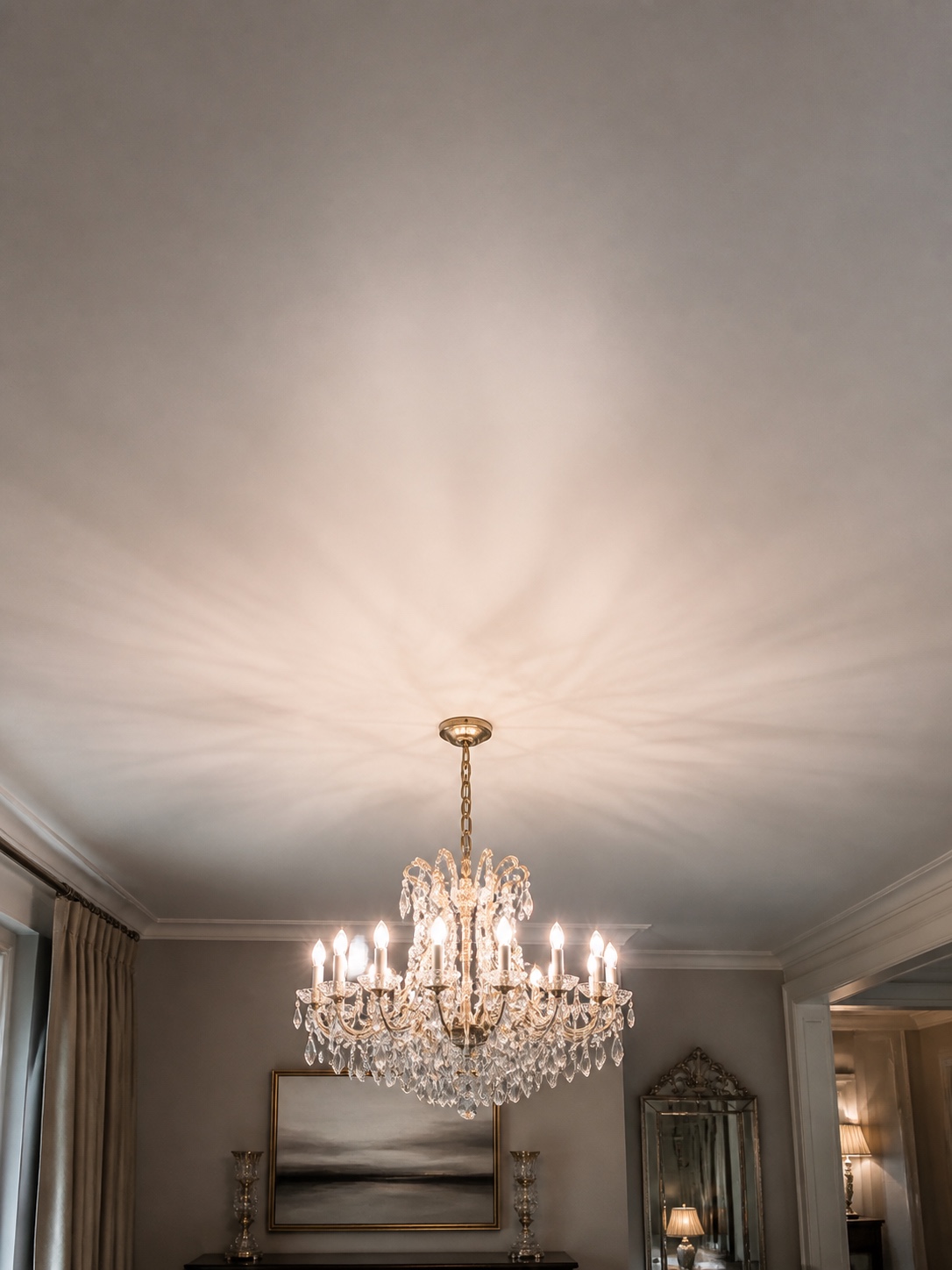
- 2. Satin dining room ceiling under a chandelier
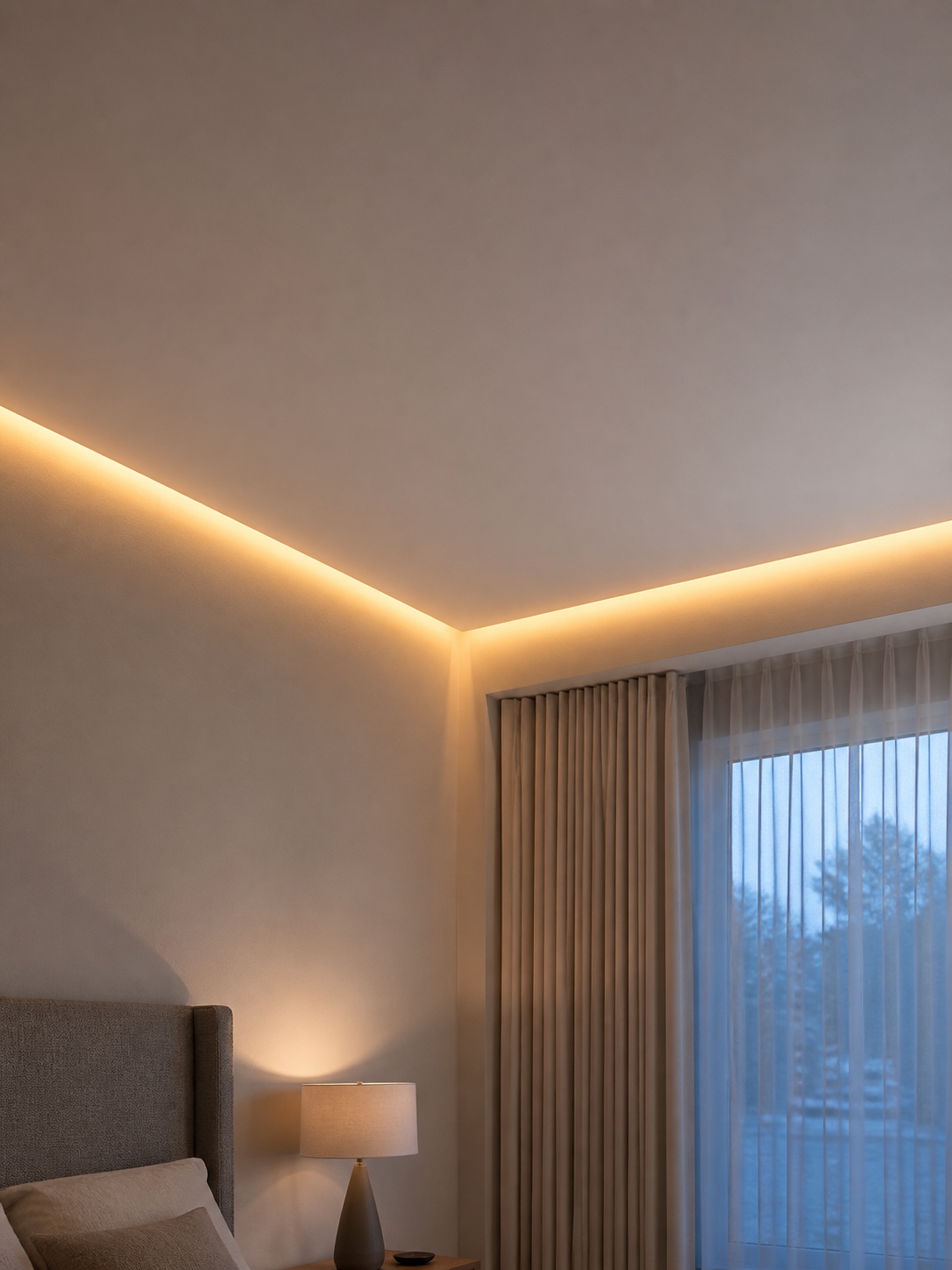
- 3. Matte primary bedroom with cove lighting
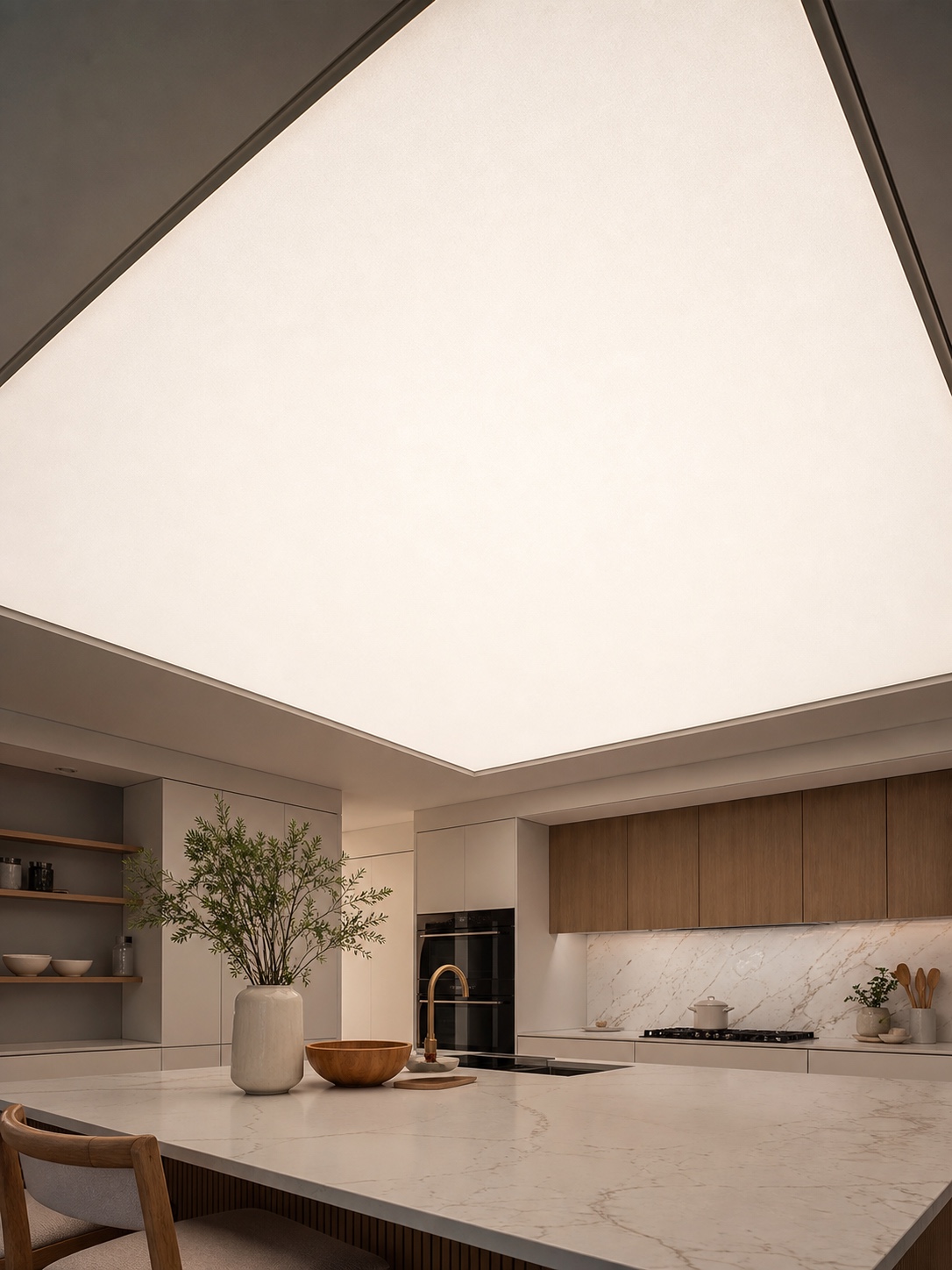
- 4. Backlit translucent kitchen island ceiling
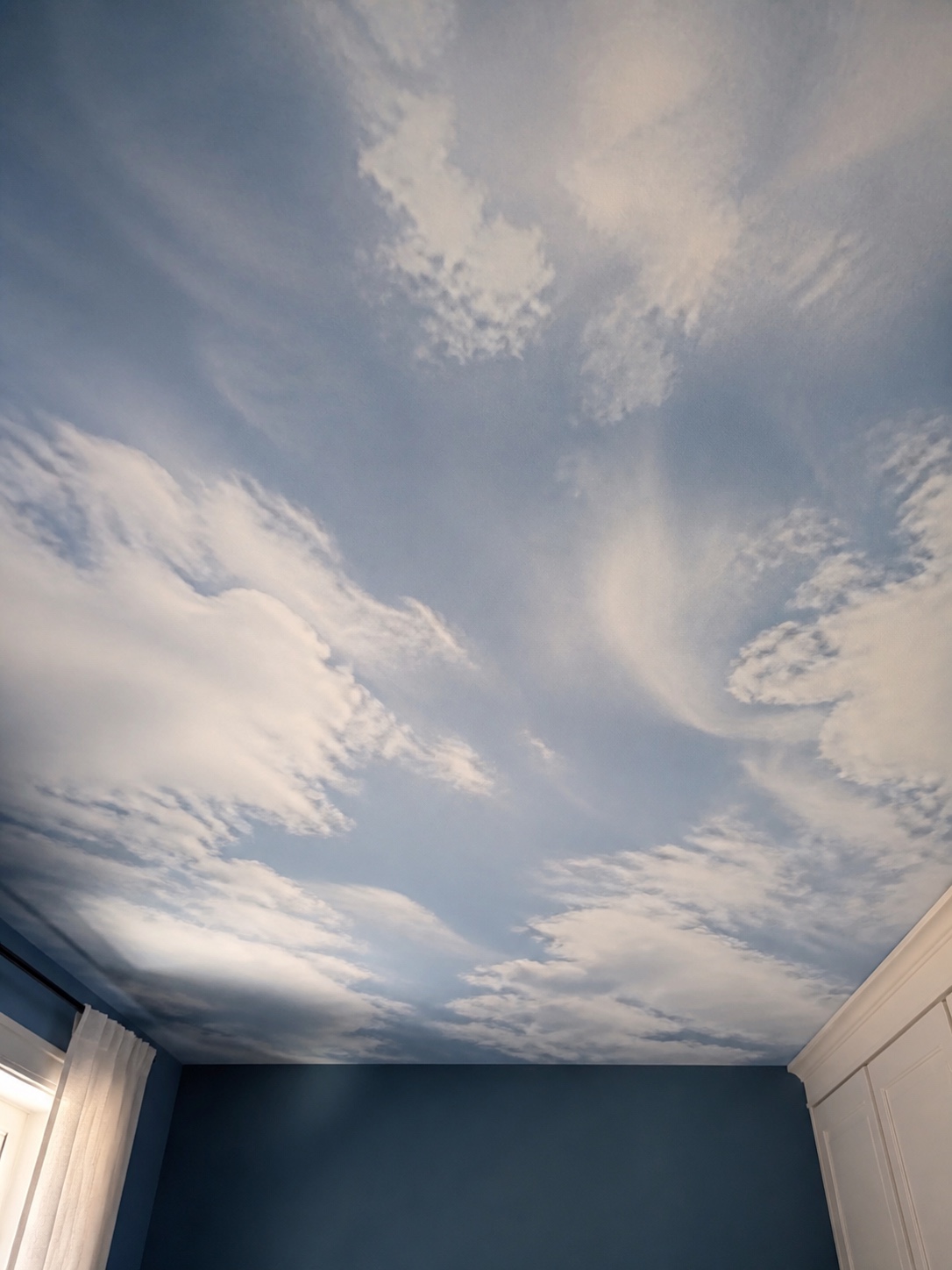
- 5. Printed sky-scene bedroom ceiling
- 6. 3D wave-shaped hotel lobby ceiling
- 7. Wide matte fabric bedroom ceiling
- 8. Two-level cove living room ceiling
- 9. Metallic-finish hallway ceiling
- 10. Satin PVC bathroom ceiling
- Stretch ceilings FAQ
- Is a stretch ceiling cheaper than a drywall ceiling?
- How long does a stretch ceiling last?
- Can you install a stretch ceiling over an existing popcorn or damaged ceiling?
- Does a stretch ceiling trap moisture or cause mold?
- Can you fit recessed lighting or a ceiling fan into a stretch ceiling?
- What happens if the membrane gets punctured?
- Is matte or gloss better for a small room?
- How long does stretch ceiling installation take?
Material and finish are separate decisions. PVC and fabric describe the membrane; matte and gloss describe its appearance. Backlighting, printing, and sculpted shapes add further requirements. Compare complete systems rather than assuming two ceilings with the same finish will perform alike.
What is a stretch ceiling?
A stretch ceiling consists of a membrane and a supporting profile fixed around its perimeter or to a designed frame. The membrane conceals the surface above it, while the space between the two can accommodate coordinated services. It is a finish system, not a repair for loose plaster, a leaking roof, or structural damage. Those conditions need attention before the new surface is installed.
PVC systems commonly use a controlled heating process during installation. Some coated-fabric systems, including CLIPSO, fit at room temperature. The installer should follow the selected product’s method; a generic temperature, installation time, or hand-pressure test cannot establish whether every membrane is correctly tensioned.
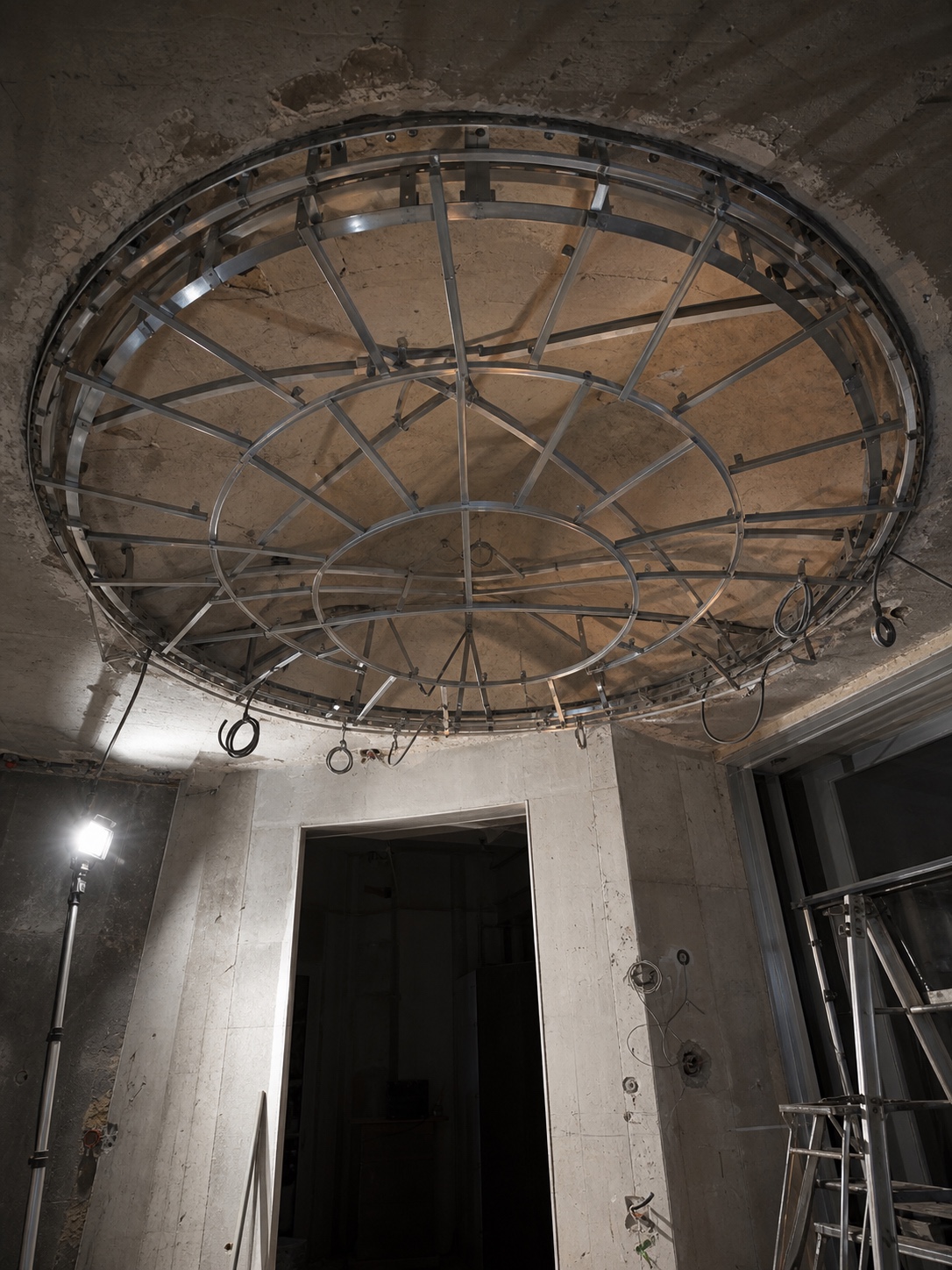
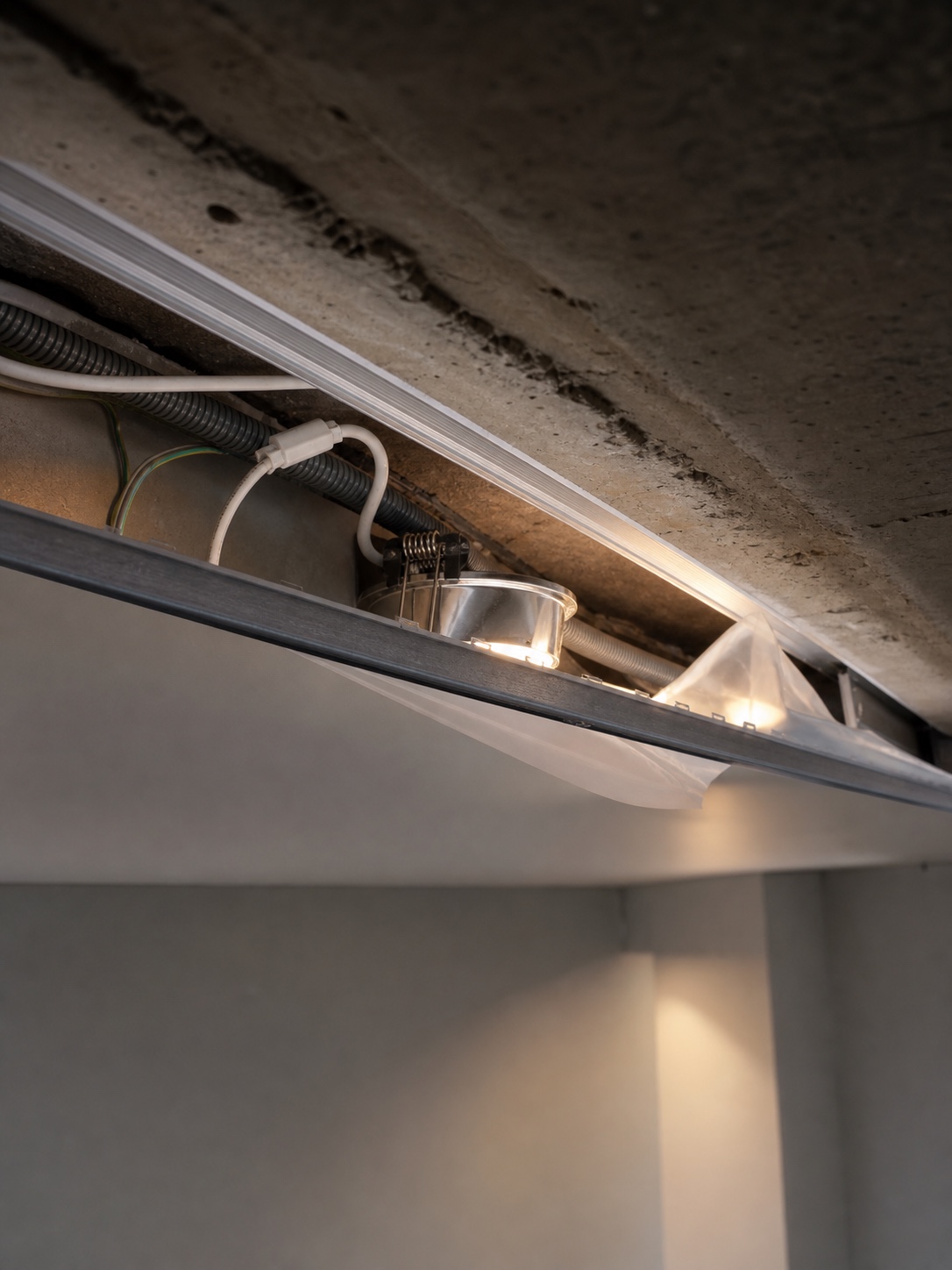
The ceiling drop depends on the profile, lights, ducts, and maintenance clearances. A shallow perimeter detail does not establish the depth needed across the room. Plan LED strip lighting and any cove section before fabrication, and keep vents and other working components accessible. Draw the lowest obstruction and the finished membrane together in section so the remaining room height is clear.

PVC vs fabric stretch ceilings: compare the system
Choose PVC when the selected film and finish suit the room and you want options such as a strong gloss reflection. Consider coated fabric when a textile surface, available panel width, or room-temperature installation fits the brief. Neither material name alone establishes suitability for moisture, cold, acoustics, or a particular span.
Non-perforated PVC membranes can offer water resistance. Some specified systems can retain water after a leak, but that is not a guarantee that the whole ceiling assembly is waterproof or that it will recover without damage. Perforations, openings, fixing details, and the leak itself matter. Arrange professional assessment rather than trying to drain or re-tension a loaded membrane yourself.
Ask for the actual roll width and a seam layout for your room. Wide areas may need welded film panels or another joining detail. Confirm the temperature limits of the proposed product if the room is not continuously heated; do not infer cold-weather suitability from a photograph or a generic PVC label.
Coated fabric is another system family. For example, CLIPSO describes its material as polyurethane-coated polyester and offers extra-wide fabrics. Confirm the usable installed width, including fitting allowances, before treating a room as seamless. Fabric is not automatically a condensation solution: the condition of the space above it still matters.
Compare quotations for the same room, light fittings, edge detail, and access requirements. A fixed percentage premium for fabric over PVC is not a useful rule across suppliers and regions. Request the exact product reference, available finishes, permitted cleaning method, and written warranty for each option.
| Question | PVC film | Coated fabric |
|---|---|---|
| How is it fitted? | Often installed with controlled heating; confirm the method. | Room-temperature fitting is available with some systems. |
| What finish can I get? | Compare the exact matte, satin, gloss or specialist film. | Compare the actual textile, print or translucent product. |
| Will there be a join? | Ask for film width and a welded-seam plan. | Ask for usable width and any intermediate profile. |
| Is it suitable for the room? | Check the specific moisture, temperature and cleaning limits. | Check the same limits; fabric is not a universal substitute. |
| What should the quote name? | Film, profile, fixing detail, openings and access. | Fabric, profile, fixing detail, openings and access. |
Check these distinctions against the CLIPSO installation and material guidance and the Barrisol product FAQ. These describe their own systems; they are not specifications for every stretch ceiling sold under the same material name.
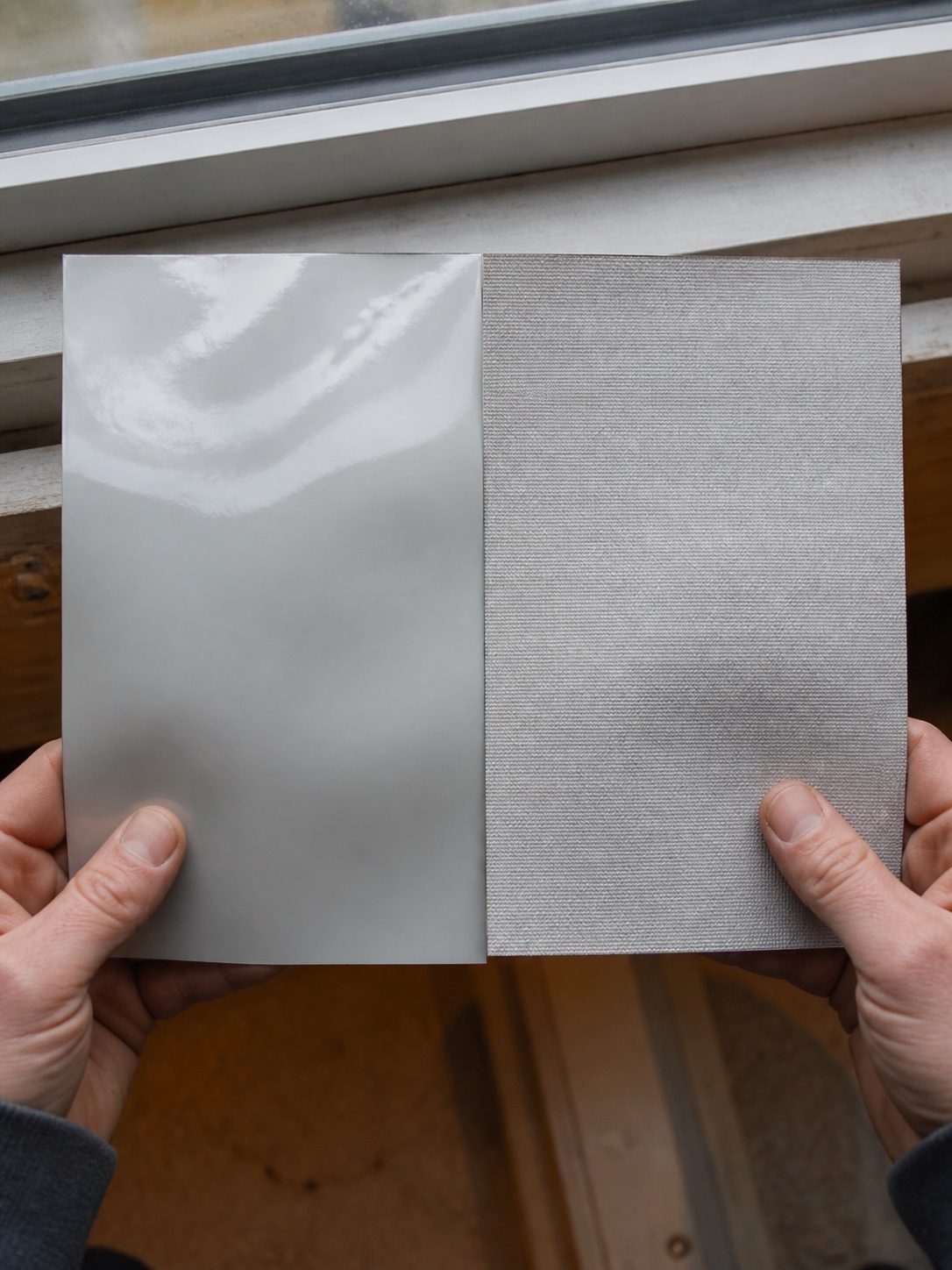
Matte, satin and gloss: choose by reflected light
The finish changes what you see when you look up. Compare it from the doorway, the sofa, and the bed, with both daylight and the lights you will actually use.
Matte gives the least pronounced reflection and can resemble a painted ceiling from normal viewing distance. It is useful when the ceiling should sit quietly above textured walls or furniture. For a printed design, compare a sample of the proposed image on the actual membrane; the finish affects glare and apparent contrast.
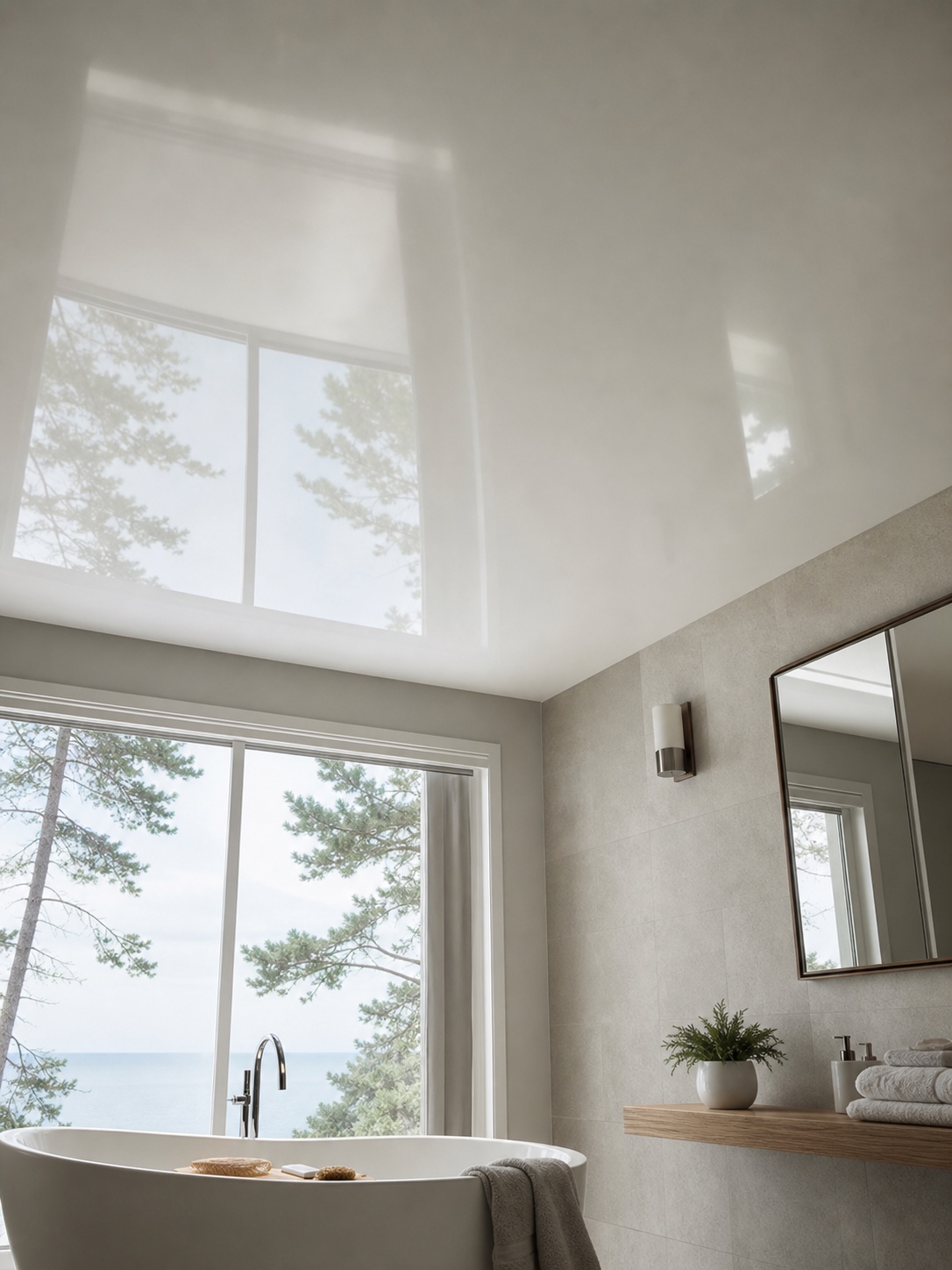
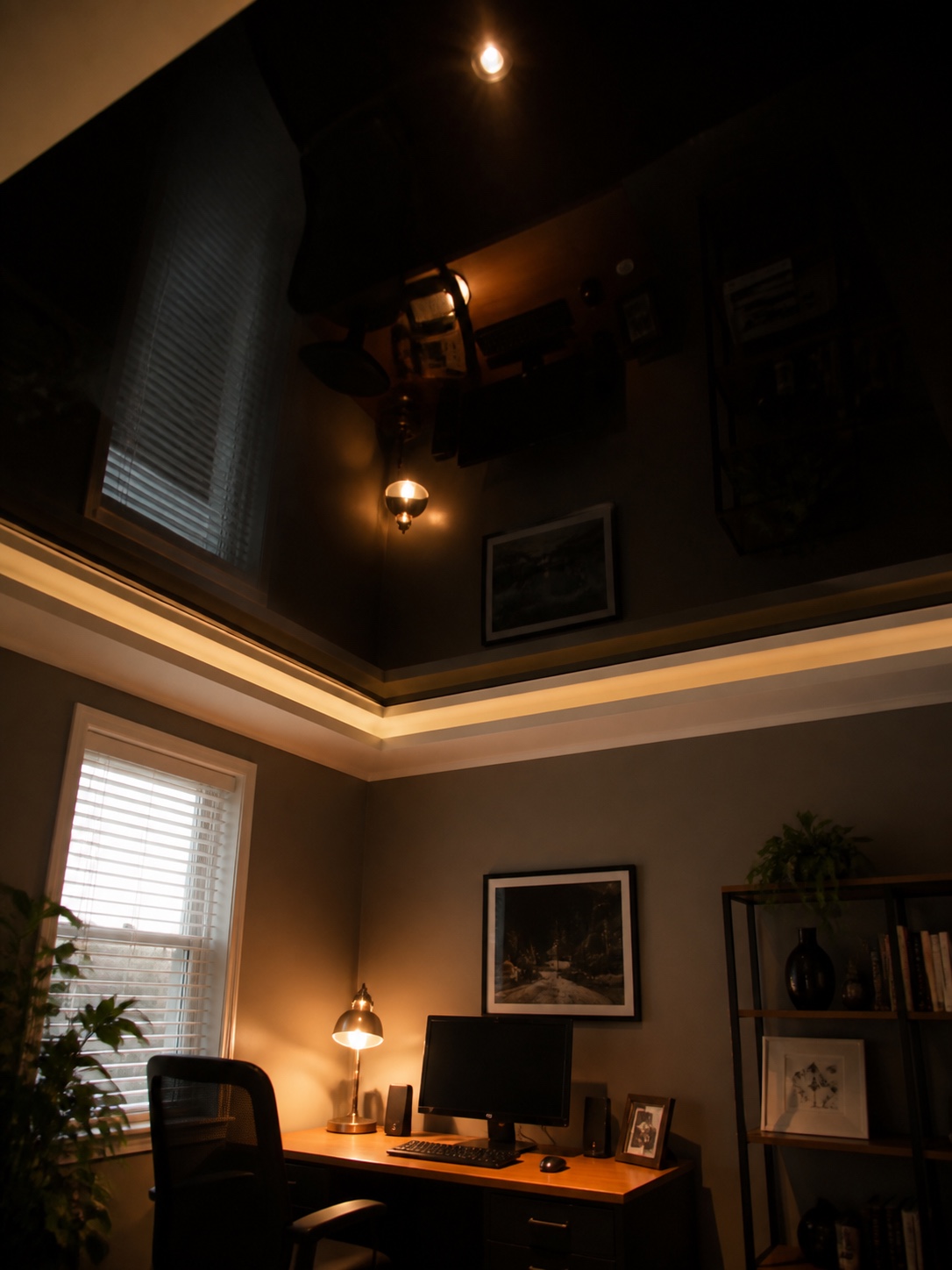
Gloss reflects furniture, windows, and light fittings. In a small home office, that can add apparent depth, but it can also repeat a cluttered shelf or an exposed bulb overhead. Inspect the reflection from a seated position as well as standing. Seams and changes in surface alignment may be more noticeable in a reflective finish.
Satin gives a softer sheen than a pronounced gloss finish. It can suit a dining or living room where you want some reflection without a mirror-like ceiling. Finish names differ between suppliers, so compare samples side by side rather than assuming every product called satin will look the same under a chandelier.
For a deeper comparison of how matte, satin, eggshell, and gloss behave on broad surfaces, the paint finish hierarchy guide is a useful next read.
Translucent membranes are selected to transmit light, while metallic or pearlescent finishes change the character of reflected light. These are different effects. Decide whether you want the ceiling to glow, reflect the room, or remain visually quiet before comparing colors.
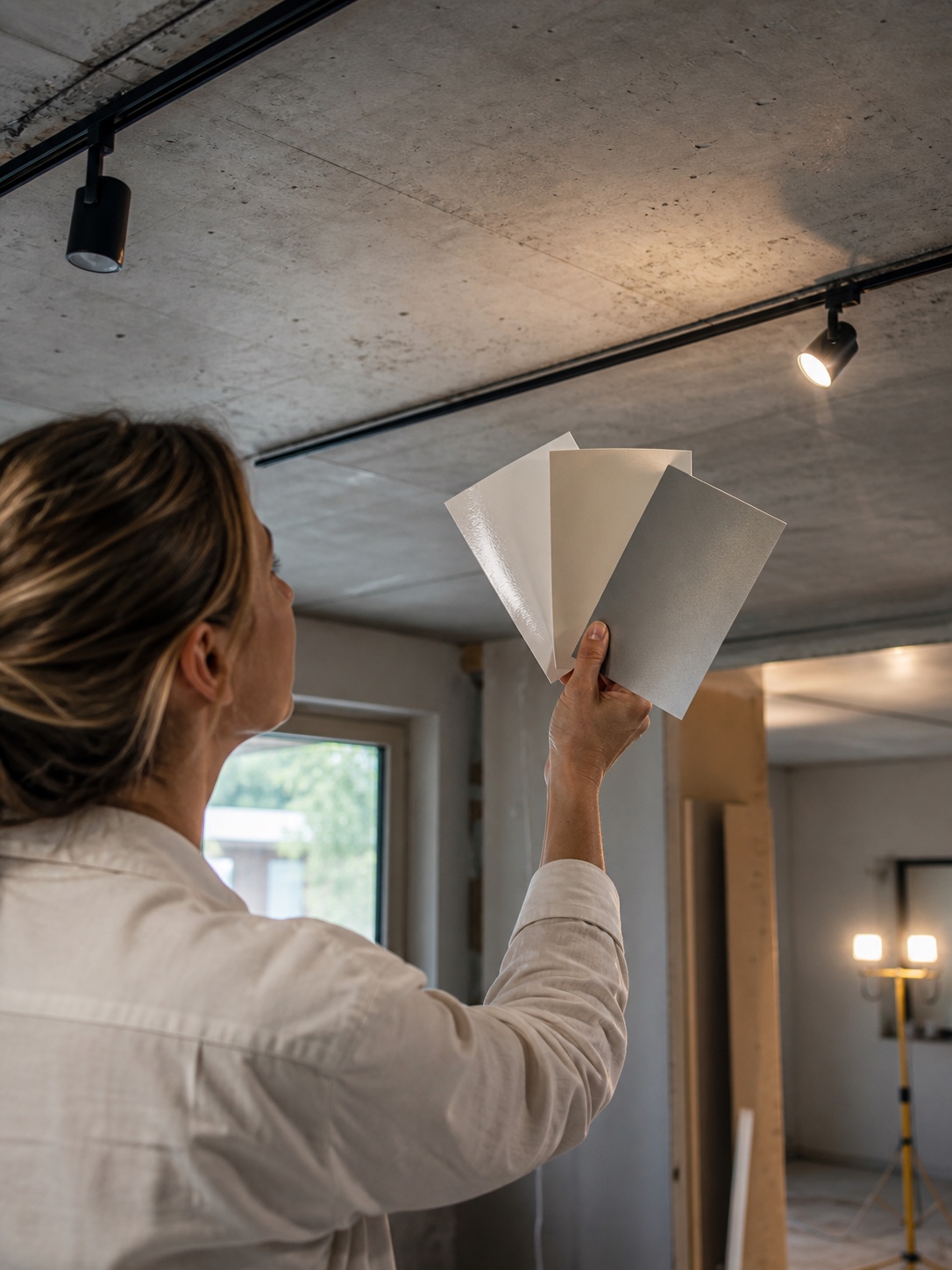
Backlit and printed stretch ceilings: plan the details
A backlit ceiling combines a translucent membrane with a designed light source behind it. Uniformity depends on the membrane, the layout of the LEDs, and their distance from the surface. Ask for a lit sample or mock-up at the proposed depth. Check it for bright spots, striping, dark edges, and changes across dimming levels before approving the installation.
For a printed ceiling, review an image proof at the intended scale and viewing distance. Small details can disappear overhead, while a high-contrast pattern can dominate the room. Check orientation from the main entrance and from the bed or seating position. Confirm the supplier’s printing process and the membrane’s appearance with the lights both on and off.
If you are weighing printed membranes against wall treatments, compare them with textured wall finishes before committing the whole ceiling plane.

Stretch ceiling quality checklist
Judge the specified product and the finished installation separately. A clean photograph cannot establish the membrane’s test ratings, and a product certificate cannot show whether a particular perimeter detail was fitted neatly.
Inspect seams, corners, and perimeter lines from ordinary viewing positions with the room’s lighting on. Note puckers, gaps, uneven reflections, or visible light banding and ask the installer to assess them against the agreed sample and specification. Do not press, pull, or probe the membrane as a DIY quality test; its flexibility depends on the system, and touching it can mark the finish.
The same inspection habit applies to surface preparation and finish quality on painted walls: raking light tells you more than a perfect showroom sample.
Ask the installer to explain the fitting sequence, substrate preparation, and how lighting and service openings will be supported. The explanation should refer to the proposed product, not a universal rule about heating or tension. Agree how defects will be recorded and corrected before the work is signed off.

For an example of the services a specialist offers, https://nyceiling.com/ publishes stretch-ceiling, integrated-lighting, and installation information. Use a supplier’s portfolio as a starting point for questions, then ask for the product schedule, edge details, access plan, and warranty for your own project. A portfolio alone does not verify an installation method or expected lifespan.
Ask to see completed work in a similar finish and lighting condition, including an older installation where possible. Review the actual edge and seam details rather than relying only on wide-angle promotional images. Keep the approved sample and record any agreed limitations in the quotation.
- Record the membrane manufacturer, product reference, finish and approved sample.
- Ask for the relevant test documents for the proposed product and room use.
- Approve the ceiling drop, seam layout, corners and edge detail on a drawing.
- Confirm fixture supports, driver locations and access for future maintenance.
- Inspect the installed surface under daylight and the final lighting settings.
- Keep the care instructions, warranty and installer contact with the handover documents.
Matching the type to the room
For a bathroom or kitchen, confirm that the complete system is suitable for the humidity, cleaning, and heat exposure involved. Water-resistant material does not replace ventilation or repair a leak. Satin or matte can be useful where you want less reflection, but the product specification should decide suitability before the finish decides appearance.
The EPA guidance on moisture and mold emphasizes fixing water problems and controlling moisture. Review the ceiling void before concealing it, rather than assuming a new finish removes the underlying problem.
Before covering a damp-prone room, work through these practical ventilation checks for family homes. Confirm how extraction and replacement air are provided, and resolve persistent moisture problems before the new ceiling conceals the existing surface.
For wet-room planning, pair the ceiling choice with a practical bathroom lighting plan so the membrane, downlights, and mirror lighting feel intentional together.
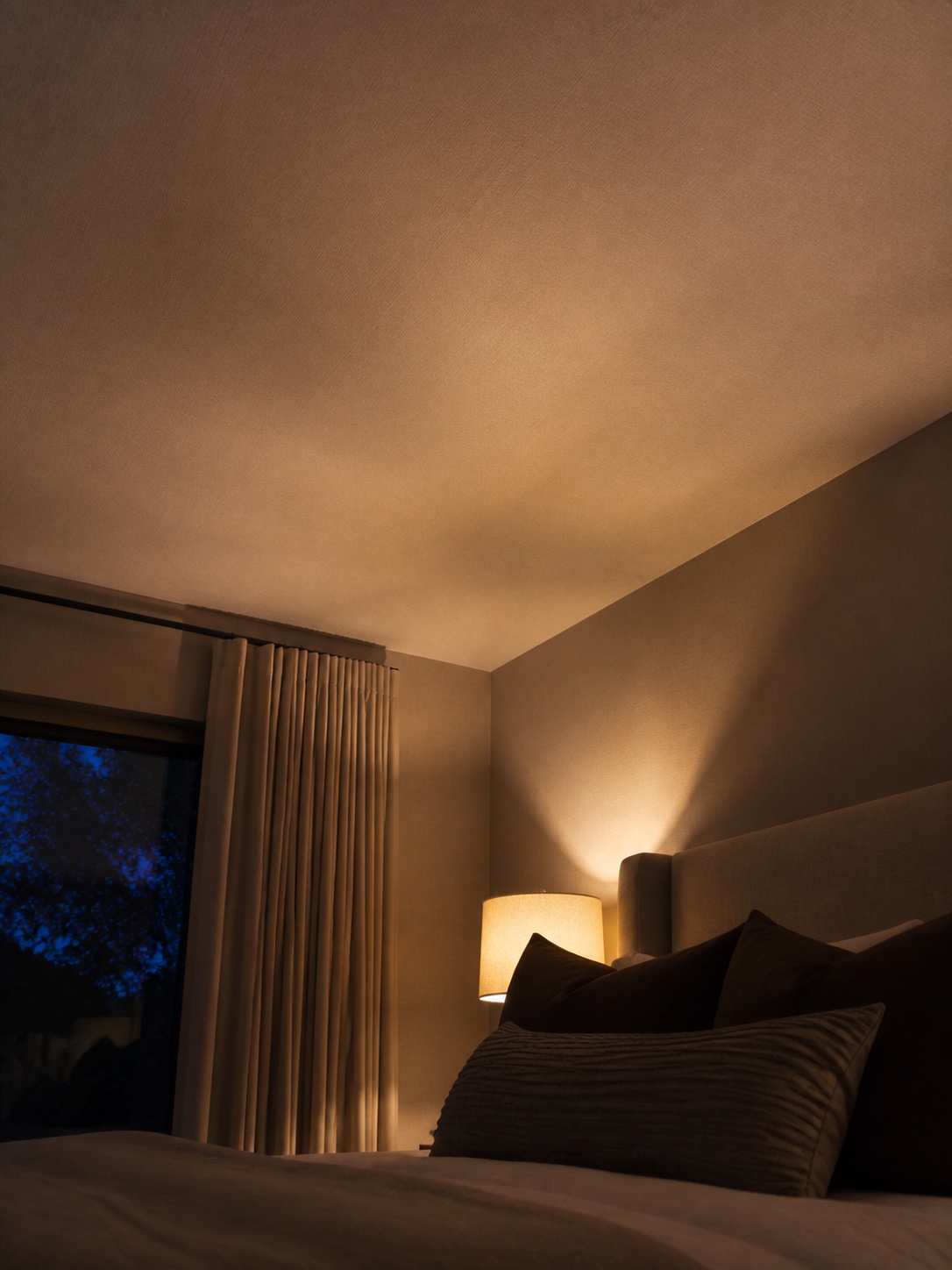
For a bedroom, compare a quiet matte or soft satin surface from the position where you will lie in bed. Check whether a seam, light fitting, or access detail falls directly in that view. A fabric option may suit the room, but seamless coverage still depends on the available width and the layout.
For a living or dining room, compare the ceiling with the other reflective surfaces already present, such as polished stone, glass, and metal. A satin sample can be a useful middle option. The right balance is a design choice; a larger room does not automatically need a shinier ceiling.
If the ceiling is part of a larger seating plan, pair this decision with living room interior design ideas so layout, lighting, and reflective surfaces work together.
For a home office or small room, test a gloss sample against the planned lighting and furniture. Reflections can add visual depth, but glare and repeated objects may distract from a screen or desk. A matte surface may work better if the room already has enough bright or reflective elements.
For an unheated room, ask for the manufacturer’s permitted service-temperature range and confirm that the whole system is suitable. Do not treat all fabrics as suitable for every attic, sunroom, or seasonal house. Moisture, sunlight, substrate conditions, and temperature changes belong in that discussion.
What affects stretch ceiling cost?
Square footage is the obvious factor, but it’s rarely the deciding one once you’ve narrowed down material and finish. Shape complexity adds cost fast: a flat rectangular ceiling is the cheapest configuration possible, and every additional level, curve, dome, or cutout for a recessed light fixture adds labor hours and sometimes a custom-built frame. Backlighting adds the cost of the LED system itself plus the labor to mount and wire it correctly behind the membrane, which is a different skill set than a standard flat install. Printed designs add a per-square-meter printing cost on top of the base membrane price, and complex multi-color or photo-realistic prints cost more than simple geometric patterns.
For the rest of the palette, use material texture choices to keep the ceiling finish, floor, wall surfaces, and fixtures from fighting each other.
Room width and joining details can change the quotation. Ask the supplier to mark any proposed seam or intermediate profile on the plan, then price the alternative if avoiding that line matters. Compare the whole installed package, including lighting, electrical work, access, and making good, rather than only the membrane price per square metre.
Stretch ceiling mistakes to avoid
The first is choosing a finish purely off a small sample chip. Gloss and metallic finishes in particular look completely different at full ceiling scale under your actual lighting than they do on a 10x10cm swatch in a showroom with diffused light. Ask for a larger sample, or better, ask the installer if they can show you a completed project in a room with similar light conditions to yours.
The second is underestimating the void depth needed for what you want hidden up there. If you’re routing HVAC ductwork or want a deep cove for indirect lighting, a generic 3cm drop won’t cut it, and finding that out mid-install is expensive to fix.
For ducts, vents and maintenance routes, use the HVAC design coordination checklist while the ceiling section is still being developed. Confirm the access method with the membrane installer before fixing the final height.
Check what a reflective ceiling will show before you order it. A fan, exposed beam, or cluttered shelf may appear twice in the composition. Review a room photograph with the proposed ceiling finish in mind, then simplify the visible elements if the reflections feel busy. More gloss is not automatically more spacious.
If you are combining a reflective ceiling with timber or vertical surfaces, this guide to wood wall panels is a useful check on proportion, light, and restraint.
Before you approve the ceiling
Ask for one coordinated drawing showing the ceiling level, seams, perimeter, lights, vents, and access points. Match that drawing to the chosen sample and itemized quotation. The decision is ready when you know what the surface will look like, how it fits the room, and how someone will reach the equipment behind it.
For older textured ceilings, the EPA asbestos guidance explains why suspected material should be assessed before it is disturbed. A decorative membrane should not be used as a reason to skip that assessment.
For more room-level planning around surfaces, light, and material choices, browse the broader interior design archive.
Related room-surface guides that pair well with ceiling planning: carpet types for the floor plane and living room canvas wall art for the wall plane.

Reference gallery: 10 stretch ceiling design examples
Use these ten visual references to compare reflection, lighting, and shape. They illustrate design directions; a picture alone does not verify a membrane’s composition, seam detail, water resistance, or installation quality.
1. Gloss black home office ceiling
2. Satin dining room ceiling under a chandelier
3. Matte primary bedroom with cove lighting
4. Backlit translucent kitchen island ceiling
5. Printed sky-scene bedroom ceiling
6. 3D wave-shaped hotel lobby ceiling
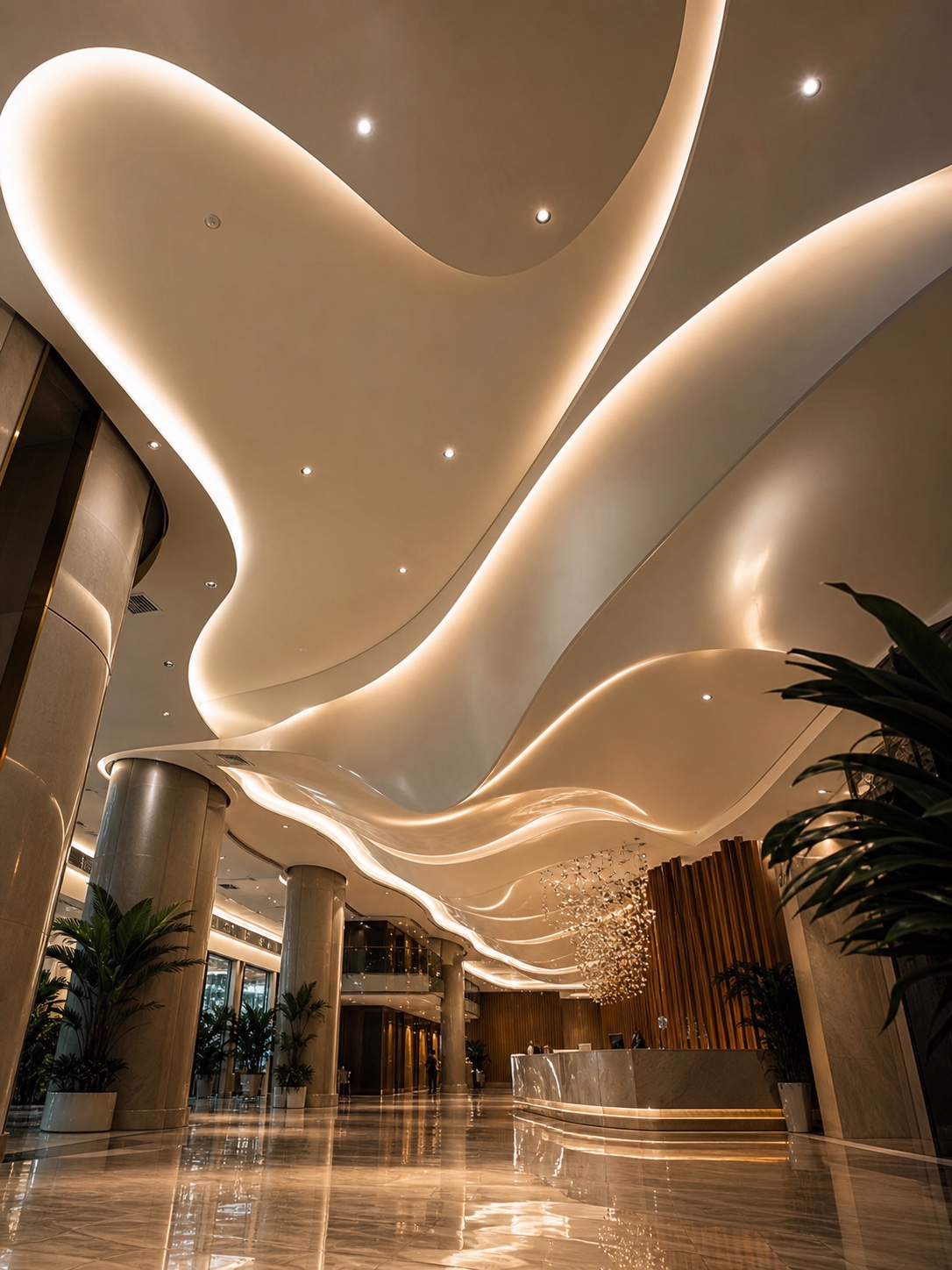
7. Wide matte fabric bedroom ceiling
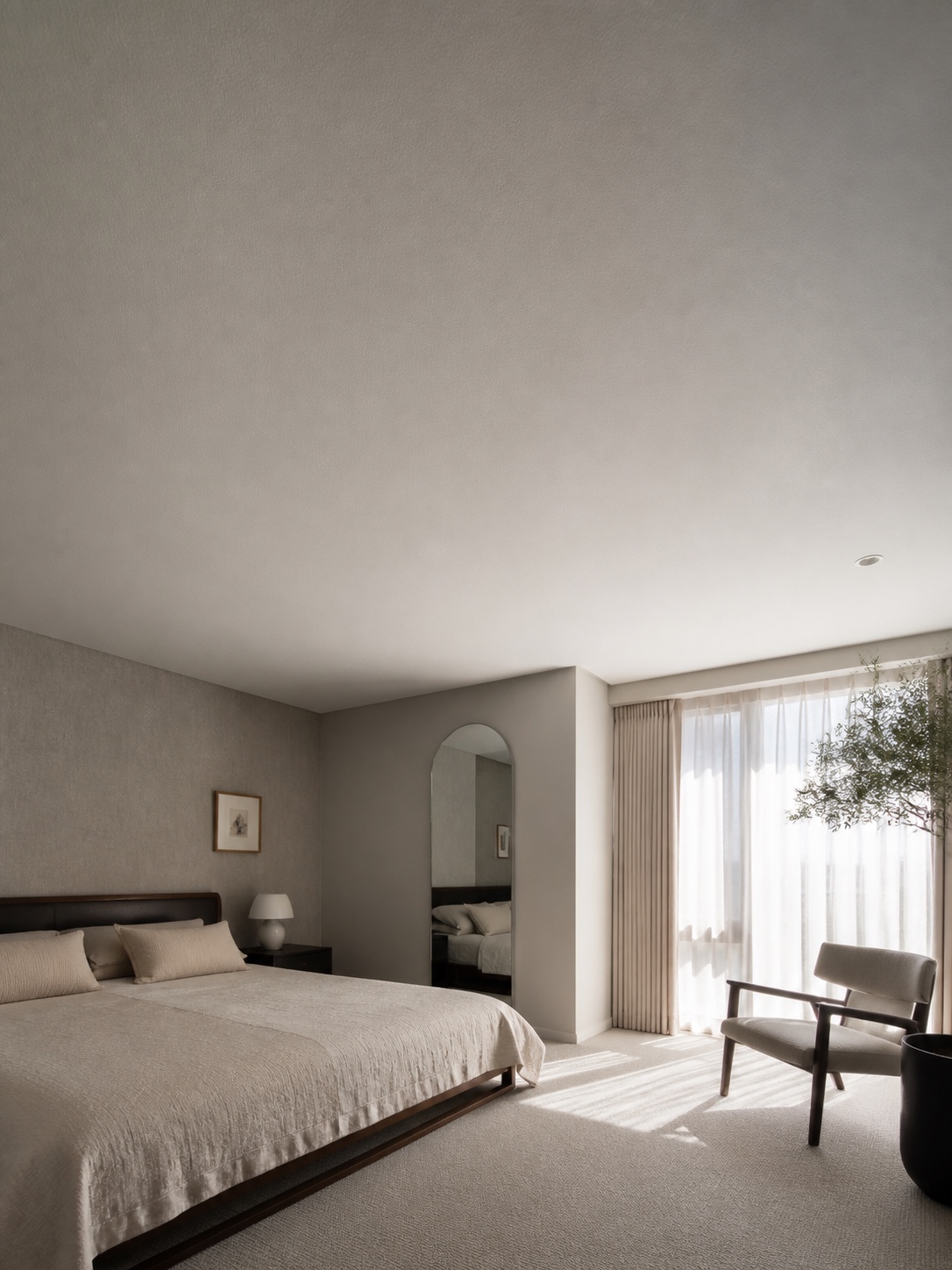
8. Two-level cove living room ceiling
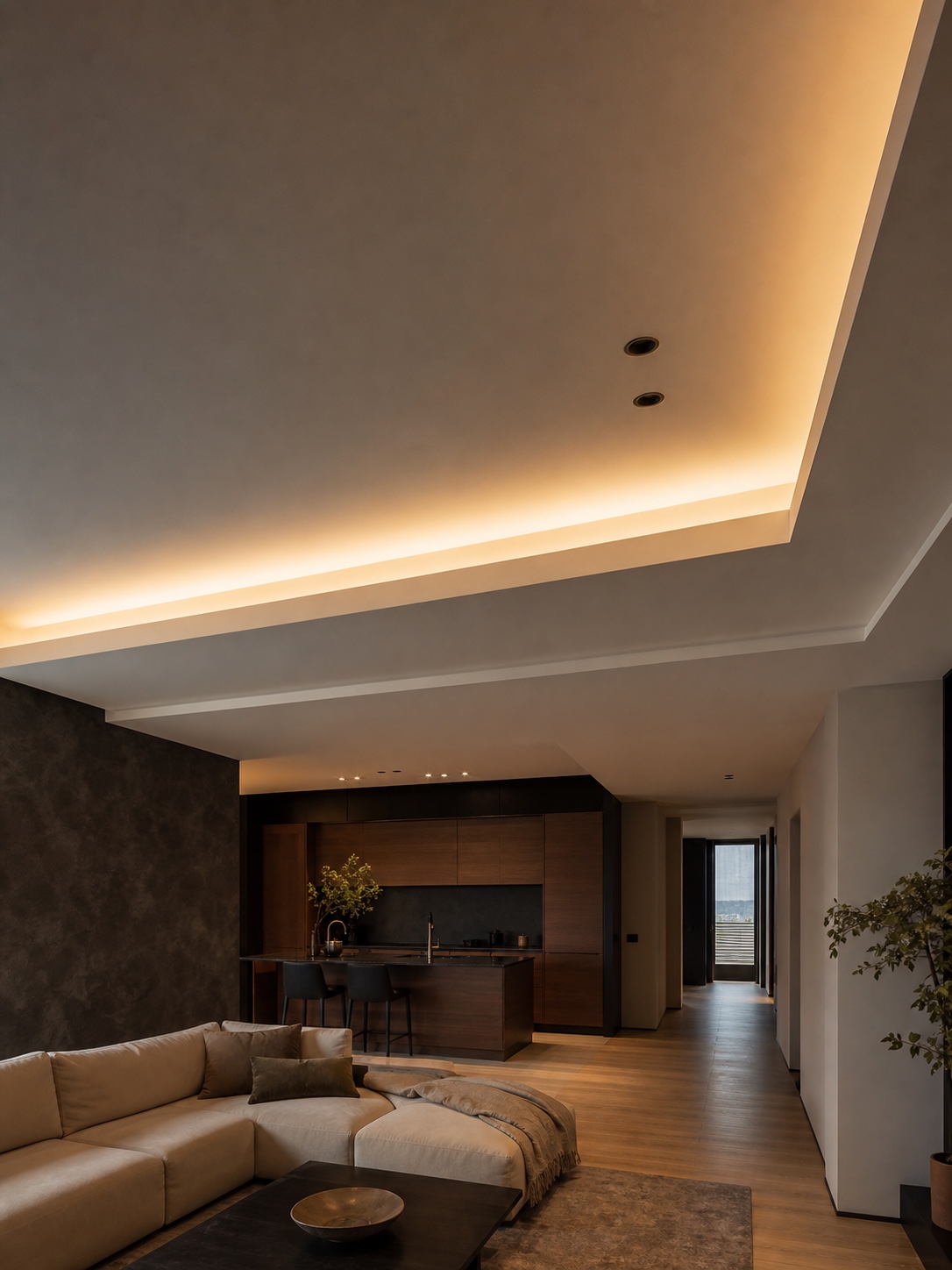
9. Metallic-finish hallway ceiling
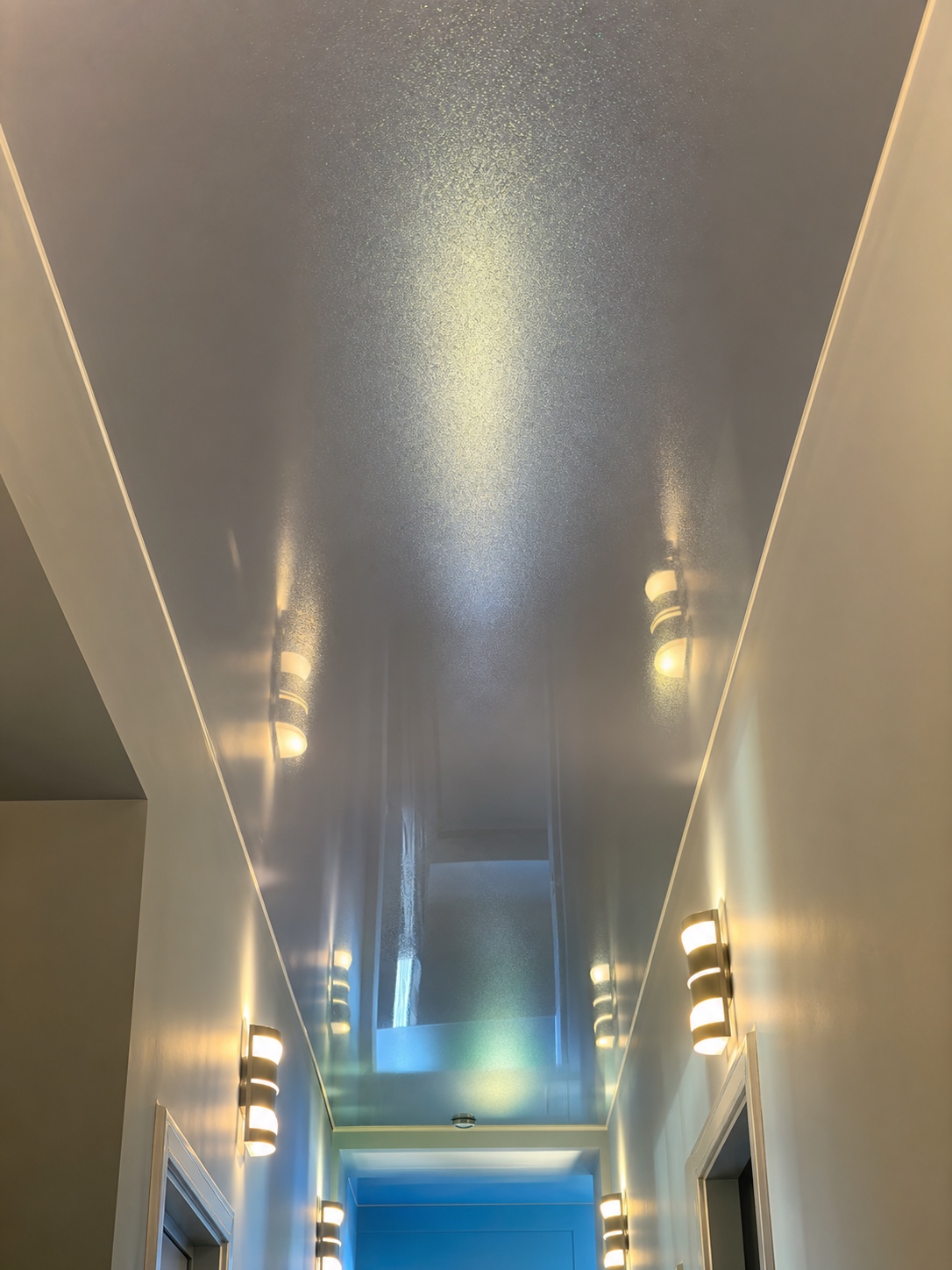
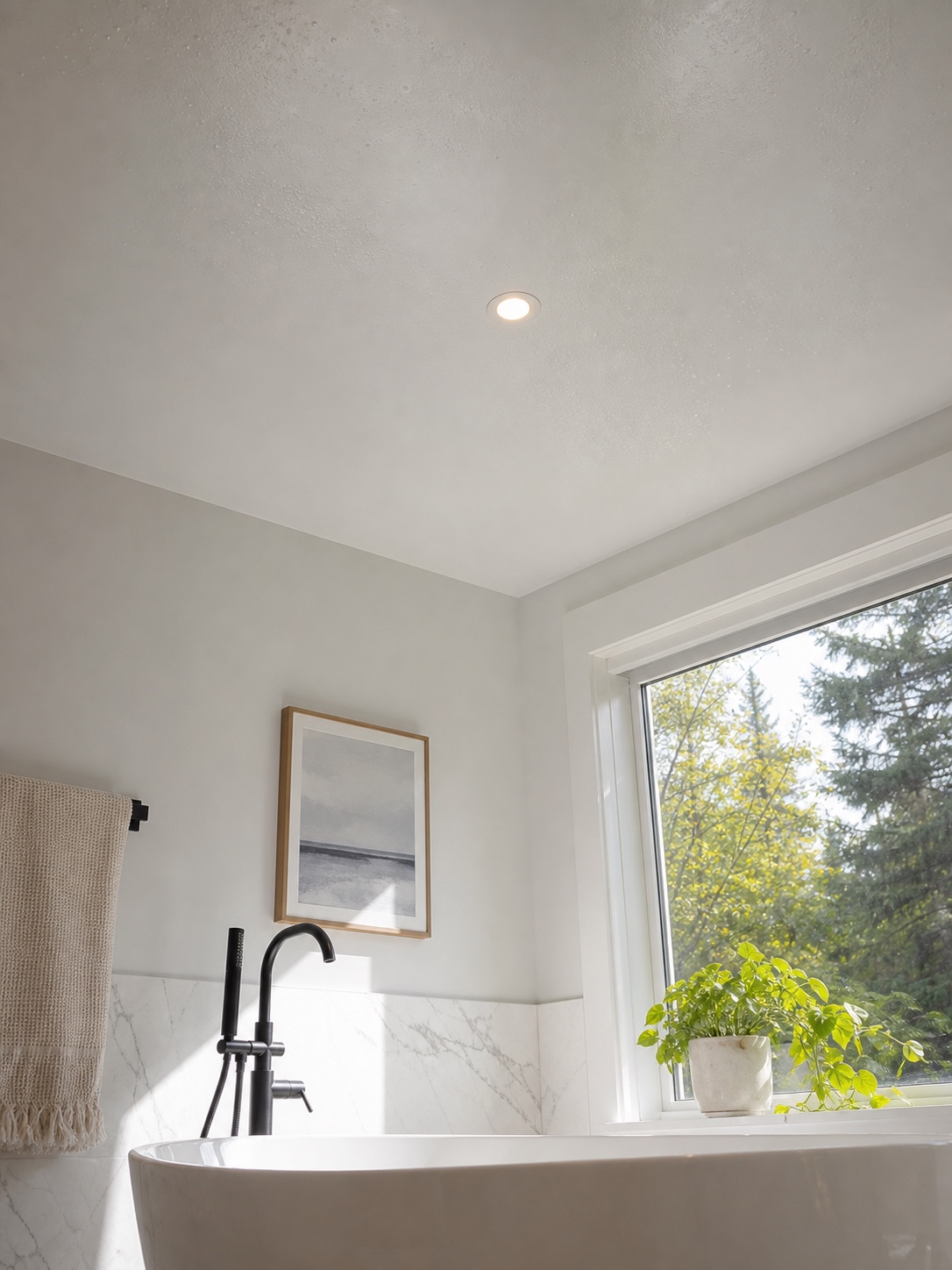
10. Satin PVC bathroom ceiling
Stretch ceilings FAQ
Is a stretch ceiling cheaper than a drywall ceiling?
Not necessarily. Compare complete local quotations for the same room and finish standard. Stretch-ceiling pricing depends on the membrane, profiles, shape, seams, lighting, and access details. A drywall quotation may include preparation, sanding, and painting that are priced differently. Compare the finished scope and disruption, not just a price per square metre.
How long does a stretch ceiling last?
There is no single lifespan for all membranes and installations. Ask for the written product and installation warranties, their exclusions, and the maintenance instructions. A warranty period is not a prediction of service life. Heat, accidental damage, leaks, access work, and the condition of the fixings can affect how long the finished system remains usable.
Can you install a stretch ceiling over an existing popcorn or damaged ceiling?
It may be possible to cover an existing surface, but the installer must assess it first. A membrane does not stabilize loose material or fix the cause of a stain. Resolve leaks and unsafe substrate conditions before covering them. If old textured material may contain asbestos, arrange qualified assessment before drilling, scraping, or otherwise disturbing it.
Does a stretch ceiling trap moisture or cause mold?
A membrane does not guarantee a dry ceiling void. Leaks, condensation, and inadequate ventilation need to be addressed in the room and the space above the new ceiling. Choose a system approved for the intended conditions, and ask how the installer will inspect the existing surface. Water resistance should not be confused with mold prevention.
Can you fit recessed lighting or a ceiling fan into a stretch ceiling?
Often, but the fixture and its support must be designed into the installation. The membrane itself should not carry a ceiling fan or other heavy fitting. Ask the installer and electrician to coordinate independent supports, openings, heat clearances, and service access for the actual products. Agree those details before the membrane is fabricated or cut.
What happens if the membrane gets punctured?
Contact the installer before attempting a repair. What is possible depends on the material, the location and size of the damage, and the joining and fixing system. A patch may remain visible, and replacement may be the better option. Do not assume every panel can be repaired or that fabric is immune to punctures.
Is matte or gloss better for a small room?
Gloss can create apparent depth through reflection, but it also repeats furniture and bright light sources. Matte gives a quieter surface and can suit a room that already has visual clutter. Compare samples under the actual lighting and from seated positions. Neither finish increases physical ceiling height; the required installation drop still needs to be measured.
How long does stretch ceiling installation take?
Ask for a schedule that separates preparation, fabrication, electrical work, and fitting the membrane. A simple room can take much less site time than a multi-level or backlit design, but a generic same-day promise leaves out those dependencies. Confirm when measurements are taken, what must be ready before fitting, and who completes the final inspection.
- 544shares
- Facebook0
- Pinterest544
- Twitter0
- Reddit0