Starting an anime girl drawing is one of the most rewarding ways to build your sketching skills. The clean lines, exaggerated expressions, and stylized proportions make the anime aesthetic highly accessible, even if you are just starting out.
Over my years in composition and drawing, I’ve found that the secret to a great anime girl sketch isn’t guessing the placement of the features—it’s learning the geometric patterns that seasoned artists use to build their characters from scratch.
- Getting Started with Anime Girl Drawings
- Basic Drawing Techniques
- Styling Your Anime Girl
- Final Touches
- Frequently Asked Questions: Anime Girl Drawing
- Q: What is the best way to start an anime girl drawing for beginners?
- Q: What are the key proportions for drawing an anime girl face?
- Q: How do you draw anime hair without it looking stiff?
- Q: How many heads tall is a typical female anime character?
- Q: What materials should a beginner use for anime sketches?
- Q: Can I use digital drawing tablets to practice anime art?
- Related clothing drawing practice
Anyone can learn to draw anime girls with practice, patience, and the right techniques. The style is actually quite accessible to beginners because it often uses simplified facial structures and exaggerated proportions that follow learnable patterns. Many artists start by mastering basic shapes before adding the distinctive details that make anime art so recognizable.
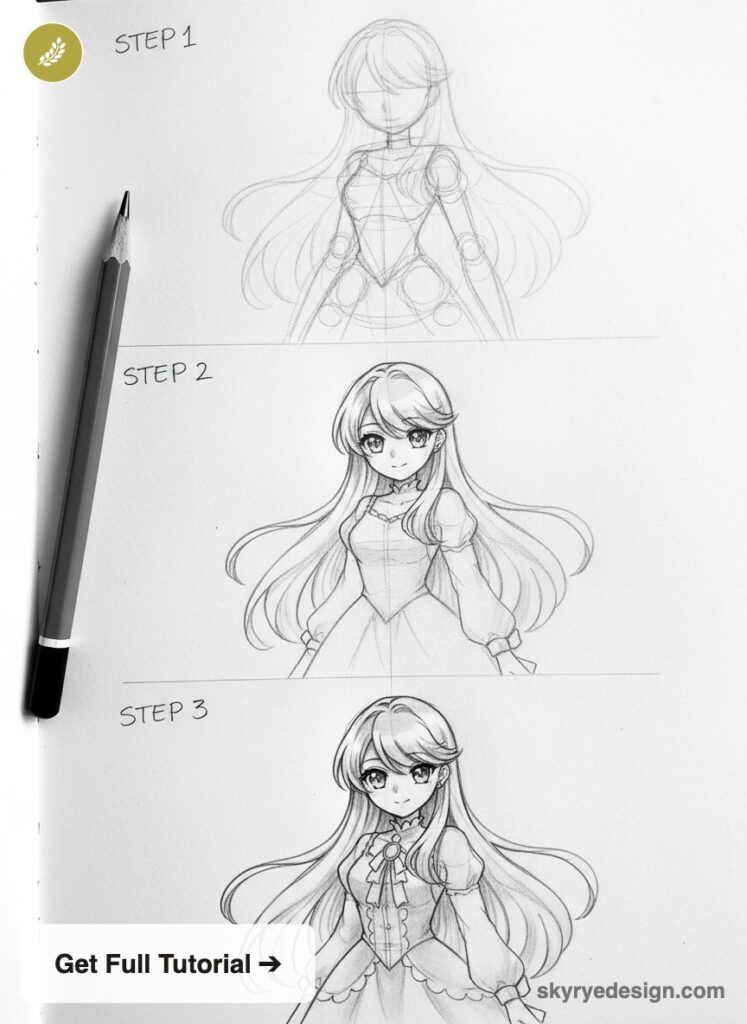
The popularity of anime girl drawings continues to grow on social media platforms like Instagram, TikTok, and DeviantArt, where artists share their creations and techniques. This vibrant community offers endless inspiration for those looking to develop their skills or simply appreciate the artform that has become a significant part of global pop culture.
Getting Started with Anime Girl Drawings
Drawing anime girls combines technical skill with creative expression. The process becomes much easier when you have the right materials and understand the fundamental style characteristics that make anime unique.
Materials Needed


For beginners, start with basic supplies that won’t break the bank. A sketchbook with medium-weight paper works well for practice. Mechanical pencils (0.5mm or 0.7mm) offer precision for line work, while a set of drawing pencils (HB, 2B, 4B) provides variety for shading.
Erasers are essential—get both a kneaded eraser for lifting graphite and a white plastic eraser for clean removal. Fine-tipped black pens (0.1mm to 0.5mm) help with inking your finished sketches.
Optional but helpful tools include:
- Colored pencils or markers
- Tracing paper for practice
- A drawing tablet for digital art
- Reference images of anime characters
Remember that expensive materials don’t make better art. Many professional artists started with just a pencil and paper!
Understanding Anime Style
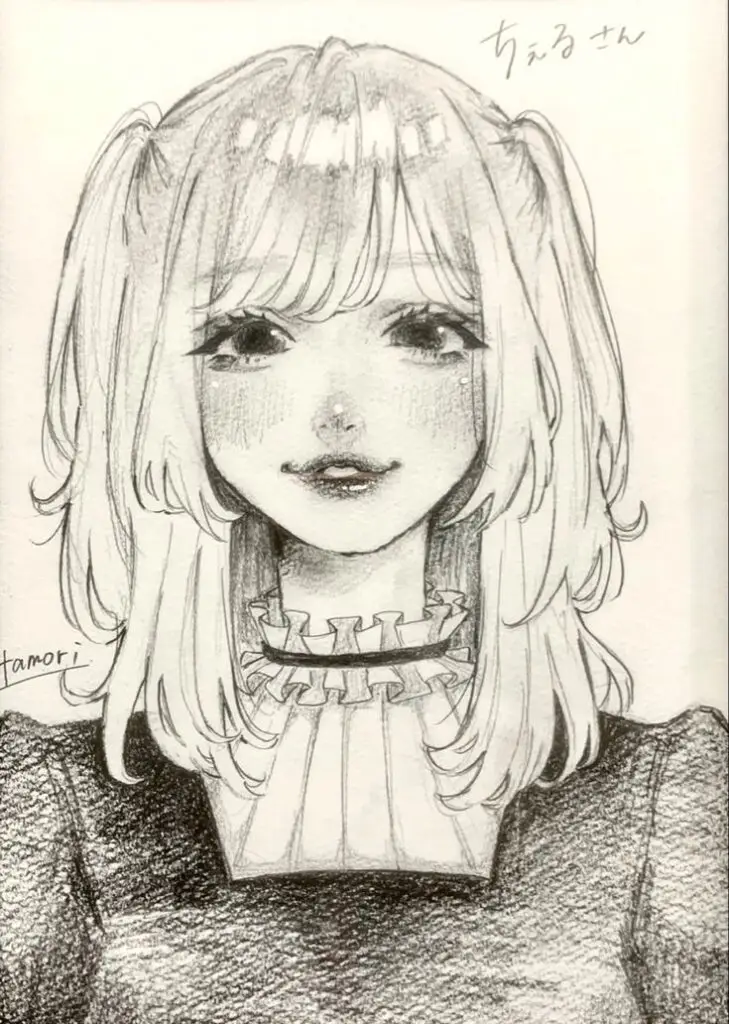


Anime style features distinct characteristics that set it apart from other art forms. The most recognizable element is the eyes—large, expressive, and often taking up a significant portion of the face. They typically include highlights, defined irises, and unique shapes.
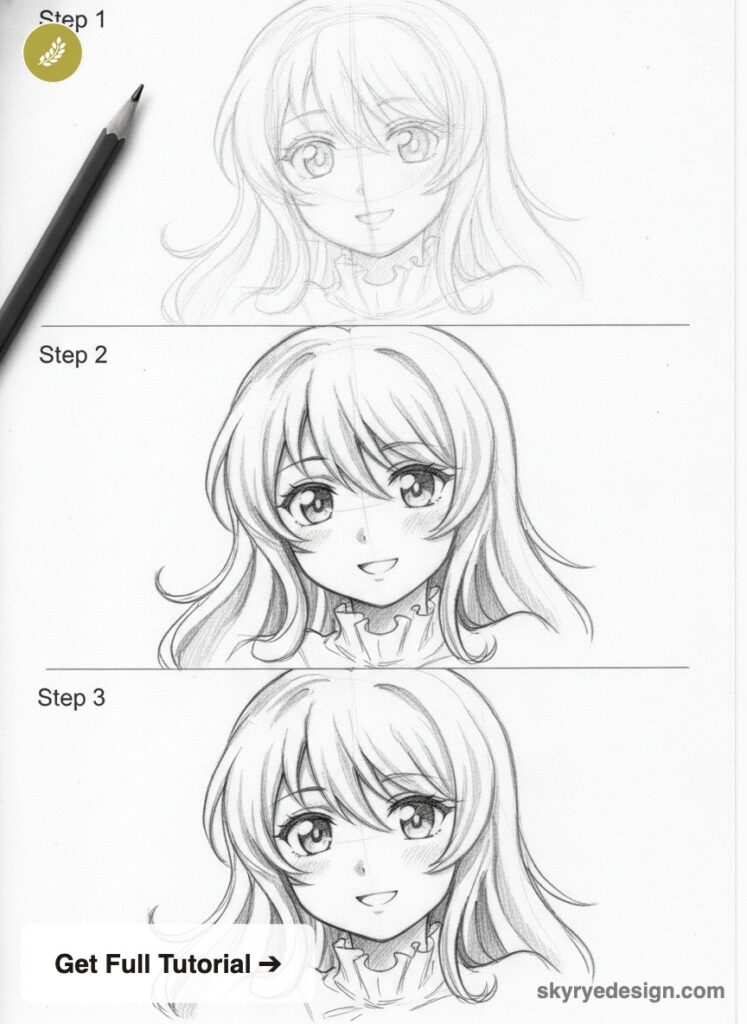
Facial proportions differ from realistic drawings. Anime girls usually have:
- Smaller noses and mouths
- Pointed chins
- Simplified facial features
- Exaggerated expressions
Hair in anime is highly stylized, often defying gravity with unique colors and shapes. It’s drawn in chunks rather than individual strands, with pointed ends that create a dynamic look.
Body proportions tend to be slender with longer legs and a smaller torso-to-leg ratio than realistic figures. Beginners should practice basic anatomy before stylizing to ensure characters look balanced. If you’re looking for more simple practice exercises, try some easy anime drawings to build confidence.
Study various anime styles to develop your own. Some series feature more realistic proportions while others are highly stylized and cartoonish.
Basic Drawing Techniques


Mastering a few foundational techniques will significantly improve your anime girl drawings. These skills build upon each other and create a solid artistic foundation.
Facial Features and Expressions
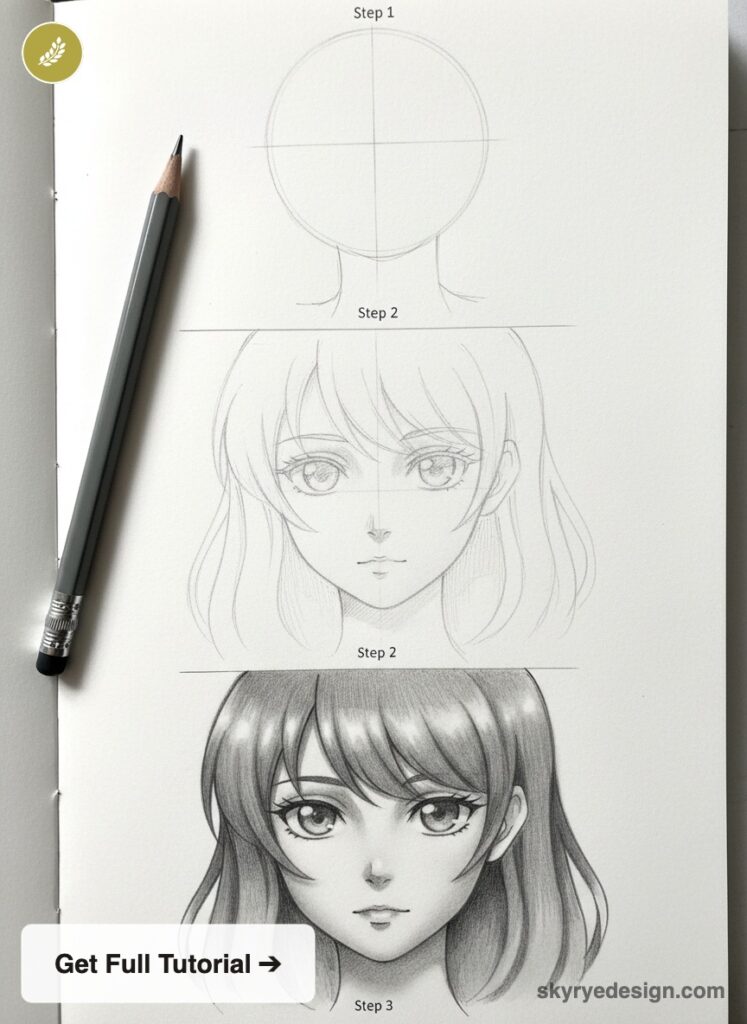
Start with the eyes, often the most distinctive feature in anime art. Learn how to draw anime eyes with reflective highlights and strong eyelashes to create emotional depth. To place these features correctly on the face, you first need to understand the structure of the head. I recommend checking out our guide on how to draw an anime head to lay the groundwork.
If you want to move from a single anime tutorial into a broader prompt list, these cute anime girl drawing ideas are a useful next sketchbook stop.
Noses in anime style are usually minimalist—sometimes just a small line or dot. For beginners, practicing anime nose drawing across different angles will help you master both front and 3/4 views easily.
Mouths vary greatly depending on the expression. Practice matching different mouth shapes to emotions, and follow our tutorial on draw anime lips to capture subtle grins or dramatic smiles.
Eyebrows are crucial for conveying emotions. Thin, arched eyebrows can show surprise, while thick, angled eyebrows might indicate anger or determination.
Body Proportions and Poses


Anime characters typically have stylized proportions compared to realistic human figures. Learn how to draw an anime body using a standard 7-head-tall measurement, which is the perfect sweet spot for teenage characters or fantasy protagonists. If you want to jump straight into sketching different poses, using an OC body base can speed up your thumbnailing process significantly.
Start with a simple stick figure to establish the pose. This creates a foundation for your character’s position and helps maintain balance in the drawing.
Use geometric shapes to build the body: circles for joints, rectangles for the torso, and cylinders for limbs. These shapes make it easier to visualize the three-dimensional form.
Pay attention to the spine’s curve when drawing poses. Dynamic poses with slight S-curves appear more natural and lively than rigid, straight postures.
Practice drawing hands with simplified shapes first. Begin with a mitten-like form, then gradually add finger details as your skills improve.
Styling Your Anime Girl
The visual appearance of an anime girl character depends greatly on thoughtful styling choices that reflect her personality and story. Hairstyles, clothing, and accessories work together to create a distinctive and appealing design.
Choosing Hairstyles


Hairstyles in anime often serve as visual shorthand for character traits. Learn how to draw anime hair by dividing the scalp into sections and drawing hair in clumps rather than single strands. If you are sketching male characters as well, our companion guide on drawing anime guy hair covers short, spiky, and messy styles in detail.
Consider the color carefully too—pink often represents sweetness, blue can indicate calm or mysterious traits, while red might suggest passion or intensity. Many anime artists use unusual hair colors as a key distinguishing feature.
Hair accessories like ribbons, clips, and headbands add personality while serving the practical purpose of breaking up large areas of hair. These small details can become a character’s signature look.
For beginners, starting with simpler hairstyles is recommended. Classic options include the bob cut, twin tails (pigtails), or a simple ponytail. As skills develop, artists can experiment with more complex styles featuring multiple layers and dynamic movement.
Clothing and Accessories


Clothing should reflect both the character’s personality and the world they inhabit. School uniforms are popular in anime for their recognizable silhouettes and cultural significance.
Consider the character’s everyday activities when designing outfits. A sporty character might wear athletic clothes, while a magical girl needs both civilian attire and a transformation outfit.
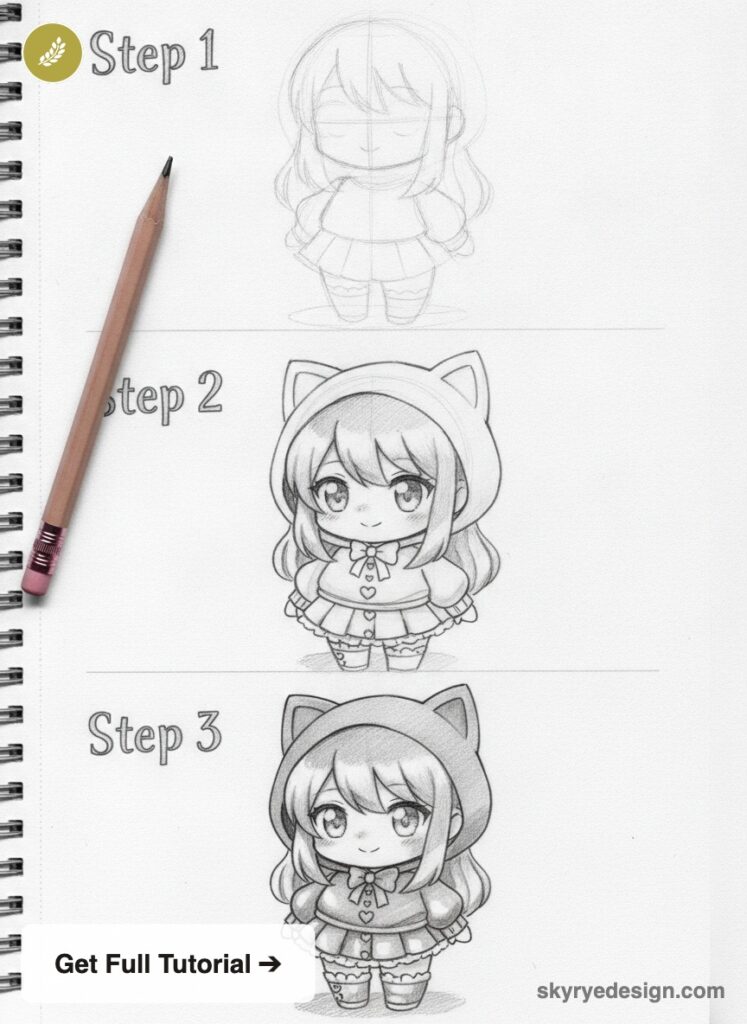
Pay attention to consistent visual themes in clothing choices. A character with a “sweet” personality might wear pastel colors with frills and bows. Someone more practical might prefer simpler, functional clothing with minimal decoration.
Accessories can tell stories about the character without words. Items like:
- Special jewelry with personal significance
- Devices related to their abilities or occupation
- Symbolic items connecting to their backstory
Don’t forget practicality—ensure the drawing clothes for character design makes sense for the character’s lifestyle and activities while remaining visually interesting.
Once the character feels too stiff, pause the face details and use an anime pose reference to check the weight shift, hand placement, and full-body silhouette.
Final Touches
Adding the finishing touches to your anime girl drawing brings it to life and gives it that polished, professional look. These final steps can transform a simple sketch into a vibrant piece of art that captures the essence of anime style.
Inking and Coloring


Start inking by tracing over your pencil lines with a fine-tip pen or marker. Use varying line weights to add depth – thicker lines for outlines and thinner ones for details like facial features.
Allow the ink to dry completely before erasing any visible pencil marks. This prevents smudging and keeps your artwork clean.
For coloring, decide on a palette that suits your character’s personality. Anime traditionally features vibrant colors, but don’t be afraid to experiment with different combinations.
For a related creative prompt, see Easy Magical Girl Poses for Everyday Fun.
Layer your colors from light to dark. Start with base colors, then add shadows and highlights to create dimension. For a traditional look, use colored pencils or markers. Digital artists can take advantage of layers to make adjustments easily.
Background Considerations
Backgrounds enhance your anime girl drawing by providing context and atmosphere. A simple gradient or pattern works well for character-focused pieces.
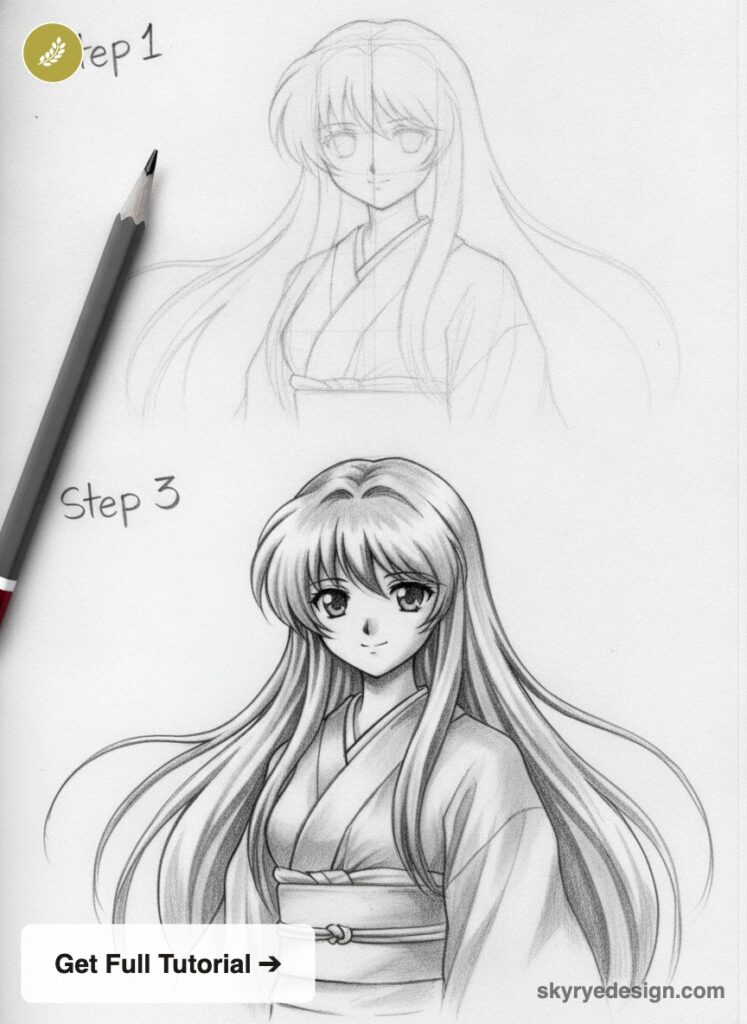
Consider the mood you want to convey. Soft pastel backgrounds create a gentle, dreamy feel, while bold colors add energy and excitement.
For more detailed backgrounds, keep the perspective consistent with your character. Use simpler details in the background to avoid overshadowing your anime girl.
Add depth by implementing the rule of thirds, placing important elements at the intersection points of an imaginary grid. This creates visual interest and balance.
Remember that negative space can be powerful too. Sometimes a minimalist background with strategic elements makes your character stand out more effectively. Browse through our curation of aesthetic anime drawing ideas for your next sketchbook session.
For another way to study depth, compare the character construction here with this 3D drawing on paper reference, where shadow and viewing angle do most of the work.
Anime proportions can stretch reality, but the stylization works better when you know what you are stretching; this human body drawing guide gives you a realistic base to compare against before making the legs longer, the torso smaller, or the pose more dramatic.
Frequently Asked Questions: Anime Girl Drawing
Q: What is the best way to start an anime girl drawing for beginners?
A: The best way is to start with simple geometric guidelines. Sketch a circle for the skull, add vertical and horizontal alignment lines to position the eyes, nose, and mouth, and establish the chin shape before drawing any detailed facial features.
Q: What are the key proportions for drawing an anime girl face?
A: Anime faces have exaggerated proportions: the eyes are large and placed lower on the face than in realism (around the horizontal centerline), the nose is represented by a tiny line or dot, and the chin is slender and slightly pointed.
Q: How do you draw anime hair without it looking stiff?
A: Draw anime hair in overlapping clumps or locks rather than drawing individual hair strands. Start from a crown point, define the flow direction, and use tapered lines with varied stroke weights to create realistic motion.
Q: How many heads tall is a typical female anime character?
A: Standard anime girl characters are typically 7 to 8 heads tall. For cute or younger characters, you can reduce this to 5 or 6 heads tall to make them look more compact and adorable.
Q: What materials should a beginner use for anime sketches?
A: You only need a standard HB or 2B pencil, a clean eraser, and medium-weight sketchbook paper. For clean, professional-looking lines, you can use fine-tip black pens (such as 0.3mm and 0.5mm) to ink over your pencil lines.
Q: Can I use digital drawing tablets to practice anime art?
A: Absolutely. Digital tablets and apps like Procreate or Ibis Paint X are great because they support layers, undo options, and digital brushes that make tracing, coloring, and shading much faster for beginners.
Related clothing drawing practice
When experimenting with new outfits, styles, and body poses, exploring creative character design drawing ideas helps you create highly memorable and distinctive figures.
Once the face and body are working, move into drawing clothes on characters so uniforms, hoodies, skirts, and accessories support the pose and personality.
- 3.2Kshares
- Facebook0
- Pinterest3.2K
- Twitter0
- Reddit0