Anime Pose Reference: 25 Drawing Ideas to Practice

An anime pose reference helps you fix the stiff-character problem before you spend time on hair, clothing, or shading. Start with the action line, check where the ribcage and pelvis tilt, then build the limbs around that movement.

I like to sort pose practice into a few buckets: action poses, casual standing poses, sitting poses, emotional gestures, and pushed perspective shots where a hand, weapon, or knee comes toward the viewer. Each bucket teaches a different drawing problem.

Photo and pencil sketch of grunge outfit: oversized black hoodie, pleated skirt, chain accessories, platform combat boots

The best anime reference poses are not just pretty screenshots. They give you weight, balance, camera angle, and a clear silhouette. Use the references on this page as sketch prompts: copy the basic body rhythm first, then change the face, outfit, hair, and gesture so the character becomes your own.

How to draw anime cheerleader: step-by-step pencil tutorial showing three sketch stages from rough to detailed.

References help most when you study the structure instead of copying the surface. I still keep messy folders of anime screenshots, 3D mannequins, and real figure photos because each one solves a different part of the pose: rhythm, perspective, anatomy, or style.

When a pose keeps collapsing, step back to a simple body drawing base first. A clean base makes it easier to place the ribcage, pelvis, limbs, and weight before you push the pose into an anime style.

Pencil anime drawing tutorial: three-step female character sketches showing head, hair, facial features and shading.
Anime girl with pink hair and bow drinking milkshake, wearing a pink sweater with floral design.
Anime girl in a cheerleader outfit stretching with pink background, showcasing sporty and cute fashion style.
Anime girl in pink floral outfit with blonde hair, rose accessories, and green eyes in a pink-themed room.

Anime pose reference key takeaways

  • Use anime pose references to check weight, balance, silhouette, and emotion before adding details.
  • Practice action poses, sitting poses, cute gestures, and anime body poses as separate drills.
  • 3D pose tools, real figure references, and quick gesture sketches make anime character poses less stiff.

Anime pose reference practice drill

Photo and pencil sketch of a model in grunge outfit: black hoodie, pleated mini skirt, tights and chunky boots.

Use this table when you do not know which reference to study first. Pick one pose type, set a short timer, and solve the construction problem before adding hair, clothes, or facial details.

Pose typeBest practice goalCommon mistakeQuick fix
Standing anime poseWeight shift and character attitudeLocked knees and level shouldersPut most weight on one leg and tilt the shoulder line
Sitting anime poseHip angle, knees, and balance on the seatDrawing legs before the pelvis is clearBlock in the seat and hip box first
Dynamic action poseMotion, speed, and silhouetteStarting with anatomy details too soonDraw one long action curve before the body masses
Cute anime gestureHands, head tilt, and expressionRepeating the same hand-near-face poseChange the wrist shape, chin angle, and weight shift
Full-body anime referenceProportions and character designHead size drifting from sketch to sketchChoose a head-count before adding costume details

Strong poses read better when the face supports the action, so keep a few expressive anime eye shapes ready for emotion studies.

What Are Anime Poses?

An anime pose reference is a drawing aid that shows how a character stands, moves, sits, fights, leans, or reacts. Use it to study body language, balance, and silhouette before you stylize the figure. The goal is not to trace the image. The goal is to understand the pose well enough to redraw it with your own character design.

Anime schoolgirl character design: colored and pencil sketch of a girl in a navy sailor uniform, ponytail, shoulder bag.

For quick practice, reduce each reference to three things: the main action line, the tilt of the shoulders and hips, and the largest simple shapes of the torso, arms, and legs. If those read clearly, the anime style can sit on top without looking stiff.

Defining Anime Poses

Standing anime pose reference with fashion sketch, body guide, and model photo in heels.
Artistic figure drawing and pose study with highlighted anatomical focus areas.

Anime poses are the specific stances and gestures you see characters take in anime and manga. They can be as simple as a character standing casually or as dramatic as a battle-ready attack stance.

Sketchbook page showing three-step process of drawing an anime girl, from basic outline to detailed shading.

These poses often highlight emotion and intention. For example, a clenched fist and forward lean can show determination, while a slouched posture with lowered eyes suggests sadness.

When you draw anime poses, you’re not just copying anatomy—you’re shaping a visual language. This language uses angles, body proportions, and gestures to tell the viewer something quickly.

Think of them as shortcuts for storytelling. In a single frame, you can show energy, tension, or even comedy without needing dialogue.

Sketch of a girl with long wavy hair wearing a rose-pattern sweater, sipping a drink through a straw; top is a rough pencil sketch, bottom is a more finished drawing labeled Step 3.

How Anime Poses Differ from Realistic Poses

Anime poses vs realistic poses infographic, contrasting styles like exaggerated vs natural, simplified vs detailed, and

Realistic poses usually follow natural human anatomy and balance. Anime poses, while inspired by real movement, often push or exaggerate these rules.

For example, an anime character might lean far forward in a running pose with arms flung back. In reality, that position would be unstable, but in anime it signals speed and intensity.

Anime vs. realistic poses: comparison of styles, anatomy, and emotional cues. Anime is exaggerated; realism is lifelike.

Facial expressions also work hand in hand with body language. A small tilt of the head combined with oversized eyes can make a pose feel more dramatic than it would in real life.

Fashion sketch and real-life model in summer outfit with hat and shorts.
Stylish woman with short hair poses in skirt and blazer, mirrored by fashion sketch with similar outfit.

You’ll also notice proportions change depending on style. Long limbs, sharp angles, or even chibi forms all affect how a pose is read. This flexibility gives you more freedom than traditional figure drawing.

Anime pose reference tutorial comparing stylized and realistic body poses in pencil sketches.

Importance of Poses in Anime Art

The pose is often the first thing a viewer notices about a character drawing. It sets the stage for how the character feels and what they might do next.

Strong poses help you avoid stiff or lifeless artwork. They add rhythm and flow, guiding the eye across the page.

In anime, poses also serve as iconic markers. Think of recognizable stances like a fighter preparing an attack or a character striking a victory pose. These become part of the character’s identity.

Side-by-side photo and pencil sketch of a girl in a navy Japanese sailor school uniform (seifuku) with red neckerchief and bag

When you practice anime poses, you learn how to combine anatomy, exaggeration, and storytelling. This skill makes your drawings more engaging and helps you capture the expressive spirit of anime art.

Anime girl cuddling a smiling cat, heart symbol nearby, sketch illustration.
Anime drawing of a smiling person with a bandana and hand on face, sketch style.
Smiling anime girl with long hair and braids, resting her chin on her hands, surrounded by small hearts.

Anime poses often fall into recognizable categories that highlight movement, emotion, or personality. By understanding these categories, you can capture the essence of a character more effectively and make your drawings or references feel authentic.

Dynamic and Action Poses

Fierce anime superhero with electric powers leaps above a futuristic cityscape, surrounded by clouds and dramatic skies.

Dynamic poses show motion and energy. You’ll often see characters mid-attack, leaping into the air, or bracing for impact. These stances emphasize speed, strength, or power, making them common in shonen series and action-heavy moments.

Before locking a pose, check an anime hair reference so the bangs, ponytail, or side locks follow the gesture instead of fighting it.

Fashion sketch with a model in a striped dress inspired by Chanel design, featuring bold lines and dynamic pose.
Anime body poses reference sheet with three figure sketches, proportions, and alignment lines.

When you draw or study these poses, focus on line of action. This invisible curve runs through the character’s body and helps you show flow and direction. For example, a fighter throwing a punch will have their torso and arm aligned along a strong curve.

Three-step pencil sketch tutorial showing a muscular flying superhero over a city skyline, with pencil beside page

Some well-known examples include:

  • Martial arts stances like wide-legged fighting positions.
  • Signature attacks such as energy blasts or sword swings.
  • Running or sprinting forms that exaggerate motion, like the forward-leaning “Naruto run.”

These poses work best when you exaggerate angles and avoid stiff lines. Even small tilts in the shoulders or hips can make the action feel more alive.

Fashion: side-by-side photo and pencil sketch of a woman walking in a leather jacket, striped top, cargo pants, sneakers

Cute and Expressive Poses

Expressive poses highlight personality rather than action. They often show characters reacting to situations with body language that matches their emotions. A cheerful wave, a shy hand-over-mouth, or an exaggerated victory pose all fall into this category.

Half-robot, half-human anime-style illustration depicting transformation and creativity, showcasing a merging of technology

You’ll notice common elements such as tilted heads, hands near the face, or oversized gestures. These details make the character appear approachable or endearing. In slice-of-life or comedy anime, these poses are used frequently to emphasize charm or humor.

Anime character design sketch with notes, showcasing a woman in a swimsuit with long hair and confident pose.
Sketch of faceless female figures in various poses, wearing bikinis, drawn in pink lines on a gray background.

Consider how you can use small changes in posture to shift mood. For instance, crossing arms tightly can show frustration, while a relaxed open stance conveys friendliness. Even subtle movements, like leaning slightly forward, can create a sense of eagerness or curiosity.

These poses are especially useful if you want to capture emotional variety in your art or cosplay.

Once the pose starts to feel natural, it helps to switch from single poses into a small inspiration set; these girl pose drawing ideas give you softer portrait, outfit, and sketch prompts to try next.

Standing and Sitting Poses

Step-by-step guide to drawing a manga character: sketching, shading, and detailing with a pencil on spiral-bound sketchbook.

Standing and sitting poses are simple but versatile. They often serve as default stances that reveal a character’s personality without dramatic movement. A confident character may stand tall with arms crossed, while a timid one might keep their shoulders hunched and hands clasped.

When sitting, posture plays an important role. A relaxed sprawl across a chair communicates ease, while a straight-backed position suggests discipline or seriousness. These subtle differences can say a lot about a character before they even speak.

Anime character in a qipao dress posing on a chair with sketches and reference photo.
Woman sitting on stool with matching anime-style sketch, both wearing casual jeans and t-shirt.

You can experiment with variations:

  • Casual standing with weight shifted to one leg.
  • Formal sitting with knees together and hands resting neatly.
  • Relaxed sitting with legs stretched or crossed.

These poses may not be flashy, but they help you ground your character designs and make them feel more believable in everyday contexts.

Anime girl with cat ears holding a fluffy cat, detailed line art illustration.
Anime girl in school uniform with peace sign, wearing beige sweater and checkered skirt, holding blue school bag.
Anime girl wearing headphones, looking sideways with long hair and a focused expression in black and white sketch.

Techniques for Drawing Anime Poses

When you draw anime poses, you need to balance accuracy with creativity. Good results come from studying real movement, simplifying the body into basic forms, and then adjusting details to fit the anime style.

Using Reference Images

Reference images show you things you genuinely can’t invent. Weight distribution, joint angles, the way a spine curves mid-sprint — memory doesn’t cut it here. You need something real to look at.

That said, copying isn’t the goal. You’re borrowing structure: proportions, perspective, the way a body holds itself. A running reference tells you the torso tilts forward and the legs spread wide. You take that, and you draw your version.

I keep a reference folder sorted by action — standing, sitting, fighting, hands, feet. Anime screenshots, athlete photos, a few poses I’ve sketched from life. Sounds like overkill. It isn’t, especially when you’re 20 minutes into a drawing and can’t figure out how an elbow bends under tension.

Comparing multiple references for the same action is where things get interesting. Pull four different photos of a punch. Each person throws it differently — but the shoulder rotation and the back leg do basically the same thing every time. That overlap is what you’re looking for.

Breaking Down the Figure

Before adding details, break the figure into simple shapes. Start with a stick figure or gesture line to capture the flow of movement. This step keeps the pose dynamic and avoids stiffness.

Next, add basic forms such as cylinders for arms, spheres for joints, and boxes for the torso. These shapes make it easier to check proportions and perspective. You can also rotate them in space to test different angles.

Think of this stage as building a framework. Once the structure feels solid, you can layer muscles, clothing, and facial expressions on top. This method also makes it easier to adjust poses without redrawing everything.

For pose practice with a more realistic body structure, keep a small set of female body poses to draw beside your anime references and compare the weight shift before you stylize it.

Quick breakdown example:

  • Gesture line → captures energy
  • Stick figure → sets proportions
  • 3D forms → adds volume and perspective

Stylization and Exaggeration

Anime poses often push beyond realism to highlight emotion or action. You can stretch limbs, tilt the torso, or enlarge hand gestures to emphasize movement. For example, exaggerating a jump by raising the arms higher makes the character look more energetic.

Anime girl with long purple hair and stylish earrings sipping a drink with a straw, surrounded by heart motifs.

Stylization also comes from simplifying anatomy. Instead of drawing every muscle, you can use clean lines and smooth curves to keep the design consistent with anime aesthetics. This makes the pose easier to read at a glance.

Anime characters in a warm interaction, one with green hair in a sweater, the other with spiky blond hair in a black shirt.
Anime couple sharing a kiss, wearing casual sporty outfits, exuding a romantic atmosphere.

Pay attention to balance between exaggeration and believability. A pose that is too distorted may confuse the viewer, while a subtle exaggeration enhances clarity. Test this by comparing your sketch against a realistic reference, then adjusting only the parts that need extra emphasis.

Common exaggeration areas:

  • Arms and legs → longer stretch for action
  • Torso twists → stronger motion lines
  • Facial expressions → paired with body language for impact
Anime girl with blonde hair, wearing a black cap and Yume shirt, green heart tattoo and earrings.
Anime girl with short hair in a floral dress, surrounded by blossoms, monochrome line art illustration.
Colorful anime character in purple-blue outfit, holding glowing blades, with musical notes in the background.

Resources and Tools for Anime Pose References

You can find practical tools that let you adjust poses in 3D, browse curated libraries of figure references, and even use AI-powered systems to generate unique anime drawing poses. Each option helps you practice anatomy, test different perspectives, and create more consistent character designs.

3D Pose Generators

3D pose generators let you move a virtual mannequin into nearly any position. You can rotate the model, adjust limb angles, and view the pose from multiple perspectives. This makes it easier to understand proportions and foreshortening when drawing anime characters.

For extra study, compare your sketches with a few outside reference tools: Clip Studio Paint for adjustable 3D figures, Line of Action for timed gesture practice, QuickPoses for figure drills, and PoseMy.Art for building camera angles. Use them as structure checks, not as finished drawings to copy.

Tools like SetPose and PoseMy.Art provide anime-style models that you can customize. You can either start with preset poses or create your own by dragging body parts into position. Some platforms even offer premade animations that freeze into reference frames.

These tools are especially useful when you want dynamic action stances or complex camera angles. Instead of guessing how a body might look, you can test it in 3D and then sketch directly from the model.

Pose Reference Websites

Outfit reference: photo and pencil sketch of a young woman in leather jacket, striped top, cargo pants and headphones.

Pose reference websites give you large collections of ready-to-use images. Many of these sites focus on anime poses, showing characters in standing, sitting, or action positions. You can use them to practice sketching quickly or to find inspiration for your own designs.

Illustration comparing three female body proportions in different cultural styles.
Screenshot
Anime body reference sketches showing torso angles and simplified figure construction.

Posemaniacs offers royalty-free 3D figure references, while other sites like Anime Reference Poses and curated Pinterest boards provide static photo collections. These resources are helpful if you want to study a wide variety of drawing poses without setting them up yourself.

A quick way to use them is to select a pose, sketch it in a few minutes, then repeat with another. This builds speed and helps you recognize recurring shapes in anime anatomy.

AI and Digital Tools

AI-based tools and digital platforms are becoming more common for generating pose references. Some allow you to type in a description, such as “anime character jumping forward,” and receive a pose suggestion you can refine.

Digital art programs also integrate pose libraries and adjustable mannequins. For example, apps like Clip Studio Paint include built-in 3D models that you can manipulate directly on your canvas. This reduces the need to switch between different programs.

AI tools are useful when you want variety or quick inspiration. They won’t replace manual study, but they can spark ideas and give you new drawing poses to practice in your anime artwork.

Anime character with blue hair and a white shirt, smiling and making a peace sign gesture.
Black and white illustration of a serious anime character with styled hair and a katana handle visible.
Anime girl with colorful hair, pink sweater, and flower accents, gazing with bright eyes, set against a pink background.

Tips for Improving Your Anime Character Poses

Keep this pose practice connected to the wider anime drawing tutorials hub, then use the anime head construction guide when a camera angle, head tilt, or facial direction starts to feel off.

After the pose reads clearly, this anime face detail guide can help you match the nose angle to the head tilt and expression.
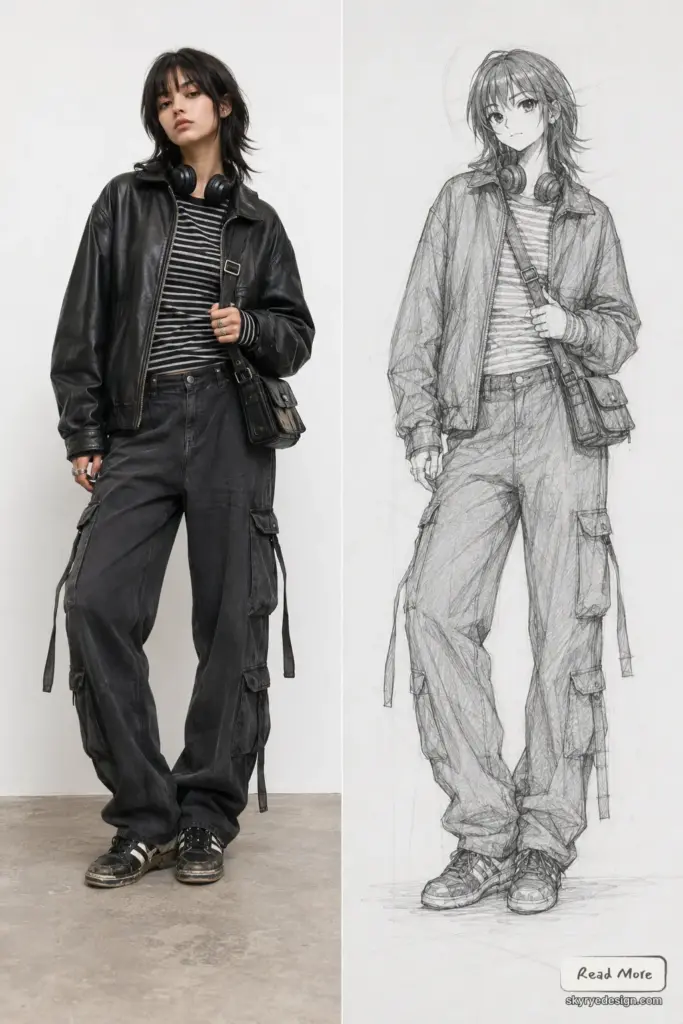
Streetwear: young woman in black leather jacket, striped tee, cargo pants and headphones beside pencil sketch

When you draw anime poses, the details that make them stand out often come from how you handle anatomy, perspective, and expression. Focusing on body variety, angle choices, and subtle gestures will help your characters feel more natural and engaging.
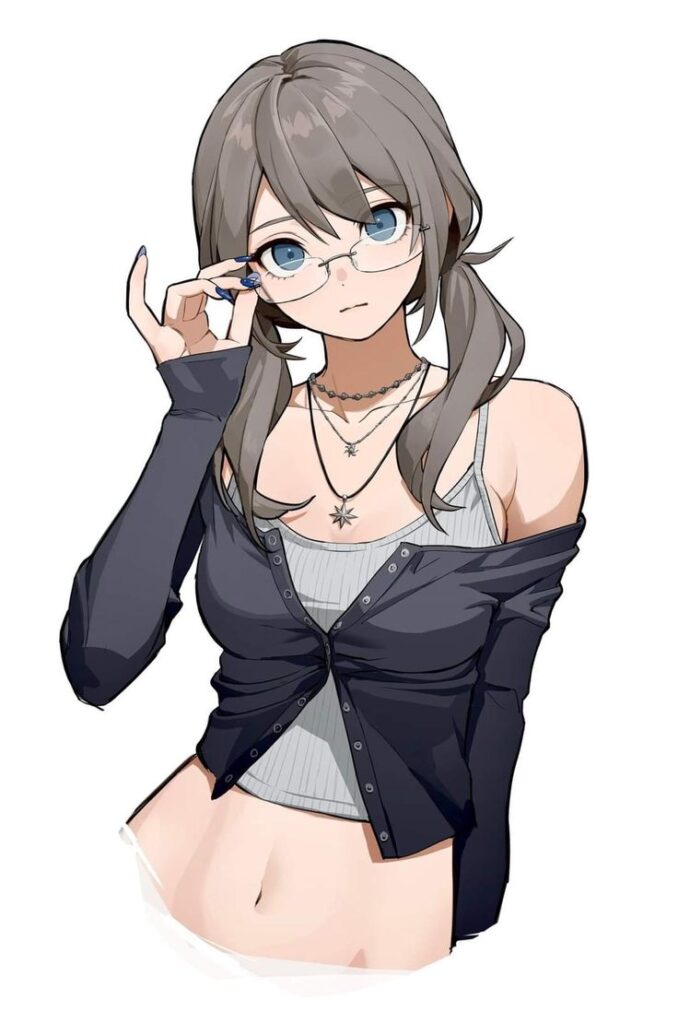
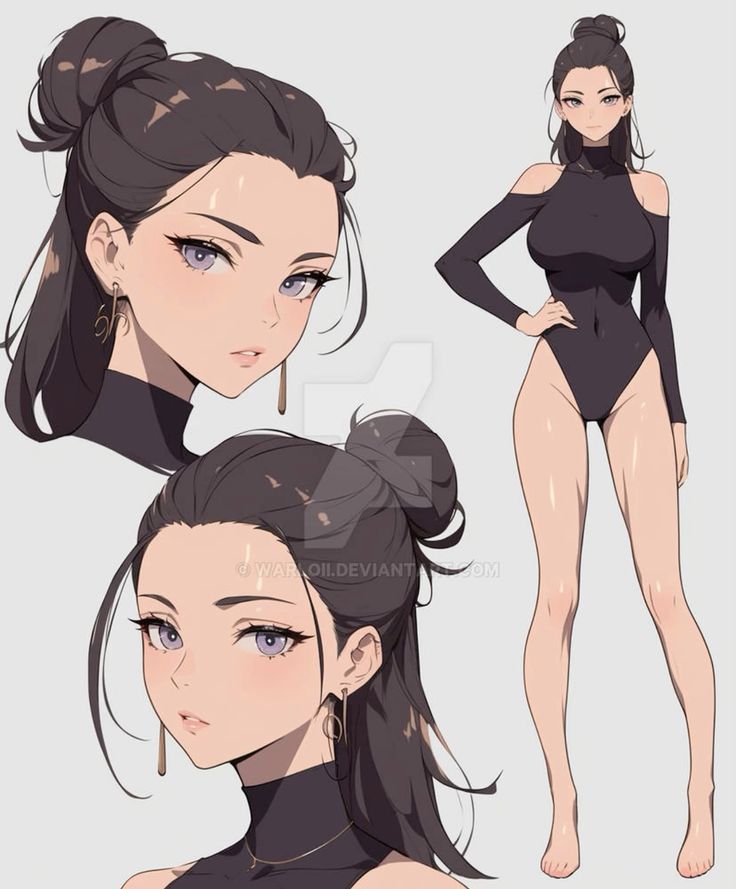
Anime girl with glasses and pigtails, wearing a black cardigan and necklaces, looks thoughtfully at the viewer.
Anime character design with black hair and elegant outfit, featuring detailed front and close-up views.

Practicing with Different Body Types

If you only practice with one body type, your character poses may start to look repetitive. Try sketching characters with different heights, builds, and proportions. A tall, slender figure will move and stand differently than a short, stocky one.
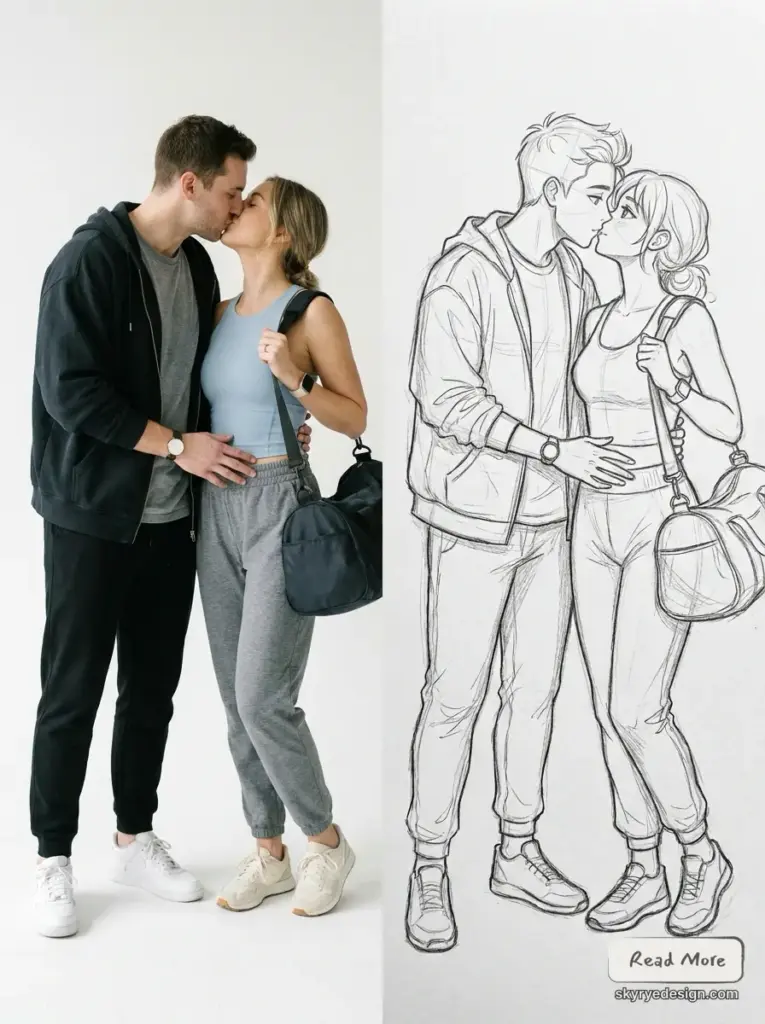
Side-by-side photo and pencil sketch of a young couple kissing in casual athleisure, carrying gym bags

You can make this easier by creating a simple chart of body types. For example:

Body TypeKey TraitsPose Considerations
SlimLong limbsEmphasize flow and stretch
MuscularBroad chest, defined armsShow weight and strength in stance
PetiteShorter frameHighlight agility or lightness

By practicing across this range, you’ll learn how weight distribution and posture shift with each figure. This makes your drawing poses more believable and varied.
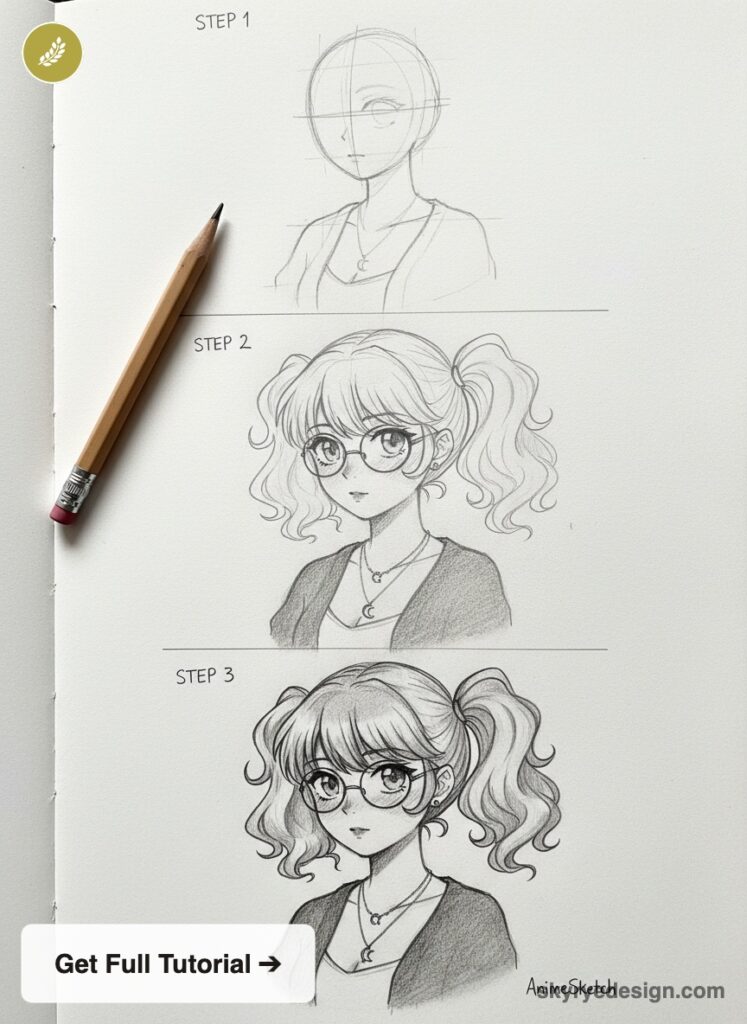
Step-by-step pencil tutorial: anime girl portrait with glasses and pigtails, three sketch stages and pencil on paper

Experimenting with Camera Angles

How you place the “camera” changes the impact of your anime poses. A low-angle view can make a character look powerful, while a high-angle view might make them appear vulnerable. Even a slight tilt can add energy to an otherwise static stance.

Start by sketching the same pose from at least three different angles. For example:

  • Front view for clarity and balance
  • Low angle for drama and scale
  • Over-the-shoulder for perspective and depth

This practice helps you understand foreshortening and perspective. You’ll notice how limbs shorten or stretch depending on the angle, which can make your poses feel dynamic instead of flat.

Adding Personality Through Gestures
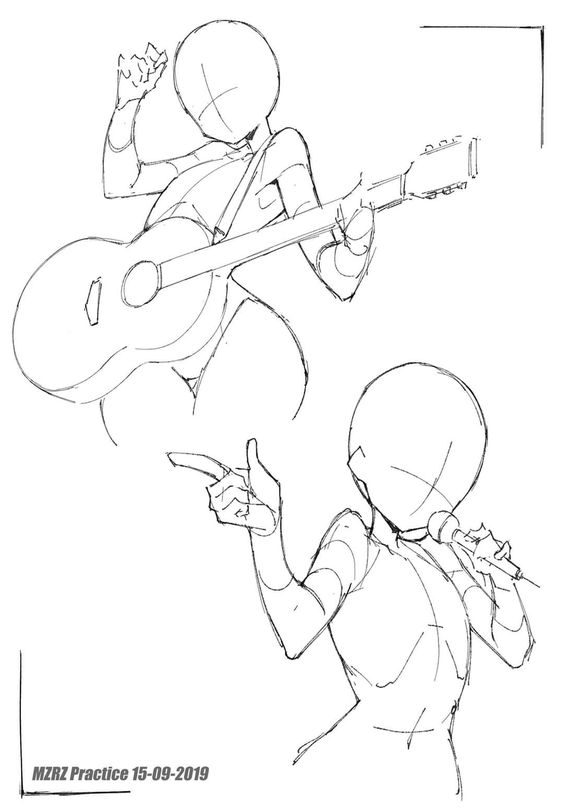
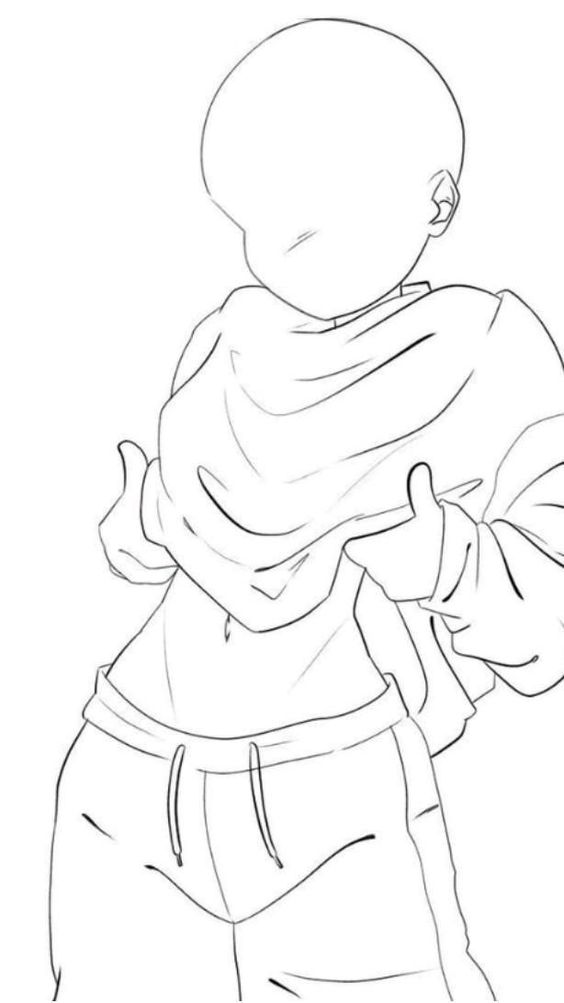
Faceless character in hoodie and sweatpants posing confidently, line art illustration.
Sketch of a person playing guitar and singing, dynamic poses for music-themed illustration practice.

Small gestures often say more than a full action pose. A character crossing their arms, tilting their head, or shifting weight onto one leg can express mood instantly. These details bring out personality without needing exaggerated movement.

Think about how posture reflects emotion:

  • Open arms → welcoming or confident
  • Hands in pockets → casual or reserved
  • Leaning forward → curious or attentive

When you combine gestures with facial expressions, your poses become more expressive. Even simple standing positions can feel alive if you adjust the shoulders, hands, or tilt of the hips to match the character’s mood.
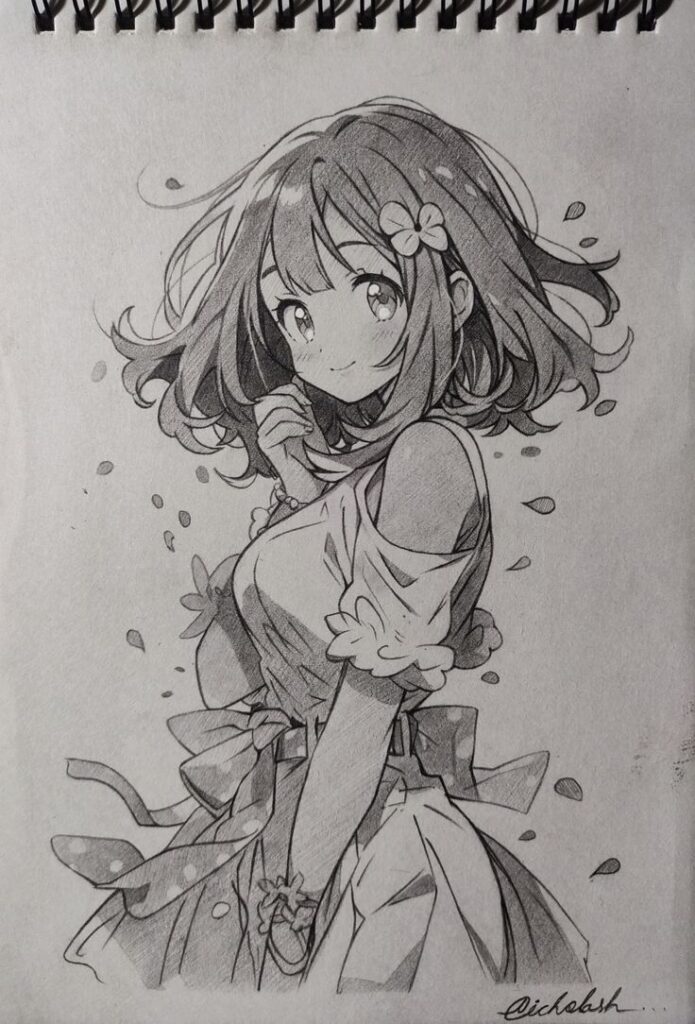
Anime girl sketch with flower in hair, wearing a dress, surrounded by falling petals. Black and white illustration.
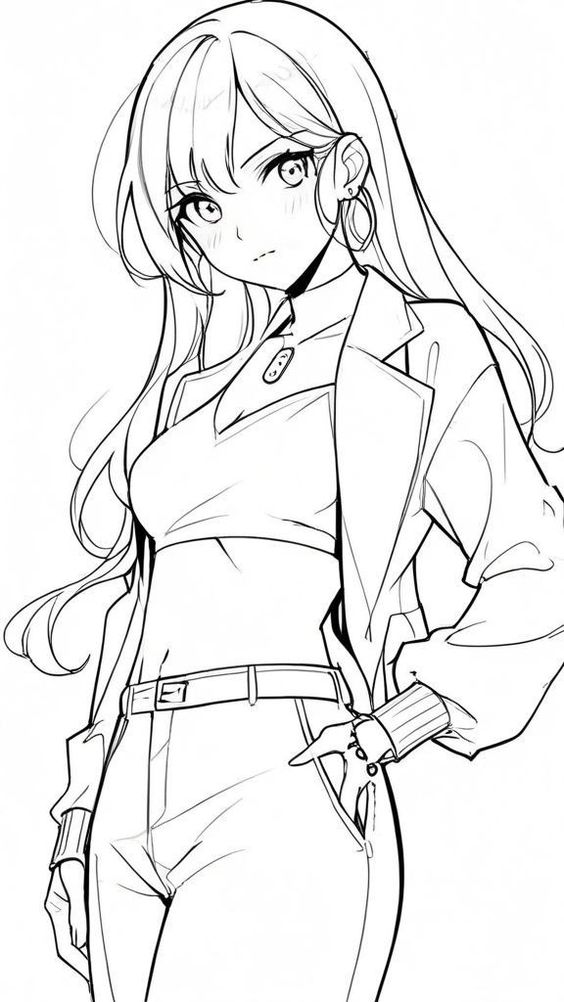
Anime-style character with long hair, wearing a jacket and pants, looking confident. Black and white line art.

Pose references become stronger when you also practice drawing clothes for character poses, especially sleeves, skirts, jackets, and pants under movement.

Pose practice also gets easier when your setup is light, so keep a shortlist of anime drawing apps for quick thumbnails, line cleanup, and color tests.

If you want a winged figure to practice next, try this angel pose reference guide for wing placement, silhouette, and gesture ideas.


More anime pose practice


Use these next when one part of the pose keeps breaking: anime girl drawing guide for full characters, anime eyes reference for expression, anime hair drawing for movement, anime body anatomy for proportions, OC body base ideas for character templates, gesture drawing poses for warm-ups, base drawing for construction, easy anime drawings for beginner studies, anime head construction for camera angles, and character design drawing ideas for turning a pose into a finished concept

Anime pose reference FAQ

Q: What is the best way to use an anime pose reference?

A: Start by copying the action line, not the costume or face. Mark the shoulder tilt, hip tilt, ribcage, pelvis, knees, and hands. Once the body rhythm works, redraw the pose with a different character, hairstyle, outfit, or camera angle so the sketch becomes practice instead of tracing.

Q: How do I make anime body poses look less stiff?

A: Push the weight shift first. A stiff pose usually has straight shoulders, level hips, locked knees, and arms placed evenly on both sides. Tilt the torso, bend one supporting leg, curve the spine slightly, and make the hands do something specific. Even a quiet standing pose needs a clear balance point.

Q: Should beginners draw anime poses from 3D models or photos?

A: Use both. Photos teach real weight and anatomy, while 3D models let you rotate the camera and test difficult angles. For beginners, a good workflow is photo first, simple mannequin second, anime styling third. That keeps the pose believable before you exaggerate the proportions.

Q: What anime poses should I practice first?

A: Start with casual standing, sitting, walking, running, reaching, turning, and a simple action pose. These cover most character drawings. Once those feel natural, add foreshortened hands, low-angle shots, fighting stances, and poses where hair or clothing has to follow the movement.

Q: Can I trace anime pose references?

A: Tracing can help you study structure, but do it as a private exercise. For finished work, redraw the pose from construction lines and change the character enough that you understand the movement. If you publish art based heavily on one reference, use sources you have permission to use.

Q: How many anime reference poses should I sketch in one session?

A: Five to ten quick sketches are better than one overworked copy. Spend two to five minutes on each pose and focus on the action line, torso angle, and hand placement. Save longer sessions for one pose after the rough gesture already feels alive.

author avatar
Arina
Arina is a digital artist and illustrator at Sky Rye Design, passionate about making art accessible to everyone. With a focus on fundamental techniques and digital creativity, she breaks down complex subjects—from realistic anatomy to dynamic anime poses—into simple, step-by-step tutorials. Arina believes that talent is just practiced habit, and her goal is to help beginners overcome the fear of the blank page and start creating with confidence.
Previous Article

Sea Turtle Tattoo Ideas, Meaning and Placement Guide

Next Article

Zaha Hadid Buildings: Architecture, Style & Legacy

Write a Comment

Leave a Comment

Your email address will not be published. Required fields are marked *