
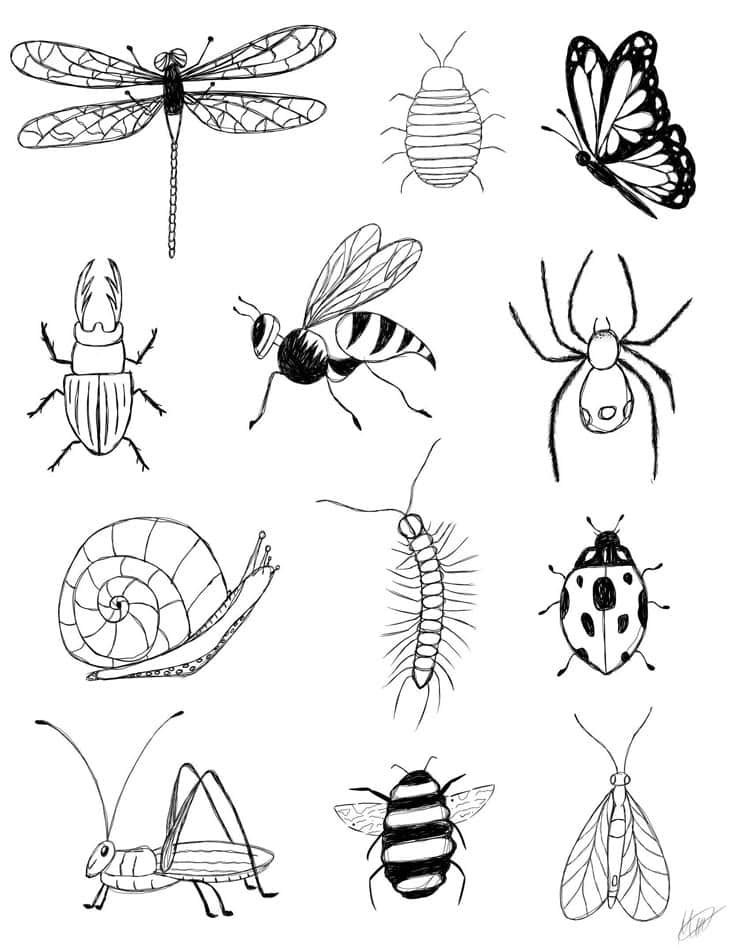
Drawing insects gets easier once you stop chasing every detail and build the shape first. Most bugs come down to three body masses, six jointed legs, antennae — wings sitting on top if the species has them. Get those right and the surface detail has something to land on.
Beetles, bees, butterflies, dragonflies. That’s what this guide covers, with a focus on proportions, basic shapes, texture, and shading. Sketchbook practice, not scientific illustration. The difference matters: you’re not trying to document the species, you’re trying to make it read as convincingly alive on the page.
- How to draw insects step by step
- Why insects are useful drawing practice
- Tools for beginner insect sketching
- Simple insect anatomy for artists
- Build the insect from simple shapes
- Sketching process from reference to finished insect
- Practice studies: beetle, butterfly, bee, and dragonfly
- How to use reference photos without copying blindly
- Texture notes for pencil insect drawings
- Common insect drawing mistakes
- Related drawing practice
- FAQ about how to draw insects
- Final thoughts
I always lock in the silhouette and leg rhythm before I go anywhere near the wing veins or body fuzz. Every time I’ve skipped that step, I’ve ended up overworked in the wrong places.

How to draw insects step by step
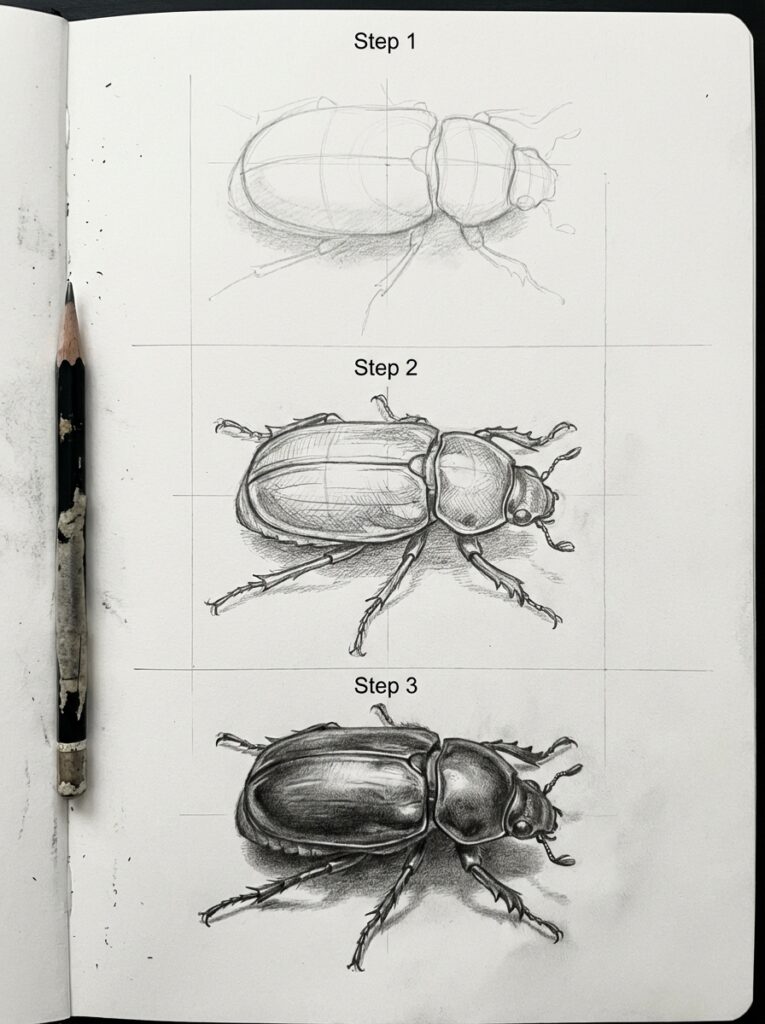
To draw an insect, start with the head, thorax, and abdomen as simple ovals. Place the six legs on the thorax, block in the antennae and wings, then refine the outline before you add texture. Keep the first pass pale. A light 2H or HB construction sketch gives you room to correct the angle of a leg or the size of a wing without fighting dark graphite.
- Choose one clear reference photo and decide whether you are drawing the insect from the top, side, or three-quarter view.
- Block in the head, thorax, and abdomen with circles, ovals, or tapered cylinders.
- Mark the center line and main angle of the body so the insect does not drift across the page.
- Attach all six legs to the thorax, using bent segments instead of straight sticks.
- Add antennae, eyes, wings, shell divisions, or body stripes only after the big shapes feel right.
- Clean the outline, then build texture and shading in slow layers.
| Step | What to check | Beginner mistake to avoid |
|---|---|---|
| 1. Big shapes | The three body sections have clear sizes and angles. | Starting with legs and tiny details. |
| 2. Leg placement | All six legs connect to the thorax. | Attaching legs randomly along the abdomen. |
| 3. Wings or shell | Wings follow the body angle and stay lighter than the body. | Drawing every vein with the same dark pressure. |
| 4. Texture | Fuzz, shell shine, or vein patterns support the form. | Using texture to hide weak proportions. |
| 5. Shading | One light source explains the shadows. | Shading each part separately with no plan. |
Why insects are useful drawing practice
Insects are small, but they are not simple blobs. A beetle teaches hard shell highlights. A bee teaches fuzzy texture. A butterfly teaches symmetry and wing rhythm. A dragonfly teaches long proportions and transparent wings. That variety makes insect sketching a good bridge between nature drawing ideas and more exact animal studies.
They also force you to observe. You have to compare angles, count legs, and notice which details matter. In academic drawing, this is where you slow down and measure instead of guessing. The drawing looks more convincing because the structure is right, not because you filled the page with more marks.
Disclosure: This post contains affiliate links. As an Amazon Associate I earn from qualifying purchases. If you buy through links in this post, we may earn a small commission at no extra cost to you.
Tools for beginner insect sketching
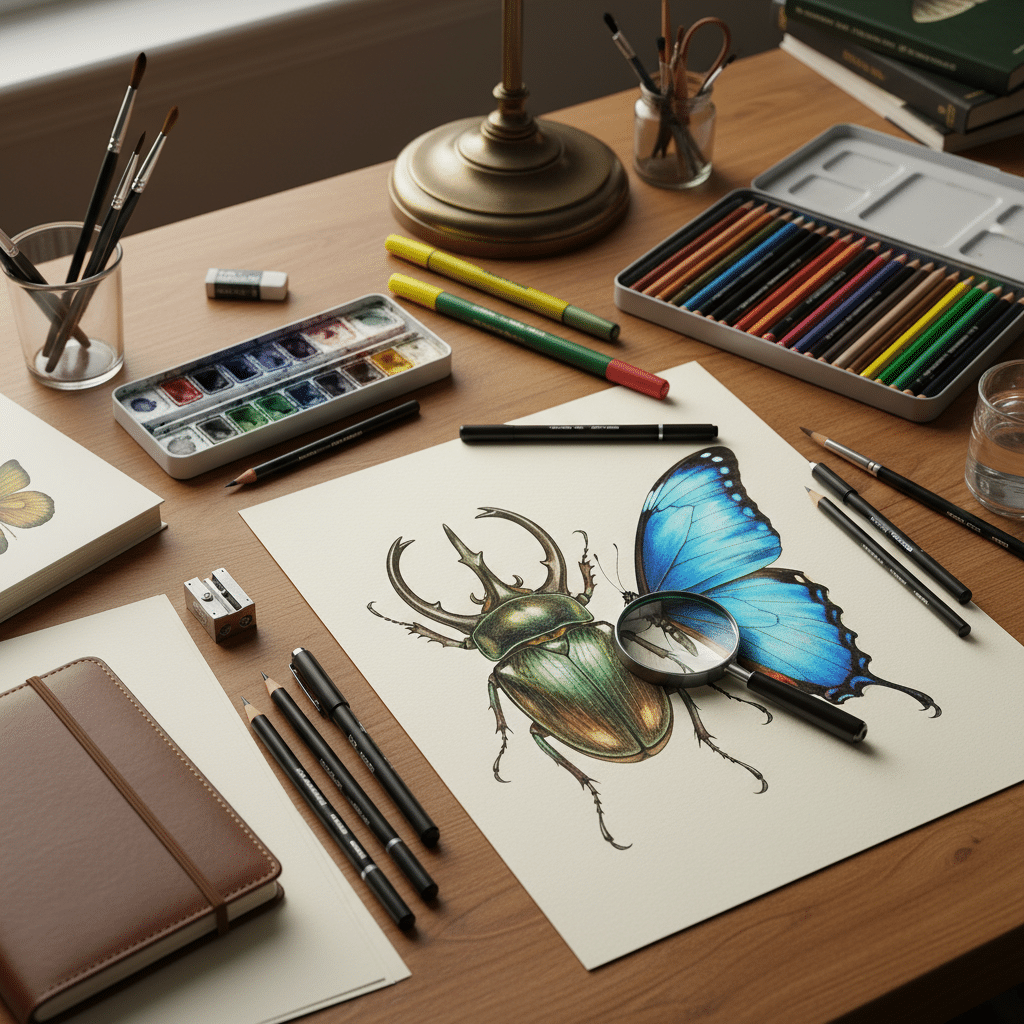
You do not need a complicated kit. A small set of pencils and a decent eraser will do more for you than a box full of tools you barely use. If you want a broader setup later, the drawing materials guide is a good next stop.
- 2H or H pencil: pale construction lines for body shapes and symmetry guides.
- HB or 2B pencil: darker outlines, soft shadows, and readable texture.
- Kneaded eraser: lifts graphite gently without chewing up the paper.
- Vinyl eraser: cleans hard edges and removes dark construction mistakes.
- Fineliner: optional, but useful for crisp wing veins and leg joints once the pencil drawing is solved.
- Sketchbook paper with tooth: holds graphite better than slick printer paper.
Simple insect anatomy for artists
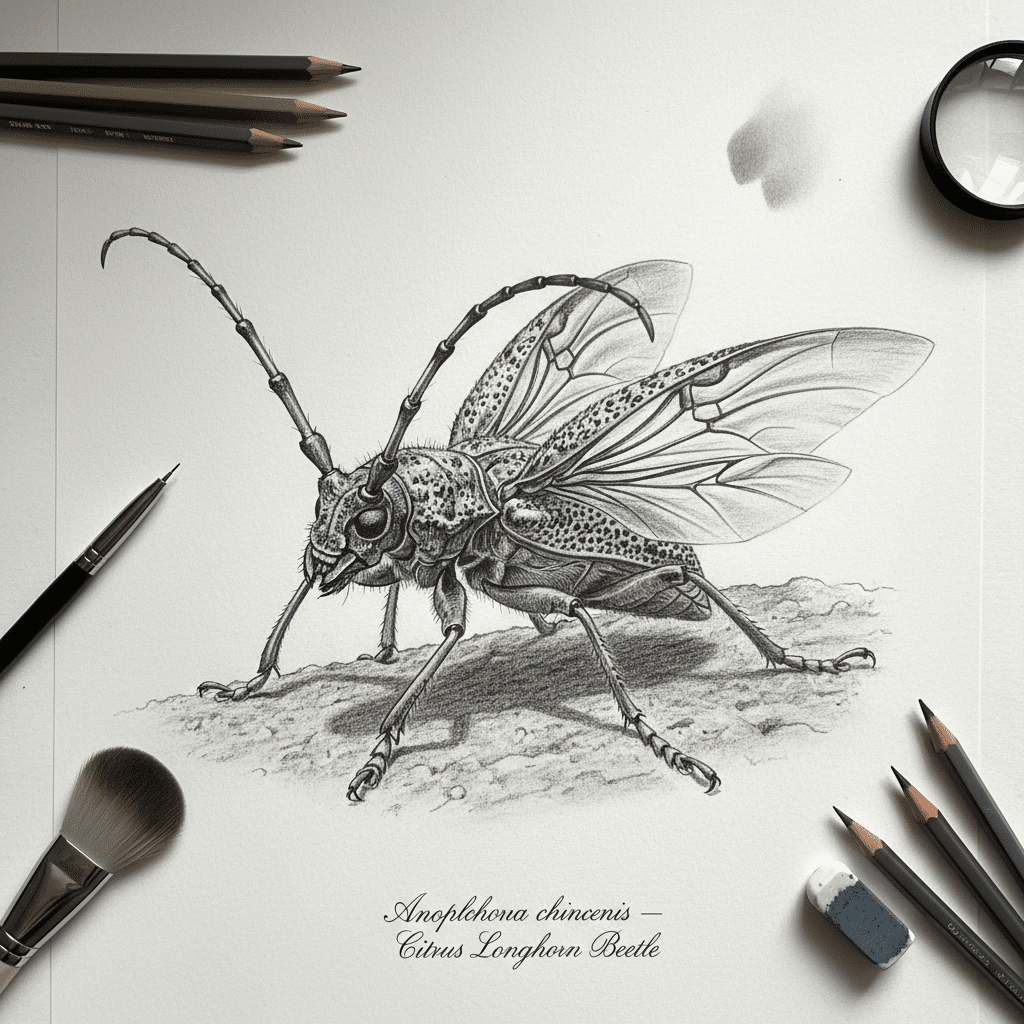
Most insects share a body plan you can remember while drawing: head, thorax, abdomen. The head carries the eyes, mouthparts, and antennae. The thorax is the drawing anchor because the legs, and often the wings, attach there. The abdomen is usually the largest or longest mass, and it often carries stripes, shell plates, or soft segmentation.
That structure matters more than memorizing insect vocabulary. If the thorax is too small, the legs will look pasted on. If the abdomen is too stiff, the whole drawing feels mechanical. Think of the body as connected forms with joints, not one decorative outline.
| Part | Draw it as | Useful drawing note |
|---|---|---|
| Head | Circle, wedge, or small oval | Watch the eye size; compound eyes can dominate the head. |
| Thorax | Rounded block or oval | Place legs here first, then wings if visible. |
| Abdomen | Long oval, teardrop, or cylinder | Use light bands to show segmentation before shading. |
| Legs | Bent cylinders | Vary the angles so the pose feels natural. |
| Wings | Thin leaf-like planes | Keep them lighter than the body unless the insect has patterned wings. |
Build the insect from simple shapes
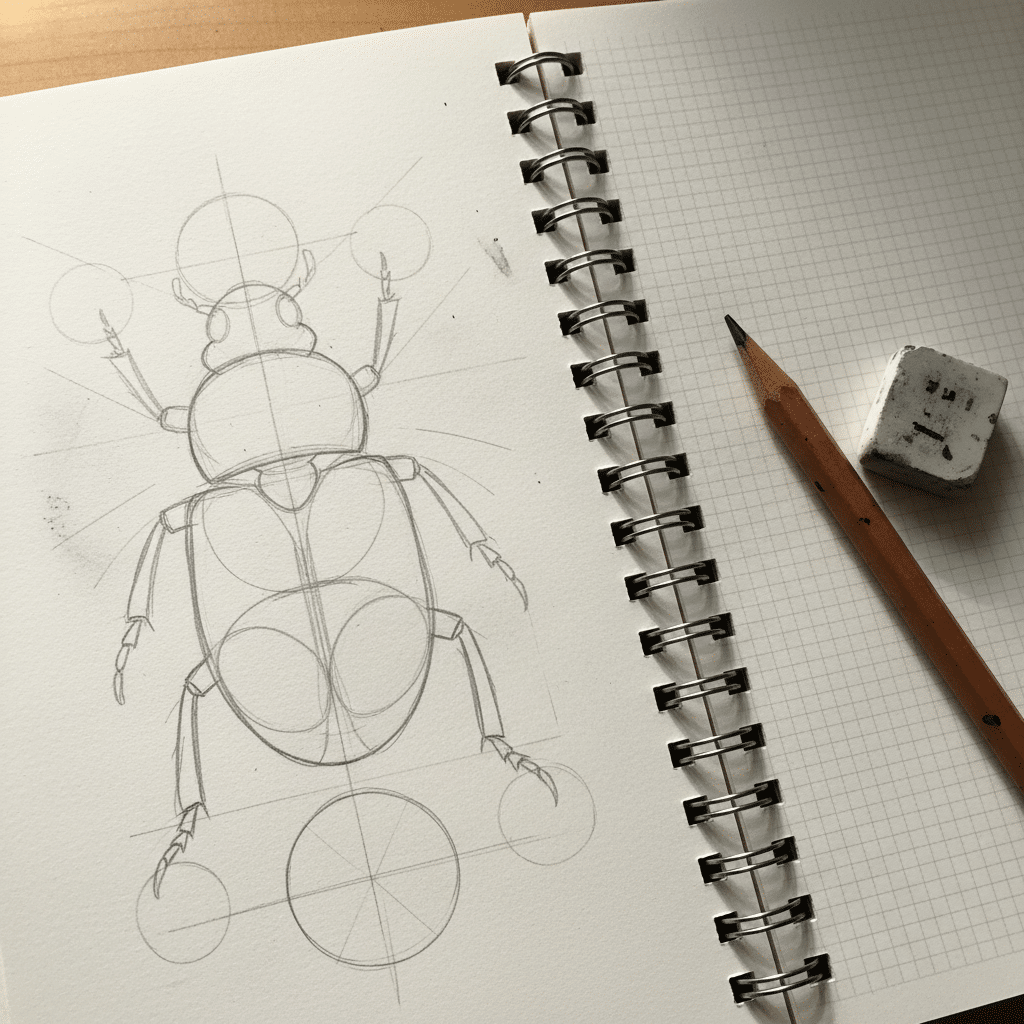
The fastest way to lose control is to draw the final outline too soon. Start with construction shapes instead. I like to mark the body axis first, then hang the head, thorax, and abdomen from that line. After that, the legs become a rhythm problem: three pairs, angled differently, all coming from the thorax.
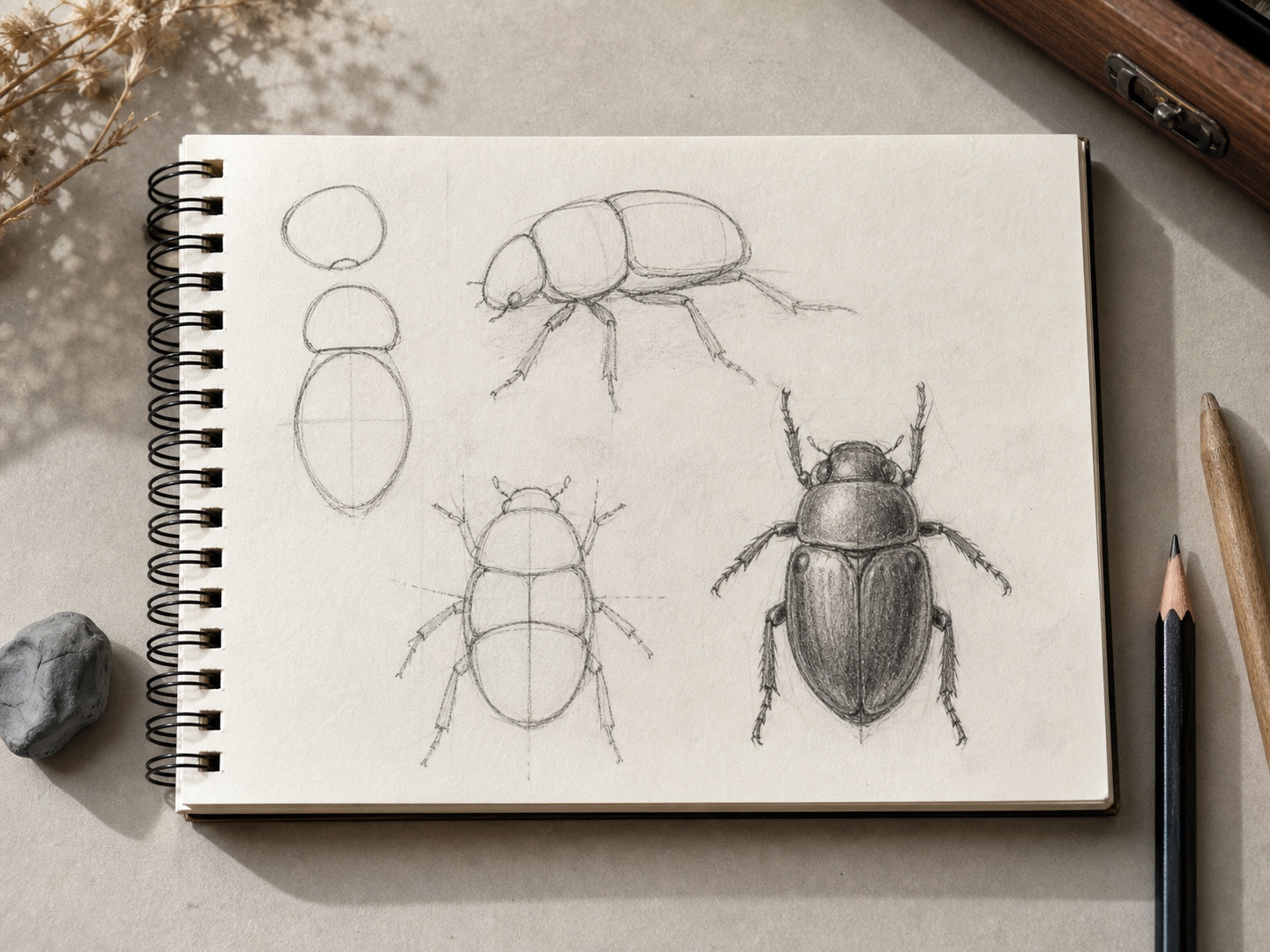
For beetles, keep the shell broad and simple. The split down the wing cases should follow the body center line. Add the shine last with soft value changes, not a thick white stripe.
Sketching process from reference to finished insect
1. Observe before drawing
Spend a minute with the reference before you draw. Notice the pose, the biggest body shape, and the leg angles. If the insect has wings, ask whether they sit flat, tilt upward, or fold over the body. That one decision changes the whole sketch.
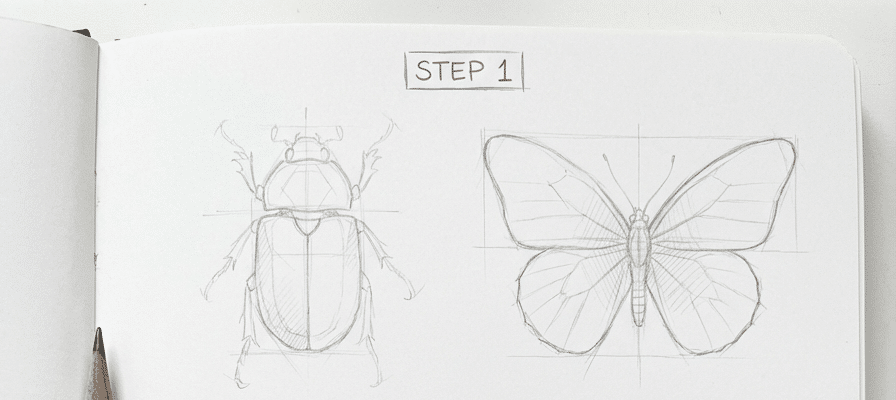
2. Block in the big form lightly
Use pale lines and avoid pressing hard. At this stage you are placing the insect on the page, not making a finished drawing. Draw through the form a little, especially on beetles and bees, so the body feels three-dimensional.
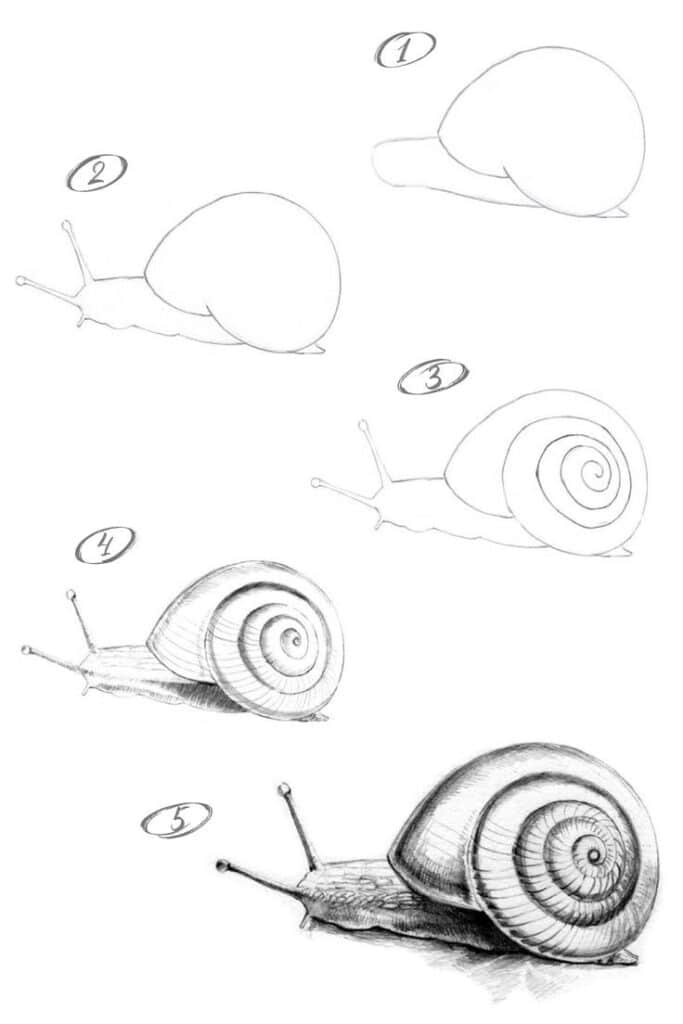
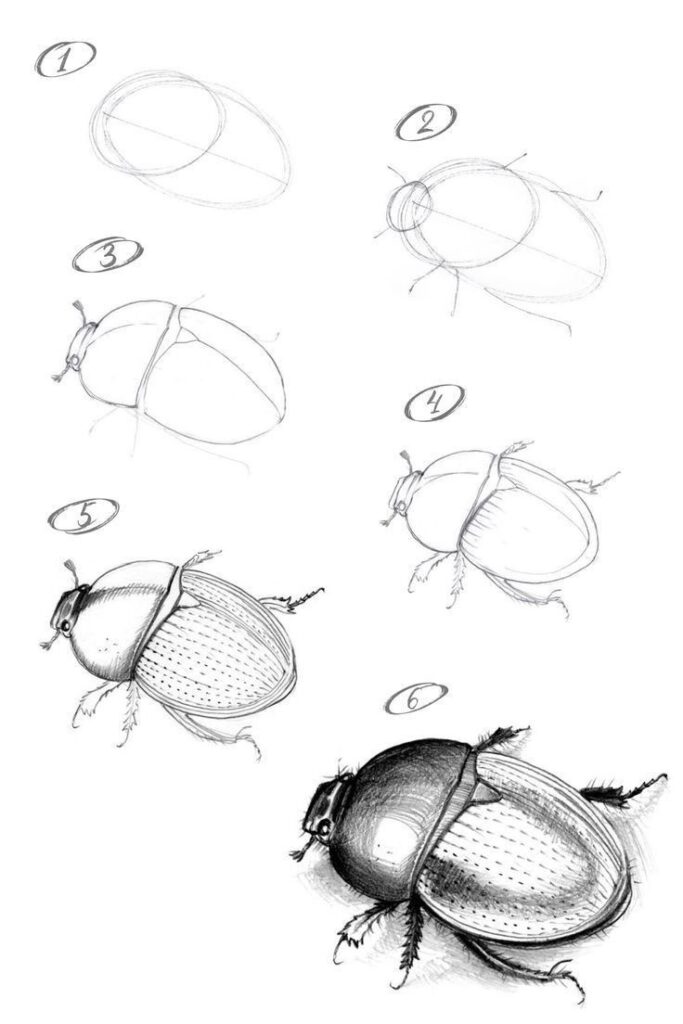
3. Refine the body and legs
Once the big masses work, turn the stick legs into jointed segments. Insects rarely have smooth noodle legs. Look for sharp bends, thicker upper segments, and tiny feet. Keep the line weight lighter on far-side legs so the near side reads more clearly.
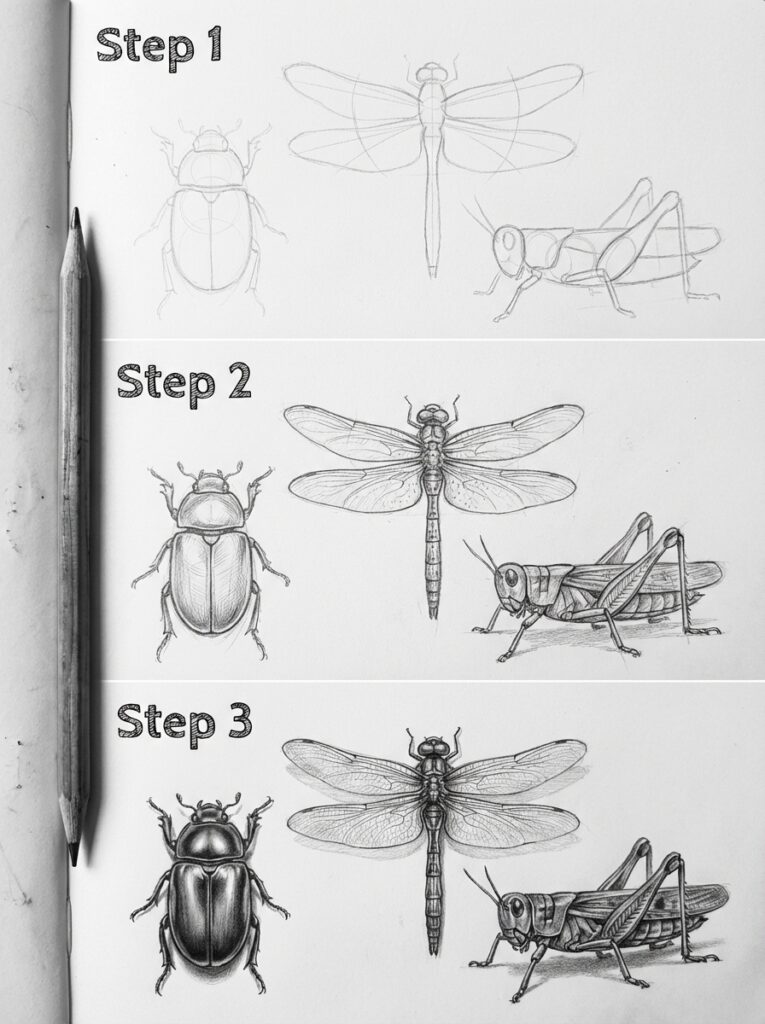
4. Add texture only where it helps
Texture should describe the surface. A bee needs soft broken strokes around the thorax. A beetle needs smoother shading and a harder edge. A butterfly wing needs vein direction, not a dark net over the whole wing. Leave quiet areas so the detailed areas have somewhere to breathe.
5. Shade from one light source
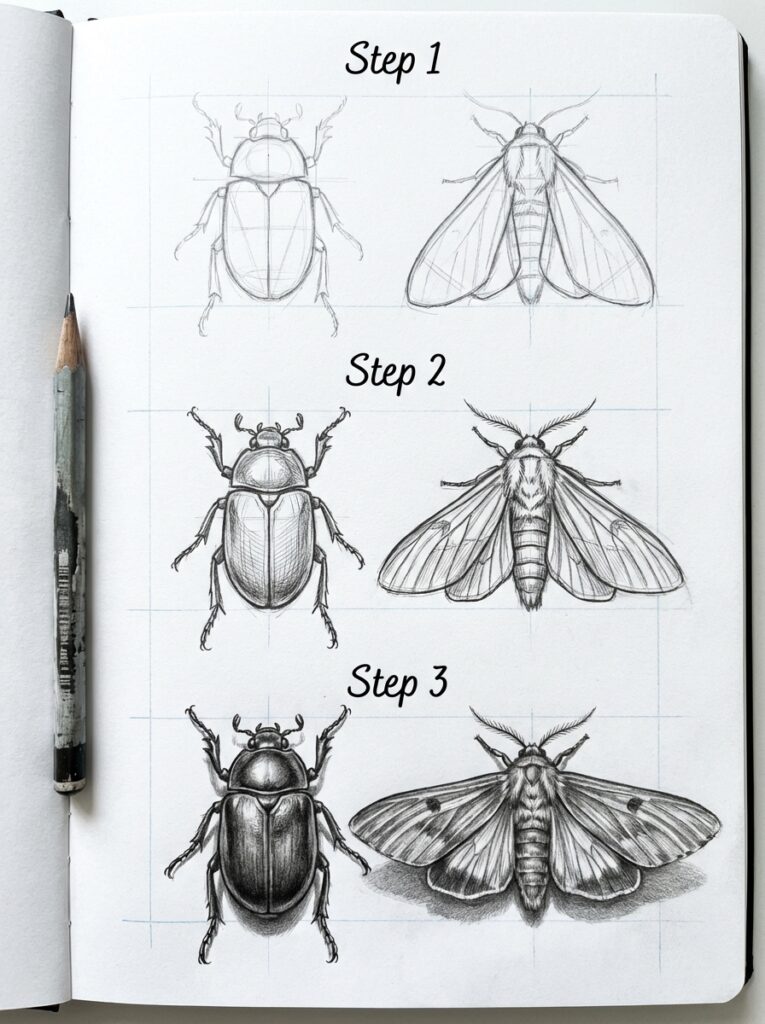
Pick the light direction and stay loyal to it. Put the darkest accents under the body, behind overlapping legs, and inside small contact shadows. Use hatching or cross-hatching when you want a hand-drawn texture; use gentle blending only if the subject has a smoother shell.
If shading is the part that slows you down, review general drawing tips after you finish the construction pass. Insect drawings improve fastest when proportion and value are practiced separately first.
6. Clean the final edges
Erase the construction lines that no longer help, then strengthen only the most important contours. A good insect drawing does not need every hair, vein, and segment rendered at full volume. It needs a clear body, believable legs, and a few well-chosen details.
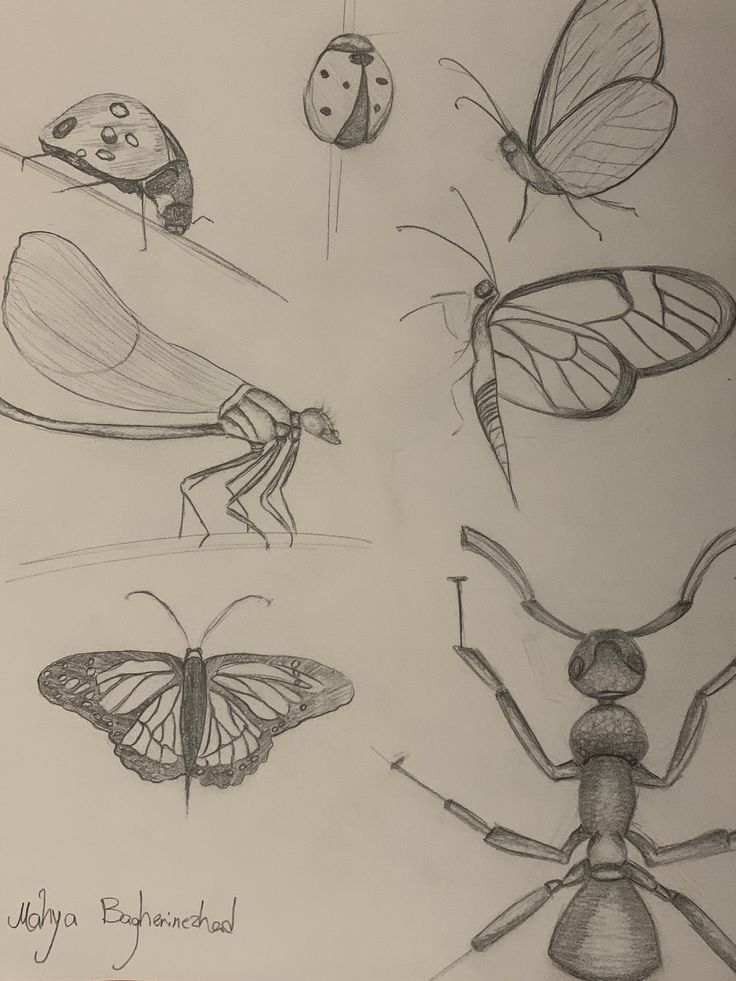
Practice studies: beetle, butterfly, bee, and dragonfly
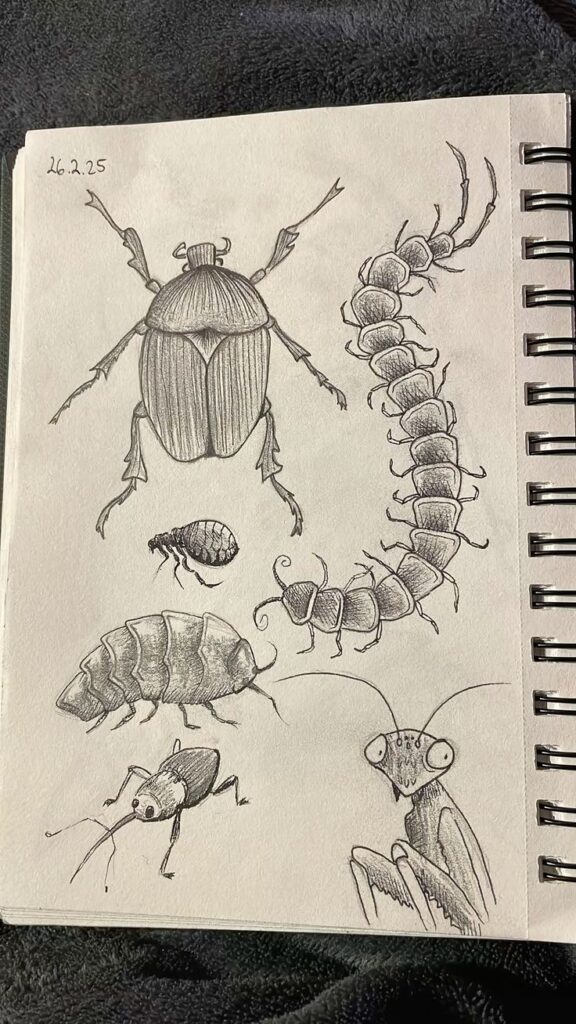
Use these four insect types as a small practice sequence. They each train a different drawing problem, which is more useful than sketching the same bug ten times in a row.
Beetle: hard shell and clean symmetry
A beetle is the best first subject if you want structure. Draw the shell as a large oval, split the wing cases down the center, and shade the curved top as if it were a small polished stone.
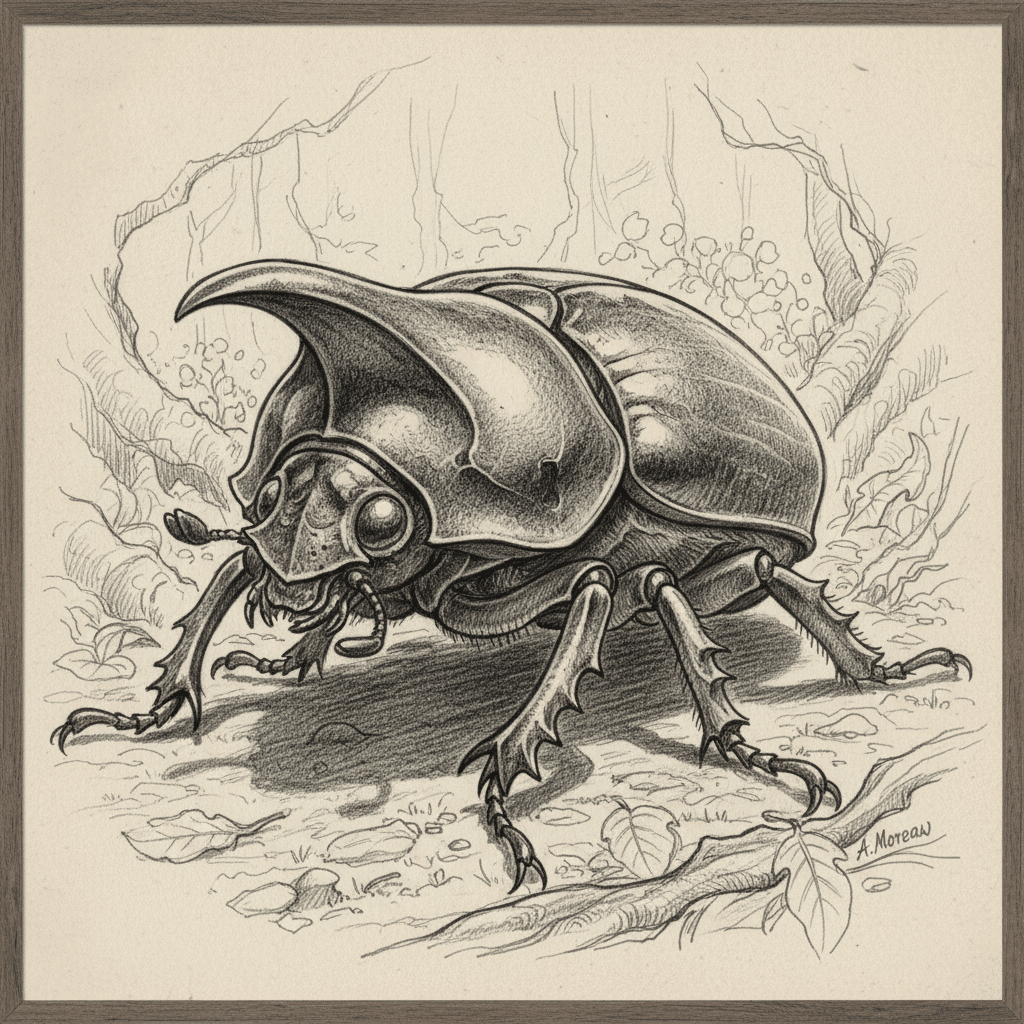

When the shell starts to look flat, soften the center value and darken the side planes instead of outlining harder. Beetle drawings usually improve when the edge stays crisp but the value inside the shell changes slowly.
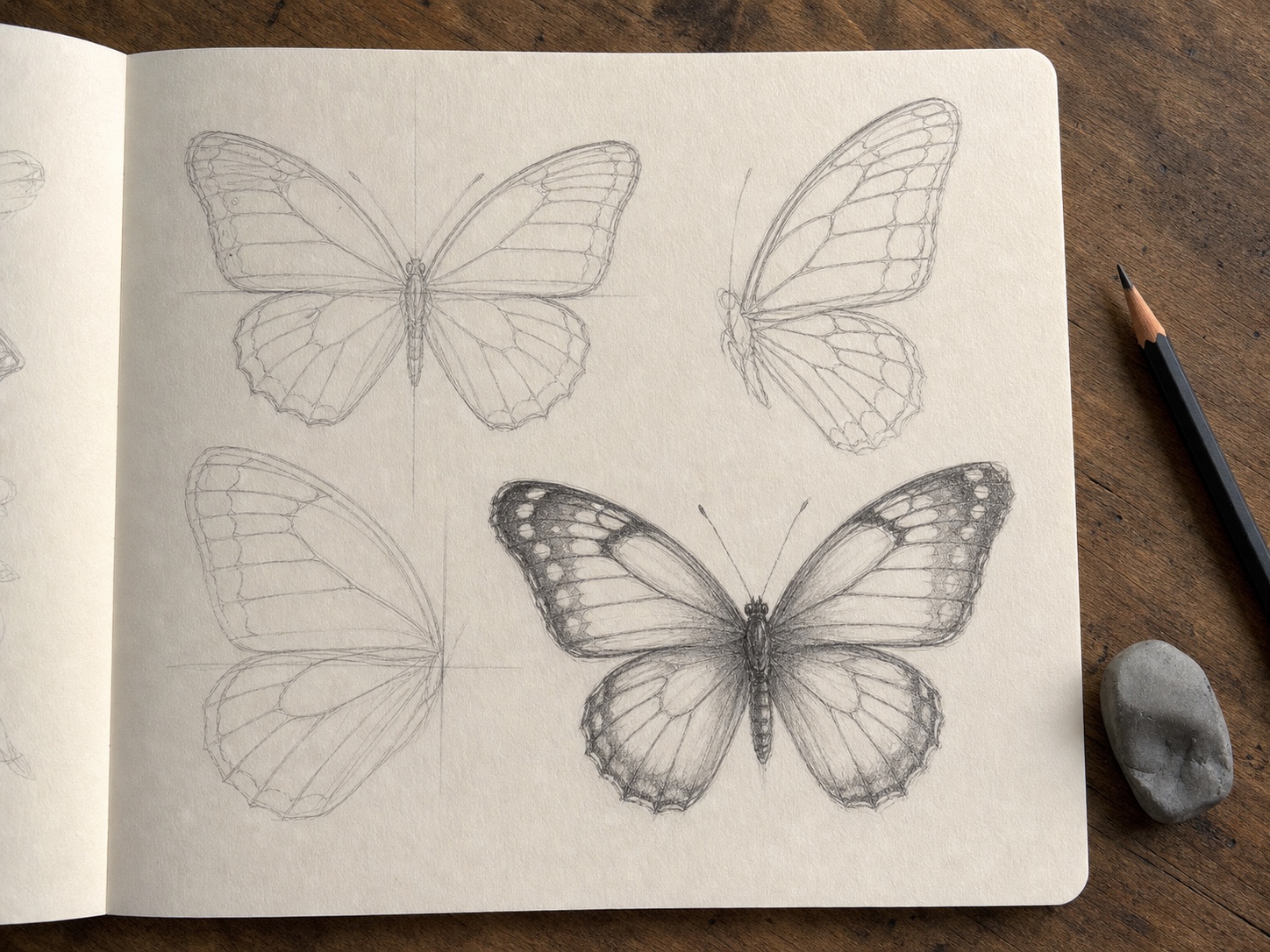
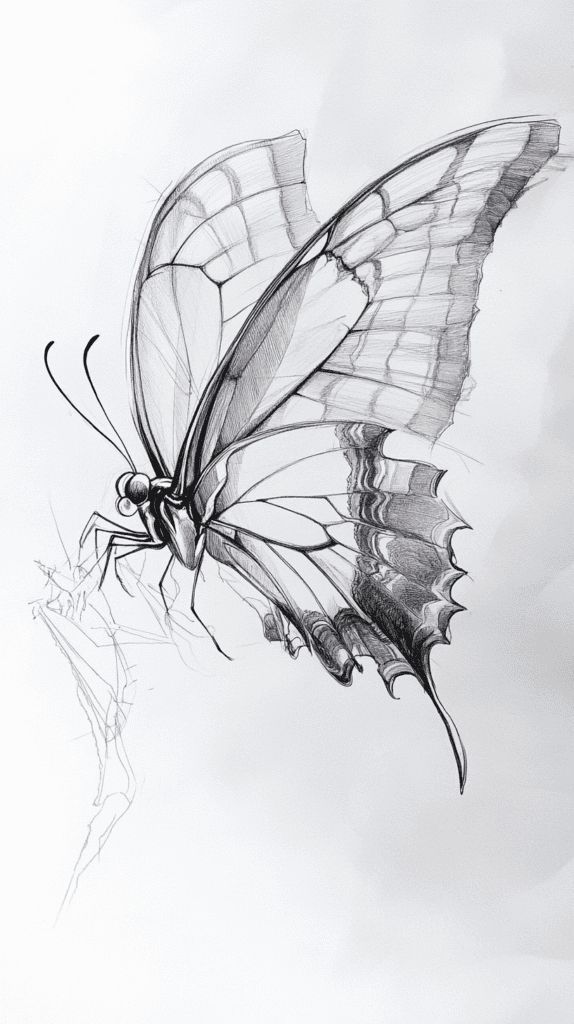
Butterfly: wing rhythm and mirrored shapes
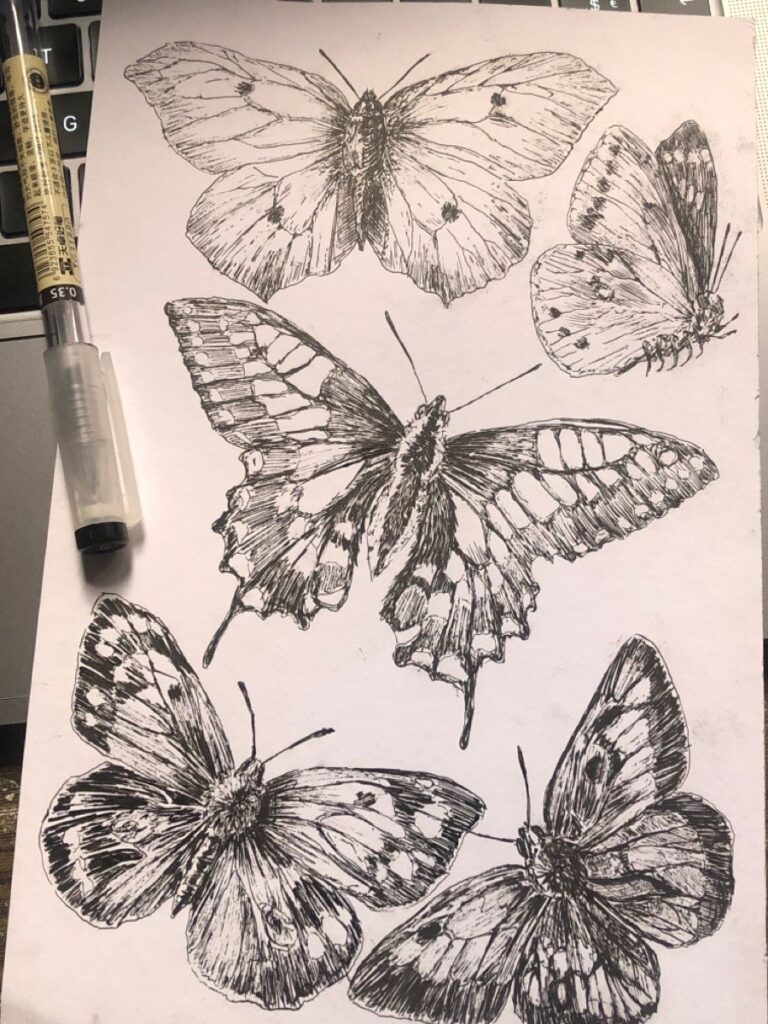
For a butterfly, the body is small and the wing design does most of the work. Draw one side carefully, then compare the opposite wing against it. The goal is not perfect symmetry; it is believable symmetry. For a focused follow-up, use the butterfly drawing easy tutorial after this guide.

Bee: fuzzy texture and transparent wings
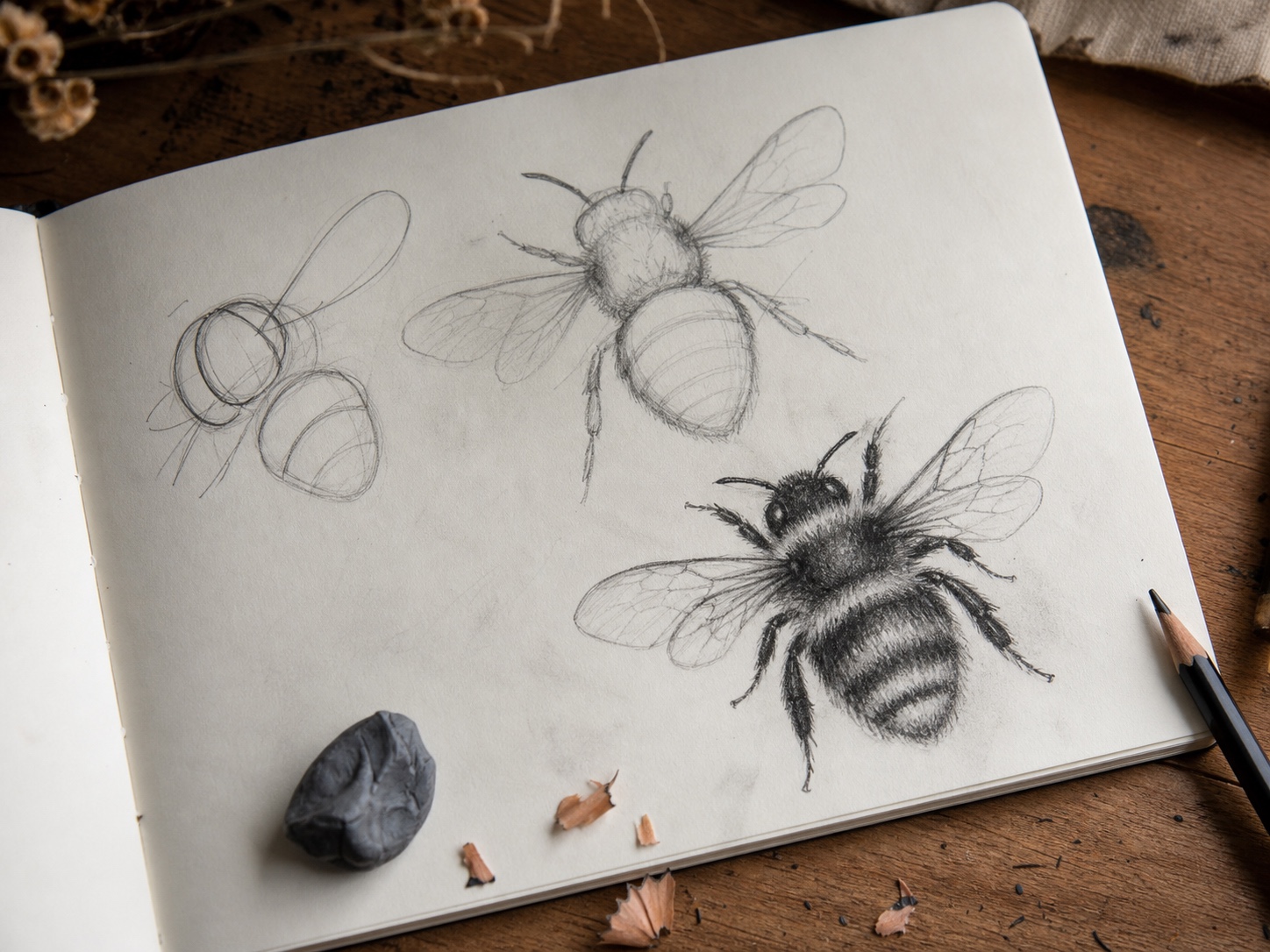
A bee is a texture exercise. Keep the body shapes simple, then use short, broken pencil strokes for fuzz. The wings should stay pale and thin. If you want a dedicated breakdown, the how to draw a bee guide goes deeper into the body, wings, and stripes.


Dragonfly: long proportions and delicate wings
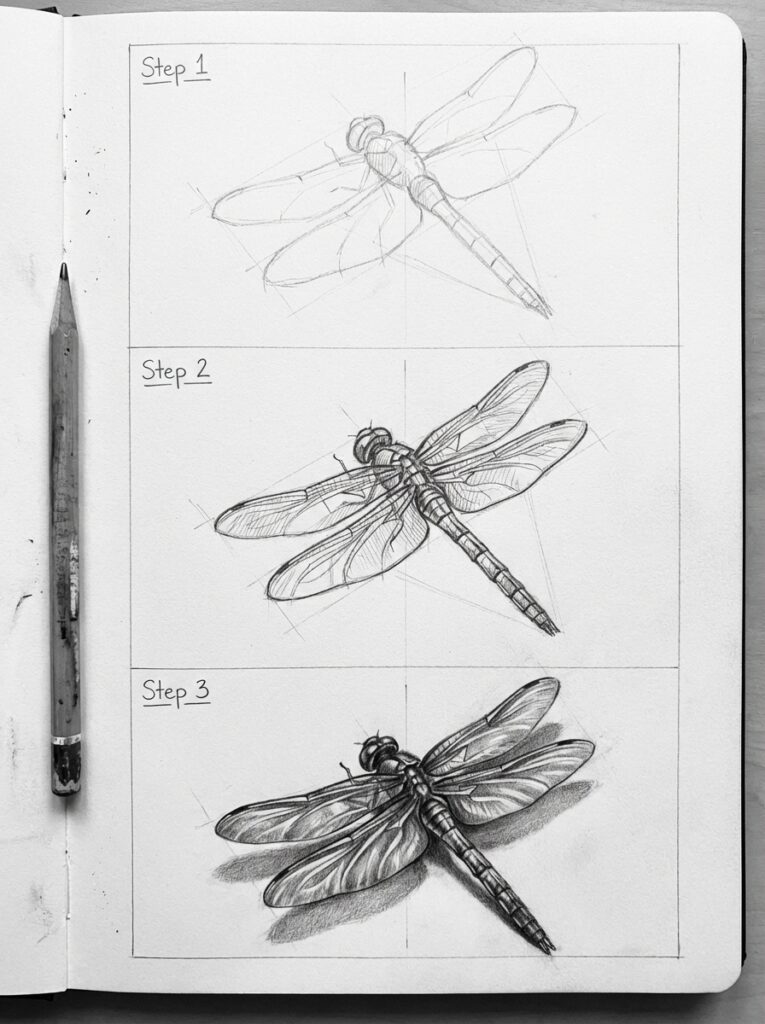
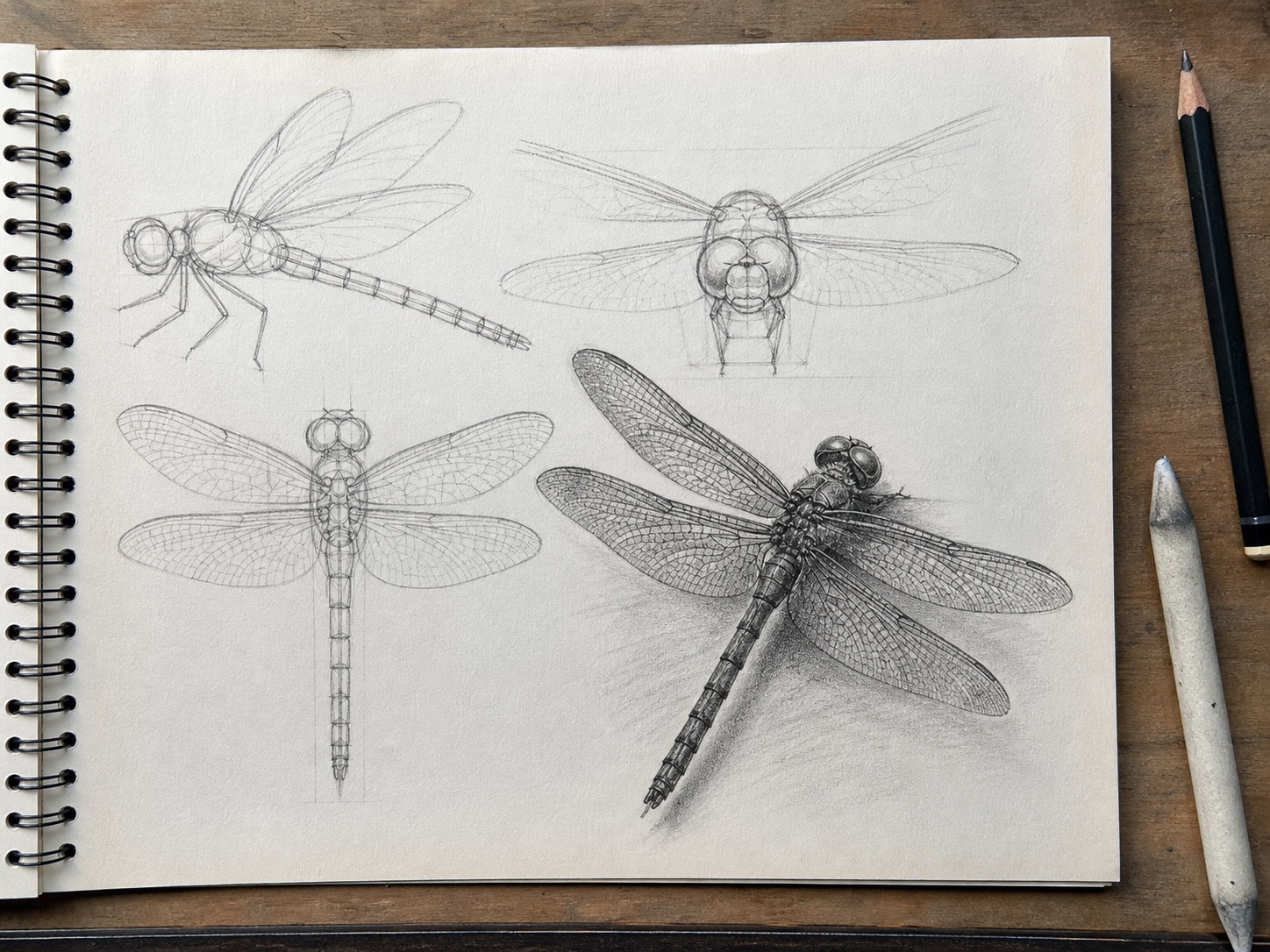
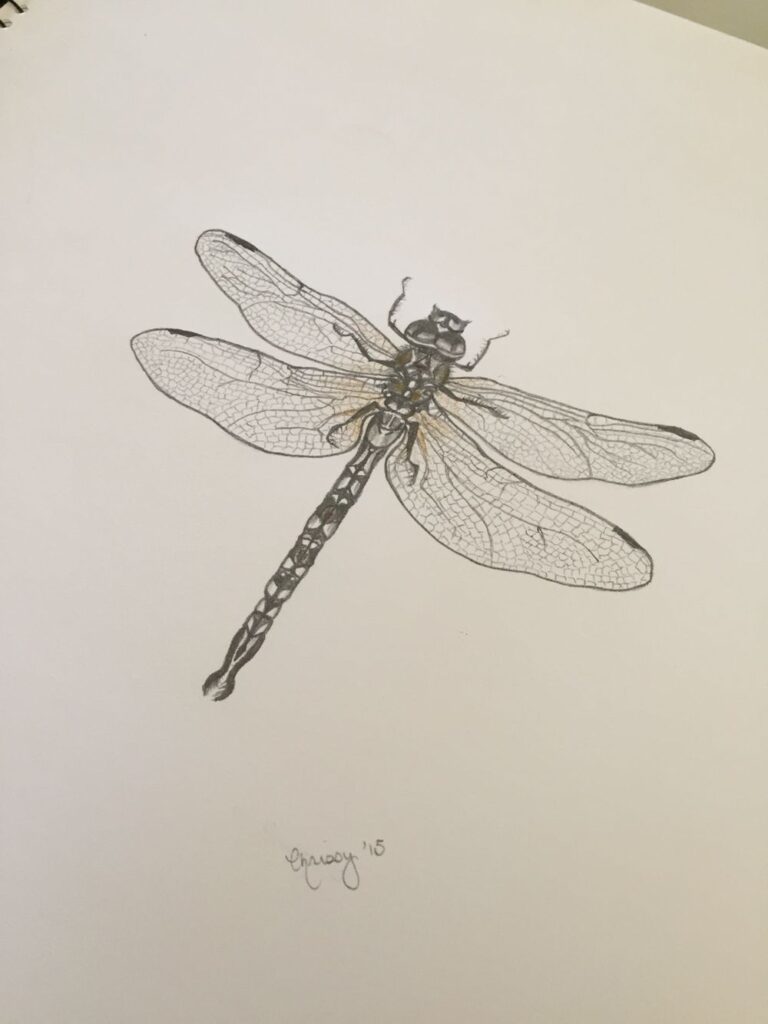
A dragonfly is mostly proportion control. The abdomen is long, the eyes are large, and the wings spread wider than beginners expect. Draw the wing angles first, then place the body through the center so the insect does not look lopsided.

How to use reference photos without copying blindly
Reference photos are useful, but they can also make beginners freeze. Do not try to copy every speck on the insect. First, use the photo to answer three questions: where is the body axis, which body part is largest, and where do the legs attach? Once those answers are clear, the sketch becomes a drawing problem instead of a guessing game.
I also like to keep one reference for structure and one for texture. A clean side-view beetle might help with proportions, while a close-up photo helps with shell shine. Mixing references is fine for practice as long as you are not pretending the result is a scientific plate of one exact species.
- For beetles: look for the shell split, side planes, and the small shadow under the body.
- For bees: study the fuzz direction before drawing the stripes.
- For butterflies: compare wing shapes before copying patterns.
- For dragonflies: map the long abdomen and wing angles before touching the vein network.
Texture notes for pencil insect drawings
Texture is where insect drawings can become fun, but it needs restraint. A hard beetle shell should have smoother values and a few crisp accents. Bee fuzz works better with short strokes that break at the edge of the body. Butterfly wings need directional vein lines, not random scratches. Dragonfly wings should stay pale enough that the body still carries the drawing.
A simple rule helps: draw the texture in the direction the form turns. On a round abdomen, let the marks curve slightly around the volume. On a flat wing, keep the marks flatter and lighter. This small choice makes the insect feel built, not decorated.
Common insect drawing mistakes
Most insect sketches fail for ordinary drawing reasons: weak construction, rushed detail, or no light plan. Fix those before you blame the subject.
| Mistake | Why it happens | Better fix |
|---|---|---|
| Too many legs or legs in the wrong place | The artist copies the outline instead of understanding the thorax. | Count three pairs and attach all six legs to the thorax. |
| Wings look heavy | Every vein is drawn with the same dark pressure. | Use light veins, darker body values, and more white paper. |
| The insect looks flat | The body was drawn as an outline only. | Shade the head, thorax, and abdomen as rounded forms. |
| Details feel messy | Texture starts before the big shapes are correct. | Finish the construction sketch first, then add only the most useful details. |
| The pose feels stiff | Legs are straight and evenly spaced. | Bend the legs at joints and vary the angles slightly. |
Related drawing practice
If you want to build a stronger animal drawing habit, move sideways through the cluster instead of jumping to a completely different subject. Try animal drawing ideas when you need prompts, how to draw animals step by step for broader structure practice, and realistic animal drawing when you are ready for fur, anatomy, and stronger values.
For nearby sketchbook subjects, pair this insect lesson with nature drawing ideas, fish drawing ideas, or the broader animal drawing guides archive.
FAQ about how to draw insects
What is the easiest insect to draw first?
A beetle is usually the easiest insect to draw first because the body reads as three simple ovals: head, thorax, and abdomen. Start with a top view, keep the legs as bent line segments, and add the shell split only after the main proportions feel balanced.
How do you draw insects step by step?
Draw the insect with light construction shapes first, then place the six legs on the thorax, add antennae and wings if the species has them, refine the outline, and shade from one clear light source. Work from big shapes to small details so the drawing does not turn into a pile of tiny marks.
What tools do I need for insect drawing?
You can draw insects with a 2H pencil for pale guidelines, an HB or 2B pencil for darker lines, a kneaded eraser, and sketchbook paper with a little tooth. A fineliner is useful for wing veins and leg joints, but it is optional until the pencil sketch works.
How many legs should an insect drawing have?
An insect drawing should have six legs, and all six attach to the thorax, not the abdomen. That one rule fixes a lot of beginner drawings. If the pose hides a leg, lightly mark where it would connect so the body still feels believable.
How do I make butterfly or dragonfly wings look transparent?
Use light outlines, leave more white paper than you think you need, and draw the main wing veins before the tiny secondary veins. Shade the body darker than the wings. That contrast makes the wings feel thin and transparent without heavy rendering.
Why do my insect drawings look stiff?
Most stiff insect drawings come from straight legs, perfectly even spacing, or details added before the pose is settled. Bend each leg at clear joints, tilt the body slightly, and vary line weight. I usually check the silhouette first; if the outline feels alive, the texture has a much better chance.
Final thoughts
Drawing insects is a patient, observant kind of sketching. Keep the first pass simple, respect the three-part body structure, and let the details earn their place. A beetle, bee, butterfly, or dragonfly can look convincing with surprisingly few marks when the proportions, leg rhythm, and light direction are working.
For your next sketchbook session, choose one insect and draw it three ways: a quick shape study, a clean line study, and a small shaded study. That sequence teaches more than one overworked drawing.
For a taller animal study with very different proportions, try this giraffe drawing practice; it is especially useful for practicing long necks, small heads, and coat patterns that need to follow the body form.
- 3.8Kshares
- Facebook0
- Pinterest3.7K
- Twitter3
- Reddit0