A patio only looks finished in dry weather until you’ve watched water actually move across it during a real storm. I’ve reviewed enough exterior design projects to notice the same pattern every time: the yards that still look intentional the morning after heavy rain aren’t the ones with the most expensive hardscape.
They’re the ones where someone thought about where water goes before choosing a single paver or planting bed. Drainage is invisible design work, the kind nobody compliments directly, but everyone notices the moment it’s missing.
- Why yard drainage belongs in the design plan
- Read the yard before choosing a drainage solution
- Yard grading as the first design move
- Drainage solutions for yard areas that collect water
- Dry creek bed landscaping for visible drainage
- Swales and rain gardens for softer water management
- Permeable pavers and patio drainage
- Foundation drainage without killing curb appeal
- Yard drainage checklist for renovations
- FAQ
I think about it the same way I think about the hidden structure behind a jewelry setting or the cable routing behind a clean dashboard interface: the parts nobody’s supposed to notice are often the parts doing the most work to make the visible design hold together.
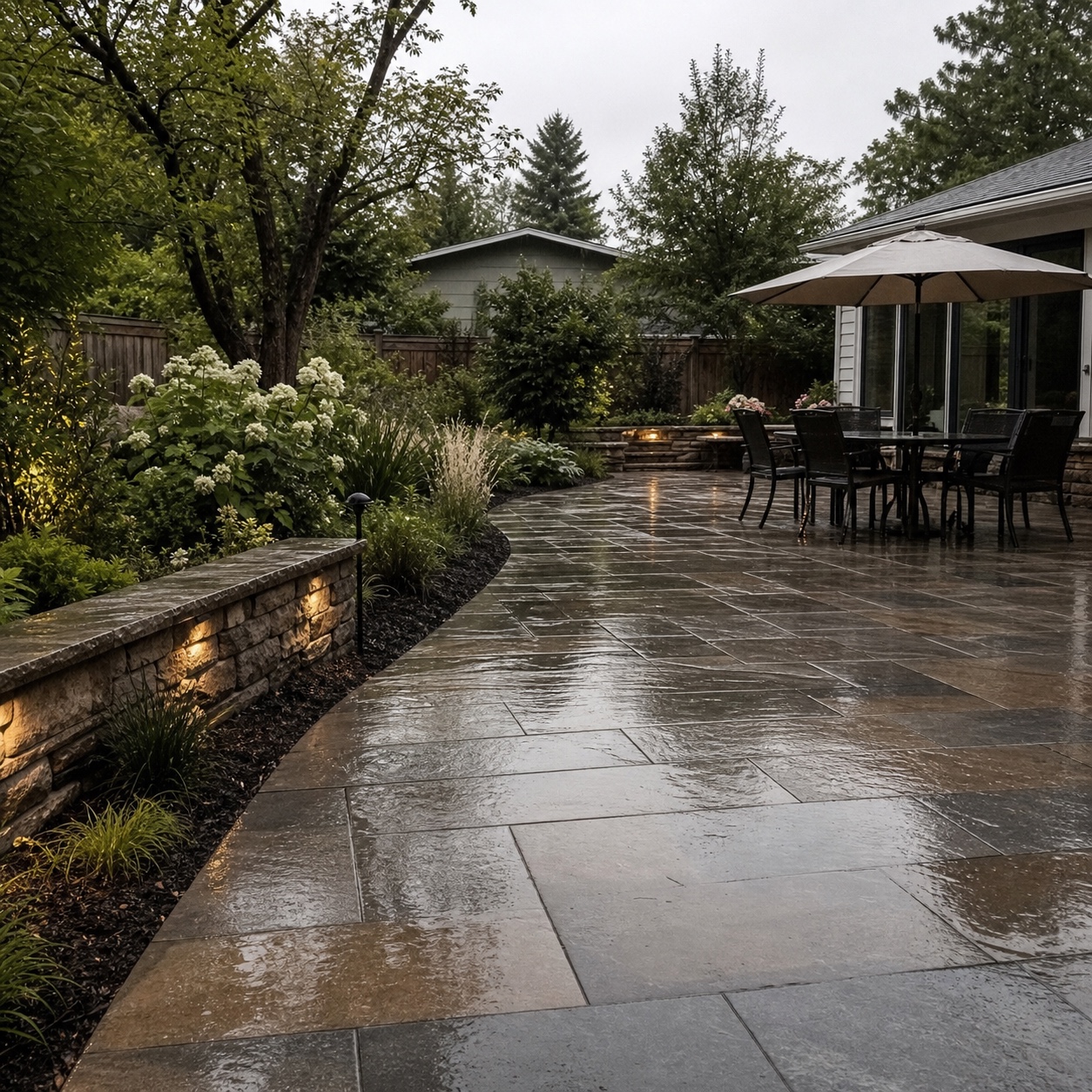
Drainage is exactly that kind of invisible infrastructure for a yard, and treating it as an afterthought is how an otherwise well-designed outdoor space quietly falls apart one storm at a time.
Why yard drainage belongs in the design plan
Curb appeal, usable patios, healthy planting beds, and foundation protection
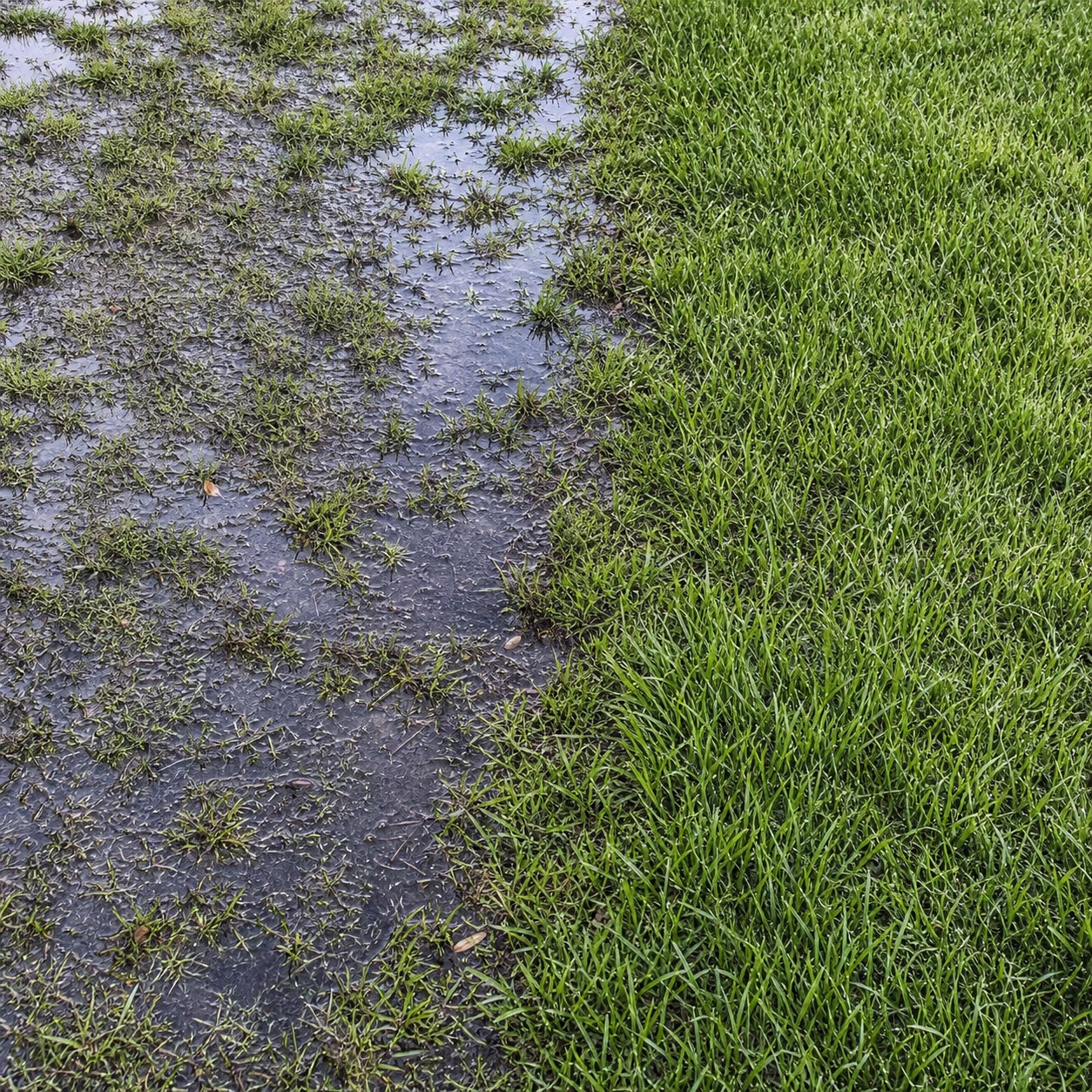
Water that has nowhere planned to go doesn’t stay contained to one corner of the yard. It floats mulch out of beds, turns grass into a spongy mess for days, keeps walkways slick long after the rain stops, and eventually finds its way toward the foundation, where it stains concrete and stresses the base of the house over time.
Every one of those outcomes undercuts a design choice you actually cared about, whether that was the planting scheme, the hardscape material, or the exterior finish itself.
I’ve watched a genuinely well-planned planting bed lose half its mulch and half its visual coherence after a single heavy storm, purely because nobody had checked where water actually traveled across that section of the yard before finalizing the layout. The plants themselves were fine. The design intent around them wasn’t protected.
Why water flow should be planned before hardscape and planting
Drainage decided after the hardscape is already in means working around fixed constraints instead of designing with them. A patio, driveway, or raised bed added without checking existing water flow can redirect runoff in ways that look fine on paper and cause real problems the first time it actually rains hard. Plan the water’s path first, then choose materials and planting that work with that path rather than against it.
This is the same sequencing mistake I see in interior renovations, where furniture layout gets locked in before anyone checks how light or traffic actually moves through the room. Fixing sequence after the fact always costs more than getting the order right from the start, and drainage is no exception.
Read the yard before choosing a drainage solution
Slopes, low spots, roof runoff, compacted soil, and soggy lawn areas
Every yard already has a drainage pattern, whether anyone designed it or not. Slopes carry water somewhere. Low spots collect it. Roof runoff concentrates volume at specific points along the foundation. Compacted soil from foot traffic or old construction slows absorption in ways that aren’t obvious until a section of lawn stays soggy for days after everything else has dried. Reading these patterns accurately is the entire foundation of any drainage plan that actually works.
Compacted soil is the pattern people miss most often, since it doesn’t announce itself the way a visible low spot does. A path worn by regular foot traffic, or an area where construction equipment sat years earlier, can absorb water at a fraction of the rate of the soil around it, and that difference only shows up once you’re specifically looking for it.
What to photograph during and after rain
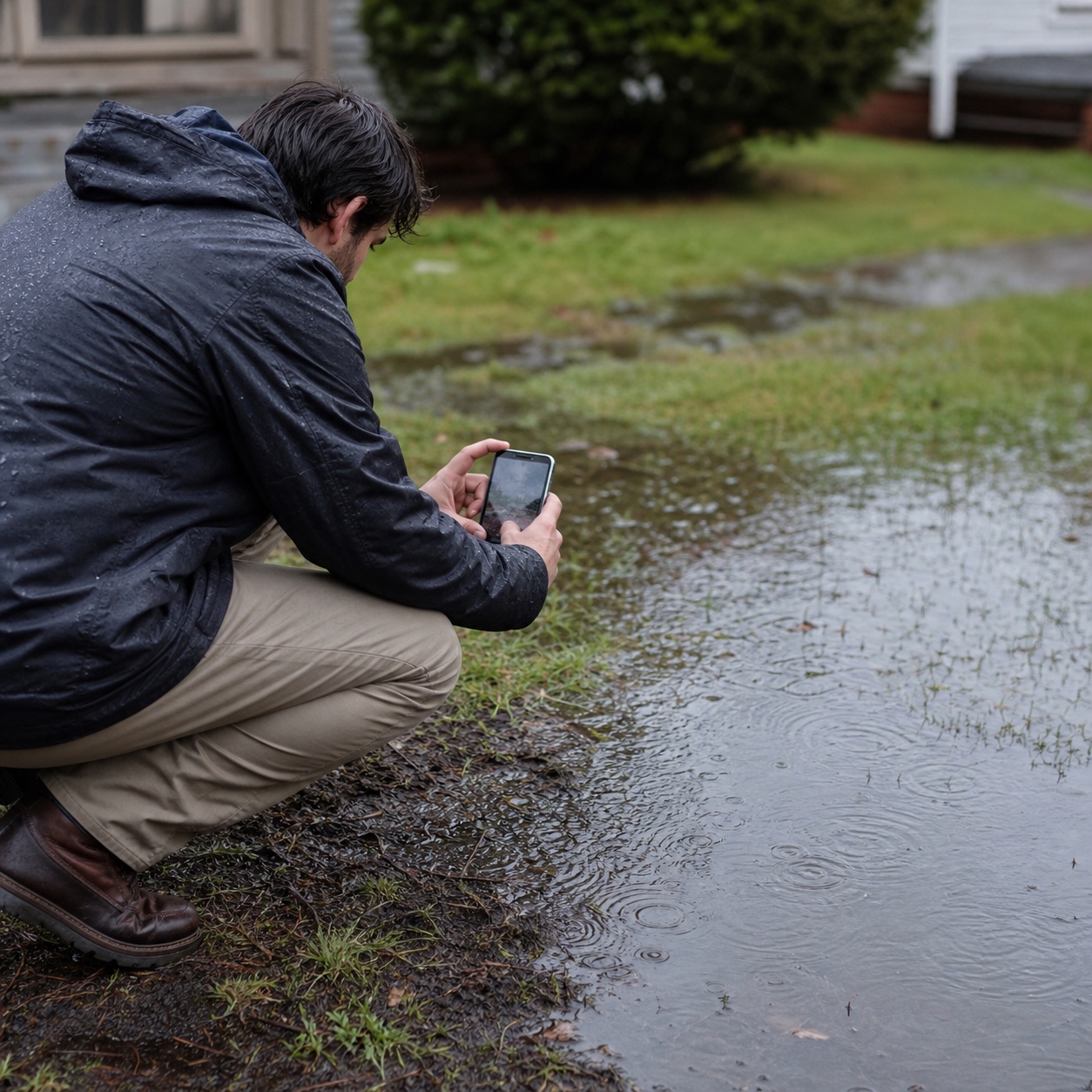
Watch the yard during an actual storm, not just after one. Where does water move fast, and where does it stall and pool? Photograph both moments, since the during-storm behavior and the after-storm puddles tell different parts of the same story. I treat this the way I’d treat a site visit for any exterior design project: the property tells you what it needs if you actually watch it under real conditions instead of guessing from a dry-day walkthrough.
Yard grading as the first design move
Moving water away from the house without an engineered look
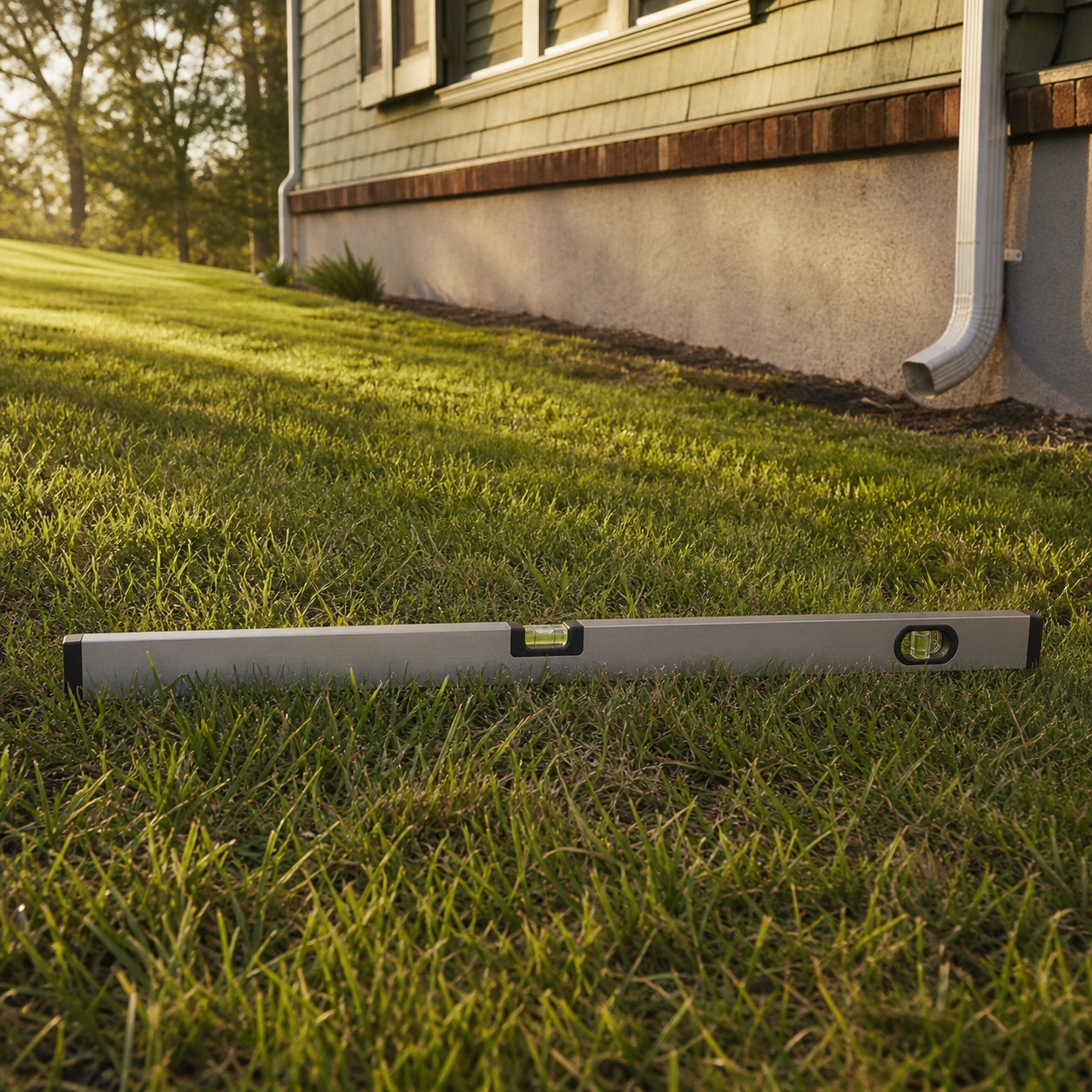
Grading is the single most impactful move in any drainage plan, and it’s also the one most likely to look heavy-handed if it’s done without design sensitivity. The goal is a slope subtle enough that a visitor never consciously registers it, while still moving water reliably away from the foundation. Overcorrected grading reads as a mound. Well-executed grading just reads as a yard that happens to work.
The subtlety is the whole design challenge here. A grade steep enough to move water effectively but gentle enough to disappear visually usually falls within a narrow range, and getting it wrong in either direction creates a different problem: too flat and water sits, too steep and the yard looks artificially sculpted instead of naturally sloped.
How grading affects patios, paths, and planting beds
Every hardscape element downstream of the grading plan inherits its water behavior. A patio set at the wrong elevation relative to the surrounding grade becomes a collection point no amount of surface drainage fully fixes. Get the grading right first, and paths, beds, and patios can be designed for appearance without fighting an uphill battle against water that has nowhere else to go.
Drainage solutions for yard areas that collect water
French drains, catch basins, channel drains, and downspout extensions
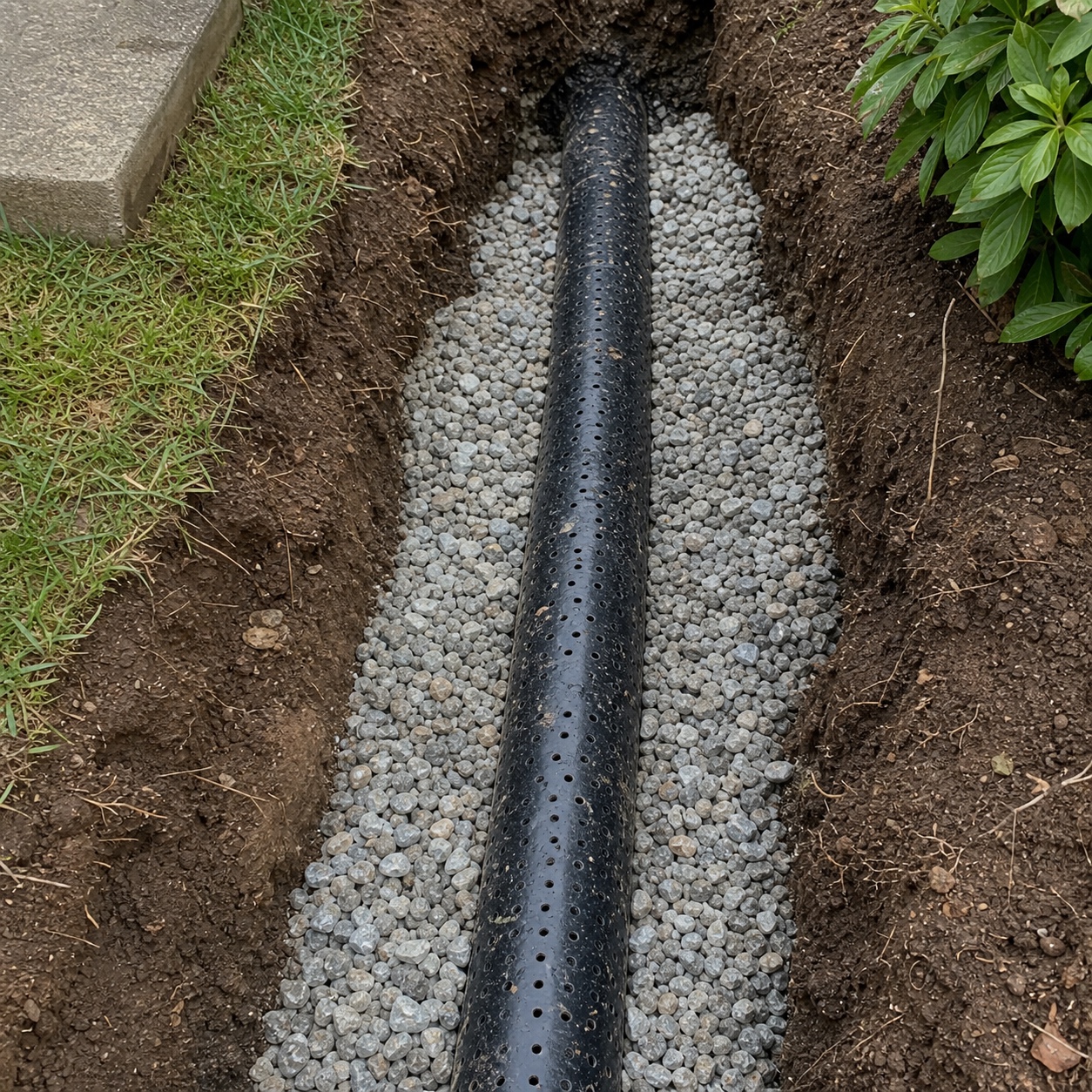
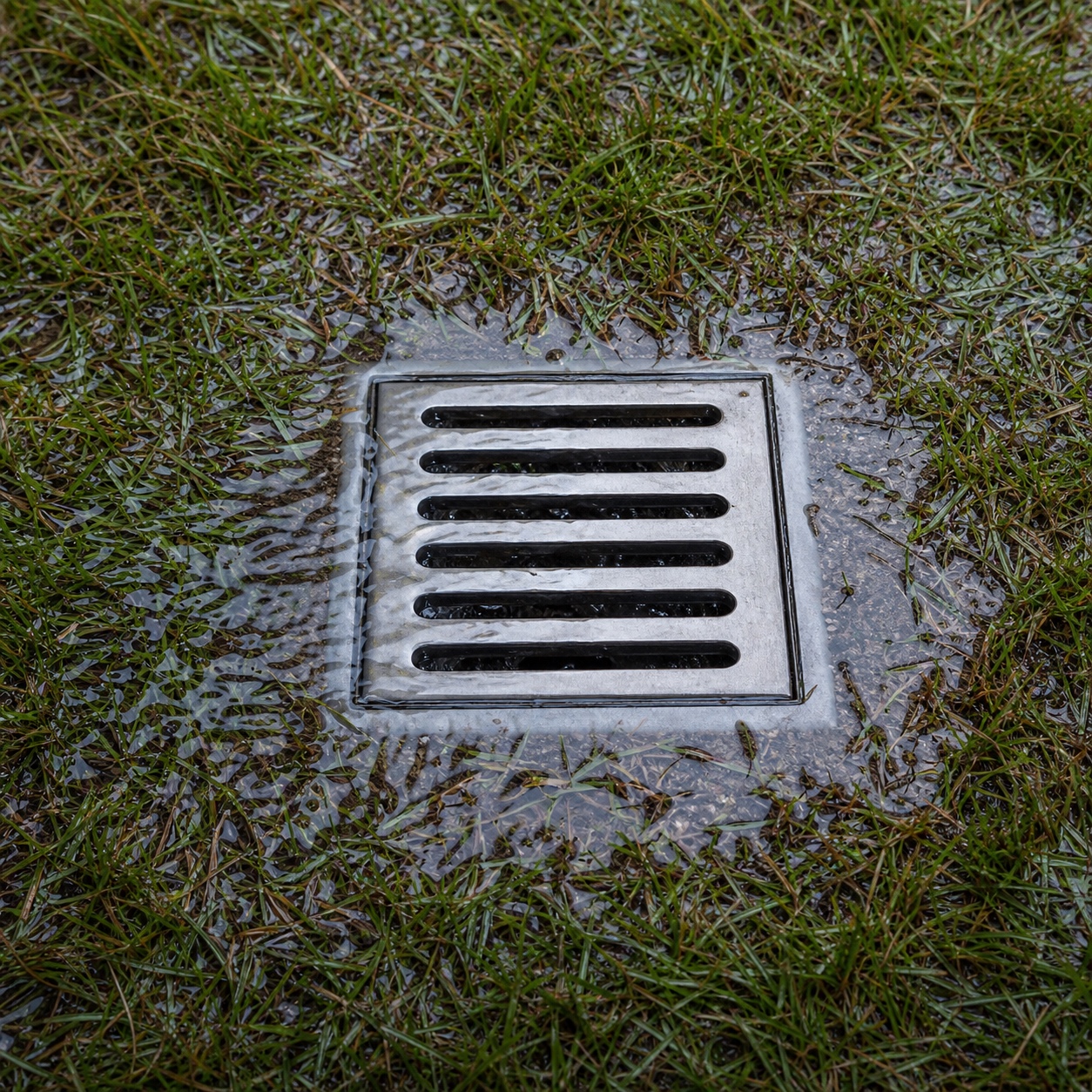
French drains move subsurface water away from trouble spots without any visible footprint once the ground settles back in. Catch basins handle concentrated flow in low areas, channel drains work well along driveways and patio edges where surface runoff collects, and downspout extensions push roof runoff further from the foundation before it has a chance to pool. Each solves a different specific problem, and mixing them up wastes money without fixing the actual issue.
I’ve seen homeowners install a French drain to solve what was actually a surface runoff problem, essentially treating the wrong layer of the issue entirely. The system worked exactly as designed and the yard still flooded, because subsurface drainage was never the actual bottleneck in the first place.
When hidden systems are better than visible fixes
For a yard where the design intent is clean lines and minimal visual clutter, hidden systems protect that aesthetic far better than a visible ditch or berm ever could. I’ve seen homeowners in flood-prone regions get real value from working with a specialist team like Sunrise Drainage in Tampa specifically because evaluating which hidden system actually fits a given site, rather than defaulting to whatever’s most familiar, is exactly the kind of judgment call worth getting a second opinion on before committing.
Local knowledge matters more here than most homeowners expect. A drainage approach that performs well on a sloped, well-draining lot can fail completely on flat terrain with dense clay soil, and a specialist who’s worked the specific region already knows which failure modes to design around before construction even starts.
Dry creek bed landscaping for visible drainage
Using stone, slope, and planting to turn runoff into a feature
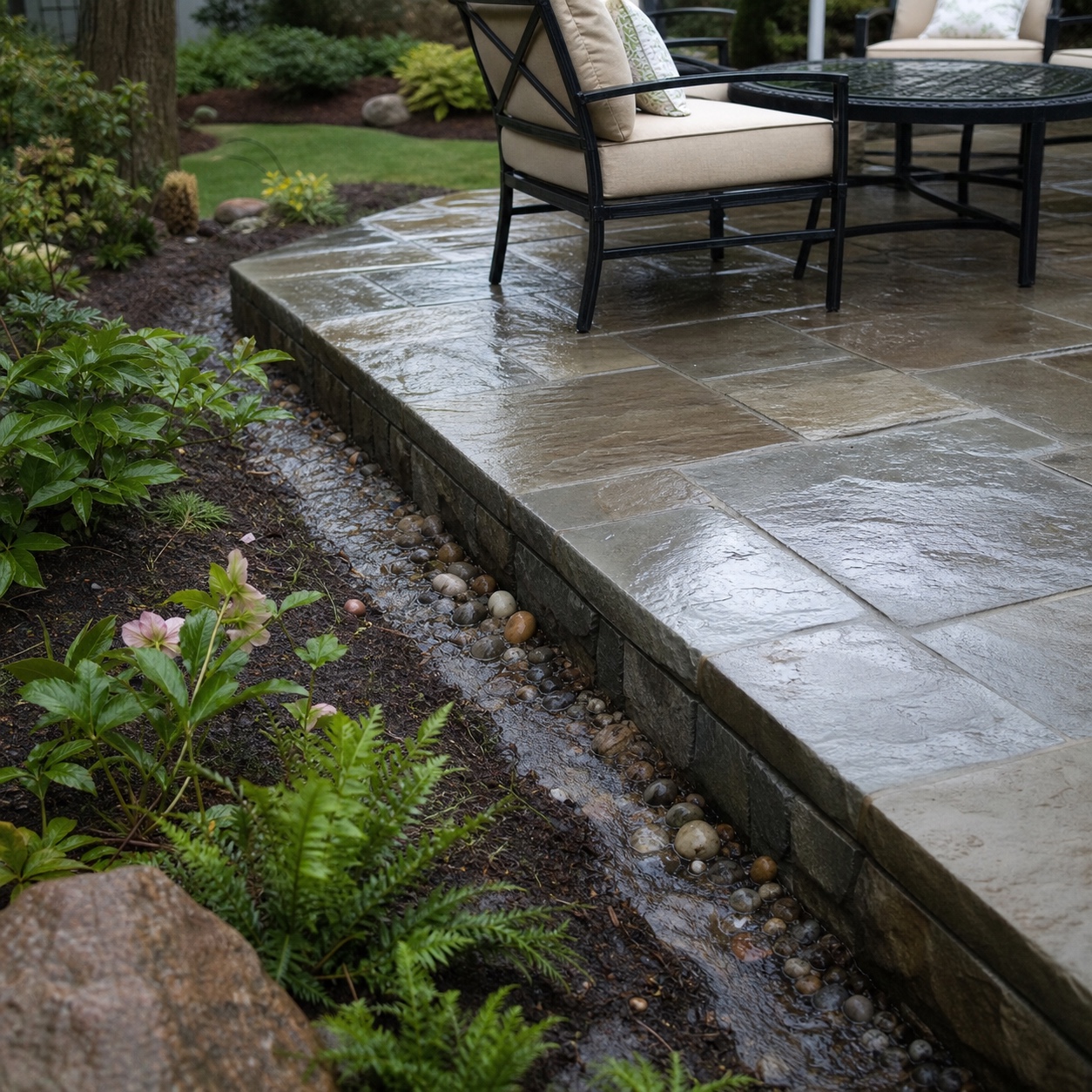
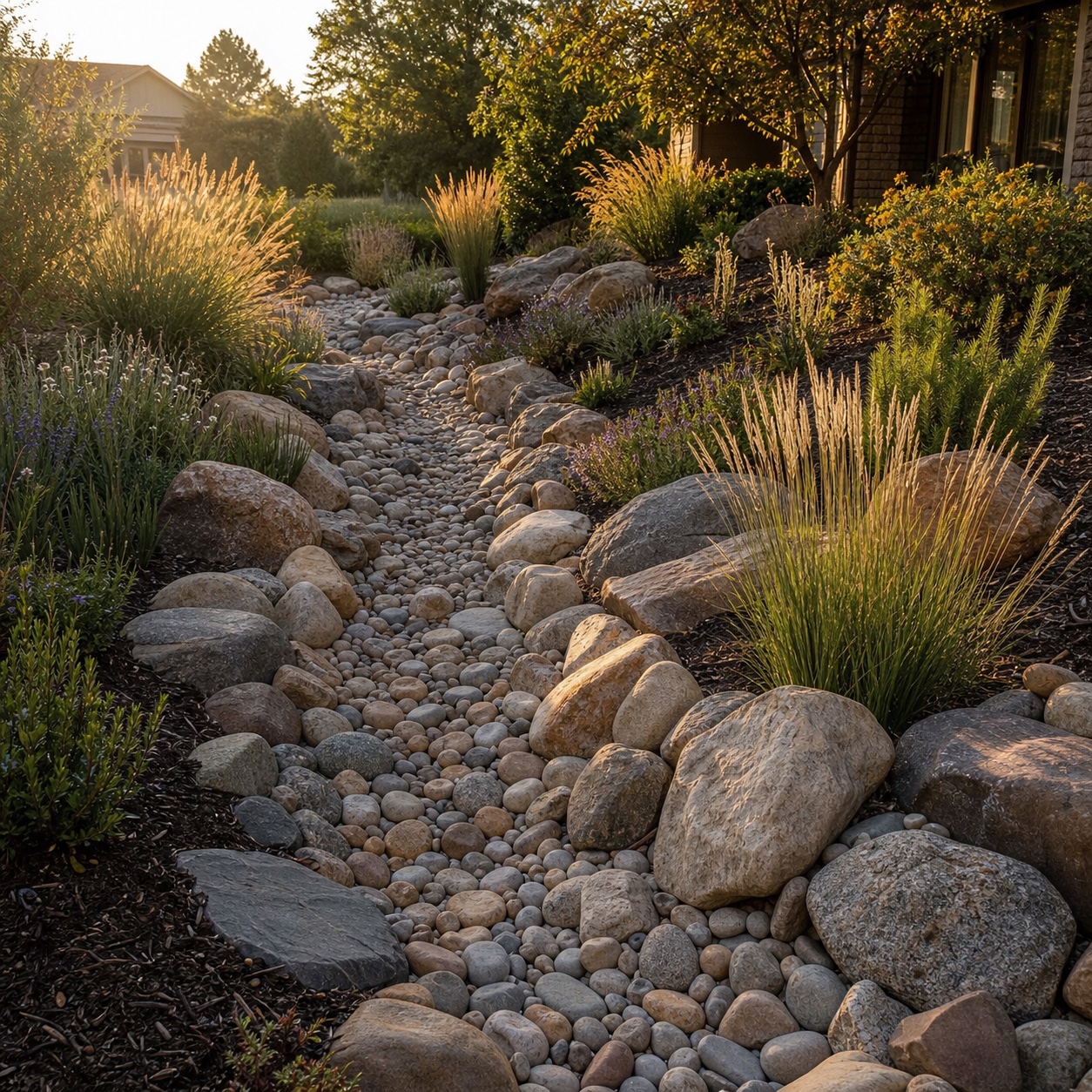
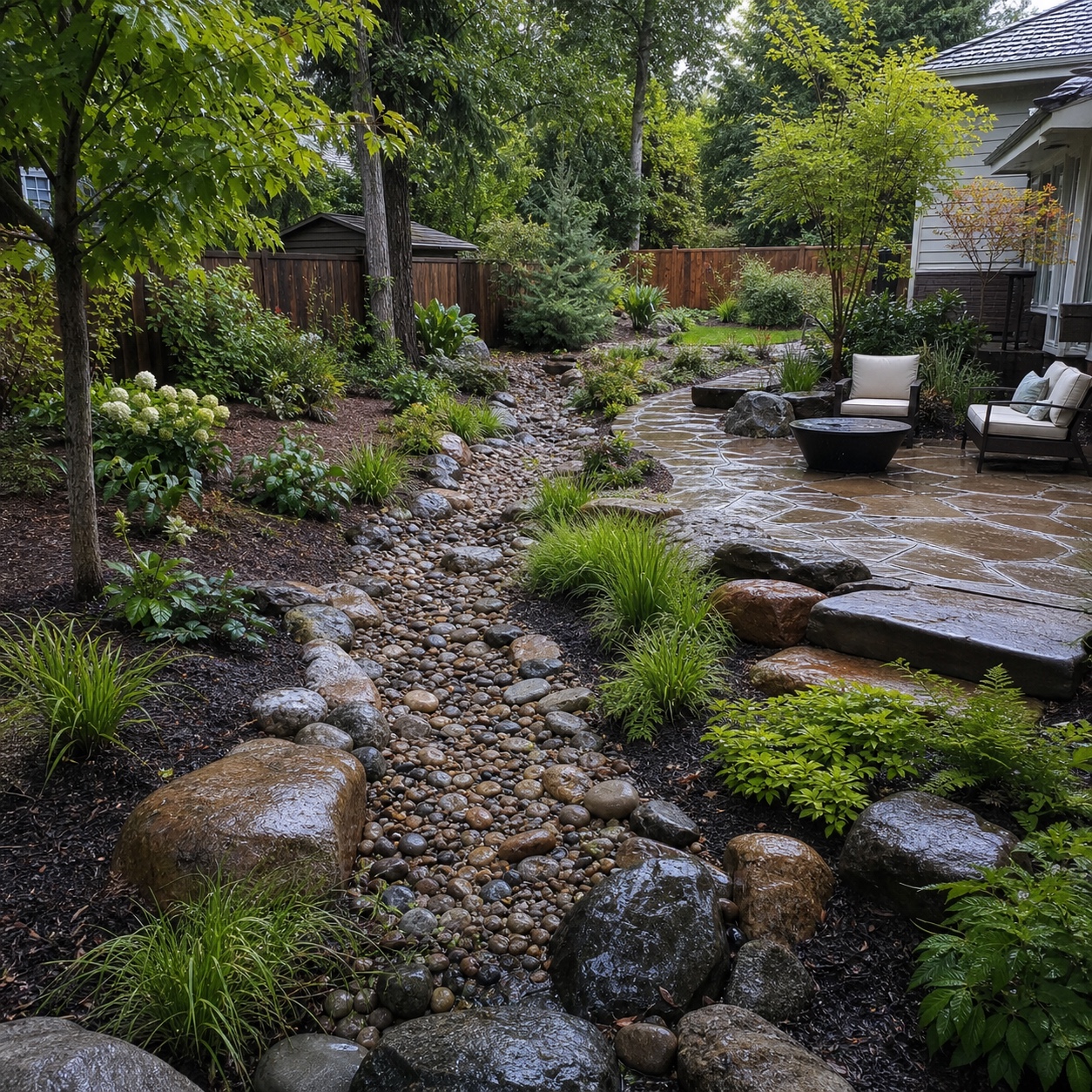
A dry creek bed does the opposite of a hidden system: it makes drainage a visible, intentional part of the landscape rather than something to conceal. Done well, it reads as a deliberate design feature even on the driest day of the year, using varied stone size, a believable slope, and planting along the edges to look like something water actually shaped rather than something installed.
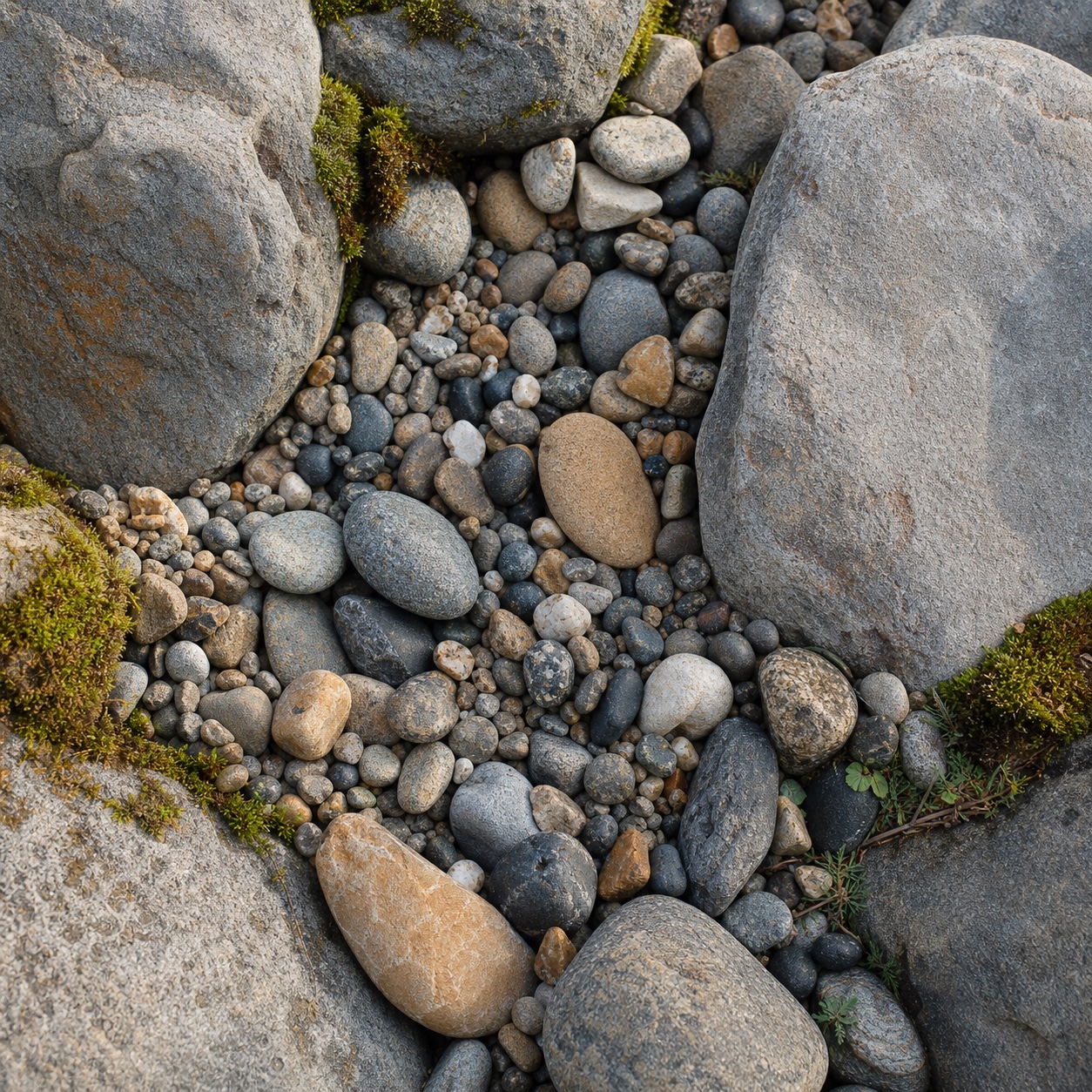
The best dry creek beds I’ve seen borrow directly from how real waterways actually behave: wider at bends, narrower on straightaways, with larger stones settled at points where flow would naturally slow. That level of observation is what separates a convincing feature from an obvious landscaping trench with rocks in it.
Mistakes that make a dry creek bed look artificial
Uniform stone size is the fastest way to make a dry creek bed read as fake, since real water-carved beds show a natural mix of sizes settled by actual flow. A perfectly straight run undercuts the illusion just as badly. Real creeks curve, and a dry creek bed that doesn’t at least gesture toward that curvature looks like a drainage trench wearing a landscaping costume.
Swales and rain gardens for softer water management
Planted swales, rain gardens, native plants, and soil absorption
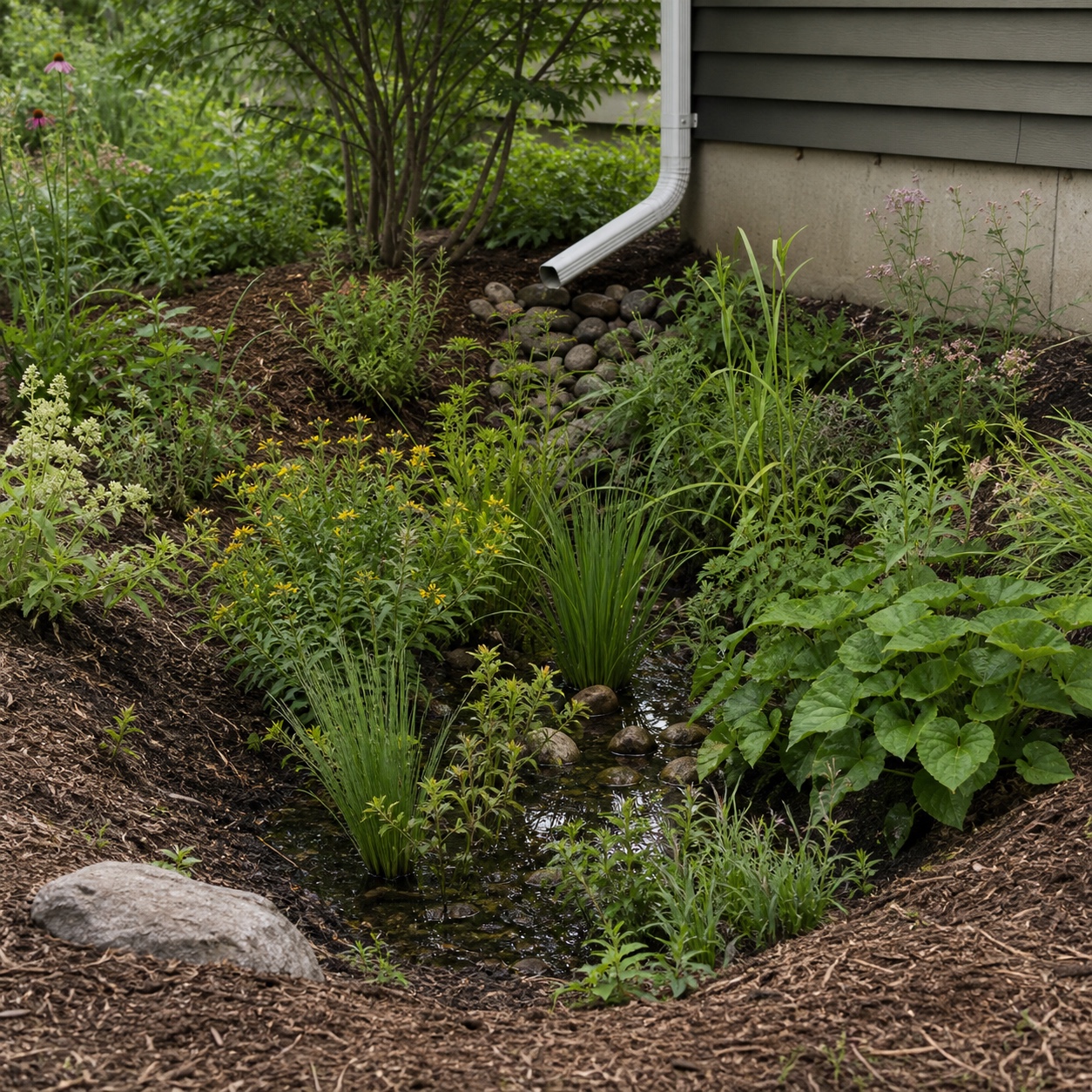
A planted swale is a shallow, gently sloped channel that moves water slowly enough for soil and root systems to absorb a meaningful portion of it along the way. Rain gardens take this further, using native, water-tolerant plants in a slight depression specifically designed to catch and filter runoff rather than just channel it elsewhere. Both approaches turn a drainage necessity into a genuine planting opportunity instead of a purely functional afterthought.
I like recommending rain gardens specifically because they solve two problems with one design move: they manage water and they give a yard a planting feature with genuine seasonal interest, which a purely functional drainage channel never offers on its own.
Where planting helps and where it cannot replace drainage
Water-loving planting softens and slows water movement, but it doesn’t substitute for grading or hidden drainage on a site with a genuine volume or slope problem. Treat swales and rain gardens as a complement to structural drainage decisions, not a replacement for them, especially anywhere water regularly arrives in real volume rather than a light, manageable trickle.
Permeable pavers and patio drainage
Permeable patios, gravel joints, and channel drains
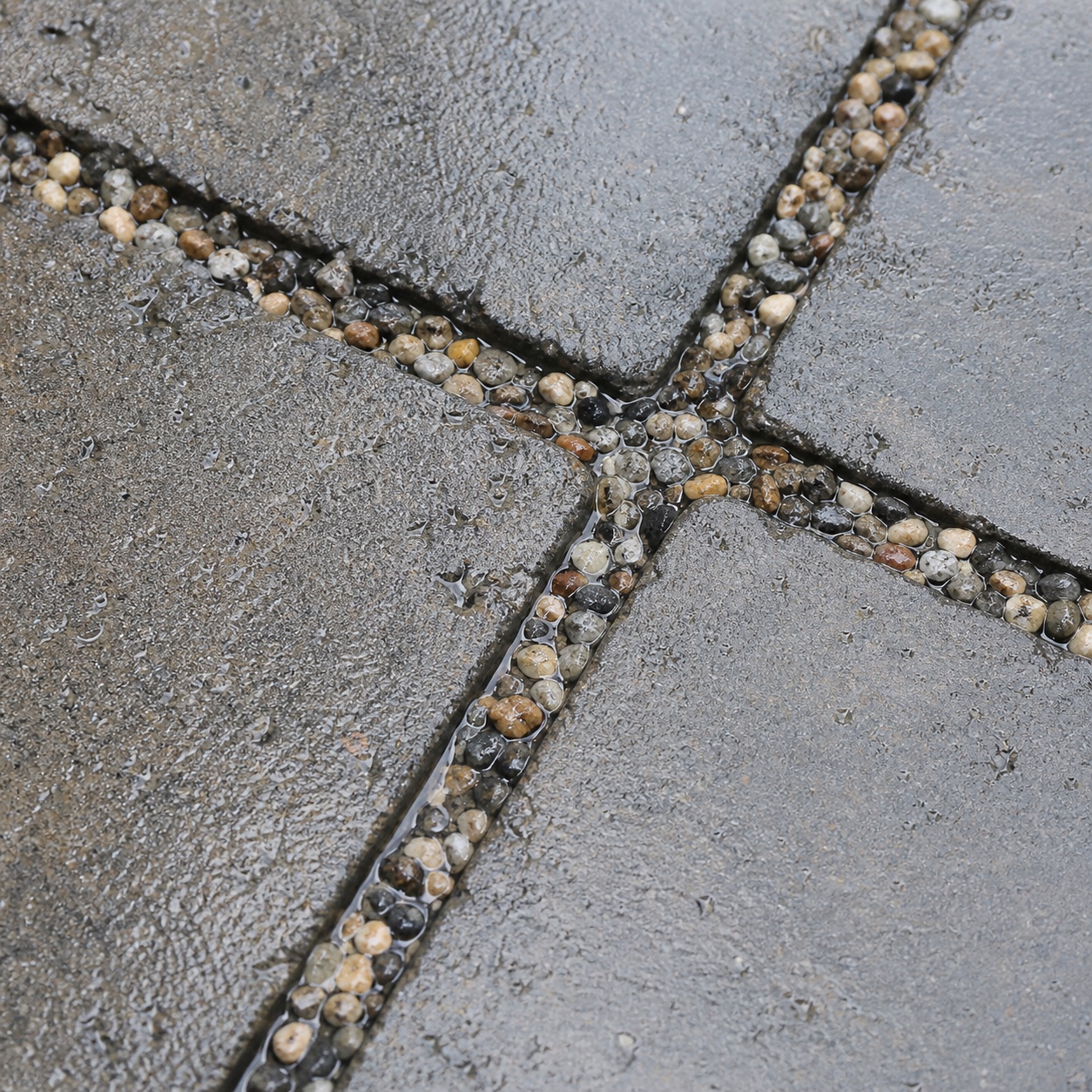
Permeable paving lets water soak through the surface itself instead of sheeting across it toward whatever low point happens to be nearby. Gravel-jointed pavers, permeable concrete, and properly built paver bases all reduce runoff volume at the source, which takes real pressure off whatever drainage system handles the rest of the property.
The base construction underneath permeable pavers matters just as much as the surface material, and it’s the part most easily skipped by an installer trying to save time. A properly built aggregate base gives water somewhere to actually go once it passes through the surface. Skip that layer and the pavers look permeable while functioning almost exactly like solid concrete.
How hardscape choices change runoff volume
Every square foot of solid, non-permeable hardscape added to a property increases the volume of water the rest of the drainage plan has to handle. A driveway or patio expansion that looks like a purely aesthetic decision is also, quietly, a hydrology decision, and it deserves to be weighed as both at once rather than treated as a separate concern from drainage entirely.
Protect planting beds from washout
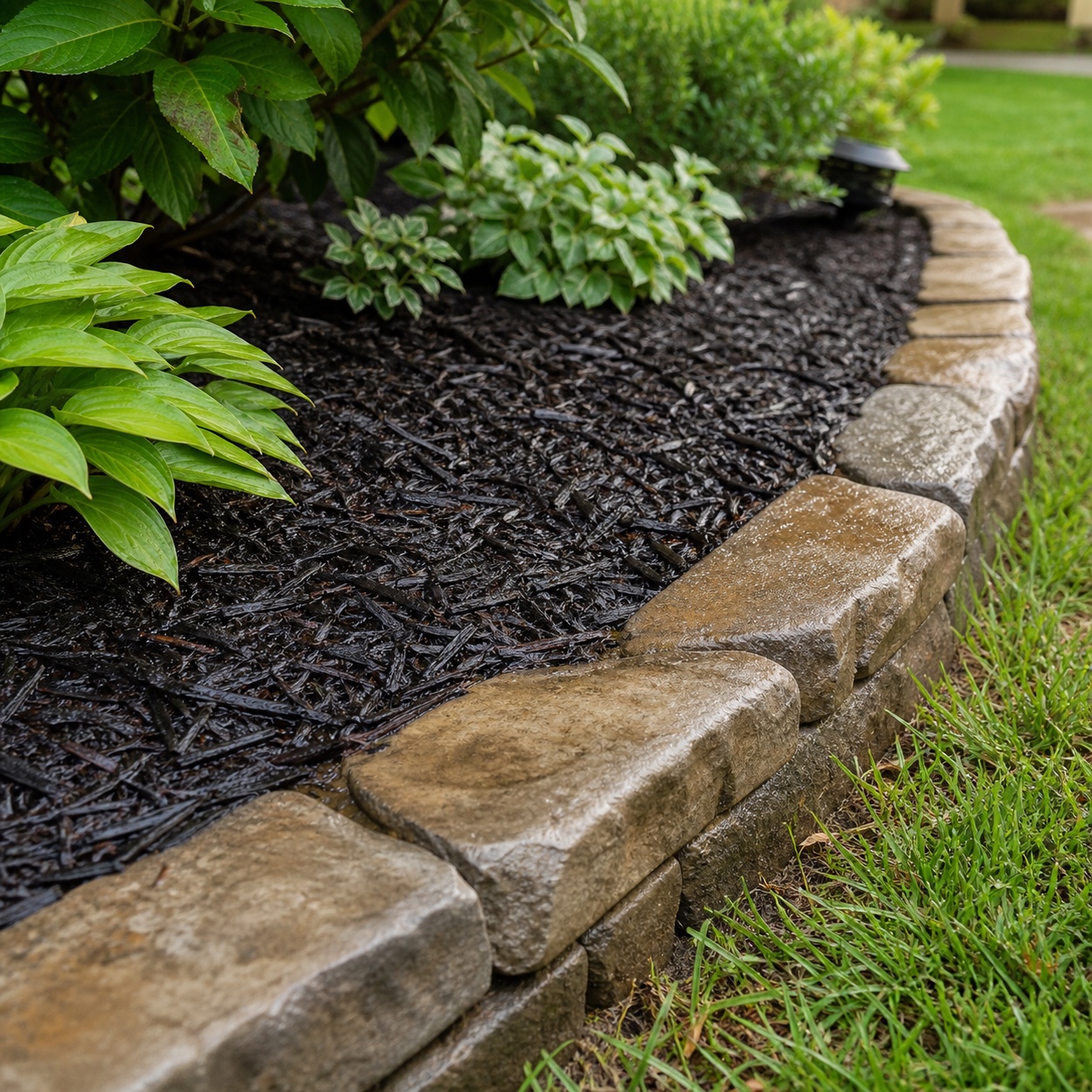
Mulch and soil erosion after heavy rain is one of the most visible, frustrating drainage failures precisely because it undoes finished planting work almost immediately. Edging that’s slightly raised above grade, mulch kept to a reasonable depth rather than mounded, and a stone band along the downhill edge of a bed all interrupt washout before it starts. A controlled overflow path, somewhere specific for excess water to go, beats hoping a bed simply absorbs everything thrown at it during a real storm.
I treat overflow paths as mandatory rather than optional on any bed positioned downhill from a larger runoff area. Hoping a planting bed will simply absorb whatever arrives is a bet that fails exactly when a storm is heavy enough to matter most.
Foundation drainage without killing curb appeal
Downspout routing, soil slope, and planting distance
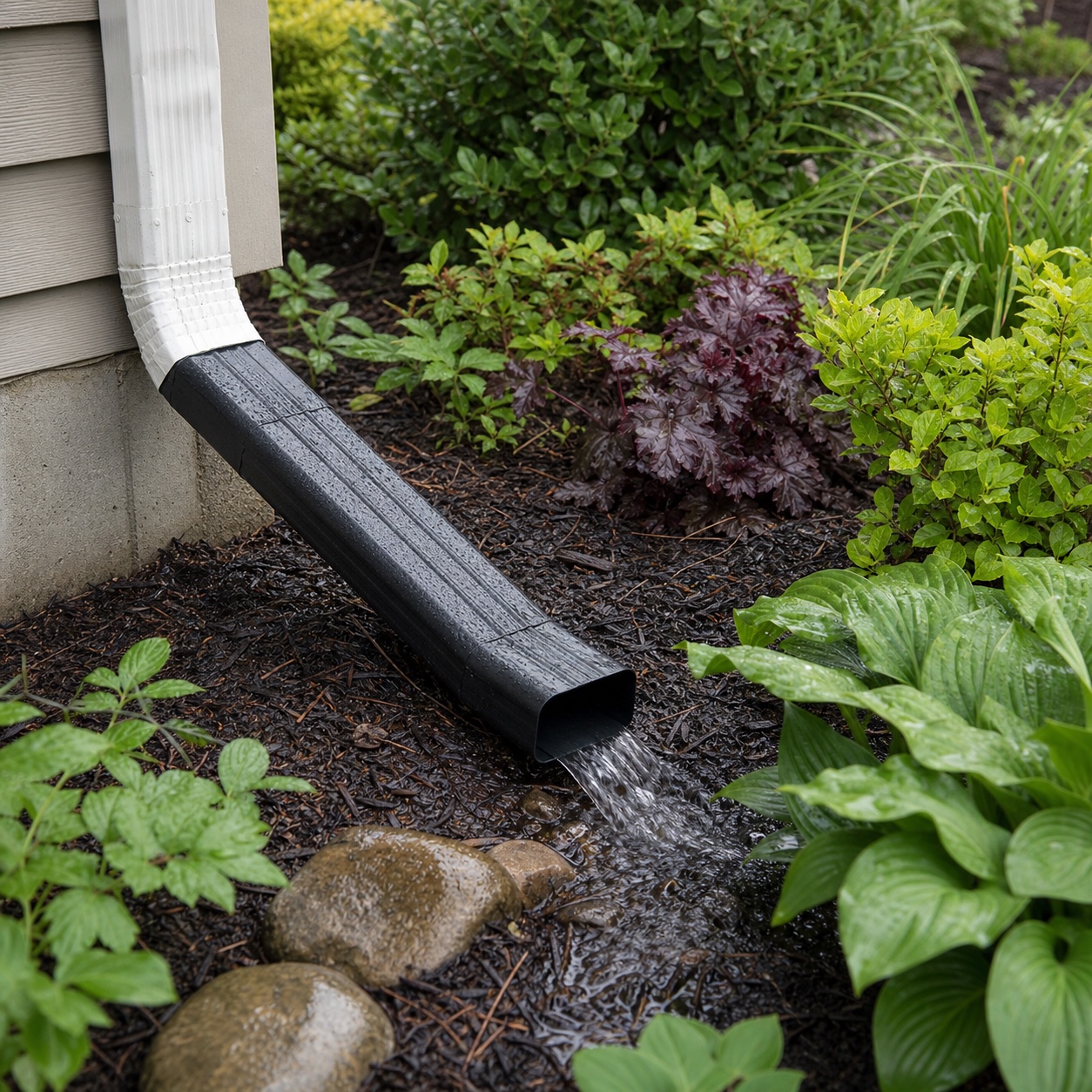
Roof runoff concentrated too close to the foundation is one of the most common and most fixable drainage problems on any property. Gutter and downspout improvements that route water further from the base of the house, paired with soil that slopes away rather than toward the foundation, solve most of this without requiring anything visually disruptive. Keep planting a reasonable distance from the foundation too, since root systems working close to the base can interfere with both drainage and the structure itself over time.
This is one of the cheapest fixes on this entire list relative to the damage it prevents. A downspout extension costs very little and takes an afternoon to install, while the water damage from years of concentrated roof runoff against a foundation can mean a genuinely expensive repair down the line.
Warning signs: standing water, stains, and shifting pavers
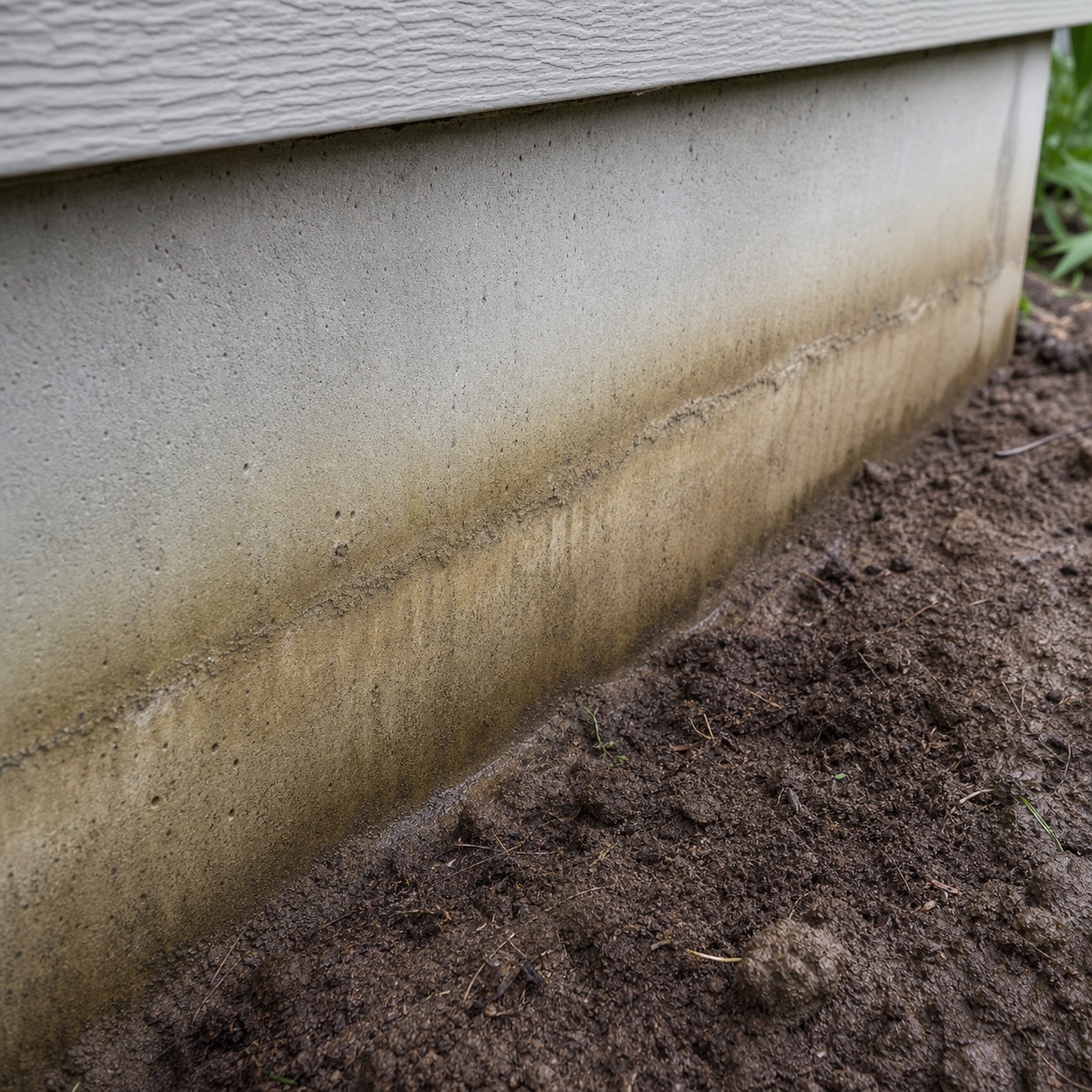
Standing water near the foundation, visible staining on concrete or siding, soft or eroded soil, and pavers that have started shifting are all signs the existing drainage plan is losing the fight. None of these show up overnight. They build gradually enough that catching them early, before a full pathway needs replacing, makes the eventual fix dramatically smaller.
Walk the property after every significant storm for the first year in a new home or after any major landscape renovation, specifically looking for these signs rather than waiting for something dramatic enough to force the issue. A five-minute walkthrough a few times a season catches problems while they’re still cheap to fix.
Yard drainage checklist for renovations
Work through this before finalizing any yard or landscape renovation plan:
• Patio and driveway: Confirm grade and material won’t concentrate runoff toward the house.
• Lawn areas: Note any spots that stay soggy days after rain, before designing around them.
• Garden beds: Plan edging and overflow paths before finalizing planting layout.
• Fencing and retaining edges: Check whether they’ll block or redirect existing water flow.
• Lighting and utilities: Confirm drainage lines won’t conflict with planned fixture placement.
• Root systems: Consider how mature plant roots near drainage lines will behave in five years.
• Future maintenance: Choose systems the household can actually keep clear and functional long-term.
FAQ
What is the best drainage solution for a soggy yard?
It depends on the specific cause. Compacted soil often responds well to aeration and regrading, concentrated low spots benefit from a French drain or catch basin, and broad saturation across a lawn area may need a combination of grading and a planted swale. Diagnosing the actual cause matters more than picking a popular fix first, since the wrong solution can leave the real problem untouched while adding cost.
How do you fix standing water in a yard?
Start by tracking exactly where the water collects and where it should be flowing instead. Regrading addresses volume moving in the wrong direction, while a catch basin or French drain handles water that’s already pooling in a low spot with nowhere else to go. Photograph the pattern across several storms before committing to a fix, since a single observation can mislead.
Are French drains good for landscape design?
Yes, specifically because they disappear once installed and settled, leaving no visible footprint on the finished landscape. They work best for subsurface water issues rather than heavy surface runoff, which usually needs a channel drain or grading solution instead, so match the system to the actual water behavior rather than defaulting to the most familiar option.
What is the difference between a swale and a French drain?
A swale is a shaped, planted surface channel that slows and partially absorbs water as it moves. A French drain is a buried perforated pipe that carries subsurface water away entirely. Swales work with visible landscape design, while French drains work invisibly beneath it, and many well-drained properties end up using both for different parts of the same site.
Do permeable pavers help with yard drainage?
Yes, by letting water soak through the paved surface itself rather than running off toward a low point. They reduce the total runoff volume the rest of a property’s drainage system needs to manage, which matters most on properties adding new hardscape where every additional solid square foot increases pressure on the existing system.
Can a rain garden fix drainage problems?
A rain garden helps manage moderate runoff by catching and filtering it through water-tolerant planting, but it isn’t a substitute for grading or structural drainage on a site with a genuine volume problem. Treat it as one part of a broader plan rather than a complete fix on its own, particularly on flatter sites where water has fewer natural paths to begin with.
The best-looking yard after a storm is rarely the one with the most dramatic landscaping. It’s the one where water had somewhere specific to go, decided before anyone chose a single plant or paver. Read the site honestly, grade it before you build on it, and treat drainage as a design decision instead of an afterthought, and the landscape holds its intended appearance through every season, not just the dry ones.
I’ve come to think of a good drainage plan as the least visible, most valuable line item in any landscape renovation. Nobody photographs a swale for its own sake, but everyone notices, without quite knowing why, that a well-drained yard still looks composed after the kind of storm that leaves the neighbor’s yard looking like an afterthought.
- 38shares
- Facebook0
- Pinterest38
- Twitter0
- Reddit0