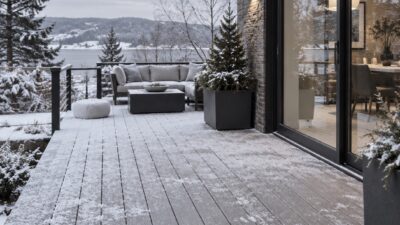
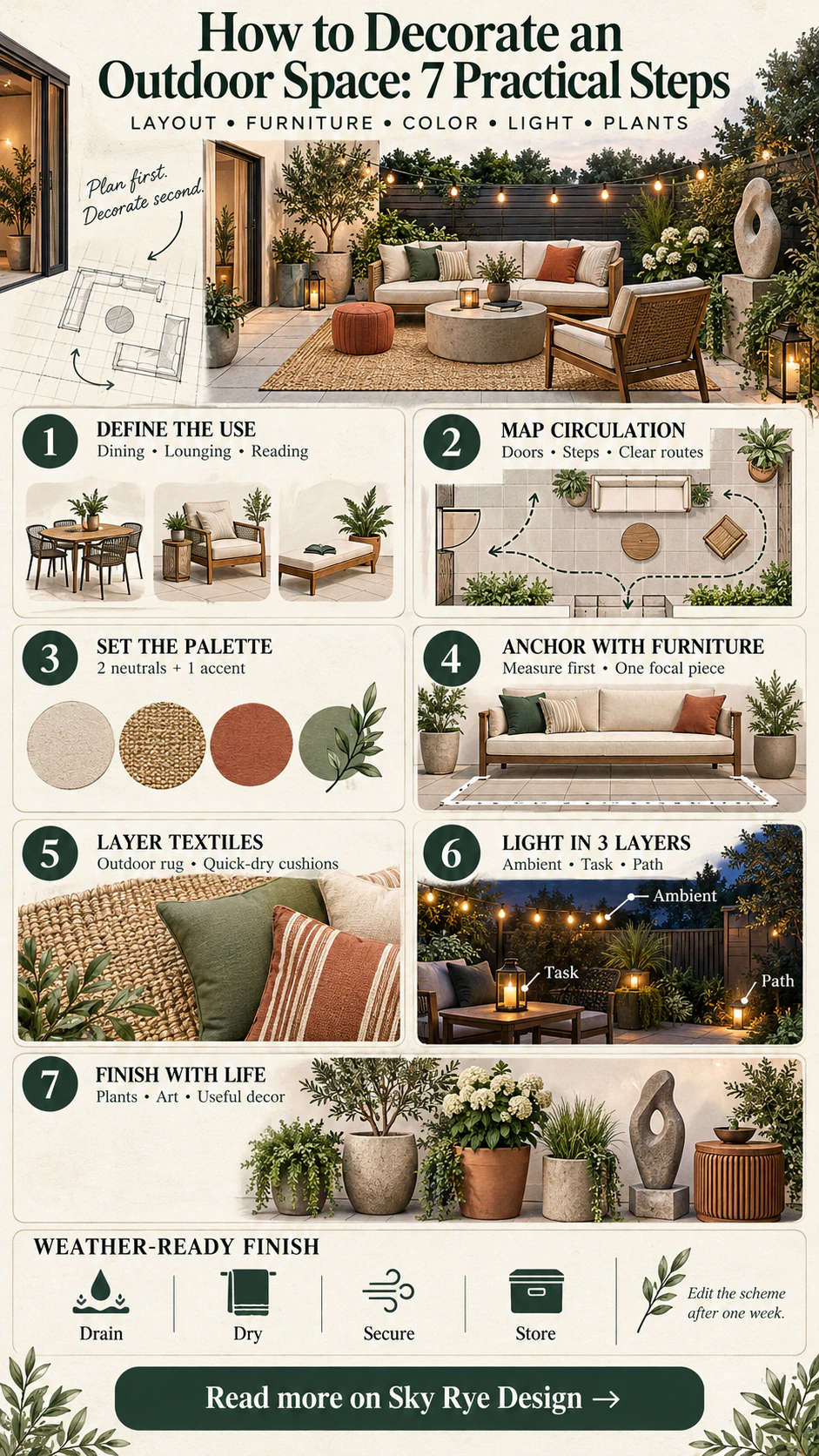
To decorate an outdoor space, begin with how it will be used, then build the scheme in layers: layout, furniture, color, textiles, lighting, plants, and personal details. This order works for a patio, deck, balcony, or backyard because it keeps decorative choices connected to circulation, comfort, and weather exposure.
A successful outdoor room does not need many objects. It needs a clear focal point, enough open space to move around, and a small set of colors and materials repeated across the area. The following seven-step process is for an existing space that needs styling rather than a complete landscape redesign.
- How to decorate an outdoor space at a glance
- 1. Decide what the outdoor room needs to do
- 2. Choose a style without turning the space into a theme set
- 3. Plan furniture around movement and conversation
- 4. Layer cushions and an outdoor rug carefully
- 5. Create three layers of outdoor lighting
- 6. Add plants according to light, water, and maintenance
- 7. Finish with art and functional decor
- Weatherproofing checklist before the space is finished
- Common outdoor decorating mistakes
- Outdoor decorating FAQ
- Edit the scheme after one week
How to decorate an outdoor space at a glance
| Step | Decision to make | Useful test |
|---|---|---|
| 1. Define the use | Dining, lounging, reading, cooking, or several zones | Name the activity before buying decor |
| 2. Map circulation | Entrances, doors, steps, and routes through the space | Walk every route without moving a chair |
| 3. Choose a direction | One style, two neutrals, and one accent color | Check the view from inside the house |
| 4. Place furniture | An anchor piece and correctly scaled supporting pieces | Measure before ordering |
| 5. Add soft layers | Outdoor rug, cushions, shade, and throws | Confirm fabric and drying requirements |
| 6. Plan lighting | Ambient, task, and path light | Review the space after dark |
| 7. Finish with life | Plants, art, and a few personal objects | Remove anything without a role |
1. Decide what the outdoor room needs to do
Write down the two activities that matter most. A dining patio needs a stable table, chairs that can be pulled out, useful light over the table, and a route to the kitchen. A reading balcony needs a comfortable seat, shade, a side table, and wind-resistant accessories. A social lounge needs seats angled toward one another rather than arranged only to face the view.
If the area must support several activities, divide it into zones with furniture orientation, an outdoor rug, planters, or lighting rather than filling it with partitions. Keep the main route clear and avoid placing furniture where it competes with an outward-swinging door, a grill, steps, or access to storage. For a project that still needs structural planning, drainage, shade, or built-in features, start with this broader guide to designing an outdoor living space before decorating it.
Use the view from indoors as a design test
Stand at the window or door used most often and identify the first thing the eye meets. That sightline deserves one deliberate feature: a shapely chair, a planted container, a small tree, an outdoor artwork, or the warm glow of a lantern. Move bins, spare pots, hoses, and furniture backs out of this view where possible. The result will look more composed from both sides of the glass.
2. Choose a style without turning the space into a theme set
Use the architecture of the house as the starting point, then choose a looser design direction. Coastal can mean pale wood, woven texture, and washed blue rather than shells on every surface. Modern can mean simple silhouettes and a restrained palette without making the space stark. A cottage garden can mix weathered finishes and abundant planting while still keeping pathways and furniture orderly.


A practical rule is to repeat two materials already visible on the exterior. Black window frames might lead to black lanterns and slim metal furniture. Warm brick can be echoed with terracotta pots and rust-colored cushions. This connection is more convincing than buying a complete matching collection. For more ways to connect the patio to the building, see these ideas for a patio that complements the home’s aesthetic.
Build a small outdoor color palette
Choose two quiet base colors and one accent. The base colors belong on large or expensive pieces; the accent can appear on cushions, glazed pots, flowers, or a small table. Green planting already acts as a strong color, so a terrace surrounded by foliage may need less added contrast than an exposed roof deck or paved courtyard.


Repeat the accent in at least three places, but vary the scale. A blue cushion, a narrow blue rim on a planter, and a few blue flowers will feel connected without looking overmatched. Compare samples outside at the time of day when the space is used; strong sun, deep shade, and warm evening light can change a color substantially.
Change the layer, not the whole scheme, by season
Keep the furniture and main palette stable, then switch smaller layers. Spring may call for fresh foliage and a lighter textile; summer for shade and quick-drying fabrics; autumn for a warmer accent and an extra throw; winter for weatherproof greenery and light. Store only items that are clean and fully dry, and do not leave decorative objects outside if freezing, wind, or prolonged moisture will damage them.


7 outdoor room styles and layout plans
These seven outdoor room ideas show how the same decorating principles adapt to different architecture and moods. Compare the furniture scale, sightlines, circulation, planting, and balance of hard and soft materials—not just the color palette.
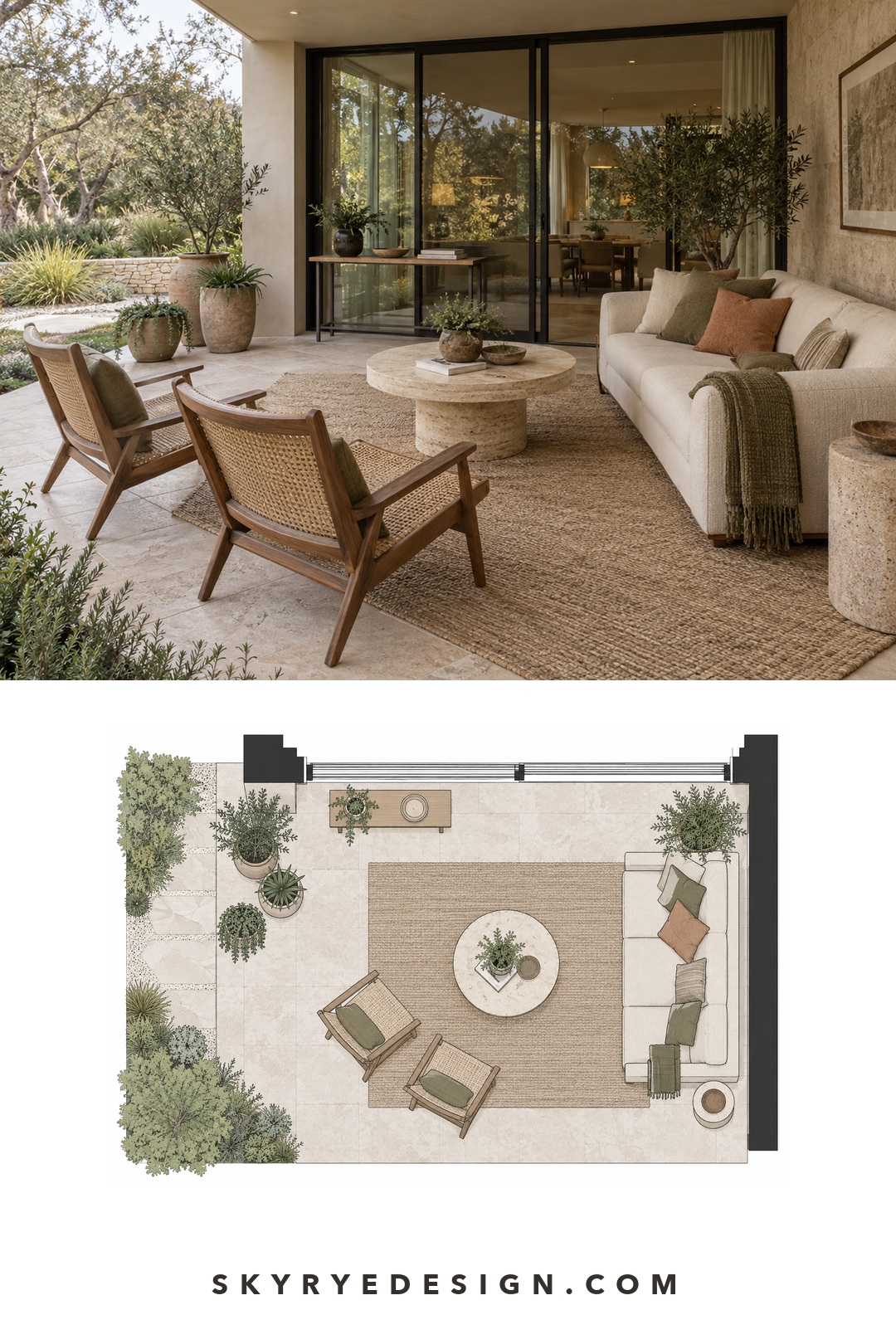
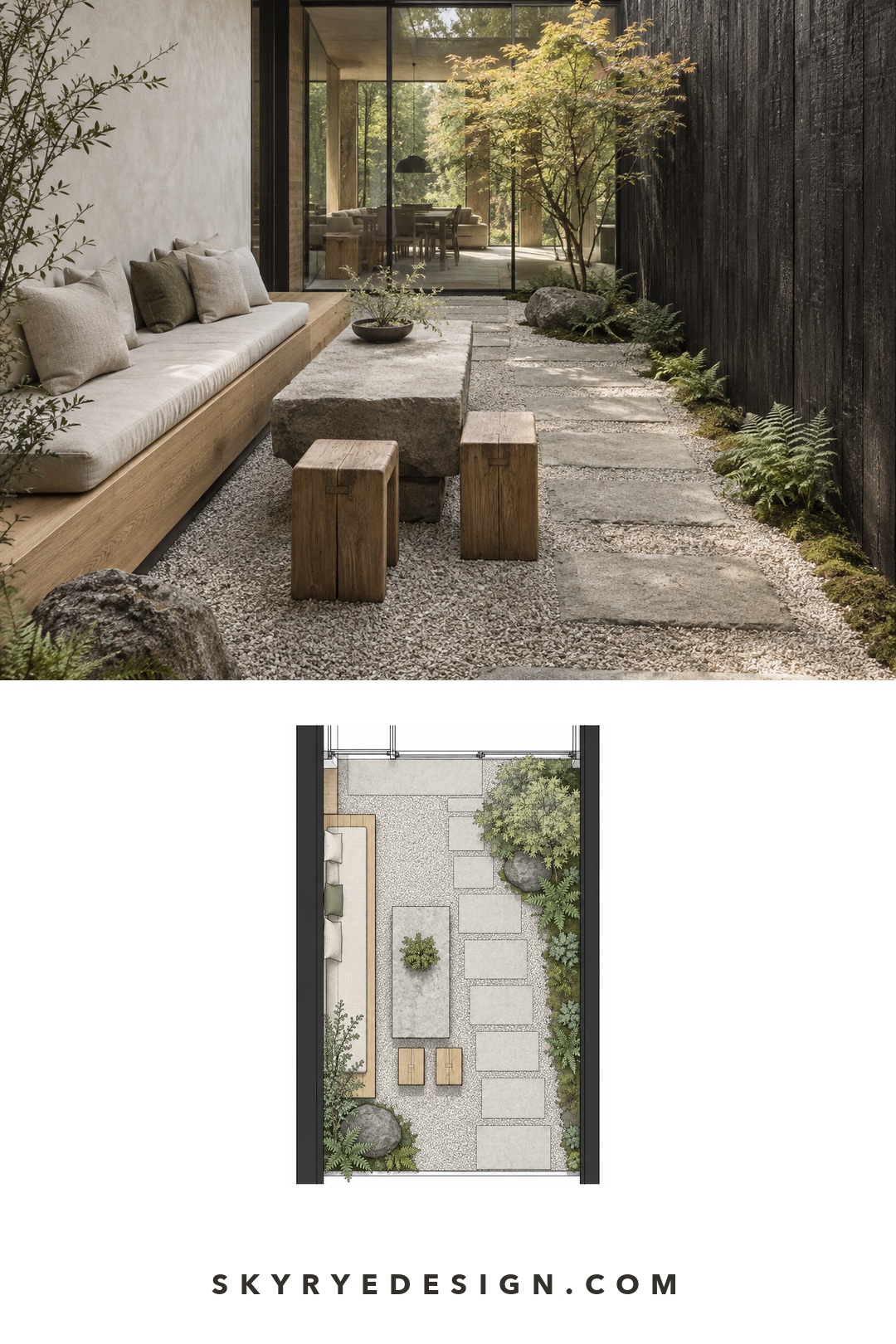
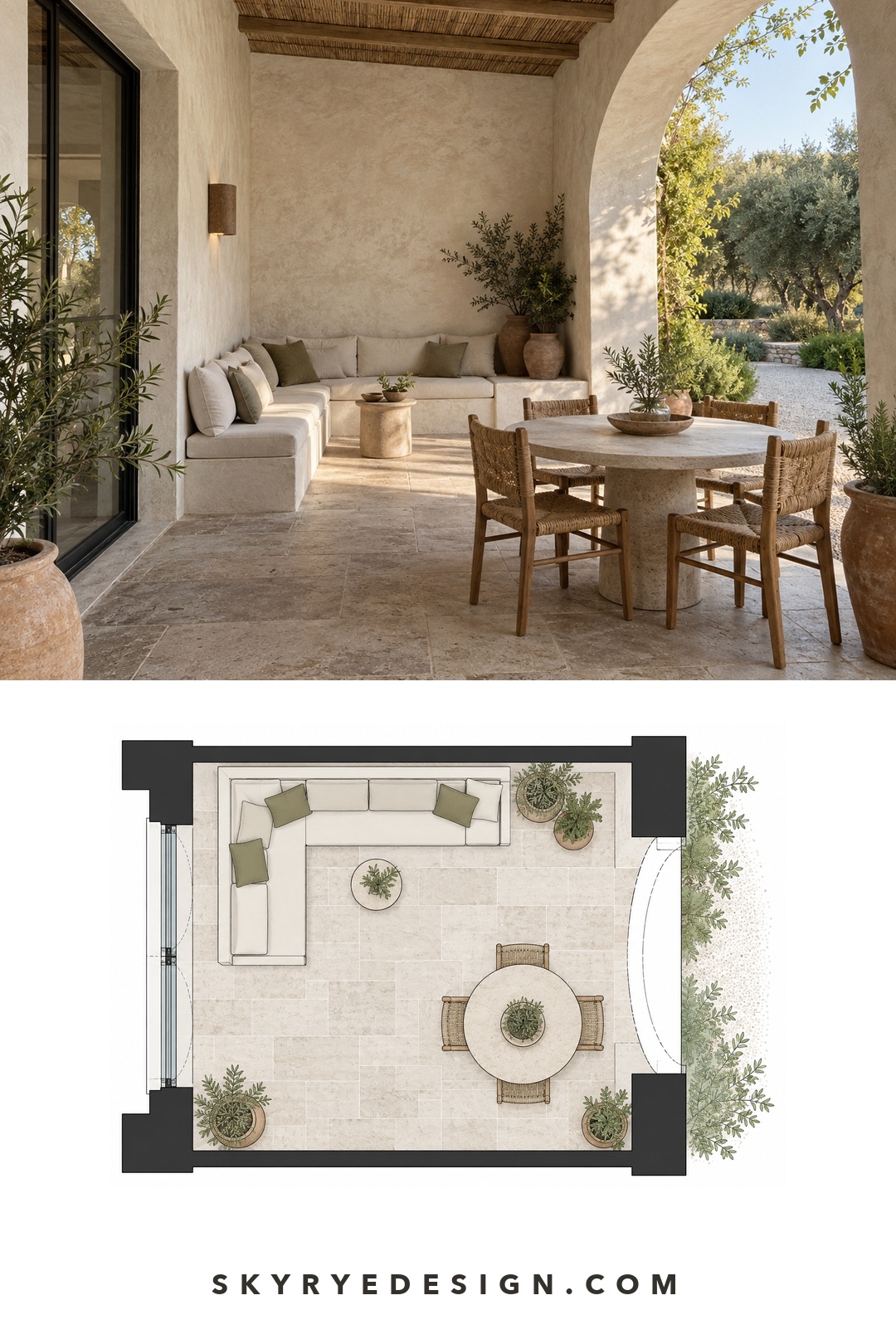
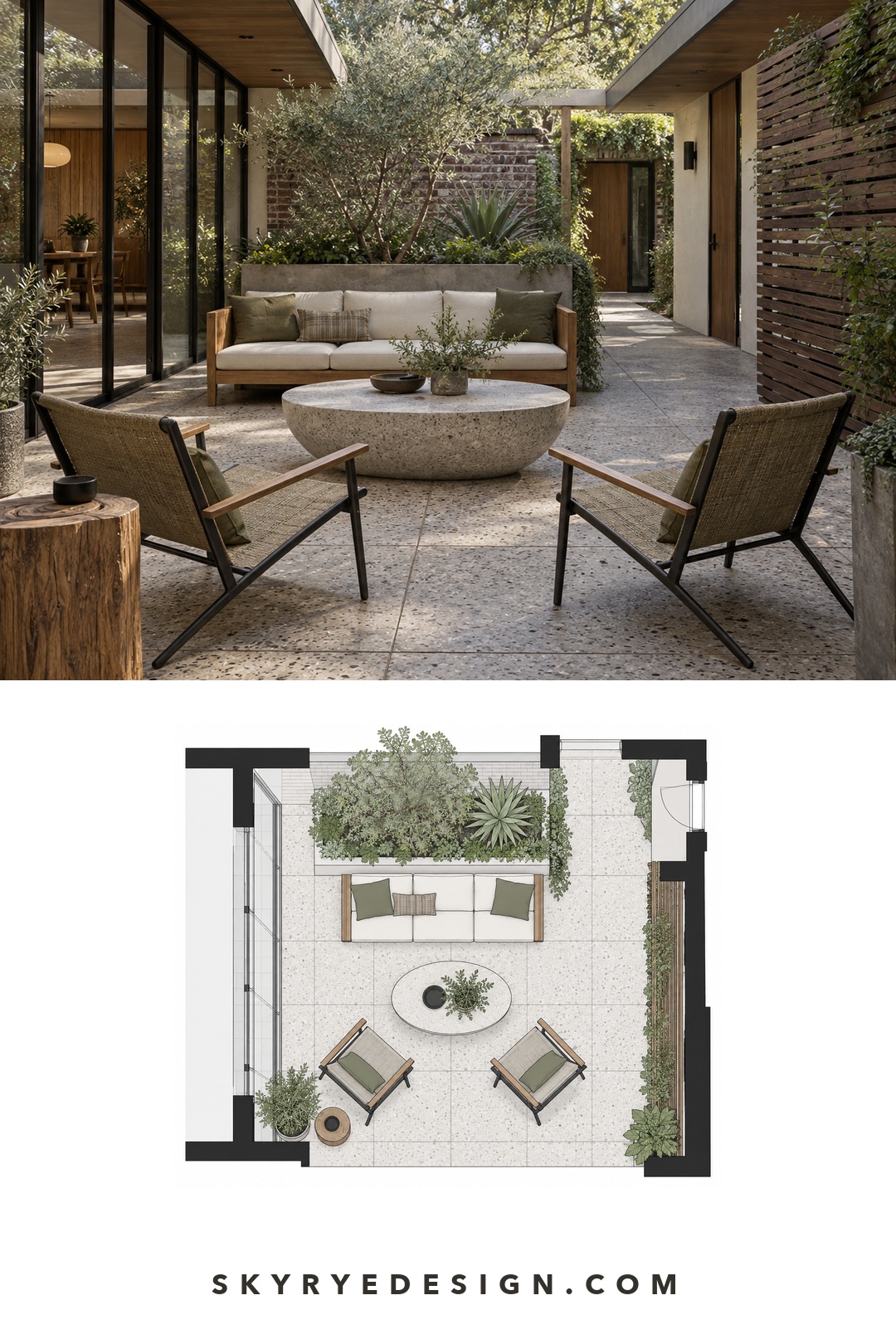
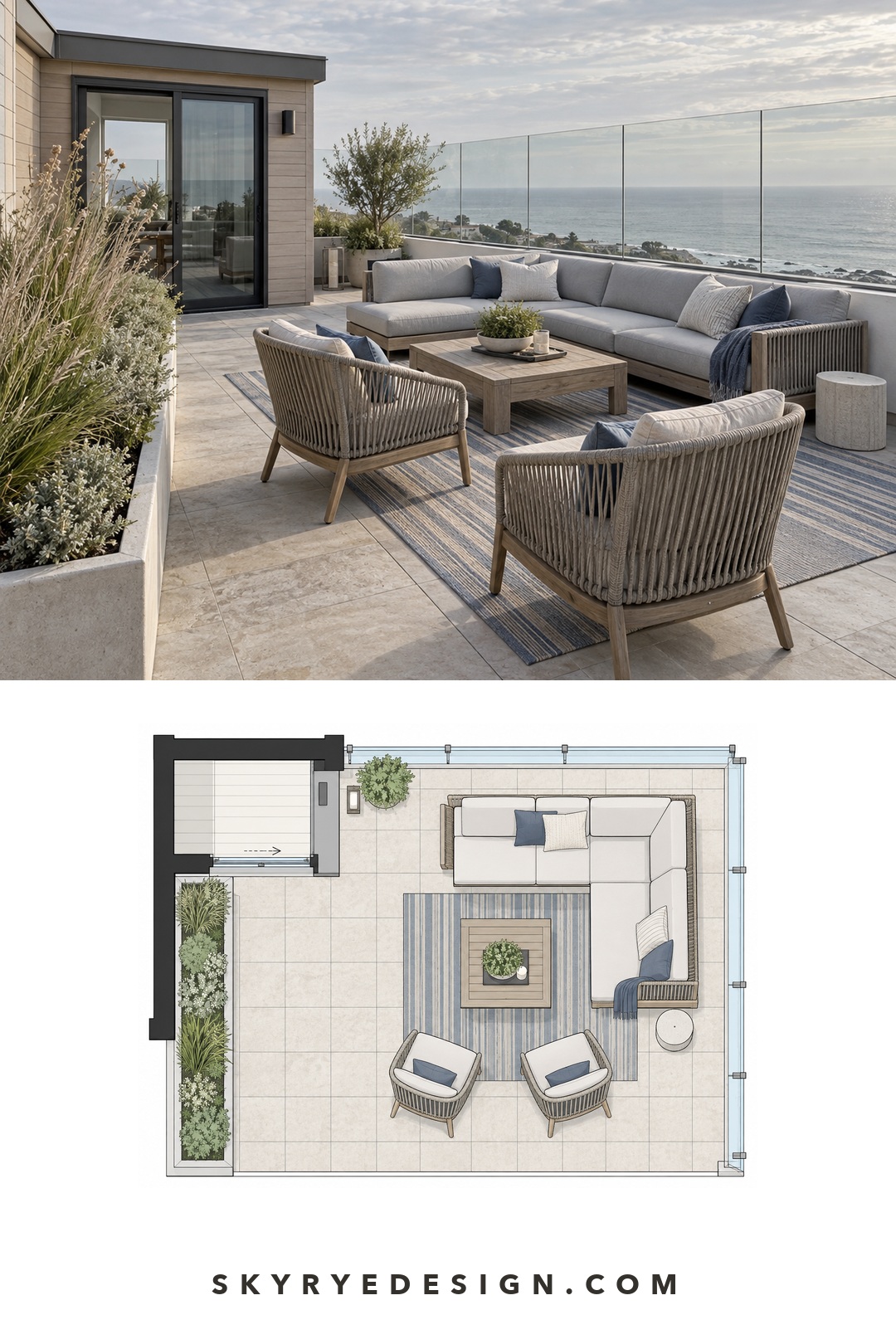
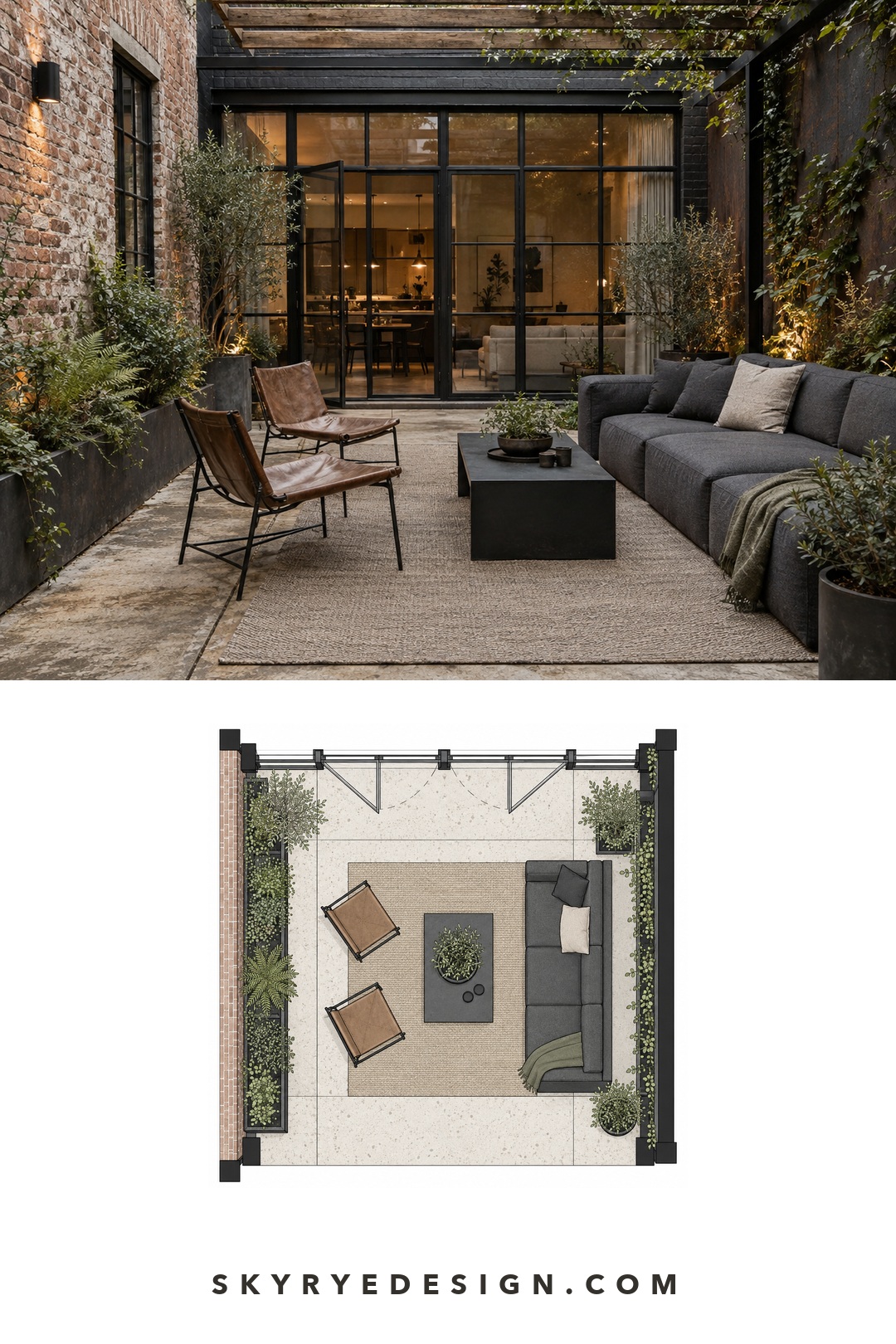
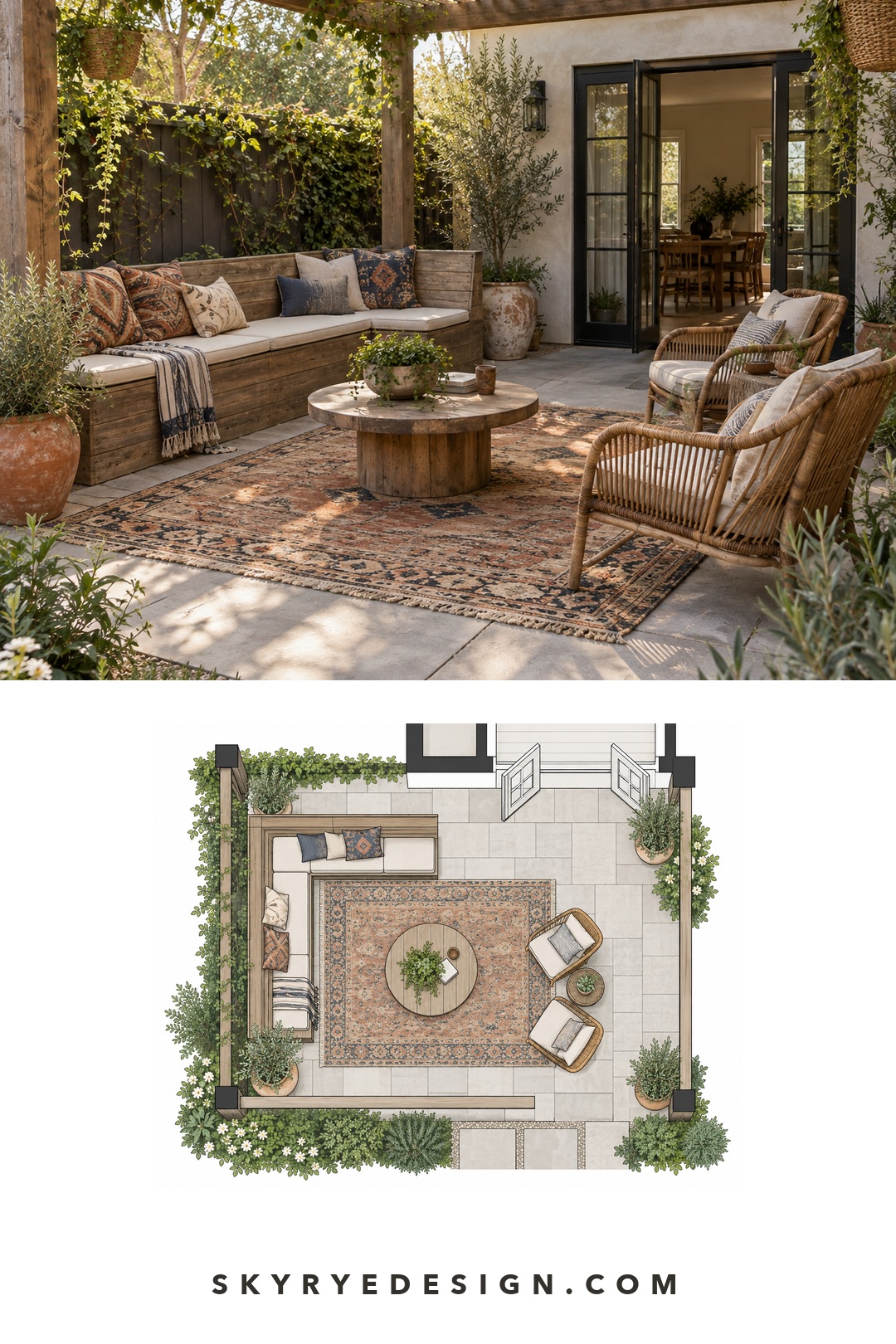
Each image pairs an editorial design concept with an interpreted top-down plan. Use the plans to test zoning and clearances, then confirm real dimensions, structure, drainage, and local requirements before building.
3. Plan furniture around movement and conversation
Measure the usable floor area, not the full dimensions of the deck or patio. Subtract door swings, planters that cannot move, grill clearance, steps, and the route people use. Mark the proposed furniture footprint with painter’s tape or flattened cardboard. This simple mock-up reveals whether a sofa is too deep or a dining chair will block the path when pulled out.


Start with one anchor: a dining table, a compact sectional, two lounge chairs, or a fire-pit arrangement where local rules and clearances allow it. Add only what supports that activity. In a small area, a bench against a wall, nesting tables, folding chairs, or a storage ottoman can do more than several single-purpose pieces. For another approach to mood and placement, use this guide to comfortable outdoor ambience.
Choose materials for the actual exposure
A covered porch and an uncovered coastal terrace create different demands. Powder-coated aluminum is light and does not rust in the way untreated steel can, but lightweight pieces may need securing in wind. Dense hardwood can last well with appropriate care, while synthetic woven furniture usually handles moisture better than natural indoor wicker. Check the maker’s instructions for cleaning, covers, storage, and salt or frost exposure before buying.
Look beyond the label “outdoor.” Inspect joints, fasteners, cushion construction, replaceable covers, and whether water can drain rather than collect. Furniture that is easy to maintain will look better longer than a more decorative set that does not suit the climate. Browse the site’s outdoor furniture ideas after fixing the dimensions and material requirements.
4. Layer cushions and an outdoor rug carefully
Textiles make hard outdoor surfaces feel like a room, but they should not create a storage problem. Begin with seat cushions in a base color, then add a small number of patterned cushions at different scales. If every cushion carries a bold motif, the furniture loses its shape. A solid, a narrow stripe, and one larger organic pattern are usually enough.


An outdoor rug can define the seating zone and soften a large paved area. Choose a size that connects the main furniture pieces instead of floating beneath only the coffee table. Check that the rug and surface below can drain and dry. Lift and clean it periodically so trapped dirt or moisture does not mark the decking or paving. This guide to weather-resistant outdoor rugs explains the material choices in more detail.
5. Create three layers of outdoor lighting
One bright fixture rarely makes an outdoor room comfortable. Combine ambient light for the overall area, task light where people cook or eat, and low-level path or step light for movement. Then use accent light selectively on a tree, textured wall, sculpture, or planting bed. Keeping decorative light warm and restrained prevents the patio from feeling like a car park. For a zone-by-zone starting point, use this guide to backyard lighting ideas.


Place string lights and lanterns with a purpose
String lights work best when they follow architecture or define a zone: along a pergola beam, beneath a covered edge, or above a dining area at a safe height. Lanterns can mark the ends of a bench or sit on a stable table. Avoid scattering many small lights without a hierarchy. The eye needs brighter task points and quieter background light. For path, security, and accent options, compare the ideas in this outdoor lighting and security guide. If you are adding the structure too, these pergola ideas for UK gardens cover roof choice, furniture clearance, and the checks to make before ordering.
Use products rated for their location and keep plug connections away from water. The U.S. Consumer Product Safety Commission advises using extension cords specifically marked for outdoor use. Permanent wiring, damaged outlets, or uncertain protection should be assessed by a qualified electrician rather than hidden behind decorative lighting.
6. Add plants according to light, water, and maintenance
Plants should reinforce the composition instead of filling every gap. Use a tall plant or small tree to add height, a medium group to soften furniture, and a trailing plant to bring detail to a ledge or container edge. Repeat a pot material or color to keep a mixed plant collection visually calm.


Make containers easier to maintain
Choose containers with drainage holes and saucers or feet suitable for the surface below. Group pots with similar watering needs, and check the mature plant size rather than buying only for the first month. A large pot generally dries more slowly than a small one, but it is also much heavier to move. Confirm the weight capacity before placing large containers on a balcony or raised deck.
For U.S. gardens, the USDA Plant Hardiness Zone Map is a useful starting point for perennial cold hardiness. It does not replace checks for sun, soil moisture, wind, heat, or a container’s more exposed root zone. Local nurseries and extension services can help narrow the list for a specific site. These year-round garden additions offer more ideas for extending seasonal use.
Use walls when floor space is limited
A trellis, wall planter, or narrow vertical garden can create a green backdrop without taking over a balcony or walkway. Check the fixing method, loaded weight, drainage, and access for watering. Wall-mounted planters can dry quickly and may stain the surface below if runoff is not managed.


7. Finish with art and functional decor
Outdoor art is most effective when it creates a focal point or solves an awkward blank area. One weather-suitable sculpture at the end of a path can be stronger than several small objects. On a fence or wall, repeat a material already present—painted metal, wood, ceramic, or stone—and confirm that the mounting hardware suits both the object and the surface.


Functional decor earns its place twice. A side table holds drinks, a lidded box stores cushions, a planter screens a view, and a lantern supplies useful light. Bird feeders and water features can add movement and sound, but place them where cleaning, spilled seed, insects, and water access are manageable. If making accessories yourself, start with these DIY garden projects and choose finishes intended for exterior use.


Weatherproofing checklist before the space is finished
- Confirm outdoor ratings for lights, extension cords, fabrics, rugs, art, and storage.
- Provide drainage beneath rugs, containers, and furniture feet.
- Secure or store lightweight objects before strong wind.
- Keep a dry, ventilated place for cushions and seasonal textiles.
- Follow furniture and finish makers’ cleaning and maintenance instructions.
- Review flame, heat, and clearance requirements around grills and fire features.
Common outdoor decorating mistakes
Buying furniture before measuring. A photograph can hide scale. Tape the footprint on the floor and include chairs in their pulled-out position.
Treating every empty corner as a problem. Negative space keeps circulation comfortable and lets the focal point stand out.
Using too many colors and materials. Repeat a small palette across furniture, containers, textiles, and lighting, then let plants provide variation.
Ignoring the climate. A beautiful rug that never dries or a lightweight chair in a windy location creates more work than enjoyment.
Adding decoration before solving comfort. Shade, seating support, airflow, privacy, and useful light should come before ornaments. For larger upgrades, review ways to make the most of outdoor areas.
Outdoor decorating FAQ
Where should I start when decorating an outdoor space?
Start with the main use and the path people take through the area. Measure the usable floor, choose one anchor furniture piece, and decide on two base colors plus one accent. Add textiles, lighting, plants, and art only after the layout works.
How can I make a small patio look put together?
Use fewer, appropriately scaled pieces and repeat the same materials and colors. A compact bench or two chairs, one small table, a limited textile palette, and a vertical plant can create a complete room without crowding the floor.
How do I decorate an outdoor space on a budget?
Keep sound furniture, improve the arrangement, and replace only the layer with the biggest visual impact. Cleaning the surface, repainting a suitable piece, changing cushion covers, grouping existing pots, or adding one well-placed light often does more than buying many small accessories.
What colors work best for outdoor decor?
There is no universal best palette. Use exterior finishes, stone, brick, decking, and the view as fixed colors, then add two quiet base shades and one accent. Test samples outside because direct sun and shade change how colors read.
How should I protect outdoor cushions and rugs?
Choose materials intended for exterior use, follow the care label, allow air to circulate, and store items only when they are fully dry. Lift rugs periodically to clean and dry the surface beneath, and use a ventilated storage box or indoor storage during severe weather.
How much outdoor lighting do I need?
Use enough light to support the activities and routes rather than aiming for maximum brightness. Combine gentle ambient light with task light for dining or cooking and low-level path light at steps and changes in level. Add accent light to only one or two features.
Edit the scheme after one week
Use the space for several days before buying the final accessories. Notice where a drink gets set down, which chair stays empty, whether evening light reaches the table, and which textiles are difficult to store. Move, remove, or replace the item that causes the most friction. A well-decorated outdoor space feels finished because it works naturally, not because every surface is occupied.
- 36shares
- Facebook0
- Pinterest33
- Twitter3
- Reddit0