I got my first tattoo at twenty-three after eighteen months of talking myself out of it. Not because I was scared of the needle — I was scared of choosing wrong. A tattoo is a permanent decision, and that pressure made every design I looked at feel either too generic or too personal to commit to.
That framing changed everything. So before we get into the designs, keep it in mind.
Quick reference: The most popular tattoo ideas for men in 2026 include lion portraits, geometric mandalas, compass designs, wolf artwork, and phoenix rising pieces. Costs range from $100 for small designs to $2,500+ for full sleeves. The most popular placements are forearm, upper arm, chest, and back.
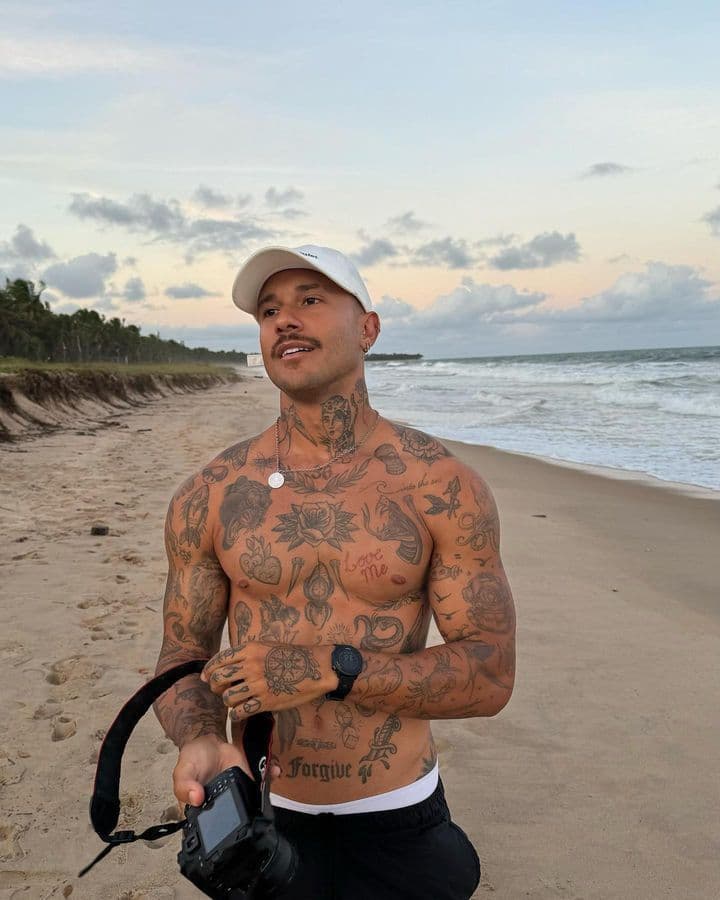
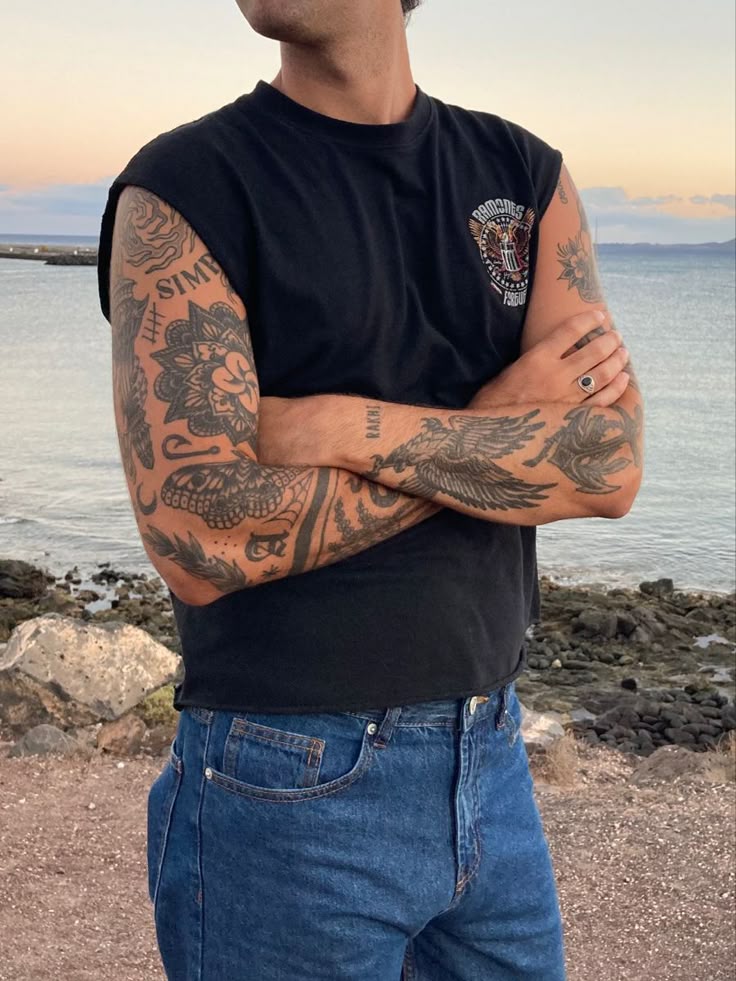
For a related guide, see Top 5 Tattoo Ideas for Men.
The 15 Classic Tattoo Ideas for Men
These are the designs that keep showing up for a reason. Not because they’re safe — because they carry real weight when executed well.
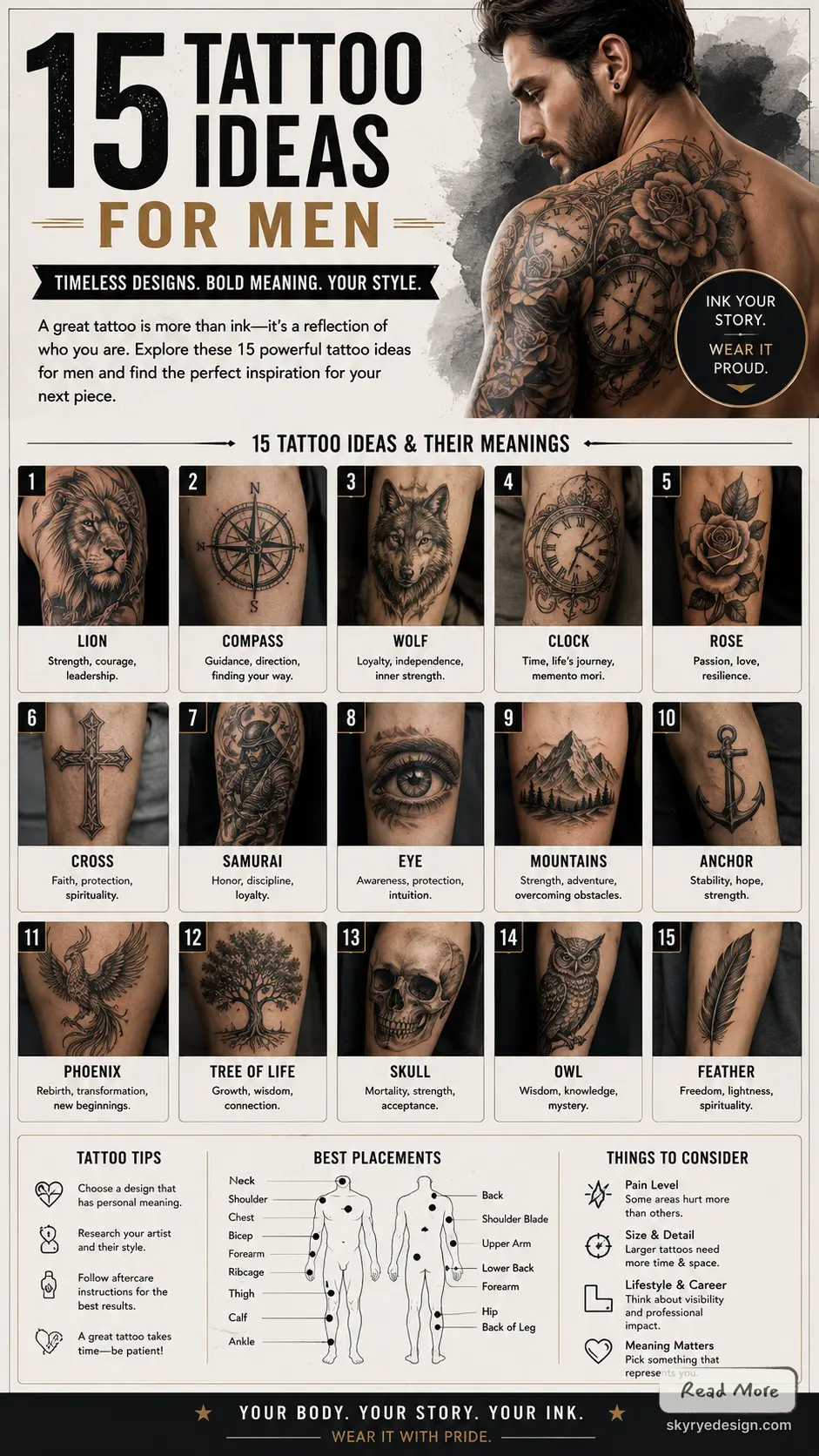
1. Lion with Crown
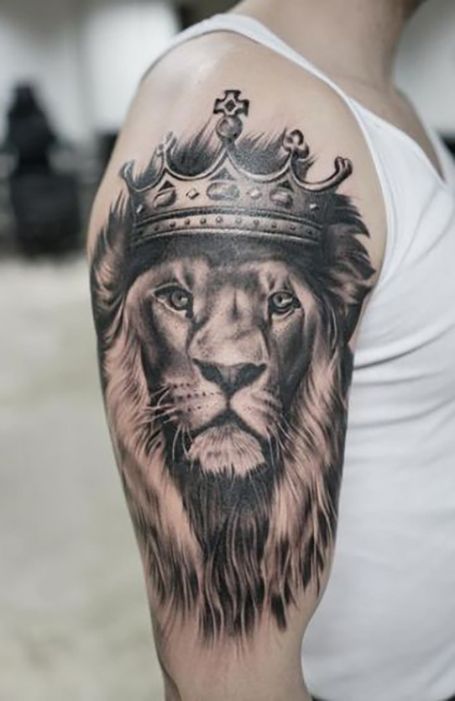
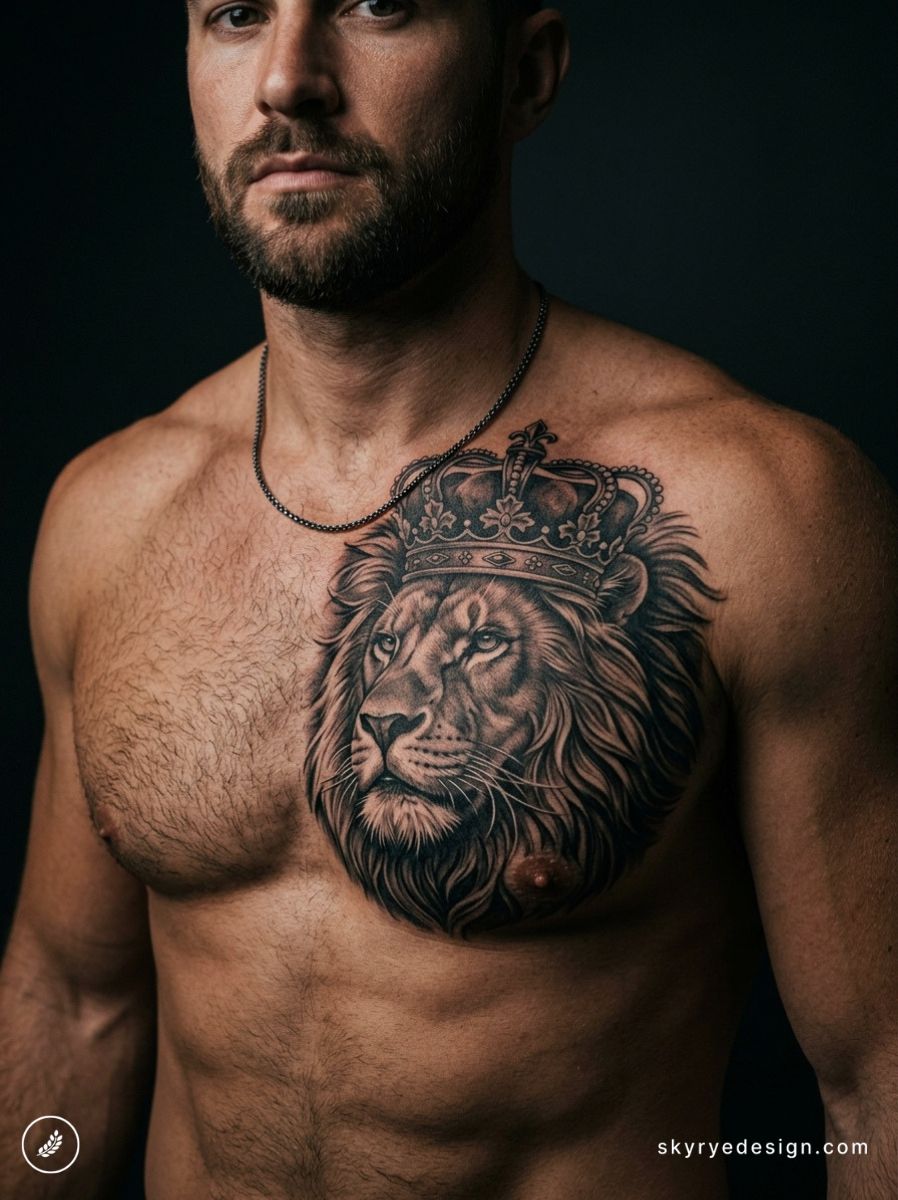
A lion portrait is one of the most requested designs at almost every studio I’ve talked to. The reason isn’t hard to figure out: lions read as strength without needing explanation. No context required.
The crown version adds a layer — leadership, authority, the idea that you’ve earned something. It works in black and grey realism where the mane textures really pay off, and it holds up just as well in neo-traditional if you want the crown to pop with color.
Best placement: chest or upper arm. The lion’s face needs space to breathe, and a cramped version at wrist scale loses the expression entirely.
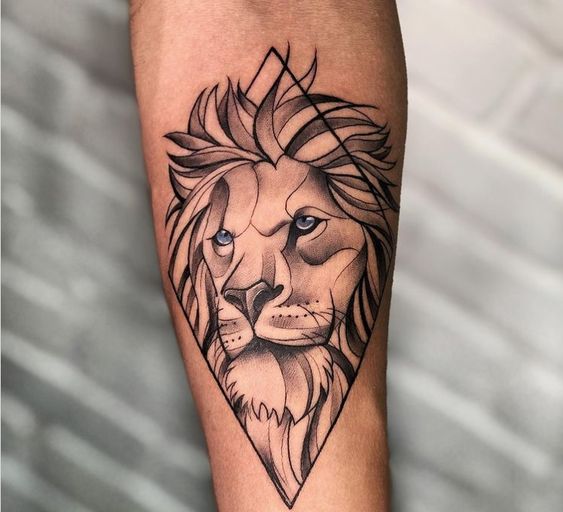


2. Nautical Compass
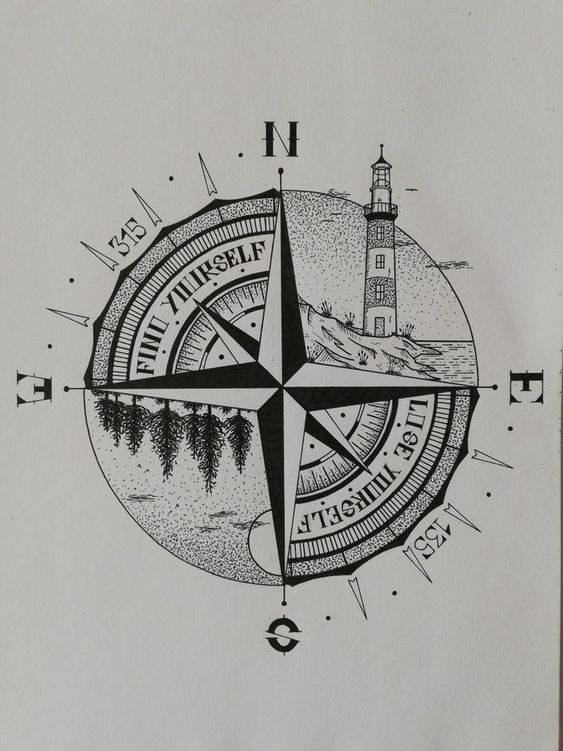
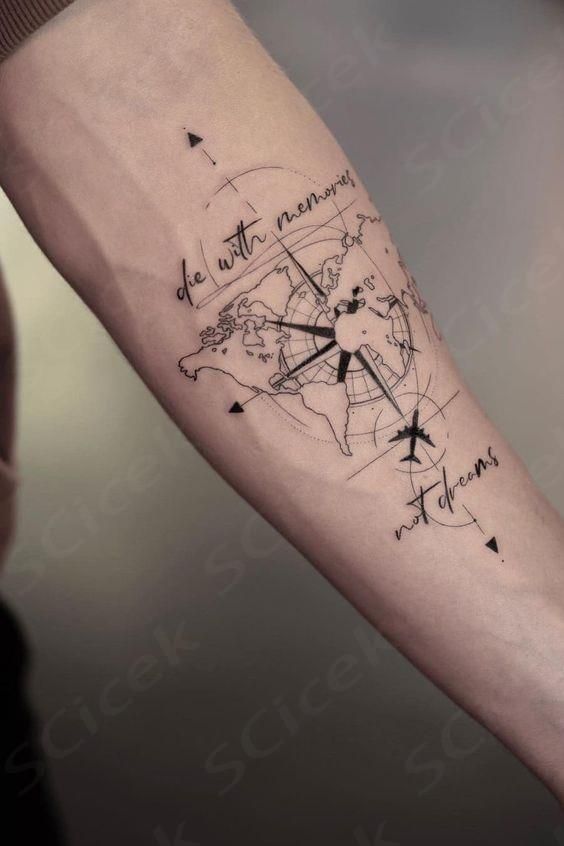
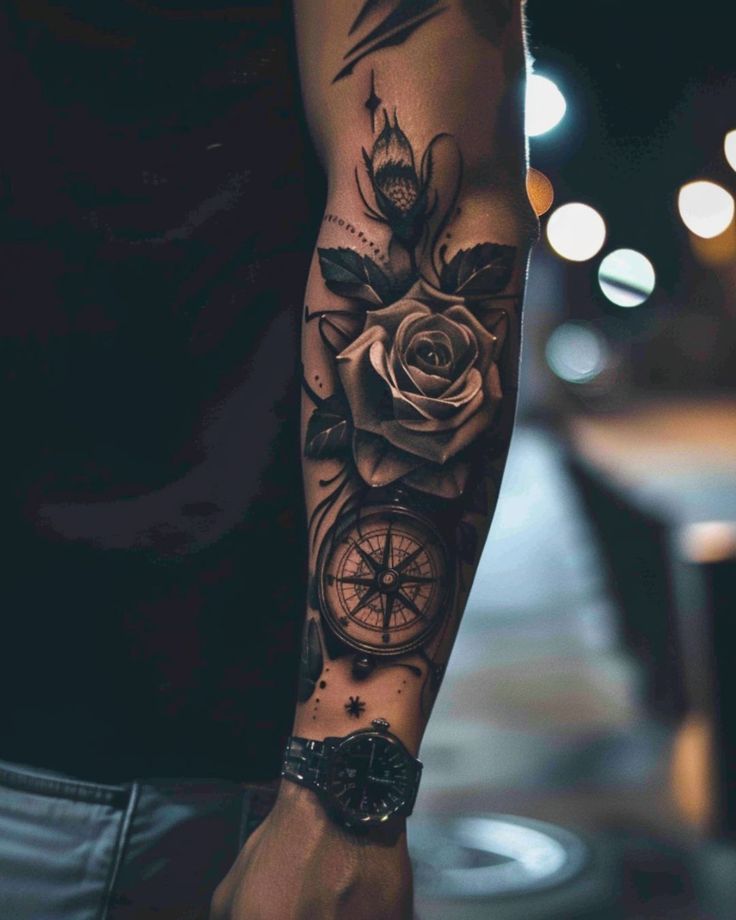
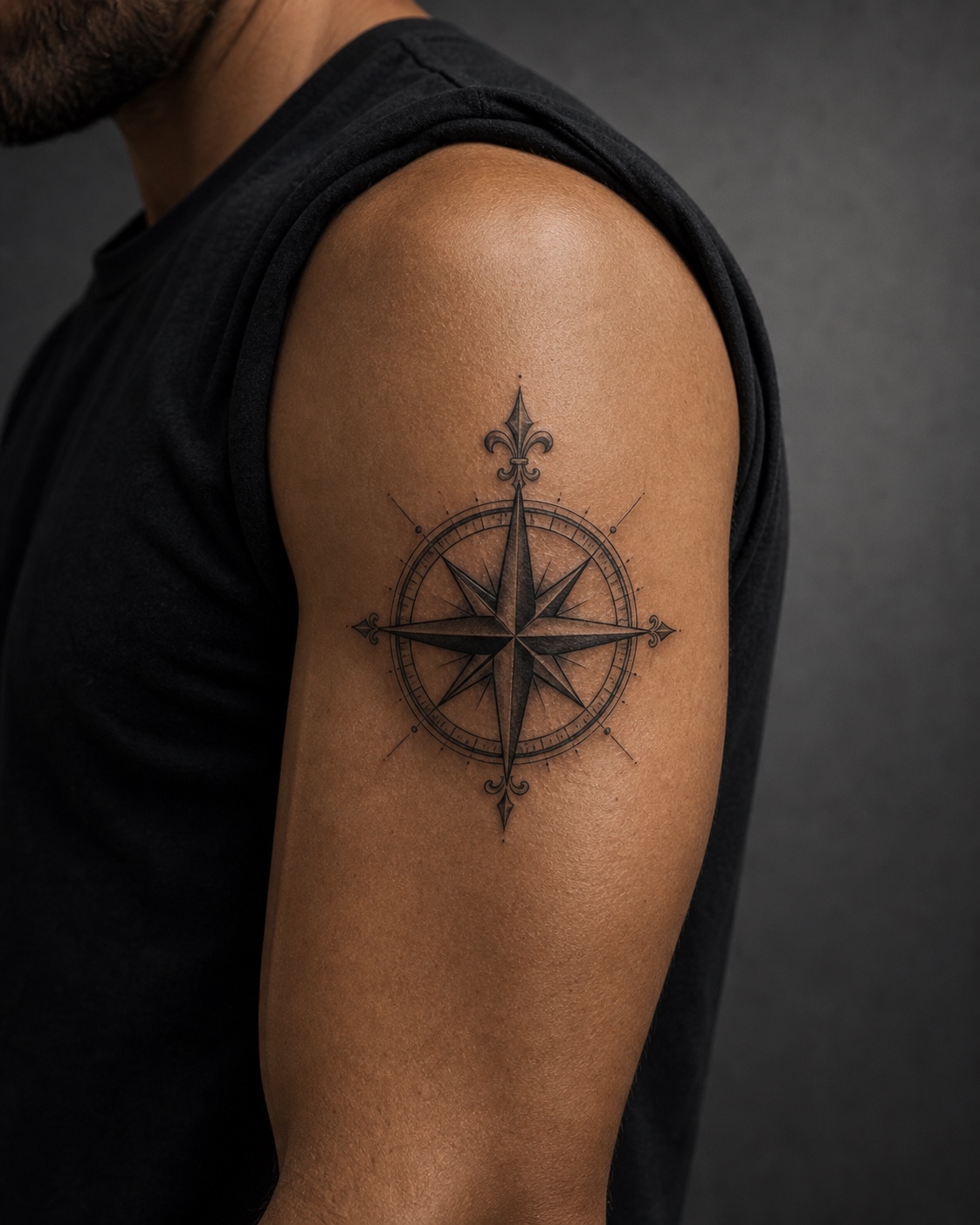
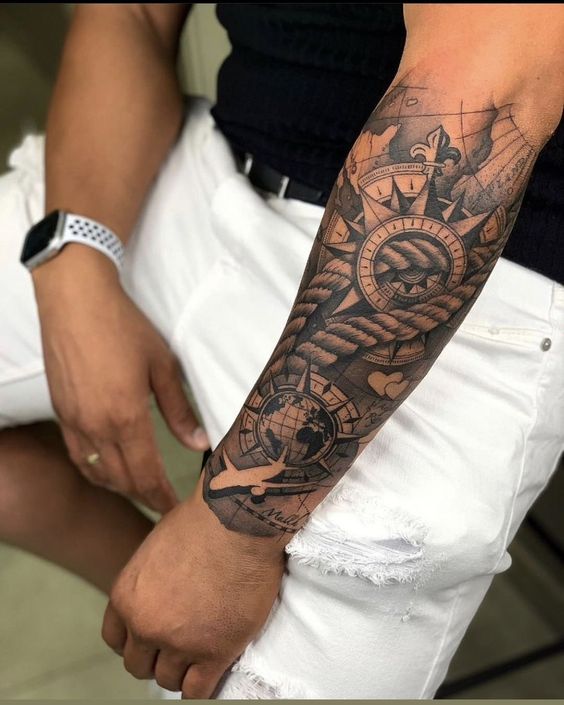
Compass tattoos are popular for a reason that goes beyond the design itself. Most guys who get one aren’t sailors — they’re going through something: a move, a job change, the end of a relationship. The compass becomes shorthand for “I know where I’m headed now.”
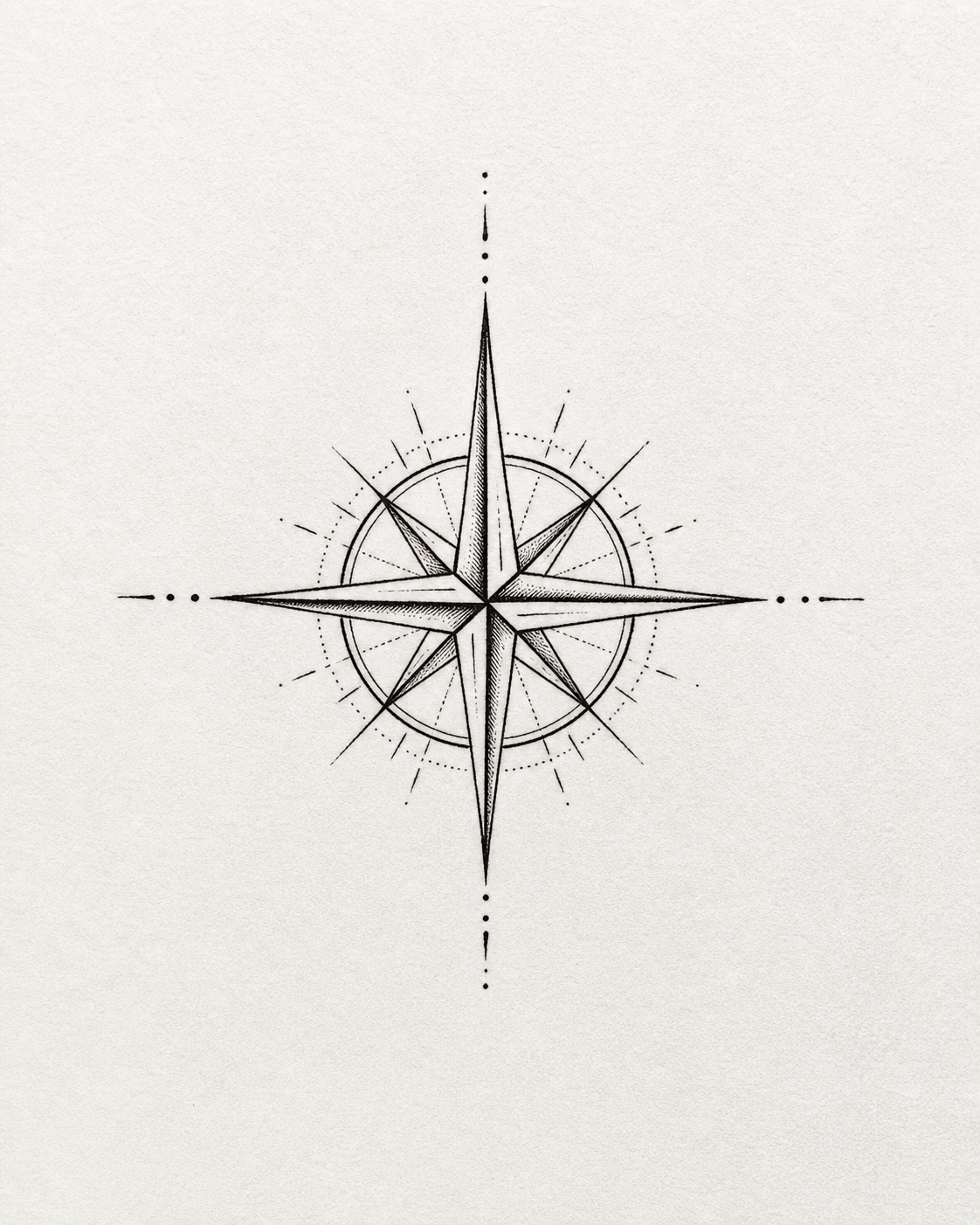
Visually, the eight-point compass with fine linework around the cardinal directions is the strongest version. Add rope detail or a world map fragment behind it and you’ve got something that works at forearm scale without feeling busy.


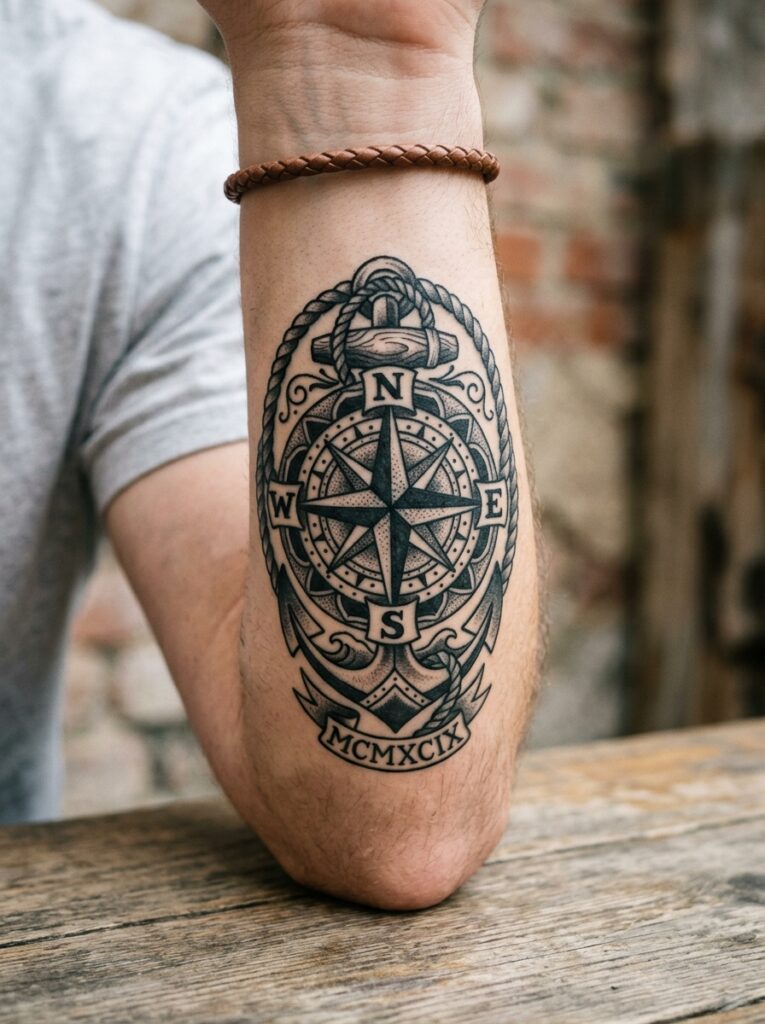
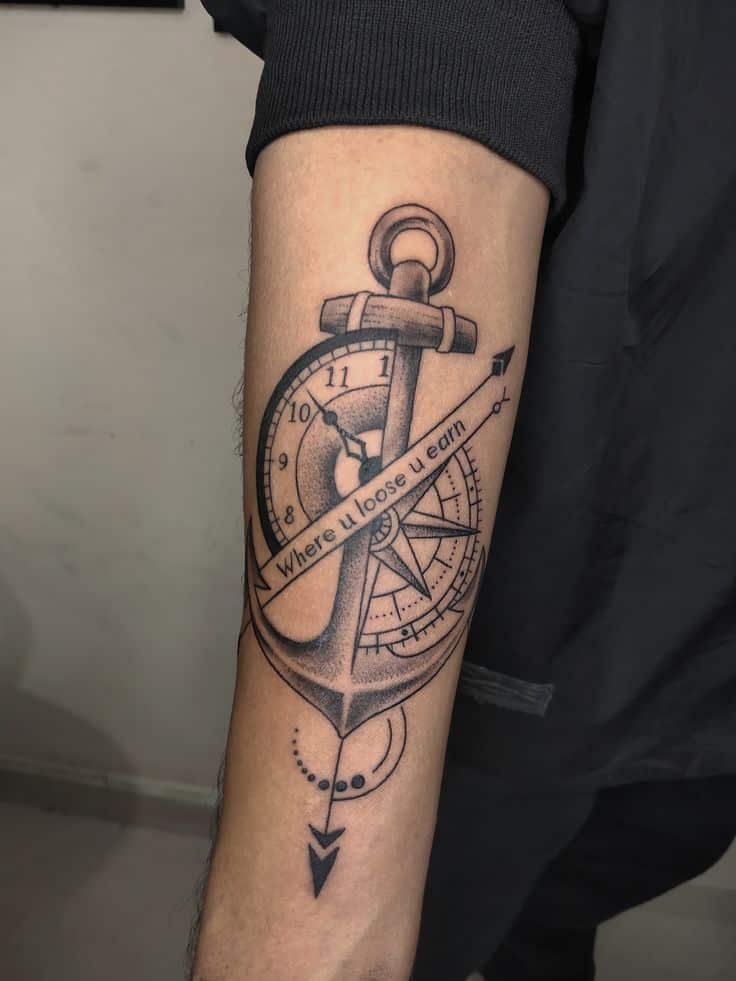
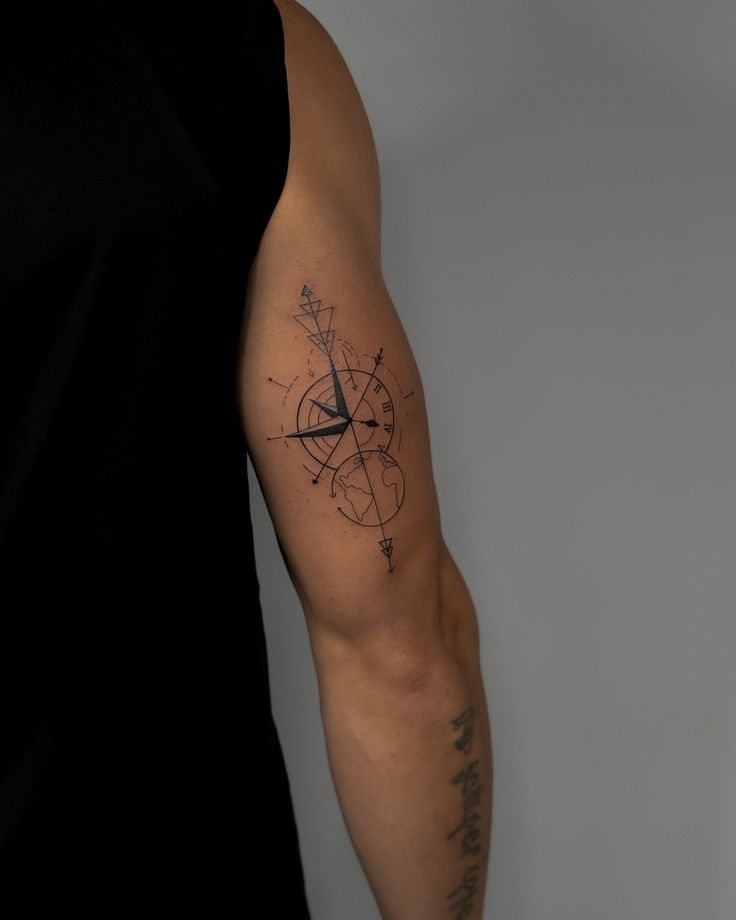
If you already know you want the lower arm, compare these forearm tattoo ideas for men before choosing a design that needs more shoulder, chest, or sleeve space.
3. Viking Warrior
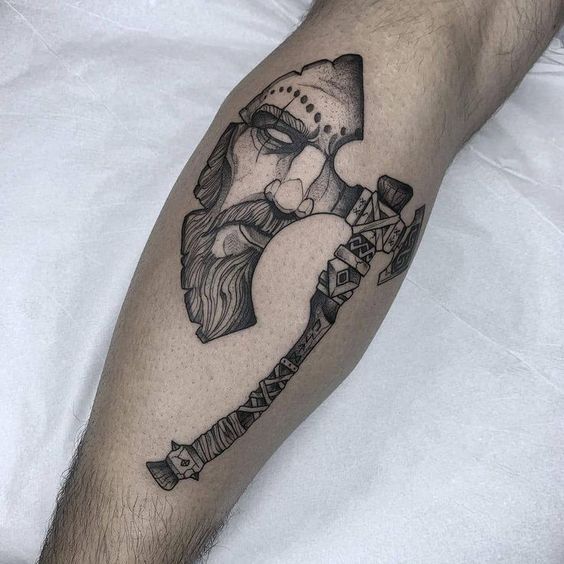
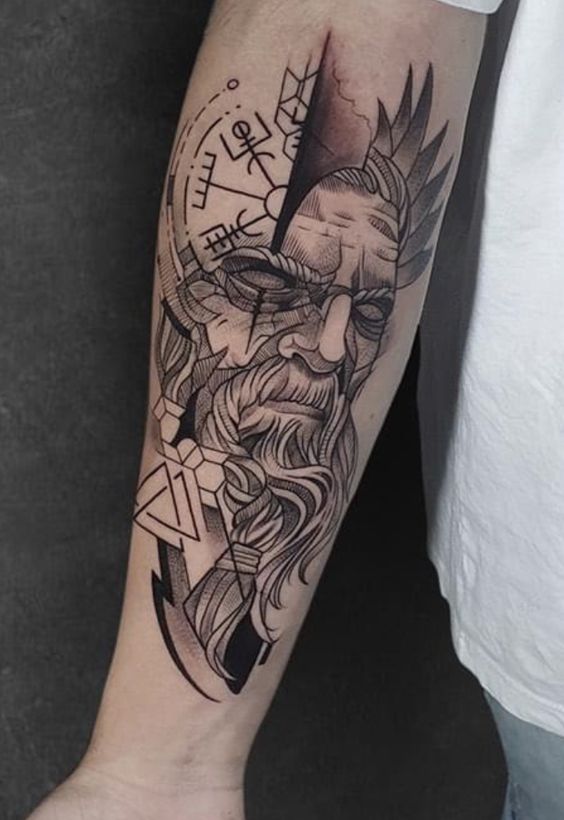
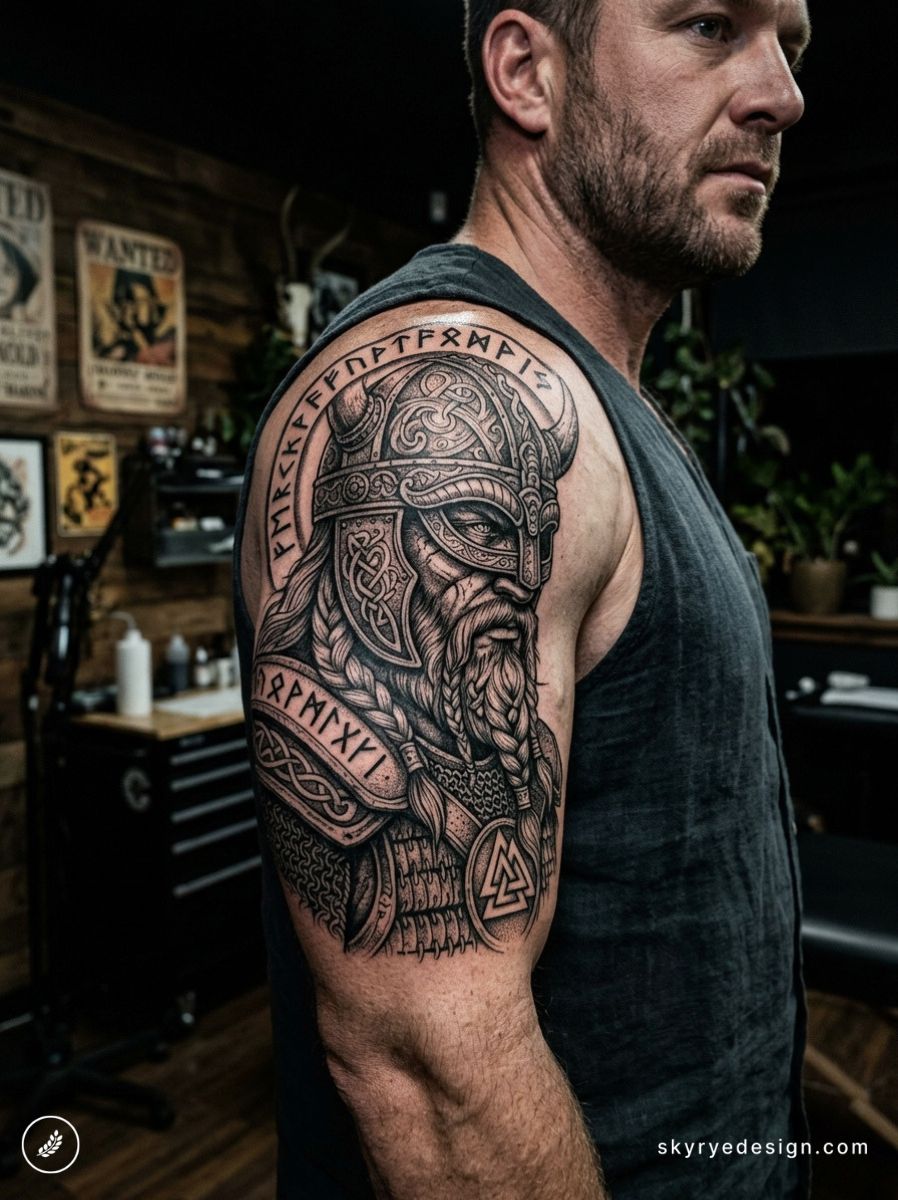
The Viking aesthetic pulled hard into the mainstream through pop culture, and the tattoo world followed. Runes, Valknut symbols, longship silhouettes, and battle-scarred warrior faces — all trending, all still interesting when done with the right artist.
If you’re going this route, skip the generic “Viking helmet guy” and dig into the actual mythology. Odin imagery, the ravens Huginn and Muninn, Yggdrasil tree compositions — these have more visual depth and more personal story potential.
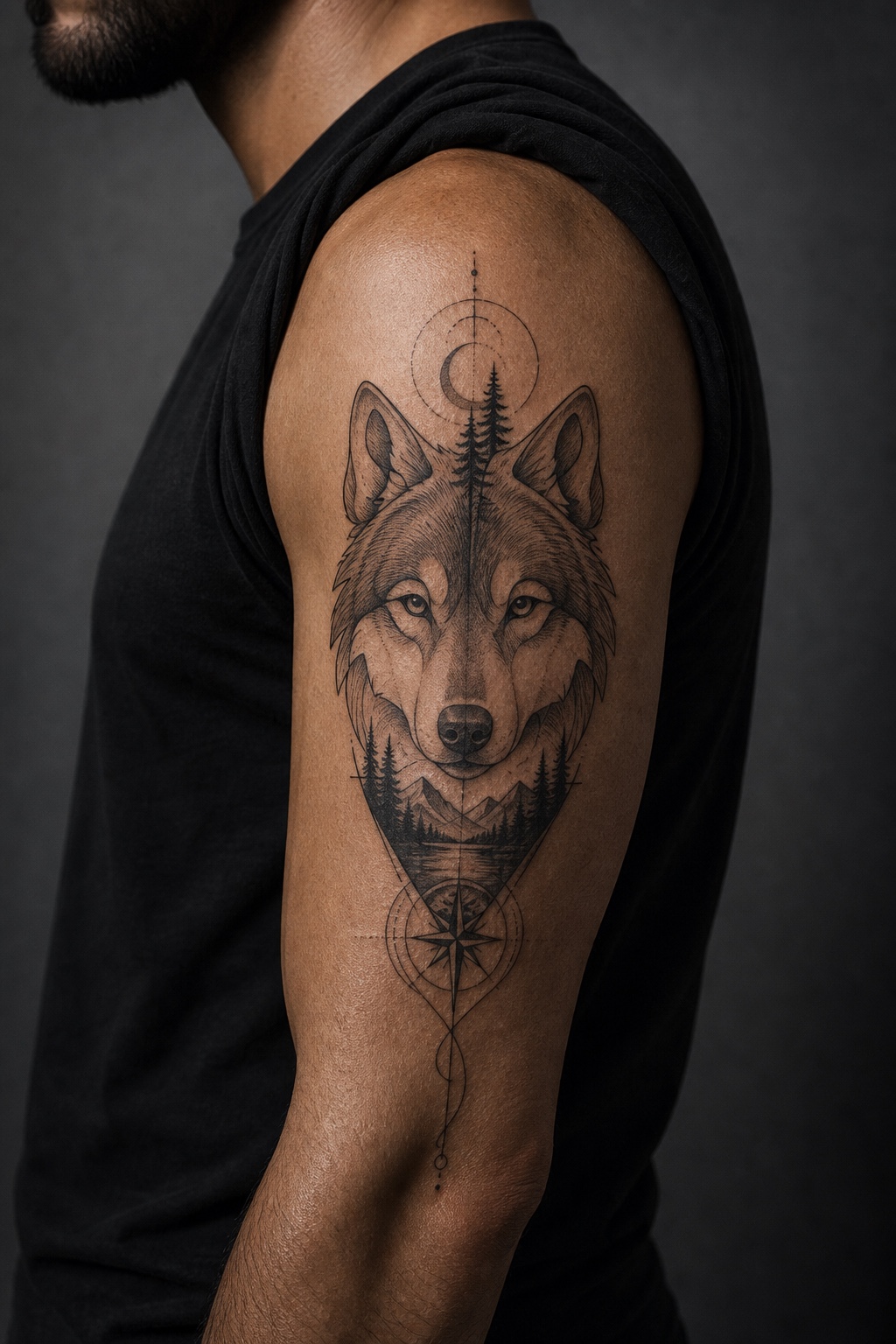
4. Wolf Howling at the Moon
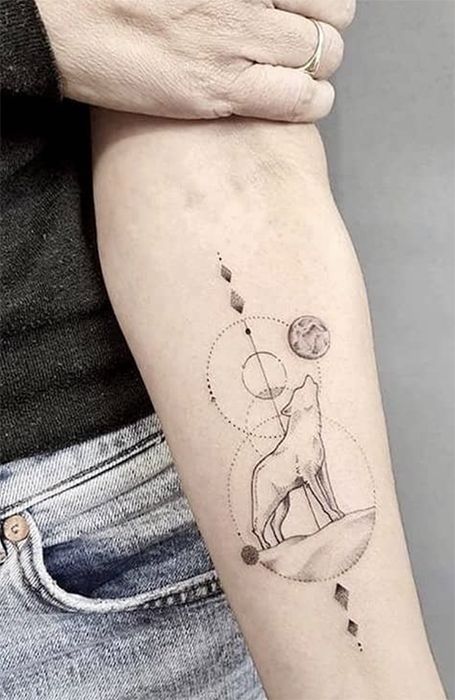
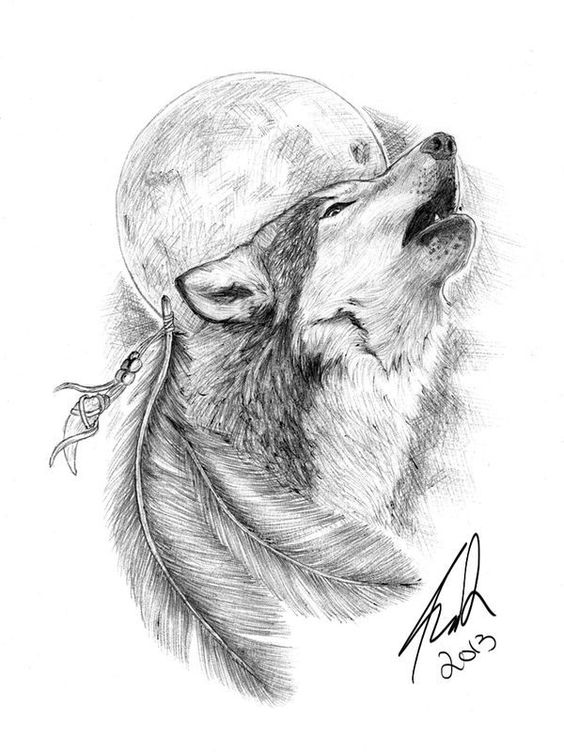
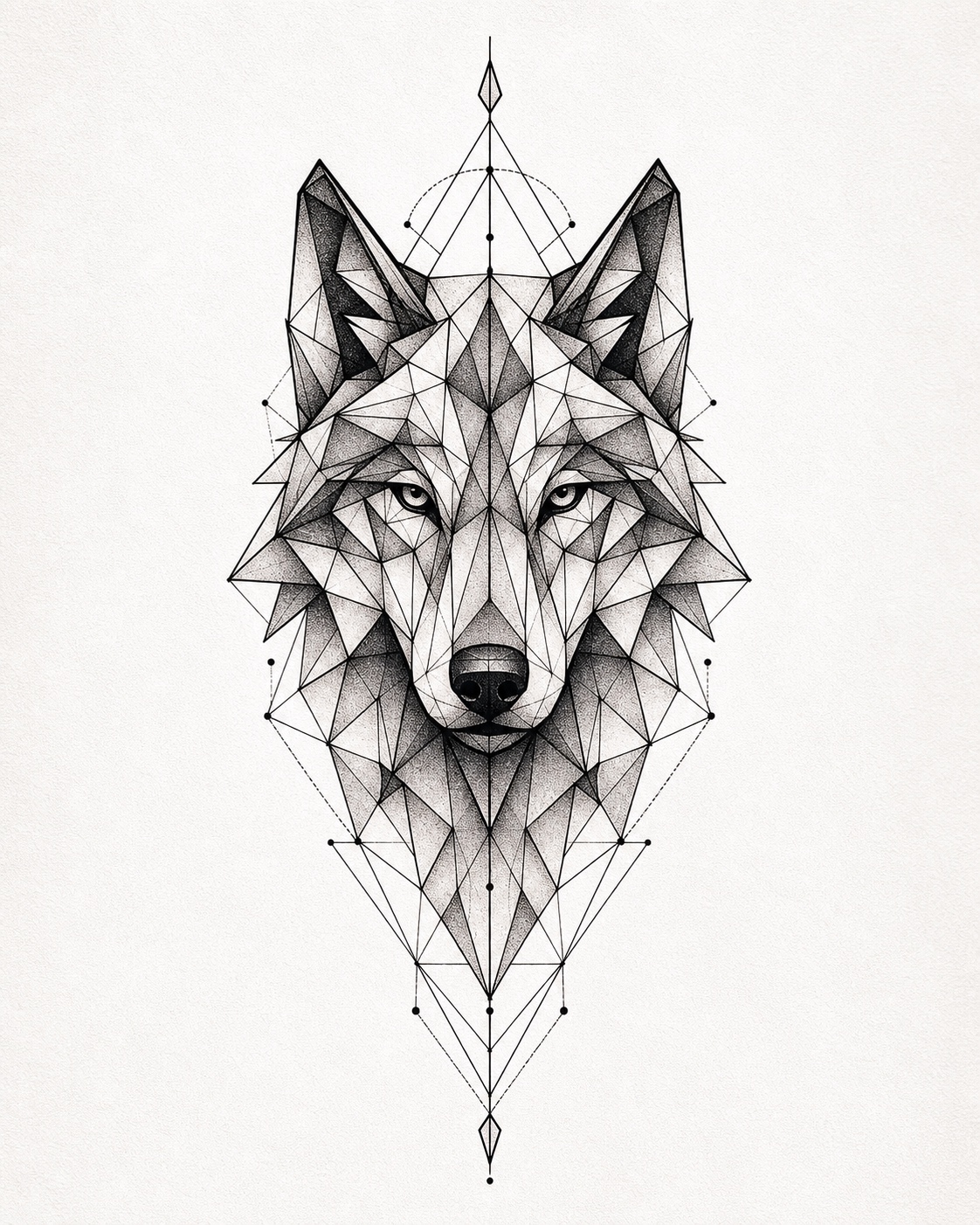
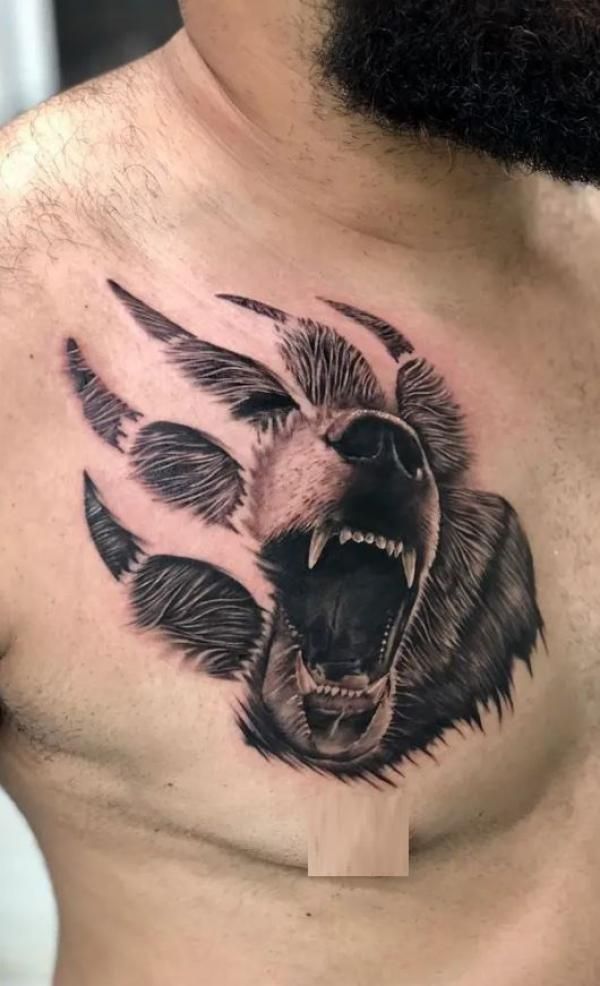
Wolf tattoos work because the animal itself carries multiple meanings that don’t cancel each other out: loyalty, pack mentality, independence, instinct. A man can be deeply social and also a lone operator. The wolf holds both.
The howling-at-moon composition is the classic, but I prefer the close-up portrait version — just the face, high detail, geometric shading behind it. It photographs better, which matters if you ever want to show it off without rolling up your whole sleeve.
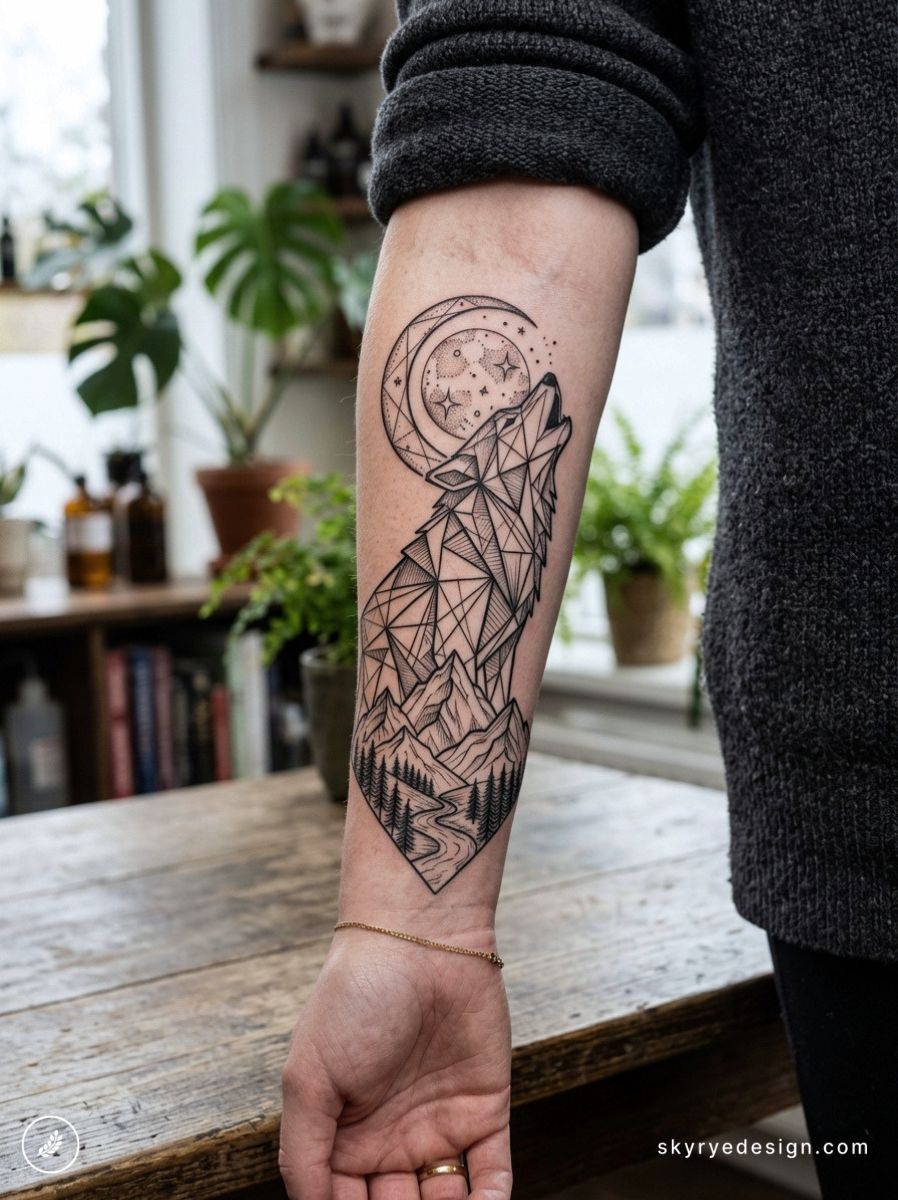


What finally broke the paralysis was a conversation with a tattoo artist who said: “You’re not picking a picture. You’re picking a story your skin will tell for the next fifty years. The picture just has to carry the story well.” And if the wrong choice is already on your skin, this guide to cover up tattoo ideas for old ink is the better place to start than saving random reference photos.
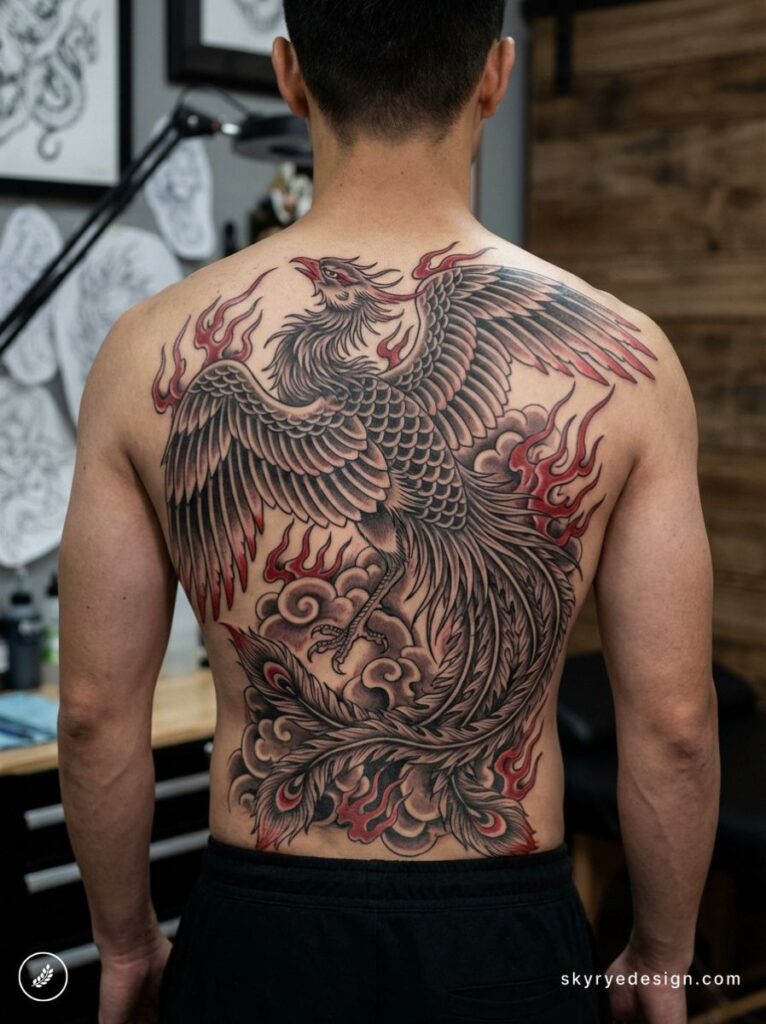
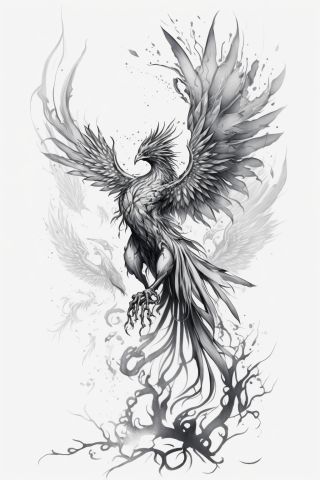
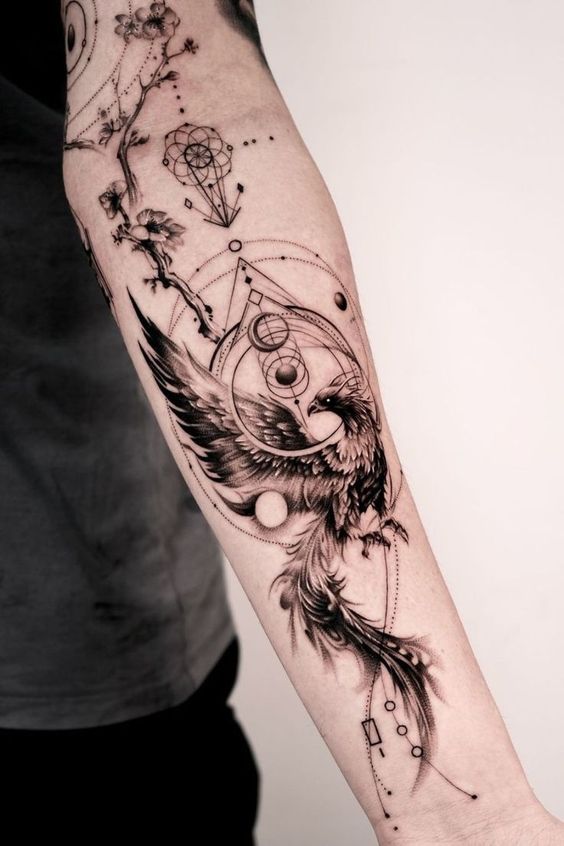
5. Phoenix Rising
Phoenix tattoos are almost always meaningful in a specific, personal way. The guy who gets one usually just came out the other side of something rough. The symbolism isn’t subtle, but it doesn’t need to be.
For design, the color version is dramatically better than black and grey here — fire oranges, deep reds, touches of gold at the wing edges. A black and grey phoenix looks like a bird. A colored one looks like it’s actually burning.


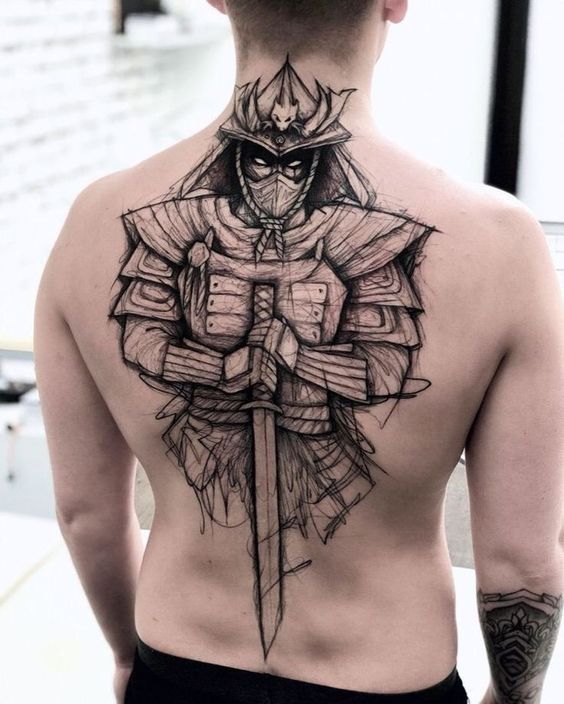
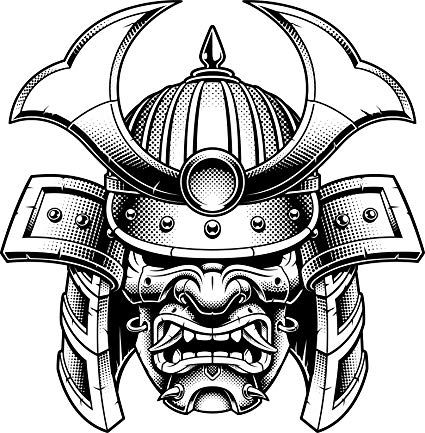
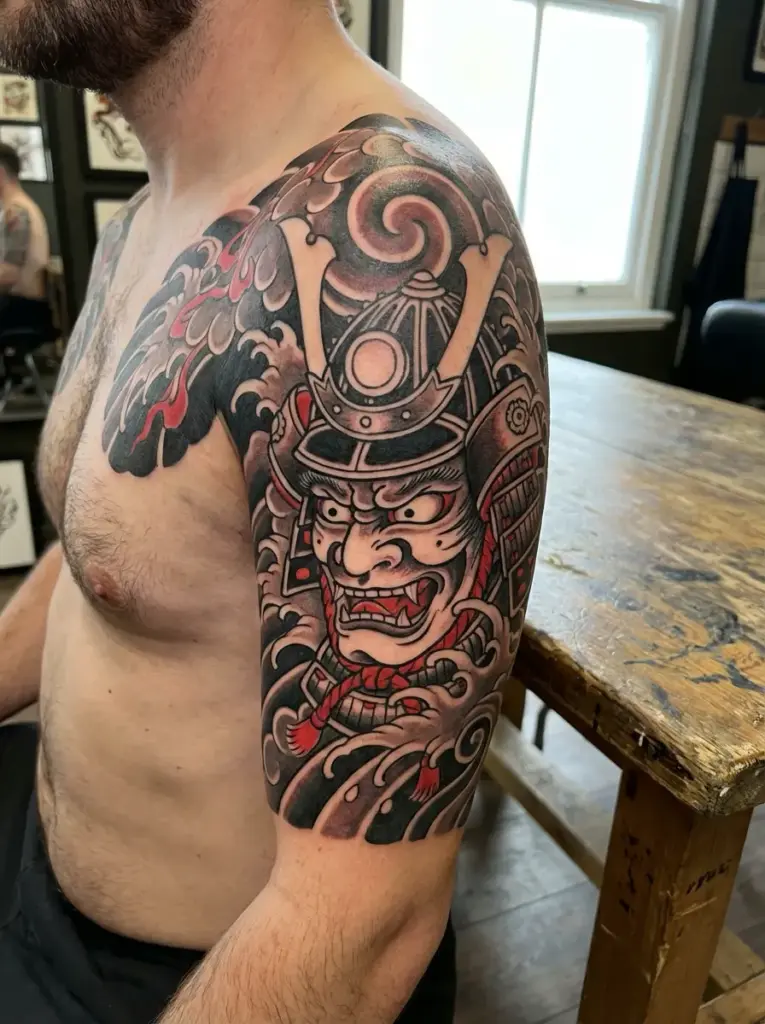
6. Samurai Mask (Hannya)
Technically the Hannya is a Japanese Noh theater mask, not a samurai mask — but the tattoo world has merged them into a single genre. Either way, the imagery is striking: fierce expression, bold lines, rich color.
If Japanese armor, masks, or katana details are the direction, use this samurai tattoo ideas guide to compare meaning, placement, and cultural details before you simplify the design.
The version with cherry blossoms around it is a cliché at this point. Try pairing it with waves, or a rising sun, or nothing at all — just the mask, clean, on an upper arm where the contour can follow the muscle shape.
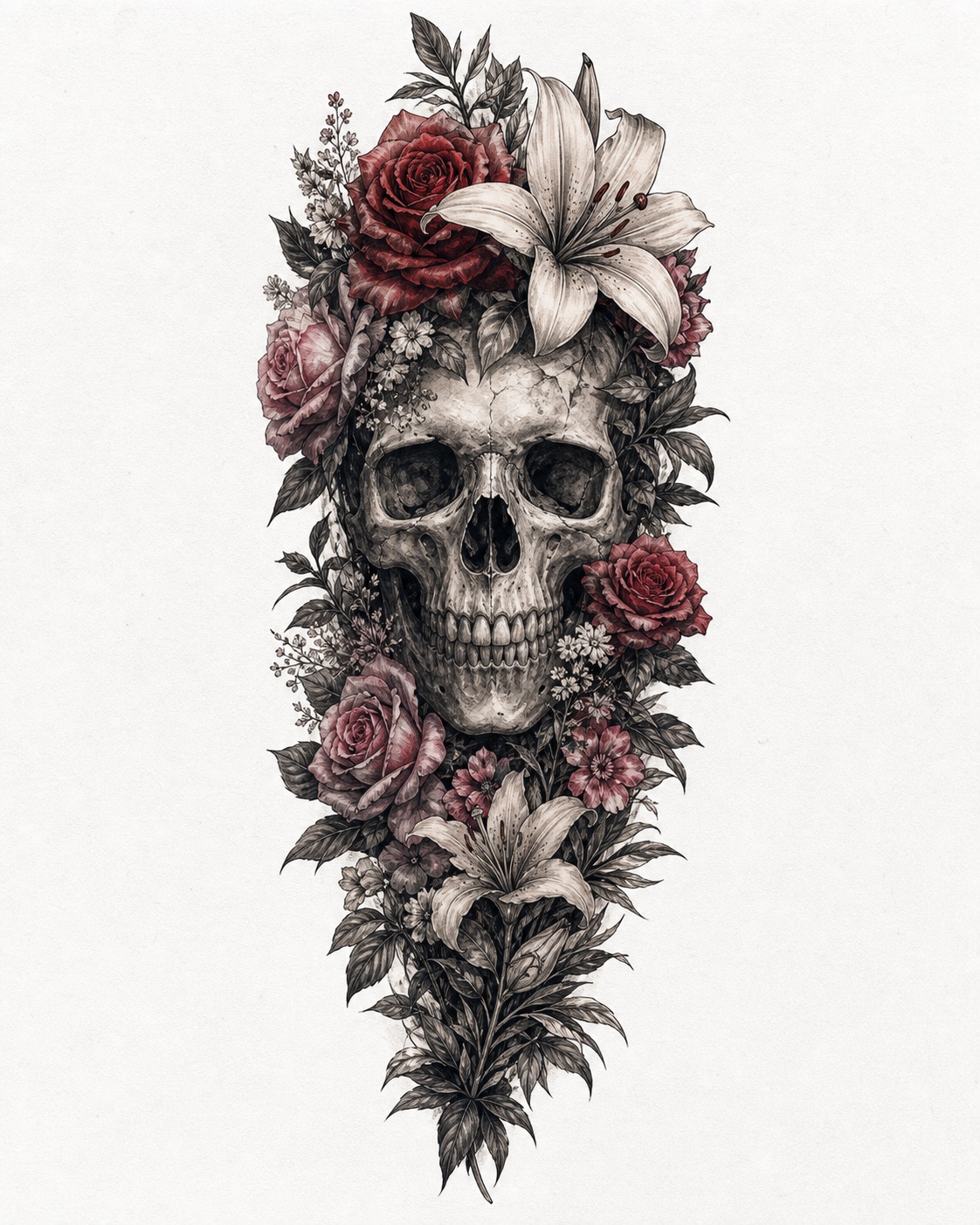
7. Skull with Roses
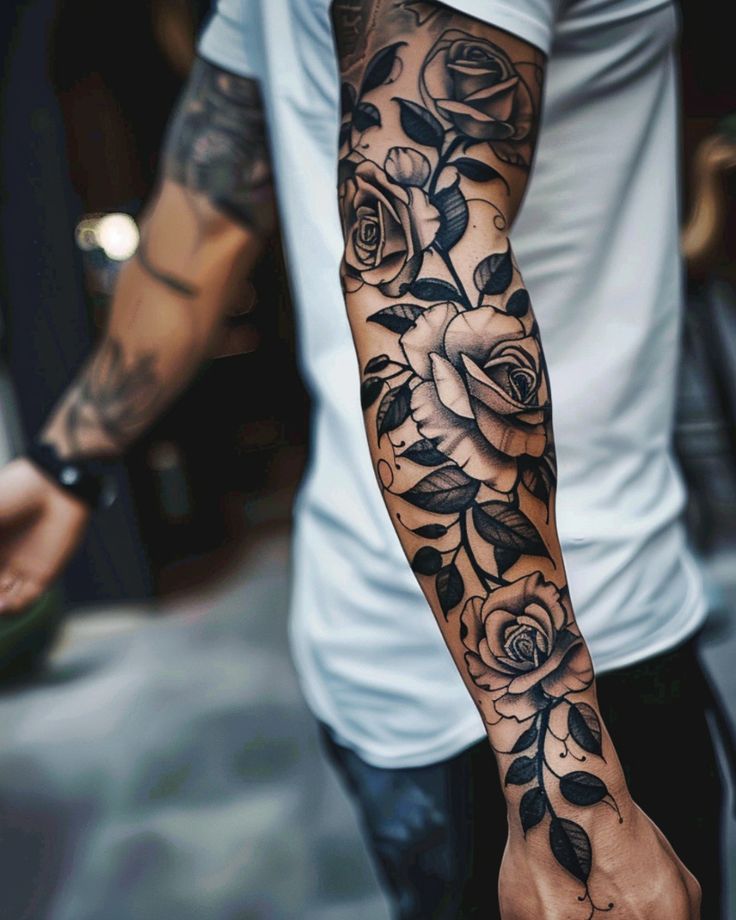
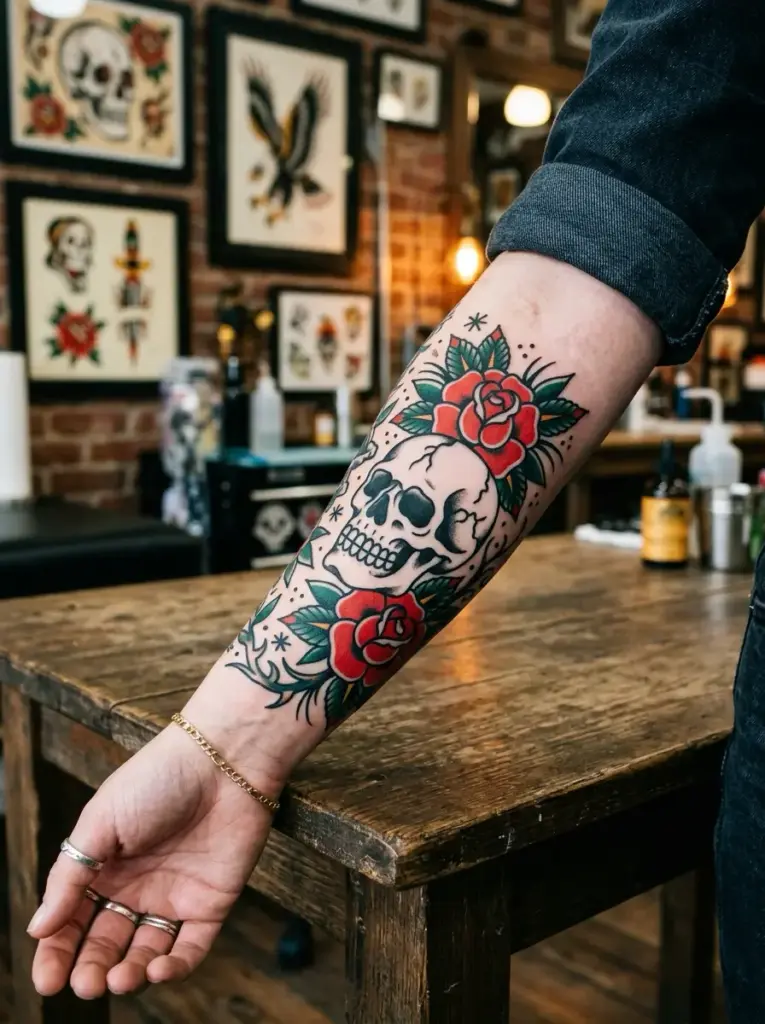
This is one of the oldest tattoo combinations that exists, and it still works because the tension in it is real. Skull: mortality, the end of things. Roses: beauty, growth, what we leave behind. Put them together and you’ve got a small philosophical statement.
The key is contrast. Don’t soften the skull to make it palatable — let it be rough and dark while the roses stay detailed and delicate. That contrast is where the design gets its energy.
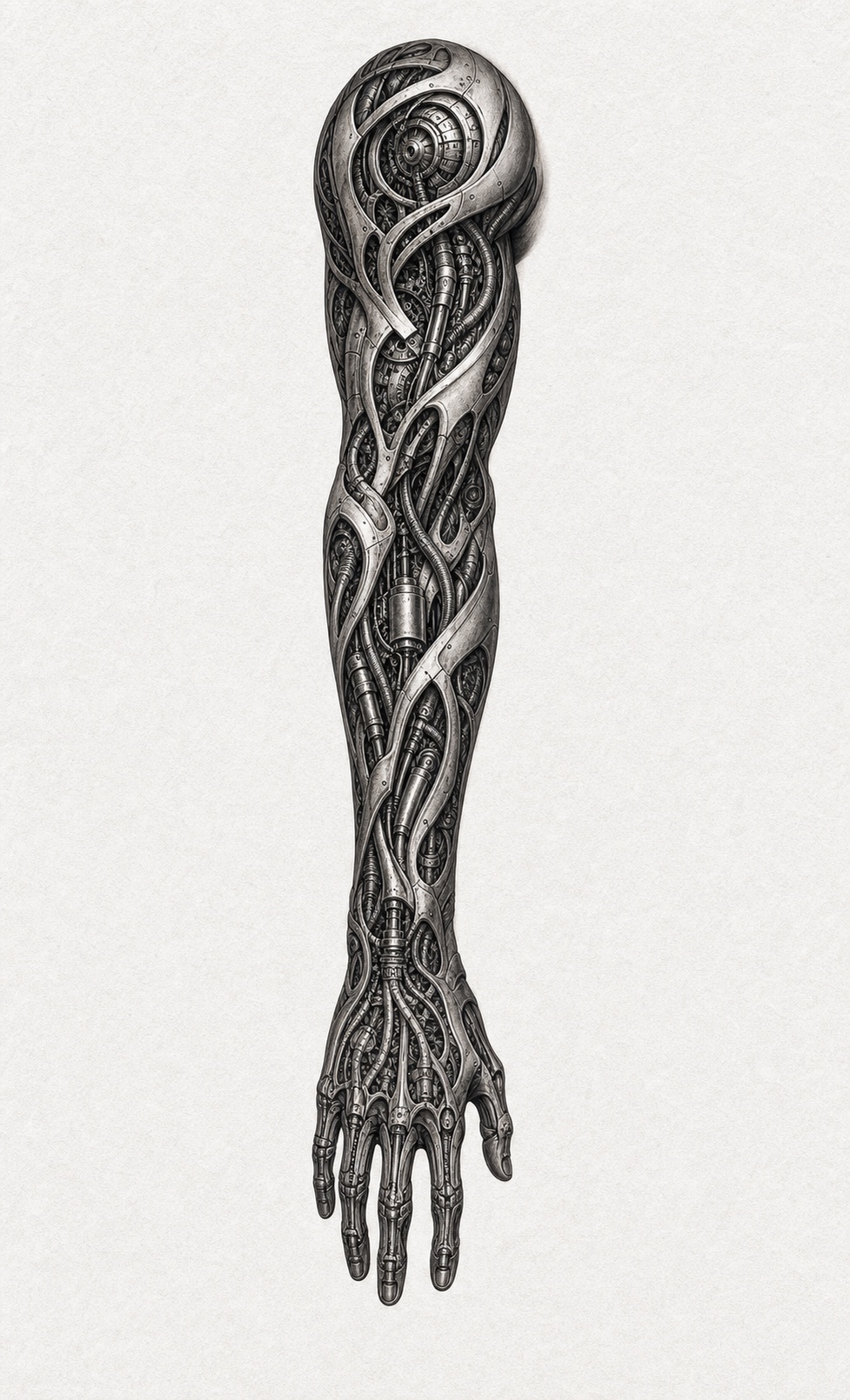
8. Biomechanical Sleeve
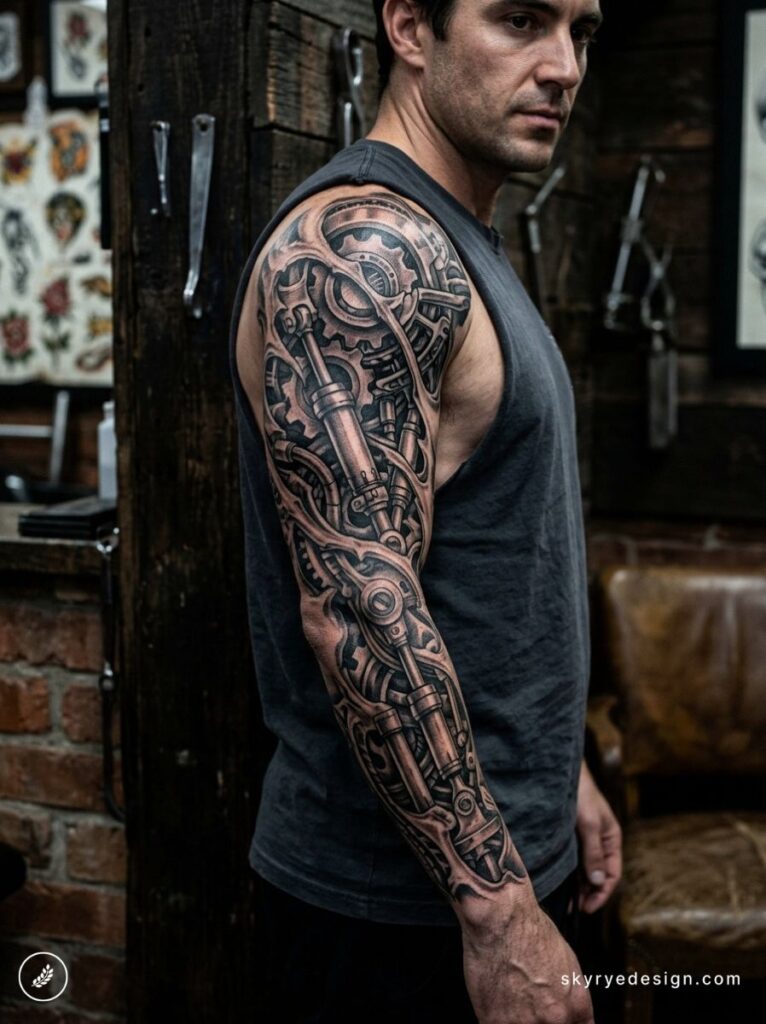
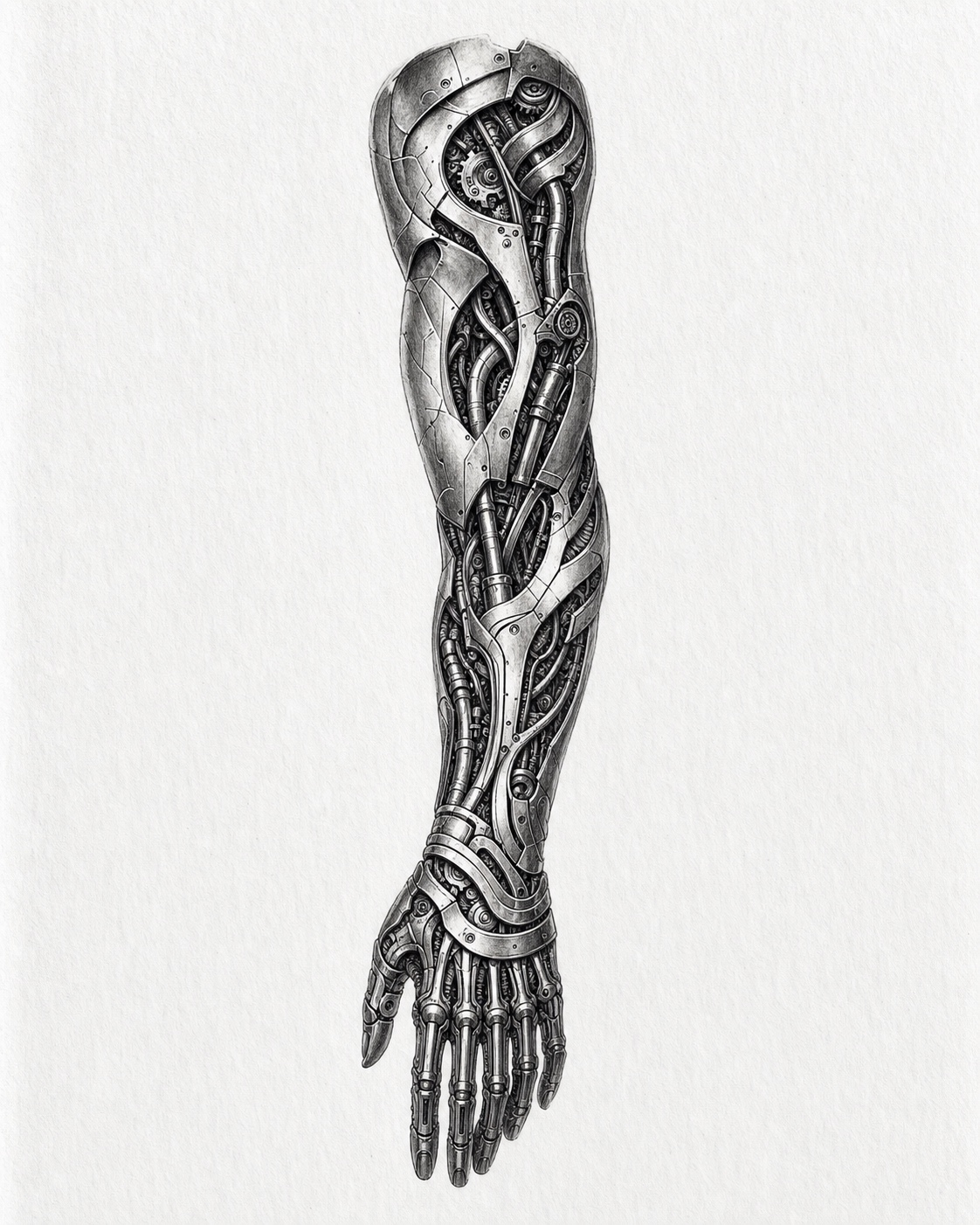
Biomechanical tattoos look like the skin is peeling back to reveal machinery underneath — gears, pistons, cables, hydraulics running through flesh. The genre started with H.R. Giger’s aesthetic and got popularized in tattoo culture through the ’90s and 2000s.
Good biomechanical work is expensive and takes a skilled artist who understands both mechanical drawing and anatomy. The cheap version looks like grey blobs. The expensive version looks genuinely unsettling in the best possible way. Budget accordingly.
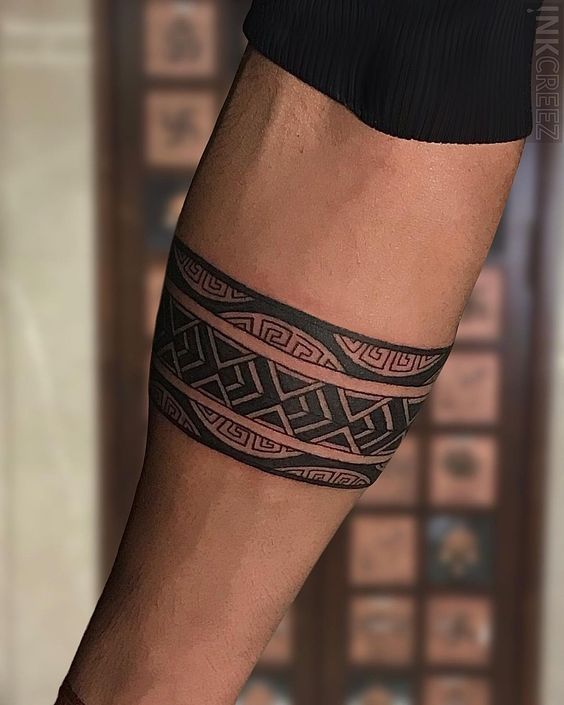
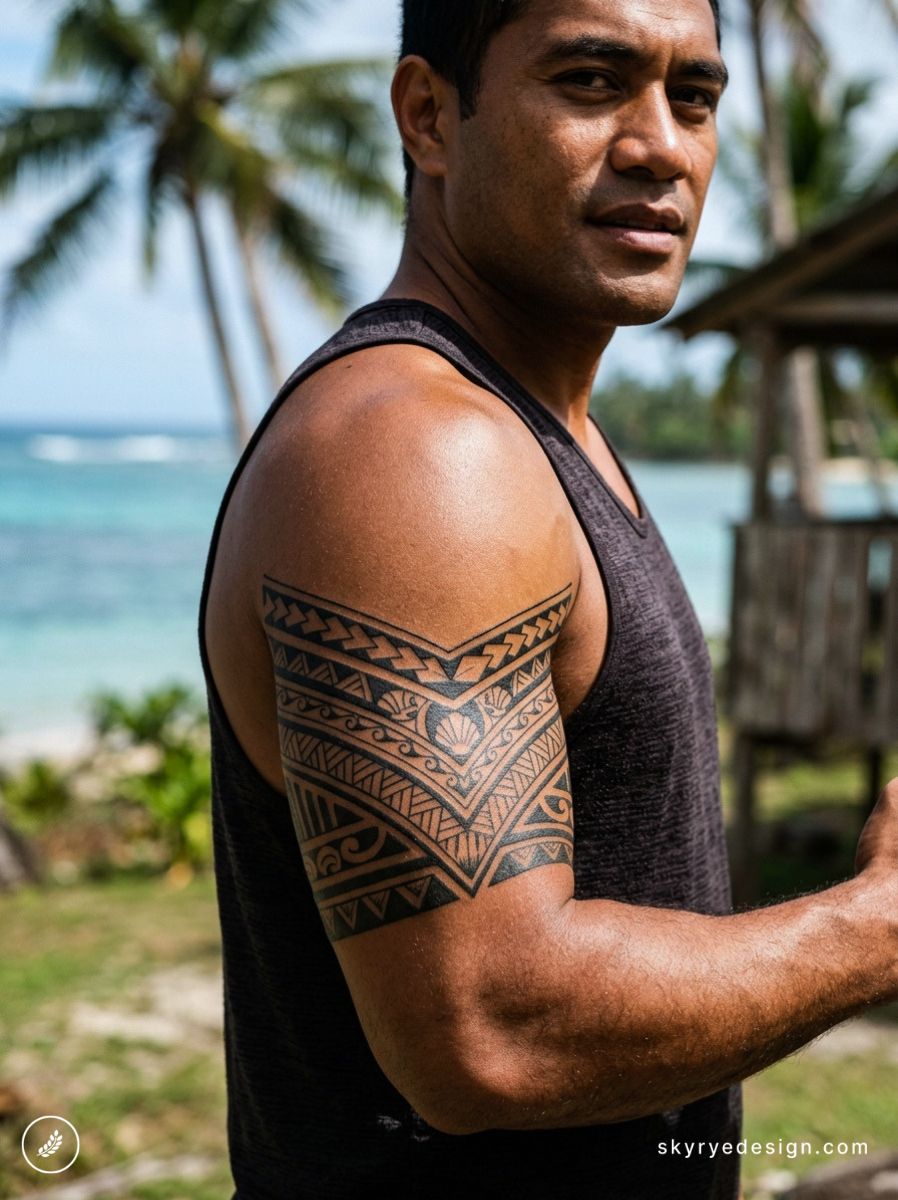
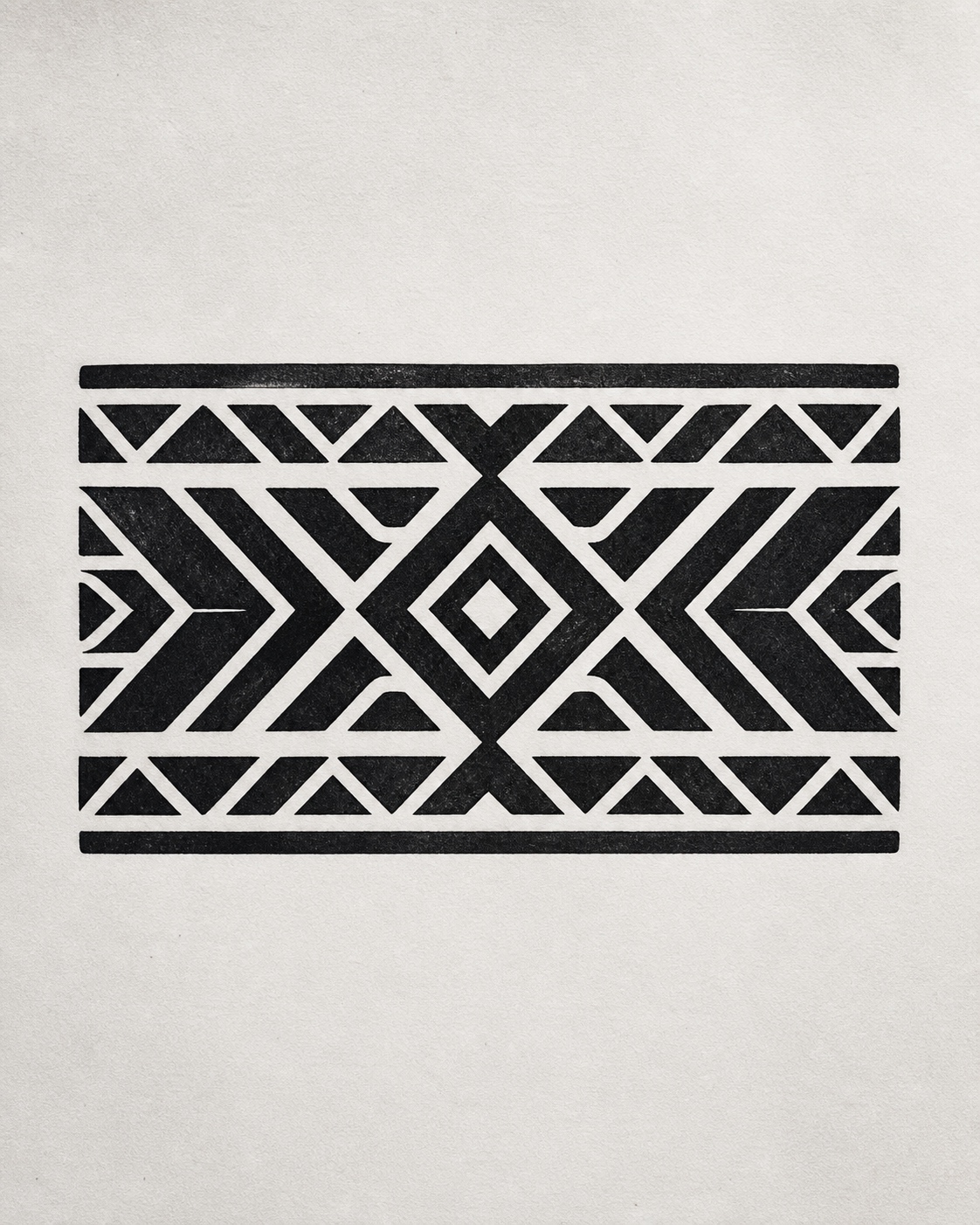
9. Tribal Armband
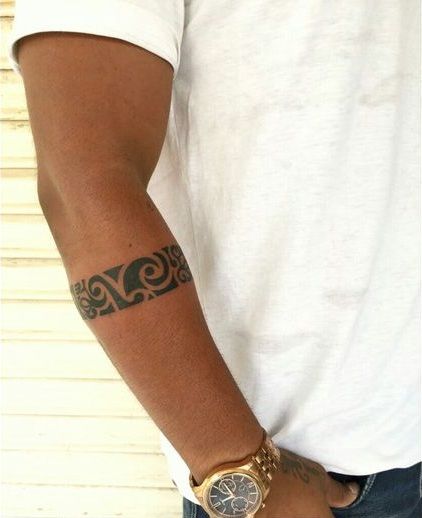
Tribal designs are back, and this time there’s more awareness about doing it right. If you have Pacific Islander, Māori, or Native American heritage, tribal tattooing carries specific meaning and tradition. If you don’t, a clean geometric armband that pulls from those aesthetics without copying sacred patterns is the more respectful path.
Either way, the armband format is functionally brilliant — it works at any arm circumference, ages gracefully, and frames the arm without needing a larger composition.
If you want something quieter than a lion or full sleeve but still meaningful, browse these heart tattoo ideas for anatomical, broken-heart, lock-and-key, and minimalist options.
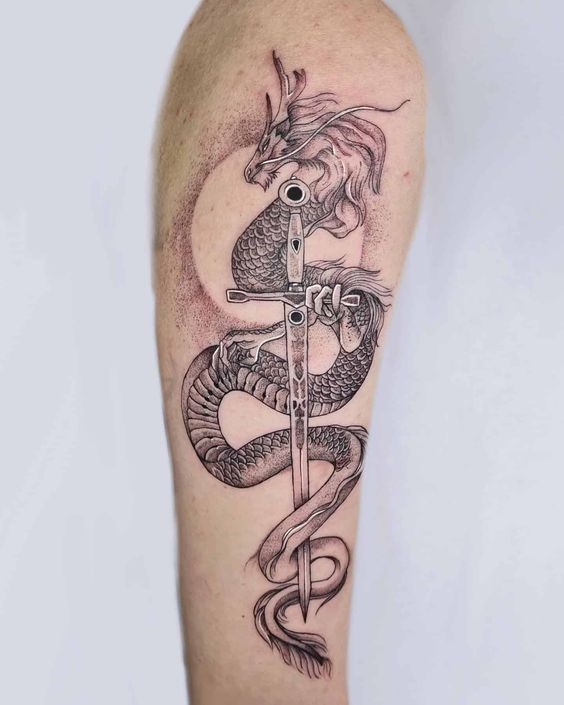
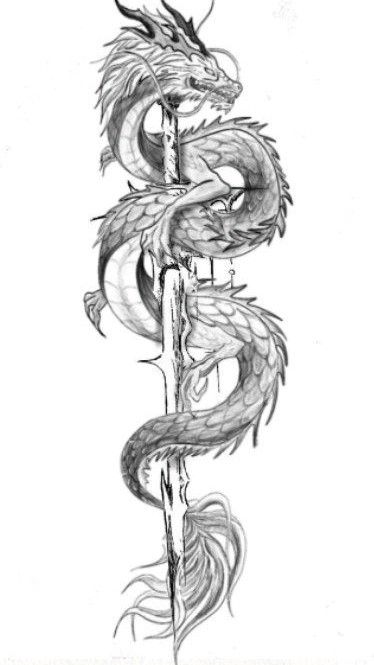
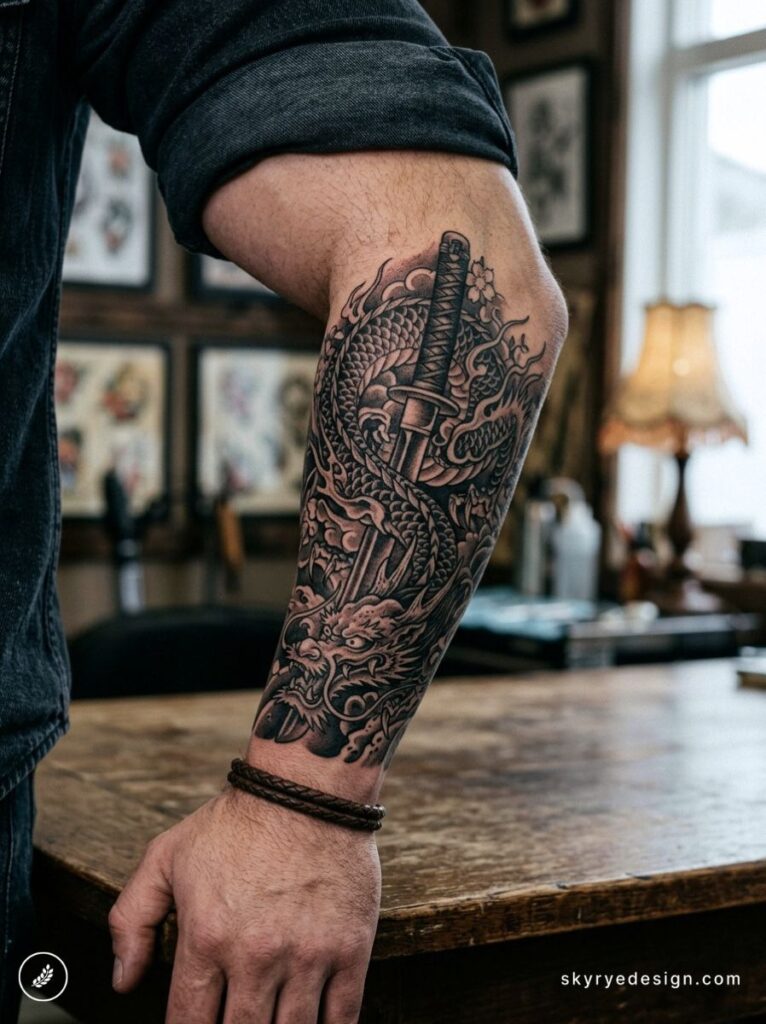
10. Dragon Wrapped Around Sword
Dragon compositions are some of the most technically demanding tattoos to execute well. A dragon that looks powerful requires real skill in the linework — too rigid and it looks stiff, too loose and it loses form.
The sword-wrapped version gives the composition a vertical anchor, which makes it ideal for the forearm or calf where you need a design that follows the limb rather than fighting against it. Japanese-style dragons work better here than Western ones — the sinuous body curves naturally.
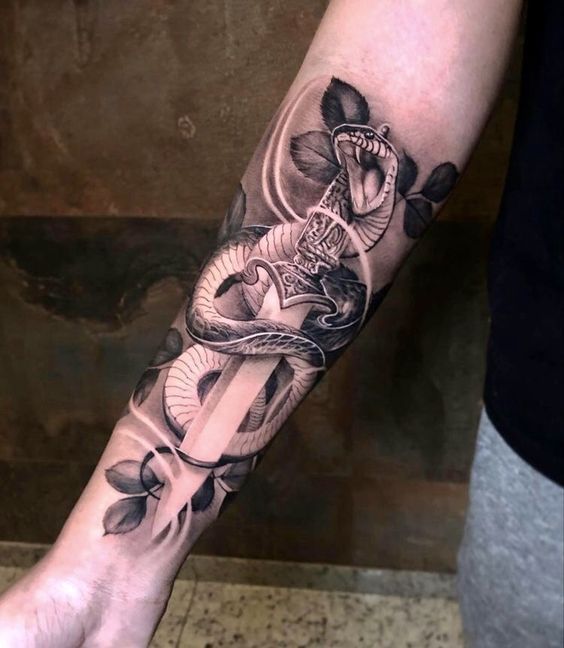
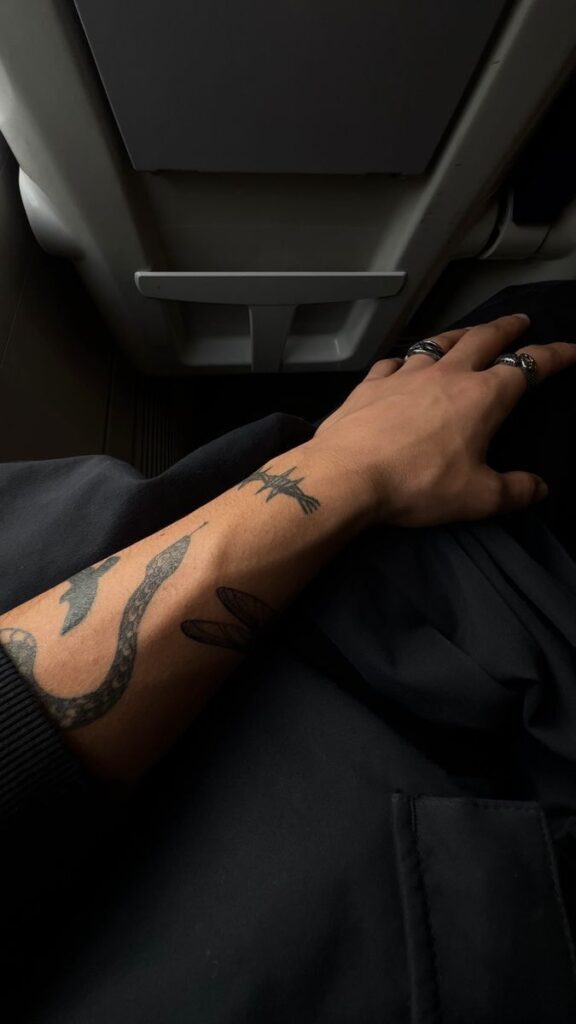
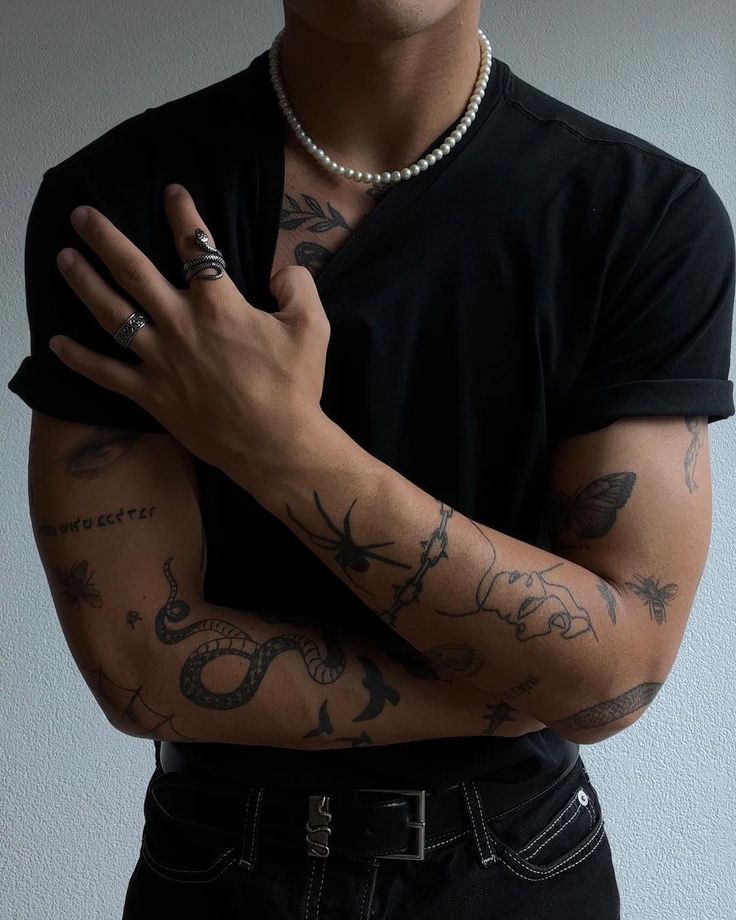
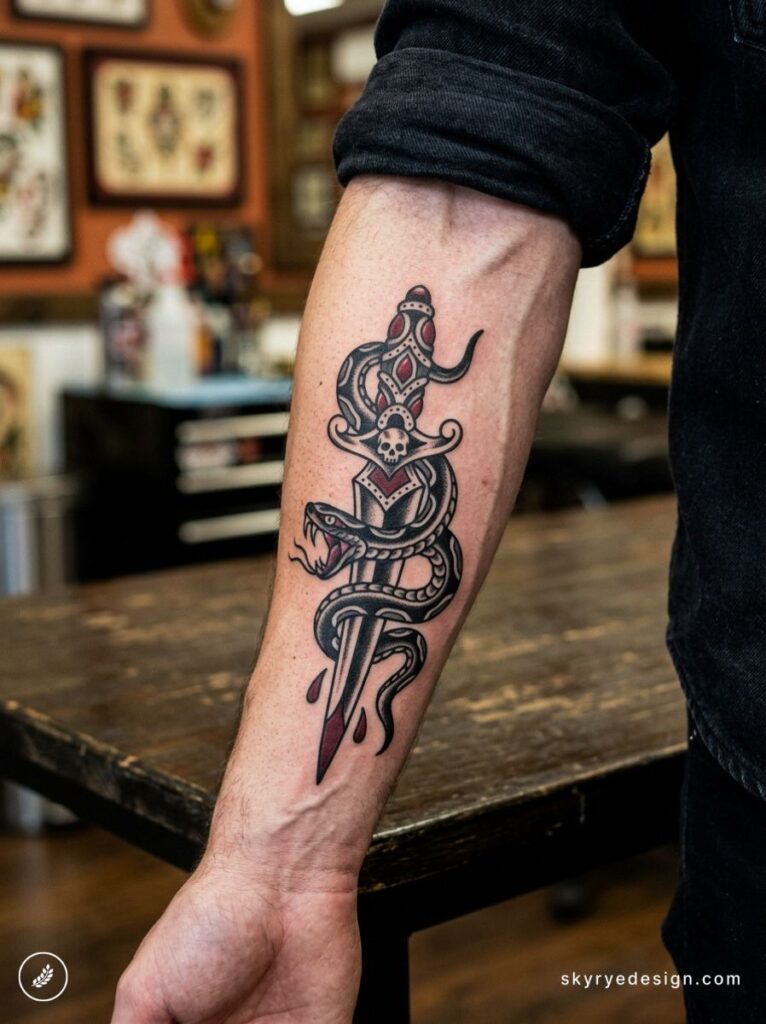
11. Snake and Dagger
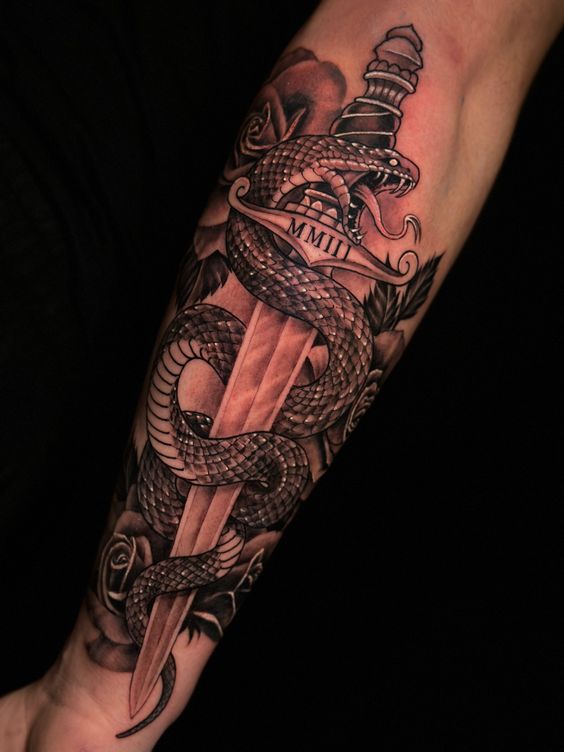
Snake-and-dagger comes loaded with meaning depending on your reference point. Medical (the Caduceus), occult, military, old-school American traditional — all of them claim it. That layered history is part of what makes it interesting.
American Traditional rendering is the strongest for this one: thick outlines, flat color fills, no gradients. It’s a design built for that style, and the bold lines hold up better over decades than fine-line work does.
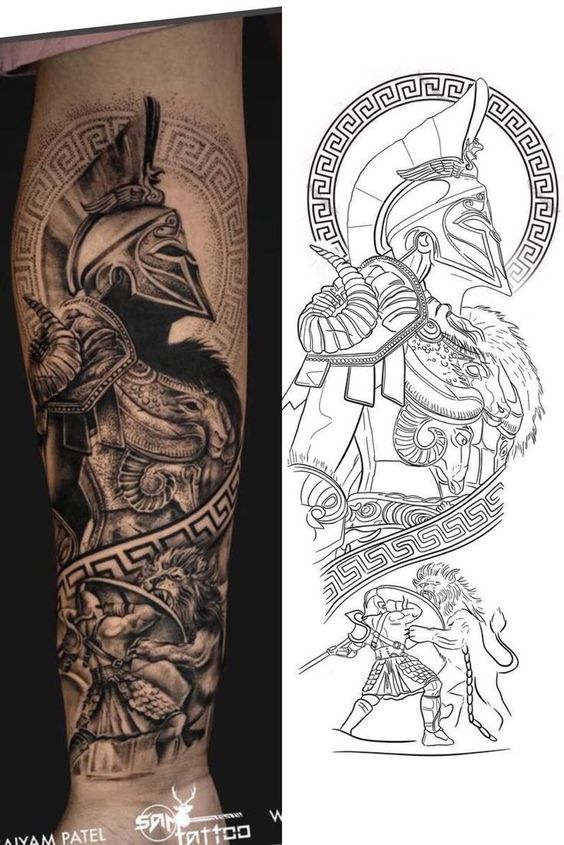
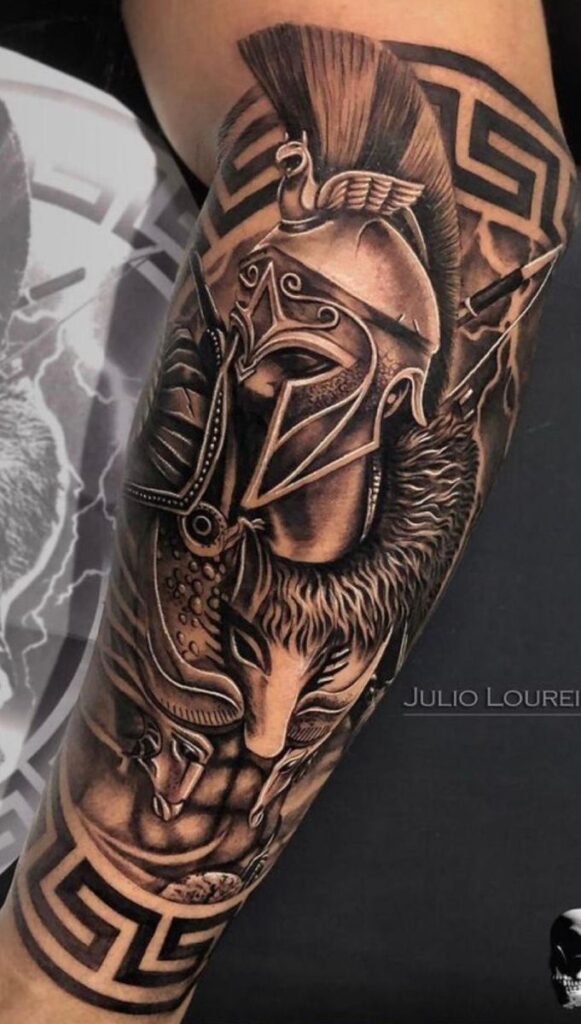
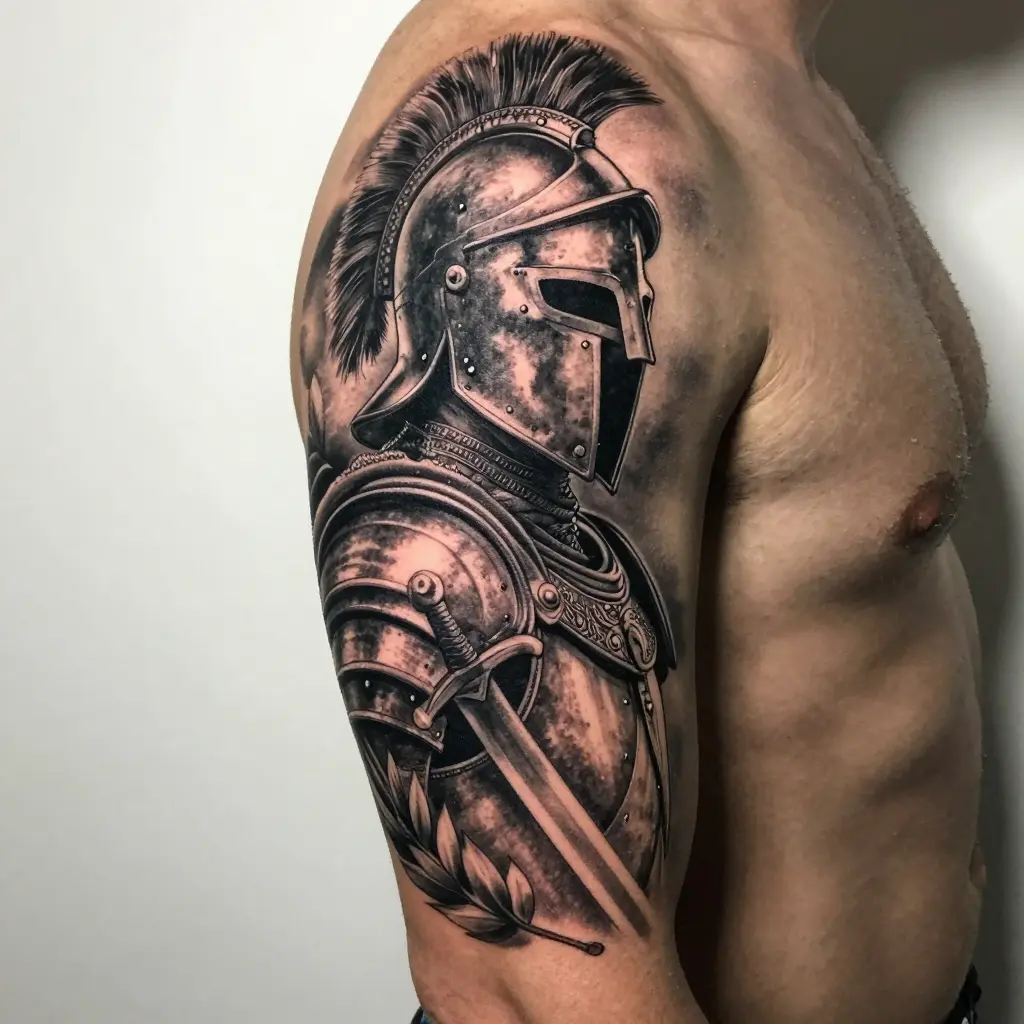
12. Roman Gladiator
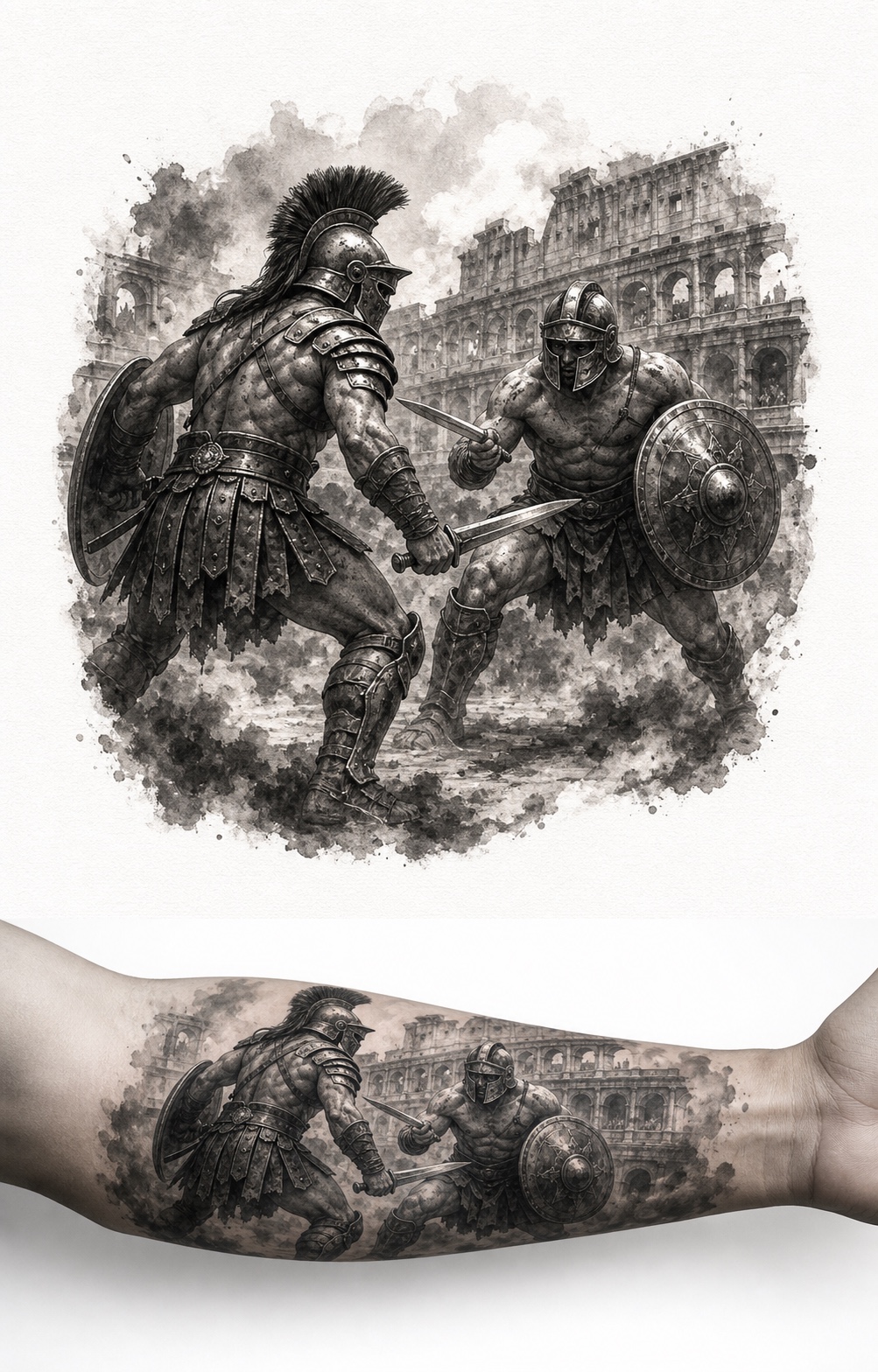
Gladiator tattoos are about performing under pressure with no option to quit. The Colosseum as a backdrop, the helmet’s distinctive cheek guards, a spear or gladius mid-action — there are a lot of ways to approach it.
The best gladiator tattoos treat the figure the way you’d treat a sculpture: detailed musculature, careful light sourcing, a sense of physical weight. It needs a large canvas — chest or back — to have room to do that properly.


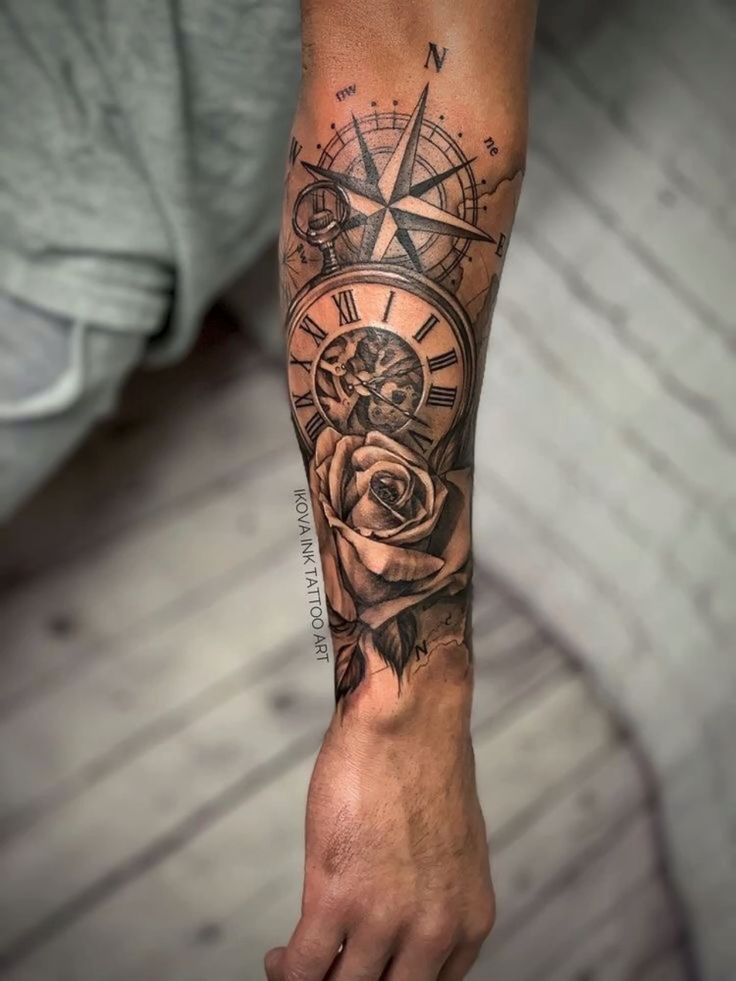
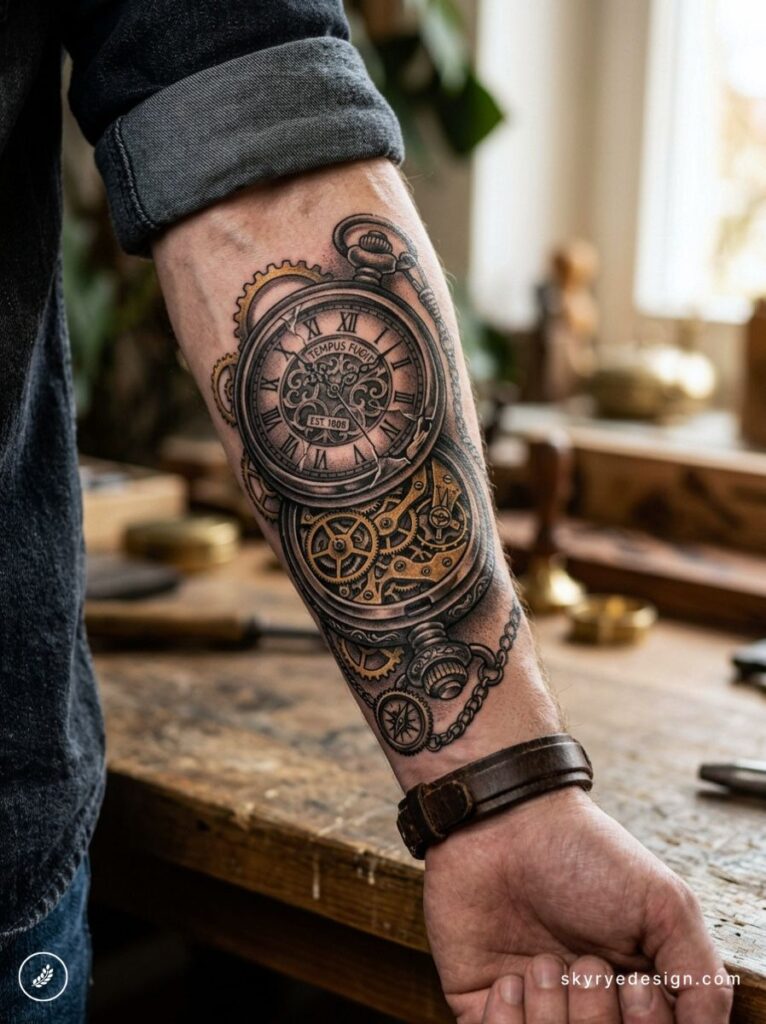
13. Clock with Gears
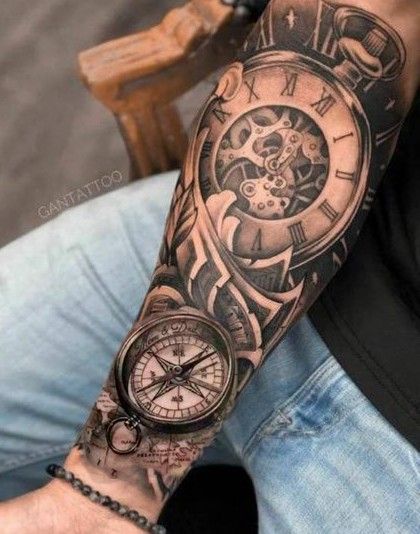
Clock tattoos are almost always about mortality, though not always in a morbid sense. Often it’s more about urgency — the idea that time is moving whether you’re using it well or not.
The steampunk version with exposed gears has been popular for a decade and still looks good when the gear teeth are cleanly drawn. A cleaner alternative: a realistic pocket watch face, slightly melted at the edges (Dalí-influenced), which carries more artistic weight and less association with the early 2010s.
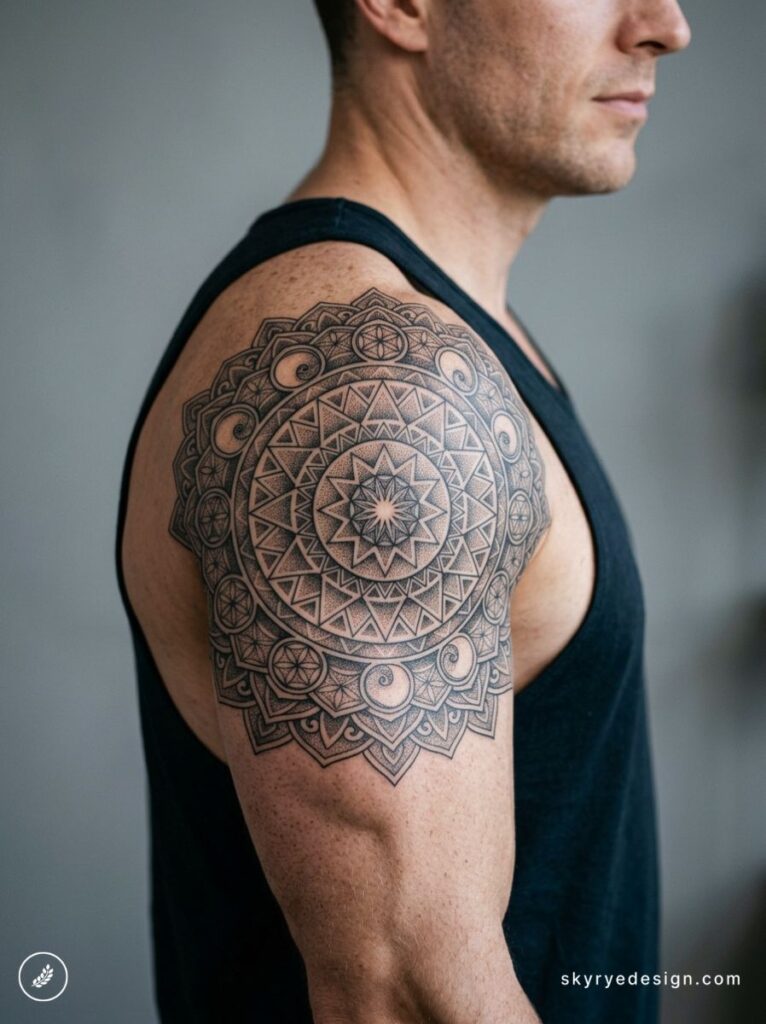
14. Geometric Mandala
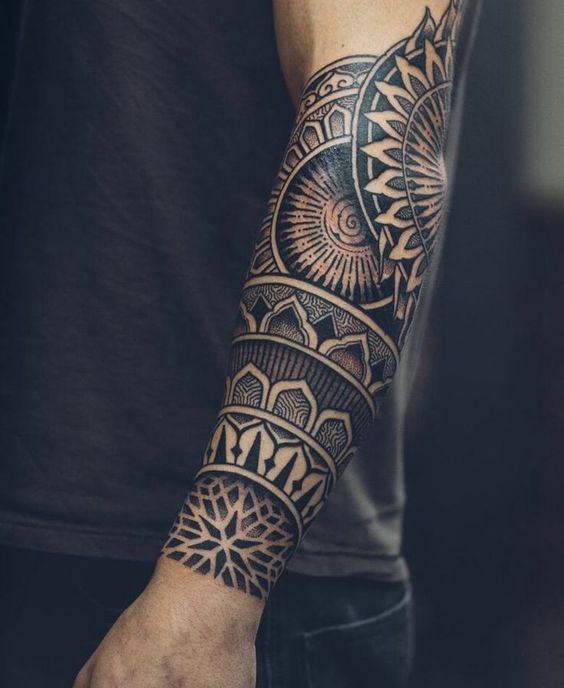
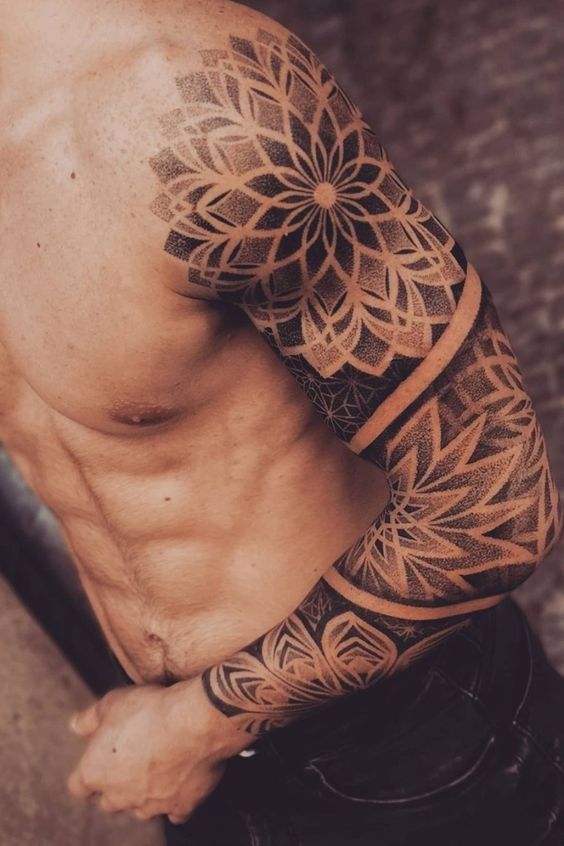
Mandala tattoos moved from bohemian into mainstream men’s tattooing and stuck there because the geometry is genuinely satisfying. Perfect symmetry, intricate repetition, the sense that someone spent real hours planning the spacing — it reads as craftsmanship.
The geometric version (replacing organic curves with straight lines and triangles) has a slightly more masculine visual weight. Works exceptionally well on the chest, where the sternum gives you a natural center axis.
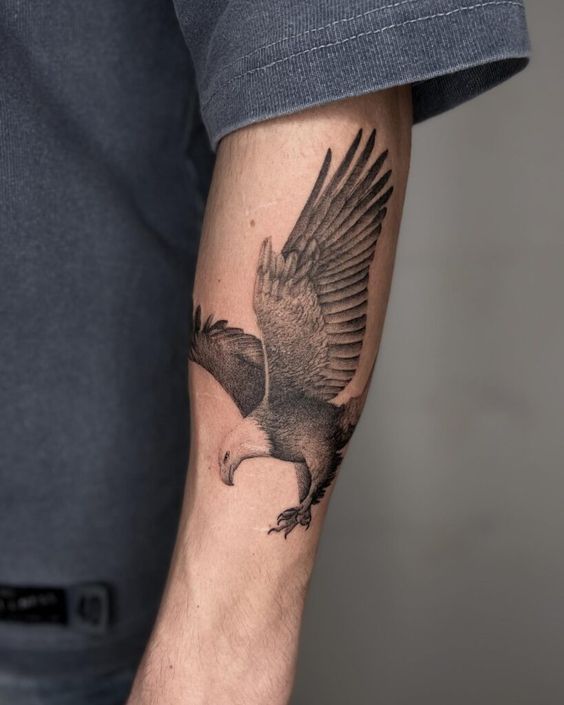
15. Eagle in Flight
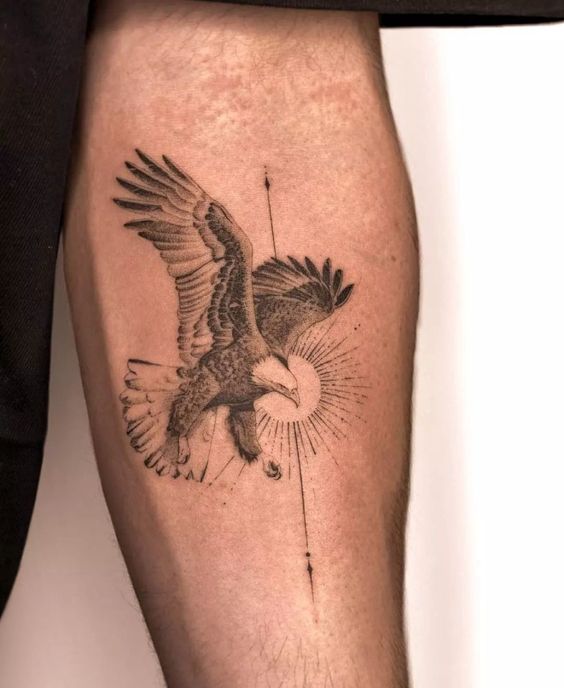
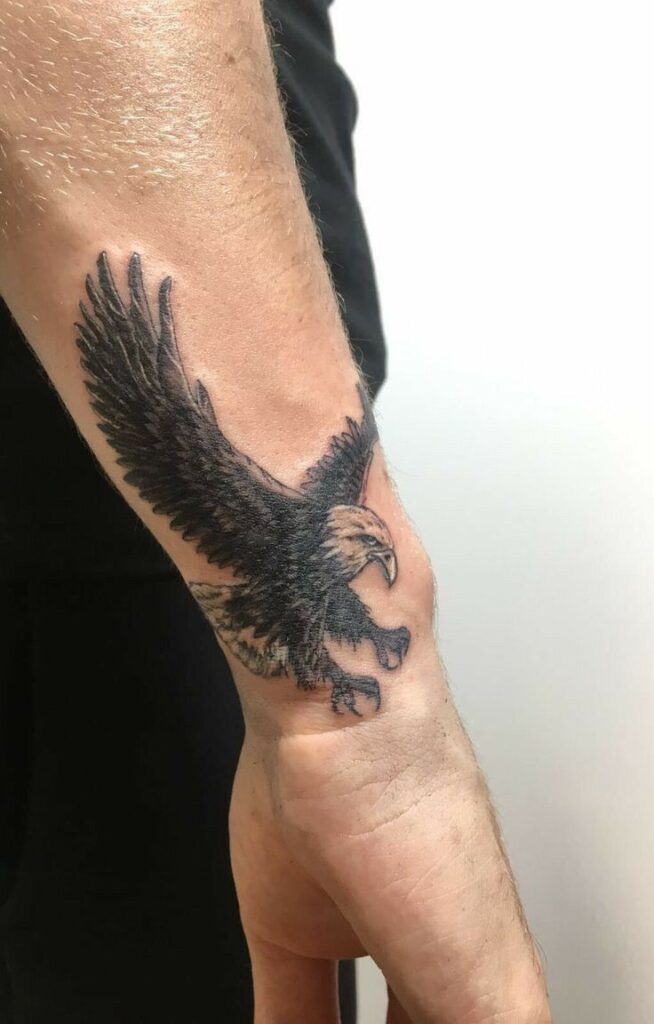
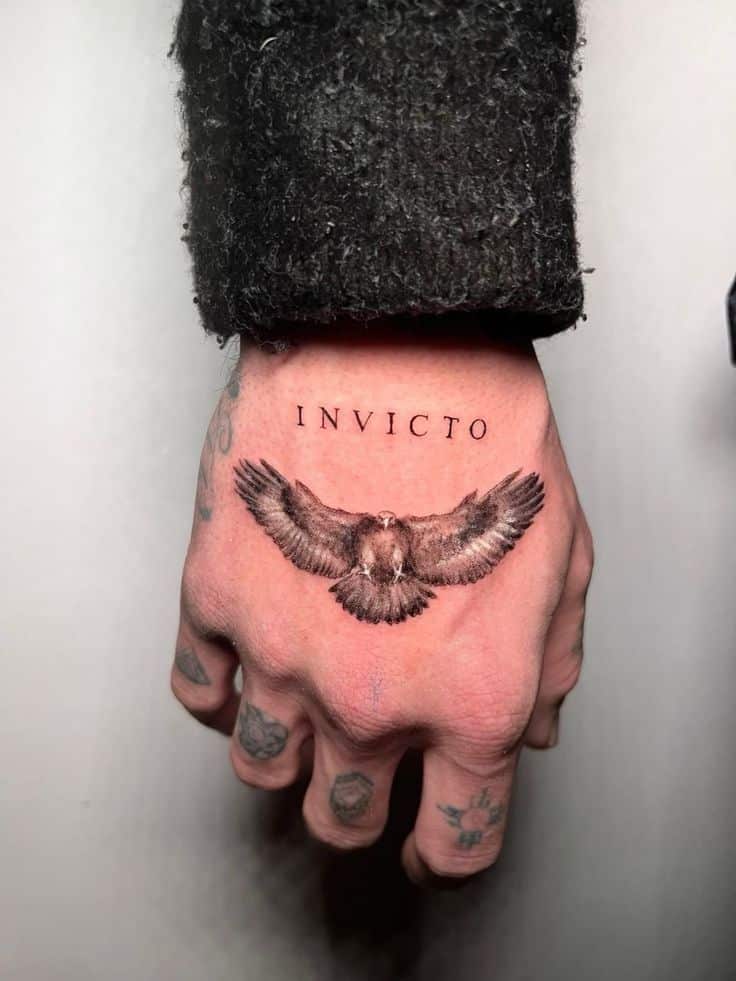
Eagles are the most American symbol in tattooing, but they work globally because the bird itself is visually spectacular. A well-drawn eagle in flight — wings spread, talons extended, head in profile — is one of the most compositionally satisfying images in the whole design vocabulary.
Realism is the strongest style for eagle tattoos. You want individual feather detail, the specific shape of the eye, the way the primary feathers spread at the wingtips. Simplified versions always lose something.


Small Tattoos for Men
Small tattoos are having a long moment. Fine-line work, minimalist symbols, tiny portraits — artists who specialize in the format are booked out months in advance at major city studios. Here’s what actually works at small scale.
If you are leaning toward compact ink, compare these examples with a deeper guide to small tattoo ideas so the final shape stays readable after healing.
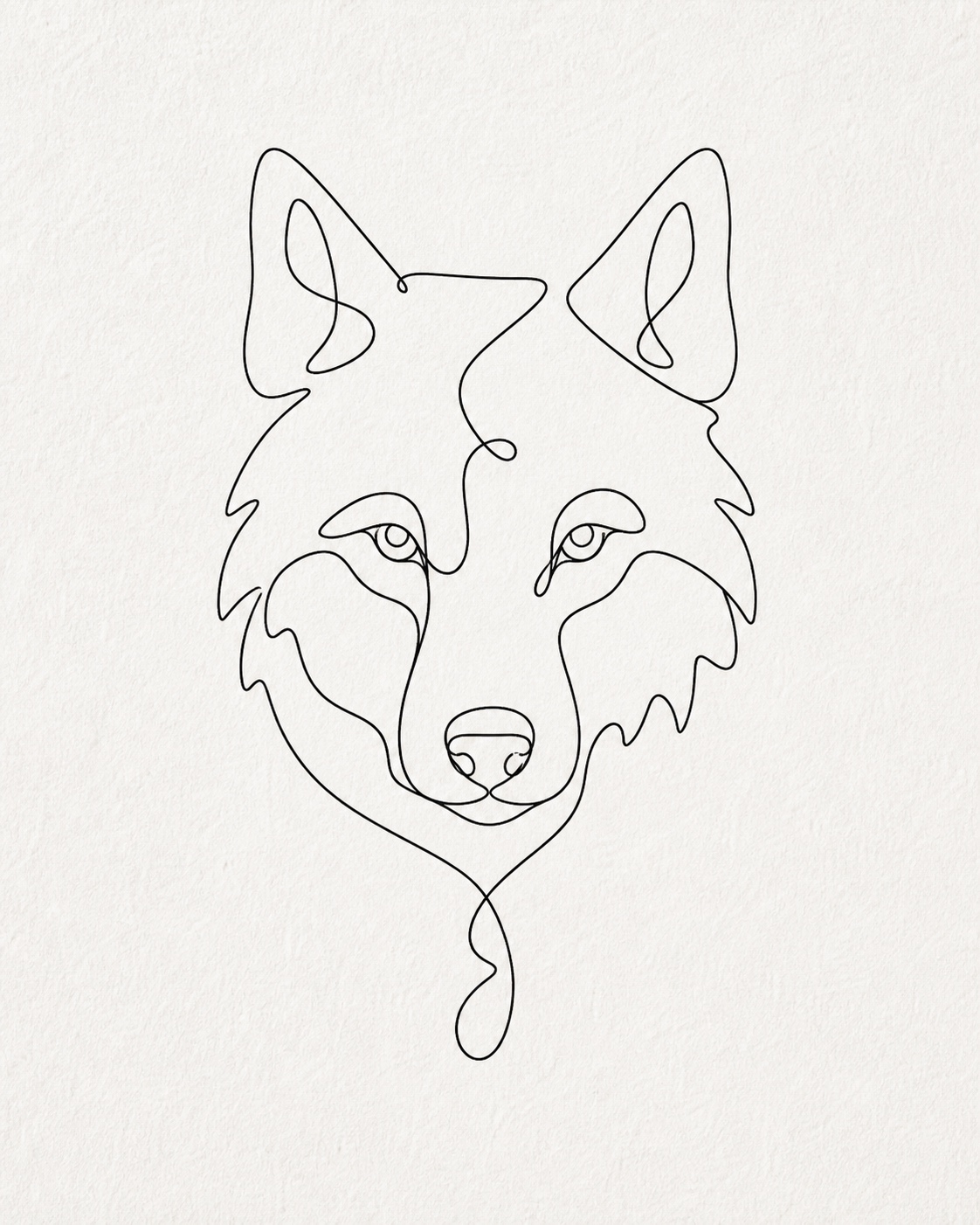
Single-Line Geometric Animal
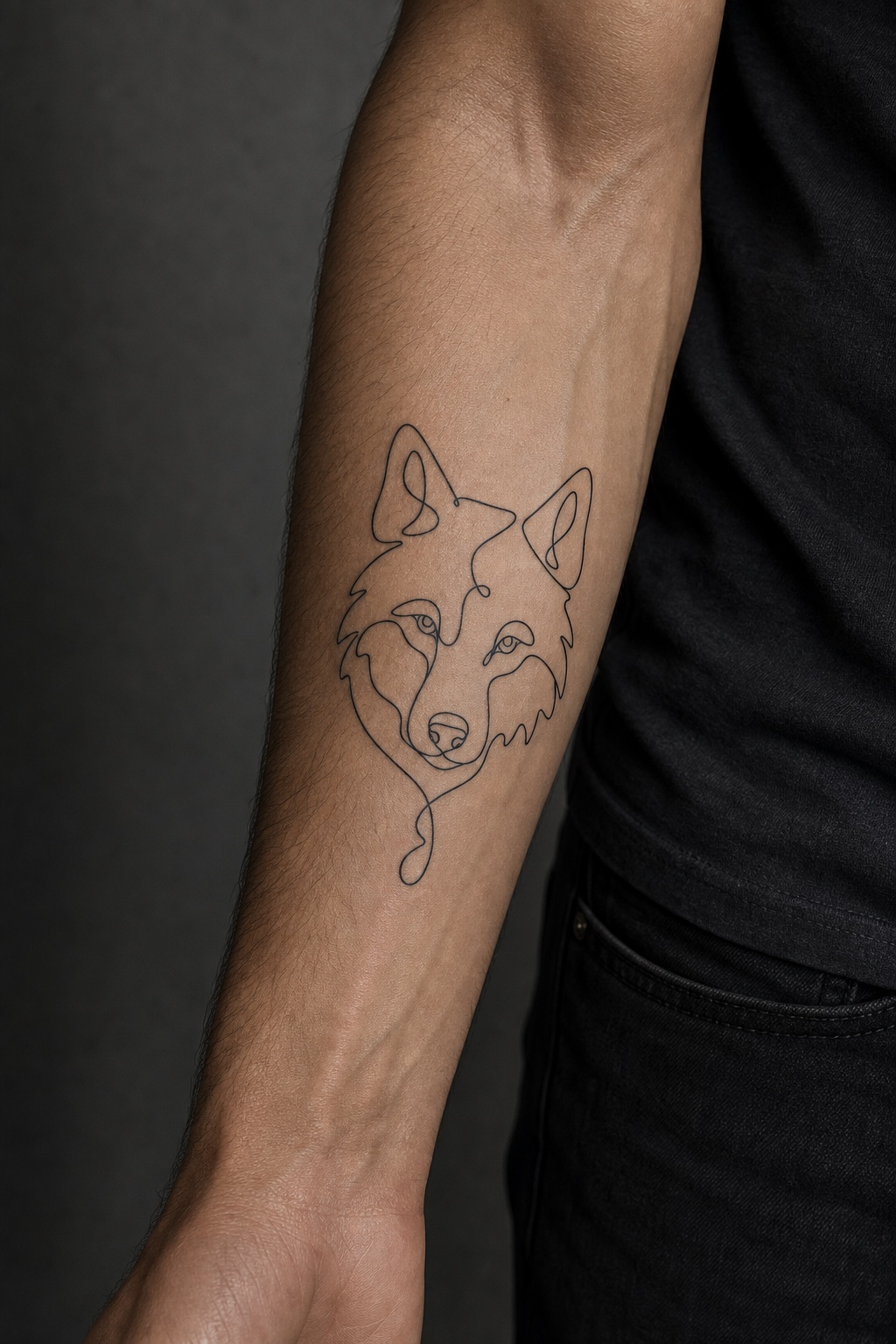
A wolf, lion, or eagle rendered in a continuous line with minimal interior detail. Works at 2–3 inches, reads clearly, looks considered rather than generic.
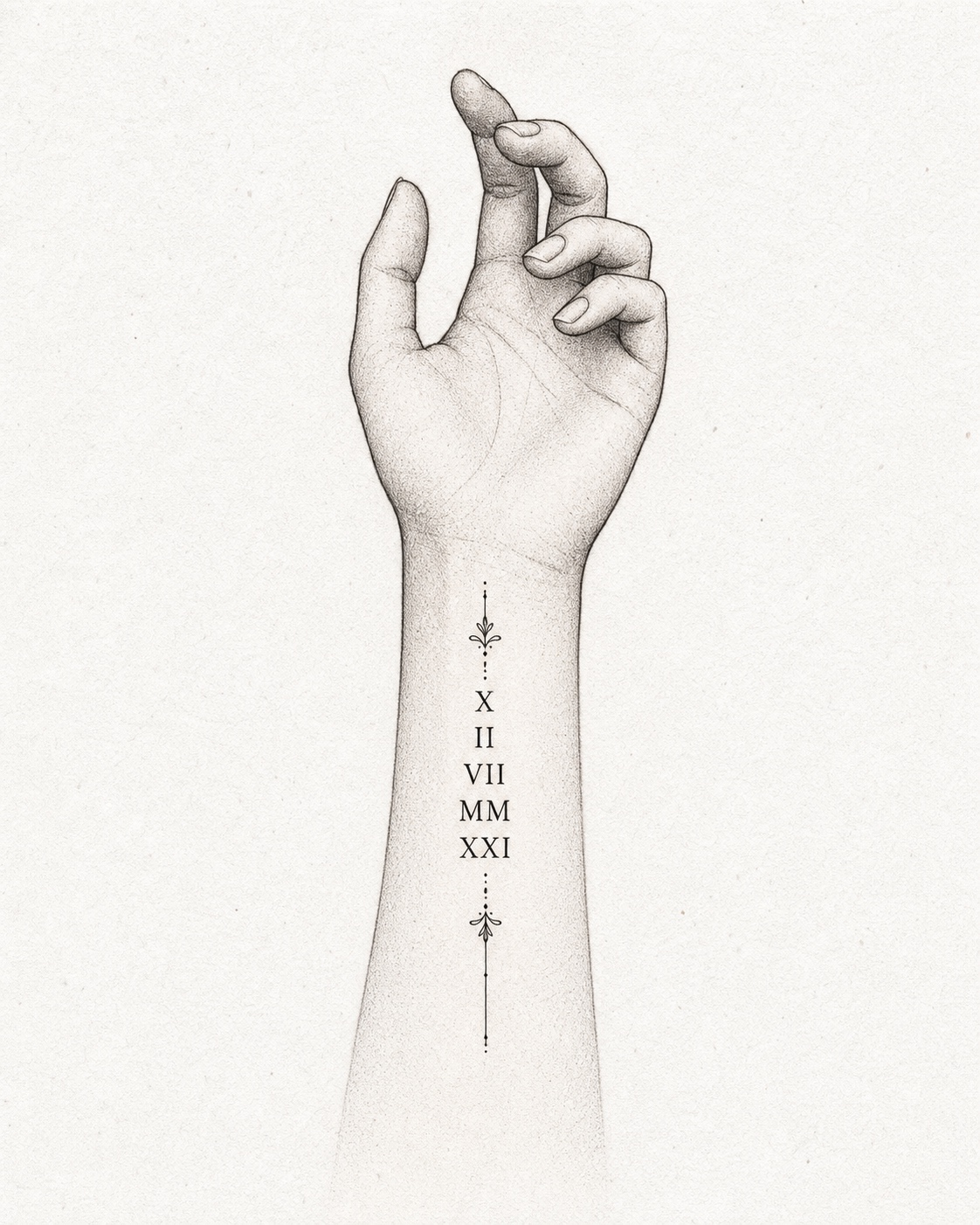
Roman Numerals
A date that matters, done in clean serif numerals. Simple, readable, and personal without being explanatory. The inner wrist or collarbone are the go-to spots.
Small Compass Rose
A 2-inch compass with just the starburst and cardinal points — no surrounding detail. The detail-to-size ratio is perfect for wrist or ankle.
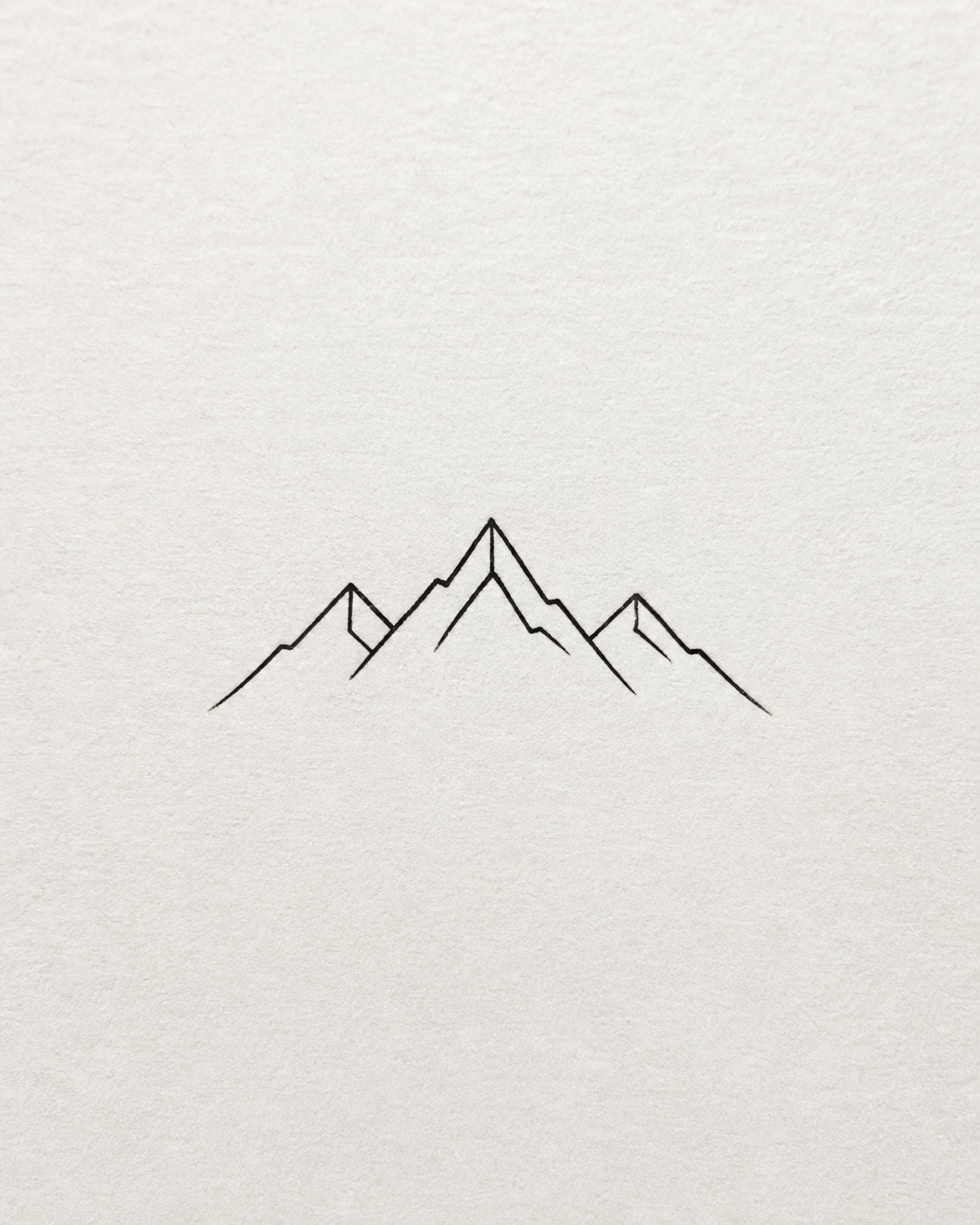
Minimal Mountain Range
Three or four peaks, just outline, no shading. Clean geometric version or loose linework both hold up at small scale. Popular on the forearm or behind the ear.
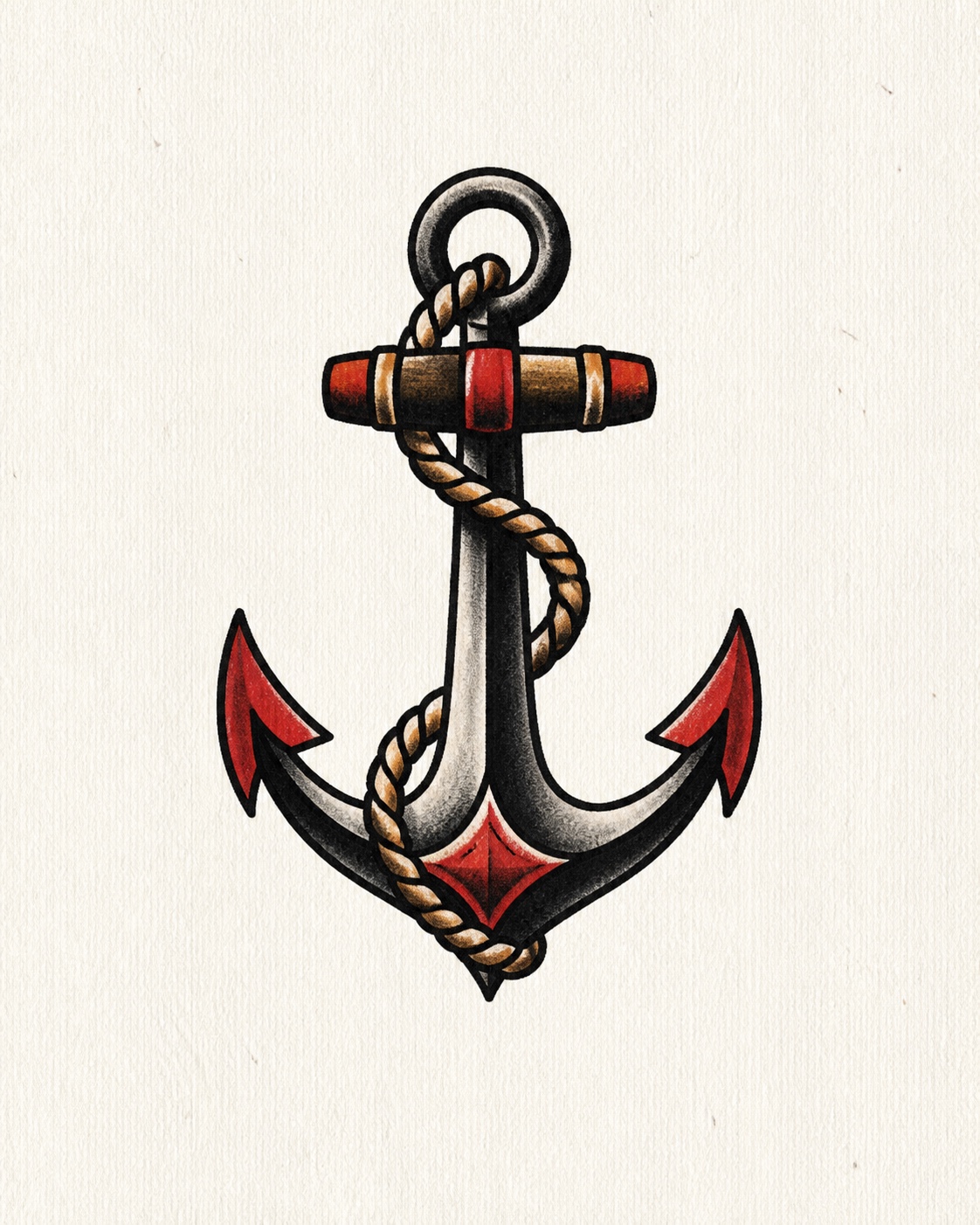
Tiny Anchor
American Traditional anchor at 1–2 inches. Bold enough to not blur over time, classic enough to never feel dated. Inner wrist or finger placement.
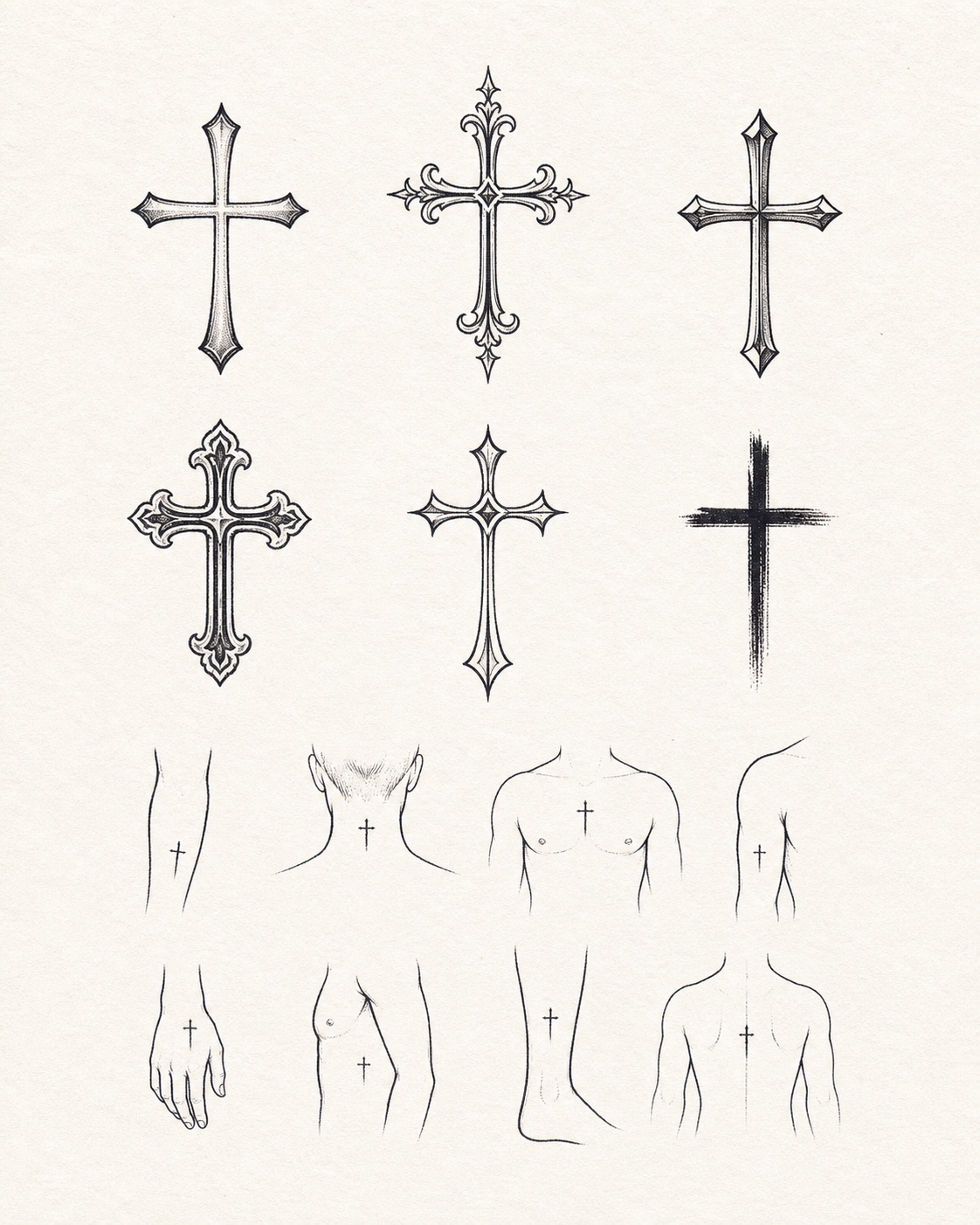
Small Cross
A clean cross with subtle shading on the interior face. Understated, broadly meaningful, works at any placement.
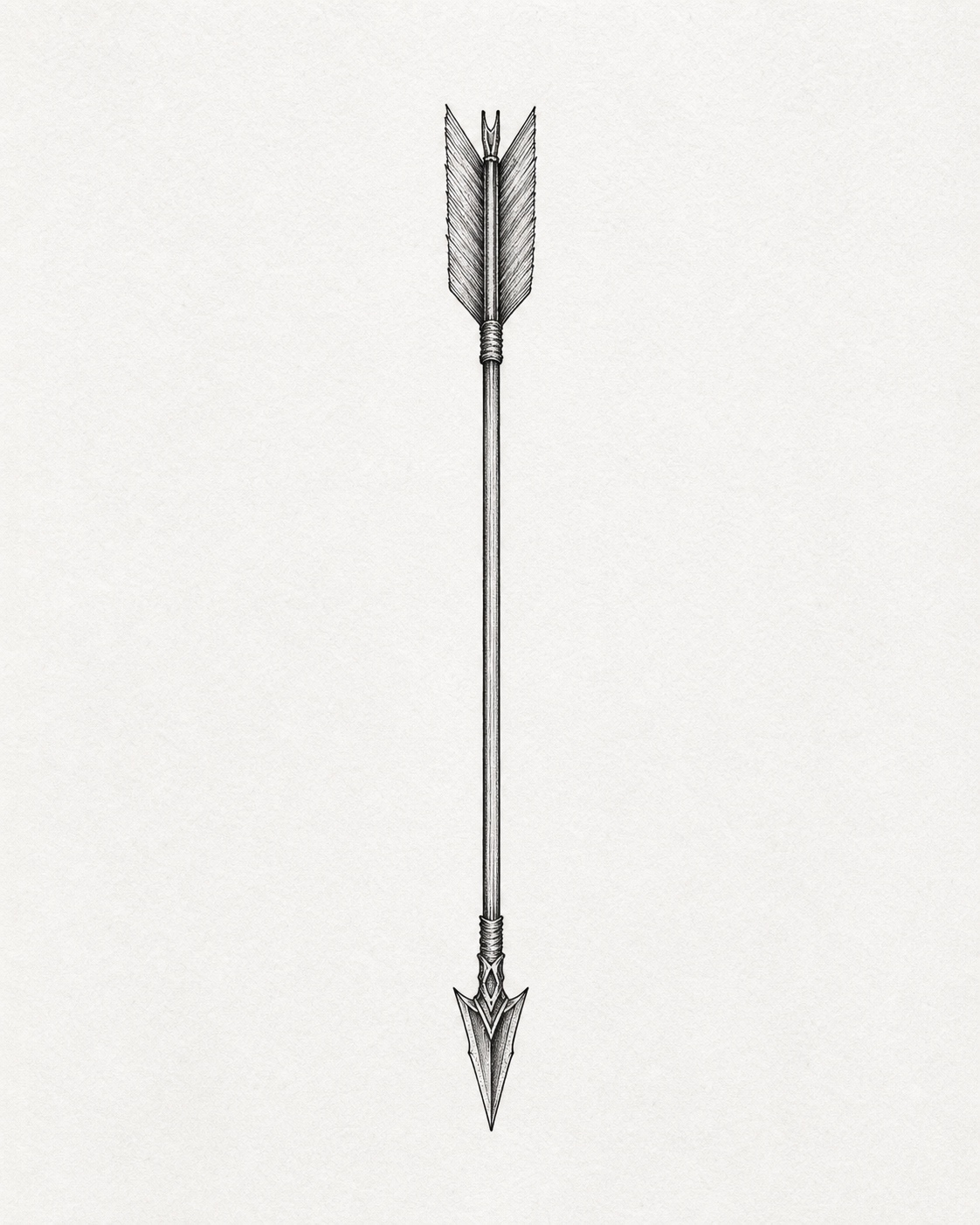
Single Arrow
One arrow, perfectly straight, pointing in one direction. Some guys get it with a word, others leave it clean. Forearm placement is the most common.
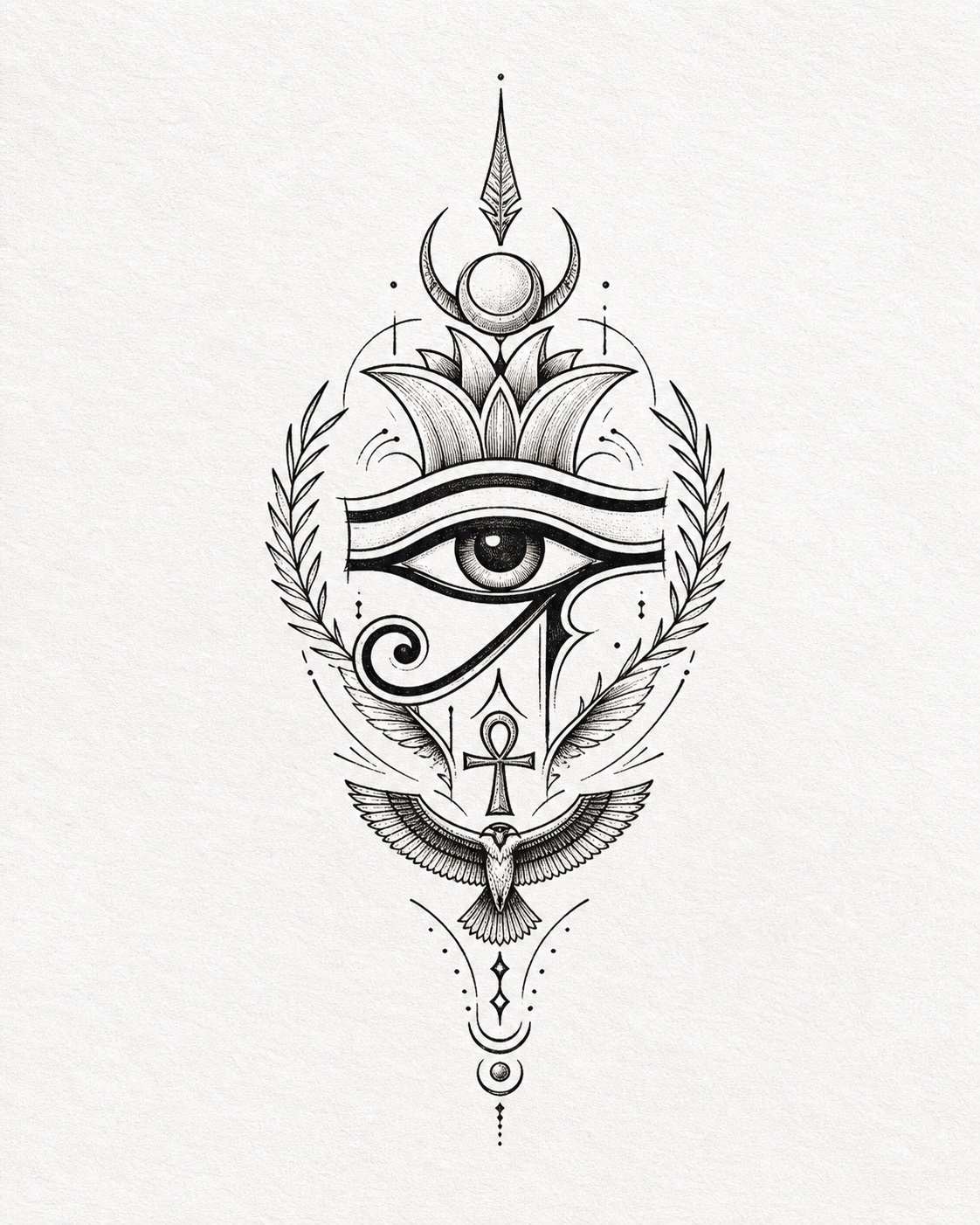
Eye of Horus
Egyptian imagery at small scale — one of the few ancient symbols that maintains visual clarity when reduced. Usually goes on the hand or wrist.
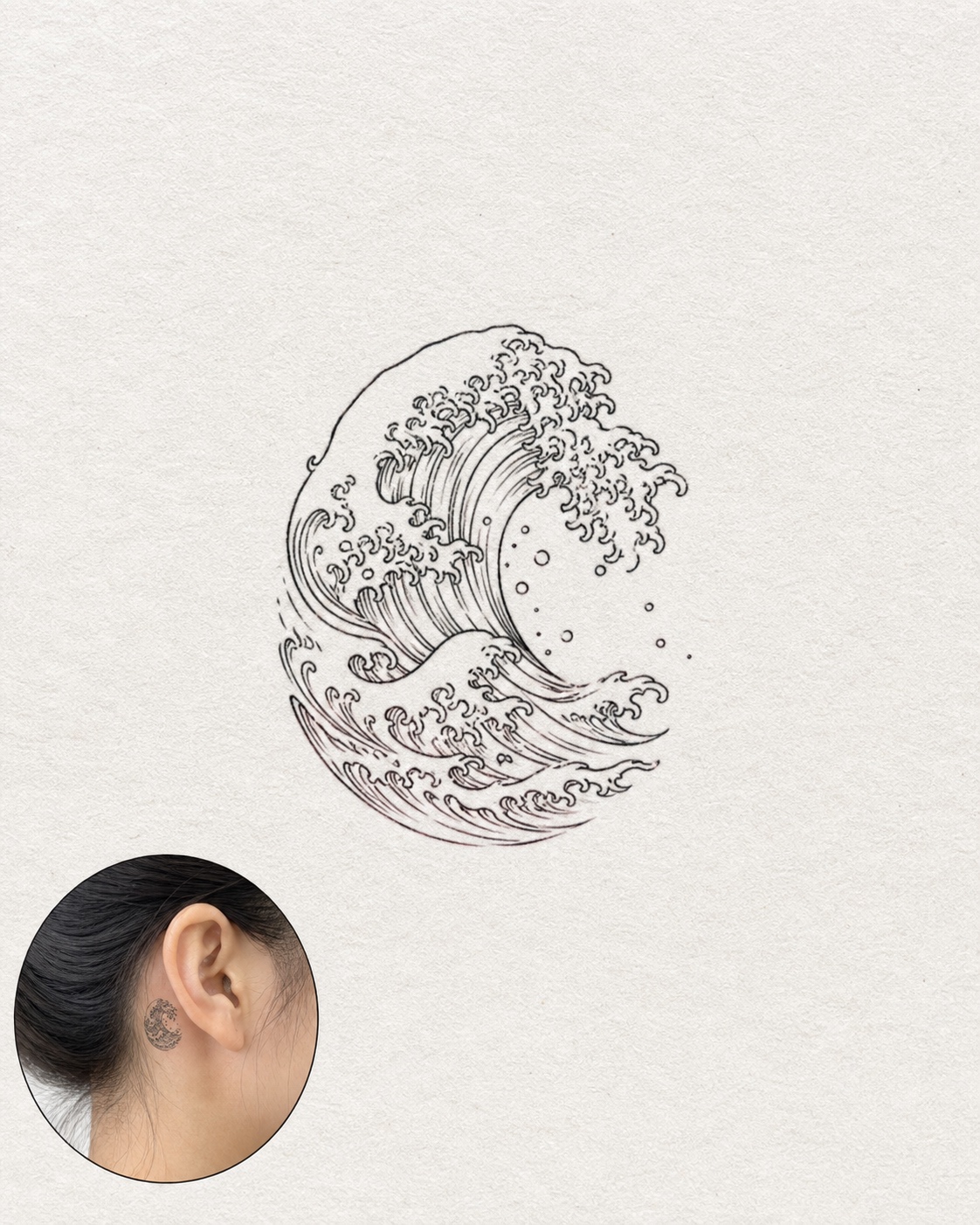
Small Wave
A Hokusai-influenced wave miniaturized to 2 inches. Fine line, no fill. The curve works well behind the ear or on the inner forearm.
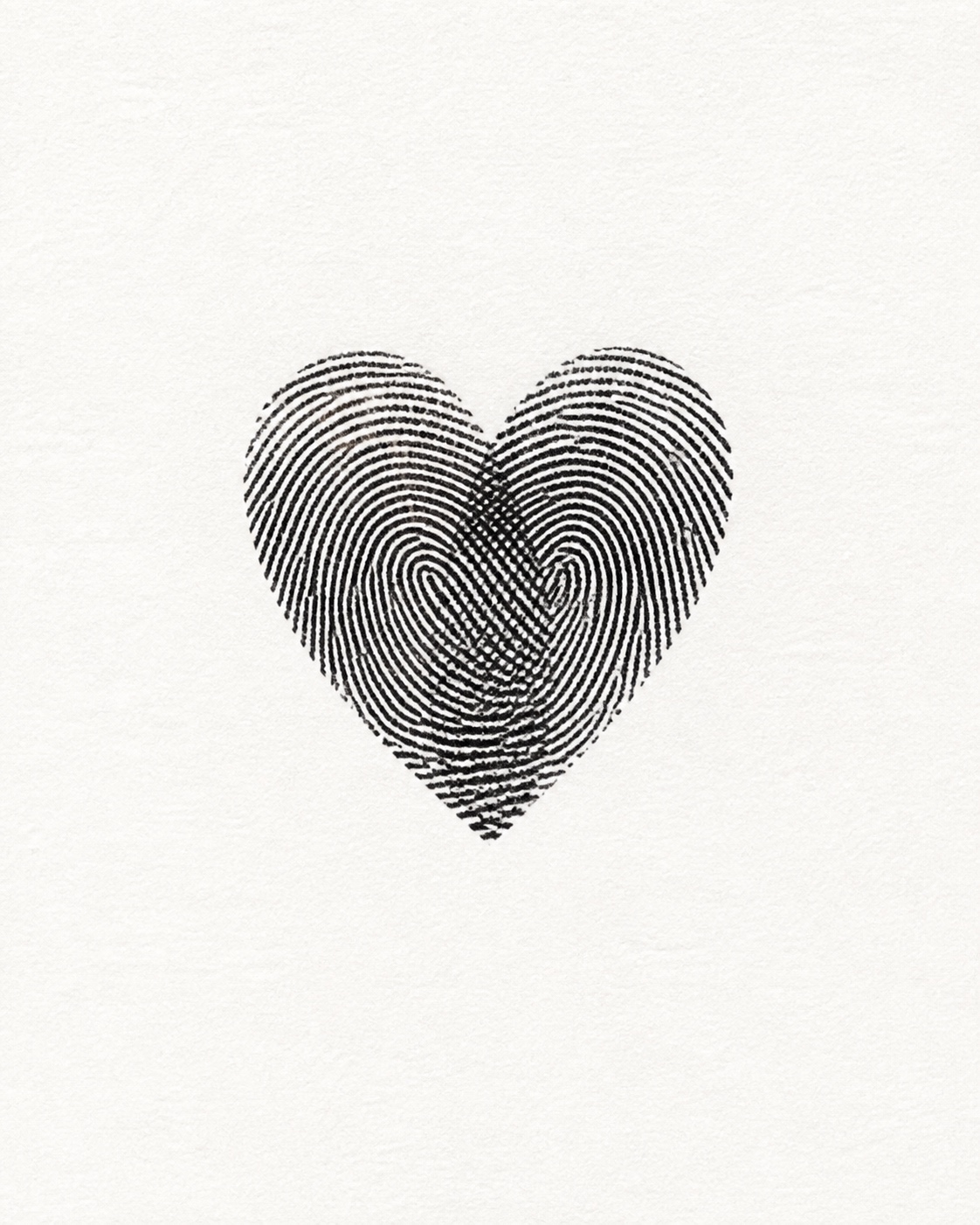
Fingerprint Heart
Two fingerprints forming a heart. Sentimental by design — the kind of piece that means something specific to one person and nobody else.
Forearm Tattoos for Men
The forearm is the most versatile placement in tattooing. Visible when you want it, covered by long sleeves when you don’t. It’s also a relatively flat canvas, which means more detail is achievable than on curved areas like the shoulder.
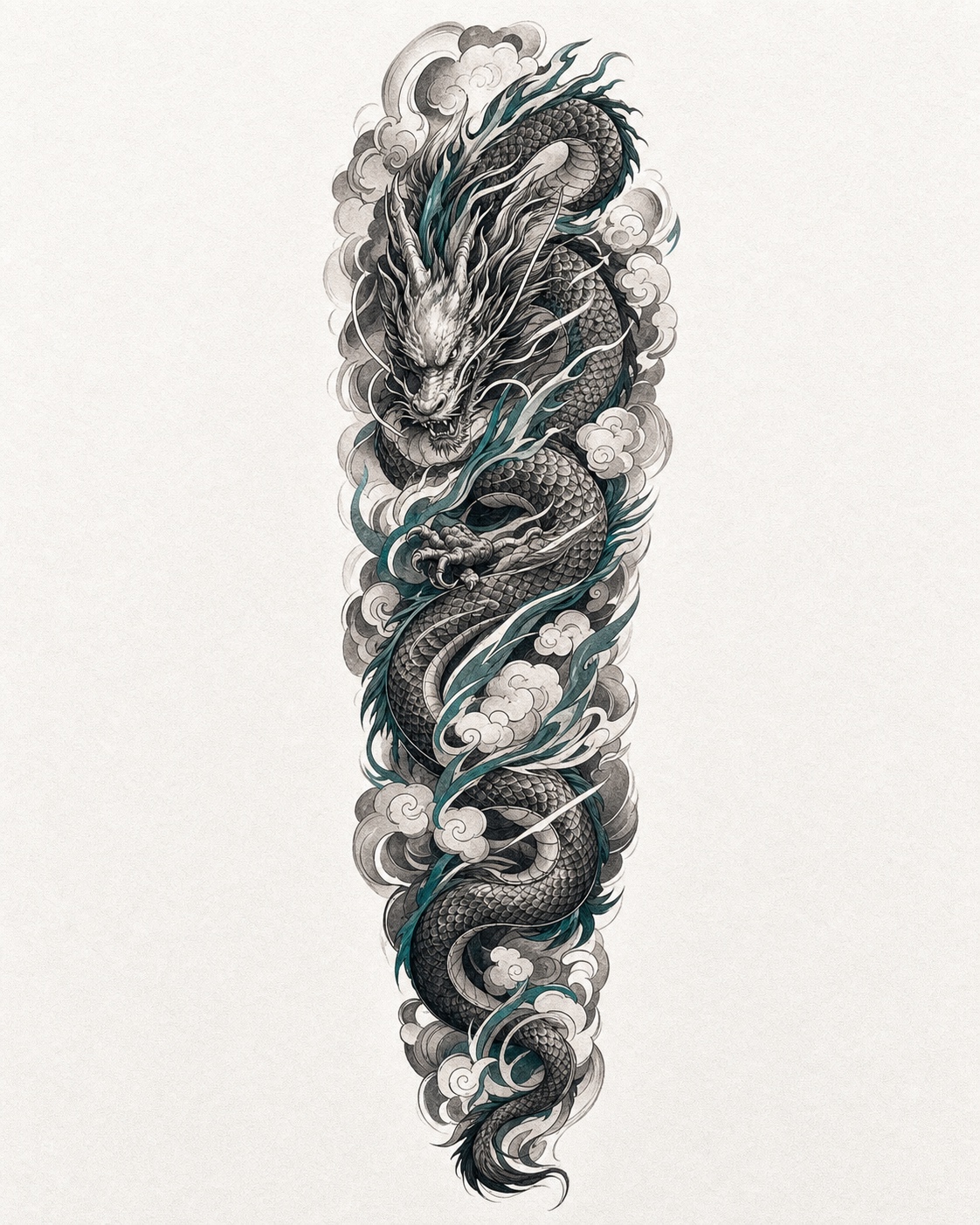
Japanese Dragon Along the Forearm
The sinuous body of a Japanese-style dragon maps naturally to the limb — head at the wrist, tail coiling toward the elbow. Dense cloud detail fills the space without competing with the main image.
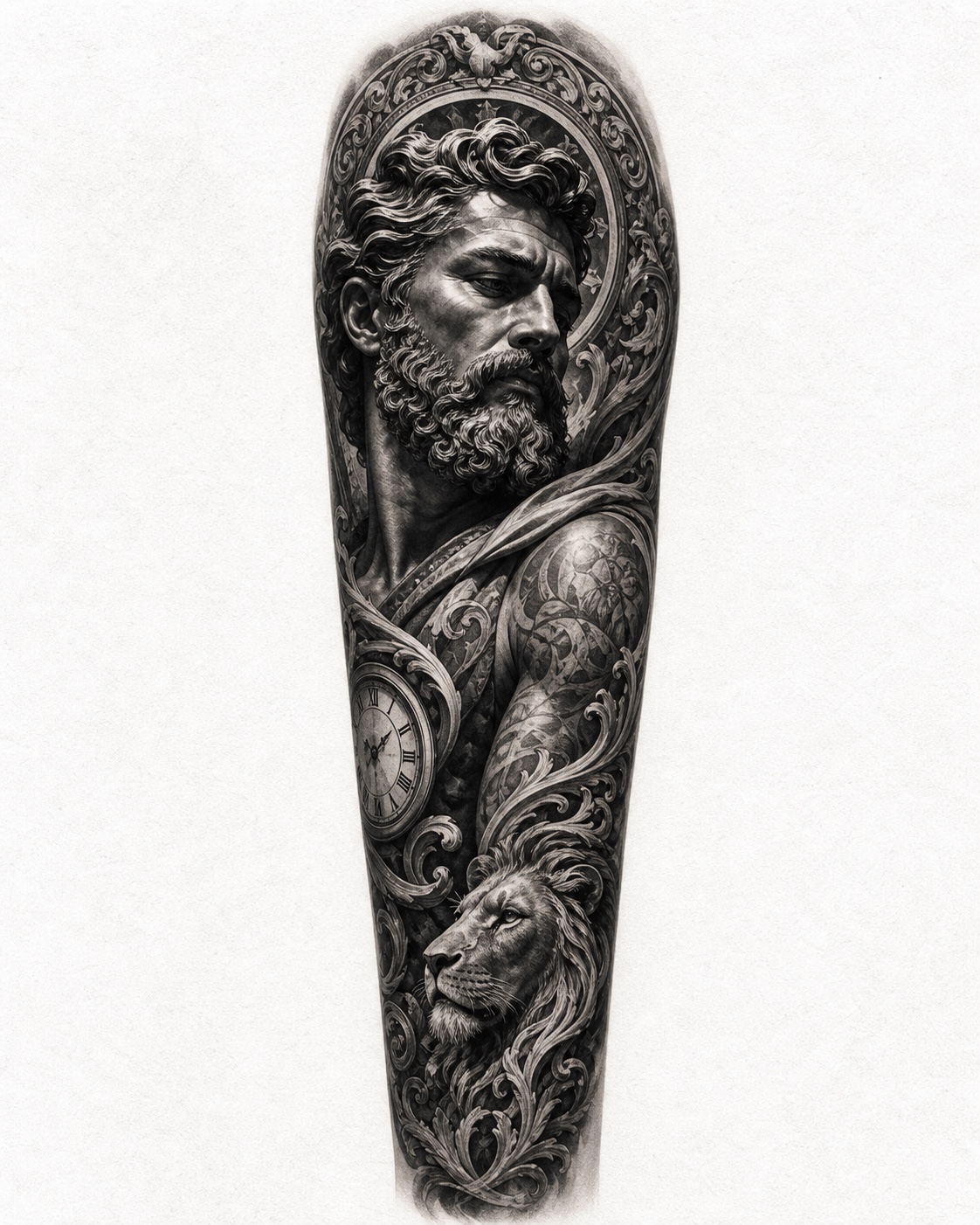
Realistic Portrait
If you’re building a sleeve, the forearm is where portraits often go — a face rendered in full realism against a detailed background. The flat surface makes skin-tone gradients easier for the artist.
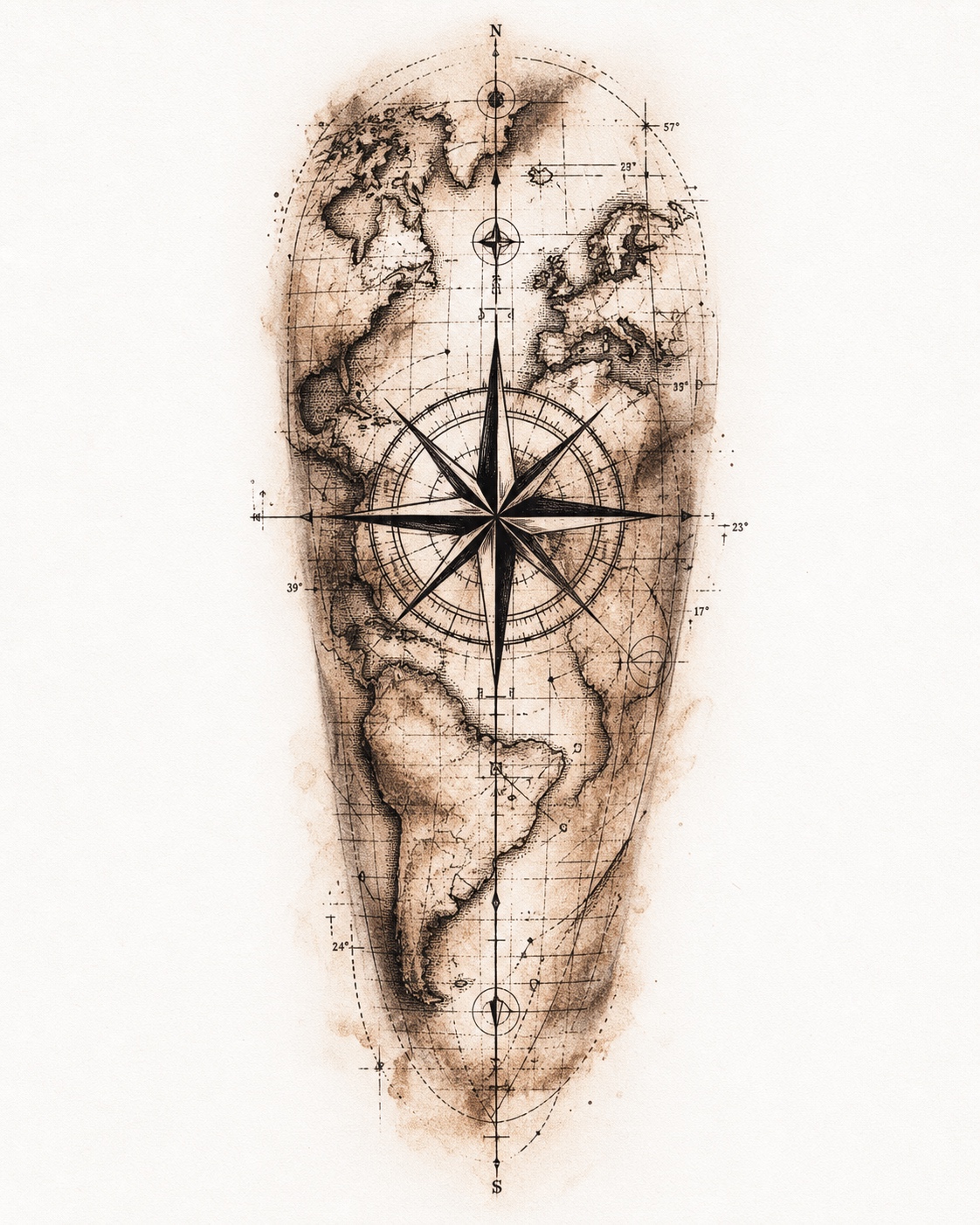
Compass and World Map
A compass rose overlaid on an aged-map texture. Works particularly well for people who travel or have lived in multiple countries — you can mark specific locations within the map.
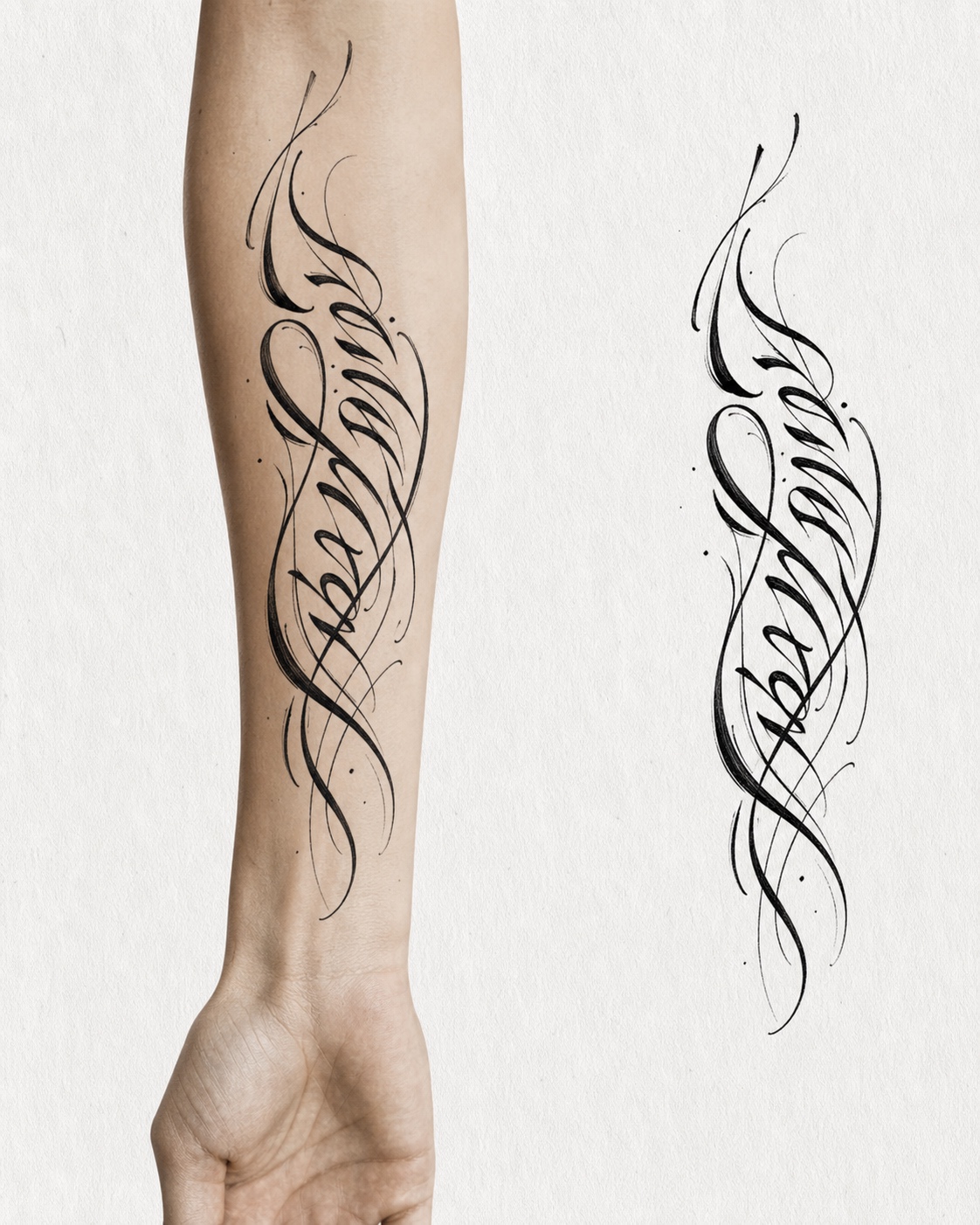
Script Quote or Lettering
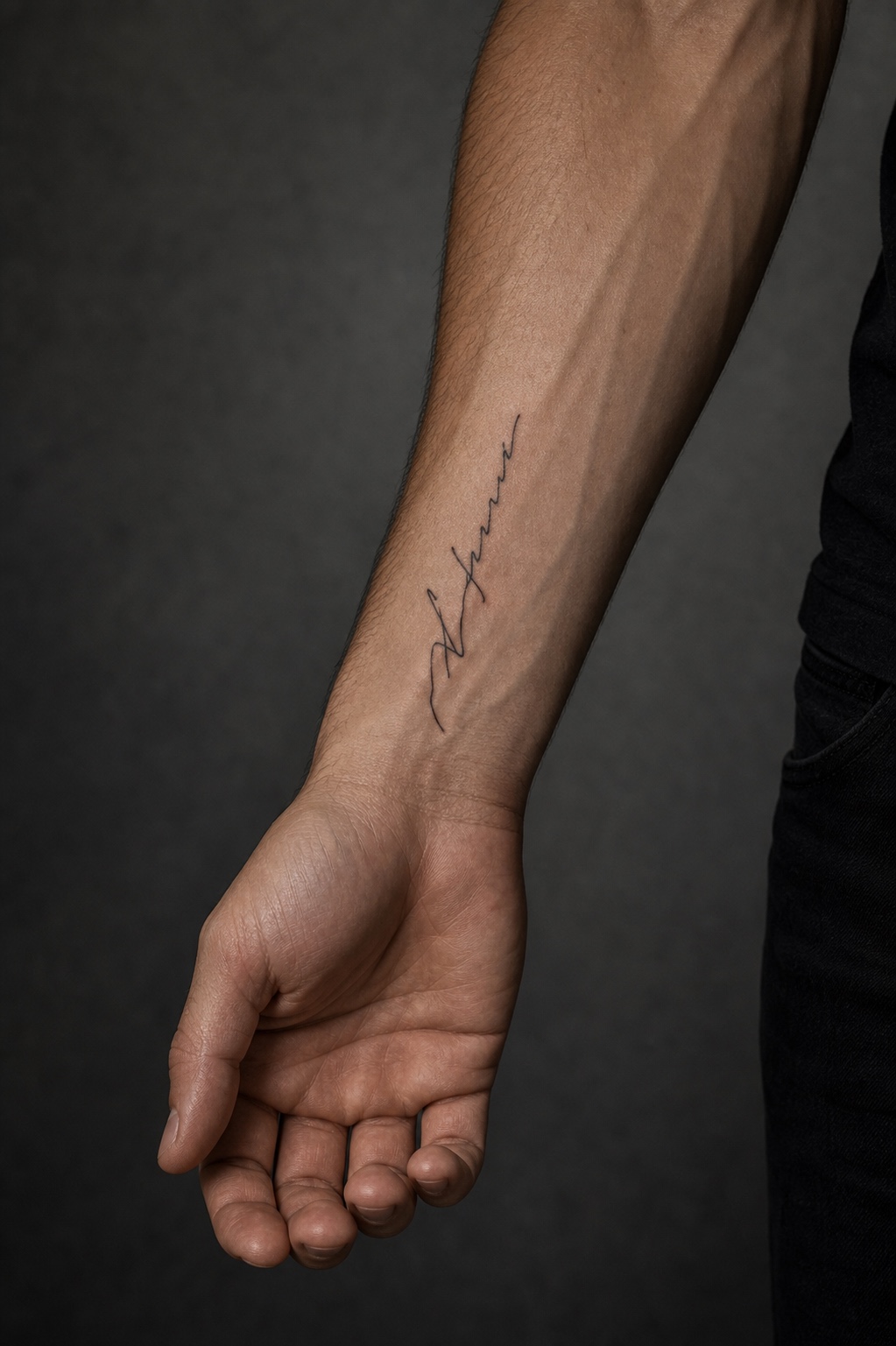
Long-form lettering runs cleanly along the forearm. Custom hand-lettering is better than stock fonts — it reads as more personal and ages differently than printed typefaces.
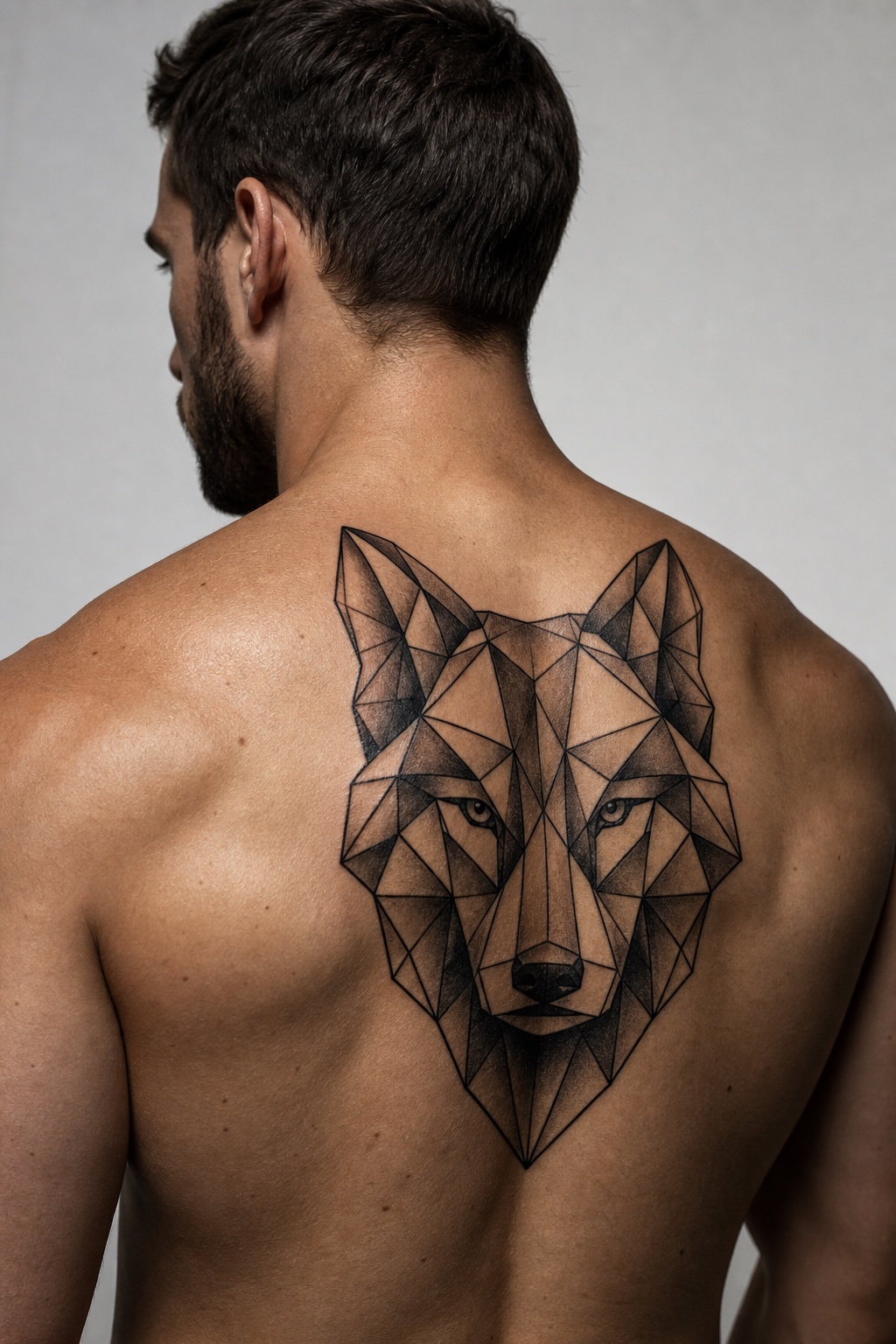
Geometric Wolf Portrait
A wolf face built entirely from triangles and geometric shapes. The geometry reads as controlled and precise, which gives the design a different feeling than organic rendering.
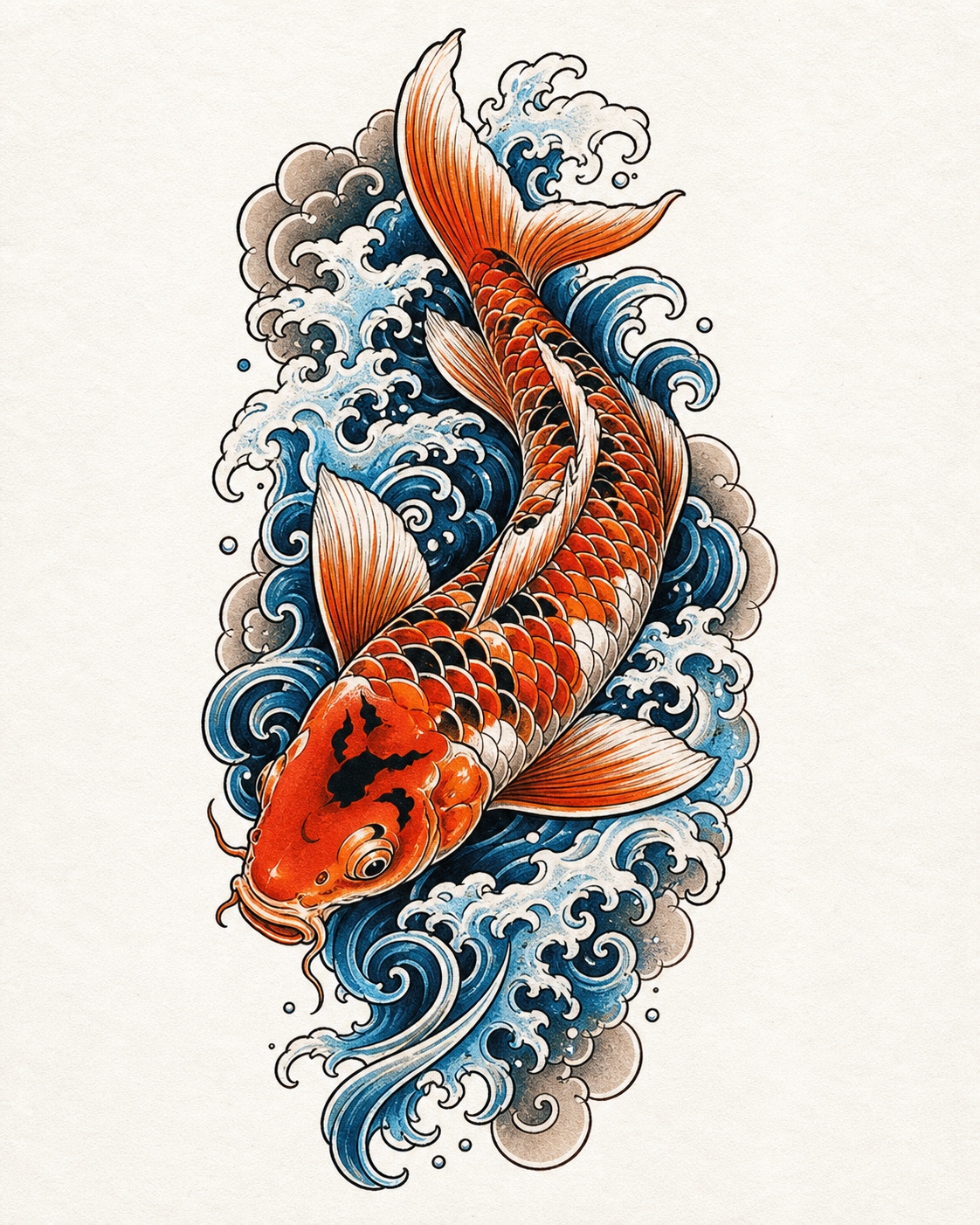
Koi Fish and Waves
A Japanese-style koi in motion, surrounded by water patterns in the Ukiyo-e tradition. Rich color version or black-and-grey sumi-ink style both work at forearm scale.
Roman Gladiator Battle Scene
A horizontal scene wrapping around the forearm — figures in combat, architectural background, the sense of an epic moment frozen. Requires an artist with illustrative ability.
Mechanical Arm Reveal
A section of the forearm designed to look like the skin is torn back, revealing machine components underneath. Biomechanical in the specific Terminator-endoskeleton mode. Intentionally unsettling.
Skull with Floral Detail
A skull portrait surrounded by dense botanical work — roses, lilies, or mixed flowers. Black and grey with selective color on the flowers is the standard and it still looks good.
Simple Blackwork Band
A geometric or tribal band encircling the forearm about two-thirds up toward the elbow. Clean, bold, no color needed. Ages better than most.
Sleeve Tattoo Ideas for Men
A sleeve is a commitment — both to the hours in the chair and to a unified visual concept that holds together from shoulder to wrist. The biggest mistake with sleeves is treating them as a collection of separate tattoos that happen to be on the same arm. The best ones have a theme, a consistent art style, and intentional transitions between pieces.
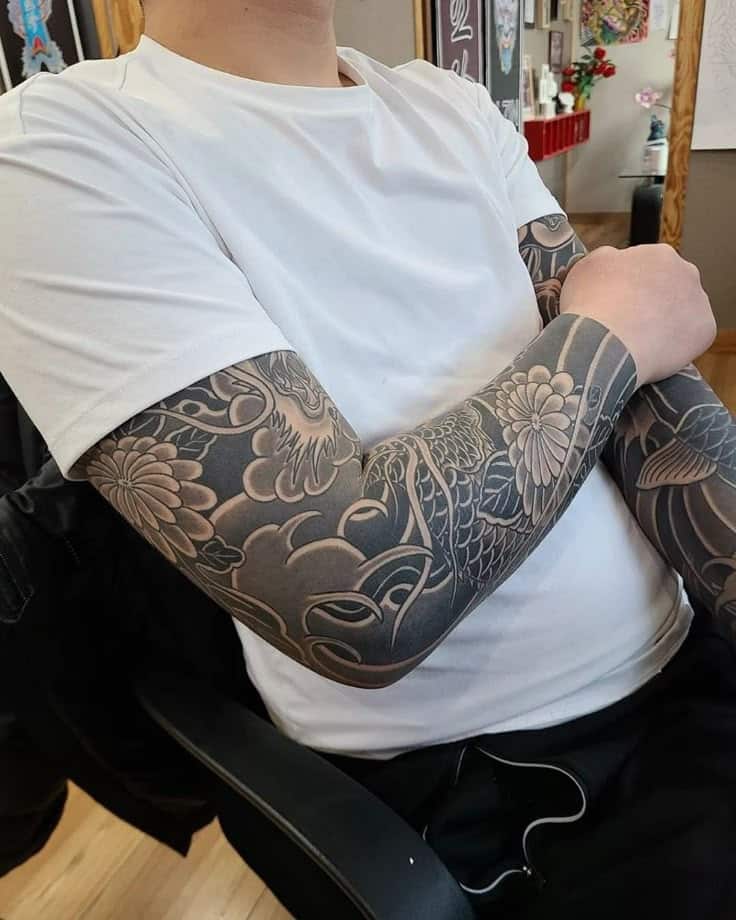
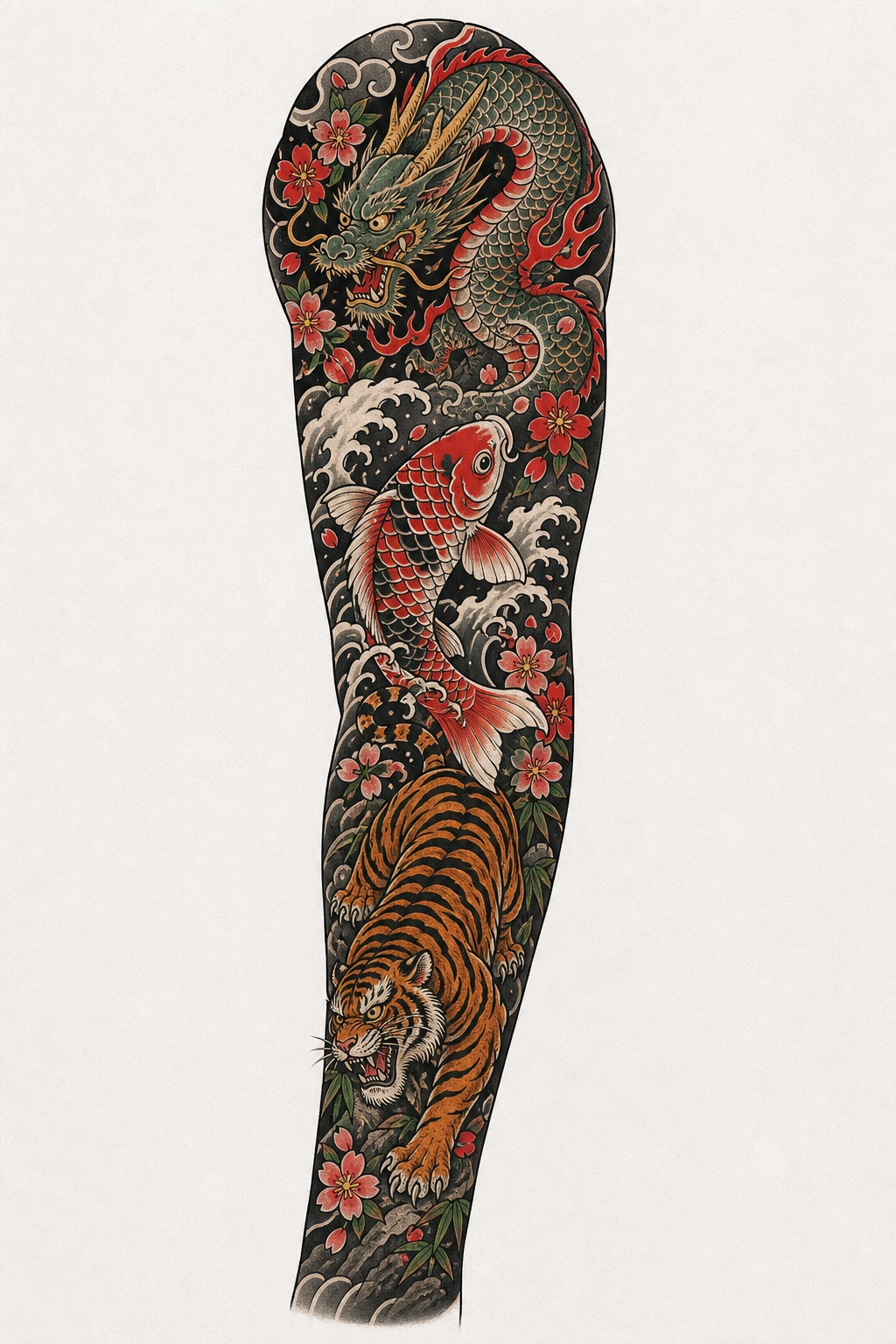
Japanese Traditional Full Sleeve
Dragons, koi, waves, cherry blossoms, tigers, wind bars — the classic Japanese aesthetic with bold outlines, flat fills, and a specific palette of red, black, green, and skin-tone. One of the most cohesive sleeve concepts in existence.
Biomechanical Sleeve
The full-arm version of the forearm concept: flesh-meets-machine from shoulder to wrist, with anatomy and machinery blending seamlessly. Budget $2,000–$3,500 for the quality this requires.
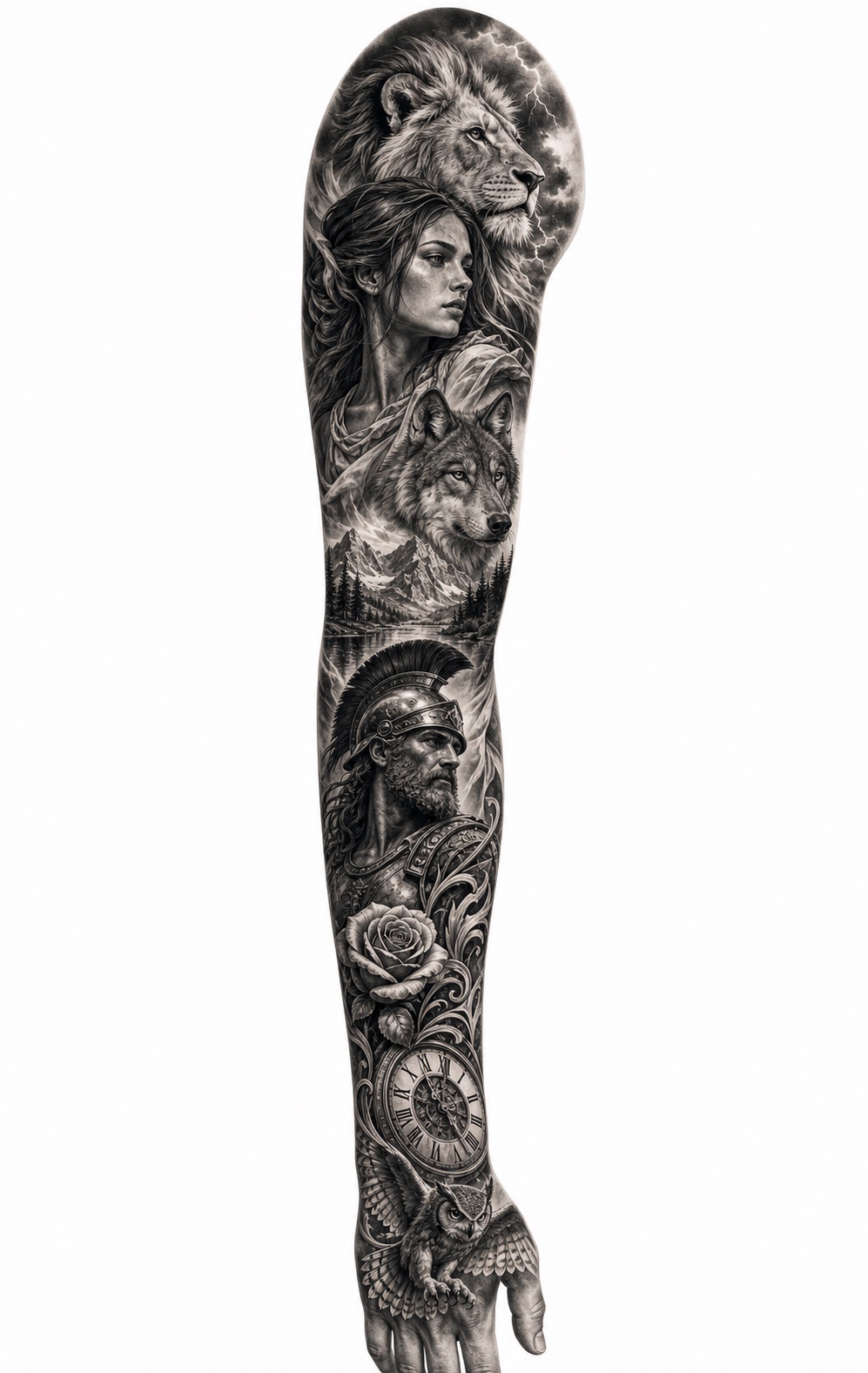
Black and Grey Realism Sleeve
Portraits, animals, architecture — all in hyper-detailed black and grey. No color, just the full tonal range from white highlights to deep black. The most visually powerful sleeve style when done by the right artist.
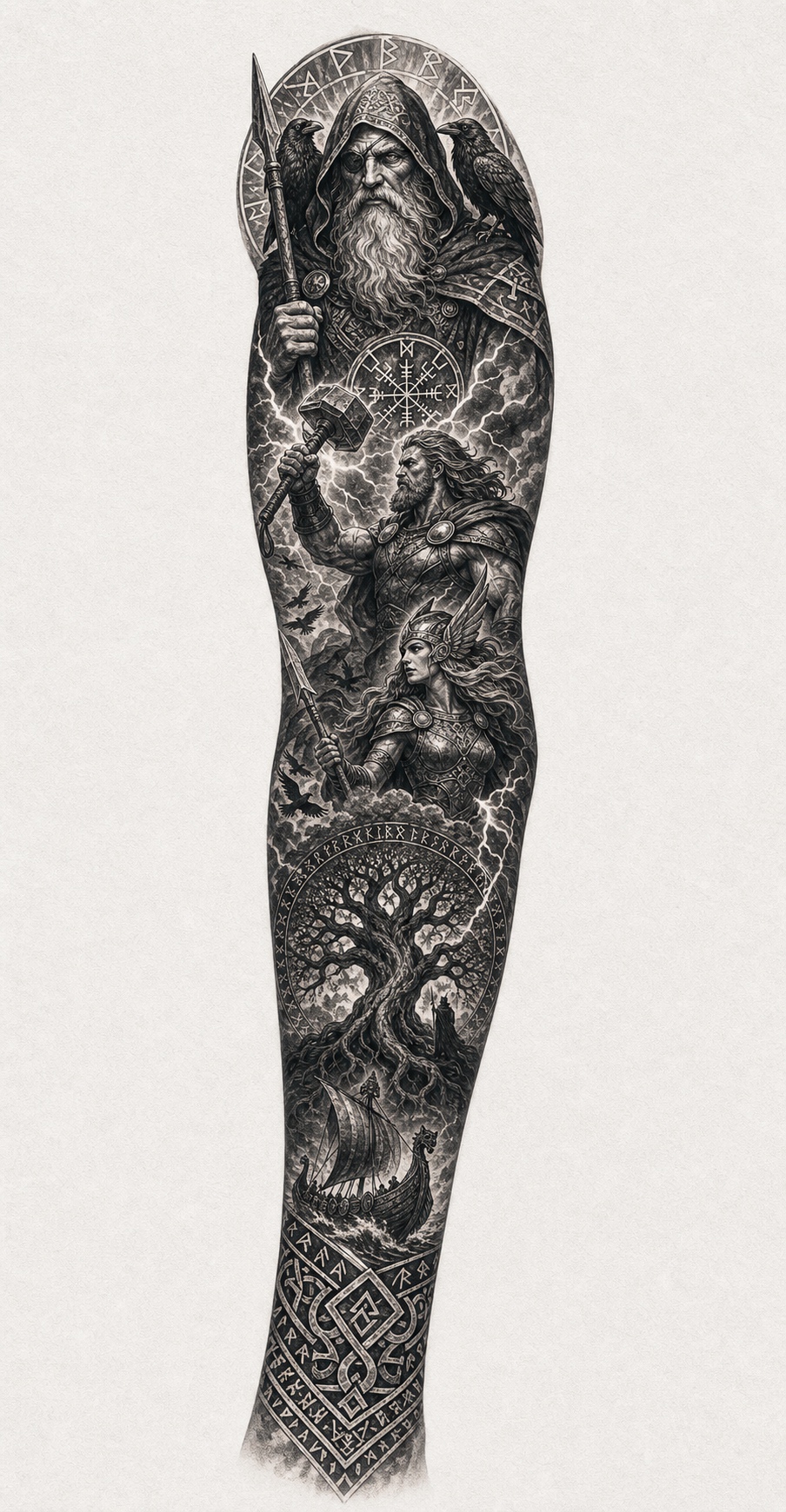
Norse Mythology Sleeve
Odin, Thor, Valkyries, ravens, Yggdrasil, runic text borders. A narrative sleeve that tells a story chapter by chapter from shoulder to wrist. Works especially well if you’re building it over years.
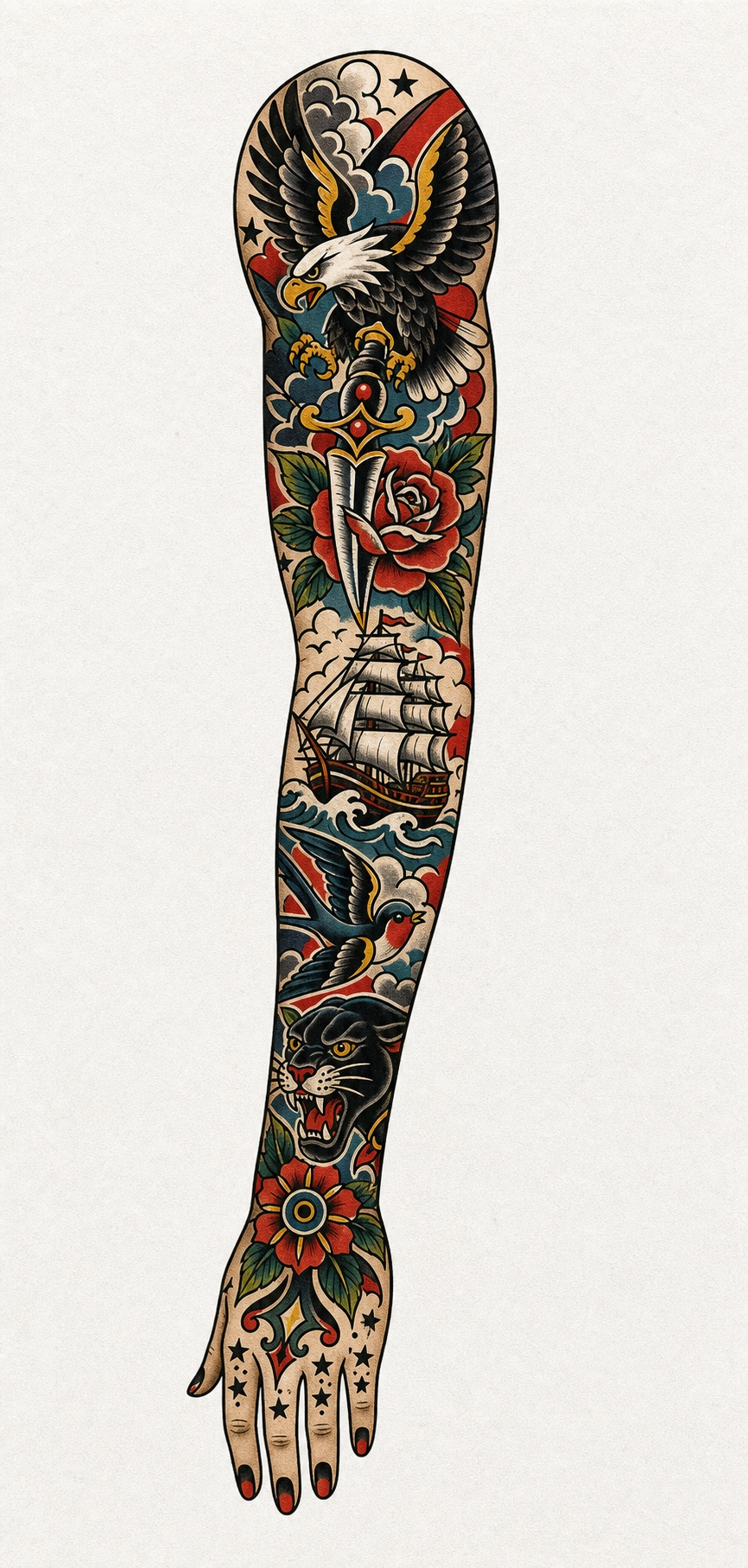
American Traditional Full Sleeve
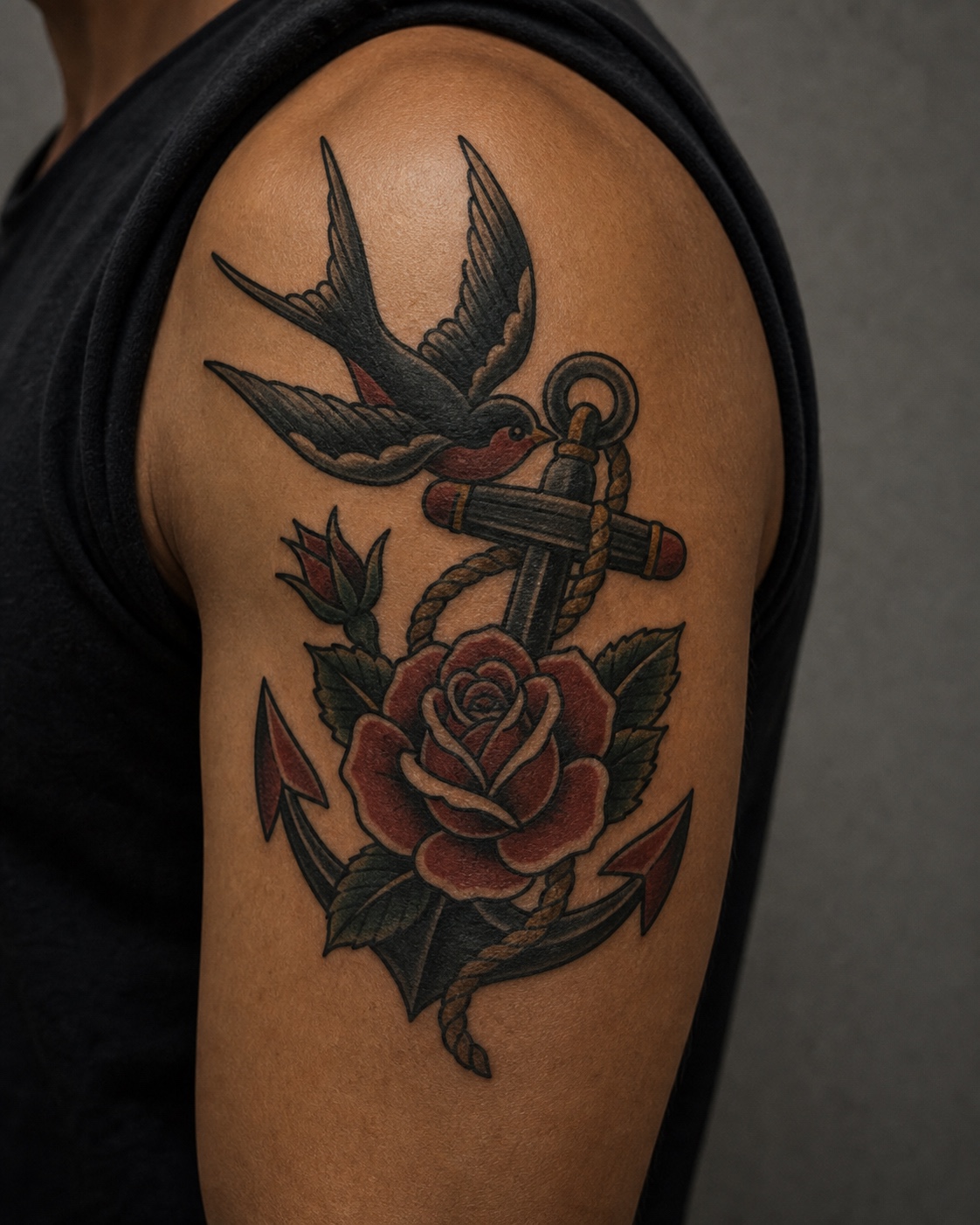
Eagles, daggers, roses, panthers, ships, swallows — the full vocabulary of old-school American tattooing. Bold lines, primary colors, zero gradient shading. Holds up better over decades than any other style.
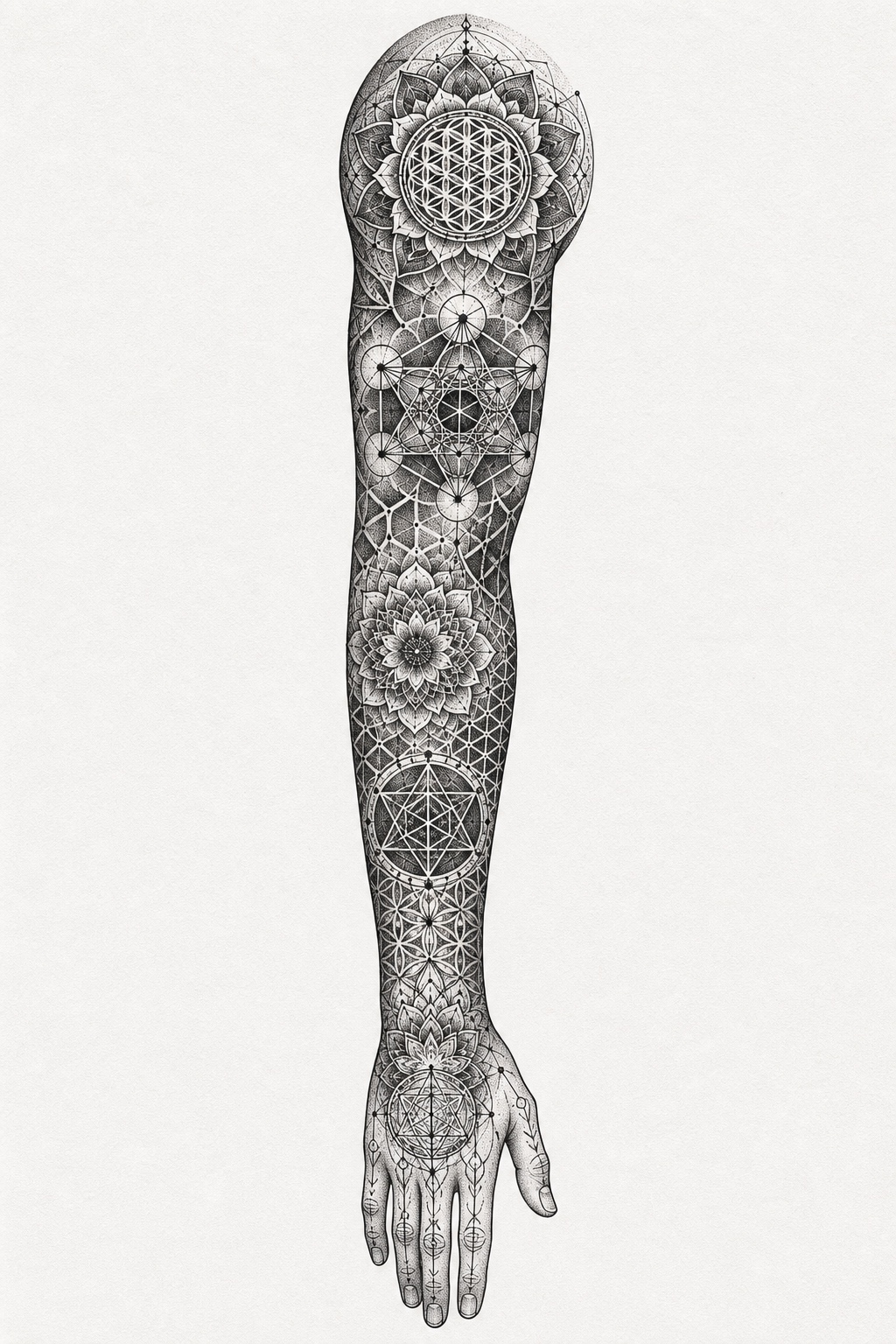
Geometric and Mandala Sleeve
Sacred geometry patterns — mandalas, Metatron’s cube, flower of life — connected by fine linework. Black ink only. The pattern-driven approach means you can add to it over time without the design feeling incomplete.
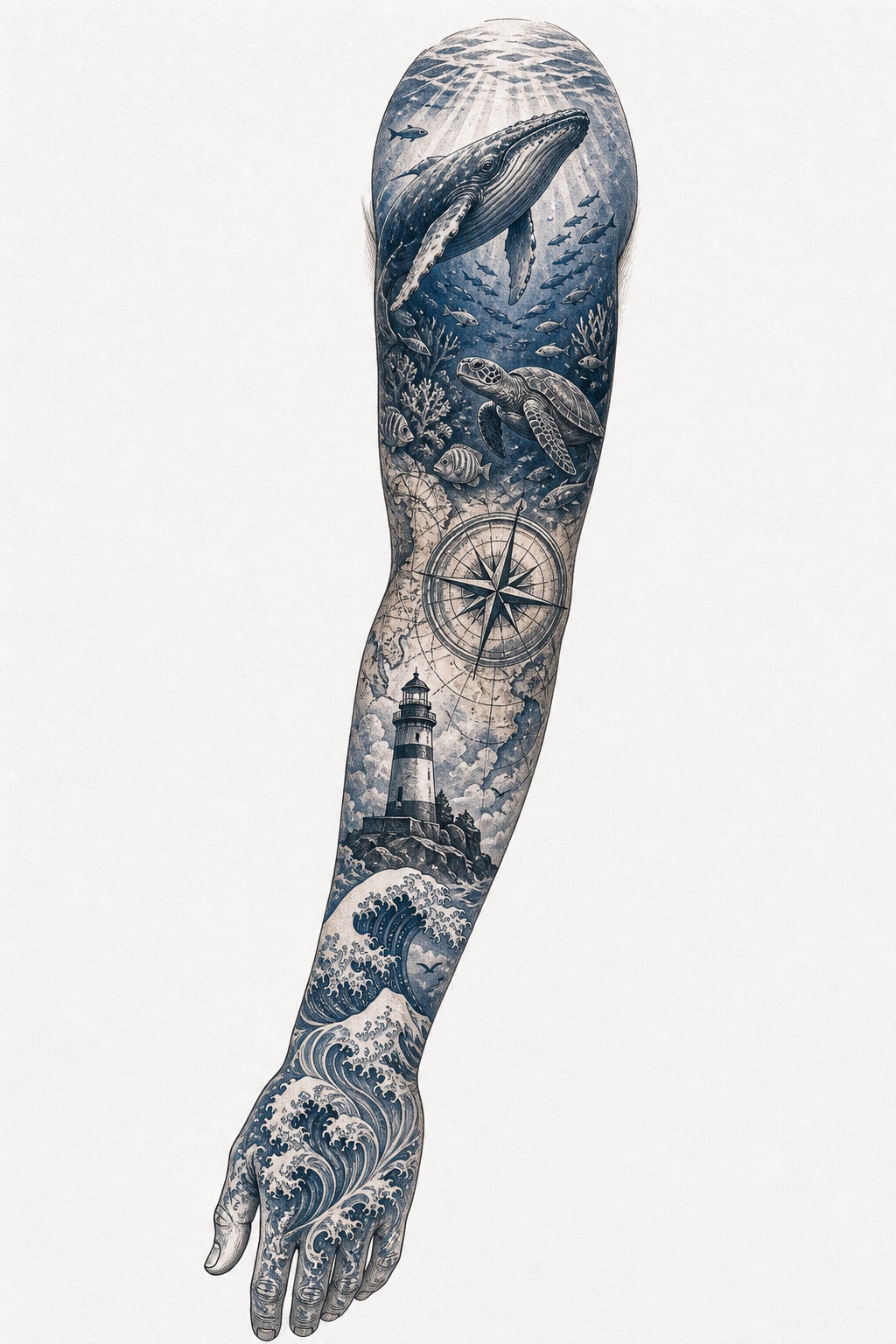
Ocean Sleeve
Waves, marine life, compass, nautical charts, lighthouse — all unified by the sea theme. Works particularly well with Japanese wave patterns at the wrist transitioning to realistic ocean imagery higher up.
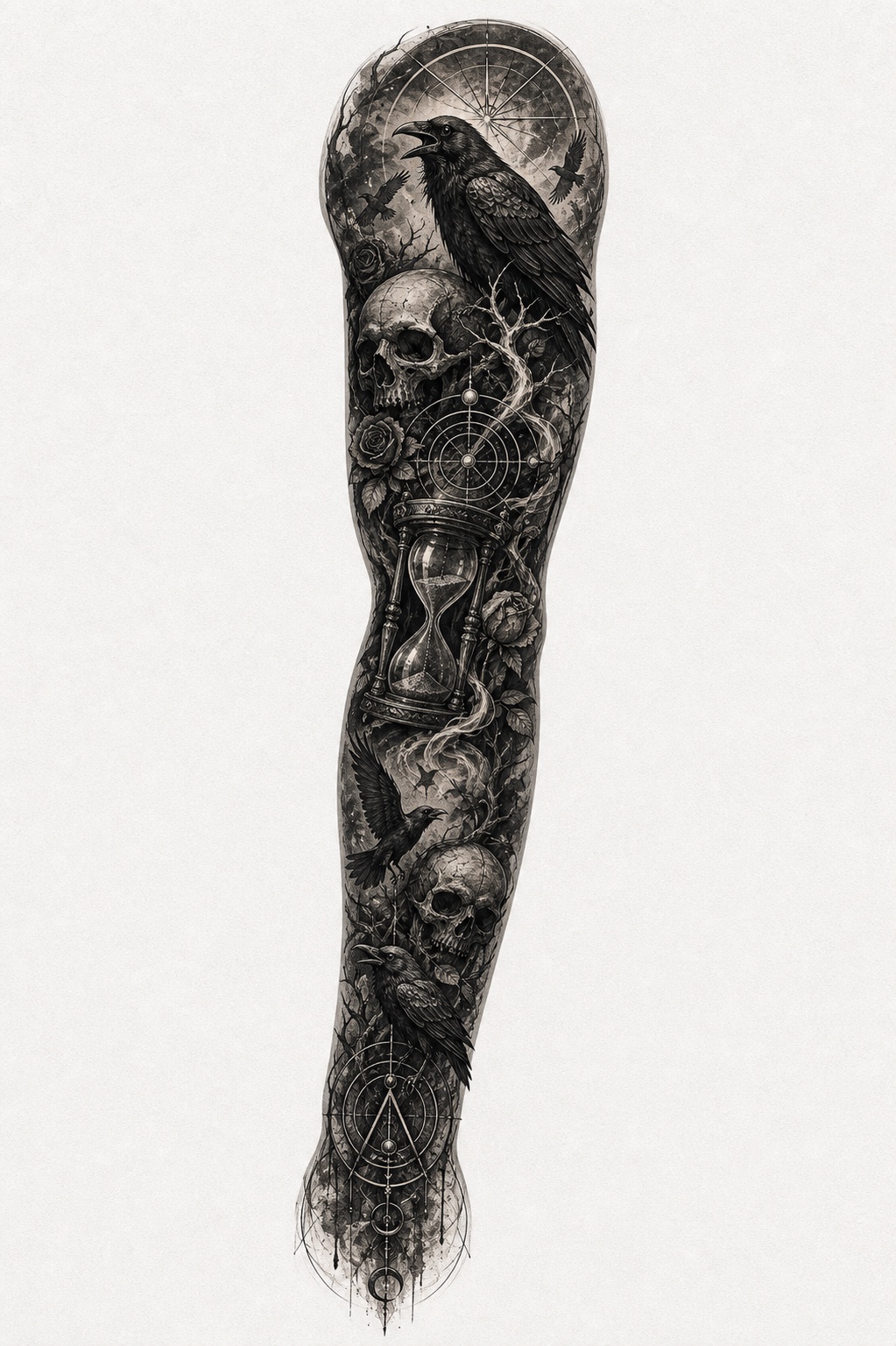
Dark Art Sleeve
Skulls, ravens, hourglasses, decaying florals, occult geometry. Almost entirely black ink with selective grey washes. Not subtle, but cohesive in a way that aggressively stylized work can be.
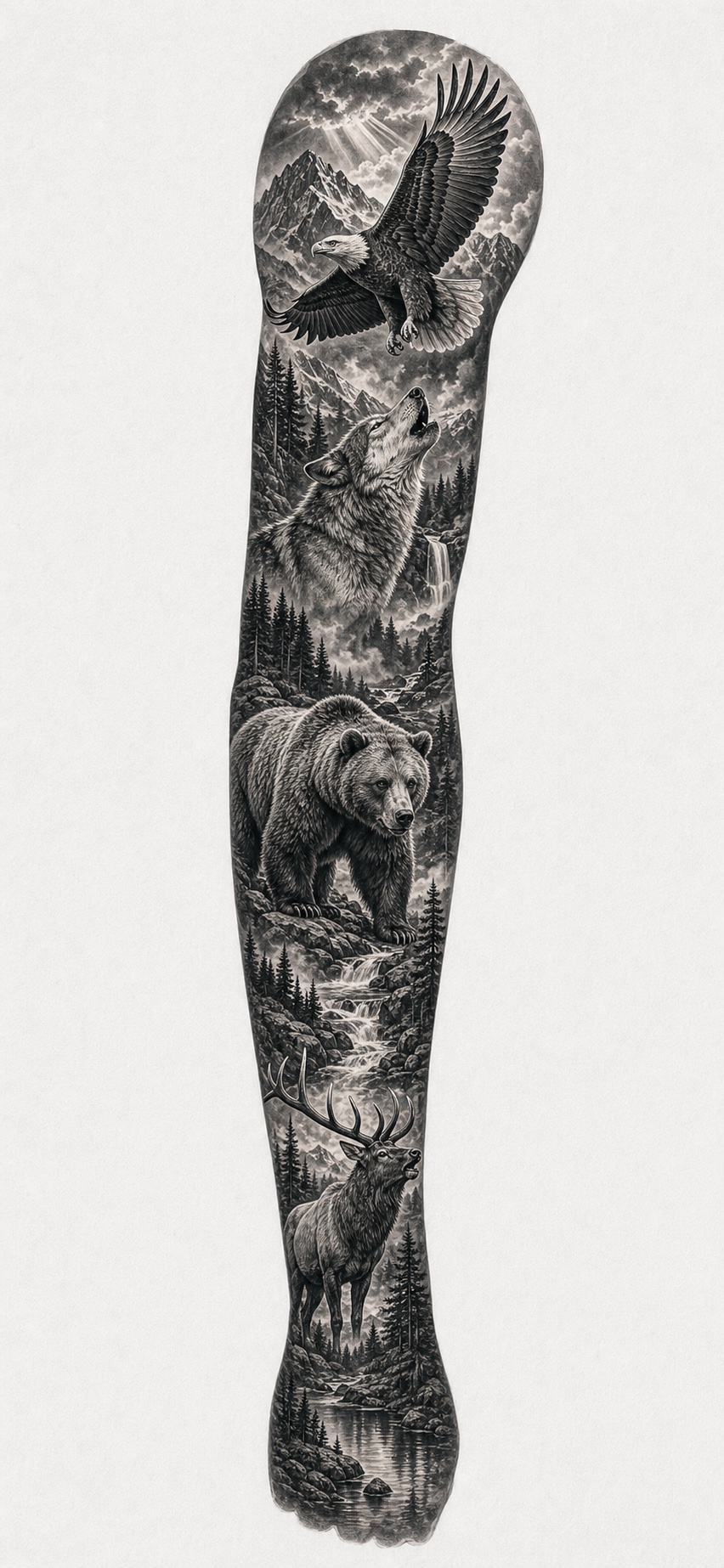
Wildlife and Nature Sleeve
A sequence of animals and landscape elements — an eagle, a wolf, a bear, mountain terrain — unified by a consistent illustrative style. Works best when compositions flow into each other rather than being bordered off separately.
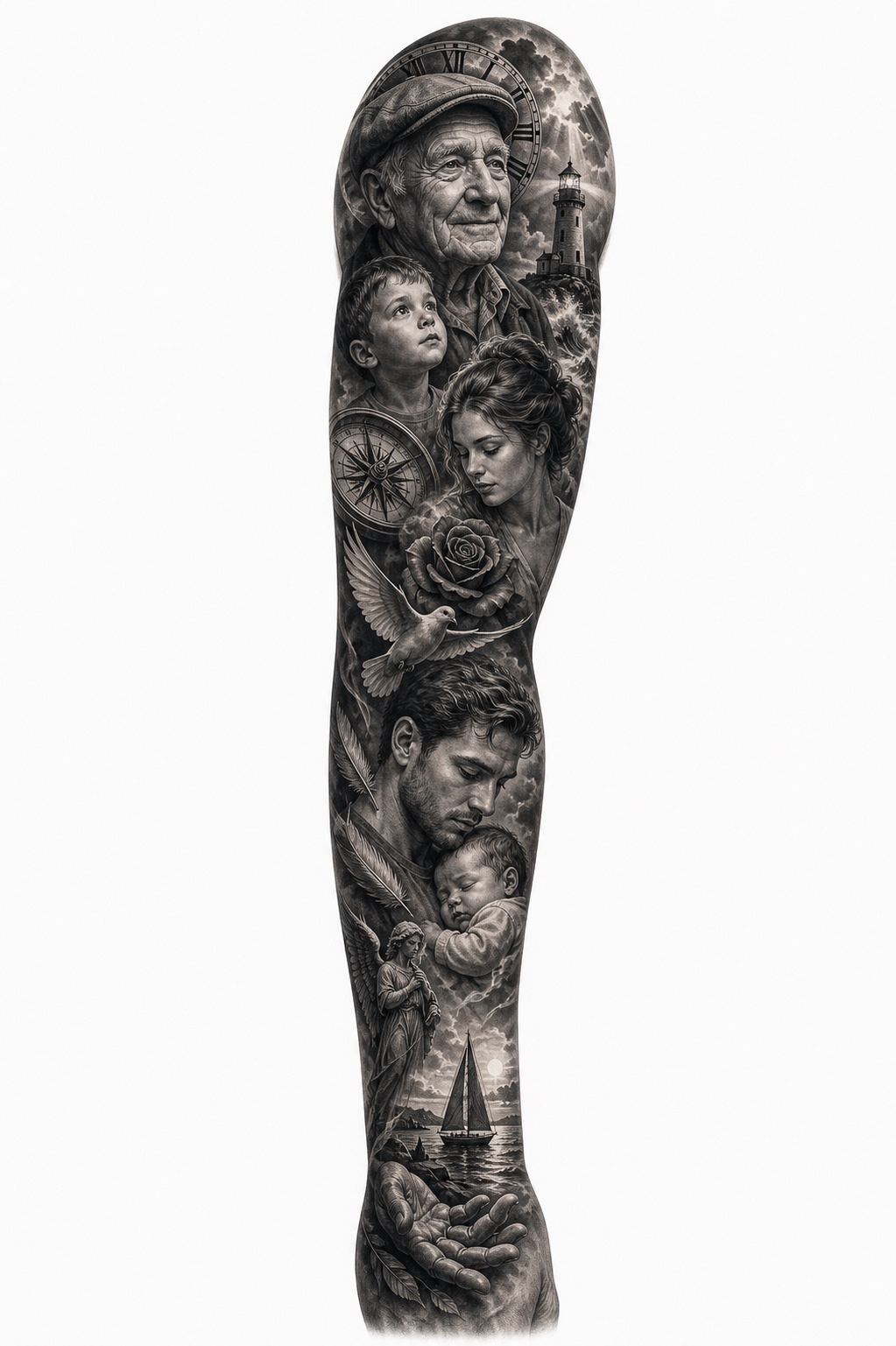
Portrait Tribute Sleeve
Multiple realistic portraits — family members, cultural figures, historical icons — surrounded by meaningful objects and scenes. The most personal sleeve concept and the most expensive to execute well. Budget $4,000+ for quality portrait work.
Chest & Back Tattoos for Men
Chest and back placements are where large-scale compositions live. Both offer the biggest canvas in tattooing — the back can accommodate something approaching mural scale. The flip side: these are some of the more painful placements, especially near the sternum and spine. For a placement-specific breakdown, compare these chest tattoos for men before committing to a full chest piece.
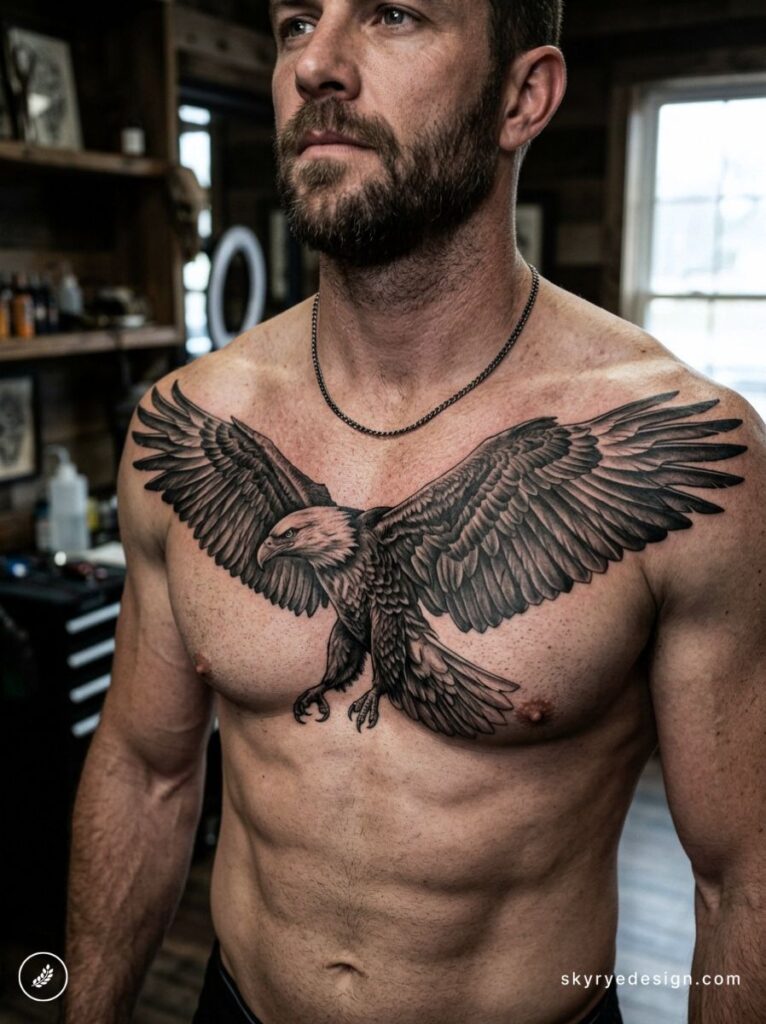
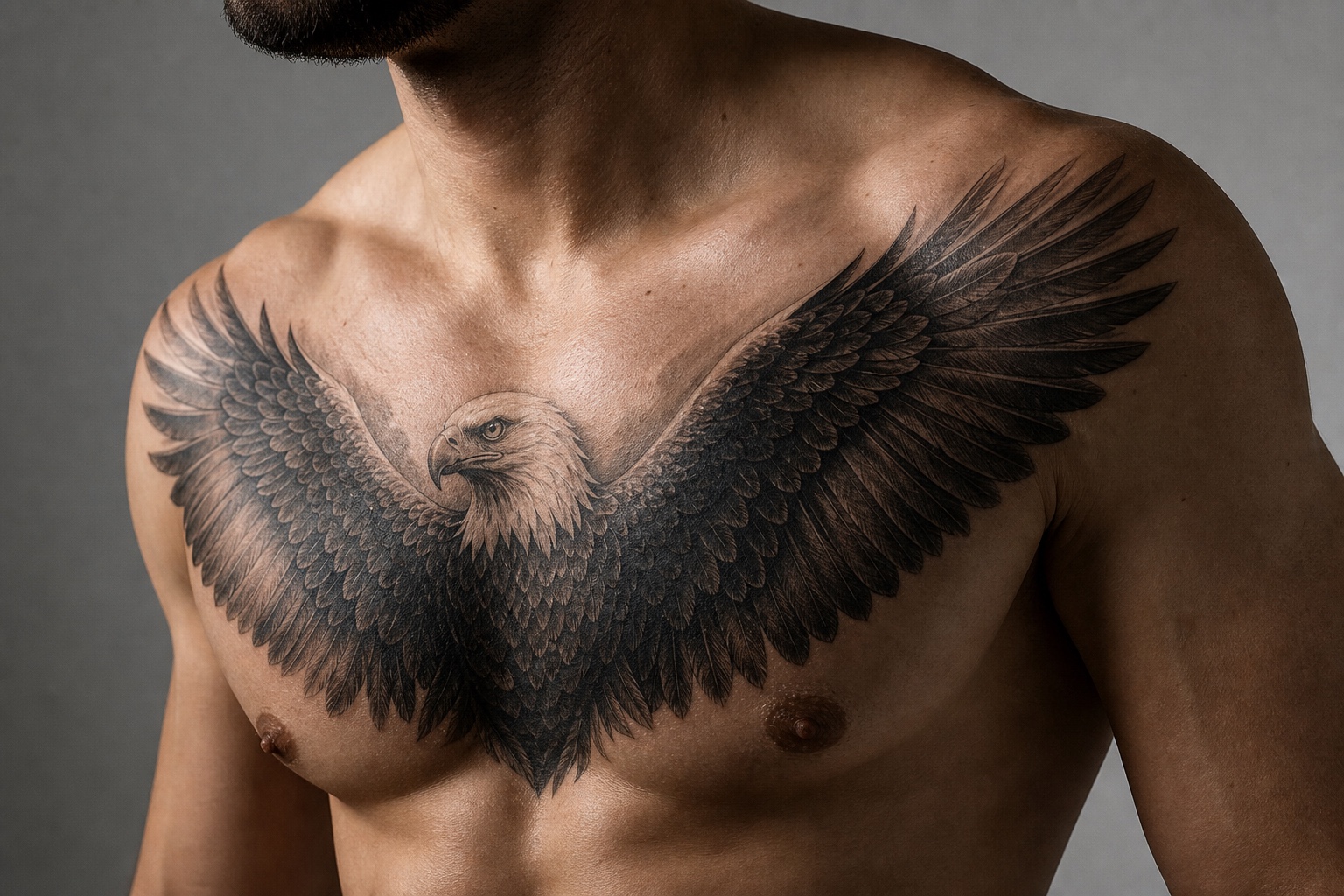
Eagle Wingspan Chest Piece
An eagle with wings fully extended across the chest, one wing over each pectoral. The wingspan naturally follows the anatomy — the chest opens the composition and the wings open with it.
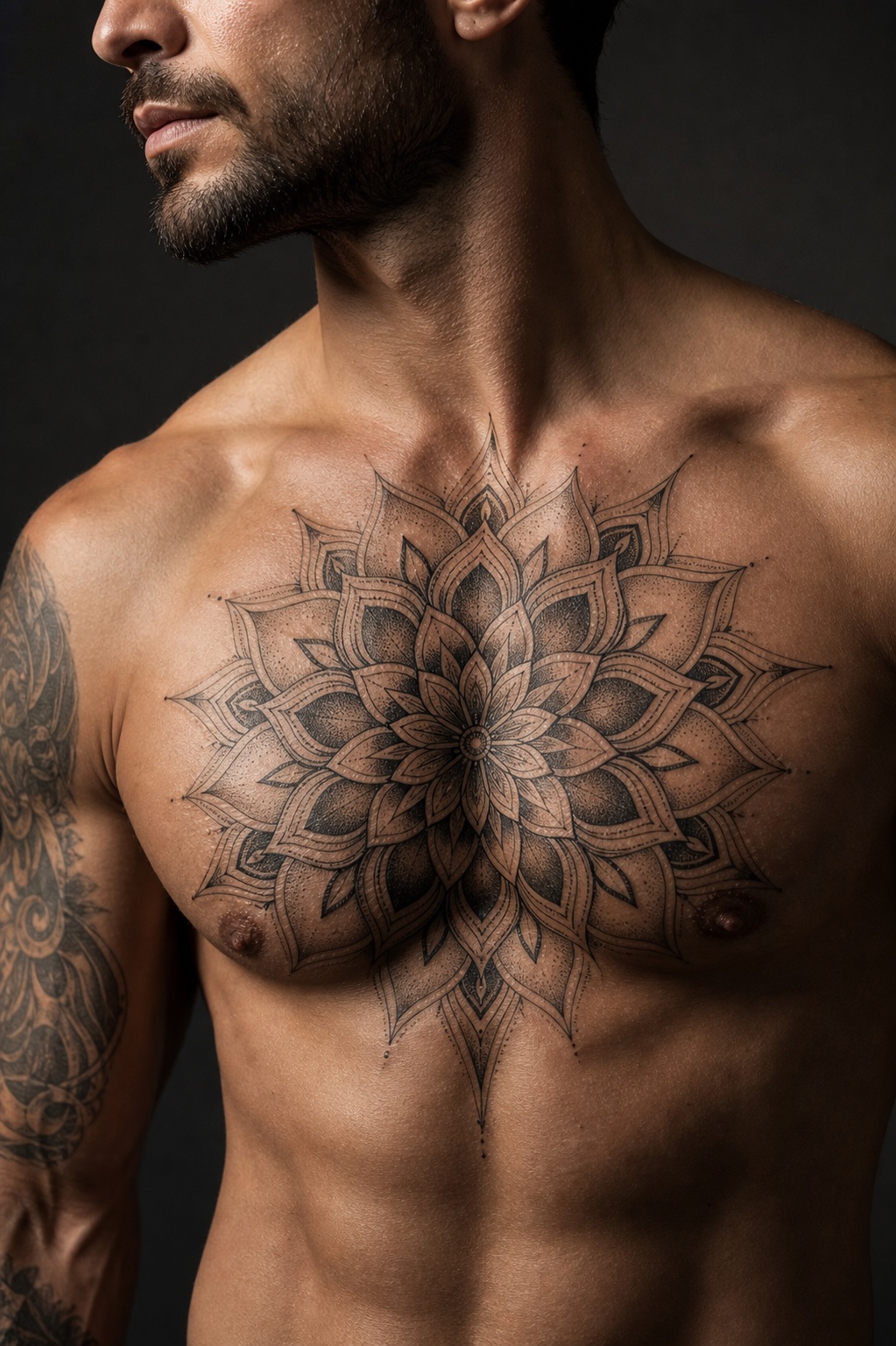
Chest Mandala with Sternum Line
A mandala centered on the sternum, large enough to spread over both pecs, with a vertical geometric design running down the center line. Black ink, dotwork shading for the interior.
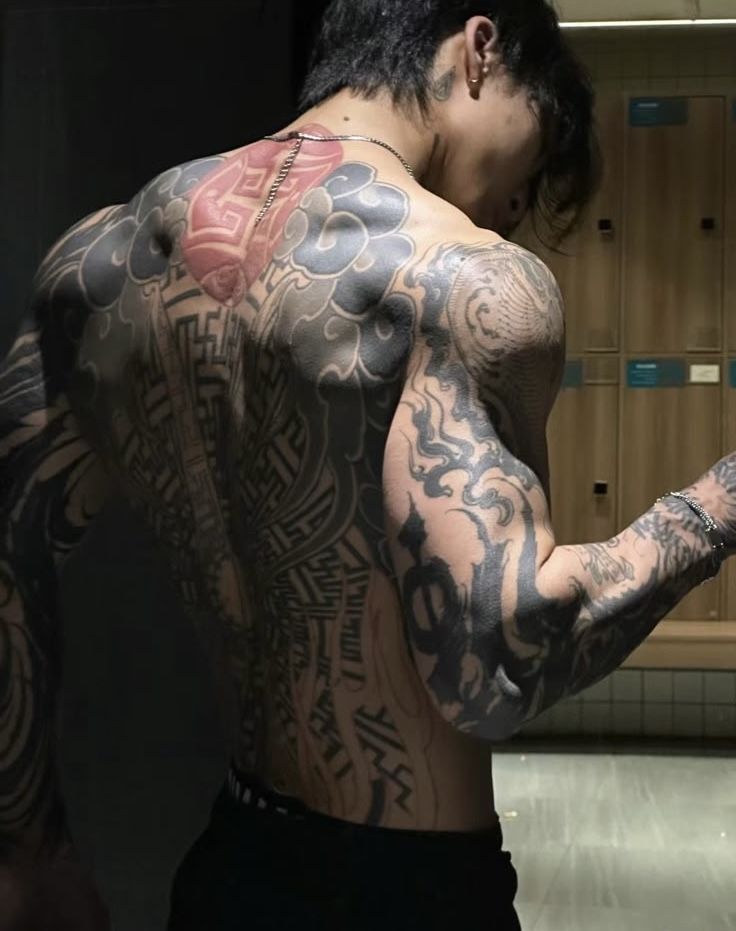
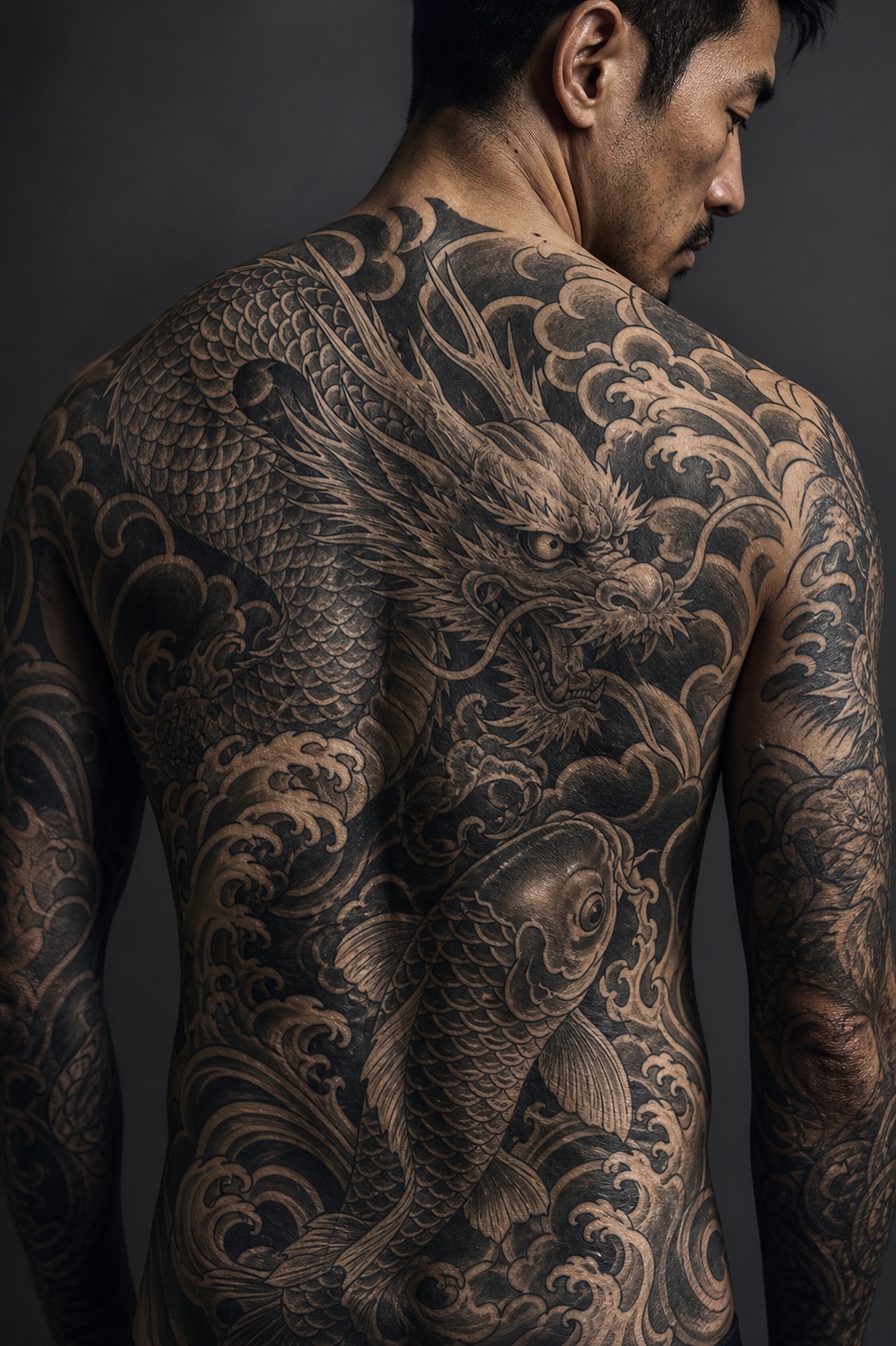
Japanese Back Piece
The traditional Japanese irezumi back piece — a full scene with dragon, carp, waves, and florals covering the entire back from neck to lower back. Plan for 40–60+ hours of work.
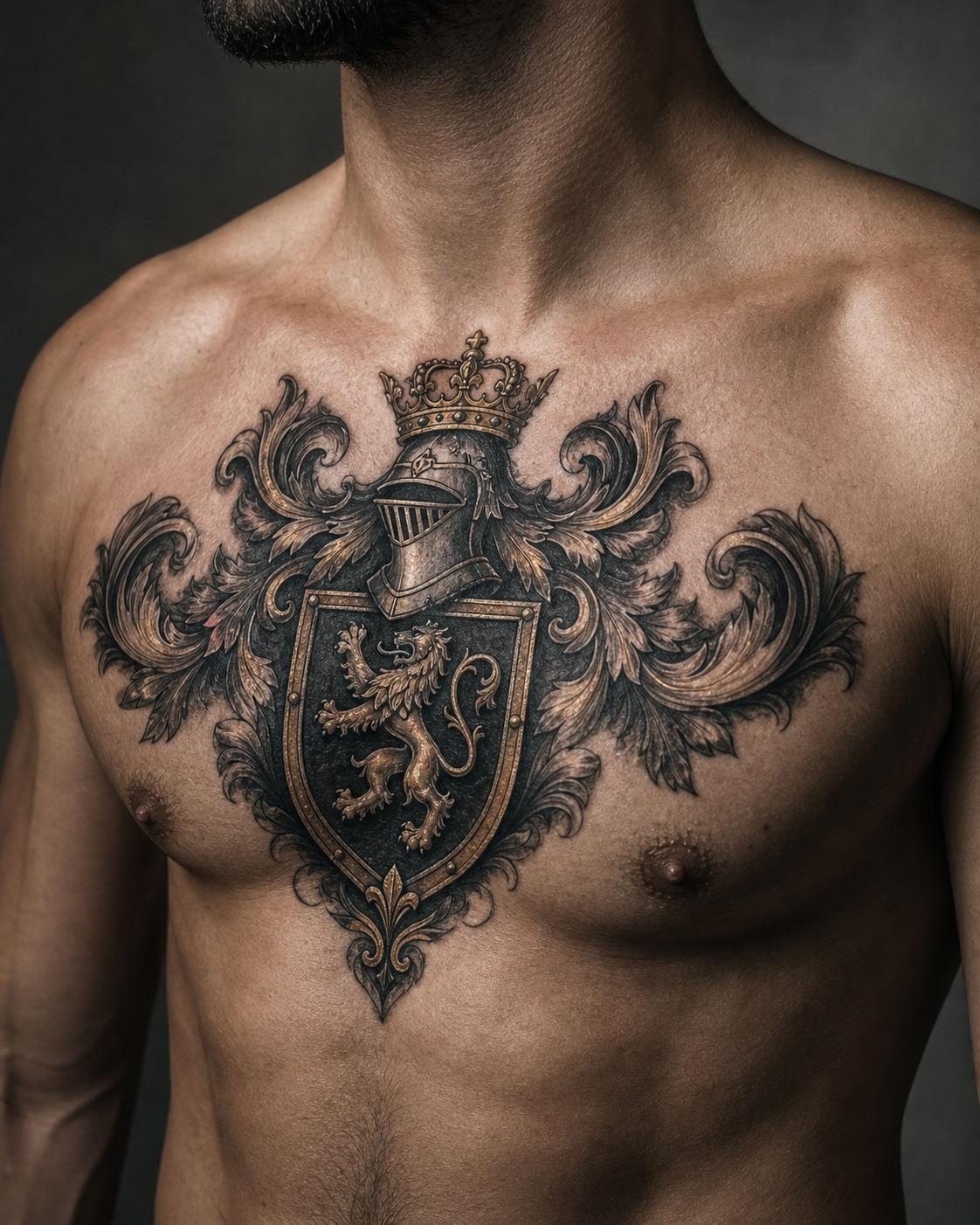
Family Coat of Arms Chest Piece
A personal or family crest rendered in heraldic style, centered on the chest. Works well if you have actual ancestry to draw from, or can commission a custom crest built around your own symbols.
Geometric Wolf Back Piece
A large-scale wolf portrait built from geometric shapes — triangles, clean lines — covering the upper back. The geometry makes it look more like illustration than tattoo at distance.
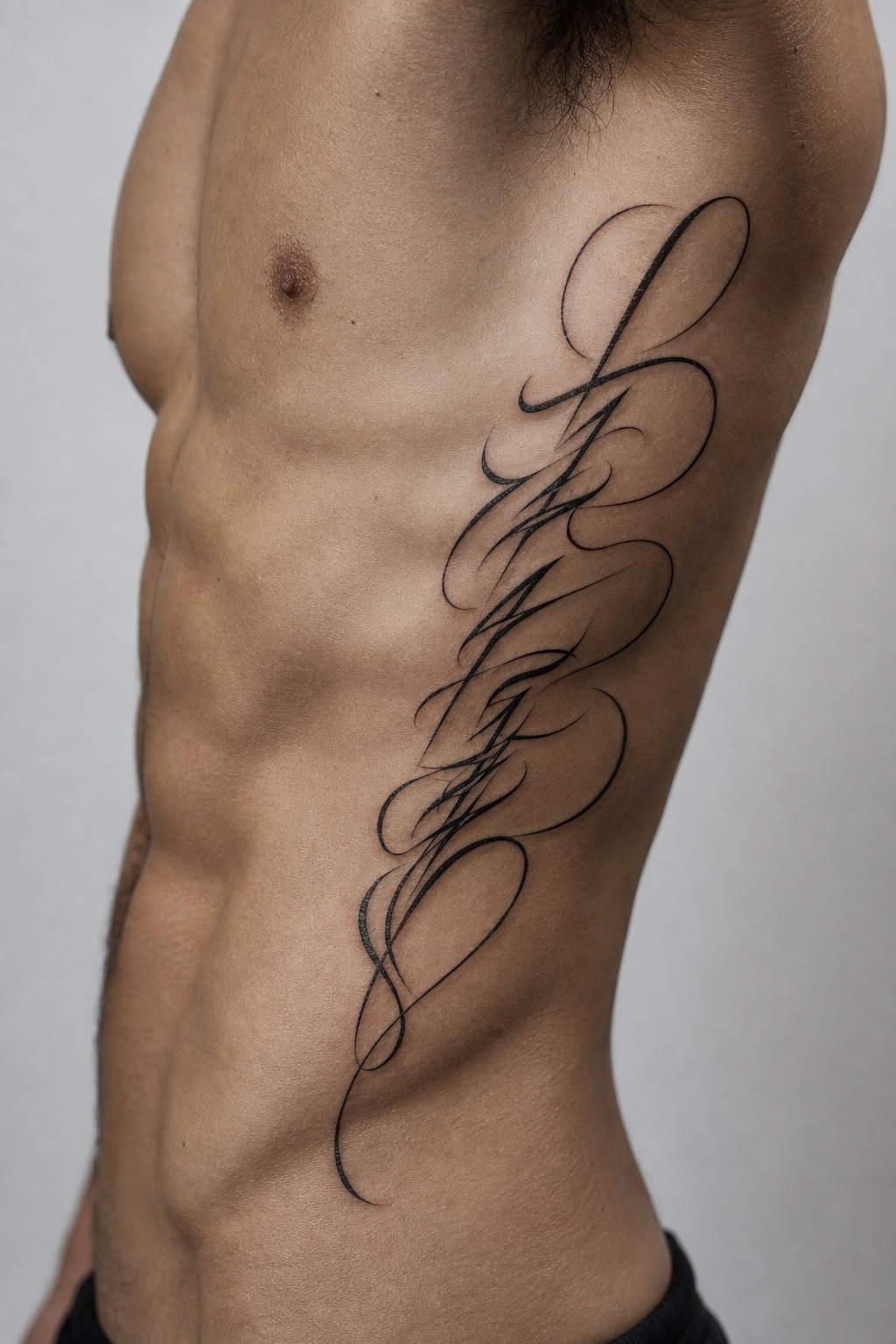
Ribcage Script
Long-form text running along the ribcage. Painful placement, but the ribs create a natural canvas for a line of text. Usually a quote, a name, or a date in custom lettering.
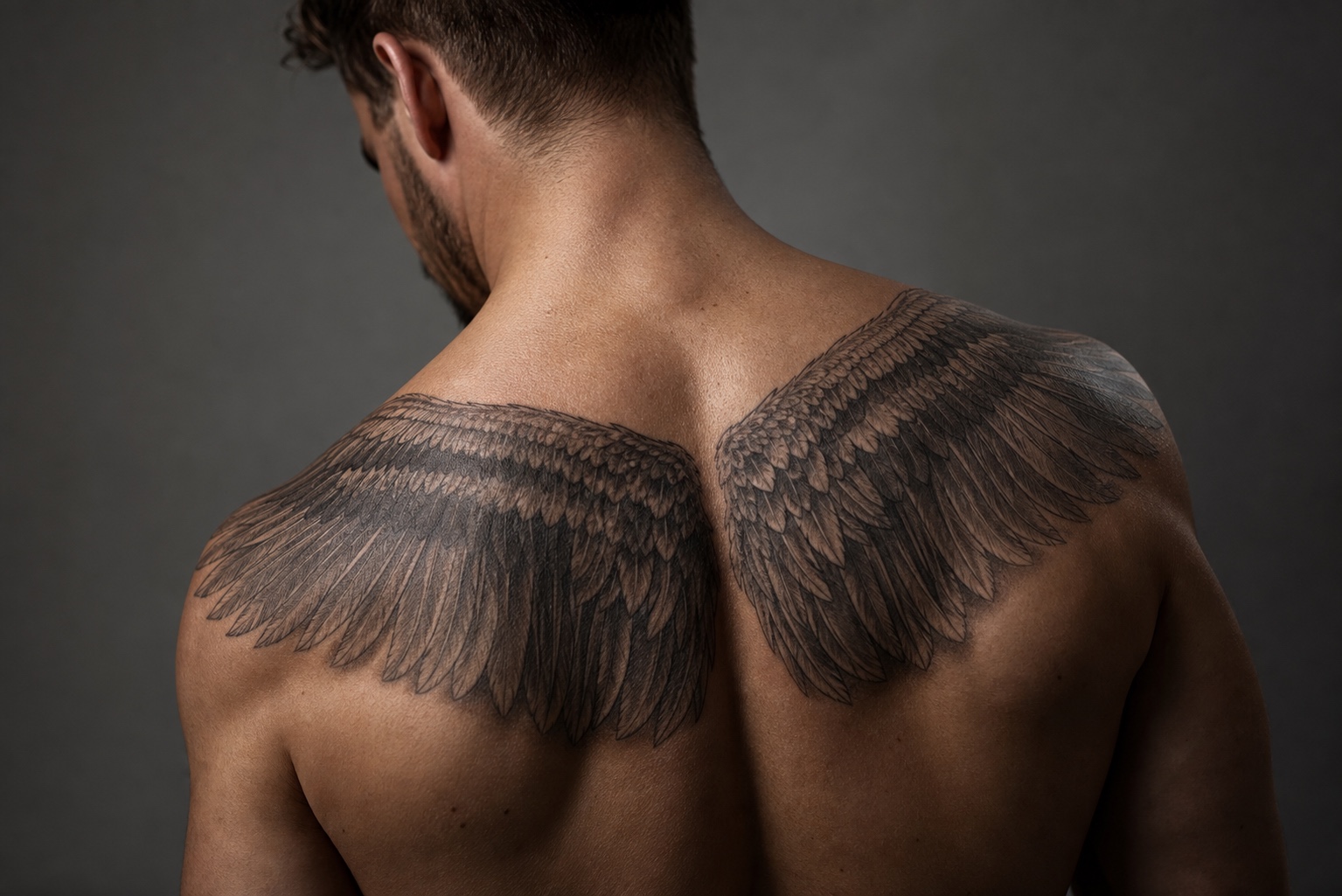
Upper Back Wings
Angel or bird wings spread across the upper back and shoulder blades. The shoulder blade shape mirrors a wing’s natural structure. Realistic feather detail is the strongest execution. If you want the design to feel more protective or memorial than animal-inspired, compare it with these angel tattoo ideas before deciding how realistic the feathers should be.
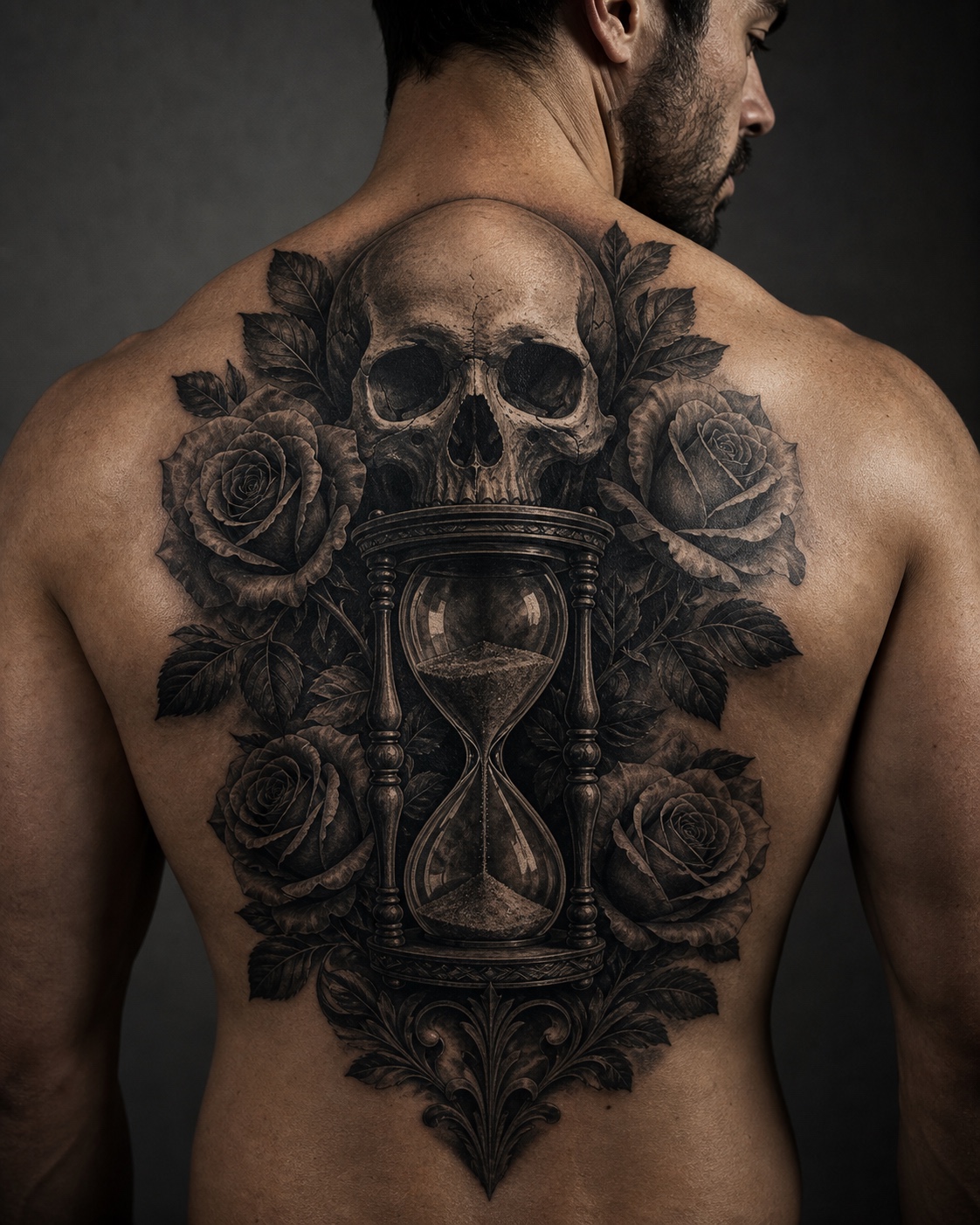
Skull and Hourglass Back Piece
A large memento mori composition — skull, hourglass, roses, ravens — covering the center of the back. Typically done in black and grey realism with dramatic light sourcing.
Religious Chest Piece
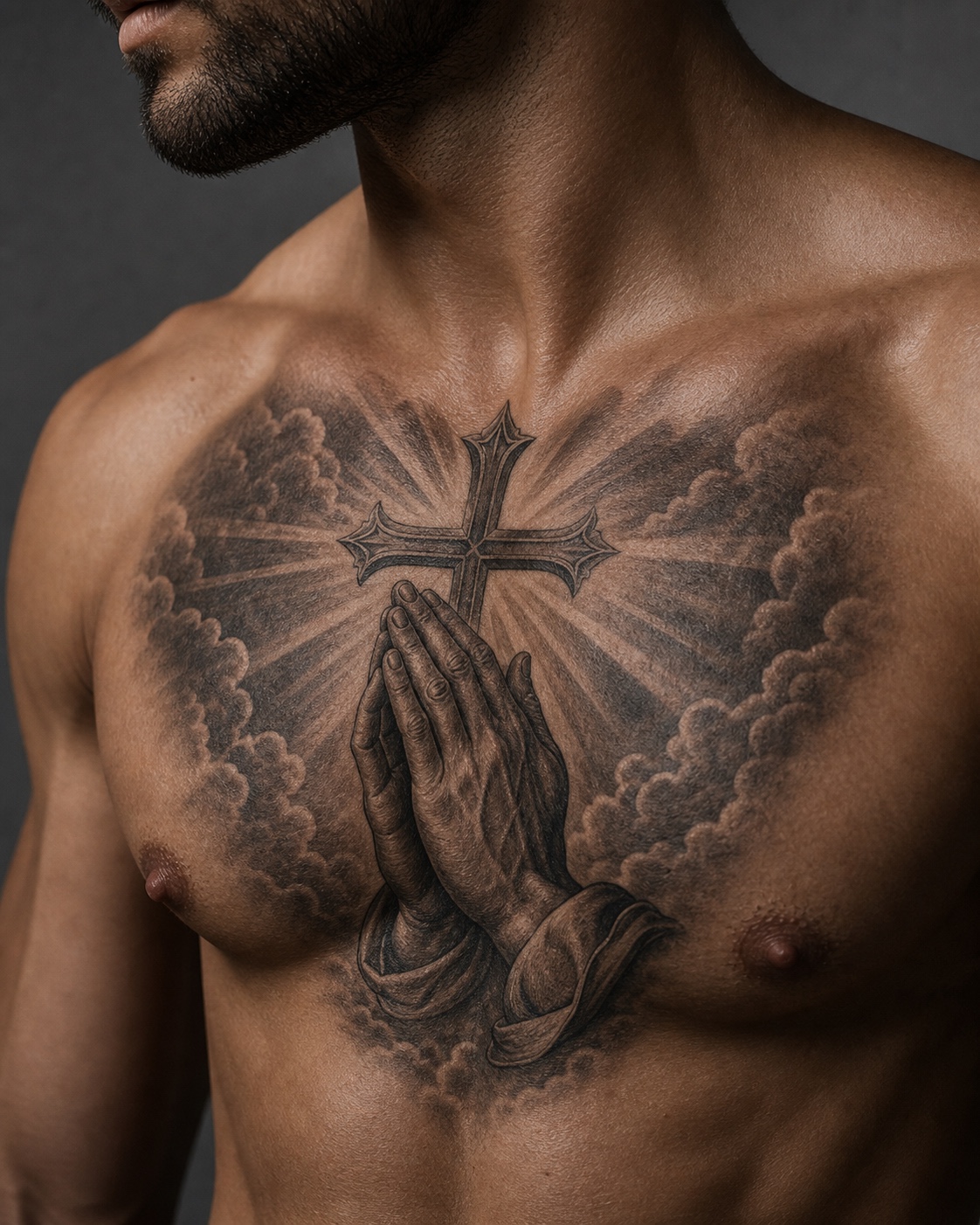
Praying hands, a cross with crown of thorns, a saint portrait — religious imagery centered on the chest predates modern tattoo culture by centuries. Done in realism, it can be among the most emotionally powerful compositions.
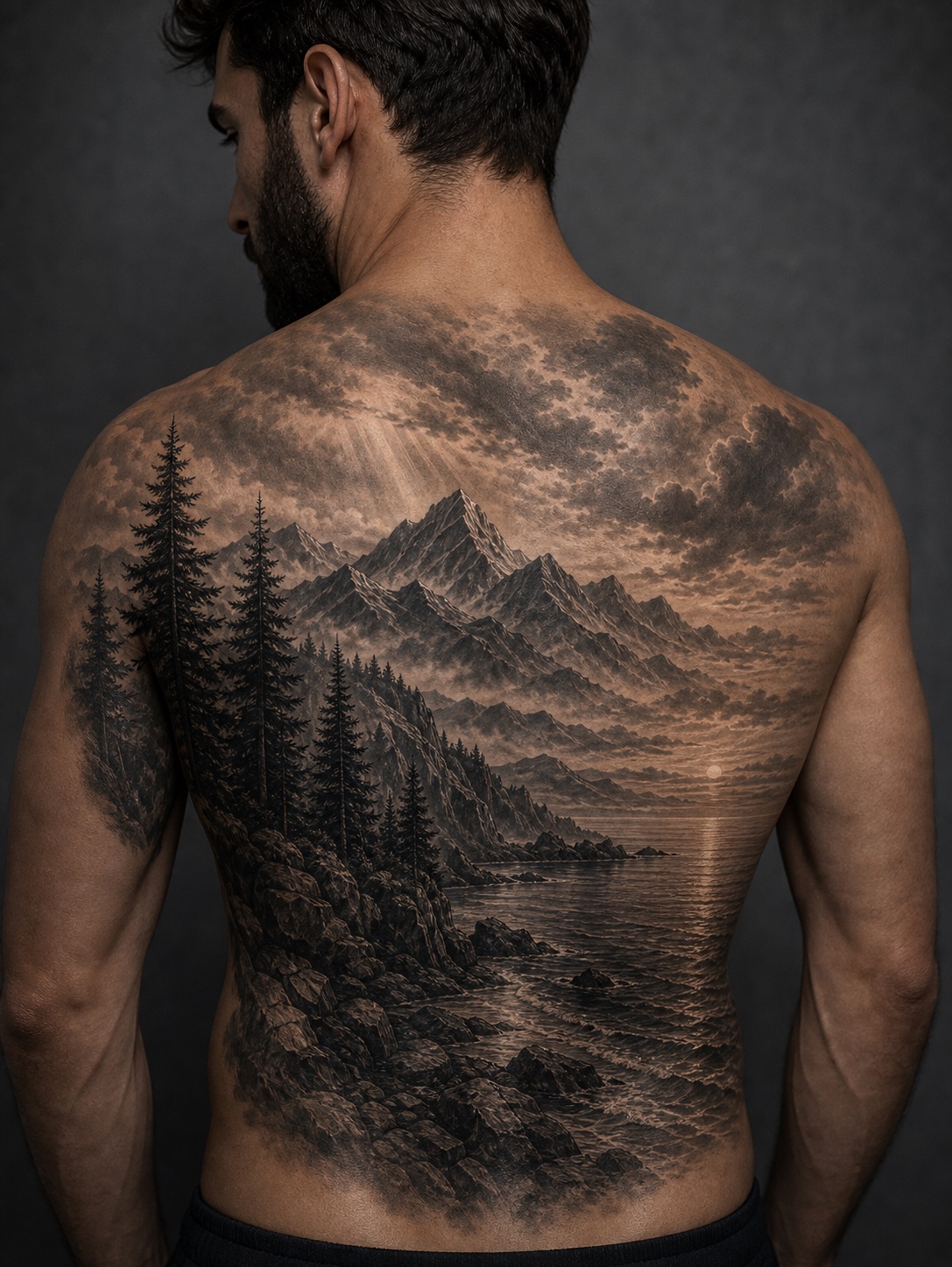
Full Back Landscape
A panoramic scene — mountain range, forest, ocean horizon — covering the entire back. No figures, just environment. Visually striking precisely because it’s unexpected in a genre dominated by portraits.
Neck Tattoos for Men
Neck tattoos are the hardest placement to conceal and the easiest to regret. Most experienced artists won’t tattoo your neck until you have significant coverage elsewhere — it’s not gatekeeping, it’s a practical filter to make sure you’ve thought it through. When the rest of the canvas is built out, the neck is a natural continuation. If you are at that stage, compare neck tattoo ideas for men with your existing shoulder, chest, or sleeve work so the placement feels like part of the whole body plan.
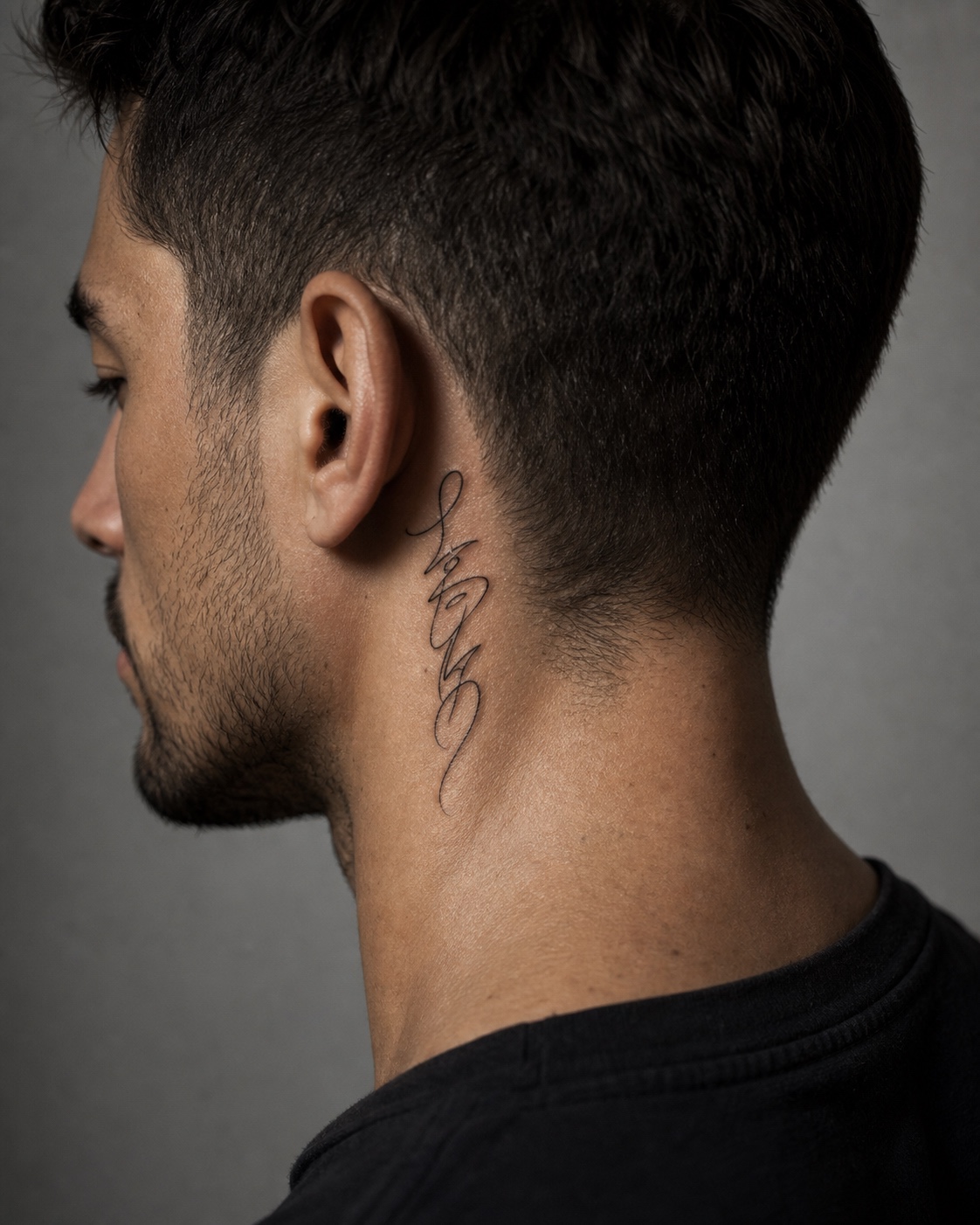
Small Script Behind the Ear
A word or short phrase — a name, a date, a single meaningful word — in fine lettering behind the ear. Subtle enough to read as understated rather than aggressive. The most common first neck tattoo.
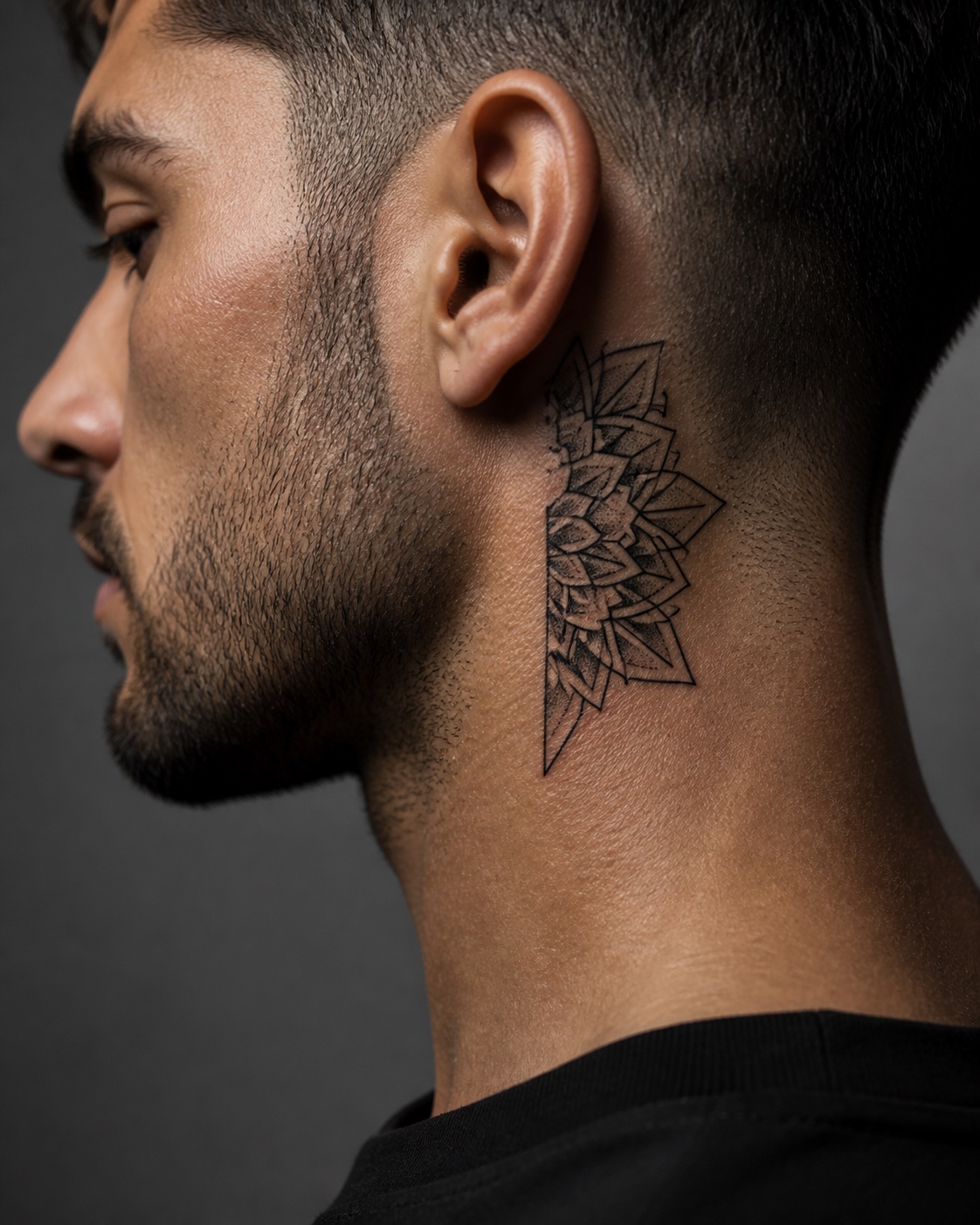
Geometric Pattern Side Neck
Clean geometric lines or a small mandala section below the ear. Works as a standalone or as an extension of a shoulder or chest piece.
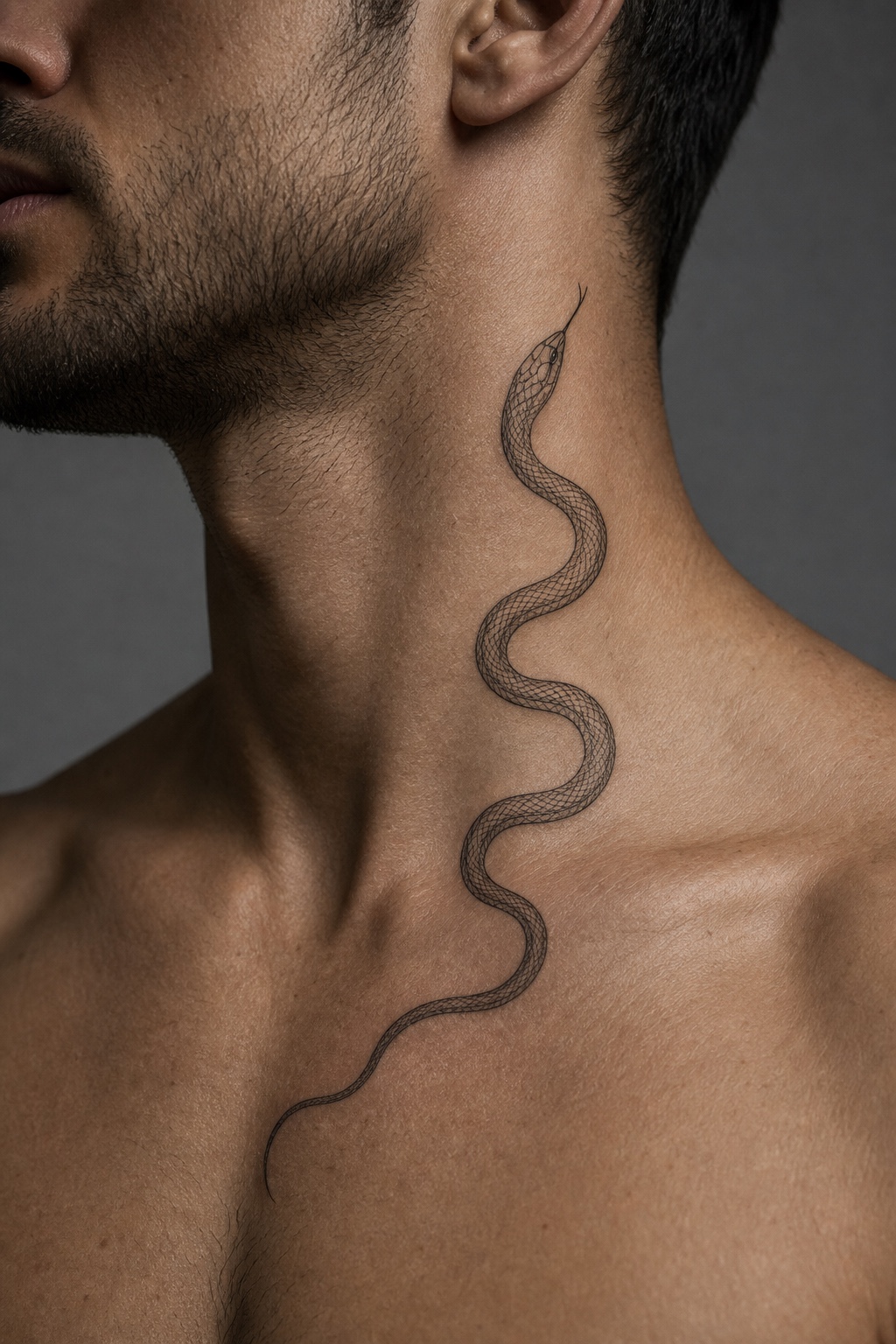
Snake Curling Up the Neck
A thin snake in fine linework coiling from the collarbone up toward the jaw. Visually bold, but the scale keeps it from reading as overwhelming if the line weight is controlled.
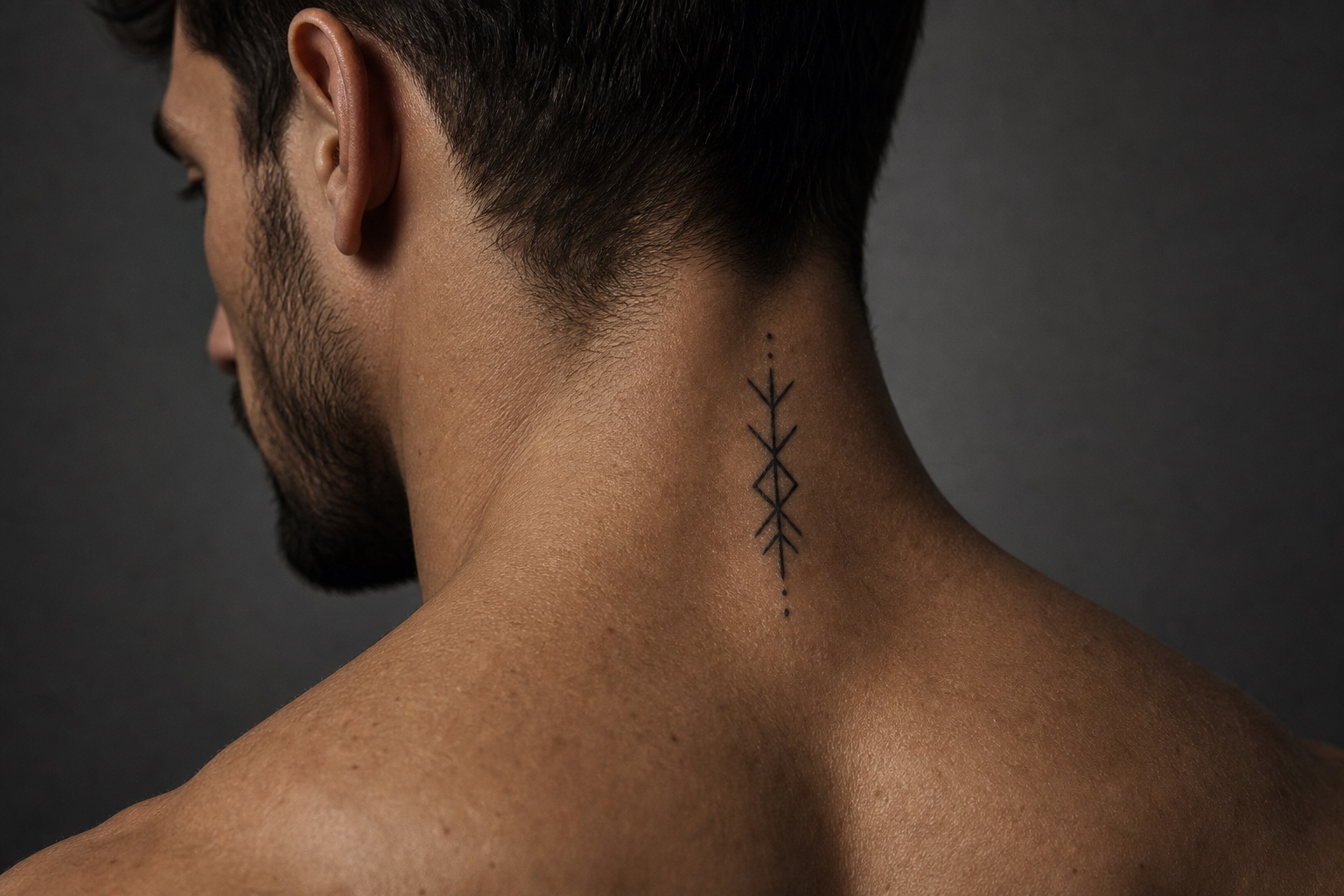
Runes or Small Symbols
A short runic inscription or collection of meaningful symbols. Small enough to read as personal rather than aggressive. Works well on the back of the neck.
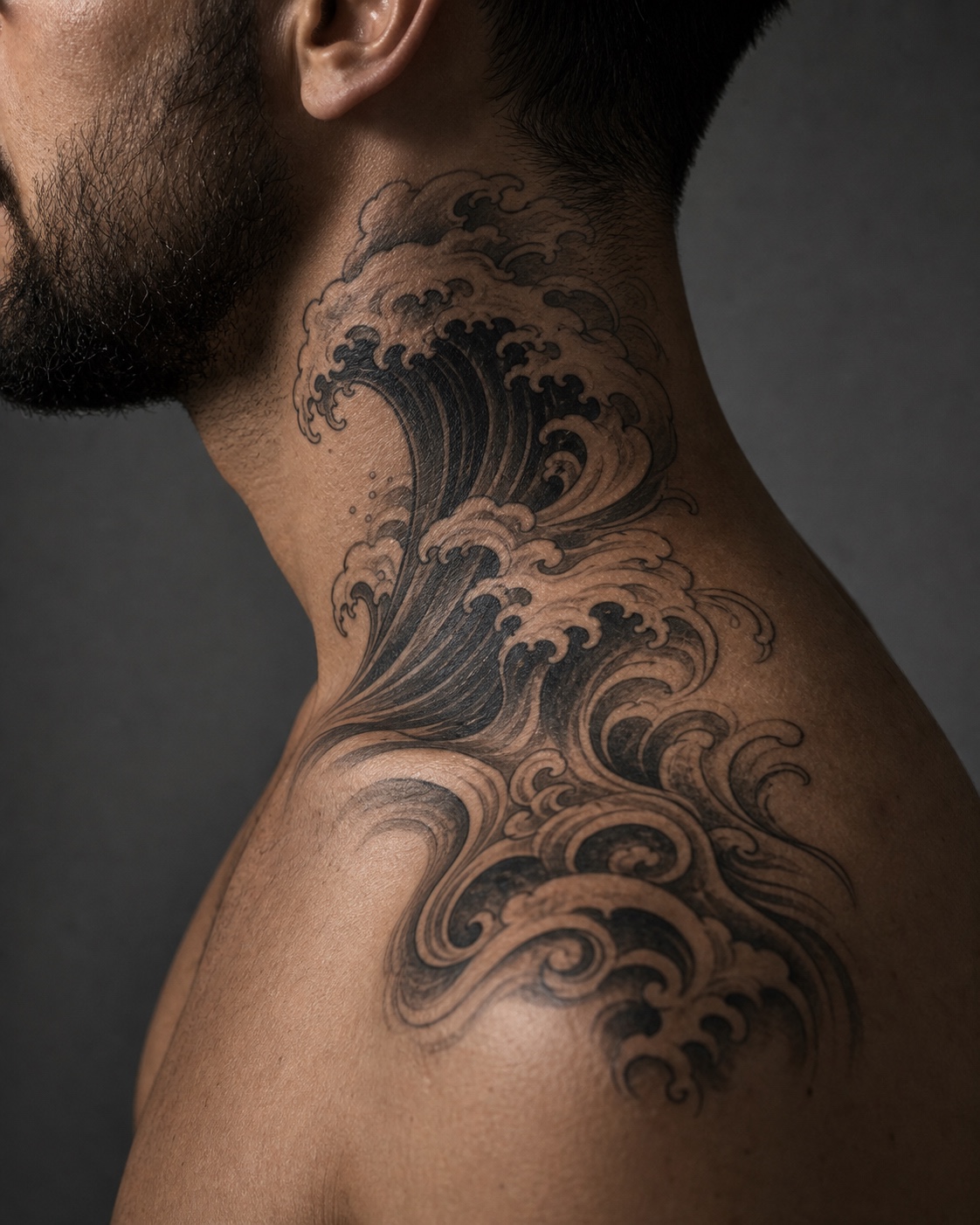
Sleeve Continuation
The most coherent neck tattoo is one that’s visually part of a larger piece — a wave continuing from a shoulder piece, a branch from a tree tattoo, flames from a lower composition.
Hand Tattoos for Men
Hands are high-visibility and high-fade. The skin on the hands regenerates faster than most other areas, which means lines blur and color fades faster. Touch-ups are expected. That reality priced in, here’s what works.
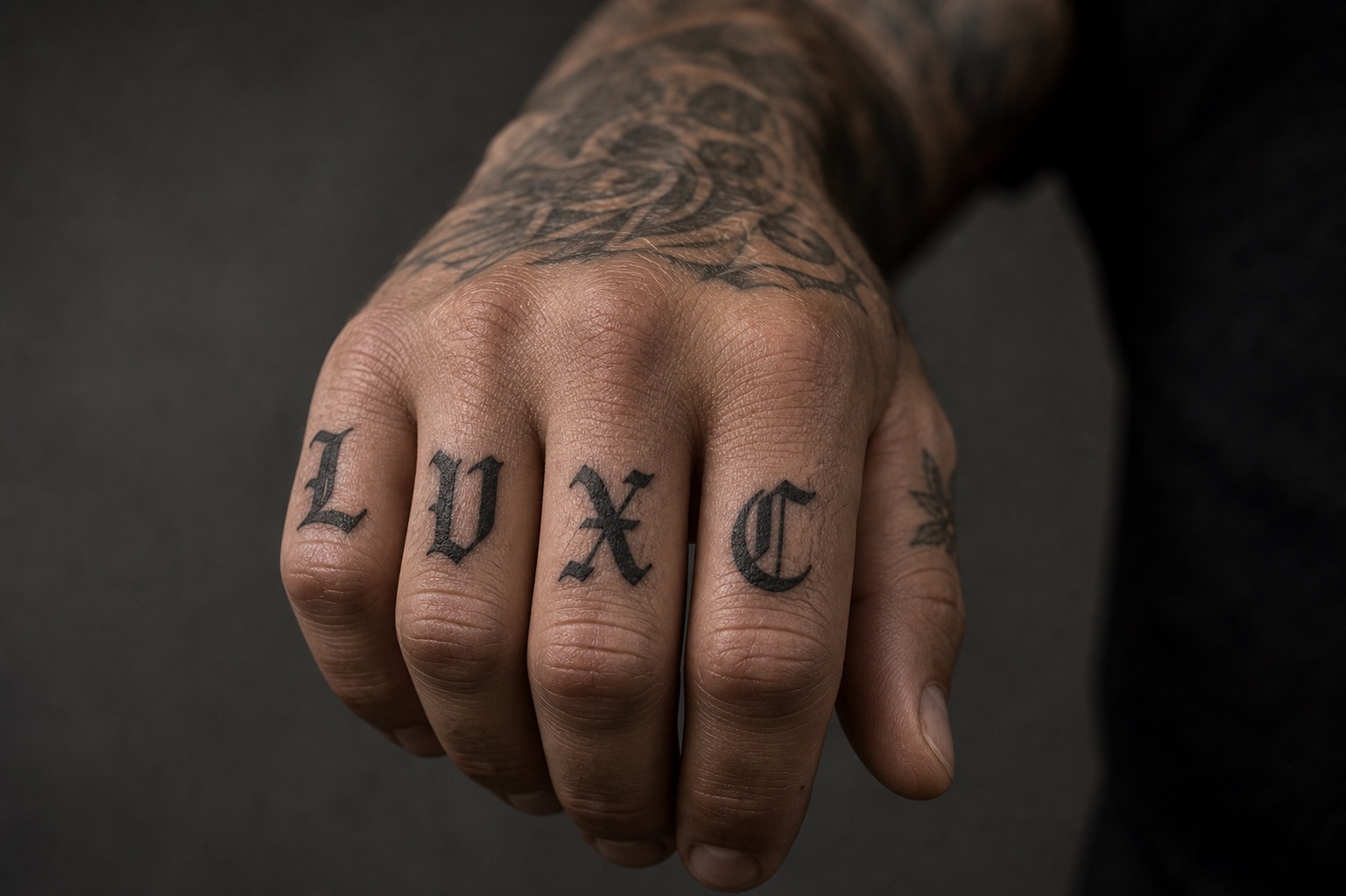
Finger Text
Single letters on individual fingers spelling a word — family member initials, a phrase broken across both hands. Classic, simple, fades fastest of anything on this list.
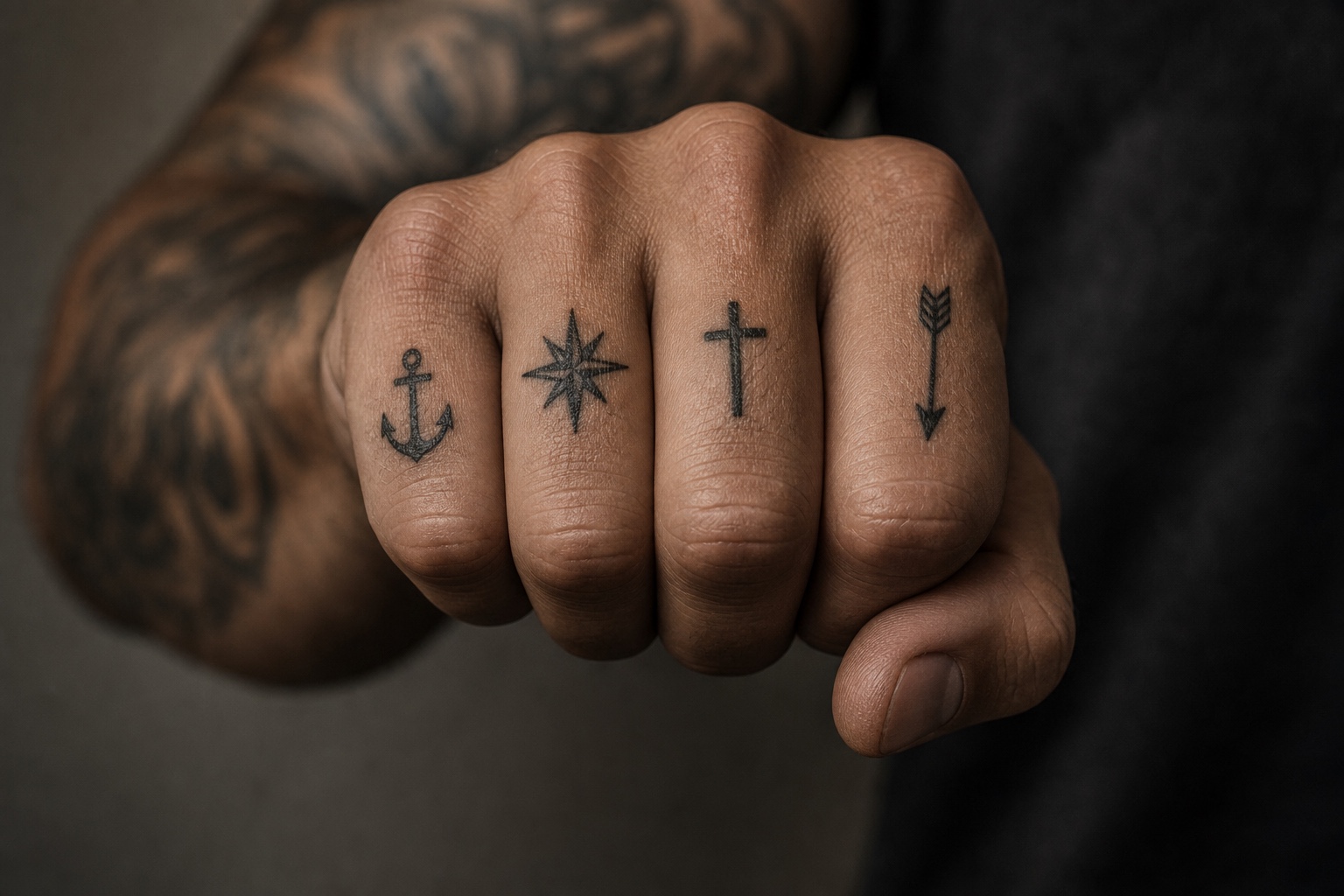
Knuckle Designs
A small symbol on each knuckle — anchors, stars, crosses, arrows — rather than full letters. More distinctive than the classic LOVE/HATE knuckle tattoo and slightly more resistant to blurring over time.
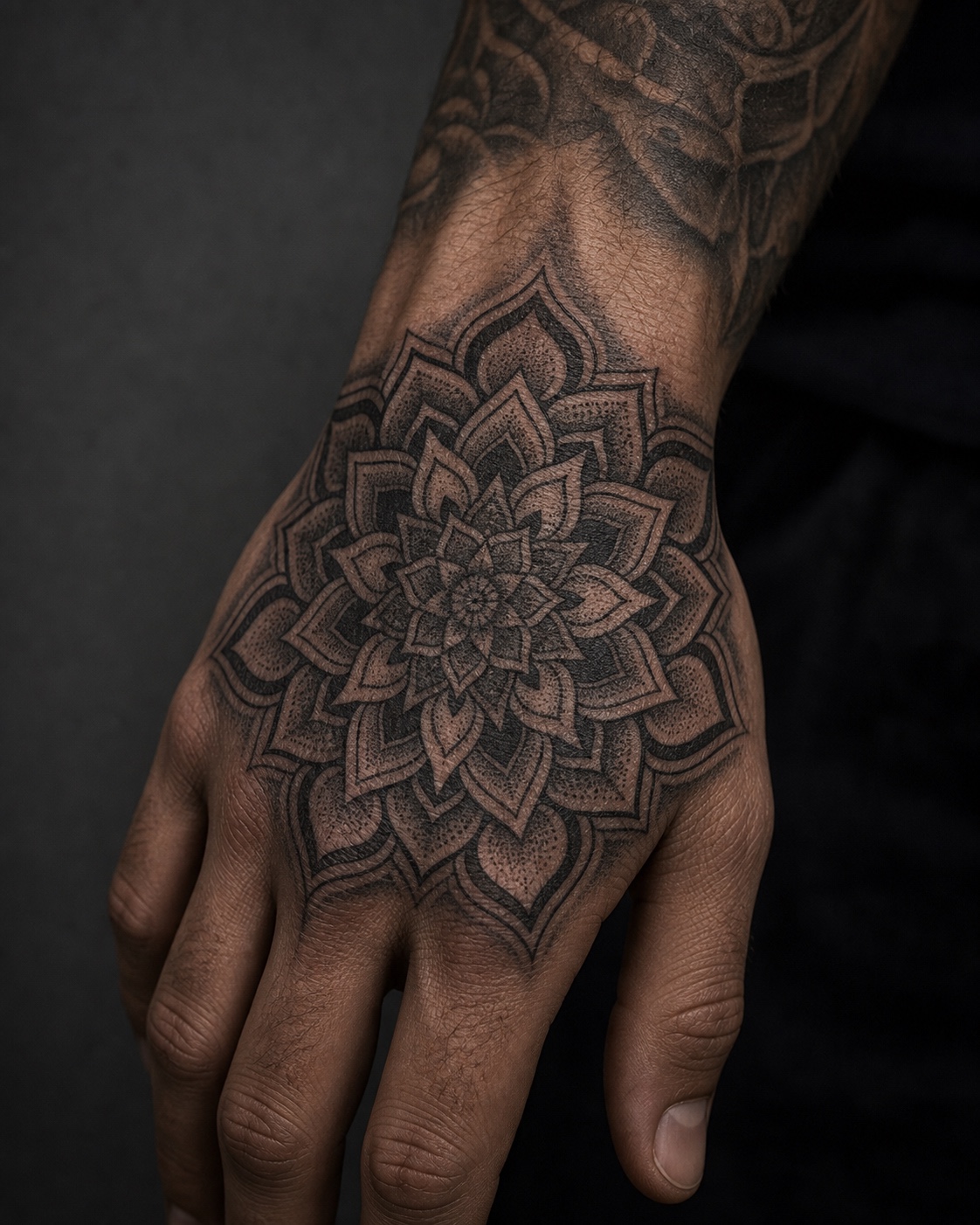
Mandala Back of Hand
A medium-scale mandala centered on the back of the hand, with the pattern following the natural grid of the tendons. Looks extraordinary when fresh. Plan on touching up every 3–5 years.
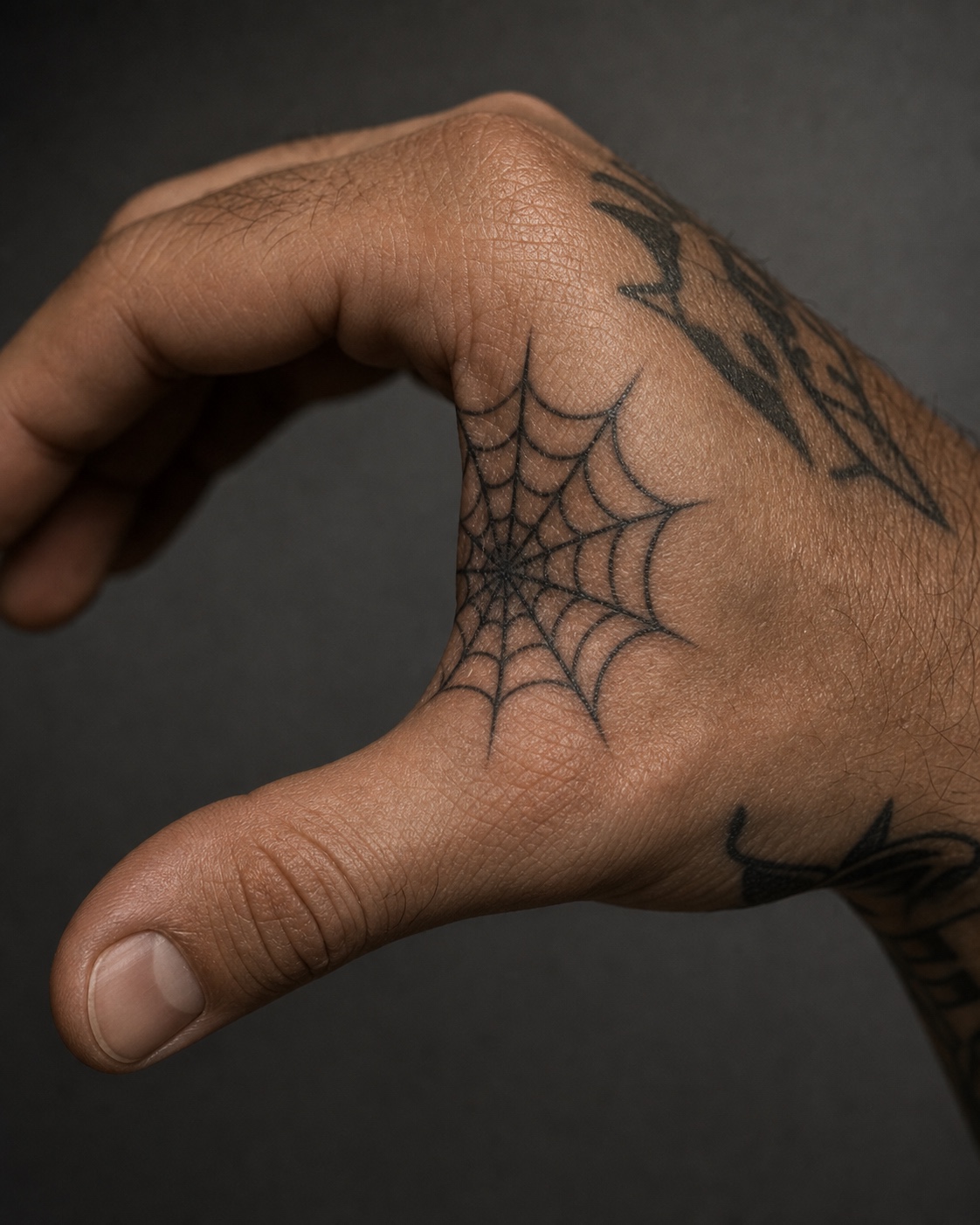
Spider Web Thumb Web
The classic placement between thumb and forefinger. Bold graphic shape, holds up well despite the awkward skin in that spot.
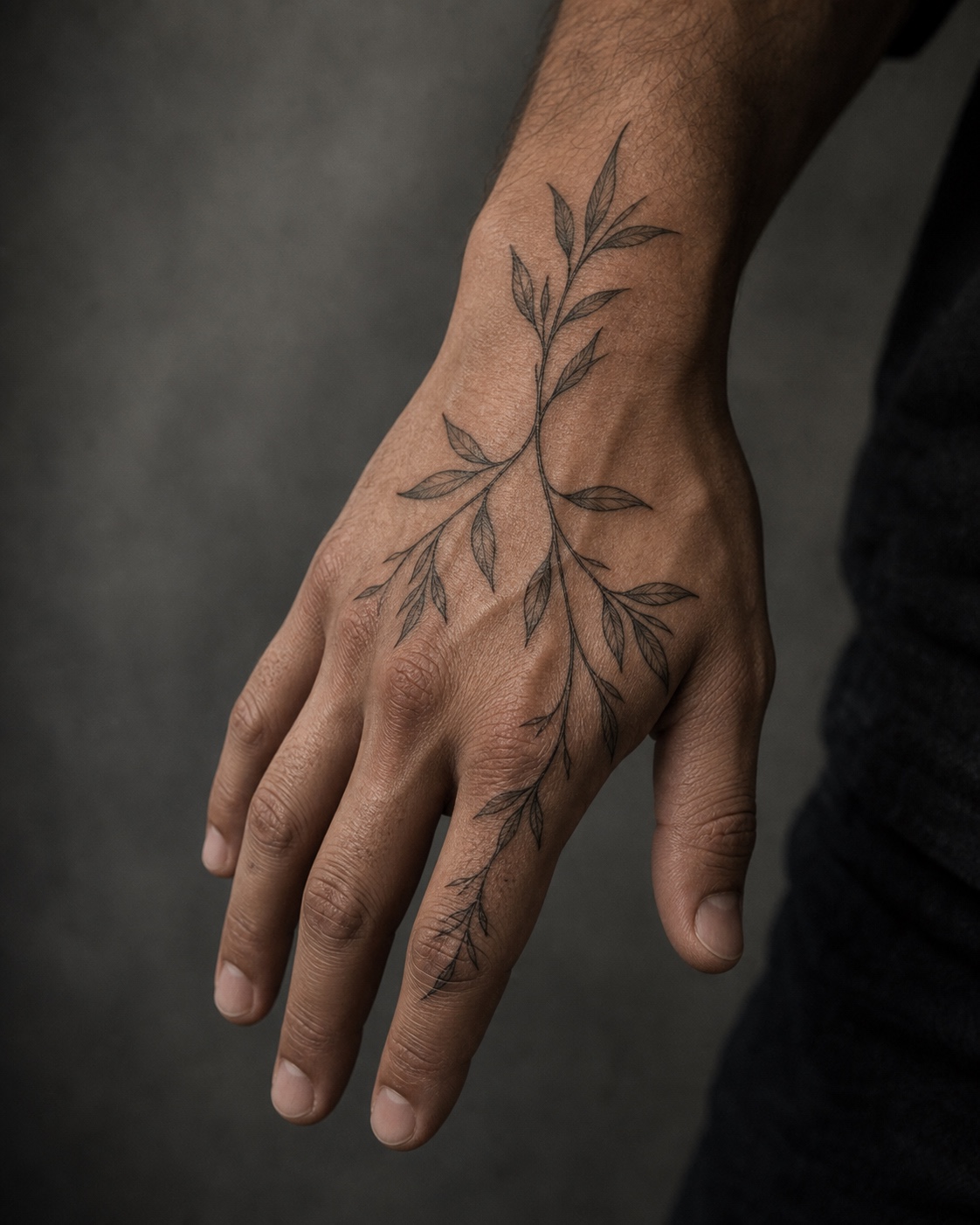
Fine-Line Botanical Hand
A thin branch with leaves spreading from the wrist down the back of the hand toward the fingers. Delicate but reads as intentional.
First Tattoo Ideas for Men
First tattoos are high-stakes because they set the tone for everything that follows. The instinct is to go small and inconspicuous. That’s not always the right call — small tattoos in bad placements look worse than medium tattoos in good ones.
Before you book the appointment, read the first tattoo guide for the pain, artist, budget, and regret-prevention questions that matter more than the trend list.
Meaningful Symbol on the Upper Arm
The upper arm is the gold standard for first tattoos. Covered by a t-shirt, fully revealed at the beach. Medium size — 3–4 inches — with enough detail to be interesting up close. This is where a compass, a simple wolf portrait, or a personal symbol shines.
Minimal Linework
A single continuous-line design — an animal, a mountain, a simple abstract form — on the forearm or upper arm. Beginner-friendly: one session, heals cleanly, photographs well.
Script with Personal Meaning
Your own handwriting, or a family member’s, transferred to skin. Personal, impossible to replicate, and the content is self-evidently meaningful. Works on the forearm or ribcage.
Small American Traditional Piece
American Traditional style — bold lines, flat color, proven designs — ages better than any other style. A swallow, an anchor, a panther, a rose. Done small on the upper arm.
For a design that feels more direct than a full arm piece, scan a few hand tattoo ideas for men and compare how the shapes read at a smaller scale.
Design from an Artist You Admire
Don’t go to a studio and pick something off the wall because it’s close enough. Find an artist whose portfolio genuinely excites you, book a consultation, and let the process take longer than feels comfortable.
Meaningful & Symbolic Tattoo Ideas for Men
Some tattoos are decorative. These ones are trying to say something specific.
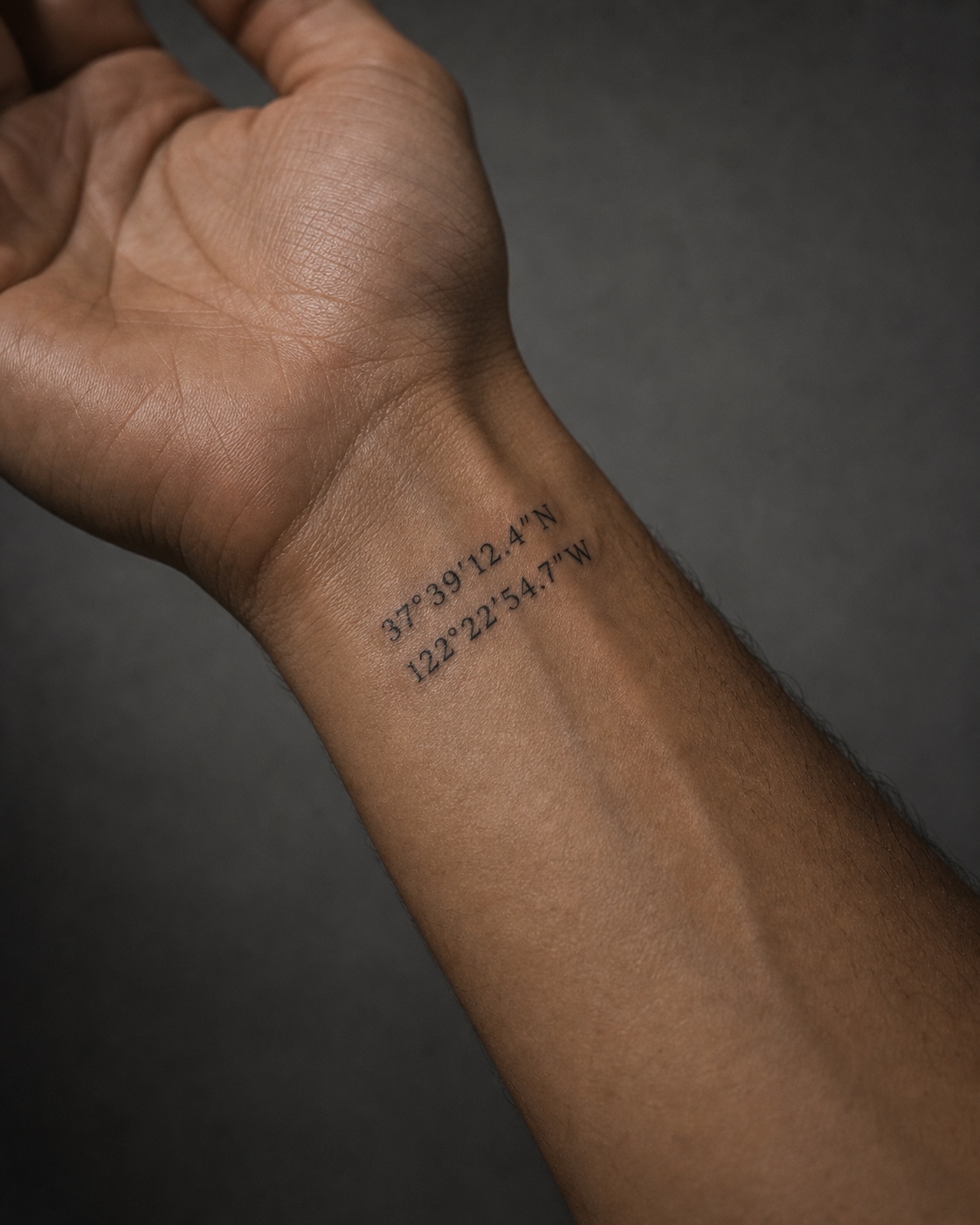
Birth Coordinates
The latitude and longitude of a place that matters — where you were born, where something important happened, where someone you loved lived. Numbers in clean typeface. Quiet and specific.
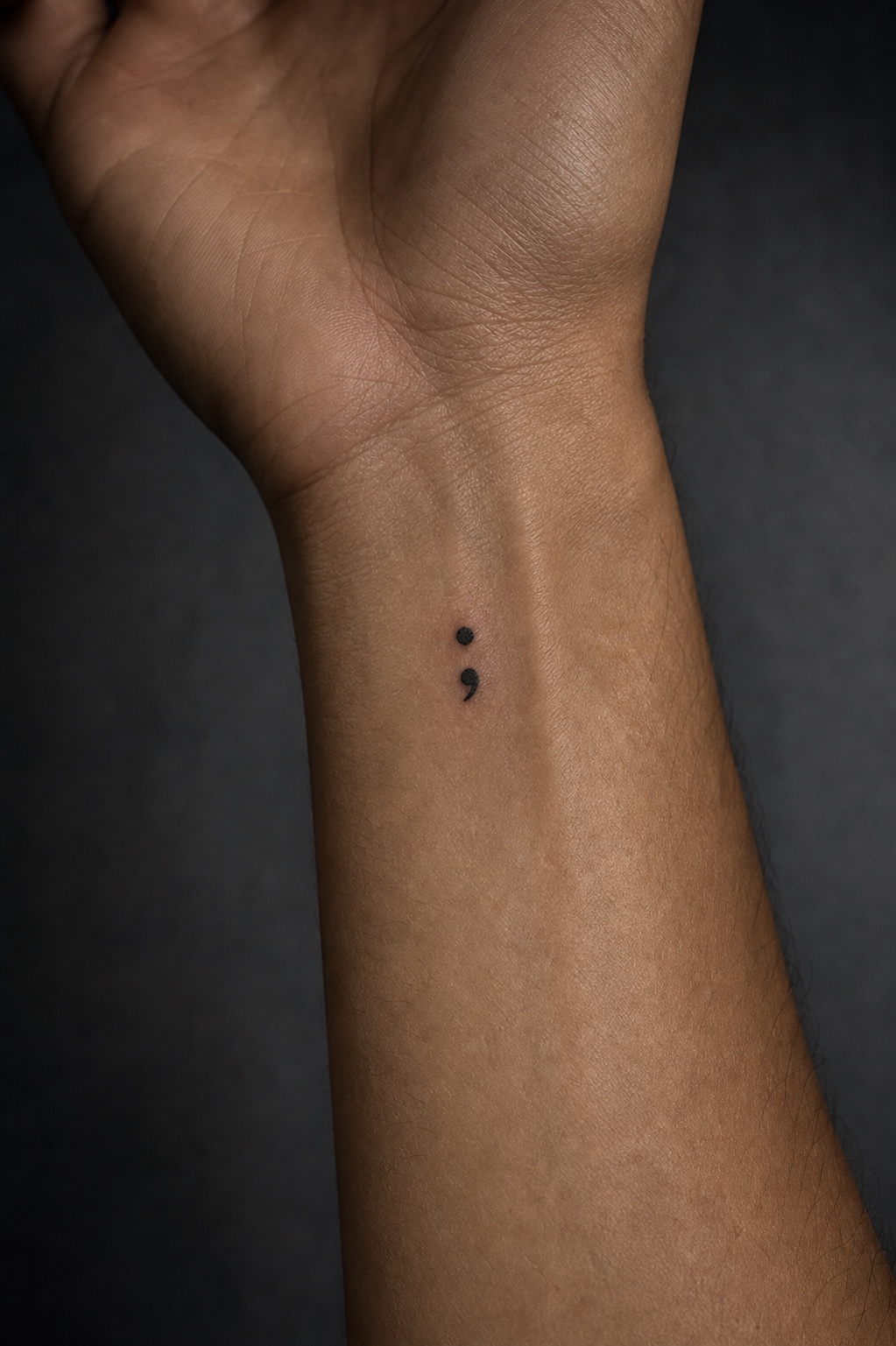
Semicolon
The mental health symbol — a punctuation mark that a writer uses when they could have ended a sentence but chose to continue. If you know what it means for you personally, no further explanation is needed.
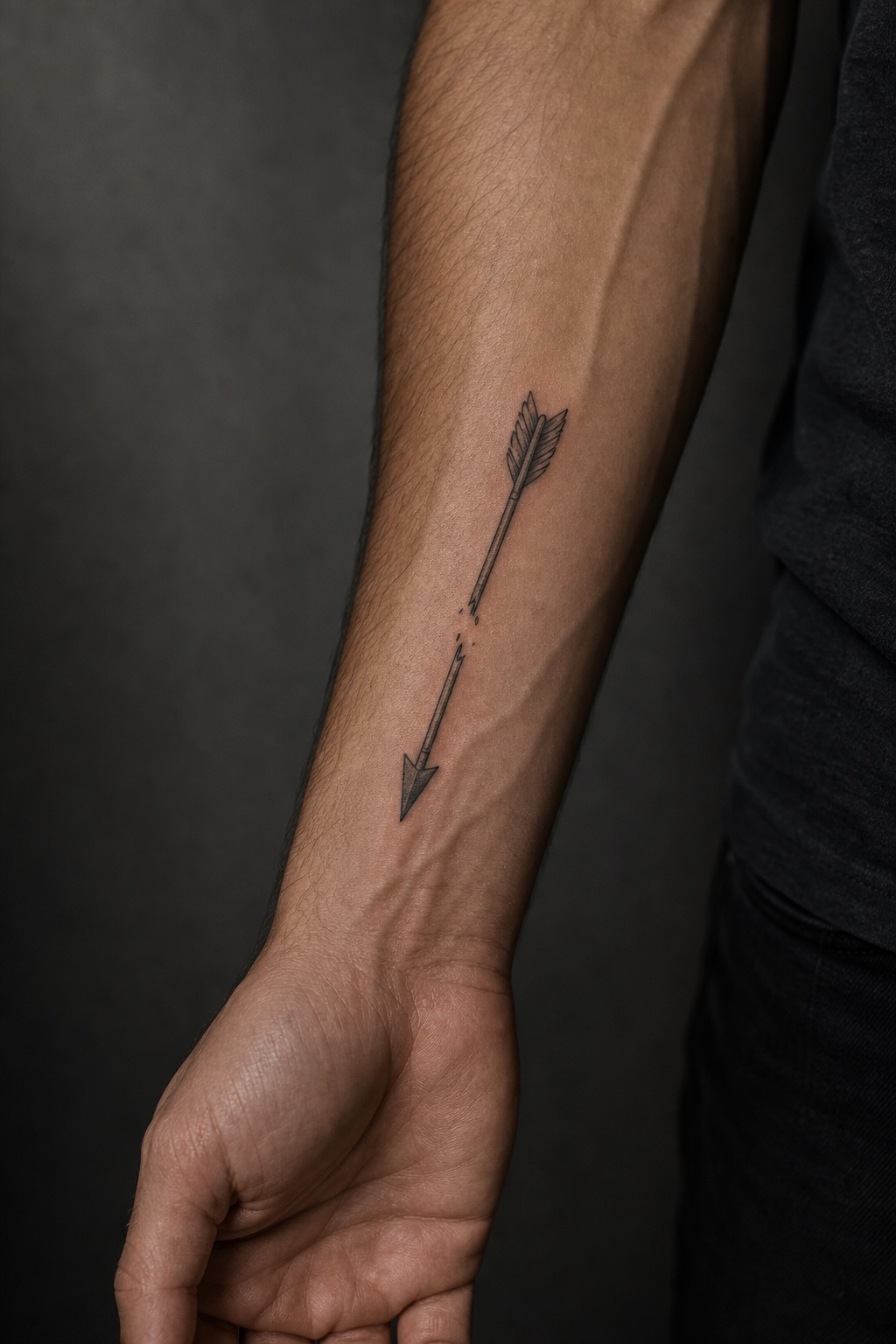
Broken Arrow
A symbol of peace, often used to mark the end of a conflict — internal or external. The visual is simple, the meaning is layered.
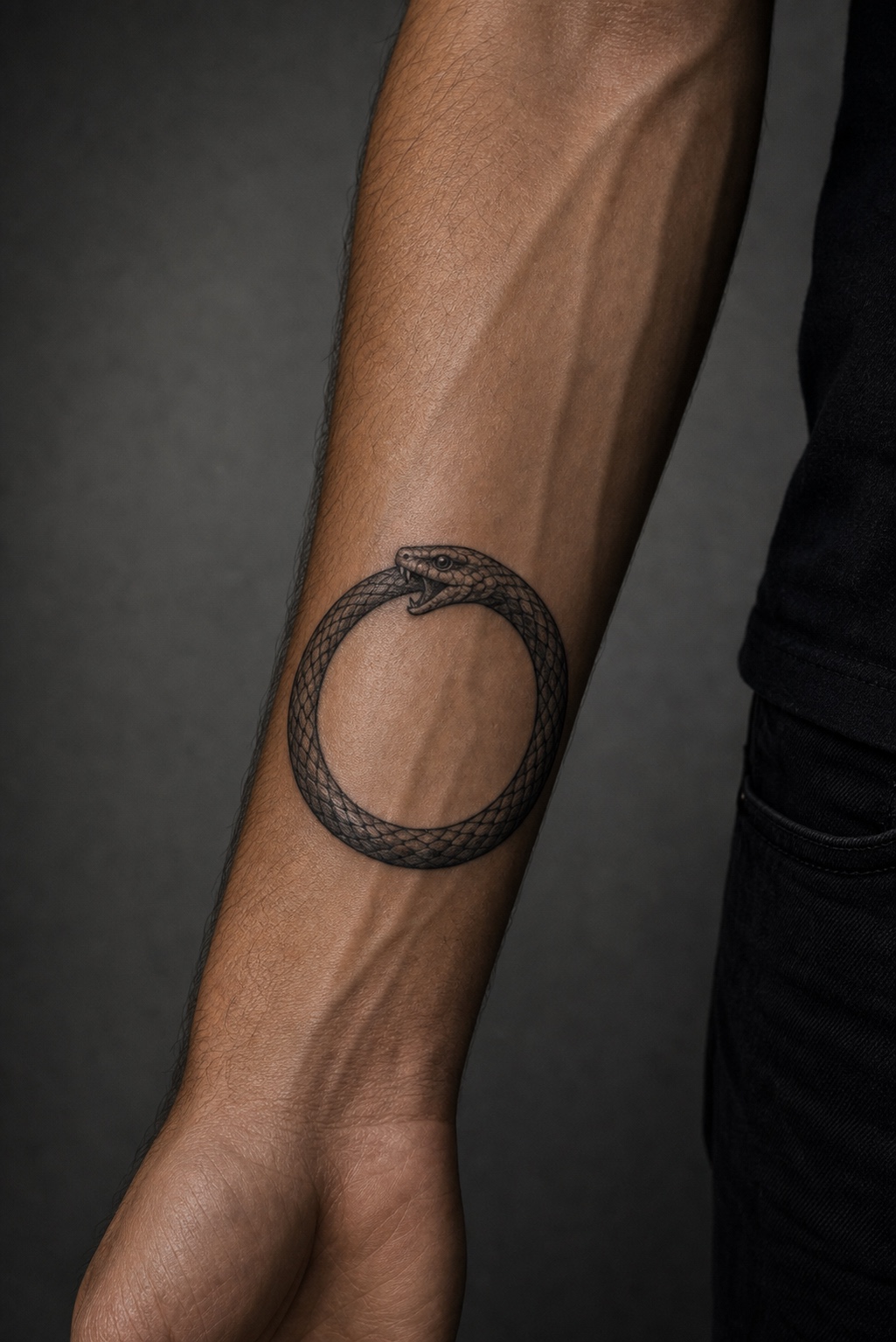
Ouroboros
A snake eating its own tail — one of the oldest symbols in human visual history. Cyclicality, eternal return, the idea that endings and beginnings are the same moment. Works at any scale.
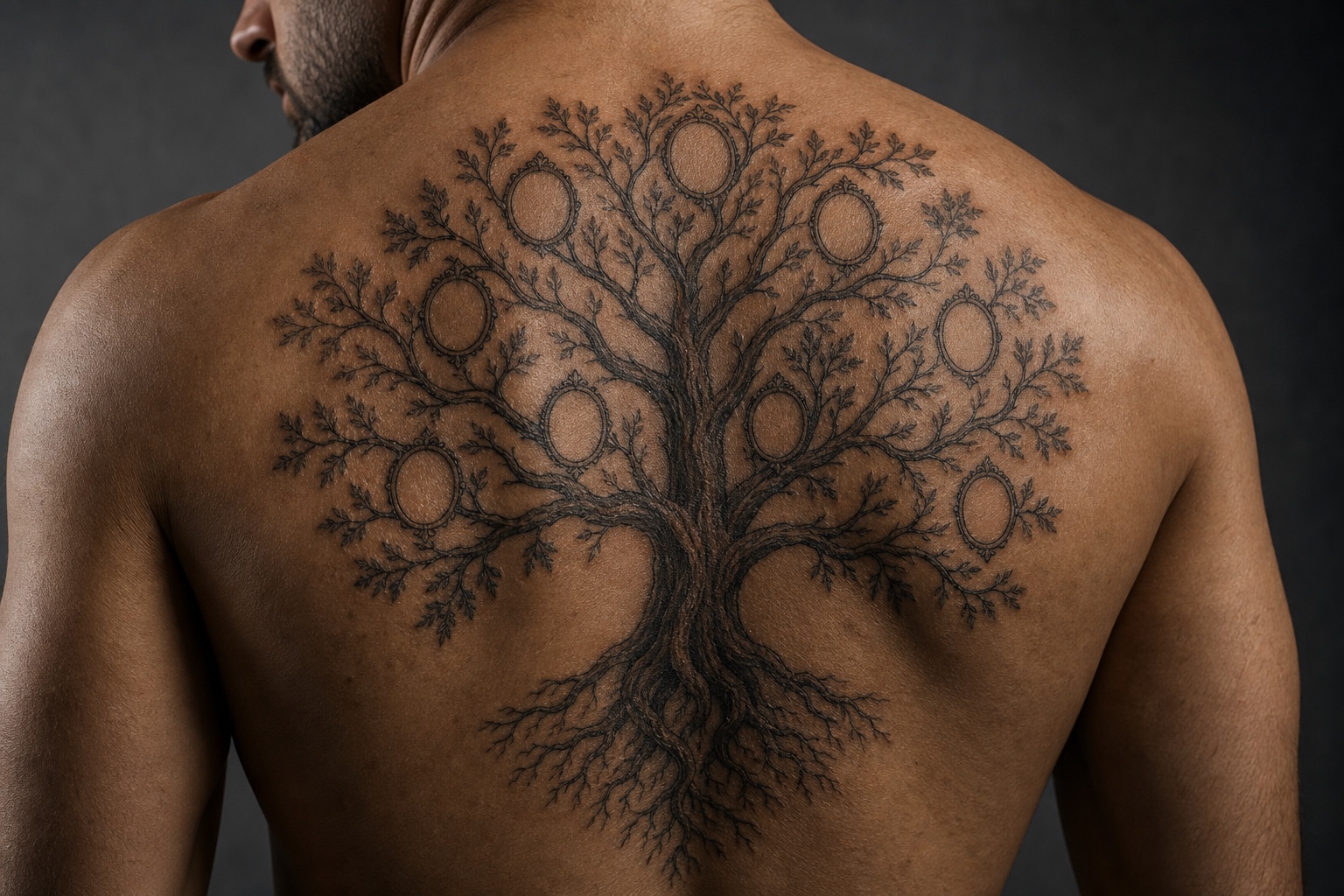
Family Tree
An actual tree with names, dates, or portraits embedded in the branches. Large-scale back or chest piece. The most literal form of carrying family with you.
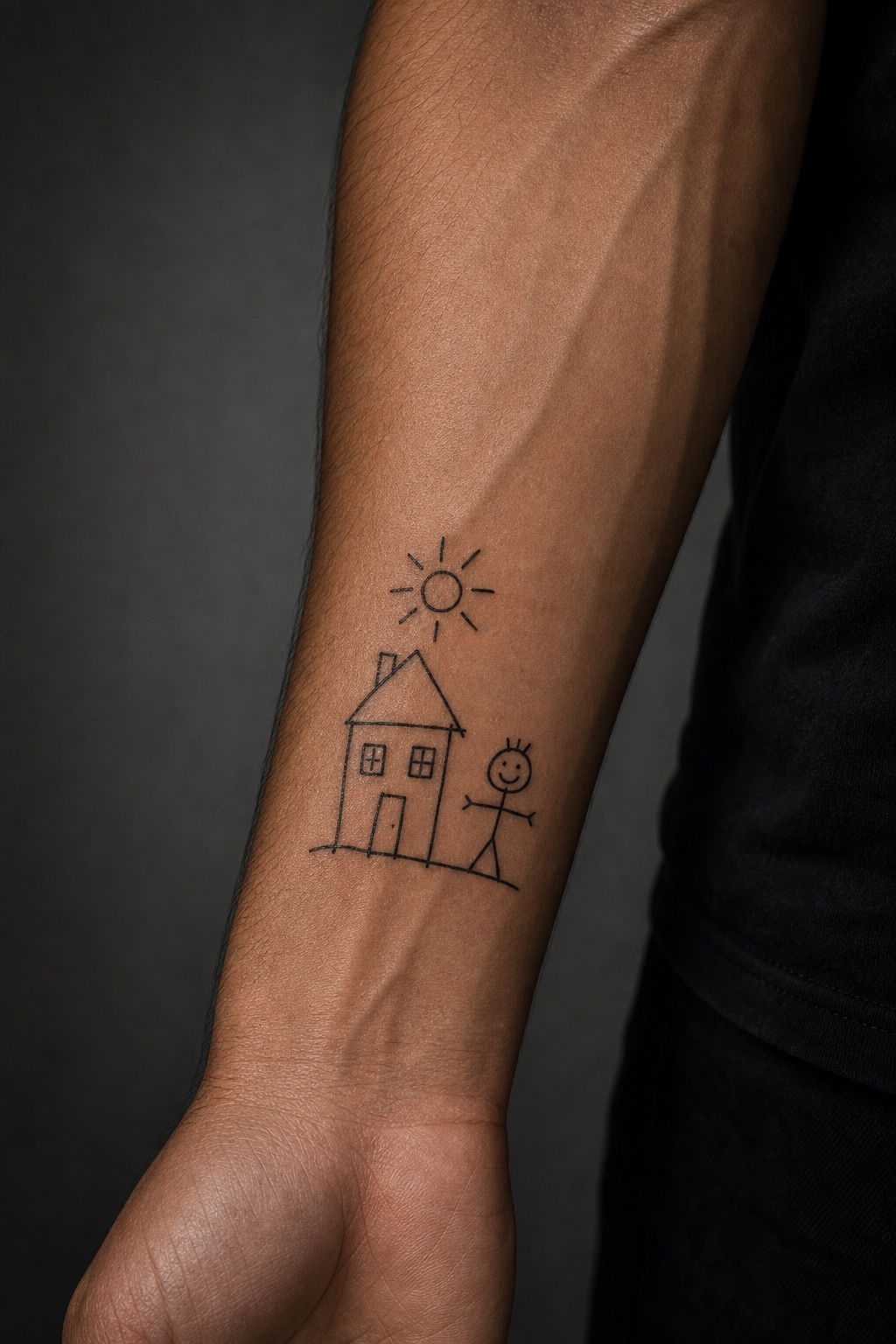
Children’s Drawing Reproduced
A scanned drawing from your kid — a house, a stick figure family, whatever they made at age four — reproduced on skin. Nothing is more specific or irreplaceable. The imperfection is the point.
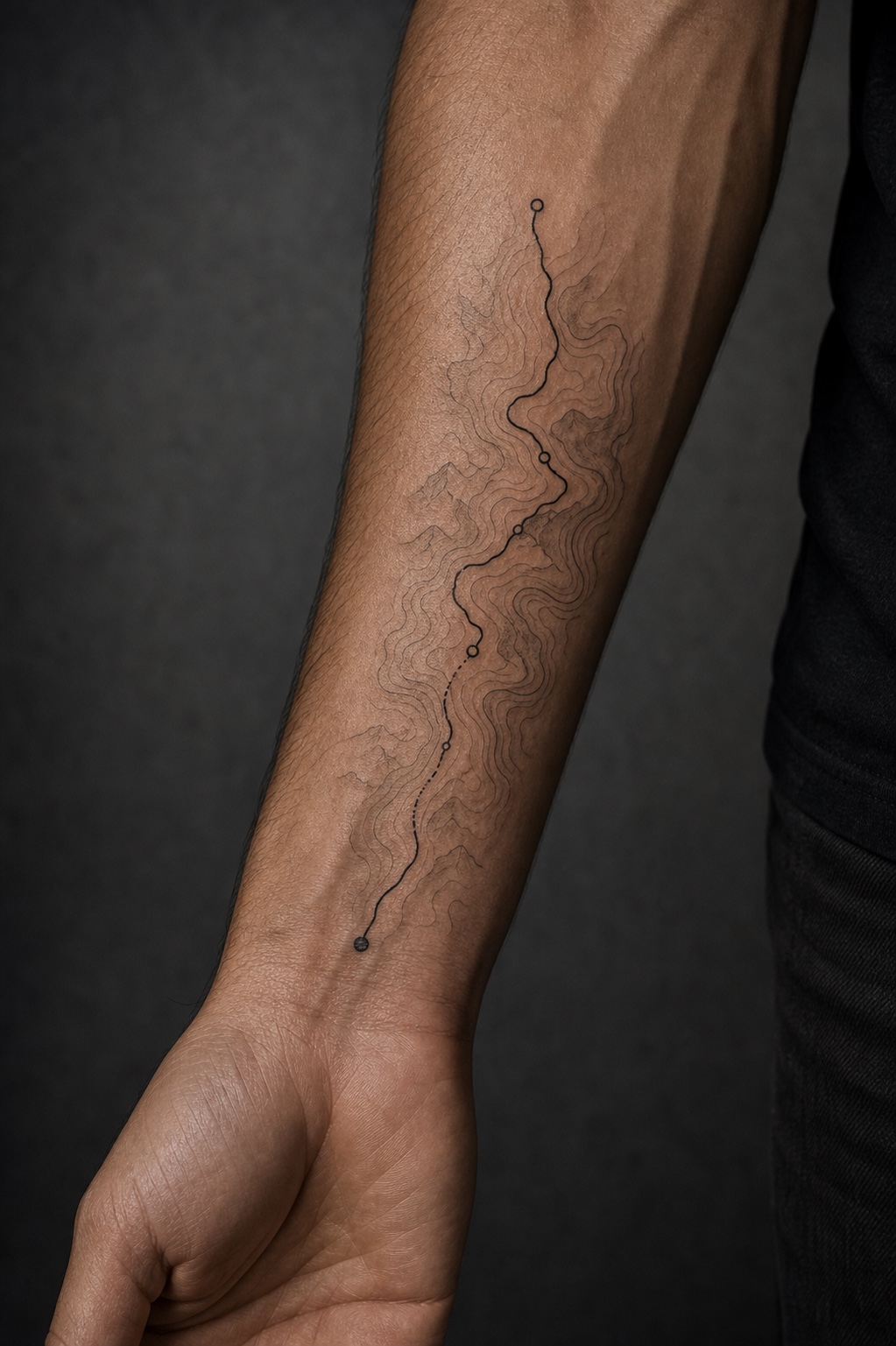
Map of a Meaningful Journey
The route of a hike, a road trip, a deployment — traced as a literal map on the forearm. Geographic, personal, and visually interesting as an object.
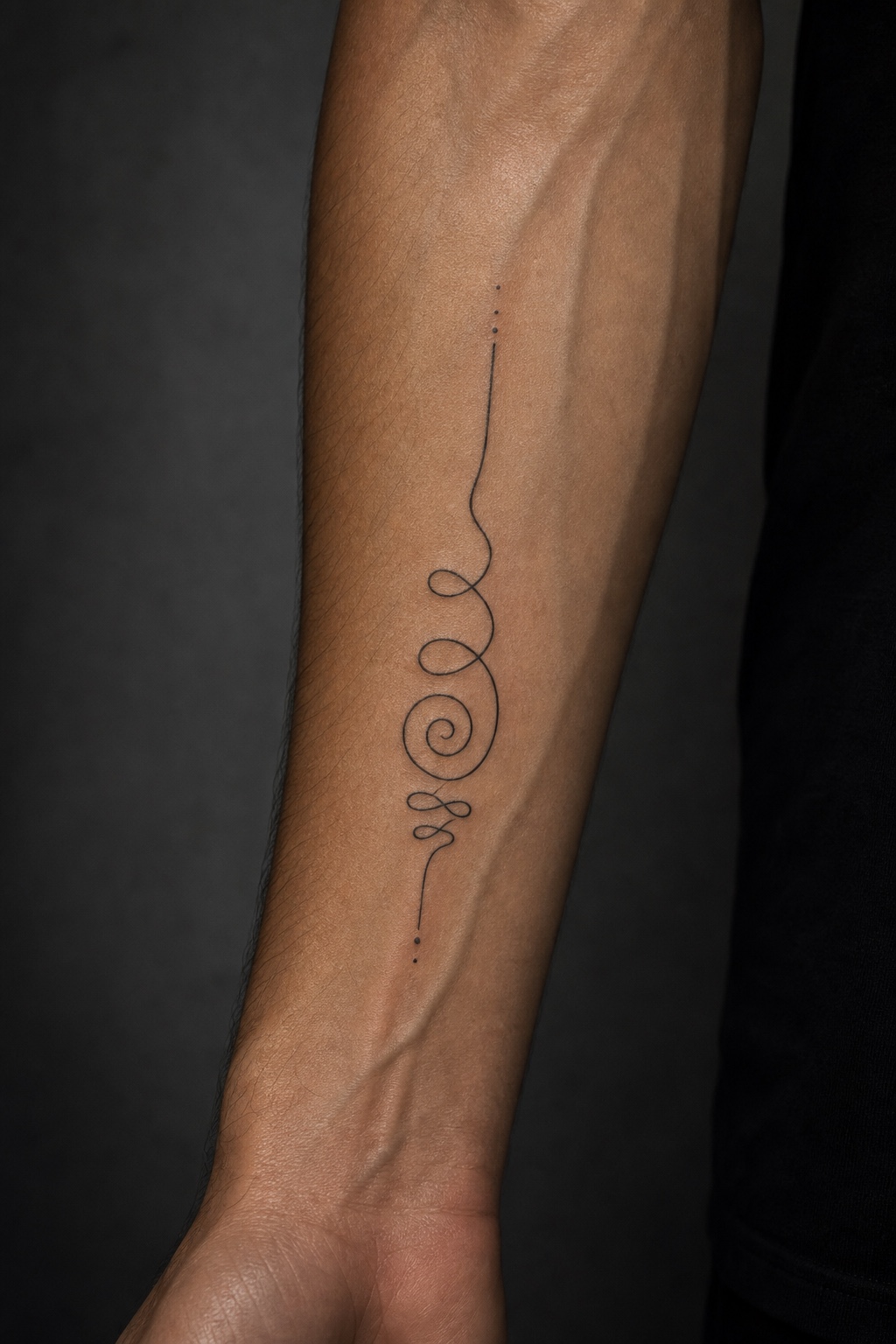
Unalome
A Buddhist symbol representing the path to enlightenment — a spiral that gradually straightens into a line ending in a dot. Minimalist, frequently done in fine linework.
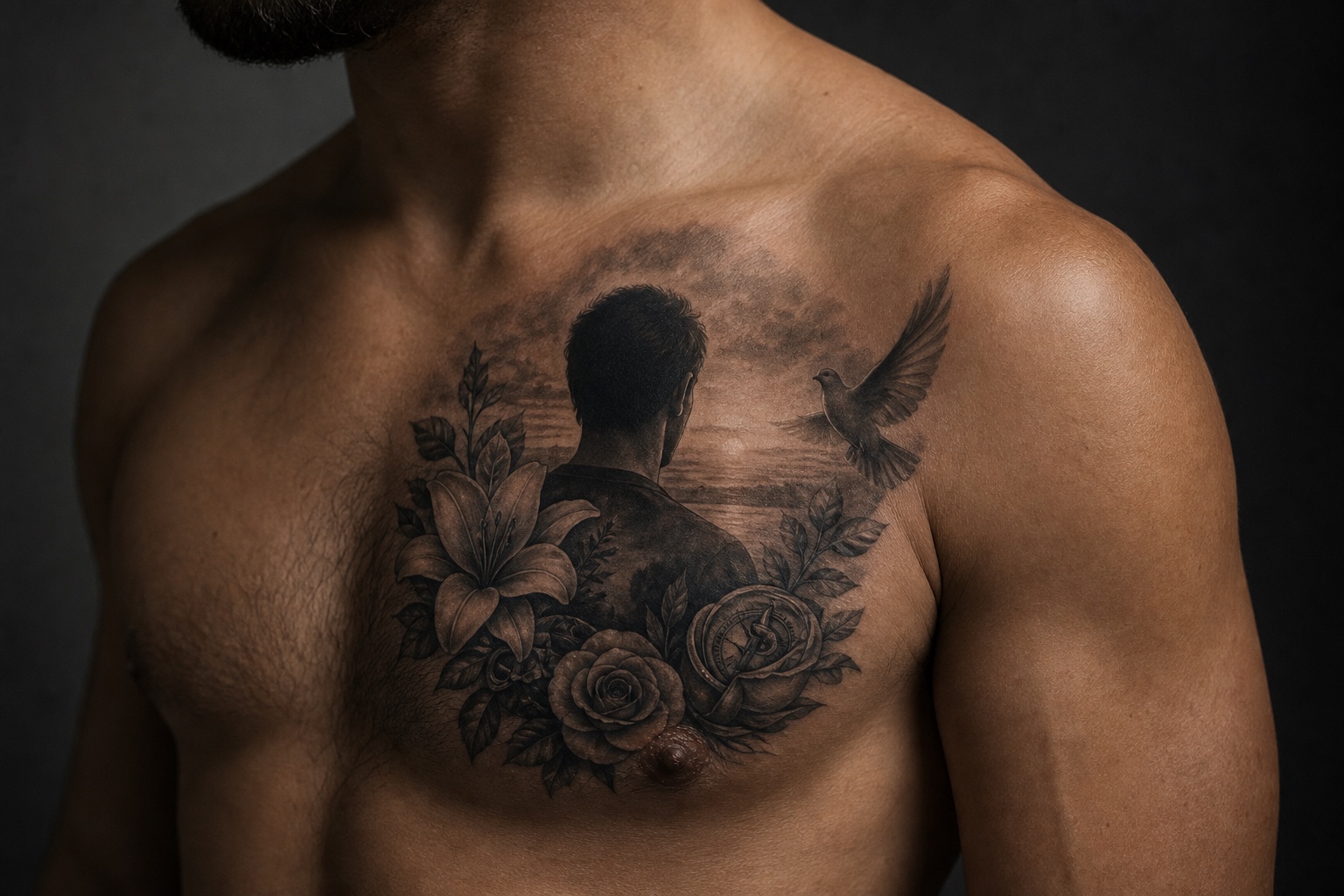
Grief Tattoo
A portrait, a signature, an object associated with someone you lost. Give yourself time after a loss before booking — the design decision should come from a stable place.
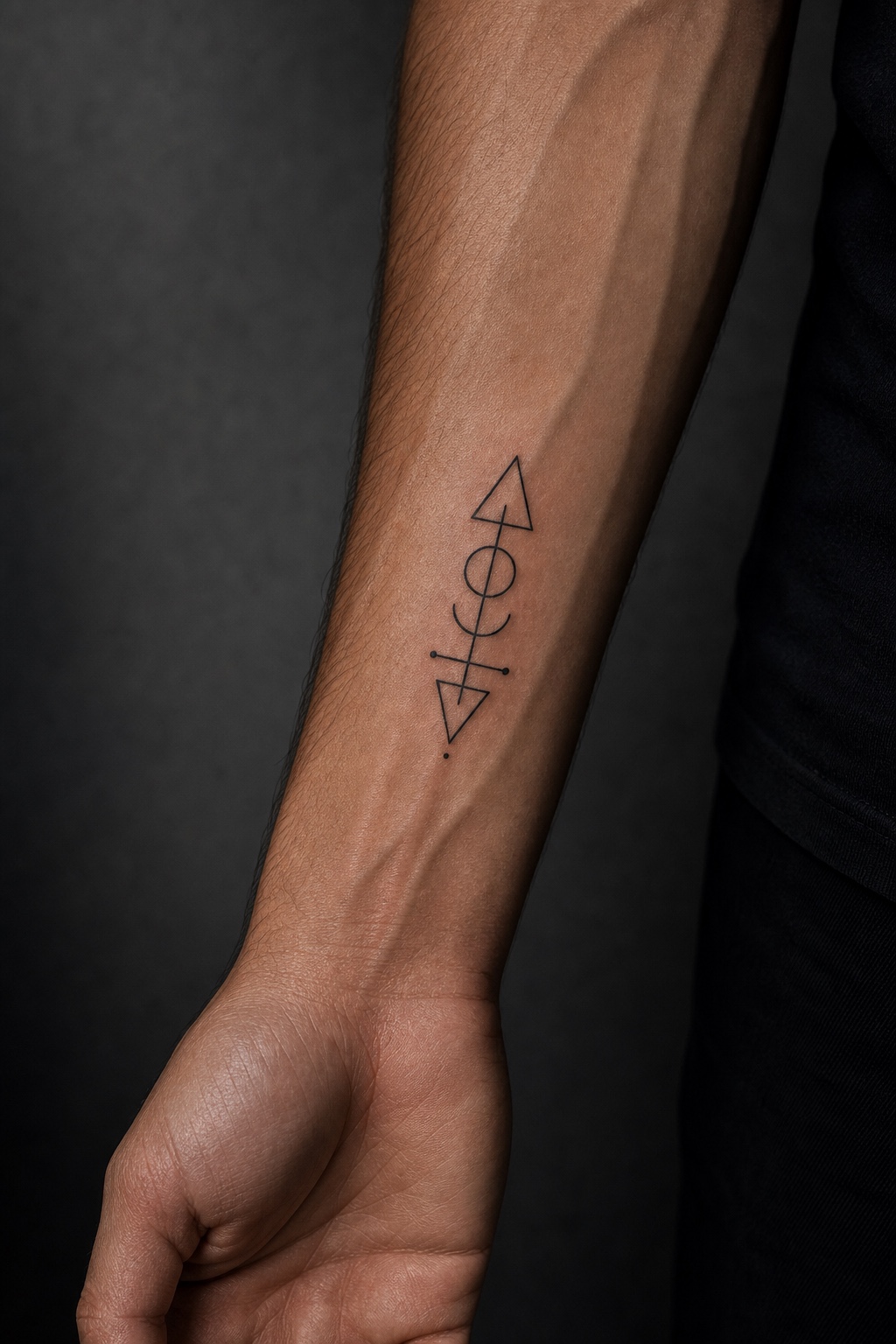
A Symbol You Invented
Not a rune, not an existing glyph — something you drew yourself that carries private meaning. It looks abstract to everyone else. It means everything to you.
Choosing Your Style
The design is only half the equation. Style determines how it’s executed — and a great design in the wrong style is a worse tattoo than a simple design in the right one.
American Traditional uses thick outlines, flat color fills, and a limited palette. It holds up better over time than any other style because the bold lines resist blur. If you’re not sure what style you want, traditional is the most forgiving.
Japanese (Irezumi) has its own composition rules, color conventions, and subject matter vocabulary. Finding an artist who genuinely specializes in it matters — the difference in result is significant compared to someone approximating it.
Realism produces the most visually impressive results and requires the most technical skill. It also fades more noticeably over time, especially color work. Black and grey realism holds better.
Blackwork and geometric use solid black ink and precise linework. Clean, graphic, and if you choose dotwork shading, extraordinarily detailed. No color to fade.
Fine line is the newest major style. Artists in the format are getting better at line weight calibration, but fine-line work at 5+ years looks noticeably different from freshly done work. Worth discussing longevity with your artist before committing.
Placement Guide
Forearm: The most versatile. Visible daily, cover-able, flat enough for detail work. Best for medium compositions, script, and linear designs.
Upper arm and shoulder: The traditional starting point. Good muscle mass means less distortion as the body changes. Works for almost any design type.
Chest: Large canvas, personal placement — many men choose it for their most meaningful piece. Painful near the sternum and collarbone.
Back: The biggest canvas available. Full back pieces are marathons — 40+ hours over multiple sessions. Upper back works as a standalone without committing to the full back.
Ribs: High pain, high intimacy. Usually reserved for pieces with specific personal meaning — the experience of getting tattooed there is intense enough that you want to be sure the design justifies it.
Neck and hands: The professional calculus has shifted — more workplaces accept visible tattoos than ten years ago — but the visibility is permanent in a way that other placements aren’t. Make sure your sleeve is built before going here.
Finding the Right Artist
This is the step most people either rush or skip entirely. It matters more than the design itself.
Start with Instagram. Every artist with a real practice has one, and portfolios are updated in real time. You’re not looking for someone who does tattoos — you’re looking for someone who does your specific type of tattoo at the quality level you need. A portrait realism artist and a fine-line botanical artist are completely different skill sets.
Book a consultation before committing. A good artist wants to understand your idea, where it’s going, what style you’re drawn to. If a studio wants to skip straight to booking without any conversation, that’s information.
Be prepared to wait. The best artists have waiting lists of three months to a year. If someone can book you tomorrow for a complex piece, ask yourself why. Patience pays off for the rest of your life.
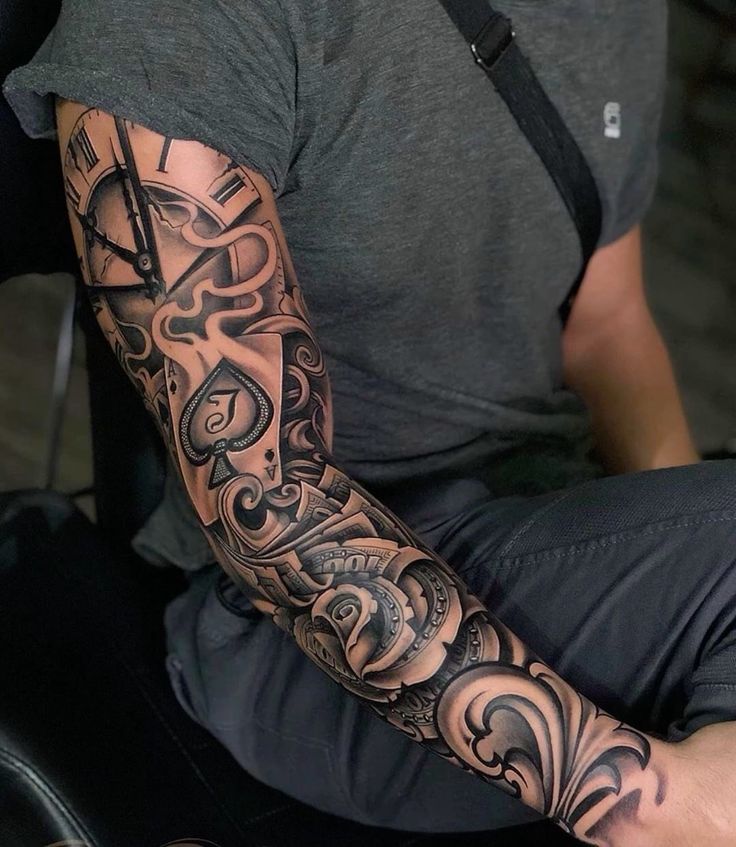

Men’s tattoo moodboards often include black-and-gray portraits, script, roses, and lowrider-inspired details For a deeper visual breakdown, see this guide to Chicano style tattoo ideas.
Among larger masculine tattoo concepts, koi fish tattoos work well because the fish body, fins, and waves can follow the arm, shoulder, ribs, or back without feeling stiff.
If you want a symbolic arm piece rather than a purely decorative one, compare these crown tattoos for men before deciding between a small emblem, a lion-and-crown piece, or a larger sleeve concept.
FAQ
How much do tattoo ideas for men typically cost?
Small designs run $100–$300 for a single session. Medium forearm or upper arm pieces land at $300–$800. Full sleeves range from $1,500 to $3,500+ depending on the artist’s rate and complexity. Back pieces can run $4,000–$8,000 for full coverage at high quality. Don’t price-shop a tattoo the way you’d price-shop a haircut.
Which tattoo idea is best for a man getting his first tattoo?
Upper arm, medium size (3–4 inches), a design with personal meaning, in a style the artist specializes in. A compass, a wolf portrait, or a simple personal symbol are all strong first choices. Avoid the ribs, spine, hands, or neck for a first piece.
How painful are tattoos for men on different placements?
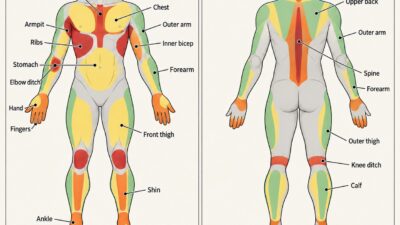
Forearm and upper arm are the most manageable placements. Chest and ribs are significantly more intense. Hands, feet, neck, and spine are the highest-pain areas in tattooing — bony areas with dense nerve coverage. Everyone’s threshold is different, but the anatomy is the same for everyone.
What are the most popular tattoo styles for men in 2026?
American Traditional, Japanese Irezumi, black and grey realism, blackwork and geometric, and fine line. Realism and fine line are growing fastest right now. Traditional holds up the longest over time. The right choice depends on the design — not every style suits every subject.
Should men choose black and grey or color tattoos?
Black and grey ages better, photographs better in most lighting, and is lower maintenance over decades. Color is more visually dramatic when fresh but requires more touch-up work over time. For phoenix and Japanese-style pieces, color is worth it. For portraits and geometric work, black and grey is usually the stronger choice.
How do I take care of a new tattoo?
Follow the artist’s specific aftercare instructions — protocols vary slightly between studios. Generally: keep it moisturized, out of direct sun, and don’t submerge it in water for the first two weeks. No scratching while it peels. Once healed, apply sunscreen whenever the tattoo will be exposed to UV.
How long does it take to get a full sleeve tattoo?
A full sleeve typically requires 25–50+ hours of work spread over multiple sessions, often 6–18 months from start to finish. Artists schedule sessions 4–8 weeks apart to allow the skin to heal between sessions. The timeline also depends on artist availability and the complexity of the design.
Can men cover up old tattoos with new designs?
Yes — cover-up tattoos are one of the most common requests at most studios. Effective cover-ups require designs larger and darker than the original, which limits your options somewhat. Laser fading sessions before a cover-up give the artist more flexibility with the new design. Discuss your existing tattoo during consultation so the artist can plan accordingly.
The last thing worth saying: a tattoo done with a clear intention, by an artist who genuinely gets what you’re going for, in a style that artist has mastered — that tattoo will never feel like a mistake. The regrettable ones are almost always the ones chosen from a wall on a Tuesday because it seemed like enough.
Take the time. It’s on you forever.
For more starting points, browse the tattoo ideas hub for related styles, placements, and meaning-focused designs.
For a bigger symbolic piece, a phoenix tattoo design idea can work well on the back, chest, forearm, or sleeve when the wings have enough room.
For men who like discreet ink with a reveal, this guide to blacklight tattoo ideas breaks down how UV ink works, what it costs, and what safety questions to ask first.
If one arm idea is starting to feel bigger than a single tattoo, use this sleeve tattoo ideas for men guide to compare full, half, forearm, and patchwork coverage before you book.
For men who prefer quieter ink, a lucky number tattoo can turn a birth year, jersey number, or personal ritual into a clean design without overcomplicating the placement.
For smaller placements, wrist tattoos for men can work as compact symbols, short dates, geometric bands, or a starting point for a larger sleeve. Keep the shape bold enough to read at arm’s length.
Compare style and placement
Before settling on a design, compare sexy tattoo ideas for men with the scale, visibility, and natural line of the body. A clear silhouette and enough breathing room usually matter more than a trend.
- 10.7Kshares
- Facebook0
- Pinterest10.7K
- Twitter0
- Reddit0